CN108768345B - Word length selection method for adaptive filter hardware design - Google Patents
Word length selection method for adaptive filter hardware design Download PDFInfo
- Publication number
- CN108768345B CN108768345B CN201810419538.4A CN201810419538A CN108768345B CN 108768345 B CN108768345 B CN 108768345B CN 201810419538 A CN201810419538 A CN 201810419538A CN 108768345 B CN108768345 B CN 108768345B
- Authority
- CN
- China
- Prior art keywords
- word length
- hardware resources
- mean square
- square error
- hardware
- Prior art date
- Legal status (The legal status is an assumption and is not a legal conclusion. Google has not performed a legal analysis and makes no representation as to the accuracy of the status listed.)
- Expired - Fee Related
Links
Images


Classifications
-
- H—ELECTRICITY
- H03—ELECTRONIC CIRCUITRY
- H03H—IMPEDANCE NETWORKS, e.g. RESONANT CIRCUITS; RESONATORS
- H03H21/00—Adaptive networks
- H03H21/0012—Digital adaptive filters
- H03H21/0043—Adaptive algorithms
-
- H—ELECTRICITY
- H03—ELECTRONIC CIRCUITRY
- H03H—IMPEDANCE NETWORKS, e.g. RESONANT CIRCUITS; RESONATORS
- H03H21/00—Adaptive networks
- H03H21/0012—Digital adaptive filters
- H03H21/0043—Adaptive algorithms
- H03H2021/0045—Equation error
-
- H—ELECTRICITY
- H03—ELECTRONIC CIRCUITRY
- H03H—IMPEDANCE NETWORKS, e.g. RESONANT CIRCUITS; RESONATORS
- H03H21/00—Adaptive networks
- H03H21/0012—Digital adaptive filters
- H03H21/0043—Adaptive algorithms
- H03H2021/0056—Non-recursive least squares algorithm [LMS]
- H03H2021/0061—Normalized LMS [NLMS]
-
- H—ELECTRICITY
- H03—ELECTRONIC CIRCUITRY
- H03H—IMPEDANCE NETWORKS, e.g. RESONANT CIRCUITS; RESONATORS
- H03H21/00—Adaptive networks
- H03H21/0012—Digital adaptive filters
- H03H2021/007—Computation saving measures; Accelerating measures
Landscapes
- Complex Calculations (AREA)
- Compression, Expansion, Code Conversion, And Decoders (AREA)
Abstract
一种用于自适应滤波器硬件设计的字长选择方法。所述方法用一个描述字长与系统超量均方误差的理论模型去预测在不同的字长组合下VSS‑TDNLMS算法的超量均方误差EMSE,同时将硬件资源参数化优化,评估在不同中间变量配置下可以实现预期性能的硬件资源的大小,然后选取几个满足超量均方误差的消耗尽量少硬件资源的字长组合作为备选字长组合;对备选字长组合进行片上逻辑综合,最终选择消耗硬件资源最少的字长组合作为字长配置方案。
A word length selection method for adaptive filter hardware design. The method uses a theoretical model describing the word length and the system excess mean square error to predict the excess mean square error EMSE of the VSS-TDNLMS algorithm under different word length combinations. The size of the hardware resources that can achieve the expected performance under the intermediate variable configuration, and then select several word length combinations that satisfy the excess mean square error and consume as little hardware resources as possible as the alternative word length combinations; perform on-chip logic for the alternative word length combinations. Comprehensively, the word length combination that consumes the least hardware resources is finally selected as the word length configuration scheme.
Description
技术领域technical field
本发明涉及一种用于自适应滤波器硬件设计的字长选择方法。The invention relates to a word length selection method for adaptive filter hardware design.
背景技术Background technique
自适应滤波器广泛应用于系统辨识,自适应均衡,自适应回波抵消,以及噪声消除等。许多自适应滤波算法都基于最小均方法,即least mean square,缩写为LMS。变换域归一化LMS算法(TDNLMS)由于其降低了输入协方差矩阵的特征值扩散度,相较于传统LMS算法,大大提高了其收敛速度。另外一类可变步长类LMS(VSS-LMS)算法能进一步提高收敛速度,同时能够减少稳态失调。可变步长变换域归一化(VSS-TDNLMS)算法是最近研究出来的一种先进新型自适应滤波算法,其在信道检测应用中的结构框图如图1所示。输入信号x(n)=[x(n),x(n-1),…,x(n-L+1)]T同时输入一个由脉冲响应向量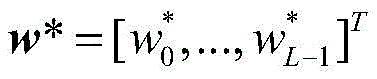
d(n)=(w*)Tx(n)+η(n) (1)d(n)=(w*) T x(n)+η(n) (1)
自适应的滤波器通过调整权重向量w(n)以减少预测误差,The adaptive filter reduces the prediction error by adjusting the weight vector w(n),
e(n)=d(n)-wT(n)x(n) (2)e(n)=d(n)-w T (n)x(n) (2)
TDNLMS算法中,它的更新方程为,In the TDNLMS algorithm, its update equation is,
e(n)=d(n)-WT(n)X(n) (3)e(n)=d(n)-W T (n)X(n) (3)
W(n+1)=W(n)+μ(n)Λ-1X(n)e(n) (4)W(n+1)=W(n)+μ(n)Λ -1 X(n)e(n) (4)
其中,W(n)=Cw(n)=[WC,1(n),WC,2(n),…,WC,L(n)]T是变换域的权重向量,C是一个L×L正交变换,X(n)=Cx(n)=[X1(n),X2(n),…,XL(n)]T是变换后的输入信号,



长期剩余误差λ(n)和短期剩余误差
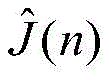


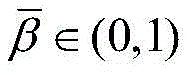
正是由于类LMS算法的高效性和结构简易性,基于LMS算法的硬件实现越来越受到人们的重视。众所周知,在数字电路设计中,为了减少硬件复杂度,绝大多数的设计都采用定点计算。在定点计算实现过程中,经过乘法运算的中间变量为了避免字长的增长需要进行凑整运算。这样就带来了如何决定各参数字长,使其既满足预期性能,又能避免字长无限增长,满足硬件资源消耗最少要求的问题。针对这样的问题,硬件工程师往往需要通过大量的仿真实验才可以找到最适合的不同参数的字长配置,这样必须消耗大量时间。针对LMS算法,有学者对其舍入误差进行了研究,如C.Chrisos,and B.Liu,“A roundoff erroranalysis of the LMS adaptive algorithm”及M.Andrews and R.Fitch,“Finite wordlength arithmetic computational errors on the LMS adaptive weights”。Ghanassi等人研究了有限字长下的LMS算法稳定状态下的误差。目前,还缺乏针对VSS-TDNLMS这种具有先进性能算法在有限字长实现情况下的性能研究,更缺乏一种针对基于高性能类LMS算法的自适应滤波器设计选择字长的方法。It is precisely because of the high efficiency and simple structure of the LMS-like algorithm that the hardware implementation based on the LMS algorithm has been paid more and more attention by people. As we all know, in digital circuit design, in order to reduce the hardware complexity, most designs use fixed-point computing. In the implementation process of fixed-point calculation, the intermediate variable after multiplication operation needs to be rounded to avoid the increase of word length. This brings about the problem of how to determine the word length of each parameter so that it not only meets the expected performance, but also avoids the infinite growth of the word length and meets the requirement of minimum hardware resource consumption. In response to such a problem, hardware engineers often need a large number of simulation experiments to find the most suitable word length configuration for different parameters, which must consume a lot of time. For the LMS algorithm, some scholars have studied its rounding error, such as C.Chrisos, and B.Liu, "A roundoff error analysis of the LMS adaptive algorithm" and M.Andrews and R.Fitch, "Finite wordlength arithmetic computational errors" on the LMS adaptive weights". Ghanassi et al. studied the steady-state error of the LMS algorithm with finite word length. At present, there is still a lack of research on the performance of VSS-TDNLMS, an advanced algorithm with limited word length, and a method for selecting word length for adaptive filter design based on high-performance LMS-like algorithms.
发明内容SUMMARY OF THE INVENTION
本发明的目的是克服现有技术的缺点,提出一种用于高性能自适应滤波器的字长选择方法。本发明针对可变步长变换域归一化的LMS算法的字长选择进行优化处理,采用一个描述字长与系统超量均方误差的理论模型去预测在不同的字长组合下VSS-TDNLMS算法的超量均方误差EMSE,同时将硬件资源参数化优化,评估在不同中间变量配置下可以实现预期性能的硬件资源的大小,然后选取几个满足超量均方误差的消耗尽量少硬件资源的字长组合作为备选字长组合;对备选字长组合进行片上逻辑综合,最终选择消耗硬件资源最少的字长组合作为字长配置方案。The purpose of the present invention is to overcome the shortcomings of the prior art and propose a word length selection method for high performance adaptive filters. The invention optimizes the word length selection of the LMS algorithm normalized by the variable step size transform domain, and adopts a theoretical model describing the word length and the excess mean square error of the system to predict the VSS-TDNLMS under different word length combinations The excess mean square error EMSE of the algorithm, while optimizing the hardware resources parameterization, evaluates the size of the hardware resources that can achieve the expected performance under different intermediate variable configurations, and then selects a few that satisfy the excess mean square error and consumes as little hardware resources as possible The word length combination is used as the alternative word length combination; the on-chip logic synthesis is performed on the alternative word length combination, and the word length combination that consumes the least hardware resources is finally selected as the word length configuration scheme.
字长与自适应滤波器性能的关系可如下式表示:
式中,J*为理想自适应滤波器的超量均方误差EMSE,JQ为受字长影响的超量均方误差EMSE。
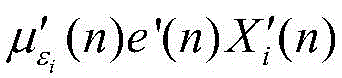
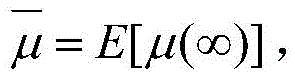
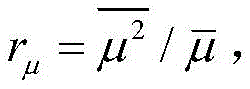
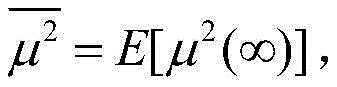

Dx=Λ-1,D x =Λ -1 ,




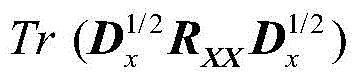
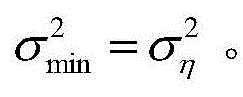



字长与自适应滤波器性能的关系表达式基于以下假设:The expression for the relationship between word length and adaptive filter performance is based on the following assumptions:
(1)μ(n)和输入信号及误差相对独立;(1) μ(n) is relatively independent from the input signal and error;
(2)x(n)是独立分布的高斯随机信号,其协方差矩阵为RXX;(2) x(n) is an independently distributed Gaussian random signal, and its covariance matrix is R XX ;
(3)W(n)、x(n)和η(n)统计上相对独立;(3) W(n), x(n) and η(n) are relatively independent statistically;
(4)DX和εi(n)中的元素和W(n)以及x(n)不相关。(4) The elements in D X and ε i (n) are irrelevant to W(n) and x(n).
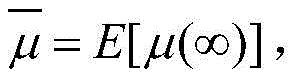
其中,μ(n)为VSS-TDNLMS算法收敛步长,x(n)为输入信号,W(n)为变换域的权向量,
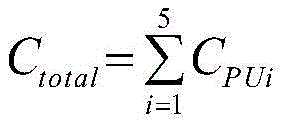
式中,Ctotal为消耗的所有硬件资源,
这样,通过预估的消耗相对较少的硬件资源找到最优字长配置,这种配置满足有限字长理论模型计算下的性能要求;进而,硬件工程师选择几个最优字长组合备选方案进行逻辑综合,便可以大大减少确定最优字长组合的时间。In this way, the optimal word length configuration is found through the estimated consumption of relatively few hardware resources, and this configuration satisfies the performance requirements under the finite word length theoretical model calculation; furthermore, the hardware engineer selects several optimal word length combination alternatives By performing logic synthesis, the time to determine the optimal word length combination can be greatly reduced.
本发明具体步骤如下:The concrete steps of the present invention are as follows:
1、预测不同字长组合下VSS-TDNLMS算法的超量均方误差1. Predict the excess mean square error of the VSS-TDNLMS algorithm under different word length combinations
按照惯例,在定点型数字系统实现中,舍入误差过程可以看作一个均匀量化过程,假设输入是u,则它量化之后的值为Q(u)。对于一个b加符号位的符号数,它的量化步长为Δ=2-b。如果量化步长Δ足够小,则它的量化误差与输入信号不相关,同时舍入误差过程能够建模成一个零平均值,方差为σ2=2-2b/12的高斯处理过程。经过量化处理后VSS-TDNLMS算法的主要方程可表示为:By convention, in the implementation of fixed-point digital systems, the rounding error process can be regarded as a uniform quantization process. Assuming that the input is u, its quantized value is Q(u). For a sign number of b plus sign bit, its quantization step size is Δ=2 −b . If the quantization step size Δ is small enough, its quantization error is independent of the input signal, and the rounding error process can be modeled as a zero-average, Gaussian process with variance σ 2 = 2-2b /12. After quantization processing, the main equation of the VSS-TDNLMS algorithm can be expressed as:

e'(n)=d'(n)-Qy(W′T(n)X′(n)) (8)e'(n)=d'(n)-Q y (W' T (n)X'(n)) (8)



其中,



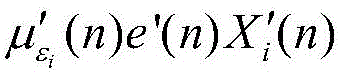


然后分析有效字长下的VSS-TDNLMS算法的超量均方误差EMSE。按照惯例,分析类LMS算法的超量均方误差EMSE基于以下假设:Then the excess mean square error EMSE of the VSS-TDNLMS algorithm under the effective word length is analyzed. By convention, the excess mean squared error EMSE for analytical LMS-like algorithms is based on the following assumptions:
(1)μ(n)和输入信号及误差相对独立;(1) μ(n) is relatively independent from the input signal and error;
(2)x(n)是独立分布的高斯随机信号,其协方差矩阵为RXX;(2) x(n) is an independently distributed Gaussian random signal, and its covariance matrix is R XX ;
(3)W(n),x(n)和η(n)统计上相对独立;(3) W(n), x(n) and η(n) are relatively independent statistically;
(4)DX和εi(n)中的元素和W(n)以及x(n)不相关。(4) The elements in D X and ε i (n) are irrelevant to W(n) and x(n).
令WO和W′(n)为有限字长下的变换域的维纳方程解和权向量,因此权向量误差向量为:Let W O and W′(n) be the Wiener equation solution and weight vector in the transform domain under finite word length, so the weight vector error vector is:
v'(n)=W′(n)-WO=(W(n)-WO)+δW(n)=v(n)+δW(n) (12)v'(n)=W'(n)-W O =( W (n)-W O )+δW(n)=v(n)+ δW (n) (12)
v(n)是无线字长运算下的权向量误差,δW(n)是由有限字长引起的额外误差。因为δW(n)和v(n)不相关,因此可得

所以,在有限字长影响下的VSS-TDNLMS的超量均方误差EMSE为
其中,J*为理想自适应滤波器的超量均方误差EMSE,Ξvv(∞)=E[v(∞)vT(∞)],JQ为受字长影响的超量均方误差EMSE。Among them, J * is the excess mean square error EMSE of the ideal adaptive filter, Ξ vv (∞)=E[v(∞)v T (∞)], J Q is the excess mean square error affected by the word length EMSE.
经过计算:Has been calculated:

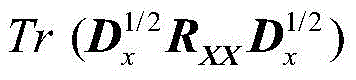
其中:
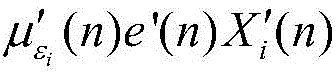

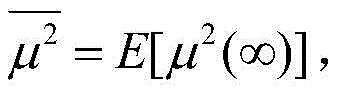
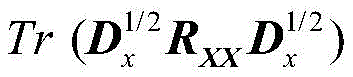
RXX为X(n)的自相关矩阵,Tr(·)为迹算子,R XX is the autocorrelation matrix of X(n), Tr( ) is the trace operator,
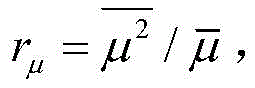

Dx=Λ-1,D x =Λ -1 ,




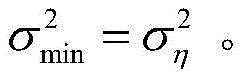
因此:therefore:

2、评估不同字长组合下消耗的硬件资源2. Evaluate the hardware resources consumed by different word length combinations
本发明中,为了评估不同字长组合下消耗的硬件资源,需要设计VSS-TDNLMS算法的具体硬件实施结构。为了方便硬件实施,便于流水线设计,本发明把一些寄存器加入到VSS-TDNLMS算法的权向量更新公式W(n+1)=W(n)+μ(n)Λ-1X(n)e(n)中,这样VSS-TDNLMS算法的硬件实现将分为五个计算模块,然后评估每个计算模块消耗的硬件资源。In the present invention, in order to evaluate the hardware resources consumed under different word length combinations, it is necessary to design a specific hardware implementation structure of the VSS-TDNLMS algorithm. In order to facilitate hardware implementation and pipeline design, the present invention adds some registers to the weight vector update formula of the VSS-TDNLMS algorithm W(n+1)=W(n)+μ(n)Λ -1 X(n)e( n), so that the hardware implementation of the VSS-TDNLMS algorithm will be divided into five computing modules, and then the hardware resources consumed by each computing module are evaluated.
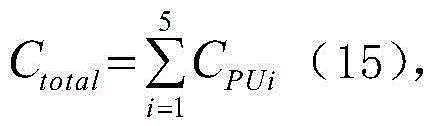
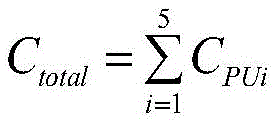
式中,Ctotal为消耗的所有硬件资源,
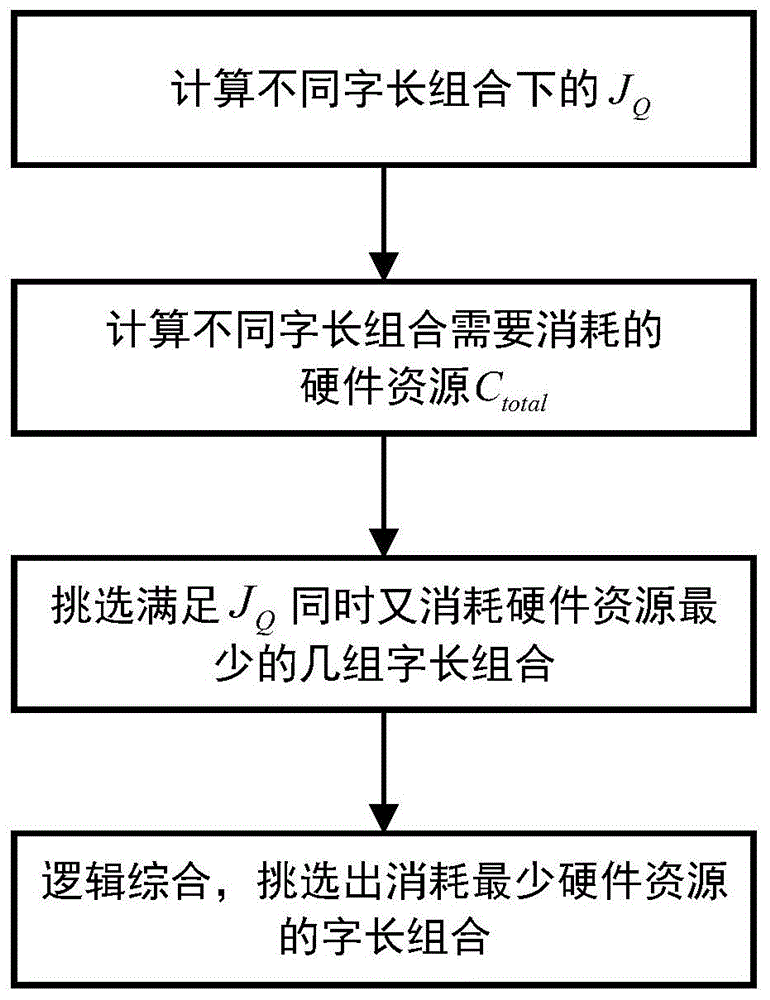
3、选择几个满足给定超量均方误差且消耗得尽量少的硬件资源的字长组合作为备选字长组合;3. Select several word length combinations that satisfy the given excess mean square error and consume as little hardware resources as possible as alternative word length combinations;
由于本发明提出的优化字长方法未考虑硬件实现时的片上逻辑优化,本发明需要选取几个可以取得预期性能且消耗硬件资源相对较少的字长配置备选方案进行下一步的逻辑综合。需要说明的是,进行数字电路设计的不同商业软件均可以提供逻辑综合,本发明针对FPGA设计,采用的是Xilinx公司Vivado软件进行逻辑综合。Since the word length optimization method proposed by the present invention does not consider on-chip logic optimization in hardware implementation, the present invention needs to select several word length configuration alternatives that can achieve expected performance and consume relatively few hardware resources for the next step of logic synthesis. It should be noted that, different commercial software for digital circuit design can provide logic synthesis, and the present invention is aimed at FPGA design, and adopts Vivado software of Xilinx Company for logic synthesis.
4、对步骤3挑选出来的几个备选字长组合进行片上逻辑综合,最终选择消耗硬件资源最少同时又能满足性能要求的的字长组合作为字长配置方案。4. Perform on-chip logic synthesis on several candidate word length combinations selected in step 3, and finally select the word length combination that consumes the least hardware resources while meeting performance requirements as the word length configuration scheme.
综上所述,本发明针对高性能自适应滤波器设计的字长选择方法总结如下:To sum up, the word length selection method designed for the high-performance adaptive filter of the present invention is summarized as follows:
(1)根据式
(2)根据式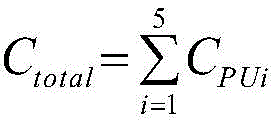
(3)选择几个满足超量均方误差的消耗尽量少硬件资源的字长组合作为备选字长组合;(3) Select several word length combinations that satisfy the excess mean square error and consume as little hardware resources as possible as alternative word length combinations;
(4)对备选字长组合进行片上逻辑综合,最终选择消耗硬件资源最少的字长组合作为字长配置方案。(4) Perform on-chip logic synthesis on the candidate word length combinations, and finally select the word length combination that consumes the least hardware resources as the word length configuration scheme.
附图说明Description of drawings
图1自适应滤波器应用于信道检测的结构框图;Fig. 1 is a structural block diagram of adaptive filter applied to channel detection;
图2VSS-TDNLMS算法的硬件实现框图;Figure 2 is a hardware implementation block diagram of the VSS-TDNLMS algorithm;
图3字长选择步骤;Figure 3 word length selection steps;
图4模块1计算Xi(n)的硬件实现框图;Fig. 4
图5模块2硬件实现框图;Fig. 5
图6模块3硬件实现框图;Fig. 6 module 3 hardware realization block diagram;
图7模块4硬件实现框图;Fig. 7 module 4 hardware realization block diagram;
图8模块5硬件实现框图;Figure 8 block 5 hardware implementation block diagram;
图9预测的EMSE vs预估的硬件复杂度用LUTs表示,每一个点代表一个字长组合;Figure 9 Predicted EMSE vs estimated hardware complexity is represented by LUTs, each point representing a word length combination;
图10实际EMSE vs实际综合之后的硬件复杂度用LUTs表示,每一个点代表一个字长组合。Figure 10. The hardware complexity after actual EMSE vs actual synthesis is represented by LUTs, with each point representing a word length combination.
具体实施方式Detailed ways
下面通过具体实施方式对本发明作进一步说明。The present invention will be further described below through specific embodiments.
如图3所示,本发明针对基于VSS-TDNLMS算法的自适应滤波器硬件的字长选择方法的实施例包括如下步骤:As shown in Figure 3, the embodiment of the present invention for the word length selection method of the adaptive filter hardware based on the VSS-TDNLMS algorithm includes the following steps:
1、根据式(14)计算受字长影响的VSS-TDNLMS算法的超量均方误差;1. Calculate the excess mean square error of the VSS-TDNLMS algorithm affected by the word length according to formula (14);

2、根据式(15)计算所有电路消耗的硬件资源;2. Calculate the hardware resources consumed by all circuits according to formula (15);
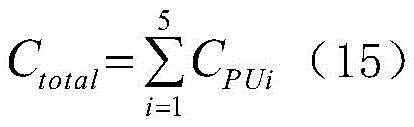
式中,Ctotal为所有电路模块消耗的硬件资源,
基于VSS-TDNLMS算法的自适应滤波器可以分模块流水线实现,如图2所示。已知各参数的整数位字长,需要决定满足一定性能情况下消耗最小硬件资源的各分数位所需字长。评估硬件资源的消耗又取决于硬件实现的平台。本实施例基于FPGA平台的硬件实现,消耗的主要硬件资源为计算单元和存储单元。一个简单的评估方法是只计算其运算单元所消耗的硬件资源,因此可以用消耗了多少全加器(FA)的办法去评估硬件资源。存储单元往往和字长有关,因此可以忽略存储单元,以方便统计总体消耗的硬件资源。需要注意的是,如果没有进行实际的逻辑综合,片上路由和片上分配约束对硬件资源的影响是很难预测的。因此,为了简便的描述本发明方法,只选择用消耗了多少计算单元去评估消耗了多少总体硬件逻辑。各单元模块电路以及消耗的硬件资源汇总如下。本发明也适用于其他硬件开发平台进行自适应滤波器的设计。The adaptive filter based on the VSS-TDNLMS algorithm can be implemented in a sub-module pipeline, as shown in Figure 2. Knowing the integer-bit word length of each parameter, it is necessary to determine the word length required for each fractional bit that consumes the minimum hardware resources under certain performance conditions. Evaluating the consumption of hardware resources in turn depends on the platform on which the hardware is implemented. This embodiment is implemented based on the hardware of the FPGA platform, and the main hardware resources consumed are the computing unit and the storage unit. A simple evaluation method is to only calculate the hardware resources consumed by its operation unit, so the hardware resources can be evaluated by how many full adders (FA) are consumed. The storage unit is often related to the word length, so the storage unit can be ignored to facilitate the statistics of the hardware resources consumed in general. It should be noted that the impact of on-chip routing and on-chip allocation constraints on hardware resources is difficult to predict without actual logic synthesis. Therefore, for the convenience of describing the method of the present invention, only how many computing units are consumed is chosen to evaluate how much overall hardware logic is consumed. The circuit of each unit module and the hardware resources consumed are summarized as follows. The invention is also applicable to other hardware development platforms to design the adaptive filter.
如图2所示,将基于VSS-TDNLMS算法的自适应滤波器分为5个计算模块:模块1、模块2、模块3、模块4和模块5,每个模块消耗的硬件资源计算如下:As shown in Figure 2, the adaptive filter based on the VSS-TDNLMS algorithm is divided into five calculation modules:
模块1:此模块实现L点DCT变换,L为输入信号长度,DCT为离散预选变换,x(n)=[x0(n),...,xL-1(n)]T为输入信号,基于IIR滤波器结构的DCT变换计算公式如下:Module 1: This module implements L-point DCT transformation, L is the length of the input signal, DCT is the discrete preselection transformation, x(n)=[x 0 (n),...,x L-1 (n)] T is the input signal, the calculation formula of DCT transform based on IIR filter structure is as follows:

其中,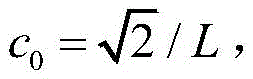
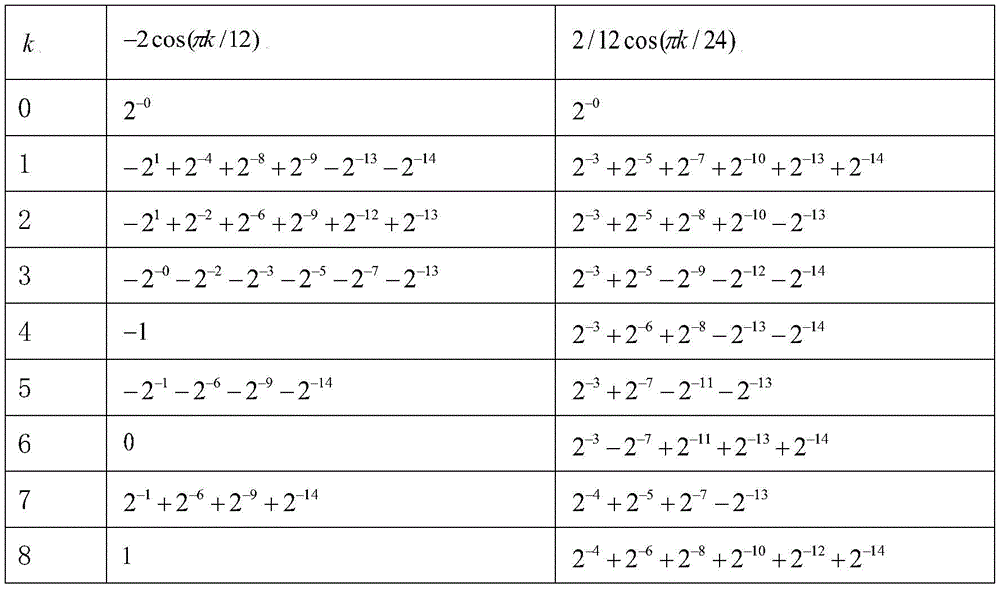
图4为计算Xi(n)的电路结构,总体而言,整个模块1消耗5(L-1)+2加法器和2(L-1)+1乘法器,D为寄存器。由三角形表示的常数乘法运算的常数系数可以用SOPOT系数表示,这样常数乘法运算可以用移位和加法运算实现。Figure 4 shows the circuit structure for calculating X i (n). In general, the
表1列出了各DCT常数参数的SOPOT系数表示。Table 1 lists the SOPOT coefficient representation of each DCT constant parameter.
表1.DCT变换中各参数的14位SOPOT表示Table 1. 14-bit SOPOT representation of each parameter in DCT transform

模块2:此模块负责计算信号能量和更新步长,包括能量计算单元和步长更新单元。此模块2由加法器、乘法器、比较器和寄存器组成,如图5所示。总体而言,能量计算单元消耗L个普通乘法器,L个常数乘法器和2L个加法器,这里将减法器看作加法器。步长更新单元需要消耗1个比较器,1个乘法器,4个加法器。Xi(n)首先自身相乘,得到的结果与εi(n)相减,得到的差值和常系数α相乘,然后再和εi(n)进行相加运算,经过1个时钟的寄存器缓存得到εi(n+1)。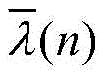


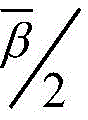
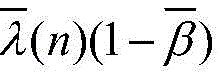
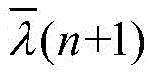
表2.VSS-TDNLMS算法中所用参数的11位SOPOT表示Table 2. 11-bit SOPOT representation of parameters used in the VSS-TDNLMS algorithm

模块3:模块3负责功率归一化计算,它实现了
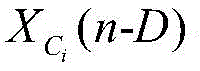
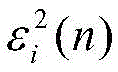
模块4:模块4负责更新权向量。它需要消耗L个乘法器和L个加法器。Fi(n-D)和e(n-D)首先直接相乘,其结果和Wi(n-D)相加,经过一级寄存器缓存,得到Wi(n+1)。它的硬件结构如图7所示。Module 4: Module 4 is responsible for updating the weight vector. It needs to consume L multipliers and L adders. F i (nD) and e (nD) are directly multiplied first, and the result is added to Wi ( nD), and after the first-level register cache, Wi ( n +1) is obtained. Its hardware structure is shown in Figure 7.
模块5:模块5负责计算预估误差。它需要消耗L个标准乘法器,和一个加法树结构去实现误差的计算。Wi(n)和Xi(n)以及d(n)送入加法树,经过诺干个寄存器得到e(n-D),它的硬件结构如图8所示。Module 5: Module 5 is responsible for calculating the estimated error. It needs to consume L standard multipliers, and an addition tree structure to realize the error calculation. Wi (n), X i ( n) and d(n) are sent to the addition tree, and e(nD) is obtained through the Nogan registers. Its hardware structure is shown in Figure 8.
FPGA中最基本的单元为查找表LUT,可以根据数据手册或者简单的逻辑综合,将这些计算单元的硬件复杂度等价表述为消耗了查找表LUTs的数量。为了选择最优的字长组合,从一个组合范围足够大的组合内随机选取MX,i,MW,i,Mf,i,Mμ和Me的组合,然后根据式(15)和式(14)分别去评估所消耗的硬件资源和超量均方误差EMSE。The most basic unit in an FPGA is a look-up table LUT. According to the data sheet or simple logic synthesis, the hardware complexity of these computing units can be equivalently expressed as the number of look-up table LUTs consumed. In order to select the optimal word length combination, randomly select the combination of M X,i ,M W,i ,M f,i , M μ and Me from a combination with a sufficiently large combination range, and then according to formula (15) and Equation (14) is used to evaluate the consumed hardware resources and excess mean square error EMSE respectively.
3、选择几个满足超量均方误差且消耗得尽量少的硬件资源的字长组合进行逻辑综合,作为备选字长组合;3. Select several word length combinations that satisfy the excess mean square error and consume as little hardware resources as possible for logic synthesis as alternative word length combinations;
4、选出既符合给定性能要求,消耗硬件资源最小的备选字长组合为最优字长配置方案。4. Select the candidate word length combination that meets the given performance requirements and consumes the least hardware resources as the optimal word length configuration scheme.
对本发明实施例各步骤的验证结果如下:The verification results of each step in the embodiment of the present invention are as follows:
步骤1、预测不同字长组合下算法的超量均方误差
验证试验中,本发明假设xi(n)和Xi(n)的字长都为14位,式(14)其他参数的不同组合范围为10位到15位。In the verification test, the present invention assumes that the word lengths of x i (n) and X i (n) are both 14 bits, and the different combinations of other parameters of formula (14) range from 10 bits to 15 bits.
对于每一个字长组合,该实施例可以计算其不同字长组合情况下的预期性能,根据式(14),调出满足性能要求的不同字长组合。For each word length combination, this embodiment can calculate its expected performance under the condition of different word length combinations, and according to formula (14), call out different word length combinations that meet the performance requirements.
步骤2、评估不同字长组合下消耗的硬件资源
该实施例可以评估出这些满足性能要求的字长组合所消耗的硬件资源,由查找表LUTs表示,根据式(15)可得出。In this embodiment, the hardware resources consumed by these word length combinations that meet the performance requirements can be estimated, which is represented by the lookup table LUTs, and can be obtained according to formula (15).
图9表示了预估的资源对应的超量均方误差EMSE的理论值。每一个点代表了一个字长组合,从图9中可以找到每一个超量均方误差EMSE理论值对应的消耗硬件资源最少的字长组合,由箭头标注。Figure 9 shows the theoretical value of the excess mean square error EMSE corresponding to the estimated resources. Each point represents a word length combination. From Figure 9, the word length combination that consumes the least hardware resources corresponding to the theoretical value of each excess mean square error EMSE can be found, marked by arrows.
步骤3、选择几个满足超量均方误差且消耗得尽量少的硬件资源的字长组合;Step 3. Select several word length combinations that satisfy the excess mean square error and consume as little hardware resources as possible;
例如,当超量均方误差EMSE为-31.26dB时,由图9中圆圈标注的点所示,这些点均可达到-31.26dB。由圆圈标注的这些点中消耗的硬件资源相对较少的点为22123LUTs,22168LUTs,22201LUTs,并且它们对应的字长组合分别为Mμ=10bits,


步骤4、对潜在的备选字长组合进行片上逻辑综合,最终选择消耗硬件资源最少的字长组合;Step 4. Perform on-chip logic synthesis on the potential candidate word length combinations, and finally select the word length combination that consumes the least hardware resources;
对三组不同字长组合进行最后的逻辑综合,发现它们消耗的硬件资源分别为22110LUTs,22152LUTs,22189LUTs。所以,最终选择字长为Mμ=10bits,
为了检查理论验证值,本发明进行蒙特卡罗仿真模拟,且每一个字长的不同组合均在FPGA上实现,其结果如图10所示。由图9和图10可知,无论是理论值,还是实验值,不同的EMSE值都具有一个类似的趋势,均可以在不同的超量均方误差EMSE值的约束下找到最小硬件资源的字长组合。所以,本发明可以用来指导硬件设计人员在设计自适应滤波器时如何选择字长,以保证消耗最少硬件资源。图9和图10所示,理论值和实验值之间有一个误差,这个误差可以用一个“矫正因子”来弥补。In order to check the theoretical verification value, the present invention performs Monte Carlo simulation, and each different combination of word lengths is implemented on the FPGA, and the result is shown in FIG. 10 . It can be seen from Figure 9 and Figure 10 that, whether it is the theoretical value or the experimental value, different EMSE values have a similar trend, and the word length of the minimum hardware resource can be found under the constraints of different excess mean square error EMSE values. combination. Therefore, the present invention can be used to guide the hardware designer how to choose the word length when designing the adaptive filter, so as to ensure the consumption of the least hardware resources. As shown in Figure 9 and Figure 10, there is an error between the theoretical value and the experimental value, which can be compensated by a "correction factor".
Claims (1)










Priority Applications (1)
| Application Number | Priority Date | Filing Date | Title |
|---|---|---|---|
| CN201810419538.4A CN108768345B (en) | 2018-05-04 | 2018-05-04 | Word length selection method for adaptive filter hardware design |
Applications Claiming Priority (1)
| Application Number | Priority Date | Filing Date | Title |
|---|---|---|---|
| CN201810419538.4A CN108768345B (en) | 2018-05-04 | 2018-05-04 | Word length selection method for adaptive filter hardware design |
Publications (2)
| Publication Number | Publication Date |
|---|---|
| CN108768345A CN108768345A (en) | 2018-11-06 |
| CN108768345B true CN108768345B (en) | 2021-09-28 |
Family
ID=64010036
Family Applications (1)
| Application Number | Title | Priority Date | Filing Date |
|---|---|---|---|
| CN201810419538.4A Expired - Fee Related CN108768345B (en) | 2018-05-04 | 2018-05-04 | Word length selection method for adaptive filter hardware design |
Country Status (1)
| Country | Link |
|---|---|
| CN (1) | CN108768345B (en) |
Citations (10)
| Publication number | Priority date | Publication date | Assignee | Title |
|---|---|---|---|---|
| WO1995014289A2 (en) * | 1993-11-18 | 1995-05-26 | Pinecone Imaging Corporation | Identification/authentication coding method and apparatus |
| US6931612B1 (en) * | 2002-05-15 | 2005-08-16 | Lsi Logic Corporation | Design and optimization methods for integrated circuits |
| TW200533126A (en) * | 2004-03-25 | 2005-10-01 | Benq Corp | Transform domain adaptive filter, equalizer and wireless communication device using the same, and decision feedback equalization method |
| CN1805279A (en) * | 2005-01-10 | 2006-07-19 | 乐金电子(中国)研究开发中心有限公司 | Method for handling adaptive filter in transform domain |
| CN1810019A (en) * | 2003-06-27 | 2006-07-26 | 诺基亚有限公司 | Statistical adaptive-filter controller |
| CN102122972A (en) * | 2011-03-04 | 2011-07-13 | 中国人民解放军理工大学通信工程学院 | Transform-domain-based narrowband interference inhibiting method in shortwave spread spectrum communication |
| CN103617146A (en) * | 2013-12-06 | 2014-03-05 | 北京奇虎科技有限公司 | Machine learning method and device based on hardware resource consumption |
| CN104166618A (en) * | 2013-05-16 | 2014-11-26 | 郭若杉 | Hardware implementation method and system for algorithm |
| CN104283528A (en) * | 2014-09-18 | 2015-01-14 | 河海大学 | A Variable Step Size LMS Adaptive Filtering Method |
| WO2016003955A1 (en) * | 2014-07-02 | 2016-01-07 | Microsoft Technology Licensing, Llc | Variable step size echo cancellation with accounting for instantaneous interference |
Family Cites Families (1)
| Publication number | Priority date | Publication date | Assignee | Title |
|---|---|---|---|---|
| US7002897B2 (en) * | 2003-04-28 | 2006-02-21 | Solarflare Communications, Inc. | Multiple channel interference cancellation |
-
2018
- 2018-05-04 CN CN201810419538.4A patent/CN108768345B/en not_active Expired - Fee Related
Patent Citations (10)
| Publication number | Priority date | Publication date | Assignee | Title |
|---|---|---|---|---|
| WO1995014289A2 (en) * | 1993-11-18 | 1995-05-26 | Pinecone Imaging Corporation | Identification/authentication coding method and apparatus |
| US6931612B1 (en) * | 2002-05-15 | 2005-08-16 | Lsi Logic Corporation | Design and optimization methods for integrated circuits |
| CN1810019A (en) * | 2003-06-27 | 2006-07-26 | 诺基亚有限公司 | Statistical adaptive-filter controller |
| TW200533126A (en) * | 2004-03-25 | 2005-10-01 | Benq Corp | Transform domain adaptive filter, equalizer and wireless communication device using the same, and decision feedback equalization method |
| CN1805279A (en) * | 2005-01-10 | 2006-07-19 | 乐金电子(中国)研究开发中心有限公司 | Method for handling adaptive filter in transform domain |
| CN102122972A (en) * | 2011-03-04 | 2011-07-13 | 中国人民解放军理工大学通信工程学院 | Transform-domain-based narrowband interference inhibiting method in shortwave spread spectrum communication |
| CN104166618A (en) * | 2013-05-16 | 2014-11-26 | 郭若杉 | Hardware implementation method and system for algorithm |
| CN103617146A (en) * | 2013-12-06 | 2014-03-05 | 北京奇虎科技有限公司 | Machine learning method and device based on hardware resource consumption |
| WO2016003955A1 (en) * | 2014-07-02 | 2016-01-07 | Microsoft Technology Licensing, Llc | Variable step size echo cancellation with accounting for instantaneous interference |
| CN104283528A (en) * | 2014-09-18 | 2015-01-14 | 河海大学 | A Variable Step Size LMS Adaptive Filtering Method |
Non-Patent Citations (3)
| Title |
|---|
| A New Variable Regularized Transform Domain NLMS Adaptive Filtering Algorithm—Acoustic Applications and Performance Analysis;S. C. Chan等;《 IEEE Transactions on Audio, Speech, and Language Processing 》;20121130;第21卷(第4期);868 - 878 * |
| Design and implementation of a variable step-size transform domain NLMS adaptive filter;W. Zhao等;《 TENCON 2015 - 2015 IEEE Region 10 Conference》;20160107;1-3 * |
| 一种改进的NLMS自适应滤波器的FPGA实现;赵茂林等;《微电子学》;20160701;第46卷(第4期);533-536 * |
Also Published As
| Publication number | Publication date |
|---|---|
| CN108768345A (en) | 2018-11-06 |
Similar Documents
| Publication | Publication Date | Title |
|---|---|---|
| Pashaeifar et al. | A theoretical framework for quality estimation and optimization of DSP applications using low-power approximate adders | |
| Rosado-Muñoz et al. | FPGA implementation of an adaptive filter robust to impulsive noise: two approaches | |
| Guo et al. | A research on a comprehensive adaptive grey prediction model CAGM (1, N) | |
| CN111240746A (en) | Floating point data inverse quantization and quantization method and equipment | |
| Yan et al. | Design of high hardware efficiency approximate floating-point FFT processor | |
| Venkateswarlu et al. | Implementation of area optimized low power multiplication and accumulation | |
| Soares et al. | Approximate adder synthesis for area-and energy-efficient FIR filters in CMOS VLSI | |
| CN104715158A (en) | Empirical mode decomposition endpoint effect inhibition method based on grey GM (1,1) forecasting model | |
| US8812569B2 (en) | Digital filter implementation for exploiting statistical properties of signal and coefficients | |
| CN108768345B (en) | Word length selection method for adaptive filter hardware design | |
| WO2018196750A1 (en) | Device for processing multiplication and addition operations and method for processing multiplication and addition operations | |
| Reed et al. | Lightweight neural network architectures for resource-limited devices | |
| Raja et al. | Energy efficient enhanced all pass transformation fostered variable digital filter design based on approximate adder and approximate multiplier for eradicating sensor nodes noise | |
| CN115883408A (en) | Multi-rate complex network state estimation method based on compensation | |
| CN120011934A (en) | A method, system, device and medium for evaluating the probability of failure of sensitive equipment | |
| Kuang et al. | Variable-latency floating-point multipliers for low-power applications | |
| CN115099397B (en) | Hardware-oriented Adam algorithm second-order moment estimation optimization method and system | |
| Ren et al. | Hardware implementation of KLMS algorithm using FPGA | |
| CN110084362A (en) | A kind of logarithmic quantization device and method towards neural network | |
| CN114692824B (en) | A quantized training method, device and equipment for a neural network model | |
| Rossberg | Laplace transforms of probability distributions and their inversions are easy on logarithmic scales | |
| WO2023004799A1 (en) | Electronic device and neural network quantization method | |
| Jalaja et al. | Retime Low Power Approximate Multiplier for Image Sharpening and Smoothing | |
| Koch et al. | On numerical robustness of bi-quad structures using fixed-point approximate multiplication | |
| Wang et al. | Fastmamba: A high-speed and efficient mamba accelerator on fpga with accurate quantization |
Legal Events
| Date | Code | Title | Description |
|---|---|---|---|
| PB01 | Publication | ||
| PB01 | Publication | ||
| SE01 | Entry into force of request for substantive examination | ||
| SE01 | Entry into force of request for substantive examination | ||
| GR01 | Patent grant | ||
| GR01 | Patent grant | ||
| CF01 | Termination of patent right due to non-payment of annual fee | ||
| CF01 | Termination of patent right due to non-payment of annual fee |
Granted publication date: 20210928 |