CN108727416B - Tricyclic heteroaromatic amide derivative and preparation and application thereof - Google Patents
Tricyclic heteroaromatic amide derivative and preparation and application thereof Download PDFInfo
- Publication number
- CN108727416B CN108727416B CN201710260751.0A CN201710260751A CN108727416B CN 108727416 B CN108727416 B CN 108727416B CN 201710260751 A CN201710260751 A CN 201710260751A CN 108727416 B CN108727416 B CN 108727416B
- Authority
- CN
- China
- Prior art keywords
- carboxamide
- quinuclidin
- pyrrolo
- quinoline
- compound
- Prior art date
- Legal status (The legal status is an assumption and is not a legal conclusion. Google has not performed a legal analysis and makes no representation as to the accuracy of the status listed.)
- Active
Links
Images


Classifications
-
- C—CHEMISTRY; METALLURGY
- C07—ORGANIC CHEMISTRY
- C07D—HETEROCYCLIC COMPOUNDS
- C07D519/00—Heterocyclic compounds containing more than one system of two or more relevant hetero rings condensed among themselves or condensed with a common carbocyclic ring system not provided for in groups C07D453/00 or C07D455/00
-
- C—CHEMISTRY; METALLURGY
- C07—ORGANIC CHEMISTRY
- C07D—HETEROCYCLIC COMPOUNDS
- C07D453/00—Heterocyclic compounds containing quinuclidine or iso-quinuclidine ring systems, e.g. quinine alkaloids
- C07D453/02—Heterocyclic compounds containing quinuclidine or iso-quinuclidine ring systems, e.g. quinine alkaloids containing not further condensed quinuclidine ring systems
-
- C—CHEMISTRY; METALLURGY
- C07—ORGANIC CHEMISTRY
- C07D—HETEROCYCLIC COMPOUNDS
- C07D471/00—Heterocyclic compounds containing nitrogen atoms as the only ring hetero atoms in the condensed system, at least one ring being a six-membered ring with one nitrogen atom, not provided for by groups C07D451/00 - C07D463/00
- C07D471/02—Heterocyclic compounds containing nitrogen atoms as the only ring hetero atoms in the condensed system, at least one ring being a six-membered ring with one nitrogen atom, not provided for by groups C07D451/00 - C07D463/00 in which the condensed system contains two hetero rings
- C07D471/04—Ortho-condensed systems
Landscapes
- Chemical & Material Sciences (AREA)
- Organic Chemistry (AREA)
- Pharmaceuticals Containing Other Organic And Inorganic Compounds (AREA)
Abstract
The invention discloses a tricyclic heteroaromatic amide derivative which has a general formula shown in (I), wherein R and W1,W2,W3,W4The definition of the compound is shown in the specification in detail. In addition, the invention also discloses a preparation method and a pharmaceutical composition of the compound. The compound has good alpha 7 receptor binding activity, high selectivity and high-level agonistic effect.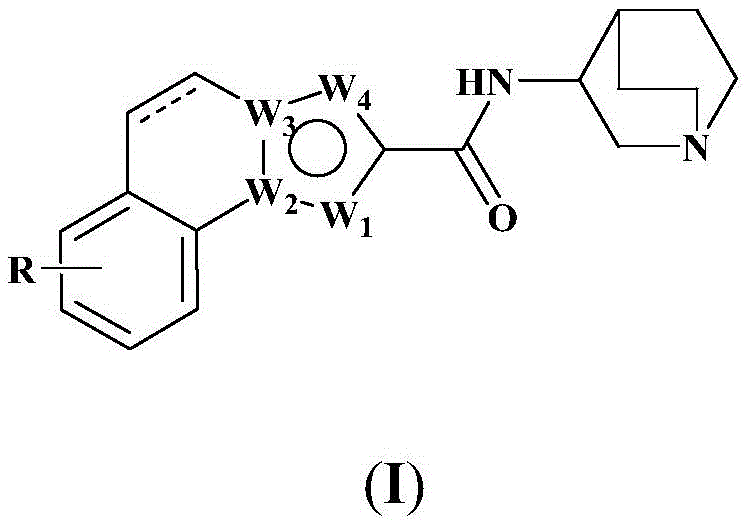
Description
Technical Field
The invention belongs to the technical field of medicines, and particularly relates to a tricyclic heteroaromatic amide derivative and a preparation method thereof.
Background
At present, mental diseases are the fourth leading killer threatening human health after cancer, hypertension, diabetes. Mental illness will be second to cancer-only death and disability in humans by the year 2020, predicted by WHO. Among them, schizophrenia is the most serious and most harmful one of mental diseases, and the global incidence rate is 1% (Ibrahim et al, Annu.Rev.Pharmacol.Toxicol, 2011, 51: 189-. Schizophrenia is a genetic disease determined by gene and environmental factors, and the clinical manifestations can be classified into three main categories: (1) positive symptoms including hallucinations, delusions, etc.; (2) negative symptoms including apathy, lack of interest, outliers, etc.; (3) cognitive disorders including disorganized thinking, decreased attention, impaired memory, etc. (Hill et al, expert. Rev. neuron, 2010,10: 43-57). Despite significant advances in the treatment of positive and negative symptoms, nearly 85% of schizophrenic patients suffer from cognitive dysfunction and no effective drug is currently available (Green et al, biological psychiatry,2001,49(4): 374-384; Miyamoto et al, molecular psychiatry,2005,10(1): 79-104).
There are many targets associated with schizophrenia, such as acetylcholine receptors, dopamine receptors, serotonin receptors, glutamate receptors and other neuronal receptors, which can be activated by endogenous or exogenous ligands and thus release the corresponding neurotransmitters for functioning in the nervous system (Dani et al, Psychiatry,2001, 49: 166-729; Dani et al, Annu. Rev. Pharmacol. Toxicol, 2007, 47: 699-729). At present, most of the drugs for resisting mental diseases applied clinically are multi-target therapeutic agents, and the drugs have certain restrictive or clinical side effects, such as (1) side effects of weight increase, prolactin secretion, QT interval prolongation and the like; (2) the negative symptoms and cognitive impairment that are common and often most debilitating are barely alleviated; (3) cause adverse reactions of the gastrointestinal tract and the like. Therefore, the development of highly selective and effective therapeutic drugs is a primary task for pharmaceutical scientists.
Acetylcholine receptors include muscarinic acetylcholine receptors (machrs) and nicotinic acetylcholine receptors (nachrs). Muscarinic receptors belong to the G protein-coupled receptor superfamily; the nicotinic receptor belongs to ligand gate-controlled ion channel protein of Cys-loop superfamily, and can regulate and control intracellular and extracellular ions (such as Na)+、K+、Ca2+Etc.) (Pohanka et al, International journal of Molecular Sciences,2012,13(2): 2219-2238). They consist of a large number of homologous or heterologous receptors distributed in brain tissue and having specific functions and unique pharmacological properties (Jensen et al, Journal of Medicinal Chemistry,2005,48(15): 4705-4745). To date, a total of 17 nAChR monomers have been cloned, including muscle-type monomers (α 1, β 1, δ, γ, ε) and nerve-type monomers (α 2- α 10 and β 2- β 4). These monomers can be assembled to form a wide variety of pentamers that exert different physiological functions (Yakel et al, The Journal of Physiology,2010,588(4): 597-.
The nicotinic acetylcholine receptors most expressed in the brain are the α 4 β 2 receptor and the α 7 receptor (Kempsilol et al, Eur. J. Pharmacol, 1999,383: 347-357; Papke et al, J. Pharmacol, 2002,137: 49-61; Horenstein et al, J. biol. chem,2007,282: 5899-5909). The α 7 receptor is expressed primarily in the cortical, hippocampal, and subcutaneous marginal zones, and is usually present presynaptically. Agonists of the α 7 receptor have been shown to increase neurotransmitter release in rodents, including acetylcholine, dopamine, glutamate, γ -aminobutyric acid, and the like. Alpha 7 receptor agonists have been shown to improve learning and memory function in normal and aged animals, reversing scopolamine-induced memory deficits, and the like.
The human α 7 receptor belongs to a member of the nAChR family and a number of studies have shown that α 7 receptors are involved in the pathological processes of central nervous system diseases such as schizophrenia, alzheimer's disease etc. (Lester et al, trends. neurosci, 2004,27: 329-. Post-mortem studies have shown that α 7 receptor expression is reduced from normal in brain tissue of schizophrenic patients (Gotti et al, curr. pharm. Des, 2006,12: 407-428); through family analysis studies, the auditory gating defect of P50 in schizophrenic patients is closely related to chromosome 15q14, which is the genetic locus for the α 7 receptor (Raux et al, mol. Psychiatry, 2002,7: 1006-; according to epidemiological studies, a higher proportion of schizophrenic patients are smoking, because cigarettes contain high amounts of nicotine. Nicotine is a typical agonist of nAChRs and can ameliorate or reduce symptoms in schizophrenic patients, such as by producing positive effects on cognitive function (Leon et al, Schizophr. Res, 2005,76:135 + 157; Hughes et al, am.J.Psychiatry, 1986,143:993 + 997; Goff et al, am.J.Psychiatry, 1992,149:1189 + 1194). Smoking has become a means of self-medication for schizophrenic patients. In addition, the improvement of cognitive impairment in psychiatric disorders by the α 7 nAChR agonists under investigation has been a breakthrough (Hashimoto et al, curr. Med. chem,2005, 5: 171-. Thus, the human α 7 receptor is a promising potential therapeutic target for schizophrenia accompanied by cognitive disorders.
Clinical manifestations of alzheimer's disease include progressive cognitive deterioration, a decline in self-care ability in daily life, and the like. In the advanced stages of the disease, degeneration of muscle tissue can lead to patients not eating themselves and eventually becoming bedridden; the patient's language becomes confused and even completely speech-competent; unable to perform tasks independently and require care, etc. Therefore, there is an urgent need to enhance cognitive function in patients.
Many studies have shown that alzheimer's disease is accompanied by a decrease in nicotinic acetylcholine receptors in the cortical and hippocampal regions. Administration of an alpha 7 receptor agonist can enhance cognitive function in a patient with alzheimer's disease. The alpha 7 receptor agonist can improve the learning and memory functions of normal and old animals and reverse scopolamine-induced memory deficits and the like.
Human α 7 nachrs are homo-pentamers composed of five α 7 monomers, whose structure can be divided into three regions: a transmembrane region, an extramembranous C-terminus and an N-terminal region. The binding site for the α 7 receptor agonist is located at the interface of two adjacent α 7 subunits outside the membrane (Brejc et al, Nature, 2001,411: 269-276; Mazurov et al, curr. Med. chem, 2006,13: 1567-1584). Recent studies have shown that quinine-structure-containing α 7 receptor agonists in clinical or preclinical studies exhibit good ameliorating effects in cognitive disorders, such as EVP-6124, JN403, PHA54313, and RF3487, etc. (Feuerbach et al, Neuropharmacology, 2009,56: 254-.
Literature and patent reports on the α 7 receptor and its ligands also include: broad et al, Drugs Future,2007,32(2): 61-170; romanelli et al, ChemMedChem,2007,2(6): 746-767; picciotto et al, J.Neuribio., 2002,53: 641-; brening et al, ann.rep.med.chem.,2005,40: 3-16; swain et al, J.Med.chem.,1992,35: 1019-; WO 2008/00469; WO 2003/092580; WO 2003/070732; WO 2004/00069; US 20090270405.
Disclosure of Invention
The inventor discovers a tricyclic heteroaromatic formamide derivative with a novel structure, and the tricyclic heteroaromatic formamide derivative has the pharmacological action of alpha 7 receptor agonism and the pharmacodynamical action of improving the whole animal learning and memory.
The invention aims to provide a novel tricyclic heteroaromatic formamide derivative or pharmaceutically acceptable salt or stereoisomer thereof.
The second object of the present invention is to provide a process for the preparation of the above compounds.
A third object of the present invention is to provide a pharmaceutical composition comprising the above compound.
The fourth object of the present invention is to provide a pharmaceutical use of the above compound.
Specifically, the invention provides a tricyclic heteroaromatic formamide compound shown as a general formula (I), or a pharmaceutically acceptable stereoisomer, prodrug, salt, solvate or hydrate thereof:
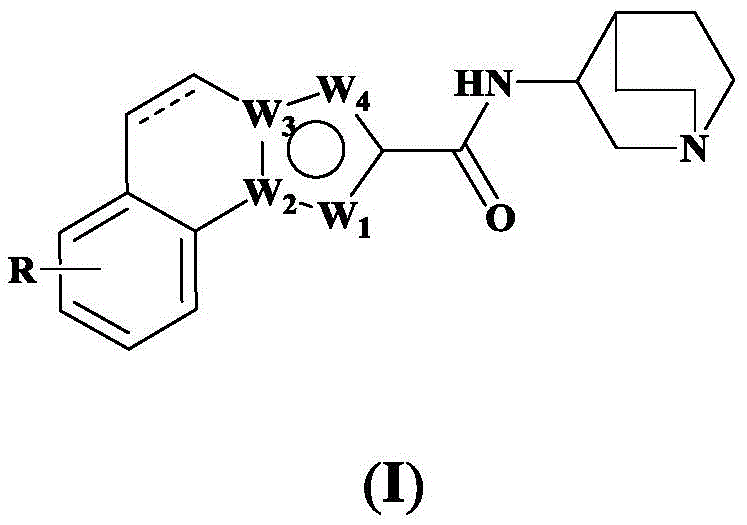
wherein: the dotted line in formula (I) represents a single bond, or is absent;
r is selected from the following groups: hydrogen, hydroxy, cyano, nitro, amino, halogen, C1-6Alkyl radical, C3-6Cycloalkyl radical, C1-6Alkoxy radical, C3-6Cycloalkoxy, halo C1-6Alkyl, halo C3-6Cycloalkyl, halo C1-6Alkoxy, halo C3-6Cycloalkoxy, di C1-3Alkylamino radical, C2-6Alkenyl, or C2-6An alkynyl group;
or one of the following groups:

here, M1Is CH or N; m2Is CH2Or O or S or NH; m3Is CH or N; m4Is N; m5Is CH2Or O or S or NH; rM1、RM2、RM3、RM4And RM5Each independently selected from hydrogen, hydroxy, cyano, nitro, amino, halogen, C1-6Alkyl radical, C3-6Cycloalkyl radical, C1-6Alkoxy radical, C3-6Cycloalkoxy, halo C1-6Alkyl, halo C3-6Cycloalkyl, halo C1-6Alkoxy, halo C3-6Cycloalkoxy, di C1-3Alkylamino radical, C2-6Alkenyl radical, C2-6Alkynyl, or phenyl.
In chemical junctionUnder the premise of reasonable structure, W1、W2、W3、W4And may be any of C, N, O, S.
In a preferred embodiment of the present invention, the present invention provides a compound of 2-pyrrolo [1,2-a ] quinoline carboxamides represented by the general formula (I'), or pharmaceutically acceptable stereoisomers, prodrugs, salts, solvates, or hydrates thereof:
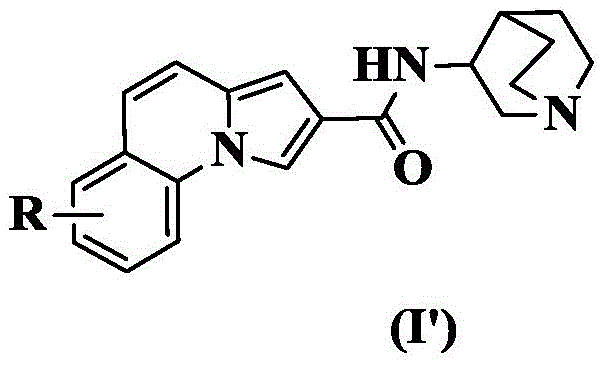
wherein: r is as defined above for formula (I).
In a preferred embodiment of the present invention, the present invention provides a compound of 2-pyrrolo [2,1-a ] isoquinoline carboxamide represented by the general formula (I "), or a pharmaceutically acceptable stereoisomer, prodrug, salt, solvate, or hydrate thereof:

wherein: r is as defined above for formula (I).
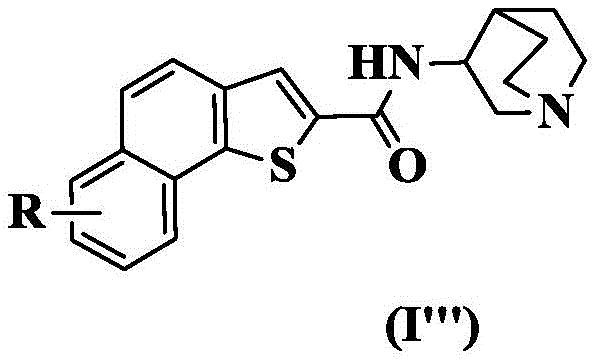
In a preferred embodiment of the present invention, the present invention provides a compound of 2-naphthalene [1,2-b ] thiophenecarboxamides of the general formula (I' "), or a pharmaceutically acceptable stereoisomer, prodrug, salt, solvate, or hydrate thereof:

wherein: r is as defined above for formula (I).
In a preferred embodiment of the present invention, the present invention provides a compound of 2-naphthalene [2,1-b ] thiophenecarboxamide represented by the general formula (I ""), or a pharmaceutically acceptable stereoisomer, prodrug, salt, solvate, or hydrate thereof:
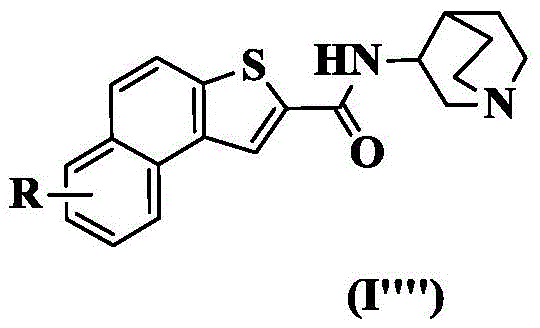
wherein: r is as defined above for formula (I).
In a preferred embodiment of the present invention, the present invention provides a compound of 4, 5-dihydronaphthalene [1,2-b ] thiophenecarboxamides represented by the general formula (I ""), or a pharmaceutically acceptable stereoisomer, prodrug, salt, solvate, or hydrate thereof:
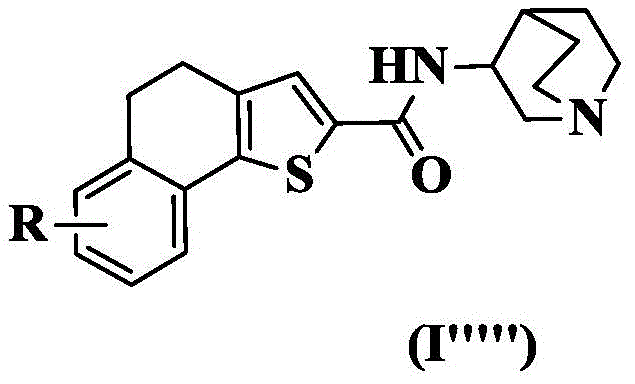
wherein: r is as defined above for formula (I).
In an embodiment of the invention, said C1-6Alkyl is defined by the ring being acyclic with C1-6A monovalent group derived from an alkane by removing a hydrogen atom; the C is1-6Alkyl groups include methyl and ethyl groups, which may be linear (e.g., n-propyl, n-butyl, n-pentyl, or n-hexyl) or branched (e.g., isopropyl, isobutyl, tert-butyl).
In an embodiment of the invention, said C3-6Cycloalkyl refers to cyclopropane, cyclobutane, cyclopentane, cyclohexane.
In an embodiment of the invention, said halogen means fluorine, chlorine, bromine or iodine. In one embodiment, unless otherwise specified, halo is fluoro, chloro or bromo.
In an embodiment of the invention, said halo C1-6Alkyl is C substituted by one or more halogen substituents1-6Alkyl, wherein the halogen substituents may be the same or different. The C is1-6Haloalkyl includes monofluoromethyl, difluoromethyl, trifluoromethyl and the like.
In an embodiment of the invention, said halo C3-6Cycloalkyl is C substituted by one or more halogen substituents3-6Cycloalkyl, wherein the halogen substituents may be the same or different. The halogenated C3-6Cycloalkyl groups include perfluorocyclopropane, perchlorocyclohexaneAnd the like.
In an embodiment of the invention, said C1-6Alkoxy is of the formula1A group of-O- ", wherein R1Is C as defined above1-6An alkyl group. The alkoxy group includes methoxy and ethoxy groups, and may be straight-chain (e.g., n-propoxy, n-butoxy) or branched (e.g., isopropoxy, isobutoxy).
In an embodiment of the invention, said C3-6Cycloalkoxy is of the formula2A group of-O- ", wherein R2Is C as defined above3-6A cycloalkyl group. The cycloalkoxy group includes a cyclopropaneoxy group, a cyclobutaneoxy group, a cyclopentanoxy group, a cyclohexyloxy group.
In an embodiment of the invention, said halo C1-6Alkoxy is of the formula3A group of-O- ", wherein R3Is halogen C as defined above1-6Alkyl radical, C1-6Haloalkoxy includes monofluoromethoxy, difluoromethoxy, trifluoromethoxy and the like, and may be straight-chain or branched.
In an embodiment of the invention, said halo C3-6Cycloalkoxy is of the formula4A group of-O- ", wherein R4Is halogen C as defined above3-6Cycloalkyl radical, the halogeno C3-6The cycloalkoxy group includes perfluorocyclopropyloxy group, perchlorocyclohexyloxy group and the like.
In an embodiment of the invention, said C2-6Alkenyl groups include unsubstituted ethenyl, propenyl, and the like, and styryl, phenylpropenyl, and the like substituted with an aromatic ring, wherein the aromatic ring may have various substituents (for example, halogen, alkyl, hydroxyl, nitro, cyano, and the like as defined above).
In an embodiment of the invention, said C2-6Alkynyl includes unsubstituted ethynyl, propynyl, and the like, and phenylethynyl, propynyl, and the like substituted with an aromatic ring, wherein the aromatic ring may have various substituents (e.g., halogen, alkyl, hydroxy, nitro, cyano, and the like as defined above).
In an embodiment of the invention, pharmaceutically acceptable salts of the compounds, for example, form non-toxic acid addition salts with inorganic acids such as hydrochloric, hydrobromic, hydroiodic, sulfuric or phosphoric acid, with carboxylic acids or with organic sulfonic acids. For example, it includes: hydrochloride, hydrobromide, hydroiodide, sulphate or bisulphate, nitrate, phosphate or hydrogen phosphate, acetate, benzoate, succinate, fumarate, maleate, lactate, citrate, tartrate, gluconate, camphorsulphonate, methanesulphonate, ethanesulphonate, benzenesulphonate, p-toluenesulphonate, pamoate.
In an embodiment of the invention, certain compounds of the invention have chiral centers and thus exist in stereoisomeric forms. The compounds having stereoisomers may be enantiomers or racemic mixtures containing enantiomers. All stereoisomers and mixtures thereof are also included within the scope of the present invention.
In a preferred embodiment of the present invention, there is provided tricyclic heteroaromatic carboxamide compounds of formula (I), formula (I ') or formula (I'), wherein R is hydrogen.
In a preferred embodiment of the present invention, there is provided tricyclic heteroaromatic carboxamide compounds of formula (I), formula (I ') or formula (I'), wherein R is bromo.
The invention provides a tricyclic heteroaromatic formamide compound shown as a general formula (I), a general formula (I ') or a general formula (I'), wherein R is fluorine.
The invention provides a tricyclic heteroaromatic formamide compound shown as a general formula (I), a general formula (I ') or a general formula (I'), wherein R is isopropoxy.
The invention provides a tricyclic heteroaromatic formamide compound shown as a general formula (I), a general formula (I ') or a general formula (I'), wherein R is difluoromethoxy.
The invention provides a tricyclic heteroaromatic formamide compound shown as a general formula (I), a general formula (I ') or a general formula (I'), wherein R is 4-fluorophenyl.
The invention provides a tricyclic heteroaromatic formamide compound shown as a general formula (I), a general formula (I ') or a general formula (I'), wherein R is hydroxyl.
The invention provides a tricyclic heteroaromatic formamide compound shown as a general formula (I), a general formula (I '), or a general formula (I'), wherein R is 4-tert-butylphenyl.
The invention provides a tricyclic heteroaromatic formamide compound shown as a general formula (I), a general formula (I ') or a general formula (I'), wherein R is an o-tolyl group.
The invention provides a tricyclic heteroaromatic formamide compound shown as a general formula (I), a general formula (I ') or a general formula (I'), wherein R is an isobutoxy group.
The invention provides a tricyclic heteroaromatic formamide compound shown as a general formula (I), a general formula (I ') or a general formula (I'), wherein R is methyl.
In embodiments of the invention, for the avoidance of doubt, unless otherwise stated, the term "substituted" means substituted by one or more defined groups. Where a group can be selected from a number of alternative groups, these selected groups may be the same or different.
In a particularly preferred embodiment of the invention, the compounds provided by the invention are selected from:
7-bromo-N- (quinuclidin-3-yl) pyrrolo [1,2-a ] quinoline-2-carboxamide;
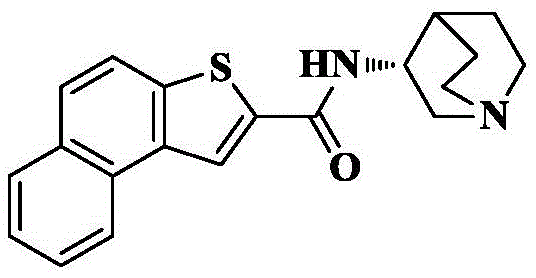
n- (quinuclidin-3-yl) naphthalene [2,1-b ] thiophene-2-carboxamide;
n- (quinuclidin-3-yl) pyrrolo [2,1-a ] isoquinoline-2-carboxamide;
7-fluoro-N- (quinuclidin-3-yl) pyrrolo [1,2-a ] quinoline-2-carboxamide;
n- (quinuclidin-3-yl) pyrrolo [1,2-a ] quinoline-2-carboxamide;
7-isobutoxy-N- (quinuclidin-3-yl) pyrrolo [1,2-a ] quinoline-2-carboxamide;
7-propynyloxy-N- (quinuclidin-3-yl) pyrrolo [1,2-a ] quinoline-2-carboxamide;
7-difluoromethoxy-N- (quinuclidin-3-yl) pyrrolo [1,2-a ] quinoline-2-carboxamide;
7- (4-fluorophenyl) -N- (quinuclidin-3-yl) pyrrolo [1,2-a ] quinoline-2-carboxamide;
7-hydroxy-N- (quinuclidin-3-yl) pyrrolo [1,2-a ] quinoline-2-carboxamide;
7- (4-tert-butylphenyl) -N- (quinuclidin-3-yl) pyrrolo [1,2-a ] quinoline-2-carboxamide;
7-o-tolyl-N- (quinuclidin-3-yl) pyrrolo [1,2-a ] quinoline-2-carboxamide;
7-methyl-N- (quinuclidin-3-yl) pyrrolo [1,2-a ] quinoline-2-carboxamide;
n- (quinuclidin-3-yl) -4, 5-dihydronaphthalene [1,2-b ] thiophene-2-carboxamide;
n- (quinuclidin-3-yl) naphthalene [1,2-b ] thiophene-2-carboxamide;
7-bromo-N- [ (3R) -1-quinuclidin-3-yl ] pyrrolo [1,2-a ] quinoline-2-carboxamide;
n- [ (3R) -1-quinuclidin-3-yl ] naphthalene [1,2-a ] thiophene-2-carboxamide;
n- [ (3R) -1-quinuclidin-3-yl ] pyrrolo [2,1-a ] isoquinoline-2-carboxamide;
7-fluoro-N- [ (3R) -1-quinuclidin-3-yl ] pyrrolo [1,2-a ] quinoline-2-carboxamide;
n- [ (3R) -1-quinuclidin-3-yl ] pyrrolo [1,2-a ] quinoline-2-carboxamide;
7-isobutoxy-N- [ (3R) -1-quinuclidin-3-yl ] pyrrolo [1,2-a ] quinoline-2-carboxamide;
7-propynyloxy-N- [ (3R) -1-quinuclidin-3-yl ] pyrrolo [1,2-a ] quinoline-2-carboxamide;
7-difluoromethoxy-N- [ (3R) -1-quinuclidin-3-yl ] pyrrolo [1,2-a ] quinoline-2-carboxamide;
7- (4-fluorophenyl) -N- [ (3R) -1-quinuclidin-3-yl ] pyrrolo [1,2-a ] quinoline-2-carboxamide;
7-hydroxy-N- [ (3R) -1-quinuclidin-3-yl ] pyrrolo [1,2-a ] quinoline-2-carboxamide;
7- (4-tert-butylphenyl) -N- [ (3R) -1-quinuclidin-3-yl ] pyrrolo [1,2-a ] quinoline-2-carboxamide;
7-o-tolyl-N- [ (3R) -1-quinuclidin-3-yl ] pyrrolo [1,2-a ] quinoline-2-carboxamide;
7-methyl-N- [ (3R) -1-quinuclidin-3-yl ] pyrrolo [1,2-a ] quinoline-2-carboxamide;
n- [ (3R) -1-quinuclidin-3-yl ] -4, 5-dihydronaphthalene [1,2-b ] thiophene-2-carboxamide;
n- [ (3R) -1-quinuclidin-3-yl ] naphthalene [1,2-b ] thiophene-2-carboxamide;
or a pharmaceutically acceptable salt, solvate, or hydrate thereof.
In a second aspect, the present invention also provides a preparation method of the tricyclic heteroaromatic carboxamides represented by formula (I), comprising:
reacting a compound of formula (V) with a compound of formula (X) 3-aminoquinuclidine dihydrochloride to provide a compound of formula (I):

here, the dotted line in formula (V) and formula (I), R, W1、W2、W3And W4Is as defined above.
Among them, the synthesis of the related intermediates of the compound of formula (V) can be referred to WO2003/070732, Tetrahedron Lett.54(2013)1368-1370, J.org.chem.72(2007)1729-1736, mol.Divers.17(2013)221-243, etc
The invention also provides a preparation method of the compounds of the formula (I') of the three-ring heteroaromatic formamide system.

The general preparation process comprises the following steps: stirring the compound of the formula (II ') and vinyl ethyl ether in a glacial acetic acid solvent at room temperature for 3-4 hours, and monitoring the reaction by TLC to obtain the compound of the formula (II')After complete conversion to the compound of formula (III '), the reaction mixture is refluxed until complete conversion to the compound of formula (IV'). The compound of formula (V ') is obtained by oxidation reaction, and reacts with methyl acrylate in a mixed solvent of dioxane/water for 24h to generate the compound of formula (VI'), which is reacted with Ac2And (2) reacting O at 50 ℃ for 2h to generate a compound of a formula (VII '), refluxing the reaction system for 3 hours to obtain a compound of a formula (VIII '), hydrolyzing the compound by sodium hydroxide and acidifying the compound by hydrochloric acid to generate a compound of a formula (IX '), and condensing the compound of the formula (IX ') and a compound of a formula (X), namely 3-aminoquinine dihydrochloride to obtain the compound of the formula (I '), namely the target compound.
The synthetic route is as follows:
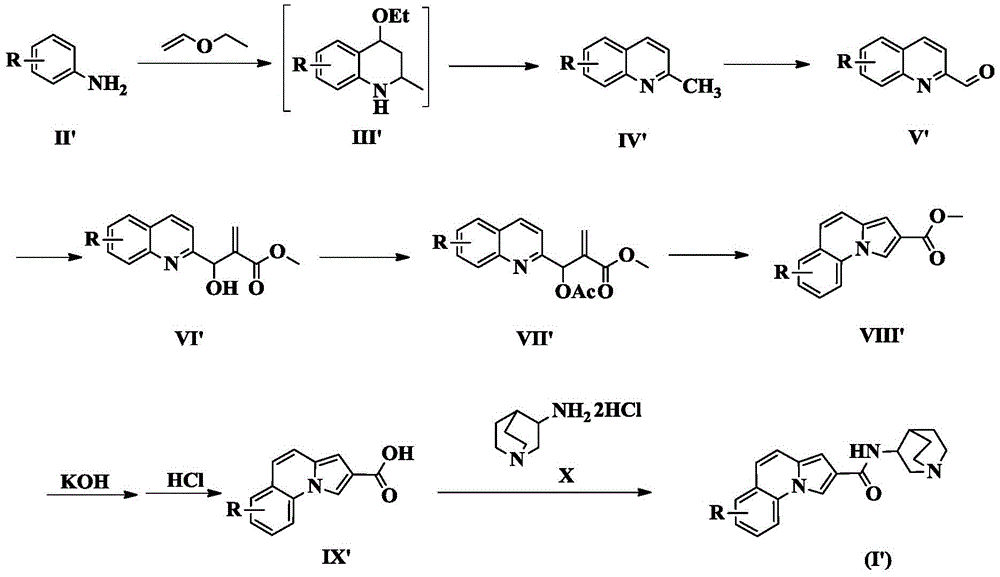
here, R in the formula (II '), the formula (III '), the formula (IV '), the formula (V '), the formula (VI '), the formula (VII '), the formula (VIII '), the formula (IX ') and the formula (I ') is as defined above for the formula (I).
The invention also provides a preparation method of the compound of the formula (I') of the formamide of the tricyclic heteroaromatic system.

The general preparation process comprises the following steps: the compound of formula (II ') is oxidized to obtain a compound of formula (III '), which reacts with methyl acrylate in a mixed solvent of dioxane/water for 24h to generate a compound of formula (IV '), which reacts with Ac2And (3) reacting O at 50 ℃ for 2h to generate a compound shown in the formula (V '), refluxing the reaction system for 3 h to obtain a compound shown in the formula (VI '), hydrolyzing the compound with sodium hydroxide and acidifying the compound with hydrochloric acid to generate a compound shown in the formula (VII '), and condensing the compound shown in the formula (VII ') and a compound shown in the formula (X) 3-aminoquinine dihydrochloride to obtain a compound shown in the formula (I '), namely the target compound.
The synthetic route is as follows:

wherein R in the formula (II), (III), (IV), (V), (VI), (VII) and (I ") is as defined for the above formula (I).
The invention also provides a preparation method of the compound of the three-ring heteroaromatic system formamide shown as the formula (I').
The general preparation process comprises the following steps: reacting the compound of the formula (II ') with phosphorus oxychloride in dry DMF for 2h to generate a compound of a formula (III '), reacting the compound with ethyl thioglycolate overnight under the condition of sodium ethoxide to generate a compound of a formula (IV '), then carrying out oxidative dehydrogenation to obtain an intermediate compound of a formula (V '), hydrolyzing the intermediate compound by sodium hydroxide and acidifying the intermediate compound by hydrochloric acid to generate a compound of a formula (VI '), and condensing the compound of the formula (VI ') and a compound of a formula (X) 3-aminoquinine dihydrochloride to obtain a compound of a formula (I '), namely a target compound.
The synthetic route is as follows:

here, R in the formulae (II '), (III'), (IV '), (V'), (VI '), and (I') is as defined above for formula (I).
The invention also provides a preparation method of the compound of the tricyclic heteroaromatic formamide shown as the formula (I').
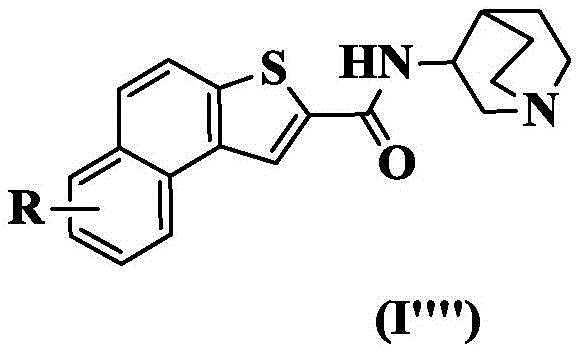
The general preparation process comprises the following steps: the compound of formula (II ') and the compound of formula (III') are refluxed in glacial acetic acid to generate the compound of formula (IV ') through reaction, the compound of formula (V') is hydrolyzed under alkaline condition, the compound of formula (VI ') is generated through oxidative dehydrogenation of elemental iodine, and then the compound of formula (I') is obtained through condensation reaction with the compound of formula (X) 3-aminoquinine dihydrochloride, namely the target compound.
The synthetic route is as follows:

here, R in the formulae (II '), (IV '), (V '), (VI ') and (I ') is as defined above for formula (I).
The invention also provides a preparation method of the heteroaromatic formamide compound shown as the formula (I').
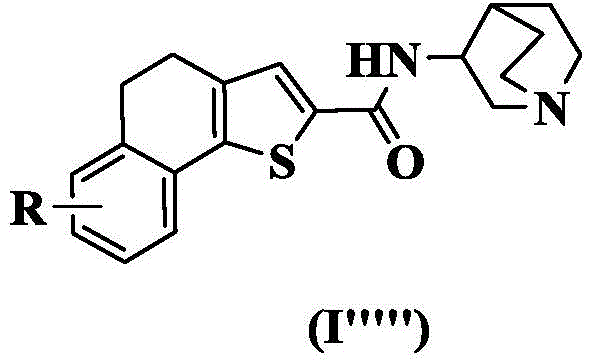
The general preparation process comprises the following steps: reacting the compound of the formula (II ') with phosphorus oxychloride in dry DMF for 2h to generate a compound of the formula (III'), reacting the compound with ethyl thioglycolate under the condition of sodium ethoxide overnight to generate a compound of the formula (IV '), hydrolyzing the compound with sodium hydroxide and acidifying with hydrochloric acid to generate a compound of the formula (VI'), and condensing the compound of the formula (VI ') and the compound 3-aminoquinine dihydrochloride of the formula (X) to obtain a compound of the formula (I'), namely a target compound.
The synthetic route is as follows:
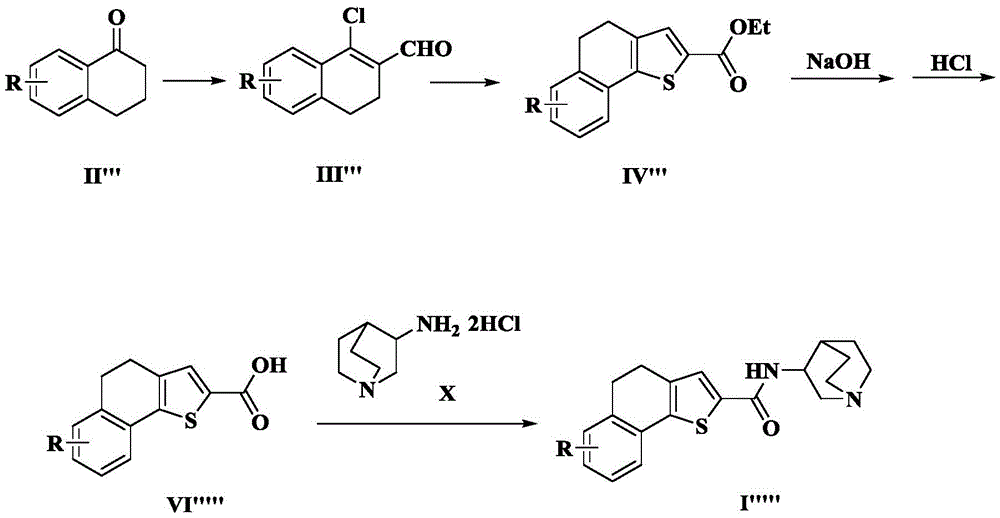
here, R in the formulae (II '), (III '), (IV '), (VI ') and (I ') is as defined for formula (I) above.
In a third aspect, the present invention provides a pharmaceutical composition comprising a pharmacologically effective amount of a tricyclic heteroaromatic carboxamide compound of the present invention (e.g., a compound of formula (I), formula (I '), formula (I "), formula (I') and a pharmaceutically acceptable carrier). The compound is mixed with a pharmaceutical excipient and/or a diluent to obtain the pharmaceutical composition of the invention. The pharmaceutical composition can be administered orally in the form of tablet, capsule, pill, powder, granule, powder, or syrup, or parenterally in the form of injection. The unit dose of the pharmaceutical composition is 0.1mg to 1 g.
The pharmaceutical composition can be prepared by conventional pharmaceutical methods. Suitable pharmaceutical carriers include inert diluents or fillers, water and various organic solvents. Pharmaceutically acceptable adjuvants that may be used include flavoring agents, binders, excipients, and the like. Commonly used excipients include: saccharide derivatives, starch derivatives, cellulose derivatives, gum arabic and the like; common binders include gelatin, polyvinylpyrrolidone, polyethylene glycol; commonly used disintegrants include sodium carboxymethyl cellulose, polyvinylpyrrolidone; commonly used lubricants include talc, calcium stearate, magnesium stearate, spermaceti, and the like; commonly used stabilizers include methylparaben; there are also various sweetening or flavoring agents, coloring matter or dyes, and diluents (e.g., water, ethanol, propylene glycol, glycerin, etc.).
In a fourth aspect, the present invention provides the use of tricyclic heteroaromatic carboxamides (including compounds of formula (I), formula (I '), formula (I "), formula (I ') and formula (I ') as α 7 nicotinic acetylcholine receptor agonists. Herein, the use of the alpha 7 nicotinic acetylcholine receptor agonists includes the prevention and treatment of a variety of central nervous system disorders, such as schizophrenia, Alzheimer's disease, epilepsy, convulsions, or depression.
The beneficial effects of the invention are as follows: the compound of the invention is a compound with a brand-new structure, has the agonistic activity of the nicotinic alpha 7 receptor, can be used as an agonist of the nicotinic alpha 7 receptor, and can be used for preventing and treating various central nervous system diseases; in addition, the compounds of the present invention provide pharmaceutical use advantages, for example, in one or more of their mechanism of action, binding, agonistic activity, safety profile, solubility, or bioavailability. In addition, the invention designs a [4+2] imino Diels-Alder reaction and a [3+2] MBH reaction for the first time to construct the benzazoledrine ring system, and the whole reaction route is simple and the yield is high.
Experiments prove that the tricyclic heteroaromatic carboxamide compound provided by the invention shows high affinity and high agonistic activity to alpha 7 nAChR in functional experiments. Wherein a functional assay for α 7 nAChR agonistic activity is performed using xenopus oocytes that stably express α 7 nAChR. In this experiment, the EC of the compounds of the invention50The value is in the range of 0.9. mu.M to 9. mu.M. The potency of the compounds ranged from 23.1% to 72.4%.
Therefore, given the structure and activity data of the alpha 7 nAChR agonist in clinical research, the target compound designed and synthesized by the invention has the following structure and activity advantages:
(1) the novel tricyclic heteroaromatic amide derivative disclosed by the invention can be specifically combined with alpha 7 nAChR, and can activate a receptor with high selectivity to exert a clinical effect. Compounds were first tested for dose-effect relationship on α 7 nachrs. Before adding the compound to be tested, adding ACh agonistic alpha 7 nAChR as a control, adding compounds (0.1-30 mu M) with different concentrations from low to high, and eluting at an interval of 7 min. And fitting a dose-effect curve by using the current amplitude as a parameter and adopting a Hill equation and calculating a kinetic parameter. EC for Compounds of the examples compared to endogenous agonist ACh50Are all much smaller than 256.43 + -20.10 μ M for ACh; although the EC of each compound was higher than that of the reference compound EVP-6124 in the virtual screening50Are all larger than EVP-6124(0.25 +/-0.07 mu M), but EmaxThe maximum effect of compound (C-P36) in example 5 was more than twice that of EVP-6124(27.6 + -1.6%); in addition, EC for the Compound in example 350Has been compared with EVP-6124, and Emax(42.2. + -. 0.6%) higher than EVP-6124. Therefore, the compound has certain advantages compared with EVP-6124 in the aspect of electrophysiological dynamics in the exciting effect and the capability.
(2) Receptor selectivity advantage
100 μ M ACh can activate α 4 β 2 and α 3 β 4 receptors, respectively, but 10 μ M is added5 do not activate the α 3 β 4 receptor, so it is believed that the compound of example 5 does not have an agonistic effect on α 3 β 4; when 10 μ M of the compound of example 5 and 100 μ M of ACh were added simultaneously, it was found that the current amplitude induced by ACh agonizing the α 3 β 4 receptor was slightly inhibited, and thus the compound of example 5 had a certain inhibitory effect on the α 3 β 4 receptor, but the IC was IC50Values greater than 10uM suggest that the compound of example 5 is more selective for the α 7 nAChR than the α 3 β 4 receptor, and acts primarily on the α 7 nAChR at lower concentrations. In addition, the 10 mu M compound in the 5 case has slight agonism on alpha 4 beta 2 receptors and strong inhibition on 5-HT3A, and has positive significance for clinical application to treatment of Alzheimer's disease and schizophrenia.
(3) In combination with allosteric modulators
By selecting the known alpha 7 receptor allosteric modulator PNU-120596 and examining the agonistic activity at the alpha 7 receptor using the compound of example 5 in combination, it was found that EC50 increased from 1.88 μm to 0.12 μm, while prolonging the patency time after agonism of the alpha 7 nAChR. The above results all indicate that the above compounds have great clinical potential in combination with α 7 PAM.
The experimental results show that the tricyclic heteroaromatic carboxamide derivative has high affinity, high selectivity and high agonistic activity on an alpha 7 receptor.
Tricyclic heteroaromatic carboxamides are useful in the prevention and treatment of a variety of central nervous system disorders, such as schizophrenia, alzheimer's disease, epilepsy, convulsions, depression, and the like.
Drawings
FIG. 1 shows the concentration-dependent opening of the α 7 nAChR channel by the compound of example 3 (or "the compound of example 3") according to the invention. The α 7 current stimulated at 3mM ACh (i.e., the maximum current for ACh to agonize α 7 nAChR) was used as a positive control, and different concentrations of the compound of example 3 were added from low to high, and the resulting current was recorded for an elution time of 7 min.
FIG. 2 is a dose-response relationship of the compound of example 3 (or "the compound of example 3") of the present invention to α 7 nAChR agonism.
The ratio of the peak value of the excitation current of the compound of example 3 to the peak value of the excitation current of 3mM ACh (normalized current) was used as a parameterAnd fitting by using a Hill equation to obtain related parameters. The results show that the compound of example 3 has an EC50 of 0.91. + -. 0.05. mu.M, a Hill factor nH of 1.18. + -. 0.08 and a maximum effect Emax42.2 ± 0.6%, n is 6.
FIG. 3 shows the results of the selectivity evaluation of the compound of example 5 (or "the compound of example 5") of the present invention for α 3 β 4, α 4 β 2 nAChR.
The agonistic/inhibitory effect of the compound of example 5 on α 3 β 4, α 4 β 2 nachrs was evaluated using 100 μ M ACh-stimulated α 3 β 4, α 4 β 2 currents as a positive control. For the alpha 3 beta 4 nAChR, the compound in the example 5 is found to have certain inhibition effect. For α 4 β 2 nachrs, the compound of example 5 had a weak agonistic effect on it.
FIG. 4 shows the results of the selective assessment of the 5-HT3A receptor by the compound of example 5 (or "example 5 compound") of the present invention.
The 10 μ M5-HT stimulated α 3 β 4, α 4 β 2 current was used as a positive control, example 5 compound on 5-HT3AThe receptor has obvious inhibiting effect, and the dosage-effect relationship is fitted by using the Hill equation to obtain IC500.71 ± 0.22 μ M, and a hill coefficient of 1.30 ± 0.47(n ═ 5).
FIG. 5 is a graph showing that the compound of example 5 of the present invention (or "the compound of example 5") activates the α 7 nAChR in combination with 1 μ M PNU-120596.
After 2min incubation with 1 μ M PNU-120596, the compound of example 5 was added at different concentrations, low to high, and the resulting current was recorded for 10 min.
FIG. 6 shows the dose-effect relationship of the compound of example 5 (or "the compound of example 5") of the present invention to activate α 7 nAChR in the presence of PNU-120596.
The dose-response curves were fitted using the Hill equation with the normalized current as a parameter, and the results show that 1. mu.M PNU-120596 gave the EC for the compound of example 550From 1.88 + -0.43 μ M to 0.12 + -0.02 μ M, the Hill factor is from 1.04 + -0.30 to 2.04 + -0.52 (n-5).
FIG. 7 is a dose-response relationship of the compound of example 5 (or "the compound of example 5") of the present invention to α 7 nAChR agonism.
The ratio of the peak excitation current of the compound of example 5 to the peak excitation current of 3mM ACh (normalized)The current) is used as a parameter, and a Hill equation is used for fitting to obtain a relevant parameter. The results show the EC for the compound of example 5501.88 +/-0.43 mu M, Hill coefficient nH1.04. + -. 0.30, maximum effect Emax72.45 ± 5.71%, n is 5; EC of EVP-6124500.25 +/-0.07 mu M, Hill coefficient nH1.40. + -. 0.53, maximum effect Emax27.64 ± 1.63%, n is 5; EC of ACh50256.43 +/-20.10 mu M, Hill coefficient nHIs 1.14 +/-0.10, and n is 5.
Detailed Description
The following examples are intended to further illustrate the present invention and are not to be construed as limiting in any way.
In the present invention, abbreviations are:
PE Petroleum Ether
Ac2O acetic anhydride
EA Ethyl acetate
DCM dichloromethane
THF tetrahydrofuran
TLC thin layer chromatography
DIPEA diisopropylethylamine
NBS N-bromosuccinimide
DMF N, N-dimethylformamide
nAChR nicotinic acetylcholine receptors
Pd(AcO)2Palladium acetate
Pd(PPh3)4Tetrakis (triphenylphosphine) palladium
HATU 2- (7-azobenzotriazol) -N, N, N ', N' -tetramethyluronium hexafluorophosphate
TEVC double-electrode voltage clamp
The nuclear magnetic data were measured by a Bruker Avance III 400 NMR spectrometer with internal standard TMS (tertramethyl silane); nuclear magnetic data were processed by mestReNova (ver.6.1.0, mesrelab Research s.l.) software; high resolution mass spectrometry data (ESI-TOF) were determined by Bruker Apex IV FTMS type Fourier ion cyclotron transform mass spectrometry; thin layer chromatography silica gel plate (Shanghai Pongwu Co., Ltd.); column chromatography silica gel (200-300 mesh, Shanghai Po Kogyo Co., Ltd.).
All solvents, starting materials and reagents were, unless otherwise stated, commercially available, analytically pure products.
Example 1
Synthesis of 7-bromo-N- [ (3R) -1-quinuclidin-3-yl ] pyrrolo [1,2-a ] quinoline-2-carboxamide

1a) 6-bromo-2-methylquinoline

Para-bromoaniline (10g, 59mmol) and vinyl ethyl ether (17mL, 0.18mol) were added to glacial acetic acid solvent (100mL) and the mixture was stirred at 25 ℃ for 3-4 hours. And (3) performing TLC detection reaction, after the para-bromoaniline is completely consumed, heating the reaction to reflux, keeping for 3-4 hours, pouring the reaction system into ice water (200mL) after TLC detection reaction intermediate is completely converted, adjusting the reaction system to be neutral by sodium bicarbonate, extracting by EA (3X 300mL), washing an organic phase by saturated saline solution (2X 200mL), drying by anhydrous sodium sulfate, filtering and concentrating. The crude product was isolated and purified by silica gel column chromatography eluting with PE/EA ═ 8/1, yielding 6.0g of a viscous liquid with a yield of 46.1%.
1b) 6-bromoquinoline-2-carbaldehyde

Dissolving the compound (6.0g, 27.3mmol) obtained in the method 1a) in 1, 4-dioxane (30mL), adding selenium dioxide (3.9g, 35.5mmol), heating the reaction mixture to reflux under the protection of nitrogen, keeping for 1-2 hours, and detecting by TLC until the reaction is complete. The reaction solution was cooled to room temperature, filtered, and the filtrate was concentrated under reduced pressure. The crude product was isolated and purified by silica gel column chromatography eluting with PE/EA 5/1 to give 5.6g of a pale yellow solid in 86.3% yield.
1c)2- (hydroxy- (6-bromoquinolin-2-yl) methyl) acrylate
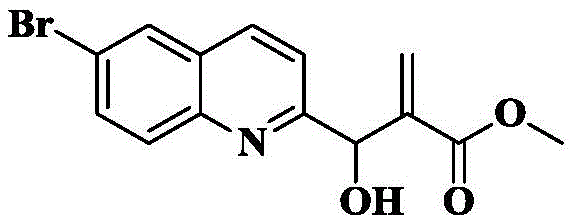
The compound (5.6g, 23.9mmol) obtained in 1b), methyl acrylate (4.3mL,47.8mmol) and DABCO (1.3g, 12.0mmol) were dissolved in 1, 4-dioxane/water (3/1, 30mL) and reacted at 25 ℃ for 24 hours. The solvent was removed by rotary evaporation and the crude product was purified by column chromatography on silica gel eluting with PE/EA-3/1 to give 6.1g of a light clear oil in 80% yield.
1d) 7-bromo-pyrrolo [1,2-a ] quinoline-2-carboxylic acid methyl ester

The compound obtained by the method of 1c) (6.1g, 19.1mmol) was dissolved in Ac2And (3) reacting in O (20mL) at 50 ℃ for 3-5 hours, detecting by TLC that the reaction is completely converted, heating the reaction mixture to 120 ℃, continuously stirring for 3-4 hours, and detecting by TLC until the reaction is completely carried out. The reaction was cooled to room temperature, slowly poured into an excess of 0 ℃ saturated aqueous sodium bicarbonate and stirred for 0.5h (generating a large amount of bubbles). Then, the mixture was extracted with EA (3X 100mL), and the organic phase was washed with saturated brine (2X 100mL), dried over anhydrous sodium sulfate, filtered, and concentrated. The crude product was isolated and purified by silica gel column chromatography eluting with PE/EA-5/1 to give 5.5g of a pale white solid in 96.3% yield.
1e) 7-bromo-pyrrolo [1,2-a ] quinoline-2-carboxylic acid

The compound obtained in 1d) (100mg, 0.33mmol) was dissolved in THF (5mL) and CH3To the above mixture was added KOH (184.8mg, 3.3mmol) and H in OH (5mL)2O(4mL) Stirring and refluxing the reaction solution for 2-3 hours, and detecting the reaction by TLC until the reaction is complete. Cooling to room temperature, removing the organic solvent by rotary evaporation, adding 1M HCl aqueous solution to adjust the pH to acidity under ice bath condition, stirring for 0.5 hour, filtering and drying the precipitated solid to obtain an off-white solid 89.8mg with a yield of 94.5%.
1f) 7-bromo-N- [ (3R) -1-quinuclidin-3-yl ] pyrrolo [1,2-a ] quinoline-2-carboxamide
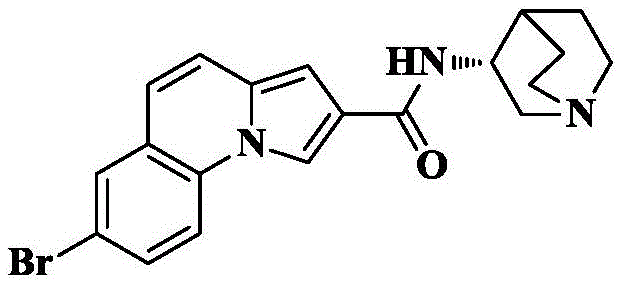
The compound (30mg, 0.1mmol) obtained in 1e), HATU (76mg, 0.2mmol) and DIPEA (66mg, 0.5mmol) were added to dry DCM (5mL), cooled to 0 ℃ and 3- (3R) -aminoquinine dihydrochloride (24mg, 0.12mmol) was slowly added, the reaction system was naturally warmed to room temperature and reacted for 10 hours. The solvent was removed by rotary evaporation, and saturated brine (10mL) was added to the reaction system and CH was added3OH/DCM (1/100, 3X 10mL) was extracted and the organic phase was dried over anhydrous sodium sulfate, filtered and concentrated. The crude product was isolated and purified by silica gel column chromatography eluting with DCM/MeOH/ammonia 90/10/1 to give 30mg of an off-white solid in 75.3% yield.
C of HRMS (ESI) m/z20H20BrN3O[M+1]+397.0790,399.0769 as a theoretical value; found 398.0867,400.0879.
1H NMR(400MHz,DMSO-d6)δ8.75(s,1H),8.22(d,J=8.9Hz,1H),8.06(d,J=2.1Hz,1H),7.95(d,J=6.9Hz,1H),7.75(dd,J=8.8,2.2Hz,1H),7.49(d,J=9.4Hz,1H),7.15(d,J=9.5Hz,1H),7.05(s,1H),3.97(d,J=6.8Hz,1H),3.19–3.07(m,1H),2.90(t,J=9.8Hz,1H),2.82–2.56(m,4H),1.91–1.79(m,2H),1.64–1.54(m,2H),1.38–1.27(m,1H).
13C NMR(101MHz,DMSO-d6)δ163.87,132.14,131.24,131.07,130.49,126.08,124.26,120.86,118.94,117.70,117.20,115.57,103.39,54.40,47.41,47.11,46.90,26.46,26.21,20.44.
Example 2
Synthesis of N- [ (3R) -1-quinin-3-yl ] naphthalene [2,1-b ] thiophene-2-carboxamide
2a)5- (1-dihydronaphthalenylidene) rhodanine
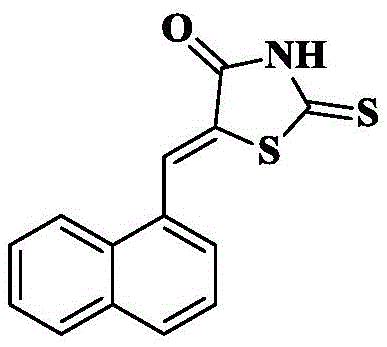
Rhodanine (1.71g, 12.8mmol) and sodium acetate (3.2g, 38.5mmol) were added to glacial acetic acid solvent (20mL), the mixture was heated to 70 ℃ to 75 ℃ and 1-naphthaldehyde (2g, 12.8mmol) was added slowly to the above solution and the reaction was refluxed for 1 hour. And (3) detecting the reaction by TLC, pouring the reaction liquid into ice water (100mL) after the 1-naphthaldehyde is completely consumed, and filtering and drying the generated red precipitate to obtain a crude product. And then recrystallized by absolute ethyl alcohol to obtain 2.35g of red needle-shaped crystals, wherein the yield is 68 percent.
2b) Beta-1-naphthyl-alpha-mercaptoacrylic acid

The compound obtained by the method of 2a) (2.35g, 8.7mmol) was dissolved in cold 10% aqueous NaOH solution (10mL) with rapid stirring, the reaction was stirred for 30 minutes, the resulting yellow solid sodium salt was collected and added directly to 10% aqueous NaOH solution (40mL) at 60 ℃ and the mixture was stirred for 20 minutes and then activated carbon was added for decolorization. After filtration, a 2N HCl solution was added to the filtrate to adjust to acidity, and after stirring for 30 minutes in an ice bath, the crude product was obtained by filtration, and 1.54g of a yellow solid was obtained by recrystallization from toluene, with a yield of 72.3%.
2c) Naphthalene [2,1-b ] thiophene-2-carboxylic acid
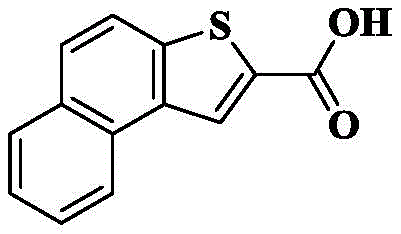
The compound (1.54g, 6.7mmol) obtained in 2b) was dissolved in 1, 4-dioxane (20mL), iodine (5g, 20mmol) was added thereto, and the reaction solution was heated to 45 ℃ and stirred for 24 hours. The reaction mixture was poured into 100mL of water and stirred for 10 minutes. At room temperature, decolorized with sodium bisulfate and a brown precipitate collected. The crude product was dissolved in 10% aqueous NaOH, activated carbon was added, the mixture was warmed to 90 ℃, stirred for 30 minutes, and filtered. The mixture was acidified with 1N HCl, extracted with EA (3X 100mL), and the organic phase was washed with saturated brine (2X 100mL), dried over anhydrous sodium sulfate, filtered, and concentrated. The crude product was recrystallized from toluene to give 0.94g of a yellow solid in 61.7% yield.
2d) N- [ (3R) -1-quinin-3-yl ] naphthalene [2,1-b ] thiophene-2-carboxamide
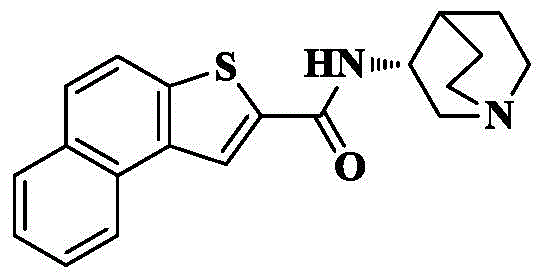
The compound (30mg, 0.13mmol) obtained in 2c), HATU (99mg, 0.26mmol) and DIPEA (84mg, 0.65mmol) were added to dry DCM (5mL), cooled to 0 ℃ and 3- (3R) -aminoquinine dihydrochloride (40mg, 0.2mmol) was slowly added, the reaction system was naturally warmed to room temperature and reacted for 10 hours. The solvent was removed by rotary evaporation, and saturated brine (10mL) was added to the reaction system and CH was added3OH/DCM (1/100, 3X 10mL) was extracted and the organic phase was dried over anhydrous sodium sulfate, filtered and concentrated. The crude product was isolated and purified by silica gel column chromatography eluting with DCM/MeOH/ammonia 90/10/1 to give 28mg of an off-white solid in 65.2% yield.
C of HRMS (ESI) m/z20H20N2OS[M+1]+336.1296 as a theoretical value; found 337.1378.
1H NMR(400MHz,DMSO-d6)δ8.98(s,1H),8.54(d,J=6.7Hz,1H),8.43(d,J=8.2Hz,1H),8.06(dd,J=8.4,4.0Hz,2H),7.93(d,J=8.9Hz,1H),7.73(t,J=7.5Hz,1H),7.62(t,J=7.5Hz,1H),3.99(d,J=6.4Hz,1H),3.24–3.09(m,1H),2.93(t,J=10.1Hz,1H),2.80–2.62(m,4H),1.95–1.83(m,2H),1.63–1.55(m,2H),1.40–1.31(m,1H).
13C NMR(101MHz,DMSO-d6)δ162.08,140.24,139.18,135.85,131.07,129.72,129.21,127.63,127.30,126.34,123.72,123.59,121.37,54.27,47.97,47.42,46.85,26.41,26.14,20.44.
Example 3
Synthesis of N- [ (3R) -1-quinin-3-yl ] pyrrolo [2,1-a ] isoquinoline-2-carboxamide

Preparation of pyrrole [2,1-a ] with reference to the preparation method of example 1]Isoquinoline-2-carboxylic acid. 1-methyl isoquinoline is oxidized to obtain isoquinoline-1-formaldehyde, which reacts with methyl acrylate in a dioxane/water mixed solvent for 24 hours to generate 2- (hydroxy- (isoquinoline-1-yl) methyl acrylate, which is reacted with Ac2O reacts for 2 hours at 50 ℃, and then the reaction system is refluxed for 3 hours to obtain pyrrole [2,1-a]Isoquinoline-2-carboxylic acid methyl ester, which is hydrolyzed with potassium hydroxide and acidified with hydrochloric acid to form pyrrole [2,1-a ]]Isoquinoline-2-carboxylic acid.
Pyrrole [2,1-a ]]Isoquinoline-2-carboxylic acid (30mg, 0.14mmol), HATU (106mg, 0.28mmol), and DIPEA (90mg, 0.7mmol) were added to dry DCM (5mL), cooled to 0 deg.C, 3- (3R) -aminoquinine dihydrochloride (42mg, 0.21mmol) was slowly added, and the reaction was allowed to spontaneously warm to room temperature for 10 hours. The solvent was removed by rotary evaporation, and saturated brine (10mL) was added to the reaction system and CH was added3OH/DCM (1/100, 3X 10mL) was extracted and the organic phase was dried over anhydrous sodium sulfate, filtered and concentrated. The crude product was isolated and purified by silica gel column chromatography eluting with DCM/MeOH/ammonia 90/10/1 to give 36mg as an off-white solid in 81.6% yield.
C of HRMS (ESI) m/z20H21N3O[M+1]+319.1685 as a theoretical value; found 320.1767.
1H NMR(400MHz,DMSO-d6)δ8.12(d,J=7.4Hz,1H),8.11–8.03(m,2H),7.98(d,J=6.8Hz,1H),7.67(d,J=7.8Hz,1H),7.51(m,2H),7.41(t,J=7.5Hz,1H),6.95(d,J=7.4Hz,1H),4.01–3.92(m,1H),3.19–3.07(m,1H),2.95–2.85(m,1H),2.74–2.60(m,4H),1.90–1.79(m,2H),1.62–1.53(m,2H),1.37–1.26(m,1H).
13C NMR(101MHz,DMSO-d6)δ164.13,129.18,128.32,127.59,126.96,126.65,126.21,125.69,123.12,122.31,117.69,112.30,100.15,54.33,47.39,47.05,46.90,26.46,26.17,20.41.
Example 4
Synthesis of 7-fluoro-N- [ (3R) -1-quinin-3-yl ] pyrrolo [1,2-a ] quinoline-2-carboxamide

7-fluoro-pyrrolo [1,2-a ] quinoline-2-carboxylic acid was prepared according to the preparation method of example 1.
Reacting 7-fluoro-pyrrole [1,2-a ]]Quinoline-2-carboxylic acid (30mg, 0.13mmol), HATU (99mg, 0.26mmol), DIPEA (84mg, 0.65mmol) were added to dry DCM (5mL), cooled to 0 deg.C, 3- (3R) -aminoquinine dihydrochloride (40mg, 0.2mmol) was slowly added, the reaction was allowed to spontaneously warm to room temperature, and reacted for 10 hours. The solvent was removed by rotary evaporation, and saturated brine (10mL) was added to the reaction system and CH was added3OH/DCM (1/100, 3X 10mL) was extracted and the organic phase was dried over anhydrous sodium sulfate, filtered and concentrated. The crude product was isolated and purified by silica gel column chromatography eluting with DCM/MeOH/ammonia 90/10/1 to give 30mg of an off-white solid in 67.4% yield.
C of HRMS (ESI) m/z20H20FN3O[M+1]+337.1590 as a theoretical value; found 338.1670.
1H NMR(400MHz,CDCl3)δ8.36(s,1H),7.89(dd,J=9.0,4.6Hz,1H),7.35–7.21(m,3H),6.99(d,J=9.4Hz,1H),6.73(s,1H),6.27(d,J=5.6Hz,1H),4.22(s,1H),3.53–3.44(m,1H),3.05–2.80(m,4H),2.71(d,J=13.7Hz,1H),2.11(d,J=2.7Hz,1H),1.89–1.68(m,3H),1.61–1.52(m,1H).
13C NMR(101MHz,CDCl3)δ164.44,131.05,125.45,123.01,120.06,119.65,116.20,116.11,115.86,114.33,113.84,113.62,100.82,56.14,47.51,46.74,46.66,25.83,25.73,20.26.
Example 5
Synthesis of N- [ (3R) -1-quinin-3-yl ] pyrrolo [1,2-a ] quinoline-2-carboxamide
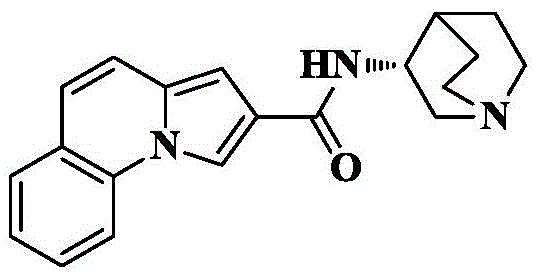
Pyrrolo [1,2-a ] quinoline-2-carboxylic acid was prepared according to the preparation method of example 1.
Pyrrole [1,2-a ]]Quinoline-2-carboxylic acid (32mg, 0.14mmol), HATU (106mg, 0.28mmol), DIPEA (90mg, 0.7mmol) were added to dry DCM (5mL), cooled to 0 deg.C, 3- (3R) -aminoquinine dihydrochloride (42mg, 0.21mmol) was slowly added, the reaction was allowed to spontaneously warm to room temperature, and the reaction was allowed to react for 10 hours. The solvent was removed by rotary evaporation, and saturated brine (10mL) was added to the reaction system and CH was added3OH/DCM (1/100, 3X 10mL) was extracted and the organic phase was dried over anhydrous sodium sulfate, filtered and concentrated. The crude product was isolated and purified by silica gel column chromatography eluting with DCM/MeOH/ammonia 90/10/1 to give 35mg of an off-white solid in 78.3% yield.
C of HRMS (ESI) m/z20H21N3O[M+1]+319.1685 as a theoretical value; found 320.1768.
1H NMR(400MHz,CDCl3)δ8.39(s,1H),7.93(d,J=8.3Hz,1H),7.66(d,J=7.7Hz,1H),7.54(t,J=7.5Hz,1H),7.38(t,J=7.5Hz,1H),7.26(d,J=9.3Hz,1H),7.06(d,J=9.4Hz,1H),6.72(s,1H),6.28(d,J=6.8Hz,1H),4.23(s,1H),3.49(dd,J=14.0,8.6Hz,1H),3.06–2.81(m,4H),2.70(dd,J=14.0,3.8Hz,1H),2.11(d,J=2.9Hz,1H),1.89–1.69(m,3H),1.62–1.51(m,1H).
13C NMR(101MHz,CDCl3)δ164.66,133.00,131.38,128.75,128.31,124.59,124.03,122.85,120.47,118.73,114.45,114.05,100.41,55.98,47.43,46.68,46.62,25.82,25.67,20.19.
Example 6
Synthesis of 7-isobutoxy-N- [ (3R) -1-quinin-3-yl ] pyrrolo [1,2-a ] quinoline-2-carboxamide

Methyl 7-methoxy-pyrrolo [1,2-a ] quinoline-2-carboxylate was prepared according to the preparation method of example 1.
6a) 7-hydroxy-pyrrolo [1,2-a ] quinoline-2-carboxylic acid methyl ester
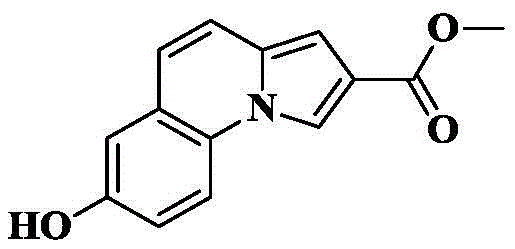
Reacting 7-methoxy-pyrrole [1,2-a ]]Quinoline-2-methyl formate (5g, 19.6mmol) is dissolved in anhydrous dichloromethane (15mL), the reaction system is cooled to-20 ℃ under the protection of nitrogen, and BBr is slowly added dropwise3(14.7g, 58.8mmol) of dichloromethane solution (10mL) and reacting for 2 hours, naturally raising the system to room temperature, cooling the reaction system to 0 ℃ after the reaction is completed, and slowly dropwise adding methanol to quench the reaction. Saturated brine (50mL) was added to the system, extracted with DCM (3X 80mL), and the organic phase was dried over anhydrous sodium sulfate, filtered, and concentrated. The crude product was isolated and purified by silica gel column chromatography eluting with PE/EA-1/1 to give 2.3g of an off-white solid in 48.3% yield.
6b) 7-Isobutoxy-pyrrolo [1,2-a ] quinoline-2-carboxylic acid methyl ester
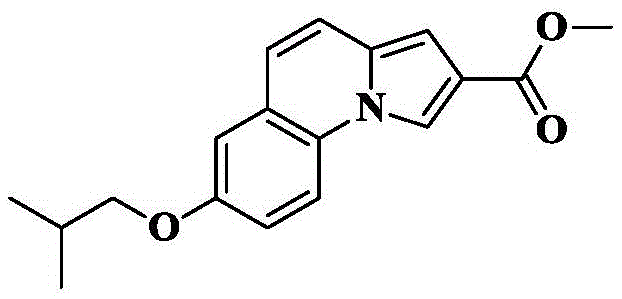
The compound methyl 7-hydroxy-pyrrolo [1,2-a ] quinoline-2-carboxylate (100mg, 0.41mmol) obtained by the method of 6a), 1-bromo-2-methylpropane (169mg, 1.23mmol), potassium carbonate (170mg, 1.23mmol) and KI (10mg) were added to DMF (5mL), and the reaction was stirred at room temperature for 5 hours under a nitrogen blanket. The reaction was checked by TLC to completion, and saturated brine (15mL) was added to the reaction system, followed by extraction with EA (3X 20mL), drying the organic phase over anhydrous sodium sulfate, filtration and concentration. The crude product was isolated and purified by silica gel column chromatography eluting with PE/EA-5/1 to give 99mg of an off-white solid in 81.6% yield.
6c) 7-isobutoxy-pyrrolo [1,2-a ] quinoline-2-carboxylic acid
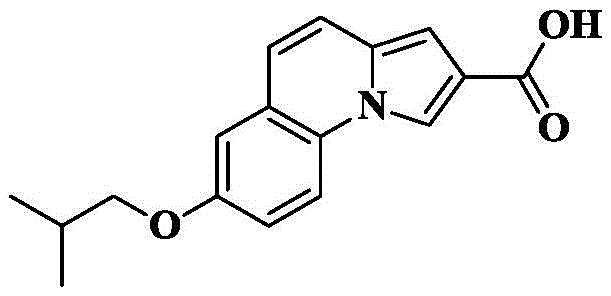
The compound obtained in 6b) (99mg, 0.33mmol) was dissolved in THF (5mL) and CH3To the above mixture was added KOH (185mg, 3.3mmol) and H in OH (5mL)2And (3) stirring and refluxing the reaction solution for 2-3 hours by using an aqueous alkali of O (4mL), and detecting the reaction to be complete by using TLC (thin layer chromatography). Cooling to room temperature, removing organic solvent by rotary evaporation, adding 1M HCl aqueous solution to adjust pH to acidity under ice bath condition, stirring for 0.5 hr, filtering precipitated solid, and drying to obtain off-white solid 85mg with yield of 90.2%.
6d) 7-isobutoxy-N- [ (3R) -1-quinin-3-yl ] pyrrolo [1,2-a ] quinoline-2-carboxamide
The compound 7-isobutoxy-pyrrole [1,2-a ] obtained in the step 6c)]Quinoline-2-carboxylic acid (30mg, 0.11mmol), HATU (84mg, 0.22mmol), DIPEA (71mg, 0.55mmol) were added to dry DCM (5mL), cooled to 0 deg.C, 3- (3R) -aminoquinine dihydrochloride (33mg, 0.17mmol) was slowly added, and the reaction was allowed to spontaneously warm to room temperature for 10 hours. The solvent was removed by rotary evaporation, and saturated brine (10mL) was added to the reaction system and CH was added3OH/DCM (1/100, 3X 10mL) was extracted and the organic phase was dried over anhydrous sodium sulfate, filtered and concentrated. The crude product was isolated and purified by silica gel column chromatography eluting with DCM/MeOH/ammonia 90/10/1 to give 28mg of an off-white solid in 64.9% yield.
C of HRMS (ESI) m/z24H29N3O2[M+1]+391.2260 as a theoretical value; found 392.2335.
1H NMR(400MHz,CDCl3)δ8.72(s,1H),7.80(d,J=9.1Hz,1H),7.69(s,1H),7.18(d,J=9.4Hz,1H),6.95(dd,J=4.8,1.9Hz,2H),6.90–6.79(m,2H),4.47(s,1H),3.75–3.65(m,4H),3.49(dd,J=13.2,10.9Hz,1H),3.13–3.02(m,3H),2.43–2.37(m,1H),2.27–2.17(m,1H),2.14–2.05(m,1H),2.03–1.83(m,2H),1.73–1.63(m,1H),1.05(d,J=6.7Hz,6H).
13C NMR(101MHz,CDCl3)δ165.16,156.00,130.73,127.37,124.98,121.93,119.83,119.25,116.36,115.75,114.29,111.34,101.51,74.74,52.88,47.00,46.59,45.54,28.32,25.22,23.55,19.29,19.29,18.83.
Example 7
Synthesis of 7-propynyloxy-N- [ (3R) -1-quinuclidin-3-yl ] pyrrolo [1,2-a ] quinoline-2-carboxamide
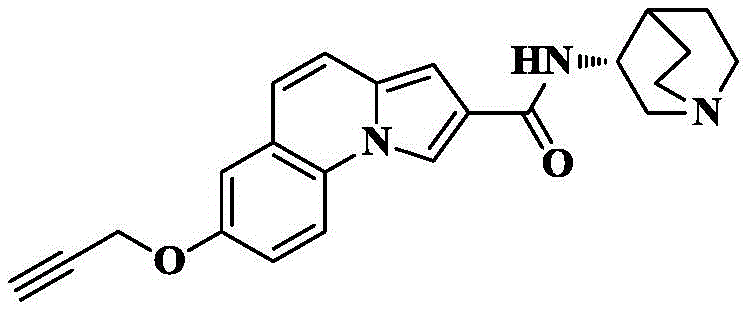
7-Propynyloxy-pyrrolo [1,2-a ] quinoline-2-carboxylic acid is prepared according to the preparation method of example 6.
Reacting 7-propynyloxy-pyrrole [1,2-a ]]Quinoline-2-carboxylic acid (30mg, 0.11mmol), HATU (84mg, 0.22mmol), DIPEA (71mg, 0.55mmol) were added to dry DCM (5mL), cooled to 0 deg.C, 3- (3R) -aminoquinine dihydrochloride (33mg, 0.17mmol) was slowly added, and the reaction was allowed to spontaneously warm to room temperature for 10 hours. The solvent was removed by rotary evaporation, and saturated brine (10mL) was added to the reaction system and CH was added3OH/DCM (1/100, 3X 10mL) was extracted and the organic phase was dried over anhydrous sodium sulfate, filtered and concentrated. The crude product was isolated and purified by silica gel column chromatography eluting with DCM/MeOH/ammonia 90/10/1 to give 31mg of an off-white solid in 74.6% yield.
C of HRMS (ESI) m/z23H23N3O2[M+1]+373.1790 as a theoretical value; found 374.1858.
1H NMR(400MHz,CDCl3)δ8.36(s,1H),7.85(d,J=8.6Hz,1H),7.25(d,J=9.4Hz,1H),7.20–7.12(m,2H),6.98(d,J=9.4Hz,1H),6.72(d,J=1.2Hz,1H),6.45(d,J=6.6Hz,1H),4.78(d,J=2.3Hz,2H),4.25(s,1H),3.55–3.42(m,1H),3.12–3.02(m,1H),2.98–2.85(m,3H),2.80(dd,J=14.3,3.8Hz,1H),2.58(t,J=2.3Hz,1H),2.14(d,J=3.0Hz,1H),191–1.82(m,1H),1.81–1.73(m,2H),1.61–1.52(m,1H).
13C NMR(101MHz,CDCl3)δ164.70,154.36,130.96,128.10,125.08,122.58,120.10,119.43,117.06,115.82,113.95,112.31,100.53,78.31,75.92,56.29,55.77,47.45,46.72,46.49,25.77,25.49,20.09.
Example 8
Synthesis of 7-difluoromethoxy-N- [ (3R) -1-quinuclidin-3-yl ] pyrrolo [1,2-a ] quinoline-2-carboxamide
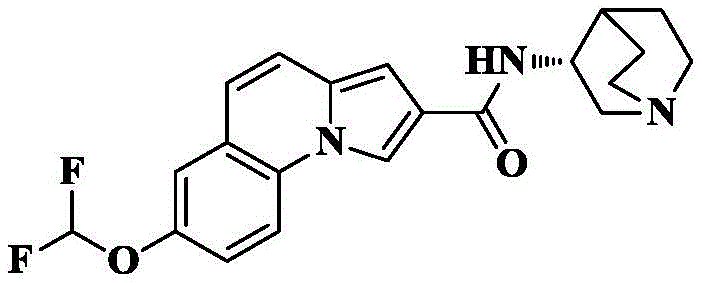
8a) 7-Difluoromethoxy-pyrrolo [1,2-a ] quinoline-2-carboxylic acid methyl ester
The compound (100mg, 0.41mmol) obtained in 6a), sodium chlorodifluoroacetate (156mg, 1.025mmol) and potassium carbonate (170mg, 1.23mmol) were dissolved in DMF (10mL) and the mixture was stirred at room temperature overnight. After completion of the TLC detection, saturated brine (20mL) was added to the reaction system, and extracted with EA (3X 30mL), and the organic phase was dried over anhydrous sodium sulfate, filtered, and concentrated. The crude product was isolated and purified by silica gel column chromatography eluting with PE/EA ═ 4/1 to give 119mg of an off-white solid in 84.1% yield.
8b) 7-difluoromethoxy-pyrrolo [1,2-a ] quinoline-2-carboxylic acid
The compound from 8a) (119mg, 0.41mmol) was dissolved in THF (5mL) and CH3To the above mixture was added KOH (230mg, 4.1mmol) and H in OH (5mL)2And (3) stirring and refluxing the reaction solution for 2-3 hours by using an aqueous alkali of O (4mL), and detecting the reaction to be complete by using TLC (thin layer chromatography). Cooling to room temperature, removing the organic solvent by rotary evaporation, adding 1M HCl aqueous solution to adjust the pH to acidity under ice bath condition, stirring for 0.5 hour, filtering and drying the precipitated solid to obtain off-white solid 105mg with the yield of 92.4%.
8c) 7-difluoromethoxy-N- [ (3R) -1-quinuclidin-3-yl ] pyrrolo [1,2-a ] quinoline-2-carboxamide
The compound 7-difluoromethoxy-pyrrole [1,2-a ] obtained in the step 8b)]Quinoline-2-carboxylic acid (30mg, 0.11mmol), HATU (84mg, 0.22mmol), DIPEA (71mg, 0.55mmol) were added to dry DCM (5mL), cooled to 0 deg.C, 3- (3R) -aminoquinine dihydrochloride (33mg, 0.17mmol) was slowly added, and the reaction was allowed to spontaneously warm to room temperature for 10 hours. The solvent was removed by rotary evaporation, and saturated brine (10mL) was added to the reaction system and CH was added3OH/DCM (1/100, 3X 10mL) was extracted and the organic phase was dried over anhydrous sodium sulfate, filtered and concentrated. The crude product is separated and purified by silica gel column chromatographyDCM/MeOH/ammonia solution-90/10/1 gave 33mg of off-white solid in 78.6% yield.
C of HRMS (ESI) m/z21H21F2N3O2[M+1]+385.1602 as a theoretical value; found 386.1678.
1H NMR(400MHz,CDCl3)δ8.36(s,1H),7.90(d,J=9.0Hz,1H),7.39(s,1H),7.30(d,J=9.4Hz,2H),6.99(d,J=9.4Hz,1H),6.73(s,1H),6.29(d,J=6.5Hz,1H),4.22(s,1H),3.55–3.41(m,1H),3.02–2.85(m,3H),2.70(d,J=9.9Hz,1H),2.17–1.94(m,3H),1.90–1.73(m,3H),1.62–1.52(m,1H).
13C NMR(101MHz,CDCl3)δ164.39,147.46,131.14,125.20,123.23,120.49,120.05,119.69,118.81,115.97,115.85,114.34,110.00,100.90,56.19,47.52,46.73,46.73,25.86,25.79,20.29.
Example 9
Synthesis of 7- (4-fluorophenyl) -N- [ (3R) -1-quinuclidin-3-yl ] pyrrolo [1,2-a ] quinoline-2-carboxamide

9a)7- (4-fluorophenyl) -pyrrolo [1,2-a ] quinoline-2-carboxylic acid methyl ester
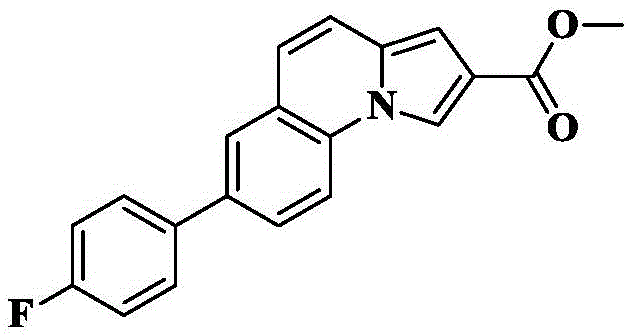
The compound 7-bromo-pyrrole [1,2-a ] obtained in example 1, method 1d)]Quinoline-2-carboxylic acid methyl ester (150mg, 0.49mmol), 4-fluorobenzeneboronic acid (137mg, 0.98mmol), sodium carbonate (156mg, 1.47mmol), Pd (PPh)3)4(57mg, 0.049mmol) was added to a mixed solvent of toluene (10mL), ethanol (2mL) and water (4mL), and the reaction was allowed to react at 85 ℃ for 5 hours under nitrogen. After completion of the reaction, the reaction system was cooled to room temperature, the solvent was removed by rotary evaporation, saturated brine (15mL) was added to the reaction system, extraction was performed with EA (3X 20mL), and the organic phase was dried over anhydrous sodium sulfate, filtered, and concentrated. The crude product is separated and purified by silica gel column chromatographyPE/EA 5/1 gave 113mg of an off-white solid in 72.6% yield.
9b)7- (4-fluorophenyl) -pyrrolo [1,2-a ] quinoline-2-carboxylic acid
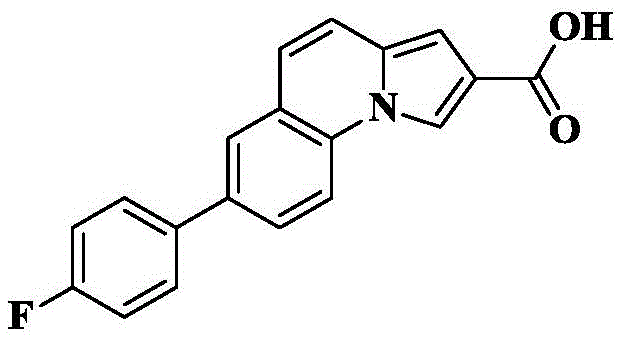
The compound (113mg, 0.35mmol) from 9a) was dissolved in THF (5mL) and CH3To the above mixture was added KOH (196mg, 3.5mmol) and H in OH (5mL)2And (3) stirring and refluxing the reaction solution for 2-3 hours by using an aqueous alkali of O (4mL), and detecting the reaction to be complete by using TLC (thin layer chromatography). Cooling to room temperature, removing the organic solvent by rotary evaporation, adding 1M HCl aqueous solution to adjust the pH to acidity under ice bath condition, stirring for 0.5 hour, filtering and drying the precipitated solid to obtain off-white solid 94mg with the yield of 87.2%.
9c)7- (4-fluorophenyl) -N- [ (3R) -1-quinuclidin-3-yl ] pyrrolo [1,2-a ] quinoline-2-carboxamide
The compound 7- (4-fluorophenyl) -pyrrole [1, 2-a) obtained in the step 9b)]Quinoline-2-carboxylic acid (30mg, 0.1mmol), HATU (76mg, 0.2mmol), DIPEA (65mg, 0.5mmol) were added to dry DCM (5mL), cooled to 0 deg.C, 3- (3R) -aminoquinine dihydrochloride (30mg, 0.15mmol) was slowly added, the reaction was allowed to spontaneously warm to room temperature, and reacted for 10 hours. The solvent was removed by rotary evaporation, and saturated brine (10mL) was added to the reaction system and CH was added3OH/DCM (1/100, 3X 10mL) was extracted and the organic phase was dried over anhydrous sodium sulfate, filtered and concentrated. The crude product was isolated and purified by silica gel column chromatography eluting with DCM/MeOH/ammonia 90/10/1 to give 27mg of an off-white solid in 65.2% yield.
C of HRMS (ESI) m/z26H24FN3O[M+1]+413.1903 as a theoretical value; found 414.1979.
1H NMR(400MHz,CDCl3)δ8.43(s,1H),7.95(d,J=8.6Hz,1H),7.76(s,1H),7.68–7.56(m,3H),7.26(s,1H),7.16(t,J=8.6Hz,2H),7.06(d,J=9.4Hz,1H),6.76(s,1H),6.47(d,J=5.9Hz,1H),4.26(s,1H),3.55–3.40(m,1H),3.12–3.02(m,1H),2.97–2.77(m,4H),2.15(d,J=2.6Hz,1H),1.94–1.74(m,3H),1.63–1.54(m,1H).
13C NMR(101MHz,CDCl3)δ164.65,136.63,136.20,136.17,132.23,131.33,128.68,128.60,127.08,126.70,124.40,123.01,120.44,119.23,115.92,115.70,115.00,114.18,100.84,55.70,47.37,46.67,46.55,25.77,25.48,20.06.
Example 10
Synthesis of 7-hydroxy-N- [ (3R) -1-quinuclidin-3-yl ] pyrrolo [1,2-a ] quinoline-2-carboxamide
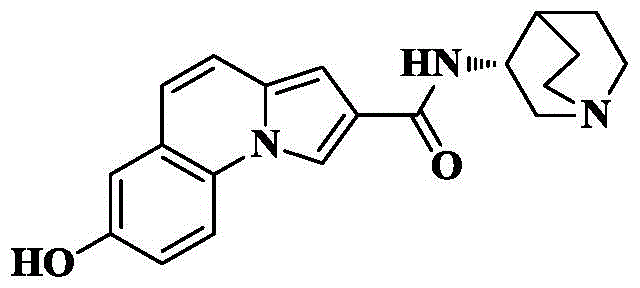
10a) 7-hydroxy-pyrrolo [1,2-a ] quinoline-2-carboxylic acid
The compound from 6a) (100mg, 0.41mmol) was dissolved in THF (5mL) and CH3To the above mixture was added KOH (230mg, 4.1mmol) and H in OH (5mL)2And (3) stirring and refluxing the reaction solution for 2-3 hours by using an aqueous alkali of O (4mL), and detecting the reaction to be complete by using TLC (thin layer chromatography). Cooling to room temperature, removing the organic solvent by rotary evaporation, adding 1M HCl aqueous solution to adjust the pH to acidity under ice bath condition, stirring for 0.5h, filtering and drying the precipitated solid to obtain an off-white solid of 77mg with a yield of 82.7%.
10b) 7-hydroxy-N- [ (3R) -1-quinuclidin-3-yl ] pyrrolo [1,2-a ] quinoline-2-carboxamide
The compound 7-hydroxy-pyrrole [1,2-a ] obtained in the step 10a)]Quinoline-2-carboxylic acid (30mg, 0.13mmol), HATU (99mg, 0.26mmol), DIPEA (84mg, 0.65mmol) were added to dry DCM (5mL), cooled to 0 deg.C, 3- (3R) -aminoquinine dihydrochloride (39mg, 0.2mmol) was slowly added, the reaction was allowed to spontaneously warm to room temperature, and reacted for 10 hours. The solvent was removed by rotary evaporation, and saturated brine (10mL) was added to the reaction system and CH was added3OH/DCM (1/100, 3X 10mL) was extracted and the organic phase was dried over anhydrous sodium sulfate, filtered and concentrated. The crude product was isolated and purified by silica gel column chromatography eluting with DCM/MeOH/ammonia 90/10/1 to give 31mg of an off-white solid in 70.6% yield.
C of HRMS (ESI) m/z20H21N3O2[M+1]+Theoretical value:335.1634, respectively; found 336.1714.
1H NMR(400MHz,DMSO)δ9.74(s,1H),8.73(s,1H),8.31(d,J=5.7Hz,1H),8.07(d,J=8.8Hz,1H),7.34(d,J=9.4Hz,1H),7.15–6.87(m,4H),4.23(s,1H),3.50(t,J=11.2Hz,1H),3.33–3.23(m,1H),3.18–3.02(m,4H),2.14–2.02(m,2H),1.87–1.78(m,2H),1.66–1.57(m,1H).
13C NMR(101MHz,DMSO)δ164.38,154.80,130.13,126.44,125.36,122.68,120.02,119.59,117.50,116.56,114.80,113.09,102.43,52.24,46.40,45.91,45.31,25.35,23.11,18.41.
Example 11
Synthesis of 7- (4-tert-butylphenyl) -N- [ (3R) -1-quinin-3-yl ] pyrrolo [1,2-a ] quinoline-2-carboxamide

7- (4-tert-butylphenyl) -pyrrolo [1,2-a ] quinoline-2-carboxylic acid is prepared according to the preparation method of example 9.
Reacting 7- (4-tert-butylphenyl) -pyrrole [1,2-a]Quinoline-2-carboxylic acid (30mg, 0.087mmol), HATU (66mg, 0.174mmol), DIPEA (56mg, 0.435mmol) were added to dry DCM (5mL), cooled to 0 deg.C, 3- (3R) -aminoquinine dihydrochloride (26mg, 0.13mmol) was slowly added, and the reaction was allowed to spontaneously warm to room temperature for 10 hours. The solvent was removed by rotary evaporation, and saturated brine (10mL) was added to the reaction system and CH was added3OH/DCM (1/100, 3X 10mL) was extracted and the organic phase was dried over anhydrous sodium sulfate, filtered and concentrated. The crude product was isolated and purified by silica gel column chromatography eluting with DCM/MeOH/ammonia 90/10/1 to give 28mg of an off-white solid in 71.9% yield.
C of HRMS (ESI) m/z30H33N3O[M+1]+451.2624 as a theoretical value; found 452.2693.
1H NMR(400MHz,CDCl3)δ8.67(s,1H),7.95(d,J=8.6Hz,1H),7.76(s,1H),7.66–7.39(m,5H),7.22(d,J=9.1Hz,2H),7.01(d,J=9.3Hz,1H),6.90(s,1H),4.41(s,1H),3.56–3.31(m,3H),3.03(s,3H),2.32(s,1H),2.17–2.03(m,1H),1.97–1.83(m,2H),1.72–1.60(m,1H),1.39(s,9H).
13C NMR(101MHz,CDCl3)δ164.94,150.51,137.28,137.11,132.12,131.24,126.93,126.93,126.66,126.42,125.80,125.80,124.28,122.62,120.40,119.05,114.93,114.48,101.43,53.84,47.13,46.62,45.88,34.55,31.35,31.35,31.35,25.42,24.18,19.24.
Example 12
Synthesis of 7-o-tolyl-N- [ (3R) -1-quinuclidin-3-yl ] pyrrolo [1,2-a ] quinoline-2-carboxamide
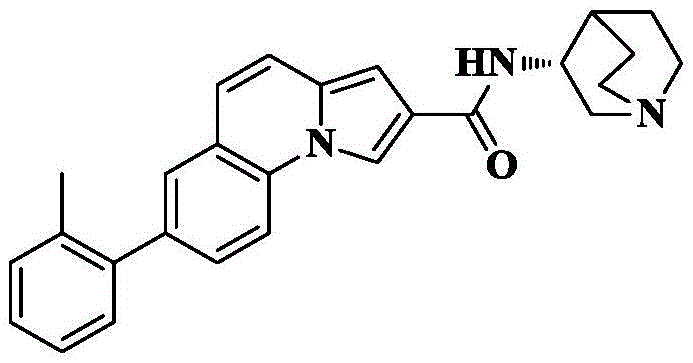
7-o-tolyl-pyrrolo [1,2-a ] quinoline-2-carboxylic acid was prepared by the preparation method of example 9.
Reacting 7-o-tolyl-pyrrole [1,2-a ]]Quinoline-2-carboxylic acid (30mg, 0.1mmol), HATU (76mg, 0.2mmol), DIPEA (65mg, 0.5mmol) were added to dry DCM (5mL), cooled to 0 deg.C, 3- (3R) -aminoquinine dihydrochloride (30mg, 0.15mmol) was slowly added, the reaction was allowed to spontaneously warm to room temperature, and reacted for 10 hours. The solvent was removed by rotary evaporation, and saturated brine (10mL) was added to the reaction system and CH was added3OH/DCM (1/100, 3X 10mL) was extracted and the organic phase was dried over anhydrous sodium sulfate, filtered and concentrated. The crude product was isolated and purified by silica gel column chromatography eluting with DCM/MeOH/ammonia 90/10/1 to give 27mg as an off-white solid in 66.1% yield.
C of HRMS (ESI) m/z27H27N3O[M+1]+409.2154 as a theoretical value; found 410.2234.
1H NMR(400MHz,CDCl3)δ8.86(s,1H),8.00(d,J=8.3Hz,1H),7.90(s,1H),7.51(s,1H),7.32–7.21(m,6H),7.06(s,1H),6.96(d,J=9.2Hz,1H),4.58–4.50(m,1H),3.86–3.75(m,2H),3.57–3.48(m,1H),3.18–3.07(m,3H),2.44(s,1H),2.35–2.18(m,4H),2.04–1.92(m,2H),1.77–1.67(m,1H).
13C NMR(101MHz,CDCl3)δ165.07,140.83,138.22,135.39,131.98,131.20,130.38,129.85,129.25,128.78,127.47,125.83,123.84,122.44,120.07,119.26,114.75,114.46,102.03,52.39,46.91,46.52,45.35,25.23,23.22,20.43,18.61.
Example 13
Synthesis of 7-methyl-N- [ (3R) -1-quinin-3-yl ] pyrrolo [1,2-a ] quinoline-2-carboxamide

7-methyl-pyrrolo [1,2-a ] quinoline-2-carboxylic acid was prepared according to the preparation method of example 1.
Reacting 7-methyl-pyrrole [1,2-a ]]Quinoline-2-carboxylic acid (30mg, 0.13mmol), HATU (99mg, 0.26mmol), DIPEA (84mg, 0.65mmol) were added to dry DCM (5mL), cooled to 0 deg.C, 3- (3R) -aminoquinine dihydrochloride (40mg, 0.2mmol) was slowly added, the reaction was allowed to spontaneously warm to room temperature, and reacted for 10 hours. The solvent was removed by rotary evaporation, and saturated brine (10mL) was added to the reaction system and CH was added3OH/DCM (1/100, 3X 10mL) was extracted and the organic phase was dried over anhydrous sodium sulfate, filtered and concentrated. The crude product was isolated and purified by silica gel column chromatography eluting with DCM/MeOH/ammonia 90/10/1 to give 34mg as an off-white solid in 76.2% yield.
C of HRMS (ESI) m/z21H23N3O[M+1]+333.1841 as a theoretical value; found 334.1920.
1H NMR(400MHz,CDCl3)δ8.36(s,1H),7.81(d,J=8.4Hz,1H),7.43(s,1H),7.33(d,J=8.2Hz,1H),7.23(d,J=9.4Hz,1H),6.99(d,J=9.4Hz,1H),6.71(s,1H),6.35(d,J=6.1Hz,1H),4.24(s,1H),3.51–3.42(m,1H),3.07–2.69(m,5H),2.46(s,3H),2.12(d,J=2.5Hz,1H),1.90–1.70(m,3H),1.60–1.50(m,1H).
13C NMR(101MHz,CDCl3)δ164.74,134.21,131.29,131.05,129.47,128.57,124.00,122.59,120.38,118.67,114.32,113.81,100.28,55.89,47.43,46.70,46.51,25.79,25.58,20.96,20.11.
Example 14
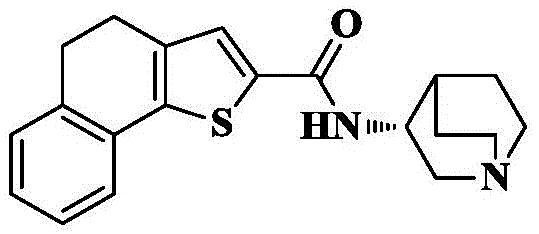
Synthesis of N- [ (3R) -1-quinin-3-yl ] -4, 5-dihydronaphthalene [1,2-b ] thiophene-2-carboxamide
14a) 1-chloro-3, 4-dihydronaphthalene-2-carbaldehyde
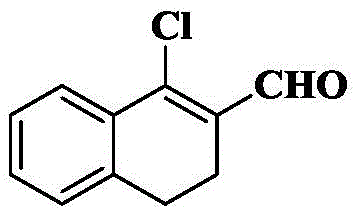
Phosphorus oxychloride (2.1g, 13.7mmol) was slowly added dropwise to a stirred solution of dry DMF (4.0g, 54.8mmol) at 0 deg.C, maintaining the temperature at no more than 5 deg.C, and 1-tetralone (2g, 13.7mmol) was slowly added dropwise to the above mixture. The reaction solution was stirred for half an hour while maintaining at 0 ℃ and then stirred for 2 hours while increasing to 80 ℃. After completion of the reaction, it was poured into a cold aqueous solution of sodium acetate (25% w/v, 25mL), extracted with diethyl ether (2X 50mL), and the organic phase was washed with saturated brine (3X 50mL), dried over anhydrous sodium sulfate, filtered, and concentrated. The crude product was isolated and purified by silica gel column chromatography eluting with PE/EA ═ 6/1, yielding 1.5g of a viscous liquid with a yield of 57.1%.
14b)4, 5-dihydronaphthalene [1,2-b ] thiophene-2-carboxylic acid ethyl ester

Ethyl thioglycolate (0.94g, 7.8mmol) was added to a solution of sodium ethoxide (1.1g, 15.6mmol) in dry ethanol (8mL) at 0 deg.C, the mixture was stirred for half an hour, the compound obtained by the method of 33a) (1.5g, 7.8mmol) was added dropwise to the reaction mixture, stirring was continued overnight at room temperature, after refluxing for half an hour, poured into cold brine, extracted with EA (3X 60mL), the organic phase was washed with saturated brine (2X 50mL), dried over anhydrous sodium sulfate, filtered and concentrated. The crude product was recrystallized from ethanol to give 1.3g of a yellow solid in 66.3% yield.
14c)4, 5-dihydronaphthalene [1,2-b ] thiophene-2-carboxylic acid
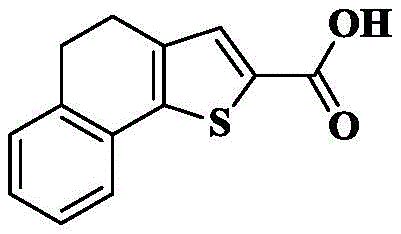
The compound (100mg, 0.39mmol) from 14b) was dissolved in THF (5mL) and CH3To the above mixture was added NaOH (156mg, 3.9mmol) and H in OH (5mL)2O (4mL) in an alkaline solution, the reaction mixture was stirred at 50 ℃ for 2 hours, and the reaction was checked by TLC until completion. Cooling to room temperature, removing the organic solvent by rotary evaporation, adding 1M HCl aqueous solution to adjust the pH to acidity under the ice bath condition, stirring for 0.5 hour, filtering and drying the precipitated solid to obtain light yellow solid 74mg with the yield of 82.5%.
14d) N- [ (3R) -1-quinin-3-yl ] -4, 5-dihydronaphthalene [1,2-b ] thiophene-2-carboxamide
The compound (30mg, 0.13mmol) obtained in 14c), HATU (99mg, 0.26mmol) and DIPEA (84mg, 0.65mmol) were added to dry DCM (5mL), cooled to 0 ℃ and 3- (3R) -aminoquinine dihydrochloride (38mg, 0.2mmol) was slowly added, the reaction system was naturally warmed to room temperature and reacted for 10 hours. The solvent was removed by rotary evaporation, and saturated brine (10mL) was added to the reaction system and CH was added3OH/DCM (1/100, 3X 10mL) was extracted and the organic phase was dried over anhydrous sodium sulfate, filtered and concentrated. The crude product was isolated and purified by silica gel column chromatography eluting with DCM/MeOH/ammonia 90/10/1 to give 27mg as an off-white solid in 61.2% yield.
C of HRMS (ESI) m/z20H22N2OS[M+1]+338.1453 as a theoretical value; found 339.1527.
1H NMR(400MHz,CDCl3)δ7.50–7.39(m,2H),7.27–7.19(m,3H),6.43(d,J=5.8Hz,1H),4.21(s,1H),3.51–3.41(m,1H),3.17–3.05(m,1H),3.00–2.82(m,8H),2.17–2.11(m,1H),1.92–1.74(m,3H),1.63–1.54(m,1H).
13C NMR(101MHz,CDCl3)δ162.07,140.74,137.78,135.31,135.15,130.74,128.94,128.21,127.97,127.17,123.50,55.44,47.38,46.92,46.66,28.92,25.70,25.29,23.92,19.94.
Example 15
Synthesis of N- [ (3R) -1-quinin-3-yl ] naphthalene [1,2-b ] thiophene-2-carboxamide

15a) Naphthalene [1,2-b ] thiophene-2-carboxylic acid ethyl ester
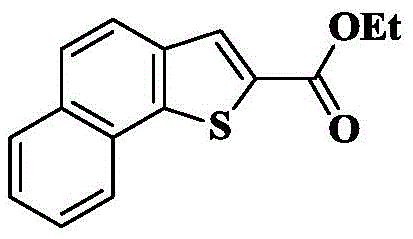
The compound 4, 5-dihydronaphthalene [1,2-b ] obtained by the method of 14b)]Thiophene-2-carboxylic acid ethyl ester (0.5g, 1.94mmol) and benzoyl peroxide (5mg) were dissolved in dry CCl4To the above mixture was added NBS (0.52g, 2.9mmol) in portions (8 mL). The reaction solution was refluxed and irradiated with a 200W fluorescent lamp, and the produced hydrogen bromide gas was purged with a nitrogen stream, and the reaction was refluxed for 1 hour. TLC detection reaction is carried out until the reaction is complete, and the reaction liquid is cooled, filtered and concentrated to obtain a crude product. Recrystallization from ethyl acetate/n-hexane gave 0.43g of a yellow solid with a yield of 87.2%.
15b) Naphthalene [1,2-b ] thiophene-2-carboxylic acid

The compound from 15a) (100mg, 0.39mmol) was dissolved in THF (5mL) and CH3To the above mixture was added NaOH (156mg, 3.9mmol) and H in OH (5mL)2O (4mL) in an alkaline solution, the reaction mixture was stirred at 50 ℃ for 2 hours, and the reaction was checked by TLC until completion. Cooling to room temperature, removing the organic solvent by rotary evaporation, adding 1M HCl aqueous solution to adjust the pH to acidity under the ice bath condition, stirring for 0.5 hour, filtering and drying the precipitated solid to obtain light yellow solid 82mg with the yield of 91.7%.
15c) N- [ (3R) -1-quinin-3-yl ] naphthalene [1,2-b ] thiophene-2-carboxamide
The compound from 15b) (30mg, 0.13mmol), HATU (99mg, 0.26mmol), DIPEA (84mg, 0.65mmol) were added to dry DCM (5mL), cooled to 0 deg.C and 3- (3R) -aminoquinine dihydrochloride (38mg, 0.2mmol) was added slowly,the reaction system was naturally warmed to room temperature and reacted for 10 hours. The solvent was removed by rotary evaporation, and saturated brine (10mL) was added to the reaction system and CH was added3OH/DCM (1/100, 3X 10mL) was extracted and the organic phase was dried over anhydrous sodium sulfate, filtered and concentrated. The crude product was isolated and purified by silica gel column chromatography eluting with DCM/MeOH/ammonia 90/10/1 to give 33mg of an off-white solid in 74.1% yield.
C of HRMS (ESI) m/z20H20N2OS[M+1]+336.1296 as a theoretical value; found 337.1377.
1H NMR(400MHz,CDCl3)δ8.19–8.13(m,1H),7.98–7.90(m,2H),7.79(q,J=8.7Hz,2H),7.67–7.55(m,2H),6.38(d,J=6.8Hz,1H),4.27–4.18(m,1H),3.54–3.46(m,1H),3.06–2.82(m,4H),2.76–2.66(m,1H),2.16–2.11(m,1H),1.89–1.70(m,3H),1.64–1.52(m,1H).
13C NMR(101MHz,CDCl3)δ162.15,139.42,137.27,136.93,131.57,128.95,128.68,127.10,126.78,126.28,126.14,123.80,122.41,56.13,47.52,47.46,46.72,25.83,25.78,20.28.
Activity evaluation test example
Evaluation of agonistic Effect of tricyclic heteroaromatic carboxamide derivatives of the present invention on alpha 7 receptor
The pharmacological activity assay mainly uses a two-electrode voltage clamp (TEVC) technique, and the corresponding steps are as follows. (1) Expression of the channel protein. RNA encoding an alpha 7 receptor protein is injected into Xenopus oocytes, and the Xenopus oocytes express an alpha 7 channel protein on the cell membrane. (2) And (4) measuring the current. The voltage on the inner side and the outer side of the cell membrane is clamped at-90 mV, when an agonist is combined with channel protein, the channel is opened, and Ca is triggered2+And (4) internal flow. Because the voltage is clamped at-90 mV, the machine inputs a reverse compensation current, so that the magnitude of the current flowing in the positive ions can be measured. (3) Acetylcholine (ACh) perfusion. Before cell current measurement, the Xenopus laevis oocytes are perfused with 300. mu. mol/L ACh to detect whether the oocytes express the alpha 7 receptor channel protein, and the ACh is washed away for subsequent measurement by taking the control as a control. (4) And (3) testing the agonistic activity of the compound.
Evaluation of agonistic Activity
Quantitative compound agonistic activity data (e.g., EC) are to be obtained50) It is desirable to determine the agonistic outcome of the same compound at different concentrations. The agonist with better activity is selected to quantitatively investigate the agonist effect on the alpha 7 nAChR. 3mM ACh causes current change with certain intensity, six target compounds with different concentrations are measured from low to high after the external liquid washes away the ACh, the current change with different intensities is caused (figure 1), a dose-effect curve chart (figure 2) is fitted according to the current change, and related activity data are obtained.
The activity results for representative compounds are given in the following table:
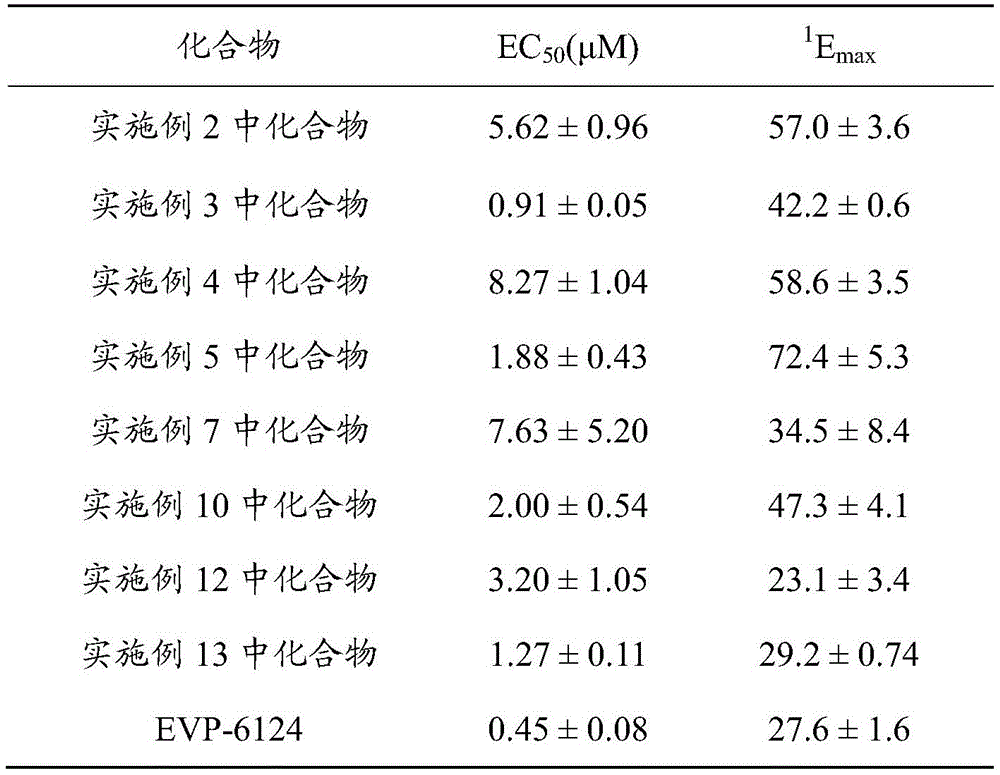
1Emax: the ratio of the maximum current intensity produced by a compound agonizing the α 7 receptor to the maximum current intensity produced by 3mM Ach.
Evaluation of receptor selectivity:
the present invention selects α 4 β 2 nAChR, α 3 β 4 nAChR and 5-HT3A receptors, which have high homology to α 7 nAChR and are present in high amounts in brain neural tissue, for receptor agonist selectivity evaluation of the compound of example 5.
As a result of selective evaluation, the target compound has high receptor selectivity on an alpha 7 receptor and shows strong inhibitory activity on partial receptors, such as 5-HT3A, and the target compound has positive clinical application value.
Combination with allosteric modulators:
selection of the known alpha 7 receptor allosteric modulator PNU-120596 and examination of the agonist activity at the alpha 7 receptor using the compound of example 5 in combination with the discovery of EC50The increase from 1.88 mu M to 0.12 mu M has obvious activation enhancing effect.
Claims (7)
1. A compound of the tricyclic heteroaromatic carboxamides of formula (I '), formula (I "), formula (I '), or formula (I '), or a pharmaceutically acceptable salt thereof:
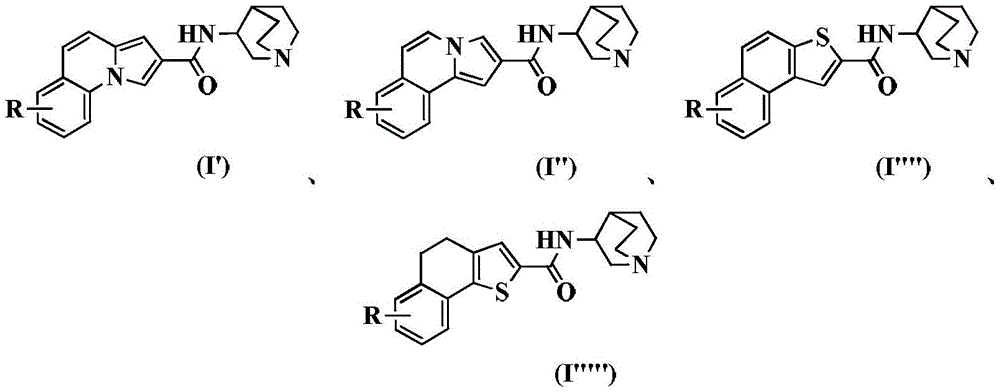
wherein:
r is selected from the following groups: hydrogen, hydroxy, cyano, nitro, amino, halogen, C1-6Alkyl radical, C3-6Cycloalkyl radical, C1-6Alkoxy radical, C3-6Cycloalkoxy, halo C1-6Alkyl, halo C3-6Cycloalkyl, halo C1-6Alkoxy, halo C3-6Cycloalkoxy, di C1-3Alkylamino radical, C2-6Alkenyl, or C2-6An alkynyl group;
or one of the following groups:

here, M1Is CH or N; m2Is CH2Or O or S or NH; m3Is CH or N; m4Is N; m5Is CH2Or O or S or NH; rM1、RM2、RM3、RM4And RM5Each independently selected from hydrogen, hydroxy, cyano, nitro, amino, halogen, C1-6Alkyl radical, C3-6Cycloalkyl radical, C1-6Alkoxy radical, C3-6Cycloalkoxy, halo C1-6Alkyl, halo C3-6Cycloalkyl, halo C1-6Alkoxy, halo C3-6Cycloalkoxy, di C1-3Alkylamino radical, C2-6Alkenyl radical, C2-6Alkynyl, or phenyl.
2. A compound selected from the following compounds, or a pharmaceutically acceptable salt thereof:
7-bromo-N- (quinuclidin-3-yl) pyrrolo [1,2-a ] quinoline-2-carboxamide;
n- (quinuclidin-3-yl) naphthalene [2,1-b ] thiophene-2-carboxamide;
n- (quinuclidin-3-yl) pyrrolo [2,1-a ] isoquinoline-2-carboxamide;
7-fluoro-N- (quinuclidin-3-yl) pyrrolo [1,2-a ] quinoline-2-carboxamide;
n- (quinuclidin-3-yl) pyrrolo [1,2-a ] quinoline-2-carboxamide;
7-isobutoxy-N- (quinuclidin-3-yl) pyrrolo [1,2-a ] quinoline-2-carboxamide;
7-propynyloxy-N- (quinuclidin-3-yl) pyrrolo [1,2-a ] quinoline-2-carboxamide;
7-difluoromethoxy-N- (quinuclidin-3-yl) pyrrolo [1,2-a ] quinoline-2-carboxamide;
7- (4-fluorophenyl) -N- (quinuclidin-3-yl) pyrrolo [1,2-a ] quinoline-2-carboxamide;
7-hydroxy-N- (quinuclidin-3-yl) pyrrolo [1,2-a ] quinoline-2-carboxamide;
7- (4-tert-butylphenyl) -N- (quinuclidin-3-yl) pyrrolo [1,2-a ] quinoline-2-carboxamide;
7-o-tolyl-N- (quinuclidin-3-yl) pyrrolo [1,2-a ] quinoline-2-carboxamide;
7-methyl-N- (quinuclidin-3-yl) pyrrolo [1,2-a ] quinoline-2-carboxamide;
n- (quinuclidin-3-yl) -4, 5-dihydronaphthalene [1,2-b ] thiophene-2-carboxamide;
n- (quinuclidin-3-yl) naphthalene [1,2-b ] thiophene-2-carboxamide;
7-bromo-N- [ (3R) -1-quinuclidin-3-yl ] pyrrolo [1,2-a ] quinoline-2-carboxamide;
n- [ (3R) -1-quinuclidin-3-yl ] naphthalene [1,2-a ] thiophene-2-carboxamide;
n- [ (3R) -1-quinuclidin-3-yl ] pyrrolo [2,1-a ] isoquinoline-2-carboxamide;
7-fluoro-N- [ (3R) -1-quinuclidin-3-yl ] pyrrolo [1,2-a ] quinoline-2-carboxamide;
n- [ (3R) -1-quinuclidin-3-yl ] pyrrolo [1,2-a ] quinoline-2-carboxamide;
7-isobutoxy-N- [ (3R) -1-quinuclidin-3-yl ] pyrrolo [1,2-a ] quinoline-2-carboxamide;
7-propynyloxy-N- [ (3R) -1-quinuclidin-3-yl ] pyrrolo [1,2-a ] quinoline-2-carboxamide;
7-difluoromethoxy-N- [ (3R) -1-quinuclidin-3-yl ] pyrrolo [1,2-a ] quinoline-2-carboxamide;
7- (4-fluorophenyl) -N- [ (3R) -1-quinuclidin-3-yl ] pyrrolo [1,2-a ] quinoline-2-carboxamide;
7-hydroxy-N- [ (3R) -1-quinuclidin-3-yl ] pyrrolo [1,2-a ] quinoline-2-carboxamide;
7- (4-tert-butylphenyl) -N- [ (3R) -1-quinuclidin-3-yl ] pyrrolo [1,2-a ] quinoline-2-carboxamide;
7-o-tolyl-N- [ (3R) -1-quinuclidin-3-yl ] pyrrolo [1,2-a ] quinoline-2-carboxamide;
7-methyl-N- [ (3R) -1-quinuclidin-3-yl ] pyrrolo [1,2-a ] quinoline-2-carboxamide;
n- [ (3R) -1-quinuclidin-3-yl ] -4, 5-dihydronaphthalene [1,2-b ] thiophene-2-carboxamide; and
n- [ (3R) -1-quinin-3-yl ] naphthalene [1,2-b ] thiophene-2-carboxamide.
3. A pharmaceutical composition comprising a pharmacologically effective amount of a compound as claimed in any one of claims 1 to 2 and a pharmaceutically acceptable carrier.
4. Use of a compound according to any one of claims 1-2 for the manufacture of a medicament as an agonist of the α 7 nicotinic acetylcholine receptor.
5. The use according to claim 4, wherein the use as an alpha 7 nicotinic acetylcholine receptor agonist is for the prevention or treatment of a central nervous system disorder.
6. The use according to claim 5, wherein the central nervous system disorder is schizophrenia, Alzheimer's disease, epilepsy, convulsions, or depression.
7. Use of a compound according to any one of claims 1-2 in combination with an alpha 7 receptor allosteric modulator for the manufacture of a medicament for potentiating an alpha 7 nicotinic acetylcholine receptor agonist.
Priority Applications (1)
| Application Number | Priority Date | Filing Date | Title |
|---|---|---|---|
| CN201710260751.0A CN108727416B (en) | 2017-04-20 | 2017-04-20 | Tricyclic heteroaromatic amide derivative and preparation and application thereof |
Applications Claiming Priority (1)
| Application Number | Priority Date | Filing Date | Title |
|---|---|---|---|
| CN201710260751.0A CN108727416B (en) | 2017-04-20 | 2017-04-20 | Tricyclic heteroaromatic amide derivative and preparation and application thereof |
Publications (2)
| Publication Number | Publication Date |
|---|---|
| CN108727416A CN108727416A (en) | 2018-11-02 |
| CN108727416B true CN108727416B (en) | 2021-03-09 |
Family
ID=63933414
Family Applications (1)
| Application Number | Title | Priority Date | Filing Date |
|---|---|---|---|
| CN201710260751.0A Active CN108727416B (en) | 2017-04-20 | 2017-04-20 | Tricyclic heteroaromatic amide derivative and preparation and application thereof |
Country Status (1)
| Country | Link |
|---|---|
| CN (1) | CN108727416B (en) |
Families Citing this family (2)
| Publication number | Priority date | Publication date | Assignee | Title |
|---|---|---|---|---|
| CN111138355A (en) * | 2020-01-17 | 2020-05-12 | 成都睿智化学研究有限公司 | Preparation method of formaldehyde-substituted aza-condensed ring compound |
| US11919900B1 (en) | 2023-08-21 | 2024-03-05 | King Faisal University | 1-substituted benzoyl-4-bromopyrrolo[1,2-a]quinoline-3-carboxylate derivatives as antitubercular agents |
Citations (3)
| Publication number | Priority date | Publication date | Assignee | Title |
|---|---|---|---|---|
| US20050119325A1 (en) * | 2001-12-27 | 2005-06-02 | Martin Hendrix | 2-Heteroarylcarboxylic acid amides |
| CN1751041A (en) * | 2003-02-21 | 2006-03-22 | 塔加西普特公司 | 3-Substituted-2-(arylalkyl)-1-azabicycloalkanes and methods of use thereof |
| CN101977628A (en) * | 2008-02-13 | 2011-02-16 | 塔加西普特公司 | Combinations of alpha 7 nicotinic agonists and antipsychotics |
-
2017
- 2017-04-20 CN CN201710260751.0A patent/CN108727416B/en active Active
Patent Citations (4)
| Publication number | Priority date | Publication date | Assignee | Title |
|---|---|---|---|---|
| US20050119325A1 (en) * | 2001-12-27 | 2005-06-02 | Martin Hendrix | 2-Heteroarylcarboxylic acid amides |
| CN1751041A (en) * | 2003-02-21 | 2006-03-22 | 塔加西普特公司 | 3-Substituted-2-(arylalkyl)-1-azabicycloalkanes and methods of use thereof |
| CN101977628A (en) * | 2008-02-13 | 2011-02-16 | 塔加西普特公司 | Combinations of alpha 7 nicotinic agonists and antipsychotics |
| CN103143023A (en) * | 2008-02-13 | 2013-06-12 | 塔加西普特公司 | Alpha 7 nicotinic agonists and antipsychotics |
Non-Patent Citations (2)
| Title |
|---|
| 中氮茚类α7烟酰型乙酰胆碱受体激动剂的构效关系研究;李青,等;《药学学报》;20161231;第51卷(第10期);第1584-1594页 * |
| 以α7nAChR为靶点的药物研究进展;谢冰雪,等;《中国药物化学杂志》;20150831;第25卷(第4期);第313-323页 * |
Also Published As
| Publication number | Publication date |
|---|---|
| CN108727416A (en) | 2018-11-02 |
Similar Documents
| Publication | Publication Date | Title |
|---|---|---|
| TW495504B (en) | 3-substituted-4-arylquinolin-2-one derivatives as potassium channel modulators | |
| CN105189493B (en) | Novel Pyrazole Derivatives | |
| JP6552061B2 (en) | Negative allosteric modulators (NAMS) of metabotropic glutamate receptors and their use | |
| AU2016251253A1 (en) | Condensed-ring pyrimidylamino derivative, preparation method therefor, and intermediate, pharmaceutical composition and applications thereof | |
| EP2220076A1 (en) | Inhibitors of human immunodeficiency virus replication | |
| KR20140041583A (en) | Inhibitors of lrrk2 kinase activity | |
| WO2009062288A1 (en) | Inhibitors of human immunodeficiency virus replication | |
| WO2009157196A1 (en) | Amide compound | |
| JP2020531461A (en) | AHR inhibitors and their use | |
| EP2224926A1 (en) | Prolyl hydroxylase inhibitors | |
| WO2008010481A1 (en) | Aminoindan derivative or salt thereof | |
| WO2002102807A1 (en) | Novel isoxazolopyridone derivatives and use thereof | |
| JP6786566B2 (en) | Heteroaryl compounds and how to use them | |
| CN112794860B (en) | Oxazole pyrimidone amide compound or medicinal salt thereof, preparation method and application | |
| WO2007114213A1 (en) | Substituted bicyclic cyclic derivative and use thereof | |
| EP3374360A1 (en) | Substituted tricyclic 1,4-benzodiazepinone derivatives as allosteric modulators of group ii metabotropic glutamate receptors | |
| JP6751161B2 (en) | Fluorine-containing triazolopyridine compound, method for producing the same, pharmaceutical composition and use | |
| KR20100031610A (en) | Triazolo[1,5-a]quinolines as adenosine a3 receptor ligands | |
| TW200900382A (en) | Quinolone compound and pharmaceutical composition | |
| KR100588249B1 (en) | Tetrahydrobenzindole derivatives | |
| CN108727416B (en) | Tricyclic heteroaromatic amide derivative and preparation and application thereof | |
| EP3534888B1 (en) | Substituted bicyclic heteroaryl allosteric modulators of nicotinic acetylcholine receptors | |
| CA3195127A1 (en) | Rev-erb agonists | |
| JP2005525333A (en) | Substituted fused pyrazole carboxylic acid arylamides and related compounds | |
| CN110709401A (en) | Heterocyclic compounds |
Legal Events
| Date | Code | Title | Description |
|---|---|---|---|
| PB01 | Publication | ||
| PB01 | Publication | ||
| SE01 | Entry into force of request for substantive examination | ||
| SE01 | Entry into force of request for substantive examination | ||
| GR01 | Patent grant | ||
| GR01 | Patent grant |