CN108648194B - Method and device for 3D target recognition, segmentation and pose measurement based on CAD model - Google Patents
Method and device for 3D target recognition, segmentation and pose measurement based on CAD model Download PDFInfo
- Publication number
- CN108648194B CN108648194B CN201810367445.1A CN201810367445A CN108648194B CN 108648194 B CN108648194 B CN 108648194B CN 201810367445 A CN201810367445 A CN 201810367445A CN 108648194 B CN108648194 B CN 108648194B
- Authority
- CN
- China
- Prior art keywords
- target
- model
- segmentation
- feature points
- dimensional
- Prior art date
- Legal status (The legal status is an assumption and is not a legal conclusion. Google has not performed a legal analysis and makes no representation as to the accuracy of the status listed.)
- Expired - Fee Related
Links
Images


Classifications
-
- G—PHYSICS
- G06—COMPUTING OR CALCULATING; COUNTING
- G06T—IMAGE DATA PROCESSING OR GENERATION, IN GENERAL
- G06T7/00—Image analysis
- G06T7/10—Segmentation; Edge detection
-
- G—PHYSICS
- G06—COMPUTING OR CALCULATING; COUNTING
- G06T—IMAGE DATA PROCESSING OR GENERATION, IN GENERAL
- G06T7/00—Image analysis
- G06T7/80—Analysis of captured images to determine intrinsic or extrinsic camera parameters, i.e. camera calibration
-
- G—PHYSICS
- G06—COMPUTING OR CALCULATING; COUNTING
- G06T—IMAGE DATA PROCESSING OR GENERATION, IN GENERAL
- G06T2207/00—Indexing scheme for image analysis or image enhancement
- G06T2207/20—Special algorithmic details
- G06T2207/20081—Training; Learning
-
- G—PHYSICS
- G06—COMPUTING OR CALCULATING; COUNTING
- G06T—IMAGE DATA PROCESSING OR GENERATION, IN GENERAL
- G06T2207/00—Indexing scheme for image analysis or image enhancement
- G06T2207/20—Special algorithmic details
- G06T2207/20084—Artificial neural networks [ANN]
Landscapes
- Engineering & Computer Science (AREA)
- Computer Vision & Pattern Recognition (AREA)
- Physics & Mathematics (AREA)
- General Physics & Mathematics (AREA)
- Theoretical Computer Science (AREA)
- Image Analysis (AREA)
Abstract
本发明公开了一种基于CAD模型三维目标识别分割和位姿测量方法及装置,其中,方法包括:进行二维目标识别,以提取目标矩形框;根据目标矩形框复用Faster RCNN网络的CNN网络结构;对目标矩形框的特征点进行部件化约束,并将约束后的特征点输入复用后的CNN网络结构,提取鲁棒性的特征点;获取合适目标的匹配模型;恢复目标相对空间模型的投影矩阵,并获取平移和旋转状态;根据目标相对空间模型的投影矩阵、平移和旋转状态将匹配模型相应平移和旋转后的模型投影到目标区域内,以完成目标分割。该方法建立了对目标的全面理解,为对场景的理解建立基础,并具备响应速度快,精度高,鲁棒性好的特点。

The invention discloses a three-dimensional target recognition, segmentation and pose measurement method and device based on a CAD model, wherein the method includes: performing two-dimensional target recognition to extract a target rectangular frame; multiplexing a CNN network of a Faster RCNN network according to the target rectangular frame Structure; make component constraints on the feature points of the target rectangular frame, and input the constrained feature points into the multiplexed CNN network structure to extract robust feature points; obtain a matching model for the appropriate target; restore the target relative space model According to the projection matrix, translation and rotation state of the target relative space model, the corresponding translation and rotation model of the matching model is projected into the target area to complete the target segmentation. The method establishes a comprehensive understanding of the target, establishes a foundation for the understanding of the scene, and has the characteristics of fast response, high precision and good robustness.
Description
技术领域technical field
本发明涉及图像识别技术领域,特别涉及一种基于CAD(Computer AidedDrafting,计算机辅助设计)模型的三维目标识别分割和位姿测量方法及装置。The invention relates to the technical field of image recognition, in particular to a three-dimensional target recognition, segmentation and pose measurement method and device based on a CAD (Computer Aided Drafting, Computer Aided Design) model.
背景技术Background technique
目前,随着计算机视觉理论发展以及硬件设备水平的提升,在识别领域产生了大量三维目标数据,由于三维目标数据包含了目标完整的信息,能够弥补二维目标识别的固有缺陷,所以三维目标识别技术受到越来越多的重视。其主要的任务为:识别图像中目标的类型,给出目标在场景中的相对位置和目标姿态。At present, with the development of computer vision theory and the improvement of the level of hardware equipment, a large amount of 3D target data has been generated in the field of recognition. Since 3D target data contains complete target information, it can make up for the inherent defects of 2D target recognition. Therefore, 3D target recognition Technology is getting more and more attention. Its main task is: identify the type of the target in the image, and give the relative position and target pose of the target in the scene.
相关技术中,对于三维目标识别和姿态测量主要包括接触式方法和非接触式方法两种方法。In the related art, three-dimensional target recognition and attitude measurement mainly include two methods: a contact method and a non-contact method.
接触式方法主要是通过在目标物体搭载加速计,陀螺仪等设备,进行主动的测量。在目标物体上安装测量轴分别与载体坐标系的纵轴、横轴、竖轴相重合的三个加速计以及测量轴分别与横轴、竖轴相重合的两个速率陀螺仪,通过测量合成旋转角速度,然后借助捷联导航中的理论进行姿态解算。此种方法测量精度较高,响应速度快,但缺点是需要在目标物体上进行搭载,不适用于与未知的非合作目标物体,对于远程目标的位姿信息无法测量。The contact method is mainly to carry out active measurement by carrying accelerometers, gyroscopes and other equipment on the target object. Install three accelerometers whose measurement axes coincide with the vertical, horizontal, and vertical axes of the carrier coordinate system, and two rate gyroscopes whose measurement axes coincide with the horizontal and vertical axes, respectively, on the target object. Rotational angular velocity and then attitude solution with the help of theory in strapdown navigation. This method has high measurement accuracy and fast response speed, but the disadvantage is that it needs to be mounted on the target object, which is not suitable for unknown non-cooperative target objects, and cannot measure the pose information of remote targets.
非接触式方法中,主要以光学方法为主。对于三维目标识别主要是采用双目相机或者单相机搭配激光测距装置,对目标空间位置和特征点就行识别,并进行匹配,确定目标及其姿态。此方法适用性较强,可以对非合作目标进行测量,但受到特征点和类别数目的制约。当特征点较多或待识别的类别较多时,会使系统精度下降以及实时性差,并且对相机标定的精度要求较高。近年来,出现了以神经网络为主的计算方法,其能够较精确的完成多类别2D目标识别,如Faster RCNN,其通过在数据集上的训练获得较强的识别能力,例如ImageNet,Pascal3D+数据集等。但对如姿态、分割等任务中连续变量的计算,还没能达到足够的精度。此外,在很多不具测距设备的情况下,单相机三维重建识别和位姿测量还没达到足够的精度和效率。另一方面,对于场景认知来说,目标的三维语义分割也是非常重要的一个任务,以往采用神经网络的分割方法在训练时需要对每一个像素进行标注,十分耗费人力物力,而不进行像素级标注的其他方法又不能达到足够好的分割效果。更重要的是,对目标的三维场景理解也仅停留在将其划分为识别、分割、姿态测量等不同任务之上,并不能建立对目标的整体理解。Among the non-contact methods, optical methods are mainly used. For three-dimensional target recognition, binocular camera or single camera with laser ranging device is mainly used to identify the spatial position and feature points of the target, and perform matching to determine the target and its posture. This method has strong applicability and can measure non-cooperative targets, but is restricted by the number of feature points and categories. When there are more feature points or more categories to be identified, the system accuracy will be reduced and the real-time performance will be poor, and the accuracy of camera calibration will be higher. In recent years, computational methods based on neural networks have emerged, which can more accurately complete multi-category 2D target recognition, such as Faster RCNN, which can obtain strong recognition capabilities through training on datasets, such as ImageNet, Pascal3D+ data set etc. However, the calculation of continuous variables in tasks such as pose and segmentation has not yet achieved sufficient accuracy. In addition, in many cases without ranging equipment, single-camera 3D reconstruction recognition and pose measurement have not achieved sufficient accuracy and efficiency. On the other hand, for scene cognition, the 3D semantic segmentation of the target is also a very important task. In the past, the segmentation method using neural network needs to label each pixel during training, which is very labor-intensive and material resources. Other methods of high-level annotation cannot achieve a good enough segmentation effect. More importantly, the 3D scene understanding of the target only stops at dividing it into different tasks such as recognition, segmentation, and attitude measurement, and cannot establish an overall understanding of the target.
发明内容SUMMARY OF THE INVENTION
本发明旨在至少在一定程度上解决相关技术中的技术问题之一。The present invention aims to solve one of the technical problems in the related art at least to a certain extent.
为此,本发明的一个目的在于提出一种基于CAD模型三维目标识别分割和位姿测量方法,该方法建立了对目标的全面理解,为对场景的理解建立基础,并具备响应速度快,精度高,鲁棒性好的特点。To this end, an object of the present invention is to propose a three-dimensional target recognition, segmentation and pose measurement method based on a CAD model. High and robust features.
本发明的另一个目的在于提出一种基于CAD模型三维目标识别分割和位姿测量装置。Another object of the present invention is to propose a three-dimensional target recognition, segmentation and pose measurement device based on a CAD model.
为达到上述目的,本发明一方面实施例提出了一种基于CAD模型三维目标识别分割和位姿测量方法,包括以下步骤:通过Faster RCNN网络在Pascal 3D+数据集上训练,并对输入图像进行二维目标识别,以提取目标矩形框;根据所述目标矩形框复用所述FasterRCNN网络的CNN(Convolutional Neural Network,卷积神经网络)网络结构,其中,修改输出层为离散的视角值,代价函数修改为视角偏差值;对所述目标矩形框的特征点进行部件化约束,并将约束后的特征点输入复用后的所述CNN网络结构,并修改输入输出层为特征点位置,以提取鲁棒性的特征点;获取合适目标的匹配模型;通过所述匹配模型的3D特征点建立与所述鲁棒性的特征点的匹配关系,以恢复所述目标相对空间模型的投影矩阵,并获取平移和旋转状态;根据所述目标相对空间模型的投影矩阵、所述平移和旋转状态将所述匹配模型相应平移和旋转后的模型投影到目标区域内,以完成目标分割。In order to achieve the above object, an embodiment of the present invention proposes a three-dimensional target recognition, segmentation and pose measurement method based on a CAD model, including the following steps: training on the Pascal 3D+ data set through the Faster RCNN network, and performing two steps on the input image. dimensional target recognition to extract the target rectangular frame; multiplex the CNN (Convolutional Neural Network, convolutional neural network) network structure of the FasterRCNN network according to the target rectangular frame, wherein, the modified output layer is a discrete perspective value, and the cost function Modify it to the viewing angle deviation value; carry out component constraints on the feature points of the target rectangular frame, input the constrained feature points into the multiplexed CNN network structure, and modify the input and output layers as feature point positions to extract robust feature points; obtain a matching model of a suitable target; establish a matching relationship with the robust feature points through the 3D feature points of the matching model to restore the projection matrix of the target relative to the spatial model, and Acquiring translation and rotation states; projecting the corresponding translation and rotation models of the matching model into the target area according to the projection matrix of the target relative to the space model and the translation and rotation states, so as to complete the target segmentation.
本发明实施例的基于CAD模型三维目标识别分割和位姿测量方法,通过在2D识别的基础上,复用CNN网络结构,并结合视角估计和主特征点识别建立空间模型,并与模型库中适合的CAD模型建立匹配关系,实现位姿的测量,进一步将相应位姿的CAD模型投影至目标矩形框中,完成对目标的分割,从而建立了对目标的全面理解,为对场景的理解建立基础,并具备响应速度快,精度高,鲁棒性好的特点。The three-dimensional target recognition, segmentation and pose measurement method based on the CAD model in the embodiment of the present invention is based on the 2D recognition, multiplexing the CNN network structure, and combining the perspective estimation and the main feature point recognition to establish a spatial model, and is combined with the model library. A suitable CAD model establishes a matching relationship, realizes the measurement of the pose, and further projects the CAD model of the corresponding pose into the target rectangle to complete the segmentation of the target, thereby establishing a comprehensive understanding of the target, which is the basis for understanding the scene It has the characteristics of fast response speed, high precision and good robustness.
另外,根据本发明上述实施例的基于CAD模型三维目标识别分割和位姿测量方法还可以具有以下附加的技术特征:In addition, the three-dimensional target recognition, segmentation and pose measurement method based on the CAD model according to the above-mentioned embodiments of the present invention may also have the following additional technical features:
进一步地,在本发明的一个实施例中,所述通过Faster RCNN网络在Pascal3D+数据集上训练,并对输入图像进行二维目标识别,进一步包括:在训练阶段,通过所述Pascal3D+数据对待识别目标的不同角度和状态图片进行训练;在识别阶段,完成端对端的所述二维目标识别。Further, in an embodiment of the present invention, training on the Pascal3D+ data set through the Faster RCNN network, and performing two-dimensional target recognition on the input image, further includes: in the training phase, using the Pascal3D+ data to recognize the target. different angles and state pictures for training; in the recognition stage, the end-to-end two-dimensional target recognition is completed.
进一步地,在本发明的一个实施例中,所述对所述目标矩形框的特征点进行部件化约束,并将约束后的特征点输入复用后的所述CNN网络结构,并修改输入输出层为特征点位置,以提取鲁棒性的特征点,进一步包括:通过部件化约束去掉部件之外的特征点,以得到图像描述的描述子;将所述图像描述的描述子输入到所述复用后的所述CNN网络结构中,并修改输入输出层为特征点位置,以提取所述鲁棒性的特征点。Further, in an embodiment of the present invention, the feature points of the target rectangular frame are subject to component constraints, and the constrained feature points are input into the multiplexed CNN network structure, and the input and output are modified. The layer is the feature point position to extract robust feature points, further comprising: removing feature points outside the components through componentization constraints to obtain image description descriptors; inputting the image description descriptors into the In the multiplexed CNN network structure, the input and output layers are modified as feature point positions to extract the robust feature points.
进一步地,在本发明的一个实施例中,所述合适目标的匹配模型为在相同视角估计下的特征点具有相同分布的CAD模型,其中,根据所述离散的视角值和所述视角偏差值进行视角估计。Further, in an embodiment of the present invention, the matching model of the suitable target is a CAD model with the same distribution of feature points under the same viewing angle estimation, wherein, according to the discrete viewing angle value and the viewing angle deviation value Perform angle of view estimation.
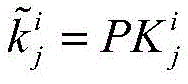
进一步地,在本发明的一个实施例中,所述投影矩阵为:Further, in an embodiment of the present invention, the projection matrix is:

其中,

为达到上述目的,本发明另一方面实施例提出了一种基于CAD模型三维目标识别分割和位姿测量装置,包括:二维目标识别模块,用于通过Faster RCNN网络在Pascal 3D+数据集上训练,并对输入图像进行二维目标识别,以提取目标矩形框;视角估计模块,用于根据所述目标矩形框复用所述Faster RCNN网络的CNN网络结构,其中,修改输出层为离散的视角值,代价函数修改为视角偏差值;特征点识别模块,用于对所述目标矩形框的特征点进行部件化约束,并将约束后的特征点输入复用后的所述CNN网络结构,并修改输入输出层为特征点位置,以提取鲁棒性的特征点;获取模块,用于获取合适目标的匹配模型;位姿测量模块,用于通过所述匹配模型的3D特征点建立与所述鲁棒性的特征点的匹配关系,以恢复所述目标相对空间模型的投影矩阵,并获取平移和旋转状态;目标分割模块,用于根据所述目标相对空间模型的投影矩阵、所述平移和旋转状态将所述匹配模型相应平移和旋转后的模型投影到目标区域内,以完成目标分割。In order to achieve the above object, another embodiment of the present invention proposes a three-dimensional target recognition, segmentation and pose measurement device based on a CAD model, including: a two-dimensional target recognition module for training on the Pascal 3D+ data set through the Faster RCNN network. , and perform two-dimensional target recognition on the input image to extract the target rectangular frame; the perspective estimation module is used to reuse the CNN network structure of the Faster RCNN network according to the target rectangular frame, wherein the modified output layer is a discrete perspective. value, the cost function is modified to the viewing angle deviation value; the feature point recognition module is used to constrain the feature points of the target rectangular frame by component, and input the constrained feature points into the multiplexed CNN network structure, and Modify the input and output layers to feature point positions to extract robust feature points; an acquisition module is used to obtain a matching model of a suitable target; a pose measurement module is used to establish and match the matching model through the 3D feature points of the matching model. The matching relationship of the robust feature points to restore the projection matrix of the target relative space model, and obtain the translation and rotation state; the target segmentation module is used for according to the projection matrix of the target relative space model, the translation and The rotation state projects the corresponding translated and rotated model of the matching model into the target area to complete the target segmentation.
本发明实施例的基于CAD模型三维目标识别分割和位姿测量装置,通过在2D识别的基础上,复用CNN网络结构,并结合视角估计和主特征点识别建立空间模型,并与模型库中适合的CAD模型建立匹配关系,实现位姿的测量,进一步将相应位姿的CAD模型投影至目标矩形框中,完成对目标的分割,从而建立了对目标的全面理解,为对场景的理解建立基础,并具备响应速度快,精度高,鲁棒性好的特点。The three-dimensional target recognition, segmentation and pose measurement device based on the CAD model of the embodiment of the present invention, on the basis of 2D recognition, reuses the CNN network structure, and combines the perspective estimation and main feature point recognition to establish a spatial model, and is combined with the model library. A suitable CAD model establishes a matching relationship, realizes the measurement of the pose, and further projects the CAD model of the corresponding pose into the target rectangle to complete the segmentation of the target, thereby establishing a comprehensive understanding of the target, which is the basis for understanding the scene It has the characteristics of fast response speed, high precision and good robustness.
另外,根据本发明上述实施例的基于CAD模型三维目标识别分割和位姿测量装置还可以具有以下附加的技术特征:In addition, the three-dimensional target recognition, segmentation and pose measurement device based on the CAD model according to the above-mentioned embodiments of the present invention may also have the following additional technical features:
进一步地,在本发明的一个实施例中,所述二维目标识别模块进一步用于在训练阶段,通过所述Pascal 3D+数据对待识别目标的不同角度和状态图片进行训练,并在识别阶段,完成端对端的所述二维目标识别。Further, in an embodiment of the present invention, the two-dimensional target recognition module is further used to train different angles and state pictures of the target to be recognized by the Pascal 3D+ data in the training phase, and in the recognition phase, complete the training. The two-dimensional target recognition end-to-end.
进一步地,在本发明的一个实施例中,所述特征点提取模块进一步用于通过部件化约束去掉部件之外的特征点,以得到图像描述的描述子,并将所述图像描述的描述子输入到所述复用后的所述CNN网络结构中,并修改输入输出层为特征点位置,以提取所述鲁棒性的特征点。Further, in an embodiment of the present invention, the feature point extraction module is further configured to remove the feature points outside the components through componentization constraints, so as to obtain the descriptor of the image description, and the descriptor of the image description Input into the multiplexed CNN network structure, and modify the input and output layers as feature point positions to extract the robust feature points.
进一步地,在本发明的一个实施例中,所述合适目标的匹配模型为在相同视角估计下的特征点具有相同分布的CAD模型,其中,根据所述离散的视角值和所述视角偏差值进行视角估计。Further, in an embodiment of the present invention, the matching model of the suitable target is a CAD model with the same distribution of feature points under the same viewing angle estimation, wherein, according to the discrete viewing angle value and the viewing angle deviation value Perform angle of view estimation.
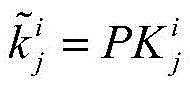
进一步地,在本发明的一个实施例中,所述投影矩阵为:Further, in an embodiment of the present invention, the projection matrix is:

其中,

本发明附加的方面和优点将在下面的描述中部分给出,部分将从下面的描述中变得明显,或通过本发明的实践了解到。Additional aspects and advantages of the present invention will be set forth, in part, from the following description, and in part will be apparent from the following description, or may be learned by practice of the invention.
附图说明Description of drawings
本发明上述的和/或附加的方面和优点从下面结合附图对实施例的描述中将变得明显和容易理解,其中:The above and/or additional aspects and advantages of the present invention will become apparent and readily understood from the following description of embodiments taken in conjunction with the accompanying drawings, wherein:
图1为根据本发明一个实施例的基于CAD模型三维目标识别分割和位姿测量方法的流程图;1 is a flowchart of a three-dimensional target recognition, segmentation and pose measurement method based on a CAD model according to an embodiment of the present invention;
图2为根据本发明一个具体实施例的基于CAD模型三维目标识别分割和位姿测量方法的流程图;Fig. 2 is a flow chart of a three-dimensional target recognition, segmentation and pose measurement method based on a CAD model according to a specific embodiment of the present invention;
图3为根据本发明一个实施例的卷积神经网络结构示意图;3 is a schematic structural diagram of a convolutional neural network according to an embodiment of the present invention;
图4为根据本发明一个实施例的主特征点识别的流程图;FIG. 4 is a flowchart of main feature point identification according to an embodiment of the present invention;
图5为根据本发明一个实施例的部件化约束示意图;5 is a schematic diagram of componentized constraints according to an embodiment of the present invention;
图6为根据本发明一个实施例的CAD模型示意图;6 is a schematic diagram of a CAD model according to an embodiment of the present invention;
图7为根据本发明一个实施例的基于CAD模型三维目标识别分割和位姿测量装置的结构示意图。FIG. 7 is a schematic structural diagram of a three-dimensional object recognition, segmentation and pose measurement device based on a CAD model according to an embodiment of the present invention.
具体实施方式Detailed ways
下面详细描述本发明的实施例,所述实施例的示例在附图中示出,其中自始至终相同或类似的标号表示相同或类似的元件或具有相同或类似功能的元件。下面通过参考附图描述的实施例是示例性的,旨在用于解释本发明,而不能理解为对本发明的限制。The following describes in detail the embodiments of the present invention, examples of which are illustrated in the accompanying drawings, wherein the same or similar reference numerals refer to the same or similar elements or elements having the same or similar functions throughout. The embodiments described below with reference to the accompanying drawings are exemplary, and are intended to explain the present invention and should not be construed as limiting the present invention.
下面参照附图描述根据本发明实施例提出的基于CAD模型三维目标识别分割和位姿测量方法及装置,首先将参照附图描述根据本发明实施例提出的基于CAD模型三维目标识别分割和位姿测量方法。The following describes the method and device for three-dimensional object recognition, segmentation and pose measurement based on a CAD model according to the embodiments of the present invention with reference to the accompanying drawings. Measurement methods.
图1是本发明一个实施例的基于CAD模型三维目标识别分割和位姿测量方法的流程图。FIG. 1 is a flowchart of a three-dimensional target recognition, segmentation and pose measurement method based on a CAD model according to an embodiment of the present invention.
如图1所示,该基于CAD模型三维目标识别分割和位姿测量方法包括以下步骤:As shown in Figure 1, the three-dimensional target recognition, segmentation and pose measurement method based on the CAD model includes the following steps:
在步骤S101中,通过Faster RCNN网络在Pascal 3D+数据集上训练,并对输入图像进行二维目标识别,以提取目标矩形框。In step S101, the Faster RCNN network is trained on the Pascal 3D+ data set, and the input image is subjected to two-dimensional target recognition to extract the target rectangular frame.
可以理解的是,如图2所示,本发明实施例进行2D目标识别,采用Faster RCNN网络,在Pascal 3D+数据集上训练,完成二维目标识别,提取目标的矩形框。It can be understood that, as shown in FIG. 2 , the embodiment of the present invention performs 2D target recognition, adopts the Faster RCNN network, and trains on the Pascal 3D+ data set to complete the 2D target recognition and extract the rectangular frame of the target.
进一步地,在本发明的一个实施例中,通过Faster RCNN网络在Pascal 3D+数据集上训练,并对输入图像进行二维目标识别,进一步包括:在训练阶段,通过Pascal 3D+数据对待识别目标的不同角度和状态图片进行训练;在识别阶段,完成端对端的二维目标识别。Further, in an embodiment of the present invention, training on the Pascal 3D+ data set through the Faster RCNN network, and performing two-dimensional target recognition on the input image, further comprising: in the training stage, using Pascal 3D+ data to identify different targets Angle and state pictures for training; in the recognition phase, end-to-end two-dimensional target recognition is completed.
可以理解的是,本发明实施例在已获得的单帧图像上完成2D目标识别,这里采用Faster RCNN网络进行目标识别,其主要包括候选窗口提取网络RPN(risk prioritynumber,风险优先数)以及判别网络RCNN(Regions with CNN features,基于候选区域的目标检测)。在训练阶段,采用Pascal 3D+数据集以及待识别目标的多个不同角度以及状态的照片;在识别阶段,完成端对端的2D目标识别。在后面的计算流程中,本发明也会在后续的视角估计和2D鲁棒性特征点中复用这个RCNN的网络结构。It can be understood that the embodiment of the present invention completes 2D target recognition on the obtained single-frame image. Here, the Faster RCNN network is used for target recognition, which mainly includes a candidate window extraction network RPN (risk priority number, risk priority number) and a discrimination network. RCNN (Regions with CNN features, target detection based on candidate regions). In the training phase, the Pascal 3D+ data set and photos of multiple different angles and states of the target to be recognized are used; in the recognition phase, end-to-end 2D target recognition is completed. In the subsequent calculation process, the present invention will also reuse the network structure of this RCNN in the subsequent perspective estimation and 2D robust feature points.
具体而言,如图2所示,输入图像可以是灰度图像、彩色图像或红外图像等,现以彩色RGB(red、green、blue,红、绿、蓝三色)图像为例。得到单张输入图像后,首先进行2D目标识别,即在图像中找出目标的矩形包围框。如图3所示,faster RCNN结构,此网络结构主要包括多层卷积与池化网络层、卷积层、结合候选窗口提取网络、获得特征区域,并进行不同大小的特征区域池化,输入最后的全卷积网络,最终的代价函数为加权分类代价和定位代价,即分类的差别代价以及目标包围框的大小与偏差代价如下式。其中Lcls为分类代价,Lloc为定位代价,λ为加权参数。Specifically, as shown in FIG. 2 , the input image may be a grayscale image, a color image, or an infrared image, and now a color RGB (red, green, blue, three-color red, green, and blue) image is taken as an example. After a single input image is obtained, 2D target recognition is performed first, that is, the rectangular bounding box of the target is found in the image. As shown in Figure 3, the faster RCNN structure, this network structure mainly includes multi-layer convolution and pooling network layers, convolution layers, combined candidate window extraction network, obtain feature regions, and pool feature regions of different sizes, input In the final fully convolutional network, the final cost functions are weighted classification cost and localization cost, that is, the difference cost of classification and the size and deviation cost of the target bounding box are as follows. where L cls is the classification cost, L loc is the location cost, and λ is the weighting parameter.

其中,虚线框内的部分将会在后面视角估计和主特征点识别中复用,而特征候选窗口提取以及代价函数可以为2D图像目标识别所适用。Among them, the part in the dotted box will be reused in the back perspective estimation and main feature point recognition, while the feature candidate window extraction and cost function can be applied to 2D image target recognition.
在卷积与池化网络中,包含多层卷积与池化层,一般卷积层需大于10层,主要用以提取图像的多个特征,结合池化层,形成多个特征图。在特征区域池化层中,主要是将不同大小的候选窗口映射到相同维的特征向量中,从而统一进行训练和判别。经过2D目标识别后,针对获得矩形包围框。进行视角估计以及主特征点识别。In the convolution and pooling network, there are multiple layers of convolution and pooling layers. Generally, the convolution layer needs to be more than 10 layers. It is mainly used to extract multiple features of the image, and combined with the pooling layer, multiple feature maps are formed. In the feature region pooling layer, candidate windows of different sizes are mainly mapped to feature vectors of the same dimension, so as to perform training and discrimination in a unified manner. After 2D target recognition, a rectangular bounding box is obtained for the target. Perform angle estimation and main feature point identification.
在步骤S102中,根据目标矩形框复用Faster RCNN网络的CNN网络结构,其中,修改输出层为离散的视角值,代价函数修改为视角偏差值。In step S102, the CNN network structure of the Faster RCNN network is multiplexed according to the target rectangular frame, wherein the modified output layer is a discrete viewing angle value, and the cost function is modified to a viewing angle deviation value.
可以理解的是,如图2所示,本发明实施例进行视角估计,通过获得的目标矩形框,复用Faster RCNN网络中的CNN网络结构,修改输出层为离散的视角值,代价函数修改为视角偏差值。其中,CNN网络被复用在多个子任务中,仅需根据需要修改输入和输出层以及代价函数,采用相同的主网络结构。It can be understood that, as shown in FIG. 2 , the embodiment of the present invention performs perspective estimation. Through the obtained target rectangular frame, the CNN network structure in the Faster RCNN network is reused, the output layer is modified to be discrete perspective values, and the cost function is modified as Viewing angle deviation value. Among them, the CNN network is reused in multiple subtasks, and only the input and output layers and cost functions need to be modified as needed, and the same main network structure is used.
具体而言,在图像中,对每一个已获得的目标窗口,对其进行窗内目标视角的回归。输出层为离散的视角值,输入层为同一目标在识别窗口内的视角数据,也即偏航角(yaw)。此视角估计将作为后续2D-3D抬升的初始值,通过视角估计产生三维抬升时的初始,并通过视角约束待匹配的特征点,提高计算效率和精度。Specifically, in the image, for each obtained target window, the regression of the target perspective within the window is performed. The output layer is the discrete viewing angle value, and the input layer is the viewing angle data of the same target in the recognition window, that is, the yaw angle (yaw). This angle of view estimation will be used as the initial value of the subsequent 2D-3D uplift. The initial value of the 3D uplift is generated through the angle of view estimation, and the feature points to be matched are constrained by the angle of view to improve computational efficiency and accuracy.
在视角估计(即偏航角)中,复用相同的CNN结构,修改输出层为不同的视角分类,代价函数为视角类别误差代价。例如,将视角每10度为一个区间,分为36个类别,进行视角估计。此处对视角的估计为后续姿态测量和目标分割的初值,能显著提升算法计算速度和精度。In view estimation (ie yaw angle), the same CNN structure is reused, the output layer is modified for different view categories, and the cost function is the view category error cost. For example, the viewing angle is divided into 36 categories every 10 degrees as an interval, and the viewing angle is estimated. The estimation of the angle of view here is the initial value of the subsequent attitude measurement and target segmentation, which can significantly improve the calculation speed and accuracy of the algorithm.
在步骤S103中,对目标矩形框的特征点进行部件化约束,并将约束后的特征点输入复用后的CNN网络结构,并修改输入输出层为特征点位置,以提取鲁棒性的特征点。In step S103, component constraints are performed on the feature points of the target rectangular frame, and the constrained feature points are input into the multiplexed CNN network structure, and the input and output layers are modified as feature point positions to extract robust features. point.
可以理解的是,如图2所示,本发明实施例进行主特征点的识别,为提高模型的鲁棒性以及获得更高的姿态测量和目标分割精度,本发明对目标矩形框中的特征点,采取部件化约束,并输入复用的CNN网络,修改输入输出层为特征点位置,提取出鲁棒性的特征点。其中,采用训练的方法获得与3D模型对应的鲁棒性特征点,并通过部件化约束,去掉冗余的和非代表性的特征点。It can be understood that, as shown in FIG. 2 , in this embodiment of the present invention, the main feature points are identified. In order to improve the robustness of the model and obtain higher accuracy of attitude measurement and target segmentation, the present invention determines the features in the target rectangular frame. Points, take component constraints, and input the multiplexed CNN network, modify the input and output layers to feature point positions, and extract robust feature points. Among them, the training method is used to obtain robust feature points corresponding to the 3D model, and redundant and non-representative feature points are removed through componentization constraints.
具体而言,在三维模型方面,因目标具备形态多样性以及细节多样性,所以对某一类目标需要选取多个不同的模型,建立对于特定目标的三维模型库。在每次图像识别后,在模型库中找到相应视觉上看起来最相似的模型,作为待匹配的三维模型。Specifically, in terms of 3D models, because the target has morphological diversity and detail diversity, it is necessary to select multiple different models for a certain type of target to establish a 3D model library for a specific target. After each image recognition, the most visually similar model is found in the model library as the three-dimensional model to be matched.
另一方面,为后续图像到三维模型的转换,此处对二维图像中目标的特征点进行筛选,选出鲁棒性强的图像特征点,也即物体固有特征。此处仍采用用于目标识别的RCNN网络结构,输入层为已检测出的目标窗口,输出为目标窗口中的特征点位置。为此,本发明实施例需要对待识别的目标进行鲁棒特征点标注,以此对网络进行训练。On the other hand, for the conversion of the subsequent image to the three-dimensional model, the feature points of the target in the two-dimensional image are screened here, and the image feature points with strong robustness are selected, that is, the inherent characteristics of the object. The RCNN network structure used for target recognition is still used here, the input layer is the detected target window, and the output is the feature point position in the target window. To this end, the embodiment of the present invention needs to perform robust feature point labeling on the target to be identified, so as to train the network.
进一步地,在本发明的一个实施例中,对目标矩形框的特征点进行部件化约束,并将约束后的特征点输入复用后的CNN网络结构,并修改输入输出层为特征点位置,以提取鲁棒性的特征点,进一步包括:通过部件化约束去掉部件之外的特征点,以得到图像描述的描述子;将图像描述的描述子输入到复用后的CNN网络结构中,并修改输入输出层为特征点位置,以提取鲁棒性的特征点。Further, in an embodiment of the present invention, component constraints are performed on the feature points of the target rectangular frame, and the constrained feature points are input into the multiplexed CNN network structure, and the input and output layers are modified as feature point positions, In order to extract robust feature points, it further includes: removing feature points outside the components through componentization constraints to obtain image description descriptors; inputting the image description descriptors into the multiplexed CNN network structure, and Modify the input and output layers to feature point locations to extract robust feature points.
具体而言,主特征点识别主要是训练目标中的特征点,提取出目标中的鲁棒性特征点,能够全面并简洁代表目标特征的主要特征点,并与其具体流程图如图4所示,在获取的目标矩形窗口中,引入部件化约束,将目标中的主特征点约束在各个的部件中。具体部件模型如图5所示,每一种目标可以将其部件切割成不同的部件,在每一个部件中提取其对应的特征点并在其中选择鲁棒性的特征点。对部件之外的区域的特征点进行舍弃,得到图像描述的描述子,通过输入到RCNN网络中,得到能够匹配CAD模型的主特征点。其中RCNN网络复用相同CNN结构,将其输入输出层修改为特征点的位置。Specifically, the main feature point recognition is mainly the feature points in the training target, and the robust feature points in the target are extracted, which can comprehensively and concisely represent the main feature points of the target features, and its specific flowchart is shown in Figure 4. , In the obtained target rectangle window, component-based constraints are introduced to constrain the main feature points in the target to each component. The specific component model is shown in Figure 5. Each target can cut its components into different components, extract its corresponding feature points in each component, and select robust feature points among them. Discard the feature points in the area outside the part to obtain the descriptor of the image description. By inputting it into the RCNN network, the main feature points that can match the CAD model are obtained. The RCNN network reuses the same CNN structure and modifies its input and output layers to the positions of the feature points.
在步骤S104中,获取合适目标的匹配模型。In step S104, a matching model of a suitable target is obtained.
进一步地,在本发明的一个实施例中,合适目标的匹配模型为在相同视角估计下的特征点具有相同分布的CAD模型,其中,根据离散的视角值和视角偏差值进行视角估计。Further, in an embodiment of the present invention, the matching model of a suitable target is a CAD model with the same distribution of feature points under the same viewing angle estimation, wherein the viewing angle estimation is performed according to discrete viewing angle values and viewing angle deviation values.
可以理解的是,如图2所示,形成空间模型,空间模型主要包括视角估计,主特征点以及适合的CAD模型。其中,在模型库中,选取在相同估计视角下的具有特征点具有相同分布的CAD模型作为目标适合的匹配模型。It can be understood that, as shown in FIG. 2 , a space model is formed, and the space model mainly includes perspective estimation, main feature points and a suitable CAD model. Among them, in the model library, CAD models with feature points and the same distribution under the same estimation perspective are selected as the matching model suitable for the target.
其中,本发明实施例获得对视角的估计值以及鲁棒性特征点的筛选之后,进一步,为便于后续三维匹配,提高3D目标识别和姿态测量的精度以及计算速度,在此对特征点和视角进行预处理。主要包括两方面,其一约束每一类物体特征点的位置范围以及将视角与特征的相对位置关系。Among them, after obtaining the estimated value of the viewing angle and the screening of the robust feature points in the embodiment of the present invention, further, in order to facilitate the subsequent three-dimensional matching and improve the accuracy and calculation speed of 3D target recognition and attitude measurement, here the feature points and the viewing angle are analyzed. preprocessing. It mainly includes two aspects, one of which is to constrain the position range of each type of object feature points and the relative positional relationship between the viewing angle and the feature.
需要说明的是,CAD模型即为用CAD软件(计算机辅助设计软件)设计的三维模型。如图6所示,CAD模型的每个模型包含多个用于匹配的空间特征点,例如,不同视角的特征点个数应大于10个,以便于与二维目标进行匹配。其中的特征点应为鲁棒性的特征点,应能代表整个一类目标的主要特点,与主特征点识别相对应。此外,CAD库中的每一个CAD模型应具备足够细节,较高的分辨率,并处于相同的尺度下。对每一个类别,例如,应具备多于5个模型,以备选取最适宜匹配的模型。当候选模型越多时,姿态测量和目标分割的精度就会越高。It should be noted that the CAD model is a three-dimensional model designed with CAD software (computer-aided design software). As shown in Figure 6, each model of the CAD model contains multiple spatial feature points for matching. For example, the number of feature points from different perspectives should be greater than 10 to facilitate matching with the two-dimensional target. Among them, the feature points should be robust feature points, which should be able to represent the main characteristics of the entire class of targets, corresponding to the identification of the main feature points. In addition, each CAD model in the CAD library should have sufficient detail, high resolution, and be at the same scale. For each category, for example, there should be more than 5 models in order to select the best matching model. When there are more candidate models, the accuracy of pose measurement and object segmentation will be higher.
具体而言,获得视角估计和主特征点之后,形成空间模型,用以与合适的CAD模型匹配。为保证整个流程的自动化进行,通过粗匹配的方式在模型库中选出适合的模型。具体来说,在模型库选取CAD模型时,通过在提取的矩形框中得到的初步特征点与模型相同视角下的特征点相匹配,选出最优模型,并以此进行三维抬升。Specifically, after obtaining the perspective estimates and main feature points, a spatial model is formed for matching with a suitable CAD model. In order to ensure the automation of the whole process, a suitable model is selected from the model library by rough matching. Specifically, when the CAD model is selected from the model library, the optimal model is selected by matching the preliminary feature points obtained in the extracted rectangular frame with the feature points from the same perspective of the model, and then three-dimensional lifting is performed.
在步骤S105中,通过匹配模型的3D特征点建立与鲁棒性的特征点的匹配关系,以恢复目标相对空间模型的投影矩阵,并获取平移和旋转状态。In step S105, a matching relationship with the robust feature points is established by matching the 3D feature points of the model, so as to restore the projection matrix of the target relative to the space model, and obtain the translation and rotation states.
可以理解的是,如图2所示,位姿测量通过空间模型中的3D特征点,建立与2D识别矩形框中相应鲁棒特征点的匹配关系,恢复出2D目标相对空间模型的投影矩阵,并计算出相对的平移和旋转状态。It can be understood that, as shown in Figure 2, the pose measurement establishes the matching relationship with the corresponding robust feature points in the 2D recognition rectangle through the 3D feature points in the space model, and restores the projection matrix of the 2D target relative to the space model, And calculate the relative translation and rotation state.
也就是说,在三维匹配阶段,根据所求出的视角初值,根据特征点匹配的关系,还原二维目标中的三维信息,完成2D-3D的抬升That is to say, in the three-dimensional matching stage, according to the obtained initial value of the angle of view, according to the matching relationship of the feature points, the three-dimensional information in the two-dimensional target is restored, and the 2D-3D lifting is completed.
进一步地,在本发明的一个实施例中,投影矩阵为:Further, in an embodiment of the present invention, the projection matrix is:

其中,

具体而言,空间模型与CAD模型匹配的三维抬升过程,是采用2D鲁棒性主特征点,结合视角初值与CAD相应的空间特征点相匹配,优化函数如下:Specifically, the three-dimensional lifting process of matching the space model and the CAD model is to use 2D robust main feature points, combined with the initial value of the viewing angle to match the corresponding space feature points of the CAD, and the optimization function is as follows:

其中,

在步骤S106中,根据目标相对空间模型的投影矩阵、平移和旋转状态将匹配模型相应平移和旋转后的模型投影到目标区域内,以完成目标分割。In step S106 , the corresponding translation and rotation model of the matching model is projected into the target area according to the projection matrix, translation and rotation state of the target relative to the space model, so as to complete the target segmentation.
可以理解的是,本发明实施例通过位姿测量的结果,将CAD模型相应平移和旋转后的模型投影到目标区域内,完成目标分割。其中,本发明实施例对匹配的三维模型进行投影,获得原图像上的目标分割。具体地,将同位姿的CAD模型投影至输入图像中,完成目标分割任务。从而在2D识别的基础上,同时完成三维重建、位姿测量以及目标分割,本发明实施例仅用单帧图像同时获得较好的识别、分割和位姿测量结果,形成对目标的理解。It can be understood that, in the embodiment of the present invention, the model after corresponding translation and rotation of the CAD model is projected into the target area according to the result of the pose measurement, so as to complete the target segmentation. The embodiment of the present invention projects the matched three-dimensional model to obtain target segmentation on the original image. Specifically, the CAD model of the same pose is projected into the input image to complete the target segmentation task. Therefore, on the basis of 2D recognition, 3D reconstruction, pose measurement and target segmentation are simultaneously completed. In the embodiment of the present invention, better recognition, segmentation and pose measurement results are simultaneously obtained using only a single frame of image to form an understanding of the target.
综上,本发明实施例主要解决了现有方法,仅针对目标识别、分割、姿态测量等单独任务进行处理,不能建立对目标的全面理解的问题。本发明实施例的方法可以同时完成三维识别、姿态测量、目标分割,对于单帧图像更加高效精确,建立对目标的全面理解。首先采用卷积神经网络完成对二维图像目标的识别,得到图像上目标的位置,并对其视角进行回归估计。之后,从三维模型库中筛选出较为合适的三维CAD模型,结合已估计得到的视角为初值,以及此CAD模型完成二维目标与三维模型的匹配,其中,由于匹配是通过特征点进行的,所以在匹配前先要完成鲁棒性特征点的检测,同时修正视角得到对目标三维姿态的计算,提升由此完成二维到三维的提升,进一步,完成基于目标的分割。To sum up, the embodiments of the present invention mainly solve the problem that the existing methods only deal with individual tasks such as target recognition, segmentation, and attitude measurement, and cannot establish a comprehensive understanding of the target. The method of the embodiment of the present invention can simultaneously complete three-dimensional recognition, attitude measurement, and target segmentation, which is more efficient and accurate for a single-frame image, and establishes a comprehensive understanding of the target. First, the convolutional neural network is used to complete the recognition of the two-dimensional image target, and the position of the target on the image is obtained, and its perspective is estimated by regression. After that, a more suitable 3D CAD model is selected from the 3D model library, and the estimated viewing angle is used as the initial value, and the CAD model completes the matching between the 2D target and the 3D model. The matching is performed through the feature points. , so before matching, it is necessary to complete the detection of robust feature points, and at the same time, correct the perspective to obtain the calculation of the three-dimensional pose of the target, and thus complete the upgrade from two-dimensional to three-dimensional, and further, complete the target-based segmentation.
另外,本发明实施例具有如下优点:In addition, the embodiments of the present invention have the following advantages:
(1)仅通过一张图像完成三维目标的重建:以往方法多通过特征点匹配的方法,与人类的视觉过程不同。本发明实施例可以仅通过一张图片完成三维重建的过程与人类的视觉过程更类似,并完成对目标的三维估计以及理解。(1) The reconstruction of 3D objects is completed by only one image: the previous methods mostly use the method of feature point matching, which is different from the human visual process. In the embodiment of the present invention, the process of three-dimensional reconstruction can be completed through only one picture, which is more similar to the human visual process, and the three-dimensional estimation and understanding of the target can be completed.
(2)同时完成目标识别三维重建、姿态测量和三维分割,建立对目标的初步理解:以往方法只是针对其中一个任务进行设计,而本发明实施例更与人类认识过程相近,同时完成对目标的三维识别、姿态测量和分割。为后面对场景的认知等工作作了充分铺垫。(2) Complete the three-dimensional reconstruction of target recognition, attitude measurement and three-dimensional segmentation at the same time, and establish a preliminary understanding of the target: the previous method is only designed for one of the tasks, while the embodiment of the present invention is more similar to the human recognition process, and at the same time completes the target recognition process. 3D recognition, pose measurement and segmentation. It has fully paved the way for the later work on the cognition of the scene.
(3)计算效率高,响应速度快:由于本发明实施例方法中不存在对大量特征点的匹配,不依赖相机的标定精度,减少了累积误差。以及采用共用神经网络结构的结构,使得本发明实施例的计算和训练效率较高。(3) High calculation efficiency and fast response speed: Since there is no matching of a large number of feature points in the method of the embodiment of the present invention, the calibration accuracy of the camera is not depended on, and the accumulated error is reduced. And the structure of the shared neural network structure makes the computing and training efficiency of the embodiment of the present invention higher.
根据本发明实施例提出的基于CAD模型三维目标识别分割和位姿测量方法,通过在2D识别的基础上,复用CNN网络结构,并结合视角估计和主特征点识别建立空间模型,并与模型库中适合的CAD模型建立匹配关系,实现位姿的测量,进一步将相应位姿的CAD模型投影至目标矩形框中,完成对目标的分割,从而建立了对目标的全面理解,为对场景的理解建立基础,并具备响应速度快,精度高,鲁棒性好的特点。According to the three-dimensional target recognition, segmentation and pose measurement method based on the CAD model proposed by the embodiment of the present invention, on the basis of 2D recognition, the CNN network structure is reused, and the spatial model is established by combining the perspective estimation and main feature point recognition, and is combined with the model. The suitable CAD model in the library establishes a matching relationship, realizes the measurement of the pose, and further projects the CAD model of the corresponding pose into the target rectangle to complete the segmentation of the target, thereby establishing a comprehensive understanding of the target, which is the basis for the scene. Understand the foundation, and have the characteristics of fast response, high precision, and good robustness.
其次参照附图描述根据本发明实施例提出的基于CAD模型三维目标识别分割和位姿测量装置。Next, the three-dimensional object recognition, segmentation and pose measurement device based on the CAD model proposed according to the embodiment of the present invention will be described with reference to the accompanying drawings.
图7是本发明一个实施例的基于CAD模型三维目标识别分割和位姿测量装置的结构示意图。FIG. 7 is a schematic structural diagram of a three-dimensional target recognition, segmentation and pose measurement device based on a CAD model according to an embodiment of the present invention.
如图7所示,该基于CAD模型三维目标识别分割和位姿测量装置10包括:二维目标识别模块100、视角估计模块200、特征点识别模块300、获取模块400、位姿测量模块500和目标分割模块600。As shown in FIG. 7 , the CAD model-based three-dimensional target recognition, segmentation and pose
其中,二维目标识别模块100用于通过Faster RCNN网络在Pascal 3D+数据集上训练,并对输入图像进行二维目标识别,以提取目标矩形框。视角估计模块200用于根据目标矩形框复用Faster RCNN网络的CNN网络结构,其中,修改输出层为离散的视角值,代价函数修改为视角偏差值。特征点识别模块300用于对目标矩形框的特征点进行部件化约束,并将约束后的特征点输入复用后的CNN网络结构,并修改输入输出层为特征点位置,以提取鲁棒性的特征点。获取模块400用于获取合适目标的匹配模型。位姿测量模块500用于通过匹配模型的3D特征点建立与鲁棒性的特征点的匹配关系,以恢复目标相对空间模型的投影矩阵,并获取平移和旋转状态。目标分割模块600用于根据目标相对空间模型的投影矩阵、平移和旋转状态将匹配模型相应平移和旋转后的模型投影到目标区域内,以完成目标分割。本发明实施例的装置10建立了对目标的全面理解,为对场景的理解建立基础,并具备响应速度快,精度高,鲁棒性好的特点。Among them, the two-dimensional
进一步地,在本发明的一个实施例中,二维目标识别模块100进一步用于在训练阶段,通过Pascal 3D+数据对待识别目标的不同角度和状态图片进行训练,并在识别阶段,完成端对端的二维目标识别。Further, in an embodiment of the present invention, the two-dimensional
进一步地,在本发明的一个实施例中,特征点提取模块300进一步用于通过部件化约束去掉部件之外的特征点,以得到图像描述的描述子,并将图像描述的描述子输入到复用后的CNN网络结构中,并修改输入输出层为特征点位置,以提取鲁棒性的特征点。Further, in an embodiment of the present invention, the feature
进一步地,在本发明的一个实施例中,合适目标的匹配模型为在相同视角估计下的特征点具有相同分布的CAD模型,其中,根据离散的视角值和视角偏差值进行视角估计。Further, in an embodiment of the present invention, the matching model of a suitable target is a CAD model with the same distribution of feature points under the same viewing angle estimation, wherein the viewing angle estimation is performed according to discrete viewing angle values and viewing angle deviation values.
进一步地,在本发明的一个实施例中,投影矩阵为:Further, in an embodiment of the present invention, the projection matrix is:

其中,

需要说明的是,前述对基于CAD模型三维目标识别分割和位姿测量方法实施例的解释说明也适用于该实施例的基于CAD模型三维目标识别分割和位姿测量装置,此处不再赘述。It should be noted that the foregoing explanations of the embodiment of the CAD model-based three-dimensional target recognition, segmentation and pose measurement method are also applicable to the CAD model-based three-dimensional target recognition, segmentation and pose measurement device of this embodiment, and will not be repeated here.
根据本发明实施例提出的基于CAD模型三维目标识别分割和位姿测量装置,通过在2D识别的基础上,复用CNN网络结构,并结合视角估计和主特征点识别建立空间模型,并与模型库中适合的CAD模型建立匹配关系,实现位姿的测量,进一步将相应位姿的CAD模型投影至目标矩形框中,完成对目标的分割,从而建立了对目标的全面理解,为对场景的理解建立基础,并具备响应速度快,精度高,鲁棒性好的特点。According to the three-dimensional target recognition, segmentation and pose measurement device based on the CAD model proposed in the embodiment of the present invention, the CNN network structure is reused on the basis of 2D recognition, and the spatial model is established by combining the perspective estimation and main feature point recognition, and is combined with the model. The suitable CAD model in the library establishes a matching relationship, realizes the measurement of the pose, and further projects the CAD model of the corresponding pose into the target rectangle to complete the segmentation of the target, thereby establishing a comprehensive understanding of the target, which is the basis for the scene. Understand the foundation, and have the characteristics of fast response, high precision, and good robustness.
此外,术语“第一”、“第二”仅用于描述目的,而不能理解为指示或暗示相对重要性或者隐含指明所指示的技术特征的数量。由此,限定有“第一”、“第二”的特征可以明示或者隐含地包括至少一个该特征。在本发明的描述中,“多个”的含义是至少两个,例如两个,三个等,除非另有明确具体的限定。In addition, the terms "first" and "second" are only used for descriptive purposes, and should not be construed as indicating or implying relative importance or implying the number of indicated technical features. Thus, a feature delimited with "first", "second" may expressly or implicitly include at least one of that feature. In the description of the present invention, "plurality" means at least two, such as two, three, etc., unless otherwise expressly and specifically defined.
在本说明书的描述中,参考术语“一个实施例”、“一些实施例”、“示例”、“具体示例”、或“一些示例”等的描述意指结合该实施例或示例描述的具体特征、结构、材料或者特点包含于本发明的至少一个实施例或示例中。在本说明书中,对上述术语的示意性表述不必须针对的是相同的实施例或示例。而且,描述的具体特征、结构、材料或者特点可以在任一个或多个实施例或示例中以合适的方式结合。此外,在不相互矛盾的情况下,本领域的技术人员可以将本说明书中描述的不同实施例或示例以及不同实施例或示例的特征进行结合和组合。In the description of this specification, description with reference to the terms "one embodiment," "some embodiments," "example," "specific example," or "some examples", etc., mean specific features described in connection with the embodiment or example , structure, material or feature is included in at least one embodiment or example of the present invention. In this specification, schematic representations of the above terms are not necessarily directed to the same embodiment or example. Furthermore, the particular features, structures, materials or characteristics described may be combined in any suitable manner in any one or more embodiments or examples. Furthermore, those skilled in the art may combine and combine the different embodiments or examples described in this specification, as well as the features of the different embodiments or examples, without conflicting each other.
尽管上面已经示出和描述了本发明的实施例,可以理解的是,上述实施例是示例性的,不能理解为对本发明的限制,本领域的普通技术人员在本发明的范围内可以对上述实施例进行变化、修改、替换和变型。Although the embodiments of the present invention have been shown and described above, it should be understood that the above-mentioned embodiments are exemplary and should not be construed as limiting the present invention. Embodiments are subject to variations, modifications, substitutions and variations.
Claims (6)




Priority Applications (1)
| Application Number | Priority Date | Filing Date | Title |
|---|---|---|---|
| CN201810367445.1A CN108648194B (en) | 2018-04-23 | 2018-04-23 | Method and device for 3D target recognition, segmentation and pose measurement based on CAD model |
Applications Claiming Priority (1)
| Application Number | Priority Date | Filing Date | Title |
|---|---|---|---|
| CN201810367445.1A CN108648194B (en) | 2018-04-23 | 2018-04-23 | Method and device for 3D target recognition, segmentation and pose measurement based on CAD model |
Publications (2)
| Publication Number | Publication Date |
|---|---|
| CN108648194A CN108648194A (en) | 2018-10-12 |
| CN108648194B true CN108648194B (en) | 2020-11-24 |
Family
ID=63747306
Family Applications (1)
| Application Number | Title | Priority Date | Filing Date |
|---|---|---|---|
| CN201810367445.1A Expired - Fee Related CN108648194B (en) | 2018-04-23 | 2018-04-23 | Method and device for 3D target recognition, segmentation and pose measurement based on CAD model |
Country Status (1)
| Country | Link |
|---|---|
| CN (1) | CN108648194B (en) |
Cited By (1)
| Publication number | Priority date | Publication date | Assignee | Title |
|---|---|---|---|---|
| US12106225B2 (en) | 2019-05-30 | 2024-10-01 | The Research Foundation For The State University Of New York | System, method, and computer-accessible medium for generating multi-class models from single-class datasets |
Families Citing this family (12)
| Publication number | Priority date | Publication date | Assignee | Title |
|---|---|---|---|---|
| CN111145248B (en) * | 2018-11-06 | 2023-06-27 | 北京地平线机器人技术研发有限公司 | Pose information determining method and device and electronic equipment |
| CN109658454B (en) * | 2018-12-04 | 2020-11-17 | 深圳前海达闼云端智能科技有限公司 | Pose information determination method, related device and storage medium |
| CN112037224B (en) * | 2018-12-27 | 2024-03-22 | 福建晨曦信息科技集团股份有限公司 | Method for generating axis according to marking line, electronic equipment and storage medium |
| CN110231939B (en) * | 2019-05-16 | 2024-05-28 | 平安科技(深圳)有限公司 | Model generation method, system, computer device and storage medium |
| CN110807784B (en) * | 2019-10-30 | 2022-07-26 | 北京百度网讯科技有限公司 | Method and device for segmenting an object |
| CN111242952B (en) * | 2020-01-15 | 2023-06-30 | 腾讯科技(深圳)有限公司 | Image segmentation model training method, image segmentation device and computing equipment |
| CN111047548B (en) * | 2020-03-12 | 2020-07-03 | 腾讯科技(深圳)有限公司 | Attitude transformation data processing method and device, computer equipment and storage medium |
| CN111553247B (en) * | 2020-04-24 | 2023-08-08 | 上海锘科智能科技有限公司 | Video structuring system, method and medium based on improved backbone network |
| CN111968235B (en) * | 2020-07-08 | 2024-04-12 | 杭州易现先进科技有限公司 | Object attitude estimation method, device and system and computer equipment |
| CN114462108A (en) * | 2021-12-27 | 2022-05-10 | 桂林航天工业学院 | Workpiece target detection and three-dimensional attitude determination method based on 2D industrial camera |
| CN115063483B (en) * | 2022-06-14 | 2023-04-11 | 广东天太机器人有限公司 | Template posture correction method and system based on 2d image recognition |
| CN115578744A (en) * | 2022-10-12 | 2023-01-06 | 广东三维家信息科技有限公司 | Method and device for identifying material of model |
Citations (2)
| Publication number | Priority date | Publication date | Assignee | Title |
|---|---|---|---|---|
| DE102015113434A1 (en) * | 2015-07-28 | 2017-02-02 | GM Global Technology Operations LLC (n. d. Gesetzen des Staates Delaware) | Method for object localization and pose estimation for an object of interest |
| CN106845515A (en) * | 2016-12-06 | 2017-06-13 | 上海交通大学 | Robot target identification and pose reconstructing method based on virtual sample deep learning |
-
2018
- 2018-04-23 CN CN201810367445.1A patent/CN108648194B/en not_active Expired - Fee Related
Patent Citations (2)
| Publication number | Priority date | Publication date | Assignee | Title |
|---|---|---|---|---|
| DE102015113434A1 (en) * | 2015-07-28 | 2017-02-02 | GM Global Technology Operations LLC (n. d. Gesetzen des Staates Delaware) | Method for object localization and pose estimation for an object of interest |
| CN106845515A (en) * | 2016-12-06 | 2017-06-13 | 上海交通大学 | Robot target identification and pose reconstructing method based on virtual sample deep learning |
Non-Patent Citations (1)
| Title |
|---|
| CAD: Scale Invariant Framework for Real-Time Object Detection;Huajun Zhou 等;《2017IEEE International Conference on computer vision workshops》;20171029;第760-768页 * |
Cited By (1)
| Publication number | Priority date | Publication date | Assignee | Title |
|---|---|---|---|---|
| US12106225B2 (en) | 2019-05-30 | 2024-10-01 | The Research Foundation For The State University Of New York | System, method, and computer-accessible medium for generating multi-class models from single-class datasets |
Also Published As
| Publication number | Publication date |
|---|---|
| CN108648194A (en) | 2018-10-12 |
Similar Documents
| Publication | Publication Date | Title |
|---|---|---|
| CN108648194B (en) | Method and device for 3D target recognition, segmentation and pose measurement based on CAD model | |
| US11443444B2 (en) | Interior photographic documentation of architectural and industrial environments using 360 panoramic videos | |
| Fan et al. | Pothole detection based on disparity transformation and road surface modeling | |
| CN111862201B (en) | A relative pose estimation method for spatial non-cooperative targets based on deep learning | |
| US12511835B2 (en) | Method and system for automatic characterization of a three-dimensional (3D) point cloud | |
| Fathi et al. | Automated as-built 3D reconstruction of civil infrastructure using computer vision: Achievements, opportunities, and challenges | |
| CN110135455A (en) | Image matching method, device and computer readable storage medium | |
| CA2887763A1 (en) | Systems and methods for relating images to each other by determining transforms without using image acquisition metadata | |
| CN108416385A (en) | It is a kind of to be positioned based on the synchronization for improving Image Matching Strategy and build drawing method | |
| CN115222884A (en) | Space object analysis and modeling optimization method based on artificial intelligence | |
| CN117726747A (en) | Three-dimensional reconstruction method, device, storage medium and equipment for complementing weak texture scene | |
| CN119135849B (en) | Digital twin method, device, equipment and medium for airport terminal video | |
| EP2800055A1 (en) | Method and system for generating a 3D model | |
| Ebrahimikia et al. | True orthophoto generation based on unmanned aerial vehicle images using reconstructed edge points | |
| CN116403275B (en) | Method and system for detecting the movement posture of people in closed space based on multi-eye vision | |
| Zhang et al. | A vision-centric approach for static map element annotation | |
| CN113920254B (en) | Monocular RGB (Red Green blue) -based indoor three-dimensional reconstruction method and system thereof | |
| CN120912759A (en) | Construction site three-dimensional scene reconstruction method based on unmanned aerial vehicle image and monitoring video | |
| CN118887569A (en) | A method for extracting building facade images based on UAV multi-camera oblique photography | |
| CN117765526A (en) | Airport aircraft detection method based on digital model | |
| Kang et al. | 3D urban reconstruction from wide area aerial surveillance video | |
| Zhong et al. | A depth–spatial alignment method for multi‐source point clouds on large‐scale construction sites | |
| CN120182510B (en) | Scenic spot three-dimensional modeling method and system oriented to travel management | |
| CN118089753B (en) | Monocular semantic SLAM positioning method and system based on three-dimensional target | |
| EP4141789B1 (en) | An automated imaging system for object footprint detection and a method thereof |
Legal Events
| Date | Code | Title | Description |
|---|---|---|---|
| PB01 | Publication | ||
| PB01 | Publication | ||
| SE01 | Entry into force of request for substantive examination | ||
| SE01 | Entry into force of request for substantive examination | ||
| GR01 | Patent grant | ||
| GR01 | Patent grant | ||
| CF01 | Termination of patent right due to non-payment of annual fee | ||
| CF01 | Termination of patent right due to non-payment of annual fee |
Granted publication date: 20201124 |