CN108350490B - Substrates and methods for sequencing - Google Patents
Substrates and methods for sequencing Download PDFInfo
- Publication number
- CN108350490B CN108350490B CN201680046996.7A CN201680046996A CN108350490B CN 108350490 B CN108350490 B CN 108350490B CN 201680046996 A CN201680046996 A CN 201680046996A CN 108350490 B CN108350490 B CN 108350490B
- Authority
- CN
- China
- Prior art keywords
- moiety
- substrate
- oligonucleotide
- nucleic acid
- acid
- Prior art date
- Legal status (The legal status is an assumption and is not a legal conclusion. Google has not performed a legal analysis and makes no representation as to the accuracy of the status listed.)
- Active
Links
Images


Classifications
-
- C—CHEMISTRY; METALLURGY
- C12—BIOCHEMISTRY; BEER; SPIRITS; WINE; VINEGAR; MICROBIOLOGY; ENZYMOLOGY; MUTATION OR GENETIC ENGINEERING
- C12Q—MEASURING OR TESTING PROCESSES INVOLVING ENZYMES, NUCLEIC ACIDS OR MICROORGANISMS; COMPOSITIONS OR TEST PAPERS THEREFOR; PROCESSES OF PREPARING SUCH COMPOSITIONS; CONDITION-RESPONSIVE CONTROL IN MICROBIOLOGICAL OR ENZYMOLOGICAL PROCESSES
- C12Q1/00—Measuring or testing processes involving enzymes, nucleic acids or microorganisms; Compositions therefor; Processes of preparing such compositions
- C12Q1/68—Measuring or testing processes involving enzymes, nucleic acids or microorganisms; Compositions therefor; Processes of preparing such compositions involving nucleic acids
- C12Q1/6844—Nucleic acid amplification reactions
- C12Q1/686—Polymerase chain reaction [PCR]
-
- C—CHEMISTRY; METALLURGY
- C12—BIOCHEMISTRY; BEER; SPIRITS; WINE; VINEGAR; MICROBIOLOGY; ENZYMOLOGY; MUTATION OR GENETIC ENGINEERING
- C12Q—MEASURING OR TESTING PROCESSES INVOLVING ENZYMES, NUCLEIC ACIDS OR MICROORGANISMS; COMPOSITIONS OR TEST PAPERS THEREFOR; PROCESSES OF PREPARING SUCH COMPOSITIONS; CONDITION-RESPONSIVE CONTROL IN MICROBIOLOGICAL OR ENZYMOLOGICAL PROCESSES
- C12Q1/00—Measuring or testing processes involving enzymes, nucleic acids or microorganisms; Compositions therefor; Processes of preparing such compositions
- C12Q1/68—Measuring or testing processes involving enzymes, nucleic acids or microorganisms; Compositions therefor; Processes of preparing such compositions involving nucleic acids
- C12Q1/6813—Hybridisation assays
- C12Q1/6834—Enzymatic or biochemical coupling of nucleic acids to a solid phase
-
- C—CHEMISTRY; METALLURGY
- C12—BIOCHEMISTRY; BEER; SPIRITS; WINE; VINEGAR; MICROBIOLOGY; ENZYMOLOGY; MUTATION OR GENETIC ENGINEERING
- C12Q—MEASURING OR TESTING PROCESSES INVOLVING ENZYMES, NUCLEIC ACIDS OR MICROORGANISMS; COMPOSITIONS OR TEST PAPERS THEREFOR; PROCESSES OF PREPARING SUCH COMPOSITIONS; CONDITION-RESPONSIVE CONTROL IN MICROBIOLOGICAL OR ENZYMOLOGICAL PROCESSES
- C12Q1/00—Measuring or testing processes involving enzymes, nucleic acids or microorganisms; Compositions therefor; Processes of preparing such compositions
- C12Q1/68—Measuring or testing processes involving enzymes, nucleic acids or microorganisms; Compositions therefor; Processes of preparing such compositions involving nucleic acids
- C12Q1/6869—Methods for sequencing
- C12Q1/6874—Methods for sequencing involving nucleic acid arrays, e.g. sequencing by hybridisation
Landscapes
- Chemical & Material Sciences (AREA)
- Life Sciences & Earth Sciences (AREA)
- Organic Chemistry (AREA)
- Proteomics, Peptides & Aminoacids (AREA)
- Health & Medical Sciences (AREA)
- Zoology (AREA)
- Wood Science & Technology (AREA)
- Engineering & Computer Science (AREA)
- Molecular Biology (AREA)
- Immunology (AREA)
- Biotechnology (AREA)
- Microbiology (AREA)
- Biochemistry (AREA)
- Bioinformatics & Cheminformatics (AREA)
- General Engineering & Computer Science (AREA)
- General Health & Medical Sciences (AREA)
- Genetics & Genomics (AREA)
- Analytical Chemistry (AREA)
- Biophysics (AREA)
- Physics & Mathematics (AREA)
- Chemical Kinetics & Catalysis (AREA)
- Measuring Or Testing Involving Enzymes Or Micro-Organisms (AREA)
Abstract
Description
相关申请的交叉引用CROSS-REFERENCE TO RELATED APPLICATIONS
本专利申请要求2015年7月6日提交的美国临时专利申请No. 62/189,019的利益,该临时专利申请全文以引用方式并入本文。This patent application claims the benefit of US Provisional Patent Application No. 62/189,019, filed July 6, 2015, which is incorporated herein by reference in its entirety.
技术领域technical field
本公开整体涉及用于测序及相关应用的离散的聚合物网络底物、用于 制备此类离散的聚合物网络的方法以及使用此类离散的聚合物网络的方 法。The present disclosure generally relates to discrete polymer network substrates for sequencing and related applications, methods for making such discrete polymer networks, and methods of using such discrete polymer networks.
背景技术Background technique
医学和科学界对基因检测越来越感兴趣。在医学上,基因检测提供了 有关疾病起源、疾病易感性、药物反应性和遗传性状鉴定的详细信息。除 使用基因检测对物种进行分类并确定迁徙模式以外,动物科学还希望通过 基因检测提供类似的详细信息。在其它领域诸如农业科学中,利用基因检 测鉴定可掺入动植物品系中的基因序列,以降低对病虫害的易感性并提高 产量。The medical and scientific communities are increasingly interested in genetic testing. In medicine, genetic testing provides detailed information about disease origin, disease susceptibility, drug responsiveness, and identification of genetic traits. In addition to using genetic testing to classify species and determine migration patterns, animal science hopes to provide similar details through genetic testing. In other fields such as agricultural sciences, genetic testing is used to identify gene sequences that can be incorporated into plant and animal strains to reduce susceptibility to pests and diseases and increase yield.
尽管已经提出了许多基因检测技术,但是当前的基因检测技术依赖于 设置在例如可用于检测核苷酸掺入的装置(诸如光学装置或离子敏感装 置)上的离散的核酸缀合的聚合物网络。在一个具体示例中,离散的缀合 网络可沉积到设置在离子敏感场效应晶体管上的孔中,该离子敏感场效应 晶体管测量由核苷酸掺入而释放的焦磷酸盐或氢离子。其它技术依赖于设 置在不含孔的底物上的离散网络的阵列。Although many genetic detection techniques have been proposed, current genetic detection techniques rely on discrete nucleic acid-conjugated polymer networks disposed, for example, on devices that can be used to detect nucleotide incorporation, such as optical or ion-sensitive devices . In one specific example, discrete conjugation networks can be deposited into pores disposed on ion-sensitive field effect transistors that measure pyrophosphate or hydrogen ions released by nucleotide incorporation. Other techniques rely on arrays of discrete networks disposed on substrates that do not contain pores.
附图说明Description of drawings
通过参考附图,本公开内容可得到更好理解,并且其众多特征和优点 对于本领域技术人员变得显而易见。The present disclosure may be better understood, and its numerous features and advantages made apparent to those skilled in the art by referencing the accompanying drawings.
图1包括示出用于制备寡核苷酸的示例性方法的流程图。Figure 1 includes a flow diagram illustrating an exemplary method for preparing oligonucleotides.
图2示出用于制备寡核苷酸的示例性方法。Figure 2 shows an exemplary method for preparing oligonucleotides.
图3和图4包括示例性染料标记的核苷酸的图示。3 and 4 include illustrations of exemplary dye-labeled nucleotides.
图5包括示例性染料标记的寡核苷酸的图示。Figure 5 includes illustrations of exemplary dye-labeled oligonucleotides.
图6包括用于制备寡核苷酸的示例性方法的图示。Figure 6 includes an illustration of an exemplary method for preparing oligonucleotides.
图7包括示出用于制备和利用缀合至寡核苷酸的底物的示例性方法的 流程图。7 includes a flow diagram illustrating an exemplary method for making and utilizing substrates conjugated to oligonucleotides.
图8包括示出用于制备和使用缀合至核酸的底物的示例性方法的流程 图。Figure 8 includes a flow diagram illustrating an exemplary method for making and using a substrate conjugated to a nucleic acid.
图9包括用于制备在测序装置中使用的离散底物的示例性乳液基方法 的图示。9 includes an illustration of an exemplary emulsion-based method for preparing discrete substrates for use in sequencing devices.
图10包括示例性测序系统的图示。10 includes an illustration of an exemplary sequencing system.
不同附图中使用的相同参考符号指示相似或相同的项目。The use of the same reference symbols in different figures indicates similar or identical items.
具体实施方式Detailed ways
在一个示例性实施方案中,底物可包括缀合至底物的偶联位点的寡核 苷酸或核酸。一部分可附接至掺入寡核苷酸或核酸中的经修饰的核苷酸。 例如,所述部分可通过与碱基的连接键附接至核苷酸,其中连接键附接至 嘧啶碱基诸如胸苷和胞苷的5位上,或者其中连接键附接至7-脱氮嘌呤碱 基诸如鸟苷和腺苷的7位上。所述部分可附接至偶联于寡核苷酸或核酸的 末端的经修饰的核苷酸或者可固定于寡核苷酸或核酸的任何碱基位置。在 一个具体实施例中,所述部分为染料部分,诸如TAMRA染料或荧光素染 料。在另一实施例中,官能部分用作缓冲剂。In an exemplary embodiment, the substrate may comprise an oligonucleotide or nucleic acid conjugated to the coupling site of the substrate. A portion may be attached to modified nucleotides incorporated into oligonucleotides or nucleic acids. For example, the moiety can be attached to the nucleotide by a linkage to the base, wherein the linkage is attached to the 5-position of pyrimidine bases such as thymidine and cytidine, or wherein the linkage is attached to the 7-de At position 7 of azapurine bases such as guanosine and adenosine. The moiety can be attached to a modified nucleotide coupled to the end of the oligonucleotide or nucleic acid or can be immobilized at any base position of the oligonucleotide or nucleic acid. In a specific embodiment, the moiety is a dye moiety, such as a TAMRA dye or a fluorescein dye. In another embodiment, the functional moiety acts as a buffer.
在另一实施例中,一部分可附接至固定于寡核苷酸或核酸的末端和底 物的偶联位点之间的非核苷酸结构。在一个实施例中,底物为离散底物, 例如包括水凝胶网络(诸如聚丙烯酰胺网络)。在一个具体实施例中,染 料部分偶联至寡核苷酸或核酸的末端的核苷酸类似物,例如偶联于寡核苷 酸或核酸的末端和偶联位点之间。In another embodiment, a moiety may be attached to a non-nucleotide structure immobilized between the end of the oligonucleotide or nucleic acid and the coupling site of the substrate. In one embodiment, the substrate is a discrete substrate, eg, comprising a hydrogel network (such as a polyacrylamide network). In a specific embodiment, the dye moiety is conjugated to a nucleotide analog at the end of the oligonucleotide or nucleic acid, e.g., between the end of the oligonucleotide or nucleic acid and the conjugation site.
在另一实施例中,此类具有偶联至偶联位点的经染料修饰的寡核苷酸 的离散底物特别适用于制备包括核酸的克隆群体的离散底物,并且例如可 用于测序或定量扩增。In another embodiment, such discrete substrates having dye-modified oligonucleotides coupled to conjugation sites are particularly useful for preparing discrete substrates comprising clonal populations of nucleic acids, and may be used, for example, for sequencing or Quantitative amplification.
在图1中所示的示例性实施方案中,方法100包括生成寡核苷酸,如 102所示。在一个具体实施例中,寡核苷酸可利用亚磷酰胺化学作用生成 并且在底物上合成。例如,如图2所示,寡核苷酸的末端碱基可被脱保护 (202),例如通过脱三苯甲基以提供5'羟基。可在存在酸性唑类催化剂诸如 四唑、2-乙硫基四唑、2-苄硫基四唑、4,5-二氰基咪唑或它们的组合的情况 下加入经亚磷酰胺修饰的核苷酸(204)以取代5'羟基。所得的亚磷酸盐可 被氧化(206)为磷酸盐,并且重复该过程。虽然图2的方法示出经氰基醚修 饰的亚磷酰胺或DMT保护的5'羟基,但是在过程中可利用类似的保护化 学基团以生成寡核苷酸。In the exemplary embodiment shown in FIG. 1,
包括官能部分的经修饰的核苷酸可附接至寡核苷酸或核酸的末端,如 104所示。具体地,经修饰的核苷酸可附接至寡核苷酸的5'端的近侧。在 一个具体实施例中,经修饰的核苷酸可包括偶联于经修饰的碱基并且使用 与上文所述类似的亚磷酰胺化学基团加入寡核苷酸的5'端的部分。Modified nucleotides including functional moieties can be attached to the ends of oligonucleotides or nucleic acids, as shown at 104. Specifically, modified nucleotides can be attached proximal to the 5' end of the oligonucleotide. In a specific embodiment, the modified nucleotide can include a moiety coupled to the modified base and added to the 5' end of the oligonucleotide using a phosphoramidite chemistry similar to that described above.
附加的连接基部分可偶联至寡核苷酸末端的近侧,诸如附接至其中偶 联官能部分的经修饰的碱基。具体地,例如,经修饰的核苷酸的5'羟基可 被脱保护,并且连接基部分可偶联于脱保护的5'羟基。在另一实施例中, 经修饰的核苷酸可固定到寡核苷酸或核酸内的任何碱基位置。另选地,包 括官能部分的非核苷酸结构可固定到寡核苷酸的末端。Additional linker moieties can be coupled to the proximal side of the oligonucleotide end, such as to a modified base in which a functional moiety is coupled. Specifically, for example, the 5' hydroxyl group of the modified nucleotide can be deprotected, and the linker moiety can be coupled to the deprotected 5' hydroxyl group. In another embodiment, modified nucleotides can be immobilized at any base position within an oligonucleotide or nucleic acid. Alternatively, non-nucleotide structures including functional moieties can be immobilized to the ends of the oligonucleotides.
在一个具体实施例中,官能部分可通过使用标记的亚磷酰胺掺入寡核 苷酸中,其中官能部分在固相合成寡核苷酸的过程中掺入。在另一实施例 中,所述部分可在对寡核苷酸脱保护并且将其从固相载体上裂解后掺入。 例如,所述部分可沿寡核苷酸结构的点处掺入,其中反应基团(诸如受保 护的胺)通过嘧啶碱基诸如胸苷和胞苷的5位的连接键附接至核苷酸亚磷 酰胺,或者其中连接键附接至7-脱氮嘌呤碱基诸如鸟苷和腺苷的7位上。 在另一实施例中,所述部分可在掺入非核苷酸结构中的受保护的胺处掺 入。在裂解和脱保护包含脱保护的反应基团的寡核苷酸后,寡核苷酸可与 附接至官能部分的反应基团反应,该反应基团与寡核苷酸上的反应基团相 容。例如,当寡核苷酸上的反应基团为胺时,反应部分可为官能部分的 NHS酯。In a specific embodiment, the functional moiety can be incorporated into the oligonucleotide through the use of a labeled phosphoramidite, wherein the functional moiety is incorporated during solid phase synthesis of the oligonucleotide. In another example, the moiety can be incorporated after deprotecting the oligonucleotide and cleaving it from the solid support. For example, the moiety can be incorporated at points along the oligonucleotide structure where a reactive group (such as a protected amine) is attached to the nucleoside through a linkage at
在一个实施例中,官能部分包括染料部分。例如,染料部分可为罗丹 明染料。在另一实施例中,染料部分可为5-羟基四甲基罗丹明、四甲基罗 丹明(TAMRA)炔烃或它们的变型形式。例如,如图3所示,经修饰的胸 腺嘧啶或尿苷核苷酸包括偶联的染料部分。图3示出附接于胸腺嘧啶亚磷 酰胺的示例性TAMRA染料部分。In one embodiment, the functional moiety includes a dye moiety. For example, the dye moiety can be a rhodamine dye. In another embodiment, the dye moiety may be 5-hydroxytetramethylrhodamine, tetramethylrhodamine (TAMRA) alkyne, or variations thereof. For example, as shown in Figure 3, modified thymine or uridine nucleotides include conjugated dye moieties. Figure 3 shows an exemplary TAMRA dye moiety attached to thymidine phosphoramidite.
在另一实施例中,染料部分可为荧光素染料。例如,荧光素染料可为 二新戊酰基荧光素染料,诸如5-二甲氧基三苯甲基氧基-5-[N-(3',6'-二新戊 酰基荧光素基)-氨基]染料。示例性染料为Alexa 
在另一实施例中,官能部分可为缓冲部分。示例性缓冲部分可具有可 测定的pKa,其可共价连接或整合到核苷酸亚磷酰胺或其它亚磷酰胺非核 苷酸结构。缓冲部分及其可作为部分连接或整合的结构的示例包括N-(3-吗 啉基-4-基丙基,In another embodiment, the functional moiety may be a buffer moiety. Exemplary buffer moieties can have a measurable pKa that can be covalently attached or incorporated into a nucleotide phosphoramidite or other phosphoramidite non-nucleotide structure. Examples of buffer moieties and structures to which they can be attached or integrated as moieties include N-(3-morpholin-4-ylpropyl,
三乙醇胺: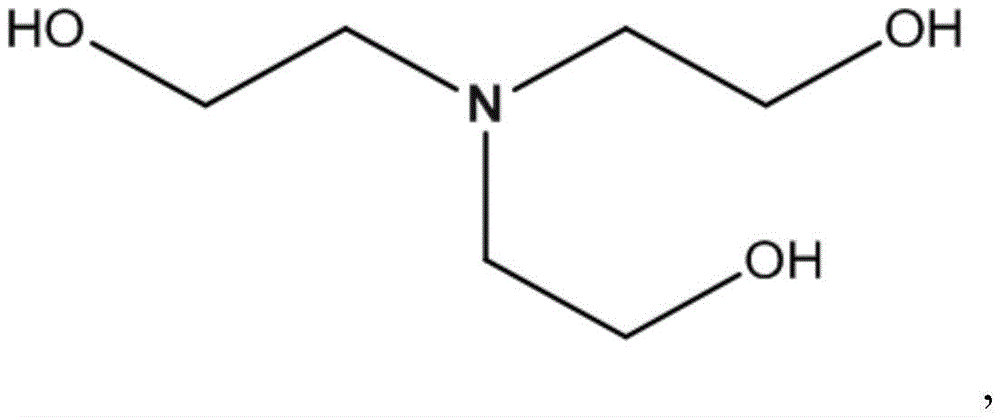
N-[三(羟甲基)甲基]-2-氨基乙磺酸:N-[Tris(hydroxymethyl)methyl]-2-aminoethanesulfonic acid:

3-(N-三[羟甲基]甲氨基)-2-羟基丙磺酸:3-(N-Tris[hydroxymethyl]methylamino)-2-hydroxypropanesulfonic acid:
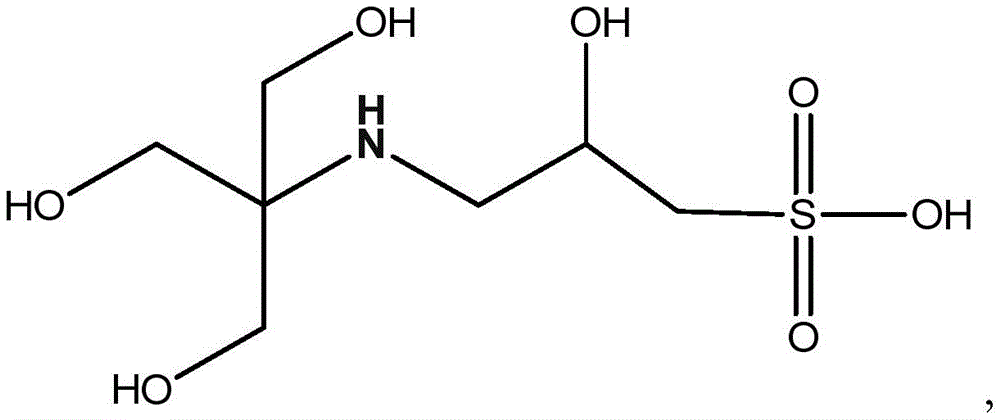
N-(2-羟乙基)哌嗪-N-(2-乙磺酸):N-(2-Hydroxyethyl)piperazine-N-(2-ethanesulfonic acid):

N-(2-乙酰胺基)-2-氨基乙磺酸:N-(2-Acetamido)-2-aminoethanesulfonic acid:
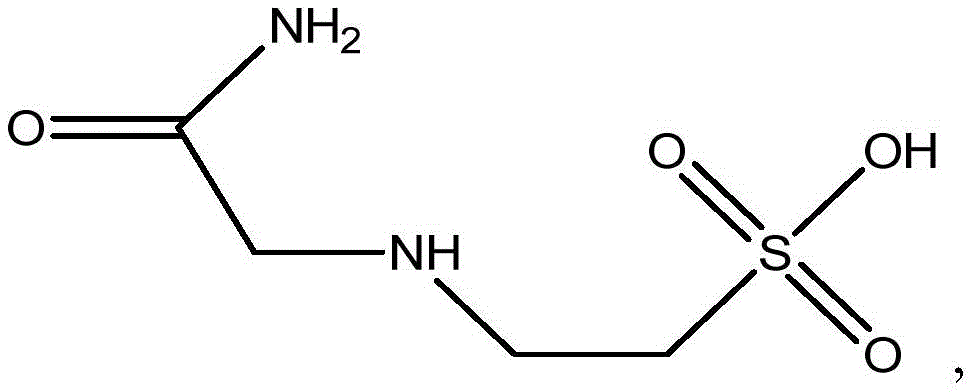
咪唑: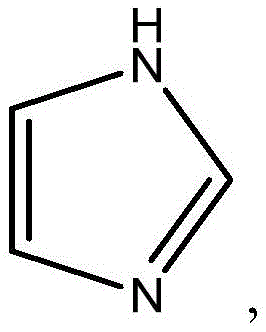
乙酸盐: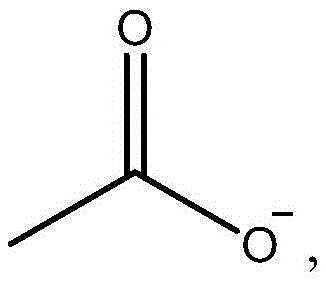
缓冲部分也可根据缓冲部分预定的pKa来选择。例如,溶液相缓冲基 团的预定pKa值可包括从约4.5至约9.0的范围,例如约6.0至约8.0。仅 以举例的方式,缓冲基团的预定pKa值可被选择为约4.76、约6.8、约 6.9、约7.5、约7.6以及约7.8。The buffer portion can also be selected according to the predetermined pKa of the buffer portion. For example, the predetermined pKa value of the solution phase buffer group can include a range from about 4.5 to about 9.0, such as about 6.0 to about 8.0. By way of example only, the predetermined pKa value of the buffer group can be selected to be about 4.76, about 6.8, about 6.9, about 7.5, about 7.6, and about 7.8.
此类经修饰的亚磷酰胺核苷酸可掺入寡核苷酸的末端。具体地,如图 5所示,寡核苷酸引物序列可附接至经染料修饰的核苷酸,诸如胸腺嘧啶 核苷酸,并且反应末端基团W可由连接基附接至经修饰的核苷酸。任选 地,寡核苷酸引物序列的末端核苷酸可经聚乙二醇(PEG)修饰,随后经染 料修饰的核苷酸可附接至该末端。Such modified phosphoramidite nucleotides can be incorporated into the termini of oligonucleotides. Specifically, as shown in Figure 5, the oligonucleotide primer sequences can be attached to dye-modified nucleotides, such as thymine nucleotides, and the reactive end group W can be attached to the modified core by a linker Glycosides. Optionally, the terminal nucleotides of the oligonucleotide primer sequences can be modified with polyethylene glycol (PEG), and subsequently dye-modified nucleotides can be attached to the terminal.
返回图1,在形成经染料修饰的寡核苷酸后,可洗涤寡核苷酸,如106 所示。例如,可洗涤寡核苷酸以除去反应副产物。此外,可使用碱洗涤除 去保护部分,诸如酯部分(例如,保护磷酸盐的氧的氰基酯部分)。Returning to Figure 1, after the dye-modified oligonucleotides are formed, the oligonucleotides can be washed, as shown at 106. For example, oligonucleotides can be washed to remove reaction by-products. Additionally, protective moieties, such as ester moieties (e.g., cyanoester moieties that protect the oxygen of a phosphate), can be removed using an alkaline wash.
另外,寡核苷酸可进行离子交换,如108所示,以除去与寡核苷酸缔 合的金属阳离子,并且提供亲脂部分,该亲脂部分使寡核苷酸优先保持在 非水溶剂的溶液中。Additionally, oligonucleotides can be ion-exchanged, as shown at 108, to remove metal cations associated with the oligonucleotides and provide a lipophilic moiety that preferentially maintains the oligonucleotides in non-aqueous solvents in the solution.
在一个具体实施例中,可通过将金属反离子交换为具有亲脂部分的阳 离子诸如铵离子或鏻阳离子,使生物分子具有更高的亲脂性。在一个具体 实施例中,胺封端的核酸与聚合物底物缀合之前,可进行离子交换。具体 地,与核酸缔合的金属离子可被亲脂性反离子取代,如图6所示。In a specific embodiment, biomolecules can be rendered more lipophilic by exchanging metal counterions for cations with lipophilic moieties such as ammonium or phosphonium cations. In a specific embodiment, the amine-terminated nucleic acid can be ion-exchanged prior to conjugation to the polymeric substrate. Specifically, metal ions associated with nucleic acids can be replaced by lipophilic counter ions, as shown in Figure 6.
如图6所示,生物分子的反离子(例如,金属离子)可与亲脂性反离 子交换以提供具有更高亲脂性的生物分子络合物。如本文所用,亲脂性反 离子是结合官能团(例如,烷基部分)的离子,当该反离子与生物分子缔 合时,屏蔽生物分子的离子,使生物分子具有更高的亲脂性并且能够溶解 于非水溶剂中。例如,示出的生物分子为多核苷酸。如图所示,多核苷酸 由多个聚合的核苷酸形成。核苷酸的碳水化合物部分(X)结合到相邻核苷 酸的磷酸基。每个磷酸基与阳离子型反离子(M)缔合。在一个实施例中, 阳离子型反离子(M)可为金属离子。在另一实施例中,阳离子型反离子(M) 可为铵离子或质子。此外,多核苷酸可包括连接基团(L),该连接基团将反 应基团(W)连接至核苷酸链。另选地,生物分子可为具有类似连接基/反应 基团结构的多核苷酸类似物,并且多核苷酸可具有从一个或多个碱基延伸并且除此之外或替代性地从碳水化合物(X)延伸的反应基团(W)。As shown in Figure 6, counter ions (e.g., metal ions) of biomolecules can be exchanged with lipophilic counter ions to provide biomolecule complexes with higher lipophilicity. As used herein, a lipophilic counterion is an ion that binds a functional group (eg, an alkyl moiety) that, when associated with a biomolecule, shields the ion of the biomolecule, making the biomolecule more lipophilic and capable of solubilization in non-aqueous solvents. For example, the illustrated biomolecules are polynucleotides. As shown, polynucleotides are formed from multiple polymerized nucleotides. The carbohydrate moiety (X) of the nucleotide is bound to the phosphate group of the adjacent nucleotide. Each phosphate group is associated with a cationic counterion (M). In one embodiment, the cationic counter ion (M) can be a metal ion. In another embodiment, the cationic counter ion (M) can be an ammonium ion or a proton. In addition, the polynucleotide may include a linking group (L) that connects the reactive group (W) to the nucleotide chain. Alternatively, the biomolecule may be a polynucleotide analog having a similar linker/reactive group structure, and the polynucleotide may have extensions from one or more bases and additionally or alternatively from carbohydrates (X) Extended reactive group (W).
在一个实施例中,连接基团(L)包括烃、醚或聚醚基或它们的组合。 反应基团(W)可用于与底物诸如聚合物底物上形成的官能团进行反应。在 一个具体实施例中,反应基团(W)可为胺、硫醇、马来酰亚胺、乙炔、叠 氮化物或它们的组合。例如,反应基团(W)可为胺或硫醇。具体地,反应 基团(W)可为胺。在另一实施例中,反应基团(W)可为马来酰亚胺。在另一实施例中,反应基团(W)可为乙炔。在另一实施例中,反应基团(W)可 为叠氮化物。In one embodiment, the linking group (L) comprises a hydrocarbon, ether or polyether group or a combination thereof. The reactive group (W) can be used to react with functional groups formed on substrates such as polymeric substrates. In a specific embodiment, the reactive group (W) can be an amine, thiol, maleimide, acetylene, azide, or a combination thereof. For example, the reactive group (W) can be an amine or a thiol. Specifically, the reactive group (W) may be an amine. In another embodiment, the reactive group (W) can be a maleimide. In another embodiment, the reactive group (W) can be acetylene. In another embodiment, the reactive group (W) can be an azide.
多核苷酸暴露于亲脂性反离子,诸如具有亲脂部分的带正电荷的反离 子。亲脂性反离子可包括带正电荷的部分(Y),该带正电荷的部分偶联于一 个或多个烃基团(R1、R2、R3、R4)并且与反离子(Z)缔合。在一个实施例 中,带正电荷的部分(Y)可为氮、磷、硫、砷或它们的任何组合。具体 地,带正电荷的部分(Y)为氮、磷、硫或它们的组合。例如,带正电荷的部分(Y)可为氮或磷。具体地,带正电荷的部分(Y)为氮,与烃基团 (R1、R2、R3或R4)形成胺。The polynucleotide is exposed to a lipophilic counterion, such as a positively charged counterion having a lipophilic moiety. The lipophilic counterion may comprise a positively charged moiety (Y) coupled to one or more hydrocarbon groups (R1, R2, R3 , R4 ) and with the counterion ( Z) associate. In one embodiment, the positively charged moiety (Y) can be nitrogen, phosphorous, sulfur, arsenic, or any combination thereof. Specifically, the positively charged moiety (Y) is nitrogen, phosphorus, sulfur, or a combination thereof. For example, the positively charged moiety (Y) can be nitrogen or phosphorus. Specifically, the positively charged moiety (Y) is nitrogen, forming an amine with a hydrocarbon group (R 1 , R 2 , R 3 or R 4 ).
带正电荷的部分(Y)可与一个或多个烃基团(诸如至少两个烃基团、 至少三个烃基团或至少四个烃基团但一般不超过五个烃基团)偶联。如图 所示,带正电荷的部分(Y)包括四个烃基团(R1、R2、R3或R4)。烃基团 (R1、R2、R3或R4)独立地可为烷基基团、芳基基团、它们的醚衍生物或它 们的组合。在一个实施例中,烷烃基团可包括甲基、乙基、丙基、或丁 基、它们的醚衍生物或它们的组合。例如,丙基可为正丙基、异丙基或它 们的组合。在一个实施例中,丁基可为正丁基、异丁基、仲丁基、叔丁基 或它们的任何组合。示例性的芳基基团可包括苯基、甲苯基、二甲苯基、 或多芳基诸如萘基、它们的醚衍生物或它们的任何组合。The positively charged moiety (Y) can be coupled to one or more hydrocarbon groups, such as at least two hydrocarbon groups, at least three hydrocarbon groups, or at least four hydrocarbon groups but generally no more than five hydrocarbon groups. As shown, the positively charged moiety (Y) includes four hydrocarbon groups (R 1 , R 2 , R 3 or R 4 ). The hydrocarbon groups (R 1 , R 2 , R 3 or R 4 ) independently can be alkyl groups, aryl groups, ether derivatives thereof, or combinations thereof. In one embodiment, the alkane group may include methyl, ethyl, propyl, or butyl, their ether derivatives, or combinations thereof. For example, the propyl group can be n-propyl, isopropyl, or a combination thereof. In one embodiment, the butyl group can be n-butyl, isobutyl, sec-butyl, tert-butyl, or any combination thereof. Exemplary aryl groups can include phenyl, tolyl, xylyl, or polyaryl groups such as naphthyl, their ether derivatives, or any combination thereof.
具体地,亲脂性反离子[Y(R1)(R2)(R3)(R4)]可包括亲脂性铵离子、亲脂 性鏻离子、亲脂性鉮离子、亲脂性锍离子或它们的组合。示例性亲脂性铵 离子包括四烷基铵、四芳基铵、混合烷基和芳基铵或它们的组合。例如, 示例性亲脂性铵离子选自四甲基铵、四乙基铵、四丙基铵、四丁基铵、四 戊基铵、四己基铵、四庚基铵、四辛基铵、它们的烷基和芳基混合物以及 它们的组合。示例性亲脂性鏻离子包括四苯基鏻。示例性亲脂性鉮离子为 四烷基鉮、四芳基鉮、混合烷基和芳基鉮离子或它们的组合。例如,亲脂 性鉮离子为四苯基鉮。示例性亲脂性锍离子为三烷基锍离子离子(Z)可为 具有与亲脂性基团[Y(R1)(R2)(R3)(R4)]相反的电荷的离子,诸如氢氧化物、 卤素、硝酸盐、碳酸盐、硫酸盐、高氯酸盐、酚盐、四烷基硼酸盐、四芳 基硼酸盐、磷酸盐离子或它们的任何组合。Specifically, the lipophilic counterion [Y(R 1 )(R 2 )(R 3 )(R 4 )] may include lipophilic ammonium ions, lipophilic phosphonium ions, lipophilic arsonium ions, lipophilic sulfonium ions, or combinations thereof combination. Exemplary lipophilic ammonium ions include tetraalkylammonium, tetraarylammonium, mixed alkyl and arylammonium, or combinations thereof. For example, exemplary lipophilic ammonium ions are selected from the group consisting of tetramethylammonium, tetraethylammonium, tetrapropylammonium, tetrabutylammonium, tetrapentylammonium, tetrahexylammonium, tetraheptylammonium, tetraoctylammonium, their mixtures of alkyl and aryl groups and combinations thereof. Exemplary lipophilic phosphonium ions include tetraphenylphosphonium. Exemplary lipophilic arsonium ions are tetraalkyl arsonium, tetraaryl arsonium, mixed alkyl and aryl arsonium ions, or combinations thereof. For example, a lipophilic arsonium ion is tetraphenylarsonium. An exemplary lipophilic sulfonium ion is a trialkylsulfonium ion. The ion (Z) can be an ion having a charge opposite to the lipophilic group [Y(R 1 )(R 2 )(R 3 )(R 4 )], such as Hydroxides, halogens, nitrates, carbonates, sulfates, perchlorates, phenates, tetraalkylborates, tetraarylborates, phosphate ions, or any combination thereof.
作为交换的结果,核酸络合物表现出亲脂行为,并且可分散于非水溶 剂中。在一个实施例中,非水溶剂为极性的。在另一实施例中,非水溶剂 与底物上的偶联基团或聚合物的官能团(诸如核酸络合物的反应基团 (W))不反应。在一个实施例中,溶剂包括酰胺、脲、碳酸酯、醚、亚砜、 砜、受阻醇或它们的组合。示例性酰胺或脲包括甲酰胺、N,N-二甲基甲酰 胺、乙酰胺、N,N-二甲基乙酰胺、六甲基磷酰胺、吡咯烷酮、N-甲基吡咯 烷酮、N,N,N',N'-四甲基脲、N,N'-二甲基-N,N'-三亚甲基脲或它们的组合。 示例性碳酸酯包括碳酸二甲酯、碳酸丙烯酯或它们的组合。示例性醚包括 四氢呋喃。示例性亚砜或砜包括二甲基亚砜、二甲基砜或它们的组合。示 例性受阻醇包括叔丁醇。As a result of the exchange, the nucleic acid complexes exhibit lipophilic behavior and are dispersible in non-aqueous solvents. In one embodiment, the non-aqueous solvent is polar. In another embodiment, the non-aqueous solvent does not react with coupling groups on the substrate or functional groups of the polymer, such as reactive groups (W) of nucleic acid complexes. In one embodiment, the solvent includes amides, ureas, carbonates, ethers, sulfoxides, sulfones, hindered alcohols, or combinations thereof. Exemplary amides or ureas include formamide, N,N-dimethylformamide, acetamide, N,N-dimethylacetamide, hexamethylphosphoramide, pyrrolidone, N-methylpyrrolidone, N,N, N',N'-tetramethylurea, N,N'-dimethyl-N,N'-trimethyleneurea, or combinations thereof. Exemplary carbonates include dimethyl carbonate, propylene carbonate, or combinations thereof. Exemplary ethers include tetrahydrofuran. Exemplary sulfoxides or sulfones include dimethyl sulfoxide, dimethyl sulfone, or combinations thereof. Exemplary hindered alcohols include tert-butanol.
在离子交换之后或作为离子交换的一部分,核酸络合物可分散于非水 溶剂中。分散的核酸络合物可用于缀合底物。After or as part of ion exchange, the nucleic acid complex can be dispersed in a non-aqueous solvent. Dispersed nucleic acid complexes can be used to conjugate substrates.
要缀合经离子交换的寡核苷酸,可活化底物的偶联位点以使寡核苷酸 的连接部分结合到偶联位点。如图7所示,方法700包括活化底物的偶联 位点,如702所示。活化偶联位点取决于偶联位点的性质。示例性偶联位 点可包括聚合物网络上的羟基、胺或羧基位点。根据底物的偶联位点的性 质以及活化化学不同,可选择寡核苷酸的连接基部分。To conjugate the ion-exchanged oligonucleotide, the coupling site of the substrate can be activated so that the linking moiety of the oligonucleotide binds to the coupling site. As shown in FIG. 7, the
一旦活化,经修饰的寡核苷酸即可附接至偶联位点,如704所示。具 体地,经修饰的核苷酸偶联于寡核苷酸的末端和偶联位点之间。例如,官 能部分可在寡核苷酸的5'端附接于寡核苷酸,并且经修饰的寡核苷酸可通 过连接基偶联到偶联位点。Once activated, the modified oligonucleotide can be attached to the coupling site as shown at 704. Specifically, the modified nucleotide is coupled between the terminus of the oligonucleotide and the coupling site. For example, a functional moiety can be attached to the oligonucleotide at the 5' end of the oligonucleotide, and the modified oligonucleotide can be coupled to the coupling site through a linker.
如706所示,可延伸寡核苷酸以形成靶核酸。例如,包括与寡核苷酸 互补的片段的模板可与寡核苷酸杂交,并且寡核苷酸可被延伸以形成模板 核酸的互补链。具体地,所得的靶核酸偶联于底物的偶联位点,并且染料 部分偶联于靶核酸的末端和底物的偶联位点之间。具体地,经染料修饰的 核酸可偶联于靶核酸的5'端和底物的偶联位点之间。As shown at 706, the oligonucleotide can be extended to form the target nucleic acid. For example, a template comprising a fragment complementary to an oligonucleotide can be hybridized to the oligonucleotide, and the oligonucleotide can be extended to form a complementary strand of the template nucleic acid. Specifically, the resulting target nucleic acid is coupled to the coupling site of the substrate, and the dye moiety is coupled between the end of the target nucleic acid and the coupling site of the substrate. Specifically, the dye-modified nucleic acid can be coupled between the 5' end of the target nucleic acid and the coupling site of the substrate.
如708所示,可对缀合至底物的靶核酸进行测序。As shown at 708, the target nucleic acid conjugated to the substrate can be sequenced.
在一个具体实施例中,底物可包括聚合物网络。在一个实施例中,聚 合物网络包括水凝胶网络。水凝胶网络可用于离散的独立且自由漂移的单 元。在一个具体实施例中,水凝胶为聚丙烯酰胺水凝胶,其具有呈羟基基 团、氨基基团或羧基基团或它们的组合的形式的偶联位点。根据偶联位点 的性质不同,可活化聚合物网络以与经染料修饰的寡核苷酸缀合。In a specific embodiment, the substrate may comprise a polymer network. In one embodiment, the polymer network includes a hydrogel network. The hydrogel network can be used as discrete independent and free-drifting units. In a specific embodiment, the hydrogel is a polyacrylamide hydrogel having coupling sites in the form of hydroxyl groups, amino groups, or carboxyl groups, or combinations thereof. Depending on the nature of the conjugation site, the polymer network can be activated for conjugation to dye-modified oligonucleotides.
可活化聚合物以有利于与目标分析物诸如多核苷酸的缀合。例如,可 增强聚合物网络上的官能团,以使其与目标分析物或分析物受体结合。在 一个具体实施例中,亲水性聚合物的官能团可用能够使亲水性聚合物官能 团转化为反应部分的试剂进行修饰,所述反应部分可发生亲核或亲电取 代。例如,可通过用磺酸根基团或氯取代羟基基团的至少一部分来活化羟 基基团。示例性磺酸根基团可来源于三氟乙基磺酰氯、甲磺酰氯、甲苯磺 酰氯或4-氟苯磺酰氯(fosyl chloride)或它们的任何组合。磺酸根可用于使亲 核体取代磺酸根。磺酸根还可与释放的氯反应,以提供可用于在过程中缀 合颗粒的氯化基团。在另一实施例中,可活化亲水性聚合物上的胺基。The polymers can be activated to facilitate conjugation to target analytes such as polynucleotides. For example, functional groups on the polymer network can be enhanced to bind to the target analyte or analyte receptor. In a specific embodiment, the functional groups of the hydrophilic polymer can be modified with reagents capable of converting the functional groups of the hydrophilic polymer into reactive moieties that can undergo nucleophilic or electrophilic substitution. For example, a hydroxyl group can be activated by substituting at least a portion of the hydroxyl group with a sulfonate group or chlorine. Exemplary sulfonate groups can be derived from trifluoroethylsulfonyl chloride, methanesulfonyl chloride, tosyl chloride, or 4-fluorobenzenesulfonyl chloride (fosyl chloride) or any combination thereof. Sulfonates can be used to substitute nucleophiles for sulfonates. The sulfonate group can also react with the released chlorine to provide chlorinated groups that can be used to conjugate the particles in the process. In another embodiment, the amine groups on the hydrophilic polymer can be activated.
例如,目标分析物或分析物受体可通过与磺酸根基团的亲核取代而结 合到亲水性聚合物。在具体实施例中,由亲核体(诸如胺或硫醇)封端的 目标分析物受体可发生亲核取代,以取代亲水性聚合物的表面上的磺酸根 基团。作为活化的结果,可形成缀合的聚合物网络。For example, a target analyte or analyte receptor can be bound to a hydrophilic polymer by nucleophilic substitution with a sulfonate group. In particular embodiments, target analyte receptors terminated by nucleophiles, such as amines or thiols, may undergo nucleophilic substitution to replace sulfonate groups on the surface of the hydrophilic polymer. As a result of activation, a conjugated polymer network can be formed.
在另一实施例中,磺酸化网络还可与单官能或多官能单亲核试剂或多 亲核试剂反应,所述亲核试剂可形成与聚合物网络的连接,同时保持对包 含亲电基团诸如马来酰亚胺的寡核苷酸的亲核活性。此外,残余的亲核活 性可通过连接至包含多个亲电基团的试剂而转化为亲电活性,其随后附着 至包含亲核基团的寡核苷酸。In another embodiment, the sulfonated network can also be reacted with a mono- or polyfunctional mono- or poly-nucleophile that can form linkages to the polymer network while maintaining resistance to inclusion of electrophilic groups Nucleophilic activity of oligonucleotides such as maleimide. In addition, residual nucleophilic activity can be converted to electrophilic activity by attachment to reagents containing multiple electrophilic groups, which are subsequently attached to oligonucleotides containing nucleophilic groups.
在另一实施例中,在聚合过程中可添加含官能团的单体。单体可包括 例如含羧酸、酯、卤素或其它胺反应性基团的丙烯酰胺。酯基团可在与胺 封端的寡核苷酸反应之前水解。In another embodiment, the functional group-containing monomer may be added during the polymerization process. Monomers may include, for example, acrylamides containing carboxylic acid, ester, halogen or other amine reactive groups. Ester groups can be hydrolyzed prior to reaction with amine-terminated oligonucleotides.
其它缀合技术包括在聚合物网络合成过程中使用包含胺上的疏水性保 护基团的单体。胺基的脱保护使得可获得亲核基团,该亲核基团还可用胺 反应性双官能双亲电试剂修饰,所述修饰获得在附着至聚合物颗粒之后的 单官能亲电基团。此类亲电基团可与具有亲核基团(诸如胺或硫醇)的寡 核苷酸反应,促使通过与空亲电体反应的寡核苷酸附着。Other conjugation techniques include the use of monomers containing hydrophobic protecting groups on amines during polymer network synthesis. Deprotection of the amine group makes it possible to obtain a nucleophilic group which can also be modified with an amine-reactive bifunctional bielectrophile, which modification results in a monofunctional electrophilic group after attachment to the polymer particle. Such electrophilic groups can react with oligonucleotides having nucleophilic groups such as amines or thiols, facilitating attachment by oligonucleotides that react with empty electrophiles.
如果水凝胶网络由氨基和羟基丙烯酰胺的组合制得,则水凝胶颗粒的 脱保护将导致亲核氨基与中性羟基的组合。氨基可由二官能双亲电子部分 诸如二异氰酸酯或双-NHS酯修饰,得到与亲核试剂反应的亲水性聚合物网 络。示例性双-NHS酯包括双琥珀酰亚胺C2-C12烷基酯,诸如双琥珀酰亚 胺辛二酸酯或双琥珀酰亚胺戊二酸酯。If the hydrogel network is made from a combination of amino groups and hydroxyacrylamides, deprotection of the hydrogel particles will result in a combination of nucleophilic amino groups and neutral hydroxyl groups. Amino groups can be modified with difunctional dielectrophilic moieties such as diisocyanates or bis-NHS esters, resulting in hydrophilic polymer networks that react with nucleophiles. Exemplary bis-NHS esters include bis-succinimide C2-C12 alkyl esters, such as bis-succinimide suberate or bis-succinimide glutarate.
其它活化化学过程包括引入多个步骤以转化特定官能团,以提供特定 的期望的键。例如,磺酸根修饰的羟基基团可通过几种方法转化为亲核基 团。在一个实施例中,磺酸根与叠氮化物阴离子反应得到叠氮化物取代的 亲水性聚合物。叠氮化物可经由“点击”(CLICK)化学处理直接用于与乙 炔取代的生物分子缀合,所述“点击”化学处理可伴随或不伴随铜催化。 任选地,叠氮化物可通过例如与氢的催化还原或与有机膦的还原而转化为胺。所得的胺随后可通过多种试剂转化为亲电基团,所述多种试剂诸如二 异氰酸酯、双-NHS酯、三聚氯氰或它们的组合。在一个实施例中,使用二 异氰酸酯获得聚合物和连接基之间的脲键,所述脲键导致能够与氨基取代 的生物分子发生反应的残留异氰酸酯基团,以获得连接基和生物分子之间 的脲键。在另一实施例中,使用双-NHS酯获得聚合物和连接基之间的酰胺 键,以及能够与氨基取代的生物分子发生反应的残留NHS酯基团,以获得 连接基和生物分子之间的酰胺键。在另一实施例中,使用三聚氯氰获得聚 合物和连接基之间的氨基-三嗪键,以及两个残留的氯-三嗪基团,其中一个 基团能够与氨基取代的生物分子发生反应,以获得连接基和生物分子之间 的氨基-三嗪键。其它亲核基团可经由磺酸根活化掺入聚合物网络内。例 如,磺酸化颗粒与硫代苯甲酸阴离子的反应以及后续的硫代苯甲酸酯的水 解将硫醇掺入聚合物网络内,该聚合物网络随后可与马来酰亚胺取代的生 物分子反应,以获得生物分子的硫代-琥珀酰亚胺键。硫醇还可与溴-乙酰基 基团反应。Other activation chemistries involve the introduction of multiple steps to convert specific functional groups to provide specific desired bonds. For example, sulfonate-modified hydroxyl groups can be converted to nucleophilic groups by several methods. In one embodiment, sulfonate groups are reacted with azide anions to yield azide-substituted hydrophilic polymers. Azides can be used directly for conjugation to acetylene substituted biomolecules via "click" (CLICK) chemistry, with or without copper catalysis. Optionally, azides can be converted to amines by, for example, catalytic reduction with hydrogen or reduction with organophosphines. The resulting amines can then be converted to electrophilic groups by a variety of reagents such as diisocyanates, bis-NHS esters, cyanuric chloride, or combinations thereof. In one embodiment, diisocyanates are used to obtain urea linkages between the polymer and the linker that result in residual isocyanate groups capable of reacting with amino-substituted biomolecules to obtain between the linker and the biomolecule urea bond. In another embodiment, a bis-NHS ester is used to obtain an amide bond between the polymer and the linker, and a residual NHS ester group capable of reacting with an amino-substituted biomolecule to obtain an amide bond between the linker and the biomolecule amide bond. In another embodiment, cyanuric chloride is used to obtain an amino-triazine bond between the polymer and the linker, and two residual chloro-triazine groups, one of which is capable of interacting with an amino-substituted biomolecule A reaction occurs to obtain an amino-triazine bond between the linker and the biomolecule. Other nucleophilic groups can be incorporated into the polymer network via sulfonate activation. For example, the reaction of sulfonated particles with thiobenzoate anions and subsequent hydrolysis of the thiobenzoate incorporates thiols into a polymer network that can then interact with maleimide-substituted biomolecules reaction to obtain thio-succinimide linkages of biomolecules. Thiols can also react with bromo-acetyl groups.
另选地,丙烯酸亚磷酰胺寡核苷酸可在聚合过程中用于掺入寡核苷 酸。示例性丙烯酸亚磷酰胺寡核苷酸可包括离子交换的寡核苷酸。Alternatively, acrylic phosphoramidite oligonucleotides can be used to incorporate oligonucleotides during polymerization. Exemplary acrylic phosphoramidite oligonucleotides can include ion-exchanged oligonucleotides.
在其中聚合物网络包括羧基偶联位点的实施例中,羧基活化化合物诸 如琥珀酰亚胺基化合物可施加于聚合物底物(例如,在非水溶剂中)。琥 珀酰亚胺基化合物可与羧基官能团诸如链烷酸部分或其酯衍生物反应,以 形成琥珀酰亚胺基链烷酸酯部分,该过程在本文中被称为活化。琥珀酰亚 胺基化合物可施加于聚合物底物。琥珀酰亚胺基化合物例如可为琥珀酰亚 胺基脲化合物或琥珀酰亚胺基鏻化合物。在一个具体实施例中,琥珀酰亚胺基化合物为琥珀酰亚胺基脲化合物。琥珀酰亚胺基脲化合物可为O型琥 珀酰亚胺基脲。在一个实施例中,O型琥珀酰亚胺基脲为N-羟基琥珀酰亚 胺基脲。在另一实施例中,琥珀酰亚胺基化合物为琥珀酰亚胺基鏻化合 物。例如,N-羟基琥珀酰亚胺基化合物(NHS-化合物)可与底物上的羧基 官能团反应(例如,在非水溶剂中),以形成琥珀酰亚胺基链烷酸酯化合物(C(O)NHS)。经修饰的聚合物底物可通过将胺封端的生物分子(例如, 溶于非水溶剂中)施加于聚合物底物而缀合至生物分子诸如经染料修饰的 寡核苷酸或核酸。In embodiments where the polymer network includes carboxyl coupling sites, a carboxyl activating compound such as a succinimidyl compound can be applied to the polymer substrate (eg, in a non-aqueous solvent). A succinimidyl compound can be reacted with a carboxyl functional group such as an alkanoic acid moiety or an ester derivative thereof to form a succinimidyl alkanoate moiety, a process referred to herein as activation. Succinimide-based compounds can be applied to polymeric substrates. The succinimidyl compound may be, for example, a succinimidyl urea compound or a succinimidyl phosphonium compound. In a specific embodiment, the succinimidyl compound is a succinimidyl urea compound. The succinimidylurea compound may be an O-type succinimidylurea. In one embodiment, the O-type succinimidyl urea is an N-hydroxysuccinimidyl urea. In another embodiment, the succinimidyl compound is a succinimidyl phosphonium compound. For example, N-hydroxysuccinimidyl compounds (NHS-compounds) can react with carboxyl functional groups on substrates (eg, in non-aqueous solvents) to form succinimidyl alkanoate compounds (C( O) NHS). Modified polymeric substrates can be conjugated to biomolecules such as dye-modified oligonucleotides or nucleic acids by applying an amine-terminated biomolecule (e.g., dissolved in a non-aqueous solvent) to the polymeric substrate.
使用与生物分子上的亲核部分偶联的底物上的亲电部分或与生物分子 上的亲电连接偶联的底物上的亲核键基团,可在难熔性(refractory)底物或 聚合底物上产生生物分子的共价键。由于感兴趣的大多数常见的生物分子 具有亲水性性质,因此在这些偶联中选择的溶剂为水或包含一些水溶性有 机溶剂的水,以使生物分子分散到底物上。具体地,由于其聚阴离子性 质,多核苷酸一般在水体系中与底物偶联。由于水通过使亲电体水解为失 活部分用于缀合而与亲核体竞争亲电体,因此水性体系一般导致偶联产物 的收率较低,其中收率是基于偶联对的亲电部分。当期望反应偶联对的亲 电部分获得高收率时,需要采用高浓度亲核体推动反应并且减轻水解,从 而导致亲核体的利用率低。就多核酸而言,磷酸盐的金属反离子可由亲脂 性反离子取代,以便帮助生物分子溶解于极性、非反应性、非水溶剂中, 如上文结合图6所述。这些溶剂可包括酰胺或脲,诸如甲酰胺、N,N-二甲基甲酰胺、乙酰胺、N,N-二甲基乙酰胺、六甲基磷酰胺、吡咯烷酮、N-甲 基吡咯烷酮、N,N,N',N'-四甲基脲、N,N'-二甲基-N,N'-三亚甲基脲或它们的 组合;碳酸酯,诸如碳酸二甲基酯、碳酸丙烯酯或它们的组合;醚,诸如 四氢呋喃;亚砜和砜,诸如二甲基亚砜、二甲基砜或它们的组合;受阻 醇,诸如叔丁醇;或它们的组合。亲脂性阳离子可包括四烷基铵或四芳基铵阳离子,诸如四甲基铵、四乙基铵、四丙基铵、四丁基铵、四戊基铵、 四己基铵、四庚基铵、四辛基铵以及它们的烷基和芳基混合物;四芳基鏻 阳离子,诸如四苯基鏻;四烷基鉮或四芳基鉮,诸如四苯基鉮;锍阳离 子,诸如三甲基锍;或它们的组合。通过用亲脂性阳离子交换金属阳离子 使多核酸转换为可溶于有机溶剂中的材料的过程可利用多种标准阳离子交换技术实现。Using electrophilic moieties on substrates coupled to nucleophilic moieties on biomolecules or nucleophilic bond groups on substrates coupled to electrophilic linkages on biomolecules, refractory substrates can be Covalent bonds that create biomolecules on or polymeric substrates. Due to the hydrophilic nature of most common biomolecules of interest, the solvent of choice in these couplings is water or water containing some water-soluble organic solvent to disperse the biomolecules on the substrate. Specifically, due to their polyanionic nature, polynucleotides are typically coupled to substrates in aqueous systems. Since water competes with the nucleophile for the electrophile by hydrolyzing the electrophile to an inactive moiety for conjugation, aqueous systems generally result in lower yields of coupled products, where the yield is based on the affinity of the coupled pair electrical part. When high yields of the electrophilic moiety of the reactive coupling pair are desired, high concentrations of nucleophile are required to drive the reaction and mitigate hydrolysis, resulting in low nucleophile utilization. In the case of polynucleic acids, the metal counterions of phosphates can be replaced by lipophilic counterions to aid in the solubilization of biomolecules in polar, non-reactive, non-aqueous solvents, as described above in connection with Figure 6. These solvents may include amides or ureas such as formamide, N,N-dimethylformamide, acetamide, N,N-dimethylacetamide, hexamethylphosphoramide, pyrrolidone, N-methylpyrrolidone, N ,N,N',N'-tetramethylurea, N,N'-dimethyl-N,N'-trimethyleneurea or combinations thereof; carbonates such as dimethyl carbonate, propylene carbonate or combinations thereof; ethers, such as tetrahydrofuran; sulfoxides and sulfones, such as dimethyl sulfoxide, dimethyl sulfone, or combinations thereof; hindered alcohols, such as tert-butanol; or combinations thereof. Lipophilic cations may include tetraalkylammonium or tetraarylammonium cations such as tetramethylammonium, tetraethylammonium, tetrapropylammonium, tetrabutylammonium, tetrapentylammonium, tetrahexylammonium, tetraheptylammonium , tetraoctylammonium and their alkyl and aryl mixtures; tetraarylphosphonium cations, such as tetraphenylphosphonium; tetraalkylarsonium or tetraarylarsonium, such as tetraphenylarsonium; sulfonium cations, such as trimethyl matte; or a combination thereof. The conversion of polynucleic acids to materials soluble in organic solvents by exchanging metal cations with lipophilic cations can be accomplished using a variety of standard cation exchange techniques.
在一个具体实施例中,在底物沉积到包括孔的传感器基板上之前,底 物与核酸缀合。如图8所示,方法800包括使底物、扩增试剂和靶多核苷 酸混合为扩增溶液,如802所示。具体地,底物可由亲水性聚合物形成。 在一个实施例中,底物可携带电荷。另选地,底物可为中性的。底物缀合 至经修饰的寡核苷酸,诸如经染料修饰的寡核苷酸、经缓冲剂修饰的寡核 苷酸或它们的组合。In a specific embodiment, the substrate is conjugated to the nucleic acid prior to deposition on the sensor substrate comprising the well. As shown in FIG. 8,
例如,底物可由包括可自由基聚合的单体的单体诸如乙烯基单体形 成。在一个实施例中,单体可包括丙烯酰胺、乙酸乙烯酯、甲基丙烯酸羟 烷基酯或它们的任何组合。在一个具体实施例中,亲水性单体为丙烯酰 胺,诸如包含羟基、氨基、羧基或它们的组合的丙烯酰胺。在一个实施例 中,亲水性单体为氨基烷基丙烯酰胺、由胺封端的聚丙二醇官能化丙烯酰 胺、丙烯酰基哌嗪或它们的组合。在另一实施例中,丙烯酰胺可为羟烷基 丙烯酰胺,诸如羟乙基丙烯酰胺。具体地,羟烷基丙烯酰胺可包括N-三(羟 甲基)甲基丙烯酰胺、N-(羟甲基)丙烯酰胺或它们的组合。在另一实施例 中,可使用单体的混合物,诸如羟烷基丙烯酰胺与胺官能化丙烯酰胺的混 合物,或丙烯酰胺与胺官能化丙烯酰胺的混合物。在一个实施例中,包括 的胺官能化丙烯酰胺可使得羟烷基丙烯酰胺:胺官能化丙烯酰胺或丙烯酰胺:胺官能化丙烯酰胺在100:1至1:1的范围内,诸如在100:1至2:1的范围 内,在50:1至3:1的范围内,在50:1至5:1的范围内,或甚至在50:1至 10:1的范围内。For example, the substrate may be formed from monomers including free-radically polymerizable monomers such as vinyl monomers. In one embodiment, the monomers may include acrylamide, vinyl acetate, hydroxyalkyl methacrylate, or any combination thereof. In a specific embodiment, the hydrophilic monomer is an acrylamide, such as an acrylamide containing a hydroxyl group, an amino group, a carboxyl group, or a combination thereof. In one embodiment, the hydrophilic monomer is an aminoalkylacrylamide, an amine terminated polypropylene glycol functionalized acrylamide, acrylpiperazine, or a combination thereof. In another embodiment, the acrylamide can be a hydroxyalkyl acrylamide, such as hydroxyethyl acrylamide. Specifically, the hydroxyalkylacrylamide may include N-tris(hydroxymethyl)methacrylamide, N-(hydroxymethyl)acrylamide, or a combination thereof. In another embodiment, a mixture of monomers can be used, such as a mixture of a hydroxyalkyl acrylamide and an amine functionalized acrylamide, or a mixture of acrylamide and an amine functionalized acrylamide. In one embodiment, the amine-functionalized acrylamide is included such that the hydroxyalkylacrylamide:amine-functionalized acrylamide or acrylamide:amine-functionalized acrylamide is in the range of 100:1 to 1:1, such as at 100 :1 to 2:1, 50:1 to 3:1, 50:1 to 5:1, or even 50:1 to 10:1.
在另一实施例中,单体可包括羧基偶联位点并且例如可具有下式:In another embodiment, the monomer may include a carboxyl coupling site and may, for example, have the formula:
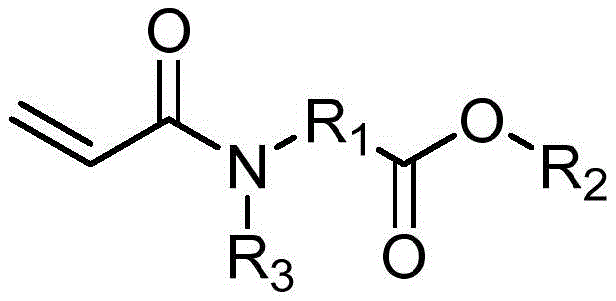
其中R1为具有3至10个碳的烷基基团、具有1至10个醚单元的聚醚 基团或为其它非离子型极性基团,其中R2为氢、具有3至8个碳的直链或 支链烷基基团或者为甲硅烷基基团,并且其中R3为氢或具有1至6个碳的 烷基基团。在一个具体实施例中,R1为具有3至10个碳的烷基基团或为 具有1至10个醚单元的聚醚基团。例如,R1可为具有3至6个碳(诸如3 至5个碳)的烷基基团。在另一实施例中,R1可为聚醚基团,该聚醚基团 包括在2至6个单元的范围内(诸如2至4个单元)的环氧乙烷或环氧丙 烷单元。在另一实施例中,R1可为非离子型极性基团,例如包括酰胺。在 一个实施例中,R2为具有3至5个碳(诸如4个碳)的支链烷基基团。具 体地,R2可为异丙基、异丁基、仲丁基、或叔丁基或它们的任何组合。甲 硅烷基基团可为三烷基甲硅烷基基团、有机二甲硅烷基基团或有机三甲硅 烷基基团。例如,三烷基甲硅烷基基团可为三甲基甲硅烷基或三乙基甲硅 烷基基团。在一个具体实施例中,R2为氢。在另一实施例中,R3为氢。在 另一实施例中,R3为甲基或乙基基团。wherein R 1 is an alkyl group with 3 to 10 carbons, a polyether group with 1 to 10 ether units, or other non-ionic polar groups, wherein R 2 is hydrogen, with 3 to 8 A carbon straight or branched chain alkyl group is either a silyl group and wherein R3 is hydrogen or an alkyl group having 1 to 6 carbons. In a specific embodiment, R 1 is an alkyl group having 3 to 10 carbons or a polyether group having 1 to 10 ether units. For example, R1 can be an alkyl group having 3 to 6 carbons, such as 3 to 5 carbons. In another embodiment, R 1 may be a polyether group comprising ethylene oxide or propylene oxide units in the range of 2 to 6 units, such as 2 to 4 units. In another embodiment, R 1 can be a non-ionic polar group, including, for example, an amide. In one embodiment, R 2 is a branched alkyl group having 3 to 5 carbons, such as 4 carbons. Specifically, R 2 can be isopropyl, isobutyl, sec-butyl, or tert-butyl, or any combination thereof. The silyl group can be a trialkylsilyl group, an organodisilyl group, or an organotrisilyl group. For example, a trialkylsilyl group can be a trimethylsilyl or a triethylsilyl group. In a specific embodiment, R 2 is hydrogen. In another embodiment, R3 is hydrogen. In another embodiment, R3 is a methyl or ethyl group.
在一个具体实施例中,底物为水凝胶珠。In a specific embodiment, the substrates are hydrogel beads.
底物中的每一者可包括附接至寡核苷酸引物的偶联位点,模板多核苷 酸可杂交到该寡核苷酸引物。例如,偶联位点可各自附接至与模板多核苷 酸的区段互补的偶联寡核苷酸。除与偶联寡核苷酸互补的片段以外,模板 多核苷酸可包括与靶多核苷酸互补的靶多核苷酸或片段。Each of the substrates can include a coupling site attached to an oligonucleotide primer to which the template polynucleotide can hybridize. For example, the coupling sites can each be attached to a coupling oligonucleotide that is complementary to a segment of the template polynucleotide. In addition to fragments complementary to coupling oligonucleotides, template polynucleotides can include target polynucleotides or fragments complementary to target polynucleotides.
偶联寡核苷酸可缀合至底物。可活化底物的聚合物以有利于与目标分 析物诸如寡核苷酸或多核苷酸的缀合。例如,可增强底物上的官能团,以 使其与目标分析物或分析物受体结合。Conjugated oligonucleotides can be conjugated to substrates. A polymer that can activate a substrate to facilitate conjugation to a target analyte such as an oligonucleotide or polynucleotide. For example, functional groups on the substrate can be enhanced to bind to the target analyte or analyte receptor.
底物可与扩增试剂一起掺入扩增溶液中,所述扩增试剂诸如酶(包括 聚合酶或重组酶)、核苷酸(例如,A、T、C、G或它们的类似物)、各 种盐或离子化合物或它们的组合。具体地,来源于生物来源的靶多核苷酸 诸如多核苷酸包括在扩增溶液中。The substrate can be incorporated into the amplification solution along with amplification reagents such as enzymes (including polymerases or recombinases), nucleotides (eg, A, T, C, G, or their analogs) , various salts or ionic compounds or combinations thereof. Specifically, target polynucleotides such as polynucleotides derived from biological sources are included in the amplification solution.
形成的乳液包括作为分散相的扩增溶液,如804所示。具体地,扩增 溶液为水溶液并且可分散于疏水相诸如油相中。疏水相可包括氟化液体、 矿物油、硅油或它们的任何组合。任选地,疏水相可包括表面活性剂,诸 如非离子表面活性剂,诸如下文所述的非离子表面活性剂。The resulting emulsion includes the amplification solution as the dispersed phase, as shown at 804 . Specifically, the amplification solution is an aqueous solution and dispersible in a hydrophobic phase such as an oil phase. The hydrophobic phase can include fluorinated liquids, mineral oils, silicone oils, or any combination thereof. Optionally, the hydrophobic phase may include a surfactant, such as a nonionic surfactant, such as the nonionic surfactants described below.
乳液可利用基于膜的机理形成,其中水性扩增溶液和连续相疏水液体 通过膜一次或多次,在连续相疏水液体内形成扩增溶液的液滴。另选地, 乳液可通过在存在疏水液体的情况下搅拌扩增溶液来形成。在另一实施例 中,乳液可通过移液器吸头反复抽吸和喷出扩增溶液和疏水性连续相来形 成。在另一实施例中,水性扩增溶液的液体可被注入疏水液体流中。Emulsions can be formed using a membrane-based mechanism in which the aqueous amplification solution and the continuous phase hydrophobic liquid pass one or more times through the membrane, forming droplets of the amplification solution within the continuous phase hydrophobic liquid. Alternatively, an emulsion can be formed by stirring the amplification solution in the presence of a hydrophobic liquid. In another embodiment, the emulsion may be formed by repeated aspiration and ejection of the amplification solution and the hydrophobic continuous phase with a pipette tip. In another embodiment, the liquid of the aqueous amplification solution can be injected into the stream of hydrophobic liquid.
在扩增溶液乳化后,形成分散相的扩增溶液的液滴可包括底物和靶多 核苷酸。液滴的一部分可包括一种或多种底物和单一靶多核苷酸。其它液 滴可包括底物而不含多核苷酸。其它液滴可包括一种或多种底物和多于一 种靶多核苷酸。After emulsification of the amplification solution, the droplets of the amplification solution forming the dispersed phase may include the substrate and the target polynucleotide. A portion of the droplet can include one or more substrates and a single target polynucleotide. Other droplets may include substrates without polynucleotides. Other droplets may include one or more substrates and more than one target polynucleotide.
例如,如图9所示,水性扩增溶液922包括靶多核苷酸902和底物 904。在乳化之后,乳液924的一些液滴906可包括单一靶多核苷酸和一种 或多种底物。乳液924的其它液滴908可包括底物而不含靶多核苷酸。底 物可包括缀合的经修饰的寡核苷酸,它与例如靶多核苷酸的一部分互补。For example, as shown in Figure 9,
返回图8,可执行扩增反应以提供核酸底物,如806所示。核酸底物 包括底物和缀合的核酸拷贝。扩增反应的条件可取决于多种因素,诸如扩 增溶液中所用的酶的性质、各种核苷酸的浓度、盐或离子化合物的浓度等 等。在一个实施例中,扩增反应为聚合酶链反应(PCR),其中温度在40℃ 至100℃的范围内循环多次。在另一实施例中,扩增反应为重组酶聚合酶 扩增(RPA)。此类反应可在40℃至90℃范围内的恒温条件下进行。可使 用其它扩增技术,例如聚合酶循环组装(PCA)、不对称PCR、解链酶扩 增、连接介导PCR、多重PCR、纳米颗粒辅助PCR或其它扩增技术。任选 地,可在不使用乳液的情况下进行扩增。Returning to FIG. 8 , an amplification reaction may be performed to provide a nucleic acid substrate, as shown at 806 . Nucleic acid substrates include substrates and conjugated nucleic acid copies. The conditions of the amplification reaction may depend on a variety of factors, such as the nature of the enzymes used in the amplification solution, the concentration of various nucleotides, the concentration of salts or ionic compounds, and the like. In one embodiment, the amplification reaction is a polymerase chain reaction (PCR) wherein the temperature is cycled multiple times in the range of 40°C to 100°C. In another embodiment, the amplification reaction is recombinase polymerase amplification (RPA). Such reactions can be carried out under constant temperature conditions ranging from 40°C to 90°C. Other amplification techniques can be used, such as polymerase cycle assembly (PCA), asymmetric PCR, helicase amplification, ligation-mediated PCR, multiplex PCR, nanoparticle-assisted PCR, or other amplification techniques. Optionally, amplification can be performed without the use of emulsions.
在一个实施例中,在扩增过程中,包括感兴趣的靶序列以及与偶联寡 核苷酸互补的片段的模板多核苷酸可杂交到偶联寡核苷酸。延伸偶联寡核 苷酸,形成模板多核苷酸的互补链。模板多核苷酸还可包括用于与分离底 物结合的捕获部分,该分离底物用于随后使扩增的底物与未扩增的底物分 开。In one embodiment, a template polynucleotide comprising a target sequence of interest and a fragment complementary to the coupling oligonucleotide can hybridize to the coupling oligonucleotide during amplification. Extension of the coupled oligonucleotide forms the complementary strand of the template polynucleotide. The template polynucleotide may also include a capture moiety for binding to a separation substrate for subsequent separation of amplified substrate from unamplified substrate.
作为扩增的结果,包括靶多核苷酸和底物的分散相液滴形成核酸底 物,该核酸底物包括缀合至底物的靶多核苷酸的一个或多个拷贝。相比之 下,包括底物而不含靶多核苷酸的液滴不产生包括靶多核苷酸的拷贝的底 物,并且在本文中被称为未扩增的底物。As a result of the amplification, the dispersed phase droplets comprising the target polynucleotide and the substrate form a nucleic acid substrate comprising one or more copies of the target polynucleotide conjugated to the substrate. In contrast, a droplet that includes a substrate without a target polynucleotide does not produce a substrate that includes a copy of the target polynucleotide, and is referred to herein as an unamplified substrate.
如808所示,破乳以回收核酸底物,由此分散相的液体与连续相分 开。例如,乳液可施加于破乳溶液上并且任选地进行搅拌或离心。具体 地,通过破乳溶液离心乳液,使底物进入破乳溶液中,远离破乳溶液和乳 液的连续相液体之间的界面。破乳溶液可以为亲水性液体,诸如包括表面 活性剂以协助增强表面张力并且分散相与连续相分开的水溶液。As shown at 808, the demulsification is broken to recover the nucleic acid substrate, whereby the liquid of the dispersed phase is separated from the continuous phase. For example, an emulsion can be applied to the demulsification solution and optionally stirred or centrifuged. Specifically, the emulsion is centrifuged by the demulsification solution, so that the substrate enters the demulsification solution, away from the interface between the demulsification solution and the continuous phase liquid of the emulsion. The demulsification solution can be a hydrophilic liquid, such as an aqueous solution that includes a surfactant to assist in enhancing surface tension and separates the dispersed phase from the continuous phase.
在一个实施例中,破乳溶液可包括一种或多种表面活性剂,所述一种 或多种表面活性剂具有在0.01重量%至20重量%范围内的总浓度。例 如,包括的表面活性剂的量可在0.1重量%至15.0%重量%范围内,诸如 在0.5重量%至10.0重量%范围内,在0.5重量%至5.0重量%范围内, 或甚至在0.5重量%至3重量%范围内。在另一实施例中,包括的表面活 性剂的总量可在5.0重量%至20.0重量%范围内,诸如在10.0重量%至 20.0重量%范围内,或在12.0重量%至18.0重量%范围内。In one embodiment, the demulsification solution may include one or more surfactants having a total concentration in the range of 0.01% to 20% by weight. For example, the amount of surfactant included may be in the range of 0.1% to 15.0% by weight, such as in the range of 0.5% to 10.0% by weight, in the range of 0.5% to 5.0% by weight, or even 0.5% by weight % to 3% by weight. In another embodiment, the total amount of surfactant included may be in the range of 5.0 wt% to 20.0 wt%, such as in the range of 10.0 wt% to 20.0 wt%, or in the range of 12.0 wt% to 18.0 wt% .
表面活性剂可为离子表面活性剂、两性表面活性剂、非离子表面活性 剂或它们的组合。离子表面活性剂可为阴离子表面活性剂。示例性阴离子 表面活性剂包括硫酸盐表面活性剂、磺酸盐表面活性剂、磷酸盐表面活性 剂、羧酸盐表面活性剂或它们的任何组合。示例性硫酸盐表面活性剂包括 烷基硫酸盐,诸如月桂基硫酸铵、月桂基硫酸钠(十二烷基硫酸钠 (SDS))或它们的组合;烷基醚硫酸盐,诸如月桂基聚醚硫酸钠、肉豆蔻醇 聚醚硫酸钠或它们的任何组合;或它们的任何组合。示例性磺酸盐表面活 性剂包括烷基磺酸盐,诸如十二烷基磺酸钠;多库酯钠,诸如磺基琥珀酸 钠二辛酯;烷基苄基磺酸盐(例如,十二烷基苯磺酸或其盐);或它们的 任何组合。示例性磷酸盐表面活性剂包括烷基芳基醚磷酸盐、烷基醚磷酸 盐或它们的任何组合。示例性羧酸表面活性剂包括烷基羧酸盐,诸如脂肪 酸盐或硬脂酸钠;月桂酰肌氨酸钠;胆汁酸盐,诸如脱氧胆酸钠;或它们 的任何组合。The surfactant can be an ionic surfactant, an amphoteric surfactant, a nonionic surfactant, or a combination thereof. The ionic surfactant may be an anionic surfactant. Exemplary anionic surfactants include sulfate surfactants, sulfonate surfactants, phosphate surfactants, carboxylate surfactants, or any combination thereof. Exemplary sulfate surfactants include alkyl sulfates such as ammonium lauryl sulfate, sodium lauryl sulfate (sodium dodecyl sulfate (SDS)), or combinations thereof; alkyl ether sulfates such as laureth Sodium sulfate, sodium myreth sulfate, or any combination thereof; or any combination thereof. Exemplary sulfonate surfactants include alkyl sulfonates, such as sodium dodecyl sulfonate; sodium docusate, such as sodium dioctyl sulfosuccinate; alkyl benzyl sulfonates (eg, ten dialkylbenzenesulfonic acid or its salt); or any combination thereof. Exemplary phosphate surfactants include alkyl aryl ether phosphates, alkyl ether phosphates, or any combination thereof. Exemplary carboxylic acid surfactants include alkyl carboxylates, such as fatty acid salts or sodium stearate; sodium lauroyl sarcosinate; bile salts, such as sodium deoxycholate; or any combination thereof.
在另一实施例中,离子表面活性剂可为阳离子表面活性剂。示例性阳 离子表面活性剂包括伯胺、仲胺或叔胺、季铵表面活性剂或它们的任何组 合。示例性季铵表面活性剂包括烷基三甲铵盐,诸如十六烷基三甲基溴化 铵(CTAB)或十六烷基三甲基氯化铵(CTAC);西吡氯铵(CPC);聚乙氧基 化牛油胺(POEA);苯扎氯铵(BAC);苄索氯铵(BZT);5-溴-5-硝基-1,3-二 噁烷;双十八烷基二甲基氯化铵;双十八烷基二甲基溴化铵(DODAB);或 它们的任何组合。In another embodiment, the ionic surfactant may be a cationic surfactant. Exemplary cationic surfactants include primary, secondary or tertiary amines, quaternary ammonium surfactants, or any combination thereof. Exemplary quaternary ammonium surfactants include alkyltrimethylammonium salts such as cetyltrimethylammonium bromide (CTAB) or cetyltrimethylammonium chloride (CTAC); cetyl pyridinium chloride (CPC) ; polyethoxylated tallow amine (POEA); benzalkonium chloride (BAC); benzethonium chloride (BZT); 5-bromo-5-nitro-1,3-dioxane; dioctadecane dimethylammonium chloride; dioctadecyldimethylammonium bromide (DODAB); or any combination thereof.
示例性两性表面活性剂包括具有磺酸盐、羧酸盐或磷酸盐阴离子的伯 胺、仲胺或叔胺或季铵阳离子。示例性磺酸盐两性表面活性剂包括(3-[(3- 胆酰胺丙基)二甲基氨基]-1-丙磺酸盐);磺基甜菜碱(sultaine),诸如椰油酰 胺丙基羟基磺基甜菜碱;或它们的任何组合。示例性羧酸两性表面活性剂 包括氨基酸、亚氨酸、甜菜碱诸如椰油酰胺丙基甜菜碱或它们的任何组 合。示例性磷酸盐两性表面活性剂包括卵磷脂。Exemplary amphoteric surfactants include primary, secondary or tertiary amines with sulfonate, carboxylate or phosphate anions or quaternary ammonium cations. Exemplary sulfonate amphoteric surfactants include (3-[(3-cholamidopropyl)dimethylamino]-1-propanesulfonate); sultaines such as cocamidopropyl hydroxysulfobetaine; or any combination thereof. Exemplary carboxylic acid amphoteric surfactants include amino acids, imino acids, betaines such as cocamidopropyl betaine, or any combination thereof. Exemplary phosphate amphoteric surfactants include lecithin.
在另一实施例中,表面活性剂可为非离子表面活性剂,诸如基于聚乙 二醇的表面活性剂、烷基吡咯烷表面活性剂、烷基咪唑啉酮表面活性剂、 烷基吗啉表面活性剂、烷基咪唑表面活性剂、烷基咪唑啉表面活性剂或它 们的组合。在一个具体实施例中,基于聚乙二醇的表面活性剂包括聚乙二 醇醚,诸如烷基酚聚乙氧基化物。在另一实施例中,非离子表面活性剂包 括非离子含氟表面活性剂,诸如乙氧基化氟碳化合物。在另一实施例中, 表面活性剂溶液可包括辛基吡咯烷。In another embodiment, the surfactant may be a nonionic surfactant, such as polyethylene glycol based surfactants, alkyl pyrrolidine surfactants, alkyl imidazolidinone surfactants, alkyl morpholines Surfactant, alkyl imidazole surfactant, alkyl imidazoline surfactant, or a combination thereof. In a specific embodiment, the polyethylene glycol-based surfactant includes polyethylene glycol ethers, such as alkylphenol polyethoxylates. In another embodiment, the nonionic surfactant includes a nonionic fluorosurfactant, such as an ethoxylated fluorocarbon. In another embodiment, the surfactant solution may include octylpyrrolidine.
具体地,表面活性剂溶液可包括此类表面活性剂的组合。例如,表面 活性剂溶液可包括非离子表面活性剂与阴离子表面活性剂的组合。在一个 具体实施例中,表面活性剂溶液可包括非离子表面活性剂,诸如聚乙二醇 醚、烷基吡咯烷或非离子含氟表面活性剂,以及阴离子表面活性剂,诸如 硫酸盐表面活性剂(例如SDS)。具体地,表面活性剂溶液可包括离子表 面活性剂,诸如阴离子表面活性剂,其含量在0.1%至20.0%的范围内,诸 如在1.0%至15.0%的范围内,或在5.0%至15.0%的范围内,或在8.0% 至12.0%的范围内。此外,表面活性剂溶液可包括非离子表面活性剂,诸 如烷基吡咯烷(例如,辛基吡咯烷),其含量在0.01%至10.0%的范围 内,诸如在0.05%至8.0%的范围内,或在1.0%至6.0%的范围内。在另 一实施例中,表面活性剂溶液可包括在0.05%至3.0%的范围内的非离子表 面活性剂。In particular, surfactant solutions may include combinations of such surfactants. For example, the surfactant solution can include a combination of nonionic and anionic surfactants. In a specific embodiment, the surfactant solution may include nonionic surfactants, such as polyethylene glycol ethers, alkyl pyrrolidines, or nonionic fluorosurfactants, and anionic surfactants, such as sulfate surfactants agent (eg SDS). Specifically, the surfactant solution may include an ionic surfactant, such as an anionic surfactant, in an amount in the range of 0.1% to 20.0%, such as in the range of 1.0% to 15.0%, or in the range of 5.0% to 15.0% , or in the range of 8.0% to 12.0%. Additionally, the surfactant solution may include a nonionic surfactant, such as an alkylpyrrolidine (eg, octylpyrrolidine), in an amount in the range of 0.01% to 10.0%, such as in the range of 0.05% to 8.0% , or in the range of 1.0% to 6.0%. In another embodiment, the surfactant solution may include a nonionic surfactant in the range of 0.05% to 3.0%.
参见图9,在破乳之后,剩余的水性溶液926包括核酸底物910。核酸 底物910可包括缀合至多个靶多核苷酸914的拷贝的底物912。该溶液还 可包括不含靶多核苷酸的拷贝的底物912,该底物912在本文中称为未扩 增的底物。Referring to FIG. 9 , after demulsification, the remaining
返回图8,对核酸底物进行洗涤并富集,如810所示。在一个实施例 中,可使用离心对底物制粒,并且可从制粒的底物上滗出或抽出多余溶 液。在另一实施例中,核酸底物可附接至分离底物,该分离底物用于当围 绕核酸底物的水溶液被置换时固定核酸底物。Returning to FIG. 8 , the nucleic acid substrate is washed and enriched, as shown at 810 . In one embodiment, the substrate can be pelleted using centrifugation, and excess solution can be decanted or drawn off from the pelleted substrate. In another embodiment, the nucleic acid substrate can be attached to a separation substrate for immobilizing the nucleic acid substrate when the aqueous solution surrounding the nucleic acid substrate is displaced.
例如,如图9所示,可通过分离底物920来捕集核酸底物910。相比 之下,不含靶多核苷酸的拷贝的未扩增的底物912不易附接至分离底物 920。因此,当分离底物920被固定并且附接的核酸底物910保持在适当位 置时,未固定的未扩增的底物基本上从溶液中洗涤除去。在一个具体实施 例中,分离底物914为磁性底物,该磁性底物可使用磁场固定到容器。然 后,核酸底物210可与分离底物920分开,提供主要包含核酸底物并且基 本上包含较少未扩增的底物的溶液。For example, as shown in FIG. 9,
在一个具体实施例中,核酸底物910可包括捕获部分,该捕获部分与 分离底物920上的部分相互作用。未扩增的底物可基本上不含捕获部分。 例如,模板多核苷酸可由捕获部分封端。未杂交到模板多核苷酸的未扩增 的底物缺少捕获部分,因此不与分离底物结合。一旦核酸底物910与未扩 增的底物分开,则核酸底物910可与分离底物分开,例如通过熔融或分离 模板多核苷酸与缀合至核酸底物910的经延伸的偶联寡核苷酸来实现。In a specific embodiment,
返回图8,富集的核酸底物可加载到生物传感器上,如812所示。根 据生物传感器的性质不同,生物传感器可提供表面,核酸底物可附接至该 表面上。该表面可为平坦的,并且任选地可包括更吸引核酸底物的区域或 经改性以固定核酸底物的区域。在另一实施例中,生物传感器可包括表 面,该表面包括离散位点或图案化平面,诸如核酸珠与其对准的凹坑、凹 陷、孔隙、孔、脊或通道。在另一实施例中,如图9所示,生物传感器可 包括表面结构916,该表面结构916限定了其中沉积核酸底物910的孔 918。Returning to FIG. 8 , the enriched nucleic acid substrate can be loaded onto the biosensor, as indicated at 812 . Depending on the nature of the biosensor, the biosensor can provide a surface to which the nucleic acid substrate can be attached. The surface can be flat, and optionally can include regions that are more attractive to the nucleic acid substrate or regions that are modified to immobilize the nucleic acid substrate. In another embodiment, a biosensor can include a surface that includes discrete sites or patterned planes, such as pits, depressions, pores, pores, ridges, or channels, to which the nucleic acid beads are aligned. In another embodiment, as shown in Figure 9, the biosensor can include
在一个具体实施例中,孔被限定于传感器上方。孔壁或传感器可具有 由金属、半金属、它们的氧化物、它们的氮化物或它们的组合形成的表 面。在一个实施例中,孔壁可由半金属诸如硅、它们的氧化物诸如二氧化 硅、它们的氮化物诸如氮化硅或它们的组合形成。在另一实施例中,孔壁 可至少部分地由金属或金属氧化物形成。示例性金属包括钛、钨、钽、 铪、铝、锆、锌或它们的组合。孔壁的一部分可由此类金属的氧化物或氮 化物形成,所述氧化物或氮化物例如氧化钛、氧化钽、氧化铪、氧化铝、 氧化锆、氮化钛等或它们的组合。另外,形成孔的底部的传感器可具有金 属、金属氧化物或金属氮化物表面或它们的组合。示例性金属包括钛、 钨、钽、铪、铝、锆、或锌或它们的组合。示例性金属氧化物或氮化物包 括氧化钛、氧化钽、氧化铪、氧化铝、氧化锆、氮化钛等或它们的组合。In a specific embodiment, the aperture is defined above the sensor. The pore walls or sensors may have surfaces formed from metals, semi-metals, their oxides, their nitrides, or combinations thereof. In one embodiment, the pore walls may be formed from semimetals such as silicon, their oxides such as silicon dioxide, their nitrides such as silicon nitride, or combinations thereof. In another embodiment, the pore walls may be formed at least in part from a metal or metal oxide. Exemplary metals include titanium, tungsten, tantalum, hafnium, aluminum, zirconium, zinc, or combinations thereof. A portion of the pore walls may be formed from oxides or nitrides of such metals, such as titanium oxide, tantalum oxide, hafnium oxide, aluminum oxide, zirconium oxide, titanium nitride, etc., or combinations thereof. Additionally, the sensor forming the bottom of the hole may have a metal, metal oxide or metal nitride surface or a combination thereof. Exemplary metals include titanium, tungsten, tantalum, hafnium, aluminum, zirconium, or zinc or combinations thereof. Exemplary metal oxides or nitrides include titanium oxide, tantalum oxide, hafnium oxide, aluminum oxide, zirconium oxide, titanium nitride, and the like, or combinations thereof.
在一个具体实施例中,孔壁或传感器的表面可具有羧基基团,该羧基 基团的浓度在例如8-20OH/nm2的范围内,诸如介于8OH/nm2和16 OH/nm2之间。任选地,表面可经由硫酸盐、磷酸盐或包含硅烷的化合物处 理。该化合物可结合到残留于孔壁或传感器的表面上的OH基团。在一个 具体实施例中,该化合物包括含硅烷的化合物诸如丁基铵三甲氧基硅烷(BATS)或含膦酸的化合物诸如咪唑烷基膦酸(例如,1-甲基-3-(十二烷基膦 酸)咪唑溴化物(ImPA))。In a specific embodiment, the pore walls or the surface of the sensor may have carboxyl groups in a concentration in the range of, for example, 8-20 OH/nm 2 , such as between 8 OH/nm 2 and 16 OH/nm 2 between. Optionally, the surface can be treated with sulfate, phosphate or silane-containing compounds. The compound can bind to OH groups remaining on the pore walls or on the surface of the sensor. In a specific embodiment, the compound includes a silane-containing compound such as butylammonium trimethoxysilane (BATS) or a phosphonic acid-containing compound such as imidazolidinylphosphonic acid (eg, 1-methyl-3-(dodecyl) alkylphosphonic acid) imidazolium bromide (ImPA)).
如图8的814所示,生物传感器可感测核酸底物的方面。根据生物传 感器的性质不同,该传感器可用于检测靶多核苷酸内特定序列的存在,或 者可用于对靶多核苷酸进行测序。例如,生物传感器可利用基于荧光的合 成测序法。在另一实施例中,生物传感器可利用的测序技术包括感测核苷 酸掺入的副产物,诸如pH或焦磷酸盐或磷酸盐的存在。在另一实施例中, 生物传感器可利用温度或热检测。As shown at 814 of Figure 8, the biosensor can sense aspects of the nucleic acid substrate. Depending on the nature of the biosensor, the sensor can be used to detect the presence of a specific sequence within a target polynucleotide, or it can be used to sequence a target polynucleotide. For example, biosensors can utilize fluorescence-based sequencing-by-synthesis methods. In another embodiment, sequencing technologies available for biosensors include sensing by-products of nucleotide incorporation, such as pH or the presence of pyrophosphate or phosphate. In another embodiment, the biosensor may utilize temperature or thermal detection.
返回图9,在一个实施例中,孔阵列中的孔918可操作地连接至测量 装置。例如,对于荧光发射法,孔918可操作地耦接至光检测装置。就离 子检测而言,孔918的下表面可设置在离子传感器诸如场效应晶体管的传 感器垫上方。Returning to Figure 9, in one embodiment, holes 918 in the hole array are operably connected to a measurement device. For example, for fluorescence emission methods,
涉及通过检测核苷酸掺入的离子副产物来测序的一种示例性系统包括 半导体测序平台,诸如基于离子的测序系统,其通过检测作为核苷酸掺入 的副产物产生的氢离子,对核酸模板进行测序。通常,氢离子作为通过聚 合酶的模板依赖性核酸合成过程中发生的核苷酸掺入的副产物释放。此类 测序仪通过检测核苷酸掺入的氢离子副产物来检测核苷酸掺入。此类测序 仪可包括待测序的多个模板多核苷酸,每个模板设置在阵列中相应的测序 反应孔内。阵列的孔可各自与至少一种离子传感器偶联,所述离子传感器 可检测作为核苷酸掺入的副产物产生的H+离子的释放或溶液pH的变化。 离子传感器包括与离子敏感的检测层偶联的场效应晶体管(FET),所述离子 敏感的检测层可感测H+离子的存在或溶液pH的变化。离子传感器可提供 指示核苷酸掺入的输出信号,所述输出信号可表示为其量值与相应的孔或 反应室中的H+离子浓度相关的电压变化。不同类型的核苷酸可连续流入 反应室内,并且可按照由模板序列决定的次序通过聚合酶掺入延伸引物 (或聚合位点)内。每个核苷酸掺入可伴有反应孔中H+离子的释放以及 局部pH的同时变化。H+离子的释放可由传感器的FET来记录,所述FET 产生指示发生核苷酸掺入的信号。在特定核苷酸流过程中未掺入的核苷酸 可能不产生信号。来自FET的信号的幅度还可与掺入延伸核酸分子内的特定类型的核苷酸的数目相关,由此能够分辨均聚物区域。因此,在测序仪 运行过程中,流入反应室中的多个核苷酸流以及对多个孔或反应室中的掺 入监测可使仪器同时分辨许多核酸模板的序列。An exemplary system involving sequencing by detecting ionic by-products of nucleotide incorporation includes semiconductor sequencing platforms, such as ion-based sequencing systems, that detect hydrogen ions generated as by-products of nucleotide incorporation, The nucleic acid template is sequenced. Typically, hydrogen ions are released as a by-product of nucleotide incorporation that occurs during template-dependent nucleic acid synthesis by polymerases. Such sequencers detect nucleotide incorporation by detecting hydrogen ion by-products of nucleotide incorporation. Such a sequencer may include a plurality of template polynucleotides to be sequenced, each template disposed in a corresponding sequencing reaction well in the array. The wells of the array can each be coupled to at least one ion sensor that can detect the release of H+ ions generated as a by-product of nucleotide incorporation or changes in solution pH. The ion sensor includes a field effect transistor (FET) coupled to an ion-sensitive detection layer that can sense the presence of H+ ions or changes in solution pH. The ion sensor can provide an output signal indicative of nucleotide incorporation, which can be expressed as a change in voltage whose magnitude is related to the concentration of H+ ions in the corresponding well or reaction chamber. Different types of nucleotides can flow continuously into the reaction chamber and can be incorporated into the extension primer (or polymerization site) by the polymerase in an order determined by the sequence of the template. Each nucleotide incorporation can be accompanied by the release of H+ ions in the reaction well and a simultaneous change in local pH. The release of H+ ions can be recorded by the sensor's FET, which produces a signal indicating that nucleotide incorporation has occurred. Nucleotides that are not incorporated during a particular nucleotide flux may not generate a signal. The amplitude of the signal from the FET can also be related to the number of specific types of nucleotides incorporated into the extended nucleic acid molecule, thereby enabling resolution of homopolymer regions. Thus, multiple nucleotide flows into reaction chambers and monitoring of incorporation into multiple wells or reaction chambers during sequencer operation allow the instrument to resolve the sequence of many nucleic acid templates simultaneously.
图10包括流体回路的一个更详细的实施方案的图示。图10以图表示 出采用作为试剂贮存器的封装件614的系统,例如用于执行基于pH的核酸 测序。该设备的每个电子传感器产生一个输出信号。流体回路使多种试剂 能够输送至反应室。Figure 10 includes an illustration of a more detailed embodiment of the fluid circuit. Figure 10 diagrammatically illustrates a system employing the
在图10中,系统包括流体回路602,该流体回路602连接至贮存器 614、连接至废液贮存器620并且通过流体通路632连接至生物传感器 634,该流体通路632将流体节点630连接至生物传感器634的入口638以 实现流体连通。来自贮存器614的经配制和混合的试剂溶液可通过多种方 法被输送至流体回路602,所述方法包括压力,泵诸如注射器泵、重力供给等,并且通过阀650的控制进行选择。来自流体回路602的试剂可被输 送至废液容器620和636。控制系统618包括阀650的控制器,该控制器 通过电连接616产生打开和关闭的信号。In Figure 10, the system includes a
控制系统618还包括用于系统的其它部件的控制器,诸如通过电连接 622连接的洗涤溶液阀624以及参比电极628。控制系统618还可包括用于 生物传感器634的控制和数据采集功能。在一种操作模式下,流体回路 602在控制系统618的程序控制下将一系列所选择的试剂1、2、3、4或5 输送至生物传感器634,使得在所选择的试剂流之间,用洗涤溶液626灌 注并且洗涤流体回路602,并且用洗涤溶液626洗涤生物传感器634。进入 生物传感器634的流体通过出口640离开.并且沉积于废液容器636中。类 似的设置可用于光学测序系统,该光学测序系统具有例如光电二极管或 CCD摄像机。
在一个具体实施例中,洗涤溶液626可为包括固体缓冲颗粒的缓冲悬 浮液。缓冲悬浮液(洗涤溶液)在进入流体回路602或传感器634之前可 使用过滤器660进行过滤。在另一实施例中,缓冲悬浮液可通过过滤器 662施加于试剂贮存器614,以由试剂贮存器内的浓缩试剂形成试剂溶液。 另选地,过滤器660和662可为相同的过滤器。在一个实施例中,浓缩试 剂为浓缩液体。在另一实施例中,浓缩试剂为干浓缩物,诸如冻干的试剂 (例如,冻干的核苷酸)。另选地,示出的过滤器660和662可结合使 用。在另一实施例中,过滤器可定位于试剂贮存器614的下游,诸如定位 于试剂贮存器614和阀650之间。In a specific embodiment,
实施例Example
在ION TorrentTM Proton测序仪上利用Utilizing ProtonTM测序试剂盒进 行测序,测试缀合至经修饰的寡核苷酸的聚丙烯酰胺颗粒的功能和测序性 能。遵循该试剂盒的标准方案进行操作,不同之处在于所利用的珠的类 型。The polyacrylamide particles conjugated to the modified oligonucleotides were tested for functionality and sequencing performance using the Utilizing Proton ™ Sequencing Kit on an ION Torrent ™ Proton sequencer. The standard protocol for this kit was followed, with the exception of the type of beads utilized.
将Proton测序试剂盒的ION球替换为缀合至TAMRA改性剂寡核苷酸 和经FAM修饰的核苷酸的聚丙烯酰胺珠。该珠与样本靶核苷酸进行PCR,加载到Proton芯片上并进行测序。两种类型的珠均表现出高于93% 的负载以及高于98%的原始读数准确度。The ION beads of the Proton sequencing kit were replaced with polyacrylamide beads conjugated to TAMRA modifier oligonucleotides and FAM-modified nucleotides. The beads are subjected to PCR with sample target nucleotides, loaded onto a Proton chip and sequenced. Both types of beads exhibited loadings above 93% and raw reading accuracy above 98%.
形成的聚丙烯酰胺珠在染料标记的核苷酸和寡核苷酸的剩余部分之间 具有聚乙二醇间隔物。对此类珠进行测序并且与不具有PEG间隔物的珠进 行对比。具有间隔物的珠与不具有间隔物的珠表现出类似的尺寸和标记密 度。但是,不具有间隔物的珠表现出大于AQ20平均值30%的结果。The resulting polyacrylamide beads have a polyethylene glycol spacer between the dye-labeled nucleotides and the remainder of the oligonucleotide. Such beads were sequenced and compared to beads without PEG spacers. Beads with spacers exhibited similar size and labeling densities as beads without spacers. However, beads without spacers showed results that were 30% greater than the AQ20 average.
经官能部分修饰的寡核苷酸可用于测序反应中,对酶活性和总体测序 性能具有有限的影响。Oligonucleotides modified with functional moieties can be used in sequencing reactions with limited impact on enzymatic activity and overall sequencing performance.
在第一方面,形成核酸底物的方法包括活化底物的偶联位点,并且使 与寡核苷酸的末端偶联的连接基部分结合到所活化的偶联位点。官能部分 偶联于寡核苷酸的末端和连接基部分之间。In a first aspect, a method of forming a nucleic acid substrate comprises activating a coupling site of the substrate, and binding a linker moiety coupled to a terminus of an oligonucleotide to the activated coupling site. The functional moiety is coupled between the end of the oligonucleotide and the linker moiety.
在第二方面,形成核酸底物的方法包括在一定条件下使缀合至寡核苷 酸偶联位点的底物暴露于酶、核苷酸以及与寡核苷酸的至少一部分互补的 靶多核苷酸以促进寡核苷酸的延伸。官能部分结合于寡核苷酸和偶联位点 之间。该方法还包括在寡核苷酸的延伸之后洗涤底物。In a second aspect, a method of forming a nucleic acid substrate comprises exposing, under conditions, a substrate conjugated to an oligonucleotide coupling site to an enzyme, a nucleotide, and a target complementary to at least a portion of the oligonucleotide polynucleotides to facilitate extension of oligonucleotides. A functional moiety is bound between the oligonucleotide and the coupling site. The method also includes washing the substrate after extension of the oligonucleotide.
在第三方面,对核酸靶标进行测序包括将离散底物施加于测序装置。 离散底物在该离散底物的偶联位点处缀合至核酸靶标的末端。官能部分偶 联于核酸的末端和底物之间。该方法还包括施加与所述靶核酸的一部分互 补的引物,使核苷酸流入测序装置中,以及检测与核苷酸相关联的掺入事 件。In a third aspect, sequencing the nucleic acid target comprises applying the discrete substrate to the sequencing device. The discrete substrate is conjugated to the terminus of the nucleic acid target at the coupling site of the discrete substrate. The functional moiety is coupled between the terminus of the nucleic acid and the substrate. The method also includes applying primers complementary to a portion of the target nucleic acid, flowing the nucleotides into the sequencing device, and detecting an incorporation event associated with the nucleotides.
在第四方面,水凝胶网络包括具有偶联位点的水凝胶聚合物、在末端 处缀合到水凝胶聚合物的偶联位点的寡核苷酸以及偶联于寡核苷酸的末端 和偶联位点之间的官能部分。In a fourth aspect, a hydrogel network includes a hydrogel polymer having a coupling site, an oligonucleotide conjugated to the coupling site of the hydrogel polymer at the terminus, and an oligonucleotide coupled to Functional moiety between the acid end and the coupling site.
在上述方面的一个实施例中,末端为寡核苷酸的5'端。In one embodiment of the above aspect, the terminus is the 5' end of the oligonucleotide.
在上述方面和实施例之外的另一实施例中,该方法还包括对寡核苷酸 进行离子交换。In another embodiment in addition to the above aspects and embodiments, the method further comprises ion-exchanging the oligonucleotide.
在上述方面和实施例之外的实施例中,官能部分为染料部分。例如, 染料部分为罗丹明部分。在另一实施例中,染料部分为荧光素部分。In embodiments other than the above aspects and embodiments, the functional moiety is a dye moiety. For example, the dye moiety is a rhodamine moiety. In another embodiment, the dye moiety is a fluorescein moiety.
在上述方面和实施例之外的另一实施例中,官能部分包括缓冲部分。 在一个实施例中,缓冲部分为吗啉基烷基、三乙醇胺、N-[三(羟甲基)甲基]- 2-氨基乙磺酸、3-(N-三[羟甲基]甲氨基)-2-羟基丙磺酸、N-(2-羟乙基)哌嗪- N-(2-乙磺酸)、N-(2-乙酰胺基)-2-氨基乙磺酸、咪唑、乙酸盐或它们的任何 组合。In another embodiment in addition to the above aspects and embodiments, the functional moiety comprises a buffer moiety. In one embodiment, the buffer moiety is morpholinoalkyl, triethanolamine, N-[tris(hydroxymethyl)methyl]-2-aminoethanesulfonic acid, 3-(N-tris[hydroxymethyl]methane Amino)-2-hydroxypropanesulfonic acid, N-(2-hydroxyethyl)piperazine-N-(2-ethanesulfonic acid), N-(2-acetamido)-2-aminoethanesulfonic acid, imidazole , acetate, or any combination thereof.
在上述方面和实施例之外的另一实施例中,官能部分附接至经修饰的 核苷酸。例如,经修饰的核苷酸包括嘧啶碱基,所述官能部分偶联到所述 嘧啶碱基。在一个实施例中,官能部分附接至嘧啶碱基的5位。在一个具 体实施例中,嘧啶碱基包括胸苷或胞苷。在另一实施例中,经修饰的核苷 酸包括7-脱氮嘌呤碱基。在一个实施例中,官能部分附接至7-脱氮嘌呤碱 基的7位。在一个具体实施例中,7-脱氮嘌呤碱基包括鸟苷或腺苷。In another embodiment in addition to the above aspects and embodiments, the functional moiety is attached to a modified nucleotide. For example, a modified nucleotide includes a pyrimidine base to which the functional moiety is coupled. In one embodiment, the functional moiety is attached to the 5-position of the pyrimidine base. In a specific embodiment, the pyrimidine base includes thymidine or cytidine. In another embodiment, the modified nucleotide includes a 7-deazapurine base. In one embodiment, the functional moiety is attached to the 7-position of the 7-deazapurine base. In a specific embodiment, the 7-deazapurine base includes guanosine or adenosine.
在上述方面和实施例之外的实施例中,偶联位点包括羧基部分并且活 化包括与琥珀酰亚胺基化合物进行反应。In embodiments other than the above aspects and embodiments, the coupling site includes a carboxyl moiety and the activation includes reaction with a succinimidyl compound.
在上述方面和实施例之外的另一实施例中,偶联位点包括胺部分。In another embodiment in addition to the above aspects and embodiments, the coupling site includes an amine moiety.
在上述方面和实施例之外的另一实施例中,偶联位点包括羟基部分。In another embodiment in addition to the above aspects and embodiments, the coupling site comprises a hydroxyl moiety.
在上述方面和实施例之外的实施例中,该方法还包括使模板核酸杂交 到寡核苷酸并且延伸寡核苷酸。例如,该方法还可包括对延伸的寡核苷酸 进行测序。In embodiments in addition to the above aspects and embodiments, the method further comprises hybridizing the template nucleic acid to the oligonucleotide and extending the oligonucleotide. For example, the method may further comprise sequencing the extended oligonucleotides.
在上述方面和实施例之外的另一实施例中,底物为水凝胶网络。例 如,水凝胶网络为离散的水凝胶网络。在另一实施例中,水凝胶网络包括 聚丙烯酰胺。In another embodiment in addition to the above aspects and embodiments, the substrate is a hydrogel network. For example, a hydrogel network is a discrete hydrogel network. In another embodiment, the hydrogel network includes polyacrylamide.
在上述方面和实施例之外的另一实施例中,暴露底物在乳液中执行。 例如,该方法还包括在洗涤之前破乳以回收底物。在另一实施例中,该方 法还包括富集底物以使底物与未扩增的底物分离。在另一实施例中,该方 法还包括使底物沉积到测序装置上。在一个具体实施例中,该方法还包括 对延伸的寡核苷酸进行测序。In another embodiment in addition to the above aspects and embodiments, exposing the substrate is performed in an emulsion. For example, the method further includes breaking the emulsion to recover the substrate prior to washing. In another embodiment, the method further comprises enriching the substrate to separate the substrate from the unamplified substrate. In another embodiment, the method further comprises depositing the substrate onto the sequencing device. In a specific embodiment, the method further comprises sequencing the extended oligonucleotides.
应注意,并非在上文一般描述或实施例中所描述的所有活动都是需要 的,特定活动的一部分可能是不需要的,并且可以进行除所描述活动之外 的一种或多种其它活动。再者,活动所列的次序未必是活动被执行的次 序。It should be noted that not all of the activities described above in the general description or the examples are required, some of the specific activities may not be required, and one or more other activities may be performed in addition to the activities described . Furthermore, the order in which the activities are listed is not necessarily the order in which the activities are performed.
在前述说明书中,已参考具体的实施方案对这些概念进行了描述。然 而,本领域的普通技术人员应当理解,在不脱离如以下权利要求书中所述 的本发明的范围的情况下,可做出各种修改和变化。因此,说明书和附图 被视为例示性的而非限制性的,并且所有这些修改旨在包括在本发明的范 围内。In the foregoing specification, these concepts have been described with reference to specific embodiments. However, one of ordinary skill in the art appreciates that various modifications and changes can be made without departing from the scope of the invention as set forth in the claims below. Accordingly, the specification and drawings are to be regarded in an illustrative rather than a restrictive sense, and all such modifications are intended to be included within the scope of the present invention.
如本文所用,术语“包含”、“包括”、“含有”、“含”、“具 有”、“有”或它们的任何其它变型旨在涵盖非排他性的包含之意。例 如,包含一列特征的工艺、方法、物件或设备不一定仅限于那些特征,而 是可包括没有明确列出或这类工艺、方法、物件或设备所固有的其它特 征。另外,除非明确相反地陈述,否则“或”是指包括性的“或”而不是 排他性的“或”。例如,以下任一项符合条件A或B:A为真(或存在) 且B为假(或不存在),A为假(或不存在)且B为真(或不存在),以 及A和B均为真(或存在)。As used herein, the terms "comprising", "including", "containing", "including", "having", "having" or any other variation thereof are intended to encompass a non-exclusive inclusive meaning. For example, a process, method, article or apparatus that includes a list of features is not necessarily limited to those features, but may include other features not expressly listed or inherent to such process, method, article or apparatus. Additionally, unless expressly stated to the contrary, "or" refers to an inclusive "or" rather than an exclusive "or." For example, either of the following qualifies for condition A or B: A is true (or present) and B is false (or absent), A is false (or absent) and B is true (or absent), and A and B is true (or exists).
另外,采用“一”或“一个”描述本文所述的元件和部件。这样做仅 是为方便起见和给出本发明范围的一般性意义。除非显而易见指的是其它 情况,否则此描述应理解为包括一个或至少一个,并且单数也包括复数。Additionally, elements and components described herein are described using "a" or "an". This is done for convenience only and to give a general sense of the scope of the invention. This description should be read to include one or at least one and the singular also includes the plural unless it is obvious that it is meant otherwise.
上文已经参照特定实施方案描述了益处、其它优点和问题解决方案。 然而,所述益处、优势、问题解决方案以及可以使任何益处、优势或解决 方案出现或变得更显著的任何特征不应解释为任何或所有权利要求关键 的、必需的或基本的特征。Benefits, other advantages, and solutions to problems have been described above with reference to specific embodiments. However, the stated benefits, advantages, solutions to problems, and any feature that may arise or be more pronounced for any benefit, advantage, or solution should not be construed as a critical, required, or essential feature of any or all of the claims.
在阅读本说明书之后,技术人员将理解,为清楚起见,本文在单独实 施方案的语境下描述的某些特征也可以在单个实施方案中组合提供。相 反,为简明起见,在单个实施方案的上下文中描述的各种特征也可以单独 提供或以任何子组合提供。此外,提及范围中所陈述的值包括在那个范围 内的每一个值。After reading this specification, skilled artisans will appreciate that certain features that are, for clarity, described herein in the context of separate embodiments can also be provided in combination in a single embodiment. Conversely, various features that are, for brevity, described in the context of a single embodiment, may also be provided separately or in any subcombination. Furthermore, references to values stated in ranges include each and every value within that range.
Claims (26)
Applications Claiming Priority (3)
| Application Number | Priority Date | Filing Date | Title |
|---|---|---|---|
| US201562189019P | 2015-07-06 | 2015-07-06 | |
| US62/189,019 | 2015-07-06 | ||
| PCT/US2016/041012 WO2017007774A1 (en) | 2015-07-06 | 2016-07-05 | Substrates and methods useful in sequencing |
Publications (2)
| Publication Number | Publication Date |
|---|---|
| CN108350490A CN108350490A (en) | 2018-07-31 |
| CN108350490B true CN108350490B (en) | 2022-06-21 |
Family
ID=56511905
Family Applications (1)
| Application Number | Title | Priority Date | Filing Date |
|---|---|---|---|
| CN201680046996.7A Active CN108350490B (en) | 2015-07-06 | 2016-07-05 | Substrates and methods for sequencing |
Country Status (4)
| Country | Link |
|---|---|
| US (2) | US10150992B2 (en) |
| EP (1) | EP3320115B1 (en) |
| CN (1) | CN108350490B (en) |
| WO (1) | WO2017007774A1 (en) |
Families Citing this family (10)
| Publication number | Priority date | Publication date | Assignee | Title |
|---|---|---|---|---|
| JP6333737B2 (en) | 2012-02-09 | 2018-05-30 | ライフ テクノロジーズ コーポレーション | Conjugated polymer particles and method for producing the same |
| WO2017004559A1 (en) | 2015-07-02 | 2017-01-05 | Life Technologies Corporation | Conjugation of carboxyl functional hydrophilic beads |
| CN108350490B (en) | 2015-07-06 | 2022-06-21 | 生命技术公司 | Substrates and methods for sequencing |
| US10501739B2 (en) | 2017-10-18 | 2019-12-10 | Mission Bio, Inc. | Method, systems and apparatus for single cell analysis |
| US10704094B1 (en) | 2018-11-14 | 2020-07-07 | Element Biosciences, Inc. | Multipart reagents having increased avidity for polymerase binding |
| US10768173B1 (en) | 2019-09-06 | 2020-09-08 | Element Biosciences, Inc. | Multivalent binding composition for nucleic acid analysis |
| AU2020280104A1 (en) | 2019-05-22 | 2022-01-20 | Mission Bio, Inc. | Method and apparatus for simultaneous targeted sequencing of DNA, RNA and protein |
| US11667954B2 (en) | 2019-07-01 | 2023-06-06 | Mission Bio, Inc. | Method and apparatus to normalize quantitative readouts in single-cell experiments |
| US11287422B2 (en) | 2019-09-23 | 2022-03-29 | Element Biosciences, Inc. | Multivalent binding composition for nucleic acid analysis |
| AU2023325064A1 (en) | 2022-08-15 | 2025-03-06 | Element Biosciences, Inc. | Spatially resolved surface capture of nucleic acids |
Citations (4)
| Publication number | Priority date | Publication date | Assignee | Title |
|---|---|---|---|---|
| CN101617045A (en) * | 2006-09-12 | 2009-12-30 | 谢拉分子公司 | Use the analysis of molecules chaff interference of the buffered soln removal nucleic acid of chaotropic agent |
| CN101845494A (en) * | 2009-02-25 | 2010-09-29 | 霍夫曼-拉罗奇有限公司 | Miniaturized, high-throughput nucleic acid analysis |
| CN103502474A (en) * | 2011-05-06 | 2014-01-08 | 凯杰有限公司 | Oligonucleotides comprising a label associated through a linker |
| CN104302783A (en) * | 2012-02-09 | 2015-01-21 | 生命技术公司 | Conjugated polymer particles and methods of making the same |
Family Cites Families (48)
| Publication number | Priority date | Publication date | Assignee | Title |
|---|---|---|---|---|
| US4451613A (en) | 1983-03-03 | 1984-05-29 | Minnesota Mining And Manufacturing Company | Ethylenically-unsaturated dextrin oligomers |
| US4507382A (en) | 1983-03-03 | 1985-03-26 | Minnesota Mining And Manufacturing Company | Water developable positive acting lithographic printing plate |
| US4507497A (en) | 1983-03-03 | 1985-03-26 | Minnesota Mining And Manufacturing Company | Water soluble michlers ketone analogs |
| US5512439A (en) | 1988-11-21 | 1996-04-30 | Dynal As | Oligonucleotide-linked magnetic particles and uses thereof |
| JPH07500315A (en) | 1991-05-10 | 1995-01-12 | セルトリックス ファーマシューティカルズ,インコーポレイテッド | Targeted delivery of bone growth factors |
| GB9115372D0 (en) | 1991-07-16 | 1991-08-28 | Sinvent As | Polymerisation process |
| US5281698A (en) | 1991-07-23 | 1994-01-25 | Cetus Oncology Corporation | Preparation of an activated polymer ester for protein conjugation |
| US5387510A (en) | 1991-10-02 | 1995-02-07 | Eastman Kodak Company | Detection of amplified nucleic acid using secondary capture oligonucleotides and test kit |
| GB9425138D0 (en) | 1994-12-12 | 1995-02-08 | Dynal As | Isolation of nucleic acid |
| US6242235B1 (en) | 1998-06-24 | 2001-06-05 | Promega Corp. | Polymerase stabilization by polyethoxylated amine surfactants |
| US6255476B1 (en) * | 1999-02-22 | 2001-07-03 | Pe Corporation (Ny) | Methods and compositions for synthesis of labelled oligonucleotides and analogs on solid-supports |
| EP1177231B1 (en) | 1999-04-09 | 2009-08-19 | Invitrogen Dynal AS | Process for the preparation of monodisperse polymer particles |
| DE10031236A1 (en) | 2000-06-27 | 2002-01-10 | Qiagen Gmbh | Use of carboxylic acids and other additives in combination with cationic compounds to stabilize nucleic acids in biological materials |
| WO2002021131A1 (en) | 2000-09-06 | 2002-03-14 | Toyo Kohan Co., Ltd. | Solid supports having surface-treated layer formed thereon |
| JP3842107B2 (en) | 2000-11-07 | 2006-11-08 | 東洋鋼鈑株式会社 | Roughened slide glass and method for analyzing biological material using the same |
| US7211654B2 (en) * | 2001-03-14 | 2007-05-01 | Regents Of The University Of Michigan | Linkers and co-coupling agents for optimization of oligonucleotide synthesis and purification on solid supports |
| CA2464144A1 (en) | 2001-11-14 | 2003-10-16 | Luminex Corporation | Functionalized compositions for improved immobilization |
| US6984485B2 (en) | 2002-04-23 | 2006-01-10 | Beckman Coulter, Inc. | Polymer-coated substrates for immobilization of biomolecules and cells |
| GB0228914D0 (en) | 2002-12-11 | 2003-01-15 | Dynal Biotech Asa | Particles |
| US7534621B2 (en) | 2003-02-07 | 2009-05-19 | Canon Kabuhsiki Kashia | Method of producing probe medium and method of immobilizing probe using probe medium |
| JP4464153B2 (en) | 2003-02-07 | 2010-05-19 | キヤノン株式会社 | Probe medium and manufacturing method thereof |
| EP1606620B1 (en) | 2003-03-25 | 2008-01-09 | Biacore AB | Immobilization method and kit therefor |
| CN102746529B (en) | 2003-07-17 | 2015-11-18 | 生命科技公司 | The preparation method of coated magnetic-particle |
| US7785769B2 (en) | 2003-07-25 | 2010-08-31 | The United States of America as reprsented by the Secretary of the Navy | Immobilization of oligonucleotides and proteins in sugar-containing hydrogels |
| US6986947B2 (en) | 2003-10-09 | 2006-01-17 | 3M Innovative Properties Company | Method of modifying a fluoropolymer and articles thereby |
| CN1917905B (en) | 2004-02-09 | 2012-01-04 | 诺松制药股份公司 | Process for the production of conjugates from polysaccharides and polynucleotides |
| GB0406015D0 (en) | 2004-03-17 | 2004-04-21 | Dynal Biotech Asa | Improvements in magnetic polymer particles |
| US20060188905A1 (en) | 2005-01-17 | 2006-08-24 | Dynal Biotech Asa | Process |
| CA2597482A1 (en) | 2005-02-11 | 2006-08-17 | Invitrogen Dynal As | Method for isolating nucleic acids comprising the use of ethylene glycol multimers |
| DE102005015005A1 (en) | 2005-04-01 | 2006-10-05 | Qiagen Gmbh | Process for treating a sample containing biomolecules |
| WO2006125124A2 (en) | 2005-05-18 | 2006-11-23 | Nanosphere, Inc. | Substrate functionalization method for high sensitivity applications |
| JP2007003439A (en) | 2005-06-27 | 2007-01-11 | Hitachi Software Eng Co Ltd | Manufacturing method of biosensor |
| RU2008105307A (en) | 2005-08-16 | 2009-08-20 | Алерис Алюминум Кобленц Гмбх (De) | WELDABLE HIGH STRENGTH AL-MG ALLOY |
| US7544754B2 (en) | 2005-09-30 | 2009-06-09 | 3M Innovative Properties Company | Crosslinked polymers with amine binding groups |
| EP2038320B1 (en) | 2006-06-29 | 2014-03-12 | Life Technologies AS | Particles containing multi- block polymers |
| US20080076909A1 (en) * | 2006-06-30 | 2008-03-27 | Applera Corporation | Emulsion pcr and amplicon capture |
| US8349167B2 (en) | 2006-12-14 | 2013-01-08 | Life Technologies Corporation | Methods and apparatus for detecting molecular interactions using FET arrays |
| US8262900B2 (en) | 2006-12-14 | 2012-09-11 | Life Technologies Corporation | Methods and apparatus for measuring analytes using large scale FET arrays |
| EP2066709B1 (en) | 2006-12-21 | 2012-04-11 | Invitrogen Dynal AS | Particles and their use in a method for isolating nucleic acid or a method for isolating phosphoproteins |
| JP2009092651A (en) | 2007-09-20 | 2009-04-30 | Fujifilm Corp | Carrier and method for producing the same |
| US20100137143A1 (en) | 2008-10-22 | 2010-06-03 | Ion Torrent Systems Incorporated | Methods and apparatus for measuring analytes |
| GB0907372D0 (en) | 2009-04-29 | 2009-06-10 | Invitrogen Dynal As | Particles |
| US8574835B2 (en) | 2009-05-29 | 2013-11-05 | Life Technologies Corporation | Scaffolded nucleic acid polymer particles and methods of making and using |
| DK2494075T3 (en) | 2009-10-30 | 2018-07-23 | Univ Northwestern | TABLE-MANAGED NANOCONJUGATES |
| WO2013119936A2 (en) * | 2012-02-09 | 2013-08-15 | Life Technologies Corporation | Hydrophilic polymeric particles and methods for making same |
| US9062079B2 (en) | 2012-02-09 | 2015-06-23 | Life Technologies Corporation | Hydrophobic diacrylamide compound |
| WO2017004559A1 (en) | 2015-07-02 | 2017-01-05 | Life Technologies Corporation | Conjugation of carboxyl functional hydrophilic beads |
| CN108350490B (en) | 2015-07-06 | 2022-06-21 | 生命技术公司 | Substrates and methods for sequencing |
-
2016
- 2016-07-05 CN CN201680046996.7A patent/CN108350490B/en active Active
- 2016-07-05 US US15/202,487 patent/US10150992B2/en active Active
- 2016-07-05 EP EP16742101.5A patent/EP3320115B1/en not_active Not-in-force
- 2016-07-05 WO PCT/US2016/041012 patent/WO2017007774A1/en not_active Ceased
-
2018
- 2018-10-31 US US16/176,231 patent/US10941439B2/en active Active
Patent Citations (4)
| Publication number | Priority date | Publication date | Assignee | Title |
|---|---|---|---|---|
| CN101617045A (en) * | 2006-09-12 | 2009-12-30 | 谢拉分子公司 | Use the analysis of molecules chaff interference of the buffered soln removal nucleic acid of chaotropic agent |
| CN101845494A (en) * | 2009-02-25 | 2010-09-29 | 霍夫曼-拉罗奇有限公司 | Miniaturized, high-throughput nucleic acid analysis |
| CN103502474A (en) * | 2011-05-06 | 2014-01-08 | 凯杰有限公司 | Oligonucleotides comprising a label associated through a linker |
| CN104302783A (en) * | 2012-02-09 | 2015-01-21 | 生命技术公司 | Conjugated polymer particles and methods of making the same |
Non-Patent Citations (2)
| Title |
|---|
| Hybrid Hydrogels to Which Single-Stranded (ss) DNA Probe Is Incorporated Can Recognize Specific ssDNA;Yoshihiko Murakami et al.;《Macromolecules》;20050101;第38卷(第5期);第1535页第1-2列,图1,2 * |
| Yoshihiko Murakami et al..Hybrid Hydrogels to Which Single-Stranded (ss) DNA Probe Is Incorporated Can Recognize Specific ssDNA.《Macromolecules》.2005,第38卷(第5期),第1535-1537页. * |
Also Published As
| Publication number | Publication date |
|---|---|
| CN108350490A (en) | 2018-07-31 |
| US20190062807A1 (en) | 2019-02-28 |
| EP3320115A1 (en) | 2018-05-16 |
| WO2017007774A1 (en) | 2017-01-12 |
| US10150992B2 (en) | 2018-12-11 |
| US10941439B2 (en) | 2021-03-09 |
| EP3320115B1 (en) | 2020-09-02 |
| US20170009275A1 (en) | 2017-01-12 |
Similar Documents
| Publication | Publication Date | Title |
|---|---|---|
| CN108350490B (en) | Substrates and methods for sequencing | |
| US10184146B2 (en) | Systems and methods for substrate enrichment | |
| CN108064253B (en) | Polymer matrix formed from carboxyl functional acrylamide | |
| KR102078892B1 (en) | Conjugated polymeric particle and method of making same | |
| CA3103525A1 (en) | Flow cells and sequencing kits | |
| CN107922974B (en) | Coupling of carboxyl-functional hydrophilic microbeads | |
| JP6851305B2 (en) | Method for loading sensor substrate | |
| US10143990B2 (en) | Method of distributing discrete polymer networks | |
| US20230416435A1 (en) | Enhancing clustering efficiency and kinetics | |
| WO2021148809A1 (en) | Methods of nucleic acid synthesis |
Legal Events
| Date | Code | Title | Description |
|---|---|---|---|
| PB01 | Publication | ||
| PB01 | Publication | ||
| SE01 | Entry into force of request for substantive examination | ||
| SE01 | Entry into force of request for substantive examination | ||
| GR01 | Patent grant | ||
| GR01 | Patent grant |