CN108270805B - Resource allocation method and device for data processing - Google Patents
Resource allocation method and device for data processing Download PDFInfo
- Publication number
- CN108270805B CN108270805B CN201611258887.XA CN201611258887A CN108270805B CN 108270805 B CN108270805 B CN 108270805B CN 201611258887 A CN201611258887 A CN 201611258887A CN 108270805 B CN108270805 B CN 108270805B
- Authority
- CN
- China
- Prior art keywords
- worker node
- weight value
- resource
- worker
- node
- Prior art date
- Legal status (The legal status is an assumption and is not a legal conclusion. Google has not performed a legal analysis and makes no representation as to the accuracy of the status listed.)
- Active
Links
Images


Classifications
-
- H—ELECTRICITY
- H04—ELECTRIC COMMUNICATION TECHNIQUE
- H04L—TRANSMISSION OF DIGITAL INFORMATION, e.g. TELEGRAPHIC COMMUNICATION
- H04L67/00—Network arrangements or protocols for supporting network services or applications
- H04L67/50—Network services
- H04L67/60—Scheduling or organising the servicing of application requests, e.g. requests for application data transmissions using the analysis and optimisation of the required network resources
-
- H—ELECTRICITY
- H04—ELECTRIC COMMUNICATION TECHNIQUE
- H04L—TRANSMISSION OF DIGITAL INFORMATION, e.g. TELEGRAPHIC COMMUNICATION
- H04L67/00—Network arrangements or protocols for supporting network services or applications
- H04L67/01—Protocols
- H04L67/10—Protocols in which an application is distributed across nodes in the network
Landscapes
- Engineering & Computer Science (AREA)
- Computer Networks & Wireless Communication (AREA)
- Signal Processing (AREA)
- Information Retrieval, Db Structures And Fs Structures Therefor (AREA)
- Management, Administration, Business Operations System, And Electronic Commerce (AREA)
Abstract
本发明公开了用于数据处理的资源分配方法及装置。该方法包括:接收数据处理流程的拓扑图;根据拓扑图确定工作者节点的权重值,其中,工作者节点用于执行任务以完成数据处理流程;以及将工作者节点的权重值发送至资源分配节点。根据本发明的实施例,能够解决相关技术中为每个工作者节点均分配相同的资源所导致的问题。
The invention discloses a resource allocation method and device for data processing. The method includes: receiving a topology map of a data processing flow; determining a weight value of a worker node according to the topology map, wherein the worker node is used to perform a task to complete the data processing flow; and sending the weight value of the worker node to resource allocation node. According to the embodiments of the present invention, the problem caused by allocating the same resource to each worker node in the related art can be solved.
Description
技术领域technical field
本发明涉及通讯领域,具体而言,涉及用于数据处理的资源分配方法及装置。The present invention relates to the field of communications, and in particular, to a resource allocation method and device for data processing.
背景技术Background technique
当今大数据时代,海量的数据给运营分析系统的实时性带来了新的挑战。目前运营分析系统正在逐步地向分布式大数据云计算平台演进,为了实现实时在线处理及快速响应的目标,Storm等分布式流处理系统被广泛应用于大数据云计算平台。这些分布式流处理系统能够对实时产生的大批增量的数据流提供实时快速的分析处理,具有可扩展性、低延迟、高可靠性和高容错性等优点。但是,诸如Storm之类的分布式流处理系统对工作者节点分配处理资源、内存等资源方面还存在着全部对等及不能动态调整等一些缺陷,经常导致性能不佳而难以满足生产系统的需求。In today's era of big data, massive amounts of data have brought new challenges to the real-time performance of operational analysis systems. At present, the operation analysis system is gradually evolving to a distributed big data cloud computing platform. In order to achieve the goal of real-time online processing and rapid response, distributed stream processing systems such as Storm are widely used in big data cloud computing platforms. These distributed stream processing systems can provide real-time and fast analytical processing for large-scale incremental data streams generated in real time, and have the advantages of scalability, low latency, high reliability, and high fault tolerance. However, distributed stream processing systems such as Storm still have some defects in allocating processing resources, memory and other resources to worker nodes, such as all-equivalence and inability to dynamically adjust, which often leads to poor performance and is difficult to meet the needs of production systems .
发明内容SUMMARY OF THE INVENTION
本发明实施例提供了用于数据处理的资源分配方法及装置,以至少解决相关技术中为每个工作者节点均分配相同的资源所导致的问题。Embodiments of the present invention provide a resource allocation method and apparatus for data processing, so as to at least solve the problem caused by allocating the same resource to each worker node in the related art.
根据本发明实施例的一个方面,提供了一种用于数据处理的资源分配方法,包括:接收数据处理流程的拓扑图;根据拓扑图确定工作者节点的权重值,其中,工作者节点用于执行任务以完成数据处理流程;以及将工作者节点的权重值发送至资源分配节点。According to an aspect of the embodiments of the present invention, a resource allocation method for data processing is provided, including: receiving a topology map of a data processing flow; determining a weight value of worker nodes according to the topology map, wherein the worker nodes are used for Execute the task to complete the data processing flow; and send the weight value of the worker node to the resource allocation node.
根据本发明实施例的另一个方面,还提供了用于数据处理的资源分配装置,包括:接收单元,用于接收数据处理流程的拓扑图;确定单元,用于根据拓扑图确定工作者节点的权重值,其中,工作者节点用于执行任务以完成数据处理流程;以及发送单元,用于将工作者节点的权重值发送至资源分配节点。According to another aspect of the embodiments of the present invention, a resource allocation device for data processing is also provided, including: a receiving unit, configured to receive a topology map of the data processing flow; a weight value, wherein the worker node is used to perform tasks to complete the data processing flow; and a sending unit is used to send the weight value of the worker node to the resource allocation node.
根据本发明实施例的用于数据处理的资源分配方法及装置能够提高资源利用率。The resource allocation method and apparatus for data processing according to the embodiments of the present invention can improve resource utilization.
附图说明Description of drawings
通过阅读以下参照附图对非限制性实施例所作的详细描述,本发明的其它特征、目的和优点将会变得更明显,其中,相同或相似的附图标记表示相同或相似的特征。Other features, objects and advantages of the present invention will become more apparent upon reading the following detailed description of non-limiting embodiments with reference to the accompanying drawings, wherein the same or similar reference numerals refer to the same or similar features.
图1是根据相关技术的Storm集群的示意图;1 is a schematic diagram of a Storm cluster according to the related art;
图2是根据相关技术的拓扑图的示意图;2 is a schematic diagram of a topology diagram according to the related art;
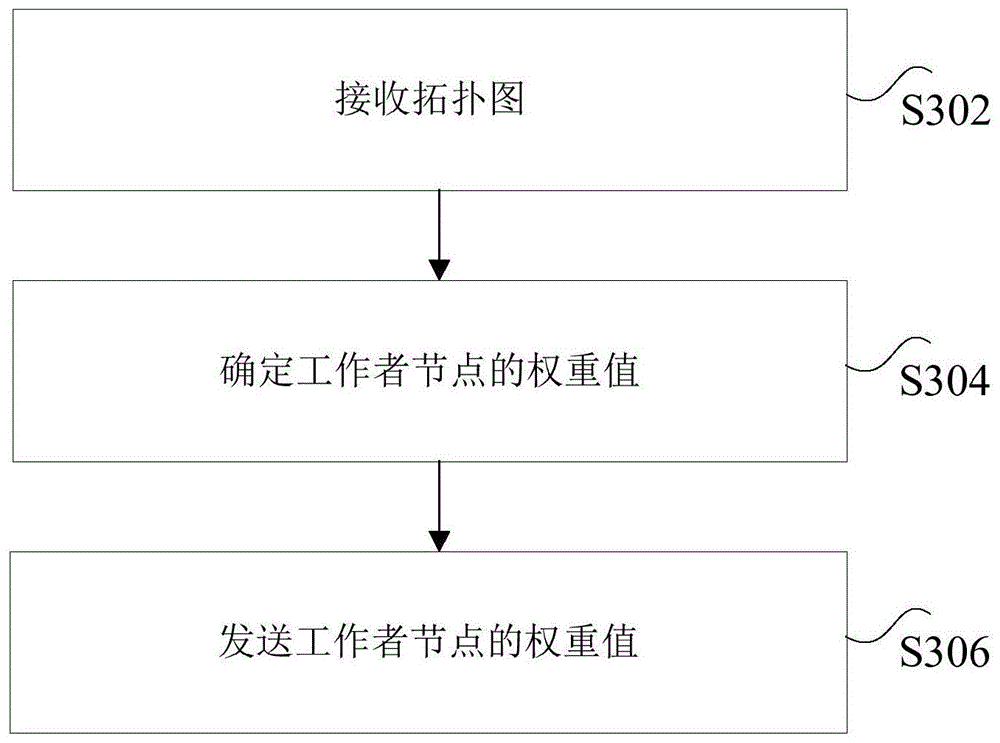
图3是根据本发明实施例的用于数据处理的资源分配方法的流程图;3 is a flowchart of a resource allocation method for data processing according to an embodiment of the present invention;
图4是根据本发明实施例的Storm架构的示意图;4 is a schematic diagram of a Storm architecture according to an embodiment of the present invention;
图5是根据本发明实施例的Storm流处理的资源动态分配方法的流程图;以及5 is a flowchart of a method for dynamic resource allocation of Storm stream processing according to an embodiment of the present invention; and
图6是根据本发明实施例的用于数据处理的资源分配装置的结构框图6 is a structural block diagram of a resource allocation apparatus for data processing according to an embodiment of the present invention
具体实施方式Detailed ways
下面将详细描述本发明的各个方面的特征和示例性实施例。在下面的详细描述中,提出了许多具体细节,以便提供对本发明的全面理解。但是,对于本领域技术人员来说很明显的是,本发明可以在不需要这些具体细节中的一些细节的情况下实施。下面对实施例的描述仅仅是为了通过示出本发明的示例来提供对本发明的更好的理解。本发明决不限于下面所提出的任何具体配置和算法,而是在不脱离本发明的精神的前提下覆盖了元素、部件和算法的任何修改、替换和改进。在附图和下面的描述中,没有示出公知的结构和技术,以便避免对本发明造成不必要的模糊。Features and exemplary embodiments of various aspects of the invention are described in detail below. In the following detailed description, numerous specific details are set forth in order to provide a thorough understanding of the present invention. However, it will be apparent to one skilled in the art that the present invention may be practiced without some of these specific details. The following description of the embodiments is only intended to provide a better understanding of the present invention by illustrating examples of the invention. The present invention is in no way limited to any specific configurations and algorithms set forth below, but covers any modification, substitution and improvement of elements, components and algorithms without departing from the spirit of the invention. In the drawings and the following description, well-known structures and techniques have not been shown in order to avoid unnecessarily obscuring the present invention.
作为大数据平台的核心软件之一,Storm是一种分布式的流式大数据处理系统,可以提供接近实时的复杂的流式计算功能,能够弥补Hadoop和Spark等批处理系统在分析数据时的实时性方面的不足,被广泛应用于精准营销、在线个性化推荐、持续云计算、在线机器学习和云化ETL等众多领域,能够实现大数据增值变现的目的。As one of the core software of the big data platform, Storm is a distributed streaming big data processing system that can provide near real-time complex streaming computing functions, which can make up for the shortcomings of batch processing systems such as Hadoop and Spark when analyzing data. The lack of real-time performance is widely used in many fields such as precision marketing, online personalized recommendation, continuous cloud computing, online machine learning, and cloud-based ETL, which can realize the purpose of big data value-added realization.
图1是根据相关技术的Storm集群的示意图,如图1所示,该Storm集群主要是由一个主节点(Nimbus)和若干个工作服务监管节点(Supervisor)组成,主节点和工作服务监管节点二者之间通过Zookeeper协调工作。主节点负责在集群里面分发代码、分配任务和监控状态。工作服务监管节点监听分配给它哪台机器工作,根据任务需要启动和关闭工作者节点(Worker),每个工作者节点可以产生多个线程执行器Executor执行任务(Task)。Figure 1 is a schematic diagram of a Storm cluster according to related technologies. As shown in Figure 1, the Storm cluster is mainly composed of a master node (Nimbus) and several work service supervisory nodes (Supervisors). The main node and work service supervisory node II Work is coordinated through Zookeeper between the participants. The master node is responsible for distributing code, assigning tasks, and monitoring status within the cluster. The work service supervisor node monitors which machine is assigned to work, starts and shuts down worker nodes (Worker) according to the needs of the task, and each worker node can generate multiple thread executors to execute tasks (Task).
另外,由于为每个工作者节点分配的资源都是相同,因此不存在资源调整的问题。但是在实际运行中,每个工作者节点承担的运算量会发生变化,固定的资源分配会带来资源浪费和运行效率等方面的问题。In addition, since the resources allocated to each worker node are the same, there is no problem of resource adjustment. However, in actual operation, the amount of computation undertaken by each worker node will change, and fixed resource allocation will bring about problems such as resource waste and operational efficiency.
图2是根据相关技术的拓扑图(Topology)的示意图,如图2所示,用户通过提交拓扑图,将整个流式数据处理的逻辑关系连接起来,实现复杂的业务处理。其中拓扑图是一个有向无环图DAG(Directed Acyclic Graph),它的最小消息单位是一个元组(Tuple),发出Tuple消息源的组件被称为数据源组件Spout,使用Tuple消息进行处理的组件被称为数据处理组件Bolt。在该拓扑图中,针对每个节点Spout和Bolt分配的CPU、内存等资源是对等的。FIG. 2 is a schematic diagram of a topology diagram according to the related art. As shown in FIG. 2 , a user connects the logical relationship of the entire stream data processing by submitting the topology diagram to realize complex business processing. The topology graph is a DAG (Directed Acyclic Graph), and its smallest message unit is a tuple (Tuple). The component is called the data processing component Bolt. In this topology diagram, resources such as CPU and memory allocated to each node Spout and Bolt are equal.
在现有的Storm流处理中,为每个工作者节点分配资源是对等的,而事实上每个节点承载的数据量不同且计算复杂度各异,所以会出现有的节点资源过多而产生浪费但有的节点资源不足而运行失败的情况。In the existing Storm stream processing, the allocation of resources to each worker node is equal, but in fact each node carries different amounts of data and has different computational complexity, so some nodes may have too many resources and It is wasteful but some nodes fail to run due to insufficient resources.
在本实施例中提供了一种用于数据处理的资源分配方法,图3是根据本发明实施例的用于数据处理的资源分配方法的流程图,如图3所示,该流程包括如下步骤。This embodiment provides a resource allocation method for data processing. FIG. 3 is a flowchart of a resource allocation method for data processing according to an embodiment of the present invention. As shown in FIG. 3 , the process includes the following steps .
在步骤S302处,接收数据处理流程的拓扑图。At step S302, a topology map of the data processing flow is received.
在该步骤中,拓扑图可以是根据业务逻辑构建的。In this step, the topology map may be constructed according to business logic.
在步骤S304处,根据拓扑图确定工作者节点的权重值。At step S304, the weight value of the worker node is determined according to the topology map.
在该步骤中,可以根据拓扑图中表达的业务逻辑来确定相应工作者节点的权重值,工作者节点用于执行任务以完成数据处理流程。In this step, the weight value of the corresponding worker node can be determined according to the business logic expressed in the topology diagram, and the worker node is used to perform tasks to complete the data processing flow.
在步骤S306处,将工作者节点的权重值发送至资源分配节点。At step S306, the weight value of the worker node is sent to the resource allocation node.
通过上述步骤,确定了相应工作者节点的权重值。Through the above steps, the weight value of the corresponding worker node is determined.
在一个实施例中,资源分配节点可以根据工作者节点的权重值向工作者节点分配资源。In one embodiment, the resource allocation node may allocate resources to the worker nodes according to the weight values of the worker nodes.
由此,在引入权重值之后,可以为不同权重值的工作者节点分配不同的资源。因而解决了相关技术中为每个工作者节点均分配相同的资源所导致的问题,提高了运算执行的效率。Therefore, after the weight value is introduced, different resources can be allocated to worker nodes with different weight values. Therefore, the problem caused by allocating the same resource to each worker node in the related art is solved, and the efficiency of operation execution is improved.
在一个可选的实施方式中,可以接收工作者节点的资源使用情况,并且根据资源使用情况确定是否对工作者节点的资源进行调整。通过该可选实施方式可以动态的调整为工作者节点所分配的资源,从而做到了资源的优化,进一步提高了执行效率。In an optional implementation manner, the resource usage of the worker node may be received, and whether to adjust the resource of the worker node is determined according to the resource usage. Through this optional implementation manner, the resources allocated to the worker nodes can be dynamically adjusted, thereby optimizing the resources and further improving the execution efficiency.
可以采用多种方式来调整资源。在一个可选的实施例中,可以设置两个阈值:第一阈值(例如,α)和第二阈值(例如,β),在工作者节点的剩余资源小于第一阈值的情况下,确定增加该工作者节点的资源;在工作者节点的剩余资源大于第二阈值的情况下,确定回收该工作者节点的资源。第一阈值与第二阈值可以相同,也可以不相同。Resources can be adjusted in a number of ways. In an optional embodiment, two thresholds may be set: a first threshold (eg, α) and a second threshold (eg, β), and in the case that the remaining resources of the worker nodes are less than the first threshold, it is determined to increase the resource of the worker node; in the case that the remaining resource of the worker node is greater than the second threshold, it is determined to reclaim the resource of the worker node. The first threshold and the second threshold may be the same or different.
作为另一个可选的实施方式,第一阈值与第二阈值不同,当工作者节点的剩余资源处于第一阈值和第二阈值之间时,可以不对资源的分配进行调整。通过合理地设置第一阈值和第二阈值,可以使资源分配的调整更加合理。As another optional implementation manner, the first threshold is different from the second threshold, and when the remaining resources of the worker nodes are between the first threshold and the second threshold, resource allocation may not be adjusted. By setting the first threshold and the second threshold reasonably, the adjustment of resource allocation can be made more reasonable.
为了进一步的节约资源,在一个可选的实施方式中,可以在某个工作者节点的任务执行完毕之后,释放该工作者节点的资源。这样可以将释放的资源分配给仍然在执行任务的其他工作者节点。In order to further save resources, in an optional implementation manner, the resources of a worker node may be released after the task of a certain worker node is completed. This distributes the freed resources to other worker nodes that are still executing tasks.
在计算权重值的时候,可以参考用来对每个工作者节点进行评估的信息,例如,根据拓扑图确定工作者节点的如下信息中的至少一项信息:工作者节点的承载数据量、工作者节点的计算复杂度、工作者节点的前驱后续依赖关系。然后可以确定工作者节点的上述至少一项信息的权重值;并且根据上述至少一项信息的权重值来确定该工作者节点的权重值。When calculating the weight value, you can refer to the information used to evaluate each worker node, for example, determine at least one of the following information of the worker node according to the topology map: The computational complexity of the worker node, the predecessor and subsequent dependencies of the worker node. Then, the weight value of the at least one item of information of the worker node may be determined; and the weight value of the worker node may be determined according to the weight value of the at least one item of information.
下面以几个权重值计算为例进行说明。The following describes the calculation of several weight values as an example.
可以根据如下公式确定承载数据量对应的权重值:
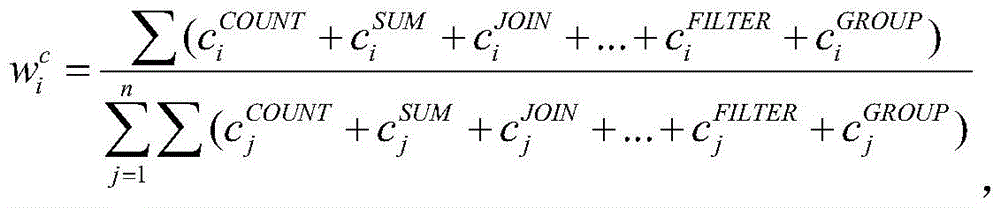
可以根据如下公式确定计算复杂度对应的权重值:The weight value corresponding to the computational complexity can be determined according to the following formula:

可以根据如下公式获取前驱后续依赖关系对应的权重值:The weight value corresponding to the predecessor follow-up dependency can be obtained according to the following formula:


在得到以上多种权重值中的一种或多种之后,可以对每个信息对应的权重值加权求和得到该工作者节点对应的权重值。After obtaining one or more of the above multiple weight values, the weight value corresponding to the worker node may be obtained by weighting and summing the weight values corresponding to each information.
下面以Storm为例结合一个可选实施例进行说明。The following uses Storm as an example for description in conjunction with an optional embodiment.
本实施例中提出了一种Storm流处理的资源分配方法,即Storm在处理流式数据时,根据用户提交的业务数据处理逻辑拓扑图,分析每个工作者节点承载的数据量、计算复杂度以及前驱后续依赖关系等,进而对每个工作者节点加权,构建非对称加权拓扑逻辑关系图,再按照此非对称加权拓扑逻辑关系图对每个工作者节点分配不同合适量的资源(包括CPU、内存等资源但不限于这些资源);同时为了适应处理数据过程中对资源需求变化的情况,工作者节点运行中持续反馈当前资源情况,根据反馈的情况和配置的资源阈值,调整非对称加权拓扑逻辑关系图,实时按需给工作者节点动态分配和回收资源。This embodiment proposes a resource allocation method for Storm stream processing, that is, when Storm processes stream data, it analyzes the data volume and computational complexity carried by each worker node according to the business data processing logic topology diagram submitted by the user. and precursor follow-up dependencies, etc., and then weight each worker node to construct an asymmetrically weighted topology logic diagram, and then allocate different appropriate amounts of resources (including CPU) to each worker node according to this asymmetrically weighted topology logic diagram. , memory and other resources but not limited to these resources); at the same time, in order to adapt to the changes in resource requirements in the process of processing data, the worker nodes continuously feedback the current resource situation during operation, and adjust the asymmetric weighting according to the feedback situation and the configured resource threshold. Topological logic diagram, dynamically allocate and recycle resources to worker nodes in real time on demand.
在上述基础上构建资源动态分配总控模块和子模块的分布式资源控制架构,图4是根据本发明实施例的Storm架构的示意图.On the above-mentioned basis, construct the distributed resource control architecture of the dynamic resource allocation master control module and sub-modules, and Fig. 4 is a schematic diagram of the Storm architecture according to an embodiment of the present invention.
如图4所示,由总控模块负责整体协调控制资源的动态分配策略以及管理子模块,由子模块负责具体执行资源动态分配和回收动作,从而大幅度提高Storm流处理的性能。As shown in Figure 4, the master control module is responsible for the overall coordination and control of the dynamic allocation strategy of resources and the management sub-modules, and the sub-modules are responsible for the specific execution of dynamic resource allocation and recovery actions, thereby greatly improving the performance of Storm stream processing.
图5是根据本发明实施例的Storm流处理的资源动态分配方法的流程图.如图5所示,Storm流处理的资源动态分配方法包括如下步骤。Fig. 5 is a flowchart of a method for dynamic resource allocation of Storm stream processing according to an embodiment of the present invention. As shown in Fig. 5 , the method for dynamic resource allocation of Storm stream processing includes the following steps.
在步骤1,用户根据业务逻辑定义数据处理流程的拓扑图,通过客户端提交拓扑图请求到主节点。In step 1, the user defines the topology map of the data processing flow according to the business logic, and submits a topology map request to the master node through the client.
在步骤2,主节点接受请求后对拓扑图分片,资源动态分配总控模块(MasterResource)根据拓扑图分析每个工作者节点承载的数据量、计算复杂度以及前驱后续依赖关系等计算并赋予每个工作者节点不同的权值,构建非对称加权拓扑逻辑关系图。其中,工作者节点权重越大表明越关键且需要资源越多,需要重点保障并分配较多资源。假设当前本次要处理的数据总量为D,每个工作者节点承载的数据量分别为{d1,d2,d3,...,dn}(n表示工作者节点总数量),那么按负载数据量计算任意工作者节点权值如公式(1-1)所示:In step 2, the master node shards the topology map after accepting the request, and the dynamic resource allocation master control module (MasterResource) analyzes the amount of data carried by each worker node, the computational complexity, and the predecessor follow-up dependencies according to the topology map. Calculate and assign Each worker node has different weights to construct an asymmetrically weighted topological logical relationship graph. Among them, the larger the weight of the worker node is, the more critical it is and the more resources are needed, and more resources need to be guaranteed and allocated. Assuming that the total amount of data to be processed this time is D, the amount of data carried by each worker node is {d 1 ,d 2 ,d 3 ,...,d n } (n represents the total number of worker nodes) , then the weight of any worker node is calculated according to the amount of load data as shown in formula (1-1):

其中,di表示第i个工作者负载的数据量。本次聚合、求和、连接、过滤、分组等一系列计算的复杂度为C,每个工作者节点的计算复杂度分别为{c1,c2,c3,...,cn},则计算第i个工作者的计算复杂度的权重为公式(1-2):where d i represents the amount of data loaded by the ith worker. The complexity of this series of calculations such as aggregation, summation, connection, filtering, and grouping is C, and the computational complexity of each worker node is {c 1 ,c 2 ,c 3 ,...,c n } , then the weight for calculating the computational complexity of the ith worker is formula (1-2):

将整个拓扑图看作有向无环图,有向边表示数据流入流出和依赖关系,那么计算第i个工作者的前驱后续依赖关系的权重如公式(1-3)所示:Considering the entire topology graph as a directed acyclic graph, the directed edges represent the inflow and outflow of data and the dependencies, then the weight of the predecessor and subsequent dependencies of the ith worker is calculated as shown in formula (1-3):

其中,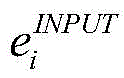


其中,γ、λ和μ为调节因子可以按照实际情况动态调整参数,并且γ+λ+μ=1。Among them, γ, λ and μ are adjustment factors that can be dynamically adjusted according to the actual situation, and γ+λ+μ=1.
在步骤3,主节点将任务信息和工作者节点权值信息等通过外部的分布式协调服务组件Zookeeper分发给工作服务监控节点。In step 3, the master node distributes task information and worker node weight information to the worker service monitoring nodes through the external distributed coordination service component Zookeeper.
在步骤4,工作服务监控节点收到任务信息和工作者节点权值信息后,资源动态分配子模块(SubResource)给工作者节点按照不同的权值wi分配不同大小量的CPU、内存、网络IO等资源,工作服务监控节点启动工作者节点进程,每个工作者节点产生多个线程Executor执行任务。In step 4, after the work service monitoring node receives the task information and the weight information of the worker nodes, the dynamic resource allocation sub-module (SubResource) allocates different amounts of CPU, memory and network to the worker nodes according to different weights wi IO and other resources, the work service monitoring node starts the worker node process, and each worker node generates multiple thread Executors to execute tasks.
在步骤5,在运行任务过程中,工作服务监控节点中的资源动态分配子模块实时收集工作者节点资源使用情况并反馈给主节点中的资源动态分配总控模块,当一个工作者节点资源剩余量小于阈值α,即资源不足时,资源动态分配总控模块发送指令给资源动态分配子模块以增加分配给该工作者模块的资源量;相反的,当在一段时间内一个工作者节点资源剩余量大于阈值β,即资源过量时,资源动态分配总控模块发送指令给资源动态分配子模块以适当回收该工作者节点的资源量。In step 5, in the process of running the task, the resource dynamic allocation sub-module in the work service monitoring node collects the resource usage of the worker node in real time and feeds it back to the resource dynamic allocation master control module in the master node. When a worker node has remaining resources The amount is less than the threshold α, that is, when the resources are insufficient, the dynamic resource allocation master control module sends an instruction to the resource dynamic allocation sub-module to increase the amount of resources allocated to the worker module; on the contrary, when a worker node has remaining resources within a period of time If the amount is greater than the threshold β, that is, when the resource is excessive, the dynamic resource allocation master control module sends an instruction to the resource dynamic allocation sub-module to properly recover the resource amount of the worker node.
在步骤6,当任务执行完成后,工作服务监控节点中的资源动态分配子模块收回并释放对应的工作者节点所占用的资源,工作者节点处于空闲状态等待新任务,同时,资源动态分配子模块将资源信息情况反馈给主节点中的资源动态分配总控模块,主节点输出最终运算处理结果,整个流程结束。In step 6, when the task execution is completed, the resource dynamic allocation sub-module in the work service monitoring node recovers and releases the resources occupied by the corresponding worker node, and the worker node is in an idle state waiting for a new task. At the same time, the resource dynamic allocation sub-module The module feeds back the resource information to the resource dynamic allocation master control module in the master node, the master node outputs the final operation processing result, and the whole process ends.
本实施例中提出一种Storm流处理的资源动态分配方法,即Storm在处理流式数据时,根据用户提交的业务数据处理逻辑拓扑图,分析每个工作者节点承载的数据量、计算复杂度以及前驱后续依赖关系等,进而对每个工作者节点加权,构建非对称加权拓扑逻辑关系图,再按照此非对称加权拓扑逻辑关系图对每个工作者节点分配不同合适量的资源,在运行任务过程中,工作者节点运行中持续反馈当前资源情况,根据反馈的情况和配置的资源阈值,调整非对称加权拓扑逻辑关系图,实时按需给工作者节点动态分配和回收资源。This embodiment proposes a dynamic resource allocation method for Storm stream processing. That is, when Storm processes streaming data, it analyzes the data volume and computational complexity carried by each worker node according to the business data processing logic topology diagram submitted by the user. and predecessor follow-up dependencies, etc., and then weight each worker node to construct an asymmetrically weighted topological logical relationship diagram, and then allocate different appropriate amounts of resources to each worker node according to this asymmetrically weighted topological logical relationship diagram. During the task process, the worker nodes continuously feed back the current resource situation during operation, adjust the asymmetric weighted topology logic diagram according to the feedback situation and the configured resource threshold, and dynamically allocate and recycle resources to the worker nodes in real time as needed.
以本实施例的Storm流处理的资源动态分配方法为核心逻辑,构建资源动态分配总控模块和子模块的分布式资源控制架构,由总控模块负责整体协调控制资源的动态分配策略以及管理子模块,由子模块负责具体执行资源动态分配和回收动作,总控模块和子模块二者通过交互给工作者节点实时动态地分配和回收资源。Taking the dynamic resource allocation method of Storm stream processing in this embodiment as the core logic, a distributed resource control architecture of a dynamic resource allocation master control module and sub-modules is constructed, and the master control module is responsible for the overall coordination and control of the dynamic resource allocation strategy and the management sub-modules. , and the sub-module is responsible for the specific execution of dynamic resource allocation and recovery. The master control module and the sub-module can dynamically allocate and recover resources to worker nodes in real time through interaction.
本实施例弥补了现有Storm流处理技术在对工作者节点分配CPU、内存等资源方面存在着全部对等及不能动态调整资源方面的不足,提出了一种Storm流处理的资源动态分配方法,即Storm在处理流式数据时,根据用户提交的业务数据处理逻辑拓扑图,分析每个工作者节点承载的数据量、计算复杂度以及前驱后续依赖关系等,进而对每个工作者节点加权,构建非对称加权拓扑逻辑关系图,再按照此非对称加权拓扑逻辑关系图对每个工作者节点分配不同合适量的资源(包括CPU、内存等资源但不限于这些资源);同时为了适应处理数据过程中对资源需求变化的情况,工作者节点运行中持续反馈当前资源情况,根据反馈的情况和配置的资源阈值,调整非对称加权拓扑逻辑关系图,实时按需给工作者节点动态分配和回收资源;在上述基础上构建资源动态分配总控模块和子模块的分布式资源控制架构,由总控模块负责整体协调控制资源的动态分配策略以及管理子模块,由子模块负责具体执行资源动态分配和回收动作,大幅度提高Storm流处理的性能。本方案在实际应用中具有较高的实用性。This embodiment makes up for the shortcomings of the existing Storm stream processing technology in allocating resources such as CPU and memory to worker nodes, which are all peer-to-peer and cannot dynamically adjust resources, and proposes a dynamic resource allocation method for Storm stream processing. That is, when Storm processes streaming data, according to the business data processing logic topology diagram submitted by users, it analyzes the amount of data carried by each worker node, the computational complexity, and the subsequent dependencies of precursors, etc., and then weights each worker node. Build an asymmetrically weighted topological logical relationship diagram, and then allocate different appropriate amounts of resources (including CPU, memory and other resources but not limited to these resources) to each worker node according to the asymmetrical weighted topological logical relationship diagram; at the same time, in order to adapt to processing data In the process of changing resource requirements, worker nodes continuously feedback the current resource situation during operation, adjust the asymmetric weighted topology logic diagram according to the feedback situation and the configured resource threshold, and dynamically allocate and recycle to worker nodes in real time as needed. Resource; on the basis of the above, build a distributed resource control architecture of the dynamic resource allocation master control module and sub-modules. The master control module is responsible for the overall coordination and control of the dynamic resource allocation strategy and management sub-modules, and the sub-modules are responsible for the specific implementation of dynamic resource allocation and recovery. Action, which greatly improves the performance of Storm stream processing. This scheme has high practicability in practical application.
在上述实施例中,按照用户提交的业务数据处理逻辑拓扑图,分析每个工作者节点承载的数据量、计算复杂度以及前驱后续依赖关系等,进而对每个工作者节点加权,构建非对称加权拓扑逻辑关系图,再按照此非对称加权拓扑逻辑关系图对每个工作者节点分配不同合适量的资源。工作者节点运行中持续反馈当前资源情况,根据反馈的情况和配置的资源阈值,调整非对称加权拓扑逻辑关系图,实时按需给工作者节点动态分配和回收资源。构建资源动态分配总控模块和子模块的分布式资源控制架构,由总控模块负责整体协调控制资源的动态分配策略以及管理子模块,由子模块负责具体执行资源动态分配和回收动作。总控模块和子模块二者通过交互给工作者节点实时动态地分配和回收资源。In the above embodiment, according to the business data processing logic topology diagram submitted by the user, the amount of data carried by each worker node, the computational complexity, and the precursor and subsequent dependencies are analyzed, and then each worker node is weighted to construct an asymmetrical structure. A weighted topological logical relationship graph, and then according to the asymmetric weighted topological logical relationship graph, each worker node is allocated a different appropriate amount of resources. The worker node continuously feeds back the current resource situation during operation, adjusts the asymmetric weighted topology logic diagram according to the feedback situation and the configured resource threshold, and dynamically allocates and recycles resources to the worker node on demand in real time. Construct a distributed resource control architecture with a master control module and sub-modules for dynamic resource allocation. The master control module is responsible for coordinating and controlling the dynamic allocation strategy of resources and managing the sub-modules, and the sub-modules are responsible for the specific execution of dynamic resource allocation and recovery. Both the master control module and the sub-modules dynamically allocate and recycle resources to worker nodes in real time through interaction.
在本实施例中,还提供了一种用于数据处理的资源分配装置。该装置例如可以被实现为上述实施例中的主控模块。In this embodiment, a resource allocation apparatus for data processing is also provided. The apparatus can be implemented, for example, as the main control module in the above-mentioned embodiment.
图6是根据本发明实施例的用于数据处理的资源分配装置的结构框图,如图6所示,该装置可以包括:接收单元62,用于接收数据处理流程的拓扑图;确定单元64,用于根据拓扑图确定工作者节点的权重值,其中,工作者节点用于执行任务以完成所述处理流程;以及发送单元66,用于将工作者节点的权重值发送至资源分配节点。Fig. 6 is a structural block diagram of a resource allocation apparatus for data processing according to an embodiment of the present invention. As shown in Fig. 6, the apparatus may include: a receiving unit 62 for receiving a topology diagram of a data processing flow; a determining unit 64, It is used for determining the weight value of the worker node according to the topology map, wherein the worker node is used for performing tasks to complete the processing flow; and the sending unit 66 is used for sending the weight value of the worker node to the resource allocation node.
作为一个可选的实施方式,资源分配节点可以根据工作者节点的权重值向所述工作者节点分配资源。As an optional implementation manner, the resource allocation node may allocate resources to the worker node according to the weight value of the worker node.
作为一个可选的实施方式,该装置还可以包括调整单元68。接收单元62可以接收工作者节点的资源使用情况,调整单元68可以根据资源使用情况确定是否对工作者节点的资源进行调整。As an optional embodiment, the device may further include an adjustment unit 68 . The receiving unit 62 may receive the resource usage of the worker node, and the adjusting unit 68 may determine whether to adjust the resource of the worker node according to the resource usage.
作为一个可选的实施方式,如果工作者节点的剩余资源小于第一阈值,调整单元68可以确定增加该工作者节点的资源;以及如果工作者节点的剩余资源大于第二阈值,调整单元68可以确定回收该工作者节点的资源。As an optional embodiment, if the remaining resource of the worker node is less than the first threshold, the adjustment unit 68 may determine to increase the resource of the worker node; and if the remaining resource of the worker node is greater than the second threshold, the adjustment unit 68 may determine to increase the resource of the worker node Determines to reclaim the resources of this worker node.
作为一个可选的实施方式,确定单元64可以实现以下操作:根据拓扑图确定工作者节点的承载数据量、计算复杂度、前驱后续依赖关系中的至少一项信息;确定工作者节点的所述至少一项信息的权重值;并且根据所述至少一项信息的权重值确定工作者节点的权重值。As an optional implementation manner, the determining unit 64 may implement the following operations: determine at least one item of information in the amount of data carried by the worker node, computational complexity, and precursor and subsequent dependencies according to the topology map; A weight value of at least one piece of information; and a weight value of the worker node is determined according to the weight value of the at least one piece of information.
作为一个可选的实施方式,确定单元64可以对所述至少一项信息的权重值加权求和得到工作者节点的权重值。As an optional implementation manner, the determining unit 64 may weight and sum the weight values of the at least one item of information to obtain the weight value of the worker node.
上述装置中的单元还可以实现上述可选实施方式中的其他方法步骤,在此不再赘述。The units in the above-mentioned apparatus may also implement other method steps in the above-mentioned optional implementation manner, which will not be repeated here.
本发明的实施例还提供了一种存储介质。本实施例中的存储介质保存有计算机程序或软件程序,该计算机程序或软件程序用于执行:接收数据处理流程的拓扑图;根据拓扑图确定工作者节点的权重值,其中,工作者节点用于执行任务以完成数据处理流程;以及将工作者节点的权重值发送至资源分配节点。Embodiments of the present invention also provide a storage medium. The storage medium in this embodiment stores a computer program or a software program for executing: receiving a topology map of the data processing flow; determining the weight value of the worker node according to the topology map, wherein the worker node uses to perform tasks to complete the data processing process; and to send the weight value of the worker node to the resource allocation node.
作为一个可选的实施方式,该计算机程序或软件程序用于执行:接收工作者节点的资源使用情况;以及根据资源使用情况确定是否对工作者节点的资源进行调整。As an optional implementation manner, the computer program or software program is configured to perform: receiving the resource usage of the worker node; and determining whether to adjust the resource of the worker node according to the resource usage.
作为一个可选的实施方式,该计算机程序或软件程序用于执行:如果工作者节点的剩余资源小于第一阈值,则确定增加该工作者节点的资源;以及如果工作者节点的剩余资源大于第二阈值,则确定回收该工作者节点的资源。As an optional implementation manner, the computer program or software program is configured to execute: if the remaining resource of the worker node is less than a first threshold, determine to increase the resource of the worker node; and if the remaining resource of the worker node is greater than the first threshold The second threshold is determined to reclaim the resources of the worker node.
作为一个可选的实施方式,该计算机程序或软件程序用于执行:根据拓扑图确定工作者节点的承载数据量、计算复杂度、前驱后续依赖关系中的至少一项信息:确定工作者节点的所述至少一项信息的权重值;并且根据至少一项信息的权重值确定工作者节点的权重值。As an optional implementation manner, the computer program or software program is used to perform: determine at least one item of information in the data load, computational complexity, and predecessor-subsequent dependencies of the worker node according to the topology map: determine the the weight value of the at least one item of information; and the weight value of the worker node is determined according to the weight value of the at least one item of information.
作为一个可选的实施方式,该计算机程序或软件程序用于执行:对至少一项信息的权重值加权求和得到所述工作者节点的权重值。As an optional implementation manner, the computer program or software program is configured to perform: weighting and summing the weight value of at least one piece of information to obtain the weight value of the worker node.
作为一个可选的实施方式,该计算机程序或软件程序用于执行:根据拓扑图获取每个工作者节点对应的信息,其中,每个工作者节点对应的信息包括以下至少之一:每个工作者节点的承载数据量、每个工作者节点的计算复杂度、每个工作者节点的前驱后续依赖关系;分别获取每个工作者节点对应的每个信息的权重值;根据每个信息分别对应的权重值获取每个工作者节点的权重值。As an optional implementation manner, the computer program or software program is used for executing: acquiring information corresponding to each worker node according to a topology map, wherein the information corresponding to each worker node includes at least one of the following: The amount of data carried by the worker node, the computational complexity of each worker node, the predecessor and subsequent dependencies of each worker node; the weight value of each information corresponding to each worker node is obtained separately; The weight value of gets the weight value of each worker node.
作为一个可选的实施方式,该计算机程序或软件程序用于执行:根据如下公式获取承载数据量对应的权重值:


作为一个可选的实施方式,该计算机程序或软件程序用于执行:对每个信息对应的权重值求加权和得到该工作者节点对应的权重值。As an optional implementation manner, the computer program or software program is configured to perform: weighting and summing the weight value corresponding to each piece of information to obtain the weight value corresponding to the worker node.
在本发明的上述实施例中,对各个实施例的描述都各有侧重,某个实施例中没有详述的部分,可以参见其他实施例的相关描述。In the above-mentioned embodiments of the present invention, the description of each embodiment has its own emphasis. For parts that are not described in detail in a certain embodiment, reference may be made to related descriptions of other embodiments.
上述存储介质还可以保存上述计算机程序或软件程序执行过程中使用到的或者产生的数据。上述存储介质可以只起到保存的作用,而计算机程序或软件程序的执行可以由处理器来实现。The above-mentioned storage medium may also store data used or generated during the execution of the above-mentioned computer program or software program. The above-mentioned storage medium may only play the role of storage, and the execution of the computer program or the software program may be implemented by a processor.
以上所述的结构框图中所示的功能块可以实现为硬件、软件、固件或者它们的组合。当以硬件方式实现时,其可以例如是电子电路、专用集成电路(ASIC)、适当的固件、插件、功能卡等等。当以软件方式实现时,本发明的元素是被用于执行所需任务的程序或者代码段。程序或者代码段可以存储在机器可读介质中,或者通过载波中携带的数据信号在传输介质或者通信链路上传送。The functional blocks shown in the above-described structural block diagrams may be implemented as hardware, software, firmware, or a combination thereof. When implemented in hardware, it may be, for example, an electronic circuit, an application specific integrated circuit (ASIC), suitable firmware, a plug-in, a function card, or the like. When implemented in software, elements of the invention are programs or code segments used to perform the required tasks. The program or code segments may be stored in a machine-readable medium or transmitted over a transmission medium or communication link by a data signal carried in a carrier wave.
本发明可以以其他的具体形式实现,而不脱离其精神和本质特征。例如,特定实施例中所描述的算法可以被修改,而系统体系结构并不脱离本发明的基本精神。因此,当前的实施例在所有方面都被看作是示例性的而非限定性的,本发明的范围由所附权利要求而非上述描述定义,并且,落入权利要求的含义和等同物的范围内的全部改变从而都被包括在本发明的范围之中。The present invention may be embodied in other specific forms without departing from its spirit or essential characteristics. For example, the algorithms described in particular embodiments may be modified without departing from the basic spirit of the invention in system architecture. Accordingly, the present embodiments are to be considered in all respects as illustrative and not restrictive, and the scope of the present invention is defined by the appended claims rather than the foregoing description, and falls within the meaning and equivalents of the claims. All changes within the scope are thus included in the scope of the invention.
Claims (6)
Priority Applications (1)
| Application Number | Priority Date | Filing Date | Title |
|---|---|---|---|
| CN201611258887.XA CN108270805B (en) | 2016-12-30 | 2016-12-30 | Resource allocation method and device for data processing |
Applications Claiming Priority (1)
| Application Number | Priority Date | Filing Date | Title |
|---|---|---|---|
| CN201611258887.XA CN108270805B (en) | 2016-12-30 | 2016-12-30 | Resource allocation method and device for data processing |
Publications (2)
| Publication Number | Publication Date |
|---|---|
| CN108270805A CN108270805A (en) | 2018-07-10 |
| CN108270805B true CN108270805B (en) | 2021-03-05 |
Family
ID=62754741
Family Applications (1)
| Application Number | Title | Priority Date | Filing Date |
|---|---|---|---|
| CN201611258887.XA Active CN108270805B (en) | 2016-12-30 | 2016-12-30 | Resource allocation method and device for data processing |
Country Status (1)
| Country | Link |
|---|---|
| CN (1) | CN108270805B (en) |
Families Citing this family (9)
| Publication number | Priority date | Publication date | Assignee | Title |
|---|---|---|---|---|
| CN109862593B (en) * | 2019-03-04 | 2022-04-15 | 辰芯科技有限公司 | Method, device, equipment and storage medium for allocating wireless resources |
| CN110557345B (en) * | 2019-08-19 | 2020-09-25 | 广东电网有限责任公司 | A kind of power communication network resource allocation method |
| CN112579838A (en) * | 2019-09-29 | 2021-03-30 | 北京奇虎科技有限公司 | Streaming data processing method and device for search service |
| CN110738431B (en) * | 2019-10-28 | 2022-06-17 | 北京明略软件系统有限公司 | Method and device for allocating monitoring resources |
| CN110928666B (en) * | 2019-12-09 | 2022-03-22 | 湖南大学 | Method and system for optimizing task parallelism based on memory in Spark environment |
| CN111291106A (en) * | 2020-05-13 | 2020-06-16 | 成都四方伟业软件股份有限公司 | Efficient flow arrangement method and system for ETL system |
| CN112015554B (en) * | 2020-08-27 | 2023-02-28 | 郑州阿帕斯数云信息科技有限公司 | Task processing method and device |
| CN112115192B (en) * | 2020-10-09 | 2021-07-02 | 北京东方通软件有限公司 | Efficient flow arrangement method and system for ETL system |
| CN114881616A (en) * | 2022-06-17 | 2022-08-09 | 平安消费金融有限公司 | Business process execution method and device, electronic equipment and storage medium |
Citations (6)
| Publication number | Priority date | Publication date | Assignee | Title |
|---|---|---|---|---|
| CN104079503A (en) * | 2013-03-27 | 2014-10-01 | 华为技术有限公司 | Method and device of distributing resources |
| CN104639466A (en) * | 2015-03-05 | 2015-05-20 | 北京航空航天大学 | Dynamic priority safeguard method for application network bandwidth based on Storm real-time flow computing framework |
| CN105183540A (en) * | 2015-07-29 | 2015-12-23 | 青岛海尔智能家电科技有限公司 | Task allocation method and system for real-time data stream processing |
| CN105354089A (en) * | 2015-10-15 | 2016-02-24 | 北京航空航天大学 | Streaming data processing model and system supporting iterative calculation |
| CN105743688A (en) * | 2015-05-11 | 2016-07-06 | 中国电力科学研究院 | Centrality analysis-based power distribution and utilization communication network source distribution reconfigurable method |
| CN106021411A (en) * | 2016-05-13 | 2016-10-12 | 大连理工大学 | Storm task deployment and configuration platform with cluster adaptability |
Family Cites Families (1)
| Publication number | Priority date | Publication date | Assignee | Title |
|---|---|---|---|---|
| TWI470962B (en) * | 2011-12-26 | 2015-01-21 | 財團法人工業技術研究院 | Resource allocation method and system applied in distributed time sharing multiplex system |
-
2016
- 2016-12-30 CN CN201611258887.XA patent/CN108270805B/en active Active
Patent Citations (6)
| Publication number | Priority date | Publication date | Assignee | Title |
|---|---|---|---|---|
| CN104079503A (en) * | 2013-03-27 | 2014-10-01 | 华为技术有限公司 | Method and device of distributing resources |
| CN104639466A (en) * | 2015-03-05 | 2015-05-20 | 北京航空航天大学 | Dynamic priority safeguard method for application network bandwidth based on Storm real-time flow computing framework |
| CN105743688A (en) * | 2015-05-11 | 2016-07-06 | 中国电力科学研究院 | Centrality analysis-based power distribution and utilization communication network source distribution reconfigurable method |
| CN105183540A (en) * | 2015-07-29 | 2015-12-23 | 青岛海尔智能家电科技有限公司 | Task allocation method and system for real-time data stream processing |
| CN105354089A (en) * | 2015-10-15 | 2016-02-24 | 北京航空航天大学 | Streaming data processing model and system supporting iterative calculation |
| CN106021411A (en) * | 2016-05-13 | 2016-10-12 | 大连理工大学 | Storm task deployment and configuration platform with cluster adaptability |
Also Published As
| Publication number | Publication date |
|---|---|
| CN108270805A (en) | 2018-07-10 |
Similar Documents
| Publication | Publication Date | Title |
|---|---|---|
| CN108270805B (en) | Resource allocation method and device for data processing | |
| Huang et al. | SSUR: an approach to optimizing virtual machine allocation strategy based on user requirements for cloud data center | |
| CN113315700B (en) | Computing resource scheduling method, device and storage medium | |
| CN111431961B (en) | Energy-saving task allocation method for cloud data center | |
| CN107193652B (en) | Elastic resource scheduling method and system for stream data processing system in container cloud environment | |
| CN110134495B (en) | A container cross-host online migration method, storage medium and terminal device | |
| CN111381950A (en) | A task scheduling method and system based on multiple copies for edge computing environment | |
| CN110351571B (en) | Live video cloud transcoding resource allocation and scheduling method based on deep reinforcement learning | |
| CN110209494B (en) | Big data-oriented distributed task scheduling method and Hadoop cluster | |
| CN115297008B (en) | Collaborative training method, device, terminal and storage medium based on intelligent computing network | |
| CN109582448B (en) | Criticality and timeliness oriented edge calculation task scheduling method | |
| CN110362388B (en) | Resource scheduling method and device | |
| CN103699447A (en) | Cloud computing-based transcoding and distribution system for video conference | |
| CN108768716A (en) | A kind of micro services routing resource and device | |
| Thakkar et al. | Renda: resource and network aware data placement algorithm for periodic workloads in cloud | |
| Lu et al. | Dynamic offloading for energy-aware scheduling in a mobile cloud | |
| CN108667657A (en) | A kind of mapping method of virtual network based on local feature information towards SDN | |
| CN105867998A (en) | Virtual machine cluster deployment algorithm | |
| Kanwal et al. | A genetic based leader election algorithm for IoT cloud data processing | |
| CN107070965B (en) | Multi-workflow resource supply method under virtualized container resource | |
| Edinger et al. | Decentralized low-latency task scheduling for ad-hoc computing | |
| CN111049900A (en) | A method, device and electronic device for stream computing scheduling in the Internet of Things | |
| Convolbo et al. | DRASH: A data replication-aware scheduler in geo-distributed data centers | |
| Wu et al. | Machine learning based 5g network slicing management and classification | |
| CN118051331A (en) | Resource allocation method and system |
Legal Events
| Date | Code | Title | Description |
|---|---|---|---|
| PB01 | Publication | ||
| PB01 | Publication | ||
| SE01 | Entry into force of request for substantive examination | ||
| SE01 | Entry into force of request for substantive examination | ||
| GR01 | Patent grant | ||
| GR01 | Patent grant |