[go: up one dir, main page]

CN108183258B - Polyacrylate solid polymer electrolyte, preparation method and application thereof in solid lithium battery - Google Patents

Polyacrylate solid polymer electrolyte, preparation method and application thereof in solid lithium battery Download PDF

Info

Publication number
CN108183258B
CN108183258B CN201810006077.8A CN201810006077A CN108183258B CN 108183258 B CN108183258 B CN 108183258B CN 201810006077 A CN201810006077 A CN 201810006077A CN 108183258 B CN108183258 B CN 108183258B
Authority
CN
China
Prior art keywords
polymer electrolyte
solid
solid polymer
polyacrylate
lithium
Prior art date
Legal status (The legal status is an assumption and is not a legal conclusion. Google has not performed a legal analysis and makes no representation as to the accuracy of the status listed.)
Active
Application number
CN201810006077.8A
Other languages
Chinese (zh)
Other versions
CN108183258A (en
Inventor
冯玉川
李峥
何泓材
李帅鹏
杨帆
南策文
Current Assignee (The listed assignees may be inaccurate. Google has not performed a legal analysis and makes no representation or warranty as to the accuracy of the list.)
Qingtao Kunshan Energy Development Co ltd
Original Assignee
Qingtao Kunshan Energy Development Co ltd
Priority date (The priority date is an assumption and is not a legal conclusion. Google has not performed a legal analysis and makes no representation as to the accuracy of the date listed.)
Filing date
Publication date
Application filed by Qingtao Kunshan Energy Development Co ltd filed Critical Qingtao Kunshan Energy Development Co ltd
Priority to CN201810006077.8A priority Critical patent/CN108183258B/en
Priority to CN202010305542.5A priority patent/CN111477952B/en
Publication of CN108183258A publication Critical patent/CN108183258A/en
Application granted granted Critical
Publication of CN108183258B publication Critical patent/CN108183258B/en
Active legal-status Critical Current
Anticipated expiration legal-status Critical

Links

Images

Classifications

    • HELECTRICITY
    • H01ELECTRIC ELEMENTS
    • H01MPROCESSES OR MEANS, e.g. BATTERIES, FOR THE DIRECT CONVERSION OF CHEMICAL ENERGY INTO ELECTRICAL ENERGY
    • H01M10/00Secondary cells; Manufacture thereof
    • H01M10/05Accumulators with non-aqueous electrolyte
    • H01M10/056Accumulators with non-aqueous electrolyte characterised by the materials used as electrolytes, e.g. mixed inorganic/organic electrolytes
    • H01M10/0564Accumulators with non-aqueous electrolyte characterised by the materials used as electrolytes, e.g. mixed inorganic/organic electrolytes the electrolyte being constituted of organic materials only
    • H01M10/0565Polymeric materials, e.g. gel-type or solid-type
    • HELECTRICITY
    • H01ELECTRIC ELEMENTS
    • H01MPROCESSES OR MEANS, e.g. BATTERIES, FOR THE DIRECT CONVERSION OF CHEMICAL ENERGY INTO ELECTRICAL ENERGY
    • H01M10/00Secondary cells; Manufacture thereof
    • H01M10/05Accumulators with non-aqueous electrolyte
    • H01M10/052Li-accumulators
    • H01M10/0525Rocking-chair batteries, i.e. batteries with lithium insertion or intercalation in both electrodes; Lithium-ion batteries
    • HELECTRICITY
    • H01ELECTRIC ELEMENTS
    • H01MPROCESSES OR MEANS, e.g. BATTERIES, FOR THE DIRECT CONVERSION OF CHEMICAL ENERGY INTO ELECTRICAL ENERGY
    • H01M2300/00Electrolytes
    • H01M2300/0017Non-aqueous electrolytes
    • H01M2300/0065Solid electrolytes
    • H01M2300/0082Organic polymers
    • YGENERAL TAGGING OF NEW TECHNOLOGICAL DEVELOPMENTS; GENERAL TAGGING OF CROSS-SECTIONAL TECHNOLOGIES SPANNING OVER SEVERAL SECTIONS OF THE IPC; TECHNICAL SUBJECTS COVERED BY FORMER USPC CROSS-REFERENCE ART COLLECTIONS [XRACs] AND DIGESTS
    • Y02TECHNOLOGIES OR APPLICATIONS FOR MITIGATION OR ADAPTATION AGAINST CLIMATE CHANGE
    • Y02EREDUCTION OF GREENHOUSE GAS [GHG] EMISSIONS, RELATED TO ENERGY GENERATION, TRANSMISSION OR DISTRIBUTION
    • Y02E60/00Enabling technologies; Technologies with a potential or indirect contribution to GHG emissions mitigation
    • Y02E60/10Energy storage using batteries

Landscapes

  • Chemical & Material Sciences (AREA)
  • Engineering & Computer Science (AREA)
  • General Chemical & Material Sciences (AREA)
  • Manufacturing & Machinery (AREA)
  • Chemical Kinetics & Catalysis (AREA)
  • Electrochemistry (AREA)
  • Materials Engineering (AREA)
  • Physics & Mathematics (AREA)
  • Condensed Matter Physics & Semiconductors (AREA)
  • Dispersion Chemistry (AREA)
  • General Physics & Mathematics (AREA)
  • Inorganic Chemistry (AREA)
  • Conductive Materials (AREA)
  • Secondary Cells (AREA)

Abstract

The invention discloses a polyacrylate solid polymer electrolyte, which is characterized in that: the solid polymer electrolyte comprises acrylate, lithium salt and an initiator; a preparation method of polyacrylate solid polymer electrolyte is characterized by comprising the following steps: mixing acrylate and lithium salt, adding the mixture into a 20ml reagent bottle, and stirring the mixture for 30min at room temperature to uniformly mix the acrylate and the lithium salt; adding an initiator into the mixed solution, and stirring for 5min at room temperature to uniformly mix; uniformly pouring the obtained mixed solution into a culture dish or a porous rigid support material; heating at 80 ℃ for 20min to ensure that the acrylate is self-polymerized or copolymerized with a cross-linking agent under the initiation of an initiator to obtain the polyacrylate solid polymer electrolyte. The advantages are that: the preparation method is simple, shortens the film preparation time and saves the time cost.

Description

Polyacrylate solid polymer electrolyte, preparation method and application thereof in solid lithium battery
Technical Field
The invention relates to a solid polymer electrolyte, in particular to a polyacrylate solid polymer electrolyte, and also relates to a preparation method of the polyacrylate solid polymer electrolyte, in particular to application of the polyacrylate solid polymer electrolyte in a solid lithium battery.
Background
Along with the wide application of lithium batteries in portable devices, intelligent devices and the like, people put higher demands on the safety performance of the lithium batteries. In the traditional lithium battery, the electrolyte contains volatile flammable carbonate solution, and potential safety hazards such as liquid leakage, ignition, explosion and the like exist. In the gel lithium battery, the main component (more than 90%) of the gel electrolyte is still the commercial electrolyte, so the safety can not be solved fundamentally. The development of solid lithium ion batteries, which replace liquid electrolytes with solid electrolytes, is an effective way to solve the safety problem of lithium batteries.
In the currently studied all-solid-state lithium ion batteries, electrolytes can be generally divided into two types, one type is an inorganic solid electrolyte with ceramic and glass as main materials; the other type is a solid polymer electrolyte consisting of a high-molecular organic polymer and a lithium salt complex system. Common solid polymer electrolyte matrices include polyethers, polycarbonates, polyacrylates, polynitriles, and polyalkylenes. The polyacrylate material has strong lithium salt dissolving capacity, and the contained carbonyl and ether-oxygen bond can also provide a lithium ion transmission channel, but the polyacrylate material is a high-affinity polymer, so that the independent film-forming performance is poor, and the solid electrolyte is difficult to prepare on a large scale. The functional group carbonyl and oxygen in the carbonate plasticizer have strong effects and can contain a large amount of liquid electrolyte, so that the polyacrylate material is commonly used in gel electrolyte, but the safety performance cannot be guaranteed.
Therefore, a new technique is sought to solve the above problems.
Disclosure of Invention
The purpose of the invention is: aiming at the defects, the polyacrylate solid polymer electrolyte, the simple and efficient preparation method of the polyacrylate solid polymer electrolyte film and the application of the polyacrylate solid polymer electrolyte in a solid lithium battery are provided.
In order to achieve the purpose, the invention adopts the technical scheme that:
the solid polymer electrolyte comprises acrylate, lithium salt and an initiator, wherein the acrylate accounts for 20-60% of the solid polymer electrolyte, and the lithium salt accounts for 10-50% of the solid polymer electrolyte.
In order to obtain the all-solid-state polymer electrolyte with high mechanical strength, the solid-state polymer electrolyte further comprises a cross-linking agent, wherein the cross-linking agent comprises one or more of polyethylene glycol diacrylate, methacryloxypropyltrimethoxysilane, styrene, tetraethylene glycol dimethacrylate and glycidyl methacrylate, and the proportion of the cross-linking agent in the polymer solid-state electrolyte is 0-30%.
In order to further improve the mechanical strength of the all-solid-state polymer electrolyte, the solid-state polymer electrolyte also comprises a porous rigid support material, and the porous rigid support material comprises one of non-woven fabrics, ceramic porous membranes, glass fiber membranes, PP, PE and PP/PE composite membranes.
In order to improve the ionic conductivity of the all-solid-state polymer electrolyte, the solid-state polymer electrolyte further comprises a plasticizer, the plasticizer comprises one or more of a carbonate organic solvent, an ether organic solvent and sulfones, wherein the carbonate organic solvent is propylene carbonate or ethylene carbonate, the ether organic solvent is tetraethylene glycol dimethyl ether, the sulfones are sulfolane, and the plasticizer accounts for 0-40% of the polymer solid-state electrolyte
The acrylate is methyl methacrylate, butyl methacrylate, or ethyl methacrylate.
The lithium salt comprises one or more of lithium perchlorate, lithium trifluoromethanesulfonate, lithium bis (trifluoromethanesulfonate) imide and lithium tris (trifluoromethanesulfonate) methide.
The initiator is one of azo initiator and peroxide initiator, wherein the azo initiator is azobisisobutyronitrile or azobisisoheptonitrile, the peroxide initiator is dibenzoyl peroxide or lauroyl peroxide, and the initiator accounts for 0.3-1% of the total mass of the acrylate and the cross-linking agent.
A preparation method of polyacrylate solid polymer electrolyte comprises the following steps: mixing acrylate and lithium salt, adding the mixture into a 20ml reagent bottle, and stirring the mixture for 30min at room temperature to uniformly mix the acrylate and the lithium salt;
step two: or adding one or more of a cross-linking agent or a plasticizer into the mixed solution obtained in the step two, and then uniformly stirring;
step three: adding an initiator into the mixed solution, and stirring for 5min at room temperature to uniformly mix;
step four: uniformly pouring the obtained mixed solution into a culture dish or a porous rigid support material;
step five: heating at 80 ℃ for 20min to ensure that the acrylate is self-polymerized or copolymerized with a cross-linking agent under the initiation of an initiator to obtain the polyacrylate solid polymer electrolyte.
The solid lithium battery is formed by sequentially stacking a negative electrode, the polyacrylate solid polymer electrolyte and a positive electrode.
Compared with the prior art, the invention achieves the technical effects that: 1. the all-solid-state polymer electrolyte provided by the invention takes the monomer of a high-molecular polymer material as a raw material, and the use of toxic solvents (such as NMP and DMF) is omitted in the preparation process; 2. the preparation method is simple, shortens the film preparation time and saves the time cost; 3. the introduction of the cross-linking agent and the supporting material can greatly improve the mechanical strength of the electrolyte, the addition of the plasticizer can improve the ionic conductivity of the electrolyte, and the assembled solid lithium battery has lower impedance and higher capacity performance.
Drawings
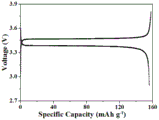
FIG. 1 is a charge-discharge curve of a battery according to example two;
FIG. 2 is a charge-discharge curve of the battery of the third embodiment;
fig. 3 is a charge-discharge curve of the battery of the second embodiment.
Detailed Description
The invention is further described with reference to the following figures and examples:
the first embodiment is as follows:
the invention relates to a polyacrylate solid polymer electrolyte, which comprises acrylate, lithium salt and an initiator, wherein the acrylate accounts for 60% of the solid polymer electrolyte, and the lithium salt accounts for 40% of the solid polymer electrolyte.
The acrylate is butyl methacrylate.
The lithium salt comprises lithium perchlorate.
The initiator is azobisisobutyronitrile, and accounts for 0.3% of the total mass of the acrylate and the cross-linking agent.
A preparation method of polyacrylate solid polymer electrolyte comprises the following steps: mixing butyl methacrylate and lithium perchlorate, adding the mixture into a 20ml reagent bottle, and stirring the mixture for 30min at room temperature to uniformly mix the butyl methacrylate and the lithium perchlorate;
step two: adding azodiisobutyronitrile into the mixed solution, and stirring at room temperature for 5min to mix the mixture uniformly;
step three: uniformly pouring the obtained mixed solution in a culture dish;
step four: heating at 80 ℃ for 20min to ensure that butyl methacrylate is self-polymerized under the initiation of azodiisobutyronitrile to obtain the polyacrylate solid polymer electrolyte.
The solid lithium battery is formed by sequentially stacking a negative electrode, the polyacrylate solid polymer electrolyte and a positive electrode.
Example two:
in order to obtain an all-solid polymer electrolyte with high mechanical strength, the solid polymer electrolyte comprises acrylate, lithium salt, initiator and cross-linking agent, wherein the acrylate accounts for 40% of the solid polymer electrolyte, the lithium salt accounts for 40% of the solid polymer electrolyte, and the cross-linking agent accounts for 20% of the solid polymer electrolyte.
The acrylate is methyl methacrylate.
The lithium salt comprises lithium trifluoromethanesulfonate.
The initiator is azobisisoheptonitrile, and accounts for 0.5% of the total mass of the acrylate and the crosslinking agent.
The cross-linking agent is one or more of polyethylene glycol diacrylate, methacryloxypropyl trimethoxy silane, styrene, tetraethylene glycol dimethacrylate and glycidyl methacrylate, and the polyethylene glycol diacrylate is preferred.
A preparation method of polyacrylate solid polymer electrolyte comprises the following steps: mixing methyl methacrylate and lithium trifluoromethanesulfonate, adding the mixture into a 20ml reagent bottle, and stirring at room temperature for 30min to uniformly mix the methyl methacrylate and the lithium trifluoromethanesulfonate;
step two: adding polyethylene glycol diacrylate into the mixed solution obtained in the step two, and then uniformly stirring;
step three: adding azodiisoheptanonitrile into the mixed solution, and stirring for 5min at room temperature to uniformly mix;
step four: uniformly pouring the obtained mixed solution in a culture dish;
step five: heating at 80 ℃ for 20min to ensure that the methyl methacrylate and the polyethylene glycol diacrylate ester are copolymerized to obtain the polyacrylate solid polymer electrolyte.
The solid lithium battery is formed by sequentially stacking a negative electrode, the polyacrylate solid polymer electrolyte and a positive electrode.
Example three:
in order to further improve the mechanical strength of the all-solid-state polymer electrolyte, the solid-state polymer electrolyte comprises acrylate, lithium salt, initiator, cross-linking agent and porous rigid supporting material, wherein the acrylate accounts for 40% of the solid-state polymer electrolyte, the lithium salt accounts for 40% of the solid-state polymer electrolyte, and the cross-linking agent accounts for 20% of the solid-state polymer electrolyte.
The acrylate is ethyl methacrylate.
The lithium salt comprises lithium bis (trifluoromethylsulfonate) imide.
The initiator is dibenzoyl peroxide, and accounts for 0.7% of the total mass of the acrylate and the cross-linking agent.
The cross-linking agent is one or more of polyethylene glycol diacrylate, methacryloxypropyl trimethoxy silane, styrene, tetraethylene glycol dimethacrylate and glycidyl methacrylate, and styrene is preferred.
The porous rigid support material is a ceramic porous diaphragm.
A preparation method of polyacrylate solid polymer electrolyte comprises the following steps: mixing ethyl methacrylate and lithium bis (trifluoromethanesulfonate) imide, adding the mixture into a 20ml reagent bottle, and stirring the mixture for 30min at room temperature to ensure that the ethyl methacrylate and the lithium bis (trifluoromethanesulfonate) imide are uniformly mixed;
step two: adding styrene into the mixed solution obtained in the step two, and then uniformly stirring;
step three: adding dibenzoyl peroxide into the mixed solution, and stirring at room temperature for 5min to mix uniformly;
step four: uniformly pouring the obtained mixed solution on a ceramic porous diaphragm;
step five: heating at 80 deg.C for 20min to make butyl methacrylate self-polymerize under the initiation of dibenzoyl peroxide to obtain polyacrylate solid polymer electrolyte.
The solid lithium battery is formed by sequentially stacking a negative electrode, the polyacrylate solid polymer electrolyte and a positive electrode.
Example four:
in order to improve the ionic conductivity of the all-solid-state polymer electrolyte, the solid-state polymer electrolyte comprises acrylate, lithium salt, an initiator, a cross-linking agent, a porous rigid support material and a plasticizer, wherein the acrylate accounts for 30% of the solid-state polymer electrolyte, the lithium salt accounts for 30% of the solid-state polymer electrolyte, the cross-linking agent accounts for 20% of the solid-state polymer electrolyte, and the plasticizer accounts for 20% of the polymer electrolyte.
The acrylate is ethyl methacrylate.
The lithium salt comprises tris (trifluoromethylsulfonic acid) methyllithium.
The initiator is lauroyl peroxide, and accounts for 1% of the total mass of the acrylate and the cross-linking agent.
The cross-linking agent is one or more of polyethylene glycol diacrylate, methacryloxypropyl trimethoxysilane, styrene, tetraethylene glycol dimethacrylate and glycidyl methacrylate, and the methacryloxypropyl trimethoxysilane is preferred.
The porous rigid support material is a ceramic porous diaphragm.
The plasticizer is one or more of a carbonate organic solvent, an ether organic solvent and sulfones, wherein the carbonate organic solvent is propylene carbonate or ethylene carbonate, the ether organic solvent is tetraethylene glycol dimethyl ether, the sulfones are sulfolane, and the preferred plasticizer is propylene carbonate.
A preparation method of polyacrylate solid polymer electrolyte comprises the following steps: mixing ethyl methacrylate and tris (trifluoromethanesulfonic acid) methyllithium, adding the mixture into a 20ml reagent bottle, and stirring the mixture at room temperature for 30min to ensure that the ethyl methacrylate and the tris (trifluoromethanesulfonic acid) methyllithium are uniformly mixed;
step two: adding styrene into the mixed solution obtained in the step two, and then uniformly stirring;
step three: adding dibenzoyl peroxide and propylene carbonate into the mixed solution, and stirring at room temperature for 5min to uniformly mix;
step four: uniformly pouring the obtained mixed solution on a ceramic porous diaphragm;
step five: heating at 80 ℃ for 20min to ensure that the ethyl methacrylate is self-polymerized under the initiation of methacryloxypropyltrimethoxysilane to obtain the polyacrylate solid polymer electrolyte.
The solid lithium battery is formed by sequentially stacking a negative electrode, the polyacrylate solid polymer electrolyte and a positive electrode.
Compared with the prior art, the invention achieves the technical effects that: 1. the all-solid-state polymer electrolyte provided by the invention takes the monomer of a high-molecular polymer material as a raw material, and the use of toxic solvents (such as NMP and DMF) is omitted in the preparation process; 2. the preparation method is simple, shortens the film preparation time and saves the time cost; 3. the introduction of the cross-linking agent and the supporting material can greatly improve the mechanical strength of the electrolyte, the addition of the plasticizer can improve the ionic conductivity of the electrolyte, and the assembled solid lithium battery has lower impedance and higher capacity performance.
Example five:
preparing a solid lithium battery with polyacrylate solid polymer electrolyte: mixing an active main material, conductive carbon black and a binder PVDF according to a mass ratio of 80: 10: 10, adding solvent NMP, stirring to obtain uniform slurry, coating the uniform slurry on an aluminum foil by a scraper method, drying at 90 ℃ for 12 hours, cutting into 12mm electrode slices, drying in a vacuum box at 90 ℃ for 12 hours for later use, and using metal lithium as a negative electrode to self-manufacture a composite solid electrolyte assembled button cell.
Example six:
characterization of electrolyte Properties
(1) Thickness measurement of film: the thickness of the solid electrolyte was measured using a micrometer (accurate to 0.001mm), and the average was determined at any three points.
(2) And (3) ion conductivity test: a symmetrical blocking cell SS/CSE/SS measurement system was assembled in a glove box filled with argon, the ac impedance was measured at 30 ℃ with an electrochemical workstation, and the conductivity of the electrolyte was calculated by the formula σ ═ l/(R · S).
(3) Electrochemical window testing; stainless steel is used as a working positive electrode, metal lithium is used as a counter electrode and a reference electrode, a solid electrolyte is clamped between the working positive electrode and the reference electrode to assemble the battery, the battery is stood for more than 6 hours at the temperature of 30 ℃, a linear sweep voltammetry test is carried out through an electrochemical workstation, and the test voltage range of the linear sweep voltammetry test is 2.5-6.0V (vs Li)+/Li), scan rate of 1mVs-1The test results are shown in Table 1.
Figure BDA0001538654610000091
Example seven:
(2) battery performance testing method
And testing the charge-discharge curve of the battery by using a LAND battery program-controlled tester.
At 30 ℃ and 0.2C rate, the lithium iron phosphate/lithium metal battery assembled by the composite solid electrolyte of the embodiment 2 has a stable charge-discharge curve, and the 0.2C discharge capacity reaches 156 mAh/g;
at 30 ℃ and 0.2C rate, the lithium cobaltate/lithium metal battery assembled by the composite solid electrolyte of the embodiment 3 has a stable charge-discharge curve, and the 0.2C discharge capacity reaches 161 mAh/g;
at 30 ℃ and 0.2C multiplying power, the lithium-rich manganese-based solid solution/lithium metal battery assembled by the composite solid electrolyte in the embodiment 4 has stable charge-discharge curve, and the 0.2C discharge capacity reaches 213mAh/g
The above embodiments are merely illustrative of the technical ideas and features of the present invention, and the purpose thereof is to enable those skilled in the art to understand the contents of the present invention and implement the present invention, and not to limit the protection scope of the present invention. All equivalent changes and modifications made according to the spirit of the present invention should be covered within the protection scope of the present invention.
Claims (6)

1.一种聚丙烯酸酯类固态聚合物电解质,其特征在于:所述此固态聚合物电解质包括丙烯酸酯、锂盐、引发剂、交联剂、增塑剂、多空刚性支撑材料,所述丙烯酸酯在此固态聚合物电解质中的占比为20-60%,所述锂盐在此固态聚合物电解质中的占比为10-50%,1. a polyacrylate solid polymer electrolyte, it is characterized in that: described this solid polymer electrolyte comprises acrylate, lithium salt, initiator, crosslinking agent, plasticizer, hollow rigid support material, described The proportion of acrylate in the solid polymer electrolyte is 20-60%, the proportion of the lithium salt in the solid polymer electrolyte is 10-50%, 所述丙烯酸酯为甲基丙烯酸甲酯、甲基丙烯酸丁酯,或甲基丙烯酸乙酯,所述增塑剂为碳酸丙烯酯或碳酸乙烯酯,增塑剂在所述聚丙烯酸酯类固态聚合物电解质中的占比为20-40%。The acrylate is methyl methacrylate, butyl methacrylate, or ethyl methacrylate, the plasticizer is propylene carbonate or ethylene carbonate, and the plasticizer is polymerized in the polyacrylate solid state. The proportion of physical electrolyte is 20-40%. 2.根据权利要求1所述的一种聚丙烯酸酯类固态聚合物电解质,其特征在于:所述交联剂包含聚乙二醇二丙烯酸酯、甲基丙烯酰氧基丙基三甲氧基硅烷、苯乙烯、三缩四乙二醇二甲基丙烯酸酯、甲基丙烯酸缩水甘油酯中的一种或者几种。2 . The polyacrylate solid polymer electrolyte according to claim 1 , wherein the crosslinking agent comprises polyethylene glycol diacrylate, methacryloyloxypropyltrimethoxysilane , one or more of styrene, tetraethylene glycol dimethacrylate and glycidyl methacrylate. 3.根据权利要求2所述的一种聚丙烯酸酯类固态聚合物电解质,其特征在于:所述多孔刚性支撑材料包括无纺布、陶瓷多孔隔膜、玻璃纤维隔膜、PP、PE以及PP/PE复合隔膜中的一种。3. A polyacrylate solid polymer electrolyte according to claim 2, wherein the porous rigid support material comprises non-woven fabrics, ceramic porous diaphragms, glass fiber diaphragms, PP, PE and PP/PE One of the composite diaphragms. 4.根据权利要求1所述的一种聚丙烯酸酯类固态聚合物电解质,其特征在于:所述锂盐包含高氯酸锂、三氟甲基磺酸锂、双(三氟甲基磺酸)亚胺锂、三(三氟甲基磺酸)甲基锂中的一种或者几种。4. A polyacrylate solid polymer electrolyte according to claim 1, wherein the lithium salt comprises lithium perchlorate, lithium trifluoromethanesulfonate, bis(trifluoromethanesulfonic acid) ) one or more of lithium imide and tris(trifluoromethanesulfonic acid) methyl lithium. 5.根据权利要求2所述的一种聚丙烯酸酯类固态聚合物电解质,其特征在于:所述引发剂为偶氮二异丁腈、偶氮二异庚腈、过氧化二苯甲酰、过氧化十二酰中的一种,引发剂占的丙烯酸酯和交联剂总质量的0.3-1%。5. a kind of polyacrylate solid polymer electrolyte according to claim 2 is characterized in that: described initiator is azobisisobutyronitrile, azobisisoheptanenitrile, dibenzoyl peroxide, One of dodecanoyl peroxide, the initiator accounts for 0.3-1% of the total mass of the acrylate and the crosslinking agent. 6.如权利要求1所述的聚丙烯酸酯类固态聚合物电解质在固态锂电池中的应用,其特征在于:所述固态锂电池由负极、聚丙烯酸酯类固态聚合物电解质以及正极依次堆叠而成。6. The application of the polyacrylate-based solid polymer electrolyte in a solid-state lithium battery according to claim 1, wherein the solid-state lithium battery is composed of a negative electrode, a polyacrylate-based solid-state polymer electrolyte, and a positive electrode stacked in sequence to form a solid-state lithium battery. to make.
CN201810006077.8A 2018-01-03 2018-01-03 Polyacrylate solid polymer electrolyte, preparation method and application thereof in solid lithium battery Active CN108183258B (en)

Priority Applications (2)

Application Number Priority Date Filing Date Title
CN201810006077.8A CN108183258B (en) 2018-01-03 2018-01-03 Polyacrylate solid polymer electrolyte, preparation method and application thereof in solid lithium battery
CN202010305542.5A CN111477952B (en) 2018-01-03 2018-01-03 Polyacrylate solid polymer electrolyte, preparation method and application thereof in solid lithium battery

Applications Claiming Priority (1)

Application Number Priority Date Filing Date Title
CN201810006077.8A CN108183258B (en) 2018-01-03 2018-01-03 Polyacrylate solid polymer electrolyte, preparation method and application thereof in solid lithium battery

Related Child Applications (1)

Application Number Title Priority Date Filing Date
CN202010305542.5A Division CN111477952B (en) 2018-01-03 2018-01-03 Polyacrylate solid polymer electrolyte, preparation method and application thereof in solid lithium battery

Publications (2)

Publication Number Publication Date
CN108183258A CN108183258A (en) 2018-06-19
CN108183258B true CN108183258B (en) 2020-05-22

Family

ID=62549757

Family Applications (2)

Application Number Title Priority Date Filing Date
CN201810006077.8A Active CN108183258B (en) 2018-01-03 2018-01-03 Polyacrylate solid polymer electrolyte, preparation method and application thereof in solid lithium battery
CN202010305542.5A Active CN111477952B (en) 2018-01-03 2018-01-03 Polyacrylate solid polymer electrolyte, preparation method and application thereof in solid lithium battery

Family Applications After (1)

Application Number Title Priority Date Filing Date
CN202010305542.5A Active CN111477952B (en) 2018-01-03 2018-01-03 Polyacrylate solid polymer electrolyte, preparation method and application thereof in solid lithium battery

Country Status (1)

Country Link
CN (2) CN108183258B (en)

Families Citing this family (20)

* Cited by examiner, † Cited by third party
Publication number Priority date Publication date Assignee Title
CN108923064B (en) * 2018-07-10 2020-10-02 山西长韩新能源科技有限公司 Solid polymer electrolyte, preparation method thereof and lithium ion secondary battery
CN109004280B (en) * 2018-07-11 2021-06-08 珠海冠宇电池股份有限公司 A kind of preparation method of all-solid polymer electrolyte and all-solid polymer battery
CN109216762B (en) * 2018-09-18 2020-11-27 哈尔滨工业大学无锡新材料研究院 Glyceryl carbonate acrylate-based polymer electrolyte suitable for ultraviolet polymerization of lithium secondary battery and preparation method thereof
CN109659606A (en) * 2018-12-24 2019-04-19 燕山大学 A kind of composite electrolyte membrane and preparation method thereof and lithium secondary battery
CN109817981B (en) * 2018-12-25 2022-04-08 宁波富邦电池有限公司 Alkaline battery cathode synthesis gel
CN110105502B (en) * 2019-04-08 2020-10-27 西安交通大学 Multifunctional organogel and preparation method thereof
CN110048158B (en) * 2019-04-25 2021-09-07 北京卫蓝新能源科技有限公司 In-situ polymerized double-layer polymer electrolyte membrane, preparation method and application thereof
CZ308295B6 (en) * 2019-07-01 2020-04-22 Univerzita Tomáše Bati ve Zlíně A method of preparing a gel type polymer electrolyte for a lithium-sulphur battery
CN111326790A (en) * 2020-03-09 2020-06-23 天津中电新能源研究院有限公司 Three-dimensional network flame-retardant silica gel electrolyte, preparation method thereof and preparation method of gel lithium ion battery
CN111463478B (en) * 2020-03-31 2021-08-17 珠海冠宇电池股份有限公司 A kind of solid-state battery including interface buffer layer and preparation method thereof
CN111446496B (en) * 2020-03-31 2021-08-03 珠海冠宇电池股份有限公司 A kind of polymer solid electrolyte and its preparation method and application
CN111540948A (en) * 2020-05-09 2020-08-14 中国乐凯集团有限公司 Composite solid polymer electrolyte membrane and preparation method and application thereof
EP4050040A1 (en) * 2021-02-26 2022-08-31 Henkel AG & Co. KGaA One component (1k) curable adhesive composition
CN113488627B (en) * 2021-07-12 2022-09-16 江西瑞马新能源材料技术有限公司 Solid-state silicon lithium battery anode material and preparation method thereof
CN114039088A (en) * 2021-09-30 2022-02-11 国联汽车动力电池研究院有限责任公司 Composition for preparing solid polymer electrolyte and application thereof
CN114373986A (en) * 2022-01-14 2022-04-19 吉林省东驰新能源科技有限公司 Polymer solid electrolyte membrane, preparation method thereof and all-solid-state battery
CN114409843B (en) * 2022-03-01 2023-03-10 江苏铁锚玻璃股份有限公司 Formula and preparation method of organic glass capable of eliminating static electricity
CN115207461A (en) * 2022-08-30 2022-10-18 电子科技大学长三角研究院(湖州) Flame-retardant flexible composite gel electrolyte material and preparation method and application thereof
CN119786713A (en) * 2024-12-26 2025-04-08 中国电子科技集团公司第十八研究所 A high-nickel lithium metal solid-state battery with ultra-high temperature resistant electrolyte
CN120319883B (en) * 2025-06-17 2025-10-10 浙江华宇钠电新能源科技有限公司 A three-dimensional cross-linked polymer electrolyte and its preparation method and application

Citations (4)

* Cited by examiner, † Cited by third party
Publication number Priority date Publication date Assignee Title
JP2012158725A (en) * 2011-02-02 2012-08-23 Toyota Central R&D Labs Inc Prepolymer and prepolymer solution, and catalyst layer
CN106299471A (en) * 2016-09-19 2017-01-04 哈尔滨工业大学 A kind of hybrid solid-state polymer dielectric and preparation method and application
CN106654366A (en) * 2016-11-29 2017-05-10 中国电子科技集团公司第十八研究所 In-situ polymerization prepared plastic crystal polymer electrolyte material and preparation method thereof
CN107248562A (en) * 2017-06-27 2017-10-13 过春明 A kind of lithium ion battery separator and preparation method thereof

Family Cites Families (7)

* Cited by examiner, † Cited by third party
Publication number Priority date Publication date Assignee Title
CN1152086C (en) * 2001-05-25 2004-06-02 复旦大学 Process for preparing gel-state lithium ion polymer as electrolyte and bettery
JP4596784B2 (en) * 2004-01-22 2010-12-15 日東電工株式会社 Reactive polymer-supported porous film for battery separator and its use
US7282295B2 (en) * 2004-02-06 2007-10-16 Polyplus Battery Company Protected active metal electrode and battery cell structures with non-aqueous interlayer architecture
CN100560648C (en) * 2006-07-10 2009-11-18 西北工业大学 Method for preparing nanometer silicon dioxide/polymethyl methacrylate gel polymer electrolyte by initiating polymerization in one step
CN103579674B (en) * 2013-12-02 2016-01-13 哈尔滨理工大学 A kind of preparation method of gel polymer electrolyte film
CN104638296A (en) * 2015-01-23 2015-05-20 清华大学深圳研究生院 Method for preparing solid polymer electrolyte lithium ion battery
CN106532116B (en) * 2016-12-19 2019-02-19 中国科学院化学研究所 Preparation method and application of high temperature resistant solid polymer electrolyte

Patent Citations (4)

* Cited by examiner, † Cited by third party
Publication number Priority date Publication date Assignee Title
JP2012158725A (en) * 2011-02-02 2012-08-23 Toyota Central R&D Labs Inc Prepolymer and prepolymer solution, and catalyst layer
CN106299471A (en) * 2016-09-19 2017-01-04 哈尔滨工业大学 A kind of hybrid solid-state polymer dielectric and preparation method and application
CN106654366A (en) * 2016-11-29 2017-05-10 中国电子科技集团公司第十八研究所 In-situ polymerization prepared plastic crystal polymer electrolyte material and preparation method thereof
CN107248562A (en) * 2017-06-27 2017-10-13 过春明 A kind of lithium ion battery separator and preparation method thereof

Also Published As

Publication number Publication date
CN111477952A (en) 2020-07-31
CN111477952B (en) 2022-02-25
CN108183258A (en) 2018-06-19

Similar Documents

Publication Publication Date Title
CN108183258B (en) Polyacrylate solid polymer electrolyte, preparation method and application thereof in solid lithium battery
CN108232293B (en) A kind of preparation method of organic-inorganic composite solid electrolyte
CN109802174B (en) Preparation and application of a polycarbonate-based polymer electrolyte
CN108336402B (en) Ceramic matrix composite solid electrolyte and preparation method thereof
Deng et al. Gel polymer electrolyte with high performances based on biodegradable polymer polyvinyl alcohol composite lignocellulose
CN103633367B (en) A kind of gel polymer electrolyte and polymer Li-ion battery and preparation method thereof
CN103840198A (en) Lithium ion battery gel polymer electrolyte and preparation method thereof
CN101407625A (en) Hyperbranched polyether type solid polymer elecrolytes and preparation thereof
CN116525935B (en) Polymer electrolyte prepolymerization liquid, polymer electrolyte and electrochemical device
CN109888369A (en) An all-solid-state electrolyte, a preparation method thereof, and a lithium battery
CN116864786A (en) Composite solid electrolyte, composite solid electrolyte film and preparation method and application thereof
CN114843593A (en) Ultrathin gradient three-layer solid electrolyte and preparation method and application thereof
CN118213611A (en) Silicon-based polymer electrolyte and preparation method and application thereof
CN113540559A (en) ZIF-8@ PEGMEM-co-AMPS-Li single ion polymer solid electrolyte and preparation method thereof
CN110224173A (en) A kind of lithium battery solid polymer electrolyte capable of self-healing and preparation method thereof
CN105957993B (en) A kind of preparation method of lithium battery thermally cross-linkable polymer dielectric film
CN111224157A (en) Composite polymer gel electrolyte and preparation method and application thereof
CN116111179A (en) A wide temperature and high pressure polyallyl carbonate-based polymer electrolyte
CN114350004A (en) Polymer electrolyte with semi-interpenetrating network structure and preparation method thereof
CN114497726B (en) High-conductivity semi-interpenetrating polymer electrolyte containing ionic liquid cross-linking agent
CN118399005A (en) Diaphragm, secondary battery and power utilization device
CN115000506B (en) Preparation method of integrated positive electrode and gel electrolyte and integrated positive electrode and gel electrolyte
CN104752760A (en) Porous self-crosslinking type gel polymer electrolyte, and preparation method and application thereof in lithium ion battery thereof
CN116231059A (en) A kind of semi-solid pouch battery and preparation method thereof
CN115602919A (en) Electrolyte salt-initiated polysiloxane-based solid polymer electrolyte and application thereof

Legal Events

Date Code Title Description
PB01 Publication
PB01 Publication
SE01 Entry into force of request for substantive examination
GR01 Patent grant
GR01 Patent grant
CP01 Change in the name or title of a patent holder

Address after: 2 / F, building 3, Dongchuang science and technology center, No.1 Hongfeng Road, enterprise science and Technology Park, East Qianjin Road, Kunshan Development Zone, Suzhou City, Jiangsu Province

Patentee after: Qingtao (Kunshan) Energy Development Co.,Ltd.

Address before: 2 / F, building 3, Dongchuang science and technology center, No.1 Hongfeng Road, enterprise science and Technology Park, East Qianjin Road, Kunshan Development Zone, Suzhou City, Jiangsu Province

Patentee before: QINGTAO (KUNSHAN) ENERGY DEVELOPMENT CO.,LTD.

CP02 Change in the address of a patent holder

Address after: Floor 2, Building 1, No. 3 Shengxi Road, Kunshan Development Zone, Suzhou City, Jiangsu Province, 215000

Patentee after: Qingtao (Kunshan) Energy Development Co.,Ltd.

Address before: 2 / F, building 3, Dongchuang science and technology center, No.1 Hongfeng Road, enterprise science and Technology Park, East Qianjin Road, Kunshan Development Zone, Suzhou City, Jiangsu Province

Patentee before: Qingtao (Kunshan) Energy Development Co.,Ltd.