CN108140076B - Fault-tolerant authentication for secure product identifiers - Google Patents
Fault-tolerant authentication for secure product identifiers Download PDFInfo
- Publication number
- CN108140076B CN108140076B CN201680057591.3A CN201680057591A CN108140076B CN 108140076 B CN108140076 B CN 108140076B CN 201680057591 A CN201680057591 A CN 201680057591A CN 108140076 B CN108140076 B CN 108140076B
- Authority
- CN
- China
- Prior art keywords
- code
- user
- entered
- characters
- errors
- Prior art date
- Legal status (The legal status is an assumption and is not a legal conclusion. Google has not performed a legal analysis and makes no representation as to the accuracy of the status listed.)
- Active
Links
Images


Classifications
-
- G—PHYSICS
- G06—COMPUTING OR CALCULATING; COUNTING
- G06F—ELECTRIC DIGITAL DATA PROCESSING
- G06F21/00—Security arrangements for protecting computers, components thereof, programs or data against unauthorised activity
- G06F21/30—Authentication, i.e. establishing the identity or authorisation of security principals
- G06F21/31—User authentication
-
- G—PHYSICS
- G06—COMPUTING OR CALCULATING; COUNTING
- G06F—ELECTRIC DIGITAL DATA PROCESSING
- G06F18/00—Pattern recognition
- G06F18/20—Analysing
- G06F18/22—Matching criteria, e.g. proximity measures
-
- G—PHYSICS
- G06—COMPUTING OR CALCULATING; COUNTING
- G06F—ELECTRIC DIGITAL DATA PROCESSING
- G06F21/00—Security arrangements for protecting computers, components thereof, programs or data against unauthorised activity
- G06F21/30—Authentication, i.e. establishing the identity or authorisation of security principals
- G06F21/45—Structures or tools for the administration of authentication
- G06F21/46—Structures or tools for the administration of authentication by designing passwords or checking the strength of passwords
-
- G—PHYSICS
- G06—COMPUTING OR CALCULATING; COUNTING
- G06V—IMAGE OR VIDEO RECOGNITION OR UNDERSTANDING
- G06V10/00—Arrangements for image or video recognition or understanding
- G06V10/98—Detection or correction of errors, e.g. by rescanning the pattern or by human intervention; Evaluation of the quality of the acquired patterns
-
- G—PHYSICS
- G06—COMPUTING OR CALCULATING; COUNTING
- G06V—IMAGE OR VIDEO RECOGNITION OR UNDERSTANDING
- G06V30/00—Character recognition; Recognising digital ink; Document-oriented image-based pattern recognition
- G06V30/10—Character recognition
Landscapes
- Engineering & Computer Science (AREA)
- Theoretical Computer Science (AREA)
- Computer Security & Cryptography (AREA)
- Physics & Mathematics (AREA)
- General Physics & Mathematics (AREA)
- General Engineering & Computer Science (AREA)
- Computer Hardware Design (AREA)
- Software Systems (AREA)
- Data Mining & Analysis (AREA)
- Artificial Intelligence (AREA)
- Life Sciences & Earth Sciences (AREA)
- Bioinformatics & Cheminformatics (AREA)
- Bioinformatics & Computational Biology (AREA)
- Computer Vision & Pattern Recognition (AREA)
- Evolutionary Biology (AREA)
- Evolutionary Computation (AREA)
- Quality & Reliability (AREA)
- Multimedia (AREA)
- Storage Device Security (AREA)
- Character Discrimination (AREA)
Abstract
本发明涉及自动校正系统,其中某些错误被接受而其它错误被识别为错误。这具体而言适用于在读取或转录代码时的非机器可读输入或光学字符识别。当输入某些字符时,所述系统将允许来自集合的某些相似字符组合和错误数量,同时仍然维持标识码的完整性。

The present invention relates to an automatic correction system in which certain errors are accepted and others are identified as errors. This applies in particular to non-machine readable input or optical character recognition when reading or transcribing code. When certain characters are entered, the system will allow certain similar character combinations and numbers of errors from the set, while still maintaining the integrity of the identification code.
Description
This application claims the benefit of U.S. provisional application No.62/209,798 filed on 25/8/2015, which is incorporated herein by reference in its entirety.
Technical Field
The present invention relates generally to techniques for product verification and automatic correction or enablement for certain sets of errors. Some errors are more likely to occur than others when attempting to verify a product identifier, especially when using non-machine readable techniques. These errors often occur when characters for a code are manually entered by optical recognition of the characters or by a person. The present invention addresses how to overcome certain types of errors while still allowing a sufficient level of authentication.
Background
The present invention relates to an automatic correction system in which some errors are accepted and others are identified as errors and rejected. This applies in particular to non-machine-readable inputs or optical character recognition when reading or transcribing codes. When certain characters are entered, some characters may be similar to others, and this system allows for certain similar character combinations and error numbers from that set, while still maintaining the integrity of the identification code.
Strict adherence to character recognition improves security in authentication systems. However, when human or optical recognition of characters is used to read or transcribe the characters, certain errors may occur. This may be due to visual acuity problems or resolution problems when attempting to read characters. To overcome some errors in entering similar characters, the system needs to be able to recognize certain similar characters while maintaining the integrity and security of the system. Allowing similar characters to be entered reduces the number of possible combinations when a particular number of characters are used.
Disclosure of Invention
The following examples of the present invention are illustrative and are not intended to limit the scope of the present invention. While one or more embodiments of the present invention have been described, various modifications, additions, substitutions and equivalents thereof are included within the scope of the present invention. In the following description of the embodiments, reference is made to the accompanying drawings which form a part hereof, and in which is shown by way of illustration specific embodiments of the claimed subject matter. It is to be understood that other embodiments may be utilized and that changes or modifications (such as structural changes) may be made. Such embodiments, adaptations, or variations do not necessarily depart from the scope of the subject matter with which they are intended to be claimed. Although the following steps may be presented in a certain order, in some cases the ordering may be changed so that certain inputs are provided at different times or in a different order without changing the functionality of the systems and methods. The various computations described below (such as those within the code initialization, generation, and authentication processes) need not be performed in the order disclosed, and other embodiments using alternative ordering of computations may be readily implemented. In addition to being reordered, a computation can be decomposed into sub-computations with the same result.
Drawings
Embodiments of the invention will now be described, by way of example, with reference to the accompanying drawings, in which:
FIG. 1 illustrates an example table of alphanumeric codes.
FIG. 2 illustrates an example method for code initialization.
FIG. 3 illustrates an example method for code generation.
FIG. 4 illustrates an example method for code authorization.
Detailed Description
According to an embodiment of the invention for verifying that a user code entered into a computing system matches a true code, the method comprises: defining a set of code characters that can be used in a product identity (identity) code; defining one or more subsets of code characters, each subset of the subsets comprising two or more predefined identification equivalents of a set of code characters, each subset having a predetermined subset identifier; defining a transformation of the identity generating the real code based on a predetermined subset identifier; receiving a user-entered code comprising receiving a set of one or more code characters entered by a user for authenticating a product; decoding (decipher) the code entered by the user by applying said transformation to obtain the identity of the code entered by the user; generating an identity of the real code; and verifying that the identity of the code entered by the user matches the identity of the authentic code.
In an alternative or additional embodiment, the method further comprises defining a true code comprising one or more code characters derived from the product identity. In an alternative or additional embodiment, the method further comprises the step of comparing the user code with the real code. In an alternative or additional embodiment, the comparing step further comprises determining one or more of a number of errors or a type of errors detected between the user-entered code and the authentic code. In an alternative or additional embodiment, one or more of the number of errors and the type of errors detected between the user-entered code and the authentic code are recorded.
In an alternative or additional embodiment, the step of verifying the authentic code comprises verifying the authentic code only if one or more of the number of errors and the type of errors is below a predetermined threshold. In alternative or additional embodiments, all code characters are contained within one or more subsets. In an alternative or additional embodiment, all subsets contain only two code characters.
In an alternative or additional embodiment, each error has an associated probability score, and correction of one or more errors detected in the user-entered code is accomplished based on the probability score associated with the detected one or more errors, and the code is corrected only if the corrected probability score is above a predefined threshold. In an alternative or additional embodiment, the probability score associated with the user-entered wrong character is affected by the character next to the wrong character entered by the user (next to).
In an alternative or additional embodiment, two characters sequentially entered by the user are detected as being erroneous, and the correction of the two characters is performed by swapping the two characters sequentially entered by the user detected as being erroneous, such that the characters are correct compared to the true code, regardless of whether the probability score for correcting any error is above a predefined threshold.
In an alternative or additional embodiment, a system for verifying that user code input into a computing system matches authentic code includes a computerized processor configured to execute instructions for: defining a set of code characters that can be used in a product identity code; defining one or more subsets of code characters, each of the subsets comprising two or more predefined identification equivalents of a set of code characters, each subset having a predetermined subset identifier; defining a transformation of the identity generating the real code based on a predetermined subset identifier; receiving a user-entered code comprising receiving a set of one or more code characters entered by a user for authenticating a product; decoding the user-entered code by applying a transformation to obtain an identity of the user-entered code; generating an identity of the real code; and verifying that the identity of the code entered by the user matches the identity of the authentic code.
In an alternative or additional embodiment, the system further comprises instructions for defining a true code comprising one or more code characters derived from the product identity. In an alternative or additional embodiment, the system further comprises instructions for comparing the user code with the authentic code. In an alternative or additional embodiment, the system further comprises instructions for determining the number of errors or the type of errors detected between the user-entered code and the authentic code.
In one embodiment of the invention, the different types of errors may be characters that appear similar, such as O,0, and Q, and the other type of errors may be characters that are physically close to each other, such as character keys around the correct character. Another example of another type of error may be swapping two characters adjacent to each other in the code. An example would be where the real code is AZSXDC and the user enters AZXSDC. Although S and X are not visually similar, they are physically similar. They can be counted as two errors of a physical proximity error. Alternatively, since the location of the previous error and its type are recorded, this may be identified as a swap error, since both errors relate to physical proximity errors in the vicinity of each other, and if the single correction is made, the code is correct. Other examples exist, such as when a non-QWERTY keyboard is used, or if the input needs to go from one language or code to another (such as going from entering the binary equivalent of a hexadecimal code or from a QWERTY keyboard to kanji).
In some cases, there may be more than one error for the same key. In a QWERTY keyboard, for example, O and 0 are in physical proximity to each other, and they are often considered optically similar. However, O and Q are not physically close, but may be considered optically similar. Thus, the method may allow each of these errors to be accepted as only one, e.g., O and 0 are only treated as optical errors or physical position errors. In another case, it may be counted as two errors, for example, if the real code is OO0O and O0OO is entered, it may be counted as two physical position errors, or two optically similar errors, or one swap error, or one of each error. The method may have a cap (cap) for the total number of errors. Alternatively, it may have a limit for each type of error. It may also have limitations such as different combinations of errors not being counted, e.g. if there is one swap error that can also be counted as two optical errors or two physical position errors, it records a number of points (tally) for all these types, but when the number of errors is counted for the accepted code, it counts it as a single swap error, or in any other way that minimizes the number of errors. Alternatively, to maximise security, the system may be arranged to count the maximum possible number or errors instead.
Fig. 1 provides an illustrative example of an alphanumeric code for use in the present invention. The length of the code, the number of characters, and the type of characters are designed only to show examples and are not limited to the shown number or type.
With the present invention, the code is input by a user or by an optical character recognition method. The code is then converted into an identity. The identity is a decoded code entered by the user, such as in the case where the code needs to be decoded to obtain the original value or run through a hash or in some other way that is not as an exact string to be compared to the genuine product identity (which is the correct code the user is attempting to match). If no obfuscation, encryption, hashing, or other method is used and only the user-entered characters are compared, then in this case the user-entered code is an identity.
With automatic correction, there are fewer identities available than codes, due to the defined subset that is available for error correction. The present invention also uses predefined identification equivalents that include, for example, but are not limited to, alphanumeric characters, symbols such as ASCII symbols, and characters in the alphabet (such as kanji, hiragana and katakana characters, cyrillic letters, and other characters used).
For a group (G) of n fields, each field (F) containing at least m different elements (e), i.e. different over n fields and beingElements of a portion of element group E. The elements may be any alphanumeric character, including non-english letters and numbers, ASCII symbols, and the like. There being a function of the number of elements in the group Size, G (i) (where 0<I<n) is a group containing at least m unique elements E, where E ∈ E. F (i, j), wherein 0<I<n is 0<j<Size (G (i)). (Note that Size (G (i) ≧ m). The attributes of these groups are such as size (E) ≧ m.n. For a code-group on E of length l, we label it as C, where C ═ ElSuch that the code is defined as an element of C, where code ═ { e ═ e0,e1,…,el‐1}. An identity of { i is also defined for the code0,i1,…,il‐1Such as for 0 ≦ k<l,ekE g (i), whose numerical value representation is such that identity equals Σ ik·mkWhere 0. ltoreq. identity<mlAnd defining security for the code as j0,j1,…,ji-1Such as for 0 ≦ k<l,ek=F(ik,jk) Numerical value thereof represents
One of the benefits of the present invention is that the user does not need to know the security in order to retrieve the identity of the code, and therefore the user can accept errors when reading or entering the code for elements of the same field. For example, if E { { a, B, C, D, E, F, G, H, I, J, K, L, M, N, O, P, Q, R, S, T, U, V, W, X, Y, Z,1,2,3,4,5,6,7,8,9} and G { { a, R }, { B,8}, { C, G }, { D, O, Q }, { E,4}, { F, P }, { H, N }, { I,1}, { J, Y }, { M, W }, { S,5}, { T,7}, { U, V }, { X, K }, { Z,2}, { L,6}, and {3,9} }. In this example, n-17 and m-2, and if the length of the code is defined as 12 characters, then the identity is 0 ≦ identity<1712. 12 is used as an example only because the identifier number used is 12 digits (digit) long. In addition, the security dimension is defined as And based on the above G, the security size for this set G is 2 x 3 ═ 2 x 2113-6144. If any one field is four characters, such as { D, O,0, Q }, then the multiplicative factor for the set G will be 4, rather than 3 in the previous equation when the field is only { D, O, Q }. This allows more error variants to be accepted, but at the same time reduces the security of the system. Depending on the method used (such as truncated hash or other encryption/decryption or decoding means), a secure size may be used in the method of decoding the character into the original.
Once the code is selected, this method can be used to obtain the identity of the code entered by the user and compare it to the original identity. The original identity is the correct character set without error correction. This error correction method can be used even if the identity has already been decoded (encipher). Each combination of similar characters may be marked when running the decoding algorithm so that if one of the characters is entered and the algorithm is run, then it can be checked whether the other similar character is the correct character. If they are one of the sets of similar characters, it is confirmed as correct.
This system may also be set to only allow acceptance of a certain number of similar character errors, such as if there is a chain of 20 characters, then not erroneously entering, for example, more than three characters. It may also be arranged that if more than three characters in the sequence are entered incorrectly, if two or more are the same character and the same incorrect character is used, then it is counted individually or not as an incorrect character. For example, if the user enters the number 5 for the characters two, six, and eight, the system may be set to accept the code and count it as one error, the character two is 5 instead of S, or zero errors. If S is entered for all three characters, the same operation can be performed. Alternatively, if S is entered for characters two and six, but 5 is entered for character eight, the system may accept it again or count it as a single error. Also, if 5 is entered for character two, and S is entered for characters six and eight, then this may be counted as zero errors, one, two, or three errors, depending on the severity of the system requirements. It can be considered an error because 5 and S are transposed to each other, so it is otherwise correct; two errors, so that all S characters are transposed with 5 and all 5 characters are transposed with S. Alternatively, it may be on an individual basis, such that each individual character that is transposed is wrong but accepted.
There are various methods and times to incorporate the auto-calibration method. The first is when the character is first entered. The set may recognize that these are part of the error correction set and automatically be set to use one of the characters of, for example, the set { D, O, Q } to use only O, which in this example would be a representative character for the defined subset { D, O, Q }. The advantage of this approach is that if the error correction is done earlier, there are fewer options for different usable characters. The error check may be performed automatically.
Another approach is to run a conventional conversion method starting from the existing character, by hashing, decryption, or any other decoding method(s) to determine what the original encoding (number) is (before the first decoding of the number/letter), and then perform an error check to determine if the character falls into one of the auto-correction sets. This can be achieved by knowing that the decoded number of the original number is in one of the fields of the set G after the method has been run and the original number or letter is obtained. This method also does not require any replacement. It allows accepting any entered code as long as the characters fall into a predefined subset.
Alternatively, a method may be used in which after the user enters the code, a check is made to see if any error correction is required before decoding the code by any hashing, decryption or other method. If one or more of the characters are not entered correctly, then the characters falling within the predefined subset may be accepted as correct, and then the code may be decoded and accepted as correct. This allows the code entered by the user to be maintained even though it may not be the true identity code.
The automatic correction may also be done after the entire alphanumeric string is entered but before decoding. With this approach, a character string can be divided into preceding and subsequent string fragments based on the position or sufficiently high content probability score of the character as part of the defined subset. A new string is created using the previous string fragment, the corrected character, and the subsequent string. The process may be run iteratively such that only a single character is corrected at a time while the preceding and subsequent strings are changed. Taking fig. 1 as an example, the first replaced character is the character number six, so the preceding string will be the characters one through five and the subsequent string will be the characters seven through twenty. The new string will use the previous string, corrected character six and the subsequent string and the error correction will continue to check the remaining characters and find, for example, that character 17 should be automatically corrected, the previous string will be characters one through sixteen, where character six is the corrected character and the subsequent string is characters 18 through 20. Alternatively, if more than one character is to be corrected, multiple preceding and subsequent string segments may be created. Using the example above, the first preceding string would be the characters one through five, the second string would be seven through 16, and the last subsequent string would be 18 through 20. The characters six and 17 will be corrected and then the plurality of segments and corrected characters will be used to reconstruct this.
The replacement of characters may also be done using the code identity instead by using the possibility that they are replaced by errors. The content probability score may be calculated or predefined. A higher content probability score may be set for O replaced with 0 than for O and Q or O and C. Also on a standard QWERTY keyboard, content probability scores may be set for keys around and near the entered key. For example, in a QWERTY keyboard layout, the letter D is surrounded by W, E, R, S, F, X, C and V. Each of these may have a content probability score associated with them and they may be different, e.g., C may be considered to be optically more similar to D than W or R and may therefore be set to have a higher content probability score replaced. Some keys may have multiple content probability scores associated with them. For example, one score is for physical proximity and another score is for character similarity. This score may be defined differently for different keyboards, for example, for a bar code scanner with a keypad or a smartphone keypad that differs from the QWERTY setting, and so forth. The scores may be combined in a non-linear fashion, such as taking into account both key locations and optical similarities of the keys, to increase the score or ignore physical locations based on letter optical similarity, or to be set to only add content probability scores. Keys may also have different scores for capital letters than for lower case letters or numbers on the keys. When using content probability scores, the system may set a threshold score to make certain substitutions.
Content probability scores may also be assigned to character strings instead of or in addition to on an individual character-by-individual character basis. If it is determined that certain character combinations are more likely to be entered, these character combinations may be monitored and if they are detected, an automatic correction may be made thereto. For example, THE string "TEH" may be assigned a high probability of being "he", and thus, if THE former string is identified, it is corrected or accepted as THE latter string. This may also work for digital items, such as if a binary sequence is used and the user enters "01007011" instead of "01001011", the system may correct again to the latter, higher probability content score form.
The state diagram may also be used to correct errors. This is particularly useful when using complete words or phrases and computing content scores for each word and the entire phrase as a whole. If a word has a low content score and a correction of that word will result in a high content score, the word may be corrected, such as by replacing "to" or "two" for "too depending on the increasing content score of the phrase and word. This may be done by alphanumeric strings or by similarity of words or the like.
In one embodiment, a single character may be entered. In this embodiment, it may be preferable to reduce the content probability of an error being input or not allow characters to be replaced together, if desired. This may also be achieved by binding the number of allowable errors to the length of the number of characters entered, e.g. the number of errors to be corrected is less than the number of characters entered. The normal way of accepting more or less correction (from the total number of inputs to zero) may vary depending on the number of inputs or any other normal algorithm that may be used to determine how many errors may or will be corrected.
The following provides example computer-executable instructions for performing the inventive methods.


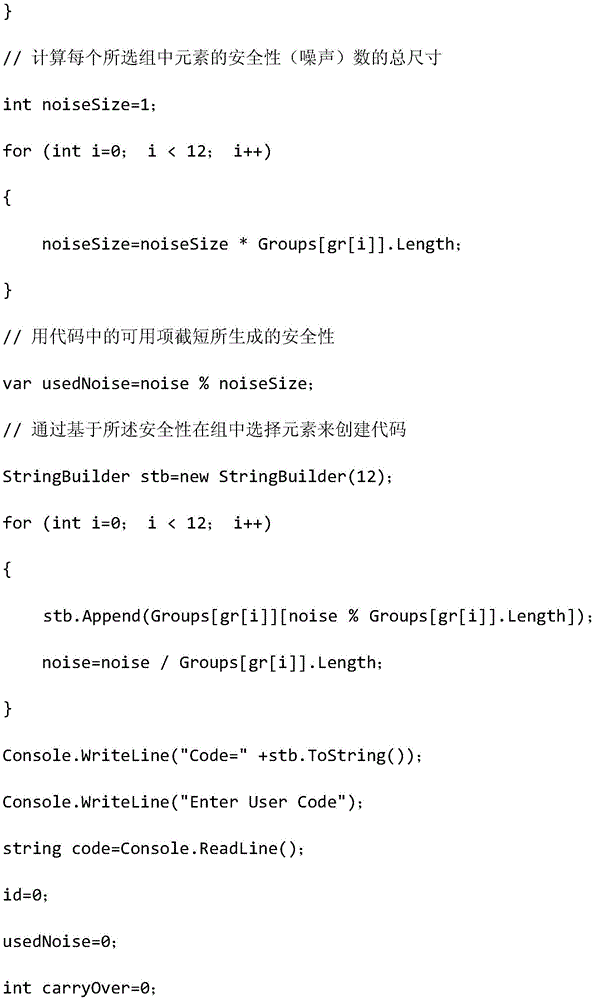
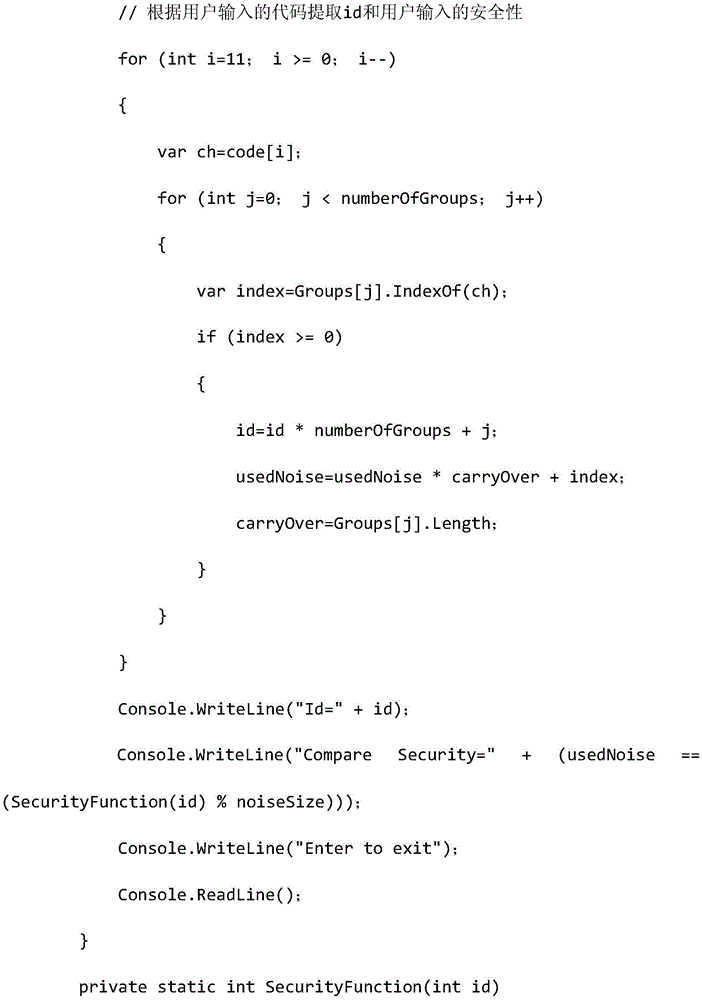
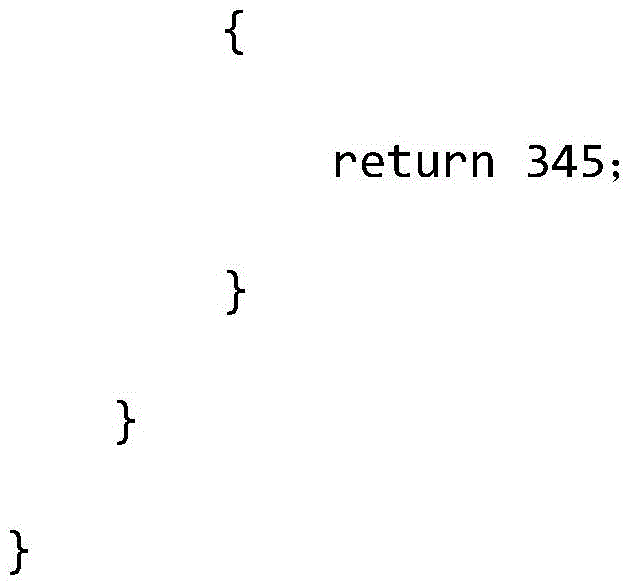
Integration with secure production systems
The above-described system and method for authentication may be used in conjunction with a system for generating a secure identifier for use with production.
As used herein, an entity may refer to: i) a person, such as a consumer of a product; ii) groups, such as groups having a common interest, such as retailers; iii) a computing device; iv) a computing node in a networked system; v) a storage location, such as a memory storage unit that stores a document; vi) virtual points in the network, such as representing business functions within a business enterprise, and so forth. Further, the entity may represent a point in the workflow, such as for authorization, which may be performed by a person responsible for that aspect of the workflow or a computing device providing automated processing. The term "entity" is not meant to be limited to any of these examples, and may extend to other scenarios consistent with the concepts described herein.
Control module
Referring to FIG. 2, a control module (also referred to as an "orchestrator") (110) may receive input from any other module or external source, and may provide instructions to other modules in the system based on a preconfigured program and/or operator input thereto. It may also generate a dashboard overview of the system status.
The input to the control module may include any or all of the configuration data (105). The supplied configuration data may indicate any or all of the parameters including, but not limited to, the machine used for production, the production line, the factory, the product to be produced, and the quantity of the product. The configuration data may indicate which items (e.g., products) are to be tagged with the security identifier and how those items are to be produced. The configuration data may indicate a range of products, such as starting and ending product identifiers. In some embodiments, a scope may be a set of product identifiers. The configuration data may be provided by an operator of the system or may be generated dynamically or automatically. The configuration data may include further executable instructions or interpretable algorithms. The configuration data may be based on operator input or output of a manufacturing execution system or other centralized system that indicates how and what to produce.
The control module (110) may send the configuration data to any module, including but not limited to the authorization module (130), the identification module (140), and the signature module (145).
The control module may request that the authorization module authorize execution of the production operation. This process involves sending a request (including part or all of the configuration data) to the authorization module and receiving the signed or encrypted configuration data. In some embodiments, the authorization module may return configuration data to the control module, including a digital signature applied to that configuration data. The authorization module determines whether to authorize the request from the control module based on the data it receives. Further, information included in the configuration data returned by the authorization module may be used to bind the generated code with the provided authorization. The system may thus prevent modification of the configuration data, since the data is signed by the authorisation module. As a non-limiting example, modifications to a request to produce one brand in place of another brand may be controlled, allowed, or denied.
The authorizations received from the authorization module may also be sent to the verification module so that the verification request may be subsequently processed for those authorizations. The data sent to the verification module may include the security identifier as well as any configuration data. In some examples, the configuration data sent to the authorization module may include product range information.
The signed or validated configuration data may be some or all of a set of input parameters of the control module that remain valid during production, verified and validated by the authorization module. The security token may be an output from the authorization module and/or an input parameter to the control module. The security token may be proof that the product identifier corresponds to validated configuration data and thus to an authorized production. The security token may be an input to a signature module to generate a signature for a single product identifier, or a signature of a single product identifier, or the product identifier itself, or a range of product identifiers or products. The security token may be a unique code, a random code, or a pseudo-random code. The security token may be any numeric character, or alphabetic character, or combination of numeric and alphabetic characters.
Authorization module
The authorization module operates to validate a request for authorization to take action in the identification system. In some embodiments, it may operate as a license manager.
The authorization module may receive configuration data. The authorization module may also receive range and/or algorithm information. In some embodiments, the authorization module may receive input configuration data from the control module. The output range may optionally identify an authorized machine, factory, range, product quantity, or range of products. The output may also include range information and/or include an algorithm that includes a set of executable or interpretable instructions to be used to generate the security token. The authorization module may be centralized at the factory level or distributed across each production line, or both.
The authorization module may store and/or generate one or more encryption keys. In some embodiments, the key stored by the authorization module may be a private public encryption key according to a Public Key Infrastructure (PKI). In some embodiments, the authorization module stores a unique copy of the private key. In other embodiments, the authorization modules are distributed over several instances between which the keys are duplicated. In the case of PKI, the authorization module may output signed configuration data. In some embodiments, the authorization module may encrypt the configuration data and/or sign the configuration data output.
In some embodiments, the system is configured such that only the authorization module can read the security input parameters of the control module required to generate the security token. In some embodiments, the key is provided to the authorization module from another source.
The authorization module may be implemented as a Hardware Security Module (HSM) or another type of physical computing device that protects and manages digital keys for strong authentication and provides cryptographic processing. The authorization module function may be performed by a computer having an embedded board with an encryption key or PKI private key. A module may be equipped with features such that attempting to access data will result in it being unreadable or inaccessible.
If the input to the authorization module is a range and algorithm, the authorization module may output a security token for the identity and identifier within the authorization range. For example, the output identity may range from 0 to 1000, with a security token for each item within the range.
The authorization module may generate the key from any parameter used in the control module. In some embodiments, the authorization module may generate or derive a key from an existing key according to any parameters used in the control module, such that only a particular authorization module may use this key. Equipment and software implementing such public key technology may be implemented in asymmetric cryptographic systems.
The output of the authorization module may be information with a digital signature provided by the signature module, such as configuration data and optionally one or more security tokens. Alternatively, the output of the authorization module may be configuration data encrypted according to a key held by the authorization module. The output of the authorization module may be provided to the control module.
According to an embodiment, a method for certifying production of a product includes electronically storing configuration data for a production run, wherein the configuration data for the production run specifies parameters used in production of the product; determining whether configuration data for the production run is authorized; if the production run is authorized then: generating a security token and associating the token with configuration data; and digitally signing the configuration data by generating a digital signature and associating the digital signature with the configuration data; receiving, at a production machine, digitally signed configuration data and a digital signature; verifying, at the production machine, a digital signature associated with the digitally signed configuration data; computing a set of secure product identifiers based on the digitally signed configuration data; producing a product in a production run according to the digitally signed configuration data; and printing a set of secure product identifiers on the product according to the digitally signed configuration data.
In an alternative or additional embodiment, the configuration data represents a range of products to be produced. In alternative or additional embodiments, the configuration data represents authorized machines, plants, ranges, product quantities, or ranges of products. An alternative or additional embodiment may include receiving a validation request that includes a product identifier and determining whether configuration data for a production run is authorized by reference to a license manager. Alternative or additional embodiments may include generating security tokens for a range of products; and associating the security token with the range of products.
Signature module
Referring to fig. 2-4, the signature module may receive configuration data, an authorization key, a security token, or any combination thereof, and a unique product identifier generated by the identification module. In some embodiments, the signature module may receive, among other things, one or more inherent machine and/or product characteristics, and/or product item characteristics. The signature module may create a digital signature based on any or all of those inputs (generally referred to herein as configuration data).
To generate a digital signature, in some embodiments, the signature module may first generate a digest or other representation of the configuration data. In some embodiments, the digest may be generated by computing a cryptographic hash value of the configuration data according to a digital signature algorithm provided by a signature module executing the digital signature algorithm. As a non-limiting example, the hash may be computed from MD5, SHA-1, SHA-2, SHA-3/Keccak functions. The digest may then be encrypted using a private key obtained by the signature module to generate a digital signature.
In some embodiments, the digital signature may use Public Key Infrastructure (PKI) techniques to establish the authenticity of the configuration data. PKI systems use certificates and keys to identify entities, individuals, or organizations. The authentication module signs the configuration data using a private key and associates the configuration data with a certificate that includes a public key used by the authentication module.
The recipient module uses the public key to verify the digital signature and thus the authenticity of the signed configuration data. Support techniques may be employed to establish other non-repudiatable features such as time of signature and status of signature key. The public key may be provided directly to the recipient entity or by publication in an online repository or directory.
Identification module
The identification module may receive the configuration data and generate an identifier for the item to be tagged. The identification module may receive a digital signature generated by the signature module, which digital signature is to be combined with the unique identifier to generate a composite unique identifier.
The identifier may include, or be based on, the date and/or time of manufacture of the product to be marked and the digital signature received from the signature module. In some embodiments, the generated secure identifier may be unique or substantially unique. In some embodiments, the secure identifier may be a security token.
In the case of a scope, the identification module may generate a scope identifier and a set of identifiers within the generated scope.
The created identifier may be output to a print control module for printing directly onto the product, or may be input to further processing to generate another code that is printed on the product packaging.
Verification module
Referring to fig. 4, the verification module (150) may be configured to use the enhanced verification method described above. The validation module may be further configured to receive validated configuration data and, based on the validated configuration data, validate a request for authorization of the reported plant, machine, product, or production volume (305). The input to the verification module may include any or all verified configuration data, identifiers, security tokens, and/or range information output from the signature module. The authentication module may use these parameters to generate information for the authorization module to authenticate/validate the product identifier.
The verification module may generate a decryption (320) of the request, which includes signature data (310) including the one or more security tokens and one or more identifiers or ranges of identifiers (315).
If a security token is input to the authentication module, the authentication module may return information related to authorization, configuration data, and/or scope. If a single security token is used for a range of products, the security token may be provided to a verification module to verify parameters associated with the range of products rather than individual products. This embodiment may be particularly useful in terms of outlet regulation.
System processing
Identification code initialization
Identification code initialization may be performed to confirm authorization and parameters. In some embodiments, this may be performed once at the beginning of production for performance reasons. Referring to fig. 2, the control module (110) may access the data storage (115) for additional parameters, or may provide additional parameters to the module. The parameters and configuration data, once signed by the authorization module (130), form validated configuration data (135). In response to its request to the authorization module (130), the control module receives the validated configuration data as described above.
The authorization may be an authorization to produce the product, or an authorization to tag the product with some ID, or both. The configuration data and the additional parameters are sent to the authorization module and used by the authorization module to generate a security token. The authorization module may sign the configuration data and the additional parameters to form signed configuration data. As discussed above, the configuration data may specify a production run or other products and activities. The authorization module may generate an authorization block that includes a key, an authorized identifier, and a security token. In some embodiments, the key may be generated by the authorization module or may be provided to it. The authorization module may send the authorization block to the control module. The control module may send the validated configuration data and other information, such as a list of identifiers, a range of identifiers, and/or one or more security tokens, to the signature module (145). The signature module may sign the data and send the signed data and signature to the control module. The identification module (140) may then receive an initialization block from the control module that includes an identifier and/or identifier range for the product.
Embodiments of the invention may include a method for initializing a process for securely controlling a production facility, comprising: electronically receiving configuration data from an electronic data store; electronically storing configuration data for a production run, wherein the configuration data for the production run specifies parameters used in the production of the product; sending the configuration data to an authorization module; at an authorization module: determining whether a production run is authorized; generating validated configuration data, the validated configuration data comprising a key, a representation of a plurality of authorized product identifiers, and a security token; sending the validated configuration data to a signature module; and signing the validated configuration data at the signature module.
Alternative or additional embodiments may include determining whether configuration data for a production run is authorized; if the production run is authorized then: generating a security token and associating the token with configuration data; and digitally signing the configuration data by generating a digital signature and associating the digital signature with the configuration data.
Alternative or additional embodiments may include receiving the digitally signed configuration data and the digital signature at the production machine; verifying, at the production machine, a digital signature associated with the digitally signed configuration data; and computing a set of secure product identifiers based on the digitally signed configuration data.
Alternative or additional embodiments may include producing a product in a production run according to the digitally signed configuration data; and printing a set of secure product identifiers on the product according to the signed configuration data.
An alternative or additional embodiment may include determining whether the production run is authorized further including retrieving licensing data from a licensing server.
Identification code generation
Referring to FIG. 3, the code generation process generates code during the production process. The identification code generation process may begin by requesting an identifier or range of identifiers from the identification module (140) and then returning it to the control module (110). The identifier is then sent to the signing module (145), and the signing module (145) signs the identifier and returns the signed identifier to the control module. The signature module may receive a security token. In some embodiments, the signature module need not be controlled by external instructions and, if any identification code is to be acted upon, that code may be linked to a single security token. The signature module may be controlled by the authorization module. The control module may then send the output data to a print control in the printer module (210). The output data sent to the print control may be encrypted prior to transmission. The configuration data may be sent to a verification module (150) for processing subsequent verification requests.
Embodiments of the invention include a method for generating a code for securely identifying a product produced at a production facility, the method comprising electronically receiving configuration data from an electronic data store; electronically storing configuration data for a production run, wherein the configuration data for the production run specifies parameters used in the production of the product; sending the configuration data to an authorization module; at an authorization module: determining whether a production run is authorized; generating validated configuration data, the validated configuration data comprising a key, a representation of a plurality of authorized product identifiers, and a security token; sending the validated configuration data to a signature module; at the signature module, signing the validated configuration data; receiving, at an identification module, a request for a product identifier and generating the product identifier in response to the request; sending the product identifier from the identification module to the signature module; digitally signing the product identifier at a signing module; and sending the digitally signed product identifier to the printer module.
Alternative or additional embodiments may include electronically receiving configuration data from an electronic data store; electronically storing configuration data for a production run, wherein the configuration data for the production run specifies parameters used in the production of the product; sending the configuration data to an authorization module; at an authorization module: determining whether a production run is authorized; generating validated configuration data, the validated configuration data comprising a key, a representation of a plurality of authorized product identifiers, and a security token; sending the validated configuration data to a signature module; at the signature module, the validated configuration data is signed.
In an alternative or additional embodiment, the request is a request for a range of identifiers. Alternative or additional embodiments may include determining whether configuration data for a production run is authorized; if the production run is authorized then: generating a security token and associating the token with configuration data; and digitally signing the configuration data by generating a digital signature and associating the digital signature with the configuration data.
Verification of identification codes
As described above, an authentication module (considered herein in the singular as a serial or parallel relationship of a plurality of logical or physical authentication modules) may receive a request for authentication. The request may include one or more identification codes. The verification module may decrypt or anti-obfuscate the received identification code. The decrypted result information may include a signature component and an identifier. The resulting identifier may then be linked with the original configuration data previously stored in association with the identifier. The linked data may include other identifiers within range, security tokens, and other information stored in association with production of the product bearing the identification code.
Some embodiments may include additional functionality for processing the identifier provided to the authentication module based on the party requesting the authentication code. Different parties may be provided with different means of accessing the authentication module. For example, a retailer or other form of merchant may be provided with a different portal or communication channel than the consumer. The retailer may also need to authenticate itself to the verification module.
In some embodiments, the system may be configured such that verification by the consumer results in the identifier being marked as verified. The system may also be configured to store those codes that are requested to be authenticated by the consumer. Any subsequent authentication requests for those codes that have already been authenticated may be denied or otherwise handled differently.
Export function
Embodiments of the invention may be applied in the context of code exported to a third party. Those embodiments may include an export function configured to generate separate code for this. The derived code may be generated by collecting one or more product identifiers and/or security tokens and signing those identifiers and/or tokens. The identifiers and/or tokens may be collected at any time during the production process. The signed identifier and/or token in the form of the derived code may be provided to a third party who may store them and perform a verification of the validity of the identifier and/or token.
System architecture
The systems and methods described herein may be implemented in software or hardware or any combination thereof. The systems and methods described herein may be implemented using one or more computing devices, which may be physically or logically separated from each other. Moreover, aspects of the methods described herein may be combined or incorporated into other functions. In some embodiments, the illustrated system elements may be combined into a single hardware device or divided into multiple hardware devices. If multiple hardware devices are used, the hardware devices may be physically close to or remote from each other.
The methods can be implemented in a computer program product accessible from a computer-usable or computer-readable storage medium providing program code for use by or in connection with a computer or any instruction execution system. A computer-usable or computer-readable storage medium may be any apparatus that can contain or store the program for use by or in connection with the computer or instruction execution system, apparatus, or device.
A data processing system suitable for storing and/or executing corresponding program code may include at least one processor coupled directly or indirectly to a computerized data storage device, such as a memory element. Input/output (I/O) devices (including but not limited to keyboards, displays, pointing devices, etc.) can be coupled to the system. Network adapters may also be coupled to the system to enable the data processing system to become coupled to other data processing systems or remote printers or storage devices through intervening private or public networks. To provide for interaction with a user, the features can be implemented on a computer having a display device such as a CRT (cathode ray tube), LCD (liquid crystal display), or another type of monitor for displaying information to the user and a keyboard and an input device such as a mouse or a trackball by which the user can provide input to the computer.
A computer program may be a set of instructions that can be used, directly or indirectly, in a computer. The systems and methods described herein may use a programming language (such as Flash)TM、JAVATM、C++、C、C#、Visual BasicTM、JavaScriptTMPHP, XML, HTML, etc.) or a combination of programming languages (including compiled or interpreted languages), and may be implementedTo be deployed in any form, including as a stand-alone program or as a module, component, subroutine, or other unit suitable for use in a computing environment. Software may include, but is not limited to, firmware, resident software, microcode, and the like. Protocols such as SOAP/HTTP may be used in implementing the interface between programming modules. The components and functions described herein may be implemented using any programming language suitable for software development (including, but not limited to, Microsoft WindowsTM,AppleTMMacTM,iOSTM,UnixTM/X-WindowsTM,LinuxTMEtc.) are implemented on any desktop operating system executing in a virtualized or non-virtualized environment.
Suitable processors for the execution of a program of instructions include, but are not limited to, general and special purpose microprocessors, and the sole processor or one of multiple processors or cores of any kind of computer. The processor may receive and store instructions and data from a computerized data storage device, such as read-only memory, random access memory, both, or any combination of the data storage devices described herein. The processor may include any processing circuitry or control circuitry operable to control the operation and performance of the electronic device.
The processor may also include, or be operably coupled to communicate with, one or more data storage devices for storing data. By way of non-limiting example, such data storage devices may include magnetic disks (including internal hard disks and removable disks), magneto-optical disks, read-only memories, random access memories, and/or flash memory storage devices. Storage devices suitable for tangibly embodying computer program instructions and data may also include all forms of non-volatile memory, including by way of example semiconductor memory devices (such as EPROM, EEPROM, and flash memory devices); magnetic disks (such as internal hard disks and removable disks); magneto-optical disks; and CD-ROM and DVD-ROM disks. The processor and memory may be supplemented by, or incorporated in, ASICs (application-specific integrated circuits).
The systems, modules, and methods described herein may be implemented using any combination of software or hardware elements. The systems, modules, and methods described herein may be implemented using one or more virtual machines operating alone or in combination with one another. Any suitable virtualization solution may be used to encapsulate a physical computer platform into a virtual machine executing under the control of virtualization software running on a hardware computing platform or host. A virtual machine may have both virtual system hardware and guest operating system software.
The systems and methods described herein can be implemented in a computer system that includes a back-end component, such as a data server, or that includes a middleware component, such as an application server or an internet server, or that includes a front-end component, such as a client computer having a graphical user interface or an internet browser, or any combination of them. The components of the system can be connected by any form or medium of digital data communication, such as a communication network. Examples of communication networks include, for example, a LAN, a WAN, and computers and networks constituting the internet.
One or more embodiments of the invention may be practiced with other computer system configurations, including hand-held devices, microprocessor systems, microprocessor-based or programmable consumer electronics, minicomputers, mainframe computers, and the like. The invention may also be practiced in distributed computing environments where tasks are performed by remote processing devices that are linked through a network.
While one or more embodiments of the present invention have been described, various modifications, additions, substitutions and equivalents thereof are included within the scope of the present invention.
Claims (12)
1. A method of verifying that a user code entered into a computing system matches an authentic code, the method comprising:
defining a set of code characters that can be used in a product identity code;
defining one or more subsets of code characters, each of the subsets comprising predefined two or more identification equivalents of a set of code characters, each subset having a predetermined subset identifier;
defining a transformation of the identity generating the real code based on a predetermined subset identifier;
receiving a user-entered code comprising receiving a set of one or more code characters entered by a user for authenticating a product;
decoding the user-entered code by applying the transformation to obtain an identity of the user-entered code;
generating an identity of the real code;
comparing the user code with the real code, and determining the number of errors or the type of errors detected between the code input by the user and the real code;
wherein each error has an associated probability score and correction of one or more errors detected in the user-entered code is done based on the probability scores associated with the one or more errors detected and the code is corrected only if the corrected probability score is above a predefined threshold;
wherein calculating or predefining a content probability score for replacement of a character comprises non-linearly combining, for a character, a first content probability score for physical proximity and a second content probability score for character similarity; and
verifying that the identity of the code entered by the user matches the identity of the authentic code.
2. The method of claim 1, further comprising defining a true code comprising one or more code characters derived from a product identity.
3. The method of claim 1 or 2, wherein one or more of the number of errors and the type of errors detected between the user-entered code and the authentic code are recorded.
4. A method as claimed in claim 1 or 2, wherein the step of verifying the authentic code comprises verifying the authentic code only if one or more of the number of errors and the type of errors is below a predetermined threshold.
5. A method as claimed in claim 1 or 2, wherein all code characters are contained in one or more subsets.
6. A method as claimed in claim 1 or 2, wherein all subsets contain only two code characters.
7. The method of claim 1 or 2, wherein the probability score associated with the user-entered wrong character is affected by characters next to the user-entered wrong character.
8. A method as claimed in claim 1 or 2, wherein two characters entered by the user sequentially are detected as errors and are corrected by swapping the two characters entered by the user sequentially detected as errors, such that the characters are correct compared to the true code, regardless of whether the probability score for correcting any error is above a predefined threshold.
9. A system for verifying that user code entered into a computing system matches authentic code, the system comprising a computerized processor configured to execute instructions for:
defining a set of code characters that can be used in a product identity code;
defining one or more subsets of code characters, each of the subsets comprising predefined two or more identification equivalents of a set of code characters, each subset having a predetermined subset identifier;
defining a transformation of the identity generating the real code based on a predetermined subset identifier;
receiving a user-entered code comprising receiving a set of one or more code characters entered by a user for authenticating a product;
decoding the user-entered code by applying the transformation to obtain an identity of the user-entered code;
generating an identity of the real code;
comparing the user code with the real code, and determining the number of errors or the type of errors detected between the code input by the user and the real code;
wherein each error has an associated probability score and correction of one or more errors detected in the user-entered code is done based on the probability scores associated with the one or more errors detected and the code is corrected only if the corrected probability score is above a predefined threshold;
wherein calculating or predefining a content probability score for replacement of a character comprises non-linearly combining, for a character, a first content probability score for physical proximity and a second content probability score for character similarity; and
verifying that the identity of the code entered by the user matches the identity of the authentic code.
10. The system of claim 9, further comprising instructions for defining a true code comprising one or more code characters derived from the product identity.
11. The system of claim 9 or 10, further comprising instructions for comparing the user code with the authentic code.
12. The system of claim 9 or 10, further comprising instructions for determining the number of errors or types of errors detected between the user-entered code and the authentic code.
Applications Claiming Priority (3)
| Application Number | Priority Date | Filing Date | Title |
|---|---|---|---|
| US201562209798P | 2015-08-25 | 2015-08-25 | |
| US62/209,798 | 2015-08-25 | ||
| PCT/EP2016/070138 WO2017032861A1 (en) | 2015-08-25 | 2016-08-25 | Verification with error tolerance for secure product identifiers |
Publications (2)
| Publication Number | Publication Date |
|---|---|
| CN108140076A CN108140076A (en) | 2018-06-08 |
| CN108140076B true CN108140076B (en) | 2022-04-05 |
Family
ID=56802492
Family Applications (1)
| Application Number | Title | Priority Date | Filing Date |
|---|---|---|---|
| CN201680057591.3A Active CN108140076B (en) | 2015-08-25 | 2016-08-25 | Fault-tolerant authentication for secure product identifiers |
Country Status (5)
| Country | Link |
|---|---|
| US (1) | US10579889B2 (en) |
| EP (1) | EP3341880B1 (en) |
| CN (1) | CN108140076B (en) |
| EA (1) | EA034935B1 (en) |
| WO (1) | WO2017032861A1 (en) |
Families Citing this family (1)
| Publication number | Priority date | Publication date | Assignee | Title |
|---|---|---|---|---|
| CN116720535B (en) * | 2023-04-18 | 2024-01-26 | 浙江微特码信息技术有限公司 | Micro-addcode management method, system, storage medium and computer device |
Citations (1)
| Publication number | Priority date | Publication date | Assignee | Title |
|---|---|---|---|---|
| CN103842963A (en) * | 2011-09-29 | 2014-06-04 | 国际商业机器公司 | Automated detection of flaws and incompatibility problems in information flow downgraders |
Family Cites Families (147)
| Publication number | Priority date | Publication date | Assignee | Title |
|---|---|---|---|---|
| US4035615A (en) | 1976-05-20 | 1977-07-12 | Sperry Rand Corporation | System for accepting wide ranges of universal product code system |
| US4094244A (en) | 1976-12-22 | 1978-06-13 | Dymo Industries, Inc. | Hand-held bar code label marking device |
| US4354101A (en) | 1977-04-15 | 1982-10-12 | Msi Data Corporation | Method and apparatus for reading and decoding a high density linear bar code |
| US4463250A (en) | 1981-07-11 | 1984-07-31 | Mcneight David L | Method and apparatus for use against counterfeiting |
| US4529871A (en) | 1982-09-29 | 1985-07-16 | Loblaw Companies Limited | Price marking system |
| US4860226A (en) | 1986-09-09 | 1989-08-22 | Martin Edward L | Method and apparatus for bar code graphics quality control |
| US4963719A (en) | 1989-11-01 | 1990-10-16 | Spectra-Physics | Bar code scanner and method of scanning |
| US5646389A (en) | 1990-11-13 | 1997-07-08 | Symbol Technologies, Inc. | Inventory management system using coded re-order information |
| AU663554B2 (en) | 1991-11-22 | 1995-10-12 | Engineered Data Products, Inc. | Unique label generation apparatus for entity |
| JPH05151381A (en) | 1991-11-29 | 1993-06-18 | Nippondenso Co Ltd | Bar-code reader |
| US5483624A (en) | 1992-03-27 | 1996-01-09 | Monarch Marking Systems, Inc. | Programmable hand held labeler |
| US5467433A (en) | 1992-04-15 | 1995-11-14 | Monarch Marking Systems, Inc. | Label printing and data collection program generator |
| JPH06282677A (en) * | 1993-01-29 | 1994-10-07 | Oki Electric Ind Co Ltd | Candidate character correction system for optical character reader |
| US5382779A (en) | 1993-05-07 | 1995-01-17 | Digicomp Research Corporation | Shelf price label verification apparatus and method |
| US5400319A (en) | 1993-10-06 | 1995-03-21 | Digital Audio Disc Corporation | CD-ROM with machine-readable I.D. code |
| US6122403A (en) | 1995-07-27 | 2000-09-19 | Digimarc Corporation | Computer system linked by using information in data objects |
| JPH07156459A (en) | 1993-12-03 | 1995-06-20 | Japan Tobacco Inc | Case sealing tape feeder and deliverable manufacture information recording system |
| US6456729B1 (en) | 1994-04-14 | 2002-09-24 | Lewis J. Moore | Anti-counterfeiting and tracking system |
| JP3355804B2 (en) | 1994-08-30 | 2002-12-09 | 株式会社デンソー | Road map display device for vehicles |
| JP3693694B2 (en) * | 1994-10-03 | 2005-09-07 | 株式会社ジャストシステム | Automatic input error repair device |
| US5892900A (en) | 1996-08-30 | 1999-04-06 | Intertrust Technologies Corp. | Systems and methods for secure transaction management and electronic rights protection |
| US5978773A (en) | 1995-06-20 | 1999-11-02 | Neomedia Technologies, Inc. | System and method for using an ordinary article of commerce to access a remote computer |
| US5850080A (en) | 1995-08-03 | 1998-12-15 | Barcode Graphics Inc. | Verification of barcodes |
| US6371375B1 (en) | 1995-09-25 | 2002-04-16 | Intermec Ip Corp. | Method and apparatus for associating data with a wireless memory device |
| US5837983A (en) | 1996-06-10 | 1998-11-17 | Psc, Inc. | Readability monitoring system for optical codes |
| US6272634B1 (en) | 1996-08-30 | 2001-08-07 | Regents Of The University Of Minnesota | Digital watermarking to resolve multiple claims of ownership |
| US5767498A (en) | 1996-09-17 | 1998-06-16 | Ncr Corporation | Bar code error scanner |
| US7797164B2 (en) | 1996-10-02 | 2010-09-14 | Nintendo Of America, Inc. | Method and apparatus for enabling purchasers of products to obtain return information and to initiate product returns via an on-line network connection |
| US6442276B1 (en) | 1997-07-21 | 2002-08-27 | Assure Systems, Inc. | Verification of authenticity of goods by use of random numbers |
| US6832202B1 (en) | 1997-08-29 | 2004-12-14 | Electronic Data Systems Corporation | Method and system of routing requests for authorized approval |
| US5974150A (en) | 1997-09-30 | 1999-10-26 | Tracer Detection Technology Corp. | System and method for authentication of goods |
| US6212638B1 (en) | 1997-12-02 | 2001-04-03 | George C. Lee | Method for generating unpredictable authentication identification symbols |
| US6134561A (en) | 1997-12-29 | 2000-10-17 | Pitney Bowes Inc. | System for tracking the receipt and internal delivery of items such as packages |
| US6069955A (en) | 1998-04-14 | 2000-05-30 | International Business Machines Corporation | System for protection of goods against counterfeiting |
| US6924781B1 (en) | 1998-09-11 | 2005-08-02 | Visible Tech-Knowledgy, Inc. | Smart electronic label employing electronic ink |
| GB2342743B (en) | 1998-10-17 | 2003-05-14 | Nicholas Paul Elliot | Verification method |
| US6226619B1 (en) | 1998-10-29 | 2001-05-01 | International Business Machines Corporation | Method and system for preventing counterfeiting of high price wholesale and retail items |
| US6963846B1 (en) | 2000-07-17 | 2005-11-08 | Kelly Registration Systems, Inc. | System and method of managing registration, sale, distribution and use of regulated agricultural products and the licensing/certification of dealers and applicators of agricultural products |
| US6217966B1 (en) | 1999-02-26 | 2001-04-17 | Ncr Corporation | Desensitized price label |
| US6260029B1 (en) | 1999-08-11 | 2001-07-10 | Pitney Bowes Inc. | Postage meter that provides on a mailpiece evidence of postage paid together with cryptographically secured, third party certified, non-shipping information about the sender of the mailpiece |
| US7188258B1 (en) | 1999-09-17 | 2007-03-06 | International Business Machines Corporation | Method and apparatus for producing duplication- and imitation-resistant identifying marks on objects, and duplication- and duplication- and imitation-resistant objects |
| AU2991101A (en) | 2000-01-27 | 2001-08-07 | Crossoff, Incorporated | Authenticity verification method and apparatus |
| US6547137B1 (en) | 2000-02-29 | 2003-04-15 | Larry J. Begelfer | System for distribution and control of merchandise |
| US20060143180A1 (en) | 2000-03-09 | 2006-06-29 | Pkware, Inc. | System and method for manipulating and managing computer archive files |
| JP2001328711A (en) | 2000-05-18 | 2001-11-27 | Ishikawajima Harima Heavy Ind Co Ltd | Product delivery management method |
| JP4577950B2 (en) | 2000-06-23 | 2010-11-10 | 大日本印刷株式会社 | Non-contact type IC card issuance processing system |
| US6725366B1 (en) | 2000-09-07 | 2004-04-20 | International Business Machines, Corporation | System and method for 32 bit code branching to 64 bit targets |
| US7113922B2 (en) | 2000-11-02 | 2006-09-26 | Living Naturally, Llc | Electronic inventory movement and control device |
| US20020053796A1 (en) | 2000-11-07 | 2002-05-09 | Mccann Mark | Graphical label and method of manufacturing |
| DE10058688B4 (en) | 2000-11-25 | 2011-08-11 | Alstom Technology Ltd. | Damper arrangement for the reduction of combustion chamber pulsations |
| WO2002073550A1 (en) | 2001-03-14 | 2002-09-19 | Orell Füssli Security Documents AG | A method for verifying the authenticity of an article |
| US6497367B2 (en) | 2001-04-26 | 2002-12-24 | International Business Machines Corporation | Providing a location and item identification data to visually impaired shoppers in a site having barcode labels |
| US20020158137A1 (en) | 2001-04-30 | 2002-10-31 | William Grey | Systems and methods wherein a machine-readable item code is substantially invisible to a human |
| US6729603B1 (en) | 2001-06-08 | 2004-05-04 | Psc Scanning, Inc. | Add-on capture rate in a barcode scanning system |
| RU2199781C1 (en) | 2001-07-20 | 2003-02-27 | Ямилев Ильгиз Амирович | Method for branding commodity, or part, or structure for its identification (alternatives) and system for identifying commodity, of part, or structure branded by this method (alternatives) |
| US6616056B2 (en) | 2001-08-31 | 2003-09-09 | International Business Machines Corporation | Method and system of capturing and reading consumer-oriented responses through consumer-appended bar codes |
| US20030051767A1 (en) | 2001-09-19 | 2003-03-20 | Unilever Home And Personal Care Usa | Package and system |
| AU2002331894B2 (en) | 2001-09-24 | 2008-05-22 | Scott Laboratories, Inc. | Methods and apparatuses for assuring quality and safety of drug administration and medical products and kits |
| JP2003104562A (en) | 2001-09-29 | 2003-04-09 | Toshiba Corp | Baggage management method and baggage management system |
| US8209226B2 (en) | 2001-11-15 | 2012-06-26 | Nintendo Of America Inc. | Non-serialized electronic product registration system and method of operating same |
| RU2216776C2 (en) | 2001-12-24 | 2003-11-20 | Общество с ограниченной ответственностью "АЙ-ФЕРСТ" | Method and system for identifying and accounting marked objects |
| US20050127176A1 (en) | 2002-01-04 | 2005-06-16 | Robert Dickinson | Multi label verification system |
| JP3834241B2 (en) | 2002-01-16 | 2006-10-18 | 埼玉日本電気株式会社 | Software recording unit separation type information processing apparatus and software management method |
| RU2225641C2 (en) | 2002-01-24 | 2004-03-10 | Слепов Анатолий Алексеевич | Method for protecting quantity produced items against counterfeiting |
| JP2003233794A (en) | 2002-02-07 | 2003-08-22 | Hitachi Ltd | Wireless tag, product, product accessory, product set, reader, printing machine, information processing method, and determination method |
| WO2004013770A2 (en) | 2002-07-26 | 2004-02-12 | Ron Everett | Data management architecture associating generic data items using reference |
| EP1429224A1 (en) | 2002-12-10 | 2004-06-16 | Texas Instruments Incorporated | Firmware run-time authentication |
| JP2004094510A (en) | 2002-08-30 | 2004-03-25 | Inst Of Physical & Chemical Res | Method of preventing false display in merchandise distribution and label writing device with tampering prevention function used for the method |
| US20040117265A1 (en) | 2002-12-12 | 2004-06-17 | Paul Hoffman | Method and system for labeling and managing the sale of manufactured concrete blocks |
| US6827275B2 (en) | 2003-01-22 | 2004-12-07 | Ufp Technologies, Inc. | Method of tracking and marking tools |
| US6712275B1 (en) | 2003-02-10 | 2004-03-30 | Targus Fly And Feather, Llc | UPC identification device |
| US7286043B2 (en) | 2003-04-28 | 2007-10-23 | Battelle Memorial Institute K1-53 | System and method for inventorying multiple remote objects |
| US20050006469A1 (en) | 2003-07-10 | 2005-01-13 | United Parcel Service Of America, Inc. | Methods, systems, and computer-readable media for linking object identification data to package identification data |
| US7028901B2 (en) | 2003-07-17 | 2006-04-18 | Symbol Technologies, Inc. | System and method for reading and decoding optical codes using multiple color illumination |
| US6892947B1 (en) | 2003-07-30 | 2005-05-17 | Hewlett-Packard Development Company, L.P. | Barcode embedding methods, barcode communication methods, and barcode systems |
| JP2005060080A (en) | 2003-08-19 | 2005-03-10 | Dainippon Printing Co Ltd | Variable print management system |
| JP2005115890A (en) | 2003-10-07 | 2005-04-28 | Pv Up:Kk | Registration system of e-mail magazine with subscription condition |
| US7752137B2 (en) | 2003-11-03 | 2010-07-06 | Meyers Printing Company | Authentication and tracking system |
| US8543411B2 (en) | 2003-11-05 | 2013-09-24 | United Parcel Service Of America, Inc. | Systems and methods for detecting counterfeit pharmaceutical drugs at the point of retail sale |
| JP2005200187A (en) | 2004-01-19 | 2005-07-28 | Nippon Telegr & Teleph Corp <Ntt> | Information management method, information management system, and information management program |
| US7055691B2 (en) | 2004-02-27 | 2006-06-06 | Owens-Illinois Healthcare Packaging Inc. | Plastic packaging having embedded micro-particle taggants |
| US7497379B2 (en) | 2004-02-27 | 2009-03-03 | Microsoft Corporation | Counterfeit and tamper resistant labels with randomly occurring features |
| WO2005083644A1 (en) | 2004-03-02 | 2005-09-09 | Stikker.Com Bv | Method and system for verifying the authenticity of goods |
| JP4402490B2 (en) | 2004-03-22 | 2010-01-20 | 東芝テック株式会社 | Distribution information management system |
| JP4455246B2 (en) | 2004-03-29 | 2010-04-21 | 株式会社日立製作所 | Recall support system, recall support method, and recall support program |
| US20050273434A1 (en) | 2004-04-18 | 2005-12-08 | Allen Lubow | System and method for managing security in a supply chain |
| US20050234823A1 (en) | 2004-04-20 | 2005-10-20 | Rainer Schimpf | Systems and methods to prevent products from counterfeiting and surplus production also of tracking their way of distribution. |
| US7307536B2 (en) | 2004-05-06 | 2007-12-11 | Savi Technology, Inc. | Portable deployment kit for nested visibility |
| JPWO2005115890A1 (en) | 2004-05-31 | 2008-03-27 | デンセイ・ラムダ株式会社 | Product management system |
| US7267271B2 (en) | 2004-06-16 | 2007-09-11 | Dell Products L.P. | System and method for component inventory tracking with shipper identification codes |
| US7246748B1 (en) | 2004-06-30 | 2007-07-24 | Adobe Systems Incorporated | Enabling the use of machine-readable codes |
| US20060011726A1 (en) | 2004-07-14 | 2006-01-19 | Culture.Com Technology (Macau) Ltd. | Micro bar code and recognition system and method thereof |
| JP2006103813A (en) | 2004-09-30 | 2006-04-20 | Hitachi Ltd | Article tracking information storage method and article tracking information storage system |
| EP1645992A1 (en) | 2004-10-08 | 2006-04-12 | Philip Morris Products S.A. | Methods and systems for marking, tracking and authentication of products |
| US7309011B2 (en) | 2004-10-29 | 2007-12-18 | Symbol Technologies, Inc. | Method of authenticating products using hardware compatibility flag |
| JP2006229582A (en) | 2005-02-17 | 2006-08-31 | Ricoh Co Ltd | Document processing apparatus, image forming apparatus, and document processing program |
| EP1710764A1 (en) | 2005-04-07 | 2006-10-11 | Sap Ag | Authentication of products using identification tags |
| US7513436B2 (en) | 2005-06-30 | 2009-04-07 | Symbol Technologies, Inc. | Apparatus and methods for optical representations of radio frequency identification tag information |
| JP4272186B2 (en) | 2005-07-08 | 2009-06-03 | 株式会社みずほコーポレート銀行 | Collection agency system |
| US7492267B2 (en) | 2005-07-29 | 2009-02-17 | Suzanne Bilyeu | Tracking methods and systems using RFID tags |
| FR2900486A1 (en) | 2006-04-28 | 2007-11-02 | Hafshejani Abdollah Sadeghi | Original product or detached part individualizing method for Internet, involves associating confidential code and identifying codes in database on server connected to Internet, and verifying authenticity of product via connection to server |
| US20080066167A1 (en) * | 2006-09-12 | 2008-03-13 | Andri Michael J | Password based access including error allowance |
| EP2126865B1 (en) | 2007-01-09 | 2015-07-08 | Mojix, Inc. | Systems and methods for secure supply chain management and inventory control |
| CN101201886B (en) | 2007-01-15 | 2012-08-22 | 于志 | Three-he-code method for recognizing commodity |
| WO2008089396A1 (en) | 2007-01-19 | 2008-07-24 | Invitrogen Corporation | Compositions and methods for genetic manipulation and monitoring of cell lines |
| US8175578B2 (en) | 2007-05-07 | 2012-05-08 | Battelle Energy Alliance, Llc | Wireless device monitoring methods, wireless device monitoring systems, and articles of manufacture |
| EP2051189A1 (en) | 2007-10-18 | 2009-04-22 | Siemens Aktiengesellschaft | Device for electronic identification of items |
| CA2645990C (en) | 2007-12-20 | 2014-07-29 | Bce Inc. | Contact-less tag with signature, and applications thereof |
| JP2009151668A (en) | 2007-12-21 | 2009-07-09 | Hitachi Ltd | Agricultural product traceability system, agricultural product traceability method, agricultural product traceability program, and retailer terminal |
| EP2104067A1 (en) | 2008-03-17 | 2009-09-23 | Philip Morris Products S.A. | Method and apparatus for identifying, authenticating, tracking and tracing manufactured items |
| KR100911762B1 (en) | 2008-06-23 | 2009-08-11 | (주)지디에스케이 | Address standardization system and method |
| US8761390B2 (en) | 2008-06-30 | 2014-06-24 | Gm Global Technology Operations | Production of cryptographic keys for an embedded processing device |
| CN101354753B (en) | 2008-09-10 | 2010-09-29 | 张其善 | Method for making product label, method and system for verifying product genuine-fake |
| EP2172882A1 (en) | 2008-10-06 | 2010-04-07 | JT International S.A. | Method of cigarette packaging and cigarette packaging system |
| WO2010057312A1 (en) | 2008-11-24 | 2010-05-27 | Certicom Corp. | System and method for hardware based security |
| FR2939542B1 (en) | 2008-12-04 | 2012-08-03 | Advanced Track & Trace | METHOD AND DEVICE FOR PROTECTING A CONTAINER AND LABEL FOR THEIR IMPLEMENTATION |
| GB2547363A (en) | 2009-06-08 | 2017-08-16 | Kezzler As | Method and system for storage and retrieval of track and trace information |
| CN101609626A (en) | 2009-07-10 | 2009-12-23 | 烟台东方瑞创达电子科技有限公司 | The affix method of product anti-fake anti-channel conflict |
| EP2348465A1 (en) | 2009-12-22 | 2011-07-27 | Philip Morris Products S.A. | Method and apparatus for storage of data for manufactured items |
| JP5730491B2 (en) | 2010-02-26 | 2015-06-10 | 株式会社ニコン・エシロール | Lens processing management system, lens manufacturing system, lens manufacturing method, computer program, lens processing management method, data supply device, lens design data utilization management system, lens design data utilization management device, and lens design data utilization management program |
| US8839459B2 (en) | 2010-09-22 | 2014-09-16 | Qualcomm Incorporated | Product authentication using end-to-end cryptographic scheme |
| US9507971B2 (en) | 2010-11-05 | 2016-11-29 | Barcode Graphics Inc. | Systems and methods for barcode integration in packaging design and printing |
| CN102542215A (en) | 2010-12-13 | 2012-07-04 | 杭州华杭科技有限公司 | Method for authenticating double labels of disposal container |
| EP2472451A1 (en) | 2010-12-30 | 2012-07-04 | Philip Morris Products S.A. | Method and apparatus for marking manufactured items |
| US8903884B2 (en) | 2011-02-21 | 2014-12-02 | Microsoft Corporation | Multi-tenant services gateway |
| TW201236927A (en) | 2011-03-11 | 2012-09-16 | China Steel Corp | Anti-counterfeiting bottle |
| US20120254052A1 (en) | 2011-04-04 | 2012-10-04 | Gao Zeming M | Anti-counterfeiting marking with dual-code and partial concealment |
| WO2012136138A1 (en) * | 2011-04-04 | 2012-10-11 | Coentre Ventures Llc | Anti-counterfeiting using asymmetrical dual codes on product |
| US9130917B2 (en) | 2011-05-02 | 2015-09-08 | Verisign, Inc. | DNSSEC signing server |
| US20120310848A1 (en) | 2011-05-31 | 2012-12-06 | Gao Zeming M | Anti-counterfeiting marking with asymmetrical concealment |
| DE102011081804B4 (en) | 2011-08-30 | 2015-02-12 | Siemens Aktiengesellschaft | Method and system for providing device-specific operator data, which are bound to an authentication credential, for an automation device of an automation system |
| JP6154378B2 (en) | 2011-08-31 | 2017-06-28 | トムソン ライセンシングThomson Licensing | Method for secure backup and restoration of configuration data of an end user device and device using the method |
| CN103186863A (en) | 2011-12-30 | 2013-07-03 | 鸿富锦精密工业(深圳)有限公司 | Anti-counterfeiting method and product using same |
| US8881005B2 (en) * | 2012-04-20 | 2014-11-04 | King Abdulaziz City For Science And Technology | Methods and systems for large-scale statistical misspelling correction |
| US9064229B2 (en) | 2012-05-07 | 2015-06-23 | Sap Se | Real-time asset tracking using discovery services |
| US20140122479A1 (en) | 2012-10-26 | 2014-05-01 | Abbyy Software Ltd. | Automated file name generation |
| GB2508922A (en) | 2012-12-17 | 2014-06-18 | Ibm | Controlling cabling modifications in storage area networks by physical locks |
| TWI610253B (en) | 2012-12-17 | 2018-01-01 | 印奈克斯托股份有限公司 | Method and apparatus for storage of data for tracking manufactured items |
| TWI622969B (en) | 2012-12-17 | 2018-05-01 | 印奈克斯托股份有限公司 | Method and apparatus for marking manufactured items using physical characteristic |
| EP3547238A1 (en) | 2012-12-21 | 2019-10-02 | Kezzler AS | Method and system for storing and retrieving packaging realtionships |
| GB201302206D0 (en) | 2013-02-07 | 2013-03-27 | Benson Ip Ltd | System,apparatus and method of authenticating products |
| US20150269559A1 (en) | 2014-03-24 | 2015-09-24 | Cellum Innovacios es Szolgaltato Zrt. | Systems and methods for a quick card |
| RU2698768C2 (en) | 2014-06-23 | 2019-08-29 | Инексто Са | Method and system for marking finished products in order to detect unauthorized repeated filling |
| US20160027021A1 (en) | 2014-07-24 | 2016-01-28 | Andrew Kerdemelidis | Product Authenticator |
| US9628270B2 (en) | 2014-09-09 | 2017-04-18 | Microsoft Technology Licensing, Llc | Cryptographically-verifiable attestation label |
| US9678664B2 (en) * | 2015-04-10 | 2017-06-13 | Google Inc. | Neural network for keyboard input decoding |
| DE102015213412A1 (en) | 2015-07-16 | 2017-01-19 | Siemens Aktiengesellschaft | Method and arrangement for the secure exchange of configuration data of a device |
-
2016
- 2016-08-25 CN CN201680057591.3A patent/CN108140076B/en active Active
- 2016-08-25 EP EP16757641.2A patent/EP3341880B1/en active Active
- 2016-08-25 WO PCT/EP2016/070138 patent/WO2017032861A1/en not_active Ceased
- 2016-08-25 US US15/753,548 patent/US10579889B2/en active Active
- 2016-08-25 EA EA201890564A patent/EA034935B1/en not_active IP Right Cessation
Patent Citations (1)
| Publication number | Priority date | Publication date | Assignee | Title |
|---|---|---|---|---|
| CN103842963A (en) * | 2011-09-29 | 2014-06-04 | 国际商业机器公司 | Automated detection of flaws and incompatibility problems in information flow downgraders |
Non-Patent Citations (2)
| Title |
|---|
| Effect of cataract surgery and pupil dilation on iris pattern recognition for personal authentication;Dhir, L.等;《EYE》;20100630;第24卷(第6期);1006-1010 * |
| 教务管理信息系统中客户端的设计与实现;才藏太等;《青海师范大学民族师范学院学报》;20061130;第17卷(第2期);71-74 * |
Also Published As
| Publication number | Publication date |
|---|---|
| EA034935B1 (en) | 2020-04-08 |
| WO2017032861A1 (en) | 2017-03-02 |
| EA201890564A1 (en) | 2018-08-31 |
| US20180239980A1 (en) | 2018-08-23 |
| EP3341880A1 (en) | 2018-07-04 |
| HK1257671A1 (en) | 2019-10-25 |
| EP3341880B1 (en) | 2022-03-30 |
| CN108140076A (en) | 2018-06-08 |
| US10579889B2 (en) | 2020-03-03 |
Similar Documents
| Publication | Publication Date | Title |
|---|---|---|
| CN104541475A (en) | Extracted and randomized one-time passwords for transaction authentication | |
| EP3637674A1 (en) | Computer system, secret information verification method, and computer | |
| CN107852328B (en) | Enhanced Obfuscation or Randomization for Safe Product Identification and Verification | |
| CN104881595B (en) | The self-help remote unlocking method managed based on PIN code | |
| HK1257075A1 (en) | Enhanced obfuscation or randomization for secure product identification and verification | |
| US20200213131A1 (en) | Multiple authorization modules for secure production and verification | |
| SE540649C2 (en) | Method and system for secure password storage | |
| CN108140076B (en) | Fault-tolerant authentication for secure product identifiers | |
| Hanif et al. | Ensuring integrity of Quranic verses using Hyperledger fabric framework under IBM blockchain platform | |
| US20090028338A1 (en) | Software product authentication | |
| CN107209506B (en) | Safe product identification and verification | |
| HK1257671B (en) | Verification with error tolerance for secure product identifiers | |
| CN112528254A (en) | Password security detection method | |
| CN114666057B (en) | Blockchain-based account management method and computer-readable storage medium | |
| HK1257670B (en) | Multiple authorization modules for secure production and verification | |
| HK1227497B (en) | Secure product identification and verification | |
| HK1227497A (en) | Secure product identification and verification | |
| NZ702130B2 (en) | Method and System for Abstracted and Randomized One-Time Use Passwords for Transactional Authentication |
Legal Events
| Date | Code | Title | Description |
|---|---|---|---|
| PB01 | Publication | ||
| PB01 | Publication | ||
| SE01 | Entry into force of request for substantive examination | ||
| SE01 | Entry into force of request for substantive examination | ||
| GR01 | Patent grant | ||
| GR01 | Patent grant |