CN108136112B - Multifunctional Hemocompatible Porous Polymer Bead Sorbent - Google Patents
Multifunctional Hemocompatible Porous Polymer Bead Sorbent Download PDFInfo
- Publication number
- CN108136112B CN108136112B CN201680061722.5A CN201680061722A CN108136112B CN 108136112 B CN108136112 B CN 108136112B CN 201680061722 A CN201680061722 A CN 201680061722A CN 108136112 B CN108136112 B CN 108136112B
- Authority
- CN
- China
- Prior art keywords
- polymer
- polymer system
- biocompatible
- biocompatible polymer
- toxins
- Prior art date
- Legal status (The legal status is an assumption and is not a legal conclusion. Google has not performed a legal analysis and makes no representation as to the accuracy of the status listed.)
- Active
Links
Images


Classifications
-
- A—HUMAN NECESSITIES
- A61—MEDICAL OR VETERINARY SCIENCE; HYGIENE
- A61K—PREPARATIONS FOR MEDICAL, DENTAL OR TOILETRY PURPOSES
- A61K31/00—Medicinal preparations containing organic active ingredients
- A61K31/74—Synthetic polymeric materials
- A61K31/795—Polymers containing sulfur
-
- A—HUMAN NECESSITIES
- A61—MEDICAL OR VETERINARY SCIENCE; HYGIENE
- A61K—PREPARATIONS FOR MEDICAL, DENTAL OR TOILETRY PURPOSES
- A61K47/00—Medicinal preparations characterised by the non-active ingredients used, e.g. carriers or inert additives; Targeting or modifying agents chemically bound to the active ingredient
- A61K47/06—Organic compounds, e.g. natural or synthetic hydrocarbons, polyolefins, mineral oil, petrolatum or ozokerite
- A61K47/20—Organic compounds, e.g. natural or synthetic hydrocarbons, polyolefins, mineral oil, petrolatum or ozokerite containing sulfur, e.g. dimethyl sulfoxide [DMSO], docusate, sodium lauryl sulfate or aminosulfonic acids
-
- A—HUMAN NECESSITIES
- A61—MEDICAL OR VETERINARY SCIENCE; HYGIENE
- A61K—PREPARATIONS FOR MEDICAL, DENTAL OR TOILETRY PURPOSES
- A61K47/00—Medicinal preparations characterised by the non-active ingredients used, e.g. carriers or inert additives; Targeting or modifying agents chemically bound to the active ingredient
- A61K47/06—Organic compounds, e.g. natural or synthetic hydrocarbons, polyolefins, mineral oil, petrolatum or ozokerite
- A61K47/26—Carbohydrates, e.g. sugar alcohols, amino sugars, nucleic acids, mono-, di- or oligo-saccharides; Derivatives thereof, e.g. polysorbates, sorbitan fatty acid esters or glycyrrhizin
-
- A—HUMAN NECESSITIES
- A61—MEDICAL OR VETERINARY SCIENCE; HYGIENE
- A61M—DEVICES FOR INTRODUCING MEDIA INTO, OR ONTO, THE BODY; DEVICES FOR TRANSDUCING BODY MEDIA OR FOR TAKING MEDIA FROM THE BODY; DEVICES FOR PRODUCING OR ENDING SLEEP OR STUPOR
- A61M5/00—Devices for bringing media into the body in a subcutaneous, intra-vascular or intramuscular way; Accessories therefor, e.g. filling or cleaning devices, arm-rests
- A61M5/14—Infusion devices, e.g. infusing by gravity; Blood infusion; Accessories therefor
- A61M5/165—Filtering accessories, e.g. blood filters, filters for infusion liquids
-
- B—PERFORMING OPERATIONS; TRANSPORTING
- B01—PHYSICAL OR CHEMICAL PROCESSES OR APPARATUS IN GENERAL
- B01J—CHEMICAL OR PHYSICAL PROCESSES, e.g. CATALYSIS OR COLLOID CHEMISTRY; THEIR RELEVANT APPARATUS
- B01J20/00—Solid sorbent compositions or filter aid compositions; Sorbents for chromatography; Processes for preparing, regenerating or reactivating thereof
- B01J20/22—Solid sorbent compositions or filter aid compositions; Sorbents for chromatography; Processes for preparing, regenerating or reactivating thereof comprising organic material
- B01J20/26—Synthetic macromolecular compounds
- B01J20/264—Synthetic macromolecular compounds derived from different types of monomers, e.g. linear or branched copolymers, block copolymers, graft copolymers
-
- B—PERFORMING OPERATIONS; TRANSPORTING
- B01—PHYSICAL OR CHEMICAL PROCESSES OR APPARATUS IN GENERAL
- B01J—CHEMICAL OR PHYSICAL PROCESSES, e.g. CATALYSIS OR COLLOID CHEMISTRY; THEIR RELEVANT APPARATUS
- B01J20/00—Solid sorbent compositions or filter aid compositions; Sorbents for chromatography; Processes for preparing, regenerating or reactivating thereof
- B01J20/22—Solid sorbent compositions or filter aid compositions; Sorbents for chromatography; Processes for preparing, regenerating or reactivating thereof comprising organic material
- B01J20/26—Synthetic macromolecular compounds
- B01J20/265—Synthetic macromolecular compounds modified or post-treated polymers
- B01J20/267—Cross-linked polymers
-
- B—PERFORMING OPERATIONS; TRANSPORTING
- B01—PHYSICAL OR CHEMICAL PROCESSES OR APPARATUS IN GENERAL
- B01J—CHEMICAL OR PHYSICAL PROCESSES, e.g. CATALYSIS OR COLLOID CHEMISTRY; THEIR RELEVANT APPARATUS
- B01J20/00—Solid sorbent compositions or filter aid compositions; Sorbents for chromatography; Processes for preparing, regenerating or reactivating thereof
- B01J20/28—Solid sorbent compositions or filter aid compositions; Sorbents for chromatography; Processes for preparing, regenerating or reactivating thereof characterised by their form or physical properties
- B01J20/28054—Solid sorbent compositions or filter aid compositions; Sorbents for chromatography; Processes for preparing, regenerating or reactivating thereof characterised by their form or physical properties characterised by their surface properties or porosity
- B01J20/28069—Pore volume, e.g. total pore volume, mesopore volume, micropore volume
-
- B—PERFORMING OPERATIONS; TRANSPORTING
- B01—PHYSICAL OR CHEMICAL PROCESSES OR APPARATUS IN GENERAL
- B01J—CHEMICAL OR PHYSICAL PROCESSES, e.g. CATALYSIS OR COLLOID CHEMISTRY; THEIR RELEVANT APPARATUS
- B01J39/00—Cation exchange; Use of material as cation exchangers; Treatment of material for improving the cation exchange properties
- B01J39/08—Use of material as cation exchangers; Treatment of material for improving the cation exchange properties
- B01J39/16—Organic material
- B01J39/18—Macromolecular compounds
- B01J39/20—Macromolecular compounds obtained by reactions only involving unsaturated carbon-to-carbon bonds
-
- A—HUMAN NECESSITIES
- A61—MEDICAL OR VETERINARY SCIENCE; HYGIENE
- A61M—DEVICES FOR INTRODUCING MEDIA INTO, OR ONTO, THE BODY; DEVICES FOR TRANSDUCING BODY MEDIA OR FOR TAKING MEDIA FROM THE BODY; DEVICES FOR PRODUCING OR ENDING SLEEP OR STUPOR
- A61M1/00—Suction or pumping devices for medical purposes; Devices for carrying-off, for treatment of, or for carrying-over, body-liquids; Drainage systems
- A61M1/36—Other treatment of blood in a by-pass of the natural circulatory system, e.g. temperature adaptation, irradiation ; Extra-corporeal blood circuits
- A61M1/3679—Other treatment of blood in a by-pass of the natural circulatory system, e.g. temperature adaptation, irradiation ; Extra-corporeal blood circuits by absorption
-
- A—HUMAN NECESSITIES
- A61—MEDICAL OR VETERINARY SCIENCE; HYGIENE
- A61M—DEVICES FOR INTRODUCING MEDIA INTO, OR ONTO, THE BODY; DEVICES FOR TRANSDUCING BODY MEDIA OR FOR TAKING MEDIA FROM THE BODY; DEVICES FOR PRODUCING OR ENDING SLEEP OR STUPOR
- A61M5/00—Devices for bringing media into the body in a subcutaneous, intra-vascular or intramuscular way; Accessories therefor, e.g. filling or cleaning devices, arm-rests
- A61M5/14—Infusion devices, e.g. infusing by gravity; Blood infusion; Accessories therefor
Landscapes
- Chemical & Material Sciences (AREA)
- Health & Medical Sciences (AREA)
- Chemical Kinetics & Catalysis (AREA)
- Life Sciences & Earth Sciences (AREA)
- Veterinary Medicine (AREA)
- Animal Behavior & Ethology (AREA)
- General Health & Medical Sciences (AREA)
- Public Health (AREA)
- Organic Chemistry (AREA)
- Epidemiology (AREA)
- Pharmacology & Pharmacy (AREA)
- Engineering & Computer Science (AREA)
- Medicinal Chemistry (AREA)
- Analytical Chemistry (AREA)
- Oil, Petroleum & Natural Gas (AREA)
- General Chemical & Material Sciences (AREA)
- Hematology (AREA)
- Heart & Thoracic Surgery (AREA)
- Biomedical Technology (AREA)
- Anesthesiology (AREA)
- Vascular Medicine (AREA)
- Biochemistry (AREA)
- Molecular Biology (AREA)
- External Artificial Organs (AREA)
- Solid-Sorbent Or Filter-Aiding Compositions (AREA)
- Addition Polymer Or Copolymer, Post-Treatments, Or Chemical Modifications (AREA)
Abstract
本发明涉及包含具有多个孔的至少一种聚合物的生物相容性聚合物系统,所述聚合物包含磺酸盐官能团,所述生物相容性聚合物系统被设计成吸附从小于0.5kDa至1,000kDa的广泛范围的基于蛋白质的毒素和带正电荷的离子(包括但不限于钾)。

The present invention relates to a biocompatible polymer system comprising at least one polymer having a plurality of pores, the polymer comprising sulfonate functional groups, the biocompatible polymer system being designed to adsorb from less than 0.5 kDa A broad range of protein-based toxins and positively charged ions (including but not limited to potassium) to 1,000 kDa.
Description
Government rights
The subject matter disclosed herein was accomplished with government support under contract number HHSN268201600006C awarded by The National Heart and Lung Blood Institute (NHLBI). The subject matter disclosed herein has also been accomplished with government support under contract number W81XWH-12-C-0038 awarded by The Department of Defense Small Business Innovation Research, DOD-SBIR. The government has certain rights in the subject matter disclosed herein.
Cross Reference to Related Applications
This application claims priority to U.S. provisional patent application No.62/245,071 filed on day 22/10/2015. The contents of this application are incorporated herein by reference.
Technical Field
The disclosed invention is in the field of porous polymeric sorbents. The disclosed invention also falls within the field of the broad reduction of blood and blood products of contaminants that can cause transfusion reactions; such contaminants include, but are not limited to, potassium, free hemoglobin, cytokines, bioactive lipids, and immunoglobulins. In addition, the disclosed invention is in the field of broadly removing contaminants by perfusion or blood perfusion after tissue destruction; the contaminants include, but are not limited to, potassium, free hemoglobin, free myoglobin, cytokines, bioactive lipids, and immunoglobulins.
Background
Packed red blood cell (pRBC) units contain reactive donor antibodies, free hemoglobin, high extracellular potassium levels, and bioactive inflammatory mediators, which may cause adverse effects during blood transfusion. Such adverse effects may include non-hemolytic fever and allergic transfusion reactions, atypical infections, alloimmunity, and potentially fatal reactions, such as transfusion-related acute lung injury (TRALI). Furthermore, the risk of infusion is increased in patients receiving multiple pRBC (e.g., those involved in trauma or undergoing surgery) and in patients with susceptibility to sensitization (e.g., those in intensive care or undergoing high risk surgery).
As the concentration of many biological response modifiers (e.g., potassium, free hemoglobin, and cytokines) increases with storage duration, the likelihood of adverse effects of stored blood or blood products increases over time. During storage of platelets and pRBC, residual leukocytes produce cytokines, and they can cause inflammation, fever, and direct vascular and organ damage. Erythrocytes contain phosphatidylcholine, as well as cytosolic and membrane phospholipase a2, resulting in increased levels of lysophosphatidylcholine (lysoPC) during storage. The structural and biochemical changes that RBCs undergo are described as "storage lesions" and result in the gradual loss of hemoglobin and potassium. Plasma free hemoglobin can rapidly overwhelm the clearance of haptoglobin (haptoglobin), leading to oxidative damage to lipids, proteins, endothelial cells, tissues and renal proximal tubules, and to the depletion of Nitric Oxide (NO) following infusion. An increase in extracellular potassium during storage leads to an increased risk of hyperkalemia and arrhythmias, particularly for large volume or "large volume" infusions and infusions in newborns and infants.
Hyperkalemia describes a condition in which potassium levels in the blood exceed 5mEq/L concentrations, with concentrations above 7mEq/L being considered severe cases. Moderate hyperkalemia can alter the electrical rhythm of the heart, and severe cases can cause the heart to stop beating. In addition to blood transfusions, another major cause of hyperkalemia is tissue destruction, which results in the release of potassium from dying cells into the blood circulation. Tissue destruction is often caused by trauma, burns, hemolysis, massive lysis of tumor cells, rhabdomyolysis, or major surgery (e.g., cardiac surgery or cardiopulmonary bypass (CPB)), with severe tissue destruction leading to more severe cases of hyperkalemia. In addition to releasing potassium into the blood circulation, massive tissue damage is characterized by release of massive myoglobin from damaged muscle tissue, plasma free hemoglobin from hemolyzed erythrocytes, damage-associated molecular pattern (DAMP) factors from damaged cells, and upregulation of pro-and anti-inflammatory mediators (e.g., cytokines). Excess free myoglobin, free hemoglobin and other inflammatory mediators can lead to complications such as renal failure or even death. Abnormal regulation of cytokines or release of DAMPS can lead to Systemic Inflammatory Response Syndrome (SIRS) and multiple-organ dysfunction (MOD).
Currently, there is prior art for removing potassium or removing antibodies from stored blood or blood products. The Kawasumi laboratory has developed a single-pass on-line potassium adsorption filter to reduce the risk of hyperkalemia and to improve transfusion safety. The filter is prepared by mixing potassium ion (K)+) Exchange for sodium ion (Na)+) To reduce K in stored RBC units+To function. In an in vitro study by Yamada et al, 10 filters were tested by gravity filtration using each of the three AS-3RBC units. The average decrease in potassium was 97.5%, 91.2% and 64.4% for the first, second and third units, respectively. The potassium reduction was accompanied by an average increase in sodium of 33%, an average increase in magnesium of 151.4% and an average increase in total calcium of 116.1%. After filtration, plasma hemoglobin was unchanged.
A journal article entitled "Development of a Potassium-Specific Adsorbent for Direct polymerization" by Terai et al describes studies evaluating the Development of sodium/calcium/magnesium exchange resin mixtures that remove Potassium without associated electrolyte abnormalities. In writing this article, direct blood perfusion on exchange resins can reduce elevated serum potassium levels, but has not been used clinically due to subsequent electrolyte abnormalities. Prior to evaluating the exchange resin in an in vivo model, batch experiments have been conducted in vitro to determine the effective ratio of sodium to calcium to magnesium of the resin mixture. Results from this study showed that elevated plasma potassium levels in kidney-free dogs were reduced from about 6.7mEq/L to about 3.5mEq/L after 2 hours of direct blood perfusion through an exchange resin column without any significant change in the levels of sodium, calcium, magnesium, albumin, total protein or cholesterol. Platelet counts and plasma free hemoglobin levels before and after blood perfusion were also measured, with the post-blood perfusion platelet count being only about 45% of the pre-blood perfusion level and with no significant change in plasma free hemoglobin level.
Patent WO 2012118735a2 entitled "Removal of immunoglobulins and leucocytes from biological fluids" discloses devices, systems and methods for depleting biological fluids of immunoglobulins and leukocytes. It describes a system comprising an immunoglobulin binding medium and a leukocyte depletion filter element, wherein the binding medium consists of cellulose beads and is placed into a pre-filtration blood bag. In one example, 30g dry weight of cellulose beads ((4-MEP) HyperCel)TMChromatographic sorbent (Pall Corporation)) was placed in a blood bag, to which 5 day old AS-3RBC units were added, and the blood bag was mixed with a rotary mixer. RBCs are gravity filtered through a downstream filter where the beads are captured in an immunoglobulin binding media chamber and the filtered cells are passed through a fiber leukocyte depletion filter before being collected and analyzed. The leukocyte content was reduced by 5.17log, IgA by 81%, IgG by 98% and IgM by 42%. In another example, the ability of a leukocyte filter to remove cytokines was tested. Two units of 22 to 30 day old ABO compatible erythrocyte concentrates were pooled together and subsequently divided into two batches. The first batch was placed with 10mL PBS on a glass containing about 25 to 33g dry weight of cellulose beads ((4-MEP) HyperCel)TMChromatographic sorbent (Pall Corporation)) and mixed for 45 minutes and the second batch was passed through a BPF4 high efficiency leukocyte depletion filter (Pall Corporation) by gravity filtration. After this time, the two batches were analyzed and found to have a 45.7% reduction in interleukin-1 beta (IL-1 beta), a 26.9% reduction in interleukin-6 (IL-6), a 57.1% reduction in interleukin-8 (IL-8), and a 49.9% reduction in tissue necrosis factor-alpha (TNF-alpha) in the aliquots placed in contact with the beads. For aliquots passed through the filter, IL-1 β was not reduced, IL-6 was not reduced, IL-8 was reduced by 35.0%, and TNF- α was reduced by 7.5%
In a journal article by Silliman et al, it was shown that filtration prior to storage of packed RBCs to remove HLA and HNA antibodies reduced pro-inflammatory activity in RBC supernatants in the animal TRALI model. In the study, plasma containing antibodies against Human Lymphocyte Antigen (HLA) -A2 or Human Neutrophil Antigen (HNA) -3a was filtered, and the sensitizing activity of specific HNA-3a and HLA-2a was measured. OX27 antibody was added to plasma and the filtration was analyzed using a2 event animal model of TRALI. RBC units from 31 donors known to have antibodies to HLA antigens were filtered. In addition, 4 RBC units underwent standard leukocyte reduction. PMN sensitizing activity, immunoglobulins, HLA antibodies and the ability to induce TRALI were measured. Filtration of plasma was shown to remove more than 96% of IgG, as well as antibodies to HLA-a2 and HNA-3a, including their respective sensitizing activities, and to reduce TRALI in vivo. In experimental filtration of RBC units, antibodies against HLA antigens were removed, with concomitant inhibition of lipid sensitization activity and lipid-mediated accumulation of TRALI.
The sorbent materials described herein are uniquely designed to efficiently remove free hemoglobin, antibodies, bioactive lipids, cytokines, and potassium from blood and blood products. The polymer is multifunctional, retaining the biomolecule through tortuous pathways, sorption, pore capture and ion exchange mechanisms. Polymers are synthesized using a new chemistry that utilizes a controlled sulfonation operation that allows the incorporation of sulfonic acid groups onto the aromatic ring without oxidizing all residual double bonds. This allows the polymer matrix to retain protein sorption and ion exchange capabilities while still leaving residual functional groups available for hemocompatibility improving modifications. The balance between sulfonation and residual double bond retention is critical to producing an effective polymeric sorbent.
The multifunctional polymer is distinguished from other filters that remove only reactive proteins or only potassium by being able to remove both simultaneously without sacrificing binding ability to either. In addition, the sorbent is capable of removing cytokines and inflammatory protein moieties simultaneously with potassium and antibodies. For blood perfusion applications, the polymer is required to be hemocompatible. As a measure of thrombus formation, using the unactivated partial thromboplastin time (uttt) assay, the polymers described herein showed minimal activation, indicating plasma-like interactions. This polymer is suitable for a wide variety of applications, as many trauma, burn and major surgical situations result in hyperkalemia, cytokine storm, and require blood transfusion. The ability to use a multi-application filter has many advantages over using multiple single-application filters. In view of the value of blood and blood products, it is highly desirable to use a single smaller filter that minimizes cell loss in the retention volume and reduces the complexity of material quality assurance.
Disclosure of Invention
In some aspects, the present invention relates to a biocompatible polymer system comprising at least one polymer, the polymer comprising: (i) a plurality of pores and (ii) a sulfonate functional group; the polymer system is capable of adsorbing: (i) a broad range of protein-based toxins having a molecular weight of from less than about 0.5kDa to about 1,000kDa (or in some embodiments, from about 1kDa to about 1,000kDa), and (ii) positively charged ions. Some polymer systems have To
To Total volume of pore size greater than 0.1cc/g and less than 5.0cc/g dry polymer pore structure. Some preferred polymers are hemocompatible. The polymer system has the form of a solid support. Certain preferred polymer systems have a spherical bead geometry. Other polymer systems have the form of fibers, monolithic columns, membranes or semipermeable membranes.
In some embodiments, the adsorbed toxin comprises one or more inflammatory mediators and irritants comprised of one or more of the following: cytokines, superantigens, monokines, chemokines, interferons, proteases, enzymes, peptides including bradykinin, soluble CD40 ligand, bioactive lipids, oxidized lipids, acellular hemoglobin, acellular myoglobin, growth factors, glycoproteins, prions, toxins, bacterial and viral toxins, endotoxins, drugs, vasoactive substances, foreign antigens, antibodies, and positively charged ions. In some preferred embodiments, the positively charged ion is potassium.
The polymer may be prepared by any means known in the art to produce a suitable porous polymer. In some embodiments, the polymer is prepared using suspension polymerization. Some polymers comprise ultra-highly crosslinked polymers. Some spherical beads have a biocompatible hydrogel coating. In certain embodiments, the polymer is in the form of ultra-highly crosslinked or macroreticular porous polymer beads that have been sulfonated under mild conditions that preserve the residual functionality of any unreacted double bonds and chloromethyl groups. Unreacted double bonds or chloromethyl groups can be removed by free radicals or SNType 2 chemistry is modified to attach one or more of biocompatible and hemocompatible monomers, cross-linkers, or low molecular weight oligomers.
In some embodiments, the porous polymeric beads comprise sulfonic acid groups or salts thereof, sulfonyl chloride, or sulfonate ester groups. Polymer beads comprising sulfonic acid groups or salts thereof, sulfonyl chloride, or sulfonate groups can be produced by graft copolymerization of (i) a preformed porous polymer containing unreacted double bonds with (ii) a polymerizable vinyl monomer containing sulfonic acid groups or salts thereof to form a mixture comprising a hemocompatible vinyl monomer.
Some polymer systems are constructed from polymerizable vinyl monomers containing sulfonic acid groups or salts thereof that are copolymerized in the presence of a crosslinking agent, a hemocompatible monomer, a monomer, and a suitable porogen to produce a porous polymeric polymer containing sulfonate functional groups.
Certain polymers are formed and subsequently modified to be biocompatible. Some modifications include forming biocompatible surface coatings or layers.
Other aspects include perfusion methods comprising passing a physiological fluid through a device comprising a biocompatible polymer system as described herein in one pass or via a suitable extracorporeal circuit.
Another aspect relates to a device for removing (i) a broad range of protein-based toxins of less than 0.5kDa to 1,000kDa and (ii) positively charged ions from a physiological fluid, comprising a biocompatible polymer system as described herein.
Drawings
The accompanying drawings, which are included to provide a further understanding of the disclosure, are incorporated in and constitute a part of this specification, illustrate some aspects of the disclosure and together with the detailed description serve to explain the principles of the disclosure. No attempt is made to show structural details of the disclosure in more detail than is necessary for a fundamental understanding of the disclosure and the various ways in which it may be practiced. In the drawings:
fig. 1, 2 and 3 present log differential pore volume plots for CY15100 and CY 15102.
Figures 4, 5 and 6 show graphs of log differential pore volume of modified polymers.
Fig. 7 and 8 show plots of log differential pore volume for polymers CY15048 and CY 15049.
Figure 9 presents the percentage of initial free hemoglobin removed during single pass filtration, averaged from three trials.
Figure 10 shows the concentration of potassium ions in blood before and after filtration, averaged from three experiments.
Figure 11 presents the dynamic recycle data for CY14144, averaged from 7 trials.
Detailed Description
As required, detailed embodiments of the present invention are disclosed herein; it is to be understood that the disclosed embodiments are merely exemplary of the invention, which may be embodied in various forms. Therefore, specific structural and functional details disclosed herein are not to be interpreted as limiting, but merely as a basis for teaching one skilled in the art to employ the present invention. The following specific examples will enable a better understanding of the invention. However, it is given only as a guide and is not meant to be limiting in any way.
The invention may be understood more readily by reference to the following detailed description taken in conjunction with the accompanying drawings and examples which form a part of this disclosure. It is to be understood that this invention is not limited to the particular materials, devices, methods, applications, conditions or parameters described and/or illustrated herein, and that the terminology used herein is for the purpose of describing particular embodiments by way of example only and is not intended to be limiting of the claimed invention. The term "plurality" as used herein means more than one. When a range of values is expressed, another embodiment includes from the one particular value and/or to the other particular value. Similarly, when values are expressed as approximations, by use of the antecedent "about," it will be understood that the particular value forms another embodiment. All ranges are inclusive and combinable.
It is to be understood that certain features of the invention, which are, for clarity, described herein in the context of separate embodiments, may also be provided in combination in a single embodiment. Conversely, various features of the invention which are, for brevity, described in the context of a single embodiment, may also be provided separately or in any subcombination. Further, reference to values stated in ranges includes each and every value within that range.
The following definitions are intended to aid in understanding the present invention:
the term "biocompatible" is defined to mean that the sorbent is capable of contacting a physiological fluid, living tissue, or organism without producing unacceptable clinical changes during the time the sorbent is in contact with the physiological fluid, living tissue, or organism.
The term "hemocompatible" is defined as a condition where the biocompatible material produces a clinically acceptable physiological change when contacted with whole blood or plasma.
The term "physiological fluid" as used herein is a liquid derived from the body and may include, but is not limited to: nasopharyngeal, buccal, esophageal, gastric, pancreatic, hepatic, pleural, pericardial, peritoneal, intestinal, prostate, seminal, vaginal secretions, as well as secretions of tears, saliva, lung or bronchi, mucous, bile, blood, lymph, plasma, serum, synovial fluid, cerebrospinal fluid, urine, and interstitial, intracellular and extracellular fluids, such as fluids exuded from burns or wounds.
The term "laboratory or manufacturing fluid" as used herein is defined as a liquid used in life science applications, including but not limited to tissue and cell culture media and additives, chemical or biological assay media, sample preparation buffers, biological manufacturing media, growth media, and bioreactor media.
The term "sorbent" as used herein includes both adsorbents (adsorbents) and absorbents (absorbants).
For the purposes of the present invention, the term "sorption" is defined as "acquire (attach) and bind by absorption and adsorption".
For the purposes of the present invention, the term "perfusion" is defined as the passage of a physiological fluid through a device containing a porous polymeric adsorbent, either at a time or via a suitable extracorporeal circuit, to remove toxic molecules from the fluid.
The term "blood perfusion" is a special perfusion situation in which the physiological fluid is blood.
The term "dispersing agent" or "dispersing agent" is defined as a substance that imparts a stabilizing effect on a fine particulate array of immiscible liquid droplets suspended in a fluidized medium.
The term "heparin-mimicking polymer" refers to any polymer having the same anticoagulant and/or antithrombotic properties as heparin.
The term "macroreticular synthesis" is defined as the polymerization of monomers into polymers in the presence of an inert precipitant that forces the growing polymer molecules away from the monomer liquid at a certain molecular size determined by phase equilibrium to give spherical or nearly spherical symmetric solid nanosized microgel particles that aggregate together to give beads with physical pores of open unit structure [ U.S. Pat. No. 4,297,220, Meitzner and olin, 1981, month 10, 27; l. Albright, Reactive Polymers, 4, 155-174(1986) ].
The term "ultra-highly crosslinked" describes polymers in which the degree of connectivity of the single repeat unit is greater than 2. Ultra-highly crosslinked polymers are prepared by crosslinking swollen or dissolved polymer chains with a large number of rigid bridging spacers, rather than copolymerization of monomers. Crosslinking agents may include bis (chloromethyl) derivatives of aromatic hydrocarbons, methylal, monochlorodimethyl ether and other difunctional compounds that react with polymers in the presence of Friedel-Crafts catalysts (Friedel-Crafts catalysts) [ tsyuroupa, m.p., z.k.blinnikova, n.a.proskura, a.v.pastukhov, l.a.pavlova and v.a.davank. The First Nanoporous polymeric Material, "Nanotechnologies in Russia 4 (2009): 665-75.].
Some preferred polymers comprise residues from one or more monomers selected from the group consisting of: acrylonitrile, allyl ether, allyl glycidyl ether, butyl acrylate, butyl methacrylate, cetyl acrylate, cetyl methacrylate, 3, 4-dihydroxy-1-butene, dipentaerythritol diacrylate, dipentaerythritol dimethacrylate, dipentaerythritol tetraacrylate, dipentaerythritol tetramethacrylate, dipentaerythritol triacrylate, dipentaerythritol trimethacrylate, divinylbenzene, divinylformamide, divinylnaphthalene, divinylsulfone, 3, 4-epoxy-1-butene, 1, 2-epoxy-9-decene, 1, 2-epoxy-9-hexene, ethyl acrylate, ethyl methacrylate, ethyl styrene, ethyl vinylbenzene, glycidyl methacrylate, allyl acetate, divinyl acrylate, and/vinyl, vinyl acrylate, methyl acrylate, methyl methacrylate, octyl acrylate, octyl methacrylate, pentaerythritol diacrylate, pentaerythritol dimethacrylate, pentaerythritol tetraacrylate, pentaerythritol tetramethacrylate, pentaerythritol triacrylate, pentaerythritol trimethacrylate, styrene, trimethylolpropane diacrylate, trimethylolpropane trimethacrylate, trimethylolpropane triacrylate, trimethylolpropane trimethacrylate, trivinylbenzene, trivinylcyclohexane, vinyl acetate, vinylbenzyl alcohol, 4-vinyl-1-cyclohexene 1, 2-epoxide, vinylformamide, vinylnaphthalene, 2-vinyloxirane and vinyltoluene.
Some embodiments of the present invention use organic solvents and/or polymeric porogens as porogens or porogens and the resulting phase separation induced during polymerization produces a porous polymer. Some preferred porogens are selected from the following or are a mixture consisting of any combination of the following: benzyl alcohol, cyclohexane, cyclohexanol, cyclohexanone, decane, dibutyl phthalate, di-2-ethylhexyl phosphoric acid, ethyl acetate, 2-ethyl-1-hexanoic acid, 2-ethyl-1-hexanol, n-heptane, n-hexane, isoamyl acetate, isoamyl alcohol, n-octane, pentanol, poly (propylene glycol), polystyrene, poly (styrene-co-methyl methacrylate), tetralin, toluene, tri-n-butyl phosphate, 1, 2, 3-trichloropropane, 2, 4-trimethylpentane, xylene.
In another embodiment, the dispersant is selected from: hydroxyethyl cellulose, hydroxypropyl cellulose, poly (diethylaminoethyl acrylate), poly (diethylaminoethyl methacrylate), poly (dimethylaminoethyl acrylate), poly (dimethylaminoethyl methacrylate), poly (hydroxyethyl acrylate), poly (hydroxyethyl methacrylate), poly (hydroxypropyl acrylate), poly (hydroxypropyl methacrylate), poly (vinyl alcohol), salts of poly (acrylic acid), salts of poly (methacrylic acid), and mixtures thereof.
Preferred sorbents are biocompatible. In another embodiment, the polymer is biocompatible. In another embodiment, the polymer is hemocompatible. In another embodiment, the biocompatible polymer is hemocompatible. In another embodiment, the geometry of the polymer is spherical beads.
In another embodiment, the biocompatible polymer comprises poly (N-vinylpyrrolidone).
A coating/dispersant on a porous poly (styrene-co-divinylbenzene) resin will impart improved biocompatibility to the material.
In another embodiment, a set of cross-linking agents consisting of: dipentaerythritol diacrylate, dipentaerythritol dimethacrylate, dipentaerythritol tetraacrylate, dipentaerythritol tetramethacrylate, dipentaerythritol triacrylate, dipentaerythritol trimethacrylate, divinylbenzene, divinylformamide, divinylnaphthalene, divinylsulfone, pentaerythritol diacrylate, pentaerythritol dimethacrylate, pentaerythritol tetraacrylate, pentaerythritol tetramethacrylate, pentaerythritol triacrylate, pentaerythritol trimethacrylate, trimethylolpropane diacrylate, trimethylolpropane dimethacrylate, trimethylolpropane triacrylate, trimethylolpropane trimethacrylate, trivinylbenzene, trivinylcyclohexane, and mixtures thereof.
In some embodiments, the polymer is a polymer comprising at least one crosslinker and at least one dispersant. The dispersant may be biocompatible. The dispersant may be selected from chemicals, compounds or materials such as: hydroxyethyl cellulose, hydroxypropyl cellulose, poly (diethylaminoethyl acrylate), poly (diethylaminoethyl methacrylate), poly (dimethylaminoethyl acrylate), poly (dimethylaminoethyl methacrylate), poly (hydroxyethyl acrylate), poly (hydroxyethyl methacrylate), poly (hydroxypropyl acrylate), poly (hydroxypropyl methacrylate), poly (vinyl alcohol), salts of poly (acrylic acid), salts of poly (methacrylic acid), and mixtures thereof; the crosslinking agent is selected from the group consisting of dipentaerythritol diacrylate, dipentaerythritol dimethacrylate, dipentaerythritol tetraacrylate, dipentaerythritol tetramethacrylate, dipentaerythritol triacrylate, dipentaerythritol trimethacrylate, divinylbenzene, divinylformamide, divinylnaphthalene, divinylsulfone, pentaerythritol diacrylate, pentaerythritol dimethacrylate, pentaerythritol tetraacrylate, pentaerythritol tetramethacrylate, pentaerythritol triacrylate, pentaerythritol trimethacrylate, trimethylolpropane diacrylate, trimethylolpropane dimethacrylate, trimethylolpropane triacrylate, trimethylolpropane trimethacrylate, trivinylbenzene, trivinylcyclohexane, and mixtures thereof. Preferably, the polymer is concurrent with the formation of the coating, wherein the dispersant is chemically bound or entangled on the polymer surface.
In another embodiment, the biocompatible polymeric coating is selected from the group consisting of: poly (hydroxyethyl methacrylate), poly (hydroxyethyl acrylate), poly (dimethylaminoethyl methacrylate), salts of poly (acrylic acid), salts of poly (methacrylic acid), poly (diethylaminoethyl methacrylate), poly (hydroxypropyl acrylate), poly (N-vinyl pyrrolidone), poly (vinyl alcohol), and mixtures thereof. In another embodiment, the salts may be sodium and potassium salts, and in another embodiment, the salts are water soluble salts.
In another embodiment, the biocompatible oligomer coating is selected from the group consisting of: poly (hydroxyethyl methacrylate), poly (hydroxyethyl acrylate), poly (dimethylaminoethyl methacrylate), salts of poly (acrylic acid), salts of poly (methacrylic acid), poly (diethylaminoethyl methacrylate), poly (hydroxypropyl acrylate), poly (N-vinyl pyrrolidone), poly (vinyl alcohol), and mixtures thereof. In another embodiment, the salts may be sodium and potassium salts, and in another embodiment, the salts are water soluble salts.
The biocompatible sorbent compositions of the present invention are comprised of a plurality of pores. The biocompatible sorbent is designed to adsorb a wide range of toxins from less than 0.5kDa to 1,000 kDa. While not wishing to be bound by theory, it is believed that the sorbent functions by sequestering molecules of a predetermined molecular weight within the pores. The size of the molecules that can be adsorbed/absorbed by the polymer will increase with the increase in the pore size of the polymer. Conversely, when the pore size is increased beyond the optimal pore size for adsorption of a given molecule, the adsorption of the protein may be reduced or will be reduced.
In certain methods, the solid form is porous. Some of the solid forms are characterized as having To
To Pore size total volume greater than 0.1cc/g and less than 5.0cc/g dry polymer pore structure.
In certain embodiments, the polymer may be prepared in the form of beads having a diameter of 0.1 micron to 2 centimeters. Some polymers are in the form of powders, beads, or other regularly or irregularly shaped particles.
In some embodiments, the plurality of solid forms comprises particles having a diameter of 0.1 micron to 2 centimeters.
In some methods, the undesired molecules are inflammatory mediators and stimulators consisting of: cytokines, superantigens, monokines, chemokines, interferons, proteases, enzymes, peptides including bradykinin, soluble CD40 ligand, bioactive lipids, oxidized lipids, acellular hemoglobin, Damage Associated Molecular Pattern (DAMP), pathogen associated molecular pattern molecules (PAMP), acellular myoglobin, growth factors, glycoproteins, prions, toxins, bacterial and viral toxins, endotoxins, drugs, vasoactive substances, foreign antigens, antibodies, and positively charged ions including but not limited to potassium.
In some methods, the antibody can be immunoglobulin a (IgA), immunoglobulin D (IgD), immunoglobulin E (IgE), immunoglobulin D (IgG), immunoglobulin D (IgM), and/or an immunoglobulin fragment or subunit.
DAMP has been associated with a myriad of syndromes and diseases. These include complications from trauma, burns, traumatic brain injury and invasive surgery, as well as organ-specific diseases such as liver disease, renal dialysis complications and autoimmune diseases. DAMPs are host molecules that can initiate and continue noninfectious SIRS and exacerbate infectious SIRS. DAMPs are a diverse family of molecules within cells under physiological conditions, and many are nuclear or cytoplasmic proteins. DAMP can be divided into two groups: (1) molecules that perform non-inflammatory functions and acquire immunomodulatory properties in living cells (e.g., HMGB1) when released, secreted, modified or exposed on the cell surface during cellular stress, injury or injury; or (2) sirens (alarmins), molecules with cytokine-like functions (e.g., β -defensins and antimicrobial peptides (cathelicidins)), which can be stored in cells and released after cell lysis, which in turn contribute to the inflammatory response. When released outside the cell or exposed on the cell surface after tissue damage, it is transferred from a reducing environment to an oxidizing environment, which affects its activity. In addition, after necrosis, mitochondrial and nuclear DNA fragments are released outside the cell, becoming DAMP.
DAMPs (e.g., HMGB-1, heat shock proteins, and S100 protein) are typically found intracellularly and released through tissue damage. DAMP serves as an endogenous danger signal to promote and exacerbate the inflammatory response. HMGB-1 is a non-histone nucleoprotein released under stress conditions. Extracellular HMGB-1 is an indicator of tissue necrosis, and has been associated with an increased risk of sepsis and Multiple Organ Dysfunction Syndrome (MODS). S100 A8 (granulin a, MRP8) and a9 (granulin B \ MRP14) homodimers and heterodimers bind to and directly signal through the TLR 4/lipopolysaccharide receptor complex, where they become danger signals for activating immune cells and vascular endothelium. Procalcitonin is a marker of severe sepsis caused by bacteria, and its release into the circulation indicates the extent of sepsis. Serum Amyloid A (SAA), an acute phase protein, is produced primarily by hepatocytes in response to injury, infection, and inflammation. During acute inflammation, serum SAA levels may rise 1000-fold. SAA is chemotactic for neutrophils and induces the production of pro-inflammatory cytokines. Heat Shock Proteins (HSPs) are a family of proteins produced by cells in response to exposure to stressful conditions and are named according to their molecular weight (10, 20-30, 40, 60, 70, 90). Small 8-kilodalton proteins ubiquitin, which are tagged for protein degradation, also have the characteristics of heat shock proteins. The hepatoma-derived growth factor (HDGF), although its name implies, is a protein expressed by neurons. HDGF may be actively released by neurons and passively released by necrotic cells via non-classical pathways. Other factors, such as complement factors 3 and 5, are activated as part of host defense against pathogens, but can also lead to the adverse consequences of sepsis. Excessive, sustained circulating levels of cytokines and DAMPs lead to organ damage and identify those patients with Multiple Organ Dysfunction (MOD) and the highest risk of community-acquired pneumonia and sepsis death.
PAMPs include lipopolysaccharides, lipopeptides, lipoteichoic acids, peptidoglycans, nucleic acids (e.g., double stranded RNA), toxins, and flagellins, and can trigger an immune response in a host (e.g., the innate immune system) to fight infection, resulting in the production of high levels of inflammatory and anti-inflammatory mediators, such as cytokines. PAMPs and high cytokine levels, as well as direct tissue damage (wounds, burns, etc.) can damage tissue, causing damage-associated molecular pattern (DAMP) molecules to be released extracellularly into the bloodstream. DAMPs are a broad class of endogenous molecules that, like PAMPs, trigger immune responses via Pattern Recognition Receptors (PRRs), such as Toll-like receptors (TLRs).
Preferred sorbents include crosslinked polymeric materials obtained from the reaction of a crosslinker with one or more of the following polymerizable monomers, followed by sulfonation to form a sulfonate salt: acrylonitrile, butyl acrylate, butyl methacrylate, cetyl acrylate, cetyl methacrylate, divinylbenzene, ethyl acrylate, ethyl methacrylate, ethyl styrene, methyl acrylate, methyl methacrylate, octyl acrylate, octyl methacrylate, styrene, vinyl benzyl alcohol, vinyl formamide, vinyl naphthalene or vinyl toluene.
In some embodiments, containing-SO3Na group or-SO3The free-radically polymerizable vinyl monomers of the H group can be used for graft copolymerization with porous polymers containing polymerizable double bonds. These monomers may be selected from the group consisting of 4-styrenesulfonic acid sodium salt, vinylsulfonic acid sodium salt, 2-acrylamido-2-methyl-1-propanesulfonic acid sodium salt, 3-sulfopropyl acrylate sodium salt, 3-sulfopropyl methacrylate sodium salt, [2- (methacryloyloxy) ethyl acrylate]Dimethyl- (3-sulfopropyl) ammonium hydroxide, N- (3-sulfopropyl) -N- (methacryloyloxyethyl) -N, N-dimethylammonium betaine, p-styrenesulfonyl chloride, or any of themAnd (4) combining. Alternatively, the p-styrenesulfonyl chloride may be polymerized in the presence of divinylbenzene and hydrolyzed with sodium hydroxide solution to directly produce compounds having-SO3Na-group poly (styrene-co-divinylbenzene) porous materials.
In another embodiment, the present invention relates to sulfonated polymers comprised of at least one crosslinker and at least one dispersant for preparing the polymer, where the dispersant forms a biocompatible surface on the polymer.
In one embodiment, the porous polymer of the present invention is prepared by suspension polymerization in a formulated aqueous phase under free radical initiation in the presence of an aqueous phase dispersant selected to provide a biocompatible and hemocompatible outer surface to the formed polymer beads. Sulfonation of the resulting beads produces an ion exchange resin coated with a hemocompatible hydrogel. The beads are made porous by macroreticular synthesis with a suitably selected porogen (pore former) and a suitable time-temperature profile for the polymerization to produce a suitable pore structure. Sulfonic acid groups are then introduced into the formed network to form a sulfonate inner core (ion exchange resin) and a hemocompatible outer hydrogel exterior. The appropriate choice of reaction conditions for sulfonation allows the blood-compatible nature of the outer hydrogel to be preserved or expressed (via the protecting group).
In another embodiment, polymers prepared by suspension polymerization can be made biocompatible and hemocompatible by further grafting biocompatible and hemocompatible monomers or low molecular weight oligomers. It has been shown that free radical polymerization operations do not consume all of the vinyl groups that incorporate the copolymerized DVB. On average, about 30% of DVB material cannot act as a cross-linking bridge and participates in the network through only one of the two vinyl groups. Thus, the presence of relatively high amounts of vinyl side groups is a characteristic feature of macroporous adsorbents. It is contemplated that these vinyl side groups are preferably exposed to the surface of the polymer bead and that their macropores should be readily available for chemical modification. Chemical modification of the surface of macroporous DVB copolymers relies on chemical reaction of surface exposed vinyl side groups and is intended to convert these groups into more hydrophilic functional groups. This conversion by free radical grafting of monomers and/or cross-linking agents or low molecular weight oligomers provides the initial hydrophobic adsorbent material with hemocompatible properties. Sulfonic acid groups are then introduced into the network formed to form an inner core of sulfonate (ion exchange resin) and an outer, hemocompatible outer hydrogel. The appropriate choice of reaction conditions for sulfonation allows the blood-compatible nature of the outer hydrogel to be preserved or expressed (via the protecting group).
Another embodiment consists of: long hydrophilic polymer chains are attached to the bead surface, which should prevent contact between blood cells and the sulfonated polystyrene surface. This may be by free radicals or SNType 2 chemistry. The remarkable properties of ultra-high cross-linked polystyrene facilitate chemical modification of the surface of the sorbent beads (which is the case in the above-mentioned modifications); i.e. the reactive functional groups of the polymer are mainly located on the surface thereof. Ultra-high crosslinked polystyrenes are typically prepared by crosslinking polystyrene chains with a large number of difunctional compounds, especially those bearing two reactive chloromethyl groups. The latter alkylates the two phenyl groups of adjacent polystyrene chains in a two-step reaction according to the Friedel-Crafts reaction (Friedel-Crafts reaction) to yield two HCl molecules and form a cross-linking bridge. During the crosslinking reaction, the three-dimensional network formed acquires rigidity. This property gradually reduces the rate of the second step of the crosslinking reaction because the reduced mobility of the second pendant functional group of the initial crosslinking agent makes it increasingly difficult to add a suitable second partner for the alkylation reaction. This occurs in particular with the feature of the second functional groups being exposed at the bead surface. Thus, the largest, if not most, of the unreacted chloromethyl side groups in the final ultra-highly crosslinked polymer are located on the bead surface (or on the macroporous surface). This situation makes it possible to modify the surface of the polymer beads mainly by introducing the chloromethyl groups described above into different chemical reactions which allow the attachment of biocompatible and hemocompatible monomers and/or crosslinkers or low molecular weight oligomers. Sulfonic acid groups are then introduced into the network formed to form an inner core of sulfonate (ion exchange resin) and an outer, hemocompatible outer hydrogel. To pairThe appropriate choice of reaction conditions for sulfonation allows the blood-compatible nature of the outer hydrogel to be preserved or expressed (via the protecting group).
In another embodiment, the free radical polymerization initiator is initially added to the dispersed organic phase, rather than to the aqueous dispersion medium as is typical in suspension polymerization. During polymerization, many growing polymer chains with chain-end radicals appear at the phase interface and can initiate polymerization in the dispersion medium. In addition, free radical initiators such as benzoyl peroxide generate radicals relatively slowly. This initiator is only partially consumed during bead formation even after several hours of polymerization. This initiator readily migrates to the bead surface and activates the surface-exposed vinyl pendant groups of the divinylbenzene portion of the bead, thus initiating grafting: polymerization of other monomers added after the reaction has proceeded for a period of time. Thus, free radical grafting may occur during the conversion of the monomer droplets into polymer beads, thereby introducing biocompatible or hemocompatible monomers and/or crosslinkers or low molecular weight oligomers as surface coatings. Sulfonic acid groups are then introduced into the network formed to form an inner core of sulfonate (ion exchange resin) and an outer, hemocompatible outer hydrogel. The appropriate choice of reaction conditions for sulfonation allows the blood-compatible nature of the outer hydrogel to be preserved or expressed (via the protecting group).
In another embodiment, the free radical or S may be usedN Type 2 chemistry to modify ultra-highly crosslinked or macroreticular porous polymer beads (including commercial forms) that have been sulfonated under mild conditions that retain residual functional groups (e.g., unreacted double bonds or chloromethyl groups) would allow attachment of biocompatible and hemocompatible monomers and/or crosslinkers or low molecular weight oligomers. Among the various "mild" sulfonating agents, acetyl sulfate (prepared from 98% concentrated sulfuric acid and acetic anhydride at low temperatures) is known to be very efficient for DVB or styrene based polymeric materials. Sulfonation is typically carried out using equimolar amounts of acetyl sulfate and DVB or styrene-based polymers for several hours at 50 ℃. Sulfonation predominantly takes place at the benzene ring and unreacted double bonds (in cross-linking polymerization based on DVBIn porous beads) will be retained for further functionalization. The polymer is converted to-SO, usually after sulfonation with acetyl sulfate3In the Na form and can be graft copolymerized with N-vinylpyrrolidone or other hemocompatible monomers and/or crosslinkers or low molecular weight oligomers (with benzoyl peroxide as initiator entity) or in aqueous solution (using sodium persulfate initiators). As an example, the resulting sulfonated polymer is "coated" with poly (N-vinylpyrrolidone) to yield a polymer that is capable of removing K from physiological fluids+A cationic, blood-compatible material.
Some embodiments of the present invention relate to compositions comprising-SO3Direct synthesis of Na-group porous polymer beads. any-SO-containing material can be reacted in the presence of a crosslinker monomer (e.g., DVB, bisacrylamide, bis- (meth) acrylate, etc.) and a suitable porogen3Na (or-SO)3H) Polymerizable vinyl monomers of the group to produce a polymer containing the above functional group (-SO)3Na or SO3H) The porous polymer beads of (1). SO may also be included in the presence of a porogen3Na or SO3Vinyl monomers of H group copolymerize with blood compatible monomers (NVP.2-HEMA, etc.) to produce a copolymer containing-SO3Na-based hemocompatible porous beads.
Another embodiment of the present invention relates to the production of a polymer by reacting a preformed porous polymer (containing unreacted double bonds) with a polymer containing-SO3Na or-SO3Graft copolymerization of polymerizable vinyl monomers of H group (with mixtures of suitable blood-compatible vinyl monomers) to prepare polymers containing SO3Porous polymer beads of Na groups. Such monomers may be Na salts of vinyl sulfonic acid, Na salts of 4-styrenesulfonic acid, and the like.
The blood perfusion and perfusion device consists of a packed bed of porous polymer beads in a flow-through container (flow-through container) fitted with a retainer screen (retainer screen) at both the outlet end and the inlet end to hold the bed within the container, or a subsequent retainer screen for collecting the beads after mixing. Blood perfusion and perfusion operations are performed by passing whole blood, plasma or physiological fluids through a packed bed of beads. During perfusion through the bed of beads, toxic molecules are retained by sorption, tortuous paths and/or ion exchange, while the rest of the fluid and intact cellular components pass through at substantially constant concentrations.
In other embodiments, the in-line filter is comprised of a packed bed of porous polymer beads in a flow-through vessel fitted with a retainer screen at both the outlet end and the inlet end to retain the bed within the vessel. The pRBC is passed once by gravity from the storage bag through the packed bead bed, during which time the toxic molecules are retained by sorption, tortuous path and/or ion exchange, while the rest of the fluid and intact cellular components pass through substantially unchanged concentration.
Certain polymers useful in the present invention (as such or after further modification) are macroporous polymers prepared from polymerizable monomers of styrene, divinylbenzene, ethylvinylbenzene, and acrylate and methacrylate monomers, such as those listed below by the manufacturer. Rohm and Haas Company (now part of the Dow Chemical Company): macroporous polymeric sorbents, e.g. AmberliteTM XAD-1、AmberliteTM XAD-2、AmberliteTM XAD-4、AmberliteTM XAD-7、AmberliteTM XAD-7HP、AmberliteTM XAD-8、AmberliteTM XAD-16、AmberliteTM XAD-16HP、AmberliteTM XAD-18、AmberliteTM XAD-200、AmberliteTM XAD-1180、AmberliteTMXAD-2000、AmberliteTMXAD-2005、AmberliteTM XAD-2010、AmberliteTMXAD-761 and AmberliteTMXE-305; and chromatographic grade sorbents, e.g. AmberchromTM CG 71,s,m,c、AmberchromTM CG 161,s,m,c、AmberchromTMCG 300, s, m, c and AmberchromTMCG 1000,s,m,c。Dow Chemical Company:DowexTM OptiporeTM L-493、DoweXTMOptiporeTMV-493、DoweXTMOptiporeTMV-502、DowexTM OptiporeTM L-285、DowexTM OptiporeTML-323 and DowexTMOptiporeTMAnd V-503. Lanxess (formerly Bayer and Sybron): lewatitTM VPOC 1064 MD PH、LewatitTM VPOC 1163、LewatitTMOC EP 63、LewatitTMS 6328A、LewatitTMOC 1066 and Lewatit TM 60/150 MIBK。Mitsubishi Chemical Corporation:DiaionTM HP 10、DiaionTMHP 20、DiaionTM HP 21、DiaionTM HP 30、DiaionTM HP 40、DiaionTM HP 50、DiaionTM SP70、DiaionTM SP 205、DiaionTM SP 206、DiaionTM SP 207、DiaionTM SP 700、DiaionTM SP 800、DiaionTM SP 825、DiaionTM SP 850、DiaionTM SP 875、DiaionTM HP 1MG、DiaionTM HP 2MG、DiaionTM CHP 55A、DiaionTM CHP 55Y、DiaionTM CHP 20A、DiaionTM CHP 20Y、DiaionTM CHP 2MGY、DiaionTM CHP 20P、DiaionTM HP 20SS、DiaionTM SP 20SS、DiaionTM SP 207SS。Purolite Company:PurosorbTMAP 250 and PurosorbTMAP 400, and Kaneka corp.
The compositions of the present disclosure can adsorb a variety of proteins. Some of these proteins and their molecular weights are shown in the table below.


The following examples are intended to be illustrative and not limiting.
Example 1: synthesis of base sorbents CY12004, CY15042, CY15044, CY15045 and CY15077
The general description and the following detailed description are exemplary and explanatory only and are not restrictive of the invention, as defined in the appended claims. Other aspects of the invention will be apparent to those skilled in the art from the detailed description of the invention provided herein.
The reactor is provided with: a 4-neck glass lid was fixed to a 3000mL jacketed cylindrical glass reaction vessel using a stainless steel flange clamp and PFTE gaskets. The lid was fitted with a PFTE stirrer bearing, RTD probe adapter and water-cooled reflux condenser. A stainless steel agitator shaft with 5 45 ° agitators was mounted through the agitator bearings and inserted into the digital overhead agitator. RTD probes were mounted through corresponding adapters and connected to a PolyStat circulation heating and cooling unit. Compatible tubing was used to connect the inlet and outlet of the reaction vessel jacket to the appropriate ports on the PolyStat. The unused port in the lid was used to charge the reactor and was plugged at all other times.
Polymerization: the compositions of the aqueous and organic phases are shown in tables I and II below, respectively. Ultrapure water was divided into approximately equal portions in two separate erlenmeyer flasks, each containing a PFTE coated magnetic stir bar. Poly (vinyl alcohol) (PVA) having a degree of hydrolysis of 85.0 to 89.0mol percent in a 4% aqueous solution at 20 ℃ and a viscosity of 23.0 to 27.0cP was dispersed in water in a first flask and heated to 80 ℃ on a hot plate with stirring. The salts (see table 1, MSP, DSP, TSP and sodium nitrite) were dispersed in water in a second flask and heated to 80 ℃ on a hot plate with stirring. Heat transfer fluid was initially circulated from PolyStat via the reaction vessel jacket and the fluid temperature was heated to 60 ℃. Once the PVA and salt were dissolved, the two solutions were charged to the reactor, one at a time, using a glass funnel. The digital overhead stirrer was energized and the rpm was set to a value that resulted in the proper droplet size after the organic phase addition. The temperature of the aqueous phase in the kettle was set to 70 ℃. The organic phase was prepared as follows: benzoyl Peroxide (BPO) was added to Divinylbenzene (DVB) and styrene in a 2L erlenmeyer flask and spun until completely dissolved. 2,2, 4-trimethylpentane and toluene were added to the flask and rotated to mix well. Once the temperature of the aqueous phase in the reactor reached 70 ℃, the organic phase was added to the reactor using a narrow-necked glass funnel. After the organic addition, the temperature of the reaction volume decreased. Start the temperature program for PolyStat: the reaction volume was heated from 60 ℃ to 77 ℃ in 30 minutes, from 77 ℃ to 80 ℃ in 30 minutes, the temperature was kept at 80 ℃ for 960 minutes and cooled to 20 ℃ in 60 minutes. Once the reaction reached the point of identification (about 1 hour after the reaction temperature reached 80 ℃), 1-vinyl-2-pyrrolidone (VP) was added dropwise through a glass separatory funnel. Note that: the temperature program for the preparation of the polymer CY15042 was varied as follows: the reaction volume was heated from 55 ℃ to 62 ℃ in 30 minutes, from 62 ℃ to 65 ℃ in 30 minutes, held at 65 ℃ for 1320 minutes, from 65 ℃ to 82 ℃ in 30 minutes, from 82 ℃ to 85 ℃ in 30 minutes, held at 85 ℃ for 60 minutes, and then cooled to 20 ℃ in 60 minutes.


The general description and the following detailed description are exemplary and explanatory only and are not restrictive of the invention, as defined in the appended claims. Other aspects of the invention will be apparent to those skilled in the art from the detailed description of the invention provided herein.
Post-treatment (work-up): the reaction volume level in the reactor is marked. The overhead stirrer agitation was stopped, the residual liquid was siphoned out of the reactor, and the reactor was filled to mark with ultra pure water at room temperature. The overhead stirrer agitation was restarted and the slurry was heated to 70 ℃ as quickly as possible. After 30 minutes, the agitation was stopped and the residual liquid was siphoned off. The polymer beads were washed five times in this manner. During the final wash, the slurry temperature was cooled to room temperature. After the final water wash, the polymer beads were washed in the same manner with 99% isopropyl alcohol (IPA). 99% IPA was siphoned off and replaced with 70% IPA before transferring the slurry to a clean 4L glass container. Unless otherwise indicated, the polymer was stripped in stainless steel tubing for 8 hours, rewetted in 70% IPA, transferred to DI water, sieved to obtain only a fraction of beads 300 to 600 μm in diameter and dried at 100 ℃ as needed until no further weight loss was observed upon drying.
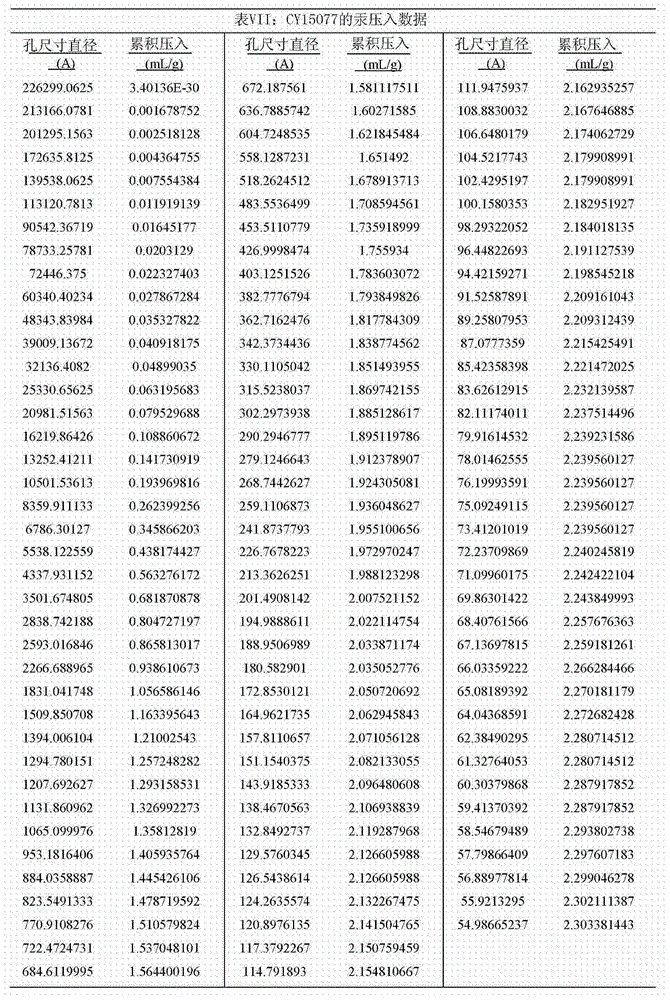
Cumulative pore volume data measured for polymers CY12004, CY15042, CY15044, and CY15045 by nitrogen desorption isotherms are shown in tables III, IV, V, and VI, respectively, below. The cumulative pore volume data measured by mercury intrusion porosimetry on polymer CY15077 is shown in table VII below.


Example 2: polymer modification CY15087
The general description and the following detailed description are exemplary and explanatory only and are not restrictive of the invention, as defined in the appended claims. Other aspects of the invention will be apparent to those skilled in the art from the detailed description of the invention provided herein.
N-vinylpyrrolidone functionalization: the base polymer CY15077 was not stripped or sieved prior to functionalization. During the post-treatment of the base polymer, two 99% IPA washes at 50 ℃ were completed as opposed to one wash at RT. After the IPA wash, the polymer was washed three times with excess DI water. Wetted CY15077 polymer beads were added to a 1L jacketed glass reactor fitted with a Teflon coated stirrer containing 450mL of DI water, 50.0g N-vinylpyrrolidone monomer, and 1.5g of sodium persulfate. The reaction was allowed to proceed at 75 ℃ for 24 hours with the stirring speed set at 100 RPM. Upon completion, the polymer beads were washed 5 times with 500mL DI water at 70 ℃, stripped in a stainless steel tube for 8 hours, re-wetted in 70% IPA, transferred into DI water, sieved to obtain only a fraction of beads 300 to 600 μm in diameter, and dried at 100 ℃ until no further weight loss to dryness was observed. The yield was 95.5g of polymer CY 15087. Cumulative pore volume data measured by XPS atomic concentration and by mercury intrusion porosimetry are shown in tables VIII and IX, respectively.


Example 3: polymer modification CY15100 and CY15102
The general description and the following detailed description are exemplary and explanatory only and are not restrictive of the invention, as defined in the appended claims. Other aspects of the invention will be apparent to those skilled in the art from the detailed description of the invention provided herein.
And (3) sulfonation operation: the dried base polymer was added to a 1L jacketed glass reactor equipped with a Teflon coated agitator. To a reactor containing a base polymer, concentrated sulfuric acid (98%) and oleum (20% SO in sulfuric acid) were added3) A mixture of (a). Stirring constantly at 100RPMThe reaction was carried out at 90 ℃ for 24 hours.
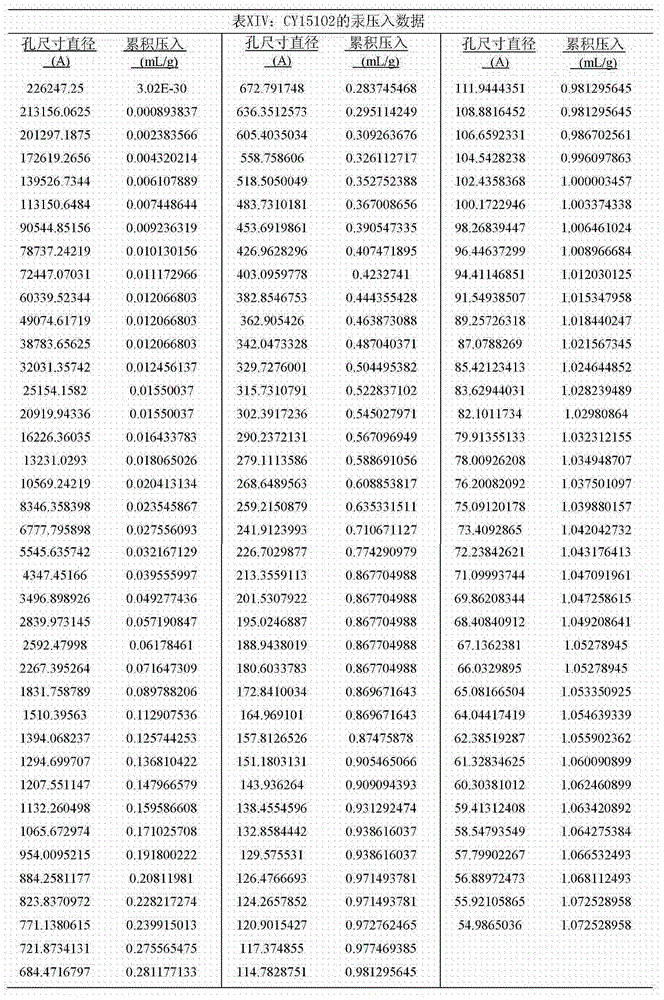
And (3) post-treatment: the reaction volume was cooled to Room Temperature (RT) and slowly added to a chemical glass beaker with an excess of at least 1L ice cold DI water. The sulfonated polymer was washed with excess DI water at RT until the supernatant reached a neutral pH. The resulting polymer was then treated with 100mL of 1M NaOH(aq)Treatment at RT for 1 hour to bind Polymer-SO3Conversion of H to-SO3A Na group. The polymer was again washed with excess DI water at RT until the supernatant reached a neutral pH and then dried in an oven at 100 ℃ until no further loss of drying was observed. Measurement of dried SO3Na functional polymer yield. The reactive compositions of CY15100 and CY15102 are provided in table X. Table XI shows the atomic concentrations measured by XPS for polymers CY15100, CY15102 and CY 15087. log differential pore volume plots are given in fig. 1, 2 and 3, and cumulative pore volume data are presented in tables XII, XIII and XIV. When using the dried polymer as a sample to interpret pore structure data obtained from nitrogen desorption isotherms or mercury intrusion porosimetry, it is important to consider: once wetted in solution, the sulfonated poly (styrene-co-divinylbenzene) porous beads may change pore size after swelling. In addition to the potential change in pore structure, the bead size may also change after the transition from the dry state to the swollen state. This phenomenon was observed in AAPS PharmSciTech 2009 for 6 months; 10(2): 641-648 in "Preparation and Evaluation of differential Sulfonated Styrene-Divinylbenzene Cross-Linked Copolymer catalyst Exchange Resins as Novel Carriers for Drug Delivery".
Thrombosis was measured by the uPTT assay, in which the material was compared to a negative control (plasma alone), a positive control (glass beads), and reference beads to determine the extent of contact activation activity. In the uPTT assay, the% clot formation change over time compared to the reference material was determined and then grouped according to: less than 25% activator, 25% to 49% moderate activator, 50% to 74% mild activator, 75% to 100% minimal and > 100% non-activator of the intrinsic clotting pathway. Polymer CY15100 (82%) was the lowest activator.


Example 4: polymer modification CY14144 and CY15101
The general description and the following detailed description are exemplary and explanatory only and are not restrictive of the invention, as defined in the appended claims. Other aspects of the invention will be apparent to those skilled in the art from the detailed description of the invention provided herein.
And (3) sulfonation operation: the dried base polymer was mixed with glacial acetic acid in a 500mL glass reactor equipped with a Teflon coated mechanical agitator and heated to 50 ℃ with agitation set at 100 RPM. A mild sulfonating agent was prepared by: acetic anhydride (99%) was added to a 100mL chemical glass beaker, cooled in an ice bath, and concentrated sulfuric acid (98%) was slowly added over 30 minutes. The temperature of the mixture was monitored and maintained at 15 ℃ to 40 ℃ by supplementing the ice bath. After the sulfuric acid addition was complete, the reddish brown viscous liquid was held at RT for 1 hour and then slowly added to the reactor. The reaction was allowed to proceed for the indicated amount of time.
And (3) post-treatment: the reaction volume was cooled toRoom Temperature (RT) and slowly added to a chemical glass beaker with an excess of at least 1L ice cold DI water. The sulfonated polymer was washed with excess DI water at RT until the supernatant reached a neutral pH. The resulting polymer was then treated with 100mL of 1M NaOH(aq)Treatment at RT for 1 hour to bind Polymer-SO3Conversion of H to-SO3A Na group. The polymer was washed again with excess DI water at RT until the supernatant reached a neutral pH and then dried in an oven at 100 ℃ until no further loss of drying was observed. Measurement of dried SO3Na functional polymer yield. The reactive compositions of polymers CY14144 and CYI5101 are shown in table XV below. The atomic concentrations measured by XPS on the polymers CY14144, CY12004, CY15101 and CY15087 are presented in table XVI below. Figures 4, 5 and 6 show graphs of log differential pore volume for each of the modified polymers described above. Cumulative pore volume data are shown in tables XVII, XVIII and XIX below.
Thrombosis was measured by the uPTT assay, in which the material was compared to a negative control (plasma alone), a positive control (glass beads), and reference beads to determine the extent of contact activation activity. In the uPTT assay, the% clot formation change over time compared to the reference material was determined and then grouped according to: less than 25% activator, 25% to 49% moderate activator, 50% to 74% mild activator, 75% to 100% minimal and > 100% non-activator of the intrinsic clotting pathway. Polymer CY15101 (88%) was the lowest activator.


Example 5: preparation of modified polymer CY15048 by mild sulfonation of uncoated porous polymer beads based on poly (divinylbenzene) with acetyl sulfate followed by functionalization with poly (N-vinylpyrrolidone) as a hemocompatible coating
The general description and the following detailed description are exemplary and explanatory only and are not restrictive of the invention, as defined in the appended claims. Other aspects of the invention will be apparent to those skilled in the art from the detailed description of the invention provided herein.
Among the various "mild" sulfonating agents, acetyl sulfate (prepared from 98% concentrated sulfuric acid and acetic anhydride at low temperature) is known to be very efficient for DVB or styrene based polymeric materials. Sulfonation is typically carried out using equimolar amounts of acetyl sulfate and DVB or styrene based polymers at 50 ℃ for several hours. Sulfonation occurs predominantly on the benzene ring, and unreacted double bonds (in DVB-based crosslinked polymer porous beads) can be retained for further functionalization. The polymer is converted to SO, usually after sulfonation with acetyl sulfate3In the Na form and can be graft copolymerized with N-vinylpyrrolidone (in the bulk of benzoyl peroxide as initiator) or in aqueous solution (using a sodium persulfate initiator). The resulting sulfonated polymer is "coated" with poly (N-vinylpyrrolidone) to produce a hemocompatible material capable of removing K + cations from physiological fluids.
The base polymer selected for this modification is polymer CY 15044. Sulfonation and work-up were carried out as described in example 4 using 45.0g of dried CY15044 polymer, 150mL of glacial acetic acid, 62.0g of acetic anhydride and 40.0g of concentrated sulfuric acid. The resulting sulfonated polymer (. about.SO)3Na form) in a 1L jacketed reaction equipped with a Teflon coated agitatorThe container was re-moistened with DI water. DI water was removed from the vessel and a solution consisting of: 75mL of NVP monomer, 1.7g of sodium persulfate, and 25mL of DI water. The reaction was allowed to proceed at 70 ℃ for 72 hours with the stirring speed set at 100 RPM. The resulting poly (NVP) -coated polymer was washed 5 times with 200mL DI water and dried in a vacuum oven until no further loss of drying was observed. Cumulative pore volume data for polymer CY15048 is shown in table XX below. A plot of log differential pore volume is shown in fig. 7.
Thrombosis was measured by the uPTT assay, in which the material was compared to a negative control (plasma alone), a positive control (glass beads), and reference beads to determine the extent of contact activation activity. In the uPTT assay, the% clot formation change over time compared to the reference material was determined and then grouped according to: less than 25% activator, 25% to 49% moderate activator, 50% to 74% mild activator, 75% to 100% minimal and > 100% non-activator of the intrinsic clotting pathway. Polymer CY15048 (98%) is the lowest activator.

Example 6: preparation of modified Polymer CY15049 by mild sulfonation of uncoated porous Polymer beads with Poly (styrene-co-Divinylbenzene) followed by functionalization with Poly (N-vinylpyrrolidone) as a hemocompatible coating
The general description and the following detailed description are exemplary and explanatory only and are not restrictive of the invention, as defined in the appended claims. Other aspects of the invention will be apparent to those skilled in the art from the detailed description of the invention provided herein.
The base polymer selected for this modification is polymer CY 15042. Sulfonation and work-up were carried out as described in example 4 using 45.0g of dried CY15042 polymer, 200mL of glacial acetic acid, 62.0g of acetic anhydride and 40.0g of concentrated sulfuric acid. The reaction was allowed to proceed for 2 hours. The resulting dried sulfonated Polymer (. about.SO)3Na form) is added to the feed mixtureTeflon coated agitator 1L jacketed reaction vessel. 140.0g N-vinylpyrrolidone monomer and 2.0g benzoyl peroxide were added to the reactor. The reaction was allowed to proceed at 70 ℃ for 24 hours with the stirring speed set at 100 RPM. The resulting poly (N-vinylpyrrolidone) -coated polymer was washed 5 times with 200mL DI water and dried in a vacuum oven until no further loss of drying was observed. Table XXI below shows the cumulative pore volume data for polymer CY 15049. Fig. 8 presents a plot of log differential pore volume.

Example 7: single pass filtration for hemoglobin and potassium removal
The general description and the following detailed description are exemplary and explanatory only and are not restrictive of the invention, as defined in the appended claims. Other aspects of the invention will be apparent to those skilled in the art from the detailed description of the invention provided herein.
The units of human pRBC were equilibrated to room temperature for 30 minutes, where the units were gently mixed for 15 minutes. A blood blender (blood spike) was inserted into the unit and samples were taken for initial hemoglobin (Hb) and potassium concentrations. The blood spiking wire is attached to the top port of the filtration device comprising a polymer and the sample collection wire is attached to the bottom port. A clamp-type clamp was mounted on the sample collection line for flow control. A bed volume (30mL) of physiological saline solution was flushed through the device into a waste container to purge the device. The sample collection tube was placed on a 15mL conical tube, where 12mL of pRBC fraction was collected at a flow rate of about 3 to 3.5 mL/min until the unit was completely filtered. The sample tubes were centrifuged at 4600RPM for 15 minutes at 4 ℃. Plasma supernatants from each sample tube were collected and plasma free hemoglobin levels were determined by absorbance reading at 450nm and potassium levels were measured with a potassium ion selective electrode. The percentage of initial free hemoglobin removed during single pass filtration, averaged over the three trials, is presented in fig. 9. Figure 10 shows the concentration of potassium ions in blood before and after filtration, averaged from three experiments. Polymers CY15101 and CY15102 were able to remove significant amounts of both potassium and hemoglobin, whereas polymer CY15100 only removed potassium and not hemoglobin.
Example 8: dynamic recirculation filtration
The general description and the following detailed description are exemplary and explanatory only and are not restrictive of the invention, as defined in the appended claims. Other aspects of the invention will be apparent to those skilled in the art from the detailed description of the invention provided herein.
Polymer CY14144 has been tested in a dynamic competitive system, which evaluates the removal of albumin (30mg/mL) and myoglobin (100mg/L) from a PBS solution with 8mEq/L potassium. The model has been designed to reflect clinical albumin and myoglobin (rhabdomyolysis) values. The dynamic system allows continuous measurement of protein adsorption of polymer beads at two UV wavelengths. As long as the surrogate proteins (e.g., albumin and myoglobin) have different UV absorption spectra, the two protein surrogates can be measured simultaneously, providing competitive adsorption conditions. This allows for a rapid assessment of the polymer properties of simultaneous adsorption of target and non-target factors under flow conditions, which is a key parameter in the assessment of studies balancing adsorption/absorption with blood compatibility. The dynamic system has been fully calibrated (absorbance and flow conditions) and used to measure binding to a 6mL polymer filled device at 6 mL/min flow rate over 5 hours at room temperature. CY14144 had robust myoglobin adsorption, potassium removal and showed good selectivity for lowest albumin removal. The dynamic recirculation data for CY14144, averaged from 7 trials, is shown in figure 11 below. The average potassium removal, measured as a percentage reduction from the initial amount, was found to be 25.3% with a standard deviation of 1.42.
Thrombosis was measured by the uPTT assay, in which the material was compared to a negative control (plasma alone), a positive control (glass beads), and reference beads to determine the extent of contact activation activity. In the uPTT assay, the% clot formation change over time compared to the reference material was determined and then grouped according to: less than 25% activator, 25% to 49% moderate activator, 50% to 74% mild activator, 75% to 100% minimal and > 100% non-activator of the intrinsic clotting pathway. A comparison of the thrombus formation of two different potassium removing polymers is shown in table XXII below. In a dynamic recirculation model in Phosphate Buffered Saline (PBS), polymer CY14144 simultaneously exhibited minimal thrombotic activity while still removing potassium and myoglobin. In contrast, potassium sorbent CY14022 is a moderate activator of the intrinsic clotting pathway as determined by uttt and is not effective in myoglobin removal.

The general description and the following detailed description are exemplary and explanatory only and are not restrictive of the invention, as defined in the appended claims. Other aspects of the invention will be apparent to those skilled in the art from the detailed description of the invention provided herein.
In addition, polymer CY14144 was able to remove significant levels of potassium from plasma in a dynamic recirculation model. The normal range of blood potassium is 3.5 to 5mEq/L, while blood potassium levels in patients with hyperkalemia can be as high as 7 to 7.5 mEq/L. The potassium concentration was reduced to 4.52mEq/L (2.93 mEq/L reduction) in 5 hours by reperfusion of plasma with an initial potassium concentration of 7.45mEq/L by means of a device filled with polymer CY14144 under recirculation conditions simulating clinical use.
The general description and the following detailed description are exemplary and explanatory only and are not restrictive of the invention, as defined in the appended claims. Other aspects of the invention will be apparent to those skilled in the art from the detailed description of the invention provided herein.
Claims (30)
1. A biocompatible polymer system comprising at least one polymer comprising (i) a plurality of pores and (ii) sulfonate functional groups;
the polymer system is capable of adsorbing (i) a wide range of protein-based toxins and inflammatory mediators, and (ii) positively charged ions;
wherein the polymer is in the form of a hypercrosslinked or macroreticular porous polymer that has been sulfonated under mild conditions that retain residual functionality of any unreacted double bonds and chloromethyl groups.
2. The biocompatible polymer system of claim 1 wherein the molecular weight of the toxins and inflammatory mediators is from less than 0.5kDa to 1,000 kDa.
3. The biocompatible polymer system of claim 1 wherein the molecular weight of the toxins and inflammatory mediators is from less than 1kDa to 1,000 kDa.
4. The biocompatible polymer system of claim 1 wherein the pore structure of the polymer is To
To The total volume of pore sizes is greater than 0.1cc/g and less than 5.0cc/g dry polymer.
5. The biocompatible polymer system of claim 1 wherein the polymer is hemocompatible.
6. The biocompatible polymer system of claim 1 wherein the agent for imparting biocompatibility is (i) heparin or (ii) a heparin-mimicking polymer.
7. The biocompatible polymer system of claim 1 wherein the polymer is formed and subsequently made biocompatible.
8. The biocompatible polymer system of claim 7 wherein the agent for imparting biocompatibility is (i) heparin or (ii) a heparin-mimicking polymer.
9. The biocompatible polymer system of claim 1 wherein the polymer system is in the form of a solid support including but not limited to beads, fibers, monolithic columns or membranes.
10. The biocompatible polymer system of claim 1 wherein the polymer system is in the form of a solid support including but not limited to a thin film.
11. The biocompatible polymer system of claim 1 wherein the polymer system is in the form of a solid support including, but not limited to, a semi-permeable membrane.
12. The biocompatible polymer system of claim 1 wherein the toxins and inflammatory mediators comprise one or more of: cytokines, superantigens, monokines, chemokines, interferons, enzymes, peptides including bradykinin, soluble CD40 ligand, bioactive lipids, oxidized lipids, acellular hemoglobin, acellular myoglobin, DAMPS, growth factors, glycoproteins, prions, toxins, PAMPS, drugs, vasoactive substances, foreign antigens, antibodies, and positively charged ions.
13. The biocompatible polymer system of claim 1 wherein the toxins and inflammatory mediators comprise one or more of: proteases, bacterial toxins and viral toxins.
14. The biocompatible polymer system of claim 1 wherein the toxin comprises an endotoxin.
15. The biocompatible polymer system of claim 1 wherein the positively charged ion is potassium.
16. The biocompatible polymer system of claim 1 wherein the polymer is prepared using suspension polymerization, emulsion polymerization, bulk polymerization, or precipitation polymerization.
17. The biocompatible polymer system of claim 1 wherein the polymer is a hypercrosslinked polymer.
18. The biocompatible polymer system of claim 9 wherein the solid support has a biocompatible hydrogel coating.
19. The biocompatible polymer system of claim 1 wherein the unreacted double bond or chloromethyl group is via a free radical or SNType 2 chemistry is modified to attach one or more of biocompatible and hemocompatible monomers, cross-linkers, or low molecular weight oligomers.
20. The biocompatible polymer system of claim 1 wherein the porous polymer comprises sulfonic acid groups or salts thereof, sulfonyl chloride, or sulfonate ester groups.
21. The biocompatible polymer system of claim 20 wherein the polymer comprising sulfonic acid groups or salts thereof, sulfonyl chloride, or sulfonate groups is produced by graft copolymerization of (i) a preformed porous polymer containing unreacted double bonds with (ii) a polymerizable vinyl monomer containing sulfonic acid groups or salts thereof to form a mixture comprising a hemocompatible vinyl monomer.
22. The biocompatible polymer system of claim 1 constructed from polymerizable vinyl monomers containing sulfonic acid groups or salts thereof, which are copolymerized in the presence of a cross-linking agent, a hemocompatible monomer, a monomer, and a suitable porogen to produce a porous polymeric polymer containing sulfonate functional groups.
23. The biocompatible polymer system of claim 1 wherein the polymer system is capable of adsorbing (i) a broad range of protein-based toxins having a molecular weight of 0.5kDa to 1,000kDa, and (ii) positively charged ions.
24. The biocompatible polymer system of claim 1 wherein the polymer system is capable of adsorbing (i) a broad range of protein-based toxins having a molecular weight of 1kDa to 1,000kDa, and (ii) positively charged ions.
25. A perfusion method comprising passing a physiological fluid through a device comprising the biocompatible polymer system of any one of claims 1-24 at a time or via a suitable extracorporeal circuit.
26. A device for removing (i) a wide range of protein-based toxins and inflammatory mediators, and (ii) positively charged ions from physiological fluids, comprising the biocompatible polymer system of any one of claims 1-24.
27. The device of claim 26, wherein the toxins and inflammatory mediators have a molecular weight of from less than 0.5kDa to 1,000 kDa.
28. The device of claim 26, wherein the toxins and inflammatory mediators have a molecular weight of from less than 1kDa to 1,000 kDa.
29. The biocompatible polymer system of claim 1 wherein the polymer is housed in a container adapted to hold the polymer and to infuse whole blood, concentrated red blood cells, platelets, albumin, plasma, or any combination thereof.
30. The biocompatible polymer system of claim 1 wherein the polymer is in a device adapted to hold the polymer and be incorporated into an extracorporeal circuit.
Applications Claiming Priority (3)
| Application Number | Priority Date | Filing Date | Title |
|---|---|---|---|
| US201562245071P | 2015-10-22 | 2015-10-22 | |
| US62/245,071 | 2015-10-22 | ||
| PCT/US2016/058019 WO2017070415A1 (en) | 2015-10-22 | 2016-10-21 | Multi-functional hemocompatible porous polymer bead sorbent for removing protein based toxins an potassium from biological fluids |
Publications (2)
| Publication Number | Publication Date |
|---|---|
| CN108136112A CN108136112A (en) | 2018-06-08 |
| CN108136112B true CN108136112B (en) | 2021-07-30 |
Family
ID=58557781
Family Applications (1)
| Application Number | Title | Priority Date | Filing Date |
|---|---|---|---|
| CN201680061722.5A Active CN108136112B (en) | 2015-10-22 | 2016-10-21 | Multifunctional Hemocompatible Porous Polymer Bead Sorbent |
Country Status (8)
| Country | Link |
|---|---|
| US (3) | US11040061B2 (en) |
| EP (1) | EP3365045A4 (en) |
| JP (1) | JP6884774B2 (en) |
| CN (1) | CN108136112B (en) |
| AU (1) | AU2016342263B2 (en) |
| CA (1) | CA3001698C (en) |
| RU (1) | RU2742768C2 (en) |
| WO (1) | WO2017070415A1 (en) |
Families Citing this family (29)
| Publication number | Priority date | Publication date | Assignee | Title |
|---|---|---|---|---|
| US11111543B2 (en) | 2005-07-29 | 2021-09-07 | Natera, Inc. | System and method for cleaning noisy genetic data and determining chromosome copy number |
| US11939634B2 (en) | 2010-05-18 | 2024-03-26 | Natera, Inc. | Methods for simultaneous amplification of target loci |
| US9677118B2 (en) | 2014-04-21 | 2017-06-13 | Natera, Inc. | Methods for simultaneous amplification of target loci |
| US20190010543A1 (en) | 2010-05-18 | 2019-01-10 | Natera, Inc. | Methods for simultaneous amplification of target loci |
| US12152275B2 (en) | 2010-05-18 | 2024-11-26 | Natera, Inc. | Methods for non-invasive prenatal ploidy calling |
| US12221653B2 (en) | 2010-05-18 | 2025-02-11 | Natera, Inc. | Methods for simultaneous amplification of target loci |
| US10316362B2 (en) | 2010-05-18 | 2019-06-11 | Natera, Inc. | Methods for simultaneous amplification of target loci |
| US11322224B2 (en) | 2010-05-18 | 2022-05-03 | Natera, Inc. | Methods for non-invasive prenatal ploidy calling |
| CA2824387C (en) | 2011-02-09 | 2019-09-24 | Natera, Inc. | Methods for non-invasive prenatal ploidy calling |
| US20140100126A1 (en) | 2012-08-17 | 2014-04-10 | Natera, Inc. | Method for Non-Invasive Prenatal Testing Using Parental Mosaicism Data |
| US20180173846A1 (en) | 2014-06-05 | 2018-06-21 | Natera, Inc. | Systems and Methods for Detection of Aneuploidy |
| DK3294906T3 (en) | 2015-05-11 | 2024-08-05 | Natera Inc | Methods for determining ploidy |
| CN108136112B (en) * | 2015-10-22 | 2021-07-30 | 西托索尔本茨公司 | Multifunctional Hemocompatible Porous Polymer Bead Sorbent |
| US12146195B2 (en) | 2016-04-15 | 2024-11-19 | Natera, Inc. | Methods for lung cancer detection |
| RU2018146119A (en) | 2016-05-26 | 2020-06-26 | Сайтосорбентс Корпорейшн | USE OF A HEMOCOMPATIBLE SORBENT FROM POROUS POLYMER BALLS FOR REMOVAL OF CAUSING MOLECULES AND ENDOTOXICOSIS |
| GB201618485D0 (en) | 2016-11-02 | 2016-12-14 | Ucl Business Plc | Method of detecting tumour recurrence |
| AU2018273348A1 (en) * | 2017-05-23 | 2019-11-21 | Cytosorbents Corporation | Method of treating traumatic brain injury |
| JP2020524519A (en) | 2017-06-20 | 2020-08-20 | ザ メディカル カレッジ オブ ウィスコンシン,インコーポレイテッドThe Medical College of Wisconsin, Inc. | Assessment of transplant complication risk by all cell-free DNA |
| WO2019118926A1 (en) | 2017-12-14 | 2019-06-20 | Tai Diagnostics, Inc. | Assessing graft suitability for transplantation |
| JP7573443B2 (en) | 2018-04-14 | 2024-10-25 | ナテラ, インコーポレイテッド | Methods for cancer detection and monitoring using personalized detection of circulating tumor dna - Patents.com |
| JP7309470B2 (en) * | 2018-07-02 | 2023-07-18 | 旭化成メディカル株式会社 | blood treatment beads |
| US12234509B2 (en) | 2018-07-03 | 2025-02-25 | Natera, Inc. | Methods for detection of donor-derived cell-free DNA |
| CN109942737B (en) * | 2019-03-13 | 2020-12-08 | 南京大学 | Amphiphilic polymer microsphere material with uniform particle size, preparation method and application |
| US11931674B2 (en) | 2019-04-04 | 2024-03-19 | Natera, Inc. | Materials and methods for processing blood samples |
| RU2727691C1 (en) * | 2019-09-09 | 2020-07-22 | Николай Николаевич Петухов | Device for sorption treatment of biological fluid and method of use thereof (embodiments) |
| JP2023522173A (en) * | 2020-04-07 | 2023-05-29 | サイトソーベンツ・コーポレーション | Blood and Toxin Filtration Device and Method of Use |
| JP2023522621A (en) * | 2020-04-14 | 2023-05-31 | サイトソーベンツ・コーポレーション | Immunomodulatory treatment improves immune response and reduces immune paralysis |
| WO2021236956A1 (en) * | 2020-05-20 | 2021-11-25 | The Medical College Of Wisconsin, Inc. | Compositions and methods for reducing cell-free dna |
| WO2022040431A1 (en) * | 2020-08-19 | 2022-02-24 | Cytosorbents Corporation | Therapeutic and cosmetic wound treatment |
Citations (3)
| Publication number | Priority date | Publication date | Assignee | Title |
|---|---|---|---|---|
| US4837015A (en) * | 1987-03-05 | 1989-06-06 | Carolina Medical Products Company, Inc. | Alkali metal ion-charged, cation exchanger and use thereof to adjust sodium, potassium and calcium body fluid levels |
| CN1338480A (en) * | 2000-08-11 | 2002-03-06 | 罗姆和哈斯公司 | Polymer absorbant and preparation thereof |
| CN102838780A (en) * | 2011-06-23 | 2012-12-26 | 杜邦公司 | Modified nanoparticles and preparation method thereof, and application of modified nanoparticle in enhancing cation dyeing property of fiber substrate |
Family Cites Families (19)
| Publication number | Priority date | Publication date | Assignee | Title |
|---|---|---|---|---|
| US4224415A (en) | 1958-07-18 | 1980-09-23 | Rohm And Haas Company | Polymerization processes and products therefrom |
| ATE100355T1 (en) * | 1988-09-06 | 1994-02-15 | Rohm & Haas | ION EXCHANGE RESINS. |
| AU8074591A (en) * | 1990-06-15 | 1992-01-07 | Cortrak Medical, Inc. | Drug delivery apparatus and method |
| FR2721217B1 (en) * | 1994-06-20 | 1996-08-02 | Hospal Ind | Multifunction device for the treatment of blood. |
| EP0800862B1 (en) | 1994-12-26 | 2002-02-27 | Kanegafuchi Kagaku Kogyo Kabushiki Kaisha | Adsorbent for endotoxin, tumor necrosis factor-alpha or interleukins, method for removal via adsorption, and adsorber |
| JP3633978B2 (en) | 1994-12-26 | 2005-03-30 | 株式会社カネカ | Tumor necrosis factor-α adsorbent, adsorption removal method and adsorber |
| DE19549420A1 (en) | 1995-04-27 | 1997-09-18 | Braun Melsungen Ag | Tumour necrosis factor-alpha and/or bacterial lipo-poly:saccharide removal |
| US6833153B1 (en) * | 2000-10-31 | 2004-12-21 | Advanced Cardiovascular Systems, Inc. | Hemocompatible coatings on hydrophobic porous polymers |
| JP4101061B2 (en) * | 2001-04-12 | 2008-06-11 | 株式会社クラレ | Body fluid treatment adsorber |
| JP5463506B2 (en) | 2005-03-16 | 2014-04-09 | 国立大学法人山口大学 | Graft polymer, polymer electrolyte membrane, production method thereof, and fuel cell using the same |
| TWI326691B (en) | 2005-07-22 | 2010-07-01 | Kraton Polymers Res Bv | Sulfonated block copolymers, method for making same, and various uses for such block copolymers |
| SG178173A1 (en) * | 2009-07-28 | 2012-03-29 | Instraction Gmbh | Specific sorbent for binding proteins and peptides, and separation method using the same |
| AU2011321457B2 (en) * | 2010-10-27 | 2014-06-05 | Toray Industries, Inc. | Carrier for blood component adsorption and blood component adsorption column |
| US10064406B2 (en) * | 2011-01-06 | 2018-09-04 | Cytosorbents Corporation | Polymeric sorbent for removal of impurities from whole blood and blood products |
| WO2012094571A1 (en) | 2011-01-06 | 2012-07-12 | Cytosorbents Corporation | Compositions and methods useful in selectively modifying the internal and external surfaces of porous polymer beads |
| US20120219633A1 (en) | 2011-02-28 | 2012-08-30 | Pall Corporation | Removal of immunoglobulins and leukocytes from biological fluids |
| JP2015530969A (en) * | 2012-06-29 | 2015-10-29 | サイトソーベンツ・コーポレーション | Polymer usage |
| CN103497278B (en) * | 2013-10-16 | 2016-01-20 | 苏州大学 | Amphoteric cellulose material and application thereof |
| CN108136112B (en) * | 2015-10-22 | 2021-07-30 | 西托索尔本茨公司 | Multifunctional Hemocompatible Porous Polymer Bead Sorbent |
-
2016
- 2016-10-21 CN CN201680061722.5A patent/CN108136112B/en active Active
- 2016-10-21 AU AU2016342263A patent/AU2016342263B2/en not_active Ceased
- 2016-10-21 WO PCT/US2016/058019 patent/WO2017070415A1/en not_active Ceased
- 2016-10-21 EP EP16858260.9A patent/EP3365045A4/en active Pending
- 2016-10-21 RU RU2018114640A patent/RU2742768C2/en active
- 2016-10-21 CA CA3001698A patent/CA3001698C/en active Active
- 2016-10-21 US US15/769,361 patent/US11040061B2/en active Active
- 2016-10-21 JP JP2018520396A patent/JP6884774B2/en active Active
-
2021
- 2021-06-08 US US17/341,912 patent/US11723916B2/en active Active
-
2023
- 2023-06-30 US US18/345,683 patent/US12208116B2/en active Active
Patent Citations (3)
| Publication number | Priority date | Publication date | Assignee | Title |
|---|---|---|---|---|
| US4837015A (en) * | 1987-03-05 | 1989-06-06 | Carolina Medical Products Company, Inc. | Alkali metal ion-charged, cation exchanger and use thereof to adjust sodium, potassium and calcium body fluid levels |
| CN1338480A (en) * | 2000-08-11 | 2002-03-06 | 罗姆和哈斯公司 | Polymer absorbant and preparation thereof |
| CN102838780A (en) * | 2011-06-23 | 2012-12-26 | 杜邦公司 | Modified nanoparticles and preparation method thereof, and application of modified nanoparticle in enhancing cation dyeing property of fiber substrate |
Also Published As
| Publication number | Publication date |
|---|---|
| WO2017070415A1 (en) | 2017-04-27 |
| AU2016342263B2 (en) | 2021-07-22 |
| CA3001698A1 (en) | 2017-04-27 |
| CA3001698C (en) | 2025-01-07 |
| US11040061B2 (en) | 2021-06-22 |
| US11723916B2 (en) | 2023-08-15 |
| EP3365045A4 (en) | 2019-07-03 |
| JP2019500917A (en) | 2019-01-17 |
| RU2018114640A3 (en) | 2020-02-27 |
| RU2742768C2 (en) | 2021-02-10 |
| US20180303870A1 (en) | 2018-10-25 |
| AU2016342263A1 (en) | 2018-04-26 |
| CN108136112A (en) | 2018-06-08 |
| US20240016830A1 (en) | 2024-01-18 |
| EP3365045A1 (en) | 2018-08-29 |
| RU2018114640A (en) | 2019-11-25 |
| US20210401874A1 (en) | 2021-12-30 |
| JP6884774B2 (en) | 2021-06-09 |
| US12208116B2 (en) | 2025-01-28 |
Similar Documents
| Publication | Publication Date | Title |
|---|---|---|
| CN108136112B (en) | Multifunctional Hemocompatible Porous Polymer Bead Sorbent | |
| JP7802728B2 (en) | Use of hemocompatible porous polymer bead sorbents to remove endotoxemia-inducing molecules. | |
| CA2823953C (en) | Polymeric sorbent for removal of impurities from whole blood and blood products | |
| CN104174386B (en) | A kind of for removing the adsorbent of B2M in blood | |
| JP7331368B2 (en) | Activated leukocyte-activated platelet complex removal material | |
| CN108778253A (en) | Blood compatibility porous polymer bead sorbent is used to remove the purposes of PAMP and DAMP | |
| JPH01119264A (en) | Adsorbent and removing device therewith | |
| JPH01181875A (en) | Adsorptive body of immune complex and removing device for immune complex with it | |
| JPS6087854A (en) | Adsorbent for purifying blood | |
| JP2002035117A (en) | Column for treating inflammatory disease | |
| JPH0771632B2 (en) | Adsorbent and removal device using the same | |
| JPH10328565A (en) | Immune complex removal device |
Legal Events
| Date | Code | Title | Description |
|---|---|---|---|
| PB01 | Publication | ||
| PB01 | Publication | ||
| SE01 | Entry into force of request for substantive examination | ||
| SE01 | Entry into force of request for substantive examination | ||
| GR01 | Patent grant | ||
| GR01 | Patent grant |