CN108021985B - Model parameter training method and device - Google Patents
Model parameter training method and device Download PDFInfo
- Publication number
- CN108021985B CN108021985B CN201610968965.9A CN201610968965A CN108021985B CN 108021985 B CN108021985 B CN 108021985B CN 201610968965 A CN201610968965 A CN 201610968965A CN 108021985 B CN108021985 B CN 108021985B
- Authority
- CN
- China
- Prior art keywords
- parameter
- prediction result
- spoken
- text sample
- labeled
- Prior art date
- Legal status (The legal status is an assumption and is not a legal conclusion. Google has not performed a legal analysis and makes no representation as to the accuracy of the status listed.)
- Expired - Fee Related
Links
Images


Classifications
-
- G—PHYSICS
- G06—COMPUTING OR CALCULATING; COUNTING
- G06N—COMPUTING ARRANGEMENTS BASED ON SPECIFIC COMPUTATIONAL MODELS
- G06N20/00—Machine learning
Landscapes
- Engineering & Computer Science (AREA)
- Theoretical Computer Science (AREA)
- Software Systems (AREA)
- Data Mining & Analysis (AREA)
- Evolutionary Computation (AREA)
- Medical Informatics (AREA)
- Computer Vision & Pattern Recognition (AREA)
- Physics & Mathematics (AREA)
- Computing Systems (AREA)
- General Engineering & Computer Science (AREA)
- General Physics & Mathematics (AREA)
- Mathematical Physics (AREA)
- Artificial Intelligence (AREA)
- Management, Administration, Business Operations System, And Electronic Commerce (AREA)
- Other Investigation Or Analysis Of Materials By Electrical Means (AREA)
Abstract
本发明实施例公开了一种模型参数训练方法及装置。该方法包括:获取样本数据集合和根据所述样本数据集合进行预测的数据模型,所述样本数据集合包括已标注样本和未标注样本,所述数据模型包括初始化的第一参数V的向量和第二参数U的向量;根据所述已标注样本训练所述第一参数V和所述第二参数U;对已根据所述已标注样本训练后的第一参数V和第二参数U,根据所述未标注样本再次训练。本发明实施例所提供的技术方案,对于无法提供预测值上限的预测模型而言,充分利用大量的未标注样本和少量的标注样本来训练模型参数,节省了大量用于标注样本的人力成本。

The embodiment of the present invention discloses a model parameter training method and device. The method includes: acquiring a sample data set and a data model for making predictions according to the sample data set, the sample data set includes labeled samples and unlabeled samples, and the data model includes an initialized vector of the first parameter V and the first parameter V. A vector of two parameters U; the first parameter V and the second parameter U are trained according to the labeled samples; for the first parameter V and the second parameter U that have been trained according to the labeled samples, according to the The unlabeled samples are retrained. The technical solutions provided by the embodiments of the present invention make full use of a large number of unlabeled samples and a small number of labeled samples to train model parameters for a prediction model that cannot provide an upper limit of the predicted value, thereby saving a lot of labor costs for labeling samples.
Description
技术领域technical field
本发明实施例涉及机器学习技术,尤其涉及一种模型参数训练方法及装置。Embodiments of the present invention relate to machine learning technologies, and in particular, to a method and device for training model parameters.
背景技术Background technique
根据输入和参数预测输出的模型可用于人工智能,例如根据用户输入的口语化的文本准确识别出用户需要的文件,再如根据输入的图像准确识别出图中的对象。对于一般的机器学习算法而言,模型的性能主要取决于它的参数配置。采用不同的参数组合生成的模型往往具有很大的性能差异。通常模型的参数需要训练。Models that predict output based on input and parameters can be used in artificial intelligence, such as accurately identifying the files the user needs based on the colloquial text input by the user, or accurately identifying the objects in the figure based on the input image. For general machine learning algorithms, the performance of the model mainly depends on its parameter configuration. Models generated with different parameter combinations tend to have large performance differences. Usually the parameters of the model need to be trained.
参数训练的基本定义如下:给定一个训练数据集XT,参数训练的目标是找一个机器学习算法F的参数组合θ,在XT上建立一个模型f,使得f在给定性能评测准则g(·)下最大化(或者最小化)性能评测值。需要进行参数训练来找到最适合的参数才能确定最终的模型性能。The basic definition of parameter training is as follows: given a training data set X T , the goal of parameter training is to find a parameter combination θ of a machine learning algorithm F, and build a model f on X T , so that f is in the given performance evaluation criterion g ( ) to maximize (or minimize) the performance evaluation value. Parameter training is required to find the most suitable parameters to determine the final model performance.
在机器学习过程中,需要利用多个训练样本对训练模型进行多次训练,最终获得精准度符合预定要求的模型,即理想模型。其中,在训练之前,该训练模型中的模型参数是未知的,而经过训练之后,该训练模型中的模型参数即被确定下来且是已知的。In the process of machine learning, it is necessary to use multiple training samples to train the training model multiple times, and finally obtain a model whose accuracy meets the predetermined requirements, that is, the ideal model. Wherein, before training, the model parameters in the training model are unknown, and after training, the model parameters in the training model are determined and known.
通常情况下,需要提供大量的标注样本{(x,y)}来训练学习模型参数w。其中一种现有技术的方案是:首先初始化模型参数向量w,然后枚举已标注样本集合DL中的每一个已标注样本(x,y),在当前模型参数w下,计算


使用少量的标注样本以及大量的未标注样本来学习模型,从而可以在一定程度上缓解上述现有技术的缺点。另外一种现有技术的方案是:先使用已有的少量标注样本来学习一个比较弱的模型,然后使用该弱模型对未标注样本进行预测,例如预测值是0-1之间的概率值,因此可以设定一个阈值(比如0.9)来筛选出大于该阈值的数据及其预测结果作为“伪标注样本”,并与原有的标注样本一起重新学习一个新的模型,接着再次使用该新的模型来对剩下的未标注样本进行预测,然后再次筛选出大于阈值的数据及其预测结果作为新的“伪标注样本”,如此迭代下去,直到不能再筛选出新的数据作为“伪标注样本”为止。至此,我们已经使用少量的标注样本以及大量的未标注样本来学习一个比只使用少量标注样本学习还要好的模型。该技术的核心是需要设定一个合理的阈值来筛选出“伪标注样本”以增加标注样本的量,从而可以学习一个更好的模型。然而,有些机器学习模型在新的数据上的预测值并没有上限,因此根本给不出一个合理的阈值来筛选“伪标注样本”,从而在这种情况下仍然无法利用未标注样本来缓解第一种现有技术中标注样本稀少的缺点。Using a small number of labeled samples and a large number of unlabeled samples to learn the model can alleviate the above-mentioned shortcomings of the prior art to a certain extent. Another solution in the prior art is to first use a small number of existing labeled samples to learn a relatively weak model, and then use the weak model to predict the unlabeled samples, for example, the predicted value is a probability value between 0 and 1 , so a threshold (such as 0.9) can be set to filter out data larger than the threshold and its prediction results as "pseudo-labeled samples", and re-learn a new model together with the original labeled samples, and then use the new model again. The model is used to predict the remaining unlabeled samples, and then the data larger than the threshold and its prediction results are screened out again as new "pseudo-labeled samples", and so on, until no new data can be screened out as "pseudo-labeled samples". sample". So far, we have used a small number of labeled samples and a large number of unlabeled samples to learn a better model than using only a small number of labeled samples. The core of this technology is to set a reasonable threshold to filter out "pseudo-labeled samples" to increase the amount of labeled samples, so that a better model can be learned. However, some machine learning models have no upper limit on the predicted value of new data, so there is no reasonable threshold to filter "pseudo-labeled samples", so in this case, unlabeled samples still cannot be used to alleviate the first A shortcoming of the scarcity of annotated samples in the prior art.
现有技术存在两个缺点:要么依赖大量的标注样本、要么需要提供阈值才可以利用未标注样本来缓解标注样本稀少的问题。There are two shortcomings in the existing technology: either rely on a large number of labeled samples, or need to provide a threshold to use unlabeled samples to alleviate the problem of scarcity of labeled samples.
发明内容SUMMARY OF THE INVENTION
本发明实施例提供一种模型参数训练方法及装置,可以在缺少标注样本和阈值的情况下训练模型参数。Embodiments of the present invention provide a model parameter training method and device, which can train model parameters in the absence of labeled samples and thresholds.
第一方面,本发明实施例提供了一种模型参数训练方法,包括:获取样本数据集合和根据所述样本数据集合进行预测的数据模型,所述样本数据集合包括已标注样本和未标注样本,所述数据模型包括初始化的第一参数V的向量和第二参数U的向量;根据所述已标注样本训练所述第一参数V和所述第二参数U;对已根据所述已标注样本训练后的第一参数V和第二参数U,根据所述未标注样本再次训练。In a first aspect, an embodiment of the present invention provides a model parameter training method, including: acquiring a sample data set and a data model for making predictions based on the sample data set, where the sample data set includes labeled samples and unlabeled samples, The data model includes an initialized vector of the first parameter V and a vector of the second parameter U; the first parameter V and the second parameter U are trained according to the labeled samples; After training, the first parameter V and the second parameter U are retrained according to the unlabeled samples.
第二方面,本发明实施例还提供了一种模型参数训练装置,包括:获取模块,用于获取样本数据集合和根据所述样本数据集合进行预测的数据模型,所述样本数据集合包括已标注样本和未标注样本,所述数据模型包括初始化的第一参数V的向量和第二参数U的向量;第一训练模块,与所述获取模块相连,用于根据所述已标注样本训练所述第一参数V和所述第二参数U;第二训练模块,与所述第一训练模块相连,用于对已根据所述已标注样本训练后的第一参数V和所述第二参数U,根据所述未标注样本再次训练。In a second aspect, an embodiment of the present invention further provides a model parameter training device, including: an acquisition module configured to acquire a sample data set and a data model for making predictions based on the sample data set, the sample data set includes annotated samples and unlabeled samples, the data model includes an initialized vector of the first parameter V and a vector of the second parameter U; a first training module, connected to the acquisition module, is used for training the The first parameter V and the second parameter U; the second training module, connected with the first training module, is used for the first parameter V and the second parameter U after training according to the marked samples , and retrain according to the unlabeled samples.
本发明实施例所提供的技术方案,对于无法提供预测值上限的预测模型而言,充分利用大量的未标注样本和少量的标注样本来训练模型参数,节省了大量用于标注样本的人力成本。The technical solutions provided by the embodiments of the present invention make full use of a large number of unlabeled samples and a small number of labeled samples to train model parameters for a prediction model that cannot provide an upper limit of the predicted value, thereby saving a lot of labor costs for labeling samples.
附图说明Description of drawings
图1是本发明实施例一提供的模型参数训练方法流程图;1 is a flowchart of a model parameter training method provided in Embodiment 1 of the present invention;
图2是本发明实施例二提供的模型参数训练方法流程图;2 is a flowchart of a model parameter training method provided in Embodiment 2 of the present invention;
图3是本发明实施例三提供的模型参数训练装置结构示意图。FIG. 3 is a schematic structural diagram of a model parameter training apparatus provided in Embodiment 3 of the present invention.
具体实施方式Detailed ways
下面结合附图和实施例对本发明作进一步的详细说明。可以理解,此处所描述的具体实施例仅仅用于解释本发明,而非对本发明的限定。另外还需要说明的是,为了便于描述,附图中仅示出了与本发明相关的部分而非全部结构。The present invention will be further described in detail below in conjunction with the accompanying drawings and embodiments. It should be understood that the specific embodiments described herein are only used to explain the present invention, but not to limit the present invention. In addition, it should be noted that, for the convenience of description, the drawings only show some but not all structures related to the present invention.
实施例一Example 1
图1是本发明实施例一提供的模型参数训练方法流程图,本实施例可适用于机器学习,该方法可以由模型参数训练装置来执行,该装置可以由软件和/或硬件方式实现,该装置可以集成在任何提供人工智能的设备中,例如典型的是用户终端设备,如手机、平板电脑、智能电视或智能手表等。该方法包括:1 is a flowchart of a model parameter training method provided in Embodiment 1 of the present invention. This embodiment is applicable to machine learning, and the method can be executed by a model parameter training device, which can be implemented by software and/or hardware. The device can be integrated into any device that provides artificial intelligence, such as a typical user terminal device such as a mobile phone, tablet computer, smart TV or smart watch. The method includes:
S101、获取样本数据集合和根据所述样本数据集合进行预测的数据模型,所述样本数据集合包括已标注样本和未标注样本,所述数据模型包括初始化的第一参数V的向量和第二参数U的向量。S101. Obtain a sample data set and a data model for prediction based on the sample data set, where the sample data set includes labeled samples and unlabeled samples, and the data model includes an initialized vector of a first parameter V and a second parameter A vector of U.
进一步地,所述已标注样本为(x,y),所述未标注样本为z,所述第一参数V为向量wv,所述第二参数U为向量wu。Further, the labeled sample is (x, y), the unlabeled sample is z, the first parameter V is a vector w v , and the second parameter U is a vector w u .
假设有标注样本集合

进一步地,所述初始化所述第一参数V和所述第二参数U为将所述第一参数V和所述第二参数U置为0向量。Further, the initializing the first parameter V and the second parameter U is a vector of setting the first parameter V and the second parameter U to 0.
例如初始化模型参数向量wu←0,wv←0。For example, initialize the model parameter vector w u ←0, w v ←0.
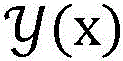
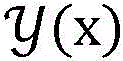
数据模型例如可以是:假设x是一个输入,y′∈y(x)是可能的预测输出,向量Φ(x,y′)是特征表示,向量w是参数,score(x,y′)=wT·Φ(x,y′)是y′在参数w下的得分,预测的目标是找出得分最高的

S102、根据所述已标注样本训练所述第一参数V和所述第二参数U。S102: Train the first parameter V and the second parameter U according to the labeled samples.
已标注样本相对可靠,但数量相对较少,根据所述已标注样本训练出来的所述第一参数V和所述第二参数U不够完善。The labeled samples are relatively reliable, but the number is relatively small, and the first parameter V and the second parameter U trained according to the labeled samples are not perfect.
S103、对已根据所述已标注样本训练后的第一参数V和第二参数U根据所述未标注样本再次训练。S103: Retrain the first parameter V and the second parameter U that have been trained according to the labeled samples according to the unlabeled samples.
未标注样本相对不可靠,但数量相对较多,根据未标注样本训练第一参数V和第二参数U,使第一参数V和第二参数U更加精确。The unlabeled samples are relatively unreliable, but the number is relatively large. The first parameter V and the second parameter U are trained according to the unlabeled samples, so that the first parameter V and the second parameter U are more accurate.
模型的参数在经过训练之后,模型的性能得到提高,预测会更加准确,此时所述模型可根据上述步骤训练出的参数和输入准确预测输出。After the parameters of the model are trained, the performance of the model will be improved and the prediction will be more accurate. At this time, the model can accurately predict the output according to the parameters and input trained in the above steps.
本实施例将模型参数拆分为两部分,本领域技术人员可以理解的是,模型参数还可拆分为两部分以上,进行多视图学习。In this embodiment, the model parameters are divided into two parts, and those skilled in the art can understand that the model parameters can also be divided into more than two parts for multi-view learning.
本发明实施例所提供的技术方案,对于无法提供预测值上限的预测模型而言,充分利用大量的未标注样本和少量的标注样本来训练模型参数,节省了大量用于标注样本的人力成本。The technical solutions provided by the embodiments of the present invention make full use of a large number of unlabeled samples and a small number of labeled samples to train model parameters for a prediction model that cannot provide an upper limit of the predicted value, thereby saving a lot of labor costs for labeling samples.
实施例二Embodiment 2
图2是本发明实施例二提供的模型参数训练方法流程图,实施例二以实施例一为基础。本实施例提供的模型参数训练方法包括以下步骤:步骤S201、步骤S202和步骤S203。其中,步骤S202是对实施例一中的步骤S102的优化,步骤S203是对实施例一中的步骤S103的优化,步骤S201与实施例一中的步骤S101相同,相同的步骤不再赘述。FIG. 2 is a flowchart of a model parameter training method provided in Embodiment 2 of the present invention, and Embodiment 2 is based on Embodiment 1. FIG. The model parameter training method provided in this embodiment includes the following steps: step S201, step S202 and step S203. Wherein, step S202 is the optimization of step S102 in the first embodiment, and step S203 is the optimization of step S103 in the first embodiment. Step S201 is the same as step S101 in the first embodiment, and the same steps will not be repeated.
S201、获取样本数据集合和根据所述样本数据集合进行预测的数据模型,所述样本数据集合包括已标注样本和未标注样本,所述数据模型包括初始化的第一参数V的向量和第二参数U的向量。S201. Obtain a sample data set and a data model for prediction based on the sample data set, where the sample data set includes labeled samples and unlabeled samples, and the data model includes an initialized vector of the first parameter V and a second parameter A vector of U.
S202、对于已标注样本集合DL中的每一个已标注样本:由所述已标注样本的第一特征向量Φv及所述第一参数V算出第一预测结果y1,当所述第一预测结果y1与所述已标注样本不一致时,更新所述第一参数V;由所述已标注样本的第二特征向量Φu及所述第二参数U算出第二预测结果y2,当所述第二预测结果y2与所述已标注样本不一致时,更新所述第二参数U;重复上述两过程直到所有已标注样本都被使用。S202. For each labeled sample in the labeled sample set DL: calculate a first prediction result y 1 from the first feature vector Φ v of the labeled sample and the first parameter V, when the first When the predicted result y 1 is inconsistent with the labeled sample, the first parameter V is updated; the second predicted result y 2 is calculated from the second feature vector Φ u of the labeled sample and the second parameter U, and when When the second prediction result y 2 is inconsistent with the labeled samples, the second parameter U is updated; the above two processes are repeated until all the labeled samples are used.
进一步地,所述已标注样本的第一特征向量Φv为Φv(x,y′),枚举已标注样本集合DL中的每一个未标注样本(x,y),在当前模型参数wv下,计算

S203、对于未标注样本集合DU中的每一个未标注样本:由所述未标注样本的第二特征向量Φu’及所述第二参数U算出第三预测结果z3,由所述未标注样本的第一特征向量Φv’及所述第一参数V算出第四预测结果z4,当所述第三预测结果z3跟所述第四预测结果z4不一致时,更新所述第二参数U以及更新所述第一参数V,重复此过程直到所有未标注样本都被使用。S203. For each unlabeled sample in the unlabeled sample set DU: calculate a third prediction result z 3 from the second feature vector Φ u ' of the unlabeled sample and the second parameter U, and use the unlabeled sample to calculate a third prediction result z 3 . The first feature vector Φ v' of the labeled sample and the first parameter V calculate the fourth prediction result z 4 , when the third prediction result z 3 is inconsistent with the fourth prediction result z 4 , update the first prediction result z 4 . Two parameters U and updating the first parameter V, repeat this process until all unlabeled samples are used.
进一步地,所述未标注样本的第二特征向量Φu’为Φu(z,y′),所述未标注样本的第一特征向量Φv’为Φv(z,y′)。枚举未标注样本集合DU中的每一个未标注样本z,在当前模型参数wu和wv下,计算


其中in


λ、n及m为常数。λ, n and m are constants.
进一步地,可以设定迭代循环的次数I,上述步骤S202、步骤S203为每次迭代时所做的操作,当循环了I次后,第一参数V和第二参数U更加精确。Further, the number of iteration loops I can be set. The above steps S202 and S203 are operations performed in each iteration. After looping for one time, the first parameter V and the second parameter U are more accurate.
本实施例根据已标注样本更新第一参数及第二参数,根据未标注样本再次更新第一参数和第二参数,对于无法提供预测值上限的预测模型而言,充分利用大量的未标注样本和少量的标注样本来训练模型参数,节省了大量用于标注样本的人力成本。In this embodiment, the first parameter and the second parameter are updated according to the labeled samples, and the first parameter and the second parameter are updated again according to the unlabeled samples. For the prediction model that cannot provide the upper limit of the predicted value, a large number of unlabeled samples and A small number of labeled samples are used to train model parameters, which saves a lot of labor costs for labeled samples.
实施例三Embodiment 3
图3是本发明实施例三提供的模型参数训练装置结构示意图。该装置用于执行上述实施例中的模型参数训练方法。该装置包括:获取模块301、第一训练模块302及第二训练模块303。FIG. 3 is a schematic structural diagram of a model parameter training apparatus provided in Embodiment 3 of the present invention. The apparatus is used to execute the model parameter training method in the above embodiment. The apparatus includes: an
获取模块301,用于获取样本数据集合和根据所述样本数据集合进行预测的数据模型,所述样本数据集合包括已标注样本和未标注样本,所述数据模型包括初始化的第一参数V的向量和第二参数U的向量。The
第一训练模块302,与所述获取模块301相连,用于根据所述已标注样本训练所述第一参数V和所述第二参数U。The
第二训练模块303,与所述第一训练模块302相连,用于对已根据所述已标注样本训练后的第一参数V和所述第二参数U,根据所述未标注样本再次训练。The
本实施例充分利用大量的未标注样本和少量的标注样本来训练模型参数,在提供不了阈值的情况下充分利用大量的未标注样本来解决已标注样本稀少的问题,也提高了模型的性能。This embodiment makes full use of a large number of unlabeled samples and a small number of labeled samples to train model parameters, and makes full use of a large number of unlabeled samples when the threshold cannot be provided to solve the problem of scarcity of labeled samples, and also improves the performance of the model.
进一步地,所述第一训练模块具体用于:对于已标注样本集合DL中的每一个已标注样本,由所述已标注样本的第一特征向量Φv及所述第一参数V算出第一预测结果y1,当所述第一预测结果y1与所述已标注样本不一致时,更新所述第一参数V;由所述已标注样本的第二特征向量Φu及所述第二参数U算出第二预测结果y2,当所述第二预测结果y2与所述已标注样本不一致时,更新所述第二参数U;重复上述两过程直到所有已标注样本都被使用。Further, the first training module is specifically used to: for each labeled sample in the labeled sample set DL , calculate the first feature vector Φ v of the labeled sample and the first parameter V a prediction result y 1 , when the first prediction result y 1 is inconsistent with the labeled sample, the first parameter V is updated; the second feature vector Φ u of the labeled sample and the second The parameter U calculates the second prediction result y 2 , and when the second prediction result y 2 is inconsistent with the labeled samples, the second parameter U is updated; the above two processes are repeated until all the labeled samples are used.
进一步地,所述第二训练模块具体用于:对于未标注样本集合DU中的每一个未标注样本,由所述未标注样本的第二特征向量Φu’及所述第二参数U算出第三预测结果z3,由所述未标注样本的第一特征向量Φv’及所述第一参数V算出第四预测结果z4,当所述第三预测结果z3跟所述第四预测结果z4不一致时,更新所述第二参数U以及更新所述第一参数V,重复此过程直到所有未标注样本都被使用。Further, the second training module is specifically used to: for each unlabeled sample in the unlabeled sample set D U , calculate from the second feature vector Φ u ' of the unlabeled sample and the second parameter U For the third prediction result z 3 , the fourth prediction result z 4 is calculated from the first feature vector Φ v' of the unlabeled sample and the first parameter V. When the third prediction result z 3 is the same as the fourth prediction result z 3 When the prediction result z4 is inconsistent, update the second parameter U and update the first parameter V, and repeat this process until all unlabeled samples are used.
本实施例根据已标注样本更新第一参数及第二参数,并根据未标注样本再次更新第一参数和第二参数。In this embodiment, the first parameter and the second parameter are updated according to the labeled samples, and the first parameter and the second parameter are updated again according to the unlabeled samples.
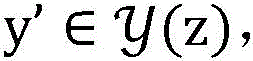
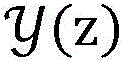
进一步地,所述第一参数V为向量wv,所述第二参数U为向量wu,所述初始化所述第一参数V和所述第二参数U为将所述第一参数V和所述第二参数U置为0向量,所述已标注样本为(x,y),所述未标注样本为z。对某一候选预测结果y’∈y(x),y(x)表示所有可能的预测结果集合,所述已标注样本的第一特征向量Φv为Φv(x,y′),所述已标注样本的第二特征向量Φu为Φu(x,y′)。对某一候选预测结果y’∈y(z),y(z)表示所有可能的预测结果集合,所述未标注样本的第二特征向量Φu’为Φu(z,y′),所述未标注样本的第一特征向量Φv’为Φv(z,y′)。Further, the first parameter V is a vector w v , the second parameter U is a vector w u , and the initializing the first parameter V and the second parameter U is the combination of the first parameter V and the second parameter U. The second parameter U is set to a 0 vector, the labeled sample is (x, y), and the unlabeled sample is z. For a certain candidate prediction result y'∈y(x), y(x) represents the set of all possible prediction results, the first feature vector Φ v of the labeled sample is Φ v (x, y'), the The second feature vector Φ u of the labeled samples is Φ u (x, y′). For a certain candidate prediction result y'∈y(z), y(z) represents the set of all possible prediction results, and the second feature vector Φ u' of the unlabeled sample is Φ u (z,y'), so The first feature vector Φ v' of the unlabeled sample is Φ v (z, y').
进一步地,further,
所述第一预测结果y1通过如下公式计算:
所述第二预测结果y2通过如下公式计算:
所述第三预测结果z3通过如下公式计算:
所述第四预测结果z4通过如下公式计算:
当所述第一预测结果y1与所述已标注样本不一致时,更新所述第一参数V包括:更新后的第一参数V的向量=wv+Φv(x,y)-Φv(x,y1);当所述第二预测结果y2与所述已标注样本不一致时,更新所述第二参数U包括:更新后的第二参数U的向量=wu+Φu(x,y)-Φu(x,y2);当所述第三预测结果z3跟所述第四预测结果z4不一致时,更新所述第二参数U包括:更新后的第二参数U的


其中in




λ、n及m为常数。λ, n and m are constants.
本发明实施例所提供的模型参数训练装置可用于执行本发明其他实施例所提供的模型参数训练方法,具备执行该方法相应的功能和有益效果。The model parameter training device provided by the embodiment of the present invention can be used to execute the model parameter training method provided by other embodiments of the present invention, and has corresponding functions and beneficial effects of executing the method.
实施例四Embodiment 4
本实施例是上述实施例的技术方案的应用。本实施例的应用背景是根据用户输入的口语化的文本准确识别出用户需要的文件。This embodiment is an application of the technical solutions of the above-mentioned embodiments. The application background of this embodiment is to accurately identify the file required by the user according to the colloquial text input by the user.
假设输入样本x=唱首周董的东风破,预测任务是识别出x中的实体名(即这里的歌手“周董”,歌曲“东风破”)并将其连接到实体库中(即分别将“周董”和“东风破”连接到表中标号为1003的记录中)。Assuming that the input sample x = Dong Feng Po who sang the first Jay Chou, the prediction task is to identify the entity name in x (ie the singer "Chou Dong" here, the song "Dong Feng Po") and connect it to the entity library (that is, respectively Zhou Dong" and "Dongfeng Po" are connected to the record numbered 1003 in the table).
表1音乐实体库样例Table 1 Example of music entity library
y(x)是可能的预测结果集合,y′∈y(x)是可能的预测结果之一,下表给出部分可能的预测结果:y(x) is the set of possible prediction results, and y′∈y(x) is one of the possible prediction results. The following table gives some possible prediction results:
表2候选答案组合样例Table 2 Examples of candidate answer combinations
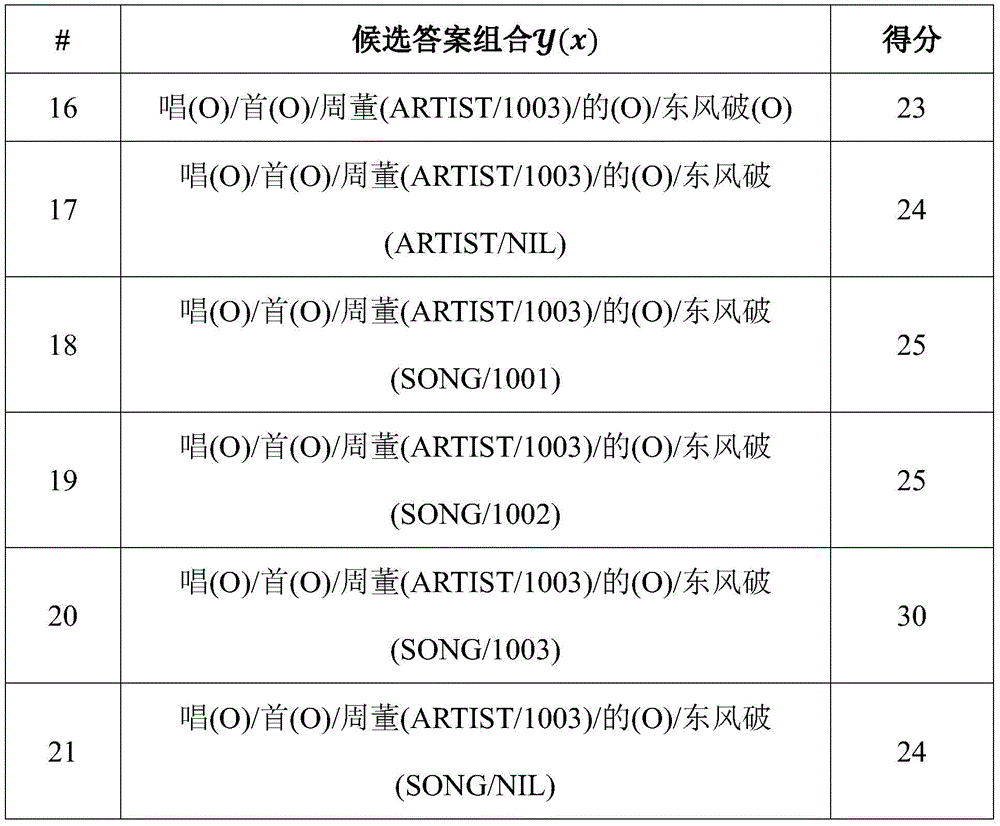
表中的得分使用以下公式计算:score(x,y′)=wT·Φ(x,y′),其中向量w是模型参数,向量Φ(x,y′)是特征表示,假设w=[0.4,0.3,0.2,0.1,0.5,0.5,0.5,0.5]T,Φ(x,y′)=[1,1,1,1,1,1,1,1]T,那么score(x,y′)=wT·Φ(x,y′)=3。The scores in the table are calculated using the following formula: score(x,y')=w T Φ(x,y'), where the vector w is the model parameter and the vector Φ(x,y') is the feature representation, assuming w = [0.4,0.3,0.2,0.1,0.5,0.5,0.5,0.5] T , Φ(x,y ′ )=[1,1,1,1,1,1,1,1] T , then score(x , y')=w T ·Φ(x, y')=3.
预测的目标是找出得分最高的

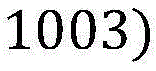
本实施例关心的是如何通过标注样本和未标注样本来训练模型参数向量w。What this embodiment cares about is how to train the model parameter vector w by using labeled samples and unlabeled samples.
将特征集合Φ(x,y′)分成2个划分,分别为Φu(x,y′)=[1,1,1,1]T和Φv(x,y′)=[1,1,1,1]T。同时,模型参数w也被划分为两个集合wu=[0.4,0.3,0.2,0.1]T和wv=[0.5,0.5,0.5,0.5]T,于是,训练模型参数向量w,即为训练模型参数wu和wv。Divide the feature set Φ(x,y') into 2 divisions, which are Φ u (x, y')=[1,1,1,1] T and Φ v (x,y')=[1,1 ,1,1] T . At the same time, the model parameter w is also divided into two sets wu = [0.4, 0.3, 0.2, 0.1] T and w v = [0.5, 0.5, 0.5, 0.5] T , so the training model parameter vector w is Train the model parameters w u and w v .
假设有标注样本
未标注样本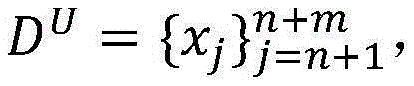
以下为模型参数训练方法的具体过程:The following is the specific process of the model parameter training method:
1.初始化模型参数向量wu←0,wv←0(即模型参数向量中每一维的值设为0向量),设定迭代循环的次数I=10,以下步骤2-3为每次迭代时所做的操作,当循环了I=10次后,整个训练过程结束,得到所训练模型的参数向量wu和wv。1. Initialize the model parameter vector w u ←0, w v ←0 (that is, the value of each dimension in the model parameter vector is set to 0 vector), set the number of iteration loops I = 10, the following steps 2-3 are each time The operations performed during the iteration, when I=10 times of the loop, the entire training process ends, and the parameter vectors w u and w v of the trained model are obtained.
2.枚举已标注样本集合DL中的每一个已标注样本(x,y),假设当前(x,y)=(我想听梁伶的东风破,我(O)/想(O)/听(O)/梁伶(ARTIST/1001)/的(O)/东风破(SONG/1001)),在当前模型参数wv下,计算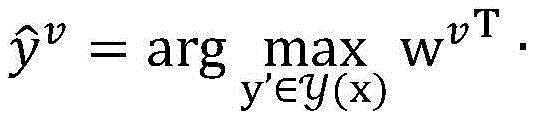





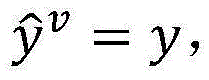
3.枚举未标注样本集合DU中的每一个未标注样本x,对两个独立的视图u,v,在当前模型参数wu和wv下,计算3. Enumerate each unlabeled sample x in the unlabeled sample set D U , and for two independent views u, v, under the current model parameters w u and w v , calculate


假设当前未标注样本x=我想听东风破梁伶唱的,通过使用当前模型参数wu和wv对所有可能的答案组合计算得分后,得到





其中in




假设当前wu=[-1,1,1,2,4]T,wv=[1,-1,1,2,3]T,=0.1是常量参数,


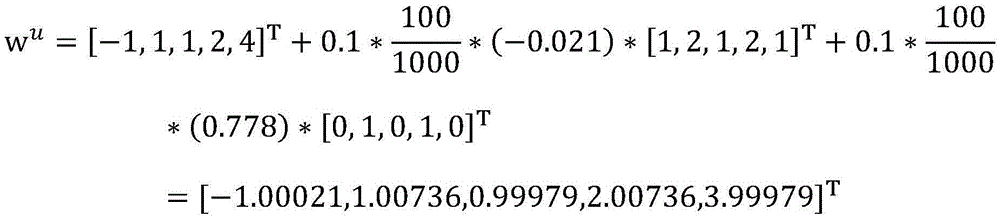
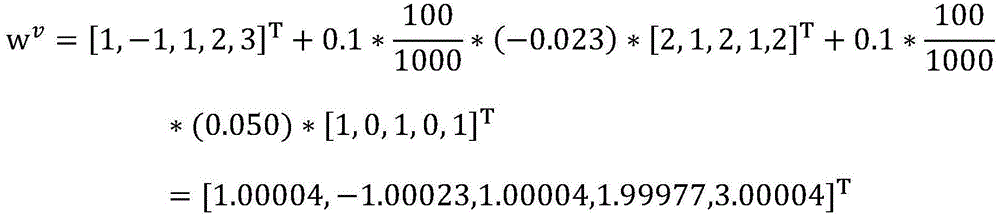
更新模型后(如果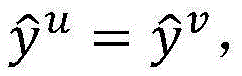
本实施例所提供的技术方案,对于无法提供预测值上限的预测模型而言,充分利用大量的未标注样本和少量的标注样本来训练模型参数,根据训练后的模型参数,模型能够根据用户输入的口语化的文本准确识别出用户需要的文件。The technical solution provided by this embodiment, for the prediction model that cannot provide the upper limit of the prediction value, makes full use of a large number of unlabeled samples and a small number of labeled samples to train model parameters. According to the trained model parameters, the model can be based on user input. The colloquial text of the user accurately identifies the file that the user needs.
注意,上述仅为本发明的较佳实施例及所运用技术原理。本领域技术人员会理解,本发明不限于这里所述的特定实施例,对本领域技术人员来说能够进行各种明显的变化、重新调整和替代而不会脱离本发明的保护范围。因此,虽然通过以上实施例对本发明进行了较为详细的说明,但是本发明不仅仅限于以上实施例,在不脱离本发明构思的情况下,还可以包括更多其他等效实施例,而本发明的范围由所附的权利要求范围决定。Note that the above are only preferred embodiments of the present invention and applied technical principles. Those skilled in the art will understand that the present invention is not limited to the specific embodiments described herein, and various obvious changes, readjustments and substitutions can be made by those skilled in the art without departing from the protection scope of the present invention. Therefore, although the present invention has been described in detail through the above embodiments, the present invention is not limited to the above embodiments, and can also include more other equivalent embodiments without departing from the concept of the present invention. The scope is determined by the scope of the appended claims.
Claims (2)

























Priority Applications (1)
| Application Number | Priority Date | Filing Date | Title |
|---|---|---|---|
| CN201610968965.9A CN108021985B (en) | 2016-11-03 | 2016-11-03 | Model parameter training method and device |
Applications Claiming Priority (1)
| Application Number | Priority Date | Filing Date | Title |
|---|---|---|---|
| CN201610968965.9A CN108021985B (en) | 2016-11-03 | 2016-11-03 | Model parameter training method and device |
Publications (2)
| Publication Number | Publication Date |
|---|---|
| CN108021985A CN108021985A (en) | 2018-05-11 |
| CN108021985B true CN108021985B (en) | 2022-05-10 |
Family
ID=62084602
Family Applications (1)
| Application Number | Title | Priority Date | Filing Date |
|---|---|---|---|
| CN201610968965.9A Expired - Fee Related CN108021985B (en) | 2016-11-03 | 2016-11-03 | Model parameter training method and device |
Country Status (1)
| Country | Link |
|---|---|
| CN (1) | CN108021985B (en) |
Families Citing this family (4)
| Publication number | Priority date | Publication date | Assignee | Title |
|---|---|---|---|---|
| TWI734059B (en) | 2018-12-10 | 2021-07-21 | 財團法人工業技術研究院 | Dynamic prediction model establishment method, electric device, and user interface |
| CN109783604B (en) * | 2018-12-14 | 2024-03-19 | 平安科技(深圳)有限公司 | Information extraction method and device based on small amount of samples and computer equipment |
| CN110310123B (en) * | 2019-07-01 | 2023-09-26 | 创新先进技术有限公司 | Risk judgment methods and devices |
| CN116645708B (en) * | 2022-02-15 | 2025-12-19 | 深圳市光鉴科技有限公司 | Face key point labeling method |
Citations (6)
| Publication number | Priority date | Publication date | Assignee | Title |
|---|---|---|---|---|
| US8630975B1 (en) * | 2010-12-06 | 2014-01-14 | The Research Foundation For The State University Of New York | Knowledge discovery from citation networks |
| CN103955462A (en) * | 2014-03-21 | 2014-07-30 | 南京邮电大学 | Image marking method based on multi-view and semi-supervised learning mechanism |
| CN104463208A (en) * | 2014-12-09 | 2015-03-25 | 北京工商大学 | Multi-view semi-supervised collaboration classification algorithm with combination of agreement and disagreement label rules |
| CN104699772A (en) * | 2015-03-05 | 2015-06-10 | 孟海东 | Big data text classifying method based on cloud computing |
| CN105493109A (en) * | 2013-06-05 | 2016-04-13 | 微软技术许可有限责任公司 | Air quality inference using multiple data sources |
| CN105488522A (en) * | 2015-11-23 | 2016-04-13 | 浙江鸿程计算机系统有限公司 | Search engine user information demand satisfaction evaluation method capable of integrating multiple views and semi-supervised learning |
Family Cites Families (2)
| Publication number | Priority date | Publication date | Assignee | Title |
|---|---|---|---|---|
| US8699789B2 (en) * | 2011-09-12 | 2014-04-15 | Xerox Corporation | Document classification using multiple views |
| US9547471B2 (en) * | 2014-07-03 | 2017-01-17 | Microsoft Technology Licensing, Llc | Generating computer responses to social conversational inputs |
-
2016
- 2016-11-03 CN CN201610968965.9A patent/CN108021985B/en not_active Expired - Fee Related
Patent Citations (6)
| Publication number | Priority date | Publication date | Assignee | Title |
|---|---|---|---|---|
| US8630975B1 (en) * | 2010-12-06 | 2014-01-14 | The Research Foundation For The State University Of New York | Knowledge discovery from citation networks |
| CN105493109A (en) * | 2013-06-05 | 2016-04-13 | 微软技术许可有限责任公司 | Air quality inference using multiple data sources |
| CN103955462A (en) * | 2014-03-21 | 2014-07-30 | 南京邮电大学 | Image marking method based on multi-view and semi-supervised learning mechanism |
| CN104463208A (en) * | 2014-12-09 | 2015-03-25 | 北京工商大学 | Multi-view semi-supervised collaboration classification algorithm with combination of agreement and disagreement label rules |
| CN104699772A (en) * | 2015-03-05 | 2015-06-10 | 孟海东 | Big data text classifying method based on cloud computing |
| CN105488522A (en) * | 2015-11-23 | 2016-04-13 | 浙江鸿程计算机系统有限公司 | Search engine user information demand satisfaction evaluation method capable of integrating multiple views and semi-supervised learning |
Non-Patent Citations (3)
| Title |
|---|
| "Mining User Intents in Twitter: A Semi-Supervised Approach to Inferring Intent Categories for Tweets";Wang J等;《Proceedings of the Twenty-Ninth AAAI Conference on Artificial Intelligence》;20151231;全文 * |
| "半监督算法在自然语言处理中应用的研究";周鑫;《中国优秀硕士学位论文全文数据库·信息科技辑》;20150315;第2015年卷(第3期);全文 * |
| "基于多视图的半监督学习分类算法的研究";孙鹏;《中国优秀硕士学位论文全文数据库·信息科技辑》;20141015;第2014年卷(第10期);全文 * |
Also Published As
| Publication number | Publication date |
|---|---|
| CN108021985A (en) | 2018-05-11 |
Similar Documents
| Publication | Publication Date | Title |
|---|---|---|
| CN112489676B (en) | Model training method, device, equipment and storage medium | |
| US11669740B2 (en) | Graph-based labeling rule augmentation for weakly supervised training of machine-learning-based named entity recognition | |
| CN110196908A (en) | Data classification method, device, computer installation and storage medium | |
| CN106294313A (en) | Study embeds for entity and the word of entity disambiguation | |
| WO2021139257A1 (en) | Method and apparatus for selecting annotated data, and computer device and storage medium | |
| CN111368048A (en) | Information acquisition method and device, electronic equipment and computer readable storage medium | |
| CN108021985B (en) | Model parameter training method and device | |
| CN114841164A (en) | Entity linking method, device, equipment and storage medium | |
| CN110909868A (en) | Node representation method and device based on graph neural network model | |
| WO2021244099A1 (en) | Voice editing method, electronic device and computer readable storage medium | |
| CN111680504A (en) | Legal information extraction model, method, system, device and auxiliary system | |
| CN104978587A (en) | Entity-identification cooperative learning algorithm based on document type | |
| CN111209396A (en) | Entity recognition model training method, entity recognition method, and related device | |
| CN114548192B (en) | Sample data processing method, device, electronic device and medium | |
| CN110019955A (en) | A kind of video tab mask method and device | |
| CN110162675B (en) | Method and device for generating answer sentence, computer readable medium and electronic device | |
| CN103631874A (en) | UGC label classification determining method and device for social platform | |
| CN115098556A (en) | User demand matching method and device, electronic equipment and storage medium | |
| CN114882874A (en) | End-to-end model training method and device, computer equipment and storage medium | |
| CN114218431B (en) | Video search methods, devices, electronic devices, and storage media | |
| CN111540363A (en) | Keyword model and decoding network construction method, detection method and related equipment | |
| CN111159999A (en) | A method, device, electronic device and storage medium for filling word slots | |
| WO2020063524A1 (en) | Method and system for determining legal instrument | |
| JP6770709B2 (en) | Model generator and program for machine learning. | |
| CN114757263A (en) | Method, related device and readable storage medium for increasing training data |
Legal Events
| Date | Code | Title | Description |
|---|---|---|---|
| PB01 | Publication | ||
| PB01 | Publication | ||
| SE01 | Entry into force of request for substantive examination | ||
| SE01 | Entry into force of request for substantive examination | ||
| CB02 | Change of applicant information | ||
| CB02 | Change of applicant information |
Address after: Room 508-598, Xitian Gezhuang Town Government Office Building, No. 8 Xitong Road, Miyun County Economic Development Zone, Beijing 101500 Applicant after: BEIJING ROOBO TECHNOLOGY Co.,Ltd. Address before: Room 508-598, Xitian Gezhuang Town Government Office Building, No. 8 Xitong Road, Miyun County Economic Development Zone, Beijing 101500 Applicant before: BEIJING INTELLIGENT STEWARD Co.,Ltd. |
|
| TA01 | Transfer of patent application right | ||
| TA01 | Transfer of patent application right |
Effective date of registration: 20210820 Address after: Room 301-112, floor 3, building 2, No. 18, YANGFANGDIAN Road, Haidian District, Beijing 100089 Applicant after: Beijing Rubu Technology Co.,Ltd. Address before: Room 508-598, Xitian Gezhuang Town Government Office Building, No. 8 Xitong Road, Miyun County Economic Development Zone, Beijing 101500 Applicant before: BEIJING ROOBO TECHNOLOGY Co.,Ltd. |
|
| GR01 | Patent grant | ||
| GR01 | Patent grant | ||
| CF01 | Termination of patent right due to non-payment of annual fee | ||
| CF01 | Termination of patent right due to non-payment of annual fee |
Granted publication date: 20220510 |