CN107977275B - Task processing method based on message queue and related equipment - Google Patents
Task processing method based on message queue and related equipment Download PDFInfo
- Publication number
- CN107977275B CN107977275B CN201711267863.5A CN201711267863A CN107977275B CN 107977275 B CN107977275 B CN 107977275B CN 201711267863 A CN201711267863 A CN 201711267863A CN 107977275 B CN107977275 B CN 107977275B
- Authority
- CN
- China
- Prior art keywords
- subtask
- target
- task
- subtasks
- processing
- Prior art date
- Legal status (The legal status is an assumption and is not a legal conclusion. Google has not performed a legal analysis and makes no representation as to the accuracy of the status listed.)
- Active
Links
Images




Classifications
-
- G—PHYSICS
- G06—COMPUTING OR CALCULATING; COUNTING
- G06F—ELECTRIC DIGITAL DATA PROCESSING
- G06F9/00—Arrangements for program control, e.g. control units
- G06F9/06—Arrangements for program control, e.g. control units using stored programs, i.e. using an internal store of processing equipment to receive or retain programs
- G06F9/46—Multiprogramming arrangements
- G06F9/54—Interprogram communication
- G06F9/546—Message passing systems or structures, e.g. queues
Landscapes
- Engineering & Computer Science (AREA)
- Software Systems (AREA)
- Theoretical Computer Science (AREA)
- Physics & Mathematics (AREA)
- General Engineering & Computer Science (AREA)
- General Physics & Mathematics (AREA)
- Debugging And Monitoring (AREA)
Abstract
The application provides a task processing method, which is applied to a target processing terminal, and is characterized in that after a target task is obtained, a plurality of subtasks which can be independently processed by the target processing terminal are determined in a plurality of subtasks contained in the target task, and after all subtasks are processed, the target task is sent to a message queue. Therefore, after the target processing terminal obtains the target task, the target processing terminal does not mechanically process one subtask and then sends the target task back to the message queue, but sends the target task to the message queue after all subtasks meeting the conditions in the target task are processed, so that the interaction times between the target processing terminal and the message queue are reduced, and the processing efficiency of the target task is improved. In addition, the application also provides equipment related to task processing so as to ensure the application and implementation of the method in practice.
Description
Technical Field
The present application relates to the field of computer technologies, and in particular, to a task processing method based on a message queue and a related device.
Background
In a computer, a task is a sequence of instructions that are processed by a control program. Some tasks are based on data storage containers such as message queues, and the processing procedure of the tasks needs to depend on the data storage containers.
The task comprises a plurality of subtasks, each subtask has a processing terminal corresponding to the subtask, the tasks are sequentially taken out from the task storage container according to the sequence of execution of the subtasks and processed by the processing terminals corresponding to the subtasks, after the processing terminals of each subtask process the respective subtasks, the tasks are sent back to the task storage container, and the steps are repeated until the processing of the last subtask is completed.
It can be seen that during execution, a task may perform data interaction with a data storage container multiple times, including reading and/or writing data from the data storage container. The data interaction process may cause additional time-consuming overhead in the task processing process, thereby affecting the processing efficiency of the task.
Disclosure of Invention
In view of this, the present application provides a task processing method based on a message queue, which is used to reduce the number of interactions with the message queue in the task processing process, thereby improving the processing efficiency of tasks.
In order to achieve the purpose, the technical scheme provided by the application is as follows:
in a first aspect, the present application provides a task processing method based on a message queue, which is applied to a target processing terminal, and the method includes:
obtaining a target task in a message queue, wherein the target task comprises a plurality of subtasks;
determining a plurality of target subtasks which can be independently processed by the target processing terminal among the plurality of subtasks;
processing a plurality of target subtasks to obtain processed target tasks;
and sending the processed target task to a message queue so that the message queue stores the processed target task.
In a second aspect, the present application provides a message queue-based task processing apparatus, including:
the task acquisition module is used for acquiring a target task in the message queue, wherein the target task comprises a plurality of subtasks;
a subtask determining module that determines a plurality of target subtasks that can be independently processed by the task processing device among the plurality of subtasks;
the subtask processing module is used for processing a plurality of target subtasks to obtain processed target tasks;
and the task return module is used for sending the processed target task to a message queue so that the message queue stores the processed target task.
In a third aspect, the present application provides a storage medium storing a plurality of instructions, which are suitable for being loaded by a processor to execute the steps in the message queue based task processing method.
According to the scheme, the task processing method based on the message queue is applied to the target processing terminal, after the target tasks in the message queue are obtained, the multiple sub-tasks which can be independently processed by the target processing terminal are determined in the multiple sub-tasks included in the target tasks, and after all the sub-tasks are processed, the target tasks are sent to the message queue to be stored. Therefore, after the target processing terminal obtains the target task, the target processing terminal does not mechanically process one subtask and then sends the target task back to the message queue, but sends the target task to the message queue after all the subtasks meeting the conditions in the target task are processed, so that the interaction times of the target processing terminal and the message queue are reduced, and the processing efficiency of the target task is improved.
Drawings
In order to more clearly illustrate the embodiments of the present application or the technical solutions in the prior art, the drawings needed to be used in the description of the embodiments or the prior art will be briefly introduced below, it is obvious that the drawings in the following description are only embodiments of the present application, and for those skilled in the art, other drawings can be obtained according to the provided drawings without creative efforts.
FIG. 1 is a flow chart illustrating a task processing procedure according to the prior art;
fig. 2 is a schematic flowchart of a task processing method applied to a target processing terminal according to the present application;
FIG. 3 is a schematic flow chart of a virtual machine migration task provided in the present application;
fig. 4A and 4B are flow charts of processing a virtual machine migration task by a conventional task processing method and the task processing method of the present application, respectively;
fig. 5 is another schematic flowchart of a task processing method applied to a target processing terminal according to the present application;
fig. 6 is a schematic flowchart of a task processing method applied to a task management terminal according to the present application;
FIG. 7 is a schematic diagram of an architecture of a task processing device based on a message queue according to the present application;
fig. 8 is a schematic structural diagram of a task management device based on a message queue according to the present application.
Detailed Description
The technical solutions in the embodiments of the present application will be clearly and completely described below with reference to the drawings in the embodiments of the present application, and it is obvious that the described embodiments are only a part of the embodiments of the present application, and not all of the embodiments. All other embodiments, which can be derived by a person skilled in the art from the embodiments given herein without making any creative effort, shall fall within the protection scope of the present application.
A task storage container such as a message queue for storing tasks may be provided in the computer. The task comprises a plurality of subtasks, each subtask has a corresponding execution main body, and the subtasks in the task storage container can be taken out of the task storage container and processed by the corresponding execution main bodies.
Specifically, in order to implement detailed processing of a task, the task is divided into a plurality of steps to be executed, and one step can be regarded as one sub-task, so that the task includes a plurality of sub-tasks. A plurality of subtasks of the task have a sequential execution sequence, and each subtask has a corresponding task execution main body. The tasks are stored in the data storage container, according to the execution sequence, the task execution main bodies corresponding to the subtasks can take out the tasks from the data storage container, and after the corresponding subtasks are executed, the tasks are put into the data storage container so that the task execution main bodies of the subtasks in the next execution sequence can take out the tasks to execute the subtasks in the next execution sequence.
Referring to an example of the task execution process provided in fig. 1, a task 1 is divided into three subtasks, which are a subtask 101, a subtask 102, and a subtask 103, respectively, and the three subtasks are sequentially executed according to a writing sequence, and task execution main bodies corresponding to the subtasks 101 and 102 are a task execution main body a, and a task execution main body corresponding to the subtask 103 is a task execution main body B. Task 1 is stored in the message queue, and during the execution of the task, first, task 1 is taken out from the message queue and allocated to the task execution main body a to execute the subtask 101. After the subtask 101 is executed, the task 1 is put back into the message queue. Task 1 is then taken from the message queue and assigned to task execution agent a to execute subtask 102. After the subtask 102 is executed, task 1 is placed back in the message queue. Finally task 1 is taken out of the message queue and assigned to task execution agent B to execute subtask 103. When the sub task 103 is completed, the task 1 is completed.
The existing task processing method only aims at subtasks with a sequential execution sequence, the tasks are sequentially taken out of the task storage container according to the sequential execution sequence and processed by the processing terminals corresponding to the subtasks, after the processing terminals of each subtask process the respective subtask, the tasks need to be sent back to the task storage container, and the steps are repeated until the processing of the last subtask is completed.
However, in the above task processing method, the task management container needs to be read once for each sub task, and after the processing of other sub tasks except the last sub task is completed, the task manager needs to be written once. The interaction times of the processing terminal and the task management container are more, and the processing efficiency of the tasks is lower. For example, if a task is divided into 100 subtasks and the interaction time for processing each subtask with a task storage container is 10ms, the total time consumption for completing the task is 1000ms, which is a long time period.
In order to solve the technical problem, the application provides a task processing method based on a message queue. The task processing method is applied to a target processing terminal, and it should be noted that when the target processing terminal executes the task processing method, the task processing method may be specifically executed by a process on the target processing terminal, and the process executing the task processing method may be referred to as a target processing process.
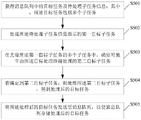
One flow of the message queue-based task processing method is shown in fig. 2, and includes steps S201 to S204.
Step S201: a target task in a message queue is obtained, the target task comprising a plurality of subtasks.
The target task can be stored in a message queue, and the message queue is a task storage container. Before processing the target task, the target processing terminal needs to obtain the target task from the message queue. The method for obtaining the target task may include, but is not limited to, the following two implementation manners, one implementation manner is that a task management terminal is deployed in a system where the message queue is located, and the task management terminal takes out the target task from the message queue and sends the target task to the target processing module; another implementation manner is that the target processing terminal reads the target task from the message queue.
It should be noted that, in the first implementation manner, the task management terminal may obtain the corresponding relationship between the subtasks and the processing terminal, and manage the execution process of the target task. Specifically, the method and the device can monitor the execution progress of the target task, that is, which subtasks of the target task have been completed, which subtasks have not been completed, and which subtask or subtasks need to be executed currently, and can take out the target task from the message queue according to the correspondence between the subtasks and the processing terminals and send the target task to the processing terminal corresponding to the current subtask. The target processing terminal to which the method is applied can be a processing terminal corresponding to any subtask of the target task, so that the target processing terminal can receive the target task sent by the task management terminal in the task execution process.
A task may be divided into one or more sub-steps, each of which may be considered a task, i.e., a task may include multiple sub-tasks. For example, the migration task of a virtual machine includes 7 subtasks, which are, querying virtual machine information (queryVmInfo), querying basic information (queryhostnfo) of a host, judging whether the virtual machine meets a migration condition (checkCondition), selecting a new host (selectNewHost), migrating underlying hardware resources (migtateVm), updating the basic information (updateVhost) of the virtual machine, and recovering the hardware resources (recoverHostResource) of the original host. For ease of description, the various subtasks may be referred to in turn as subtask 1, subtask 2, subtask 3, subtask 4, subtask 5, subtask 6, and subtask 7.
It should be noted that the subtasks in this step may include subtasks executed serially, or may include subtasks executed in parallel, or both.
Step S202: among the plurality of subtasks, a target subtask that can be independently processed by the target processing terminal is determined.
Each subtask has a corresponding processing terminal, and the processing terminal is responsible for processing the corresponding subtask. This step is processed by the target processing terminal, and therefore, those subtasks corresponding to the target processing terminal need to be determined among a plurality of subtasks. It should be noted that some of the determined subtasks may need results of processing by other processing terminals on other subtasks, and then these subtasks are not subtasks that can be independently processed by the target processing terminal, so that these subtasks are removed from the determined subtasks, and the remaining subtasks are subtasks that can be independently processed by the target processing terminal. For convenience of description, the determined subtasks that can be independently processed by the target processing terminal may be referred to as target subtasks.
In practical applications, after dividing a task into a plurality of subtasks, a processing terminal may be allocated to each subtask. The assignment relationship between the subtasks and the processing terminals may be recorded, and this assignment relationship is a corresponding relationship. In addition, the divided subtasks have an association relationship therebetween, and the association relationship between the subtasks can also be recorded, and the association relationship is used for indicating which subtasks are required for the processing process of the subtasks.
Based on the recorded corresponding relationship between the subtasks and the processing terminal and the association relationship between the subtasks, one implementation manner for determining the target subtask is as follows:
acquiring a corresponding relation between the subtasks and the processing terminal and an incidence relation between the subtasks; and determining a target subtask which corresponds to the target processing terminal and only needs a processing result of the target processing terminal to the subtask among the plurality of subtasks according to the corresponding relation and the incidence relation.
Specifically, according to the corresponding relationship between the subtasks and the processing terminals, which subtasks correspond to the target processing terminal can be determined. As mentioned above, the processing of the subtasks by the processing terminal may specifically be that the subtasks are processed by a process on the processing terminal. Taking a processing process as an example, a corresponding relationship between the processing process and a subtask is described. As shown in fig. 3, taking the migration task of the virtual machine as an example, the corresponding relationship between the 7 subtasks and the processing process is as follows: (resource process, subtask 1), (resource process, subtask 2), (resource process, subtask 3), (scheduling process, subtask 4), (computing process, subtask 5), (resource process, subtask 6), (resource process, subtask 7). If the target processing process is a resource process, the subtasks corresponding to the resource process can be determined to be subtask 1, subtask 2, subtask 3, subtask 6 and subtask 7 according to the corresponding relationship.
According to the incidence relation among the subtasks, whether the subtasks corresponding to the target processing terminal need the processing results of other subtasks or not can be determined; and then according to the corresponding relation between the subtasks and the processing terminals, determining the subtask corresponding to the target processing terminal from the subtasks corresponding to the target processing terminal without the subtask of the processing result of the subtask by other processing terminals, and finally determining the subtask, namely the target subtask.
Still taking the migration task of the virtual machine as an example, assuming that the 7 subtasks are executed serially according to the writing sequence, the correlation relationship between the 7 subtasks is as follows: according to the above writing sequence, except the first subtask, each subtask requires the execution result of the previous subtask. And if the target processing process is the resource process, determining that the subtasks corresponding to the target processing process comprise a subtask 1, a subtask 2, a subtask 3, a subtask 6 and a subtask 7 according to the corresponding relation.
As shown in fig. 3, the subtask 1 is the first subtask, and the subtask does not need the processing result of other subtasks; the subtask 2 is used as a second executed subtask, and needs the processing result of the first subtask, and the processing process corresponding to the first subtask is still the target processing process resource; the subtask 3 is used as a third executed subtask, and needs the processing results of the first two subtasks, and the processing processes corresponding to the first two subtasks are still target processing processes resource; the subtask 6, as a sixth executed subtask, needs the processing results of the first five subtasks, and the processing process corresponding to the subtask in the first five subtasks is not the target processing process resource; the subtask 7, as a seventh executed subtask, needs the processing results of the first six subtasks, and the processing process corresponding to the subtask in the first six subtasks is not the target processing process resource.
Therefore, the subtask 1, the subtask 2, and the subtask 3 are target subtasks that can be processed by the target processing process independently in the end of the target processing process resource.
It can be understood that, when the target processing terminal obtains the target task, it may also determine a to-be-processed sub-task, where the to-be-processed sub-task is a sub-task that is included in the target task and needs to be processed currently. The target sub-task determined by the target processing terminal satisfies the above conditions, and is also a sub-task determined from the to-be-processed sub-task and the following unfinished sub-tasks.
Taking the above example as an example, the to-be-processed subtask is the first subtask. If the to-be-processed subtask is the subtask 6, it is described that the subtask before the subtask 6 has been successfully processed, so that the target subtask is determined in the subtask 6 and the subtask after the subtask 6, and the determined target subtask is also determined in the above example, where the determined target subtask is: subtask 6 and subtask 7.
To summarize, if the association between the subtasks is a serial execution sequence, the way to determine the target subtask is: determining a first subtask processed by the target processing terminal according to the corresponding relation; sequentially searching all subtasks processed by the target processing terminal in the subsequent subtasks of the first subtask according to the serial execution relation; and determining the first subtask and the searched subtask as a target subtask. The first subtask processed by the target processing terminal may also be referred to as a currently pending subtask. The information of the first subtask may be sent by the task management terminal, and the task management terminal may record the execution condition of the task, such as which subtask is currently to be processed, and which processing terminal should process the subtask. It should be noted that the task management terminal may be embodied as a process.
Step S203: and processing the target subtask to obtain a processed target task.
And after the target subtasks are obtained, processing the target subtasks. It should be noted that, the target subtasks may have an association relationship therebetween, and the association relationship may also represent an execution order of the target subtasks, so that the target subtasks are executed in series according to the execution order. For example, the target subtasks are: subtask 1, subtask 2, and subtask 3, and as shown in fig. 3, the three subtasks are executed sequentially, and then the three subtasks are executed sequentially.
Alternatively, there may be no association between the target subtasks, in other words, the target subtasks may be executed in parallel, in which case, the target processing terminal may execute the target subtasks sequentially in a random order, or may execute the target subtasks in parallel. Alternatively, some of the target subtasks are executed serially, and some are executed in parallel, so that each subtask may be executed sequentially in turn or may be executed separately.
The target task comprises a target subtask, and after the target subtask is processed, the processed target task can be obtained.
Step S204: and sending the processed target task to a message queue so that the message queue stores the processed target task.
Since the target task needs to be temporarily stored in the message queue after the target task is executed, the target task processed by the target processing terminal needs to be sent to the message queue. It should be noted that the target task may not be sent to the message queue in some cases, for example, when all the subtasks are executed. Therefore, after the processed target task is obtained, whether the sub-task of the target task is executed completely can be judged, and if the sub-task is executed completely, the processed target task is sent to the receiving module corresponding to the target task; and if not, sending the target task to a message queue. And sending the processed target task to a message queue for storage, and if the processed target task is not processed completely, continuously obtaining the target task from the message queue by other task processing terminals for processing.
According to the technical scheme, the task processing method based on the message queue is applied to the target processing terminal, the subtasks which can be independently processed by the target processing terminal are determined in the plurality of subtasks included in the target task after the target task is obtained, and the target task is sent to the message queue after the subtasks are processed. It can be seen that, after the target processing terminal obtains the target task, instead of mechanically processing one sub-task and then sending the target task back to the message queue, the target processing terminal determines the sub-task satisfying the condition from the target task, where the sub-task satisfying the condition may be one or multiple, and the target processing terminal sends the target task to the message queue after processing the sub-tasks. Therefore, the interaction times of the target processing terminal and the message queue can be reduced, and the processing efficiency of the target task is improved. In addition, the message queue may store other tasks besides the target task, and the other tasks may also be processed according to the task processing method. The message queue consumes resources such as calculation, storage, network and the like in the process of processing each task, and the interaction frequency of each processing terminal and the message queue is reduced, so that the resources which can be used when the message queue processes each task are improved, and the performance of the message queue is also improved.
Still taking the above virtual machine migration task example as an example, if the virtual machine migration task is not executed according to the task processing method provided by the present application, the processing flow of the virtual machine migration task is shown in fig. 4A, and if the virtual machine migration task is executed according to the task processing method provided by the present application, the processing flow of the virtual machine migration task is shown in fig. 4B. Through comparison, the number of times of interaction with the message queue is reduced by 3 times in the whole processing process, so that the migration efficiency of the virtual machine is higher.
In practical applications, the target task includes a plurality of subtasks, and the plurality of subtasks may not be all completed by the target processing terminal, so that after the target processing terminal sends the target task to the message queue, there may be other processing terminals that obtain the target task in the message queue. These processing terminals require the processing results of the target subtasks.
Therefore, after step S204 shown in fig. 2, the following steps may be further included: judging whether a subsequent subtask needing the processing result of the target subtask exists in the plurality of subtasks; if yes, determining a processing terminal corresponding to the subsequent subtask, and recording the determined processing terminal; wherein the processing terminal of the record is configured to: and sending the processed target task from the message queue to the recorded processing terminal.
Specifically, after the target processing terminal processes the target subtask, the obtained processing result may be used as a processing basis for other subtasks. Therefore, the target processing terminal can determine the subtasks associated with the target subtask according to the association relationship between the subtasks, and can further determine the processing terminals corresponding to the subtasks associated with the target subtask according to the corresponding relationship between the subtasks and the processing terminals.
Taking the migration task of the virtual machine as an example, after the execution of the subtask 3 is completed, the next subtask 4 needs the processing result of the subtask 3. Therefore, the processing process corresponding to the subtask 3 is determined, and the processing process corresponding to the subtask 3 is known as the scheduling process according to the corresponding relationship between the subtask and the processing process, so that the scheduling process is recorded.
Other terminals such as the task management terminal can inform the recorded processing terminal to get the target task from the message queue according to the recorded processing terminal, or other terminals such as the task management terminal can take the target task out of the message queue according to the recorded processing terminal and send the target task to the recorded processing terminal. In any way, it can be seen that the recorded processing terminal is configured to send the processed target task from the message queue to the recorded processing terminal.
In the above embodiment, when the target processing terminal executes the task processing method, all target subtasks are determined first, and then each target subtask is executed. In practical applications, the target processing terminal may further determine whether there are other sub-tasks that can be processed by the target processing terminal after receiving the target task and processing a certain sub-task to be executed currently. Specifically, the method comprises the following steps:
referring to fig. 5, another flow of the task processing method based on the message queue provided by the present application is shown, where the task processing method is applied to a target processing terminal, and specifically may include steps S501 to S505.
S501: acquiring target tasks and to-be-processed subtask information in a message queue; wherein the target task comprises a plurality of subtasks.
The target processing terminal can obtain the target task, one mode is that the target processing terminal goes to the message queue to obtain the target task, and the other mode is that the task management terminal obtains the target task from the message queue and sends the target task to the target processing terminal.
In the prior art, a certain processing terminal can not only obtain a task but also obtain information of a subtask to be processed in the task, and the processing terminal executes the subtask corresponding to the information of the subtask to be processed according to the information of the subtask to be processed.
For the target processing terminal in the present application, the target processing terminal may obtain, in addition to the target task, to-be-processed subtask information, where the to-be-processed subtask information is used to indicate a current to-be-processed subtask in the target task, and further, when the target processing terminal receives the target task, the current to indicate. Or in other words, the to-be-processed subtask information indicates a subtask that needs to be processed by the target processing terminal when the target processing terminal receives the target task.
S502: and processing the first target subtask indicated by the information of the subtask to be processed.
As mentioned above, the to-be-processed subtask information indicates that there is a subtask, and for convenience of description, the subtask indicated by the to-be-processed subtask may be referred to as a first target subtask. And the target processing terminal processes the first target subtask according to the indication of the subtask information to be processed.
As mentioned above, the processing of the subtasks by the processing terminal may specifically be the processing of the subtasks by the processing process. Therefore, the target processing terminal is taken as an example of the target processing process. For example, if the target processing process is a resource process, the target task received by the resource process is a virtual machine migration task, and the information of the sub-task to be processed received by the resource process is information for querying the virtual machine, the target processing process may query the information of the virtual machine.
S503: determining a second target subtask that can be independently processed by the target processing terminal among the plurality of subtasks from which the first target subtask is removed.
The target task comprises a plurality of subtasks, and after the target processing terminal executes the subtasks to be processed, the target processing terminal sends the target task to the message queue according to the existing task processing method. However, the present application determines whether or not there are any subtasks that can be independently processed by the target processing terminal among the remaining subtasks, and for convenience of description, these subtasks may be referred to as a second target subtask.
Specifically, the method comprises the following steps: the subtasks included in the target task are obtained, the first target subtask is removed from the subtasks, and then whether a subtask that can be processed independently by the target processing terminal exists in the remaining subtasks is determined, and the determination method may refer to the above contents, which is not described herein again.
In one implementation, the multiple subtasks included in the target task are executed serially, that is, the subtasks are sequentially executed in sequence. Then, in this step, during execution, a second target subtask processed by the target processing terminal may be searched for in a subtask executed after the first target subtask according to the serial execution order.
Specifically, the subtasks included in the target task are executed serially, that is, the subtasks are executed one by one, so that the target processing terminal searches the subtasks executed by the target processing terminal in order until the next subtask is stopped, the subtask not processed by the target processing terminal, among the subtasks executed after the first target subtask is executed after the first target subtask indicated by the information of the subtask to be processed is executed. The reason is that the next subtask is not processed by the target processing terminal, and even if there is a subsequent subtask processed by the target processing terminal, the subsequent subtask is not independently processed by the target processing terminal but requires a processing result of another processing terminal.
S504: and if the second target subtask is determined, processing the second target subtask to obtain a processed target task.
If the plurality of subtasks from which the first target subtask is removed also include subtasks that can be independently processed by the target processing terminal, the processed target tasks are processed without being returned to the message queue, and the finally processed target tasks are obtained. The target processing terminal executes the processing procedure of the second target subtask according to the specific content of the second target subtask, which is not described herein again.
S505: and sending the processed target task to a message queue so that the message queue stores the processed target task.
If all the subtasks are not completely executed, the target task is temporarily stored in the message queue, so that the target task needs to be sent back to the message queue. Of course, if all the subtasks are executed completely, the target task may be selected to be sent to the message queue, or the target task may not be returned to the message queue.
Compared with the existing task processing method, steps S503 and S504 in the present application are additional steps, and are intended to merge sub-tasks that can be processed independently by the target processing terminal, and send the processed target task to the message queue after the target processing terminal finishes processing once.
In the above embodiments, the task processing method based on the message queue is applied to the target processing terminal, that is, after the target processing terminal obtains the target task, the target processing terminal determines the sub-tasks that can be independently processed in the target task, but this step may not be executed by the target processing terminal, and may also be executed by the task management terminal. The task management terminal is a terminal for managing execution of a target task, and can take out the task from the message queue and send the task to the target processing terminal.
Fig. 6 shows another flow of the message queue-based task processing method provided by the present application, where the task processing method can be applied to a task management terminal. As shown in fig. 6, the method may specifically include steps S601 to S604.
S601: determining a target task in a message queue, wherein the target task comprises a plurality of subtasks.
The task management terminal may obtain a target task from the message queue, where the target task may be a task that needs to be executed currently.
S602: among the plurality of subtasks, a target subtask that can be independently processed by the target processing terminal is determined.
The task management terminal may further determine a sub-task that needs to be processed currently according to the processing progress of the target task, and then may determine which processing terminal the processing terminal corresponding to the sub-task is, that is, the target processing terminal, according to a correspondence between the sub-task and the processing terminal.
The target task includes multiple subtasks, and when determining a target subtask processed by the target processing terminal among the multiple subtasks, the specific determination method may refer to the description in the foregoing embodiment, which is not described herein again.
S603: and generating marking information of the target subtask.
After the target subtasks are determined, in order to notify the target processing terminal of which subtasks to process, mark information related to the target subtasks needs to be generated, and the mark information is used for indicating which target subtasks to be processed are which target subtasks or which target subtasks. As can be seen, the flag information is used to indicate which subtasks can be processed independently by the target processing terminal.
S604: sending the target task and the marking information to the target processing terminal; and the marking information is used for the target processing terminal to determine the target subtask and process the target subtask.
In order for the target processing terminal to process the target task, the task management terminal needs to send the tag information of the target task and the target subtask to the target processing terminal. And the target processing terminal can determine which target subtasks need to be executed in the target tasks according to the marking information. And the target processing terminal executes the determined target subtask. Specifically, a target processing terminal receives mark information sent by a task management terminal, wherein the mark information is used for indicating sub-tasks independently processed by the target processing terminal; and determining the subtask indicated by the marking information as a target subtask.
According to the technical scheme, the task processing method based on the message queue is executed by the task management terminal, the task management terminal can determine the target subtask processed by the target processing terminal and send the mark information of the target subtask to the target processing terminal, and the target processing terminal processes the target subtask according to the mark information of the subtask. In this way, the target processing terminal only needs to execute the processing work, thereby reducing the workload of the target processing terminal.
It should be noted that the task management terminal and the target processing terminal may operate in the same system, or may operate in different systems. If the task management terminal and the target processing terminal operate in different systems, the message queue and the task management terminal can be deployed in the same system. Or, the task management terminal may be a task management process, and the target processing terminal may be a target processing process, where the task management process and the target processing process may run on the same device, or may run on different devices. If the task management process and the target processing process run on different devices, the message queue and the task management process may be deployed in the same device.
The following describes a hardware structure of a task processing device based on a message queue according to an embodiment of the present application. Fig. 7 is a schematic diagram of a hardware structure of a task processing device according to an embodiment of the present application, and referring to fig. 7, the device may include: a processor 701, a communication interface 702, a memory 703 and a communication bus 704.
The processor 701, the communication interface 702, and the memory 703 are configured to communicate with each other via a communication bus 704.
The processor 701 is configured to execute a program, and the program may include a program code including an operation instruction of the processor.
Among them, the procedure can be specifically used for:
obtaining a target task in a message queue, wherein the target task comprises a plurality of subtasks; determining, among the plurality of subtasks, a plurality of target subtasks that can be independently processed by the task processing device; and processing the plurality of target subtasks to obtain the processed target tasks. It should be noted that the processor may implement the above program by operating the target processing terminal.
It should be noted that, when a processor executes a specific function, it can be implemented according to the relevant steps of the above-mentioned method embodiment part.
The processor 701 may be a central processing unit CPU, or an Application Specific Integrated Circuit ASIC (Application Specific Integrated Circuit), or one or more Integrated circuits configured to implement embodiments of the present Application.
The communication interface 702 may be an interface of a communication module, and is configured to send the processed target task to a message queue, so that the message queue stores the processed target task.
A memory 703 for storing programs;
the memory 703 may comprise high-speed RAM memory, and may also include non-volatile memory (non-volatile memory), such as at least one disk memory.
Referring to fig. 8, a structure of a task processing device based on a message queue according to the present application is shown. As shown in fig. 8, the apparatus may include: a task obtaining module 801, a subtask determining module 802, a subtask processing module 803, and a task returning module 804.
A task obtaining module 801, configured to obtain a target task in a message queue, where the target task includes multiple subtasks;
a subtask determining module 802 that determines a plurality of target subtasks that can be independently processed by the task processing device among the plurality of subtasks;
a subtask processing module 803, configured to process multiple target subtasks, to obtain processed target tasks;
a task returning module 804, configured to send the processed target task to a message queue, so that the message queue returns the processed target task.
In one example, the subtask determining module includes: a relation determination submodule and a subtask determination submodule.
The relation determining submodule is used for obtaining the corresponding relation between the subtasks and the processing device and the incidence relation between the subtasks; the incidence relation is used for expressing the processing result of which subtasks are required by the processing of the subtasks; the subtask determining submodule is used for determining a target subtask which corresponds to the task processing device and only needs a processing result of the subtask of the specified type in the plurality of subtasks according to the corresponding relation and the incidence relation; wherein the specified type subtask is a subtask processed by the task processing device.
In one example, the subtask determination submodule includes: the device comprises a first subtask determining unit, a second subtask determining unit, a processing device determining unit and a target subtask determining unit.
A first subtask determining unit configured to determine a first subtask processed by the task processing device according to the correspondence; the second subtask determining unit is used for determining a second subtask associated with the first subtask according to the association relation; the processing device determining unit is used for determining a processing device corresponding to the second subtask according to the corresponding relation; and the target subtask determining unit is used for determining a processing device corresponding to the associated second subtask as a first subtask of the task processing device in the first subtask, and taking the determined first subtask as a target subtask.
In one example, the associative relationship is a serial execution relationship; the subtask determination submodule includes: the task scheduling system comprises a first subtask determining unit, a subsequent subtask determining unit and a target subtask determining unit.
A first subtask determining unit, configured to determine a first subtask processed by the task processing device according to the correspondence; a subsequent subtask determining unit, configured to sequentially search all subtasks processed by the task processing device in the subsequent subtasks of the first subtask according to the serial execution relationship; and the target subtask determining unit is used for determining the first subtask and the searched subtask as a target subtask.
In one example, the subtask determination module includes: a marking information receiving sub-module and a subtask determining sub-module.
A tag information receiving sub-module, configured to receive tag information sent by a task management terminal, where the tag information is used to indicate a sub-task independently processed by the task processing device; and the subtask determining submodule is used for determining the subtask indicated by the marking information as a target subtask.
In one example, the task acquisition module includes: and a task obtaining submodule. And the task acquisition submodule is used for receiving the target task which is taken out from the message queue and sent by the task management terminal.
In one example, the message queue-based task processing device further includes: and (5) a subsequent processing module.
The subsequent processing module is used for judging whether a subsequent subtask needing the processing result of the target subtask exists in the plurality of subtasks; if so, determining a processing terminal corresponding to the subsequent subtask, and recording the determined processing terminal; wherein the processing terminal of the record is configured to: and sending the processed target task from the message queue to the recorded processing terminal.
The present application further provides a storage medium having stored thereon a plurality of instructions adapted to be loaded by a processor to perform the above steps associated with a message queue based task processing method. Specifically, the steps related to the task processing method based on the message queue include the following:
a task obtaining step, which is used for obtaining a target task in a message queue, wherein the target task comprises a plurality of subtasks;
a subtask determining step of determining a plurality of target subtasks that can be independently processed by the task processing device among the plurality of subtasks;
a subtask processing step, configured to process a plurality of the target subtasks to obtain a processed target task;
and a task returning step, which is used for sending the processed target task to a message queue so that the message queue stores the processed target task.
It should be noted that, in the present specification, the embodiments are all described in a progressive manner, each embodiment focuses on differences from other embodiments, and the same and similar parts among the embodiments may be referred to each other.
It is further noted that, herein, relational terms such as first and second, and the like may be used solely to distinguish one entity or action from another entity or action without necessarily requiring or implying any actual such relationship or order between such entities or actions. Also, the terms "comprises," "comprising," or any other variation thereof, are intended to cover a non-exclusive inclusion, such that a process, method, article, or apparatus that comprises a list of elements does not include only those elements but may include other elements not expressly listed or inherent to such process, method, article, or apparatus. Without further limitation, an element defined by the phrases "comprising a component of' 8230; \8230;" does not exclude the presence of additional like elements in a process, method, article, or apparatus that comprises the same element.
The previous description of the disclosed embodiments is provided to enable any person skilled in the art to make or use the present application. Various modifications to these embodiments will be readily apparent to those skilled in the art, and the generic principles defined herein may be applied to other embodiments without departing from the spirit or scope of the application. Thus, the present application is not intended to be limited to the embodiments shown herein but is to be accorded the widest scope consistent with the principles and novel features disclosed herein.
Claims (13)
1. A task processing method based on a message queue is characterized in that the method is applied to a target processing terminal and comprises the following steps:
obtaining a target task in a message queue, wherein the target task comprises a plurality of subtasks;
determining a plurality of target subtasks which can be independently processed by the target processing terminal in the plurality of subtasks;
processing a plurality of the target subtasks to obtain a processed target task;
sending the processed target task to a message queue so that the message queue stores the processed target task;
wherein, among the plurality of subtasks, determining a target subtask that can be independently processed by the target processing terminal includes:
acquiring a corresponding relation between the subtasks and the processing terminal and an incidence relation between the subtasks; the incidence relation is used for expressing the processing result of which subtasks are required by the processing of the subtasks;
determining a target subtask which corresponds to the target processing terminal and only needs a processing result of the designated type subtask in the plurality of subtasks according to the corresponding relation and the association relation; and the sub-tasks of the specified types are the sub-tasks processed by the target processing terminal.
2. The message queue-based task processing method according to claim 1, wherein the determining, according to the correspondence and the association, a target subtask that corresponds to the target processing terminal and associates only a processing result of a subtask of a specified type among the plurality of subtasks includes:
determining a first subtask processed by the target processing terminal according to the corresponding relation;
determining a second subtask associated with the first subtask according to the association relation;
determining a processing terminal corresponding to the second subtask according to the corresponding relation;
and in the first subtask, determining a processing terminal corresponding to the associated second subtask as a first subtask of the target processing terminal, and taking the determined first subtask as the target subtask.
3. The message queue-based task processing method of claim 1, wherein the association relationship is a serial execution relationship; determining, according to the correspondence and the association, a target subtask that corresponds to the target processing terminal and requires only a processing result of a type of subtask among the plurality of subtasks, where the determining includes:
determining a first subtask processed by the target processing terminal according to the corresponding relation;
sequentially searching all subtasks processed by the target processing terminal in the subsequent subtasks of the first subtask according to the serial execution relation;
and determining the first subtask and the searched subtask as a target subtask.
4. The message queue-based task processing method according to claim 1, wherein the determining, among the plurality of subtasks, a target subtask that can be independently processed by the target processing terminal, further comprises:
receiving mark information sent by a task management terminal, wherein the mark information is used for indicating subtasks independently processed by the target processing terminal;
and determining the subtask indicated by the marking information as a target subtask.
5. The message queue-based task processing method of claim 1, wherein the obtaining of the target task in the message queue comprises:
and receiving the target task which is taken out from the message queue and sent by the task management terminal.
6. The message queue-based task processing method according to claim 1, further comprising:
judging whether a subsequent subtask needing the processing result of the target subtask exists in the plurality of subtasks;
if so, determining a processing terminal corresponding to the subsequent subtask, and recording the determined processing terminal; wherein the recorded processing terminal is configured to: and sending the processed target task from the message queue to the recorded processing terminal.
7. A message queue-based task processing apparatus, comprising:
the task acquisition module is used for acquiring a target task in the message queue, wherein the target task comprises a plurality of subtasks;
a subtask determining module that determines a plurality of target subtasks that can be independently processed by the task processing device among the plurality of subtasks;
the subtask processing module is used for processing a plurality of target subtasks to obtain processed target tasks;
the task return module is used for sending the processed target task to a message queue so that the message queue stores the processed target task;
wherein, the subtask determining module includes:
the relation determining submodule is used for obtaining the corresponding relation between the subtasks and the processing device and the incidence relation between the subtasks; the incidence relation is used for expressing the processing results of which subtasks are required for the processing of the subtasks;
the subtask determining submodule is used for determining a target subtask which corresponds to the task processing device and only needs a processing result of a specified type subtask in the plurality of subtasks according to the corresponding relation and the association relation; wherein the specified type subtask is a subtask processed by the task processing device.
8. The message queue-based task processing apparatus of claim 7, wherein the subtask determination submodule includes:
a first subtask determining unit configured to determine a first subtask processed by the task processing device according to the correspondence;
the second subtask determining unit is used for determining a second subtask associated with the first subtask according to the association relation;
the processing device determining unit is used for determining a processing device corresponding to the second subtask according to the corresponding relation;
and the target subtask determining unit is used for determining the processing device corresponding to the associated second subtask as the first subtask of the task processing device in the first subtask, and taking the determined first subtask as the target subtask.
9. The message queue-based task processing device of claim 7, wherein the association relationship is a serial execution relationship; the subtask determination submodule includes:
a first subtask determining unit, configured to determine a first subtask processed by the task processing device according to the correspondence;
a subsequent subtask determining unit, configured to sequentially search all subtasks processed by the task processing device in the subsequent subtasks of the first subtask according to the serial execution relationship;
and the target subtask determining unit is used for determining the first subtask and the searched subtask as a target subtask.
10. The message queue-based task processing apparatus of claim 7, wherein the subtask determination module further comprises:
the system comprises a mark information receiving submodule and a task processing submodule, wherein the mark information receiving submodule is used for receiving mark information sent by a task management terminal, and the mark information is used for indicating subtasks independently processed by the task processing device;
and the subtask determining submodule is used for determining the subtask indicated by the marking information as a target subtask.
11. The message queue-based task processing device of claim 7, wherein the task obtaining module comprises:
and the task acquisition submodule is used for receiving the target task which is taken out from the message queue and sent by the task management terminal.
12. The message queue-based task processing device of claim 7, further comprising:
the subsequent processing module is used for judging whether a subsequent subtask needing the processing result of the target subtask exists in the plurality of subtasks; if so, determining a processing terminal corresponding to the subsequent subtask, and recording the determined processing terminal; wherein the recorded processing terminal is configured to: and sending the processed target task from the message queue to the recorded processing terminal.
13. A storage medium storing a plurality of instructions, the instructions being suitable for being loaded by a processor to perform the steps of the message queue based task processing method according to any one of claims 1 to 6.
Priority Applications (1)
| Application Number | Priority Date | Filing Date | Title |
|---|---|---|---|
| CN201711267863.5A CN107977275B (en) | 2017-12-05 | 2017-12-05 | Task processing method based on message queue and related equipment |
Applications Claiming Priority (1)
| Application Number | Priority Date | Filing Date | Title |
|---|---|---|---|
| CN201711267863.5A CN107977275B (en) | 2017-12-05 | 2017-12-05 | Task processing method based on message queue and related equipment |
Publications (2)
| Publication Number | Publication Date |
|---|---|
| CN107977275A CN107977275A (en) | 2018-05-01 |
| CN107977275B true CN107977275B (en) | 2022-10-21 |
Family
ID=62009381
Family Applications (1)
| Application Number | Title | Priority Date | Filing Date |
|---|---|---|---|
| CN201711267863.5A Active CN107977275B (en) | 2017-12-05 | 2017-12-05 | Task processing method based on message queue and related equipment |
Country Status (1)
| Country | Link |
|---|---|
| CN (1) | CN107977275B (en) |
Families Citing this family (4)
| Publication number | Priority date | Publication date | Assignee | Title |
|---|---|---|---|---|
| CN109165106A (en) * | 2018-08-24 | 2019-01-08 | 深圳乐信软件技术有限公司 | Method for processing business, device, equipment, storage medium and process flow operation system |
| CN111381977A (en) * | 2018-12-29 | 2020-07-07 | 北大方正集团有限公司 | Message processing method and device |
| CN110471718B (en) * | 2019-07-04 | 2023-07-18 | 深圳市共进电子股份有限公司 | Task processing method and device |
| CN112148505A (en) * | 2020-09-18 | 2020-12-29 | 京东数字科技控股股份有限公司 | Data running batch system, method, electronic device and storage medium |
Citations (18)
| Publication number | Priority date | Publication date | Assignee | Title |
|---|---|---|---|---|
| JPH08102981A (en) * | 1994-10-02 | 1996-04-16 | Fujitsu Social Sci Lab:Kk | Business distribution system |
| US6615253B1 (en) * | 1999-08-31 | 2003-09-02 | Accenture Llp | Efficient server side data retrieval for execution of client side applications |
| US6938258B1 (en) * | 1998-05-26 | 2005-08-30 | Rockwell Collins | Message processor for a passenger entertainment system, method and article of manufacture |
| JP2014006573A (en) * | 2012-06-21 | 2014-01-16 | Fujitsu Ltd | Monitoring control system including task execution order control function |
| CN103560901A (en) * | 2013-09-30 | 2014-02-05 | 北京宝利明威软件技术有限公司 | Management system and method for mobile terminal |
| CN103902646A (en) * | 2013-12-27 | 2014-07-02 | 北京天融信软件有限公司 | Distributed task managing system and method |
| CN104145260A (en) * | 2012-03-26 | 2014-11-12 | 华为技术有限公司 | Service processing method, execution unit and system for distributed operating system |
| CN105430048A (en) * | 2015-10-29 | 2016-03-23 | 努比亚技术有限公司 | Message delivery system and message delivery method based on multiple clusters |
| CN105516259A (en) * | 2015-11-27 | 2016-04-20 | 北京奇虎科技有限公司 | Information sending method and apparatus |
| CN105656964A (en) * | 2014-11-10 | 2016-06-08 | 中国移动通信集团公司 | Implementation method and device for data pushing |
| CN105933372A (en) * | 2016-01-13 | 2016-09-07 | 平安科技(深圳)有限公司 | Task distribution execution method, server and terminal |
| CN106708563A (en) * | 2016-11-28 | 2017-05-24 | 努比亚技术有限公司 | Unresponsive application processing method and terminal |
| CN106776253A (en) * | 2016-12-08 | 2017-05-31 | 武汉斗鱼网络科技有限公司 | A kind of interface interim card monitoring method and device |
| CN106921684A (en) * | 2015-12-24 | 2017-07-04 | 北京奇虎科技有限公司 | The processing method and server of a kind of solicited message |
| CN107015853A (en) * | 2016-10-10 | 2017-08-04 | 阿里巴巴集团控股有限公司 | The implementation method and device of phased mission system |
| CN107256180A (en) * | 2017-05-19 | 2017-10-17 | 腾讯科技(深圳)有限公司 | Data processing method, device and terminal |
| CN107315629A (en) * | 2017-06-14 | 2017-11-03 | 北京小米移动软件有限公司 | Task processing method, device and storage medium |
| CN107391283A (en) * | 2017-08-16 | 2017-11-24 | 郑州云海信息技术有限公司 | A kind of message treatment method and device |
Family Cites Families (3)
| Publication number | Priority date | Publication date | Assignee | Title |
|---|---|---|---|---|
| CN102929929B (en) * | 2012-09-24 | 2016-09-14 | 深圳市网信联动通信技术股份有限公司 | A kind of data summarization method and device |
| CN103856440B (en) * | 2012-11-29 | 2015-11-18 | 腾讯科技(深圳)有限公司 | A kind of message treatment method based on distributed bus, server and system |
| US20170085653A1 (en) * | 2015-09-22 | 2017-03-23 | Le Holdings (Beijing) Co., Ltd. | Method, device and system for message distribution |
-
2017
- 2017-12-05 CN CN201711267863.5A patent/CN107977275B/en active Active
Patent Citations (18)
| Publication number | Priority date | Publication date | Assignee | Title |
|---|---|---|---|---|
| JPH08102981A (en) * | 1994-10-02 | 1996-04-16 | Fujitsu Social Sci Lab:Kk | Business distribution system |
| US6938258B1 (en) * | 1998-05-26 | 2005-08-30 | Rockwell Collins | Message processor for a passenger entertainment system, method and article of manufacture |
| US6615253B1 (en) * | 1999-08-31 | 2003-09-02 | Accenture Llp | Efficient server side data retrieval for execution of client side applications |
| CN104145260A (en) * | 2012-03-26 | 2014-11-12 | 华为技术有限公司 | Service processing method, execution unit and system for distributed operating system |
| JP2014006573A (en) * | 2012-06-21 | 2014-01-16 | Fujitsu Ltd | Monitoring control system including task execution order control function |
| CN103560901A (en) * | 2013-09-30 | 2014-02-05 | 北京宝利明威软件技术有限公司 | Management system and method for mobile terminal |
| CN103902646A (en) * | 2013-12-27 | 2014-07-02 | 北京天融信软件有限公司 | Distributed task managing system and method |
| CN105656964A (en) * | 2014-11-10 | 2016-06-08 | 中国移动通信集团公司 | Implementation method and device for data pushing |
| CN105430048A (en) * | 2015-10-29 | 2016-03-23 | 努比亚技术有限公司 | Message delivery system and message delivery method based on multiple clusters |
| CN105516259A (en) * | 2015-11-27 | 2016-04-20 | 北京奇虎科技有限公司 | Information sending method and apparatus |
| CN106921684A (en) * | 2015-12-24 | 2017-07-04 | 北京奇虎科技有限公司 | The processing method and server of a kind of solicited message |
| CN105933372A (en) * | 2016-01-13 | 2016-09-07 | 平安科技(深圳)有限公司 | Task distribution execution method, server and terminal |
| CN107015853A (en) * | 2016-10-10 | 2017-08-04 | 阿里巴巴集团控股有限公司 | The implementation method and device of phased mission system |
| CN106708563A (en) * | 2016-11-28 | 2017-05-24 | 努比亚技术有限公司 | Unresponsive application processing method and terminal |
| CN106776253A (en) * | 2016-12-08 | 2017-05-31 | 武汉斗鱼网络科技有限公司 | A kind of interface interim card monitoring method and device |
| CN107256180A (en) * | 2017-05-19 | 2017-10-17 | 腾讯科技(深圳)有限公司 | Data processing method, device and terminal |
| CN107315629A (en) * | 2017-06-14 | 2017-11-03 | 北京小米移动软件有限公司 | Task processing method, device and storage medium |
| CN107391283A (en) * | 2017-08-16 | 2017-11-24 | 郑州云海信息技术有限公司 | A kind of message treatment method and device |
Non-Patent Citations (3)
| Title |
|---|
| 基于并发访问请求关联的访问控制协调方法;史秀鹏等;《计算机工程与设计》;20150116(第01期);全文 * |
| 基于有向图建模的航天器自动化测试研究与实现;朱维宝等;《计算机工程与设计》;20100428(第08期);全文 * |
| 基于队列和多线程的异步消息处理;周方;《中国水运(理论版)》;20070520(第05期);全文 * |
Also Published As
| Publication number | Publication date |
|---|---|
| CN107977275A (en) | 2018-05-01 |
Similar Documents
| Publication | Publication Date | Title |
|---|---|---|
| US9015724B2 (en) | Job dispatching with scheduler record updates containing characteristics combinations of job characteristics | |
| CN109684065B (en) | Resource scheduling method, device and system | |
| US9501318B2 (en) | Scheduling and execution of tasks based on resource availability | |
| US8434085B2 (en) | Scalable scheduling of tasks in heterogeneous systems | |
| US7681196B2 (en) | Providing optimal number of threads to applications performing multi-tasking using threads | |
| CN107977275B (en) | Task processing method based on message queue and related equipment | |
| CN104539708B (en) | A kind of capacity reduction method, device and the system of cloud platform resource | |
| CN109840149B (en) | Task scheduling method, device, equipment and storage medium | |
| US7243354B1 (en) | System and method for efficiently processing information in a multithread environment | |
| CN109033814B (en) | Intelligent contract triggering method, device, equipment and storage medium | |
| US11994988B2 (en) | Multi-ring shared, traversable, and dynamic advanced database | |
| CN106528288A (en) | Resource management method, device and system | |
| US7979864B2 (en) | Apparatus for setting used license of executing job into unused license state and allocating the set unused license to a to be executed job based on priority | |
| CN111709723A (en) | RPA business process intelligent processing method, device, computer equipment and storage medium | |
| CN112650449B (en) | Method and system for releasing cache space, electronic device and storage medium | |
| CN109800078B (en) | Task processing method, task distribution terminal and task execution terminal | |
| CA2631255A1 (en) | Scalable scheduling of tasks in heterogeneous systems | |
| US8082546B2 (en) | Job scheduling to maximize use of reusable resources and minimize resource deallocation | |
| CN113268331A (en) | Robot calling method, robot calling device, management system and storage medium | |
| US20070195356A1 (en) | Job preempt set generation for resource management | |
| CN103593606B (en) | Context information management method and system | |
| CN115390992A (en) | Virtual machine creating method, device, equipment and storage medium | |
| Xie et al. | A novel independent job rescheduling strategy for cloud resilience in the cloud environment | |
| CN116260876B (en) | AI application scheduling method, device and electronic device based on K8s | |
| JP2020201741A (en) | Parallel processor, job management program, and job management method |
Legal Events
| Date | Code | Title | Description |
|---|---|---|---|
| PB01 | Publication | ||
| PB01 | Publication | ||
| SE01 | Entry into force of request for substantive examination | ||
| SE01 | Entry into force of request for substantive examination | ||
| GR01 | Patent grant | ||
| GR01 | Patent grant |