CN107920248B - Image coding and decoding device, image processing system, training method and display device - Google Patents
Image coding and decoding device, image processing system, training method and display device Download PDFInfo
- Publication number
- CN107920248B CN107920248B CN201610885633.4A CN201610885633A CN107920248B CN 107920248 B CN107920248 B CN 107920248B CN 201610885633 A CN201610885633 A CN 201610885633A CN 107920248 B CN107920248 B CN 107920248B
- Authority
- CN
- China
- Prior art keywords
- image
- images
- neural network
- quantization
- module
- Prior art date
- Legal status (The legal status is an assumption and is not a legal conclusion. Google has not performed a legal analysis and makes no representation as to the accuracy of the status listed.)
- Active
Links
Images


Classifications
-
- H—ELECTRICITY
- H04—ELECTRIC COMMUNICATION TECHNIQUE
- H04N—PICTORIAL COMMUNICATION, e.g. TELEVISION
- H04N19/00—Methods or arrangements for coding, decoding, compressing or decompressing digital video signals
- H04N19/10—Methods or arrangements for coding, decoding, compressing or decompressing digital video signals using adaptive coding
- H04N19/102—Methods or arrangements for coding, decoding, compressing or decompressing digital video signals using adaptive coding characterised by the element, parameter or selection affected or controlled by the adaptive coding
- H04N19/124—Quantisation
-
- H—ELECTRICITY
- H04—ELECTRIC COMMUNICATION TECHNIQUE
- H04N—PICTORIAL COMMUNICATION, e.g. TELEVISION
- H04N19/00—Methods or arrangements for coding, decoding, compressing or decompressing digital video signals
- H04N19/10—Methods or arrangements for coding, decoding, compressing or decompressing digital video signals using adaptive coding
- H04N19/102—Methods or arrangements for coding, decoding, compressing or decompressing digital video signals using adaptive coding characterised by the element, parameter or selection affected or controlled by the adaptive coding
- H04N19/117—Filters, e.g. for pre-processing or post-processing
-
- G—PHYSICS
- G06—COMPUTING OR CALCULATING; COUNTING
- G06N—COMPUTING ARRANGEMENTS BASED ON SPECIFIC COMPUTATIONAL MODELS
- G06N3/00—Computing arrangements based on biological models
- G06N3/02—Neural networks
- G06N3/04—Architecture, e.g. interconnection topology
- G06N3/045—Combinations of networks
-
- G—PHYSICS
- G06—COMPUTING OR CALCULATING; COUNTING
- G06N—COMPUTING ARRANGEMENTS BASED ON SPECIFIC COMPUTATIONAL MODELS
- G06N3/00—Computing arrangements based on biological models
- G06N3/02—Neural networks
- G06N3/04—Architecture, e.g. interconnection topology
- G06N3/045—Combinations of networks
- G06N3/0455—Auto-encoder networks; Encoder-decoder networks
-
- G—PHYSICS
- G06—COMPUTING OR CALCULATING; COUNTING
- G06N—COMPUTING ARRANGEMENTS BASED ON SPECIFIC COMPUTATIONAL MODELS
- G06N3/00—Computing arrangements based on biological models
- G06N3/02—Neural networks
- G06N3/04—Architecture, e.g. interconnection topology
- G06N3/0464—Convolutional networks [CNN, ConvNet]
-
- G—PHYSICS
- G06—COMPUTING OR CALCULATING; COUNTING
- G06N—COMPUTING ARRANGEMENTS BASED ON SPECIFIC COMPUTATIONAL MODELS
- G06N3/00—Computing arrangements based on biological models
- G06N3/02—Neural networks
- G06N3/08—Learning methods
-
- G—PHYSICS
- G06—COMPUTING OR CALCULATING; COUNTING
- G06N—COMPUTING ARRANGEMENTS BASED ON SPECIFIC COMPUTATIONAL MODELS
- G06N3/00—Computing arrangements based on biological models
- G06N3/02—Neural networks
- G06N3/08—Learning methods
- G06N3/09—Supervised learning
-
- H—ELECTRICITY
- H04—ELECTRIC COMMUNICATION TECHNIQUE
- H04N—PICTORIAL COMMUNICATION, e.g. TELEVISION
- H04N19/00—Methods or arrangements for coding, decoding, compressing or decompressing digital video signals
- H04N19/10—Methods or arrangements for coding, decoding, compressing or decompressing digital video signals using adaptive coding
- H04N19/134—Methods or arrangements for coding, decoding, compressing or decompressing digital video signals using adaptive coding characterised by the element, parameter or criterion affecting or controlling the adaptive coding
- H04N19/136—Incoming video signal characteristics or properties
- H04N19/14—Coding unit complexity, e.g. amount of activity or edge presence estimation
-
- H—ELECTRICITY
- H04—ELECTRIC COMMUNICATION TECHNIQUE
- H04N—PICTORIAL COMMUNICATION, e.g. TELEVISION
- H04N19/00—Methods or arrangements for coding, decoding, compressing or decompressing digital video signals
- H04N19/10—Methods or arrangements for coding, decoding, compressing or decompressing digital video signals using adaptive coding
- H04N19/134—Methods or arrangements for coding, decoding, compressing or decompressing digital video signals using adaptive coding characterised by the element, parameter or criterion affecting or controlling the adaptive coding
- H04N19/154—Measured or subjectively estimated visual quality after decoding, e.g. measurement of distortion
-
- H—ELECTRICITY
- H04—ELECTRIC COMMUNICATION TECHNIQUE
- H04N—PICTORIAL COMMUNICATION, e.g. TELEVISION
- H04N19/00—Methods or arrangements for coding, decoding, compressing or decompressing digital video signals
- H04N19/10—Methods or arrangements for coding, decoding, compressing or decompressing digital video signals using adaptive coding
- H04N19/189—Methods or arrangements for coding, decoding, compressing or decompressing digital video signals using adaptive coding characterised by the adaptation method, adaptation tool or adaptation type used for the adaptive coding
- H04N19/192—Methods or arrangements for coding, decoding, compressing or decompressing digital video signals using adaptive coding characterised by the adaptation method, adaptation tool or adaptation type used for the adaptive coding the adaptation method, adaptation tool or adaptation type being iterative or recursive
-
- H—ELECTRICITY
- H04—ELECTRIC COMMUNICATION TECHNIQUE
- H04N—PICTORIAL COMMUNICATION, e.g. TELEVISION
- H04N19/00—Methods or arrangements for coding, decoding, compressing or decompressing digital video signals
- H04N19/50—Methods or arrangements for coding, decoding, compressing or decompressing digital video signals using predictive coding
- H04N19/593—Methods or arrangements for coding, decoding, compressing or decompressing digital video signals using predictive coding involving spatial prediction techniques
-
- H—ELECTRICITY
- H04—ELECTRIC COMMUNICATION TECHNIQUE
- H04N—PICTORIAL COMMUNICATION, e.g. TELEVISION
- H04N19/00—Methods or arrangements for coding, decoding, compressing or decompressing digital video signals
- H04N19/60—Methods or arrangements for coding, decoding, compressing or decompressing digital video signals using transform coding
- H04N19/61—Methods or arrangements for coding, decoding, compressing or decompressing digital video signals using transform coding in combination with predictive coding
-
- H—ELECTRICITY
- H04—ELECTRIC COMMUNICATION TECHNIQUE
- H04N—PICTORIAL COMMUNICATION, e.g. TELEVISION
- H04N19/00—Methods or arrangements for coding, decoding, compressing or decompressing digital video signals
- H04N19/60—Methods or arrangements for coding, decoding, compressing or decompressing digital video signals using transform coding
- H04N19/63—Methods or arrangements for coding, decoding, compressing or decompressing digital video signals using transform coding using sub-band based transform, e.g. wavelets
-
- H—ELECTRICITY
- H04—ELECTRIC COMMUNICATION TECHNIQUE
- H04N—PICTORIAL COMMUNICATION, e.g. TELEVISION
- H04N19/00—Methods or arrangements for coding, decoding, compressing or decompressing digital video signals
- H04N19/60—Methods or arrangements for coding, decoding, compressing or decompressing digital video signals using transform coding
- H04N19/63—Methods or arrangements for coding, decoding, compressing or decompressing digital video signals using transform coding using sub-band based transform, e.g. wavelets
- H04N19/635—Methods or arrangements for coding, decoding, compressing or decompressing digital video signals using transform coding using sub-band based transform, e.g. wavelets characterised by filter definition or implementation details
Landscapes
- Engineering & Computer Science (AREA)
- Signal Processing (AREA)
- Multimedia (AREA)
- Physics & Mathematics (AREA)
- Theoretical Computer Science (AREA)
- General Health & Medical Sciences (AREA)
- Computing Systems (AREA)
- Computational Linguistics (AREA)
- Data Mining & Analysis (AREA)
- Evolutionary Computation (AREA)
- Biomedical Technology (AREA)
- Molecular Biology (AREA)
- Biophysics (AREA)
- General Engineering & Computer Science (AREA)
- General Physics & Mathematics (AREA)
- Mathematical Physics (AREA)
- Software Systems (AREA)
- Artificial Intelligence (AREA)
- Life Sciences & Earth Sciences (AREA)
- Health & Medical Sciences (AREA)
- Compression Or Coding Systems Of Tv Signals (AREA)
Abstract
本发明涉及像编码装置、图像解码装置、包括该图像编解码装置的图像处理系统、用于该图像处理系统训练方法以及显示装置。所述图像编码装置包括:用于提供第一图像的第一图像输入端和用于提供多个第二图像的多个第二图像输入端;第一卷积神经网络模块,对多个第二图像更新,以得到相应的更新特征;图像叠加模块,将更新特征与第一图像按照叠加权重叠加以生成叠加图像,将叠加图像通过输出接口输出;第二卷积神经网络模块,根据叠加图像,生成多个预测图像;以及图像差异获取模块,确定多个第二图像的每个与相应的预测图像的差异特征,将差异特征通过输出接口输出。
The present invention relates to an image encoding device, an image decoding device, an image processing system including the image encoding and decoding device, a training method for the image processing system, and a display device. The image encoding device includes: a first image input end for providing a first image and a plurality of second image input ends for providing a plurality of second images; a first convolutional neural network module, for the plurality of second images. The image is updated to obtain the corresponding update features; the image superposition module, the superimposed image is generated by overlapping the update feature and the first image according to the superposition weight, and the superimposed image is output through the output interface; the second convolutional neural network module, according to the superimposed image, generating a plurality of predicted images; and an image difference acquiring module, determining a difference feature between each of the plurality of second images and the corresponding predicted image, and outputting the difference feature through an output interface.
Description
技术领域technical field
本发明涉及图像处理领域,更具体地,本发明涉及一种图像编码装置、图像解码装置、包括该图像编解码装置的图像处理系统、用于该图像处理系统训练方法以及显示装置。The present invention relates to the field of image processing, and more particularly, to an image encoding device, an image decoding device, an image processing system including the image encoding and decoding device, a training method for the image processing system, and a display device.
背景技术Background technique
近年来,数字图像和视频的质量随着诸如BT.2020的标准被建立而迅速提升。图像质量的提升同时也导致数据量的显著增加。同时,因特网已经成为最流行的媒体来源。可以预见的是,即使正在稳定增长的带宽也难以满足急剧增加的媒体数据通信量。因此,需要寻求更好的媒体数据压缩解决方案以满足当前通信带宽下对于高质量媒体数据的需要。In recent years, the quality of digital images and videos has rapidly improved as standards such as BT.2020 are established. The improvement in image quality also leads to a significant increase in the amount of data. At the same time, the Internet has become the most popular source of media. It is foreseeable that even the steadily increasing bandwidth cannot meet the rapidly increasing media data traffic. Therefore, it is necessary to seek better media data compression solutions to meet the demand for high-quality media data under the current communication bandwidth.
当前,基于深度学习的人工智能技术已经在诸如图像分类、图像捕获和搜索、面部识别、年龄和语音识别等领域取得了巨大进展。深度学习的优势在于可以利用通用的结构以相对类似的系统解决非常不同的技术问题。因此,希望将深度学习引入图像数据压缩领域,以通过机器的深度学习进一步改进图像数据处理系统中的压缩性能,实现图像处理系统中各个参数的自动设置,实现更高的压缩率与更好的图像质量的均衡优化。Currently, AI technology based on deep learning has made great progress in areas such as image classification, image capture and search, facial recognition, age and speech recognition. The advantage of deep learning is that very different technical problems can be solved with relatively similar systems using a common structure. Therefore, it is hoped that deep learning can be introduced into the field of image data compression, in order to further improve the compression performance in the image data processing system through deep learning of the machine, realize the automatic setting of various parameters in the image processing system, and achieve a higher compression rate and better performance. Balanced optimization of image quality.
发明内容SUMMARY OF THE INVENTION
鉴于上述问题,本发明提供一种图像编码装置、图像解码装置、包括该图像编解码装置的图像处理系统、用于该图像处理系统训练方法以及显示装置。In view of the above problems, the present invention provides an image encoding device, an image decoding device, an image processing system including the image encoding and decoding device, a training method for the image processing system, and a display device.
根据本发明的一个方面,提供了一种图像编码装置,包括:第一图像输入端,用于提供第一图像;多个第二图像输入端,用于提供多个第二图像;第一卷积神经网络模块,与所述多个第二图像输入端连接,用于对所述多个第二图像更新,以得到相应的更新特征;图像叠加模块,与所述第一图像输入端、所述第一卷积神经网络模块和输出接口连接,用于将所述更新特征与所述第一图像按照叠加权重叠加以生成叠加图像,将所述叠加图像通过所述输出接口输出;第二卷积神经网络模块,与所述图像叠加模块连接,用于根据所述叠加图像,生成多个预测图像;以及图像差异获取模块,与所述多个第二图像输入端、所述第二卷积神经网络模块和所述输出接口连接,确定所述多个第二图像的每个与相应的所述预测图像的差异特征,将所述差异特征通过所述输出接口输出。According to an aspect of the present invention, an image encoding apparatus is provided, comprising: a first image input terminal for providing a first image; a plurality of second image input terminals for providing a plurality of second images; a first volume an integrated neural network module, connected with the plurality of second image input terminals, and used for updating the plurality of second images to obtain corresponding update features; an image overlay module, connected with the first image input terminals, the The first convolutional neural network module is connected to an output interface, and is used to generate an overlay image by overlapping the update feature and the first image according to the overlay weight, and output the overlay image through the output interface; Volume II a convolutional neural network module, connected with the image overlay module, for generating a plurality of predicted images according to the overlay image; and an image difference acquisition module, connected with the plurality of second image input ends, the second convolution The neural network module is connected to the output interface, determines the difference feature between each of the plurality of second images and the corresponding predicted image, and outputs the difference feature through the output interface.
此外,根据本发明的一个方面的图像编码装置,其中所述图像叠加模块将所述第一图像乘以第一权重参数以获得第一乘积,将所述更新特征乘以第二权重参数以获得第二乘积,叠加所述第一乘积和所述第二乘积以生成叠加图像;其中所述第一权重参数大于0,并且所述第一权重参数与所述第二权重参数的和为1。Furthermore, the image encoding apparatus according to an aspect of the present invention, wherein the image superimposition module multiplies the first image by a first weight parameter to obtain a first product, and multiplies the update feature by a second weight parameter to obtain A second product, superimposing the first product and the second product to generate a superimposed image; wherein the first weight parameter is greater than 0, and the sum of the first weight parameter and the second weight parameter is 1.
此外,根据本发明的一个方面的图像编码装置,还包括:拆分单元,与所述第一图像输入端和所述多个第二图像输入端相连,用于将输入的原始图像进行拆分,以获得所述第一图像和所述多个第二图像。In addition, the image encoding apparatus according to an aspect of the present invention further includes: a splitting unit, connected to the first image input terminal and the plurality of second image input terminals, for splitting the input original image , to obtain the first image and the plurality of second images.
此外,根据本发明的一个方面的图像编码装置,其中所述拆分单元将原始图像拆分为2n个图像,第一图像的数量为1,第二图像的数量为2n-1,n为大于0的整数。In addition, according to the image encoding device of an aspect of the present invention, wherein the splitting unit splits the original image into 2n images, the number of the first image is 1, the number of the second image is 2n-1, and n is greater than An integer of 0.
根据本发明的另一个方面,提供了一种图像解码装置,包括:叠加图像输入端,用于接收叠加图像;差异特征输入端,用于接收差异特征;第三卷积神经网络模块,与所述叠加图像输入端连接,用于根据所述叠加图像,生成多个预测图像;去差异模块,与所述差异特征输入端、所述第三卷积神经网络模块以及输出端连接,用于根据所述多个预测图像和所述差异特征,生成多个第二图像,并且将所述多个第二图像通过所述输出端输出;第四卷积神经网络模块,与所述去差异模块连接,用于对所述多个第二图像更新,以得到相应的更新特征;以及图像去叠加模块,与所述叠加图像输入端、所述第四卷积神经网络模块和所述输出端连接,用于根据所述更新特征及其叠加权重对所述叠加图像执行去叠加,以得到第一图像,并且将所述第一图像通过所述输出端输出。According to another aspect of the present invention, an image decoding apparatus is provided, comprising: a superimposed image input end for receiving the superimposed image; a difference feature input end for receiving the difference feature; a third convolutional neural network module, connected with the The superimposed image input end is connected to generate a plurality of predicted images according to the superimposed image; the de-difference module is connected to the difference feature input end, the third convolutional neural network module and the output end, and is used to generate a plurality of predicted images according to the superimposed image; the plurality of predicted images and the difference feature, generate a plurality of second images, and output the plurality of second images through the output terminal; the fourth convolutional neural network module is connected with the de-difference module , for updating the plurality of second images to obtain corresponding update features; and an image de-superimposing module, connected to the superimposed image input end, the fourth convolutional neural network module and the output end, It is used for performing de-stacking on the superimposed image according to the update feature and its superposition weight to obtain a first image, and outputting the first image through the output terminal.
此外,根据本发明的另一个方面的图像解码装置,其中所述图像去叠加模块将所述更新特征乘以第二权重参数以获得第二乘积,从所述叠加图像去除所述第二乘积以获得第一乘积,将所述第一乘积除以第一权重参数以获得所述第一图像;其中所述第一权重参数大于0,并且所述第一权重参数与所述第二权重参数的和为1。Furthermore, the image decoding apparatus according to another aspect of the present invention, wherein the image de-superimposing module multiplies the update feature by a second weight parameter to obtain a second product, and removes the second product from the superimposed image to obtaining a first product, dividing the first product by a first weight parameter to obtain the first image; wherein the first weight parameter is greater than 0 and the difference between the first weight parameter and the second weight parameter and is 1.
此外,根据本发明的另一个方面的图像解码装置,还包括:拼接单元,与所述输出端和输出接口相连,用于将所述第一图像和所述多个第二图像拼接以获得解码图像,并且通过所述输出接口输出所述解码图像。In addition, the image decoding apparatus according to another aspect of the present invention further includes: a splicing unit, connected to the output end and the output interface, for splicing the first image and the plurality of second images to obtain decoding image, and output the decoded image through the output interface.
根据本发明的又一个方面,提供了一种图像处理系统,包括:图像编码装置,其具有第一图像输入端,用于提供第一图像;多个第二图像输入端,用于提供多个第二图像;第一卷积神经网络模块,与所述多个第二图像输入端连接,用于对所述多个第二图像更新,以得到相应的更新特征;图像叠加模块,与所述第一图像输入端、所述第一卷积神经网络模块和输出接口连接,用于将所述更新特征与所述第一图像按照叠加权重叠加以生成叠加图像,将所述叠加图像通过所述输出接口输出;第二卷积神经网络模块,与所述图像叠加模块连接,用于根据所述叠加图像,生成多个预测图像;以及图像差异获取模块,与所述多个第二图像输入端、所述第二卷积神经网络模块和所述输出接口连接,确定所述多个第二图像的每个与相应的所述预测图像的差异特征,将所述差异特征通过所述输出接口输出;量化装置,与所述图像编码装置连接,用于接收从所述输出接口输出的所述叠加图像和所述差异特征,对所述叠加图像和所述差异特征执行量化处理和逆量化处理,以生成量化叠加图像和量化差异特征;图像解码装置,与所述量化装置连接,其具有叠加图像输入端,用于接收所述量化叠加图像;差异特征输入端,用于接收所述量化差异特征;第三卷积神经网络模块,与所述叠加图像输入端连接,用于根据所述量化叠加图像,生成多个预测图像;去差异模块,与所述差异特征输入端、所述第三卷积神经网络模块以及输出端连接,用于根据所述多个预测图像和所述量化差异特征,生成多个第四图像,并且将所述多个第四图像通过所述输出端输出;第四卷积神经网络模块,与所述去差异模块连接,用于对所述多个第二图像更新,以得到相应的更新特征;以及图像去叠加模块,与所述叠加图像输入端、所述第四卷积神经网络模块和所述输出端连接,用于根据所述更新特征及其叠加权重对所述量化叠加图像执行去叠加,以得到第三图像,并且将所述第三图像通过所述输出端输出。According to yet another aspect of the present invention, an image processing system is provided, comprising: an image encoding device, which has a first image input terminal for providing a first image; a plurality of second image input terminals for providing a plurality of a second image; a first convolutional neural network module, connected to the multiple second image input terminals, for updating the multiple second images to obtain corresponding update features; an image overlay module, connected to the multiple second images The first image input end, the first convolutional neural network module and the output interface are connected, and are used for overlapping the update feature and the first image according to the overlapping weight to generate an overlapping image, and passing the overlapping image through the an output interface output; a second convolutional neural network module, connected with the image overlay module, for generating a plurality of predicted images according to the overlay image; and an image difference acquisition module, connected with the plurality of second image input terminals , the second convolutional neural network module is connected to the output interface, determine the difference feature of each of the plurality of second images and the corresponding predicted image, and output the difference feature through the output interface Quantization device, connected with the image encoding device, for receiving the superimposed image and the difference feature output from the output interface, performing quantization processing and inverse quantization processing to the superimposed image and the difference feature, to generate a quantized overlay image and a quantized difference feature; an image decoding device, connected with the quantization device, has an overlay image input end for receiving the quantized overlay image; a difference feature input end for receiving the quantized difference feature ; The third convolutional neural network module is connected with the superimposed image input end, and is used to generate a plurality of predicted images according to the quantized superimposed image; the de-difference module is connected with the difference feature input end, the third volume The product neural network module and the output terminal are connected for generating multiple fourth images according to the multiple predicted images and the quantized difference features, and outputting the multiple fourth images through the output terminal; the fourth image a convolutional neural network module, connected with the de-difference module, for updating the plurality of second images to obtain corresponding update features; and an image de-superimposing module, connected with the superimposed image input end, the first The four convolutional neural network module is connected to the output end, and is used for performing de-stacking on the quantized stacking image according to the update feature and its stacking weight to obtain a third image, and passing the third image through the output terminal output.
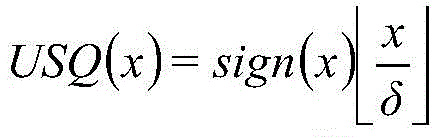
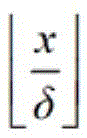
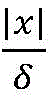
此外,根据本发明的又一个方面的图像处理系统,其中所述量化装置利用均匀阶梯量化函数USQ对所述叠加图像和所述差异特征执行所述量化处理,Furthermore, the image processing system according to still another aspect of the present invention, wherein the quantization means performs the quantization process on the superimposed image and the difference feature using a uniform step quantization function USQ,

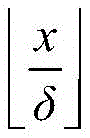
其中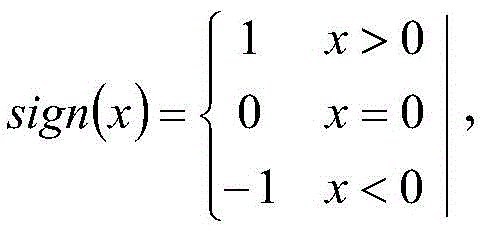
此外,根据本发明的又一个方面的图像处理系统,其中所述量化装置利用逆均匀阶梯量化函数InvUSQ对所述均匀阶梯量化函数USQ的输出q执行所述逆量化处理,以生成所述量化叠加图像和所述量化差异特征,Furthermore, the image processing system according to still another aspect of the present invention, wherein the quantization means performs the inverse quantization process on the output q of the uniform staircase quantization function USQ using an inverse uniform staircase quantization function InvUSQ to generate the quantized superposition image and the quantified difference feature,
其中InvUSQ(q)=sign(q)(|q|+0.5)δ。where InvUSQ(q)=sign(q)(|q|+0.5)δ.
此外,根据本发明的又一个方面的图像处理系统,其中所述图像叠加模块将所述第一图像乘以第一权重参数以获得第一乘积,将所述更新特征乘以第二权重参数以获得第二乘积,叠加所述第一乘积和所述第二乘积以生成叠加图像;所述图像去叠加模块将所述更新特征乘以所述第二权重参数以获得第二乘积,从所述量化叠加图像去除所述第二乘积以获得第一乘积,将所述第一乘积除以所述第一权重参数以获得所述第三图像;其中所述第一权重参数大于0,并且所述第一权重参数与所述第二权重参数的和为1。Furthermore, the image processing system according to still another aspect of the present invention, wherein the image overlay module multiplies the first image by a first weight parameter to obtain a first product, and multiplies the update feature by a second weight parameter to obtain a first product. obtaining a second product, and superimposing the first product and the second product to generate a superimposed image; the image de-stacking module multiplies the updated feature by the second weight parameter to obtain a second product, from the quantizing the superimposed image by removing the second product to obtain a first product, and dividing the first product by the first weight parameter to obtain the third image; wherein the first weight parameter is greater than 0, and the The sum of the first weight parameter and the second weight parameter is 1.
此外,根据本发明的又一个方面的图像处理系统,还包括:拆分单元,与所述第一图像输入端和所述多个第二图像输入端相连,用于将输入的原始图像进行拆分,以获得所述第一图像和所述多个第二图像。In addition, the image processing system according to another aspect of the present invention further includes: a splitting unit, connected to the first image input terminal and the plurality of second image input terminals, for splitting the input original image points to obtain the first image and the plurality of second images.
此外,根据本发明的又一个方面的图像处理系统,其中所述拆分单元将原始图像拆分为2n个图像,第一图像的数量为1,第二图像的数量为2n-1,n为大于0的整数。In addition, according to the image processing system of another aspect of the present invention, wherein the splitting unit splits the original image into 2n images, the number of the first image is 1, the number of the second image is 2n−1, and n is Integer greater than 0.
此外,根据本发明的又一个方面的图像处理系统,还包括:拼接单元,与所述输出端和输出接口相连,用于将所述第三图像和所述多个第四图像拼接以获得解码图像,并且通过所述输出接口输出所述解码图像。In addition, the image processing system according to another aspect of the present invention further includes: a splicing unit, connected to the output end and the output interface, for splicing the third image and the plurality of fourth images to obtain decoding image, and output the decoded image through the output interface.
根据本发明的再一个方面,提供了一种用于图像处理系统的训练方法,包括:选择固定的所述量化参数;将训练图像输入所述图像处理系统,调整所述第一到第四卷积神经网络模块中各卷积层中各滤波单元的权值,运行有限次迭代以使目标函数最优化;以及将所述量化参数减小预定值,如果所述量化参数不小于预定阈值,则重复使目标函数最优化的训练步骤,否则结束所述训练方法。According to yet another aspect of the present invention, there is provided a training method for an image processing system, comprising: selecting a fixed quantization parameter; inputting a training image into the image processing system, adjusting the first to fourth volumes Integrate the weights of each filtering unit in each convolutional layer in the neural network module, and run a finite number of iterations to optimize the objective function; and reduce the quantization parameter by a predetermined value, if the quantization parameter is not less than a predetermined threshold, then The training steps to optimize the objective function are repeated, otherwise the training method ends.
此外,根据本发明的再一个方面的训练方法,其中所述目标函数为:In addition, according to the training method of another aspect of the present invention, the objective function is:
θ=argθminXMSE(X,OUTθ(X,δ))θ=arg θ min X MSE(X,OUT θ (X,δ))
X代表输入的所述训练图像,OUT代表输出图像,MSE是输入的所述训练图像与所述输出图像之间的均方差函数。X represents the input training image, OUT represents the output image, and MSE is the mean square error function between the input training image and the output image.
根据本发明的另一个方面,提供了一种显示装置,包括前述图像编码装置、图像解码装置和/或图像处理系统。According to another aspect of the present invention, there is provided a display device including the aforementioned image encoding device, image decoding device and/or image processing system.
本发明提供的图像编码装置、图像解码装置以及包括该图像编解码装置的图像处理系统引入了卷积神经网络模块,通过训练处理实现各卷积神经网络模块参数的优化设置,实现更高的压缩率与更好的图像质量的均衡优化。The image encoding device, the image decoding device and the image processing system including the image encoding and decoding device provided by the present invention introduce a convolutional neural network module, and through training processing, the parameters of each convolutional neural network module can be optimized and set to achieve higher compression. Balanced optimization of rate and better image quality.
附图说明Description of drawings
通过结合附图对本发明实施例进行更详细的描述,本发明的上述以及其它目的、特征和优势将变得更加明显。附图用来提供对本发明实施例的进一步理解,并且构成说明书的一部分,与本发明实施例一起用于解释本发明,并不构成对本发明的限制。在附图中,相同的参考标号通常代表相同部件或步骤。The above and other objects, features and advantages of the present invention will become more apparent from the detailed description of the embodiments of the present invention in conjunction with the accompanying drawings. The accompanying drawings are used to provide a further understanding of the embodiments of the present invention, and constitute a part of the specification, and together with the embodiments of the present invention, they are used to explain the present invention, and do not limit the present invention. In the drawings, the same reference numbers generally refer to the same components or steps.
图1是图示用于图像处理的卷积神经网络的示意图;1 is a schematic diagram illustrating a convolutional neural network for image processing;
图2是图示用于多分辨率图像变换的小波变换的示意图;2 is a schematic diagram illustrating a wavelet transform for multi-resolution image transformation;
图3是利用卷积神经网络实现小波变换的图像处理系统的结构示意图;Fig. 3 is the structural representation of the image processing system that utilizes convolutional neural network to realize wavelet transform;
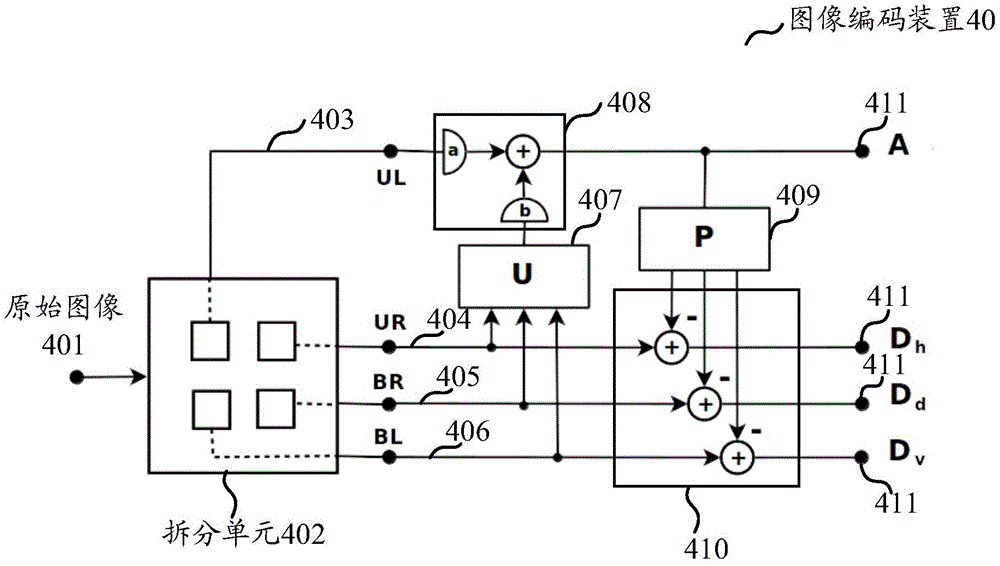
图4是图示根据本发明第一实施例的图像编码装置的结构示意图;4 is a schematic structural diagram illustrating an image encoding apparatus according to a first embodiment of the present invention;
图5是图示根据本发明第一实施例的图像解码装置的结构示意图;5 is a schematic structural diagram illustrating an image decoding apparatus according to a first embodiment of the present invention;
图6是图示根据本发明第二实施例的图像处理系统的结构示意图;以及FIG. 6 is a schematic structural diagram illustrating an image processing system according to a second embodiment of the present invention; and
图7是图示根据本发明第三实施例的训练方法的流程图。FIG. 7 is a flowchart illustrating a training method according to a third embodiment of the present invention.
具体实施方式Detailed ways
为了使得本发明的目的、技术方案和优点更为明显,下面将参照附图详细描述根据本发明的示例实施例。显然,所描述的实施例仅仅是本发明的一部分实施例,而不是本发明的全部实施例,应理解,本发明不受这里描述的示例实施例的限制。基于本发明中描述的本发明实施例,本领域技术人员在没有付出创造性劳动的情况下所得到的所有其它实施例都应落入本发明的保护范围之内。In order to make the objects, technical solutions and advantages of the present invention more apparent, exemplary embodiments according to the present invention will be described in detail below with reference to the accompanying drawings. Obviously, the described embodiments are only some of the embodiments of the present invention, not all of the embodiments of the present invention, and it should be understood that the present invention is not limited by the example embodiments described herein. Based on the embodiments of the present invention described in the present invention, all other embodiments obtained by those skilled in the art without creative efforts shall fall within the protection scope of the present invention.
在详细描述根据本发明实施例的图像编码装置、图像解码装置和图像处理系统之前,先参照附图描述卷积神经网络用于图像编码、解码处理的基本概念。Before describing in detail the image encoding device, the image decoding device, and the image processing system according to the embodiments of the present invention, the basic concept of the convolutional neural network used for image encoding and decoding processing will be described with reference to the accompanying drawings.
图1是图示用于图像处理的卷积神经网络的示意图。用于图像处理的卷积神经网络是使用图像作为输入和输出,并且通过滤波器(即,卷积)替代标量权重。图1中示出了具有3层的简单结构。如图1所示,在输入层101输入4个输入图像,在中间的隐藏层102存在3个单元以输出3个输出图像,而在输出层103存在2个单元以输出2个输出图像。输入层101中的具有权重

图2是图示用于多分辨率图像变换的小波变换的示意图。小波变换是一种用于图像编解码处理的多分辨率图像变换,其应用包括JPEG 2000标准中的变换编码。在图像编码(压缩)处理中,小波变换用于以更小的低分辨率图像(例如,原始图像的一部分图像)代表原始的高分辨率图像。在图像解码(解压)处理中,逆小波变换用于利用低分辨率图像以及恢复原始图像所需的差异特征,恢复得到原始图像。FIG. 2 is a schematic diagram illustrating wavelet transform for multi-resolution image transformation. Wavelet transform is a multi-resolution image transform used for image coding and decoding, and its applications include transform coding in the JPEG 2000 standard. In an image encoding (compression) process, wavelet transform is used to represent an original high-resolution image with a smaller, low-resolution image (eg, an image of a portion of the original image). In the image decoding (decompression) process, the inverse wavelet transform is used to restore the original image using the low-resolution image and the difference features required to restore the original image.
图2示意性地示出了3级小波变换和逆变换。如图2所示,更小的低分辨率图像之一是原始图像的缩小版本A,而其他的低分辨率图像代表恢复原始图像所需的丢失的细节(Dh、Dv和Dd)。Figure 2 schematically shows a 3-level wavelet transform and an inverse transform. As shown in Figure 2, one of the smaller low-resolution images is a scaled-down version A of the original image, while the other low-resolution images represent the lost details (Dh, Dv, and Dd) needed to restore the original image.
图3是利用卷积神经网络实现小波变换的图像处理系统的结构示意图。提升方案是小波变换的一种有效实施方式,并且是构造小波时的一种灵活的工具。图3示意性地示出了用于1D数据的标准结构。图3的左侧为编码器31。编码器31中的拆分单元302将输入的原始图像301变换为低分辨率图像A和细节D。编码器31进一步使用预测滤波器p和更新滤波器u。对于压缩应用,希望D约为0,使得大部分的信息包含在A中。图3的右侧为解码器32。解码器32的参数是与来自编码器31的滤波器p和u完全相同,而仅仅是滤波器p和u相反地布置。由于编码器31和解码器32的严格对应,该配置确保了经由解码器32的拼接单元303拼接得到的解码图像304与原始图像301完全相同。此外,图3所示的结构也不是限制性的,可以替代地在解码器中先按照更新滤波器u和预测滤波器p的顺序进行配置。FIG. 3 is a schematic structural diagram of an image processing system using a convolutional neural network to realize wavelet transform. Lifting schemes are an efficient implementation of wavelet transform and a flexible tool in constructing wavelets. Figure 3 schematically shows a standard structure for 1D data. The left side of FIG. 3 is the encoder 31 . The splitting unit 302 in the encoder 31 transforms the input
以下,将参照附图进一步详细描述根据本发明实施例的图像编码装置、图像解码装置以及包括该图像编解码装置的图像处理系统。Hereinafter, an image encoding device, an image decoding device, and an image processing system including the image encoding and decoding device according to embodiments of the present invention will be described in further detail with reference to the accompanying drawings.
图4是图示根据本发明第一实施例的图像编码装置的结构示意图。FIG. 4 is a schematic structural diagram illustrating an image encoding apparatus according to the first embodiment of the present invention.
如图4所示,根据本发明第一实施例的图像编码装置40包括拆分单元402用于将输入的原始图像进行拆分,以获得第一图像UL和多个第二图像UR、BR、BL。As shown in FIG. 4 , the image coding apparatus 40 according to the first embodiment of the present invention includes a splitting unit 402 for splitting an input original image to obtain a first image UL and a plurality of second images UR, BR, BL.
第一图像输入端403用于接收来自所述拆分单元402的第一图像UL。多个第二图像输入端404、405、406分别用于接收来自所述拆分单元402的多个第二图像UR、BR、BL。The first
第一卷积神经网络模块407与所述多个第二图像输入端404、405、406连接,用于对所述多个第二图像更新UR、BR、BL,以得到相应的更新特征。在本发明的第一实施例中,所述第一卷积神经网络模块407可以是参照图3描述的更新滤波器。The first convolutional
图像叠加模块408与所述第一图像输入端403、所述第一卷积神经网络模块407和输出接口411连接,用于将所述更新特征U与所述第一图像按照UL叠加权重叠加以生成叠加图像A,将所述叠加图像A通过所述输出接口411输出。The
在本发明的一个实施例中,所述图像叠加模块408将所述第一图像UL乘以第一权重参数a以获得第一乘积,将所述更新特征U乘以第二权重参数b以获得第二乘积,叠加所述第一乘积和所述第二乘积以生成叠加图像A。所述第一权重参数a大于0,并且所述第一权重参数a与所述第二权重参数b的和为1。即,在所述图像叠加模块408中:In an embodiment of the present invention, the
A=aUL+bU 表达式1A=aUL+
a+b=1且a>0 表达式2a+b=1 and a>0 Expression 2
第二卷积神经网络模块409与所述图像叠加模块408连接,用于根据所述叠加图像A,生成多个预测图像。The second convolutional
图像差异获取模块410与所述多个第二图像输入端404、405、406、所述第二卷积神经网络模块409和所述输出接口411连接,确定所述多个第二图像UR、BR、BL的每个与相应的所述预测图像的差异特征Dh、Dd和Dv,将所述差异特征Dh、Dd和Dv通过所述输出接口411输出。The image
在本发明的第一实施例中,所述第一卷积神经网络模块407、所述图像叠加模块408、所述第二卷积神经网络模块409和所述图像差异获取模块410构成了图像编码装置40的压缩单元,其对于从所述拆分单元402输入的第一图像UL和多个第二图像UR、BR、BL执行基于提升方案的小波变换的图像压缩。In the first embodiment of the present invention, the first convolutional
图5是图示根据本发明第一实施例的图像解码装置的结构示意图。图5所示的图像解码装置可以用于对图4所示的图像编码装置的输出图像进行解码。FIG. 5 is a schematic structural diagram illustrating an image decoding apparatus according to the first embodiment of the present invention. The image decoding apparatus shown in FIG. 5 can be used to decode the output image of the image encoding apparatus shown in FIG. 4 .
如图5所示,根据本发明第一实施例的图像解码装置50包括As shown in FIG. 5, the image decoding apparatus 50 according to the first embodiment of the present invention includes
叠加图像输入端507用于接收叠加图像A。差异特征输入端504、505和506,用于接收差异特征Dh、Dd和Dv。所述叠加图像A可以是从图4所示的图像编码装置40的所述输出接口411输出的来自所述图像叠加模块408的图像数据。所述差异特征Dh、Dd和Dv可以是从图4所示的图像编码装置40的所述输出接口411输出的来自所述图像差异获取模块410的图像数据。The superimposed
第三卷积神经网络模块507与所述叠加图像输入端507连接,用于根据所述叠加图像A,生成多个预测图像。The third convolutional
去差异模块508与所述差异特征输入端504、505和506、所述第三卷积神经网络模块507以及输出端512、513和514连接,用于根据所述多个预测图像和所述差异特征Dh、Dd和Dv,生成多个第二图像UR、BR、BL,并且将所述多个第二图像通过所述输出端512、513和514输出。The
第四卷积神经网络模块509,与所述去差异模块508连接,用于对所述多个第二图像更新,以得到相应的更新特征U。The fourth convolutional
图像去叠加模块510,与所述叠加图像输入端503、所述第四卷积神经网络模块509和所述输出端511连接,用于根据所述更新特征U及其叠加权重对所述叠加图像A执行去叠加,以得到第一图像UL,并且将所述第一图像UL通过所述输出端511输出。The
在本发明的一个实施例中,所述图像去叠加模块510将所述更新特征乘U以第二权重参数b以获得第二乘积bU,从所述叠加图像A去除所述第二乘积以获得第一乘积(A-bU),将所述第一乘积(A-bU)除以第一权重参数a以获得所述第一图像UL;其中所述第一权重参数大于0,并且所述第一权重参数与所述第二权重参数的和为1。即,在所述图像叠加模块510中:In one embodiment of the present invention, the
UL=(A-bU)/a 表达式3UL=(A-bU)/a Expression 3
a+b=1且a>0 表达式4a+b=1 and a>0 Expression 4
也就是说,所述图像去叠加模块510与所述图像叠加模块408执行相反的处理,其中所述第一权重参数和所述第二权重参数满足相同的条件。由此,所述图像去叠加模块510输出的第一图像UL可以是与原始图像拆分所得的第一图像相同。That is, the
拼接单元502与各输出端511-514和输出接口515相连,用于将所述第一图像UL和所述多个第二图像UR、BR、BL拼接以获得解码图像501,并且通过所述输出接口515输出所述解码图像501。The splicing unit 502 is connected with each output terminal 511-514 and the
如上所述,如果图5所示的图像解码装置50中的第三卷积神经网络模块507和第四卷积神经网络模块509与图4所示的图像编码装置40中的第二卷积神经网络模块409和第一卷积神经网络模块407的滤波参数相同,并且使图5所示的图像解码装置50中的图像去叠加模块510所执行的去叠加过程与图4所示的图像编码装置40中图像叠加模块408所执行的叠加过程完全相反,并且使图5所示的图像解码装置50中的去差异模块508所执行的去差异过程与图4所示的图像编码装置40中图像差异获取模块410所执行的差异获取过程完全相反,即可通过图5所示的图像解码装置50精确解码还原图4所示的图像编码装置40编码压缩的图像,而与各个卷积神经网络的滤波参数无关。As described above, if the third convolutional
在本发明的第一实施例中,通过第一卷积神经网络模块407完成更新过程,并且通过第二卷积神经网络模块409完成预测过程,在具体应用时,通过对第一卷积神经网络模块407和第二卷积神经网络模块409进行相应的训练,使得第一卷积神经网络模块407和第二卷积神经网络模块409具有优化的滤波参数,从而使得该图像编码装置具有较高的压缩率,而无需人为设定相应的滤波参数,降低了滤波参数的设置复杂度。In the first embodiment of the present invention, the update process is completed by the first convolutional
进一步地,在本发明的第一实施例中,设置用于图像叠加的权重参数a,从而进一步提高了编码器的降尺度和解码器的升尺度的性能和自由度。Further, in the first embodiment of the present invention, the weight parameter a for image overlay is set, thereby further improving the performance and degree of freedom of downscaling of the encoder and upscaling of the decoder.
此外,在本发明的第一实施例中,通过合适的训练,使得输出的差异特征Dh、Dd和Dv大约为0,总体压缩率可以接近75%。在图4所示的拆分单元402执行的拆分处理中,以左侧上方的第一图像UL预测图像UR、BR和BL。本发明不限于此,在替代实施例中,也可以利用图像UR、BR和BL作为第一图像预测其他图像。此外,在本发明的第一实施例中,第一图像的数量为1。本发明不限于此,在替代实施例中,也可以利用两个图像预测两个图像,或者三个图像预测三个图像。由于得到的叠加图像的数量与第一图像的数量相同,因此在仅有一个图像压缩单元的情况下,采用两个图像预测两个图像的压缩率的理论最大值为50%,采用三个图像预测三个图像的压缩率的理论最大值为25%。更进一步地,在本发明的第一实施例中,采用由第一卷积神经网络模块407和第二卷积神经网络模块409组成的单级压缩系统。本发明不限于此,在替代实施例中,可以采用两级和更多级的压缩配置。In addition, in the first embodiment of the present invention, through appropriate training, the output differential features D h , D d and D v are about 0, and the overall compression rate can be close to 75%. In the splitting process performed by the splitting unit 402 shown in FIG. 4 , the pictures UR, BR, and BL are predicted with the first picture UL on the upper left. The invention is not limited to this, and in alternative embodiments, other pictures may also be predicted using the pictures UR, BR and BL as the first picture. Furthermore, in the first embodiment of the present invention, the number of the first images is one. The present invention is not limited thereto, and in alternative embodiments, two images may be used to predict two images, or three images may be used to predict three images. Since the number of superimposed images obtained is the same as the number of first images, in the case of only one image compression unit, the theoretical maximum value of the compression ratio of two images is predicted to be 50% using two images. The theoretical maximum of the compression ratio for the three images is predicted to be 25%. Furthermore, in the first embodiment of the present invention, a single-stage compression system consisting of a first convolutional
如上所述,图5所示的图像解码装置50精确解码还原图4所示的图像编码装置40编码压缩的图像,即图4所示的图像编码装置40和图5所示的图像解码装置50组成一个无损系统。在实际应用中,在诸如JPEG2000的标准中,需要对编码数据执行量化处理,然后对量化的编码数据接近解码,从而整体形成一个有损系统。As described above, the image decoding apparatus 50 shown in FIG. 5 accurately decodes and restores the image encoded and compressed by the image coding apparatus 40 shown in FIG. 4 , namely the image coding apparatus 40 shown in FIG. 4 and the image decoding apparatus 50 shown in FIG. 5 . form a lossless system. In practical applications, in a standard such as JPEG2000, it is necessary to perform quantization processing on the encoded data, and then approximately decode the quantized encoded data, thereby forming a lossy system as a whole.
图6是图示根据本发明第二实施例的图像处理系统的结构示意图。如图6所示的根据本发明第二实施例的图像处理系统6包括图4所示的图像编码装置40和图5所示的图像解码装置50,根据本发明第二实施例的图像处理系统6还包括量化装置60。FIG. 6 is a schematic structural diagram illustrating an image processing system according to a second embodiment of the present invention. The image processing system 6 according to the second embodiment of the present invention as shown in FIG. 6 includes the image encoding apparatus 40 shown in FIG. 4 and the image decoding apparatus 50 shown in FIG. 5, and the image processing system according to the second embodiment of the present invention 6 also includes quantization means 60.
如图6所示,量化装置60与图像编码装置40和图像解码装置50连接。图6中的图像编码装置40的结构和输入输出与参照图4的描述相同,在此将省略其重复描述。As shown in FIG. 6 , the quantization device 60 is connected to the image encoding device 40 and the image decoding device 50 . The structure and input and output of the image encoding apparatus 40 in FIG. 6 are the same as those described with reference to FIG. 4 , and the repeated description thereof will be omitted here.
量化装置60与所述图像编码装置40连接,用于接收从所述输出接口411输出的所述叠加图像A和所述差异特征Dh、Dd和Dv,对所述叠加图像A和所述差异特征Dh、Dd和Dv执行量化处理和逆量化处理,以生成量化叠加图像和量化差异特征。The quantization device 60 is connected to the image encoding device 40, and is used for receiving the superimposed image A and the difference features D h , D d and D v output from the
具体地,所述量化装置利用均匀阶梯量化函数USQ对所述叠加图像和所述差异特征执行所述量化处理,Specifically, the quantization device performs the quantization process on the superimposed image and the difference feature by using a uniform step quantization function USQ,

其中
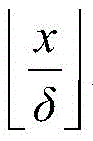
由表达式5表示的量化处理符合JPEG2000标准。The quantization process represented by
根据JPEG2000标准,所述量化装置利用逆均匀阶梯量化函数InvUSQ对所述均匀阶梯量化函数USQ的输出q执行所述逆量化处理,以生成所述量化叠加图像和所述量化差异特征,其中According to the JPEG2000 standard, the quantization apparatus performs the inverse quantization process on the output q of the uniform staircase quantization function USQ using an inverse uniform staircase quantization function InvUSQ, to generate the quantized superimposed image and the quantized difference feature, wherein
InvUSQ(q)=sign(q)(|q|+0.5)δ 表达式6InvUSQ(q)=sign(q)(|q|+0.5)δ Expression 6
如上所述,通过编码装置和解码装置中的卷积神经网络模块进行相应的训练,可以为各卷积神经网络模块设定相应的滤波参数。对于如图6所示的根据本发明第二实施例的图像处理系统,由于引入了量化参数δ,需要提供一种同时训练编码装置和解码装置中的各卷积神经网络模块和量化模块的训练方法。As described above, by performing corresponding training on the convolutional neural network modules in the encoding device and the decoding device, corresponding filtering parameters can be set for each convolutional neural network module. For the image processing system shown in FIG. 6 according to the second embodiment of the present invention, since the quantization parameter δ is introduced, it is necessary to provide a training method for simultaneously training each convolutional neural network module and quantization module in the encoding device and the decoding device method.
图7是图示根据本发明第三实施例的训练方法的流程图。如图7所示,根据本发明第三实施例的训练方法包括以下步骤。FIG. 7 is a flowchart illustrating a training method according to a third embodiment of the present invention. As shown in FIG. 7 , the training method according to the third embodiment of the present invention includes the following steps.
在步骤S701中,选择固定的所述量化参数δ。在本发明第三实施例中,量化参数δ的初始值需要较大(例如,1000),使得其输出类似于无损系统,其优化问题容易解决。此后,处理进到步骤S702。In step S701, the fixed quantization parameter δ is selected. In the third embodiment of the present invention, the initial value of the quantization parameter δ needs to be large (for example, 1000), so that its output is similar to a lossless system, and its optimization problem is easy to solve. After that, the process proceeds to step S702.
在步骤S702,在所述量化参数δ固定的情况下,将训练图像输入所述图像处理系统,调整所述第一到第四卷积神经网络模块中各卷积层中各滤波单元的权值,运行有限次迭代以使目标函数最优化。In step S702, when the quantization parameter δ is fixed, input the training image into the image processing system, and adjust the weights of the filtering units in the convolutional layers in the first to fourth convolutional neural network modules , run a finite number of iterations to optimize the objective function.
所述目标函数为:The objective function is:
θ=argθminXMSE(X,OUTθ(X,δ)) 表达式7θ=arg θ min X MSE(X,OUT θ (X,δ)) Expression 7
X代表输入的所述训练图像,OUT代表输出图像,MSE是输入的所述训练图像与所述输出图像之间的均方差函数。此后,处理进到步骤S703。X represents the input training image, OUT represents the output image, and MSE is the mean square error function between the input training image and the output image. After that, the process proceeds to step S703.
在步骤S703中,将所述量化参数减小预定值。例如,可以将量化参数减小5%。此后,处理进到步骤S704。In step S703, the quantization parameter is decreased by a predetermined value. For example, the quantization parameter can be reduced by 5%. After that, the process proceeds to step S704.
在步骤S704中,判断所述量化参数是否不小于预定阈值。所述预定阈值是预先确定的,例如1。In step S704, it is determined whether the quantization parameter is not less than a predetermined threshold. The predetermined threshold is predetermined,
如果在步骤S704获得肯定结果,即所述量化参数不小于预定阈值,则处理返回步骤702,以便重复步骤S702中的训练。If a positive result is obtained in step S704, that is, the quantization parameter is not smaller than the predetermined threshold, the process returns to step 702 to repeat the training in step S702.
相反地,如果在步骤S704中获得否定结果,即所述量化参数已经足够小,则结束训练过程。Conversely, if a negative result is obtained in step S704, that is, the quantization parameter is sufficiently small, the training process ends.
由图7所示的根据本发明第三实施例的训练方法可见,训练目标是减小MSE和量化参数δ两者。而如果MSE是0时,则量化参数δ非常大;而如果量化参数δ非常小,则MSE很大。因此,在训练过程中,需要根据可接受的量化压缩水平和图像质量,在MSE和量化参数δ两者之间进行适当的折中。It can be seen from the training method according to the third embodiment of the present invention shown in FIG. 7 that the training objective is to reduce both the MSE and the quantization parameter δ. And if the MSE is 0, the quantization parameter δ is very large; and if the quantization parameter δ is very small, the MSE is very large. Therefore, in the training process, an appropriate compromise needs to be made between the MSE and the quantization parameter δ according to the acceptable quantization compression level and image quality.
此外,如以上参照图4到图6描述的图像编码、解码装置以及图像处理系统还可以用于根据本发明实施例的显示装置。根据本发明实施例的显示装置可以是诸如手机、平板电脑、电视机、显示器等任何具有显示功能的产品或部件。In addition, the image encoding and decoding apparatus and the image processing system as described above with reference to FIGS. 4 to 6 may also be used for the display apparatus according to the embodiment of the present invention. The display device according to the embodiment of the present invention may be any product or component with a display function, such as a mobile phone, a tablet computer, a TV, and a monitor.
以上,参照附图描述了根据本发明的图像编码装置、图像解码装置、包括该图像编解码装置的图像处理系统、用于该图像处理系统训练方法以及显示装置。根据本发明的图像编码装置、图像解码装置、包括该图像编解码装置的图像处理系统通过新的权重参数,提高了编码器的降尺度和解码器的升尺度的性能和自由度,从而进一步改进了总体系统的性能。此外,根据本发明的用于该图像处理系统训练方法通过在不同量化参数的情况下优化整体系统的压缩效率,实现了更高的压缩性能。In the above, the image encoding device, the image decoding device, the image processing system including the image encoding and decoding device, the training method for the image processing system, and the display device according to the present invention have been described with reference to the accompanying drawings. The image encoding device, the image decoding device, and the image processing system including the image encoding and decoding device according to the present invention improve the performance and degree of freedom of downscaling of the encoder and upscaling of the decoder through new weight parameters, thereby further improving overall system performance. In addition, the training method for the image processing system according to the present invention achieves higher compression performance by optimizing the compression efficiency of the overall system under different quantization parameters.
需要说明的是,在本说明书中,术语“包括”、“包含”或者其任何其他变体意在涵盖非排他性的包含,从而使得包括一系列要素的过程、方法、物品或者设备不仅包括那些要素,而且还包括没有明确列出的其他要素,或者是还包括为这种过程、方法、物品或者设备所固有的要素。在没有更多限制的情况下,由语句“包括一个……”限定的要素,并不排除在包括所述要素的过程、方法、物品或者设备中还存在另外的相同要素。It should be noted that, in this specification, the terms "comprising", "comprising" or any other variation thereof are intended to encompass non-exclusive inclusion, such that a process, method, article or device comprising a series of elements includes not only those elements , but also other elements not expressly listed or inherent to such a process, method, article or apparatus. Without further limitation, an element qualified by the phrase "comprising a..." does not preclude the presence of additional identical elements in a process, method, article or apparatus that includes the element.
最后,还需要说明的是,上述一系列处理不仅包括以这里所述的顺序按时间序列执行的处理,而且包括并行或分别地、而不是按时间顺序执行的处理。Finally, it should also be noted that the above series of processing includes not only processing performed in time series in the order described here, but also processing performed in parallel or separately, rather than in time series.
通过以上的实施方式的描述,本领域的技术人员可以清楚地了解到本发明可借助软件加必需的硬件平台的方式来实现,当然也可以全部通过硬件来实施。基于这样的理解,本发明的技术方案对背景技术做出贡献的全部或者部分可以以软件产品的形式体现出来,该计算机软件产品可以存储在存储介质中,如ROM/RAM、磁碟、光盘等,包括若干指令用以使得一台计算机设备(可以是个人计算机,服务器,或者网络设备等)执行本发明各个实施例或者实施例的某些部分所述的方法。From the description of the above embodiments, those skilled in the art can clearly understand that the present invention can be implemented by means of software plus a necessary hardware platform, and certainly can also be implemented entirely by hardware. Based on this understanding, all or part of the technical solutions of the present invention can be embodied in the form of software products, and the computer software products can be stored in storage media, such as ROM/RAM, magnetic disks, optical disks, etc. , including several instructions for causing a computer device (which may be a personal computer, a server, or a network device, etc.) to perform the methods described in various embodiments or some parts of the embodiments of the present invention.
以上对本发明进行了详细介绍,本文中应用了具体个例对本发明的原理及实施方式进行了阐述,以上实施例的说明只是用于帮助理解本发明的方法及其核心思想;同时,对于本领域的一般技术人员,依据本发明的思想,在具体实施方式及应用范围上均会有改变之处,综上所述,本说明书内容不应理解为对本发明的限制。The present invention has been introduced in detail above, and the principles and implementations of the present invention are described in this paper by using specific examples. The descriptions of the above embodiments are only used to help understand the method and the core idea of the present invention; According to the idea of the present invention, a person of ordinary skill in the art will have changes in the specific embodiments and application scope. In conclusion, the contents of this specification should not be construed as limiting the present invention.
Claims (9)

Priority Applications (3)
| Application Number | Priority Date | Filing Date | Title |
|---|---|---|---|
| CN201610885633.4A CN107920248B (en) | 2016-10-11 | 2016-10-11 | Image coding and decoding device, image processing system, training method and display device |
| US15/745,091 US10666944B2 (en) | 2016-10-11 | 2017-06-27 | Image encoding/decoding apparatus, image processing system, image encoding/decoding method and training method |
| PCT/CN2017/090260 WO2018068532A1 (en) | 2016-10-11 | 2017-06-27 | Image encoding and decoding devices, image processing system, image encoding and decoding methods, and training method |
Applications Claiming Priority (1)
| Application Number | Priority Date | Filing Date | Title |
|---|---|---|---|
| CN201610885633.4A CN107920248B (en) | 2016-10-11 | 2016-10-11 | Image coding and decoding device, image processing system, training method and display device |
Publications (2)
| Publication Number | Publication Date |
|---|---|
| CN107920248A CN107920248A (en) | 2018-04-17 |
| CN107920248B true CN107920248B (en) | 2020-10-30 |
Family
ID=61892520
Family Applications (1)
| Application Number | Title | Priority Date | Filing Date |
|---|---|---|---|
| CN201610885633.4A Active CN107920248B (en) | 2016-10-11 | 2016-10-11 | Image coding and decoding device, image processing system, training method and display device |
Country Status (3)
| Country | Link |
|---|---|
| US (1) | US10666944B2 (en) |
| CN (1) | CN107920248B (en) |
| WO (1) | WO2018068532A1 (en) |
Families Citing this family (26)
| Publication number | Priority date | Publication date | Assignee | Title |
|---|---|---|---|---|
| GB201607879D0 (en) * | 2016-05-05 | 2016-06-22 | Magic Pony Technology Ltd | Video encoding using hierarchical algorithms |
| WO2018033137A1 (en) * | 2016-08-19 | 2018-02-22 | 北京市商汤科技开发有限公司 | Method, apparatus, and electronic device for displaying service object in video image |
| US20190035113A1 (en) * | 2017-07-27 | 2019-01-31 | Nvidia Corporation | Temporally stable data reconstruction with an external recurrent neural network |
| US12131250B2 (en) * | 2017-09-29 | 2024-10-29 | Intel Corporation | Inner product convolutional neural network accelerator |
| CN107895174B (en) | 2017-11-09 | 2020-01-07 | 京东方科技集团股份有限公司 | Image classification and conversion method, device, and image processing system |
| CN107801026B (en) | 2017-11-09 | 2019-12-03 | 京东方科技集团股份有限公司 | Method for compressing image and device, compression of images and decompression systems |
| US10706267B2 (en) * | 2018-01-12 | 2020-07-07 | Qualcomm Incorporated | Compact models for object recognition |
| CN110971915B (en) * | 2018-09-28 | 2022-07-01 | 杭州海康威视数字技术股份有限公司 | Filtering method and device |
| CN111247797A (en) * | 2019-01-23 | 2020-06-05 | 深圳市大疆创新科技有限公司 | Method and apparatus for image encoding and decoding |
| WO2020256339A1 (en) * | 2019-06-18 | 2020-12-24 | 삼성전자주식회사 | Electronic device and control method of same |
| KR20220027233A (en) * | 2019-07-01 | 2022-03-07 | 옵티멈 세미컨덕터 테크놀로지스 인코포레이티드 | Feedback Decoder for Parametric-Efficient Semantic Image Segmentation |
| CN114390296A (en) * | 2019-07-15 | 2022-04-22 | 华为技术有限公司 | Image coding and decoding method and device based on wavelet transformation |
| CN112434702A (en) * | 2019-08-26 | 2021-03-02 | 阿里巴巴集团控股有限公司 | Image processing method, image processing device, computer equipment and storage medium |
| KR102436512B1 (en) * | 2019-10-29 | 2022-08-25 | 삼성전자주식회사 | Method and Apparatus for video encoding and Method and Apparatus for video decoding |
| US11747774B2 (en) * | 2019-12-03 | 2023-09-05 | Hitachi High-Tech Corporation | Search device, search program, and plasma processing apparatus |
| US11258854B2 (en) | 2020-01-31 | 2022-02-22 | Bank Of America Corporation | Data sharding for transmission over a high generation cellular network |
| CN111612790B (en) * | 2020-04-29 | 2023-10-17 | 杭州电子科技大学 | A medical image segmentation method based on T-shaped attention structure |
| US12190548B2 (en) | 2020-09-23 | 2025-01-07 | Electronics And Telecommunications Research Institute | Method, apparatus, system and computer-readable recording medium for feature information |
| US11330263B1 (en) * | 2020-12-03 | 2022-05-10 | Synamedia Limited | Machine learning based coded size estimation in rate control of video encoding |
| US12452414B2 (en) * | 2020-12-08 | 2025-10-21 | Electronics And Telecommunications Research Institute | Method, apparatus and storage medium for image encoding/decoding using filtering |
| CN112686900B (en) * | 2020-12-31 | 2024-06-18 | 北京医智影科技有限公司 | Method, apparatus, electronic device and storage medium for automatic image processing |
| CN112734622B (en) * | 2021-03-30 | 2021-07-20 | 深圳大学 | Image steganalysis method and terminal based on Tucker decomposition |
| CN114240771B (en) * | 2021-11-23 | 2025-03-07 | 无锡学院 | Image deblurring system and method based on dual control network |
| US20250301170A1 (en) * | 2022-04-29 | 2025-09-25 | Mediatek Inc. | Method and Apparatus of Adaptive Weighting for Overlapped Block Motion Compensation in Video Coding System |
| CN118250407B (en) * | 2024-05-28 | 2024-08-02 | 浙江华视智检科技有限公司 | FPGA-based table look-up scanning type image superposition system and method |
| CN119693372B (en) * | 2025-02-25 | 2025-06-10 | 长三角国智(上海)智能医疗科技有限公司 | Gastric cancer lesion segmentation model training method, device, electronic device, storage medium and gastric cancer lesion segmentation method |
Citations (3)
| Publication number | Priority date | Publication date | Assignee | Title |
|---|---|---|---|---|
| CN101039419A (en) * | 2006-03-16 | 2007-09-19 | 汤姆森许可贸易公司 | Method for coding video data of a sequence of pictures |
| CN102510489A (en) * | 2011-09-21 | 2012-06-20 | 北京航空航天大学 | Method for realizing image compression based on folding flow line wavelet transformation |
| CN105611303A (en) * | 2016-03-07 | 2016-05-25 | 京东方科技集团股份有限公司 | Image compression system, decompression system, training method and device, and display device |
Family Cites Families (11)
| Publication number | Priority date | Publication date | Assignee | Title |
|---|---|---|---|---|
| US6018753A (en) * | 1997-07-29 | 2000-01-25 | Lucent Technologies Inc. | Interpolating filter banks in arbitrary dimensions |
| US6738523B1 (en) * | 2000-09-14 | 2004-05-18 | Eastman Kodak Company | Parallel inverse discrete wavelet transform |
| US7817869B2 (en) * | 2004-05-07 | 2010-10-19 | Sony Corporation | Variable support robust transform for multiple description coding |
| US7565020B2 (en) * | 2004-07-03 | 2009-07-21 | Microsoft Corp. | System and method for image coding employing a hybrid directional prediction and wavelet lifting |
| DE102004059978B4 (en) * | 2004-10-15 | 2006-09-07 | Fraunhofer-Gesellschaft zur Förderung der angewandten Forschung e.V. | Apparatus and method for generating a coded video sequence and decoding a coded video sequence using interlayer residue prediction, and a computer program and computer readable medium |
| US20060262860A1 (en) * | 2005-02-23 | 2006-11-23 | Chou Jim C | Macroblock adaptive frame/field coding architecture for scalable coding |
| US8275040B2 (en) * | 2005-07-22 | 2012-09-25 | Thomson Licensing | Method and apparatus for weighted prediction for scalable video coding |
| KR20080114388A (en) * | 2007-06-27 | 2008-12-31 | 삼성전자주식회사 | Scalable video encoding apparatus and method and video decoding apparatus and method |
| CN101855910B (en) * | 2007-09-28 | 2014-10-29 | 杜比实验室特许公司 | Video compression and transmission techniques |
| US8559509B2 (en) * | 2008-07-23 | 2013-10-15 | Sk Telecom Co., Ltd. | Wavelet transform apparatus and method based on prediction-update lifting scheme, and adaptive prediction apparatus and method and recording medium for the same |
| CN205408063U (en) | 2016-03-07 | 2016-07-27 | 京东方科技集团股份有限公司 | Image compression system, separate compression system , display device |
-
2016
- 2016-10-11 CN CN201610885633.4A patent/CN107920248B/en active Active
-
2017
- 2017-06-27 US US15/745,091 patent/US10666944B2/en active Active
- 2017-06-27 WO PCT/CN2017/090260 patent/WO2018068532A1/en not_active Ceased
Patent Citations (3)
| Publication number | Priority date | Publication date | Assignee | Title |
|---|---|---|---|---|
| CN101039419A (en) * | 2006-03-16 | 2007-09-19 | 汤姆森许可贸易公司 | Method for coding video data of a sequence of pictures |
| CN102510489A (en) * | 2011-09-21 | 2012-06-20 | 北京航空航天大学 | Method for realizing image compression based on folding flow line wavelet transformation |
| CN105611303A (en) * | 2016-03-07 | 2016-05-25 | 京东方科技集团股份有限公司 | Image compression system, decompression system, training method and device, and display device |
Also Published As
| Publication number | Publication date |
|---|---|
| CN107920248A (en) | 2018-04-17 |
| WO2018068532A1 (en) | 2018-04-19 |
| US20190014320A1 (en) | 2019-01-10 |
| US10666944B2 (en) | 2020-05-26 |
Similar Documents
| Publication | Publication Date | Title |
|---|---|---|
| CN107920248B (en) | Image coding and decoding device, image processing system, training method and display device | |
| EP4218238B1 (en) | Instance-adaptive image and video compression using machine learning systems | |
| US12346803B2 (en) | Generating a compressed representation of a neural network with proficient inference speed and power consumption | |
| EP3276540B1 (en) | Neural network method and apparatus | |
| US10834425B2 (en) | Image compression/decompression method and device, and image processing system | |
| US10769757B2 (en) | Image processing apparatuses and methods, image processing systems and training methods | |
| US20200160565A1 (en) | Methods And Apparatuses For Learned Image Compression | |
| CN105611303B (en) | Image compression system, decompression system, training method and device, display device | |
| EP3354030B1 (en) | Methods and apparatuses for encoding and decoding digital images through superpixels | |
| Zepeda et al. | Image compression using sparse representations and the iteration-tuned and aligned dictionary | |
| WO2022060505A1 (en) | End-to-end neural network based video coding | |
| TW202318878A (en) | Transformer-based architecture for transform coding of media | |
| CN111898638B (en) | Image processing method, electronic device and medium fusing different visual tasks | |
| CN116636217A (en) | Method and device for encoding image and decoding code stream using neural network | |
| WO2022126120A1 (en) | A front-end architecture for neural network based video coding | |
| Zhou et al. | Image compression based on discrete cosine transform and multistage vector quantization | |
| WO2020261314A1 (en) | Image encoding method and image decoding method | |
| US12388999B2 (en) | Method, an apparatus and a computer program product for video encoding and video decoding | |
| JP2023548823A (en) | Method and apparatus for encoding or decoding pictures using a neural network including subnetworks | |
| WO2024081009A1 (en) | Learned transforms for coding | |
| TW202507653A (en) | A method and apparatus for encoding a picture and decoding a bitstream using a neural network | |
| Soltani et al. | Bi-Level Spatial and Channel-aware Transformer for Learned Image Compression | |
| Krishnamoorthy et al. | Low bit-rate multi stage vector quantization based on energy clustered training set | |
| Liu et al. | Frequency Aware Learned Image Compression Using Swin Transformer and Discrete Wavelet Transform | |
| WO2024222681A1 (en) | Image coding method, image decoding method and apparatus |
Legal Events
| Date | Code | Title | Description |
|---|---|---|---|
| PB01 | Publication | ||
| PB01 | Publication | ||
| SE01 | Entry into force of request for substantive examination | ||
| SE01 | Entry into force of request for substantive examination | ||
| GR01 | Patent grant | ||
| GR01 | Patent grant |