CN107817796B - Method and equipment for moving mobile robot in obstacle pasting mode - Google Patents
Method and equipment for moving mobile robot in obstacle pasting mode Download PDFInfo
- Publication number
- CN107817796B CN107817796B CN201711006125.5A CN201711006125A CN107817796B CN 107817796 B CN107817796 B CN 107817796B CN 201711006125 A CN201711006125 A CN 201711006125A CN 107817796 B CN107817796 B CN 107817796B
- Authority
- CN
- China
- Prior art keywords
- mobile robot
- preset
- obstacle
- speed
- robot
- Prior art date
- Legal status (The legal status is an assumption and is not a legal conclusion. Google has not performed a legal analysis and makes no representation as to the accuracy of the status listed.)
- Active
Links
- 238000000034 method Methods 0.000 title claims abstract description 25
- 230000033001 locomotion Effects 0.000 claims abstract description 110
- 238000005070 sampling Methods 0.000 description 6
- 238000010408 sweeping Methods 0.000 description 3
- 230000000903 blocking effect Effects 0.000 description 2
- 230000026058 directional locomotion Effects 0.000 description 2
- 230000002085 persistent effect Effects 0.000 description 2
- 230000005540 biological transmission Effects 0.000 description 1
- 238000010586 diagram Methods 0.000 description 1
- 230000000694 effects Effects 0.000 description 1
- 230000003287 optical effect Effects 0.000 description 1
- 230000003068 static effect Effects 0.000 description 1
Images


Classifications
-
- G—PHYSICS
- G05—CONTROLLING; REGULATING
- G05D—SYSTEMS FOR CONTROLLING OR REGULATING NON-ELECTRIC VARIABLES
- G05D1/00—Control of position, course, altitude or attitude of land, water, air or space vehicles, e.g. using automatic pilots
- G05D1/02—Control of position or course in two dimensions
- G05D1/021—Control of position or course in two dimensions specially adapted to land vehicles
- G05D1/0212—Control of position or course in two dimensions specially adapted to land vehicles with means for defining a desired trajectory
- G05D1/0223—Control of position or course in two dimensions specially adapted to land vehicles with means for defining a desired trajectory involving speed control of the vehicle
-
- G—PHYSICS
- G05—CONTROLLING; REGULATING
- G05D—SYSTEMS FOR CONTROLLING OR REGULATING NON-ELECTRIC VARIABLES
- G05D1/00—Control of position, course, altitude or attitude of land, water, air or space vehicles, e.g. using automatic pilots
- G05D1/02—Control of position or course in two dimensions
- G05D1/021—Control of position or course in two dimensions specially adapted to land vehicles
- G05D1/0231—Control of position or course in two dimensions specially adapted to land vehicles using optical position detecting means
- G05D1/0234—Control of position or course in two dimensions specially adapted to land vehicles using optical position detecting means using optical markers or beacons
- G05D1/0236—Control of position or course in two dimensions specially adapted to land vehicles using optical position detecting means using optical markers or beacons in combination with a laser
-
- G—PHYSICS
- G01—MEASURING; TESTING
- G01S—RADIO DIRECTION-FINDING; RADIO NAVIGATION; DETERMINING DISTANCE OR VELOCITY BY USE OF RADIO WAVES; LOCATING OR PRESENCE-DETECTING BY USE OF THE REFLECTION OR RERADIATION OF RADIO WAVES; ANALOGOUS ARRANGEMENTS USING OTHER WAVES
- G01S17/00—Systems using the reflection or reradiation of electromagnetic waves other than radio waves, e.g. lidar systems
- G01S17/88—Lidar systems specially adapted for specific applications
- G01S17/93—Lidar systems specially adapted for specific applications for anti-collision purposes
- G01S17/931—Lidar systems specially adapted for specific applications for anti-collision purposes of land vehicles
-
- G—PHYSICS
- G05—CONTROLLING; REGULATING
- G05D—SYSTEMS FOR CONTROLLING OR REGULATING NON-ELECTRIC VARIABLES
- G05D1/00—Control of position, course, altitude or attitude of land, water, air or space vehicles, e.g. using automatic pilots
- G05D1/02—Control of position or course in two dimensions
- G05D1/021—Control of position or course in two dimensions specially adapted to land vehicles
- G05D1/0231—Control of position or course in two dimensions specially adapted to land vehicles using optical position detecting means
- G05D1/0238—Control of position or course in two dimensions specially adapted to land vehicles using optical position detecting means using obstacle or wall sensors
- G05D1/024—Control of position or course in two dimensions specially adapted to land vehicles using optical position detecting means using obstacle or wall sensors in combination with a laser
-
- G—PHYSICS
- G05—CONTROLLING; REGULATING
- G05D—SYSTEMS FOR CONTROLLING OR REGULATING NON-ELECTRIC VARIABLES
- G05D1/00—Control of position, course, altitude or attitude of land, water, air or space vehicles, e.g. using automatic pilots
- G05D1/02—Control of position or course in two dimensions
- G05D1/021—Control of position or course in two dimensions specially adapted to land vehicles
- G05D1/0257—Control of position or course in two dimensions specially adapted to land vehicles using a radar
-
- G—PHYSICS
- G05—CONTROLLING; REGULATING
- G05D—SYSTEMS FOR CONTROLLING OR REGULATING NON-ELECTRIC VARIABLES
- G05D1/00—Control of position, course, altitude or attitude of land, water, air or space vehicles, e.g. using automatic pilots
- G05D1/02—Control of position or course in two dimensions
- G05D1/021—Control of position or course in two dimensions specially adapted to land vehicles
- G05D1/0259—Control of position or course in two dimensions specially adapted to land vehicles using magnetic or electromagnetic means
- G05D1/0263—Control of position or course in two dimensions specially adapted to land vehicles using magnetic or electromagnetic means using magnetic strips
-
- G—PHYSICS
- G05—CONTROLLING; REGULATING
- G05D—SYSTEMS FOR CONTROLLING OR REGULATING NON-ELECTRIC VARIABLES
- G05D1/00—Control of position, course, altitude or attitude of land, water, air or space vehicles, e.g. using automatic pilots
- G05D1/02—Control of position or course in two dimensions
- G05D1/021—Control of position or course in two dimensions specially adapted to land vehicles
- G05D1/0276—Control of position or course in two dimensions specially adapted to land vehicles using signals provided by a source external to the vehicle
-
- Y—GENERAL TAGGING OF NEW TECHNOLOGICAL DEVELOPMENTS; GENERAL TAGGING OF CROSS-SECTIONAL TECHNOLOGIES SPANNING OVER SEVERAL SECTIONS OF THE IPC; TECHNICAL SUBJECTS COVERED BY FORMER USPC CROSS-REFERENCE ART COLLECTIONS [XRACs] AND DIGESTS
- Y10—TECHNICAL SUBJECTS COVERED BY FORMER USPC
- Y10S—TECHNICAL SUBJECTS COVERED BY FORMER USPC CROSS-REFERENCE ART COLLECTIONS [XRACs] AND DIGESTS
- Y10S901/00—Robots
- Y10S901/01—Mobile robot
Landscapes
- Engineering & Computer Science (AREA)
- Physics & Mathematics (AREA)
- Radar, Positioning & Navigation (AREA)
- Remote Sensing (AREA)
- General Physics & Mathematics (AREA)
- Aviation & Aerospace Engineering (AREA)
- Automation & Control Theory (AREA)
- Electromagnetism (AREA)
- Optics & Photonics (AREA)
- Computer Networks & Wireless Communication (AREA)
- Control Of Position, Course, Altitude, Or Attitude Of Moving Bodies (AREA)
- Manipulator (AREA)
Abstract
本申请的目的是提供一种移动机器人贴障碍物运动的方法。与现有技术相比,在本申请中当检测到移动机器人与障碍物的距离达到预设距离,所述移动机器人基于预设速度按预设方向运动,然后基于所述预设速度及所述预设方向计算所述移动机器人在下一个运动周期的机器人预测运动空间,然后基于所述机器人预测运动空间,确定所述移动机器人的调整速度以及调整方向,以使所述移动机器人按所述调整速度以及调整方向贴所述障碍物运动。通过这种方式,能够根据环境变化灵活地调整机器人的运动方式,避免移动机器人与障碍物相撞。
The purpose of this application is to provide a method for moving a mobile robot against obstacles. Compared with the prior art, in this application, when it is detected that the distance between the mobile robot and the obstacle reaches a preset distance, the mobile robot moves in a preset direction based on a preset speed, and then based on the preset speed and the The preset direction calculates the predicted motion space of the mobile robot in the next motion cycle, and then determines the adjustment speed and adjustment direction of the mobile robot based on the predicted motion space of the robot, so that the mobile robot can be adjusted according to the adjustment speed. And adjust the direction sticker to the obstacle movement. In this way, the movement of the robot can be flexibly adjusted according to changes in the environment to avoid collision of the mobile robot with obstacles.
Description
技术领域technical field
本申请涉及计算机技术领域,尤其涉及一种移动机器人贴障碍物运动的技术。The present application relates to the field of computer technology, and in particular, to a technology for moving a mobile robot against obstacles.
背景技术Background technique
目前,移动机器人的使用越来越普遍,特别是家庭服务类和商场导购类机器人,例如扫地机器人、拖地机器人,给人们的生活带来了极大的方便。而机器人在运动时,会遇到障碍物,例如,墙面,这时就需要机器人能够实现贴着障碍物运动,不要撞上障碍物。At present, the use of mobile robots is becoming more and more common, especially for home service and shopping guide robots, such as sweeping robots and mopping robots, which bring great convenience to people's lives. When the robot is moving, it will encounter obstacles, such as walls. At this time, the robot needs to be able to move against the obstacles without hitting the obstacles.
现有技术中,主要通过采用已知地图来实现贴障碍物运动,这种方式建立在存在已知地图的情况下,无法很好的适应环境的变化,因此,这种方式适用范围小,无法满足环境多变的需求。In the prior art, the movement of sticking obstacles is mainly realized by using a known map. This method is based on the existence of a known map and cannot well adapt to changes in the environment. Therefore, this method has a small scope of application and cannot be used. Meet the changing needs of the environment.
发明内容SUMMARY OF THE INVENTION
本申请的目的是提供一种移动机器人贴障碍物运动的方法。The purpose of this application is to provide a method for moving a mobile robot against obstacles.
根据本申请的一个方面,提供了一种移动机器人贴障碍物运动的方法,其中,该方法包括:According to one aspect of the present application, a method for moving a mobile robot against an obstacle is provided, wherein the method includes:
当检测到移动机器人与障碍物的距离达到预设距离,所述移动机器人基于预设速度按预设方向运动;When it is detected that the distance between the mobile robot and the obstacle reaches a preset distance, the mobile robot moves in a preset direction based on a preset speed;
基于所述预设速度及所述预设方向计算所述移动机器人在下一个运动周期的机器人预测运动空间;Calculate the predicted robot motion space of the mobile robot in the next motion cycle based on the preset speed and the preset direction;
基于所述机器人预测运动空间,确定所述移动机器人的调整速度以及调整方向,以使所述移动机器人按所述调整速度以及调整方向贴所述障碍物运动。Based on the predicted movement space of the robot, the adjustment speed and adjustment direction of the mobile robot are determined, so that the mobile robot moves against the obstacle according to the adjustment speed and adjustment direction.
进一步地,其中,所述当检测到移动机器人与障碍物的距离达到预设距离,所述移动机器人基于预设速度按预设方向运动之前,所述方法还包括:Further, wherein, when it is detected that the distance between the mobile robot and the obstacle reaches a preset distance, before the mobile robot moves in a preset direction based on a preset speed, the method further includes:
当所述移动机器人与所述障碍物的距离大于预设距离,以当前速度且按指定方向靠近所述障碍物。When the distance between the mobile robot and the obstacle is greater than the preset distance, approach the obstacle at the current speed and in the specified direction.
进一步地,其中,所述当检测到移动机器人与障碍物的距离达到预设距离,所述移动机器人基于预设速度按预设方向运动之前,所述方法还包括:Further, wherein, when it is detected that the distance between the mobile robot and the obstacle reaches a preset distance, before the mobile robot moves in a preset direction based on a preset speed, the method further includes:
当所述移动机器人与所述障碍物的距离大于预设距离,根据获取到的激光数据确定贴近所述障碍物的目标位置,以使所述移动机器人向所述目标位置的方向移动。When the distance between the mobile robot and the obstacle is greater than a preset distance, a target position close to the obstacle is determined according to the acquired laser data, so that the mobile robot moves in the direction of the target position.
进一步地,其中,所述目标位置与所述移动机器人的当前距离最近。Further, wherein, the target position is the closest to the current distance of the mobile robot.
进一步地,其中,所述基于所述机器人预测运动空间,确定所述移动机器人的调整速度以及调整方向包括:Further, wherein, determining the adjustment speed and adjustment direction of the mobile robot based on the predicted motion space of the robot includes:
基于所述机器人预测运动空间,确定所述障碍物是否在所述机器人预测运动空间内;Based on the predicted motion space of the robot, determining whether the obstacle is within the predicted motion space of the robot;
当所述障碍物在所述机器人预测运动空间内,将所述预设速度减小预设速度增量以及按所述预设方向旋转一定预设角度增量,以确定所述调整速度以及调整方向。When the obstacle is within the predicted motion space of the robot, the preset speed is reduced by a preset speed increment and rotated in the preset direction by a preset angle increment to determine the adjustment speed and adjust direction.
进一步地,其中,所述基于所述机器人预测运动空间,确定所述移动机器人的调整速度以及调整方向还包括:Further, wherein, determining the adjustment speed and adjustment direction of the mobile robot based on the predicted motion space of the robot further includes:
当所述障碍物未在所述机器人预测运动空间内,将所述预设速度及所述预设方向作为调整速度以及调整方向。When the obstacle is not within the predicted motion space of the robot, the preset speed and the preset direction are used as the adjustment speed and the adjustment direction.
与现有技术相比,在本申请中当检测到移动机器人与障碍物的距离达到预设距离,所述移动机器人基于预设速度按预设方向运动,然后基于所述预设速度及所述预设方向计算所述移动机器人在下一个运动周期的机器人预测运动空间,然后基于所述机器人预测运动空间,确定所述移动机器人的调整速度以及调整方向,以使所述移动机器人按所述调整速度以及调整方向贴所述障碍物运动。通过这种方式,能够根据环境变化灵活地调整机器人的运动方式,避免移动机器人与障碍物相撞。Compared with the prior art, in this application, when it is detected that the distance between the mobile robot and the obstacle reaches a preset distance, the mobile robot moves in a preset direction based on a preset speed, and then based on the preset speed and the The preset direction calculates the predicted motion space of the mobile robot in the next motion cycle, and then determines the adjustment speed and adjustment direction of the mobile robot based on the predicted motion space of the robot, so that the mobile robot can be adjusted according to the adjustment speed. And adjust the direction sticker to the obstacle movement. In this way, the movement of the robot can be flexibly adjusted according to changes in the environment to avoid collision of the mobile robot with obstacles.
附图说明Description of drawings
通过阅读参照以下附图所作的对非限制性实施例所作的详细描述,本发明的其它特征、目的和优点将会变得更明显:Other features, objects and advantages of the present invention will become more apparent by reading the detailed description of non-limiting embodiments made with reference to the following drawings:
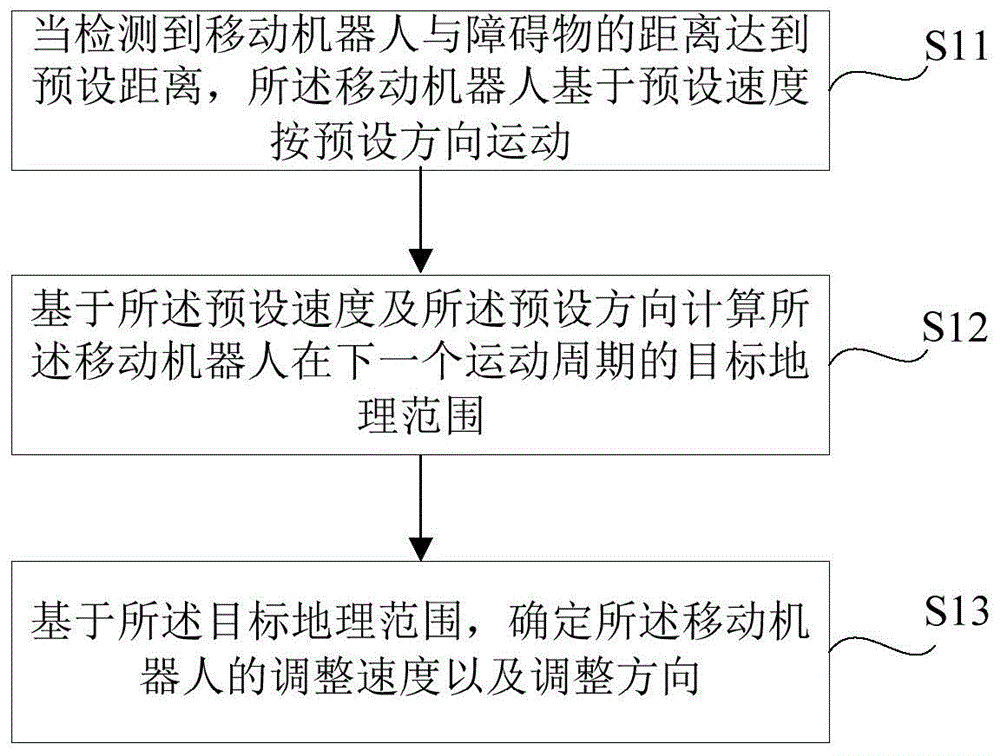
图1示出根据本申请一个方面的一种用于移动机器人贴障碍物运动的方法流程图;1 shows a flow chart of a method for a mobile robot to move with an obstacle according to an aspect of the present application;
图2示出根据本申请另一个方面的一种用于移动机器人贴障碍物运动的设备示意图。FIG. 2 shows a schematic diagram of a device for moving a mobile robot against obstacles according to another aspect of the present application.
附图中相同或相似的附图标记代表相同或相似的部件。The same or similar reference numbers in the drawings represent the same or similar parts.
具体实施方式Detailed ways
下面结合附图对本发明作进一步详细描述。The present invention will be described in further detail below with reference to the accompanying drawings.
在本申请一个典型的配置中,终端、服务网络的设备和可信方均包括一个或多个处理器(CPU)、输入/输出接口、网络接口和内存。In a typical configuration of the present application, the terminal, the device serving the network, and the trusted party each include one or more processors (CPUs), input/output interfaces, network interfaces, and memory.
内存可能包括计算机可读介质中的非永久性存储器,随机存取存储器(RAM)和/或非易失性内存等形式,如只读存储器(ROM)或闪存(flash RAM)。内存是计算机可读介质的示例。Memory may include non-persistent memory in computer readable media, random access memory (RAM) and/or non-volatile memory in the form of, for example, read only memory (ROM) or flash memory (flash RAM). Memory is an example of a computer-readable medium.
计算机可读介质包括永久性和非永久性、可移动和非可移动媒体可以由任何方法或技术来实现信息存储。信息可以是计算机可读指令、数据结构、程序的模块或其他数据。计算机的存储介质的例子包括,但不限于相变内存(PRAM)、静态随机存取存储器(SRAM)、动态随机存取存储器(DRAM)、其他类型的随机存取存储器(RAM)、只读存储器(ROM)、电可擦除可编程只读存储器(EEPROM)、快闪记忆体或其他内存技术、只读光盘只读存储器(CD-ROM)、数字多功能光盘(DVD)或其他光学存储、磁盒式磁带,磁带磁盘存储或其他磁性存储设备或任何其他非传输介质,可用于存储可以被计算设备访问的信息。按照本文中的界定,计算机可读介质不包括非暂存电脑可读媒体(transitory media),如调制的数据信号和载波。Computer-readable media includes both persistent and non-permanent, removable and non-removable media, and storage of information may be implemented by any method or technology. Information may be computer readable instructions, data structures, modules of programs, or other data. Examples of computer storage media include, but are not limited to, phase-change memory (PRAM), static random access memory (SRAM), dynamic random access memory (DRAM), other types of random access memory (RAM), read only memory (ROM), Electrically Erasable Programmable Read Only Memory (EEPROM), Flash Memory or other memory technology, Compact Disc Read Only Memory (CD-ROM), Digital Versatile Disc (DVD) or other optical storage, Magnetic tape cartridges, magnetic tape disk storage or other magnetic storage devices or any other non-transmission medium that can be used to store information that can be accessed by a computing device. Computer-readable media, as defined herein, excludes non-transitory computer-readable media, such as modulated data signals and carrier waves.
为更进一步阐述本申请所采取的技术手段及取得的效果,下面结合附图及较佳实施例,对本申请的技术方案,进行清楚和完整的描述。In order to further illustrate the technical measures adopted in the present application and the obtained effects, the following describes the technical solutions of the present application in a clear and complete manner with reference to the accompanying drawings and preferred embodiments.
图1示出根据本申请一个方面的一种用于移动机器人贴障碍物运动的方法,其中,所述方法包括:FIG. 1 shows a method for moving a mobile robot against obstacles according to an aspect of the present application, wherein the method includes:
S11当检测到移动机器人与障碍物的距离达到预设距离,所述移动机器人基于预设速度按预设方向运动;S11 When it is detected that the distance between the mobile robot and the obstacle reaches a preset distance, the mobile robot moves in a preset direction based on a preset speed;
S12基于所述预设速度及所述预设方向计算所述移动机器人在下一个运动周期的机器人预测运动空间;S12 calculates the predicted robot motion space of the mobile robot in the next motion cycle based on the preset speed and the preset direction;
S13基于所述机器人预测运动空间,确定所述移动机器人的调整速度以及调整方向,以使所述移动机器人按所述调整速度以及调整方向贴所述障碍物运动。S13 determines the adjustment speed and adjustment direction of the mobile robot based on the predicted movement space of the robot, so that the mobile robot moves against the obstacle according to the adjustment speed and adjustment direction.
在该实施例中,在所述步骤S11中,所述移动机器人包括能够自动或者被动控制运动的一种设备,例如,扫地机器人、拖地机器人等等,所述障碍物包括能够阻挡移动机器人运动的物体,在此,所述障碍物是基于激光数据反应的障碍物。In this embodiment, in the step S11, the mobile robot includes a device capable of automatically or passively controlling movement, such as a sweeping robot, a mopping robot, etc., and the obstacle includes a device capable of blocking the movement of the mobile robot The object, here, the obstacle is the obstacle based on the laser data reaction.
移动机器人在运动时,要不断检测移动机器人与障碍物的距离,以使移动机器人在贴近障碍物时,能够沿着障碍物的轮廓运动,在此,可以通过激光雷达的方式获取与周围障碍物的测距信息,根据该测距信息获取与障碍物的距离。在此,可以预先设定预设距离,该距离用以表示所述移动机器人与障碍物的距离很近、但未碰到该障碍物,并且可以预先设置该移动机器人在达到该预设距离时的预设速度和预设方向,该预设速度为所述移动机器人在靠近所述障碍物之后运动的初始采样速度,包括线速度和角速度,在此,可以设定所述移动机器人以最大的线速度和角速度作为预设速度。预设方向为所述移动机器人在靠近所述障碍物之后的初始运动方向,可以预先设定,例如向左或者向右运动。通过分析激光数据,当检测到移动机器人与障碍物的距离达到预设距离时,所述移动机器人基于预设速度按预设方向运动。When the mobile robot is moving, it is necessary to continuously detect the distance between the mobile robot and the obstacle, so that the mobile robot can move along the contour of the obstacle when it is close to the obstacle. According to the ranging information, the distance to the obstacle is obtained. Here, a preset distance can be preset, which is used to indicate that the mobile robot is very close to the obstacle, but has not touched the obstacle, and can be preset when the mobile robot reaches the preset distance The preset speed and preset direction, the preset speed is the initial sampling speed of the mobile robot moving after approaching the obstacle, including the linear speed and the angular speed, here, the mobile robot can be set to the maximum Linear and angular velocities are used as preset velocities. The preset direction is the initial movement direction of the mobile robot after approaching the obstacle, and can be preset, such as moving left or right. By analyzing the laser data, when it is detected that the distance between the mobile robot and the obstacle reaches a preset distance, the mobile robot moves in a preset direction based on a preset speed.
优选地,在所述步骤S11之前,所述方法还包括:S14(未示出)当所述移动机器人与所述障碍物的距离大于预设距离,以当前速度且按指定方向靠近所述障碍物。在该实施例中,当所述移动机器人距离所述障碍物较远时,由于暂时不会与该障碍物碰到,该移动机器人可以按照自己当前的速度和方向运动,在此,移动机器人当前的速度可以是预先设定的,或者移动机器人也可以自动调节的、可以在距离障碍物较远时采用的运动速度,其中,指定方向可以包括移动机器人当前的运动方向,还可以包括某个随机设定的方向。Preferably, before the step S11, the method further includes: S14 (not shown) when the distance between the mobile robot and the obstacle is greater than a preset distance, approach the obstacle at the current speed and in a specified direction thing. In this embodiment, when the mobile robot is far away from the obstacle, the mobile robot can move according to its current speed and direction because it will not meet the obstacle temporarily. The speed of the mobile robot can be preset, or the mobile robot can also be automatically adjusted, and can be used when it is far away from the obstacle. The specified direction can include the current moving direction of the mobile robot, and can also include a random set direction.
优选地,在所述步骤S11之前,所述方法还包括:S15(未示出)当所述移动机器人与所述障碍物的距离大于预设距离,根据获取到的激光数据确定贴近所述障碍物的目标位置,以使所述移动机器人向所述目标位置的方向移动。Preferably, before the step S11, the method further includes: S15 (not shown) when the distance between the mobile robot and the obstacle is greater than a preset distance, determining according to the acquired laser data to be close to the obstacle target position of the object, so that the mobile robot moves in the direction of the target position.
在该实施例中,当移动机器人与所述障碍物距离较远时,可以根据采集到的激光数据确定一个目标位置,该目标位置为用于贴近所述障碍物的位置,所述移动机器人可以根据该目标位置调整速度和方向,以向所述目标位置靠近。优选地,所述目标位置为与所述移动机器人当前距离最近的位置,即所述移动机器人可以通过移动最近的距离来靠近该障碍物。In this embodiment, when the mobile robot is far away from the obstacle, a target position can be determined according to the collected laser data, and the target position is a position used to approach the obstacle, and the mobile robot can The speed and direction are adjusted according to the target position to approach the target position. Preferably, the target position is the position closest to the current distance of the mobile robot, that is, the mobile robot can approach the obstacle by moving the closest distance.
继续在该实施例中,在所述步骤S12中,基于所述预设速度及所述预设方向计算所述移动机器人在下一个运动周期的机器人预测运动空间。在此,所述运动周期可为预先设定好的采样周期,通过该采样周期以及预设速度和预设方向能够计算出该移动机器人在下一个运动周期所处的机器人预测运动空间,该机器人预测运动空间用以表示该移动机器人在下一个运动周期的位置信息,可以为一个位置点或者位置范围。Continuing in this embodiment, in the step S12, the predicted robot motion space of the mobile robot in the next motion cycle is calculated based on the preset speed and the preset direction. Here, the motion period may be a preset sampling period, and the predicted motion space of the robot in the next motion period of the mobile robot can be calculated through the sampling period, the preset speed and the preset direction. The motion space is used to represent the position information of the mobile robot in the next motion cycle, which can be a position point or a position range.
继续在该实施例中,在所述步骤S13中,基于所述机器人预测运动空间与所述障碍物的位置关系,确定所述移动机器人的调整速度以及调整方向,以使所述移动机器人按所述调整速度以及调整方向贴所述障碍物运动。Continuing in this embodiment, in the step S13, based on the positional relationship between the predicted motion space of the robot and the obstacle, the adjustment speed and adjustment direction of the mobile robot are determined, so that the mobile robot can be The adjustment speed and the adjustment direction stick to the obstacle movement.
优选地,其中,所述步骤S13包括:基于所述机器人预测运动空间,确定所述障碍物是否在所述机器人预测运动空间内;当所述障碍物在所述机器人预测运动空间内,将所述预设速度减小预设速度增量以及按所述预设方向旋转一定预设角度增量,以确定所述调整速度以及调整方向。Preferably, the step S13 includes: based on the predicted motion space of the robot, determining whether the obstacle is in the predicted motion space of the robot; when the obstacle is in the predicted motion space of the robot, set the The preset speed is reduced by a preset speed increment and rotated in the preset direction by a certain preset angle increment to determine the adjustment speed and adjustment direction.
在该实施例中,可以通过采集到的激光数据确定距离障碍物的距离,以及机器人预测运动空间的距离,在此,优选地,所述机器人预测运动空间为距离障碍物最近的点的位置信息,通过比较移动机器人与所述障碍物的距离以及与机器人预测运动空间的距离来确定该障碍物是否在所述机器人预测运动空间内,也即通过这种方式可以计算出在下一个运动周期该移动机器人是否与所述障碍物相碰撞。In this embodiment, the distance to the obstacle and the distance to the predicted motion space of the robot can be determined by the collected laser data, and here, preferably, the predicted motion space of the robot is the position information of the point closest to the obstacle , by comparing the distance between the mobile robot and the obstacle and the distance from the robot's predicted movement space to determine whether the obstacle is in the robot's predicted movement space, that is, in this way, the movement in the next movement cycle can be calculated. Whether the robot collided with the obstacle.
当障碍物在所述机器人预测运动空间内时,会发生碰撞,因此需要调整所述移动机器人的运动速度和方向,在此,调整的方式可以通过将预设速度减小预设速度增量以及按所述预设方向旋转一定预设角度增量,来确定所述调整速度以及调整方向。在此,所述预设速度增量可以为预先设定好的对速度的调整量,该调整量可以是固定的,也可以根据实际情况进行变化,例如,当发生碰撞的可能性较大时,可以将预设速度减少的多,也即该预设速度增量的绝对值较大,而当发生碰撞的可能性较小时,可以将预设速度减小的少一些,也即即该预设速度增量的绝对值较小。同时,为了避免发生碰撞,所述移动机器人也需要向左或者向右调整一定的预设角度增量,以稍微改变该移动机器人的运动方向。When the obstacle is within the predicted movement space of the robot, a collision will occur, so the movement speed and direction of the mobile robot need to be adjusted. The adjustment speed and the adjustment direction are determined by rotating a certain preset angle increment according to the preset direction. Here, the preset speed increment may be a preset adjustment amount for the speed, and the adjustment amount may be fixed or may be changed according to the actual situation, for example, when the possibility of collision is high , the preset speed can be reduced more, that is, the absolute value of the preset speed increment is larger, and when the possibility of collision is small, the preset speed can be reduced less, that is, the preset speed can be reduced. Set the absolute value of the speed increment to be small. At the same time, in order to avoid collision, the mobile robot also needs to be adjusted to the left or right by a certain preset angle increment, so as to slightly change the movement direction of the mobile robot.
优选地,其中,所述步骤S13包括:当所述障碍物未在所述机器人预测运动空间内,将所述预设速度及所述预设方向作为调整速度以及调整方向。Preferably, the step S13 includes: when the obstacle is not within the predicted motion space of the robot, using the preset speed and the preset direction as the adjustment speed and the adjustment direction.
在该实施例中,即当所述移动机器人在下一个运动周期时,不会与所述障碍物发生碰撞,则所述移动机器人继续按照一开始贴近所述障碍物时的预设速度和预设方向运动,当运动一段距离时,继续按照前述方式计算另外一个运动周期的机器人预测运动空间,以使所述移动机器人能够持续沿着所述障碍物运动。In this embodiment, that is, when the mobile robot will not collide with the obstacle in the next motion cycle, the mobile robot will continue to follow the preset speed and preset speed when approaching the obstacle at the beginning. Directional movement, when moving for a certain distance, continue to calculate the predicted movement space of the robot for another movement cycle in the aforementioned manner, so that the mobile robot can continue to move along the obstacle.
与现有技术相比,在本申请中当检测到移动机器人与障碍物的距离达到预设距离,所述移动机器人基于预设速度按预设方向运动,然后基于所述预设速度及所述预设方向计算所述移动机器人在下一个运动周期的机器人预测运动空间,然后基于所述机器人预测运动空间,确定所述移动机器人的调整速度以及调整方向,以使所述移动机器人按所述调整速度以及调整方向贴所述障碍物运动。通过这种方式,能够根据环境变化灵活地调整机器人的运动方式,避免移动机器人与障碍物相撞。Compared with the prior art, in this application, when it is detected that the distance between the mobile robot and the obstacle reaches a preset distance, the mobile robot moves in a preset direction based on a preset speed, and then based on the preset speed and the The preset direction calculates the predicted motion space of the mobile robot in the next motion cycle, and then determines the adjustment speed and adjustment direction of the mobile robot based on the predicted motion space of the robot, so that the mobile robot can be adjusted according to the adjustment speed. And adjust the direction sticker to the obstacle movement. In this way, the movement of the robot can be flexibly adjusted according to changes in the environment to avoid collision of the mobile robot with obstacles.
图2示出根据本申请另一个方面的一种用于控制移动机器人贴障碍物运动的设备,其中,所述设备1包括:FIG. 2 shows a device for controlling the movement of a mobile robot against obstacles according to another aspect of the present application, wherein the device 1 includes:
第一装置,用于当检测到移动机器人与障碍物的距离达到预设距离,所述移动机器人基于预设速度按预设方向运动;a first device, configured to move the mobile robot in a preset direction based on a preset speed when it is detected that the distance between the mobile robot and the obstacle reaches a preset distance;
第二装置,用于基于所述预设速度及所述预设方向计算所述移动机器人在下一个运动周期的机器人预测运动空间;a second device, configured to calculate the predicted robot motion space of the mobile robot in the next motion cycle based on the preset speed and the preset direction;
第三装置,用于基于所述机器人预测运动空间,确定所述移动机器人的调整速度以及调整方向,以使所述移动机器人按所述调整速度以及调整方向贴所述障碍物运动。The third device is configured to determine the adjustment speed and adjustment direction of the mobile robot based on the predicted movement space of the robot, so that the mobile robot moves against the obstacle according to the adjustment speed and adjustment direction.
在本申请中,所述设备1可以为所述移动机器人本身或者其他可以控制移动机器人的控制设备。在该实施例中,所述移动机器人包括能够自动或者被动控制运动的一种设备,例如,扫地机器人、拖地机器人等等,所述障碍物包括能够阻挡移动机器人运动的物体。In this application, the device 1 may be the mobile robot itself or other control devices that can control the mobile robot. In this embodiment, the mobile robot includes a device capable of automatically or passively controlling movement, such as a sweeping robot, a mopping robot, etc., and the obstacle includes an object capable of blocking the movement of the mobile robot.
移动机器人在运动时,所述第一装置要不断检测移动机器人与障碍物的距离,以使移动机器人在贴近障碍物时,能够沿着障碍物的轮廓运动,在此,可以通过激光雷达的方式获取与周围障碍物的测距信息,根据该测距信息获取与障碍物的距离。在此,可以预先设定预设距离,该距离用以表示所述移动机器人与障碍物的距离很近、但未碰到该障碍物,并且可以预先设置该移动机器人在达到该预设距离时的预设速度和预设方向,该预设速度为所述移动机器人在靠近所述障碍物之后运动的初始采样速度,包括线速度和角速度,在此,可以设定所述移动机器人以最大的线速度和角速度作为预设速度。预设方向为所述移动机器人在靠近所述障碍物之后的初始运动方向,可以预先设定,例如向左或者向右运动。通过分析激光数据,当检测到移动机器人与障碍物的距离达到预设距离时,所述移动机器人基于预设速度按预设方向运动。When the mobile robot is moving, the first device should continuously detect the distance between the mobile robot and the obstacle, so that the mobile robot can move along the contour of the obstacle when it is close to the obstacle. Obtain ranging information with surrounding obstacles, and obtain the distance to the obstacle according to the ranging information. Here, a preset distance can be preset, which is used to indicate that the mobile robot is very close to the obstacle, but has not touched the obstacle, and can be preset when the mobile robot reaches the preset distance The preset speed and preset direction, the preset speed is the initial sampling speed of the mobile robot moving after approaching the obstacle, including the linear speed and the angular speed, here, the mobile robot can be set to the maximum Linear and angular velocities are used as preset velocities. The preset direction is the initial movement direction of the mobile robot after approaching the obstacle, and can be preset, such as moving left or right. By analyzing the laser data, when it is detected that the distance between the mobile robot and the obstacle reaches a preset distance, the mobile robot moves in a preset direction based on a preset speed.
优选地,所述设备1还包括:第四装置(未示出),用于当所述移动机器人与所述障碍物的距离大于预设距离,以当前速度且按指定方向靠近所述障碍物。在该实施例中,当所述移动机器人距离所述障碍物较远时,由于暂时不会与该障碍物碰到,所述第四装置可以控制该移动机器人按照自己当前的速度和方向运动,在此,移动机器人当前的速度可以是预先设定的,或者移动机器人也可以自动调节的、可以在距离障碍物较远时采用的运动速度,其中,指定方向可以包括移动机器人当前的运动方向,还可以包括某个随机设定的方向。Preferably, the device 1 further comprises: a fourth device (not shown) for approaching the obstacle at the current speed and in a specified direction when the distance between the mobile robot and the obstacle is greater than a preset distance . In this embodiment, when the mobile robot is far away from the obstacle, the fourth device can control the mobile robot to move according to its current speed and direction because it will not meet the obstacle temporarily. Here, the current speed of the mobile robot can be preset, or the mobile robot can also be automatically adjusted and can be used when it is far away from the obstacle, wherein the specified direction can include the current moving direction of the mobile robot, It can also include a random set orientation.
优选地,所述设备1还包括:第五装置(未示出),用于当所述移动机器人与所述障碍物的距离大于预设距离,根据获取到的激光数据确定贴近所述障碍物的目标位置,以使所述移动机器人向所述目标位置的方向移动。Preferably, the device 1 further includes: a fifth device (not shown) for determining that the mobile robot is close to the obstacle according to the acquired laser data when the distance between the mobile robot and the obstacle is greater than a preset distance target position, so that the mobile robot moves in the direction of the target position.
在该实施例中,当移动机器人与所述障碍物距离较远时,所述第五装置可以根据采集到的激光数据确定一个目标位置,该目标位置为用于贴近所述障碍物的位置,所述移动机器人可以根据该目标位置调整速度和方向,以向所述目标位置靠近。优选地,所述目标位置为与所述移动机器人当前距离最近的位置,即所述移动机器人可以通过移动最近的距离来靠近该障碍物。In this embodiment, when the mobile robot is far away from the obstacle, the fifth device may determine a target position according to the collected laser data, and the target position is a position for approaching the obstacle, The mobile robot can adjust the speed and direction according to the target position to approach the target position. Preferably, the target position is the position closest to the current distance of the mobile robot, that is, the mobile robot can approach the obstacle by moving the closest distance.
继续在该实施例中,所述第二装置基于所述预设速度及所述预设方向计算所述移动机器人在下一个运动周期的机器人预测运动空间。在此,所述运动周期可为预先设定好的采样周期,通过该采样周期以及预设速度和预设方向能够计算出该移动机器人在下一个运动周期所处的机器人预测运动空间,该机器人预测运动空间用以表示该移动机器人在下一个运动周期的位置信息,可以为一个位置点或者位置范围。Continuing in this embodiment, the second device calculates a predicted robot motion space of the mobile robot in the next motion cycle based on the preset speed and the preset direction. Here, the motion period may be a preset sampling period, and the predicted motion space of the robot in the next motion period of the mobile robot can be calculated through the sampling period, the preset speed and the preset direction. The motion space is used to represent the position information of the mobile robot in the next motion cycle, which can be a position point or a position range.
继续在该实施例中,所述第三装置基于所述机器人预测运动空间与所述障碍物的位置关系,确定所述移动机器人的调整速度以及调整方向,以使所述移动机器人按所述调整速度以及调整方向贴所述障碍物运动。Continuing in this embodiment, the third device determines an adjustment speed and an adjustment direction of the mobile robot based on the positional relationship between the predicted motion space of the robot and the obstacle, so that the mobile robot can be adjusted according to the adjustment. Speed as well as adjust the direction to stick to the obstacle movement.
优选地,其中,所述第三装置用于:基于所述机器人预测运动空间,确定所述障碍物是否在所述机器人预测运动空间内;当所述障碍物在所述机器人预测运动空间内,将所述预设速度减小预设速度增量以及按所述预设方向旋转一定预设角度增量,以确定所述调整速度以及调整方向。Preferably, the third device is configured to: determine whether the obstacle is within the predicted motion space of the robot based on the predicted motion space of the robot; when the obstacle is within the predicted motion space of the robot, The preset speed is reduced by a preset speed increment and rotated in the preset direction by a preset angle increment to determine the adjustment speed and adjustment direction.
在该实施例中,所述第三装置可以通过采集到的激光数据确定距离障碍物的距离,以及机器人预测运动空间的距离,在此,优选地,所述机器人预测运动空间为距离障碍物最近的点的位置信息,通过比较移动机器人与所述障碍物的距离以及与机器人预测运动空间的距离来确定该障碍物是否在所述机器人预测运动空间内,也即通过这种方式可以计算出在下一个运动周期该移动机器人是否与所述障碍物相碰撞。In this embodiment, the third device can determine the distance to the obstacle and the distance to the predicted movement space of the robot through the collected laser data. Here, preferably, the predicted movement space of the robot is the closest to the obstacle The position information of the point is determined by comparing the distance between the mobile robot and the obstacle and the distance from the predicted motion space of the robot to determine whether the obstacle is in the predicted motion space of the robot, that is, it can be calculated in this way. Whether the mobile robot collides with the obstacle in one motion cycle.
当障碍物在所述机器人预测运动空间内时,会发生碰撞,因此需要调整所述移动机器人的运动速度和方向,在此,调整的方式可以通过将预设速度减小预设速度增量以及按所述预设方向旋转一定预设角度增量,来确定所述调整速度以及调整方向。在此,所述预设速度增量可以为预先设定好的对速度的调整量,该调整量可以是固定的,也可以根据实际情况进行变化,例如,当发生碰撞的可能性较大时,可以将预设速度减少的多,也即该预设速度增量的绝对值较大,而当发生碰撞的可能性较小时,可以将预设速度减小的少一些,也即即该预设速度增量的绝对值较小。同时,为了避免发生碰撞,所述移动机器人也需要向左或者向右调整一定的预设角度增量,以稍微改变该移动机器人的运动方向。When the obstacle is within the predicted movement space of the robot, a collision will occur, so the movement speed and direction of the mobile robot need to be adjusted. The adjustment speed and the adjustment direction are determined by rotating a certain preset angle increment according to the preset direction. Here, the preset speed increment may be a preset adjustment amount for the speed, and the adjustment amount may be fixed or may be changed according to the actual situation, for example, when the possibility of collision is high , the preset speed can be reduced more, that is, the absolute value of the preset speed increment is larger, and when the possibility of collision is small, the preset speed can be reduced less, that is, the preset speed can be reduced. Set the absolute value of the speed increment to be small. At the same time, in order to avoid collision, the mobile robot also needs to be adjusted to the left or right by a certain preset angle increment, so as to slightly change the movement direction of the mobile robot.
优选地,其中,所述第三装置还用于:当所述障碍物未在所述机器人预测运动空间内,将所述预设速度及所述预设方向作为调整速度以及调整方向。Preferably, the third device is further configured to: when the obstacle is not within the predicted motion space of the robot, use the preset speed and the preset direction as the adjustment speed and the adjustment direction.
在该实施例中,即当所述移动机器人在下一个运动周期时,不会与所述障碍物发生碰撞,则所述移动机器人继续按照一开始贴近所述障碍物时的预设速度和预设方向运动,当运动一段距离时,继续按照前述方式计算另外一个运动周期的机器人预测运动空间,以使所述移动机器人能够持续沿着所述障碍物运动。In this embodiment, that is, when the mobile robot will not collide with the obstacle in the next motion cycle, the mobile robot will continue to follow the preset speed and preset speed when approaching the obstacle at the beginning. Directional movement, when moving for a certain distance, continue to calculate the predicted movement space of the robot for another movement cycle in the aforementioned manner, so that the mobile robot can continue to move along the obstacle.
与现有技术相比,在本申请中当检测到移动机器人与障碍物的距离达到预设距离,所述移动机器人基于预设速度按预设方向运动,然后基于所述预设速度及所述预设方向计算所述移动机器人在下一个运动周期的机器人预测运动空间,然后基于所述机器人预测运动空间,确定所述移动机器人的调整速度以及调整方向,以使所述移动机器人按所述调整速度以及调整方向贴所述障碍物运动。通过这种方式,能够根据环境变化灵活地调整机器人的运动方式,避免移动机器人与障碍物相撞。Compared with the prior art, in this application, when it is detected that the distance between the mobile robot and the obstacle reaches a preset distance, the mobile robot moves in a preset direction based on a preset speed, and then based on the preset speed and the The preset direction calculates the predicted motion space of the mobile robot in the next motion cycle, and then determines the adjustment speed and adjustment direction of the mobile robot based on the predicted motion space of the robot, so that the mobile robot can be adjusted according to the adjustment speed. And adjust the direction sticker to the obstacle movement. In this way, the movement of the robot can be flexibly adjusted according to changes in the environment to avoid collision of the mobile robot with obstacles.
对于本领域技术人员而言,显然本发明不限于上述示范性实施例的细节,而且在不背离本发明的精神或基本特征的情况下,能够以其他的具体形式实现本发明。因此,无论从哪一点来看,均应将实施例看作是示范性的,而且是非限制性的,本发明的范围由所附权利要求而不是上述说明限定,因此旨在将落在权利要求的等同要件的含义和范围内的所有变化涵括在本发明内。不应将权利要求中的任何附图标记视为限制所涉及的权利要求。此外,显然“包括”一词不排除其他单元或步骤,单数不排除复数。装置权利要求中陈述的多个单元或装置也可以由一个单元或装置通过软件或者硬件来实现。第一,第二等词语用来表示名称,而并不表示任何特定的顺序。It will be apparent to those skilled in the art that the present invention is not limited to the details of the above-described exemplary embodiments, but that the present invention may be embodied in other specific forms without departing from the spirit or essential characteristics of the invention. Therefore, the embodiments are to be regarded in all respects as illustrative and not restrictive, and the scope of the invention is to be defined by the appended claims rather than the foregoing description, which are therefore intended to fall within the scope of the claims. All changes within the meaning and range of the equivalents of , are included in the present invention. Any reference signs in the claims shall not be construed as limiting the involved claim. Furthermore, it is clear that the word "comprising" does not exclude other units or steps and the singular does not exclude the plural. Several units or means recited in the device claims can also be realized by one unit or means by means of software or hardware. The terms first, second, etc. are used to denote names and do not denote any particular order.
Claims (12)
Priority Applications (4)
| Application Number | Priority Date | Filing Date | Title |
|---|---|---|---|
| CN201711006125.5A CN107817796B (en) | 2017-10-25 | 2017-10-25 | Method and equipment for moving mobile robot in obstacle pasting mode |
| US15/869,430 US10775797B2 (en) | 2017-10-25 | 2018-01-12 | Method and device for mobile robot to move in proximity to obstacle |
| ES18153500T ES2836117T3 (en) | 2017-10-25 | 2018-01-25 | Method and device for a mobile robot to move in the proximity of an obstacle |
| EP18153500.6A EP3477414B1 (en) | 2017-10-25 | 2018-01-25 | Method and device for mobile robot to move in proximity to obstacle |
Applications Claiming Priority (1)
| Application Number | Priority Date | Filing Date | Title |
|---|---|---|---|
| CN201711006125.5A CN107817796B (en) | 2017-10-25 | 2017-10-25 | Method and equipment for moving mobile robot in obstacle pasting mode |
Publications (2)
| Publication Number | Publication Date |
|---|---|
| CN107817796A CN107817796A (en) | 2018-03-20 |
| CN107817796B true CN107817796B (en) | 2020-02-07 |
Family
ID=61131983
Family Applications (1)
| Application Number | Title | Priority Date | Filing Date |
|---|---|---|---|
| CN201711006125.5A Active CN107817796B (en) | 2017-10-25 | 2017-10-25 | Method and equipment for moving mobile robot in obstacle pasting mode |
Country Status (4)
| Country | Link |
|---|---|
| US (1) | US10775797B2 (en) |
| EP (1) | EP3477414B1 (en) |
| CN (1) | CN107817796B (en) |
| ES (1) | ES2836117T3 (en) |
Families Citing this family (12)
| Publication number | Priority date | Publication date | Assignee | Title |
|---|---|---|---|---|
| TWI695180B (en) * | 2018-07-24 | 2020-06-01 | 國立交通大學 | Robot guiding method |
| CN109445442A (en) * | 2018-12-17 | 2019-03-08 | 中新智擎科技有限公司 | A kind of robot obstacle-avoiding control method, device, storage medium and robot |
| CN109557923B (en) * | 2018-12-24 | 2021-11-02 | 湖北工业大学 | Intelligent vehicle automatic obstacle avoidance device and control method |
| CN109551487A (en) * | 2019-01-25 | 2019-04-02 | 北京猎户星空科技有限公司 | A kind of robot control method, device and readable medium |
| CN110187709A (en) * | 2019-06-11 | 2019-08-30 | 北京百度网讯科技有限公司 | Driving processing method, device and storage medium |
| CN110743161B (en) * | 2019-10-16 | 2021-08-24 | 腾讯科技(深圳)有限公司 | Virtual object control method, device, terminal and storage medium |
| CN113126604B (en) * | 2019-12-30 | 2024-04-30 | 北京猎户星空科技有限公司 | Robot obstacle avoidance method, device, electronic device and storage medium |
| CN112171675B (en) * | 2020-09-28 | 2022-06-10 | 深圳市丹芽科技有限公司 | Obstacle avoidance method and device for mobile robot, robot and storage medium |
| CN114341761B (en) * | 2020-12-25 | 2024-04-02 | 优必康(青岛)科技有限公司 | Anti-collision method, mobile machine and storage medium |
| CN113110413B (en) * | 2021-03-10 | 2022-11-08 | 成都永奉科技有限公司 | Following robot, following control method and following control system |
| CN113268068B (en) * | 2021-05-31 | 2022-06-28 | 自然资源部第二海洋研究所 | A hybrid intelligent autonomous detection method in deep sea area based on bionic submersible |
| CN115890676B (en) * | 2022-11-28 | 2024-08-13 | 深圳优地科技有限公司 | Robot control method, robot, and storage medium |
Citations (4)
| Publication number | Priority date | Publication date | Assignee | Title |
|---|---|---|---|---|
| CN101059700A (en) * | 2007-03-23 | 2007-10-24 | 北京大学 | Underwater bionic robot cooperated transportation method |
| CN101359229A (en) * | 2008-08-18 | 2009-02-04 | 浙江大学 | An Obstacle Avoidance Method for Mobile Robots Based on Obstacle Motion Prediction |
| CN103823466A (en) * | 2013-05-23 | 2014-05-28 | 电子科技大学 | Path planning method for mobile robot in dynamic environment |
| CN105549601A (en) * | 2016-02-05 | 2016-05-04 | 哈尔滨工程大学 | Evading method based on same direction sailing of virtual puffed motion obstacle and UUV |
Family Cites Families (14)
| Publication number | Priority date | Publication date | Assignee | Title |
|---|---|---|---|---|
| JP4978494B2 (en) | 2008-02-07 | 2012-07-18 | トヨタ自動車株式会社 | Autonomous mobile body and control method thereof |
| US8234032B2 (en) * | 2008-11-10 | 2012-07-31 | Electronics And Telecommunications Research Institute | Method and apparatus for generating safe path of mobile robot |
| CN102038470B (en) * | 2009-10-09 | 2013-02-27 | 泰怡凯电器(苏州)有限公司 | Automatic-moving ground treatment robot and ground-abutting treatment control method thereof |
| CN101825901B (en) * | 2010-03-31 | 2012-01-11 | 北京航空航天大学 | Multi-agent robot cooperative control method based on artificial physics method |
| CN102591334B (en) * | 2011-01-05 | 2015-07-08 | 科沃斯机器人有限公司 | Facing control system and facing control method for glass wiping robot |
| CN103105851B (en) * | 2012-11-07 | 2015-03-11 | 吉林大学 | Kinesthesis teaching control method based on vision sense for remote control of robot |
| KR102020215B1 (en) * | 2013-03-23 | 2019-09-10 | 삼성전자주식회사 | Robot cleaner and method for controlling the same |
| KR101578881B1 (en) * | 2014-03-11 | 2015-12-18 | 에브리봇 주식회사 | A robot cleaner and a method for operating it |
| JP2016151897A (en) | 2015-02-17 | 2016-08-22 | 株式会社安川電機 | Mobile body control device and mobile body control method |
| CN106393140A (en) * | 2015-07-30 | 2017-02-15 | 燕成祥 | Robot capable of automatically adjusting action path and method thereof |
| WO2017050358A1 (en) | 2015-09-22 | 2017-03-30 | Bluebotics Sa | Dynamic navigation for autonomous vehicles |
| CN107041718B (en) * | 2016-02-05 | 2021-06-01 | 北京小米移动软件有限公司 | Cleaning robot and its control method |
| CN106200645B (en) * | 2016-08-24 | 2019-07-26 | 北京小米移动软件有限公司 | Autonomous robot, control device and control method |
| CN110286674B (en) * | 2017-04-24 | 2022-08-16 | 广州科语机器人有限公司 | Angle correction method of mobile robot in working area and mobile robot |
-
2017
- 2017-10-25 CN CN201711006125.5A patent/CN107817796B/en active Active
-
2018
- 2018-01-12 US US15/869,430 patent/US10775797B2/en active Active
- 2018-01-25 ES ES18153500T patent/ES2836117T3/en active Active
- 2018-01-25 EP EP18153500.6A patent/EP3477414B1/en active Active
Patent Citations (4)
| Publication number | Priority date | Publication date | Assignee | Title |
|---|---|---|---|---|
| CN101059700A (en) * | 2007-03-23 | 2007-10-24 | 北京大学 | Underwater bionic robot cooperated transportation method |
| CN101359229A (en) * | 2008-08-18 | 2009-02-04 | 浙江大学 | An Obstacle Avoidance Method for Mobile Robots Based on Obstacle Motion Prediction |
| CN103823466A (en) * | 2013-05-23 | 2014-05-28 | 电子科技大学 | Path planning method for mobile robot in dynamic environment |
| CN105549601A (en) * | 2016-02-05 | 2016-05-04 | 哈尔滨工程大学 | Evading method based on same direction sailing of virtual puffed motion obstacle and UUV |
Non-Patent Citations (2)
| Title |
|---|
| 基于速度障碍的无人机避免机动障碍物问题;魏健,李相民,代进进;《火力与指挥控制》;20160831;第41卷(第8期);第84-87页 * |
| 移动机器人对障碍物运动轨迹预测方法的研究;马雷,赵东标;《机械与电子》;20051231(第6期);第39-41页 * |
Also Published As
| Publication number | Publication date |
|---|---|
| ES2836117T3 (en) | 2021-06-24 |
| US10775797B2 (en) | 2020-09-15 |
| EP3477414B1 (en) | 2020-09-09 |
| EP3477414A1 (en) | 2019-05-01 |
| CN107817796A (en) | 2018-03-20 |
| US20190121360A1 (en) | 2019-04-25 |
Similar Documents
| Publication | Publication Date | Title |
|---|---|---|
| CN107817796B (en) | Method and equipment for moving mobile robot in obstacle pasting mode | |
| CN107491068B (en) | Mobile robot path planning method and device and path planning equipment | |
| US8571578B1 (en) | Identifying mobile access points | |
| CN108303989B (en) | A kind of method and apparatus moved along wall for mobile robot | |
| US20160165393A1 (en) | Determining timing for determination of applicable geo-fences | |
| CN107807641B (en) | Method for mobile robot obstacle avoidance | |
| WO2019062649A1 (en) | Adaptive region division method and system | |
| EP3543743A3 (en) | Apparatus and method for obstacle detecting around unmanned vehicle | |
| CN104995973A (en) | Mobile device positioning system | |
| CN106772229B (en) | Indoor positioning method and related equipment | |
| US8918276B2 (en) | Apparatus and method for integrated positioning | |
| CN115060289A (en) | Positioning trajectory accuracy evaluation method, device and electronic equipment, storage medium | |
| Miyagusuku et al. | Precise and accurate wireless signal strength mappings using Gaussian processes and path loss models | |
| CN114777814A (en) | Fusion positioning precision evaluation method, device and system based on vehicle road cloud | |
| CN113935402A (en) | Training method and device for time difference positioning model and electronic equipment | |
| US11647359B2 (en) | Methods for uplink-based localization of an electronic device; related electronic devices and related location server devices | |
| JP7088881B2 (en) | Obstacle presentation method, device and equipment of intelligent roadside unit | |
| CN114147707B (en) | Robot docking method and device based on visual identification information | |
| CN110737736A (en) | method and equipment for obtaining map information of vehicle condition | |
| WO2019080681A1 (en) | Method and system for controlling mobile robot to perform mapping | |
| CN113734198B (en) | Method and device for acquiring relative course of target | |
| CN108449372B (en) | Network data processing method, three-dimensional network database construction method and system | |
| CN113126604B (en) | Robot obstacle avoidance method, device, electronic device and storage medium | |
| CN117332914A (en) | Intelligent dispersion method, device and storage medium based on convolutional neural network | |
| CN114638859A (en) | Method, device, electronic device and readable storage medium for correcting movement trajectory |
Legal Events
| Date | Code | Title | Description |
|---|---|---|---|
| PB01 | Publication | ||
| PB01 | Publication | ||
| SE01 | Entry into force of request for substantive examination | ||
| SE01 | Entry into force of request for substantive examination | ||
| GR01 | Patent grant | ||
| GR01 | Patent grant | ||
| TR01 | Transfer of patent right |
Effective date of registration: 20241225 Address after: Building 03, No. 88 Xinyuan Road, Xinhe Street, Yannan High tech Zone, Tinghu District, Yancheng City, Jiangsu Province, China 224007 Patentee after: Silan Robot (Yancheng) Co.,Ltd. Country or region after: China Address before: 201203 units 01 and 02, 5 / F, building 4, No. 666 shengxia road and No. 122 Yindong Road, China (Shanghai) pilot Free Trade Zone, Pudong New Area, Shanghai Patentee before: SHANGHAI SLAMTEC Co.,Ltd. Country or region before: China |
|
| TR01 | Transfer of patent right |