CN107579855B - Layered multi-domain visual safe operation and maintenance method based on graph database - Google Patents
Layered multi-domain visual safe operation and maintenance method based on graph database Download PDFInfo
- Publication number
- CN107579855B CN107579855B CN201710856658.6A CN201710856658A CN107579855B CN 107579855 B CN107579855 B CN 107579855B CN 201710856658 A CN201710856658 A CN 201710856658A CN 107579855 B CN107579855 B CN 107579855B
- Authority
- CN
- China
- Prior art keywords
- domain
- security
- graph
- graph database
- uml
- Prior art date
- Legal status (The legal status is an assumption and is not a legal conclusion. Google has not performed a legal analysis and makes no representation as to the accuracy of the status listed.)
- Active
Links
- 238000012423 maintenance Methods 0.000 title claims abstract description 58
- 238000000034 method Methods 0.000 title claims abstract description 28
- 230000000007 visual effect Effects 0.000 title claims abstract description 17
- 238000010586 diagram Methods 0.000 claims abstract description 64
- 238000004458 analytical method Methods 0.000 claims abstract description 26
- 238000013507 mapping Methods 0.000 claims abstract description 13
- 230000006870 function Effects 0.000 claims abstract description 8
- 238000005516 engineering process Methods 0.000 abstract description 11
- 239000010410 layer Substances 0.000 abstract 7
- 239000002356 single layer Substances 0.000 abstract 1
- 238000010276 construction Methods 0.000 description 9
- 230000006399 behavior Effects 0.000 description 7
- 230000008569 process Effects 0.000 description 6
- 230000003542 behavioural effect Effects 0.000 description 4
- 238000004891 communication Methods 0.000 description 4
- 238000001514 detection method Methods 0.000 description 4
- 206010000117 Abnormal behaviour Diseases 0.000 description 3
- 238000012544 monitoring process Methods 0.000 description 3
- 238000012800 visualization Methods 0.000 description 3
- 230000008901 benefit Effects 0.000 description 2
- 238000013461 design Methods 0.000 description 2
- 238000011161 development Methods 0.000 description 2
- 230000018109 developmental process Effects 0.000 description 2
- 230000000694 effects Effects 0.000 description 2
- 230000008520 organization Effects 0.000 description 2
- 102100038110 Arylamine N-acetyltransferase 2 Human genes 0.000 description 1
- 101710124361 Arylamine N-acetyltransferase 2 Proteins 0.000 description 1
- 241001501944 Suricata Species 0.000 description 1
- 239000002253 acid Substances 0.000 description 1
- 230000002776 aggregation Effects 0.000 description 1
- 238000004220 aggregation Methods 0.000 description 1
- 230000009286 beneficial effect Effects 0.000 description 1
- 230000008859 change Effects 0.000 description 1
- ZPUCINDJVBIVPJ-LJISPDSOSA-N cocaine Chemical compound O([C@H]1C[C@@H]2CC[C@@H](N2C)[C@H]1C(=O)OC)C(=O)C1=CC=CC=C1 ZPUCINDJVBIVPJ-LJISPDSOSA-N 0.000 description 1
- 238000010219 correlation analysis Methods 0.000 description 1
- 238000013480 data collection Methods 0.000 description 1
- 230000007123 defense Effects 0.000 description 1
- 238000000605 extraction Methods 0.000 description 1
- 238000001914 filtration Methods 0.000 description 1
- 238000007689 inspection Methods 0.000 description 1
- 239000000463 material Substances 0.000 description 1
- 238000012545 processing Methods 0.000 description 1
- 230000011218 segmentation Effects 0.000 description 1
- 238000012546 transfer Methods 0.000 description 1
- 238000007794 visualization technique Methods 0.000 description 1
Images


Landscapes
- Computer And Data Communications (AREA)
- Data Exchanges In Wide-Area Networks (AREA)
Abstract
本发明公开一种基于图数据库的分层多域可视安全运维方法,首先将安全运维分为基础安全层、安全分析层和威胁情报层,同时将各层功能划分为单个或多个域,其中划分基础安全层为网络拓扑域、系统服务域、人员信息域和安全策略域,划分安全分析层为依赖关系域、网络安全域和用户安全域,威胁情报层则由相应的威胁情报标准域组成。然后通过将各域的结构关系与属性特征转化为相应的UML图,同时在指定网络位置上部署相应职能的传感器,对各域所需数据进行采集。然后通过相应API,完成UML图向图数据库的映射,最后通过对图数据库数据查询分析实现可视化的安全运维。本发明将图数据库技术与安全运维相结合,降低了安全运维难度,提高了安全运维分析效率。
The invention discloses a layered multi-domain visual security operation and maintenance method based on a graph database. First, the security operation and maintenance are divided into a basic security layer, a security analysis layer and a threat intelligence layer, and the functions of each layer are divided into single or multiple layers. Domain, in which the basic security layer is divided into network topology domain, system service domain, personnel information domain and security policy domain, the security analysis layer is divided into dependency domain, network security domain and user security domain, and the threat intelligence layer consists of the corresponding threat intelligence domain. Standard domain composition. Then, by converting the structural relationship and attribute features of each domain into corresponding UML diagrams, and deploying sensors with corresponding functions on the designated network locations, the data required by each domain is collected. Then through the corresponding API, the mapping of UML diagram to the graph database is completed, and finally the visual security operation and maintenance is realized by querying and analyzing the data of the graph database. The invention combines the graph database technology with the security operation and maintenance, reduces the difficulty of the security operation and maintenance, and improves the analysis efficiency of the security operation and maintenance.
Description
技术领域technical field
本发明涉及安全运维技术领域,具体涉及一种基于图数据库的分层多域可视安全运维方法。The invention relates to the technical field of security operation and maintenance, in particular to a layered multi-domain visual security operation and maintenance method based on a graph database.
背景技术Background technique
随着信息技术的不断发展,计算机与互联网技术的应用已成为各组织机构实现资源存储、信息共享和业务拓展的基本方法。但与此同时,网络安全问题日益凸显,网络攻击连年增长,攻击手段不断变化,攻击威胁逐年增大,各类安全事件的频发给组织造成了极大的经济损失,在此背景下,安全运维的建设显得十分必要。然而,随着网络规模的不断扩大,网络结构的逐渐复杂,安全产品的不断增多,使得安全运维难度不断增大,传统的安全运维方法渐渐不能满足网络结构不断复杂、网络应用服务不断增加、网络攻击面不断扩大情况下对安全运维敏捷、高效、可见性上的需求,其主要存在的技术问题体现在以下两个方面:With the continuous development of information technology, the application of computer and Internet technology has become the basic method for organizations to achieve resource storage, information sharing and business expansion. But at the same time, network security problems are becoming more and more prominent, network attacks are increasing year after year, attack methods are constantly changing, attack threats are increasing year by year, and the frequent occurrence of various security incidents has caused great economic losses to organizations. The construction of operation and maintenance is very necessary. However, with the continuous expansion of the network scale, the gradual complexity of the network structure, and the continuous increase of security products, the difficulty of security operation and maintenance continues to increase. . The need for agile, efficient, and visible security operation and maintenance in the context of the continuous expansion of the network attack surface. The main technical problems are reflected in the following two aspects:
1.传统安全运维方法使用RDBMS关系型数据库管理系统对各类安全数据进行存储与管理,然而随着数据量的不断增大,数据关系的不断复杂,使用RDBMS对数据进行管理存在两个方面的问题:一方面由于其具有严格的Schema及复杂的表关系,导致其在数据库设计建模上需要花费大量的人力物力;另一方面由于其ACID及JOIN操作,导致其在对大数据的查询分析效率及关系表达上不能满足相应的需求。1. The traditional security operation and maintenance method uses the RDBMS relational database management system to store and manage various security data. However, with the continuous increase of the amount of data and the complexity of the data relationship, there are two aspects of using RDBMS to manage the data. Problems: On the one hand, due to its strict schema and complex table relationships, it requires a lot of manpower and material resources in database design and modeling; on the other hand, due to its ACID and JOIN operations, it is used in querying big data The analysis efficiency and relationship expression cannot meet the corresponding needs.
2.传统的安全运维在可视化上多以折线图、柱状图、饼图等形式呈现网络安全运维状况,这类可视化方法在一定程度上解决了安全运维数据的可视化问题,但其缺乏对整体网络环境安全问题及事件分布的直观物理表达,同时缺乏对整体安全态势的关联呈现。2. Traditional security operation and maintenance mostly presents network security operation and maintenance status in the form of line graphs, bar charts, pie charts, etc. In terms of visualization, this kind of visualization method solves the visualization problem of security operation and maintenance data to a certain extent, but it lacks Intuitive physical expression of the overall network environment security issues and event distribution, and lack of correlation to the overall security situation.
发明内容SUMMARY OF THE INVENTION
本发明所要解决的是传统安全运维方法在面对复杂网络环境下的数据建模、查询、分析和呈现上所存在的不足,提供一种基于图数据库的分层多域可视安全运维方法。The invention aims to solve the shortcomings of traditional security operation and maintenance methods in data modeling, query, analysis and presentation in the face of complex network environment, and provides a layered multi-domain visual security operation and maintenance based on graph database method.
为解决上述问题,本发明是通过以下技术方案实现的:In order to solve the above-mentioned problems, the present invention is achieved through the following technical solutions:
一种基于图数据库的分层多域可视安全运维方法,包括步骤如下:A layered multi-domain visual security operation and maintenance method based on a graph database, comprising the following steps:
步骤1、构建出一个分层多域安全运维模型;Step 1. Build a layered multi-domain security operation and maintenance model;
步骤2、建立分层多域安全运维模型的各个域的UML图;Step 2. Establish the UML diagram of each domain of the layered multi-domain security operation and maintenance model;
步骤3、通过在出口网关外部接口位置、提供网络应用服务的位置和用户可接入位置上部署相应职能的传感器,对分层多域安全运维模型的各个域所需数据进行采集;Step 3. Collect the data required by each domain of the layered multi-domain security operation and maintenance model by deploying sensors with corresponding functions at the location of the external interface of the egress gateway, the location where the network application service is provided, and the location where the user can access;
步骤4、将分层多域安全运维模型的各个UML图映射至图数据库中;
步骤5、对图数据库进行查询及分析,以实现可视化的安全运维。Step 5. Query and analyze the graph database to realize visual security operation and maintenance.
上述步骤1的子步骤如下:The sub-steps of step 1 above are as follows:
步骤11、建立一个包括基础安全层、安全分析层和威胁情报层的分层运维模型;Step 11. Establish a layered operation and maintenance model including the basic security layer, the security analysis layer and the threat intelligence layer;
步骤12、向基础安全层中添加拓扑结构域、系统服务域、安全策略域和人员信息域;向安全分析层添加依赖关系域、网络安全域和用户安全域;向威胁情报层添加威胁情报域;Step 12. Add topology domain, system service domain, security policy domain and personnel information domain to the basic security layer; add dependency domain, network security domain and user security domain to the security analysis layer; add threat intelligence domain to the threat intelligence layer ;
步骤13、分析各域间的邻接关系,将互为邻接域之间的交集描述为一个邻接层;由此构建出一个分层多域安全运维模型;Step 13: Analyze the adjacency relationship between domains, and describe the intersection between mutually adjoining domains as an adjacency layer; thus constructing a layered multi-domain security operation and maintenance model;
上述步骤12中,向威胁情报层添加基于STIX标准的威胁情报域。In the above step 12, a threat intelligence domain based on the STIX standard is added to the threat intelligence layer.
上述步骤4中,所述图数据库为Neo4j或OrientDB。In the
从UML图映射到Neo4j图数据库的过程为:将UML图中的类作为Neo4j图数据库中的节点,将UML图中类的属性作为Neo4j图数据库中相应节点的属性,将UML图中的类所在域的名称作为Neo4j图数据库中相应域的节点的标签,将UML图中连接关系作为Neo4j图数据库中两个相应节点之间的关系。The process of mapping from UML diagram to Neo4j diagram database is as follows: take classes in UML diagram as nodes in Neo4j diagram database, take properties of classes in UML diagram as properties of corresponding nodes in Neo4j diagram database, and take classes in UML diagram as the properties of corresponding nodes in Neo4j diagram database. The name of the domain is used as the label of the node of the corresponding domain in the Neo4j graph database, and the connection relationship in the UML graph is regarded as the relationship between two corresponding nodes in the Neo4j graph database.
从UML图映射到OrientDB图数据库的过程为:根据建立的域及域内的继承关系,将UML模型的各层级关系表示为OrientDB图数据库中的逐层继承关系,UML图中组合、继承等关系在OrientDB图数据库中使用类的定义与继承进行实现,将UML图中的类作为OrientDB图数据库的顶点,将UML图中各类之间的连接关系作为OrientDB图数据库的边。The process of mapping from UML diagram to OrientDB diagram database is as follows: According to the established domain and the inheritance relationship within the domain, the hierarchical relationship of the UML model is represented as the layer-by-layer inheritance relationship in the OrientDB diagram database. The relationship of composition and inheritance in the UML diagram is in The OrientDB graph database uses class definition and inheritance for implementation. The classes in the UML graph are used as the vertices of the OrientDB graph database, and the connection relationships between various types in the UML graph are used as the edges of the OrientDB graph database.
本发明将图数据与安全运维相结合,利用图数据技术,解决了安全运维分析与管理上出现的复杂网络难以管理、运维敏捷性不高、查询分析效率较低与可视化程度不高等问题,与现有技术相比,本发明的有益效果为:The invention combines graph data with security operation and maintenance, and utilizes graph data technology to solve the problems of difficult management of complex networks, low operation and maintenance agility, low query and analysis efficiency, and low degree of visualization in security operation and maintenance analysis and management. Problem, compared with the prior art, the beneficial effects of the present invention are:
1.利用图数据具有处理大数据及复杂关系的能力,用其描述关系复杂的网络环境与安全事件,解决了复杂网络下安全运维难的问题;1. The use of graph data has the ability to process big data and complex relationships, and use it to describe complex network environments and security events, solving the problem of difficult security operation and maintenance in complex networks;
2.利用图数据库无须对数据库模型进行过多设计,以及其具有的Schema-Less特点,减少了开发成本与建模时间,提高了运维的敏捷性;2. The use of graph database does not require too much design of the database model, and its Schema-Less feature reduces development costs and modeling time, and improves the agility of operation and maintenance;
3.利用图数据库查询无须JOIN操作的特点,及其具有横向扩展的能力,提高了数据查询时的执行效率;3. Using the characteristics of graph database query without JOIN operation and its ability to expand horizontally, the execution efficiency of data query is improved;
4.利用图数据库原生的图分析技术及可视化查询技术,提高了安全运维人员的查询分析效率,帮助其迅速发现、定位与解决安全问题。4. Using the native graph analysis technology and visual query technology of the graph database, the query and analysis efficiency of security operation and maintenance personnel is improved, and it helps them to quickly discover, locate and solve security problems.
附图说明Description of drawings
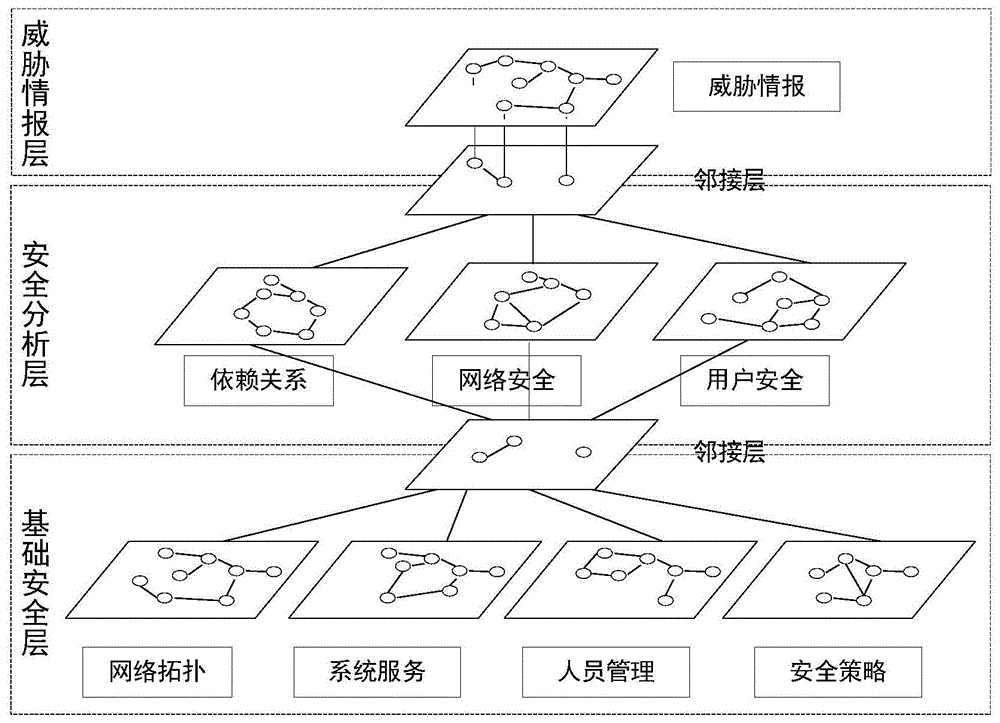
图1是基于图数据库的分层多域可视安全运维方法的总体框架图;Figure 1 is an overall framework diagram of a hierarchical multi-domain visual security operation and maintenance method based on a graph database;
图2是图1中拓扑结构域的UML图;Fig. 2 is the UML diagram of the topology domain in Fig. 1;
图3是图1中系统服务域的UML图;Fig. 3 is the UML diagram of the system service domain in Fig. 1;
图4是图1中安全策略域的UML图;Fig. 4 is the UML diagram of the security policy domain in Fig. 1;
图5是图1中人员管理域的UML图;Fig. 5 is the UML diagram of personnel management domain in Fig. 1;
图6是图1中依赖关系域的UML图;Figure 6 is a UML diagram of the dependency domain in Figure 1;
图7是图1中网络安全域的UML图;Fig. 7 is the UML diagram of the network security domain in Fig. 1;
图8是图1中用户安全域的UML图;Fig. 8 is the UML diagram of the user security domain in Fig. 1;
图9是图1中威胁情报域的UML图。FIG. 9 is a UML diagram of the threat intelligence domain in FIG. 1 .
具体实施方式Detailed ways
本发明将安全运维分为基础安全层、安全分析层和威胁情报层,同时将各层功能划分为单个或多个域,其中划分基础安全层为拓扑结构域、系统服务域、人员信息域和安全策略域,划分安全分析层为依赖关系域、网络安全域和用户安全域,威胁情报层则由相应的威胁情报标准域组成。方法通过将各域的结构关系与属性特征转化为相应的UML图,同时在指定网络位置上部署相应职能的传感器,对各域所需数据进行采集,并通过相应API,完成UML图向图数据库的映射,实现可视化的安全运维。方法将图数据库技术与安全运维相结合,降低了安全运维难度,提高了安全运维分析效率。The invention divides security operation and maintenance into basic security layer, security analysis layer and threat intelligence layer, and at the same time divides the functions of each layer into single or multiple domains, wherein the basic security layer is divided into topology structure domain, system service domain and personnel information domain And security policy domain, the security analysis layer is divided into dependency domain, network security domain and user security domain, and the threat intelligence layer is composed of the corresponding threat intelligence standard domain. The method converts the structural relationship and attribute features of each domain into corresponding UML diagrams, deploys sensors with corresponding functions on the designated network locations, collects the data required by each domain, and completes the UML diagram-to-diagram database through the corresponding API. mapping to realize visual security operation and maintenance. The method combines graph database technology with security operation and maintenance, which reduces the difficulty of security operation and maintenance and improves the efficiency of security operation and maintenance analysis.
下面以OrientDB图数据库为例,对一种基于图数据库的分层多域可视安全运维方法进行说明,具体包括步骤如下:The following takes the OrientDB graph database as an example to illustrate a hierarchical multi-domain visual security operation and maintenance method based on the graph database. The specific steps are as follows:
步骤S1、建立一个分层多域安全运维模型,如图1所示。Step S1 , establishing a layered multi-domain security operation and maintenance model, as shown in FIG. 1 .
S11、建立一个分层运维模型,模型分为三层:基础安全层,用于描述网络基本环境与基本安全信息;安全分析层,用于对各类安全问题及安全事件进行查询与分析;威胁情报层,用于对安全分析层的内容进行关联整合,还原出攻击画像。S11. Establish a layered operation and maintenance model. The model is divided into three layers: the basic security layer, which is used to describe the basic network environment and basic security information; the security analysis layer, which is used to query and analyze various security issues and security events; The threat intelligence layer is used to correlate and integrate the content of the security analysis layer to restore the attack profile.
S12、向各层模型中添加单个或多个相应的域,其中向基础安全层中添加拓扑结构域、系统服务域、安全策略域和人员信息域;向安全分析层添加依赖关系域、网络安全域和用户安全域;向威胁情报层添加基于STIX标准的威胁情报域。S12. Add single or multiple corresponding domains to each layer model, wherein add topology domain, system service domain, security policy domain and personnel information domain to the basic security layer; add dependency domain, network security domain to the security analysis layer Domains and User Security Domains; add STIX standards-based threat intelligence domains to the threat intelligence layer.
S13、分析各域间的邻接关系,将互为邻接域之间的交集描述为一个邻接层,用以表明各域间的连通性及其通信介质。S13 , analyzing the adjacency relationship between the domains, and describing the intersection between the mutually adjoining domains as an adjacency layer to indicate the connectivity between the domains and their communication medium.
步骤S2、建立各域相应的UML图。Step S2, establishing a UML diagram corresponding to each domain.
对于拓扑结构域的UML图的构建:根据组织机构中相应的网络拓扑图,对其进行分割、提取、分类等操作,将其转化为相应的UML图。其中,将网络拓扑分割为网络设备、计算机和安全区域几个类;将网络设备和计算机中的接口这一概念提取出来,作为一个单独的类。网络设备作为父类派生出通信设备和安全设备等子类,同时,通信设备又作为父类派生出路由器和交换机等子类,安全设备又作为父类派生出防火墙和网闸等子类。计算机作为父类派生出服务器和用户终端等子类,同时,用户终端又作为父类派生出个人计算机、笔记本电脑、手机和平板等子类。安全域由非信任区域、非军事区域、信任区域、数据中心等复合聚合而成。各类网络设备之间以路由、交换、连接等关系连接。如图2所示。For the construction of the UML diagram of the topology domain: according to the corresponding network topology diagram in the organization, perform operations such as segmentation, extraction, and classification, and convert it into the corresponding UML diagram. Among them, the network topology is divided into several classes of network device, computer and security area; the concept of interface in network device and computer is extracted as a separate class. As a parent class, network devices derive subclasses such as communication devices and security devices. At the same time, as a parent class, communication devices derive subclasses such as routers and switches. As a parent class, security devices derive subclasses such as firewalls and gatekeepers. As a parent class, computers derive subclasses such as servers and user terminals, and at the same time, user terminals as a parent class derive subclasses such as personal computers, notebook computers, mobile phones, and tablets. The security domain is composed of untrusted areas, demilitarized areas, trusted areas, and data centers. Various network devices are connected by routing, switching, and connecting. as shown in picture 2.
对于系统服务域的UML图的构建:结合拓扑结构域,将网络环境中各服务器及关键终端使用的操作系统和开放的各类服务与应用信息转化为相应的UML图。其中,系统服务由操作系统、服务、应用等类复合聚合而成,同时网络接口作为单独的类通过开放端口监听服务类,计算机类、操作系统类、服务类以及应用类之间以运行和实例等关系相连。如图3所示。For the construction of the UML diagram of the system service domain: Combined with the topology domain, the operating system and open various services and application information used by each server and key terminal in the network environment are converted into the corresponding UML diagram. Among them, system services are composed of operating systems, services, applications and other classes. At the same time, the network interface as a separate class listens to the service class through open ports, and the computer class, operating system class, service class and application class are run and instanced. Equal relationship. As shown in Figure 3.
对于安全策略域的UML图的构建:根据网络环境中相应网络安全防御设备制定的一系列规则与安全策略信息,将安全设备、域和接口类聚合,相互之间以行为和策略关系相连。同时,将人员、账号、服务和应用作为单独的类聚合,相互之间通过行为关系相连。如图4所示。For the construction of the UML diagram of the security policy domain: according to a series of rules and security policy information formulated by the corresponding network security defense device in the network environment, the security devices, domains and interface classes are aggregated and connected with each other by behavior and policy relationships. At the same time, people, accounts, services, and applications are aggregated as separate classes, which are connected to each other through behavioral relationships. As shown in Figure 4.
对于人员管理域的UML图的构建:根据相应的人员管理信息,对人员的部门、所在小组、拥有的计算机与账号、账号的权限等信息转化为相应的UML图。人员管理由人员、部门和组这几个类复合聚合而成,部门作为父类根据组织机构实际情况派生出研发部、财务部、人事部等子类。如图5所示。For the construction of the UML diagram of the personnel management domain: according to the corresponding personnel management information, the information such as the department, the group, the computer and the account, and the authority of the account are converted into the corresponding UML diagram. Personnel management is composed of several categories of personnel, departments and groups. As a parent category, subcategories such as R&D Department, Finance Department, and Personnel Department are derived from the department according to the actual situation of the organization. As shown in Figure 5.
对于依赖关系域的UML图的构建:根据基础安全层的网络拓扑及系统服务信息制定相应的安全依赖关系UML图。其中,依赖关系由操作系统、网络服务、应用、服务及编程语等类聚合而成,这些类之间存在依赖关系,而这些类都存在漏洞,漏洞由CVE漏洞、SVSS系统、等级和解决方案等类聚合而成。操作系统作为父类派生出Windows、Linux、Mac等子类;网络服务作为子类派生出DNS服务、Web服务、文件服务、电子邮件服务等子类;编程语言作为父类派生出Java语言、Python语言、PHP语言等子类。如图6所示。For the construction of the UML diagram of the dependency domain: formulate the corresponding security dependency UML diagram according to the network topology and system service information of the basic security layer. Among them, dependencies are aggregated by operating systems, network services, applications, services, programming languages and other classes. There are dependencies between these classes, and these classes have vulnerabilities. The vulnerabilities are composed of CVE vulnerabilities, SVSS systems, levels and solutions. etc. are aggregated. As the parent class, operating system derives subclasses such as Windows, Linux, and Mac; as a subclass, network service derives subclasses such as DNS service, Web service, file service, and email service; as a parent class, programming language derives Java language, Python Language, PHP language and other subclasses. As shown in Figure 6.
对于网络安全域的UML图的构建:根据基于网络的和基于主机的安全事件及异常信息构建UML图,其中,网络安全由安全事件源、异常、基于特征的检查、等级和事件序列这些类聚合而成,这些类之间以相应的行为关系连接。时间序列由年、月、日、时、分和时间戳这些类复合聚合而成,等级由致命、高危、中危、低危和信息这些类聚合而成。异常作为父类派生出网络异常、主机异常等子类,基于特征的检查作为父类派生出网络入侵检测系统、基于主机入侵检测系统等子类。如图7所示。For the construction of UML diagrams of the cybersecurity domain: UML diagrams are constructed from network-based and host-based security event and exception information, where cybersecurity is aggregated by the classes of security event sources, exceptions, feature-based checks, levels, and event sequences These classes are connected by corresponding behavioral relationships. The time series is aggregated from the classes of year, month, day, hour, minute, and timestamp, and the level is aggregated from the classes of fatal, high-risk, medium-risk, low-risk, and information. Anomaly as a parent class derives subclasses such as network anomaly and host anomaly, and feature-based inspection as a parent class derives subclasses such as network intrusion detection system and host-based intrusion detection system. As shown in Figure 7.
对于用户安全域的UML图的构建:将超过安全阈值的用户行为转化为UML图,其中,用户安全由用户、安全信息源、异常行为、时间序列和等级这些类聚和而成,这些类之间通过相应行为关系相连。安全信息源由用户行为分析类和被动实时资产检测系统类聚合而成。异常行为作为父类派生出终端监控、账户行为、资源访问等子类,同时,终端监控作为父类派生出键盘输入、屏幕活动、应用监控等子类,账户行为作为父类派生出账户活动、账户访问等子类,资源访问作为父类派生出网站访问、电子邮件收发、文件传输等子类。如图8所示。For the construction of the UML diagram of the user security domain: transform the user behavior exceeding the security threshold into a UML diagram, in which the user security is composed of the user, security information source, abnormal behavior, time series and level. They are connected by corresponding behavioral relationships. Security information sources are aggregated from user behavior analysis and passive real-time asset detection systems. Abnormal behavior as a parent class derives subclasses such as terminal monitoring, account behavior, resource access, etc. At the same time, terminal monitoring as a parent class derives subclasses such as keyboard input, screen activity, and application monitoring, and account behavior as a parent class derives account activity, Account access and other subclasses, and resource access as a parent class derives subclasses such as website access, email sending and receiving, and file transfer. As shown in Figure 8.
对于威胁情报域的UML图的构建:将STIX威胁情报标准提供的图模型转换为相应的UML图。其中,威胁情报由攻击者、受害者、攻击技术手法、漏洞、威胁特征指标和攻击应对措施这些类聚合而成,攻击者又由攻击动机、入侵、威胁源等类聚合而成,攻击技术手法由攻击模式、恶意软件、工具等类聚合而成,各个类之间根据相应的行为关系相连。如图9所示。For the construction of UML diagrams of the threat intelligence domain: Convert the diagram model provided by the STIX threat intelligence standard into the corresponding UML diagram. Among them, threat intelligence is aggregated by attackers, victims, attack techniques, vulnerabilities, threat characteristic indicators, and attack countermeasures, and attackers are aggregated by attack motives, intrusions, threat sources, etc. It is composed of attack modes, malware, tools and other classes, and each class is connected according to the corresponding behavioral relationship. As shown in Figure 9.
对域与域之间相交的节点与边进行标注,其继承于多个类,是域与域之间进行通信的桥梁。Annotate the nodes and edges that intersect between domains, which inherit from multiple classes and are a bridge for communication between domains.
步骤S3、采集安全运维所需数据。Step S3, collecting data required for safe operation and maintenance.
S31、在出口网关外部接口位置部署流数据采集传感器(如NetFlow传感器),用于采集流数据,该位置由于没有防火墙过滤以及PNAT的原因,数据更为丰富与准确,此类数据作为网络安全域与用户安全域的数据源。S31. Deploy a flow data collection sensor (such as a NetFlow sensor) at the position of the external interface of the egress gateway to collect flow data. Because there is no firewall filtering and PNAT at this position, the data is more abundant and accurate, and such data is used as a network security domain. Data source with user security domain.
S32、在DMZ区域及数据中心等提供网络应用服务的位置部署具有漏洞扫描、入侵检测、网络流量采集技日志采集功能的传感器(如Nessus、Snort/Suricata、OSSEC、Bro、Syslog-ng等传感器),用于采集网络脆弱性数据、网络安全事件及网络流量与日志信息等各类网络安全信息,此类数据作为依赖关系域和网络安全域的数据源。S32. Deploy sensors (such as Nessus, Snort/Suricata, OSSEC, Bro, Syslog-ng and other sensors) with the functions of vulnerability scanning, intrusion detection, and network traffic collection technology and log collection in DMZ areas and data centers where network application services are provided. , which is used to collect various network security information such as network vulnerability data, network security events, and network traffic and log information. Such data is used as the data source of the dependency domain and the network security domain.
S33、在办公网络、无线网络及关键用户终端等用户可接入位置上部署相应职能的用户行为分析传感器(如UEBA、PRADS等传感器),用于建立用户行为基线,同时对用户的异常行为产生报警,此类数据作为用户安全域的数据源。S33. Deploy user behavior analysis sensors (such as UEBA, PRADS and other sensors) with corresponding functions on user-accessible locations such as office networks, wireless networks, and key user terminals, to establish user behavior baselines, and at the same time generate abnormal behaviors of users. Alarm, this kind of data is used as the data source of the user's security domain.
步骤S4、将UML图映射至图数据库中。Step S4, mapping the UML diagram to the diagram database.
S41、根据建立的域及域内的继承关系,将UML模型的各层级关系表示为图数据库中的逐层继承关系。根据图数据库的不同,UML图组合、继承等关系在图数据中的映射稍有差异,根据不同图数据库进行映射,如在OrientDB图数据库中,使用类的定义与继承进行实现,如在Neo4j图数据库中,上述关系使用标签进行实现。S41. According to the established domain and the inheritance relationship within the domain, each hierarchical relationship of the UML model is represented as a layer-by-layer inheritance relationship in the graph database. Depending on the graph database, the mapping of UML graph composition, inheritance and other relationships in graph data is slightly different. Mapping is performed according to different graph databases, such as in OrientDB graph database, using class definition and inheritance to implement, such as in Neo4j graph In the database, the above relationships are implemented using tags.
S42、将UML模型中的各个类与对象作为图数据库的节点,将UML模型中组合、聚合、依赖等关系作为图数据库中边的关系,同时将UML模型中抽象类的关系在图数据库映射为子类的对应关系。S42. Use each class and object in the UML model as a node of the graph database, use the relationship of composition, aggregation, and dependency in the UML model as the edge relationship in the graph database, and map the relationship of the abstract classes in the UML model to the graph database as Correspondence of subclasses.
由于不同图数据库内部存储数据方式不同,相应的映射过程也有所不同。Due to the different ways of storing data in different graph databases, the corresponding mapping process is also different.
对Neo4j而言,从UML图映射到Neo4j图数据库的过程为:将UML图中的类作为Neo4j图数据库中的节点,将UML图中类的属性作为Neo4j图数据库中相应节点的属性,将UML图中的类所在域的名称作为Neo4j图数据库中相应域的节点的标签,将UML图中连接关系作为Neo4j图数据库中两个相应节点之间的关系。For Neo4j, the process of mapping from UML diagram to Neo4j diagram database is as follows: take classes in UML diagrams as nodes in Neo4j diagram database, take attributes of classes in UML diagrams as attributes of corresponding nodes in Neo4j diagram database, and use UML diagrams as attributes of corresponding nodes in Neo4j diagram database. The name of the domain where the class in the graph is located is used as the label of the node in the corresponding domain in the Neo4j graph database, and the connection relationship in the UML graph is used as the relationship between two corresponding nodes in the Neo4j graph database.
对OrientDB而言,从UML图映射到OrientDB图数据库的过程为:根据建立的域及域内的继承关系,将UML模型的各层级关系表示为OrientDB图数据库中的逐层继承关系,UML图中组合、继承等关系在OrientDB图数据库中使用类的定义与继承进行实现,将UML图中的类作为OrientDB图数据库的顶点,将UML图中各类之间的连接关系作为OrientDB图数据库的边。For OrientDB, the process of mapping from UML diagram to OrientDB diagram database is: According to the established domain and the inheritance relationship within the domain, the hierarchical relationship of the UML model is expressed as the layer-by-layer inheritance relationship in the OrientDB diagram database, and the combination in the UML diagram , inheritance and other relationships are implemented in the OrientDB graph database using class definition and inheritance. The class in the UML graph is used as the vertex of the OrientDB graph database, and the connection relationship between various types in the UML graph is used as the edge of the OrientDB graph database.
步骤S5、进行可视化的安全运维查询与分析。Step S5, perform visual security operation and maintenance query and analysis.
如对基础安全层进行查询可以了解网络环境及基本安全控制信息。例如,通过SELECT FROM BasisSecurity命令,可返回网络拓扑环境图、拓扑图中各服务器开放的应用状况、各用户终端对应的用户信息、以及网络环境的相关安全策略,其以图的形式进行呈现,通过该图可迅速了解网络环境概况。If you query the basic security layer, you can learn about the network environment and basic security control information. For example, through the SELECT FROM BasisSecurity command, the network topology environment diagram, the open application status of each server in the topology diagram, the user information corresponding to each user terminal, and the related security policies of the network environment can be returned, which are presented in the form of a diagram. This graph provides a quick overview of the network environment.
如对安全分析层进行查询可以分析网络安全事件。例如,通过TRAVERSE in(“Depend_on”)FROM(SELECT in(“has”)FROM Vulnerability)WHILE$DEPTH<=3STRATEGYBREADTH_FIRST命令,查询网络环境中存在的漏洞节点及其3层依赖关系内的所有节点,从而找出相关威胁,由此可对安全状况进行更准确的评估。For example, the security analysis layer can be queried to analyze network security events. For example, through the TRAVERSE in(“Depend_on”)FROM(SELECT in(“has”)FROM Vulnerability)WHILE$DEPTH<=3STRATEGYBREADTH_FIRST command, we can query the vulnerable nodes existing in the network environment and all nodes in their 3-layer dependencies, so as to Identify relevant threats, allowing for a more accurate assessment of your security posture.
如对威胁情报层进行查询可以了解攻击者的攻击轨迹,一方面可以用于分析攻击者的攻击思路,另一方面可以用于分析环境中的潜在威胁点,通过可视化的查询分析,可以实现更准确更高效的安全运维。For example, the threat intelligence layer can be used to understand the attacker's attack trajectory. On the one hand, it can be used to analyze the attacker's attack ideas, and on the other hand, it can be used to analyze the potential threat points in the environment. Accurate and more efficient security operation and maintenance.
本发明方法将图数据库技术与安全运维相结合,利用图数据库在处理与分析强关系型模型上的优势,解决安全运维中数据关联与可视查询分析问题。其中,主要利用图数据库灵活的变更能力以及其Schema-Less的特点,减少数据库建模时间,提高敏捷性;利用图数据库查询无需执行JOIN操作的先天性能优势及其自身提供的横向扩展能力,提高数据的查询分析效率;利用图数据库原生的图分析技术与可视查询技术,降低安全运维复杂度,帮助安全运维人员迅速发现问题、定位问题与解决问题,减少关联分析的时间开销,在尽可能短的时间内排除威胁,实现敏捷、高效的安全运维。The method of the invention combines the graph database technology with the security operation and maintenance, utilizes the advantages of the graph database in processing and analyzing the strong relational model, and solves the problems of data association and visual query analysis in the security operation and maintenance. Among them, the flexible change ability of graph database and its Schema-Less characteristics are mainly used to reduce database modeling time and improve agility; the innate performance advantage of graph database query without performing JOIN operation and its own horizontal expansion capability can improve the Data query and analysis efficiency; the native graph analysis technology and visual query technology of the graph database are used to reduce the complexity of security operation and maintenance, help security operation and maintenance personnel to quickly find problems, locate problems and solve problems, and reduce the time overhead of correlation analysis. Eliminate threats in the shortest possible time and achieve agile and efficient security operation and maintenance.
需要说明的是,尽管以上本发明所述的实施例是说明性的,但这并非是对本发明的限制,因此本发明并不局限于上述具体实施方式中。在不脱离本发明原理的情况下,凡是本领域技术人员在本发明的启示下获得的其它实施方式,均视为在本发明的保护之内。It should be noted that, although the embodiments of the present invention described above are illustrative, they are not intended to limit the present invention, so the present invention is not limited to the above-mentioned specific embodiments. Without departing from the principles of the present invention, all other embodiments obtained by those skilled in the art under the inspiration of the present invention are deemed to be within the protection of the present invention.
Claims (5)
Priority Applications (1)
| Application Number | Priority Date | Filing Date | Title |
|---|---|---|---|
| CN201710856658.6A CN107579855B (en) | 2017-09-21 | 2017-09-21 | Layered multi-domain visual safe operation and maintenance method based on graph database |
Applications Claiming Priority (1)
| Application Number | Priority Date | Filing Date | Title |
|---|---|---|---|
| CN201710856658.6A CN107579855B (en) | 2017-09-21 | 2017-09-21 | Layered multi-domain visual safe operation and maintenance method based on graph database |
Publications (2)
| Publication Number | Publication Date |
|---|---|
| CN107579855A CN107579855A (en) | 2018-01-12 |
| CN107579855B true CN107579855B (en) | 2020-09-04 |
Family
ID=61035668
Family Applications (1)
| Application Number | Title | Priority Date | Filing Date |
|---|---|---|---|
| CN201710856658.6A Active CN107579855B (en) | 2017-09-21 | 2017-09-21 | Layered multi-domain visual safe operation and maintenance method based on graph database |
Country Status (1)
| Country | Link |
|---|---|
| CN (1) | CN107579855B (en) |
Families Citing this family (10)
| Publication number | Priority date | Publication date | Assignee | Title |
|---|---|---|---|---|
| CN110019565A (en) * | 2018-09-12 | 2019-07-16 | 深圳市极限网络科技有限公司 | Data processing method based on picture library |
| CN109740344B (en) * | 2018-11-28 | 2024-04-19 | 奇安信科技集团股份有限公司 | Threat information model building method and device, electronic equipment and storage medium |
| CN109522373B (en) * | 2018-12-21 | 2021-11-09 | 奇安信科技集团股份有限公司 | Data processing method and device, electronic equipment and storage medium |
| CN110351307B (en) * | 2019-08-14 | 2022-01-28 | 杭州安恒信息技术股份有限公司 | Abnormal user detection method and system based on ensemble learning |
| CN110535701B (en) * | 2019-08-30 | 2022-07-01 | 新华三大数据技术有限公司 | Problem positioning method and device |
| CN110688538B (en) * | 2019-09-27 | 2022-04-26 | 北京市天元网络技术股份有限公司 | Cross-domain service whole-course routing penetration method and device based on big data |
| CN111177188A (en) * | 2019-12-30 | 2020-05-19 | 浙江邦盛科技有限公司 | Rapid massive time sequence data processing method based on aggregation edge and time sequence aggregation edge |
| US11574071B2 (en) * | 2020-07-28 | 2023-02-07 | Bank Of America Corporation | Reliability of information security controls for attack readiness |
| CN112989150A (en) * | 2021-02-08 | 2021-06-18 | 中国农业银行股份有限公司 | Operation and maintenance diagram acquisition method, device, equipment and readable storage medium |
| CN113013879B (en) * | 2021-03-31 | 2022-05-13 | 国网福建省电力有限公司电力科学研究院 | Neo4 j-based power distribution network voltage sag influence domain visualization method |
Citations (5)
| Publication number | Priority date | Publication date | Assignee | Title |
|---|---|---|---|---|
| CN103124223A (en) * | 2011-12-21 | 2013-05-29 | 中国科学院软件研究所 | Method for automatically judging security situation of IT (information technology) system in real time |
| CN104391706A (en) * | 2014-12-02 | 2015-03-04 | 南京大学 | Reverse engineering based model base structuring method |
| CN105681303A (en) * | 2016-01-15 | 2016-06-15 | 中国科学院计算机网络信息中心 | Big data driven network security situation monitoring and visualization method |
| CN105978898A (en) * | 2016-06-28 | 2016-09-28 | 南京南瑞继保电气有限公司 | Network security threat evaluation method and system for substation monitoring system |
| CN106897273A (en) * | 2017-04-12 | 2017-06-27 | 福州大学 | A kind of network security dynamic early-warning method of knowledge based collection of illustrative plates |
Family Cites Families (1)
| Publication number | Priority date | Publication date | Assignee | Title |
|---|---|---|---|---|
| US9563771B2 (en) * | 2014-01-22 | 2017-02-07 | Object Security LTD | Automated and adaptive model-driven security system and method for operating the same |
-
2017
- 2017-09-21 CN CN201710856658.6A patent/CN107579855B/en active Active
Patent Citations (5)
| Publication number | Priority date | Publication date | Assignee | Title |
|---|---|---|---|---|
| CN103124223A (en) * | 2011-12-21 | 2013-05-29 | 中国科学院软件研究所 | Method for automatically judging security situation of IT (information technology) system in real time |
| CN104391706A (en) * | 2014-12-02 | 2015-03-04 | 南京大学 | Reverse engineering based model base structuring method |
| CN105681303A (en) * | 2016-01-15 | 2016-06-15 | 中国科学院计算机网络信息中心 | Big data driven network security situation monitoring and visualization method |
| CN105978898A (en) * | 2016-06-28 | 2016-09-28 | 南京南瑞继保电气有限公司 | Network security threat evaluation method and system for substation monitoring system |
| CN106897273A (en) * | 2017-04-12 | 2017-06-27 | 福州大学 | A kind of network security dynamic early-warning method of knowledge based collection of illustrative plates |
Non-Patent Citations (2)
| Title |
|---|
| LTE 模式下面向网络运维的综合展现系统研究;王勇等;《信息通信》;20131231;全文 * |
| UML-BASED MODELING AND ANALYSIS OF SECURITY THREATS;Jun Kong 等;《International Journal of Software Engineering and Knowledge Engineering》;20100930;全文 * |
Also Published As
| Publication number | Publication date |
|---|---|
| CN107579855A (en) | 2018-01-12 |
Similar Documents
| Publication | Publication Date | Title |
|---|---|---|
| CN107579855B (en) | Layered multi-domain visual safe operation and maintenance method based on graph database | |
| US12047396B2 (en) | System and method for monitoring security attack chains | |
| Meng et al. | Towards Bayesian-based trust management for insider attacks in healthcare software-defined networks | |
| US20210273961A1 (en) | Apparatus and method for a cyber-threat defense system | |
| Shittu et al. | Intrusion alert prioritisation and attack detection using post-correlation analysis | |
| EP3152869B1 (en) | Real-time model of states of monitored devices | |
| Li et al. | Complex attack linkage decision-making in edge computing networks | |
| Jabed et al. | Integrating Business Intelligence with AI-Driven Machine Learning for Next-Generation Intrusion Detection Systems | |
| CN115186136A (en) | Knowledge graph structure for network attack and defense confrontation | |
| GhasemiGol et al. | E‐correlator: an entropy‐based alert correlation system | |
| Shi et al. | Scalable network traffic visualization using compressed graphs | |
| Majeed et al. | Near-miss situation based visual analysis of SIEM rules for real time network security monitoring | |
| Li et al. | A framework of blockchain-based collaborative intrusion detection in software defined networking | |
| Hu et al. | Security metric methods for network multistep attacks using AMC and big data correlation analysis | |
| US20240356950A1 (en) | Coordinated monitoring of heterogeneous domains in extended detection and response (xdr) systems | |
| El Arass et al. | Smart SIEM: From big data logs and events to smart data alerts | |
| Liu et al. | Design of multimedia education network security and intrusion detection system | |
| Liao et al. | Network security situation assessment model based on extended hidden Markov | |
| Roponena et al. | Towards a Human-in-the-Loop Intelligent Intrusion Detection System. | |
| Najafi et al. | SIEMA: bringing advanced analytics to legacy security information and event management | |
| Arbanas et al. | Ontology in information security | |
| Keyvanpour et al. | Digital forensics 2.0: A review on social networks forensics | |
| Garcia et al. | Towards a better labeling process for network security datasets | |
| WO2024226645A1 (en) | Coordinated monitoring of heterogeneous domains in extended detection and response (xdr) systems | |
| Zhao et al. | A real-time visualization framework for IDS alerts |
Legal Events
| Date | Code | Title | Description |
|---|---|---|---|
| PB01 | Publication | ||
| PB01 | Publication | ||
| SE01 | Entry into force of request for substantive examination | ||
| SE01 | Entry into force of request for substantive examination | ||
| GR01 | Patent grant | ||
| GR01 | Patent grant | ||
| EE01 | Entry into force of recordation of patent licensing contract | ||
| EE01 | Entry into force of recordation of patent licensing contract |
Application publication date: 20180112 Assignee: GUANGXI HAOHUA TECHNOLOGY Co.,Ltd. Assignor: GUILIN University OF ELECTRONIC TECHNOLOGY Contract record no.: X2022450000317 Denomination of invention: A Hierarchical Multi domain Visual Security Operation and Maintenance Method Based on Graph Database Granted publication date: 20200904 License type: Common License Record date: 20221214 |