CN107530514B - Method and apparatus for ventilation treatment of respiratory disorders - Google Patents
Method and apparatus for ventilation treatment of respiratory disorders Download PDFInfo
- Publication number
- CN107530514B CN107530514B CN201680025174.0A CN201680025174A CN107530514B CN 107530514 B CN107530514 B CN 107530514B CN 201680025174 A CN201680025174 A CN 201680025174A CN 107530514 B CN107530514 B CN 107530514B
- Authority
- CN
- China
- Prior art keywords
- ventilation
- patient
- flow rate
- pressure
- apnea
- Prior art date
- Legal status (The legal status is an assumption and is not a legal conclusion. Google has not performed a legal analysis and makes no representation as to the accuracy of the status listed.)
- Active
Links
Images


Classifications
-
- A—HUMAN NECESSITIES
- A61—MEDICAL OR VETERINARY SCIENCE; HYGIENE
- A61M—DEVICES FOR INTRODUCING MEDIA INTO, OR ONTO, THE BODY; DEVICES FOR TRANSDUCING BODY MEDIA OR FOR TAKING MEDIA FROM THE BODY; DEVICES FOR PRODUCING OR ENDING SLEEP OR STUPOR
- A61M16/00—Devices for influencing the respiratory system of patients by gas treatment, e.g. ventilators; Tracheal tubes
- A61M16/0057—Pumps therefor
- A61M16/0066—Blowers or centrifugal pumps
- A61M16/0069—Blowers or centrifugal pumps the speed thereof being controlled by respiratory parameters, e.g. by inhalation
-
- A—HUMAN NECESSITIES
- A61—MEDICAL OR VETERINARY SCIENCE; HYGIENE
- A61M—DEVICES FOR INTRODUCING MEDIA INTO, OR ONTO, THE BODY; DEVICES FOR TRANSDUCING BODY MEDIA OR FOR TAKING MEDIA FROM THE BODY; DEVICES FOR PRODUCING OR ENDING SLEEP OR STUPOR
- A61M16/00—Devices for influencing the respiratory system of patients by gas treatment, e.g. ventilators; Tracheal tubes
- A61M16/021—Devices for influencing the respiratory system of patients by gas treatment, e.g. ventilators; Tracheal tubes operated by electrical means
- A61M16/022—Control means therefor
- A61M16/024—Control means therefor including calculation means, e.g. using a processor
-
- A—HUMAN NECESSITIES
- A61—MEDICAL OR VETERINARY SCIENCE; HYGIENE
- A61B—DIAGNOSIS; SURGERY; IDENTIFICATION
- A61B5/00—Measuring for diagnostic purposes; Identification of persons
- A61B5/08—Measuring devices for evaluating the respiratory organs
- A61B5/0826—Detecting or evaluating apnoea events
-
- A—HUMAN NECESSITIES
- A61—MEDICAL OR VETERINARY SCIENCE; HYGIENE
- A61B—DIAGNOSIS; SURGERY; IDENTIFICATION
- A61B5/00—Measuring for diagnostic purposes; Identification of persons
- A61B5/48—Other medical applications
- A61B5/4806—Sleep evaluation
- A61B5/4818—Sleep apnoea
-
- A—HUMAN NECESSITIES
- A61—MEDICAL OR VETERINARY SCIENCE; HYGIENE
- A61M—DEVICES FOR INTRODUCING MEDIA INTO, OR ONTO, THE BODY; DEVICES FOR TRANSDUCING BODY MEDIA OR FOR TAKING MEDIA FROM THE BODY; DEVICES FOR PRODUCING OR ENDING SLEEP OR STUPOR
- A61M16/00—Devices for influencing the respiratory system of patients by gas treatment, e.g. ventilators; Tracheal tubes
-
- A—HUMAN NECESSITIES
- A61—MEDICAL OR VETERINARY SCIENCE; HYGIENE
- A61M—DEVICES FOR INTRODUCING MEDIA INTO, OR ONTO, THE BODY; DEVICES FOR TRANSDUCING BODY MEDIA OR FOR TAKING MEDIA FROM THE BODY; DEVICES FOR PRODUCING OR ENDING SLEEP OR STUPOR
- A61M16/00—Devices for influencing the respiratory system of patients by gas treatment, e.g. ventilators; Tracheal tubes
- A61M16/0003—Accessories therefor, e.g. sensors, vibrators, negative pressure
-
- A—HUMAN NECESSITIES
- A61—MEDICAL OR VETERINARY SCIENCE; HYGIENE
- A61M—DEVICES FOR INTRODUCING MEDIA INTO, OR ONTO, THE BODY; DEVICES FOR TRANSDUCING BODY MEDIA OR FOR TAKING MEDIA FROM THE BODY; DEVICES FOR PRODUCING OR ENDING SLEEP OR STUPOR
- A61M16/00—Devices for influencing the respiratory system of patients by gas treatment, e.g. ventilators; Tracheal tubes
- A61M16/0051—Devices for influencing the respiratory system of patients by gas treatment, e.g. ventilators; Tracheal tubes with alarm devices
-
- A—HUMAN NECESSITIES
- A61—MEDICAL OR VETERINARY SCIENCE; HYGIENE
- A61M—DEVICES FOR INTRODUCING MEDIA INTO, OR ONTO, THE BODY; DEVICES FOR TRANSDUCING BODY MEDIA OR FOR TAKING MEDIA FROM THE BODY; DEVICES FOR PRODUCING OR ENDING SLEEP OR STUPOR
- A61M16/00—Devices for influencing the respiratory system of patients by gas treatment, e.g. ventilators; Tracheal tubes
- A61M16/021—Devices for influencing the respiratory system of patients by gas treatment, e.g. ventilators; Tracheal tubes operated by electrical means
- A61M16/022—Control means therefor
- A61M16/024—Control means therefor including calculation means, e.g. using a processor
- A61M16/026—Control means therefor including calculation means, e.g. using a processor specially adapted for predicting, e.g. for determining an information representative of a flow limitation during a ventilation cycle by using a root square technique or a regression analysis
-
- A—HUMAN NECESSITIES
- A61—MEDICAL OR VETERINARY SCIENCE; HYGIENE
- A61M—DEVICES FOR INTRODUCING MEDIA INTO, OR ONTO, THE BODY; DEVICES FOR TRANSDUCING BODY MEDIA OR FOR TAKING MEDIA FROM THE BODY; DEVICES FOR PRODUCING OR ENDING SLEEP OR STUPOR
- A61M16/00—Devices for influencing the respiratory system of patients by gas treatment, e.g. ventilators; Tracheal tubes
- A61M16/06—Respiratory or anaesthetic masks
-
- A—HUMAN NECESSITIES
- A61—MEDICAL OR VETERINARY SCIENCE; HYGIENE
- A61M—DEVICES FOR INTRODUCING MEDIA INTO, OR ONTO, THE BODY; DEVICES FOR TRANSDUCING BODY MEDIA OR FOR TAKING MEDIA FROM THE BODY; DEVICES FOR PRODUCING OR ENDING SLEEP OR STUPOR
- A61M16/00—Devices for influencing the respiratory system of patients by gas treatment, e.g. ventilators; Tracheal tubes
- A61M16/10—Preparation of respiratory gases or vapours
-
- A—HUMAN NECESSITIES
- A61—MEDICAL OR VETERINARY SCIENCE; HYGIENE
- A61M—DEVICES FOR INTRODUCING MEDIA INTO, OR ONTO, THE BODY; DEVICES FOR TRANSDUCING BODY MEDIA OR FOR TAKING MEDIA FROM THE BODY; DEVICES FOR PRODUCING OR ENDING SLEEP OR STUPOR
- A61M16/00—Devices for influencing the respiratory system of patients by gas treatment, e.g. ventilators; Tracheal tubes
- A61M16/10—Preparation of respiratory gases or vapours
- A61M16/1075—Preparation of respiratory gases or vapours by influencing the temperature
- A61M16/1095—Preparation of respiratory gases or vapours by influencing the temperature in the connecting tubes
-
- A—HUMAN NECESSITIES
- A61—MEDICAL OR VETERINARY SCIENCE; HYGIENE
- A61M—DEVICES FOR INTRODUCING MEDIA INTO, OR ONTO, THE BODY; DEVICES FOR TRANSDUCING BODY MEDIA OR FOR TAKING MEDIA FROM THE BODY; DEVICES FOR PRODUCING OR ENDING SLEEP OR STUPOR
- A61M16/00—Devices for influencing the respiratory system of patients by gas treatment, e.g. ventilators; Tracheal tubes
- A61M16/10—Preparation of respiratory gases or vapours
- A61M16/14—Preparation of respiratory gases or vapours by mixing different fluids, one of them being in a liquid phase
- A61M16/16—Devices to humidify the respiration air
-
- A—HUMAN NECESSITIES
- A61—MEDICAL OR VETERINARY SCIENCE; HYGIENE
- A61B—DIAGNOSIS; SURGERY; IDENTIFICATION
- A61B5/00—Measuring for diagnostic purposes; Identification of persons
- A61B5/08—Measuring devices for evaluating the respiratory organs
- A61B5/087—Measuring breath flow
-
- A—HUMAN NECESSITIES
- A61—MEDICAL OR VETERINARY SCIENCE; HYGIENE
- A61M—DEVICES FOR INTRODUCING MEDIA INTO, OR ONTO, THE BODY; DEVICES FOR TRANSDUCING BODY MEDIA OR FOR TAKING MEDIA FROM THE BODY; DEVICES FOR PRODUCING OR ENDING SLEEP OR STUPOR
- A61M16/00—Devices for influencing the respiratory system of patients by gas treatment, e.g. ventilators; Tracheal tubes
- A61M16/0057—Pumps therefor
- A61M16/0066—Blowers or centrifugal pumps
-
- A—HUMAN NECESSITIES
- A61—MEDICAL OR VETERINARY SCIENCE; HYGIENE
- A61M—DEVICES FOR INTRODUCING MEDIA INTO, OR ONTO, THE BODY; DEVICES FOR TRANSDUCING BODY MEDIA OR FOR TAKING MEDIA FROM THE BODY; DEVICES FOR PRODUCING OR ENDING SLEEP OR STUPOR
- A61M16/00—Devices for influencing the respiratory system of patients by gas treatment, e.g. ventilators; Tracheal tubes
- A61M16/06—Respiratory or anaesthetic masks
- A61M16/0605—Means for improving the adaptation of the mask to the patient
- A61M16/0633—Means for improving the adaptation of the mask to the patient with forehead support
-
- A—HUMAN NECESSITIES
- A61—MEDICAL OR VETERINARY SCIENCE; HYGIENE
- A61M—DEVICES FOR INTRODUCING MEDIA INTO, OR ONTO, THE BODY; DEVICES FOR TRANSDUCING BODY MEDIA OR FOR TAKING MEDIA FROM THE BODY; DEVICES FOR PRODUCING OR ENDING SLEEP OR STUPOR
- A61M16/00—Devices for influencing the respiratory system of patients by gas treatment, e.g. ventilators; Tracheal tubes
- A61M16/06—Respiratory or anaesthetic masks
- A61M16/0683—Holding devices therefor
-
- A—HUMAN NECESSITIES
- A61—MEDICAL OR VETERINARY SCIENCE; HYGIENE
- A61M—DEVICES FOR INTRODUCING MEDIA INTO, OR ONTO, THE BODY; DEVICES FOR TRANSDUCING BODY MEDIA OR FOR TAKING MEDIA FROM THE BODY; DEVICES FOR PRODUCING OR ENDING SLEEP OR STUPOR
- A61M16/00—Devices for influencing the respiratory system of patients by gas treatment, e.g. ventilators; Tracheal tubes
- A61M16/10—Preparation of respiratory gases or vapours
- A61M16/105—Filters
- A61M16/1055—Filters bacterial
-
- A—HUMAN NECESSITIES
- A61—MEDICAL OR VETERINARY SCIENCE; HYGIENE
- A61M—DEVICES FOR INTRODUCING MEDIA INTO, OR ONTO, THE BODY; DEVICES FOR TRANSDUCING BODY MEDIA OR FOR TAKING MEDIA FROM THE BODY; DEVICES FOR PRODUCING OR ENDING SLEEP OR STUPOR
- A61M16/00—Devices for influencing the respiratory system of patients by gas treatment, e.g. ventilators; Tracheal tubes
- A61M16/10—Preparation of respiratory gases or vapours
- A61M16/1075—Preparation of respiratory gases or vapours by influencing the temperature
- A61M16/109—Preparation of respiratory gases or vapours by influencing the temperature the humidifying liquid or the beneficial agent
-
- A—HUMAN NECESSITIES
- A61—MEDICAL OR VETERINARY SCIENCE; HYGIENE
- A61M—DEVICES FOR INTRODUCING MEDIA INTO, OR ONTO, THE BODY; DEVICES FOR TRANSDUCING BODY MEDIA OR FOR TAKING MEDIA FROM THE BODY; DEVICES FOR PRODUCING OR ENDING SLEEP OR STUPOR
- A61M16/00—Devices for influencing the respiratory system of patients by gas treatment, e.g. ventilators; Tracheal tubes
- A61M16/0003—Accessories therefor, e.g. sensors, vibrators, negative pressure
- A61M2016/0015—Accessories therefor, e.g. sensors, vibrators, negative pressure inhalation detectors
- A61M2016/0018—Accessories therefor, e.g. sensors, vibrators, negative pressure inhalation detectors electrical
-
- A—HUMAN NECESSITIES
- A61—MEDICAL OR VETERINARY SCIENCE; HYGIENE
- A61M—DEVICES FOR INTRODUCING MEDIA INTO, OR ONTO, THE BODY; DEVICES FOR TRANSDUCING BODY MEDIA OR FOR TAKING MEDIA FROM THE BODY; DEVICES FOR PRODUCING OR ENDING SLEEP OR STUPOR
- A61M16/00—Devices for influencing the respiratory system of patients by gas treatment, e.g. ventilators; Tracheal tubes
- A61M16/0003—Accessories therefor, e.g. sensors, vibrators, negative pressure
- A61M2016/0027—Accessories therefor, e.g. sensors, vibrators, negative pressure pressure meter
-
- A—HUMAN NECESSITIES
- A61—MEDICAL OR VETERINARY SCIENCE; HYGIENE
- A61M—DEVICES FOR INTRODUCING MEDIA INTO, OR ONTO, THE BODY; DEVICES FOR TRANSDUCING BODY MEDIA OR FOR TAKING MEDIA FROM THE BODY; DEVICES FOR PRODUCING OR ENDING SLEEP OR STUPOR
- A61M16/00—Devices for influencing the respiratory system of patients by gas treatment, e.g. ventilators; Tracheal tubes
- A61M16/0003—Accessories therefor, e.g. sensors, vibrators, negative pressure
- A61M2016/003—Accessories therefor, e.g. sensors, vibrators, negative pressure with a flowmeter
- A61M2016/0033—Accessories therefor, e.g. sensors, vibrators, negative pressure with a flowmeter electrical
-
- A—HUMAN NECESSITIES
- A61—MEDICAL OR VETERINARY SCIENCE; HYGIENE
- A61M—DEVICES FOR INTRODUCING MEDIA INTO, OR ONTO, THE BODY; DEVICES FOR TRANSDUCING BODY MEDIA OR FOR TAKING MEDIA FROM THE BODY; DEVICES FOR PRODUCING OR ENDING SLEEP OR STUPOR
- A61M16/00—Devices for influencing the respiratory system of patients by gas treatment, e.g. ventilators; Tracheal tubes
- A61M16/0003—Accessories therefor, e.g. sensors, vibrators, negative pressure
- A61M2016/003—Accessories therefor, e.g. sensors, vibrators, negative pressure with a flowmeter
- A61M2016/0033—Accessories therefor, e.g. sensors, vibrators, negative pressure with a flowmeter electrical
- A61M2016/0036—Accessories therefor, e.g. sensors, vibrators, negative pressure with a flowmeter electrical in the breathing tube and used in both inspiratory and expiratory phase
-
- A—HUMAN NECESSITIES
- A61—MEDICAL OR VETERINARY SCIENCE; HYGIENE
- A61M—DEVICES FOR INTRODUCING MEDIA INTO, OR ONTO, THE BODY; DEVICES FOR TRANSDUCING BODY MEDIA OR FOR TAKING MEDIA FROM THE BODY; DEVICES FOR PRODUCING OR ENDING SLEEP OR STUPOR
- A61M2205/00—General characteristics of the apparatus
- A61M2205/15—Detection of leaks
-
- A—HUMAN NECESSITIES
- A61—MEDICAL OR VETERINARY SCIENCE; HYGIENE
- A61M—DEVICES FOR INTRODUCING MEDIA INTO, OR ONTO, THE BODY; DEVICES FOR TRANSDUCING BODY MEDIA OR FOR TAKING MEDIA FROM THE BODY; DEVICES FOR PRODUCING OR ENDING SLEEP OR STUPOR
- A61M2205/00—General characteristics of the apparatus
- A61M2205/18—General characteristics of the apparatus with alarm
-
- A—HUMAN NECESSITIES
- A61—MEDICAL OR VETERINARY SCIENCE; HYGIENE
- A61M—DEVICES FOR INTRODUCING MEDIA INTO, OR ONTO, THE BODY; DEVICES FOR TRANSDUCING BODY MEDIA OR FOR TAKING MEDIA FROM THE BODY; DEVICES FOR PRODUCING OR ENDING SLEEP OR STUPOR
- A61M2205/00—General characteristics of the apparatus
- A61M2205/21—General characteristics of the apparatus insensitive to tilting or inclination, e.g. spill-over prevention
-
- A—HUMAN NECESSITIES
- A61—MEDICAL OR VETERINARY SCIENCE; HYGIENE
- A61M—DEVICES FOR INTRODUCING MEDIA INTO, OR ONTO, THE BODY; DEVICES FOR TRANSDUCING BODY MEDIA OR FOR TAKING MEDIA FROM THE BODY; DEVICES FOR PRODUCING OR ENDING SLEEP OR STUPOR
- A61M2205/00—General characteristics of the apparatus
- A61M2205/33—Controlling, regulating or measuring
- A61M2205/3331—Pressure; Flow
-
- A—HUMAN NECESSITIES
- A61—MEDICAL OR VETERINARY SCIENCE; HYGIENE
- A61M—DEVICES FOR INTRODUCING MEDIA INTO, OR ONTO, THE BODY; DEVICES FOR TRANSDUCING BODY MEDIA OR FOR TAKING MEDIA FROM THE BODY; DEVICES FOR PRODUCING OR ENDING SLEEP OR STUPOR
- A61M2205/00—General characteristics of the apparatus
- A61M2205/33—Controlling, regulating or measuring
- A61M2205/3331—Pressure; Flow
- A61M2205/3334—Measuring or controlling the flow rate
-
- A—HUMAN NECESSITIES
- A61—MEDICAL OR VETERINARY SCIENCE; HYGIENE
- A61M—DEVICES FOR INTRODUCING MEDIA INTO, OR ONTO, THE BODY; DEVICES FOR TRANSDUCING BODY MEDIA OR FOR TAKING MEDIA FROM THE BODY; DEVICES FOR PRODUCING OR ENDING SLEEP OR STUPOR
- A61M2205/00—General characteristics of the apparatus
- A61M2205/33—Controlling, regulating or measuring
- A61M2205/3365—Rotational speed
-
- A—HUMAN NECESSITIES
- A61—MEDICAL OR VETERINARY SCIENCE; HYGIENE
- A61M—DEVICES FOR INTRODUCING MEDIA INTO, OR ONTO, THE BODY; DEVICES FOR TRANSDUCING BODY MEDIA OR FOR TAKING MEDIA FROM THE BODY; DEVICES FOR PRODUCING OR ENDING SLEEP OR STUPOR
- A61M2205/00—General characteristics of the apparatus
- A61M2205/33—Controlling, regulating or measuring
- A61M2205/3368—Temperature
-
- A—HUMAN NECESSITIES
- A61—MEDICAL OR VETERINARY SCIENCE; HYGIENE
- A61M—DEVICES FOR INTRODUCING MEDIA INTO, OR ONTO, THE BODY; DEVICES FOR TRANSDUCING BODY MEDIA OR FOR TAKING MEDIA FROM THE BODY; DEVICES FOR PRODUCING OR ENDING SLEEP OR STUPOR
- A61M2205/00—General characteristics of the apparatus
- A61M2205/35—Communication
- A61M2205/3546—Range
- A61M2205/3553—Range remote, e.g. between patient's home and doctor's office
-
- A—HUMAN NECESSITIES
- A61—MEDICAL OR VETERINARY SCIENCE; HYGIENE
- A61M—DEVICES FOR INTRODUCING MEDIA INTO, OR ONTO, THE BODY; DEVICES FOR TRANSDUCING BODY MEDIA OR FOR TAKING MEDIA FROM THE BODY; DEVICES FOR PRODUCING OR ENDING SLEEP OR STUPOR
- A61M2205/00—General characteristics of the apparatus
- A61M2205/35—Communication
- A61M2205/3546—Range
- A61M2205/3561—Range local, e.g. within room or hospital
-
- A—HUMAN NECESSITIES
- A61—MEDICAL OR VETERINARY SCIENCE; HYGIENE
- A61M—DEVICES FOR INTRODUCING MEDIA INTO, OR ONTO, THE BODY; DEVICES FOR TRANSDUCING BODY MEDIA OR FOR TAKING MEDIA FROM THE BODY; DEVICES FOR PRODUCING OR ENDING SLEEP OR STUPOR
- A61M2205/00—General characteristics of the apparatus
- A61M2205/35—Communication
- A61M2205/3576—Communication with non implanted data transmission devices, e.g. using external transmitter or receiver
- A61M2205/3584—Communication with non implanted data transmission devices, e.g. using external transmitter or receiver using modem, internet or bluetooth
-
- A—HUMAN NECESSITIES
- A61—MEDICAL OR VETERINARY SCIENCE; HYGIENE
- A61M—DEVICES FOR INTRODUCING MEDIA INTO, OR ONTO, THE BODY; DEVICES FOR TRANSDUCING BODY MEDIA OR FOR TAKING MEDIA FROM THE BODY; DEVICES FOR PRODUCING OR ENDING SLEEP OR STUPOR
- A61M2205/00—General characteristics of the apparatus
- A61M2205/35—Communication
- A61M2205/3576—Communication with non implanted data transmission devices, e.g. using external transmitter or receiver
- A61M2205/3592—Communication with non implanted data transmission devices, e.g. using external transmitter or receiver using telemetric means, e.g. radio or optical transmission
-
- A—HUMAN NECESSITIES
- A61—MEDICAL OR VETERINARY SCIENCE; HYGIENE
- A61M—DEVICES FOR INTRODUCING MEDIA INTO, OR ONTO, THE BODY; DEVICES FOR TRANSDUCING BODY MEDIA OR FOR TAKING MEDIA FROM THE BODY; DEVICES FOR PRODUCING OR ENDING SLEEP OR STUPOR
- A61M2205/00—General characteristics of the apparatus
- A61M2205/42—Reducing noise
-
- A—HUMAN NECESSITIES
- A61—MEDICAL OR VETERINARY SCIENCE; HYGIENE
- A61M—DEVICES FOR INTRODUCING MEDIA INTO, OR ONTO, THE BODY; DEVICES FOR TRANSDUCING BODY MEDIA OR FOR TAKING MEDIA FROM THE BODY; DEVICES FOR PRODUCING OR ENDING SLEEP OR STUPOR
- A61M2205/00—General characteristics of the apparatus
- A61M2205/50—General characteristics of the apparatus with microprocessors or computers
- A61M2205/502—User interfaces, e.g. screens or keyboards
-
- A—HUMAN NECESSITIES
- A61—MEDICAL OR VETERINARY SCIENCE; HYGIENE
- A61M—DEVICES FOR INTRODUCING MEDIA INTO, OR ONTO, THE BODY; DEVICES FOR TRANSDUCING BODY MEDIA OR FOR TAKING MEDIA FROM THE BODY; DEVICES FOR PRODUCING OR ENDING SLEEP OR STUPOR
- A61M2205/00—General characteristics of the apparatus
- A61M2205/75—General characteristics of the apparatus with filters
-
- A—HUMAN NECESSITIES
- A61—MEDICAL OR VETERINARY SCIENCE; HYGIENE
- A61M—DEVICES FOR INTRODUCING MEDIA INTO, OR ONTO, THE BODY; DEVICES FOR TRANSDUCING BODY MEDIA OR FOR TAKING MEDIA FROM THE BODY; DEVICES FOR PRODUCING OR ENDING SLEEP OR STUPOR
- A61M2205/00—General characteristics of the apparatus
- A61M2205/75—General characteristics of the apparatus with filters
- A61M2205/7518—General characteristics of the apparatus with filters bacterial
-
- A—HUMAN NECESSITIES
- A61—MEDICAL OR VETERINARY SCIENCE; HYGIENE
- A61M—DEVICES FOR INTRODUCING MEDIA INTO, OR ONTO, THE BODY; DEVICES FOR TRANSDUCING BODY MEDIA OR FOR TAKING MEDIA FROM THE BODY; DEVICES FOR PRODUCING OR ENDING SLEEP OR STUPOR
- A61M2230/00—Measuring parameters of the user
- A61M2230/40—Respiratory characteristics
Landscapes
- Health & Medical Sciences (AREA)
- Life Sciences & Earth Sciences (AREA)
- General Health & Medical Sciences (AREA)
- Public Health (AREA)
- Veterinary Medicine (AREA)
- Biomedical Technology (AREA)
- Heart & Thoracic Surgery (AREA)
- Engineering & Computer Science (AREA)
- Animal Behavior & Ethology (AREA)
- Pulmonology (AREA)
- Hematology (AREA)
- Emergency Medicine (AREA)
- Anesthesiology (AREA)
- Physics & Mathematics (AREA)
- Biophysics (AREA)
- Pathology (AREA)
- Medical Informatics (AREA)
- Molecular Biology (AREA)
- Surgery (AREA)
- Physiology (AREA)
- Measurement Of The Respiration, Hearing Ability, Form, And Blood Characteristics Of Living Organisms (AREA)
Abstract
Description
1相关申请的交叉引用1 CROSS-REFERENCE TO RELATED APPLICATIONS
本申请要求2015年3月20日提交的第2015901014号澳大利亚临时申请的权益,其全部内容通过引用并入本文。This application claims the benefit of Australian Provisional Application No. 2015901014, filed March 20, 2015, the entire contents of which are incorporated herein by reference.
2关于联邦资助的研究或开发的声明2 Statement Regarding Federally Funded Research or Development
不适用Not applicable
3联合研究开发的缔约方的名称3 Names of the contracting parties for joint research and development
不适用Not applicable
4序列表4 Sequence Listing
不适用Not applicable
5背景技术5 Background technology
5.1技术领域5.1 Technical Field
本技术涉及呼吸相关障碍的检测、诊断、治疗、预防和改善中的一种或多种。本技术还涉及医疗设备或装置及其用途。The present technology relates to one or more of the detection, diagnosis, treatment, prevention and amelioration of breathing-related disorders. The present technology also relates to medical devices or devices and uses thereof.
5.2相关技术的介绍5.2 Introduction of related technologies
5.2.1人体呼吸系统及其障碍5.2.1 Human respiratory system and its obstacles
身体的呼吸系统便于气体交换。鼻子和嘴形成患者呼吸道的入口。The body's respiratory system facilitates gas exchange. The nose and mouth form the entrance to the patient's airway.
呼吸道包括一系列分支管,当它们更深地穿入肺部时,它们变得越来越细,越来越短。肺的主要功能是气体交换,允许氧气从空气移动到静脉血并且允许二氧化碳移出。气管分为左右主支气管,其进一步分为末端细支气管。支气管组成导通的呼吸道,并且不参与气体交换。呼吸道的进一步分割导致呼吸细支气管,最后到肺泡。肺部的肺泡区域是发生气体交换的地方,称为呼吸区。参见JohnB.West,Lippincott Williams&Wilkins的“Respiratory Physiology(呼吸生理学)”,2011年第9版。The airway consists of a series of branch tubes that become thinner and shorter as they penetrate deeper into the lungs. The primary function of the lungs is gas exchange, allowing the movement of oxygen from the air to the venous blood and the removal of carbon dioxide. The trachea is divided into left and right main bronchi, which are further divided into terminal bronchioles. The bronchi make up the open airways and are not involved in gas exchange. Further segmentation of the airway leads to respiratory bronchioles and finally to the alveoli. The alveolar area of the lungs is where gas exchange takes place, called the respiratory area. See John B. West, Lippincott Williams & Wilkins, "Respiratory Physiology", 2011 9th ed.
存在一系列呼吸障碍。某些障碍的特征可以以特定的事件为特征,例如呼吸暂停、呼吸不足和呼吸过度。A range of breathing disorders are present. Certain disorders can be characterized by specific events, such as apnea, hypopnea, and hyperpnea.
阻塞性睡眠呼吸暂停(OSA),一种睡眠呼吸障碍(SDB)形式,其以包括睡眠期间上部空气通道的闭塞或阻塞事件为特征。其是由于睡眠期间异常小的上呼吸道和舌头、软腭和后咽部壁区域的肌肉紧张度的正常丧失的结合造成的。这种情况导致受影响的患者通常停止呼吸持续30至120秒的时间段,有时每晚200至300次。其常常会引起过度的白天嗜睡,并可能导致心血管疾病和脑损伤。这种综合征是一种常见的障碍,特别是中年超重男性,虽然受影响的人可能没有意识到这个问题。参见第4,944,310号美国专利(Sullivan)。Obstructive sleep apnea (OSA), a form of sleep disordered breathing (SDB), is characterized by occlusion or obstructive events involving the upper air passages during sleep. It results from a combination of the abnormally small upper airway during sleep and the normal loss of muscle tone in the areas of the tongue, soft palate, and posterior pharyngeal wall. This condition causes affected patients to stop breathing typically for periods of 30 to 120 seconds, sometimes 200 to 300 breaths per night. It often causes excessive daytime sleepiness and can lead to cardiovascular disease and brain damage. This syndrome is a common disorder, especially in middle-aged overweight men, although those affected may not be aware of the problem. See US Patent No. 4,944,310 (Sullivan).
潮式呼吸(CSR)是另一种形式的睡眠呼吸障碍。CSR是患者呼吸控制器的失调,其中有节律性交替的兴衰通气的时间段,被称为CSR周期。CSR的特征是动脉血的重复脱氧和再氧合。由于重复的缺氧,CSR是有害的。在某些患者中,CSR与睡眠重复性唤醒有关,导致严重的睡眠紊乱、交感神经活动增加和后负荷增加。参见第6,532,959号美国专利(Berthon-Jones)。Tidal breathing (CSR) is another form of sleep-disordered breathing. CSR is a disturbance of the patient's respiratory controller in which there are periods of rhythmically alternating periods of rise and fall of ventilation, known as the CSR cycle. CSR is characterized by repeated deoxygenation and reoxygenation of arterial blood. CSR is detrimental due to repeated hypoxia. In some patients, CSR is associated with sleep-repetitive arousal, resulting in severe sleep disturbance, increased sympathetic activity, and increased afterload. See US Patent No. 6,532,959 (Berthon-Jones).
呼吸衰竭是呼吸障碍的总称,其中如果患者的代谢活动升高到高于休息时,患者不能足够通气以平衡血液中的二氧化碳。呼吸衰竭包括以下所有症状。Respiratory failure is an umbrella term for breathing disorders in which a patient cannot ventilate enough to balance carbon dioxide in the blood if the patient's metabolic activity rises above that at rest. Respiratory failure includes all of the following symptoms.
肥胖通气过度综合征(OHS)被定义为没有其它已知的通气不足的起因的严重肥胖和清醒慢性高碳酸血症的组合。症状包括呼吸困难、早上头痛和白天嗜睡。Obesity hyperventilation syndrome (OHS) is defined as the combination of severe obesity and awake chronic hypercapnia without other known causes of hypoventilation. Symptoms include difficulty breathing, morning headaches, and daytime sleepiness.
慢性阻塞性肺疾病(COPD)包括具有某些一般共同特征的一组下呼吸道疾病中的任何一种。这些包括增加对空气运动的抵抗力、呼吸的呼气期延长以及丧失肺的正常弹性。COPD的例子是肺气肿和慢性支气管炎。COPD是由慢性吸烟(主要危险因素)、职业暴露、空气污染和遗传因素引起的。症状包括:运动性呼吸困难、慢性咳嗽和产生痰液。Chronic obstructive pulmonary disease (COPD) includes any of a group of lower respiratory tract diseases that share certain general characteristics. These include increased resistance to air movement, prolongation of the expiratory phase of breathing, and loss of the normal elasticity of the lungs. Examples of COPD are emphysema and chronic bronchitis. COPD is caused by chronic smoking (the main risk factor), occupational exposure, air pollution and genetic factors. Symptoms include: dyspnea with exercise, chronic cough, and production of sputum.
神经肌肉疾病(NMD)是一个广泛的术语,其涵盖许多直接通过内在肌肉病理学或间接经由神经病理学损害肌肉功能的疾病和病痛。一些NMD患者的特征是进行性肌肉损伤,导致行走丧失、轮椅绑定、吞咽困难、呼吸肌无力、最终导致呼吸衰竭死亡。神经肌肉失调可以分为快速进行性和缓慢进行性:(i)快速进行性失调:由几个月间恶化并在几年内导致死亡的肌肉损伤(如青少年肌萎缩性侧索硬化(ALS)和杜氏肌营养不良(DMD)为特征;(ii)可变或缓慢进行性失调:以数年间恶化的肌肉损伤为特征,仅轻度降低预期寿命(如肢体带、面肩胛臂和肌强直性肌营养不良症)。NMD呼吸衰竭的症状包括:增加广泛性虚弱、吞咽困难、运动和休息时的呼吸困难、疲劳、嗜睡、早晨头痛、以及集中和情绪变化的困难。Neuromuscular disease (NMD) is a broad term that encompasses many diseases and ailments that impair muscle function, either directly through intrinsic muscle pathology or indirectly through neuropathology. Some NMD patients are characterized by progressive muscle damage leading to loss of walking, wheelchair binding, dysphagia, respiratory muscle weakness, and ultimately death from respiratory failure. Neuromuscular disorders can be divided into rapidly progressive and slowly progressive: (i) rapidly progressive disorders: muscle damage that worsens over a period of months and leads to death within a few years (eg, juvenile amyotrophic lateral sclerosis (ALS) and Characterized by Duchenne muscular dystrophy (DMD); (ii) variable or slowly progressive disorder: characterized by worsening muscle damage over several years with only a mild reduction in life expectancy (eg, limb girdle, fascio-scapular arm, and myotonia Malnutrition). Symptoms of respiratory failure in NMD include: increased generalized weakness, dysphagia, dyspnea with exercise and at rest, fatigue, lethargy, morning headache, and difficulty concentrating and mood changes.
胸壁障碍是导致呼吸肌和胸腔之间低效耦合的一组胸部畸形。这些障碍通常以限制性缺陷为特征,并且有长期高碳酸血症呼吸衰竭的可能。脊柱侧凸和/或脊柱后凸可能导致严重的呼吸衰竭。呼吸衰竭的症状包括:运动性呼吸困难、外周水肿、呼吸暂停、反复胸部感染、早晨头痛、疲劳、睡眠质量差和食欲不振。Chest wall disorders are a group of chest deformities that cause inefficient coupling between the respiratory muscles and the ribcage. These disorders are often characterized by restrictive deficits and the potential for prolonged hypercapnic respiratory failure. Scoliosis and/or kyphosis can lead to severe respiratory failure. Symptoms of respiratory failure include: exercise-induced dyspnea, peripheral edema, apnea, recurrent chest infections, morning headaches, fatigue, poor sleep quality, and loss of appetite.
已经使用一系列治疗来治疗或改善这些症状。此外,健康的个体可以利用这些治疗来预防呼吸系统疾病的发生。但是,这些都有一些缺点。A range of treatments have been used to treat or improve these symptoms. In addition, healthy individuals can take advantage of these treatments to prevent the development of respiratory diseases. However, these have some drawbacks.
5.2.2治疗5.2.2 Treatment
持续呼吸道正压(CPAP)治疗已被用于治疗阻塞性睡眠呼吸暂停(OSA)。作用机理是持续的呼吸道正压力作为气动夹板,可以防止上呼吸道闭塞,例如将软腭和舌头向前推并远离后咽壁。通过CPAP治疗的OSA治疗可能是自愿的,因此如果患者发现用于提供这种治疗的装置有以下一种或多种情况:不舒适、难以使用、昂贵和不美观,则患者可能选择不服从治疗。Continuous positive airway pressure (CPAP) therapy has been used to treat obstructive sleep apnea (OSA). The mechanism of action is that continuous positive airway pressure acts as a pneumatic splint that prevents upper airway occlusion, such as pushing the soft palate and tongue forward and away from the posterior pharyngeal wall. OSA treatment by CPAP therapy may be voluntary, so patients may choose not to comply with treatment if they find the device used to deliver this treatment to be one or more of the following: uncomfortable, difficult to use, expensive, and unsightly .
非侵入性通气(NIV)通过上呼吸道提供对患者的通气支架,以通过进行一些或全部呼吸工作来帮助患者呼吸和/或维持体内足够的氧水平。通气支架通过非侵入性患者接口提供。NIV已被用于治疗形式诸如OHS、COPD、NMD和胸壁障碍的CSR和呼吸衰竭。在某些形式中,可以改善这些治疗的舒适性和有效性。Non-invasive ventilation (NIV) provides a ventilatory stent to the patient through the upper airway to help the patient breathe and/or maintain adequate oxygen levels in the body by doing some or all of the work of breathing. The ventilation stand is delivered via a non-invasive patient interface. NIV has been used to treat CSR and respiratory failure in forms such as OHS, COPD, NMD and chest wall disorders. In some forms, the comfort and effectiveness of these treatments can be improved.
接受非侵入性通气的患者,特别是在睡眠和/或镇静时常常经历上呼吸道不稳定和塌缩,如在OSA中那样。这种不稳定和塌缩可以通过减少或甚至消除来自呼吸机的实际到达肺部的压力来损害通气治疗的有效性。Patients receiving non-invasive ventilation, especially during sleep and/or sedation, often experience upper airway instability and collapse, as in OSA. This instability and collapse can compromise the effectiveness of ventilation therapy by reducing or even eliminating the pressure from the ventilator that actually reaches the lungs.
可以通过保持叠加有通气辅助的正基底压力(这里称为EPAP)来稳定上呼吸道。EPAP不足允许上呼吸道塌缩,而过度的EPAP可以完全稳定上呼吸道,但对舒适度有不利影响、导致面罩泄漏或引起心血管并发症。选择足以在一系列睡眠状态、姿势、镇静水平和疾病进展中能一般性地保持上呼吸道稳定性同时避免负面副作用的EPAP的任务(称为EPAP滴定的任务)即使对于经验丰富的临床医生而言也是一个巨大的挑战,其有利于完全多导睡眠记录(PSG)研究。适当滴定的EPAP是极端之间的平衡,不一定是阻止所有阻塞事件的平衡。虽然NIV在全球范围内有越来越多的使用,但只有一小部分患者是经管理的NIV,获益于PSG研究以滴定EPAP。在更严重的环境中,历史上对睡眠和镇静对非侵入性通气功效的认识是有限的。The upper airway can be stabilized by maintaining a positive basal pressure (herein referred to as EPAP) superimposed with ventilatory assistance. Insufficient EPAP allows the upper airway to collapse, whereas excessive EPAP can completely stabilize the upper airway but adversely affect comfort, cause mask leakage, or cause cardiovascular complications. Choose a task for EPAP that is sufficient to generally maintain upper airway stability while avoiding negative side effects across a range of sleep states, postures, levels of sedation, and disease progression (a task called EPAP titration) even for experienced clinicians It is also a great challenge that facilitates full polysomnography (PSG) studies. A properly titrated EPAP is a balance between extremes, not necessarily one that prevents all blocking events. Although NIV is increasingly used globally, only a small proportion of patients are managed NIV and benefit from PSG studies to titrate EPAP. In more severe settings, historical knowledge of the efficacy of sleep and sedation for non-invasive ventilation is limited.
因此,对于NIV患者的上呼吸道的变化状态的动态响应,因此显著需要能够自动调整EPAP(即执行“EPAP自动滴定”)的NIV治疗。Therefore, there is a significant need for NIV therapy that can automatically adjust EPAP (ie, perform "EPAP auto-titration") for the dynamic response to the changing state of the upper airway of NIV patients.
5.2.3治疗系统5.2.3 Therapeutic system
这些治疗可由治疗系统或设备提供。这样的系统和设备也可用于诊断症状而不对其进行治疗。These treatments may be provided by a therapeutic system or device. Such systems and devices can also be used to diagnose symptoms without treating them.
治疗系统可以包括呼吸压力治疗设备(RPT设备)、空气回路、加湿器、患者接口和数据管理。The therapy system may include a respiratory pressure therapy device (RPT device), an air circuit, a humidifier, a patient interface, and data management.
5.2.3.1患者接口5.2.3.1 Patient Interface
患者接口可以用于将呼吸设备与其佩戴者接合,例如通过向呼吸道的入口提供空气流。空气流可以通过面罩提供到鼻子和/或嘴,通过管提供到嘴或通过气管切开管提供到患者的气管。取决于要施用的治疗,患者接口可以形成例如患者面部区域的密封,以便于在与环境压力充分变化的压力下(例如在相对于环境压力约10cmH2O的正压力下)输送气体以实现治疗。对于其它形式的治疗,例如输送氧气,患者接口可以不包括足以便于在约10cmH2O的正压力下)输送气体以实现治疗。对于其它形式的治疗,例如输送氧气的正压力下向呼吸道供应气体输送的密封。The patient interface may be used to engage the breathing apparatus with its wearer, eg, by providing airflow to the inlet of the airway. Air flow can be provided to the nose and/or mouth through a mask, to the mouth through a tube, or to the patient's trachea through a tracheostomy tube. Depending on the treatment to be administered, the patient interface may form, for example, a seal of the patient's facial area to facilitate delivery of gas at a pressure sufficiently varied from ambient pressure (eg, at a positive pressure of about 10 cmH 2 O relative to ambient pressure) to effect treatment. . For other forms of therapy, such as delivery of oxygen, the patient interface may not include sufficient to facilitate delivery of gas at a positive pressure of about 10 cmH2O to effect therapy. For other forms of therapy, such as seals that supply gas delivery to the airways under positive pressure to deliver oxygen.
5.2.3.2呼吸压力治疗(RPT)设备5.2.3.2 Respiratory pressure therapy (RPT) equipment
空气压力发生器在一系列应用中是已知的,例如,工业规模的通气系统。然而,用于医疗应用的气压发生器具有不能由更广泛的气压发生器实现的特定要求,例如医疗设备的可靠性、尺寸和重量要求。此外,即使设计用于医疗的设备也可能存在与以下中的一个或多个有关的缺点:舒适度、噪音、易用性、功效、尺寸、重量、可制造性、成本和可靠性。Air pressure generators are known in a range of applications, eg, industrial scale ventilation systems. However, gas pressure generators for medical applications have specific requirements that cannot be fulfilled by wider gas pressure generators, such as reliability, size and weight requirements of medical devices. Furthermore, even devices designed for medical use may have disadvantages related to one or more of the following: comfort, noise, ease of use, efficacy, size, weight, manufacturability, cost, and reliability.
用于治疗睡眠呼吸障碍的一种已知的RPT设备是由ResMed有限公司制造的S9睡眠治疗系统。RPT设备的另一个例子是呼吸机。呼吸机如ResMed StellarTM系列成人和儿科呼吸机可以为一系列患者提供对侵入性和非侵入性非依赖性通气的支持,用于治疗许多病症,例如但不限于NMD、OHS和COPD。One known RPT device for the treatment of sleep-disordered breathing is the S9 Sleep Therapy System manufactured by ResMed Ltd. Another example of an RPT device is a ventilator. Ventilators such as the ResMed Stellar ™ series of adult and pediatric ventilators can support a range of patients with invasive and non-invasive independent ventilation for the treatment of many conditions such as, but not limited to, NMD, OHS and COPD.
ResMed EliséeTM150呼吸机和ResMed VS IIITM呼吸机可以为适合于成人或儿科患者的侵入性和非侵入性依赖性通气提供支持,用于治疗许多病症。这些呼吸机通过单或双肢回路提供容积和气压通气模式。RPT设备通常包括压力发生器,例如马达驱动的鼓风机或压缩气体储存器,并且配置成将空气流供应到患者的呼吸道。在一些情况下,可以以正压将空气流供应给患者的呼吸道。RPT设备的出口通过空气回路连接到如上所述的患者接口。The ResMed Elisée TM 150 ventilator and the ResMed VS III TM ventilator can support invasive and non-invasive dependent ventilation suitable for adult or pediatric patients for the treatment of many conditions. These ventilators provide volumetric and barometric ventilation modes via a single or dual limb circuit. RPT devices typically include a pressure generator, such as a motor-driven blower or a compressed gas reservoir, and are configured to supply a flow of air to the patient's airway. In some cases, a flow of air may be supplied to the patient's airway at positive pressure. The outlet of the RPT device is connected through the air circuit to the patient interface as described above.
5.2.3.3加湿器5.2.3.3 Humidifier
在没有加湿的情况下输送空气流可能导致呼吸道的干燥。与RPT设备和患者接口一同使用加湿器产生加湿气体,其最小化鼻粘膜的干燥并增加患者呼吸道舒适度。此外,在较冷的气候条件下,通常施加到患者接口内部和周围的面部区域的温暖空气比冷空气舒适。已知一系列人造加湿设备和系统,但它们可能不能满足医疗加湿器的特殊要求。Delivering airflow without humidification can result in drying of the airways. Use of a humidifier with the RPT device and patient interface produces a humidified gas that minimizes drying of the nasal mucosa and increases patient airway comfort. Furthermore, in cooler climates, the warmer air typically applied to the facial area in and around the patient interface is more comfortable than colder air. A range of artificial humidification devices and systems are known, but they may not meet the special requirements of medical humidifiers.
6发明内容6 Contents of the invention
本技术旨在提供用于诊断、改善、治疗或预防呼吸障碍的医疗装置,其具有以下一个或多个优点:改善舒适度、成本、功效、易于使用和可制造性。The present technology aims to provide medical devices for diagnosing, ameliorating, treating, or preventing respiratory disorders that have one or more of the following advantages: improved comfort, cost, efficacy, ease of use, and manufacturability.
本技术的第一方面涉及用于诊断、改善、治疗或预防呼吸障碍的装置。A first aspect of the present technology relates to a device for diagnosing, ameliorating, treating or preventing breathing disorders.
本技术的另一方面涉及用于诊断、改善、治疗或预防呼吸障碍的方法。Another aspect of the present technology relates to methods for diagnosing, ameliorating, treating or preventing breathing disorders.
本技术包括用于呼吸障碍的通气治疗的方法和装置,其自动地滴定通气的基础压力以保持上呼吸道稳定性,使得所应用的通气辅助能到达患者的肺部。自动滴定将基础压力增加大致与检测到的呼吸暂停的严重程度和/或气流限制的情景成比例的量,并且在没有这种情景下将基础压力降低到最小值。The present technology includes a method and apparatus for ventilatory treatment of breathing disorders that automatically titrates the basal pressure of ventilation to maintain upper airway stability so that applied ventilatory assistance can reach the patient's lungs. Autotitration increases basal pressure by an amount roughly proportional to the severity of the detected apnea and/or the airflow limitation scenario, and reduces basal pressure to a minimum in the absence of such a scenario.
在本技术的一种形式中,由于气流限制引起的基础压力的增加量取决于当前通气的测量值。随着当前通气超过预期正常通气,增加的数量可能会被打折扣。替代地或另外地,随着当前通气降到预期正常通气以下,增加量可以被扩大。特别地,扩增量可以取决于近期检测到的气流限制显著通气不足的持续性。In one form of the present technology, the amount of increase in basal pressure due to airflow restriction depends on a measure of current ventilation. The increased amount may be discounted as current ventilation exceeds expected normal ventilation. Alternatively or additionally, the increase may be expanded as the current ventilation falls below the expected normal ventilation. In particular, the amount of expansion may depend on the persistence of recently detected airflow-limiting significant hypoventilation.
在本技术的一种形式中,由于检测到的呼吸暂停引起的基础压力增加量由呼吸暂停期间估计的泄漏流加权。增加量可以替代地或者也可以通过在呼吸暂停期间的通气高于预期正常通气的量来加权。In one form of the present technique, the amount of increase in basal pressure due to the detected apnea is weighted by the estimated leak flow during the apnea. The amount of increase may alternatively or also be weighted by the amount by which ventilation during apnea is higher than expected normal ventilation.
在本技术的一种形式中,用滞后检测呼吸暂停,使得需要满足与引起呼吸暂停开始所满足的标准不同的另外的标准以结束呼吸暂停。In one form of the present technique, apnea is detected with a hysteresis such that additional criteria need to be met in order to end the apnea than the criteria met to cause the onset of the apnea.
在本技术的一种形式中,检测泄漏流被错误建模使得同时发生的呼吸暂停被患者呼吸流速的错误估计所掩蔽的情景并将其视为呼吸暂停In one form of the present technology, a scenario where the leak flow is erroneously modeled such that a concurrent apnea is masked by an erroneous estimation of the patient's respiratory flow rate is detected and treated as an apnea
在本技术的一种形式中,通过计算吸气波形与多个传统刘现在吸气波形中的每一个的相似度来检测吸气波形的气流限制的测量值,并且取相似度的最大值。可以从吸气波形的中心部分提取的特征来计算相似度。In one form of the present technology, a measure of airflow limitation of the inspiratory waveform is detected by calculating the similarity of the inspiratory waveform to each of a plurality of conventional current inspiratory waveforms, and the similarity is maximized. Similarity can be calculated from features extracted from the central portion of the inspiration waveform.
本技术的一种形式包括一种用于治疗患者的呼吸障碍的装置。所述装置可以包括:压力发生器,其被配置为通过患者接口将正压力的空气流提供给患者的呼吸道。所述装可以置包括:传感器,其被配置为产生表示患者的呼吸流速的信号。所述装置可以包括:控制器。所述控制器可以被配置为控制所述压力发生器以向所述患者接口提供具有基础压力的通气治疗。所述控制器可以被配置为从表示呼吸流速的信号计算患者的通气的测量值。所述控制器可以被配置为从所述呼吸流速信号的吸气部分计算气流限制的测量值。所述控制器可以被配置为计算通气的测量值和预期正常通气的比例。所述控制器可以被配置为基于所述气流限制的测量值调整所述通气治疗的所述基础压力的设定点。所述调整还可以取决于所述比例和随着气流限制的测量值增加而增加的相对通气阈值之间的比较。One form of the present technology includes a device for treating a breathing disorder in a patient. The apparatus may include a pressure generator configured to provide a positive pressure flow of air to the patient's airway through the patient interface. The apparatus may include a sensor configured to generate a signal indicative of the patient's respiratory flow rate. The apparatus may include: a controller. The controller may be configured to control the pressure generator to provide ventilation therapy with a basal pressure to the patient interface. The controller may be configured to calculate a measure of the patient's ventilation from the signal representing the respiratory flow rate. The controller may be configured to calculate a measure of airflow limitation from the inspiratory portion of the respiratory flow rate signal. The controller may be configured to calculate a ratio of the measure of ventilation to the expected normal ventilation. The controller may be configured to adjust the set point of the basal pressure for the ventilation therapy based on the measurement of the airflow limitation. The adjustment may also depend on a comparison between the ratio and a relative ventilation threshold that increases as the measure of airflow restriction increases.
本技术的一种形式包括一种用于治疗患者的呼吸障碍的装置。所述装置可以包括:压力发生器,其被配置为通过患者接口将正压力的空气流提供给患者的呼吸道。所述装置可以包括:传感器,其被配置为产生表示患者的呼吸流速的信号。所述装置可以包括控制器。所述控制器可以被配置为控制所述压力发生器向所述患者接口提供具有基础压力的通气治疗。所述控制器可以被配置为从表示呼吸流速的信号检测呼吸暂停。所述控制器可以被配置为估计呼吸暂停期间的泄漏流速。所述控制器可以被配置为基于呼吸暂停期间的估计泄漏流速。所述控制器可以被配置为响应于呼吸暂停调整所述通气治疗的所述基础压力的设定点。One form of the present technology includes a device for treating a breathing disorder in a patient. The apparatus may include a pressure generator configured to provide a positive pressure flow of air to the patient's airway through the patient interface. The apparatus may include a sensor configured to generate a signal indicative of the patient's respiratory flow rate. The apparatus may include a controller. The controller may be configured to control the pressure generator to provide ventilation therapy with a basal pressure to the patient interface. The controller may be configured to detect apnea from a signal indicative of respiratory flow rate. The controller may be configured to estimate the leak flow rate during apnea. The controller may be configured to be based on the estimated leak flow rate during apnea. The controller may be configured to adjust a set point of the basal pressure of the ventilation therapy in response to an apnea.
本技术的一种形式涉及一种治疗患者的呼吸障碍的方法。所述方法可以包括:通过呼吸机控制通过患者接口对患者的通气治疗,所述通气治疗具有基础压力。所述方法可以包括:在所述呼吸机的控制器中从表示患者的呼吸流速的传感器信号检测呼吸暂停。所述方法可以包括:估计呼吸暂停期间的泄漏流速。所述方法可以包括:在所述控制器中,基于呼吸暂停期间对泄漏流速的估计,响应于呼吸暂停调整所述通气治疗的基础压力的设定点。One form of the present technology relates to a method of treating a breathing disorder in a patient. The method may include controlling, by the ventilator, ventilation therapy to the patient through the patient interface, the ventilation therapy having a basal pressure. The method may include detecting, in a controller of the ventilator, an apnea from a sensor signal representative of the patient's respiratory flow rate. The method may include estimating a leak flow rate during apnea. The method may include, in the controller, adjusting a set point for the basal pressure of the ventilation therapy in response to the apnea based on an estimate of leak flow rate during the apnea.
本技术的一种形式包括一种用于治疗患者的呼吸障碍的装置。所述装置可以包括:压力发生器,其被配置为通过患者接口将正压力的空气流提供给患者的呼吸道。所述装置可以包括:传感器,其被配置为产生表示患者的呼吸流速的信号。所述装置可以包括控制器。所述控制器可以被配置为控制所述压力发生器为患者提供通气治疗,所述通气治疗具有基础压力。所述控制器可以被配置为从表示呼吸流速的信号检测呼吸暂停。所述控制器可以被配置为从表示呼吸流速的信号计算患者的通气的测量值。所述控制器可以被配置为基于呼吸暂停中通气的测量值,响应于呼吸暂停调整所述通气治疗的所述基础压力的设定点。One form of the present technology includes a device for treating a breathing disorder in a patient. The apparatus may include a pressure generator configured to provide a positive pressure flow of air to the patient's airway through the patient interface. The apparatus may include a sensor configured to generate a signal indicative of the patient's respiratory flow rate. The apparatus may include a controller. The controller may be configured to control the pressure generator to provide ventilation therapy to the patient, the ventilation therapy having a basal pressure. The controller may be configured to detect apnea from a signal indicative of respiratory flow rate. The controller may be configured to calculate a measure of the patient's ventilation from the signal representing the respiratory flow rate. The controller may be configured to adjust the set point of the basal pressure of the ventilation therapy in response to the apnea based on measurements of ventilation in the apnea.
本技术的一种形式涉及一种治疗患者的呼吸障碍的方法。所述方法可以包括:通过呼吸机控制通过患者接口对患者的通气治疗,所述通气治疗具有基础压力。所述方法可以包括:在呼吸机的控制器中从表示患者的呼吸流速的传感器信号检测呼吸暂停。所述方法可以包括:从表示呼吸流速的信号计算呼吸暂停期间患者的通气的测量值。所述方法可以包括:在所述呼吸机的控制器中,基于呼吸暂停期间的通气的测量值来响应于呼吸暂停调整所述通气治疗的所述基础压力的设定点。One form of the present technology relates to a method of treating a breathing disorder in a patient. The method may include controlling, by the ventilator, ventilation therapy to the patient through the patient interface, the ventilation therapy having a basal pressure. The method may include detecting, in a controller of the ventilator, an apnea from a sensor signal representative of the patient's respiratory flow rate. The method may include calculating a measure of the patient's ventilation during an apnea from a signal indicative of respiratory flow rate. The method may include, in a controller of the ventilator, adjusting a set point of the basal pressure of the ventilation therapy in response to an apnea based on a measurement of ventilation during an apnea.
本技术的一种形式包括一种用于治疗患者的呼吸障碍的装置。所述装置可以包括:压力发生器,其被配置为通过患者接口将正压力的空气流提供给患者的呼吸道。所述装置可以包括:传感器,其被配置为产生表示患者的呼吸流速的信号。所述装置可以包括控制器。所述控制器可以被配置为控制所述压力发生器以向所述患者接口提供通气治疗,所述通气治疗具有基础压力。所述控制器可以被配置为从表示呼吸流速的信号检测呼吸暂停,其中检测包含滞后。所述控制器可以被配置为响应于检测到的呼吸暂停调整所述通气治疗的所述基础压力的设定点。One form of the present technology includes a device for treating a breathing disorder in a patient. The apparatus may include a pressure generator configured to provide a positive pressure flow of air to the patient's airway through the patient interface. The apparatus may include a sensor configured to generate a signal indicative of the patient's respiratory flow rate. The apparatus may include a controller. The controller may be configured to control the pressure generator to provide ventilation therapy to the patient interface, the ventilation therapy having a basal pressure. The controller may be configured to detect apnea from a signal representative of respiratory flow rate, wherein the detection includes a hysteresis. The controller may be configured to adjust the set point of the basal pressure of the ventilation therapy in response to the detected apnea.
本技术的一种形式涉及一种治疗患者的呼吸障碍的方法。所述方法可以包括:通过呼吸机控制通过患者接口对患者的通气治疗,所述通气治疗具有基础压力。所述方法可以包括:在呼吸机的控制器中从表示患者的呼吸流速的传感器信号检测呼吸暂停,其中所述检测包含滞后。所述方法可以包括:在所述控制器中响应于检测到的呼吸暂停调整所述通气治疗的所述基础压力的设定点。One form of the present technology relates to a method of treating a breathing disorder in a patient. The method may include controlling, by the ventilator, ventilation therapy to the patient through the patient interface, the ventilation therapy having a basal pressure. The method may include detecting, in a controller of the ventilator, an apnea from a sensor signal representative of the patient's respiratory flow rate, wherein the detection includes a hysteresis. The method may include adjusting, in the controller, a set point of the basal pressure of the ventilation therapy in response to the detected apnea.
本技术的一种形式包括One form of the present technology includes
一种用于治疗患者的呼吸障碍的装置。所述装置可以包括:压力发生器,其被配置为通过患者接口将正压力的空气流提供给患者的呼吸道。所述装置可以包括:传感器,其被配置为产生表示患者的呼吸流速的信号。所述装置可以包括控制器。所述控制器可以被配置为控制所述压力发生器为患者提供通气治疗,所述通气治疗具有基础压力。所述控制器可以被配置为估计所述患者接口处的泄漏流速。所述控制器可以被配置为从表示呼吸流速的信号检测错误建模的泄漏呼吸暂停,当呼吸暂停被真实泄漏流速与估计泄漏流速的偏差掩蔽时发生错误建模的泄漏呼吸暂停。所述控制器可以被配置为响应于检测到的错误建模的泄漏呼吸暂停,调整所述通气治疗的所述基础压力的设定点。A device for treating a breathing disorder in a patient. The apparatus may include a pressure generator configured to provide a positive pressure flow of air to the patient's airway through the patient interface. The apparatus may include a sensor configured to generate a signal indicative of the patient's respiratory flow rate. The apparatus may include a controller. The controller may be configured to control the pressure generator to provide ventilation therapy to the patient, the ventilation therapy having a basal pressure. The controller may be configured to estimate a leak flow rate at the patient interface. The controller may be configured to detect a falsely modeled leak apnea from the signal representing the respiratory flow rate, which occurs when the apnea is masked by a deviation of the true leak flow rate from the estimated leak flow rate. The controller may be configured to adjust a set point of the basal pressure of the ventilation therapy in response to a detected falsely modeled leak apnea.
本技术的一种形式涉及一种治疗患者的呼吸障碍的方法。所述方法可以包括:通过呼吸机控制通过患者接口对患者的通气治疗,所述通气治疗具有基础压力。所述方法可以包括:估计所述患者接口处的泄漏流速。所述方法可以包括:在呼吸机的控制器中从表示患者呼吸流速的信号检测错误建模的泄漏呼吸暂停,当呼吸暂停被真实泄漏流速与估计泄漏流速的偏差掩蔽时发生错误建模的泄漏呼吸暂停。所述方法可以包括:在控制器中响应于检测到的错误建模的泄漏呼吸暂停调整所述通气治疗的所述基础压力的设定点。One form of the present technology relates to a method of treating a breathing disorder in a patient. The method may include controlling, by the ventilator, ventilation therapy to the patient through the patient interface, the ventilation therapy having a basal pressure. The method may include estimating a leak flow rate at the patient interface. The method may include detecting, in a controller of the ventilator, a falsely modeled leak apnea from a signal representative of the patient's breathing flow rate, the falsely modeled leak occurring when the apnea is masked by a deviation of the true leak flow rate from the estimated leak flow rate Apnea. The method may include adjusting, in a controller, a set point of the basal pressure of the ventilation therapy in response to a detected erroneously modeled leak apnea.
本技术的一种形式包括一种用于治疗患者的呼吸障碍的装置。所述装置可以包括:压力发生器,其被配置为通过患者接口将正压力的空气流提供给患者的呼吸道。所述装置可以包括:传感器,其被配置为产生表示患者的呼吸流速的信号。所述装置可以包括控制器。所述控制器可以被配置为控制所述压力发生器为患者提供通气治疗,所述通气治疗具有基础压力。所述控制器可以被配置为从表示呼吸流速的信号计算吸气气流限制的测量值。所述控制器可以被配置为取决于所述吸气气流限制的测量值,调整所述通气治疗的所述基础压力的设定点。为了计算所述吸气气流限制的测量值,所述控制器可以计算所述呼吸流速信号的吸气部分的中心部分的多个特征。为了计算所述吸气气流限制的测量值,所述控制器可以从所述中心部分特征计算多个气流限制变量,每个气流限制变量指示所述呼吸流速信号的吸气部分和常规气流限制吸气波形之间的相似度。为了计算所述吸气气流限制的测量值,所述控制器可以将所述吸气气流限制的测量值计算为所述多个气流限制变量的最大值。One form of the present technology includes a device for treating a breathing disorder in a patient. The apparatus may include a pressure generator configured to provide a positive pressure flow of air to the patient's airway through the patient interface. The apparatus may include a sensor configured to generate a signal indicative of the patient's respiratory flow rate. The apparatus may include a controller. The controller may be configured to control the pressure generator to provide ventilation therapy to the patient, the ventilation therapy having a basal pressure. The controller may be configured to calculate a measure of inspiratory flow restriction from the signal representing the respiratory flow rate. The controller may be configured to adjust a set point of the basal pressure for the ventilation therapy depending on the measurement of the inspiratory flow restriction. To calculate the measure of inspiratory flow restriction, the controller may calculate a number of characteristics of a central portion of the inspiratory portion of the respiratory flow rate signal. To calculate the measure of inspiratory flow limitation, the controller may calculate a plurality of airflow limitation variables from the central portion feature, each airflow limitation variable indicating an inspiratory portion of the respiratory flow rate signal and a conventional airflow limitation inspiratory similarity between gas waveforms. To calculate the measure of inspiratory flow restriction, the controller may calculate the measure of inspiratory flow restriction as a maximum value of the plurality of airflow restriction variables.
本技术的一种形式涉及一种治疗患者的呼吸障碍的方法。所述方法可以包括:通过呼吸机控制通过患者接口向患者进行通气治疗,所述通气治疗具有基础压力。所述方法可以包括:从表示患者呼吸流速的信号计算吸气气流限制的测量值。所述方法可以包括:在控制器中取决于所述吸气气流限制的测量值调整所述通气治疗的所述基础压力的设定点。所述计算可以涉及:计算表示呼吸流速的信号的吸气部分的中心部分的多个特征;从所述中心部分特征计算多个气流限制变量,每个气流限制变量指示表示呼吸流速的信号的吸气部分与传统气流限制吸气波形之间的相似程度;以及将所述吸气气流限制的测量值计算为所述多个气流限制变量的最大值。One form of the present technology relates to a method of treating a breathing disorder in a patient. The method may include administering a ventilation therapy to the patient through the patient interface via the ventilator control, the ventilation therapy having a basal pressure. The method may include calculating a measure of inspiratory flow restriction from a signal representative of the patient's respiratory flow rate. The method may include adjusting, in a controller, a set point of the basal pressure of the ventilation therapy depending on the measurement of the inspiratory flow restriction. The computing may involve: computing a plurality of features of a central portion of the inspiratory portion of the signal representative of respiratory flow rate; computing a plurality of airflow limitation variables from the central portion features, each airflow limitation variable indicating an inhalation of the signal representative of respiratory flow rate. a degree of similarity between the airflow portion and a conventional airflow limitation inspiratory waveform; and calculating the measured value of the inspiratory airflow limitation as a maximum value of the plurality of airflow limitation variables.
本技术的一种形式包括一种用于治疗患者的呼吸障碍的装置。所述装置可以包括:压力发生器,其被配置为通过患者接口将正压力的空气流提供给患者的呼吸道。所述装置可以包括:传感器,其被配置为产生表示患者的呼吸流速的信号。所述装置可以包括控制器。所述控制器可以被配置为控制所述压力发生器为患者提供通气治疗,所述通气治疗具有基础压力。所述控制器可以被配置为从表示呼吸流速的信号计算患者的通气的测量值。所述控制器可以被配置为从呼吸流速信号的吸气部分计算气流限制的测量值。所述控制器可以被配置为基于气流限制的测量值和多次呼吸中近期持续气流限制的显著通气不足的测量值来调整所述通气治疗的所述基础压力的设定点。One form of the present technology includes a device for treating a breathing disorder in a patient. The apparatus may include a pressure generator configured to provide a positive pressure flow of air to the patient's airway through the patient interface. The apparatus may include a sensor configured to generate a signal indicative of the patient's respiratory flow rate. The apparatus may include a controller. The controller may be configured to control the pressure generator to provide ventilation therapy to the patient, the ventilation therapy having a basal pressure. The controller may be configured to calculate a measure of the patient's ventilation from the signal representing the respiratory flow rate. The controller may be configured to calculate a measure of airflow limitation from the inspiratory portion of the respiratory flow rate signal. The controller may be configured to adjust the basal pressure set point for the ventilation therapy based on a measure of airflow limitation and a measure of significant hypoventilation of recent persistent airflow limitation in multiple breaths.
本技术的一种形式涉及一种治疗患者的呼吸障碍的方法,所述方法可以包括:通过呼吸机控制通过患者接口对患者的通气治疗,所述通气治疗具有基础压力。所述方法可以包括:从表示患者呼吸流速的传感器信号计算患者的通气的测量值。所述方法可以包括:在呼吸机的控制器中从表示呼吸流速的信号的吸气部分计算气流限制的测量值。所述方法可以包括:在控制器中基于所述气流限制的测量值以及在多次呼吸中近期持续气流限制的显著通气不足的测量值调整所述通气治疗的所述基础压力的设定点。One form of the present technology relates to a method of treating a breathing disorder in a patient, the method may include controlling, by a ventilator, ventilation therapy to a patient through a patient interface, the ventilation therapy having a basal pressure. The method may include calculating a measure of the patient's ventilation from a sensor signal representative of the patient's respiratory flow rate. The method may include calculating, in a controller of the ventilator, a measure of airflow limitation from the inspiratory portion of the signal representing the respiratory flow rate. The method may include adjusting, in a controller, a set point of the basal pressure for the ventilation therapy based on the measured value of the airflow limitation and the measured value of significant hypoventilation of recent persistent airflow limitation in multiple breaths.
当然,这些方面的部分可以形成本技术的子方面。而且,子方面和/或方面中的各个可以以各种方式组合,并且还构成本技术的附加方面或子方面。Of course, parts of these aspects may form sub-aspects of the present technology. Furthermore, the sub-aspects and/or each of the aspects may be combined in various ways and also constitute additional aspects or sub-aspects of the present technology.
通过考虑以下详细描述、摘要、附图和权利要求中包含的信息,本技术的其它特征将是显而易见的。Other features of the technology will be apparent from consideration of the information contained in the following detailed description, abstract, drawings, and claims.
7附图说明7 Description of drawings
在附图中以示例而非限制的方式示出了本技术,附图中相同的附图标记表示相似的元件,包括:The present technology is shown by way of example and not limitation in the accompanying drawings, in which like reference numerals refer to similar elements, including:
7.1治疗系统7.1 Therapeutic system
图1示出了包括佩戴全脸面罩形式的患者接口3000的患者1000的系统,其从RPT设备4000接收正压的空气供应。来自RPT设备的空气在加湿器5000中得到加湿,并且沿着空气回路4170传递给患者1000。FIG. 1 shows a system including a
7.2呼吸系统和面部解剖7.2 Respiratory system and facial anatomy
图2示出包括鼻腔和口腔、喉、声带、食道、气管、支气管、肺、肺泡囊、心脏和隔膜的人呼吸系统的概况。Figure 2 shows an overview of the human respiratory system including the nasal and oral cavity, larynx, vocal cords, esophagus, trachea, bronchi, lungs, alveolar sacs, heart and diaphragm.
7.3患者接口7.3 Patient Interface
图3示出了根据本技术的一种形式的鼻罩形式的患者接口。3 illustrates a patient interface in the form of a nasal mask in accordance with one form of the present technology.
7.4RPT设备7.4 RPT equipment
图4A示出了根据本技术的一种形式的RPT设备。4A illustrates an RPT device in accordance with one form of the present technology.
图4B是根据本技术的一种形式的RPT设备的气动路径的示意图。指出了上游和下游的方向。4B is a schematic diagram of the pneumatic path of an RPT device in accordance with one form of the present technology. Upstream and downstream directions are indicated.
图4C是根据本技术的一种形式的RPT设备的电气部件的示意图。4C is a schematic diagram of the electrical components of an RPT device in accordance with one form of the present technology.
图4D是根据本技术的一种形式在RPT设备中实现的算法的示意图。4D is a schematic diagram of an algorithm implemented in an RPT device according to one form of the present technology.
7.5加湿器7.5 Humidifier
图5A示出了根据本技术的一种形式的加湿器的等距视图。5A shows an isometric view of a humidifier in accordance with one form of the present technology.
图5B示出了根据本技术的一种形式的加湿器的等距视图,示出从加湿器水箱底座5130移除的加湿器水箱5110。FIG. 5B shows an isometric view of a humidifier according to one form of the present technology, showing
7.6呼吸波形7.6 Respiratory waveform
图6A示出了睡眠时人的典型呼吸流速波形模型。水平轴为时间,垂直轴为呼吸流速。尽管参数值可能会变化,但是典型的呼吸可能具有以下近似值:潮气量,Vt,0.5L,吸气时间,Ti,1.6s,吸气峰值流速,Qpeak,0.4L/s,呼气时间,Te,2.4s,呼气峰值流速,Qpeak,-0.5L/s。呼吸的总持续时间Ttot约为4s。人通常以每分钟15次呼吸(BPM)的速率呼吸,通气yent约为7.5L/分钟。典型的占空比,Ti与Ttot的比例约为40%。Figure 6A shows a typical respiratory flow waveform model of a person during sleep. The horizontal axis is time and the vertical axis is respiratory flow rate. Although parameter values may vary, a typical breath may have the following approximations: tidal volume, Vt, 0.5L, inspiratory time, Ti, 1.6s, peak inspiratory flow, Qpeak, 0.4L/s, expiratory time, Te , 2.4s, peak expiratory flow rate, Qpeak, -0.5L/s. The total duration of respiration, Ttot, is approximately 4s. Humans typically breathe at a rate of 15 breaths per minute (BPM) with a ventilation yent of approximately 7.5 L/min. A typical duty cycle, the ratio of Ti to Ttot is about 40%.
图6B示出了呼吸流速波形的缩放吸气部分,其中患者正在经历“经典平坦度”吸气气流限制的示例。Figure 6B shows an example of a scaled inspiratory portion of a respiratory flow waveform where a patient is experiencing "classical flatness" inspiratory flow restriction.
图6C示出了呼吸流速波形的缩放吸气部分,其中患者正在经历“椅形”(后期平坦度)吸气气流限制的示例。Figure 6C shows an example of a zoomed inspiratory portion of the respiratory flow rate waveform where the patient is experiencing a "chair" (late flatness) inspiratory flow restriction.
图6D示出了呼吸流速波形的缩放吸气部分,其中患者正在经历“反向椅形”(早期平坦度)吸气气流限制的示例。Figure 6D shows an example of a zoomed inspiratory portion of the respiratory flow rate waveform where the patient is experiencing a "reverse chair" (early flatness) inspiratory flow restriction.
图6E示出了呼吸流速波形的缩放吸气部分,其中患者正在经历“M形”吸气气流限制的示例。Figure 6E shows an example of a zoomed inspiratory portion of the respiratory flow rate waveform where a patient is experiencing an "M-shaped" inspiratory flow restriction.
图6F示出了呼吸流速波形的缩放吸气部分,其中患者正在经历严重“M”形吸气气流限制的示例。Figure 6F shows a zoomed inspiratory portion of the respiratory flow rate waveform, where the patient is experiencing an example of severe "M" shaped inspiratory flow restriction.
7.7EPAP自动滴定7.7EPAP automatic titration
图7A是示出可用于实现图4D的吸气气流限制确定算法的方法的流程图。7A is a flowchart illustrating a method that may be used to implement the inspiratory airflow limitation determination algorithm of FIG. 4D.
图7B是示出可用于实现图7A的中心部分特征计算步骤的方法的流程图。Figure 7B is a flowchart illustrating a method that may be used to implement the central portion feature calculation steps of Figure 7A.
图7C是示出可以用于实现图7A的气流限制模糊真值变量计算步骤的方法的流程图。7C is a flowchart illustrating a method that may be used to implement the airflow limitation fuzzy ground truth variable calculation steps of FIG. 7A.
图7D是示出可以用于实现图7C的气流限制模糊真值变量计算步骤之一的方法的流程图。7D is a flowchart illustrating a method that may be used to implement one of the airflow limitation fuzzy ground truth variable calculation steps of FIG. 7C.
图7E是示出可用于实现图7A的后期平坦度模糊真值变量计算步骤的方法的流程图。7E is a flowchart illustrating a method that may be used to implement the later flatness blur ground truth variable calculation steps of FIG. 7A.
图7F是示出可用于实现图4D的M形检测算法的方法的流程图。7F is a flowchart illustrating a method that may be used to implement the M-shape detection algorithm of FIG. 4D.
图7G是示出可用于实现图4D的呼吸暂停检测算法的方法的流程图。7G is a flowchart illustrating a method that may be used to implement the apnea detection algorithm of FIG. 4D.
图7H是示出可用于实现图4D的错误建模的泄漏呼吸暂停检测算法的方法的流程图。7H is a flowchart illustrating a method that may be used to implement the leak apnea detection algorithm of the error modeling of FIG. 4D.
图8A是示出可以由图4D的治疗参数确定算法实现的自动滴定EPAP值的方法的流程图。8A is a flowchart illustrating a method of automatically titrating EPAP values that may be implemented by the treatment parameter determination algorithm of FIG. 4D.
图8B是示出可用于实现图8A的EPAP自动滴定方法的“形状医生”步骤的方法的流程图。Figure 8B is a flow chart illustrating a method that may be used to implement the "Shape Doctor" step of the EPAP automated titration method of Figure 8A.
图8C是示出可以用于实现图8B的方法的一个步骤的方法的流程图。Figure 8C is a flowchart illustrating a method that may be used to implement one step of the method of Figure 8B.
图8D是示出可用于实现图8B的方法的另一步骤的方法的流程图。8D is a flowchart illustrating a method that may be used to implement another step of the method of FIG. 8B.
图8E是示出可用于实现图8A的EPAP自动滴定方法的“呼吸暂停医生”步骤的方法的流程图。8E is a flowchart illustrating a method that may be used to implement the "apnea doctor" step of the EPAP auto-titration method of FIG. 8A.
图8F是示出可用于实现图8E的方法的呼吸暂停处理步骤的方法的流程图。8F is a flowchart illustrating a method that may be used to implement the apnea processing steps of the method of FIG. 8E.
图8G是示出可用于实现图8A的EPAP自动滴定方法的步骤的方法的流程图。8G is a flowchart illustrating a method that may be used to implement the steps of the EPAP automated titration method of FIG. 8A.
图9包含示出图8A的EPAP自动滴定方法的行为示例的曲线图。Figure 9 contains a graph showing an example of the behavior of the EPAP automated titration method of Figure 8A.
8具体实施方式8 specific implementation
在更详细地描述本技术之前,应当理解,该技术不限于这里描述的可能变化的特定示例。还应当理解,本公开中使用的术语仅用于描述本文所讨论的特定示例,并不意图是限制。Before the present technology is described in greater detail, it is to be understood that the technology is not limited to the specific examples of possible variations described herein. It is also to be understood that the terminology used in this disclosure is for the purpose of describing the specific examples discussed herein only and is not intended to be limiting.
关于可以共享一个或多个共同特性和/或特征的各种示例提供以下描述。应当理解,任何一个示例的一个或多个特征可以与另一示例或其它示例的一个或多个特征组合。此外,任何示例中的任何单个特征或特征的组合可以构成另外的示例。The following description is provided with respect to various examples that may share one or more common characteristics and/or characteristics. It should be understood that one or more features of any one example may be combined with one or more features of another example or other examples. Furthermore, any single feature or combination of features from any example may constitute additional examples.
8.1治疗8.1 Treatment
在一种形式中,本技术包括用于治疗呼吸障碍的方法,包括向患者1000的呼吸道入口施加正压力的步骤。In one form, the present technology includes a method for treating a breathing disorder comprising the step of applying positive pressure to an airway inlet of a
在本技术的某些示例中,通过一个或两个鼻孔向患者的鼻通道提供正压的空气供应。In certain examples of the present technology, a positive pressure air supply is provided to the patient's nasal passages through one or both nostrils.
8.2治疗系统8.2 Therapeutic system
在一种形式中,本技术包括用于治疗呼吸障碍的装置或设备。该装置或设备可以包括RPT设备4000,用于经由流至患者接口3000的空气回路4170向患者1000提供加压空气。In one form, the present technology includes a device or apparatus for treating a breathing disorder. The apparatus or apparatus may include
8.3患者接口8.3 Patient Interface
根据本技术的一个方面的非侵入性患者接口3000包括以下功能方面:密封形成结构3100,增压室3200,定位和稳定结构3300,通气口3400,用于连接到空气回路4170的一种形式的连接端口3600以及前额支撑件3700。在一些形式中,功能方面可由一个或多个物理部件提供。在一些形式中,一个物理部件可以提供一个或多个功能方面。在使用中,密封形成结构3100被布置成围绕患者的呼吸道的入口以便于以正压力向呼吸道供应空气。A
8.4RPT设备8.4 RPT equipment
根据本技术的一个方面的RPT设备4000包括机械和气动部件4100、电气部件4200,并且被配置为执行一个或多个算法4300。RPT设备可以具有外部壳体4010,形成为两个部分,上部4012和下部4014。此外,外部壳体4010可以包括一个或多个面板4015。RPT设备4000包括支撑RPT设备4000的一个或多个内部部件的底盘4016。RPT设备4000可以包括手柄4018。The
RPT设备4000的气动路径可以包括一个或多个空气路径物品,例如入口空气过滤器4112、入口消音器4122、能够以正压力供应空气的压力发生器4140(例如鼓风机4142)、出口消音器4124和一个或多个换能器4270,例如压力传感器4272和流速传感器4274。The pneumatic path of the
空气路径物品中的一个或多个可以位于可以被称为气动块4020的可移除的整体结构内。气动块4020可以位于外部壳体4010内。在一种形式中,气动块4020由底盘4016支撑或形成为底盘4016的一部分。One or more of the air path items may be located within a removable unitary structure that may be referred to as
RPT设备4000可以具有电源4210、一个或多个输入设备4220、中央控制器4230、治疗设备控制器4240、压力发生器4140、一个或多个保护电路4250、存储器4260、换能器4270、数据通信接口4280和一个或多个输出设备4290。电气部件4200可以安装在单个印刷电路板组件(PCBA)4202上。在替代形式中,RPT设备4000可以包括多于一个PCBA4202。
8.4.1RPT设备机械和气动部件8.4.1 RPT Equipment Mechanical and Pneumatic Components
RPT设备可以包括整体单元中的一个或多个以下部件。在替代形式中,以下部件中的一个或多个可以被定位为相应的单独单元。RPT equipment may include one or more of the following components in an integral unit. In alternative forms, one or more of the following components may be positioned as respective separate units.
8.4.1.1(一个或多个)空气过滤器8.4.1.1 Air filter(s)
根据本技术的一种形式的RPT设备可以包括一个或多个空气过滤器4110。An RPT device according to one form of the present technology may include one or
在一种形式中,入口空气过滤器4112位于压力发生器4140上游的气动路径的开始处。In one form, the
在一种形式中,出口空气过滤器4114(例如抗菌过滤器)位于气动块4020的出口和患者接口3000之间。In one form, an outlet air filter 4114 (eg, an antimicrobial filter) is located between the outlet of the
8.4.1.2消音器(一个或多个)8.4.1.2 Muffler(s)
在本技术的一种形式中,入口消音器4122位于压力发生器4140上游的气动路径中。In one form of the present technology, the inlet muffler 4122 is located in the pneumatic path upstream of the
在本技术的一种形式中,出口消音器4124位于压力发生器4140和患者接口3000之间的气动路径中。In one form of the present technology, the outlet muffler 4124 is located in the pneumatic path between the
8.4.1.3压力发生器8.4.1.3 Pressure generator
在本技术的一种形式中,用于产生正压力的空气的流动或供应的压力发生器4140是可控制的鼓风机4142。例如,鼓风机4142可以包括无刷直流马达4144,其具有容纳在蜗壳中的一个或多个叶轮。鼓风机可以在约4cmH2O至约20cmH2O范围内,或在其它形式中高至约30cmH2O的正压力下以高达约120升/分钟的速度输送空气供应。鼓风机可以如以下任何专利或专利申请中所描述的,其内容通过引用整体并入本文:第7,866,944号美国专利;第8,638,014号美国专利;第8,636,479号美国专利;以及公开号为WO2013/020167的PCT专利申请。In one form of the present technology, the
压力发生器4140处于治疗设备控制器4240的控制之下。
在其它形式中,压力发生器4140可以是活塞驱动的泵,连接到高压力源(例如压缩空气储存器)的压力调整器或波纹管。In other forms, the
8.4.1.4换能器(一个或多个)8.4.1.4 Transducer(s)
传感器可以在RPT设备的内部,或RPT设备的外部。外部换能器可以例如位于空气回路的一部分上,例如患者接口上。外部传感器可以是诸如多普勒雷达移动传感器等的非接触传感器的形式,该传感器向RPT设备发送或传送数据。Sensors can be internal to the RPT device, or external to the RPT device. The external transducer may be located, for example, on a portion of the air circuit, such as a patient interface. The external sensor may be in the form of a non-contact sensor such as a Doppler radar motion sensor, which sends or transmits data to the RPT device.
在本技术的一种形式中,一个或多个换能器4270位于压力发生器4140的上游和/或下游。一个或多个换能器4270可以被构造和布置成测量气动路径中该点处的诸如流速、压力或温度。In one form of the present technology, one or
在本技术的一种形式中,一个或多个换能器4270可以位于患者接口3000附近。In one form of the present technology, one or
在一种形式中,来自换能器4270的信号可以被滤波,例如通过低通、高通或带通滤波。In one form, the signal from
8.4.1.4.1流速传感器8.4.1.4.1 Flow sensor
根据本技术的流速传感器4274可以基于差压换能器,例如来自SENSIRION的SDP600系列差压换能器。The
在一种形式中,由中央控制器4230接收表示诸如来自流速传感器4274的总流速Qt的流速的信号。In one form, a signal indicative of a flow rate, such as total flow rate Qt from
8.4.1.4.2压力传感器8.4.1.4.2 Pressure sensor
根据本技术的压力传感器4272位于与气动路径流体连通的位置。合适的压力换能器的一个示例是来自HONEYWELL ASDX系列的传感器。一种替代的合适的压力换能器是来自GENERAL ELECTRIC的NPA系列的传感器。A
在一种形式中,由中央控制器4230接收来自压力传感器4272的信号。In one form, the signal from the
8.4.1.4.3马达速度换能器8.4.1.4.3 Motor Speed Transducer
在本技术的一种形式中,马达速度换能器4276用于确定马达4144和/或鼓风机4142的旋转速度。来自马达速度换能器4276的马达速度信号可以被提供给治疗设备控制器4240。马达速度换能器427可以例如是诸如霍尔效应传感器的速度传感器。In one form of the present technology, a
8.4.1.5防溢回阀8.4.1.5 Anti-overflow valve
在本技术的一种形式中,防溢回阀位于加湿器5000和气动块4020之间。防溢油回阀被构造和布置成减少水将从加湿器5000向上游流动的风险,例如流到马达4144。In one form of the present technology, an anti-spill valve is located between
8.4.1.6空气回路8.4.1.6 Air circuit
根据本技术的一个方面的空气回路4170是在使用中构造和布置的导管或管,以允许空气流在诸如气动块4020和患者接3000的两个部件之间行进。The
特别地,空气回路4170可以与气动块和患者接口的出口流体连接。空气回路可以称为空气输送管。在某些情况下,吸气和呼气回路可能有单独的分支。在其它情况下,使用单个分支。In particular, the
在一些形式中,空气回路4170可以包括被配置为加热空气回路中的空气的一个或多个加热元件,例如维持或提高空气的温度。加热元件可以是加热线回路的形式,并且可以包括一个或多个换能器,例如温度传感器。在一种形式中,加热线回路可以围绕空气回路4170的轴线螺旋缠绕。加热元件可以与诸如中央控制器4230或加湿器控制器5250的控制器连通。在第US/2011/0023874号美国专利申请中描述了包括加热线电路的空气回路4170的一个示例,其全部内容通过引用并入本文。In some forms, the
8.4.1.7氧气输送8.4.1.7 Oxygen delivery
在本技术的一种形式中,补充氧气4180被输送到气动路径中的一个或多个点,例如气动块4020的上游,到空气回路4170和/或患者接口3000。In one form of the present technology,
8.4.2RPT设备电气部件8.4.2 RPT equipment electrical components
8.4.2.1电源8.4.2.1 Power
电源4210可以位于RPT设备4000的外部壳体4010的内部或外部。The
在本技术的一种形式中,电源4210仅向RPT设备4000提供电力。在本技术的另一种形式中,电源4210向RPT设备4000和加湿器5000提供电力。In one form of the present technology, the
8.4.2.2输入设备8.4.2.2 Input Devices
在本技术的一种形式中,RPT设备4000包括按钮、开关或拨盘形式的一个或多个输入设备4220,以允许人与设备交互。按钮、开关或拨盘可以是通过触摸屏可访问的物理设备或软件设备。按钮、开关或拨盘可以以一种形式物理地连接到外部壳体4010,或者可以以另一种形式与与中央控制器4230电连接的接收器进行无线通信。In one form of the present technology, the
在一种形式中,输入设备4220可以被构造和布置成允许人选择值和/或菜单选项。In one form,
8.4.2.3中央控制器8.4.2.3 Central Controller
在本技术的一种形式中,中央控制器4230是适于控制RPT设备4000的一个或多个处理器。In one form of the present technology, the
合适的处理器可以包括x86INTEL处理器,基于来自ARM控股的
在本技术的一种形式中,中央控制器4230是专用电子电路。In one form of the present technology, the
在一种形式中,中央控制器4230是专用集成电路。在另一种形式中,中央控制器4230包括分立的电子部件。In one form, the
中央控制器4230可以被配置为从一个或多个换能器4270以及一个或多个输入设备4220接收输入信号。
中央控制器4230可以被配置为向输出设备4290、治疗设备控制器4240、数据通信接口4280和加湿器控制器5250中的一个或多个提供输出信号。
在本技术的某些形式中,中央控制器4230被配置为实现本文描述的一种或多种方法,例如表示为存储在非暂时计算机可读存储介质中的计算机程序的一个或多个算法4300,例如存储器4260。在本技术的某些形式中,中央控制器4230可以与RPT设备4000集成。然而,在本技术的某些形式中,一些方法可以由远程定位的设备执行。例如,远程定位的设备可以确定呼吸机的控制设置或通过分析例如来自本文所述的任何传感器的存储的数据来检测呼吸相关事件。In some forms of the present technology, the
8.4.2.4时钟8.4.2.4 Clock
RPT设备4000可以包括连接到中央控制器4230的时钟4232。The
8.4.2.5治疗设备控制器8.4.2.5 Therapeutic equipment controller
在本技术的一种形式中,治疗设备控制器4240是形成由中央控制器4230执行的算法4300的一部分的治疗控制模块4330。In one form of the present technology, the
在本技术的一种形式中,治疗设备控制器4240是专用马达控制集成电路。例如,在一种形式中,使用由ONSEMI制造的MC33035无刷直流马达控制器。In one form of the present technology, the
8.4.2.6保护电路8.4.2.6 Protection circuit
根据本技术的一个或多个保护电路4250可以包括电保护电路、温度和/或压力安全电路。One or
8.4.2.7内存8.4.2.7 Memory
根据本技术的一种形式,RPT设备4000包括存储器4260,例如非易失性存储器。在一些形式中,存储器4260可以包括电池供电的静态RAM。在一些形式中,存储器4260可以包括易失性RAM。According to one form of the present technology,
存储器4260可以位于PCBA 4202上。存储器4260可以是EEPROM或NAND闪存的形式。
附加地或替代地,RPT设备4000包括可移除形式的存储器4260,例如根据安全数字(SD)标准制造的存储卡。Additionally or alternatively, the
在本技术的一种形式中,存储器4260用作非暂时计算机可读存储介质,其上存储表示本文所述的一种或多种方法(诸如一个或多个算法4300)的计算机程序指令。In one form of the present technology,
8.4.2.8数据通信系统8.4.2.8 Data communication system
在本技术的一种形式中,提供数据通信接口4280,并连接到中央控制器4230。数据通信接口4280可以连接到远程外部通信网络4282和/或本地外部通信网络4284。远程外部通信网络4282可以连接到远程外部设备4286。本地外部通信网络4284可以连接到本地外部设备4288。In one form of the present technology, a
在一种形式中,数据通信接口4280是中央控制器4230的一部分。在另一种形式中,数据通信接口4280与中央控制器4230分离,并且可以包括集成电路或处理器。In one form, the
在一种形式中,远程外部通信网络4282是因特网。数据通信接口4280可以使用有线通信(例如,经由以太网或光纤)或无线协议(例如,CDMA,GSM,LTE)来连接到因特网。In one form, the remote
在一种形式中,本地外部通信网络4284利用一个或多个通信标准,例如蓝牙或消费者红外协议。In one form, the local
在一种形式中,远程外部设备4286是一个或多个计算机,例如联网计算机的群集。在一种形式中,远程外部设备4286可以是虚拟计算机,而不是物理计算机。在任一种情况下,这样的远程外部设备4286可以由诸如临床医生的适当授权的人员访问。In one form, the remote
本地外部设备4288可以是个人计算机、移动电话、平板电脑或遥控器。Local
8.4.2.9包括可选的显示器、报警的输出设备8.4.2.9 Including optional display, alarm output device
根据本技术的输出设备4290可以采用视觉、音频和触觉单元中的一种或多种形式。视觉显示器可以是液晶显示器(LCD)或发光二极管(LED)显示器。
8.4.2.9.1显示驱动器8.4.2.9.1 Display Driver
显示驱动器4292接收用于在显示器4294上显示的字符、符号或图像作为输入,并且将它们转换为导致显示器4294显示这些字符、符号或图像的命令。
8.4.2.9.2显示器8.4.2.9.2 Display
显示器4294被配置为响应于从显示驱动器4292接收的命令来可视地显示字符、符号或图像。例如,显示器4294可以是八段显示器,在这种情况下,显示器驱动器4292每个字符或符号(例如数字“0”)转换为指示八个相应段是否被激活以显示特定字符或符号的逻辑信号。
8.4.3RPT设备算法8.4.3 RPT Device Algorithm
8.4.3.1预处理模块8.4.3.1 Preprocessing module
根据本技术的一种形式的预处理模块4310接收来自换能器4270(例如流速传感器4274或压力传感器4272)的信号作为输入,并执行一个或多个处理步骤以计算将被用作另一个模块(例如治疗引擎模块4320)的输入的一个或多个输出值。A
在本技术的一种形式中,输出值包括界面或面罩压力Pm、呼吸流速Qr和泄漏流速Ol。In one form of the present technology, the output values include interface or mask pressure Pm, respiratory flow rate Qr, and leak flow rate O1.
在本技术的各种形式中,预处理模块4310包括以下算法中的一个或多个:压力补偿4312,通气流速估计4314,泄漏流速估计4316和呼吸流速估计4318。In various forms of the present technology, the
8.4.3.1.1压力补偿8.4.3.1.1 Pressure compensation
在本技术的一种形式中,压力补偿算法4312接收指示靠近气动块的出口的气动路径中的压力的信号作为输入。压力补偿算法4312估计通过空气回路4170的压降,并且在患者接口3000中提供估计的压力Pm作为输出。In one form of the present technology, the
8.4.3.1.2通气流速估计8.4.3.1.2 Estimation of ventilation flow rate
在本技术的一种形式中,通气流速估计算法4314接收患者接口3000中的估计压力Pm作为输入,并估计来自患者接口3000中的通气口3400的空气通气流速Qv。In one form of the present technology, the ventilation flow
8.4.3.1.3泄漏流速估计8.4.3.1.3 Estimation of leakage flow rate
在本技术的一种形式中,泄漏流速估计算法4316接收总流速Qt和通气流速Qv作为输入,并且提供泄漏流速的估计值Ql作为输出。在一种形式中,泄漏流速估计算法4316通过在足够长以包括若干呼吸周期的时间段(例如约10秒)内计算总流速Qt和排放流速Qv之间的差的平均值来估计泄漏流速Ql。In one form of the present technology, the leak flow
在一种形式中,泄漏流速估计算法4316在患者接口3000中接收总流速Qt、通气流速Qv和估计压力Pm作为输入,并且通过计算泄漏导通度提供泄漏流速Ql作为输出,并将泄漏流速Ql确定为泄漏导通度和压力Pm的函数。泄漏导通度被计算为等于总流速Qt和通气流速Qv之间的差的低通滤波的非通气流速与压力Pm的低通滤波平方根的商,其中低通滤波器时间常数具有足够长以包括若干呼吸循环的值(例如约10秒)。泄漏流速Ql可以被估计为泄漏导通度和压力Pm函数的乘积。In one form, the leak flow
8.4.3.1.4呼吸流速估计8.4.3.1.4 Estimation of respiratory flow rate
在本技术的一种形式中,呼吸流速估计算法4318接收总流速Qt、通气流速Qv和泄漏流速Ql作为输入,并通过从总流速Qt中减去通气流速Qv和估计泄漏流速Ql来估计流至患者的空气呼吸流速Qr。In one form of the present technology, the respiratory flow
8.4.3.2治疗引擎模块8.4.3.2 Healing Engine Module
在本技术的一种形式中,治疗引擎模块4320接收患者接口3000中的压力Pm以及流至患者的空气的呼吸流速Qr中的一个或多个作为输入,并且提供一个或多个治疗参数作为输出。In one form of the present technology,
在本技术的一种形式中,治疗参数是治疗压力Pt。In one form of the present technology, the therapy parameter is therapy pressure Pt.
以各种形式,治疗引擎模块4320包括以下算法中的一个或多个:相位确定4321,波形确定4322,通气确定4323,吸气气流限制检测4324,呼吸暂停检测4325,吸气M形检测4326,错误的泄漏呼吸暂停检测4327,典型近期通气确定4328和治疗参数确定4329。In various forms, the
8.4.3.2.1相位确定8.4.3.2.1 Phase determination
在本技术的一种形式中,RPT设备4000不确定相位。In one form of the present technology, the
在本技术的一种形式中,相位确定算法4321接收指示呼吸流速Qr的信号作为输入,并提供患者1000的当前呼吸周期的相位Φ作为输出。In one form of the present technology,
在称为离散相位确定的一些形式中,相位输出Φ是离散变量。离散相位确定的一个实施方式分别在检测到自发吸气和呼气开始时分别提供具有吸气或呼气值的双值相位输出Φ,例如分别表示为0和0.5次的值。“触发”和“循环”的RPT设备4000有效执行离散相位确定,因为触发和循环点分别是从呼气到吸气以及从吸气到呼气的相位改变的时刻。在双值相位确定的一个实施方式中,当呼吸流速Qr具有超过正阈值的值时,相位输出Φ被确定为具有0的离散值(从而“触发”RPT设备4000),并且当呼吸流速Qr具有比负阈值更负的值时,相位输出Φ被确定为0.5次离散值(从而“循环”RPT设备4000)。在一些实施方式中,阈值可以根据阈值函数在呼吸期间随时间变化。这些实施方式描述在ResMed有限公司的公开号为WO2006/000017的第PCT/AU2005/000895号PCT专利申请中。In some forms called discrete phase determination, the phase output Φ is a discrete variable. One embodiment of discrete phase determination provides a binary phase output Φ with inspiratory or expiratory values, respectively, when spontaneous inspiration and expiratory onsets are detected, respectively, eg, values expressed as 0 and 0.5 times, respectively. The "triggered" and "cycled"
离散相位确定的另一种实施方式提供具有吸气、中间呼吸暂停和呼气之一的值的三值相位输出Φ。Another embodiment of discrete phase determination provides a three-valued phase output Φ with a value of one of inspiratory, mid-apnea, and expiratory.
在称为连续相位确定的其它形式中,相位输出Φ是连续变量,例如从0次至1次,或0至2π弧度变化。执行连续相位确定的RPT设备4000可以分别在连续相位达到0和0.5次循环时触发和循环。在连续相位确定的一个实施方式中,首先根据呼吸流速Qr估计吸气时间Ti和呼气时间Te。然后将相位Φ确定为从上一个触发时刻起经过的吸气时间Ti的比例的一半,或0.5次循环加上从上一个循环时刻(以较近者为准)起经过的呼气时间Te的比例的一半。In other forms, called continuous phase determination, the phase output Φ is a continuous variable, eg, varying from 0 to 1, or 0 to 2π radians. The
8.4.3.2.2波形确定8.4.3.2.2 Waveform Determination
在本技术的一种形式中,治疗参数确定算法4329在患者的整个呼吸周期中提供近似恒定的治疗压力。In one form of the present technology, the therapy
在本技术的其它形式中,治疗参数确定算法4329控制压力发生器4140以提供根据波形模板在患者的整个呼吸周期中变化的治疗压力Pt。In other forms of the present technology, the therapy
在本技术的一种形式中,波形确定算法4322在相位确定算法4321提供的相位值Φ的域上提供值在[0,1]的范围内的波形模板Π(Φ)给治疗参数确定算法4329使用。In one form of the present technology,
在一种适用于离散或连续值相位的形式中,波形模板Π(Φ)是方波模板,对于达到并包括0.5次循环的相位值,其值为1,对于0.5次循环以上的相位值,其值为0。在一种适用于连续值相位的形式中,波形模板Π(Φ)包括两个平滑弯曲的部分,即对于达到0.5次循环的相位值为从0增加到1的平滑弯曲(例如,升余弦)上升,并且对于0.5次循环以上的相位值为从1到0的平滑弯曲(例如指数)衰减。在一种适用于连续值相位的形式中,波形模板Π(Φ)基于方波,但是对于达到显著小于0.5次循环的“上升时间”的相位值具有从0到1的平滑上升,并且对于0.5次循环之后的“下降时间”内的相位值平滑地从1下降到0。In a form suitable for discrete or continuous-valued phases, the waveform template Π(Φ) is a square-wave template with a value of 1 for phase values up to and including 0.5 cycles, and for phase values above 0.5 cycles, Its value is 0. In a form suitable for continuous-valued phases, the waveform template Π(Φ) includes two smoothly curved sections, ie, a smooth curvature of the phase value increasing from 0 to 1 for up to 0.5 cycles (eg, raised cosine) rises, and decays with a smooth curve (eg, exponential) from 1 to 0 for phase values over 0.5 cycles. In a form suitable for continuous-valued phases, the waveform template Π(Φ) is based on a square wave, but has a smooth rise from 0 to 1 for phase values reaching "rise times" significantly less than 0.5 cycles, and for 0.5 The phase value falls smoothly from 1 to 0 in the "fall time" after the second cycle.
在本技术的一些形式中,波形确定算法4322根据RPT设备4000的设置从波形模板库中选择波形模板Π(Φ)。库中的每个波形模板Π(Φ)可以提供为值Π相对于相位值Φ的查找表。在其它形式中,波形确定算法4322使用可能由一个或多个参数(例如,上升时间和下降时间)参数化的预定功能形式来计算“实时(on the fly)”波形模板Π(Φ)。函数形式的参数可以是预定的或取决于患者1000的当前状态。In some forms of the present technology, the
在本技术的适用于吸气(Φ=0次循环)或呼气(Φ=0.5次循环)的离散双值相位的一些形式中,波形确定算法4322,计算“实时(on the fly)”波形模板Π作为自最近的触发时刻起测量的离散相位Φ和时间t两者的函数。在一种这样的形式中,波形确定算法4322计算两部分(吸气和呼气)中的波形模板Π(Φ,t)如下:In some versions of the present technology applicable to discrete dual-valued phases for inspiration (Φ=0 cycles) or expiration (Φ=0.5 cycles),
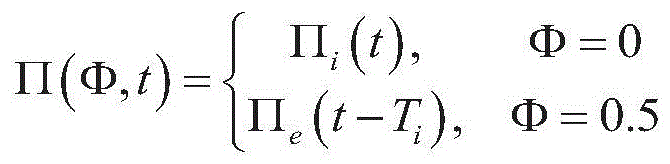
其中Πi(t)和Πe(t)是波形模板Π(Φ,t)的吸气和呼气部分。在一种这样的形式中,波形模板的吸气部分Πi(t)是由上升时间参数化的从0到1的平滑上升,波形模板的呼气部分Пe(t)是由下降时间参数化的从1到0的平滑下降。where Πi (t) and Πe (t) are the inspiratory and expiratory portions of the waveform template Π(Φ,t). In one such form, the inspiratory portion Π i (t) of the waveform template is a smooth rise from 0 to 1 parameterized by the rise time, and the expiratory portion Π e (t) of the waveform template is parameterized by the fall time parameter A smooth descent from 1 to 0.
8.4.3.2.3通气确定8.4.3.2.3 Ventilation determination
在本技术的一种形式中,通气确定算法4323接收输入呼吸流速Qr,并且确定指示当前患者通气的测量通气Vent。In one form of the present technology, the
在一些实施方式中,通气确定算法4323将Vent计算为“瞬时通气”Vint,其为呼吸流速信号Qr的绝对值的一半。In some embodiments, the
在一些实施方式中,通气确定算法4323通过利用低通滤波器(例如具有大约角频率为0.10Hz的第四级贝塞尔低通滤波器)对瞬时通气Vint进行滤波来将Vent计算为“非常快速通气”VveryFast。这相当于约10秒的时间常数。In some embodiments, the
在一些实施方式中,通气确定算法4323通过利用低通滤波器(例如具有大约0.05Hz的角频率的第四级贝塞尔低通滤波器)对瞬时通气Vint进行滤波来将Vent计算为“快速通气”Vfast。这相当于大约20秒的时间常数。In some embodiments, the
在本技术的一些实施方式中,通气确定算法4323将Vent确定为肺泡通气的测量值。肺泡通气是指在给定时间内空气实际到达呼吸系统气体交换表面的测量值。因为患者的呼吸系统包括显著的“解剖死空间”,即不发生气体交换的体积,所以肺泡通气小于上述直接运算呼吸流速Qr将产生的计算的“总”通气值,但是是患者的呼吸性能的更准确的测量值。In some embodiments of the present technology,
在这样的实施方式中,通气确定算法4323可以将瞬时肺泡通气确定为零或呼吸流速Qr的绝对值的一半。瞬时肺泡通气为零的条件是:In such an embodiment, the
·当呼吸流速从非负值变为负值时,或When the respiratory flow rate changes from a non-negative value to a negative value, or
·当呼吸流速从负值变为非负值时,并且when the respiratory flow rate changes from negative to non-negative, and
·在呼吸流速改变符号后,在呼吸流速Qr的积分的绝对值小于患者解剖死空间体积的时间段。• The time period during which the absolute value of the integral of the respiratory flow rate Qr is less than the patient's anatomical dead space volume after the respiratory flow rate changes sign.
患者的解剖死空间体积可以是RPT设备4000的设置,例如通过在配置RPT设备4000期间的硬编码或通过输入设备4220的手动输入来设置。The patient's anatomical dead space volume may be a setting of the
在一些这样的实施方式中,通气确定算法4323可以使用上述的各个低通滤波器对瞬时肺泡通气进行低通滤波,来将Vent计算为“非常快的肺泡通气”和/或“快速肺泡通气”。In some such embodiments,
在下文中,术语“肺泡”被省略,但是可以假定存在于治疗引擎模块4320的一些实施方式中。也就是说,在随后的描述中术语“通气”和“潮气量”可以适用于肺泡通气和肺泡潮气量以及“总”通气和潮气量。In the following, the term "alveolar" is omitted, but may be assumed to be present in some embodiments of the
8.4.3.2.4吸气气流限制确定8.4.3.2.4 Inspiratory airflow limitation determination
在本技术的一种形式中,治疗引擎模块4320执行一种或多种算法以确定呼吸流速波形的吸气部分(本文中有时简称为“吸气波形”)中的气流限制(有时称为部分上呼吸道阻塞)的程度。在一种形式中,气流限制确定算法4324接收呼吸流速信号Qr作为输入,并且提供每个吸气波形表现出气流限制的程度的测量值作为输出。In one form of the present technology, the
正常的吸气波形是圆弧形的,接近正弦形状(参见图6A)。具有足够的上呼吸道肌张力(或EPAP),呼吸道基本上作为刚性管,其中响应于增加的呼吸努力(或外部通气辅助)而流动增加。在一些情况下(例如睡眠、镇静),上呼吸道可能是可收缩的,例如响应于来自呼吸努力的其中的亚大气压,或者甚至来自施加的通气。这可能导致完全阻塞(呼吸暂停)或称为“气流限制”的现象。术语“气流限制”包括增加呼吸努力只会引起呼吸道更加变窄的表现,使得吸气流受限于恒定值,而与努力无关(“星际阻断行为”)。因此,吸气流速曲线呈现扁平形状(见图6B)。The normal inspiratory waveform is arcuate, nearly sinusoidal (see Figure 6A). With sufficient upper airway muscle tone (or EPAP), the airway essentially acts as a rigid tube in which flow increases in response to increased respiratory effort (or external ventilatory assistance). In some situations (eg, sleep, sedation), the upper airway may be contractile, eg, in response to sub-atmospheric pressure therein from respiratory effort, or even from applied ventilation. This can lead to complete obstruction (apneas) or a phenomenon known as "airflow restriction." The term "airflow restriction" includes the manifestation that increasing respiratory effort only causes more narrowing of the airway, so that inspiratory flow is limited to a constant value regardless of effort ("interstellar blocking behavior"). Therefore, the inspiratory flow rate curve exhibits a flat shape (see Figure 6B).
实际上,上呼吸道表现甚至更复杂,并且存在指示上呼吸道相关吸气气流限制的各种各样的流形状,以及在有外部通气辅助时存在更多种类的流形状(参见图6C至6F)。为此,气流限制确定算法4324可以响应以下吸气气流限制中的一种或多种:“经典平坦形”(见图6B),“椅形”(见图6C)和“反向椅形”(见图6D)。(使用M形检测算法4326单独处理“M”形(参考图6E,6F)。)In fact, the upper airway presentation is even more complex, and there is a wide variety of flow shapes indicative of upper airway-related inspiratory airflow limitation, and a wider variety of flow shapes when there is external ventilation assistance (see Figures 6C to 6F) . To this end, the airflow
图7A是示出方法7000的流程图,其可以用于在目前技术的一种形式中计算作为吸气气流限制确定算法4324的一部分的呼吸流速波形的吸气部分的气流限制的测量值。7A is a flow diagram illustrating a
方法7000从步骤7010开始,步骤7010基于吸气波形的中心部分计算出多个“中心部分特征”CF1至CF8,包括中心斜率、中心偏差、中心凹度和波形具有大的初始部分和大的最终部分的范围(大约在中心部分之前和之后)。下文参考图7B详细描述步骤7010。
下一个步骤7020使用模糊逻辑组合在步骤7010中计算的中心部分特征CF1至CF8,以计算多个气流限制模糊真值变量FL1至FL6,其指示吸气波形与相应的常规气流限制(部分阻塞)吸气波形之间的相似度。这些常规波形可以包括:可能凹陷的适度平坦形;指示高吸气阻力的轻度负斜率;具有较大的初始峰值的非常平坦形或M形;可能有一个负斜率、在中后部有峰值的平坦形;凹陷和略微平坦。下文参考图7C详细描述步骤7020。The
方法7000然后在步骤7030中计算模糊真值变量fuzzyLateFlatness,其指示吸气波形的“椅形”程度,即早期峰值、后期线性度和中度后期斜率的组合(如图6C所示)。下文参考图7E详细描述步骤7030。
最后,在步骤7040中,使用“模糊或”运算组合所有的计算出的气流限制模糊真值变量FL1至FL6(来自步骤7020)和模糊真值变量fuzzyLateFlatness(来自步骤7030),以计算指示吸气气流限制的程度的模糊真值变量flowLimitation。模糊“或”取模糊真值变量的最大值,因此模糊真值变量flowLimitation,其指示与吸气波形最相似的常规气流限制吸气波形之一的相似度。Finally, in
通过将气流限制的检测主要基于从吸气波形的中心部分提取的特征,与其它检测吸气气流限制的方法相比,方法7000对错误建模的泄漏(见下文)更加鲁棒。这是因为错误建模的泄漏倾向于(虽然不是必然地,但是经常地)引起对作为面罩压力Pm的函数的呼吸流速信号Qr的正偏移,其在吸气波形的中心和稍后部分中趋于大致恒定(例如,一旦上升时间过去)。因此,由错误建模的泄漏引起的呼吸流速信号Qr的偏移在吸气波形的中心部分和稍后部分也趋于恒定。By basing the detection of airflow limitation primarily on features extracted from the central portion of the inspiratory waveform,
图7B是示出在本技术的一种形式中可以用于方法7000的实现步骤7010的方法7100的流程图。方法7100接收吸气波形的持续时间的“低分数”和“高分数”参数作为参数。由方法7100使用的吸气波形的“中心部分”从低分数乘以吸气波形持续时间延伸到高分数乘以吸气波形的持续时间。在步骤7010的一种实施方式中,传递到方法7100的“低分数”是0.3,“高分数”是0.85。7B is a flowchart illustrating a
方法7100从步骤7110开始,步骤7110在中心部分之前的吸气波形的部分(即“前中心”部分)上构建概念“斜坡”。斜坡从吸气波形的开始点延伸到中心部分的起点。
然后步骤7120通过将吸气波形和前中心部分上的斜坡之间的差值相加来计算斜坡上的呼吸流速的数量。此数量称为“flowAboveRampToStartOfCentralPart”。
下一步骤7130通过将flowAboveRampToStartOfCentralPart除以所有吸气波形值的总和来计算第一中心部分特征(CF1)propnAboveRampToStartOfCentralPart。propnAboveRampToStartOfCentralPart的显著正值通常与吸气流速波形的早期峰值相关联。负值指示流向中心部分的非常温和的上升,并且不太可能与气流限制或高吸气阻力相关联。The
之后是步骤7140,在步骤7140中方法7100计算中心部分上的第二中心部分特征(CF2)CentralSlope。可以通过归一化中心部分的线性回归来计算表示吸气波形归一化的中心部分的线性近似的斜率的CentralSlope。归一化因子是完整吸气波形的平均值的最大值和最小归一化流速,其在一个实施方式中被定义为24升/分钟。This is followed by
然后步骤7150计算centralFlowsMean:吸气波形的归一化中心部分的平均值。然后步骤7150将centralFlowsMean乘以中心部分的持续时间以获得第三中心部分特征(CF3):centralPartDurationByFlowsMeanProduct。
方法7100进行到步骤7160,步骤7160计算第四中心部分特征(CF4),postCentralActualAbovePredicted:中心部分(后中心部分)之后的吸气波形部分中的流速高于中心部分的线性近似值多少的测量值。步骤7160通过对归一化的吸气波形值和后中心部分上延伸的线性近似值之间的差值进行求和,并且将总和除以后中心部分的持续时间和centralFlowsMean的值来计算postCentralActualAbovePredicted。(在一个实施方式中,如果centralFlowsMean不为正,则将PostCentralActualAbovePredicted设置为零)。PostCentralActualAbovePredicted的负值通常指示正常呼吸,这是因为在部分上呼吸道阻塞中,流速通常大于或等于中心部分在时间上的投影,而在正常呼吸中,中心部分后的流速几乎总是比中心部分减速更快。换句话说,在正常呼吸中,中心部分和后中心部分的流速一起通常是凸起的,而在限流呼吸中,中心部分的流速与大部分后中心部分一起一般不凸起。
下一步骤7170计算第五中心部分特征(CF5):中心部分上的实际吸气波形值与其线性近似的变化的测量值。在步骤7170的一个实施方式中,centralDeviation被计算为在中心部分上归一化流速与其线性近似(从centralFlowsMean和centralSlope计算)之间的差的平方和的平方根。centralDeviation的显著正值指示中心部分的显著非线性。The
最后,在步骤7180中,方法7100计算第六中心部分特征(CF6):centralConcavity,中心部分的凹度的测量值。centralConcavity的正值指示中心部分大致向上凹。在步骤7180的一个实施方式中,centralConcavity被计算为在中心部分上归一化的减去平均值的吸气波形和V形函数之间的相似度的测量值。在步骤7180的一个实施方式中,相似度的测量值被计算为归一化的减去平均值的吸引波形和V形函数的乘积的中心部分上的总和除以V形函数的自相关。也可以在步骤7180中使用凹度的其它测量值来计算centralConcavity,例如对中心部分的抛物线近似的曲率。凹度的另一个测量值是中心部分的内积与高斯函数的二阶导数,具有合适的缩放因子,在合适的范围内,例如,对应于+/-2标准偏差。这可以替代地通过在低通滤波中心部分的中心处取流的二阶导数来实现,其中已经通过与高斯函数卷积来执行低通滤波,可能通过适当的窗口化。可以使用其它低通滤波器,随后使用用于计算滤波波形上的二次导数的标准数值方法。Finally, in
为了计算第七和第八中心部分特征,步骤7010可以以中心部分的不同定义(即参数“低分数”和“高分数”的不同值)重复方法7100。在一个这样的实施方式中,方法7100的第二次迭代的“低分数”为0.2,“高分数”为0.8,两者都低于限定曾计算中心部分特征CF1到CF6并且因此定义吸气波形的较早部分的中心部分的对应分数。第七个中心部分特征(CF7),命名为ConcaveAndFlattishCentralSlope,是方法7100的第二次迭代的步骤7140返回的centralSlope的值。CanaveAndFlattishCentralSlope的值与从吸气波形的较早部分上计算的centralSlope(CF2)的值略微不同。To calculate the seventh and eighth center portion features,
第八中心部分特征(CF8),命名为ConcaveAndFlattishCentralConcavity,是方法7100的第二次迭代的步骤7180返回的centralConcavity的值。ConcaveAndFlattishCentralConcavity的值与从吸气波形的较早部分上计算的centralConcavity(CF6)的值略微不同。The eighth central portion feature (CF8), named ConcaveAndFlattishCentralConcavity, is the value of centralConcavity returned by
通过将中心部分特征CF1至CF8的计算通常基于归一化量,方法7100使其本身对于由错误建模的泄漏引起的吸气波形中的偏移更加鲁棒。
图7C是示出在本技术的一种形式中可以用于方法7000的实现步骤7020的方法7200的流程图。如上所述,步骤7020例如通过使用模糊逻辑组合在步骤7010计算出的中心部分特征CF1至CF8来计算多个气流限制模糊真值变量FL1至FL6,其指示吸气波形与相应的常规气流限制吸气波形的相似性。7C is a flowchart illustrating a
每个步骤7210至7260独立地在八个中心部分特征CF1至CF8的某些子集上运算,以计算六个气流限制模糊真值变量FL1至FL6中的一个。为此,步骤7210至7260可以并行或以任何方便的顺序进行。Each of
步骤7210将命名为flattishMaybeConcave的气流限制模糊真值变量FL1计算为从中心部分特征centralSlope(CF2),centralDeviation(CF5)和centralConcavity(CF6)分别获得的三个模糊真值变量centralSlopeFlattishMaybeConcave、centralDeviationFlattishMaybeConcave和centralConcavityFlattishMaybeConcave的模糊与(AND)。对flattishMaybeConcave有贡献的三个模糊真值变量分别指示吸气波形的中心部分是适度平坦的(大致水平且合理线性),稍微向上凹。在一个实施方式中,步骤7210如下计算centralSlopeFlattishMaybeConcave,centralDeviationFlattishMaybeConcave如centralConcavityFlattishMaybeConcave:
centralSlopeFlattishMaybeConcave=FuzzyMember(centralSlopeFlattishMaybeConcave=FuzzyMember(
centralSlope,-0.2,假,-0.1,真,0.1,真,0.2,假)centralSlope, -0.2, false, -0.1, true, 0.1, true, 0.2, false)
centralDeviationFlattishMaybeConcave=FuzzyMember(centralDeviationFlattishMaybeConcave=FuzzyMember(
centralDeviation,0.05,真,0.1,假)centralDeviation, 0.05, true, 0.1, false)
centralConcavityFlattishMaybeConcave=FuzzyMember(centralConcavityFlattishMaybeConcave=FuzzyMember(
centralConcavity,-0.2,假,0.0,真)centralConcavity, -0.2, false, 0.0, true)
步骤7220从六个中心部分特征CF1至CF6计算命名为mildNegSlopeHighInspResistance的气流限制模糊真值变量FL2。气流限制模糊真值变量mildNegSlopeHighInspResistance指示吸气波形在指示高吸气阻力的中心部分中呈轻度负斜率。
图7D是示出在本技术的一种形式中可以用于方法7200的实现步骤7220的方法7300的流程图。7D is a flowchart illustrating a
方法7300从步骤7310开始,步骤7310检查中心部分特征centralPartDurationByFlowsMeanProduct(CF3)是否大于0,或者中心部分特征centralSlope(CF2)在[-0.6,-0.1]之间。如果否(“N”),则方法7300进行到步骤7320,其将mildNegSlopeHighInspResistance设置为False(假),因为中心斜率不是轻度负的,或者中心部分太小而没有用。
否则(“Y”),方法7300开始计算将使用模糊与运算组合的四个模糊真值变量以产生mildNegSlopeHighInspResistance。Otherwise ("Y"),
该计算从步骤7330开始,步骤7330从中心部分特征propnAboveRampToStartOfCentralPart(CF1)计算中间模糊真值变量pairIsHigh,使得当前中心部分变为“peakier(峰)”时,pairIsHigh变为True(真)。在一个实施方式中,步骤7330如下计算pairIsHigh:The calculation starts at
pairIsHigh=FuzzyMember(pairIsHigh=FuzzyMember(
propnAboveRampToStartOfCentralPart,propnAboveRampToStartOfCentralPart,
0.08,假,0.12,真)0.08, false, 0.12, true)
然后,步骤7340从pairIsHigh和centralSlope计算斜率相关偏差阈值。在一个实施方式中,步骤7340如下计算slopeDependentDeviationThreshold:Then,
slopeDependentDeviationThreshold=slopeDependentDeviationThreshold=
pairIsHigh*0.08+(1-pairIsHigh)*(0.04+(centralSlope+0.5)*0.1)pairIsHigh*0.08+(1-pairIsHigh)*(0.04+(centralSlope+0.5)*0.1)
在下一个步骤7350中,方法7300使用中心部分特征centralDeviation(CF5)减去刚刚计算出的与斜率相关的偏差阈值来计算对mildNegSlopeHighInspResistance有贡献的四个模糊真值变量中的第一个,即centralDeviationLow。随着该差值的增大,centralDeviationLow的值变为False。在一个实施方式中,步骤7350如下计算centralDeviationLow:In the
centralDeviationLow=FuzzyMember(centralDeviationLow=FuzzyMember(
centralDeviation-slopeDependentDeviationThreshold,0.0,真,0.01,假)centralDeviation-slopeDependentDeviationThreshold, 0.0, true, 0.01, false)
然后步骤7360从中心部分特征centralConcavity(CF6)计算对mildNegSlopeHighInspResistance有贡献的四个模糊真值变量中的第二个,即centralConcavityModPositive,使得当中心部分的凹度为中等程度的正值时,centralConcavityModPositive为真值(true)。在一个实施方式中,步骤7360如下计算centralConcavityModPositive:Then step 7360 calculates the second of the four fuzzy true value variables that contribute to mildNegSlopeHighInspResistance from the central part feature centralConcavity (CF6), namely centralConcavityModPositive, so that when the concavity of the central part is a moderately positive value, centralConcavityModPositive is true value (true). In one embodiment,
centralConcavityModPositive=FuzzyMember(centralConcavityModPositive=FuzzyMember(
centralConcavity,-0.05,假,0.0,真,0.3,真,0.5,假)centralConcavity, -0.05, false, 0.0, true, 0.3, true, 0.5, false)
下一个步骤7370从中心部分特征postCentralActualAbovePredicted(CF4)计算对mildNegSlopeHighInspResistance有贡献的四个模糊真值变量中的第三个,即postCentralActualAbovePredMildNegSlope,使得随着postCentralActualAbovePredicted增大,postCentralActualAbovePredMildNegSlope变为true。在一个实施方式中,步骤7370如下计算postCentralActualAbovePredMildNegSlope:The
postCentralActualAbovePredMildNegSlope=FuzzyMember(postCentralActualAbovePredMildNegSlope=FuzzyMember(
postCentralActualAbovePredicted,-0.4,假,-0.3,真)postCentralActualAbovePredicted, -0.4, false, -0.3, true)
随后是步骤7375,在步骤7375中,方法7300从中心部分特征centralSlope(CF2)和centralPartDurationByFlowsMeanProduct(CF3)计算指数衰减常数exponentialDecayConstant。在一个实施方式中,步骤7375如下计算exponentialDecayConstant:This is followed by
exponentialDecayConstant=exponentialDecayConstant= exponentialDecayConstant=
-centralSlope/centralPartDurationByFlowsMeanProduct-centralSlope/centralPartDurationByFlowsMeanProduct
下一步骤7380计算由exponentialDecayConstant对mildNegSlopeHighInspResistance有贡献的四个模糊真值变量中的第四个,即expDecayConstMildNegSlope。在一个实施方式中,步骤7380如下计算expDecayConstMildNegSlope:The
expDecayConstMildNegSlope=FuzzyMember(expDecayConstMildNegSlope=FuzzyMember(
exponentialDecayConstant,-0.4,假,-0.2,真,0.2,真,0.4,假)exponentialDecayConstant, -0.4, false, -0.2, true, 0.2, true, 0.4, false)
方法7300的最后一个步骤7390将mildNegSlopeHighInspResistance计算为四个模糊真值变量centralDeviationLow、mildNegSlopeHighInspResistance、postCentralActualAbovePredMildNegSlope和expDecayConstMildNegSlope的模糊与。The
步骤7230将命名为veryFlat的气流限制模糊真值变量FL3计算为分别从中心部分特征centralSlope(CF2),centralConcavity(CF6)和propnAboveRampToStartOfCentralPart(CF1)获得的三个模糊真值变量centralSlopeVeryFlat、centralConcavityVeryFlat和propnAboveRampToStartOfCentralPartVeryFlat的模糊与。对veryFlat有贡献的三个模糊真值变量分别指示吸气波形在中心部分近似水平且不向上凸起,而在前中心部分中不会向上凹。在一个实施方式中,步骤7230如下计算centralSlopeVeryFlat、centralConcavityVeryFlat和propnAboveRampToStartOfCentralPartVeryFlat:
centralSlope VeryFlat=FuzzyMember(centralSlope VeryFlat=FuzzyMember(
centralSlope,-0.1,假,-0.05,真,0.05,真,0.1,假)centralSlope, -0.1, false, -0.05, true, 0.05, true, 0.1, false)
centralConcavityVeryFlat=FuzzyMember(centralConcavityVeryFlat=FuzzyMember(
centralConcavity,-0.1,假,0.0,真)centralConcavity, -0.1, false, 0.0, true)
propnAboveRampToStartOfCentralPartVeryFlat=FuzzyMember(propnAboveRampToStartOfCentralPartVeryFlat=FuzzyMember(
propnAboveRampToStartOfCentralPart,-0.05,假,0.0,真)propnAboveRampToStartOfCentralPart, -0.05, false, 0.0, true)
步骤7240将命名为flatAndLargeInitialPeakMShapes的气流限制模糊真值变量FL4计算为分别从中心部分特征centralSlope(CF2)、centralConcavity(CF6)和propnAboveRampToStartOfCentralPart(CF1)获得的三个模糊真值变量cenntralSlopeFlatAndLargeInitialPeakMShapes、centralConcavityFlatAndLargeInitialPeakMShapes和propnAboveRampToStartOfCentralPartFlatAndLargeInitialPeakMShapes的模糊与。对flatAndLargeInitialPeakMShapes有贡献的三个模糊真值变量分别指示吸气波形在中心部分近似为水平或M形,并具有较大的初始峰值。在一个实施方式中,步骤7240如下计算centralSlopeFlatAndLargeInitialPeakMShapes、centralConcavityFlatAndLargeInitialPeakMShapes,和propnAboveRampToStartOfCentralPartFlatAndLargeInitialPeakMShapes:
centralSlopeFlatAndLargeInitialPeakMShapes=FuzzyMember(centralSlopeFlatAndLargeInitialPeakMShapes=FuzzyMember(
centralSlope,-0.3,假,-0.2,真,0.2,真,0.3,假)centralSlope, -0.3, false, -0.2, true, 0.2, true, 0.3, false)
centralConcavityFlatAndLargeInitialPeakMShapes=FuzzyMember(centralConcavityFlatAndLargeInitialPeakMShapes=FuzzyMember(
centralConcavity,0.1,假,0.3,真)centralConcavity, 0.1, false, 0.3, true)
propnAboveRampToStartOfCentralPartFlatAndLargeInitialPeakMShapes=propnAboveRampToStartOfCentralPartFlatAndLargeInitialPeakMShapes=
FuzzyMember(FuzzyMember(
propnAboveRampToStartOfCentralPart,0.15,假,0.3,真)propnAboveRampToStartOfCentralPart, 0.15, false, 0.3, true)
步骤7250使用对三个中间模糊真值变量的以下模糊逻辑运算来计算命名为flatMNegSlopePostCentralHigh的气流限制模糊真值变量FL5:
flatMNegSlopePostCentralHigh=flatMNegSlopePostCentralHigh=
centralDeviationFlatMNegSlopePostCentralHigh ANDcentralDeviationFlatMNegSlopePostCentralHigh AND
(flatNegSlope ORflatMoreNegSlopeHighPostCentral)(flatNegSlope ORflatMoreNegSlopeHighPostCentral)
模糊真值变量centralDeviationFlatMNegSlopePostCentralHigh从中心部分特征centralDeviation(CF5)获得,并且指示吸气波形的中心部分是合理线性的。在一个实施方式中,步骤7250如下计算centralDeviationFlatMNegSlopePostCentralHigh:The fuzzy ground truth variable centralDeviationFlatMNegSlopePostCentralHigh is obtained from the central part feature centralDeviation (CF5) and indicates that the central part of the inspiration waveform is reasonably linear. In one embodiment,
centralDeviationFlatMNegSlopePostCentralHigh=FuzzyMember(centralDeviationFlatMNegSlopePostCentralHigh=FuzzyMember(
centralDeviation,0.1,真,0.2,假)centralDeviation, 0.1, true, 0.2, false)
步骤7250将模糊真值变量flatNegSlope计算为分别从中心部分特征centralSlope(CF2)和postCentralActualAbovePredicted(CF4)获得的两个模糊真值变量centralSlopeFlatNegSlope和postCentralActualAbovePredFlatNegSlope的模糊与。对flatNegSlope有贡献的两个模糊真值变量指示吸气波形在中心部分具有轻微的负斜率,在后中心部分向上凹。在一个实施方式中,步骤7250如下计算centralSlopeFlatNegSlope和postCentralActualAbovePredFlatNegSlope:
centralSlopeFlatNegSlope=FuzzyMember(centralSlopeFlatNegSlope=FuzzyMember(
centralSlope,-0.45,假,-0.3,真,0.1,真,0.2,假)centralSlope, -0.45, false, -0.3, true, 0.1, true, 0.2, false)
postCentralActualAbovePredFlatNegSlope=FuzzyMember(postCentralActualAbovePredFlatNegSlope=FuzzyMember(
postCentralActualAbovePredicted,0.0,假,0.2,真)postCentralActualAbovePredicted, 0.0, false, 0.2, true)
步骤7250将模糊真值变量flatMoreNegSlopeHighPostCentral计算为分别从中心部分特征centralSlope(CF2)和postCentralActualAbovePredicted(CF4)获得的两个模糊真值变量centralSlopeFlatMoreNegSlopeHighPostCentral和postCentralActualAbovePredFlatMoreNegSlopeHighPostCentral的模糊与。对flatMoreNegSlopeHighPostCentral有贡献的两个模糊真值变量分别指示吸气波形在中心部分具有比flatNegSlope略微更负的斜率,并且在后中心部分具有峰值。在一个实施方式中,步骤7250如下计算centralSlopeFlatMoreNegSlopeHighPostCentral和postCentralActualAbovePredFlatMoreNegSlopeHighPostCentral:
centralSlopeFlatMoreNegSlopeHighPostCentral=FuzzyMember(centralSlopeFlatMoreNegSlopeHighPostCentral=FuzzyMember(
centralSlope,-0.55,假,-0.45,真,0.1,真,0.2,假)centralSlope, -0.55, false, -0.45, true, 0.1, true, 0.2, false)
postCentralActualAbovePredFlatMoreNegSlopeHighPostCentral=postCentralActualAbovePredFlatMoreNegSlopeHighPostCentral=
FuzzyMember(FuzzyMember(
postCentralActualAbovePredicted,0.2,假,0.3,真)postCentralActualAbovePredicted, 0.2, false, 0.3, true)
通过步骤7250计算的模糊真值变量flatMNegSlopePostCentralHigh(FL5)指示吸气波形在中心部分是合理线性的,并且在中心部分具有轻微的负斜率并且在后中心部分中向上凹,或者在中部有一个更负的斜率并且在后中心部分具有峰值。The fuzzy ground-truth variable flatMNegSlopePostCentralHigh(FL5) computed by
步骤7260将命名为concaveAndFlattish的气流限制模糊真值变量FL6计算为分别从中心部分特征centralSlopeConcaveAndFlattish(CF7)和centralConcavityConcaveAndFlattish(CF8)获得的两个模糊真值变量的centralSlopeConcaveAndFlattishFuzzy和centralConcavityConcaveAndFlattishFuzzy的模糊与。对concaveAndFlattish有贡献的两个模糊真值变量分别指示吸气波形的中心部分近似水平和向上凹。气流限制模糊真值变量concaveAndFlattish(FL6)与第一气流限制模糊真值变量flattishMaybeConcave(FL1)略些不同,因为它依赖于中心部分特征CF7和CF8,它们是通过比CF2和CF6稍微较早定义的中心部分计算的,其对fflattishMaybeConcave有贡献。也就是说,concaveAndFlattish指示比flattishMaybeConcave略早的水平度和凹度的外观。
在一个实施方式中,步骤7260如下计算centralSlopeConcaveAndFlattishFuzzy和centralConcavityConcaveAndFlattishFuzzy:In one embodiment,
centralSlopeConcaveAndFlattish,centralSlopeConcaveAndFlattish,
-0.4,假,-0.2,真,0.2,真,0.4,假)-0.4, false, -0.2, true, 0.2, true, 0.4, false)
centralConcavityConcaveAndFlattishFuzzy=FuzzyMember(centralConcavityConcaveAndFlattishFuzzy=FuzzyMember(
centralConcavityConcaveAndFlattish,centralConcavityConcaveAndFlattish,
0.3,假,0.4,真)0.3, false, 0.4, true)
图7E是示出在本技术的一种形式中可以用于方法7000的实现步骤7030的方法7400的流程图。如上所述,步骤7030计算表示吸气波形“椅形”程度的模糊真值变量fuzzyLateFlatness。7E is a flowchart illustrating a
方法7400从步骤7410开始,其检查吸气时间Ti是否大于吸气时间阈值,并且典型的近期通气Vtyp(由下面描述的典型的近期通气确定算法4328返回)是否大于零。在一个实施方式中,吸气时间阈值为0.5。如果否(“N”),则步骤7440将fuzzyLateFlatness设置为“模糊假(fuzzyfalse)”,并且方法7400得出结论。否则(“Y”),步骤7420计算吸气波形的“后期部分”的开始和结束位置。步骤7420的目的是定义后期部分,以排除吸气波形中的任何早期峰值。在一个实施方式中,使用由波形确定算法4322确定的压力波形模板的上升时间和下降时间参数来定义后期部分。在一个这样的实施方式中,后期部分的开始位置是1.25乘以上升时间,并且结束位置是吸气波形结束后的下降时间的四分之一。可以设想定义“后期部分”的步骤7420的其它实施方式。例如,步骤7420可以测试稍微比上述定义的“后期”部分更靠后的部分,是否对接近零梯度的直线具有合理的近似,并且如果发现这一点,则向后搜索以找到从初始峰值快速下降的该近似的结点,使用例如近似等于在结点处的大的正平滑二次导数的标准来定位该结点,然后考虑后期部分大致在该结点处开始。这种方法比以前描述的方法更为计算密集。The
然后,方法7400检查在步骤7420中定义的后期部分的持续时间是否高于吸气时间Ti的最小分数。在一个实施方式中,最小分数为0.25。如果不是(“N”),则后期部分被认为太短而不能用于可靠的分析,并且方法7400进行到将fuzzyLateFlatness设置为“模糊假”的步骤7440,并且方法7400得出结论。否则(“Y”),下一步骤7450从典型的近期通气Vtyp计算归一化因子normFactorTypVent,使得normFactorTyptVent大致随Vtyp增加而增加。在一个实施方式中,适合于当Vtyp是肺泡通气时,步骤7450将normFactorTyp Vent计算为Vtyp/4.5。The
然后,步骤7455在后期部分上计算吸气波形的线性近似。步骤7455可以使用线性回归计算线性近似,其特征是平均流速flowMean、斜率flowSlope和均方根预测误差rootMeanSqFlowPredErr。然后,步骤7455通过将每个参数除以归一化因子normFactorTypVent来计算这三个参数的归一化版本:Then,
lateFlowMean=flowMean/normFactorTypVentlateFlowMean=flowMean/normFactorTypVent
lateSlope=flowSlope/normFactorTypVentlateSlope=flowSlope/normFactorTypVent
lateFlatness=rootMeanSqFlowPredErr/normFactorTyp VentlateFlatness=rootMeanSqFlowPredErr/normFactorTyp Vent
这里的“平坦度(Flatness)”是指后期部分类似于直线的程度,对其梯度没有任何影响,并且当后期部分实际上是直线时,lateFlatness的值为零。"Flatness" here refers to how much the late part resembles a straight line without any effect on its gradient, and when the late part is actually straight, the value of lateFlatness is zero.
在下一个步骤7460中,方法7400计算量flowAboveLateBeforeLate,其指示在后期部分之前的吸气波形超过线性近似到在步骤7455中计算的吸气波形的后期部分的反投影多少,即,指示吸气波形中早期峰值的大小。为了计算flowAboveLateBeforeLate,找到呼吸流速Qr超过线性近似到后期部分的反投影的后期部分之前的最早位置。然后将呼吸流速Qr和线性近似值之间的差值在该位置与后期部分的开始位置之间进行平均。然后通过归一化因子normFactorTyp Vent对平均值进行归一化,以获得flowAboveLateBeforeLate。然后,步骤7460从flowAboveLateBeforeLate的值计算模糊真值变量flowAboveLateBeforeLateAdequate,使得flowAboveLateBeforeLateAdequate为模糊false,直到flowAboveLateBeforeLate超过大致随着后期部分的平均流速lateFlowMean(其在步骤7455计算出)增加的阈值。flowAboveLateBeforeLateAdequate对lateFlowMean的依赖性的影响是需要更大的早期峰值以随着后期部分的平均流速增加而使得fiuzzyLateFlatness为模糊真。In the
在一个实施方式中,步骤7460如下计算flowAboveLateBeforeLateAdequate:In one embodiment,
flowAboveLateBeforeLateAdequate=FuzzyMember(flowAboveLateBeforeLateAdequate=FuzzyMember(
flowAboveLateBeforeLate,flowAboveLateBeforeLate,
LOWER_THRESH,假,LOWER_THRESH, false,
UPPER_THRESH,真UPPER_THRESH, true
))
其中在一个实施方式中LOWER_THRESH和UPPER THRESH是等于0.5*lateFlowMean和lateFlowMean的恒定阈值。在一个实施方式中,阈值分别为2.25和4.5升/分钟的最小值,而不管lateFlowMean的值如何。where in one embodiment LOWER_THRESH and UPPER THRESH are constant thresholds equal to 0.5*lateFlowMean and lateFlowMean. In one embodiment, the thresholds are the minimum values of 2.25 and 4.5 liters/minute, respectively, regardless of the value of lateFlowMean.
方法7400进行到步骤7465,步骤7465计算模糊真值变量lateFlatnessFuzzyComp,其随着lateFlatness增加而从真变为假,即后期部分变得较不线性。在一个实施方式中,步骤7465如下计算lateFlatnessFuzzyComp:
lateFlatnessFuzzyComp=FuzzyMember(lateFlatnessFuzzyComp=FuzzyMember(
lateFlatness,lateFlatness,
LOWER_FLATNESS_THRESH,真,LOWER_FLATNESS_THRESH, true,
UPPER_FLATNESS_THRESH,假UPPER_FLATNESS_THRESH, false
))
其中在一个实施方式中LOWER_FLATNESS_THRESH和UPPER_FLATNESS_THRESH是分别等于0.6和0.9的恒定阈值。Where in one embodiment LOWER_FLATNESS_THRESH and UPPER_FLATNESS_THRESH are constant thresholds equal to 0.6 and 0.9, respectively.
下一个步骤7470计算模糊真值变量lateSlopeFuzzyComp,其仅在lateSlope是“中等”时为真。也就是说,lateSlope的较大的正或负值可能会导致LateSlopeFuzzyComp为假。在一个实施方式中,步骤7470如下计算lateSlopeFuzzyComp:The
lateSlopeFuzzyComp=FuzzyMember(lateSlopeFuzzyComp=FuzzyMember(
lateSlope,lateSlope,
LOWER_SLOPE_THRESH,假,LOWER_SLOPE_THRESH, false,
UPPER_SLOPE_THRESH,真,UPPER_SLOPE_THRESH, true,
6.0,真,6.0, true,
9.0,假,9.0, false,
))
其中LOWER_SLOPE_THRESH和UPPER_SLOPE_THRESH是阈值。在一个实施方式中,阈值通常随着lateFlowMean增加变得更负,意味着随着后期部分的平均流速增加,在“中度”的定义中允许更大的负斜率。在一个实施方式中,步骤7470如下计算LOWER_SLOPE_THRESH和UPPER_SLOPE_THRESH:where LOWER_SLOPE_THRESH and UPPER_SLOPE_THRESH are the thresholds. In one embodiment, the threshold value generally becomes more negative as lateFlowMean increases, meaning that in the definition of "moderate", a more negative slope is allowed as the average flow rate of the late portion increases. In one embodiment,
LOWER_SLOPE_THRESH=-9.0-3*slopeThresholdExtensionLOWER_SLOPE_THRESH=-9.0-3*slopeThresholdExtension
UPPER_SLOPE_THRESH=-6.0-3*slopeThresholdExtensionUPPER_SLOPE_THRESH=-6.0-3*slopeThresholdExtension
其中,slopeThresholdExtension是随着lateFlowMean增加而从1减少到0的实数。在一个实施方式中,步骤7470如下计算slopeThresholdExtension:where slopeThresholdExtension is a real number that decreases from 1 to 0 as lateFlowMean increases. In one embodiment,
slopeThresholdExtension=FuzzyDeweight(slopeThresholdExtension=FuzzyDeweight(
lateFlowMean,lateFlowMean,
0.6,1.0,0.6, 1.0,
0.9,0.00.9, 0.0
))
方法7400的最后步骤7475将fuzzyLateFlatness计算为分别在步骤7460、7465和7470中计算的模糊真值变量flowAboveLateBeforeLateAdequate、lateFlatnessComp和lateSlopeFuzzyComp的模糊与。A
8.4.3.2.5M形检测8.4.3.2.5 M-Shape Detection
在本技术的一种形式中,治疗引擎4320模块执行一个或多个算法来检测吸气波形中的“M形”。在一种形式中,M形检测算法4326接收呼吸流速信号Qr作为输入,并提供指示每个吸气波形呈M形的程度的测量值作为输出。In one form of the present technology, the
具有潮气量或不太大于典型的近期值的其它呼吸性通气值的M形吸气波形指示气流限制。这种吸气波形具有相对快速的上升和下降以及大约在中心的流中的下降和下坠或“凹口”,下坠是由于气流限制(见图6E和6F)。在较高的潮气量或呼吸性通气值下,这样的波形通常是行为相关的,即睡眠期间的微觉醒或叹息,并不指示气流限制。An M-shaped inspiratory waveform with a tidal volume or other respiratory ventilation values not much greater than typical recent values indicates airflow limitation. This inspiratory waveform has a relatively rapid rise and fall and a fall and fall or "notch" in the flow approximately in the center, the fall being due to airflow limitation (see Figures 6E and 6F). At higher tidal volume or respiratory ventilation values, such waveforms are often behaviorally related, ie, arousals or sighs during sleep, and do not indicate airflow limitation.
为了检测M形波形,M形检测算法4326确定吸气波形与大致M形的波形的相似性。To detect an M-shaped waveform, the M-shaped
图7F是示出在本技术的一种形式中可以用于实现M形检测算法4326的方法7500的流程图。7F is a flowchart illustrating a
由于凹口可能不在吸气波形的中心,所以方法7500尝试找到凹口的位置,然后线性地时间扭曲波形,使得凹口位于波形的中心。为了找到凹口,第一步骤7510执行归一化的吸气波形f(t)(其中归一化是除以平均值)与长度为Ti/2的V形核V(t)的修改的卷积,以零为中心,其中Ti是吸气时间:Since the notch may not be in the center of the inspiratory waveform,
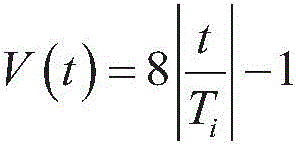
修改的卷积基于与核V(t)的左半部和右半部的单独卷积。左半部卷积计算为The modified convolution is based on separate convolutions with the left and right halves of the kernel V(t). The left half convolution is computed as
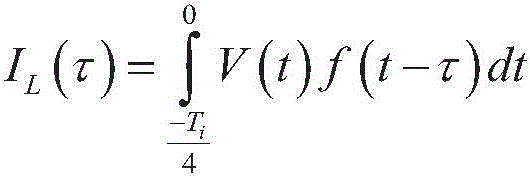
并且右半部卷积为And the right half convolution is

修改的卷积I(τ)被计算为左半部和右半部卷积IL(τ)和IR(τ)的组合,使得如果左半部和右半部卷积中的任一个为零,则结果为零,无论其它数量如何,如果两者都为1,则结果为1。因此在受约束的情况下,左半部和右半部卷积的组合在某种意义上类似于逻辑“和”函数,因此给出名称“V和卷积”。在一个实施方式中,组合是左半部和右半部卷积的改进的几何平均值:The modified convolution I(τ) is computed as the combination of the left and right half convolutions IL (τ) and IR ( τ) such that if either of the left and right half convolutions is zero, the result is zero, and regardless of the other quantities, if both are 1, the result is 1. So in the constrained case, the combination of left-half and right-half convolutions resembles a logical "sum" function in a sense, hence the name "V and convolution". In one embodiment, the combination is the modified geometric mean of the left and right half convolutions:

上述约束提供了一个条件,其中位于所述凹口的左侧的吸气波形通常向左增加,并且在凹口右侧的吸气波形通常向右增加。这比简单地对左和右积分求和提供了更多的特异性。在等式(1)中给出的实施方式中,时移归一化吸气波形与每个半V的乘积的积分必须严格为正,否则V和卷积为零。这可以防止各种病态,例如,当V的中心左侧的吸气流部分实际上不向左增加时,V波形的右半部的积分是如此大,以至于它压倒了实际减少的左半部。The above constraints provide a condition where the inspiratory waveform on the left side of the notch generally increases to the left, and the inspiratory waveform on the right side of the notch generally increases to the right. This provides more specificity than simply summing the left and right integrals. In the embodiment given in equation (1), the integral of the product of the time-shifted normalized inspiratory waveform and each half of V must be strictly positive, otherwise the sum of V and convolution is zero. This prevents various pathologies, such as when the portion of inspiratory flow to the left of the center of V does not actually increase to the left, the integral of the right half of the V waveform is so large that it overwhelms the actual decreasing left half department.
通过从Ti/4至3Ti/4范围内的核心V(t)的中心的位置来执行V和卷积,从而产生吸气波形的中心一半的结果。V and convolution are performed by performing V and convolution from the position of the center of the core V(t) in the range Ti/4 to 3Ti/4, resulting in the center half of the inspiratory waveform.
步骤7520找到修改的卷积I(τ)峰值的位置,并且如果该峰值的高度大于阈值,则认为在核心V(t)的中心的位置tnotch处存在凹口。在一个实施方式中,阈值被设置为0.15。
如果通过步骤7520(“Y”)在位置tnotch处找到凹口,则然后在步骤7530,吸气波形f(t)被时间扭曲或“对称化”,使得波形的一半向tnotch的左侧并且一半在右侧。该运算给出吸气波形f(t)的时间扭曲或“对称化”版本G(t):If a notch is found at location t notch by step 7520 ("Y"), then in
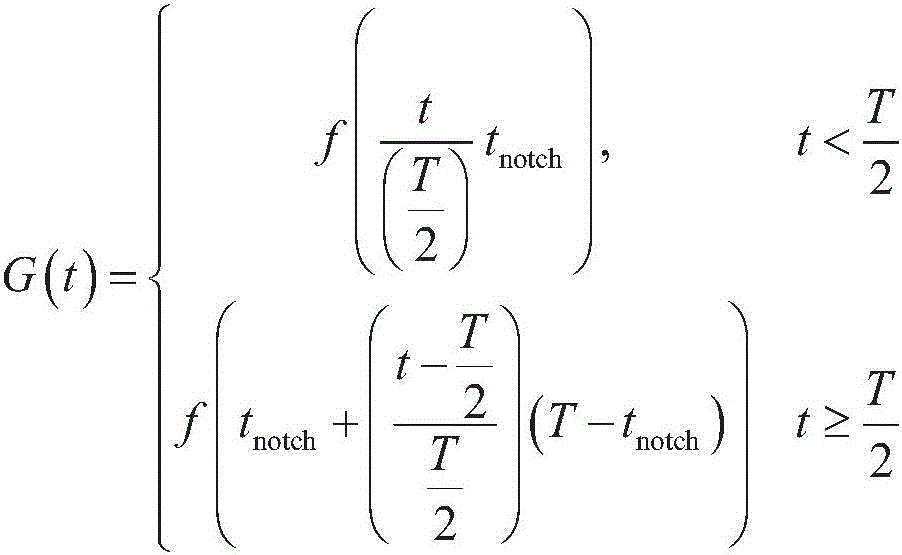
如果在步骤7520中没有找到凹口(“N”),则步骤7535将G(t)设置为吸气波形f(t),这是因为没有显示可检测的凹口的一些波形可能仍然具有M形气流限制。If no notch ("N") is found in
为了检测对称化波形G(t)中的M形气流限制,半宽度Ti的第一和第三正弦谐波函数首先被定义为To detect the M-shaped airflow restriction in the symmetric waveform G(t), the first and third sinusoidal harmonic functions of the half-width Ti are first defined as

和and
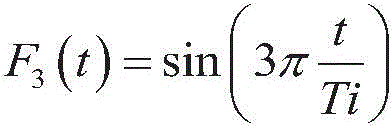
这两个谐波函数在[0,Ti]上是正交的。对于[0,Ti]中的t,F3(t)与M形吸气波形大致相似,F1(t)与正常吸气波形大致相似。因此,对称化波形G(t)类似于F3(t)的程度是波形有多类似于M的指示。步骤7540计算该程度。在一个实施方式中,步骤7540将对称化波形G(t)的一次谐波中的功率计算为一次谐波函数F1与对称化波形G(t)的内积的平方,并且将对称化波形G(t)中的三次谐波中的功率计算为三次谐波函数F3与对称化波形G(t)的内积的平方。两个内积均在吸气间隔[0,Ti]上计算。然后步骤7540将对称化波形G(t)类似于F3(t)的程度计算为对称化波形G(t)的三次谐波中的功率与对称化波形G(t)的一次和三次谐波中的功率之和的比例M3Ratio:These two harmonic functions are orthogonal on [0, Ti]. For t in [0, Ti], F3( t ) is roughly similar to the M-shaped inspiratory waveform and F1( t ) is roughly similar to the normal inspiratory waveform. Thus, the degree to which the symmetric waveform G(t) resembles F3( t ) is an indication of how similar the waveform is to

当M3Ratio大时,吸气波形通常类似于M。但是,如果波形非常不对称,则M3Ratio也可能很大,在波形的第一半部或第二半部中的平均流要远高于另一半部中的平均流。为了排除这种可能性,步骤7540还计算关于凹口位置的吸气波形f(t)的对称性的测量值Symm。在一个实施方式中,步骤7540计算对称化波形G(t)的第一半部和第二半部的三次谐波分量:When M3Ratio is large, the inspiratory waveform is usually similar to M. However, if the waveform is very asymmetric, the M3Ratio can also be large, with the average flow in the first or second half of the waveform being much higher than the average flow in the other half. To rule out this possibility,
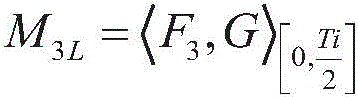

然后步骤7540将测量值Symm计算为这些分量中较小者与其绝对值之和的比例:
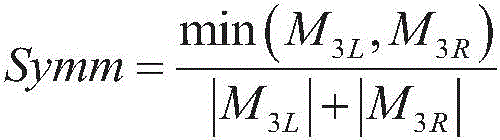
然后步骤7550测试测量值Symm是否小于低阈值,在一个实施方式中低阈值设置为0.3。如果是这样(“Y”),则吸气波形被认为是对称的M形,并且在步骤7560将作为吸气波形是对称的M形的程度的测量值的量M3SymmetryRatio设置为等于零。否则(“N”),在步骤7570将M3SymmetryRatio设置为等于M3Ratio。
最后的步骤7580从M3SymmetryRatio计算变量RxProportion,以便在M3SymmetryRatio增加时通常从0增加到1。在一个实施方式中,步骤7580如下计算RxProportion:A
RxProportion=FuzzyDeweight(RxProportion=FuzzyDeweight(
M3SymmetryRatio,M3SymmetryRatio,
LOWER_M3SYMMETRYRATIO_THRESH,0.0,LOWER_M3SYMMETRYRATIO_THRESH, 0.0,
UPPER_M3SYMMETRYRATIO_THRESH,1.0UPPER_M3SYMMETRYRATIO_THRESH, 1.0
))
其中LOWER_M3SYMMETRYRATIO_THRESH和UPPER_M3SYMMETRYRATIO_THRESH是常数,在一个实施方式中分别等于0.17和0.3。变量RxProportion是呼吸流速波形的吸气部分的M形程度的[0,1]范围内的指示。where LOWER_M3SYMMETRYRATIO_THRESH and UPPER_M3SYMMETRYRATIO_THRESH are constants, in one embodiment equal to 0.17 and 0.3, respectively. The variable RxProportion is an indication in the range [0, 1] of the degree of M-shape of the inspiratory portion of the respiratory flow rate waveform.
8.4.3.2.6呼吸暂停检测8.4.3.2.6 Apnea detection
在本技术的一种形式中,治疗引擎模块4320执行呼吸暂停检测算法4325以检测低通气呼吸暂停。In one form of the present technology, the
在一种形式中,呼吸暂停检测算法4325接收呼吸流速信号Qr作为输入,并且提供指示检测到的呼吸暂停的开始和结束的一系列事件作为输出。In one form, the
图7G是示出了在本技术的一种形式中可以用于实现呼吸暂停检测算法4325的检测呼吸暂停的方法7600的流程图。7G is a flowchart illustrating a
方法7600通常相对于预期的正常通气Vnorm来寻找低通气。在有目标通气Vtgt的实施方式中,预期的正常通气Vnorm可能是目标通气Vtgt。在其它实施方式中,例如在没有目标通气Vtgt的情况下,预期的正常通气Vnorm可能是典型的近期通气确定算法4328返回的近期通气Vtyp,如下所述。
在两个不同的时间尺度处测量通气,一个等同于呼吸和几次呼吸持续时间之一,并且在任一时间尺度上相对于期望的正常通气Vnorm的低通气指示正在进行中的呼吸暂停。方法7600包含滞后,这是因为如果先前已经确定呼吸暂停正在进行,但是指示呼吸暂停正在进行的两个标准都不为真,则相对于预期的正常通气Vnorm从通气得出的另一个标准必须是真,以确定呼吸暂停已经结束。方法7600的滞后给出方法7600比先前检测呼吸暂停的方法对呼吸流速瞬间增加的更大的鲁棒性。Ventilation is measured at two different time scales, one equal to one breath and one of several breath durations, and hypopnea relative to the expected normal ventilation Vnorm on either time scale indicates ongoing apnea.
方法7600还为治疗目的返回呼吸暂停的有效持续时间。呼吸暂停的有效持续时间默认为绝对持续时间,即呼吸暂停开始至其终止之间经过的时间。然而,呼吸暂停的有效持续时间可以从其绝对持续时间减少两个单独的减重因子中的任一个或两者,两个单独的减重因子中的一个从相对于预期正常通气Vnorm的通气导出,并且一个从呼吸暂停期间估计的泄漏流速Ql导出。这种减重的效果是,在呼吸暂停期间泄漏量大,和/或通气接近预期的正常通气Vnorm时,呼吸暂停的有效持续时间短于其绝对持续时间,因此规定的EPAP增加量较少。The
方法7600从步骤7610开始,步骤7610计算短时间通气Vshort作为由通气确定算法4323返回的瞬时通气Vint的最近“短间隔”上的平均值。在一个实施方式中,短间隔是两秒钟。步骤7610还计算“非常快”的相对通气误差veryFastRelVentError作为从通气确定算法4323获得的“非常快速通气”VveryFast与预期的正常通气Vnorm之间的相对差异。步骤7610计算非常快的相对通气误差veryFastRelVentError如下:The
veryFastRelVentErr=(VveryFast-Vnorm)/VnormveryFastRelVentErr=(VveryFast-Vnorm)/Vnorm
然后,方法7600继续以在步骤7615检查短时间通气Vshort是否小于或等于预期正常通气Vnorm的低分数。在一个实施方式中,低分数被设置为0.2。如果是(“Y”),则检测到呼吸暂停。如果不是(“N”),则下一步骤7620检查VeryFastRelVentError是否小于或等于呼吸暂停阈值,在一个实施方式中等于-0.95。步骤7620中的检查等同于确定非常快速的通气VveryFast是否小于预期正常通气Vnorm的一个小分数值,在这种情况下的小分数为0.05。如果是(“Y”),则检测到呼吸暂停。The
方法7600将呼吸暂停的当前状态保持为布尔指标inApnea(在治疗开始时初始化为假)。如果(在步骤7615和7620中测试)满足呼吸暂停开始标准(“Y”),则方法7600在步骤7630通过检查inApnea是否为真检查呼吸暂停是否已经在进行中。如果不是(“N”),则下一步骤7635发出呼吸暂停开始事件,并将inApnea设置为真,以指示患者1000刚刚进入呼吸暂停。步骤7645然后将呼吸暂停的有效持续时间设置为零。只要呼吸暂停持续,呼吸暂停的有效持续时间将被存储在积累的变量effectiveAnneDuration中。
下一步骤7670将称为intVentErrAboveThresh的变量设置为零。该变量保持在步骤7610计算出的非常快的相对通气误差veryFastRelVentError超过呼吸暂停阈值的累积总量,用于在两个呼吸暂停开始标准在7615和7620测试是满足的情况下确认呼吸暂停确实已结束。The
如果在步骤7630处的检查发现患者1000已经经历呼吸暂停(“Y”),则方法7600直接进行到步骤7670,以将累积总计intErrAboveThresh设置为零,如上所述。方法7600然后进行到下面描述的步骤7680。If the check at
如果呼吸暂停开始标准均不满足(步骤7615和7620为“N”),则方法7600通过在步骤7640检查inApnea是否为真来检查呼吸暂停是否已经在正在进行。如果不是(“N”),则方法7600在步骤7655得出结论。否则(“Y”),当前呼吸暂停可能已经结束。然而,如上所述,方法7600通过进行到步骤7650来确认这一点,步骤7650通过添加veryFastRelVentError和呼吸暂停阈值之间的当前差异来更新累积总计intErrAboveThresh,只要该差值大于零。If none of the apnea onset criteria are met ("N" at
步骤7660然后检查呼吸暂停结束标准,即累积总计intErrAboveThresh是否大于阈值。在一个实施方式中,该阈值被设置为0.15。如果呼吸暂停结束标准满足(“Y”),呼吸暂停结束,则步骤7665发出呼吸暂停结束事件,并将inApnea设置为假。方法7600然后得出结论。
如果不满足呼吸暂停结束标准,即累积总计intVentErrAboveThresh不大于阈值(步骤7660为“N”),则呼吸暂停仍在进行中,并且方法7600进行到下面描述的步骤7680。If the apnea end criteria are not met, ie the cumulative total intVentErrAboveThresh is not greater than the threshold ("N" at step 7660), then the apnea is still in progress and the
步骤7680从veryFastRelVentError计算变量apneaTimeWeighting,使得随着veryFastRelVentError增加到呼吸暂停阈值以上,apneaTimeWeighting从1减少到0。在一个实施方式中,步骤7680如下计算apneaTime Weighting:
apneaTimeWeighting=FuzzyDeweight(apneaTimeWeighting=FuzzyDeweight(
veryFastRelVentError,veryFastRelVentError,
APNEA_THRESHOLD,1.0,APNEA_THRESHOLD, 1.0,
APNEA_THRESHOLD_PLUS_A_BIT,0.0APNEA_THRESHOLD_PLUS_A_BIT, 0.0
))
其中APNEA_THRESHOLD是步骤7620的呼吸暂停阈值,并且APNEA_THRESHOLD_PLUS_A_BIT是被设置为略高于APNEA_THRESHOLD的阈值,在一个实施方式中等于APNEA_THRESHOLD+0.05。变量apneaTimeWeighting被用作减重因子,将当前时刻的贡献折扣到呼吸暂停的最终有效持续时间。where APNEA_THRESHOLD is the apnea threshold of
然后,步骤7685基于来自泄漏流速估计算法4316的泄漏流速估计值Ql计算第二减重因子deweightingFactor。在一个实施方式中,步骤7685计算deweightingFactor,使得随着估计的泄漏流速增加,deweightingFactor从1减少到0。Then,
deweightingFactor=FuzzyDeweight(deweightingFactor=FuzzyDeweight(
Ql,Ql,
LOWER_LEAK_THRESH,1.0,LOWER_LEAK_THRESH, 1.0,
UPPER_LEAK_THRESH,0.0UPPER_LEAK_THRESH, 0.0
))
其中LOWER_LEAK_THRESH和UPPER_LEAK_THRESH是常数,在一个实施方式中分别等于48升/分钟和60升/分钟。where LOWER_LEAK_THRESH and UPPER_LEAK_THRESH are constants, in one embodiment equal to 48 liters/minute and 60 liters/minute, respectively.
最后,在步骤7690,方法7600通过将有效呼吸暂停持续时间effectiveApneaDufation增加两个减重因子apneaTime Weighting和deweightingFactor的乘积来更新有效呼吸暂停持续时间。呼吸暂停检测算法4325为完成的呼吸暂停返回的effectiveApneaDuration的最终值将以等于呼吸暂停检测间隔的持续时间为单位。呼吸暂停检测间隔是治疗引擎模块4320执行呼吸暂停检测算法4325的频率的倒数。Finally, at
8.4.3.2.7错误建模的泄漏呼吸暂停检测8.4.3.2.7 Mismodeled leak apnea detection
在本技术的一种形式中,治疗引擎模块4320执行错误建模的泄漏呼吸暂停检测算法4327以检测错误建模的泄漏。在一种形式中,错误建模的泄漏呼吸暂停检测算法4327接收呼吸流速Qr作为输入,并且提供错误建模的泄漏的存在的指示作为输出。In one form of the present technology, the
错误建模的泄漏是当真实的泄漏流速偏离由泄漏流速估计算法4316计算出的泄漏流速估计值Ql时发生的情况。错误建模的泄漏导致估计的呼吸流速信号Qr显著偏离真实的呼吸流速,偏离量通常取决于面罩压力Pm。这又可能导致在一致的呼吸暂停期间的估计呼吸流速波形不能触发呼吸暂停检测算法4325。由此,呼吸暂停被错误建模的泄漏“掩蔽”,使得呼吸暂停检测算法4325无法检测到呼吸暂停。因此,错误建模的泄漏呼吸暂停检测算法4327的目的是试图检测何时错误建模的泄漏在掩盖呼吸暂停。A mismodeled leak is what occurs when the true leak flow rate deviates from the leak flow rate estimate Q1 calculated by the leak flow
为了确定是否存在掩蔽呼吸暂停的错误建模的泄漏,错误建模的泄漏呼吸暂停检测算法4327的一个实施方式计算呼吸流速波形的吸气和呼气部分的平均值和标准偏差。还计算与呼气部分早期部分中的总体平均值的标准偏差。如果这个数量显著大于整个呼气部分的标准偏差,则可能是流中早期呼气增加,随后是衰减,如果整个估计的呼吸流速信号是由于错误建模的泄漏造成的,则这不应该发生,因此认为不存在错误建模的泄漏。另一方面,如果呼气部分的早期部分的标准偏差与整个呼气部分的标准偏差相当,则这可能是由于错误建模的泄漏掩盖了呼吸暂停引起的。这种检测通过呼气部分和吸气部分中的低标准偏差来确认,这是因为在没有真实呼吸流速(呼吸暂停)的情况下,错误建模的泄漏倾向于使呼吸流速波形Qr类似于方波,假设应用的压力波形模板Π(Φ)对于大多数吸气部分和呼气部分是近似恒定的。To determine if there is an incorrectly modeled leak masking the apnea, one embodiment of the incorrectly modeled leak
图7H是示出在本技术的一种形式中可以用于实现错误建模泄漏呼吸暂停检测算法4327的检测错误建模的泄漏的方法7700的流程图。7H is a flowchart illustrating a
方法7700从步骤7705开始,步骤7705检查吸气时间Ti是否大于吸气时间阈值,并且呼气时间Te是否大于呼气时间阈值。吸气时间阈值和呼气时间阈值设置为相当短的值,在一个实施方式中分别等于0.8和1秒。如果不是(“N”),则方法7700在步骤7710中通过返回False值来结束,即不指示错误建模的泄漏呼吸暂停,这是因为呼吸太短而不可能是由于错误建模的泄漏引起的。The
否则(“Y”),下一个步骤7715使用低通滤波器(在一个实施方式是高斯滤波器)对呼吸流速信号Qr进行滤波。步骤7720然后计算过滤的呼吸流速信号的吸气和呼气部分的平均值。之后是步骤7730,在步骤7730中方法7700使用在步骤7730计算的平均值来计算吸气和呼气部分的标准偏差。步骤7720和7730可以可选地忽略过滤的呼吸流速信号的吸气部分的第一个和最后0.1秒以及呼气部分的第一个0.15秒和最后0.1秒。Otherwise ("Y"), the
然后,步骤7740计算过滤的呼吸流速信号的呼气部分的“早期部分”的标准偏差。在一个实施方式中,早期部分被定义为持续时间等于Te/4和2秒的最小值。步骤7740可以可选地忽略过滤的呼吸流速信号的呼气部分的第一个0.15秒。Then,
最后的步骤7750将一组错误建模的泄漏呼吸暂停检测规则应用于在步骤7730和7740计算出的任何或全部标准偏差,即由通气确定算法4323返回的非常快速的通气VveryFast,以及吸气分数Ti/TTOT。如果满足所有错误建模的泄漏呼吸暂停检测规则,则步骤7750返回True值,检测出错误建模的泄漏呼吸暂停,否则为False。在一个实施方式中,错误建模的泄漏呼吸暂停检测规则如下:A
·吸气部分的标准偏差≤0.04升/秒。• Standard deviation of the inspiratory portion ≤ 0.04 liters/sec.
·呼气部位的标准偏差≤0.03升/秒。·Standard deviation of expiratory site ≤ 0.03 L/sec.
·呼气部分早期的标准偏差≤0.04升/秒。• Standard deviation of the early expiratory part ≤ 0.04 L/sec.
·非常快速通气VveryFast低于阈值通气Vthr。• Very fast ventilation VveryFast is below threshold ventilation Vthr.
·吸气分数Ti/Ttot在[0.25,0.5]范围内。• The inhalation fraction Ti/Ttot is in the range of [0.25, 0.5].
在存在目标通气Vtgt的实施方式中,阈值通气Vthr可以是目标通气Vtgt。在其它实施方式中,例如在没有目标通气Vtgt的情况下,阈值通气Vthr可能是典型的近期通气确定算法4328返回的近期通气Vtyp,如下所述。In embodiments where there is a target ventilation Vtgt, the threshold ventilation Vthr may be the target ventilation Vtgt. In other embodiments, such as in the absence of a target ventilation Vtgt, the threshold ventilation Vthr may be the recent ventilation Vtyp returned by a typical recent
8.4.3.2.8典型近期通气的确定8.4.3.2.8 Determination of typical recent ventilation
在本技术的一种形式中,中央控制器4230将当前通气Vent的测量值作为输入值,并且执行典型的近期通气确定算法4328,用于确定典型的近期通气的测量值Vtyp。In one form of the present technology, the
典型的近期通气Vtyp是一个值,在这个值周围,当前通气Vent的测量值的近期分布在某个预定的时间范围内倾向于聚集,也就是说,当前通气的测量值在近期历史上的中心倾向的测量值。在典型近期通气确定算法4328的一个实施方式中,近期历史是数分钟的数量级。典型的近期通气确定算法4328可以使用集中趋势的各种众所周知的测量中的任何一种来确定由通气确定算法4323返回距离典型的近期通气Vtyp的当前通气Vent的测量值。一个这样的测量是低通滤波器对当前通气Vent的测量的输出,时间常数等于一百秒。A typical recent ventilation Vtyp is the value around which the recent distribution of measurements of the current ventilation Vent tends to cluster over some predetermined time frame, that is, the measurement of the current ventilation is centered in the recent history A measure of propensity. In one embodiment of a typical recent
8.4.3.2.9治疗参数的确定8.4.3.2.9 Determination of treatment parameters
在本技术的某些形式中,中央控制器4230执行一个或多个治疗参数确定算法4329,用于使用治疗引擎模块4320中的一个或多个其它算法返回的值来确定一个或多个治疗参数。In some forms of the present technology, the
在本技术的一种形式中,治疗参数是瞬时治疗压力Pt。在该形式的一个实施方式中,治疗参数确定算法4329确定治疗压力Pt如下:In one form of the present technology, the treatment parameter is the instantaneous treatment pressure Pt. In one embodiment of this form, the treatment
Pt=AΠ(Φ,t)+P0 (2)Pt=AΠ(Φ, t)+P 0 (2)
其中A是“压力支持”的数量,Π(Φ,t)是相位的当前值Φ和时间t的波形模板值(在0到1的范围),P0是基础压力。where A is the amount of "pressure support", Π(Φ, t) is the current value of phase Φ and the waveform template value at time t (in the range 0 to 1), and P0 is the base pressure.
通过使用等式(2)确定治疗压力Pt并将其作为设定点应用于RPT设备4000的控制器4230中,治疗参数确定算法4329将治疗压力Pt与患者1000的自发呼吸努力同步。也就是说,基于上述典型的波形模板Π(Φ),治疗参数确定算法4329在吸气开始时或吸气期间增加治疗压力Pt,并且在呼气开始时或呼气期间降低治疗压力Pt。(非负)压力支持A是振荡的振幅。The therapy
如果波形确定算法4322提供波形模板Π(Φ)作为查找表,则治疗参数确定算法4329通过将最近处的查找表条目定位到由相位确定算法4321返回的相位的当前值Φ,或通过跨越相位的当前值Φ的两个条目之间的插值来应用等式(2)。If the
压力支持A和基础压力P0的值可以由治疗参数确定算法4329根据所选择的呼吸压力治疗模式以下述方式来确定。The values of pressure support A and basal pressure P0 may be determined by the therapy
8.4.3.3治疗控制模块8.4.3.3 Therapeutic Control Module
根据本技术的一个方面的治疗控制模块4330从治疗引擎模块4320的治疗参数确定算法4329接收治疗参数作为输入,并且控制压力发生器4140以按照治疗参数输送空气流。The
在本技术的一种形式中,治疗参数是治疗压力Pt,并且治疗控制模块4330控制压力发生器4140输送患者接口3000处的面罩压力Pm等于治疗压力Pt的空气流。In one form of the present technology, the therapy parameter is therapy pressure Pt, and
8.4.3.4故障状况检测8.4.3.4 Fault condition detection
在本技术的一种形式中,中央控制器4230执行用于检测故障状况的一种或多种方法。由一种或多种方法检测到的故障状况可以包括以下中的至少一个:In one form of the present technology, the
·电源故障(无电源或电源不足)Power failure (no or insufficient power)
·传感器故障检测· Sensor failure detection
·无法检测组件的存在Unable to detect the presence of components
·操作参数超出推荐范围(例如压力、流速、温度、PaO2)· Operating parameters outside recommended ranges (eg pressure, flow rate, temperature, PaO 2 )
·测试报警无法产生可检测的报警信号。• Test alarms fail to generate detectable alarm signals.
在检测到故障状况时,对应的算法通过以下一个或多个来表示故障的存在:When a fault condition is detected, the corresponding algorithm indicates the presence of a fault by one or more of the following:
·发出声音、视觉和/或动力(例如振动)报警Sound, visual and/or dynamic (eg vibration) alarms
·向外部设备发送消息· Send messages to external devices
·记录事件· Log events
8.5加湿器8.5 Humidifier
在本技术的一种形式中,提供了一种加湿器5000(例如,如图5A所示),以改变空气或气体的绝对湿度,以输送给患者相对于环境空气。通常,加湿器5000用于在输送到患者的呼吸道之前增加空气流的绝对湿度并增加空气流(相对于环境空气)的温度。In one form of the present technology, a humidifier 5000 (eg, as shown in FIG. 5A ) is provided to alter the absolute humidity of air or gas for delivery to a patient relative to ambient air. Typically,
加湿器5000可以包括加湿器水箱5110,用于接收空气流的加湿器入口5002以及用于输送加湿的空气流的加湿器出口5004。在一些形式中,如图5A和图5B所示,加湿器水箱5110的入口和出口可以分别是加湿器入口5002和加湿器出口5004。加湿器5000还可以包括加湿器底座5006,加湿器底座5006可以适于接收加湿器水箱5110并且包括加热元件5240。The
8.6呼吸压力治疗方式8.6 Respiratory pressure therapy
在本技术的一种形式中,根据治疗参数确定算法4329使用的治疗压力等式(2)中的参数A和P0的值,RPT设备4000可以实施各种呼吸压力治疗模式。In one form of the present technology,
8.6.1CPAP治疗8.6.1 CPAP therapy
在一些实施方式中,压力支持A相同地为零,因此治疗压力Pt在整个呼吸周期中相同地等于基础压力P0。这些实施方式通常分组在CPAP治疗的标题下。在这种实施方式中,治疗引擎模块4320不需要确定相位Φ或波形模板Π(Φ)。In some embodiments, the pressure support A is identically zero, so the treatment pressure Pt is identically equal to the base pressure P 0 throughout the breathing cycle. These embodiments are generally grouped under the heading of CPAP therapy. In such an embodiment, the
8.6.2通气治疗8.6.2 Ventilation therapy
在其它实施方式中,等式(2)中的压力支持A的值可以是正的。这种实施方式被称为通气治疗。在某些形式的通气治疗(称为固定压力支持通气治疗)中,压力支持A固定在预定值,例如,10cmH2O。预定压力支持A是RPT设备4000的设置,并且可以例如通过在配置RPT设备4000期间的硬编码或通过输入设备4220的手动输入来设置。In other embodiments, the value of pressure support A in equation (2) may be positive. This implementation is called ventilation therapy. In some forms of ventilation therapy (called fixed pressure support ventilation therapy), the pressure support A is fixed at a predetermined value, eg, 10 cmH2O. The predetermined pressure support A is a setting of the
在某些形式的通气治疗(称为伺服通气)中,治疗参数确定算法4329以通气的当前测量值Vent和通气的目标值Vtgt作为输入,并重复地调整等式(2)的参数以将通气的当前测量值Vent朝向通气的目标值Vtgt带动。目标值Vtgt可以是RPT设备4000的设置,例如通过在配置RPT设备4000期间的硬编码或通过输入设备4220的手动输入来设置。在称为自适应伺服通气的伺服通气的形式中,目标通气Vtgt可以是由典型的近期通气确定算法4328确定的典型近期通气Vtyp的函数(例如近似一数倍)。如果通气确定算法4323将通气测量值Vent确定为肺泡通气的测量值,目标通气Vtgt也将被作为目标肺泡通气。In some forms of ventilation therapy (referred to as servo ventilation), the therapy
在某些形式的伺服通气中,治疗参数确定算法4329应用控制方法来反复计算压力支持A,以将通气的当前值Vent朝向目标通气Vtgt带动。一种这样的控制方法是比例积分(PI)控制。在PI控制的一个实施方式中,压力支持A被计算为:In some forms of servo ventilation, the treatment
A=G∫(Vent-Vtgt)dt (3)A=G∫(Vent-Vtgt)dt (3)
其中G是PI控制的增益。在一些实施方式中,增益G固定在预定值,例如0.4cmH2O/(L/min)/sec。在其它实施方式中,增益G可以根据通气的当前测量Vent与目标通气Vtgt的差异而变化。这种实施方式描述在ResMed有限公司的公布号为WO2005/051469的第PCT/AU2004/001651号PCT专利申请中。可以由治疗参数确定算法4329应用的其它伺服通气控制方法包括比例(P)、比例微分(PD)和比例积分微分(PID)。where G is the gain of the PI control. In some embodiments, the gain G is fixed at a predetermined value, eg, 0.4 cmH 2 O/(L/min)/sec. In other embodiments, the gain G may vary based on the difference between the current measured ventilation Vent and the target ventilation Vtgt. Such an embodiment is described in PCT Patent Application No. PCT/AU2004/001651 published by ResMed Ltd. under the publication number WO2005/051469. Other servo ventilation control methods that may be applied by the therapy
通过等式(3)计算出的压力支持A的值可以被修剪为由[Amin,Amax]定义的范围。在这种实施方式中,压力支持A可以默认地处于最小压力支持Amin处,直到通气的当前测量值Vent低于目标通气Vtgt,此时点A开始增加,当Ven t再次超过Vtgt时才再次回到Amin。The value of the pressure support A calculated by equation (3) can be trimmed to the range defined by [Amin, Amax]. In such an embodiment, the pressure support A may be at the minimum pressure support Amin by default until the current measured value of ventilation Vent falls below the target ventilation Vtgt, at which point A starts to increase, only to return again when Ven t exceeds Vtgt again to Amin.
压力支持限制Amin和Amax是RPT设备4000的设置,例如通过在配置RPT设备4000期间进行硬编码,或者通过经由输入设备4220手动输入设置。3cmH2O的最小压力支持Amin为进行稳定状态下典型患者的所有呼吸工作所需的压力支持的50%的级别。12cmH2O最大压力支持Amax约为进行典型患者呼吸所有工作所需的压力支持的两倍,因此如果他们停止作出任何努力这足以支持患者的呼吸,但小于不舒服或危险的值The pressure support limits Amin and Amax are settings of the
8.6.2.1EPAP自动滴定8.6.2.1 EPAP automatic titration
在通气治疗模式中,基础压力P0有时被称为EPAP。EPAP可以是通过称为滴定的方法规定或确定的恒定值。这样的恒定EPAP可以例如通过在配置RPT设备4000期间的硬编码或通过输入设备4220的手动输入来设置。该替代方案有时被称为固定EPAP通气治疗。给定患者的恒定EPAP的滴定可以由临床医生借助于在滴定期间进行的PSG研究来进行。In ventilation therapy mode, the basal pressure P0 is sometimes referred to as EPAP . EPAP can be a constant value specified or determined by a method called titration. Such constant EPAP may be set, for example, by hardcoding during configuration of
可替代地,治疗参数确定算法4329可以在通气治疗期间重复计算EPAP。在这样的实施方式中,治疗参数确定算法4329重复地计算EPAP作为治疗引擎模块4320中的各个算法(诸如吸气气流限制和呼吸暂停中的一个或多个)返回的上呼吸道不稳定性的指标或测量值的函数。因为EPAP的重复计算类似于临床医生在EPAP滴定过程中EPAP的手动调整,所以该过程有时也被称为EPAP的自动滴定,并且整体治疗称为自动滴定EPAP通气治疗或自动EPAP通气治疗。Alternatively, the therapy
图8A是示出自动滴定EPAP的方法8000的流程图,该方法适用于非侵入式通气治疗。方法8000可以作为治疗参数确定算法4329的一部分重复实施。FIG. 8A is a flowchart illustrating a
方法8000通过维护和更新“期望”EPAP值来自动滴定EPAP,“期望”EPAP值是实际EPAP被重复调整所朝向的目标值或设定点。取决于由吸气气流限制确定算法4324确定的吸气气流限制的程度、由M形检测算法4326确定的M形状,由呼吸暂停检测算法4325检测到的近期呼吸暂停和当前EPAP来更新期望EPAP值。
方法8000在[EPAPmin,EPAPmax]范围内自动滴定EPAP。EPAP下限和上限EPAPmin和EPAPmax是RPT设备4000的设置,例如通过在配置RPT设备4000期间的硬编码或通过输入设备4220的手动输入来设置。
在压力支持极限Amax和Amin之间存在相互依赖关系,EPAP限制EPAPmin和EPAPmax以及Plimit,其中Plimit是由RPT设备4000输送的总体最大压力。这些相互依赖性可以表示为There is an interdependence between the pressure support limits Amax and Amin, EPAP limits EPAPmin and EPAPmax and Plimit, where Plimit is the overall maximum pressure delivered by the
EPAPMin+AMax≤PlimitEPAPMin+AMax≤Plimit
EPAPMax+Amin≤PlimitEPAPMax+Amin≤Plimit
在自动EPAP通气治疗期间,压力支持A可以被减少(不低于Amin),以允许EPAP增加以稳定上呼吸道。换句话说,优先考虑用适当的EPAP维持稳定的上呼吸道,然后进行通气治疗。因此,有时自动EPAP的伺服通气可能无法维持目标通气Vtgt,这是因为EPAP太高,以至于没有给压力支持足够的空间来维持目标通气Vtgt。During automatic EPAP ventilation therapy, pressure support A may be reduced (not below Amin) to allow EPAP to increase to stabilize the upper airway. In other words, prioritizing maintenance of a stable upper airway with appropriate EPAP followed by ventilation therapy. Therefore, sometimes servo ventilation with automatic EPAP may fail to maintain the target ventilation Vtgt because the EPAP is too high to give enough room for pressure support to maintain the target ventilation Vtgt.
方法8000从步骤8010开始,步骤8010基于异常吸气波形形状,特别是由吸气气流限制确定算法4324确定的吸气气流限制的程度和由M形状检测算法4326确定的M形状来计算对EPAP的增加量ShapeRxIncrease。步骤8010被称为“形状医生”,因为其输出ShapeRxIncrease是基于呼吸流速波形的吸气部分的形状的“处方”。下面参考图8B更详细地描述步骤8010。
下一步骤8020基于由呼吸暂停检测算法4325检测到的一个或多个近期呼吸暂停计算对EPAP的增加量ApneaRxIncrease。步骤8020被称为“呼吸暂停医生”,因为其输出ApneaRxIncrease是基于一个或多个近期呼吸暂停的严重性的“处方”。以下参考图8E更详细地描述步骤8020。The
之后是步骤8030,EPAP自动滴定法8000使用当前EPAP值更新期望EPAP,并增加形状医生(步骤8010)和呼吸暂停医生(步骤8020)规定的ShapeRxIncrease和ApneaRxIncrease。以下参考图8G更详细地描述步骤8030。Following
最终步骤8040将当前EPAP以每秒1cmH2O的转换速率(当前EPAP的增加)或1cmH2O(用于当前EPAP中的减小)将当前EPAP转换到期望EPAP。在一个实施方式中,在吸气期间(即,当相位在0和0.5之间)时,当前EPAP不增加,但是在吸气期间可能会减少。A
8.6.2.1.1形状医生8.6.2.1.1 Shape Doctor
图8B是示出可以用于实现方法8000的步骤8010(“形状医生”)的方法8100的流程图。8B is a flow diagram illustrating a
方法8100在步骤8105开始,步骤8105检查预期的正常通气Vnorm是否小于阈值,在一个实施方式中,该阈值设置为1升/分钟。如上所述,在具有目标通气Vtgt的自动EPAP(例如伺服通气)的实施方式中,预期的正常通气Vnorm可以是目标通气Vtgt。在自动EPAP的其它实施方式中,例如,具有固定压力支持通气,其中没有目标通气Vtgt,预期的正常通气Vnorm可以是典型的近期通气确定算法4328返回的典型近期通气Vtyp。如果是(“Y”),则步骤8110将ShapeRxIncrease设置为零,这是因为这么低的值表示某种错误状况,并且继续进行EPAP增加量的计算是不明智的。The
否则(“N”),步骤8115从呼吸流速信号Qr计算当前的吸气和呼气潮气量Vi和Ve。步骤8120对两个潮气量Vi和Ve求平均以获得平均潮气量Vt。下一步骤8125通过将平均潮气量Vt乘以六十秒并除以当前呼吸的持续时间Ttot来计算“呼吸性通气”(以升/分钟计)。然后,步骤8130将呼吸性通气除以预期的正常通气Vnorm以获得相对通气(relativeVentilation)的(无单位)值。如果relativeVentilation显著小于1,则当前呼吸相对于预期的正常通气Vnorm较小,表明显著的呼吸性通气不足。步骤8135通过将从1减少到0的变量significantBreathHypoventilation计算为高于通气不足阈值的relativeVentilation增加,来形式化这种关系。在一个实施方式中,步骤8135如下计算significantBreathHypoventilation:Otherwise ("N"),
significantBreathHypoventilation=FuzzyDeweight(significantBreathHypoventilation=FuzzyDeweight(
relativeVentilation,relativeVentilation,
LOWER_HYPOVENT_THRESH,1.0,LOWER_HYPOVENT_THRESH, 1.0,
UPPER_HYPOVENT_THRESH,0.0UPPER_HYPOVENT_THRESH, 0.0
))
其中LOWER_HYPOVENT_THRESH和UPPER_HYPOVENT_THRESH是恒定阈值,在一个实施方式中分别等于0.2和0.8。where LOWER_HYPOVENT_THRESH and UPPER_HYPOVENT_THRESH are constant thresholds, in one embodiment equal to 0.2 and 0.8, respectively.
相反,如果relativeVentilation显著大于1,则当前呼吸相对于预期的正常通气Vnorm大,指示显著的呼吸性通气过度。Conversely, if relativeVentilation is significantly greater than 1, the current breath is greater than the expected normal ventilation Vnorm, indicating significant respiratory hyperventilation.
在下一步骤8140,方法8100从significantBreathHypoventilation的当前和近期值计算变量recentBreathFlowLimitedHypovent。步骤8140的一般效果是当近期持续存在显著的呼吸性通气不足,结合多次呼吸中的气流限制或M形吸气波形,而不仅仅是其单一呼吸示例时,recentBreathFlowLimitedHypovent更高。下面将参考图8C更详细地描述步骤8140。At
方法8000继续到步骤8145,步骤8145计算反映由M形检测算法4326返回的(实数)M形指示变量RxProportion的模糊真值变量mShapeRxProportion。在一个实施方式中,步骤8145取RxProportion和0的最大值,换句话说,在RxProportion的值下方放置底板0。步骤8150然后将模糊真值变量flowLimitedValue计算为模糊真值变量mShapeRxProportion(指示M形的程度)和flowLimitation(指示气流限制程度)的“模糊OR(或)”。The
下一步骤8155计算要与flowLimitedValue比较的气流限制阈值flowLimitedThreshold。气流限制阈值flowLimitedThreshold由EPAP的当前值以气流限制阈值flowLimitedThreshold随EPAP的当前值增加而增加的方式计算。通过这种方式,形状医生规定EPAP增加所需的吸气波形形状的异常程度随着EPAP本身的增加而增加。在一个实施方式中,步骤8155如下计算flowLimitedThreshold:The
flowLimitedThreshold=FuzzyDeweight(flowLimitedThreshold=FuzzyDeweight(
EPAP,EPAP,
LOWER_EPAP_THRESH,0.0,LOWER_EPAP_THRESH, 0.0,
MIDDLE_EPAP_THRESH,0.3,MIDDLE_EPAP_THRESH, 0.3,
UPPER_EPAP_THRESH,0.8UPPER_EPAP_THRESH, 0.8
))
其中LOWER_EPAP_THRESH,MIDDLE_EPAP_THRESH和UPPER_EPAP_THRESH是恒定阈值,在一个实施方式中分别等于14emH2O,18cmH2O和20cmH2O。where LOWER_EPAP_THRESH, MIDDLE_EPAP_THRESH and UPPER_EPAP_THRESH are constant thresholds, in one embodiment equal to 14emH2O , 18cmH2O and 20cmH2O , respectively.
形状医生的规定的EPAP增加量ShapeRxIncrease与flowLimitedValue超过flowLimitedThreshold的量(如果有的话)成正比。增加量可以被设置为一个或多个乘数的函数,诸如动态计算的乘数。因此,方法8100可以首先根据比例常数来计算以下三个乘数中的一个或多个乘数,并且它们可以统称为乘数。例如,步骤8160计算基础压力相关乘数flowLimitedRxMultiplier,使得flowLimitedRxMultiplier以及因此最终处方ShapeRxIncrease通常随着当前EPAP增加量而减小。在一个实施方式中,flowLimitedRxMultiplier计算如下:ShapeRxIncrease is proportional to the amount by which flowLimitedValue exceeds flowLimitedThreshold (if any) by the prescribed EPAP increase of ShapeRxIncrease. The increment may be set as a function of one or more multipliers, such as dynamically calculated multipliers. Accordingly,
flowLimitedRxMultiplier=FuzzyDeweight(flowLimitedRxMultiplier=FuzzyDeweight(
EPAP,EPAP,
LOWER_MULT1_THRESH,1.0,LOWER_MULT1_THRESH, 1.0,
MIDDLE_MULT1_THRESH,0.7,MIDDLE_MULT1_THRESH, 0.7,
MIDDLE2_MULT1_THRESH,0.4,MIDDLE2_MULT1_THRESH, 0.4,
UPPER_MULT1_THRESH,0.0,UPPER_MULT1_THRESH, 0.0,
))
其中LOWER_MULT1_THRESH,MIDDLE_MULT1_THRESH,MIDDLE2_MULT1_THRESH和UPPER_MULT1_THRESH是恒定阈值,在一个实施方式中分别等于10cmH2O,15cm cmH2O,19cmH2O和20cmH2O。where LOWER_MULT1_THRESH, MIDDLE_MULT1_THRESH, MIDDLE2_MULT1_THRESH and UPPER_MULT1_THRESH are constant thresholds, in one embodiment equal to 10cmH2O , 15cmcmH2O , 19cmH2O and 20cmH2O , respectively.
步骤8165计算泄漏相关乘数leakRxMultiplier,使得leakRxMultiplier并且因此处方ShapeRxIncrease通常随着泄漏流速估计值Ql(来自泄漏流速估计算法4316)的增加而减小。在一个实施方式中,leakRxMultiplier计算如下:
leakRxMultiplier=FuzzyDeweight(leakRxMultiplier=FuzzyDeweight(
Ql,Ql,
LOWER_LEAK_THRESH,1.0,LOWER_LEAK_THRESH, 1.0,
UPPER_LEAK_THRESH,0.0UPPER_LEAK_THRESH, 0.0
))
其中LOWER_LEAK_THRESH和UPPER_LEAK_THRESH是恒定阈值,分别在一个实施方式中设置为30升/分钟和60升/分钟。where LOWER_LEAK_THRESH and UPPER_LEAK_THRESH are constant thresholds, set in one embodiment to 30 liters/min and 60 liters/min, respectively.
步骤8170然后基于相对于预期正常通气Vnorm的当前呼吸性通气(以relativeVentilation表示,在步骤8130中计算),气流限制量或M形(以flowLimitedValue表示,在步骤8150中计算)和/或近期的持续气流限制的显著的呼吸性通气不足通量的量(以recentBreathFlowLimitedHypovent表示,在步骤8140中计算)来计算通气相关乘数flowLimRxPropRelVent。下面参考图8D更详细地描述步骤8170。
最终步骤8175通过首先检查flowLimitedValue是否超过flowLimitedThreshold来计算形状医生的处方ShapeRxIncrease。如果不是,ShapeRxIncrease设置为零。否则,步骤8175计算ShapeRxIncrease如下:A
ShapeRxIncrease=(flowLimitedValue-flowLimitedThreshold)*ShapeRxIncrease=(flowLimitedValue-flowLimitedThreshold)*
flowLimitedRxMultiplier*leakRxMultiplier*flowLimitedRxMultiplier*leakRxMultiplier*
flowLimRxPropRelVent*EPAP_GAINflowLimRxPropRelVent*EPAP_GAIN
其中EPAP_GAIN是常数。在一个实施方式中,EPAP_GAIN设置为0.2cmH2O。where EPAP_GAIN is a constant. In one embodiment, EPAP_GAIN is set to 0.2 cmH2O.
图8C是示出可以用于实现方法8100的步骤8140的方法8200的流程图,其计算命名为recentBreathFlowLimitedHypovent的变量。如上所述,步骤8140的一般效果是当最近持续存在显著的呼吸性通气不足,结合多次呼吸中的气流限制或M形吸气波形,而不仅仅是其单一呼吸示例时,recentBreathFlowLimitedHypovent更高8C is a flowchart illustrating a
方法8200从步骤8210开始,步骤8210通过乘以步骤8135中计算出的M形指标RxProportion和气流限制指标flowLimitation的最大值来计算变量OHV。OHV代表阻塞(即气流限制)通气不足,其中OHV的值表示当前的呼吸。步骤8210将OHV的值存储在表示少量最近呼吸的循环缓冲器中的当前位置。在一个实施方式中,循环缓冲器包含八个条目。步骤8220然后检查循环缓冲器是否满。如果不是(“N”),则在步骤8230中方法8200将recentBreathFlowLimitedHypovent设置为零,因为没有足够的存储信息来指示最近持续的气流限制或M形显著的呼吸性通气不足。否则(“Y”),步骤8240对循环缓冲器中的每个条目应用邻接加权。邻接加权是循环缓冲器中的条目及其前导条目的函数,使得当两个条目大致相等并接近一个时,邻接加权条目最高。在一个实施方式中,步骤8240计算邻接加权的OHV为The
adjacencyWeightedOHV=OHV+(1-OHV)*Min(OHV,OHVPrev)adjacencyWeightedOHV=OHV+(1-OHV)*Min(OHV, OHVPrev)
其中OHVPrev是当前条目OHV在循环缓冲器中的前导条目。在其它实现中,在步骤8240可以使用OHV和OHVPrev的其它函数,例如算术或几何平均值。where OHVPrev is the leading entry of the current entry OHV in the circular buffer. In other implementations, other functions of OHV and OHVPrev may be used at
方法8200的下一步骤8250将循环缓冲器上的adjacencyWeightedOHV的平方值相加。在一个实施方式中,每个平方值由当前条目最高的权重加权,并且随着条目变得不太近期而朝向零减小。在一个实施方式中,加权(通过循环缓冲器向后工作)为{1,0.95,0.9,0.8,0.7,0.55,0.4,0.25}。The
最后,步骤8260将recentBreathFlowLimitedHypovent计算为平方值的(加权的)和的平方根除以步骤8250处使用的权重之和(如果使用权重之和的话,否则除以平方值的数量)。换句话说,recentBreathFlowLimitedHypovent是气流限制的显著通气不足指标(可能以最近期值赋予最大权重)的最近相邻加权值的均方根值。Finally,
图8D是示出可以用于实现方法8100的步骤8170的方法8300的流程图。如上所述,步骤8170基于当前呼吸的相对大小的指标relativeVentilation、气流限制或M形(以flowLimitedValue表示)、以及近期持续气流限制的呼吸性通气不足的指标recentBreathFlowLimitedHypovent在形状医生的最终处方上计算通气相关乘数flowLimRxPropRelVent8D is a flowchart illustrating a
步骤8170的一般效果是,随着相对通气超过随气流限制或M形的量增加的气流限制阈值,flowLimRxPropRelVent通常具有1的中性值,但趋于降低到1以下。也就是说,如果发生相对通气过度,形状医生的处方往往会被打折扣。然而,打折形态医生处方所需的相对通气过度量随气流限制或M形增加的严重程度而增加。如果相对通气明显小于1,则FlowLimRxPropRelVent增加,可能超过1,从而扩大形状医生的处方,大致与近期持续存在气流限制或M形显著的呼吸性通气不足的指标recentBreathFlowLimitedHvpovent成比例。The general effect of
方法8300从步骤8310开始,其检查relativeVentilation(在步骤8130中计算)的值是否大于或等于1,即,呼吸性通气是否大于或等于预期的正常通气Vnorm。如果是(“Y”),则方法8300进行到步骤8320,当变量flowLimitedValue中表示的气流限制或M形状的数量增加时,该步骤8320计算变量severeFlowLimitation通常从0增加到1。在一个实施方式中,步骤8320如下计算severeFlowLimitation:
severeFlowLimitation=FuzzyDeweight(severeFlowLimitation=FuzzyDeweight(
flowLimitedValue,flowLimitedValue,
LOWER_FL_THRESH,0.0,LOWER_FL_THRESH, 0.0,
UPPER_FL_THRESH,1.0UPPER_FL_THRESH, 1.0
))
其中LOWER_FL_THRESH和UPPER_FL_THRESH是恒定阈值,在一个实施方式中分别等于0.7和0.9。where LOWER_FL_THRESH and UPPER_FL_THRESH are constant thresholds, in one embodiment equal to 0.7 and 0.9, respectively.
下一个步骤8330根据在步骤8320计算的severeFlowLimitation的值来计算相对通气的较低和较高的相对通气阈值lowerRelVentThreshold和upperRelVentThreshold。较低和较高的相对通气阈值lowerRelVentThreshold和upperRelVentThreshold至少为1.0,并且通常与severeFlowLimitation成比例地增加。在一个实施方式中,步骤8330从severeFlowLimitation计算较低和较高的相对通气阈值lowerRelVentThreshold和upperRelVentThreshold,如下所示:The
lowerRelVentThreshold=1+0.7*severeFlowLimitationlowerRelVentThreshold=1+0.7*severeFlowLimitation
upperRelVentThreshold=1.5+0.7*severeFlowLimitationupperRelVentThreshold=1.5+0.7*severeFlowLimitation
最后,步骤8340计算flowLimRxPropRelVent,以便随着relativeVentilation相对于在步骤8330计算的较低和较高的相对通气阈值lowerRelVentThreshold和upperRelVentThreshold的增加而通常从1减小到0。在一个实施方式中,步骤8340计算flowLimRxPropRelVent如下:Finally,
flowLimRxPropRelVent=FuzzyDeweight(flowLimRxPropRelVent=FuzzyDeweight(
relativeVentilation,relativeVentilation,
lowerRelVentThreshold,1.0,lowerRelVentThreshold, 1.0,
upperRelVentThreshold,0.0upperRelVentThreshold, 0.0
))
返回到步骤8310,如果步骤8310发现relativeVentilation小于1(“N”),则步骤8350通过检查在步骤8135计算的变量significantBreathHypoventilation是否大于0来检查当前呼吸是否是显著的通气不足(在上述实施方式中,如果relativeVentilation小于UPPER_HYPOVENT_THRESH,则significantBreathHypoventilation大于零)。如果不是(“N”),则步骤8370将flowLimRxPropRelVent设置为1.0的中性值。否则(“Y”),步骤8360计算flowLimRxPropRelVent,以与近期持续气流限制或M形显著的呼吸性通气不足的指标recentBreathFlowLimitedHypovent大致成比例地增加。在一个实施方式中,步骤8360如下计算flowLimRxPropRelVent:Returning to step 8310, if
flowLimRxPropRelVent=0.5+2*recentBreathFlowLimitedHypoventflowLimRxPropRelVent=0.5+2*recentBreathFlowLimitedHypovent
方法8300然后得出结论。
8.6.2.1.2呼吸暂停医生8.6.2.1.2 Apnea physician
图8E是示出可用于实现方法8000的步骤8020(“呼吸暂停医生”)的方法8400的流程图。8E is a flowchart illustrating a
如上所述,呼吸暂停医生的目的是基于检测到的呼吸暂停计算规定的EPAP增加量ApneaRxIncrease。检测到两种类型的呼吸暂停:低通气(通过呼吸暂停检测算法4325)和错误建模的泄漏(由错误建模的泄漏呼吸暂停检测算法4327)。As mentioned above, the purpose of the Apnea Physician is to calculate the prescribed increase in EPAP, ApneaRxIncrease, based on the detected apnea. Two types of apnea were detected: hypopneas (by apnea detection algorithm 4325) and mismodeled leaks (by mismodeled leak apnea detection algorithm 4327).
在一个实施方式中,呼吸暂停检测算法4325和错误建模的泄漏呼吸暂停检测算法4327一旦结束则将它们各自检测到的呼吸暂停(每个的特征是开始时间、结束时间和有效持续时间)放置在单个待处理呼吸暂停列表中。由呼吸暂停检测算法4325检测到的低通气呼吸暂停在时间上是不重叠的,但是由错误建模的泄漏呼吸暂停检测算法4327检测到的错误建模的泄漏呼吸暂停可能与一个或多个低通气呼吸暂停重叠。In one embodiment, the
因此,方法8400从步骤8410开始,以其开始时间的升序排列待处理呼吸暂停(其可能是低通气或错误建模的泄漏呼吸暂停)的列表。下一步骤8420从已排序的待处理呼吸暂停列表中移除任何重复(即具有相同开始和结束时间的呼吸暂停)。之后是步骤8430,从排序列表中移除已经由呼吸暂停医生处理的任何呼吸暂停。Thus,
在下一步骤8440,方法8400将排序列表中的(可能重叠的)呼吸暂停解析成非重叠的呼吸暂停。然后,步骤8450以开始时间的升序处理已排序的、不重叠的列表中的完成的呼吸暂停。下面参考图8F更详细地描述步骤8450处理呼吸暂停。在步骤8450中处理列表中的呼吸暂停得到由于呼吸暂停的规定的EPAP prescribedEPA。步骤8460然后从prescribedEPA和EPAP的当前值计算由于呼吸暂停的规定的EPAP增加量ApneaRxIncrease。在一个实施方式中,步骤8460如下计算ApneaRxIncrease:In the
ApneaRxIncrease=prescribedEPAP-EPAP-ShapeRxIncrease (1)ApneaRxIncrease=prescribedEPAP-EPAP-ShapeRxIncrease (1)
在一个实施方式中,步骤8460将ApneaRxIncrease修剪为低于零,使得ApneaRxIncrease不能为负。在替代实施方式中,步骤8460如下计算ApneaRxIncrease:In one embodiment,
ApneaRxIncrease=prescribedEPAP-EPAP (2)ApneaRxIncrease=prescribedEPAP-EPAP (2)
如果步骤8460使用等式(4)来计算ApneaRxIncrease,则当步骤8030计算如下所述的期望EPAP时,效果是通过ApneaRxIncrease和ShapeRxIncrease中的较大者增加期望EPAP。如果步骤8460使用等式(5)来计算ApneaRxIncrease,则当步骤8030计算期望EPAP时,效果是通过ApneaRxIncrease和ShapeRxIncrease的总和来增加期望EPAP。If
步骤8460还可以使用期望EPAP而不是等式(4)和(5)中的当前EPAP。
方法8400然后得出结论。
图8F是示出了可能用于实现方法8400的步骤8450的处理呼吸暂停的方法8500的流程图。方法8500的输出是针对呼吸暂停的规定EPAP增加量singleApneaIncrease,其随呼吸暂停的有效持续时间广泛增加。8F is a flowchart illustrating a
方法8400的步骤8450的一个实施方式对列表中的每个呼吸暂停执行一次方法8500。在该实施方式中,在方法8500的第一次迭代以处理列表中的第一次呼吸暂停之前,步骤8450将由于呼吸暂停规定的EPAP(步骤8450的输出)prescribedEPAP设置为零。在方法8500的每次迭代之后,步骤8450将prescribedEPAP增加该迭代返回的singleApneaIncrease的值。One embodiment of
方法8500从步骤8510开始,其确定呼吸暂停的有效持续时间是否大于或等于持续时间阈值,在一个实施方式中等于九秒。如果不是(“N”),则方法8500在步骤8590结束,其将对于呼吸暂停的规定的EPAP增加量singleApneaIncrease设置为0。否则(“Y”),方法8500进行到步骤8520,其计算称为HighApneaRolloffPressure的变量,如果呼吸暂停在有效持续时间内无限制,则这个变量方法8500将增加当前EPAP的值。在一个实施方式中,步骤8520将HighApneaRolloffPressure计算为EPAPmax+2cmH2O的最大值,以及HighApneaRolloffPressure的最小值,一个常数,其在一个实施方式中被设置为12cmH2O。因此,HighApneaRolloffPressure可能大于EPAPmax的值。
下一个步骤8530计算EPAP接近HighApneaRolloffPressure的速率常数,以便在HighApneaRolloffPressure增加时通常减小。在步骤8530的一个实施方式中,速率常数k(以s-1为单位)计算如下:The
k=(1.333/60)*(10/HighApneaRolloffPressure)k=(1.333/60)*(10/HighApneaRolloffPressure)
之后是步骤8540,方法8500计算变量EPAPIncreaseWeightingFactor,以便通常随呼吸暂停的有效持续时间从0渐近地向1增加。在一个实施方式中,步骤8540使用速率常数k计算EPAPIncreaseWeightingFactor,如下:Following
EPAPIncrease WeightingFactor=1-exp(-k*effectiveDuration)EPAIncrease WeightingFactor=1-exp(-k*effectiveDuration)
方法8500结束于步骤8550,其将singleApneaIncrease计算为HighApneaRolloffPressure与prescribedEPAP的当前值之间的差值与EPAPIncreaseWeightingFactor的乘积:
singleApneaIncrease=EPAPIncreaseWeightingFactor*singleApneaIncrease=EPAPIncreaseWeightingFactor*
(HighApneaRolloffPressure-prescribedEPAP)(HighApneaRolloffPressure-prescribedEPAP)
图8G是示出可以用于实现方法8000的步骤8030的方法8600的流程图。如上所述,步骤8030使用当前EPAP更新期望EPAP,并且EPAP增加量由形状医生(步骤8010)和呼吸暂停医生(步骤8020)规定的ShapeRxIncrease和ApneaRxIncrease。8G is a flowchart illustrating a
方法8600从步骤8610开始,其检查ShapeRxIncrease或ApneaRxIncrease是否大于零。如果是(“Y”),则步骤8620将期望EPAP增加ShapeRxIncrease和ApneaRxIncrease的总和。然后下一步骤8630将增加的期望EPAP修剪到范围[EPAPmin,EPAPmax]。也就是说,步骤8630将期望EPAP设置为从步骤8620的其递增值和EPAPmax的最小值,到从步骤8620的其递增值和EPAPmin的最大值。
如果步骤8610发现形状医生和呼吸暂停医生都不规定EPAP(“N”)的正增加,则方法8600以EPEPmin指数地衰减期望EPAP。首先,计算衰减因子decayFactor来缩放指数衰减。该计算在两个分支中的一个分支中进行,这取决于EPAP的当前值是否超过EPAPmin以4cmH2O或更少(在步骤8640中检查)。如果是(“Y”),则步骤8650将decayFactor设置为当前EPAP和EPAPmin之间的差。如果不是(“N”),则随着当前EPAP和EPAPmin之间的差异增加时,步骤8660计算decayFactor以上升得更慢。在步骤8660的一个实施方式中,decayFactor的值计算如下,其中压力单位为cmH2O:If
decayFactor=4+0.5*((当前EPAP-EPAPmin)-4)decayFactor=4+0.5*((current EPAP-EPAPmin)-4)
最后,在步骤8660或步骤8650之后的步骤8670中,方法8600将期望EPAP减少与在步骤8650或步骤8660计算的decayFactor的值成比例的量:Finally, at
期望EPAP=期望EPAP-decayFactor*(1-exp(-timeDiff/timeConstant))Expected EPAP = Expected EPAP-decayFactor*(1-exp(-timeDiff/timeConstant))
其中timeDiff是自上次更新期望EPAP以来经过的时间(以秒为单位),timeConstant是衰减的时间常数(以秒为单位)。在一个实施方式中,timeConstant是20分钟*60。where timeDiff is the elapsed time (in seconds) since the expected EPAP was last updated, and timeConstant is the decay time constant (in seconds). In one embodiment, timeConstant is 20 minutes*60.
图9包含图表9000,其示出了图8A的EPAP自动滴定方法8000的表现的示例。图表9000包含呼吸流速Qr的上曲线9010和面罩压力Pm的下曲线9020。流速曲线9010示出了气流限制的情景9030。针对情景9030的情况,EPAP有增加量9040。以大呼吸指示的升起9050,之后是流速曲线9010中的情景9030。跟随是流速曲线9010中升起9050之后的是气流限制的第二情景9060。情景9060导致EPAP的第二次增加9070。第二次增加9070成功地解决了上呼吸道阻塞,导致流速曲线9010中正常吸气波形的情景9080。Figure 9 contains a
8.7词汇表8.7 Glossary
为了本技术公开的目的,在本技术的某些形式中,可以应用以下定义中的一个或多个。在本技术的其它形式中,可以应用替代定义。For the purposes of this technical disclosure, in some forms of the present technology, one or more of the following definitions may apply. In other forms of the technology, alternative definitions may apply.
8.7.1概述8.7.1 Overview
空气:在本技术的某些形式中,空气可以被认为是指大气空气,并且在本技术的其它形式中,空气可以被认为是指可呼吸气体的一些其它组合,例如富含氧气的大气空气。Air: In some forms of the present technology, air may be considered to refer to atmospheric air, and in other forms of the present technology, air may be considered to refer to some other combination of breathable gases, such as oxygen-enriched atmospheric air .
环境:在本技术的某些形式中,术语环境将被认为是指(i)治疗系统或患者的外部,以及(ii)直接围绕治疗系统或患者。Environment: In some forms of the present technology, the term environment will be taken to mean (i) external to the treatment system or patient, and (ii) directly surrounding the treatment system or patient.
例如,相对于加湿器的环境湿度可以是直接围绕加湿器的空气的湿度,例如患者正在睡觉的房间的湿度。这种环境湿度可能与患者正在睡觉的房间外部的湿度不同。For example, the ambient humidity relative to the humidifier may be the humidity of the air directly surrounding the humidifier, such as the humidity of the room in which the patient is sleeping. This ambient humidity may be different from the humidity outside the room where the patient is sleeping.
在另一示例中,环境压力可以是直接围绕身体或身体外部的压力。In another example, the ambient pressure may be the pressure directly surrounding or external to the body.
在某些形式中,环境(例如,声学)噪声可以被认为是患者所在的房间中的背景噪声水平,除了例如由RPT设备产生的噪声或从面罩或患者接口发出的噪声。室外的源可能会产生环境噪音。In some forms, ambient (eg, acoustic) noise may be considered to be the background noise level in the room in which the patient is located, in addition to, for example, noise generated by RPT equipment or noise emanating from a mask or patient interface. Outdoor sources may produce ambient noise.
呼吸压力治疗(RPT):以相对于大气通常为正的治疗压力施加空气供应给呼吸道的入口。Respiratory Pressure Therapy (RPT): Applying a supply of air to the inlet of the airway at a therapeutic pressure that is generally positive relative to the atmosphere.
持续呼吸道正压(CPAP)治疗:呼吸压力治疗,其中治疗压力在患者的呼吸周期中近似恒定。在某些形式中,呼吸道入口处的压力在呼气期间将略高,吸气时稍低。在一些形式中,压力将在患者的不同呼吸周期之间变化,例如,响应于检测到部分上呼吸道阻塞的指征而增加,并且在没有部分上呼吸道阻塞的指示的情况下减小。Continuous Positive Airway Pressure (CPAP) therapy: Respiratory pressure therapy in which the therapy pressure is approximately constant over the patient's breathing cycle. In some forms, the pressure at the airway inlet will be slightly higher during expiration and lower during inspiration. In some forms, the pressure will vary between different breathing cycles of the patient, eg, increasing in response to detection of an indication of partial upper airway obstruction, and decreasing in the absence of an indication of partial upper airway obstruction.
患者:一个人,无论他们是否患有呼吸道障碍。Patient: A person, whether or not they have a respiratory disorder.
自动正呼吸道压力(APAP)治疗:CPAP治疗,其中治疗压力可自动调整,例如,根据SDB事件指征的存在或不存在,从呼吸到呼吸,在最小和最大限度之间调整。Automatic Positive Airway Pressure (APAP) therapy: CPAP therapy in which the therapy pressure can be adjusted automatically, eg, from breath to breath, between a minimum and a maximum, based on the presence or absence of an SDB event indication.
8.7.2呼吸周期方面8.7.2 Respiratory cycle aspects
呼吸暂停:根据一些定义,当流速低于预定阈值持续一段时间时,呼吸暂停已经发生,例如10秒。尽管耐心的努力,呼吸道的一些阻塞不允许空气流动,被认为是发生阻塞性呼吸暂停。当呼吸暂停被发现是由于呼吸努力减少或没有呼吸努力而发生呼吸暂停时,尽管呼吸道是通的,被认为是发生中枢性呼吸暂停。呼吸努力减少或不能与阻塞呼吸道重合时发生混合呼吸暂停。Apnea: According to some definitions, an apnea has occurred when the flow rate is below a predetermined threshold for a period of time, such as 10 seconds. Despite patient efforts, some obstruction of the airway does not allow air flow and is considered obstructive apnea. Central apnea is considered to have occurred when apnea is found to be due to decreased or no respiratory effort, despite the airway being open. Mixed apnea occurs when respiratory effort is reduced or fails to coincide with an obstructed airway.
呼吸速率:患者的自发呼吸速率,通常以每分钟呼吸测量。Respiratory Rate: The patient's spontaneous breathing rate, usually measured in breaths per minute.
占空比或吸气分数:吸气时间Ti与总呼吸时间Ttot的比例。Duty Cycle or Inspiratory Fraction: The ratio of inspiratory time Ti to total breathing time Ttot.
努力(呼吸):呼吸的努力将被认为是自发呼吸的人为呼吸所做的工作。Effort (breathing): The effort to breathe will be considered the work done by a spontaneously breathing person to breathe.
呼吸循环的呼气部分:从呼气流的开始到吸气流的开始的时间段。Expiratory portion of the breathing cycle: The period of time from the beginning of the expiratory flow to the beginning of the inspiratory flow.
气流限制:气流限制将被认为是患者呼吸中的状态,其中患者的努力增加不会导致流速的相应增加。在呼吸周期的吸气部分发生气流限制的情况下,可以将其描述为吸气气流限制。在呼吸周期的呼气部分发生气流限制的情况下,可将其描述为呼气气流限制。Airflow Restriction: Airflow restriction will be considered a condition in the patient's breathing where an increase in patient effort does not result in a corresponding increase in flow rate. Where airflow limitation occurs during the inspiratory portion of the breathing cycle, it can be described as inspiratory airflow limitation. Where airflow limitation occurs during the expiratory portion of the breathing cycle, it may be described as expiratory airflow limitation.
限流吸气波形的类型:Types of Restricted Inspiratory Waveforms:
(i)(经典)平坦化:上升后跟一个相对平坦的部分,然后是下降。(i) (Classic) Flattening: A rise followed by a relatively flat section, followed by a fall.
(ii)M形:具有两个局部峰值,一个在早期部分,一个在后期部分,两个峰之间具有相对平坦的部分。(ii) M-shape: has two local peaks, one in the early part and one in the late part, with a relatively flat part between the two peaks.
(iii)椅形:具有单一的局部峰值,峰值处于早期部分,随之是相对平坦的部分。(iii) Chair shape: has a single local peak, the peak is in an early part, followed by a relatively flat part.
(iv)反向椅形:具有相对平坦的部分,然后是单个局部峰,峰位于后期部分。(iv) Inverse chair shape: has a relatively flat part followed by a single local peak with the peak in the later part.
呼吸不足:优选地,呼吸不足将被认为是流动的减少,而不是停止流动。在一种形式中,当低于阈值速率的流速减少一段持续时间时,可以认为呼吸不足已经发生。当检测到由于呼吸努力减少的呼吸不足时,会认为发生中枢性呼吸不足。在成人的一种形式中,以下任何一种可能被认为是呼吸不足:Hypopnea: Preferably, hypopnea will be considered a decrease in flow, not a cessation of flow. In one form, hypopnea may be deemed to have occurred when the flow rate below a threshold rate decreases for a duration of time. Central hypopnea is considered to have occurred when hypopnea due to decreased respiratory effort is detected. In one form in adults, any of the following may be considered hypopnea:
(i)患者呼吸减少30%至少10秒加上相关联的4%去饱和度;或者(ii)患者呼吸减少(但小于50%)至少10秒,具有相关联的去饱和至少3%或觉醒。(i) a 30% decrease in patient breathing for at least 10 seconds plus an associated 4% desaturation; or (ii) a patient breathing decrease (but less than 50%) for at least 10 seconds with an associated desaturation of at least 3% or arousal .
呼吸急促:流速增加到高于正常流速的水平。Shortness of breath: The flow rate increases to a level higher than normal.
通气不足:当在某个时间尺度上发生的气体交换量低于患者的当前要求时,被认为是发生通气不足。Hypoventilation: Hypoventilation is considered to occur when the amount of gas exchange that occurs on a time scale is lower than the patient's current requirements.
通气过度:当在某个时间尺度上发生的气体交换量高于患者的当前要求时,被认为是发生通气过度。Hyperventilation: Hyperventilation is considered to occur when the amount of gas exchange that occurs over a certain time scale is higher than the patient's current requirements.
呼吸循环的吸气部分:从吸气流的开始到呼气流的开始的时间段将被认为是呼吸循环的吸气部分。Inspiratory portion of the breathing cycle: The period of time from the start of the inspiratory flow to the beginning of the expiratory flow will be considered the inspiratory portion of the breathing cycle.
通气度(呼吸道):呼吸道开放的程度,或呼吸道打开的程度。通气的呼吸道是开放的。呼吸道通气度可以被量化,例如具有值一(1)为通的,值零(0)为关闭(阻塞)。Ventilation (airway): How open the airway is, or how open the airway is. The ventilated airway is open. Airway ventilation can be quantified, for example, having a value of one (1) for on and a value of zero (0) for off (obstructed).
呼气末正压(PEEP):在呼气结束时存在的肺中大气压力。Positive End-Expiratory Pressure (PEEP): The atmospheric pressure in the lungs that exists at the end of expiration.
峰值流速(Qpeak):呼吸流速波形的吸气部分期间流速的最大值。Peak Flow (Qpeak): The maximum value of flow during the inspiratory portion of the respiratory flow waveform.
呼吸流速、气流速率、患者气流速率、呼吸气流速率(Qr):这些同义术语可以被理解为指RPT设备对呼吸气流速率的估计,而不是“真正的呼吸流速”或“真实的呼吸气流“,这是患者经历的实际呼吸流速,通常以每分钟升数表示。Respiratory Flow Rate, Airflow Rate, Patient Airflow Rate, Respiratory Airflow Rate (Qr): These synonymous terms can be understood to refer to the RPT device's estimate of respiratory airflow rate, not "true respiratory flow rate" or "true respiratory airflow" , which is the actual respiratory flow rate experienced by the patient, usually expressed in liters per minute.
潮气量(Vt):当没有施加额外的努力时,正常呼吸期间每次呼吸吸气或呼出的空气的体积。该量可以更具体地定义为吸气潮气量(Vi)或呼气潮气量(Ve)。Tidal Volume (Vt): The volume of air inhaled or exhaled with each breath during normal breathing when no extra effort is exerted. This volume can be more specifically defined as inspiratory tidal volume (Vi) or expiratory tidal volume (Ve).
吸气时间(Ti):呼吸流速波形的吸气部分的持续时间。Inspiratory Time (Ti): The duration of the inspiratory portion of the respiratory flow waveform.
呼气时间(Te):呼吸流速波形的呼气部分的持续时间。Expiratory Time (Te): The duration of the expiratory portion of the respiratory flow rate waveform.
总(呼吸)时间(Ttot):一个呼吸流速波形的吸气部分的开始与下一个呼吸流速波形的吸气部分的开始之间的总持续时间。Total (breath) time (Ttot): The total duration between the start of the inspiratory portion of one respiratory flow waveform and the start of the inspiratory portion of the next respiratory flow waveform.
典型近期通气:在某些预定时间尺度上的近期值倾向于聚集所围绕的通气值,即近期通气值的中心趋势的测量值。Typical recent ventilation: Recent values on some predetermined time scale tend to cluster around ventilation values, ie a measure of the central trend of recent ventilation values.
上呼吸道阻塞(UAO):包括部分和全部上呼吸道阻塞。这可能与气流限制的状态相关联,其中随着上部呼吸道上的压力差增加流水平仅稍微增加,或者甚至降低(星际阻断行为)。Upper Airway Obstruction (UAO): Includes partial and total upper airway obstruction. This may be associated with a state of airflow limitation, where the flow level increases only slightly, or even decreases, as the pressure differential over the upper airway increases (interstellar occlusion behavior).
通气(Vent):由患者呼吸系统交换的气体总量的测量值。通气测量值可能包括每单位时间的吸气和呼气流中的一种或两种。当以每分钟的体积表示时,该量通常被称为“分钟通气”。分钟通气有时被简单地称为体积,被理解为每分钟的体积。Ventilation (Vent): A measure of the total amount of gas exchanged by a patient's respiratory system. Ventilation measurements may include one or both of inspiratory and expiratory flows per unit of time. When expressed in volumes per minute, this amount is often referred to as "minute ventilation." Minute ventilation is sometimes simply referred to as volume, understood as volume per minute.
8.7.3RPT设备参数8.7.3 RPT device parameters
流速:每单位时间输送的空气的瞬时体积(或质量)。虽然流速和通气具有与单位时间相同的体积或质量大小,但流速在短得多的时间内测量。在某些情况下,对流速的引用将是对标量的引用,即仅具有幅度的量。在其它情况下,对流速的引用将是对矢量的引用,即具有幅度和方向的量。在被称为有符号量的情况下,流速可以被标定为对于患者的呼吸循环的吸气部分是正的,并且因此对于患者的呼吸循环的呼气部分是负的。流速将被给予符号Q。“流速”有时被缩短为简单的“流”。总流速Qt是离开RPT设备的空气流速。通气流速Qv是离开允许呼出气体吹出的通气口的空气的流速。泄漏流速Ql是来自患者接口系统的泄漏流速。呼吸流速Qr是接收到患者呼吸系统中的空气流速。Flow Rate: The instantaneous volume (or mass) of air delivered per unit time. While flow rate and aeration have the same volume or mass size per unit time, flow rate is measured over a much shorter period of time. In some cases, a reference to a flow rate will be a reference to a scalar, i.e. a quantity that has only magnitude. In other cases, the reference to the flow velocity will be a reference to a vector, ie a quantity with magnitude and direction. In what is referred to as a signed quantity, the flow rate may be scaled to be positive for the inspiratory portion of the patient's breathing cycle, and thus negative for the expiratory portion of the patient's breathing cycle. The flow rate will be given the symbol Q. "Flow rate" is sometimes shortened to simply "flow". The total flow rate Qt is the air flow rate leaving the RPT device. The ventilation flow rate Qv is the flow rate of the air exiting the ventilation port that allows exhaled gas to be blown out. The leak flow rate Q1 is the leak flow rate from the patient interface system. The respiratory flow rate Qr is the flow rate of air received into the patient's respiratory system.
泄漏:词语泄漏将被认为是无意的空气流。在一个示例中,由于面罩和患者面部之间的不完全密封,可能会发生泄漏。在另一个例子中,在与环境的旋转弯头中可能发生泄漏。Leaks: The word leak will be considered unintentional air flow. In one example, leaks may occur due to an incomplete seal between the mask and the patient's face. In another example, a leak may occur in a swivel elbow with the environment.
压力:每单位面积的力。压力可以在单位范围内测量,包括cmH2O、g-f/cm2、百帕(hPa)。1cmH2O等于1g-f/cm2,约为0.98hPa。在本说明书中,除非另有说明,压力以cmH2O为单位。患者接口中的压力被赋予符号Pm,而表示通过当前时刻的面罩压力Pm实现的目标值的治疗压力被赋予符号Pt。Pressure: Force per unit area. Pressure can be measured in a range of units including cmH2O, gf/ cm2 , hectopascals ( hPa). 1cmH2O is equal to 1g-f/ cm2 , which is about 0.98hPa. In this specification, unless otherwise stated, the pressure is in cmH2O. The pressure in the patient interface is given the symbol Pm, and the therapy pressure representing the target value achieved by the mask pressure Pm at the current moment is given the symbol Pt.
8.7.4呼吸机术语8.7.4 Ventilator terminology
备用速率:呼吸机的参数,其确定在不是由自发呼吸努力触发的情况下呼吸机将输送给患者的最小呼吸速率(通常以每分钟呼吸次数计)。Standby Rate: A parameter of the ventilator that determines the minimum rate of breaths (usually measured in breaths per minute) that the ventilator will deliver to the patient if not triggered by spontaneous breathing effort.
循环:呼吸机吸气阶段的终止。当呼吸机对自发呼吸的患者输送呼吸时,在呼吸循环的吸气部分结束时,认为呼吸机被循环以停止输送呼吸。Cycle: The termination of the inspiratory phase of the ventilator. When the ventilator delivers breaths to a spontaneously breathing patient, the ventilator is considered to be cycled to stop delivering breaths at the end of the inspiratory portion of the breathing cycle.
呼气正呼吸道压力(EPAP):一种基础压力,呼吸中压力变化增加到该基础压力上以产生呼吸机在给定时间尝试达到的期望的面罩压力。Expiratory Positive Airway Pressure (EPAP): The basal pressure to which pressure changes during breathing are added to produce the desired mask pressure that the ventilator is trying to achieve at a given time.
呼气末压力(EEP):呼吸机在呼气部分结束时尝试达到的期望面罩压力。如果压力波形模板Π(Φ)在呼气结束时为零值,即Φ=1时,Π(Φ)=0,则EEP等于EPAP。End-Expiratory Pressure (EEP): The desired mask pressure that the ventilator attempts to achieve at the end of the expiratory portion. If the pressure waveform template Π(Φ) is zero at the end of expiration, that is, when Φ=1, Π(Φ)=0, then EEP is equal to EPAP.
吸气正呼吸道压力(IPAP):呼吸机在呼吸的吸气部分期间尝试达到的最大期望面罩压力。Inspiratory Positive Airway Pressure (IPAP): The maximum desired mask pressure that the ventilator attempts to achieve during the inspiratory portion of the breath.
压力支持:指示呼吸机吸气期间压力升高超过呼吸机呼气期间的压力的数字,并且通常指吸气期间的最大值与基础压力之间的压力差(例如,PS=IPAP-EPAP)。在某些情况下,压力支持指呼吸机旨在实现的差异,而不是实际实现的差异。Pressure Support: A number indicating the increase in pressure during inhalation of the ventilator over the pressure during exhalation of the ventilator, and generally refers to the pressure difference between the maximum during inspiration and the basal pressure (eg, PS=IPAP-EPAP). In some cases, pressure support refers to the difference the ventilator is designed to achieve, rather than the difference actually achieved.
伺服呼吸机:测量患者通气的呼吸机,其具有目标通气,并且调整压力支持水平以将患者通气朝向目标通气带动。Servo ventilator: A ventilator that measures patient ventilation, has a target ventilation, and adjusts pressure support levels to drive patient ventilation toward the target ventilation.
自发/定时(S/T):呼吸机或其它设备的模式,其试图检测自发呼吸患者的呼吸的开始。然而,如果设备在预定的时间段内不能检测到呼吸,则设备将自动启动呼吸的输送。Spontaneous/Timed (S/T): A mode of a ventilator or other device that attempts to detect the onset of breathing in a spontaneously breathing patient. However, if the device cannot detect a breath within a predetermined period of time, the device will automatically initiate the delivery of the breath.
摆动:与压力支持的等效项。Swing: Equivalent to pressure support.
触发:当呼吸机将呼吸的空气输送到自发呼吸的患者时,认为通过患者的努力在呼吸循环的呼吸部分开始时被触发。Triggered: When the ventilator delivers breathing air to a spontaneously breathing patient, it is considered triggered by the patient's effort at the beginning of the breathing portion of the breathing cycle.
呼吸机:为患者提供压力支持以执行呼吸作用的一些或全部的机械设备。Ventilator: A mechanical device that provides pressure support to a patient to perform some or all of their breathing.
8.7.5呼吸系统解剖学8.7.5 Anatomy of the respiratory system
隔膜:延伸穿过肋骨的底部的一片肌肉。隔膜将包含心脏、肺和肋骨的胸腔与腹腔分开。当隔膜收缩时,胸腔的体积增加,空气被吸进肺部。Diaphragm: A piece of muscle that extends through the base of the ribs. The diaphragm separates the thoracic cavity, which contains the heart, lungs, and ribs, from the abdominal cavity. When the diaphragm contracts, the volume of the chest cavity increases and air is drawn into the lungs.
喉:喉或音箱容纳声带,并将咽部(下咽)的下部与气管连接。Larynx: The larynx or sound box houses the vocal cords and connects the lower part of the pharynx (hypopharynx) to the trachea.
肺:人类呼吸的器官。肺的导管区包含气管、支气管、细支气管和末端细支气管。呼吸区包含呼吸细支气管、肺泡管和肺泡。Lungs: The organs in which humans breathe. The ductal region of the lung contains the trachea, bronchi, bronchioles, and terminal bronchioles. The respiratory zone contains respiratory bronchioles, alveolar ducts, and alveoli.
鼻腔:鼻腔(或鼻窝)在脸部中间位于鼻子上方和后方的大的空气填充空间。鼻腔由称为鼻中隔的垂直翅片分成两部分。鼻腔侧面有三个水平长出的称为鼻塞(单数“外耳”)或鼻甲的水平生长。鼻腔前方是鼻子,而后部通过鼻孔混合入鼻咽。Nasal cavity: The nasal cavity (or nasal fossa) is the large air-filled space above and behind the nose in the middle of the face. The nasal cavity is divided into two parts by vertical fins called the nasal septum. There are three horizontal growths on the side of the nasal cavity called the nasal obstruction (singular "outer ear") or turbinate. The front of the nasal cavity is the nose, while the rear blends into the nasopharynx through the nostrils.
咽部:位于鼻腔下方(下方)的咽喉部分,在食道和喉部前方。咽部通常分为三个部分:鼻咽(咽喉)(咽部的鼻部)、口咽(咽喉)(咽部的口部)和咽喉(咽下)。Pharynx: The part of the throat located below (below) the nasal cavity, in front of the esophagus and larynx. The pharynx is usually divided into three parts: the nasopharynx (pharynx) (the nose of the pharynx), the oropharynx (pharynx) (the mouth of the pharynx), and the larynx (pharynx).
8.7.6数学术语8.7.6 Mathematical terms
在本公开中,模糊逻辑用于多个位置。以下用于表示模糊关系函数,它在[0,1]的范围内输出“模糊真值变量”,0表示“模糊假”,并且1表示“模糊真”:In this disclosure, fuzzy logic is used in several places. The following is used to represent a fuzzy relation function, which outputs a "fuzzy truth-valued variable" in the range [0, 1], 0 for "fuzzy false", and 1 for "fuzzy true":
FuzzyMember(ActualQuantity,ReferenceQuantityl,FuzzyMember(ActualQuantity, ReferenceQuantityl,
FuzzyTruthValueAtReferenceQuantity1,ReferenceQuantity2,FuzzyTruthValueAtReferenceQuantity1, ReferenceQuantity2,
FuzzyTruthValueAtReferenceQuantity2,...,ReferenceQuantityN,FuzzyTruthValueAtReferenceQuantity2, ..., ReferenceQuantityN,
FuzzyTruthValueAtReferenceQuantityN)FuzzyTruthValueAtReferenceQuantityN)
模糊关系函数被定义为The fuzzy relation function is defined as

其中in

fj是模糊真值变量,并且x和xj是实数。f j is a fuzzy truth variable, and x and x j are real numbers.
函数“FuzzyDeweight”以与“FuzzyMember”相同的方式定义,不同之处在于将值fk解释为实数而不是模糊真值变量,并且输出也是实数。The function " FuzzyDeweight " is defined in the same way as "FuzzyMember", except that the value fk is interpreted as a real number instead of a fuzzy truth-valued variable, and the output is also a real number.
模糊真值变量的“模糊或”是这些值的最大值;模糊真值变量的“模糊AND(与)”是这些值的最小值。对两个或更多个模糊真值变量的这些运算将由FuzzyOr和FuzzyAnd命名。应当理解,这些模糊运算的其它典型定义将在本技术中类似地起作用。The "fuzzy OR" of a fuzzy truth-valued variable is the maximum of these values; the "fuzzy AND" of a fuzzy truth-valued variable is the minimum of these values. These operations on two or more fuzzy truth-valued variables will be named FuzzyOr and FuzzyAnd. It should be understood that other typical definitions of these fuzzy operations will work similarly in the present technology.
指数衰减为零,任何衰减期间在时刻t=T开始的时间,衰减量V的值由下式给出:The exponential decay is zero, and the value of the decay V is given by:
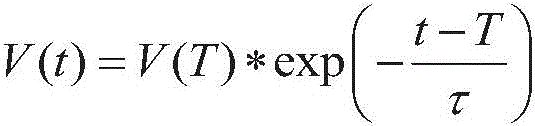
指数衰减有时由速率常数k而不是时间常数τ参数化。如果k=1/τ,则速率常数k给出与时间常数τ相同的衰减函数。Exponential decay is sometimes parameterized by a rate constant k rather than a time constant τ. If k=1/τ, the rate constant k gives the same decay function as the time constant τ.
在一些间隔I上两个函数f和g的内积被定义为The inner product of two functions f and g over some interval I is defined as
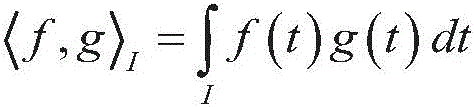
8.8其它说明8.8 Other instructions
该专利文献的公开内容的一部分包含受版权保护的材料。版权所有者不反对任何专利文献或专利公开如专利局专利文件或记录中所示的传真复制,但是以其它方式保留所有版权。A portion of the disclosure of this patent document contains copyrighted material. The copyright owner has no objection to the facsimile reproduction of any patent document or patent disclosure, as it appears in the Patent Office patent file or records, but otherwise reserves all copyright rights whatsoever.
除非上下文另有明确规定,并且在提供了一定范围的值的情况下,可以理解,在范围的上限和下限之间每个中间值至该下限的单位的十分之一,以及所述范围内的任何其它值或中间值涵盖在本技术范围内。这些中间范围的上限和下限可以独立地包括在中间范围内,也包括在本技术范围内,在所述范围内受到任何具体排除的限制。如果所述范围包括一个或两个限制,则不包括这些限制中的一个或两个的范围也包括在该技术中。Unless the context clearly dictates otherwise, and where a range of values is provided, it is to be understood that each intervening value between the upper and lower limit of the range to one tenth of the unit of that lower limit, as well as within the stated range Any other or intermediate values of , are within the scope of the present technology. The upper and lower limits of these intervening ranges may independently be included in the intervening ranges and are also encompassed within the art, subject to any specifically excluded limit in the stated range. If the stated range includes one or both of the limitations, ranges excluding either or both of those limitations are also included in the art.
此外,如果一个或多个值在本文中被表示为作为技术的一部分实现,则应当理解,除非另有说明,否则这些值可以被近似,并且这样的值可以被用于达到实际的技术实施方式可能允许或要求程度的任何合适的有效数字。Furthermore, if one or more values are expressed herein as being implemented as part of a technology, it should be understood that unless otherwise stated, those values may be approximated and such values may be used to achieve an actual technology implementation Any suitable significant number of degrees that may be allowed or required.
除非另有定义,本文使用的所有技术和科学术语具有与本技术所属领域的普通技术人员通常理解的相同的含义。虽然与本文所述类似或等同的任何方法和材料也可用于本技术的实践或测试中,但是本文描述了有限数量的示例性方法和材料。Unless otherwise defined, all technical and scientific terms used herein have the same meaning as commonly understood by one of ordinary skill in the art to which this technology belongs. Although any methods and materials similar or equivalent to those described herein can also be used in the practice or testing of the present technology, a limited number of exemplary methods and materials are described herein.
当特定材料被识别为用于构造一部件时,可以使用具有相似性质的明显的替代材料作为替代物。此外,除非另有规定,否则本文所述的任何和所有部件应被理解为能够被制造,并且因此可以被一体制造或分开制造。When a particular material is identified for use in constructing a part, obvious substitute materials with similar properties can be used as substitutes. Furthermore, unless otherwise specified, any and all components described herein should be understood to be capable of being manufactured, and thus may be manufactured integrally or separately.
必须指出,如本文和所附权利要求中所使用的,单数形式“一”,“一个”和“该”包括其多个等同物,除非上下文另有明确规定。It must be noted that, as used herein and in the appended claims, the singular forms "a," "an," and "the" include their plural equivalents unless the context clearly dictates otherwise.
本文提及的所有出版物通过引用整体并入本文以公开和描述作为这些出版物主题的方法和/或材料。本文所讨论的出版物仅仅是因为它们在本申请的申请日之前公开而提供。本文中的任何内容都不得被解释为承认本技术无权凭借先前的发明而早于此类出版物。此外,提供的出版物的日期可能与实际出版日期不同,可能需要独立确认。All publications mentioned herein are incorporated by reference in their entirety to disclose and describe the methods and/or materials that are the subject of these publications. The publications discussed herein are provided solely for their disclosure prior to the filing date of the present application. Nothing herein should be construed as an admission that the technology is not entitled to antedate such publication by virtue of prior invention. In addition, dates of publication provided may differ from actual publication dates and may require independent confirmation.
术语“包括”和“包括”应被解释为以非排他性的方式指代元件,部件或步骤,指示所引用的元件、部件或步骤可以存在或被使用或与未明确引用的其它元件、部件或步骤组合。The terms "comprising" and "comprising" should be construed to refer to elements, components or steps in a non-exclusive manner, indicating that the referenced element, component or step may be present or used or in combination with other elements, components or steps not expressly referenced. combination of steps.
在详细描述中使用的主题标题仅被包括用于读者容易引用,并且不应用于限制在整个公开内容或权利要求书中发现的主题。主题标题不应用于解释权利要求或权利要求限制的范围。Subject headings used in the detailed description are included for ease of reference by the reader only, and should not be used to limit the subject matter found throughout the disclosure or the claims. Subject headings should not be used to interpret the scope of the claims or claim limitations.
尽管已经参考特定示例描述了本文的技术,但是应当理解,这些示例仅仅是技术的原理和应用的说明。在某些情况下,术语和符号可能意味着实践技术不需要的具体细节。例如,尽管可以使用术语“第一”和“第二”(等),除非另有说明,它们并不意图表示任何顺序,而是可以用于区分不同的元件。此外,虽然方法中的处理步骤可以按顺序描述或示出,但是不需要这样的排序。本领域技术人员将认识到,可以同时或甚至同步地进行这样的排序和/或其方面。Although the techniques herein have been described with reference to specific examples, it should be understood that these examples are merely illustrative of the principles and applications of the techniques. In some cases, terms and symbols may imply specific details that are not required to practice the technique. For example, although the terms "first" and "second" (etc.) may be used, they are not intended to imply any order unless otherwise indicated, but rather may be used to distinguish between different elements. Furthermore, although process steps in a method may be described or shown in a sequential order, such ordering is not required. Those skilled in the art will recognize that such ordering and/or aspects thereof may be performed concurrently or even synchronously.
因此,应当理解,可以对说明性示例进行许多修改,并且在不脱离本技术的精神和范围的情况下可以设计出其它布置。Accordingly, it should be understood that many modifications may be made to the illustrative examples, and other arrangements may be devised without departing from the spirit and scope of the present technology.
8.9附图标记列表8.9 List of reference numerals
患者 1000
非侵入性患者接口 3000
密封形成结构 3100
增压室 3200
结构 3300
通气口 3400
连接端口 3600
前额支撑件 3700
RPT设备 4000
外部壳体 4010
上部 4012upper 4012
部分 4014
面板 4015
底盘 4016
手柄 4018handle 4018
气动块 4020
气动部件 4100Pneumatics 4100
空气过滤器 4110
入口空气过滤器 4112
出口空气过滤器 4114Outlet Air Filter 4114
入口消音器 4122Inlet silencer 4122
出口消音器 4124outlet muffler 4124
压力发生器 4140
可控鼓风机 4142Controlled
马达 4144Motor 4144
空气回路 4170
补充氧气 4180
电气部件 4200
印刷电路板组件 4202Printed
电源 4210
输入设备 4220
中央控制器 4230
时钟 4232
治疗设备控制器 4240
保护电路 4250
存储器 4260
换能器 4270
压力传感器 4272
流速传感器 4274
马达速度换能器 4276
数据通信接口 4280
远程外部通信网络 4282Remote
本地外部通信网络 4284Local
远程外部设备 4286Remote
本地外部设备 4288Local
输出设备 4290
显示驱动器 4292
显示器 4294
算法 4300
预处理模块 4310
压力补偿算法 4312
通气流速估计算法 4314Ventilation flow
泄漏流速估计算法 4316Leak
呼吸流速估计算法 4318Respiratory
治疗引擎模块 4320
相位确定算法 4321
波形确定算法 4322
通气确定算法 4323
气流限制确定算法 4324Airflow
呼吸暂停检测算法 4325
M形检测算法 4326M-
泄漏呼吸暂停检测算法 4327Leak
典型近期通气确定算法 4328Typical recent
治疗参数确定算法 4329Treatment
治疗控制模块 4330
加湿器 5000
加湿器入口 5002
加湿器出口 5004
加湿器底座 5006
加湿器水箱 5110
加湿器水箱底座 5130
加热元件 5240
加湿器控制器 5250Humidifier Controller 5250
方法 7000
步骤 7010
步骤 7020
步骤 7030
步骤 7040
方法 7100
步骤 7110
步骤 7120
步骤 7130
步骤 7140
步骤 7150
步骤 7160
步骤 7170
步骤 7180
方法 7200
步骤 7210
步骤 7220
步骤 7230
步骤 7240
步骤 7250
步骤 7260
方法 7300
步骤 7310
步骤 7320
步骤 7330
步骤 7340
步骤 7350
步骤 7360
步骤 7370
步骤 7375
步骤 7380
步骤 7390
方法 7400
步骤 7410
步骤 7420
步骤 7440
步骤 7450
步骤 7455
步骤 7460
步骤 7465
步骤 7470
步骤 7475
方法 7500
步骤 7510
步骤 7520
步骤 7530
步骤 7535
步骤 7540
步骤 7550
步骤 7560
步骤 7570
步骤 7580
方法 7600
步骤 7610
步骤 7615
步骤 7620
步骤 7630
步骤 7635
步骤 7640
步骤 7645
步骤 7650
步骤 7655
步骤 7660
步骤 7665
步骤 7670
步骤 7680
步骤 7685
步骤 7690
方法 7700
步骤 7705
步骤 7710
步骤 7715
步骤 7720
步骤 7730
步骤 7740
步骤 7750
方法 8000
步骤 8010
步骤 8020
步骤 8030
步骤 8040
方法 8100
步骤 8105
步骤 8110
步骤 8115
步骤 8120
步骤 8125
步骤 8130
步骤 8135
步骤 8140
步骤 8145
步骤 8150
步骤 8155
步骤 8160
步骤 8165
步骤 8170
步骤 8175
方法 8200
步骤 8210
步骤 8220
步骤 8230
步骤 8240
步骤 8250
步骤 8260
方法 8300
步骤 8310
步骤 8320
步骤 8330
步骤 8340
步骤 8350
步骤 8360
步骤 8370
方法 8400
步骤 8410
步骤 8420
步骤 8430
步骤 8440
步骤 8450
步骤 8460
方法 8500
步骤 8510
步骤 8520
步骤 8530
步骤 8540
步骤 8550
步骤 8590
方法 8600
步骤 8610
步骤 8620
步骤 8630
步骤 8640
步骤 8650
步骤 8660
步骤 8670
图表 9000
流速曲线 9010
曲线 9020
情景 9030
增加 9040Add 9040
上升 9050up 9050
情景 9060
增加 9070Add 9070
情景 9080
Claims (15)
Priority Applications (1)
| Application Number | Priority Date | Filing Date | Title |
|---|---|---|---|
| CN202010937038.7A CN111991661A (en) | 2015-03-20 | 2016-03-17 | Method and apparatus for ventilation treatment of respiratory disorders |
Applications Claiming Priority (3)
| Application Number | Priority Date | Filing Date | Title |
|---|---|---|---|
| AU2015901014 | 2015-03-20 | ||
| AU2015901014A AU2015901014A0 (en) | 2015-03-20 | Methods and apparatus for ventilatory treatment of respiratory disorders | |
| PCT/AU2016/050189 WO2016149743A1 (en) | 2015-03-20 | 2016-03-17 | Methods and apparatus for ventilatory treatment of respiratory disorders |
Related Child Applications (1)
| Application Number | Title | Priority Date | Filing Date |
|---|---|---|---|
| CN202010937038.7A Division CN111991661A (en) | 2015-03-20 | 2016-03-17 | Method and apparatus for ventilation treatment of respiratory disorders |
Publications (2)
| Publication Number | Publication Date |
|---|---|
| CN107530514A CN107530514A (en) | 2018-01-02 |
| CN107530514B true CN107530514B (en) | 2020-08-11 |
Family
ID=56976977
Family Applications (2)
| Application Number | Title | Priority Date | Filing Date |
|---|---|---|---|
| CN201680025174.0A Active CN107530514B (en) | 2015-03-20 | 2016-03-17 | Method and apparatus for ventilation treatment of respiratory disorders |
| CN202010937038.7A Pending CN111991661A (en) | 2015-03-20 | 2016-03-17 | Method and apparatus for ventilation treatment of respiratory disorders |
Family Applications After (1)
| Application Number | Title | Priority Date | Filing Date |
|---|---|---|---|
| CN202010937038.7A Pending CN111991661A (en) | 2015-03-20 | 2016-03-17 | Method and apparatus for ventilation treatment of respiratory disorders |
Country Status (5)
| Country | Link |
|---|---|
| US (3) | US10974000B2 (en) |
| EP (3) | EP4321198A3 (en) |
| JP (3) | JP6818691B2 (en) |
| CN (2) | CN107530514B (en) |
| WO (1) | WO2016149743A1 (en) |
Families Citing this family (32)
| Publication number | Priority date | Publication date | Assignee | Title |
|---|---|---|---|---|
| EP2741802B1 (en) | 2011-08-10 | 2017-10-11 | Fisher&Paykel Healthcare Limited | Conduit connector for a patient breathing device |
| LT3259006T (en) | 2015-03-31 | 2024-02-26 | Fisher & Paykel Healthcare Limited | Apparatus for use in a respiratory support system |
| EP3344319B8 (en) | 2015-09-04 | 2024-08-21 | Fisher & Paykel Healthcare Limited | Connectors for conduits |
| WO2017055195A1 (en) * | 2015-09-28 | 2017-04-06 | Koninklijke Philips N.V. | Methods and systems to estimate compliance of a patient circuit in the presence of leak |
| USD809656S1 (en) | 2016-06-10 | 2018-02-06 | Fisher & Paykel Healthcare Limited | Connector for a breathing circuit |
| US11413414B2 (en) * | 2016-10-21 | 2022-08-16 | Novaresp Technologies Inc. | Method and apparatus for breathing assistance |
| CN110325110B (en) | 2016-11-10 | 2022-08-09 | 纽约州立大学研究基金会 | Systems, methods, and biomarkers for airway obstruction |
| JP7231542B2 (en) | 2016-11-18 | 2023-03-01 | レスメド・プロプライエタリー・リミテッド | Method and apparatus for ventilatory therapy of respiratory disorders |
| CN110446518B (en) * | 2017-03-31 | 2021-11-05 | 帝人制药株式会社 | Respiratory information acquisition device and respiratory information acquisition method |
| CN109224224B (en) * | 2018-06-29 | 2021-07-20 | 湖南明康中锦医疗科技发展有限公司 | Respiration support equipment capable of adaptively adjusting output pressure and control method thereof |
| WO2020013907A1 (en) * | 2018-07-13 | 2020-01-16 | Aok Tooling Ltd. | Super mask respirator system having a face mask and a sub-peak inspiratory flow blower |
| JP7500559B2 (en) * | 2018-10-31 | 2024-06-17 | レズメド インコーポレイテッド | SYSTEM AND METHOD FOR VARIING THE AMOUNT OF DATA SENT TO AN EXTERNAL SOURCE - Patent application |
| US11633560B2 (en) | 2018-11-10 | 2023-04-25 | Novaresp Technologies Inc. | Method and apparatus for continuous management of airway pressure for detection and/or prediction of respiratory failure |
| KR102907794B1 (en) * | 2019-03-29 | 2026-01-07 | 레즈메드 아이엔씨. | Store, control, and port ventilator settings on a remote server |
| CN110038198B (en) * | 2019-05-07 | 2021-09-21 | 濡新(北京)科技发展有限公司 | Closed-loop expectoration method and system for automatically titrating expectoration pressure |
| DE102019120541A1 (en) * | 2019-07-30 | 2021-02-04 | Hamilton Medical Ag | System for regulating a ventilation variable of a ventilator, ventilator and method for regulating a ventilation variable of a ventilator |
| USD1006981S1 (en) | 2019-09-06 | 2023-12-05 | Fisher & Paykel Healthcare Limited | Breathing conduit |
| USD948027S1 (en) | 2019-09-10 | 2022-04-05 | Fisher & Paykel Healthcare Limited | Connector for a breathing conduit |
| WO2021109003A1 (en) * | 2019-12-03 | 2021-06-10 | 深圳迈瑞生物医疗电子股份有限公司 | Pressure generation device identification method and system, ventilation support apparatus, and storage medium |
| BR112022017185A2 (en) | 2020-02-26 | 2022-10-18 | Novaresp Tech Inc | METHOD AND DEVICE TO DETERMINE AND/OR PREDICT SLEEP AND RESPIRATORY BEHAVIORS FOR AIRWAY PRESSURE MANAGEMENT |
| USD940861S1 (en) | 2020-03-03 | 2022-01-11 | Fisher & Paykel Healthcare Limited | Connector for a respiratory system conduit |
| USD974551S1 (en) | 2020-12-09 | 2023-01-03 | Fisher & Paykel Healthcare Limited | Connector assembly and connector |
| USD1073919S1 (en) | 2021-05-17 | 2025-05-06 | Fisher & Paykel Healthcare Limited | Respiratory system conduit with connector |
| USD995758S1 (en) | 2021-06-11 | 2023-08-15 | Fisher & Paykel Healthcare Limited | Tube assembly and connector |
| CN113797414B (en) * | 2021-09-16 | 2024-01-19 | 杭州圣王医疗设备有限公司 | Rapid detection method and system for respiration |
| WO2023111914A1 (en) * | 2021-12-17 | 2023-06-22 | Fisher & Paykel Healthcare Limited | Measurement device and system for breathing assistance apparatus and/or performing diagnostics |
| EP4452375A4 (en) | 2021-12-21 | 2025-11-26 | Nanotronics Health Llc | METHOD AND SYSTEM FOR THE TWO-STAGE TREATMENT OF SLEEP APNEA |
| CN114618060B (en) * | 2022-03-10 | 2024-11-26 | 湖南万脉医疗科技有限公司 | A ventilator control method based on event detection |
| CN114306868B (en) * | 2022-03-16 | 2022-05-27 | 中国人民解放军总医院第一医学中心 | A purifier and breathing machine for department of respiration |
| US12036363B2 (en) | 2022-04-22 | 2024-07-16 | Nanotronics Health, LLC. | Respiratory pattern analysis during variable positive air pressure delivery for spontaneously breathing patients |
| CN115721535B (en) * | 2022-09-24 | 2024-10-01 | 首都医科大学附属北京康复医院(北京工人疗养院) | Data processing method for airway clearance and related system |
| CN118793600B (en) * | 2024-09-12 | 2024-11-19 | 成都水木医疗科技有限公司 | Sinusoidal flow generator and generation method for testing ventilator and anesthesia system |
Family Cites Families (33)
| Publication number | Priority date | Publication date | Assignee | Title |
|---|---|---|---|---|
| US4357936A (en) * | 1979-03-05 | 1982-11-09 | Bear Medical Systems, Inc. | Directional thermistor assist sensing |
| EP0088761B1 (en) | 1981-04-24 | 1987-08-12 | Somed Pty. Ltd. | Device for treating snoring sickness |
| EP0612257B1 (en) * | 1991-11-14 | 2000-06-07 | University Technologies International Inc. | Auto cpap system |
| US5490502A (en) * | 1992-05-07 | 1996-02-13 | New York University | Method and apparatus for optimizing the continuous positive airway pressure for treating obstructive sleep apnea |
| US5803066A (en) * | 1992-05-07 | 1998-09-08 | New York University | Method and apparatus for optimizing the continuous positive airway pressure for treating obstructive sleep apnea |
| US5704345A (en) * | 1993-11-05 | 1998-01-06 | Resmed Limited | Detection of apnea and obstruction of the airway in the respiratory system |
| AUPO163896A0 (en) * | 1996-08-14 | 1996-09-05 | Resmed Limited | Determination of respiratory airflow |
| AUPP026997A0 (en) * | 1997-11-07 | 1997-12-04 | Resmed Limited | Administration of cpap treatment pressure in presence of apnea |
| AUPP366398A0 (en) | 1998-05-22 | 1998-06-18 | Resmed Limited | Ventilatory assistance for treatment of cardiac failure and cheyne-stokes breathing |
| US6467477B1 (en) * | 1999-03-26 | 2002-10-22 | Respironics, Inc. | Breath-based control of a therapeutic treatment |
| US6739335B1 (en) * | 1999-09-08 | 2004-05-25 | New York University School Of Medicine | Method and apparatus for optimizing controlled positive airway pressure using the detection of cardiogenic oscillations |
| US6532956B2 (en) * | 2000-03-30 | 2003-03-18 | Respironics, Inc. | Parameter variation for proportional assist ventilation or proportional positive airway pressure support devices |
| US6814073B2 (en) * | 2000-08-29 | 2004-11-09 | Resmed Limited | Respiratory apparatus with improved flow-flattening detection |
| US6752151B2 (en) * | 2000-09-25 | 2004-06-22 | Respironics, Inc. | Method and apparatus for providing variable positive airway pressure |
| US7168429B2 (en) * | 2001-10-12 | 2007-01-30 | Ric Investments, Llc | Auto-titration pressure support system and method of using same |
| AU2003901042A0 (en) * | 2003-03-07 | 2003-03-20 | Resmed Limited | Back-up rate for a ventilator |
| ATE473025T1 (en) | 2003-11-26 | 2010-07-15 | Resmed Ltd | DEVICE FOR SYSTEMIC CONTROL OF RESPIRATORY SUPPORT IN THE PRESENCE OF RESPIRATORY SUFFICIENCY |
| EP2774646B1 (en) * | 2004-06-23 | 2017-05-03 | ResMed Limited | Apparatus with improved ventilatory support cycling |
| EP2032857B1 (en) | 2006-05-24 | 2011-02-23 | ResMed Motor Technologies Inc. | Compact low noise efficient blower for cpap devices |
| NZ571722A (en) * | 2006-06-05 | 2012-02-24 | Resmed Ltd | Positve airway pressure PAP system for treating sleep-disordered breathing, with reduced calibration through pressure monitoring, estimating vent flows and mask leak thesholds |
| US8638014B2 (en) | 2006-10-24 | 2014-01-28 | Resmed Motor Technologies Inc | Brushless DC motor with bearings |
| CN101626797A (en) * | 2007-03-07 | 2010-01-13 | Ric投资有限责任公司 | Flow sensing for gas delivery to a patient |
| NZ720547A (en) * | 2007-05-11 | 2018-02-23 | Resmed Ltd | Automated control for detection of flow limitation |
| AU2008202487B2 (en) | 2007-06-05 | 2013-07-04 | Resmed Motor Technologies Inc. | Blower with Bearing Tube |
| US8261742B2 (en) * | 2007-08-23 | 2012-09-11 | Invacare Corporation | Method and apparatus for adjusting desired pressure in positive airway pressure devices |
| AU2010201032B2 (en) * | 2009-04-29 | 2014-11-20 | Resmed Limited | Methods and Apparatus for Detecting and Treating Respiratory Insufficiency |
| NZ735906A (en) * | 2009-07-16 | 2019-06-28 | ResMed Pty Ltd | Detection of sleep condition |
| AU2010206053B2 (en) | 2009-07-31 | 2014-08-07 | ResMed Pty Ltd | Wire Heated Tube with Temperature Control System, Tube Type Detection, and Active Over Temperature Protection for Humidifier for Respiratory Apparatus |
| JP2013532565A (en) * | 2010-07-30 | 2013-08-19 | レスメド・リミテッド | Method and device using leak detection |
| EP2739857B1 (en) | 2011-08-05 | 2017-04-26 | ResMed Motor Technologies Inc. | Blower |
| CN108114355A (en) * | 2012-04-13 | 2018-06-05 | 瑞思迈有限公司 | For the apparatus and method of ventilation therapy |
| EP3636150B1 (en) * | 2013-04-17 | 2023-06-07 | Fisher & Paykel Healthcare Limited | Distinguishing between central and obstructive sleep apnea |
| CN119950937A (en) * | 2013-07-29 | 2025-05-09 | 瑞思迈私人有限公司 | Heat and Moisture Exchanger for Patient Interface |
-
2016
- 2016-03-17 WO PCT/AU2016/050189 patent/WO2016149743A1/en not_active Ceased
- 2016-03-17 EP EP23199483.1A patent/EP4321198A3/en active Pending
- 2016-03-17 EP EP20201529.3A patent/EP3834872B1/en active Active
- 2016-03-17 CN CN201680025174.0A patent/CN107530514B/en active Active
- 2016-03-17 US US15/559,504 patent/US10974000B2/en active Active
- 2016-03-17 CN CN202010937038.7A patent/CN111991661A/en active Pending
- 2016-03-17 JP JP2017549200A patent/JP6818691B2/en active Active
- 2016-03-17 EP EP16767520.6A patent/EP3270994B1/en active Active
-
2020
- 2020-12-25 JP JP2020216607A patent/JP7576977B2/en active Active
-
2021
- 2021-03-08 US US17/194,602 patent/US11986591B2/en active Active
-
2022
- 2022-11-22 JP JP2022186598A patent/JP2023027105A/en not_active Ceased
-
2024
- 2024-05-03 US US18/654,181 patent/US20240399083A1/en active Pending
Also Published As
| Publication number | Publication date |
|---|---|
| WO2016149743A1 (en) | 2016-09-29 |
| EP3270994B1 (en) | 2020-10-14 |
| JP2021062230A (en) | 2021-04-22 |
| EP3270994A4 (en) | 2018-10-24 |
| EP4321198A2 (en) | 2024-02-14 |
| US11986591B2 (en) | 2024-05-21 |
| JP2023027105A (en) | 2023-03-01 |
| JP7576977B2 (en) | 2024-11-01 |
| JP6818691B2 (en) | 2021-01-20 |
| EP4321198A3 (en) | 2024-03-27 |
| CN107530514A (en) | 2018-01-02 |
| EP3834872B1 (en) | 2023-09-27 |
| US20210187221A1 (en) | 2021-06-24 |
| US20180117270A1 (en) | 2018-05-03 |
| EP3270994A1 (en) | 2018-01-24 |
| EP3834872A1 (en) | 2021-06-16 |
| CN111991661A (en) | 2020-11-27 |
| JP2018512055A (en) | 2018-05-10 |
| US10974000B2 (en) | 2021-04-13 |
| US20240399083A1 (en) | 2024-12-05 |
Similar Documents
| Publication | Publication Date | Title |
|---|---|---|
| CN107530514B (en) | Method and apparatus for ventilation treatment of respiratory disorders | |
| CN104507522B (en) | Devices for pressure therapy regulation | |
| US11318275B2 (en) | Control for pressure of a patient interface | |
| US12208202B2 (en) | Methods and apparatus for ventilatory treatment of respiratory disorders | |
| US12329907B2 (en) | Methods and apparatus for treatment of respiratory disorders | |
| CN114929313A (en) | Method and apparatus for respiratory therapy | |
| AU2026200487A1 (en) | Methods and apparatus for respiratory therapy | |
| NZ793954A (en) | Methods and Apparatus for Ventilatory Treatment of Respiratory Disorders |
Legal Events
| Date | Code | Title | Description |
|---|---|---|---|
| PB01 | Publication | ||
| PB01 | Publication | ||
| SE01 | Entry into force of request for substantive examination | ||
| SE01 | Entry into force of request for substantive examination | ||
| CB02 | Change of applicant information | ||
| CB02 | Change of applicant information |
Address after: New South Wales Australia Applicant after: Reisman Private Limited Address before: New South Wales Australia Applicant before: RESMED LTD. |
|
| GR01 | Patent grant | ||
| GR01 | Patent grant |