CN107438432B - Soluble microneedles for protein or peptide delivery - Google Patents
Soluble microneedles for protein or peptide delivery Download PDFInfo
- Publication number
- CN107438432B CN107438432B CN201680019260.0A CN201680019260A CN107438432B CN 107438432 B CN107438432 B CN 107438432B CN 201680019260 A CN201680019260 A CN 201680019260A CN 107438432 B CN107438432 B CN 107438432B
- Authority
- CN
- China
- Prior art keywords
- microneedle
- skin
- peptide
- polymer
- protein
- Prior art date
- Legal status (The legal status is an assumption and is not a legal conclusion. Google has not performed a legal analysis and makes no representation as to the accuracy of the status listed.)
- Active
Links
Images


Classifications
-
- A—HUMAN NECESSITIES
- A61—MEDICAL OR VETERINARY SCIENCE; HYGIENE
- A61K—PREPARATIONS FOR MEDICAL, DENTAL OR TOILETRY PURPOSES
- A61K9/00—Medicinal preparations characterised by special physical form
- A61K9/0012—Galenical forms characterised by the site of application
- A61K9/0019—Injectable compositions; Intramuscular, intravenous, arterial, subcutaneous administration; Compositions to be administered through the skin in an invasive manner
- A61K9/0021—Intradermal administration, e.g. through microneedle arrays, needleless injectors
-
- A—HUMAN NECESSITIES
- A61—MEDICAL OR VETERINARY SCIENCE; HYGIENE
- A61K—PREPARATIONS FOR MEDICAL, DENTAL OR TOILETRY PURPOSES
- A61K38/00—Medicinal preparations containing peptides
-
- A—HUMAN NECESSITIES
- A61—MEDICAL OR VETERINARY SCIENCE; HYGIENE
- A61K—PREPARATIONS FOR MEDICAL, DENTAL OR TOILETRY PURPOSES
- A61K38/00—Medicinal preparations containing peptides
- A61K38/04—Peptides having up to 20 amino acids in a fully defined sequence; Derivatives thereof
- A61K38/05—Dipeptides
-
- A—HUMAN NECESSITIES
- A61—MEDICAL OR VETERINARY SCIENCE; HYGIENE
- A61K—PREPARATIONS FOR MEDICAL, DENTAL OR TOILETRY PURPOSES
- A61K38/00—Medicinal preparations containing peptides
- A61K38/04—Peptides having up to 20 amino acids in a fully defined sequence; Derivatives thereof
- A61K38/06—Tripeptides
-
- A—HUMAN NECESSITIES
- A61—MEDICAL OR VETERINARY SCIENCE; HYGIENE
- A61K—PREPARATIONS FOR MEDICAL, DENTAL OR TOILETRY PURPOSES
- A61K38/00—Medicinal preparations containing peptides
- A61K38/04—Peptides having up to 20 amino acids in a fully defined sequence; Derivatives thereof
- A61K38/07—Tetrapeptides
-
- A—HUMAN NECESSITIES
- A61—MEDICAL OR VETERINARY SCIENCE; HYGIENE
- A61K—PREPARATIONS FOR MEDICAL, DENTAL OR TOILETRY PURPOSES
- A61K38/00—Medicinal preparations containing peptides
- A61K38/04—Peptides having up to 20 amino acids in a fully defined sequence; Derivatives thereof
- A61K38/08—Peptides having 5 to 11 amino acids
-
- A—HUMAN NECESSITIES
- A61—MEDICAL OR VETERINARY SCIENCE; HYGIENE
- A61K—PREPARATIONS FOR MEDICAL, DENTAL OR TOILETRY PURPOSES
- A61K38/00—Medicinal preparations containing peptides
- A61K38/16—Peptides having more than 20 amino acids; Gastrins; Somatostatins; Melanotropins; Derivatives thereof
- A61K38/17—Peptides having more than 20 amino acids; Gastrins; Somatostatins; Melanotropins; Derivatives thereof from animals; from humans
- A61K38/18—Growth factors; Growth regulators
-
- A—HUMAN NECESSITIES
- A61—MEDICAL OR VETERINARY SCIENCE; HYGIENE
- A61K—PREPARATIONS FOR MEDICAL, DENTAL OR TOILETRY PURPOSES
- A61K38/00—Medicinal preparations containing peptides
- A61K38/16—Peptides having more than 20 amino acids; Gastrins; Somatostatins; Melanotropins; Derivatives thereof
- A61K38/17—Peptides having more than 20 amino acids; Gastrins; Somatostatins; Melanotropins; Derivatives thereof from animals; from humans
- A61K38/18—Growth factors; Growth regulators
- A61K38/1808—Epidermal growth factor [EGF] urogastrone
-
- A—HUMAN NECESSITIES
- A61—MEDICAL OR VETERINARY SCIENCE; HYGIENE
- A61K—PREPARATIONS FOR MEDICAL, DENTAL OR TOILETRY PURPOSES
- A61K38/00—Medicinal preparations containing peptides
- A61K38/16—Peptides having more than 20 amino acids; Gastrins; Somatostatins; Melanotropins; Derivatives thereof
- A61K38/17—Peptides having more than 20 amino acids; Gastrins; Somatostatins; Melanotropins; Derivatives thereof from animals; from humans
- A61K38/22—Hormones
- A61K38/27—Growth hormone [GH], i.e. somatotropin
-
- A—HUMAN NECESSITIES
- A61—MEDICAL OR VETERINARY SCIENCE; HYGIENE
- A61K—PREPARATIONS FOR MEDICAL, DENTAL OR TOILETRY PURPOSES
- A61K47/00—Medicinal preparations characterised by the non-active ingredients used, e.g. carriers or inert additives; Targeting or modifying agents chemically bound to the active ingredient
- A61K47/30—Macromolecular organic or inorganic compounds, e.g. inorganic polyphosphates
- A61K47/32—Macromolecular compounds obtained by reactions only involving carbon-to-carbon unsaturated bonds, e.g. carbomers, poly(meth)acrylates, or polyvinyl pyrrolidone
-
- A—HUMAN NECESSITIES
- A61—MEDICAL OR VETERINARY SCIENCE; HYGIENE
- A61K—PREPARATIONS FOR MEDICAL, DENTAL OR TOILETRY PURPOSES
- A61K47/00—Medicinal preparations characterised by the non-active ingredients used, e.g. carriers or inert additives; Targeting or modifying agents chemically bound to the active ingredient
- A61K47/30—Macromolecular organic or inorganic compounds, e.g. inorganic polyphosphates
- A61K47/34—Macromolecular compounds obtained otherwise than by reactions only involving carbon-to-carbon unsaturated bonds, e.g. polyesters, polyamino acids, polysiloxanes, polyphosphazines, copolymers of polyalkylene glycol or poloxamers
-
- A—HUMAN NECESSITIES
- A61—MEDICAL OR VETERINARY SCIENCE; HYGIENE
- A61K—PREPARATIONS FOR MEDICAL, DENTAL OR TOILETRY PURPOSES
- A61K47/00—Medicinal preparations characterised by the non-active ingredients used, e.g. carriers or inert additives; Targeting or modifying agents chemically bound to the active ingredient
- A61K47/30—Macromolecular organic or inorganic compounds, e.g. inorganic polyphosphates
- A61K47/36—Polysaccharides; Derivatives thereof, e.g. gums, starch, alginate, dextrin, hyaluronic acid, chitosan, inulin, agar or pectin
-
- A—HUMAN NECESSITIES
- A61—MEDICAL OR VETERINARY SCIENCE; HYGIENE
- A61K—PREPARATIONS FOR MEDICAL, DENTAL OR TOILETRY PURPOSES
- A61K47/00—Medicinal preparations characterised by the non-active ingredients used, e.g. carriers or inert additives; Targeting or modifying agents chemically bound to the active ingredient
- A61K47/30—Macromolecular organic or inorganic compounds, e.g. inorganic polyphosphates
- A61K47/36—Polysaccharides; Derivatives thereof, e.g. gums, starch, alginate, dextrin, hyaluronic acid, chitosan, inulin, agar or pectin
- A61K47/38—Cellulose; Derivatives thereof
-
- A—HUMAN NECESSITIES
- A61—MEDICAL OR VETERINARY SCIENCE; HYGIENE
- A61K—PREPARATIONS FOR MEDICAL, DENTAL OR TOILETRY PURPOSES
- A61K8/00—Cosmetics or similar toiletry preparations
- A61K8/02—Cosmetics or similar toiletry preparations characterised by special physical form
-
- A—HUMAN NECESSITIES
- A61—MEDICAL OR VETERINARY SCIENCE; HYGIENE
- A61K—PREPARATIONS FOR MEDICAL, DENTAL OR TOILETRY PURPOSES
- A61K8/00—Cosmetics or similar toiletry preparations
- A61K8/02—Cosmetics or similar toiletry preparations characterised by special physical form
- A61K8/0204—Specific forms not provided for by any of groups A61K8/0208 - A61K8/14
-
- A—HUMAN NECESSITIES
- A61—MEDICAL OR VETERINARY SCIENCE; HYGIENE
- A61K—PREPARATIONS FOR MEDICAL, DENTAL OR TOILETRY PURPOSES
- A61K8/00—Cosmetics or similar toiletry preparations
- A61K8/02—Cosmetics or similar toiletry preparations characterised by special physical form
- A61K8/0208—Tissues; Wipes; Patches
-
- A—HUMAN NECESSITIES
- A61—MEDICAL OR VETERINARY SCIENCE; HYGIENE
- A61K—PREPARATIONS FOR MEDICAL, DENTAL OR TOILETRY PURPOSES
- A61K8/00—Cosmetics or similar toiletry preparations
- A61K8/02—Cosmetics or similar toiletry preparations characterised by special physical form
- A61K8/0241—Containing particulates characterized by their shape and/or structure
- A61K8/027—Fibers; Fibrils
-
- A—HUMAN NECESSITIES
- A61—MEDICAL OR VETERINARY SCIENCE; HYGIENE
- A61K—PREPARATIONS FOR MEDICAL, DENTAL OR TOILETRY PURPOSES
- A61K8/00—Cosmetics or similar toiletry preparations
- A61K8/18—Cosmetics or similar toiletry preparations characterised by the composition
- A61K8/30—Cosmetics or similar toiletry preparations characterised by the composition containing organic compounds
- A61K8/64—Proteins; Peptides; Derivatives or degradation products thereof
-
- A—HUMAN NECESSITIES
- A61—MEDICAL OR VETERINARY SCIENCE; HYGIENE
- A61K—PREPARATIONS FOR MEDICAL, DENTAL OR TOILETRY PURPOSES
- A61K8/00—Cosmetics or similar toiletry preparations
- A61K8/18—Cosmetics or similar toiletry preparations characterised by the composition
- A61K8/72—Cosmetics or similar toiletry preparations characterised by the composition containing organic macromolecular compounds
- A61K8/73—Polysaccharides
- A61K8/731—Cellulose; Quaternized cellulose derivatives
-
- A—HUMAN NECESSITIES
- A61—MEDICAL OR VETERINARY SCIENCE; HYGIENE
- A61K—PREPARATIONS FOR MEDICAL, DENTAL OR TOILETRY PURPOSES
- A61K8/00—Cosmetics or similar toiletry preparations
- A61K8/18—Cosmetics or similar toiletry preparations characterised by the composition
- A61K8/72—Cosmetics or similar toiletry preparations characterised by the composition containing organic macromolecular compounds
- A61K8/73—Polysaccharides
- A61K8/735—Mucopolysaccharides, e.g. hyaluronic acid; Derivatives thereof
-
- A—HUMAN NECESSITIES
- A61—MEDICAL OR VETERINARY SCIENCE; HYGIENE
- A61K—PREPARATIONS FOR MEDICAL, DENTAL OR TOILETRY PURPOSES
- A61K8/00—Cosmetics or similar toiletry preparations
- A61K8/18—Cosmetics or similar toiletry preparations characterised by the composition
- A61K8/72—Cosmetics or similar toiletry preparations characterised by the composition containing organic macromolecular compounds
- A61K8/81—Cosmetics or similar toiletry preparations characterised by the composition containing organic macromolecular compounds obtained by reactions involving only carbon-to-carbon unsaturated bonds
- A61K8/8129—Compositions of homopolymers or copolymers of compounds having one or more unsaturated aliphatic radicals, each having only one carbon-to-carbon double bond, and at least one being terminated by an alcohol, ether, aldehydo, ketonic, acetal or ketal radical; Compositions of hydrolysed polymers or esters of unsaturated alcohols with saturated carboxylic acids; Compositions of derivatives of such polymers, e.g. polyvinylmethylether
-
- A—HUMAN NECESSITIES
- A61—MEDICAL OR VETERINARY SCIENCE; HYGIENE
- A61K—PREPARATIONS FOR MEDICAL, DENTAL OR TOILETRY PURPOSES
- A61K8/00—Cosmetics or similar toiletry preparations
- A61K8/18—Cosmetics or similar toiletry preparations characterised by the composition
- A61K8/72—Cosmetics or similar toiletry preparations characterised by the composition containing organic macromolecular compounds
- A61K8/81—Cosmetics or similar toiletry preparations characterised by the composition containing organic macromolecular compounds obtained by reactions involving only carbon-to-carbon unsaturated bonds
- A61K8/817—Compositions of homopolymers or copolymers of compounds having one or more unsaturated aliphatic radicals, each having only one carbon-to-carbon double bond, and at least one being terminated by a single or double bond to nitrogen or by a heterocyclic ring containing nitrogen; Compositions or derivatives of such polymers, e.g. vinylimidazol, vinylcaprolactame, allylamines (Polyquaternium 6)
- A61K8/8176—Homopolymers of N-vinyl-pyrrolidones. Compositions of derivatives of such polymers
-
- A—HUMAN NECESSITIES
- A61—MEDICAL OR VETERINARY SCIENCE; HYGIENE
- A61K—PREPARATIONS FOR MEDICAL, DENTAL OR TOILETRY PURPOSES
- A61K8/00—Cosmetics or similar toiletry preparations
- A61K8/18—Cosmetics or similar toiletry preparations characterised by the composition
- A61K8/72—Cosmetics or similar toiletry preparations characterised by the composition containing organic macromolecular compounds
- A61K8/84—Cosmetics or similar toiletry preparations characterised by the composition containing organic macromolecular compounds obtained by reactions otherwise than those involving only carbon-carbon unsaturated bonds
- A61K8/85—Polyesters
-
- A—HUMAN NECESSITIES
- A61—MEDICAL OR VETERINARY SCIENCE; HYGIENE
- A61K—PREPARATIONS FOR MEDICAL, DENTAL OR TOILETRY PURPOSES
- A61K9/00—Medicinal preparations characterised by special physical form
- A61K9/0012—Galenical forms characterised by the site of application
- A61K9/0019—Injectable compositions; Intramuscular, intravenous, arterial, subcutaneous administration; Compositions to be administered through the skin in an invasive manner
- A61K9/0024—Solid, semi-solid or solidifying implants, which are implanted or injected in body tissue
-
- A—HUMAN NECESSITIES
- A61—MEDICAL OR VETERINARY SCIENCE; HYGIENE
- A61K—PREPARATIONS FOR MEDICAL, DENTAL OR TOILETRY PURPOSES
- A61K9/00—Medicinal preparations characterised by special physical form
- A61K9/14—Particulate form, e.g. powders, Processes for size reducing of pure drugs or the resulting products, Pure drug nanoparticles
- A61K9/16—Agglomerates; Granulates; Microbeadlets ; Microspheres; Pellets; Solid products obtained by spray drying, spray freeze drying, spray congealing,(multiple) emulsion solvent evaporation or extraction
- A61K9/1605—Excipients; Inactive ingredients
- A61K9/1629—Organic macromolecular compounds
- A61K9/1641—Organic macromolecular compounds obtained otherwise than by reactions only involving carbon-to-carbon unsaturated bonds, e.g. polyethylene glycol, poloxamers
- A61K9/1647—Polyesters, e.g. poly(lactide-co-glycolide)
-
- A—HUMAN NECESSITIES
- A61—MEDICAL OR VETERINARY SCIENCE; HYGIENE
- A61K—PREPARATIONS FOR MEDICAL, DENTAL OR TOILETRY PURPOSES
- A61K9/00—Medicinal preparations characterised by special physical form
- A61K9/70—Web, sheet or filament bases ; Films; Fibres of the matrix type containing drug
- A61K9/7023—Transdermal patches and similar drug-containing composite devices, e.g. cataplasms
-
- A—HUMAN NECESSITIES
- A61—MEDICAL OR VETERINARY SCIENCE; HYGIENE
- A61M—DEVICES FOR INTRODUCING MEDIA INTO, OR ONTO, THE BODY; DEVICES FOR TRANSDUCING BODY MEDIA OR FOR TAKING MEDIA FROM THE BODY; DEVICES FOR PRODUCING OR ENDING SLEEP OR STUPOR
- A61M37/00—Other apparatus for introducing media into the body; Percutany, i.e. introducing medicines into the body by diffusion through the skin
-
- A—HUMAN NECESSITIES
- A61—MEDICAL OR VETERINARY SCIENCE; HYGIENE
- A61M—DEVICES FOR INTRODUCING MEDIA INTO, OR ONTO, THE BODY; DEVICES FOR TRANSDUCING BODY MEDIA OR FOR TAKING MEDIA FROM THE BODY; DEVICES FOR PRODUCING OR ENDING SLEEP OR STUPOR
- A61M37/00—Other apparatus for introducing media into the body; Percutany, i.e. introducing medicines into the body by diffusion through the skin
- A61M37/0015—Other apparatus for introducing media into the body; Percutany, i.e. introducing medicines into the body by diffusion through the skin by using microneedles
-
- A—HUMAN NECESSITIES
- A61—MEDICAL OR VETERINARY SCIENCE; HYGIENE
- A61P—SPECIFIC THERAPEUTIC ACTIVITY OF CHEMICAL COMPOUNDS OR MEDICINAL PREPARATIONS
- A61P17/00—Drugs for dermatological disorders
-
- A—HUMAN NECESSITIES
- A61—MEDICAL OR VETERINARY SCIENCE; HYGIENE
- A61P—SPECIFIC THERAPEUTIC ACTIVITY OF CHEMICAL COMPOUNDS OR MEDICINAL PREPARATIONS
- A61P17/00—Drugs for dermatological disorders
- A61P17/18—Antioxidants, e.g. antiradicals
-
- A—HUMAN NECESSITIES
- A61—MEDICAL OR VETERINARY SCIENCE; HYGIENE
- A61Q—SPECIFIC USE OF COSMETICS OR SIMILAR TOILETRY PREPARATIONS
- A61Q19/00—Preparations for care of the skin
- A61Q19/08—Anti-ageing preparations
-
- A—HUMAN NECESSITIES
- A61—MEDICAL OR VETERINARY SCIENCE; HYGIENE
- A61K—PREPARATIONS FOR MEDICAL, DENTAL OR TOILETRY PURPOSES
- A61K2800/00—Properties of cosmetic compositions or active ingredients thereof or formulation aids used therein and process related aspects
- A61K2800/40—Chemical, physico-chemical or functional or structural properties of particular ingredients
- A61K2800/41—Particular ingredients further characterized by their size
- A61K2800/412—Microsized, i.e. having sizes between 0.1 and 100 microns
-
- A—HUMAN NECESSITIES
- A61—MEDICAL OR VETERINARY SCIENCE; HYGIENE
- A61K—PREPARATIONS FOR MEDICAL, DENTAL OR TOILETRY PURPOSES
- A61K2800/00—Properties of cosmetic compositions or active ingredients thereof or formulation aids used therein and process related aspects
- A61K2800/80—Process related aspects concerning the preparation of the cosmetic composition or the storage or application thereof
- A61K2800/91—Injection
-
- A—HUMAN NECESSITIES
- A61—MEDICAL OR VETERINARY SCIENCE; HYGIENE
- A61K—PREPARATIONS FOR MEDICAL, DENTAL OR TOILETRY PURPOSES
- A61K9/00—Medicinal preparations characterised by special physical form
- A61K9/70—Web, sheet or filament bases ; Films; Fibres of the matrix type containing drug
-
- A—HUMAN NECESSITIES
- A61—MEDICAL OR VETERINARY SCIENCE; HYGIENE
- A61M—DEVICES FOR INTRODUCING MEDIA INTO, OR ONTO, THE BODY; DEVICES FOR TRANSDUCING BODY MEDIA OR FOR TAKING MEDIA FROM THE BODY; DEVICES FOR PRODUCING OR ENDING SLEEP OR STUPOR
- A61M37/00—Other apparatus for introducing media into the body; Percutany, i.e. introducing medicines into the body by diffusion through the skin
- A61M37/0015—Other apparatus for introducing media into the body; Percutany, i.e. introducing medicines into the body by diffusion through the skin by using microneedles
- A61M2037/0046—Solid microneedles
-
- A—HUMAN NECESSITIES
- A61—MEDICAL OR VETERINARY SCIENCE; HYGIENE
- A61M—DEVICES FOR INTRODUCING MEDIA INTO, OR ONTO, THE BODY; DEVICES FOR TRANSDUCING BODY MEDIA OR FOR TAKING MEDIA FROM THE BODY; DEVICES FOR PRODUCING OR ENDING SLEEP OR STUPOR
- A61M37/00—Other apparatus for introducing media into the body; Percutany, i.e. introducing medicines into the body by diffusion through the skin
- A61M37/0015—Other apparatus for introducing media into the body; Percutany, i.e. introducing medicines into the body by diffusion through the skin by using microneedles
- A61M2037/0053—Methods for producing microneedles
Landscapes
- Health & Medical Sciences (AREA)
- Life Sciences & Earth Sciences (AREA)
- Public Health (AREA)
- Veterinary Medicine (AREA)
- General Health & Medical Sciences (AREA)
- Animal Behavior & Ethology (AREA)
- Epidemiology (AREA)
- Engineering & Computer Science (AREA)
- Chemical & Material Sciences (AREA)
- Medicinal Chemistry (AREA)
- Pharmacology & Pharmacy (AREA)
- Bioinformatics & Cheminformatics (AREA)
- Dermatology (AREA)
- Birds (AREA)
- Gastroenterology & Hepatology (AREA)
- Proteomics, Peptides & Aminoacids (AREA)
- Immunology (AREA)
- Biomedical Technology (AREA)
- Zoology (AREA)
- Medical Informatics (AREA)
- Anesthesiology (AREA)
- Heart & Thoracic Surgery (AREA)
- Hematology (AREA)
- Inorganic Chemistry (AREA)
- Gerontology & Geriatric Medicine (AREA)
- Nuclear Medicine, Radiotherapy & Molecular Imaging (AREA)
- Organic Chemistry (AREA)
- General Chemical & Material Sciences (AREA)
- Chemical Kinetics & Catalysis (AREA)
- Neurosurgery (AREA)
- Endocrinology (AREA)
- Biochemistry (AREA)
- Medicines That Contain Protein Lipid Enzymes And Other Medicines (AREA)
- Medicinal Preparation (AREA)
- Cosmetics (AREA)
Abstract
本发明涉及一种确保了肽或蛋白质的稳定性,并能够提高上述肽或蛋白质的皮肤透过率的透皮给药系统,尤其是,涉及一种包含肽或蛋白质的微针。
The present invention relates to a transdermal drug delivery system that ensures the stability of peptides or proteins and can improve the skin permeability of the peptides or proteins, in particular, to a microneedle containing the peptides or proteins.
Description
Technical Field
This application claims priority to korean patent application 10-2015-0048462, filed on 6/4/2015, korean patent application 10-2015-0159966, filed on 13/11/2015, korean patent application 10-2015-0048471, filed on 6/4/2015, and korean patent application 10-2015-0144873, filed on 16/10/2015, which are incorporated herein by reference as if fully disclosed herein.
The present invention relates to a soluble microneedle, a transdermal drug delivery system capable of stably delivering a protein or peptide to the skin, and a transdermal drug delivery system improving the stability of unstable proteins or peptides.
Background
In recent years, in order to improve skin conditions (for example, wrinkles, elasticity, etc.), various proteins and peptides including growth factors (epidermal growth factor (EGF), human growth hormone (hGH), transformingg gowth factor α and β (transforming growth factor TGF- α, - β), Fibroblast growth factor 1 and 2 (Fibroblast growth factor FGF-1, -2), Keratinocyte growth factor (Keratinocyte growth factor, KGF), Hepatocyte growth factor (Hepatocyte growth factor, HGF), and Platelet Derived Growth Factor (PDGF), etc.) have been developed, and various cosmetics including such proteins and peptides have been developed and marketed.
For example, EGF is an in vivo wound healing substance that can promote the growth of granulation (granulation tissue) and the regeneration of blood vessels in the process of natural healing of human wounds, and can exert an effect on aging phenomena, and therefore, development of cosmetics containing an EGF component has been recently conducted.
However, especially such growth factors have short biological half-lives and lack sustained stability, and therefore, it has been frequently reported that modification occurs when they are incorporated into general cosmetic formulations, and thus it is difficult to exert effects. In order to improve the stability of such unstable proteins, encapsulation (encapsulation) methods such as microparticles (microparticles) and liposomes (liposomes) are sometimes used. However, in this method, since the volume of particles and liposomes is large (several tens to several hundreds nm, or several μm or more), it is difficult to directly absorb into the skin only by applying to the skin.
Secondly, it is difficult to improve the desired effect of such a protein for improving skin conditions only by increasing the content in most cases. That is, Epidermal Growth Factor (EGF), human growth hormone, etc., as one of active protein components, have a higher activity level than the content, and even if the content is increased, it is difficult to obtain a desired effect without the activity level.
In addition, in order for a substance that is beneficial and useful to the skin to exert its effect by an actual product, the substance must penetrate through the stratum corneum and penetrate from the epidermis to the dermis layer when the product is used, and a method capable of uniformly transmitting the substance to the entire skin is required. Conventionally, there has been a method of improving permeability by using a surfactant or the like, however, the improvement effect of permeability is very small, and there is a disadvantage of softening the skin barrier.
Since the delivery of drugs through the skin has convenience in use, it is applied in various fields in various forms. Such drugs that pass through the skin are mainly delivered to the systemic circulation system (systemic circulation) through the skin, and in addition, drugs such as a therapeutic agent for a special symptom, a cosmetic for whitening skin or improving wrinkles are used for the purpose of delivery to the skin's own organs. Despite such convenience and functionality, there are various difficulties in delivering drugs through the skin due to the structure of the skin, and thus, it is not easy to develop drugs that can pass through the skin. The stratum corneum of the skin consists of a brick (brick) structure consisting of keratin-rich keratinocytes and a mortar (mortar) structure; the mortar (mortar) structure is a structure in which such keratinocytes are filled with lipids such as ceramide (ceramide), fatty acid (fatty acid), or wax (wax). This structure acts as a barrier and has the property of very low permeability to substances. Only low molecular weight components of 500Da or less can be delivered into the skin by diffusion, and only substances having excellent lipid affinity can be delivered through the skin.
Because of such structural properties of the skin, it has been attempted to improve the lipid affinity of peptides having low lipid affinity by introducing alkyl chains having a certain length to improve the absorption in the skin.
However, in this case, the molecular weight of the peptide increases, and there is a problem that it is substantially difficult to improve the absorption in the skin.
Therefore, the present inventors have made extensive studies to deliver various peptides and protein components having skin-improving effects into the skin and improve the effects.
Disclosure of Invention
Problems to be solved by the invention
In view of the above, an object of the present invention is to provide a protein administration system capable of stably delivering a plurality of protein components for improving skin conditions, particularly growth factors, into the skin, a method for producing the system, and a method for delivering proteins (particularly growth factors) into the skin using the system.
Moreover, the method improves the lipid affinity of the peptide and solves the problems of difficult transdermal delivery of the peptide due to large molecular weight.
Also provided are a peptide delivery system capable of delivering a plurality of peptides for improving skin conditions into the skin, a method for producing the system, and a method for delivering a peptide having a low lipid affinity into the skin using the system.
Technical scheme for solving problems
In order to solve the above problems, the present invention provides a microneedle containing a protein or a peptide, and more preferably, a substance forming the microneedle dissolves in the skin, and therefore, when the microneedle is used in the skin, the microneedle can stably deliver the peptide to the skin by dissolution or disintegration of the microneedle.
The present inventors have studied various drug delivery systems, however, it is not easy to realize a peptide delivery system that can stably permeate the skin even when the molecular weight is increased while increasing the lipid affinity of peptides having a low lipid affinity in any of the systems described above. The present inventors have made various efforts and surprisingly found that a peptide or peptide derivative having an alkyl chain at the N-terminal can be efficiently delivered into the skin by including it into a soluble (soluble) microneedle in the skin, thereby completing the present invention.
The polypeptide as a linker of a plurality of amino acids means that amino acids different from each other are bonded to each other in a long length by a chemical bond called a peptide bond, and the polypeptide is also simply referred to as a peptide.
In order to achieve the above-mentioned problems, the microneedles need to be soluble in the skin, and in order to form the soluble microneedles, water-soluble polymers such as Hyaluronic acid (Hyaluronic acid), Sodium carboxymethyl cellulose (Na-CMC), vinylpyrrolidone-vinyl acetate copolymer, Polyvinyl alcohol (Polyvinyl alcohol), and polyvinylpyrrolidone (Polyvinyl pyrrolidone) may be used; sugars such as Xylose (Xylose), Sucrose (Sucrose), Maltose (Maltose), Lactose (Lactose), and Trehalose (trehalo); or mixtures thereof. In particular, in consideration of the skin permeation strength of the microneedle, the dissolution rate in the skin, and the like, it is preferable to use a mixture of Oligo-Hyaluronic acid (Oligo-Hyaluronic acid), Sodium carboxymethyl cellulose (Na-CMC), and Saccharide (saccharomyces) (more preferably Trehalose (Trehalose)), and it is more preferable to further mix the following glycerin (glycerol). Preferably, the microneedle of the present invention may further comprise a plasticizer, a surfactant, an antiseptic, an anti-inflammatory agent, etc., in addition to the above-mentioned components forming the microneedle.
As the plasticizer (plasticizer), for example, polyhydric alcohols such as Ethylene glycol (Ethylene glycol), Propylene glycol (Propylene glycol), Dipropylene glycol (Dipropylene glycol), Butylene glycol (Butylene glycol), and glycerin (glycerin) may be used alone or in combination.
Preferably, the content of the peptide in the microneedle of the present invention is 0.01 to 20% by weight, more preferably 0.1 to 5% by weight, based on the total weight of the microneedle manufacturing solution.
The peptide that can be used in the present invention may be a peptide consisting of 3 to 10 amino acids, and preferably, may be a peptide having an alkyl group having 10 to 20 carbon atoms at the N-terminus of the amino acid. The molecular weight of the peptide measured by gel permeation chromatography can be 200-3000 Da.
Preferably, the peptide may be any one selected from the group consisting of tripeptide, tetrapeptide, pentapeptide, hexapeptide, heptapeptide, tripeptide (palmityl tripeptide), myristoyl tetrapeptide (myristoyl tetrapeptide), caproyl tetrapeptide (caproyl tetrapeptide), myristoyl pentapeptide (myristoyl pentapeptide), pentapeptide (palmityl pentapeptide), myristoyl hexapeptide (myristoyl hexapeptide), hexapeptide (palmityl hexapeptide), heptapeptide (palmityl hexapeptide), and a mixture thereof.
For example, the above-mentioned tripeptide may preferably be the tripeptide-5 (Pal-Lys-Val-Lys-OH), and the myristoyl tetrapeptide may be the myristoyl tetrapeptide-12 (Myr-Lys-Ala-Lys-Ala-NH)2) The hexanoyl tetrapeptide can be hexanoyl tetrapeptide-3 (Cap-Lys-Gly-His-Lys) and the myristoyl pentapeptide can be myristoyl pentapeptide-17 (Myr-Lys-Leu-Ala-Lys-Lys-NH)2) The pentapeptide can be pentapeptide-4 (Pal-Lys-Thr-Thr-Lys-Ser-OH), the myristoyl hexapeptide can be myristoyl hexapeptide-16 (Myr-Ala-Asp-Leu-Lys-Pro-Thr), the hexapeptide can be hexapeptide-12 (Pal-Val-Gly-Val-Ala-Pro-Gly), and the heptapeptide can be heptapeptide-18 (Pal-Tyr-Pro-Trp-Gln-Arg-Phe).
The present invention also provides a microneedle patch (patch) system for peptide administration (delivery), which comprises the above microneedle.
Further, the present invention provides a method for manufacturing a microneedle containing a peptide or a peptide derivative, the method comprising: a step S1 of preparing a solution containing the peptide and a substance soluble in the skin; a step S2 of injecting the solution into a microneedle mold; and a step S3 of drying and separating the microneedles from the mold.
Preferably, the microneedle comprises a peptide or peptide derivative with a molecular weight of 200-3000 Da. The present invention also provides a method for transdermal administration of a peptide having improved skin permeability, which is characterized by using the microneedle of the present invention.
In addition, the present invention provides the use of microneedles containing large molecular weight peptides for wrinkle improvement.
According to still another embodiment of the present invention, there is provided a microneedle comprising a micro-particle containing a protein or peptide, more preferably, a substance forming the microneedle is dissolved in the skin, and when the microneedle is used on the skin, the micro-particle contained in the interior of the microneedle can be rapidly diffused into the skin by the dissolution or disintegration of the microneedle.
The fine particles contained in the inner part contain a polymer forming a hydrophobic core, and therefore, proteins or peptides can be stably delivered to the skin.
"protein or peptide" as used herein is not necessarily used in a distinction, but is used in a broad sense including amino acid polymers.
It is generally known that proteins are amino acid polymers having a molecular weight larger than that of peptides, and peptides are generally called when the number of amino acids polymerized is 50 or less. However, in this context, it is not necessary to limit and explain the number of amino acids polymerized.
The present inventors have studied various drug delivery systems and, as a result of various efforts, have surprisingly found that proteins or peptides can be efficiently delivered into the skin by impregnating protein-containing microparticles in soluble (soluble) microneedles, thereby completing the present invention. When the microparticles encapsulating a protein are immersed in a soluble microneedle and used in the skin, the microneedle can allow the protein to permeate into the skin without pain, and the microneedle can dissolve the protein component by moisture in the skin, thereby allowing the microparticles encapsulating the protein component to pass into the skin.
The term "protein-encapsulated fine particles" as used herein means a state in which a protein is located inside the fine particles, and means a state in which the protein is completely surrounded by the fine particles. For example, the cross section of the protein-encapsulated fine particles may have a form as shown in fig. 6 of the present specification, but this is merely an example.
"impregnated" means a state of being contained, which includes not only a state of being located inside the microneedle and being completely insulated from the external environment, but also a state of being exposed to a part of the micro-particle on the surface of the microneedle. The terms "inclusion" and "impregnation" can be used herein in the same sense. The term "impregnated in the microneedle" is to be understood not only as a case where the microneedle is completely contained in the microneedle, but also as a case where the microneedle is used on the skin, and includes all forms of the microneedle and the microparticle together in a form capable of being transferred.
The protein components, in particular the growth factors, are released from the microparticles delivered into the skin, and can therefore be efficiently delivered into the skin. The growth factor used herein may comprise growth hormone.
In order to achieve the above-mentioned problems, the microneedles need to be soluble in the skin, and in order to form the soluble microneedles, water-soluble polymers such as Hyaluronic acid (Hyaluronic acid), Sodium carboxymethyl cellulose (Na-CMC), vinylpyrrolidone-vinyl acetate copolymer, Polyvinyl alcohol (Polyvinyl alcohol), and polyvinylpyrrolidone (Polyvinyl pyrrolidone) may be used; sugars such as Xylose (Xylose), Sucrose (Sucrose), Maltose (Maltose), Lactose (Lactose), and Trehalose (trehalo); or mixtures thereof. In particular, in consideration of the skin permeation strength of the microneedle, the dissolution rate in the skin, and the like, it is preferable to use a mixture of Oligo-Hyaluronic acid (Oligo-Hyaluronic acid), Sodium carboxymethyl cellulose (Na-CMC), and saccharide (polysaccharide), and more preferably, Trehalose (Trehalose), and it is more preferable to further mix the following glycerin (glycerol). Preferably, the microneedle of the present invention may contain a plasticizer, a surfactant, a preservative, an anti-inflammatory agent, and the like, in addition to the protein-containing, especially growth factor-containing, microparticles and the above-described ingredients forming the microneedle. Among them, the above plasticizer, surfactant, preservative, anti-inflammatory agent and the like can be used not only as the components described herein but also as all the components generally used in the art.
In the present invention, the substance that forms microparticles together with the protein is required to be a substance that can be stably included without causing structural deformation of the protein in the process of producing the microneedle. In particular, the substance forming the fine particles needs to be capable of forming a hydrophobic core so that the protein can be stably supplied without structural deformation.
As the substance forming such fine particles, a polymer capable of forming a hydrophobic core can be used, and as the sustained-release polymer, a biodegradable polymer such as polylactide, polyglycolide, poly (lactide-co-glycolide), polyanhydride, polyorthoester (polyorthoester), polyetherester, polycaprolactone, methoxypolyethylene glycol-b-polycaprolactone (MPEG-PCL), polyesteramide, polybutyranic acid, polypentanoic acid, polyurethane, or a copolymer thereof; and non-biodegradable polymers such as polyacrylates, ethylene vinyl acetate polymers, acrylic acid-substituted cellulose acetates, non-degradable polyurethanes, polystyrenes, polyvinyl chlorides, polyvinyl fluorides, polyvinyl imidazoles, chlorosulfonated polyolefins (chlorosulfonated polyolefins), polyethylene oxides, or copolymers thereof, but the present invention is not limited thereto.
When the stability of proteins, particularly growth factors, and the release property in the skin are considered in a comprehensive manner, a mixture of at least one of polylactide, polyglycolide, and poly (lactide-co-glycolide) and methoxypolyethylene glycol-b-polycaprolactone (MPEG-PCL) is preferably used as the hydrophobic core-forming polymer.
Such fine particles may be of a matrix type or a membrane-controlled type (reservoir) within a range in which the object of the present invention can be achieved.
The fine particles usable in the present invention can be produced by various methods known in the art to which the present invention pertains. For example, fine particles that can be used in the present invention can be prepared by a Solvent exchange method (Solvent exchange method), a Solvent evaporation method (Solvent evaporation method), a Membrane dialysis method (Membrane dialysis method), a Spray drying method (Spray drying method), or the like. For example, the methods described in Journal of Controlled Release,70,1-20,2001 and International Journal of PharmTech Research,3, 1242-. Preferably, it can be prepared by a common emulsification and solvent evaporation (emulsification and solvent evaporation) method.
Preferably, the diameter of the fine particles of the present invention is 0.01 to 10 μm. If the size of the particles exceeds 10 μm, the strength of the needles is weakened when they are dipped into the microneedles, and it becomes difficult to penetrate the skin. The diameter of the microparticles of the invention is measured by the Laser Light Scattering (LLS) method, for example, using Zetasizer 2000 of MalvernTMAnd (4) measuring.
Preferably, the microparticles of the present invention contain a protein or peptide in an amount of 0.01 to 20 wt%, more preferably 0.1 to 5 wt%, based on the total weight of the microparticles. In the microneedle of the present invention, the content of the fine particles is preferably 0.05 to 10% by weight, more preferably 0.1 to 5% by weight, based on the total weight of the microneedle.
The protein usable in the present invention is particularly preferably growth factor (growth factor) or growth hormone. The growth factor or growth hormone is a protein involved in growth, proliferation and differentiation of cells, and it is necessary to prepare a suitable carrier or delivery method, particularly in consideration of compatibility with a selective tissue or organ, modification of a protein structure caused during delivery, and the like. The present invention has been completed based on a number of studies and it has been confirmed that the use of microparticles in microneedles is effective for the delivery of growth factors and growth hormones, particularly in the delivery of growth factors (growth factors) and/or growth hormones (human growth hormones) in proteins.
The growth factor may be selected from the group consisting of Bone Morphogenetic Protein (BMP), Fibroblast Growth Factor (FGF), Vascular Endothelial Growth Factor (VEGF), Nerve Growth Factor (NGF), Epidermal Growth Factor (EGF), insulin-like growth factor (IGF), transforming growth factor (TGF- α and- β), TGF- α, - β), brain neurotrophic factor (BDNF), platelet-derived growth factor (gf), liver growth factor (PDGF 2), and Fibroblast growth factor (HGF), FGF-1, -2), Keratinocyte Growth Factor (KGF) and the like.
The analogs used herein may include those having 80% sequence homology with the above-mentioned proteins, preferably 85% sequence homology, and more preferably 90% sequence homology.
The present invention also provides a microneedle patch (patch) system for protein administration (delivery), which comprises the above microneedle. Preferably, in one embodiment of the present invention, a method of cosmetically and transdermally administering a protein or peptide is provided.
The present invention provides a method for manufacturing a microneedle containing a peptide or protein, the method comprising: a step S1 of preparing a solution containing the peptide or protein and a substance soluble in the skin; a step S2 of injecting the solution into a microneedle mold; and a step S3 of drying and separating the microneedles from the mold, wherein the step S1 further includes a step of encapsulating the peptides or proteins into the microparticles, and in the step of encapsulating the peptides or proteins into the microparticles, the peptides or proteins are contained inside the microparticles by using a polymer forming a hydrophobic core, thereby improving instability of the protein structure or aggregation (aggregation) of the proteins.
The present invention also provides a method for transdermal administration of a protein having high skin permeation rate and excellent stability, which is characterized by using the microneedle of the present invention.
In addition, the present invention provides a use of a microneedle for wrinkle improvement, wherein the microneedle comprises microparticles containing a protein, preferably a growth factor or a growth hormone, more preferably EGF, TGF- β or hGH.
According to an embodiment of the present invention, there is provided a method of injecting a peptide into skin by attaching a microneedle, which includes a peptide having a molecular weight of 200-3000 Da, to the skin.
According to one embodiment of the present invention, there is provided a use of a microneedle comprising a peptide having a molecular weight of 200-3000 Da for skin wrinkle improvement.
According to an embodiment of the present invention, there is provided a method of injecting a growth factor into skin by attaching microneedles containing microparticles encapsulating the growth factor to the skin.
According to one embodiment of the present invention, there is provided a use of a microneedle comprising a microparticle encapsulating a growth factor in improvement of skin wrinkles.
Effects of the invention
According to the present invention, a microneedle having improved skin permeability of a peptide having a large molecular weight is provided.
Further, the present invention provides a microneedle for transdermal administration containing a peptide having improved skin permeability. In addition, the present invention provides a method for transdermal administration of a peptide characterized by using such a microneedle.
The present invention provides a microneedle for transdermal administration of a protein, which ensures the stability of the protein, particularly a growth factor, and improves the skin permeation amount. The present invention also provides a microneedle for transdermal administration, which can stably deliver a protein structure to the skin without causing deformation of the protein structure.
According to the present invention, there is provided a transdermal protein delivery system which does not cause aggregation between proteins when incorporated into a general cosmetic formulation and can stably deliver proteins into the skin.
In addition, according to the present invention, there is provided a transdermal administration method of a growth factor characterized by using such a microneedle.
Drawings
The following drawings attached to the present specification are for illustrating preferred embodiments of the present invention and for more deeply understanding the technical idea of the present invention together with the aforementioned inventive contents, and therefore, the present invention should not be construed as being limited to only the contents disclosed in the accompanying drawings.
Fig. 1 is a view showing an example of various methods for manufacturing a microneedle according to the present invention. The soluble microneedles may be manufactured by solution casting, which may be cast (casting) into a mold (mold), and a minute mold (mold) is filled with the solution using vacuum and/or centrifugation (centrifuge) and then dried. As a material (material) for forming the microneedle structure, a general synthetic water-soluble polymer and a natural water-soluble polymer can be used.
Fig. 2 is a Franz diffusion cell (Franz diffusion cell) used to evaluate drug release behavior of the microneedles of the present invention.
Fig. 3 is a graph showing the evaluation results of EGF release from microneedles using Franz diffusion cells equipped with porcine skin.
Fig. 4 is an experimental result showing the degree of wrinkle improvement exhibited after the microneedle impregnated with the EGF solution (EGF microneedle) and the microneedle impregnated with the EGF microparticles (EGF-MP microneedle) of the present invention were used for wrinkles in the corners of the eyes for a long period of time.
FIG. 5 is a graph showing the results of EGF stability assay (SEC, Size Exclusion Chromatography). Wherein, fig. 5a shows SEC data of EGF standard substance, and fig. 5b shows SEC data of EGF released from the microneedle.
Fig. 6 is a schematic diagram schematically illustrating the form of the microparticles.
Fig. 7 is a graph showing the evaluation results of the evaluation of the release of the peptide from the microneedles using Franz diffusion cells equipped with porcine skin.
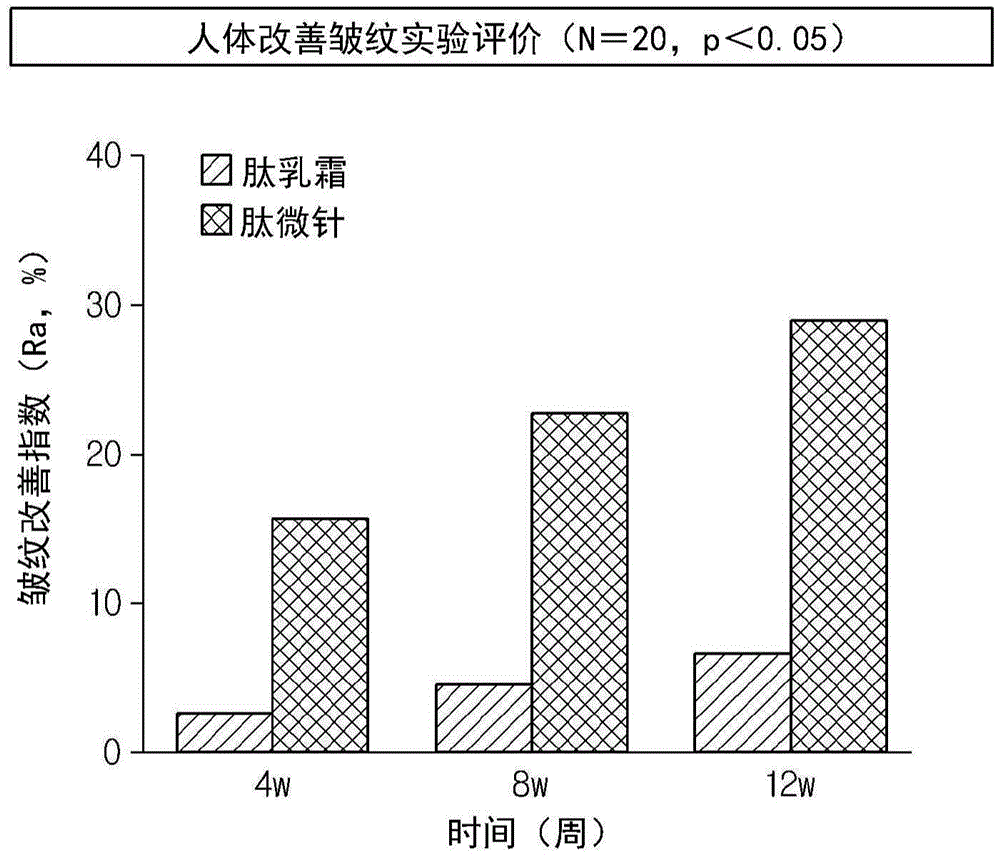
Fig. 8 shows the results of an experiment showing the degree of wrinkle improvement exhibited after the microneedle (peptide microneedle) impregnated with the peptide solution and the microneedle (peptide microneedle) impregnated with the peptide of the present invention were used for wrinkles at the corner of the eye for a long period of time.
Detailed Description
In order to facilitate understanding of the present invention, the following detailed description will be given by way of examples. However, the present invention may be variously modified, and the scope of the present invention is not limited to the following examples. The embodiments of the present invention are provided to more fully explain the present invention to those skilled in the art.
< production of protein-loaded microparticles >
First, 1g of polylactic-co-glycolic acid (PLGA) was dissolved in 10mL of Methylene Chloride (Methylene Chloride). A solution of 200mg of polypeptide (epidermal growth factor, EGF) dissolved in 2mL of purified water was slowly added to the PLGA solution to make a first W/O emulsion. The W/O emulsion prepared in the first step was added to a 0.2% aqueous polyvinyl alcohol solution (100mL) under stirring. The thus-prepared W/O/W double emulsion was stirred at room temperature for 24 hours, and methylene chloride as an organic solvent was evaporated to prepare fine particles containing EGF. The residual dichloromethane was completely removed by using a rotary evaporator, and water was evaporated together with the organic solvent and concentrated until the EGF content reached 0.2% of the total amount. The EGF content was 0.21% as a result of analysis using an ELISA kit, and the average size of the fine particles was 350nm as a result of analysis using a Particle size analyzer (Particle size analyzer).
< production of EGF micro-particle-carrying microneedle >
EGF (added in the form of a solution) or soluble microneedles impregnated with EGF were manufactured as in table 1 below. The contents in Table 1 below are expressed in% by weight.
TABLE 1

Specifically, soluble microneedles impregnated with EGF were manufactured as follows. Oligo-HA (Oligo hyaluronic acid), Na-CMC (sodium carboxymethyl cellulose) and trehalose were dissolved in purified water, and glycerol, HCO-40 and EGF were added to make EGF solution. The prepared EGF solution was poured into a silica gel microneedle mold (silicone micro needle mold), centrifuged (centrifugation) at 3000rpm for 10 minutes, and the micromold was filled with the solution. After filling the solution, it was dried in a drying oven (70 ℃) for 3 hours, and finally, the microneedles were separated from the silicone mold using an adhesive film.
Specifically, soluble microneedles impregnated with EGF microparticles (EGF-MP) were manufactured as follows. Oligo-HA (Oligo hyaluronic acid), Na-CMC (sodium carboxymethyl cellulose) and trehalose were dissolved in purified water, and glycerol, HCO-40 and EGF fine particles (EGF 0.2%) were added to make a solution. The prepared solution was cast (casting) on a silica gel microneedle mold, and then centrifuged at 3000rpm for 10 minutes to fill the micromold with the solution. After filling the solution, the mixture was dried in a drying oven (70 ℃) for 3 hours, and the microneedles were separated from the silicone mold using an adhesive film.
EGF Oil-in-Water (Oil-in-Water) cream
In order to compare the skin permeation amount of EGF dipped in the microneedles, in the comparative example, EGF was dipped in a common oil-in-water type cream for comparison. The following contents are expressed in weight%.
TABLE 2

< drug Release behavior >
EGF release from the above-fabricated microneedles was evaluated using Franz diffusion cells equipped with porcine skin (see fig. 2). As the acceptor solution (acceptor solution), a PBS solution containing 30 wt% DPG was used. The content of EGF in the porcine skin tissue and receptor solution was measured over time using Franz diffusion cells and using an ELISA kit. EGF cream was applied to the pig skin, or microneedles impregnated with EGF or EGF-MP were applied, comparing the skin penetration of the peptides over time. After the microneedle was soaked in the pig skin and dissolved (attaching time: 2 hours, temperature: 32 ℃), the microneedle was removed. And the skin of the pig, which absorbed EGF by the microneedle, was placed in a franz diffusion cell, and the release behavior of EGF from the skin of the pig to the receptor solution over time was confirmed, the results of which are shown in fig. 3.
As shown in fig. 3, EGF and EGF-MP impregnated in the microneedles, which directly penetrated the skin through the microneedles, were 1 μ g or more in permeation amount, and showed about 500 times or more of the skin permeation amount compared to the cream.
< wrinkle-improving Effect >
The EGF cream and the microneedles impregnated with EGF and EGF-MP were used daily at the wrinkles of the eyes, and after 12 weeks, the wrinkle improvement was confirmed by a silica gel replica (silicone replica) and a wrinkle image analysis method (N ═ 20), and the results are shown in fig. 4. The microneedle impregnated with EGF showed excellent improvement effect compared to EGF cream, and in particular, the microneedle impregnated with EGF-MP showed outstanding wrinkle improvement effect. This is an effect brought about by effective delivery of EGF to the skin through the Microneedle (MN) impregnated with EGF-MP, and EGF is released from EGF-MP delivered into the skin in a stable structure, thereby making wrinkle improvement effect prominent.
< EGF stability analysis (SEC) >
It was confirmed by SEC (size exclusion chromatography) whether the structure of EGF was modified when EGF impregnated in the microneedle was released.
When EGF itself is impregnated in the microneedle and delivered to the skin, the EGF structure is aggregated to cause deformation, and the aggregation peak (aggregation peak) is relatively increased, but when it is stably encapsulated in the microparticle and impregnated in the microneedle, aggregation does not occur after delivery to the skin, showing a result similar in structure to the standard substance.
From this, it was found that when a polypeptide or protein such as EGF is impregnated into a microneedle and delivered to the skin, the encapsulated microparticle can be efficiently delivered transdermally and can be delivered to the skin in a stable structure.
< production of peptide microneedles >
As shown in table 3 below, peptides (added in the form of a solution) or soluble microneedles impregnated with the peptides were manufactured. The contents in Table 3 below are shown in% by weight.
TABLE 3

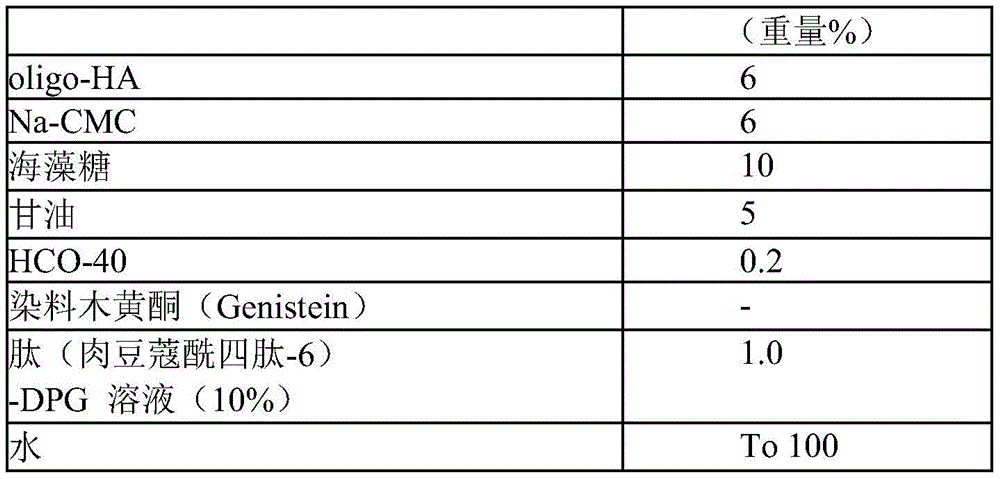
Specifically, soluble microneedles impregnated with peptide (myristoyl tetrapeptide-6) were produced as follows.
Oligo-HA (Oligo hyaluronic acid), Na-CMC (sodium carboxymethylcellulose) and trehalose were dissolved in purified water, and glycerol, HCO-40 and a peptide solution (peptide 10%, DPG 90%) were added to produce a peptide-dispersed solution (DPG: dipropylene glycol). The produced peptide dispersion solution was poured into a silica gel microneedle mold, and then centrifuged at 3000rpm for 10 minutes to fill the micromold with the solution. After filling the solution, it was dried in a drying oven (70 ℃) for 3 hours, and finally the microneedles were separated from the silicone mold using an adhesive film.
Oil-in-Water (Oil-in-Water) cream of peptide
In order to compare the skin permeation amount of the peptide immersed in the microneedles, in the comparative example, the peptide was immersed in a common oil-in-water type cream for comparison. The following contents are expressed in weight%.
TABLE 4


< drug Release behavior >
The skin permeation amount of the peptide released from the above-fabricated microneedles over time was compared using Franz diffusion cells loaded with porcine skin (see fig. 2). The receptor solution (receptor solution) was a PBS solution containing 30 wt% DPG.
That is, the content of peptides in the skin tissue of swine and the receptor solution was measured over time using a Franz diffusion cell and liquid chromatography.
The skin penetration of peptides over time was compared by applying a peptide cream to the pig skin, or attaching microneedles impregnated with peptides. After the microneedle was soaked in the pig skin and dissolved (attaching time: 2 hours; temperature: 32 ℃), the microneedle was removed. The skin of the pig, which had absorbed the peptide by the microneedle, was placed in a franz diffusion cell, and the release behavior of the peptide from the skin of the pig into the receptor solution over time was confirmed, and the results are shown in fig. 7.
As shown in fig. 7, the skin penetration of the cream containing the peptide was about 0.1 μ g, which is very small, whereas the peptide impregnated in the microneedle penetrated the skin directly through the microneedle, which was 15 μ g or more, showing about 100 times or more of the skin penetration compared to the cream.
< wrinkle-improving Effect >
The peptide cream and the microneedle impregnated with the peptide were applied to the eye corner wrinkles every day, and after 12 weeks, the degree of wrinkle improvement was confirmed by a silica gel replica (silicone reapplication) and a wrinkle image analysis method (N ═ 20).
The microneedles impregnated with peptides showed 5 times or more excellent improvement effect compared to the peptide cream, and it was confirmed that this is because the peptides were effectively impregnated into the skin through the microneedles, thereby making the wrinkle improvement effect outstanding.
Industrial applicability
The present invention can be applied to cosmetic and pharmaceutical uses for improving skin wrinkles.
The microneedle of the present invention can provide an excellent effect of reducing skin wrinkles.
Claims (13)
1. A microneedle, characterized in that the microneedle is a water-soluble microneedle comprising microparticles, the microparticles comprising: a polymer forming a hydrophobic core, and a peptide or protein,
the hydrophobic core-forming polymer can stably include the peptide or the protein in the microparticle without structural deformation,
the peptide is a myristoyl tetrapeptide,
the protein is epidermal growth factor.
2. A microneedle according to claim 1, wherein the substance forming the microneedle dissolves in the skin.
3. A microneedle according to claim 2, wherein the substance forming the microneedle is hyaluronic acid, sodium carboxymethylcellulose, vinylpyrrolidone-vinyl acetate copolymer, polyvinyl alcohol, polyvinylpyrrolidone, saccharides or a mixture thereof.
4. A microneedle according to claim 2, comprising a plasticizer in addition to the substance forming the microneedle.
5. A microneedle according to claim 1, wherein the polymer forming the hydrophobic core is any one or a mixture selected from the group consisting of biodegradable polymers and non-biodegradable polymers,
the biodegradable polymer is any one or more selected from the group consisting of polylactide, polyglycolide, poly (lactide-co-glycolide), polyanhydride, polyorthoester, polyetherester, polycaprolactone, methoxypolyethylene glycol-b-polycaprolactone, polyesteramide, polybutyranic acid, polyvaleric acid, polyurethane, and copolymers thereof;
the non-biodegradable polymer is one or more selected from the group consisting of polyacrylate, ethylene-vinyl acetate polymer, acrylic acid substituted cellulose acetate, non-degradable polyurethane, polystyrene, polyvinyl chloride, polyvinyl fluoride, polyvinyl imidazole, chlorosulfonated polyolefin, polyethylene oxide, and copolymers thereof.
6. A microneedle according to claim 5, wherein the polymer forming the hydrophobic core is a mixture of at least one of polylactide, polyglycolide, and poly (lactide-co-glycolide) with methoxypolyethylene glycol-b-polycaprolactone.
7. A microneedle according to claim 1, wherein the microparticle is matrix-type or membrane-controlled.
8. The microneedle according to claim 1, wherein the diameter of the microparticle is 0.01 to 10 μm.
9. A microneedle according to claim 1, for use in application to the skin.
10. A microneedle according to claim 1, for use in skin wrinkle improvement.
11. A method of manufacturing the microneedle according to any one of claims 1 to 10, comprising:
forming the fine particles by incorporating the peptide or the protein into the fine particles using the hydrophobic core-forming polymer;
a step of producing a solution containing the formed fine particles and a water-soluble substance in the skin;
a step S2 of injecting the solution into a microneedle mold; and the number of the first and second groups,
step S3 of drying and separating the microneedles from the mold.
12. The method according to claim 11, wherein the water-soluble substance in the skin is hyaluronic acid, sodium carboxymethylcellulose, a vinylpyrrolidone-vinyl acetate copolymer, polyvinyl alcohol, polyvinylpyrrolidone, a saccharide, or a mixture thereof.
13. The method according to claim 11, wherein the polymer forming the hydrophobic core is any one or a mixture selected from the group consisting of a biodegradable polymer and a non-biodegradable polymer,
the biodegradable polymer is any one or more selected from the group consisting of polylactide, polyglycolide, poly (lactide-co-glycolide), polyanhydride, polyorthoester, polyetherester, polycaprolactone, methoxypolyethylene glycol-b-polycaprolactone, polyesteramide, polybutyranic acid, polyvaleric acid, polyurethane, and copolymers thereof;
the non-biodegradable polymer is one or more selected from the group consisting of polyacrylate, ethylene-vinyl acetate polymer, acrylic acid substituted cellulose acetate, non-degradable polyurethane, polystyrene, polyvinyl chloride, polyvinyl fluoride, polyvinyl imidazole, chlorosulfonated polyolefin, polyethylene oxide, and copolymers thereof.
Priority Applications (1)
| Application Number | Priority Date | Filing Date | Title |
|---|---|---|---|
| CN202210187289.7A CN114515269A (en) | 2015-04-06 | 2016-04-06 | Microneedle and method for producing same |
Applications Claiming Priority (9)
| Application Number | Priority Date | Filing Date | Title |
|---|---|---|---|
| KR10-2015-0048462 | 2015-04-06 | ||
| KR20150048462 | 2015-04-06 | ||
| KR20150048471 | 2015-04-06 | ||
| KR10-2015-0048471 | 2015-04-06 | ||
| KR10-2015-0144873 | 2015-10-16 | ||
| KR1020150144873A KR20160119674A (en) | 2015-04-06 | 2015-10-16 | Soluble Microneedle for peptide delivery |
| KR1020150159966A KR20160119679A (en) | 2015-04-06 | 2015-11-13 | Soluble Microneedle for protein or peptide delivery |
| KR10-2015-0159966 | 2015-11-13 | ||
| PCT/KR2016/003600 WO2016163753A1 (en) | 2015-04-06 | 2016-04-06 | Soluble microneedle for delivering proteins or peptides |
Related Child Applications (1)
| Application Number | Title | Priority Date | Filing Date |
|---|---|---|---|
| CN202210187289.7A Division CN114515269A (en) | 2015-04-06 | 2016-04-06 | Microneedle and method for producing same |
Publications (2)
| Publication Number | Publication Date |
|---|---|
| CN107438432A CN107438432A (en) | 2017-12-05 |
| CN107438432B true CN107438432B (en) | 2022-03-29 |
Family
ID=60387234
Family Applications (2)
| Application Number | Title | Priority Date | Filing Date |
|---|---|---|---|
| CN202210187289.7A Pending CN114515269A (en) | 2015-04-06 | 2016-04-06 | Microneedle and method for producing same |
| CN201680019260.0A Active CN107438432B (en) | 2015-04-06 | 2016-04-06 | Soluble microneedles for protein or peptide delivery |
Family Applications Before (1)
| Application Number | Title | Priority Date | Filing Date |
|---|---|---|---|
| CN202210187289.7A Pending CN114515269A (en) | 2015-04-06 | 2016-04-06 | Microneedle and method for producing same |
Country Status (5)
| Country | Link |
|---|---|
| US (2) | US20180116938A1 (en) |
| EP (1) | EP3281627A4 (en) |
| JP (1) | JP6816015B2 (en) |
| KR (1) | KR102264298B1 (en) |
| CN (2) | CN114515269A (en) |
Families Citing this family (10)
| Publication number | Priority date | Publication date | Assignee | Title |
|---|---|---|---|---|
| CN107233296B (en) * | 2017-05-27 | 2020-01-07 | 中山大学 | Thymopentin-soluble microneedle and preparation method thereof |
| KR101933685B1 (en) * | 2018-06-29 | 2018-12-28 | 주식회사 에스알바이오텍 | Drug Coated Microneedle and Manufacturing Method Thereof |
| CN111012916B (en) * | 2018-10-09 | 2021-10-01 | 厦门大学 | Surface-modified sponge spicules and preparation method and use thereof |
| KR102214403B1 (en) * | 2019-08-14 | 2021-02-09 | 주식회사 에스알바이오텍 | Microneedle bonded complexed peptides and cosmetic composion comprising the same |
| CA3159272A1 (en) | 2019-11-22 | 2021-05-27 | Veradermics Incorporated | Microneedle patch for immunostimulatory drug delivery |
| AU2021265743A1 (en) | 2020-04-28 | 2022-11-03 | Ticona Llc | Microneedle assembly |
| KR102234446B1 (en) * | 2020-07-30 | 2021-04-01 | 주식회사 바이오셀트란 | Soluble micro-niddle patch with skin penetrating recombinant neuropeptide complex |
| CN112274633B (en) * | 2020-09-16 | 2023-11-07 | 广州新济薇娜生物科技有限公司 | Cord Ma Lutai blood glucose-reducing weight-reducing microneedle patch and preparation method and application thereof |
| KR20240071126A (en) | 2022-11-15 | 2024-05-22 | 주식회사 스킨메드 | Micro-needle comprising shortened peptide optimized for acetylcholine receptor binding |
| KR20240109815A (en) * | 2023-01-05 | 2024-07-12 | (주)심플스틱 | Microneedle patch equipped with Poly Lactic Acid needles for facial plastic surgery that is easy to absorb into the skin |
Family Cites Families (10)
| Publication number | Priority date | Publication date | Assignee | Title |
|---|---|---|---|---|
| JP5161776B2 (en) * | 2005-09-06 | 2013-03-13 | セラジェクト, インコーポレイテッド | Solid solution punch comprising drug particles and / or particles adsorbed with drugs |
| US20090182306A1 (en) * | 2006-07-21 | 2009-07-16 | Georgia Tech Research Corporation | Microneedle Devices and Methods of Drug Delivery or Fluid Withdrawal |
| CA2706404C (en) * | 2007-11-21 | 2017-04-11 | Bioserentach Co., Ltd. | Preparation for body surface application and preparation for body surface application-holding sheet |
| US8318678B2 (en) * | 2008-05-30 | 2012-11-27 | Jan Marini Skin Research | Cosmetic compositions |
| KR20100037389A (en) * | 2008-10-01 | 2010-04-09 | 연세대학교 산학협력단 | Solid microstructure with multi-controlled release and process for preparing the same |
| DK2346563T3 (en) * | 2008-10-07 | 2019-01-02 | Tuo Jin | POLYMER PHASE TRANSITION MICROWAVE |
| KR101331136B1 (en) * | 2011-01-12 | 2013-11-26 | 아주대학교산학협력단 | Drug delivery formulation for release controlled initial burst and manufacturing method thereof |
| CN107582517A (en) * | 2011-10-20 | 2018-01-16 | 考司美德制药株式会社 | Microneedle array |
| CN104066475B (en) * | 2012-02-17 | 2018-07-27 | 考司美德制药株式会社 | Quickly soluble micropin |
| EP2792684A1 (en) * | 2013-04-15 | 2014-10-22 | Lipotec, S.A. | Compounds useful in the treatment and/or care of the skin and their cosmetic or pharmaceutical compositions |
-
2016
- 2016-04-06 US US15/565,114 patent/US20180116938A1/en not_active Abandoned
- 2016-04-06 KR KR1020177026563A patent/KR102264298B1/en active Active
- 2016-04-06 CN CN202210187289.7A patent/CN114515269A/en active Pending
- 2016-04-06 JP JP2017552135A patent/JP6816015B2/en active Active
- 2016-04-06 CN CN201680019260.0A patent/CN107438432B/en active Active
- 2016-04-06 EP EP16776856.3A patent/EP3281627A4/en not_active Withdrawn
-
2020
- 2020-03-05 US US16/809,748 patent/US20200197286A1/en not_active Abandoned
Also Published As
| Publication number | Publication date |
|---|---|
| KR102264298B1 (en) | 2021-06-14 |
| KR20170125856A (en) | 2017-11-15 |
| US20200197286A1 (en) | 2020-06-25 |
| US20180116938A1 (en) | 2018-05-03 |
| EP3281627A4 (en) | 2018-12-05 |
| JP2018510883A (en) | 2018-04-19 |
| JP6816015B2 (en) | 2021-01-20 |
| EP3281627A1 (en) | 2018-02-14 |
| HK1247831A1 (en) | 2018-10-05 |
| CN107438432A (en) | 2017-12-05 |
| CN114515269A (en) | 2022-05-20 |
Similar Documents
| Publication | Publication Date | Title |
|---|---|---|
| CN107438432B (en) | Soluble microneedles for protein or peptide delivery | |
| Caudill et al. | Spatially controlled coating of continuous liquid interface production microneedles for transdermal protein delivery | |
| Zheng et al. | Hydrogel-mediated extracellular vesicles for enhanced wound healing: the latest progress, and their prospects for 3D bioprinting | |
| US10376615B2 (en) | Micro-needle and micro-needle patch | |
| CN114146046B (en) | Coated microneedle with multi-layer structure, preparation method thereof and microneedle patch containing the coated microneedle | |
| Shultz et al. | Hydrogel-based local drug delivery strategies for spinal cord repair | |
| WO2016163753A1 (en) | Soluble microneedle for delivering proteins or peptides | |
| KR101747411B1 (en) | Soluble microneedle for delivery of peptides regulating neurotransmitters to neuronal cell | |
| KR101950693B1 (en) | Microneedle comprising retinol or retinol derivative | |
| KR20140048024A (en) | Microneedle assembly formulation for skin treatment | |
| JP2001181924A (en) | Polymer having biologically active agent | |
| CN110538136A (en) | Preparation of micellar composite gel microneedles for transdermal delivery of poorly soluble drugs | |
| CA2856794A1 (en) | Polymeric drug-delivery material, method for manufacturing thereof and method for delivery of a drug-delivery composition | |
| CN113827544A (en) | Heat-resistant implantable polymer microneedle, and preparation method and application thereof | |
| KR102234446B1 (en) | Soluble micro-niddle patch with skin penetrating recombinant neuropeptide complex | |
| TWI767886B (en) | Soluble microneedle for protein or peptide and preparing method thereof | |
| HK1247831B (en) | Soluble microneedle for delivering proteins or peptides | |
| US10322210B2 (en) | Preparation method of core-shell structured fibrous scaffolds | |
| Bhatnagar et al. | Protein-based microneedles for drug and vaccine delivery | |
| KR20170000753A (en) | Soluble microneedle patch for delivery of bee venom | |
| CN118806686A (en) | A composite microneedle with sustained release function and its preparation method and application | |
| Bhatnagar et al. | for Drug and Vaccine Delivery | |
| KR20230116266A (en) | Microneedles and Microneedle Patches Containing Acetylhexapeptide-8 | |
| Dillon | Development of Novel Transdermal Drug Delivery Technologies for Therapeutic Peptides | |
| CN115192511A (en) | Water-soluble microneedle, preparation method thereof, microneedle patch and transdermal drug delivery system |
Legal Events
| Date | Code | Title | Description |
|---|---|---|---|
| PB01 | Publication | ||
| PB01 | Publication | ||
| SE01 | Entry into force of request for substantive examination | ||
| SE01 | Entry into force of request for substantive examination | ||
| REG | Reference to a national code |
Ref country code: HK Ref legal event code: DE Ref document number: 1247831 Country of ref document: HK |
|
| GR01 | Patent grant | ||
| GR01 | Patent grant |