CN107392082B - Small-area fingerprint comparison method based on deep learning - Google Patents
Small-area fingerprint comparison method based on deep learning Download PDFInfo
- Publication number
- CN107392082B CN107392082B CN201710220456.2A CN201710220456A CN107392082B CN 107392082 B CN107392082 B CN 107392082B CN 201710220456 A CN201710220456 A CN 201710220456A CN 107392082 B CN107392082 B CN 107392082B
- Authority
- CN
- China
- Prior art keywords
- fingerprint
- template
- image
- area
- registration
- Prior art date
- Legal status (The legal status is an assumption and is not a legal conclusion. Google has not performed a legal analysis and makes no representation as to the accuracy of the status listed.)
- Active
Links
Images


Classifications
-
- G—PHYSICS
- G06—COMPUTING OR CALCULATING; COUNTING
- G06V—IMAGE OR VIDEO RECOGNITION OR UNDERSTANDING
- G06V40/00—Recognition of biometric, human-related or animal-related patterns in image or video data
- G06V40/10—Human or animal bodies, e.g. vehicle occupants or pedestrians; Body parts, e.g. hands
- G06V40/12—Fingerprints or palmprints
- G06V40/1347—Preprocessing; Feature extraction
-
- G—PHYSICS
- G06—COMPUTING OR CALCULATING; COUNTING
- G06F—ELECTRIC DIGITAL DATA PROCESSING
- G06F18/00—Pattern recognition
- G06F18/20—Analysing
- G06F18/21—Design or setup of recognition systems or techniques; Extraction of features in feature space; Blind source separation
- G06F18/214—Generating training patterns; Bootstrap methods, e.g. bagging or boosting
-
- G—PHYSICS
- G06—COMPUTING OR CALCULATING; COUNTING
- G06N—COMPUTING ARRANGEMENTS BASED ON SPECIFIC COMPUTATIONAL MODELS
- G06N3/00—Computing arrangements based on biological models
- G06N3/02—Neural networks
- G06N3/08—Learning methods
- G06N3/084—Backpropagation, e.g. using gradient descent
-
- G—PHYSICS
- G06—COMPUTING OR CALCULATING; COUNTING
- G06V—IMAGE OR VIDEO RECOGNITION OR UNDERSTANDING
- G06V10/00—Arrangements for image or video recognition or understanding
- G06V10/20—Image preprocessing
- G06V10/25—Determination of region of interest [ROI] or a volume of interest [VOI]
-
- G—PHYSICS
- G06—COMPUTING OR CALCULATING; COUNTING
- G06V—IMAGE OR VIDEO RECOGNITION OR UNDERSTANDING
- G06V40/00—Recognition of biometric, human-related or animal-related patterns in image or video data
- G06V40/10—Human or animal bodies, e.g. vehicle occupants or pedestrians; Body parts, e.g. hands
- G06V40/12—Fingerprints or palmprints
- G06V40/1365—Matching; Classification
Landscapes
- Engineering & Computer Science (AREA)
- Theoretical Computer Science (AREA)
- Physics & Mathematics (AREA)
- General Physics & Mathematics (AREA)
- Data Mining & Analysis (AREA)
- Multimedia (AREA)
- Computer Vision & Pattern Recognition (AREA)
- Artificial Intelligence (AREA)
- Evolutionary Computation (AREA)
- Life Sciences & Earth Sciences (AREA)
- General Engineering & Computer Science (AREA)
- Human Computer Interaction (AREA)
- Health & Medical Sciences (AREA)
- Bioinformatics & Cheminformatics (AREA)
- Bioinformatics & Computational Biology (AREA)
- Evolutionary Biology (AREA)
- Biomedical Technology (AREA)
- Biophysics (AREA)
- Computational Linguistics (AREA)
- General Health & Medical Sciences (AREA)
- Molecular Biology (AREA)
- Computing Systems (AREA)
- Mathematical Physics (AREA)
- Software Systems (AREA)
- Collating Specific Patterns (AREA)
Abstract
A small-area fingerprint comparison method based on deep learning comprises the following steps: 1) finding the azimuth and direction information of the characteristic points in the small-area fingerprint; 2) according to the position and direction information of the detail feature points obtained in the step 1), carrying out rotation normalization on the image by taking the feature points as the center and the direction of the feature points as an X axis, and intercepting small blocks B with set sizes; 3) and (3) convolutional network training: a network model of the convolutional neural network adopts a deep residual error network, and a Caffe frame is used for training a training sample; 4) extracting semantic features; 5) fingerprint registration: in the registration process, a user is required to register in cooperation with a corresponding instruction, and a registration template is formed by combining feature points of a registered fingerprint image; 6) fingerprint comparison: the comparison score is determined by the average value of a plurality of values with the highest similarity in the image to be matched and the registration template. The invention provides a small-area fingerprint comparison method based on deep learning, which is effectively suitable for small-area fingerprint comparison and has good reliability.
Description
Technical Field
The invention relates to the technical fields of neural networks, image processing, mode recognition, fingerprint comparison and the like, in particular to a comparison method for small-area fingerprints, which is suitable for identity authentication of intelligent mobile equipment, access control systems, notebooks and other equipment.
Background
With the progress of science and technology, the traditional authentication methods such as a citizen identification card, a work card, a personal password and the like cannot meet the increasing requirements of people on safety and convenience due to the defects and the shortcomings of the traditional authentication methods, and the biometric identification technology is developed at the end of life. The biometric technology belongs to a pattern recognition category of identity authentication using biometric features and behavior features inherent to a human body. With the continuous improvement of image processing and pattern recognition technology, among many biological features, fingerprints are widely used in production and life of people because of their advantages of uniqueness, certainty, portability, easy acquisition, and the like. At present, a large-area fingerprint identification technology is relatively mature, but with the introduction of the fingerprint identification technology in mobile equipment, the introduction is limited by the internal space of the mobile equipment, so that a fingerprint acquisition module with a smaller volume is adopted, and the acquired fingerprint area is smaller.
At present, algorithms specially aiming at small-area fingerprint identification are relatively few, comparison algorithms after migration are adjusted according to small areas by existing large-area fingerprint identification algorithms, and researches show that the performance of the comparison algorithms aiming at large-area fingerprints is greatly reduced along with the reduction of the acquired fingerprint areas.
Disclosure of Invention
In order to overcome the defect that the small-area fingerprint comparison performance of the conventional fingerprint comparison method cannot meet the actual use requirement, the invention provides a small-area fingerprint comparison method based on deep learning, which is effectively suitable for small-area fingerprint comparison and has good reliability.
In order to solve the technical problems, the invention adopts the technical scheme that:
a small-area fingerprint comparison method based on deep learning comprises the following steps:
1) extracting related information of the minutiae characteristic points of the small-area fingerprint image: finding the azimuth and direction information of the characteristic points in the small-area fingerprint;
2) ROI (Region of Interest) truncation: according to the position and direction information of the detail feature points obtained in the step 1), taking the feature points as the center and the direction of the feature points as an X axis, carrying out rotation normalization on the image, and intercepting small blocks B with set sizes;
3) and (3) convolutional network training: a network model of the convolutional neural network adopts a deep residual error network, and a Caffe frame is used for training a training sample;
4) semantic feature extraction: to the step of2) Using a deep convolutional neural network to extract semantic features of each ROI in the set Where L is the characteristic length of each ROI, fmIs the m-dimension feature;
5) fingerprint registration: in the registration process, a user is required to register in cooperation with a corresponding instruction, and a registration template is formed by a feature point union set of registered fingerprint images;
6) fingerprint comparison: the comparison score is determined by the average value of a plurality of values with the highest similarity in the image to be matched and the registration template.
Further, the alignment method further comprises the following steps:
7) selection of training samples: carrying out ROI interception on the training library by using the method in the step 2), taking the ROI with the fingerprint effective area percentage exceeding 60% as a training sample, and carrying out random rotation transformation of less than 6 degrees on the training sample;
8) the network model is trained in a triple Loss mode.
Still further, in the step 5), the fingerprint registration process is as follows:
setting the maximum number of collected single fingers as P, the number of actual effective registered images as S, and carrying out corresponding operation by matching a user with an instruction in the registration process, wherein the operation is as follows: the first registration image requires the center position of the finger to be placed on the acquisition surface of the acquisition instrument; the position of the finger relative to the acquisition instrument needs to be moved subsequently during the registration process.
Let IiRepresenting the ith registered fingerprint image, is represented byiA set of corresponding feature points is set, wherein,
 is represented byiA feature set of the corresponding feature point set; the generation steps of the registration template are as follows:
5.1) when the 1 st fingerprint image is acquired, i.e. when N is 1, where N isShowing the number of the collected fingerprint images, and determining the effective Area of the fingerprint of the collected imageeIf Areae≥thrareaWhen in use, will Adding the feature points into the registration template, wherein the feature points in the registration template are set
 The characteristic template is
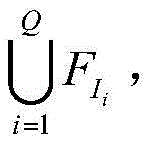 Q represents the number of enrolled fingerprints in the template, where thrareaA threshold value of a fingerprint effective area in the fingerprint image is acquired; if Areae<thrareaPrompting to re-collect;
5.2) when Q is 2, judging the effective area of the acquired image by the method in the step 5.1), and judging I2Set of detail feature points of Corresponding features
 With features in the enrollment template
 Comparing the two to obtain
 Neutralization of
 Number n of different feature points2If n is2≥thrdifThen will be
 Adding the registered template into the registered template, wherein the characteristic point set of the registered template is
 The characteristic template is
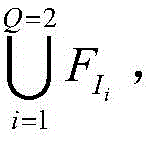 The accumulated value of the different feature points in the new registered image and the original registered template is recorded as NdifAt this time Ndif=n2(ii) a Otherwise, prompting the user to move the finger position and re-collecting the registration image; wherein thrdifThe minimum threshold value of the number of different characteristic points between the registered fingerprint and the registered template;
5.3) by analogy, registering the feature point set of the template as The characteristic template is
 Each time the new registration image and the registration template have different feature point accumulated values as
5.4) if Ndif≤ThrdifIf N is less than P, continuously collecting the next fingerprint image for registration;
if N is presentdif>ThrdifIf Q is equal to S, the registration is prompted to be completed;
if N is presentdif≤ThrdifIf N is equal to P, the finger is prompted to fail to register;
wherein, ThrdifA minimum threshold of accumulated numbers for different feature points between the enrolled fingerprint and the enrolled template.
In the step 6), the fingerprint comparison process is as follows:
suppose that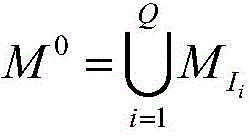 A union of sets of feature points representing one of the registered fingerprint image sequences in the database,
 is a pair ofSet of corresponding features, N0The number of the characteristic points contained in the template;
suppose M1Set of characteristic points representing the fingerprint image to be matched, F1Set of features representing the fingerprint image to be matched, N1Representing the number of the characteristic points of the fingerprint image to be matched;
for M1Any one of the characteristic points of Wherein j is 1,21And M is0Any one of the characteristic points of
 Comparing, wherein k is 1,20Calculating to obtain corresponding similarity
 Selecting the maximum similarity
 And is
 Characteristic point pair of
 As candidate matching point pairs, wherein TSCorresponding to a similarity threshold between semantic features for the two feature points;
from Selecting three values with the maximum value, and recording the three values as the three values
 Taking the average of these three values
 As the final alignment score;
if the fingerprint image to be compared is the same as the fingerprint image to be comparedMaximum value S of comparison scores with all templates in databasemax>ThrSThen, the comparison is passed, wherein ThrSIs the alignment threshold.
In the step 3), the input image of the network is 64 × 64, 256 4 × 4 feature templates are obtained after the operations of a 5 × 5 convolutional layer, 3 pooling layers and 13 residual error structures, and a 1024-dimensional vector output is obtained after the operation of the fully connected layers.
The technical conception of the invention is as follows: at present, the research specially aiming at the small-area fingerprint identification is not much, and the traditional fingerprint comparison algorithm is mainly modified and transplanted into the small-area fingerprint comparison.
Deep learning is inspired by the fact that the brain is a deep network structure, and forms more abstract and higher semantic features by combining low-level features. The convolutional neural network is a deep neural network model, and the unique local connection and weight sharing characteristics in the network structure make the network more similar to the neural network of a living being. The convolutional neural network is a multi-layer perceptron which is tailored to identify 2D images, a local sensing area of an image is used as input of the bottom layer of a hierarchical structure, information is sequentially transmitted to different layers, and each layer obtains the most significant characteristics of observed data through a digital filter. The method can effectively acquire the remarkable characteristics of the observation data with unchanged translation, scaling and rotation.
The working center of gravity of the method provided by the invention is to make a fingerprint registration strategy, a fingerprint comparison method and a convolutional neural network model and a training method aiming at the condition that a small-area fingerprint effective area is insufficient. The network model in the method adopts a deep residual error network, so that the situation that the training error and the testing error are increased along with the deepening of the network layer number can be effectively avoided, and the expression of higher-level features on the target can be realized; the method combines the condition that the small-area fingerprint contains less characteristic points, sets the characteristic point union set of the registered fingerprints as the registered template, and selects the average comparison similarity of the optimal three characteristic points as the final judgment standard in the authentication process. The registration and comparison strategy is combined with the depth semantic expression of the depth residual error network on the fingerprint characteristics in practical application, and the reliability is good.
The invention has the following beneficial effects: on one hand, with the application of fingerprint identification in intelligent mobile equipment and the limitation of equipment space, the area of a fingerprint acquisition module is smaller and smaller, however, research shows that with the reduction of the fingerprint acquisition area, the performance of the traditional fingerprint identification method based on minutiae is reduced more and more due to too few captured minutiae; on the other hand, the collected images have uncertainty of angles and directions, and the difficulty and accuracy of obtaining the registration template in a fingerprint splicing mode in the registration process also have great influence. Therefore, the research of small-area fingerprint identification draws attention, and the invention is generated. The invention provides a fingerprint acquisition module suitable for different manufacturers and different styles, a small-area fingerprint comparison method with fingerprint feature expression having rotation and translation invariance and low dependency on the number of minutiae of a fingerprint image is provided, and based on a deep learning algorithm and corresponding strategies of registration and identification, the false identification rate of identification is effectively reduced, and the matching rate of the comparison algorithm is improved.
Description of the drawings:
FIG. 1 is an exemplary diagram of the location and orientation of minutiae (end points, bifurcation points);
FIG. 2 is a basic configuration diagram of a residual structure;
FIG. 3 is a diagram of a modified residual network architecture;
fig. 4 is a diagram of a network architecture employed by the present invention.
Detailed Description
The invention is further described below with reference to the accompanying drawings.
Referring to fig. 1 to 4, a small-area fingerprint comparison method based on deep learning includes the following steps:
1) extracting related information of the minutiae characteristic points of the small-area fingerprint image: using a traditional algorithm to find information such as the position, the direction, the quality and the like of minutiae characteristic points (end points and bifurcation points) in the small-area fingerprint;
2) and (3) ROI interception: according to the position and the direction information of the detail characteristic point obtained in the step 1), taking the characteristic point as a center, carrying out rotation normalization on the image according to the direction of the characteristic point, and intercepting a small block B with the size of 64 multiplied by 64;
3) and (3) convolutional network training: a network model of the convolutional neural network adopts a deep residual error network, and a Caffe frame is used for training a training sample;
4) semantic feature extraction: extracting semantic features of each ROI in step 2) by using a deep convolutional neural network Where L is the characteristic length of each ROI, fmIs the m-dimension feature;
5) acquiring a registration template: because the size of the fingerprint acquisition module is small, only partial fingerprint information can be acquired each time, a plurality of fingerprint images need to be acquired in the registration process, the maximum acquisition number of a single finger is set to be P, and the number of actual effective registration images is set to be S. In order to obtain more effective information of the registered fingerprint, a user is required to perform corresponding operation in cooperation with an instruction in the registration process, and the specific operation is as follows: the first registration image requires the center position of the finger to be placed on the acquisition surface of the acquisition instrument; some movement of the finger relative to the position of the acquisition instrument is subsequently required during the registration process. The steps of generating the registration template are as follows:
let IiRepresenting the ith registered fingerprint image, is represented byiA set of corresponding feature points is set, wherein,
 is represented byiAnd semantic feature sets of the corresponding feature point sets.
5.1) when the 1 st fingerprint image is collected (namely N is 1, wherein N represents the number of collected fingerprint images), the effective Area of the fingerprint of the collected image is judgedeIf Areae≥thrareaWhen in use, will Adding the feature points into the registration template, wherein the feature points in the registration template are set
 The characteristic template is
 (Q represents the number of registered fingerprints in the template). Wherein thrareaA threshold value of a fingerprint effective area in the fingerprint image is acquired; if Areae<thrareaPrompting to re-collect;
5.2) when Q is 2, judging the effective area of the acquired image by the method in the step 5.1), and judging I2Set of detail feature points of Corresponding features
 And feature set in registration template
 Comparing the two to obtain
 Neutralization of
 Number n of different feature points2If n is2≥thrdifThen will be
 Adding the registered template into the registered template, wherein the characteristic point set of the registered template is
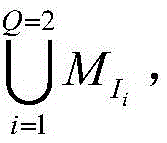 The corresponding characteristic template is
 Recording new registration image and original registration moduleThe cumulative number of different feature points in the plate is Ndif(at this time Ndif=n2) (ii) a Otherwise, prompting the user to move the finger position and re-collecting the registration image; wherein thrdifThe minimum threshold value of the number of different characteristic points between the registered fingerprint and the registered template;
5.3) by analogy, registering the feature point set of the template as The characteristic template is
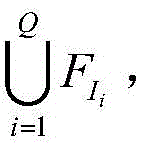 Each time the new registration image and the registration template have different feature point accumulated values as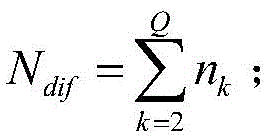
5.4) if Ndif≤ThrdifIf N is less than P, continuously collecting the next fingerprint image for registration;
if N is presentdif>ThrdifIf Q is equal to S, the registration is prompted to be completed;
if N is presentdif≤ThrdifIf N is equal to P, the finger is prompted to fail to register;
wherein Thr isdifA minimum threshold for accumulating numbers of different feature points between the enrolled fingerprint and the enrolled template;
6) fingerprint comparison: suppose that A union of sets of feature points representing one of the registered fingerprint image sequences in the database,
 for a corresponding set of features, N0The number of feature points included in the template.
Suppose M1Set of characteristic points representing the fingerprint image to be matched, F1Set of features representing the fingerprint image to be matched, N1And representing the number of the characteristic points of the fingerprint image to be matched.
For M1Any one of the characteristic points of Wherein j is 1,21And M is0Any one of the characteristic points of
 Comparing, wherein k is 1,20Calculating to obtain corresponding similarity
 Selecting the maximum similarity
 And is
 Characteristic point pair of
 As candidate pairs of matching points. Wherein, TSAnd corresponding the similarity threshold value between the semantic features for the two feature points.
From Selecting three values with the maximum value, and recording the three values as the three values
 Taking the average of these three values
 As the final alignment score.
If the fingerprint image to be compared has the maximum value S of the comparison scores of all the templates in the databasemax>ThrSThen, the comparison is passed, wherein ThrSIs the alignment threshold.
In the step 3), the convolutional neural network: in the invention, the network model is a residual error network, the residual error network is formed by connecting a series of residual error structures in series, and the composition of a basic residual error structure is shown in figure 2. Wherein each convolution layer is followed by a batch normalization layer, not shown in the figure, and the drop layer has a discard rate of 0.2. After each pooling layer, when the number of feature templates needs to be changed, in order to ensure that the lengths of the two parts of the addition operation are the same, a mapping layer needs to be added, and the residual structure is changed as shown in fig. 3. The overall structure of the network is shown in fig. 4, an input image is 64 × 64, 256 4 × 4 feature templates are obtained after operations of a 5 × 5 convolutional layer, 3 pooling layers and 13 residual error structures, and a 1024-dimensional vector output is obtained after passing through a full connection layer.
And (3) training the convolutional neural network in the step 3) by adopting a triple Loss mode. The TripletLoss method is mainly characterized in that: in the training process, a sample is input in a form of a triplet, wherein the construction mode of the triplet is as follows: randomly selecting a sample from the training samples, the sample being called a reference sample IaThen randomly selecting a positive sample I belonging to the same finger and the same characteristic point as the reference samplepAnd a negative sample I of a different class than the reference samplen. The triad is input into the same network at one time and 3 groups of characteristics are obtained The entire network is adjusted by solving the following error function and using a back propagation method:

wherein (a)+Equivalent to max (0, a). The formula essentially defines the distance relationship between the homogeneous sample and the heterogeneous sample, and aims to ensure that the Euclidean distance Dis between the reference sample and the positive sample is obtained through trainingPAnd the Euclidean distance Dis between the reference sample and the negative sampleNThe distance between homogeneous samples plus a given threshold is smaller than the distance between heterogeneous samples, i.e. the distance between homogeneous samples is smaller

The alignment method further comprises the following steps:
step 7) selecting a training sample, wherein the process is as follows:
obtaining the ROI corresponding to each detail feature point according to the step 1) and the step 2), taking the effective area percentage of the fingerprints in the ROI as a training sample, and simultaneously performing random rotation transformation of less than 6 degrees on the training sample in order to increase the diversity of the sample and prevent an overfitting phenomenon.
The method for calculating the effective area of the ROI fingerprint comprises the following steps: for an original image Img0Using sobel operator pair Img0After the edges are extracted, the edge image is subjected to a closing operation using a circular template of 9 × 9 to obtain an image Img for effective fingerprint area determination1. Finding an image Img by adopting the method in the step 1)0M in (1)kTaking each detail feature point as an origin, and taking the direction of the feature point as the positive direction of the x axis, the detail feature points are deflected by-6 degrees, -3 degrees, 0 degrees, 3 degrees and 6 degrees, and the total of the detail feature points is 5 × MkAnd (5) small squares. At the same time in Img1Cut out the small square at the same position, only when Img1The effective fingerprint area in the upper small square exceeds 60% of the effective fingerprint area, and the effective fingerprint area is used as a reliable sample for training the network model. 8) The network model is trained in a triple Loss mode.
Claims (5)
1. A small-area fingerprint comparison method based on deep learning is characterized in that: the alignment method comprises the following steps:
1) extracting related information of the minutiae characteristic points of the small-area fingerprint image: finding the azimuth and direction information of the characteristic points in the small-area fingerprint;
2) and (3) ROI interception: according to the direction and direction information of the detail feature points obtained in the step 1), carrying out rotation normalization on the image by taking the feature points as the center and the direction of the feature points as an X axis, and intercepting small blocks B with set sizes;
3) and (3) convolutional network training: a network model of the convolutional neural network adopts a deep residual error network, and a Caffe frame is used for training a training sample;
4) semantic feature extraction: extracting semantic features of each ROI in step 2) by using a deep convolutional neural network Where L is the characteristic length of each ROI, fmIs the m-dimension feature;
5) fingerprint registration: in the registration process, a user is required to register in cooperation with a corresponding instruction, and a registration template is formed by a feature point union set of registered fingerprint images;
setting IiRepresenting the ith registered fingerprint image, is represented byiA set of corresponding feature points is set, wherein,
 is represented byiA feature set of the corresponding feature point set; the step of generating the registered template in the step 5) is as follows:
5.1) when the 1 st fingerprint image is collected, namely N is equal to 1, wherein N represents the number of collected fingerprint images, the effective Area of the fingerprint of the collected image is judgedeIf Areae≥thrareaWhen in use, will Adding the feature points into the registration template, wherein the feature points in the registration template are set
 The characteristic template is
 Q represents the number of enrolled fingerprints in the template, where thrareaA threshold value of a fingerprint effective area in the fingerprint image is acquired; if Areae<thrareaPrompting to re-collect;
5.2) when N is 2, judging the effective area of the acquired image by the method in the step 5.1), and judging I2Set of detail feature points of Corresponding feature set
 With features in the enrollment template
 Comparing the two to obtain
 Neutralization of
 Number n of different feature points2If n is2≥thrdifThen will be
 Adding the registered template into the registered template, wherein the characteristic point set of the registered template is
 The characteristic template is
 The accumulated value of the different feature points in the new registered image and the original registered template is recorded as NdifAt this time Ndif=n2(ii) a Otherwise, prompting the user to move the finger position and re-collecting the registration image; wherein thrdifThe minimum threshold value of the number of different characteristic points between the registered fingerprint and the registered template;
5.3) by analogy, registering the feature point set of the template as The characteristic template is
 Each time the new registration image and the registration template have different feature point accumulated values as
5.4) if Ndif≤ThrdifIf N is less than P, and P is the maximum collection number of the single finger, continuously collecting the next fingerprint image for registration;
if N is presentdif>ThrdifIf Q is equal to S, and S is the number of the actual effective registered images, the registration is prompted to be completed;
if N is presentdif≤ThrdifIf N is equal to P, the finger is prompted to fail to register;
wherein, ThrdifA minimum threshold for accumulating numbers of different feature points between the enrolled fingerprint and the enrolled template;
6) fingerprint comparison: the comparison score is determined by the average value of a plurality of values with the highest similarity in the image to be matched and the registration template.
2. A method for small-area fingerprint matching based on deep learning as claimed in claim 1, characterized in that: the alignment method further comprises the following steps:
7) selection of training samples: carrying out ROI interception on the training library by using the method in the step 2), taking the ROI with the fingerprint effective area percentage exceeding 60% as a training sample, and carrying out random rotation transformation of less than 6 degrees on the training sample;
8) the network model is trained in a triple Loss mode.
3. A method of small-area fingerprint matching based on deep learning as claimed in claim 1 or 2, characterized in that: in the step 5), the fingerprint registration process is as follows:
setting the maximum number of collected single fingers as P, the number of actual effective registered images as S, and carrying out corresponding operation by matching a user with an instruction in the registration process, wherein the operation is as follows: the first registration image requires the center position of the finger to be placed on the acquisition surface of the acquisition instrument; the position of the finger relative to the acquisition instrument needs to be moved subsequently during the registration process.
4. A method of small-area fingerprint matching based on deep learning as claimed in claim 1 or 2, characterized in that: in the step 6), the fingerprint comparison process is as follows:
setting up A union of sets of feature points representing one of the registered fingerprint image sequences in the database,
 for corresponding feature templates, N0The number of the characteristic points contained in the template;
setting M1Set of characteristic points representing the fingerprint image to be matched, F1Set of features representing the fingerprint image to be matched, N1Representing the number of the characteristic points of the fingerprint image to be matched;
for M1Any one of the characteristic points of Wherein j is 1,21And M is0Any one of the characteristic points of
 Comparing, wherein K ═ 1,20Calculating to obtain corresponding similarity
 Selecting the maximum similarity
 And is
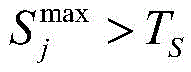 Characteristic point pair of
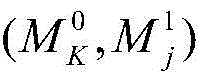 As candidate matching point pairs, wherein TSCorresponding to a similarity threshold between semantic features for the two feature points;
from Selecting three values with the maximum value, and recording the three values as the three values
 Taking the average of these three values
 As the final alignment score;
if the fingerprint image to be compared has the maximum value S of the comparison scores of all the templates in the databasemax>ThrSThen, the comparison is passed, wherein ThrSIs the alignment threshold.
5. A method of small-area fingerprint matching based on deep learning as claimed in claim 1 or 2, characterized in that: in the step 3), the input image of the network is 64 × 64, 256 4 × 4 feature templates are obtained after the operations of a 5 × 5 convolutional layer, 3 pooling layers and 13 residual error structures, and a 1024-dimensional vector output is obtained after the operation of the fully connected layers.
Priority Applications (1)
| Application Number | Priority Date | Filing Date | Title |
|---|---|---|---|
| CN201710220456.2A CN107392082B (en) | 2017-04-06 | 2017-04-06 | Small-area fingerprint comparison method based on deep learning |
Applications Claiming Priority (1)
| Application Number | Priority Date | Filing Date | Title |
|---|---|---|---|
| CN201710220456.2A CN107392082B (en) | 2017-04-06 | 2017-04-06 | Small-area fingerprint comparison method based on deep learning |
Publications (2)
| Publication Number | Publication Date |
|---|---|
| CN107392082A CN107392082A (en) | 2017-11-24 |
| CN107392082B true CN107392082B (en) | 2020-08-11 |
Family
ID=60338606
Family Applications (1)
| Application Number | Title | Priority Date | Filing Date |
|---|---|---|---|
| CN201710220456.2A Active CN107392082B (en) | 2017-04-06 | 2017-04-06 | Small-area fingerprint comparison method based on deep learning |
Country Status (1)
| Country | Link |
|---|---|
| CN (1) | CN107392082B (en) |
Families Citing this family (16)
| Publication number | Priority date | Publication date | Assignee | Title |
|---|---|---|---|---|
| CN112262409A (en) * | 2018-06-19 | 2021-01-22 | 索尼公司 | Information processing device, wearable device, information processing method, and program |
| CN109166122A (en) * | 2018-09-18 | 2019-01-08 | 广西电网有限责任公司电力科学研究院 | Circuit breaker operation mechanism telescopic spring characteristic test method based on image procossing |
| CN109359385B (en) * | 2018-10-17 | 2021-11-23 | 网宿科技股份有限公司 | Training method and device for service quality assessment model |
| CN109376792B (en) * | 2018-11-07 | 2022-02-18 | 河北工业大学 | Photovoltaic cell appearance defect classification method based on multi-channel residual error neural network |
| CN110008828B (en) * | 2019-02-21 | 2021-12-07 | 上海工程技术大学 | Pairwise constraint component analysis measurement optimization method based on difference regularization |
| CN110543274B (en) * | 2019-07-29 | 2024-02-20 | 惠州Tcl移动通信有限公司 | Image display method, mobile terminal and device with storage function |
| CN111310712B (en) * | 2020-03-04 | 2024-02-13 | 杭州晟元数据安全技术股份有限公司 | Quick searching method based on fingerprint word bag characteristics |
| CN111709272B (en) * | 2020-04-26 | 2023-05-16 | 中国科学院信息工程研究所 | Fingerprint acquisition method, identity authentication method and electronic device based on small-area fingerprint |
| CN112418191B (en) * | 2021-01-21 | 2021-04-20 | 深圳阜时科技有限公司 | Fingerprint identification model construction method, storage medium and computer equipment |
| CN112560813B (en) * | 2021-02-19 | 2021-05-25 | 深圳阜时科技有限公司 | Identification method of narrow-strip fingerprint, storage medium and electronic equipment |
| CN113011284B (en) * | 2021-03-01 | 2023-05-26 | 杭州景联文科技有限公司 | Signature fingerprint identification method |
| CN113128364B (en) * | 2021-03-31 | 2024-02-02 | 杭州电子科技大学 | A fingerprint biometric key generation method based on deep neural network coding |
| CN113033512B (en) * | 2021-05-21 | 2021-09-21 | 深圳阜时科技有限公司 | Narrow-strip-shaped fingerprint identification method, storage medium and electronic equipment |
| CN113591921B (en) * | 2021-06-30 | 2024-07-19 | 北京旷视科技有限公司 | Image recognition method and device, electronic equipment and storage medium |
| CN113743371B (en) * | 2021-09-22 | 2024-07-19 | 京东方科技集团股份有限公司 | Fingerprint identification method and fingerprint identification device |
| CN115620349A (en) * | 2022-10-19 | 2023-01-17 | 北京海鑫科金高科技股份有限公司 | Fingerprint image feature point comparison method and device based on deep learning |
Citations (7)
| Publication number | Priority date | Publication date | Assignee | Title |
|---|---|---|---|---|
| CN101408932A (en) * | 2008-04-11 | 2009-04-15 | 浙江师范大学 | Method for matching finger print image based on finger print structure feature and veins analysis |
| CN101751555A (en) * | 2009-09-25 | 2010-06-23 | 中国科学院自动化研究所 | Deformation fingerprint identification method and system |
| CN101777128A (en) * | 2009-11-25 | 2010-07-14 | 中国科学院自动化研究所 | Fingerprint minutiae matching method syncretized to global information and system thereof |
| CN104463129A (en) * | 2014-12-17 | 2015-03-25 | 浙江维尔科技股份有限公司 | Fingerprint registration method and device |
| US9171261B1 (en) * | 2011-09-24 | 2015-10-27 | Z Advanced Computing, Inc. | Analyzing or resolving ambiguities in an image for object or pattern recognition |
| CN105718852A (en) * | 2015-11-24 | 2016-06-29 | 深圳芯启航科技有限公司 | Fingerprint image processing method and apparatus |
| CN106529468A (en) * | 2016-11-07 | 2017-03-22 | 重庆工商大学 | Finger vein identification method and system based on convolutional neural network |
-
2017
- 2017-04-06 CN CN201710220456.2A patent/CN107392082B/en active Active
Patent Citations (7)
| Publication number | Priority date | Publication date | Assignee | Title |
|---|---|---|---|---|
| CN101408932A (en) * | 2008-04-11 | 2009-04-15 | 浙江师范大学 | Method for matching finger print image based on finger print structure feature and veins analysis |
| CN101751555A (en) * | 2009-09-25 | 2010-06-23 | 中国科学院自动化研究所 | Deformation fingerprint identification method and system |
| CN101777128A (en) * | 2009-11-25 | 2010-07-14 | 中国科学院自动化研究所 | Fingerprint minutiae matching method syncretized to global information and system thereof |
| US9171261B1 (en) * | 2011-09-24 | 2015-10-27 | Z Advanced Computing, Inc. | Analyzing or resolving ambiguities in an image for object or pattern recognition |
| CN104463129A (en) * | 2014-12-17 | 2015-03-25 | 浙江维尔科技股份有限公司 | Fingerprint registration method and device |
| CN105718852A (en) * | 2015-11-24 | 2016-06-29 | 深圳芯启航科技有限公司 | Fingerprint image processing method and apparatus |
| CN106529468A (en) * | 2016-11-07 | 2017-03-22 | 重庆工商大学 | Finger vein identification method and system based on convolutional neural network |
Non-Patent Citations (1)
| Title |
|---|
| High-resolution mobile fingerprint matching via deep joint KNN-triplet embedding;ZHANG F D.et;《Proceedings of the 31st AAAI Conference 0n Artificial Intelligence》;20170212;第5019-5020页 * |
Also Published As
| Publication number | Publication date |
|---|---|
| CN107392082A (en) | 2017-11-24 |
Similar Documents
| Publication | Publication Date | Title |
|---|---|---|
| CN107392082B (en) | Small-area fingerprint comparison method based on deep learning | |
| CN106326886B (en) | Finger vein image quality assessment method based on convolutional neural network | |
| CN102073843B (en) | Non-contact rapid hand multimodal information fusion identification method | |
| CN106529468B (en) | A kind of finger vein identification method and system based on convolutional neural networks | |
| CN104123537B (en) | A kind of quick auth method based on hand and personal recognition | |
| CN105138993A (en) | Method and device for building face recognition model | |
| CN102156887A (en) | Human face recognition method based on local feature learning | |
| CN113743371B (en) | Fingerprint identification method and fingerprint identification device | |
| CN115050063B (en) | Finger vein image recognition method based on lightweight bilinear convolutional network | |
| CN114581962B (en) | High-resolution palmprint recognition method based on multi-input convolutional neural network | |
| CN116092134A (en) | A Fingerprint Liveness Detection Method Based on Deep Learning and Feature Fusion | |
| CN110147769B (en) | A finger vein image matching method | |
| CN107122710B (en) | A Finger Vein Feature Extraction Method Based on Scattering Convolutional Networks | |
| CN104268502B (en) | Means of identification after human vein image characteristics extraction | |
| Liu et al. | A novel high-resolution fingerprint representation method | |
| CN109145704B (en) | A face portrait recognition method based on face attributes | |
| Awalkar et al. | A multi-modal and multi-algorithmic biometric system combining iris and face | |
| CN114996688B (en) | Online signature authentication system and method based on soft dynamic time warping | |
| Yuan et al. | Fingerprint liveness detection using an improved CNN with the spatial pyramid pooling structure | |
| Akulwar et al. | Secured multi modal biometric system: A review | |
| CN1912889A (en) | Deformed fingerprint identification method based on local triangle structure characteristic collection | |
| CN111209850A (en) | Method for generating applicable multi-device identification finger vein image based on improved cGAN network | |
| Zhu et al. | Identification method of inner knuckle print based on geometric features | |
| Asmara et al. | Analysis of Fingerprint Image Recognition using Deep Residual Convolutional Neural Network | |
| Ren et al. | A novel method of score level fusion using multiple impressions for fingerprint verification |
Legal Events
| Date | Code | Title | Description |
|---|---|---|---|
| PB01 | Publication | ||
| PB01 | Publication | ||
| SE01 | Entry into force of request for substantive examination | ||
| SE01 | Entry into force of request for substantive examination | ||
| GR01 | Patent grant | ||
| GR01 | Patent grant | ||
| CP02 | Change in the address of a patent holder | ||
| CP02 | Change in the address of a patent holder |
Address after: Room 708, building 2, No. 371, Mingxing Road, Xiaoshan Economic and Technological Development Zone, Xiaoshan District, Hangzhou City, Zhejiang Province Patentee after: HANGZHOU JINGLIANWEN TECHNOLOGY Co.,Ltd. Address before: Hangzhou City, Zhejiang province 310011 Gongshu District Moganshan Road 972 Thai Garden Block D room 604 Patentee before: HANGZHOU JINGLIANWEN TECHNOLOGY Co.,Ltd. |