Detailed Description
The technical solutions in the embodiments of the present invention will be clearly and completely described below with reference to the drawings in the embodiments of the present invention, and it is obvious that the described embodiments are only a part of the embodiments of the present invention, and not all of the embodiments. All other embodiments, which can be derived by a person skilled in the art from the embodiments given herein without making any creative effort, shall fall within the protection scope of the present invention.
The embodiment of the invention provides an identity authentication method and device. The details will be described below separately.
The first embodiment,
The embodiment will be described from the perspective of an authentication apparatus, which may be specifically integrated in a server or other devices requiring authentication.
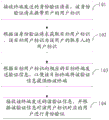
An identity verification method comprising: receiving an authentication request sent by a terminal, wherein the authentication request carries a user identifier of a user, then obtaining a target user identifier according to the authentication request, the target user identifier being a user identifier of a contact of the user, sending authentication information to a corresponding target terminal according to the target user identifier so that the target terminal can provide the authentication information to the terminal, receiving the authentication information sent by the terminal, and authenticating the identity of the user corresponding to the user identifier according to the authentication information.
As shown in fig. 1a, the specific process of the identity authentication method may be as follows:
101. and receiving an authentication request sent by a terminal, wherein the authentication request carries a user identifier of a user.
Specifically, the authentication request sent by the terminal may be received through a wireless network, for example, the authentication request sent by the terminal may be received through wifi.
The user identifier may be a communication account, which may be an instant communication account, or other communication accounts, such as an email account, a social network account, and the like.
102. And acquiring a target user identifier according to the identity authentication request, wherein the target user identifier is the user identifier of the contact of the user.
In this embodiment, the contact of the user may be another user corresponding to another user identifier that establishes a connection with the user identifier of the user, and may be another user corresponding to another communication identifier that establishes a connection with the user identifier of the user in the communication network, for example, another user who has a friend added to the user in the social network and the user, for example, another user who has a friend added to the user in instant messaging, another user who has a friend added to the user in an electronic mailbox, and the like.
The method for acquiring the target user identifier according to the identity authentication request may be various, for example, an identifier set for sending the authentication information may be set, and when the authentication information needs to be sent, a user identifier may be randomly selected from the identifier set to issue the authentication information; that is, the step of "obtaining the target user identifier according to the authentication request" may include:
acquiring a candidate identification group corresponding to the user identification according to the identity authentication request, wherein the candidate identification group comprises at least one contact user identification which is the user identification of the contact of the user;
and randomly selecting the contact user identification from the candidate identification group as the target user identification.
The candidate identifier group may be set by the user or by the system, for example, the candidate identifier group may be set based on a contact group corresponding to the user identifier, that is, the step "obtaining the candidate identifier group corresponding to the user identifier according to the authentication request" may include:
acquiring a contact person group corresponding to the user identification according to the identity authentication request, wherein the contact person group comprises at least one contact person user identification;
and selecting the contact user identification from the contact group to obtain the candidate identification group.
The contact group corresponding to the user identification is an identification group obtained by classifying the contact user identification corresponding to the user identification; the classification of the user identification can be that the user classifies according to own preference or according to a certain classification rule; for example, the contact grouping may be "family," "classmates," "colleagues," and so on.
In this embodiment, the contact user identifier may be selected from the contact group to form a candidate identifier group, and the selection manner may be multiple, and optionally, the contact user identifier whose intimacy with the user identifier reaches a preset threshold may be selected from the contact group to form the candidate identifier group, that is, the step "selecting the contact user identifier from the contact group" may include:
acquiring the intimacy between the contact user identification and the user identification in the contact group;
and selecting the contact user identification with the intimacy degree larger than a preset threshold value from the contact group.
The method for obtaining the intimacy between the two user identifiers may be various, for example, the interaction between the two user identifiers may be counted, and then the intimacy between the user identifiers is obtained based on the statistical result. The interactive situation may include a chat situation, a mutual comment situation, and the like. For another example, the intimacy between the user identifiers can be obtained based on the intimacy between two users, for example, the intimacy between parents and children, between sisters is higher, between classmates is lower, the intimacy between strangers is lowest, and the like.
Optionally, in this embodiment, a contact user identifier corresponding to a preset type may be further selected from the contact group to form a candidate identifier group, for example, a contact user identifier related to a family of the user may be selected, that is, the step "selecting a contact user identifier from the contact group" may include:
acquiring a contact type corresponding to a contact user identifier in the contact group;
and selecting the contact person user identification corresponding to the preset type from the contact person group according to the contact person type corresponding to the contact person user identification.
In the embodiment, the contact type can be set by the user, or a default contact type of the system can be adopted, which can represent the social relationship between the contact and the user; for example, the contact human type may be: family, colleagues, classmates, and the like. Optionally, in this embodiment, the contact type may be obtained according to the contact type of the contact group in which the contact user identifier is located, that is, the step "obtaining the contact type corresponding to the contact user identifier in the contact group" may include:
acquiring a contact type corresponding to the contact group;
and taking the contact type as the contact type corresponding to the contact user identification in the contact group.
Specifically, the obtaining of the identification information corresponding to the contact group to obtain the contact type corresponding to the contact group, that is, the step "obtaining the contact type corresponding to the contact group" may include: acquiring the contact type corresponding to the contact group according to the identification information of the contact group; for example, when the contact group includes "family" or "co-worker", the name "family" of the contact group may be obtained, and then it may be determined that the contact type corresponding to the contact user identifier is a relative or a family based on the name of the group.
The preset type can be set according to actual requirements, for example, the preset type can be a contact type with high affinity with the user; the intimacy degree calculation may refer to the above-described calculation scheme, for example, in this embodiment, the family (parent, child, brother and sister, etc.) of the user may be set, and at this time, the contact user identifier corresponding to the user family may be selected from the contact group.
Specifically, a contact user identifier with a contact type same as a preset type can be selected from the contact group to serve as a candidate identifier group; that is, the step of selecting the contact person user identifier corresponding to the preset type from the contact person group according to the contact person type corresponding to the contact person user identifier specifically includes: and selecting the contact person identification with the same contact person type as the preset type from the contact person group. For example, when the preset contact type is a family, the user identifier of the family may be selected from the contact group.
In practical application, in order to improve the speed of the identity authentication, the contact group with the same contact type as the preset type may be directly selected as the candidate identification group, that is, when the contact type corresponding to the contact user identification is the contact type of the contact group in which the contact user identification is located, the step "selecting the contact identification with the same contact type as the preset type from the contact group" may include: selecting a contact person group with the same contact person type as a preset type from the contact person groups; for example, the preset contact type is a family and the contact group includes a family group, and at this time, all the user identifiers in the family group may be selected to form a candidate identifier group.
In this embodiment, after the candidate identifier group is obtained, a contact user identifier may be randomly selected from the candidate identifier group as a target user identifier, for example, a social relationship between a contact and a user may be obtained, and then, the contact user identifier is randomly selected based on the social relationship between the contact and the user; in practical application, the social relationship between the contact person and the user can be established through the remark information of the contact person and the user; that is, the step of "randomly selecting a contact user identifier from the candidate identifier group as the target user identifier" may include:
acquiring first remark information set by the user on a contact person user identifier in the candidate identifier group and second remark information set by the contact person on the user identifier;
acquiring the social relationship between the user and the contact according to the first remark information and the second remark information;
and randomly selecting a contact user identifier from the candidate identifier group as a target user identifier according to the social relationship.
Optionally, in order to conveniently select the target user identifier, after acquiring the social relationship between the contact and the user, a social relationship map may be established, and then the target user identifier is randomly selected based on the social relationship map; that is, the step of "randomly selecting a contact user identifier from the candidate identifier group as a target user identifier according to the social relationship" may include:
establishing a social relationship map between the users according to the social relationship between the contacts and the users;
randomly selecting a target contact of the user from the social relationship map;
and acquiring a contact person user identification corresponding to the target contact person from the candidate identification group, and taking the acquired contact person user identification as the target user identification.
For example, when the preset contact type is a family, that is, when the candidate identification group includes the user identification of the user family, remark information of the user identification of the user to the family and remark information of the user identification of the family to the user can be obtained, then, based on the remark information of the user and the family, a specific social relationship (parent, child, brother, sister, etc.) between the user and the family can be obtained, and after the social relationship between the user and the family is obtained, a social relationship map can be generated; for example, there is a family group in the contact group of the user a, the family group has three contact user identifiers, which are respectively annotated by the user a as dad (user B), mom (user C), and brother (user D), at this time, the backup of the user a in the contact annotations of the user B, the user C, and the user D can be obtained as follows: son, brother; therefore, the system can obtain the social relationships among the four users, namely the user A, the user B, the user C and the user D, and at the moment, the social relationship maps among the user A, the user B, the user C and the user D can be established based on the social relationships, referring to fig. 1B.
103. And sending verification information to a corresponding target terminal according to the target user identification so that the target terminal provides the verification information to the terminal.
In order to ensure that the verification information can be successfully sent, this embodiment may send the verification information based on the login condition of the target user identifier, that is, the step "sending the verification information to the corresponding target terminal according to the target user identifier" may include:
obtaining login information corresponding to the target user identification;
determining whether the target user identifier is logged in according to the login information;
and if so, sending verification information to a target terminal corresponding to the target user identifier.
For example, when the user identifier is an instant messaging identifier, login information of the instant messaging identifier may be obtained, and then, whether the instant messaging identifier is online (i.e., whether the instant messaging identifier is logged in) is determined, and if so, authentication information is sent to a terminal corresponding to the instant messaging identifier.
Optionally, in order to ensure that the user can receive the verification information, the method of this embodiment further sends the verification information to the terminal corresponding to the communication identifier bound to the target user identifier, when the target user identifier is not logged in; that is, the step of "sending the verification information to the corresponding target terminal according to the target user identifier" may further include:
when the target user identification is determined not to be logged in, acquiring a communication identification bound with the target user identification;
and sending verification information to the target terminal corresponding to the communication identifier.
For example, when the target instant messaging identifier is not logged in, a mobile phone number (such as a secret mobile phone number) bound to the target instant messaging identifier may be acquired, and then, the verification information is sent to a terminal corresponding to the mobile phone number.
In this embodiment, the verification information may be a verification code or other information used for verification, and the target terminal may be a terminal such as a terminal.
The target terminal may provide the verification information to the terminal in various ways, for example, the target terminal may send the verification information to the terminal, for example, the target terminal may further display the verification information so that the user may input the verification information after checking the verification information, and the like, and the specific providing way may be selected according to actual requirements.
104. And receiving the verification information sent by the terminal, and performing identity verification on the user corresponding to the user identifier according to the verification information.
For example, the server receives authentication information sent by the terminal, then compares the authentication information with pre-stored authentication information, if the authentication information is consistent with the pre-stored authentication information, the authentication is determined to be passed, otherwise, the authentication is determined not to be passed.
The identity authentication method in the embodiment can be applied to various scenes, such as sensitive scenes of password modification, large payment and the like.
As can be seen from the above, in the embodiment of the present invention, an authentication request sent by a receiving terminal is used, where the authentication request carries a user identifier of a user, and then, a target user identifier is obtained according to the authentication request, where the target user identifier is a user identifier of a contact of the user, and authentication information is sent to a corresponding target terminal according to the target user identifier, so that the target terminal provides the authentication information to the terminal, receives the authentication information sent by the terminal, and performs authentication on the user corresponding to the user identifier according to the authentication information; the scheme can send the verification information to the terminal of the contact of the user, so that the user can acquire the verification information from the contact of the user to complete identity verification; because the verification information is not sent to the user but to the contact of the user (such as a friend of the user in a social network), even if the secret mobile phone number is leaked, a lawbreaker can hardly know which contact the verification information is sent to, so that the verification information can not be stolen from the contact.
In addition, the scheme can also avoid the problem that the user cannot complete identity authentication because the user cannot receive the authentication certificate due to replacing the secret mobile phone, and can also save the short message cost of the mobile phone.
Example II,
The method described in the first embodiment is further illustrated by way of example.
In this embodiment, the details will be described by taking an example in which the authentication device is integrated in the server, the contact of the user is an instant messaging friend of the user, and the user identifier is an instant messaging identifier.
There are various ways in which the authentication device is integrated in the server, for example, in the form of a client or other software installed in the server.
As shown in fig. 2, the specific flow of the identity authentication method may be as follows:
201. and the terminal sends an authentication request to the server, wherein the authentication request carries the instant communication identifier a of the user A.
For example, the terminal receives an authentication request triggered by a user through an authentication request interface, and sends the authentication request to the server through the network, wherein the authentication request carries an instant messaging identifier of the user.
202. And the server acquires a friend group corresponding to the instant messaging identifier a according to the identity authentication request, wherein the friend group comprises a friend instant messaging identifier which is an instant messaging identifier of a friend of the user A.
For example, the server may check a friend group corresponding to the instant messaging identifier a in the database, such as a family group, a colleague group, a classmate group, and the like; each buddy group includes instant messaging identities of at least one buddy of user a.
In this embodiment, the friend of the user a may be another user whose association between the instant messaging identifier and the instant messaging identifier a is established, for example, a friend or a concerned user is added between the instant messaging identifiers, so that the friend of the user a may be a real friend or a friend in a network.
Specifically, the friend group may be a friend group obtained by classifying the instant messaging identifier of the friend of the user a, and there are various ways of classifying the identifier in this embodiment, for example, classification may be performed based on the preference or setting of the user, or, for example, classification may be performed by using a default classification rule of the system.
203. And the server selects the friend instant messaging identification from the friend group to obtain a candidate identification group.
For example, the server may obtain a friend type corresponding to friend instant messaging in the friend group, then select a friend instant messaging identifier having the same friend type as a preset type from the friend group, and form a candidate identifier group according to the selected friend instant messaging identifier.
The friend type can be set by the user according to the self condition, or can be a default friend type of the system, such as family, colleague, classmates, leadership, and the like.
The preset type may also be set according to actual requirements, for example, the preset type may be family, and the like. In practical application, the friend type corresponding to the friend instant messaging identifier can be the friend type corresponding to the friend group where the friend instant messaging identifier is located, and at the moment, the server can take the friend group with the friend type same as the preset type as a candidate identifier group.
204. And the server randomly selects the friend instant messaging identifier from the candidate identifier group as a target instant messaging identifier.
Specifically, the server randomly selects a friend instant messaging identifier from the candidate identifier group as a target instant messaging identifier.
Optionally, in order to facilitate selection, the embodiment may further obtain a social relationship graph between the friend and the user, and then randomly select the target instant messaging identifier based on the social relationship graph between the friend and the user; for example, the server may obtain first remark information that the user a sets on the friend instant messaging identifier in the candidate identifier group, and second remark information that the friend sets on the instant messaging identifier a, and then establish a social relationship map between the user a and the friend according to the first remark information and the second remark information; at this time, if the target identifier needs to be selected, the target friend of the user can be randomly selected from the social relationship graph, then the friend instant messaging identifier corresponding to the target friend is obtained from the candidate identifier group, and the obtained friend instant messaging identifier is used as the target user identifier.
For example, the target friend selected by the server in the social relationship map of the user a is "mom", and at this time, the server acquires the instant messaging identifier of the mom of the user a from the candidate identifier group.
205. And the server acquires the login information corresponding to the target instant messaging identifier.
206. The server determines whether the target instant messaging identifier is logged in according to the login information, if so, step 207 is executed, and if not, step 208 is executed.
For example, the server may obtain login status information corresponding to the target instant messaging identifier, and then determine whether the target instant messaging identifier is online (i.e., logged in) according to the login status information.
207. The server sends the verification information to the target terminal corresponding to the target instant messaging identifier so that the target terminal provides the verification information to the terminal, go to step 209.
Specifically, the server calls a message push interface to send verification information to a target terminal corresponding to the target instant messaging identifier.
For example, the server may send the verification code to the target terminal corresponding to the instant messaging identifier of user a mom.
208, the server obtains the communication identifier bound with the target instant communication identifier, and sends verification information to the target terminal corresponding to the communication identifier, so that the target terminal provides the verification information to the terminal.
For example, when determining that the target instant messaging identifier is not logged in, the server may acquire a mobile phone number or an email box bound to the target instant messaging identifier, and send the verification information through a target terminal corresponding to a short message mode or an email mode.
The target terminal may provide the authentication information to the terminal in various ways, such as actively sending the authentication information to the terminal, displaying the authentication information to wait for the user a to view the authentication information, and so on.
The terminal acquires 209 the authentication information and sends the authentication information to the server.
For example, the terminal may receive the verification information sent by the target terminal, and then send the verification information to the server; for another example, the terminal may also receive authentication information input by the user, and then send the authentication information to the server; for example, the terminal may receive authentication information input by a user through the information input control, and then transmit the authentication information to the server, and so on.
210. And the server carries out identity authentication on the user A corresponding to the instant communication identifier a according to the authentication information.
Specifically, the server may compare the verification information with previously stored verification information, and if the verification information is consistent, the verification is passed, and if the verification information is inconsistent, the verification is not passed.
The authentication based on the authentication information in this embodiment is not limited to information comparison, and may be performed in other manners.
It should be understood that: although the instant messaging identifier is taken as an example to describe the authentication method of the present invention, the authentication method of the present invention is not limited to be applied to the instant messaging identifier, and can also be applied to other user identifiers.
As can be seen from the above, the embodiment of the present invention employs a terminal to send an authentication request to a server, then the server obtains a friend group corresponding to the instant messaging identifier a according to the authentication request, the server selects a friend instant messaging identifier from the friend group to obtain a candidate identifier group, the server randomly selects a friend instant messaging identifier from the candidate identifier group as a target instant messaging identifier, the server obtains login information corresponding to the target instant messaging identifier, the server determines whether the target instant messaging identifier is logged in according to the login information, if so, the server sends authentication information to a target terminal corresponding to the target instant messaging identifier so that the target terminal provides the authentication information to the terminal, if not, the server obtains a binding communication identifier corresponding to the target instant messaging identifier and sends the authentication information to the target terminal corresponding to the communication identifier, the target terminal provides the verification information for the terminal, the terminal acquires the verification information and sends the verification information to the server, and the server performs identity verification on the user A corresponding to the instant communication identifier a according to the verification information; the scheme can randomly send the verification information to the terminal of the friend of the user so that the user can obtain the verification information from the friend to complete identity verification; since the verification information is not sent to the user but to the friend, even if the secret mobile phone number is leaked, a lawbreaker can hardly know to which friend the verification information is sent, so that the verification information can not be stolen from the friend, and the safety of identity verification can be improved compared with the prior art.
In addition, the scheme can also avoid the problem that the user cannot complete identity authentication because the user cannot receive the authentication certificate due to replacing the secret mobile phone, and can also save the short message cost of the mobile phone.
Example III,
In order to better implement the above method, an embodiment of the present invention further provides an authentication apparatus, as shown in fig. 3, the authentication apparatus may further include a request receiving unit 301, an identifier obtaining unit 302, an information sending unit 303, and an authentication unit 304, as follows:
(1) a request receiving unit 301;
the request receiving unit 301 is configured to receive an authentication request sent by a terminal, where the authentication request carries a user identifier of a user.
For example, the request receiving unit 301 may be specifically configured to receive an authentication request sent by a terminal through a wireless network.
The user identifier may be a communication account, which may be an instant communication account, or other communication accounts, such as an email account, a social network account, and the like.
(2) An identification acquisition unit 302;
an identifier obtaining unit 302, configured to obtain, according to the identity authentication request, a target user identifier, where the target user identifier is a user identifier of a contact of the user.
The contact of the user may be another user corresponding to another user identifier that establishes a contact with the user identifier of the user, such as a user who adds a contact to each other in instant messaging, so that the contact of the user is not limited to a good friend in reality, and may also be a user who is not a contact with the user in reality but is a contact on the network.
In this embodiment, the identifier obtaining unit 302 may specifically include: an identification group acquisition subunit and an identification selection subunit;
the identifier group acquiring subunit is configured to acquire, according to the identity authentication request, a candidate identifier group corresponding to the user identifier, where the candidate identifier group includes at least one contact user identifier, and the contact user identifier is a user identifier of a contact of the user;
the identifier selecting subunit is configured to randomly select a contact user identifier from the candidate identifier group as a target user identifier.
For example, the identifier group acquiring subunit is specifically configured to:
acquiring a contact person group corresponding to the user identification according to the identity authentication request, wherein the contact person group comprises at least one contact person user identification;
and selecting the contact user identification from the contact group to obtain the candidate identification group.
For another example, the identifier group acquiring subunit is specifically configured to:
acquiring a contact person group corresponding to the user identification according to the identity authentication request, wherein the contact person group comprises at least one contact person user identification;
acquiring a contact type corresponding to a contact user identifier in the contact group;
and selecting the contact person user identification corresponding to a preset type from the contact person group according to the contact person type corresponding to the contact person user identification to obtain the candidate identification group.
The contact person group corresponding to the user identification is an identification group obtained by classifying the contact person user identification corresponding to the user identification; the classification of the user identification can be that the user classifies according to own preference or according to a certain classification rule; for example, the contact grouping may be "family," "classmates," "colleagues," and so on. Optionally, in this embodiment, the identifier selecting subunit may specifically be configured to:
acquiring first remark information set by the user on a contact person user identifier in the candidate identifier group and second remark information set by the contact person on the user identifier;
acquiring the social relationship between the user and the contact according to the first remark information and the second remark information;
and randomly selecting a contact user identifier from the candidate identifier group as a target user identifier according to the social relationship.
For example, the identifier selecting subunit is specifically configured to:
establishing a social relationship map between the user and the contact person according to the social relationship between the contact person and the user;
randomly selecting a target contact of the user from the social relationship map;
and acquiring a contact person user identification corresponding to the target contact person from the candidate identification group, and taking the acquired contact person user identification as the target user identification.
(3) An information transmitting unit 303;
an information sending unit 303, configured to send authentication information to a corresponding target terminal according to the target user identifier, so that the target terminal provides the authentication information to the terminal.
For example, the information sending unit 303 may specifically be configured to:
obtaining login information corresponding to the target user identification;
determining whether the target user identifier is logged in according to the login information;
and if so, sending verification information to a target terminal corresponding to the target user identifier.
For another example, the information sending unit 303 may be further configured to:
when the target user identification is determined not to be logged in, acquiring a communication identification bound with the target user identification;
and sending verification information to the target terminal corresponding to the communication identifier.
(4) A verification unit 304;
the verification unit 304 is configured to receive the verification information sent by the terminal, and perform identity verification on the user corresponding to the user identifier according to the verification information.
For example, the verification unit 304 may be specifically configured to:
and receiving the verification information sent by the terminal, then comparing the verification information with the pre-stored verification information, if the verification information is consistent with the pre-stored verification information, determining that the identity verification passes, and otherwise, determining that the identity verification fails. In a specific implementation, the above units may be implemented as independent entities, or may be combined arbitrarily to be implemented as the same or several entities, and the specific implementation of the above units may refer to the foregoing method embodiments, which are not described herein again.
The authentication device may be integrated into a server or the like, for example, installed in a client or other software form in the server.
As can be seen from the above, in the embodiment of the present invention, the request receiving unit 301 is adopted to receive an authentication request sent by a terminal, where the authentication request carries a user identifier of a user, then, the identifier obtaining unit 302 obtains a target user identifier according to the authentication request, where the target user identifier is a user identifier of a contact of the user, the information sending unit 303 sends authentication information to a corresponding target terminal according to the target user identifier, so that the target terminal provides the authentication information to the terminal, and the authentication unit 304 receives the authentication information sent by the terminal and performs authentication on the user corresponding to the user identifier according to the authentication information; the scheme can randomly send the verification information to the terminal of the contact of the user so that the user can acquire the verification information from the contact to complete the identity verification; because the verification information is not sent to the user but to the contact person, even under the condition that the secret mobile phone number is leaked, lawless persons can hardly know which contact person the verification information is sent to, so that the verification information can not be stolen from the contact person, and compared with the prior art, the safety of identity verification can be improved.
In addition, the scheme can also avoid the problem that the user cannot complete identity authentication because the user cannot receive the authentication certificate due to replacing the secret mobile phone, and can also save the short message cost of the mobile phone.
Those skilled in the art will appreciate that all or part of the steps in the methods of the above embodiments may be implemented by associated hardware instructed by a program, which may be stored in a computer-readable storage medium, and the storage medium may include: read Only Memory (ROM), Random Access Memory (RAM), magnetic or optical disks, and the like.
The method and the device for identity authentication provided by the embodiment of the present invention are described in detail above, and the principle and the implementation manner of the present invention are explained in the present document by applying a specific example, and the description of the above embodiment is only used to help understanding the method and the core idea of the present invention; meanwhile, for those skilled in the art, according to the idea of the present invention, there may be variations in the specific embodiments and the application scope, and in summary, the content of the present specification should not be construed as a limitation to the present invention.