Priority of U.S. provisional patent application serial No. 62/110,185 entitled "UPLINK SCHEDULING AND HARQ FOR discovery-ASSISTED ACCESSING USING LTE" ("UPLINK SCHEDULING AND HARQ FOR grant-assisted access USING LTE") filed on 30/1/2015, the entire contents of which are incorporated herein by reference.
Detailed Description
Embodiments relate to systems, devices, apparatuses, means, methods, and computer readable media for enhancing wireless communication, and in particular to communication systems operating carrier aggregation and license-assisted access. The following description and the annexed drawings set forth in detail certain illustrative embodiments that enable those skilled in the art to practice them. Other embodiments can incorporate structural, logical, electrical, process, and other changes. Portions and features of some embodiments can be included in or substituted for those of others and are intended to cover all available equivalents of the described elements.
Fig. 1 illustrates a wireless network 100 in accordance with some embodiments. The wireless network 100 includes a UE101 and an eNB 150 connected via an air interface 190. The UE101 and eNB 150 communicate using a system that supports carrier aggregation such that the air interface 190 supports multiple frequency carriers, shown as component carrier 180 and component carrier 185. Although two component carriers are illustrated, various embodiments may include any number of two or more component carriers.
Additionally, in various embodiments described herein, at least one of the carriers of air interface 190 comprises a carrier operating in an unlicensed frequency, referred to herein as an unlicensed carrier. An unlicensed carrier or unlicensed frequency refers to system operation in a range of radio frequencies not specifically set aside for system use. For example, certain frequency ranges may be used by communication systems operating under different communication standards, such as frequency bands used by both the Institute of Electrical and Electronics Engineers (IEEE)802.11 standard (e.g., "WiFi") and the third generation partnership project (3GPP) standard. In contrast, licensed channels or licensed spectrum operate under a particular system, there is limited concern that other undesired signals operating on different standard configurations will occur.
As discussed below, the rules and operations for verifying availability of unlicensed channels provide additional overhead and system operating elements that are not present in licensed channels when the system is operating in the unlicensed spectrum. Channel sharing may be referred to as fair coexistence, where different systems operate to use unlicensed or shared channels while limiting interference and direct interaction with other systems operating on different standards.
For example, Long Term Evolution (LTE) cellular communications have historically operated using a central management system designed to operate in licensed spectrum, thereby achieving efficient resource usage. Operating with such centrally managed usage in unlicensed channels (non-centrally controlled systems using a different channel access mechanism than conventional LTE) may present or carry a significant risk of direct interference. The coexistence mechanism described herein enables LTE, LTE-advanced, and communication systems built on or similar to LTE systems to coexist with other technologies such as WiFi in a shared unlicensed frequency band (e.g., unlicensed channel).
The embodiments described herein for coexistence may operate within wireless network 100. In the wireless network 100, the UE101 and any other UE in the system may be, for example, a laptop, a smartphone, a tablet, a printer, a machine type device such as a smart meter or a specialized device for health monitoring, remote security monitoring, smart transmission systems, and any other wireless device with or without a user interface. The eNB 150 provides the UE101 with network connectivity to a wider network (not shown). UE101 connectivity is provided via an air interface 190 in the eNB service domain provided by eNB 150. In some embodiments, such a broader network may be a wide area network provided by a cellular network operator, or may be the internet. Each eNB service domain associated with eNB 150 is supported by an antenna integrated with eNB 150. The service domain is divided into a plurality of sectors associated with particular antennas. Such sectors may be physical areas that are physically associated with fixed antennas or assigned to adjustable antennas or antenna settings during beamforming for directing signals to particular sectors. For example, one embodiment of the eNB 150 includes three sectors, each sector covering a 120 degree area, with an antenna array directed to each sector to provide 360 degrees of coverage around the eNB 150.
The UE101 includes control circuitry 105 coupled with transmit circuitry 110 and receive circuitry 115. Both transmit circuitry 110 and receive circuitry 115 may be coupled with one or more antennas. The control circuitry 115 may be adapted to perform operations associated with wireless communications using carrier aggregation. The transmit circuitry 110 and receive circuitry 115 may be adapted to transmit and receive data, respectively. The control circuitry 105 may be adapted or configured to perform various operations, such as those described elsewhere in this disclosure in relation to the UE. Transmit circuitry 110 may transmit multiple multiplexed uplink physical channels. The plurality of uplink physical channels may be multiplexed according to Time Division Multiplexing (TDM) or Frequency Division Multiplexing (FDM) and carrier aggregation. The transmit circuitry 110 may be configured to receive the block data from the control circuitry 105 for transmission over the air interface 190. Similarly, the receive circuitry 115 may receive a plurality of multiplexed downlink physical channels from the air interface 190 and relay the physical channels to the control circuitry 105. The uplink and downlink physical channels may be multiplexed according to FDM. Transmit circuitry 110 and receive circuitry 115 may transmit and receive control data and content data (e.g., messages, images, video, etc.) structured within data blocks carried by the physical channels.
Fig. 1 also illustrates an eNB 150 in accordance with various embodiments. The eNB 150 circuitry may include control circuitry 155 coupled with transmit circuitry 160 and receive circuitry 165. Both the transmit circuitry 160 and the receive circuitry 165 may be coupled with one or more antennas, which may be used to enable communication via the air interface 190.
The control circuitry 155 may be adapted to perform operations for managing channels and component carriers for use with various UEs. The transmit circuitry 160 and receive circuitry 165 may be adapted to transmit data to and receive data from, respectively, any UE connected to the eNB 150. The transmitting circuit 160 may transmit a downlink physical channel including a plurality of downlink subframes. The receive circuitry 165 may receive multiple uplink physical channels from various UEs, including the UE 101. In addition to using carrier aggregation, the multiple uplink physical channels may be multiplexed according to FDM.
As mentioned above, communications over the air interface 190 may use carrier aggregation, where multiple different component carriers 180, 185 can be aggregated to carry information between the UE101 and the eNB 150. Such component carriers 180, 185 may have different bandwidths and may be used for uplink communications from the UE101 to the eNB 150, downlink communications from the eNB 150 to the UE101, or both. Such component carriers 180, 185 may cover similar areas, or may cover different but overlapping areas. A Radio Resource Control (RRC) connection is handled by only one of the component carrier cells, which may be referred to as a primary component carrier, while the other component carriers are referred to as secondary component carriers. In some embodiments, the primary component carrier may operate in a licensed frequency band to provide efficient and collision-free communication. This primary channel may be used to schedule other channels including unlicensed channels, as described below.
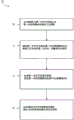
Fig. 2 next depicts one potential method of an eNB managing a UE to utilize an unlicensed channel for uplink data communication on the unlicensed channel. Followed by additional details, examples, and alternatives. For simplicity and convenience, the method 200 is described with respect to the wireless network 100 of fig. 1. In various embodiments, different networks with different structures or additional devices may be used. In method 200, operation 205 comprises the eNB 150 using the component carrier 180 for the first unlicensed channel. As part of operation 205, eNB 150 determines that a first channel (e.g., component carrier 180) is idle based on sensing the first channel for a first time period. Although air interface 190 is shown as including two component carriers 180 and 185, in other embodiments any number of component carriers are possible within the available bandwidth limits. Thus, in some embodiments, multiple licensed channels and multiple unlicensed channels may occur simultaneously, and the operations of the eNB to schedule uplink communications on different unlicensed channels may occur simultaneously. Fig. 3, which is detailed below, includes an example of a sensing process that may be used in operation 205. In other embodiments, other sensing operations may be used.
In operation 210, the control circuitry 155 of the eNB 150 initiates transmission of the reservation signal by the transmit circuitry 160 based on determining from operation 205 that the first channel is idle. The transmission of the reservation signal on the first channel occurs during a second time period after the first time period. In other words, initial sensing of the unlicensed channel occurs in operation 205, where there are no transmissions by the eNB 150 on the unlicensed channel. After sufficient time has elapsed to allow the determination that the unlicensed channel is free, the eNB 150 begins using the channel by transmitting a reservation signal. In various embodiments, the reservation signal can be a noise signal, can include control or identification information, can be a data signal, or can be any other such signal detectable by other devices that can sense the unlicensed channel to determine whether it is in use. In some embodiments, the reservation signal is a short transmission or series of short transmissions transmitted using sufficient frequency during the reserved time period to provide notification to other devices that the unlicensed channel is in use.
In operation 215, the control circuitry 155 of the eNB 150 initiates the transmit circuitry 160 to transmit an uplink grant to the UE 101. The uplink grant may be communicated on an unlicensed channel, on a licensed primary channel, or on any other such channel. In some embodiments, the uplink grant may be constructed as part of a Physical Downlink Control Channel (PDCCH). In some embodiments, the upstream grant may be part of a reservation signal. The uplink grant is associated with a third time period when the UE101 has an opportunity to upload data to the eNB 150 on the unlicensed channel. In embodiments using standard LTE synchronization timing, after the uplink grant is transmitted, uplink transmission (PUSCH) is scheduled for a time that is a fixed number of subframes. In embodiments that operate using asynchronous timing, the upstream grant may simply include details associated with the time period of the upstream grant in the upstream grant communication.
After the eNB 150 transmits the uplink grant, the UE101 receives and processes the uplink grant and attempts to transmit an uplink communication during the uplink grant time. In some operations, the UE101 may successfully send information on the unlicensed channel. In other embodiments, UE101 uplink communications may not be sent due to interference on the unlicensed channel. In still further embodiments, the UE101 may transmit an uplink signal associated with the uplink grant, but the transmitted signal may not be received at the eNB 150 due to error or interference. In accordance with LTE and LTE-advanced architectures, uplink transmissions generated and attempted to be transmitted by the UE101 are constructed for communication as part of the Physical Uplink Shared Channel (PUSCH).
In operation 220, the eNB 150 senses the first channel using the receive circuitry 165 during a third time period associated with the uplink grant. As mentioned above, the eNB 150 may or may not be able to successfully receive PUSCH signals from the UE 101.
Fig. 3 depicts a method that may be used as part of accessing an unlicensed channel in accordance with some embodiments described herein. In some embodiments, fig. 3 is considered an example of a "listen before talk" operation for determining whether a device is allowed to transmit on a shared channel. The method of fig. 3 may be part of operation 205 described above. In operation 302, an eNB, such as eNB 150, initiates access to an unlicensed channel. This may be part of the constructed system operation, the use of additional channel resources based on load, the use of additional channel resources based on time, or any other such trigger for using the unlicensed channel. In certain embodiments, for example, the eNB may detect that a particular UE is in a location and/or desires to upload data in a manner that the UE will be able to effectively use the unlicensed channel for uplink transmissions.
Once the eNB initiates the procedure to use the unlicensed channel, a counter associated with the channel is set to zero in operation 304 and the eNB begins sensing transmissions on the channel in operation 306. In operation 308, the control circuitry of the eNB processes information from the receive circuitry collected while sensing the channel to determine whether the channel is idle. The determination may be made based on an energy level, an energy pattern, or both detected when the receiving circuitry senses the channel. For example, in some embodiments, the control circuitry determines that the channel is not idle if the energy detected while sensing the channel is above a threshold level. If the control circuitry of the eNB determines that the channel is not idle, the value of the counter set to zero in operation 304 is set to a random value in operation 310. This essentially sets a random backoff value for counting down once the channel is identified as idle. When the channel is not idle, a loop occurs in which the receiving circuit senses the channel, the control circuit determines that the channel is in use, and selects a new counter value. In some embodiments, the counter value may be set only once before the control circuit determines that the channel is idle.
Once a determination is made in an iteration of operation 308 that the channel is idle, the control circuitry checks to see if the counter is zero in operation 312. If the counter is not zero, the control circuitry decrements the counter by 1 in operation 314 and then continues to sense the channel in operation 306. Thus creating a new loop that counts down when the channel is idle. If the count down is interrupted by determining in an iteration of operation 308 that the channel is no longer idle, a new random counter value is set in operation 310. If the down count is not interrupted, the eNB transmits on the channel in operation 316 when the control circuitry determines that the counter is zero in an iteration of operation 312. This process may be performed by any eNB or UE that senses the unlicensed channel to determine whether the unlicensed channel is usable.
In various embodiments, the random counter value of operation 310 may be selected in different ways. For example, the counter may be selected to be the next value in the pseudo random number list, or may be determined by a random number circuit or device. In some embodiments, the random counter value has a minimum and a maximum value. The value may be associated with a time to perform a processing cycle or may be associated with a set of system subframes. For example, in one embodiment, the random counter value may be between 1 and 10, with a delay of 1 millisecond between each sensing operation 306 and the associated decrement operation 314 or selection of the associated new value. In other embodiments, a random counter may be selected to be a value between 4 and 50, with a delay of 500 microseconds. In other embodiments, other such values may be used. Similarly, in other embodiments, rather than using a simple counter value, a clock or timing value, or any other such random delay operation associated with idle logic, may be used. In certain embodiments where the eNB and UE are communicating with each other using listen-before-talk operation, both the eNB and UE may use the same method, such as the method of fig. 3 discussed above, or the devices may use different methods. In embodiments where multiple UEs attempt to use the unlicensed channel, all UEs may be set up using the same listen-before-talk operation to reduce the likelihood of interference between UEs.
Fig. 4 next illustrates various aspects of uplink scheduling for grant-assisted access, in accordance with certain embodiments. Fig. 4 includes an illustration of channel usage 400 of an unlicensed channel 485 during one period from when an eNB initiates use of the channel to when the UE ends transmitting data on the channel in response to a grant from the eNB.
As mentioned above, an unlicensed channel as described herein refers to a channel that is not reserved exclusively for a centrally controlled system of which the eNB is a part. This may mean that the channel is reserved for multiple systems using different communication standards, or that the channel is open for any communication use. The channel usage 400 begins with the eNB sensing period 402 described above with respect to fig. 4. Although such a sensing period 402 may include periods in which the channel 485 is not idle (as described in fig. 3), during the sensing period 402, use of the channel 485 does not occur, and after the sensing period 402, the eNB transmits the eNB reservation signal 406. The signal may include random transmissions, data identifying the system reserving the channel, downlink data for one or more UEs, or any other such data. As illustrated, the eNB reservation signal 406 includes an eNB uplink grant 404 for communicating grant information to the UE. In other embodiments, the uplink grant from the eNB to the UE may be transmitted on a different channel. In the embodiment of fig. 4, the eNB uplink grant 404 is associated with an uplink time period by a fixed number of transmission periods, such that the UE is set to attempt to use the channel 485 at a fixed time period after receiving the eNB uplink grant 404 as part of the timing association 420. Thus, because the UE can assume a time period under synchronous operation, the eNB uplink grant 404 may simply indicate that the UE is granted a grant without providing data specifically indicating the time period for UE PUSCH 408 transmissions.
Further, in the embodiment of fig. 4, the eNB reservation signal 406 extends through a time period between the eNB uplink grant 404 and the UE beginning to transmit the UE PUSCH 408, wherein no idle period is provided to the UE to perform listen before talk operations. In such embodiments, the eNB may communicate to the UE that the eNB has reserved a channel 485 for the UE, or the system may operate on behalf of the UE, and implicitly assume that centralized eNB operation is performing channel collision operations (e.g., listen before talk).
Fig. 5 next illustrates various aspects of uplink scheduling for grant-assisted access, in accordance with certain embodiments. Whereas the channel usage 400 of fig. 4 is included in the eNB uplink grant 404 within the eNB reservation signal 406, in the channel usage 500 of fig. 5 the eNB uplink grant 504 is transmitted on a different grant channel 580. Additionally, the eNB reservation signal 506 ends after giving the UE sufficient time to perform listen before talk operations during the UE sensing period 5022.
Next, in the embodiment associated with fig. 5, the eNB next determines to use the unlicensed channel 585, where the sensing operation during the eNB sensing period 5021 is similar to the operation described in fig. 3. Once the use collision operation is completed, the eNB transmits an eNB reservation signal 506 on the second unlicensed channel 585 and an eNB uplink grant to the UE on the first licensed channel 580. The eNB uplink grant 504 may be transmitted at any time. In some embodiments, the eNB uplink grant is not generated until after the eNB has controlled the unlicensed channel 585, and thus, the eNB uplink grant will be sent after the initial transmission associated with the eNB reservation signal 506. As with fig. 4, the channel usage 500 of fig. 5 includes a synchronization timing association 520 between the eNB uplink grant 504 and the UE uplink transmission of the UE PUSCH 508. Some systems may not authorize the UE to use the channel reservation operations performed by the eNB, e.g., to prevent a centrally managed eNB from always reserving channels and devices on other systems from having an opportunity to use the system. The UE sensing period 5022 allows the UE to perform a channel usage collision operation similar to that described in fig. 3, while also providing other devices with an opportunity to use the unlicensed channel 585. If another device begins using channel 585 during a UE sensing period 5022, transmission of the UE PUSCH 508 will simply not occur, and the eNB will not receive any data from the UE when the eNB senses the channel 585 during the time period associated with the eNB uplink grant 504 based on the synchronization timing association 520. If there is no other device control channel 585 during the UE sensing period, the UE transmits uplink data as part of the UE PUSCH 508 in the next time period set by the synchronization timing association 520.
Fig. 6 illustrates aspects of yet another embodiment including uplink scheduling for grant-assisted access, in accordance with certain embodiments. In the embodiment of fig. 6, the eNB essentially provides a blind grant without knowledge of whether the unlicensed channel 685 is in use. The eNB does not sense the unlicensed channel 685 and does not transmit on the unlicensed channel 685 at all. Alternatively, the eNB simply provides an uplink grant using the eNB uplink grant 604 on the first grant channel 680 and senses at a time period set by the synchronization timing association 620 to determine whether the UE can successfully use the channel 685. Next, the UE performs listen-before-talk operation during the UE sensing period 602 and if the second unlicensed channel 685 is available, the UE transmits uplink data during the available time period as the UE PUSCH 608.
While the channel usage 600 depicted in fig. 6 includes a higher likelihood that the UE will not be able to use the channel for the time period set by the synchronization timing association 620, this channel operation makes the channel 685 available for use by other devices and provides more efficient resource usage. In further operation, the UE sensing period 602 may occur at any earlier time after receiving the eNB uplink grant 604 at the UE. The UE may then transmit a reservation signal from the end of the UE sensing period 602 until the start of an uplink grant time for the UE to transmit data using the UE PUSCH 608.
Fig. 7 depicts a method 700 for uplink scheduling for grant-assisted access in accordance with certain embodiments. The method 700 is an operation performed for a UE in communication with an eNB, such as the UE101 in communication with the eNB 150. For purposes of illustration, method 700 is described in the context of channel usage 600 of fig. 6. In various embodiments, other combinations of systems and channels may be used with method 700. The illustrated method 700 begins at operation 705, where the UE receives an uplink grant 604 from the eNB associated with a first unlicensed channel 685 and a first time period (e.g., a time period covered by the UE PUSCH 608). In response to receiving the uplink grant 604, the UE determines whether a first unlicensed channel 685 is available for UE PUSCH608 transmissions during a first time period as part of operation 710. In operation 715, if the first unlicensed channel 685 is not available for UE PUSCH608 transmissions, the UE sends the UE PUSCH transmission 608 to the eNB during the scheduled time period. Next, in operation 720, the UE receives a hybrid automatic repeat request (HARQ) acknowledgement or negative acknowledgement associated with the UE PUSCH608 transmission. If the UE cannot send UE PUSCH608 due to interference during UE sensing 602, the HARQ communication will be a negative acknowledgement indicating that the eNB did not receive the communication associated with eNB uplink grant 604. If the UE PUSCH608 is successfully transmitted and received, the HARQ communication will be an acknowledgement, indicating that the data was successfully decoded at the eNB.
Fig. 8 illustrates aspects of a hybrid automatic repeat request (HARQ) operation, according to some example embodiments. Fig. 8 specifically describes operation when a UE PUSCH transmission associated with an uplink grant is not transmitted due to an unlicensed channel not being available. Fig. 8 depicts communications between an eNB 850 and a UE 801, which may be similar to the eNB 150 and the UE101, respectively, or any similar device described herein.
The operations of fig. 8 begin at operation 852 — physical downlink control channel communication from the eNB 850 to the UE 801. PDCCH communications include an uplink grant to the UE 801 to use an unlicensed channel. In operation 854, the UE senses the unlicensed channel (e.g., performs a listen-before-talk operation, which may be similar to the operation of fig. 3). In operation 856, the UE reaches a point of time when it attempts to access the unlicensed channel, in which a transmission window during an uplink grant period has been closed. In other words, there are collisions such that the unlicensed channel is not available to the UE 801 at the beginning or during the entire time period specified by the uplink grant and there are no transmissions transmitted from the UE 801 to the eNB 850 on the unlicensed channel. In operation 858, the eNB 850 senses the uplink transmission from the UE, but will instead sense transmissions from other devices that use the channel and prevent the UE 801 from uplink transmissions, and thus, no signal associated with the uplink grant is received at the eNB. In response to not receiving the signal, the eNB 850 generates a HARQ-Negative Acknowledgement (NACK) indicating that no data was received at operation 860. The HARQ-NACK communication 862 may include additional uplink grants and HARQ-NACKs. The uplink grant from HARQ-NACK communication 862 may be an additional grant on an unlicensed channel or may be a grant on a different channel, either licensed or unlicensed. In the retransmission of operation 864, the UE 801 then retransmits the data initially scheduled using the uplink grant of operation 852.
Fig. 9 is a block diagram of a system including an eNB and a plurality of UEs that may be used with certain embodiments described herein. Fig. 9 depicts an eNB 950 coupled to UEs 902, 904, and 906 via an air interface 990. The eNB 950 provides the UE with access to a network 960, which network 960 may be a wide area network or the internet. Any of these elements may be similar to the corresponding elements described above. In certain embodiments, the eNB 950 transmits an uplink grant for a specific subframe on the unlicensed channel to a group of UEs that have requested scheduling. Each UE performs listen before talk operations. A UE that completes listen-before-talk operation can first reserve an unlicensed channel until the scheduled uplink subframe begins, and this successful UE can then transmit data on the PUSCH.
Fig. 10 illustrates one embodiment of such contention-based scheduling. For purposes of illustration, the contention-based scheduling described in fig. 10 is discussed in the context of the system 900 of fig. 9. In fig. 10, the eNB 950 initiates a procedure to provide uplink grants using contention-based scheduling on an unlicensed channel. In operation 1060, the eNB 950 may optionally sense an unlicensed channel associated with an uplink grant and may use a reservation signal if the channel is idle. Alternatively, the eNB 950 may simply communicate with a single UE an uplink grant as detailed in the above embodiments. Regardless of whether the eNB uses the unlicensed channel, in operation 1062, the eNB 950 generates a grant for the group of UEs, and in operation 1064, the eNB 950 transmits an uplink grant to the UEs 902, 904, and 906 in the group. In other embodiments, any number of UEs may be in a group. Each of the UEs 902, 904, and 906 receives the PDCCH with the uplink grant from the eNB 950 and performs sensing 1065 on the unlicensed channel separately to determine whether the channel is available. Which UE completes sensing first sends a reservation signal. In the embodiment of fig. 10, the UE 902 completes sensing 1065A before the UE 904 completes sensing 1065B and the UE 906 completes sensing 1065C. The UE 902 then transmits a reservation signal in operation 1066. This reservation signal is detected by UE 904 in sensing operation 1065B and by UE 906 in sensing operation 1065C. In operations 1068 and 1069, the UEs 904 and 906 then determine that the unlicensed channel is not idle and relinquish UE authorization to the UE 902. The UE 902 then transmits a reservation signal until a time period for an uplink grant is reached, and then the UE 902 transmits data in the PUSCH 1070.
Fig. 11 depicts a method 1100 for uplink scheduling for grant-assisted access, in accordance with certain embodiments. In operation 1105, the eNB receives a plurality of scheduling requests from a plurality of UEs, including a scheduling request from a first UE. In operation 1110, the eNB then assigns a first grant-assisted access radio network temporary identifier to the group of UEs (e.g., each UE is associated with a new RNTI). This new RNTI is the same for each UE of the plurality of UEs but is different from the C-RNTI for each UE, which is a different value for each UE.
Next, in operation 1115, the eNB initiates transmission of an uplink grant for the unlicensed channel to the plurality of UEs. As mentioned above, this may be done on the unlicensed channel using a listen-before-talk operation, or may be done on other licensed or unlicensed channels. In some embodiments, the primary grant channel is used for all scheduling in a carrier aggregation system that uses multiple grant channels and multiple non-grant channels simultaneously. In operation 1120, the eNB then senses the unlicensed channel during the uplink grant time period. This sensing is done to detect PUSCH transmissions from one UE that "wins" contention and first reserves the unlicensed channel.
Thus, instead of scheduling a single UE for a set of resources (e.g., one subframe), the eNB may transmit an uplink grant for a specific subframe to the set of UEs requesting scheduling. In some embodiments, a new Radio Network Temporary Identifier (RNTI) can be defined for this and a group of UEs will share the same value of this new RNTI. When attaching a Cyclic Redundancy Check (CRC) to the Downlink Control Information (DCI) message payload, the eNB can use this RNTI in place of the standard cell RNTI so that the group of UEs can receive the PDCCH. After receiving such an uplink grant from the eNB, the group of UEs will enter contention (e.g., perform listen-before-talk) to transmit uplink data. A first UE with successful carrier sensing can reserve the channel using a reservation signal until the scheduled subframe begins and then transmit data on the PUSCH. The reservation signal can include the C-RNTI of the UE, a Modulation and Coding Scheme (MCS), or any other such information that may be used by the eNB or other system elements.
Examples of the invention
In various embodiments, methods, apparatuses, non-transitory media, computer program products, or other implementations may be presented in terms of the example embodiments described above. Particular embodiments may include a UE, such as a phone, tablet, mobile computer, or other such device. Some embodiments may be integrated circuit components of such devices, such as circuitry implementing MAC and/or L1 processing on an integrated circuit. In some embodiments, the functions may be on a single chip or multiple chips in the apparatus. Some such embodiments may further include transmit and receive circuitry on integrated or distributed circuitry, with the antenna being of a similarly integrated or distributed structure of the device. Any such components or circuit elements may be similarly applied to the evolved node B embodiments described herein.
Example 1 is a non-transitory computer-readable medium comprising instructions that, when executed by one or more processors, configure an evolved node b (eNB) for license-assisted access communication, the instructions to configure the eNB to: determining, by the eNB, that the first channel is idle based on sensing the first channel for a first time period; initiating a reservation signal on the first channel for a second time period after the first time period based on determining that the first channel is idle; initiating transmission of an uplink grant to a first User Equipment (UE), the uplink grant associated with the first channel and a third time period after the second time period; and sensing, by the eNB, the first channel during a third time period to detect a Physical Uplink Shared Channel (PUSCH) transmission associated with the uplink grant.
In example 2, the subject matter of example 1 optionally comprising: wherein the second time period is separated from the third time period by a UE sensing period such that the first UE senses the first channel during a sensing period after transmission of the reservation signal to determine that the first channel is idle during the UE sensing period.
In example 3, the subject matter of any one or more of examples 1-2 optionally includes: wherein the third time period immediately follows the second time period; and wherein the UE is configured to communicate the PUSCH transmission on the first channel during the third time period without performing a Listen Before Talk (LBT) operation.
In example 4, the subject matter of any one or more of examples 1-3 optionally includes: wherein the uplink grant is communicated from the eNB to the first UE on a second channel different from the first channel as part of the PDCCH transmission.
In example 5, the subject matter of any one or more of examples 1-4 optionally includes: wherein the reservation signal includes one or more of a Physical Downlink Control Channel (PDCCH), a Physical Downlink Shared Channel (PDSCH), and a Demodulation Reference Signal (DRS).
In example 6, the subject matter of any one or more of examples 1-5 optionally includes: wherein the reservation signals include a Primary Synchronization Signal (PSS) and a Secondary Synchronization Signal (SSS).
In example 7, the subject matter of any one or more of examples 1-6 optionally includes: the instructions further configure the eNB to receive a plurality of scheduling requests from a plurality of UEs, including the first UE, wherein initiating transmission of the uplink grant to the first UE includes initiating transmission of the uplink grant to each UE of the plurality of UEs.
In example 8, the subject matter of example 7, optionally comprising: wherein the instructions further configure the eNB to assign a first license-assisted access radio network temporary identifier to each UE of the plurality of UEs, wherein the license-assisted access radio network temporary identifier is separate from a cell radio network temporary identifier (C-RNTI) for each UE of the plurality of UEs; wherein the transmission of the uplink grant is communicated to each of the plurality of UEs using a first grant-assisted radio access network temporary identifier such that the first plurality of UEs receive the downlink grant using the same identifier.
In example 9, the subject matter of examples 1-8 above, including an embodiment, wherein each UE of the plurality of UEs performs a Listen Before Talk (LBT) operation after receiving the uplink grant; wherein the first UE completes a successful carrier sensing operation and reserves the first channel using a second reservation signal before each other UE of the plurality of UEs. Such an embodiment is operable wherein the second reservation signal comprises the first C-RNTI for the first UE.
In example 10, the subject matter of any one or more of examples 1-9 optionally includes: wherein the instructions further configure the eNB to: successfully decoding a PUSCH transmission associated with an uplink grant; and transmitting a synchronous hybrid automatic repeat request associated with the PUSCH transmission to the first UE.
In example 11, the subject matter of any one or more of examples 1-10 optionally includes: wherein the instructions further configure the eNB to: determining that the eNB has failed to identify a PUSCH transmission on the first channel during a third time period; and transmitting an asynchronous hybrid automatic repeat request from the eNB to the first UE in response to failing to identify the PUSCH transmission.
In example 12, the subject matter of example 11, optionally comprising: the uplink grant includes a transmission grant associated with a third time period and a retransmission grant associated with a fourth time period after the second time period.
In example 13, the subject matter of example 12, optionally comprising: wherein the plurality of physical resource blocks for the uplink grant are dynamically adjusted by the eNB between the third time period and the fourth time period.
In example 14, the subject matter of any one or more of examples 12-13, optionally comprising: wherein a modulation and coding scheme associated with the uplink grant is dynamically set by the eNB based on sensing the first channel for a first time period and failing to identify the PUSCH transmission.
Example 15 is an evolved node b (enb) apparatus, comprising: a control circuit configured to: determining that the channel is idle based on sensing the first channel for a first time period; initiating a reservation signal on the first channel for a second time period after the first time period based on determining that the first channel is idle; initiating transmission of an uplink grant to a first User Equipment (UE), the uplink grant associated with the first channel and a third time period after the second time period; and initiate sensing the first channel during a third time period to detect a Physical Uplink Shared Channel (PUSCH) transmission associated with the uplink grant; and generating a hybrid automatic repeat request for transmission to the first UE in response to sensing the first channel.
In example 16, the subject matter of example 15 optionally includes further comprising: receive circuitry coupled to the control circuitry and configured to sense the first channel during a first time period and a second time period and configured to receive a PUSCH transmission; and transmit circuitry coupled to the control circuitry and configured to transmit a reservation signal to the first UE on the first channel.
In example 17, the subject matter of any one or more of examples 15-16, optionally comprising: wherein the receive circuitry and the transmit circuitry are coupled to a first antenna; wherein the first antenna is configured for communication on a first channel comprising an unlicensed channel, and wherein the first antenna is further configured for communication on a second channel comprising a licensed channel.
Example 18 is a non-transitory computer-readable medium comprising instructions that, when executed by one or more processors, configure a User Equipment (UE) for grant-assisted access communication with an evolved node b (enb), the instructions to configure the UE to: receiving, from an eNB, an uplink grant associated with a first unlicensed channel and a first time period; determining that a first unlicensed channel is available for Physical Uplink Shared Channel (PUSCH) transmission during a first time period; transmitting a PUSCH transmission to an eNB during a first time period; and receiving a hybrid automatic repeat request associated with the PUSCH transmission from the eNB.
In example 19, the subject matter of example 18, optionally comprising: wherein the UE determines that the first unlicensed channel is available for PUSCH transmission based on receiving a reservation signal sent from the eNB.
In example 20, the subject matter of any one or more of examples 18-19, optionally comprising: wherein the UE determines that the first unlicensed channel is available for PUSCH transmission based on a listen-before-talk operation performed by the UE.
Example 21 is an apparatus of a User Equipment (UE) configured for grant-assisted access communication with an evolved node b (enb), the UE comprising: receive circuitry configured to receive an uplink grant from an eNB for a Physical Uplink Shared Channel (PUSCH) transmission and configured to receive an asynchronous hybrid automatic repeat request associated with the PUSCH transmission; control circuitry configured to determine that a first unlicensed channel is available for PUSCH transmission; and transmit circuitry configured to transmit the PUSCH transmission to the eNB in response to the control circuitry determining that the first unlicensed channel is available for PUSCH transmission.
In example 22, the subject matter of example 21, optionally comprising: wherein the control circuitry is configured to determine that the first unlicensed channel is available for PUSCH transmission by: decoding an uplink grant to identify a first grant-assisted access radio network temporary identifier associated with a plurality of UEs; processing carrier sense data from the receive circuitry to determine that the first unlicensed channel satisfies a set of available criteria and to determine that each other UE of the plurality of UEs has not transmitted a prior reservation signal; and initiating transmission of a first UE reservation signal using the transmit circuitry, the first UE reservation signal including a first cell radio network temporary identifier (C-RNTI) for the first UE.
Example 23 is a method of uplink scheduling for a wireless communication system, comprising: an eNB and UE capable of performing Listen Before Talk (LBT) using an extended CCA mechanism, wherein i) the eNB and UE are capable of sensing a channel to determine whether the channel is busy or clear and transmitting after a random duration specified within a given interval; and ii) the eNB and UE can reserve channels for specific durations by transmitting data, reference signals, or any other known possibility.
Example 24 is the method of example 23, wherein the eNB is capable of using an existing PDCCH mechanism to schedule the UE and to allocate resources for the uplink subframe in the unlicensed frequency band.
Example 25 is the method of examples 23-24, wherein the eNB senses the channel, reserves the channel using a reservation signal, and sends an uplink grant to the UE, and the UE sends the PUSCH on the scheduled subframe without sensing the channel.
Example 26 is the method of examples 23-25, wherein the eNB senses the channel, and reserves the channel using a reservation signal, and sends an uplink grant to the UE; and the UE transmits PUSCH on the scheduled subframe after sensing the channel. If the channel is not idle, the UE does not transmit.
Example 27 is a method of transmitting an uplink grant to a UE on a licensed frequency band (without sensing a channel) via cross-carrier scheduling, and the UE transmits PUSCH on a scheduled subframe only when it senses that the channel is idle.
Example 28 is the method of examples 23-27, wherein the reservation signal can be a DL transmission, e.g., (e) PDCCH, PDSCH, DRS, and PSS/SSS.
Example 29 is the method of examples 23-28, wherein the eNB should not transmit any content on the unlicensed channel during a particular time when the scheduled UE is able to sense the channel.
Example 30 is the method of examples 23-29, wherein a new DCI can be defined to schedule a UE with multiple subframes using a single uplink grant. The DCI format can include the C-RNTI of the UE and the maximum number of subframes that the UE is allowed to transmit.
Example 31 is the method of examples 23-30, wherein the eNB may send an uplink grant for a specific subframe to a group of UEs requesting scheduling.
Example 32 is the method of examples 23-31, wherein a new RNTI can be defined and used by the eNB in place of the C-RNTI when the CRC is attached to the DCI message payload such that the group of UEs assigned the same value can receive the PDCCH.
Example 33 is the method of examples 23-32, wherein the group of UEs perform LBT after receiving the uplink grant from the eNB. A first UE with successful carrier sensing can reserve the channel using a reservation signal until the scheduled subframe begins and then transmit data on the PUSCH.
Example 34 is the method of examples 23-33, wherein the reservation signal can include a C-RNTI, MCS, and/or the like of the UE.
Example 35 is the method of examples 23-34, wherein the eNB and the UE both independently perform LBT using their own LBT parameters.
Example 36 is the method of any of the embodiments above, wherein flexible asynchronous HARQ operations are used.
Example 37 is the method of any of the above embodiments, wherein the eNB is capable of transmitting an uplink grant (including initial transmissions and retransmissions) for each uplink transmission in the unlicensed frequency band for asynchronous HARQ operations.
Example 38 is the method of any of the embodiments above, wherein the eNB is capable of dynamically changing parameters, such as a number of PRBs and an MCS.
Example 39 is the method of any of the embodiments above, wherein the eNB performs blind detection, e.g., energy detection or any form of detection, for the scheduled PUSCH resources.
Further, any examples further detailing the implementation of elements of a device or medium may be applied to any other corresponding device or medium or may be implemented in conjunction with another device or medium, in addition to the specific combinations of examples described above. Thus, each of the examples above can be combined with each other in various ways, as implementations in a system and as embodiments of a combination of elements to produce a combination from each example or a set of examples. For example, any of the embodiments described above for a transmitting device will have embodiments for receiving transmissions, even though such embodiments are not specifically detailed. Similarly, methods, apparatus examples, and computer-readable medium examples may all have other types of corresponding examples, even if such examples for each embodiment are not specifically detailed.
Example systems and devices
FIG. 12 illustrates aspects of a computing machine according to certain example embodiments. The embodiments described herein may be implemented into system 1200 using any suitably configured hardware and/or software. For certain embodiments, fig. 12 illustrates an example system 1200 that includes Radio Frequency (RF) circuitry 1235, baseband circuitry 1230, application circuitry 1225, memory/storage 1240, display 1205, camera 1220, sensor 1215, and input/output (I/O) interface 1210, coupled to each other at least as shown.
The application circuitry 1225 may include circuitry such as, but not limited to, one or more single-core or multi-core processors. The processor(s) may include any combination of general-purpose processors and special-purpose processors (e.g., image processors, application processors, etc.). The processor may be coupled with the memory/storage 1240 and configured to execute instructions stored in the memory/storage 1240 to enable various applications and/or operating systems running on the system 1200.
Baseband circuitry 1230 may include circuitry such as, but not limited to, one or more single-core or multi-core processors. The processor(s) may include a baseband processor. Baseband circuitry 1230 may handle various wireless control functions that enable communication with one or more wireless networks via RF circuitry. Wireless control functions may include, but are not limited to, signal modulation, encoding, decoding, radio frequency offset, and the like. In some embodiments, baseband circuitry 1230 may provide for communications compatible with one or more wireless technologies. For example, in certain embodiments, baseband circuitry 1230 may support communication with an Evolved Universal Terrestrial Radio Access Network (EUTRAN), other Wireless Metropolitan Area Networks (WMANs), Wireless Local Area Networks (WLANs), or Wireless Personal Area Networks (WPANs). Embodiments in which baseband circuitry 1230 is configured to support wireless communications of more than one wireless protocol may be referred to as multi-mode baseband circuitry.
In various embodiments, baseband circuitry 1230 may include circuitry to operate using signals that are not strictly considered to be in baseband frequencies. For example, in certain embodiments, baseband circuitry 1230 may include circuitry to operate using signals having an intermediate frequency between baseband and radio frequencies.
The RF circuitry 1235 may enable communication with a wireless network using modulated electromagnetic radiation through a non-solid medium. In various embodiments, the RF circuitry 1235 may include switches, filters, amplifiers, and the like to facilitate communication with the wireless network.
In various embodiments, the RF circuitry 1235 may include circuitry to operate using signals that are not strictly considered radio frequencies. For example, in certain embodiments, the RF circuitry 1235 may include circuitry to operate using signals having an intermediate frequency between baseband and radio frequencies.
In various embodiments, the transmitter circuitry or receiver circuitry discussed above with respect to the UE or eNB may be embodied in whole or in part in one or more of the RF circuitry 1235, the baseband circuitry 1230, and/or the application circuitry 1225.
In some embodiments, some or all of the constituent components of the baseband processor may be used to implement aspects of any of the embodiments described herein. Such an embodiment may be implemented by implementing baseband circuitry 1230, application circuitry 1225, and/or memory/storage 1240 together on a system on a chip (SOC).
Memory/storage 1240 may be used, for example, to load and store data and/or instructions for system 1200. Memory/storage 1240 for one embodiment may comprise any combination of suitable volatile memory (e.g., Dynamic Random Access Memory (DRAM)) and/or non-volatile memory (e.g., flash memory).
In various embodiments, I/O interface 1210 may include: one or more user interfaces designed to enable user interaction with system 1200; and/or a peripheral component interface designed to enable interaction with peripheral components of system 1200. The user interface may include, but is not limited to, a physical keyboard or keypad, a touchpad, a speaker, a microphone, and the like. The peripheral component interfaces may include, but are not limited to, a non-volatile memory port, a Universal Serial Bus (USB) port, an audio jack, and a power interface.
In various embodiments, the sensors 1215 can include one or more sensing devices to determine environmental conditions and/or location information associated with the system 1200. In certain embodiments, the sensors 1215 can include, but are not limited to, a gyroscope sensor, an acceleration sensor, a proximity sensor, an ambient light sensor, and a positioning unit. The positioning unit may also be part of or interact with the baseband circuitry and/or RF circuitry 1235 to communicate with components of a positioning network, such as Global Positioning System (GPS) satellites. In various embodiments, the display 1205 may include a display (e.g., a liquid crystal display, a touch screen display, etc.).
In various embodiments, system 1200 may be a mobile computing device, including but not limited to a laptop computing device, a tablet computing device, a netbook, an ultrabook, a smartphone, and the like. In various embodiments, system 1200 may have more or fewer components, and/or different architectures.
Fig. 13 shows an example UE, illustrated as UE 1300. UE 1300 may be an implementation of UE 121, eNB 150, or any of the devices described herein. The UE 1300 can include: one or more antennas 1308 configured to communicate with a transmission station, such as a Base Station (BS), an eNB, or another type of Wireless Wide Area Network (WWAN) access point. UE 1300 can be configured to communicate using at least one wireless communication standard, including: 3GPP LTE, WiMAX, High Speed Packet Access (HSPA), Bluetooth, and WiFi. UE 1300 may be able to communicate using separate antennas for each wireless communication standard or shared antennas for multiple wireless communication standards. UE 1300 may be capable of communicating in a WLAN, WPAN, and/or WWAN.
Fig. 13 also shows a microphone 1320 and one or more speakers 1312 that can be used for audio input to the UE 1300 and audio output from the UE 300. The display screen 1304 can be a Liquid Crystal Display (LCD) screen, or another type of display screen, such as an Organic Light Emitting Diode (OLED) display. The display screen 1304 can be configured as a touch screen. The touch screen can use capacitive, resistive, or another type of touch screen technology. The application processor 1314 and the image processor 1318 can be coupled to an internal memory 1316 to provide processing and display capabilities. The non-volatile memory port 1310 can also be used to provide data I/O options to a user. The non-volatile memory port 1310 can also be used to extend the storage capabilities of the UE 1300. The keyboard 1306 can be integrated with the UE 1300 or wirelessly connected to the UE 1300 to provide additional user input. A touch screen can also be used to provide a virtual keyboard. A camera 1322 located on the front (display screen) side or the rear side of the UE 1300 can also be integrated into the housing 1302 of the UE 1300.
Fig. 14 is a block diagram illustrating an example computer system machine 1400 on which any one or more of the methods discussed herein can operate and which may be used to implement the eNB 150, the UE 121, or any other device described herein. In various alternative embodiments, the machine operates as a standalone device or is capable of being connected (e.g., networked) to other machines. In a networked deployment, the machine can operate in the capacity of a server or a client machine in server-client network environment, or it can act as a peer machine in a peer-to-peer (or distributed) network environment. The machine can be a Personal Computer (PC), a tablet PC, a set-top box (STB), a gaming console, a Personal Digital Assistant (PDA), a mobile telephone or smart phone, a network appliance, a network router, switch or bridge, which may or may not be portable (e.g., notebook or web-pad), or any machine capable of executing instructions (sequential or otherwise) that specify actions to be taken by that machine. Further, while only a single machine is illustrated, the term "machine" shall also be taken to include any collection of machines that individually or jointly execute a set (or multiple sets) of instructions to perform any one or more of the methodologies discussed herein.
The example computer system machine 1400 includes a processor 1402 (e.g., a Central Processing Unit (CPU), an image processing unit (GPU), or both), a main memory 1404, and a static memory 1406, which communicate with each other via an interconnection 1408 (e.g., link, bus, etc.). Computer system machine 1400 can further include a video display unit 1410, an alphanumeric input device 1412 (e.g., a keyboard), and a User Interface (UI) navigation device 1414 (e.g., a mouse). In one embodiment, video display unit 1410, input device 1412, and UI navigation device 1414 are touch screen displays. Computer system machine 1400 can additionally include a mass storage device 1416 (e.g., a drive unit), a signal generation device 1418 (e.g., a speaker), an output controller 1432, a power management controller 1434, a portal device 1420 (which can include or be operable to communicate with one or more antennas 1430, transceivers, or other wireless communication hardware), and one or more sensors 1428, such as a GPS sensor, compass, position sensor, accelerometer, or other sensor.
The storage device 1416 includes a machine-readable medium 1422 on which is stored one or more sets of data structures and instructions 1424 (e.g., software) embodying or utilized by any one or more of the methodologies or functions described herein. The instructions 1424 can also reside, completely or at least partially, within the main memory 1404, the static memory 1406, and/or the processor 1402 during execution thereof by the computer system machine 1400, the main memory 1404, the static memory 1406, and the processor 1402 also constituting machine-readable media.
While the machine-readable medium 1422 is set forth as a single medium in example embodiments, the term "machine-readable medium" can include a single medium or multiple media (e.g., a centralized or distributed database, and/or associated caches and servers) that store the one or more instructions 1424. The term "machine-readable medium" shall also be taken to include any tangible medium that is capable of storing, encoding or carrying instructions for execution by the machine and that cause the machine to perform any one or more of the methodologies of the present disclosure, or that is capable of storing, encoding or carrying data structures utilized by or associated with such instructions.
The instructions 1424 can further be transmitted or received over a communications network 1426 using a transmission medium via the network interface device 1420 utilizing any of a number of well-known transmission protocols (e.g., the hypertext transfer protocol). The term "transmission medium" shall be taken to include any medium that is capable of storing, encoding or carrying instructions for execution by the machine and includes digital or analog communications signals or other intangible media to facilitate communication of such software.
The various techniques, and certain aspects or portions thereof, may take the form of program code (i.e., instructions) embodied in tangible media, such as floppy diskettes, CD-ROMs, hard drives, non-transitory computer-readable storage media, or any other machine-readable storage medium, wherein, when the program code is loaded into and executed by a machine, such as a computer, the machine becomes an apparatus for practicing the various techniques. In the case of program code execution on programmable computers, the computing device may include a processor, a storage medium readable by the processor (including volatile and non-volatile memory and/or storage elements), at least one input device, and at least one output device. The volatile and nonvolatile storage and/or storage elements may be RAM, erasable programmable read-only memory (EPROM), flash drives, optical drives, magnetic hard drives, or other media for storing electronic data. The base station and the mobile station may also include a transceiver module, a counter module, a processing module, and/or a clock module or timing module. One or more programs that may implement or utilize the various techniques described herein may use an Application Program Interface (API), reusable controls, and the like. Such programs may be implemented in a high level procedural or object oriented programming language to communicate with a computer system. However, the program(s) can be implemented in assembly or machine language, if desired. In any case, the language may be an assembly or interpreted language, and combined with hardware implementations.
Various embodiments may use the 3GPP LTE/LTE-a, Institute of Electrical and Electronics Engineers (IEEE)1402.11, and bluetooth communication standards. Various alternative embodiments may use a wide variety of other WWAN, WLAN, and WPAN protocols and standards related to the techniques described herein. These standards include, but are not limited to, other standards from the 3GPP (e.g., HSPA +, UMTS), IEEE 1402.16 (e.g., 1402.16p), or bluetooth (e.g., bluetooth 13.0 or similar standards defined by the bluetooth special interest group) family of standards. Other applicable network configurations can be included within the scope of the presently described communication network. It will be appreciated that communication over such a communication network can be facilitated using any number of PANs, LANs, and WWANs, using any combination of wired or wireless transmission media.
The embodiments described above can be implemented in one or a combination of hardware, firmware, and software. The various methods or techniques, or certain aspects or portions thereof, can take the form of program code (i.e., instructions) embodied in tangible media, such as flash memory, hard drives, portable storage devices, read-only memory (ROM), RAM, semiconductor memory devices (e.g., EPROM, electrically erasable programmable read-only memory (EEPROM)), magnetic disk storage media, optical storage media, and any other machine-readable storage medium or storage device, wherein, when the program code is loaded into and executed by a machine, such as a computer or networking device, the machine becomes an apparatus for practicing the various techniques.
It should be appreciated that the functional units or capabilities described in this specification can be referred to or labeled as components or modules, in order to more particularly emphasize their implementation independence. For example, a component or module can be implemented as a hardware circuit comprising custom Very Large Scale Integration (VLSI) circuits or gate arrays, off-the-shelf semiconductors such as logic chips, transistors, or other discrete components. A component or module may also be implemented in programmable hardware devices such as field programmable gate arrays, programmable array logic, programmable logic devices, and the like. The components or modules can also be implemented in software for execution by various types of processors. An identified component or module of executable code can, for instance, comprise one or more physical or logical blocks of computer instructions which can, for instance, be organized as an object, procedure, or function. In any event, the executables of an identified component or module need not be physically located together, but may comprise disparate instructions stored in different locations which, when joined logically together, comprise the component or module and achieve the stated purpose for the component or module.
Indeed, a component or module of executable code could be a single instruction, or many instructions, and may even be distributed over several different code segments, among different programs, and across several memory devices. Similarly, operational data may be identified and illustrated herein within components or modules, and may be embodied in any suitable form and organized within any suitable type of data structure. The operational data can be collected as a single data set, or can be distributed over different locations including over different storage devices, and can exist, at least partially, merely as electronic signals on a system or network. A component or module can be passive or active, including an agent operable to perform a desired function.