CN107039246B - Semiconductor device and method of manufacturing the same - Google Patents
Semiconductor device and method of manufacturing the same Download PDFInfo
- Publication number
- CN107039246B CN107039246B CN201610862591.2A CN201610862591A CN107039246B CN 107039246 B CN107039246 B CN 107039246B CN 201610862591 A CN201610862591 A CN 201610862591A CN 107039246 B CN107039246 B CN 107039246B
- Authority
- CN
- China
- Prior art keywords
- pattern
- patterns
- modified
- spacers
- filling
- Prior art date
- Legal status (The legal status is an assumption and is not a legal conclusion. Google has not performed a legal analysis and makes no representation as to the accuracy of the status listed.)
- Active
Links
Images


Classifications
-
- H10P76/408—
-
- H10P76/4088—
-
- H10P50/28—
-
- H10P50/693—
-
- H10P50/696—
-
- H10P76/405—
-
- H10P76/4083—
-
- H10P76/4085—
-
- H10W20/089—
Landscapes
- Engineering & Computer Science (AREA)
- Physics & Mathematics (AREA)
- Computer Hardware Design (AREA)
- Microelectronics & Electronic Packaging (AREA)
- Power Engineering (AREA)
- Condensed Matter Physics & Semiconductors (AREA)
- General Physics & Mathematics (AREA)
- Manufacturing & Machinery (AREA)
- Chemical & Material Sciences (AREA)
- Inorganic Chemistry (AREA)
- Internal Circuitry In Semiconductor Integrated Circuit Devices (AREA)
- Chemical Kinetics & Catalysis (AREA)
- General Chemical & Material Sciences (AREA)
- High Energy & Nuclear Physics (AREA)
- Semiconductor Memories (AREA)
- Health & Medical Sciences (AREA)
- Toxicology (AREA)
- Plasma & Fusion (AREA)
Abstract
A method of manufacturing a semiconductor device, comprising: forming a target layer on a substrate, and forming a plurality of reference patterns at uniform intervals on the target layer; forming a plurality of spacers on side surfaces of the reference pattern; forming a plurality of filling patterns in spaces left between the spacers; forming a surface-modified filling pattern by performing a first surface treatment on a portion of the plurality of filling patterns; forming a surface-modified reference pattern by performing a second surface treatment on a portion of the plurality of reference patterns; and removing the plurality of fill patterns and the plurality of reference patterns and leaving the surface modified fill patterns and the surface modified reference patterns on the target layer.
Description
Technical Field
The present inventive concept relates to a semiconductor device and a method of manufacturing the same. More particularly, the present inventive concept relates to a method of manufacturing a semiconductor device including a plurality of line patterns extending parallel to each other.
Background
With the recent trend of producing lighter, thinner, shorter, and smaller electronic products, demands for fine patterning of semiconductor devices are increasing. Accordingly, a fine pattern forming technique, such as a Double Patterning Technique (DPT) or a Quad Patterning Technique (QPT), is being developed. However, it is difficult to form a fine-width line separation pattern for separating the extremely fine line pattern.
Disclosure of Invention
According to an aspect of the inventive concept, there is provided a method of manufacturing a semiconductor device, including: forming a target layer on a substrate; forming a plurality of reference patterns on a target layer, wherein the reference patterns are spaced apart from each other at uniform intervals; forming a plurality of spacers covering both side surfaces of each reference pattern; forming a plurality of filling patterns filling spaces between the spacers; performing a first surface treatment on a portion of the plurality of filling patterns to form surface-modified filling patterns; performing a second surface treatment on a portion of the plurality of reference patterns to form surface modified reference patterns; and removing the plurality of fill patterns and the plurality of reference patterns without removing the surface modified fill patterns and the surface modified reference patterns.
According to another aspect of the inventive concept, there is provided a method of manufacturing a semiconductor device, including: forming a hard mask layer comprising a first material on a substrate; forming a plurality of reference patterns including a second material on the hard mask layer; forming a plurality of spacers including a third material on both side surfaces of each of the plurality of reference patterns on the hard mask layer; forming a plurality of filling patterns including a fourth material on the hard mask layer, the plurality of filling patterns filling a space between two adjacent spacers among the plurality of spacers; forming a surface-modified reference pattern or a surface-modified filling pattern by surface-treating a portion of the plurality of reference patterns or a portion of the plurality of filling patterns; and removing the plurality of reference patterns and the plurality of filling patterns such that the surface-modified reference patterns or the surface-modified filling patterns and the plurality of spacers are not removed.
According to another aspect of the inventive concept, there is provided a method of manufacturing a semiconductor device, including: forming a target layer on a substrate; forming a plurality of reference patterns repeated according to a constant reference pitch on a target layer, the plurality of reference patterns extending in a first direction parallel to an upper surface of a substrate; forming a plurality of spacers covering both side surfaces of each of the plurality of reference patterns; forming a plurality of filling patterns filling a space between two adjacent spacers among the plurality of spacers; forming a surface-modified reference pattern by performing a first surface treatment on a portion of the plurality of reference patterns; forming a surface-modified filling pattern by performing a second surface treatment on a portion of the plurality of filling patterns; removing the plurality of fill patterns and the plurality of reference patterns such that the surface modified reference patterns and the surface modified fill patterns are not removed; forming a plurality of line patterns by etching the target layer using the surface-modified reference pattern, the surface-modified filling pattern, and the plurality of spacers as an etching mask such that the plurality of line patterns include a first line pattern having a first width in a second direction and a second line pattern having a second width different from the first width in the second direction, the second direction being parallel to the upper surface of the substrate and perpendicular to the first direction.
According to another aspect of the inventive concept, there is provided a method of manufacturing a semiconductor device, including: forming a plurality of reference patterns on an upper surface of an etching target, wherein the reference patterns are spaced apart from each other in a first direction parallel to the upper surface of the etching target, and such that each reference pattern has opposite side surfaces in the first direction; forming a plurality of spacers on the plurality of reference patterns, wherein the spacers cover side surfaces of the reference patterns, respectively, and such that a space is left between respective ones of the spacers that are adjacent to each other in the first direction; forming a plurality of fill patterns in spaces between the respective ones of the spacers such that respective pairs of the spacers are located on opposite sides of each fill pattern in a first direction; selectively processing a portion of the fill pattern and the reference pattern to form at least one modified pattern spanning respective portions of two spacers adjacent to each other in a first direction; removing those portions of the fill pattern and the reference pattern that are not processed to form the at least one modified pattern without removing the spacers and each of the at least one modified pattern; and subsequently etching the etch target using the spacers and each of the at least one modified pattern together as an etch mask.
According to another aspect of the inventive concept, there is provided a method of manufacturing a semiconductor device, including: forming a plurality of linear reference patterns on an upper surface of an etching target using a photolithography process, wherein the linear reference patterns are spaced apart from each other in a first direction and each of the linear reference patterns extends longitudinally in a second direction perpendicular to the first direction; forming linear spacers extending along opposite side surfaces of the reference pattern, respectively; forming linear filling patterns in spaces between respective ones of the linear spacers, wherein the linear spacers together constitute a first line and space pattern, and the linear reference pattern and the linear filling patterns together constitute a second line and space pattern; selectively processing a portion of the second line and space pattern to form at least one modified pattern across respective portions of two spacers adjacent to each other in the first direction; removing those portions of the linear fill pattern and the linear reference pattern that are not processed to form each of the at least one modified pattern without removing the linear spacers and each of the at least one modified pattern; and subsequently etching the etch target using the linear spacers and the at least one modified pattern together as an etch mask to form a target pattern in which the linear spacers aligned in the second direction are separated by a portion of the target pattern.
According to another aspect of the inventive concept, there is provided a semiconductor device including: a plurality of line patterns on the substrate, the plurality of line patterns extending in a first direction parallel to an upper surface of the substrate, wherein the plurality of line patterns include first and second line patterns extending in a straight line in the first direction and spaced apart from each other with a line separation pattern therebetween, and the first, second and line separation patterns have the same width in a second direction parallel to the upper surface of the substrate and different from the first direction.
Drawings
The inventive concept will be more clearly understood from the following detailed description taken in conjunction with the accompanying drawings, in which:
fig. 1 is a flowchart of a method of manufacturing a semiconductor device according to an example of the inventive concept;
fig. 2A to 12B illustrate a method of manufacturing a semiconductor device according to an example of the inventive concept, in which fig. 2A, 3A, 4A, 5A, 6A, 7A, 8A, 9A, 10A, 11A and 12A are plan views of the semiconductor device during its manufacturing process, and fig. 2B, 3B, 4B, 5B, 6B, 7B, 8B, 9B, 10B, 11B and 12B are sectional views taken along a line B-B' of fig. 2A, 3A, 4A, 5A, 6A, 7A, 8A, 9A, 10A, 11A and 12A, respectively;
fig. 13 is a sectional view illustrating a method of manufacturing a semiconductor device according to an example of the inventive concept;
fig. 14 is a sectional view illustrating a method of manufacturing a semiconductor device according to an example of the inventive concept;
fig. 15 to 18 are sectional views illustrating a method of manufacturing a semiconductor device according to an example of the inventive concept;
fig. 19 to 20B are a plan view and a sectional view for explaining a method of manufacturing a semiconductor device according to an example of the inventive concept; and
fig. 21 to 28 are plan views for explaining a method of manufacturing a semiconductor device according to an example of the inventive concept.
Detailed Description
Examples of the inventive concept will be described in detail with reference to the accompanying drawings. It is to be understood that the inventive concept is not limited to the following examples, but may be implemented in various ways, and that the examples are provided for complete disclosure and for a thorough understanding of the inventive concept by those skilled in the art. In the drawings, the size of components may be exaggerated for clarity.
It will be understood that when an element is referred to as being "on" another element, it can be directly on the other element or intervening layers may also be present. On the other hand, when an element is referred to as being "directly on" another element, there are no intervening layers present. Other expressions explaining the relationship between components, such as "between components" and "directly between components", can be similarly explained.
It will also be understood that, although terms such as "first," "second," etc. may be used herein to describe various elements, these elements should not be limited by these terms. These terms are only used to distinguish one element from another. For example, a first element could be termed a second element without departing from the scope of the inventive concept, and a second element could equally be termed a first element.
As used herein, the singular terms "a", "an" and "the" are intended to include the plural forms as well, unless the context clearly indicates otherwise. It will be understood that terms such as "comprises," "comprising," "includes," "including," "has," and "having," when used herein, specify the presence of stated features, numbers, steps, operations, elements, components, or combinations thereof, but do not preclude the presence or addition of one or more other features, numbers, steps, operations, elements, components, or combinations thereof. Further, when an element is described as "comprising" a particular material, such description does not necessarily mean that the element has other types of materials in addition to the particular material.
Unless otherwise defined, terms used herein may be interpreted as having meanings commonly known to one of ordinary skill in the art or as will be clearly understood in the context of the field to which the inventive concept pertains. For example, the term "pattern" may be used at some times to describe an individual feature formed as a result of some processes of patterning a layer of material, and at other times to describe a series of individual features formed as a result of patterning processes, as will be clear from the context. However, the term "width" when used to refer to the dimension of a pattern, will be used to refer to the width of a single feature, rather than the overall width of several features making up the pattern, as will be apparent from the drawings. The term "height" may be used synonymously with the term thickness, and generally refers to the dimension in the vertical direction in the orientation shown in the figures. The term "extend" will generally be used to refer to the longitudinal direction or the longest dimension of an element or feature, particularly in the case of linear (i.e., linear) elements or features.
As used herein, the term "and/or" includes any and all combinations of one or more of the associated listed items. Expressions such as "at least one of" when preceding a list of elements modify the entire list of elements without modifying individual elements in the list.
Fig. 1 is a flowchart of a method of manufacturing a semiconductor device according to an example of the inventive concept.
Fig. 2A to 12B are plan and sectional views shown according to a process sequence to explain a method of manufacturing a semiconductor device according to an example of the inventive concept. Fig. 2B, 3B, 4B, 5B, 6B, 7B, 8B, 9B, 10B, 11B, and 12B show sectional views taken along line B-B' of fig. 2A, 3A, 4A, 5A, 6A, 7A, 8A, 9A, 10A, 11A, and 12A, respectively.
A method of manufacturing a semiconductor device using a Double Patterning Technique (DPT) will be described with reference to fig. 1 and 2A to 12B.
Referring to fig. 1, 2A and 2B, in operation S10, a plurality of reference patterns 140 repeated according to a constant reference pitch may be formed on an etching target, for example, a feature layer.
First, a feature layer may be formed on the substrate 110.
The substrate 110 may include a semiconductor substrate. In an example of the inventive concept, the substrate 110 may include a semiconductor, such as Si or Ge. In other examples of the inventive concept, the substrate 110 may include a compound semiconductor such as SiGe, SiC, GaAs, InAs, or InP. In other examples of the inventive concept, the substrate 110 may have a silicon-on-insulator (SOI) structure. The substrate 110 may include a conductive region, such as a doped well or a doped structure. In addition, the substrate 110 may have various device isolation structures, such as a Shallow Trench Isolation (STI) structure.
The feature layer may be a stacked structure of the target layer 120 and the hard mask layer 130. However, the feature layer is not limited to the stacked structure of the target layer 120 and the hard mask layer 130, and an additional material layer (not shown) may be further formed between the target layer 120 and the hard mask layer 130 or between the substrate 110 and the target layer 120 as necessary.
In an example of the inventive concept, the target layer 120 may include an insulating material or a conductive material. For example, the target layer 120 may include a metal, an alloy, a metal carbide, a metal oxynitride, a metal oxycarbide, a semiconductor, a polysilicon, an oxide, a nitride, an oxynitride, a hydrocarbon, or a combination thereof, but is not limited thereto. In addition, the target layer 120 may include the same material as the substrate 110, and may also include a different material from the substrate 110. When comprising different materials, the target layer 120 and the substrate 110 may have the same or similar etch rates, or may also have different etch rates. For example, the target layer 120 may be an insulating interlayer including a plurality of insulating layers including at least one of a Flowable Oxide (FOX), a High Density Plasma (HDP) oxide, Tonen silazane (TOSZ), spin-on glass (SOG), and Undoped Silicon Glass (USG).
In an example of the inventive concept, the hard mask layer 130 may include an insulating material or a conductive material. For example, the hard mask layer 130 may include a metal, an alloy, a metal carbide, a metal oxynitride, a metal oxycarbide, a semiconductor, a polysilicon, an oxide, a nitride, an oxynitride, a hydrocarbon, or a combination thereof, but is not limited thereto. The hard mask layer 130 may include a material having sufficient etch selectivity with respect to the target layer 120. For example, the hard mask layer 130 may be formed to a certain thickness using titanium or titanium nitride.
Next, a reference pattern 140 that repeats according to a constant reference pitch RP1 in the first direction (X direction) may be formed on the hard mask layer 130.
The plurality of reference patterns 140 may include a material having an etch selectivity with respect to the feature layer (or the hard mask layer 130) and with respect to an underlayer (not shown) for spacer formation, which will be formed in a subsequent process. In an example of the inventive concept, the plurality of reference patterns 140 may include amorphous silicon. However, the plurality of reference patterns 140 are not limited to the examples set forth above.
In an example of the inventive concept, in order to form the plurality of reference patterns 140, an initial layer for forming the plurality of reference patterns 140 is formed on the hard mask layer 130, and then a photoresist pattern (not shown) is formed on the initial layer through a photolithography process and then etched using the photoresist pattern as an etching mask, thereby leaving the plurality of reference patterns 140 on the hard mask layer 130.
In an example of the inventive concept, the reference pitch RP1 may be determined according to a minimum feature size of the semiconductor device. Here, the reference pitch RP1 refers to a sum of the first width W1 of the (each) reference pattern 140 and the first space S1 between the adjacent reference patterns 140. When the minimum feature size of the semiconductor device is 1F, the reference pitch RP1 may be 4F. Alternatively, when the minimum feature size of the semiconductor device is 1F, the reference pitch RP1 may be less than 4F. In an example of the inventive concept, the first width W1 of the reference pattern 140 may be in a range from about 10 nanometers to about 100 nanometers, but is not limited thereto.
Referring to fig. 1, 3A and 3B, in operation S20, a plurality of spacers 150 covering both side surfaces of each of the plurality of reference patterns 140 may be formed.
In an example of the inventive concept, an underlayer (not shown) for spacer formation is formed, which has a uniform thickness and covers the exposed surfaces of the reference patterns 140 and the exposed surface of the hard mask layer 130, and then an etch back of the underlayer for spacer formation is performed such that an upper surface of each of the plurality of reference patterns 140 and a portion of the upper surface 130T of the hard mask layer 130 are exposed, thereby leaving the plurality of spacers 150 as remaining portions of the underlayer for spacer formation.
The plurality of spacers 150 may include a material having an etch selectivity with respect to the hard mask layer 130, the plurality of reference patterns 140, and the plurality of fill patterns 160 (see fig. 4A and 4B) formed in a subsequent process. In an example of the inventive concept, the plurality of spacers 150 may include silicon nitride or silicon oxynitride. However, the inventive concept is not limited thereto.
The second width W2 of the (each) spacer 150 in the first direction (X direction) may be determined according to a minimum feature size of the semiconductor device. For example, when the minimum feature size of the semiconductor device is 1F, the second width W2 of the spacer 150 in the first direction (X direction) may be 1F. However, the inventive concept is not limited thereto. In examples of the inventive concept, the second width W2 of the spacer 150 may be in a range from about 10 nanometers to about 100 nanometers, but is not limited thereto.
Referring to fig. 1, 4A and 4B, in operation S30, a plurality of filling patterns 160 filling the spaces between the spacers 150 may be formed.
In an example of the inventive concept, to form the plurality of filling patterns 160, as shown in fig. 3B, a filling layer (not shown) covering the exposed surfaces of the reference patterns 140 and the exposed surface of the hard mask layer 130 is formed to a uniform thickness, and then etch-back of the filling layer is performed such that an upper surface of each of the plurality of reference patterns 140 is exposed, thereby leaving the plurality of filling patterns 160 as remaining portions of the filling layer. In the etch-back process, an upper portion of the filling patterns 160 may be further removed such that the plurality of filling patterns 160 have an upper surface at a lower level than an upper surface of the reference pattern 140 and/or the spacers 150. Accordingly, an upper portion of each of the plurality of reference patterns 140 may protrude upward beyond the plurality of filling patterns 160 by an amount. However, the inventive concept is not limited thereto.
In an example of the inventive concept, the plurality of filling patterns 160 may include a carbon-based material layer. For example, the plurality of fill patterns 160 may include an Amorphous Carbon Layer (ACL) or a spin-on hard mask (SOH) material. The SOH material may include a hydrocarbon or derivative thereof having a relatively high carbon content of about 85% to about 99% by weight (wt%), based on the total weight of the SOH material. However, the inventive concept is not limited thereto.
In the process of forming the plurality of fill patterns 160 using the SOH material, a hard mask layer 130 having a thickness of about equal to that of the plurality of reference patterns 140, the plurality of spacers 150, and the plurality of spacers 150 may be formed on the plurality of reference patterns 140 by a spin coating process or the like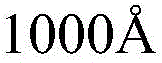 To about
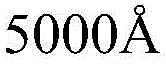 The organic compound layer of (3). The organic compound may comprise a hydrocarbon or a derivative thereof comprising an aromatic ring (e.g. phenyl, benzene or naphthalene). The organic compound may include a material having a relatively high carbon content of about 85 wt% to about 99 wt%, based on the total weight of the organic compound. The carbon-containing layer may be formed by performing a first baking of the organic compound layer at a temperature of about 150 ℃ to about 350 ℃. The first baking may be performed for about 30 seconds to about 300 seconds. Next, the carbon-containing layer may be cured by performing a second bake at a temperature of about 300 ℃ to about 550 ℃ for about 30 seconds to about 300 seconds. The carbon-containing layer is cured by performing its baking process twice, whereby the carbon-containing layer is not damaged during the deposition process even if the deposition process is performed at a relatively high temperature of about 400 deg.c or more when another material is formed on the carbon-containing layer. However, the process for forming the plurality of filling
 patterns 160 is not limited thereto.
The third width W3 of the (each) filling pattern 160 in the first direction (X direction) may be determined according to a minimum feature size of the semiconductor device. For example, when the minimum feature size of the semiconductor device is 1F, the third width W3 of the filling pattern 160 in the first direction may be 1F. However, the inventive concept is not limited thereto. In an example of the inventive concept, the third width W3 of the filling pattern 160 may be in a range from about 10 nanometers to about 100 nanometers, but is not limited thereto.
As shown in fig. 4A and 4B, a mold pattern 170 including a plurality of reference patterns 140, a plurality of spacers 150, and a plurality of filling patterns 160 may be formed on the hard mask layer 130. On the hard mask layer 130, each of the reference patterns 140 may extend in the second direction (Y direction), each of the spacers 150 may be formed on a corresponding one side of a side surface of the reference pattern 140 and extend in the second direction, and each of the filling patterns 160 may extend in the second direction while filling a space between two spacers 150 facing each other between two adjacent reference patterns 140.
In the mold pattern 170, the plurality of reference patterns 140, the plurality of spacers 150, the plurality of filling patterns 160, and the plurality of spacers 150, each extending in the second direction (Y direction), may be sequentially arranged side by side in the first direction (X direction). Here, the reference pitch RP1 may be the sum of the width W1 of the reference pattern 140, twice the width W2 of the spacer 150, and the width W3 of the filling pattern 160 (i.e., RP1 — W1+2W2+ W3), which are all taken from the first direction.
Accordingly, in an example of the mold pattern 170 according to the inventive concept, the spacer 150 may together constitute a first line and space pattern, and the reference pattern 140 and the filling pattern 160 may together constitute a second line and space pattern separated from the first line and space pattern.
The first width W1 of the reference pattern 140, the second width W2 of the spacer 150, and the third width W3 of the fill pattern 160 may be variously selected according to the kind and desired performance of the semiconductor device, the material of the hard mask layer 130, the material of the target layer 120, and the like.
In an example of the inventive concept, when the minimum feature size of the semiconductor device is 1F, the second width W2 of the spacer 150 may be 1F, the first width W1 of the reference pattern 140 and the third width W3 of the fill pattern 160 may each be 1F, and the reference pitch RP1 may be 4F.
In other examples of the inventive concept, when the minimum feature size of the semiconductor device is 1F, the second width W2 of the spacer 150 may be 1F, the first width W1 of the reference pattern 140 and the third width W3 of the filling pattern 160 may each be less than 1F, and the reference pitch RP1 may be less than 4F. For example, the second width W2 of the spacer 150 may be 1F, the first width W1 of the reference pattern 140 and the third width W3 of the filling pattern 160 may each be 0.75F, and the reference pitch RP1 may be 3.5F.
In still another example of the inventive concept, when the minimum feature size of the semiconductor device is 1F, the second width W2 of the spacer 150 may be greater than 1F, the first width W1 of the reference pattern 140 and the third width W3 of the filling pattern 160 may each be 1F, and the reference pitch RP1 may be greater than 4F. For example, the second width W2 of the spacer 150 may be 1.25F, the first width W1 of the reference pattern 140 and the third width W3 of the filling pattern 160 may each be 1F, and the reference pitch RP1 may be 4.5F. However, the first to third widths W1, W2, W3 are not limited to the examples set forth above.
Next, a selective processing process (S40 and/or S50) of selectively processing a portion of the reference pattern 140 and the filling pattern 160 to change them and thus form at least one modified pattern according to the inventive concept will be described in detail.
Referring to fig. 1 and 5A through 6B, in operation S40, a surface-modified filling pattern 160A may be formed by performing a first surface treatment S110 on a portion of a plurality of filling patterns 160.
First, a first mask layer 210 is formed, the first mask layer 210 including a first opening 210H1 exposing a portion of the plurality of fill patterns 160.
In an example of the inventive concept, the first mask layer 210 may include a spin-on dielectric (SOD) material or a Low Temperature Oxide (LTO) material. In the process for forming the first mask layer 210, an insulating layer (not shown) may be formed on the mold pattern 170 by a spin coating process or Chemical Vapor Deposition (CVD) using a SOD material or a LTO material, and a photoresist mask may be formed on the insulating layer. Next, the first mask layer 210 may be formed by patterning the insulating layer using the photoresist mask as an etching mask.
In an example of the inventive concept, the first opening 210H1 may have a first width W1H, and, for example, the first width W1H may range from 20 nanometers to 200 nanometers. When the minimum feature size of the semiconductor device is 1F, the first width W1H of the first opening 210H1 may be greater than 2F and equal to or less than 4F. However, the inventive concept is not limited thereto.
In an example of the inventive concept, the first opening 210H1 may expose a portion of the upper surface of the fill pattern 160 and portions of the upper surfaces of the spacers 150 located at both sides of the fill pattern 160. The first opening 210H1 may also expose a portion of the upper surface of the reference pattern 140 on the corresponding side of the exposed spacer 150.
The portion of the upper surfaces of the plurality of filling patterns 160 exposed by the first openings 210H1 may serve as an etching mask (not shown) for forming the line separating pattern 130S (see fig. 11A and 11B) that separates the first line pattern space 120L1 from the second line pattern space 120L2 of the plurality of line pattern spaces 120L1, 120L2 (see fig. 11A and 11B), and the second line pattern space 120L2 is spaced apart from the first line pattern space 120L1 in the second direction (Y direction).
In an example of the inventive concept, the first mask layer 210 may further include a second opening 210H 2. Each of the second openings 210H2 may have a second width W2H in the first direction (X direction) that is greater than the width W1H of the first opening 210H 1. For example, the second width W2H may range from 40 nanometers to 400 nanometers, but is not limited thereto. The second openings 210H2 may expose portions of the upper surfaces of two adjacent filling patterns 160. In addition, the upper surfaces of the spacers 150 at both sides of each of the adjacent filling patterns 160 and the upper surfaces of the reference patterns 140 interposed between the adjacent spacers 150 may be exposed.
Next, the surface-modified filling pattern 160A may be formed by performing the first surface treatment S110 on the exposed portions of the plurality of filling patterns 160.
In the process for forming the surface-modified filling pattern 160A, the upper portion of the filling pattern 160 exposed by the first and second openings 210H1 and 210H2 may be densified by performing the first surface treatment S110 on the mold pattern 170, thereby forming the upper filling pattern 160U. The lower portion of the filling pattern 160, which is not densified by the first surface treatment S110, may be referred to as a lower filling pattern 160L. Accordingly, the surface-treated filling pattern 160A may include a lower filling pattern 160L and an upper filling pattern 160U on the lower filling pattern 160L, the lower filling pattern 160L including an SOH material or an ACL material, and the upper filling pattern 160U including a dense SOH material or a dense ACL material.
In an example of the inventive concept, the first surface treatment S110 may be an ion implantation process for implanting silicon ions, germanium ions, and/or metal impurity ions. For example, the ion implantation process may be performed at an incident angle of about 0 degrees to about 40 degrees with respect to a third direction (Z direction) perpendicular to the upper surface of the first mask layer 210 using ion implantation energy of about 10keV to 180 keV. For example, the ion implantation process may be at about 1 × 10¹⁴Ion/cm2To about 5X 10¹⁵Ion/cm2The dose of (2) is administered. However, the inventive concept is not limited thereto.
In other examples of the inventive concept, the first surface treatment S110 may be to use argon (Ar), nitrogen (N)2) A plasma process of at least one of helium (He), krypton (Kr), and xenon (Xe). For example, the plasma process may be an Ar plasma process. The plasma process may be performed at a temperature of about 100 ℃ to about 400 ℃ using a plasma power of about 200W to about 20 kW. However, the inventive concept is not limited thereto.
In an example of the inventive concept, the upper fill pattern 160U may have a second height H2 (or thickness) less than about 50% of the first height H1 (or thickness) of the fill pattern 160 in the third direction (Z direction). However, the second height H2 is not limited thereto.
In an example of the inventive concept, the upper fill pattern 160U may include an SOH material or an ACL material having a material composition from the lower fill pattern 160L. For example, when the first surface treatment S110 is ion implantation for implanting silicon, germanium, and/or metal ions, the upper fill pattern 160U may include an SOH material including a certain amount of silicon, germanium, and/or metal ions. However, the inventive concept is not limited thereto. Alternatively, when the first surface treatment S110 is a plasma process, the upper fill pattern 160U may include the same material as the lower fill pattern 160L, and the degree of densification (or density) of the upper fill pattern 160U may be greater than that of the lower fill pattern 160L.
In an example of the inventive concept, the upper portions of the plurality of reference patterns 140 exposed by the first and second openings 210H1 and 210H2 may not be densified by the first surface treatment S110. For example, the plurality of reference patterns 140 may include amorphous silicon, and the surface of the amorphous silicon may be hardly affected by the first surface treatment S110. In addition, the upper portions of the plurality of spacers 150 exposed by the first and second openings 210H1 and 210H2 may not be densified by the first surface treatment S110. For example, the plurality of spacers 150 may include a silicon nitride layer, and the silicon nitride layer may be a relatively dense material layer compared to a SOH material layer or an ACL material layer. Therefore, the silicon nitride layer may be hardly affected by the first surface treatment S110 for densifying the SOH material layer or the ACL material layer.
Next, the first mask layer 210 may be removed.
The upper portions of the spacers 150 and the upper portions of the filling patterns 160, which are exposed by the first and second openings 210H1 and 210H2, may be removed up to a certain height by forming the first mask layer 210 including the first and second openings 210H1 and 210H2 and/or by the first surface treatment S110. Accordingly, the heights of portions of the plurality of spacers 150 and portions of the plurality of fill patterns 160 that are not covered by the first mask layer 210 (i.e., exposed by the first opening 210H1 and the second opening 210H 2) may be less than the heights of portions of the plurality of spacers 150 and portions of the plurality of fill patterns 160 that are covered by the first mask layer 210.
Referring to fig. 1, 7A and 7B, in operation S50, a surface-modified reference pattern 140A may be formed by performing a second surface treatment S120 on a portion of the reference pattern 140 (refer to fig. 6A and 6B).
In the process for forming the surface-modified reference pattern 140A, the second mask layer 220 including the third and fourth openings 220H1 and 220H2 may be formed on the mold pattern 170, and then a portion of the plurality of reference patterns 140 exposed by the third and fourth openings 220H1 and 220H2 may be nitrided.
In an example of the inventive concept, the second mask layer 220 may include an SOD material or an LTO material. In the process for forming the second mask layer 220, an insulating layer (not shown) may be formed using an SOD material or an LTO material by a spin coating process, a Chemical Vapor Deposition (CVD) process, or the like, and a photoresist layer may be formed on the insulating layer. Next, the second mask layer 220 may be formed by patterning the insulating layer using the photoresist layer as an etching mask.
In an example of the inventive concept, the second surface treatment S120 may be to use ammonia (NH)3) And/or nitrogen oxides (N)2O) plasma process. For example, the plasma process may be performed at a temperature of about 100 ℃ to about 500 ℃ using a plasma power of about 50W to about 300W. However, the inventive concept is not so limited. Nitrogen atoms may penetrate into the portion of the reference pattern 140 exposed by the third and fourth openings 220H1 and 220H2 and including amorphous silicon, and thus, the surface-modified reference pattern 140A may include silicon nitride (SiNx).
In an example of the inventive concept, the surface-modified reference pattern 140A may have an etch rate equal to or similar to that of the plurality of spacers 150. For example, the plurality of spacers 150 may include silicon nitride, and the surface modification may be performed such that the reference pattern 140 is converted into silicon nitride by the plasma process. In addition, the surface modified reference pattern 140A may include a material having an etch selectivity with respect to the plurality of reference patterns 140 (i.e., the surface modified reference pattern 140A and the plurality of reference patterns 140 may have different etch rates from each other). In this case, the surface-modified reference pattern 140A may not be removed in a subsequent process for removing the plurality of reference patterns 140, and may be used as an etching mask (not shown) in a process of forming the line separating pattern 130S for separating the line patterns.
In other examples of the inventive concept, the second surface treatment S120 may be to use oxygen (O)2) And/or carbon monoxide (CO) in combination with ammonia (NH)3) And/or nitrogen oxides (N)2O) plasma process. For example, the plasma process may be performed at a temperature of about 100 ℃ to about 500 ℃ using a plasma power of about 50W to about 300W. However, the inventive concept is not so limited. Nitrogen atoms and oxygen atoms may penetrate into the portion of the reference pattern 140 exposed by the third and fourth openings 220H1 and 220H2 and including amorphous silicon, and thus, the surface-modified reference pattern 140A may include silicon oxynitride (SiNxOy).
In other examples of the inventive concept, the second surface treatment S120 may be an ion implantation process for implanting nitrogen ions into the reference pattern 140. For example, the ion implantation process may be performed at an incident angle of about 0 to about 40 degrees with respect to a third direction (Z direction) perpendicular to the upper surface of the second mask layer 220 and using ion implantation energy of about 10keV to 180 keV. For example, the ion implantation process may be performed at about 1 × 10¹⁴Ion/cm2To about 5X 10¹⁵Ion/cm2The dose of (2) is administered. However, the inventive concept is not limited thereto.
Alternatively, after performing the second surface treatment S120, a heat treatment may be performed on the mold pattern 170. The heat treatment may be performed at a temperature of about 200 ℃ to about 500 ℃. For example, nitrogen atoms present in a relatively high concentration in an upper portion of the surface-modified reference pattern 140A immediately after the second surface treatment S120 may be sufficiently diffused into the surface-modified reference pattern 140A, and thus, the surface-modified reference pattern 140A may have a relatively uniform concentration of nitrogen atoms substantially throughout its overall height (thickness). However, the inventive concept is not limited thereto.
Portions of the plurality of spacers 150 and portions of the plurality of fill patterns 160 exposed by the third and fourth openings 220H1 and 220H2 may not be damaged by the second surface treatment S120And (4) hurting. For example, when the second surface treatment S120 is performed using ammonia gas (NH)3) Nitrogen oxide (N)2O), oxygen (O)2) And carbon monoxide (CO), since the plurality of spacers 150 include silicon nitride, the plurality of spacers 150 may be hardly nitrided by the plasma process. The carbon-containing layer is cured by performing the baking process twice in the process for forming the plurality of filling patterns 160, and thus, even if the plasma process is applied to the exposed surface of the carbon-containing layer, the carbon-containing layer may not be nitrided during the plasma process. In addition, when the second surface treatment S120 is a nitrogen ion implantation process, the ion implantation energy or the dose in the ion implantation process may be appropriately selected such that the portions of the plurality of filling patterns 160 exposed by the third and fourth openings 220H1 and 220H2 are not densified and nitrogen ions are sufficiently implanted into the reference pattern 140.
The upper portions of the spacers 150 and the upper portions of the reference patterns 140 exposed by the third and fourth openings 220H1 and 220H2 may be removed by forming the second mask layer 220 (which includes the third and fourth openings 220H1 and 220H2) and by the second surface treatment S120. Accordingly, the height H3 of the portion of the plurality of spacers 150 and the height H4 of the surface-modified reference pattern 140A that are not covered by the second mask layer 220 (i.e., exposed by the third and fourth openings 220H1 and 220H2) may be less than the height of the portion of the plurality of spacers 150 and the reference pattern 140 that are covered by the second mask layer 220. In an example of the inventive concept, portions of the plurality of spacers 150 not covered by the second mask layer 220 may have a third height H3 along the third direction (Z direction) from the upper surface of the hard mask layer 130, and the surface-modified reference pattern 140A may have a fourth height H4 along the third direction. Although the fourth height H4 may be equal to or similar to the third height H3, the inventive concept is not so limited.
Next, the second mask layer 220 may be removed.
Referring to fig. 1 and 8A through 9B, in operation S60, the plurality of filling patterns 160 (see fig. 7A and 7B) and the plurality of reference patterns 140 may be removed such that the surface-modified filling patterns 160A and the surface-modified reference patterns 140A are not removed.
In an example of the inventive concept, the plurality of filling patterns 160 may be first removed according to the method described with reference to fig. 8A and 8B, and then, the plurality of reference patterns 140 may be removed according to the method described with reference to fig. 9A and 9B. In other examples of the inventive concept, the plurality of reference patterns 140 may be first removed according to the method described with reference to fig. 9A and 9B, and then, the plurality of filling patterns 160 may be removed according to the method described with reference to fig. 8A and 8B.
In the process for removing the plurality of filling patterns 160, the plurality of filling patterns 160 may be removed by an anisotropic etching process, for example, an ion beam etching process, a reactive ion etching process, a plasma etching process, a high density plasma etching process, or the like. For example, although the etching process may be a directional plasma process using nitrogen and hydrogen, the inventive concept is not limited thereto.
In the process for removing the plurality of filling patterns 160, the surface-modified filling patterns 160A may remain without being removed. For example, the surface-modified filling pattern 160A may include a lower filling pattern 160L and an upper filling pattern 160U, and the upper filling pattern 160U may be densified by the first surface treatment S110 (refer to fig. 6B), while the lower filling pattern 160L may not be densified by the first surface treatment S110. Accordingly, the plurality of fill patterns 160 and the lower fill pattern 160L may include substantially the same material, for example, a non-surface modified SOH material, or a non-surface modified ACL material. However, in the anisotropic etching process, the densified upper fill pattern 160U may not be etched, and the lower fill pattern 160L located under the upper fill pattern 160U and between the plurality of spacers 150 may also be hardly removed by an etching process having high anisotropy (e.g., a directional plasma process).
In the process for removing the plurality of filling patterns 160, the plurality of exposed reference patterns 140, the surface-modified reference pattern 140A, and the plurality of spacers 150 may not be removed.
In an example of the inventive concept, the plurality of filling patterns 160 are removed, and the upper surface 130T1 of the mask layer 130 may be exposed again. After removing the plurality of fill patterns 160, a first trench 150H1 may be formed in a space defined by adjacent ones of the spacers 150 and the exposed upper surface 130T1 of the hard mask layer 130. The plurality of first grooves 150H1 may extend in the second direction (Y direction) and have a line shape.
As shown in fig. 8A, the first trench(s) 150H1 may have a width (e.g., a width substantially equal to the third width W3 of the plurality of filling patterns 160) and extend in the second direction (Y direction). The surface modified fill pattern 160A may be disposed between two first trenches 150H1 spaced apart along the second direction. That is, each of the first trenches 150H1 may have a rectangular shape with two long sides that may be defined by side surfaces of two adjacent spacers 150 extending in the second direction and two short sides that may be defined by end faces of two surface-modified filling patterns 160A arranged along the second direction.
In the process for removing the plurality of reference patterns 140, the plurality of reference patterns 140 may be removed by an anisotropic etching process, for example, an ion beam etching process, a reactive ion etching process, a plasma etching process, a high density plasma etching process, or the like. For example, although the etching process may be using sulfur hexafluoride (SF)6) The inventive concept is not so limited. In other examples of the inventive concept, the plurality of reference patterns 140 may be removed by a wet etching process using an etching solution including ammonium hydroxide (NH)4OH), nitric acid (HNO)3) And potassium hydroxide (KOH).
In the process for removing the plurality of reference patterns 140, the surface-modified reference pattern 140A may remain without being removed. For example, the plurality of reference patterns 140 may include amorphous silicon, and the surface-modified reference pattern 140A may include silicon nitride or silicon oxynitride formed by the second surface treatment S120 (see fig. 7B). Accordingly, the surface-modified reference pattern 140A may have an etch selectivity with respect to the plurality of reference patterns 140 and may not be removed in a process for removing the plurality of reference patterns 140.
In the process for removing the plurality of reference patterns 140, the exposed hard mask layer 130, the plurality of spacers 150, and the surface-modified filling pattern 160A may not be removed.
In an example of the inventive concept, the plurality of reference patterns 140 are removed, and the upper surface 130T2 of the hard mask layer 130 may be exposed again. As a result, a second trench 150H2 may be formed in the space defined by the adjacent spacer 150 and the exposed upper surface 130T2 of the hard mask layer 130. Each of the second grooves 150H2 may extend in the second direction (Y direction) and have a linear shape.
As shown in fig. 9A, the (each) second trench 150H2 may have a width (e.g., a width substantially equal to the first width W1 of the plurality of reference patterns 140) and extend in the second direction (Y direction). The surface modified reference pattern 140A may be disposed between two second grooves 150H2 spaced apart in the second direction. That is, each of the second grooves 150H2 may have a rectangular shape with two long sides, which may be defined by side surfaces of two adjacent spacers 150 extending in the second direction, and two short sides, which may be defined by end surfaces of two surface-modified reference patterns 140A arranged along the second direction.
As shown in fig. 9A and 9B, after removing the plurality of reference patterns 140 and the plurality of filling patterns 160, a structure in which the spacers 150 are spaced apart at intervals along the first direction (X direction) may be formed. The spacer 150 may have a second width W2 in the first direction (X direction), and when the minimum feature size of the semiconductor device is 1F, the second width W2 may be 1F. The first trenches 150H1 and the second trenches 150H2 may be alternately arranged between the spacers 150 in the first direction (X direction).
Referring to fig. 1 and 10A through 11B, in operation S70, the feature layer may be patterned using the plurality of spacers 150, the surface modified filling pattern 160A, and the surface modified reference pattern 140A as an etch mask.
In the process for patterning the feature layer, as shown in fig. 10A and 10B, a hard mask pattern 130P may be formed by patterning the hard mask layer 130 using the plurality of spacers 150 as an etch mask. The surface-modified filling pattern 160A and the surface-modified reference pattern 140A may also remain without being removed in the process for forming the hard mask pattern 130P, and may serve as an etch mask for forming the hard mask pattern 130P. In addition, in the process for forming the hard mask pattern 130P, the upper surface 120T of the target layer 120, the surface-modified filling pattern 160A, and the surface-modified reference pattern 140A, which are not covered by the spacer 150, may be exposed.
As shown in fig. 10B, at the bottom of the first trench 150H1, the side surfaces of the hard mask pattern 130P and the upper surface 120T of the target layer 120 may be exposed, and thus, the first trench 150H1 may extend downward. In addition, at the bottom of the second trench 150H2, the side surfaces of the hard mask pattern 130P and the upper surface 120T of the target layer 120 may be exposed, and thus, the second trench 150H2 may extend downward.
As shown in fig. 11A and 11B, the plurality of spacers 150, the surface modified filling pattern 160A, and the surface modified reference pattern 140A may be removed.
In an example of the inventive concept, a wet etching process for removing the plurality of spacers 150 and the surface-modified reference pattern 140A may be first performed, and then, an ashing process for removing the surface-modified filling pattern 160A may be performed. The wet etching process may be a process using a composition including phosphoric acid (H)3PO4) And an etching process using an etching solution such as hydrofluoric acid (HF). The ashing process may be a process including oxygen (O)2) And/or carbon tetrafluoride (CF)4) The plasma ashing process of (1). However, the inventive concept is not limited thereto.
In other examples of the inventive concept, an ashing process for removing the surface-modified fill pattern 160A may be first performed, and then, a wet etching process for removing the plurality of spacers 150 and the surface-modified reference pattern 140A may be performed.
As shown in fig. 11A and 11B, as a result of removing the plurality of spacers 150, the surface-modified filling pattern 160A, and the surface-modified reference pattern 140A, the first and second line pattern spaces 120L1 and 120L2 may be formed.
In an example of the inventive concept, since a portion of the hard mask pattern 130P is covered by the surface-modified filling pattern 160A and the surface-modified reference pattern 140A, the line separating pattern 130S may be formed.
Referring to fig. 12A and 12B, a target layer pattern 120P may be formed by etching the target layer 120 using the hard mask pattern 130P as an etching mask. In the process of forming the target layer pattern 120P, the target layer 120 not covered by the hard mask pattern 130P may be removed, and the upper surface 110T of the substrate 110 may be exposed.
In addition, in the process of forming the target layer pattern 120P, the remaining portions of the first and second trenches 150H1 and 150H2 may extend downward and may be defined by the exposed upper surface 110T of the substrate 110 and the side surface of the target layer pattern 120P. The portion of the target layer pattern 120P covered by the line separating pattern 130S of the hard mask pattern 130P may be referred to as a line separating pattern 120S.
Next, the hard mask pattern 130P may be removed.
The target layer pattern 120P including the first and second line pattern spaces 120L1 and 120L2 may be formed by performing the above-described method.
The first and second line pattern spaces 120L1 and 120L2 may be spaced apart from each other in the second direction (Y direction) on the substrate 110. Specifically, in the region of the first trench 150H1, the first and second line pattern spaces 120L1 and 120L2 may be spaced apart from each other by the line separation pattern 120S. Further, in the region of the second trench 150H2, the first and second line pattern spaces 120L1 and 120L2 may be spaced apart from each other by the line separation pattern 120S.
As shown in fig. 12A and 12B, the target layer pattern 120P may include a plurality of target patterns 120P1 extending in the second direction, and each of the plurality of target patterns 120P1 may have a line shape.
Each line separation pattern 120S may be disposed between two adjacent target patterns 120P 1. Further, each line separating pattern 120S may be integrally formed with two adjacent target patterns 120P 1.
As shown in fig. 12B, one line separation pattern 120S may be disposed between two second trenches 150H2 adjacent to each other in the first direction (X direction) with a corresponding target pattern 120P1 interposed between each of the two second trenches 150H2 and the line separation pattern 120S, or one line separation pattern 120S may be disposed between two first trenches 150H1 adjacent to each other in the first direction with a corresponding target pattern 120P1 interposed between each of the two first trenches 150H1 and the line separation pattern 120S. Accordingly, on the substrate 110, the first trench 150H1, the target pattern 120P1, the line separating pattern 120S, the target pattern 120P1, and the first trench 150H1 may be arranged side by side in the first direction.
In an example of the inventive concept, the line separating pattern 120S may have a relatively small width in the first direction (X direction). When the minimum feature size of the semiconductor device is 1F, the width of the line separation pattern 120S in the first direction may be 1F. However, the inventive concept is not limited thereto.
In general, the line pattern or the line pattern space formed by the DPT process may have a width of 1F, which is the minimum feature size of the semiconductor device. However, the minimum line width (or resolution limit width of the lithography) that can be achieved by the lithography process may be, for example, greater than 2F. Therefore, when a block mask is formed using a photolithography process in order to form a separation region for a line pattern or a separation region for a line pattern space by a DPT process, the minimum width of the block mask needs to be generally greater than 2F (for example, the minimum width may be 4F), and thus, it may be very difficult to form a separation region for separating only one line pattern. Therefore, a separation region for simultaneously separating each of two adjacent line patterns is generally formed.
Further, as the line patterns become denser, that is, as the pitches of the line patterns become smaller, a process margin of the block mask may not be ensured, resulting in misalignment of the block mask. Due to the misalignment of the block mask, the accuracy in forming the separated regions of the line pattern may be further reduced. For example, undesired adjacent line patterns may be covered by the blocking mask, or line patterns that need to be separated may not be completely covered by the blocking mask. If the line pattern is a metal wiring pattern, the reliability of the semiconductor device including the wiring pattern may be deteriorated. For example, a short circuit may occur between ends of adjacent wiring patterns, or an oxide bridge may occur in an insulating interlayer surrounding the wiring patterns.
However, according to the method of manufacturing the semiconductor device described with reference to fig. 1 to 12B, the surface-modified filling pattern 160A and the surface-modified reference pattern 140A may be formed by the first and second surface processes S110 and S120, and the target layer pattern 120P may be formed using the plurality of spacers 150, the surface-modified filling pattern 160A, and the surface-modified reference pattern 140A as an etching mask. The surface-modified filling pattern 160A and the surface-modified reference pattern 140A may each be used as an etching mask for forming the line separating pattern 120S having a width of 1F. Therefore, the line separating pattern 120S that selectively separates only one line pattern (or spatially separates one line pattern into the spaces 120L1, 120L2) can be formed. Therefore, according to the manufacturing method, flexibility in designing a line pattern in a DPT process can be improved.
Further, according to the manufacturing method, since the line separating pattern 120S may be formed by performing the first surface treatment S110 and the second surface treatment S120, an additional photolithography process in which a block mask is used for the separation region of the line pattern may be omitted. Accordingly, the target layer pattern 120P having the line separating pattern 120S may be formed through a relatively simple process.
Fig. 13 is a sectional view for explaining another example of a method of manufacturing a semiconductor device according to the inventive concept.
First, the process described with reference to fig. 1 to 5B is performed, thereby forming a structure in which the first mask layer 210 including the first openings 210H1 is disposed on the mold pattern 170.
Referring to fig. 13, a first surface treatment S110A may be performed, whereby a surface-modified filling pattern 160B may be formed from the filling pattern 160 exposed by the first opening 210H 1. The surface modified fill pattern 160B may include an insulating material that is entirely densified throughout its overall height (thickness). In the process for forming the surface-modified filling pattern 160B,an ion implantation process for implanting silicon ions, germanium ions, and/or metal impurity ions to the upper side of the filling pattern 160 including the SOH material or the ACL material may be performed, thereby densifying the entire filling pattern 160. In other examples of the inventive concept, the first surface treatment S110A may be to use argon (Ar), nitrogen (N)2) A plasma process of at least one of helium (He), krypton (Kr), and xenon (Xe).
Next, the processes described with reference to fig. 7A to 12B may be performed.
The surface-modified filling pattern 160B may include an SOH material or an ACL material that is densified in its total height, or may include an SOH material or an ACL material containing silicon, germanium, or metal impurity ions. Accordingly, the surface-modified filling pattern 160B may not be damaged in a wet or dry etching process that is subsequently performed. Accordingly, the accuracy of the patterning process of the hard mask pattern 130P or the target layer pattern 120P, which is performed later, may be improved.
Fig. 14 is a sectional view for explaining other examples of the method of manufacturing a semiconductor device according to the inventive concept.
First, the processes described with reference to fig. 1 to 3B are performed, thereby forming a structure in which the plurality of reference patterns 140C and the plurality of spacers 150 on both side surfaces of each of the plurality of reference patterns 140C are disposed on the hard mask layer 130.
Referring to fig. 14, a plurality of fill patterns 160C may be formed between the plurality of spacers 150C and on the upper surface 130T (referring to fig. 3B) of the hard mask layer 130.
To form the plurality of filling patterns 160C, as shown in fig. 3B, a filling layer (not shown) of a uniform thickness is formed to cover exposed surfaces of the plurality of reference patterns 140C and exposed surfaces of the hard mask layer 130, and then the filling layer is planarized such that an upper surface of each of the plurality of reference patterns 140 is exposed, thereby leaving the plurality of reference patterns 140C as remaining portions of the filling layer. For example, the planarization process may be a Chemical Mechanical Polishing (CMP) process. After the planarization process, the spacer 150C, the filling pattern 160C, and the reference pattern 140 may have the same level of upper surface, i.e., they are coplanar.
Next, the processes described with reference to fig. 5A to 12B may be performed.
Since the spacers 150C, the filling pattern 160C, and the reference pattern 140C have the same level of upper surface, the accuracy of a subsequent patterning process for forming the first and second mask layers 210 and 220 may be improved. However, the inventive concept is not limited thereto.
Fig. 15 to 18 are sectional views for explaining other examples of a method of manufacturing a semiconductor device according to the inventive concept. The manufacturing method may be a method of manufacturing a semiconductor device using a Quad Patterning Technique (QPT).
Referring to fig. 15, a first material layer pattern 310 repeated according to a constant reference pitch RP1A in a first direction (X direction) may be formed on the hard mask layer 130 on the target layer 120.
The plurality of first material layer patterns 310 may include a material having an etch selectivity with respect to the second material layer 320P, the second material layer 320P being formed by the method described with reference to fig. 16. For example, the plurality of first material layer patterns 310 may include silicon nitride or silicon oxide, but is not limited thereto.
In an example of the inventive concept, when the minimum feature size of the semiconductor device is 1F, the reference pitch RP1A may be 8F. The first widths W1A of the plurality of first material layer patterns 310 and the first interval S1A between adjacent first material layer patterns 310 may be different and selected according to the kind and desired performance of the semiconductor device, the material of the hard mask layer 130, the material of the target layer 120, and the like. For example, the first width W1A of the plurality of first material layer patterns 310 may be 3F, and the first interval S1A may be 5F. However, the inventive concept is not limited thereto.
Referring to fig. 16 and 17, a plurality of second material layer patterns 320 covering both side surfaces of each of the plurality of first material layer patterns 310 may be formed.
In the process for forming the second material layer pattern 320, the second material layer 320P covering the exposed surfaces of the plurality of first material layer patterns 310 and the exposed surface of the hard mask layer 130 may be formed to a uniform thickness. Next, as shown in fig. 17, the second material layer 320P is subjected to an etch-back process such that an upper surface of each of the plurality of first material layer patterns 310 and a portion of an upper surface of the hard mask layer 130 are exposed, thereby leaving the plurality of second material layer patterns 320 as remaining portions of the second material layer 320P.
The plurality of second material layer patterns 320 may include a material having sufficient etch selectivity with respect to the hard mask layer 130 and the plurality of first material layer patterns 310 and also having sufficient etch selectivity with respect to the plurality of spacers 150 and the plurality of fill patterns 160, which will be formed in a subsequent process by the method described with reference to fig. 3A through 4B. In some examples of the inventive concept, the plurality of second material layer patterns 320 may include amorphous silicon or polycrystalline silicon. However, the inventive concept is not limited thereto.
Referring to fig. 18, the plurality of first material layer patterns 310 (see fig. 17) may be removed, and a surface of the hard mask layer 130, which has been covered by the plurality of first material layer patterns 310, may be exposed.
In the process for removing the plurality of first material layer patterns 310, the second material layer patterns 320 may be repeatedly left on the hard mask layer 130 according to the constant reference pitch RP1B along the first direction (X direction).
In an example of the inventive concept, when the minimum feature size of the semiconductor device is 1F, the reference pitch RP1B may be 4F. In addition, the first width W1B of the plurality of second material layer patterns 320 may be 1F, and the first spacing S1B between adjacent second material layer patterns 320 may be 3F.
Next, the processes described with reference to fig. 1 to 12B may be performed.
The plurality of second material layer patterns 320 may be replaced with the plurality of reference patterns 140 described with reference to fig. 1 to 12B.
Fig. 19 to 20B are a plan view and a sectional view for explaining an example of a method of manufacturing a semiconductor device according to the inventive concept. The manufacturing method may be a manufacturing method of the semiconductor device 300 including a wiring pattern formed using the target layer pattern 120P described with reference to fig. 1 to 12B.
First, the processes described with reference to fig. 1 to 12B are performed, thereby forming a structure in which the target layer pattern 120P is formed on the substrate 110.
Referring to fig. 19, a wiring material layer 330P may be formed on the substrate 110 and the target layer pattern 120P.
In examples of the inventive concept, the substrate 110 may include a semiconductor element such as silicon (Si) or germanium (Ge) or include a compound semiconductor such as silicon carbide (SiC), gallium arsenide (GaAs), indium arsenide (InAs), or indium phosphide (InP). The substrate 110 may include a conductive region, such as a doped well or a doped structure. In addition, the substrate 110 may have any of various device isolation structures such as a Shallow Trench Isolation (STI) structure.
In an example of the inventive concept, a plurality of different individual devices (not shown) may be formed between the substrate 110 and the target layer pattern 120P. The plurality of individual devices may constitute a microelectronic device, and may include, for example, a Metal Oxide Semiconductor Field Effect Transistor (MOSFET), a system large scale integrated circuit (system LSI), and a CMOS Imaging Sensor (CIS), a Micro Electro Mechanical System (MEMS), an active device, a passive device, or the like. The plurality of individual devices may be electrically connected to conductive regions of the substrate 110.
In an example of the inventive concept, the target layer pattern 120P may include at least one of a Flowable Oxide (FOX), a High Density Plasma (HDP) oxide, Tonen silazane (TOSZ), spin-on glass (SOG), and undoped quartz glass (USG). The target layer pattern 120P may be an insulating interlayer including a plurality of insulating layers, and the plurality of individual devices may be electrically separated from each other by the plurality of insulating layers. However, the inventive concept is not limited thereto.
In the process for forming the wiring material layer 330P, a conductive layer (not shown) conformally covering the target layer pattern 120P and the substrate 110 may be formed to a certain thickness, and then, the wiring material layer 330P may be formed on the conductive layer by a plating process, the wiring material layer 330P filling the first and second trenches 150H1 and 150H2 of the target layer pattern 120P. For example, the conductive layer may be formed of Ti, TiN, Ta, TaN, Ru, Co, Mn, WN, Ni, or NiB by a PVD process or a CVD process. The wiring material layer 330P may be formed of Cu, CuSn, CuMg, CuNi, CuZn, CuPd, CuAu, CuRe, CuW, W, or W alloy, but is not limited thereto.
Referring to fig. 20A and 20B, the upper surface of the target layer pattern 120P may be exposed by planarizing the upper side of the wiring material layer 330P (refer to fig. 19) using a CMP process. Accordingly, the wiring pattern 330 filling the first and second trenches 150H1 and 150H2 may be formed on the substrate 110.
In the wiring pattern 330, the first and second line patterns 330L1 and 330L2 adjacent to each other in the second direction (Y direction) may be spaced apart from each other with the line separation pattern 120S therebetween. When the widths of the first and second line patterns 330L1 and 330L2 in the first direction (X direction) are 1F, the width of the line separation pattern 120S in the first direction (X direction) may also be 1F. The first pitch P1 of the line patterns 330L1, 330L2 may be 2F, and the second pitch P2 of the line separation pattern 120S may be 4F. In this example, the width of the line separating patterns 120S may be 1F, and the interval between the line separating patterns 120S may be 3F. However, the inventive concept is not limited thereto.
In the target layer pattern 120P manufactured by the process described with reference to fig. 1 to 12B, the line separating pattern 120S may have a width of 1F. In particular, it is not necessary to generally form a separation region that simultaneously separates each of two adjacent line patterns in order to separate the line patterns formed using the DPT process, but the line separating pattern 120S that selectively separates only one line pattern may be formed. The semiconductor device 300 may include a wiring pattern 330, the wiring pattern 330 providing improved design flexibility.
In the target layer pattern 120P manufactured by the process described with reference to fig. 1 to 12B, a separation process of forming the separation regions of the line pattern using the block mask may be omitted. Accordingly, a short circuit between the ends of the line patterns 330L1, 330L2 due to the misalignment of the block mask may be prevented, and an oxide bridge of the insulating interlayer surrounding the line patterns 330L1 and 330L2 may be prevented. Therefore, the semiconductor device 300 may have excellent reliability.
Although the method of manufacturing the semiconductor device 300 including the wiring pattern 330 has been described as an example with reference to fig. 19 to 20B, the inventive concept is not limited thereto.
Using the target layer pattern 120P manufactured by the process described with reference to fig. 1 to 18, a plurality of gate lines (not shown) extending parallel to each other may be formed on the substrate. To form a plurality of gate lines, a gate insulating layer (not shown) conformally covering the trenches 150H1 and 150H2 of the target layer pattern 120P may be formed, followed by forming a conductive layer (not shown) filling the trenches 150H1 and 150H2 on the gate insulating layer, and then, an upper portion of the conductive layer may be planarized until an upper surface of the target layer pattern 120P is exposed. Accordingly, a plurality of gate lines filling the trenches 150H1 and 150H2 may be formed.
Using the target layer pattern 120P manufactured by the process described with reference to fig. 1 to 18, fin-type active regions (not shown) extending parallel to each other may be formed on the substrate. To form the fin-type active region, a hard mask layer (not shown) filling the trenches 150H1 and 150H2 may be formed on the substrate and the target layer pattern 120P, followed by planarizing an upper side of the hard mask layer until an upper surface of the target layer pattern 120P is exposed, thereby forming a hard mask (not shown) filling the trenches 150H1 and 150H 2. Next, the target layer pattern 120P is removed, and then, the exposed surface of the substrate is etched using the hard mask as an etching mask, thereby forming a plurality of fin-type active regions.
Fig. 21 to 28 are plan views for explaining other examples of the method of manufacturing the semiconductor device according to the inventive concept.
First, by performing the processes described with reference to fig. 1 to 4B, a mold pattern 170 may be formed on the hard mask layer 130, the mold pattern 170 including a plurality of reference patterns 140, a plurality of spacers 150, and a plurality of fill patterns 160.
Referring to fig. 21, a first mask layer 210A including first and second openings 210H3 and 210H4 may be formed on the mold pattern 170.
The first opening 210H3 may have a first width W3H in the X direction, the second opening 210H4 may have a second width W4H in the X direction, and the first width W3H and the second width W4H may be different according to the width of the line pattern to be formed. The relationship between the first width W3H and the second width W4H and the width of the line pattern will be described in detail below.
Referring to fig. 22, first and second surface-modified filling patterns 160B1, 160B2 may be formed on portions of the plurality of filling patterns exposed by the first and second openings 210H3 and 210H4 by performing the first surface treatment S110 (refer to fig. 6A and 6B).
The first and second surface-modified filling patterns 160B1 and 160B2 may include a lower filling pattern 160L of SOH or ACL and an upper filling pattern 160U including a dense SOH material or a dense ACL material on the lower filling pattern 160L.
The first surface treatment S110 may be similar to the first surface treatment S110 described with reference to fig. 5A to 6B.
Next, the first mask layer 210A may be removed.
Referring to fig. 23, a second mask layer 220A including third and fourth openings 220H3 and 220H4 may be formed on the mold pattern 170.
The third opening 220H3 may have a third width W5H in the X direction, the fourth opening 220H4 may have a fourth width W6H in the X direction, and the third width W5H and the fourth width W6H may be different according to the width of the line pattern to be formed. The relationship between the third width W5H and the fourth width W6H and the width of the line pattern will be described in detail below.
Next, portions of the plurality of reference patterns 140 exposed by the third and fourth openings 220H3 and 220H4 may be nitrided by performing a second surface treatment S120 (see fig. 7A and 7B) on the mold pattern 170 exposed by the third and fourth openings 220H3 and 220H4, thereby forming first and second surface-modified reference patterns 140B1 and 140B 2.
The second surface treatment S120 may be similar to the second surface treatment S120 described with reference to fig. 7A to 7B.
The fourth opening 220H4 of the second mask layer 220A may be provided at a region located corresponding to the second opening 210H4 of the first mask layer 210A. For example, the second opening 210H4 shown in fig. 22 may expose portions of the spacers 150 on both sides of the second surface modified filling pattern 160B2 and portions of the plurality of reference patterns 140 on one side of the spacers 150. In addition, the fourth opening 220H4 shown in fig. 23 may expose portions of the spacer 150 at both sides of the second surface-modified reference pattern 140B 2. That is, if the second opening 210H4 and the fourth opening 220H4 are superimposed at their respective positions, they may overlap.
Next, the second mask layer 220A may be removed.
Referring to fig. 24 and 25, the plurality of filling patterns 160 may be removed without removing the first and second surface-modified filling patterns 160B1 and 160B2 and the first and second surface-modified reference patterns 140B1 and 140B 2. As a result, the upper surface of the hard mask layer 130 may be exposed again.
Next, the plurality of reference patterns 140 may be removed without removing the first and second surface modified filling patterns 160B1 and 160B2 and the first and second surface modified reference patterns 140B1 and 140B 2.
Accordingly, only the plurality of spacers 150, the first and second surface-modified filling patterns 160B1 and 160B2, and the first and second surface-modified reference patterns 140B1 and 140B2 may remain on the hard mask layer 130.
The process of removing the plurality of filling patterns 160 and the plurality of reference patterns 140 may be similar to the process of removing the plurality of filling patterns 160 and the plurality of reference patterns 140 described with reference to fig. 11A and 11B.
Referring to fig. 26 and 27, the hard mask layer 130 is etched using the plurality of spacers 150, the first and second surface-modified filling patterns 160B1 and 160B2, and the first and second surface-modified reference patterns 140B1 and 140B2 as an etching mask, whereby a hard mask pattern 130P1 may be formed and the upper surface of the target layer 120 may be exposed.
Next, the plurality of spacers 150, the first and second surface-modified filling patterns 160B1 and 160B2, and the first and second surface-modified reference patterns 140B1 and 140B2 may be removed.
As shown in fig. 27, the hard mask pattern 130P1 may include a first line pattern region 130B1, second line pattern regions 130B21 and 130B22, and a third line pattern region 130B 3.
The first line pattern region 130B1 may be a portion of the hard mask pattern 130P1 formed using the plurality of spacers 150 as an etch mask, and may have a first width WL1 in the X direction.
The second line pattern regions 130B21 and 130B22 may be a portion of a hard mask pattern 130P1 formed using the first surface-modified fill pattern 160B1 and the plurality of spacers 150 at both sides of the first surface-modified fill pattern 160B1 as an etch mask, or may also be a portion of a hard mask pattern 130P1 formed using the first surface-modified reference pattern 140B1 and the plurality of spacers 150 at both sides of the first surface-modified reference pattern 140B1 as an etch mask. The second line pattern regions 130B21 and 130B22 may have second widths WL21 and WL22 in the X direction, which are different from the first width WL 1.
The third line pattern region 130B3 may be a portion of the hard mask pattern 130P1 formed using the second surface-modified filling pattern 160B2 and the second surface-modified reference pattern 140B2, and a plurality of spacers 150 on both sides of the second surface-modified filling pattern 160B2 and the second surface-modified reference pattern 140B2 as an etch mask, the second surface-modified filling pattern 160B2 and the second surface-modified reference pattern 140B2 being arranged side by side with the plurality of spacers 150 therebetween. The third line pattern region 130B3 may have a third width WL3 in the X direction, and the third width WL3 is different from the first width WL1 and the second widths WL21 and WL 22.
In an example of the inventive concept, when the first width WL1 of the first line pattern region 130B1 is 1F, the second widths WL21 and WL22 of the second line pattern regions 130B21 and 130B22 may be 3F, and the third width WL3 of the third line pattern region 130B3 may be 5F. However, the inventive concept is not limited thereto. Widths WL21, WL22, and WL3 of the second and third line pattern regions 130B21, 130B22, and 130B3 may vary according to the positions and arrangements of the surface-modified fill patterns 160B1 and 160B2 and the surface-modified reference patterns 140B1 and 140B 2.
Referring to fig. 28, a target layer pattern 120P2 may be formed by etching the target layer 120 using the hard mask pattern 130P1 as an etch mask. In the process of forming the target layer pattern 120P2, the target layer 120, which is not covered by the hard mask pattern 130P1, may be removed, and the upper surface of the substrate 110 may be exposed.
The target layer pattern 120P2 may include a plurality of line patterns. The plurality of line patterns may include a first line pattern 120B1, second line patterns 120B21 and 120B22, and a third line pattern 120B 3. The first line pattern 120B1 may be formed at a position corresponding to the first line pattern region 130B1 of the hard mask pattern 130P1, and may have a first width WL1 in the X direction. The second line patterns 120B21 and 120B22 may be formed at positions corresponding to the second line pattern regions 130B21 and 130B22 of the hard mask pattern 130P1, and may have second widths WL21, WL22 in the X direction. The third line pattern 120B3 may be formed at a position corresponding to the third line pattern region 130B3 of the hard mask pattern 130P1, and may have a third width WL3 in the X direction.
In an example of the inventive concept, when the first width WL1 of the first line pattern 120B1 is 1F, the second widths WL21 and WL22 of the second line patterns 120B21 and 120B22 may be 3F, and the third width WL3 of the third line pattern 120B3 may be 5F. However, the inventive concept is not limited thereto.
According to the above method of manufacturing a semiconductor, the first surface treatment S110 and the second surface treatment S120 are performed in the DPT process, so that a plurality of line patterns having different widths can be simultaneously formed. Therefore, since it is not necessary to separately perform the photolithography process and the DPT process to form the plurality of line patterns having different widths, the manufacturing process can be simplified, and the manufacturing cost can be reduced.
While the inventive concept has been particularly shown and described with reference to several examples, it should be understood that various changes in form and detail may be made therein without departing from the spirit and scope of the inventive concept as defined by the following claims.
This application claims the benefit of korean patent application No. 10-2015-0153257, filed on 11/2/2015 with the korean intellectual property office, the disclosure of which is hereby incorporated by reference in its entirety.
Claims (20)
Applications Claiming Priority (2)
| Application Number | Priority Date | Filing Date | Title |
|---|---|---|---|
| KR1020150153257A KR102403736B1 (en) | 2015-11-02 | 2015-11-02 | Semiconductor device and method of manufacturing the same |
| KR10-2015-0153257 | 2015-11-02 |
Publications (2)
| Publication Number | Publication Date |
|---|---|
| CN107039246A CN107039246A (en) | 2017-08-11 |
| CN107039246B true CN107039246B (en) | 2020-06-02 |
Family
ID=58638325
Family Applications (1)
| Application Number | Title | Priority Date | Filing Date |
|---|---|---|---|
| CN201610862591.2A Active CN107039246B (en) | 2015-11-02 | 2016-09-28 | Semiconductor device and method of manufacturing the same |
Country Status (3)
| Country | Link |
|---|---|
| US (1) | US9768025B2 (en) |
| KR (1) | KR102403736B1 (en) |
| CN (1) | CN107039246B (en) |
Families Citing this family (22)
| Publication number | Priority date | Publication date | Assignee | Title |
|---|---|---|---|---|
| KR102387944B1 (en) * | 2015-12-24 | 2022-04-18 | 삼성전자주식회사 | Method of forming pattern and method of manufacturing integrated circuit device using the same |
| US9991156B2 (en) | 2016-06-03 | 2018-06-05 | International Business Machines Corporation | Self-aligned quadruple patterning (SAQP) for routing layouts including multi-track jogs |
| US10147611B1 (en) * | 2017-08-28 | 2018-12-04 | Nanya Technology Corporation | Method for preparing semiconductor structures |
| US10803227B2 (en) * | 2017-08-29 | 2020-10-13 | Taiwan Semiconductor Manufacturing Co., Ltd. | Integrated circuit layouts with line-end extensions |
| DE102017127124B4 (en) | 2017-09-29 | 2023-09-21 | Taiwan Semiconductor Manufacturing Company, Ltd. | Metalworking with flexible gaps formed using patterning with self-aligning spacers |
| US10529617B2 (en) | 2017-09-29 | 2020-01-07 | Taiwan Semiconductor Manufacturing Company, Ltd. | Metal routing with flexible space formed using self-aligned spacer patterning |
| US10559492B2 (en) | 2017-11-15 | 2020-02-11 | Taiwan Semiconductor Manufacturing Company, Ltd. | Patterning methods for semiconductor devices and structures resulting therefrom |
| US11276572B2 (en) * | 2017-12-08 | 2022-03-15 | Tokyo Electron Limited | Technique for multi-patterning substrates |
| US10991584B2 (en) * | 2017-12-19 | 2021-04-27 | International Business Machines Corporation | Methods and structures for cutting lines or spaces in a tight pitch structure |
| US10566207B2 (en) | 2017-12-27 | 2020-02-18 | Samsung Electronics Co., Ltd. | Semiconductor manufacturing methods for patterning line patterns to have reduced length variation |
| CN110896051B (en) * | 2018-09-13 | 2022-06-21 | 中芯国际集成电路制造(上海)有限公司 | Manufacturing method of semiconductor device and semiconductor device |
| EP3660890B1 (en) * | 2018-11-27 | 2021-08-11 | IMEC vzw | A method for forming an interconnection structure |
| CN111640656B (en) * | 2019-03-01 | 2023-06-09 | 中芯国际集成电路制造(上海)有限公司 | Semiconductor device and method of forming the same |
| CN111640655B (en) * | 2019-03-01 | 2023-04-25 | 中芯国际集成电路制造(上海)有限公司 | Semiconductor device and method of forming the same |
| CN111834212B (en) * | 2019-04-23 | 2023-05-26 | 中芯国际集成电路制造(上海)有限公司 | Semiconductor device and method of forming the same |
| KR102909630B1 (en) * | 2019-10-17 | 2026-01-08 | 삼성전자주식회사 | Method of designing layouts of patterns, method of forming patterns using the same, and method of manufacturing a semiconductor device using the same |
| CN113363142B (en) * | 2020-03-05 | 2023-06-09 | 中芯国际集成电路制造(上海)有限公司 | Method for forming semiconductor device |
| US11444180B2 (en) * | 2020-08-09 | 2022-09-13 | Nanya Technology Corporation | Method of forming uniform fin features |
| KR102850137B1 (en) | 2020-10-08 | 2025-08-26 | 삼성전자주식회사 | Semiconductor device and method for manufacturing the same |
| US12374584B2 (en) * | 2020-10-28 | 2025-07-29 | Applied Materials, Inc. | Multi color stack for self aligned dual pattern formation for multi purpose device structures |
| KR20220150650A (en) * | 2021-05-04 | 2022-11-11 | 삼성전자주식회사 | Method for manufacturing semiconductor devices |
| KR20240025916A (en) * | 2022-08-19 | 2024-02-27 | 삼성전자주식회사 | Method of fabraicating semiconductor device |
Citations (4)
| Publication number | Priority date | Publication date | Assignee | Title |
|---|---|---|---|---|
| CN101764130A (en) * | 2008-12-24 | 2010-06-30 | 三星电子株式会社 | Semiconductor device and method of forming patterns for the semiconductor device |
| US8030222B2 (en) * | 2004-08-31 | 2011-10-04 | Round Rock Research, Llc | Structures with increased photo-alignment margins |
| CN102376566A (en) * | 2010-08-19 | 2012-03-14 | 三星电子株式会社 | Method of forming a pattern structure for a semiconductor device |
| CN103972066A (en) * | 2013-01-24 | 2014-08-06 | 三星电子株式会社 | Semiconductor device and method of manufacturing the same |
Family Cites Families (21)
| Publication number | Priority date | Publication date | Assignee | Title |
|---|---|---|---|---|
| JPH0831720A (en) * | 1994-07-13 | 1996-02-02 | Nkk Corp | Method of forming resist mask |
| KR100472029B1 (en) * | 2002-05-07 | 2005-03-08 | 동부아남반도체 주식회사 | Method for controling selectivity of photoresist |
| US7655387B2 (en) * | 2004-09-02 | 2010-02-02 | Micron Technology, Inc. | Method to align mask patterns |
| KR100763538B1 (en) | 2006-08-29 | 2007-10-05 | 삼성전자주식회사 | Method of forming mask pattern and method of forming fine pattern using same |
| KR100876892B1 (en) * | 2007-06-29 | 2009-01-07 | 주식회사 하이닉스반도체 | Manufacturing method of semiconductor device |
| KR20090049524A (en) | 2007-11-13 | 2009-05-18 | 주식회사 하이닉스반도체 | Micro pattern formation method of semiconductor device using spacer |
| US20090246706A1 (en) | 2008-04-01 | 2009-10-01 | Applied Materials, Inc. | Patterning resolution enhancement combining interference lithography and self-aligned double patterning techniques |
| EP2287667B1 (en) | 2009-06-26 | 2013-03-27 | Rohm and Haas Electronic Materials, L.L.C. | Self-aligned spacer multiple patterning methods |
| JP5674375B2 (en) * | 2010-08-03 | 2015-02-25 | 東京エレクトロン株式会社 | Plasma processing method and plasma processing apparatus |
| KR101696804B1 (en) | 2010-10-05 | 2017-01-16 | 삼성전자주식회사 | Control apparatus and method for the resource utilization policy over the virtual environment |
| KR101150586B1 (en) | 2010-10-05 | 2012-06-08 | 에스케이하이닉스 주식회사 | Method for forming semiconductor device |
| US9233840B2 (en) | 2010-10-28 | 2016-01-12 | International Business Machines Corporation | Method for improving self-assembled polymer features |
| KR20140008863A (en) | 2012-07-12 | 2014-01-22 | 에스케이하이닉스 주식회사 | Method for forming fine pattern of semiconductor device using double spacer patterning technology |
| JP2014072226A (en) | 2012-09-27 | 2014-04-21 | Tokyo Electron Ltd | Pattern formation method |
| KR20140064458A (en) | 2012-11-20 | 2014-05-28 | 삼성전자주식회사 | Method of forming semiconductor device and the device |
| US8822320B2 (en) | 2012-11-20 | 2014-09-02 | International Business Machines Corporation | Dense finFET SRAM |
| US8889561B2 (en) | 2012-12-10 | 2014-11-18 | Globalfoundries Inc. | Double sidewall image transfer process |
| US9093378B2 (en) | 2013-03-15 | 2015-07-28 | Samsung Electronics Co., Ltd. | Method for forming patterns of semiconductor device using SADP process |
| US20150024597A1 (en) | 2013-07-16 | 2015-01-22 | HGST Netherlands B.V. | Method for sidewall spacer line doubling using polymer brush material as a sacrificial layer |
| US20150035064A1 (en) | 2013-08-01 | 2015-02-05 | International Business Machines Corporation | Inverse side-wall image transfer |
| US8987008B2 (en) | 2013-08-20 | 2015-03-24 | Taiwan Semiconductor Manufacturing Company, Ltd. | Integrated circuit layout and method with double patterning |
-
2015
- 2015-11-02 KR KR1020150153257A patent/KR102403736B1/en active Active
-
2016
- 2016-06-16 US US15/184,491 patent/US9768025B2/en active Active
- 2016-09-28 CN CN201610862591.2A patent/CN107039246B/en active Active
Patent Citations (4)
| Publication number | Priority date | Publication date | Assignee | Title |
|---|---|---|---|---|
| US8030222B2 (en) * | 2004-08-31 | 2011-10-04 | Round Rock Research, Llc | Structures with increased photo-alignment margins |
| CN101764130A (en) * | 2008-12-24 | 2010-06-30 | 三星电子株式会社 | Semiconductor device and method of forming patterns for the semiconductor device |
| CN102376566A (en) * | 2010-08-19 | 2012-03-14 | 三星电子株式会社 | Method of forming a pattern structure for a semiconductor device |
| CN103972066A (en) * | 2013-01-24 | 2014-08-06 | 三星电子株式会社 | Semiconductor device and method of manufacturing the same |
Also Published As
| Publication number | Publication date |
|---|---|
| US9768025B2 (en) | 2017-09-19 |
| US20170125248A1 (en) | 2017-05-04 |
| CN107039246A (en) | 2017-08-11 |
| KR20170051003A (en) | 2017-05-11 |
| KR102403736B1 (en) | 2022-05-30 |
Similar Documents
| Publication | Publication Date | Title |
|---|---|---|
| CN107039246B (en) | Semiconductor device and method of manufacturing the same | |
| KR102526332B1 (en) | Gate isolation for multigate device | |
| KR101319719B1 (en) | Fin profile structure and method of making same | |
| KR101279211B1 (en) | A finfet device and method of manufacturing same | |
| KR101879929B1 (en) | Semiconductor device and manufacturing method thereof | |
| TWI275125B (en) | Dual work-function metal gates | |
| US10263090B2 (en) | Semiconductor device and manufacturing method thereof | |
| TWI523230B (en) | Semiconductor device and method of manufacturing same | |
| US12438049B2 (en) | Methods for reducing contact depth variation in semiconductor fabrication | |
| CN107680940A (en) | Finfet and forming method thereof | |
| KR20130049702A (en) | A 3d capacitor and method of manufacturing same | |
| CN103872102A (en) | FinFET with Embedded MOS Varactor and Method of Making Same | |
| US12125877B2 (en) | Nanostructure field-effect transistor device with dielectric layer for reducing substrate leakage or well isolation leakage and methods of forming | |
| KR101795867B1 (en) | Buried channel semiconductor device and method for manufacturing the same | |
| US20250048678A1 (en) | Semiconductor device and manufacturing method thereof | |
| CN113437023A (en) | Semiconductor device and method for manufacturing the same | |
| CN113299751A (en) | Semiconductor device and method | |
| CN111128740A (en) | Manufacturing method of semiconductor device | |
| TWI837812B (en) | Semiconductor device, transistor, and method for forming semiconductor devices | |
| JP5601026B2 (en) | Manufacturing method of semiconductor device | |
| US20250374629A1 (en) | Nanostructure field-effect transistor device and methods of forming | |
| KR20120086651A (en) | Methods for fabricating semiconductor devices having local contacts | |
| KR100764452B1 (en) | Semiconductor device and manufacturing method thereof |
Legal Events
| Date | Code | Title | Description |
|---|---|---|---|
| PB01 | Publication | ||
| PB01 | Publication | ||
| SE01 | Entry into force of request for substantive examination | ||
| SE01 | Entry into force of request for substantive examination | ||
| GR01 | Patent grant | ||
| GR01 | Patent grant |