CN107038224B - Data processing method and data processing device - Google Patents
Data processing method and data processing device Download PDFInfo
- Publication number
- CN107038224B CN107038224B CN201710199170.0A CN201710199170A CN107038224B CN 107038224 B CN107038224 B CN 107038224B CN 201710199170 A CN201710199170 A CN 201710199170A CN 107038224 B CN107038224 B CN 107038224B
- Authority
- CN
- China
- Prior art keywords
- user
- file
- data
- numbers
- sampling
- Prior art date
- Legal status (The legal status is an assumption and is not a legal conclusion. Google has not performed a legal analysis and makes no representation as to the accuracy of the status listed.)
- Active
Links
Images




Classifications
-
- G—PHYSICS
- G06—COMPUTING OR CALCULATING; COUNTING
- G06F—ELECTRIC DIGITAL DATA PROCESSING
- G06F16/00—Information retrieval; Database structures therefor; File system structures therefor
- G06F16/20—Information retrieval; Database structures therefor; File system structures therefor of structured data, e.g. relational data
- G06F16/24—Querying
- G06F16/245—Query processing
- G06F16/2458—Special types of queries, e.g. statistical queries, fuzzy queries or distributed queries
- G06F16/2474—Sequence data queries, e.g. querying versioned data
-
- G—PHYSICS
- G06—COMPUTING OR CALCULATING; COUNTING
- G06F—ELECTRIC DIGITAL DATA PROCESSING
- G06F16/00—Information retrieval; Database structures therefor; File system structures therefor
- G06F16/20—Information retrieval; Database structures therefor; File system structures therefor of structured data, e.g. relational data
- G06F16/24—Querying
- G06F16/245—Query processing
- G06F16/2457—Query processing with adaptation to user needs
- G06F16/24573—Query processing with adaptation to user needs using data annotations, e.g. user-defined metadata
-
- G—PHYSICS
- G06—COMPUTING OR CALCULATING; COUNTING
- G06Q—INFORMATION AND COMMUNICATION TECHNOLOGY [ICT] SPECIALLY ADAPTED FOR ADMINISTRATIVE, COMMERCIAL, FINANCIAL, MANAGERIAL OR SUPERVISORY PURPOSES; SYSTEMS OR METHODS SPECIALLY ADAPTED FOR ADMINISTRATIVE, COMMERCIAL, FINANCIAL, MANAGERIAL OR SUPERVISORY PURPOSES, NOT OTHERWISE PROVIDED FOR
- G06Q30/00—Commerce
- G06Q30/02—Marketing; Price estimation or determination; Fundraising
- G06Q30/0201—Market modelling; Market analysis; Collecting market data
Landscapes
- Engineering & Computer Science (AREA)
- Theoretical Computer Science (AREA)
- Physics & Mathematics (AREA)
- Business, Economics & Management (AREA)
- General Physics & Mathematics (AREA)
- Strategic Management (AREA)
- Finance (AREA)
- Development Economics (AREA)
- Accounting & Taxation (AREA)
- Data Mining & Analysis (AREA)
- Computational Linguistics (AREA)
- Entrepreneurship & Innovation (AREA)
- Databases & Information Systems (AREA)
- General Engineering & Computer Science (AREA)
- Fuzzy Systems (AREA)
- Probability & Statistics with Applications (AREA)
- Mathematical Physics (AREA)
- Software Systems (AREA)
- Game Theory and Decision Science (AREA)
- Economics (AREA)
- Marketing (AREA)
- General Business, Economics & Management (AREA)
- Library & Information Science (AREA)
- Information Retrieval, Db Structures And Fs Structures Therefor (AREA)
- Mobile Radio Communication Systems (AREA)
Abstract
The invention discloses a data processing method and a data processing device, comprising the following steps: receiving a data packet extraction instruction, wherein the data packet extraction instruction comprises at least two groups of user tags and relationship operation between the user tags; screening a corresponding label file from a data list according to each user label, wherein the label file comprises a user number corresponding to the user label; dividing the user number in the label file into a plurality of number segments; and operating the user numbers in the same number segment according to the relation operation to generate a hit data packet. The invention establishes the index file for the label file and performs the relation operation on the index file, thereby reducing the time complexity of the operation, supporting the multi-thread or multi-process common execution and further accelerating the processing speed.
Description
Technical Field
The present invention relates to the field of data processing, and in particular, to a data processing method and a data processing apparatus.
Background
With the advent of the big data era, various types of data have grown in a blowout manner, which brings unprecedented opportunities and challenges for the data analysis industry. Taking the advertisement industry as an example, mass number extraction, that is, how to select a target user group by using mass data and push advertisement information to a contact number (also referred to as a "contact number") corresponding to the target user group, has become one of popular research directions.
Regarding massive number extraction, the main solution at present is to implement by using a distributed framework. Common examples are Hadoop (big data frame) and Spark (big data frame), implemented by Structured Query Language (SQL) or mapping convention (Map Reduce, MR).
However, due to the design problems of Hadoop and Spark, when processing massive data, the method has the disadvantage of slow execution speed.
Disclosure of Invention
The invention aims to provide a data processing method and a data processing device, aiming at improving the processing speed during extraction of mass numbers.
In order to solve the above technical problem, the embodiments of the present invention provide the following technical solutions:
a method of data processing, comprising:
receiving a data packet extraction instruction, wherein the data packet extraction instruction comprises at least two groups of user tags and relationship operation between the user tags;
screening a corresponding label file from a data list according to each user label, wherein the label file comprises a user number corresponding to the user label;
dividing the user number in the label file into a plurality of number segments; and
and operating the user number in the same number segment according to the relation operation to generate a hit data packet.
In order to solve the above technical problem, the embodiments of the present invention further provide the following technical solutions:
a data processing apparatus comprising:
the receiving module is used for receiving a data packet extraction instruction, wherein the data packet extraction instruction comprises at least two groups of user tags and the relation operation between the user tags;
the tag module is used for screening out a corresponding tag file from a data list according to each user tag, wherein the tag file comprises a user number corresponding to the user tag;
the index module is used for dividing the user number in the label file into a plurality of number segments; and
and the relation module is used for operating the user number in the same number segment according to the relation operation so as to generate a hit data packet.
Firstly, receiving a data packet extraction instruction, wherein the data packet extraction instruction comprises at least two groups of user tags and relationship operation between the user tags; then generating a corresponding label file according to each user label, wherein the label file comprises a user number corresponding to the user label; dividing the user number in the label file into a plurality of number segments; and finally, executing the relation operation on the user numbers in the same number segment to generate a hit data packet. Namely, the invention establishes the index file for the label file and performs the relational operation on the index file, thereby reducing the time complexity of the operation, supporting the multi-thread or multi-process common execution and further accelerating the processing speed.
Drawings
The technical scheme and other beneficial effects of the invention are obvious from the detailed description of the specific embodiments of the invention in combination with the attached drawings.
Fig. 1 is a schematic diagram illustrating an operating principle of a data processing method and a processing apparatus according to an embodiment of the present invention;
FIG. 2 is a flow chart of a data processing method according to an embodiment of the present invention;
FIG. 3 is another schematic flow chart of a data processing method according to an embodiment of the present invention;
FIG. 4 is a detailed diagram of steps for creating an index file according to an embodiment of the present invention;
FIG. 5 is a diagram of an index file provided by an embodiment of the present invention;
FIG. 6 is a schematic structural diagram of a data processing apparatus according to an embodiment of the present invention;
FIG. 7 is a schematic diagram of another structure of a data processing apparatus according to an embodiment of the present invention;
fig. 8 is a diagram illustrating an exemplary application of the data processing method and the processing apparatus according to the embodiment of the present invention;
fig. 9 is a schematic structural diagram of a server according to an embodiment of the present invention.
Detailed Description
Referring to the drawings, wherein like reference numbers refer to like elements, the principles of the present invention are illustrated as being implemented in a suitable computing environment. The following description is based on illustrated embodiments of the invention and should not be taken as limiting the invention with regard to other embodiments that are not detailed herein.
In the description that follows, specific embodiments of the present invention are described with reference to steps and symbols executed by one or more computers, unless otherwise indicated. Accordingly, these steps and operations will be referred to, several times, as being performed by a computer, the computer performing operations involving a processing unit of the computer in electronic signals representing data in a structured form. This operation transforms the data or maintains it at locations in the computer's memory system, which may be reconfigured or otherwise altered in a manner well known to those skilled in the art. The data maintains a data structure that is a physical location of the memory that has particular characteristics defined by the data format. However, the principles of the invention are illustrated in the above description and are not meant to be limiting, as those of ordinary skill in the art will appreciate that various of the steps and operations described below may be implemented in hardware.
The terms "module" and "unit" as used herein may be considered software objects that execute on the computing system. The various components, modules, engines, and services described herein may be viewed as objects implemented on the computing system. The apparatus and method described herein are preferably implemented in software, but can be implemented in hardware without departing from the scope of the invention.
Referring to fig. 1, fig. 1 is a schematic diagram illustrating an operating principle of a data processing method and a data processing apparatus according to an embodiment of the present invention.
The data processing method and the data processing device are applied to a server. The server includes: a processor of one or more processing cores, memory of one or more computer-readable storage media, Radio Frequency (RF) circuitry, a short-range wireless transmission (WiFi) module, a power supply, an input unit, and a display unit. Those skilled in the art will appreciate that the above-described server architectures are not meant to be limiting, and may include more or fewer components than those described, or some components may be combined, or a different arrangement of components. The server is used for executing the following instructions:
first, the data requirements 11 for a product or service are obtained.
The data requirements are determined by the characteristics of the product or service, such as skin care product A, which has moisturizing effect but no whitening effect; like the network game B, the picture is exquisite and the time consumption of each game is short.
A user representation 12 is then generated from the data requirements 11.
The user image 12 is typically implicit in the data requirement 11, where the combing is performed. For example, the skin care product A is popularized, and the target customers of the skin care product A are usually females between 20 and 25 years old, the income is low, and the skin care product A is less likely to participate in outdoor sports or is less likely to contact computers. As another example, the online game B is promoted, the target client is usually male between 25 and 35 years old, the income is high, no car is available, and the game is opened by using the fragment time of going to work and going to work.
The user representation 12 is then converted into data packet extraction instructions 13. The conversion process is as follows:
(1) obtaining user attributes from the data list 141 of the database 14;
user attributes, including but not limited to: age (0-19 years, 20-25 years, 26-35 years, 36-50 years, 51-100 years, unknown); gender (male, female, unknown); income intervals (high, medium, low, high, medium, low in the place can be compared according to the standard data of the national statistical bureau); hobbies (outdoor, indoor, and can be adjusted according to data requirements, such as danger and safety); and occupation type, marriage, presence or absence of children, academic calendar, etc.
(2) The user representation 12 is matched with user attributes to generate packet extraction instructions 13.
The packet extraction instruction 13 includes at least two sets of user tags 131 and a relationship operation 132 between the user tags. The relationship operations 132 include, but are not limited to: intersection #, union #, and/or complement C.
Taking skin care product a as an example, the user figure 12 is: women between the ages of 20-25 have lower income, are less engaged in outdoor sports or are less exposed to computers. The corresponding packet fetch instruction is: age: 20-25 years old, sex: female, income interval: low, interest: outdoors, occupation type: non-literary work. And, the relationship among the above user tags is union.
Then, according to the packet extraction instruction 13, a corresponding hit packet 15 is generated by matching from the database 14.
Specifically, the method comprises the following steps: receiving a data packet extraction instruction 13, wherein the data packet extraction instruction 13 comprises at least two groups of user tags 131 and a relationship operation 132 between the user tags 131; screening out a corresponding user number 143 from a data list 141 of the database 14 according to each user tag 131, and forming a corresponding tag file 142 by the user number 143 and the user tag 131; dividing the user number 143 in the tag file 142 into a plurality of number segments, and establishing an index file 144 for each tag file according to the initial position of each number segment; each index file 144 of the same number segment is operated on to generate a hit packet 15 according to the relational operation 132.
Finally, the information of the product or service is generalized to the user number in the named data package 15.
The following embodiment of the present invention mainly describes the step of generating a corresponding hit data packet 15 by matching according to the data packet extraction instruction 13 from the database 14, so as to show the method for quickly generating the hit data packet 15. Wherein, the user number in the hit data packet includes but is not limited to: a mobile phone number, a number of instant messaging software (such as a QQ number, a micro signal code and the like), an electronic mailbox number, a registration number of a video website and the like.
Referring to fig. 2, fig. 2 is a schematic flow chart illustrating a data processing method according to an embodiment of the invention. The data processing method may include:
in step S201, a data packet extraction instruction is received, where the data packet extraction instruction includes at least two sets of user tags and a relationship operation between the user tags.
The user tag is generated according to specific user attributes. For example, according to the gender attribute of the user, a user tag is generated: a sex male; for another example, according to the age attribute of the user, a user tag is generated: the age is 20-25 years. The relational operations include, but are not limited to: intersections, unions, and/or complements.
In step S202, a corresponding tag file is screened from the data list according to each user tag, where the tag file includes a user number corresponding to the user tag.
Referring to fig. 1, the data list 141 stores a list of user numbers 143 (DSM) guided by the user tags 131.
Please refer to fig. 5, it is preset that the user tag 131 corresponding to column 1 is a gender male, the user tag 131 corresponding to column 2 is an age of 20 to 25 years, and the user numbers 143 are arranged in a certain order, such as an ascending order or a descending order. It is understood that if the user number 143 has english letters, or pinyin letters, etc., the user number may be sorted in order of letters; if the letters and the numbers are mixed, the priority of the letters and the numbers is preset, such as: line 1A precedes line 11, and so on.
In step S203, the user number in the tag file is divided into a plurality of number segments.
In addition, an index file can be established for each tag file according to the starting position of each number segment. The index file records the initial position of each number segment, and if a certain number segment does not exist, the index file records a null value null.
As shown in fig. 5, where columns 1 and 2 are taken as examples, the tag files 51 are 0-99, the tag files 52 are 100-. It is understood that the index file 144 includes the corresponding relationship between the tab files 51-54 and the tab files (e.g., column 1, column 2).
In step S204, according to the relationship operation, the user number of the same number segment is operated to generate a hit data packet.
And operating the user number of the uniform number segment according to the relationship operation, which can be understood as performing the relationship operation on each index file of the uniform number segment. The relational operations, including but not limited to: intersections, unions, and/or complements. Here, taking union as an example, union operation is performed on column 1 and column 2 in fig. 5. In the number segment 0-99, the numbers hit include: null; in the 100-: 121, 125; in the number segment of 200-: null; in the number segment of 300-399, the number of hits includes: 301 and so on.
It will be appreciated that a hit on each number segment is typically processed by multiple threads or processes simultaneously to further increase processing speed.
According to the data processing method, the index file is established for the tag file, the relational operation is carried out on the index file, the time complexity of the operation is further reduced, the time complexity at the moment is O (n), and the speed of reading the file by the disk is basically equal to the speed of reading the file by the disk, so that the processing speed of extracting a large number of numbers is improved.
Referring to fig. 3, fig. 3 is another schematic flow chart of a data processing method according to an embodiment of the invention. The data processing method may include:
in step S301, the user number and its corresponding user tag are stored to generate a data list.
Specifically, the present step includes:
(1) the processor acquires a plurality of user numbers and corresponding user tags thereof, wherein each user number corresponds to a plurality of user tags; for example, the subscriber number of a certain subscriber is 131-XXXX-4625, and the subscriber label is: age 36-50 years, sex, high income, outdoor hobby, etc.
(2) And the memory stores the plurality of user numbers in a column mode through the user tags and sorts the user numbers according to character strings of the user numbers to generate a data list.
The column storage refers to the aggregation storage of data of the same field in all records. The column storage has the advantages that the data of each field is accumulated and stored, only a few fields need to be read during query, the read data volume is greatly reduced, and intensive applications such as online analysis, data mining and the like can be better supported.
In this step, the user numbers guided by the user tags are stored in columns, and the related user numbers are arranged in ascending order or descending order. Reference may be made specifically to columns 1 and 2 in fig. 5. In addition, if English letters, phonetic letters or the like appear in the user number, sorting can be performed according to the order of the letters; if the letters and the numbers are mixed, the priority of the letters and the numbers is preset, such as: 1A preceded by 11, {1A, 1Y, 11}, and so on.
And completing the establishment of the data list, and further storing the data list in a corresponding database.
In step S302, a data requirement is obtained and converted into a packet extraction instruction.
It will be appreciated that the data requirements are based on the characteristics of the product or service to be promoted. For example, the online game B to be promoted has the characteristic of fine picture, and the time consumption of each game is short. Whereas user portrayal is generally implicit in data requirements.
The method specifically comprises the following steps:
(1) the processor generates a user representation based on the data requirements. For example, the exquisite picture can cause large flow, and each office consumes less time and is more suitable for people with more fragment time. Therefore, when the network game B is popularized, the target client is more inclined to: for men between 25 and 35 years old, income is high, and no vehicle is available, and the game is opened by using the fragment time of going to work and leaving work.
It will be appreciated that the user representation process described above is merely exemplary and may include steps of sampling, verification, etc., in addition to the derivation process described above.
(2) The processor converts the user representation into packet fetch instructions. Here, the conversion process is as follows:
first, user attributes such as age, gender, income range, hobbies, occupation type, marriage, presence or absence of children, academic calendar, and the like are acquired from the data list.
The user representation is then matched to the user attributes to generate a packet extraction instruction. Wherein, the data packet extraction instruction comprises a user label and a relationship operation. The relational operations include, but are not limited to, intersections, unions, and/or complements.
Taking the network game B to be promoted as an example, the user figures are as follows: the income of men between 25 and 35 years old is higher, the men are less involved in outdoor sports, and the men mostly use the riding time of going to work and getting off work to play online games through mobile phones; the corresponding packet extraction instruction is: age: 25-35 years old, sex: male, income interval: high, interest: indoor, whether have the car: and if not. And, the relationship among the above user tags is union.
In step S303, a data packet extraction instruction is received, where the data packet extraction instruction includes at least two sets of user tags and a relationship operation between the user tags.
In step S304, a corresponding user number is screened from the data list according to each user tag, and the user number and the user tag form a tag file.
And storing the user numbers guided by the user tags in a data list in a column mode. As shown in columns 1 and 2 of fig. 5, the same fields stored therein are subscriber numbers and are arranged in a certain order, such as ascending or descending. If English letters or phonetic letters and the like appear in the numbers, sorting can be carried out according to the order of the letters; if the letters and the numbers are mixed, the priority of the letters and the numbers is preset, such as: line 1A precedes line 11, and so on.
In step S305, the user number in the tag file is divided into a plurality of number segments, and an index file is created for each tag file according to the start position of each number segment.
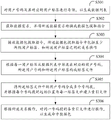
Referring to fig. 4, fig. 4 is a detailed diagram illustrating steps of creating an index file according to an embodiment of the present invention. The step of establishing the index file specifically includes:
in step S401, the user number in the tag file is sampled to generate a sampling number.
It is understood that the user numbers are generally randomly sampled according to a preset ratio, for example, 200 user numbers are randomly sampled from 10,000 user numbers according to a ratio of 2%.
In step S402, a plurality of number segments are generated according to the distribution of the sampling numbers, and the number of the sampling numbers in any one of the number segments is within a preset distribution interval.
Specifically, the present step includes:
(1) the sample number is mean segmented to generate a mean number segment. For example, the 200 sampling numbers are divided into 5 segments.
(2) And counting the distribution number of each sampling number in the average number section. Here, it is assumed that the number of distributions of 5 number segments is: the number of first number segments 22, the number of second number segments 41, the number of third number segments 39, the number of fourth number segments 44, and the number of fifth number segments 54.
(3) And judging whether the distribution quantity in any average number segment is within a preset distribution interval. Taking the preset distribution interval [ 35, 45 ] as an example, the first number segment and the fifth number segment are not in the preset distribution interval.
(4) And when the distribution quantity is within a preset distribution interval, adopting the average number segment. It is understood that, here, if the average number segment can be solved, the average number segment is preferentially adopted, and if the average number segment cannot be solved, the division is performed according to the step (5).
(5) And when the distribution quantity is not in the preset distribution interval, adjusting according to the distribution condition of the sampling numbers to generate a plurality of actual number segments. Still taking the above 5 number segments as an example, the number segments meeting the preset distribution interval are selected from the first number segment, and then the rest is done in the same way until 5 number segments are formed.
Therefore, the magnitude of the number can be evaluated in a layered sampling mode, and a proper number segment can be generated. It can be understood that the index file created by the appropriate number segment can better support multi-thread or multi-process data reading, and more efficiently utilize the data storage, data reading, and data calculation capabilities of the server itself.
In step S403, start positions of the number segments are obtained, the user numbers in the tag file are layered according to the start positions, and an index file corresponding to the tag file is established according to a layering result.
Referring to fig. 5, a schematic diagram of an index file according to an embodiment of the present invention is shown. The index file 144 records the start position of each number segment, and if a certain number segment does not exist, the index file is recorded as null. Taking column 1 and column 2 as examples, the corresponding label files 51 are 0-99, 52 is 100-.
In step S306, according to the relationship operation, each index file of the same number segment is operated to generate a hit data packet.
Specifically, the present step includes:
(1) obtaining the relational operation, wherein the relational operation comprises but is not limited to intersection, union and/or complement.
(1.1) the intersect operation comprises: inputting required tag Files, and finding out a file min _ file of a minimum user; and executing the following instructions:
for i ← 0to min _ file line count
do reads a row, finds the file with the maximum number (maxUser), and other files are sequentially read continuously according to the row sequence until the current number is larger than or equal to the maxUser;
if all files can find maxUser, the user hits, otherwise, the user does not hit.
(1.2) the union operation includes: inputting required tag Files, and finding out a max _ file of a maximum user; and executing the following instructions:
for i ← 0to max _ file line number
And d, reading one row, finding a file with the maximum number (minUser), sequentially and continuously reading other files according to the row sequence, wherein if the current number is smaller than maxUser, the current number is hit, and otherwise, the current number is not hit.
(1.3) the complementary set operation includes: inputting required tag Files, including: operating the file A and the comparison file B; and executing the following instructions:
for i ← 0to A number of lines
And do reads a row of users of the file A, and the file B sequentially continues to be read according to the row sequence until the current number is larger than or equal to the user.
If one of the current numbers is equal to the user, the current number is not hit, and otherwise, the current number is hit.
(2) And executing the relational operation on each index file of the same number segment through multiple threads or multiple processes to generate a hit data packet.
As shown in fig. 5, taking union as an example, union operation is performed on column 1 and column 2. In the number segments 0-100, the number segments hit are: null; in the 100-: 121, 125; in the number segment of 200-: null; in the number segment of 300-: 301; and so on, the finally generated data packet comprises 121,125,301 ….
It will be appreciated that hit operations in each number segment are typically processed by multiple threads or processes simultaneously to further increase processing speed.
The data processing method of the embodiment of the invention determines the number magnitude by hierarchical sampling, establishes the index file for the tag file based on the number magnitude, and performs relational operation on the index file, thereby reducing the time complexity of the operation, wherein the time complexity is O (n) and is basically equal to the speed of reading the file by a disk, and therefore, the processing speed of extracting a large number is improved.
Fig. 6 is a schematic structural diagram of a data processing apparatus according to an embodiment of the present invention. The data processing apparatus 600 of the present invention comprises: a receiving module 61, a tagging module 62, an indexing module 63, and a relationship module 64.
The receiving module 61 is configured to receive a data packet extraction instruction, where the data packet extraction instruction includes at least two groups of user tags and a relationship operation between the user tags.
The user tag is generated according to specific user attributes. For example, according to the gender attribute of the user, a user tag is generated: a sex male; for another example, according to the age attribute of the user, a user tag is generated: the age is 20-25 years. The relational operations include, but are not limited to: intersections, unions, and/or complements.
And the tag module 62 is connected to the receiving module 61 and configured to screen a corresponding tag file from the data list according to each user tag, where the tag file includes a user number corresponding to the user tag.
It will be appreciated that in the data list, the subscriber numbers to which the tags are directed are stored in columns. The subscriber numbers are arranged in a certain order, such as ascending or descending. It can be understood that if the number has English letters or phonetic letters, the number can be sorted according to the order of the letters; if the letters and the numbers are mixed, the priority of the letters and the numbers is preset.
And the indexing module 63 is connected to the label module 62 and is used for dividing the user number in the label file into a plurality of number segments.
In addition, the index module 63 may also create an index file for each tag file according to the starting position of each number segment. The index file records the start position of each number segment, and if a certain number segment does not exist, the index file records a null value null.
And the relation module 64 is connected to the indexing module 63 and is used for operating the user number of the same number segment according to the relation operation so as to generate a hit data packet.
And operating the user number of the uniform number segment according to the relationship operation, which can be understood as performing the relationship operation on each index file of the uniform number segment. The relational operations, including but not limited to: intersections, unions, and/or complements. It will be appreciated that hit operations in each number segment are typically processed by multiple threads or processes simultaneously to further increase processing speed.
The data processing device of the embodiment of the invention establishes the index file for the tag file and performs the relational operation on the index file, thereby reducing the time complexity of the operation, wherein the time complexity at this moment is O (n) and is basically equal to the speed of reading the file by a disk, and therefore, the processing speed during extracting the mass numbers is improved.
Fig. 7 is a schematic structural diagram of a data processing apparatus according to an embodiment of the present invention. The data processing apparatus 700 of the present invention includes: a storage module 71, a conversion module 72, a receiving module 73, a tagging module 74, an indexing module 75, and a relationship module 76.
The storage module 71 is configured to store the user number and the corresponding user tag thereof to generate a data list. The storage module 71 includes a column unit 711 and an ordering unit 712.
Specifically, the column unit 711 is configured to obtain a plurality of user numbers and corresponding user tags thereof, where each user number corresponds to a plurality of user tags; for example, the subscriber number of a certain subscriber is 131-XXXX-4625, and the subscriber tag is: age 36-50 years, sex men, high income, outdoor hobbies, etc.
The sorting unit 712 is configured to store the plurality of user numbers in a column by using the user tag, and sort the user numbers according to a character string of the user numbers to generate a data list.
The column storage refers to the aggregation storage of data of the same field in all records. The column storage has the advantages that the data of each field is accumulated and stored, only a few fields need to be read during query, the read data volume is greatly reduced, and intensive applications such as online analysis, data mining and the like can be better supported.
In the storage module 71, the user numbers guided by the user tags are stored in a column, and the related user numbers are arranged in an ascending order or a descending order. In addition, if English letters or phonetic letters appear in the user number, the user number can be sorted according to the order of the letters; if the letters and the numbers are mixed, the priority of the letters and the numbers is preset, such as: 1A lines 11, {1A, 1Y, 11}, and so on.
And completing the establishment of the data list, and further storing the data list in the corresponding database.
The conversion module 72 is configured to obtain a data requirement and convert the data requirement into a data packet extraction instruction. The conversion module 72 includes a representation unit 721 and an instruction unit 722.
It will be appreciated that the data requirements are based on the characteristics of the product or service to be promoted. While user portrayal is generally implicit in the data requirements.
The portrait unit 721 is used to generate a user portrait according to data requirements. It will be appreciated that the user representation process described above includes, but is not limited to, derivation, sampling, and verification steps.
The instruction unit 722 is configured to convert the user representation into a data packet extraction instruction. Here, the conversion process is as follows:
first, user attributes such as age, gender, income range, hobbies, occupation type, whether or not there are children, academic calendar, etc. are acquired from the data list.
The user representation is then matched to the user attributes to generate data packet extraction instructions. Wherein, the data packet extraction instruction comprises at least two groups of user tags and the relation operation between the user tags. The relational operations include, but are not limited to: intersections, unions, and/or complements.
And a receiving module 73, connected to the converting module 72, for receiving a data packet extraction instruction, where the data packet extraction instruction includes at least two groups of user tags and a relationship operation between the user tags.
The tag module 74 is connected to the receiving module 73 and the storage module 71, and configured to screen a corresponding tag file from the data list according to each user tag, where the tag file includes a user number corresponding to the user tag.
And in the data list, storing the user numbers guided by the user tags in a column, and arranging the user numbers according to a certain sequence. If English letters or phonetic letters appear in the numbers, the numbers can be sorted according to the order of the letters. If the letters and the numbers are mixed, the priority of the letters and the numbers is preset.
And an indexing module 75, connected to the label module 74, configured to divide the user number in the label file into a plurality of number segments, and establish an index file for each label file according to a start position of each number segment. Wherein the indexing module 75 comprises: a sampling unit 751, a halving unit 752, a statistics unit 753, a judging unit 754, an averaging unit 755, a layering unit 756, and a starting unit 757.
Specifically, the sampling unit 751 is configured to sample a user number in the tag file to generate a sampling number. It is understood that the user numbers are generally randomly sampled according to a preset ratio, for example, 200 user numbers are randomly sampled from 10,000 user numbers according to a ratio of 2%.
The dividing unit 752, coupled to the sampling unit 751, average-divides the sampled number to generate an average number segment. Wherein the halving unit 752 comprises: a uniform molecule unit 1, a statistic subunit 2, a judgment subunit 3, an average subunit 4, and an actual subunit 5.
Specifically, the number averaging unit 1 is configured to averagely segment the sampling number to generate an average number segment. For example, the above 200 sample numbers are divided into 5 segments.
And the statistical subunit 2 is configured to perform statistics on the distribution number of each sampling number in the average number segment. Here, it is assumed that the number of distributions of 5 number segments is: the number of first number segments 22, the number of second number segments 41, the number of third number segments 39, the number of fourth number segments 44, and the number of fifth number segments 54.
And the judging subunit 3 is configured to judge whether the distribution number in any average number segment is within a preset distribution interval. Here, taking the preset distribution interval as [ 35, 45 ] as an example, the first number segment and the fifth number segment are not in the preset distribution interval.
The average subunit 4 is configured to adopt the average number segment when the distribution number is within a preset distribution interval.
And the actual subunit 5 is configured to, when the distribution number is not within the preset distribution interval, adjust according to the distribution condition of the sampling number to generate a plurality of actual number segments. Still taking the above 5 number segments as an example, the number segments meeting the preset distribution interval are selected from the first number segment, and then the rest is done in the same way until 5 number segments are formed.
In this way, the number level can be evaluated in the bisection unit 752 by means of hierarchical sampling, and an appropriate number segment can be generated. It can be understood that the index file created by the appropriate number segment can better support multi-thread or multi-process data reading, and more efficiently utilize the data storage, data reading, and data calculation capabilities of the server itself.
The counting unit 753 is connected to the halving unit 752, and is configured to count the number of distribution of each sampling number in the average number segment.
The determining unit 754 is connected to the counting unit 753, and is configured to determine whether the distribution number in any average number segment is within a preset distribution interval.
The averaging unit 755 is connected to adopt the average number segment when the distribution number is within a preset distribution interval.
The hierarchical unit 756 is further configured to adjust according to a distribution condition of the sampling number when the distribution number is not within a preset distribution interval, so as to generate a plurality of actual number segments.
The number of sampling numbers in the average number segment provided by the averaging unit 755 and the actual number segment provided by the hierarchical unit 756 are within the preset distribution interval.
A start unit 757, connected to the average unit 755 and the layering unit 756, configured to obtain start positions of the multiple average number segments or actual number segments, layer the user numbers in the tag file according to the start positions, and establish an index file corresponding to the tag file according to a layering result.
And the relation module 76 is connected to the index module 75, and is configured to operate on each index file of the same number segment according to the relation operation to generate a hit data packet. Wherein the relationship module 76 includes a collection unit 761 and a hit unit 762.
Specifically, the collection unit 761 is configured to obtain the relationship operation, where the relationship operation includes: intersection, union, and/or complement.
The hit unit 762 is configured to perform the relationship operation on each index file of the same number segment through multiple threads or multiple processes, so as to generate a hit data packet.
It will be appreciated that hit operations in each number segment are typically processed by multiple threads or processes simultaneously to further increase processing speed.
In a specific implementation, each module and/or unit may be implemented as an independent entity, or may be combined arbitrarily and implemented as one or several entities, and specific implementations of each unit may refer to the foregoing method embodiments, and are not described herein again.
The data processing device of the embodiment of the invention determines the number magnitude by hierarchical sampling, establishes the index file for the tag file based on the number magnitude, and performs relational operation on the index file, thereby reducing the time complexity of the operation, wherein the time complexity at this moment is O (n) which is basically equal to the speed of reading the file by a disk, and therefore, the processing speed during extracting the mass numbers is improved.
The method and apparatus described in the above embodiments are further described in detail below by way of example.
Referring to fig. 8, a diagram of a specific application example of the data processing method and the processing apparatus according to the embodiment of the present invention is shown.
Taking the promotion of online games as an example, the data requirement 81 is described as follows: the picture is exquisite and the time consumption of each office is short.
The user image 82 is hidden in the data requirement 81, and is generated after combing: males between 25-35 years old.
Converting the user representation 82 into packet extraction instructions 83, comprising: two user tags 831, age male, age 25-35 years old, respectively; and relationship operation 832 between user tags 831, here exemplified by intersection #.
A plurality of data lists 841 are included in database 84. In data list 841, user tag 831 and user number 843 are stored in columns to form tag file 842, which can also be understood as columns 1 and 2 in FIG. 5. Wherein, the user number includes but is not limited to: a mobile phone number, a number of instant messaging software (such as a QQ number, a micro signal code and the like), an electronic mailbox number, a registration number of a video website and the like.
The user number 843 in the tag file 842 is divided into a plurality of number segments, and an index file 844 is created for each tag file according to the starting position of each number segment. The number segments can be generated according to hierarchical sampling so as to ensure that the number distribution in each number segment is more uniform, and then the processing time is shortest through multithreading or multiprocessing.
Each index file 844 for the same number segment is operated on to generate a hit packet 15 according to the relational operation 832. For example, in the number segment 0-99, the hit number is 9; in the 150-200 number segment, the hit number is 172, and the hit numbers of the other number segments are Null.
Finally, the information of the product or service is generalized to the user number in the named data package 85. Therefore, the processing speed and the information popularization accuracy during extraction of the mass numbers are improved.
Correspondingly, an embodiment of the present invention further provides a server, and as shown in fig. 9, the data processing method and the data processing apparatus are applied to the server 900. The server 900 includes: a processor 901 of one or more processing cores, memory 902 of one or more computer-readable storage media, Radio Frequency (RF) circuitry 903, a short-range wireless transmission (WiFi) module 904, a power supply 905, an input unit 906, and a display unit 907.
Those skilled in the art will appreciate that the above described architecture is not intended to be limiting and may include more or fewer components than those described, some components in combination, or a different arrangement of components. Wherein:
specifically, in the present embodiment, in the server 900, the processor 901 loads the executable file corresponding to the process of one or more application programs into the memory 902 according to the following instructions, and the processor 901 runs the application program stored in the memory 902, so as to implement various functions as follows: receiving a data packet extraction instruction, wherein the data packet extraction instruction comprises at least two groups of user tags and relationship operation between the user tags; screening a corresponding label file from a data list according to each user label, wherein the label file comprises a user number corresponding to the user label; dividing the user number in the tag file into a plurality of number segments, and establishing an index file for each tag file according to the initial position of each number segment; and operating each index file of the same number segment according to the relation operation to generate a hit data packet.
Preferably, the processor 901 is further configured to: sampling the user number in the tag file to generate a sampling number; generating a plurality of number segments according to the distribution condition of the sampling numbers, wherein the number of the sampling numbers in any number segment is within a preset distribution interval; and acquiring initial positions of the number segments, layering the user numbers in the label file according to the initial positions, and establishing an index file corresponding to the label file according to a layering result.
Preferably, the processor 901 is further configured to: averagely segmenting the sampling number to generate an average number segment; counting the distribution number of each sampling number in the average number section; judging whether the distribution quantity in any average number segment is within a preset distribution interval or not; when the distribution quantity is within a preset distribution interval, adopting the average number segment; and when the distribution quantity is not in the preset distribution interval, adjusting according to the distribution condition of the sampling numbers to generate a plurality of actual number segments.
Preferably, the processor 901 is further configured to: and acquiring a data demand, and converting the data demand into a data packet extraction instruction.
Preferably, the processor 901 is further configured to: obtaining the relationship operation, wherein the relationship operation comprises: intersections, unions, and/or complements; and executing the relational operation on each index file of the same number segment through multiple threads or multiple processes to generate a hit data packet.
Preferably, the processor 901 is further configured to: acquiring a plurality of user numbers and corresponding user tags thereof, wherein each user number corresponds to a plurality of user tags; and performing column storage on the plurality of user numbers through the user tags, and sequencing according to character strings of the user numbers to generate a data list.
As can be seen from the above, the server in the embodiment of the present invention determines the number magnitude by hierarchical sampling, then establishes the index file for the tag file based on the number magnitude, and performs a relational operation on the index file, thereby reducing the time complexity of the operation, where the time complexity is o (n), which is substantially equal to the speed of reading the file from the disk, and thus increasing the processing speed when extracting a large number of numbers.
The server provided by the embodiment of the invention belongs to the same concept as the data processing method and the data processing device in the embodiment.
It should be noted that, for the data processing method of the present invention, it can be understood by those skilled in the art that all or part of the processes in the embodiments of the present invention may be implemented by controlling the related hardware through a computer program, where the computer program may be stored in a computer readable storage medium, such as a memory of a server, and executed by at least one processor in the server, and during the execution process, the processes of the embodiments of the information sharing method may be included. The storage medium may be a magnetic disk, an optical disk, a Read Only Memory (ROM), a Random Access Memory (RAM), or the like.
In the data processing apparatus according to the embodiment of the present invention, each functional module may be integrated into one processing chip, or each module may exist alone physically, or two or more modules are integrated into one module. The integrated module can be realized in a hardware mode, and can also be realized in a software functional module mode. The integrated module, if implemented in the form of a software functional module and sold or used as a stand-alone product, may also be stored in a computer readable storage medium, such as a read-only memory, a magnetic or optical disk, or the like.
The data processing method, the data processing apparatus and the server provided by the embodiment of the present invention are described in detail above, and a specific example is applied in the present disclosure to explain the principle and the implementation of the present invention, and the description of the above embodiment is only used to help understanding the method and the core idea of the present invention; meanwhile, for those skilled in the art, according to the idea of the present invention, there may be variations in the specific embodiments and the application scope, and in summary, the content of the present specification should not be construed as a limitation to the present invention.
Claims (14)
1. A data processing method, comprising:
receiving a data packet extraction instruction, wherein the data packet extraction instruction comprises at least two groups of user tags and relation operation between the user tags, and the user tags indicate data requirements of products;
screening a corresponding label file from a data list according to each user label, wherein the label file comprises a user number corresponding to the user label;
dividing the user number in the label file into a plurality of number segments; and
and executing the relation operation on the user numbers in the same number segment aiming at each number segment to generate a hit data packet meeting the data requirement, wherein the relation operation is a logic operation aiming at the user numbers of the at least two groups of user labels.
2. The data processing method of claim 1, wherein:
dividing the user number in the tag file into a plurality of number segments, and then: establishing an index file for each label file according to the initial position of each number segment; and
according to the relation operation, the user number of the same number segment is operated to generate a hit data packet, and the execution is as follows: and operating each index file of the same number segment according to the relation operation to generate a hit data packet.
3. The data processing method of claim 2, wherein dividing the user number in the tag file into a plurality of number segments, and creating an index file for each tag file according to a starting position of each number segment comprises:
sampling the user number in the tag file to generate a sampling number;
generating a plurality of number segments according to the distribution condition of the sampling numbers, wherein the number of the sampling numbers in any number segment is within a preset distribution interval; and
and acquiring initial positions of the plurality of number segments, layering the user numbers in the label file according to the initial positions, and establishing an index file corresponding to the label file according to a layering result.
4. The data processing method of claim 3, wherein generating a plurality of number segments according to the distribution of the sampling numbers, the number of the sampling numbers in any one of the number segments being within a preset distribution interval comprises:
averagely segmenting the sampling number to generate an average number segment;
counting the distribution number of each sampling number in the average number section;
judging whether the distribution quantity in any average number segment is within a preset distribution interval or not;
when the distribution quantity is within a preset distribution interval, adopting the average number segment;
and when the distribution quantity is not in the preset distribution interval, adjusting according to the distribution condition of the sampling numbers to generate a plurality of actual number segments.
5. A data processing method according to any one of claims 2 to 4, wherein receiving a packet extraction instruction further comprises:
and acquiring a data demand, and converting the data demand into a data packet extraction instruction.
6. The data processing method of any one of claims 2 to 4, wherein operating on each index file of the same number segment according to the relational operation to generate a hit packet comprises:
obtaining the relationship operation, wherein the relationship operation comprises: intersection, union, and/or complement; and
and executing the relational operation on each index file of the same number segment through multiple threads or multiple processes to generate a hit data packet.
7. The data processing method of any of claims 2 to 4, wherein receiving the packet extraction instruction further comprises:
acquiring a plurality of user numbers and corresponding user tags thereof, wherein each user number corresponds to a plurality of user tags; and
and performing column storage on the plurality of user numbers through the user tags, and sequencing according to character strings of the user numbers to generate a data list.
8. A data processing apparatus, characterized by comprising:
the receiving module is used for receiving a data packet extraction instruction, wherein the data packet extraction instruction comprises at least two groups of user tags and relation operation between the user tags, and the user tags indicate the data requirements of products;
the tag module is used for screening out a corresponding tag file from a data list according to each user tag, wherein the tag file comprises a user number corresponding to the user tag;
the index module is used for dividing the user number in the label file into a plurality of number segments; and
and the relation module is used for executing the relation operation on the user numbers in the same number segment aiming at each number segment so as to generate a hit data packet meeting the data requirement, wherein the relation operation is a logical operation between the user numbers of the at least two groups of user labels.
9. The data processing apparatus of claim 8, wherein:
the index module is also used for dividing the user number in the label file into a plurality of number segments and establishing an index file for each label file according to the initial position of each number segment; and
and the relation module is also used for operating each index file of the same number segment according to the relation operation so as to generate a hit data packet.
10. The data processing apparatus of claim 9, wherein the indexing module comprises:
the sampling unit is used for sampling the user number in the label file to generate a sampling number;
the layering unit is used for generating a plurality of number segments according to the distribution condition of the sampling numbers, and the number of the sampling numbers in any number segment is within a preset distribution interval; and
and the starting unit is used for acquiring the starting positions of the number segments, layering the user numbers in the label file according to the starting positions and establishing an index file corresponding to the label file according to a layering result.
11. The data processing apparatus of claim 10, wherein the indexing module further comprises:
the bisection unit is connected with the sampling unit and averagely divides the sampling number to generate an average number segment;
the statistical unit is used for counting the distribution quantity of each sampling number in the average number section;
the judging unit is used for judging whether the distribution quantity in any average number segment is within a preset distribution interval or not;
the averaging unit is used for adopting the average number segment when the distribution quantity is in a preset distribution interval; and
and the layering unit is also used for adjusting according to the distribution condition of the sampling numbers when the distribution quantity is not in a preset distribution interval so as to generate a plurality of actual number segments.
12. The data processing apparatus of any of claims 9 to 11, further comprising:
and the conversion module is used for acquiring the data requirement and converting the data requirement into a data packet extraction instruction.
13. A data processing apparatus as claimed in any of claims 9 to 11, wherein the relationship module comprises:
a collecting unit, configured to obtain the relationship operation, where the relationship operation includes: intersection, union, and/or complement; and
and the hit unit is used for executing the relation operation on each index file of the same number segment through multithreading or multiprocessing so as to generate a hit data packet.
14. A data processing apparatus according to any of claims 9 to 11, further comprising a storage module, the storage module comprising:
the device comprises a column unit, a first storage unit and a second storage unit, wherein the column unit is used for acquiring a plurality of user numbers and corresponding user tags thereof, and each user number corresponds to a plurality of user tags; and
and the sequencing unit is used for performing column storage on the plurality of user numbers through the user tags and sequencing according to the character strings of the user numbers to generate the data list.
Priority Applications (1)
| Application Number | Priority Date | Filing Date | Title |
|---|---|---|---|
| CN201710199170.0A CN107038224B (en) | 2017-03-29 | 2017-03-29 | Data processing method and data processing device |
Applications Claiming Priority (1)
| Application Number | Priority Date | Filing Date | Title |
|---|---|---|---|
| CN201710199170.0A CN107038224B (en) | 2017-03-29 | 2017-03-29 | Data processing method and data processing device |
Publications (2)
| Publication Number | Publication Date |
|---|---|
| CN107038224A CN107038224A (en) | 2017-08-11 |
| CN107038224B true CN107038224B (en) | 2022-09-30 |
Family
ID=59533927
Family Applications (1)
| Application Number | Title | Priority Date | Filing Date |
|---|---|---|---|
| CN201710199170.0A Active CN107038224B (en) | 2017-03-29 | 2017-03-29 | Data processing method and data processing device |
Country Status (1)
| Country | Link |
|---|---|
| CN (1) | CN107038224B (en) |
Families Citing this family (5)
| Publication number | Priority date | Publication date | Assignee | Title |
|---|---|---|---|---|
| CN110750353B (en) * | 2018-07-24 | 2025-10-10 | 腾讯科技(北京)有限公司 | Number issuing method, device, number issuing system and computer program medium |
| CN111177369A (en) * | 2019-11-19 | 2020-05-19 | 厦门二五八网络科技集团股份有限公司 | Method and device for automatically classifying labels of articles |
| CN113962655B (en) * | 2021-10-21 | 2025-12-05 | 广东电网有限责任公司 | A method, apparatus and system for indexing and managing power grid data |
| CN115632877B (en) * | 2022-12-01 | 2023-04-07 | 成都九洲电子信息系统股份有限公司 | Large-scale PCAP data correctness verification method, system and storage medium |
| CN116450931B (en) * | 2023-03-24 | 2024-04-09 | 广州易尊网络科技股份有限公司 | Hot-search word throwing method, hot-search word throwing device and computer storage medium |
Citations (6)
| Publication number | Priority date | Publication date | Assignee | Title |
|---|---|---|---|---|
| CN101160599A (en) * | 2004-12-17 | 2008-04-09 | 塔科达有限公司 | Audience targeting with universal profile synchronization |
| CN101567898A (en) * | 2008-04-25 | 2009-10-28 | 中国移动通信集团公司 | Method, system and device for advertisement putting |
| CN103186553A (en) * | 2011-12-28 | 2013-07-03 | 北京新媒传信科技有限公司 | Query method and system for service products in value-added service |
| CN103455525A (en) * | 2012-06-05 | 2013-12-18 | 百度在线网络技术(北京)有限公司 | Method and equipment for determining promoted account statuses based on search and promotion behaviors of users |
| CN104378479A (en) * | 2013-08-16 | 2015-02-25 | 北京搜狗信息服务有限公司 | Phone number providing method and system |
| CN106033415A (en) * | 2015-03-09 | 2016-10-19 | 深圳市腾讯计算机系统有限公司 | A text content recommendation method and device |
Family Cites Families (15)
| Publication number | Priority date | Publication date | Assignee | Title |
|---|---|---|---|---|
| AU5997901A (en) * | 2000-05-16 | 2001-11-26 | John Taschereau | Method and system for providing geographically targeted information and advertising |
| JP4896227B2 (en) * | 2008-03-21 | 2012-03-14 | 株式会社電通 | Advertisement medium determining apparatus and advertisement medium determining method |
| US20100268661A1 (en) * | 2009-04-20 | 2010-10-21 | 4-Tell, Inc | Recommendation Systems |
| CN102789619B (en) * | 2012-06-29 | 2016-06-15 | 华为软件技术有限公司 | Advertisement fixing is to the method thrown in and advertising platform equipment |
| CN103237236B (en) * | 2013-04-28 | 2016-06-29 | 河南有线电视网络集团有限公司 | A kind of information processing method, BOSS system and information processing system |
| CN104239331B (en) * | 2013-06-19 | 2018-10-09 | 阿里巴巴集团控股有限公司 | A kind of method and apparatus for realizing comment search engine sequence |
| CN104462141B (en) * | 2013-09-24 | 2018-05-22 | 中国移动通信集团重庆有限公司 | Method, system and the storage engines device of a kind of data storage and inquiry |
| CN104090888B (en) * | 2013-12-10 | 2016-05-11 | 深圳市腾讯计算机系统有限公司 | A kind of analytical method of user behavior data and device |
| CN104660581A (en) * | 2014-11-28 | 2015-05-27 | 华为技术有限公司 | Method, device and system for determining target users for business strategy |
| WO2016106571A1 (en) * | 2014-12-30 | 2016-07-07 | Yahoo! Inc. | Systems and methods for building keyword searchable audience based on performance ranking |
| EP3079116A1 (en) * | 2015-04-10 | 2016-10-12 | Tata Consultancy Services Limited | System and method for generating recommendations |
| CN106326317A (en) * | 2015-07-09 | 2017-01-11 | 中国移动通信集团山西有限公司 | Data processing method and device |
| JP2017033266A (en) * | 2015-07-31 | 2017-02-09 | セイコーエプソン株式会社 | Electronic apparatus, system, information notification method, and information notification program |
| CN106470149B (en) * | 2015-08-20 | 2020-04-21 | 腾讯科技(深圳)有限公司 | Message sending method and device |
| CN105426260B (en) * | 2015-10-30 | 2018-08-21 | 北京航天自动控制研究所 | A transparent inter-process communication system and method supporting distributed systems |
-
2017
- 2017-03-29 CN CN201710199170.0A patent/CN107038224B/en active Active
Patent Citations (6)
| Publication number | Priority date | Publication date | Assignee | Title |
|---|---|---|---|---|
| CN101160599A (en) * | 2004-12-17 | 2008-04-09 | 塔科达有限公司 | Audience targeting with universal profile synchronization |
| CN101567898A (en) * | 2008-04-25 | 2009-10-28 | 中国移动通信集团公司 | Method, system and device for advertisement putting |
| CN103186553A (en) * | 2011-12-28 | 2013-07-03 | 北京新媒传信科技有限公司 | Query method and system for service products in value-added service |
| CN103455525A (en) * | 2012-06-05 | 2013-12-18 | 百度在线网络技术(北京)有限公司 | Method and equipment for determining promoted account statuses based on search and promotion behaviors of users |
| CN104378479A (en) * | 2013-08-16 | 2015-02-25 | 北京搜狗信息服务有限公司 | Phone number providing method and system |
| CN106033415A (en) * | 2015-03-09 | 2016-10-19 | 深圳市腾讯计算机系统有限公司 | A text content recommendation method and device |
Non-Patent Citations (1)
| Title |
|---|
| 基于用户动态兴趣与变权隐私保护的交叉推荐研究;朱慧;《中国优秀博硕士学位论文全文数据库(博士) 经济与管理科学辑》;20160815(第08期);J145-12 * |
Also Published As
| Publication number | Publication date |
|---|---|
| CN107038224A (en) | 2017-08-11 |
Similar Documents
| Publication | Publication Date | Title |
|---|---|---|
| CN107038224B (en) | Data processing method and data processing device | |
| US20240045898A1 (en) | Search result display method, apparatus and device, and medium | |
| CN106897428B (en) | Text classification feature extraction method and text classification method and device | |
| US10649770B2 (en) | κ-selection using parallel processing | |
| JP7615360B2 (en) | Content search method, device, equipment, and medium | |
| CN109829069B (en) | Image auditing processing method and device, electronic equipment and storage medium | |
| CN113079417B (en) | Method, device, equipment and storage medium for generating barrage | |
| CN113111197B (en) | Multimedia content recommendation method, device, equipment and storage medium | |
| US20150121200A1 (en) | Text processing apparatus, text processing method, and computer program product | |
| CN106708813A (en) | Title processing method and device | |
| WO2022252822A1 (en) | Information presentation method and apparatus, and device and medium | |
| CN104978045A (en) | Chinese character input method and device | |
| CN112818692A (en) | Named entity recognition and processing method, device, equipment and readable storage medium | |
| CN113435523B (en) | Method, device, electronic device and storage medium for predicting content click-through rate | |
| CN112825089A (en) | Article recommendation method, article recommendation device, article recommendation equipment and storage medium | |
| CN111179007A (en) | Display information processing method and device and electronic equipment | |
| CN110971918B (en) | Live broadcast data sorting method, server and device | |
| WO2019056502A1 (en) | Variety game result prediction method and apparatus, and storage medium | |
| CN116150474A (en) | Comment sorting method, device, electronic device and readable storage medium | |
| US20150331886A1 (en) | Determining images of article for extraction | |
| CN109829033B (en) | Data display method and terminal equipment | |
| CN118070923A (en) | Model training data generation method, device, storage medium and electronic device | |
| US12299049B2 (en) | Information processing method and apparatus, device, and medium | |
| US20220164377A1 (en) | Method and apparatus for distributing content across platforms, device and storage medium | |
| CN110941638A (en) | Application classification rule base construction method, application classification method and device |
Legal Events
| Date | Code | Title | Description |
|---|---|---|---|
| PB01 | Publication | ||
| PB01 | Publication | ||
| SE01 | Entry into force of request for substantive examination | ||
| SE01 | Entry into force of request for substantive examination | ||
| GR01 | Patent grant | ||
| GR01 | Patent grant |