CN1070108C - Gravure roll and process for uniform coating gradient - Google Patents
Gravure roll and process for uniform coating gradient Download PDFInfo
- Publication number
- CN1070108C CN1070108C CN95192291A CN95192291A CN1070108C CN 1070108 C CN1070108 C CN 1070108C CN 95192291 A CN95192291 A CN 95192291A CN 95192291 A CN95192291 A CN 95192291A CN 1070108 C CN1070108 C CN 1070108C
- Authority
- CN
- China
- Prior art keywords
- cells
- gravure roll
- volume
- coating
- cell
- Prior art date
- Legal status (The legal status is an assumption and is not a legal conclusion. Google has not performed a legal analysis and makes no representation as to the accuracy of the status listed.)
- Expired - Fee Related
Links
Images




Classifications
-
- B—PERFORMING OPERATIONS; TRANSPORTING
- B41—PRINTING; LINING MACHINES; TYPEWRITERS; STAMPS
- B41F—PRINTING MACHINES OR PRESSES
- B41F13/00—Common details of rotary presses or machines
- B41F13/08—Cylinders
- B41F13/10—Forme cylinders
- B41F13/11—Gravure cylinders
-
- G—PHYSICS
- G03—PHOTOGRAPHY; CINEMATOGRAPHY; ANALOGOUS TECHNIQUES USING WAVES OTHER THAN OPTICAL WAVES; ELECTROGRAPHY; HOLOGRAPHY
- G03F—PHOTOMECHANICAL PRODUCTION OF TEXTURED OR PATTERNED SURFACES, e.g. FOR PRINTING, FOR PROCESSING OF SEMICONDUCTOR DEVICES; MATERIALS THEREFOR; ORIGINALS THEREFOR; APPARATUS SPECIALLY ADAPTED THEREFOR
- G03F5/00—Screening processes; Screens therefor
- G03F5/20—Screening processes; Screens therefor using screens for gravure printing
-
- B—PERFORMING OPERATIONS; TRANSPORTING
- B05—SPRAYING OR ATOMISING IN GENERAL; APPLYING FLUENT MATERIALS TO SURFACES, IN GENERAL
- B05C—APPARATUS FOR APPLYING FLUENT MATERIALS TO SURFACES, IN GENERAL
- B05C1/00—Apparatus in which liquid or other fluent material is applied to the surface of the work by contact with a member carrying the liquid or other fluent material, e.g. a porous member loaded with a liquid to be applied as a coating
- B05C1/04—Apparatus in which liquid or other fluent material is applied to the surface of the work by contact with a member carrying the liquid or other fluent material, e.g. a porous member loaded with a liquid to be applied as a coating for applying liquid or other fluent material to work of indefinite length
- B05C1/08—Apparatus in which liquid or other fluent material is applied to the surface of the work by contact with a member carrying the liquid or other fluent material, e.g. a porous member loaded with a liquid to be applied as a coating for applying liquid or other fluent material to work of indefinite length using a roller or other rotating member which contacts the work along a generating line
- B05C1/0808—Details thereof, e.g. surface characteristics
-
- B—PERFORMING OPERATIONS; TRANSPORTING
- B41—PRINTING; LINING MACHINES; TYPEWRITERS; STAMPS
- B41C—PROCESSES FOR THE MANUFACTURE OR REPRODUCTION OF PRINTING SURFACES
- B41C1/00—Forme preparation
- B41C1/02—Engraving; Heads therefor
- B41C1/04—Engraving; Heads therefor using heads controlled by an electric information signal
- B41C1/045—Mechanical engraving heads
-
- B—PERFORMING OPERATIONS; TRANSPORTING
- B41—PRINTING; LINING MACHINES; TYPEWRITERS; STAMPS
- B41C—PROCESSES FOR THE MANUFACTURE OR REPRODUCTION OF PRINTING SURFACES
- B41C1/00—Forme preparation
- B41C1/02—Engraving; Heads therefor
- B41C1/04—Engraving; Heads therefor using heads controlled by an electric information signal
- B41C1/05—Heat-generating engraving heads, e.g. laser beam, electron beam
-
- B—PERFORMING OPERATIONS; TRANSPORTING
- B41—PRINTING; LINING MACHINES; TYPEWRITERS; STAMPS
- B41M—PRINTING, DUPLICATING, MARKING, OR COPYING PROCESSES; COLOUR PRINTING
- B41M1/00—Inking and printing with a printer's forme
- B41M1/10—Intaglio printing ; Gravure printing
-
- B—PERFORMING OPERATIONS; TRANSPORTING
- B41—PRINTING; LINING MACHINES; TYPEWRITERS; STAMPS
- B41N—PRINTING PLATES OR FOILS; MATERIALS FOR SURFACES USED IN PRINTING MACHINES FOR PRINTING, INKING, DAMPING, OR THE LIKE; PREPARING SUCH SURFACES FOR USE AND CONSERVING THEM
- B41N1/00—Printing plates or foils; Materials therefor
- B41N1/04—Printing plates or foils; Materials therefor metallic
- B41N1/06—Printing plates or foils; Materials therefor metallic for relief printing or intaglio printing
-
- B—PERFORMING OPERATIONS; TRANSPORTING
- B41—PRINTING; LINING MACHINES; TYPEWRITERS; STAMPS
- B41N—PRINTING PLATES OR FOILS; MATERIALS FOR SURFACES USED IN PRINTING MACHINES FOR PRINTING, INKING, DAMPING, OR THE LIKE; PREPARING SUCH SURFACES FOR USE AND CONSERVING THEM
- B41N1/00—Printing plates or foils; Materials therefor
- B41N1/16—Curved printing plates, especially cylinders
-
- Y—GENERAL TAGGING OF NEW TECHNOLOGICAL DEVELOPMENTS; GENERAL TAGGING OF CROSS-SECTIONAL TECHNOLOGIES SPANNING OVER SEVERAL SECTIONS OF THE IPC; TECHNICAL SUBJECTS COVERED BY FORMER USPC CROSS-REFERENCE ART COLLECTIONS [XRACs] AND DIGESTS
- Y10—TECHNICAL SUBJECTS COVERED BY FORMER USPC
- Y10S—TECHNICAL SUBJECTS COVERED BY FORMER USPC CROSS-REFERENCE ART COLLECTIONS [XRACs] AND DIGESTS
- Y10S428/00—Stock material or miscellaneous articles
- Y10S428/913—Material designed to be responsive to temperature, light, moisture
-
- Y—GENERAL TAGGING OF NEW TECHNOLOGICAL DEVELOPMENTS; GENERAL TAGGING OF CROSS-SECTIONAL TECHNOLOGIES SPANNING OVER SEVERAL SECTIONS OF THE IPC; TECHNICAL SUBJECTS COVERED BY FORMER USPC CROSS-REFERENCE ART COLLECTIONS [XRACs] AND DIGESTS
- Y10—TECHNICAL SUBJECTS COVERED BY FORMER USPC
- Y10S—TECHNICAL SUBJECTS COVERED BY FORMER USPC CROSS-REFERENCE ART COLLECTIONS [XRACs] AND DIGESTS
- Y10S428/00—Stock material or miscellaneous articles
- Y10S428/918—Material abnormally transparent
-
- Y—GENERAL TAGGING OF NEW TECHNOLOGICAL DEVELOPMENTS; GENERAL TAGGING OF CROSS-SECTIONAL TECHNOLOGIES SPANNING OVER SEVERAL SECTIONS OF THE IPC; TECHNICAL SUBJECTS COVERED BY FORMER USPC CROSS-REFERENCE ART COLLECTIONS [XRACs] AND DIGESTS
- Y10—TECHNICAL SUBJECTS COVERED BY FORMER USPC
- Y10T—TECHNICAL SUBJECTS COVERED BY FORMER US CLASSIFICATION
- Y10T29/00—Metal working
- Y10T29/49—Method of mechanical manufacture
- Y10T29/49544—Roller making
- Y10T29/4956—Fabricating and shaping roller work contacting surface element
-
- Y—GENERAL TAGGING OF NEW TECHNOLOGICAL DEVELOPMENTS; GENERAL TAGGING OF CROSS-SECTIONAL TECHNOLOGIES SPANNING OVER SEVERAL SECTIONS OF THE IPC; TECHNICAL SUBJECTS COVERED BY FORMER USPC CROSS-REFERENCE ART COLLECTIONS [XRACs] AND DIGESTS
- Y10—TECHNICAL SUBJECTS COVERED BY FORMER USPC
- Y10T—TECHNICAL SUBJECTS COVERED BY FORMER US CLASSIFICATION
- Y10T428/00—Stock material or miscellaneous articles
- Y10T428/24—Structurally defined web or sheet [e.g., overall dimension, etc.]
- Y10T428/24479—Structurally defined web or sheet [e.g., overall dimension, etc.] including variation in thickness
-
- Y—GENERAL TAGGING OF NEW TECHNOLOGICAL DEVELOPMENTS; GENERAL TAGGING OF CROSS-SECTIONAL TECHNOLOGIES SPANNING OVER SEVERAL SECTIONS OF THE IPC; TECHNICAL SUBJECTS COVERED BY FORMER USPC CROSS-REFERENCE ART COLLECTIONS [XRACs] AND DIGESTS
- Y10—TECHNICAL SUBJECTS COVERED BY FORMER USPC
- Y10T—TECHNICAL SUBJECTS COVERED BY FORMER US CLASSIFICATION
- Y10T428/00—Stock material or miscellaneous articles
- Y10T428/24—Structurally defined web or sheet [e.g., overall dimension, etc.]
- Y10T428/24802—Discontinuous or differential coating, impregnation or bond [e.g., artwork, printing, retouched photograph, etc.]
- Y10T428/24893—Discontinuous or differential coating, impregnation or bond [e.g., artwork, printing, retouched photograph, etc.] including particulate material
- Y10T428/24901—Discontinuous or differential coating, impregnation or bond [e.g., artwork, printing, retouched photograph, etc.] including particulate material including coloring matter
-
- Y—GENERAL TAGGING OF NEW TECHNOLOGICAL DEVELOPMENTS; GENERAL TAGGING OF CROSS-SECTIONAL TECHNOLOGIES SPANNING OVER SEVERAL SECTIONS OF THE IPC; TECHNICAL SUBJECTS COVERED BY FORMER USPC CROSS-REFERENCE ART COLLECTIONS [XRACs] AND DIGESTS
- Y10—TECHNICAL SUBJECTS COVERED BY FORMER USPC
- Y10T—TECHNICAL SUBJECTS COVERED BY FORMER US CLASSIFICATION
- Y10T428/00—Stock material or miscellaneous articles
- Y10T428/24—Structurally defined web or sheet [e.g., overall dimension, etc.]
- Y10T428/24802—Discontinuous or differential coating, impregnation or bond [e.g., artwork, printing, retouched photograph, etc.]
- Y10T428/24934—Discontinuous or differential coating, impregnation or bond [e.g., artwork, printing, retouched photograph, etc.] including paper layer
-
- Y—GENERAL TAGGING OF NEW TECHNOLOGICAL DEVELOPMENTS; GENERAL TAGGING OF CROSS-SECTIONAL TECHNOLOGIES SPANNING OVER SEVERAL SECTIONS OF THE IPC; TECHNICAL SUBJECTS COVERED BY FORMER USPC CROSS-REFERENCE ART COLLECTIONS [XRACs] AND DIGESTS
- Y10—TECHNICAL SUBJECTS COVERED BY FORMER USPC
- Y10T—TECHNICAL SUBJECTS COVERED BY FORMER US CLASSIFICATION
- Y10T428/00—Stock material or miscellaneous articles
- Y10T428/24—Structurally defined web or sheet [e.g., overall dimension, etc.]
- Y10T428/24942—Structurally defined web or sheet [e.g., overall dimension, etc.] including components having same physical characteristic in differing degree
- Y10T428/2495—Thickness [relative or absolute]
-
- Y—GENERAL TAGGING OF NEW TECHNOLOGICAL DEVELOPMENTS; GENERAL TAGGING OF CROSS-SECTIONAL TECHNOLOGIES SPANNING OVER SEVERAL SECTIONS OF THE IPC; TECHNICAL SUBJECTS COVERED BY FORMER USPC CROSS-REFERENCE ART COLLECTIONS [XRACs] AND DIGESTS
- Y10—TECHNICAL SUBJECTS COVERED BY FORMER USPC
- Y10T—TECHNICAL SUBJECTS COVERED BY FORMER US CLASSIFICATION
- Y10T428/00—Stock material or miscellaneous articles
- Y10T428/26—Web or sheet containing structurally defined element or component, the element or component having a specified physical dimension
- Y10T428/269—Web or sheet containing structurally defined element or component, the element or component having a specified physical dimension including synthetic resin or polymer layer or component
-
- Y—GENERAL TAGGING OF NEW TECHNOLOGICAL DEVELOPMENTS; GENERAL TAGGING OF CROSS-SECTIONAL TECHNOLOGIES SPANNING OVER SEVERAL SECTIONS OF THE IPC; TECHNICAL SUBJECTS COVERED BY FORMER USPC CROSS-REFERENCE ART COLLECTIONS [XRACs] AND DIGESTS
- Y10—TECHNICAL SUBJECTS COVERED BY FORMER USPC
- Y10T—TECHNICAL SUBJECTS COVERED BY FORMER US CLASSIFICATION
- Y10T428/00—Stock material or miscellaneous articles
- Y10T428/31504—Composite [nonstructural laminate]
- Y10T428/31786—Of polyester [e.g., alkyd, etc.]
- Y10T428/31797—Next to addition polymer from unsaturated monomers
-
- Y—GENERAL TAGGING OF NEW TECHNOLOGICAL DEVELOPMENTS; GENERAL TAGGING OF CROSS-SECTIONAL TECHNOLOGIES SPANNING OVER SEVERAL SECTIONS OF THE IPC; TECHNICAL SUBJECTS COVERED BY FORMER USPC CROSS-REFERENCE ART COLLECTIONS [XRACs] AND DIGESTS
- Y10—TECHNICAL SUBJECTS COVERED BY FORMER USPC
- Y10T—TECHNICAL SUBJECTS COVERED BY FORMER US CLASSIFICATION
- Y10T428/00—Stock material or miscellaneous articles
- Y10T428/31504—Composite [nonstructural laminate]
- Y10T428/31855—Of addition polymer from unsaturated monomers
- Y10T428/3188—Next to cellulosic
- Y10T428/31895—Paper or wood
Landscapes
- Engineering & Computer Science (AREA)
- Manufacturing & Machinery (AREA)
- Physics & Mathematics (AREA)
- Mechanical Engineering (AREA)
- General Physics & Mathematics (AREA)
- Plasma & Fusion (AREA)
- Optics & Photonics (AREA)
- Application Of Or Painting With Fluid Materials (AREA)
- Coating Apparatus (AREA)
- Printing Methods (AREA)
- Manufacturing Of Magnetic Record Carriers (AREA)
- Glass Compositions (AREA)
- Adornments (AREA)
- Dental Preparations (AREA)
- Manufacture Or Reproduction Of Printing Formes (AREA)
Abstract
Description
本发明涉及以一种渐变涂层凹版涂布或印刷物体表面的方法。The present invention relates to a method of gravure coating or printing the surface of an object with a graded coating.
本发明是使用凹版印刷或涂布而在片基上生成一种连续渐变涂层的方法,而且特别是,在透明片基上生成一种渐变的颜色。由此产生的产品例如那些被用于建筑或汽车的着色的窗户薄膜,顶部薄膜的颜色阶调很暗,用于遮阳,以下部分的颜色阶调逐渐变浅。它有许多其它的应用,如专用照明设备或光学装置,也用于不透明涂层或不透明的片基。The present invention is a method of producing a continuous gradient coating on a support, and in particular, a gradient of color on a transparent support, using gravure printing or coating. The resulting products are tinted window films such as those used in buildings or cars, with a darker shade of the top film for sun shading and progressively lighter shades below. It has many other applications, such as special lighting or optics, and is also used in opaque coatings or opaque substrates.
在凹印过程中,凹版辊(即凹版滚筒)的表面带有许多被称为网穴的小的孔穴,滚筒旋转,与一个供墨装置和一个承印物卷筒(如纸或聚酯)接触。网穴从供墨装置中带走油墨并把油墨转移到卷筒上。凹印对于印量大的印刷或涂布应用是相当经济的,而且既然由此能生成合适的印刷产品,那么凹印也不失为是一种良好的技术。In the gravure printing process, the gravure roll (or gravure cylinder) has a surface with many small holes called cells, and the cylinder rotates in contact with an inking unit and a web of substrate (such as paper or polyester) . The cells take ink from the ink supply and transfer it to the web. Gravure printing is quite economical for high-volume printing or coating applications, and since it produces suitable printed products, gravure printing is also a good technique.
在大多数凹印过程中,上述网穴中充满油墨后,用刮墨刀片刮去凹版辊(有时是印版)表面上多余的油墨。因此,每个网穴的深度和大小决定了能被转移到承印(或被涂布)表面上的墨(或其它液体)的量。In most gravure printing processes, after the aforementioned cells are filled with ink, a doctor blade is used to scrape excess ink off the surface of the gravure roll (and sometimes the printing plate). Thus, the depth and size of each cell determines the amount of ink (or other liquid) that can be transferred to the printing (or coated) surface.
一个网穴有两个大小分量。第一个是它的截面积,截面积常用沿凹版辊每英寸上网穴的线数(线密度)来描述。线密度越高,单个网穴越小。第二个分量是网穴的体积,体积决定于凹版辊上网穴的截面积和网穴的深度。A cell has two size components. The first is its cross-sectional area, which is often described by the number of lines (line density) of holes per inch along the gravure roll. The higher the linear density, the smaller the individual cell. The second component is the volume of the cell, which depends on the cross-sectional area of the cell on the gravure roll and the depth of the cell.
产生颜色渐变的传统的凹印方法是围绕凹印滚筒的圆周,从开始到最后减小单个网穴的体积。较大的网穴接收并且分配较多的油墨。较小的网穴相应地接收并且转移较少的油墨。因此,由这样的凹版辊印刷的承印物卷筒将呈现出从较多油墨减少到较少油墨的图样;即,一种渐变的颜色。The traditional gravure method of producing color gradients is to reduce the volume of individual cells from the beginning to the end around the circumference of the gravure cylinder. Larger cells receive and dispense more ink. Smaller cells correspondingly receive and transfer less ink. Thus, a web of substrate printed by such a gravure roll will exhibit a pattern that decreases from more ink to less ink; ie, a gradient of colour.
不管怎样,传统技术容易产生一些颜色阶调不同的部分。一般说来,第一个部分是由体积最大的网穴产生的而且看上去基本是实地。随网穴体积的减小,下一部分表现为一个带有不连续的空白点的连续的颜色区域。随着图样的变化,其外观变为带有不连续的印刷网点的连续的空白区域,最后一部分表现为一个连续的空白区域。However, conventional techniques tend to produce parts with different color tones. Generally speaking, the first part is generated by the largest cell and looks basically solid. As the cell volume decreases, the next part appears as a continuous color area with discrete blank spots. As the pattern changes, its appearance becomes a continuous blank area with discontinuous printing dots, and the last part appears as a continuous blank area.
但是,当在透明片基上用传统凹印工艺生成这种渐变时,一个光学问题产生了。具体地说,在透明片基上,该渐变的中间部分(带有空白点的印刷区域)产生一种光学霾雾。比如,在一个无色的聚酯片基上印刷一个透明的着色的部分,最暗的着色的部分,明显有印刷网点的部分和空白部分在光学上是清晰的。但是在空白点部分会生成霾雾。对于很多应用来说,这种霾雾部分是不期望的或不合格的。However, an optical problem arises when producing such gradients using conventional gravure printing on transparent substrates. Specifically, on a transparent base, the middle portion of the gradient (printed area with blank dots) produces an optical haze. For example, printing a transparent colored part on a clear polyester base, the darkest colored part, the part with distinct printed dots and the blank part are optically clear. However, haze will be generated in the blank part. For many applications, such haze components are undesirable or unacceptable.
因此,本发明的一个目的就是在片基上生成一种连续渐变的涂层,而且尤其在透明表面上,使用凹版辊生成一个光学上清晰的连续渐变的颜色。It is therefore an object of the present invention to produce a continuous gradient of coatings on a support, and especially on transparent surfaces, using gravure rolls to produce an optically distinct continuous gradient of color.
本发明通过一种能在片基上生成这种均匀连续渐变的涂层的凹版辊来实现这个目的。其中该凹版辊包括一系列排列在圆周线密度区域中的包含液体的网穴。从一个区域到另一个区域,线密度逐渐增加,而且在每个区域中,网穴的体积逐渐减小。在一个区域最后部分,网穴的体积实际上与相邻区域起始部分的网穴的体积一致。The present invention achieves this object by means of a gravure roll capable of producing such uniform, continuously graded coatings on the substrate. Therein the gravure roll comprises a series of liquid-containing cells arranged in a circumferential linear density zone. From one area to another, the linear density gradually increases, and in each area, the volume of the cells gradually decreases. In the last part of a zone, the volume of the cells is practically identical to the volume of the cells in the beginning part of the adjacent zone.
另一方面,本发明是一种在片基上生成均匀、连续渐变的涂层的方法。In another aspect, the invention is a method of producing a uniform, continuously graded coating on a substrate.
再一方面,本发明包括一种能在片基上生成这种均匀连续渐变的涂层的凹版辊的制作方法。In yet another aspect, the invention includes a method of making a gravure roll capable of producing such uniform, continuously graded coatings on a substrate.
通过结合表现优选的和示范的实施例的附图,考虑以下对本发明的详细描述,本发明的上述及其它目的,优点和特性,以及实现上述各点的方式将变得更加明了。其中附图的特征在于:The above and other objects, advantages and characteristics of the present invention, and the manner of achieving the above points will become more apparent by considering the following detailed description of the invention in conjunction with the accompanying drawings showing preferred and exemplary embodiments. The accompanying drawings are characterized by:
图1是本发明的分成区域的凹版辊的原理图。Figure 1 is a schematic diagram of a zoned gravure roll of the present invention.
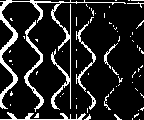
图2-25是本发明的凹版辊的不同部分的光学显微照片。2-25 are optical micrographs of different portions of a gravure roll of the present invention.
本发明提供的凹版辊可在片基上产生均匀连续的渐变涂层。图2-25的光学显微照片中很好地表现了这些网穴。图1是其上带有7个区域31-37的该凹版辊30的示意图。如图1所示,圆周线密度区域的线密度从一个区域到另一个区域逐渐增加。例如,在图1所示的实施例中,区域31的线密度是150线/英寸(59线/厘米)。这个密度在每个区域上以25线/英寸(9.8线/厘米)递增,直至线密度是300线/英寸(118线/厘米)的区域37。在31-37的每个区域中,在线密度保持不变的同时,网穴的体积逐渐减小。尽管如此,在一个区域,如区域31的最后部分和下一个区域32的起始部分,网穴的体积实际是彼此相同的。换句话说,区域31中最小的网穴体积实际上与区域32起始部分的最大网穴的体积一样。在每个各自相邻的区域之间都保持着同样的关系。The gravure roller provided by the invention can produce a uniform and continuous gradient coating on the film base. These cells are well represented in the optical micrographs in Figure 2-25. Figure 1 is a schematic illustration of the gravure roll 30 with seven zones 31-37 thereon. As shown in Figure 1, the linear density of the circumferential linear density area gradually increases from one area to another. For example, in the embodiment shown in FIG. 1, the line density of region 31 is 150 lines/inch (59 lines/cm). This density is incremented by 25 threads/inch (9.8 threads/cm) in each zone, up to zone 37 where the thread density is 300 threads/inch (118 threads/cm). In each zone 31-37, the volume of the cells gradually decreases while the linear density remains constant. Nevertheless, in one zone, such as the last part of zone 31 and the beginning of the next zone 32, the volumes of the cells are substantially the same as each other. In other words, the smallest cell volume in zone 31 is practically the same as the largest cell volume at the beginning of zone 32 . The same relationship is maintained between each respective adjacent region.
在这点上已经可以理解,尽管用“逐渐增加”和“逐渐减少”来描述网穴的体积中的线密度,如果有人从相反的方向(如在图1中从右向左)说,在每个区域中网穴的体积增加而且从一个区域到另一个区域线密度减小。无论从哪个方向观察或描述,其结果是一样的。本发明的凹版辊至少包括两个线密度区域(图1中画出了七个这样的区域)并且这些区域沿凹版辊的轴向方向顺序排列。At this point it can already be understood that although "gradually increasing" and "gradually decreasing" are used to describe the linear density in the volume of the cell, if someone says from the opposite direction (such as from right to left in Figure 1), in The volume of the cells in each zone increases and the linear density decreases from one zone to another. No matter which direction it is viewed or described, the result is the same. The gravure roll of the present invention comprises at least two linear density zones (seven such zones are drawn in Figure 1) and these zones are arranged sequentially along the axial direction of the gravure roll.
根据本发明可以确定,通过协调区域之间边线上的网穴的体积,即使线密度改变了,仍然可以避免在区域之间产生可见的线条。换句话说,在区域交界处或区域交界处附近,如果区域31中网穴的体积与区域32中网穴的体积不同,区域31和区域32之间将呈现出线形的边界,而且透明涂布的片基将带有线形或带状的条纹。协调边界上的网穴的体积会消除这种问题。因此,图1中的虚线是示意地画出边界的,而不代表在凹版辊上实际存在的线。According to the invention it has been determined that by coordinating the volume of the cells on the borders between the areas, visible lines between the areas can be avoided even if the line density is changed. In other words, at or near a zone junction, if the volume of the cells in zone 31 is different from the volume of the cells in zone 32, a linear boundary will appear between zone 31 and zone 32, and the transparent coating The film base will have linear or ribbon stripes. Coordinating the volume of the cells on the borders would eliminate this problem. Therefore, the dotted lines in Fig. 1 are schematically drawn boundaries and do not represent lines actually existing on the gravure roll.
此外,为了生成没有空白点造成的霾雾或其它光学问题的连续的颜色渐变,在优选的实施例中,在凹版辊30的每个区域31-37中,网穴的体积通常保持足够大,以便在由凹版辊30涂布的片基上使每个区域能形成一个连续的涂层。换句话说,即使每个区域从它的网穴中释放的油墨逐渐减少,每个区域也总能释放足够的油墨(或其它液体)来形成一个连续的涂层。In addition, in order to produce a continuous color gradation without haze or other optical problems caused by blank spots, in the preferred embodiment, in each area 31-37 of the gravure roll 30, the volume of the cells is generally kept large enough so that On the substrate coated by the gravure roll 30 each area is enabled to form a continuous coating. In other words, even though each area releases progressively less ink from its cells, each area always releases enough ink (or other liquid) to form a continuous coating.
图2-25进一步表现了本发明的新颖特性。首先,为了说明,图2-19的每张光学显微照片表现了许多网穴,而且每张照片都带有水平和垂直的白线即“十字准线”,它们被用于指示网穴之间边线的大小,网穴间通道的大小和网穴自身的大小。2-25 further illustrate the novel features of the present invention. First, for illustration, each of the optical micrographs in Figure 2-19 shows a number of cells, and each photo has horizontal and vertical white lines, or "crosshairs," which are used to indicate the distance between the cells. The size of the borderline, the size of the channel between the mesh holes and the size of the mesh hole itself.
为了进一步说明,这些显微照片的放大倍率不都一样,不过可以通过十字准线确定相对放大倍率。比如,图2带有标注“010V”和“012H”。这些标志指出垂直线(V)之间的距离是10微米(μ),水平线(H)之间的距离是12微米。在图2-19的每张照片中,较暗的区域代表网穴和从凹版辊表面凹下的区域。较亮或白色的区域实际代表网穴之间的边线以及与凹版辊最外层圆周共面的区域。To illustrate further, the magnifications of these photomicrographs vary, but relative magnifications can be determined from the crosshairs. For example, Figure 2 has labels "010V" and "012H". These marks indicate that the distance between the vertical lines (V) is 10 microns (μ) and the distance between the horizontal lines (H) is 12 microns. In each of the photographs in Figures 2-19, the darker areas represent the cells and areas recessed from the surface of the gravure roll. The lighter or whiter areas actually represent the borders between the cells and the areas coplanar with the outermost circumference of the gravure roll.
在图2,6,8,10,14,16,18,22和24中,十字准线测量网穴之间边线的大小。在图3,7,9,11,15,17,19,23和25中,十字准线测量网穴之间的通道。在图4,5,12,13,20和21中,十字准线测量网穴的近似面积。In Figures 2, 6, 8, 10, 14, 16, 18, 22 and 24, the crosshairs measure the size of the borders between cells. In Figures 3, 7, 9, 11, 15, 17, 19, 23 and 25, the crosshairs measure the passage between the cells. In Figures 4, 5, 12, 13, 20 and 21, the crosshairs measure the approximate area of the cells.
此外,一些显微照片(如图2)是与网穴成45°角拍摄的,目的是使显微放大镜能测量网穴壁。其它的显微照片(如图3)是使网穴基本垂直排列拍摄的,以便同样地测量网穴间的通道。因此,在图3中,标志“033V”指出垂直排列的网穴之间的通道是33微米。In addition, some photomicrographs (as shown in Figure 2) were taken at an angle of 45° to the cells in order to enable the microscopic magnifier to measure the cell walls. Other photomicrographs (Fig. 3) were taken with the cells arranged substantially vertically, in order to similarly measure the passages between the cells. Thus, in Fig. 3, the notation "033V" indicates that the passages between vertically aligned cells are 33 microns.
正如那些在凹版印刷工艺方面具有普通技能的人们十分熟悉的,要具备网穴之间的通道,并且通道要足够大,以便在片基上形成一个连续的涂层。As is well known to those of ordinary skill in the gravure printing process, there must be channels between the cells and the channels must be large enough to form a continuous coating on the substrate.
最后,在图4,12和20中,十字准线测量网穴的大小,如在图20中,网穴宽96微米,高103微米。图5,13和21测量一个网穴和通道图样的整个宽度;如图21中,宽135微米,高103微米。Finally, in Figures 4, 12 and 20, the crosshairs measure the size of the cells, as in Figure 20, the cells are 96 microns wide and 103 microns high. Figures 5, 13 and 21 measure the entire width of a cell and channel pattern; in Figure 21, it is 135 microns wide and 103 microns high.
图2-9都是拍自本发明的凹版辊的线密度为150线/英寸(59线/厘米)的区域,正如图1的区域31。图2-5拍自网穴体积最大的部分,图6和图7代表区域的中间部分,而图8和图9拍自网穴体积最小的部分。如图2-9指出的,颜色涂得最暗的凹版辊的起始部分-即,油墨最多的地方-网穴间的边线最小(10和12微米)而且网穴间的通道最大(33微米)。在区域31中与区域32相邻的部分,正如较大的边线和较小的通道表明的,尽管区域31中线密度保持相同,但网穴的体积较小。具体地说,在图8中,网穴间的边线相应地是19和26微米(近似于图2中边线大小的2倍),而图9中,网穴间通道是17微米,近似于图3中通道宽度33微米的一半。因此,图2-9表现了在恒定的线密度150线/英寸下,区域31中网穴体积的逐渐减小过程。图4表示了在这个实施例中,区域31中的一个网穴的面积近乎43000平方微米(μm2)(192μm×224μm)。Figures 2-9 are all taken from a region of the gravure roll of the present invention having a linear density of 150 lines/inch (59 lines/cm), just like region 31 of Figure 1 . Figures 2-5 are taken from the part with the largest cell volume, Figures 6 and 7 represent the middle part of the area, and Figures 8 and 9 are taken from the part with the smallest cell volume. As Figures 2-9 indicate, the darkest-painted gravure roll initial portion—that is, where the most ink is present—has the smallest borders between the cells (10 and 12 microns) and the largest channels between the cells (33 microns ). In the portion of region 31 adjacent to region 32, the volume of the cells is smaller although the line density in region 31 remains the same, as indicated by the larger borders and smaller channels. Specifically, in Fig. 8, the borders between the cells are 19 and 26 microns (approximately 2 times the size of the borders in Fig. 2), respectively, while in Fig. 9, the channels between the cells are 17 microns, which is approximately 3 half of the channel width of 33 microns. Thus, Figures 2-9 show the gradual decrease in cell volume in region 31 at a constant linear density of 150 threads/inch. FIG. 4 shows that in this embodiment, a cell in region 31 has an area of approximately 43,000 square micrometers (μm 2 ) (192 μm×224 μm).
还可以对图8、9、10和11作一个有效的比较。图10和11代表区域32中的一部分,其中尽管线密度增大,175线/英寸(69线/厘米),但此处的网穴体积与区域31中相邻的网穴的体积实际相同。图10和11表现了网穴壁相应宽9和10微米,网穴间的通道是31微米。A valid comparison can also be made with Figures 8, 9, 10 and 11. Figures 10 and 11 represent a portion of region 32 where the cell volume is virtually the same as that of adjacent cells in region 31 despite the increased thread density, 175 threads/inch (69 threads/cm). Figures 10 and 11 show that the cell walls are 9 and 10 microns wide, respectively, and the channels between the cells are 31 microns.
图14和15代表区域32的中间部分,同样,线密度是175线/英寸(69线/厘米),但不难发现,网穴壁稍微宽一点而通道大小相同甚至稍微窄一点。图16和17表现了区域32中与区域33相邻的部分;即,区域32中体积与区域33中网穴体积最相似的那些网穴。从此可以看出,图16显示了更宽的网穴壁(13和15微米)。图12表示了区域32中的一个网穴的面积大约是30576μm2(168μm×82μm)。Figures 14 and 15 represent the middle of zone 32. Again, the thread density is 175 threads/inch (69 threads/cm), but it is easy to see that the cell walls are slightly wider and the channels are the same size or even slightly narrower. Figures 16 and 17 represent the portion of zone 32 that is adjacent to zone 33; that is, those cells in zone 32 that are most similar in volume to the cells in zone 33. From this it can be seen that Figure 16 shows wider cell walls (13 and 15 microns). Figure 12 shows that the area of a cell in region 32 is approximately 30576 μm 2 (168 μm×82 μm).
图18-25拍自凹版辊上对应于图1中线密度区域37的部分,即,线密度为300线/英寸(118线/厘米)的区域。尽管放大倍率不同,但这些照片看上去与前面的照片相同,它们以上述方式表现了更高的线密度和相应更小的网穴体积。尤其是,图20表示了一个网穴面积近乎9900μm2(96μm×103μm),这一面积近乎区域31中网穴面积的四分之一。Figures 18-25 are taken from the portion of the gravure roll corresponding to the line density region 37 in Figure 1, ie, the area with a line density of 300 lines/inch (118 lines/cm). Despite the different magnifications, these photographs appear identical to the previous photographs, exhibiting a higher linear density and correspondingly smaller cell volume in the manner described above. In particular, FIG. 20 shows a cell area of approximately 9900 μm 2 (96 μm×10 3 μm), which is approximately a quarter of the area of the cells in region 31 .
制作本发明的凹版辊30时,可以在凹版辊的圆周面以一定的线密度形成网穴的第一部分,与此同时沿凹版辊的轴向并行地逐渐减小网穴的体积。然后可以在凹版辊的圆周面上毗邻第一(或前面的)区域,以一个大于第一(或前面的)区域的恒定的线密度形成第二(或后续的)区域,同时使第二(或后续的)区域的起始部分的网穴的体积与第一(或前面的)区域最后部分的网穴体积相匹配。并且在第二(或后续的)区域中沿凹版辊的轴向并行地逐渐递减网穴的体积。When making the gravure roll 30 of the present invention, the first part of the cell can be formed on the circumferential surface of the gravure roll with a certain linear density, and at the same time the volume of the cell can be gradually reduced in parallel along the axial direction of the gravure roll. The second (or subsequent) region may then be formed adjacent to the first (or preceding) region on the circumference of the gravure roll at a constant linear density greater than the first (or preceding) region, while making the second ( The volume of the cells in the initial part of the first (or subsequent) zone matches the volume of the cells in the last part of the first (or preceding) zone. And in the second (or subsequent) zone, the volume of the cells is gradually reduced parallel to the axial direction of the gravure roll.
可以想见,当使用图1所示的这种凹版辊时,全部涂布将一次完成而不是依次进行。如果要求或需要后续涂布,可以通过依次装配凹版滚筒的方法完成后续涂布。适当地设计凹版滚筒可以产生同样连续的渐变。It is conceivable that when using a gravure roll of the type shown in Figure 1, all coatings will be done in one pass rather than sequentially. If subsequent coating is required or required, subsequent coating can be accomplished by sequentially assembling gravure cylinders. Properly designed gravure cylinders can produce equally continuous gradients.
在一个优选的实施例中,网穴是由电子雕刻而成的(即,由电子控制的雕刻头刻出网穴)。至少,通过从一个区域到另一个区域线密度和在每个区域中网穴体积的关系,本发明可以被很好地理解。因此,尽管电子雕刻是目前最好的,但本发明的方法还包括机械雕刻、化学腐蚀、激光雕刻,甚至那些已经或从未用于凹版辊,但可能在未来用于凹版辊的方法。如本说明书归纳总结的,这些其它的方法与电子雕刻相比有些不足,但这些其它的方法理论上能产生所需的区域、线密度和网穴体积。In a preferred embodiment, the cells are electronically engraved (ie, the cells are engraved by an electronically controlled engraving head). At least, the invention is best understood by looking at the relationship of linear density from one zone to another and the cell volume in each zone. Therefore, while electronic engraving is currently the best method, the method of the present invention also includes mechanical engraving, chemical etching, laser engraving, and even those methods that have or have never been used for gravure rolls, but may be used for gravure rolls in the future. As summarized in this specification, these other methods are somewhat deficient compared to electro-engraving, but these other methods can theoretically produce the desired areas, line densities and cell volumes.
本发明还包括在片基上产生一个均匀渐变的涂层的方法。在这方面,本方法还包括通过向片基释放液体,从包含液体的网穴的第一区域向片基的第一部分施加一个液体涂层,其中网穴带有恒定线密度但网穴体积逐渐减小。这个方法还包括从包含液体的网穴的第二区域向片基的第二部分施加一个液体涂层,其中网穴第二区域的线密度恒定并大于第一区域的线密度,但网穴体积逐渐减小,片基的第二部分与由第一区域中体积最小的网穴涂布的第一部分相邻。在片基的第一和第二部分彼此相邻的地方,第一区域中网穴的体积实际上与第二区域的网穴体积保持相等。The invention also includes methods of producing a uniform graded coating on a substrate. In this aspect, the method further comprises applying a liquid coating to the first portion of the substrate from a first region of the cells containing the liquid by releasing the liquid to the substrate, wherein the cells have a constant linear density but a gradually increasing cell volume. decrease. The method also includes applying a liquid coating to a second portion of the substrate from a second area of cells containing a liquid, wherein the second area of cells has a constant linear density greater than the linear density of the first area, but the cell volume Tapering down, the second portion of the substrate is adjacent to the first portion coated by the smallest volume cell in the first region. Where the first and second portions of the substrate are adjacent to each other, the volume of the cells in the first region remains substantially equal to the volume of the cells in the second region.
更为可取的是,从网穴的第一、二区域涂布液体的步骤包括从凹版辊上网穴的相邻圆周区域涂布液体,而且在最佳实施例中,从第一、二区域涂布液体的步骤包括涂布一种着色的液体-如,一种适当的油墨-到透明片基上,如聚酯。如那些熟悉凹版印刷的人所知道的,向片基上施加液体涂层的步骤一般包括向一个活动中的卷筒上施加液体涂层。另外,这种方法应用于任何透明的适于凹印的聚酯卷。More preferably, the step of applying liquid from the first and second regions of the cell includes applying liquid from adjacent circumferential regions of the cell on the gravure roll, and in a preferred embodiment, the step of applying liquid from the first and second regions The liquid laying step involves coating a colored liquid - eg, a suitable ink - onto a transparent support, such as polyester. As is known to those familiar with gravure printing, the step of applying the liquid coating to the substrate generally involves applying the liquid coating to a moving web. Additionally, this method applies to any clear polyester roll suitable for gravure printing.
如对凹版辊自身的描述所提到的,这种方法首先包括从网穴的每个区域向片基的每个部分释放足够的液体,以避免表面带有斑点和任何影响清晰的问题。尤其是用着色的油墨涂布透明片基。As mentioned in the description of the gravure roll itself, this method first involves releasing enough liquid from every area of the cell to every part of the substrate to avoid spotting of the surface and any problems affecting clarity. In particular, transparent substrates are coated with pigmented inks.
尽管目前本发明的优选实施例通过向透明的片基涂布着色的油墨来产生连续的颜色渐变,本发明可用于任何需要或要求一种均匀渐变,包括厚度控制的涂布技术。比如,这种方法可以包括在适当的片基上(纸、聚酯和潜在的一些织物)施加粘性的涂层(包括透明的粘合剂)形成带有所需控制的释放粘性涂层的片基,这种涂层的粘性随厚度均匀改变。其它例子包括保护涂层,导电涂层(导电性要求连续而且定量地决定于厚度),镜头、护目镜和防护罩上的防雾涂层,光致变色或电致变色的涂层(如瞬间或传统的摄影技术),密度控制和许多目前用于印刷中的网目阶调的替代技术。Although the presently preferred embodiment of the present invention produces a continuous color gradient by applying pigmented inks to a transparent base, the present invention can be used in any coating technique that requires or requires a uniform gradient, including thickness control. For example, the method may involve applying an adhesive coating (including clear adhesive) to a suitable base (paper, polyester, and potentially some fabrics) to form a tablet with the desired controlled release adhesive coating. base, the viscosity of this coating varies uniformly with thickness. Other examples include protective coatings, conductive coatings (conductivity requirements are continuously and quantitatively dependent on thickness), anti-fog coatings on lenses, goggles and shields, photochromic or electrochromic coatings (such as instant or traditional photographic techniques), density control and many alternative techniques for halftones currently used in printing.
因为本方法尤其是一种凹印方法,它首先包括用液体涂料填充网穴的步骤,这一步骤先于向片基上施加液体涂层的步骤。在印刷工艺中,向凹版辊施加油墨或其它材料的方法已经广为人知,所以在这里将不作更详细地解释。Since the method is in particular a gravure printing method, it first includes the step of filling the cells with a liquid paint, which precedes the step of applying the liquid coating to the substrate. The methods of applying ink or other materials to gravure rolls in the printing process are well known and so will not be explained in more detail here.
尽管本发明的方法内容可以根据片基的第一、二部分进行说明,要理解,片基的第三和后续部分遵循同样的规律,其中片基中每个后续部分与由网穴上个区域中体积最小的网穴涂布而成的部分相邻。片基的每个后续部分由包含液体的网穴的后续区域涂布而成,其中网穴的后续区域具有一个恒定的大于上个网穴区域的线密度,但是网穴的每个区域中网穴的体积逐渐减小。同时,片基的对应的前一个区域与后续区域彼此相邻处,每个上一区域的网穴体积与对应的后续区域的网穴体积保持实际相等。Although the method content of the present invention can be described according to the first and second parts of the film base, it will be understood that the third and subsequent parts of the film base follow the same law, wherein each subsequent part in the film base is connected to the last region formed by the cell. The parts coated with the smallest volume of cells are adjacent to each other. Each subsequent portion of the substrate is coated with subsequent regions of cells containing liquid, wherein the subsequent regions of cells have a constant linear density greater than that of the preceding cell region, but each region of cells has The volume of the hole gradually decreases. At the same time, where the corresponding previous region and the subsequent region of the substrate are adjacent to each other, the cell volume of each previous region and the cell volume of the corresponding subsequent region are kept practically equal.
在最后的实施例中,本发明包括一个其上带有均匀渐变涂层的片基。其特征在于,当片基上的涂料的量改变时,涂层沿片基是连续的。优选的实施例是一个带有透明颜色涂层的透明片基卷筒,涂层表征为在所有的涂布区域光学上清晰。在该优选的实施例中,透明片基包括聚酯,但是如前文所提到的,涂布的片基还包括其上带有油墨,粘合剂,或其它要求或需要的适当涂层的纸产品。In a final embodiment, the invention includes a support having a uniform graded coating thereon. It is characterized in that the coating is continuous along the substrate as the amount of coating on the substrate is varied. The preferred embodiment is a clear base roll with a clear color coating characterized as optically clear in all coated areas. In the preferred embodiment, the transparent base comprises polyester, but as previously mentioned, coated bases also include coated bases with inks, adhesives, or other suitable coatings thereon paper products.
可以更深的理解,尽管本发明较普遍地用于产生一个连续增加(或连续减少)的渐变,但本发明还有效地用于产生既增加又减少-或它们的组合-在一个连续渐变中。例如,本发明能生成一种边缘涂布最浓重而中心涂布最浅,涂层渐变从浓到淡,又到浓的连续的片基。本发明能产生各种相似或相关的图样,其中每种图样的优点在于,本发明产生一种连续而非不连续的渐变。It will be further appreciated that while the present invention is more commonly used to produce a continuously increasing (or continuously decreasing) gradient, the present invention is also usefully used to produce both increasing and decreasing - or a combination of them - in a continuous gradient. For example, the present invention can produce a continuous film substrate in which the coating is most heavily coated at the edges and lightest in the center, with the coating gradation from dark to light and back to dark. The present invention can produce a variety of similar or related patterns, each of which has the advantage that the present invention produces a continuous rather than a discontinuous gradient.
同样的,本发明的方法可以用于相互不同的连续步骤,来产生所需的由连续渐变构成的完整的涂布,其中每个连续渐变都是依据本发明涂布的。Likewise, the method of the invention can be used in successive steps which differ from one another to produce the desired complete coating consisting of successive gradients, each of which is coated according to the invention.
在附图和说明书中揭示了本发明典型的优选实施例,尽管使用了具体的措词,但它们只有定性和描述意义而不用于限制,本发明的范围在下述权利要求中规定。In the drawings and specification there have been disclosed typically preferred embodiments of the invention, and although specific terms have been used, they are used in a qualitative and descriptive sense only and are not limiting, the scope of the invention being defined in the following claims.
Claims (16)
Applications Claiming Priority (2)
| Application Number | Priority Date | Filing Date | Title |
|---|---|---|---|
| US08/218,721 US5522786A (en) | 1994-03-28 | 1994-03-28 | Gravure roll |
| US08/218,721 | 1994-03-28 |
Publications (2)
| Publication Number | Publication Date |
|---|---|
| CN1144506A CN1144506A (en) | 1997-03-05 |
| CN1070108C true CN1070108C (en) | 2001-08-29 |
Family
ID=22816236
Family Applications (1)
| Application Number | Title | Priority Date | Filing Date |
|---|---|---|---|
| CN95192291A Expired - Fee Related CN1070108C (en) | 1994-03-28 | 1995-03-03 | Gravure roll and process for uniform coating gradient |
Country Status (12)
| Country | Link |
|---|---|
| US (4) | US5522786A (en) |
| EP (1) | EP0752931B1 (en) |
| JP (1) | JPH10500634A (en) |
| KR (1) | KR970702154A (en) |
| CN (1) | CN1070108C (en) |
| AT (1) | ATE170457T1 (en) |
| AU (1) | AU690652B2 (en) |
| BR (1) | BR9507223A (en) |
| CA (1) | CA2184588A1 (en) |
| DE (1) | DE69504482D1 (en) |
| NZ (1) | NZ282605A (en) |
| WO (1) | WO1995026270A1 (en) |
Families Citing this family (30)
| Publication number | Priority date | Publication date | Assignee | Title |
|---|---|---|---|---|
| ZA952133B (en) * | 1994-03-30 | 1995-12-18 | Sidmar Nv | Method and device for manufacturing cold rolled metal sheets or strips and metal sheets or strips obtained |
| US5466799A (en) * | 1994-08-08 | 1995-11-14 | Iowa State University Research Foundation, Inc. | Synthesis of benzodiazepines |
| US5633061A (en) * | 1994-08-08 | 1997-05-27 | Light & Sound Design, Ltd. | Medium for a color changer |
| US6696101B2 (en) | 1994-08-08 | 2004-02-24 | Light And Sound Design Ltd. | Medium for a color changer |
| US5622652A (en) * | 1995-06-07 | 1997-04-22 | Img Group Limited | Electrically-conductive liquid for directly printing an electrical circuit component onto a substrate, and a method for making such a liquid |
| US5656081A (en) * | 1995-06-07 | 1997-08-12 | Img Group Limited | Press for printing an electrical circuit component directly onto a substrate using an electrically-conductive liquid |
| DE857348T1 (en) * | 1995-10-07 | 1999-05-06 | Img Group Ltd., Chalfont, Pa. | WITH A COMPONENT FOR ELECTRICAL CIRCUITS PRODUCED ON A SUBSTRATE PRINTED ON A SUBSTRATE |
| DE19710005A1 (en) * | 1997-03-12 | 1998-09-17 | Heidelberger Druckmasch Ag | Method and device for engraving printing cylinders |
| US6303184B1 (en) * | 1999-05-14 | 2001-10-16 | Eastman Kodak Company | Method of forming a discontinuous polymer overcoat for imaging elements |
| JP2001030611A (en) * | 1999-07-27 | 2001-02-06 | Nihon Tokkyo Kanri Co Ltd | Gravure printing method using aqueous gravure ink, plate cylinder used for application of the method and printed matter printed by the method |
| US6551929B1 (en) | 2000-06-28 | 2003-04-22 | Applied Materials, Inc. | Bifurcated deposition process for depositing refractory metal layers employing atomic layer deposition and chemical vapor deposition techniques |
| EP2127545B1 (en) * | 2000-11-13 | 2012-06-27 | Schweitzer-Mauduit International | Paper wrapper and smoking article with reduced ignition proclivity characteristics |
| US6779530B2 (en) * | 2002-01-23 | 2004-08-24 | Schweitzer-Mauduit International, Inc. | Smoking articles with reduced ignition proclivity characteristics |
| US8151806B2 (en) * | 2005-02-07 | 2012-04-10 | Schweitzer-Mauduit International, Inc. | Smoking articles having reduced analyte levels and process for making same |
| EP2031990B1 (en) * | 2006-06-01 | 2017-07-26 | Schweitzer-Mauduit International, Inc. | Free air burning smoking articles with reduced ignition proclivity characteristics |
| AU2008100847A4 (en) * | 2007-10-12 | 2008-10-09 | Bluescope Steel Limited | Method of forming textured casting rolls with diamond engraving |
| NL2001113C2 (en) * | 2007-12-21 | 2009-06-23 | Apex Europ B V | Anilox roll for use in printing apparatus, has fluid distribution structure arranged for printing heavy layers of ink and details by combination of restriction formed by change of depth, width, form or wall of channel |
| HUE026283T2 (en) | 2007-12-21 | 2016-06-28 | Apex Europe B V | Method and apparatus for forming an anilox roll |
| JP5365180B2 (en) * | 2008-12-24 | 2013-12-11 | 株式会社リコー | Developing roller, developing device, process cartridge, and image forming apparatus |
| TW201110450A (en) * | 2009-05-29 | 2011-03-16 | Solvicore Gmbh & Co Kg | Method for producing catalyst layers for fuel cells |
| DE102009060567A1 (en) * | 2009-12-23 | 2011-06-30 | Hauni Maschinenbau AG, 21033 | Process for the preparation of a glue application roller for a machine of the tobacco processing industry, glue application roller, method for producing a rod-shaped product, and rod-shaped product |
| CN102700273A (en) * | 2012-05-25 | 2012-10-03 | 重庆宏声印务有限责任公司 | Method for printing on-site and transitional-layer images and texts in color-overlapped manner by gravure plate |
| US9247769B2 (en) | 2012-10-11 | 2016-02-02 | Schweitzer-Mauduit International, Inc. | Wrapper having reduced ignition proclivity characteristics |
| CN104589822B (en) * | 2014-12-13 | 2017-10-31 | 石狮市鑫达工业有限公司 | A kind of technique of surface gradient prints |
| US10880960B2 (en) | 2016-02-17 | 2020-12-29 | Panasonic Corporation | Microwave heating device |
| CN107685530A (en) * | 2017-10-20 | 2018-02-13 | 北京中标新正防伪技术有限公司 | A kind of method of attaching for stickers on printing equipment print cartridge |
| CN108790445A (en) * | 2018-06-08 | 2018-11-13 | 温州立可达印业股份有限公司 | A kind of gravure printing technique for gradual change wire mark brush product |
| CN109985775B (en) * | 2019-05-15 | 2024-02-02 | 涿州皓原箔业有限公司 | Gradual change aluminum foil production equipment and gradual change aluminum foil production process |
| CN110696537A (en) * | 2019-10-16 | 2020-01-17 | 广东鑫瑞新材料科技有限公司 | Production process for improving integrity and overprinting precision of hollowed-out area of local transfer aluminized paper |
| CN114472222B (en) * | 2022-01-14 | 2024-01-09 | 增和包装股份有限公司 | Back coating roller, roller processing method and tobacco logo processing technology for sectional control back coating |
Citations (4)
| Publication number | Priority date | Publication date | Assignee | Title |
|---|---|---|---|---|
| US2226086A (en) * | 1935-08-13 | 1940-12-24 | Miehle Printing Press & Mfg | Printing |
| US2406847A (en) * | 1941-06-30 | 1946-09-03 | Miller Printing Machinery Co | Registering sheets |
| US3209687A (en) * | 1959-12-23 | 1965-10-05 | Fairchild Camera Instr Co | Half-tone printing plate |
| US5154121A (en) * | 1988-11-09 | 1992-10-13 | Man Roland Druckmaschinen Ag | System and method to apply a printing image on a printing machine cylinder having ink accepting receptors or cells, in accordance with electronically furnished image information |
Family Cites Families (19)
| Publication number | Priority date | Publication date | Assignee | Title |
|---|---|---|---|---|
| US2406287A (en) * | 1944-09-14 | 1946-08-20 | Publication Corp | Method of applying glue |
| US2638050A (en) * | 1952-05-28 | 1953-05-12 | Multicolor Gravure Corp | Method of making printing rolls |
| US3093071A (en) * | 1961-08-01 | 1963-06-11 | Continental Can Co | Gravure printing surface |
| US3817209A (en) * | 1973-02-16 | 1974-06-18 | Vlaanderen Container Machine | Gravure coating |
| GB1481314A (en) * | 1973-07-09 | 1977-07-27 | Toppan Printing Co Ltd | Screen gravure photoengraving |
| US3974554A (en) * | 1975-05-16 | 1976-08-17 | Xerox Corporation | Quadrangular trihelicoid gravure roll |
| US4003311A (en) * | 1975-08-13 | 1977-01-18 | Bardin Karl D | Gravure printing method |
| US4187107A (en) * | 1975-10-21 | 1980-02-05 | Toppan Printing Co., Ltd. | Making gravure plate with tint screen |
| US4200044A (en) * | 1976-11-11 | 1980-04-29 | Vested Harry S | Method and apparatus for gravure printing that includes line work |
| US4152986A (en) * | 1976-12-03 | 1979-05-08 | Dadowski Gilbert F | Method and apparatus for printing raised ink images |
| US4217822A (en) * | 1978-08-07 | 1980-08-19 | Triprint Pty. Ltd. | Color printing method |
| US4301583A (en) * | 1979-02-15 | 1981-11-24 | Consolidated Engravers Corporation | Fluid metering roller |
| US4299165A (en) * | 1979-02-22 | 1981-11-10 | C & H Printing | Color separation orientation gauge and method |
| US4307165A (en) * | 1980-10-02 | 1981-12-22 | Eastman Kodak Company | Plural imaging component microcellular arrays, processes for their fabrication, and electrographic compositions |
| US4817788A (en) * | 1984-11-28 | 1989-04-04 | The Procter & Gamble Company | Laminated laundry product |
| US4914556A (en) * | 1988-07-26 | 1990-04-03 | Morpheus Lights, Inc. | Spectral filter module |
| US5401232A (en) * | 1989-01-09 | 1995-03-28 | Valmet Paper Machinery, Inc. | Rolls and cylinders for use in paper machines |
| US5209953A (en) * | 1989-08-03 | 1993-05-11 | Kimberly-Clark Corporation | Overall printing of tissue webs |
| US5236763A (en) * | 1990-08-07 | 1993-08-17 | Praxair S. T. Technology, Inc. | Method for engraving solid articles with laser beams and the articles produced |
-
1994
- 1994-03-28 US US08/218,721 patent/US5522786A/en not_active Expired - Fee Related
-
1995
- 1995-03-03 AT AT95912705T patent/ATE170457T1/en not_active IP Right Cessation
- 1995-03-03 KR KR1019960705438A patent/KR970702154A/en not_active Withdrawn
- 1995-03-03 AU AU19774/95A patent/AU690652B2/en not_active Ceased
- 1995-03-03 BR BR9507223A patent/BR9507223A/en not_active Application Discontinuation
- 1995-03-03 CN CN95192291A patent/CN1070108C/en not_active Expired - Fee Related
- 1995-03-03 JP JP7525166A patent/JPH10500634A/en active Pending
- 1995-03-03 DE DE69504482T patent/DE69504482D1/en not_active Expired - Lifetime
- 1995-03-03 NZ NZ282605A patent/NZ282605A/en unknown
- 1995-03-03 WO PCT/US1995/002660 patent/WO1995026270A1/en not_active Ceased
- 1995-03-03 CA CA002184588A patent/CA2184588A1/en not_active Abandoned
- 1995-03-03 EP EP95912705A patent/EP0752931B1/en not_active Expired - Lifetime
- 1995-05-11 US US08/439,474 patent/US5609944A/en not_active Expired - Fee Related
- 1995-05-11 US US08/439,498 patent/US5503876A/en not_active Expired - Fee Related
- 1995-05-11 US US08/438,838 patent/US5608969A/en not_active Expired - Fee Related
Patent Citations (4)
| Publication number | Priority date | Publication date | Assignee | Title |
|---|---|---|---|---|
| US2226086A (en) * | 1935-08-13 | 1940-12-24 | Miehle Printing Press & Mfg | Printing |
| US2406847A (en) * | 1941-06-30 | 1946-09-03 | Miller Printing Machinery Co | Registering sheets |
| US3209687A (en) * | 1959-12-23 | 1965-10-05 | Fairchild Camera Instr Co | Half-tone printing plate |
| US5154121A (en) * | 1988-11-09 | 1992-10-13 | Man Roland Druckmaschinen Ag | System and method to apply a printing image on a printing machine cylinder having ink accepting receptors or cells, in accordance with electronically furnished image information |
Also Published As
| Publication number | Publication date |
|---|---|
| AU690652B2 (en) | 1998-04-30 |
| EP0752931B1 (en) | 1998-09-02 |
| AU1977495A (en) | 1995-10-17 |
| NZ282605A (en) | 1997-06-24 |
| WO1995026270A1 (en) | 1995-10-05 |
| KR970702154A (en) | 1997-05-13 |
| BR9507223A (en) | 1997-09-09 |
| CA2184588A1 (en) | 1995-10-05 |
| DE69504482D1 (en) | 1998-10-08 |
| US5503876A (en) | 1996-04-02 |
| US5609944A (en) | 1997-03-11 |
| JPH10500634A (en) | 1998-01-20 |
| EP0752931A1 (en) | 1997-01-15 |
| CN1144506A (en) | 1997-03-05 |
| ATE170457T1 (en) | 1998-09-15 |
| US5522786A (en) | 1996-06-04 |
| MX9604480A (en) | 1998-10-31 |
| US5608969A (en) | 1997-03-11 |
Similar Documents
| Publication | Publication Date | Title |
|---|---|---|
| CN1070108C (en) | Gravure roll and process for uniform coating gradient | |
| US5514503A (en) | Apparatus and method for printing a color filter | |
| US5624775A (en) | Apparatus and method for printing a color filter | |
| US6001515A (en) | Method for printing a color filter | |
| KR910000733B1 (en) | Manufacturing method of cosmetic interlayer for laminated glass sheet | |
| AU2004211469A1 (en) | Security paper and method for the production thereof | |
| CN100453338C (en) | Anti-counterfeiting device | |
| CN102791489A (en) | Method for printing product features on a substrate sheet | |
| EP1748884B1 (en) | Textured window film | |
| CN1210598C (en) | Black line screens and methods of making same | |
| CN1350935A (en) | Method for manufacturing light retroreflective material with color patterns | |
| US12344020B2 (en) | Method for lacquering substrates, and lacquered substrates | |
| JP2535830B2 (en) | Color filter-manufacturing method | |
| EP4217207A1 (en) | Method for producing an optically variable security element | |
| MXPA96004480A (en) | Roller of gravado and procedure for gradient of coating unifo | |
| CN1153496A (en) | Apparatus and method for printing color filters | |
| JPH05177799A (en) | Decorative sheet and method for producing the decorative sheet | |
| JP2024060728A (en) | Light source unit | |
| JPH07151911A (en) | Color filter and manufacturing method thereof | |
| JPH0418502A (en) | Production of color filter | |
| JPH08304813A (en) | Liquid crystal display element | |
| JPS6317507B2 (en) |
Legal Events
| Date | Code | Title | Description |
|---|---|---|---|
| C06 | Publication | ||
| PB01 | Publication | ||
| C10 | Entry into substantive examination | ||
| SE01 | Entry into force of request for substantive examination | ||
| C14 | Grant of patent or utility model | ||
| GR01 | Patent grant | ||
| C19 | Lapse of patent right due to non-payment of the annual fee | ||
| CF01 | Termination of patent right due to non-payment of annual fee |