[go: up one dir, main page]

CN106653048B - Single channel sound separation method based on voice model - Google Patents

Single channel sound separation method based on voice model Download PDF

Info

Publication number
CN106653048B
CN106653048B CN201611237076.1A CN201611237076A CN106653048B CN 106653048 B CN106653048 B CN 106653048B CN 201611237076 A CN201611237076 A CN 201611237076A CN 106653048 B CN106653048 B CN 106653048B
Authority
CN
China
Prior art keywords
power
voice
model
frequency
formula
Prior art date
Legal status (The legal status is an assumption and is not a legal conclusion. Google has not performed a legal analysis and makes no representation as to the accuracy of the status listed.)
Active
Application number
CN201611237076.1A
Other languages
Chinese (zh)
Other versions
CN106653048A (en
Inventor
曹裕行
Current Assignee (The listed assignees may be inaccurate. Google has not performed a legal analysis and makes no representation or warranty as to the accuracy of the list.)
Xiamen Yunzhixin Intelligent Technology Co Ltd
Unisound Shanghai Intelligent Technology Co Ltd
Original Assignee
Unisound Shanghai Intelligent Technology Co Ltd
Priority date (The priority date is an assumption and is not a legal conclusion. Google has not performed a legal analysis and makes no representation as to the accuracy of the date listed.)
Filing date
Publication date
Application filed by Unisound Shanghai Intelligent Technology Co Ltd filed Critical Unisound Shanghai Intelligent Technology Co Ltd
Priority to CN201611237076.1A priority Critical patent/CN106653048B/en
Publication of CN106653048A publication Critical patent/CN106653048A/en
Application granted granted Critical
Publication of CN106653048B publication Critical patent/CN106653048B/en
Active legal-status Critical Current
Anticipated expiration legal-status Critical

Links

Classifications

    • GPHYSICS
    • G10MUSICAL INSTRUMENTS; ACOUSTICS
    • G10LSPEECH ANALYSIS TECHNIQUES OR SPEECH SYNTHESIS; SPEECH RECOGNITION; SPEECH OR VOICE PROCESSING TECHNIQUES; SPEECH OR AUDIO CODING OR DECODING
    • G10L21/00Speech or voice signal processing techniques to produce another audible or non-audible signal, e.g. visual or tactile, in order to modify its quality or its intelligibility
    • G10L21/02Speech enhancement, e.g. noise reduction or echo cancellation
    • G10L21/0272Voice signal separating

Landscapes

  • Engineering & Computer Science (AREA)
  • Computational Linguistics (AREA)
  • Quality & Reliability (AREA)
  • Signal Processing (AREA)
  • Health & Medical Sciences (AREA)
  • Audiology, Speech & Language Pathology (AREA)
  • Human Computer Interaction (AREA)
  • Physics & Mathematics (AREA)
  • Acoustics & Sound (AREA)
  • Multimedia (AREA)
  • Circuit For Audible Band Transducer (AREA)

Abstract

The present invention relates to a kind of single channel sound separation method based on voice model includes the following steps: that the voice model established includes the filtering filter model in vocal cord vibration power module harmony road oral cavity using source filter model foundation voice model;Input signal is provided;The voice power of the input signal is constructed using the filtering filter model of the vocal cord vibration power module and the sound channel oral cavity;Construct the background acoustical power of the input signal;According to constructed voice power and background acoustical power to the input signal reconstruction signal power spectrum;And voice power and background acoustical power in the power spectrum signal of solution reconstruction, and the voice power and background acoustical power that are obtained according to required solution isolate human voice signal and background acoustical signal from the input signal.Single channel sound separation method of the invention can isolate voice and background sound in the case where extremely noisy, and it is stronger to can be used for fields, the practicability such as speech enhan-cement and voice extraction.

Description

Single channel sound separation method based on voice model
Technical field
The present invention relates to sound separation technology fields, refer in particular to a kind of single channel sound separation method based on voice model.
Background technique
Language separation (Speech and noise separation) of making an uproar is isolated in complicated noise to realize Target speech utterance and to the processing that noisy speech is done, wherein main target is the interference for eliminating ambient noise to voice, is mentioned High voice quality.Language separation of making an uproar can be described as a kind of extension of speech enhan-cement (Speech Enhancement) algorithm, processing Noise even may include other speaker's voices.
With the continuous development of Computer signal processing technique and Internet technology, single channel sound isolation technics is increasingly Paid attention to by people, can be used for the fields such as speech enhan-cement, voice extraction.The single channel sound isolation technics many coefficients all Can use, for example, in KTV system musical background acquisition, KTV system sings the acquisition of voice in horizontal marking, and music recommends system Recommend music etc. in system, using chanteur's sound speciality in order to which assurance coefficient has preferable performance, it is necessary to obtain more pure Accompaniment or voice, since music signal is largely single channel music signal in reality, so single channel music voice point It can be widely used in such systems from technology.However, also far from now for single channel sound isolation technics The performance of human ear system can be reached, therefore a kind of new separation method, which seems especially heavy, to be proposed for single channel sound isolation technics It wants.
Summary of the invention
It is an object of the invention to overcome the deficiencies of existing technologies, a kind of single channel sound based on voice model point is provided From method, the performance issue of human ear system cannot be reached by solving existing isolation technics.
Realizing the technical solution of above-mentioned purpose is:
The present invention provides a kind of single channel sound separation method based on voice model, includes the following steps:
Using source filter model foundation voice model, the voice model established includes vocal cord vibration power module harmony The filtering filter model in road oral cavity;
Input signal is provided;
The input is constructed using the filtering filter model in the vocal cord vibration power module and the sound channel oral cavity to believe Number voice power;
Construct the background acoustical power of the input signal;
According to constructed voice power and background acoustical power to the input signal reconstruction signal power spectrum;And
Solve the voice power and background acoustical power in the power spectrum signal rebuild, and the voice function obtained according to required solution Rate and background acoustical power isolate human voice signal and background acoustical signal from the input signal.
Single channel sound separation method of the invention can isolate voice and background sound in the case where extremely noisy, The signal isolated can reach the requirement of human auditory system, and separation method of the invention uses source filter model, by people Sounding be reduced to vocal cord vibration harmony road oral cavity filtering convolution, then for both modeled, according to the mould established Type constructs the voice power and background acoustical power of input signal, then the power spectrum signal by rebuilding input signal, solves Voice power and background acoustical power, to well separate voice and background sound from input signal.Single channel of the invention Sound separation method can be used for speech enhan-cement, such as videoconference, human-computer interaction etc., can be also used for voice extraction, such as Voice and accompaniment band are extracted from single pass music signal, practicability is stronger.
The present invention is based on the single channel sound separation method of voice model further improvement lies in that, utilize source filter mould Type establishes voice model, comprising:
Voice is reduced to the convolution of the filtering g in vocal cord vibration e harmony road oral cavity based on source filter model;
It constructs vocal cord vibration power module: the time domain waveform of the vocal cord vibration e is converted using Short Time Fourier Transform The width of e is vibrated according to sound channel to convert the frequency-domain waveform of obtained vocal cord vibration e to obtain corresponding amplitude spectrum to frequency domain Corresponding power spectrum is calculated to realize the building of vocal cord vibration power module in degree spectrum;
Construct the filtering filter model in sound channel oral cavity: the shape for setting filter has k, p difference of each shape The window function of position carry out linear combination to which combination obtains the filter of k shape, the filter transform being combined into is arrived Correspondence is calculated according to the amplitude spectrum of filter to obtain the frequency-domain waveform of filter to obtain corresponding amplitude spectrum in frequency domain Power spectrum with realize sound channel oral cavity filtering filter model building.
The present invention is based on the single channel sound separation method of voice model further improvement lies in that, construct vocal cord vibration function Rate model, further includes:
The time domain waveform of vocal cord vibration e is calculated using KLGLOTT88 model:
Figure BDA0001195543670000031
In formula one and formula two, OqFor the parameter of vocal cords opening and closing, OqValue be 0.5, F (u) be that the excitation of u-th vocal cords corresponds to Frequency, chFor h subharmonic amplitude, eu(t) time domain waveform for being vocal cord vibration e, TsFor the sampling period;
Following formula is obtained when the time domain waveform of the vocal cord vibration e is transformed to frequency domain using Short Time Fourier Transform:
Eu(f)=STFT (eu) (formula three)
In formula three, Eu(f) frequency-domain waveform for the vocal cord vibration e for being;
U-th of vocal cords motivates corresponding frequency F (u) to indicate are as follows:
Figure BDA0001195543670000033
The corresponding relationship of the expression of formula four u and frequency f;
After the waveform convertion to frequency domain that u-th of vocal cords excitation generates and calculate corresponding power spectrum are as follows:
In formula five,For the power amplitude value of frequency f.
The present invention is based on the single channel sound separation method of voice model further improvement lies in that, utilize the vocal cords vibration The filtering filter model in dynamic power module and the sound channel oral cavity constructs the voice power of the input signal, comprising:
The voice fundamental frequency for estimating the input signal present frame searches the vocal cord vibration function using the voice fundamental frequency Corresponding power amplitude value in the power spectrum of rate model, then the power of vocal cords driver unit is expressed as:
Figure BDA0001195543670000036
In formula six, S (f) indicates that vocal cords motivate the power at frequency f, u0To swash with the immediate vocal cords of voice fundamental frequency It encourages;
Figure BDA0001195543670000037
Indicate u0After the waveform convertion to frequency domain that a vocal cords excitation generates, in the power amplitude value of frequency f;
Filter is calculated in the power of frequency f using the filtering filter model in the sound channel oral cavity:
Figure BDA0001195543670000038
In formula seven, F (f) indicates that filter is by filter model multiplied by its corresponding activity coefficient in the power of frequency f H composition, HkIt (f) is activity coefficient of k-th of filter in frequency f, GkIt (f) is power magnitude of k-th of filter in frequency f;
Voice power is constructed by formula six and formula seven:
Figure BDA0001195543670000041
The present invention is based on the single channel sound separation method of voice model further improvement lies in that, construct the input and believe Number background acoustical power, comprising:
The power of setting background sound is made of background sound model M coefficient C corresponding with its:
Figure BDA0001195543670000042
In formula nine, SM(f) indicate that background sound is by background sound model M multiplied by its corresponding coefficient C in the power of frequency f Composition, background sound contain J shape, MjIt (f) is power magnitude of j-th of background sound in frequency f, CjIt (f) is j-th of background sound In the coefficient of frequency f.
The present invention is based on the single channel sound separation method of voice model further improvement lies in that, according to constructed people Acoustical power and background acoustical power are to the input signal reconstruction signal power spectrum, comprising:
Figure BDA0001195543670000043
Formula ten obtains by formula eight and formula nine, the S in formula tenX(f) power spectrum signal to rebuild.
The present invention is based on the single channel sound separation method of voice model further improvement lies in that, solve the signal of reconstruction Voice power and background acoustical power in power spectrum, comprising:
The power spectrum signal of formula ten is solved using EM;
Solve problems are abstracted into minimum equation:
min D(|X|2|SX) (formula 11)
In formula 11, X is input signal, | X |2Indicate the power spectrum of input signal, SXFor the power spectrum signal of reconstruction, D is Cost function solves activity coefficient H, background sound model M and the corresponding coefficient C of background sound model M using EM alternative manner.
The present invention is based on the single channel sound separation method of voice model further improvement lies in that, obtained according to required solution Voice power and background acoustical power human voice signal and background acoustical signal are isolated from the input signal, comprising:
The human voice signal in the input signal is solved using Wiener filtering and is exported;And/or
The background acoustical signal in the input signal is solved using Wiener filtering and is exported.
Specific embodiment
The present invention is further explained in the light of specific embodiments.
The present invention provides a kind of single channel sound separation method based on voice model, can be in extremely noisy situation Under isolate voice, the human voice signal's mass isolated is higher.The single channel sound separation method can be used for speech enhan-cement, than Such as videoconference, human-computer interaction scene, moreover it is possible to realize that voice extracts, for example can be used for extracting people from the music signal of MP3 Sound and accompaniment band, accompaniment can be used for KTV performance, and voice can be used for user and sing horizontal marking.Single-pass of the invention is said Sound separation method has a wide range of application, practical.Below to the present invention is based on the single channel sound separation method of voice model into Row explanation.
The present invention provides a kind of single channel sound separation method based on voice model, includes the following steps:
The single channel sound separation method models voice, source filtering using source filter (source-filter) model The important hypothesis often made in device model is the independence of source and filter.The present invention also utilizes this hypothesis, it is assumed that signal X It is independent by voice V and background sound M, then have:
X=V+M (equation one)
It can be obtained by above-mentioned independence assumption:
SX(f)=SV(f)+SM(f) (equation two)
In equation two, f is frequency, SXFor the power of signal X, SVFor the power of voice V, SMFor the power of background sound M.
Voice is modeled using source filter model, the sounding of people can simplify as the filter in vocal cord vibration e harmony road oral cavity Thus the convolution of wave g obtains the power spectrum of voice:
SV(f)=F (f) * S (f) (equation three)
In equation three, SVFor the power of voice, F (f) is the corresponding power spectrum of filtering g in sound channel oral cavity at frequency f Amplitude, S (f) be amplitude of the corresponding power spectrum of vocal cord vibration e at frequency f.
Using source filter model foundation voice model, the voice model established includes vocal cord vibration power module harmony The filtering filter model in road oral cavity;Include:
Voice is reduced to the convolution of the filtering g in vocal cord vibration e harmony road oral cavity based on source filter model;
Building vocal cord vibration power module: the time domain waveform of vocal cord vibration e is transformed into frequency using Short Time Fourier Transform Domain, to convert the frequency-domain waveform of obtained vocal cord vibration e to obtain corresponding amplitude spectrum, according to the amplitude spectrum of vocal cord vibration e Corresponding power spectrum is calculated to realize the building of vocal cord vibration power module, it is squared for the amplitude spectrum of vocal cord vibration e Corresponding power spectrum is obtained later;Specifically, comprising:
The time domain waveform of vocal cord vibration e is calculated using KLGLOTT88 model:
Figure BDA0001195543670000051
Figure BDA0001195543670000061
In formula one and formula two, OqFor the parameter of vocal cords opening and closing, OqValue be 0.5, F (u) be that the excitation of u-th vocal cords corresponds to Frequency, chFor h subharmonic amplitude, eu(t) time domain waveform for being vocal cord vibration e, TsFor the sampling period;Above-mentioned KLGLOTT88 model can be found in quotation (D.Klatt and L.Klatt, " Analysis, synthesis, and Perception of voice quality variations among female and male talkers, " Journal Of the Acoustical Society of America, vol.87, no.2, pp.820-857,1990).
Following public affairs are obtained when the time domain waveform of vocal cord vibration e is transformed to frequency domain using Short Time Fourier Transform (STFT) Formula:
Eu(f)=STFT (eu) (formula three)
In formula three, Eu(f) frequency-domain waveform for the vocal cord vibration e for being;
According to psychologic acoustics, people is nonlinear to the perception of frequency, so can according to the domain log by frequency-distributed at multiple Point, will not influence the harmony of sound, and interval meets the sense of hearing requirement of human ear enough.Assuming that the pronunciation fundamental frequency of people 100Hz extremely Between 800Hz, that is, three octaves, it is assumed that each octave average discrete motivates (source) point at 48 vocal cords, then always 145 vocal cords excitation points are shared, then u-th of vocal cords motivates corresponding frequency F (u) to indicate are as follows:
Figure BDA0001195543670000062
Formula four indicates the corresponding relationship of u and frequency f, can be found and the immediate u of frequency f according to formula four in this way;
After the waveform convertion to frequency domain that u-th of vocal cords excitation generates and calculate corresponding power spectrum are as follows:
Figure BDA0001195543670000063
In formula five,For the power amplitude value of frequency f.
Construct the filtering filter model in sound channel oral cavity:
Since people can send out the vowel of limited quantity, so only needing to construct the filter (filter) of limited quantity.If The shape for determining filter has k, and each shape carries out linear combination with the window function of p different positions to which combination obtains k It is corresponding to obtain to be obtained the frequency-domain waveform of filter by the filter of a shape for the filter transform being combined into frequency domain According to the amplitude spectrum of filter corresponding power spectrum is calculated to realize the filtering filter model in sound channel oral cavity in amplitude spectrum Building.Corresponding power spectrum is obtained using amplitude spectrum is squared.K-th of filter is G in the power magnitude of frequency fk(f).Compared with It goodly, is 10, p 30 by k value.Window function can be using hanning window (Hanning window), Gaussian window or hamming (Hamming) window etc..
Input signal is provided, which is pending isolated signal;
Utilize the voice power of the filtering filter model building input signal in vocal cord vibration power module harmony road oral cavity; Include:
Estimate the voice fundamental frequency f of input signal present frame0, the method that can use harmonic wave sum estimates the people of present frame The fundamental frequency of sound.Utilize voice fundamental frequency f0Search corresponding power amplitude value in the power spectrum of vocal cord vibration power module
Figure BDA0001195543670000071
Then sound Power with driver unit is expressed as:
Figure BDA0001195543670000072
In formula six, S (f) indicates that vocal cords motivate the power at frequency f, u0To swash with the immediate vocal cords of voice fundamental frequency It encourages, the u0It can be calculated by formula four;
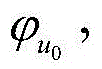
Figure BDA0001195543670000073
Indicate u0After the waveform convertion to frequency domain that a vocal cords excitation generates, in frequency The power amplitude value of rate f;
Filter is calculated in the power of frequency f using the filtering filter model in sound channel oral cavity:
Figure BDA0001195543670000074
In formula seven, F (f) indicates that filter is by filter model multiplied by its corresponding activity coefficient in the power of frequency f H composition, HkIt (f) is activity coefficient of k-th of filter in frequency f, GkIt (f) is power magnitude of k-th of filter in frequency f;
Voice power is constructed by formula six and formula seven:
Figure BDA0001195543670000075
Construct the background acoustical power of input signal;
The power of setting background sound is made of background sound model M coefficient C corresponding with its:
Figure BDA0001195543670000076
In formula nine, SM(f) indicate that background sound is by background sound model M multiplied by its corresponding coefficient C in the power of frequency f Composition, background sound contain a shape, MjIt (f) is power magnitude of j-th of background sound in frequency f, CjIt (f) is j-th of background sound In the coefficient of frequency f.Preferably, the value of J is 40.
According to constructed voice power and background acoustical power to the input signal reconstruction signal power spectrum;Include:
Formula ten obtains by formula eight and formula nine, the S in formula tenX(f) power spectrum signal to rebuild.The wherein voice in formula ten Activity coefficient H, background sound model M and the corresponding coefficient C of background sound model M of filter be numerical value to be asked.And
Figure BDA0001195543670000078
And Gk All it is the model having had been built up, is known.
Solve the voice power and background acoustical power in the power spectrum signal rebuild, and the voice function obtained according to required solution Rate and background acoustical power isolate human voice signal and background acoustical signal from the input signal.
Wherein solve the voice power and background acoustical power in the power spectrum signal of reconstruction, comprising:
The power spectrum signal of formula ten is solved using EM;
Solve problems are abstracted into minimum equation:
min D(|X|2|SX) (formula 11)
In formula 11, X is input signal, | X |2Indicate the power spectrum of input signal, SXFor the power spectrum signal of reconstruction, D is Cost function, the common cost function have Euclidean distance, KL divergence etc..Activity coefficient H, back are solved using EM alternative manner The scape acoustic model M and corresponding coefficient C of background sound model M.
The voice power and background acoustical power wherein obtained according to required solution isolates voice letter from the input signal Number and background acoustical signal, comprising:
The human voice signal in input signal is solved using Wiener filtering and is exported;And/or
The background acoustical signal in input signal is solved using Wiener filtering and is exported.
According to equation one, can obtain:
Figure BDA0001195543670000081
Figure BDA0001195543670000082
When needing to extract voice, using Wiener filtering it can be concluded that human voice signal is needing referring specifically to formula 12 When extracting background sound, using Wiener filtering it can be concluded that background acoustical signal, referring specifically to formula 13.
The present invention is based on having the beneficial effect that for the single channel sound separation method of voice model
The present invention does not need any training data, realizes that process is simple, directly can carry out voice to single pass audio Separation, and can be realized and isolate voice in the case where very noisy, additionally it is possible to the voice and background sound for ensuring to isolate Voice quality.
It describes the invention in detail in conjunction with the embodiments above, those skilled in the art can be according to above stating It is bright that many variations example is made to the present invention.Thus, certain details in embodiment should not constitute limitation of the invention, the present invention It will be using the range that the appended claims define as protection scope of the present invention.

Claims (8)

1. a kind of single channel sound separation method based on voice model, which comprises the steps of:
Using source filter model foundation voice model, the voice model established includes vocal cord vibration power module harmony road junction The filtering filter model of chamber;Utilize source filter model foundation voice model, comprising:
Voice is reduced to the convolution of the filtering g in vocal cord vibration e harmony road oral cavity based on source filter model;
Input signal is provided;
The input signal is constructed using the filtering filter model of the vocal cord vibration power module and the sound channel oral cavity Voice power;
Construct the background acoustical power of the input signal;
According to constructed voice power and background acoustical power to the input signal reconstruction signal power spectrum;And
Solve the voice power and background acoustical power in the power spectrum signal rebuild, and the voice power that is obtained according to required solution and Background acoustical power isolates human voice signal and background acoustical signal from the input signal.
2. the single channel sound separation method based on voice model as described in claim 1, which is characterized in that filtered using source Device model foundation voice model, further includes:
Building vocal cord vibration power module: the time domain waveform of the vocal cord vibration e is transformed into frequency using Short Time Fourier Transform Domain, to convert the frequency-domain waveform of obtained vocal cord vibration e to obtain corresponding amplitude spectrum, according to the amplitude spectrum of vocal cord vibration e Corresponding power spectrum is calculated to realize the building of vocal cord vibration power module;
Construct the filtering filter model in sound channel oral cavity: the shape for setting filter has k, p different positions of each shape The window function set carries out linear combination to which combination obtains the filter of k shape, by the filter transform being combined into frequency domain To obtain the frequency-domain waveform of filter to obtain corresponding amplitude spectrum, corresponding function is calculated according to the amplitude spectrum of filter Rate composes the building to realize the filtering filter model in sound channel oral cavity.
3. the single channel sound separation method based on voice model as claimed in claim 2, which is characterized in that building vocal cords vibration Dynamic power module, further includes:
The time domain waveform of vocal cord vibration e is calculated using KLGLOTT88 model:
Figure FDA0002162840660000022
In formula one and formula two, OqFor the parameter of vocal cords opening and closing, OqValue be 0.5, F (u) be that u-th vocal cords motivate corresponding frequency Rate, chFor h subharmonic amplitude, eu(t) time domain waveform for being vocal cord vibration e, TsFor the sampling period;
Following formula is obtained when the time domain waveform of the vocal cord vibration e is transformed to frequency domain using Short Time Fourier Transform:
Eu(f)=STFT (eu) (formula three)
In formula three, Eu(f) frequency-domain waveform for the vocal cord vibration e for being;
U-th of vocal cords motivates corresponding frequency F (u) to indicate are as follows:
Figure FDA0002162840660000023
The corresponding relationship of the expression of formula four u and frequency f;
After the waveform convertion to frequency domain that u-th of vocal cords excitation generates and calculate corresponding power spectrum are as follows:
Figure FDA0002162840660000024
In formula five,
Figure FDA0002162840660000025
For the power amplitude value of frequency f.
4. the single channel sound separation method based on voice model as claimed in claim 2, which is characterized in that utilize the sound Filtering filter model with oscillation power model and the sound channel oral cavity constructs the voice power of the input signal, comprising:
The voice fundamental frequency for estimating the input signal present frame searches the vocal cord vibration power mould using the voice fundamental frequency Corresponding power amplitude value in the power spectrum of type, then the power of vocal cords driver unit is expressed as:
Figure FDA0002162840660000026
In formula six, S (f) indicates that vocal cords motivate the power at frequency f, u0To be motivated with the immediate vocal cords of voice fundamental frequency;
Figure FDA0002162840660000027
Indicate u0After the waveform convertion to frequency domain that a vocal cords excitation generates, in the power amplitude value of frequency f;
Filter is calculated in the power of frequency f using the filtering filter model in the sound channel oral cavity:
Figure FDA0002162840660000028
In formula seven, F (f) indicates that filter is by filter model multiplied by its corresponding activity coefficient H group in the power of frequency f At HkIt (f) is activity coefficient of k-th of filter in frequency f, GkIt (f) is power magnitude of k-th of filter in frequency f;
Voice power is constructed by formula six and formula seven:
Figure FDA0002162840660000031
5. the single channel sound separation method based on voice model as claimed in claim 4, which is characterized in that building is described defeated Enter the background acoustical power of signal, comprising:
The power of setting background sound is made of background sound model M coefficient C corresponding with its:
Figure FDA0002162840660000032
In formula nine, SM(f) indicate that background sound in the power of frequency f, is made of background sound model M multiplied by its corresponding coefficient C, Background sound contains J shape, MjIt (f) is power magnitude of j-th of background sound in frequency f, CjIt (f) is j-th of background sound in frequency The coefficient of f.
6. the single channel sound separation method based on voice model as claimed in claim 5, which is characterized in that according to constructed by Voice power and background acoustical power to the input signal reconstruction signal power spectrum, comprising:
Figure FDA0002162840660000033
Formula ten obtains by formula eight and formula nine, the S in formula tenX(f) power spectrum signal to rebuild.
7. the single channel sound separation method based on voice model as claimed in claim 6, which is characterized in that solve reconstruction Voice power and background acoustical power in power spectrum signal, comprising:
The power spectrum signal of formula ten is solved using EM;
Solve problems are abstracted into minimum equation:
minD(|X|2|SX) (formula 11)
In formula 11, X is input signal, | X |2Indicate the power spectrum of input signal, SXFor the power spectrum signal of reconstruction, D is cost Function solves activity coefficient H, background sound model M and the corresponding coefficient C of background sound model M using EM alternative manner.
8. the single channel sound separation method based on voice model as described in claim 1, which is characterized in that according to being solved Obtained voice power and background acoustical power isolates human voice signal and background acoustical signal from the input signal, comprising:
The human voice signal in the input signal is solved using Wiener filtering and is exported;And/or
The background acoustical signal in the input signal is solved using Wiener filtering and is exported.
CN201611237076.1A 2016-12-28 2016-12-28 Single channel sound separation method based on voice model Active CN106653048B (en)

Priority Applications (1)

Application Number Priority Date Filing Date Title
CN201611237076.1A CN106653048B (en) 2016-12-28 2016-12-28 Single channel sound separation method based on voice model

Applications Claiming Priority (1)

Application Number Priority Date Filing Date Title
CN201611237076.1A CN106653048B (en) 2016-12-28 2016-12-28 Single channel sound separation method based on voice model

Publications (2)

Publication Number Publication Date
CN106653048A CN106653048A (en) 2017-05-10
CN106653048B true CN106653048B (en) 2019-10-15

Family

ID=58832394

Family Applications (1)

Application Number Title Priority Date Filing Date
CN201611237076.1A Active CN106653048B (en) 2016-12-28 2016-12-28 Single channel sound separation method based on voice model

Country Status (1)

Country Link
CN (1) CN106653048B (en)

Families Citing this family (6)

* Cited by examiner, † Cited by third party
Publication number Priority date Publication date Assignee Title
CN107680611B (en) * 2017-09-13 2020-06-16 电子科技大学 Single-channel sound separation method based on convolutional neural network
CN109801644B (en) 2018-12-20 2021-03-09 北京达佳互联信息技术有限公司 Separation method, separation device, electronic equipment and readable medium for mixed sound signal
CN112259120B (en) * 2020-10-19 2021-06-29 南京硅基智能科技有限公司 A single-channel human voice and background sound separation method based on convolutional recurrent neural network
CN113314140A (en) * 2021-05-31 2021-08-27 哈尔滨理工大学 Sound source separation algorithm of end-to-end time domain multi-scale convolutional neural network
CN113393857B (en) * 2021-06-10 2024-06-14 腾讯音乐娱乐科技(深圳)有限公司 Method, equipment and medium for eliminating human voice of music signal
CN113593604B (en) * 2021-07-22 2024-07-19 腾讯音乐娱乐科技(深圳)有限公司 Method, device and storage medium for detecting audio quality

Citations (8)

* Cited by examiner, † Cited by third party
Publication number Priority date Publication date Assignee Title
EP1349148A1 (en) * 2000-12-28 2003-10-01 NEC Corporation Noise removing method and device
CN1523573A (en) * 2003-09-12 2004-08-25 中国科学院声学研究所 A Multi-channel Speech Enhancement Method Using Post Filter
DE60304859D1 (en) * 2003-08-21 2006-06-01 Bernafon Ag Bern Method for processing audio signals
CN101589430A (en) * 2007-08-10 2009-11-25 松下电器产业株式会社 Voice isolation device, voice synthesis device, and voice quality conversion device
CN102402977A (en) * 2010-09-14 2012-04-04 无锡中星微电子有限公司 Method and device for extracting accompaniment and human voice from stereo music
CN102982801A (en) * 2012-11-12 2013-03-20 中国科学院自动化研究所 Phonetic feature extracting method for robust voice recognition
CN103000174A (en) * 2012-11-26 2013-03-27 河海大学 Feature compensation method based on rapid noise estimation in speech recognition system
CN105719657A (en) * 2016-02-23 2016-06-29 惠州市德赛西威汽车电子股份有限公司 Human voice extracting method and device based on microphone

Patent Citations (8)

* Cited by examiner, † Cited by third party
Publication number Priority date Publication date Assignee Title
EP1349148A1 (en) * 2000-12-28 2003-10-01 NEC Corporation Noise removing method and device
DE60304859D1 (en) * 2003-08-21 2006-06-01 Bernafon Ag Bern Method for processing audio signals
CN1523573A (en) * 2003-09-12 2004-08-25 中国科学院声学研究所 A Multi-channel Speech Enhancement Method Using Post Filter
CN101589430A (en) * 2007-08-10 2009-11-25 松下电器产业株式会社 Voice isolation device, voice synthesis device, and voice quality conversion device
CN102402977A (en) * 2010-09-14 2012-04-04 无锡中星微电子有限公司 Method and device for extracting accompaniment and human voice from stereo music
CN102982801A (en) * 2012-11-12 2013-03-20 中国科学院自动化研究所 Phonetic feature extracting method for robust voice recognition
CN103000174A (en) * 2012-11-26 2013-03-27 河海大学 Feature compensation method based on rapid noise estimation in speech recognition system
CN105719657A (en) * 2016-02-23 2016-06-29 惠州市德赛西威汽车电子股份有限公司 Human voice extracting method and device based on microphone

Also Published As

Publication number Publication date
CN106653048A (en) 2017-05-10

Similar Documents

Publication Publication Date Title
CN106653048B (en) Single channel sound separation method based on voice model
Gabbay et al. Visual speech enhancement
Iseli et al. Age, sex, and vowel dependencies of acoustic measures related to the voice source
Rivet et al. Audiovisual speech source separation: An overview of key methodologies
WO2019214047A1 (en) Method and apparatus for establishing voice print model, computer device, and storage medium
Patel et al. Speech recognition and verification using MFCC & VQ
Le Cornu et al. Reconstructing intelligible audio speech from visual speech features.
CN108108357A (en) Accent conversion method and device, electronic equipment
Wang et al. Attention-based fusion for bone-conducted and air-conducted speech enhancement in the complex domain
CN106782500A (en) A kind of fusion feature parameter extracting method based on pitch period and MFCC
Chang et al. Spectro-temporal features for noise-robust speech recognition using power-law nonlinearity and power-bias subtraction
de-La-Calle-Silos et al. Synchrony-based feature extraction for robust automatic speech recognition
CN109272996A (en) A kind of noise-reduction method and system
Milner et al. Reconstructing intelligible audio speech from visual speech features
Kim et al. TAPS: Throat and acoustic paired speech dataset for deep learning-based speech enhancement
JP4381404B2 (en) Speech synthesis system, speech synthesis method, speech synthesis program
Ferreira On the possibility of speaker discrimination using a glottal pulse phase-related feature
Koolagudi et al. Spectral features for emotion classification
Wu et al. Robust target feature extraction based on modified cochlear filter analysis model
Zheng et al. A spectra-based equalization-generation combined framework for throat microphone speech enhancement
Marković et al. Recognition of the Multimodal Speech Based on the GFCC features
Perrotin et al. Perceptual equivalence of the Liljencrants–Fant and linear-filter glottal flow models
Armani et al. Weighted autocorrelation-based f0 estimation for distant-talking interaction with a distributed microphone network
Kuo et al. Auditory-based robust speech recognition system for ambient assisted living in smart home
Fraile et al. Analysis of measured and simulated supraglottal acoustic waves

Legal Events

Date Code Title Description
PB01 Publication
PB01 Publication
SE01 Entry into force of request for substantive examination
TA01 Transfer of patent application right

Effective date of registration: 20170929

Address after: 200233 Shanghai City, Xuhui District Guangxi 65 No. 1 Jinglu room 702 unit 03

Applicant after: Cloud known sound (Shanghai) Technology Co. Ltd.

Address before: 200233 Shanghai, Qinzhou, North Road, No. 82, building 2, layer 1198,

Applicant before: SHANGHAI YUZHIYI INFORMATION TECHNOLOGY CO., LTD.

TA01 Transfer of patent application right
GR01 Patent grant
GR01 Patent grant
TR01 Transfer of patent right

Effective date of registration: 20200416

Address after: 200233 Shanghai City, Xuhui District Guangxi 65 No. 1 Jinglu room 702 unit 03

Co-patentee after: Xiamen yunzhixin Intelligent Technology Co., Ltd

Patentee after: YUNZHISHENG (SHANGHAI) INTELLIGENT TECHNOLOGY Co.,Ltd.

Address before: 200233 Shanghai City, Xuhui District Guangxi 65 No. 1 Jinglu room 702 unit 03

Patentee before: YUNZHISHENG (SHANGHAI) INTELLIGENT TECHNOLOGY Co.,Ltd.

TR01 Transfer of patent right