CN106537965B - Network node, device, method and readable medium for a wireless communication system - Google Patents
Network node, device, method and readable medium for a wireless communication system Download PDFInfo
- Publication number
- CN106537965B CN106537965B CN201480080546.0A CN201480080546A CN106537965B CN 106537965 B CN106537965 B CN 106537965B CN 201480080546 A CN201480080546 A CN 201480080546A CN 106537965 B CN106537965 B CN 106537965B
- Authority
- CN
- China
- Prior art keywords
- user equipment
- network node
- information
- frequency
- signal
- Prior art date
- Legal status (The legal status is an assumption and is not a legal conclusion. Google has not performed a legal analysis and makes no representation as to the accuracy of the status listed.)
- Active
Links
Images


Classifications
-
- H—ELECTRICITY
- H04—ELECTRIC COMMUNICATION TECHNIQUE
- H04W—WIRELESS COMMUNICATION NETWORKS
- H04W72/00—Local resource management
- H04W72/04—Wireless resource allocation
- H04W72/044—Wireless resource allocation based on the type of the allocated resource
- H04W72/0453—Resources in frequency domain, e.g. a carrier in FDMA
-
- H—ELECTRICITY
- H04—ELECTRIC COMMUNICATION TECHNIQUE
- H04W—WIRELESS COMMUNICATION NETWORKS
- H04W72/00—Local resource management
- H04W72/20—Control channels or signalling for resource management
-
- H—ELECTRICITY
- H04—ELECTRIC COMMUNICATION TECHNIQUE
- H04W—WIRELESS COMMUNICATION NETWORKS
- H04W72/00—Local resource management
- H04W72/20—Control channels or signalling for resource management
- H04W72/21—Control channels or signalling for resource management in the uplink direction of a wireless link, i.e. towards the network
-
- H—ELECTRICITY
- H04—ELECTRIC COMMUNICATION TECHNIQUE
- H04W—WIRELESS COMMUNICATION NETWORKS
- H04W72/00—Local resource management
- H04W72/20—Control channels or signalling for resource management
- H04W72/23—Control channels or signalling for resource management in the downlink direction of a wireless link, i.e. towards a terminal
Landscapes
- Engineering & Computer Science (AREA)
- Computer Networks & Wireless Communication (AREA)
- Signal Processing (AREA)
- Mobile Radio Communication Systems (AREA)
Abstract
Description
技术领域technical field
本发明涉及用于无线通信系统的网络节点和用户设备。此外,本发明还涉及相应的方法、计算机程序和计算机程序产品。The present invention relates to network nodes and user equipment for wireless communication systems. Furthermore, the invention also relates to corresponding methods, computer programs and computer program products.
背景技术Background technique
为了满足流量需求和连接的迅猛增长,用于通信系统的无线电技术逐渐朝着以下方向转变:更灵活地利用形成无线电接入网络基础设施的网络节点处的可用频谱,以及更密集地部署覆盖面积较小的低功率网络节点。在此上下文中,可以通过与具有提供期望服务的潜力和资源的网络节点所建立的更灵活且动态的连接来改善用户的体验品质(例如,从平均数据率方面)。因此,用户设备应当连接至以下网络节点,上述网络节点不必提供最佳的信号强度,而是具有更多的可用资源或者等价地每频率资源具有较少的流量负载。为此,使得网络节点能够操作在多个(不一定是连续的)频谱带宽中,上述多个频谱带宽在下文中称为在网络节点处可用的频谱段或频带。To meet the explosive growth in traffic demands and connections, radio technologies for communication systems are gradually shifting towards more flexible use of the available spectrum at the network nodes that form the radio access network infrastructure, and denser deployment of coverage areas Smaller low-power network nodes. In this context, the user's quality of experience (eg, in terms of average data rate) can be improved through more flexible and dynamic connections with network nodes that have the potential and resources to provide the desired service. Therefore, the user equipment should be connected to network nodes that do not necessarily provide the best signal strength, but have more available resources or equivalently have less traffic load per frequency resource. To this end, the network node is enabled to operate in multiple (not necessarily contiguous) spectral bandwidths, hereinafter referred to as spectrum segments or frequency bands available at the network node.
频谱段是在网络节点处可用的频谱带的一部分。因此,网络节点的可用频带被划分成多个段,其中,上述段的大小在不同网络节点处可以不同。例如,频谱段可以包括分量载波的一部分或整个分量载波(如在3GPP长期演进LTE系统中)或者与在网络节点处可用的无线电接入技术(radio access technology,RAT)相关联的一部分或整个频率带宽。术语“可用”表明频谱段是网络节点的资源。因此,网络节点可以自动地确定或者可以被配置成使用/激活网络节点能够在其上操作的一个或更多个频谱段。A spectrum segment is a portion of a spectrum band available at a network node. Therefore, the available frequency band of a network node is divided into segments, wherein the size of the segments may be different at different network nodes. For example, a spectrum segment may include a portion or the entire component carrier (as in the 3GPP Long Term Evolution LTE system) or a portion or the entire frequency associated with a radio access technology (RAT) available at the network node bandwidth. The term "available" indicates that the spectrum segment is a resource of the network node. Thus, the network node may automatically determine or may be configured to use/activate one or more spectrum segments on which the network node is capable of operating.
在该上下文中,对在网络节点处可用的频谱和RAT的利用应当根据流量/服务需求、流量类型、干扰模式以及利用较大部分的频谱或多个RAT进行操作的能量成本来适配。相应地,控制在网络侧处对频谱的利用并且使得在网络侧处灵活地利用频谱的问题变成以下问题:将用户设备关联/连接至频谱段并且因此关联/连接至能够提供用户设备所期望的服务的相应网络节点,而非确保连接至提供最佳信号强度的网络节点。In this context, the utilization of spectrum and RATs available at a network node should be adapted according to traffic/service requirements, traffic types, interference patterns, and energy costs of operating with a larger portion of the spectrum or multiple RATs. Accordingly, the problem of controlling the utilization of the spectrum at the network side and enabling flexible utilization of the spectrum at the network side becomes the problem of associating/connecting the user equipment to the spectrum segment and thus associating/connecting to be able to provide the user equipment desired the corresponding network node for the service, rather than ensuring a connection to the network node that provides the best signal strength.
因此,用于在网络节点处灵活地利用频谱的资源分配方法应当包括更先进的小区关联和频率间负载平衡方案,该方案对在网络节点处的频谱利用进行适配以符合用户的流量/服务需求和网络的能量成本。Therefore, resource allocation methods for flexible spectrum utilization at network nodes should include more advanced cell association and inter-frequency load balancing schemes that adapt spectrum utilization at network nodes to suit user traffic/services Demand and energy costs of the network.
在传统的蜂窝无线电系统中,用户设备首先通过搜索由网络节点发送的同步信号并且测量相关联的参考信号的强度然后通过向提供最强接收信号的网络节点发送接入请求,从而接入网络。另一方面,已接入网络的用户设备通常需要监视多个网络节点的信号强度以便于当另外的网络节点的信号强度变得比服务网络节点的信号强度好时从服务网络节点切换至上述另外的网络节点。任一步骤旨在确保用户设备总是与提供最佳信号强度的网络节点相关联或相连接。然而,这既不保证对网络资源的最佳使用,也不确保向用户提供最佳服务。In conventional cellular radio systems, user equipment first accesses the network by searching for synchronization signals sent by network nodes and measuring the strength of the associated reference signals and then by sending an access request to the network node that provides the strongest received signal. On the other hand, the user equipment that has already accessed the network usually needs to monitor the signal strength of multiple network nodes in order to switch from the serving network node to the above-mentioned other network node when the signal strength of the other network node becomes better than the signal strength of the serving network node. network node. Either step aims to ensure that the user equipment is always associated or connected to the network node that provides the best signal strength. However, this neither guarantees the best use of network resources nor the best service to users.
例如,假定网络节点n将可用时间频率无线电资源均等地共享给所服务的用户设备,则对于用户m理论上的可达平均用户数据率能够通过Shannon(香农)界限被建模为:For example, assuming that network node n shares the available time-frequency radio resources equally to served user equipment, the theoretically attainable average user data rate for user m can be modeled by the Shannon bound as:

其中,Wn和Ln是接入节点n的频谱带宽和流量负载(例如,表示为所服务的活动用户的平均数目),而SINRm,n是由来自接入节点n的用户m所经历的信号与噪声加干扰比。根据该等式而清楚的是,具有较低的流量负载Ln′<Ln的网络节点n尽管具有较低的信号强度(即,当SINRm,n′<SINRm,n时)仍能够提供较高的平均数据吞吐量。where W n and L n are the spectral bandwidth and traffic load of access node n (eg, expressed as the average number of active users served), and SINR m,n is the experience experienced by user m from access node n signal-to-noise-plus-interference ratio. From this equation it is clear that a network node n with a lower traffic load L n' < L n can still have a lower signal strength (ie when SINR m,n' < SINR m,n ) Provides high average data throughput.
3GPP LTE-A Rel.-12系统通过研究用于平衡网络节点之间的流量负载的机制而部分地解决了该问题。负载转移/平衡的目的在于通过以下操作来提高系统性能:改变网络节点上的流量负载分配以跨越网络节点更均匀地分配流量负载或者将流量集中到较少的网络节点以缓解小区间干扰。为此,提出了通过以下方法之一、经由小区关联来实现3GPP系统中的负载平衡/转移:The 3GPP LTE-A Rel.-12 system partially addresses this problem by investigating mechanisms for balancing traffic loads between network nodes. The purpose of load shifting/balancing is to improve system performance by changing the traffic load distribution on network nodes to distribute traffic load more evenly across network nodes or to concentrate traffic to fewer network nodes to mitigate inter-cell interference. To this end, it is proposed to implement load balancing/transfer in 3GPP systems via cell association by one of the following methods:
-结合小区关联偏差、基于最强参考信号接收功率(strongest reference signalreceived power,RSRP)的小区关联;- cell association based on strongest reference signal received power (RSRP) combined with cell association bias;
-结合小区关联偏差或阈值、基于最强参考信号接收质量(strongest referencesignal received quality,RSRQ)的小区关联;- cell association based on the strongest reference signal received quality (RSRQ) in conjunction with a cell association bias or threshold;
-结合小区关联偏差、基于长期SINR UE测量的小区关联;- Cell association based on long-term SINR UE measurements combined with cell association bias;
-基于UE测量(RSRP、RSRQ、长期SINR)的功能和网络侧信息(例如,小区资源利用率)的小区关联;- cell association based on functionality of UE measurements (RSRP, RSRQ, long-term SINR) and network side information (eg cell resource utilization);
-基于缩短的测量间隔内的RSRQ或SINR UE测量的小区关联。- Cell association based on RSRQ or SINR UE measurements within a shortened measurement interval.
另外的常规解决方案是当两个分量载波(即,频谱带)在网络节点处可用时的LTE中的增强的频域干扰协调。为了减少小区间干扰,应当在网络节点之间对分量载波的利用/激活进行协调。为此,可用分量载波被分类成辅小区(secondary cell,Scell)和主小区(primary cell,Pcell)。然后,在第一步骤中,与频率复用方案蜂窝系统类似,通过选择不同地理区域的Pcell来减少小区间干扰。在第二步骤中,当请求高数据吞吐量时,针对特定用户设备在网络节点处激活辅小区Scell。添加另外的Scell的一个准则是例如当Scell的RSRQ高于某个阈值时。Another conventional solution is enhanced frequency domain interference coordination in LTE when two component carriers (ie, spectrum bands) are available at the network node. To reduce inter-cell interference, the utilization/activation of component carriers should be coordinated between network nodes. To this end, available component carriers are classified into secondary cells (Scells) and primary cells (Pcells). Then, in the first step, similar to the frequency reuse scheme cellular system, the inter-cell interference is reduced by selecting Pcells in different geographical areas. In a second step, the secondary cell Scell is activated at the network node for a specific user equipment when high data throughput is requested. One criterion for adding additional Scells is eg when the RSRQ of the Scells is above a certain threshold.
第一常规解决方案的缺点是该方案旨在使网络节点之间的负载均等化而不考虑如何与每个网络节点处的可用频谱或在每个网络节点处可用的无线电接入技术相关地来分配负载。第一常规解决方案的另一缺点是用于平衡网络节点之间的用户分配的小区关联准则不考虑用户的流量需求。换言之,平衡用户分配本身并不确保对数据流量的公平分配,例如,流量需求非常高(并且因此需要更多的时间频率资源)的多个用户可能最终与同一网络节点相关联,而更有利的是在多个网络节点之间分配所述多个用户。第三,用于在网络节点之间分配用户的小区关联准则仅考虑用户设备处的信号质量测量,该小区关联准则本身并非网络节点能够提供给用户设备的服务(例如,数据吞吐量)的指示。The disadvantage of the first conventional solution is that it aims to equalize the load between network nodes without regard to how the spectrum is available at each network node or the radio access technology available at each network node. distribute the load. Another disadvantage of the first conventional solution is that the cell association criteria for balancing user assignments between network nodes do not take into account the traffic demands of the users. In other words, balancing user allocation does not in itself ensure a fair distribution of data traffic, for example, multiple users with very high traffic demands (and thus more time-frequency resources) may end up being associated with the same network node, while the more favorable is to distribute the plurality of users among the plurality of network nodes. Third, the cell association criterion used to allocate users among network nodes only considers signal quality measurements at the user equipment, the cell association criterion itself is not an indication of the services (eg data throughput) that the network node is able to provide to the user equipment .
第二常规解决方案的缺点是该解决方案是针对两个分量载波所设计并且采用网络节点的初级分量载波(即,Pcell)的静态分配,因此需要在部署阶段小心地进行小区规划。在实践中,可以使多于两个分量载波在网络节点处可用并且不应当限制所述分量载波的利用。The disadvantage of the second conventional solution is that it is designed for two component carriers and employs a static allocation of the primary component carriers (ie Pcells) of the network nodes, thus requiring careful cell planning during the deployment phase. In practice, more than two component carriers may be made available at the network node and the utilization of said component carriers should not be restricted.
发明内容SUMMARY OF THE INVENTION
本发明的实施方式的目的是提供缓解或解决用于在无线通信系统中发送信息比特流的常规解决方案的缺点和问题的解决方案。It is an object of embodiments of the present invention to provide solutions that alleviate or address the shortcomings and problems of conventional solutions for transmitting information bitstreams in wireless communication systems.
根据本发明的第一方面,利用无线通信系统的网络节点来实现以上所提及的目的和其他目的,网络节点包括收发器和处理器,其中,收发器被配置成:According to a first aspect of the present invention, the above-mentioned objects and other objects are achieved with a network node of a wireless communication system, the network node comprising a transceiver and a processor, wherein the transceiver is configured to:
发送频率利用信号SFUS,频率利用信号SFUS包括与无线通信系统的至少一个可用频谱段相关联的频率利用信息;以及sending a frequency utilization signal S FUS including frequency utilization information associated with at least one available frequency spectrum segment of the wireless communication system; and
接收与至少一个用户设备相关联的通信优选信号SCPS,其中,通信优选信号SCPS包括上述至少一个用户设备的通信优选信息;并且其中,处理器被配置成:receiving a communication preference signal SCPS associated with at least one user equipment, wherein the communication preference signal SCPS includes communication preference information of the at least one user equipment; and wherein the processor is configured to:
基于通信优选信息为上述至少一个用户设备分配用于无线通信系统中的通信的至少一个频谱段。The at least one user equipment is allocated at least one frequency spectrum segment for communication in the wireless communication system based on the communication preference information.
本发明的实施方式使得网络节点能够通过利用来自用户设备的通信优选信号来控制和优化可用频谱段之间的流量负载平衡。Embodiments of the present invention enable network nodes to control and optimize traffic load balancing between available spectrum segments by utilizing communication preference signals from user equipment.
此外,使得用户设备能够基于至少从无线电网络(即,从无线电网络的网络节点)接收的频率利用信号来选择至少用于通信/加入无线电通信网络的优选频谱段和/或网络节点。Furthermore, the user equipment is enabled to select at least preferred spectrum segments and/or network nodes for communication/joining the radio communication network based on at least frequency utilization signals received from the radio network (ie from network nodes of the radio network).
考虑以下无线通信系统,其中网络节点能够被配置成在多个频带中操作,每个频带被划分成多个本公开内容所谓的频谱段。在LTE术语中,频谱段可以是频率分量载波的一部分或整个频率分量载波。在另一个示例中,频谱段可以是与网络节点处可用的特定无线电接入技术(radio access technology,RAT)相关联的整个频带的一部分。网络节点处可用的频谱段可能不一定在频域中连续,也不一定具有相等的大小(即,带宽)。另外,网络节点处的频谱段的大小可以为静态,或者可以随时间而动态可配置以适应于例如负载、流量、需求或与频谱段相关的其他网络参数。从而,最终与多个RAT相关联的在网络节点处可用的整个频谱带宽可以被视为由多个频谱段形成的虚拟频谱带宽。Consider the following wireless communication system in which a network node can be configured to operate in a plurality of frequency bands, each frequency band being divided into a plurality of so-called spectrum segments in the present disclosure. In LTE terminology, a spectrum segment may be a portion of a frequency component carrier or the entire frequency component carrier. In another example, a spectrum segment may be a portion of an entire frequency band associated with a particular radio access technology (RAT) available at a network node. The spectrum segments available at a network node may not necessarily be contiguous in the frequency domain, nor of equal size (ie, bandwidth). Additionally, the size of the spectrum segment at the network node may be static, or may be dynamically configurable over time to adapt to eg load, traffic, demand or other network parameters related to the spectrum segment. Thus, the entire spectrum bandwidth available at a network node that is ultimately associated with multiple RATs can be viewed as a virtual spectrum bandwidth formed by multiple spectrum segments.
此外,在本说明书和相应权利要求中的“或(or)”应当理解为涵盖了“和(and)”和“或(or)”的数学上的“或(or)”,而不应当理解为XOR(异或)。In addition, "or (or)" in this specification and the corresponding claims should be understood to encompass the mathematical "or (or)" of "and (and)" and "or (or)" and should not be understood It is XOR (exclusive or).
在根据第一方面的网络节点的第一可能实现形式中,频率利用信息包括以下中的一者或更多者:负载信息;频率带宽信息;利用优先级信息;能量成本信息;可支持流量负载信息;可支持/可准入服务类型信息;可支持/可准入流量类型信息;以及上行链路载波类型信息或下行链路载波类型信息。In a first possible implementation form of the network node according to the first aspect, the frequency utilization information includes one or more of the following: load information; frequency bandwidth information; utilization priority information; energy cost information; supportable traffic load information; supportable/admissible service type information; supportable/admissible traffic type information; and uplink carrier type information or downlink carrier type information.
负载、流量和服务信息使得用户设备能够估计由网络节点在某个频谱段中提供的平均每用户频谱效率。通过另外地指示频率带宽,使得用户设备能够估计在某个频谱段中能够达到的平均数据吞吐量。The load, traffic and service information enables the user equipment to estimate the average per-user spectral efficiency provided by the network nodes in a certain spectrum segment. By additionally indicating the frequency bandwidth, the user equipment is enabled to estimate the average data throughput that can be achieved in a certain spectrum segment.
对利用和/或激活可用频谱段的优选、与可用频谱段的利用相关联的能量成本、频谱段的运行成本的估计、频谱段的相对于其负载而归一化的频谱段的运行成本的估计。此信息具有以下益处:使得用户设备能够分别考虑网络节点处的频谱利用的优选以及能量消耗。Preference for utilizing and/or activating available spectrum segments, energy costs associated with utilization of available spectrum segments, estimates of spectrum segment operating costs, spectrum segment operating costs normalized relative to its load estimate. This information has the benefit of enabling the user equipment to separately consider the preference of spectrum utilization and energy consumption at the network node.
服务类型信息使得网络能够将不同的流量服务捆绑至不同的频谱段。例如,这使得网络运营商能够引导所有的具有特定流量类型(例如,语音、视频等)的用户由特定频谱段来服务。Service type information enables the network to bundle different traffic services into different spectrum segments. For example, this enables a network operator to direct all users with a particular traffic type (eg, voice, video, etc.) to be served by a particular spectrum segment.
在根据第一方面的网络节点的第二可能实现形式中,处理器还被配置成:In a second possible implementation form of the network node according to the first aspect, the processor is further configured to:
基于通信优选信息来确定与上述至少一个用户设备的上述至少一个频谱段相关联的频率分配信息;并且收发器还被配置成:frequency allocation information associated with the at least one frequency spectrum segment of the at least one user equipment is determined based on the communication preference information; and the transceiver is further configured to:
向上述至少一个用户设备发送包括频率分配信息的频率分配控制信号SFACS。A frequency allocation control signal S FACS including frequency allocation information is sent to the at least one user equipment.
利用第二可能实现形式,准入授权/准入拒绝可以与特定频谱段或者与频谱段组相关联。其益处是能够快速地进行用户设备至频谱段或网络节点的准入控制以进行频率间负载平衡/卸载和切换。With a second possible implementation, the admission grant/admission denial can be associated with a specific spectrum segment or with a group of spectrum segments. The benefit is that admission control of user equipment to spectrum segments or network nodes can be performed quickly for inter-frequency load balancing/offloading and handover.
在根据第一方面的第二可能实现形式的网络节点的第三可能实现形式中,频率分配信息包括以下中的一者或更多者:准入授权;准入拒绝;用于通信的至少一个频谱段的频率地址;无线电接入技术;以及网络节点身份。In a third possible implementation form of the network node according to the second possible implementation form of the first aspect, the frequency allocation information includes one or more of the following: admission authorization; admission denial; at least one for communication The frequency address of the spectrum segment; the radio access technology; and the network node identity.
利用根据第三可能实现形式的发信,能够对用户设备进行至谱段或网络节点的快速准入控制以进行频率间负载平衡/卸载和切换。With signaling according to the third possible implementation, fast admission control of user equipment to spectrum segments or network nodes can be performed for inter-frequency load balancing/offloading and handover.
在根据第一方面的第二可能实现形式或第三可能实现形式的网络节点的第四可能实现形式中,收发器还被配置成:In a fourth possible implementation form of the network node according to the second or third possible implementation form of the first aspect, the transceiver is further configured to:
接收来自无线通信系统的其他网络节点的与至少一个用户设备相关联的另外的频率分配信息;receiving further frequency allocation information associated with at least one user equipment from other network nodes of the wireless communication system;
向上述至少一个用户设备发送另外的频率分配信息;或者其中,处理器还被配置成:Send additional frequency allocation information to the above at least one user equipment; or wherein the processor is further configured to:
使用另外的频率分配信息来为上述至少一个用户设备服务。The at least one user equipment is served using the additional frequency allocation information.
利用第四可能实现形式,能够针对用户设备实现频率分配,该频率分配在网络节点中被确定并且要由一个或更多个其他网络节点发往该用户设备。With a fourth possible implementation, a frequency allocation can be implemented for a user equipment, which frequency allocation is determined in a network node and is to be sent to the user equipment by one or more other network nodes.
在根据第一方面的网络节点的第五可能实现形式中,收发器还被配置成通过无线通信系统的广播信道,或者通过无线通信系统的物理控制信道,或者通过无线通信系统的较高层无线电资源控制RRC控制信道来发送频率利用信号SFUS。In a fifth possible implementation form of the network node according to the first aspect, the transceiver is further configured over a broadcast channel of the wireless communication system, or over a physical control channel of the wireless communication system, or over higher layer radio resources of the wireless communication system The RRC control channel is controlled to transmit the frequency utilization signal S FUS .
利用广播频谱利用信号的第五可能实现形式,所有潜在的系统用户设备能够接收频谱利用信号,而无论用户设备是否与该系统建立了连接。通过将频率利用信号作为物理控制信道或RRC控制信道的一部分来发送,网络节点可以向特定的用户设备组或单个用户设备指示频谱利用的变化。With a fifth possible implementation of broadcast spectrum utilization signals, all potential system user equipments are able to receive spectrum utilization signals, regardless of whether the user equipment has established a connection with the system. By transmitting the frequency utilization signal as part of the physical control channel or RRC control channel, the network node can indicate changes in spectrum utilization to specific groups of user equipments or to individual user equipments.
在根据第一方面的网络节点的第六实现形式中,网络节点是接入节点或网络控制节点。In a sixth realisation form of the network node according to the first aspect, the network node is an access node or a network control node.
第六实现形式使得能够在无线通信系统中进行集中式控制或分布式控制。The sixth implementation form enables centralized control or distributed control in a wireless communication system.
在根据第一方面的网络节点的第七可能实现形式中,收发器还被配置成:In a seventh possible implementation form of the network node according to the first aspect, the transceiver is further configured to:
接收来自其他网络节点的另外的频率利用信息;并且处理器还被配置成:receiving additional frequency utilization information from other network nodes; and the processor is further configured to:
当分配上述至少一个频谱段时使用上述另外的频率利用信息。The above-mentioned further frequency utilization information is used when allocating the above-mentioned at least one spectrum segment.
第七可能实现形式能够当确定用户设备分配时在网络节点之间进行协调。A seventh possible implementation enables coordination between network nodes when determining user equipment assignments.
在根据第一方面的网络节点的第八可能实现形式中,收发器还被配置成:In an eighth possible implementation form of the network node according to the first aspect, the transceiver is further configured to:
还接收从至少一个另外的网络节点接收的对于上述至少一个用户设备的另外的通信优选信息。Further communication preference information received from at least one further network node for the aforementioned at least one user equipment is also received.
第八可能实现形式实现了集中式系统,其中,用户设备能够将其CPI发送至网络控制节点,该网络控制节点然后将该CPI分配至相应网络节点,该相应网络节点可以基于该CPI来建立与用户设备的连接。因此,这具有以下优点:并非所有网络节点都需要具有接收CPI的能力,但是仍然能够构建具有这样的功能的系统。此外,可以节省空中接口上的资源。An eighth possible implementation implements a centralized system, wherein the user equipment is able to send its CPI to a network control node, which then assigns the CPI to the corresponding network node, which based on the CPI can establish and User device connection. Therefore, this has the advantage that not all network nodes need to have the capability to receive CPI, but it is still possible to build a system with such capability. Furthermore, resources on the air interface can be saved.
替选地或另外地,收发器可以被配置成直接从用户设备接收通信优选信息。Alternatively or additionally, the transceiver may be configured to receive communication preference information directly from the user equipment.
根据本发明的第二方面,利用用于无线通信系统的用户设备来实现以上提及的目的和其他目的,该用户设备包括收发器和处理器,其中,收发器被配置成:According to a second aspect of the present invention, the above-mentioned objects and other objects are achieved with a user equipment for a wireless communication system, the user equipment comprising a transceiver and a processor, wherein the transceiver is configured to:
接收频率利用信号SFUS,频率利用信号SFUS包括与至少一个可用频谱段相关联的频率利用信息;并且其中,该处理器被配置成:receiving a frequency utilization signal S FUS , the frequency utilization signal S FUS including frequency utilization information associated with at least one available spectrum segment; and wherein the processor is configured to:
基于频率利用信息来确定用户设备的通信优选信息,并且收发器还被配置成:The communication preference information of the user equipment is determined based on the frequency utilization information, and the transceiver is further configured to:
向至少一个网络节点发送包括通信优选信息的通信优选信号SCPS。A communication preference signal SCPS comprising communication preference information is sent to at least one network node.
另一方面,用户设备能够基于至少从无线电网络接收的频率利用信号来选择至少用于通信/加入无线电通信网络的优选频谱段和/或网络节点。因此,用户设备能够主动地支持为用户设备分配频谱段和/或网络节点。通过该特征,能够确保从网络分配给用户设备的频谱段和/或网络节点适配用户设备的需求。On the other hand, the user equipment is capable of selecting at least a preferred spectrum segment and/or a network node for communication/joining the radio communication network based on at least the frequency received from the radio network. Therefore, the user equipment can actively support the allocation of spectrum segments and/or network nodes to the user equipment. Through this feature, it can be ensured that the frequency spectrum segment and/or the network node allocated to the user equipment from the network is adapted to the needs of the user equipment.
在根据第一方面的网络节点的第九可能实现形式中或者在根据第二方面的用户设备的第一可能实现形式中,频率利用信息还与无线通信系统的至少一个网络节点相关联。In a ninth possible implementation form of the network node according to the first aspect or in a first possible implementation form of the user equipment according to the second aspect, the frequency utilization information is also associated with at least one network node of the wireless communication system.
上述至少一个网络节点可以是以下中任一者:网络节点;无线通信系统的其他网络节点;或者无线通信系统的该网络节点和其他网络节点。因为网络节点可以发送与其自身相关联的、与其他网络节点相关联的或者与其自身和其他网络节点相关联的频率利用信号SFUS。The above-mentioned at least one network node may be any one of the following: a network node; other network nodes of the wireless communication system; or the network node and other network nodes of the wireless communication system. Because a network node can transmit a frequency utilization signal S FUS associated with itself, with other network nodes, or with itself and with other network nodes.
在根据第一方面的网络节点的第十可能实现形式中或者在根据第二方面的用户设备的第二可能实现形式中,通信优选信息包括以下中的一者或更多者:至少一个优选频谱段;至少一个优选网络节点;以及至少一个优选频谱段和至少一个优选网络节点。In a tenth possible implementation form of the network node according to the first aspect or in a second possible implementation form of the user equipment according to the second aspect, the communication preference information includes one or more of the following: at least one preferred spectrum segment; at least one preferred network node; and at least one preferred spectrum segment and at least one preferred network node.
所提及的实现形式使得用户设备能够基于用户设备特定的协助信息来协助无线电网络将用户设备与网络节点或频谱段相关联。The mentioned implementation forms enable the user equipment to assist the radio network in associating the user equipment with a network node or spectrum segment based on user equipment specific assistance information.
在根据第二方面的用户设备的第三可能实现形式中,处理器还被配置成通过满足以下准则之一来确定上述至少一个优选频谱段优选频谱段S★或上述至少一个优选网络节点n★:In a third possible implementation form of the user equipment according to the second aspect, the processor is further configured to determine the above-mentioned at least one preferred spectral segment preferred spectral segment S ★ or the above-mentioned at least one preferred network node n ★ by satisfying one of the following criteria :



其中,


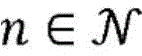
第三可能实现形式使得用户设备能够对优选用于与网络通信的频谱段做出能量感知的选择。用户设备还能够做出在能量成本与预期数据率、频谱效率或可用频率资源之间进行权衡的频谱选择。A third possible implementation enables the user equipment to make an energy-aware selection of the spectrum segment preferred for communication with the network. The user equipment is also able to make spectrum choices that trade off energy costs against expected data rates, spectral efficiency, or available frequency resources.
在根据第二方面的用户设备的第四可能实现形式中,收发器还被配置成:In a fourth possible implementation form of the user equipment according to the second aspect, the transceiver is further configured to:
接收包括用户设备的频率分配信息的频率分配控制信号SFACS;并且处理器还被配置成:receiving a frequency allocation control signal S FACS comprising frequency allocation information of the user equipment; and the processor is further configured to:
当与至少一个网络节点进行通信时使用频率分配信息。The frequency allocation information is used when communicating with at least one network node.
第四可能实现形式能够快速地建立与新的网络节点的快速连接或者能够快速地建立在被分配给用户设备的新的频谱段中的快速连接以在无线通信系统中进行通信。A fourth possible implementation can quickly establish a fast connection to a new network node or can quickly establish a fast connection in a new spectrum segment allocated to user equipment for communication in a wireless communication system.
在根据第二方面的用户设备的第五可能实现形式中,处理器还被配置成:In a fifth possible implementation form of the user equipment according to the second aspect, the processor is further configured to:
计算与上述至少一个可用频谱段或上述至少一个网络节点相关联的一个或更多个估计,其中,所述一个或更多个估计包括以下中的一者或更多者:可达频谱效率;可达平均频谱效率;可达数据率;可达平均数据率;可达延迟;可达平均延迟;可达最大数据率;可达最小数据率;以及可用频率资源的平均数目;calculating one or more estimates associated with the at least one available spectrum segment or the at least one network node, wherein the one or more estimates include one or more of the following: reachable spectral efficiency; attainable average spectral efficiency; attainable data rate; attainable mean data rate; attainable delay; attainable mean delay; attainable maximum data rate; attainable minimum data rate; and average number of available frequency resources;
当确定通信优选信息时使用上述一个或更多个估计。One or more of the estimates described above are used when determining communication preference information.
第五可能实现形式使得能够基于所提及的估计将用户设备与网络节点或频谱段相关联。A fifth possible implementation form enables the user equipment to be associated with a network node or spectrum segment based on the mentioned estimates.
根据本发明的第三方面,通过一种用于无线通信系统的网络节点中的方法来实现以上提及的目的和其他目的,所述方法包括:According to a third aspect of the present invention, the above-mentioned objects and other objects are achieved by a method for use in a network node of a wireless communication system, the method comprising:
发送频率利用信号SFUS,频率利用信号SFUS包括与至少一个可用频谱段相关联的频率利用信息;sending a frequency utilization signal S FUS , the frequency utilization signal S FUS including frequency utilization information associated with at least one available spectrum segment;
接收与至少一个用户设备相关联的通信优选信号SCPS,其中,通信优选信号SCPS包括上述至少一个用户设备的通信优选信息;receiving a communication preference signal SCPS associated with at least one user equipment, wherein the communication preference signal SCPS includes communication preference information of the at least one user equipment;
基于通信优选信息为上述至少一个用户设备分配用于无线通信系统中的通信的至少一个频谱段。The at least one user equipment is allocated at least one frequency spectrum segment for communication in the wireless communication system based on the communication preference information.
在根据第三方面的方法的第一可能实现形式中,频率利用信息包括以下中的一者或更多者:负载信息;频率带宽信息;利用优先级信息;能量成本信息;可支持流量负载信息;可支持/可准入服务类型信息;可支持/可准入流量类型信息;以及上行链路载波类型信息或下行链路载波类型信息。In a first possible implementation form of the method according to the third aspect, the frequency utilization information includes one or more of the following: load information; frequency bandwidth information; utilization priority information; energy cost information; supportable traffic load information ; supportable/admissible service type information; supportable/admissible traffic type information; and uplink carrier type information or downlink carrier type information.
在根据第三方面的方法的第二可能实现形式中,上述分配步骤包括:In a second possible implementation form of the method according to the third aspect, the above-mentioned allocating step comprises:
基于通信优选信息来确定与上述至少一个用户设备的至少一个频谱段相关联的频率分配信息;determining frequency allocation information associated with the at least one frequency spectrum segment of the at least one user equipment based on the communication preference information;
向上述至少一个用户设备发送包括频率分配信息的频率分配控制信号SFACS。A frequency allocation control signal S FACS including frequency allocation information is sent to the at least one user equipment.
在根据第三方面的第二可能实现形式的方法的第三可能实现形式中,频率分配信息包括以下中的一者或更多者:准入授权;准入拒绝;用于通信的至少一个频谱段的频率地址;无线电接入技术;以及网络节点身份。In a third possible implementation form of the method according to the second possible implementation form of the third aspect, the frequency allocation information includes one or more of the following: admission grant; admission denial; at least one spectrum used for communication The frequency address of the segment; the radio access technology; and the network node identity.
在根据第三方面的第二可能实现形式或第三可能实现形式的方法的第四可能实现形式中,所述方法还包括:In a fourth possible implementation form of the method according to the second or third possible implementation form of the third aspect, the method further includes:
接收来自无线通信系统的其他网络节点的与上述至少一个用户设备相关联的另外的频率分配信息;receiving further frequency allocation information associated with the at least one user equipment from other network nodes of the wireless communication system;
向上述至少一个用户设备发送另外的频率分配信息;或者sending additional frequency allocation information to the at least one user equipment; or
使用另外的频率分配信息来为上述至少一个用户设备服务。The at least one user equipment is served using the additional frequency allocation information.
在根据第三方面的方法的第五可能实现形式中,通过无线通信系统的宽带信道,或者通过无线通信系统的物理控制信号,或者通过无线通信系统的较高层无线电资源控制RRC控制信道来发送频率利用信号SFUS。In a fifth possible implementation form of the method according to the third aspect, the frequency is transmitted through a broadband channel of the wireless communication system, or through a physical control signal of the wireless communication system, or through a higher layer radio resource control RRC control channel of the wireless communication system Use signal S FUS .
在根据第三方面的方法的第六可能实现形式中,网络节点是接入节点或网络控制节点。In a sixth possible implementation form of the method according to the third aspect, the network node is an access node or a network control node.
在根据第三方面的方法的第七可能实现形式中,所述方法还包括:In a seventh possible implementation form of the method according to the third aspect, the method further includes:
接收来自其他网络节点的另外的频率利用信息;receiving additional frequency utilization information from other network nodes;
当分配上述至少一个频谱段时使用上述另外的频率利用信息。The above-mentioned further frequency utilization information is used when allocating the above-mentioned at least one spectrum segment.
在根据第三方面的方法的第八可能实现形式中,所述方法还包括:In an eighth possible implementation form of the method according to the third aspect, the method further includes:
接收来自至少一个另外的网络节点的对于上述至少一个用户设备的通信优选信息。Communication preference information for the aforementioned at least one user equipment is received from at least one further network node.
替选地或另外地,CPI可以直接从用户设备来接收。Alternatively or additionally, the CPI may be received directly from the user equipment.
根据本发明的第四方面,通过用于无线通信系统的用户设备中的方法来实现以上提及的目的和其他目的,所述方法包括:According to a fourth aspect of the present invention, the above-mentioned objects and other objects are achieved by a method for use in a user equipment of a wireless communication system, the method comprising:
接收频率利用信号SFUS,频率利用信号SFUS包括与至少一个可用频谱段相关联的频率利用信息;receiving a frequency utilization signal S FUS , the frequency utilization signal S FUS including frequency utilization information associated with at least one available spectrum segment;
基于频率利用信息来确定用户设备的通信优选信息;以及determining communication preference information for the user equipment based on the frequency utilization information; and
向至少一个网络节点发送包括通信优选信息的通信优选信号SCPS。A communication preference signal SCPS comprising communication preference information is sent to at least one network node.
在根据第一方面的方法的第九可能实现形式中或者在根据第二方面的方法的第一可能实现形式中,频率利用信息还与无线通信系统的至少一个网络节点相关联。In a ninth possible implementation form of the method according to the first aspect or in a first possible implementation form of the method according to the second aspect, the frequency utilization information is also associated with at least one network node of the wireless communication system.
在根据第三方面的方法的第十可能实现形式中或者在根据第四方面的方法的第二可能实现形式中,通信优选信息包括以下中的一者或更多者:至少一个优选频谱段;至少一个优选网络节点;以及至少一个优选频谱段和至少一个优选网络节点。In a tenth possible implementation form of the method according to the third aspect or in a second possible implementation form of the method according to the fourth aspect, the communication preference information includes one or more of the following: at least one preferred spectrum segment; at least one preferred network node; and at least one preferred spectrum segment and at least one preferred network node.
在根据第四方面的方法的第三可能实现形式中,通过满足以下准则之一来确定上述至少一个优选频谱段S★或上述至少一个优选网络节点n★:In a third possible implementation form of the method according to the fourth aspect, the aforementioned at least one preferred spectrum segment S ★ or the aforementioned at least one preferred network node n ★ is determined by satisfying one of the following criteria:



其中,



在根据第四方面的方法的第四可能实现形式中,所述方法还包括:In a fourth possible implementation form of the method according to the fourth aspect, the method further comprises:
接收包括用户设备的频率分配信息的频率分配控制信号SFACS;receiving a frequency allocation control signal S FACS including frequency allocation information of the user equipment;
当与至少一个网络节点进行通信时使用频率分配信息。The frequency allocation information is used when communicating with at least one network node.
在根据第四方面的方法的第五可能实现形式中,所述方法还包括:In a fifth possible implementation form of the method according to the fourth aspect, the method further comprises:
计算与上述至少一个可用频谱段和上述至少一个网络节点相关联的一个或更多个估计,其中,所述一个或更多个估计包括以下中的一者或更多者:可达频谱效率;可达平均频谱效率;可达数据率;可达平均数据率;可达延迟;可达平均延迟;可达最大数据率、可达最小数据率;以及可用频率资源的平均数目;calculating one or more estimates associated with the at least one available spectrum segment and the at least one network node, wherein the one or more estimates include one or more of the following: reachable spectral efficiency; attainable average spectral efficiency; attainable data rate; attainable mean data rate; attainable delay; attainable mean delay; attainable maximum data rate, attainable minimum data rate; and average number of available frequency resources;
当确定通信优选信息时使用上述一个或更多个估计。One or more of the estimates described above are used when determining communication preference information.
在网络节点中和在用户设备中的方法的优点与相应设备权利要求的优点相同。The advantages of the method in the network node and in the user equipment are the same as in the corresponding device claims.
还应当注意,本发明还涉及包括根据本发明的实施方式的至少一个网络节点和至少一个用户设备的无线通信系统。另外,在无线通信系统中的相应方法包括在网络节点中的方法和在用户设备中的方法。It should also be noted that the present invention also relates to a wireless communication system comprising at least one network node and at least one user equipment according to embodiments of the present invention. Additionally, corresponding methods in a wireless communication system include methods in network nodes and methods in user equipment.
本发明还涉及一种计算机程序,其特征在于代码装置,该代码装置当由处理装置运行时使该处理装置执行根据本发明的实施方式的任何方法。另外,本发明还涉及一种计算机程序产品,该计算机程序产品包括计算机可读介质和上述计算机程序,其中,上述计算机程序包括在该计算机可读介质中,并且上述计算机程序包括以下中的一者或更多者:ROM(只读存储器);PROM(可编程ROM);EPROM(可擦除PROM);闪速存储器;EEPROM(电EPROM)以及硬盘驱动器。The invention also relates to a computer program characterized by code means which, when run by processing means, cause the processing means to perform any of the methods according to embodiments of the invention. In addition, the present invention also relates to a computer program product comprising a computer-readable medium and the above-mentioned computer program, wherein the above-mentioned computer program is included in the computer-readable medium, and the above-mentioned computer program comprises one of the following Or more: ROM (Read Only Memory); PROM (Programmable ROM); EPROM (Erasable PROM); Flash Memory; EEPROM (Electrical EPROM) and Hard Disk Drives.
本发明的实施方式使得网络节点能够通过利用来自用户设备的通信优选信号来控制和优化可用频谱段之间的流量负载平衡。Embodiments of the present invention enable network nodes to control and optimize traffic load balancing between available spectrum segments by utilizing communication preference signals from user equipment.
另一方面,用户设备能够基于至少从无线电网络接收的频率利用信号来选择至少用于通信/加入无线电通信网络的优选频谱段和/或网络节点。On the other hand, the user equipment is capable of selecting at least a preferred spectrum segment and/or a network node for communication/joining the radio communication network based on at least the frequency received from the radio network.
本发明的实施方式的另一优点是使得用户设备能够确定并且用信号发送频谱段和/或网络节点的优选以满足其流量或服务需求。Another advantage of embodiments of the present invention is to enable user equipment to determine and signal a preference for spectrum segments and/or network nodes to meet its traffic or service requirements.
本发明的实施方式的又一优点是使得用户设备能够触发至能够确保更好的服务(例如,不太被使用)的频谱段(或网络节点)的切换。A further advantage of embodiments of the present invention is to enable user equipment to trigger handovers to spectrum segments (or network nodes) that can ensure better service (eg, less used).
本发明的实施方式的又一优点是使得网络节点能够基于由用户设备用信号发送的频谱优选来平衡可用频谱段中的流量负载。A further advantage of embodiments of the present invention is to enable network nodes to balance traffic loads in available spectrum segments based on spectrum preferences signaled by user equipment.
本发明的实施方式的又一优点是使得网络节点能够基于用户设备需求和优选或流量负载来递增地激活更多的频谱段。A further advantage of embodiments of the present invention is to enable the network node to incrementally activate more spectrum segments based on user equipment demand and preference or traffic load.
本发明的实施方式的又一优点是使得网络节点能够通过以下操作来节省能量:基于用户设备的需求/优选以及用于激活和利用频谱段的流量需求和能量成本来控制和优化对频谱段的利用。Yet another advantage of embodiments of the present invention is to enable network nodes to save energy by controlling and optimizing the use of spectrum segments based on user equipment requirements/preferences and traffic requirements and energy costs for activating and utilizing spectrum segments use.
本发明的实施方式的其他应用和优点根据以下详细描述会很明显。Other applications and advantages of embodiments of the present invention will be apparent from the following detailed description.
附图说明Description of drawings
附图意在阐述和说明本发明的不同实施方式,其中:The accompanying drawings are intended to illustrate and illustrate various embodiments of the present invention, wherein:
图1示出了根据本发明的一种实施方式的网络节点;Figure 1 shows a network node according to an embodiment of the present invention;
图2示出了根据本发明的一种实施方式的网络节点中的方法的流程图;Figure 2 shows a flowchart of a method in a network node according to an embodiment of the present invention;
图3示出了根据本发明的一种实施方式的用户设备;FIG. 3 shows a user equipment according to an embodiment of the present invention;
图4示出了根据本发明的一种实施方式的用户设备中的方法的流程图;FIG. 4 shows a flowchart of a method in a user equipment according to an embodiment of the present invention;
图5示出了包括本发明的实施方式的无线通信系统;Figure 5 illustrates a wireless communication system including an embodiment of the present invention;
图6示出了用户设备与网络节点之间的发信;Figure 6 shows signaling between user equipment and a network node;
图7示出了包括本发明的实施方式的其他无线通信系统;FIG. 7 illustrates other wireless communication systems including embodiments of the present invention;
图8示出了用户设备、网络节点与网络控制节点之间的发信;Figure 8 shows signaling between user equipment, a network node, and a network control node;
图9示出了用户设备与网络节点之间的发信;以及Figure 9 illustrates signaling between a user equipment and a network node; and
图10示出了无线通信系统中的本发明的另一种实施方式。Figure 10 shows another embodiment of the present invention in a wireless communication system.
具体实施方式Detailed ways
在常规解决方案中,用户设备例如LTE中的用户设备(user equipment,UE)通过提供与来自无线电通信网络的多个网络节点的接收信号强度有关的反馈来协助无线电网络进行小区关联、切换和负载平衡过程。然而,这不足以确保用户设备连接或切换至具有提供所需服务的潜力的网络节点。In conventional solutions, user equipment, such as user equipment (UE) in LTE, assists the radio network in cell association, handover and loading by providing feedback on received signal strengths from multiple network nodes of the radio communication network balancing process. However, this is not sufficient to ensure that the user equipment is connected or handed over to a network node that has the potential to provide the desired service.
另外,当无线电通信系统中的网络节点可以被配置成在多个频谱段、频带的一部分中进行操作和/或利用多个可用的无线电接入技术进行操作时,成问题的是,确定要使用哪个频谱带和/或哪种无线电接入技术以符合用户的流量/服务需求、平衡频谱带之间的流量以及使网络的能量成本最小化。Additionally, when network nodes in a radio communication system may be configured to operate in multiple spectrum segments, portions of frequency bands, and/or operate with multiple available radio access technologies, it is problematic to determine which radio access technologies to use Which spectrum band and/or which radio access technology to meet users' traffic/service needs, balance traffic between spectrum bands, and minimize the energy cost of the network.
因而,本发明的实施方式涉及网络节点、用户设备及其方法。Thus, embodiments of the present invention relate to network nodes, user equipment and methods thereof.
在图1中示出了根据本发明的一种实施方式的网络节点。网络节点10包括能够通信地彼此耦接的收发器11和处理器12。收发器11被配置成发送包括与无线通信系统的至少一个可用频谱段相关联的频率利用信息FUI的频率利用信号SFUS。例如,FUI可以指示给定频谱段当前负载如何或会如何指示哪个频谱段还具有可用资源。In Figure 1 a network node according to an embodiment of the present invention is shown. The
收发器11还被配置成接收与至少一个用户设备相关联的通信优选信号SCPS,其中,通信优选信号SCPS包括上述至少一个用户设备30的通信优选信息CPI。处理器12被配置成基于通信优选信息CPI为上述至少一个用户设备30分配用于在无线通信系统中进行通信的至少一个频谱段。The transceiver 11 is further configured to receive a communication preference signal SCPS associated with the at least one user equipment, wherein the communication preference signal SCPS includes the communication preference information CPI of the at least one
此外,如图2的流程图所示,公开了网络节点中的对应方法。网络节点10中的方法包括:发送100包括与至少一个可用频谱段相关联的频率利用信息FUI的频谱利用信号SFUS;接收110与至少一个用户设备30相关联的通信优选信号SCPS,其中,通信优选信号SCPS包括上述至少一个用户设备30的通信优选信息CPI。此外,上述方法包括:基于通信优选信息CPI为上述至少一个用户设备30分配120用于无线通信系统中的通信的至少一个频谱段。Furthermore, as shown in the flowchart of Fig. 2, a corresponding method in the network node is disclosed. The method in the
此外,图3示出了根据本发明的另外的实施方式的用户设备30。用户设备30包括彼此通信地耦接的收发器31和处理器32。收发器31被配置成接收包括与至少一个可用频谱段相关联的频率利用信息FUI的频率利用信号SFUS。处理器32被配置成基于频率利用信息FUI来确定用户设备30的通信优选信息CPI。收发器31还被配置成向至少一个网络节点10发送包括通信优选信息CPI的通信优选信号SCPS。Furthermore, Figure 3 shows a
此外,如图4的流程图所示,公开了用户设备30中的相应方法。用户设备30中的方法包括:接收300包括与至少一个可用频谱段相关联的频率利用信息FUI的频率利用信号SFUS;基于频率利用信息FUI来确定310用户设备30的通信优选信息CPI:以及将向至少一个网络节点20发送320包括通信优选信息CPI的通信优选信号SCPS。Furthermore, as shown in the flowchart of FIG. 4 , a corresponding method in the
图5示出了无线通信系统20中的所提出的网络节点(或者网络节点设备)10a、10b、10c、10d以及用户设备30的示例。用户设备30接收来自四个网络节点10a、10b、10c、10d的频率利用信号SFUS,用户设备30基于频率利用信号SFUS来确定用户设备30优选用于无线通信系统(20)中的通信的与至少频谱段或至少网络节点有关的通信优选信息CPI。FIG. 5 shows an example of the proposed network nodes (or network node devices) 10a , 10b , 10c , 10d and
用户设备30然后可以将通信优选信号发往所优选的网络节点——在此情况下发往将为用户设备30服务的网络节点10b和10c。对于网络节点10b和10c,用黑色示出了在将为用户设备30服务的网络节点10b、10c处的与用户设备30相关联的另外的负载。The
图6示出了无线通信系统中的方法的实施方式中所涉及的基本发信方面。在图6中示出了在无线通信系统20中网络节点10如何发送由用户设备30接收的频率利用信号SFUS。在此示例中,用户设备30基于频率利用信息FUI来确定通信优选信息CPI,并且将包括在通信优选信号SCPS中的通信优选信息CPI发往网络节点10。Figure 6 illustrates basic signaling aspects involved in an embodiment of a method in a wireless communication system. In FIG. 6 it is shown how the
在本发明的一种实施方式中,频率利用信息FUI还与无线通信系统的至少一个网络节点10a、10b、……、10n相关联。例如,FUI不仅可以指示某个频谱的当前负载,而且还可以指示某个网络节点10a、10b、……、10n的对于给定频谱段的当前负载。从而,频谱段和网络节点两者可以被用户设备30所考虑。In one embodiment of the invention, the frequency utilization information FUI is also associated with at least one
在本发明的一种实施方式中,由网络节点10发往用户设备30的频谱利用信号SFUS包括与以下中一者或更多者相关联的信息:In one embodiment of the invention, the spectrum utilization signal S FUS sent by the
-上述网络节点处和/或网络的其他网络节点处可用的至少一个频谱段的负载(利用率)信息;- load (utilization) information of at least one spectrum segment available at the aforementioned network node and/or at other network nodes of the network;
-上述至少可用频谱段的频率带宽信息;- the frequency bandwidth information of the above at least available spectrum segment;
-与上述网络节点处和/或其他网络节点处可用的上述至少一个频谱段相关联的利用优先级信息;- utilization priority information associated with said at least one spectrum segment available at said network node and/or at other network nodes;
-与上述网络节点处和/或其他网络节点处可用的至少一个频谱段(的利用)相关联的能量成本信息;- energy cost information associated with (utilization of) at least one spectrum segment available at the aforementioned network node and/or at other network nodes;
-上述网络节点处和/或其他网络节点处可用的至少一个频谱段的可支持(另外的)的流量负载(例如,额定容量)信息;- Supportable (additional) traffic load (eg rated capacity) information for at least one spectrum segment available at the aforementioned network node and/or at other network nodes;
-上述网络节点处和/或其他网络节点处可用的上述至少一个频谱段中的可支持和/或可准入服务类型信息;- information on the types of services that can be supported and/or admitted in the above at least one spectrum segment available at the above network node and/or at other network nodes;
-网络节点标识符信息。- Network node identifier information.
可用频谱段的负载可以被指示为(平均/最小/最大)流量负载的估计;被准入上述频谱段的用户设备30的(平均/最小/最大)数目的估计;被准入上述至少一个频谱段并且被主动调度用于通信的用户设备30的(平均/最小/最大)数目的估计。另外,可用频谱段的负载可以包括负载方差的指示。The load of an available spectrum segment may be indicated as an estimate of (average/min/max) traffic load; an estimate of the (average/min/max) number of
帧级的平均所提供负载或流量强度的估计是平均帧到达率与帧处理和传输时间的乘积,并且服务级的平均所提供负载或流量强度的估计是平均服务请求到达率(或用户到达率)与平均服务时间的乘积。该信息使得用户设备30能够估计由网络节点在某个频谱段中提供的平均每用户频谱效率。通过另外地指示频率带宽,用户设备30能够估计在某个频谱段中能够达到的平均数据吞吐量。The frame-level estimate of the average offered load or traffic intensity is the product of the average frame arrival rate and the frame processing and transmission time, and the service-level estimate of the average offered load or traffic intensity is the average service request arrival rate (or user arrival rate). ) times the average service time. This information enables the
网络节点10可以通过信号发送与频谱段相关联的优先级来指示利用和/或激活可用频谱段的优选。例如,利用较高(或较低)利用优先级所指示的频谱段应当被优先考虑。另外,网络节点10可以发送与可用频谱段的利用相关联的能量成本的指示,包括:与频谱段相关联的(平均/最大/最小)传输功率;频谱段的运行成本的估计;频谱段的相对于其负载而归一化的运行成本的估计。该信息具有启用来自用户设备30的频谱通信优选信号CPI的益处,频谱通信优选信号CPI分别考虑网络节点10处的频谱利用的优选和能量消耗。The
另外地,网络节点10可以发送与至少一个可用频谱段相关联的服务类型的指示,即可用频谱段所支持和/或准入的服务的类型的指示。其益处是使得网络节点能够将不同的流量服务捆绑至不同频谱段。例如,这将使得网络运营商能够引导所有的具有特定流量类型(例如,语音、视频等)的用户设备30由特定的频谱段来服务。Additionally, the
在本发明的一种实施方式中,由网络节点10发送的频谱利用信号SFUS还可以包括上述至少一个频谱段的负载/利用率方差的估计。应当理解,用户设备在当确定所优选的频谱段时应当考虑利用率方差。例如,通过将平均负载/利用率及其方差组合,用户设备30可以估计在频谱段中能够实现的最小平均数据率(最差情况场景)和最大平均数据率(最佳情况场景)。在替选方案中,只要利用率方差在由网络所传送的间隔内,则用户设备30会被阻碍发出新的通信优选信号SCPS。该方法的优点在于减少从用户设备至网络的通信优选信号SCPS的数目。In one embodiment of the present invention, the spectrum utilization signal S FUS sent by the
在本发明的一种实施方式中,由网络节点10发送的频率利用信号SFUS可以指示上述网络节点和/或其他网络节点处可用的至少一个频谱段是用于上行链路通信还是用于下行链路通信。换言之,频率利用信号SFUS可以与至少一个上行链路频率载波相关联和/或与至少下行链路频率载波或其一部分相关联。In one embodiment of the invention, the frequency utilization signal S FUS sent by the
因此,在一个示例中,不同的频率利用信号SFUS与用于系统中的下行链路操作和上行链路操作的频谱段相关联。与其他实施方式结合,频谱利用信号可以携载与关于在网络节点处可用的至少一个频谱段的上行链路操作和/或下行链路操作相关联的信息,例如负载/利用率的指示、带宽的指示以及能量成本的指示以及利用的优先级的指示等。这在以下系统中有益处:时分双工通信系统,其中,上行链路流量和下行链路流量在时间上共享频率载波(例如,频谱段);以及频分双工通信系统,其中,上行链路和下行链路使用不同的频率载波。Thus, in one example, different frequency utilization signals S FUS are associated with frequency spectrum segments used for downlink and uplink operations in the system. In conjunction with other embodiments, the spectrum utilization signal may carry information associated with uplink operation and/or downlink operation on at least one spectrum segment available at the network node, such as an indication of load/utilization, bandwidth indication of energy cost, indication of priority of utilization, etc. This is of benefit in time division duplex communication systems, where uplink traffic and downlink traffic share frequency carriers (eg, spectrum segments) in time; and frequency division duplex communication systems, where uplink traffic The uplink and downlink use different frequency carriers.
在本发明的一种实施方式中,第一网络节点发送包括与至少一个其他的第二网络节点相关联的信息的另外的频谱利用信号。将在下面给出网络节点的此特征的示例。In one embodiment of the invention, the first network node transmits a further spectrum utilization signal comprising information associated with at least one other second network node. An example of this feature of a network node will be given below.
图7示出了其中第一网络节点是监管一组其他网络节点10a、10b、10c的操作的网络控制节点10d的示例。此外,网络控制节点10d被配置成接收来自通信系统20的其他网络节点10a、10b、10c的频率利用信息。网络控制节点10d向用户设备30发送频率利用信号,并且接收作为响应来自用户设备30的通信优选信号。网络控制节点10d然后可以指示(例如,使用回程信道)其他网络节点10b和10c来为用户设备30服务。对于网络节点10b和10c,用黑色示出了与用户设备30相关联的另外的负载。网络控制节点10d可以是无线电接入网络基础设施的网络节点,例如,如图7中的异构LTE系统的eNodeB,或者系统20的核心网络中的节点。Figure 7 shows an example where the first network node is a
因而,如在相关实施方式中描述的,频率利用信号可以携载与一个或更多个节点和相应可用频谱段相关联的信息。频率利用信息FUI可以通过用于网络节点之间的通信的专用接口例如在相关技术LTE系统中的X2接口或者适用于该方面的新类型的接口来交换。该方法的优点在于减少发信开销量并且能够更集中地控制用户设备至频谱段的准入。还能够通过集中式控制来优化多个网络节点以及相应可用频谱段之间的流量平衡。Thus, as described in the related embodiments, the frequency utilization signal may carry information associated with one or more nodes and corresponding available spectrum segments. The frequency utilization information FUI may be exchanged through a dedicated interface for communication between network nodes such as the X2 interface in the related art LTE system or a new type of interface suitable for this aspect. The advantage of this approach is that it reduces the amount of signaling overhead and enables more centralized control of the admission of user equipment to spectrum segments. It is also possible to optimize the traffic balance between multiple network nodes and the corresponding available spectrum segments through centralized control.
在本发明的一种实施方式中,网络节点10的处理器12还被配置成基于通信优选信息CPI来确定与用户设备30的上述至少一个频谱段相关联的频率分配信息FAI。此外,收发器11还被配置成向用户设备30发送包括频率分配信息FAI的频率分配控制信号SFACS。In an embodiment of the present invention, the
频率分配信息FAI可以指示与要用于用户设备的另外通信的频谱段相关联的信息,并且频率分配信息FAI可以包括以下中的一者或更多者:The frequency allocation information FAI may indicate information associated with a spectrum segment to be used for further communication of the user equipment, and the frequency allocation information FAI may include one or more of the following:
-网络节点处可用的至少频谱段的准入授权;- an admission grant for at least the spectrum segment available at the network node;
-网络节点处可用的至少频谱段的准入拒绝;- admission denial of at least spectrum segments available at the network node;
-用户设备准入的频谱段地址;- the address of the spectrum segment to which the user equipment is admitted;
-与分配给用户设备的频谱段相关联的RAT;以及- the RAT associated with the spectrum segment allocated to the user equipment; and
-网络节点身份。- Network node identity.
准入授权/拒绝可以与特定频谱段(例如,分量载波和/或RAT)或者与一组频谱段(例如,多个分量载波和/或RAT)相关联。准入授权/拒绝还可以与上行链路操作和/或下行链路操作相关联。另外,准入授权/拒绝可以被寻址至特定用户设备或被寻址至用户设备组。An admission grant/denial may be associated with a particular spectrum segment (eg, component carriers and/or RATs) or with a group of spectrum segments (eg, multiple component carriers and/or RATs). Admission grant/denial may also be associated with uplink operation and/or downlink operation. Additionally, admission authorization/denial can be addressed to a specific user equipment or to a group of user equipment.
在图8中针对以下两种情况示出了包括频率分配控制信号SFACS的传输的基本发信步骤:(a)不存在网络控制节点;(b)存在网络控制节点。The basic signaling steps including the transmission of the frequency allocation control signal S FACS are shown in FIG. 8 for the following two cases: (a) there is no network control node; (b) there is a network control node.
当不存在网络控制节点时(图8(a)),网络节点响应于来自用户设备30的通信优选信号SCPS来用信号向用户设备发送频率利用信号SFUS以及最终发送频率分配控制信号SFACS。当存在网络控制节点时(图8(b)),可以由网络控制节点用信号发送频谱利用信号SFUS和频率分配控制信号SFACS两者。When there is no network control node (FIG. 8(a)), the network node signals to the user equipment a frequency utilization signal S FUS and finally a frequency allocation control signal S FACS in response to the communication preference signal S CPS from the
在图9中还示出了包括频率分配控制信号SFACS的传输的基本发信步骤。网络节点10向用户设备30发送包括频率分配信息FAI的频率分配控制信号SFACS。在接收频率分配控制信号SFACS并且对频率分配信息FAI进行处理之后,用户设备30可以根据频率分配信息FAI与无线电网络进行通信。Also shown in FIG. 9 are the basic signaling steps including the transmission of the frequency allocation control signal S FACS . The
在替选方式中,如图10中所例示的,可以由用户设备30相关联的网络节点用信号发送频率分配控制信号SFACS。第一网络节点在此示例中是监管一组其他网络节点10a、10b、10c的操作并且接收来自其他网络节点10a、10b、10c的频率利用信息FUI的网络控制节点10d。网络控制节点10d向用户设备30发送频率利用信号,并且接收作为响应来自用户设备30的通信优选信号。网络控制节点10d确定为用户设备30分配频谱段和/或网络节点10a、10b、10c,而所分配的网络节点10b、10c向用户设备30发送频率分配控制信号SFACS。该方法的益处是能够将针对频谱段和/或网络节点对用户设备进行快速准入控制以进行频率间负载平衡/卸载和切换。In an alternative, as illustrated in FIG. 10 , the frequency allocation control signal S FACS may be signaled by a network node associated with the
在本发明的一种实施方式中,网络节点10向用户设备30发送针对可用频谱段的子集的可用频谱段的利用的指示。在替选方案中,频谱利用信号的预留值与网络节点不期望使其能够用于通信的频谱段相关联。由于用户设备会尝试接入利用率低的频谱段(因为它们提供较高的平均数据吞吐量),所以该方法能够通过以下操作来控制可用频谱的利用率:使网络节点随着流量需求和/或网络负载的增大而递增地激活(即,使得其可用)较多的频谱段并且当需求减小时激活较少的频谱段。另外地,通过激活用以维持网络中的流量和/或服务需求所严格地必需的频谱段来实现能量节省。In one embodiment of the invention, the
在本发明的一种实施方式中,频率利用信号SFUS作为广播信道的一部分被发送。由于与频谱利用相关联的信息与系统广播信道的传输频率相比可能变化缓慢,所以携载频率利用信息FUI的广播传输的重复周期长于系统中现有广播传输的重复周期。广播频率利用信号SFUS的一个益处是所有潜在的系统用户不论它们是否与系统建立了连接,均能够接收该频率利用信号SFUS。In one embodiment of the invention, the frequency utilization signal S FUS is transmitted as part of a broadcast channel. Since the information associated with spectrum utilization may vary slowly compared to the transmission frequency of the system broadcast channel, the repetition period of the broadcast transmission carrying the frequency utilization information FUI is longer than the repetition period of the existing broadcast transmission in the system. One benefit of broadcasting the frequency utilization signal S FUS is that all potential system users can receive the frequency utilization signal S FUS , whether or not they have established a connection to the system.
在本发明的一种实施方式中,频率利用信号SFUS作为物理控制信道的一部分被发送。该发送可以作为公共控制信道的一部分而发生,即在公共搜索空间中或者在用户特定控制信道中被发送。优点是使得网络节点能够向特定的用户设备组或单个用户设备指示频谱利用率的改变。In one embodiment of the invention, the frequency utilization signal S FUS is transmitted as part of the physical control channel. This transmission may occur as part of a common control channel, ie in a common search space or in a user specific control channel. The advantage is to enable the network node to indicate changes in spectrum utilization to a specific group of user equipments or to a single user equipment.
在本发明的一种实施方式中,由网络节点10周期性地或者每当频谱段负载平衡显著改变时非周期性地发送频率利用信号。周期间隔可以被确定为流量负载的函数。另外地,频谱利用信号的传输可以在当流量负载/利用率超过某个阈值或超过某个阈值达一定时间段时被触发。In one embodiment of the invention, the frequency utilization signal is sent by the
在本发明的一种实施方式中,用户设备m(例如前述附图所示的用户设备30)还估计网络节点n处可用的至少一个频谱段s中能够实现的频谱效率的指示,并且使用该估计来确定优选用于通信的至少一个频谱段。In one embodiment of the present invention, user equipment m (eg
此另外步骤的益处是使得用户设备m能够在确定优选用于通信的至少一个频谱段时考虑频谱效率和/或可达数据率。频谱段s中由网络节点n发送的参考信号的信号强度的测量会有助于确定频谱效率

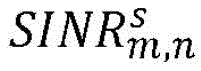



在本发明的一种实施方式中,用户设备m针对优选用于通信的至少一个频谱段s及相关联的网络节点n,基于以下中的一个或更多个准则(性能指标)来计算一个或更多个估计:In one embodiment of the invention, the user equipment m calculates one or more of the following criteria (performance indicators) for at least one spectrum segment s preferred for communication and the associated network node n based on one or more of the following: More estimates:
·可达频谱效率;Achievable spectral efficiency;
·可达平均频谱效率;Achievable average spectral efficiency;
·可达数据率;Achievable data rate;
·可达平均数据率;Achievable average data rate;
·可达延迟;reachable delay;
·可达平均延迟;Achievable average latency;
·可达最大数据率·Maximum data rate up to
·可达最小数据率;以及the minimum data rate achievable; and
·可用频率资源的平均数目。• Average number of available frequency resources.
换言之,用户设备m能够通过将前述的性能指标相对于不同网络节点或频谱段进行比较并且选择满足以下准则之一的配对



其中,


此外,是用户设备m相关的网络集合,而

·量表示用户设备在网络节点n处的频谱段s中能够达到的(平均/最大/最小)数据吞吐量的估计;·quantity represents an estimate of the (average/maximum/minimum) data throughput that the user equipment can achieve in spectrum segment s at network node n;
·量
·量
集合




在本文中还公开了:等式(1)解决了以下整数线性规划(integer linearprogram,ILP)问题。Also disclosed herein: Equation (1) solves the following integer linear program (ILP) problem.

在
使
其中,如果用户设备m选择网络节点n处的频谱段s,则决策变量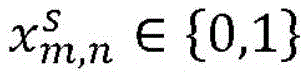
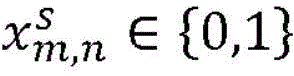
意识到,通过用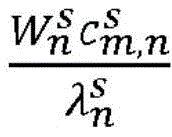


通过对问题(4)添加约束
因此,其益处是使得用户设备30能够确定要准入/连接的期望频谱段及相关联的网络节点以优化其平均数据吞吐量。另外,由于知晓网络节点所指示的频谱段的利用率用户设备能够请求准入利用率低的频谱段,从而平衡网络节点处的频率间负载。Thus, the benefit is to enable the
应当认识到,可以使用等式(2)和等式(7)来解决具有类似考虑的类似问题,其中,可以通过相应地替换(4)中的目标函数而将相应问题公式化。例如,在本发明中还可以考虑延迟的方面。对于实时服务或不能容忍延迟类型的流量,用户设备30可以选择提供最小延迟的频谱段和/或网络节点。以此方式,用户设备30协助无线电网络来提供延迟最小的所需服务。It should be appreciated that similar problems with similar considerations can be solved using Equation (2) and Equation (7), where the corresponding problems can be formulated by substituting the objective function in (4) accordingly. For example, the aspect of delay can also be considered in the present invention. For real-time services or delay-intolerant types of traffic, the
在本发明的一种实施方式中,当配对(n★,s★)满足以下准则之一时,用户设备m确定针对通信所优选的至少一个频谱段s或相关联的网络节点n:In one embodiment of the invention, the user equipment m determines at least one spectrum segment s or associated network node n preferred for communication when the pairing (n * , s * ) satisfies one of the following criteria:



其中,




如上所述,本网络节点10可以是无线电通信网络的网络控制节点或网络节点,而且本网络节点10还可以是无线通信系统的核心网络的一部分。网络控制节点可以例如是无线电接入网络中的NodeB或核心网络中的逻辑节点,例如LTE系统种的操作管理维护(operation administration maintenance,OAM)节点、移动管理实体(MobilityManagement Entity,MME)或无线电网络控制器(radio network controller,RNC)。As mentioned above, the
本用户设备30可以是具有与无线电通信网络进行通信的能力的任何无线通信设备,例如LTE系统中的UE。用户设备30可以例如是膝上型计算机、移动电话、平板计算机、智能电话等。The
此外,可以在具有代码装置的计算机程序中实现根据本发明的任何方法。代码装置当通过处理装置运行时使处理装置执行所述方法的步骤。计算机程序包括在计算机程序产品的计算机可读介质中。计算机可读介质可以包括基本上任何存储器,例如ROM(只读存储器)、PROM(可编程只读存储器)、EPROM(可擦除PROM)、闪速存储器、EEPROM(电可擦除PROM)或硬盘驱动器。Furthermore, any method according to the invention can be implemented in a computer program with code means. The code means, when executed by the processing means, cause the processing means to perform the steps of the method. The computer program is embodied in a computer-readable medium of a computer program product. The computer readable medium may include substantially any memory such as ROM (Read Only Memory), PROM (Programmable Read Only Memory), EPROM (Erasable PROM), Flash Memory, EEPROM (Electrically Erasable PROM) or a hard disk driver.
此外,本领域技术人员意识到,本设备、网络节点设备和用户设备包括用于执行本解决方案的例如形式为功能、装置、单元、元件等的必需通信能力。其他这样的装置、单元、元件和功能的示例为:处理器;存储器;缓冲器;控制逻辑;编码器;解码器;率匹配器;解率匹配器;映射单元;乘法器;决策单元;选择单元;交换机;交错器;解交错器;调制器;解调器;输入;输出;天线;放大器;接收器单元;发送器单元;DSP;MSD;TCM编码器;TCM解码器;电源单元;电力馈送器;通信接口;通信协议等,它们被适当地布置在一起以执行本解决方案。Furthermore, those skilled in the art realize that the present apparatus, network node apparatus and user equipment comprise the necessary communication capabilities, eg in the form of functions, means, units, elements, etc. for implementing the present solution. Examples of other such devices, units, elements and functions are: processors; memories; buffers; control logic; encoders; decoders; rate matchers; rate matchers; mapping units; multipliers; decision units; selections Unit; Switch; Interleaver; Deinterleaver; Modulator; Demodulator; Input; Output; Antenna; Amplifier; Receiver Unit; Transmitter Unit; DSP; MSD; TCM Encoder; TCM Decoder; Power Supply Unit; Power Feeders; communication interfaces; communication protocols, etc., are properly arranged together to implement the present solution.
特别地,本设备的处理器可以包括例如中央处理单元(Central ProcessingUnit,CPU)、处理单元、处理电路、处理器、专用集成电路(Application SpecificIntegrated Circuit,ASIC)、微处理器或可以解读和执行指令的其他处理逻辑中的一个或更多个实例。表达“处理器”因此可以表示包括多个处理电路的处理电路系统,例如所提及的实例中的任何实例、一些实例或所有实例。处理电路系统还可以执行用于输入、输出和处理数据的数据处理功能,包括数据缓冲和设备控制功能,例如呼叫处理控制、用户接口控制等。In particular, the processor of the device may include, for example, a central processing unit (CPU), a processing unit, a processing circuit, a processor, an application specific integrated circuit (ASIC), a microprocessor, or may interpret and execute instructions One or more instances of other processing logic of . The expression "processor" may thus refer to a processing circuit system comprising a plurality of processing circuits, such as any, some or all of the examples mentioned. The processing circuitry may also perform data processing functions for inputting, outputting, and processing data, including data buffering and device control functions, such as call processing control, user interface control, and the like.
最后,应当理解,本发明不限于上述实施方式,而且还涉及并且包括所附独立权利要求的范围内的所有实施方式。Finally, it should be understood that the invention is not limited to the embodiments described above, but also relates to and includes all embodiments within the scope of the appended independent claims.
Claims (18)






Applications Claiming Priority (1)
| Application Number | Priority Date | Filing Date | Title |
|---|---|---|---|
| PCT/EP2014/064901 WO2016005000A1 (en) | 2014-07-11 | 2014-07-11 | Methods and apparatuses for frequency spectrum assignment |
Publications (2)
| Publication Number | Publication Date |
|---|---|
| CN106537965A CN106537965A (en) | 2017-03-22 |
| CN106537965B true CN106537965B (en) | 2020-02-14 |
Family
ID=51178912
Family Applications (1)
| Application Number | Title | Priority Date | Filing Date |
|---|---|---|---|
| CN201480080546.0A Active CN106537965B (en) | 2014-07-11 | 2014-07-11 | Network node, device, method and readable medium for a wireless communication system |
Country Status (5)
| Country | Link |
|---|---|
| US (1) | US10264582B2 (en) |
| EP (1) | EP3155835B1 (en) |
| CN (1) | CN106537965B (en) |
| CA (1) | CA2954702C (en) |
| WO (1) | WO2016005000A1 (en) |
Families Citing this family (5)
| Publication number | Priority date | Publication date | Assignee | Title |
|---|---|---|---|---|
| WO2016032573A1 (en) * | 2014-08-29 | 2016-03-03 | Intel IP Corporation | Systems and methods for a wireless network bridge |
| EP3278580B1 (en) * | 2015-03-30 | 2020-02-26 | Telecom Italia S.p.A. | Method and system for a real-time counting of a number of persons in a crowd by means of aggregated data of a telecommunication network |
| BR112017020831B1 (en) * | 2015-03-30 | 2023-12-05 | Telecom Italia S.P.A. | METHOD AND SYSTEM FOR ESTIMATING A NUMBER OF PEOPLE GATHERING IN AN AREA OF INTEREST |
| CN110636617B (en) * | 2018-06-22 | 2022-04-05 | 华为技术有限公司 | Parameter configuration method and device |
| WO2021091438A1 (en) * | 2019-11-06 | 2021-05-14 | Telefonaktiebolaget Lm Ericsson (Publ) | Allocation of mobile devices to frequency bands of a radio site |
Citations (1)
| Publication number | Priority date | Publication date | Assignee | Title |
|---|---|---|---|---|
| CN102301773A (en) * | 2009-02-01 | 2011-12-28 | 高通股份有限公司 | Dynamic frequency selection in a cognitive radio system |
Family Cites Families (14)
| Publication number | Priority date | Publication date | Assignee | Title |
|---|---|---|---|---|
| US7403505B2 (en) * | 2002-12-31 | 2008-07-22 | Telefonaktiebolaget Lm Ericsson (Publ) | Resource granting in multi-carrier CDMA systems |
| CN101574004A (en) * | 2006-11-10 | 2009-11-04 | 三菱电机株式会社 | Mobile communication system, mobile station and base station |
| JP5436562B2 (en) * | 2008-10-15 | 2014-03-05 | エルジー エレクトロニクス インコーポレイティド | Multi-carrier information transmission / reception method and apparatus in multi-carrier communication system |
| EP2569995B1 (en) * | 2010-05-10 | 2017-09-20 | BlackBerry Limited | System and method for dynamic band scheduling |
| US20120134328A1 (en) * | 2010-10-11 | 2012-05-31 | Interdigital Patent Holdings, Inc. | Method and apparatus for dynamic spectrum management |
| CN103733675B (en) * | 2011-06-17 | 2017-12-12 | 瑞典爱立信有限公司 | Improve wireless device performance in heterogeneous network |
| EP3937570B1 (en) * | 2011-12-22 | 2024-01-31 | InterDigital Patent Holdings, Inc. | Resource grant cancellation |
| EP2815603B1 (en) * | 2012-02-17 | 2019-09-25 | Interdigital Patent Holdings, Inc. | Hierarchical traffic differentiation to handle congestion and/or manage user quality of experience |
| US8797988B2 (en) * | 2012-03-02 | 2014-08-05 | Nokia Siemens Networks Oy | Resource allocation methods and use thereof for sounding reference signals in uplink |
| US9203563B2 (en) * | 2012-07-02 | 2015-12-01 | Intel Corporation | Devices and methods for radio communication network guided traffic offload |
| EP2880939A1 (en) * | 2012-07-30 | 2015-06-10 | Telefonaktiebolaget LM Ericsson (PUBL) | Nodes and methods therein for managing time-frequency resources |
| US9451466B2 (en) * | 2013-03-15 | 2016-09-20 | Qualcomm Incorporated | Base station employing shared resources among antenna units |
| CN105122675B (en) * | 2013-04-02 | 2018-08-14 | Lg电子株式会社 | The method and apparatus sent and received signal in a wireless communication system |
| EP2822345A1 (en) * | 2013-07-02 | 2015-01-07 | Thomson Licensing | Spectrum allocation in a wireless network |
-
2014
- 2014-07-11 CA CA2954702A patent/CA2954702C/en not_active Expired - Fee Related
- 2014-07-11 CN CN201480080546.0A patent/CN106537965B/en active Active
- 2014-07-11 EP EP14739139.5A patent/EP3155835B1/en active Active
- 2014-07-11 WO PCT/EP2014/064901 patent/WO2016005000A1/en not_active Ceased
-
2017
- 2017-01-10 US US15/403,056 patent/US10264582B2/en active Active
Patent Citations (1)
| Publication number | Priority date | Publication date | Assignee | Title |
|---|---|---|---|---|
| CN102301773A (en) * | 2009-02-01 | 2011-12-28 | 高通股份有限公司 | Dynamic frequency selection in a cognitive radio system |
Also Published As
| Publication number | Publication date |
|---|---|
| EP3155835A1 (en) | 2017-04-19 |
| US20170150504A1 (en) | 2017-05-25 |
| WO2016005000A1 (en) | 2016-01-14 |
| CN106537965A (en) | 2017-03-22 |
| CA2954702A1 (en) | 2016-01-14 |
| EP3155835B1 (en) | 2021-09-22 |
| US10264582B2 (en) | 2019-04-16 |
| CA2954702C (en) | 2019-09-17 |
Similar Documents
| Publication | Publication Date | Title |
|---|---|---|
| US12470941B2 (en) | Systems and methods for concurrent spectrum usage within actively used spectrum | |
| US9955481B2 (en) | Opportunistic carrier aggregation using short range extension carriers | |
| US12513709B2 (en) | Transmission profiles for NR | |
| BR112015027639B1 (en) | METHOD PERFORMED ON A FIRST NETWORK NODE, FIRST NETWORK NODE, METHOD PERFORMED ON A SECOND NETWORK NODE, SECOND NETWORK NODE, AND RELATED NON-TRANSIENT COMPUTER READABLE STORAGE MEDIA | |
| CN106537990B (en) | For the network equipment, user equipment and the method for access signal broadcast | |
| CN109565699B (en) | Network node and method therefor | |
| CN106537965B (en) | Network node, device, method and readable medium for a wireless communication system | |
| KR101513830B1 (en) | Method for coordinating at least one first transmission from a single-point transmitter to a single-point receiver and at least one second transmission from a multipoint transmitter or to a multipoint receiver in a radio communication system, network node and mobile station thereof | |
| US10674404B2 (en) | Network node and method thereof | |
| WO2014187127A1 (en) | Self-adaptive power adjustment method for control plane and user plane | |
| US20260046636A1 (en) | Systems and methods for concurrent spectrum usage within actively used spectrum | |
| US11350304B1 (en) | Use of backhaul load as basis to control configuration of dual-connectivity | |
| CA2945987C (en) | Systems and methods for concurrent spectrum usage within actively used spectrum | |
| BR112016023760B1 (en) | SYSTEMS AND METHODS FOR CONCOMITANT USE OF SPECTRUM WITHIN THE ACTIVELY USED SPECTRUM | |
| HK40003124B (en) | Systems and methods for mitigating interference within actively used spectrum | |
| HK1233823B (en) | Systems and methods for concurrent spectrum usage within actively used spectrum |
Legal Events
| Date | Code | Title | Description |
|---|---|---|---|
| C06 | Publication | ||
| PB01 | Publication | ||
| SE01 | Entry into force of request for substantive examination | ||
| SE01 | Entry into force of request for substantive examination | ||
| GR01 | Patent grant | ||
| GR01 | Patent grant |