CN106527424B - Mobile robot and navigation method for mobile robot - Google Patents
Mobile robot and navigation method for mobile robot Download PDFInfo
- Publication number
- CN106527424B CN106527424B CN201610836638.8A CN201610836638A CN106527424B CN 106527424 B CN106527424 B CN 106527424B CN 201610836638 A CN201610836638 A CN 201610836638A CN 106527424 B CN106527424 B CN 106527424B
- Authority
- CN
- China
- Prior art keywords
- mobile robot
- module
- obstacles
- obstacle
- map
- Prior art date
- Legal status (The legal status is an assumption and is not a legal conclusion. Google has not performed a legal analysis and makes no representation as to the accuracy of the status listed.)
- Active
Links
Images


Classifications
-
- G—PHYSICS
- G05—CONTROLLING; REGULATING
- G05D—SYSTEMS FOR CONTROLLING OR REGULATING NON-ELECTRIC VARIABLES
- G05D1/00—Control of position, course, altitude or attitude of land, water, air or space vehicles, e.g. using automatic pilots
- G05D1/02—Control of position or course in two dimensions
- G05D1/021—Control of position or course in two dimensions specially adapted to land vehicles
- G05D1/0268—Control of position or course in two dimensions specially adapted to land vehicles using internal positioning means
- G05D1/027—Control of position or course in two dimensions specially adapted to land vehicles using internal positioning means comprising intertial navigation means, e.g. azimuth detector
-
- G—PHYSICS
- G05—CONTROLLING; REGULATING
- G05D—SYSTEMS FOR CONTROLLING OR REGULATING NON-ELECTRIC VARIABLES
- G05D1/00—Control of position, course, altitude or attitude of land, water, air or space vehicles, e.g. using automatic pilots
- G05D1/02—Control of position or course in two dimensions
- G05D1/021—Control of position or course in two dimensions specially adapted to land vehicles
- G05D1/0231—Control of position or course in two dimensions specially adapted to land vehicles using optical position detecting means
- G05D1/0238—Control of position or course in two dimensions specially adapted to land vehicles using optical position detecting means using obstacle or wall sensors
- G05D1/024—Control of position or course in two dimensions specially adapted to land vehicles using optical position detecting means using obstacle or wall sensors in combination with a laser
-
- G—PHYSICS
- G05—CONTROLLING; REGULATING
- G05D—SYSTEMS FOR CONTROLLING OR REGULATING NON-ELECTRIC VARIABLES
- G05D1/00—Control of position, course, altitude or attitude of land, water, air or space vehicles, e.g. using automatic pilots
- G05D1/02—Control of position or course in two dimensions
- G05D1/021—Control of position or course in two dimensions specially adapted to land vehicles
- G05D1/0231—Control of position or course in two dimensions specially adapted to land vehicles using optical position detecting means
- G05D1/0234—Control of position or course in two dimensions specially adapted to land vehicles using optical position detecting means using optical markers or beacons
- G05D1/0236—Control of position or course in two dimensions specially adapted to land vehicles using optical position detecting means using optical markers or beacons in combination with a laser
-
- B—PERFORMING OPERATIONS; TRANSPORTING
- B25—HAND TOOLS; PORTABLE POWER-DRIVEN TOOLS; MANIPULATORS
- B25J—MANIPULATORS; CHAMBERS PROVIDED WITH MANIPULATION DEVICES
- B25J9/00—Programme-controlled manipulators
- B25J9/16—Programme controls
- B25J9/1615—Programme controls characterised by special kind of manipulator, e.g. planar, scara, gantry, cantilever, space, closed chain, passive/active joints and tendon driven manipulators
- B25J9/162—Mobile manipulator, movable base with manipulator arm mounted on it
-
- G—PHYSICS
- G01—MEASURING; TESTING
- G01C—MEASURING DISTANCES, LEVELS OR BEARINGS; SURVEYING; NAVIGATION; GYROSCOPIC INSTRUMENTS; PHOTOGRAMMETRY OR VIDEOGRAMMETRY
- G01C21/00—Navigation; Navigational instruments not provided for in groups G01C1/00 - G01C19/00
- G01C21/20—Instruments for performing navigational calculations
-
- G—PHYSICS
- G05—CONTROLLING; REGULATING
- G05D—SYSTEMS FOR CONTROLLING OR REGULATING NON-ELECTRIC VARIABLES
- G05D1/00—Control of position, course, altitude or attitude of land, water, air or space vehicles, e.g. using automatic pilots
- G05D1/02—Control of position or course in two dimensions
- G05D1/021—Control of position or course in two dimensions specially adapted to land vehicles
- G05D1/0231—Control of position or course in two dimensions specially adapted to land vehicles using optical position detecting means
- G05D1/0242—Control of position or course in two dimensions specially adapted to land vehicles using optical position detecting means using non-visible light signals, e.g. IR or UV signals
-
- G—PHYSICS
- G05—CONTROLLING; REGULATING
- G05D—SYSTEMS FOR CONTROLLING OR REGULATING NON-ELECTRIC VARIABLES
- G05D1/00—Control of position, course, altitude or attitude of land, water, air or space vehicles, e.g. using automatic pilots
- G05D1/02—Control of position or course in two dimensions
- G05D1/021—Control of position or course in two dimensions specially adapted to land vehicles
- G05D1/0231—Control of position or course in two dimensions specially adapted to land vehicles using optical position detecting means
- G05D1/0246—Control of position or course in two dimensions specially adapted to land vehicles using optical position detecting means using a video camera in combination with image processing means
- G05D1/0248—Control of position or course in two dimensions specially adapted to land vehicles using optical position detecting means using a video camera in combination with image processing means in combination with a laser
-
- G—PHYSICS
- G05—CONTROLLING; REGULATING
- G05D—SYSTEMS FOR CONTROLLING OR REGULATING NON-ELECTRIC VARIABLES
- G05D1/00—Control of position, course, altitude or attitude of land, water, air or space vehicles, e.g. using automatic pilots
- G05D1/02—Control of position or course in two dimensions
- G05D1/021—Control of position or course in two dimensions specially adapted to land vehicles
- G05D1/0255—Control of position or course in two dimensions specially adapted to land vehicles using acoustic signals, e.g. ultra-sonic singals
-
- G—PHYSICS
- G05—CONTROLLING; REGULATING
- G05D—SYSTEMS FOR CONTROLLING OR REGULATING NON-ELECTRIC VARIABLES
- G05D1/00—Control of position, course, altitude or attitude of land, water, air or space vehicles, e.g. using automatic pilots
- G05D1/02—Control of position or course in two dimensions
- G05D1/021—Control of position or course in two dimensions specially adapted to land vehicles
- G05D1/0257—Control of position or course in two dimensions specially adapted to land vehicles using a radar
-
- G—PHYSICS
- G05—CONTROLLING; REGULATING
- G05D—SYSTEMS FOR CONTROLLING OR REGULATING NON-ELECTRIC VARIABLES
- G05D1/00—Control of position, course, altitude or attitude of land, water, air or space vehicles, e.g. using automatic pilots
- G05D1/02—Control of position or course in two dimensions
- G05D1/021—Control of position or course in two dimensions specially adapted to land vehicles
- G05D1/0259—Control of position or course in two dimensions specially adapted to land vehicles using magnetic or electromagnetic means
-
- G—PHYSICS
- G05—CONTROLLING; REGULATING
- G05D—SYSTEMS FOR CONTROLLING OR REGULATING NON-ELECTRIC VARIABLES
- G05D1/00—Control of position, course, altitude or attitude of land, water, air or space vehicles, e.g. using automatic pilots
- G05D1/02—Control of position or course in two dimensions
- G05D1/021—Control of position or course in two dimensions specially adapted to land vehicles
- G05D1/0268—Control of position or course in two dimensions specially adapted to land vehicles using internal positioning means
- G05D1/0274—Control of position or course in two dimensions specially adapted to land vehicles using internal positioning means using mapping information stored in a memory device
-
- G—PHYSICS
- G05—CONTROLLING; REGULATING
- G05D—SYSTEMS FOR CONTROLLING OR REGULATING NON-ELECTRIC VARIABLES
- G05D1/00—Control of position, course, altitude or attitude of land, water, air or space vehicles, e.g. using automatic pilots
- G05D1/02—Control of position or course in two dimensions
- G05D1/021—Control of position or course in two dimensions specially adapted to land vehicles
- G05D1/0276—Control of position or course in two dimensions specially adapted to land vehicles using signals provided by a source external to the vehicle
- G05D1/028—Control of position or course in two dimensions specially adapted to land vehicles using signals provided by a source external to the vehicle using a RF signal
-
- G—PHYSICS
- G05—CONTROLLING; REGULATING
- G05D—SYSTEMS FOR CONTROLLING OR REGULATING NON-ELECTRIC VARIABLES
- G05D1/00—Control of position, course, altitude or attitude of land, water, air or space vehicles, e.g. using automatic pilots
- G05D1/02—Control of position or course in two dimensions
- G05D1/021—Control of position or course in two dimensions specially adapted to land vehicles
- G05D1/0276—Control of position or course in two dimensions specially adapted to land vehicles using signals provided by a source external to the vehicle
- G05D1/0285—Control of position or course in two dimensions specially adapted to land vehicles using signals provided by a source external to the vehicle using signals transmitted via a public communication network, e.g. GSM network
Landscapes
- Engineering & Computer Science (AREA)
- Physics & Mathematics (AREA)
- Radar, Positioning & Navigation (AREA)
- Remote Sensing (AREA)
- General Physics & Mathematics (AREA)
- Automation & Control Theory (AREA)
- Aviation & Aerospace Engineering (AREA)
- Electromagnetism (AREA)
- Optics & Photonics (AREA)
- Mechanical Engineering (AREA)
- Robotics (AREA)
- Orthopedic Medicine & Surgery (AREA)
- Health & Medical Sciences (AREA)
- General Health & Medical Sciences (AREA)
- Computer Vision & Pattern Recognition (AREA)
- Multimedia (AREA)
- Acoustics & Sound (AREA)
- Control Of Position, Course, Altitude, Or Attitude Of Moving Bodies (AREA)
Abstract
本发明公开了一种移动机器人,包括中央处理模块以及均与所述中央处理模块连接的测距传感器、辅助避障模块和人机交互模块,测距传感器用于扫描所述移动机器人的作业空间以建立环境地图,辅助避障模块用于在移动机器人移动时检测测距传感器的感测盲区中的障碍物和悬崖边界,以完善环境地图,用户根据需要通过人机交互模块在环境地图上输入虚拟障碍物信息,以进一步完善环境地图,并根据环境地图规划好移动机器人进行作业的移动路径。该移动机器人可建立并逐步完善作业空间的环境地图,并根据环境地图规划好移动路径,从而准确地避开障碍物,节约时间和能源。本发明还公开一种移动机器人的导航方法。
The invention discloses a mobile robot, which includes a central processing module and a ranging sensor connected to the central processing module, an auxiliary obstacle avoidance module and a human-computer interaction module, and the ranging sensor is used to scan the working space of the mobile robot To establish an environmental map, the auxiliary obstacle avoidance module is used to detect obstacles and cliff boundaries in the sensing blind area of the ranging sensor when the mobile robot is moving, so as to improve the environmental map, and the user can input on the environmental map through the human-computer interaction module as needed Virtual obstacle information to further improve the environment map, and plan the movement path of the mobile robot for the operation according to the environment map. The mobile robot can establish and gradually improve the environmental map of the work space, and plan the movement path according to the environmental map, so as to avoid obstacles accurately and save time and energy. The invention also discloses a navigation method of the mobile robot.
Description
技术领域technical field
本发明涉及智能设备领域,尤其涉及一种基于地图构建的移动机器人及移动机器人的导航方法。The invention relates to the field of smart devices, in particular to a map-based mobile robot and a navigation method for the mobile robot.
背景技术Background technique
目前,移动机器人在多个领域有所应用,例如无人机、清洁机器人等,尤其是家居清洁机器人已广泛应用到家庭服务中,减少了人们的家务烦恼。现有技术中,移动机器人通过简单触碰开关或者红外传感装置来探测机器人前方短距离内的障碍物,在移动过程中只能在碰撞到障碍物时才调整移动机器人的移动方向,然后根据预先设定好的模式,傻瓜式地继续移动,在多次遇到障碍物时很容易在作业空间中乱了主导方向。这种简单的避障处理和路径规划使得机器人在作业空间中移动时没有明确的主导方向,最终导致机器人会在一些位置之间往复移动,甚至不能最终到达预定的目标位置,浪费时间和能源。At present, mobile robots are used in many fields, such as drones, cleaning robots, etc., especially household cleaning robots have been widely used in household services, reducing people's housework troubles. In the prior art, the mobile robot detects obstacles within a short distance in front of the robot by simply touching a switch or an infrared sensing device. During the movement, the mobile robot can only adjust the moving direction when it collides with an obstacle, and then according to The pre-set mode continues to move foolishly, and it is easy to mess up the dominant direction in the work space when encountering obstacles many times. This simple obstacle avoidance processing and path planning make the robot have no clear dominant direction when moving in the work space, eventually causing the robot to move back and forth between some positions, and even fail to reach the predetermined target position, wasting time and energy.
发明内容Contents of the invention
本发明所要解决的技术问题在于,提供一种移动机器人及移动机器人的导航方法,所述移动机器人及移动机器人的导航方法可以建立并逐步完善作业空间的环境地图,并根据所述环境地图规划好所述移动机器人进行作业的移动路径,从而准确地避开障碍物,顺利到达目标位置,节约时间和能源。The technical problem to be solved by the present invention is to provide a mobile robot and a navigation method for the mobile robot. The mobile robot and the navigation method for the mobile robot can establish and gradually improve the environmental map of the work space, and plan according to the environmental map. The moving path of the mobile robot to carry out the work, thereby accurately avoiding obstacles, smoothly reaching the target position, saving time and energy.
为了解决上述技术问题,本发明采用以下技术方案:In order to solve the above technical problems, the present invention adopts the following technical solutions:
一方面,本发明的实施例提供一种移动机器人,所述移动机器人包括中央处理模块以及均与所述中央处理模块连接的测距传感器、辅助避障模块和人机交互模块,所述测距传感器用于扫描所述移动机器人的作业空间以建立环境地图,并标记出障碍物在所述环境地图中的位置,所述测距传感器将所述环境地图传送给所述中央处理模块,所述中央处理模块控制所述移动机器人根据所述环境地图而移动,所述辅助避障模块用于在所述移动机器人移动时检测所述测距传感器的感测盲区中的障碍物和悬崖边界,并将所述感测盲区中的障碍物和悬崖边界的位置信息传送给所述中央处理模块,所述中央处理模块将所述感测盲区中的障碍物和悬崖边界的位置信息标记于所述环境地图上,并将所述环境地图传送至所述人机交互模块,以使用户根据需要通过所述人机交互模块在所述环境地图上输入虚拟障碍物信息,并反馈至所述中央处理模块,所述中央处理模块根据所述虚拟障碍物信息更新所述环境地图,并根据所述环境地图规划好所述移动机器人进行作业的移动路径。On the one hand, the embodiment of the present invention provides a kind of mobile robot, described mobile robot comprises central processing module and the ranging sensor that is all connected with described central processing module, auxiliary obstacle avoidance module and human-computer interaction module, described ranging The sensor is used to scan the working space of the mobile robot to establish an environment map, and mark the position of obstacles in the environment map, the ranging sensor transmits the environment map to the central processing module, the The central processing module controls the mobile robot to move according to the environment map, and the auxiliary obstacle avoidance module is used to detect obstacles and cliff boundaries in the sensing blind area of the ranging sensor when the mobile robot is moving, and Transmitting the position information of obstacles and cliff boundaries in the blind sensing zone to the central processing module, and marking the position information of obstacles and cliff boundaries in the blind sensing zone in the environment on the map, and transmit the environmental map to the human-computer interaction module, so that the user can input virtual obstacle information on the environmental map through the human-computer interaction module as required, and feed back to the central processing module , the central processing module updates the environment map according to the virtual obstacle information, and plans a movement path for the mobile robot to perform operations according to the environment map.
其中,所述测距传感器与所述移动机器人的前进方向成夹角,用于在所述移动机器人移动的过程中感测所述移动机器人前方的即将落入所述移动机器人的机身宽度范围内的障碍物,并将所述即将落入所述移动机器人的机身宽度范围内的障碍物的位置信息标记于所述环境地图上,所述中央处理模块根据该位置信息控制所述移动机器人在碰到所述即将落入所述移动机器人的机身宽度范围内的障碍物之前优化移动路径以避开所述即将落入所述移动机器人的机身宽度范围内的障碍物。Wherein, the ranging sensor forms an included angle with the forward direction of the mobile robot, and is used to sense the front of the mobile robot that is about to fall into the body width range of the mobile robot during the moving process of the mobile robot. obstacles within the body width of the mobile robot, and mark the location information of the obstacles that are about to fall within the body width of the mobile robot on the environment map, and the central processing module controls the mobile robot according to the location information A movement path is optimized to avoid the obstacle about to fall within the width of the fuselage of the mobile robot before encountering the obstacle about to fall within the width of the fuselage of the mobile robot.
其中,所述夹角大于或等于5°且小于或等于60°。Wherein, the included angle is greater than or equal to 5° and less than or equal to 60°.
其中,所述移动机器人包括机器人主体及与所述机器人主体分离的控制终端,所述中央处理模块、所述测距传感器及所述辅助避障模块设置于所述机器人主体,所述人机交互模块集成于所述控制终端。Wherein, the mobile robot includes a robot body and a control terminal separated from the robot body, the central processing module, the ranging sensor and the auxiliary obstacle avoidance module are arranged on the robot body, and the human-computer interaction The module is integrated in the control terminal.
其中,所述机器人主体还设置有与所述中央处理模块连接的第一通信模块,所述控制终端还包括与所述人机交互模块连接的第二通信模块,所述第一通信模块和所述第二通信模块用于实现所述机器人主体与所述控制终端之间的通信。Wherein, the robot body is also provided with a first communication module connected to the central processing module, and the control terminal further includes a second communication module connected to the human-computer interaction module, and the first communication module and the The second communication module is used to realize the communication between the robot main body and the control terminal.
其中,所述移动机器人还包括存储模块,所述存储模块与所述中央处理模块及所述距离传感器连接,所述存储模块用于存储所述环境地图,以使所述环境地图可以被重复利用。Wherein, the mobile robot also includes a storage module, the storage module is connected with the central processing module and the distance sensor, and the storage module is used to store the environmental map, so that the environmental map can be reused .
其中,所述测距传感器为激光测距传感器。Wherein, the ranging sensor is a laser ranging sensor.
其中,所述辅助避障模块至少包括地面检测器、墙面检测器和碰撞检测器之中的一种。Wherein, the auxiliary obstacle avoidance module includes at least one of a ground detector, a wall detector and a collision detector.
另一方面,本发明的实施例还提供一种移动机器人的导航方法,该导航方法包括:On the other hand, embodiments of the present invention also provide a navigation method for a mobile robot, the navigation method comprising:
使具有测距传感器的所述移动机器人在作业空间旋转一定角度,以扫描作业空间的环境,初步建立环境地图,并标记出障碍物在所述环境地图中的位置;Rotating the mobile robot with the ranging sensor at a certain angle in the workspace to scan the environment of the workspace, initially establish an environment map, and mark the position of obstacles in the environment map;
沿所述环境地图的边界移动一圈,检测所述测距传感器的感测盲区中的障碍物和悬崖边界,在所述环境地图上标记所述测距传感器的感测盲区中的障碍物和悬崖边界,更新所述环境地图;Move a circle along the boundary of the environmental map, detect obstacles and cliff boundaries in the sensing blind area of the ranging sensor, and mark the obstacles and cliff boundaries in the sensing blind area of the ranging sensor on the environmental map Cliff boundaries, update the environment map;
将所述环境地图传送给人机交互模块,在所述人机交互模块上人工输入虚拟障碍物,完善所述环境地图;The environmental map is transmitted to the human-computer interaction module, and virtual obstacles are manually input on the human-computer interaction module to improve the environmental map;
根据所述环境地图规划好作业的移动路径,以避开所有的所述障碍物及所述虚拟障碍物;及planning a movement path for the operation according to the environmental map, so as to avoid all the obstacles and the virtual obstacles; and
根据所述移动路径进行作业。Work according to the movement path.
其中,所述导航方法还可以包括:Wherein, the navigation method may also include:
使所述测距传感器与所述移动机器人的前进方向成一夹角;making the ranging sensor form an included angle with the advancing direction of the mobile robot;
感测所述移动机器人移动时即将落入所述移动机器人的机身宽度范围内的障碍物,并在所述环境地图上标记所述即将落入所述移动机器人的机身宽度范围内的障碍物,更新所述环境地图;sensing obstacles that are about to fall within the width of the mobile robot's fuselage when the mobile robot is moving, and marking the obstacles that are about to fall within the width of the mobile robot's fuselage on the environment map objects, updating the environment map;
根据更新的所述环境地图优化移动路径,避开所述即将落入所述移动机器人的机身宽度范围内的障碍物。Optimizing the moving path according to the updated environment map to avoid the obstacles that are about to fall within the width range of the mobile robot's fuselage.
其中,所述导航方法还包括:Wherein, the navigation method also includes:
存储所述环境地图,以供重复利用。The environment map is stored for reuse.
其中,所述使具有测距传感器的所述移动机器人在作业空间旋转一定角度具体为:Wherein, the said mobile robot having the ranging sensor to rotate a certain angle in the working space is specifically:
使具有测距传感器的所述移动机器人在所述作业空间旋转360°。The mobile robot with ranging sensors is rotated 360° in the work space.
与现有技术相比,本发明的技术方案至少具有以下有益效果:Compared with the prior art, the technical solution of the present invention has at least the following beneficial effects:
本发明的实施例中,由于所述移动机器人具有测距传感器及辅助避障模块,所述测距传感器用于初步建立环境地图,并标记出作业空间中的障碍物在所述环境地图中的位置,所述辅助避障模块用于在所述移动机器人移动时检测所述测距传感器的感测盲区中的障碍物和悬崖边界,并由所述中央处理模块将其标记于所述环境地图上,从而完善了环境地图,极大程度地使作业空间中的障碍物标记于所述环境地图中,提高路径规划的准确性;In the embodiment of the present invention, since the mobile robot has a ranging sensor and an auxiliary obstacle avoidance module, the ranging sensor is used to initially establish an environmental map and mark the position of obstacles in the work space in the environmental map. position, the auxiliary obstacle avoidance module is used to detect obstacles and cliff boundaries in the sensing blind area of the ranging sensor when the mobile robot is moving, and mark them on the environment map by the central processing module In this way, the environment map is perfected, and the obstacles in the work space are marked on the environment map to a great extent, improving the accuracy of path planning;
又由于所述移动机器人具有人机交互模块,借助所述人机交互模块用户可以根据需要在所述环境地图上输入虚拟障碍物信息,例如,所述虚拟障碍物可以是用户不想让机器人到达的地方,也可以是所述测距感测器及所述辅助障碍模块没感测到的障碍物或悬崖边界,所述人机交互模块将所述虚拟障碍物反馈回中央处理模块,所述中央处理模块将所述虚拟障碍物信息标记于所述环境地图上,进一步完善所述环境地图,并根据所述环境地图规划好所述移动机器人的移动路径以避开所有所述障碍物及所述虚拟障碍物,从而为所述移动机器人的运行扫清了移动过程中的障碍,使所述移动机器人更准确地沿着规划路径移动,节省时间及能耗,极大地提高工作效率。And because the mobile robot has a human-computer interaction module, the user can input virtual obstacle information on the environmental map as required by means of the human-computer interaction module. For example, the virtual obstacle can be a place that the user does not want the robot to reach. Places may also be obstacles or cliff boundaries that are not sensed by the ranging sensor and the auxiliary obstacle module, and the human-computer interaction module feeds back the virtual obstacle to the central processing module, and the central The processing module marks the virtual obstacle information on the environment map, further improves the environment map, and plans the moving path of the mobile robot according to the environment map to avoid all the obstacles and the virtual obstacles, thereby clearing away obstacles in the moving process for the operation of the mobile robot, enabling the mobile robot to move along the planned path more accurately, saving time and energy consumption, and greatly improving work efficiency.
附图说明Description of drawings
为了更清楚地说明本发明实施例或现有技术中的技术方案,下面将对实施例所需要使用的附图作简单地介绍,显而易见地,下面描述中的附图仅仅是本发明的一些实施例,对于本领域普通技术人员来讲,在不付出创造性劳动的前提下,还可以根据这些附图获得其他的变形形式。In order to more clearly illustrate the embodiments of the present invention or the technical solutions in the prior art, the accompanying drawings required for the embodiments will be briefly introduced below. Obviously, the accompanying drawings in the following description are only some implementations of the present invention. For example, those of ordinary skill in the art can also obtain other deformation forms according to these drawings on the premise of not paying creative efforts.
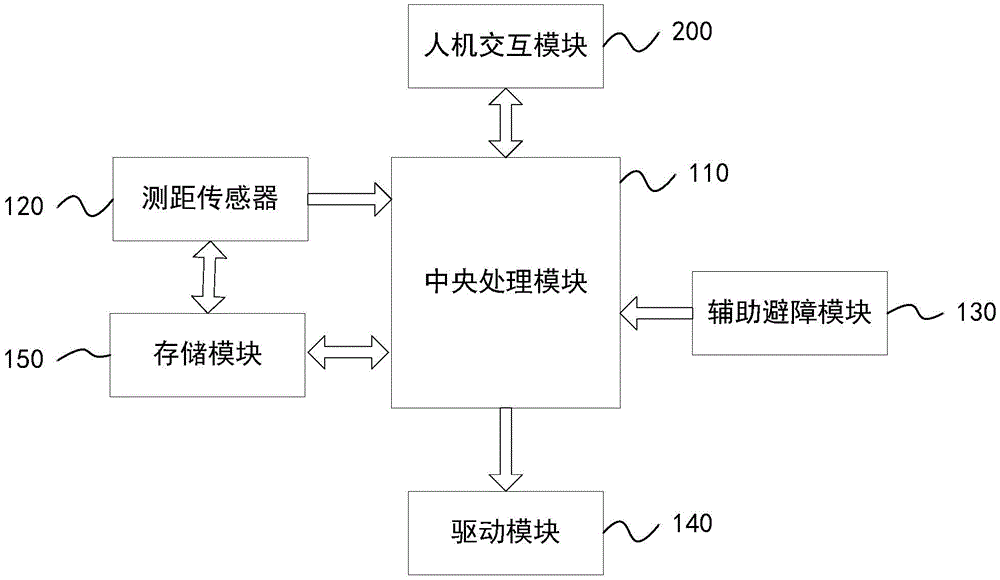
图1a是本发明的第一个实施例中移动机器人的结构示意图;Fig. 1 a is the structural representation of mobile robot in the first embodiment of the present invention;
图1b是本发明的第一个实施例中移动机器人的一种实施方式中测距传感器与所述移动机器人的前进方向的位置关系示意图;Fig. 1b is a schematic diagram of the positional relationship between the ranging sensor and the advancing direction of the mobile robot in an implementation manner of the mobile robot in the first embodiment of the present invention;
图1c是本发明的第一个实施例中移动机器人遇到前方障碍物的示意图;Fig. 1c is a schematic diagram of a mobile robot encountering an obstacle ahead in the first embodiment of the present invention;
图1d是本发明的第一个实施例中移动机器人避开前方障碍物的示意图;Fig. 1d is a schematic diagram of the mobile robot avoiding obstacles ahead in the first embodiment of the present invention;
图1e是本发明的第一个实施例中移动机器人的工作过程的流程示意图;Fig. 1 e is a schematic flow chart of the working process of the mobile robot in the first embodiment of the present invention;
图2是本发明第二个实施例中移动机器人的结构示意图;Fig. 2 is the structural representation of mobile robot in the second embodiment of the present invention;
图3a是本发明的第三个实施例中移动机器人的结构示意图;Fig. 3 a is the structural representation of mobile robot in the 3rd embodiment of the present invention;
图3b是本发明的第三个实施例中移动机器人遇到前方障碍物的示意图;Fig. 3b is a schematic diagram of a mobile robot encountering an obstacle ahead in a third embodiment of the present invention;
图3c是本发明的第三个实施例中移动机器人避开前方障碍物的示意图;及Fig. 3c is a schematic diagram of a mobile robot avoiding obstacles ahead in a third embodiment of the present invention; and
图4是本发明的实施例中移动机器人的导航方法的流程示意图。Fig. 4 is a schematic flowchart of a navigation method for a mobile robot in an embodiment of the present invention.
具体实施方式Detailed ways
下面将结合本发明实施例中的附图,对本发明实施例中的技术方案进行详细地描述,显然,所描述的实施例仅仅是本发明的一部分实施例,而不是全部的实施例。基于本发明中的实施例,本领域普通技术人员在没有做出创造性劳动前提下所获得的所有其他实施例,都属于本发明保护的范围。The technical solutions in the embodiments of the present invention will be described in detail below in conjunction with the drawings in the embodiments of the present invention. Obviously, the described embodiments are only part of the embodiments of the present invention, not all of them. Based on the embodiments of the present invention, all other embodiments obtained by persons of ordinary skill in the art without making creative efforts belong to the protection scope of the present invention.
请参阅图1a,图1a是本发明的第一个实施例中移动机器人的结构示意图。本发明的第一个实施例提供一种移动机器人,所述移动机器人包括中央处理模块110、测距传感器120、辅助避障模块130、人机交互模块200及驱动模块140。测距传感器120、辅助避障模块130、人机交互模块200及驱动模块140均与所述中央处理模块连接,所述连接包括但不限于电性连接和/或通信连接。Please refer to Fig. 1a, Fig. 1a is a schematic structural diagram of the mobile robot in the first embodiment of the present invention. The first embodiment of the present invention provides a mobile robot, which includes a
优选地,所述测距传感器120包括激光器、位姿感应器及数据处理单元(附图未示出)。可以理解的是,在一个实施方式中,所述数据处理单元也可以集成于所述中央处理模块110中。所述测距传感器120用于扫描所述移动机器人的作业空间,所述激光器用于提供所述障碍物或作业空间的边界与所述移动机器人之间的距离信息,并将所述距离信息传送给所述数据处理单元;所述位姿感应器用于提供所述障碍物及作业空间的边界的角度信息,并将所述角度信息传输给所述数据处理单元。所述数据处理单元将所述距离信息及所述角度信息经过SLAM(Simultaneous Localization And Mapping)算法处理后,为所述移动机器人的作业空间建立一个二维的环境地图,并在所述环境地图中标记出所述作业空间中的障碍物。在本实施例的一个实施方式中,所述测距传感器120还可以集成有摄像头、毫米波雷达、超声波传感器之中的一种或多种,使摄像头、毫米波雷达、超声波传感器与所述激光器融合使用。测距传感器120将所述环境地图传送给所述中央处理模块110,中央处理模块110控制所述移动机器人根据所述环境地图而移动,优选地,为了更好地完善所述地图,所述移动机器人首先沿所述环境地图的边界移动。具体地,所述中央处理模块110控制所述驱动模块140,使得驱动模块140驱动所述移动机器人沿所述环境地图的边界移动,在所述环境地图的边界上移动一圈的过程中对所述环境地图进行完善。所述移动机器人还可以包括存储模块150,所述存储模块150与所述中央处理模块110及所述测距传感器120连接。所述存储模块150用于存储测距传感器120和所述中央处理模块110传来的数据,例如,存储所述环境地图,使所述环境地图可以重复调用,即所述存储模块中的数据可供所述中央处理模块110及所述测距传感器120读取。可以理解的是,在一种实施方式中,所述存储模块150也可以集成于所述测距传感器120内。Preferably, the ranging
所述辅助避障模块130用于在所述移动机器人移动时检测所述测距传感器120的感测盲区中的障碍物和悬崖边界,即:所述辅助避障模块130用于感测所述测距传感器感测不到的障碍物或者在垂直方向上有垂直落差的地方(例如,台阶)。所述辅助避障模块130可以是地面检测器、墙面检测器和/或碰撞检测器,所述地面检测器用于检测地面状况,例如是否有悬崖或台阶,所述墙面检测器用于检测移动机器人前方是否有障碍物。所述地面检测器和所述墙面检测器均可以是红外感应器、超声波感应器、电磁波感应器之中的一种或多种的结合。所述碰撞检测器是接触式传感器,用于检测所述移动机器人的前方障碍物,当碰撞到障碍物时所述碰撞检测器被触发,从而感知障碍物的存在。所述辅助避障模块130将所述测距传感器120的感测盲区中的障碍物和悬崖边界的位置信息传送给所述中央处理模块110,所述中央处理模块将所述感测盲区中的障碍物和悬崖边界的位置信息标记于所述环境地图上,即更新所述环境地图,并将所述环境地图传送至所述人机交互模块200,以使用户根据需要通过所述人机交互模块200在所述环境地图上输入虚拟障碍物信息,并反馈回所述中央处理模块110,所述中央处理模块110将所述虚拟障碍物标记于所述环境地图上,即更新所述环境地图,以完善所述环境地图。中央处理模块110根据所述环境地图规划好所述移动机器人作业用的移动路径以避开所有所述障碍物及所述虚拟障碍物。所述人机交互模块200可以是设置于所述移动机器人表面的触控显示屏。所述虚拟障碍物可以是所述测距传感器和辅助避障传感器没检测到的障碍物,也可以是用户不想让所述移动机器人到达的地面区域,例如,在所述环境地图上画移到虚拟墙。The auxiliary
由于所述移动机器人具有测距传感器及辅助避障模块,所述测距传感器用于初步建立环境地图,并标记出作业空间中的障碍物在所述环境地图中的位置,所述辅助避障模块用于在所述移动机器人移动时检测所述测距传感器的感测盲区中的障碍物和悬崖边界,并由所述中央处理模块将其标记于所述环境地图上,从而完善了环境地图,极大程度地使作业空间中的障碍物均被标记于所述环境地图中,提高路径规划的准确性;Since the mobile robot has a ranging sensor and an auxiliary obstacle avoidance module, the ranging sensor is used to initially establish an environmental map, and marks the position of obstacles in the work space in the environmental map, and the auxiliary obstacle avoidance module The module is used to detect obstacles and cliff boundaries in the sensing blind area of the ranging sensor when the mobile robot is moving, and mark them on the environmental map by the central processing module, thereby completing the environmental map , making obstacles in the working space marked on the environment map to a great extent, improving the accuracy of path planning;
又由于所述移动机器人具有人机交互模块,借助所述人机交互模块用户可以根据需要在所述环境地图上输入虚拟障碍物信息,使得所述环境地图更为准确完整,从而使所述中央处理模块110可以根据该准确完整的环境地图完美地规划好所述移动机器人的移动路径,从而准确地避开所有所述障碍物及所述虚拟障碍物,顺畅地作业(例如,清扫地面),节省时间及能耗,极大地提高工作效率。And because the mobile robot has a human-computer interaction module, with the help of the human-computer interaction module, users can input virtual obstacle information on the environmental map as required, so that the environmental map is more accurate and complete, so that the central The
进一步地,所述测距传感器120可以与所述移动机器人的前进方向成一夹角。请参阅图1b,图1b是本发明的第一个实施例中移动机器人的一种实施方式中测距传感器120与所述移动机器人的前进方向的位置关系示意图。如图1b所示,所述移动机器人包括机器人主体100,所述测距传感器120设置于所述机器人主体100的表面,所述机器人主体的前进方向为y,且所述测距传感器120与所述机器人主体100的前进方向成一夹角α,即所述测距传感器120的激光器的激光发射方向与所述机器人主体100的前进方向成夹角α,优选地,所述夹角大于或等于5°且小于或等于60°。所述测距传感器120的激光器的激光发射方向如图中箭头f所示。Further, the ranging
所述测距传感器120与所述机器人主体100的前进方向成一夹角α,用于在所述移动机器人前进的过程中感测所述移动机器人的前方即将落入所述移动机器人的机身宽度范围内的障碍物,并将所述即将落入所述移动机器人的机身宽度范围内的障碍物的位置信息标记于所述环境地图上;所述中央处理模块110根据该位置信息控制所述移动机器人在碰到所述前方即将落入所述移动机器人的机身宽度范围内的障碍物之前优化移动路径以避开所述即将落入所述移动机器人的机身宽度范围内的障碍物。所述移动机器人的前方即将落入所述移动机器人的机身宽度范围内的障碍物,是指若所述移动机器人沿着当前的移动方向继续往前走(不改变方向),则所述移动机器人就会碰撞到(接触到)的障碍物。若所述激光测距传感器的激光束的发射方向与移动机器人的前进方向相同,由于激光束方向集中,会导致难以感测到偏离所述移动机器人前进的正前方的位置上的障碍物,因此,本实施例中,在具有辅助避障模块130及人工交互模块200的情况下,设置所述测距传感器120与所述机器人主体100的前进方向成一夹角α,可以使测距传感器120更容易感测到偏离移动机器人前进的正前方的位置上的障碍物,尤其容易检测到该障碍物的棱角。在所述移动机器人的前进过程中,当所述测距传感器120检测到前方有障碍物,该障碍物落入所述移动机器人的机身宽度的前方范围内(即所述移动机器人继续沿当前方向移动到该障碍物处时会碰撞到该障碍物)时,中央处理模块110会控制所述驱动模块140驱动机器人主体100提前改变方向,从而绕开该障碍物。如图1c和图1d所示,图1c是本发明的第一个实施例中移动机器人遇到前方障碍物410的示意图,图1d是本发明的第一个实施例中移动机器人避开前方障碍物410的示意图。如图1c所示,所述移动机器人右前方有障碍物410,当所述移动机器人不改变移动方向而直接移动到障碍物410处时会撞到该障碍物410,如图1c中的虚线部分所示;而在本实施例中,由于所述测距传感器120与所述机器人主体100的前进方向成一夹角α,可以使测距传感器120更容易感测到偏离移动机器人前进的正前方的位置上的障碍物410,从而使中央处理模块110控制所述驱动模块140驱动机器人主体100提前改变方向,从而绕开该障碍物410,如图1d所示,图中用虚线表示的机器人主体100用以示意所述移动机器人为了绕开该障碍物410而经过的一些位置。The ranging
为了使本发明的第一实施例更清晰,下面对所述移动机器人的工作流程进行描述。In order to make the first embodiment of the present invention clearer, the working process of the mobile robot is described below.
请参阅图1e,图1e是本发明的第一个实施例中移动机器人的工作过程的流程示意图。所述移动机器人启动后,先在作业空间的地面上旋转一定角度(例如,360°),以使所述测距传感器120扫描作业空间的环境,通过SLAM算法初步绘制所述作业空间的环境地图,并传送给中央处理模块110,中央处理模块110根据初步建立的所述环境地图,规划移动路径;移动机器人沿所述环境地图的边界行走一圈或根据所述移动路径移动;在移动过程中,若辅助障碍模块130检测到障碍物,中央处理模块110则将该障碍物记录于所述环境地图,更新所述环境地图,若辅助障碍模块130未检测到障碍物,则接收测距传感器120在所述移动机器人的移动过程中所扫描到的信息;若测距传感器120扫描到了障碍物,则中央处理模块110将该障碍物记录于所述环境地图上,更新所述环境地图,若测距传感器120在所述移动机器人的移动过程中未扫描到障碍物信息,那么,进入下一工作环节,用户可以从人机交互模块200输入虚拟障碍物,所述虚拟障碍物包括被所述辅助避障模块130及所述测距传感器120忽略了的障碍物的位置信息及用户不想让所述移动机器人到达的地方的位置信息,中央处理模块110将所述虚拟障碍物在所述环境地图中标记,更新所述环境地图,形成所述移动机器人的作业空间的完整的环境地图;根据完整的所述环境地图规划所述移动机器人作业用的移动路径,所述移动机器人根据该移动路径进行作业,例如,清洁用的移动机器人根据该移动路径清扫作业场地。在所述移动机器人的作业过程中,也可以重复执行上述过程,随时更新并保存所述环境地图。Please refer to FIG. 1e. FIG. 1e is a schematic flowchart of the working process of the mobile robot in the first embodiment of the present invention. After the mobile robot is started, it first rotates at a certain angle (for example, 360°) on the ground of the workspace, so that the distance measuring sensor 120 scans the environment of the workspace, and initially draws the environment map of the workspace through the SLAM algorithm , and sent to the central processing module 110, the central processing module 110 plans the movement path according to the initially established environment map; the mobile robot walks a circle along the boundary of the environment map or moves according to the movement path; during the movement process , if the auxiliary obstacle module 130 detects an obstacle, the central processing module 110 records the obstacle in the environmental map and updates the environmental map; The information scanned during the moving process of the mobile robot; if the ranging sensor 120 scans an obstacle, the central processing module 110 records the obstacle on the environmental map, updates the environmental map, if measured If the distance sensor 120 does not scan the obstacle information during the moving process of the mobile robot, then, entering the next working link, the user can input virtual obstacles from the human-computer interaction module 200, and the virtual obstacles include The obstacle avoidance module 130 and the distance measuring sensor 120 ignore the position information of the obstacle and the position information of the place where the user does not want the mobile robot to reach, and the central processing module 110 puts the virtual obstacle in the environment map Marking, updating the environment map to form a complete environment map of the working space of the mobile robot; planning the movement path for the mobile robot to work according to the complete environment map, and the mobile robot performs operations according to the movement path , for example, a mobile robot for cleaning cleans the work site according to the moving path. During the operation of the mobile robot, the above process can also be repeatedly executed, and the environment map can be updated and saved at any time.
请参阅图2,图2是本发明第二个实施例中移动机器人的结构示意图。本发明的第二个实施例中所提供的移动机器人的结构和工作原理与第一个实施例中所述的移动机器人的结构和工作原理基本相同,不同之处在于:本实施例(本发明的第二个实施例)中所述的移动机器人包括机器人主体100及与所述机器人主体100分离的控制终端300,所述中央处理模块110、所述测距传感器120及所述辅助避障模块130设置于所述机器人主体100,所述人机交互模块200集成于所述控制终端;并且,所述机器人主体100还包括第一通信模块160,所述控制终端300还包括第二通信模块310,所述第一通信模块160及所述第二通信模块310用于实现所述机器人主体100与所述控制终端300之间的通信。所述第一通信模块160与所述中央处理模块110交互连接,所述第二通信模块310与所述人机交互模块200交互连接。所述控制终端可以是手机、电脑、遥控器或其他移动终端,所述人机交互模块可以是设置于手机、电脑、遥控器或其他移动终端上的APP,从而实现所述移动机器人的远程监视和控制。所述第一通信模块160及所述第二通信模块310可以同时包括2.4G无线模块(2.4GhzRF transceiver/receiver module)和Wi-Fi模块。2.4G无线模块可以用于机器人主体100与控制终端300(例如遥控器)之间的数据通信,Wi-Fi模块用于连接互联网,实现机器人主体100与控制终端300(例如手机)的在线交互通信。例如,所述手机在线交互通信可以实现APP客户端对机器人主体100的远程遥控,远程接收机器人主体100创建的地图数据、工作状态数据,发送人为输入的虚拟障碍物的位置信息给机器人主体100。Please refer to FIG. 2, which is a schematic structural diagram of the mobile robot in the second embodiment of the present invention. The structure and working principle of the mobile robot provided in the second embodiment of the present invention are basically the same as those of the mobile robot described in the first embodiment, and the difference is that this embodiment (the present invention The mobile robot described in the second embodiment) includes a robot
请参阅图3a,图3a是本发明的第三个实施例中移动机器人的结构示意图。本发明的第三个实施例中提供的移动机器人的结构和基本原理与第二个实施例中所述的移动机器人的结构和基本原理基本相同,不同之处在于:本实施例(第三个实施例)中所述移动机器人包括两个测距传感器,即测距传感器120及测距传感器120',所述测距传感器120和所述测距传感器120'分别与所述移动机器人的前进方向成一夹角,如图3a所示,即:所述测距传感器120与所述移动机器人的前进方向成夹角α,所述测距传感器120'与所述移动机器人的前进方向成夹角β,优选的,夹角α及夹角β均可以是大于等于5°且小于等于60°。图中y轴既是所述移动机器人的前进方向的方向轴,又是所述移动机器人的纵向对称轴线。所述测距传感器120和所述测距传感器120'均设置于所述机器人主体100上,优选地,所述测距传感器120和所述测距传感器120'分别设置于y轴的两侧。请参阅3b,图3b是本发明的第三个实施例中移动机器人遇到前方障碍物的示意图。图3b中,若所述移动机器人直接往前移动的话,会碰到图中右侧的障碍物410,如图中虚线所示;如果所述移动机器人一味地绕开障碍物410,而不注意图中左侧的障碍物420的话,则很容易撞上障碍物420。本实施例中,由于在轴线y两侧分别设置了所述测距传感器120和所述测距传感器120',测距传感器120容易检测到与其同侧的障碍物410,测距传感器120'容易检测到与其同侧的障碍物420,所述测距传感器120将检测到的障碍物410的位置信息传输给中央处理模块110,所述测距传感器120'也将所检测到的障碍物420的位置信息传输给中央处理模块110,从而使得中央处理模块110提前规划好接下来的移动路径,控制驱动模块140驱动所述移动机器人改变方向,绕开障碍物410的同时也不会碰撞到另一侧的障碍物420,如图3c所示,图3c是本发明的第三个实施例中移动机器人避开前方障碍物的示意图,以虚线绘制的机器人主体100表示所述移动机器人绕开障碍物410和障碍物420时所经过的一些位置。Please refer to Fig. 3a, Fig. 3a is a schematic structural diagram of the mobile robot in the third embodiment of the present invention. The structure and basic principles of the mobile robot provided in the third embodiment of the present invention are basically the same as those of the mobile robot described in the second embodiment, the difference is that this embodiment (the third The mobile robot described in the embodiment) includes two range-finding sensors, namely a range-finding
请参阅图4,图4是本发明的实施例中移动机器人的导航方法的流程示意图。本发明的实施例还提供一种移动机器人的导航方法,所述导航方法至少包括步骤S100、S200、S300、S400及S500。Please refer to FIG. 4 . FIG. 4 is a schematic flowchart of a navigation method for a mobile robot in an embodiment of the present invention. An embodiment of the present invention also provides a navigation method for a mobile robot, the navigation method at least including steps S100, S200, S300, S400 and S500.
步骤S100:使带有测距传感器的所述移动机器人在作业地面上旋转一定角度,初步建立环境地图,标记出障碍物。Step S100: Rotate the mobile robot with the ranging sensor at a certain angle on the work ground, initially establish an environment map, and mark obstacles.
具体地,所述移动机器人具有测距传感器,使所述移动机器人在作业地面上旋转一定角度,优选地,使所述移动机器人在作业地面上旋转360°,从而使所述测距传感器也旋转了360°,以扫描作业空间的周围环境,并通过SLAM算法初步建立环境地图,标记出障碍物在所述环境地图中的位置。在一个实施方式中,所述环境地图的边界可以定义为距离所述作业空间的墙体一定距离的部位,例如,距离10cm-30cm的部位,此仅为示例,不可理解为对本发明的限制,具体的边界可根据具体情况进行自定义。Specifically, the mobile robot has a ranging sensor, so that the mobile robot rotates at a certain angle on the working ground, preferably, the mobile robot is rotated 360° on the working ground, so that the ranging sensor also rotates 360° to scan the surrounding environment of the work space, and initially establish an environmental map through the SLAM algorithm, and mark the position of obstacles in the environmental map. In one embodiment, the boundary of the environment map can be defined as a position at a certain distance from the wall of the work space, for example, a position at a distance of 10cm-30cm. This is only an example and should not be construed as a limitation of the present invention. The exact boundaries can be customized on a case-by-case basis.
所述测距传感器包括激光器、位姿感应器及数据处理单元,所述激光器用于提供所述障碍物或作业空间的边界与所述移动机器人之间的距离信息,并将所述距离信息传送给所述数据处理单元;所述位姿感应器用于提供所述障碍物及作业空间的边界的角度信息,并将所述角度信息传输给所述数据处理单元。所述数据处理单元将所述距离信息及所述角度信息经过SLAM(Simultaneous Localization And Mapping)算法处理后,为所述移动机器人的作业空间建立一个二维的环境地图,并在所述环境地图中标记出所述作业空间中的障碍物。在本实施例的一个实施方式中,所述测距传感器还可以集成有摄像头、毫米波雷达、超声波传感器等,使摄像头、毫米波雷达、超声波传感器与所述激光器融合使用。The ranging sensor includes a laser, a pose sensor and a data processing unit, the laser is used to provide distance information between the obstacle or the boundary of the work space and the mobile robot, and transmit the distance information to the data processing unit; the pose sensor is used to provide angle information of the obstacle and the boundary of the working space, and transmit the angle information to the data processing unit. After the data processing unit processes the distance information and the angle information through a SLAM (Simultaneous Localization And Mapping) algorithm, a two-dimensional environment map is established for the work space of the mobile robot, and in the environment map Mark obstructions in the workspace. In an implementation manner of this embodiment, the distance measuring sensor may also be integrated with a camera, millimeter wave radar, ultrasonic sensor, etc., so that the camera, millimeter wave radar, ultrasonic sensor and the laser are used in fusion.
步骤S200:沿所述环境地图的边界移动一圈,检测所述测距传感器的感测盲区中的障碍物和悬崖边界,更新所述环境地图。Step S200: moving around the boundary of the environment map, detecting obstacles and cliff boundaries in the blind area of the ranging sensor, and updating the environment map.
具体地,沿所述环境地图的边界移动一圈,检测所述测距传感器的感测盲区中的障碍物和悬崖边界,在所述环境地图上标记所述测距传感器的感测盲区中的障碍物和悬崖边界,更新所述环境地图。所述悬崖边界是指在垂直方向上有垂直落差的地方,例如,阶梯的边界。Specifically, move a circle along the boundary of the environmental map, detect obstacles and cliff boundaries in the sensing blind area of the distance measuring sensor, and mark on the environmental map the obstacles in the sensing blind area of the ranging sensor Obstacles and cliff boundaries, update the environment map. The cliff boundary refers to a place with a vertical drop in the vertical direction, for example, the boundary of a ladder.
S300:用户输入虚拟障碍物,完善所述环境地图。S300: The user inputs a virtual obstacle to improve the environment map.
具体地,将所述环境地图传送给人机交互模块,在所述人机交互模块上人工输入虚拟障碍物,完善所述环境地图。所述虚拟障碍物可以是在此之前没检测到的障碍物,也可以是用户不想让所述移动机器人到达的地方,换句话说,用户可以通过所述人机交互模块输入虚拟墙,从而将所述移动机器人限定在一定的范围内。Specifically, the environment map is transmitted to the human-computer interaction module, and virtual obstacles are manually input on the human-computer interaction module to complete the environment map. The virtual obstacle can be an obstacle that has not been detected before, or it can be a place that the user does not want the mobile robot to reach. In other words, the user can input the virtual wall through the human-computer interaction module, thereby placing The mobile robot is limited within a certain range.
S400:根据所述环境地图规划作用的移动路径。S400: Planning a movement path of an action according to the environment map.
具体地,根据已完善的所述环境地图规划好所述移动机器人作业时用的移动路径,以避开所有的所述障碍物及所述虚拟障碍物。Specifically, a moving path for the mobile robot to work is planned according to the completed environment map, so as to avoid all the obstacles and the virtual obstacles.
S500:根据所述移动路径进行作业。S500: Perform operations according to the movement path.
具体地,所述移动机器人根据已经规划好的移动路径进行作业,在作业的移动过程中,还可以重复上述步骤S100、S200、S300及S400对所述环境地图进行完善。Specifically, the mobile robot operates according to the planned moving path, and the above steps S100, S200, S300 and S400 may be repeated to improve the environment map during the moving process of the operation.
具体的过程,可以举例如下:The specific process can be exemplified as follows:
启动所述移动机器人,所述移动机器人先在作业空间的地面上旋转一定角度(例如360°),以使所述测距传感器扫描作业空间的环境,通过SLAM算法初步绘制所述作业空间的环境地图,并传送给中央处理模块,中央处理模块根据初步建立的所述环境地图,规划移动路径;移动机器人沿所述环境地图的边界行走一圈或根据所述移动路径移动;在移动过程中,若辅助障碍模块130检测到障碍物,则将该障碍物记录于所述环境地图,更新所述环境地图;接收测距传感器在所述移动机器人的移动过程中所扫描到的信息,记录于所述环境地图上,更新所述环境地图;然后,用户从人机交互模块输入虚拟障碍物,所述虚拟障碍物包括被所述辅助避障模块及所述测距传感器忽略了的障碍物的位置信息及用户不想让所述移动机器人到达的地方的位置信息,中央处理模块将所述虚拟障碍物在所述环境地图中标记,更新所述环境地图,形成所述移动机器人的作业空间的完整的环境地图;根据完整的所述环境地图规划所述移动机器人作业用的移动路径,所述移动机器人根据该移动路径进行作用,例如,清洁用的移动机器人根据该移动路径清扫作业场地。在所述移动机器人的作业过程中,也可以执行上述过程,随时更新并保存所述环境地图。Start the mobile robot, the mobile robot first rotates at a certain angle (for example, 360°) on the ground of the work space, so that the distance measuring sensor scans the environment of the work space, and initially draws the environment of the work space through the SLAM algorithm Map, and sent to the central processing module, the central processing module plans the movement path according to the initially established environment map; the mobile robot walks a circle along the boundary of the environment map or moves according to the movement path; during the movement, If the
在本实施例中,由于在所述移动机器人上设置测距传感器,且所述移动机器人在作业地面上旋转一定角度(360°),初步建立环境地图,并标记出作业空间中的障碍物在所述环境地图中的位置;之后,所述移动机器人又沿所述环境地图的边界移动一圈,检测所述测距传感器的感测盲区中的障碍物和悬崖边界,更新所述环境地图,从而完善了环境地图,极大程度地使作业空间中的障碍物标记于所述环境地图中,提高路径规划的准确性;In this embodiment, since the ranging sensor is set on the mobile robot, and the mobile robot rotates at a certain angle (360°) on the work ground, an environmental map is preliminarily established, and the obstacles in the work space are marked The position in the environment map; Afterwards, the mobile robot moves a circle along the boundary of the environment map, detects obstacles and cliff boundaries in the sensing blind area of the ranging sensor, and updates the environment map, Thus, the environment map is perfected, and the obstacles in the working space are marked on the environment map to a great extent, so as to improve the accuracy of path planning;
又由于用户可以输入虚拟障碍物,完善所述环境地图,使得所述环境地图更为准确完整,从而可以根据该准确完整的环境地图完美地规划好所述移动机器人的移动路径,准确地避开所有所述障碍物及所述虚拟障碍物,顺畅地作业(例如,清扫地面),节省时间及能耗,极大地提高工作效率。In addition, since the user can input virtual obstacles to improve the environmental map, the environmental map is more accurate and complete, so that the moving path of the mobile robot can be perfectly planned according to the accurate and complete environmental map, and it can accurately avoid obstacles. All the obstacles and the virtual obstacles can be operated smoothly (for example, cleaning the ground), saving time and energy consumption, and greatly improving work efficiency.
在本发明的实施例中,所述导航方法还包括:In an embodiment of the present invention, the navigation method also includes:
使所述测距传感器与所述移动机器人的前进方向成一夹角;making the ranging sensor form an included angle with the advancing direction of the mobile robot;
感测所述移动机器人移动时即将落入所述移动机器人的机身宽度范围内的障碍物(即所述移动机器人移动到该障碍物处时会碰撞到该障碍物),并在所述环境地图上标记所述即将落入所述移动机器人的机身宽度范围内的障碍物,更新所述环境地图;Sensing an obstacle that is about to fall into the body width range of the mobile robot when the mobile robot is moving (that is, the mobile robot will collide with the obstacle when moving to the obstacle), and in the environment Marking on the map the obstacles that are about to fall within the width range of the fuselage of the mobile robot, and updating the environment map;
根据更新的所述环境地图优化移动路径,避开所述即将落入所述移动机器人的机身宽度范围内的障碍物。Optimizing the moving path according to the updated environment map to avoid the obstacles that are about to fall within the width range of the mobile robot's fuselage.
在本发明的实施例中,设置所述测距传感器与所述移动机器人的前进方向成一夹角,在所述移动机器人移动的过程中,可以使测距传感器更容易感测到偏离移动机器人前进的正前方的位置上的障碍物。所述移动机器人的中央处理模块会根据所述测距传感器检测到的障碍物信息,提前控制所述移动机器人提前改变方向,从而绕开该障碍物。In an embodiment of the present invention, the distance measuring sensor is set to form an included angle with the advancing direction of the mobile robot. During the moving process of the mobile robot, the distance measuring sensor can more easily sense the deviation from the forward direction of the mobile robot. Obstacles directly in front of you. The central processing module of the mobile robot will control the mobile robot to change direction in advance according to the obstacle information detected by the ranging sensor, so as to avoid the obstacle.
在本发明的一个实施例中,所述移动机器人的导航方法还包括:存储所述环境地图,以使所述环境地图可供重复利用。In one embodiment of the present invention, the navigation method of the mobile robot further includes: storing the environment map, so that the environment map can be used repeatedly.
在本说明书的描述中,参考术语“第一个实施例”、“第二个实施例”、“本发明的实施例”、“一个实施方式”、“一种实施方式”、“一个实施例”、“示例”、“具体示例”或“一些示例”等的描述意指结合该实施例或示例描述的具体特征、结构、材料或者特点包含于本发明的至少一个实施例或示例中。在本说明书中,对上述术语的示意性表述不一定指的是相同的实施例或示例。而且,描述的具体特征、结构、材料或特点可以在任何的一个或多个实施例或示例中以合适的方式结合。In the description of this specification, reference is made to the terms "first embodiment", "second embodiment", "embodiment of the present invention", "an embodiment", "an embodiment", "an embodiment ", "example", "specific example" or "some examples" and other descriptions mean that the specific features, structures, materials or characteristics described in conjunction with the embodiment or example are included in at least one embodiment or example of the present invention. In this specification, schematic representations of the above terms do not necessarily refer to the same embodiment or example. Furthermore, the specific features, structures, materials or characteristics described may be combined in any suitable manner in any one or more embodiments or examples.
以上所述的实施方式,并不构成对该技术方案保护范围的限定。任何在上述实施方式的精神和原则之内所作的修改、等同替换和改进等,均应包含在该技术方案的保护范围之内。The implementation methods described above do not constitute a limitation to the scope of protection of the technical solution. Any modifications, equivalent replacements and improvements made within the spirit and principles of the above implementation methods shall be included in the protection scope of the technical solution.
Claims (8)
Priority Applications (4)
| Application Number | Priority Date | Filing Date | Title |
|---|---|---|---|
| CN201610836638.8A CN106527424B (en) | 2016-09-20 | 2016-09-20 | Mobile robot and navigation method for mobile robot |
| EP16916681.6A EP3518064A4 (en) | 2016-09-20 | 2016-12-06 | MOBILE ROBOT AND ITS STEERING METHOD |
| PCT/CN2016/108710 WO2018053942A1 (en) | 2016-09-20 | 2016-12-06 | Mobile robot and navigation method therefor |
| US15/858,033 US20180120852A1 (en) | 2016-09-20 | 2017-12-29 | Mobile robot and navigating method for mobile robot |
Applications Claiming Priority (1)
| Application Number | Priority Date | Filing Date | Title |
|---|---|---|---|
| CN201610836638.8A CN106527424B (en) | 2016-09-20 | 2016-09-20 | Mobile robot and navigation method for mobile robot |
Publications (2)
| Publication Number | Publication Date |
|---|---|
| CN106527424A CN106527424A (en) | 2017-03-22 |
| CN106527424B true CN106527424B (en) | 2023-06-09 |
Family
ID=58343919
Family Applications (1)
| Application Number | Title | Priority Date | Filing Date |
|---|---|---|---|
| CN201610836638.8A Active CN106527424B (en) | 2016-09-20 | 2016-09-20 | Mobile robot and navigation method for mobile robot |
Country Status (4)
| Country | Link |
|---|---|
| US (1) | US20180120852A1 (en) |
| EP (1) | EP3518064A4 (en) |
| CN (1) | CN106527424B (en) |
| WO (1) | WO2018053942A1 (en) |
Families Citing this family (108)
| Publication number | Priority date | Publication date | Assignee | Title |
|---|---|---|---|---|
| WO2018158248A2 (en) | 2017-03-02 | 2018-09-07 | RobArt GmbH | Method for controlling an autonomous, mobile robot |
| CN106873597B (en) * | 2017-03-24 | 2020-11-10 | 上海思岚科技有限公司 | Method for realizing setting of virtual track for mobile robot through computer client |
| CN106990779A (en) * | 2017-03-24 | 2017-07-28 | 上海思岚科技有限公司 | Make the implementation method of mobile robot progress virtual wall avoidance by computer client |
| CN106997202A (en) * | 2017-03-24 | 2017-08-01 | 上海思岚科技有限公司 | The implementation method of virtual wall is set by mobile applications |
| CN106970741A (en) * | 2017-03-24 | 2017-07-21 | 上海思岚科技有限公司 | The implementation method of virtual rail is set by mobile applications |
| CN107065870A (en) * | 2017-03-31 | 2017-08-18 | 深圳诺欧博智能科技有限公司 | Mobile robot autonomous navigation system and method |
| CN106980318A (en) * | 2017-04-05 | 2017-07-25 | 芜湖酷哇机器人产业技术研究院有限公司 | Self-navigation perambulator |
| CN107229275A (en) * | 2017-04-24 | 2017-10-03 | 华南农业大学 | A kind of orchard travels through intelligent grass-removing control system and method automatically |
| CN108803586B (en) * | 2017-04-26 | 2021-08-24 | 松下家电(中国)有限公司 | How a sweeping robot works |
| WO2018195857A1 (en) * | 2017-04-27 | 2018-11-01 | 深圳市大疆创新科技有限公司 | Method and device for controlling unmanned aerial vehicle, and method and device for prompting regarding obstacle |
| CN106965189A (en) * | 2017-05-27 | 2017-07-21 | 西安工业大学 | A kind of robot obstacle-avoiding controller |
| US10324473B2 (en) * | 2017-06-01 | 2019-06-18 | Wipro Limited | Method and system for generating a safe navigation path for navigating a driverless vehicle |
| CN107403156B (en) * | 2017-07-27 | 2020-10-20 | 深圳市盛路物联通讯技术有限公司 | Intelligent supervision method and system for rail transit |
| CN107463177A (en) * | 2017-08-22 | 2017-12-12 | 北京小米移动软件有限公司 | Control mobile method, apparatus and system |
| CN107807641B (en) * | 2017-10-25 | 2019-11-19 | 上海思岚科技有限公司 | Method for mobile robot obstacle avoidance |
| CN108078498A (en) * | 2017-10-30 | 2018-05-29 | 苏州花坞信息科技有限公司 | A kind of stair face cleaning method of intelligent stair clean robot |
| CN108227523B (en) * | 2017-11-01 | 2020-01-07 | 深圳乐动机器人有限公司 | Robot control method, device, storage medium and computer equipment |
| CN111212783A (en) * | 2017-11-15 | 2020-05-29 | 宝马股份公司 | Unmanned aerial vehicle, method and system for providing cleaning services for a vehicle |
| CN109591008A (en) * | 2017-11-18 | 2019-04-09 | 广州科语机器人有限公司 | The area of safety operaton of mobile robot determines method |
| CN107976999B (en) * | 2017-11-21 | 2020-11-06 | 深圳市远弗科技有限公司 | Mobile robot and obstacle avoidance and path planning method and system thereof |
| WO2019100269A1 (en) * | 2017-11-22 | 2019-05-31 | 深圳市沃特沃德股份有限公司 | Robot movement control method and system, and robot |
| WO2019113860A1 (en) * | 2017-12-13 | 2019-06-20 | 广州艾若博机器人科技有限公司 | Color block tag-based virtual wall construction method and apparatus, mapping method, mobile electronic device |
| CN109955246B (en) * | 2017-12-26 | 2020-11-24 | 深圳市优必选科技有限公司 | Cliff detection method, device, terminal device and computer-readable storage medium |
| CN108089200A (en) * | 2018-01-12 | 2018-05-29 | 深圳慎始科技有限公司 | A kind of sweeping robot with linear solid-state radar |
| CN108919814A (en) * | 2018-08-15 | 2018-11-30 | 杭州慧慧科技有限公司 | Grass trimmer working region generation method, apparatus and system |
| CN108445878B (en) * | 2018-02-28 | 2022-04-01 | 北京奇虎科技有限公司 | Obstacle processing method for sweeping robot and sweeping robot |
| CN108571972A (en) * | 2018-03-08 | 2018-09-25 | 芜湖泰领信息科技有限公司 | Robot route planning method |
| CN108582072B (en) * | 2018-04-28 | 2020-09-15 | 北京邮电大学 | Improved graph planning algorithm-based space manipulator task planning method |
| CN108490957A (en) * | 2018-05-16 | 2018-09-04 | 深圳市银星智能科技股份有限公司 | Mobile robot |
| CN109074083B (en) * | 2018-06-08 | 2022-02-18 | 珊口(深圳)智能科技有限公司 | Movement control method, mobile robot, and computer storage medium |
| JP7095427B2 (en) * | 2018-06-15 | 2022-07-05 | トヨタ自動車株式会社 | Autonomous mobile body and control program for autonomous mobile body |
| CN110647141B (en) * | 2018-06-27 | 2022-11-08 | 西安合众思壮导航技术有限公司 | Method, device and system for generating obstacle avoidance path |
| GB2576494B (en) | 2018-08-06 | 2022-03-23 | Dyson Technology Ltd | A mobile robot and method of controlling thereof |
| CN109085834B (en) * | 2018-08-27 | 2019-09-03 | 珠海市一微半导体有限公司 | The method for the robot to determine the reference edge and the method for the robot to screen the reference wall edge |
| CN108931983B (en) | 2018-09-07 | 2020-04-24 | 深圳市银星智能科技股份有限公司 | Map construction method and robot thereof |
| CN110919642A (en) * | 2018-09-19 | 2020-03-27 | 中国科学院深圳先进技术研究院 | Ultrasonic obstacle avoidance device, robot system and method for controlling robot to avoid obstacle |
| US10816994B2 (en) * | 2018-10-10 | 2020-10-27 | Midea Group Co., Ltd. | Method and system for providing remote robotic control |
| CN109250004A (en) * | 2018-10-29 | 2019-01-22 | 逻腾(杭州)科技有限公司 | A kind of panoramic information acquisition rolling robot |
| CN109709554B (en) * | 2018-12-13 | 2021-01-19 | 广州极飞科技有限公司 | Work device, and control method and device thereof |
| CN109285173A (en) * | 2018-12-24 | 2019-01-29 | 常州节卡智能装备有限公司 | A kind of safety protecting method, device and computer equipment |
| CN111399492A (en) * | 2018-12-28 | 2020-07-10 | 深圳市优必选科技有限公司 | A robot and its obstacle perception method and device |
| CN109782768A (en) * | 2019-01-26 | 2019-05-21 | 哈尔滨玄智科技有限公司 | A kind of autonomous navigation system adapting to expert's planetary compound gear train transfer robot |
| CN111493744A (en) * | 2019-01-31 | 2020-08-07 | 北京奇虎科技有限公司 | Cleaning robot remote control method, device, electronic device and readable storage medium |
| CN111568309B (en) * | 2019-02-19 | 2023-12-05 | 北京奇虎科技有限公司 | Anti-fall method, device, sweeping equipment and computer-readable storage medium |
| JP7340350B2 (en) * | 2019-05-07 | 2023-09-07 | 東芝テック株式会社 | Information processing device and information processing method |
| JP7188279B2 (en) * | 2019-05-29 | 2022-12-13 | トヨタ自動車株式会社 | Machine learning methods and mobile robots |
| KR102293317B1 (en) * | 2019-06-03 | 2021-08-23 | 엘지전자 주식회사 | Method for drawing map of specific area, robot and electronic device implementing thereof |
| CN110187709A (en) * | 2019-06-11 | 2019-08-30 | 北京百度网讯科技有限公司 | Driving processing method, device and storage medium |
| CN110308721B (en) * | 2019-06-16 | 2024-05-07 | 宁波祈禧智能科技股份有限公司 | A photoelectric fence for limiting the working area of an outdoor mobile robot |
| CN110485502A (en) * | 2019-07-17 | 2019-11-22 | 爱克斯维智能科技(苏州)有限公司 | A kind of excavator intelligent walking system, excavator and control method |
| US11123870B2 (en) | 2019-09-27 | 2021-09-21 | HighRes Biosolutions, Inc. | Robotic transport system and method therefor |
| CN112673799B (en) * | 2019-10-18 | 2024-06-21 | 南京泉峰科技有限公司 | Self-propelled mowing systems and outdoor walking equipment |
| CN110907945A (en) * | 2019-10-28 | 2020-03-24 | 广西电网有限责任公司电力科学研究院 | A positioning method that takes into account the indoor and outdoor flight of UAV |
| CN112773261B (en) * | 2019-11-04 | 2022-06-21 | 美智纵横科技有限责任公司 | Method and device for avoiding obstacles and sweeping robot |
| CN112647461A (en) * | 2019-12-02 | 2021-04-13 | 丰疆智能科技股份有限公司 | Mobile cleaning equipment |
| CN112987716A (en) * | 2019-12-17 | 2021-06-18 | 科沃斯机器人股份有限公司 | Operation control method, device and system and robot |
| JP7173062B2 (en) * | 2020-01-23 | 2022-11-16 | トヨタ自動車株式会社 | Change point detection device and map information distribution system |
| CN111419118A (en) * | 2020-02-20 | 2020-07-17 | 珠海格力电器股份有限公司 | Method, device, terminal and computer readable medium for dividing regions |
| CN111176301A (en) * | 2020-03-03 | 2020-05-19 | 江苏美的清洁电器股份有限公司 | Map construction method and cleaning method of sweeping robot |
| CN111459169B (en) * | 2020-04-27 | 2023-11-24 | 四川智动木牛智能科技有限公司 | Comprehensive pipe gallery inspection method based on wheeled robot |
| CN111708360B (en) * | 2020-05-15 | 2023-01-31 | 科沃斯机器人股份有限公司 | Information acquisition method, device and storage medium |
| CN113806455B (en) * | 2020-06-12 | 2024-03-29 | 未岚大陆(北京)科技有限公司 | Map construction method, equipment and storage medium |
| CN111714054A (en) * | 2020-06-23 | 2020-09-29 | 珠海格力电器股份有限公司 | Dishwasher, dishwasher system and dishwasher control method |
| CN113942007A (en) * | 2020-07-16 | 2022-01-18 | 深圳乐动机器人有限公司 | Robot control method and device and electronic equipment |
| CN111984003A (en) * | 2020-07-17 | 2020-11-24 | 山东师范大学 | Off-line map algorithm-based trackless self-adaptive navigation method and system |
| CN112489239A (en) * | 2020-09-09 | 2021-03-12 | 北京潞电电气设备有限公司 | Inspection system |
| CN112519910B (en) * | 2020-09-11 | 2024-12-20 | 深圳银星智能集团股份有限公司 | Intelligent Robots |
| EP3968051B1 (en) * | 2020-09-15 | 2024-10-30 | Infineon Technologies AG | Guiding system for a robot, base station including such a guiding system, and method for guiding a robot |
| CN112137529B (en) * | 2020-09-28 | 2021-08-24 | 珠海市一微半导体有限公司 | A cleaning control method based on dense obstacles |
| CN112190187B (en) * | 2020-09-30 | 2021-10-29 | 深圳市银星智能科技股份有限公司 | Control method and device for self-moving robot and self-moving robot |
| CN114527736B (en) * | 2020-10-30 | 2023-10-13 | 速感科技(北京)有限公司 | Dilemma avoidance method, autonomous mobile device, and storage medium |
| CN112578392B (en) * | 2020-11-25 | 2022-05-06 | 珠海一微半导体股份有限公司 | A method for constructing environment boundary based on remote sensor and mobile robot |
| CN112462768B (en) * | 2020-11-25 | 2024-03-29 | 深圳拓邦股份有限公司 | Mobile robot navigation map creation method and device and mobile robot |
| CN112612036B (en) * | 2020-12-01 | 2023-05-05 | 珠海一微半导体股份有限公司 | A boundary marking method and mobile robot |
| CN112286228A (en) * | 2020-12-01 | 2021-01-29 | 深圳高度创新技术有限公司 | Unmanned aerial vehicle three-dimensional visual obstacle avoidance method and system |
| CN112597555A (en) * | 2020-12-29 | 2021-04-02 | 广东湾区智能终端工业设计研究院有限公司 | Active equipment escaping method, electronic equipment, computing equipment and storage medium |
| CN114683242A (en) * | 2020-12-30 | 2022-07-01 | 美的集团(上海)有限公司 | Chassis and robot |
| DE102021201068A1 (en) * | 2021-02-05 | 2022-08-11 | Robert Bosch Gesellschaft mit beschränkter Haftung | Autonomous mobile device and method for operating an autonomous mobile device |
| JP2022127886A (en) * | 2021-02-22 | 2022-09-01 | トヨタ自動車株式会社 | Conveyance system, conveyance method and conveyance program |
| CN113017492A (en) * | 2021-02-23 | 2021-06-25 | 江苏柯林博特智能科技有限公司 | Object recognition intelligent control system based on cleaning robot |
| US12296694B2 (en) | 2021-03-10 | 2025-05-13 | Techtronic Cordless Gp | Lawnmowers |
| CN112883897A (en) * | 2021-03-11 | 2021-06-01 | 上海有个机器人有限公司 | Distribution robot for man-machine interaction and man-machine interaction method |
| CN113050655A (en) * | 2021-03-29 | 2021-06-29 | 中国南方电网有限责任公司超高压输电公司柳州局 | Method for completing obstacle avoidance of transformer substation robot through laser range finder |
| CN113341431B (en) * | 2021-04-22 | 2022-04-15 | 国网浙江省电力有限公司嘉兴供电公司 | Transformer substation robot indoor navigation positioning method based on double-path laser |
| CN115248588A (en) * | 2021-04-27 | 2022-10-28 | 南京泉峰科技有限公司 | Self-moving equipment and motion control method thereof |
| US20230004161A1 (en) * | 2021-07-02 | 2023-01-05 | Cnh Industrial America Llc | System and method for groundtruthing and remarking mapped landmark data |
| CN113467452A (en) * | 2021-07-02 | 2021-10-01 | 追觅创新科技(苏州)有限公司 | Avoidance method and device for mobile robot, storage medium, and electronic device |
| CN113485368B (en) * | 2021-08-09 | 2024-06-07 | 国电南瑞科技股份有限公司 | Navigation and line inspection method and device for overhead transmission line inspection robot |
| CN115162684A (en) * | 2021-08-11 | 2022-10-11 | 马涛 | Automatic troweling machine with self-repairing capability |
| CN113776516B (en) * | 2021-09-03 | 2024-05-14 | 上海擎朗智能科技有限公司 | Method and device for adding barriers, electronic equipment and storage medium |
| CN113821038A (en) * | 2021-09-28 | 2021-12-21 | 国网福建省电力有限公司厦门供电公司 | An intelligent navigation path planning system and method for robots |
| CN113686883B (en) * | 2021-09-28 | 2024-09-13 | 江汉大学 | Device and method for detecting roadway blind area |
| CN116058724A (en) * | 2021-10-29 | 2023-05-05 | 追觅创新科技(苏州)有限公司 | Cleaning robot operation control method, device and storage medium |
| CA3181601A1 (en) | 2021-11-10 | 2023-05-10 | Techtronic Cordless Gp | Robotic lawn mowers |
| CN116473471A (en) * | 2022-01-14 | 2023-07-25 | 追觅创新科技(苏州)有限公司 | Anti-drop control method, system and automatic cleaning equipment |
| US12461231B2 (en) * | 2022-01-26 | 2025-11-04 | Motional Ad Llc | Thermal sensor data vehicle perception |
| EP4270138A1 (en) | 2022-04-28 | 2023-11-01 | Techtronic Cordless GP | Creation of a virtual boundary for a robotic garden tool |
| US12472611B2 (en) | 2022-05-31 | 2025-11-18 | Techtronic Cordless Gp | Peg driver |
| CN115281558B (en) * | 2022-07-14 | 2024-05-31 | 珠海格力电器股份有限公司 | Visual detection assisted floor sweeping robot work method and device and air conditioning equipment |
| EP4310621B1 (en) | 2022-07-19 | 2025-02-12 | Techtronic Cordless GP | Display for controlling robotic tool |
| EP4340296B1 (en) | 2022-07-29 | 2025-04-09 | Techtronic Cordless GP | Generation of a cryptography key for a robotic garden tool |
| CN115535609B (en) * | 2022-08-15 | 2024-08-30 | 安徽浙云科技有限公司 | Transfer robot capable of remotely controlling and determining transfer path |
| CN115373392A (en) * | 2022-08-17 | 2022-11-22 | 金龙联合汽车工业(苏州)有限公司 | An obstacle avoidance decision-making method and device for an automatic driving system |
| CN115366102A (en) * | 2022-08-23 | 2022-11-22 | 珠海城市职业技术学院 | Navigation method and system of mobile robot in indoor unknown dynamic environment |
| CN115328155A (en) * | 2022-09-05 | 2022-11-11 | 中煤科工集团重庆研究院有限公司 | Obstacle avoidance method for underground coal mine tracked vehicle |
| CN115326078B (en) * | 2022-10-17 | 2023-01-17 | 深圳赤马人工智能有限公司 | Path navigation method and device, intelligent sweeping and washing robot and storage medium |
| CN118120603A (en) * | 2024-03-20 | 2024-06-04 | 中国工商银行股份有限公司许昌分行 | Method and system for improving bank space |
| CN119247945A (en) * | 2024-09-05 | 2025-01-03 | 深圳市元鼎智能创新有限公司 | A method and device for a pool cleaning robot to find a target wall |
Citations (2)
| Publication number | Priority date | Publication date | Assignee | Title |
|---|---|---|---|---|
| JPH05257533A (en) * | 1992-03-12 | 1993-10-08 | Tokimec Inc | Method and device for sweeping floor surface by moving robot |
| CN105652864A (en) * | 2014-11-14 | 2016-06-08 | 科沃斯机器人有限公司 | Map construction method utilizing mobile robot and work method utilizing map |
Family Cites Families (20)
| Publication number | Priority date | Publication date | Assignee | Title |
|---|---|---|---|---|
| US7429843B2 (en) * | 2001-06-12 | 2008-09-30 | Irobot Corporation | Method and system for multi-mode coverage for an autonomous robot |
| KR100745975B1 (en) * | 2004-12-30 | 2007-08-06 | 삼성전자주식회사 | Method and device for moving to the minimum breadcrumb using a grid map |
| JP2006239844A (en) * | 2005-03-04 | 2006-09-14 | Sony Corp | Obstacle avoidance device, obstacle avoidance method, obstacle avoidance program, and mobile robot device |
| KR100877072B1 (en) * | 2007-06-28 | 2009-01-07 | 삼성전자주식회사 | Method and apparatus for simultaneously creating and cleaning maps for mobile robots |
| KR20090077547A (en) * | 2008-01-11 | 2009-07-15 | 삼성전자주식회사 | Path planning method and device of mobile robot |
| KR101457148B1 (en) * | 2008-05-21 | 2014-10-31 | 삼성전자 주식회사 | Apparatus and method for estimating the position of a robot |
| US10275046B2 (en) * | 2010-12-10 | 2019-04-30 | Microsoft Technology Licensing, Llc | Accessing and interacting with information |
| CN202041809U (en) * | 2011-04-02 | 2011-11-16 | 宁波波朗电器有限公司 | Electric control system of intelligent cleaning robot |
| CN102183959B (en) * | 2011-04-21 | 2013-08-07 | 深圳市银星智能科技股份有限公司 | Self-adaptive path control method of mobile robot |
| US9582000B2 (en) * | 2011-09-07 | 2017-02-28 | Lg Electronics Inc. | Robot cleaner, and system and method for remotely controlling the same |
| KR101949277B1 (en) * | 2012-06-18 | 2019-04-25 | 엘지전자 주식회사 | Autonomous mobile robot |
| US9020637B2 (en) * | 2012-11-02 | 2015-04-28 | Irobot Corporation | Simultaneous localization and mapping for a mobile robot |
| KR102071575B1 (en) * | 2013-04-23 | 2020-01-30 | 삼성전자 주식회사 | Moving robot, user terminal apparatus, and control method thereof |
| KR102158690B1 (en) * | 2013-12-27 | 2020-10-23 | 엘지전자 주식회사 | robot cleaner, robot cleaner system and a control method of the same |
| KR102306709B1 (en) * | 2014-08-19 | 2021-09-29 | 삼성전자주식회사 | Robot cleaner, control apparatus, control system, and control method of robot cleaner |
| CN204374771U (en) * | 2015-01-14 | 2015-06-03 | 上海物景智能科技有限公司 | Realize device and the sweeping robot of the modeling of sweeping robot map boundary line |
| CN104731101B (en) * | 2015-04-10 | 2017-08-04 | 河海大学常州校区 | Cleaning robot indoor scene map modeling method and robot |
| CN105573320A (en) * | 2015-12-30 | 2016-05-11 | 天津天瑞达自动化设备有限公司 | Autonomous logistics robot system |
| US10414052B2 (en) * | 2016-02-09 | 2019-09-17 | Cobalt Robotics Inc. | Building-integrated mobile robot |
| CN206115271U (en) * | 2016-09-20 | 2017-04-19 | 深圳市银星智能科技股份有限公司 | Mobile robot with manipulator arm traction device |
-
2016
- 2016-09-20 CN CN201610836638.8A patent/CN106527424B/en active Active
- 2016-12-06 WO PCT/CN2016/108710 patent/WO2018053942A1/en not_active Ceased
- 2016-12-06 EP EP16916681.6A patent/EP3518064A4/en not_active Withdrawn
-
2017
- 2017-12-29 US US15/858,033 patent/US20180120852A1/en not_active Abandoned
Patent Citations (2)
| Publication number | Priority date | Publication date | Assignee | Title |
|---|---|---|---|---|
| JPH05257533A (en) * | 1992-03-12 | 1993-10-08 | Tokimec Inc | Method and device for sweeping floor surface by moving robot |
| CN105652864A (en) * | 2014-11-14 | 2016-06-08 | 科沃斯机器人有限公司 | Map construction method utilizing mobile robot and work method utilizing map |
Also Published As
| Publication number | Publication date |
|---|---|
| EP3518064A4 (en) | 2020-06-17 |
| EP3518064A1 (en) | 2019-07-31 |
| WO2018053942A1 (en) | 2018-03-29 |
| US20180120852A1 (en) | 2018-05-03 |
| CN106527424A (en) | 2017-03-22 |
Similar Documents
| Publication | Publication Date | Title |
|---|---|---|
| CN106527424B (en) | Mobile robot and navigation method for mobile robot | |
| EP3460614B1 (en) | Combined robot and cruising path generation method therefor | |
| KR101857952B1 (en) | Apparatus and System for Remotely Controlling a Robot Cleaner and Method thereof | |
| EP3469974B1 (en) | Cooperative work system formed by mother robot and child robot, and operation method thereof | |
| AU2019210565B2 (en) | Moving robot, method for controlling moving robot, and moving robot system | |
| KR102648771B1 (en) | Autonomous map traversal with waypoint matching | |
| CN102890507B (en) | Self-walking robot, cleaning robot and positioning method thereof | |
| CN106155056B (en) | Self-mobile robot walking method and device | |
| US10175688B2 (en) | Apparatus and system for remotely controlling a moving robot and method thereof | |
| CN205942412U (en) | Mother and sons' machine is work systems in coordination | |
| CN104460666B (en) | Robot autonomous obstacle avoidance moving control method based on distance vectors | |
| CN103777637B (en) | Laser autonomous navigation AGV trolley without reflector and its navigation method | |
| CN106313114B (en) | Indoor crusing robot is moved into one's husband's household upon marriage system and method | |
| EP3133459A1 (en) | Local obstacle avoidance walking method of self-moving robot | |
| CN207164586U (en) | A kind of sweeping robot navigation system | |
| CN110709790A (en) | Method for controlling an autonomous mobile robot | |
| CN107992052A (en) | Method for tracking target and device, mobile equipment and storage medium | |
| EP3552072A1 (en) | Robotic cleaning device with operating speed variation based on environment | |
| US20230123512A1 (en) | Robotic cleaning device with dynamic area coverage | |
| JP2018185767A (en) | Environment maintenance robot, and control program of the same | |
| WO2018228203A1 (en) | Human and machine intelligence cooperation-based robot system having sweeping function | |
| WO2020037584A1 (en) | Sectional type automatic charging docking method and mobile device and charging station | |
| CN114942644A (en) | Method for controlling robot to clean and robot | |
| TWM477598U (en) | Mobile device having route correction function | |
| CN206115271U (en) | Mobile robot with manipulator arm traction device |
Legal Events
| Date | Code | Title | Description |
|---|---|---|---|
| C06 | Publication | ||
| PB01 | Publication | ||
| SE01 | Entry into force of request for substantive examination | ||
| SE01 | Entry into force of request for substantive examination | ||
| CB02 | Change of applicant information | ||
| CB02 | Change of applicant information |
Address after: 518110 1701, building 2, Yinxing Zhijie, No. 1301-72, sightseeing Road, Xinlan community, Guanlan street, Longhua District, Shenzhen, Guangdong Province Applicant after: Shenzhen Yinxing Intelligent Group Co.,Ltd. Address before: 518110 D, Longhua science and Technology Park, Guanfu street, Longhua, Shenzhen. Applicant before: Shenzhen Silver Star Intelligent Technology Co.,Ltd. |
|
| GR01 | Patent grant | ||
| GR01 | Patent grant |