CN105793376B - Adhesive articles and related methods - Google Patents
Adhesive articles and related methods Download PDFInfo
- Publication number
- CN105793376B CN105793376B CN201480066751.1A CN201480066751A CN105793376B CN 105793376 B CN105793376 B CN 105793376B CN 201480066751 A CN201480066751 A CN 201480066751A CN 105793376 B CN105793376 B CN 105793376B
- Authority
- CN
- China
- Prior art keywords
- adhesive
- layer
- pressure sensitive
- structural
- subject matter
- Prior art date
- Legal status (The legal status is an assumption and is not a legal conclusion. Google has not performed a legal analysis and makes no representation as to the accuracy of the status listed.)
- Active
Links
Images


Classifications
-
- C—CHEMISTRY; METALLURGY
- C09—DYES; PAINTS; POLISHES; NATURAL RESINS; ADHESIVES; COMPOSITIONS NOT OTHERWISE PROVIDED FOR; APPLICATIONS OF MATERIALS NOT OTHERWISE PROVIDED FOR
- C09J—ADHESIVES; NON-MECHANICAL ASPECTS OF ADHESIVE PROCESSES IN GENERAL; ADHESIVE PROCESSES NOT PROVIDED FOR ELSEWHERE; USE OF MATERIALS AS ADHESIVES
- C09J7/00—Adhesives in the form of films or foils
- C09J7/20—Adhesives in the form of films or foils characterised by their carriers
- C09J7/22—Plastics; Metallised plastics
- C09J7/26—Porous or cellular plastics
-
- C—CHEMISTRY; METALLURGY
- C08—ORGANIC MACROMOLECULAR COMPOUNDS; THEIR PREPARATION OR CHEMICAL WORKING-UP; COMPOSITIONS BASED THEREON
- C08K—Use of inorganic or non-macromolecular organic substances as compounding ingredients
- C08K5/00—Use of organic ingredients
- C08K5/04—Oxygen-containing compounds
- C08K5/13—Phenols; Phenolates
-
- C—CHEMISTRY; METALLURGY
- C08—ORGANIC MACROMOLECULAR COMPOUNDS; THEIR PREPARATION OR CHEMICAL WORKING-UP; COMPOSITIONS BASED THEREON
- C08K—Use of inorganic or non-macromolecular organic substances as compounding ingredients
- C08K5/00—Use of organic ingredients
- C08K5/16—Nitrogen-containing compounds
- C08K5/34—Heterocyclic compounds having nitrogen in the ring
- C08K5/3442—Heterocyclic compounds having nitrogen in the ring having two nitrogen atoms in the ring
-
- C—CHEMISTRY; METALLURGY
- C08—ORGANIC MACROMOLECULAR COMPOUNDS; THEIR PREPARATION OR CHEMICAL WORKING-UP; COMPOSITIONS BASED THEREON
- C08L—COMPOSITIONS OF MACROMOLECULAR COMPOUNDS
- C08L23/00—Compositions of homopolymers or copolymers of unsaturated aliphatic hydrocarbons having only one carbon-to-carbon double bond; Compositions of derivatives of such polymers
- C08L23/02—Compositions of homopolymers or copolymers of unsaturated aliphatic hydrocarbons having only one carbon-to-carbon double bond; Compositions of derivatives of such polymers not modified by chemical after-treatment
-
- C—CHEMISTRY; METALLURGY
- C08—ORGANIC MACROMOLECULAR COMPOUNDS; THEIR PREPARATION OR CHEMICAL WORKING-UP; COMPOSITIONS BASED THEREON
- C08L—COMPOSITIONS OF MACROMOLECULAR COMPOUNDS
- C08L33/00—Compositions of homopolymers or copolymers of compounds having one or more unsaturated aliphatic radicals, each having only one carbon-to-carbon double bond, and only one being terminated by only one carboxyl radical, or of salts, anhydrides, esters, amides, imides or nitriles thereof; Compositions of derivatives of such polymers
-
- C—CHEMISTRY; METALLURGY
- C09—DYES; PAINTS; POLISHES; NATURAL RESINS; ADHESIVES; COMPOSITIONS NOT OTHERWISE PROVIDED FOR; APPLICATIONS OF MATERIALS NOT OTHERWISE PROVIDED FOR
- C09J—ADHESIVES; NON-MECHANICAL ASPECTS OF ADHESIVE PROCESSES IN GENERAL; ADHESIVE PROCESSES NOT PROVIDED FOR ELSEWHERE; USE OF MATERIALS AS ADHESIVES
- C09J123/00—Adhesives based on homopolymers or copolymers of unsaturated aliphatic hydrocarbons having only one carbon-to-carbon double bond; Adhesives based on derivatives of such polymers
- C09J123/02—Adhesives based on homopolymers or copolymers of unsaturated aliphatic hydrocarbons having only one carbon-to-carbon double bond; Adhesives based on derivatives of such polymers not modified by chemical after-treatment
-
- C—CHEMISTRY; METALLURGY
- C09—DYES; PAINTS; POLISHES; NATURAL RESINS; ADHESIVES; COMPOSITIONS NOT OTHERWISE PROVIDED FOR; APPLICATIONS OF MATERIALS NOT OTHERWISE PROVIDED FOR
- C09J—ADHESIVES; NON-MECHANICAL ASPECTS OF ADHESIVE PROCESSES IN GENERAL; ADHESIVE PROCESSES NOT PROVIDED FOR ELSEWHERE; USE OF MATERIALS AS ADHESIVES
- C09J133/00—Adhesives based on homopolymers or copolymers of compounds having one or more unsaturated aliphatic radicals, each having only one carbon-to-carbon double bond, and at least one being terminated by only one carboxyl radical, or of salts, anhydrides, esters, amides, imides, or nitriles thereof; Adhesives based on derivatives of such polymers
-
- C—CHEMISTRY; METALLURGY
- C09—DYES; PAINTS; POLISHES; NATURAL RESINS; ADHESIVES; COMPOSITIONS NOT OTHERWISE PROVIDED FOR; APPLICATIONS OF MATERIALS NOT OTHERWISE PROVIDED FOR
- C09J—ADHESIVES; NON-MECHANICAL ASPECTS OF ADHESIVE PROCESSES IN GENERAL; ADHESIVE PROCESSES NOT PROVIDED FOR ELSEWHERE; USE OF MATERIALS AS ADHESIVES
- C09J133/00—Adhesives based on homopolymers or copolymers of compounds having one or more unsaturated aliphatic radicals, each having only one carbon-to-carbon double bond, and at least one being terminated by only one carboxyl radical, or of salts, anhydrides, esters, amides, imides, or nitriles thereof; Adhesives based on derivatives of such polymers
- C09J133/04—Homopolymers or copolymers of esters
- C09J133/06—Homopolymers or copolymers of esters of esters containing only carbon, hydrogen and oxygen, the oxygen atom being present only as part of the carboxyl radical
- C09J133/062—Copolymers with monomers not covered by C09J133/06
- C09J133/064—Copolymers with monomers not covered by C09J133/06 containing anhydride, COOH or COOM groups, with M being metal or onium-cation
-
- C—CHEMISTRY; METALLURGY
- C09—DYES; PAINTS; POLISHES; NATURAL RESINS; ADHESIVES; COMPOSITIONS NOT OTHERWISE PROVIDED FOR; APPLICATIONS OF MATERIALS NOT OTHERWISE PROVIDED FOR
- C09J—ADHESIVES; NON-MECHANICAL ASPECTS OF ADHESIVE PROCESSES IN GENERAL; ADHESIVE PROCESSES NOT PROVIDED FOR ELSEWHERE; USE OF MATERIALS AS ADHESIVES
- C09J133/00—Adhesives based on homopolymers or copolymers of compounds having one or more unsaturated aliphatic radicals, each having only one carbon-to-carbon double bond, and at least one being terminated by only one carboxyl radical, or of salts, anhydrides, esters, amides, imides, or nitriles thereof; Adhesives based on derivatives of such polymers
- C09J133/04—Homopolymers or copolymers of esters
- C09J133/06—Homopolymers or copolymers of esters of esters containing only carbon, hydrogen and oxygen, the oxygen atom being present only as part of the carboxyl radical
- C09J133/08—Homopolymers or copolymers of acrylic acid esters
-
- C—CHEMISTRY; METALLURGY
- C09—DYES; PAINTS; POLISHES; NATURAL RESINS; ADHESIVES; COMPOSITIONS NOT OTHERWISE PROVIDED FOR; APPLICATIONS OF MATERIALS NOT OTHERWISE PROVIDED FOR
- C09J—ADHESIVES; NON-MECHANICAL ASPECTS OF ADHESIVE PROCESSES IN GENERAL; ADHESIVE PROCESSES NOT PROVIDED FOR ELSEWHERE; USE OF MATERIALS AS ADHESIVES
- C09J133/00—Adhesives based on homopolymers or copolymers of compounds having one or more unsaturated aliphatic radicals, each having only one carbon-to-carbon double bond, and at least one being terminated by only one carboxyl radical, or of salts, anhydrides, esters, amides, imides, or nitriles thereof; Adhesives based on derivatives of such polymers
- C09J133/04—Homopolymers or copolymers of esters
- C09J133/14—Homopolymers or copolymers of esters of esters containing halogen, nitrogen, sulfur or oxygen atoms in addition to the carboxy oxygen
-
- C—CHEMISTRY; METALLURGY
- C09—DYES; PAINTS; POLISHES; NATURAL RESINS; ADHESIVES; COMPOSITIONS NOT OTHERWISE PROVIDED FOR; APPLICATIONS OF MATERIALS NOT OTHERWISE PROVIDED FOR
- C09J—ADHESIVES; NON-MECHANICAL ASPECTS OF ADHESIVE PROCESSES IN GENERAL; ADHESIVE PROCESSES NOT PROVIDED FOR ELSEWHERE; USE OF MATERIALS AS ADHESIVES
- C09J4/00—Adhesives based on organic non-macromolecular compounds having at least one polymerisable carbon-to-carbon unsaturated bond ; adhesives, based on monomers of macromolecular compounds of groups C09J183/00 - C09J183/16
-
- C—CHEMISTRY; METALLURGY
- C09—DYES; PAINTS; POLISHES; NATURAL RESINS; ADHESIVES; COMPOSITIONS NOT OTHERWISE PROVIDED FOR; APPLICATIONS OF MATERIALS NOT OTHERWISE PROVIDED FOR
- C09J—ADHESIVES; NON-MECHANICAL ASPECTS OF ADHESIVE PROCESSES IN GENERAL; ADHESIVE PROCESSES NOT PROVIDED FOR ELSEWHERE; USE OF MATERIALS AS ADHESIVES
- C09J4/00—Adhesives based on organic non-macromolecular compounds having at least one polymerisable carbon-to-carbon unsaturated bond ; adhesives, based on monomers of macromolecular compounds of groups C09J183/00 - C09J183/16
- C09J4/06—Organic non-macromolecular compounds having at least one polymerisable carbon-to-carbon unsaturated bond in combination with a macromolecular compound other than an unsaturated polymer of groups C09J159/00 - C09J187/00
-
- C—CHEMISTRY; METALLURGY
- C09—DYES; PAINTS; POLISHES; NATURAL RESINS; ADHESIVES; COMPOSITIONS NOT OTHERWISE PROVIDED FOR; APPLICATIONS OF MATERIALS NOT OTHERWISE PROVIDED FOR
- C09J—ADHESIVES; NON-MECHANICAL ASPECTS OF ADHESIVE PROCESSES IN GENERAL; ADHESIVE PROCESSES NOT PROVIDED FOR ELSEWHERE; USE OF MATERIALS AS ADHESIVES
- C09J5/00—Adhesive processes in general; Adhesive processes not provided for elsewhere, e.g. relating to primers
- C09J5/06—Adhesive processes in general; Adhesive processes not provided for elsewhere, e.g. relating to primers involving heating of the applied adhesive
-
- C—CHEMISTRY; METALLURGY
- C09—DYES; PAINTS; POLISHES; NATURAL RESINS; ADHESIVES; COMPOSITIONS NOT OTHERWISE PROVIDED FOR; APPLICATIONS OF MATERIALS NOT OTHERWISE PROVIDED FOR
- C09J—ADHESIVES; NON-MECHANICAL ASPECTS OF ADHESIVE PROCESSES IN GENERAL; ADHESIVE PROCESSES NOT PROVIDED FOR ELSEWHERE; USE OF MATERIALS AS ADHESIVES
- C09J7/00—Adhesives in the form of films or foils
- C09J7/30—Adhesives in the form of films or foils characterised by the adhesive composition
- C09J7/38—Pressure-sensitive adhesives [PSA]
-
- C—CHEMISTRY; METALLURGY
- C08—ORGANIC MACROMOLECULAR COMPOUNDS; THEIR PREPARATION OR CHEMICAL WORKING-UP; COMPOSITIONS BASED THEREON
- C08F—MACROMOLECULAR COMPOUNDS OBTAINED BY REACTIONS ONLY INVOLVING CARBON-TO-CARBON UNSATURATED BONDS
- C08F220/00—Copolymers of compounds having one or more unsaturated aliphatic radicals, each having only one carbon-to-carbon double bond, and only one being terminated by only one carboxyl radical or a salt, anhydride ester, amide, imide or nitrile thereof
- C08F220/02—Monocarboxylic acids having less than ten carbon atoms; Derivatives thereof
- C08F220/10—Esters
- C08F220/12—Esters of monohydric alcohols or phenols
- C08F220/16—Esters of monohydric alcohols or phenols of phenols or of alcohols containing two or more carbon atoms
- C08F220/18—Esters of monohydric alcohols or phenols of phenols or of alcohols containing two or more carbon atoms with acrylic or methacrylic acids
- C08F220/1808—C8-(meth)acrylate, e.g. isooctyl (meth)acrylate or 2-ethylhexyl (meth)acrylate
-
- C—CHEMISTRY; METALLURGY
- C08—ORGANIC MACROMOLECULAR COMPOUNDS; THEIR PREPARATION OR CHEMICAL WORKING-UP; COMPOSITIONS BASED THEREON
- C08F—MACROMOLECULAR COMPOUNDS OBTAINED BY REACTIONS ONLY INVOLVING CARBON-TO-CARBON UNSATURATED BONDS
- C08F222/00—Copolymers of compounds having one or more unsaturated aliphatic radicals, each having only one carbon-to-carbon double bond, and at least one being terminated by a carboxyl radical and containing at least one other carboxyl radical in the molecule; Salts, anhydrides, esters, amides, imides, or nitriles thereof
- C08F222/10—Esters
- C08F222/1006—Esters of polyhydric alcohols or polyhydric phenols
- C08F222/102—Esters of polyhydric alcohols or polyhydric phenols of dialcohols, e.g. ethylene glycol di(meth)acrylate or 1,4-butanediol dimethacrylate
-
- C—CHEMISTRY; METALLURGY
- C08—ORGANIC MACROMOLECULAR COMPOUNDS; THEIR PREPARATION OR CHEMICAL WORKING-UP; COMPOSITIONS BASED THEREON
- C08F—MACROMOLECULAR COMPOUNDS OBTAINED BY REACTIONS ONLY INVOLVING CARBON-TO-CARBON UNSATURATED BONDS
- C08F222/00—Copolymers of compounds having one or more unsaturated aliphatic radicals, each having only one carbon-to-carbon double bond, and at least one being terminated by a carboxyl radical and containing at least one other carboxyl radical in the molecule; Salts, anhydrides, esters, amides, imides, or nitriles thereof
- C08F222/10—Esters
- C08F222/1006—Esters of polyhydric alcohols or polyhydric phenols
- C08F222/102—Esters of polyhydric alcohols or polyhydric phenols of dialcohols, e.g. ethylene glycol di(meth)acrylate or 1,4-butanediol dimethacrylate
- C08F222/1025—Esters of polyhydric alcohols or polyhydric phenols of dialcohols, e.g. ethylene glycol di(meth)acrylate or 1,4-butanediol dimethacrylate of aromatic dialcohols
-
- C—CHEMISTRY; METALLURGY
- C08—ORGANIC MACROMOLECULAR COMPOUNDS; THEIR PREPARATION OR CHEMICAL WORKING-UP; COMPOSITIONS BASED THEREON
- C08F—MACROMOLECULAR COMPOUNDS OBTAINED BY REACTIONS ONLY INVOLVING CARBON-TO-CARBON UNSATURATED BONDS
- C08F222/00—Copolymers of compounds having one or more unsaturated aliphatic radicals, each having only one carbon-to-carbon double bond, and at least one being terminated by a carboxyl radical and containing at least one other carboxyl radical in the molecule; Salts, anhydrides, esters, amides, imides, or nitriles thereof
- C08F222/10—Esters
- C08F222/1006—Esters of polyhydric alcohols or polyhydric phenols
- C08F222/103—Esters of polyhydric alcohols or polyhydric phenols of trialcohols, e.g. trimethylolpropane tri(meth)acrylate
-
- C—CHEMISTRY; METALLURGY
- C09—DYES; PAINTS; POLISHES; NATURAL RESINS; ADHESIVES; COMPOSITIONS NOT OTHERWISE PROVIDED FOR; APPLICATIONS OF MATERIALS NOT OTHERWISE PROVIDED FOR
- C09J—ADHESIVES; NON-MECHANICAL ASPECTS OF ADHESIVE PROCESSES IN GENERAL; ADHESIVE PROCESSES NOT PROVIDED FOR ELSEWHERE; USE OF MATERIALS AS ADHESIVES
- C09J2301/00—Additional features of adhesives in the form of films or foils
- C09J2301/30—Additional features of adhesives in the form of films or foils characterized by the chemical, physicochemical or physical properties of the adhesive or the carrier
- C09J2301/302—Additional features of adhesives in the form of films or foils characterized by the chemical, physicochemical or physical properties of the adhesive or the carrier the adhesive being pressure-sensitive, i.e. tacky at temperatures inferior to 30°C
-
- C—CHEMISTRY; METALLURGY
- C09—DYES; PAINTS; POLISHES; NATURAL RESINS; ADHESIVES; COMPOSITIONS NOT OTHERWISE PROVIDED FOR; APPLICATIONS OF MATERIALS NOT OTHERWISE PROVIDED FOR
- C09J—ADHESIVES; NON-MECHANICAL ASPECTS OF ADHESIVE PROCESSES IN GENERAL; ADHESIVE PROCESSES NOT PROVIDED FOR ELSEWHERE; USE OF MATERIALS AS ADHESIVES
- C09J2301/00—Additional features of adhesives in the form of films or foils
- C09J2301/40—Additional features of adhesives in the form of films or foils characterized by the presence of essential components
- C09J2301/414—Additional features of adhesives in the form of films or foils characterized by the presence of essential components presence of a copolymer
-
- C—CHEMISTRY; METALLURGY
- C09—DYES; PAINTS; POLISHES; NATURAL RESINS; ADHESIVES; COMPOSITIONS NOT OTHERWISE PROVIDED FOR; APPLICATIONS OF MATERIALS NOT OTHERWISE PROVIDED FOR
- C09J—ADHESIVES; NON-MECHANICAL ASPECTS OF ADHESIVE PROCESSES IN GENERAL; ADHESIVE PROCESSES NOT PROVIDED FOR ELSEWHERE; USE OF MATERIALS AS ADHESIVES
- C09J2301/00—Additional features of adhesives in the form of films or foils
- C09J2301/40—Additional features of adhesives in the form of films or foils characterized by the presence of essential components
- C09J2301/416—Additional features of adhesives in the form of films or foils characterized by the presence of essential components use of irradiation
-
- C—CHEMISTRY; METALLURGY
- C09—DYES; PAINTS; POLISHES; NATURAL RESINS; ADHESIVES; COMPOSITIONS NOT OTHERWISE PROVIDED FOR; APPLICATIONS OF MATERIALS NOT OTHERWISE PROVIDED FOR
- C09J—ADHESIVES; NON-MECHANICAL ASPECTS OF ADHESIVE PROCESSES IN GENERAL; ADHESIVE PROCESSES NOT PROVIDED FOR ELSEWHERE; USE OF MATERIALS AS ADHESIVES
- C09J2400/00—Presence of inorganic and organic materials
- C09J2400/20—Presence of organic materials
- C09J2400/24—Presence of a foam
- C09J2400/243—Presence of a foam in the substrate
-
- C—CHEMISTRY; METALLURGY
- C09—DYES; PAINTS; POLISHES; NATURAL RESINS; ADHESIVES; COMPOSITIONS NOT OTHERWISE PROVIDED FOR; APPLICATIONS OF MATERIALS NOT OTHERWISE PROVIDED FOR
- C09J—ADHESIVES; NON-MECHANICAL ASPECTS OF ADHESIVE PROCESSES IN GENERAL; ADHESIVE PROCESSES NOT PROVIDED FOR ELSEWHERE; USE OF MATERIALS AS ADHESIVES
- C09J2433/00—Presence of (meth)acrylic polymer
-
- C—CHEMISTRY; METALLURGY
- C09—DYES; PAINTS; POLISHES; NATURAL RESINS; ADHESIVES; COMPOSITIONS NOT OTHERWISE PROVIDED FOR; APPLICATIONS OF MATERIALS NOT OTHERWISE PROVIDED FOR
- C09J—ADHESIVES; NON-MECHANICAL ASPECTS OF ADHESIVE PROCESSES IN GENERAL; ADHESIVE PROCESSES NOT PROVIDED FOR ELSEWHERE; USE OF MATERIALS AS ADHESIVES
- C09J2453/00—Presence of block copolymer
Landscapes
- Chemical & Material Sciences (AREA)
- Organic Chemistry (AREA)
- Health & Medical Sciences (AREA)
- Chemical Kinetics & Catalysis (AREA)
- Medicinal Chemistry (AREA)
- Polymers & Plastics (AREA)
- Adhesives Or Adhesive Processes (AREA)
- Macromonomer-Based Addition Polymer (AREA)
- Polymerisation Methods In General (AREA)
- Materials For Photolithography (AREA)
Abstract
描述了原位固化压敏黏合剂组合物,其包括增稠组分、结构稀释剂、自由基稀释剂以及添加剂的一种或多种,添加剂诸如交联剂、外部催化剂、光引发剂和稳定剂/操作助剂。增稠组分可以是丙烯酸的或非丙烯酸的。In situ curing pressure sensitive adhesive compositions are described that include one or more of thickening components, structural diluents, free radical diluents, and additives such as crosslinkers, external catalysts, photoinitiators and stabilizers agent/processing aid. The thickening component can be acrylic or non-acrylic.
Description
相关申请的交叉引用CROSS-REFERENCE TO RELATED APPLICATIONS
本申请要求2013年10月9日提交的国际申请号PCT/US13/64190的优先权并且是该国际申请号PCT/US13/64190的部分连续(CIP)申请。本申请也要求2013年10月9日提交的国际申请号PCT/US13/64187、2013年10月9日提交的国际申请号PCT/US13/64188和2013年10月9日提交的国际申请号PCT/US13/64189的优先权,其所有都要求2012年10月9日提交的美国临时申请序列号61/711,386的优先权。所有前面提到的申请都通过引用以其整体并入本文。This application claims priority to and is a continuation-in-part (CIP) application of International Application No. PCT/US13/64190, filed on October 9, 2013. This application also claims International Application No. PCT/US13/64187, filed on October 9, 2013, International Application No. PCT/US13/64188, filed on October 9, 2013, and International Application No. PCT, filed on October 9, 2013 /US13/64189, all of which claim priority from US Provisional Application Serial No. 61/711,386, filed October 9, 2012. All of the aforementioned applications are hereby incorporated by reference in their entirety.
技术领域technical field
本主题一般地涉及与丙烯酸酯或乙烯基-丙烯酸酯基聚合物掺合的活性低聚物和/或化合物。在某些形式中,非丙烯酸酯聚合物被用在掺合物中。掺合物得到压敏黏合剂(PSA),其含有对于低聚物和/或添加剂的原位交联的潜在功能。交联可以通过表面催化、紫外线照射或其他固化机理激发。The subject matter generally relates to reactive oligomers and/or compounds blended with acrylate or vinyl-acrylate based polymers. In some forms, non-acrylate polymers are used in the blend. The blend results in a pressure sensitive adhesive (PSA) containing potential functionality for in situ crosslinking of oligomers and/or additives. Crosslinking can be initiated by surface catalysis, UV irradiation, or other curing mechanisms.
具体地,本主题涉及压敏黏合剂组合物,并且更特别地,涉及在宽的温度范围具有高黏合力的压敏黏合剂。本主题也涉及原位固化液体组合物。本主题也涉及形成这种组合物的方法和使用这种组合物的方法。本主题进一步涉及合并了该组合物的泡沫制品。In particular, the present subject matter relates to pressure sensitive adhesive compositions, and more particularly, to pressure sensitive adhesives having high adhesion over a wide temperature range. The subject matter also relates to in situ curing liquid compositions. The subject matter also relates to methods of forming such compositions and methods of using such compositions. The subject matter further relates to foam articles incorporating the compositions.
发明内容SUMMARY OF THE INVENTION
在一个方面,本主题提供包括包含发泡材料的衬底层的黏合剂制品。并且,黏合剂制品也包括至少一层可转变的压敏黏合剂,其可以被转变为结构黏合剂。该至少一层可转变的黏合剂布置在发泡的衬底上。In one aspect, the subject matter provides an adhesive article comprising a backing layer comprising a foamed material. Also, the adhesive article also includes at least one layer of a convertible pressure sensitive adhesive that can be converted into a structural adhesive. The at least one layer of convertible adhesive is disposed on the foamed substrate.
在另一方面,本主题提供将组件粘结至表面的方法。方法包括提供黏合剂制品,该黏合剂制品包括发泡材料和至少一层可转变的压敏黏合剂,其可以被转变为结构黏合剂。方法也包括将组件定位在表面上。并且方法包括使压敏黏合剂层与组件和表面二者接触。方法也可以包括将压敏黏合剂转变为结构黏合剂。In another aspect, the present subject matter provides a method of adhering a component to a surface. The method includes providing an adhesive article comprising a foamed material and at least one layer of a convertible pressure sensitive adhesive that can be converted to a structural adhesive. The method also includes positioning the component on the surface. And the method includes contacting the pressure sensitive adhesive layer with both the component and the surface. The method may also include converting the pressure sensitive adhesive to a structural adhesive.
在又另一方面,本主题提供将组件粘结至表面的方法。方法包括提供黏合剂制品,该黏合剂制品包括包含发泡材料的衬底层、第一层可转变的压敏黏合剂和第二层可转变的压敏黏合剂。方法也包括使第一层压敏黏合剂与组件接触。并且方法包括使第二层压敏黏合剂与表面接触。方法也可以包括将压敏黏合剂转变为结构黏合剂。In yet another aspect, the present subject matter provides a method of adhering a component to a surface. The method includes providing an adhesive article comprising a backing layer comprising a foamed material, a first layer of switchable pressure sensitive adhesive, and a second layer of switchable pressure sensitive adhesive. The method also includes contacting the first pressure-sensitive adhesive with the component. And the method includes contacting a second pressure sensitive adhesive with the surface. The method may also include converting the pressure sensitive adhesive to a structural adhesive.
如将认识到,本文描述的主题能够是其他的以及不同的实施方式并且它的数个细节能够在许多方面修改,所有都不脱离要求保护的主题。因此,附图和描述将被认为是说明性的而非限制性的。As will be realized, the subject matter described herein is capable of other and different embodiments and its several details are capable of modification in various respects, all without departing from the claimed subject matter. Accordingly, the drawings and description are to be regarded in an illustrative rather than a restrictive sense.
附图说明Description of drawings
图1描绘了实施例3的原位固化压敏黏合剂的某些实施方式的动态力学分析。FIG. 1 depicts a dynamic mechanical analysis of certain embodiments of the in-situ cured pressure sensitive adhesive of Example 3. FIG.
图2描绘了本主题的概括性黏合剂粘结过程。Figure 2 depicts a generalized adhesive bonding process of the present subject matter.
图3描绘了实施例34的搭接剪切测试的步骤。FIG. 3 depicts the steps of the lap shear test of Example 34. FIG.
图4描绘了实施例35的搭接剪切测试的步骤。FIG. 4 depicts the steps of the lap shear test of Example 35. FIG.
图5描绘了将液体施加至衬底并且随后通过暴露于光化辐射原位固化液体的示意性图解。Figure 5 depicts a schematic illustration of the application of a liquid to a substrate and subsequent curing of the liquid in situ by exposure to actinic radiation.
图6是描绘根据本主题的黏合剂粘结过程的示意性流程图。6 is a schematic flow diagram depicting an adhesive bonding process in accordance with the present subject matter.
图7是图解根据本主题的黏合剂制品的实施方式的示意性横截面。7 is a schematic cross-section illustrating an embodiment of an adhesive article in accordance with the present subject matter.
图8是图解根据本主题的黏合剂制品的另一个实施方式的示意性横截面。8 is a schematic cross-section illustrating another embodiment of an adhesive article according to the present subject matter.
图9是图解根据本主题的黏合剂制品的另一个实施方式的示意性横截面。9 is a schematic cross-section illustrating another embodiment of an adhesive article according to the present subject matter.
图10是图解根据本主题的黏合剂制品的另一个实施方式的示意性横截面。10 is a schematic cross-section illustrating another embodiment of an adhesive article according to the present subject matter.
图11是图解根据本主题的黏合剂制品的另一个实施方式的示意性横截面。11 is a schematic cross-section illustrating another embodiment of an adhesive article according to the present subject matter.
具体实施方式Detailed ways
本主题一般地涉及压敏黏合剂,其通过紫外光、表面催化或一些其他机理原位固化,并且其比通常的PSA达到更高的强度。通常通过将活性低聚物与一种或多种高分子量丙烯酸酯聚合物掺合形成黏合剂。一个实例是硅烷官能的丙烯酸聚合物与甲硅烷基封端的聚醚的掺合物。掺合物是固有黏性的并且可以通过将掺合物暴露于含有低聚硅烷的化合物固化,低聚硅烷诸如可以被印刷在配接表面。The subject matter generally relates to pressure sensitive adhesives, which are cured in situ by UV light, surface catalysis, or some other mechanism, and which achieve higher strengths than typical PSAs. The binder is typically formed by blending reactive oligomers with one or more high molecular weight acrylate polymers. An example is a blend of a silane functional acrylic polymer with a silyl terminated polyether. The blend is inherently tacky and can be cured by exposing the blend to a compound containing an oligomeric silane, such as can be printed on the mating surface.
在一个实施方式中,本主题的压敏黏合剂或原位固化组合物由包括以下的掺合物形成:(a)活性低聚物和(b)高分子量丙烯酸酯聚合物。掺合物是固有粘性的并且通过将掺合物暴露于含有低聚硅烷的化合物固化,该低聚硅烷可以通过印刷在表面上引入。In one embodiment, the subject pressure sensitive adhesive or in situ cured composition is formed from a blend comprising: (a) a reactive oligomer and (b) a high molecular weight acrylate polymer. The blend is inherently tacky and cured by exposing the blend to a compound containing an oligomeric silane, which can be introduced on the surface by printing.
本主题其他的实施方式是原位固化压敏黏合剂,其包括:(a)20-80重量百分比(wt%)的增稠组分,该增稠组分包括具有5,000至1,000,000,在某些实施方式中15,000-250,000,并且在仍其他的实施方式中15,000-100,000分子量(Mw)的丙烯酸基础聚合物,(b)5-50wt%的一种或多种结构稀释剂,(c)10-80wt%的一种或多种自由基加成稀释剂,(d)0-4.0wt%的一种或多种交联剂,(e)0-4.0wt%的一种或多种外部催化剂,(f)0.01-10wt%的一种或多种光引发剂,和(g)0-10.0wt%的一种或多种稳定剂/操作助剂。Other embodiments of the present subject matter are in-situ cure pressure sensitive adhesives comprising: (a) 20-80 weight percent (wt %) of a thickening component, the thickening component including having 5,000 to 1,000,000, in some 15,000-250,000 in embodiments, and in still other embodiments 15,000-100,000 molecular weight (Mw) acrylic base polymer, (b) 5-50 wt% of one or more structural diluents, (c) 10- 80% by weight of one or more free radical addition diluents, (d) 0-4.0% by weight of one or more crosslinking agents, (e) 0-4.0% by weight of one or more external catalysts, (f) 0.01-10 wt% of one or more photoinitiators, and (g) 0-10.0 wt% of one or more stabilizers/processing aids.
本主题又其他的实施方式是原位固化压敏黏合剂,其包括(a)20-80wt%的增稠组分,该增稠组分包括具有1,000至500,000,在某些实施方式中1,000-100,000,并且在仍其他的实施方式中1000-50,000的Mw的基础聚合物,该基础聚合物选自聚烯烃、聚乙烯基芳烃、聚氨酯、聚碳酸酯、聚酯、聚醚、及其组合,(b)5-50wt%的一种或多种结构稀释剂,(c)10-80wt%的一种或多种自由基加成稀释剂,(d)0-1.0wt%的一种或多种交联剂,(e)0-4.0wt%的一种或多种外部催化剂,(f)0.01-10wt%的一种或多种光引发剂,和(g)0-10.0wt%的一种或多种稳定剂/操作助剂。Yet other embodiments of the present subject matter are in-situ cure pressure sensitive adhesives comprising (a) 20-80 wt % of a thickening component comprising from 1,000 to 500,000, in certain embodiments 1,000- 100,000, and in still other embodiments 1000-50,000 of a base polymer of Mw selected from the group consisting of polyolefins, polyvinyl aromatic hydrocarbons, polyurethanes, polycarbonates, polyesters, polyethers, and combinations thereof, (b) 5-50 wt% of one or more structural diluents, (c) 10-80 wt% of one or more free radical addition diluents, (d) 0-1.0 wt% of one or more a crosslinking agent, (e) 0-4.0 wt% of one or more external catalysts, (f) 0.01-10 wt% of one or more photoinitiators, and (g) 0-10.0 wt% of a one or more stabilizers/processing aids.
本主题另外的实施方式包括原位固化压敏黏合剂,其包括:(a)20-80wt%的具有100,000至1,000,000,并且在某些实施方式中250,000-750,000的Mw的丙烯酸基础聚合物,(b)0-30wt%的一种或多种增粘剂,(c)5-40wt%的一种或多种液体活性组分,(d)0-30wt%的丙烯酸-环氧官能组分和/或环氧官能烯烃,和(e)0-2wt%的金属螯合物交联剂-催化剂和/或外部催化剂。Additional embodiments of the present subject matter include an in-situ cure pressure sensitive adhesive comprising: (a) 20-80 wt% of an acrylic base polymer having a Mw of 100,000 to 1,000,000, and in certain embodiments 250,000-750,000, ( b) 0-30 wt% of one or more tackifiers, (c) 5-40 wt% of one or more liquid active components, (d) 0-30 wt% of an acrylic-epoxy functional component and /or an epoxy functional olefin, and (e) 0-2 wt% of a metal chelate crosslinker-catalyst and/or an external catalyst.
本主题另外的实施方式包括原位固化压敏黏合剂,其包括:(a)50-80wt%的具有250,000-750,000的Mw的丙烯酸基础聚合物,(b)10-30wt%的一种或多种结构稀释剂,(c)0-0.5wt%的金属螯合物交联剂,(d)0-2wt%的一种或多种外部催化剂,和(e)0-10wt%的稳定剂/操作助剂。Additional embodiments of the present subject matter include an in situ cured pressure sensitive adhesive comprising: (a) 50-80 wt% of an acrylic base polymer having a Mw of 250,000-750,000, (b) 10-30 wt% of one or more a structural diluent, (c) 0-0.5 wt% of a metal chelate crosslinker, (d) 0-2 wt% of one or more external catalysts, and (e) 0-10 wt% of a stabilizer/ Operation aids.
本主题另外的实施方式包括原位固化压敏黏合剂,其包括:(a)50-80wt%的具有250,000-750,000的Mw的丙烯酸基础聚合物,(b)20-40wt%的一种或多种结构稀释剂,(c)0-30wt%的任选的丙烯酸-环氧官能组分,(d)0-0.5wt%的金属螯合物交联剂,(e)0-2wt%的一种或多种外部催化剂,和(f)0-10wt%的稳定剂/操作助剂。Additional embodiments of the present subject matter include an in-situ cure pressure sensitive adhesive comprising: (a) 50-80 wt% of an acrylic base polymer having a Mw of 250,000-750,000, (b) 20-40 wt% of one or more a structural diluent, (c) 0-30 wt% of an optional acrylic-epoxy functional component, (d) 0-0.5 wt% of a metal chelate crosslinker, (e) 0-2 wt% of a one or more external catalysts, and (f) 0-10 wt % of stabilizers/processing aids.
本主题另外的实施方式包括原位固化液体,其包括:(a)5-70wt%的包括具有5,000至1,000,000,在某些实施方式中15,000-250,000,并且在仍其他的实施方式中15,000-100,000的Mw的丙烯酸基础聚合物的增稠组分,(b)5-40wt%的一种或多种结构稀释剂,(c)30-95wt%的一种或多种自由基加成稀释剂,(d)0-10.0wt%的一种或多种外部催化剂,(e)0-10wt%的一种或多种光引发剂,(f)0-10wt%的一种或多种光敏剂,和(g)0-10wt%的稳定剂(一种或多种)。Additional embodiments of the present subject matter include in-situ curing liquids comprising: (a) 5-70 wt % of a liquid having 5,000 to 1,000,000, in certain embodiments 15,000-250,000, and in still other embodiments 15,000-100,000 A thickening component of an acrylic base polymer of Mw, (b) 5-40 wt % of one or more structural diluents, (c) 30-95 wt % of one or more free radical addition diluents, (d) 0-10.0 wt% of one or more external catalysts, (e) 0-10 wt% of one or more photoinitiators, (f) 0-10 wt% of one or more photosensitizers, and (g) 0-10 wt% of stabilizer(s).
本主题另外的实施方式包括原位固化液体,其包括:(a)5-50wt%的包括具有15,000至100,000的Mw的丙烯酸基础聚合物的增稠组分,(b)50-95wt%的一种或多种结构稀释剂,(c)0.01-10wt%的一种或多种外部催化剂,和(d)0-10wt%的稳定剂/操作助剂。Additional embodiments of the present subject matter include in situ curing liquids comprising: (a) 5-50 wt% of a thickening component comprising an acrylic base polymer having a Mw of 15,000 to 100,000, (b) 50-95 wt% of a One or more structural diluents, (c) 0.01-10 wt% of one or more external catalysts, and (d) 0-10 wt% of stabilizers/processing aids.
本主题另外的实施方式包括原位固化液体,其包括:(a)30-70wt%的包括具有15,000-100,000的Mw的丙烯酸共聚物的增稠组分,(b)7-70wt%的一种或多种结构稀释剂,(c)7-70wt%的一种或多种自由基加成稀释剂,(d)2-10wt%的一种或多种光引发剂,(e)0-1%的一种或多种抗氧化剂,和(f)0-10wt%的稳定剂/操作助剂。Additional embodiments of the present subject matter include in-situ curing liquids comprising: (a) 30-70 wt% of a thickening component comprising an acrylic copolymer having a Mw of 15,000-100,000, (b) 7-70 wt% of one of or more structural diluents, (c) 7-70 wt% of one or more free radical addition diluents, (d) 2-10 wt% of one or more photoinitiators, (e) 0-1 % of one or more antioxidants, and (f) 0-10 wt% of stabilizers/processing aids.
本主题另外的实施方式包括原位固化液体,其包括:(a)5-70wt%的包括具有5,000至1,000,000,在某些实施方式中15,000-250,000,并且在仍其他的实施方式中15,000-100,000的Mw的丙烯酸基础聚合物的增稠组分,(b)5-80wt%的一种或多种结构稀释剂,(c)5-70wt%的一种或多种自由基加成稀释剂,(d)0-5.0wt%的一种或多种外部催化剂,(e)0-10wt%的一种或多种光引发剂,(f)0-10wt%的一种或多种光敏剂,和(g)0-10wt%的稳定剂/操作助剂。Additional embodiments of the present subject matter include in-situ curing liquids comprising: (a) 5-70 wt % of a liquid having 5,000 to 1,000,000, in certain embodiments 15,000-250,000, and in still other embodiments 15,000-100,000 A thickening component of an acrylic base polymer of Mw, (b) 5-80 wt% of one or more structural diluents, (c) 5-70 wt% of one or more free radical addition diluents, (d) 0-5.0 wt% of one or more external catalysts, (e) 0-10 wt% of one or more photoinitiators, (f) 0-10 wt% of one or more photosensitizers, and (g) 0-10 wt% of stabilizers/processing aids.
本主题另外的实施方式包括原位固化液体,其包括:(a)10-15wt%的包括具有15,000-100,000的Mw的丙烯酸基础聚合物的增稠组分,(b)45-60wt%的一种或多种结构稀释剂,(c)30-40wt%的一种或多种自由基加成稀释剂,(d)0.01-2.0wt%的一种或多种外部催化剂,(e)0.01-10wt%的光引发剂,(f)0-10wt%的一种或多种光敏剂,和(g)0-10wt%的稳定剂/操作助剂。Additional embodiments of the present subject matter include an in situ curing liquid comprising: (a) 10-15 wt% of a thickening component comprising an acrylic base polymer having a Mw of 15,000-100,000, (b) 45-60 wt% of a one or more structural diluents, (c) 30-40 wt% of one or more free radical addition diluents, (d) 0.01-2.0 wt% of one or more external catalysts, (e) 0.01- 10 wt% photoinitiator, (f) 0-10 wt% of one or more photosensitizers, and (g) 0-10 wt% stabilizer/processing aid.
本主题另外的实施方式包括原位固化液体,其包括:(a)5-70wt%的包括具有1,000至500,000,在某些实施方式中1,000-100,000,并且在仍其他的实施方式中1,000-50,000的Mw的非丙烯酸基础聚合物的增稠组分,该非丙烯酸基础聚合物选自聚烯烃、聚乙烯基芳烃、聚氨酯、聚碳酸酯、聚酯、聚醚、和其组合,(b)5-80wt%的一种或多种结构稀释剂,(c)0-40wt%的一种或多种自由基加成稀释剂,(d)0-5.0wt%的一种或多种外部催化剂,(e)0-10wt%的一种或多种光引发剂,(f)0-10wt%的一种或多种光敏剂,和(g)0-10wt%的稳定剂/操作助剂。Additional embodiments of the present subject matter include in-situ curing liquids comprising: (a) 5-70 wt % of a liquid having 1,000 to 500,000, in some embodiments 1,000-100,000, and in still other embodiments 1,000-50,000 The thickening component of the Mw of a non-acrylic base polymer selected from the group consisting of polyolefins, polyvinyl aromatic hydrocarbons, polyurethanes, polycarbonates, polyesters, polyethers, and combinations thereof, (b) 5 - 80% by weight of one or more structural diluents, (c) 0-40% by weight of one or more free radical addition diluents, (d) 0-5.0% by weight of one or more external catalysts, (e) 0-10 wt% of one or more photoinitiators, (f) 0-10 wt% of one or more photosensitizers, and (g) 0-10 wt% of stabilizers/processing aids.
本主题另外的实施方式包括原位固化液体,其包括:(a)5-50wt%的包括具有5,000至1,000,000,并且在某些实施方式中15,000-100,000的Mw的非丙烯酸聚合物的增稠组分,(b)50-95wt%的一种或多种结构稀释剂,(c)0.01-10wt%的一种或多种外部催化剂,和(d)0-10wt%的稳定剂/操作助剂。该非丙烯酸聚合物选自聚烯烃、聚乙烯基芳烃、聚氨酯、聚碳酸酯、聚酯、聚醚、和其组合。Additional embodiments of the present subject matter include an in situ curing liquid comprising: (a) 5-50 wt% of a thickening group comprising a non-acrylic polymer having a Mw of 5,000 to 1,000,000, and in certain embodiments 15,000-100,000 (b) 50-95 wt% of one or more structural diluents, (c) 0.01-10 wt% of one or more external catalysts, and (d) 0-10 wt% of stabilizers/processing aids . The non-acrylic polymer is selected from the group consisting of polyolefins, polyvinyl aromatic hydrocarbons, polyurethanes, polycarbonates, polyesters, polyethers, and combinations thereof.
本主题另外的实施方式包括原位固化液体,其包括:(a)5-70wt%的包括具有1,000至500,000,在某些实施方式中1,000-100,000,并且在仍其他的实施方式中1,000-50,000的Mw的非丙烯酸基础聚合物的增稠组分,该非丙烯酸基础聚合物选自聚烯烃、聚乙烯基芳烃、聚氨酯、聚碳酸酯、聚酯、聚醚、和其组合,(b)5-80wt%的一种或多种结构稀释剂,(c)5-70wt%的一种或多种自由基加成稀释剂,(d)0-5.0wt%的一种或多种外部催化剂,(e)0-10wt%的一种或多种光引发剂,(f)0-10wt%的一种或多种光敏剂,和(g)0-10wt%的稳定剂/操作助剂。Additional embodiments of the present subject matter include in-situ curing liquids comprising: (a) 5-70 wt % of a liquid having 1,000 to 500,000, in some embodiments 1,000-100,000, and in still other embodiments 1,000-50,000 The thickening component of the Mw of a non-acrylic base polymer selected from the group consisting of polyolefins, polyvinyl aromatic hydrocarbons, polyurethanes, polycarbonates, polyesters, polyethers, and combinations thereof, (b) 5 - 80% by weight of one or more structural diluents, (c) 5-70% by weight of one or more free radical addition diluents, (d) 0-5.0% by weight of one or more external catalysts, (e) 0-10 wt% of one or more photoinitiators, (f) 0-10 wt% of one or more photosensitizers, and (g) 0-10 wt% of stabilizers/processing aids.
本主题另外的实施方式包括原位固化液体,其包括:(a)10-15wt%的包括具有1,000至500,000,在某些实施方式中1,000-100,000,并且在仍其他实施方式中1,000-50,000的Mw的非丙烯酸聚合物的增稠组分,(b)45-60wt%的一种或多种结构稀释剂,(c)30-40wt%的一种或多种自由基加成稀释剂,(d)0.01-2.0wt%的一种或多种外部催化剂,(e)0.01-10wt%的一种或多种光引发剂,(f)0-10wt%的一种或多种光敏剂,和(g)0-10wt%的稳定剂/操作助剂。非丙烯酸聚合物选自聚烯烃、聚乙烯基芳烃、聚氨酯、聚碳酸酯、聚酯、聚醚、和其组合。Additional embodiments of the present subject matter include in-situ curing liquids comprising: (a) 10-15 wt % of 1,000 to 500,000, in certain embodiments 1,000-100,000, and in still other embodiments 1,000-50,000 Mw of a thickening component of a non-acrylic polymer, (b) 45-60 wt% of one or more structural diluents, (c) 30-40 wt% of one or more free radical addition diluents, ( d) 0.01-2.0 wt% of one or more external catalysts, (e) 0.01-10 wt% of one or more photoinitiators, (f) 0-10 wt% of one or more photosensitizers, and (g) 0-10 wt% stabilizer/processing aid. The non-acrylic polymer is selected from the group consisting of polyolefins, polyvinyl aromatic hydrocarbons, polyurethanes, polycarbonates, polyesters, polyethers, and combinations thereof.
本主题另外的实施方式包括原位固化液体,其包括:(a)5-70wt%的包括具有5,000至1,000,000,在某些实施方式中15,000-250,000,并且在仍其他实施方式中15,000-100,000的Mw的丙烯酸基础聚合物的增稠组分,(b)5-70wt%的包括具有1,000至500,000,在某些实施方式中1,000-100,000,并且在仍其他实施方式中1,000-50,000的Mw的非丙烯酸基础聚合物的增稠组分,该非丙烯酸基础聚合物选自聚烯烃、聚乙烯基芳烃、聚氨酯、聚碳酸酯、聚酯、聚醚、和其组合,(c)5-80wt%的一种或多种结构稀释剂,(d)0-40wt%的一种或多种自由基加成稀释剂,(e)0-5.0wt%的一种或多种外部催化剂,(f)0-10wt%的一种或多种光引发剂,(g)0-10wt%的一种或多种光敏剂,和(h)0-10wt%的稳定剂/操作助剂。Additional embodiments of the present subject matter include in-situ curing liquids comprising: (a) 5-70 wt % of 5,000 to 1,000,000, in certain embodiments 15,000-250,000, and in still other embodiments 15,000-100,000 Mw of the thickening component of the acrylic base polymer, (b) 5-70 wt % including non-Mw having a Mw of 1,000 to 500,000, in certain embodiments 1,000-100,000, and in still other embodiments 1,000-50,000 Thickening component of acrylic base polymer, the non-acrylic base polymer is selected from polyolefins, polyvinyl aromatic hydrocarbons, polyurethanes, polycarbonates, polyesters, polyethers, and combinations thereof, (c) 5-80 wt% One or more structural diluents, (d) 0-40 wt% of one or more free radical addition diluents, (e) 0-5.0 wt% of one or more external catalysts, (f) 0 - 10 wt% of one or more photoinitiators, (g) 0-10 wt% of one or more photosensitizers, and (h) 0-10 wt% of stabilizers/processing aids.
本主题另外的实施方式包括原位固化液体,包括:(a)5-50wt%的包括具有5,000至1,000,000,在某些实施方式中15,000-250,000,并且在仍其他实施方式中15,000-100,000的Mw的丙烯酸基础聚合物的增稠组分,(b)5-50wt%的包括具有1,000至500,000,在某些实施方式中1,000至50,000的Mw的非丙烯酸基础聚合物的增稠组分,该非丙烯酸基础聚合物选自聚烯烃、聚乙烯基芳烃、聚氨酯、聚碳酸酯、聚酯、聚醚、和其组合,(c)50-95wt%的一种或多种结构稀释剂,(d)0.01-10wt%的一种或多种外部催化剂,(e)0-10wt%的一种或多种光敏剂,和(f)0-10wt%的稳定剂/操作助剂。Additional embodiments of the present subject matter include in situ curing liquids comprising: (a) 5-50 wt % including having a Mw of 5,000 to 1,000,000, in certain embodiments 15,000-250,000, and in still other embodiments 15,000-100,000 The thickening component of an acrylic base polymer, (b) 5-50 wt % of a thickening component comprising a non-acrylic base polymer having a Mw of 1,000 to 500,000, in certain embodiments 1,000 to 50,000, the non-acrylic base polymer an acrylic base polymer selected from the group consisting of polyolefins, polyvinyl aromatic hydrocarbons, polyurethanes, polycarbonates, polyesters, polyethers, and combinations thereof, (c) 50-95 wt% of one or more structural diluents, (d) 0.01-10 wt% of one or more external catalysts, (e) 0-10 wt% of one or more photosensitizers, and (f) 0-10 wt% of stabilizers/processing aids.
本主题另外的实施方式包括原位固化液体,其包括:(a)70-80重量百分比的包括具有15,000-250,000和在某些实施方式中18,000-70,000的Mw的丙烯酸共聚物的增稠组分,(b)15-20wt%的一种或多种结构稀释剂,(c)0.01-5wt%的一种或多种光引发剂,和(d)0-10wt%的稳定剂/操作助剂。Additional embodiments of the present subject matter include an in situ curing liquid comprising: (a) 70-80 weight percent of a thickening component comprising an acrylic copolymer having a Mw of 15,000-250,000, and in certain embodiments 18,000-70,000 , (b) 15-20 wt% of one or more structural diluents, (c) 0.01-5 wt% of one or more photoinitiators, and (d) 0-10 wt% of stabilizers/processing aids .
本主题另外的实施方式包括原位固化液体,其包括:(a)5-15wt%的包括具有5,000至1,000,000,在某些实施方式中15,000-250,000,并且在仍其他实施方式中15,000-100,000的Mw的丙烯酸基础聚合物的增稠组分,(b)5-15wt%的包括具有1,000至500,000,在某些实施方式中1,000-100,000,并且在仍其他实施方式中1,000-50,000的Mw的非丙烯酸基础聚合物的增稠组分,该非丙烯酸基础聚合物选自聚烯烃、聚乙烯基芳烃、聚氨酯、聚碳酸酯、聚酯、聚醚、和其组合,(c)45-60wt%的一种或多种结构稀释剂,(d)30-40wt%的一种或多种自由基加成稀释剂,(e)0.01-2.0wt%的一种或多种外部催化剂,(f)0.01-10wt%的一种或多种光引发剂,(g)0-10wt%的一种或多种光敏剂,并且(h)0-10wt%的稳定剂/操作助剂。Additional embodiments of the present subject matter include in situ curing liquids comprising: (a) 5-15 wt % of 5,000 to 1,000,000, in certain embodiments 15,000-250,000, and in still other embodiments 15,000-100,000 Mw of the thickening component of the acrylic base polymer, (b) 5-15 wt % comprising non-ferrous metals having a Mw of 1,000 to 500,000, in certain embodiments 1,000-100,000, and in still other embodiments 1,000-50,000 Thickening component of acrylic base polymer, the non-acrylic base polymer is selected from polyolefins, polyvinyl aromatic hydrocarbons, polyurethanes, polycarbonates, polyesters, polyethers, and combinations thereof, (c) 45-60 wt% One or more structural diluents, (d) 30-40 wt% of one or more free radical addition diluents, (e) 0.01-2.0 wt% of one or more external catalysts, (f) 0.01 - 10 wt% of one or more photoinitiators, (g) 0-10 wt% of one or more photosensitizers, and (h) 0-10 wt% of stabilizers/processing aids.
本主题另外的实施方式包括原位固化液体。该液体包括(a)5-70wt%的包括具有5,000至1,000,000的Mw的非丙烯酸基础聚合物的增稠组分,该非丙烯酸基础聚合物选自聚烯烃、聚乙烯基芳烃、聚氨酯、聚碳酸酯、聚酯、聚醚、和其组合;(b)0-40wt%的至少一种结构稀释剂;(c)30-95wt%的至少一种自由基加成稀释剂;(d)0-10.0wt%的固化剂;(e)0-10wt%的光敏剂;和(f)0-10wt%的稳定剂。Additional embodiments of the present subject matter include in-situ curing of liquids. The liquid comprises (a) 5-70 wt% of a thickening component comprising a non-acrylic base polymer having a Mw of 5,000 to 1,000,000 selected from the group consisting of polyolefins, polyvinyl aromatic hydrocarbons, polyurethanes, polycarbonates esters, polyesters, polyethers, and combinations thereof; (b) 0-40 wt% of at least one structural diluent; (c) 30-95 wt% of at least one free radical addition diluent; (d) 0- 10.0 wt% curing agent; (e) 0-10 wt% photosensitizer; and (f) 0-10 wt% stabilizer.
本主题其他的实施方式包括固化压敏黏合剂的方法。特别地,固化压敏黏合剂的方法包括提供原位固化压敏黏合剂,该原位固化压敏黏合剂包括20-80wt%的包括具有5,000至1,000,000的Mw的丙烯酸基础聚合物的增稠组分,5-50wt%的至少一种结构稀释剂,10-80wt%的至少一种自由基加成稀释剂,0-10.0wt%的交联剂,0-4.0wt%的第一固化剂,0.01-10wt%的第二固化剂,和0-10.0wt%的稳定剂/操作助剂。该方法也包括使黏合剂暴露于或经受第一刺激,该第一刺激选自辐射、热、湿气、压力、超声、化学暴露和其组合。Other embodiments of the present subject matter include methods of curing pressure sensitive adhesives. In particular, a method of curing a pressure sensitive adhesive includes providing an in situ cured pressure sensitive adhesive comprising 20-80 wt% of a thickening group comprising an acrylic base polymer having a Mw of 5,000 to 1,000,000 5-50wt% of at least one structural diluent, 10-80wt% of at least one free radical addition diluent, 0-10.0wt% of crosslinking agent, 0-4.0wt% of first curing agent, 0.01-10 wt% secondary curing agent, and 0-10.0 wt% stabilizer/processing aid. The method also includes exposing or subjecting the adhesive to a first stimulus selected from the group consisting of radiation, heat, moisture, pressure, ultrasound, chemical exposure, and combinations thereof.
本主题其他的实施方式包括原位固化压敏黏合剂,其包括(a)50-80wt%的具有250,000-750,000的Mw的丙烯酸基础聚合物;(b)10-30wt%的至少一种结构稀释剂;(c)0-0.5wt%的至少一种金属螯合物交联剂;(d)0-2wt%的固化剂;和(e)0.1-10wt%的稳定剂/操作助剂。Additional embodiments of the present subject matter include an in-situ cure pressure sensitive adhesive comprising (a) 50-80 wt% of an acrylic base polymer having a Mw of 250,000-750,000; (b) 10-30 wt% of at least one structural dilution (c) 0-0.5 wt% of at least one metal chelate crosslinking agent; (d) 0-2 wt% curing agent; and (e) 0.1-10 wt% stabilizer/processing aid.
在某些实施方式中,本主题的原位固化黏合剂包括(i)增稠组分,其可以是丙烯酸基的或非丙烯酸基的或者包括丙烯酸酯和非丙烯酸酯的组合,(ii)一种或多种结构稀释剂,(iii)一种或多种自由基加成稀释剂,和(iv)一种或多种添加剂,诸如(a)交联剂,(b)催化剂诸如热催化剂和碱催化剂,(c)光引发剂,包括自由基光引发剂、紫外自由基光引发剂以及I型和II型光引发剂,(d)光敏剂,包括染料,和(e)稳定剂或操作助剂。以下表1中列出了关于三种主要组分(i)-(iii)的选择的概述。In certain embodiments, the subject cure-in-place adhesives include (i) a thickening component, which may be acrylic or non-acrylic or include a combination of acrylates and non-acrylates, (ii) a one or more structural diluents, (iii) one or more free radical addition diluents, and (iv) one or more additives such as (a) crosslinkers, (b) catalysts such as thermal catalysts and Base catalysts, (c) photoinitiators, including free radical photoinitiators, UV free radical photoinitiators, and Type I and Type II photoinitiators, (d) photosensitizers, including dyes, and (e) stabilizers or manipulations Auxiliary. An overview of the selection of the three main components (i)-(iii) is set forth in Table 1 below.
表1:组合物主要组分的代表性列表Table 1: Representative list of major components of the composition


本文提供了这些不同组分的细节。Details of these different components are provided herein.
增稠组分thickening component
增稠组分在本文中被宽泛地定义为具有至少25,000道尔顿的分子量(Mw)。增稠组分(一种或多种)可以以10-90wt%,在某些实施方式中20-80wt%,在仍其他实施方式中30-70wt%,可选地5-70wt%,可选地40-60wt%,可选地30-50wt%,可选地5-15wt%,可选地10-15wt%,或者80wt%的量存在于本主题的组合物中。增稠组分可以是丙烯酸基增稠组分或者非丙烯酸基增稠组分。可以使用这些和潜在地与其他组分的组合。增稠组分可以具有5,000至1,000,000,在某些实施方式中15,000-250,000,并且在仍其他实施方式中15,000-100,000,可选地1,000至500,000,在某些形式中1,000-100,000,并且在仍其他形式中1,000-50,000,或者可选地18,000-70,000的分子量(Mw)。Thickening components are broadly defined herein as having a molecular weight (Mw) of at least 25,000 Daltons. The thickening component(s) may be present at 10-90 wt%, in some embodiments 20-80 wt%, in still other embodiments 30-70 wt%, optionally 5-70 wt%, optional Preferably, an amount of 40-60 wt %, alternatively 30-50 wt %, alternatively 5-15 wt %, alternatively 10-15 wt %, or 80 wt % is present in the subject composition. The thickening component may be an acrylic based thickening component or a non-acrylic based thickening component. Combinations of these and potentially other components can be used. The thickening component can have 5,000 to 1,000,000, in some embodiments 15,000-250,000, and in still other embodiments 15,000-100,000, alternatively 1,000 to 500,000, in some forms 1,000-100,000, and still Molecular weight (Mw) of 1,000-50,000 in other forms, or alternatively 18,000-70,000.
在本主题的某些实施方式中,可以如下使用特定的丙烯酸基增稠组分。应当理解的是,本主题包括替代任何所提到的丙烯酸酯单体、低聚物或组分,使用相应的甲基丙烯酸酯单体、低聚物或组分,或者除了任何所提到的丙烯酸酯单体、低聚物或组分之外还使用相应的甲基丙烯酸酯单体、低聚物或组分。In certain embodiments of the present subject matter, specific acrylic based thickening components can be used as follows. It is to be understood that the subject matter includes the use of corresponding methacrylate monomers, oligomers or components in place of any mentioned acrylate monomers, oligomers or components, or in addition to any mentioned acrylate monomers, oligomers or components In addition to the acrylate monomers, oligomers or components, the corresponding methacrylate monomers, oligomers or components are used.
MJZ4-87-1:增稠组分。此增稠组分是具有50k的数均分子量(Mn)的无规丙烯酸共聚物,(多分散指数(PDI)3.5,无规共聚物),其由55wt%的丙烯酸2-乙基己酯、25wt%的醋酸乙烯酯、18wt%的丙烯酸甲酯和2wt%的Additol TM S-100组成。MJZ4-87-1: Thickening component. This thickening component is a random acrylic copolymer having a number average molecular weight (Mn) of 50k, (polydispersity index (PDI) 3.5, random copolymer) composed of 55 wt% 2-ethylhexyl acrylate, Composition of 25 wt % vinyl acetate, 18 wt % methyl acrylate and 2 wt % Additol ™ S-100.
MW1-65:增稠组分。此增稠组分是具有50k的Mn的无规丙烯酸共聚物,(PDI 3.5,无规共聚物),其由50wt%的丙烯酸2-乙基己酯、48wt%的丙烯酸甲酯和2wt%的Additol TMS-100组成。MW1-65: Thickening component. This thickening component is a random acrylic copolymer with a Mn of 50k, (PDI 3.5, random copolymer) consisting of 50 wt % 2-ethylhexyl acrylate, 48 wt % methyl acrylate and 2 wt % Additol ™ S-100 composition.
MW1-69:增稠组分。此增稠组分是具有50k的Mn的无规丙烯酸共聚物,(PDI 3.5,无规共聚物),其由44.9wt%的丙烯酸2-乙基己酯,43.1wt%的丙烯酸甲酯、10.2wt%的Elvacite TM 1020(pMMA)和1.8wt%的Additol TM S-100组成。MW1-69: Thickening component. This thickening component is a random acrylic copolymer with a Mn of 50k, (PDI 3.5, random copolymer) consisting of 44.9 wt% 2-ethylhexyl acrylate, 43.1 wt% methyl acrylate, 10.2 wt% Composed of wt% Elvacite ™ 1020 (pMMA) and 1.8 wt% Additol ™ S-100.
MW1-91:增稠组分。此增稠组分是具有50k的Mn的无规丙烯酸共聚物,PDI 3.5,无规共聚物,其由56.1wt%的丙烯酸2-乙基己酯、25.5wt%的醋酸乙烯酯和18.4wt%的丙烯酸甲酯组成。MW1-91: Thickening component. This thickening component is a random acrylic copolymer with a Mn of 50k, PDI 3.5, a random copolymer consisting of 56.1 wt% 2-ethylhexyl acrylate, 25.5 wt% vinyl acetate and 18.4 wt% of methyl acrylate.
MW1-93(合成的最佳实例是MW1-101)。此增稠组分是具有50k的Mn的无规丙烯酸共聚物,PDI 3.5,无规共聚物,由55wt%的丙烯酸2-乙基己酯、25wt%的醋酸乙烯酯、18wt%的丙烯酸甲酯和2wt%的甲基丙烯酸缩水甘油酯(glycidyl ethacrylate)组成。MW1-93 (best example of synthesis is MW1-101). This thickening component is a random acrylic copolymer with a Mn of 50k, PDI 3.5, random copolymer consisting of 55 wt% 2-ethylhexyl acrylate, 25 wt% vinyl acetate, 18 wt% methyl acrylate and 2wt% of glycidyl methacrylate (glycidyl ethacrylate).
MW1-94:增稠组分。此增稠组分是丙烯酸和MW1-93的加合物,其含有98wt%的MW1-93和2wt%的甲基丙烯酸缩水甘油酯和铬(3+)催化剂。MW1-94: Thickening component. This thickening component is an adduct of acrylic acid and MW1-93 containing 98 wt% of MW1-93 and 2 wt% of glycidyl methacrylate and a chromium (3+) catalyst.
在以下表2中阐述了表1中存在的某些增稠组分的详细配方。Detailed formulations of certain thickening components present in Table 1 are set forth in Table 2 below.
表2:黏合剂组合物中使用的增稠组分的详细配方Table 2: Detailed formulation of thickening components used in the adhesive composition


在前表2中的缩略语包括BA:丙烯酸丁酯;2-EHA:丙烯酸2-乙基己酯;tBA:丙烯酸叔丁酯;EOEOEA:乙氧基乙氧基乙基丙烯酸酯;PPO:聚环氧丙烷,BMA:甲基丙烯酸丁酯。Abbreviations in the preceding Table 2 include BA: butyl acrylate; 2-EHA: 2-ethylhexyl acrylate; tBA: tert-butyl acrylate; EOEOEA: ethoxyethoxyethyl acrylate; PPO: polyacrylate Propylene oxide, BMA: Butyl methacrylate.
自由基加成稀释剂free radical addition diluent
自由基加成稀释剂是丙烯酸基单体,其具有一般地小于25,000的分子量(Mw)和/或一般地具有在25℃低于25,000cps的粘度。自由基加成稀释剂在本文中有时被称为活性稀释剂。自由基加成稀释剂以10-80wt%,在某些实施方式中50-70wt%,可选地10-60wt%,可选地5-70wt%,可选地0-40wt%,在仍其他实施方式中30-40wt%,或可选地7-25wt%的量存在于本主题的组合物中。自由基加成稀释剂可以包括(甲基)丙烯酸酯单体并且在某些形式中具有小于10,000道尔顿的总Mw。本文中有用的自由基加成稀释剂的实例包括ACE、丙烯酸异硬脂酸酯、十七丙烯酸烷酯、丙烯酸二环戊二烯、四氢呋喃丙烯酸酯、烷氧基化四氢呋喃丙烯酸酯、丙烯酸羟乙酯、苯氧基丙烯酸乙酯、聚氨酯丙烯酸酯(Mw<2000)、OXE-10、OXE-30、S-100、V2100、脂环V2100和PAMA。本文中与实例相关联更详细地描述了许多这些组分。以下详细阐述了几种自由基加成稀释剂的实例。Free radical addition diluents are acrylic-based monomers that generally have molecular weights (Mw) of less than 25,000 and/or generally have a viscosity of less than 25,000 cps at 25°C. Free radical addition diluents are sometimes referred to herein as reactive diluents. Free radical addition diluent at 10-80 wt%, in some embodiments 50-70 wt%, alternatively 10-60 wt%, alternatively 5-70 wt%, alternatively 0-40 wt%, in still other In embodiments an amount of 30-40 wt%, or alternatively 7-25 wt%, is present in the subject composition. The free radical addition diluent may include (meth)acrylate monomers and in some forms have a total Mw of less than 10,000 Daltons. Examples of free radical addition diluents useful herein include ACE, isostearate acrylate, alkyl heptaacrylate, dicyclopentadiene acrylate, tetrahydrofuran acrylate, alkoxylated tetrahydrofuran acrylate, hydroxyethyl acrylate ester, phenoxyethyl acrylate, urethane acrylate (Mw < 2000), OXE-10, OXE-30, S-100, V2100, alicyclic V2100 and PAMA. Many of these components are described in more detail herein in connection with the examples. Examples of several free radical addition diluents are detailed below.
烷氧基化四氢呋喃丙烯酸酯,是可作为CD-611从Sartomer获得的低粘度单官能单体,其中n没有公开,并且其显示为如下化学式(1):Alkoxylated tetrahydrofuran acrylate, is a low viscosity monofunctional monomer available as CD-611 from Sartomer, where n is not disclosed, and it is shown as the following formula (1):

丙烯酸羟乙酯:此自由基加成稀释剂显示为如下化学式(2):Hydroxyethyl acrylate: This free-radical addition diluent is represented by the following formula (2):

苯氧基丙烯酸乙酯:此自由基加成稀释剂显示为如下化学式(3):Ethyl phenoxyacrylate: This free radical addition diluent is shown as formula (3):

该低粘度单官能单体可作为SR339从Sartomer获得。This low viscosity monofunctional monomer is available from Sartomer as SR339.
四氢呋喃丙烯酸酯(THFA或THF丙烯酸酯):此自由基加成稀释剂显示为如下化学式(4)。此低粘度单官能单体可作为SR285从Sartomer获得。Tetrahydrofuran acrylate (THFA or THF acrylate): This free-radical addition diluent is shown in formula (4) below. This low viscosity monofunctional monomer is available from Sartomer as SR285.

结构稀释剂Structural Thinner
结构稀释剂可以以5-80wt%,可选地5-50wt%,在某些实施方式中10-50wt%,可选地5-40wt%,可选地10-30wt%,可选地20-40wt%,可选地65-95wt%,可选地75-85wt%,可选地75-95wt%,可选地7-25wt%,可选地45-65wt%,可选地45-60wt%,可选地75-85wt%,和可选地15-20wt%的量存在于本主题的组合物中。结构稀释剂在本文中有时被称为结构组分。本文与实例相关联描述了多种结构稀释剂和细节。Structural diluent can be 5-80wt%, optionally 5-50wt%, in some embodiments 10-50wt%, optionally 5-40wt%, optionally 10-30wt%, optionally 20- 40wt%, alternatively 65-95wt%, alternatively 75-85wt%, alternatively 75-95wt%, alternatively 7-25wt%, alternatively 45-65wt%, alternatively 45-60wt% , optionally 75-85 wt %, and optionally 15-20 wt % are present in the subject compositions. Structural diluents are sometimes referred to herein as structural components. Various structural diluents and details are described herein in association with the examples.
多种结构稀释剂包括以下:三羟甲基丙烷三丙烯酸酯(TMPTA)。此单体可作为SR351从Sartomer获得并且显示为如下化学式(5):Various structural diluents include the following: Trimethylolpropane triacrylate (TMPTA). This monomer is available from Sartomer as SR351 and is shown as formula (5):

三丙二醇二丙烯酸酯,可作为SR306从Sartomer获得并且显示为如下化学式(6):Tripropylene glycol diacrylate, available from Sartomer as SR306 and shown as formula (6):

乙氧基化(3mol)双酚A二丙烯酸酯。此单体可作为SR349从Sartomer获得,其中n+m=3,并且显示为如下化学(7):Ethoxylated (3 mol) bisphenol A diacrylate. This monomer is available from Sartomer as SR349, where n+m=3, and is shown as the following chemistry (7):


乙氧基化(3mol)三羟甲基丙烷三丙烯酸酯,并且显示为如下化学式(8):Ethoxylated (3 mol) trimethylolpropane triacrylate, and shown as the following formula (8):

此单体可作为SR454从Sartomer获得。This monomer is available from Sartomer as SR454.
双酚A二缩水甘油醚二丙烯酸酯显示为如下化学(9):Bisphenol A diglycidyl ether diacrylate is shown as the following chemistry (9):

此单体可作为Ebecryl 600从Cytec获得。This monomer is available from Cytec as Ebecryl 600.
自由基结构组分包括一种或多种可固化材料,该可固化材料包括具有Tg>0℃的均聚物。这种合适的组分包括三羟甲基丙烷三丙烯酸酯(TMPTA)、乙氧基化(x mol)双酚A二丙烯酸酯、乙氧基化(x mol)三羟甲基丙烷三丙烯酸酯和双酚A二缩水甘油醚二丙烯酸酯。数值x是从1至10,在某些实施方式中从1至5,并且在仍其他实施方式中是3。The free radical structural component includes one or more curable materials including homopolymers having Tg > 0°C. Such suitable components include trimethylolpropane triacrylate (TMPTA), ethoxylated (x mol) bisphenol A diacrylate, ethoxylated (x mol) trimethylolpropane triacrylate and bisphenol A diglycidyl ether diacrylate. The value x is from 1 to 10, in some embodiments from 1 to 5, and in still other embodiments 3.
在某些实施方式中也可以使用开环结构组分。合适的开环结构组分包括S-21、S-28、Epon 828、Epon 834、
阳离子可聚合单体包括含有环氧的材料、烷基乙烯基醚、环醚、苯乙烯、二乙烯基苯、乙烯基甲苯、N-乙烯基化合物、1-烷基烯烃(α-烯烃)、内酰胺和环缩醛。Cationic polymerizable monomers include epoxy-containing materials, alkyl vinyl ethers, cyclic ethers, styrene, divinylbenzene, vinyltoluene, N-vinyl compounds, 1-alkyl olefins (α-olefins), Lactams and cyclic acetals.
可以通过该主题的催化剂系统固化或聚合的含有环氧的材料是已知经受阳离子聚合的那些并且包括1,2-、1,3-和1,4-环醚(也被称为1,2-、1,3-、和1,4-环氧化合物)。1,2-环醚在本主题的某些形式中是有用的。Epoxy-containing materials that can be cured or polymerized by the subject catalyst system are those known to undergo cationic polymerization and include 1,2-, 1,3- and 1,4-cyclic ethers (also known as 1,2 -, 1,3-, and 1,4-epoxy compounds). 1,2-Cyclic ethers are useful in certain forms of the subject matter.
根据该主题可以聚合的环醚包括Frisch和Reegan在Ring-Opening polymerizations,第2卷(1969)中描述的那些。合适的1,2-环醚是单体型和聚合型的环氧化合物。它们可以是脂肪族的、脂环族的、芳香族的、或杂环的并且将通常具有1至6,以及在某些实施方式中1至3的环氧当量。特别有用的是脂肪族的、脂环族的和缩水甘油醚型1,2-环氧化合物,诸如1,2-环氧丙烷、3-氯-1,2-环氧丙烷、氧化苯乙烯、乙烯基环己烯酮、乙烯基环己烯二酮、缩水甘油、氧化丁二烯、双酚A的二缩水甘油醚、氧化环己烷、3,4-环氧环己基甲基-3,4-环氧环己基羧酸酯、3,4-环氧-6-甲基环己基甲基-3,4-环氧-6-甲基环己基羧酸酯、双(3,4-环氧-6-甲基环己基甲基)己二酸酯、二氧化双环戊二烯、环氧化聚丁二烯、1,4-丁二醇二缩水甘油醚、苯酚甲醛树脂或酚醛清漆树脂的聚缩水甘油醚、间苯二酚二缩水甘油醚、和环氧硅氧烷,例如,具有脂环族环氧化合物或缩水甘油醚基团的二甲基硅氧烷。Cyclic ethers that can be polymerized according to this subject include those described by Frisch and Reegan in Ring-Opening polymerizations , Vol. 2 (1969). Suitable 1,2-cyclic ethers are monomeric and polymeric epoxy compounds. They can be aliphatic, cycloaliphatic, aromatic, or heterocyclic and will typically have an epoxy equivalent weight of 1 to 6, and in
多种商业环氧树脂可从Lee和Neville的Handbook of Epoxy Resins,(1967)和P.Bruins的Epoxy Resin Technology(1968)中获得并且在其中列出。可以根据此主题聚合的有代表性的1,3-和1,4-环醚是氧杂环丁烷、3,3-双(氯甲基)氧杂环丁烷和四氢呋喃。Various commercial epoxy resins are available and listed in Handbook of Epoxy Resins by Lee and Neville, (1967) and Epoxy Resin Technology by P. Bruins (1968).
特别地,容易获得的环醚包括1,2-环氧丙烷、氧杂环丁烷、3-氯-1,2-环氧丙烷、四氢呋喃、氧化苯乙烯、氧化环己烷、乙烯基环己烯酮、缩水甘油、环氧辛烷、苯基缩水甘油醚、1,2-环氧丁烷、双酚A的二缩水甘油醚(例如,Epon 828和DER 331)、乙烯基环己烯二酮(例如,ERL-4206)、3,4-环氧环己基甲基-3,4-环氧环己基羧酸酯(例如,ERL-4221)、3,4-环氧-6-甲基环己基甲基-3,4-环氧-6-甲基环己基羧酸酯(例如ERL-4201)、双(3,4-环氧-6-甲基环己基甲基)己二酸酯(例如,ERL-4299)、用聚丙二醇改性的脂肪族环氧(例如,ERL-4050和ERL-4052)、二氧化双戊烯(例如,ERL-4269)、环氧化聚丁二烯(例如,Oxiron 2001)、有机硅环氧(例如,Syl-Kem 90)、1,4-丁二醇二缩水甘油醚(例如,Araldite RD-2)、酚醛清漆树脂的聚缩水甘油醚(例如,DER-431、Epi-Rez 521和DER-438)、间苯二酚二缩水甘油醚(例如,Kopoxite)、聚乙二醇二环氧化合物(例如,DER-736)、聚丙烯酸酯环氧化合物(例如,Epocryl U-14)、氨基甲酸乙酯改性的环氧化合物(例如,QX3599)、多官能柔性环氧化合物(例如,Flexibilizer 151)和其混合物以及其与助固化剂、固化剂或者也已知的硬化剂(见在前的Lee和Neville和Bruins)的混合物。可以使用的有代表性的硬化剂的助-固化剂是酸酐诸如纳迪克甲基酸酐、环戊烷四羧酸二酐、1,2,4,5-苯四酸酐、顺-1,2-环己基二羧酸酐和其混合物。In particular, readily available cyclic ethers include 1,2-propylene oxide, oxetane, 3-chloro-1,2-propylene oxide, tetrahydrofuran, styrene oxide, cyclohexane oxide, vinylcyclohexane Enone, glycidol, octane oxide, phenyl glycidyl ether, 1,2-butylene oxide, diglycidyl ether of bisphenol A (eg, Epon 828 and DER 331), vinylcyclohexene di Ketones (eg, ERL-4206), 3,4-epoxycyclohexylmethyl-3,4-epoxycyclohexylcarboxylate (eg, ERL-4221), 3,4-epoxy-6-methyl Cyclohexylmethyl-3,4-epoxy-6-methylcyclohexylcarboxylate (eg ERL-4201), bis(3,4-epoxy-6-methylcyclohexylmethyl)adipate (eg, ERL-4299), aliphatic epoxies modified with polypropylene glycol (eg, ERL-4050 and ERL-4052), dipentene dioxide (eg, ERL-4269), epoxidized polybutadiene (eg, Oxiron 2001), silicone epoxies (eg, Syl-Kem 90), 1,4-butanediol diglycidyl ether (eg, Araldite RD-2), polyglycidyl ethers of novolac resins (eg , DER-431, Epi-Rez 521 and DER-438), resorcinol diglycidyl ether (eg, Kopoxite), polyethylene glycol diepoxide (eg, DER-736), polyacrylate epoxy Compounds (for example, Epocryl U-14), urethane-modified epoxy compounds (for example, QX3599), multifunctional flexible epoxy compounds (for example, Flexibilizer 151) and mixtures thereof and their co-curing agents, curing agents Or mixtures of also known hardeners (see Lee and Neville and Bruins, supra). Representative hardener co-curing agents that can be used are acid anhydrides such as Nadic methic anhydride, cyclopentanetetracarboxylic dianhydride, 1,2,4,5-mellitic anhydride, cis-1,2- Cyclohexyl dicarboxylic anhydride and mixtures thereof.
在本主题中有用的阳离子可聚合的单体包括但不限于含有环氧的材料、烷基乙烯基醚、环醚、苯乙烯、二乙烯基苯、乙烯基甲苯、N-乙烯基化合物、氰酸酯、1-烯烃(α-烯烃)、内酰胺和环缩醛。Cationic polymerizable monomers useful in this subject matter include, but are not limited to, epoxy-containing materials, alkyl vinyl ethers, cyclic ethers, styrene, divinylbenzene, vinyltoluene, N-vinyl compounds, cyanide Acid esters, 1-olefins (alpha-olefins), lactams and cyclic acetals.
在美国专利号5,252,694第4栏第30行至第5栏第34行中描述了另外的阳离子可聚合的单体。这类特殊的单体包括


在本主题中某些内酯可以是有用的。本主题中可以用作共聚单体的内酯包括以下化学式(10)-(12)显示的那些:Certain lactones may be useful in this subject. Lactones that can be used as comonomers in this subject matter include those shown by the following formulae (10)-(12):

其中n是4或5,h、i、k和m独立地是1或2并且每个R独立地选自H或含有至多12个碳原子的烃基。特别的内酯是其中R是氢或甲基的那些,并且在某些实施方式中特别有用的内酯是ε-己内酯、δ-戊内酯、乙交酯(1,4-二


本主题中可以采用的稀释剂的另外的类别是开环单体稀释剂。这种稀释剂在所采用的自由基聚合条件下也不与其他反应物反应并且在固化步骤期间在形成丙烯酸酯聚合物之后其能够经受开环。这种开环稀释剂包括但不限于由以下显示为(13)-(16)的通式表示的内酯、内酰胺、环醚和环硅氧烷。Another class of diluents that can be employed in this subject matter are ring-opening monomeric diluents. This diluent also does not react with other reactants under the free radical polymerization conditions employed and can undergo ring opening after the formation of the acrylate polymer during the curing step. Such ring-opening diluents include, but are not limited to, lactones, lactams, cyclic ethers, and cyclosiloxanes represented by the general formulae shown below as (13)-(16).

在化学式(13)-(16)中,例如,x为3至11个,并且在某些形式中为3-6个亚烷基基团。In formulas (13)-(16), for example, x is 3 to 11, and in some forms, 3-6 alkylene groups.
美国专利号5,082,922描述了在从烯键式不饱和单体无溶剂形成聚合物中将开环单体用作稀释剂。然而,此专利描述了单体和开环稀释剂一起的单一步骤反应。这与本主题的某些方法的两步骤策略不同,其提供从烯键式不饱和单体初步形成聚合物,接着在如此形成的聚合物的存在下固化稀释剂。上述专利提供反应条件的使用,诸如至少150℃的温度,其在单一步骤中支持两个反应。US Patent No. 5,082,922 describes the use of ring-opening monomers as diluents in the solvent-free formation of polymers from ethylenically unsaturated monomers. However, this patent describes a single step reaction of monomer and ring-opening diluent together. This is in contrast to the two-step strategy of certain methods of the present subject matter, which provides for the initial formation of a polymer from ethylenically unsaturated monomers, followed by curing of the diluent in the presence of the polymer so formed. The aforementioned patents provide for the use of reaction conditions, such as temperatures of at least 150°C, that support two reactions in a single step.
有用的开环单体稀释剂包括,但不限于,丁内酯、戊内酯、己内酯、甲基-丁内酯、丁内酰胺、戊内酰胺、己内酰胺和硅氧烷。Useful ring-opening monomeric diluents include, but are not limited to, butyrolactone, valerolactone, caprolactone, methyl-butyrolactone, butyrolactam, valerolactam, caprolactam, and silicones.
硅氧烷开环单体是


虽然聚合反应可以在非活性溶剂的存在下进行,但是反应可以在基本上无溶剂存在下有利地发生。在某些实施方式中,基于反应物的总重量,溶剂将以至多按重量计大约10%,并且优选地不超过按重量计5%的量存在。溶剂可以从稀释剂反应步骤的产物去除(诸如通过加热)。示例性的非活性溶剂包括酮、醇、酯和烃溶剂,诸如乙酸乙酯、甲苯和二甲苯。Although the polymerization reaction can be carried out in the presence of an inactive solvent, the reaction can advantageously take place in the substantial absence of solvent. In certain embodiments, the solvent will be present in an amount up to about 10% by weight, and preferably no more than 5% by weight, based on the total weight of the reactants. The solvent can be removed (such as by heating) from the product of the diluent reaction step. Exemplary inactive solvents include ketone, alcohol, ester and hydrocarbon solvents such as ethyl acetate, toluene and xylene.
本主题中有用的噁唑啉或噁唑烷包括具有以下化学式(18)-(19)的那些:Oxazolines or oxazolidines useful in this subject matter include those of the following formulae (18)-(19):
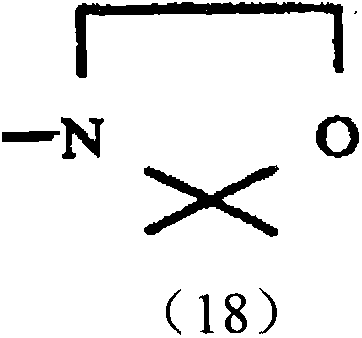
和and

其中R表示含有5至8个碳的分枝的、饱和的脂肪族烃基。其他合适的噁唑啉显示如下(20):wherein R represents a branched, saturated aliphatic hydrocarbon group containing 5 to 8 carbons. Other suitable oxazolines are shown below (20):

其中R表示含有5至8个碳的分枝的、饱和的脂肪族烃基。wherein R represents a branched, saturated aliphatic hydrocarbon group containing 5 to 8 carbons.
本文中有用的噁唑烷混合物一般地具有在23℃小于8,000,并且在某些形式中小于6,500mPa.s的粘度,因而合适用作用于含有异氰酸酯基的聚合物前体的无溶剂硬化剂。在与含有异氰酸酯基的聚合物前体组合中,它们合适用于生产无溶剂或低溶剂、单组分系统,其又适合作为高质量油漆、涂料组合物或密封组合物的粘结剂。一般地在通过暴露于大气湿气应用之后固化这些系统。合适用于生产这些系统的含有异氰酸酯基的聚合物前体包括例如美国专利号4,002,601描述的有机聚异氰酸酯或异氰酸酯预聚物。一般地,美国专利号5,189,176中描述了本文中有用的噁唑啉。Oxazolidine mixtures useful herein generally have viscosities of less than 8,000, and in some forms, less than 6,500 mPa.s at 23°C, and are thus suitable for use as solventless hardeners for isocyanate group-containing polymer precursors. In combination with polymer precursors containing isocyanate groups, they are suitable for producing solvent-free or low-solvent, one-component systems, which in turn are suitable as binders for high-quality paints, coating compositions or sealing compositions. These systems are typically cured after application by exposure to atmospheric moisture. Suitable isocyanate group-containing polymer precursors for use in the production of these systems include, for example, the organic polyisocyanates or isocyanate prepolymers described in US Pat. No. 4,002,601. Generally, oxazolines useful herein are described in US Patent No. 5,189,176.
在某些实施方式中,可以使用双马来酰亚胺。本主题中可以使用的双马来酰亚胺是含有两个马来酰亚胺基团的有机化合物并且一般地由马来酸酐和二元胺制备。双马来酰亚胺可以由如下通式(21)描述:In certain embodiments, bismaleimide can be used. Bismaleimides that can be used in this subject matter are organic compounds containing two maleimide groups and are generally prepared from maleic anhydride and diamines. Bismaleimides can be described by the following general formula (21):

其中R3是二价的芳香族或脂环族有机基团。在某些形式中,有用的双马来酰亚胺衍生自芳香族的二元胺并且特别是其中R3是多核芳基的那些。这种双马来酰亚胺的实例包括2,2-双(4-氨基苯氧基-4-苯基)丙烷双马来酰亚胺、4,4′-双(3-氨基苯氧基)二苯砜双马来酰亚胺、1,4-双(3-氨基苯基异亚丙基)苯双马来酰亚胺和双(4-氨基苯基)甲烷双马来酰亚胺。双马来酰亚胺可以单独或者作为混合物使用。wherein R 3 is a divalent aromatic or cycloaliphatic organic group. In certain forms, useful bismaleimides are derived from aromatic diamines and particularly those wherein R3 is a polynuclear aryl group. Examples of such bismaleimides include 2,2-bis(4-aminophenoxy-4-phenyl)propanebismaleimide, 4,4'-bis(3-aminophenoxy) ) Diphenylsulfone bismaleimide, 1,4-bis(3-aminophenylisopropylidene)benzenebismaleimide and bis(4-aminophenyl)methanebismaleimide . Bismaleimides can be used alone or as a mixture.
也可能的是使用这样的双马来酰亚胺,其中高达50%的马来酰亚胺基团已经被取代的马来酰亚胺基团代替,诸如甲基马来酰亚胺或卤代马来酰亚胺,或者被降冰片烯酰亚胺(nadimide)、甲基降冰片烯酰亚胺或异马来酰亚胺基团代替。部分马来酰亚胺基团也可以被琥珀酰亚胺、苯邻二甲酰亚胺或取代的琥珀酰亚胺和邻苯二甲酰亚胺基团代替。It is also possible to use bismaleimides in which up to 50% of the maleimide groups have been replaced by substituted maleimide groups, such as methylmaleimide or halogenated Maleimide, or replaced by nadimide, methylnorbornenimide or isomaleimide groups. Some of the maleimide groups can also be replaced by succinimide, phthalimide, or substituted succinimide and phthalimide groups.
双马来酰亚胺可以通过许多众所周知的方法由马来酸酐和二元胺制备,并且许多容易从商业来源获得。Bismaleimides can be prepared from maleic anhydride and diamines by a number of well-known methods, and many are readily available from commercial sources.
如先前所提到,在本主题的某些方面,组合物的一种或多种组分诸如增稠组分可以是非丙烯酸基增稠组分。可以使用一系列广泛的非丙烯酸基组分。非限制性的实例包括聚烯烃、聚乙烯基芳烃、聚氨酯、聚碳酸酯、聚酯、聚醚、和这些的组合以及潜在地与一种或多种其他试剂和/或组分的组合。聚乙烯基芳烃的一个特定的非限制性的实例是聚苯乙烯。As previously mentioned, in certain aspects of the present subject matter, one or more components of the composition, such as a thickening component, can be a non-acrylic based thickening component. A wide range of non-acrylic based components can be used. Non-limiting examples include polyolefins, polyvinyl aromatic hydrocarbons, polyurethanes, polycarbonates, polyesters, polyethers, and combinations of these and potentially with one or more other agents and/or components. A specific non-limiting example of a polyvinyl aromatic hydrocarbon is polystyrene.
添加剂additive
多种添加剂和引发剂可与本主题的黏合剂和组合物使用。有时,本文中使用术语“固化剂”。那个术语是指促进或引起目标组合物中的聚合物(一种或多种)聚合的试剂(一种或多种)或刺激。因而,术语固化剂包括单一试剂、单一刺激、多种试剂、多种刺激、试剂的组合、刺激的组合、以及一种或多种试剂与一种或多种刺激的组合。一般地,固化剂(一种或多种)是可活化的,即,可被辐射、热、湿气、压力、超声、暴露于化学试剂和其组合的至少一种活化。通常,本文中使用的术语固化剂是指催化剂和/或光引发剂。然而,应当理解的是,术语可以包括广泛系列的其他试剂(和刺激)。A variety of additives and initiators can be used with the subject adhesives and compositions. From time to time, the term "curing agent" is used herein. That term refers to an agent(s) or stimuli that promote or cause polymerization of the polymer(s) in the target composition. Thus, the term curing agent includes a single agent, a single stimulus, multiple agents, multiple stimuli, a combination of agents, a combination of stimuli, and a combination of one or more agents and one or more stimuli. Typically, the curing agent(s) are activatable, ie, activatable by at least one of radiation, heat, moisture, pressure, ultrasound, exposure to chemical agents, and combinations thereof. Generally, the term curing agent as used herein refers to catalysts and/or photoinitiators. However, it should be understood that the term may encompass a wide range of other agents (and stimuli).
热催化剂。本文中的催化剂可以是外部的或内部的。催化剂可以以0-10wt%、0.1-10wt%、0-5wt%、0.1-5wt%、0-4wt%、0.1-4wt%、0-2wt%、0.1-2wt%或0.01-2wt%的量使用。合适的催化剂包括封闭型强酸催化剂,其基于由以下组成的酸,例如三氟甲磺酸(triflic acid)、二壬基萘磺酸(DSA)、二壬基萘二磺酸(DDSA)、六氟磷酸和六氟化铵梯(路易斯酸),并且可从King Industries获得,例如,如


碱催化剂可以是伯、仲或叔胺。合适的伯二元胺是二氨基二苯砜。其他碱包括咪唑和酮亚胺。合适的咪唑包括2-甲基咪唑、2-乙基4-甲基咪唑、2-苯基咪唑。在美国专利申请公开号2009/0194320的第[0045]段发现了咪唑固化剂的列表。潜在的碱固化剂是双氰胺[DICY]。The base catalyst can be a primary, secondary or tertiary amine. A suitable primary diamine is diaminodiphenylsulfone. Other bases include imidazoles and ketimines. Suitable imidazoles include 2-methylimidazole, 2-ethyl 4-methylimidazole, 2-phenylimidazole. A list of imidazole curing agents is found at paragraph [0045] of US Patent Application Publication No. 2009/0194320. A potential alkali curing agent is dicyandiamide [DICY].
光引发剂。光引发剂包括自由基光引发剂和UV自由基光引发剂。光引发剂可以以0-10wt%、0.01-10wt%、2-5wt%或1-3wt%的量存在于本主题的组合物中。photoinitiator. Photoinitiators include free radical photoinitiators and UV free radical photoinitiators. Photoinitiators may be present in the subject compositions in amounts of 0-10 wt%, 0.01-10 wt%, 2-5 wt%, or 1-3 wt%.
自由基光引发剂。热引发剂包括叔丁基过氧2-乙基己酸酯、叔丁基过氧特戊酸酯、叔戊基过氧-2-乙基己酸酯、过氧化苯甲酰、叔戊基过氧化苯甲酸酯、叔丁基过氧乙酸、和以商品名Vazo销售的偶氮化合物,诸如,例如Vazo52、Vazo 67和Vazo 88。Free radical photoinitiator. Thermal initiators include t-butyl peroxy-2-ethylhexanoate, t-butyl peroxypivalate, t-amyl peroxy-2-ethylhexanoate, benzoyl peroxide, t-amyl Peroxybenzoates, tert-butylperoxyacetic acid, and azo compounds sold under the tradename Vazo, such as, for example, Vazo 52, Vazo 67 and Vazo 88.
UV自由基光引发剂。本主题中合适的光引发剂包括I型和II型光引发剂二者。UV free radical photoinitiator. Suitable photoinitiators in the present subject matter include both Type I and Type II photoinitiators.
I型光引发剂被限定为照射之后基本上经受单分子键断裂反应从而产生自由基。合适的I型光引发剂选自苯偶姻醚、苯偶酰缩酮、α-二烷氧基苯乙酮、α-羟烷基二苯甲酮和酰基膦氧化物。合适的I型光引发剂是商业上可获得的,例如,作为来自意大利加拉拉泰的Lamberti Spa的EsaCure KIP 100或者作为来自德国劳特塔尔的Ciba-Geigy的Irgacure651。Type I photoinitiators are defined as substantially undergoing unimolecular bond cleavage reactions to generate free radicals after irradiation. Suitable Type I photoinitiators are selected from the group consisting of benzoin ethers, benzil ketals, alpha-dialkoxyacetophenones, alpha-hydroxyalkylbenzophenones and acylphosphine oxides. Suitable type I photoinitiators are commercially available, for example, as
一般地,本文中合适的I型光引发剂化合物选自苯偶姻醚、苯偶酰缩酮、α-二烷氧基苯乙酮、α-羟烷基二苯甲酮和酰基膦氧化物。Generally, suitable Type I photoinitiator compounds herein are selected from the group consisting of benzoin ethers, benzil ketals, alpha-dialkoxyacetophenones, alpha-hydroxyalkylbenzophenones, and acylphosphine oxides .
II型光引发剂被限定为基本上经受双分子反应,其中光引发剂以激发态与用作助引发剂的第二化合物相互作用,以产生自由基。合适的II型光引发剂选自二苯甲酮、噻吨酮和二茂钛。合适的助引发剂优选地选自胺官能单体、低聚物或聚合物,其中在某些实施方式中使用胺官能单体和低聚物。可以使用伯、仲和叔胺,其中在某些实施方式种使用叔胺。合适的II型光引发剂是商业上可获得的,例如,作为来自意大利加拉拉泰的Lamberti Spa的Esacure TZT,或者作为来自美国威斯康星州密尔沃基市的Aldrich Co.的2-或3-甲基二苯甲酮。合适的胺助引发剂是商业上可获得的,例如,作为来自瑞士苏黎世的Rahn AG的
II型光引发剂化合物的具体的实例包括二苯甲酮和噻吨酮。在特定的实施方式中,助引发剂化合物诸如胺可以存在并且可以与II型光引发剂化合物相互作用。Specific examples of Type II photoinitiator compounds include benzophenone and thioxanthone. In particular embodiments, a co-initiator compound such as an amine may be present and may interact with the Type II photoinitiator compound.
交联剂。本文中有用的交联剂包括辐射可活化的交联试剂,其选自醛、酮、醌、噻吨酮和s-三嗪。金属螯合物交联剂催化剂也是预期的。交联剂可以以2至95wt%、0-4wt%、0.01-4wt%、0.01-2wt%、0-2wt%、0.01-1wt%、0-1wt%、0.01-0.5wt%或0-0.5wt%的量存在于本主题的组合物。crosslinking agent. Crosslinking agents useful herein include radiation-activatable crosslinking agents selected from the group consisting of aldehydes, ketones, quinones, thioxanthone, and s-triazines. Metal chelate crosslinker catalysts are also contemplated. The cross-linking agent may be present at 2 to 95wt%, 0-4wt%, 0.01-4wt%, 0.01-2wt%, 0-2wt%, 0.01-1wt%, 0-1wt%, 0.01-0.5wt% or 0-0.5wt% % is present in the subject composition.
光敏剂。每种敏化剂趋向于在可见和紫外光谱中具有其自己的特性响应,所以它们可以组合使用以加宽光响应和/或增加响应速度以暴露于光。photosensitizer. Each sensitizer tends to have its own characteristic response in the visible and ultraviolet spectrum, so they can be used in combination to broaden the photoresponse and/or increase the speed of response to exposure to light.
光敏剂可以以诸如0-15wt%、0-01-15wt%、0-10wt%、0.01-10wt%、0-5wt%、0.01-5wt%、0-2wt%、0.01-2wt%、0-1wt%和0.01-1wt%的量在本主题的组合物中使用。光敏剂可以是致敏染料。The photosensitizer can be used at a dosage such as 0-15wt%, 0-01-15wt%, 0-10wt%, 0.01-10wt%, 0-5wt%, 0.01-5wt%, 0-2wt%, 0.01-2wt%, 0-1wt% % and amounts of 0.01-1 wt% are used in the subject compositions. The photosensitizer may be a sensitizing dye.
示例性的致敏染料是以下类别中的那些:二苯基甲烷、呫吨、吖啶、次甲基和聚次甲基、噻唑、噻嗪、吖嗪、氨基酮、卟啉、有色的芳香族多环烃、噻吨对位取代的氨基苯乙烯化合物和氨基三芳基甲烷。Exemplary sensitizing dyes are those in the following classes: diphenylmethane, xanthene, acridine, methine and polymethine, thiazole, thiazine, azine, aminoketone, porphyrin, colored aromatics polycyclic hydrocarbons, thioxanthene para-substituted aminostyrene compounds and aminotriarylmethanes.
稳定剂和加工助剂。几种类别的稳定剂和加工助剂是预期的,其包括油/蜡、抗氧化剂、光敏剂、流变改性剂、填料、自由基结构组分、开环结构组分、环氧、氧杂环丁烷、酐、内酰胺、内酯、噁唑啉、异氰酸酯、双马来酰亚胺和二氧化偶氮。在本主题的组合物中使用的稳定剂和操作助剂的量诸如0-10wt%、0.1-10wt%、0-4wt%、0.1-4wt%、0-3wt%和0.1-3wt%。在某些实施方式中,可能有用的是利用二氧化偶氮作为稳定剂。这种的一个实例是从康涅狄格州斯特拉特福德的Hampford Research,Inc以名称UVTS-52商业上可获得的稳定剂。UVTS-52是热可逆的二氧化偶氮。UVTS-52(CAS34122-40-2)被认为是1,4,4-三甲基-2,3-二氮杂双环-[3.2.2]-壬-2-烯-2,3-二氧化物。Stabilizers and processing aids. Several classes of stabilizers and processing aids are contemplated, including oils/waxes, antioxidants, photosensitizers, rheology modifiers, fillers, free-radical structural components, ring-opening structural components, epoxy, oxygen Hetidine, anhydride, lactam, lactone, oxazoline, isocyanate, bismaleimide and azodioxide. Stabilizers and processing aids are used in the subject compositions in amounts such as 0-10 wt %, 0.1-10 wt %, 0-4 wt %, 0.1-4 wt %, 0-3 wt %, and 0.1-3 wt %. In certain embodiments, it may be useful to utilize azo dioxide as a stabilizer. An example of this is a stabilizer commercially available under the name UVTS-52 from Hampford Research, Inc. of Stratford, Connecticut. UVTS-52 is a thermally reversible azo. UVTS-52 (CAS34122-40-2) is considered to be 1,4,4-trimethyl-2,3-diazabicyclo-[3.2.2]-non-2-ene-2,3-dioxide thing.
增塑剂-油和蜡。合适的增塑剂包括增塑油,诸如矿物油,但也包括烯烃低聚物和低分子量聚合物,或乙二醇苯甲酸酯,和植物和动物油以及这种油的衍生物。可以采用的石油衍生油是仅含有小比例芳香族烃的相对高沸点材料。在这方面,在某些实施方式中,芳香族烃应当是按重量计小于油的30%,并且更具体地小于15%。可选地,油可以是完全非芳香族的。作为增塑剂包括的合适的低聚物可以是聚丙烯、聚丁烯、氢化聚异戊二烯、氢化丁二烯或类似物,其具有大约100和大约10,000g/mol之间的平均分子量。合适的植物和动物油包括常见脂肪酸(例如,硬脂酸,油酸,亚油酸,亚麻酸)的甘油酯和其聚合产物。可以使用其他增塑剂,条件是它们具有合适的兼容性。
蜡也可以以按重量计0%至20%或0.1-20wt%或0.1-15wt%的量在黏合剂组合物中使用,并且用于降低黏合剂的熔体粘度而没有明显地降低它们的黏合剂粘结特性。这些蜡也用于降低组合物的晾置时间而不影响温度性能。Waxes may also be used in adhesive compositions in amounts of 0% to 20% by weight, or 0.1-20% by weight, or 0.1-15% by weight, and to reduce the melt viscosity of the adhesives without significantly reducing their adhesion Adhesive properties. These waxes are also used to reduce the open time of the composition without affecting temperature performance.
有用的蜡材料的实例包括以下。Examples of useful wax materials include the following.
有可能使用的是由ASTM方法D-1321确定具有大约0.1至120硬度值和大约66℃至120℃的ASTM软化点的低分子量(100-6000g/mol)聚乙烯。It is possible to use a low molecular weight (100-6000 g/mol) polyethylene having a hardness value of about 0.1 to 120 and an ASTM softening point of about 66°C to 120°C as determined by ASTM method D-1321.
有可能使用石油蜡诸如具有大约130°F至170°F的熔点的石蜡和具有大约135°F至200°F的熔点的微晶蜡,后者的熔点通过ASTM方法D 127-60确定。It is possible to use petroleum waxes such as paraffin wax having a melting point of about 130°F to 170°F and microcrystalline wax having a melting point of about 135°F to 200°F, the latter melting point being determined by ASTM method D 127-60.
可能使用具有大约120°至160℃的环球法软化点的无规聚丙烯。It is possible to use atactic polypropylene with a Ring and Ball softening point of about 120° to 160°C.
可能使用由瑞士穆滕茨的Clariant International,Ltd商业化的名为“Licocene”的金属茂催化的丙烯型蜡。It is possible to use a metallocene-catalyzed propylene-based wax commercialized by Clariant International, Ltd of Mutenz, Switzerland under the name "Licocene".
可能使用茂金属催化的蜡或单个位点催化的蜡,如,例如美国专利4,914,253和6,319,979以及WO 97/33921和WO 98/03603中描述的那些。It is possible to use metallocene catalyzed waxes or single site catalyzed waxes, such as, for example, those described in US Pat. Nos. 4,914,253 and 6,319,979 and WO 97/33921 and WO 98/03603.
有可能使用石蜡、微晶蜡、聚乙烯蜡、聚丙烯蜡、副产物聚乙烯蜡,通过聚合一氧化碳和氢制造的合成蜡诸如费托蜡、氧化的费托蜡、官能化的蜡和其混合物。It is possible to use paraffin waxes, microcrystalline waxes, polyethylene waxes, polypropylene waxes, by-product polyethylene waxes, synthetic waxes made by polymerizing carbon monoxide and hydrogen such as Fischer-Tropsch waxes, oxidized Fischer-Tropsch waxes, functionalized waxes and mixtures thereof .
聚烯烃蜡。如本文所使用,术语“聚烯烃蜡”是指包括烯烃单体单元的那些聚合的或长链的实体。这些材料是可以以商品名“Epolene”从Westlake Chemical Co.商业上可获得的。Polyolefin wax. As used herein, the term "polyolefin wax" refers to those polymeric or long chain entities comprising olefin monomer units. These materials are commercially available from Westlake Chemical Co. under the tradename "Epolene".
在本主题的某些实施方式中使用的材料具有200°F至350°F的环球法软化点。如应当理解,这些蜡的每一种在室温下是固体。其他有用的物质包括氢化的动物、鱼和植物脂肪和油诸如氢化的牛脂、猪油、大豆油、棉籽油、蓖麻油、鲱油、鱼肝油等,并且由于被氢化其在环境温度下是固体,对于作为蜡材料等价物起作用也已经发现是有用的。这些氢化的材料通常在黏合剂工业中被称为“动物或植物蜡”。Materials used in certain embodiments of the present subject matter have a Ring and Ball softening point of 200°F to 350°F. As should be appreciated, each of these waxes is solid at room temperature. Other useful materials include hydrogenated animal, fish and vegetable fats and oils such as hydrogenated tallow, lard, soybean oil, cottonseed oil, castor oil, herring oil, cod liver oil, etc., and which are solid at ambient temperature due to being hydrogenated, It has also been found useful to function as a wax material equivalent. These hydrogenated materials are commonly referred to in the adhesive industry as "animal or vegetable waxes".
抗氧化剂。黏合剂也通常包括大约0.1%至大约5%的稳定剂或抗氧化剂。在本主题的黏合剂组合物中有用的稳定剂被并入以帮助保护以上提到的聚合物,并且从而保护总的黏合剂系统,免受热和氧化降解的影响,热和氧化降解通常在黏合剂的制造和应用以及最终产品通常暴露于周围环境期间发生。这种降解通常通过黏合剂的外观、物理属性和性能特性的劣化显示。在某些实施方式中,特别有用的抗氧化剂是有Ciba-Geigyis制造的Irganox 1010,四(亚甲基(3,5-二叔丁基-4-羟基氢化肉桂酸酯))甲烷。其中可应用的稳定剂是高分子量受阻酚和多官能酚,诸如含有硫和磷的酚。受阻酚是本领域技术人员熟知的并且可以表征为靠近其酚羟基也含有空间庞大的自由基的酚类化合物。特别地,在相对于酚羟基基团的至少一个邻位中,叔丁基基团一般地被取代到苯环上。在羟基基团附近这些空间上庞大的取代基的存在用于延缓其拉伸频率并且相应地延缓其反应性。从而这种空间位阻提供具有其稳定属性的酚类化合物。有代表性的受阻酚包括:Antioxidants. Binders also typically include about 0.1% to about 5% stabilizers or antioxidants. Stabilizers useful in the subject adhesive compositions are incorporated to help protect the above-mentioned polymers, and thus the overall adhesive system, from thermal and oxidative degradation, which typically occurs in The manufacture and application of adhesives and the final product typically occurs during exposure to the surrounding environment. This degradation is usually manifested by deterioration of the adhesive's appearance, physical properties, and performance characteristics. In certain embodiments, a particularly useful antioxidant is Irganox 1010, tetrakis(methylene(3,5-di-tert-butyl-4-hydroxyhydrocinnamate))methane, manufactured by Ciba-Geigyis. Among the stabilizers that can be used are high molecular weight hindered phenols and polyfunctional phenols, such as phenols containing sulfur and phosphorus. Hindered phenols are well known to those skilled in the art and can be characterized as phenolic compounds that also contain sterically bulky free radicals near their phenolic hydroxyl groups. In particular, the tert-butyl group is typically substituted onto the benzene ring in at least one ortho position relative to the phenolic hydroxyl group. The presence of these sterically bulky substituents in the vicinity of the hydroxyl group serves to retard its stretching frequency and correspondingly its reactivity. This steric hindrance thus provides phenolic compounds with their stabilizing properties. Representative hindered phenols include:
1,3,5-三甲基-2,4,6-三(3-5-二叔丁基-4-羟基苄基)苯;1,3,5-trimethyl-2,4,6-tris(3-5-di-tert-butyl-4-hydroxybenzyl)benzene;
季戊四醇四-3(3,5-二叔丁基-4-羟基苯基)丙酸酯;Pentaerythritol tetrakis-3(3,5-di-tert-butyl-4-hydroxyphenyl)propionate;
正十八烷基-3(3,5-二叔丁基-4-羟基苯基)丙酸酯;n-octadecyl-3(3,5-di-tert-butyl-4-hydroxyphenyl)propionate;
4,4′-亚甲基双(4-甲基-6-叔丁基苯酚);4,4'-methylenebis(4-methyl-6-tert-butylphenol);
4,4′-硫代双(6-叔丁基-邻甲酚);4,4'-thiobis(6-tert-butyl-o-cresol);
2,6-二叔丁基苯酚;2,6-di-tert-butylphenol;
6-(4-羟基苯氧基)-2,4-双(正辛基硫代)-1,3,5-三嗪;6-(4-Hydroxyphenoxy)-2,4-bis(n-octylthio)-1,3,5-triazine;
2,4,6-三(4-羟基-3,5-二叔丁基-苯氧基)-1,3,5-三嗪;2,4,6-Tris(4-hydroxy-3,5-di-tert-butyl-phenoxy)-1,3,5-triazine;
二正十八烷基-3,5-二叔丁基-4-羟基苄基磷酸酯;Di-n-octadecyl-3,5-di-tert-butyl-4-hydroxybenzyl phosphate;
2-(正辛基硫代)乙基-3,5-二叔丁基-4-羟基苯甲酸酯;和2-(n-Octylthio)ethyl-3,5-di-tert-butyl-4-hydroxybenzoate; and
山梨醇六-(3,3,5-二叔丁基-4-羟基-苯基)丙酸酯。Sorbitol hexa-(3,3,5-di-tert-butyl-4-hydroxy-phenyl)propionate.
通过与以下结合使用可以进一步提高这些稳定剂的性能;(1)增效剂,诸如,例如,硫代二丙酸酯和亚磷酸酯;和(2)螯合试剂和金属去活化剂,如,例如,乙二胺四乙酸、其盐和双水杨醛丙烯二胺。The performance of these stabilizers can be further enhanced by their use in combination with (1) synergists such as, for example, thiodipropionates and phosphites; and (2) chelating agents and metal deactivators such as , for example, ethylenediaminetetraacetic acid, its salts, and bissalicylaldehyde propylenediamine.
紫外线抑制剂。抗氧化剂可以用于延缓对黏合剂组合物的氧化侵蚀,其可以导致黏合剂组合物的黏合力和粘结强度的损失。有用的抗氧化剂包括但不限于胺类,诸如作为AGERITE D可获得的N-N′-二-β-萘基-1,4-苯二胺,酚类,诸如来自Monsanto Chemical Co.的作为SANTOVAR A可获得的2,5-二-(叔戊基)对苯二酚,来自Ciba-Geigy Corp.的作为IRGANOX 1010可获得的四[3-(3′,5′-二叔丁基-4′-羟基苯基)丙酸亚乙酯]甲烷,和作为ANTIOXIDANT2246可获得的2-2′-亚甲基双(4-甲基-6-叔丁基苯酚),以及二硫代氨基甲酸盐,诸如二硫代二丁基氨基甲酸锌。UV inhibitor. Antioxidants can be used to retard oxidative attack on the adhesive composition, which can lead to a loss of cohesion and bond strength of the adhesive composition. Useful antioxidants include, but are not limited to, amines such as N-N'-di-β-naphthyl-1,4-phenylenediamine available as AGERITE D, phenols such as SANTOVAR A available as SANTOVAR A from Monsanto Chemical Co. 2,5-Di-(tert-amyl)hydroquinone obtained, tetrakis[3-(3',5'-di-tert-butyl-4'- as IRGANOX 1010 from Ciba-Geigy Corp. hydroxyphenyl) ethylene propionate] methane, and 2-2'-methylenebis(4-methyl-6-tert-butylphenol) available as ANTIOXIDANT 2246, and dithiocarbamate, Such as zinc dithiodibutylcarbamate.
流变改性剂。可以添加流变改性剂以改变组合物的触变性质。合适的流变改性剂包括聚酰胺蜡、热解法二氧化硅、流动控制添加剂、活性稀释剂、抗沉降试剂、α-烯烃、羟基封端的硅酮有机共聚物,包括但不限于羟基封端的聚氧化丙烯-二甲基硅氧烷共聚物,和其组合。Rheology modifier. Rheology modifiers can be added to alter the thixotropic properties of the composition. Suitable rheology modifiers include polyamide waxes, fumed silica, flow control additives, reactive diluents, anti-settling agents, alpha-olefins, hydroxyl terminated silicone organic copolymers, including but not limited to hydroxyl terminated Terminated polyoxypropylene-dimethylsiloxane copolymers, and combinations thereof.
填料。填料可以用于赋予强度或减少总成本。本文中有用的填料包括氢氧化铝、氢氧化钙、以商品名
在本主题的某些形式中,填料、流变改性剂和/或颜料存在于黏合剂中。这些可以起到几种作用,诸如以期望的方式改进黏合剂的流变性,从黏合剂或其施加的衬底吸收湿气或油,和/或促进内聚破坏,而不是粘结破坏。这种材料的其他实例包括碳酸钙、氧化钙、滑石、煤焦油、纺织纤维、玻璃颗粒或纤维、芳纶浆粕、硼纤维、碳纤维、矿物硅酸盐、云母、粉末状石英、膨润土、硅灰石、高岭土、热解法二氧化硅、硅氧凝胶或金属粉末诸如铝粉或铁粉。在这些中,或者单独地或者以一些组合,碳酸钙、滑石、氧化钙、热解法二氧化硅和硅灰石是特别有用的,因为这些通常促进期望的内聚破坏模式。In some forms of the present subject matter, fillers, rheology modifiers and/or pigments are present in the binder. These can serve several functions, such as improving the rheology of the adhesive in a desired manner, absorbing moisture or oil from the adhesive or the substrate to which it is applied, and/or promoting cohesive failure rather than cohesive failure. Other examples of such materials include calcium carbonate, calcium oxide, talc, coal tar, textile fibers, glass particles or fibers, aramid pulp, boron fibers, carbon fibers, mineral silicates, mica, powdered quartz, bentonite, silicon Limestone, kaolin, fumed silica, silica gel or metal powders such as aluminium or iron powders. Of these, calcium carbonate, talc, calcium oxide, fumed silica and wollastonite are particularly useful, either alone or in some combination, as these generally promote the desired cohesive failure mode.
除了本文中描述的多种特定的组合物之外,本主题也提供如以下阐述的数种另外的具体组合物。应当理解的是这些是本主题的其他特定组合物的有代表性的非限制性的实例。In addition to the various specific compositions described herein, the subject matter also provides several additional specific compositions as set forth below. It should be understood that these are representative, non-limiting examples of other specific compositions of the subject matter.
本主题的另外的实施方式包括原位固化压敏黏合剂,其包括:(a)50-80wt%的具有250,000-750,000的Mw的丙烯酸基础聚合物,(b)20-40wt%的一种或多种结构稀释剂,(c)0-30wt%的任选的丙烯酸-环氧官能组分,(d)0-0.5wt%的金属螯合物交联剂,和(e)0-2wt%的一种或多种外部催化剂。Additional embodiments of the present subject matter include an in situ cure pressure sensitive adhesive comprising: (a) 50-80 wt% of an acrylic base polymer having a Mw of 250,000-750,000, (b) 20-40 wt% of one or Various structural diluents, (c) 0-30 wt% optional acrylic-epoxy functional component, (d) 0-0.5 wt% metal chelate crosslinker, and (e) 0-2 wt% one or more external catalysts.
本主题的其他实施方式是由掺合物形成的可固化的压敏黏合剂,其中掺合物包括(a)高分子量(例如400-600kg/mol)无规共聚物,其包括(i)丙烯酸烷酯基础单体;(ii)醋酸乙烯酯;(iii)丙烯酸甲酯;(iv)丙烯酸;和(v)硅烷交联单体;(b)低分子量(例如20-50kg/mol)无规共聚物,其包括(i)线性丙烯酸烷酯基础单体,(ii)分枝的丙烯酸烷酯基础单体和(iii)环氧官能甲基丙烯酸酯单体;(c)来自Wacker的低聚物诸如STPE-30;(d)10碳羧酸的丙烯酸-缩水甘油酯;(e)阳离子活性稀释剂诸如三羟甲基丙烷氧杂环丁烷(TMPO);(f)高分子量酸官能丙烯酸稀释剂单体,(其实例是2-丙烯酰氧丙基邻苯二甲酸酯);(g)在室温下是半固体的双酚型环氧树脂;和(h)交联剂和硅烷催化剂诸如乙酰丙酮铝。Other embodiments of the present subject matter are curable pressure sensitive adhesives formed from blends, wherein the blend includes (a) a high molecular weight (eg, 400-600 kg/mol) random copolymer including (i) acrylic acid (ii) vinyl acetate; (iii) methyl acrylate; (iv) acrylic acid; and (v) silane crosslinking monomers; (b) low molecular weight (eg 20-50 kg/mol) random Copolymers comprising (i) linear alkyl acrylate base monomers, (ii) branched alkyl acrylate base monomers and (iii) epoxy functional methacrylate monomers; (c) oligomers from Wacker compounds such as STPE-30; (d) glycidyl acrylates of 10 carbon carboxylic acids; (e) cationically reactive diluents such as trimethylolpropane oxetane (TMPO); (f) high molecular weight acid functional acrylic acids diluent monomers, (an example of which is 2-acryloyloxypropyl phthalate); (g) bisphenol-type epoxy resins that are semi-solid at room temperature; and (h) crosslinkers and silanes Catalysts such as aluminum acetylacetonate.
本主题也提供使用本文中描述的液体和组合物用于粘结的方法和技术。图2根据本主题示意性地描绘了黏合剂粘结过程300。在过程300中,如本文中描述的组合物的层或涂层310被施加至感兴趣的衬底或薄膜320上。组合物可以以多种技术诸如通过喷洒或涂布施加,在操作330中一般地描绘。通过暴露于UV辐射,例如,如图2中340所示,然后涂布的或其他方式施加的组合物呈现粘性。在此状态,组合物通常被称为“A级”并且在某些实施方式中可以展现0.17lbs的T-剥离值以及0.64lbs的180°剥离。然后其他材料层诸如350所显示的铜和铝箔的层压材料与粘性的A级组合物310接触。所产生的层状组合件被引导至一个或多个处理站诸如激光图案化站360,其形成如图2中的370所描绘的图案化的层压材料。根据最终用途要求,另外的处理诸如去除带状箔余料可以诸如在操作375处进行,其中收集废余料380。所产生的处理的层压材料显示为385。然后处理的层压材料385可以经受一种或多种另外的处理操作诸如显示为390的热固化。在热固化之后,被称为“B级”的组合物310与其A级的那些相比通常展现显著更大的T剥离和180°剥离值。例如,B级T剥离可以是大约0.37lbs并且180°剥离值可以是大约3.6lbs。固化产物可以以卷形式或片形式收集,395。The subject matter also provides methods and techniques for bonding using the liquids and compositions described herein. FIG. 2 schematically depicts an
一般地,在本主题的多种实施方式中,在通过本文中描述的任意的试剂或刺激至少部分地固化组合物之后,本文中描述的液体或组合物可以呈现粘性的或者展现通常与压敏黏合剂相关联的性质。在某些形式中,此第一固化或部分固化通过将组合物暴露于UV辐射、电子束、热或这些的组合实现。此外,然后通过暴露于热、包括水或湿气的化学试剂、压力或其组合,该部分固化的组合物可以被进一步固化。In general, in various embodiments of the present subject matter, the liquids or compositions described herein may appear viscous or exhibit a relationship generally associated with pressure sensitive after at least partial curing of the composition by any of the agents or stimuli described herein. Adhesive-related properties. In some forms, this first cure or partial cure is accomplished by exposing the composition to UV radiation, electron beam, heat, or a combination of these. Additionally, the partially cured composition can then be further cured by exposure to heat, chemical agents including water or moisture, pressure, or a combination thereof.
可以使用一系列广泛的衬底或芯材料。在许多实施方式中,衬底可以包括一种或多种聚烯烃诸如聚乙烯、聚丙烯、聚(乙烯-丙烯)、聚(乙烯-醋酸乙烯酯)、聚(苯乙烯-丁二烯)、和/或其共聚物或掺合物。也可以考虑在某些实施方式中,衬底可以包括聚酯诸如聚对苯二甲酸乙二酯(PET)、尼龙、聚氯乙烯、聚氨酯、和多种生物塑料。在某些实施方式中,衬底是透明的或基本上如此。A wide range of substrate or core materials can be used. In many embodiments, the substrate may include one or more polyolefins such as polyethylene, polypropylene, poly(ethylene-propylene), poly(ethylene-vinyl acetate), poly(styrene-butadiene), and/or copolymers or blends thereof. It is also contemplated that in certain embodiments, the substrate may include polyesters such as polyethylene terephthalate (PET), nylon, polyvinyl chloride, polyurethane, and various bioplastics. In certain embodiments, the substrate is transparent or substantially so.
在许多实施方式中,衬底可以由泡沫材料形成。泡沫材料没有特别的限制。在某些实施方式中,泡沫可以是刚性泡沫、半刚性泡沫、柔性泡沫等。泡沫可以是开孔泡沫或闭孔泡沫。在特定的实施方式中,泡沫可以是柔性泡沫,其可以自身向后弯曲而不断裂。合适的泡沫材料的实例包括基于聚烯烃的泡沫、聚氨酯泡沫、丙烯酸泡沫、乙烯基泡沫(例如,PVC泡沫)等。也可以使用这些材料的组合。聚烯烃泡沫包括但不限于,由聚烯烃、聚烯烃与其他单体的共聚物、聚烯烃与丙烯酸的共聚物、聚烯烃与醋酸乙烯酯的共聚物等形成的泡沫。在一个实施方式中,泡沫选自聚乙烯泡沫或聚丙烯泡沫。在一个实施方式中,泡沫包括聚(乙烯-共-乙酸乙烯酯)。In many embodiments, the substrate may be formed from a foam material. The foam material is not particularly limited. In certain embodiments, the foam may be rigid foam, semi-rigid foam, flexible foam, and the like. The foam can be an open cell foam or a closed cell foam. In particular embodiments, the foam can be a flexible foam that can bend back on itself without breaking. Examples of suitable foam materials include polyolefin-based foam, polyurethane foam, acrylic foam, vinyl foam (eg, PVC foam), and the like. Combinations of these materials can also be used. Polyolefin foams include, but are not limited to, foams formed from polyolefins, copolymers of polyolefins and other monomers, copolymers of polyolefins and acrylic acid, copolymers of polyolefins and vinyl acetate, and the like. In one embodiment, the foam is selected from polyethylene foam or polypropylene foam. In one embodiment, the foam includes poly(ethylene-co-vinyl acetate).
可以根据特定的或预期的用途选择泡沫的性质。在一个实施方式中,泡沫可以具有40kg/m3至大约300kg/m3,从大约60kg/m3至大约200kg/m3,甚至从大约90kg/m3至大约150kg/m3的密度。芯层可以具有特定目的或预期应用所期望的厚度。在一种实施方式中,芯层具有从大约0.2mm至大约3mm,从大约0.4mm至大约2mm,从大约0.6mm至大约1.5mm,甚至从大约0.8mm至大约1mm的厚度。在此如在说明书和权利要求书中其他地方,数值可以组合以形成新的未公开的范围。The properties of the foam can be selected according to the specific or intended use. In one embodiment, the foam may have a density of 40 kg/m 3 to about 300 kg/m 3 , from about 60 kg/m 3 to about 200 kg/m 3 , even from about 90 kg/m 3 to about 150 kg/m 3 . The core layer may have a thickness desired for a particular purpose or intended application. In one embodiment, the core layer has a thickness of from about 0.2 mm to about 3 mm, from about 0.4 mm to about 2 mm, from about 0.6 mm to about 1.5 mm, even from about 0.8 mm to about 1 mm. Herein, as elsewhere in the specification and claims, numerical values may be combined to form new undisclosed ranges.
本主题组合物可以在一系列广泛的应用中使用。例如,特定用途的应用可以包括由本文中描述的组合物制造的发泡制品。一种或多种传统的起泡剂可以被并入到本主题的组合物中,起泡或产生膨胀,以从而产生发泡的层或制品。组合物也可以用于黏着地将发泡的制品粘结至其他表面、衬底、或产品。The subject compositions can be used in a wide variety of applications. For example, specific-purpose applications may include foamed articles made from the compositions described herein. One or more conventional blowing agents can be incorporated into the subject compositions to foam or expand to thereby produce a foamed layer or article. The compositions can also be used to adhesively bond foamed articles to other surfaces, substrates, or products.
更特别地,本主题可以用于粘结或以其他方式黏合薄膜至薄膜、薄膜至箔、裙板至箔、裙板至薄膜、织物至织物、织物至几乎任何其他材料或衬底、纸张至金属、金属至金属、薄膜至其他塑料、塑料至塑料、和这些与其他表面、材料和/或衬底的组合,任何其他材料或衬底诸如薄膜、纸张和金属。本主题也可以用于提供耐化学性例如耐腐蚀性至许多表面和衬底。例如,本主题可以用于提供耐化学性的标签,和耐溶剂的层压材料诸如耐溶剂玻璃和箔组件。本主题也可以用于形成薄膜层压材料,诸如薄膜至薄膜层压材料。本主题的其他预期的应用是在收缩套和收缩套标签的领域。此外,本主题可以发现用于两个薄膜的溶剂焊接的广泛应用。应用的又其他领域涉及构件以及特别地金属管诸如油和气管道的防腐蚀保护。本主题组合物和方法可以用于提供或提高耐冲击性、结构完整性和防腐蚀保护或暴露于环境试剂。这种防腐蚀保护的特定的和非限制性的实例沿着管的外和/或内圆周表面提供外层、内层或二者。根据本主题某些合物的其他显著的优势是组合物可以经受弯曲、挠曲或其他应力而不断裂。如果例如组合物(一种或多种)被施加至管道,这是期望的。用于本主题的某些组合物的又其他预期应用是形成玻璃纤维结构,诸如船舶船体、某些体育用品和结构元件。用于本主题的仍其他应用是在“滚动,收缩”(ROSO)应用中。More particularly, the subject matter can be used to bond or otherwise bond film to film, film to foil, skirt to foil, skirt to film, fabric to fabric, fabric to virtually any other material or substrate, paper to Metal, metal to metal, film to other plastics, plastic to plastic, and combinations of these with other surfaces, materials and/or substrates, any other materials or substrates such as films, papers and metals. The subject matter can also be used to provide chemical resistance, such as corrosion resistance, to many surfaces and substrates. For example, the subject matter can be used to provide chemical resistant labels, and solvent resistant laminates such as solvent resistant glass and foil assemblies. The subject matter can also be used to form film laminates, such as film-to-film laminates. Other intended applications of this topic are in the field of shrink sleeves and shrink sleeve labels. Furthermore, the subject matter may find broad application for solvent welding of two thin films. Still other fields of application relate to the corrosion protection of components and in particular metal pipes such as oil and gas pipelines. The subject compositions and methods can be used to provide or improve impact resistance, structural integrity, and protection against corrosion or exposure to environmental agents. Specific and non-limiting examples of such corrosion protection provide an outer layer, an inner layer, or both along the outer and/or inner circumferential surfaces of the pipe. Another significant advantage of certain compositions according to the present subject matter is that the compositions can be subjected to bending, flexing or other stress without breaking. This is desirable if, for example, the composition(s) are applied to a pipe. Yet other contemplated applications for certain compositions of the present subject matter are the formation of fiberglass structures, such as marine hulls, certain sporting goods, and structural elements. Still other applications for this topic are in "Roll, Shrink" (ROSO) applications.
在某些实施方式中,本主题提供黏合剂制品诸如,例如胶带,其具有发泡的或包括泡沫材料的一个或多个区域或层。在特定的实施方式中,提供胶带,其具有与可以固化的压敏黏合剂的一个或多个层组合的一个或多个泡沫层以形成展现比通常的PSA显著更大的黏合强度的结构粘结,本文中被称为“结构PSA”。这种胶带可以提供有单个层或面的结构PSA。这种胶带也可以提供具有多个层诸如结构PSA的两个相对朝向的面。In certain embodiments, the present subject matter provides adhesive articles such as, for example, tapes having one or more regions or layers that are foamed or include foam. In particular embodiments, tapes are provided having one or more foam layers combined with one or more layers of a curable pressure sensitive adhesive to form a structural adhesive that exhibits significantly greater bond strength than conventional PSAs The junction, referred to herein as a "structural PSA". Such tapes can be provided with a single layer or faceted structured PSA. This tape can also be provided with two oppositely facing sides having multiple layers such as a structured PSA.
本主题提供一系列的黏合剂制品。图7-11示意性地描绘了这些制品的多种有代表性的实施方式。This subject provides a range of adhesive preparations. 7-11 schematically depict various representative embodiments of these articles.
图7图解了黏合剂制品400,其包括衬底层或区域410以及布置在其上的黏合剂层或区域420。黏合剂层420限定了外黏合面422并且衬底层410限定了衬底面412。衬底410可以包括本文提到的任意的衬底材料或这种材料的组合。黏合剂层420可以包括本文提到的任意的黏合剂。7 illustrates an
图8图解了另一黏合剂制品401,其包括衬底层或区域410、第一黏合剂层或区域420和第二黏合剂层或区域430。衬底410布置在黏合剂层420和430之间。第一黏合剂层限定了外黏合面422。并且第二黏合剂层430限定了其他外黏合面432。衬底410可以包括本文中描述的任意的衬底。并且,黏合剂层420和430可以包括本文描述的任意的黏合剂。用于第一黏合剂层420的材料可以与用于第二黏合剂层430的材料在组成上相同或不同。FIG. 8 illustrates another
图9图解了另一黏合剂制品402,其包括衬底410、黏合剂层420和布置在黏合剂层420和衬底410之间的泡沫层440。黏合剂层420限定了外面422。并且衬底410限定了外面412。衬底410、黏合剂420和泡沫440层可以由本文中描述的任意材料形成或包括本文中描述的任意材料。FIG. 9 illustrates another
图10图解了另一黏合剂制品403,其包括衬底层410、黏合剂层420、第一泡沫层440和第二泡沫层450。第一泡沫层440布置在黏合剂层420和衬底410之间。并且第二泡沫层450沿着衬底410的相对面布置。黏合剂层420限定了外面422。并且第二泡沫层450限定了外面452。黏合剂层420、衬底层410以及第一和第二泡沫层440和450可以由本文中描述的任意材料形成。选择用于第一泡沫层440材料的(一种或多种)可以与选择用于第二泡沫层450的材料(一种或多种)在组成上相同或不同。FIG. 10 illustrates another
图11图解了另一黏合剂制品404,其包括衬底层410、第一黏合剂层420、第二黏合剂层430、第一泡沫层440和第二泡沫层450。第一泡沫层440布置在黏合剂层420和衬底410之间。并且第二泡沫层450布置在衬底410和第二黏合剂层430之间。黏合剂层420限定了外面422。并且第二黏合剂层430限定了外面432。第一和第二黏合剂层420和430、衬底层410以及第一和第二泡沫层440和450可以由本文所述的任意材料形成。选择用于第一泡沫层440的材料(一种或多种)可以与选择用于第二泡沫层450的材料(一种或多种)相同或不同。用于第一黏合剂层420的材料可以与用于第二黏合剂层430的材料相同或不同。FIG. 11 illustrates another
在本主题的特定的实施方式中,提供具有特定构型的黏合剂制品。例如,在图7-11分别描绘的任意的黏合剂制品400、401、402、403和404中,黏合剂层(一个或多个)可以是可转变的压敏黏合剂,其最初是可以转变为结构黏合剂的压敏黏合剂。如本文中所描述,通常这种转变通过固化黏合剂和/或通过加热黏合剂实现。黏合剂也可以是辐射可固化的黏合剂。在特定的实施方式中,黏合剂制品包括衬底层,其可以是发泡的,并且其允许紫外(UV)光充分穿过其至邻近的可转变的黏合剂层以将这种层转变为结构黏合剂。在某些实施方式,衬底可以包括PET。可转变为结构黏合剂的PSA可以被并入多层组件内的任意层或区域,诸如图7-11中描绘的那些。In particular embodiments of the present subject matter, adhesive articles having particular configurations are provided. For example, in any of the
在本主题的某些形式中,所提到的可转变为结构黏合剂的PSA可以与一种或多种泡沫层或区域组合利用。这些构造可以在一系列广泛的应用中使用。In some forms of the present subject matter, the mentioned PSAs convertible into structural adhesives may be utilized in combination with one or more foam layers or regions. These constructions can be used in a wide range of applications.
本主题黏合剂制品的具体应用的非限制性的实例包括建筑和构造领域诸如用于木材、瓷砖、装饰带的间隙填料,上釉,加热、换气和空气调节(HVAC)组件,包层,沟缝,以及屋顶拼接带。Non-limiting examples of specific applications for the subject adhesive articles include building and construction fields such as gap fillers for wood, tile, decorative tape, glazing, heating, ventilation and air conditioning (HVAC) components, cladding, Ditch seam, and roof splicing tape.
此外,黏合剂制品可以在安全领域中发现应用,诸如用于防篡改封闭、耐用涂料带、税收标签和资产标签。Additionally, adhesive articles may find applications in the security field, such as for tamper-resistant closures, durable paint tapes, tax labels, and asset tags.
此外,黏合剂制品可以在票和标签领域中发现应用,诸如用于服装、鞋、用于徽章、徽标等的压敏黏合剂热转印、防护反光安全和其他商品。Additionally, adhesive articles may find applications in the ticket and label fields, such as for clothing, shoes, pressure sensitive adhesive thermal transfer for badges, logos, etc., protective reflective security, and other merchandise.
而且,制品可以在使用发泡的黏合剂或使用具有发泡的黏合剂的带中发现应用,诸如可从Avery Dennison获得的AFBTM——丙烯酸泡沫粘结带——的许多用途。这种发泡的黏合剂或带可以是没有表层的和/或包括一个或多个自粘性的面。这些黏合剂制品可以用于粘附或安装玻璃或相关组件。发泡的黏合剂可以包括多种填料,诸如膨胀的小室填料和低密度填料。应用也可以包括使用单层或多层构型的本领域已知的“双锁定(DC)”应用。如本文中先前所提到,泡沫层可以包括开孔泡沫,其通常可以包括聚乙烯、聚氨酯、和/或基于橡胶的材料。泡沫层也可以包括闭孔泡沫,其可以包括基于橡胶的材料和/或基于腈类的材料。Furthermore, the articles may find application in the use of foamed adhesives or in tapes with foamed adhesives, such as the many uses of AFB ™ - Acrylic Foam Adhesive Tape available from Avery Dennison. Such foamed adhesives or tapes may be skinless and/or include one or more self-adhesive faces. These adhesive articles can be used to attach or mount glass or related components. Foamed adhesives can include a variety of fillers, such as expanded cell fillers and low density fillers. Applications may also include "Double Lock (DC)" applications known in the art using single-layer or multi-layer configurations. As previously mentioned herein, the foam layer may comprise open-cell foam, which may typically comprise polyethylene, polyurethane, and/or rubber-based materials. The foam layer may also include closed cell foam, which may include rubber-based materials and/or nitrile-based materials.
而且,本主题的多种黏合剂制品可以在与以下相关的汽车和机械领域中发现用途或应用:刹车垫片和相关组件;热防护罩;加热、换气和空气调节(HVAC)应用;包括内部和外部标签的标签;镶边装饰组件;诸如用于塑料、复合材料和其他材料的焊接更换;噪音振动舒适性(NVH)泡沫;NVH补片诸如通常具有压敏黏合剂的包括箔或金属的那些,消音和约束层用途;密封带;玻璃安装诸如安装窗户或镜子;粘附或粘贴座椅、地毯、车顶衬里和/或其他织物组件;诸如用于安全气囊、备份传感器、反转组件的安装应用;诸如供电触控面板按钮的面板;徽章、铭牌和徽标;大型家用电器(LDA)及其各种组件诸如触控面板、按钮和驱动器;泡沫粘结;NVH泡沫;前部装载门或窗组件以及特别地层组件;约束层应用;内部搁板和/或其修理;以及识别板或标签。Furthermore, the various adhesive articles of the present subject matter may find use or application in the automotive and mechanical fields related to: brake pads and related components; heat shields; heating, ventilation, and air conditioning (HVAC) applications; including Labels for interior and exterior labels; trim components; welding replacements such as for plastics, composites and other materials; Noise Vibration Comfort (NVH) foams; NVH patches such as foils or metals typically with pressure sensitive adhesives those for sound dampening and restraint layer uses; sealing tapes; glass installations such as installing windows or mirrors; adhering or sticking seats, carpets, headliners and/or other fabric components; such as for airbags, backup sensors, reversing Component mounting applications; panels such as powered touch panel buttons; badges, nameplates and logos; large household appliances (LDA) and their various components such as touch panels, buttons and actuators; foam bonding; NVH foam; front loading Door or window assemblies and special formation assemblies; restraint applications; interior shelves and/or repairs thereof; and identification plates or labels.
此外,本主题的多种黏合剂制品也可以在与诸如用于照相机和/或视频设备、移动设备的镜头粘结相关联的电子领域中发现用途或应用,诸如电话、平板电脑、笔记本电脑以及在汽车应用中使用的电子设备。另外的用途可包括组件粘结诸如粘结电路板、天线、套管、螺丝、密封和热管理;考虑粘结或附着磁性组件;音箱;风力涡轮机;泵;电池构造;包括接线盒至太阳能电池、电池和蓄电池的光伏构造;RFID应用和组件;耐久标签应用和相关用途。In addition, the various adhesive articles of the present subject matter may also find use or application in the electronics field associated with, for example, lens bonding for cameras and/or video equipment, mobile devices, such as phones, tablets, laptops, and Electronic devices used in automotive applications. Additional uses may include component bonding such as bonding circuit boards, antennas, bushings, screws, sealing and thermal management; consider bonding or attaching magnetic components; sound boxes; wind turbines; pumps; battery construction; including junction boxes to solar cells , photovoltaic construction of batteries and accumulators; RFID applications and components; durable tag applications and related uses.
此外,多种黏合剂制品可以用在船舶应用中,诸如轮船组件和私人船只;个人护理产品诸如尿布和尿布带和女性卫生产品;医疗应用和医疗产品;以及包装诸如套筒固定构造,和由于黏合剂制品(一种或多种)增加的刚性减小壁厚度的包装。In addition, a variety of adhesive articles can be used in marine applications, such as boat assemblies and personal watercraft; personal care products such as diapers and diaper tapes and feminine hygiene products; medical applications and medical products; and packaging such as sleeve retention structures, and due to The increased rigidity of the adhesive article(s) reduces the wall thickness of the package.
本主题也提供使用黏合剂制品的多种方法。例如,提供将可转变的PSA转变为结构黏合剂的方法并且该方法通常可以通过加热黏合剂和/或照射黏合剂进行。The subject matter also provides various methods of using the adhesive articles. For example, a method for converting a convertible PSA into a structural adhesive is provided and can generally be performed by heating the adhesive and/or irradiating the adhesive.
本主题也提供粘结组件或其他物体至表面的方法。如果使用单个黏合剂层制品,通常黏合剂制品被放置或定位使得PSA面接触将粘结至表面的组件(一个或多个)。这可以包括将组件(一个或多个)定位在表面上并且然后将黏合剂制品覆盖或敷设在组件和表面二者上。对于具有两个相对朝向的黏合剂面的黏合剂制品,黏合剂制品可以被布置在组件(一个或个)和表面之间,使得一个黏合剂面接触组件(一个或多个)并且另一黏合剂面接触表面。The subject matter also provides methods of bonding components or other objects to surfaces. If a single adhesive laminate is used, typically the adhesive article is placed or positioned so that the PSA face contacts the component(s) to be bonded to the surface. This may include positioning the component(s) on the surface and then coating or laying the adhesive article on both the component and the surface. For adhesive articles with two oppositely facing adhesive faces, the adhesive article may be disposed between the component(s) and the surface such that one adhesive surface contacts the component(s) and the other adheres agent-side contact surface.
实施例Example
实施例1-4Examples 1-4
本主题的某些实施方式的原位固化黏合剂可以被描述为与活性稀释剂、低聚物和结构组分混合的丙烯酸聚合物。在以下实施例中提供了本主题另外的细节。The in-situ cure adhesives of certain embodiments of the present subject matter can be described as acrylic polymers mixed with reactive diluents, oligomers, and structural components. Additional details of the subject matter are provided in the examples below.
实施例1:具有湿气可固化的低聚物的高性能PSA(原位固化黏合剂)Example 1 : High Performance PSA with Moisture Curable Oligomers (Cure In Situ Adhesive)
实施例1是具有潜在活性低聚物(STPE-30)的丙烯酸聚合物。STPE-30低聚物通过硅烷-硅烷缩合反应固化。任选地,该基础聚合物也可以具有硅烷官能度并且可以与活性低聚物共反应。Example 1 is an acrylic polymer with a latent reactive oligomer (STPE-30). STPE-30 oligomers are cured by a silane-silane condensation reaction. Optionally, the base polymer can also have silane functionality and can be co-reacted with reactive oligomers.
实施例2:具有UV可固化的低聚物的高性能PSA(原位固化黏合剂)Example 2: High-performance PSA with UV-curable oligomers (cure-in-place adhesive)
实施例2是与活性稀释剂和通过UV暴露引发的结构组分混合的丙烯酸聚合物以将黏合剂从液体转化为固体PSA,并且在薄膜至薄膜层压期间通过加热固化至满强度。Example 2 is an acrylic polymer mixed with reactive diluents and structural components initiated by UV exposure to convert the adhesive from a liquid to a solid PSA and cured to full strength by heat during film-to-film lamination.
为了将原位湿气固化并入到高性能压敏黏合剂系统,将丙烯酸聚合物、增粘剂和活性低聚物在溶剂中混合。在留下一部分低聚物以在如本文所述应用和暴露于湿气之后潜在反应的条件下,此系统被涂布成带形。To incorporate in situ moisture curing into a high performance pressure sensitive adhesive system, the acrylic polymer, tackifier and reactive oligomer are mixed in a solvent. This system is coated in tape under conditions that leave a portion of the oligomer for potential reaction after application and exposure to moisture as described herein.
实施例3:具有湿气可固化低聚物的高性能PSA(原位固化黏合剂,固体组分)Example 3: High Performance PSA with Moisture Curable Oligomers (In Situ Cure Adhesive, Solid Component)
实施例3的组合物是具有湿气可固化的低聚物的高性能PSA(原位固化黏合剂)。为了将原位湿气固化并入到高性能压敏黏合剂系统,将丙烯酸聚合物、增粘剂和活性低聚物在溶剂中混合或者以其它方式组合。在保留一部分低聚物以在应用和暴露于湿气之后潜在反应的条件下,此系统被涂布成带形。The composition of Example 3 is a high performance PSA (curable in place adhesive) with moisture curable oligomers. To incorporate in situ moisture curing into a high performance pressure sensitive adhesive system, the acrylic polymer, tackifier and reactive oligomer are mixed in a solvent or otherwise combined. This system is coated in tape under conditions that retain a portion of the oligomer for potential reaction after application and exposure to moisture.
表3:实施例3PSA的配方Table 3: Formulation of Example 3 PSA
丙烯酸基础聚合物是高分子量(400-600kg/mol)无规共聚物,其包括(a)丙烯酸烷酯基础单体;(b)醋酸乙烯酯;(c)丙烯酸甲酯;(d)丙烯酸;和(e)硅烷交联单体。The acrylic base polymer is a high molecular weight (400-600 kg/mol) random copolymer comprising (a) an alkyl acrylate base monomer; (b) vinyl acetate; (c) methyl acrylate; (d) acrylic acid; and (e) a silane crosslinking monomer.
丙烯酸基础聚合物的实例是DEV8631U,其是具有大约518,000g/mol的分子量(Mw)的无规共聚物,其包括以下成分:An example of an acrylic base polymer is DEV8631U, which is a random copolymer having a molecular weight (Mw) of about 518,000 g/mol, which includes the following ingredients:
表4:实施例3PSA中的丙烯酸基础聚合物(即,DEV8631U)Table 4: Acrylic Base Polymer in Example 3 PSA (ie, DEV8631U)
活性低聚物是硅烷-封端的聚醚(低聚物),诸如如以下化学式(22)所示的来自Wacker的STPE-30。STPE-30是硅烷封端的聚醚。所示的两个硅烷-封端的聚丙二醇基于相同的聚醚。不同是在端基中。The reactive oligomer is a silane-terminated polyether (oligomer) such as STPE-30 from Wacker as shown in formula (22) below. STPE-30 is a silane terminated polyether. The two silane-terminated polypropylene glycols shown are based on the same polyether. The difference is in the end groups.

交联剂和催化剂是乙酰丙酮铝并且以如下化学式(23)显示:The crosslinking agent and catalyst is aluminum acetylacetonate and is represented by the following formula (23):

图6中描绘了黏合剂粘结过程。参考图6,一般地,根据本主题的粘结过程200如下。在操作210中,如本文中描述的组合物被涂布或另外地施加在薄膜或衬底上。这种薄膜的实例是剥离薄膜。在适当的应用之后,组合物被干燥,如操作220所描绘,其通常也包括去除组合物中的至少一部分任意的溶剂。用于干燥的有代表性的条件包括暴露于80℃大约5分钟。在操作230中,通过暴露于热和/或湿气,组合物然后被原位固化,以从而形成高强度黏合剂,240。发生的缩合反应如下显示:The adhesive bonding process is depicted in FIG. 6 . Referring to Figure 6, generally, a
~Si-OCH3+H2O→~Si-O-Si~+CH3OH~Si-OCH 3 +H 2 O→~Si-O-Si~+CH 3 OH
图1描绘了实施例3的原位固化压敏黏合剂的动态力学分析。Figure 1 depicts a dynamic mechanical analysis of the in-situ cured pressure sensitive adhesive of Example 3.
实施例4:在薄膜至薄膜层压期间液体组合物可固化至PSA(UV)和B级的(原位固化黏合剂)Example 4: Liquid Composition Curable to PSA (UV) and Class B During Film-to-Film Lamination (In-Situ Cure Adhesive)
在实施例4中,丙烯酸聚合物与活性加成稀释剂和结构稀释剂混合。In Example 4, the acrylic polymer was mixed with reactive addition diluents and structural diluents.
表5:实施例4液体组合物的配方Table 5: Formulation of Example 4 Liquid Composition
活性稀释剂的实例是ACE单体,ACETM丙烯酸羟酯单体,由Leverkusen Germany的Momentive Performance Material提供,其是丙烯酸与CarduraTM的反应产物。Cardura是VersaticTM Acid 10——含有10个碳原子的高度分枝的饱和羧酸——的缩水甘油酯。ACE具有与大的疏水尾部组合的独特结构、侧羟基基团和丙烯酸酯官能度,具有大约300的分子量。ACE具有以下分子式(24)所示的结构:An example of a reactive diluent is ACE monomer, ACE ™ hydroxy acrylate monomer, supplied by Momentive Performance Material of Leverkusen Germany, which is the reaction product of acrylic acid and Cardura ™ . Cardura is the glycidyl ester of Versatic ™ Acid 10, a highly branched saturated carboxylic acid containing 10 carbon atoms. ACE has a unique structure combined with a large hydrophobic tail, pendant hydroxyl groups and acrylate functionality, with a molecular weight of approximately 300. ACE has the structure shown in the following formula (24):

如下分子式(25)显示了其他反应物稀释剂,高分子量酸官能丙烯酸稀释剂单体,V-2100,其是2-丙烯酰氧丙基邻苯二甲酸酯,可从纽约的San Esters Corporation,NewYork获得:The other reactant diluent is shown in formula (25) below, a high molecular weight acid functional acrylic diluent monomer, V-2100, which is 2-acryloyloxypropyl phthalate, available from San Esters Corporation, New York , NewYork gets:

结构组分是EPONTM Resin 834,其是基于BPA的环氧树脂,其在室温下是半固体,可从Momentive Performance Materials获得。使用EPON Resin 834的系统可以被配制成在许多高固体和焦油改性的涂料、高韧性黏合剂、层压、和预浸渍成型材料中是有用的。由于其较高的分子量,与液体级BPA环氧相比,EPON Resin 834提供增强的系统反应性、表面粘性和固化树脂韧性,但是降低了高温性能。EPON Resin 834在需要额外的表面粘性、固化速度或韧性的应用中是特别有用的。The structural component is EPON ™ Resin 834, which is a BPA-based epoxy resin that is semi-solid at room temperature, available from Momentive Performance Materials. Systems using EPON Resin 834 can be formulated to be useful in many high solids and tar modified coatings, high tenacity adhesives, laminations, and prepreg molding materials. Due to its higher molecular weight, EPON Resin 834 provides enhanced system reactivity, surface tack and cured resin toughness compared to liquid grade BPA epoxy, but at the expense of high temperature performance. EPON Resin 834 is particularly useful in applications requiring additional surface tack, cure speed or toughness.
其他结构组分是阳离子活性稀释剂,诸如三羟甲基丙烷氧杂环丁烷(TMPO)。可以形成UV/EB阳离子配方,并且其主要包括树脂、稀释剂和光引发剂,诸如3,4,环氧环己基甲基-3,4环氧环己烷羧酸酯(如以下化学式(26)所示)作为主要的树脂并且TMPO作为活性稀释剂:Other structural components are cationic reactive diluents such as trimethylolpropane oxetane (TMPO). UV/EB cationic formulations can be formed and mainly include resins, diluents and photoinitiators such as 3,4, epoxycyclohexylmethyl-3,4 epoxycyclohexanecarboxylate (as in the following formula (26) shown) as the primary resin and TMPO as the reactive diluent:

丙烯酸组件是低分子量(20-50kg/mol)无规共聚物,其包括(a)线性丙烯酸烷酯基础单体、(b)分枝的丙烯酸烷酯基础单体和(c)环氧官能甲基丙烯酸酯单体。The acrylic component is a low molecular weight (20-50 kg/mol) random copolymer comprising (a) a linear alkyl acrylate base monomer, (b) a branched alkyl acrylate base monomer, and (c) an epoxy functional methyl ester based acrylate monomers.
以下是丙烯酸组分的实例,其是低分子量聚合物,EB14-04,其是具有大约40,000g/mol的Mw的无规共聚物:The following is an example of an acrylic component, which is a low molecular weight polymer, EB14-04, which is a random copolymer with a Mw of about 40,000 g/mol:
表6:丙烯酸组分的实例,即,实施例4液体组合物中的EB14-04Table 6: Examples of acrylic components, ie, EB14-04 in the liquid composition of Example 4
图6中描绘了黏合剂粘结过程。The adhesive bonding process is depicted in FIG. 6 .
实施例5-7Examples 5-7
实施例5-7说明了可以用于形成本主题的组分和组合物的聚合过程。实施例5:使用SFRP试剂聚合组分与伪遥爪(Pseudo Telechelic)——具有环氧官能度的实例Examples 5-7 illustrate polymerization processes that can be used to form the subject components and compositions. Example 5: Polymerization of Component with Pseudo Telechelic Using SFRP Reagent - Example with Epoxy Functionality
如下制备丙烯酸共聚物,其具有定位在邻近聚合物链末端的片段中的活性官能度,如以下化学式(27)所示:Acrylic copolymers with reactive functionalities located in segments adjacent to the ends of the polymer chains are prepared as follows, as shown in the following formula (27):

将8.30g的来自Arkema Inc.的Blocbuilder进料到装配有加热套、搅拌器、回流冷凝器、进料槽和氮气入口的1500ml反应器中并且以如下的量将单体和溶剂添加至进料容器中:8.30 g of Blocbuilder from Arkema Inc. was fed into a 1500 ml reactor equipped with heating mantle, stirrer, reflux condenser, feed tank and nitrogen inlet and monomer and solvent were added to the feed in the following amounts In container:
22.30g的丙烯酸2-乙基己酯;22.30 g of 2-ethylhexyl acrylate;
64.30g的乙氧基乙氧基乙基丙烯酸酯;和64.30 g of ethoxyethoxyethyl acrylate; and
85.30g的乙酸丙酯。85.30 g of propyl acetate.
在室温下用恒定的氮气吹扫喷射反应器中的Blocbuilder和进料容器中的单体和溶剂30分钟。在保持之后,将单体和溶剂混合物进料至反应器以产生接近活性聚合物形式的小部分的非活性片段以便将丙烯酸酯基团加至Blocbuilder。然后将反应器进料混合物加热至大于70℃(反应器套75℃)并且保持30min。在第二次保持之后,将反应器进料混合物冷却至室温(大约25℃)。一旦反应器进料达到室温,将13.40g的Synasia Epoxy S-100进料至反应器。在加入环氧之后,密封反应器并且在室温下用恒定的氮气吹扫喷射另外的30分钟。在30分钟喷射之后,将反应器混合物加热至100℃。当反应器混合物加热至100℃时,将579.10g的乙氧基乙氧基乙基丙烯酸酯和201.10g的丙烯酸2-乙基己酯进料至进料容器并且用恒定的氮气吹扫喷射。当反应器混合物达到100℃时,将时间设定为0(T=0)。在T=15分钟时,对样品进行气相色谱分析以检查单体转化。在确认单体转化(大约30分钟,T=45)之后,将反应器混合物在110℃和117℃之间温度下保持回流,直到环氧为>90%转化(大约70%2-EHA和EOEOEA转化)。在此转化下,在180分钟的时间段内将用活性氮气吹扫的试剂进料混合物添加至反应器。在试剂进料期间,将反应的温度在110-118℃下保持回流。在完成试剂进料之后保持反应条件直到实现2-EHA和EOEOEA转化80%。这是为了产生邻近官能末端片段的非活性片段的其余部分。在此转化中,将13.40g的Synasia Epoxy S-100和13.40g的乙酸丙酯快速地进料至反应器(大约2min.)以产生最终官能化末端片段。保持反应条件直到实现2-EHA和EOEOEA的转化大于98%。然后将所得的溶液聚合物冷却至环境温度并从反应器排出。聚合物的总理论Mn是41,000g/mol。非活性中间片段是32,000g/mol并且官能末端片段各自是4,500g/mol。The Blocbuilder in the sparge reactor and the monomer and solvent in the feed vessel were purged with a constant nitrogen purge for 30 minutes at room temperature. After the hold, the monomer and solvent mixture was fed to the reactor to produce a small fraction of inactive fragments near living polymer form for adding acrylate groups to the Blocbuilder. The reactor feed mixture was then heated to greater than 70°C (reactor jacket 75°C) and held for 30 min. After the second hold, the reactor feed mixture was cooled to room temperature (approximately 25°C). Once the reactor feed reached room temperature, 13.40 g of Synasia Epoxy S-100 was fed to the reactor. After epoxy addition, the reactor was sealed and sparged with a constant nitrogen purge for an additional 30 minutes at room temperature. After 30 minutes of sparging, the reactor mixture was heated to 100°C. When the reactor mixture was heated to 100°C, 579.10 g of ethoxyethoxyethyl acrylate and 201.10 g of 2-ethylhexyl acrylate were fed to the feed vessel and sparged with a constant nitrogen purge. When the reactor mixture reached 100°C, the time was set to 0 (T=0). At T=15 minutes, samples were subjected to gas chromatography to check for monomer conversion. After confirmation of monomer conversion (approximately 30 minutes, T=45), the reactor mixture was maintained at reflux at a temperature between 110°C and 117°C until the epoxy was >90% converted (approximately 70% 2-EHA and EOEOEA conversion). At this conversion, a reactive nitrogen purged reagent feed mixture was added to the reactor over a period of 180 minutes. During the reagent feed, the temperature of the reaction was maintained at reflux at 110-118°C. Reaction conditions were maintained after completion of reagent feeds until 80% conversion of 2-EHA and EOEOEA was achieved. This is to generate the remainder of the inactive fragment adjacent to the functional end fragment. In this transformation, 13.40 g of Synasia Epoxy S-100 and 13.40 g of propyl acetate were rapidly fed to the reactor (approximately 2 min.) to produce the final functionalized end fragment. The reaction conditions were maintained until greater than 98% conversion of 2-EHA and EOEOEA was achieved. The resulting solution polymer was then cooled to ambient temperature and discharged from the reactor. The total theoretical Mn of the polymer was 41,000 g/mol. The inactive intermediate fragment was 32,000 g/mol and the functional end fragments were each 4,500 g/mol.
总丙烯酸聚合物的测量的分子量(Mn)是20,043g/mol(通过相对于聚苯乙烯标准的凝胶渗透色谱确定)并且多分散性是3.02。因此计算的Mw是60,530g/mole。The measured molecular weight (Mn) of the total acrylic polymer was 20,043 g/mol (determined by gel permeation chromatography relative to polystyrene standards) and the polydispersity was 3.02. The calculated Mw is therefore 60,530 g/mole.
实施例6:使用SFRP试剂聚合具有单官能末端片段(蝌蚪形)——具有醇官能度的实例Example 6: Polymerization with monofunctional end fragments (tadpole shape) using SFRP reagent - an example with alcohol functionality
如下制备丙烯酸共聚物,其具有定位在邻近聚合物链末端的片段中的活性官能度,如(28)所示:Acrylic copolymers with reactive functionalities located in segments adjacent to the ends of the polymer chains were prepared as follows: (28):

将11.41g的Blocbuilder进料至装配有加热套、搅拌器、回流冷凝器、进料槽和氮气入口的1500ml反应器。以如下的量将单体添加至进料容器:11.41 g of the Blocbuilder was fed to a 1500 ml reactor equipped with a heating mantle, stirrer, reflux condenser, feed tank and nitrogen inlet. Monomers were added to the feed vessel in the following amounts:
105.93g的丙烯酸正丁酯;105.93g of n-butyl acrylate;
26.48g的丙烯酸叔丁酯;和26.48 g of tert-butyl acrylate; and
17.26g的丙烯酸4-羟丙酯。17.26 g of 4-hydroxypropyl acrylate.
在室温下用恒定的氮气吹扫喷射反应器中的Blocbuilder和进料容器中的单体和溶剂30分钟。在保持之后,将单体和溶剂混合物进料至反应器以产生邻近活性聚合物形式的一小部分活性片段以便将丙烯酸酯基团加入至Blocbuilder。然后将反应器进料混合物加热至大于70℃(反应器套75℃)并且保持30min。在第二次保持之后,将反应器混合物加热至100℃。当反应器混合物加热至100℃时,将1071.14g的丙烯酸丁酯和267.78g的丙烯酸叔丁酯进料至进料容器并且以恒定的氮气吹扫喷射。当反应器混合物达到100℃时,将计时器设置为零(T=0)并且保持在100和105℃之间。在T=15分钟时,对样品进行气相色谱分析以检查单体转化。在确认单体转化之后(大约30分钟,T=45),将反应器混合物保持在100℃和105℃之间的温度直到丙烯酸丁酯转化>80%。在此转化下,在180分钟的时间段内将用活性氮气吹扫的试剂进料混合物添加至反应器。在试剂进料期间,反应的温度保持在100-105℃之间。在完成试剂进料之后保持反应条件直到丙烯酸丁酯转化达到大于98%。然后将所产生的聚合物冷却至环境温度并且从反应器排出。聚合物的总理论Mn是50,000g/mol。非活性片段是45,000g/mol并且官能末端片段各自是5,000g/mol。The Blocbuilder in the sparge reactor and the monomer and solvent in the feed vessel were purged with a constant nitrogen purge for 30 minutes at room temperature. After the hold, the monomer and solvent mixture was fed to the reactor to produce a small fraction of the active fragments in the form of adjacent living polymers for the addition of the acrylate groups to the Blocbuilder. The reactor feed mixture was then heated to greater than 70°C (reactor jacket 75°C) and held for 30 min. After the second hold, the reactor mixture was heated to 100°C. When the reactor mixture was heated to 100°C, 1071.14 g of butyl acrylate and 267.78 g of t-butyl acrylate were fed to the feed vessel and sparged with a constant nitrogen purge. When the reactor mixture reached 100°C, the timer was set to zero (T=0) and held between 100 and 105°C. At T=15 minutes, samples were subjected to gas chromatography to check for monomer conversion. After monomer conversion was confirmed (approximately 30 minutes, T=45), the reactor mixture was maintained at a temperature between 100°C and 105°C until butyl acrylate conversion was >80%. At this conversion, a reactive nitrogen purged reagent feed mixture was added to the reactor over a period of 180 minutes. During the reagent feed, the temperature of the reaction was maintained between 100-105°C. Reaction conditions were maintained after completion of the reagent feed until the butyl acrylate conversion reached greater than 98%. The resulting polymer was then cooled to ambient temperature and discharged from the reactor. The total theoretical Mn of the polymer is 50,000 g/mol. The inactive fragments were 45,000 g/mol and the functional end fragments were each 5,000 g/mol.
总丙烯酸聚合物的测量的分子量(Mn)是53,591g/mol(相对于聚苯乙烯标准通过凝胶渗透色谱确定)并且多分散性是1.51。因此计算的Mw是80,922。The measured molecular weight (Mn) of the total acrylic polymer was 53,591 g/mol (determined by gel permeation chromatography relative to polystyrene standards) and the polydispersity was 1.51. So the calculated Mw is 80,922.
实施例7:具有乙醇官能度的无规官能分布实例Example 7: Example of random functional distribution with ethanol functionality
以下制备了具有无规地定位在整个聚合物链中的活性官能度的丙烯酸共聚物,一般地显示如下(29):The following prepared acrylic copolymers with reactive functionality randomly positioned throughout the polymer chain, generally shown below (29):

将139.37g的甲苯进料至装配有加热套、搅拌器、回流冷凝器、进料槽和氮气入口的1500ml反应器中。以如下的量将单体添加至进料容器:139.37 g of toluene was fed into a 1500 ml reactor equipped with a heating mantle, stirrer, reflux condenser, feed tank and nitrogen inlet. Monomers were added to the feed vessel in the following amounts:
83.16g的丙烯酸2-乙基己酯;83.16 g of 2-ethylhexyl acrylate;
239.51g的乙氧基乙氧基乙基丙烯酸酯;和239.51 g of ethoxyethoxyethyl acrylate; and
9.98g的丙烯酸4-羟丙酯。9.98 g of 4-hydroxypropyl acrylate.
将溶剂和引发剂以如下的量添加至第二进料容器:The solvent and initiator were added to the second feed vessel in the following amounts:
3.33g的过氧化月桂酰;和3.33 g of lauroyl peroxide; and
30.00g的甲苯30.00g of toluene
在室温下用恒定的氮气吹扫喷射反应器中的甲苯、引发剂混合物、和进料容器中的单体30分钟。在保持之后,将反应器中的甲苯加热至105℃,其中冷凝器中存在轻微回流。此时,单体和引发剂混合物在90分钟内进料至反应器。在试剂和引发剂进料期间,反应器混合物在在105℃和116℃之间的温度保持回流。在完成试剂和引发剂进料之后,将反应条件保持60分钟。在60分钟保持期间,在进料容器中制备煮过的催化剂进料。煮过的催化剂进料由24.28g的甲苯和0.37g的叔戊基过氧化新戊酸酯组成。以恒定的氮气吹扫喷射煮过的催化剂15分钟。在60分钟保持之后,在30分钟内将煮过的催化剂进料至反应器。一旦煮过的催化剂进料被耗尽,反应保持在>110℃60分钟。然后将所产生的溶液聚合物冷却至环境温度并且从反应器排出。The toluene, initiator mixture, and monomers in the feed vessel were sparged in the reactor with a constant nitrogen purge for 30 minutes at room temperature. After the hold, the toluene in the reactor was heated to 105°C with slight reflux in the condenser. At this point, the monomer and initiator mixture was fed to the reactor within 90 minutes. During the reagent and initiator feeds, the reactor mixture was maintained at reflux at a temperature between 105°C and 116°C. After the reagent and initiator feeds were completed, the reaction conditions were maintained for 60 minutes. During the 60 minute hold, a cooked catalyst feed was prepared in the feed vessel. The cooked catalyst feed consisted of 24.28 g of toluene and 0.37 g of t-amyl peroxypivalate. The boiled catalyst was sparged with a constant nitrogen purge for 15 minutes. After a 60 minute hold, the boiled catalyst was fed to the reactor within 30 minutes. Once the boiled catalyst feed was consumed, the reaction was held at >110°C for 60 minutes. The resulting solution polymer was then cooled to ambient temperature and discharged from the reactor.
总丙烯酸聚合物的测量的分子量(Mn)是13,301g/mol(相对于聚苯乙烯标准通过凝胶渗透色谱确定)并且多分散性是2.76。因此计算的Mw是36,711。The measured molecular weight (Mn) of the total acrylic polymer was 13,301 g/mol (determined by gel permeation chromatography relative to polystyrene standards) and the polydispersity was 2.76. So the calculated Mw is 36,711.
实施例8-39Examples 8-39
实施例8-33基于与活性稀释剂和通过UV暴露引发的结构组分混合的丙烯酸聚合物以将黏合剂从液体转变为固体PSA,并且通过热固化至满强度(结构)。Examples 8-33 are based on acrylic polymers mixed with reactive diluents and structural components initiated by UV exposure to convert the adhesive from a liquid to a solid PSA and cured to full strength (structural) by heat.
表7中阐述了实施例8-33。Examples 8-33 are set forth in Table 7.
表7:黏合剂组合物的实施例8-33Table 7: Examples 8-33 of Adhesive Compositions


在表7中,IR是指耐冲击性,其根据ASTM-G14-04(2010)确定。滚球粘性根据ASTM-D3121-06确定。In Table 7, IR refers to impact resistance, which is determined according to ASTM-G14-04 (2010). Rolling ball tack is determined according to ASTM-D3121-06.
实施例34-36说明了对于本主题的另外的黏合剂组合物的搭接剪切和滚球粘性测量。Examples 34-36 illustrate lap shear and rolling ball tack measurements for additional adhesive compositions of the present subject matter.
实施例34是与结构组分混合并且通过温和热干燥至PSA的丙烯酸聚合物,并且然后通过较高的热引发完全固化以在两个产生衬底之间产生结构粘结。Example 34 is an acrylic polymer mixed with structural components and dried to a PSA by mild heat, and then fully cured by higher heat initiation to create a structural bond between the two production substrates.
实施例35是与活性低聚物和结构组分二者混合并且通过温和热干燥至PSA的丙烯酸聚合物,并且然后通过较高的热引发完全固化以在两个衬底之间产生结构粘结。Example 35 is an acrylic polymer mixed with both reactive oligomers and structural components and dried to a PSA by mild heat and then fully cured by higher heat to create a structural bond between two substrates .
实施例36是与活性稀释剂和通过低热暴露引发的结构组分混合以将黏合剂从液体转变为PSA的丙烯酸聚合物,并且通过较高的热固化至满强度(结构的)。Example 36 is an acrylic polymer mixed with reactive diluents and structural components initiated by low heat exposure to convert the adhesive from a liquid to a PSA, and cured to full strength (structural) by higher heat.
实施例34:AS-2549丙烯酸PSA与AAA交联并且与Synasia S-21环氧混合并且在90℃下温和干燥10min以流延成无溶剂PSA薄膜。用于环氧的热固化的引发剂主要在小于非活性的95℃的温度下。在干燥薄膜以产生PSA带之后,可以将带至施加期望被粘结的给定的衬底。一旦施加带,施加另外的热以引发黏合剂转变为满强度。在140℃下15分钟产生结构粘结。在图3中显示了对于实施例34的搭接剪切测试的描绘。步骤如下:Example 34: AS-2549 acrylic PSA was cross-linked with AAA and mixed with Synasia S-21 epoxy and gently dried at 90°C for 10 min to cast into a solvent-free PSA film. Initiators for thermal curing of epoxy are mainly at temperatures less than the inactive 95°C. After drying the film to produce the PSA tape, the tape can be applied to a given substrate to which it is desired to be bonded. Once the tape is applied, additional heat is applied to initiate the transition of the adhesive to full strength. Structural bonds were produced at 140°C for 15 minutes. A depiction of the lap shear test for Example 34 is shown in FIG. 3 . Proceed as follows:

对于实施例34的搭接剪切数据(A1至A1)提供于表8中。Lap shear data (A1 to A1 ) for Example 34 are provided in Table 8.
表8:搭接剪切数据Table 8: Lap Shear Data


如下确定搭接剪切。对于通过张力负荷(金属至金属)的单搭接接头粘结金属样本的表观剪切强度的ASTM D-100标准测试方法(参考)。黏合剂厚度是0.0024英寸+/-0.0006英寸。负荷是1英寸/分钟。测量峰负荷。Lap shear is determined as follows. ASTM D-100 Standard Test Method (Reference) for Apparent Shear Strength of Bonded Metal Specimens by Single Lap Joints Loaded in Tension (Metal to Metal). The adhesive thickness was 0.0024 inches +/- 0.0006 inches. The load is 1 inch/min. Measure peak load.
实施例35:AS-2549丙烯酸PSA与AAA交联并且与Synasia S-21环氧和KH4-67混合并且在90℃下温和地干燥10min以流延成无溶剂PSA薄膜。用于环氧的热固化的引发剂在小于95℃的温度主要为非活性。在干燥薄膜以产生PSA带之后,可以将带施加至期望被粘结的衬底。一旦施加带,施加另外的热以引发黏合剂转变为满强度。在140℃下15分钟产生结构粘结。图4描绘了实施例35的搭接剪切测试的步骤。Example 35: AS-2549 acrylic PSA was crosslinked with AAA and mixed with Synasia S-21 epoxy and KH4-67 and gently dried at 90°C for 10 min to cast a solvent-free PSA film. Initiators for thermal curing of epoxy are mainly inactive at temperatures less than 95°C. After drying the film to produce the PSA tape, the tape can be applied to the substrate to which it is desired to be bonded. Once the tape is applied, additional heat is applied to initiate the transition of the adhesive to full strength. Structural bonds were produced at 140°C for 15 minutes. FIG. 4 depicts the steps of the lap shear test of Example 35. FIG.

对于实施例35的搭接剪切数据(A1至A1)提供于表9中。Lap shear data (A1 to A1 ) for Example 35 are provided in Table 9.
表9:搭接剪切数据Table 9: Lap Shear Data


实施例36:KH4-105丙烯酸低聚物与EPON 828环氧、TMPO和Siloquest A-187混合。其在110℃温和地固化7min以流延成PSA薄膜。用于环氧热固化的引发剂在小于110℃的温度下是非常慢的。在干燥薄膜以产生PSA带之后,可以将带施加至期望粘结的衬底。一旦施加带,施加另外的热以引发黏合剂转变至满强度。在140℃下15分钟产生结构粘结。Example 36: KH4-105 acrylic oligomer mixed with EPON 828 epoxy, TMPO and Siloquest A-187. It was gently cured at 110°C for 7 min to cast a PSA film. Initiators for epoxy thermal curing are very slow at temperatures less than 110°C. After drying the film to produce the PSA tape, the tape can be applied to the substrate to which bonding is desired. Once the tape is applied, additional heat is applied to initiate transition of the adhesive to full strength. Structural bonds were produced at 140°C for 15 minutes.

实施例36的搭接剪切数据(A1至A1)提供于表10中。The lap shear data (A1 to A1) for Example 36 are provided in Table 10.
表10:实施例36的滚球粘性数据Table 10: Rolling Ball Tack Data for Example 36

实施例37:将根据本主题的液体施加至衬底并且随后通过暴露于光化辐射原位固化。图5中描绘了图解。具体地,图5示例性地描绘了将液体或其他组合物施加在薄膜、标签、和/或容器上,并且暴露于光化辐射,从而原位固化液体或组合物。提供具有涂布有如本文描述的液体或组合物20的区域、面或表面的薄膜或标签10的源。在某些实施方式中,可以提供粘性黏合剂的一个或多个区域25或带30以帮助将薄膜或标签初始固定至感兴趣的容器40。在适当地施加薄膜或标签至容器之前、期间或之后,光化辐射50被引导至涂层,从而黏合和/或固化涂层并且产生贴标签的容器45。这一般地被表示为图5中的操作A。在最初施加薄膜或标签之后,可以进行擦拭和/或施加热。在操作(一个或多个)A之前、期间和/或之后可以进行另外的操作。图5也示例性地图解了连续的过程100,其中接收薄膜或标签的多个容器140暴露于罩150内的光化辐射,从而产生多个贴标签的容器145。Example 37: Application of a liquid according to the present subject matter to a substrate and subsequent in-situ curing by exposure to actinic radiation. A diagram is depicted in FIG. 5 . Specifically, Figure 5 exemplarily depicts application of a liquid or other composition to a film, label, and/or container, and exposure to actinic radiation, thereby curing the liquid or composition in situ. A source of film or label 10 is provided having an area, face or surface coated with a liquid or
以下表11包括代表本主题的实施方式的示例性配方。配方包括如下阐述的增稠组分、自由基加成稀释剂、结构稀释剂以及光引发剂和添加剂(即
表11:黏合剂组合物的示例性实施方式Table 11: Exemplary Embodiments of Adhesive Compositions


以下表12显示了表11中某些配方的选择的性能数据。Table 12 below shows selected performance data for some of the formulations in Table 11.
表12:来自表11的选择的配方的性能数据Table 12: Performance data for selected formulations from Table 11

实施例38:以下表13和14阐述了根据本主题的两个另外的黏合剂组合物。Example 38: Tables 13 and 14 below illustrate two additional adhesive compositions according to the present subject matter.
表13:黏合剂组合物EXP-MW2-070-ATable 13: Adhesive composition EXP-MW2-070-A

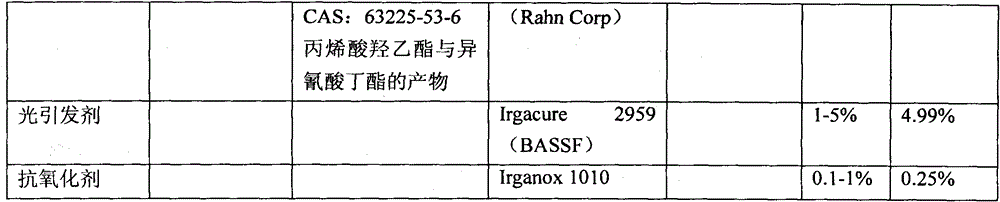
表14:黏合剂组合物EXP-MW2-070-BTable 14: Adhesive composition EXP-MW2-070-B

实施例39:在下面的表15和16中阐述了根据本主题的几个另外的组合物。这些组合物的具体应用是在“滚动,收缩”(ROSO)贴标签或相关技术中。Example 39: Several additional compositions according to the present subject matter are set forth in Tables 15 and 16 below. A particular application of these compositions is in "roll, shrink" (ROSO) labeling or related techniques.
表15:滚动,收缩组合物Table 15: Roll, Shrink Composition

表16:滚动,收缩组合物Table 16: Roll, Shrink Composition


毫无疑问,许多其他益处从该技术的未来应用和发展中将变得明显。No doubt many other benefits will become apparent from the future application and development of this technology.
本文中提到的所有专利、申请和文章在此通过引用以其整体并入。All patents, applications and articles mentioned herein are hereby incorporated by reference in their entirety.
本主题包括本文描述的多种组合物的组分和方面的组合。因此,例如,本主题包括一个实施方式的一种或多种组分和/或特征与其他实施方式(一个或多个)的一种或多种其他组分和/或特征组合。The subject matter includes combinations of components and aspects of the various compositions described herein. Thus, for example, the subject matter includes one or more components and/or features of one embodiment in combination with one or more other components and/or features of other embodiment(s).
如以上本文中所描述,本主题解决了许多与先前的策略、系统和/或装置相关的问题。然而,应当理解的是,本领域技术人员可以对组分的细节、材料和排列——其已经在本文中描述和图解以解释本主题的性质——做出许多改变,而不脱离要求保护的主题的原则和范围,如所附权利要求所表达的。As described herein above, the present subject matter addresses many of the problems associated with previous strategies, systems, and/or devices. It will be understood, however, that many changes can be made by those skilled in the art to the details, materials and arrangement of components which have been described and illustrated herein to explain the nature of the subject matter without departing from what is claimed The principle and scope of the subject matter are as expressed in the appended claims.
Claims (11)
Applications Claiming Priority (10)
| Application Number | Priority Date | Filing Date | Title |
|---|---|---|---|
| US201261711386P | 2012-10-09 | 2012-10-09 | |
| USPCT/US2013/064187 | 2013-10-09 | ||
| USPCT/US2013/064189 | 2013-10-09 | ||
| USPCT/US2013/064188 | 2013-10-09 | ||
| USPCT/US2013/064190 | 2013-10-09 | ||
| PCT/US2013/064188 WO2014059056A1 (en) | 2012-10-09 | 2013-10-10 | Adhesives and related methods |
| PCT/US2013/064187 WO2014059055A1 (en) | 2012-10-09 | 2013-10-10 | Adhesives and related methods |
| PCT/US2013/064190 WO2014059058A1 (en) | 2012-10-09 | 2013-10-10 | Adhesives and related methods |
| PCT/US2013/064189 WO2014059057A1 (en) | 2012-10-09 | 2013-10-10 | Adhesives and related methods |
| PCT/US2014/020553 WO2015053807A1 (en) | 2013-10-09 | 2014-03-05 | Adhesive articles and related methods |
Publications (2)
| Publication Number | Publication Date |
|---|---|
| CN105793376A CN105793376A (en) | 2016-07-20 |
| CN105793376B true CN105793376B (en) | 2020-10-23 |
Family
ID=49447852
Family Applications (4)
| Application Number | Title | Priority Date | Filing Date |
|---|---|---|---|
| CN201810460293.XA Pending CN108587528A (en) | 2012-10-09 | 2013-10-10 | Adhesive and correlation technique |
| CN201380063122.9A Pending CN104854207A (en) | 2012-10-09 | 2013-10-10 | Adhesives and related methods |
| CN202011471678.XA Pending CN112876996A (en) | 2012-10-09 | 2013-10-10 | Adhesives and related methods |
| CN201480066751.1A Active CN105793376B (en) | 2012-10-09 | 2014-03-05 | Adhesive articles and related methods |
Family Applications Before (3)
| Application Number | Title | Priority Date | Filing Date |
|---|---|---|---|
| CN201810460293.XA Pending CN108587528A (en) | 2012-10-09 | 2013-10-10 | Adhesive and correlation technique |
| CN201380063122.9A Pending CN104854207A (en) | 2012-10-09 | 2013-10-10 | Adhesives and related methods |
| CN202011471678.XA Pending CN112876996A (en) | 2012-10-09 | 2013-10-10 | Adhesives and related methods |
Country Status (10)
| Country | Link |
|---|---|
| US (15) | US9725623B2 (en) |
| EP (4) | EP2906653B1 (en) |
| KR (1) | KR102295538B1 (en) |
| CN (4) | CN108587528A (en) |
| AU (9) | AU2013329253B2 (en) |
| BR (4) | BR112015007832B1 (en) |
| CA (1) | CA2887304A1 (en) |
| IN (3) | IN2015DN03055A (en) |
| MX (2) | MX2015004606A (en) |
| WO (4) | WO2014059056A1 (en) |
Families Citing this family (32)
| Publication number | Priority date | Publication date | Assignee | Title |
|---|---|---|---|---|
| US9725623B2 (en) * | 2012-10-09 | 2017-08-08 | Avery Dennison Corporation | Adhesives and related methods |
| US9574039B1 (en) * | 2014-07-22 | 2017-02-21 | Full Spectrum Laser | Additive use in photopolymer resin for 3D printing to enhance the appearance of printed parts |
| CN104536210B (en) * | 2015-02-03 | 2017-09-29 | 京东方科技集团股份有限公司 | A kind of preparation method of alignment film printing plate |
| ES2992760T3 (en) * | 2015-02-05 | 2024-12-17 | Avery Dennison Corp | Label assemblies for adverse environments |
| CN107635511A (en) * | 2015-06-10 | 2018-01-26 | 力景公司 | Intraocular lens materials and components |
| US11141995B2 (en) | 2015-12-28 | 2021-10-12 | The Procter & Gamble Company | Method and apparatus for applying a material onto articles with a pre-distorted transfer component |
| CN108430786B (en) | 2015-12-28 | 2021-06-15 | 宝洁公司 | Method and apparatus for applying material to an article using a transfer member deflected on both sides |
| DE102016207540A1 (en) | 2016-05-02 | 2017-11-02 | Tesa Se | Water-vapor-blocking adhesive with highly functionalized poly (meth) acrylate |
| DE102016207548A1 (en) * | 2016-05-02 | 2017-11-02 | Tesa Se | Curable adhesive and reactive adhesive tapes based thereon |
| ES2950434T3 (en) | 2016-09-16 | 2023-10-10 | Int Flavors & Fragrances Inc | Microcapsule compositions stabilized with viscosity control agents |
| US10526511B2 (en) | 2016-12-22 | 2020-01-07 | Avery Dennison Corporation | Convertible pressure sensitive adhesives comprising urethane (meth)acrylate oligomers |
| JP7203056B2 (en) | 2017-06-30 | 2023-01-12 | スリーエム イノベイティブ プロパティズ カンパニー | Printable curable mixtures and curing compositions |
| US10716715B2 (en) | 2017-08-29 | 2020-07-21 | Hill-Rom Services, Inc. | RFID tag inlay for incontinence detection pad |
| JP6566324B2 (en) * | 2017-09-29 | 2019-08-28 | サイデン化学株式会社 | Adhesive sheet |
| JP2019206699A (en) * | 2018-05-29 | 2019-12-05 | 日東電工株式会社 | Adhesive sheet |
| WO2019230678A1 (en) * | 2018-05-29 | 2019-12-05 | 日東電工株式会社 | Adhesive sheet |
| JP7359570B2 (en) * | 2018-05-29 | 2023-10-11 | 日東電工株式会社 | Adhesive composition, adhesive layer and adhesive sheet |
| WO2019230677A1 (en) * | 2018-05-29 | 2019-12-05 | 日東電工株式会社 | Pressure-sensitive adhesive composition, pressure-sensitive adhesive layer, and pressure-sensitive adhesive sheet |
| US11491803B2 (en) | 2019-02-12 | 2022-11-08 | The Procter & Gamble Company | Method and apparatus for applying a material onto articles using a transfer component |
| KR102184587B1 (en) * | 2019-02-28 | 2020-12-01 | 주식회사 케이씨씨 | Adhesive Composition |
| DE102019208668A1 (en) * | 2019-06-14 | 2020-12-17 | Tesa Se | Bonding process using a hardening structural adhesive |
| TWI858080B (en) * | 2019-07-12 | 2024-10-11 | 美商陶氏全球科技有限責任公司 | Water-based compositions |
| DE102019120049B4 (en) * | 2019-07-24 | 2025-07-31 | Bundesdruckerei Gmbh | Process and hot melt adhesive for producing a value or security document consisting of several layers and value or security document |
| CN110527475B (en) * | 2019-09-26 | 2021-09-07 | 广东华南精细化工研究院有限公司 | Sprayable anti-sagging silane modified polyether sealant and preparation method thereof |
| CN113214763B (en) | 2020-01-21 | 2023-01-10 | 3M创新有限公司 | Pressure-sensitive adhesive composition and pressure-sensitive tape |
| US11752792B2 (en) | 2020-03-09 | 2023-09-12 | The Procter & Gamble Company | Method and apparatus for applying a material onto articles using a transfer component |
| CN111534269B (en) * | 2020-05-07 | 2022-04-12 | 苏州金枪新材料股份有限公司 | Two-component flexible acrylate structural adhesive for bonding liquid crystal screen and preparation method thereof |
| CN111826093A (en) * | 2020-07-28 | 2020-10-27 | 中国石油化工股份有限公司 | Photocuring material suitable for repairing oil-gas gathering and transportation pipeline and preparation method thereof |
| US12448553B2 (en) | 2021-02-04 | 2025-10-21 | Sunstar Engineering Americas Inc. | Curable composition |
| CN114853969B (en) * | 2022-04-25 | 2023-11-24 | 广东深展实业有限公司 | Photo-thermal dual-curing modified polypropylene resin and preparation method thereof |
| CN115044317B (en) * | 2022-06-29 | 2024-05-28 | 湖北祥源高新科技有限公司 | Preparation method and product of double-sided self-adhesive polyurethane foam |
| WO2024205855A1 (en) * | 2023-03-31 | 2024-10-03 | Henkel Ag & Co. Kgaa | Photo-curable acrylate adhesives for plastic bonding |
Citations (2)
| Publication number | Priority date | Publication date | Assignee | Title |
|---|---|---|---|---|
| CN101230177A (en) * | 2006-12-27 | 2008-07-30 | 第一毛织株式会社 | Composition for pressure-sensitive adhesive film, pressure-sensitive adhesive film, and dicing wafer bonding film comprising the same |
| CN102876248A (en) * | 2011-07-15 | 2013-01-16 | 日东电工株式会社 | Double-sided pressure-sensitive adhesive sheet |
Family Cites Families (224)
| Publication number | Priority date | Publication date | Assignee | Title |
|---|---|---|---|---|
| US3408008A (en) | 1966-12-02 | 1968-10-29 | Eric H. Cocks | Apparatus for applying hot melt adhesives |
| CH481197A (en) | 1967-02-22 | 1969-11-15 | Breveteam Sa | Adhesive for the underside coating of floor coverings |
| US3639500A (en) | 1968-05-09 | 1972-02-01 | Avery Products Corp | Curable pressure sensitive adhesive containing a polyepoxide a carboxylated diene polymer and an acrylic ester tackifier |
| DE2446438C2 (en) | 1974-09-28 | 1985-04-11 | Bayer Ag, 5090 Leverkusen | Process for the preparation of urethanes containing oxazolidine groups and their use |
| US4049483A (en) | 1976-11-18 | 1977-09-20 | Minnesota Mining And Manufacturing Company | Pressure sensitive hot-melt adhesive system |
| US4135033A (en) | 1977-02-16 | 1979-01-16 | Lawton William R | Heat-activated adhesive coating |
| US4143858A (en) | 1977-08-29 | 1979-03-13 | Eastman Kodak Company | Substantially amorphous polyolefins useful as pressure-sensitive adhesives |
| US4185050A (en) | 1978-12-26 | 1980-01-22 | Celanese Corporation | Pressure sensitive adhesive compositions comprising a mixture of terpolymers |
| CA1154287A (en) | 1979-02-26 | 1983-09-27 | Joseph E. Gervay | Dry-developing photosensitive dry film resist |
| US4288527A (en) | 1980-08-13 | 1981-09-08 | W. R. Grace & Co. | Dual UV/thermally curable acrylate compositions with pinacol |
| JPS618471Y2 (en) | 1980-09-01 | 1986-03-15 | ||
| JPS58152074A (en) | 1982-03-05 | 1983-09-09 | Mitsui Toatsu Chem Inc | Adhesive composition for ceramic tile |
| US4507429A (en) | 1984-01-12 | 1985-03-26 | Air Products And Chemicals, Inc. | Pressure sensitive adhesives with improved shear resistance |
| AU599586B2 (en) | 1985-02-05 | 1990-07-26 | Avery International Corporation | Composite facestocks and liners |
| US5082922A (en) | 1988-10-12 | 1992-01-21 | The Valspar Corporation | Modified-acrylate polymers and coating compositions made therefrom |
| US4914253A (en) | 1988-11-04 | 1990-04-03 | Exxon Chemical Patents Inc. | Method for preparing polyethylene wax by gas phase polymerization |
| WO1990013420A1 (en) | 1989-05-11 | 1990-11-15 | Landec Labs, Inc. | Temperature-activated adhesive assemblies |
| EP0400703A1 (en) | 1989-05-24 | 1990-12-05 | Akzo Nobel N.V. | Adhesive based on a thermoplastic polyester with an aluminium compound incorporated therein |
| US5194486A (en) | 1989-06-09 | 1993-03-16 | H & N Chemical Company | Adhesive |
| US5264532A (en) | 1989-08-14 | 1993-11-23 | Avery Dennison Corporation | Emulsion pressure-sensitive adhesives |
| US5024880A (en) | 1990-01-03 | 1991-06-18 | Minnesota Mining And Manufacturing Company | Cellular pressure-sensitive adhesive membrane |
| DE4021659A1 (en) | 1990-07-07 | 1992-01-09 | Bayer Ag | BISOXAZOLANES, OXAZOLAN MIXTURES MOST OF THESE, A METHOD FOR THE PRODUCTION THEREOF AND THE USE THEREOF AS A HARDENER FOR PLASTIC PREPARATORS HAVING ISOCYANATE GROUPS |
| CA2048232A1 (en) | 1990-09-05 | 1992-03-06 | Jerry W. Williams | Energy curable pressure-sensitive compositions |
| US5264278A (en) | 1991-03-20 | 1993-11-23 | Minnesota Mining And Manufacturing Company | Radiation-curable acrylate/silicone pressure-sensitive adhesive coated tapes adherable to paint coated substrates |
| CA2076278A1 (en) | 1991-08-22 | 1993-02-23 | Joseph T. Braun | Curable silicone pressure sensitive adhesive tape |
| JP3035565B2 (en) | 1991-12-27 | 2000-04-24 | 株式会社半導体エネルギー研究所 | Fabrication method of thin film solar cell |
| US5252694A (en) | 1992-01-22 | 1993-10-12 | Minnesota Mining And Manufacturing Company | Energy-polymerization adhesive, coating, film and process for making the same |
| CA2077103C (en) | 1992-08-28 | 2003-06-10 | Moore U.S.A. Inc. | Multipurpose label construction |
| WO1994008781A1 (en) | 1992-10-20 | 1994-04-28 | Avery Dennison Corporation | Pressure-sensitive structural adhesive |
| US5322731A (en) | 1993-03-09 | 1994-06-21 | Minnesota Mining And Manufacturing Company | Adhesive beads |
| US7575653B2 (en) | 1993-04-15 | 2009-08-18 | 3M Innovative Properties Company | Melt-flowable materials and method of sealing surfaces |
| US5468652A (en) | 1993-07-14 | 1995-11-21 | Sandia Corporation | Method of making a back contacted solar cell |
| US5721289A (en) | 1994-11-04 | 1998-02-24 | Minnesota Mining And Manufacturing Company | Stable, low cure-temperature semi-structural pressure sensitive adhesive |
| US5645764A (en) | 1995-01-19 | 1997-07-08 | International Business Machines Corporation | Electrically conductive pressure sensitive adhesives |
| US5695837A (en) | 1995-04-20 | 1997-12-09 | Minnesota Mining And Manufacturing Company | Tackified acrylic adhesives |
| US5905099A (en) * | 1995-11-06 | 1999-05-18 | Minnesota Mining And Manufacturing Company | Heat-activatable adhesive composition |
| US5800724A (en) | 1996-02-14 | 1998-09-01 | Fort James Corporation | Patterned metal foil laminate and method for making same |
| ID17196A (en) | 1996-03-14 | 1997-12-11 | Dow Chemical Co | ADHESIVE INGREDIENTS THAT CONTAIN OLEFIN POLYMER |
| EP0819746B1 (en) | 1996-07-15 | 2004-05-06 | Sekisui Kagaku Kogyo Kabushiki Kaisha | Sheet form, curable pressure-sensitive adhesive |
| ID17001A (en) | 1996-07-22 | 1997-11-27 | Dow Chemical Co | MATERIALS OF ADHESIVE MOLDED WITH HEAT |
| ZA977909B (en) | 1996-09-04 | 1999-03-03 | Dow Chemical Co | Compositions comprising a substantially random interpolymer of at least one alpha-olefin and at least one vinylidene aromatic monomer or hindered aliphatic vinylidene monomer |
| US20020007910A1 (en) | 1996-11-12 | 2002-01-24 | Greggory Scott Bennett | Thermosettable pressure sensitive adhesive |
| EP0966503B2 (en) | 1997-03-14 | 2008-01-09 | Minnesota Mining And Manufacturing Company | Cure-on-demand, moisture-curable compositions having reactive silane functionality |
| US6011307A (en) | 1997-08-12 | 2000-01-04 | Micron Technology, Inc. | Anisotropic conductive interconnect material for electronic devices, method of use and resulting product |
| US6077527A (en) | 1997-10-28 | 2000-06-20 | National Starch And Chemical Investment Holding Corporation | Enhancer tolerant pressure sensitive adhesives for transdermal drug delivery |
| US5951786A (en) | 1997-12-19 | 1999-09-14 | Sandia Corporation | Laminated photovoltaic modules using back-contact solar cells |
| DE19800676A1 (en) | 1998-01-10 | 1999-07-15 | Henkel Kgaa | Use of selected adhesive mixtures for the overlap of all-round labels when applied to plastic bottles |
| FI106470B (en) | 1998-03-09 | 2001-02-15 | Neste Chemicals Oy | Resin glue that has been foamed and its use in gluing boards with a wooden base |
| US6106982A (en) | 1998-05-11 | 2000-08-22 | Avery Dennison Corporation | Imaged receptor laminate and process for making same |
| US6391415B1 (en) | 1998-08-31 | 2002-05-21 | Environmental Inks And Coatings Corporation | Label system |
| US6362249B2 (en) * | 1998-09-04 | 2002-03-26 | Dsm Desotech Inc. | Radiation-curable coating compositions, coated optical fiber, radiation-curable matrix forming material and ribbon assembly |
| US6844391B1 (en) | 1998-09-23 | 2005-01-18 | Avery Dennison Corporation | Adhesives with improved rivet properties and laminates using the same |
| US6228486B1 (en) | 1998-10-06 | 2001-05-08 | Avery Dennison Corporation | Thermal transfer laminate |
| ES2306529T3 (en) | 1998-12-11 | 2008-11-01 | HENKEL AG & CO. KGAA | EMPLOYMENT OF SISIL-FINISHED POLYMERS DISPERSERS AS SEALING MATERIALS. |
| US6235850B1 (en) | 1998-12-11 | 2001-05-22 | 3M Immovative Properties Company | Epoxy/acrylic terpolymer self-fixturing adhesive |
| US6541872B1 (en) | 1999-01-11 | 2003-04-01 | Micron Technology, Inc. | Multi-layered adhesive for attaching a semiconductor die to a substrate |
| US6503620B1 (en) | 1999-10-29 | 2003-01-07 | Avery Dennison Corporation | Multilayer composite PSA constructions |
| US6664318B1 (en) | 1999-12-20 | 2003-12-16 | 3M Innovative Properties Company | Encapsulant compositions with thermal shock resistance |
| JP2001288438A (en) * | 2000-04-06 | 2001-10-16 | Sekisui Chem Co Ltd | Adhesive composition |
| WO2001092344A2 (en) | 2000-06-01 | 2001-12-06 | Kraton Polymers Research, B.V. | Compositions comprising a functionalized block copolymer crosslinked with aluminum acetylacetonate |
| US6376075B1 (en) | 2000-06-17 | 2002-04-23 | General Electric Company | Article having reflecting coating and process for the manufacture |
| US6353037B1 (en) | 2000-07-12 | 2002-03-05 | 3M Innovative Properties Company | Foams containing functionalized metal oxide nanoparticles and methods of making same |
| US6841234B2 (en) | 2000-08-04 | 2005-01-11 | Scapa Tapes North America Inc. | Heat-activated adhesive tape having an acrylic foam-like backing |
| US6497949B1 (en) | 2000-08-11 | 2002-12-24 | 3M Innovative Properties Company | Adhesive blends comprising hydrophilic and hydrophobic pressure sensitive adhesives |
| CA2419960A1 (en) | 2000-09-18 | 2002-03-21 | Applied Research Systems Ars Holding N.V. | Method for the preparation of 21-hydroxy-6,19-oxidoprogesterone (21oh-6op) |
| US6756095B2 (en) | 2001-01-10 | 2004-06-29 | Avery Dennison Corporation | Heat-sealable laminate |
| US6951596B2 (en) | 2002-01-18 | 2005-10-04 | Avery Dennison Corporation | RFID label technique |
| JP2002285106A (en) | 2001-03-27 | 2002-10-03 | The Inctec Inc | Active energy ray-curable pressure-sensitive adhesive |
| US6686425B2 (en) | 2001-06-08 | 2004-02-03 | Adhesives Research, Inc. | High Tg acrylic polymer and epoxy-containing blend therefor as pressure sensitive adhesive |
| US6602958B2 (en) | 2001-07-10 | 2003-08-05 | Ips Corporation | Adhesives for bonding composites |
| CA2453237A1 (en) * | 2001-07-26 | 2003-02-06 | Ciba Specialty Chemicals Holding Inc. | Photosensitive resin composition |
| US20030095388A1 (en) | 2001-11-16 | 2003-05-22 | Jinbao Jiao | Method and apparatus for securing a circuit board to a rigid surface |
| US6866919B2 (en) | 2002-02-21 | 2005-03-15 | Mitsubishi Gas Chemical Company, Inc. | Heat-resistant film base-material-inserted B-stage resin composition sheet for lamination and use thereof |
| US6613587B1 (en) * | 2002-04-11 | 2003-09-02 | Micron Technology, Inc. | Method of replacing at least a portion of a semiconductor substrate deposition chamber liner |
| EP1560708A4 (en) | 2002-07-19 | 2007-11-21 | Avery Dennison Corp | Labeling method employing two-part curable adhesives |
| US6613857B1 (en) * | 2002-07-26 | 2003-09-02 | Avery Dennison Corporation | UV-crosslinked, pressure-sensitive adhesives |
| CN1315969C (en) | 2002-07-31 | 2007-05-16 | 舒飞士特种化工有限公司 | Acrylic Pressure Sensitive Adhesive |
| AU2003265322A1 (en) | 2002-07-31 | 2004-02-25 | Nexicor Llc | Induction bondable high-pressure laminate |
| US6653408B1 (en) | 2002-11-21 | 2003-11-25 | Kraton Polymers U.S. Llc | Compositions comprising a functionalized block copolymer crosslinked with aluminum acetylacetonate |
| US6887917B2 (en) | 2002-12-30 | 2005-05-03 | 3M Innovative Properties Company | Curable pressure sensitive adhesive compositions |
| US7225992B2 (en) | 2003-02-13 | 2007-06-05 | Avery Dennison Corporation | RFID device tester and method |
| DE10322898A1 (en) | 2003-05-21 | 2004-12-16 | Tesa Ag | Flameproof and heat-activated PSAs |
| KR101177251B1 (en) | 2003-06-06 | 2012-08-24 | 히다치 가세고교 가부시끼가이샤 | Adhesive sheet, dicing tape integrated type, adhesive sheet, and semiconductor device producing method |
| EP1632507A4 (en) | 2003-06-09 | 2006-11-29 | Mitsui Chemicals Inc | Crosslinkable methacrylic resin composition and transparent member |
| US7170001B2 (en) | 2003-06-26 | 2007-01-30 | Advent Solar, Inc. | Fabrication of back-contacted silicon solar cells using thermomigration to create conductive vias |
| US7691437B2 (en) | 2003-10-31 | 2010-04-06 | 3M Innovative Properties Company | Method for preparing a pressure-sensitive adhesive |
| US7270889B2 (en) | 2003-11-04 | 2007-09-18 | Kimberly-Clark Worldwide, Inc. | Tackified amorphous-poly-alpha-olefin-bonded structures |
| JPWO2005042612A1 (en) * | 2003-11-04 | 2007-04-05 | 綜研化学株式会社 | Polymerizable composition and (meth) acrylic thermal conductive sheet |
| US7144751B2 (en) | 2004-02-05 | 2006-12-05 | Advent Solar, Inc. | Back-contact solar cells and methods for fabrication |
| US7157584B2 (en) * | 2004-02-25 | 2007-01-02 | Takeda Pharmaceutical Company Limited | Benzimidazole derivative and use thereof |
| EA011898B1 (en) | 2004-03-09 | 2009-06-30 | Спир Груп Холдингз Лимитед | Label for glass containers and method for removing thereof |
| US7524911B2 (en) | 2004-03-17 | 2009-04-28 | Dow Global Technologies Inc. | Adhesive and marking compositions made from interpolymers of ethylene/α-olefins |
| US7088248B2 (en) | 2004-03-24 | 2006-08-08 | Avery Dennison Corporation | System and method for selectively reading RFID devices |
| WO2005103178A1 (en) | 2004-03-29 | 2005-11-03 | Avery Dennison Corporation | Anaerobic pressure sensitive adhesive |
| US7645829B2 (en) * | 2004-04-15 | 2010-01-12 | Exxonmobil Chemical Patents Inc. | Plasticized functionalized propylene copolymer adhesive composition |
| US20050266237A1 (en) | 2004-05-28 | 2005-12-01 | Siddhartha Asthana | Heat-activated sound and vibration damping sealant composition |
| EP1640388B1 (en) | 2004-09-24 | 2015-02-25 | Rohm and Haas Company | Biomass based Michael addition composition |
| NZ549868A (en) | 2004-10-22 | 2007-12-21 | Sato Kk | A method for applying a rfid tag carrying label on an object |
| CN101053004B (en) | 2004-11-10 | 2012-01-11 | 艾利丹尼森公司 | In-mold labels and uses thereof |
| US7212127B2 (en) | 2004-12-20 | 2007-05-01 | Avery Dennison Corp. | RFID tag and label |
| KR101399699B1 (en) | 2005-03-17 | 2014-05-27 | 다우 글로벌 테크놀로지스 엘엘씨 | FUNCTIONALIZED ETHYLENE/α-OLEFIN INTERPOLYMER COMPOSITIONS |
| US7786216B2 (en) | 2005-03-17 | 2010-08-31 | Dow Global Technologies Inc. | Oil based blends of interpolymers of ethylene/α-olefins |
| US7989543B2 (en) | 2005-03-17 | 2011-08-02 | Dow Global Technologies Llc | Adhesive and marking compositions made from interpolymers of ethylene/α-olefins |
| US7756154B2 (en) | 2005-03-22 | 2010-07-13 | Netapp, Inc. | Shared implementation for multiple system interfaces |
| TWI344469B (en) | 2005-04-07 | 2011-07-01 | Nippon Catalytic Chem Ind | Polyacrylic acid (salt) water-absorbent resin, production process thereof, and acrylic acid used in polymerization for production of water-absorbent resin |
| US7298266B2 (en) | 2005-05-09 | 2007-11-20 | Avery Dennison | RFID communication systems and methods |
| JP4634856B2 (en) | 2005-05-12 | 2011-02-16 | 利昌工業株式会社 | White prepreg, white laminate, and metal foil-clad white laminate |
| US8287949B2 (en) | 2005-07-07 | 2012-10-16 | Dow Global Technologies Inc. | Aqueous dispersions |
| EP1904597B1 (en) * | 2005-07-19 | 2012-08-22 | Dow Corning Corporation | Pressure sensitive adhesives and methods for their preparation |
| JP4711777B2 (en) | 2005-08-11 | 2011-06-29 | 日東電工株式会社 | Adhesive sheet, manufacturing method thereof, and product processing method |
| US20100311920A1 (en) * | 2005-08-26 | 2010-12-09 | Cid Centro De Investigacion Y Desarrollo Tecnologico Sa De Cv | Using Reactive Block Copolymers as Chain Extenders and Surface Modifiers |
| US20070088145A1 (en) | 2005-10-19 | 2007-04-19 | Mgaya Alexander P | Adhesive useful for film laminating applications |
| US20070092733A1 (en) * | 2005-10-26 | 2007-04-26 | 3M Innovative Properties Company | Concurrently curable hybrid adhesive composition |
| ES2557155T3 (en) | 2005-12-01 | 2016-01-22 | Henkel Ag & Co. Kgaa | New material forming supramolecular structures, process and uses |
| CN101000899A (en) | 2006-01-11 | 2007-07-18 | 南茂科技股份有限公司 | Chip package structure |
| US20070231571A1 (en) | 2006-04-04 | 2007-10-04 | Richard Lane | Pressure sensitive adhesive (PSA) laminates |
| US8785531B2 (en) | 2006-07-06 | 2014-07-22 | Dow Global Technologies Llc | Dispersions of olefin block copolymers |
| US8431222B2 (en) | 2006-08-08 | 2013-04-30 | World Properties, Inc. | Circuit materials with improved bond, method of manufacture thereof, and articles formed therefrom |
| JP2008060151A (en) | 2006-08-29 | 2008-03-13 | Nitto Denko Corp | Semiconductor wafer back surface processing method, substrate back surface processing method, and radiation curable adhesive sheet |
| US8074022B2 (en) | 2006-09-28 | 2011-12-06 | Virident Systems, Inc. | Programmable heterogeneous memory controllers for main memory with different memory modules |
| US7776969B2 (en) | 2006-12-04 | 2010-08-17 | Bayer Materialscience Llc | Allophanate-modified stabilizers and the polymer polyols prepared from these stabilizers |
| KR101596049B1 (en) * | 2006-12-07 | 2016-02-19 | 쓰리엠 이노베이티브 프로퍼티즈 컴파니 | Block copolymer blend adhesives with multiple tackifiers |
| TW200842174A (en) * | 2006-12-27 | 2008-11-01 | Cheil Ind Inc | Composition for pressure sensitive adhesive film, pressure sensitive adhesive film, and dicing die bonding film including the same |
| WO2008093398A1 (en) | 2007-01-30 | 2008-08-07 | Asics Corporation | Process for production of shoes and shoes |
| JP5089201B2 (en) | 2007-03-12 | 2012-12-05 | 日東電工株式会社 | Acrylic adhesive tape or sheet and method for producing the same |
| RU2480500C2 (en) * | 2007-03-21 | 2013-04-27 | Эвери Деннисон Копэрейшн | Pressure-sensitive adhesive (versions) and foam material |
| JP5419376B2 (en) | 2007-04-20 | 2014-02-19 | 日東電工株式会社 | Adhesive sheet adhesion to automobile coating surface |
| JP5038770B2 (en) | 2007-05-01 | 2012-10-03 | 日東電工株式会社 | Adhesive sheet adhesion method for vehicle paint film surface |
| JP5118880B2 (en) | 2007-05-08 | 2013-01-16 | 日東電工株式会社 | Adhesive composition, and adhesive product and display using the same |
| US8334037B2 (en) * | 2007-05-11 | 2012-12-18 | 3M Innovative Properties Company | Multi-layer assembly, multi-layer stretch releasing pressure-sensitive adhesive assembly, and methods of making and using the same |
| BRPI0815310B1 (en) | 2007-08-24 | 2019-05-14 | Dow Global Technologies Inc. | ADHESIVE COMPOSITION, ARTICLE AND METHOD OF APPLICATION OF AN ADHESIVE COMPOSITION |
| KR100922684B1 (en) | 2007-08-31 | 2009-10-19 | 제일모직주식회사 | Photocuring composition for pressure-sensitive adhesive layer and dicing tape comprising the same |
| AU2007359124B2 (en) | 2007-09-19 | 2013-05-23 | Henkel Ag & Co. Kgaa | Highly damping expandable material and devices |
| US20090142506A1 (en) | 2007-11-29 | 2009-06-04 | Bayer Material Science Llc | Ethylenically unsaturated polyisocyanate addition compounds based on lysine triisocyanate, their use in coating compositions and processes for their preparation |
| EP2224483A1 (en) * | 2007-12-04 | 2010-09-01 | Hitachi Chemical Company, Ltd. | Photosensitive adhesive |
| US7786868B2 (en) | 2007-12-11 | 2010-08-31 | Avery Dennison Corporation | RFID device with multiple passive operation modes |
| JP2009256607A (en) | 2008-03-17 | 2009-11-05 | Nitto Denko Corp | Acrylic adhesive, acrylic adhesive layer, and acrylic adhesive tape or sheet |
| CN102076800A (en) | 2008-04-30 | 2011-05-25 | 德莎欧洲公司 | Adhesive tape |
| US8289165B2 (en) | 2008-06-11 | 2012-10-16 | Avery Dennison Corporation | RFID device with conductive loop shield |
| JP5696994B2 (en) | 2008-07-16 | 2015-04-08 | エルジー・ケム・リミテッド | Adhesive composition, polarizing plate and liquid crystal display device |
| JP2011529526A (en) | 2008-07-28 | 2011-12-08 | ダウ コーニング コーポレーション | Composite article |
| US8080177B2 (en) | 2008-08-19 | 2011-12-20 | The Boeing Company | Low RF loss static dissipative adhesive |
| BRPI0917383A2 (en) * | 2008-08-27 | 2015-11-17 | Hitachi Chemical Co Ltd | photosensitive adhesive composition, photosensitive film adhesive, adhesive standard, adhesive semiconductor wafer, semiconductor device and electronic component |
| DE102008045802A1 (en) | 2008-09-05 | 2010-03-11 | Henkel Ag & Co. Kgaa | Hot melt adhesive based on metallocene-catalyzed olefin-α-olefin copolymers |
| US8068028B2 (en) | 2008-09-26 | 2011-11-29 | Avery Dennison Corporation | Encapsulated RFID device for flexible, non-planar or curvilinear surfaces |
| WO2010039623A2 (en) | 2008-09-30 | 2010-04-08 | Henkel Corporation | Shear-and/or pressure-resistant microspheres |
| WO2010074135A1 (en) | 2008-12-26 | 2010-07-01 | 東洋紡績株式会社 | Resin composition for adhesive, adhesive comprising same, adhesive sheet, and printed wiring board including same as adhesive layer |
| AT12321U1 (en) | 2009-01-09 | 2012-03-15 | Austria Tech & System Tech | MULTILAYER PCB LAYER ELEMENT WITH AT LEAST ONE LASER BEAM STOPPING ELEMENT AND METHOD FOR ATTACHING SUCH A LASER BEAM STOPPER IN A MULTILAYER PCB ELEMENT |
| US20100200063A1 (en) | 2009-02-12 | 2010-08-12 | Derek Djeu | Thin film solar cell |
| JP5294931B2 (en) | 2009-03-11 | 2013-09-18 | 日東電工株式会社 | Acrylic adhesive sheet |
| EP2236534A1 (en) | 2009-03-31 | 2010-10-06 | Sika Technology AG | Composition curable in two stages comprising a surface deactivated polyisocyanate |
| JP5404174B2 (en) | 2009-05-14 | 2014-01-29 | 日東電工株式会社 | Thermally peelable pressure sensitive adhesive tape or sheet |
| JP2011026551A (en) * | 2009-05-21 | 2011-02-10 | Kaneka Corp | Ultraviolet-curing type pressure-sensitive adhesive composition |
| AU2010260018B2 (en) | 2009-06-11 | 2015-04-09 | Henkel Corporation | Thermally reversible hot melt adhesive composition containing multifunctional diene and dienophile compounds |
| US8593256B2 (en) | 2009-06-23 | 2013-11-26 | Avery Dennison Corporation | Washable RFID device for apparel tracking |
| TR201900737T4 (en) | 2009-07-24 | 2019-02-21 | Bostik Inc | OLEFIN BLOCK COPOLYMERS BASED HOT-MELTING ADHESIVE. |
| US8242185B2 (en) | 2009-08-03 | 2012-08-14 | Morgan Adhesives Company | Adhesive compositions for easy application and improved durability |
| CN102471656A (en) | 2009-08-04 | 2012-05-23 | 3M创新有限公司 | Non-halogentaed polyisobutylene -thermoplastic elastomer blend pressure sensitive adhesives |
| JP5634803B2 (en) | 2009-09-16 | 2014-12-03 | 日東電工株式会社 | Acrylic adhesive tape |
| KR20120074298A (en) | 2009-09-24 | 2012-07-05 | 애버리 데니슨 코포레이션 | Acrylic compositions for adhering to low surface energy subtrates |
| JP2011096988A (en) | 2009-11-02 | 2011-05-12 | Keiwa Inc | Adhesive sheet for protecting back of solar cell module, and solar cell module using the same |
| US20120240973A1 (en) | 2009-12-16 | 2012-09-27 | Avery Dennison Corporation | Photovoltaic Backsheet |
| KR20120115320A (en) * | 2009-12-18 | 2012-10-17 | 쓰리엠 이노베이티브 프로퍼티즈 컴파니 | Pressure sensitive adhesives for low surface energy substrates |
| US8759664B2 (en) | 2009-12-28 | 2014-06-24 | Hanergy Hi-Tech Power (Hk) Limited | Thin film solar cell strings |
| CN102792218B (en) | 2010-03-09 | 2016-02-03 | 3M创新有限公司 | For bonding the thermal activation optically clear adhesive of display panel |
| CN106178015A (en) | 2010-03-26 | 2016-12-07 | 3M创新有限公司 | The method of sterilization wound dressing |
| JP2011231319A (en) | 2010-04-09 | 2011-11-17 | Nitto Denko Corp | Pressure-sensitive adhesive composition and acrylic pressure-sensitive adhesive tape |
| JP5749052B2 (en) | 2010-04-12 | 2015-07-15 | 日東電工株式会社 | Method for producing cured multilayer sheet and cured multilayer sheet |
| KR20170118955A (en) | 2010-05-11 | 2017-10-25 | 쓰리엠 이노베이티브 프로퍼티즈 컴파니 | Curable composition, pressure-sensitive adhesive, method of making the same, and adhesive articles |
| EP2580052B1 (en) | 2010-06-14 | 2019-05-22 | Avery Dennison Corporation | Foil laminate intermediate and method of manufacturing |
| JP5432853B2 (en) | 2010-07-30 | 2014-03-05 | 日東電工株式会社 | Dicing tape-integrated film for semiconductor back surface, manufacturing method thereof, and manufacturing method of semiconductor device |
| WO2012024217A1 (en) | 2010-08-18 | 2012-02-23 | 3M Innovative Properties Company | Optical assemblies including stress-relieving optical adhesives and methods of making same |
| PT2609167E (en) | 2010-08-26 | 2015-07-30 | Henkel US IP LLC | POLY-OLEFIN ADHESIVE AMORFA LOW APPLIANCE TEMPERATURE |
| EP2610319A4 (en) | 2010-08-27 | 2015-12-02 | Nitto Denko Corp | Acrylic adhesive composition, acrylic adhesive layer, and acrylic adhesive tape |
| DE102010035889B4 (en) | 2010-08-30 | 2021-11-11 | Bundesdruckerei Gmbh | Value and / or security document and process for its production |
| WO2012035958A1 (en) * | 2010-09-17 | 2012-03-22 | 昭和電工株式会社 | Light-curing composition for use in transparent pressure-sensitive adhesive sheet |
| JP6144868B2 (en) | 2010-11-18 | 2017-06-07 | 日東電工株式会社 | Flip chip type semiconductor back film, dicing tape integrated semiconductor back film, and flip chip semiconductor back film manufacturing method |
| US9208911B2 (en) | 2010-11-23 | 2015-12-08 | Westinghouse Electric Company Llc | Full spectrum LOCA evaluation model and analysis methodology |
| WO2012071484A2 (en) | 2010-11-23 | 2012-05-31 | Adhesives Research, Inc. | Reactive conductive pressure-sensitive adhesive tape |
| JP2014503640A (en) | 2010-12-13 | 2014-02-13 | スリーエム イノベイティブ プロパティズ カンパニー | Pressure sensitive adhesive for low surface energy substrates |
| WO2012088384A1 (en) | 2010-12-22 | 2012-06-28 | Bostik Inc. | Olefin block copolymer based packaging adhesive |
| JP5689336B2 (en) | 2011-03-03 | 2015-03-25 | 日東電工株式会社 | Heat release type adhesive sheet |
| JP2012193317A (en) | 2011-03-17 | 2012-10-11 | Nitto Denko Corp | Pressure-sensitive adhesive tape for temporary fixing of electronic part |
| EP2688967B1 (en) | 2011-03-24 | 2018-08-15 | Henkel IP & Holding GmbH | Stretch film lamination adhesive |
| CA2832601C (en) | 2011-04-08 | 2019-06-04 | Bostik, Inc. | Polyolefin based hot melt adhesive containing a solid plasticizer |
| JP2012229375A (en) | 2011-04-27 | 2012-11-22 | Nitto Denko Corp | Pressure-sensitive adhesive sheet |
| US9000659B2 (en) | 2011-05-09 | 2015-04-07 | Kenneth S. Chin | Lamp socket |
| EP2708585B1 (en) * | 2011-05-10 | 2018-01-03 | Dexerials Corporation | Method for producing a double-sided adhesive tape |
| PL2545798T3 (en) | 2011-07-13 | 2018-07-31 | 3M Innovative Properties Company | Sanitary product system |
| EP2551102B1 (en) | 2011-07-29 | 2014-12-03 | 3M Innovative Properties Company | Self-stick foam adhesive |
| EP2581423A1 (en) | 2011-10-14 | 2013-04-17 | 3M Innovative Properties Company | Primerless multilayer adhesive film for bonding glass substrates |
| WO2013069907A1 (en) | 2011-11-08 | 2013-05-16 | 주식회사 엘지화학 | Adhesive composition for an antistatic protective film, and production method therefor |
| DE102011088170A1 (en) | 2011-12-09 | 2013-06-13 | Bayer Materialscience Aktiengesellschaft | Reactive pressure-sensitive adhesives |
| WO2013096068A1 (en) | 2011-12-22 | 2013-06-27 | 3M Innovative Properties Company | Olefin block copolymer based pressure sensitive adhesives |
| DE102012200854A1 (en) | 2012-01-20 | 2013-07-25 | Tesa Se | Crosslinking accelerator system for polyacrylates |
| WO2013115851A1 (en) | 2012-02-03 | 2013-08-08 | Avery Dennison Corporation | Laser patterning of photovoltaic backsheet |
| KR101478429B1 (en) | 2012-03-12 | 2014-12-31 | 주식회사 엘지화학 | Pressure Sensitive Adhesive Composition |
| JP5900091B2 (en) | 2012-03-27 | 2016-04-06 | 大日本印刷株式会社 | Decorative sheet and decorative plate having the same |
| EP2831125B1 (en) | 2012-03-30 | 2016-10-05 | Sirrus, Inc. | Methods for activating polymerizable compositions, polymerizable systems, and products formed thereby |
| EP2831190B1 (en) | 2012-03-30 | 2016-12-14 | Dow Global Technologies LLC | Polyolefin adhesive composition |
| CN102634286B (en) | 2012-05-17 | 2013-08-14 | 深圳市飞世尔实业有限公司 | Method for preparing photo-thermal dual curable type anisotropic conductive film |
| KR20150027067A (en) | 2012-05-29 | 2015-03-11 | 닛토덴코 가부시키가이샤 | Adhesive, and transparent substrate using same |
| DE102012209116A1 (en) | 2012-05-30 | 2013-12-05 | Tesa Se | Heat sealable tape |
| DE102013209827A1 (en) | 2012-06-21 | 2013-12-24 | Tesa Se | Heat resistant tape |
| JP6252473B2 (en) | 2012-07-05 | 2017-12-27 | 株式会社スリーボンド | Sheet adhesive and organic EL panel using the same |
| JP5961055B2 (en) | 2012-07-05 | 2016-08-02 | 日東電工株式会社 | Sealing resin sheet, electronic component package manufacturing method, and electronic component package |
| WO2014018312A1 (en) | 2012-07-26 | 2014-01-30 | 3M Innovative Properties Company | Heat de-bondable adhesive articles |
| CN104823080B (en) | 2012-07-26 | 2017-06-16 | 3M创新有限公司 | Can hot unsticking optical goods |
| US9725623B2 (en) | 2012-10-09 | 2017-08-08 | Avery Dennison Corporation | Adhesives and related methods |
| US20140162082A1 (en) | 2012-12-07 | 2014-06-12 | H.B. Fuller Company | Composition, an article and a method for the bonding of non-woven substrates |
| US9023954B1 (en) | 2012-12-26 | 2015-05-05 | The United States Of America As Represented By The Secretary Of The Navy | Side-chain and end-group modified poly-p-phenylene oligomers |
| EP2759578B1 (en) | 2013-01-24 | 2018-05-02 | Basf Se | Reactive pressure-sensitive adhesive products |
| CA2899313C (en) | 2013-01-24 | 2021-02-02 | Henkel Ltd. | Foamable hot melt adhesive compositions and use thereof |
| WO2014138166A2 (en) | 2013-03-05 | 2014-09-12 | Avery Dennison Corporation | Differential dual functional foam tapes |
| ES2900492T3 (en) | 2013-03-06 | 2022-03-17 | Incyte Holdings Corp | Processes and intermediates to make a JAK inhibitor |
| CN105229056B (en) | 2013-03-28 | 2017-11-28 | 道康宁公司 | Organosiloxane compositions and coatings, articles of manufacture, methods and uses |
| CN103275656B (en) | 2013-05-29 | 2015-07-08 | 北京化工大学 | Reactive pressure-sensitive adhesive having performance of structural adhesive after being cured, and preparation method thereof |
| CN105555892A (en) | 2013-09-23 | 2016-05-04 | 路博润先进材料公司 | A combined hot-melt adhesive and pressure sensitive adhesive system and composite materials made from the same |
| BR112016006114A2 (en) | 2013-09-25 | 2020-05-19 | Bostik, Inc. | hot melt adhesive composition |
| CN111484803A (en) | 2013-10-10 | 2020-08-04 | 艾利丹尼森公司 | Adhesives and related methods |
| BR112016029905A2 (en) | 2014-06-18 | 2017-08-22 | Avery Dennison Corp | pressure sensitive transposable adhesives, related articles and methods |
| KR102466042B1 (en) | 2014-09-29 | 2022-11-11 | 애버리 데니슨 코포레이션 | Tire tracking rfid label |
| ES2992760T3 (en) | 2015-02-05 | 2024-12-17 | Avery Dennison Corp | Label assemblies for adverse environments |
| US10526511B2 (en) | 2016-12-22 | 2020-01-07 | Avery Dennison Corporation | Convertible pressure sensitive adhesives comprising urethane (meth)acrylate oligomers |
-
2013
- 2013-10-10 US US14/433,897 patent/US9725623B2/en active Active
- 2013-10-10 BR BR112015007832-0A patent/BR112015007832B1/en not_active IP Right Cessation
- 2013-10-10 WO PCT/US2013/064188 patent/WO2014059056A1/en not_active Ceased
- 2013-10-10 AU AU2013329253A patent/AU2013329253B2/en active Active
- 2013-10-10 US US14/433,889 patent/US9708509B2/en active Active
- 2013-10-10 US US14/433,901 patent/US9738817B2/en active Active
- 2013-10-10 EP EP13783749.8A patent/EP2906653B1/en active Active
- 2013-10-10 EP EP13779712.2A patent/EP2906651B1/en active Active
- 2013-10-10 IN IN3055DEN2015 patent/IN2015DN03055A/en unknown
- 2013-10-10 AU AU2013329252A patent/AU2013329252B2/en active Active
- 2013-10-10 IN IN3074DEN2015 patent/IN2015DN03074A/en unknown
- 2013-10-10 WO PCT/US2013/064190 patent/WO2014059058A1/en not_active Ceased
- 2013-10-10 BR BR112015007880-0A patent/BR112015007880B1/en not_active IP Right Cessation
- 2013-10-10 CA CA2887304A patent/CA2887304A1/en not_active Abandoned
- 2013-10-10 EP EP13783166.5A patent/EP2906652B1/en active Active
- 2013-10-10 IN IN3071DEN2015 patent/IN2015DN03071A/en unknown
- 2013-10-10 US US14/433,892 patent/US9714365B2/en active Active
- 2013-10-10 BR BR112015007833-8A patent/BR112015007833B1/en not_active IP Right Cessation
- 2013-10-10 CN CN201810460293.XA patent/CN108587528A/en active Pending
- 2013-10-10 BR BR112015007837-0A patent/BR112015007837B1/en not_active IP Right Cessation
- 2013-10-10 MX MX2015004606A patent/MX2015004606A/en unknown
- 2013-10-10 EP EP13783750.6A patent/EP2906654B1/en active Active
- 2013-10-10 CN CN201380063122.9A patent/CN104854207A/en active Pending
- 2013-10-10 AU AU2013329251A patent/AU2013329251A1/en not_active Abandoned
- 2013-10-10 CN CN202011471678.XA patent/CN112876996A/en active Pending
- 2013-10-10 WO PCT/US2013/064189 patent/WO2014059057A1/en not_active Ceased
- 2013-10-10 AU AU2013329250A patent/AU2013329250A1/en not_active Abandoned
- 2013-10-10 WO PCT/US2013/064187 patent/WO2014059055A1/en not_active Ceased
-
2014
- 2014-03-05 MX MX2016004653A patent/MX2016004653A/en unknown
- 2014-03-05 US US15/028,621 patent/US20160257858A1/en not_active Abandoned
- 2014-03-05 CN CN201480066751.1A patent/CN105793376B/en active Active
- 2014-03-05 KR KR1020167012186A patent/KR102295538B1/en active Active
-
2017
- 2017-03-24 AU AU2017201999A patent/AU2017201999B2/en active Active
- 2017-03-24 AU AU2017201997A patent/AU2017201997B2/en active Active
- 2017-06-12 US US15/620,767 patent/US10040973B2/en active Active
- 2017-06-12 US US15/620,735 patent/US10035930B2/en active Active
- 2017-06-12 US US15/620,774 patent/US10040974B2/en active Active
- 2017-06-13 US US15/620,931 patent/US10040978B2/en active Active
-
2018
- 2018-06-28 US US16/022,062 patent/US11292942B2/en active Active
- 2018-06-28 US US16/022,620 patent/US10533117B2/en active Active
- 2018-06-28 US US16/022,178 patent/US10597560B2/en active Active
- 2018-06-28 US US16/021,937 patent/US10457838B2/en active Active
-
2019
- 2019-02-14 AU AU2019201055A patent/AU2019201055B2/en active Active
- 2019-09-19 US US16/575,578 patent/US11008483B2/en active Active
-
2020
- 2020-09-28 AU AU2020244387A patent/AU2020244387B2/en active Active
-
2021
- 2021-04-29 US US17/244,253 patent/US11685841B2/en active Active
-
2022
- 2022-12-21 AU AU2022291497A patent/AU2022291497B2/en active Active
Patent Citations (2)
| Publication number | Priority date | Publication date | Assignee | Title |
|---|---|---|---|---|
| CN101230177A (en) * | 2006-12-27 | 2008-07-30 | 第一毛织株式会社 | Composition for pressure-sensitive adhesive film, pressure-sensitive adhesive film, and dicing wafer bonding film comprising the same |
| CN102876248A (en) * | 2011-07-15 | 2013-01-16 | 日东电工株式会社 | Double-sided pressure-sensitive adhesive sheet |
Also Published As
Similar Documents
| Publication | Publication Date | Title |
|---|---|---|
| CN105793376B (en) | Adhesive articles and related methods | |
| US20210287575A1 (en) | Label assemblies for adverse environments | |
| CA2927081C (en) | Convertible adhesive articles and related methods | |
| CN110079218B (en) | Adhesives and related methods | |
| CN104870589B (en) | Adhesives and related methods |
Legal Events
| Date | Code | Title | Description |
|---|---|---|---|
| C06 | Publication | ||
| PB01 | Publication | ||
| C10 | Entry into substantive examination | ||
| SE01 | Entry into force of request for substantive examination | ||
| GR01 | Patent grant | ||
| GR01 | Patent grant | ||
| CP02 | Change in the address of a patent holder | ||
| CP02 | Change in the address of a patent holder |
Address after: Ohio, USA Patentee after: AVERY DENNISON Corp. Address before: California, USA Patentee before: AVERY DENNISON Corp. |