CN103716866A - Method for selecting optimum relay node of cooperative communication in underwater sensor network - Google Patents
Method for selecting optimum relay node of cooperative communication in underwater sensor network Download PDFInfo
- Publication number
- CN103716866A CN103716866A CN201310740152.0A CN201310740152A CN103716866A CN 103716866 A CN103716866 A CN 103716866A CN 201310740152 A CN201310740152 A CN 201310740152A CN 103716866 A CN103716866 A CN 103716866A
- Authority
- CN
- China
- Prior art keywords
- node
- channel
- source
- relay node
- relaying
- Prior art date
- Legal status (The legal status is an assumption and is not a legal conclusion. Google has not performed a legal analysis and makes no representation as to the accuracy of the status listed.)
- Pending
Links
- 238000004891 communication Methods 0.000 title claims abstract description 35
- 238000000034 method Methods 0.000 title claims description 6
- 238000005562 fading Methods 0.000 claims description 13
- 235000007164 Oryza sativa Nutrition 0.000 claims description 3
- 238000010521 absorption reaction Methods 0.000 claims description 3
- 235000009566 rice Nutrition 0.000 claims description 3
- 238000000205 computational method Methods 0.000 claims description 2
- 240000007594 Oryza sativa Species 0.000 claims 1
- 238000010187 selection method Methods 0.000 abstract 2
- 238000005516 engineering process Methods 0.000 description 5
- XLYOFNOQVPJJNP-UHFFFAOYSA-N water Substances O XLYOFNOQVPJJNP-UHFFFAOYSA-N 0.000 description 5
- 230000005540 biological transmission Effects 0.000 description 3
- 238000011156 evaluation Methods 0.000 description 3
- 241000209094 Oryza Species 0.000 description 2
- 230000019771 cognition Effects 0.000 description 2
- 238000012544 monitoring process Methods 0.000 description 2
- 230000009286 beneficial effect Effects 0.000 description 1
- 238000004364 calculation method Methods 0.000 description 1
- 238000013480 data collection Methods 0.000 description 1
- 238000001514 detection method Methods 0.000 description 1
- 230000007613 environmental effect Effects 0.000 description 1
- 230000006870 function Effects 0.000 description 1
- 230000001360 synchronised effect Effects 0.000 description 1
- 238000005303 weighing Methods 0.000 description 1
Images

Landscapes
- Mobile Radio Communication Systems (AREA)
- Radio Relay Systems (AREA)
Abstract
本发明属于数字通信技术领域,涉及一种水下传感器网络适用的协作通信最佳中继节点选择方法,源节点使用源-中继、中继-目的间信道的瞬时功率增益的调和平均数
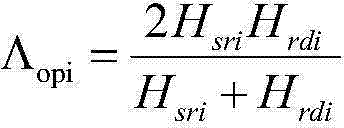
The invention belongs to the technical field of digital communication, and relates to an optimal relay node selection method for cooperative communication applicable to an underwater sensor network. The source node uses the harmonic average of the instantaneous power gain of the source-relay, relay-purpose channel
Description
Technical field
The present invention relates to underwater wireless sensor network cooperative communication technology field, is the optimal relay node system of selection being determined by via node channel performance under a kind of underwater sound communication environment concretely.
Background technology
In recent years, underwater sensor network is more and more extensive in the application of the aspects such as oceanographic data collection, pollution monitoring, disaster early warning, marine detection, assistance navigation and strategy monitoring, and subsurface communication technology also comes into one's own day by day.Due to electromagnetic wave decay under water too fast, so the optimum that sound wave is the mankind to be found the up to now form of energy of long-distance communications under water.
Subsurface communication environment is very complicated, the unfavorable factors such as underwater acoustic channel characterisitic parameter is change at random along with the variation of time-sky-frequency, and underwater ambient noise is high, narrow bandwidth, propagation delay time are large make the problems such as subsurface communication transmission error rates is high, speed is low be difficult to solve.In order to improve subsurface communication quality, reduce the impact of channel fading as far as possible, can adopt relay cooperative communication mode, make single antenna user to send information by the cooperation of via node, both overcome channel fading serious problems, can obtain diversity gain again.
In cooperation communication system, the selection of via node is a key issue, before via node is assisted source node transmitting data information, first according to certain condition, selecting optimal relay node is necessary, because can save a lot of energy like this, avoid source node to send data message to all via nodes, select an optimal relay node simultaneously and can obtain considerable diversity gain again.
Although relay selection algorithm is existing a lot of application in the radio communication of land and in cognition wireless network, but because particularity and the complexity of underwater environment, the technology of a lot of land wireless network can not directly be used in underwater environment, need in original technology, consider and add the particularity factor of underwater environment.The object that adopts via node to cooperate in wireless sensor network is under water exactly in order to reduce the channel fading between source node and destination node, therefore the most direct judgement standard of optimal relay node selection is exactly the characteristic of channel of via node, so need to formulate an index of weighing the via node characteristic of channel according to the specific factor of underwater environment.
Summary of the invention
The present invention is with reference to the selection algorithm of collaboration relay node in the wireless network of land and in cognition network, and considers complexity and the particularity of underwater environment, proposes under water applicable optimal relay node system of selection in acoustics wireless sensor network.Technical scheme of the present invention is as follows:
The collaboration communication optimal relay node system of selection that underwater sensor network is applicable, source node is used the harmonic-mean of the instantaneous power gain of channel between source-relaying, relaying-object
 the instantaneous characteristic of channel to each candidate relay node is calculated, and with this, selects optimal relay node, wherein, and H
sriand H
rdibe respectively the channel gain between source-relaying, relaying-destination node, the computing formula of channel gain H is H=hl
-α, h is that channel fading coefficient, l are that communication distance, α are propagation factors; The method adopts following method to calculate channel fading coefficient h:
the instantaneous characteristic of channel to each candidate relay node is calculated, and with this, selects optimal relay node, wherein, and H
sriand H
rdibe respectively the channel gain between source-relaying, relaying-destination node, the computing formula of channel gain H is H=hl
-α, h is that channel fading coefficient, l are that communication distance, α are propagation factors; The method adopts following method to calculate channel fading coefficient h:
If the communication distance between sending node and receiving node is l, the communication frequency setting is f, channel fading coefficient h=a (f)
l/1000, wherein, apart from l unit, be rice (m), a (f) is absorption coefficient,
As preferred implementation, the computational methods of each channel gain are as follows:
1) all candidate relay nodes send packet to source node and destination node, and source node sends packet to destination node, contains transmitting time t in bag
1, receiving node is at t
2constantly receive this packet, calculating communication distance l=v * (t
2-t
1), wherein v is acoustic wave propagation velocity;
2) each receiving node, to a packets of information of corresponding sending node feedback, comprises the communication distance l that previous step calculates in bag;
3) each via node can be learnt the distance l that self arrives source node and destination node
sriand l
rdi, source node is learnt the distance l that self arrives destination node
sd.
4) the distance l of each candidate relay node obtains according to step 3) self and source node and destination node
sriand l
rdiand channel fading coefficient, calculate respectively the channel gain H between source-via node
sriand the channel gain H between relaying-destination node
rdi.
Wherein, α generally gets 1.5.
What the present invention proposed is a kind of optimal relay node selection algorithm that is adapted at using in underwater sensor network.The channel performance assessment of each candidate relay node represents by the harmonic-mean of the instantaneous power gain of channel between source-relaying, relaying-object, and its power gain need to be solved by underwater sound communication frequency and communication distance.The optimal relay node system of selection that the present invention proposes owing to having taken into full account underwater sound channel fading characteristic, can be found the good via node of channel condition in severe underwater environment, improves the signal quality through relay cooperative transmission.
Accompanying drawing explanation
Fig. 1 is many via nodes of the present invention optional time cooperation communication system model.
Embodiment
In optimal relay node selection algorithm, judgment criteria is the channel condition of each candidate relay node.As everyone knows, since choice for use relaying carries out collaboration communication, object is exactly to wish in severe underwater environment, look for a via node that channel condition is good, signal quality through relay cooperative transmission is high, so just beneficial to destination reception & disposal, so trunk node selection algorithm is the most directly adjudicated foundation, be exactly the characteristic of channel of via node.
For underwater acoustic communication environmental characteristics, underwater acoustic channel gain and underwater sound communication frequency and distance are closely related, optimal relay node system of selection in this proposition mainly relies on via node channel performance to adjudicate, and wherein the via node channel performance harmonic-mean that for evaluation criteria, between source-relaying, relaying-object, the instantaneous power of channel gains represents.
For making object of the present invention, implementation and advantage more clear, below in conjunction with accompanying drawing, the present invention is described in further detail.
As shown in Figure 1, in underwater sensor network, source node S will send information to destination node D, but because the uncertainty of underwater environment causes certain moment source node to the very poor H of destination node channel condition
sdvery little, now just need to from numerous optional via nodes, select an optimal relay node to assist source node to communicate.
It is exactly the characteristic of channel of via node that trunk node selection algorithm is the most directly adjudicated foundation.At this, need to find a suitable expression formula to assess the characteristic of channel of via node.Concrete implementation step is as follows:
(1) all candidate relay nodes send a simple data bag to source node and destination node, and source node sends a simple data bag to destination node, contains transmitting time t in bag
1, suppose that length of a game is synchronous, receiving node is at t
2constantly receive this packet, according to TOA distance-finding method calculating communication distance l=v * (t
2-t
1), wherein v is acoustic wave propagation velocity, is about 1500m/s.
(2) each receiving node can comprise the communication distance l that previous step calculates to a packets of information of corresponding sending node feedback in bag, and i via node can be learnt the distance l that self arrives source node and destination node
sriand l
rdi, source node is learnt the distance l that self arrives destination node
sd.
(3) i candidate relay node calculates its channel fading coefficient h according to the distance value obtaining and the communication frequency of having set
i, expression formula is
wherein, apart from l
iunit is rice (m), and a (f) is absorption coefficient, can solve by following empirical equation:
So just can be according to relational expression H=hl
-αobtain each via node channel gain H
sriand H
rdi, wherein propagation factor α general value 1.5 in environment under water, then feeds back to source node by result of calculation.
(4) last source node calculates the instantaneous characteristic of channel of each candidate relay node, via node channel performance for evaluation criteria between source-relaying, relaying-object the harmonic-mean of the instantaneous power of channel gain represent, the channel performance evaluation criteria expression formula of i via node is
Wherein
For harmonic-mean function, Λ has reflected the instantaneous characteristic of channel of via node, and more channel performance is better for this value, after source node has calculated this value, therefrom chooses best one of the characteristic of channel corresponding to maximum as optimal relay node.
Claims (3)
1. the applicable collaboration communication optimal relay node system of selection of underwater sensor network, source node is used the harmonic-mean of the instantaneous power gain of channel between source-relaying, relaying-object
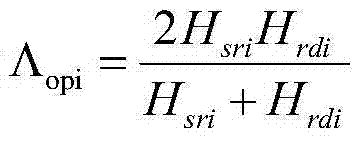 the instantaneous characteristic of channel to each candidate relay node is calculated, and with this, selects optimal relay node, wherein, and H
sriand H
rdibe respectively the channel gain between source-relaying, relaying-destination node, the computing formula of channel gain H is H=hl
-α, h is that channel fading coefficient, l are that communication distance, α are propagation factors; The method adopts following method to calculate channel fading coefficient h:
the instantaneous characteristic of channel to each candidate relay node is calculated, and with this, selects optimal relay node, wherein, and H
sriand H
rdibe respectively the channel gain between source-relaying, relaying-destination node, the computing formula of channel gain H is H=hl
-α, h is that channel fading coefficient, l are that communication distance, α are propagation factors; The method adopts following method to calculate channel fading coefficient h:
If the communication distance between sending node and receiving node is l, the communication frequency setting is f, channel fading coefficient h=a (f)
l/1000, wherein, apart from l unit, be rice (m), a (f) is absorption coefficient,
2. optimal relay node system of selection according to claim 1, is characterized in that, the computational methods of each channel gain are as follows:
1) all candidate relay nodes send packet to source node and destination node, and source node sends packet to destination node, contains transmitting time t in bag
1, receiving node is at t
2constantly receive this packet, calculating communication distance l=v * (t
2-t
1), wherein v is acoustic wave propagation velocity;
2) each receiving node, to a packets of information of corresponding sending node feedback, comprises the communication distance l that previous step calculates in bag;
3) each via node can be learnt the distance l that self arrives source node and destination node
sriand l
rdi, source node is learnt the distance l that self arrives destination node
sd.
4) the distance l of each candidate relay node obtains according to step 3) self and source node and destination node
sriand l
rdiand channel fading coefficient, calculate respectively the channel gain H between source-via node
sriand the channel gain H between relaying-destination node
rdi.
3. optimal relay node system of selection according to claim 1, is characterized in that, α generally gets 1.5.
Priority Applications (1)
| Application Number | Priority Date | Filing Date | Title |
|---|---|---|---|
| CN201310740152.0A CN103716866A (en) | 2013-12-23 | 2013-12-23 | Method for selecting optimum relay node of cooperative communication in underwater sensor network |
Applications Claiming Priority (1)
| Application Number | Priority Date | Filing Date | Title |
|---|---|---|---|
| CN201310740152.0A CN103716866A (en) | 2013-12-23 | 2013-12-23 | Method for selecting optimum relay node of cooperative communication in underwater sensor network |
Publications (1)
| Publication Number | Publication Date |
|---|---|
| CN103716866A true CN103716866A (en) | 2014-04-09 |
Family
ID=50409320
Family Applications (1)
| Application Number | Title | Priority Date | Filing Date |
|---|---|---|---|
| CN201310740152.0A Pending CN103716866A (en) | 2013-12-23 | 2013-12-23 | Method for selecting optimum relay node of cooperative communication in underwater sensor network |
Country Status (1)
| Country | Link |
|---|---|
| CN (1) | CN103716866A (en) |
Cited By (2)
| Publication number | Priority date | Publication date | Assignee | Title |
|---|---|---|---|---|
| CN108494674A (en) * | 2018-01-27 | 2018-09-04 | 天津大学 | A kind of failed link restorative procedure of aerodone auxiliary |
| CN109462852A (en) * | 2018-09-20 | 2019-03-12 | 天津大学 | A kind of effective sensor node deployment based on layering and covering keeping method |
Citations (2)
| Publication number | Priority date | Publication date | Assignee | Title |
|---|---|---|---|---|
| EP1756783A2 (en) * | 2004-05-27 | 2007-02-28 | Lawrence Kates | Wireless sensor system |
| CN103152818A (en) * | 2013-01-28 | 2013-06-12 | 中北大学 | Distributed sensor self-positioning system based on node cluster and positioning method |
-
2013
- 2013-12-23 CN CN201310740152.0A patent/CN103716866A/en active Pending
Patent Citations (2)
| Publication number | Priority date | Publication date | Assignee | Title |
|---|---|---|---|---|
| EP1756783A2 (en) * | 2004-05-27 | 2007-02-28 | Lawrence Kates | Wireless sensor system |
| CN103152818A (en) * | 2013-01-28 | 2013-06-12 | 中北大学 | Distributed sensor self-positioning system based on node cluster and positioning method |
Non-Patent Citations (1)
| Title |
|---|
| CHAO GAO ETC: "Relay Selection Scheme Based on Propagation Delay for cooperative underwater acoustic network", 《WCSP,2013 INTERNATIONAL CONFERENCE》 * |
Cited By (4)
| Publication number | Priority date | Publication date | Assignee | Title |
|---|---|---|---|---|
| CN108494674A (en) * | 2018-01-27 | 2018-09-04 | 天津大学 | A kind of failed link restorative procedure of aerodone auxiliary |
| CN108494674B (en) * | 2018-01-27 | 2020-10-02 | 天津大学 | Glider-assisted failed link repair method |
| CN109462852A (en) * | 2018-09-20 | 2019-03-12 | 天津大学 | A kind of effective sensor node deployment based on layering and covering keeping method |
| CN109462852B (en) * | 2018-09-20 | 2021-04-30 | 天津大学 | Effective sensor node deployment and coverage keeping method based on layering |
Similar Documents
| Publication | Publication Date | Title |
|---|---|---|
| CN102571902B (en) | Wireless and underwater sound communication buoy | |
| CN109743117B (en) | A kind of underwater acoustic communication module, method and underwater wireless sensor network node device | |
| CN102695126B (en) | Underwater sensor network positioning method | |
| CN105472719B (en) | Stable underwater communication node wake-up signal detection method | |
| CN105323029B (en) | Based on the ranging of sound link, the underwater sound communication dynamic clock synchronous method to test the speed | |
| Maher et al. | Performance of RF underwater communications operating at 433 MHz and 2.4 GHz | |
| CN104537257B (en) | A kind of direct localization method of distributed self-adaption based on the time difference | |
| CN110167114B (en) | A wake-up signal detection method for underwater acoustic communication nodes based on frame synchronization signal | |
| CN103686948A (en) | A Relay Selection Method for Cooperative Communication in Underwater Sensor Networks | |
| Zou et al. | A cluster-based adaptive routing algorithm for underwater acoustic sensor networks | |
| CN103475426B (en) | A kind of adaptive power control method and system being applicable to underwater sound communication network | |
| CN103716866A (en) | Method for selecting optimum relay node of cooperative communication in underwater sensor network | |
| CN105974364B (en) | Subsurface communication fixation and recognition integration waveform optimization method | |
| CN103237332A (en) | Energy-saving routing method for underwater sensor network on basis of vector forwarding | |
| CN106911376B (en) | Wireless energy drive transmission method and device | |
| CN103354538B (en) | A kind of method that Doppler effect correction is carried out to the receipt signal in underwater sound communication | |
| CN102547981B (en) | Underwater wireless multi-hop network node self-positioning method based on double rates | |
| Misra et al. | The effects of variable sound speed on localization in Underwater Sensor Networks | |
| Mansouri et al. | Adapting LEACH algorithm for underwater wireless sensor networks | |
| Vakili et al. | A New Method to Improve Performance of Cooperative Underwater Acoustic Wireless Sensor Networks via Frequency Controlled Transmission Based on Length of Data Links. | |
| CN109842888A (en) | The underwater acoustic channel penetration quality dynamic assessment of underwater sensing net and prediction technique and system | |
| Wei et al. | Comparative simulation of mobile underwater acoustic communication network based on OPNET | |
| CN104301983B (en) | A kind of Poewr control method based on the estimation of multiple step format channel status | |
| CN116321404B (en) | A synchronization method for photon counting underwater wireless optical OOK communication system | |
| Zhang et al. | Sea trials of an underwater acoustic network in the east china sea 2015 |
Legal Events
| Date | Code | Title | Description |
|---|---|---|---|
| C06 | Publication | ||
| PB01 | Publication | ||
| C10 | Entry into substantive examination | ||
| SE01 | Entry into force of request for substantive examination | ||
| WD01 | Invention patent application deemed withdrawn after publication | ||
| WD01 | Invention patent application deemed withdrawn after publication |
Application publication date: 20140409 |