CN103674814A - Method and apparatus for manipulating particles - Google Patents
Method and apparatus for manipulating particles Download PDFInfo
- Publication number
- CN103674814A CN103674814A CN201310418159.0A CN201310418159A CN103674814A CN 103674814 A CN103674814 A CN 103674814A CN 201310418159 A CN201310418159 A CN 201310418159A CN 103674814 A CN103674814 A CN 103674814A
- Authority
- CN
- China
- Prior art keywords
- target
- particles
- particle
- optical
- flow
- Prior art date
- Legal status (The legal status is an assumption and is not a legal conclusion. Google has not performed a legal analysis and makes no representation as to the accuracy of the status listed.)
- Granted
Links
Images


Classifications
-
- G—PHYSICS
- G21—NUCLEAR PHYSICS; NUCLEAR ENGINEERING
- G21K—TECHNIQUES FOR HANDLING PARTICLES OR IONISING RADIATION NOT OTHERWISE PROVIDED FOR; IRRADIATION DEVICES; GAMMA RAY OR X-RAY MICROSCOPES
- G21K1/00—Arrangements for handling particles or ionising radiation, e.g. focusing or moderating
-
- G—PHYSICS
- G01—MEASURING; TESTING
- G01N—INVESTIGATING OR ANALYSING MATERIALS BY DETERMINING THEIR CHEMICAL OR PHYSICAL PROPERTIES
- G01N15/00—Investigating characteristics of particles; Investigating permeability, pore-volume or surface-area of porous materials
- G01N15/10—Investigating individual particles
- G01N15/14—Optical investigation techniques, e.g. flow cytometry
- G01N15/1429—Signal processing
-
- G—PHYSICS
- G01—MEASURING; TESTING
- G01N—INVESTIGATING OR ANALYSING MATERIALS BY DETERMINING THEIR CHEMICAL OR PHYSICAL PROPERTIES
- G01N15/00—Investigating characteristics of particles; Investigating permeability, pore-volume or surface-area of porous materials
- G01N15/10—Investigating individual particles
- G01N15/14—Optical investigation techniques, e.g. flow cytometry
- G01N15/1456—Optical investigation techniques, e.g. flow cytometry without spatial resolution of the texture or inner structure of the particle, e.g. processing of pulse signals
- G01N15/1459—Optical investigation techniques, e.g. flow cytometry without spatial resolution of the texture or inner structure of the particle, e.g. processing of pulse signals the analysis being performed on a sample stream
-
- G—PHYSICS
- G01—MEASURING; TESTING
- G01N—INVESTIGATING OR ANALYSING MATERIALS BY DETERMINING THEIR CHEMICAL OR PHYSICAL PROPERTIES
- G01N21/00—Investigating or analysing materials by the use of optical means, i.e. using sub-millimetre waves, infrared, visible or ultraviolet light
- G01N21/17—Systems in which incident light is modified in accordance with the properties of the material investigated
-
- G—PHYSICS
- G01—MEASURING; TESTING
- G01N—INVESTIGATING OR ANALYSING MATERIALS BY DETERMINING THEIR CHEMICAL OR PHYSICAL PROPERTIES
- G01N15/00—Investigating characteristics of particles; Investigating permeability, pore-volume or surface-area of porous materials
- G01N15/10—Investigating individual particles
- G01N15/14—Optical investigation techniques, e.g. flow cytometry
- G01N15/149—Optical investigation techniques, e.g. flow cytometry specially adapted for sorting particles, e.g. by their size or optical properties
-
- G—PHYSICS
- G01—MEASURING; TESTING
- G01N—INVESTIGATING OR ANALYSING MATERIALS BY DETERMINING THEIR CHEMICAL OR PHYSICAL PROPERTIES
- G01N15/00—Investigating characteristics of particles; Investigating permeability, pore-volume or surface-area of porous materials
- G01N15/10—Investigating individual particles
- G01N2015/1006—Investigating individual particles for cytology
-
- G21K1/20—
-
- G21K1/30—
Landscapes
- Chemical & Material Sciences (AREA)
- Physics & Mathematics (AREA)
- Biochemistry (AREA)
- General Health & Medical Sciences (AREA)
- Pathology (AREA)
- Health & Medical Sciences (AREA)
- Life Sciences & Earth Sciences (AREA)
- Analytical Chemistry (AREA)
- Immunology (AREA)
- General Physics & Mathematics (AREA)
- Dispersion Chemistry (AREA)
- Engineering & Computer Science (AREA)
- Signal Processing (AREA)
- Spectroscopy & Molecular Physics (AREA)
- General Engineering & Computer Science (AREA)
- High Energy & Nuclear Physics (AREA)
- Investigating, Analyzing Materials By Fluorescence Or Luminescence (AREA)
- Apparatus Associated With Microorganisms And Enzymes (AREA)
Abstract
Description
技术领域technical field
本发明涉及用于操作粒子的方法和装置,具体地涉及但并不限于用于在粒子流中分选粒子(诸如细胞、微珠等)的方法和装置。The present invention relates to methods and apparatus for manipulating particles, in particular but not limited to methods and apparatus for sorting particles, such as cells, microbeads, etc., in a stream of particles.
背景技术Background technique
存在设计成从粒子流中分离目标粒子(例如细胞)的传统系统。虽然这些系统在一定程度上是有效的,但是它们往往会遇到一个问题或其它问题。例如,一些传统系统由于它们不能同时分选多个粒子而受到限制。其它系统依赖于粒子或生物粒子(其往往具有内在的异质性运动)运动行为的过于简单化的假设。也存在下述系统,其依赖于计算机的大量计算以便跟踪或识别粒子,以及这使得这种系统不适于在连续粒子流中实时处理粒子的分离。There are traditional systems designed to separate target particles, such as cells, from a particle stream. While these systems are effective to a certain extent, they often suffer from one problem or the other. For example, some conventional systems are limited by their inability to sort multiple particles simultaneously. Other systems rely on oversimplified assumptions about the motion behavior of particles or biological particles, which often have inherently heterogeneous motions. There are also systems that rely on computer-intensive calculations in order to track or identify particles, and this makes such systems unsuitable for real-time processing of particle separation in a continuous particle stream.
本发明试图解决这些问题或至少向公众提供一种替代方案。The present invention attempts to solve these problems or at least provide the public with an alternative.
发明内容Contents of the invention
根据本发明的第一方面,提供一种操作流动粒子的方法,其包括以下步骤:a)提供流体流路,在该流体流路中分选以恒定速度移动的悬浮粒子层流;b)在由粒子流动通过其的流体流路内提供受关注的区域;c)基于粒子流图像的拍摄(捕获)方法,通过利用图像处理技术在受关注区域中检测流动粒子的单独的一阶运动以及跟踪流动粒子的多个粒子的运动;d)基于来自前述步骤c)的图像处理的结果,从粒子流确定至少一个目标粒子的存在;e)触发光学捕获装置的生成以及通过光学捕获装置来改变从第一流动流横向到达第二流动流的至少一个目标粒子的路径;以及f)标记至少一个目标粒子。According to a first aspect of the present invention there is provided a method of manipulating flowing particles comprising the steps of: a) providing a fluid flow path in which to sort a laminar flow of suspended particles moving at a constant velocity; b) in An area of interest is provided within a fluid flow path through which the particles flow; c) a shooting (capture) method based on a particle flow image, by utilizing image processing techniques to detect individual first-order motions of flowing particles in an area of interest and to track movement of a plurality of particles of the flow particles; d) determining the presence of at least one target particle from the particle flow based on the results of the image processing from the preceding step c); e) triggering the generation of the optical trapping device and changing from The first flow stream traverses the path of the at least one target particle to the second flow stream; and f) marking the at least one target particle.
优选地,所述方法可包括通过光阱将至少一个目标粒子移动到目标位置。Preferably, the method may comprise moving at least one target particle to a target location via an optical trap.
在一个实施例中,该方法可包括确定至少一个目标粒子是否已移动到目标位置,如果至少一个目标粒子已移动到目标位置,则从目标粒子释放光学捕获装置,以及如果至少一个目标粒子还没有移动到目标位置,则在数据库中更新与目标粒子当前位置相关联的数据。In one embodiment, the method may comprise determining whether at least one target particle has moved to the target location, releasing the optical capture device from the target particle if the at least one target particle has moved to the target location, and if the at least one target particle has not When moving to the target position, the data associated with the current position of the target particle is updated in the database.
在一个实施例中,该方法可包括将至少一个目标粒子的中心位置记录成当前图像帧的步骤。In one embodiment, the method may comprise the step of recording the center position of at least one target particle into the current image frame.
该方法可进一步包括以下步骤:The method may further comprise the steps of:
i)计算在当前图像帧中至少一个目标粒子和在前一图像帧中相应所标记粒子之间的距离;i) calculating the distance between at least one target particle in the current image frame and the corresponding marked particle in the previous image frame;
ⅱ)确定在步骤i)中的距离是否小于预定距离;ii) determining whether the distance in step i) is less than a predetermined distance;
ⅲ)如果在步骤ii)中的距离小于预定距离,则给在当前帧中的至少一个目标粒子分配于相应所标记粒子相同的标记;或者如果在步骤ii)中的距离等于或大于预定距离,则给在当前帧中的至少一个目标粒子分配新的标记。iii) assigning at least one target particle in the current frame the same label as the corresponding labeled particle if the distance in step ii) is less than the predetermined distance; or if the distance in step ii) is equal to or greater than the predetermined distance, A new label is then assigned to at least one target particle in the current frame.
合适地,在步骤c)中,图像处理技术可适于基于粒子的内在特征诸如形态、大小等来识别粒子。Suitably, in step c), image processing techniques may be adapted to identify particles based on their intrinsic characteristics, such as morphology, size and the like.
图像处理技术还适于基于粒子上的外在特征诸如荧光标记、标签等来识别粒子。Image processing techniques are also suitable for identifying particles based on extrinsic features on the particles such as fluorescent markers, labels, and the like.
合适地,该方法可包括测量层流中至少一个目标粒子速度的步骤。Suitably, the method may comprise the step of measuring the velocity of at least one target particle in the laminar flow.
图像处理技术还可适于区分处于受关注区域内的多个目标粒子以及跟踪多个目标粒子。Image processing techniques may also be adapted to distinguish and track multiple target particles within the region of interest.
光学捕获装置可包括至少一个光阱,以及其中所采用的光阱数目与在受关注区域内的所检测目标粒子的数目和光学捕获装置的能力相对应。The optical trapping device may comprise at least one optical trap, and wherein the number of optical traps employed corresponds to the number of detected target particles in the region of interest and the capability of the optical trapping device.
该方法可包括在流体流路中提供分支接点的步骤,其中所述至少一个光阱沿着分支接点以对角线的方式可动或移动,以便将至少一个目标细胞(cell)转移到流体流路的目标流路内。The method may comprise the step of providing a branch junction in the fluid flow path, wherein said at least one optical trap is moveable or movable in a diagonal fashion along the branch junction to divert at least one target cell into the fluid flow within the target flow path of the path.
合适地,在流动方向上沿着分支接点的光阱速度以及层流速度可基本相同。Suitably, the optical trap velocity and the laminar flow velocity along the branch junction in the flow direction may be substantially the same.
在步骤e)中,改变至少一个目标粒子路径的步骤可包括一系列连续的步骤,以及其中在每一个连续的步骤中,光学捕获装置可适于使得至少一个目标粒子垂直于层流移动一定的距离,该距离等于目标粒子的半径。In step e), the step of changing the path of the at least one target particle may comprise a series of successive steps, and wherein in each successive step the optical trapping device may be adapted to move the at least one target particle perpendicular to the laminar flow by a certain A distance equal to the radius of the target particle.
根据本发明的第二方面,提供用于从粒子流分选目标粒子的一种系统,其包括:According to a second aspect of the present invention there is provided a system for sorting target particles from a particle stream comprising:
a)显微镜;a) Microscope;
b)光源;b) light source;
c)CCD摄像机;c) CCD camera;
d)具有微流体流路的微流体芯片器件;d) Microfluidic chip devices with microfluidic flow paths;
e)检测装置,其用于检测具有预定特定特征的目标粒子;e) detection means for detecting target particles having predetermined specific characteristics;
f)响应生成装置,其用于响应于目标粒子的检测来生成信号;以及f) response generating means for generating a signal in response to detection of a target particle; and
g)用于控制光阱移动的光学捕获系统,光学捕获系统可操作地链接到响应信号。g) An optical trapping system for controlling the movement of the optical trap, the optical trapping system is operatively linked to the response signal.
优选地,所述微流体芯片装置可包括玻璃盖层,PDMS微流体芯片层以及流体流动控制器。PDMS微流体芯片层可设有多个容器和多个微流体流路。Preferably, the microfluidic chip device may include a glass cover layer, a PDMS microfluidic chip layer and a fluid flow controller. The PDMS microfluidic chip layer can be provided with multiple containers and multiple microfluidic flow paths.
光学捕获系统可包括全息光镊。Optical trapping systems may include holographic optical tweezers.
附图说明Description of drawings
现在将在下面参照附图对本发明进行解释说明,其中:The invention will now be explained below with reference to the accompanying drawings, in which:
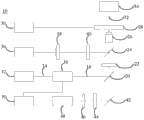
图1是示出根据本发明的用于分选和操作细胞的系统实施例的示意图,该系统包括使用组合的全息光镊和微流体芯片;1 is a schematic diagram showing an embodiment of a system for sorting and manipulating cells according to the present invention, which system includes the use of combined holographic optical tweezers and microfluidic chips;
图2是示出具有类似于英文字母“H”网络的微流体流路的示意图;Figure 2 is a schematic diagram showing a microfluidic flow path similar to the English letter "H" network;
图3是示出根据本发明方法实施例操作目标粒子的示例性图示;FIG. 3 is an exemplary diagram showing manipulation of target particles according to an embodiment of the method of the present invention;
图4是示出方法实施例的流程图,其利用图像处理技术基于目标粒子的大小来识别一个或多个目标粒子;4 is a flow diagram illustrating an embodiment of a method for identifying one or more target particles based on their size using image processing techniques;
图5是示出方法另一实施例的流程图,其利用图像处理技术基于目标粒子的荧光来识别一个或多个目标粒子;5 is a flowchart illustrating another embodiment of a method that utilizes image processing techniques to identify one or more target particles based on their fluorescence;
图6是示出方法实施例的流程图,其用于基于单独运动跟踪模型来跟踪多个粒子;Figure 6 is a flowchart illustrating an embodiment of a method for tracking a plurality of particles based on a single motion tracking model;
图7a至图7b分别表明在不同的激光功率下在酵母细胞和人类胚胎干细胞(hESC)上的最大移动速度和捕获力之间的关系;Figures 7a to 7b respectively show the relationship between the maximum moving speed and the trapping force on yeast cells and human embryonic stem cells (hESCs) under different laser powers;
图8示例性地示出根据本发明在流动流体中的粒子和光学捕获粒子的运动轨迹;Figure 8 exemplarily shows the trajectory of particles and optically trapped particles in a flowing fluid according to the present invention;
图9是示出根据本发明实施例的用于操作粒子流动的整个过程的流程图;FIG. 9 is a flowchart showing the overall process for operating particle flow according to an embodiment of the present invention;
图10a至图10f是表明当利用根据本发明的方法实施例时从微珠分离酵母细胞(目标粒子)的连续图像;Figures 10a to 10f are sequential images illustrating the separation of yeast cells (target particles) from microbeads when utilizing an embodiment of the method according to the present invention;
图11a和图11b是两个连续的图像,其示例性地示出同时利用根据本发明的多个独立光阱分选多个酵母细胞(目标粒子);以及Fig. 11a and Fig. 11b are two consecutive images, which exemplarily show the simultaneous utilization of multiple independent optical traps according to the present invention to sort a plurality of yeast cells (target particles); and
图12a和图12b是两个连续的图像,其示例性地示出根据本发明从没有荧光标记的其它细胞分选具有绿色荧光蛋白(GFP,在图中用圆圈标出的细胞,目标粒子)的人类胚胎干细胞。Figure 12a and Figure 12b are two consecutive images which exemplarily show the sorting of cells with green fluorescent protein (GFP, circled cells in the figure, target particles) according to the present invention from other cells without fluorescent labeling of human embryonic stem cells.
具体实施方式Detailed ways
本发明通常涉及用于从相对较小的粒子群的粒子流分离目标粒子(诸如细胞、微珠等)的方法和装置。该装置包括分选装置或分选机,其在微流体芯片配备有可动或移动的光镊。分选机的设计基于流体动力学和光模式的动态,其使得能够以较高的精度从少量的样品分选出微小粒子(诸如细胞)。微流体芯片提供微流体流路系统的设计。在系统内产生层流流动,且这可提高系统中的分选性能。通过利用图像处理技术,可基于其内在或外在特性通过光学来识别流体流内的粒子。通过使用多项跟踪策略,可同时跟踪和分选多个粒子。跟踪和分选多个粒子的能力可提高系统的总处理能力,而不会影响所分选粒子的回收率和纯度。光镊能够在目标粒子的检测被触发时产生光阱。光镊可使得目标粒子从一个流动流横向转移或移动一定的距离而到达另一流动流。未被捕获的非目标粒子可随着主要的流动流流动而不改变其运动轨迹。光阱在流动流体中的运动可被优化以提高捕获目标粒子的效率。通过校准目标粒子的最大移动速度和激光功率之间的关系可增加捕获目标粒子的效率。下面将以更详细的方式在不同实施例的上下文中来描述本发明。对在生物粒子分选上所进行的以证明本发明有效性的试验也进行了描述。The present invention generally relates to methods and apparatus for separating target particles, such as cells, microbeads, etc., from a particle stream of relatively small populations of particles. The device includes a sorting device or sorter equipped with movable or moving optical tweezers on a microfluidic chip. The design of the sorter is based on fluid dynamics and the dynamics of light patterns, which enable the sorting of tiny particles, such as cells, from small quantities of samples with high precision. Microfluidic chips provide the design of microfluidic flow systems. A laminar flow is created within the system and this improves sorting performance in the system. By utilizing image processing techniques, particles within a fluid stream can be identified optically based on their intrinsic or extrinsic properties. By using multiple tracking strategies, multiple particles can be tracked and sorted simultaneously. The ability to track and sort multiple particles increases the overall throughput of the system without compromising the recovery and purity of the sorted particles. Optical tweezers are able to create optical traps when the detection of target particles is triggered. Optical tweezers allow target particles to be laterally transferred or moved a certain distance from one flow stream to another. Untrapped non-target particles can flow with the main flow stream without changing their trajectory. The motion of the optical trap in the flowing fluid can be optimized to increase the efficiency of trapping target particles. The efficiency of trapping target particles can be increased by calibrating the relationship between the maximum moving speed of target particles and the laser power. The invention will be described in more detail below in the context of different embodiments. Tests performed on bioparticle sorting to demonstrate the effectiveness of the invention are also described.
图1示出细胞分选和操作系统10的一个实施例的示意图。该系统包括全息光镊和微流体芯片装置。全息光镊的光源由连续波激光光源12来提供。在该特定的实施例中,激光源可产生具有约1064纳米波长的激光。使用该波长是为了避免生物细胞受到光损伤。激光光源12可提供激光束14,其由衍射光学元件16造型以便将单个光束分成和转向成多个光束。在全息光镊系统中,优选使用空间光调制器(SLM)。来自光学元件16的经过造型的激光束18由第一分色镜20反射,然后透过发射滤波器22和第二分色镜24到达倒置的显微镜物镜26。倒置的显微镜物镜26不仅用于聚焦光阱而且还捕获样品图像。为了确保稳定的光阱足够稳定,具有大数值孔径的物镜透镜30是必要的。具有可变流体流路结构的微流体芯片28位于样品保持器上,所述样品保持器布置于显微镜物镜26的上方。然后待被分选的粒子由外部泵和阀30驱动到微流体芯片内。FIG. 1 shows a schematic diagram of one embodiment of a cell sorting and
细胞分选和操作系统10还包括光学成像系统。为了明场成像,来自照明装置34的光32从上方提供在微流体芯片28上的光学辐射。为了荧光成像,激发的激光源36通过准直适配器38,通过激发的滤波器40,由第二分色镜24反射,然后由显微镜物镜26聚焦在微流体芯片28上。从显微镜物镜26激发的荧光通过第二分色镜24,通过10发射滤波器22,通过第一分色镜20,由任选的反射镜42反射到任选的滤波器44通过成像透镜46到达检测器48上,诸如CCD摄像机。Cell sorting and handling
控制系统50可以控制衍射光学元件16以便在所需位置处生成一个或多个光阱,以及以便控制这些光阱的运动。此外,检测器48与改进的图像处理方法结合可作为反馈耦合到控制系统50,以便指导整个系统10的操作过程。Control system 50 may control diffractive
图2示出微流体流路网络60的优选实施例。网络通常被认为是2×2的流体网络,其包括两个入口容器以及两个出口容器,其中在入口容器中,设有联接到样品入口微流体流路70的样品容器62以及联接到缓冲入口微流体流路72的缓冲容器64,其中在出口容器中,设有联接到废物出口微流体流路76的废物容器66以及联接到目标收集出口微流体流路78的目标收集容器68。入口流路70,72和出口流路76,78在细胞识别和光学隔离分支接点通路74处被连接在一起。在该实施例中,入口和出口的微流体流路基本为30微米宽和2000微米长。细胞识别和光学隔离分支接点流路74基本为60微米宽和70微米长。所有的流路基本为50微米深。微流体芯片设计成通过将样品入口流率设置成等于缓冲入口流率来提供大致1:1的体积收缩率。通过使用两个注射器泵可在分支接点流路74中形成两相层流,一个注射器泵连接到样品入口容器62以及另一个注射器泵连接到缓冲入口容器64,其中出口容器66,68处于大气压力下。注射器泵可通过管路直接连接到容器以便同时处理样品流与缓冲流。FIG. 2 shows a preferred embodiment of a
微流体芯片装置通常包括具有微流路网络的顶部微流体芯片层和底部玻璃层。光镊的使用要求该装置在用于细胞捕获的激光束波长下是透明的。在一个实施例中,所用的材料是聚-(二-甲基-硅氧烷)(PDMS),以及制造方法是软光刻技术,但是也可以使用其它合适的材料和制造方法。具有微流体流路网络的主体通过将荫罩紫外线(UV)掩模转移到具有一定深度的旋涂负性光刻胶膜上而形成。以10:1与所包含的固化剂混合的PDMS经过脱气且浇注到主体上。在固化后进行光学透明的复制以便获得主体的反向结构。然后利用尖锐的注射器针头在入口容器和出口容器处穿刺出孔,以及将微流体芯片修剪成适当的大小。底部玻璃层(通常为盖玻片)以氧等离子体粘结到微流体芯片以便形成不可逆的密封。A microfluidic chip device typically includes a top microfluidic chip layer and a bottom glass layer with a microfluidic network. The use of optical tweezers requires that the device be transparent at the wavelength of the laser beam used for cell trapping. In one embodiment, the material used is poly-(di-methyl-siloxane) (PDMS) and the fabrication method is soft lithography, but other suitable materials and fabrication methods may also be used. The body with the microfluidic flow network is formed by transferring a shadow-masked ultraviolet (UV) mask onto a spin-coated negative-tone photoresist film with a certain depth. PDMS mixed 10:1 with curing agent included was degassed and cast onto the master. Optically transparent replication was performed after curing in order to obtain the reverse structure of the host. Holes are then punctured at the inlet and outlet containers using a sharpened syringe needle, and the microfluidic chip is trimmed to the appropriate size. A bottom glass layer (usually a coverslip) is oxygen plasma bonded to the microfluidic chip to form an irreversible seal.
如上所述,微流体流路网络60表现出两相层流。使用光镊以高度选择性的方式来将所识别的目标粒子25从样品流分离出来进入到收集容器内。现在参照图3来示意性地描述工作原理。悬浮样品流80是一维的,其由缓冲流82聚焦以便形成在分支节点流路74中的两相层流。然后通过检测器来检查样品流80中的粒子,检查是否存在所需特性,诸如大小、形态、荧光或电容。在一个实施例中,通过CCD摄像机和图像处理技术来检测和识别目标细胞。为了提高图像处理的效率,只研究位于分支接点流路74内的样品流中的受关注区域(ROI)84。光镊被触发,以便基于目标细胞88的检测来生成光阱86。然后光阱86以相对于样本流成任何角度的方式移开,以便将这些目标细胞88转移到缓冲流内。最后,非目标细胞90随着样品流通过废物出口流路92流入废物容器内,而目标细胞88随着缓冲流通过目标出口流路94流入收集容器内。As noted above, the
也可以利用两种主要类型的特性来实现光镊的高效触发。一种类型的特性基于内在差异,诸如细胞大小、细胞形状和细胞颜色等。另一种类型的特性基于外在差异,诸如荧光标记。电荷耦合器件(CCD)、光电倍增管(PMT)以及雪崩光电二极管(ADP)可用于细胞检测和识别。在一个实施例中,CCD与图像处理技术结合表明具有基于多个细胞特征(诸如细胞大小或荧光)来识别目标细胞的能力,此外还允许使用用于跟踪多个粒子的多粒子跟踪策略。The properties of two main types can also be exploited for efficient triggering of optical tweezers. One type of property is based on intrinsic differences, such as cell size, cell shape, and cell color. Another type of property is based on extrinsic differences, such as fluorescent labels. Charge-coupled devices (CCDs), photomultiplier tubes (PMTs), and avalanche photodiodes (ADPs) can be used for cell detection and identification. In one embodiment, a CCD combined with image processing techniques demonstrates the ability to identify cells of interest based on multiple cellular characteristics, such as cell size or fluorescence, and additionally allows the use of multi-particle tracking strategies for tracking multiple particles.
图4是示出根据本发明的识别目标粒子实施例的流程图。具体地,该实施例试图基于粒子的不同尺寸来在粒子样品中识别目标粒子。图4示出在识别过程中的多个处理步骤。由CCD捕获(或拍摄)原始彩色图像(S1),选择ROI以便覆盖位于分支接点流路中的包含具有不同尺寸悬浮粒子的样品流(S2)。为了提高检测和识别效率,只有在ROI中的本地彩色图像被转换成灰度图像(S3)。应用自动确定的阈值以便实现图像的二值化处理以及将粒子从背景中分离出来(S4)。然后从二值图像提取粒子的轮廓(S5),以及可从这些轮廓来计算这些粒子的尺寸(S6)。FIG. 4 is a flowchart illustrating an embodiment of identifying target particles according to the present invention. Specifically, this embodiment attempts to identify target particles within a particle sample based on the different sizes of the particles. Figure 4 shows the various processing steps in the identification process. The raw color image is captured (or photographed) by the CCD (S1), and the ROI is selected so as to overlay the sample flow containing suspended particles of different sizes located in the branch junction flow path (S2). To improve detection and recognition efficiency, only local color images in ROIs are converted into grayscale images (S3). An automatically determined threshold is applied to binarize the image and separate the particles from the background (S4). The contours of the particles are then extracted from the binary image (S5), and from these contours the dimensions of these particles can be calculated (S6).
然后基于所检测的粒子是否处于最小尺寸阈值T1和最大尺寸阈值T2之间来做出判定(S7)。如果满足S7的条件,则可以从填充轮廓的一阶矩来计算粒子的中心(S8)。否则,将粒子从图像去除(S9)。A decision is then made based on whether the detected particle is between a minimum size threshold T1 and a maximum size threshold T2 ( S7 ). If the condition of S7 is satisfied, the center of the particle can be calculated from the first moments of the filled contour (S8). Otherwise, the particles are removed from the image (S9).
图5示出了与图4类似的流程图,但是虽然识别目标粒子基于荧光标记。在识别工作开始时,通过高灵敏度、低光的荧光成像CCD摄像机捕获荧光图像(S10),以及选择ROI以便提高图像处理效率(S11)。在ROI内基于粒子上的荧光标记从荧光图像提取一个或多个彩色流路(S12)。例如,如果在粒子上标记绿色荧光蛋白(GFP),则应该提取荧光图像的绿色流路。将平滑滤波器应用于所提取的图像上以便增加信噪比(S13)。基于荧光的强度,设置或预定合适的阈值以便将具有荧光的粒子从低频背景分离出来(S14)。在图像进行二值化处理之后,利用形态打开操作(首先腐蚀然后膨胀)来消除小粒子(诸如细胞碎片或残余污垢)的影响(S15)。最后,可对具有荧光的粒子进行检测和定位(S16)。Figure 5 shows a flow chart similar to Figure 4, but although the identification of target particles is based on fluorescent labels. At the beginning of the identification work, a fluorescence image is captured by a high-sensitivity, low-light fluorescence imaging CCD camera (S10), and ROIs are selected to improve image processing efficiency (S11). One or more colored flow paths are extracted from the fluorescence image within the ROI based on the fluorescent labels on the particles ( S12 ). For example, if green fluorescent protein (GFP) is tagged on the particle, the green flow path for fluorescent images should be extracted. A smoothing filter is applied to the extracted image in order to increase the signal-to-noise ratio (S13). Based on the intensity of the fluorescence, an appropriate threshold is set or predetermined in order to separate the particles with fluorescence from the low frequency background ( S14 ). After the image is binarized, a morphological opening operation (erosion first and then dilation) is used to remove the influence of small particles such as cell debris or residual dirt (S15). Finally, the particles with fluorescence can be detected and localized (S16).
为了进一步改善本发明的分选性能以及增加总处理能力,而不影响纯度和回收率,采用具有多个独立光阱的并行分选策略。为了优化多个光阱的管理,有必要通过建立相应粒子的运动轨迹来区分ROI中的多个目标粒子。用于跟踪在连续帧中粒子的方法可分别粗略地分为“全局模式”和“本地模式”,或“全局运动模型”和“单独运动模型”。“全局运动模型”和“单独运动模型”的定义对于本领域的技术人员而言是掌握的,且在C.J.Veenman,M.J.T.Reinders,和E.Backer的公开物中有所记载(“Resolving motioncorrespondence for densely moving points”,IEEE Transactions on PatternAnalysis and Machine Intelligence,vol.23,no.1,第54-72页,2001年1月),其全部内容并入本文。In order to further improve the sorting performance of the present invention and increase the total processing capacity without affecting the purity and recovery, a parallel sorting strategy with multiple independent optical traps was adopted. In order to optimize the management of multiple optical traps, it is necessary to distinguish multiple target particles in an ROI by establishing the motion trajectories of the corresponding particles. Methods for tracking particles in successive frames can be roughly classified into "global modes" and "local modes", or "global motion models" and "individual motion models", respectively. The definitions of "global motion model" and "individual motion model" are within the grasp of those skilled in the art and are documented in the publications of C.J. Veenman, M.J.T. Reinders, and E. Backer ("Resolving motion correspondence for densely moving points", IEEE Transactions on Pattern Analysis and Machine Intelligence, vol.23, no.1, pp. 54-72, January 2001), the entire contents of which are incorporated herein.
针对本发明的研究表明使用全局运动模型模式的许多跟踪策略由于生物粒子运动模式的过于简单化的假设而表现不佳。此外,这些策略在计算量上太大,且不适于实时处理。通过利用适于粒子跟踪的单独运动模型,在低密度下导致更令人满意的结果和很好的分离状态。另一方面,在低密度以及良好分离状态的背景下,使用适于粒子跟踪的单独运动模型可产生更令人满意的结果。至于“低密度”,在上述实施例的上下文中,粒子的密度为从106-107粒子/毫升。至于良好的分离,是指细胞没有粘到一起的状态。Research on the present invention shows that many tracking strategies using global motion model patterns perform poorly due to oversimplified assumptions about the motion patterns of biological particles. Furthermore, these strategies are computationally expensive and not suitable for real-time processing. By utilizing a separate motion model adapted for particle tracking, more satisfactory results and a good separation state result at low densities. On the other hand, in the context of low density and well-separated states, using a separate motion model suitable for particle tracking can produce more satisfactory results. As for "low density", in the context of the above examples, the density of the particles is from 10 6 -10 7 particles/ml. As for well-separated, it refers to the state where the cells are not stuck together.
图6是示出在本发明中使用的基于单独运动模型的多粒子跟踪方法实施例的流程图。通过这种方法,一旦检测和识别出目标粒子,则基于当前图像帧序号的指数记录它们的中心位置(S17)。然后计算在当前图像帧中的被分离粒子和前一图像帧中的标记粒子之间的距离(S18)。被分离粒子指的是在当前图像帧中被识别出的各个目标粒子。然后做出所计算的距离是否小于预定距离的判定(S19)。如果满足S19的条件,则给当前帧中的目标粒子分配与被前一图像帧中的比较(或对照)粒子相同的标记(S20)。如果目标粒子不符合S19的条件,则该方法进行到S21。在S21中,做出前一图像帧中是否有更多的目标粒子等待链接。如果满足该条件,则该方法进行到S18以便继续进行比较。否则,则给当前图像帧中的目标粒子分配新的标记(S22)。FIG. 6 is a flowchart illustrating an embodiment of an individual motion model-based multi-particle tracking method used in the present invention. With this method, once the target particles are detected and identified, their center positions are recorded based on the index of the current image frame number (S17). The distance between the separated particle in the current image frame and the marked particle in the previous image frame is then calculated ( S18 ). The separated particles refer to each target particle identified in the current image frame. A determination is then made whether the calculated distance is smaller than a predetermined distance (S19). If the condition of S19 is met, assign the target particle in the current frame the same label as the compared (or contrasting) particle in the previous image frame ( S20 ). If the target particle does not meet the conditions of S19, the method proceeds to S21. In S21, it is determined whether there are more target particles waiting to be linked in the previous image frame. If the condition is met, the method proceeds to S18 to continue the comparison. Otherwise, assign a new label to the target particle in the current image frame (S22).
一旦目标粒子已被识别和跟踪,则采用光阱以便将这些粒子运输到释放它们的目的地。当目标粒子被强有力地捕获于流动的流体中时,则寻求作用于垂直平面上的平衡力,包括光阱的捕获力、粒子的浮力和重力。在水平平面内,例如来自目标细胞布朗运动的Langevein力非常小,且该力可以忽略不计。因此,在移动的过程中,在水平平面内的流体阻力和光学捕获力施加于细胞上。当细胞以高达最大速度的速度移动时,其加速度变为零,这意味着流体阻力和光学捕获力是相等的且是反向的。虽然在理论上而言,光阱可使得目标粒子以任何角度远离样品流移动,但是光阱的运动控制应该被优化以便提高分离效率。Once the target particles have been identified and tracked, optical traps are employed to transport the particles to their destination for release. When a target particle is strongly trapped in a flowing fluid, balance forces acting on the vertical plane are sought, including the trapping force of the optical trap, the buoyancy of the particle, and gravity. In the horizontal plane, for example, the Langevein force from the Brownian motion of the target cell is very small and this force can be neglected. Thus, during movement, fluid resistance and optical trapping forces in the horizontal plane are exerted on the cells. When the cell is moving at speeds up to its maximum velocity, its acceleration becomes zero, which means that fluid resistance and optical trapping forces are equal and opposite. Although in theory, the optical trap can move the target particles away from the sample flow at any angle, the motion control of the optical trap should be optimized to improve the separation efficiency.
在其中目标粒子的水平方向和流动方向相同的方案中,由于微流体流路内的层流,目标粒子只沿着分支接点流路在水平方向上流动。当目标粒子随着流体流动时,光阱的速度设计成与目标粒子的速度相匹配。由于同样的速度,不会在粒子上施加捕获力,这意味着光阱的能量还未消散。目标粒子的速度可通过其移动的距离d以及在两个连续图像帧之间的时间间隔Δt计算得出。目标粒子的流速则为:v=d/Δt。In the scheme in which the horizontal direction of the target particle and the flow direction are the same, the target particle flows only in the horizontal direction along the branch junction flow channel due to the laminar flow in the microfluidic flow channel. The velocity of the optical trap is designed to match the velocity of the target particles as they flow with the fluid. Due to the same speed, no trapping force is exerted on the particle, which means that the energy of the optical trap has not been dissipated. The velocity of the target particle can be calculated from the distance d it moves and the time interval Δt between two consecutive image frames. The flow velocity of the target particle is: v=d/Δt.
由于微流体流动的层流性质,垂直于流动方向的流体速度为零。在垂直方向上,光阱设计成用于将目标粒子尽可能快地驱动远离样品流,而目标粒子不会从光阱脱离。光阱的捕获力大致与激光功率成正比。然而,研究已经表明,当使用波长为1064纳米的100毫瓦光阱时,温度升高约1-2℃。为了避免由光阱所造成的对目标粒子的热损伤,尤其是当粒子为生物细胞时,应该采用尽可能低的激光功率。为了能够用低激光功率来有效地捕获粒子,对粒子最大移动速度和激光功率之间的关系进行校准。目标粒子的最大移动速度限定成将不能捕获粒子时的速度,以及可以利用粘滞力方法通过逐渐增加机动阶段的移动速度直到粒子从固定的光阱脱离来确定该速度。图7a至图7b分别示出从在酵母细胞和人类胚胎干细胞(hESC)上的测试获得的在不同激光功率下的最大移动速度和捕获力之间的关系。但是应当指出的是所述激光功率指的是由激光源输出的功率,而在该过程中的传输过程期间,在光阱焦点处的实际功率已经损失了较大部分。在应用中,以每步距离为粒子半径的方式逐步地移动光阱可导致所捕获目标粒子的快速移动。Due to the laminar nature of microfluidic flow, the fluid velocity perpendicular to the direction of flow is zero. In the vertical direction, the optical trap is designed to drive the target particles away from the sample flow as fast as possible without the target particles detaching from the optical trap. The trapping force of an optical trap is approximately proportional to the laser power. However, studies have shown that when using a 100 mW optical trap with a wavelength of 1064 nm, the temperature increases by about 1-2 °C. In order to avoid thermal damage to the target particles caused by the optical trap, especially when the particles are biological cells, the laser power should be as low as possible. In order to efficiently trap particles with low laser power, the relationship between the maximum moving velocity of the particle and the laser power is calibrated. The maximum moving speed of the target particle is limited to the speed at which the particle will not be trapped, and can be determined using the viscous force method by gradually increasing the moving speed of the motorized stage until the particle breaks away from the fixed optical trap. Figures 7a-7b show the relationship between maximum movement speed and trapping force at different laser powers obtained from tests on yeast cells and human embryonic stem cells (hESCs), respectively. But it should be pointed out that the laser power refers to the power output by the laser source, and during the transmission process in this process, a large part of the actual power at the focal point of the optical trap has been lost. In practice, moving the optical trap step by step in steps of particle radius can result in rapid movement of trapped target particles.
图8示出了基于光阱的所设计的运动控制在流动的流体样品中的光学捕获粒子的运动轨迹。在被光学诱捕之前,目标粒子100通过水平的液体流动沿着分支接点流路输送。然后在目标粒子100上产生光阱101以便开始分离,然后使得目标粒子从样品流移动,其中在水平方向上沿着流体流在两个连续帧之间的移动距离为d以及在垂直方向上移动为粒子半径r的距离。目标粒子的所得到的速度与流体的牵引流速和光阱101的捕获速度结合,并且目标粒子100可迅速地朝向目的地102移动。在到达目的地之后,光阱101从目标粒子100释放,所述目标粒子100随着缓冲流最后移动到收集容器。Figure 8 shows the designed motion control based on the optical trap to control the motion trajectory of optically trapped particles in a flowing fluid sample. Prior to being optically trapped,
上述实施例允许光阱在流体流中进行多粒子跟踪和运动控制。图9是示出全细胞分选和操作的整个方法的流程图。该过程由CCD摄像机捕获明场或荧光图像开始(S23)。然后基于预定的内在或外在特性利用如上所述的相应图像处理技术对目标粒子进行检测和识别(S24)。做出新的目标粒子是否存在于ROI内的判定(S25)。如果满足S25的条件,则在新的目标粒子上生成新的光阱(S26)。因此,给新的目标粒子分配新的标记并将其连同其当前位置存储于数据库中(S27)。然而,如果不满足S25的条件,则将该结果与存储于数据库中的前一帧中的多粒子跟踪结果进行比较(S28),然后将给当前帧中的所检测到的目标粒子分配各自的或相应的标记。The embodiments described above allow optical traps to perform multi-particle tracking and motion control in fluid flow. Figure 9 is a flowchart showing the overall method of whole cell sorting and manipulation. The process begins by capturing a brightfield or fluorescence image with a CCD camera (S23). The target particles are then detected and identified based on predetermined intrinsic or extrinsic characteristics using corresponding image processing techniques as described above (S24). It is determined whether or not a new target particle exists in the ROI ( S25 ). If the condition of S25 is satisfied, a new optical trap is generated on the new target particle (S26). Therefore, a new label is assigned to the new target particle and stored in the database together with its current position (S27). However, if the condition of S25 is not satisfied, the result is compared with the multi-particle tracking result in the previous frame stored in the database (S28), and then the detected target particles in the current frame will be assigned respective or the corresponding markup.
在移动光阱或进一步移动光阱之前,做出所捕获的目标粒子是否已经移动到目的地的另一判定(S29)。如果满足S29的条件,即目标粒子已经移动到目的地,则从目标粒子释放光阱,用于目标粒子15的标记被重新限定成未使用的状态(S30)。如果不满足S29的条件,然后通过更新光阱的位置使得所捕获的目标粒子协调地移动到其新位置(S31)。但是应当指出的是同时跟踪和移动多个目标粒子。在数据库中更新相应标记的目标粒子的新位置(S32)。Before moving the light trap or moving the light trap further, another determination is made whether the captured target particles have moved to the destination (S29). If the condition of S29 is satisfied, that is, the target particle has moved to the destination, the light trap is released from the target particle, and the flag for the target particle 15 is redefined to an unused state (S30). If the condition of S29 is not satisfied, then the trapped target particles are moved to their new positions in a coordinated manner by updating the position of the optical trap (S31). But it should be noted that multiple target particles are tracked and moved simultaneously. The new position of the correspondingly marked target particle is updated in the database (S32).
实例example
进行试验来证明上述方法的有效性,且对试验进行如下的描述和论述。Experiments were carried out to demonstrate the effectiveness of the above method, and the experiments are described and discussed as follows.
图10示出从含有微珠(直径为2微米)并与其混合的样品中分离出的酵母细胞(直径为5-8微米)的一系列照片。将酵母细胞与微珠以1:1的比例完全混合,然后用水稀释到可接受的浓度。在本试验中,酵母细胞定义为目标粒子,且将被分选并收集到收集容器内。当微珠随着样品流移动并通过ROI时,将它们识别成非目标粒子,且它们随着样品流流入废物流路内,如图10a至图10b中所示,或更具体地如由图10b中的箭头所示。当酵母细胞通过ROI时,系统将其识别成目标粒子且通过光阱相应地从样品流捕获、拖动和分离(例如参见图10c至图10e),直到酵母细胞到达目的地。最后,酵母细胞在缓冲流的驱动力下流入收集流路内,如图10c至图10f所示,且特别是如图10f所示。Figure 10 shows a series of photographs of yeast cells (5-8 microns in diameter) isolated from samples containing and mixed with microbeads (2 microns in diameter). Mix yeast cells and microbeads thoroughly at a ratio of 1:1, then dilute with water to an acceptable concentration. In this assay, yeast cells are defined as target particles and will be sorted and collected into collection containers. As the beads move with the sample flow and pass through the ROI, they are identified as non-target particles and they flow with the sample flow into the waste flow path, as shown in Figures 10a-10b, or more specifically as shown in Figure 10b. Shown by the arrow in 10b. When a yeast cell passes the ROI, the system recognizes it as a target particle and is accordingly captured, dragged and separated from the sample flow by the optical trap (see eg Figures 10c-10e) until the yeast cell reaches its destination. Finally, the yeast cells flow into the collection flow path under the driving force of the buffer flow, as shown in Figures 10c to 10f, and especially in Figure 10f.
在该试验中,输出的激光功率被设定为大致350毫瓦,以及酵母细胞通过光阱以120微米/秒的速度在垂直于流动的方向上移动。考虑到流体流(67微米/秒),酵母细胞以137微米/秒的速度移动到收集流路内。In this experiment, the output laser power was set to approximately 350 milliwatts, and the yeast cells moved through the optical trap at a speed of 120 micrometers per second in a direction perpendicular to the flow. Considering the fluid flow (67 μm/s), the yeast cells move into the collection flow path at 137 μm/s.
图11a和图11b示出用平行的多个独立光阱分选酵母细胞的两个成一系列的连续照片。具体而言,三个光阱同时产生以便同时驱动在ROI中被识别为目标粒子的三个酵母细胞远离样品流。在酵母细胞已经到达期望的目的地之后,从这些细胞释放其相应的或各自的光阱,这些细胞随着缓冲流流入到收集流路内。基于待分选的粒子或所分选细胞的类型、粒子或细胞的浓度以及激光功率的最大限度或限制,可确定适于同时使用的光阱最大数量。在给定时刻采用的光阱的实际数量将取决于出现在ROI内的目标粒子数量。Figures 11a and 11b show two sequential photographs of yeast cells sorted with multiple independent optical traps in parallel. Specifically, three optical traps were created simultaneously to simultaneously drive three yeast cells identified as target particles in the ROI away from the sample flow. After the yeast cells have reached their desired destination, their corresponding or respective light traps are released from these cells, which flow into the collection flow path with the buffer flow. Based on the type of particles or cells to be sorted, the concentration of particles or cells, and the maximum or limitation of laser power, the maximum number of optical traps suitable for simultaneous use can be determined. The actual number of optical traps employed at a given moment will depend on the number of target particles present within the ROI.
图12a和图12b示出从没有荧光标记的其它细胞分选具有绿色荧光蛋白(GFP)(在图中用圆圈标出的细胞)的人类胚胎干细胞的两个成一系列的连续照片。具有绿色荧光蛋白(GFP)的人类胚胎干细胞的大小与其它非目标粒子(诸如在该混合物中的分化细胞)的大小相当类似。因此,如果在这种情况下采用基于尺寸差异的图像处理技术,那么这将无法从非目标粒子区分它们。然而,使用基于荧光的图像处理技术可以区分它们。由于人类胚胎干细胞具有比酵母细胞大得多的尺寸(即10-15微米),因此可以使用更高的激光功率(1.5W)来提供足够的捕获力以便使得人类胚胎干细胞粒子移动。此外该操作过程与酵母细胞分离中的操作过程类似。具有GFP的人类胚胎干细胞通过光阱被驱动到收集流路,然后随着介质流流入收集容器内。无GFP的其它细胞随着样品流流入废物流路内。Figures 12a and 12b show two consecutive photographs of human embryonic stem cells sorted with green fluorescent protein (GFP) (cells circled in the figure) from other cells without fluorescent labeling. The size of human embryonic stem cells with green fluorescent protein (GFP) is quite similar to that of other non-target particles such as differentiated cells in the mixture. Therefore, if image processing techniques based on size differences are employed in this case, then this will not be able to distinguish them from non-target particles. However, they can be distinguished using fluorescence-based image processing techniques. Since hESCs have a much larger size than yeast cells (ie 10-15 microns), higher laser power (1.5W) can be used to provide sufficient trapping force to move hESC particles. In addition, the operation process is similar to the operation process in the separation of yeast cells. Human embryonic stem cells with GFP are driven into the collection flow path through the optical trap, and then flow into the collection container with the medium flow. Other cells without GFP flow into the waste flow path with the sample flow.
应当理解上述的试验和方法参照传统的细胞分选方法进行,诸如梯度离心法,磁性活化细胞分选(MACS)方法,以及荧光激活细胞分选(FACS)方法。虽然这些不同的传统方法已被广泛使用,但是由于下述原因它们在一定程度上有效,所述原因是它们会产生相对较高的总处理能力,它们需要相对较大的样品体积。至于相对较大的样品体积,这意味着样品具有>100,000个待分离的细胞(粒子)。另一方面,至于相对较低的样品体积,这意味着样品具有基本在100-100,000范围内的待分离的细胞(粒子)。与此相反,根据本发明的方法要求在少量样品群设置中分选粒子的同时仍然可以至少令人满意的方式来工作。因此,本发明特别有利于用于分离罕见的细胞,诸如干细胞或原发细胞。It should be understood that the assays and methods described above were performed with reference to conventional cell sorting methods, such as gradient centrifugation, magnetic activated cell sorting (MACS) methods, and fluorescence activated cell sorting (FACS) methods. Although these various traditional methods are widely used, they are effective to a certain extent for the reason that they result in a relatively high overall throughput and that they require relatively large sample volumes. With regard to relatively large sample volumes, this means samples with >100,000 cells (particles) to be isolated. On the other hand, with respect to the relatively low sample volume, this means that the sample has essentially in the range of 100-100,000 cells (particles) to be separated. In contrast, the method according to the invention requires that particles be sorted in a small sample population setting while still being able to work in at least a satisfactory manner. Thus, the present invention is particularly advantageous for isolating rare cells, such as stem cells or primary cells.
应该理解的是不像其中在固定位置处产生激光或光阱的传统微流体光学分选方法,本发明的实施例不具有该限制。换言之,本发明的光阱可在受关注区域(ROI)内的任何位置处在目标粒子上产生。由于没有该限制,粒子分选能力大大增强,同时提高了分选粒子的纯度以及回收率。由于使用移动或可移动的光阱,因此就没有必要将样品流以水力动态的方式聚焦到单一细胞流内以便进行细胞分离。因此,就不需要从样品流的流体控制所产生的复杂性或不可预测性。此外,基于来自目标粒子的检测结果,可同时生成多个光阱以便实现多细胞并行分选。通过多细胞并行分选,分选的总处理能力可增加而不会影响纯度和回收率。此外,本发明允许通过除了象限光检测器(QPD)之外的图像处理技术较宽的视域内同时进行多粒子跟踪,以及基于单独运动模型而不是全局运动模型来进行光阱控制的实时反馈。It should be appreciated that unlike traditional microfluidic optical sorting methods where laser light or optical traps are generated at fixed locations, embodiments of the present invention do not have this limitation. In other words, the optical traps of the present invention can be created on target particles at any position within the region of interest (ROI). Since there is no such limitation, the particle sorting ability is greatly enhanced, and the purity and recovery rate of the sorted particles are improved at the same time. Due to the use of moving or moveable optical traps, it is not necessary to hydrodynamically focus the sample stream into a single cell stream for cell separation. Thus, there is no need for the complexity or unpredictability that arises from fluidic control of the sample flow. In addition, multiple optical traps can be generated simultaneously based on detection results from target particles to enable parallel sorting of multiple cells. By sorting multiple cells in parallel, the overall throughput of the sort can be increased without compromising purity and recovery. Furthermore, the present invention allows simultaneous multi-particle tracking over a wider field of view by image processing techniques other than quadrant photodetectors (QPD), and real-time feedback for optical trap control based on individual motion models rather than global motion models.
还应当指出的是本发明利用图像处理技术具有在目标粒子上识别多个特征的识别能力。这与许多传统方法形成对比,其中在传统方法中只能够识别适于识别的一个特定特征(例如,荧光)。通过这些传统的方法,不可能对具有不同特征的粒子进行分选,因此应用范围将受到限制。由于多个光阱控制的优化可应用于本发明中,因此可以利用多粒子跟踪策略。It should also be noted that the present invention has the ability to identify multiple features on target particles using image processing techniques. This is in contrast to many traditional methods where only one specific feature (eg fluorescence) suitable for identification can be identified. With these conventional methods, it is impossible to sort particles with different characteristics, so the range of applications will be limited. Since optimization of the control of multiple optical traps is applicable in the present invention, multiple particle tracking strategies can be utilized.
虽然如上所述的本发明参照特定实施例进行,但是并不意旨将本发明限制到如上所述的细节。在不脱离本发明范围的情况下,可根据某些应用对本发明进行各种修改和改进。应该理解的是为了清楚起见在单独的实施例的内容中描述的发明的某些特征也可以在单个的实施例中组合设置。相反为了简洁起见而在单个实施例的内容中描述的本发明的各个特征可以单独地或以任何适当的子组合提供。此外,对于本领域的技术人员而言将知晓为了简便起见而未在上面进行解释的现有技术。While the invention has been described above with reference to specific embodiments, it is not intended to limit the invention to the details described above. Various modifications and improvements may be made to the present invention according to certain applications without departing from the scope of the present invention. It is to be appreciated that certain features of the invention, which are, for clarity, described in the context of separate embodiments, may also be provided in combination in a single embodiment. Conversely, various features of the invention which are, for brevity, described in the context of a single embodiment, may be provided separately or in any suitable subcombination. Furthermore, prior art not explained above for the sake of brevity will be known to those skilled in the art.
Claims (18)
Applications Claiming Priority (2)
| Application Number | Priority Date | Filing Date | Title |
|---|---|---|---|
| US13/613,725 | 2012-09-13 | ||
| US13/613,725 US8723104B2 (en) | 2012-09-13 | 2012-09-13 | Methods and means for manipulating particles |
Publications (2)
| Publication Number | Publication Date |
|---|---|
| CN103674814A true CN103674814A (en) | 2014-03-26 |
| CN103674814B CN103674814B (en) | 2018-05-11 |
Family
ID=50233638
Family Applications (1)
| Application Number | Title | Priority Date | Filing Date |
|---|---|---|---|
| CN201310418159.0A Active CN103674814B (en) | 2012-09-13 | 2013-09-13 | Method and device for manipulating particles |
Country Status (2)
| Country | Link |
|---|---|
| US (1) | US8723104B2 (en) |
| CN (1) | CN103674814B (en) |
Cited By (19)
| Publication number | Priority date | Publication date | Assignee | Title |
|---|---|---|---|---|
| CN106485204A (en) * | 2016-09-19 | 2017-03-08 | 天津大学 | A kind of microballoon automatic capture method in optical optical tweezers system |
| CN107249430A (en) * | 2015-04-02 | 2017-10-13 | 康尔福盛303公司 | Substance Tracking System |
| CN108918520A (en) * | 2018-07-09 | 2018-11-30 | 长沙健金电子技术有限公司 | A kind of devices and methods therefor of fish egg cell screening |
| CN109328098A (en) * | 2016-06-20 | 2019-02-12 | 凸版印刷株式会社 | Replacement method of liquid medium and flow path device used for the method |
| CN109491409A (en) * | 2018-10-11 | 2019-03-19 | 南京航空航天大学 | A method of target cell mitochondria is extracted for automating |
| CN109863384A (en) * | 2016-06-10 | 2019-06-07 | 加利福尼亚大学董事会 | Image-based cell sorting system and method |
| CN110191756A (en) * | 2016-11-17 | 2019-08-30 | 赛尔希诊断公司 | System and method for recovering and analyzing particles |
| CN110262029A (en) * | 2019-05-22 | 2019-09-20 | 中国科学技术大学 | The control device and method of light capture particle |
| CN111742209A (en) * | 2018-12-21 | 2020-10-02 | 索尼公司 | Particle confirmation method, particle capture chip, and particle analysis system |
| CN111909839A (en) * | 2019-05-08 | 2020-11-10 | 香港城市大学深圳研究院 | System, master control device, microcontroller and method for transferring substances into cells |
| CN112280649A (en) * | 2020-10-16 | 2021-01-29 | 南开大学 | A cell sorter based on tilted fiber grating optical tweezers |
| CN115219491A (en) * | 2021-04-15 | 2022-10-21 | 欧阳自坤 | Biological particle detection system and detection method |
| US20230152207A1 (en) * | 2021-11-12 | 2023-05-18 | Flowview Tek | Optical imaging system |
| US11978269B2 (en) * | 2019-07-10 | 2024-05-07 | Becton, Dickinson And Company | Reconfigurable integrated circuits for adjusting cell sorting classification |
| US12038372B2 (en) | 2015-10-13 | 2024-07-16 | Becton, Dickinson And Company | Multi-modal fluorescence imaging flow cytometry system |
| US12055476B2 (en) | 2014-03-18 | 2024-08-06 | The Regents Of The University Of California | Parallel flow cytometer using radiofrequency multiplexing |
| US12078587B2 (en) | 2016-03-17 | 2024-09-03 | Becton, Dickinson And Company | Cell sorting using a high throughput fluorescence flow cytometer |
| CN118594637A (en) * | 2024-05-24 | 2024-09-06 | 哈尔滨工业大学 | Microfluidic intelligent control system and control method based on holographic light trap |
| US12158421B2 (en) | 2013-01-09 | 2024-12-03 | The Regents Of The University Of California | Apparatus and methods for fluorescence imaging using radiofrequency-multiplexed excitation |
Families Citing this family (16)
| Publication number | Priority date | Publication date | Assignee | Title |
|---|---|---|---|---|
| JP6396911B2 (en) | 2012-10-15 | 2018-09-26 | ナノセレクト バイオメディカル, インコーポレイテッド | System, apparatus and method for sorting particles |
| KR101382625B1 (en) * | 2012-10-17 | 2014-04-10 | 고려대학교 산학협력단 | Apparatus and method for computing dynamic variation of target object |
| CN103942793B (en) * | 2014-04-16 | 2016-11-16 | 上海交通大学 | Detection method of uniform motion region in video based on thermal diffusion |
| WO2016136801A1 (en) | 2015-02-24 | 2016-09-01 | 国立大学法人東京大学 | Dynamic high-speed high-sensitivity imaging device and imaging method |
| EP4589550A3 (en) | 2015-10-28 | 2025-10-15 | The University of Tokyo | Analysis device |
| US10558204B2 (en) * | 2016-09-19 | 2020-02-11 | Palo Alto Research Center Incorporated | System and method for scalable real-time micro-object position control with the aid of a digital computer |
| CN107068230A (en) * | 2017-05-12 | 2017-08-18 | 深圳大学 | A kind of steerable optical tweezer model |
| GB2592113B (en) * | 2018-06-13 | 2023-01-11 | Thinkcyte Inc | Methods and systems for cytometry |
| CN114930150A (en) | 2019-12-27 | 2022-08-19 | 新克赛特株式会社 | Method for evaluating performance of flow cytometer and standard particle suspension |
| CN111235025B (en) * | 2020-02-20 | 2023-02-07 | 南通大学 | A kind of cell sorting microfluidic system and sorting method |
| WO2021200960A1 (en) | 2020-04-01 | 2021-10-07 | シンクサイト株式会社 | Observation device |
| EP4130714A4 (en) | 2020-04-01 | 2024-04-17 | ThinkCyte, Inc. | FLOW CYTOMETER |
| CN111815229B (en) * | 2020-06-12 | 2024-01-23 | 北京顺达同行科技有限公司 | Order information processing method and device, electronic equipment and storage medium |
| CN112903531B (en) * | 2021-02-04 | 2022-10-04 | 中国人民解放军国防科技大学 | A Static Measurement Method for Liquid Viscosity Coefficient in Microscale Regions |
| CN115410745B (en) * | 2022-08-02 | 2025-03-14 | 华南理工大学 | A method for controlling particle motion using eccentric cylindrical flow |
| EP4365569A1 (en) * | 2022-11-02 | 2024-05-08 | Malvern Panalytical Limited | Apparatus for and method of characterising particles |
Citations (8)
| Publication number | Priority date | Publication date | Assignee | Title |
|---|---|---|---|---|
| US20040089798A1 (en) * | 2002-07-31 | 2004-05-13 | Lewis Gruber | System and method of sorting materials using holographic laser steering |
| US20040248167A1 (en) * | 2000-06-05 | 2004-12-09 | Quake Stephen R. | Integrated active flux microfluidic devices and methods |
| CN1557115A (en) * | 2001-09-13 | 2004-12-22 | ֥�Ӹ��ѧ | Apparatus and method for lateral deflection and separation of flowing particles by static array of optical clamps |
| CN1871058A (en) * | 2003-09-04 | 2006-11-29 | 阿尔利克斯公司 | Multilayer flow-based particle and cell separation using laser manipulation |
| CN1886684A (en) * | 2003-10-28 | 2006-12-27 | 阿而利克斯公司 | Systems and methods for manipulating and manipulating materials using holographic optical trapping |
| JP2008530981A (en) * | 2004-12-10 | 2008-08-14 | アリックス インコーポレイテッド | Automatic sample extraction and purification using optical tweezers |
| CN102449163A (en) * | 2009-04-03 | 2012-05-09 | 加利福尼亚大学董事会 | Method and apparatus for sorting cells and other biological particles |
| EP2492011A1 (en) * | 2003-09-04 | 2012-08-29 | Arryx, Inc. | Multiple laminar flow-based particle and cellular separation with laser steering |
Family Cites Families (7)
| Publication number | Priority date | Publication date | Assignee | Title |
|---|---|---|---|---|
| US177940A (en) | 1876-05-30 | Improvement in stair-cover fastenings | ||
| US171846A (en) | 1876-01-04 | Improvement in hot-air furnaces | ||
| US7894A (en) | 1851-01-07 | Improved means for revolving the breeches of repeating fire-arms | ||
| US6778724B2 (en) | 2000-11-28 | 2004-08-17 | The Regents Of The University Of California | Optical switching and sorting of biological samples and microparticles transported in a micro-fluidic device, including integrated bio-chip devices |
| US7699767B2 (en) * | 2002-07-31 | 2010-04-20 | Arryx, Inc. | Multiple laminar flow-based particle and cellular separation with laser steering |
| WO2004039501A1 (en) | 2002-11-01 | 2004-05-13 | Techno Network Shikoku Co., Ltd. | Method for sorting and recovering fine particle and apparatus for recovery |
| CA2525843A1 (en) | 2003-05-16 | 2004-12-02 | University Of Chicago | Optical fractionation methods and apparatus |
-
2012
- 2012-09-13 US US13/613,725 patent/US8723104B2/en active Active
-
2013
- 2013-09-13 CN CN201310418159.0A patent/CN103674814B/en active Active
Patent Citations (9)
| Publication number | Priority date | Publication date | Assignee | Title |
|---|---|---|---|---|
| US20040248167A1 (en) * | 2000-06-05 | 2004-12-09 | Quake Stephen R. | Integrated active flux microfluidic devices and methods |
| CN1557115A (en) * | 2001-09-13 | 2004-12-22 | ֥�Ӹ��ѧ | Apparatus and method for lateral deflection and separation of flowing particles by static array of optical clamps |
| US20040089798A1 (en) * | 2002-07-31 | 2004-05-13 | Lewis Gruber | System and method of sorting materials using holographic laser steering |
| CN1774623A (en) * | 2002-07-31 | 2006-05-17 | 阿尔利克斯公司 | Systems and methods for controlling sorted matter using holographic lasers |
| CN1871058A (en) * | 2003-09-04 | 2006-11-29 | 阿尔利克斯公司 | Multilayer flow-based particle and cell separation using laser manipulation |
| EP2492011A1 (en) * | 2003-09-04 | 2012-08-29 | Arryx, Inc. | Multiple laminar flow-based particle and cellular separation with laser steering |
| CN1886684A (en) * | 2003-10-28 | 2006-12-27 | 阿而利克斯公司 | Systems and methods for manipulating and manipulating materials using holographic optical trapping |
| JP2008530981A (en) * | 2004-12-10 | 2008-08-14 | アリックス インコーポレイテッド | Automatic sample extraction and purification using optical tweezers |
| CN102449163A (en) * | 2009-04-03 | 2012-05-09 | 加利福尼亚大学董事会 | Method and apparatus for sorting cells and other biological particles |
Cited By (33)
| Publication number | Priority date | Publication date | Assignee | Title |
|---|---|---|---|---|
| US12158421B2 (en) | 2013-01-09 | 2024-12-03 | The Regents Of The University Of California | Apparatus and methods for fluorescence imaging using radiofrequency-multiplexed excitation |
| US12158422B2 (en) | 2013-01-09 | 2024-12-03 | The Regents Of The University Of California | Apparatus and methods for fluorescence imaging using radiofrequency-multiplexed excitation |
| US12055476B2 (en) | 2014-03-18 | 2024-08-06 | The Regents Of The University Of California | Parallel flow cytometer using radiofrequency multiplexing |
| CN107249430A (en) * | 2015-04-02 | 2017-10-13 | 康尔福盛303公司 | Substance Tracking System |
| US12038372B2 (en) | 2015-10-13 | 2024-07-16 | Becton, Dickinson And Company | Multi-modal fluorescence imaging flow cytometry system |
| US12078587B2 (en) | 2016-03-17 | 2024-09-03 | Becton, Dickinson And Company | Cell sorting using a high throughput fluorescence flow cytometer |
| US12313521B1 (en) | 2016-03-17 | 2025-05-27 | Becton, Dickinson And Company | Cell sorting using a high throughput fluorescence flow cytometer |
| US11016017B2 (en) | 2016-06-10 | 2021-05-25 | The Regents Of The University Of California | Image-based cell sorting systems and methods |
| CN109863384A (en) * | 2016-06-10 | 2019-06-07 | 加利福尼亚大学董事会 | Image-based cell sorting system and method |
| US11668641B2 (en) | 2016-06-10 | 2023-06-06 | The Regents Of The University Of California | Image-based cell sorting systems and methods |
| CN115639134A (en) * | 2016-06-10 | 2023-01-24 | 加利福尼亚大学董事会 | Image-based cell sorting systems and methods |
| CN109328098A (en) * | 2016-06-20 | 2019-02-12 | 凸版印刷株式会社 | Replacement method of liquid medium and flow path device used for the method |
| CN106485204B (en) * | 2016-09-19 | 2019-06-04 | 天津大学 | An automatic capture method of microspheres in an optical tweezers system |
| CN106485204A (en) * | 2016-09-19 | 2017-03-08 | 天津大学 | A kind of microballoon automatic capture method in optical optical tweezers system |
| CN110191756B (en) * | 2016-11-17 | 2021-09-21 | 伯乐实验室有限公司 | System and method for recovering and analyzing particles |
| CN110191756A (en) * | 2016-11-17 | 2019-08-30 | 赛尔希诊断公司 | System and method for recovering and analyzing particles |
| CN108918520A (en) * | 2018-07-09 | 2018-11-30 | 长沙健金电子技术有限公司 | A kind of devices and methods therefor of fish egg cell screening |
| CN109491409B (en) * | 2018-10-11 | 2022-04-08 | 南京航空航天大学 | A method for in vitro automated extraction of mitochondria from target cells |
| CN109491409A (en) * | 2018-10-11 | 2019-03-19 | 南京航空航天大学 | A method of target cell mitochondria is extracted for automating |
| US12313639B2 (en) | 2018-12-21 | 2025-05-27 | Sony Corporation | Particle confirming method, particle trapping chip, and particle analyzing system |
| CN111742209A (en) * | 2018-12-21 | 2020-10-02 | 索尼公司 | Particle confirmation method, particle capture chip, and particle analysis system |
| CN111742209B (en) * | 2018-12-21 | 2024-09-06 | 索尼公司 | Particle confirmation method, particle capture chip, and particle analysis system |
| CN111909839A (en) * | 2019-05-08 | 2020-11-10 | 香港城市大学深圳研究院 | System, master control device, microcontroller and method for transferring substances into cells |
| CN110262029A (en) * | 2019-05-22 | 2019-09-20 | 中国科学技术大学 | The control device and method of light capture particle |
| CN110262029B (en) * | 2019-05-22 | 2024-01-05 | 中国科学技术大学 | Light trapping particle control device and method |
| US11978269B2 (en) * | 2019-07-10 | 2024-05-07 | Becton, Dickinson And Company | Reconfigurable integrated circuits for adjusting cell sorting classification |
| CN112280649B (en) * | 2020-10-16 | 2022-05-10 | 南开大学 | A cell sorter based on tilted fiber grating optical tweezers |
| CN112280649A (en) * | 2020-10-16 | 2021-01-29 | 南开大学 | A cell sorter based on tilted fiber grating optical tweezers |
| CN115219491A (en) * | 2021-04-15 | 2022-10-21 | 欧阳自坤 | Biological particle detection system and detection method |
| CN115219491B (en) * | 2021-04-15 | 2025-04-25 | 立克铭白生医股份有限公司 | Biological particle detection system and detection method |
| US20230152207A1 (en) * | 2021-11-12 | 2023-05-18 | Flowview Tek | Optical imaging system |
| CN118594637A (en) * | 2024-05-24 | 2024-09-06 | 哈尔滨工业大学 | Microfluidic intelligent control system and control method based on holographic light trap |
| CN118594637B (en) * | 2024-05-24 | 2025-10-03 | 哈尔滨工业大学 | Microfluidic intelligent control system and control method based on holographic light trap |
Also Published As
| Publication number | Publication date |
|---|---|
| CN103674814B (en) | 2018-05-11 |
| US8723104B2 (en) | 2014-05-13 |
| US20140073000A1 (en) | 2014-03-13 |
Similar Documents
| Publication | Publication Date | Title |
|---|---|---|
| CN103674814B (en) | Method and device for manipulating particles | |
| CN1860363B (en) | Methods and apparatus for sorting cells using an optical switch in a microfluidic channel network | |
| US11480516B2 (en) | Method and system for microfluidic particle sorting | |
| CN109154601B (en) | System and method for automated single-cell cytological sorting in flow | |
| JP4047336B2 (en) | Cell sorter chip with gel electrode | |
| JP2010252785A (en) | Cell concentration separator | |
| US20170299492A1 (en) | Method, device and system for hydrodynamic flow focusing | |
| JP7655365B2 (en) | Microparticle recovery method, microchip for separating microparticles, microparticle recovery device, emulsion production method, and emulsion | |
| US7428971B2 (en) | Method for sorting and recovering fine particle and apparatus for recovery | |
| JP4512686B2 (en) | Method and apparatus for fractional collection of fine particles | |
| JPWO2018216279A1 (en) | Method for optimizing suction conditions of fine particles and fine particle sorting device | |
| JP2020174598A (en) | Particle manipulation method, particle capture chip, particle manipulation system, and particle capture chamber | |
| JPWO2020129462A1 (en) | Particle confirmation method, particle capture chip, and particle analysis system | |
| JP7609074B2 (en) | Priming method for microchip for sorting microparticles, microparticle sorting method, microparticle sorting device, and program | |
| US20080190756A1 (en) | Object Separation Device Using Optical Method | |
| Sugino et al. | Integration in a multilayer microfluidic chip of 8 parallel cell sorters with flow control by sol–gel transition of thermoreversible gelation polymer | |
| Hoi et al. | Passive optical separation and enrichment of cells by size difference | |
| Wang et al. | Robot-assisted automatic cell sorting with combined optical tweezer and microfluidic chip technologies | |
| Wang et al. | Cell sorting with combined optical tweezers and microfluidic chip technologies | |
| WO2025205054A1 (en) | Analysis system, analysis method, and program |
Legal Events
| Date | Code | Title | Description |
|---|---|---|---|
| PB01 | Publication | ||
| PB01 | Publication | ||
| C10 | Entry into substantive examination | ||
| SE01 | Entry into force of request for substantive examination | ||
| GR01 | Patent grant | ||
| GR01 | Patent grant |