CN103620056A - Detection of target nucleic acid sequences by PO cleavage and hybridization - Google Patents
Detection of target nucleic acid sequences by PO cleavage and hybridization Download PDFInfo
- Publication number
- CN103620056A CN103620056A CN201280029060.5A CN201280029060A CN103620056A CN 103620056 A CN103620056 A CN 103620056A CN 201280029060 A CN201280029060 A CN 201280029060A CN 103620056 A CN103620056 A CN 103620056A
- Authority
- CN
- China
- Prior art keywords
- mentioned
- nucleic acid
- target nucleic
- cleavage
- acid sequence
- Prior art date
- Legal status (The legal status is an assumption and is not a legal conclusion. Google has not performed a legal analysis and makes no representation as to the accuracy of the status listed.)
- Granted
Links
Images




Classifications
-
- C—CHEMISTRY; METALLURGY
- C12—BIOCHEMISTRY; BEER; SPIRITS; WINE; VINEGAR; MICROBIOLOGY; ENZYMOLOGY; MUTATION OR GENETIC ENGINEERING
- C12Q—MEASURING OR TESTING PROCESSES INVOLVING ENZYMES, NUCLEIC ACIDS OR MICROORGANISMS; COMPOSITIONS OR TEST PAPERS THEREFOR; PROCESSES OF PREPARING SUCH COMPOSITIONS; CONDITION-RESPONSIVE CONTROL IN MICROBIOLOGICAL OR ENZYMOLOGICAL PROCESSES
- C12Q1/00—Measuring or testing processes involving enzymes, nucleic acids or microorganisms; Compositions therefor; Processes of preparing such compositions
- C12Q1/68—Measuring or testing processes involving enzymes, nucleic acids or microorganisms; Compositions therefor; Processes of preparing such compositions involving nucleic acids
- C12Q1/6813—Hybridisation assays
-
- C—CHEMISTRY; METALLURGY
- C12—BIOCHEMISTRY; BEER; SPIRITS; WINE; VINEGAR; MICROBIOLOGY; ENZYMOLOGY; MUTATION OR GENETIC ENGINEERING
- C12Q—MEASURING OR TESTING PROCESSES INVOLVING ENZYMES, NUCLEIC ACIDS OR MICROORGANISMS; COMPOSITIONS OR TEST PAPERS THEREFOR; PROCESSES OF PREPARING SUCH COMPOSITIONS; CONDITION-RESPONSIVE CONTROL IN MICROBIOLOGICAL OR ENZYMOLOGICAL PROCESSES
- C12Q1/00—Measuring or testing processes involving enzymes, nucleic acids or microorganisms; Compositions therefor; Processes of preparing such compositions
- C12Q1/68—Measuring or testing processes involving enzymes, nucleic acids or microorganisms; Compositions therefor; Processes of preparing such compositions involving nucleic acids
- C12Q1/6813—Hybridisation assays
- C12Q1/6816—Hybridisation assays characterised by the detection means
- C12Q1/6823—Release of bound markers
-
- C—CHEMISTRY; METALLURGY
- C12—BIOCHEMISTRY; BEER; SPIRITS; WINE; VINEGAR; MICROBIOLOGY; ENZYMOLOGY; MUTATION OR GENETIC ENGINEERING
- C12N—MICROORGANISMS OR ENZYMES; COMPOSITIONS THEREOF; PROPAGATING, PRESERVING, OR MAINTAINING MICROORGANISMS; MUTATION OR GENETIC ENGINEERING; CULTURE MEDIA
- C12N15/00—Mutation or genetic engineering; DNA or RNA concerning genetic engineering, vectors, e.g. plasmids, or their isolation, preparation or purification; Use of hosts therefor
- C12N15/09—Recombinant DNA-technology
- C12N15/11—DNA or RNA fragments; Modified forms thereof; Non-coding nucleic acids having a biological activity
-
- C—CHEMISTRY; METALLURGY
- C12—BIOCHEMISTRY; BEER; SPIRITS; WINE; VINEGAR; MICROBIOLOGY; ENZYMOLOGY; MUTATION OR GENETIC ENGINEERING
- C12Q—MEASURING OR TESTING PROCESSES INVOLVING ENZYMES, NUCLEIC ACIDS OR MICROORGANISMS; COMPOSITIONS OR TEST PAPERS THEREFOR; PROCESSES OF PREPARING SUCH COMPOSITIONS; CONDITION-RESPONSIVE CONTROL IN MICROBIOLOGICAL OR ENZYMOLOGICAL PROCESSES
- C12Q1/00—Measuring or testing processes involving enzymes, nucleic acids or microorganisms; Compositions therefor; Processes of preparing such compositions
- C12Q1/68—Measuring or testing processes involving enzymes, nucleic acids or microorganisms; Compositions therefor; Processes of preparing such compositions involving nucleic acids
- C12Q1/6813—Hybridisation assays
- C12Q1/6834—Enzymatic or biochemical coupling of nucleic acids to a solid phase
- C12Q1/6837—Enzymatic or biochemical coupling of nucleic acids to a solid phase using probe arrays or probe chips
-
- C—CHEMISTRY; METALLURGY
- C12—BIOCHEMISTRY; BEER; SPIRITS; WINE; VINEGAR; MICROBIOLOGY; ENZYMOLOGY; MUTATION OR GENETIC ENGINEERING
- C12Q—MEASURING OR TESTING PROCESSES INVOLVING ENZYMES, NUCLEIC ACIDS OR MICROORGANISMS; COMPOSITIONS OR TEST PAPERS THEREFOR; PROCESSES OF PREPARING SUCH COMPOSITIONS; CONDITION-RESPONSIVE CONTROL IN MICROBIOLOGICAL OR ENZYMOLOGICAL PROCESSES
- C12Q2565/00—Nucleic acid analysis characterised by mode or means of detection
- C12Q2565/50—Detection characterised by immobilisation to a surface
Landscapes
- Chemical & Material Sciences (AREA)
- Life Sciences & Earth Sciences (AREA)
- Organic Chemistry (AREA)
- Engineering & Computer Science (AREA)
- Health & Medical Sciences (AREA)
- Wood Science & Technology (AREA)
- Zoology (AREA)
- Genetics & Genomics (AREA)
- Proteomics, Peptides & Aminoacids (AREA)
- Biotechnology (AREA)
- Bioinformatics & Cheminformatics (AREA)
- Molecular Biology (AREA)
- General Engineering & Computer Science (AREA)
- Microbiology (AREA)
- Physics & Mathematics (AREA)
- Biochemistry (AREA)
- Biophysics (AREA)
- General Health & Medical Sciences (AREA)
- Immunology (AREA)
- Analytical Chemistry (AREA)
- Biomedical Technology (AREA)
- Plant Pathology (AREA)
- Measuring Or Testing Involving Enzymes Or Micro-Organisms (AREA)
Abstract
Description
技术领域technical field
本发明涉及通过探测寡核苷酸切割及杂交(POCH,PO Cleavageand Hybridization)试验的固相基质上的靶核酸序列的检测。The invention relates to the detection of the target nucleic acid sequence on the solid phase substrate through the detection of oligonucleotide cleavage and hybridization (POCH, PO Cleavage and Hybridization) test.
背景技术Background technique
基于DNA杂交的技术将成为决定特定核酸序列的非常有用的用具,将会明确有助于临床诊断、基因研究及法医学上的实验分析。除探针杂交过程以外还提出了利用酶反应的几种接近法,例如,TaqManTM探针方法。Techniques based on DNA hybridization will be very useful tools for determining specific nucleic acid sequences, and will definitely contribute to clinical diagnosis, genetic research, and forensic laboratory analysis. In addition to the probe hybridization process, several proximity methods using enzymatic reactions have been proposed, for example, the TaqMan ™ probe method.
在TaqManTM探针方法中,与靶核酸序列杂交的标记探针被上游引物-依赖性DNA聚合酶的5’核酸酶活性切割,标记片段被放出(美国专利第5210015号、第5538848号及第6326145号)。标记片段的放出意味着探针的切割,这最终表示靶序列的存在。标记片段的检测可通过像凝胶电泳、梯度沉降、凝胶排阻层析及同系层析一样的大小分析来实施。探针的切割可利用相互作用性双重标记来以实时的方式实施。In the TaqMan ™ probe method, a labeled probe hybridized to a target nucleic acid sequence is cleaved by the 5' nuclease activity of an upstream primer-dependent DNA polymerase, and the labeled fragments are released (US Pat. Nos. 5,210,015, 5,538,848, and 6326145). Emission of the labeled fragment signifies cleavage of the probe, which ultimately indicates the presence of the target sequence. Detection of labeled fragments can be performed by size analysis like gel electrophoresis, gradient sedimentation, gel exclusion chromatography, and homologous chromatography. Cleavage of probes can be performed in real-time using interactive dual labels.
TaqManTM探针方法提出用于信号产生的两种接近法:聚合-依赖性切割(polymerization-dependent cleavage)及聚合-独立性切割(poly merization-independent cleavage)。在聚合-依赖性切割中,上游引物的延伸必须在核酸聚合酶与标记探针的5’-末端接触之前发生。随着延伸反应的进行,聚合酶逐渐地切割标记探针的5’-末端。在聚合-独立切割中,上游引物及标记探针非常邻近,由此与靶核酸序列进行杂交,上游引物的3’-末端与核酸聚合酶的结合使上述核酸聚合酶与标记探针的5’-末端接触来放出标记。并且,TaqManTM探针方法公开了通过在其5’-末端部位具有不与靶序列杂交的5’-尾巴区域的标记探针被切割,来形成包含5’-尾巴区域的片段。The TaqMan TM probe method proposes two approaches for signal generation: polymerization-dependent cleavage and polymerization-independent cleavage. In polymerization-dependent cleavage, extension of the upstream primer must occur before the nucleic acid polymerase makes contact with the 5'-end of the labeled probe. As the extension reaction progresses, the polymerase gradually cleaves the 5'-end of the labeled probe. In polymerization-independent cleavage, the upstream primer and the labeled probe are in close proximity, thereby hybridizing to the target nucleic acid sequence, and the binding of the 3'-end of the upstream primer to the nucleic acid polymerase causes the above-mentioned nucleic acid polymerase to bind to the 5' end of the labeled probe. -End touches to release markers. Also, the TaqMan ™ probe method discloses the formation of fragments containing the 5'-tail region by cleavage of a labeled probe having a 5'-tail region that does not hybridize to the target sequence at its 5'-terminal site.
也报告对具有对靶序列非-互补的5’-尾巴区域的探针被5’核酸酶切割来放出包含5’-尾巴区域的片段的几种方法。靶检测利用包含5’-尾巴区域的片段来实施。Several methods are also reported in which probes with a 5'-tail region non-complementary to the target sequence are cleaved by 5' nucleases to release fragments containing the 5'-tail region. Target detection is performed using fragments containing the 5'-tail region.
例如,美国专利第5691142号就公开了对基于DNA聚合酶的5’核酸酶活性来被切割的切割结构。公开中则例示有对包含对模板非-互补的5’部位及对模板互补的3’部位的寡核苷酸与模板杂交,并且上游寡核苷酸与模板非常邻近而由此与模板进行杂交的切割结构。切割结构通过被具有5’核酸酶活性的DNA聚合酶或者具有减少的合成活性的变形DNA聚合酶切割,来放出与模板非-互补的5’部位。之后,被放出的5’部位与具有发夹结构的寡核苷酸杂交,形成切割结构。由此,诱导渐进性的切割反应来检测靶序列。For example, U.S. Patent No. 5,691,142 discloses cleavage structures that are cleaved based on the 5' nuclease activity of DNA polymerase. The publication exemplifies that an oligonucleotide comprising a non-complementary 5' site to the template and a complementary 3' site hybridizes to the template, and the upstream oligonucleotide is in close proximity to the template and thus hybridizes to the template cutting structure. The cleavage structure is released by a DNA polymerase with 5' nuclease activity or a deformed DNA polymerase with reduced synthetic activity to release the 5' site that is non-complementary to the template. Afterwards, the released 5' site hybridizes with an oligonucleotide having a hairpin structure to form a cleavage structure. Thereby, a progressive cleavage reaction is induced to detect the target sequence.
美国专利第7381532号则公开了具有3’-末端被阻断的上游寡核苷酸的切割结构通过被具有5’核酸酶活性的DNA聚合酶或者FEN核酸酶切割,来放出非-互补的5’皮瓣(flap)部位,被放出的5’皮瓣部位基于大小分析或者相互作用性双重标记来被检测的过程。U.S. Patent No. 7381532 discloses that the cleavage structure of an upstream oligonucleotide with a 3'-terminal block is cleaved by a DNA polymerase or FEN nuclease with 5' nuclease activity to release a non-complementary 5 The 'flap site, the process by which the deployed 5' flap site is detected based on size analysis or interactive dual labeling.
美国申请公开号第2008-0241838号中公开了利用在靶具有非-互补的5’部位的单一标记探针的切割及在固相基质上实现固定化的捕捉(capture)探针的靶检测方法。单一标记位于标记探针的非-互补的5’部位。杂交于靶的标记探针被切割而放出片段,之后,片段与捕捉探针杂交而检测靶序列的存在。在此方法中,非切割的/完好无损的(uncleaved/intact)探针不与捕捉探针杂交是必须的。为此,在上述方法中,调节从实现固定化的寡核苷酸的固定方向及固相基质的表面的距离,来抑制非切割的靶探针与实现固定化的捕捉探针杂交。但是,这种限制会降低固相基质上的杂交效率,并且使反应条件的最优化变得困难。U.S. Application Publication No. 2008-0241838 discloses a target detection method utilizing cleavage of a single labeled probe with a non-complementary 5' site on the target and immobilized capture probes on a solid substrate . A single label is located at the non-complementary 5' site of the label probe. Labeled probes that hybridize to the target are cleaved to release fragments, which are then hybridized to capture probes to detect the presence of the target sequence. In this method, it is essential that the uncleaved/intact probes do not hybridize to the capture probes. Therefore, in the above method, the distance from the immobilized direction of the immobilized oligonucleotide and the surface of the solid phase substrate is adjusted to suppress hybridization of the non-cleaved target probe and the immobilized capture probe. However, this limitation reduces hybridization efficiency on solid-phase substrates and makes optimization of reaction conditions difficult.
并且,美国申请公开号第2008-0193940号中公开了利用在固相基质上实现固定化的捕捉探针及具有对靶非-互补的序列(标记或皮瓣序列)的探针的靶检测方法。并且,标记位于探针的非-互补的部位。非切割的探针形成发夹结构,来不与捕捉探针杂交。相反,在探针被切割的情况下,包含标记片段与捕捉探针杂交而检测靶核酸序列的存在。但存在以下严重的问题:考虑到靶序列与探针之间的杂交的Tm值,并考虑到被切割的片段与捕捉探针之间的杂交的Tm值及非切割的探针的发夹结构的Tm值,需要细致地调节反应条件。In addition, U.S. Application Publication No. 2008-0193940 discloses a target detection method using capture probes immobilized on a solid substrate and probes with non-complementary sequences (markers or flap sequences) to the target . Also, the label is located at a non-complementary portion of the probe. The non-cleaving probe forms a hairpin structure so as not to hybridize to the capture probe. Conversely, where the probe is cleaved, the label-containing fragment hybridizes to the capture probe to detect the presence of the target nucleic acid sequence. But there are following serious problems: considering the Tm value of the hybridization between the target sequence and the probe, and considering the Tm value of the hybridization between the cleaved fragment and the capture probe and the hairpin structure of the non-cleaved probe Tm values need to be finely tuned to the reaction conditions.
因此,在现有技术中,其缺点在于,利用用于在固相检测靶序列的,尤其在标记序列-转移序列及固相基质上实现固定化的捕捉探针,因此,当前正需要开发既自由又新颖的接近法。Therefore, in the prior art, its shortcoming is, utilizes the capture probe that is used to detect target sequence on solid phase, especially realizes immobilization on marker sequence-transfer sequence and solid phase substrate, therefore, just needs to develop both at present. A free and novel approach.
在本说明书全文中,参照多个专利及文献,其引用由括号来表示。这种专利及文献的公开,作为参照全部包括在本说明书中,因此能够更加明确地说明本发明所属技术领域的水准及本发明的内容。Throughout this specification, reference is made to various patents and documents, the citations of which are indicated by parentheses. The disclosures of such patents and documents are all included in this specification as a reference, so that the level of the technical field to which the present invention pertains and the contents of the present invention can be more clearly described.
发明内容Contents of the invention
要解决的问题problem to be solved
本发明人为了开发具有更加得到改善的准确性及方便性的,尤其以多重方式检测靶序列的新颖的接近法而锐意研究努力。其结果,本发明人利用探测寡核苷酸(PO,probing oligonucleotide)及俘获寡核苷酸(CO,capturing oligonucleotide)定立了用于检测靶序列的新颖的方案,这种靶检测通过探针-切割反应及追加的探针-杂交(即,PO的5’核酸切割反应及切割/非切割PO与CO之间的杂交反应)而达成。靶-特异性大幅得到提高的本发明的方案优秀地适用于固相反应,具有更加得到改善的准确性及方便性,可检测多个靶序列。The inventors of the present invention have made intensive research efforts to develop a novel approach method for detecting target sequences in a multiplexed manner with more improved accuracy and convenience. As a result, the present inventors established a novel scheme for detecting target sequences by using probing oligonucleotides (PO, probing oligonucleotide) and capturing oligonucleotides (CO, capturing oligonucleotides). Cleavage reactions and additional probe-hybridization (ie, 5' nucleic acid cleavage reactions of PO and hybridization reactions between cleaved/non-cleaved POs and COs) are achieved. The protocol of the present invention with greatly improved target-specificity is excellently applicable to solid-phase reactions, has further improved accuracy and convenience, and can detect multiple target sequences.
因此,本发明的目的在于,提供在固相基质上通过探测寡核苷酸切割及杂交(POCH,PO Cleavage and Hybridization)试验,从DNA或核酸混合物中检测靶核酸序列的方法。Therefore, the object of the present invention is to provide a method for detecting target nucleic acid sequence from DNA or nucleic acid mixture by probing oligonucleotide cleavage and hybridization (POCH, PO Cleavage and Hybridization) test on a solid phase substrate.
本发明的再一个目的在于,提供用于在固相基质上通过探测寡核苷酸切割及杂交(POCH,PO Cleavage and Hybridization)试验,从DNA或核酸混合物中检测靶核酸序列的试剂盒。Another object of the present invention is to provide a kit for detecting a target nucleic acid sequence from a DNA or nucleic acid mixture by detecting an oligonucleotide cleavage and hybridization (POCH, PO Cleavage and Hybridization) test on a solid phase substrate.
本发明的另一个目的及优点,通过所附的发明要求保护范围及附图以及下面的详细说明将变得更加明确。Another purpose and advantage of the present invention will become more clear through the appended scope of protection of the invention, the accompanying drawings and the following detailed description.
解决问题的手段means of solving problems
本发明人为了开发具有更加得到改善的准确性及方便性的,尤其以多重方式检测靶序列的新颖的接近法而锐意研究努力。其结果,本发明人利用探测寡核苷酸(PO,probing oligonucleotide)及俘获寡核苷酸(CO,capturing oligonucleotide)定立了用于检测靶序列的新颖的方案,这种靶检测通过探针-切割反应及追加的探针-杂交(即,PO的5’核酸切割反应及切割/非切割PO与CO之间的杂交反应)而达成。靶-特异性大幅得到提高的本发明的方案优秀地适用于固相反应,具有更加得到改善的准确性及方便性,可检测多个靶序列。The inventors of the present invention have made intensive research efforts to develop a novel approach method for detecting target sequences in a multiplexed manner with more improved accuracy and convenience. As a result, the present inventors established a novel scheme for detecting target sequences by using probing oligonucleotides (PO, probing oligonucleotide) and capturing oligonucleotides (CO, capturing oligonucleotides). Cleavage reactions and additional probe-hybridization (ie, 5' nucleic acid cleavage reactions of PO and hybridization reactions between cleaved/non-cleaved POs and COs) are achieved. The protocol of the present invention with greatly improved target-specificity is excellently applicable to solid-phase reactions, has further improved accuracy and convenience, and can detect multiple target sequences.
本发明为在固相基质上通过PO及CO的组合,来检测靶序列的新颖的方案。The present invention is a novel solution for detecting target sequences through the combination of PO and CO on a solid phase substrate.
本发明的基本原理为利用在固相基质上实现固定化的CO来检测PO发生切割。并且,在试料内没有靶序列的情况下,值得关注的是,非切割PO在固相基质上与实现固定化的CO杂交。根据本发明,测定的最终信号可根据非切割PO/CO二聚物的形成与否而不同,这表示靶序列的存在与否。The basic principle of the present invention is to detect the cleavage of PO by using CO immobilized on a solid-phase substrate. Furthermore, when there is no target sequence in the sample, it is noteworthy that the non-cleaved PO hybridizes to the immobilized CO on the solid-phase substrate. According to the invention, the final signal of the assay can differ depending on the formation or absence of a non-cleaving PO/CO dimer, which indicates the presence or absence of the target sequence.
本发明根据上述实施原理来检测靶序列,这根据所适用的标记系统分类为三个实施例。The present invention detects target sequences according to the above-mentioned implementation principles, which are classified into three embodiments according to the applicable labeling system.
对本发明进行的更为详细的说明如下。A more detailed description of the present invention follows.
Ⅰ.通过利用单一标记的POCH的靶检测过程Ⅰ. Target detection process by utilizing single-labeled POCH
根据本发明的一实施方式,本发明提供在固相基质上通过POCH(PO切割及杂交)试验,从DNA或核酸混合物中检测靶核酸序列的方法,包括:According to one embodiment of the present invention, the present invention provides a method for detecting a target nucleic acid sequence from a DNA or nucleic acid mixture through a POCH (PO cleavage and hybridization) test on a solid-phase substrate, including:
步骤(a),将上述靶核酸序列与上游寡核苷酸及探测寡核苷酸(PO,Probing Oligonucleotide)进行杂交;上述上游寡核苷酸包含与上述靶核酸序列互补的杂交核苷酸序列;上述PO包含含有与上述靶核酸序列互补的杂交核苷酸序列的靶向部位;上述PO具有单一标记;上述上游寡核苷酸位于上述PO的上游;上述上游寡核苷酸或其延伸链诱导基于具有5’核酸酶活性的酶的上述PO的切割;Step (a), hybridizing the above-mentioned target nucleic acid sequence with an upstream oligonucleotide and a probing oligonucleotide (PO, Probing Oligonucleotide); the above-mentioned upstream oligonucleotide contains a hybrid nucleotide sequence complementary to the above-mentioned target nucleic acid sequence The above PO comprises a targeting site containing a hybrid nucleotide sequence complementary to the above target nucleic acid sequence; the above PO has a single label; the above upstream oligonucleotide is located upstream of the above PO; the above upstream oligonucleotide or its extended chain Inducing cleavage of the above PO based on an enzyme having 5' nuclease activity;
步骤(b),在用于切割上述PO的条件下,将具有5’核酸酶活性的上述酶与上述步骤(a)的结果物相接触;在上述PO与上述靶核酸序列杂交的情况下,上述PO被具有5’核酸酶活性的上述酶切割而生成包含单一标记的片段;Step (b), contacting the above-mentioned enzyme having 5' nuclease activity with the resultant of the above-mentioned step (a) under conditions for cutting the above-mentioned PO; in the case where the above-mentioned PO hybridizes to the above-mentioned target nucleic acid sequence, The above PO is cleaved by the above enzyme with 5' nuclease activity to generate a fragment containing a single label;
步骤(c),将在上述固相基质上实现固定化的俘获寡核苷酸(CO,Capturing Oligonucleotide)与上述步骤(b)的结果物相接触而实施杂交反应;上述CO包含与上述PO杂交的核苷酸序列;上述包含单一标记的片段不与上述CO杂交,非切割PO与上述CO杂交而在形成非切割PO/CO二聚物的条件下,实施上述杂交反应;以及In step (c), a hybridization reaction is carried out by contacting the immobilized capture oligonucleotide (CO, Capturing Oligonucleotide) on the above-mentioned solid phase substrate with the result of the above-mentioned step (b); the above-mentioned CO includes hybridization with the above-mentioned PO the nucleotide sequence; the above-mentioned fragment comprising a single label does not hybridize with the above-mentioned CO, the non-cleavage PO hybridizes with the above-mentioned CO and under the conditions of forming a non-cleavage PO/CO dimer, the above-mentioned hybridization reaction is carried out; and
步骤(d),测定来自上述固相基质上的上述单一标记的信号,来检测上述PO是否发生(occurrence)切割;上述PO发生切割表示上述靶核酸序列存在。Step (d), measuring the signal from the above-mentioned single label on the above-mentioned solid-phase substrate to detect whether the above-mentioned PO cleavage occurs; the above-mentioned PO cleavage indicates the presence of the above-mentioned target nucleic acid sequence.
曾提出了基于在固相基质上,靶探针的切割的片段与实现固定化的寡核苷酸的杂交,来决定靶序列的存在(参照美国申请公开号第2008-0241838号及第2008-0193940号)。在以往方法中,只有切割的探针在固相基质上与实现固定化的寡核苷酸杂交,来检测靶序列的存在与否。非切割的探针不与实现固定化的寡核苷酸杂交。为此,在以往方法中,需要设计成有标记部位的靶探针具有发夹结构,或者调节实现固定化的寡核苷酸的固定方向及从固相基质的表面的距离,来抑制非切割的靶探针与实现固定化的寡核苷酸杂交。It has been proposed to determine the presence of the target sequence based on the hybridization of the cleaved fragment of the target probe and the immobilized oligonucleotide on a solid phase substrate (refer to U.S. Application Publication No. 2008-0241838 and No. 2008- 0193940). In previous methods, only the cleaved probes were hybridized to immobilized oligonucleotides on a solid substrate to detect the presence or absence of the target sequence. Non-cleaving probes do not hybridize to the immobilized oligonucleotide. For this reason, in previous methods, it was necessary to design the target probe with the labeling site to have a hairpin structure, or to adjust the immobilization direction of the immobilized oligonucleotide and the distance from the surface of the solid phase substrate to inhibit non-cleavage. The target probe hybridizes to the immobilized oligonucleotide.
在需要具有发夹结构的靶探针的以往方法中,存在以下严重的缺点:需要均考虑具有发夹结构的靶探针与靶序列之间的杂交条件以及靶探针与实现固定化的寡核苷酸之间的非杂交条件之后,决定靶探针及反应条件。因此,上述多个以往方法在制作靶探针及实现固定化的寡核苷酸以及决定多个反应条件方面,非常不便,且不实用。In the conventional method that requires a target probe with a hairpin structure, there are serious disadvantages in that it is necessary to consider the hybridization conditions between the target probe with a hairpin structure and the target sequence as well as the relationship between the target probe and the oligo for immobilization. After non-hybridization conditions between nucleotides, target probes and reaction conditions are determined. Therefore, the above-mentioned conventional methods are very inconvenient and impractical in terms of producing target probes and immobilized oligonucleotides and determining multiple reaction conditions.
与上述多个以往方法相比,在本发明中,利用非切割的PO与实现固定化的CO之间的杂交,这解决了与多个以往方法相关的多个缺点。In the present invention, hybridization between non-cleaving PO and CO to achieve immobilization is utilized, which addresses several disadvantages associated with many of the previous methods described above.
根据本发明,表示靶序列的存在与否的最终信号根据PO的切割片段是否在固相基质上与实现固定化的CO杂交,或者非切割PO是否与实现固定化的CO杂交而测定为不同。According to the present invention, the final signal indicative of the presence or absence of the target sequence is determined differently depending on whether the cleaved fragment of the PO hybridizes to the immobilized CO on the solid substrate, or whether the non-cleaved PO hybridizes to the immobilized CO.
因此,将本发明称为“探测寡核苷酸切割及杂交(POCH,POCleavage and Hybridization)”试验。Therefore, the present invention is referred to as "detection oligonucleotide cleavage and hybridization (POCH, POCleavage and Hybridization)" assay.
对本发明进行的更为详细的说明如下。A more detailed description of the present invention follows.
步骤(a):靶核酸序列与上游寡核苷酸及PO的杂交 Step (a): Hybridization of target nucleic acid sequence with upstream oligonucleotide and PO
根据本发明,首先将靶核酸序列与上游寡核苷酸及探测寡核苷酸(PO,Probing Oligonucleotide)进行杂交。According to the present invention, firstly, the target nucleic acid sequence is hybridized with the upstream oligonucleotide and the probing oligonucleotide (PO, Probing Oligonucleotide).
在本说明书中使用的术语“靶核酸”、“靶核酸序列”或者“靶序列”意味着所要检测的核酸序列,在杂交、退火或扩增条件下与探针或引物进行退火或者杂交。The term "target nucleic acid", "target nucleic acid sequence" or "target sequence" used in this specification means the nucleic acid sequence to be detected, which anneals or hybridizes with the probe or primer under hybridization, annealing or amplification conditions.
根据本发明的优选实施例,上游寡核苷酸为上游引物或上游探针。According to a preferred embodiment of the present invention, the upstream oligonucleotide is an upstream primer or an upstream probe.
在本发明中利用的PO优选为探针。POs utilized in the present invention are preferably probes.
在本说明书中使用的术语“探针(probe)”意味着与靶核酸序列实质上互补的部位或包含这些部位的单链核酸分子。The term "probe" used in this specification means a site substantially complementary to a target nucleic acid sequence or a single-stranded nucleic acid molecule containing these sites.
在本说明书中使用的术语“引物”意味着寡核苷酸,在诱导与核酸链(模板)互补的引物延伸产物的合成的条件,即,如核苷酸和DNA聚合酶等聚合剂的存在以及适合的温度与pH的条件下,可起到合成的起始点的作用。优选地,引物为单链脱氧核糖核苷酸分子。The term "primer" used in this specification means an oligonucleotide, under conditions that induce synthesis of a primer extension product complementary to a nucleic acid strand (template), that is, the presence of a polymerizing agent such as nucleotides and DNA polymerase And under the conditions of suitable temperature and pH, it can play the role of the starting point of synthesis. Preferably, the primer is a single-stranded deoxyribonucleotide molecule.
在本发明中利用的探针或引物可包含天然(naturally occurring)脱氧单磷酸核苷(dNMP)(即,脱氧腺苷酸(dAMP)、脱氧鸟苷酸(dGMP)、脱氧胞苷酸(dCMP)及脱氧胸苷酸(dTMP))、变形核苷酸或非-天然核苷酸。并且,探针或引物可包含核糖核苷酸。Probes or primers utilized in the present invention may comprise naturally occurring deoxynucleoside monophosphates (dNMP) (i.e., deoxyadenosine monophosphate (dAMP), deoxyguanosine monophosphate (dGMP), deoxycytidine monophosphate (dCMP) ) and deoxythymidylic acid (dTMP)), modified nucleotides or non-natural nucleotides. Also, the probe or primer may comprise ribonucleotides.
就引物而言,应充分长,以便能够在聚合剂的存在之下引发延伸产物的合成。引物的适合的长度取决于包括例如,温度、应用领域及引物的根源(source)的多个因素。在本说明书中使用的术语“退火”或“引发”意味着在模板核酸并置(apposition)寡脱氧核苷酸或核酸,就上述并置而言,通过聚合酶对核苷酸进行聚合而在模板核酸或其一部分形成互补的核酸分子。In the case of primers, they should be sufficiently long to be able to prime the synthesis of extension products in the presence of a polymerizing agent. A suitable length of a primer depends on a number of factors including, for example, temperature, field of application, and source of the primer. The term "annealing" or "initiating" as used in this specification means the apposition of oligodeoxynucleotides or nucleic acids at a template nucleic acid, in terms of the above apposition, the nucleotides are polymerized by a polymerase The template nucleic acid, or a portion thereof, forms a complementary nucleic acid molecule.
在本说明书中使用的术语“杂交(hybridization)”意味着互补的单链核酸形成双链核酸。在两个核酸链之间的互补性完全匹配(perfect match)时发生杂交,或者即使存在一部分错配(mismatch)碱基也能发生杂交。杂交时所需的互补性的程度可随着杂交条件而不同,尤其是可通过温度来进行调节。The term "hybridization" used in this specification means that complementary single-stranded nucleic acids form double-stranded nucleic acids. Hybridization occurs when there is a perfect match of complementarity between two nucleic acid strands, or hybridization can occur even if there is a portion of mismatch bases. The degree of complementarity required for hybridization can vary with hybridization conditions and can be adjusted, in particular, by temperature.
上游寡核苷酸及PO与靶核酸序列的杂交可在通常基于最佳化步骤而决定的合适的杂交条件下实施。温度、成分的浓度、杂交及清洗次数、缓冲液成分及它们的pH及离子强度等条件可根据包含寡核苷酸(上游寡核苷酸及PO)的长度及糖皮质激素(GC)含量及靶核苷酸序列等的多种因子而变化。例如,在利用相对短的寡核苷酸的情况下,优选地,选择低的严格条件(stringent condition)。用于杂交的详细条件可以在Joseph Sambrook等,Molecular Cloning,A Laboratory Manual,Cold Spring Harbor Laboratory Press,Cold Spring Harbor5,N.Y.(2001);及M.L.M.Anderson,Nucleic Acid Hybridization,Springer-Verlag New York Inc.N.Y.(1999)确认。The hybridization of the upstream oligonucleotide and PO to the target nucleic acid sequence can be carried out under appropriate hybridization conditions usually determined based on the optimization procedure. Conditions such as temperature, component concentration, hybridization and washing times, buffer components and their pH and ionic strength can be determined according to the length of oligonucleotides (upstream oligonucleotides and PO) and glucocorticoid (GC) content and It varies with various factors such as the target nucleotide sequence. For example, where relatively short oligonucleotides are utilized, preferably low stringent conditions are chosen. Detailed conditions for hybridization can be found in Joseph Sambrook et al., Molecular Cloning, A Laboratory Manual, Cold Spring Harbor Laboratory Press,
术语“退火”和“杂交”没有差异,在本说明书中混用。The terms "annealing" and "hybridization" do not differ and are used interchangeably in this specification.
上游寡核苷酸及PO具有与靶核酸序列互补的杂交核苷酸序列。在本说明书中使用的术语“互补的”意味着在预定的退火条件或严格条件下引物或探针以选择性地与靶核酸序列杂交的程度充分地互补,并包括“实质上互补的(substantially complementary)”及“完全互补的(perfectly complementary)”,优选地意味着完全互补的意思。The upstream oligonucleotides and POs have hybridizing nucleotide sequences that are complementary to the target nucleic acid sequence. The term "complementary" used in this specification means that primers or probes are sufficiently complementary to the extent that they selectively hybridize to a target nucleic acid sequence under predetermined annealing conditions or stringent conditions, and include "substantially complementary" complementary)" and "perfectly complementary" preferably mean completely complementary.
在本说明书中使用的探测寡核苷酸(PO,probing oligonucleotide)意味着包含起到探针的作用的靶向部位的寡核苷酸。The probing oligonucleotide (PO, probing oligonucleotide) used in this specification means an oligonucleotide containing a targeting site functioning as a probe.
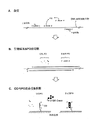
根据本发明的优选实施例,PO包含没有具有与靶核酸序列非-互补的核苷酸序列的标记部位的非-标记PO及有具有与靶核酸序列非-互补的核苷酸序列的标记部位的标记PO(图1a)。According to a preferred embodiment of the present invention, the PO comprises a non-marked PO without a marker portion having a non-complementary nucleotide sequence to the target nucleic acid sequence and a marker portion having a non-complementary nucleotide sequence to the target nucleic acid sequence labeled PO (Fig. 1a).
根据本发明的优选实施例,PO为在其3’-部位还包含具有与靶核酸序列非-互补的核苷酸序列的标记部位的3’-标记PO,或者在其5’-部位还包含具有与靶核酸序列非-互补的核苷酸序列的标记部位的5’-标记PO(图1a)。According to a preferred embodiment of the present invention, the PO is a 3'-labeled PO that also includes a labeling site with a nucleotide sequence that is non-complementary to the target nucleic acid sequence at its 3'-site, or at its 5'-site. A 5'-labeled PO with a labeling site of a nucleotide sequence non-complementary to the target nucleic acid sequence (Fig. 1a).
优选地,PO的标记部位包含具有与靶核酸序列非-互补的核苷酸序列的标记部位。在本说明书中使用的术语“非-互补的”意味着在预定的退火条件或严格条件下引物或探针不以选择性地与靶核酸序列杂交的程度充分地非-互补,并包括“实质上非互补的(substantially non-complementary)”及“完全非-互补的(perfectly non-complementary)”,优选地意味着完全非-互补的意思。Preferably, the labeling site of the PO comprises a labeling site having a nucleotide sequence that is non-complementary to the target nucleic acid sequence. The term "non-complementary" used in this specification means that a primer or probe is not sufficiently non-complementary to the extent that it does not selectively hybridize to a target nucleic acid sequence under predetermined annealing conditions or stringent conditions, and includes "substantially Substantially non-complementary" and "perfectly non-complementary" preferably mean completely non-complementary.
优选地,标记的PO通过标记部位利用于与CO的选择性的杂交。Preferably, labeled PO is utilized for selective hybridization to CO via the labeling site.
PO不要求任何特定的长度。只要非-标记PO与靶核酸序列特异性地杂交,那么非-标记PO就可以具有任何长度。例如,PO的长度可具有10-60核苷酸、10-50核苷酸、10-40核苷酸、10-30核苷酸、15-60核苷酸、15-50核苷酸、15-40核苷酸、15-30核苷酸、20-60核苷酸、20-50核苷酸、20-40核苷酸或20-30核苷酸的长度。标记PO可具有15-80核苷酸、15-60核苷酸、15-40核苷酸、20-80核苷酸、20-60核苷酸、20-40核苷酸、30-80核苷酸、30-60核苷酸或30-40核苷酸的长度。只要PO的靶向部位与靶核酸序列特异性地杂交,那么PO的靶向部位就可以具有任何长度。例如,PO的靶向部位可具有10-50核苷酸、10-40核苷酸、10-30核苷酸、15-50核苷酸、15-40核苷酸、15-30核苷酸、20-50核苷酸、20-40核苷酸或20-30核苷酸的长度。只要标记PO的标记部位与CO特异性地杂交,那么标记PO的标记部位就可以具有任何长度。例如,PO的标记部位可具有5-50核苷酸、5-40核苷酸、5-30核苷酸、5-20核苷酸、10-50核苷酸、10-40核苷酸、10-30核苷酸、10-20核苷酸、15-50核苷酸、15-40核苷酸、15-30核苷酸或15-20核苷酸的长度。PO does not require any particular length. The non-labeled PO can be of any length as long as it hybridizes specifically to the target nucleic acid sequence. For example, the PO can have a length of 10-60 nucleotides, 10-50 nucleotides, 10-40 nucleotides, 10-30 nucleotides, 15-60 nucleotides, 15-50 nucleotides, 15 -40 nucleotides, 15-30 nucleotides, 20-60 nucleotides, 20-50 nucleotides, 20-40 nucleotides or 20-30 nucleotides in length. Labeled POs can have 15-80 nucleotides, 15-60 nucleotides, 15-40 nucleotides, 20-80 nucleotides, 20-60 nucleotides, 20-40 nucleotides, 30-80 nucleotides nucleotides, 30-60 nucleotides, or 30-40 nucleotides in length. The targeting site of the PO can be of any length as long as it specifically hybridizes to the target nucleic acid sequence. For example, the targeting site of PO can have 10-50 nucleotides, 10-40 nucleotides, 10-30 nucleotides, 15-50 nucleotides, 15-40 nucleotides, 15-30 nucleotides , 20-50 nucleotides, 20-40 nucleotides or 20-30 nucleotides in length. As long as the PO-labeled labeling site hybridizes specifically to CO, the PO-labeling labeling site may have any length. For example, the labeling site of PO can have 5-50 nucleotides, 5-40 nucleotides, 5-30 nucleotides, 5-20 nucleotides, 10-50 nucleotides, 10-40 nucleotides, 10-30 nucleotides, 10-20 nucleotides, 15-50 nucleotides, 15-40 nucleotides, 15-30 nucleotides or 15-20 nucleotides in length.
PO的3’-末端可具有3’-OH末端(terminal)。优选地,PO因其3’-末端被“阻断”而防止延伸。The 3'-terminal of PO may have a 3'-OH terminal. Preferably, PO is "blocked" at its 3'-end to prevent extension.
阻断可通过以往方法来达成。例如,阻断可通过在最后核苷酸的3’-羟基上追加如生物素、标记、磷酸盐基、烷基、非-核苷酸连接肽、硫代磷酸酯或烷烃-二醇残基等的化学组成部分(moiety)来实施。择一性地,阻断可通过去除最后核苷酸的3’-羟基或利用如双脱氧核苷酸这种没有3’-羟基的核苷酸来实施。Blocking can be achieved by previous methods. For example, blocking can be achieved by appending residues such as biotin, label, phosphate, alkyl, non-nucleotide linking peptide, phosphorothioate or alkane-diol to the 3'-hydroxyl of the last nucleotide. and other chemical components (moiety) to implement. Alternatively, blocking can be performed by removing the 3'-hydroxyl of the last nucleotide or using nucleotides without a 3'-hydroxyl, such as dideoxynucleotides.
择一性地,可设计成PO像发夹结构一样具有二级结构。在本发明中,非切割PO在固相基质上与进行固定化的寡核苷酸杂交,因而需要将发夹结构设计成不妨碍非切割PO与进行固定化的CO杂交。优选地,PO的发夹结构具有低于非切割PO与进行固定化的CO之间的二聚物的Tm值的Tm值。Alternatively, PO can be designed to have a secondary structure like a hairpin structure. In the present invention, the non-cleaving PO hybridizes with the immobilized oligonucleotide on the solid phase substrate, so the hairpin structure needs to be designed so as not to prevent the non-cleaving PO from hybridizing with the immobilized CO. Preferably, the hairpin structure of PO has a Tm value lower than the Tm value of the dimer between non-cleaved PO and CO undergoing immobilization.
另一方面,根据具有标记部位的靶探针的切割反应以及在固相基质上与实现固定化的寡核苷酸的杂交,来检测靶序列的以往方法,要求靶探针具有发夹结构,用于抑制非切割靶探针与实现固定化的寡核苷酸杂交。On the other hand, the conventional method of detecting the target sequence based on the cleavage reaction of the target probe having the labeling site and the hybridization with the immobilized oligonucleotide on the solid phase substrate requires the target probe to have a hairpin structure, Used to inhibit hybridization of non-cleaving target probes to immobilized oligonucleotides.
在利用标记PO的情况下,在其靶向部位与靶核酸序列杂交,而其标记部位不与靶核酸序列杂交的严格条件下,实施与靶核酸序列的杂交。表现“PO的标记部位不与靶核酸序列杂交的”意味着在特定严格条件下,不与靶核酸序列形成稳定的二聚物。优选地,标记PO的标记部位不与靶核酸序列杂交而形成单链。In the case of using a labeled PO, hybridization to the target nucleic acid sequence is carried out under stringent conditions such that its targeting site hybridizes to the target nucleic acid sequence, but its labeling site does not hybridize to the target nucleic acid sequence. The expression "the labeling portion of PO does not hybridize to the target nucleic acid sequence" means that it does not form a stable dimer with the target nucleic acid sequence under specific stringent conditions. Preferably, the labeling portion of the labeled PO does not hybridize to the target nucleic acid sequence but forms a single strand.
在上游寡核苷酸与靶核酸序列的杂交的情况下,上游寡核苷酸位于PO的上游。与靶核酸序列杂交的上游寡核苷酸或其延伸链诱导与基于具有5’核酸酶活性的酶的靶核酸序列杂交的PO的切割。In the case of hybridization of an upstream oligonucleotide to a target nucleic acid sequence, the upstream oligonucleotide is located upstream of the PO. An upstream oligonucleotide or an extension thereof that hybridizes to a target nucleic acid sequence induces cleavage of the PO that hybridizes to the target nucleic acid sequence based on an enzyme having 5' nuclease activity.
基于上游寡核苷酸的PO切割的诱导可通过两种方式来达成。(i)诱导上游寡核苷酸延伸(即,聚合)-独立性切割;以及(ii)诱导上游寡核苷酸延伸-依赖性切割。Induction of PO cleavage based on upstream oligonucleotides can be achieved in two ways. (i) Inducing upstream oligonucleotide extension (ie, polymerization)-independent cleavage; and (ii) Inducing upstream oligonucleotide extension-dependent cleavage.
在上游寡核苷酸位于与PO相邻近的部位,以能够基于具有5’核酸酶活性的酶来充分诱导PO的切割的情况下,与上游寡核苷酸相结合的酶可无需延伸反应而切割PO。相反,在上游寡核苷酸与PO隔开的情况下,具有聚合酶活性的酶(例如,模板-依赖性聚合酶)可促进上游寡核苷酸(例如,上游引物)的延伸,与延伸产物相结合的具有5’核酸酶活性的酶切割PO。In cases where the upstream oligonucleotide is positioned adjacent to the PO to sufficiently induce cleavage of the PO based on an enzyme with 5' nuclease activity, the enzyme bound to the upstream oligonucleotide may not require an extension reaction And cutting PO. Conversely, an enzyme with polymerase activity (e.g., a template-dependent polymerase) can facilitate extension of an upstream oligonucleotide (e.g., an upstream primer) when the upstream oligonucleotide is spaced from the PO, with the extension The product-bound enzyme with 5' nuclease activity cleaves PO.
因此,上游寡核苷酸能够以两种方式位于与PO相对的位置。上游寡核苷酸可位于与PO相邻近的位置,由此以延伸(即,聚合)-独立性方式可充分诱导PO的切割。择一性地,上游寡核苷酸可位于充分能够以延伸-依赖性方式诱导PO切割的与PO隔开的位置。Thus, the upstream oligonucleotide can be positioned relative to the PO in two ways. The upstream oligonucleotide can be located adjacent to the PO such that cleavage of the PO can be induced substantially in an extension (ie, polymerization)-independent manner. Alternatively, the upstream oligonucleotide may be located at a position spaced from the PO sufficient to induce cleavage of the PO in an extension-dependent manner.
在本说明书中揭示方位(positions)或位置(locations)而使用的术语“邻近的(adjacent)”意味着上游寡核苷酸位于与PO的靶向部位相近的位置而形成缺口(nick)。并且,上述术语意味着上游寡核苷酸位于从PO的靶向部位隔开1-30核苷酸、1-20核苷酸或1-15核苷酸的位置。The term "adjacent" used in this specification to disclose positions or locations means that the upstream oligonucleotide is located at a position close to the targeting site of PO to form a nick. And, the above term means that the upstream oligonucleotide is located at a position separated by 1-30 nucleotides, 1-20 nucleotides or 1-15 nucleotides from the targeting site of the PO.
根据本发明的优选实施例,上游寡核苷酸位于充分能够以延伸-依赖性方式诱导PO切割的与PO隔开的位置。According to a preferred embodiment of the invention, the upstream oligonucleotide is located at a position spaced from the PO sufficient to induce cleavage of the PO in an extension-dependent manner.
在本说明书中揭示方位或位置而使用的术语“隔开(distant)”没有基于术语“邻近的(adjacent)”的任何限制,这包含能够充分产生延伸反应的任何方位或位置。例如,术语“隔开”可包含形成缺口的位置。The use of the term "distant" in this specification to disclose an orientation or position is without any limitation based on the term "adjacent", which includes any orientation or position sufficient to produce an extended response. For example, the term "spaced apart" may include the location of a gap.
根据本发明的优选实施例,上游寡核苷酸为上游引物或上游探针。上游引物适合于延伸-独立性切割诱导或延伸-依赖性切割,上游探针适合于延伸-独立性切割诱导。According to a preferred embodiment of the present invention, the upstream oligonucleotide is an upstream primer or an upstream probe. The upstream primer is suitable for extension-independent cleavage induction or extension-dependent cleavage, and the upstream probe is suitable for extension-independent cleavage induction.
择一性地,上游寡核苷酸具有与PO的靶向部位的一部分部分重叠的序列(partial-overlapped sequence)。优选地,重叠的序列为1-10核苷酸长度、更优选为1-5核苷酸长度、进而优选为1-3核苷酸长度。在利用具有与一部分部分重叠的序列(partial-overlapped sequence)的5’-标记PO情况下,在步骤(b)的切割反应中,3’-靶向部位与标记部位一起被部分切割。并且,重叠的序列使靶向部位所需的特定位置被切割。Alternatively, the upstream oligonucleotide has a partial-overlapped sequence with a portion of the PO's targeting site. Preferably, the overlapping sequences are 1-10 nucleotides in length, more preferably 1-5 nucleotides in length, even more preferably 1-3 nucleotides in length. In the case of using a 5'-labeled PO with a partial-overlapped sequence, the 3'-targeting site is partially cleaved together with the labeling site in the cleavage reaction of step (b). Also, overlapping sequences allow for cleavage at the specific location required for the targeting site.
根据本发明的优选实施例,上游引物通过其延伸链来诱导基于具有5’核酸酶活性的酶的PO的切割。According to a preferred embodiment of the present invention, the upstream primer induces cleavage based on PO of an enzyme having 5' nuclease activity through its extended strand.
只要上游寡核苷酸诱导与靶核酸序列杂交的PO的切割,那么用于基于上游寡核苷酸的切割反应的多个现有技术就可以适用于本发明。例如,美国专利第5210015号、第5487972号、第5691142号、第5994069号、第7381532号及美国申请公开号第2008-0241838号就可以应用于本发明。As long as the upstream oligonucleotide induces cleavage of the PO that hybridizes to the target nucleic acid sequence, a number of prior art techniques for upstream oligonucleotide-based cleavage reactions can be applied to the present invention. For example, US Patent Nos. 5,210,015, 5,487,972, 5,691,142, 5,994,069, 7,381,532 and US Application Publication No. 2008-0241838 can be applied to the present invention.
根据本发明的优选实施例,本方法在下游引物的存在之下实施。下游引物使与PO杂交的靶核酸序列追加生成,并提高靶检测的灵敏度。According to a preferred embodiment of the invention, the method is carried out in the presence of downstream primers. The downstream primers allow additional generation of target nucleic acid sequences that hybridize to PO and increase the sensitivity of target detection.
在追加地利用下游引物的情况下,追加地利用位于下游引物的下游的第二PO。When the downstream primer is additionally used, the second PO located downstream of the downstream primer is additionally used.
根据本发明的优选实施例,在利用上游引物及下游引物的情况下,使用模板-依赖性核酸聚合酶,用于引物的延伸。模板-依赖性核酸聚合酶可起到具有用于PO的切割的5’核酸酶活性的酶的作用。According to a preferred embodiment of the present invention, in the case of using an upstream primer and a downstream primer, a template-dependent nucleic acid polymerase is used for primer extension. A template-dependent nucleic acid polymerase can function as an enzyme with 5' nuclease activity for cleavage of PO.
根据本发明的优选实施例,上游寡核苷酸(上游引物或上游探针)和/或下游引物具有由本发明人开发的双重引发寡核苷酸(DPO,dualpriming oligonucleotide)结构。具有DPO结构的寡核苷酸与以往引物及探针相比表现出相当得到改善的靶特异度(参照WO2006/095981;Chun等,Dual priming oligonucleotide system for the multiplex detection of respiratory viruses and SNP genotyping of CYP2C19gene,Nucleic Acid Research,35:6e40(2007))。According to a preferred embodiment of the present invention, the upstream oligonucleotide (upstream primer or upstream probe) and/or the downstream primer has a dual priming oligonucleotide (DPO, dualpriming oligonucleotide) structure developed by the inventors. Compared with previous primers and probes, oligonucleotides with a DPO structure exhibit considerably improved target specificity (refer to WO2006/095981; Chun et al., Dual priming oligonucleotide system for the multiplex detection of respiratory viruses and SNP genotyping of CYP2C19gene , Nucleic Acid Research, 35:6e40 (2007)).
根据本发明的优选实施例,PO的靶向部位具有由本发明人开发的变形双重特异性寡核苷酸(mDSO)结构。变形双重特异性寡核苷酸(mDSO,modified dual specificity oligonucleotide)结构与以往的探针相比表现出相当得到改善的靶特异性(参照WO2011/028041)。According to a preferred embodiment of the present invention, the targeting site of the PO has a modified dual specificity oligonucleotide (mDSO) structure developed by the present inventors. Modified dual specificity oligonucleotide (mDSO, modified dual specificity oligonucleotide) structure shows considerably improved target specificity compared with previous probes (refer to WO2011/028041).
术语“以往寡核苷酸”意味着不具有DSO或mDSO结构的寡核苷酸(引物或探针)。The term "conventional oligonucleotide" means an oligonucleotide (primer or probe) that does not have a DSO or mDSO structure.
在本发明中利用的PO具有单一标记。单一标记提供表示靶核酸序列的存在与否的信号。标记在步骤(d)中具有更为详细的说明。The PO utilized in the present invention has a single label. A single label provides a signal indicative of the presence or absence of a target nucleic acid sequence. Marking is described in more detail in step (d).
步骤(b):PO的切割 Step (b): Cutting of PO
接着,在用于切割PO的条件下,将步骤(a)的结果物与具有5’核酸酶活性的酶相接触。Next, the resultant of step (a) is contacted with an enzyme having 5' nuclease activity under conditions for cleaving PO.
与靶核酸序列杂交的PO被具有5’核酸酶活性的酶切割来放出包含单一标记的片段(参照图2~图6)。在没有靶核酸序列的情况下,PO不被具有5’核酸酶活性的酶切割。The PO hybridized to the target nucleic acid sequence is cleaved by an enzyme having 5' nuclease activity to release a fragment containing a single label (see Figures 2 to 6). In the absence of a target nucleic acid sequence, PO is not cleaved by an enzyme with 5' nuclease activity.
在本说明书中使用的术语“用于切割PO的条件”意味着基于具有5’核酸酶活性的酶产生对与靶核酸序列杂交的PO的切割的充分的条件,例如,温度、pH、离子强度及缓冲液、寡核苷酸的长度及序列和酶。例如,在利用作为具有5’核酸酶活性的酶的Taq DNA聚合酶的情况下,用于切割PO的条件包含Tris-HCl缓冲液、氯化钾(KCl)、氯化镁(MgCl2)及温度。The term "conditions for cleavage of PO" used in this specification means conditions sufficient for cleavage of PO hybridized to a target nucleic acid sequence based on an enzyme having 5' nuclease activity, for example, temperature, pH, ionic strength and buffer, length and sequence of oligonucleotides and enzymes. For example, in the case of using Taq DNA polymerase which is an enzyme having 5' nuclease activity, conditions for cleaving PO include Tris-HCl buffer, potassium chloride (KCl), magnesium chloride (MgCl 2 ), and temperature.
可利用多个现有技术,用于PO的切割反应。PO的切割位点根据上游寡核苷酸(上游探针或上游引物)的种类、上游寡核苷酸的杂交位置及切割条件而不同(参照美国专利第5210015号、第5487972号、第5691142号、第5994069号及第7381532号或美国申请公开号第2008-0241838号)。A number of existing techniques are available for cleavage reactions of PO. The cleavage site of PO differs depending on the type of upstream oligonucleotide (upstream probe or upstream primer), the hybridization position of the upstream oligonucleotide, and the cleavage conditions (see US Patent No. 5210015, No. 5487972, No. 5691142 , Nos. 5994069 and 7381532 or US Application Publication No. 2008-0241838).
包含单一标记的片段的长度及序列可根据适用的切割技术而不同。尤其,在利用标记PO的情况下,可生成包含标记部位的一部分或全部序列的片段。可调节标记PO上的单一标记的位置,来使单一标记不残留在包含标记部位的一部分或全部序列的片段上。The length and sequence of fragments comprising a single marker can vary depending on the cutting technique used. In particular, when the marker PO is used, a fragment including a part or the entire sequence of the marker site can be generated. The position of the single marker on the marker PO can be adjusted so that the single marker does not remain on the fragment including part or all of the sequence of the marker site.
通常,开始基于上游引物的延伸的PO的切割的位置为开始PO与靶核酸序列之间的双链的方位或从其开始方位隔开1-3核苷酸的位置。切割的PO随着其长度变短而从靶核酸序列分离。在利用3’-标记PO或5’-标记PO的情况下,可生成包含标记部位及靶向部位的一部分的片段。在上游寡核苷酸的延伸利用独立性的切割反应的情况下,PO的切割位点根据上游寡核苷酸的位置而决定。在利用3’-标记PO或5’-标记PO的情况下,所生成的PO的片段可包含(ⅰ)标记部位的一部分、(ⅱ)标记部位或(ⅲ)标记部位及靶向部位的一部分。Usually, the position where cleavage of the PO based on the extension of the upstream primer starts is the position where the double strand between the PO and the target nucleic acid sequence starts or is separated by 1 to 3 nucleotides from the start position. The cleaved PO is separated from the target nucleic acid sequence as its length becomes shorter. In the case of using 3'-labeled PO or 5'-labeled PO, a fragment including part of the labeling site and the targeting site can be generated. When the elongation of the upstream oligonucleotide utilizes an independent cleavage reaction, the PO cleavage site is determined according to the position of the upstream oligonucleotide. In the case of using 3'-labeled PO or 5'-labeled PO, the resulting fragment of PO may contain (i) a part of the labeling site, (ii) a labeling site, or (iii) a part of the labeling site and the targeting site .
在本说明书中揭示基于具有5’核酸酶活性的酶的标记PO的切割而使用的术语“包含标记部位或标记部位的一部分的片段”意味着包含(ⅰ)标记部位、(ⅱ)标记部位及靶向部位的邻近的一部分序列及(ⅲ)标记部位的一部分。The term "fragment comprising a marker site or a part of a marker site" used in this specification to disclose the cleavage of a marker PO based on an enzyme having 5' nuclease activity means to include (i) a marker site, (ii) a marker site and A part of the sequence adjacent to the targeting site and (iii) a part of the labeling site.
在本说明书中揭示如同PO的5’-标记部位的一部分、PO的3’-靶向部位的5’-末端的一部分以及PO而使用的术语“一部分(part)”意味着由1-40、1-30、1-20、1-15、1-10或1-5核苷酸构成的核苷酸序列,优选为1核苷酸、2核苷酸、3核苷酸或4核苷酸。The term "part" used in this specification as part of the 5'-labeling site of PO, part of the 5'-terminus of the 3'-targeting site of PO, and PO means a part consisting of 1-40, Nucleotide sequence consisting of 1-30, 1-20, 1-15, 1-10 or 1-5 nucleotides, preferably 1 nucleotide, 2 nucleotides, 3 nucleotides or 4 nucleotides .
根据本说明书的优选实施例,具有5’核酸酶活性的酶为具有5’核酸酶活性的DNA聚合酶或FEN核酸酶,更优选为具有5’核酸酶活性的热稳定性DNA聚合酶或FEN核酸酶。According to a preferred embodiment of the specification, the enzyme with 5' nuclease activity is a DNA polymerase or FEN nuclease with 5' nuclease activity, more preferably a thermostable DNA polymerase or FEN with 5' nuclease activity Nuclease.
适合于本发明的具有5’核酸酶活性的DNA聚合酶为从多种细菌种得到的热稳定性DNA聚合酶,其包含Thermus aquaticus(Taq)、Thermus thermophilus(Tth)、Thermus filiformis、Thermis flavus、Thermococcus literalis、Thermus antranikianii、Thermus caldophilus、Thermus chliarophilus、Thermus flavus、Thermus igniterrae、Thermus lacteus、Thermus oshimai、Thermus ruber、Thermus rubens、Thermus scotoductus、Thermus silvanus、Thermus species Z05、Thermus species sps17、Thermus thermophilus、Thermotoga maritima、Thermotoganeapolitana、Thermosipho africanus、Thermococcus litoralis、Thermococcus barossi、Thermococcus gorgonarius、Thermotoga maritima、Thermotoga neapolitana、Thermosiphoafricanus、Pyrococcus woesei、Pyrococcus horikoshii、Pyrococcus abyssi、Pyrodictium occultum、Aquifexpyrophilus及Aquifex aeolieus。最优选地,热稳定性DNA聚合酶为Taq聚合酶。DNA polymerases suitable for the present invention with 5' nuclease activity are thermostable DNA polymerases obtained from various bacterial species, including Thermus aquaticus (Taq), Thermus thermophilus (Tth), Thermus filiformis, Thermis flavus, Thermococcus literalis、Thermus antranikianii、Thermus caldophilus、Thermus chliarophilus、Thermus flavus、Thermus igniterrae、Thermus lacteus、Thermus oshimai、Thermus ruber、Thermus rubens、Thermus scotoductus、Thermus silvanus、Thermus species Z05、Thermus species sps17、Thermus thermophilus、Thermotoga maritima、 Thermotoganeapolitana、Thermosipho africanus、Thermococcus litoralis、Thermococcus barossi、Thermococcus gorgonarius、Thermotoga maritima、Thermotoga neapolitana、Thermosiphoafricanus、Pyrococcus woesei、Pyrococcus horikoshii、Pyrococcus abyssi、Pyrodictium occultum、Aquifexpyrophilus及Aquifex aeolieus。 Most preferably, the thermostable DNA polymerase is Taq polymerase.
择一性地,本发明可使用变形为少具有聚合酶活性的、具有5’核酸酶活性的DNA聚合酶。Alternatively, the present invention may use a DNA polymerase with 5' nuclease activity that is modified to have less polymerase activity.
所使用的皮瓣内切核酸酶(FEN,flap endonuclease)为5’皮瓣-特异性核酸酶(5’flap-specific nuclease)。The flap endonuclease (FEN, flap endonuclease) used is 5'flap-specific nuclease (5'flap-specific nuclease).
适合于本发明的FEN核酸酶包含从多种细菌种得到的FEN核酸酶,其包含Sulfolobus solfataricus、Pyrobaculum aerophilum、Thermococcus litoralis、Archaeaglobus veneficus、Archaeaglobus profundus、Acidianus brierlyi、Acidianus ambivalens、Desulfurococcus amylolyticus、Desulfurococcus mobilis、Pyrodictium brockii、Thermococcus gorgonarius、Thermococcus zilligii、Methanopyrus kandleri、Methanococcus igneus、Pyrococcus horikoshii、Aeropyrum pernix及Archaeaglobusveneficus。FEN nucleases suitable for the present invention include FEN nucleases obtained from a variety of bacterial species, including Sulfolobus solfataricus, Pyrobaculum aerophilum, Thermococcus litoralis, Archaeaglobus veneficus, Archaeaglobus profundus, Acidianus brierlyi, Acidianus ambivalens, Desulfurococcus amylolyticus, Desulfuroccium roymoy mo brockii, Thermococcus gorgonarius, Thermococcus zilligii, Methanopyrus kandleri, Methanococcus igneus, Pyrococcus horikoshii, Aeropyrum pernix, and Archaeaglobus veneficus.
优选地,在步骤(a)中利用上游引物的情况下,用于切割PO的条件包含上游引物的延伸反应。Preferably, in case an upstream primer is utilized in step (a), the conditions for cleavage of the PO comprise an extension reaction of the upstream primer.
根据本发明的优选实施例,在步骤(a)中利用上游引物,为了使上述上游引物延伸而利用模板-依赖性聚合酶,上述模板-依赖性聚合酶为与具有5’核酸酶活性的酶相同的酶。According to a preferred embodiment of the present invention, an upstream primer is used in step (a), and a template-dependent polymerase is used in order to extend the above-mentioned upstream primer, and the above-mentioned template-dependent polymerase is an enzyme with 5' nuclease activity same enzyme.
选择性地,在步骤(a)中利用上游引物,为了使上述上游引物延伸而利用模板-依赖性聚合酶,上述模板-依赖性聚合酶为与具有5’核酸酶活性的酶不同的酶。Alternatively, an upstream primer is used in the step (a), and a template-dependent polymerase is used for extending the upstream primer, and the template-dependent polymerase is an enzyme different from an enzyme having 5' nuclease activity.
步骤(c):固相中的与CO的杂交 Step (c): Hybridization with CO in solid phase
将在固相基质上实现固定化的俘获寡核苷酸(CO,Capturing Oligonucleotide)与上述步骤(b)的结果物相接触而实施杂交反应。The hybridization reaction is carried out by contacting the capture oligonucleotide (CO, Capturing Oligonucleotide) immobilized on the solid phase substrate with the result of the above step (b).
在本发明中,利用在固相基质上实现固定化的CO来检测PO的切割。在步骤(b)中不切割PO的情况下,包含单一标记非切割PO在固相基质上与实现固定化的CO杂交,从而基于单一标记提供固相基质上的信号。在步骤(b)中切割PO的情况下,包含单一标记切割片段不与CO杂交,从而不提供基于单一标记的固相基质上的信号。In the present invention, the cleavage of PO is detected using CO immobilized on a solid substrate. In the absence of cleavage of PO in step (b), non-cleavable PO containing a single label hybridizes to the immobilized CO on the solid-phase matrix, thereby providing a signal on the solid-phase matrix based on the single label. In the case of cleavage of PO in step (b), the cleavage fragment containing the single label does not hybridize to CO and thus does not provide a single label based signal on the solid-phase substrate.
PO发生切割依赖于靶核酸序列的存在,因而可通过测定来自固相基质上的单一标记的信号的消灭或减少,来检测靶核酸序列。Cleavage by PO is dependent on the presence of the target nucleic acid sequence, and thus the target nucleic acid sequence can be detected by measuring the elimination or reduction of the signal from a single label on a solid substrate.
CO包含与PO杂交的核苷酸序列。在本说明书中,揭示CO而使用的术语“杂交的序列(hybridizable sequence)”意味着在步骤(c)中形成非切割PO及稳定的二聚物的序列。例如,与PO杂交的CO的杂交序列可包含:PO的靶向部位的全部或一部分;PO的标记部位的全部或一部分;PO的靶向部位全部及标记部位一部分;PO的靶向部位一部分及标记部位全部;或与PO的靶向部位一部分及标记部位一部分互补的序列。CO comprises a nucleotide sequence that hybridizes to PO. In this specification, the term "hybridizable sequence" used to disclose CO means a sequence that forms a non-cleavable PO and a stable dimer in step (c). For example, the hybridizing sequence of a CO that hybridizes to PO may comprise: all or a portion of the targeting site of PO; all or a portion of the labeling site of PO; all or a portion of the labeling site of PO; a portion of the targeting site of PO and All of the tagging site; or a sequence complementary to a part of the targeting site of PO and a part of the tagging site.
术语“杂交的核苷酸序列”及“互补的核苷酸序列”没有差异,在本说明书中混用。The terms "hybridizing nucleotide sequence" and "complementary nucleotide sequence" have no difference and are used interchangeably in this specification.
包含单一标记的片段不与CO杂交,非切割PO与上述CO杂交而在形成非切割PO/CO二聚物的条件下,实施在步骤(c)中的杂交反应。The fragment containing a single label does not hybridize to CO, and the non-cleaving PO hybridizes to the above-mentioned CO to form a non-cleaving PO/CO dimer. The hybridization reaction in step (c) is carried out.
在本发明的一实施例中,CO包含与PO的靶向部位杂交的核苷酸序列。与PO的靶向部位杂交的核苷酸序列包含与PO的靶向部位全部或一部分互补的核苷酸序列,并具有互补性及长度,以充分在步骤(c)的杂交反应中,稳定地形成非切割PO与CO之间的二聚物。In one embodiment of the present invention, the CO comprises a nucleotide sequence that hybridizes to the targeting site of the PO. The nucleotide sequence that hybridizes with the target site of PO includes a nucleotide sequence that is complementary to all or part of the target site of PO, and has complementarity and length, so as to be stable in the hybridization reaction of step (c). A dimer between non-cleaving PO and CO is formed.
如图2及图3所示,CO包含与PO的靶向部位杂交的核苷酸序列。在靶核酸序列存在的情况下,通过切割反应而生成的包含单一标记的片段具有短于非切割的PO的长度,从而在特定严格条件(尤其,温度)下,无法与CO杂交。最终,单一标记不残留在固相基质上。As shown in Figures 2 and 3, CO contains a nucleotide sequence that hybridizes to the targeting site of PO. In the presence of the target nucleic acid sequence, the fragment containing the single label generated by the cleavage reaction has a shorter length than the non-cleaved PO, so that it cannot hybridize to CO under certain stringent conditions (especially temperature). Ultimately, no single label remains on the solid matrix.
择一性地,可设计成CO不具有与包含单一标记的片段杂交的序列,用于抑制包含单一标记的片段与CO杂交。Alternatively, the CO can be designed not to have a sequence that hybridizes to a fragment containing a single label, for inhibiting the hybridization of a fragment containing a single label to the CO.
因此,在靶核酸序列存在的情况下,不形成非切割PO与CO之间的二聚物,并且不从单一标记提供信号。Thus, in the presence of the target nucleic acid sequence, no dimer is formed between the non-cleaving PO and CO and no signal is provided from a single label.
在没有靶核酸序列的情况下,非切割PO形成CO及二聚物,使得单一标记残留在固相基质上。In the absence of target nucleic acid sequence, non-cleaving PO forms CO and dimers, leaving a single label on the solid substrate.
在利用没有5’核酸酶活性的聚合酶来实施图2及图3所示的过程的情况下,与靶核酸序列杂交的非-标记PO不被切割。非-标记PO与靶核酸序列杂交,因而可在被细致地调节的条件下,防止与CO的杂交,从而不从单一标记提供信号。但是,像本发明一样,在利用具有5’核酸酶活性的聚合酶的情况下,与靶核酸序列杂交的PO被切割,从而在容易地被定立的条件下,测定发生切割,准确地检测靶核酸序列的存在。In the case where the processes shown in Figures 2 and 3 are carried out using a polymerase without 5' nuclease activity, non-labeled POs that hybridize to the target nucleic acid sequence are not cleaved. The non-labeled PO hybridizes to the target nucleic acid sequence and thus prevents hybridization to the CO under carefully adjusted conditions, thereby not providing a signal from a single label. However, as in the present invention, in the case of using a polymerase having 5' nuclease activity, the PO hybridized to the target nucleic acid sequence is cleaved, thereby measuring the occurrence of cleavage under conditions that can be easily established to accurately detect the target the presence of nucleic acid sequences.
如图4及图5所示,CO包含与PO的标记部位杂交的核苷酸序列。标记PO上的单一标记通过标记PO的切割而放出,并以不残留在与CO杂交的包含标记部位片段上的方式进行定位。即使包含标记部位片段与CO杂交,在包含标记部位片段不残留有单一标记,因而不从单一标记提供信号。信号根据非切割的标记PO与CO的杂交而提供。As shown in FIGS. 4 and 5 , CO contains a nucleotide sequence that hybridizes to the labeling site of PO. The single label on the labeled PO is released by cleavage of the labeled PO, and localized so as not to remain on the fragment containing the labeled site that hybridizes to CO. Even if the tag-containing fragment is hybridized to CO, no single label remains in the tag-containing fragment, and thus no signal is provided from the single tag. Signals are provided by hybridization of non-cleaved labeled PO to CO.
在靶核酸序列存在的情况下,PO的切割不使非切割PO与CO之间的二聚物形成,这会引起从表示靶核酸序列的存在的固相基质上的单一标记的信号的消灭(或减少)。In the presence of the target nucleic acid sequence, cleavage of the PO does not result in dimer formation between the non-cleaved PO and CO, which would result in the elimination of the signal from the single label on the solid phase matrix indicating the presence of the target nucleic acid sequence ( or decrease).
根据利用标记PO的本发明的优选实施例,与PO的标记部位杂交的CO的核苷酸序列包含与PO的标记部位全部或一部分互补的序列,并具有互补性及长度,以充分在步骤(c)的杂交反应中稳定地形成非切割标记PO与CO之间的二聚物。According to a preferred embodiment of the present invention using labeled PO, the nucleotide sequence of CO that hybridizes to the labeling site of PO includes a sequence that is complementary to all or a part of the labeling site of PO, and has complementarity and length, so as to be sufficient in the step ( c) A dimer between non-cleavage-labeled PO and CO is stably formed in the hybridization reaction.
择一性地,在利用标记PO的情况下,CO可包含与标记PO的标记部位的一部分(或全部)及靶向部位的一部分(或全部)杂交的核苷酸序列。标记PO上的单一标记的位置是考虑切割方法、切割位点及CO的序列之后决定,标记PO的切割在包含单一标记的片段不与CO杂交的条件下实施。优选地,单一标记通过标记PO的切割来放出,并以不残留在与CO杂交的片段上的方式进行定位。Alternatively, in the case of using a labeled PO, the CO may comprise a nucleotide sequence that hybridizes to a part (or all) of the labeling site and a part (or all) of the targeting site of the labeled PO. The position of the single label on the labeled PO is determined in consideration of the cleavage method, the cleavage site, and the sequence of CO, and the cleavage of the labeled PO is carried out under the condition that the fragment containing the single label does not hybridize to CO. Preferably, the single label is released by cleavage of the labeled PO and localized in such a way that it does not remain on the fragment that hybridizes to CO.
根据利用5’-标记PO的本发明的优选实施例,CO还包含起到用于与CO杂交的标记部位的延伸的模板的作用的制模部位(参照图6)。延伸产物更为稳定地进行与CO的杂交。还可以需要DNA聚合酶,用于延伸。According to a preferred embodiment of the present invention utilizing 5'-labeled PO, the CO also contains a modeling site that functions as a template for the extension of the labeling site hybridized to CO (cf. Figure 6). The extension product hybridized to CO more stably. A DNA polymerase may also be required for extension.
CO通过其5’-末端或3’-末端,在固相基质上实现固定化。CO is immobilized on the solid matrix through its 5'-end or 3'-end.
根据本发明的优选实施例,PO为3’-标记PO,CO通过其5’-末端,在固相基质上实现固定化(图4)。优选地,PO为5’-标记PO,CO通过其3’-末端,在固相基质上实现固定化(图5)。According to a preferred embodiment of the present invention, PO is a 3'-labeled PO, and CO is immobilized on a solid-phase substrate through its 5'-terminus (Figure 4). Preferably, PO is 5'-labeled PO, and CO is immobilized on the solid matrix through its 3'-end (Figure 5).
根据本发明的优选实施例,CO实现固定化的固相基质为微阵列。CO通过其5’-末端或3’-末端在固相基质的表面直接或间接(优选为间接)实现固定化。CO能够以共价键或非共价键方式,在固相基质表面上实现固定化。在固定化的CO在固相基质表面间接性地实现固定化的情况下,利用合适的连接肽。在本发明中有用的连接肽可包含利用于固相基质表面上的探针固定化的任何连接肽。例如,具有胺基的烷基或芳基化合物、或者具有硫醇基的烷基或芳基化合物可作为连接肽利用于CO固定化。并且,可将聚尾(poly T tail)或聚腺苷酸尾(poly A tail)使用为连接肽。聚尾或聚腺苷酸尾在酶作用(例如,酶切割反应)中可使空间障碍(space hindrance)减少,并使杂交效率增加。聚尾或聚腺苷酸尾不包含在探针的序列。According to a preferred embodiment of the present invention, the solid phase substrate on which CO is immobilized is a microarray. CO is directly or indirectly (preferably indirect) immobilized on the surface of the solid matrix through its 5'-end or 3'-end. CO can be immobilized on the surface of solid-phase substrates in a covalent or non-covalent manner. In the case of indirect immobilization of immobilized CO on the surface of a solid phase substrate, an appropriate linker peptide is used. Linker peptides useful in the present invention may comprise any linker peptide utilized for probe immobilization on the surface of a solid substrate. For example, an alkyl or aryl compound having an amine group, or an alkyl or aryl compound having a thiol group can be utilized as a linking peptide for CO immobilization. Also, poly T tail or poly A tail can be used as the connecting peptide. Poly- or poly-A tails reduce space hindrance and increase hybridization efficiency during enzymatic actions (eg, enzymatic cleavage reactions). The poly-tail or poly-A tail is not included in the sequence of the probe.
提供本发明的反应环境的微阵列包含在本发明所属技术领域中公知的任何微阵列。本发明的全部过程,即与靶核酸序列的杂交、切割及检测在微阵列上实施。在微阵列上实现固定化的CO会被利用为杂交阵列因素(hybridizable array element)。用于制备微阵列的固相基质包括,金属(例如,金、金与铜的合金及铝)、金属氧化物、玻璃、陶瓷、石英、硅酮、半导体、Si/SiO2晶圆、锗、砷化镓、碳、碳纳米管、聚合物(例如,聚苯乙烯、聚乙烯、聚丙烯及聚丙烯酰胺)、琼脂糖凝胶(sepharose)、琼脂糖(agarose)及胶体(colloids),但并不局限于此。本发明的多个固定化的CO可在固相基质上的一个寻址(addressable)部位或多个寻址部位实现固定化,固相基质可包括2~1000000个寻址部位。为了基于如光刻法、喷墨打印法、机械点样法及与其类似的方法等现有制备技术,生产阵列或用于特定应用的阵列而可以组装(fabricate)实现固定化的CO。The microarray providing the reaction environment of the present invention includes any microarray known in the technical field to which the present invention pertains. The whole process of the present invention, ie hybridization with target nucleic acid sequence, cleavage and detection, is carried out on the microarray. The CO immobilized on the microarray will be utilized as a hybridizable array element. Solid substrates for microarrays include metals (e.g., gold, gold-copper alloys, and aluminum), metal oxides, glass, ceramics, quartz, silicone, semiconductors, Si/ SiO2 wafers, germanium, Gallium arsenide, carbon, carbon nanotubes, polymers (such as polystyrene, polyethylene, polypropylene, and polyacrylamide), sepharose, agarose, and colloids, but It is not limited to this. The multiple immobilized COs of the present invention can be immobilized at one addressable site or multiple addressable sites on the solid-phase substrate, and the solid-phase substrate can include 2 to 1,000,000 addressable sites. CO immobilization can be fabricated for the production of arrays or arrays for specific applications based on existing fabrication techniques such as photolithography, inkjet printing, mechanical spotting and the like.
在固相中实施的本发明,由于实现固定化的CO上的标记物理性地隔开,因而即使利用一种标记也能够同时检测多个靶核酸序列。因此,在固相中基于本发明可检测的靶核酸序列的数量不受限制。In the present invention implemented in a solid phase, since the labels on the immobilized CO are physically separated, multiple target nucleic acid sequences can be simultaneously detected even with one label. Therefore, the number of target nucleic acid sequences detectable in the solid phase based on the present invention is not limited.
若在固相中使用共焦检测(confocal detection)设备等,则不会受到基于反应液中存在的标记的信号的影响,由此能够仅测定固相基质上的信号。If a confocal detection device or the like is used in the solid phase, it will not be affected by the signal due to the label present in the reaction solution, so that only the signal on the solid phase substrate can be measured.
CO的长度可多样。只要CO可以形成非切割PO及二聚物,那么CO就具有任何长度。例如,CO为5-80核苷酸、5-60核苷酸、5-40核苷酸、5-30核苷酸、10-80核苷酸、10-60核苷酸、10-40核苷酸、10-30核苷酸、10-20核苷酸、15-80核苷酸、15-60核苷酸、15-40核苷酸、15-30核苷酸或15-20核苷酸的长度。The length of CO can vary. CO can be of any length as long as it can form non-cleaved PO and dimers. For example, CO is 5-80 nucleotides, 5-60 nucleotides, 5-40 nucleotides, 5-30 nucleotides, 10-80 nucleotides, 10-60 nucleotides, 10-40 nucleotides Nucleotides, 10-30 nucleotides, 10-20 nucleotides, 15-80 nucleotides, 15-60 nucleotides, 15-40 nucleotides, 15-30 nucleotides or 15-20 nucleotides acid length.
根据利用5’-标记PO的本发明的优选实施例,在CO还包含用于与CO杂交的标记部位的延伸的制模部位的情况下,CO还包含追加于制模部位的5-100核苷酸的长度。According to a preferred embodiment of the invention utilizing a 5'-labelled PO, in case the CO also contains an extended modeling site for the labeling site to hybridize to the CO, the CO also contains a 5-100 core additional to the modeling site nucleotide length.
根据本发明的优选实施例,CO的3’-末端被阻断而防止延伸。CO的非-延伸阻断可根据多个以往方法来达成。例如,阻断可通过在CO的最后核苷酸的3’-羟基追加生物素、标记、磷酸盐基、烷基、非-核苷酸连接肽、硫代磷酸酯或烷烃-二醇残基等的化学组成部分(moiety)来实施。择一性地,阻断可通过去除最后核苷酸的3’-羟基或者利用如双脱氧核苷酸(dideoxynucleotide)这种没有3’-羟基的核苷酸来实施。According to a preferred embodiment of the invention, the 3'-end of CO is blocked to prevent extension. Non-extending blockade of CO can be achieved according to several previous methods. For example, blocking can be achieved by appending a biotin, label, phosphate, alkyl, non-nucleotide linking peptide, phosphorothioate, or alkane-diol residue to the 3'-hydroxyl of the last nucleotide of CO. and other chemical components (moiety) to implement. Alternatively, blocking can be performed by removing the 3'-hydroxyl of the last nucleotide or using nucleotides without a 3'-hydroxyl, such as dideoxynucleotides.
参照对步骤(a)中的杂交的说明,就可以更详细地说明步骤(c)中的杂交。The hybridization in step (c) can be described in more detail with reference to the description of hybridization in step (a).
包含单一标记的片段不与CO杂交,非切割PO与CO杂交而在形成非切割PO/CO二聚物的条件下,实施步骤(c)中的杂交。通常,杂交条件可基于向本发明所属技术领域的普通技术人员公知的多个以往方法而决定。例如,可根据温度、成分的浓度、杂交时间、缓冲液成分及它们的pH及离子强度,来调整杂交条件。The fragment comprising a single label does not hybridize to CO, the non-cleaving PO hybridizes to CO and the hybridization in step (c) is carried out under conditions such that a non-cleaving PO/CO dimer is formed. In general, hybridization conditions can be determined based on various conventional methods known to those of ordinary skill in the art to which the present invention pertains. For example, hybridization conditions can be adjusted according to temperature, concentration of components, hybridization time, buffer components and their pH and ionic strength.
根据本发明的优选实施例,步骤(c)中的杂交条件根据用于杂交的温度来调整。择一性地,步骤(c)中的杂交条件,尤其包含单一标记的片段不与CO杂交的条件可通过从CO排除要与包含单一标记的片段稳定性地杂交的可能性高的序列来提供。According to a preferred embodiment of the present invention, the hybridization conditions in step (c) are adjusted according to the temperature used for hybridization. Alternatively, the hybridization conditions in step (c), especially conditions under which the fragment comprising the single marker does not hybridize to the CO can be provided by excluding from the CO sequences with a high probability of stably hybridizing to the fragment comprising the single marker .
PO及CO可由天然(naturally occurring)dNMPs构成。择一性地,PO及CO可包含变形核苷酸或非-天然核苷酸,例如PNA(Peptide Nucleic Acid,参照PCT申请第WO92/20702号)及LNA(Locked Nucleic Acid,参照PCT申请第WO98/22489号、第WO98/39352号及第WO99/14226号)。PO及CO可包含如同脱氧肌苷(deoxyinosine)、肌苷(inosine)、1-(2’-脱氧-β-D-呋喃核糖)-3-硝基吡咯(1-(2’-deoxybeta-D-ribofuranosyl)-3-nitropyrrole)及5-硝基吲哚(5-nitroindole)等的通用碱基。术语“通用碱基”意味着分别对DNA/RNA碱基可几乎没有区别地形成碱基对。PO and CO can be composed of naturally occurring dNMPs. Alternatively, PO and CO may contain deformed nucleotides or non-natural nucleotides, such as PNA (Peptide Nucleic Acid, refer to PCT application No. WO92/20702) and LNA (Locked Nucleic Acid, refer to PCT application No. WO98 /22489, WO98/39352 and WO99/14226). PO and CO can contain such as deoxyinosine (deoxyinosine), inosine (inosine), 1-(2'-deoxy-β-D-ribofuranose)-3-nitropyrrole (1-(2'-deoxybeta-D -ribofuranosyl) -3-nitropyrrole) and 5-nitroindole (5-nitroindole) and other universal bases. The term "universal base" means that DNA/RNA bases can form base pairs with little difference, respectively.
步骤(d):表示靶序列的存在的PO切割的检测 Step (d): Detection of PO cleavage indicating the presence of the target sequence
紧接着杂交反应的PO发生切割通过测定来自固相基质上的单一标记的信号来检测,由此,PO发生切割表示靶核酸序列存在。Cleavage of the PO following a hybridization reaction is detected by measuring the signal from a single label on the solid substrate, whereby cleavage of the PO indicates the presence of the target nucleic acid sequence.
如上所述,CO与PO的杂交模式根据PO的切割而明显不同。杂交模式的这种差异引起固相基质上的信号的差异。因此,可通过检测来自固相基质上的单一标记的信号,来决定靶核酸序列的存在与否。As mentioned above, the hybridization patterns of CO and PO differ significantly depending on the cleavage of PO. This difference in hybridization pattern causes a difference in signal on the solid substrate. Thus, the presence or absence of a target nucleic acid sequence can be determined by detecting a signal from a single label on a solid substrate.
测定来自与固相基质上的与PO相结合的单一标记的信号,来实施步骤(d)。Step (d) is carried out by measuring a signal from a single label bound to PO on the solid substrate.
PO上的单一标记可由报道分子来说明。A single label on PO can be illustrated by a reporter molecule.
被利用的单一标记不受特别的限制,包含化学标记(例如,生物素)、酶标记(例如,碱性磷酸酶、过氧化物酶、β-半乳糖苷酶及β-葡萄糖苷酶)、荧光标记、发光(luminescent)标记、化学发光(chemiluminescent)标记或电化学(electrochemical)标记。优选地,单一标记包含荧光标记。The single label utilized is not particularly limited, and includes chemical labels (for example, biotin), enzyme labels (for example, alkaline phosphatase, peroxidase, β-galactosidase, and β-glucosidase), Fluorescent, luminescent, chemiluminescent, or electrochemical labels. Preferably, the single label comprises a fluorescent label.
单一标记通过PO的切割来放出,并以不残留在与CO杂交的片段上的方式进行定位。A single label is released by cleavage of PO and localized in such a way that it does not remain on the fragment that hybridizes to CO.
在利用非-标记PO的情况下,单一标记可与任何位点(site)相结合。优选地,单一标记与非-标记PO的5’-末端部位或3’-末端部位相结合。更优选地,位于从非-标记PO的5’-末端或3’-末端或非-标记PO的5’-末端或3’-末端隔开1-20核苷酸(进而优选为1-10核苷酸)的位置的,进而优选为5’-末端或3’-末端。With the use of non-labeled POs, a single label can be attached to any site. Preferably, a single label is combined with either the 5'-terminal site or the 3'-terminal site of the non-labeled PO. More preferably, located 1-20 nucleotides apart from the 5'-end or 3'-end of the non-labeled PO or the 5'-end or 3'-end of the non-labeled PO nucleotide), and more preferably the 5'-terminal or 3'-terminal.
根据利用标记PO的本发明的优选实施例,单一标记位于不残留在通过标记PO的切割来放出的包含标记部位片段上的位置。更优选地,单一标记通过标记PO的切割来放出,并以不残留在与CO杂交的包含标记部位片段上的方式进行定位。According to a preferred embodiment of the present invention using a labeled PO, the single label is located at a position that does not remain on the fragment containing the labeled site released by cleavage of the labeled PO. More preferably, the single label is released by cleavage of the labeled PO and localized in such a way that it does not remain on the fragment containing the label site that hybridizes to CO.
单一标记的位置可考虑从切割方法、切割位点及靶核酸序列的切割PO的放出之后决定。The position of the single label can be determined by considering the cleavage method, the cleavage site, and release of the cleavage PO of the target nucleic acid sequence.
更优选地,单一标记位于从3’-标记PO的5’-末端部位或5’-末端隔开1-20核苷酸的位置(进而优选为1-10核苷酸),并位于从5’-标记PO的3’-末端部位或3’-末端隔开1-20核苷酸的位置(进而优选为1-10核苷酸)。进而优选地,单一标记位于3’-标记PO的5’-末端,并位于5’-标记PO的3’-末端。More preferably, the single label is located at a position separated by 1-20 nucleotides (more preferably 1-10 nucleotides) from the 5'-terminal site or 5'-end of the 3'-labeled PO, and located at a distance from 5 The 3'-terminal site of the '-labeled PO or the position separated by 1-20 nucleotides (more preferably 1-10 nucleotides) from the 3'-terminus. Further preferably, the single label is located at the 5'-end of the 3'-labeled PO and at the 3'-end of the 5'-labeled PO.
根据本发明的优选实施例,标记PO具有单一标记;单一标记位于标记PO的靶向部位;单一标记位于不残留在通过步骤(b)中的PO的切割来生成的包含标记部位片段上的位置;并且包含标记部位片段与CO之间的二聚物不具有单一标记;非切割PO/CO二聚物具有单一标记(图4及图5)。在固相基质上实现固定化的包含标记部位片段/CO二聚物没有单一标记,因而不提供信号;但非切割PO/CO二聚物在非切割PO上存在有单一标记,因而提供信号。According to a preferred embodiment of the present invention, the labeled PO has a single label; the single label is located at the target site of the labeled PO; the single label is located at a position that does not remain on the fragment containing the label site generated by the cleavage of the PO in step (b) ; and the dimer between the fragment containing the labeling site and CO does not have a single label; the non-cleaving PO/CO dimer has a single label (Figure 4 and Figure 5). Fragment/CO dimers immobilized on solid substrates contain no single label and thus do not provide a signal; however, non-cleaved PO/CO dimers have a single label on non-cleaved PO and thus provide a signal.
如上所述,靶核酸序列的存在通过测定来自固相基质上的单一标记的信号来检测。As described above, the presence of a target nucleic acid sequence is detected by measuring the signal from a single label on a solid substrate.
根据利用具有单一标记的PO的本发明的优选实施例,将最终测定的信号与从没有靶核酸序列的阴性对照组的信号进行比较。之后确认信号的消灭(或减少)来检测靶核酸序列。According to a preferred embodiment of the invention using POs with a single label, the signal of the final assay is compared with the signal from a negative control without the target nucleic acid sequence. The elimination (or reduction) of the signal is then confirmed to detect the target nucleic acid sequence.
根据利用具有单一标记的PO的本发明的优选实施例,在反复切割POs的同时连续实施固相基质上的检测的情况下,切割的POs的数量根据切割反应的反复数量的反复数而增加,信号根据切割的POs的数量而减少。因此,靶核酸序列能够以实时方式检测。相反,在没有靶核酸序列的情况下,观察不到信号的变化。According to a preferred embodiment of the present invention utilizing POs with a single label, in the case where detection on a solid-phase substrate is continuously performed while repeatedly cleaving POs, the number of cleaved POs increases according to the number of repetitions of the cleavage reaction, Signal decreases according to the number of cleaved POs. Thus, target nucleic acid sequences can be detected in real time. In contrast, no change in signal was observed in the absence of the target nucleic acid sequence.
在本发明中有用的单一荧光标记可包含本发明所属技术领域中所公知的任何分子。作为一例,Cy2TM(506)、YO-PROTM-1(509)、YOYOTM-1(509)、Calcein(517)、FITC(518)、FluorXTM(519)、AlexaTM(520)、Rhodamine110(520)、Oregon GreenTM500(522)、Oregon GreenTM488(524)、RiboGreenTM(525)、Rhodamine GreenTM(527)、Rhodamine123(529)、Magnesium GreenTM(531)、Calcium GreenTM(533)、TO-PROTM-1(533)、TOTO1(533)、JOE(548)、BODIPY530/550(550)、Dil(565)、BODIPY TMR(568)、BODIPY558/568(568)、BODIPY564/570(570)、Cy3TM(570)、AlexaTM546(570)、TRITC(572)、Magnesium OrangeTM(575)、Phycoerythrin R&B(575)、Rhodamine Phalloidin(575)、Calcium OrangeTM(576)、PyroninY(580)、Rhodamine B(580)、TAMRA(582)、Rhodamine RedTM(590)、Cy3.5TM(596)、ROX(608)、Calcium CrimsonTM(615)、AlexaTM594(615)、Texas Red(615)、Nile Red(628)、YO-PROTM-3(631)、YOYOTM-3(631)、R-phycocyanin(642)、C-Phycocyanin(648)、TO-PROTM-3(660)、TOTO3(660)、DiD DilC(5)(665)、Cy5TM(670)、Thiadicarbocyanine(671)、Cy5.5(694)、HEX(556)、TET(536)、Biosearch Blue(447)、CAL Fluor Gold540(544)、CAL Fluor Orange560(559)、CAL Fluor Red590(591)、CAL Fluor Red610(610)、CAL Fluor Red635(637)、FAM(520)、Fluorescein(520)、Fluorescein-C3(520)、Pulsar650(566)、Quasar570(667)、Quasar670(705)及Quasar705(610)。括号内的数字为以纳米为单位表示的最大的发光波长。优选地,单一荧光标记包含JOE、FAM、TAMRA、ROX及基于荧光素的标记(fluorescein-based label)。Single fluorescent labels useful in the present invention may comprise any molecule known in the art to which the present invention pertains. As an example, Cy2 TM (506), YO-PRO TM -1 (509), YOYO TM -1 (509), Calcein (517), FITC (518), FluorX TM (519), Alexa TM (520), Rhodamine110 (520), Oregon Green TM 500 (522), Oregon Green TM 488 (524), RiboGreen TM (525), Rhodamine Green TM (527), Rhodamine123 (529), Magnesium Green TM (531), Calcium Green TM (533 ), TO-PRO TM -1 (533), TOTO1 (533), JOE (548), BODIPY530/550 (550), Dil (565), BODIPY TMR (568), BODIPY558/568 (568), BODIPY564/570 (570), Cy3 TM (570), Alexa TM 546 (570), TRITC (572), Magnesium Orange TM (575), Phycoerythrin R&B (575), Rhodamine Phalloidin (575), Calcium Orange TM (576), PyroninY ( 580), Rhodamine B (580), TAMRA (582), Rhodamine Red TM (590), Cy3.5 TM (596), ROX (608), Calcium Crimson TM (615), Alexa TM 594 (615), Texas Red (615), Nile Red (628), YO-PRO TM -3 (631), YOYO TM -3 (631), R-phycocyanin (642), C-Phycocyanin (648), TO-PRO TM -3 (660 ), TOTO3 (660), DiD DilC (5) (665), Cy5 TM (670), Thiadicarbocyanine (671), Cy5.5 (694), HEX (556), TET (536), Biosearch Blue (447), CAL Fluor Gold540 (544), CAL Fluor Orange560 (559), CAL Fluor Red590 (591), CAL Fluor Red610 (610 ), CAL Fluor Red635 (637), FAM (520), Fluorescein (520), Fluorescein-C3 (520), Pulsar650 (566), Quasar570 (667), Quasar670 (705) and Quasar705 (610). The numbers in parentheses are the maximum emission wavelength expressed in nanometers. Preferably, the single fluorescent label comprises JOE, FAM, TAMRA, ROX and a fluorescein-based label.
单一标记可利用向本发明所属技术领域的普通技术人员所公知的多种方法与PO相结合。优选地,单一标记能够以包含至少3个碳原子的间隔区(spacer)(例如,3-碳间隔区、6-碳间隔区及12-碳间隔区)为媒介与PO相结合。Single markers can be combined with POs using a variety of methods known to those of ordinary skill in the art to which the present invention pertains. Preferably, a single label can be bound to the PO via a spacer comprising at least 3 carbon atoms (eg, a 3-carbon spacer, a 6-carbon spacer, and a 12-carbon spacer).
Ⅱ.通过利用双重标记的POCH的靶检测过程II. Target detection process by utilizing dual-labeled POCH
在本发明中,在检测靶核酸序列时,利用相互作用性双重标记来示出卓越的性能。In the present invention, the use of interactive dual labels shows excellent performance in the detection of target nucleic acid sequences.
根据本发明的再一个实施方式,本发明提供在固相基质上通过POCH(PO切割及杂交)试验,从DNA或核酸混合物中检测靶核酸序列的方法,其包括:According to yet another embodiment of the present invention, the present invention provides a method for detecting a target nucleic acid sequence from a DNA or nucleic acid mixture through a POCH (PO cleavage and hybridization) test on a solid-phase substrate, comprising:
步骤(a),将上述靶核酸序列与上游寡核苷酸及探测寡核苷酸(PO,Probing Oligonucleotide)进行杂交;上述上游寡核苷酸包含与上述靶核酸序列互补的杂交核苷酸序列;上述PO包含含有与上述靶核酸序列互补的杂交核苷酸序列的靶向部位;上述PO具有包含供体分子及受体分子的相互作用性双重标记;上述上游寡核苷酸位于上述PO的上游;上述上游寡核苷酸或其延伸链诱导基于具有5’核酸酶活性的酶的上述PO的切割;Step (a), hybridizing the above-mentioned target nucleic acid sequence with an upstream oligonucleotide and a probing oligonucleotide (PO, Probing Oligonucleotide); the above-mentioned upstream oligonucleotide contains a hybrid nucleotide sequence complementary to the above-mentioned target nucleic acid sequence The above PO includes a targeting site containing a hybrid nucleotide sequence complementary to the above target nucleic acid sequence; the above PO has an interactive double label comprising a donor molecule and an acceptor molecule; the above-mentioned upstream oligonucleotide is located in the above-mentioned PO upstream; the above-mentioned upstream oligonucleotide or its extended strand induces cleavage of the above-mentioned PO based on an enzyme having 5' nuclease activity;
步骤(b),在用于切割上述PO的条件下,将具有5’核酸酶活性的上述酶与上述步骤(a)的结果物相接触;在上述PO与上述靶核酸序列杂交的情况下,上述PO被具有5’核酸酶活性的上述酶切割而隔开上述相互作用性双重标记,由此,生成包含供体的片段及包含受体的片段;Step (b), contacting the above-mentioned enzyme having 5' nuclease activity with the resultant of the above-mentioned step (a) under conditions for cutting the above-mentioned PO; in the case where the above-mentioned PO hybridizes to the above-mentioned target nucleic acid sequence, The PO is cleaved by the enzyme having 5' nuclease activity to separate the interactive double label, thereby generating a donor-containing fragment and an acceptor-containing fragment;
步骤(c),将在上述固相基质上实现固定化的俘获寡核苷酸(CO,Capturing Oligonucleotide)与上述步骤(b)的结果物相接触而实施杂交反应;上述CO包含与上述PO杂交的核苷酸序列;上述包含供体的片段及上述包含受体的片段中的至少一个不与上述CO杂交,非切割PO与上述CO杂交而在形成非切割PO/CO二聚物的条件下,实施上述杂交反应;来自上述非切割PO/CO二聚物的信号区别于在上述包含供体的片段及上述包含受体的片段中的至少一个不与上述CO杂交的情况下所提供的信号;以及In step (c), a hybridization reaction is carried out by contacting the immobilized capture oligonucleotide (CO, Capturing Oligonucleotide) on the above-mentioned solid phase substrate with the result of the above-mentioned step (b); the above-mentioned CO includes hybridization with the above-mentioned PO nucleotide sequence; at least one of the above-mentioned donor-containing fragment and the above-mentioned acceptor-containing fragment does not hybridize with the above-mentioned CO, and the non-cleavage PO hybridizes with the above-mentioned CO under the conditions of forming a non-cleavage PO/CO dimer , performing the above hybridization reaction; the signal from the non-cleaving PO/CO dimer is distinct from the signal provided when at least one of the above donor-containing fragment and the above acceptor-containing fragment does not hybridize to the CO ;as well as
步骤(d),测定来自上述固相基质上的上述相互作用性双重标记的信号,来检测上述PO是否发生(occurrence)切割;上述PO发生切割表示上述靶核酸序列存在。Step (d), measuring signals from the above-mentioned interactive dual label on the above-mentioned solid-phase substrate to detect whether the above-mentioned PO cleavage occurs (occurrence); the above-mentioned PO cleavage indicates the presence of the above-mentioned target nucleic acid sequence.
在本发明的第二实施例中,除了标记系统之外,与利用单一标记的第一实施例相同,因而省略它们之间的共同的内容,以避免本说明书过于复杂。In the second embodiment of the present invention, except for the marking system, it is the same as the first embodiment using a single marking, so the common content between them is omitted to avoid the description from being too complicated.
供体/受体相互作用性双重标记与PO相结合。Donor/acceptor interactive dual labeling combined with PO.
相互作用性双重标记为能量非-放射性地(non-radioacively)传达到供体分子及受体分子之间的信号产生系统。作为相互作用性标记系统的代表性例子,荧光共振能量转移技术(FRET,fluorescence resonance energy transfer)标记系统包含荧光报道分子(供体分子)及猝灭分子(受体分子)。在荧光共振能量转移技术中,能量供体为荧光性,但是,能量受体可以为荧光性或非-荧光性。在相互作用性标记系统的再一形态中,能量供体为非-荧光性,例如,为发色团(chromophore),能量受体为荧光性。在相互作用性标记系统的另一形态中,能量供体为发光性(luminescent),例如,生物发光性、化学发光性或电化学发光性,受体为荧光性。Interactive dual labeling is a signal-generating system in which energy is non-radioacively communicated between a donor molecule and an acceptor molecule. As a representative example of an interactive labeling system, a fluorescence resonance energy transfer (FRET, fluorescence resonance energy transfer) labeling system includes a fluorescent reporter molecule (donor molecule) and a quencher molecule (acceptor molecule). In fluorescence resonance energy transfer, the energy donor is fluorescent, however, the energy acceptor can be fluorescent or non-fluorescent. In yet another form of the interactive labeling system, the energy donor is non-fluorescent, eg, a chromophore, and the energy acceptor is fluorescent. In another form of the interactive labeling system, the energy donor is luminescent, eg, bioluminescent, chemiluminescent or electrochemiluminescent, and the acceptor is fluorescent.
根据本发明的优选实施例,PO具有相互作用性双重标记,更优选为FRET标记,进而优选为包含供体分子及受体分子的双重标记(参照图7~图13)。According to a preferred embodiment of the present invention, PO has an interactive double label, more preferably a FRET label, and still more preferably a double label comprising a donor molecule and an acceptor molecule (see FIGS. 7 to 13 ).
在本发明中有用的供体分子及受体分子包含向本发明所属技术领域的普通技术人员所公知的任何分子,并参照上述荧光标记的说明,来说明其例子。Donor molecules and acceptor molecules useful in the present invention include any molecules known to those skilled in the art to which the present invention pertains, and examples thereof will be described with reference to the description of the above-mentioned fluorescent labels.
适合的一对供体-受体公开在许多文献中:Pesce等,editors,Fluorescence Spectroscopy(Marcel Dekker,New York,1971);White等,Fluorescence Analysis:A Practical Approach(Marcel Dekker,New York,1970);Berlman,Handbook of Fluorescence Spectra of Aromatic Molecules,2nd Edition(Academic Press,New York,1971);Griffiths,Color AND Constitution of Organic Molecules(AcademicPress,New York,1976);Bishop,editor,Indicators(Pergamon Press,Oxford,1972);Haugland,Handbook of Fluorescent Probes andResearch Chemicals(Molecular Probes,Eugene,1992);Pringsheim,Fluorescence and Phosphorescence(Interscience Publishers,New York,1949);Haugland,R.P.,Handbook of Fluorescent Probes and Research Chemicals,6th Edition(Molecular Probes,Eugene,Oreg.,1996)美国专利第3996345号及第4351760号。Suitable donor-acceptor pairs are disclosed in many literatures: Pesce et al., editors, Fluorescence Spectroscopy (Marcel Dekker, New York, 1971); White et al., Fluorescence Analysis: A Practical Approach (Marcel Dekker, New York, 1970) ; Berlman, Handbook of Fluorescence Spectra of Aromatic Molecules, 2nd Edition (Academic Press, New York, 1971); Griffiths, Color AND Constitution of Organic Molecules (Academic Press, New York, 1976); Bishop, editor, Indicators for Press (Pergamon x , 1972); Haugland, Handbook of Fluorescent Probes and Research Chemicals (Molecular Probes, Eugene, 1992); Pringsheim, Fluorescence and Phosphorescence (Interscience Publishers, New York, 1949); Haugland, R.P., Handbook of Choremical and Fluorescent Research Probessearch 6 (Molecular Probes, Eugene, Oreg., 1996) US Patent No. 3996345 and No. 4351760.
在包含适用于PO的报道分子及猝灭分子的信号化系统中,报道分子包含荧光共振能量转移技术(FRET)的供体,猝灭分子包含荧光共振能量转移技术(FRET)的剩余伙伴(受体)。例如,荧光素染料(fluorescein dye)被利用为报道分子,罗丹明染料(rhodamine dye)被利用为猝灭分子。In a signaling system comprising a reporter molecule suitable for PO and a quencher molecule, the reporter molecule comprises a FRET donor and the quencher comprises a FRET remaining partner (acceptor). body). For example, fluorescein dye (fluorescein dye) is utilized as a reporter molecule, and rhodamine dye (rhodamine dye) is utilized as a quencher molecule.
与PO相结合的供体(报道)分子及受体(猝灭)分子可以为荧光性或非-荧光性。例如,可以将能够对广范围波长或特定波长的荧光进行猝灭的非-荧光黑猝灭利用于本发明。受体(猝灭)在分子为荧光性的情况下,可利用从荧光受体(猝灭)分子的信号,来检测靶核酸序列。The donor (reporter) molecule and acceptor (quencher) molecule bound to PO can be fluorescent or non-fluorescent. For example, non-fluorescent black quenchers capable of quenching fluorescence over a wide range of wavelengths or at specific wavelengths can be utilized in the present invention. Receptor (quencher) When the molecule is fluorescent, the signal from the fluorescent receptor (quencher) molecule can be used to detect the target nucleic acid sequence.
对本发明进行的更为详细的说明如下。A more detailed description of the present invention follows.
步骤(a):靶核酸序列与上游寡核苷酸及PO的杂交 Step (a): Hybridization of target nucleic acid sequence with upstream oligonucleotide and PO
可参照对第一实施例的步骤(a)的说明,来说明本发明的第二实施例的步骤(a)。Step (a) of the second embodiment of the present invention can be described with reference to the description of step (a) of the first embodiment.
PO具有包含提供表示靶核酸序列的存在的信号的供体分子及受体分子的相互作用性双重标记。POs have an interactive dual label comprising a donor molecule and an acceptor molecule that provide a signal indicative of the presence of a target nucleic acid sequence.
步骤(b):PO的切割Step (b): Cutting of PO
可参照对第一实施例的步骤(b)的说明,来说明本发明的第二实施例的步骤(b)。Step (b) of the second embodiment of the present invention can be described with reference to the description of step (b) of the first embodiment.
在用于切割PO的条件下,将步骤(a)的结果物与具有5’核酸酶活性的酶相接触。The resultant of step (a) is contacted with an enzyme having 5' nuclease activity under conditions for cleaving PO.
与靶核酸序列杂交的PO被具有5’核酸酶活性的酶切割,从而隔开相互作用性双重标记,由此,生成包含供体的片段及包含受体的片段(参照图7~图13)。The PO hybridized to the target nucleic acid sequence is cleaved by an enzyme with 5' nuclease activity, thereby separating the interactive double label, thereby generating a donor-containing fragment and an acceptor-containing fragment (see Figures 7 to 13) .
根据本发明的优选实施例,PO上的供体分子及受体分子被基于具有5’核酸酶活性的酶的切割位点隔开。According to a preferred embodiment of the invention, the donor and acceptor molecules on the PO are separated by a cleavage site based on an enzyme with 5' nuclease activity.
在没有靶核酸序列的情况下,PO不被具有5’核酸酶活性的酶切割,因此,相互作用性双重标记不被隔开。In the absence of the target nucleic acid sequence, the PO is not cleaved by an enzyme with 5' nuclease activity and, therefore, the interacting double label is not spaced.
步骤(c):固相中的与CO的杂交 Step (c): Hybridization with CO in solid phase
将在固相基质上实现固定化的俘获寡核苷酸(CO,Capturing Oligonucleotide)与步骤(b)中的结果物相接触而实施杂交反应。The hybridization reaction is carried out by contacting the capture oligonucleotide (CO, Capturing Oligonucleotide) immobilized on the solid phase substrate with the resultant in step (b).
可参照对第一实施例的步骤(c)的说明,来说明本发明的第二实施例的步骤(c)。包含供体的片段及包含受体的片段中的至少一个不与CO杂交,非切割PO与CO杂交而在形成非切割PO/CO二聚物的条件下实施杂交反应。通常,杂交条件可根据向本发明所属技术领域的普通技术人员所公知的以往方法决定。例如,可根据温度、成分的浓度、杂交时间、缓冲液成分及它们的pH及离子强度,来调整杂交条件。Step (c) of the second embodiment of the present invention can be described with reference to the description of step (c) of the first embodiment. At least one of the donor-containing fragment and the acceptor-containing fragment does not hybridize to CO, and the non-cleaving PO hybridizes to CO, and the hybridization reaction is performed under conditions that form a non-cleaving PO/CO dimer. In general, hybridization conditions can be determined by conventional methods known to those of ordinary skill in the art to which the present invention pertains. For example, hybridization conditions can be adjusted according to temperature, concentration of components, hybridization time, buffer components and their pH and ionic strength.
根据本发明的优选实施例,包含供体的片段及包含受体的片段中的至少一个不与CO杂交的杂交条件可根据杂交温度来调整。择一性地,步骤(c)的杂交条件可通过从CO排除要稳定地与包含标记片段杂交的可能性高的序列来提供。According to a preferred embodiment of the present invention, the hybridization condition that at least one of the donor-containing fragment and the acceptor-containing fragment does not hybridize to CO can be adjusted according to the hybridization temperature. Alternatively, the hybridization conditions of step (c) may be provided by excluding from the CO sequences with a high probability of stably hybridizing to the marker-containing fragment.
在靶核酸序列存在的情况下,包含供体的片段及包含受体的片段中的至少一个不与CO杂交。在没有靶核酸序列的情况下,具有相互作用性双重标记的非切割PO与CO杂交。At least one of the donor-containing fragment and the acceptor-containing fragment does not hybridize to CO in the presence of the target nucleic acid sequence. Non-cutting POs with interactive dual labels hybridize to COs in the absence of target nucleic acid sequences.
来自非切割PO/CO二聚物(即,没有靶核酸序列的情况)提供的信号明显区别于在包含供体的片段及包含受体的片段中的至少一个不与CO杂交的情况(即,在靶核酸序列存在的情况)下提供的信号。因此,来自相互作用性双重标记的信号根据靶核酸序列的存在与否不同地生成。The signal provided by the non-cleaving PO/CO dimer (i.e., the case where there is no target nucleic acid sequence) is distinct from the case where at least one of the donor-containing fragment and the acceptor-containing fragment does not hybridize to CO (i.e., signal provided in the presence of the target nucleic acid sequence). Thus, the signal from the interactive dual label is generated differently depending on the presence or absence of the target nucleic acid sequence.
步骤(d):表示靶序列的存在的PO切割的检测 Step (d): Detection of PO cleavage indicating the presence of the target sequence
紧接着杂交反应的PO发生切割通过测定来自固相基质上的相互作用性双重标记的信号来检测,由此,PO发生切割表示靶核酸序列存在。Cleavage of the PO following a hybridization reaction is detected by measuring the signal from the interactive dual label on the solid substrate, whereby cleavage of the PO indicates the presence of the target nucleic acid sequence.
如上所述,CO与PO的杂交模式根据PO的切割而明显不同。杂交模式的这种差异引起固相基质上的信号的差异。因此,可通过检测来自固相基质上的相互作用性双重标记的信号,来决定靶核酸序列的存在与否。As mentioned above, the hybridization patterns of CO and PO differ significantly depending on the cleavage of PO. This difference in hybridization pattern causes a difference in signal on the solid substrate. Thus, the presence or absence of the target nucleic acid sequence can be determined by detecting the signal from the interactive dual label on the solid substrate.
在利用相互作用性双重标记的情况下,以两种方式测定信号。第一方式测定来自受体分子生成的信号,第二方式测定来自供体分子生成的信号。Where interactive dual labeling is used, the signal is determined in two ways. The first way measures the signal generated from the acceptor molecule, and the second way measures the signal generated from the donor molecule.
图7至图9示出了第一测定方式。7 to 9 show the first measurement mode.
利用非-标记PO的图7示出了测定来自受体分子的信号的实施例。根据本发明的优选实施例,CO中的与PO杂交的核苷酸序列包含与PO的靶向部位杂交的核苷酸序列。这种情况下,优选地,在形成上述非切割PO/CO二聚物的情况下,相互作用性双重标记位于从供体分子的信号被受体分子猝灭的位置,并检测从受体分子的信号,来实施步骤(d)。Figure 7 using non-labeled PO shows an example of measuring a signal from a receptor molecule. According to a preferred embodiment of the present invention, the nucleotide sequence in CO that hybridizes to PO comprises a nucleotide sequence that hybridizes to the targeting site of PO. In this case, preferably, in the case of formation of the above-mentioned non-cleaving PO/CO dimer, the interactive double label is positioned at a position where the signal from the donor molecule is quenched by the acceptor molecule, and detects the signal from the acceptor molecule. signal to implement step (d).
如图7所示,在非-标记PO上供体分子及受体分子以能量可传达到供体分子与受体分子之间的程度相邻近的情况(例如,以荧光共振能量转移技术(FRET)现象产生的程度邻近的)下,与靶核酸序列杂交的非-标记PO被切割而形成包含供体分子片段及包含受体分子片段。因此,只要包含供体分子片段及包含受体分子片段均不在步骤(c)中与CO杂交,那么就不产生供体分子及受体分子之间的相互作用,最终在固相基质上不提供信号。As shown in Figure 7, on the non-labeled PO, the donor molecule and the acceptor molecule are in close proximity to the extent that energy can be transmitted between the donor molecule and the acceptor molecule (for example, by fluorescence resonance energy transfer ( To the extent that the FRET phenomenon occurs), the non-labeled PO hybridized to the target nucleic acid sequence is cleaved to form a fragment comprising the donor molecule and a fragment comprising the acceptor molecule. Therefore, as long as neither the fragment containing the donor molecule nor the fragment containing the acceptor molecule hybridizes to CO in step (c), then there will be no interaction between the donor molecule and the acceptor molecule, and ultimately no support will be provided on the solid-phase matrix. Signal.
在本说明书中使用的表现“只要供体分子及受体分子邻近的”意味着供体分子及受体分子隔开以能量从探针可传达到供体分子与受体分子之间的程度的核苷酸数量的状态。优选地,供体分子及受体分子隔开1-20核苷酸、1-15核苷酸及1-10核苷酸。The expression "as long as the donor molecule and the acceptor molecule are adjacent" as used in this specification means that the donor molecule and the acceptor molecule are separated to the extent that energy can be transferred from the probe to between the donor molecule and the acceptor molecule The state of the number of nucleotides. Preferably, the donor molecule and the acceptor molecule are separated by 1-20 nucleotides, 1-15 nucleotides and 1-10 nucleotides.
在没有靶核酸序列的情况下,非切割的非-标记PO与CO杂交,并产生供体分子与受体分子之间的相互作用,由此,提供从受体分子的信号。具有对供体分子的激发波长(excitation wavelength)的光(light)的照射产生从供体分子的荧光,之后,其被受体分子猝灭,从而最终提供从受体的荧光信号。In the absence of the target nucleic acid sequence, the non-cleaving, non-labeled PO hybridizes to the CO and creates an interaction between the donor molecule and the acceptor molecule, thereby providing a signal from the acceptor molecule. Irradiation of light having an excitation wavelength to the donor molecule generates fluorescence from the donor molecule, which is then quenched by the acceptor molecule, thereby finally providing a fluorescence signal from the acceptor.
在靶核酸序列存在的情况下,不通过PO的切割来形成非切割PO/CO二聚物,因此,不提供从受体的信号。可测定来自固相基质上的受体分子的信号的消灭(或减少),来决定靶核酸序列的存在。In the presence of the target nucleic acid sequence, non-cleaving PO/CO dimers are not formed by cleavage of PO and, therefore, do not provide a signal from the receptor. The presence of the target nucleic acid sequence can be determined by measuring the elimination (or reduction) of the signal from the receptor molecule on the solid substrate.
利用标记PO的图8及图9示出了测定来自受体分子的信号的实施例。根据本发明的优选实施例,PO为在其3’-部位还包含具有与靶核酸序列非-互补的核苷酸序列的标记部位的3’-标记PO,或者为在其5’-部位还包含具有与靶核酸序列非-互补的核苷酸序列的标记部位的5’-标记PO,CO中的与PO杂交的核苷酸序列包含与PO的标记部位杂交的核苷酸序列。优选地,在形成非切割PO/CO二聚物的情况下,相互作用性双重标记位于来自供体分子的信号被受体分子猝灭的位置,并检测来自受体分子的信号,来实施上述步骤(d)。Fig. 8 and Fig. 9 using labeled PO show an example of measuring a signal from a receptor molecule. According to a preferred embodiment of the present invention, the PO is a 3'-labeled PO that also includes a labeling site with a nucleotide sequence that is non-complementary to the target nucleic acid sequence at its 3'-site, or is a 3'-labeled PO that also contains a labeling site at its 5'-site. A 5'-labeled PO comprising a labeling portion having a nucleotide sequence non-complementary to the target nucleic acid sequence, the nucleotide sequence in CO that hybridizes to the PO comprises a nucleotide sequence that hybridizes to the labeling portion of the PO. Preferably, in the case of non-cleaving PO/CO dimer formation, the interactive double label is located at a position where the signal from the donor molecule is quenched by the acceptor molecule, and the signal from the acceptor molecule is detected, to carry out the above Step (d).
如利用3’-标记PO的图8所示,供体分子及受体分子以能量可传达到供体分子与受体分子之间的程度结构性地相邻近的情况下,与靶核酸序列杂交的3’-标记PO被切割而形成包含供体分子片段及包含受体分子片段。包含标记部位的包含受体分子片段与包含与3’-标记PO的标记部位杂交的核苷酸的CO,但包含供体分子片段不参与与CO的杂交,因而不提供从受体的信号。As shown in Figure 8 using 3'-labeled PO, when the donor molecule and the acceptor molecule are structurally adjacent to the extent that energy can be transmitted between the donor molecule and the acceptor molecule, the target nucleic acid sequence The hybridized 3'-labeled PO is cleaved to form a fragment comprising the donor molecule and a fragment comprising the acceptor molecule. The acceptor molecule-containing fragment containing the labeling site and the CO containing nucleotides that hybridize to the labeling site of the 3'-labeled PO, but the donor molecule-containing fragment does not participate in the hybridization to the CO and thus does not provide a signal from the acceptor.
在本说明书中使用的表现“供体分子及受体分子结构性地邻近的”意味着供体分子及受体分子通过PO的一部分或PO的形态结构,例如通过无规卷曲(coli)及发夹结构以三维方式相邻的状态。The expression "donor molecule and acceptor molecule are structurally adjacent" as used in this specification means that the donor molecule and the acceptor molecule pass through a part of the PO or the morphological structure of the PO, e.g. A state in which clip structures are adjacent in a three-dimensional manner.
在没有靶核酸序列的情况下,非切割的3’-标记PO与CO杂交,并产生供体分子与受体分子之间的相互作用,由此,提供从受体分子的信号。In the absence of the target nucleic acid sequence, the non-cleaving 3'-labeled PO hybridizes to CO and creates an interaction between the donor molecule and the acceptor molecule, thereby providing a signal from the acceptor molecule.
在靶核酸序列存在的情况下,不通过3’-标记PO的切割来形成非切割PO/CO二聚物,因此,不提供从受体的信号。可通过测定来自固相基质上的受体分子的信号的消灭(或减少),来决定靶核酸序列的存在。In the presence of the target nucleic acid sequence, non-cleaving PO/CO dimers are not formed by cleavage of the 3'-labeled PO and, therefore, do not provide a signal from the receptor. The presence of the target nucleic acid sequence can be determined by measuring the elimination (or reduction) of the signal from the receptor molecule on the solid substrate.
根据本发明的优选实施例,3’-标记PO上的供体分子及受体分子以能量可传达到供体分子与受体分子之间的程度相邻近。供体分子及受体分子沿着5’→3’方向或3’→5’方向位于3’-标记PO。According to a preferred embodiment of the invention, the donor molecule and the acceptor molecule on the 3'-labeled PO are adjacent to such an extent that energy can be transferred between the donor molecule and the acceptor molecule. The donor molecule and the acceptor molecule are located at the 3'-labeled PO along the 5'→3' direction or 3'→5' direction.
根据本发明的优选实施例,供体分子及受体分子均位于3’-标记PO的靶向部位,或者供体分子及受体分子中的一个位于3’-标记PO的靶向部位,另一个位于标记部位。According to a preferred embodiment of the present invention, both the donor molecule and the acceptor molecule are located at the targeting site of the 3'-labeled PO, or one of the donor molecule and the acceptor molecule is located at the targeting site of the 3'-labeled PO, and the other One is located at the marked site.
如利用5’-标记PO的图9所示,供体分子及受体分子以能量要传导到供体分子与受体分子之间的程度结构性地相邻近的情况下,与靶核酸序列杂交的5’-标记PO被切割而形成包含供体分子片段及包含受体分子片段。包含标记部位的包含供体分子片段与包含与5’-标记PO的标记部位杂交的核苷酸的CO杂交,但包含受体分子片段不参与与CO的杂交,因而,不提供从受体的信号。As shown in Figure 9 using 5'-labeled PO, when the donor molecule and the acceptor molecule are structurally adjacent to the extent that energy is to be transmitted between the donor molecule and the acceptor molecule, the target nucleic acid sequence The hybridized 5'-labeled PO is cleaved to form a fragment comprising the donor molecule and a fragment comprising the acceptor molecule. The fragment containing the donor molecule that contains the labeling site hybridizes to the CO containing nucleotides that hybridize to the labeling site of the 5'-labeled PO, but the fragment containing the acceptor molecule does not participate in the hybridization to the CO and, thus, does not provide a response from the acceptor. Signal.
在没有靶核酸序列的情况下,非切割的5’-标记PO与CO杂交,并产生供体分子与受体分子之间的相互作用,由此,提供从受体分子的信号。In the absence of a target nucleic acid sequence, the non-cleaving 5'-labeled PO hybridizes to CO and creates an interaction between the donor molecule and the acceptor molecule, thereby providing a signal from the acceptor molecule.
在靶核酸序列存在的情况下,不通过5’-标记PO的切割来形成非切割PO/CO二聚物,因此,不提供从受体的信号。可通过测定来自固相基质上的受体分子的信号的消灭(或减少),来决定靶核酸序列的存在。In the presence of the target nucleic acid sequence, non-cleaving PO/CO dimers are not formed by cleavage of the 5'-labeled PO and, therefore, do not provide a signal from the receptor. The presence of the target nucleic acid sequence can be determined by measuring the elimination (or reduction) of the signal from the receptor molecule on the solid substrate.
根据本发明的优选实施例,5’-标记PO上的供体分子及受体分子以能量可传达到供体分子与受体分子之间的程度相邻近。供体分子及受体分子沿着5’→3’方向或3’→5’方向位于5’-标记PO。According to a preferred embodiment of the invention, the donor molecule and the acceptor molecule on the 5'-labeled PO are adjacent to such an extent that energy can be transferred between the donor molecule and the acceptor molecule. The donor molecule and the acceptor molecule are located at the 5'-labeled PO along the 5'→3' direction or 3'→5' direction.
根据本发明的优选实施例,供体分子及受体分子均位于5’-标记PO的靶向部位,或者供体分子及受体分子中的一个位于5’-标记PO的靶向部位,另一个位于标记部位。According to a preferred embodiment of the present invention, both the donor molecule and the acceptor molecule are located at the targeting site of the 5'-labeled PO, or one of the donor molecule and the acceptor molecule is located at the targeting site of the 5'-labeled PO, and the other One is located at the marked site.
图10至图12示出了第二测定方式。10 to 12 show the second measurement mode.
利用非-标记PO的图10示出了测定来自供体分子的信号的实施例。根据本发明的优选实施例,CO中的与PO杂交的核苷酸序列包含与PO的靶向部位杂交的核苷酸序列。在包含供体的片段不与CO杂交的条件下,实施步骤(c)的杂交反应;在形成非切割PO/CO二聚物的情况下,相互作用性双重标记位于从供体分子的信号不被受体分子猝灭的位置,并检测来自供体分子的信号,来实施上述步骤(d)。Figure 10 using non-labeled PO shows an example of measuring the signal from the donor molecule. According to a preferred embodiment of the present invention, the nucleotide sequence in CO that hybridizes to PO comprises a nucleotide sequence that hybridizes to the targeting site of PO. The hybridization reaction of step (c) is carried out under conditions in which the fragment comprising the donor does not hybridize to CO; in the case of formation of a non-cleaving PO/CO dimer, the interactive double label is located in a region where the signal from the donor molecule does not. Step (d) above is carried out at the position quenched by the acceptor molecule and detecting the signal from the donor molecule.
如图10所示,在非-标记PO上供体分子及受体分子以能量要传导到供体分子与受体分子之间的程度结构性地相邻近的情况下,与靶核酸序列杂交的非-标记PO被切割而形成包含供体分子片段及包含受体分子片段。在包含供体分子片段不与CO杂交的条件下,实施步骤(c)的上述杂交反应。因此,来自供体分子的信号不在固相基质上提供。As shown in FIG. 10 , hybridization to a target nucleic acid sequence occurs in the case of a non-labeled PO where the donor and acceptor molecules are structurally adjacent to the extent that energy is to be transferred between the donor and acceptor molecules. The non-labeled PO is cleaved to form a fragment comprising the donor molecule and a fragment comprising the acceptor molecule. The above hybridization reaction of step (c) is carried out under conditions comprising that the fragment of the donor molecule does not hybridize to CO. Therefore, the signal from the donor molecule is not provided on the solid matrix.
在没有靶核酸序列的情况下,非切割的非-标记PO与CO杂交,从而隔开供体分子及受体分子,这能防止供体分子与受体分子之间的相互作用。具有对供体分子(例如,报道分子)的激发波长(excitation wavelength)的光(light)的照射产生从供体分子的荧光,但这不被受体分子猝灭,因而,最终提供从供体的荧光信号。In the absence of the target nucleic acid sequence, the non-cleaving, non-labeled PO hybridizes to the CO, thereby separating the donor and acceptor molecules, which prevents the interaction between the donor and acceptor molecules. Irradiation with light at the excitation wavelength of the donor molecule (e.g., reporter molecule) produces fluorescence from the donor molecule, but this is not quenched by the acceptor molecule, thus, ultimately providing the fluorescent signal.
在靶核酸序列存在的情况下,不通过PO的切割来形成非切割PO/CO二聚物,包含供体的片段不与CO杂交,因此不提供从供体的信号。可通过测定来自固相基质上的供体分子的信号的消灭(或减少),来决定靶核酸序列的存在。In the presence of the target nucleic acid sequence, instead of cleavage of PO to form a non-cleaving PO/CO dimer, the donor-containing fragment does not hybridize to CO and therefore does not provide a signal from the donor. The presence of the target nucleic acid sequence can be determined by measuring the elimination (or reduction) of the signal from the donor molecule on the solid substrate.
根据本发明的优选实施例,供体分子及受体分子沿着5’→3’方向或3’→5’方向位于非-标记PO,更优选地,沿着5’→3’方向。According to a preferred embodiment of the present invention, the donor molecule and the acceptor molecule are located in the non-labeled PO along the 5'→3' direction or the 3'→5' direction, more preferably, along the 5'→3' direction.
利用标记PO的图11及图12示出了测定来自供体分子的信号的实施例。根据本发明的优选实施例,PO为在其3’-部位还包含具有与靶核酸序列非-互补的核苷酸序列的标记部位的3’-标记PO,或者为在其5’-部位还包含具有与靶核酸序列非-互补的核苷酸序列的标记部位的5’-标记PO,CO中的与PO的杂交的核苷酸序列包含与PO的标记部位杂交的核苷酸序列。包含供体的片段包含与CO杂交的上述标记部位,在步骤(c)的上述杂交反应中,上述包含供体的片段与CO杂交。在形成非切割PO/CO二聚物的情况下,相互作用性双重标记位于从供体分子的信号被受体分子猝灭的位置,并检测从供体分子的信号,来实施步骤(d)。Figures 11 and 12 using labeled PO show an example of measuring a signal from a donor molecule. According to a preferred embodiment of the present invention, the PO is a 3'-labeled PO that also includes a labeling site with a nucleotide sequence that is non-complementary to the target nucleic acid sequence at its 3'-site, or is a 3'-labeled PO that also contains a labeling site at its 5'-site. A 5'-labeled PO comprising a labeling portion having a nucleotide sequence non-complementary to the target nucleic acid sequence, the nucleotide sequence in CO that hybridizes to the PO comprises a nucleotide sequence that hybridizes to the labeling portion of the PO. The donor-containing fragment contains the above-mentioned labeling site that hybridizes to CO, and in the above-mentioned hybridization reaction in step (c), the above-mentioned donor-containing fragment hybridizes to CO. In case of formation of non-cleaving PO/CO dimers, step (d) is carried out with the interactive double label positioned at a position where the signal from the donor molecule is quenched by the acceptor molecule and detecting the signal from the donor molecule .
如利用3’-标记PO的图11所示,供体分子及受体分子以能量要传达到供体分子与受体分子之间的程度结构性的相邻近的情况下,与靶核酸序列杂交的3’-标记PO被切割而形成包含供体分子片段及包含受体分子片段。包含标记部位的包含供体分子片段与包含与3’-标记PO的标记部位杂交的核苷酸的CO杂交,但包含受体分子片段不参与与CO的杂交,因而提供来自供体的信号。As shown in Figure 11 using a 3'-labeled PO, the donor molecule and the acceptor molecule are structurally adjacent to the extent that energy is to be transmitted between the donor molecule and the acceptor molecule, and the target nucleic acid sequence The hybridized 3'-labeled PO is cleaved to form a fragment comprising the donor molecule and a fragment comprising the acceptor molecule. The donor molecule-containing fragment containing the label site hybridizes to the CO containing nucleotides that hybridize to the label site of the 3'-labeled PO, but the acceptor molecule-containing fragment does not participate in hybridization to the CO, thus providing a signal from the donor.
在没有靶核酸序列的情况下,非切割的3’-标记PO与CO杂交,并产生供体分子与受体分子之间的相互作用,用于将供体分子的能量传达到受体分子,由此,不从供体分子产生任何荧光。In the absence of a target nucleic acid sequence, the non-cutting 3'-labeled PO hybridizes to CO and creates an interaction between the donor molecule and the acceptor molecule for transferring the energy of the donor molecule to the acceptor molecule, Thus, no fluorescence is generated from the donor molecule.
在靶核酸序列存在的情况下,3’-标记PO被切割,包含标记部位的包含供体分子片段与CO杂交而提供从供体分子的信号。可通过测定来自固相基质上的供体分子的信号的发生(或增加),来决定靶核酸序列的存在。In the presence of the target nucleic acid sequence, the 3'-labeled PO is cleaved and the donor molecule-containing fragment comprising the label site hybridizes to the CO to provide a signal from the donor molecule. The presence of a target nucleic acid sequence can be determined by measuring the occurrence (or increase) of a signal from a donor molecule on a solid substrate.
根据本发明的优选实施例,3’-标记PO上的供体分子及受体分子以能量可传达到供体分子与受体分子之间的程度相邻近。受体分子及供体分子沿着5’→3’方向位于3’-标记PO。According to a preferred embodiment of the invention, the donor molecule and the acceptor molecule on the 3'-labeled PO are adjacent to such an extent that energy can be transferred between the donor molecule and the acceptor molecule. The acceptor molecule and the donor molecule are located at the 3'-labeled PO along the 5'→3' direction.
根据本发明的优选实施例,供体分子及受体分子均位于3’-标记PO的靶向部位,或者受体分子位于3’-标记PO的靶向部位,而供体分子位于标记部位。According to a preferred embodiment of the present invention, both the donor molecule and the acceptor molecule are located at the targeting site of the 3'-labeled PO, or the acceptor molecule is located at the targeting site of the 3'-labeled PO, and the donor molecule is located at the labeling site.
如利用5’-标记PO的图12所示,供体分子及受体分子以能量可传达到供体分子与受体分子之间的程度结构性的相邻近的情况下,与靶核酸序列杂交的5’-标记PO被切割而形成包含受体分子片段及包含标记部位的包含供体分子片段。包含标记部位的包含供体分子片段与包含与5’-标记PO的标记部位杂交的核苷酸的CO杂交,但包含受体分子片段不参与与CO的杂交,因而,提供来自表示靶核酸序列的存在的供体的信号。在没有靶核酸序列的情况下,非切割的5’-标记PO与CO杂交,并产生供体分子与受体分子之间的相互作用,用于将供体分子的能量传达到受体分子,由此,从供体分子产生荧光。As shown in Figure 12 using the 5'-labeled PO, the donor molecule and the acceptor molecule are structurally adjacent to the extent that energy can be transmitted between the donor molecule and the acceptor molecule, and the target nucleic acid sequence The hybridized 5'-labeled PO is cleaved to form an acceptor molecule-containing fragment and a donor molecule-containing fragment containing the label site. The donor molecule-containing fragment containing the label site hybridizes to the CO containing nucleotides that hybridize to the label site of the 5'-labeled PO, but the acceptor molecule-containing fragment does not participate in the hybridization to the CO, thus, providing a source from the expression target nucleic acid sequence. signal of the presence of the donor. In the absence of a target nucleic acid sequence, a non-cutting 5'-labeled PO hybridizes to CO and creates an interaction between the donor molecule and the acceptor molecule for transferring the energy of the donor molecule to the acceptor molecule, Thereby, fluorescence is generated from the donor molecule.
在靶核酸序列存在的情况下,5’-标记PO被切割,包含标记部位的包含供体分子片段与CO杂交而提供来自供体分子的信号。可通过测定来自固相基质上的供体分子的信号的发生(或增加),来决定靶核酸序列的存在。In the presence of the target nucleic acid sequence, the 5'-labeled PO is cleaved and the donor molecule-containing fragment containing the label site hybridizes to the CO to provide a signal from the donor molecule. The presence of a target nucleic acid sequence can be determined by measuring the occurrence (or increase) of a signal from a donor molecule on a solid substrate.
根据本发明的优选实施例,5’-标记PO上的供体分子及受体分子以能量可传达到供体分子与受体分子之间的程度相邻近。供体分子及受体分子沿着5’→3’方向位于5’-标记PO。According to a preferred embodiment of the invention, the donor molecule and the acceptor molecule on the 5'-labeled PO are adjacent to such an extent that energy can be transferred between the donor molecule and the acceptor molecule. The donor molecule and the acceptor molecule are located at the 5'-labeled PO along the 5'→3' direction.
根据本发明的优选实施例,供体分子及受体分子均位于5’-标记PO的靶向部位,或者受体分子位于5’-标记PO的靶向部位,而供体分子位于标记部位。According to a preferred embodiment of the present invention, both the donor molecule and the acceptor molecule are located at the targeting site of the 5'-labeled PO, or the acceptor molecule is located at the targeting site of the 5'-labeled PO, and the donor molecule is located at the labeling site.
作为利用标记PO的其他例,CO包含与标记PO的标记部位的一部分(或全部)及靶向部位的一部分(或全部)杂交的核苷酸序列。PO上的相互作用性双重标记的位置是考虑CO的序列、切割方法及切割位点之后决定。As another example using labeled PO, CO includes a nucleotide sequence that hybridizes to a part (or all) of the labeling site and a part (or all) of the targeting site of the labeled PO. The position of the interactive double label on PO is determined by considering the sequence of CO, the cleavage method, and the cleavage site.
Ⅲ.通过利用嵌入剂(Intercalation Agent)的POCH的靶检测过程Ⅲ. Target detection process by POCH using intercalation agent (Intercalation Agent)
本发明还在检测靶核酸序列时,利用嵌入剂来示出了卓越的性能。The present invention also demonstrates superior performance using intercalators in the detection of target nucleic acid sequences.
根据本发明的另一个实施方式,本发明提供在固相基质上通过POCH(PO切割及杂交)试验,从DNA或核酸混合物中检测靶核酸序列的方法,其包括:According to another embodiment of the present invention, the present invention provides a method for detecting a target nucleic acid sequence from a DNA or nucleic acid mixture through a POCH (PO cleavage and hybridization) test on a solid-phase substrate, comprising:
步骤(a),将上述靶核酸序列与上游寡核苷酸及探测寡核苷酸(PO,Probing Oligonucleotide)进行杂交;上述上游寡核苷酸包含与上述靶核酸序列互补的杂交核苷酸序列;上述PO包含含有与上述靶核酸序列互补的杂交核苷酸序列的靶向部位;上述上游寡核苷酸位于上述PO的上游;上述上游寡核苷酸或其延伸链诱导基于具有5’核酸酶活性的酶的上述PO的切割;Step (a), hybridizing the above-mentioned target nucleic acid sequence with an upstream oligonucleotide and a probing oligonucleotide (PO, Probing Oligonucleotide); the above-mentioned upstream oligonucleotide contains a hybrid nucleotide sequence complementary to the above-mentioned target nucleic acid sequence The above PO comprises a targeting site containing a hybrid nucleotide sequence complementary to the above target nucleic acid sequence; the above upstream oligonucleotide is located at the upstream of the above PO; Cleavage of the aforementioned PO by an enzymatically active enzyme;
步骤(b),在用于切割上述PO的条件下,将具有5’核酸酶活性的上述酶与上述步骤(a)的结果物相接触;在上述PO与上述靶核酸序列杂交的情况下,上述PO被具有5’核酸酶活性的上述酶切割而生成切割片段;Step (b), contacting the above-mentioned enzyme having 5' nuclease activity with the resultant of the above-mentioned step (a) under conditions for cutting the above-mentioned PO; in the case where the above-mentioned PO hybridizes to the above-mentioned target nucleic acid sequence, The above PO is cleaved by the above enzyme with 5' nuclease activity to generate cleavage fragments;
步骤(c),在嵌入剂(intercalating agent)存在的条件下,将在上述固相基质上实现固定化的俘获寡核苷酸(CO,Capturing Oligonucleotide)与上述步骤(b)的结果物相接触而实施杂交反应;上述CO包含与上述PO杂交的核苷酸序列;上述切割片段不与上述CO杂交,非切割PO与上述CO杂交而在形成非切割PO/CO二聚物的条件下,实施上述杂交反应;以及Step (c), in the presence of an intercalating agent, contacting the capture oligonucleotide (CO, Capturing Oligonucleotide) immobilized on the above-mentioned solid phase substrate with the result of the above-mentioned step (b) The hybridization reaction is carried out; the above-mentioned CO contains a nucleotide sequence hybridized with the above-mentioned PO; the above-mentioned cleavage fragment does not hybridize with the above-mentioned CO, and the non-cleavage PO hybridizes with the above-mentioned CO and under the conditions of forming a non-cleavage PO/CO dimer, carry out the hybridization reaction described above; and
步骤(d),测定来自上述固相基质上的上述嵌入剂的信号,来检测上述PO是否发生(occurrence)切割;上述PO发生切割表示上述靶核酸序列存在。Step (d), measuring the signal from the above-mentioned intercalator on the above-mentioned solid-phase substrate to detect whether the above-mentioned PO is cleaved; the above-mentioned PO cleavage indicates the presence of the above-mentioned target nucleic acid sequence.
在本发明的第三实施例中,除了标记系统之外,与利用单一标记的第一实施例相同,因而省略它们之间的共同的内容,以避免本说明书过于复杂。In the third embodiment of the present invention, except for the marking system, it is the same as the first embodiment using a single marking, so the common content between them is omitted to avoid the description from being too complicated.
根据本发明的优选实施例,通过PO的切割来生成的切割片段在不与CO杂交的条件下实施杂交反应。According to a preferred embodiment of the present invention, the cleavage fragment generated by cleavage of PO is subjected to a hybridization reaction under the condition that it does not hybridize with CO.
在本发明中有用的嵌入染料的例包含:SYBRTM Green I、PO-PROTM-1、BO-PROTM-1、SYTOTM43、SYTOTM44、SYTOTM45、SYTOXTMBlue、POPOTM-1、POPOTM-3、BOBOTM-1、BOBOTM-3、LO-PROTM-1、JO-PROTM-1、YO-PROTM1、TO-PROTM1、SYTOTM11、SYTOTM13、SYTOTM15、SYTOTM16、SYTOTM20、SYTOTM23、TOTOTM-3、YOYOTM3、GelStarTM及thiazole orange。信号通过嵌入染料特异性地夹入双链核酸分子内来产生。Examples of intercalating dyes useful in the present invention include: SYBRTM Green I, PO- PROTM -1, BO- PROTM -1, SYTOTM43, SYTOTM44, SYTOTM45, SYTOXTMBlue, POPOTM -1, POPOTM -3, BOBOTM -1, BOBO TM -3, LO-PRO TM -1, JO-PRO TM -1, YO-PROTM1, TO-PROTM1, SYTOTM11, SYTOTM13, SYTOTM15, SYTOTM16, SYTOTM20, SYTOTM23, TOTO TM -3, YOYOTM3, GelStarTM and thiazole orange. Signals are generated by the specific intercalation of an intercalating dye into a double-stranded nucleic acid molecule.
在靶核酸序列存在的情况下,不通过PO的切割来形成非切割PO/CO二聚物,因此,不提供从嵌入剂的信号。可通过测定来自固相基质上的嵌入剂的信号的消灭(或减少),来决定靶核酸序列的存在(参照图13)。In the presence of the target nucleic acid sequence, non-cleaving PO/CO dimers are not formed by cleavage of PO and, therefore, do not provide a signal from the intercalator. The presence of the target nucleic acid sequence can be determined by measuring the elimination (or reduction) of the signal from the intercalator on the solid substrate (see FIG. 13 ).
根据本发明的优选实施例,上述方法在反复循环之间包括变性过程,还包括反复进行步骤(a)-步骤(b)、步骤(a)-步骤(c)或步骤(a)-步骤(d)的步骤。这种反复扩增靶核酸序列和/或靶信号。According to a preferred embodiment of the present invention, the above method includes a denaturation process between repeated cycles, and also includes repeatedly performing step (a)-step (b), step (a)-step (c) or step (a)-step ( d) step. This iterative amplification of the target nucleic acid sequence and/or target signal.
根据本发明的优选实施例,在上述方法中,步骤(a)-步骤(d)在一个反应容器或个别反应容器中实施。更优选地,步骤(a)-步骤(b)及步骤(c)-步骤(d)在一个反应容器或个别反应容器中实施。According to a preferred embodiment of the present invention, in the above method, steps (a) to (d) are implemented in one reaction vessel or individual reaction vessels. More preferably, steps (a)-step (b) and steps (c)-step (d) are carried out in one reaction vessel or in separate reaction vessels.
优选地,步骤(a)-步骤(b)及步骤(c)-步骤(d)还可以在一个反应容器内个别实施。例如,PO的靶向部位与靶核酸序列之间的杂交在更严格于从PO的片段与CO之间的杂交条件的条件下发生的情况下,步骤(a)-步骤(b)的反复可无需进行步骤(c)-步骤(d)地实施。在结束步骤(a)-步骤(b)的反复之后,步骤(c)-步骤(d)可连续实施。Preferably, step (a)-step (b) and step (c)-step (d) can also be individually implemented in one reaction vessel. For example, where the hybridization between the targeting site of PO and the target nucleic acid sequence occurs under conditions that are more stringent than the hybridization conditions between the fragment of PO and CO, the repetition of step (a)-step (b) can be Steps (c) - (d) are not carried out. After the repetition of step (a)-step (b) is completed, step (c)-step (d) can be implemented continuously.
在个别实施步骤(a)-步骤(b)及步骤(c)-步骤(d)的情况下,在反复循环之间包括变性过程,从而反复步骤(a)-步骤(b)来实施。When step (a)-step (b) and step (c)-step (d) are implemented individually, step (a)-step (b) is carried out repeatedly including a denaturation process between repeated cycles.
在利用上游引物的本发明通过在反复循环之间包括变性过程的反复步骤来实施的情况下,优选地,上述方法在下游引物的存在之下实施。最优选地,本方法通过聚合酶链式反应(PCR,polymerase chainreaction)来实施。In the case where the present invention using an upstream primer is carried out by repeated steps including a denaturation process between repeated cycles, preferably, the above method is carried out in the presence of a downstream primer. Most preferably, the method is implemented by polymerase chain reaction (PCR, polymerase chainreaction).
在利用上游探针的本发明通过在反复循环上包括变性过程的反复步骤来实施的情况下,优选地,上述方法在下游引物的存在之下实施。In the case where the present invention using an upstream probe is carried out by repeated steps including a denaturation process on repeated cycles, preferably, the above method is carried out in the presence of a downstream primer.
本发明中要检测和/或扩增的靶核酸序列包含所有DNA(gDNA及cDNA)分子及RNA分子,均不要求具有任何特定序列或长度。The target nucleic acid sequences to be detected and/or amplified in the present invention include all DNA (gDNA and cDNA) molecules and RNA molecules, and are not required to have any specific sequence or length.
当把mRNA用作初期物质时,在实施退火步骤之前必需进行反转录步骤,以上详细的内容公开在Joseph Sambrook等、Molecular Cloning、A Laboratory Manual、Cold Spring Harbor Laboratory Press、Cold Spring Harbor、N.Y.(2001);以及Noonan、K.F等,Nucleic Acids Res.16:10366(1988)。为了实现反转录反应,可利用与随机六聚体或mRNA杂交的寡核苷酸dT引物。When mRNA is used as the initial material, a reverse transcription step must be performed before the annealing step, and the above detailed content is disclosed in Joseph Sambrook et al., Molecular Cloning, A Laboratory Manual, Cold Spring Harbor Laboratory Press, Cold Spring Harbor, N.Y. ( 2001); and Noonan, K.F, et al., Nucleic Acids Res. 16:10366 (1988). For reverse transcription reactions, oligonucleotide dT primers that hybridize to random hexamers or mRNA can be used.
在本发明中可检测和/或扩增的靶核酸序列还都包含任何自然(naturally occurring)原核细胞核酸、真核细胞(例如,原生动物和寄生动物、菌类、酵母、高等植物、低等动物及包含哺乳动物和人类的高等动物)核酸、病毒(例如,疱疹病毒、人类免疫缺陷病毒(HIV,HUMAN IMMUNODEFICIENCY VIRUS)、流感病毒、EB病毒(Epstein-Barr virus)、肝炎病毒及脊髓灰质炎病毒等)核酸或类病毒核酸。The target nucleic acid sequence detectable and/or amplified in the present invention also includes any natural (naturally occurring) prokaryotic cell nucleic acid, eukaryotic cell (for example, protozoa and parasites, fungi, yeast, higher plants, lower etc. Animals and higher animals including mammals and humans) nucleic acids, viruses (eg, herpes virus, human immunodeficiency virus (HIV, HUMAN IMMUNODEFICIENCY VIRUS), influenza virus, Epstein-Barr virus (Epstein-Barr virus), hepatitis virus and polio virus, etc.) nucleic acid or virus-like nucleic acid.
可通过本发明所检测的靶核酸序列包含多种核酸序列,例如,包含基因组序列、人为地被分离或片段化的序列及合成序列(例如,cDNA序列及条形码序列)。例如,靶核酸序列包含用于Immuno-PCT(IPCR)的核酸标记序列。IPCR与PCR一起在核酸标记序列与抗体之间使用共轭,这广泛地适用于检测包含蛋白质的多种靶(Sano等,Science258pp:120-122(1992),美国申请号第5665539号,Niemeyer等,Trends in Biotechnology23pp:208-216(2005),美国申请公开号第2005/0239108号及Ye等,Journal of Environmental Science22pp:796-800(2010))。The target nucleic acid sequence that can be detected by the present invention includes a variety of nucleic acid sequences, for example, including genomic sequences, artificially isolated or fragmented sequences, and synthetic sequences (eg, cDNA sequences and barcode sequences). For example, the target nucleic acid sequence comprises a nucleic acid marker sequence for Immuno-PCT (IPCR). IPCR, together with PCR, uses conjugation between nucleic acid marker sequences and antibodies, which is broadly applicable to the detection of a variety of targets including proteins (Sano et al., Science 258pp: 120-122 (1992), U.S. Application No. 5665539, Niemeyer et al. , Trends in Biotechnology 23pp: 208-216 (2005), US Application Publication No. 2005/0239108 and Ye et al., Journal of Environmental Science 22pp: 796-800 (2010)).
在本说明书中使用的术语“核苷酸变异”意味着在连续的DNA片段(segment)或序列类似的DNA片段中存在于特定位置的DNA序列的所有单一或多个核苷酸置换、缺失、或插入。The term "nucleotide variation" used in this specification means all single or multiple nucleotide substitutions, deletions, or Insert.
这种连续的DNA片段包含一个基因或一个染色体的任意其他部位。这种核苷酸变异可以为突变(mutant)或多态性等位基因变异(polymorphic allele variations)。例如,在本发明中检测的核苷酸变异包括:单核苷酸多态性(SNP,single nucleotide polymorphism)、突变(mutation)、缺失、插入、置换及移位。核苷酸变异的例子包括:人类基因组的多种变异(例如,亚甲基四氢叶酸还原酶(MTHFR,methylenetetrahydrofolate reductase)基因的变异)、与病原体的药物耐性相关的变异及癌产生-相关的变异。本说明书中使用的术语核苷酸变异包含DNA分子内特定位置上的任何变异。即,术语核苷酸变异包含野生型及其DNA分子内特定位置上的任何突变类型。This continuous stretch of DNA encompasses a gene or any other part of a chromosome. This nucleotide variation can be a mutation (mutant) or a polymorphic allele variation (polymorphic allele variations). For example, the nucleotide variation detected in the present invention includes: single nucleotide polymorphism (SNP, single nucleotide polymorphism), mutation (mutation), deletion, insertion, substitution and shift. Examples of nucleotide variations include: multiple variations in the human genome (e.g., mutations in the methylenetetrahydrofolate reductase (MTHFR) gene), mutations associated with drug resistance in pathogens, and carcinogenesis-associated Mutations. The term nucleotide variation as used in this specification encompasses any variation at a specific position within a DNA molecule. That is, the term nucleotide variation encompasses wild type and any type of mutation at a specific position within the DNA molecule.
在检测靶核酸序列的核苷酸变异的本发明中,所使用的引物或者探针具有对靶核酸序列的核苷酸变异互补的序列的情况下,包含上述核苷酸变异的靶核酸序列在本说明书中将被记载为匹配模板(matching template)。在所使用的引物或探针具有对靶核酸序列的核苷酸变异非-互补的序列的情况下,包含上述核苷酸变异的靶核酸序列在本说明书中将被记载为错配模板(mismatching template)。In the present invention for detecting a nucleotide variation in a target nucleic acid sequence, when the primer or probe used has a sequence complementary to the nucleotide variation in the target nucleic acid sequence, the target nucleic acid sequence containing the above-mentioned nucleotide variation is In this specification, it will be described as a matching template. In the case where the primer or probe used has a sequence that is non-complementary to the nucleotide variation of the target nucleic acid sequence, the target nucleic acid sequence containing the above-mentioned nucleotide variation will be described as a mismatching template (mismatching template) in this specification. template).
为了检测核苷酸变异,可将上游引物的3’-末端设计成位于靶核酸序列中的核苷酸变异位置的对面。根据本发明的优选实施例,上游引物的3’-末端具有对靶核酸序列的核苷酸变异互补的序列。具有对靶核酸序列的核苷酸变异互补的序列的上游引物的3’-末端通过被匹配模板退火并被延伸来诱导PTO切割。相反,上游引物的3’-末端在错配模板中与核苷酸变异错配的情况下,即使上游引物与错配模板杂交,为了实现延伸反应,在需要对引物的3’-末端进行退火的条件下也不会被延伸,由此不会产生PTO的切割。In order to detect nucleotide variation, the 3'-end of the upstream primer can be designed to be located opposite to the nucleotide variation position in the target nucleic acid sequence. According to a preferred embodiment of the present invention, the 3'-end of the upstream primer has a sequence complementary to the nucleotide variation of the target nucleic acid sequence. The 3'-end of the upstream primer having a sequence complementary to the nucleotide variation of the target nucleic acid sequence is annealed to the matched template and extended to induce PTO cleavage. In contrast, in the case where the 3'-end of the upstream primer is mismatched to the nucleotide variation in the mismatched template, even if the upstream primer hybridizes to the mismatched template, in order to achieve the extension reaction, annealing of the 3'-end of the primer is required It will not be extended under the same conditions, so there will be no cleavage of PTO.
择一性地,可利用对具有对靶核酸序列的核苷酸变异互补的序列的PO的杂交有着依赖性的PO切割。例如,在已调节的条件下,具有对靶核酸序列的核苷酸变异互补的序列的PO与匹配模板杂交后被切割。相反,在已调节的条件下,PO不会与具有对核苷酸变异位置非-互补的序列的错配模板杂交,并且不会被切割。这种情况下,优选地,对PO的核苷酸变异互补的序列位于PO的3’-靶向部位的中间。Alternatively, PO cleavage that is dependent on hybridization of POs having sequences complementary to nucleotide variations in the target nucleic acid sequence can be utilized. For example, a PO having a sequence complementary to a nucleotide variation in a target nucleic acid sequence is cleaved after hybridization to a matching template under adjusted conditions. In contrast, under adjusted conditions, PO will not hybridize to a mismatched template having a sequence that is non-complementary to the position of the nucleotide variation, and will not be cleaved. In this case, preferably, the sequence complementary to the nucleotide variation of PO is located in the middle of the 3'-targeting site of PO.
择一性地,本发明为了实现对于特定核苷酸变异的PO的筛选性,利用具有位于3’-靶向部位的5’-末端一部分的核苷酸变异区别位点(nucleotide variation discrimination site)的PO。为了检测核苷酸变异,PO的3’-靶向部位的5’-末端的一部分位于靶核酸序列的核苷酸变异,PO的3’-靶向部位的5’-末端的一部分具有对靶核酸序列的核苷酸变异互补的序列。Alternatively, the present invention utilizes a nucleotide variation discrimination site (nucleotide variation discrimination site) having a part of the 5'-terminus located at the 3'-targeting site in order to achieve screening of POs for specific nucleotide variations PO. In order to detect nucleotide variation, a part of the 5'-end of the 3'-targeting site of PO is located at the nucleotide variation of the target nucleic acid sequence, and a part of the 5'-terminus of the 3'-targeting site of PO has a A nucleotide variation of a nucleic acid sequence that is complementary to a sequence.
在本说明书中揭示PO而使用的术语“核苷酸变异区别位点(nucleotide variation discrimination site)”为(ⅰ)包含对靶核酸序列的核苷酸变异互补的序列的位点(site)及(ⅱ)位于3’-靶向部位的5’-末端一部分的位点(site)。The term "nucleotide variation discrimination site" used for disclosing PO in this specification is (i) a site (site) comprising a sequence complementary to the nucleotide variation of the target nucleic acid sequence and ( ii) A site located at a part of the 5'-terminus of the 3'-targeting site.
具有与核苷酸变异区别位点互补的核苷酸变异的靶核酸序列(即,匹配模板(match template))与PO进行杂交的情况下,3’-靶向部位的5’-末端一部分形成匹配模板和双链;具有与核苷酸变异区别位点非-互补的核苷酸变异的靶核酸序列(即,错配模板(mismatch template))与PO进行杂交的情况下,3’-靶向部位的5’-末端一部分不形成错配模板和双链。When a target nucleic acid sequence having a nucleotide variation complementary to a nucleotide variation discriminating site (i.e., a match template) is hybridized with PO, a part of the 5'-terminus of the 3'-targeting site is formed Matching template and duplex; in the case of hybridization of a target nucleic acid sequence with a nucleotide variation that is non-complementary to a nucleotide variation discriminating site (i.e., a mismatch template) with a PO, the 3'-target A part of the 5'-end of the site does not form a mismatch template and a double strand.
值得关注的是,如此关注的核苷酸变异的明显的杂交模式提供了PO的初期切割位点上的差异。Interestingly, the distinct hybridization pattern of such interesting nucleotide variants provided differences in the initial cleavage sites of POs.
在本发明中利用的5’核酸酶为可沿着5’→3’方向以核酸外部切割方式(exonucleolytically)或核酸内部切割方式(endonucleolytically)切割双链核酸分子中的一个链的酶。通常,基于5’核酸酶的PO上的切割位点可根据PO的5’-末端部位的杂交而不同。The 5' nuclease used in the present invention is an enzyme that can cleave one strand of a double-stranded nucleic acid molecule exonucleolytically or endonucleolytically along the 5'→3' direction. In general, the cleavage site on a 5' nuclease-based PO can vary depending on the hybridization of the 5'-terminal site of the PO.
在具有与变异区别位点互补的核苷酸变异的靶核酸序列(即,匹配模板)与PO杂交的情况下,3’-靶向部位的5’-末端一部分形成靶核酸序列及双链,从而诱导从第一初期切割位点的切割。In the case where a target nucleic acid sequence having a nucleotide variation complementary to a variation distinguishing site (i.e., a matching template) is hybridized to PO, a part of the 5'-terminus of the 3'-targeting site forms the target nucleic acid sequence and a double strand, Cleavage from the first incipient cleavage site is thereby induced.
在具有与变异区别位点非-互补的核苷酸变异的靶核酸序列(即,错配模板)与PO杂交的情况下,3’-靶向部位的5’-末端一部分不形成靶核酸序列及双链,而诱导从位于第一初期切割位点的下游的第二初期切割位点的切割。In the case where a target nucleic acid sequence having a non-complementary nucleotide variation to the variant discriminant site (i.e., a mismatched template) is hybridized to PO, the 5'-terminal portion of the 3'-targeting site does not form the target nucleic acid sequence and double-stranded, while inducing cleavage from a second incipient cleavage site downstream of the first incipient cleavage site.
值得关注的是第二初期切割位点位于第一初期切割位点的下游。Of interest is that the second primary cleavage site is downstream of the first primary cleavage site.
在本说明书中揭示PO而使用的术语“第一初期切割位点”在具有与变异区别位点互补的核苷酸变异的靶核酸序列与PO杂交的情况下,意味着第一个被切割的PO的切割位点。在本说明书中揭示PO而使用的术语“第二初期切割位点”在具有与变异区别位点非-互补的核苷酸变异的靶核酸序列与PO杂交情况下,意味着第一个被切割的PO的切割位点。The term "first initial cleavage site" used in this specification to disclose PO means the first cleaved site when a target nucleic acid sequence having a nucleotide variation complementary to the variation distinguishing site hybridizes to PO. Cleavage site for PO. The term "second primary cleavage site" used in this specification to disclose PO means that the first cleavage site is cleaved when a target nucleic acid sequence having a nucleotide variation that is non-complementary to the variation distinguishing site hybridizes to PO. The PO cleavage site.
根据本发明的优选实施例,核苷酸变异区别位点位于从PO的3’-靶向部位的5’-末端隔开10以内的核苷酸的位置,更优选地,位于隔开8核苷酸的位置,进而优选地,位于隔开6核苷酸的位置,尤其优选地,位于隔开4核苷酸、3核苷酸、2核苷酸或1核苷酸的位置。优选地,核苷酸变异区别位点位于PO的3’-靶向部位的5’-末端。According to a preferred embodiment of the present invention, the nucleotide variation distinguishing site is located at a position within 10 nucleotides apart from the 5'-end of the 3'-targeting site of PO, more preferably, at a position separated by 8 nuclei The position of the nucleotide is further preferably located at a position separated by 6 nucleotides, especially preferably located at a position separated by 4 nucleotides, 3 nucleotides, 2 nucleotides or 1 nucleotide. Preferably, the nucleotide variation discrimination site is located at the 5'-end of the 3'-targeting site of PO.
在本说明书中揭示探针的核苷酸变异区别位点或靶序列的核苷酸变异位置而使用的术语“位点(site)”包含单一核苷酸及多个核苷酸。The term "site" used herein to disclose a nucleotide variation discrimination site of a probe or a nucleotide variation position of a target sequence includes a single nucleotide and multiple nucleotides.
位于3’-靶向部位的5’-末端一部分的具有核苷酸变异区别位点的PO可以与对基于具有5’核酸酶活性的酶的切割具有耐性的阻断剂(blocker)一起用于检测核苷酸变异。A PO with a nucleotide variation discrimination site located at a part of the 5'-terminus of the 3'-targeting site can be used together with a blocker resistant to cleavage by an enzyme with 5' nuclease activity Detection of nucleotide variations.
例如,PO作为阻断剂(blocker),包含含有对基于具有5’核酸酶活性的酶的切割具有耐性的至少一个核苷酸的阻断部位,阻断部位位于错配模板与PO杂交之后第一次被切割的位置。在具有阻断部位的PO与匹配模板杂交的情况下,从第一初期切割位点的切割不受影响。但是,在具有阻断部位的PO与错配模板杂交的情况下,阻断部位防止从第二初期切割位点的切割。For example, PO is used as a blocker (blocker), including a blocking site containing at least one nucleotide that is resistant to cleavage based on an enzyme with 5' nuclease activity, and the blocking site is located at the first position after the hybridization of the mismatched template to PO. Once the position is cut. In cases where a PO with a blocking site hybridizes to a matching template, cleavage from the first incipient cleavage site is not affected. However, where a PO with a blocking site hybridizes to a mismatched template, the blocking site prevents cleavage from the second prophase cleavage site.
阻断部位中所包含的阻断剂的数量不受限制,优选为1-10阻断剂,更优选为2-10阻断剂,进而优选为3-8阻断剂,最优选为3-6阻断剂。存在于探针的阻断剂能够以连续或不连续的方式存在,优选为连续的方式。作为阻断剂的核苷酸,即包含对5’→3’外切核酸酶活性具有耐性的主链的核苷酸包含本领域公知的任何部分。例如,上述核苷酸包含多种硫代磷酸酯连接、膦酸酯连接、磷酰胺酯连接及2’-碳水化合物变形。根据本发明的更优选的实施例,包含对5’→3’外切核酸酶具有耐性的主链的核苷酸包含硫代磷酸酯连接、烷基磷酸三酯连接、芳基磷酸三酯连接、膦酸烷基酯连接、膦酸芳基酯连接、氢膦酸酯连接、烷基磷酰胺酯连接、芳基磷酰胺酯连接、硒代磷酸酯(phosphoroselenate)连接、2’-O-氨基丙基变形、2’-O-烷基变形、2’-O-芳基变形、2’-O-丁基变形、α-异头寡脱氧核苷酸及1-(4’-硫代-β-D-呋喃核糖)变形。The number of blocking agents contained in the blocking site is not limited, preferably 1-10 blocking agents, more preferably 2-10 blocking agents, further preferably 3-8 blocking agents, most preferably 3- 6 blockers. The blocking agent present in the probe can be present continuously or discontinuously, preferably continuously. Nucleotides as blockers, i.e. nucleotides comprising a backbone resistant to 5'→3' exonuclease activity, comprise any moiety known in the art. For example, the aforementioned nucleotides include various phosphorothioate linkages, phosphonate linkages, phosphoramidate linkages, and 2'-carbohydrate modifications. According to a more preferred embodiment of the present invention, the nucleotides comprising the backbone resistant to 5'→3' exonuclease comprise phosphorothioate linkages, alkyl phosphotriester linkages, aryl phosphotriester linkages , alkyl phosphonate linkage, aryl phosphonate linkage, hydrogen phosphonate linkage, alkyl phosphoramidate linkage, aryl phosphoramidate linkage, phosphoroselenate linkage, 2'-O-amino Propyl modification, 2'-O-alkyl modification, 2'-O-aryl modification, 2'-O-butyl modification, α-anomeric oligodeoxynucleotide and 1-(4'-thio- β-D-ribofuranose) variant.
选择性地,可无需利用阻断剂,并考虑第一初期切割位点及第二初期切割位点的位置之后,适当地选择标记的位置,来实现核苷酸变异的检测。Alternatively, the detection of nucleotide variation can be realized by appropriately selecting the position of the label without using a blocking agent and considering the positions of the first prophase cleavage site and the second prophase cleavage site.
在利用单一标记的情况下,可通过单一标记的适合的位置来实现以下内容。In the case of using a single mark, the following can be realized by an appropriate position of the single mark.
通过与匹配模板杂交的PO的切割来形成的包含单一标记的片段不与CO杂交,但通过与错配模板杂交的PO的切割来形成的包含单一标记的片段与CO杂交。通过与错配模板杂交的PO的切割来形成的包含单一标记的片段与CO之间的杂交提供与通过非切割PO与CO之间的杂交来提供的相同的信号,由此,检测核苷酸变异。Fragments containing a single label formed by cleavage of a PO hybridized to a matching template do not hybridize to CO, but fragments containing a single label formed by cleavage of a PO hybridized to a mismatched template hybridize to CO. Hybridization between a fragment containing a single label formed by cleavage of a PO hybridized to a mismatched template and CO provides the same signal as that provided by hybridization between a non-cleaved PO and CO, whereby the nucleotide is detected Mutations.
根据本发明的更优选的实施例,与PO相结合的单一标记位于第一初期切割位点与第二初期切割位点之间的核苷酸。According to a more preferred embodiment of the present invention, the single label bound to PO is located at the nucleotide located between the first prophase cleavage site and the second prophase cleavage site.
在利用相互作用性双重标记的情况下,可通过双重标记的适合的位置来实现以下内容:(ⅰ)与匹配模板杂交的PO被切割,同时双重标记相互隔开,包含供体的片段及包含受体的片段中的至少一个不与CO杂交。(ⅱ)与错配模板杂交的PO被切割,同时双重标记不相互隔开,包含双重标记的片段与CO杂交。通过与错配模板杂交的PO的切割来形成的包含双重标记的片段与CO之间的杂交提供与通过非切割PO与CO之间的杂交来提供的相同的信号,由此,检测核苷酸变异。Where interactive dual labeling is utilized, the following can be achieved through appropriate placement of the dual label: (i) the PO hybridized to the matching template is cleaved with the dual labels spaced apart from each other, the fragment containing the donor and the fragment containing the At least one of the fragments of the receptor does not hybridize to CO. (ii) The PO hybridized to the mismatched template is cleaved, while the double labels are not separated from each other, and the fragment containing the double label hybridizes to the CO. Hybridization between the double-label-containing fragment formed by cleavage of a PO hybridized to a mismatched template and CO provides the same signal as that provided by hybridization between a non-cleaved PO and CO, whereby the nucleotide is detected Mutations.
根据本发明的更优选的实施例,在利用具有双重标记的PO的情况下,双重标记中的一个与存在于第一初期切割位点的上游的核苷酸相结合,另一个与存在于第一初期切割位点与第二初期切割位点之间的核苷酸相结合。According to a more preferred embodiment of the present invention, in the case of using double-labeled POs, one of the double labels binds to the nucleotide present upstream of the first incipient cleavage site, and the other binds to the nucleotide present upstream of the first initial cleavage site. Nucleotides between a primary cleavage site and a second primary cleavage site bind.
例如,在将具有位于3’-靶向部位的5’-末端一部分的核苷酸变异区别位点的5’-标记PO和与5’-标记部位杂交的CO一起使用的情况下,适合的位置的标记使可无需利用阻断剂地实现核苷酸变异。For example, in the case of using a 5'-labeled PO having a nucleotide variation discrimination site at a part of the 5'-terminus of the 3'-targeting site together with a CO that hybridizes to the 5'-labeling site, suitable Labeling of positions allows nucleotide variation without the use of blocking agents.
优选地,在利用具有单一标记的5’-标记PO的情况下,与5’-标记PO相结合的单一标记位于第一初期切割位点与第二初期切割位点之间的核苷酸。Preferably, in the case of using a 5'-labeled PO with a single label, the single label bound to the 5'-labeled PO is at a nucleotide located between the first pro-cleavage site and the second pro-cleavage site.
图21示出了利用具有单一标记的5’-标记PO来检测核苷酸变异的实施例。核苷酸变异区别位点位于从3’-靶向部位的5’-末端一部分的5’-末端隔开1核苷酸的位置。单一标记与位于第一初期切割位点与第二初期切割位点之间的核苷酸相结合。Figure 21 shows an example of detection of nucleotide variation using 5'-labeled PO with a single label. The nucleotide variation discrimination site is located at a position separated by 1 nucleotide from the 5'-terminal part of the 5'-terminal part of the 3'-targeting site. A single label is bound to a nucleotide located between the first pro-cleavage site and the second pro-cleavage site.
在含有单一标记的5’-标记PO与匹配序列杂交的情况下,在第一初期切割位点被切割,从而生成没有单一标记的包含5’-标记部位片段。CO包含与PO的标记部位杂交的核苷酸序列,因而通过与匹配模板杂交的PO的切割来形成的包含单一标记的片段不与CO杂交。在含有单一标记的5’-标记PO与错配序列杂交的情况下,在第二初期切割位点被切割,从而生成具有单一标记的包含5’-标记部位的片段。CO包含与PO的标记部位杂交的核苷酸序列,因而通过与错配模板杂交的PO的切割来形成的包含单一标记的片段与CO杂交。通过与错配模板杂交的PO的切割来形成的包含单一标记的片段与CO之间的杂交提供与通过非切割PO与CO之间的杂交来提供的相同的信号。Where a 5'-tagged PO containing a single tag hybridizes to a matching sequence, it is cleaved at the first incipient cleavage site, thereby generating a fragment containing the 5'-tagged site without the single tag. The CO contains a nucleotide sequence that hybridizes to the label portion of the PO, thus fragments containing a single label formed by cleavage of a PO that hybridizes to a matching template do not hybridize to CO. Where a 5'-labeled PO containing a single label hybridizes to a mismatched sequence, it is cleaved at the second incipient cleavage site, thereby generating a fragment containing the 5'-labeled site with a single label. The CO contains a nucleotide sequence that hybridizes to the labeling portion of the PO, and thus a single label-containing fragment formed by cleavage of the PO hybridized to the mismatched template hybridizes to the CO. Hybridization between a fragment containing a single label formed by cleavage of a PO hybridized to a mismatched template and CO provides the same signal as that provided by hybridization between a non-cleaved PO and CO.
因此,可根据核苷酸变异的存在,来提供不同的信号。Thus, different signals may be provided depending on the presence of nucleotide variations.
在利用具有双重标记的5’-标记PO的情况下,双重标记中的一个与存在于第一初期切割位点的上游的核苷酸相结合(例如,PO的5’-标记部位的5’-末端),另一个与存在于第一初期切割位点与第二初期切割位点之间的核苷酸相结合。In the case of utilizing a 5'-labeled PO with a double label, one of the double labels binds to the nucleotide present upstream of the first incipient cleavage site (e.g., 5' of the 5'-labeled site of the PO). -terminus), the other binds to the nucleotide present between the first primary cleavage site and the second primary cleavage site.
在含有双重标记的5’-标记PO与匹配序列杂交的情况下,在第一初期切割位点被切割,并隔开双重标记,从而形成包含供体分子片段及包含受体分子片段。片段中的一个包含5’-标记部位,并与包含与5’-标记PO的标记部位杂交的核苷酸序列的CO杂交。在含有双重标记的5’-标记PO与错配序列杂交的情况下,在第二初期切割位点被切割,从而生成具有双重标记的包含5’-标记部位的片段。具有双重标记的包含5’-标记部位的片段与CO杂交,杂交产物提供与从非切割5’-标记PO与CO之间的杂交提供的一样的信号。Where the 5'-labeled PO containing the double label hybridizes to a matching sequence, it is cleaved at the first incipient cleavage site and separates the double label, thereby forming a fragment comprising the donor molecule and a fragment comprising the acceptor molecule. One of the fragments contains a 5'-labeled site and hybridizes to CO comprising a nucleotide sequence that hybridizes to the label site of the 5'-labeled PO. In the case where the double-labeled 5'-labeled PO hybridizes to the mismatched sequence, it is cleaved at the second incipient cleavage site, thereby generating a double-labeled 5'-labeled site-containing fragment. Fragments containing the 5'-labeled site with double labeling were hybridized to CO, and the hybridization product gave the same signal as that from the hybridization between the non-cleaving 5'-labeled PO and CO.
因此,可根据核苷酸变异的存在,来提供不同的信号。Thus, different signals may be provided depending on the presence of nucleotide variations.
根据本发明的优选实施例,优选地,PO的3’-靶向部位的5’-末端一部分包含位于从核苷酸变异区别位点隔开1-10以内的核苷酸的位点的非-碱基配对部分(non-base pairing moiety)(更优选为1-5以内的核苷酸)。According to a preferred embodiment of the present invention, preferably, a portion of the 5'-terminus of the 3'-targeting site of the PO comprises a non- - base pairing moiety (non-base pairing moiety) (more preferably within 1-5 nucleotides).
图22示出了利用非-碱基配对部分来检测核苷酸变异的实施例。Figure 22 shows an example of detection of nucleotide variations using non-base pairing moieties.
在具有对变异区别位点非-互补的核苷酸变异的靶核酸序列与PO杂交的情况下,非-碱基配对部分防止3’-靶向部位的5’-末端一部分形成靶核酸序列和双链。In the case of a target nucleic acid sequence having a non-complementary nucleotide variation to the variation discriminating site hybridized to the PO, the non-base pairing portion prevents the 5'-end part of the 3'-targeting site from forming the target nucleic acid sequence and double chain.
通过利用非-碱基配对部分(例如,错配核苷酸)来提高对于核苷酸变异的PO的区别能力。The ability to discriminate between POs of nucleotide variations is improved by exploiting non-base paired moieties (eg, mismatched nucleotides).
根据本发明的优选实施例,在具有对核苷酸变异区别位点互补的核苷酸变异的靶核酸序列与PO杂交的情况下,非-碱基配对部分不抑制5’-末端一部分形成靶核酸序列和双链。According to a preferred embodiment of the present invention, in the case where a target nucleic acid sequence having a nucleotide variation complementary to a nucleotide variation distinguishing site hybridizes to a PO, the non-base pairing portion does not inhibit the formation of a target portion at the 5′-end Nucleic acid sequences and double strands.
根据本发明的优选实施例,非-碱基配对部分用来放大PO和匹配模板的混合物上的第一初期切割位点及PO和错配模板的混合物上的第二初期切割位点之间的距离。According to a preferred embodiment of the present invention, the non-base pairing moiety is used to amplify the distance between the first incipient cleavage site on the mixture of PO and matching template and the second incipient cleavage site on the mixture of PO and mismatched template. distance.
非-碱基配对部分包含在靶核酸序列之间不形成碱基对的任何部分。优选地,非-碱基配对部分是以下内容:(ⅰ)包含人为错配碱基、变形为无法碱基配对的非-碱基配对碱基或通用碱基的核苷酸,(ⅱ)变形为无法碱基配对的非-碱基配对核苷酸或(ⅲ)非-碱基配对化合物。A non-base pairing portion includes any portion that does not form base pairs between target nucleic acid sequences. Preferably, the non-base-pairing portion is the following: (i) nucleotides containing artificially mismatched bases, deformed into non-base-paired bases that cannot be base-paired, or universal bases, (ii) deformed is a non-base-pairing nucleotide that cannot be base-paired or (iii) a non-base-pairing compound.
例如,非-碱基配对部分包含亚烷基(alkylene group)、呋喃核糖萘(ribofuranosyl naphthalene)、脱氧呋喃核糖萘(deoxy ribofuranosyl naphthalene)、偏磷酸盐(metaphosphate)、硫代磷酸酯连接、烷基磷酸三酯连接、芳基磷酸三酯连接、膦酸烷基酯连接、膦酸芳基酯连接、氢膦酸酯连接、烷基磷酰胺酯连接及芳基磷酰胺酯连接。以往碳间隔区也被利用为非-碱基配对部分。作为非-碱基配对部分的通用碱基对调节PO的切割位点有用。For example, non-base pairing moieties include alkylene groups, ribofuranosyl naphthalene, deoxyribofuranosyl naphthalene, metaphosphate, phosphorothioate linkages, alkyl Phosphate triester linkage, aryl phosphotriester linkage, alkyl phosphonate linkage, aryl phosphonate linkage, hydrogen phosphonate linkage, alkyl phosphoramidate linkage, and aryl phosphoramidate linkage. Carbon spacers have also been utilized in the past as non-base pairing moieties. Universal base pairs as non-base pairing moieties are useful for modulating the cleavage site of the PO.
导入5’-末端一部分的非-碱基配对部分优选地具有1-10个部分,更优选地具有1-5个部分,进而优选地具有1-2个部分。5’-末端一部分的多个非-碱基配对部分可以连续或不连续地存在。优选地,非-碱基配对部分具有2-5个连续的部分。The non-base pairing portion introduced into a portion of the 5'-terminus preferably has 1 to 10 portions, more preferably 1 to 5 portions, still more preferably 1 to 2 portions. Multiple non-base pairing portions of the 5'-terminal portion may be present contiguously or discontinuously. Preferably, the non-base pairing moiety has 2-5 consecutive moieties.
优选地,非-碱基配对部分为非-碱基配对化合物。Preferably, the non-base pairing moiety is a non-base pairing compound.
根据本发明的优选实施例,核苷酸变异区别位点及PO的非-碱基配对部分位于从3’-靶向部位的5’-末端隔开10以内的核苷酸的位点(更优选为8核苷酸、7核苷酸、6核苷酸、5核苷酸、4核苷酸、3核苷酸、2核苷酸或1核苷酸,进而优选为1核苷酸)。According to a preferred embodiment of the present invention, the nucleotide variation distinguishing site and the non-base-pairing portion of the PO are located within 10 nucleotides away from the 5'-end of the 3'-targeting site (more Preferably 8 nucleotides, 7 nucleotides, 6 nucleotides, 5 nucleotides, 4 nucleotides, 3 nucleotides, 2 nucleotides or 1 nucleotide, more preferably 1 nucleotide) .
根据本发明的优选实施例,非-碱基配对部分位于第一初期切割位点的下游。According to a preferred embodiment of the invention, the non-base pairing portion is located downstream of the first incipient cleavage site.
根据本发明的优选实施例,在本发明中利用的靶核酸序列为通过扩增引物预-扩增的核酸序列。According to a preferred embodiment of the present invention, the target nucleic acid sequence utilized in the present invention is a nucleic acid sequence pre-amplified by an amplification primer.
可同时检测(多重检测)至少两种靶核酸序列使得本发明的优点更为突出。根据本发明的优选实施例,上述方法是为了检测至少两种靶核酸序列而实施的(更优选为至少三种,进而优选为至少五种)。上游寡核苷酸包含至少两种寡核苷酸(更优选为至少三种,进而优选为至少五种),PO包含至少两种PO(更优选为至少三种,进而优选为至少五种),CO包含至少二种CO(更优选为至少三种,进而优选为至少五种)。The simultaneous detection (multiplex detection) of at least two target nucleic acid sequences makes the advantages of the present invention more prominent. According to a preferred embodiment of the present invention, the above method is implemented to detect at least two target nucleic acid sequences (more preferably at least three, and more preferably at least five). The upstream oligonucleotides comprise at least two oligonucleotides (more preferably at least three, further preferably at least five), the POs comprise at least two POs (more preferably at least three, further preferably at least five) , CO contains at least two kinds of CO (more preferably at least three kinds, more preferably at least five kinds).
在利用标记PO的实施例中,至少两种PO的标记部位可具有相同或互不相同的序列。例如,本发明在靶核酸序列的筛选中实施的情况下(例如,从多个靶核酸序列中检测一个核酸序列),可利用具有相同的序列的标记部位的PO。In embodiments utilizing labeled POs, the labeling sites of at least two POs may have identical or mutually different sequences. For example, when the present invention is carried out in the screening of target nucleic acid sequences (eg, detection of one nucleic acid sequence from among multiple target nucleic acid sequences), POs having labeling sites with the same sequence can be used.
尤其,可将一种CO利用于多个靶核酸序列的检测上。例如,将在标记部位具有相同的序列的PO利用于靶核酸序列的筛选的情况下,可利用一种CO。In particular, one CO can be utilized for the detection of multiple target nucleic acid sequences. For example, when POs having the same sequence at the labeling site are used for screening of target nucleic acid sequences, one type of CO can be used.
根据本发明的优选实施例,本发明利用至少两种下游引物来实施。According to a preferred embodiment of the present invention, the present invention is implemented using at least two downstream primers.
本发明的优选实施例Preferred Embodiments of the Invention
在本发明的优选的一实施例中,本发明提供在固相基质上通过POCH(PO切割及杂交)试验,从DNA或核酸混合物中检测靶核酸序列的方法,其包括:In a preferred embodiment of the present invention, the present invention provides a method for detecting a target nucleic acid sequence from a DNA or nucleic acid mixture through a POCH (PO cleavage and hybridization) test on a solid-phase substrate, which includes:
步骤(a),将上述靶核酸序列与包含上游引物及下游引物的一对引物及探测寡核苷酸(PO,Probing Oligonucleotide)进行杂交;上述上游引物及上述下游引物分别包含与上述靶核酸序列互补的杂交核苷酸序列;上述PO包含含有与上述靶核酸序列互补的杂交核苷酸序列的靶向部位;上述PO具有单一标记;上述PO因其3’-末端被阻断而防止延伸;上述PO的上述靶向部位位于上述上游引物与上述下游引物之间;上述上游引物的延伸链诱导基于具有5’核酸酶活性的模板-依赖性核酸聚合酶的上述PO的切割;Step (a), hybridizing the above-mentioned target nucleic acid sequence with a pair of primers comprising an upstream primer and a downstream primer and a probing oligonucleotide (PO, Probing Oligonucleotide); the above-mentioned upstream primer and the above-mentioned downstream primer respectively contain Complementary hybridization nucleotide sequence; above-mentioned PO comprises the targeting site that contains the hybridization nucleotide sequence complementary to above-mentioned target nucleic acid sequence; above-mentioned PO has single label; above-mentioned PO prevents extension because of its 3'-terminus is blocked; The above-mentioned targeting site of the above-mentioned PO is located between the above-mentioned upstream primer and the above-mentioned downstream primer; the extended chain of the above-mentioned upstream primer induces cleavage of the above-mentioned PO based on a template-dependent nucleic acid polymerase having 5' nuclease activity;
步骤(b),在用于延伸上述引物和切割上述PO的条件下,将具有5’核酸酶活性的模板-依赖性核酸聚合酶与上述步骤(a)的结果物相接触;在上述PO与上述靶核酸序列杂交的情况下,上述PO被具有5’核酸酶活性的上述模板-依赖性核酸聚合酶切割而生成包含单一标记的片段;step (b), contacting a template-dependent nucleic acid polymerase having 5' nuclease activity with the result of the above step (a) under conditions for extending the above primer and cleaving the above PO; In the case of hybridization of the above-mentioned target nucleic acid sequence, the above-mentioned PO is cleaved by the above-mentioned template-dependent nucleic acid polymerase having 5' nuclease activity to generate a fragment comprising a single label;
步骤(c),将在上述固相基质上实现固定化的俘获寡核苷酸(CO,Capturing Oligonucleotide)与上述步骤(b)的结果物相接触而实施杂交反应;上述CO包含与上述PO杂交的核苷酸序列;上述包含单一标记的片段不与上述CO杂交,非切割PO与上述CO杂交而在形成非切割PO/CO二聚物的条件下,实施上述杂交反应;In step (c), a hybridization reaction is carried out by contacting the immobilized capture oligonucleotide (CO, Capturing Oligonucleotide) on the above-mentioned solid phase substrate with the result of the above-mentioned step (b); the above-mentioned CO includes hybridization with the above-mentioned PO The above-mentioned fragment containing a single label does not hybridize with the above-mentioned CO, and the non-cleavage PO hybridizes with the above-mentioned CO, and under the conditions of forming a non-cleavage PO/CO dimer, perform the above-mentioned hybridization reaction;
步骤(d),使上述步骤(c)的结果物变性;Step (d), denaturing the result of the above step (c);
步骤(e),至少反复两次上述步骤(a)-步骤(d);以及step (e), repeating steps (a)-step (d) above at least twice; and
步骤(f),测定来自上述固相基质上的上述单一标记的信号,来检测上述PO是否发生(occurrence)切割;上述PO发生切割表示上述靶核酸序列存在。Step (f), measuring the signal from the above-mentioned single label on the above-mentioned solid-phase substrate to detect whether the above-mentioned PO cleavage occurs (occurrence); the above-mentioned PO cleavage indicates the presence of the above-mentioned target nucleic acid sequence.
择一性地,步骤(b)发生使步骤(b)的结果物变性的步骤(b-1)及至少反复两次步骤(a)-步骤(b-1)的步骤(b-2)。这种情况下,步骤(d)及步骤(e)为选择事项。Alternatively, step (b) includes step (b-1) of denaturing the resultant of step (b) and step (b-2) of repeating step (a)-step (b-1) at least twice. In this case, steps (d) and (e) are optional.
从单一标记的信号的测定可在反复步骤(d)的各循环中,在反复步骤(d)之后或者在反复步骤(d)期间,在指定时间间隔实施。The determination of the signal from a single marker may be carried out at specified time intervals in each cycle of the iteration of step (d), after the iteration of step (d), or during the iteration of step (d).
在本发明的优选的再一个实施例中,本发明提供在固相基质上通过POCH(PO切割及杂交)试验,从DNA或核酸混合物中检测靶核酸序列的方法,其包括:In yet another preferred embodiment of the present invention, the present invention provides a method for detecting a target nucleic acid sequence from a DNA or nucleic acid mixture through a POCH (PO cleavage and hybridization) test on a solid-phase substrate, which includes:
步骤(a),将上述靶核酸序列与包含上游引物及下游引物的一对引物及探测寡核苷酸(PO,Probing Oligonucleotide)进行杂交;上述上游引物及上述下游引物分别包含与上述靶核酸序列互补的杂交核苷酸序列;上述PO包含含有与上述靶核酸序列互补的杂交核苷酸序列的靶向部位;上述PO具有包含供体分子及受体分子的相互作用性双重标记;上述PO因其3’-末端被阻断而防止延伸;上述PO的上述靶向部位位于上述上游引物与上述下游引物之间;上述上游引物的延伸链诱导基于具有5’核酸酶活性的模板-依赖性核酸聚合酶的上述PO的切割;Step (a), hybridizing the above-mentioned target nucleic acid sequence with a pair of primers comprising an upstream primer and a downstream primer and a probing oligonucleotide (PO, Probing Oligonucleotide); the above-mentioned upstream primer and the above-mentioned downstream primer respectively contain Complementary hybrid nucleotide sequence; the above PO includes a targeting site containing a hybrid nucleotide sequence complementary to the above target nucleic acid sequence; the above PO has an interactive double label comprising a donor molecule and an acceptor molecule; the above PO is due to Its 3'-end is blocked to prevent extension; the above-mentioned targeting site of the above-mentioned PO is located between the above-mentioned upstream primer and the above-mentioned downstream primer; the elongation chain induction of the above-mentioned upstream primer is based on a template-dependent nucleic acid with 5' nuclease activity Cleavage of the aforementioned PO by a polymerase;
步骤(b),在用于延伸上述引物和切割上述PO的条件下,将具有5’核酸酶活性的模板-依赖性核酸聚合酶与上述步骤(a)的结果物相接触;在上述PO与上述靶核酸序列杂交的情况下,上述PO被具有5’核酸酶活性的上述酶切割而分离上述相互作用性双重标记,由此,生成包含供体的片段及包含受体的片段;step (b), contacting a template-dependent nucleic acid polymerase having 5' nuclease activity with the result of the above step (a) under conditions for extending the above primer and cleaving the above PO; When the target nucleic acid sequence is hybridized, the PO is cleaved by the enzyme having 5' nuclease activity to separate the interactive double label, thereby generating a donor-containing fragment and an acceptor-containing fragment;
步骤(c),将在上述固相基质上实现固定化的俘获寡核苷酸(CO,Capturing Oligonucleotide)与上述步骤(b)的结果物相接触而实施杂交反应;上述包含供体的片段及上述包含受体的片段中的至少一个不与上述CO杂交,非切割PO与上述CO杂交而在形成非切割PO/CO二聚物的条件下实施上述杂交反应;来自上述非切割PO/CO二聚物的信号区别于在上述包含供体的片段及上述包含受体的片段中的至少一个不与上述CO杂交的情况下提供的信号;In step (c), a hybridization reaction is carried out by contacting the immobilized capture oligonucleotide (CO, Capturing Oligonucleotide) on the above-mentioned solid phase substrate with the result of the above-mentioned step (b); At least one of the above-mentioned receptor-containing fragments does not hybridize with the above-mentioned CO, and the non-cleavage PO hybridizes with the above-mentioned CO to carry out the above-mentioned hybridization reaction under the conditions of forming a non-cleavage PO/CO dimer; from the above-mentioned non-cleavage PO/CO dimer The signal of the polymer is different from the signal provided when at least one of the above-mentioned donor-containing fragment and the above-mentioned acceptor-containing fragment does not hybridize with the above-mentioned CO;
步骤(d),使上述步骤(c)的结果物变性;Step (d), denaturing the result of the above step (c);
步骤(e),至少反复两次上述步骤(a)-步骤(d);以及step (e), repeating steps (a)-step (d) above at least twice; and
步骤(f),测定来自上述固相基质上的上述相互作用性双重标记的信号,来检测上述PO是否发生(occurrence)切割;上述PO发生切割表示上述靶核酸序列存在。Step (f), measuring signals from the above-mentioned interactive dual label on the above-mentioned solid-phase substrate to detect whether the above-mentioned PO cleavage occurs (occurrence); the above-mentioned PO cleavage indicates the presence of the above-mentioned target nucleic acid sequence.
择一性地,步骤(b)发生使步骤(b)的结果物变性的步骤(b-1)及至少反复两次步骤(a)-步骤(b-1)的步骤(b-2)。这种情况下,步骤(d)及步骤(e)为选择事项。Alternatively, step (b) includes step (b-1) of denaturing the resultant of step (b) and step (b-2) of repeating step (a)-step (b-1) at least twice. In this case, steps (d) and (e) are optional.
在本发明的优选的另一个实施例中,本发明提供在固相基质上通过POCH(PO切割及杂交)试验,从DNA或核酸混合物中检测靶核酸序列的方法,其包括:In another preferred embodiment of the present invention, the present invention provides a method for detecting a target nucleic acid sequence from a DNA or nucleic acid mixture through a POCH (PO cleavage and hybridization) test on a solid-phase substrate, which includes:
步骤(a),将上述靶核酸序列与包含上游引物及下游引物的一对引物及探测寡核苷酸(PO,Probing Oligonucleotide)进行杂交;上述上游引物及上述下游引物分别包含与上述靶核酸序列互补的杂交核苷酸序列;上述PO包含含有与上述靶核酸序列互补的杂交核苷酸序列的靶向部位;上述PO因其3’-末端被阻断而防止延伸;上述PO的上述靶向部位位于上述上游引物与上述下游引物之间;上述上游引物的延伸链诱导基于具有5’核酸酶活性的模板-依赖性核酸聚合酶的上述PO的切割;Step (a), hybridizing the above-mentioned target nucleic acid sequence with a pair of primers comprising an upstream primer and a downstream primer and a probing oligonucleotide (PO, Probing Oligonucleotide); the above-mentioned upstream primer and the above-mentioned downstream primer respectively contain Complementary hybridization nucleotide sequence; above-mentioned PO comprises the targeting site that contains the hybridization nucleotide sequence complementary with above-mentioned target nucleic acid sequence; above-mentioned PO prevents extension because of its 3'-terminus is blocked; above-mentioned targeting of above-mentioned PO The position is located between the above-mentioned upstream primer and the above-mentioned downstream primer; the extended chain of the above-mentioned upstream primer induces the cleavage of the above-mentioned PO based on the template-dependent nucleic acid polymerase having 5' nuclease activity;
步骤(b),在用于延伸上述引物和切割上述PO的条件下,将具有5’核酸酶活性的模板-依赖性核酸聚合酶与上述步骤(a)的结果物相接触;在上述PO与上述靶核酸序列杂交的情况下,上述PO被具有5’核酸酶活性的上述模板-依赖性核酸聚合酶切割而生成包含单一标记的片段;step (b), contacting a template-dependent nucleic acid polymerase having 5' nuclease activity with the result of the above step (a) under conditions for extending the above primer and cleaving the above PO; In the case of hybridization of the above-mentioned target nucleic acid sequence, the above-mentioned PO is cleaved by the above-mentioned template-dependent nucleic acid polymerase having 5' nuclease activity to generate a fragment comprising a single label;
步骤(c),在嵌入剂(intercalating agent)存在的条件下,将在上述固相基质上实现固定化的俘获寡核苷酸(CO,Capturing Oligonucleotide)与上述步骤(b)的结果物相接触而实施杂交反应;上述CO包含与上述PO杂交的核苷酸序列;上述包含单一标记的片段不与上述CO杂交,非切割PO与上述CO杂交而在形成非切割PO/CO二聚物的条件下,实施上述杂交反应;Step (c), in the presence of an intercalating agent, contacting the capture oligonucleotide (CO, Capturing Oligonucleotide) immobilized on the above-mentioned solid phase substrate with the result of the above-mentioned step (b) The hybridization reaction is carried out; the above-mentioned CO contains a nucleotide sequence hybridized with the above-mentioned PO; the above-mentioned fragment containing a single label does not hybridize with the above-mentioned CO, and the non-cleavage PO hybridizes with the above-mentioned CO to form a non-cleavage PO/CO dimer Next, implement above-mentioned hybridization reaction;
步骤(d),使上述步骤(c)的结果物变性;Step (d), denaturing the result of the above step (c);
步骤(e),至少反复两次上述步骤(a)-步骤(d);以及step (e), repeating steps (a)-step (d) above at least twice; and
步骤(f),测定来自上述固相基质上的上述嵌入剂的信号,来检测上述PO是否发生(occurrence)切割;上述PO发生切割表示上述靶核酸序列存在。Step (f), measuring the signal from the above-mentioned intercalator on the above-mentioned solid-phase substrate to detect whether the above-mentioned PO is cleaved; the above-mentioned PO cleavage indicates the presence of the above-mentioned target nucleic acid sequence.
择一性地,步骤(b)发生使步骤(b)的结果物变性的步骤(b-1)及至少反复两次步骤(a)-步骤(b-1)的步骤(b-2)。这种情况下,步骤(d)及步骤(e)为选择事项。Alternatively, step (b) includes step (b-1) of denaturing the resultant of step (b) and step (b-2) of repeating step (a)-step (b-1) at least twice. In this case, steps (d) and (e) are optional.
Ⅳ.通过基于上游寡核苷酸-独立性5’核酸酶活性的POCH试验的靶检测过程IV. Target detection process by POCH assay based on upstream oligonucleotide-independent 5' nuclease activity
在本发明的还有一个实施例中,本发明提供在固相基质上通过POCH(PO切割及杂交)试验,从DNA或核酸混合物中检测靶核酸序列的方法,其包括:In yet another embodiment of the present invention, the present invention provides a method for detecting a target nucleic acid sequence from a DNA or nucleic acid mixture through a POCH (PO cleavage and hybridization) test on a solid-phase substrate, which includes:
步骤(a),将上述靶核酸序列与探测寡核苷酸(PO,Probing Oligonucleotide)进行杂交;上述PO包含含有与上述靶核酸序列互补的杂交核苷酸序列的靶向部位;上述PO具有单一标记;Step (a), hybridizing the above-mentioned target nucleic acid sequence with a probing oligonucleotide (PO, Probing Oligonucleotide); the above-mentioned PO includes a targeting site containing a hybrid nucleotide sequence complementary to the above-mentioned target nucleic acid sequence; the above-mentioned PO has a single mark;
步骤(b),在用于切割上述PO的条件下,将具有5’核酸酶活性的酶与上述步骤(a)的结果物相接触;在上述PO与上述靶核酸序列杂交的情况下,上述PO被具有5’核酸酶活性的上述酶切割而生成包含单一标记的片段;step (b), contacting an enzyme having 5' nuclease activity with the result of the above step (a) under conditions for cutting the above PO; in the case where the above PO hybridizes to the above target nucleic acid sequence, the above PO is cleaved by the above enzyme with 5' nuclease activity to generate a fragment containing a single label;
步骤(c),将在上述固相基质上实现固定化的俘获寡核苷酸(CO,Capturing Oligonucleotide)与上述步骤(b)的结果物相接触而实施杂交反应;上述CO包含与上述PO杂交的核苷酸序列;上述包含单一标记的片段不与上述CO杂交,非切割PO与上述CO杂交而在形成非切割PO/CO二聚物的条件下,实施上述杂交反应;以及In step (c), a hybridization reaction is carried out by contacting the immobilized capture oligonucleotide (CO, Capturing Oligonucleotide) on the above-mentioned solid phase substrate with the result of the above-mentioned step (b); the above-mentioned CO includes hybridization with the above-mentioned PO the nucleotide sequence; the above-mentioned fragment comprising a single label does not hybridize with the above-mentioned CO, the non-cleavage PO hybridizes with the above-mentioned CO and under the conditions of forming a non-cleavage PO/CO dimer, the above-mentioned hybridization reaction is carried out; and
步骤(d),测定来自上述固相基质上的上述单一标记的信号,来检测上述PO是否(occurrence)切割发生;上述PO发生切割表示上述靶核酸序列存在。Step (d), measuring the signal from the above-mentioned single label on the above-mentioned solid-phase substrate to detect whether the above-mentioned PO cleavage occurs; the above-mentioned PO cleavage indicates the presence of the above-mentioned target nucleic acid sequence.
在本发明的又一个实施例中,本发明提供在固相基质上通过POCH(PO切割及杂交)试验,从DNA或核酸混合物中检测靶核酸序列的方法,其包括:In yet another embodiment of the present invention, the present invention provides a method for detecting a target nucleic acid sequence from a DNA or nucleic acid mixture through a POCH (PO cleavage and hybridization) test on a solid-phase substrate, comprising:
步骤(a),将上述靶核酸序列与探测寡核苷酸(PO,Probing Oligonucleotide)进行杂交;上述PO包含含有与上述靶核酸序列互补的杂交核苷酸序列的靶向部位;上述PO具有包含供体分子及受体分子的相互作用性双重标记;Step (a), hybridizing the above-mentioned target nucleic acid sequence with a probe oligonucleotide (PO, Probing Oligonucleotide); the above-mentioned PO contains a targeting site containing a hybrid nucleotide sequence complementary to the above-mentioned target nucleic acid sequence; the above-mentioned PO has a Interactive dual labeling of donor and acceptor molecules;
步骤(b),在用于切割上述PO的条件下,将具有5’核酸酶活性的酶与上述步骤(a)的结果物相接触;在上述PO与上述靶核酸序列杂交的情况下,上述PO被具有5’核酸酶活性的上述酶切割而分离上述相互作用性双重标记,由此,生成包含供体的片段及包含受体的片段;step (b), contacting an enzyme having 5' nuclease activity with the result of the above step (a) under conditions for cutting the above PO; in the case where the above PO hybridizes to the above target nucleic acid sequence, the above PO is cleaved by the above-mentioned enzyme with 5' nuclease activity to separate the above-mentioned interactive double label, thereby generating a donor-containing fragment and an acceptor-containing fragment;
步骤(c),将在上述固相基质上实现固定化的俘获寡核苷酸(CO,Capturing Oligonucleotide)与上述步骤(b)的结果物相接触而实施杂交反应;上述CO包含与上述PO杂交的核苷酸序列;上述包含供体的片段及上述包含受体的片段中的至少一个不与上述CO杂交,非切割PO与上述CO杂交而在形成非切割PO/CO二聚物的条件下,实施上述杂交反应;来自上述非切割PO/CO二聚物的信号区别于在上述包含供体的片段及上述包含受体的片段中的至少一个不与上述CO杂交的情况下所提供的信号;以及In step (c), a hybridization reaction is carried out by contacting the immobilized capture oligonucleotide (CO, Capturing Oligonucleotide) on the above-mentioned solid phase substrate with the result of the above-mentioned step (b); the above-mentioned CO includes hybridization with the above-mentioned PO nucleotide sequence; at least one of the above-mentioned donor-containing fragment and the above-mentioned acceptor-containing fragment does not hybridize with the above-mentioned CO, and the non-cleavage PO hybridizes with the above-mentioned CO under the conditions of forming a non-cleavage PO/CO dimer , performing the above hybridization reaction; the signal from the non-cleaving PO/CO dimer is distinct from the signal provided when at least one of the above donor-containing fragment and the above acceptor-containing fragment does not hybridize to the CO ;as well as
步骤(d),测定来自上述固相基质上的上述相互作用性双重标记的信号,来检测上述PO是否发生(occurrence)切割;上述PO发生切割表示上述靶核酸序列存在。Step (d), measuring signals from the above-mentioned interactive dual label on the above-mentioned solid-phase substrate to detect whether the above-mentioned PO cleavage occurs (occurrence); the above-mentioned PO cleavage indicates the presence of the above-mentioned target nucleic acid sequence.
在本发明的又一个实施例中,本发明提供在固相基质上通过POCH(PO切割及杂交)试验,从DNA或核酸混合物中检测靶核酸序列的方法,其包括:In yet another embodiment of the present invention, the present invention provides a method for detecting a target nucleic acid sequence from a DNA or nucleic acid mixture through a POCH (PO cleavage and hybridization) test on a solid-phase substrate, comprising:
步骤(a),将上述靶核酸序列与探测寡核苷酸(PO,Probing Oligonucleotide)进行杂交;上述PO包含含有与上述靶核酸序列互补的杂交核苷酸序列的靶向部位;Step (a), hybridizing the above-mentioned target nucleic acid sequence with a probing oligonucleotide (PO, Probing Oligonucleotide); the above-mentioned PO includes a targeting site containing a hybrid nucleotide sequence complementary to the above-mentioned target nucleic acid sequence;
步骤(b),在用于切割上述PO的条件下,将具有5’核酸酶活性的酶与上述步骤(a)的结果物相接触;在上述PO与上述靶核酸序列杂交的情况下,上述PO被具有5’核酸酶活性的上述酶切割而生成切割片段;step (b), contacting an enzyme having 5' nuclease activity with the result of the above step (a) under conditions for cutting the above PO; in the case where the above PO hybridizes to the above target nucleic acid sequence, the above PO is cleaved by the above enzyme with 5' nuclease activity to generate cleavage fragments;
步骤(c),在嵌入剂(intercalating agent)存在的条件下,将在上述固相基质上实现固定化的俘获寡核苷酸(CO,Capturing Oligonucleotide)与上述步骤(b)的结果物相接触而实施杂交反应;上述CO包含与上述PO杂交的核苷酸序列;上述切割片段不与上述CO杂交,非切割PO与上述CO杂交而在形成非切割PO/CO二聚物的条件下,实施上述杂交反应;以及Step (c), in the presence of an intercalating agent, contacting the capture oligonucleotide (CO, Capturing Oligonucleotide) immobilized on the above-mentioned solid phase substrate with the result of the above-mentioned step (b) The hybridization reaction is carried out; the above-mentioned CO contains a nucleotide sequence hybridized with the above-mentioned PO; the above-mentioned cleavage fragment does not hybridize with the above-mentioned CO, and the non-cleavage PO hybridizes with the above-mentioned CO and under the conditions of forming a non-cleavage PO/CO dimer, carry out the hybridization reaction described above; and
步骤(d),测定来自上述固相基质上的上述嵌入剂的信号,来检测上述PO是否发生(occurrence)切割;上述PO发生切割表示上述靶核酸序列存在。Step (d), measuring the signal from the above-mentioned intercalator on the above-mentioned solid-phase substrate to detect whether the above-mentioned PO is cleaved; the above-mentioned PO cleavage indicates the presence of the above-mentioned target nucleic acid sequence.
本发明可无需上游寡核苷酸地实施。PO可通过上游寡核苷酸-独立性5’核酸酶活性来切割。这种情况下,可利用具有上游寡核苷酸-独立性5’核酸酶活性的以往酶。The present invention can be practiced without upstream oligonucleotides. PO can be cleaved by upstream oligonucleotide-independent 5' nuclease activity. In this case, conventional enzymes with upstream oligonucleotide-independent 5' nuclease activity can be used.
例如,可利用具有上游寡核苷酸-独立性5’核酸酶活性和/或5’内切核酸酶活性的5’-皮瓣内切核酸酶(FEN)。For example, a 5'-flap endonuclease (FEN) with upstream oligonucleotide-independent 5' nuclease activity and/or 5' endonuclease activity can be utilized.
在模板-依赖性聚合酶中,具有上游寡核苷酸-独立性5’核酸酶活性(5’外切核酸酶活性和/或5’内切核酸酶活性)的一部分酶,例如有Taq DNA聚合酶(参照lawyer等,Genome Res.2pp:275-287(1993)、WO2008/011004及Lyamichev等,Science260pp:778-783(1993))。Among template-dependent polymerases, a subset of enzymes with upstream oligonucleotide-independent 5' nuclease activity (5' exonuclease activity and/or 5' endonuclease activity), such as Taq DNA Polymerase (see Lawyer et al., Genome Res. 2pp: 275-287 (1993), WO2008/011004 and Lyamichev et al., Science 260pp: 778-783 (1993)).
根据本发明的优选实施例,基于具有上游寡核苷酸-独立性5’核酸酶活性的模板-依赖性聚合酶进行的PO的切割受到存在于PO的标记的位点或标记的结合类型的影响。优选地,在非-标记PO的5’-末端与标记相结合的情况下,基于具有5’核酸酶活性的模板-依赖性聚合酶的非-标记PO的切割,在非-标记PO的5’-末端的磷酸盐基与标记相连接的情况下,尤其是,以碳间隔区(carbon spacer)为媒介相连接的情况下更有效。标记与非-标记PO的5’-末端的碱基相连接或者不利用碳间隔区的情况下,非-标记PO有可能不发生切割。According to a preferred embodiment of the invention, cleavage of PO based on a template-dependent polymerase having upstream oligonucleotide-independent 5' nuclease activity is subject to the site of the label present at the PO or the binding type of the label. Influence. Preferably, based on cleavage of the non-labeled PO by a template-dependent polymerase having 5' nuclease activity in the case where the 5'-end of the non-labeled PO is bound to a label, at the 5' end of the non-labeled PO It is more effective when the phosphate group at the '-terminus is attached to the label, especially when the carbon spacer is used as the mediation. In cases where the label is attached to the base at the 5'-terminus of the non-labeled PO or the carbon spacer is not utilized, the non-labeled PO may not be cleaved.
对上游寡核苷酸-依赖性5’核酸酶活性的切割效率可以高于对上游寡核苷酸-独立性5’核酸酶活性的切割效率。Cleavage efficiency can be higher for upstream oligonucleotide-dependent 5' nuclease activity than for upstream oligonucleotide-independent 5' nuclease activity.
上述上游寡核苷酸-独立性5’核酸酶活性在反应条件(例如,酶的种类、缓冲液组成及PO的序列)上更为敏感。The aforementioned upstream oligonucleotide-independent 5' nuclease activity is more sensitive to reaction conditions (eg, enzyme type, buffer composition, and PO sequence).
考虑到靶核酸序列的扩增及PO的切割效率,优选地,本发明的POCH试验利用上游寡核苷酸来实施。Considering the amplification of the target nucleic acid sequence and the cleavage efficiency of PO, preferably, the POCH assay of the present invention is implemented using upstream oligonucleotides.
用于靶检测的试剂盒Kits for Target Detection
在本发明的又一个实施例中,本发明提供在固相基质上通过POCH(PO切割及杂交)试验,从DNA或核酸混合物中检测靶核酸序列的试剂盒,其包含:In yet another embodiment of the present invention, the present invention provides a test kit for detecting a target nucleic acid sequence from a DNA or nucleic acid mixture through a POCH (PO cleavage and hybridization) test on a solid-phase substrate, comprising:
(a)探测寡核苷酸(PO,Probing Oligonucleotide),包含含有与上述靶核酸序列互补的杂交核苷酸序列的靶向部位;(a) Probing oligonucleotide (PO, Probing Oligonucleotide), comprising a targeting site containing a hybrid nucleotide sequence complementary to the above-mentioned target nucleic acid sequence;
(b)上游寡核苷酸,包含与上述靶核酸序列互补的杂交核苷酸序列,上述上游寡核苷酸位于上述PO的上游,上述上游寡核苷酸或其延伸链诱导基于具有5’核酸酶活性的酶的上述PO的切割;以及(b) an upstream oligonucleotide comprising a hybridizing nucleotide sequence complementary to the above-mentioned target nucleic acid sequence, the above-mentioned upstream oligonucleotide is located upstream of the above-mentioned PO, and the above-mentioned upstream oligonucleotide or its extended chain is induced based on having a 5' Cleavage of the aforementioned PO by an enzyme with nuclease activity; and
(c)俘获寡核苷酸(CO,Capturing Oligonucleotide),在上述固相基质上实现固定化,上述CO包含与上述PO杂交的核苷酸序列,由此,未被具有5’核酸酶活性的上述酶切割的PO与上述CO杂交而形成非切割PO/CO二聚物。(c) Capturing oligonucleotides (CO, Capturing Oligonucleotide), which are immobilized on the above-mentioned solid phase substrate, and the above-mentioned CO contains a nucleotide sequence that hybridizes with the above-mentioned PO, thus, it is not blocked by the 5' nuclease activity The above enzyme-cleaved PO hybridizes with the above CO to form a non-cleaving PO/CO dimer.
本发明的试剂盒是为了实施上述本发明的方法而构成的,省略它们之间共同的内容,以避免本说明书过于复杂。The kit of the present invention is configured to implement the above-mentioned method of the present invention, and the common content among them is omitted to avoid the description being too complicated.
根据本发明的优选实施例,PO具有单一标记或相互作用性双重标记。According to a preferred embodiment of the invention, the PO has a single label or an interactive double label.
根据本发明的优选实施例,PO为在其3’-部位还包含具有与靶核酸序列非-互补的核苷酸序列的标记部位的3’-标记PO,或者为在其5’-部位还包含具有与靶核酸序列非-互补的核苷酸序列的标记部位的5’-标记PO,CO中的与PO杂交的核苷酸序列包含与PO的标记部位杂交的核苷酸序列。According to a preferred embodiment of the present invention, the PO is a 3'-labeled PO that also includes a labeling site with a nucleotide sequence that is non-complementary to the target nucleic acid sequence at its 3'-site, or is a 3'-labeled PO that also contains a labeling site at its 5'-site. A 5'-labeled PO comprising a labeling portion having a nucleotide sequence non-complementary to the target nucleic acid sequence, the nucleotide sequence in CO that hybridizes to the PO comprises a nucleotide sequence that hybridizes to the labeling portion of the PO.
根据本发明的优选实施例,PO为在其3’-部位还包含具有与靶核酸序列非-互补的核苷酸序列的标记部位的3’-标记PO,或者为在其5’-部位还包含具有与靶核酸序列非-互补的核苷酸序列的标记部位的5’-标记PO,CO中的与PO杂交的上述核苷酸序列包含与PO的标记部位的一部分及PO的靶向部位的一部分杂交的核苷酸序列。According to a preferred embodiment of the present invention, the PO is a 3'-labeled PO that also includes a labeling site with a nucleotide sequence that is non-complementary to the target nucleic acid sequence at its 3'-site, or is a 3'-labeled PO that also contains a labeling site at its 5'-site. A 5'-labeled PO comprising a labeling site with a nucleotide sequence non-complementary to the target nucleic acid sequence, the above-mentioned nucleotide sequence hybridizing to PO in CO comprising a part of the labeling site with PO and the targeting site of PO part of the hybridizing nucleotide sequence.
根据本发明的优选实施例,PO为在其3’-部位还包含具有与靶核酸序列非-互补的核苷酸序列的标记部位的3’-标记PO,CO通过其5’-末端,在上述基质上实现固定化。According to a preferred embodiment of the present invention, the PO is a 3'-labeled PO that also includes a labeling site with a nucleotide sequence that is non-complementary to the target nucleic acid sequence at its 3'-position, and the CO passes through its 5'-terminus at the Immobilization is achieved on the above-mentioned substrate.
根据本发明的优选实施例,PO为在其5’-部位还包含具有与靶核酸序列非-互补的核苷酸序列的标记部位的5’-标记PO,CO通过其3’-末端,在上述基质上实现固定化。According to a preferred embodiment of the present invention, PO is a 5'-labeled PO that also includes a labeling site with a nucleotide sequence that is non-complementary to the target nucleic acid sequence at its 5'-position, and CO passes through its 3'-terminus at the Immobilization is achieved on the above-mentioned substrate.
根据本发明的优选实施例,上游寡核苷酸为上游引物或上游探针。According to a preferred embodiment of the present invention, the upstream oligonucleotide is an upstream primer or an upstream probe.
根据本发明的优选实施例,试剂盒还包含具有5’核酸酶活性的酶,更优选为具有5’核酸酶活性的热稳定性DNA聚合酶或皮瓣内切核酸酶(FEN)。According to a preferred embodiment of the present invention, the kit further comprises an enzyme with 5' nuclease activity, more preferably a thermostable DNA polymerase or flap endonuclease (FEN) with 5' nuclease activity.
根据本发明的优选实施例,上游寡核苷酸位于与PO相邻近的部位,以能够基于具有5’核酸酶活性的酶来诱导PO的切割。According to a preferred embodiment of the present invention, the upstream oligonucleotide is positioned adjacent to the PO to be able to induce cleavage of the PO based on an enzyme having 5' nuclease activity.
根据本发明的优选实施例,上游寡核苷酸具有与PO的靶向部位部分重叠的序列(partial-overlapped sequence)。According to a preferred embodiment of the present invention, the upstream oligonucleotide has a partially overlapping sequence (partial-overlapped sequence) with the targeting site of PO.
根据本发明的优选实施例,上游引物通过其延伸链,诱导基于具有5’核酸酶活性的酶的PO的切割。According to a preferred embodiment of the present invention, the upstream primer induces cleavage based on PO of an enzyme having 5' nuclease activity through its extended strand.
根据本发明的优选实施例,上游寡核苷酸为上游引物,具有5’核酸酶活性的上述酶为具有5’核酸酶活性的模板-依赖性核酸聚合酶。According to a preferred embodiment of the present invention, the upstream oligonucleotide is an upstream primer, and the above enzyme with 5' nuclease activity is a template-dependent nucleic acid polymerase with 5' nuclease activity.
根据本发明的优选实施例,试剂盒还包含嵌入剂。According to a preferred embodiment of the present invention, the kit further comprises an intercalator.
根据本发明的优选实施例,试剂盒用于检测至少两种靶核酸序列。上游寡核苷酸包含至少两种上游寡核苷酸,上述PO包含至少两种PO,上述CO包含至少两种CO。According to a preferred embodiment of the present invention, the kit is used to detect at least two target nucleic acid sequences. The upstream oligonucleotides comprise at least two upstream oligonucleotides, the POs comprise at least two POs, and the COs comprise at least two COs.
根据本发明的优选实施例,试剂盒还包含下游引物。According to a preferred embodiment of the present invention, the kit further includes downstream primers.
在本发明的又一个实施例中,本发明提供在固相基质上通过POCH(PO切割及杂交)试验,从DNA或核酸混合物中检测靶核酸序列的试剂盒,其包含:In yet another embodiment of the present invention, the present invention provides a test kit for detecting a target nucleic acid sequence from a DNA or nucleic acid mixture through a POCH (PO cleavage and hybridization) test on a solid-phase substrate, comprising:
(a)探测寡核苷酸(PO,Probing Oligonucleotide),包含含有与上述靶核酸序列互补的杂交核苷酸序列的靶向部位;以及(a) Probing oligonucleotide (PO, Probing Oligonucleotide), comprising a targeting site containing a hybrid nucleotide sequence complementary to the above-mentioned target nucleic acid sequence; and
(b)俘获寡核苷酸(CO,Capturing Oligonucleotide),在上述固相基质上实现固定化,上述CO包含与上述PO杂交的核苷酸序列,由此,未被具有5’核酸酶活性的酶切割的PO与上述CO杂交而形成非切割PO/CO二聚物。(b) Capturing oligonucleotide (CO, Capturing Oligonucleotide), which is immobilized on the above-mentioned solid-phase substrate, and the above-mentioned CO contains a nucleotide sequence that hybridizes with the above-mentioned PO, thus, it is not blocked by the 5' nuclease activity The enzymatically cleaved PO hybridizes to the above CO to form a non-cleaving PO/CO dimer.
发明的效果The effect of the invention
简要说明本发明的特征及优点如下。The features and advantages of the present invention are briefly described as follows.
(a)在本发明中,与靶核酸序列杂交的探测寡核苷酸(PO,Probing Oligonucleotide)被切割,并通过与俘获寡核苷酸(CO,Capturing Oligonucleotide)的杂交,来检测PO的切割,由此检测靶核酸序列。在本发明中,非切割的探针在固相基质上与实现固定化的寡核苷酸杂交。(a) In the present invention, the probe oligonucleotide (PO, Probing Oligonucleotide) hybridized to the target nucleic acid sequence is cleaved, and the cleavage of PO is detected by hybridization with the capture oligonucleotide (CO, Capturing Oligonucleotide) , thereby detecting the target nucleic acid sequence. In the present invention, non-cleaving probes hybridize to immobilized oligonucleotides on a solid substrate.
根据使用靶探针及实现固定化的捕捉探针的现有技术,在现有技术中,需要(ⅰ)将靶探针设计成具有发夹结构,或者均调节与靶序列的杂交条件及实现固定化的寡核苷酸的杂交条件,或者(ⅱ)考虑从实现固定化的寡核苷酸的固定方向及固相基质的表面的距离,来设计实现固定化的寡核苷酸,由此防止非切割的靶探针与实现固定化的寡核苷酸杂交。因此,以往方法在设计靶探针及实现固定化的寡核苷酸时以及设定反应条方面非常不方便。According to the prior art of using target probes and realizing immobilized capture probes, in the prior art, it is necessary to (i) design the target probes to have a hairpin structure, or both adjust the hybridization conditions with the target sequence and realize The hybridization conditions of the immobilized oligonucleotide, or (ii) considering the distance from the immobilized direction of the immobilized oligonucleotide and the surface of the solid phase substrate, to design the immobilized oligonucleotide, thereby Non-cleaved target probes are prevented from hybridizing to the immobilized oligonucleotide. Therefore, the conventional methods are very inconvenient in designing target probes and realizing immobilized oligonucleotides and setting reaction strips.
相反,本发明解决了这种不便和制约。便于设计PO及CO,且容易实现反应条件的最优化。On the contrary, the present invention addresses this inconvenience and constraint. It is easy to design PO and CO, and it is easy to realize the optimization of reaction conditions.
(b)在本发明中,在反复POs切割的同时连续实施固相基质上的信号的检测的情况下,切割的Pos的数量根据切割反应的反复数而增加,信号根据切割的POs的数量而变化。因此,靶核酸序列能够以实时方式检测。(b) In the present invention, in the case where the detection of the signal on the solid-phase substrate is continuously performed while repeatedly cleaving POs, the number of cleaved Pos increases according to the number of repetitions of the cleavage reaction, and the signal increases according to the number of cleaved POs. Variety. Thus, target nucleic acid sequences can be detected in real time.
(c)在本发明中,即使利用一种标记,也可以同时检测多个靶核酸序列。PO的切割通过在固相基质上与实现固定化的CO的杂交来检测,因而对各靶核酸序列的PO在检测多个靶核酸序列时,不需要具有不同的标记。(c) In the present invention, multiple target nucleic acid sequences can be simultaneously detected even with one type of label. The cleavage of PO is detected by hybridization with immobilized CO on a solid-phase substrate, and thus PO for each target nucleic acid sequence does not need to have different labels when detecting multiple target nucleic acid sequences.
(d)通常,在靶核酸序列与在固相基质上实现固定化的探针之间的直接的杂交的靶检测方法中,由于处于被称为固相反应的受限的反应环境,因而无法得到既有效又准确的杂交结果,这是本发明所属技术领域的普通技术人员所熟知的。与此不同,在本发明中,在固相上,没有靶核酸序列地参与地,利用PO与CO之间的杂交,来在典型的固相反应环境及条件下提供更为有效且准确的结果。(d) In general, in the target detection method of direct hybridization between the target nucleic acid sequence and the probe immobilized on a solid-phase substrate, due to the limited reaction environment called solid-phase reaction, it cannot Obtaining efficient and accurate hybridization results is well known to those of ordinary skill in the art to which the present invention belongs. Different from this, in the present invention, on the solid phase, without the participation of the target nucleic acid sequence, the hybridization between PO and CO is used to provide more effective and accurate results under typical solid phase reaction environments and conditions .
(e)在本发明中,在利用具有与标记PO及PO的标记部位杂交的核苷酸序列的CO的情况下,可无需考虑靶核酸序列地,选择PO的标记部位的序列及CO的序列。由此,可以事先-设计(pre-design)在本发明中有用的多个序列的库(pool)。尤其,CO能够以无需对靶核酸序列的考虑或信息且以已有方式(ready-made fashion)而制成。这种特征提供利用在固相基质上实现固定化的CO的微阵列上突出的优点。(e) In the present invention, in the case of using CO having a nucleotide sequence that hybridizes with the PO and the labeling site of PO, the sequence of the labeling site of PO and the sequence of CO can be selected without considering the sequence of the target nucleic acid . Thus, a pool of sequences useful in the present invention can be pre-designed. In particular, CO can be made without consideration or information on the target nucleic acid sequence and in a ready-made fashion. This feature offers significant advantages on microarrays utilizing CO immobilized on solid substrates.
附图说明Description of drawings
图1示出了利用于探测寡核苷酸切割及杂交(POCH,PO Cleavage and Hybridization)试验的探测寡核苷酸(PO,Probing Oligonucleotide)及俘获寡核苷酸(CO,Capturing Oligonucleotide)的图示性结构。PO包含非-标记(non-tagged)PO及标记PO(3’-标记PO及5’-标记PO)。优选地,PO因其3’-末端被阻断而防止延伸(图1a)。CO包含与PO杂交的核苷酸序列。CO通过其3’-末端或5’-末端,在固相基质上实现固定化。优选地,通过5’-末端,实现固定化的CO的3’-末端被阻断而防止延伸(图1b)。Figure 1 shows a diagram of a probe oligonucleotide (PO, Probing Oligonucleotide) and a capture oligonucleotide (CO, Capturing Oligonucleotide) used in a probe oligonucleotide cleavage and hybridization (POCH, PO Cleavage and Hybridization) assay indicative structure. PO includes non-tagged (non-tagged) PO and tagged PO (3'-tagged PO and 5'-tagged PO). Preferably, PO prevents extension because its 3′-end is blocked (Fig. 1a). CO comprises a nucleotide sequence that hybridizes to PO. CO is immobilized on the solid matrix through its 3'-end or 5'-end. Preferably, the 3'-end of the immobilized CO is blocked from extension through the 5'-end (Fig. 1b).
图2图示性地示出了在靶向部位的5’-末端利用具有单一荧光标记的非-标记PO的POCH试验。Figure 2 schematically shows a POCH assay utilizing a non-labeled PO with a single fluorescent label at the 5'-end of the targeting site.
图3图示性地示出了在靶向部位的3’-末端利用具有单一荧光标记的非-标记PO的POCH试验。Figure 3 schematically shows a POCH assay utilizing a non-labeled PO with a single fluorescent label at the 3'-end of the targeting site.
图4图示性地示出了在靶向部位的5’-末端利用具有单一荧光标记的3’-标记PO的POCH试验。Figure 4 schematically shows a POCH assay utilizing a 3'-labeled PO with a single fluorescent label at the 5'-end of the targeting site.
图5图示性地示出了在靶向部位的3’-末端利用具有单一荧光标记的5’-标记PO的POCH试验。Figure 5 schematically shows a POCH assay utilizing a 5'-labeled PO with a single fluorescent label at the 3'-end of the targeting site.
图6图示性地示出了在靶向部位的3’-末端利用具有单一荧光标记的5’-标记PO及CO(还包含起到用于与CO杂交的标记部位的延伸的模板的作用的制模部位)的POCH试验。Figure 6 schematically shows the use of a 5'-labeled PO with a single fluorescent label and a CO at the 3'-end of the targeting site (also comprising a template that serves as an extension of the labeling site for hybridization to CO The POCH test of the molding part).
图7图示性地示出了利用具有相互作用性双重标记的供体分子及受体分子的非-标记PO,来测定来自受体分子的信号的POCH试验。在形成非切割PO/CO二聚物的情况下,供体分子及受体分子位于从上述供体分子的信号被上述受体分子猝灭的位置。Figure 7 schematically shows a POCH assay using non-labeled PO with interacting dual-labeled donor and acceptor molecules to measure signal from acceptor molecules. In the case of forming a non-cleaving PO/CO dimer, the donor molecule and the acceptor molecule are located at positions where the signal from the donor molecule is quenched by the acceptor molecule.
图8图示性地示出了利用具有相互作用性双重标记的供体分子及受体分子的3’-标记PO,来测定来自受体分子的信号的POCH试验。在形成非切割PO/CO二聚物的情况下,供体分子及受体分子位于从上述供体分子的信号被上述受体分子猝灭的位置。Figure 8 schematically shows a POCH assay for measuring signals from acceptor molecules using 3'-labeled PO with interacting dual-labeled donor and acceptor molecules. In the case of forming a non-cleaving PO/CO dimer, the donor molecule and the acceptor molecule are located at positions where the signal from the donor molecule is quenched by the acceptor molecule.
图9图示性地示出了利用具有相互作用性双重标记的供体分子及受体分子的5’-标记PO,来测定来自受体分子的信号的POCH试验。在形成非切割PO/CO二聚物的情况下,供体分子及受体分子位于从上述供体分子的信号被上述受体分子猝灭的位置。Figure 9 schematically shows a POCH assay for measuring signals from acceptor molecules using 5'-labeled PO with interacting dual-labeled donor and acceptor molecules. In the case of forming a non-cleaving PO/CO dimer, the donor molecule and the acceptor molecule are located at positions where the signal from the donor molecule is quenched by the acceptor molecule.
图10图示性地示出了利用具有相互作用性双重标记的供体分子及受体分子的非-标记PO,来测定来自供体分子的信号的POCH试验。在形成非切割PO/CO二聚物的情况下,供体分子及受体分子位于从上述供体分子的信号被上述受体分子猝灭的位置。Figure 10 schematically shows a POCH assay using non-labeled PO with interacting dual-labeled donor and acceptor molecules to measure signal from a donor molecule. In the case of forming a non-cleaving PO/CO dimer, the donor molecule and the acceptor molecule are located at positions where the signal from the donor molecule is quenched by the acceptor molecule.
图11图示性地示出了利用具有相互作用性双重标记的供体分子及受体分子的3’-标记PO,来测定来自供体分子的信号的POCH试验。在形成非切割PO/CO二聚物的情况下,供体分子及受体分子位于从上述供体分子的信号被上述受体分子猝灭的位置。Figure 11 schematically shows a POCH assay using 3'-labeled PO with interacting dual-labeled donor and acceptor molecules to measure signal from a donor molecule. In the case of forming a non-cleaving PO/CO dimer, the donor molecule and the acceptor molecule are located at positions where the signal from the donor molecule is quenched by the acceptor molecule.
图12图示性地示出了利用具有相互作用性双重标记的供体分子及受体分子的5’-标记PO,来测定来自供体分子的信号的POCH试验。在形成非切割PO/CO二聚物的情况下,供体分子及受体分子位于从上述供体分子的信号被上述受体分子猝灭的位置。Figure 12 schematically shows a POCH assay using 5'-labeled PO with interacting dual-labeled donor and acceptor molecules to measure signal from a donor molecule. In the case of forming a non-cleaving PO/CO dimer, the donor molecule and the acceptor molecule are located at positions where the signal from the donor molecule is quenched by the acceptor molecule.
图13图示性地示出了利用嵌入剂(intercalating agent)的POCH试验。Figure 13 schematically shows a POCH experiment using an intercalating agent.
图14示出了基于利用具有单一标记的非-标记PO的POCH试验的靶检测结果。Figure 14 shows the results of target detection based on the POCH assay using non-labeled PO with a single label.
图15示出了基于利用具有单一标记的3’-标记PO的POCH试验的靶检测结果。Figure 15 shows the results of target detection based on POCH assay using 3'-labeled PO with a single label.
图16示出了基于利用具有单一标记的5’-标记PO的POCH试验的靶检测结果。Figure 16 shows the results of target detection based on POCH assay using 5'-labeled PO with a single label.
图17示出了基于利用具有双重标记的3’-标记PO的POCH试验的靶检测结果。Figure 17 shows the results of target detection based on POCH assay using 3'-labeled PO with double labeling.
图18示出了基于伴随PCR扩增的POCH试验的靶检测结果。PO为具有单一标记的非-标记PO。Figure 18 shows the results of target detection based on the POCH assay with PCR amplification. POs are non-tagged POs with a single tag.
图19示出了基于伴随PCR扩增的POCH试验的靶检测结果。PO为具有单一标记的3’-标记PO。Figure 19 shows the results of target detection based on the POCH assay with PCR amplification. PO is a 3'-labeled PO with a single label.
图20示出了基于利用具有单一标记的3’-标记PO的POCH试验的靶核酸序列的实时检测结果。图20a示出了POCH试验期间根据循环数的荧光图像,图20b表示POCH试验期间根据循环数的荧光强度变化。Figure 20 shows the results of real-time detection of target nucleic acid sequences based on POCH assay using 3'-labeled PO with a single label. Fig. 20a shows the fluorescence images according to the cycle number during the POCH experiment, and Fig. 20b shows the change of the fluorescence intensity according to the cycle number during the POCH experiment.
图21图示性地示出了基于利用5’-标记PO的POCH试验的单一核苷酸变异检测。Figure 21 schematically shows single nucleotide variation detection based on POCH assay using 5'-labeled PO.
图22用非-碱基配对部分图示性地示出了基于利用具有人为的错配核苷酸的5’-标记PO的POCH试验的单一核苷酸变异检测。Figure 22 schematically shows single nucleotide variation detection based on the POCH assay using 5'-labeled POs with artificially mismatched nucleotides with non-base pairing portions.
具体实施方式Detailed ways
以下,通过实施例对本发明进行更为详细的说明。这些实施例仅是用于更加具体地说明本发明的,根据本发明的主旨,本发明的范围不局限于这些实施例,这对本发明所属技术领域的普通技术人员来说是显而易见的。Hereinafter, the present invention will be described in more detail through examples. These embodiments are only used to illustrate the present invention more specifically. According to the gist of the present invention, the scope of the present invention is not limited to these embodiments, which is obvious to those skilled in the art to which the present invention belongs.
实施例Example
实施例1:利用单一标记非-标记PO(Probing Oligonucleotide)的POCH(Probing Oligonucleotide Cleavage and Hybridization)试验的评价Example 1: Evaluation of the POCH (Probing Oligonucleotide Cleavage and Hybridization) test using a single labeled non-labeled PO (Probing Oligonucleotide)
评价了作为新试验的POCH(Probing Oligonucleotide Cleavage and Hybridization)试验是否可利用单一标记非-标记(non-tagged)PO(Probing Oligonucleotide)来检测靶核酸序列(参照图2)。在管内实施了PO切割,俘获寡核苷酸(CO,Capturing Oligonucleotide)用实现固定化的微阵列移开了上述结果物的一部分。It was evaluated whether POCH (Probing Oligonucleotide Cleavage and Hybridization) assay, a new assay, can detect target nucleic acid sequences using a single-labeled non-tagged (non-tagged) PO (Probing Oligonucleotide) (see Figure 2). PO cleavage was carried out in the tube, and capture oligonucleotides (CO, Capturing Oligonucleotide) were used to remove a part of the above-mentioned results by immobilizing the microarray.
为了延伸上游引物和切割PO,利用了具有5’核酸酶活性的TaqDNA聚合酶。非-标记PO包含与靶核酸序列互补的靶向部位,在其5’-末端具有作为荧光报道分子的Quasar570。CO包含与PO的靶向部位杂交的核苷酸序列。PO及CO的3’-末端用碳间隔区(carbon spacer)进行了阻断。CO作为连接臂(linker arm)具有聚(T)10,并利用位于其5’-末端的氨基(AminnoC6)来固定于载玻片表面。在其5’-末端具有荧光报道分子(Quasar570)的标记探针利用位于其3’-末端的氨基来固定于载玻片表面。将对淋病奈瑟菌(NG,Neisseria gonorrhoeae)的合成寡核苷酸用作了模板。To extend the upstream primer and cleave the PO, Taq DNA polymerase with 5' nuclease activity was utilized. The non-labeled PO contains a targeting site complementary to the target nucleic acid sequence, with Quasar570 as a fluorescent reporter at its 5'-end. CO comprises a nucleotide sequence that hybridizes to the targeting site of PO. The 3'-ends of PO and CO were blocked with a carbon spacer. CO has poly(T) 10 as a linker arm, and is immobilized on the surface of a glass slide using an amino group (AminnoC6) at its 5′-terminus. A labeled probe having a fluorescent reporter (Quasar570) at its 5'-terminus was immobilized on the slide surface using an amino group at its 3'-terminus. Synthetic oligonucleotides against Neisseria gonorrhoeae (NG, Neisseria gonorrhoeae) were used as templates.
在本实施例中利用的合成模板、上游引物、PO、CO及标记的序列如下。The sequences of the synthetic template, upstream primer, PO, CO and marker used in this example are as follows.
NG-T5’-AAATATGCGAAACACGCCAATGAGGGGCATGATGCTTTCTTTTTGTTCTTGCTCGGCAGAGCGAGTGATANG-T5'-AAATATGCGAAACACGCCAATGAGGGGCATGATGCTTTCTTTTTGTTCTTGCTCGGCAGAGCGAGTGATA
CCGATCCATTGAAAAA-3’(SEQ ID NO:1)CCGATCCATTGAAAAA-3' (SEQ ID NO: 1)
NG-R5’-CAATGGATCGGTATCACTCGC-3’(SEQ ID NO:2)NG-R5'-CAATGGATCGGTATCACTCGC-3' (SEQ ID NO: 2)
NG-PO-15’-[Quasar570]TGCCCCTCATTGGCGTGTTTCG[C3spacer]-3’(SEQ ID NO:3)NG-PO-15'-[Quasar570]TGCCCCTCATTGGCGTGTTTCG[C3spacer]-3' (SEQ ID NO: 3)
NG-CO-15’-[AminoC6]TTTTTTTTTTCGAAACACGCCAATGAGGGGCA[C3spacer]-3’(SEQ ID NO:4)NG-CO-15'-[AminoC6]TTTTTTTTTTTCGAAACACGCCAATGAGGGGCA[C3spacer]-3' (SEQ ID NO: 4)
Marker5’-[Quasar570]ATATATATAT[AminoC7]-3'(SEQ IDNO:5)Marker5'-[Quasar570] ATATATATAT[AminoC7]-3' (SEQ ID NO: 5)
制备CO及标记(SEQ ID NO:4及5)时,利用了NSB9NHS载玻片(NSB浦项科技有限公司,韩国:NSB POSTECH,Korea)。将利用NSB测定点位缓冲液(NSB spotting buffer)溶解成最终浓度为50μM的CO及标记,利用PersonalArrayerTM16微阵列测定点位器(Microarray Spotter,博奥生物,中国:CapitalBio,China)印刷在NSB9NHS载玻片上。将CO及标记以2×1格式(双重点(duplicate spots))并行着测定点位(spotting),将如此制备的微阵列置于湿度约为85%的腔室培养了一宿。为了去除非-特异性地结合的CO及标记,在37℃温度下,用含有2×SSPE(0.3M氯化钠(sodium chloride)、0.02M磷酸氢钠(sodium hydrogen phosphate)及2.0mM乙二胺四乙酸(EDTA:ETHYLENEDIAMINETETRAACETIC ACID))及7.0mM十二烷基硫酸钠(SDS:Sodium dodecyl sulfate)的pH7.4缓冲溶液中,对上述载玻片进行30分钟清洗之后用蒸馏水清洗。随后,利用载玻片离心分离器,将上述DNA-功能化的(DNA-functionalized)载玻片进行干燥,保管在4℃温度的暗室内以备后用。NSB9 NHS glass slides (NSB Pohang Science and Technology Co., Ltd., Korea: NSB POSTECH, Korea) were used for the preparation of CO and labeling (SEQ ID NO: 4 and 5). CO and labels were dissolved in NSB spotting buffer (NSB spotting buffer) to a final concentration of 50 μM, and printed on a PersonalArrayer TM 16 microarray spotter (Microarray Spotter, Boao Biotechnology, China: CapitalBio, China) NSB9 on NHS slides. CO and markers were placed in a 2×1 format (duplicate spots) in parallel for spotting, and the thus-prepared microarray was cultured overnight in a chamber with a humidity of about 85%. In order to remove non-specifically bound CO and labels, at 37°C, use 2 × SSPE (0.3M sodium chloride (sodium chloride), 0.02M sodium hydrogen phosphate (sodium hydrogen phosphate) and 2.0mM ethylene di The slide glass was washed with distilled water after washing with amine tetraacetic acid (EDTA: ETHYLENEDIAMINETRAACETIC ACID) and 7.0 mM sodium dodecyl sulfate (SDS: Sodium dodecyl sulfate) pH 7.4 buffer solution for 30 minutes. Subsequently, the above-mentioned DNA-functionalized (DNA-functionalized) slides were dried using a slide centrifuge, and stored in a dark room at a temperature of 4° C. for future use.
用含有对淋病奈瑟菌(NG,Neisseria gonorrhoeae)基因的合成模板(SEQ ID NO:1)2pmole(皮摩尔)、上游引物(SEQ ID NO:2)10pmole、PO(SEQ ID NO:3)1pmole及2.5mM MgCl2、dNTPs200μM及H-Taq DNA聚合酶4单元(unit)的2×主混合液(索尔杰恩特公司,韩国(Solgent,Korea))25μl的50μl的最终体积实施了切割反应;将含有上述反应混合物的管位于实时热循环仪(CFX96,伯乐公司:Bio-Rad);将上述反应混合物在95℃温度下进行15分钟变性后,将在95℃温度下30秒钟、在60℃温度下60秒钟的过程反复进行了30次。Use synthetic template (SEQ ID NO: 1) 2pmole (picomole) containing the gene for Neisseria gonorrhoeae (NG, Neisseria gonorrhoeae), upstream primer (SEQ ID NO: 2) 10pmole, PO (SEQ ID NO: 3) 1pmole and 2.5 mM MgCl 2 , dNTPs 200 μM, and H-
将作为上述结果物的混合物30μl适用于组装在交联(cross-linked)了CO(SEQ ID NO:4)的NSB载玻片的表面上的腔室。以原处(in situ)块方式使载玻片位于热循环仪(Genepro B4I,China)。在55℃温度下,实施了30分钟的杂交反应。利用共聚焦激光扫描仪AxonGenePix4100A(分子器件,美国:molecular Device,US),通过5-μm像素分辨率的扫描获取了图像。利用定量的微阵列分析软件、GenePix pro7.0软件(分子器件,美国:molecular Device,US)分析了荧光强度。就荧光强度而言,在去除周边本底后用点-中央值(spot-medians)表现。为了调查再现性,按每两个,对各点进行了测定点位。以反复的点的平均值表示了荧光强度。30 μl of the resulting mixture was applied to chambers assembled on the surface of NSB slides cross-linked with CO (SEQ ID NO: 4). Slides were placed in a thermal cycler (Genepro B4I, China) in an in situ block. At a temperature of 55°C, the hybridization reaction was carried out for 30 minutes. Images were acquired by scanning with 5-μm pixel resolution using a confocal laser scanner AxonGenePix4100A (Molecular Device, US: molecular Device, US). The fluorescence intensity was analyzed by quantitative microarray analysis software, GenePix pro7.0 software (Molecular Device, US: molecular Device, US). In terms of fluorescence intensity, after removing the surrounding background, it is represented by spot-medians. In order to investigate the reproducibility, two points were measured for each point. The fluorescence intensity is shown as the average value of repeated points.
如图14所示,在具有靶核酸序列的情况下,与没有靶核酸序列的情况的荧光信号(RFU:65,484±0.7)进行比较,来检测了减少的荧光信号(RFU:9,006±20.5)。As shown in FIG. 14 , a reduced fluorescent signal (RFU: 9,006±20.5) was detected in the presence of the target nucleic acid sequence compared to that in the absence of the target nucleic acid sequence (RFU: 65,484±0.7).
这种结果表示POCH试验可适用于靶核酸序列的检测。This result indicates that the POCH assay is applicable to the detection of target nucleic acid sequences.
实施例2:利用单一标记3’-标记PO的POCH试验的评价Example 2: Evaluation of the POCH assay utilizing a single-labeled 3'-labeled PO
本发明人还评价了POCH试验是否可以利用单一标记3’-标记PO来检测靶核酸序列(参照图4)。在管内实施了PO切割,CO用进行固定化的微阵列移开了上述结果物的一部分。The present inventors also evaluated whether the POCH assay can detect target nucleic acid sequences using a single-labeled 3'-labeled PO (see Figure 4). PO cleavage was carried out in the tube, and CO removed a part of the above-mentioned resultant with the immobilized microarray.
为了延伸上游引物和切割PO,利用了具有5’核酸酶活性的TaqDNA聚合酶。3’-标记PO包含与靶核酸序列互补的靶向部位及与靶核酸序列非-互补的3’-标记部位。3’-标记PO在其5’-末端具有作为荧光报道分子的Quasar570。CO包含与PO的3’-标记部位杂交的核苷酸序列。3’-标记PO及CO的3’-末端用碳间隔区(carbon spacer)进行了阻断。CO作为连接臂(linker arm)具有聚(T)5,并利用位于其5’-末端的氨基(AminnoC6)来固定于载玻片表面。在其5’-末端具有荧光报道分子(Quasar570)的标记探针利用位于其3’-末端的氨基来固定于载玻片表面。将对淋病奈瑟菌(NG,Neisseria gonorrhoeae)的合成寡核苷酸用作了模板。To extend the upstream primer and cleave the PO, Taq DNA polymerase with 5' nuclease activity was utilized. The 3'-labeled PO comprises a targeting site complementary to the target nucleic acid sequence and a 3'-labeling site non-complementary to the target nucleic acid sequence. The 3'-labeled PO has Quasar570 as a fluorescent reporter at its 5'-end. CO comprises a nucleotide sequence that hybridizes to the 3'-labeled portion of PO. The 3'-ends of the 3'-labeled PO and CO were blocked with a carbon spacer. CO has poly(T) 5 as a linker arm, and is immobilized on the surface of a slide glass using an amino group (AminnoC6) at its 5′-terminus. A labeled probe having a fluorescent reporter (Quasar570) at its 5'-terminus was immobilized on the slide surface using an amino group at its 3'-terminus. Synthetic oligonucleotides against Neisseria gonorrhoeae (NG, Neisseria gonorrhoeae) were used as templates.
在本实施例中利用的合成模板、上游引物、3’-标记PO、CO及标记的序列如下。The sequences of the synthetic templates, upstream primers, 3'-labels PO, CO and labels used in this example are as follows.
NG-T5’-AAATATGCGAAACACGCCAATGAGGGGCATGATGCTTTCTTTTTGTTCTTGCTCGGCAGAGCGAGTGATANG-T5'-AAATATGCGAAACACGCCAATGAGGGGCATGATGCTTTCTTTTTGTTCTTGCTCGGCAGAGCGAGTGATA
CCGATCCATTGAAAAA-3’(SEQ ID NO:1)CCGATCCATTGAAAAA-3' (SEQ ID NO: 1)
NG-R5’-CAATGGATCGGTATCACTCGC-3’(SEQ ID NO:2)NG-R5'-CAATGGATCGGTATCACTCGC-3' (SEQ ID NO: 2)
NG-PO-25’-[Quasar570]TGCCCCTCATTGGCGTGTTTCGGA CGACGGCTTGGCTTTACGA[C3spacer]-3’(SEQ ID NO:6)NG-PO-25'-[Quasar570] TGCCCCTCATTGGCGTGTTTCGGA CGACGGCTTGGCTTTACGA [C3spacer]-3' (SEQ ID NO: 6)
NG-CO-25’-[AminoC6]TTTTTTCGTAAAGCCAAGCCGTCGTC[C3spacer]-3’(SEQ ID NO:7)NG-CO-25'-[AminoC6]TTTTTTTCGTAAAGCCAAGCCGTCGTC[C3spacer]-3' (SEQ ID NO: 7)
Marker5’-[Quasar570]ATATATATAT[AminoC7]-3'(SEQ IDNO:5)Marker5'-[Quasar570] ATATATATAT[AminoC7]-3' (SEQ ID NO: 5)
(标有下划线的文字是指PO的3’-标记部位。)(Underlined text refers to the 3'-labeled site of PO.)
除了利用序列目录第7序列(SEQ ID NO:7),来代替序列目录第4序列(SEQ ID NO:4)之外,以与实施例1中利用的相同的方案,来实施了载玻片制作。In addition to using the 7th sequence of the sequence catalog (SEQ ID NO: 7), instead of the 4th sequence of the sequence catalog (SEQ ID NO: 4), the slide was implemented with the same scheme as that used in Example 1. make.
用含有对淋病奈瑟菌(NG,Neisseria gonorrhoeae)基因的合成模板(SEQ ID NO:1)2pmole(皮摩尔)、上游引物(SEQ ID NO:2)10pmole、PO(SEQ ID NO:6)1pmole及2.5mM MgCl2、dNTPs200μM及H-Taq DNA聚合酶4单元(unit)的2×主混合液(索尔杰恩特公司,韩国(Solgent,Korea))25μl的50μl的最终体积实施了切割反应;将含有上述反应混合物的管位于实时热循环仪(CFX96,伯乐公司:Bio-Rad);将上述反应混合物在95℃温度下进行15分钟变性后,将在95℃温度下30秒钟、在60℃温度下60秒钟的过程反复进行了30次。Use synthetic template (SEQ ID NO: 1) 2 pmole (picomole) containing the gene for Neisseria gonorrhoeae (NG, Neisseria gonorrhoeae), upstream primer (SEQ ID NO: 2) 10 pmole, PO (SEQ ID NO: 6) 1 pmole and 2.5 mM MgCl 2 , dNTPs 200 μM, and H-
将作为上述结果物的混合物30μl适用于组装在交联(cross-linked)了CO(SEQ ID NO:7)的NSB载玻片的表面上的腔室。以原处(in situ)块方式使载玻片位于热循环仪(Genepro B4I,China)。在55℃温度下,实施了30分钟的杂交反应。利用共聚焦激光扫描仪AxonGenePix4100A(分子器件,美国:molecular Device,US),通过5-μm像素分辨率的扫描获取了图像。利用定量的微阵列分析软件、GenePix pro7.0软件(分子器件,美国:molecular Device,US)分析了荧光强度。就荧光强度而言,在去除周边本底后用点-中央值(spot-medians)表现。为了调查再现性,按每两个,对各点进行了测定点位。以反复的点的平均值表示了荧光强度。30 μl of the resulting mixture was applied to chambers assembled on the surface of NSB slides cross-linked with CO (SEQ ID NO: 7). Slides were placed in a thermal cycler (Genepro B4I, China) in an in situ block. At a temperature of 55°C, the hybridization reaction was carried out for 30 minutes. Images were acquired by scanning with 5-μm pixel resolution using a confocal laser scanner AxonGenePix4100A (Molecular Device, US: molecular Device, US). The fluorescence intensity was analyzed by quantitative microarray analysis software, GenePix pro7.0 software (Molecular Device, US: molecular Device, US). In terms of fluorescence intensity, after removing the surrounding background, it is represented by spot-medians. In order to investigate the reproducibility, two points were measured for each point. The fluorescence intensity is shown as the average value of repeated points.
如图15所示,在具有靶核酸序列的情况下,与没有靶核酸序列的情况的荧光信号(RFU:65,464±6.4)进行比较,来检测了减少的荧光信号(RFU:10,217±73.5)。As shown in FIG. 15 , a reduced fluorescent signal (RFU: 10,217±73.5) was detected in the presence of the target nucleic acid sequence compared to the fluorescent signal in the absence of the target nucleic acid sequence (RFU: 65,464±6.4).
这种结果表示利用单一标记3’-标记PO的POCH试验可适用于靶核酸序列的检测。This result indicates that the POCH assay using a single-labeled 3'-labeled PO is applicable to the detection of target nucleic acid sequences.
实施例3:利用单一标记5’-标记PO的POCH试验的评价Example 3: Evaluation of the POCH assay utilizing a single-labeled 5'-labeled PO
本发明人还评价了利用单一标记5’-标记PO的POCH试验(参照图5)。在管内实施了PO切割,CO用进行固定化的微阵列移开了上述结果物的一部分。The present inventors also evaluated the POCH assay using a single-labeled 5'-labeled PO (cf. Figure 5). PO cleavage was carried out in the tube, and CO removed a part of the above-mentioned resultant with the immobilized microarray.
为了延伸上游引物和切割PO,利用了具有5’核酸酶活性的TaqDNA聚合酶。5’-标记PO包含与靶核酸序列互补的靶向部位及与靶核酸序列非-互补的5’-标记部位。5’-标记PO在其3’-末端具有作为荧光报道分子的Quasar570。CO包含与PO的5’-标记部位杂交的核苷酸序列。CO作为连接臂(linker arm)具有聚(T)10,并利用位于其3’-末端的氨基(AminnoC7)来固定于载玻片表面。在其5’-末端具有荧光报道分子(Quasar570)的标记探针利用位于其3’-末端的氨基来固定于载玻片表面。将对淋病奈瑟菌(NG,Neisseria gonorrhoeae)的合成寡核苷酸用作了模板。To extend the upstream primer and cleave the PO, Taq DNA polymerase with 5' nuclease activity was utilized. The 5'-labeled PO comprises a targeting site complementary to the target nucleic acid sequence and a 5'-labeling site non-complementary to the target nucleic acid sequence. The 5'-labeled PO has Quasar570 as a fluorescent reporter at its 3'-end. CO comprises a nucleotide sequence that hybridizes to the 5'-labeled portion of PO. CO has poly(T) 10 as a linker arm, and is immobilized on the surface of a glass slide using an amino group (AminnoC7) at its 3′-terminus. A labeled probe having a fluorescent reporter (Quasar570) at its 5'-terminus was immobilized on the slide surface using an amino group at its 3'-terminus. Synthetic oligonucleotides against Neisseria gonorrhoeae (NG, Neisseria gonorrhoeae) were used as templates.
在本实施例中利用的合成模板、上游引物、5’-标记PO、CO及标记的序列如下。The sequences of the synthetic templates, upstream primers, 5'-labels PO, CO and labels used in this example are as follows.
NG-T5’-AAATATGCGAAACACGCCAATGAGGGGCATGATGCTTTCTTTTTGTTCTTGCTCGGCAGAGCGAGTGATANG-T5'-AAATATGCGAAACACGCCAATGAGGGGCATGATGCTTTCTTTTTGTTCTTGCTCGGCAGAGCGAGTGATA
CCGATCCATTGAAAAA-3’(SEQ ID NO:1)CCGATCCATTGAAAAA-3' (SEQ ID NO: 1)
NG-R5’-CAATGGATCGGTATCACTCGC-3’(SEQ ID NO:2)NG-R5'-CAATGGATCGGTATCACTCGC-3' (SEQ ID NO: 2)
NG-PO-35’-ACGACGGCTTGGCTGCCCCTCATTGGCGTGTTTCG[Quasar570]-3’(SEQ ID NO:8)NG-PO-35'- ACGACGGCTTGGCTGCCCCTCATTGGCGTGTTTCG [Quasar570]-3' (SEQ ID NO: 8)
NG-CO-35’-GCCAAGCCGTCGTTTTTTTTTTT[AminoC7]-3’(SEQ ID NO:9)NG-CO-35'-GCCAAGCCGTCGTTTTTTTTTTTT[AminoC7]-3' (SEQ ID NO: 9)
Marker5’-[Quasar570]ATATATATAT[AminoC7]-3'(SEQ IDNO:5)Marker5'-[Quasar570] ATATATATAT[AminoC7]-3' (SEQ ID NO: 5)
(标有下划线的文字是指PO的5’-标记部位。)(Underlined text refers to the 5'-labeled site of PO.)
除了利用序列目录第9序列(SEQ ID NO:9),来代替序列目录第4序列(SEQ ID NO:4)之外,以与实施例1中利用的相同的方案,来实施了载玻片制作。In addition to using the 9th sequence of the sequence catalog (SEQ ID NO: 9) instead of the 4th sequence of the sequence catalog (SEQ ID NO: 4), the slide was implemented with the same scheme as that used in Example 1. make.
用含有对淋病奈瑟菌(NG,Neisseria gonorrhoeae)基因的合成模板(SEQ ID NO:1)2pmole(皮摩尔)、上游引物(SEQ ID NO:2)10pmole、PO(SEQ ID NO:8)1pmole及2.5mM MgCl2、dNTPs200μM及H-Taq DNA聚合酶4单元(unit)的2×主混合液(索尔杰恩特公司,韩国(Solgent,Korea))25μl的50μl的最终体积实施了切割反应;将含有上述反应混合物的管位于实时热循环仪(CFX96,伯乐公司:Bio-Rad);将上述反应混合物在95℃温度下进行15分钟变性后,将在95℃温度下30秒钟、在60℃温度下60秒钟的过程反复进行了30次。Use synthetic template (SEQ ID NO: 1) 2 pmole (picomole), upstream primer (SEQ ID NO: 2) 10 pmole, PO (SEQ ID NO: 8) 1 pmole containing the gene for Neisseria gonorrhoeae (NG, Neisseria gonorrhoeae) and 2.5 mM MgCl 2 , dNTPs 200 μM, and H-
将作为上述结果物的混合物30μl适用于组装在交联(cross-linked)了CO(SEQ ID NO:9)的NSB载玻片的表面上的腔室。以原处(in situ)块方式使载玻片位于热循环仪(Genepro B4I,China)。在55℃温度下,实施了30分钟的杂交反应。利用共聚焦激光扫描仪AxonGenePix4100A(分子器件,美国:molecular Device,US),通过5-μm像素分辨率的扫描获取了图像。利用定量的微阵列分析软件、GenePix pro7.0软件(分子器件,美国:molecular Device,US)分析了荧光强度。就荧光强度而言,在去除周边本底后用点-中央值(spot-medians)表现。为了调查再现性,按每两个,对各点进行了测定点位。以反复的点的平均值表示了荧光强度。30 μl of the resulting mixture was applied to chambers assembled on the surface of NSB slides cross-linked with CO (SEQ ID NO: 9). Slides were placed in a thermal cycler (Genepro B4I, China) in an in situ block. At a temperature of 55°C, the hybridization reaction was carried out for 30 minutes. Images were acquired by scanning with 5-μm pixel resolution using a confocal laser scanner AxonGenePix4100A (Molecular Device, US: molecular Device, US). The fluorescence intensity was analyzed by quantitative microarray analysis software, GenePix pro7.0 software (Molecular Device, US: molecular Device, US). In terms of fluorescence intensity, after removing the surrounding background, it is represented by spot-medians. In order to investigate the reproducibility, two points were measured for each point. The fluorescence intensity is shown as the average value of repeated points.
如图16所示,在具有靶核酸序列的情况下,与没有靶核酸序列的情况的荧光信号(RFU:65,455±0.7)进行比较,来检测了减少的荧光信号(RFU:17,586±152.0)。As shown in FIG. 16 , a reduced fluorescent signal (RFU: 17,586±152.0) was detected in the presence of the target nucleic acid sequence compared to that in the absence of the target nucleic acid sequence (RFU: 65,455±0.7).
这种结果表示利用单一标记5’-标记PO的POCH试验可适用于靶核酸序列的检测。This result indicates that the POCH assay using a single-labeled 5'-labeled PO is applicable to the detection of target nucleic acid sequences.
实施例4:利用双重-标记3’-标记PO的POCH试验的评价Example 4: Evaluation of POCH assay utilizing double-labeled 3'-labeled PO
本发明人还评价了POCH试验是否可以利用双重-标记3’-标记PO来检测靶核酸序列(参照图11)。在管内实施了PO切割,CO用进行固定化的微阵列移开了上述结果物的一部分。The inventors also evaluated whether the POCH assay could detect target nucleic acid sequences using double-labeled 3'-labeled PO (cf. Figure 11 ). PO cleavage was carried out in the tube, and CO removed a part of the above-mentioned resultant with the immobilized microarray.
为了延伸上游引物和切割PO,利用了具有5’核酸酶活性的TaqDNA聚合酶。3’-标记PO包含与靶核酸序列互补的靶向部位及与靶核酸序列非-互补的3’-标记部位。3’-标记PO在其5’-末端具有作为受体分子的BHQ-2。在其靶向部位的3’-末端具有作为供体分子的Quasar570。CO包含与PO的3’-标记部位杂交的核苷酸序列。为了检测靶核酸序列,测定了从供体分子的信号。3’-标记PO及CO的3’-末端用碳间隔区(carbon spacer)进行了阻断。CO作为连接臂(linker arm)具有聚(T)5,并利用位于其5’-末端的氨基(AminnoC6)来固定于载玻片表面。在其5’-末端具有荧光报道分子(Quasar570)的标记探针利用位于其3’-末端的氨基来固定于载玻片表面。将对淋病奈瑟菌(NG,Neisseria gonorrhoeae)的合成寡核苷酸用作了模板。To extend the upstream primer and cleave the PO, Taq DNA polymerase with 5' nuclease activity was utilized. The 3'-labeled PO comprises a targeting site complementary to the target nucleic acid sequence and a 3'-labeling site non-complementary to the target nucleic acid sequence. The 3'-labeled PO has BHQ-2 as an acceptor molecule at its 5'-end. It has Quasar570 as a donor molecule at the 3'-end of its targeting site. CO comprises a nucleotide sequence that hybridizes to the 3'-labeled portion of PO. To detect the target nucleic acid sequence, the signal from the donor molecule is determined. The 3'-ends of the 3'-labeled PO and CO were blocked with a carbon spacer. CO has poly(T) 5 as a linker arm, and is immobilized on the surface of a slide glass using an amino group (AminnoC6) at its 5′-terminus. A labeled probe having a fluorescent reporter (Quasar570) at its 5'-terminus was immobilized on the slide surface using an amino group at its 3'-terminus. Synthetic oligonucleotides against Neisseria gonorrhoeae (NG, Neisseria gonorrhoeae) were used as templates.
在本实施例中利用的合成模板、上游引物、3’-标记PO、CO及标记的序列如下。The sequences of the synthetic templates, upstream primers, 3'-labels PO, CO and labels used in this example are as follows.
NG-T5’-AAATATGCGAAACACGCCAATGAGGGGCATGATGCTTTCTTTTTGTTCTTGCTCGGCAGAGCGAGTGATANG-T5'-AAATATGCGAAACACGCCAATGAGGGGCATGATGCTTTCTTTTTGTTCTTGCTCGGCAGAGCGAGTGATA
CCGATCCATTGAAAAA-3’(SEQ ID NO:1)CCGATCCATTGAAAAA-3' (SEQ ID NO: 1)
NG-R5’-CAATGGATCGGTATCACTCGC-3’(SEQ ID NO:2)NG-R5'-CAATGGATCGGTATCACTCGC-3' (SEQ ID NO: 2)
NG-PO-45’-[BHQ-2]TGCCCCTCATTGGCGTGTTTCG[T(Quasar570)]GACGACGGCTTGGCTTTACGA[C3spacer]-3’(SEQ ID NO:10)NG-PO-45'-[BHQ-2]TGCCCCTCATTGGCGTGTTTCG[T(Quasar570)] GACGACGGCTTGGCTTTACGA [C3spacer]-3' (SEQ ID NO: 10)
NG-CO-25’-[AminoC6]TTTTTTCGTAAAGCCAAGCCGTCGTC[C3spacer]-3’(SEQ ID NO:7)NG-CO-25'-[AminoC6]TTTTTTTCGTAAAGCCAAGCCGTCGTC[C3spacer]-3' (SEQ ID NO: 7)
Marker5’-[Quasar570]ATATATATAT[AminoC7]-3'(SEQ IDNO:5)Marker5'-[Quasar570] ATATATATAT[AminoC7]-3' (SEQ ID NO: 5)
(标有下划线的文字是指PO的3’-标记部位。)(Underlined text refers to the 3'-labeled site of PO.)
除了利用序列目录第7序列(SEQ ID NO:7),来代替序列目录第4序列(SEQ ID NO:4)之外,以与实施例1中利用的相同的方案,来实施了载玻片制作。In addition to using the 7th sequence of the sequence catalog (SEQ ID NO: 7), instead of the 4th sequence of the sequence catalog (SEQ ID NO: 4), the slide was implemented with the same scheme as that used in Example 1. make.
用含有对淋病奈瑟菌(NG,Neisseria gonorrhoeae)基因的合成模板(SEQ ID NO:1)2pmole(皮摩尔)、上游引物(SEQ ID NO:2)10pmole、PO(SEQ ID NO:10)1pmole及2.5mM MgCl2、dNTPs200μM及H-Taq DNA聚合酶4单元(unit)的2×主混合液(索尔杰恩特公司,韩国(Solgent,Korea))25μl的50μl的最终体积实施了切割反应;将含有上述反应混合物的管位于实时热循环仪(CFX96,伯乐公司:Bio-Rad);将上述反应混合物在95℃温度下进行15分钟变性后,将在95℃温度下30秒钟、在60℃温度下60秒钟的过程反复进行了30次。Use synthetic template (SEQ ID NO: 1) 2 pmole (picomole), upstream primer (SEQ ID NO: 2) 10 pmole, PO (SEQ ID NO: 10) 1 pmole containing the gene for Neisseria gonorrhoeae (NG, Neisseria gonorrhoeae) and 2.5 mM MgCl 2 , dNTPs 200 μM, and H-
将作为上述结果物的混合物30μl适用于组装在交联(cross-linked)了CO(SEQ ID NO:7)的NSB载玻片的表面上的腔室。以原处(in situ)块方式使载玻片位于热循环仪(Genepro B4I,China)。在55℃温度下,实施了30分钟的杂交反应。利用共聚焦激光扫描仪AxonGenePix4100A(分子器件,美国:molecular Device,US),通过5-μm像素分辨率的扫描获取了图像。利用定量的微阵列分析软件、GenePix pro7.0软件(分子器件,美国:molecular Device,US)分析了荧光强度。就荧光强度而言,在去除周边本底后用点-中央值(spot-medians)表现。为了调查再现性,按每两个,对各点进行了测定点位。以反复的点的平均值表示了荧光强度。30 μl of the resulting mixture was applied to chambers assembled on the surface of NSB slides cross-linked with CO (SEQ ID NO: 7). Slides were placed in a thermal cycler (Genepro B4I, China) in an in situ block. At a temperature of 55°C, the hybridization reaction was carried out for 30 minutes. Images were acquired by scanning with 5-μm pixel resolution using a confocal laser scanner AxonGenePix4100A (Molecular Device, US: molecular Device, US). The fluorescence intensity was analyzed by quantitative microarray analysis software, GenePix pro7.0 software (Molecular Device, US: molecular Device, US). In terms of fluorescence intensity, after removing the surrounding background, it is represented by spot-medians. In order to investigate the reproducibility, two points were measured for each point. The fluorescence intensity is shown as the average value of repeated points.
由于受体对从供体的荧光信号进行猝灭,因而在非切割的3’-标记PO/CO二聚物中不从供体提供荧光信号。相反,与CO杂交的切割的3’-标记PO的包含供体的片段可提供荧光信号。Since the acceptor quenches the fluorescent signal from the donor, no fluorescent signal is provided from the donor in the non-cleaved 3'-labeled PO/CO dimer. In contrast, the donor-containing fragment of the cleaved 3'-labeled PO hybridized to CO can provide a fluorescent signal.
如图17所示,在具有靶核酸序列的情况下,与没有靶核酸序列的情况的荧光信号(RFU:13,349±441.2)进行比较,来观察到了增加的荧光信号(RFU:65,469±0.7)。As shown in FIG. 17 , in the presence of the target nucleic acid sequence, an increased fluorescence signal (RFU: 65,469±0.7) was observed compared with that without the target nucleic acid sequence (RFU: 13,349±441.2).
这种结果表示利用双重-标记3’-标记PO的POCH试验可适用于靶核酸序列的检测。This result indicates that the POCH assay utilizing double-labeled 3'-labeled PO is applicable to the detection of target nucleic acid sequences.
实施例5:基于POCH试验的靶核酸序列的检测Embodiment 5: the detection of the target nucleic acid sequence based on POCH test
本发明人在检测伴随靶序列扩增的靶核酸序列时应用了POCH试验。为了实验本应用,分别利用了单一标记非-标记PO及单一标记3’-标记PO。在管内实施基于PCR过程的靶扩增期间的PO切割,CO用进行固定化的微阵列移开了上述结果物的一部分。The present inventors applied the POCH assay in detecting the target nucleic acid sequence accompanied by amplification of the target sequence. To test this application, single-labeled non-labeled PO and single-labeled 3'-labeled PO were utilized respectively. PO cleavage during PCR-based target amplification was carried out in tube, and CO removed a portion of the resultant with the immobilized microarray.
上游引物参与基于具有5’核酸酶活性的酶的PO切割,并且还与下游引物一起参与基于PCR过程的靶核酸序列扩增。为了上游引物及下游引物的延伸及PO的切割,利用了具有5’核酸酶活性的Taq DNA聚合酶。The upstream primer participates in PO cleavage based on an enzyme with 5' nuclease activity and also participates together with the downstream primer in amplification of the target nucleic acid sequence based on a PCR process. For the extension of upstream and downstream primers and cleavage of PO, Taq DNA polymerase with 5' nuclease activity was used.
非-标记PO包含与靶核酸序列互补的靶向部位。对非-标记PO的CO包含与PO的靶向部位杂交的核苷酸序列。3’-标记PO包含与靶核酸序列互补的靶向部位及与靶核酸序列非-互补的3’-标记部位。对3’-标记PO的CO包含与PO的3’-标记部位杂交的核苷酸序列。A non-labeled PO contains a targeting site that is complementary to a target nucleic acid sequence. The CO to the non-labeled PO comprises a nucleotide sequence that hybridizes to the targeting site of the PO. The 3'-labeled PO comprises a targeting site complementary to the target nucleic acid sequence and a 3'-labeling site non-complementary to the target nucleic acid sequence. The CO to 3'-labeled PO comprises a nucleotide sequence that hybridizes to the 3'-labeled portion of the PO.
非-标记PO及3’-标记PO在它们的5’-末端具有作为荧光报道分子的Quasar570。PO及CO的3’-末端用碳间隔区(carbon spacer)进行了阻断。对非-标记PO的CO作为连接臂(linker arm)具有聚(T)10,并利用位于其5’-末端的氨基(AminnoC6)来固定于载玻片表面。对3’-标记PO的CO作为连接臂(linker arm)具有聚(T)5,并利用位于其5’-末端的氨基(AminnoC6)来固定于载玻片表面。在其5’-末端具有荧光报道分子(Quasar570)的标记探针利用位于其3’-末端的氨基来固定于载玻片表面。将对淋病奈瑟菌(NG,Neisseria gonorrhoeae)的基因组DNA用作了靶模板。Non-labeled PO and 3'-labeled PO have Quasar570 as a fluorescent reporter at their 5'-end. The 3'-ends of PO and CO were blocked with a carbon spacer. CO to non-labeled PO has poly(T) 10 as a linker arm, and is immobilized on the slide surface with an amino group (AminnoC6) at its 5′-terminus. The CO to 3'-labeled PO has poly(T) 5 as a linker arm, and is immobilized on the surface of a slide glass with an amino group (AminnoC6) at its 5'-terminus. A labeled probe having a fluorescent reporter (Quasar570) at its 5'-terminus was immobilized on the slide surface using an amino group at its 3'-terminus. Genomic DNA of Neisseria gonorrhoeae (NG, Neisseria gonorrhoeae) was used as the target template.
5-1.利用单一标记非-标记PO的POCH试验5-1. POCH assay using single-labeled non-labeled PO
在本实施例中利用的上游引物、下游引物、PO、CO及标记的序列如下。The sequences of the upstream primer, downstream primer, PO, CO, and marker used in this example are as follows.
NG-F5’-TACGCCTGCTACTTTCACGCT-3’(SEQ ID NO:11)NG-F5'-TACGCCTGCTACTTTCACGCT-3' (SEQ ID NO: 11)
NG-R5’-CAATGGATCGGTATCACTCGC-3’(SEQ ID NO:2)NG-R5'-CAATGGATCGGTATCACTCGC-3' (SEQ ID NO: 2)
NG-PO-15’-[Quasar570]TGCCCCTCATTGGCGTGTTTCG[C3spacer]-3’(SEQ ID NO:3)NG-PO-15'-[Quasar570]TGCCCCTCATTGGCGTGTTTCG[C3spacer]-3' (SEQ ID NO: 3)
NG-CO-15’-[AminoC6]TTTTTTTTTTCGAAACACGCCAATGAGGGGCA[C3spacer]-3’(SEQ ID NO:4)NG-CO-15'-[AminoC6]TTTTTTTTTTTCGAAACACGCCAATGAGGGGCA[C3spacer]-3' (SEQ ID NO: 4)
Marker5’-[Quasar570]ATATATATAT[AminoC7]-3'(SEQ IDNO:5)Marker5'-[Quasar570] ATATATATAT[AminoC7]-3' (SEQ ID NO: 5)
以与实施例1中利用的相同的方案,来实施了载玻片制作。Slide production was carried out in the same protocol as used in Example 1.
用含有淋病奈瑟菌(NG,Neisseria gonorrhoeae)基因组DNA100pg、下游引物(SEQ ID NO:11)10pmole(皮摩尔)、上游引物(SEQ ID NO:2)10pmole、PO(SEQ ID NO:3)1pmole及2.5mMMgCl2、dNTPs200μM及H-Taq DNA聚合酶4单元(unit)的2×主混合液(索尔杰恩特公司,韩国(Solgent,Korea))25μl的50μl的最终体积实施了切割反应;将含有上述反应混合物的管位于实时热循环仪(CFX96,伯乐公司:Bio-Rad);将上述反应混合物在95℃温度下进行15分钟变性后,将在95℃温度下30秒钟、在60℃温度下60秒钟的过程反复进行了30次。将作为上述结果物的混合物30μl适用于组装在交联(cross-linked)了CO(SEQ ID NO:4)的NSB载玻片的表面上的腔室。以原处(in situ)块方式使载玻片位于热循环仪(Genepro B4I,China)。在55℃温度下,实施了30分钟的杂交反应。利用共聚焦激光扫描仪Axon GenePix4100A(分子器件,美国:molecular Device,US),通过5-μm像素分辨率的扫描获取了图像。利用定量的微阵列分析软件、GenePix pro7.0软件(分子器件,美国:molecular Device,US)分析了荧光强度。就荧光强度而言,在去除周边本底后用点-中央值(spot-medians)表现。为了调查再现性,按每两个,对各点进行了测定点位。以反复的点的平均值表示了荧光强度。Neisseria gonorrhoeae (NG, Neisseria gonorrhoeae) genomic DNA 100pg, downstream primer (SEQ ID NO: 11) 10pmole (picomole), upstream primer (SEQ ID NO: 2) 10pmole, PO (SEQ ID NO: 3) 1pmole and 2.5 mM MgCl 2 , dNTPs 200 μM and H-
如图18所示,在具有靶核酸序列的情况下,与没有靶核酸序列的情况的荧光信号(RFU:64,474±0.0)进行比较,来观察到了减少的荧光信号(RFU:1,650±97.6)。As shown in FIG. 18 , in the presence of the target nucleic acid sequence, a reduced fluorescent signal (RFU: 1,650±97.6) was observed compared to that without the target nucleic acid sequence (RFU: 64,474±0.0).
5-2.利用单一标记3’-标记PO的POCH试验5-2. POCH assay using single-labeled 3'-labeled PO
在本实施例中利用的上游引物、下游引物、3’-标记PO、CO及标记的序列如下。The sequences of the upstream primers, downstream primers, 3'-labels PO, CO and labels used in this example are as follows.
NG-F5’-TACGCCTGCTACTTTCACGCT-3’(SEQ ID NO:11)NG-F5'-TACGCCTGCTACTTTCACGCT-3' (SEQ ID NO: 11)
NG-R5’-CAATGGATCGGTATCACTCGC-3’(SEQ ID NO:2)NG-R5'-CAATGGATCGGTATCACTCGC-3' (SEQ ID NO: 2)
NG-PO-25’-[Quasar570]TGCCCCTCATTGGCGTGTTTCGGA CGACGGCTTGGCTTTACGA[C3spacer]-3’(SEQ ID NO:6)NG-PO-25'-[Quasar570] TGCCCCTCATTGGCGTGTTTCGGA CGACGGCTTGGCTTTACGA [C3spacer]-3' (SEQ ID NO: 6)
NG-CO-25’-[AminoC6]TTTTTTCGTAAAGCCAAGCCGTCGTC[C3spacer]-3’(SEQ ID NO:7)NG-CO-25'-[AminoC6]TTTTTTTCGTAAAGCCAAGCCGTCGTC[C3spacer]-3' (SEQ ID NO: 7)
Marker5’-[Quasar570]ATATATATAT[AminoC7]-3'(SEQ IDNO:5)Marker5'-[Quasar570] ATATATATAT[AminoC7]-3' (SEQ ID NO: 5)
(标有下划线的文字是指PO的3’-标记部位。)(Underlined text refers to the 3'-labeled site of PO.)
以与实施例2中利用的相同的方案,来实施了载玻片制作。Slide glass production was carried out in the same protocol as used in Example 2.
用含有淋病奈瑟菌(NG,Neisseria gonorrhoeae)基因组DNA100pg、下游引物(SEQ ID NO:11)10pmole(皮摩尔)、上游引物(SEQ ID NO:2)10pmole、PO(SEQ ID NO:6)1pmole及2.5mMMgCl2、dNTPs200μM及H-Taq DNA聚合酶4单元(unit)的2×主混合液(索尔杰恩特公司,韩国(Solgent,Korea))25μl的50μl的最终体积实施了切割反应;将含有上述反应混合物的管位于实时热循环仪(CFX96,伯乐公司:Bio-Rad);将上述反应混合物在95℃温度下进行15分钟变性后,将在95℃温度下30秒钟、在60℃温度下60秒钟的过程反复进行了60次。将作为上述结果物的混合物30μl适用于组装在交联(cross-linked)了CO(SEQ ID NO:7)的NSB载玻片的表面上的腔室。以原处(in situ)块方式使载玻片位于热循环仪(Genepro B4I,China)。在55℃温度下,实施了30分钟的杂交反应。利用共聚焦激光扫描仪Axon GenePix4100A(分子器件,美国:molecular Device,US),通过5-μm像素分辨率的扫描获取了图像。利用定量的微阵列分析软件、GenePix pro7.0软件(分子器件,美国:molecular Device,US)分析了荧光强度。就荧光强度而言,在去除周边本底后用点-中央值(spot-medians)表现。为了调查再现性,按每两个,对各点进行了测定点位。以反复的点的平均值表示了荧光强度。Neisseria gonorrhoeae (NG, Neisseria gonorrhoeae) genomic DNA 100pg, downstream primer (SEQ ID NO: 11) 10pmole (picomole), upstream primer (SEQ ID NO: 2) 10pmole, PO (SEQ ID NO: 6) 1pmole and 2.5 mM MgCl 2 , dNTPs 200 μM and H-
如图19所示,在具有靶核酸序列的情况下,与没有靶核酸序列的情况的荧光信号(RFU:65,470±1.4)进行比较,来观察到了减少的荧光信号(RFU:9,969±217.1)。As shown in FIG. 19 , in the presence of the target nucleic acid sequence, a reduced fluorescent signal (RFU: 9,969±217.1) was observed compared to that without the target nucleic acid sequence (RFU: 65,470±1.4).
这种结果表示可利用通过PCR过程伴随靶扩增的POCH试验,来检测靶核酸序列。This result indicates that the target nucleic acid sequence can be detected using the POCH assay accompanied by target amplification through the PCR process.
实施例6:基于POCH试验的靶核酸序列的实时检测Embodiment 6: Real-time detection based on the target nucleic acid sequence of POCH test
本发明人在实时检测靶核酸序列时应用了POCH试验。为了实验本应用,利用了3’-标记PO。在CO实现固定化的微阵列上,与基于PCR过程的靶扩增一起实施了PO的切割和PO的杂交。测定了根据循环数的荧光信号的变化。将淋病奈瑟菌(NG,Neisseria gonorrhoeae)的基因组DNA用作了靶模板。The present inventors applied the POCH assay in real-time detection of target nucleic acid sequences. For testing this application, 3'-labeled PO was utilized. Cleavage of PO and hybridization of PO were carried out together with target amplification by a PCR-based process on a CO-immobilized microarray. The change in fluorescence signal according to cycle number was determined. Genomic DNA of Neisseria gonorrhoeae (NG, Neisseria gonorrhoeae) was used as the target template.
将与实施例5-2中利用的相同的寡核苷酸(上游引物、下游引物、3’-标记PO、CO及标记)用在了本实施例。以与实施例2中利用的相同的方案,来实施了载玻片制作。The same oligonucleotides (upstream primer, downstream primer, 3'-labeled PO, CO, and label) used in Example 5-2 were used in this example. Slide glass production was carried out in the same protocol as used in Example 2.
用含有淋病奈瑟菌(NG,Neisseria gonorrhoeae)基因组DNA100pg、下游引物(SEQ ID NO:11)10pmole(皮摩尔)、上游引物(SEQ ID NO:2)10pmole、PO(SEQ ID NO:6)1pmole及2.5mMMgCl2、dNTPs200μM及H-Taq DNA聚合酶4单元(unit)的2×主混合液(索尔杰恩特公司,韩国(Solgent,Korea))25μl的30μl的最终体积准备了POCH试验混合物;将上述全部混合物适用于组装在交联(cross-linked)了CO(SEQ ID NO:7)的NSB载玻片的表面上的腔室。以原处(in situ)块方式使上述载玻片位于热循环仪(GeneproB4I,China)。为了分析循环,制作了5个相同的载玻片。将POCH反应实施如下。在95℃温度下进行15分钟变性,并在95℃温度下30秒钟、在60℃温度下60秒钟的过程循环了0、20、30、40或60次,并在55℃温度下实施了30分钟。在根据各循环数的反应之后,利用共聚焦激光扫描仪Axon GenePix4100A(molecular Device,US),通过5-μm像素分辨率的扫描获取了图像。用定量的微阵列分析软件、GenePix pro7.0软件(分子器件,美国:molecular Device,US)分析了荧光强度。就荧光强度而言,在去除周边本底后用点-中央值(spot-medians)表现。为了调查再现性,按每两个,对各点进行了测定点位。以反复的点的平均值表示了荧光强度。Neisseria gonorrhoeae (NG, Neisseria gonorrhoeae) genomic DNA 100pg, downstream primer (SEQ ID NO: 11) 10pmole (picomole), upstream primer (SEQ ID NO: 2) 10pmole, PO (SEQ ID NO: 6) 1pmole and 2.5 mM MgCl 2 , dNTPs 200 μM, and H-
如图20a及图20b所示,在具有模板的情况下,从30次循环开始,荧光信号减少(0循环_RFU:65,438±0.0;20循环_RFU:65,445±2.1;30循环_RFU:65,480±0.0;40循环_RFU:8,844±1,485.6及60循环_RFU:4,878±169.7),在没有模板的情况下,没有根据循环数的荧光信号的变化。As shown in Figure 20a and Figure 20b, in the case of templates, from 30 cycles, the fluorescence signal decreased (0 cycle_RFU: 65,438±0.0; 20 cycle_RFU: 65,445±2.1; 30 cycle_RFU: 65,480 ±0.0; 40 cycle_RFU: 8,844±1,485.6 and 60 cycle_RFU: 4,878±169.7), in the absence of template, there was no change in fluorescence signal according to cycle number.
这种结果表示可利用POCH试验以实时方式检测靶核酸序列。This result indicates that a POCH assay can be used to detect target nucleic acid sequences in a real-time manner.
实施例7:利用PO的上游寡核苷酸-独立性切割的POCH试验的评价Example 7: Evaluation of the POCH assay utilizing upstream oligonucleotide-independent cleavage of PO
本发明人还在没有上游寡核苷酸的情况下评价了靶核酸序列的检测中的POCH试验。在没有上游寡核苷酸的情况下,在管内实施了PO的上游寡核苷酸-独立性切割,并以CO实现固定化的微阵列移开了上述结果物的一部分。The inventors also evaluated the POCH assay in the detection of target nucleic acid sequences without upstream oligonucleotides. In the absence of upstream oligonucleotides, upstream oligonucleotide-independent cleavage of PO was carried out in the tube, and a microarray immobilized with CO removed a portion of the resultant.
为了PO的上游寡核苷酸-独立性切割,利用了具有5’核酸酶活性的Taq DNA聚合酶。非-标记PO包含与靶核酸序列互补的靶向部位,并在其5’-末端具有作为荧光报道分子的FAM。CO包含与PO的靶向部位杂交的核苷酸序列。PO及CO的3’-末端用碳间隔区(carbon spacer)进行了阻断。CO作为连接臂(linker arm)具有聚(T)10,并利用位于其5’-末端的氨基(AminnoC6),来固定于载玻片表面。在其5’-末端具有荧光报道分子(Quasar570)的标记探针利用位于其3’-末端的氨基,来固定于载玻片表面。将对淋病奈瑟菌(NG,Neisseriagonorrhoeae)的合成寡核苷酸用作了模板。For upstream oligonucleotide-independent cleavage of PO, Taq DNA polymerase with 5' nuclease activity was utilized. The non-labeled PO contains a targeting site complementary to the target nucleic acid sequence and has a FAM as a fluorescent reporter at its 5'-end. CO comprises a nucleotide sequence that hybridizes to the targeting site of PO. The 3'-ends of PO and CO were blocked with a carbon spacer. CO has poly(T) 10 as a linker arm, and uses the amino group (AminnoC6) at its 5'-terminus to immobilize on the surface of a slide glass. A labeled probe having a fluorescent reporter (Quasar570) at its 5'-terminus was immobilized on the surface of a glass slide using an amino group at its 3'-terminus. Synthetic oligonucleotides against Neisseria gonorrhoeae (NG, Neisseria gonorrhoeae) were used as templates.
在本实施例中利用的合成模板、PO、CO及标记的序列如下。The sequences of the synthetic template, PO, CO and label used in this example are as follows.
NG-T5’-AAATATGCGAAACACGCCAATGAGGGGCATGATGCTTTCTTTTTGTTCTTGCTCGGCAGAGCGAGTGATNG-T5'-AAATATGCGAAACACGCCAATGAGGGGCATGATGCTTTCTTTTTGTTCTTGCTCGGCAGAGCGAGTGAT
ACCGATCCATTGAAAAA-3’(SEQ ID NO:1)ACCGATCCATTGAAAAA-3' (SEQ ID NO: 1)
NG-PO-55’-[FAM]TGCCCCTCATTGGCGTGTTTCG[C3spacer]-3’(SEQ ID NO:12)NG-PO-55'-[FAM]TGCCCCTCATTGGCGTGTTTCG[C3spacer]-3' (SEQ ID NO: 12)
NG-CO-15’-[AminoC6]TTTTTTTTTTCGAAACACGCCAATGAGGGGCA[C3spacer]-3’(SEQ ID NO:4)NG-CO-15'-[AminoC6]TTTTTTTTTTTCGAAACACGCCAATGAGGGGCA[C3spacer]-3' (SEQ ID NO: 4)
Marker5’-[Quasar570]ATATATATAT[AminoC7]-3'(SEQ IDNO:5)Marker5'-[Quasar570] ATATATATAT[AminoC7]-3' (SEQ ID NO: 5)
制备CO及标记(SEQ ID NO:4及5)时,利用了NSB9NHS载玻片(NSB浦项科技有限公司,韩国:NSB POSTECH,Korea)。将利用NSB测定点位缓冲液(NSB spotting buffer)溶解成最终浓度为50μM的CO及标记,利用PersonalArrayerTM16微阵列测定点位器(Microarray Spotter,博奥生物,中国:CapitalBio,China)印刷在NSB9NHS载玻片上。将CO及标记以2×1格式(双重点(duplicate spots))并行着测定点位(spotting),将如此制备的微阵列置于湿度约为85%的腔室培养了一宿。为了去除非-特异性地结合的CO及标记,在37℃温度下,用含有2×SSPE(0.3M氯化钠(sodium chloride)、0.02M磷酸氢钠(sodium hydrogen phosphate)、2.0mM乙二胺四乙酸(EDTA:ETHYLENEDIAMINETETRAACETIC ACID))及7.0mM十二烷基硫酸钠(SDS:Sodium dodecyl sulfate)的pH7.4缓冲溶液中,对上述载玻片进行30分钟清洗之后用蒸馏水清洗。随后,利用载玻片离心分离器,将上述DNA-功能化的(DNA-functionalized)载玻片进行干燥,保管在4℃温度的暗室内以备后用。NSB9 NHS glass slides (NSB Pohang Science and Technology Co., Ltd., Korea: NSB POSTECH, Korea) were used for the preparation of CO and labeling (SEQ ID NO: 4 and 5). CO and labels were dissolved in NSB spotting buffer (NSB spotting buffer) to a final concentration of 50 μM, and printed on a PersonalArrayer TM 16 microarray spotter (Microarray Spotter, Boao Biotechnology, China: CapitalBio, China) NSB9 on NHS slides. CO and markers were placed in a 2×1 format (duplicate spots) in parallel for spotting, and the thus-prepared microarray was cultured overnight in a chamber with a humidity of about 85%. In order to remove non-specifically bound CO and labels, at 37°C, use 2 × SSPE (0.3M sodium chloride (sodium chloride), 0.02M sodium hydrogen phosphate (sodium hydrogen phosphate), 2.0mM ethylene di The slide glass was washed with distilled water after washing with amine tetraacetic acid (EDTA: ETHYLENEDIAMINETRAACETIC ACID) and 7.0 mM sodium dodecyl sulfate (SDS: Sodium dodecyl sulfate) pH 7.4 buffer solution for 30 minutes. Subsequently, the above-mentioned DNA-functionalized (DNA-functionalized) slides were dried using a slide centrifuge, and stored in a dark room at a temperature of 4° C. for future use.
用含有对淋病奈瑟菌(NG,Neisseria gonorrhoeae)基因的合成模板(SEQ ID NO:1)2pmole(皮摩尔)、PO(SEQ ID NO:12)1pmole及2.5mM MgCl2、dNTPs200μM及H-Taq DNA聚合酶4单元(unit)的2×主混合液(索尔杰恩特公司,韩国(Solgent,Korea))25μl的50μl的最终体积实施了切割反应;将含有上述反应混合物的管位于实时热循环仪(CFX96,伯乐公司:Bio-Rad);将上述反应混合物在95℃温度下进行15分钟变性后,将在95℃温度下30秒钟、在60℃温度下60秒钟的过程反复进行了30次。Use a synthetic template containing the gene for Neisseria gonorrhoeae (NG, Neisseria gonorrhoeae) (SEQ ID NO: 1) 2pmole (picomole), PO (SEQ ID NO: 12) 1pmole and 2.5mM MgCl 2 , dNTPs200μM and H-Taq The cleavage reaction was performed in a final volume of 50 μl of 2× master mix of
将作为上述结果物的混合物30μl适用于组装在交联(cross-linked)了CO(SEQ ID NO:4)的NSB载玻片的表面上的腔室。以原处(in situ)块方式使载玻片位于热循环仪(Genepro B4I,China)。在55℃温度下,实施了30分钟的杂交反应。利用共聚焦激光扫描仪AxonGenePix4100A(分子器件,美国:molecular Device,US),通过5-μm像素分辨率的扫描获取了图像。利用定量的微阵列分析软件、GenePix pro7.0软件(分子器件,美国:molecular Device,US)分析了荧光强度。就荧光强度而言,在去除周边本底后用点-中央值(spot-medians)表现。为了调查再现性,按每两个,对各点进行了测定点位。以反复的点的平均值表示了荧光强度。30 μl of the resulting mixture was applied to chambers assembled on the surface of NSB slides cross-linked with CO (SEQ ID NO: 4). Slides were placed in a thermal cycler (Genepro B4I, China) in an in situ block. At a temperature of 55°C, the hybridization reaction was carried out for 30 minutes. Images were acquired by scanning with 5-μm pixel resolution using a confocal laser scanner AxonGenePix4100A (Molecular Device, US: molecular Device, US). The fluorescence intensity was analyzed by quantitative microarray analysis software, GenePix pro7.0 software (Molecular Device, US: molecular Device, US). In terms of fluorescence intensity, after removing the surrounding background, it is represented by spot-medians. In order to investigate the reproducibility, two points were measured for each point. The fluorescence intensity is shown as the average value of repeated points.
在具有靶核酸序列的情况下,与没有靶核酸序列的情况的荧光信号进行比较,观察到了减少的荧光信号。In the presence of the target nucleic acid sequence, a reduced fluorescent signal is observed compared to the fluorescent signal without the target nucleic acid sequence.
这种结果表示利用PO的上游寡核苷酸-独立性切割的POCH试验可适用于靶核酸序列的检测。This result indicates that the POCH assay utilizing upstream oligonucleotide-independent cleavage of PO is applicable to the detection of target nucleic acid sequences.
对本发明的优选实施例进行了详细记述,能够进行根据本发明的原理的变形及修正,本发明的范围能够由所附的发明要求保护范围和与其等同的技术方案定义,这对于本发明所属技术领域的普通技术人员来说是显而易见的。The preferred embodiments of the present invention have been described in detail, and deformation and modification according to the principles of the present invention can be carried out. The scope of the present invention can be defined by the appended invention claims protection scope and technical solutions equivalent thereto, which is the technical basis for the present invention. obvious to those of ordinary skill in the art.


Claims (59)
Applications Claiming Priority (7)
| Application Number | Priority Date | Filing Date | Title |
|---|---|---|---|
| KR20110042332 | 2011-05-04 | ||
| KR10-2011-0042332 | 2011-05-04 | ||
| KR20110068888 | 2011-07-12 | ||
| KR10-2011-0068888 | 2011-07-12 | ||
| PCT/KR2011/009317 WO2012150749A1 (en) | 2011-05-04 | 2011-12-02 | Detection of target nucleic acid sequences by po cleavage and hybridization |
| KRPCT/KR2011/009317 | 2011-12-02 | ||
| PCT/KR2012/003497 WO2012150835A2 (en) | 2011-05-04 | 2012-05-03 | Detection of target nucleic acid sequences by po cleavage and hybridization |
Publications (2)
| Publication Number | Publication Date |
|---|---|
| CN103620056A true CN103620056A (en) | 2014-03-05 |
| CN103620056B CN103620056B (en) | 2016-06-01 |
Family
ID=47107925
Family Applications (1)
| Application Number | Title | Priority Date | Filing Date |
|---|---|---|---|
| CN201280029060.5A Active CN103620056B (en) | 2011-05-04 | 2012-05-03 | By detecting the detection of the target nucleic acid sequence of oligonucleotide cutting and hybridization |
Country Status (13)
| Country | Link |
|---|---|
| EP (1) | EP2705163B1 (en) |
| JP (2) | JP5993939B2 (en) |
| KR (1) | KR101622780B1 (en) |
| CN (1) | CN103620056B (en) |
| AU (1) | AU2012251222B2 (en) |
| BR (1) | BR112013027876B1 (en) |
| CA (1) | CA2834030C (en) |
| ES (1) | ES2657906T3 (en) |
| IL (1) | IL229132B (en) |
| MX (1) | MX342067B (en) |
| NO (1) | NO2705163T3 (en) |
| RU (1) | RU2016104218A (en) |
| WO (2) | WO2012150749A1 (en) |
Cited By (1)
| Publication number | Priority date | Publication date | Assignee | Title |
|---|---|---|---|---|
| CN113637728A (en) * | 2014-08-11 | 2021-11-12 | 卢米耐克斯公司 | Probes for improved melting resolution and multiplexing in nucleic acid assays |
Families Citing this family (9)
| Publication number | Priority date | Publication date | Assignee | Title |
|---|---|---|---|---|
| US8703653B2 (en) | 2011-02-18 | 2014-04-22 | NVS Technologies, Inc. | Quantitative, highly multiplexed detection of nucleic acids |
| KR101760267B1 (en) * | 2012-12-27 | 2017-07-24 | 주식회사 씨젠 | Detection of Target Nucleic Acid Sequence by PTO Cleavage and Extension-Dependent Non-Hybridization Assay |
| WO2015008985A1 (en) * | 2013-07-15 | 2015-01-22 | Seegene, Inc. | Detection of target nucleic acid sequence by pto cleavage and extension-dependent immobilized oligonucleotide hybridization |
| WO2015016612A1 (en) * | 2013-07-31 | 2015-02-05 | Seegene, Inc. | Method for determining snp genotype |
| KR101757473B1 (en) * | 2013-10-18 | 2017-07-13 | 주식회사 씨젠 | Detection of Target Nucleic Acid Sequence on Solid Phase by PTO Cleavage and Extension using hCTO Assay |
| KR102218776B1 (en) | 2016-06-10 | 2021-02-22 | 주식회사 씨젠 | Method of providing tagging oligonucleotide |
| KR102264865B1 (en) | 2016-06-30 | 2021-06-14 | 주식회사 씨젠 | Fluorescence-detecting device for analysis of reaction |
| KR102589502B1 (en) | 2018-07-19 | 2023-10-13 | 바이오피델리티 엘티디 | Improved polynucleotide sequence detection method |
| EP4267759A1 (en) * | 2020-12-23 | 2023-11-01 | Biofidelity Ltd | Improved polynucleotide sequence detection method |
Citations (3)
| Publication number | Priority date | Publication date | Assignee | Title |
|---|---|---|---|---|
| EP1564306A2 (en) * | 2004-02-17 | 2005-08-17 | Affymetrix, Inc. | Methods for fragmenting and labeling DNA |
| US20050221315A1 (en) * | 2002-03-07 | 2005-10-06 | Helen Braven | Nucleic acid probes, their synthesis and use |
| CN101541975A (en) * | 2006-06-01 | 2009-09-23 | 第三次浪潮技术公司 | Detection of nucleic acids |
Family Cites Families (26)
| Publication number | Priority date | Publication date | Assignee | Title |
|---|---|---|---|---|
| US3996345A (en) | 1974-08-12 | 1976-12-07 | Syva Company | Fluorescence quenching with immunological pairs in immunoassays |
| US4351760A (en) | 1979-09-07 | 1982-09-28 | Syva Company | Novel alkyl substituted fluorescent compounds and polyamino acid conjugates |
| US5210015A (en) | 1990-08-06 | 1993-05-11 | Hoffman-La Roche Inc. | Homogeneous assay system using the nuclease activity of a nucleic acid polymerase |
| DK51092D0 (en) | 1991-05-24 | 1992-04-15 | Ole Buchardt | OLIGONUCLEOTIDE ANALOGUE DESCRIBED BY PEN, MONOMERIC SYNTHONES AND PROCEDURES FOR PREPARING THEREOF, AND APPLICATIONS THEREOF |
| US5665539A (en) | 1991-07-12 | 1997-09-09 | The Regents Of The University Of California | Immuno-polymerase chain reaction system for antigen detection |
| US5994069A (en) | 1996-01-24 | 1999-11-30 | Third Wave Technologies, Inc. | Detection of nucleic acids by multiple sequential invasive cleavages |
| US5541311A (en) | 1992-12-07 | 1996-07-30 | Third Wave Technologies, Inc. | Nucleic acid encoding synthesis-deficient thermostable DNA polymerase |
| US5538848A (en) | 1994-11-16 | 1996-07-23 | Applied Biosystems Division, Perkin-Elmer Corp. | Method for detecting nucleic acid amplification using self-quenching fluorescence probe |
| US6043060A (en) | 1996-11-18 | 2000-03-28 | Imanishi; Takeshi | Nucleotide analogues |
| JP3756313B2 (en) | 1997-03-07 | 2006-03-15 | 武 今西 | Novel bicyclonucleosides and oligonucleotide analogues |
| NZ503765A (en) | 1997-09-12 | 2002-04-26 | Exiqon As | Bi-cyclic and tri-cyclic nucleotide analogues |
| GB9812768D0 (en) | 1998-06-13 | 1998-08-12 | Zeneca Ltd | Methods |
| EP1923471B1 (en) * | 1999-04-20 | 2012-12-19 | Illumina, Inc. | Detection of nucleic acid reactions on bead arrays |
| US7381532B2 (en) * | 1999-10-29 | 2008-06-03 | Stratagene California | Compositions and methods for the detection of a nucleic acid using a cleavage reaction |
| US8206904B2 (en) * | 2002-12-18 | 2012-06-26 | Third Wave Technologies, Inc. | Detection of nucleic acids |
| WO2005086647A2 (en) | 2004-02-23 | 2005-09-22 | University Of Maryland, Baltimore | Immuno-pcr method for the detection of a biomolecule in a test sample |
| KR20100099333A (en) | 2005-03-05 | 2010-09-10 | 주식회사 씨젠 | Methods Using Bispecific Oligonucleotides and Bispecific Oligonucleotides |
| EP1777298A1 (en) * | 2005-10-13 | 2007-04-25 | Roche Diagnostics GmbH | Multiplexed solid-phase nucleic acid amplification assay |
| CN101506384B (en) | 2006-07-17 | 2014-01-29 | 布兰迪斯大学 | Specialized oligonucleotides and their use in nucleic acid amplification and detection |
| EP2069525A1 (en) * | 2006-12-29 | 2009-06-17 | Applied Biosystems, LLC | Systems and methods for detecting nucleic acids |
| US20080241838A1 (en) * | 2006-12-29 | 2008-10-02 | Applera Corporation, Applied Biosystems Group | Methods and systems for detecting nucleic acids |
| EP2060637A1 (en) * | 2007-11-14 | 2009-05-20 | Koninklijke Philips Electronics N.V. | Means and methods for detection of nucleic acids |
| KR20090067334A (en) * | 2007-12-21 | 2009-06-25 | 주식회사 씨젠 | Detection method of target nucleic acid molecule using nuclease activity of nucleic acid polymerase |
| EP2256215A1 (en) * | 2009-04-30 | 2010-12-01 | Steffen Mergemeier | Assay system using a nuclease activity of a nucleic acid polymerase |
| WO2011027966A2 (en) | 2009-09-03 | 2011-03-10 | Seegene, Inc. | Td probe and its uses |
| KR101590175B1 (en) * | 2009-09-24 | 2016-01-29 | 주식회사 씨젠 | Detection of Target Nucleic Acid Sequences by Cyclic Exonucleolytic Reactions |
-
2011
- 2011-12-02 MX MX2013012901A patent/MX342067B/en active IP Right Grant
- 2011-12-02 WO PCT/KR2011/009317 patent/WO2012150749A1/en not_active Ceased
-
2012
- 2012-05-03 NO NO12779532A patent/NO2705163T3/no unknown
- 2012-05-03 BR BR112013027876-5A patent/BR112013027876B1/en active IP Right Grant
- 2012-05-03 AU AU2012251222A patent/AU2012251222B2/en active Active
- 2012-05-03 CN CN201280029060.5A patent/CN103620056B/en active Active
- 2012-05-03 ES ES12779532.6T patent/ES2657906T3/en active Active
- 2012-05-03 KR KR1020137029140A patent/KR101622780B1/en active Active
- 2012-05-03 WO PCT/KR2012/003497 patent/WO2012150835A2/en not_active Ceased
- 2012-05-03 CA CA2834030A patent/CA2834030C/en active Active
- 2012-05-03 RU RU2016104218A patent/RU2016104218A/en unknown
- 2012-05-03 EP EP12779532.6A patent/EP2705163B1/en active Active
- 2012-05-03 JP JP2014509248A patent/JP5993939B2/en active Active
-
2013
- 2013-10-29 IL IL229132A patent/IL229132B/en active IP Right Grant
-
2016
- 2016-06-27 JP JP2016126162A patent/JP6529934B2/en active Active
Patent Citations (3)
| Publication number | Priority date | Publication date | Assignee | Title |
|---|---|---|---|---|
| US20050221315A1 (en) * | 2002-03-07 | 2005-10-06 | Helen Braven | Nucleic acid probes, their synthesis and use |
| EP1564306A2 (en) * | 2004-02-17 | 2005-08-17 | Affymetrix, Inc. | Methods for fragmenting and labeling DNA |
| CN101541975A (en) * | 2006-06-01 | 2009-09-23 | 第三次浪潮技术公司 | Detection of nucleic acids |
Non-Patent Citations (1)
| Title |
|---|
| LYAMICHEV V ET AL: "Polymorphism identification and quantitative detection of genomic DNA by invasive cleavage of oligonucleotide probes", 《NATURE BIOTECHNOLOGY》, vol. 17, 31 March 1999 (1999-03-31), pages 292 - 296 * |
Cited By (1)
| Publication number | Priority date | Publication date | Assignee | Title |
|---|---|---|---|---|
| CN113637728A (en) * | 2014-08-11 | 2021-11-12 | 卢米耐克斯公司 | Probes for improved melting resolution and multiplexing in nucleic acid assays |
Also Published As
| Publication number | Publication date |
|---|---|
| JP2016195603A (en) | 2016-11-24 |
| CN103620056B (en) | 2016-06-01 |
| MX2013012901A (en) | 2014-07-28 |
| JP2014515616A (en) | 2014-07-03 |
| NO2705163T3 (en) | 2018-03-31 |
| ES2657906T3 (en) | 2018-03-07 |
| RU2013152434A (en) | 2015-06-10 |
| RU2016104218A3 (en) | 2018-11-22 |
| CA2834030C (en) | 2017-03-28 |
| KR20130137703A (en) | 2013-12-17 |
| IL229132A0 (en) | 2013-12-31 |
| CA2834030A1 (en) | 2012-11-08 |
| WO2012150749A1 (en) | 2012-11-08 |
| KR101622780B1 (en) | 2016-05-19 |
| EP2705163A4 (en) | 2014-12-31 |
| WO2012150835A3 (en) | 2013-03-21 |
| JP5993939B2 (en) | 2016-09-21 |
| WO2012150835A2 (en) | 2012-11-08 |
| AU2012251222A1 (en) | 2013-11-14 |
| JP6529934B2 (en) | 2019-06-12 |
| BR112013027876A2 (en) | 2016-11-29 |
| MX342067B (en) | 2016-09-09 |
| AU2012251222B2 (en) | 2016-02-11 |
| EP2705163B1 (en) | 2017-11-01 |
| IL229132B (en) | 2018-03-29 |
| EP2705163A2 (en) | 2014-03-12 |
| RU2016104218A (en) | 2018-11-22 |
| BR112013027876B1 (en) | 2021-06-08 |
Similar Documents
| Publication | Publication Date | Title |
|---|---|---|
| CN103866037B (en) | Detection of target nucleic acid sequences by cleavage and extension assays of probe and labeled oligonucleotides | |
| CN104145029B (en) | Detection of Target Nucleic Acid Sequences for Cleavage and Extension-Dependent Signaling Oligonucleotide Hybridization Using Probing and Labeling Oligonucleotides | |
| KR101590175B1 (en) | Detection of Target Nucleic Acid Sequences by Cyclic Exonucleolytic Reactions | |
| EP2943586B1 (en) | Detection of target nucleic acid sequence by pto cleavage and extension-dependent non-hybridization assay | |
| CN103620056B (en) | By detecting the detection of the target nucleic acid sequence of oligonucleotide cutting and hybridization | |
| CN104245959B (en) | Detection of Nucleotide Variations from Target Nucleic Acid Sequences Based on Probing and Labeling Oligonucleotide Cleavage and Extension Assays | |
| JP6096885B2 (en) | Detection of Target Nucleic Acid Sequences Using PTO Cleavage and Extension-Dependent Signaling Oligonucleotide Cleavage {DetectionofTargetNucleicAcidSequencePTOCleavageandExtension- DependentSignalingOligocleationClaveage} | |
| JP6295322B2 (en) | Detection of target nucleic acid sequences in solid phase by PTO cleavage and extension analysis using hCTO | |
| JP6050555B2 (en) | Detection of target nucleic acid sequences using PTO cleavage and extension-dependent immobilized oligonucleotide hybridization | |
| US9850524B2 (en) | Detection of target nucleic acid sequences by PO cleavage and hybridization | |
| RU2588457C2 (en) | Determination of target nucleic acid sequences by splitting oligonucleotide probe and hybridisation |
Legal Events
| Date | Code | Title | Description |
|---|---|---|---|
| PB01 | Publication | ||
| PB01 | Publication | ||
| C10 | Entry into substantive examination | ||
| SE01 | Entry into force of request for substantive examination | ||
| C14 | Grant of patent or utility model | ||
| GR01 | Patent grant |