CN103534205A - Facile synthesis of graphene, graphene derivatives and abrasive nanoparticles, and their various uses, including as tribologically-beneficial lubricant additives - Google Patents
Facile synthesis of graphene, graphene derivatives and abrasive nanoparticles, and their various uses, including as tribologically-beneficial lubricant additives Download PDFInfo
- Publication number
- CN103534205A CN103534205A CN201280023584.3A CN201280023584A CN103534205A CN 103534205 A CN103534205 A CN 103534205A CN 201280023584 A CN201280023584 A CN 201280023584A CN 103534205 A CN103534205 A CN 103534205A
- Authority
- CN
- China
- Prior art keywords
- graphene
- carbon
- sugar
- lubricant compositions
- additive
- Prior art date
- Legal status (The legal status is an assumption and is not a legal conclusion. Google has not performed a legal analysis and makes no representation as to the accuracy of the status listed.)
- Granted
Links
Images




Classifications
-
- C—CHEMISTRY; METALLURGY
- C01—INORGANIC CHEMISTRY
- C01B—NON-METALLIC ELEMENTS; COMPOUNDS THEREOF; METALLOIDS OR COMPOUNDS THEREOF NOT COVERED BY SUBCLASS C01C
- C01B32/00—Carbon; Compounds thereof
- C01B32/15—Nano-sized carbon materials
- C01B32/182—Graphene
- C01B32/184—Preparation
- C01B32/19—Preparation by exfoliation
- C01B32/192—Preparation by exfoliation starting from graphitic oxides
-
- C—CHEMISTRY; METALLURGY
- C01—INORGANIC CHEMISTRY
- C01B—NON-METALLIC ELEMENTS; COMPOUNDS THEREOF; METALLOIDS OR COMPOUNDS THEREOF NOT COVERED BY SUBCLASS C01C
- C01B32/00—Carbon; Compounds thereof
- C01B32/15—Nano-sized carbon materials
- C01B32/182—Graphene
- C01B32/184—Preparation
- C01B32/186—Preparation by chemical vapour deposition [CVD]
-
- A—HUMAN NECESSITIES
- A61—MEDICAL OR VETERINARY SCIENCE; HYGIENE
- A61K—PREPARATIONS FOR MEDICAL, DENTAL OR TOILETRY PURPOSES
- A61K8/00—Cosmetics or similar toiletry preparations
- A61K8/02—Cosmetics or similar toiletry preparations characterised by special physical form
- A61K8/0241—Containing particulates characterized by their shape and/or structure
-
- A—HUMAN NECESSITIES
- A61—MEDICAL OR VETERINARY SCIENCE; HYGIENE
- A61K—PREPARATIONS FOR MEDICAL, DENTAL OR TOILETRY PURPOSES
- A61K8/00—Cosmetics or similar toiletry preparations
- A61K8/18—Cosmetics or similar toiletry preparations characterised by the composition
- A61K8/19—Cosmetics or similar toiletry preparations characterised by the composition containing inorganic ingredients
-
- A—HUMAN NECESSITIES
- A61—MEDICAL OR VETERINARY SCIENCE; HYGIENE
- A61Q—SPECIFIC USE OF COSMETICS OR SIMILAR TOILETRY PREPARATIONS
- A61Q19/00—Preparations for care of the skin
-
- B—PERFORMING OPERATIONS; TRANSPORTING
- B01—PHYSICAL OR CHEMICAL PROCESSES OR APPARATUS IN GENERAL
- B01J—CHEMICAL OR PHYSICAL PROCESSES, e.g. CATALYSIS OR COLLOID CHEMISTRY; THEIR RELEVANT APPARATUS
- B01J13/00—Colloid chemistry, e.g. the production of colloidal materials or their solutions, not otherwise provided for; Making microcapsules or microballoons
- B01J13/0052—Preparation of gels
- B01J13/0056—Preparation of gels containing inorganic material and water
-
- B—PERFORMING OPERATIONS; TRANSPORTING
- B82—NANOTECHNOLOGY
- B82B—NANOSTRUCTURES FORMED BY MANIPULATION OF INDIVIDUAL ATOMS, MOLECULES, OR LIMITED COLLECTIONS OF ATOMS OR MOLECULES AS DISCRETE UNITS; MANUFACTURE OR TREATMENT THEREOF
- B82B3/00—Manufacture or treatment of nanostructures by manipulation of individual atoms or molecules, or limited collections of atoms or molecules as discrete units
-
- B—PERFORMING OPERATIONS; TRANSPORTING
- B82—NANOTECHNOLOGY
- B82B—NANOSTRUCTURES FORMED BY MANIPULATION OF INDIVIDUAL ATOMS, MOLECULES, OR LIMITED COLLECTIONS OF ATOMS OR MOLECULES AS DISCRETE UNITS; MANUFACTURE OR TREATMENT THEREOF
- B82B3/00—Manufacture or treatment of nanostructures by manipulation of individual atoms or molecules, or limited collections of atoms or molecules as discrete units
- B82B3/0009—Forming specific nanostructures
-
- B—PERFORMING OPERATIONS; TRANSPORTING
- B82—NANOTECHNOLOGY
- B82Y—SPECIFIC USES OR APPLICATIONS OF NANOSTRUCTURES; MEASUREMENT OR ANALYSIS OF NANOSTRUCTURES; MANUFACTURE OR TREATMENT OF NANOSTRUCTURES
- B82Y30/00—Nanotechnology for materials or surface science, e.g. nanocomposites
-
- B—PERFORMING OPERATIONS; TRANSPORTING
- B82—NANOTECHNOLOGY
- B82Y—SPECIFIC USES OR APPLICATIONS OF NANOSTRUCTURES; MEASUREMENT OR ANALYSIS OF NANOSTRUCTURES; MANUFACTURE OR TREATMENT OF NANOSTRUCTURES
- B82Y40/00—Manufacture or treatment of nanostructures
-
- C—CHEMISTRY; METALLURGY
- C01—INORGANIC CHEMISTRY
- C01B—NON-METALLIC ELEMENTS; COMPOUNDS THEREOF; METALLOIDS OR COMPOUNDS THEREOF NOT COVERED BY SUBCLASS C01C
- C01B32/00—Carbon; Compounds thereof
- C01B32/15—Nano-sized carbon materials
- C01B32/182—Graphene
- C01B32/184—Preparation
-
- C—CHEMISTRY; METALLURGY
- C01—INORGANIC CHEMISTRY
- C01B—NON-METALLIC ELEMENTS; COMPOUNDS THEREOF; METALLOIDS OR COMPOUNDS THEREOF NOT COVERED BY SUBCLASS C01C
- C01B32/00—Carbon; Compounds thereof
- C01B32/15—Nano-sized carbon materials
- C01B32/182—Graphene
- C01B32/194—After-treatment
-
- C—CHEMISTRY; METALLURGY
- C01—INORGANIC CHEMISTRY
- C01B—NON-METALLIC ELEMENTS; COMPOUNDS THEREOF; METALLOIDS OR COMPOUNDS THEREOF NOT COVERED BY SUBCLASS C01C
- C01B32/00—Carbon; Compounds thereof
- C01B32/15—Nano-sized carbon materials
- C01B32/182—Graphene
- C01B32/198—Graphene oxide
-
- C—CHEMISTRY; METALLURGY
- C01—INORGANIC CHEMISTRY
- C01B—NON-METALLIC ELEMENTS; COMPOUNDS THEREOF; METALLOIDS OR COMPOUNDS THEREOF NOT COVERED BY SUBCLASS C01C
- C01B32/00—Carbon; Compounds thereof
- C01B32/20—Graphite
- C01B32/205—Preparation
-
- C—CHEMISTRY; METALLURGY
- C01—INORGANIC CHEMISTRY
- C01B—NON-METALLIC ELEMENTS; COMPOUNDS THEREOF; METALLOIDS OR COMPOUNDS THEREOF NOT COVERED BY SUBCLASS C01C
- C01B32/00—Carbon; Compounds thereof
- C01B32/20—Graphite
- C01B32/21—After-treatment
-
- C—CHEMISTRY; METALLURGY
- C01—INORGANIC CHEMISTRY
- C01B—NON-METALLIC ELEMENTS; COMPOUNDS THEREOF; METALLOIDS OR COMPOUNDS THEREOF NOT COVERED BY SUBCLASS C01C
- C01B32/00—Carbon; Compounds thereof
- C01B32/20—Graphite
- C01B32/21—After-treatment
- C01B32/22—Intercalation
- C01B32/225—Expansion; Exfoliation
-
- C—CHEMISTRY; METALLURGY
- C01—INORGANIC CHEMISTRY
- C01B—NON-METALLIC ELEMENTS; COMPOUNDS THEREOF; METALLOIDS OR COMPOUNDS THEREOF NOT COVERED BY SUBCLASS C01C
- C01B32/00—Carbon; Compounds thereof
- C01B32/20—Graphite
- C01B32/21—After-treatment
- C01B32/23—Oxidation
-
- C—CHEMISTRY; METALLURGY
- C10—PETROLEUM, GAS OR COKE INDUSTRIES; TECHNICAL GASES CONTAINING CARBON MONOXIDE; FUELS; LUBRICANTS; PEAT
- C10M—LUBRICATING COMPOSITIONS; USE OF CHEMICAL SUBSTANCES EITHER ALONE OR AS LUBRICATING INGREDIENTS IN A LUBRICATING COMPOSITION
- C10M103/00—Lubricating compositions characterised by the base-material being an inorganic material
- C10M103/02—Carbon; Graphite
-
- C—CHEMISTRY; METALLURGY
- C10—PETROLEUM, GAS OR COKE INDUSTRIES; TECHNICAL GASES CONTAINING CARBON MONOXIDE; FUELS; LUBRICANTS; PEAT
- C10M—LUBRICATING COMPOSITIONS; USE OF CHEMICAL SUBSTANCES EITHER ALONE OR AS LUBRICATING INGREDIENTS IN A LUBRICATING COMPOSITION
- C10M125/00—Lubricating compositions characterised by the additive being an inorganic material
- C10M125/02—Carbon; Graphite
-
- C—CHEMISTRY; METALLURGY
- C10—PETROLEUM, GAS OR COKE INDUSTRIES; TECHNICAL GASES CONTAINING CARBON MONOXIDE; FUELS; LUBRICANTS; PEAT
- C10M—LUBRICATING COMPOSITIONS; USE OF CHEMICAL SUBSTANCES EITHER ALONE OR AS LUBRICATING INGREDIENTS IN A LUBRICATING COMPOSITION
- C10M125/00—Lubricating compositions characterised by the additive being an inorganic material
- C10M125/04—Metals; Alloys
-
- C—CHEMISTRY; METALLURGY
- C10—PETROLEUM, GAS OR COKE INDUSTRIES; TECHNICAL GASES CONTAINING CARBON MONOXIDE; FUELS; LUBRICANTS; PEAT
- C10M—LUBRICATING COMPOSITIONS; USE OF CHEMICAL SUBSTANCES EITHER ALONE OR AS LUBRICATING INGREDIENTS IN A LUBRICATING COMPOSITION
- C10M129/00—Lubricating compositions characterised by the additive being an organic non-macromolecular compound containing oxygen
- C10M129/02—Lubricating compositions characterised by the additive being an organic non-macromolecular compound containing oxygen having a carbon chain of less than 30 atoms
- C10M129/68—Esters
- C10M129/70—Esters of monocarboxylic acids
-
- C—CHEMISTRY; METALLURGY
- C10—PETROLEUM, GAS OR COKE INDUSTRIES; TECHNICAL GASES CONTAINING CARBON MONOXIDE; FUELS; LUBRICANTS; PEAT
- C10M—LUBRICATING COMPOSITIONS; USE OF CHEMICAL SUBSTANCES EITHER ALONE OR AS LUBRICATING INGREDIENTS IN A LUBRICATING COMPOSITION
- C10M171/00—Lubricating compositions characterised by purely physical criteria, e.g. containing as base-material, thickener or additive, ingredients which are characterised exclusively by their numerically specified physical properties, i.e. containing ingredients which are physically well-defined but for which the chemical nature is either unspecified or only very vaguely indicated
- C10M171/06—Particles of special shape or size
-
- C—CHEMISTRY; METALLURGY
- C10—PETROLEUM, GAS OR COKE INDUSTRIES; TECHNICAL GASES CONTAINING CARBON MONOXIDE; FUELS; LUBRICANTS; PEAT
- C10M—LUBRICATING COMPOSITIONS; USE OF CHEMICAL SUBSTANCES EITHER ALONE OR AS LUBRICATING INGREDIENTS IN A LUBRICATING COMPOSITION
- C10M177/00—Special methods of preparation of lubricating compositions; Chemical modification by after-treatment of components or of the whole of a lubricating composition, not covered by other classes
-
- C—CHEMISTRY; METALLURGY
- C22—METALLURGY; FERROUS OR NON-FERROUS ALLOYS; TREATMENT OF ALLOYS OR NON-FERROUS METALS
- C22C—ALLOYS
- C22C33/00—Making ferrous alloys
-
- C—CHEMISTRY; METALLURGY
- C22—METALLURGY; FERROUS OR NON-FERROUS ALLOYS; TREATMENT OF ALLOYS OR NON-FERROUS METALS
- C22C—ALLOYS
- C22C33/00—Making ferrous alloys
- C22C33/006—Making ferrous alloys compositions used for making ferrous alloys
-
- C—CHEMISTRY; METALLURGY
- C22—METALLURGY; FERROUS OR NON-FERROUS ALLOYS; TREATMENT OF ALLOYS OR NON-FERROUS METALS
- C22C—ALLOYS
- C22C38/00—Ferrous alloys, e.g. steel alloys
-
- A—HUMAN NECESSITIES
- A61—MEDICAL OR VETERINARY SCIENCE; HYGIENE
- A61K—PREPARATIONS FOR MEDICAL, DENTAL OR TOILETRY PURPOSES
- A61K2800/00—Properties of cosmetic compositions or active ingredients thereof or formulation aids used therein and process related aspects
- A61K2800/10—General cosmetic use
-
- A—HUMAN NECESSITIES
- A61—MEDICAL OR VETERINARY SCIENCE; HYGIENE
- A61K—PREPARATIONS FOR MEDICAL, DENTAL OR TOILETRY PURPOSES
- A61K2800/00—Properties of cosmetic compositions or active ingredients thereof or formulation aids used therein and process related aspects
- A61K2800/20—Chemical, physico-chemical or functional or structural properties of the composition as a whole
- A61K2800/28—Rubbing or scrubbing compositions; Peeling or abrasive compositions; Containing exfoliants
-
- A—HUMAN NECESSITIES
- A61—MEDICAL OR VETERINARY SCIENCE; HYGIENE
- A61K—PREPARATIONS FOR MEDICAL, DENTAL OR TOILETRY PURPOSES
- A61K2800/00—Properties of cosmetic compositions or active ingredients thereof or formulation aids used therein and process related aspects
- A61K2800/40—Chemical, physico-chemical or functional or structural properties of particular ingredients
- A61K2800/41—Particular ingredients further characterized by their size
- A61K2800/413—Nanosized, i.e. having sizes below 100 nm
-
- A—HUMAN NECESSITIES
- A61—MEDICAL OR VETERINARY SCIENCE; HYGIENE
- A61Q—SPECIFIC USE OF COSMETICS OR SIMILAR TOILETRY PREPARATIONS
- A61Q17/00—Barrier preparations; Preparations brought into direct contact with the skin for affording protection against external influences, e.g. sunlight, X-rays or other harmful rays, corrosive materials, bacteria or insect stings
- A61Q17/04—Topical preparations for affording protection against sunlight or other radiation; Topical sun tanning preparations
-
- C—CHEMISTRY; METALLURGY
- C10—PETROLEUM, GAS OR COKE INDUSTRIES; TECHNICAL GASES CONTAINING CARBON MONOXIDE; FUELS; LUBRICANTS; PEAT
- C10M—LUBRICATING COMPOSITIONS; USE OF CHEMICAL SUBSTANCES EITHER ALONE OR AS LUBRICATING INGREDIENTS IN A LUBRICATING COMPOSITION
- C10M2201/00—Inorganic compounds or elements as ingredients in lubricant compositions
- C10M2201/04—Elements
- C10M2201/041—Carbon; Graphite; Carbon black
-
- C—CHEMISTRY; METALLURGY
- C10—PETROLEUM, GAS OR COKE INDUSTRIES; TECHNICAL GASES CONTAINING CARBON MONOXIDE; FUELS; LUBRICANTS; PEAT
- C10M—LUBRICATING COMPOSITIONS; USE OF CHEMICAL SUBSTANCES EITHER ALONE OR AS LUBRICATING INGREDIENTS IN A LUBRICATING COMPOSITION
- C10M2201/00—Inorganic compounds or elements as ingredients in lubricant compositions
- C10M2201/04—Elements
- C10M2201/041—Carbon; Graphite; Carbon black
- C10M2201/0413—Carbon; Graphite; Carbon black used as base material
-
- C—CHEMISTRY; METALLURGY
- C10—PETROLEUM, GAS OR COKE INDUSTRIES; TECHNICAL GASES CONTAINING CARBON MONOXIDE; FUELS; LUBRICANTS; PEAT
- C10N—INDEXING SCHEME ASSOCIATED WITH SUBCLASS C10M RELATING TO LUBRICATING COMPOSITIONS
- C10N2020/00—Specified physical or chemical properties or characteristics, i.e. function, of component of lubricating compositions
- C10N2020/01—Physico-chemical properties
- C10N2020/055—Particles related characteristics
- C10N2020/06—Particles of special shape or size
-
- C—CHEMISTRY; METALLURGY
- C10—PETROLEUM, GAS OR COKE INDUSTRIES; TECHNICAL GASES CONTAINING CARBON MONOXIDE; FUELS; LUBRICANTS; PEAT
- C10N—INDEXING SCHEME ASSOCIATED WITH SUBCLASS C10M RELATING TO LUBRICATING COMPOSITIONS
- C10N2030/00—Specified physical or chemical properties which is improved by the additive characterising the lubricating composition, e.g. multifunctional additives
- C10N2030/06—Oiliness; Film-strength; Anti-wear; Resistance to extreme pressure
-
- F—MECHANICAL ENGINEERING; LIGHTING; HEATING; WEAPONS; BLASTING
- F16—ENGINEERING ELEMENTS AND UNITS; GENERAL MEASURES FOR PRODUCING AND MAINTAINING EFFECTIVE FUNCTIONING OF MACHINES OR INSTALLATIONS; THERMAL INSULATION IN GENERAL
- F16D—COUPLINGS FOR TRANSMITTING ROTATION; CLUTCHES; BRAKES
- F16D2300/00—Special features for couplings or clutches
- F16D2300/06—Lubrication details not provided for in group F16D13/74
-
- F—MECHANICAL ENGINEERING; LIGHTING; HEATING; WEAPONS; BLASTING
- F16—ENGINEERING ELEMENTS AND UNITS; GENERAL MEASURES FOR PRODUCING AND MAINTAINING EFFECTIVE FUNCTIONING OF MACHINES OR INSTALLATIONS; THERMAL INSULATION IN GENERAL
- F16D—COUPLINGS FOR TRANSMITTING ROTATION; CLUTCHES; BRAKES
- F16D2300/00—Special features for couplings or clutches
- F16D2300/10—Surface characteristics; Details related to material surfaces
-
- Y—GENERAL TAGGING OF NEW TECHNOLOGICAL DEVELOPMENTS; GENERAL TAGGING OF CROSS-SECTIONAL TECHNOLOGIES SPANNING OVER SEVERAL SECTIONS OF THE IPC; TECHNICAL SUBJECTS COVERED BY FORMER USPC CROSS-REFERENCE ART COLLECTIONS [XRACs] AND DIGESTS
- Y10—TECHNICAL SUBJECTS COVERED BY FORMER USPC
- Y10S—TECHNICAL SUBJECTS COVERED BY FORMER USPC CROSS-REFERENCE ART COLLECTIONS [XRACs] AND DIGESTS
- Y10S977/00—Nanotechnology
- Y10S977/70—Nanostructure
- Y10S977/734—Fullerenes, i.e. graphene-based structures, such as nanohorns, nanococoons, nanoscrolls or fullerene-like structures, e.g. WS2 or MoS2 chalcogenide nanotubes, planar C3N4, etc.
-
- Y—GENERAL TAGGING OF NEW TECHNOLOGICAL DEVELOPMENTS; GENERAL TAGGING OF CROSS-SECTIONAL TECHNOLOGIES SPANNING OVER SEVERAL SECTIONS OF THE IPC; TECHNICAL SUBJECTS COVERED BY FORMER USPC CROSS-REFERENCE ART COLLECTIONS [XRACs] AND DIGESTS
- Y10—TECHNICAL SUBJECTS COVERED BY FORMER USPC
- Y10S—TECHNICAL SUBJECTS COVERED BY FORMER USPC CROSS-REFERENCE ART COLLECTIONS [XRACs] AND DIGESTS
- Y10S977/00—Nanotechnology
- Y10S977/70—Nanostructure
- Y10S977/755—Nanosheet or quantum barrier/well, i.e. layer structure having one dimension or thickness of 100 nm or less
-
- Y—GENERAL TAGGING OF NEW TECHNOLOGICAL DEVELOPMENTS; GENERAL TAGGING OF CROSS-SECTIONAL TECHNOLOGIES SPANNING OVER SEVERAL SECTIONS OF THE IPC; TECHNICAL SUBJECTS COVERED BY FORMER USPC CROSS-REFERENCE ART COLLECTIONS [XRACs] AND DIGESTS
- Y10—TECHNICAL SUBJECTS COVERED BY FORMER USPC
- Y10S—TECHNICAL SUBJECTS COVERED BY FORMER USPC CROSS-REFERENCE ART COLLECTIONS [XRACs] AND DIGESTS
- Y10S977/00—Nanotechnology
- Y10S977/84—Manufacture, treatment, or detection of nanostructure
- Y10S977/842—Manufacture, treatment, or detection of nanostructure for carbon nanotubes or fullerenes
- Y10S977/843—Gas phase catalytic growth, i.e. chemical vapor deposition
-
- Y—GENERAL TAGGING OF NEW TECHNOLOGICAL DEVELOPMENTS; GENERAL TAGGING OF CROSS-SECTIONAL TECHNOLOGIES SPANNING OVER SEVERAL SECTIONS OF THE IPC; TECHNICAL SUBJECTS COVERED BY FORMER USPC CROSS-REFERENCE ART COLLECTIONS [XRACs] AND DIGESTS
- Y10—TECHNICAL SUBJECTS COVERED BY FORMER USPC
- Y10S—TECHNICAL SUBJECTS COVERED BY FORMER USPC CROSS-REFERENCE ART COLLECTIONS [XRACs] AND DIGESTS
- Y10S977/00—Nanotechnology
- Y10S977/902—Specified use of nanostructure
Landscapes
- Chemical & Material Sciences (AREA)
- Organic Chemistry (AREA)
- Engineering & Computer Science (AREA)
- Inorganic Chemistry (AREA)
- Nanotechnology (AREA)
- Life Sciences & Earth Sciences (AREA)
- Materials Engineering (AREA)
- Health & Medical Sciences (AREA)
- Chemical Kinetics & Catalysis (AREA)
- General Chemical & Material Sciences (AREA)
- Oil, Petroleum & Natural Gas (AREA)
- Crystallography & Structural Chemistry (AREA)
- General Life Sciences & Earth Sciences (AREA)
- Geology (AREA)
- Metallurgy (AREA)
- Public Health (AREA)
- General Health & Medical Sciences (AREA)
- Veterinary Medicine (AREA)
- Animal Behavior & Ethology (AREA)
- Mechanical Engineering (AREA)
- Physics & Mathematics (AREA)
- Condensed Matter Physics & Semiconductors (AREA)
- General Physics & Mathematics (AREA)
- Birds (AREA)
- Epidemiology (AREA)
- Manufacturing & Machinery (AREA)
- Dermatology (AREA)
- Composite Materials (AREA)
- Dispersion Chemistry (AREA)
- Lubricants (AREA)
- Carbon And Carbon Compounds (AREA)
- Rolling Contact Bearings (AREA)
- Finish Polishing, Edge Sharpening, And Grinding By Specific Grinding Devices (AREA)
Abstract
Description
相关申请参考Related application reference
本申请要求下列美国临时专利申请的优先权:在2012年2月9日提交的标题为“来自牺牲环状碳成分的故意原位热解、在摩擦学上有益的碳质材料及纳米磨料润滑剂分子”(Tribologically Beneficial Carbonaceous Materialsand Nano-Abrasive Lubricant Molecules from Intentional In-Situ Pyrolysis ofSacrificial Cyclic Carbon Constituents)的第61/596,936号美国临时专利申请;在2011年12月23日提交的标题为“通过碳质材料的脱水或热解、蒸汽剥离或多环芳烃形成及随后的疏水自组来合成石墨烯及石墨烯衍生物”(Grapheneand Graphene Derivatives Synthesis by Dehydration or Pyrolysis ofCarbonaceous Materials,Vapor Exfoliation or PAH Formation,and SubsequentHydrophobic Self-assembly)的第61/579,993号美国临时专利申请;在2011年12月9日提交的标题为“石墨烯、石墨烯衍生物、碳包裹金属纳米颗粒及纳米钢的合成,以及螯合碳质废料及温室气体在这些合成方法中的用途”(Synthesis of Graphene,Graphene Derivatives,Carbon-Encapsulated MetallicNanoparticles,and Nano-Steel,and the Use of Sequestered Carbonaceous Wastesand Greenhouse Gases in Such Synthesis Methods)的第61/568,957号美国临时专利申请;在2011年10月12日提交的标题为“氧化石墨烯及石墨烯的燃烧合成”(Combustion Synthesis of Graphene Oxide and Graphene)的第61/546,368号美国临时专利申请;在2011年9月30日提交的标题为“润滑添加剂、抛光组合物、纳米颗粒与摩擦涂层及它们的用途,以及纳米颗粒、石墨烯及氧化石墨烯的合成方法”(Lubricating Additives,Polishing Compositions,Nanoparticles,and Tribological Coatings,and Uses Thereof,and Methods ofNanoparticle,Graphene,and Graphene Oxide Synthesis)的第61/541,637号美国临时专利申请;在2011年9月23日提交的标题为“润滑添加剂、抛光组合物、纳米颗粒与摩擦涂层及它们的用途,以及纳米颗粒、石墨烯及氧化石墨烯的合成方法”(Lubricating Additives,Polishing Compositions,Nanoparticles,and Tribological Coatings,and Uses Thereof,and Methods of Nanoparticle,Graphene,and Graphene Oxide Synthesis)的第61/538,528号美国临时专利申请;在2011年6月30日提交的标题为“润滑添加剂、抛光组合物与纳米颗粒以及它们的方法及用途,以及纳米颗粒的合成方法”(Lubricating Additives,Polishing Compositions,and Nanoparticles,and Methods and Uses Thereof,andMethods of Nanoparticle Synthesis)的第61/503,203号美国临时专利申请;在2011年5月31日提交的标题为“润滑剂组合物、润滑剂添加剂、润滑方法以及抛光表面方法”(Lubricating Compositions,Lubricant Additives,Methods ofLubrication,and Methods of Polishing Surfaces)的第61/491,633号美国临时专利申请;以及在2011年3月15日提交的标题为“润滑剂组合物、润滑剂添加剂及润滑方法”(Lubricating Compositions,Lubricant Additives,and Methodsof Lubrication)的第61/452,781号美国临时专利申请;其中本申请据此通过引用将以上各临时专利申请之内容全部并入此中。This application claims priority to the following U.S. Provisional Patent Application: Tribologically Beneficial Carbonaceous Materials and Nanoabrasive Lubrication from Deliberate In-Situ Pyrolysis of Sacrificial Cyclic Carbon Components, filed on February 9, 2012 U.S. Provisional Patent Application No. 61/596,936 for Tribologically Beneficial Carbonaceous Materials and Nano-Abrasive Lubricant Molecules from Intentional In-Situ Pyrolysis of Sacrificial Cyclic Carbon Constituents; Dehydration or pyrolysis of materials, vapor exfoliation or PAH formation and subsequent hydrophobic self-assembly to synthesize graphene and graphene derivatives" (Graphene and Graphene Derivatives Synthesis by Dehydration or Pyrolysis of Carbonaceous Materials, Vapor Exfoliation or PAH Formation, and Subsequent Hydrophobic Self-assembly) U.S. Provisional Patent Application No. 61/579,993; filed on December 9, 2011, entitled "Synthesis of Graphene, Graphene Derivatives, Carbon-Encapsulated Metal Nanoparticles, and Nanosteel, and Chelated Carbon 61/568, 957 of "Synthesis of Graphene, Graphene Derivatives, Carbon-Encapsulated Metallic Nanoparticles, and Nano-Steel, and the Use of Sequestered Carbonaceous Wastes and Greenhouse Gases in Such Synthesis Methods" U.S. Provisional Patent Application No. 61/546,368, filed October 12, 2011, entitled "Combustion Synthesis of Graphene Oxide and Graphene"; Submitted on September 30, 2009, entitled "Lubricating Ad ditives, Polishing Compositions, Nanoparticles, and Tribological Coatings, and Uses Thereof, and Methods of Nanoparticle, Graphene, and Graphene Oxide Synthesis) U.S. Provisional Patent Application No. 61/541,637; filed September 23, 2011 and entitled "Lubrication Lubricating Additives, Polishing Compositions, Nanoparticles, and Tribological Coatings, and Uses Thereof, and Methods of Nanoparticle, Graphene, and Graphene Oxide Synthesis) U.S. Provisional Patent Application No. 61/538,528; filed June 30, 2011, entitled "Lubricating Additives, Polishing Compositions, and Nanoparticles, and Methods and Uses Thereof, and U.S. Provisional Patent Application No. 61/503,203 for Lubricating Additives, Polishing Compositions, and Nanoparticles, and Methods and Uses Thereof, and Methods of Nanoparticle Synthesis; filed May 31, 2011, entitled " U.S. Provisional Patent Application No. 61/491,633 for Lubricating Compositions, Lubricant Additives, Methods of Lubrication, and Methods of Polishing Surfaces; and on March 15, 2011 U.S. Provisional Patent Application No. 61/452,781, entitled "Lubricating Compositions, Lubricant Additives, and Methods of Lubrication," filed on 11 May; The contents of the provisional patent application are incorporated herein in their entirety.
发明背景Background of the invention
技术领域technical field
本发明涉及石墨烯、氧化石墨烯、还原氧化石墨烯及其他石墨烯衍生物结构的可扩展为工业级的非原位合成方法,以及纳米颗粒及它们在这些非原位合成中的用途,包括但不限于复合材料、复合材料制备及涂层、摩擦学、纳米技术、表面修整、机械加工及加工工具、膛孔、钻孔、隧道挖掘、弹道学、反弹道技术、隔热、热吸收、润滑剂添加剂、润滑剂组合物、涂层、润滑方法、硬表面抛光方法、以及切割、钻削、硬化、保护及制作钢及其他硬表面的方法等领域。本发明进一步涉及磨料纳米颗粒在用于抛光、硬化、保护设备及系统(包括但不限于发动机、增压涡轮、涡轮、磁轨、滚道、轮、轴承、齿轮系统及其他通过使用机械加工的相互作用硬表面的物理和机械系统)中的运动部件及固定部件以及延长它们的寿命的润滑剂组合物中的用途,其中所述磨料纳米颗粒由所述润滑剂组合物原位形成,或(在某些情况下)由润滑剂组合物非原位形成然后在润滑剂使用前被添加到润滑剂。The present invention relates to graphene, graphene oxide, reduced graphene oxide and other graphene derivative structures that can be extended to industrial-scale ex-situ synthesis methods, as well as nanoparticles and their use in these ex-situ synthesis, including But not limited to composite materials, composite material preparation and coating, tribology, nanotechnology, surface modification, machining and processing tools, bore, drilling, tunneling, ballistics, anti-ballistic technology, heat insulation, heat absorption, The fields of lubricant additives, lubricant compositions, coatings, methods of lubrication, methods of polishing hard surfaces, and methods of cutting, drilling, hardening, protecting and fabricating steel and other hard surfaces. The present invention further relates to the use of abrasive nanoparticles in polishing, hardening, and protection of equipment and systems (including but not limited to engines, turbochargers, turbines, magnetic tracks, raceways, wheels, bearings, gear systems, and other mechanically processed Physical and mechanical systems that interact with hard surfaces) and lubricant compositions for moving and stationary components and extending their life, wherein the abrasive nanoparticles are formed in situ from the lubricant composition, or ( In some cases) are formed ex situ from the lubricant composition and then added to the lubricant before the lubricant is used.
相关技术描述Related technical description
石墨烯及石墨烯衍生物的合成Synthesis of Graphene and Graphene Derivatives
由于其观测物理性质及理论上之物理性质(包括其大比表面积、高本征迁移率、高杨氏模量(~1.0TPa)、高热导率(~5000Wm-1K-1)、高光透射率(~97.7%)、低气体渗透率及高电子传输能力),单层石墨烯近几年来一直是相当多的调查、研究及讨论的课题,其实例可参看Geim等人于《自然材料》期刊第6卷第183-191页发表的“石墨烯的出现”(Geim,et al.,“The Rise ofGraphene”,Natural Materials,Vol.6,pp.183-191)及Zhu等人于《高级材料》期刊2010年第22卷第3906-3924页发表的“石墨烯及氧化石墨烯:合成、性质及应用”(Zhu et al.,“Graphene and Graphene Oxide:Synthesis,Properties,and Applications”,Advanced Materials,Vol.22,pp.3906-3924,2010)。基于石墨烯的这些性质,石墨烯已经被考虑用于多种用途,比如光催化、能量储存、太阳能电池、透明电极、半导体、高强度/低重量复合材料、防护涂料以及电场发射。然而,大规模而经济的生产方法还是难以捉摸。Due to its observed physical properties and theoretical physical properties (including its large specific surface area, high intrinsic mobility, high Young's modulus (~1.0TPa), high thermal conductivity (~5000Wm-1K-1), high light transmittance (~ 97.7%), low gas permeability and high electron transport capacity), single-layer graphene has been the subject of considerable investigation, research and discussion in recent years. For examples, see Geim et al. "The Rise of Graphene" (Geim, et al., "The Rise of Graphene", Natural Materials, Vol.6, pp.183-191), Vol. 183-191 and Zhu et al., Advanced Materials "Graphene and Graphene Oxide: Synthesis, Properties, and Applications" published on pages 3906-3924 of
纯石墨烯是一蜂巢晶格的sp2杂化态碳环中的一平面多环单原子层的纯碳。石墨烯在理论上是一单一纯层的石墨,虽然在传统上“石墨烯”一词也用于带有几个堆叠原子层的石墨的材料,或用于一存在轻微缺陷但还是具有与纯石墨烯相似的材料性质的石墨层的材料。石墨烯相对较为疏水,而且在传统上是通过剥离石墨形成(石墨的剥离可以通过使用超临界二氧化碳或通过微机械剥离来完成),或通过碳化硅或某些金属基体上的取向附生生长形成。也可以通过将乙醇液滴通过一常压微波等离子体反应器中的氩等离子来形成石墨烯-详见由Dato等人于《纳米快报》期刊2008年第8卷第2012-2016页发表的“石墨烯薄片的无基体气相合成”(Dato et al.,“Substrate-freeGas-phase Synthesis of Graphene Sheets”,Nano Letters,Vol.8,pp.2012-2016,2008)。Pure graphene is a planar polycyclic monoatomic layer of pure carbon in sp 2 hybridized carbon rings of a honeycomb lattice. Graphene is theoretically a single pure layer of graphite, although traditionally the term "graphene" has also been used for materials with several stacked atomic layers of graphite, or for a slightly Graphene is a material with similar material properties to graphite layers. Graphene is relatively hydrophobic and has traditionally been formed by exfoliation of graphite (exfoliation of graphite can be accomplished using supercritical carbon dioxide or by micromechanical exfoliation), or by epitaxial growth on silicon carbide or certain metal substrates . Graphene can also be formed by passing ethanol droplets through an argon plasma in an atmospheric microwave plasma reactor - see "Nano Letters" by Dato et al. Substrate-free Gas-phase Synthesis of Graphene Sheets" (Dato et al., "Substrate-free Gas-phase Synthesis of Graphene Sheets", Nano Letters, Vol.8, pp.2012-2016, 2008).
也有报道称以气溶胶热解方法进行石墨烯纳米管合成-详见由Pinault等人于《金刚石及相关材料》期刊2004年第13卷第1266-1269页发表的“由气溶胶热解产生的碳纳米管:生长机理及退火后作用”(Pinault et al.,“Carbonnanotubes produced by aerosol pyrolysis:growth mechanisms and post-annealingeffects”,Diamond and Related Materials,Vol.13,pp.1266-1269,2004)。甲苯或环己胺中的一2.5-5wt%的二茂铁溶液与氩进行气溶,并在800-850℃的温度下热解。对碳纳米管形成的早期阶段进行观察。一层被相信是包括铁的纳米颗粒首先在一固体基体上形成。一有序地毯的纳米管从这个纳米颗粒层生长,而从每个所述纳米颗粒生长出一个纳米管。所述试样的高温退火导致铁从所述纳米管内消除,并导致所述纳米管的改进排序。It has also been reported that graphene nanotubes are synthesized by aerosol pyrolysis - see "Graphene Nanotubes Produced by Aerosol Pyrolysis" by Pinault et al. Carbon nanotubes: growth mechanism and post-annealing effects" (Pinault et al., "Carbonnanotubes produced by aerosol pyrolysis: growth mechanisms and post-annealing effects", Diamond and Related Materials, Vol.13, pp.1266-1269, 2004). A 2.5-5wt% ferrocene solution in toluene or cyclohexylamine is gas-dissolved with argon and pyrolyzed at a temperature of 800-850°C. Observation of the early stages of carbon nanotube formation. A layer is believed to consist of iron nanoparticles first formed on a solid substrate. An ordered carpet of nanotubes grows from this layer of nanoparticles, with one nanotube growing from each of said nanoparticles. High temperature annealing of the samples resulted in elimination of iron from within the nanotubes and improved ordering of the nanotubes.
几个新近的出版物报道称在燃烧条件下形成石墨烯键。在一个实例中,所有四种形式的碳(即金刚石、石墨、富勒烯及无定形)的极少量的纳米颗粒在一石蜡蜡烛火焰中被发现-详见由Su等人于《化学通讯》期刊2011年第47卷第4700-4702页发表的“蜡烛火焰中的炭黑纳米颗粒透析”(Su et al.,“New insight into the soot nanoparticles in a candle flame”,ChemicalCommunications,Vol.47,pp.4700-4702,2011)。在另一先前的实例中,在对来自一甲烷火焰的炭黑进行酸处理时,小量的纳米颗粒石墨碳被发现-详见由Tian等人于《化学与材料》期刊2009年第21卷第2803-2809页发表的“来自天然气炭黑的纳米碳颗粒”(Tian et al.,“Nanosized Carbon Particles fromNatural Gas Soot”,Chem.Mater.,Vol.21,pp.2803-2809,2009)。在另一先前的实例中,从一乙醇火焰发现高度石墨化空心纳米管-详见由Pan等人于《微米》期刊2004年第35卷第461-468页发表的“来自乙醇火焰的碳纳米管及纳米纤维的合成及生长机理”(Pan et al.,“Synthesis and growth mechanism ofcarbon nanotubes and nanofibers from ethanol flames”,Micron,Vol.35,pp.461-468,2004)。同样地,曾经在激光烧蚀铁或镍纳米颗粒催化剂存在的条件下,使用以一乙炔火焰燃烧的CO/H2/He/C2H2(一氧化碳/氢/氦/乙炔)气体混合物合成碳纳米管-详见由Vander Wal等人于《美国化学学会燃料化学部》期刊2004年第49卷第879-880页发表的“使用以激光烧蚀制备的催化剂颗粒来进行碳纳米管的火焰合成”(Vander Wal et al.,“Flame Synthesis of CarbonNanotubes using Catalyst Particles Prepared by Laser Ablation”,AmericanChemical Society,Division of Fuel Chemistry,Vol.49,pp.879-880,2004)。Several recent publications report the formation of graphene bonds under combustion conditions. In one example, very small amounts of nanoparticles of all four forms of carbon (i.e., diamond, graphite, fullerene, and amorphous) were found in a paraffin candle flame - see Su et al. in Chemical Communications "Dialysis of Carbon Black Nanoparticles in Candle Flame" (Su et al., "New insight into the soot nanoparticles in a candle flame", Chemical Communications, Vol.47, pp. .4700-4702, 2011). In another previous example, small amounts of nanoparticulate graphitic carbon were found during acid treatment of carbon black from a methane flame - see Tian et al. in Chemistry and Materials, Vol. 21, 2009 "Nanosized Carbon Particles from Natural Gas Soot", published pp. 2803-2809 (Tian et al., "Nanosized Carbon Particles from Natural Gas Soot", Chem. Mater., Vol. 21, pp. 2803-2809, 2009). In another previous example, highly graphitized hollow nanotubes were found from an ethanol flame - see "Carbon Nanotubes from Ethanol Flame" by Pan et al., Micron, Vol. 35, pp. 461-468, 2004 Synthesis and growth mechanism of carbon nanotubes and nanofibers from ethanol flames” (Pan et al., “Synthesis and growth mechanism of carbon nanotubes and nanofibers from ethanol flames”, Micron, Vol.35, pp.461-468, 2004). Likewise, carbon nanotubes have been synthesized using a CO/H2/He/C2H2 (carbon monoxide/hydrogen/helium/acetylene) gas mixture burned with an acetylene flame in the presence of laser ablated iron or nickel nanoparticle catalysts—detail See "Flame Synthesis of Carbon Nanotubes Using Catalyst Particles Prepared by Laser Ablation" by Vander Wal et al. et al., "Flame Synthesis of Carbon Nanotubes using Catalyst Particles Prepared by Laser Ablation", American Chemical Society, Division of Fuel Chemistry, Vol.49, pp.879-880, 2004).
多环芳烃(PAHs)构成不完全燃烧、热解或烃的其他低氧热降解的残余颗粒物中含有的大气“炭黑”的部分。由于这些多环芳烃(PAHs)通常被视为不完全燃烧的不合要求的副产物,许多研究已经集中于怎样最小化或完全消除燃烧过程中“炭黑”的形成,例如见Coppalle等人于《燃烧科学与技术》期刊1993年第93卷第375-386页发表的“关于炭黑在乙烯射流火焰中的形成的实验及理论研究”(Coppalle et al.,“Experimental and Theoretical Studies on SootFormation in an Ethylene Jet Flame”,Combustion Science and Technology,Vol.93,pp.375-386,1993)。Polycyclic aromatic hydrocarbons (PAHs) form part of the atmospheric "black carbon" contained in residual particulate matter from incomplete combustion, pyrolysis, or other low-oxygen thermal degradation of hydrocarbons. Since these polycyclic aromatic hydrocarbons (PAHs) are generally regarded as undesirable by-products of incomplete combustion, much research has focused on how to minimize or completely eliminate the formation of "soot" during combustion, see for example Coppalle et al. "Experimental and theoretical studies on the formation of carbon black in ethylene jet flames" (Coppalle et al., "Experimental and Theoretical Studies on SootFormation in an Ethylene Jet Flame”, Combustion Science and Technology, Vol.93, pp.375-386, 1993).
多环芳烃(PAHs)具有充分的稠合芳碳环的平面结构,其氢原子键合到基架的周围碳原子。多环芳烃(PAHs)可以被看作是石墨烯的微型纳米尺度结构。Polycyclic aromatic hydrocarbons (PAHs) have a planar structure of fully fused aromatic carbocycles with hydrogen atoms bonded to the surrounding carbon atoms of the backbone. Polycyclic aromatic hydrocarbons (PAHs) can be viewed as micro-nanoscale structures of graphene.
石墨烯衍生物包括带有部分地组合杂环原子(比如氧或所述碳晶格中的其他结构缺陷)的石墨键的结构。如此中所述,石墨烯衍生物也包括诸如纳米管、纳米芽、富勒烯、纳米豆荚、入嵌富勒烯、纳米洋葱、氧化石墨烯、不规则碳等结构以及其他可能包括结构或化学缺陷的非石墨烯形式的石墨碳。Graphene derivatives include structures with graphitic bonds partially incorporating heterocyclic atoms such as oxygen or other structural defects in the carbon lattice. As described therein, graphene derivatives also include structures such as nanotubes, nanobuds, fullerenes, nanopods, intercalated fullerenes, nanoonions, graphene oxide, irregular carbon, and other structures that may include structural or chemical Defective non-graphene forms of graphitic carbon.
氧化石墨烯(GO)是一不纯的氧化形式的石墨烯家族,其包括键合到所述晶格基架中的不同碳原子的羟基及环氧基。氧化石墨烯的结构特性已经被广泛研究-详见由Mkhoyal等人于《纳米快报》期刊2009年第9卷第1058-1063页发表的“氧化石墨烯的原子及电子结构”(Mkhoyal et al.,“Atomic andElectronic Structure of Graphene Oxide”,Nano Letters,Vol.9,pp.1058-1063,2009),但氧化石墨烯的准确的化学结构还是争议的课题,而且具有相当大的不定性,至少在所研究的不同试样中观测到的羟基及环氧基频率及位置方面而言是这样的。Graphene oxide (GO) is a family of impure oxidized forms of graphene that include hydroxyl and epoxy groups bonded to different carbon atoms in the lattice framework. The structural properties of graphene oxide have been extensively studied - see "The Atomic and Electronic Structure of Graphene Oxide" (Mkhoyal et al. , "Atomic and Electronic Structure of Graphene Oxide", Nano Letters, Vol.9, pp.1058-1063, 2009), but the exact chemical structure of graphene oxide is still a subject of controversy, and has considerable uncertainty, at least in This is the case in terms of frequency and position of hydroxyl and epoxy groups observed in the different samples studied.
氧化石墨烯(GO)也已知包括被相信是位于碳薄片的边缘的羧酸基。这些不同的基允许氧化石墨烯进一步的化学功能化。最近有报道称,一石墨烯衍生物中羧基到羟基的转化产生一称为“石墨醇”(graphenol)的物质。已经有关于通过热解将这种“石墨醇”(graphenol)转化为石墨烯,然而这些方法包括使用有毒化学品(比如肼)-详见由Beall于2011年8月18日发表的标题为“生产石墨烯及石墨醇的方法及系统”(Method and System for Producing Grapheneand Graphenol)的第2011/0201739号美国专利申请出版物(U.S.PatentApplication Publication No.2011/0201739)。Graphene oxide (GO) is also known to include carboxylic acid groups believed to be located at the edges of the carbon flakes. These different groups allow further chemical functionalization of graphene oxide. It has recently been reported that the conversion of carboxyl groups to hydroxyl groups in a graphene derivative produces a substance called "graphenol". There have been reports on the conversion of this "graphenol" to graphene by pyrolysis, however these methods involve the use of toxic chemicals (such as hydrazine) - see the article titled " The No. 2011/0201739 U.S. Patent Application Publication No. 2011/0201739 of "Method and System for Producing Graphene and Graphene and Graphol" (Method and System for Producing Graphene and Graphene).
与石墨烯没有不同,氧化石墨烯(GO)在传统上是由剥离的氧化石墨形成,或通过石墨烯本身的氧化形成。氧化石墨烯薄片可以有目的地在范围广泛的氧化水平条件下(测得氧对碳比率高达约1:2)形成。由于氧化石墨烯具有独特的与石墨烯不同的物理及化学特性,其结构可变性已经使它不具有进行许多实验研究的吸引力。与石墨烯相反,氧化石墨烯不但亲水,而且是一高硬度及高强度的电绝缘体-详见由Dreyer等人于《化学学会评论》期刊2010年第39卷第228-240页发表的“氧化石墨烯的化学”(Dreyer et al.,“Thechemistry of graphene oxide”,Chemical Society Reviews,Vol.39,pp.228-240,2010)。Not unlike graphene, graphene oxide (GO) has traditionally been formed from exfoliated graphite oxide, or by oxidation of graphene itself. Graphene oxide flakes can be purposefully formed under a wide range of oxidation levels (measured oxygen-to-carbon ratios up to about 1:2). Because graphene oxide has unique physical and chemical properties that differ from graphene, its structural variability has made it unattractive for many experimental studies. Contrary to graphene, graphene oxide is not only hydrophilic, but also a high hardness and high strength electrical insulator - see Dreyer et al. in "Chemical Society Review" 2010, Vol. 39, pp. 228-240, " The Chemistry of Graphene Oxide" (Dreyer et al., "The chemistry of graphene oxide", Chemical Society Reviews, Vol.39, pp.228-240, 2010).
氧化石墨烯(GO)的制备最初是通过以氯酸钾及发烟硝酸处理石墨来进行-详见由Brodie于《伦敦皇家学会论文集》期刊1859年第10卷第249页发表的“关于石墨的原子量”(Brodie,“On the Atomic Weight of Graphite”,Proceedings of the Royal Society of London,Vol.10,p.249,1859)。一个有点更为有效的过程使用硫酸、硝酸钠及高锰酸钾来将石墨转化为氧化石墨烯-详见由Hummers等人于《美国化学学会期刊》1958年第80卷第1339页发表的“石墨氧化物的制备”(Hummers et al.,“Preparation of Graphitic Oxide”,Journal of the American Chemical Society,Vol.80,p.1339,1958)。最近报道称,一更为有效的方法使用硫酸、磷酸及高锰酸钾-详见由Marcano等人于《美国化学学会纳米》期刊2010年第4卷第4806-4814页发表的“氧化石墨烯的改进合成方法”(Marcano et al.,“Improved Synthesis of Graphene Oxide”,ASC Nano,Vol.4,pp.4806-4814,2010)。Graphene oxide (GO) was originally prepared by treating graphite with potassium chlorate and fuming nitric acid - see "On the Atomic Weight of Graphite" by Brodie, Proceedings of the Royal Society of London, Vol. 10, p. 249, 1859 "(Brodie, "On the Atomic Weight of Graphite", Proceedings of the Royal Society of London, Vol. 10, p. 249, 1859). A somewhat more efficient process uses sulfuric acid, sodium nitrate and potassium permanganate to convert graphite to graphene oxide - see Hummers et al., JACS Vol. 80, p. 1339, 1958 " Preparation of Graphite Oxide" (Hummers et al., "Preparation of Graphic Oxide", Journal of the American Chemical Society, Vol.80, p.1339, 1958). A more efficient approach using sulfuric acid, phosphoric acid and potassium permanganate was recently reported - see "Graphene Oxide" by Marcano et al. Improved Synthesis of Graphene Oxide" (Marcano et al., "Improved Synthesis of Graphene Oxide", ASC Nano, Vol.4, pp.4806-4814, 2010).
在水中的胶态分散的氧化石墨烯(GO)可以使用水合肼来化学还原到石墨烯。氧化石墨烯的其他化学还原剂包括氢醌、气态氢及强碱性溶液。氧化石墨烯的热剥离及还原在消除所产生的副产物二氧化碳气体的热挤压条件下加热至1050℃时发生。最后,可以通过将氧化石墨烯薄膜的相反端的电极置于一非导电基体,然后通过对所述氧化石墨烯薄膜施加电流,实现氧化石墨烯的电化学还原。Colloidally dispersed graphene oxide (GO) in water can be chemically reduced to graphene using hydrazine hydrate. Other chemical reducing agents for graphene oxide include hydroquinone, gaseous hydrogen, and strongly alkaline solutions. The thermal exfoliation and reduction of graphene oxide occurs when heated to 1050° C. under hot extrusion conditions to eliminate the generated by-product carbon dioxide gas. Finally, the electrochemical reduction of graphene oxide can be achieved by placing the electrodes at opposite ends of the graphene oxide film on a non-conductive substrate, and then applying an electric current to the graphene oxide film.
虽然迄今文献中未曾有关于氧化石墨烯至石墨烯的完整还原的报道,但氧化石墨烯通过许多不同过程来还原,产生测得氧对碳比率低达约1:24的所谓“还原氧化石墨烯”(rGO)。Although the complete reduction of graphene oxide to graphene has not been reported in the literature to date, graphene oxide is reduced by a number of different processes, resulting in so-called "reduced graphene oxide" with measured oxygen-to-carbon ratios as low as about 1:24 (rGO).
值得注目的是,根据观察,还原氧化石墨烯(rGO)显示的许多化学、物理及电气性质与石墨烯及氧化石墨烯二者相比,与前者的这些性质更为相似。Remarkably, it has been observed that reduced graphene oxide (rGO) exhibits many chemical, physical and electrical properties that are more similar to those of both graphene and graphene oxide.
石墨烯及其多种衍生物目前是许多调查及广泛研究的课题,其部分原因是它们的许多潜在用途,包括但不限于润滑剂、用于复合体增强的分子水平涂层、隔热、弹道晶体管、集成电路以及增强纤维及电缆。Graphene and its many derivatives are currently the subject of much investigation and extensive research, in part because of their many potential uses, including but not limited to lubricants, molecular-level coatings for composite reinforcement, thermal insulation, ballistic Transistors, integrated circuits, and reinforcing fibers and cables.
在石墨烯的生产中使用螯合废碳Using sequestered waste carbon in the production of graphene
多种形式的废碳螯合已为业界所知,包括但不限于将碳质废料转化成像“生物炭”的东西或将二氧化碳转化为合成甲醇-其实例详见由Hogan等人于美国华盛顿哥伦比亚特区“科学及环境国家委员会”的2011年《地球百科全书》中发表的“生物炭:螯合碳概念”(Hogan et al.,“Biochar:Concept toSequester Carbon”,Encyclopedia of Earth,National Council for Science and theEnvironment,Washnington,D.C.,2011);由Jiang等人于《英国皇家学会哲学学报汇刊A》2010年第368卷第3343-3364页发表的“将二氧化碳转化为燃料”(Jiang et al.,“Turning carbon dioxide into fuel”,Philosophical Transactionsof the Royal Society A,Vol.368,pp.3343-3364,2010),但未曾有关于在石墨烯的合成中有益使用这样的螯合或俘获碳废料作为碳质给料或增进剂的报道。Various forms of waste carbon sequestration are known, including but not limited to the conversion of carbonaceous waste into something like "biochar" or the conversion of carbon dioxide into synthetic methanol - examples of which are detailed in Hogan et al. in Columbia, Washington, USA "Biochar: Concept to Sequester Carbon" (Hogan et al., "Biochar: Concept to Sequester Carbon", Encyclopedia of Earth, National Council for Science and theEnvironment,Washnington,D.C.,2011); "Conversion of carbon dioxide into fuel" published by Jiang et al. in "Philosophical Transactions of the Royal Society A" 2010, Vol. "Turning carbon dioxide into fuel", Philosophical Transactions of the Royal Society A, Vol.368, pp.3343-3364, 2010), but there is no information about the beneficial use of such sequestered or captured carbon waste as carbonaceous in the synthesis of graphene Feedstock or enhancer reports.
植入型医用假体装置Implantable Medical Prosthetic Devices
植入型医用假体术在使用寿命及防止感染目的方面的成功的一个重要因素是摩擦表面的一致性。医疗植入金属器件的表面上的粗糙实体提供一宿留微生物的位置。以脉管系统或循环系统中的金属器件而言,所述粗糙实体也提供一危险的血小板聚集位置,而血小板聚集可能导致心脏病发作或中风。将这样的植入型医用假体器件纳米抛光到接近原子级完美光滑度将会大大提高这样的器件的安全性及功效。An important factor in the success of implantable medical prostheses in terms of longevity and for infection prevention purposes is the consistency of the frictional surfaces. The roughness on the surface of medical implant metal devices provides a site for resident microorganisms. For metal devices in the vasculature or circulatory system, the roughness also provides a dangerous site for platelet aggregation, which can lead to heart attack or stroke. Nanopolishing such implantable medical prosthetic devices to near-atomic-perfect smoothness would greatly improve the safety and efficacy of such devices.
纳米药物、肿瘤学以及医用影像学Nanomedicine, Oncology, and Medical Imaging
放射或化疗药物对癌症部位的瞄准的改进及提供医用影像的造影对比度的能力是医学领域中的活跃研究范围。磁性纳米颗粒已经作为磁共振成像的一种肿瘤造影剂使用-其实例详见由Tiefenauer等人于《磁共振成像》期刊1996年第14卷第4章第391-402页发表的“磁性纳米颗粒在磁共振成像中作为肿瘤造影剂使用的体内评估”(Tiefenauer et al.,“In vivo evaluation ofmagnetite nanoparticles for use as a tumor contrast agent in MRI”,MagneticResonance Imaging,Vol.14,No.4,pp.391-402,1996)。存在相当新近的关于“功能化的”“巴基球”(buckyballs)作为将导向药物治疗输送到体内的肿瘤的手段来使用的调查及研究-其实例详见由Yoon等人于《物理学学报:凝聚态物质》期刊2007年第19卷的九页篇幅中发表的“使用纳米结构的导向药物输送”(Yoon et al.,“Targeted medication delivery using magneticnanostructures”,Journal of Physics:Condensed Matter,Vol.19,9pages,2007)。Improved targeting of radiation or chemotherapeutic drugs to cancer sites and the ability to provide contrast contrast for medical imaging are areas of active research in the medical field. Magnetic nanoparticles have been used as a tumor contrast agent for magnetic resonance imaging - an example is described in "Magnetic nanoparticles by Tiefenauer et al., Magnetic Resonance Imaging, Vol. 14,
钢生产steel production
钢表面的凹陷及粗糙实体为以氧化铁(亦称铁锈)为形式的破坏性氧化提供一表面。这些凹陷及粗糙实体的减少或消除将会增长这样的钢结构的使用寿命。Dimples and rough bodies on the steel surface provide a surface for destructive oxidation in the form of iron oxide (also known as rust). The reduction or elimination of these dimples and asperities will increase the service life of such steel structures.
石墨烯及氧化石墨烯的反应环境Reaction environment of graphene and graphene oxide
在本发明的一些实施例中,石墨烯及氧化石墨烯结构用于多种溶剂中,扮演反应包络的角色,这创建一纳米环境,使反应发生,而这在热动力学上类似或不利地类似酶在生物系统中的工作方式。这些石墨烯反应包络(GREs)及氧化石墨烯反应包络(GOREs)允许化学反应及原子重新组合(比如重组原子为晶体)发生,而化学反应及原子重新组合通常不会在所述反应包络之外发生。所述石墨烯反应包络或氧化石墨烯反应包络扮演一“微反应或纳米反应容器”的角色,而且接着可以将所述包络的部分修剪成一纳米磨料或其他纳米颗粒,从而成为反应产物的部分。在一个实施例中,所述包络充当一纳米鼓风炉,进行从铁到钢的生产。In some embodiments of the present invention, graphene and graphene oxide structures are used in various solvents to act as reaction envelopes, which create a nanoscale environment in which reactions occur that are thermodynamically similar or unfavorable similar to how enzymes work in biological systems. These Graphene Reaction Envelopes (GREs) and Graphene Oxide Reaction Envelopes (GOREs) allow chemical reactions and atomic rearrangements (such as reorganization of atoms into crystals) to occur that would not normally occur within the reaction envelope. occur outside the network. The graphene reaction envelope or graphene oxide reaction envelope acts as a "microreaction or nanoreaction vessel" and portions of the envelope can then be trimmed into a nanoabrasive or other nanoparticle to become the reaction product part. In one embodiment, the envelope acts as a nano blast furnace for iron to steel production.
钢可以以许多不同形式呈现,包括但不限于铁酸盐、奥氏体、珠光体、马氏体、贝氏体、莱氏体、渗碳体、β铁、六价铁及它们的任何组合,视其制造条件而定。本发明的在石墨烯反应包络或氧化石墨烯反应包络中形成的纳米钢可以是铁酸盐、奥氏体、珠光体、马氏体、贝氏体、莱氏体、渗碳体、β铁、六价铁及它们的任何组合。Steel can exist in many different forms including, but not limited to, ferrite, austenite, pearlite, martensite, bainite, ledeburite, cementite, beta iron, hexavalent iron, and any combination thereof , depending on its manufacturing conditions. The nano-steel formed in the graphene reaction envelope or graphene oxide reaction envelope of the present invention can be ferrite, austenite, pearlite, martensite, bainite, ledeburite, cementite, Beta iron, hexavalent iron, and any combination thereof.
纳米钢、纳米机器人技术及纳米机器制造Nano steel, nano robotics and nano machine manufacturing
纳米结晶金属合金合成合已为业界所知-详见由Alavi等人于由克罗地亚国里耶卡市InTech公司的Matsuda编辑的2011年《纳米晶体》期刊第237-262页发表的“碱土金属碳酸盐、氢氧化物及氧化物纳米晶体合成方法、规模及形态学考虑”(Alavi et al.,“Alkaline-earth Metal Carbonate,Hydroxideand Oxide Nano-crystals Synthesis Methods,Size and MorphologiesConsideration”,pp.237-262in Nanocrystals,ed.by Matsuda,InTech,Rijeka,Croatia,2011)。然而,还是未有关于钢增强纳米颗粒、纳米洋葱的合成以及纯纳米钢晶体及纳米金属片的生产方法的报道。The synthesis of nanocrystalline metal alloys is well known - see "Alkaline Earth Metal Carbons" by Alavi et al. in Nanocrystals, 2011, edited by Matsuda, InTech, Rijeka, Croatia, pp. 237-262. Alkaline-earth Metal Carbonate, Hydroxide and Oxide Nano-crystals Synthesis Methods, Size and Morphologies Considerations” (Alavi et al., “Alkaline-earth Metal Carbonate, Hydroxide and Oxide Nano-crystals Synthesis Methods, Size and Morphologies Considerations”, pp.237- 262 in Nanocrystals, ed. by Matsuda, InTech, Rijeka, Croatia, 2011). However, there are still no reports on the synthesis of steel-reinforced nanoparticles, nano-onions, and production methods of pure nano-steel crystals and nano-metal flakes.
纳米机器人技术一般指关于纳米技术工程及来自大小介于0.1至10μm(微米)范围的纳米尺度构件的机械装置的制作的科学。这些理论器件的其他普通名称是纳米机器人(nanobots)、侏儒(nanoids)、nanites及nanomites。假定这个领域的未来发展将允许构建微型遥控手术仪器及纳米尺度电子器件。微型钢晶体或坯料的简易而不昂贵的纳米制作方法将很有可能大幅度地推进这门科学。Nanorobotics generally refers to the science of nanotechnology engineering and the fabrication of mechanical devices from nanoscale components ranging in size from 0.1 to 10 μm (micrometers). Other common names for these theoretical devices are nanobots, nanoids, nanites, and nanomites. It is assumed that future developments in this field will allow the construction of miniaturized telesurgical instruments and nanoscale electronics. The facile and inexpensive nanofabrication of tiny steel crystals or billets will likely advance this science substantially.
混凝土灌注及沥青铺设技术Concrete pouring and asphalt laying technology
混凝土及沥青混凝土是两种用于建筑的常见复合材料。混凝土是一种由一水泥基型材料、一细砂石、一粗砂石及水最低限度地组成的复合材料。沥青混凝土一般上是一种由沥青、一存在于某些石油及天然沉积物中的高度粘滞的粘性黑色柏油样物质以及一粗砂石最低限度地组成的复合材料。多年来,为了提高这些材料的强度,已经开发了许多种类的掺和剂及添加剂。Concrete and asphalt concrete are two common composite materials used in construction. Concrete is a composite material consisting of a cement-based material, a fine sand, a coarse sand and water minimally. Asphalt concrete is generally a composite material consisting minimally of asphalt, a highly viscous, viscous black tar-like substance present in certain petroleum and natural deposits, and a coarse gravel. Over the years, many types of admixtures and additives have been developed to increase the strength of these materials.
这些混凝土“添加剂”的最普遍深入者属于两个一般种类:减水超级塑化剂(亦称为“高效减水剂”)及用于生产纤维增强混凝土(FRC)的合成增强纤维。所述超级塑化剂(包括最新一代的聚羧酸醚基超级塑化剂(PCEs)及聚丙二醇(PPG)衍生物掺和剂)起减少形成所述复合材料所需的水量的作用。超级塑化剂也改进混凝土浆体的流变能力(流动特性),从而改进在混凝土养护之前的可加工性-详见由Palacios等人于《水泥与混凝土研究》期刊2004年第35卷第1358-1367页发表的“超级塑化剂及减缩掺和剂对碱激发矿渣浆及沙浆的影响”(Palacios et al.,“Effect of superplasticizer and shrinkage-reducingadmixtures on alkali-activated slag pastes and mortars”,Cement and ConcreteResearch,Vol.35,pp.1358-1367,2004);由Aitcin等人于《国际混凝土》期刊1994年第16卷第45-52页发表的“超级塑化剂:它们怎样工作及为什么有时不工作”(Aitcin et al.,“Superplasticizers:How they Work and Why theOccasionally Don’t”,Concrete International,Vol.16,pp.45-52,1994)。The most common of these concrete "additives" fall into two general categories: water-reducing superplasticizers (also known as "superplasticizers") and synthetic reinforcing fibers for the production of fiber-reinforced concrete (FRC). The superplasticizers, including the latest generation of polycarboxylate ether-based superplasticizers (PCEs) and polypropylene glycol (PPG) derivative blends, function to reduce the amount of water required to form the composite. Superplasticizers also improve the rheology (flow characteristics) of concrete pastes, thereby improving workability prior to concrete curing - for details see Cement and Concrete Research, Vol. 35, No. 1358, by Palacios et al., 2004 - "Effect of superplasticizer and shrinkage-reducing admixtures on alkali-activated slag pastes and mortars" published on page 1367 (Palacios et al., "Effect of superplasticizer and shrinkage-reducing admixtures on alkali-activated slag pastes and mortars", Cement and ConcreteResearch, Vol.35, pp.1358-1367, 2004); "Superplasticizers: How they work and why they are sometimes do not work" (Aitcin et al., "Superplasticizers: How they Work and Why the Occasionally Don't", Concrete International, Vol.16, pp.45-52, 1994).
以纤维增强混凝土(FRC)而言,所述合成纤维(一般为聚丙烯纤维)的目的在于提高基体的强度及改进混凝土的可塑性。混凝土的增强纤维的用意在于连结混凝土中的微裂纹,从而允许混凝土在不致因沿着裂纹完全分开而失效的情况下保持其支撑其负荷的能力-详见由Soroushian等人于《材料期刊》1992年第89卷第535-540页发表的“以聚丙烯或聚乙烯增强的混凝土材料的机械性能”(Soroushian et al.,“Mechanical Properties of Concrete MaterialsReinforced with Polyproplene or Polyethelene Fibers”,Materials Journal,Vol.89,pp.535-540,1992)。In the case of fiber reinforced concrete (FRC), the purpose of the synthetic fibers (typically polypropylene fibers) is to increase the strength of the matrix and improve the plasticity of the concrete. The reinforcing fibers of concrete are intended to bridge the microcracks in the concrete, allowing the concrete to maintain its ability to support its load without failing by complete separation along the cracks - see Soroushian et al. in Materials Journal 1992 "Mechanical Properties of Concrete Materials Reinforced with Polyproplene or Polyethelene Fibers", Materials Journal, Vol. 89, pp.535-540, 1992).
实际上,没有任何一种“添加剂”显示所述混凝土或沥青混凝土产物或系统的强度有戏剧性的增加。相信石墨烯及某些石墨烯衍生物可以代替目前发展水平的方法,用作为混凝土及沥青的增强“添加剂”。In fact, none of the "additives" have been shown to dramatically increase the strength of said concrete or asphalt products or systems. It is believed that graphene and certain graphene derivatives can replace current state-of-the-art methods as reinforcing "additives" for concrete and asphalt.
军事及弹道科学Military and Ballistic Science
根据哥伦比亚大学(Columbia University)(美国纽约州纽约市),石墨烯被确定为地球上强度最高的材料。哥伦比亚大学研究员将石墨烯的非常强度归因于其共价碳-碳键基架。所试验的石墨烯试样是无缺陷单层的石墨烯。所述试样的试验显示一单一薄片的石墨烯具有42Nm-1的内在强度。According to Columbia University (New York, NY, USA), graphene has been identified as the strongest material on Earth. Columbia University researchers attribute graphene's extraordinary strength to its backbone of covalent carbon-carbon bonds. The graphene samples tested were defect-free single-layer graphene. Tests on the samples showed that a single sheet of graphene has an intrinsic strength of 42 Nm −1 .
现代反弹道科学寻求开发越来越薄的可提供免受弹道抛掷及弹片影响的材料。为此,不断地研究聚合物基复合材料(PMCs)的分子增强的新方法。目前发展水平的技术使用几个种类的高性能防弹纱及纤维,包括S级玻璃(S-glass)纤维、芳族聚酸胺纤维(例如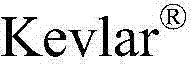


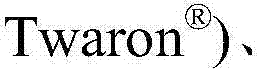
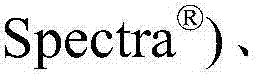
这些纤维的典型特性是低密度及高抗张强度,并具有相应的高能量吸收能力。就聚合物基复合材料(PMC)防弹嵌板的情况而言,所述纤维的力分散变形能力被所述复合材料周围的树脂严重牵制,这导致在受来自发射的影响时,在所述树脂基架破裂及分层的条件下失效。并入纺织复合材料的防弹嵌板的石墨烯及其衍生物将不会遭受典型聚合物基复合材料(PMC)树脂基架的局限性的影响。Typical properties of these fibers are low density and high tensile strength with a correspondingly high energy absorption capacity. In the case of polymer matrix composite (PMC) ballistic panels, the force-dispersing deformation capability of the fibers is severely constrained by the resin surrounding the composite, which results in Failure under conditions of pedestal cracking and delamination. Graphene and its derivatives incorporated into ballistic panels of textile composites will not suffer from the limitations of typical polymer matrix composite (PMC) resin matrixes.
石墨烯及其衍生物结构代表一独特的反弹道学机会及材料。石墨烯及其衍生物具有高弹性模量及抗张强度,其杨氏模量可高达~1000GPa,抗张强度介于13~53GPa。与传统的反弹道纤维及复合材料比较,石墨烯及其衍生物的潜能远远胜过目前发展水平的方法。Graphene and its derivative structures represent a unique anti-ballistic opportunity and material. Graphene and its derivatives have high elastic modulus and tensile strength, the Young's modulus can be as high as ~1000GPa, and the tensile strength is between 13-53GPa. Compared with traditional anti-ballistic fibers and composite materials, the potential of graphene and its derivatives far exceeds the current state-of-the-art methods.
一家名为“纳米组合物技术有限公司”(Nanocomp Technologies Inc.)的公司正在与美国陆军的“纳提克士兵中心”(U.S.Army’s Natick Soldier Center)协力寻求开发新一代的基于碳纳米管技术的轻型防弹装甲。根据报道,所述公司在2009年4月证明一厚度达5mm的碳纳米管复合材料防弹嵌板能够抵挡一9mm直径的子弹。可扩展为工业级的石墨烯及石墨烯衍生物合成的额外进步,无疑将使这个技术推进到更接近商业化的程度。A company called "Nanocomp Technologies Inc." (Nanocomp Technologies Inc.) is working with the U.S. Army's "Natick Soldier Center" (U.S. Army's Natick Soldier Center) to seek to develop a new generation of carbon nanotube-based Light bulletproof armor. According to reports, the company demonstrated in April 2009 that a carbon nanotube composite bulletproof panel with a thickness of 5mm can withstand a bullet with a diameter of 9mm. Additional advances in the synthesis of graphene and graphene derivatives that are scalable to industrial scale will undoubtedly advance this technology closer to commercialization.
机械系统的润滑Lubrication of mechanical systems
所有机械系统牵涉相互作用的组成部分之间的摩擦。这样的相互作用可以像一滚珠轴承沿一滚道滑动、一活塞环相对一气缸套移动、或一凸轮轴与其凸轮从动件之间的接触那样简单。在所有这些实例中,相互作用的表面之间的摩擦是一需考虑的因素。任何系统中的摩擦是应力、疲劳、磨损、发热、噪音、振动及最后失效的起因。上述含金属机械系统的其他共同大敌是腐蚀。All mechanical systems involve friction between interacting components. Such interactions can be as simple as a ball bearing sliding along a raceway, a piston ring moving relative to a cylinder liner, or the contact between a camshaft and its cam follower. In all of these instances, friction between the interacting surfaces is a factor to be considered. Friction in any system is the cause of stress, fatigue, wear, heat, noise, vibration and ultimately failure. The other common enemy of the metal-containing mechanical systems mentioned above is corrosion.
在大多数情况下,工程科学寻求通过对相互作用的表面进行机械加工及抛光到最高可行光滑度,减少带有相互作用的表面的物理及机械系统中的内在摩擦。当前没有任何摩擦表面是完全光滑(即完全没有粗糙实体)的。恰如所需,物理及机械系统的相互作用的构件被加工及抛光到所要求的公差,以允许适当的工作性能及减少内在摩擦。通过对构件进行所谓“超级抛光”到高公差(“平均粗糙度”(Ra)<50nm)获得的显著的摩擦减少到目前为止所意味的是更长的生产时间及更高的生产成本。一般上,现代机械加工科学被迫以机械加工精密度交换经济效益。In most cases, engineering science seeks to reduce the inherent friction in physical and mechanical systems with interacting surfaces by machining and polishing the interacting surfaces to the highest practicable smoothness. Currently no friction surface is completely smooth (ie, completely free of rough entities). The interacting components of the physical and mechanical systems are machined and polished to the required tolerances as required to allow proper performance and reduce inherent friction. Significant friction reductions obtained by so-called "super-polishing" of components to high tolerances ("average roughness" (R a ) <50 nm) have so far meant longer production times and higher production costs. In general, modern machining science is forced to trade machining precision for economic benefits.
此外,所有内燃机(包括自然吸气及涡轮增压的煤油及柴油内燃机)、涡轮及其他带齿轮系统一律都需要润滑,以正常操作。自从发动机及齿轮润滑的起始以来,人们已经在发动机及齿轮润滑领域做了多种为这些机器提供最佳润滑的企图。在润滑方面,最初所做的这样的企图(比如橄榄油及某些石碳酸皂)已经以更为精细的烃基润滑剂取代,许多所述烃基润滑剂甚至含有更为精细的添加剂组合,而且每一这样的添加剂试图处理这些系统的润滑工作中的多种内在问题。In addition, all internal combustion engines (including naturally aspirated and turbocharged kerosene and diesel internal combustion engines), turbines and other geared systems require lubrication for proper operation. Since the inception of engine and gear lubrication, various attempts have been made in the field of engine and gear lubrication to provide optimum lubrication for these machines. In terms of lubrication, such initial attempts (such as olive oil and certain carbolic soaps) have been replaced by finer hydrocarbon-based lubricants, many of which contain even finer combinations of additives, and each One such additive attempts to address various problems inherent in the lubrication of these systems.
当前含金属的机械系统(比如内燃机)的润滑的最新发展水平是使用弹性流体动力润滑(EHL)技术,而弹性流体动力润滑技术通过使用不可压缩流体及防护涂层来防止金属与金属直接接触的方法及材料,以“处理”机械系统的相互作用的金属表面上的粗糙实体的问题。这些方法中没有任何方法影响所述相互作用的金属构件表面的所谓Ra(“平均粗糙度”)值,而且没有减轻所述粗糙实体本身的摩擦产生的作用。The current state of the art in the lubrication of metal-containing mechanical systems, such as internal combustion engines, uses elastohydrodynamic lubrication (EHL) technology, which prevents direct metal-to-metal contact by using incompressible fluids and protective coatings Methods and materials to "handle" the problem of mechanical systems interacting with rough entities on metallic surfaces. None of these methods affect the so-called R a ("average roughness") value of the interacting metal member surfaces, nor do they mitigate the effect of the frictional production of the asperity entities themselves.
为了保持及保护金属摩擦表面及包括金属摩擦表面的系统,多种润滑剂添加剂用于多种目的,比如分散剂、腐蚀抑制剂、增粘剂、橡胶膨胀剂、降凝剂、泡沫抑制剂、抗磨剂及抗氧化剂。有些已开发来减少摩擦的润滑剂添加剂包括下列添加剂:流行用于航空润滑油但已知会慢慢地侵蚀弹性体垫圈及密封件的三邻甲酚磷酸酯(TOCP或TCP);已知会与不完全燃烧的产物结合形成盐酸的环烷烃清洁剂;对备有催化转换器的车辆有问题的二烷基二硫代磷酸锌(ZDDPs);全球确定为对水生生物非常有害的氯化石蜡;被许多人考虑为不适合用于润滑的悬浮固体,比如聚四氟乙烯(PTFE,商品名为被许多人考虑为不适合用于使用轴承的系统的石墨粉;据报道会降低燃油经济有效性的一种金属-钼;一暂时屏蔽溶液-二硫化钨纳米洋葱;另一昂贵及暂时的溶液-巴基球(Buckminsterfullerenes)及悬浮在石墨中的纳米金刚石,以阻止磨料颗粒的典型聚合(使用此添加剂会引起反对在带有轴承的系统中使用石墨者的抱怨)。润滑剂添加剂常常也含有磷酸盐及硫化物,而这些磷酸盐及硫化物在分解时会产生有害气体。In order to maintain and protect metal friction surfaces and systems including metal friction surfaces, a variety of lubricant additives are used for various purposes, such as dispersants, corrosion inhibitors, tackifiers, rubber expansion agents, pour point depressants, foam inhibitors, Antiwear agent and antioxidant. Some lubricant additives that have been developed to reduce friction include the following: tri-o-cresol phosphate (TOCP or TCP), popular in aviation lubricants but known to slowly attack elastomeric gaskets and seals; Naphthenic cleaners that combine with products of incomplete combustion to form hydrochloric acid; zinc dialkyldithiophosphates (ZDDPs) that are problematic for vehicles equipped with catalytic converters; chlorinated paraffins that are globally determined to be very harmful to aquatic life ; Suspended solids considered by many to be unsuitable for lubrication, such as polytetrafluoroethylene (PTFE, trade name Graphite powder considered by many to be unsuitable for systems using bearings; a metal that has been reported to reduce fuel economy effectiveness - molybdenum; a temporary barrier solution - tungsten disulfide nano-onions; another expensive and temporary solution - Buckyballs (Buckminsterfullerenes) with nanodiamonds suspended in graphite to prevent the typical aggregation of abrasive grains (the use of this additive raises complaints against the use of graphite in systems with bearings). Lubricant additives often also contain phosphates and sulfides which, when decomposed, produce noxious gases.
机械系统内部的碳质沉积物几乎普遍地被认为是不可取的,许多现代润滑剂专门设计及调配来抑制及/或防止任何碳质沉积物形成。传统的弹性流体动力润滑学识提议,内燃机润滑油必须尽可能调配得具有物理和化学稳定性,以阻止(而不是促进)所述基润滑剂及其添加剂因不完全燃烧及热解而造成的热降解;这是由于传统润滑剂的这样的热破坏产生有害的碳质沉积物(比如沉渣),而碳质沉积物趋向阻塞阀门、覆盖活塞环而且通常会减少发动机的运行效率及预期寿命。分散剂常用于润滑剂,以防止沉渣聚合-实例详见由Won等人于《兰茂尔》期刊2005年第21卷第924-932页发表的“温度对带有吸附分散剂的液态烃中的碳黑凝聚的影响”(Won et al.,“Effect ofTemperature on Carbon-Black Agglomeration in Hydrocarbon Liquid withAdsorbed Dispersant”,Langmuir,Vol.21,pp.924-932,2005);由Tomlinson等人于《碳》期刊2000年第38卷第13-28页发表的“琥珀酰亚胺分散剂早碳质基体上的吸附性能”(Tomlinson et al.,“Adsorption Properties of SuccinimideDispersants on Carbonaceous Substrates”,Carbon,Vol.38,pp.13-28,2000);由Wang于2000年发表的滑铁卢大学硕士论文“碳酸乙烯酯改性琥珀酰亚胺分散剂的合成及特性测试”(Wang,“Synthesis and Characterization of EthyleneCarbonate Modified Polyisobutylene Succinimide Dispersants”,University ofWaterloo Masters Thesis,2010)。因不完全燃烧而发生的来自发动机的窜气炭黑已经显示其高度磨蚀作用及能够损坏金属部件-实例详见由Jao等人于《润滑科学》期刊2004年第16卷第111-126页发表的“炭黑特性及柴油发动机磨损”(Jao et al.,“Soot Characterization and Diesel Engine Wear”,Lubrication Science,Vol.16,pp.111-126,2004);由Ryason等人于《磨损》期刊1990年第137卷第15-24页发表的“抛光由炭黑造成的磨损”(Ryason et al.,“Polishing Wear by Soot”,Wear,Vol.137,pp.15-24,1990);由Yamaguichi等人于《工程摩擦学期刊》2006年第220卷第463-469页发表的“柴油发动机中的炭黑磨损”(Yamaguichi et al.,“Soot Wear in Diesel Engines”,Journal ofEngineering Tribology,Vol.220,pp.463-469,2006);由Gautam等人于《国际摩擦学》期刊1999年第32卷第687-699页发表的“柴油炭黑污染油对发动机的磨损的影响”(Gautam et al.,“Effect of Diesel Soot Contaminated Oil onEngine Wear-Investigation of Novel Oil Formulations”,Tribology International,Vol.32,pp.687-699,1999)。“无灰的”发动机润滑油是另一支持润滑剂调配组合物必须尽量保持无碳颗粒及所有碳质的发动机沉积物有害的概念的产品实例。以目前的弹性流体动力润滑范例而言,会导致形成碳质烟灰及沉积物的润滑剂添加剂的热降解及热解普遍被认为不可取。Carbonaceous deposits inside mechanical systems are almost universally considered undesirable, and many modern lubricants are specifically designed and formulated to inhibit and/or prevent any carbonaceous deposits from forming. Traditional elastohydrodynamic lubrication lore proposes that internal combustion engine lubricating oils must be formulated to be as physically and chemically stable as possible in order to prevent (rather than facilitate) the thermal evolution of the base lubricant and its additives due to incomplete combustion and pyrolysis. Degradation; this is due to the fact that such thermal damage to conventional lubricants produces harmful carbonaceous deposits such as sludge that tend to clog valves, coat piston rings and generally reduce engine operating efficiency and life expectancy. Dispersants are often used in lubricants to prevent sediment polymerization - for an example see "Temperature Effects in Liquid Hydrocarbons with Adsorbed Dispersants" by Won et al. The impact of carbon black agglomeration" (Won et al., "Effect of Temperature on Carbon-Black Agglomeration in Hydrocarbon Liquid with Adsorbed Dispersant", Langmuir, Vol.21, pp.924-932, 2005); by Tomlinson et al. in "Carbon "Adsorption Properties of Succinimide Dispersants on Carbonaceous Substrates" (Tomlinson et al., "Adsorption Properties of Succinimide Dispersants on Carbonaceous Substrates", Carbon, Vol. 38, pp.13-28, 2000); published by Wang in 2000, "Synthesis and Characterization of EthyleneCarbonate Modified Succinimide Dispersant" (Wang, "Synthesis and Characterization of EthyleneCarbonate Modified Polyisobutylene Succinimide Dispersants”, University of Waterloo Masters Thesis, 2010). Blow-by soot from engines due to incomplete combustion has been shown to be highly abrasive and capable of damaging metal parts - see for example Jao et al. Journal of Lubrication Science, Vol. 16, pp. 111-126, 2004 "Characteristics of Carbon Black and Diesel Engine Wear" (Jao et al., "Soot Characterization and Diesel Engine Wear", Lubrication Science, Vol.16, pp.111-126, 2004); by Ryason et al. in the journal "Wear" "Polishing Wear by Soot", Vol. 137, pp. 15-24, 1990 (Ryason et al., "Polishing Wear by Soot", Wear, Vol. 137, pp. 15-24, 1990); by "Soot Wear in Diesel Engines" (Yamaguichi et al., "Soot Wear in Diesel Engines", Journal of Engineering Tribology, Vol. .220, pp.463-469, 2006); published by Gautam et al. in "International Tribology" journal 1999 volume 32, pages 687-699, "The influence of diesel carbon black contaminated oil on engine wear" (Gautam et al., "Effect of Diesel Soot Contaminated Oil on Engine Wear-Investigation of Novel Oil Formulations", Tribology International, Vol.32, pp.687-699, 1999). "Ashless" engine oils are another example of a product that supports the concept that lubricant formulation compositions must remain as free as possible of carbon particles and all carbonaceous engine deposits that are harmful. Thermal degradation and pyrolysis of lubricant additives leading to the formation of carbonaceous soot and deposits is generally considered undesirable in the current elastohydrodynamic lubrication paradigm.
目前用于润滑剂及它们的衍生物的试验标准,是这个润滑思维的进一步证据,并支持这个润滑思维。“诺雅克挥发性试验”(Noack Volatility Test)(美国材料试验学会ASTM D5800)测量润滑剂组合物的蒸发,作为温度的一函数,这是由于润滑剂组合物在蒸发增大时会变得更粘滞。所述试验涉及在250℃的温度条件下将一质量的发动机润滑油置入一“诺雅克”(Noack)装置内,以一恒定的空气流量通过所述试样1小时。接着,测量所述试样的质量,以确定由于挥发性有机化合物(VOCs)的损失而造成的质量损失。可接受的质量损失不大于13~15%。润滑剂必须通过这个试验,才能获得API CJ-4发动机润滑油标准(美国)或ISLAC GF-4发动机润滑油标准(欧洲联盟)之下的批准。The current testing standards for lubricants and their derivatives are further evidence of and support this lubrication thinking. The Noack Volatility Test (ASTM D5800) measures the evaporation of a lubricant composition as a function of temperature, since a lubricant composition becomes more sticky. The test involves placing a mass of engine oil in a "Noack" apparatus at a temperature of 250° C. and passing a constant air flow over the sample for 1 hour. Next, the mass of the sample is measured to determine mass loss due to loss of volatile organic compounds (VOCs). The acceptable mass loss is not more than 13-15%. A lubricant must pass this test in order to be approved under the API CJ-4 Engine Lubricant Standard (USA) or the ISLAC GF-4 Engine Lubricant Standard (European Union).
其他的润滑剂工业蒸发试验包括ASTM D972及ASTM D2595。ASTMD972在100~150℃的温度条件下试验润滑剂组合物,并以一恒定的空气流量(2L/min)通过所述试样。ASTM D2595在93~316℃的温度条件下试验润滑剂组合物,并以一恒定的空气流量(2L/min)通过所述试样。Other lubricant industry evaporation tests include ASTM D972 and ASTM D2595. ASTM D972 tests the lubricant composition under the temperature condition of 100-150°C, and passes through the sample with a constant air flow rate (2L/min). ASTM D2595 tests lubricant compositions at a temperature of 93-316°C, and passes through the sample at a constant air flow rate (2L/min).
现代润滑剂工业几乎在弹性流体动力润滑(EHL)的润滑剂组合物中专门使用一种直链烃或支链烃的基润滑剂,并连同使用小量的相对昂贵的添加剂,包括(在有些情况下)使用含有诸如某些抗氧化的受阻苯酚、某些水杨酸盐及某些胺。在大多数情况下,先前技术中对含有环碳的润滑剂抗氧化添加剂的使用大多数限于通过抑制基润滑剂从原位形成的过氧化物的基氧化,以改进或保护所述基润滑剂。The modern lubricant industry uses almost exclusively a linear or branched hydrocarbon base lubricant in elastohydrodynamic (EHL) lubricant compositions, together with small amounts of relatively expensive additives, including (in some case) use compounds containing antioxidants such as hindered phenols, certain salicylates, and certain amines. For the most part, the prior art use of anti-oxidant additives for lubricants containing ring carbons has mostly been limited to improving or protecting the base lubricant by inhibiting its radical oxidation from in situ formed peroxides .
上述弹性流体动力润滑(EHL)范例及所述工业试验标准是基于不完全燃烧或热解的碳质产物在发动机及机械系统内部普遍有害及不可取的假定。这表示使用含有去垢剂、分散剂及边界膜的最佳结果是尽量保持一机械系统的经润滑的内部非常干净、无碳质沉积物及无磨损。The elastohydrodynamic lubrication (EHL) paradigm described above and the industry test standards described are based on the assumption that carbonaceous products of incomplete combustion or pyrolysis are generally harmful and undesirable within engine and mechanical systems. This means that the best results from using films containing detergents, dispersants and boundaries is to try to keep the lubricated interior of a mechanical system very clean, free of carbonaceous deposits and free of wear.
富勒烯的生产及其润滑用途Production of Fullerene and Its Use in Lubrication
在1985年首次被发现并以已故测地学圆顶建筑师“巴克敏斯特·富勒”(Buckminster Fuller)的名字Fuller命名的富勒烯(Fullerene)是一类外壳完全由碳环组成的分子。富勒烯的基本球形品种是“巴克敏斯特富勒烯”(Buckminsterfullerene),或简称“巴基球”(Buckyball)。“巴基球”(Buckyballs)可能具有内嵌性质,在它们的空心核中囚禁多种原子、离子或复合材料。含有金属离子的内嵌金属富勒烯是目前重要的科学探讨及研究课题。First discovered in 1985 and named after the late Geodetic Dome architect "Buckminster Fuller" Fuller, fullerenes are a class of shells composed entirely of carbon rings molecular. The basic spherical species of fullerene is "Buckminsterfullerene" (Buckminsterfullerene), or "Buckyball" for short. "Buckyballs" may have embedded properties, trapping various atoms, ions or composite materials in their hollow cores. Intercalated metallofullerenes containing metal ions are currently an important scientific discussion and research topic.
在数学方面而言,一“巴基球”(buckyball)是一由五边形及六边形碳环组成的三价凸多面体。“巴基球”(Buckyballs)遵守“欧拉”(Euler)多面体公式,因为V–E+F=2,其中V、E及F依次是所述球的外部上的顶点、边及面的数目。在非同构富勒烯方面而言,有大约214,127,713个不同种类。纯的普通巴基球在市面上以C60及C70的化学结构形态出售,但相当昂贵;一般上其价格为$900至$1,000美元每100mg(毫克)。In mathematics, a "buckyball" is a trivalent convex polyhedron composed of pentagonal and hexagonal carbon rings. "Buckyballs" obey the "Euler" polyhedron formula because V–E+F=2, where V, E, and F are, in turn, the number of vertices, edges, and faces on the exterior of the ball . In terms of non-isostructural fullerenes, there are approximately 214,127,713 different species. Pure common buckyballs are sold in the market as C 60 and C 70 chemical structures, but they are quite expensive; generally their price is $900 to $1,000 per 100mg (milligram).
“巴基金刚石”(Bucky-diamonds)是一富勒烯或富勒烯类外壳内的一金刚石核的纳米尺度碳复合材料-实例详见由Barnard等人于《物理学评论B》期刊2003年第68卷第073406页发表的“带有纳米金刚石的巴基金刚石与富勒烯碳相的共存”(Barnard et al.,“Coexistence of Bucky-diamond withnanodiamond and fullerene carbon phases”,Physical Review B,Vol.68,073406,2003)。这个结构现在被相信是纳米洋葱与纳米金刚石的互转化之间的一中介结构。Barnard等人预言“巴基金刚石”(Bucky-diamonds)是以大小范围介于500至1,850个原子(1.4至2.2nm直径)的纳米金刚石与富勒烯的共存方式存在的、碳的一亚稳态形式。"Bucky-diamonds" are nanoscale carbon composites of a diamond core within a fullerene or fullerene-like shell - see for example Barnard et al., Physical Review B, 2003 "Coexistence of Bucky-diamond with nanodiamond with nanodiamond and fullerene carbon phases" (Barnard et al., "Coexistence of Bucky-diamond with nanodiamond and fullerene carbon phases", Physical Review B, Vol. .68, 073406, 2003). This structure is now believed to be an intermediate structure between the interconversion of nano-onions and nano-diamonds. Barnard et al. predicted that "Bucky-diamonds" are metastable carbons that exist in the coexistence of nano-diamonds and fullerenes with sizes ranging from 500 to 1,850 atoms (1.4 to 2.2 nm in diameter). state form.
巴纳德(Barnard)等人于《物理化学期刊B》2005年第109卷第17107-17112页发表的“纳米金刚石及巴基金刚石颗粒中的取代型氮”(”Substitutional Nitrogen in Nanodiamond and Bucky-Diamond Particles”,Journal of Physical Chemistry B,Vol.109,pp.17107-17112,2005)中提出,有可能将杂环原子(比如此例中的氮)结合到巴基金刚石结构中。最近,Yu等人于彼等在2011年8月24日提交给《化学物理期刊》的文章“碳化硅簇合物是否有一稳定的巴基金刚石结构”(”Is There a Stable Bucky-diamond Structurefor SiC Cluster”,submitted to the Journal of Chemical Physics on August24,2011)中提出一基于计算机分子模拟的稳定Si68C79巴基金刚石结构。在稳定状态,相信所述纳米金刚石核及所述富勒烯类外壳并未相互化学键合。所述Yu等人的模拟预示,在加热这个碳化硅结构时,所述35-原子的核将在比112-原子的外壳的分解温度为低的温度分解,所述核接着被结合到所述外壳内,在冷却时形成一较大的留存富勒烯类外壳结构。Barnard (Barnard) et al published "Substitutional Nitrogen in Nanodiamond and Bucky Diamond Particles"("Substitutional Nitrogen in Nanodiamond and Bucky- Diamond Particles", Journal of Physical Chemistry B, Vol.109, pp.17107-17112, 2005) suggested that it is possible to incorporate heterocyclic atoms (such as nitrogen in this example) into the bucky diamond structure. More recently, Yu et al. "Is There a Stable Bucky-diamond Structure for SiC" in their article "Is There a Stable Bucky-diamond Structure for SiC Cluster”, submitted to the Journal of Chemical Physics on August24, 2011) proposed a stable Si 68 C 79 Bucky diamond structure based on computer molecular simulation. In a steady state, it is believed that the nanodiamond core and the fullerene-like shell are not chemically bonded to each other. The Yu et al. simulations predict that upon heating this silicon carbide structure, the 35-atom core will decompose at a lower temperature than the 112-atom shell, which is then bound to the Inside the shell, a larger retained fullerene-like shell structure forms upon cooling.
富勒烯是润滑科学中的一项有前途的新技术。人们已经多次试图使用富勒烯作为密封润滑剂来填充移动部件上的粗糙实体,以及在移动部件上提供一摩擦学薄膜。不幸的是,有用的富勒烯的大规模及商业上可行的生产方法难以捉摸。此外,摩擦学目前的发展现状着重于移动部件上的摩擦学薄膜及涂层。然而,这个旧思维并没有处理摩擦本身的根本原因-即相互作用的金属部件上的粗糙实体。Fullerenes are a promising new technology in lubrication science. There have been many attempts to use fullerenes as seal lubricants to fill rough bodies on moving parts, as well as to provide a tribological film on moving parts. Unfortunately, large-scale and commercially viable production methods of useful fullerenes have been elusive. Additionally, the current state of the art in tribology focuses on tribological films and coatings on moving parts. However, this old thinking didn't deal with the root cause of friction itself -- the rough entities on the interacting metal parts.
纳米技术及摩擦学的出现已经引进几个新的通过使用多种纳米颗粒的润滑方法。由Gause于2007年12月20日发表的标题为“三金属球作为干润滑剂、湿润滑剂、润滑剂添加剂、润滑剂涂层、抗腐蚀涂层及热导材料”(“Trimetaspheres as Dry Lubricants,Wet Lubricants,Lubricant Additives,Lubricant Coatings,Corrosion-Resistant Coatings and Thermally-ConductiveMaterials)的第2007/0292698号美国专利申请出版物(U.S.Patent ApplicationPublication No.2007/029269)揭露,含钪金属富勒烯巴基球代替在高温时快速分解的普通碳富勒烯或“巴基球”,作为一种悬浮固体润滑剂来使用。The advent of nanotechnology and tribology has introduced several new lubrication methods through the use of various nanoparticles. "Trimetaspheres as Dry Lubricants, Wet Lubricants, Lubricant Additives, Lubricant Coatings, Anti-Corrosion Coatings, and Thermally Conductive Materials" by Gause on December 20, 2007 , Wet Lubricants, Lubricant Additives, Lubricant Coatings, Corrosion-Resistant Coatings and Thermally-ConductiveMaterials) No. 2007/0292698 U.S. Patent Application Publication (U.S.Patent Application Publication No.2007/029269) disclosed that scandium-containing metal fullerenes The balls are used as a suspended solid lubricant instead of ordinary carbon fullerenes or "bucky balls" which decompose rapidly at high temperatures.
已经假定,外部分离的“单纳米巴基金刚石”(SNBDs)作为润滑剂添加剂使用,然而这些分子天生难以从不可取的凝聚物分离,而所述分离却是使这些分子在润滑及其他应用中变得有用的必需步骤-实例详见由Ho博士编辑、由纽约“斯伯林格科学+商业媒体有限公司”的Osawa,E.撰著的《纳米金刚石:其生物学应用及纳米医药》第1章的“单纳米巴基金刚石颗粒、合成策略、特性测试方法及新兴应用”(Ho,D.(ed.),Nanodiamonds:Applications in Biology and Nanoscale Medicine,Ch.1,“Single-Nano Buckydiamond Particles,Synthesis Strategies,CharacterizationMethodologies and Emerging Applications”,by Osawa,E.,Springer Science+Business Media,LLC,New York,2010)。It has been postulated that externally isolated "single nanobuckety diamonds" (SNBDs) are used as lubricant additives, however these molecules are inherently difficult to separate from the undesirable agglomerates that render them useful in lubrication and other applications. Necessary steps to become useful - for examples see Nanodiamonds: Their Biological Applications and Nanomedicine, vol. 1, edited by Dr. "Single-Nano Buckydiamond Particles, Synthesis Strategies, Characteristic Test Methods and Emerging Applications" by Zhang Zhang (Ho,D.(ed.), Nanodiamonds: Applications in Biology and Nanoscale Medicine , Ch.1, "Single-Nano Buckydiamond Particles, Synthesis Strategies, Characterization Methodologies and Emerging Applications", by Osawa, E., Springer Science+Business Media, LLC, New York, 2010).
以色列国尼斯锡安纳市(Ness Ziona,Israel)的“纳米材料有限公司”(NanoMaterials,Ltd.)已经生产一系列含二硫化钨纳米粉末的润滑剂。这些黑色的硫化钨洋葱结构的目的在于填充表面粗糙实体以及脱落层,以充当相互作用的金属发动机部件之间的一低摩擦相互作用屏蔽表面。NanoMaterials, Ltd. of Ness Ziona, Israel has produced a series of lubricants containing tungsten disulfide nanopowder. These black tungsten sulfide onion structures are designed to fill in surface roughness and exfoliated layers to act as a low-friction interaction shielding surface between interacting metal engine parts.
美国伊利诺斯州朗伯德市(Lombard,Illinois)的“NanoLube有限公司”(NanoLube,Inc.)声称在DiamondLubeTM商标名下生产非磨蚀碳纳米球,这种非磨蚀碳纳米球被引进润滑剂,以减少摩擦。所述DiamondLubeTM产品似乎是昂贵但普通的悬浮于轻型油中的富勒烯。"NanoLube, Inc.," Lombard, Illinois, USA, claims to produce, under the DiamondLube TM trade name, non-abrasive carbon nanospheres that are introduced to lubricate agent to reduce friction. The DiamondLube (TM) product appears to be an expensive but common fullerene suspended in light oil.
德国柏林市(Berlin)的PlasmaChem GmbH公司在
爆轰纳米金刚石是一种一般上通过三硝基甲苯与环三次甲基三硝基胺的一缺氧混合物的炸药爆轰而形成的纳米金刚石产物-实例详见由Mochalin等人于《自然纳米技术》期刊2012年第7卷第11-23页发表的“纳米金刚石的特性及应用”(Mochalin et al.,“The Properties and Applications ofNanodiamonds”,Nature Nanotechnology,Vol.7,pp.11-23,2012)。上述方法所得的纳米金刚石通常以5nm(纳米)钻石形颗粒的1-nm簇合物的形式存在,每个纳米颗粒包括一带有一层表面基团的金刚石核。Detonation nanodiamond is a nanodiamond product typically formed by explosive detonation of an anoxic mixture of trinitrotoluene and cyclotrimethyltrinitroamine - for an example see Mochalin et al. in Nature Nanotechnology. "Characteristics and Applications of Nanodiamonds" (Mochalin et al., "The Properties and Applications of Nanodiamonds", Nature Nanotechnology, Vol.7, pp.11-23, published on pages 11-23, Volume 7, 2012 of Technology), 2012). The nanodiamonds obtained by the method described above usually exist in the form of 1-nm clusters of 5 nm (nanometer) diamond-shaped particles, each nanoparticle comprising a diamond core with a layer of surface groups.
其他形成纳米金刚石的方法使用非爆轰技术,比如金刚石微晶体的激光烧蚀、高能球研磨、碳化物的等离子体辅助化学气相沉积、高压釜合成、氯化、石墨的离子辐射、碳纳米洋葱电子辐射、以及超声波气蚀。这些方法所得的非爆轰纳米金刚石在合成时有簇合的趋向,而且人们已经投入很大的努力来开发将凝聚的纳米金刚石产物干净地分离的方法。Other methods of forming nanodiamonds use non-detonation techniques, such as laser ablation of diamond microcrystals, high-energy ball milling, plasma-assisted chemical vapor deposition of carbides, autoclave synthesis, chlorination, ionizing radiation of graphite, carbon nanocrystals Onion electron radiation, and ultrasonic cavitation. The non-detonation nanodiamonds produced by these methods have a tendency to cluster when synthesized, and considerable effort has been devoted to developing methods for the clean separation of the agglomerated nanodiamond products.
这些减少摩擦的解决方案之中的大多数的共同要素以及目前本行业的技术现状是使用弹性流体动力润滑(EHL)技术。弹性流体动力润滑(EHL)技术使用多种方法及材料来“应付”机械系统的相互作用的金属表面上的粗糙实体的问题,而不是消除或“解决”所述问题的根本原因-即所述粗糙实体本身。那些试图处理粗糙实体的抛光及减少的方法及材料通过使用外部补充的纳米金刚石磨料来应付粗糙实体的问题,而这些外部补充的纳米金刚石磨料必须是悬浮于用于防止它们凝聚成不可取的簇合物的材料中者。上述方法及材料中没有任何方法或材料涉及从液态前体物原位形成有益的碳质摩擦学颗粒或非磨料的技术或手段,而从液态前体物原位形成有益的碳质摩擦学颗粒或非磨料的技术或手段却恰是一种新颖的、处理目前本行业的技术现状中存在的关于来自外部补充的纳米金刚石润滑剂磨料的不可取颗粒凝聚的问题的方法。A common element among most of these friction reducing solutions, and the current state of the art in the industry, is the use of elastohydrodynamic lubrication (EHL) technology. Elastohydrodynamic lubrication (EHL) technology uses a variety of methods and materials to "cope" with the problem of rough entities on interacting metal surfaces of mechanical systems, rather than eliminate or "solve" the root cause of said problem - namely the The rough entity itself. Methods and materials that attempt to deal with the polishing and reduction of rough bodies have dealt with the rough body problem by using externally supplemented nanodiamond abrasives that must be suspended in order to prevent them from agglomerating into undesirable clusters. compound material. None of the methods and materials described above relate to techniques or means for in situ formation of beneficial carbonaceous tribological particles or non-abrasive materials from liquid precursors, but in situ formation of beneficial carbonaceous tribological particles from liquid precursors Or non-abrasive technology or means is just a novel way to deal with the problem of undesirable particle agglomeration from externally supplemented nano-diamond lubricant abrasives that exists in the current state of the art in the industry.
发明内容Contents of the invention
本发明涉及石墨烯、石墨烯衍生物及纳米颗粒的简易合成以及它们作为在摩擦学上有益的润滑剂添加剂的用途。本发明的方法的产物有多个领域中的许多用途,这些领域包括但不限于摩擦学、纳米技术、机械加工及加工工具、润滑、金属加工、钻孔、采矿、油漆制造、防腐蚀涂层制造、岩石隧道挖掘、打槽、模具制作、光学镜片制造、军事工程、宝石切割及抛光、航空航天工程、汽车工程、高速铁路、海事工程、医学、核医学、医学影像学及诊断学、货车运输、起重机及重设备制造、农场设备制造、摩托单车制造、电机制作、电缆及电线制造、砂磨、核发电、太阳能发电、风能发电、传统式发电、水力发电、电子器件、集成电路技术、电池技术、抛光剂制造、钢制造、金属抛光以及金属表面的化学硬化。The present invention relates to the facile synthesis of graphene, graphene derivatives and nanoparticles and their use as tribologically beneficial lubricant additives. The products of the methods of the present invention have many uses in a variety of fields including, but not limited to, tribology, nanotechnology, machining and tooling, lubrication, metalworking, drilling, mining, paint manufacturing, anti-corrosion coatings Manufacturing, Rock Tunneling, Grooving, Mold Making, Optical Lens Manufacturing, Military Engineering, Gemstone Cutting and Polishing, Aerospace Engineering, Automotive Engineering, High Speed Rail, Maritime Engineering, Medicine, Nuclear Medicine, Medical Imaging and Diagnostics, Trucks Transportation, crane and heavy equipment manufacturing, farm equipment manufacturing, motorcycle manufacturing, motor manufacturing, cable and wire manufacturing, sanding, nuclear power generation, solar power generation, wind power generation, conventional power generation, hydropower generation, electronic devices, integrated circuit technology, Battery technology, manufacture of polishes, steel fabrication, metal polishing and chemical hardening of metal surfaces.
本发明进一步涉及包括一润滑剂及至少一种添加剂的润滑剂组合物,所述至少一种添加剂被选择起一牺牲碳源的作用,所述牺牲碳源在正常操作的局部热解条件下在摩擦学上有用的石墨碳结构的原位形成中起作用。此外,本发明也揭露石墨碳、氧化石墨碳、还原氧化石墨碳及其他石墨碳衍生物结构以及磨料纳米颗粒的非原位合成方法。分离所述非原位合成产物的方法进一步通过一“动力炉”设备的使用揭示。The present invention further relates to lubricant compositions comprising a lubricant and at least one additive selected to function as a sacrificial carbon source which, under local pyrolysis conditions of normal operation, play a role in the in situ formation of tribologically useful graphitic carbon structures. In addition, the present invention also discloses graphitic carbon, graphitic oxide carbon, reduced graphitic carbon oxide and other graphitic carbon derivative structures and methods for ex-situ synthesis of abrasive nanoparticles. The method of isolating the ex situ synthesis products is further revealed by the use of a "power furnace" device.
此外,本发明特别有用,这是由于其涉及用于抛光、硬化及润滑发动机、增压涡轮、涡轮、磁轨、滚道、轮、轴承、轴、传动系统、齿轮系统及其他使用机械加工的相互作用硬表面的物理和机械系统中的运动部件的润滑剂组合物及方法。在一个实施例中,所述方法及润滑剂组合物提供金属相互作用表面中的无摩擦完美。Furthermore, the present invention is particularly useful as it relates to polishing, hardening and lubricating engines, turbochargers, turbines, magnetic tracks, raceways, wheels, bearings, shafts, transmission systems, gear systems and other Lubricant compositions and methods for moving parts in physical and mechanical systems that interact with hard surfaces. In one embodiment, the method and lubricant composition provide frictionless perfection in metal-interacting surfaces.
在一个实施例中,本发明的润滑剂组合物使所述发动机、增压涡轮或涡轮产生的有用功率及转矩大于在以传统润滑剂润滑时产生的有用功率及转矩,这是由于通过所述润滑剂组合物及方法的润滑及抛光作用减少了摩擦。观测到效率指标(比如发动机功率及转矩)在所述润滑剂组合物开始被引进所述发动机之后数日、数周以至数月的时段期间增加。在有些实施例中,此中揭示的方法及润滑剂组合物的好处包括在被润滑的移动部件的所述表面上形成一摩擦边界层的纳米颗粒或纳米薄片,而这样的纳米颗粒或纳米薄片的作用在于积极消除来自所述金属表面的氧化、包裹所述金属表面以及在扮演减少摩擦的指定任务中有益地使用所述氧化分子。In one embodiment, the lubricant composition of the present invention causes the engine, turbocharger or turbine to produce more useful power and torque than would be produced when lubricated with conventional lubricants, due to the The lubricating and polishing action of the lubricant compositions and methods reduces friction. Efficiency indicators such as engine power and torque were observed to increase during a period of days, weeks and even months after the lubricant composition was initially introduced into the engine. In some embodiments, the benefits of the methods and lubricant compositions disclosed herein include nanoparticles or nanoflakes that form a frictional boundary layer on said surface of the moving part being lubricated, and such nanoparticles or nanoflakes The role of ® is to actively eliminate oxidation from the metal surface, to coat the metal surface, and to use the oxidized molecules beneficially in their assigned task of reducing friction.
在医学、核医学、医学影像学及诊断学方面而言,本发明产生高度惰性、安全及无穷小的载体,这些载体将放射性同位素、其他金属离子或其他绑定到离子的治疗剂递送到体内的不同位置,以进行治疗或提高磁成像或其他诊断成像的分辨率。此外,这些磁性或顺磁性球状体可以用于在一人工感应强磁场(比如磁共振成像)中根除肿瘤及癌细胞,以促使所述球状体激烈转动或振荡,从而产生足以从内部以热的方法消除靶细胞或组织的热量。In medicine, nuclear medicine, medical imaging, and diagnostics, the invention produces highly inert, safe, and infinitesimal vehicles for delivering radioisotopes, other metal ions, or other ion-bound therapeutic agents to the body different positions for treatment or to improve the resolution of magnetic or other diagnostic imaging. In addition, these magnetic or paramagnetic spheroids can be used to eradicate tumors and cancer cells in an artificially induced strong magnetic field (such as magnetic resonance imaging) to cause the spheroids to rotate or oscillate violently, thereby generating sufficient heat from the inside. Methods to remove heat from target cells or tissues.
在一个实施例中,本发明包括一种经济的、由一碳质材料碳源形成石墨碳的脱水反应或回流热解的方法。所述方法可提升至工业生产规模。所述碳源以一食糖或其他含6碳环的结构为优选,虽然可以使其他碳质材料经受回流热解、氧化/还原、不完全燃烧或酸脱水来形成所述石墨碳反应物起始材料。在一个实施例中,石墨碳经受以一液体溶剂进行的回流,然后石墨烯/氧化石墨烯(GO)以悬浮于一蒸汽/水汽的纳米视觉尺度或“纳米尺度”结构的形式散发。在一个实施例中,可以使一石墨碳源经受一高压液体或蒸汽的物理攻击,以便在不需要热解、脱水或氧化步骤的情况下产生机械剥离的石墨烯剥片。上述方法所得的石墨烯/氧化石墨烯剥片可以在蒸汽中传播,并通过直接沉积到一与所散发的蒸汽物理接触的固态基体上来收集,或通过将所述含颗粒的蒸汽施加到一用于促进所述剥片“疏水自组”成为较大的石墨烯/氧化石墨烯剥片的水溶液或液体来收集。In one embodiment, the present invention includes an economical dehydration reaction or reflux pyrolysis process to form graphitic carbon from a carbonaceous material carbon source. The method can be scaled up to industrial production scale. The carbon source is preferably a sugar or other structure containing 6 carbon rings, although other carbonaceous materials can be subjected to reflux pyrolysis, oxidation/reduction, incomplete combustion or acid dehydration to form the graphitic carbon reactant starting Material. In one embodiment, graphitic carbon is subjected to reflux with a liquid solvent, and graphene/graphene oxide (GO) is then emitted as nanoscopic visual scale or "nanoscale" structures suspended in a vapor/water vapor. In one embodiment, a graphitic carbon source can be subjected to physical attack with a high pressure liquid or vapor to produce mechanically exfoliated graphene exfoliations without the need for pyrolysis, dehydration or oxidation steps. The graphene/graphene oxide flakes obtained by the above method can be propagated in the vapor and collected by direct deposition onto a solid substrate in physical contact with the emanating vapor, or by applying the particle-containing vapor to a An aqueous solution or liquid that promotes "hydrophobic self-assembly" of the exfoliations into larger graphene/graphene oxide exfoliations is collected.
在一个实施例中,控制反应环境以限制反应室中的环境氧(O2)的量,阻止所述反应物在加热期间完全燃烧。在一个实施例中,所述反应在存在一添加溶剂的情况下进行。在一个实施例中,所产生的氧化石墨烯(GO)转化为悬浮在一加热或未加热液态收集介质中的还原氧化石墨烯(rGO)或石墨烯薄片。上述方法所得的还原氧化石墨烯或石墨烯薄片可以用于生产范围广泛的有用产物,包括但不限于保护涂层、低重/高强度的石墨烯增强复合材料、丝线及纤维。In one embodiment, the reaction environment is controlled to limit the amount of ambient oxygen ( O2 ) in the reaction chamber, preventing complete combustion of the reactants during heating. In one embodiment, the reaction is performed in the presence of an added solvent. In one embodiment, the produced graphene oxide (GO) is converted to reduced graphene oxide (rGO) or graphene flakes suspended in a heated or unheated liquid collection medium. The reduced graphene oxide or graphene flakes obtained by the above method can be used to produce a wide range of useful products, including but not limited to protective coatings, low-weight/high-strength graphene-reinforced composites, filaments and fibers.
在一个实施例中,一碳质起始材料经受一脱水反应或热解以形成石墨碳。在一个实施例中,所述碳质源含石墨。所述石墨碳在存在一溶剂的情况下经受回流,使石墨烯/氧化石墨烯剥片或回流合成的多环芳烃(PAHs)在加热时在一产生的蒸汽中散发。所述石墨烯/氧化石墨烯剥片或多环芳烃(PAHs)通过沉积到一与所散发的蒸汽物理接触的固态基体上来收集,或通过将所述蒸汽施加到一供石墨烯/氧化石墨烯进行疏水自组的水溶液池来收集。所述过程可扩展为工业级规模。在有些实施例中,所产生的氧化石墨烯转化为悬浮在一加热或未加热的液体介质中的还原氧化石墨烯薄片。In one embodiment, a carbonaceous starting material is subjected to a dehydration reaction or pyrolysis to form graphitic carbon. In one embodiment, the carbonaceous source comprises graphite. The graphitic carbon is subjected to reflux in the presence of a solvent that exfoliates the graphene/graphene oxide or the reflux synthesized polycyclic aromatic hydrocarbons (PAHs) are emitted in a generated vapor upon heating. The graphene/graphene oxide flakes or polycyclic aromatic hydrocarbons (PAHs) are collected by deposition onto a solid substrate in physical contact with the emitted vapor, or by applying the vapor to a graphene/graphene oxide Hydrophobic self-assembled aqueous pools are collected. The process is scalable to industrial scale. In some embodiments, the produced graphene oxide is converted to reduced graphene oxide flakes suspended in a heated or unheated liquid medium.
在一个实施例中,本发明涉及作为抛光剂使用的磨料纳米颗粒的生产。根据这个实施例,可以通过添加一金属氧化物或纳米金刚石到所述反应混合物来生成磨料纳米颗粒。In one embodiment, the invention relates to the production of abrasive nanoparticles for use as polishing agents. According to this embodiment, abrasive nanoparticles can be generated by adding a metal oxide or nanodiamonds to the reaction mixture.
在一个实施例中,所获得的石墨烯薄片可以用于生产多种不同的有用产物,包括但不限于低重/高强度的石墨烯增强复合材料。In one embodiment, the obtained graphene flakes can be used to produce a variety of different useful products including, but not limited to, low weight/high strength graphene reinforced composites.
在一个实施例中,添加适合的添加剂到传统润滑剂可促进在摩擦学上有用的含石墨碳纳米颗粒或微米颗粒以在摩擦学上有效量原位形成。在一个实施例中,所述添加剂包括一带有至少一个碳环的化学结构。在一个实施例中,所述纳米颗粒是磨料纳米颗粒,所述磨料纳米颗粒通过减少或消除粗糙实体,扮演将摩擦表面纳米抛光到高光滑度的纳米抛光剂的角色,从而减少磨损表面之间的摩擦。在一个实施例中,添加到所述润滑剂的所述添加剂包括一形式的石墨碳,所述形式的石墨碳在所述添加剂被添加到所述润滑剂之前非原位形成,以形成一润滑剂组合物。In one embodiment, the addition of suitable additives to conventional lubricants can facilitate the in situ formation of tribologically useful graphitic carbon nanoparticles or microparticles in tribologically effective amounts. In one embodiment, the additive comprises a chemical structure with at least one carbocyclic ring. In one embodiment, the nanoparticles are abrasive nanoparticles that act as a nanopolish to nanopolish the friction surface to a high degree of smoothness by reducing or eliminating rough entities, thereby reducing friction between the wear surfaces. friction. In one embodiment, said additive added to said lubricant comprises a form of graphitic carbon formed ex situ prior to said additive being added to said lubricant to form a lubricating agent composition.
在一个实施例中,添加到所述润滑剂的所述添加剂包括一铁复合材料分子。在一个实施例中,所述添加剂包括含碳的颗粒物质的纳米颗粒。在一个实施例中,所述添加剂在所述润滑剂中溶解,以形成所述润滑剂组合物。在一个实施例中,所述添加剂易与所述润滑剂混合,以形成所述润滑剂组合物。在一个实施例中,以一种或多种食糖或食糖类两亲性物为形式的一含碳前体物分子被用来提供所述润滑剂组合物中的一食糖或食糖类组分,所述食糖或食糖类组分不容易凝结或阻塞所述系统的内部组分。在一个实施例中,含环状碳前体物被添加到已经含有这样的前体物、而且以目前市面上可获得的溶液为形式的润滑剂中。所述合成石墨碳并没有改进所述传统基润滑剂的内在物理润滑特性,但却传导及吸收热量、在内部部件上形成摩擦涂层及转化为促进所润滑的系统的金属表面的纳米抛光并从而减少摩擦的纳米磨料。In one embodiment, said additive added to said lubricant includes an iron composite molecule. In one embodiment, the additive comprises nanoparticles of carbonaceous particulate matter. In one embodiment, the additive is dissolved in the lubricant to form the lubricant composition. In one embodiment, the additive is miscible with the lubricant to form the lubricant composition. In one embodiment, a carbon-containing precursor molecule in the form of one or more sugars or sugar-like amphiphiles is used to provide a sugar or sugar-like component of said lubricant composition, The sugar or sugar-based components are less likely to coagulate or clog the internal components of the system. In one embodiment, the cyclic carbon-containing precursor is added to a lubricant that already contains such a precursor in the form of a currently commercially available solution. The synthetic graphitic carbon does not improve the inherent physical lubricating properties of the conventional base lubricants, but instead conducts and absorbs heat, forms a friction coating on internal components and translates to facilitate nano-polishing of the metal surfaces of the system being lubricated and Thereby reducing the friction of nano-abrasives.
在一个实施例中,通过使用一粘性比其他传统润滑剂的粘性为低的传统润滑剂来实现进一步减少摩擦及提高效率。通过纳米抛光而有效消除粗糙实体,消除了使用一般容易在高剪力下粘附粗糙实体的粘滞调配物的需要。所述磨损表面的光滑度也使得一发动机可在其两个磨损表面之间使用更薄的薄膜来润滑(这是由于使用较低粘性的流体),并在不损坏所述金属部件的情况下运转。所述较低粘性的基液对移动部件提供较少阻力,从而改进所述润滑系统及其润滑的机械系统。In one embodiment, further friction reduction and increased efficiency are achieved by using a conventional lubricant that is less viscous than other conventional lubricants. Effective elimination of rough bodies by nanopolishing eliminates the need to use viscous formulations that typically tend to adhere to rough bodies under high shear. The smoothness of the wear surfaces also allows an engine to lubricate with a thinner film between its two wear surfaces (due to the use of a less viscous fluid) without damaging the metal parts run. The lower viscosity base fluid provides less resistance to moving parts, thereby improving the lubrication system and the mechanical system it lubricates.
在一个实施例中,所述方法通过所述循环的润滑剂组合物,递送及提供一减摩薄膜或涂层给内部机械系统部件,又同时利用自然产生的发动机燃烧产物来生成一薄膜或涂层。在其他实施例中,所述方法单独通过所述循环的润滑剂,递送及提供一减摩薄膜或涂层。In one embodiment, the method delivers and provides a friction reducing film or coating to internal mechanical system components through the circulating lubricant composition while utilizing naturally occurring engine combustion products to create a film or coating. layer. In other embodiments, the method delivers and provides an anti-friction film or coating through the circulating lubricant alone.
在一个实施例中,所述润滑剂组合物改进发动机、增压涡轮、涡轮、齿轮或其他构件或系统性能。在一个实施例中,所述润滑剂组合物为汽车及航空航天润滑油组合物及应用提供在摩擦学上减摩的薄膜及涂层,包括齿轮、轴承或轴颈系统的润滑。在有些实施例中,所述润滑剂组合物在系统操作期间对所述系统进行润滑之时,通过长时间将摩擦表面微抛光到一较低粗糙度,从而减少所述摩擦表面之间的摩擦。In one embodiment, the lubricant composition improves engine, turbocharger, turbine, gear, or other component or system performance. In one embodiment, the lubricant composition provides tribologically anti-friction films and coatings for automotive and aerospace lubricating oil compositions and applications, including the lubrication of gear, bearing or journal systems. In some embodiments, the lubricant composition reduces friction between friction surfaces by micro-polishing the friction surfaces to a lower roughness over time while lubricating the system during operation of the system .
在一个实施例中,所述润滑剂组合物与自然产生的燃烧产物及化学反应的副产物结合,为汽车及航空航天机械部件的摩擦表面提供在摩擦学上减摩的薄膜及涂层。在一个实施例中,所述润滑剂组合物中的添加剂通过化学反应相互结合,为汽车及航空航天机械部件的摩擦表面提供在摩擦学上减摩的薄膜及涂层。In one embodiment, the lubricant composition combines with naturally occurring combustion products and by-products of chemical reactions to provide tribologically antifriction films and coatings for friction surfaces of automotive and aerospace machinery components. In one embodiment, the additives in the lubricant composition combine with each other through chemical reactions to provide tribologically friction-reducing films and coatings for friction surfaces of automotive and aerospace machinery components.
在一个实施例中,本发明包括一合成石墨烯的方法,所述合成方法包括回流一包括至少一种溶剂及至少一种碳质材料的反应混合物(所述碳质材料在其完全燃烧被抑制的条件下促进多环芳烃(PAH)形成);收集由所述反应混合物的所述回流产生的蒸汽;将所述蒸汽引导到一基体,于是石墨烯沉积在所述基体的表面上;以及从所述基体的表面重新获得石墨烯。In one embodiment, the present invention includes a method of synthesizing graphene comprising refluxing a reaction mixture comprising at least one solvent and at least one carbonaceous material (the carbonaceous material is inhibited in its complete combustion conditions to promote polycyclic aromatic hydrocarbons (PAH) formation); collecting vapor generated by said reflux of said reaction mixture; directing said vapor to a substrate whereupon graphene is deposited on the surface of said substrate; and from The surface of the substrate regains graphene.
在一个实施例中,本发明包括一生产氧化石墨烯的方法,所述方法包括:回流一反应混合物,所述反应混合物包括至少一种溶剂、至少一种氧化剂及至少一种化合物,所述至少一种化合物在阻止所述碳源完全燃烧成为二氧化碳或一氧化碳的条件下促进多环芳烃(PAH)形成;收集由所述反应混合物的所述回流产生的蒸汽;将所述蒸汽引导到一基体,于是氧化石墨烯沉积在所述基体的表面上;以及从所述基体的表面重新获得氧化石墨烯。In one embodiment, the present invention includes a method of producing graphene oxide, the method comprising: refluxing a reaction mixture comprising at least one solvent, at least one oxidant, and at least one compound, the at least a compound that promotes the formation of polycyclic aromatic hydrocarbons (PAH) under conditions that prevent complete combustion of said carbon source to carbon dioxide or carbon monoxide; collecting vapors generated by said reflux of said reaction mixture; directing said vapors to a substrate, Graphene oxide is then deposited on the surface of the substrate; and graphene oxide is recovered from the surface of the substrate.
一种润滑剂组合物,所述润滑剂组合物包括一基润滑剂及至少一种含碳添加剂,所述含碳添加剂在局部热解条件下形成在摩擦学上有效量的至少一个含石墨碳结构。A lubricant composition comprising a base lubricant and at least one carbonaceous additive that forms a tribologically effective amount of at least one graphitic carbon under local pyrolysis conditions structure.
在一个实施例中,本发明包括一润滑剂组合物,所述润滑剂组合物包括一基润滑剂及石墨烯,其中所述石墨烯在与所述基润滑剂结合之前已经形成。In one embodiment, the present invention includes a lubricant composition comprising a base lubricant and graphene, wherein the graphene has been formed prior to combining with the base lubricant.
在一个实施例中,本发明包括一润滑剂组合物,所述润滑剂组合物包括一基润滑剂及一种或多种巴基金刚石,其中至少一些所述巴基金刚石包括铁或一含铁分子。In one embodiment, the present invention includes a lubricant composition comprising a base lubricant and one or more Bucky Diamonds, wherein at least some of the Bucky Diamonds comprise iron or a ferrous molecular.
在一个实施例中,本发明包括一种用于润滑一机械系统的方法,所述系统包括至少一个带有粗糙实体的内部摩擦表面,所述方法包括运转带有包括一纳米抛光剂的一润滑剂组合物的所述机械系统,以使所述粗糙实体从所述内部摩擦表面消除,其中所述润滑剂组合物包括至少一种在局部热解条件下在所述系统中原位形成的含碳添加剂,至少一种纳米抛光剂。In one embodiment, the invention includes a method for lubricating a mechanical system comprising at least one internal friction surface with roughened bodies, the method comprising operating a lubricating surface with a nanopolish comprising a nanopolish said mechanical system of a lubricant composition to remove said asperities from said internal friction surface, wherein said lubricant composition comprises at least one carbonaceous compound formed in situ in said system under localized pyrolysis conditions Additives, at least one nanopolishing agent.
在一个实施例中,本发明包括一摩擦涂层,所述摩擦涂层包括氧化石墨烯。In one embodiment, the invention includes a tribological coating comprising graphene oxide.
在一个实施例中,本发明包括一润滑剂组合物,所述润滑剂组合物包括一基润滑剂及至少一种含碳添加剂,所述含碳添加剂在局部热解条件下形成一在摩擦学上有效量的氧化石墨烯。In one embodiment, the present invention includes a lubricant composition comprising a base lubricant and at least one carbonaceous additive which, under localized pyrolysis conditions, forms a tribologically An effective amount of graphene oxide.
在一个实施例中,本发明包括一润滑剂组合物,所述润滑剂组合物包括一基润滑剂及至少一种含碳添加剂,所述含碳添加剂在局部热解条件下形成一在摩擦学上有效量的还原氧化石墨烯。In one embodiment, the present invention includes a lubricant composition comprising a base lubricant and at least one carbonaceous additive which, under localized pyrolysis conditions, forms a tribologically effective amount of reduced graphene oxide.
在一个实施例中,本发明包括一种合成多种表面石墨化磨料纳米颗粒的方法,所述方法包括:回流一反应混合物,所述反应混合物包括至少一种溶剂、至少一种金属氧化物及至少一种化合物,所述至少一种化合物促进多环芳烃(PAH)形成,以形成至少一种表面石墨化磨料纳米颗粒;以及从所述反应混合物收集所述表面石墨化磨料纳米颗粒。In one embodiment, the present invention includes a method of synthesizing a plurality of surface graphitized abrasive nanoparticles comprising: refluxing a reaction mixture comprising at least one solvent, at least one metal oxide, and at least one compound that promotes polycyclic aromatic hydrocarbon (PAH) formation to form at least one surface graphitized abrasive nanoparticle; and collecting the surface graphitized abrasive nanoparticle from the reaction mixture.
在一个实施例中,本发明包括在药物递送剂、医学成像造影剂、金属假体器件、抛光剂及由所述抛光剂抛光的金属假体器件和钢器件、清洁剂制剂以及包括表面石墨化磨料纳米颗粒的宏观固态材料中使用石墨烯的方法。In one embodiment, the present invention includes in drug delivery agents, medical imaging contrast agents, metal prosthetic devices, polishing agents and metal prosthetic devices and steel devices polished by said polishing agents, detergent formulations and including surface graphitization A method of using graphene in macroscopic solid-state materials of abrasive nanoparticles.
在一个实施例中,本发明包括一种纳米颗粒,所述纳米颗粒包括一核,所述核包括至少一个金属原子及在所述核周围的一表面石墨化外壳。在一个实施例中,所述表面石墨化外壳包括一富勒烯碳外壳。In one embodiment, the invention includes a nanoparticle comprising a core comprising at least one metal atom and a surface graphitized shell around the core. In one embodiment, the surface graphitized shell comprises a fullerene carbon shell.
在一个实施例中,本发明包括一微米颗粒聚团,所述微米颗粒聚团包括至少一种纳米颗粒,其中所述纳米颗粒包括一核,所述核包括至少一个金属原子及在所述核周围的一表面石墨化外壳,以及与所述纳米颗粒有关的至少一个石墨碳结构。在一个实施例中,所述表面石墨化外壳包括一富勒烯碳外壳,而所述石墨结构包括石墨烯及/或其衍生物。In one embodiment, the present invention comprises an agglomerate of microparticles comprising at least one nanoparticle, wherein said nanoparticle comprises a core comprising at least one metal atom and A surrounding surface graphitized shell, and at least one graphitic carbon structure associated with said nanoparticles. In one embodiment, the surface graphitized shell comprises a fullerene carbon shell, and the graphitic structure comprises graphene and/or its derivatives.
在一个实施例中,本发明包括一润滑剂组合物,所述润滑剂组合物包括一基润滑剂及在摩擦学上有效量的多种纳米颗粒,所述多种纳米颗粒包括一核,所述核包括至少一个金属原子及在所述核周围的一表面石墨化外壳。在一个实施例中,所述表面石墨化外壳包括一富勒烯碳外壳。In one embodiment, the present invention includes a lubricant composition comprising a base lubricant and a tribologically effective amount of a plurality of nanoparticles comprising a core, wherein The core includes at least one metal atom and a surface graphitized shell around the core. In one embodiment, the surface graphitized shell comprises a fullerene carbon shell.
在一个实施例中,本发明包括供添加到一基润滑剂的一添加剂制剂,所述添加剂制剂包括一基溶剂及一有效量的至少一种含碳添加剂,其中所述含碳添加剂在局部热解发生时形成一在摩擦学上有效量的至少一个含石墨碳结构。In one embodiment, the present invention includes an additive formulation for addition to a base lubricant, said additive formulation comprising a base solvent and an effective amount of at least one carbonaceous additive, wherein said carbonaceous additive is A tribologically effective amount of at least one graphitic carbon structure is formed as the solution occurs.
在一个实施例中,本发明包括一施加到一材料的一表面的涂层,所述涂层包括至少一种纳米颗粒,所述纳米颗粒包括一核,所述核包括至少一个金属原子及在所述核周围的一表面石墨化外壳。在一个实施例中,所述表面石墨化外壳包括一富勒烯碳外壳。In one embodiment, the invention comprises a coating applied to a surface of a material, said coating comprising at least one nanoparticle comprising a core comprising at least one metal atom and A surface graphitized shell around the core. In one embodiment, the surface graphitized shell comprises a fullerene carbon shell.
在一个实施例中,本发明包括一复合材料,所述复合材料包括一基体材料及至少一种分散在所述基体材料的纳米颗粒,所述纳米颗粒包括一核,所述核包括至少一个金属原子及在所述核周围的一表面石墨化外壳。在一个实施例中,所述表面石墨化外壳包括一富勒烯碳外壳。In one embodiment, the present invention includes a composite material comprising a matrix material and at least one nanoparticle dispersed in said matrix material, said nanoparticle comprising a core comprising at least one metal Atoms and a surface graphitized shell around the core. In one embodiment, the surface graphitized shell comprises a fullerene carbon shell.
在一个实施例中,本发明包括一复合材料,所述复合材料包括以一包括石墨烯的溶液来涂层的材料,其中所述包括石墨烯的溶液通过一过程制成,所述过程包括:回流一反应混合物,所述反应混合物包括至少一种溶剂及至少一种化合物,所述至少一种化合物在阻止所述碳源完全燃烧成为二氧化碳或一氧化碳的条件下促进多环芳烃(PAH)形成;以及将所述反应混合物施加到一复合材料的表面。In one embodiment, the present invention includes a composite material comprising a material coated with a solution comprising graphene, wherein the solution comprising graphene is made by a process comprising: refluxing a reaction mixture comprising at least one solvent and at least one compound that promotes polycyclic aromatic hydrocarbon (PAH) formation under conditions that prevent complete combustion of the carbon source to carbon dioxide or carbon monoxide; and applying the reaction mixture to the surface of a composite material.
在一个实施例中,本发明包括一复合材料,所述复合材料包括以一包括石墨烯的溶液来涂层的纤维,其中所述包括石墨烯的溶液通过一过程制成,所述过程包括:回流一反应混合物,所述反应混合物包括至少一种溶剂及至少一种化合物,所述至少一种化合物在阻止所述碳源完全燃烧成为二氧化碳或一氧化碳的条件下促进多环芳烃(PAH)形成;以及将所述反应混合物施加到所述包括一复合材料的所述纤维的表面。In one embodiment, the invention includes a composite material comprising fibers coated with a solution comprising graphene, wherein the solution comprising graphene is made by a process comprising: refluxing a reaction mixture comprising at least one solvent and at least one compound that promotes polycyclic aromatic hydrocarbon (PAH) formation under conditions that prevent complete combustion of the carbon source to carbon dioxide or carbon monoxide; and applying the reactive mixture to the surface of the fiber comprising a composite material.
在一个实施例中,本发明包括一复合材料,所述复合材料包括以一包括石墨烯的溶液來涂层的一纤维网,其中所述包括石墨烯的溶液通过一过程制成,所述过程包括:回流一反应混合物,所述反应混合物包括至少一种溶剂及至少一种化合物,所述至少一种化合物在阻止所述碳源完全燃烧成为二氧化碳或一氧化碳的条件下促进多环芳烃(PAH)形成;以及将所述反应混合物施加到所述包括一复合材料的所述纤维网的表面。In one embodiment, the present invention includes a composite material comprising a fiber web coated with a graphene-containing solution, wherein the graphene-containing solution is made by a process that comprising: refluxing a reaction mixture comprising at least one solvent and at least one compound that promotes polycyclic aromatic hydrocarbons (PAH) under conditions that prevent complete combustion of the carbon source into carbon dioxide or carbon monoxide forming; and applying the reaction mixture to the surface of the web comprising a composite material.
在一个实施例中,本发明包括一混凝土混合料,所述混凝土混合料以一包括石墨烯及其衍生物的溶液混合,其中所述包括石墨烯及其衍生物的溶液通过一过程制成,所述过程包括:回流一反应混合物,所述反应混合物包括至少一种溶剂及至少一种化合物,所述至少一种化合物在阻止所述碳源完全燃烧成为二氧化碳或一氧化碳的条件下促进多环芳烃(PAH)形成;以及将所述反应混合物与所述混凝土混合料混合。In one embodiment, the present invention comprises a concrete mix mixed with a solution comprising graphene and its derivatives, wherein said solution comprising graphene and its derivatives is made by a process, The process comprises: refluxing a reaction mixture comprising at least one solvent and at least one compound that promotes polycyclic aromatic hydrocarbons under conditions that prevent complete combustion of the carbon source to carbon dioxide or carbon monoxide. (PAH) formation; and mixing the reaction mixture with the concrete mix.
在一个实施例中,本发明包括一沥青混合料,所述沥青混合料以一包括石墨烯及其衍生物的溶液混合,其中所述包括石墨烯及其衍生物的溶液通过一过程制成,所述过程包括:回流一反应混合物,所述反应混合物包括至少一种溶剂及至少一种化合物,所述至少一种化合物在阻止所述碳源完全燃烧成为二氧化碳或一氧化碳的条件下促进多环芳烃(PAH)形成;以及将所述反应混合物与所述沥青混合料混合。In one embodiment, the present invention comprises an asphalt mixture mixed with a solution comprising graphene and derivatives thereof, wherein the solution comprising graphene and derivatives thereof is produced by a process, The process comprises: refluxing a reaction mixture comprising at least one solvent and at least one compound that promotes polycyclic aromatic hydrocarbons under conditions that prevent complete combustion of the carbon source to carbon dioxide or carbon monoxide. (PAH) formation; and mixing the reaction mixture with the asphalt mixture.
在一个实施例中,本发明包括玻璃纤维,所述玻璃纤维以一包括石墨烯及其衍生物的溶液涂层,其中所述包括石墨烯及其衍生物的溶液通过一过程制成,所述过程包括:回流一反应混合物,所述反应混合物包括至少一种溶剂及至少一种化合物,所述至少一种化合物在阻止所述碳源完全燃烧成为二氧化碳或一氧化碳的条件下促进多环芳烃(PAH)形成;以及将所述反应混合物施加到所述玻璃纤维的表面。In one embodiment, the present invention includes glass fibers coated with a solution comprising graphene and derivatives thereof, wherein the solution comprising graphene and derivatives thereof is made by a process wherein the The process comprises: refluxing a reaction mixture comprising at least one solvent and at least one compound that promotes polycyclic aromatic hydrocarbons (PAHs) under conditions that prevent complete combustion of the carbon source into carbon dioxide or carbon monoxide. ) forming; and applying the reaction mixture to the surface of the glass fibers.
在一个实施例中,本发明包括一塑料,所述塑料以一包括石墨烯及其衍生物的溶液涂层,其中所述包括石墨烯及其衍生物的溶液通过一过程制成,所述过程包括:回流一反应混合物,所述反应混合物包括至少一种溶剂及至少一种化合物,所述至少一种化合物在阻止所述碳源完全燃烧成为二氧化碳或一氧化碳的条件下促进多环芳烃(PAH)形成;以及将所述反应混合物施加到所述塑料的表面。In one embodiment, the present invention comprises a plastic coated with a solution comprising graphene and its derivatives, wherein said solution comprising graphene and its derivatives is made by a process, said process comprising: refluxing a reaction mixture comprising at least one solvent and at least one compound that promotes polycyclic aromatic hydrocarbons (PAH) under conditions that prevent complete combustion of the carbon source into carbon dioxide or carbon monoxide forming; and applying the reaction mixture to the surface of the plastic.
在一个实施例中,本发明包括一聚合物混合料,所述聚合物混合料配置成用于制备与一包括石墨烯及其衍生物的溶液混合的一塑料,其中所述包括石墨烯及其衍生物的溶液通过一过程制成,所述过程包括:回流一反应混合物,所述反应混合物包括至少一种溶剂及至少一种化合物,所述至少一种化合物在阻止所述碳源完全燃烧成为二氧化碳或一氧化碳的条件下促进多环芳烃(PAH)形成;以及将所述反应混合物与配置成用于制备一塑料的所述聚合物混合料混合。In one embodiment, the present invention includes a polymer composition configured for the preparation of a plastic mixed with a solution comprising graphene and derivatives thereof, wherein the composition comprising graphene and its derivatives The solution of the derivative is made by a process comprising: refluxing a reaction mixture comprising at least one solvent and at least one compound which prevents complete combustion of the carbon source into the presence of carbon dioxide or carbon monoxide to promote the formation of polycyclic aromatic hydrocarbons (PAH); and mixing the reaction mixture with the polymer compound configured to make a plastic.
在一个实施例中,本发明包括石墨,所述石墨以一包括石墨烯及其衍生物的溶液涂层,其中所述包括石墨烯及其衍生物的溶液通过一过程制成,所述过程包括:回流一反应混合物,所述反应混合物包括至少一种溶剂及至少一种化合物,所述至少一种化合物在阻止所述碳源完全燃烧成为二氧化碳或一氧化碳的条件下促进多环芳烃(PAH)形成;以及以所述反应混合物来涂层所述石墨。In one embodiment, the invention comprises graphite coated with a solution comprising graphene and derivatives thereof, wherein the solution comprising graphene and derivatives thereof is made by a process comprising : Reflux a reaction mixture comprising at least one solvent and at least one compound that promotes the formation of polycyclic aromatic hydrocarbons (PAH) under conditions that prevent complete combustion of the carbon source into carbon dioxide or carbon monoxide and coating the graphite with the reaction mixture.
在一个实施例中,本发明包括电线或电缆,所述电线或电缆以一包括石墨烯及其衍生物的溶液涂层,其中所述包括石墨烯及其衍生物的溶液通过一过程制成,所述过程包括:回流一反应混合物,所述反应混合物包括至少一种溶剂及至少一种化合物,所述至少一种化合物在阻止所述碳源完全燃烧成为二氧化碳或一氧化碳的条件下促进多环芳烃(PAH)形成;以及以所述反应混合物来涂层所述电线或电缆。In one embodiment, the invention comprises wires or cables coated with a solution comprising graphene and derivatives thereof, wherein said solution comprising graphene and derivatives thereof is made by a process, The process comprises: refluxing a reaction mixture comprising at least one solvent and at least one compound that promotes polycyclic aromatic hydrocarbons under conditions that prevent complete combustion of the carbon source to carbon dioxide or carbon monoxide. (PAH) formation; and coating the wire or cable with the reaction mixture.
在一个实施例中,本发明包括一种合成纳米钢的方法,所述方法包括:回流一反应混合物,所述反应混合物包括至少一种溶剂、至少一种金属氧化物及至少一种化合物,所述至少一种化合物促进多环芳烃(PAH)形成,以形成至少一种表面石墨化磨料纳米颗粒;收集由含有所述表面石墨化磨料纳米颗粒的所述反应混合物的所述回流产生的一蒸汽;以及使所收集的蒸汽经受退火处理。In one embodiment, the present invention includes a method of synthesizing nanosteel, the method comprising: refluxing a reaction mixture comprising at least one solvent, at least one metal oxide and at least one compound, the Said at least one compound promotes the formation of polycyclic aromatic hydrocarbons (PAH) to form at least one surface graphitized abrasive nanoparticle; collecting a vapor generated by said reflux of said reaction mixture containing said surface graphitized abrasive nanoparticle and subjecting the collected steam to an annealing treatment.
在一个实施例中,本发明包括一种收集石墨烯的方法,所述方法包括:回流一反应混合物,所述反应混合物包括至少一种溶剂及至少一种化合物,所述至少一种化合物促进多环芳烃(PAH)形成;以及收集由所述反应混合物的所述回流产生的一蒸汽。In one embodiment, the present invention includes a method of collecting graphene, the method comprising: refluxing a reaction mixture, the reaction mixture includes at least one solvent and at least one compound, the at least one compound promotes multiple cyclic aromatic hydrocarbons (PAH) formation; and collecting a vapor generated by said reflux of said reaction mixture.
在一个实施例中,本发明包括一种收集石墨烯衍生物的方法,所述方法包括:回流一反应混合物,所述反应混合物包括至少一种溶剂及至少一种化合物,所述至少一种化合物促进多环芳烃(PAH)形成;以及收集由所述反应混合物的所述回流产生的一蒸汽。In one embodiment, the present invention includes a method of collecting graphene derivatives, the method comprising: refluxing a reaction mixture comprising at least one solvent and at least one compound, the at least one compound promoting polycyclic aromatic hydrocarbon (PAH) formation; and collecting a vapor generated by said reflux of said reaction mixture.
在一个实施例中,本发明包括一收集组合件,所述收集组合件配置成用于收集由包括至少一种溶剂及至少一种促进多环芳烃(PAH)形成的化合物的一反应混合物的回流产生的所述蒸汽。In one embodiment, the present invention includes a collection assembly configured for collecting reflux from a reaction mixture comprising at least one solvent and at least one compound that promotes polycyclic aromatic hydrocarbon (PAH) formation The steam generated.
在一个实施例中,本发明包括一疏水自组,所述疏水自组配置成自组由包括至少一种溶剂及至少一种促进多环芳烃(PAH)形成的化合物的一反应混合物的回流产生的所述蒸汽的石墨烯及其衍生物。In one embodiment, the present invention includes a hydrophobic self-assembly configured to result from refluxing a reaction mixture comprising at least one solvent and at least one compound that promotes polycyclic aromatic hydrocarbon (PAH) formation The vapor of graphene and its derivatives.
在一个实施例中,本发明包括一种疏水自组石墨烯的方法,所述方法包括:回流一反应混合物,所述反应混合物包括至少一种溶剂及至少一种碳质材料,所述至少一种碳质材料在其完全燃烧被抑制的条件下促进多环芳烃(PAH)形成;收集由所述反应混合物的所述回流产生的蒸汽;将所述蒸汽引导到一水基体,于是石墨烯在所述水基体的表面上沉积;以及从所述水基体的表面重新获得石墨烯。In one embodiment, the present invention includes a method for hydrophobic self-assembled graphene, the method comprising: refluxing a reaction mixture, the reaction mixture includes at least one solvent and at least one carbonaceous material, the at least one A carbonaceous material promotes the formation of polycyclic aromatic hydrocarbons (PAH) under the condition that its complete combustion is suppressed; Collects the steam produced by the said reflux of said reaction mixture; Directs said steam to a water matrix, so graphene is in depositing on the surface of the water matrix; and recovering graphene from the surface of the water matrix.
在一个实施例中,本发明包括一种生产石墨烯的方法,所述方法包括:回流一反应混合物,所述反应混合物包括至少一种溶剂及至少一种碳质材料,所述至少一种碳质材料在其完全燃烧被抑制的条件下促进多环芳烃(PAH)形成;收集由所述反应混合物的所述回流产生的蒸汽;将所述蒸汽引导到一基体,于是石墨烯在所述基体的表面上沉积;以及从所述基体的表面重新获得石墨烯。In one embodiment, the present invention includes a method of producing graphene, the method comprising: refluxing a reaction mixture comprising at least one solvent and at least one carbonaceous material, the at least one carbonaceous The solid material promotes the formation of polycyclic aromatic hydrocarbons (PAH) under conditions where its complete combustion is inhibited; the vapor generated by the reflux of the reaction mixture is collected; the vapor is directed to a substrate whereupon graphene is formed on the substrate Depositing on the surface of the substrate; and recovering graphene from the surface of the substrate.
在一个实施例中,本发明包括一种润滑一机械系统的方法,所述方法包括:以一润滑剂组合物运转所述机械系统,所述润滑剂组合物包括一有效量的至少一种含碳添加剂,所述至少一种含碳添加剂在所述机械系统运转期间促进一在摩擦学上有效量的至少一种在摩擦学上有用的含石墨碳结构的原位化学形成。In one embodiment, the present invention includes a method of lubricating a mechanical system, the method comprising: operating the mechanical system with a lubricant composition comprising an effective amount of at least one compound containing Carbon additives, the at least one carbon-containing additive promoting in situ chemical formation of a tribologically effective amount of at least one tribologically useful graphitic carbon structure during operation of the mechanical system.
在一个实施例中,本发明包括一种提高一发动机的效率的方法,所述方法包括:以一润滑剂组合物运转所述发动机,所述润滑剂组合物包括一有效量的至少一种含碳添加剂,所述至少一种含碳添加剂在所述发动机运转期间促进在摩擦学上有效量的至少一种在摩擦学上有用的含石墨碳结构的原位化学形成。In one embodiment, the present invention includes a method of increasing the efficiency of an engine, the method comprising: operating the engine with a lubricant composition comprising an effective amount of at least one compound containing A carbon additive that promotes in situ chemical formation of a tribologically effective amount of at least one tribologically useful graphitic carbon structure during operation of the engine.
在一个实施例中,本发明包括一种减少一发动机的负马力的方法,所述方法包括:以一润滑剂组合物运转所述发动机,所述润滑剂组合物包括一有效量的至少一种含碳添加剂,所述至少一种含碳添加剂在所述发动机运转期间促进在摩擦学上有效量的至少一种在摩擦学上有用的含石墨碳结构的原位化学形成。In one embodiment, the present invention includes a method of reducing negative horsepower of an engine, the method comprising: operating the engine with a lubricant composition comprising an effective amount of at least one A carbonaceous additive that promotes in situ chemical formation of a tribologically effective amount of at least one tribologically useful graphitic carbon structure during operation of the engine.
在一个实施例中,本发明包括一种减少一发动机的转矩的方法,所述方法包括:以一润滑剂组合物运转所述发动机,所述润滑剂组合物包括一有效量的至少一种含碳添加剂,所述至少一种含碳添加剂在所述发动机运转期间促进一在摩擦学上有效量的至少一种在摩擦学上有用的含石墨碳结构的原位化学形成。In one embodiment, the present invention includes a method of reducing the torque of an engine, the method comprising: operating the engine with a lubricant composition comprising an effective amount of at least one A carbonaceous additive that promotes in situ chemical formation of a tribologically effective amount of at least one tribologically useful graphitic carbon structure during operation of the engine.
在一个实施例中,本发明包括一种生产一摩擦树脂、薄膜、涂层或亮漆的方法,所述方法包括:回流一反应混合物,所述反应混合物包括至少一种溶剂及至少一种碳质材料,所述至少一种碳质材料在其完全燃烧被抑制的条件下促进多环芳烃(PAH)形成;以及在应用所述树脂、薄膜、涂层或亮漆或所述树脂、薄膜、涂层或亮漆凝固之前,将所述反应混合物与所述树脂、薄膜、涂层或亮漆混合。In one embodiment, the present invention includes a method of producing a friction resin, film, coating or lacquer, the method comprising: refluxing a reaction mixture comprising at least one solvent and at least one carbon carbonaceous material, said at least one carbonaceous material promotes polycyclic aromatic hydrocarbons (PAH) formation under conditions where its complete combustion is inhibited; and upon application of said resin, film, coating or lacquer or said resin, film, The reaction mixture is mixed with the resin, film, coating or lacquer before the coating or lacquer is cured.
在一个实施例中,本发明包括一动力炉,所述动力炉配置成用于表面石墨化磨料纳米颗粒的生产,所述生产包括:回流一反应混合物,所述反应混合物包括至少一种溶剂、至少一种金属氧化物及至少一种化合物,所述至少一种化合物促进多环芳烃(PAH)形成,以形成至少一种表面石墨化磨料纳米颗粒;收集由含有所述表面石墨化磨料纳米颗粒的所述反应混合物的所述回流产生的一蒸汽,然后使所收集的蒸汽经受一高剪力环境,所述高剪力环境包括高速旋转、高频振荡或振动、流体动力挤压、与一个或多个移动部件摩擦碰撞、高速搅拌或它们的任何组合;以及收集所述表面石墨化磨料纳米颗粒。在一个实施例中,所述动力炉进一步包括一表面形貌学形状特征,所述表面形貌学形状特征包括尾翅、杆、凸块、凹穴、孔、粗糙实体、隧孔及它们的任何组合。In one embodiment, the present invention includes a powered furnace configured for the production of surface graphitized abrasive nanoparticles comprising: refluxing a reaction mixture comprising at least one solvent, At least one metal oxide and at least one compound that promotes the formation of polycyclic aromatic hydrocarbons (PAH) to form at least one surface graphitized abrasive nanoparticle; The reflux of the reaction mixture generates a steam, and then subjecting the collected steam to a high shear environment including high speed rotation, high frequency oscillation or vibration, hydrodynamic extrusion, and a or multiple moving parts frictional collision, high speed stirring or any combination thereof; and collecting said surface graphitized abrasive nanoparticles. In one embodiment, the power furnace further includes a surface topography shape feature, the surface topography shape feature includes fins, rods, bumps, dimples, holes, rough solids, tunnels and their any combination.
附图说明Description of drawings
本发明将参照下列附图描述,附图中类似元件以类似数字代表。The invention will be described with reference to the following drawings, in which like elements are represented by like numerals.
图1A及1B分别显示本发明一实施例中石墨烯/氧化石墨烯及表面石墨化磨料纳米颗粒(SGAN)制备步骤的示意图。1A and 1B are schematic diagrams showing the preparation steps of graphene/graphene oxide and surface graphitized abrasive nanoparticles (SGAN) in an embodiment of the present invention, respectively.
图2A显示本发明一实施例中从一碳质或石墨起始材料形成一石墨烯/氧化石墨烯增强/涂层基体的流程图。Figure 2A shows a flow chart of forming a graphene/graphene oxide reinforced/coated substrate from a carbonaceous or graphite starting material in one embodiment of the present invention.
图2B显示本发明一实施例中从一石墨烯/氧化石墨烯剥片蒸汽形成一石墨烯/氧化石墨烯薄膜涂层基体的流程图。FIG. 2B shows a flow chart of forming a graphene/graphene oxide thin film coating substrate from a graphene/graphene oxide exfoliation vapor in an embodiment of the present invention.
图3显示本发明一实施例中石墨烯/氧化石墨烯/表面石墨化磨料纳米颗粒(SGAN)合成及收集系统的示意图。3 shows a schematic diagram of a graphene/graphene oxide/surface graphitized abrasive nanoparticle (SGAN) synthesis and collection system in an embodiment of the present invention.
图4显示本发明一实施例中以一第一蒸汽沉积方法涂层的一扫描电子显微镜柱样(SEM stub)上的一表面石墨化磨料纳米颗粒(SGAN)球状体的一取样区的一扫描电子显微镜(SEM)图像。4 shows a scan of a sampling area of a surface graphitized abrasive nanoparticle (SGAN) spheroid on a SEM stub coated with a first vapor deposition method in an embodiment of the invention Electron microscope (SEM) image.
图5A显示本发明一实施例中的所述扫描电子显微镜柱样(SEM stub)上的一表面石墨化磨料纳米颗粒(SGAN)球状体的一第一取样区的一扫描电子显微镜(SEM)图像。Fig. 5 A shows a scanning electron microscope (SEM) image of a first sampling region of a surface graphitized abrasive nanoparticle (SGAN) spheroid on the scanning electron microscope column sample (SEM stub) in an embodiment of the present invention .
图5B显示图5A的表面石墨化磨料纳米颗粒(SGAN)球状体的一第二取样区。Figure 5B shows a second sampling region of the surface graphitized abrasive nanoparticle (SGAN) spheroid of Figure 5A.
图5C显示图5A的表面石墨化磨料纳米颗粒(SGAN)球状体的一第三取样区。Figure 5C shows a third sampling region of the surface graphitized abrasive nanoparticle (SGAN) spheroid of Figure 5A.
图6显示本发明一实施例中所述扫描电子显微镜柱样(SEM stub)上的一晶体结构的一取样区的一扫描电子显微镜(SEM)图像。FIG. 6 shows a scanning electron microscope (SEM) image of a sampling region of a crystal structure on a scanning electron microscope stub (SEM stub) according to an embodiment of the present invention.
图7显示本发明一实施例中一含纳米钢的表面石墨化磨料纳米颗粒(SGAN)球状体的一扫描电子显微镜(SEM)图像。FIG. 7 shows a scanning electron microscope (SEM) image of a surface graphitized abrasive nanoparticle (SGAN) spheroid containing nanosteel in an embodiment of the present invention.
图8显示本发明一实施例中以一第二蒸汽沉积方法涂层的一扫描电子显微镜柱样(SEM stub)上的一表面石墨化磨料纳米颗粒(SGAN)球状体的一取样区的一扫描电子显微镜(SEM)图像。Figure 8 shows a scan of a sampling area of a surface graphitized abrasive nanoparticle (SGAN) spheroid on a scanning electron microscope (SEM stub) coated with a second vapor deposition method in an embodiment of the invention Electron microscope (SEM) image.
图9显示所述扫描电子显微镜柱样(SEM stub)上的另一表面石墨化磨料纳米颗粒(SGAN)球状体的一扫描电子显微镜(SEM)图像。Figure 9 shows a scanning electron microscope (SEM) image of another surface graphitized abrasive nanoparticle (SGAN) spheroid on the SEM stub.
图10显示所述扫描电子显微镜柱样(SEM stub)上带有许多表面石墨化磨料纳米颗粒(SGAN)球状体的区域的一扫描电子显微镜(SEM)图像。Figure 10 shows a scanning electron microscope (SEM) image of a region with many surface graphitized abrasive nanoparticles (SGAN) spheroids on the SEM stub.
图11显示所述扫描电子显微镜柱样(SEM stub)的一金/钯涂层区域的一扫描电子显微镜(SEM)图像。Figure 11 shows a scanning electron microscope (SEM) image of a gold/palladium coated region of the SEM stub.
图12显示本发明一实施例中一碳透射电子显微镜(TEM)网格上的一石墨烯产物的一第一区域的一透射电子显微镜(TEM)图像。12 shows a TEM image of a first region of a graphene product on a carbon TEM grid in an embodiment of the present invention.
图13显示图12的所述石墨烯产物的一第二区域的一透射电子显微镜(TEM)图像。FIG. 13 shows a transmission electron microscope (TEM) image of a second region of the graphene product of FIG. 12 .
图14显示图12的所述石墨烯产物的一第三区域的一透射电子显微镜(TEM)图像。FIG. 14 shows a transmission electron microscope (TEM) image of a third region of the graphene product of FIG. 12 .
图15显示图12的所述石墨烯产物的一第四区域的一透射电子显微镜(TEM)图像。FIG. 15 shows a transmission electron microscope (TEM) image of a fourth region of the graphene product of FIG. 12 .
图16显示图12的所述石墨烯产物的一第五区域的一透射电子显微镜(TEM)图像。FIG. 16 shows a transmission electron microscope (TEM) image of a fifth region of the graphene product of FIG. 12 .
图17显示图12的所述石墨烯产物的一第六区域的一透射电子显微镜(TEM)图像。FIG. 17 shows a transmission electron microscope (TEM) image of a sixth region of the graphene product of FIG. 12 .
图18显示本发明一实施例中一铜透射电子显微镜(TEM)网格上的一石墨烯产物的一区域的一透射电子显微镜(TEM)图像。Figure 18 shows a TEM image of a region of a graphene product on a copper TEM grid in an embodiment of the present invention.
图19显示本发明一实施例中一铜透射电子显微镜(TEM)网格上的另一石墨烯产物的一区域的一透射电子显微镜(TEM)图像。Figure 19 shows a TEM image of a region of another graphene product on a copper TEM grid in an embodiment of the present invention.
图20显示本发明一实施例中一机械加工不锈钢凸轮从动件一无磨损表面在暴露于一润滑剂组合物之后的表面粗糙度测量结果。Figure 20 shows surface roughness measurements of a non-wear surface of a machined stainless steel cam follower after exposure to a lubricant composition in accordance with an embodiment of the present invention.
图21显示本发明一实施例中一机械加工不锈钢凸轮从动件一磨损表面在暴露于一润滑剂组合物之后的表面粗糙度测量结果。21 shows surface roughness measurements of a worn surface of a machined stainless steel cam follower after exposure to a lubricant composition in accordance with an embodiment of the present invention.
图22显示本发明一实施例中一凸轮从动件定位环的一无磨损表面的一第一部分在暴露于一润滑剂组合物之后的一扫描电子显微镜(SEM)图像。22 shows a scanning electron microscope (SEM) image of a first portion of a wear-free surface of a cam follower retaining ring after exposure to a lubricant composition in an embodiment of the invention.
图23显示所述凸轮从动件定位环的所述无磨损表面的一第二部分的一扫描电子显微镜(SEM)图像。Figure 23 shows a scanning electron microscope (SEM) image of a second portion of the wear-free surface of the cam follower retaining ring.
图24显示所述凸轮从动件定位环的所述无磨损表面的一第三部分的一扫描电子显微镜(SEM)图像。Figure 24 shows a scanning electron microscope (SEM) image of a third portion of the wear-free surface of the cam follower retaining ring.
图25显示所述凸轮从动件定位环的所述无磨损表面的一第四部分的一扫描电子显微镜(SEM)图像。Figure 25 shows a scanning electron microscope (SEM) image of a fourth portion of the wear-free surface of the cam follower retaining ring.
图26显示所述凸轮从动件定位环的所述无磨损表面的一第五部分的一扫描电子显微镜(SEM)电子显微照片。Figure 26 shows a scanning electron microscope (SEM) electron micrograph of a fifth portion of the wear-free surface of the cam follower retaining ring.
图27显示所述凸轮从动件定位环的所述无磨损表面的一第六部分的一扫描电子显微镜(SEM)图像。Figure 27 shows a scanning electron microscope (SEM) image of a sixth portion of the wear-free surface of the cam follower retaining ring.
图28显示所述凸轮从动件定位环的所述无磨损表面的一第七部分的一扫描电子显微镜(SEM)图像。Figure 28 shows a scanning electron microscope (SEM) image of a seventh portion of the wear-free surface of the cam follower retaining ring.
图29显示所述凸轮从动件定位环的所述无磨损表面的一第八部分的一扫描电子显微镜(SEM)图像。Figure 29 shows a scanning electron microscope (SEM) image of an eighth portion of the wear-free surface of the cam follower retaining ring.
图30显示所述凸轮从动件定位环的所述无磨损表面的一第九部分的一扫描电子显微镜(SEM)图像。Figure 30 shows a scanning electron microscope (SEM) image of a ninth portion of the wear-free surface of the cam follower retaining ring.
图31显示所述凸轮从动件定位环的所述无磨损表面的一第十部分的一扫描电子显微镜(SEM)图像。Figure 31 shows a scanning electron microscope (SEM) image of a tenth portion of the wear-free surface of the cam follower retaining ring.
图32显示所述凸轮从动件定位环的所述无磨损表面的一第十一部分的一扫描电子显微镜(SEM)图像。Figure 32 shows a scanning electron microscope (SEM) image of an eleventh portion of the wear-free surface of the cam follower retaining ring.
图33显示图32的左边的所述晶体结构的一第一特写镜头的一扫描电子显微镜(SEM)图像。FIG. 33 shows a scanning electron microscope (SEM) image of a first close-up of the crystal structure on the left of FIG. 32 .
图34显示所述凸轮从动件定位环的所述无磨损表面的一第十二部分的一扫描电子显微镜(SEM)图像。Figure 34 shows a scanning electron microscope (SEM) image of a twelfth portion of the wear-free surface of the cam follower retaining ring.
图35显示图32的左边的所述晶体结构的一扫描电子显微镜(SEM)图像。FIG. 35 shows a scanning electron microscope (SEM) image of the crystal structure on the left of FIG. 32 .
图36显示图32的左边的所述晶体结构的一第二特写镜头的一扫描电子显微镜(SEM)图像。FIG. 36 shows a scanning electron microscope (SEM) image of a second close-up shot of the crystal structure on the left of FIG. 32 .
图37显示所述凸轮从动件定位环的所述无磨损表面的一第十三部分的一扫描电子显微镜(SEM)图像。Figure 37 shows a scanning electron microscope (SEM) image of a thirteenth portion of the wear-free surface of the cam follower retaining ring.
图38A显示所述凸轮从动件定位环的所述无磨损表面上的一球状体的一第一取样区的一扫描电子显微镜(SEM)图像。38A shows a scanning electron microscope (SEM) image of a first sampling region of a spheroid on the wear-free surface of the cam follower retaining ring.
图38B显示图38A的所述表面石墨化磨料纳米颗粒(SGAN)球状体的一第二取样区。Figure 38B shows a second sampling region of the surface graphitized abrasive nanoparticle (SGAN) spheroid of Figure 38A.
图38C显示图38A的所述表面石墨化磨料纳米颗粒(SGAN)球状体的一第三取样区。Figure 38C shows a third sampling region of the surface graphitized abrasive nanoparticle (SGAN) spheroid of Figure 38A.
图39A显示图35的所述晶体结构的一第一取样区。FIG. 39A shows a first sampling region of the crystal structure of FIG. 35 .
图39B显示图35的所述晶体结构的一第二取样区。FIG. 39B shows a second sampling region of the crystal structure of FIG. 35 .
图39C显示图35的所述晶体结构的一第三取样区。FIG. 39C shows a third sampling region of the crystal structure of FIG. 35 .
图39D显示图35的所述晶体结构的一第四取样区。FIG. 39D shows a fourth sampling region of the crystal structure of FIG. 35 .
图39E显示图35的所述晶体结构的一第五取样区。FIG. 39E shows a fifth sampling region of the crystal structure of FIG. 35 .
图39F显示图35的所述晶体结构的一第六取样区。FIG. 39F shows a sixth sampling region of the crystal structure of FIG. 35 .
图39G显示图35的所述晶体结构的一第七取样区。FIG. 39G shows a seventh sampling region of the crystal structure of FIG. 35 .
图40A显示所述凸轮从动件定位环的所述无磨损表面上的另一球状体的一第一取样区。Figure 40A shows a first sampling area of another bulb on the non-wear surface of the cam follower retaining ring.
图40B显示图40A的所述表面石墨化磨料纳米颗粒(SGAN)球状体的一第二取样区。Figure 40B shows a second sampling region of the surface graphitized abrasive nanoparticle (SGAN) spheroid of Figure 40A.
图40C显示图40A的所述表面石墨化磨料纳米颗粒(SGAN)球状体的一第三取样区。Figure 40C shows a third sampling region of the surface graphitized abrasive nanoparticle (SGAN) spheroid of Figure 40A.
图41显示所述凸轮从动件定位环的所述无磨损表面上的另一球状体的一取样区的一扫描电子显微镜(SEM)图像。Figure 41 shows a scanning electron microscope (SEM) image of a sampled area of another spheroid on the wear-free surface of the cam follower retaining ring.
图42显示来自所述凸轮从动件的所述表面上的材料的一第一透射电子显微镜(TEM)图像。Figure 42 shows a first transmission electron microscope (TEM) image from material on the surface of the cam follower.
图43显示来自所述凸轮从动件的所述表面上的材料的一第二透射电子显微镜(TEM)图像。Figure 43 shows a second transmission electron microscope (TEM) image from material on the surface of the cam follower.
图44显示来自所述凸轮从动件的所述表面上的材料的一第三透射电子显微镜(TEM)图像。Figure 44 shows a third transmission electron microscope (TEM) image from material on the surface of the cam follower.
图45显示来自所述凸轮从动件的所述表面上的材料的一第四透射电子显微镜(TEM)图像。Figure 45 shows a fourth transmission electron microscope (TEM) image from material on the surface of the cam follower.
图46显示来自所述凸轮从动件的所述表面上的材料的一第五透射电子显微镜(TEM)图像。Figure 46 shows a fifth transmission electron microscope (TEM) image from material on the surface of the cam follower.
图47显示来自所述凸轮从动件的所述表面上的材料的一第六透射电子显微镜(TEM)图像。Figure 47 shows a sixth transmission electron microscope (TEM) image from material on the surface of the cam follower.
图48显示来自所述凸轮从动件的所述表面上的材料的一第七透射电子显微镜(TEM)图像。Figure 48 shows a seventh transmission electron microscope (TEM) image from material on the surface of the cam follower.
图49A显示来自所述凸轮从动件的所述表面上的材料的一第八透射电子显微镜(TEM)图像。Figure 49A shows an eighth transmission electron microscope (TEM) image from material on the surface of the cam follower.
图49B显示图49A的所述图像的一左上部分的一放大图。Figure 49B shows a magnified view of an upper left portion of the image of Figure 49A.
发明内容Contents of the invention
本发明涉及石墨烯、石墨烯衍生物及纳米颗粒的简易合成以及它们作为在摩擦学上有益的润滑剂添加剂的用途。本发明的方法的产物有许多用途,这些领域包括但不限于用于复合体增强的分子水平涂层、隔热、弹道晶体管、集成电路、增强纤维及电缆以及纳米抛光剂。The present invention relates to the facile synthesis of graphene, graphene derivatives and nanoparticles and their use as tribologically beneficial lubricant additives. The products of the method of the present invention have many uses including, but not limited to, molecular level coatings for composite reinforcement, thermal insulation, ballistic transistors, integrated circuits, reinforcing fibers and cables, and nanopolishing agents.
本文中使用的“环状”一词用来描述任何带有至少一个五元环或更多元的环的分子,而构成所述环的原子中有至少一半的原子是碳原子。所述环可以是芳族或非芳族。As used herein, the term "cyclic" is used to describe any molecule having at least one ring of five or more members, at least half of the atoms making up said ring being carbon atoms. The rings can be aromatic or non-aromatic.
本文中使用的“在摩擦学上有效量的”一词用来指添加到一被润滑系统的、在摩擦学上足以对这样的被润滑系统有益的任何数量的添加剂或多数量的多种添加剂。As used herein, the term "tribologically effective amount" is intended to refer to any amount of an additive or additives added to a lubricated system tribologically sufficient to benefit such a lubricated system .
本文中使用的“在摩擦学上有益的”一词用来指任何在一机械系统中形成、存在或使用并减少所述机械系统中的摩擦的添加剂。As used herein, the term "tribologically beneficial" is intended to refer to any additive that is formed, present, or used in a mechanical system and that reduces friction in said mechanical system.
本文中使用的“摩擦剂”指的是在一机械系统中形成、存在或使用并可测定程度地减少所述机械系统中的摩擦的一种分子。As used herein, "friction agent" refers to a molecule that is formed, present, or used in a mechanical system and that reduces friction in the mechanical system to a measured extent.
本文中使用的“巴基金刚石”(Bucky-diamond)或“纳米巴基金刚石”(nano-Bucky-diamond)指的是任何带有一可能包括多个非碳杂环原子的纳米金刚石核及一在所述核周围形成的富勒烯碳壳的纳米颗粒。"Bucky-diamond" or "nano-Bucky-diamond" as used herein refers to any nanodiamond core with a possibly multiple non-carbon heterocyclic atoms and a Nanoparticles with a fullerene carbon shell formed around the core.
本文中使用的表面石墨化磨料纳米颗粒(SGAN)指的是任何包括至少一个由一主要包括碳的外壳包络的纳米尺度颗粒。Surface graphitized abrasive nanoparticles (SGAN), as used herein, refers to any nanoscale particle comprising at least one envelope surrounded by an outer shell consisting essentially of carbon.
本文中使用的“球状体”指的是一形状基本上像一球体但不一定是完美的圆形的颗粒。As used herein, "spheroid" refers to a particle shaped substantially like a sphere but not necessarily perfectly round.
本文中使用的“基体材料”指的是任何在一种或多种材料的复合材料中形成一连续相的材料。As used herein, "matrix material" refers to any material that forms a continuous phase in a composite of one or more materials.
本文中使用的“尖晶石型结构”指的是任何化学通式为A2+B2 3+O4 2-的立方矿物晶体,其氧化物阴离子(O)以一立方密集晶格排列、A阳离子占据所述晶格中的所有四面体位置、B阳离子占据所述晶格中的所有八面体位置。As used herein, "spinel-type structure" refers to any cubic mineral crystal with the general chemical formula A 2+ B 2 3+ O 4 2- , whose oxide anions (O) are arranged in a cubic dense lattice, A cations occupy all tetrahedral positions in the lattice and B cations occupy all octahedral positions in the lattice.
本文中使用的“反尖晶石型结构”指的是任何化学通式为A2+B2 3+O4 2-的立方矿物晶体,其氧化物阴离子(O)以一立方密集晶格排列、A阳离子占据所述晶格中一半的八面体位置、B阳离子占据所述晶格中一半的八面体位置及所有四面体位置。As used herein, "inverse spinel structure" refers to any cubic mineral crystal with the general chemical formula A 2+ B 2 3+ O 4 2- , whose oxide anions (O) are arranged in a cubic dense lattice , A cations occupy half of the octahedral positions in the lattice, B cations occupy half of the octahedral positions and all tetrahedral positions in the lattice.
本文中使用的“石墨碳”指的是任何带有一碳素晶格基架的结构,包括但不限于石墨、石墨烯、氧化石墨烯、富勒烯、富勒烯类结构、富勒烯内部、纳米洋葱、纳米豆荚、纳米管、纳米芽、还原氧化石墨烯、花边碳及多环芳族化合物。As used herein, "graphitic carbon" refers to any structure with a carbon lattice matrix, including but not limited to graphite, graphene, graphene oxide, fullerene, fullerene-like structures, fullerene interior , nano-onions, nano-pods, nano-tubes, nano-buds, reduced graphene oxide, lace carbon and polycyclic aromatic compounds.
本文中使用的“碳素晶格基架”指的是任何由sp2-或sp3-杂化碳原子形成的二维多环碳结构。As used herein, "carbon lattice framework" refers to any two-dimensional polycyclic carbon structure formed by sp 2 - or sp 3 -hybridized carbon atoms.
本文中使用的“动力炉”指的是一在纳米颗粒产物形成的合成阶段使用一激发力、声波力、离心力、向心力、压力或剪力、或这些力的组合的加热纳米颗粒合成炉设备。As used herein, "powered furnace" refers to a heated nanoparticle synthesis furnace device that uses an excitation force, sonic force, centrifugal force, centripetal force, pressure or shear force, or a combination of these forces during the synthesis stage of nanoparticle product formation.
石墨烯、氧化石墨烯、还原氧化石墨烯及其他石墨烯衍生物结构及纳米Graphene, graphene oxide, reduced graphene oxide and other graphene derivatives structure and nano 颗粒的非原位合成方法Ex situ Synthesis of Particles
在一方面,本发明涉及石墨烯、氧化石墨烯、还原氧化石墨烯及其他石墨烯衍生物结构及纳米颗粒的一种非原位合成方法。可以用一经济的脱水反应或回流热解方法,从一碳质材料碳源来形成石墨碳。本发明揭露的方法可扩展为工业级的工业生产。所述碳源以一含六元环结构的食糖为优选,虽然可以使许多其他碳质材料经受脱水、热解或氧化以及可以使用它们。所述碳源经受回流热解、氧化/还原或酸脱水,形成一石墨碳反应物起始材料。在其他实施例中,省略所述用于产生合适的石墨碳的脱水/氧化/热解合成步骤,并使用石墨碳本身作为反应物起始材料。所述石墨碳经受以一液体溶剂进行的回流,然后石墨烯/氧化石墨烯(GO)以悬浮于一蒸汽/水汽的纳米视觉尺度或“纳米尺度”结构的形式散发。可选择地或另外地,可以使一石墨碳源经受一高压液体或蒸汽,以便在不需要热解、脱水或氧化步骤的情况下产生石墨烯剥片。上述方法所得的石墨烯/氧化石墨烯剥片可以在蒸汽中传播,并通过直接沉积到一与所散发的蒸汽物理接触的固态基体上来收集,或通过将所述含颗粒的蒸汽施加到一用于促进所述剥片“疏水自组”成为较大的石墨烯/氧化石墨烯剥片的水溶液或液体来收集。In one aspect, the present invention relates to a method for the ex situ synthesis of graphene, graphene oxide, reduced graphene oxide and other graphene derivative structures and nanoparticles. Graphite carbon can be formed from a carbonaceous material carbon source by an economical dehydration reaction or reflux pyrolysis process. The method disclosed in the present invention can be extended to industrial-scale industrial production. The carbon source is preferably a sugar containing a six-membered ring structure, although many other carbonaceous materials can be subjected to dehydration, pyrolysis or oxidation and can be used. The carbon source is subjected to reflux pyrolysis, oxidation/reduction, or acid dehydration to form a graphitic carbon reactant starting material. In other examples, the dehydration/oxidation/pyrolysis synthesis steps described to produce suitable graphitic carbons are omitted, and graphitic carbons themselves are used as reactant starting materials. The graphitic carbon is subjected to reflux with a liquid solvent, and the graphene/graphene oxide (GO) is then emitted as nanoscopic visual scale or "nanoscale" structures suspended in a vapor/water vapor. Alternatively or additionally, a graphitic carbon source may be subjected to a high pressure liquid or vapor to produce graphene exfoliation without the need for pyrolysis, dehydration or oxidation steps. The graphene/graphene oxide flakes obtained by the above method can be propagated in the vapor and collected by direct deposition onto a solid substrate in physical contact with the emanating vapor, or by applying the particle-containing vapor to a An aqueous solution or liquid that promotes "hydrophobic self-assembly" of the exfoliations into larger graphene/graphene oxide exfoliations is collected.
在一个实施例中,控制反应环境以限制反应室中的环境氧(O2)的量,从而阻止所述反应物在加热期间完全燃烧。在一个实施例中,所述反应在不使用添加溶剂的情况下进行。在一个实施例中,所产生的氧化石墨烯(GO)转化为悬浮在一加热或未加热液态收集介质中的还原氧化石墨烯(rGO)或石墨烯薄片。上述方法所得的大疏水自组薄片可以轻易地还原为还原氧化石墨烯(rGO)或石墨烯,可以在工业中用于生产范围广泛的有用产物,包括但不限于保护涂层、低重/高强度的石墨烯增强复合材料、丝线及纤维。In one embodiment, the reaction environment is controlled to limit the amount of ambient oxygen ( O2 ) in the reaction chamber, thereby preventing complete combustion of the reactants during heating. In one example, the reaction is performed without added solvent. In one embodiment, the produced graphene oxide (GO) is converted to reduced graphene oxide (rGO) or graphene flakes suspended in a heated or unheated liquid collection medium. The large hydrophobic self-assembled flakes obtained by the above method can be easily reduced to reduced graphene oxide (rGO) or graphene, which can be used in industry to produce a wide range of useful products, including but not limited to protective coatings, low weight/high Strong graphene-reinforced composites, filaments and fibers.
参看所述附图,图1A描绘本发明一实施例中石墨烯/氧化石墨烯(GO)的制备步骤的示意图,其中一主要包括非石墨碳质材料碳源的反应混合物通过热解、脱水、一氧化/还原反应或不完全燃烧等反应而形成石墨碳。在一个实施例中,使用一石墨碳起始材料而不需要热解或脱水反应步骤。Referring to the accompanying drawings, Fig. 1A depicts a schematic diagram of the preparation steps of graphene/graphene oxide (GO) in an embodiment of the present invention, wherein a reaction mixture mainly comprising non-graphite carbonaceous material carbon source is processed by pyrolysis, dehydration, Graphite carbon is formed by an oxidation/reduction reaction or incomplete combustion. In one embodiment, a graphitic carbon starting material is used without the need for pyrolysis or dehydration reaction steps.
在一个实施例中,所述反应混合物经受回流以形成一蒸汽。石墨烯及氧化石墨烯(GO)纳米尺度结构由在所述浆体或溶液加热期间散发的蒸汽中转移。所述石墨烯/氧化石墨烯剥片优选通过将所述蒸汽鼓泡通过一隔离及悬浮所述剥片的液体来收集。可选择地,石墨烯/氧化石墨烯剥片在所述蒸汽被引导到所述液体的表面时,在所述液体的表面上形成。在此中称为“疏水自组”的一过程中,个体石墨烯及氧化石墨烯剥片在所述液体的表面结合形成多层石墨烯及氧化石墨烯薄片。In one embodiment, the reaction mixture is subjected to reflux to form a vapor. Graphene and graphene oxide (GO) nanoscale structures are transferred from the vapor emitted during the heating of the slurry or solution. The graphene/graphene oxide flakes are preferably collected by bubbling the vapor through a liquid that isolates and suspends the flakes. Optionally, graphene/graphene oxide exfoliations form on the surface of the liquid when the vapor is directed onto the surface of the liquid. In a process referred to herein as "hydrophobic self-assembly," individual graphene and graphene oxide flakes combine at the surface of the liquid to form multilayer graphene and graphene oxide flakes.
在一个实施例中,所述碳源在一热解或脱水反应中由一外部加热源直接加热,形成石墨碳及水。在一个实施例中,所述碳源为蔗糖。在一个实施例中,所形成的水起溶剂作用,以允许所述反应产物的回流。在一个实施例中,形成石墨碳的反应如同以下反应式(1):In one embodiment, the carbon source is directly heated by an external heating source in a pyrolysis or dehydration reaction to form graphitic carbon and water. In one embodiment, the carbon source is sucrose. In one embodiment, the water formed acts as a solvent to allow reflux of the reaction product. In one embodiment, the reaction to form graphitic carbon is like the following equation (1):

在一个实施例中,所述碳源在一热解或脱水反应中暴露于酸,形成石墨碳及水。在一个实施例中,所述碳源为蔗糖,而所述酸为浓硫酸。在一个实施例中,所形成的水起溶剂作用,以允许所述反应产物的回流。在一个实施例中,所述反应产物为一石墨泡沫。在一个实施例中,所述反应产物为石墨砂浆。在一个实施例中,形成石墨烯的反应如同以下反应式(2)In one embodiment, the carbon source is exposed to acid in a pyrolysis or dehydration reaction to form graphitic carbon and water. In one embodiment, the carbon source is sucrose and the acid is concentrated sulfuric acid. In one embodiment, the water formed acts as a solvent to allow reflux of the reaction product. In one embodiment, the reaction product is a graphite foam. In one embodiment, the reaction product is graphite mortar. In one embodiment, the reaction of forming graphene is as following reaction formula (2)

在一个实施例中,所述碳源与一氧化剂进行反应,形成以氧化石墨烯为形式的石墨碳。在一个实施例中,形成氧化石墨烯(GO)的反应如同以下反应式(3):In one embodiment, the carbon source is reacted with an oxidizing agent to form graphitic carbon in the form of graphene oxide. In one embodiment, the reaction of forming graphene oxide (GO) is as following reaction formula (3):

其中所施加的热推动所述反应,而所述可选择的添加剂催化所述反应及/或改进所期望的反应产物的产量。wherein the applied heat drives the reaction and the optional additive catalyzes the reaction and/or improves the yield of the desired reaction product.
一氧化石墨烯(GO)反应产物如以下分子(1)示意性地显示者:The graphene oxide (GO) reaction product is shown schematically as the following molecule (1):
在上述实施例中,选择的反应条件是,所述反应不导致所述碳源完全燃烧而成为二氧化碳或不完全燃烧而成为一氧化碳。所述反应条件的设计,以通过控制反应温度来形成石墨碳-碳键为优选。在有些实施例中,有目的地燃烧所述碳源的一部分,以提供转化所述碳源的另一部分来形成所需要的石墨键所需要的热量。在有些实施例中,所述反应在非理想燃烧条件下(比如热解或闷燃)发生。In the above examples, the reaction conditions are selected such that the reaction does not result in complete combustion of the carbon source to carbon dioxide or incomplete combustion to carbon monoxide. The design of the reaction conditions is preferably to form graphitic carbon-carbon bonds by controlling the reaction temperature. In some embodiments, a portion of the carbon source is purposefully combusted to provide the heat required to convert another portion of the carbon source to form the desired graphitic bonds. In some embodiments, the reaction occurs under non-ideal combustion conditions such as pyrolysis or smoldering.
本文中使用的“热解”指的是一碳源在低氧或其他氧化剂水平及一升高温度的条件下经受的分解。As used herein, "pyrolysis" refers to the decomposition of a carbon source subjected to conditions of low oxygen or other oxidant levels and an elevated temperature.
本文中使用的“闷燃”指的是由来自氧与一固体或液体燃料的表面直接反应的热维持的一种缓慢、低温、无火焰反应。As used herein, "smoldering" refers to a slow, low temperature, flameless reaction maintained by heat from the direct reaction of oxygen with the surface of a solid or liquid fuel.
本文中使用的“剥片”或“纳米尺度结构”指的是石墨烯或石墨烯衍生物的离散分段。"Exfoliation" or "nanoscale structure" as used herein refers to discrete segments of graphene or graphene derivatives.
改进燃烧效率的努力已经使先前被认为是无用废物的化合物(比如早期的燃煤炉的碳质“黏液”)的真正价值变得模糊-实例详见由纽约D.VanNostrand公司的Lunge著作的《煤焦油及氨》1916年第5版(Coal-Tar and Ammonia,5th ed.,by Lunge,D.Van Nostrand Co.,New York,1916),而碳质“黏液”含有石墨材料,包括石墨烯。同样地,现代的燃烧学进展已经忽略了许多现在被视为过时的旧流程的价值,而这些旧流程实际上能够有目的地改编成最大化炭黑颗粒形成,最后获得石墨烯、石墨烯衍生物、碳包裹金属纳米颗粒或纳米钢。Efforts to improve combustion efficiency have obscured the true value of compounds previously considered useless waste products (such as the carbonaceous "slime" of early coal-burning stoves) - for an example see " Coal-Tar and Ammonia, 5th Edition, 1916 ( Coal-Tar and Ammonia , 5th ed., by Lunge, D. Van Nostrand Co., New York, 1916), and the carbonaceous "slime" contains graphitic materials, including graphene . Likewise, modern advances in combustion science have overlooked the value of many older processes now considered obsolete that could actually be purposefully adapted to maximize carbon black particle formation and, ultimately, graphene, graphene-derived objects, carbon-coated metal nanoparticles, or nanosteel.
虽然在碳质颗粒物“炭黑”中作为不完全燃烧产物的多环芳烃(PAHs)的形成广为人知,但如目前技术领域中报告的那样,由于规模及趋势有限,这样的多环芳烃(PAHs)的有用性到现在一直都是最小限度的,通常与其继续增长所需要的合成条件漂移。由Wiersum等人于由“Gordon and Breach科学出版社”的Vallée于1997年编辑的《有机合成中的气相反应》第143-194页发表的“聚芳烃、富勒烯及炭黑在燃烧中的形成:热解机理及工业及环境关联”(Wiersum et al.,“The Formation of Polyaromatic Hydrocarbons,Fullerenesand Soot in Combustion:Pyrolytic Mechanisms and the Industrial andEnvironmental Connection”,pp.143-194in Gas Phase Reactions in Organic Synthesis,ed.By Vallée,Gordon and Breach Science Publishers,Amsterdam,1997)报道称,许多不同气相反应形成多环芳烃(PAHs)。到目前为止,已知的气相多环芳烃(PAH)合成方法中没有任何一种方法产生石墨烯或任何形式的尺度大于222个碳原子的平面石墨碳。Although the formation of polycyclic aromatic hydrocarbons (PAHs) as incomplete combustion products in carbonaceous particulate matter "soot" is well known, such PAHs The usefulness of has been minimal until now, often drifting away from the synthetic conditions required for its continued growth. " Gas-Phase Reactions in Organic Synthesis " pp. 143-194 published by Wiersum et al. in "Gas-Phase Reactions in Organic Synthesis" edited by Vallée of "Gordon and Breach Science Publishers" in 1997. Formation: Pyrolysis Mechanisms and Industrial and Environmental Connections" (Wiersum et al., "The Formation of Polyaromatic Hydrocarbons, Fullerenes and Soot in Combustion: Pyrolytic Mechanisms and the Industrial and Environmental Connection", pp.143-194 in Gas Phase Reactions in Organic Synthesis , ed.By Vallée, Gordon and Breach Science Publishers, Amsterdam, 1997) reported that many different gas phase reactions form polycyclic aromatic hydrocarbons (PAHs). So far, none of the known gas-phase polycyclic aromatic hydrocarbon (PAH) synthesis methods yield graphene or any form of planar graphitic carbon with a scale greater than 222 carbon atoms.
在一个实施例中,此中揭露的方法及过程通过借助于收集及俘获所述反应混合物的蒸汽产物,允许生成的多环芳烃(PAHs)增长到显示石墨烯的一般特性的尺度,从而延长暴露于有利的合成条件,促进多环芳烃(PAH)的生产。在此揭露的其他实施例、方法及过程原意在于通过使它们在多蒸汽或水溶液条件中自组成为大的石墨烯薄片,明确地促进延续的多环芳烃(PAH)增长条件。这些单独通过促进多环芳烃(PAH)形成的化合物或通过促进多环芳烃(PAH)形成的化合物及碳质或石墨反应物材料来允许石墨烯合成的过程,可扩展为符合工业生产的规模。In one embodiment, the methods and processes disclosed herein prolong the exposure by allowing the polycyclic aromatic hydrocarbons (PAHs) produced to grow to scales exhibiting typical properties of graphene by means of collecting and trapping the vapor products of the reaction mixture. Favorable synthetic conditions promote the production of polycyclic aromatic hydrocarbons (PAH). Other embodiments, methods, and processes disclosed herein are intended to specifically facilitate sustained polycyclic aromatic hydrocarbon (PAH) growth conditions by allowing them to self-assemble into large graphene flakes in multi-vapor or aqueous conditions. These processes, which allow graphene synthesis by PAH-promoting compounds alone or by PAH-promoting compounds and carbonaceous or graphitic reactant materials, are scalable to industrial scales.
在一个实施例中,促进多环芳烃(PAHs)形成及增长的一个或多个化合物用于石墨烯、石墨烯衍生物、碳包裹金属纳米颗粒或纳米钢的生产。这些化合物可以包括但不限于多环芳烃(PAH)形成过程中的已知中间体化学品,以及形成多环芳烃(PAH)形成过程中的中间体的化学品。In one embodiment, one or more compounds that promote the formation and growth of polycyclic aromatic hydrocarbons (PAHs) are used in the production of graphene, graphene derivatives, carbon-encapsulated metal nanoparticles, or nanosteel. These compounds may include, but are not limited to, known intermediate chemicals in the formation of polycyclic aromatic hydrocarbons (PAH), as well as chemicals that form intermediates in the formation of polycyclic aromatic hydrocarbons (PAH).
在一个实施例中,初始反应在回流条件下在一溶剂系统中发生,以促进多环芳烃(PAH)单元的合成,这些多环芳烃(PAH)单元随后自组成为较大的石墨烯薄片。在有些实施例中,所述回流条件为共沸回流条件-实例详见由Ydeye等人于《国际物理科学期刊》2009年第4卷第101-106页发表的“乙醇多相共沸蒸馏设计及构建”(Ydeye et al.,“Ethanol Heterogeneous AzeotropicDistillation Design and Construction”,International Journal of Physical Sciences,Vol.4,pp.101-106,2009);由Sun等人于《分子》期刊2006年第11卷第263-271页发表的“氯氧化锆(ZrOCl2·8H2O):在以等克分子量的醇对丙烯酸及其他羧酸进行的酯化反应中使用的一种有效、便宜及可重新使用的催化剂”(Sun et al.,“ZrOCl2·8H2O:An Efficient,Cheap and Reusable Catalyst for theEsterification of Acrylic Acid and Other Carboxylic Acids with EquimolarAmounts of Alcohols”,Molecules,Vol.11,pp.263-271,2006)。在有些回流条件中,添加一促进剂。在有些实施例中,所述促进剂是生物炭、煤痰、纳米煤、一活化形式的纳米煤、活化木炭、石墨颗粒、炭黑颗粒物质、或另一螯合碳质废料形式。In one embodiment, the initial reaction occurs in a solvent system under reflux conditions to facilitate the synthesis of polycyclic aromatic hydrocarbon (PAH) units, which subsequently self-assemble into larger graphene flakes. In some embodiments, the reflux condition is an azeotropic reflux condition—for an example, see "Design for Heterogeneous Azeotropic Distillation of Ethanol" published by Ydeye et al. and Construction" (Ydeye et al., "Ethanol Heterogeneous Azeotropic Distillation Design and Construction", International Journal of Physical Sciences, Vol.4, pp.101-106, 2009); published by Sun et al. in Molecules, 2006, No. 11 "Zirconium oxychloride (ZrOCl 2 8H 2 O): an efficient, inexpensive and The catalyst used” (Sun et al., “ZrOCl 2 8H 2 O: An Efficient, Cheap and Reusable Catalyst for the Esterification of Acrylic Acid and Other Carboxylic Acids with Equimolar Amounts of Alcohols”, Molecules, Vol.11, pp.263- 271, 2006). In some reflux conditions, an accelerator is added. In some embodiments, the accelerator is biochar, coal sputum, nanocoal, an activated form of nanocoal, activated charcoal, graphite particles, carbon black particulate matter, or another form of sequestered carbonaceous waste.
本文中使用的“螯合碳质废料”指的是合成、热解或不完全燃烧反应的任何碳质废料产物,螯合碳质废料一般被收集及隔离,以防止转化成为大气温室气体或以大气温室气体的形式释放。在一个实施例中,可以使用一螯合碳质废料作为所述反应混合物中的碳源,在这种情况下,所添加的碳通过起热导率增强传热剂的作用,部分地促进所述反应-实例详见由Baby等人于《纳米研究快报》期刊2011年第6卷第289期发表的“使用石墨烯分散纳米液体加强对流换热”(Baby et al.,“Enhanced Convective Heat Transfer UsingGraphene Dispersed Nanofluids”,Nanoscale Research Letters,Vol.6,No.289,2011)。As used herein, "chelated carbonaceous waste" refers to any carbonaceous waste product of synthesis, pyrolysis, or incomplete combustion reactions, sequestered carbonaceous waste is generally collected and sequestered to prevent conversion to atmospheric greenhouse gases or other Released in the form of atmospheric greenhouse gases. In one embodiment, a chelated carbonaceous waste material can be used as the carbon source in the reaction mixture, in which case the added carbon promotes, in part, the resulting heat transfer agent by acting as a thermal conductivity enhancing heat transfer agent. The reaction-example is detailed in "Using Graphene Dispersed Nano-Liquids to Enhance Convective Heat Transfer" (Baby et al., "Enhanced Convective Heat Transfer") published by Baby et al. Using Graphene Dispersed Nanofluids", Nanoscale Research Letters, Vol.6, No.289, 2011).
所述螯合碳质废料可以收集自任何过程的排放物,包括但不限于柴油货车的排放物或燃煤发电厂的排放物。在有些实施例中,作为“柴油排放控制策略”的部分,使用一柴油微粒过滤器来收集所述碳质废料。在其他实施例中,使用一洗涤器来收集所述碳质废料。“加利福尼亚空气资源委员会”(California Air Resources Board,CARB)新近立法规定,通过添加过滤器到货车的排气系统来减少微粒及有害气体(包括来自柴油货车及公交车的有害气体)的排放-详见由“加利福尼亚规则法”之“标题13”第3部分第14章以及其下内容等等(California Code of Regulations,Title13,Div.3,Ch.14etseq.)。The sequestered carbonaceous waste may be collected from any process emissions including, but not limited to, emissions from diesel trucks or emissions from coal-fired power plants. In some embodiments, a diesel particulate filter is used to collect the carbonaceous waste as part of a "diesel emission control strategy." In other embodiments, a scrubber is used to collect the carbonaceous waste. "California Air Resources Board" (California Air Resources Board, CARB) new legislation stipulates that by adding filters to the exhaust system of trucks to reduce the emission of particulates and harmful gases (including harmful gases from diesel trucks and buses)-
在有些实施例中,使用设计作为燃烧所收集的炭黑并继续释放温室其他到环境中的所谓“再生”技术的替代物的一种反复使用过滤器。当一货车司机或其他使用者需要更换肮脏的微粒过滤器时,该司机或使用者以所述沾污的过滤器来交换一个新过滤器,而不是丢弃所述肮脏过滤器或购买新的过滤器。所述用旧了的过滤器中含有的螯合碳质废料,优选从所述微粒过滤器或洗涤器清除,然后作为一碳源用于石墨烯或石墨烯衍生物的合成。优选重新使用所述过滤器或洗涤器,以在所述过程重复时收集来自排放物的附加碳质废料,这是由于所述过程寻求将大部分的螯合碳结合到所述石墨烯产物中(而不是结合到温室气体排放物中)。在有些实施例中,通过溶解在有机溶剂中,从所述微粒过滤器或洗涤器收获所述螯合碳废料。在有些实施例中,通过使用水、水混合物或蒸汽来收获所述螯合碳废料。In some embodiments, a re-use filter designed as an alternative to the so-called "regeneration" technique of burning the collected carbon black and continuing to release the greenhouse to the environment is used. When a truck driver or other user needs to replace a dirty particulate filter, the driver or user exchanges the dirty filter for a new filter instead of throwing away the dirty filter or buying a new one. filter. The sequestered carbonaceous waste contained in the used filter is preferably removed from the particulate filter or scrubber and then used as a carbon source for the synthesis of graphene or graphene derivatives. The filter or scrubber is preferably re-used to collect additional carbonaceous waste from the effluent as the process repeats, since the process seeks to incorporate most of the sequestered carbon into the graphene product (rather than being incorporated into greenhouse gas emissions). In some embodiments, the sequestered carbon waste is harvested from the particulate filter or scrubber by dissolving in an organic solvent. In some embodiments, the sequestered carbon waste is harvested by using water, a water mixture, or steam.
过程中使用的促进多环芳烃形成的化合物包括但不限于二甲醚、丙炔、丙二烯、醇(包括但不限于炔丙醇及异丙醇)、乙炔及促进C1至C5烃基(一碳至五碳烃基)形成的化合物。Compounds that promote the formation of PAHs used in the process include, but are not limited to, dimethyl ether, propyne, propadiene, alcohols (including but not limited to propargyl alcohol and isopropanol), acetylene, and C 1 to C 5 hydrocarbon-promoting compounds. (one-carbon to five-carbon hydrocarbon groups) formed compounds.
已知甲基根(CH3·)促进多环芳烃(PAHs)的增长-详见由Shukla等人于《美国质谱学会期刊》2010年第21卷第534-544页发表的“甲基根在多环芳烃(PAHs)的增长中的作用”(Shukla et al.,“Role of Methyl Radicals in theGrowth of PAHs”,Journal of The American Society for Mass Spectrometry,Vol.21,pp.534-544,2010);及促进石墨烯的增长-详见由Wellmann等人于《表面科学》期刊2003年第542卷第81-93页发表的“高取向热解石墨(HOPG)上的石墨烯薄层通过暴露于甲基根增长”(Wellmann et al.,“Growth ofGraphene Layers on HOPG via Exposure to Methyl Radicals”,Surface Science,Vol.542,pp.81-93,2003)。Methyl radicals (CH 3 ) are known to promote the growth of polycyclic aromatic hydrocarbons (PAHs) - see "Methyl radicals in The Role of Polycyclic Aromatic Hydrocarbons (PAHs) in the Growth of PAHs" (Shukla et al., "Role of Methyl Radicals in the Growth of PAHs", Journal of The American Society for Mass Spectrometry, Vol.21, pp.534-544, 2010) and promote the growth of graphene-for details, see "graphene thin layers on highly oriented pyrolytic graphite (HOPG) by exposure to Methyl Radical Growth" (Wellmann et al., "Growth of Graphene Layers on HOPG via Exposure to Methyl Radicals", Surface Science, Vol.542, pp.81-93, 2003).
二甲醚在存在另一碳源的气体燃烧条件下形成甲基根并促进多环芳烃(PAH)形成-详见由Yoon等人于《燃烧及火焰》期刊2008年第154卷第368-377页发表的“二甲醚与甲烷、乙烷、丙烷及乙烯燃料混合对多环芳烃及炭黑形成的协合作用”(Yoon et al.,“Synergistic Effect of Mixing DimethylEther with Methane,Ethane,Propane and Ethylene Fuels on Polycyclic AromaticHydrocarbon and Soot Formation”,Combustion and Flame,Vol.154,pp.368-377,2008)。其他烃根(包括但不限于C2H·、C2H3·、C3H3·、C4H3·、C4H5·、C5H3·)也能够使多环芳烃(PAHs)形成晶核或增长-详见由Pope等人于《燃烧协会会编》2000年第28卷第1519-1527页发表的“探究苯在脂族燃料的低压预混火焰中的新旧形成路径”(Pope et al.,“Exploring Old and New BenzeneFormation Pathways in Low-pressure Premixed Flames of Aliphatic Fuels”,Proceedings of the Combustion Institute,Vol.28,pp.1519-1527,2000)。Dimethyl ether forms methyl radicals and promotes polycyclic aromatic hydrocarbons (PAH) formation under gaseous combustion conditions in the presence of another carbon source - see details by Yoon et al. Combustion and Flame, Vol. 154, Vol. 368-377, 2008 "Synergistic effect of mixing dimethyl ether with methane, ethane, propane and ethylene fuels on the formation of polycyclic aromatic hydrocarbons and carbon black" (Yoon et al., "Synergistic Effect of Mixing DimethylEther with Methane, Ethane, Propane and Ethylene Fuels on Polycyclic Aromatic Hydrocarbon and Soot Formation”, Combustion and Flame, Vol.154, pp.368-377, 2008). Other hydrocarbon radicals (including but not limited to C 2 H , C 2 H 3 , C 3 H 3 , C 4 H 3 , C 4 H 5 , C 5 H 3 ) can also make PAHs ( PAHs) form nucleation or growth-see "Exploring the New and Old Formation Paths of Benzene in Low-Pressure Premixed Flames of Aliphatic Fuels" published by Pope et al. "(Pope et al., "Exploring Old and New Benzene Formation Pathways in Low-pressure Premixed Flames of Aliphatic Fuels", Proceedings of the Combustion Institute, Vol. 28, pp. 1519-1527, 2000).
炔丙基根(C3H3·)已经在许多动力学研究中被提议为用于多环芳烃(PAH)的形成的主要中间体-详见由McEnally等人于《第27届国际燃烧研讨会》1998年第1497-1505页发表的“炭黑在同向流动层流乙烯扩散火焰中的形成的计算及实验研究”(McEnally et al.,“Computational and Experimental Study ofSoot Formation in a Coflow,Laminar Ethylene Diffusion Flame”,27thSymposium(International)on Combustion,pp.1497-1505,1998);由Shfir等人于《物理化学期刊A》2003年第107卷第8893-8903页发表的“炔丙基根的自反应的动力学及产物”(Shfir et al.,“Kinetics and Products of the Self-reactionof Propargyl Radicals”,Journal of Physical Chemistry A,Vol.107,pp.8893-8903,2003);由Tang等人于《物理化学期刊A》2006年第110卷第2165-2175页发表的“苯从炔丙基重新结合形成的优化半详细子机理”(Tang etal.,“An Optimized Semi-detailed Sub-mechanism of Benzene Formation fromPropargyl Recombination”,Journal of Physical Chemistry A,Vol.110,pp.2165-2175,2006)。The propargyl radical (C 3 H 3 ) has been proposed in many kinetic studies as the main intermediate for the formation of polycyclic aromatic hydrocarbons (PAHs) - see McEnally et al. in 27th International Symposium on Combustion "Computational and Experimental Study of Soot Formation in a Coflow Laminar Ethylene Diffusion Flame" (McEnally et al., "Computational and Experimental Study of Soot Formation in a Coflow, Laminar" published on page 1497-1505 in 1998. "Ethylene Diffusion Flame", 27thSymposium (International) on Combustion, pp.1497-1505,1998); "Propylene Diffusion Flame" published by Shfir et al. Kinetics and Products of the Self-reaction of Propargyl Radicals" (Shfir et al., "Kinetics and Products of the Self-reaction of Propargyl Radicals", Journal of Physical Chemistry A, Vol.107, pp.8893-8903, 2003); by Tang et al. "An Optimized Semi-detailed Sub-mechanism of Benzene from Propargyl Recombination Formation" (Tang et al., "An Optimized Semi-detailed Sub-mechanism of Benzene Formation from Propargyl Recombination”, Journal of Physical Chemistry A, Vol.110, pp.2165-2175, 2006).
丙炔及丙二烯也促进多环芳烃(PAH)形成-详见由Gazi等人于《欧洲燃烧会议论文集》2011年发表的“丙二烯及丙炔在火焰中燃烧的模拟研究”(Gazi et al.,“A Modeling Study of Allene and Propyne Combustion inFlames”,Proceedings of the European Combustion Meeting,2011)。乙炔也可以在多环芳烃(PAH)晶核形成及增长中其作用-详见由Frenlach等人于《第202届美国化学学会全国会议会前刊物》1991年第36卷第1509-1516页发表的“第一环及炭黑的晶核形成之外的芳族化合物增长”(Frenlach et al.,“Aromatics Growth beyond the First Ring and the Nucleation of Soot Particles”,Preprints of the202nd ACS National Meeting,Vol.36,pp.1509-1516,1991)。Propyne and propadiene also promote the formation of polycyclic aromatic hydrocarbons (PAH) - for details, see "Simulation Research on the Combustion of Propylene and Propyne in a Flame" published by Gazi et al. in "Proceedings of the European Combustion Conference" in 2011 ( Gazi et al., "A Modeling Study of Allene and Propyne Combustion in Flames", Proceedings of the European Combustion Meeting, 2011). Acetylene can also play a role in the nucleation and growth of polycyclic aromatic hydrocarbons (PAH) - see Frenlach et al. in "Proceedings of the 202nd National Meeting of the American Chemical Society", Vol. 36, pp. 1509-1516, 1991 "Aromatics Growth beyond the First Ring and the Nucleation of Soot Particles", Preprints of the 202nd ACS National Meeting, Vol. 36, pp.1509-1516, 1991).
图2A及2B显示从一非石墨碳质起始材料或一石墨碳质起始材料形成多种石墨烯产物的流程图。2A and 2B show flow diagrams for the formation of various graphene products from a non-graphitic carbonaceous starting material or a graphitic carbonaceous starting material.
参看图2A,当以一非石墨碳质作为起始材料时,所述碳质材料可以通过几个不同路径转化为一石墨材料。Referring to FIG. 2A, when a non-graphitic carbonaceous material is used as a starting material, the carbonaceous material can be converted to a graphitic material through several different pathways.
在一个实施例中,所述碳质材料与一种酸结合,然后通过脱水(加热或不加热,回流或不回流反应物)转化。在一个实施例中,所述碳质材料为一食糖。在有些实施例中,所述食糖是蔗糖。在一个实施例中,所述酸是浓硫酸。In one embodiment, the carbonaceous material is combined with an acid and then transformed by dehydration (with or without heating, with or without refluxing the reactants). In one embodiment, the carbonaceous material is sugar. In some embodiments, the sugar is sucrose. In one embodiment, the acid is concentrated sulfuric acid.
在一个实施例中,所述碳质材料在没有使用溶剂的情况下加热。所述碳质材料可以在添加一添加剂或不添加一添加剂的情况下加热(所述添加剂可以是一氧化剂、一金属氧化物或一催化剂),随后可选择收集或冷凝所产生的气体或蒸汽,以形成所述石墨材料。使用一氧化剂或金属氧化物偏向促进氧化石墨烯形成,而如果不使用一氧化剂或金属氧化物,则偏向产生石墨烯。在一个实施例中,优选将所述碳质材料加热到一高温,比如通过直接或间接火焰。在一个实施例中,所述添加剂是一含金属化合物。在一个实施例中,所述金属是铁。在有些实施例中,所述添加剂是一金属氧化物。在一个实施例中,所述添加剂是三氧化二铁。在其他实施例中,所述添加剂是二茂铁。In one embodiment, the carbonaceous material is heated without the use of a solvent. The carbonaceous material may be heated with or without the addition of an additive (the additive may be an oxidizing agent, a metal oxide, or a catalyst), followed by optionally collecting or condensing the resulting gas or vapor, to form the graphite material. The use of an oxidizing agent or metal oxide favors the promotion of graphene oxide formation, while the absence of an oxidizing agent or metal oxide favors the production of graphene. In one embodiment, the carbonaceous material is preferably heated to an elevated temperature, such as by direct or indirect flame. In one embodiment, the additive is a metal-containing compound. In one embodiment, the metal is iron. In some embodiments, the additive is a metal oxide. In one embodiment, the additive is ferric oxide. In other embodiments, the additive is ferrocene.
在一个实施例中,所述碳质材料在一回流溶剂中加热,以形成所述石墨材料。所述碳质材料可以与一添加剂结合,所述添加剂可以是一氧化剂、一金属氧化物或一催化剂。使用一氧化剂或金属氧化物偏向促进氧化石墨烯形成,而如果不使用一氧化剂或金属氧化物,则偏向产生石墨烯。在一个实施例中,所述添加剂是一金属催化剂混合物。在有些实施例中,所述金属是铁。在一个实施例中,所述添加剂是一金属氧化物。在一个实施例中,所述金属氧化物三氧化二铁。在有些实施例中,所述添加剂是二茂铁。在有些实施例中,所述溶剂包括一种醇、水及一矿物油中的一项或多项。所述溶剂优选允许高温回流所述反应混合物。也优选所述溶剂帮助溶解所述反应物,以防止所述反应物燃烧以及促进产生蒸汽,以收集产物。在有些实施例中,使用溶剂改进反应产量并增加反应物之间的相互作用,从而促进石墨烯或氧化石墨烯的形成。In one embodiment, the carbonaceous material is heated in a refluxing solvent to form the graphitic material. The carbonaceous material can be combined with an additive, which can be an oxidizing agent, a metal oxide or a catalyst. The use of an oxidizing agent or metal oxide favors the promotion of graphene oxide formation, while the absence of an oxidizing agent or metal oxide favors the production of graphene. In one embodiment, the additive is a metal catalyst mixture. In some embodiments, the metal is iron. In one embodiment, the additive is a metal oxide. In one embodiment, the metal oxide is ferric oxide. In some embodiments, the additive is ferrocene. In some embodiments, the solvent includes one or more of an alcohol, water, and a mineral oil. The solvent preferably allows high temperature reflux of the reaction mixture. It is also preferred that the solvent aids in dissolving the reactants to prevent combustion of the reactants and facilitates the generation of steam for product collection. In some embodiments, the use of a solvent improves the reaction yield and increases the interaction between the reactants, thereby promoting the formation of graphene or graphene oxide.
在一个实施例中,当所述碳质材料在所述反应混合物中与一金属氧化物结合时,表面石墨化磨料纳米颗粒(SGANs)(包括表面石墨化磨料纳米颗粒球状体)形成。可以重新获得所述表面石墨化磨料纳米颗粒,供作任何用途,比如作为一纳米抛光剂或作为一润滑剂的添加剂。预期可以通过使用一磁铁或一外部施加磁场,从所述反应混合物重新获得所述表面石墨化磨料纳米颗粒。也可以通过离心过滤重新获得所述表面石墨化磨料纳米颗粒。在一个实施例中,包括所述表面石墨化磨料纳米颗粒的所述反应混合物可以作为一润滑剂的添加剂。In one embodiment, surface graphitized abrasive nanoparticles (SGANs), including surface graphitized abrasive nanoparticle spheroids, are formed when the carbonaceous material is combined with a metal oxide in the reaction mixture. The surface graphitized abrasive nanoparticles can be recovered for any purpose, such as a nanopolishing agent or as an additive to a lubricant. It is expected that the surface graphitized abrasive nanoparticles can be recovered from the reaction mixture by using a magnet or an externally applied magnetic field. The surface graphitized abrasive nanoparticles can also be recovered by centrifugal filtration. In one embodiment, the reaction mixture including the surface graphitized abrasive nanoparticles may be used as an additive to a lubricant.
在一个实施例中,一大型直流电弧放电设备、一腔室或一圆筒可以用于促进表面石墨化磨料纳米颗粒(SGAN)形成。在有些实施例中,所述三氧化二铁以粉末状态提供给所述系统,以促进表面石墨化磨料纳米颗粒(SGAN)形成。在一个实施例中,所述三氧化二铁包括一纳米粉末。在一个实施例中,可以向所述系统提供一高碳含量蒸汽。In one embodiment, a large DC arc discharge apparatus, a chamber or a cylinder can be used to facilitate surface graphitized abrasive nanoparticles (SGAN) formation. In some embodiments, the ferric oxide is provided to the system in a powder state to facilitate surface graphitized abrasive nanoparticle (SGAN) formation. In one embodiment, the ferric oxide includes a nanopowder. In one embodiment, a high carbon content steam may be provided to the system.
在一个实施例中,所述表面石墨化磨料纳米颗粒(SGANs)可以在一“动力炉”的高剪力环境中产生。所述“动力炉”的高剪力环境可以通过任何方法或结合多种方法来提供,包括但不限于高速旋转所述管状炉、高频振荡或振动所述管状炉、使用声波降解、流体动力挤压、与一个或多个移动部件摩擦碰撞以及高速搅拌所述“动力炉”的内容物。在一个实施例中,所述“动力炉”的旋转速度可以达到大约1,000至11,000rpm。在一个实施例中,所述“动力炉”还可以包括一表面形貌学形状特征(所述表面形貌学形状特征可以包括但不限于尾翅、杆、凸块、凹穴、孔、粗糙实体及隧孔),以提供额外的剪力,从而增加所述反应混合物的剪切。在一个实施例中,可以向所述“动力炉”设备供应反应气体。在一个实施例中,表面石墨化磨料纳米颗粒(SGAN)合成可以在加温、加压或减压下发生。所述“动力炉”中的温度可以介于200至800°F之间。In one embodiment, the surface graphitized abrasive nanoparticles (SGANs) can be produced in the high shear environment of a "power furnace". The high shear environment of the "power furnace" may be provided by any method or combination of methods including but not limited to rotating the tubular furnace at high speed, oscillating or vibrating the tubular furnace at high frequency, using sonication, hydrodynamic Squeezing, frictional collision with one or more moving parts, and high speed agitation of the contents of the "power furnace". In one embodiment, the rotational speed of the "power oven" may reach approximately 1,000 to 11,000 rpm. In one embodiment, the "power furnace" may also include a surface topography shape feature (the surface topography shape feature may include but not limited to fins, rods, bumps, recesses, holes, rough entities and tunnels) to provide additional shear, thereby increasing the shear of the reaction mixture. In one embodiment, the "power furnace" device may be supplied with reactive gases. In one embodiment, surface graphitized abrasive nanoparticles (SGAN) synthesis can occur under elevated temperature, increased pressure, or reduced pressure. The temperature in the "power furnace" may be between 200 and 800°F.
在一个实施例中,所述“动力炉”包括一嵌入的管状炉,供形成表面石墨化磨料纳米颗粒(SGANs)。一绝缘部分可以围绕两个同中心的可转炉缸。所述炉缸可以包括多个通孔,以允许材料在一外缸外面的区域、两个炉缸之间的区域与内缸里面的区域之间通过。所述炉缸可以是同轴而且可以以高速在不同方向转动,以产生高剪力。所述动力管状炉也可以包括通往主腔室的一液体组分输送管道及一预热器。也可以包括一分别的气体组分输送管道。所述主腔室可以是一单一腔室或一双区腔室。In one embodiment, the "power furnace" comprises an embedded tubular furnace for forming surface graphitized abrasive nanoparticles (SGANs). An insulating section may surround two concentric refractory wells. The wells may include a plurality of through holes to allow passage of material between an area outside an outer well, an area between two wells and an area inside an inner well. The hearth can be coaxial and can rotate in different directions at high speeds to generate high shear forces. The powered tubular furnace may also include a liquid component delivery conduit to the main chamber and a preheater. A separate gas component delivery conduit may also be included. The main chamber can be a single chamber or a dual zone chamber.
所述外缸的内表面或所述内缸的外表面可以包括尾翅、踏板、杆、凸块或类似结构,以向所述系统提供剪力。在一个实施例中,所述管状炉可以设计成“汪克尔”(Wankel)发动机的形式,以提供摩擦接触、剪切及挤压来促进表面石墨化磨料纳米颗粒(SGAN)形成。所述“动力炉”可以包括一壳体、一转动体、一偏心轮及与一外齿轮啮合的内齿轮。当所述转动体在所述“动力炉”壳体中围绕运行时,所述液体在所述转动体与所述壳体之间摩擦接触、剪切及挤压可以促进表面石墨化磨料纳米颗粒(SGAN)形成。在一个实施例中,这些结构中的一个或多个的表面被电气化或可被电气化。在一个实施例中,所述电气化表面可以起整个管状炉中的一电气化阴极的作用。The inner surface of the outer cylinder or the outer surface of the inner cylinder may include fins, pedals, rods, bumps or similar structures to provide shear forces to the system. In one embodiment, the tubular furnace can be designed in the form of a "Wankel" engine to provide frictional contact, shear and compression to facilitate surface graphitized abrasive nanoparticles (SGAN) formation. The "power furnace" may include a casing, a rotating body, an eccentric wheel and an internal gear meshing with an external gear. As the rotor orbits in the "power furnace" housing, frictional contact, shearing and squeezing of the liquid between the rotor and the housing can promote surface graphitization of abrasive nanoparticles (SGAN) formation. In one embodiment, the surfaces of one or more of these structures are electrified or can be electrified. In one embodiment, the electrified surface may function as an electrified cathode throughout the tubular furnace.
在一个实施例中,所述碳质材料是一非石墨碳源,所述非石墨碳源包括但不限于一食糖、一食糖类两亲性物、一促进石墨烯形成的两亲性物、一食糖替代物、一淀粉、纤维素、一石蜡、一乙酸盐、一种或多种非石墨烃、一烷烃、一烯烃、一炔、一酮、甲苯、汽油、柴油、煤油、煤、煤焦油、焦煤、或它们的组合物。在一个实施例中,煤及柴油是优选的碳源。在一个实施例中,所述煤是一粉化煤。在一个实施例中,所述煤是一纳米煤,比如由美国内华达州里诺市(Reno,Nevada)的“纳米燃料技术有限公司”(Nano FuelsTechnology,LLC)售卖的纳米煤,其粒径在次微米范围。In one embodiment, the carbonaceous material is a non-graphitic carbon source, and the non-graphitic carbon source includes but is not limited to a sugar, a sugar amphiphile, an amphiphile that promotes the formation of graphene, a sugar substitute, a starch, cellulose, a paraffin, an acetate, one or more non-graphite hydrocarbons, an alkane, an alkene, an alkyne, a ketone, toluene, gasoline, diesel, kerosene, coal, Coal tar, coking coal, or combinations thereof. In one embodiment, coal and diesel are preferred carbon sources. In one embodiment, the coal is a pulverized coal. In one embodiment, the coal is a nano-coal, such as the nano-coal sold by "Nano Fuels Technology, LLC" of Reno, Nevada, U.S.A., having a particle size between submicron range.
一食糖两亲性物或一类食糖两亲性物可以是任何带有一亲水食糖部分及一疏水部分的分子,包括但不限于那些由下列人士在下列刊物中描述的分子:由Fenimore于2009年10月16日发表的辛辛那提大学博士论文“食糖基两亲性物的界面自组:固芯及液芯胶囊”(Fenimore,“InterfacialSelf-assembly of Sugar-based Amphiphiles:Solid-and Liquid-core Capsules”,University of Cincinati Ph.D.thesis dated October16,2009);由Jadhav等人于《恩格万特化学国际期刊》2010年第49卷第7695-7698页发表的“食糖衍生选相分子胶化剂作为固化剂用于处理石油泄漏”(Jadhav et al.,“Sugar-derivedPhase-selective Molecular Gelators as Model Solidifiers for Oil Spills”,Angewandte Chemie International Edition,Vol.49,pp.7695-7698,2010);由Jung等人于《化学-欧洲期刊》2005年第11卷第5538-5544页发表的“受双键的引入影响的长链食糖基两亲性物的自组结构”(Jung et al.,“Self-assembling Structures of Long-chain Sugar-based Amphiphiles Influencedby the Introduction of Double Bonds”,Chemistry-A European Journal,Vol.11,pp.5538-5544,2005);由Paleta等人于《碳水化合物研究》期刊2002年第337卷第2411-2418页发表的“用于医学应用的木糖醇、D-葡萄糖及D-半乳糖的新两亲性氟烷基化衍生物:血液相容性及助乳化特性”(Paleta et al.,“Novel Amphiphllic Fluoroalkylated Derivatives of Xylitol,D-glucose andD-galactose for Medical Applications:Hemocompatibility and Co-emulsifyingProperties”,Carbohydrate Research,Vol.337,pp.2411-2418,2002);由Germaneau于2007年发表的波恩Rheinische Friederich-Wilhems大学博士论文“两亲性食糖金属碳烯:从费希尔类到氮异环碳烯(NHCs)”(Germaneau,“Amphiphillic Sugar Metal Carbenes:From Fischer Type to N-HeterocyclicCarbenes(NHCs)”,Rheinische
一促进石墨烯产生的两亲性物可以是任何带有一促进石墨烯产生的亲水部分及一疏水部分的分子,包括但不限于那些由美国密歇根州米德兰市(Midland,Michigan)的“道化学公司”(Dow Chemical Company)在TRITONTM或TERGITOLTM商标下销售的分子,包括但不限于TRITON X系列的辛基酚乙氧基化物及TERGITOL NP系列的壬基酚乙氧基化物。A graphene-promoting amphiphile can be any molecule with a graphene-promoting hydrophilic portion and a hydrophobic portion, including but not limited to those developed by “Midland, Michigan” Molecules sold under the TRITON ™ or TERGITOL ™ trademarks by the Dow Chemical Company, including but not limited to the TRITON X series of octylphenol ethoxylates and the TERGITOL NP series of nonylphenol ethoxylates.
可选择地,可以使用一石墨起始材料。所述石墨材料可以是任何包括石墨碳的材料,包括但不限于天然石墨、合成石墨、一种或多种多环芳烃(PAHs)、石墨烯、活化碳、生物炭、煤痰、一种或多种苯系物、萘或它们的任何组合。Alternatively, a graphite starting material may be used. The graphite material can be any material comprising graphitic carbon, including but not limited to natural graphite, synthetic graphite, one or more polycyclic aromatic hydrocarbons (PAHs), graphene, activated carbon, biochar, coal sputum, one or more Various benzene series, naphthalene or any combination thereof.
参看图2A,一溶剂中的石墨材料被加热。在有些实施例中,所述溶剂包括一种醇、水及一矿物油中的一项或多项。在有些实施例中,所述混合物被加热到一沸腾温度。在有些实施例中,所述沸腾的溶剂被回流。Referring to Figure 2A, a graphite material in a solvent is heated. In some embodiments, the solvent includes one or more of an alcohol, water, and a mineral oil. In some embodiments, the mixture is heated to a boiling temperature. In some embodiments, the boiling solvent is refluxed.
在一个实施例中,得自所述反应混合物的回流的液态石墨烯产物在反应容器中收集。所述含石墨烯的液体可以直接施加到一材料或基体,以形成一石墨烯增强材料、一石墨烯涂层基体或一氧化石墨烯增强材料、一氧化石墨烯涂层基体。In one embodiment, the liquid graphene product obtained from the refluxing of the reaction mixture is collected in the reaction vessel. The graphene-containing liquid can be applied directly to a material or substrate to form a graphene-reinforced material, a graphene-coated substrate or a graphene-oxide-reinforced material, a graphene-oxide-coated substrate.
可选择地,所述含石墨烯液体可以进一步加热,以形成一含石墨烯/石墨烯衍生物剥片的蒸汽。本文中使用的“含石墨烯/石墨烯衍生物剥片”应理解为回流溶剂或溶剂混合物的蒸汽中转移的一层至几层的石墨烯或氧化石墨烯。所述剥片中的含石墨烯/石墨烯衍生物层可能大多数是平面的,或它们可能在所述蒸汽中起皱或折叠。所述层的长度及宽度以远远大于它们的厚度为优选。Optionally, the graphene-containing liquid may be further heated to form a graphene/graphene-derivative exfoliated vapor. As used herein, "graphene-containing/graphene-derivative exfoliation" should be understood as one to several layers of graphene or graphene oxide transferred in the vapor of the refluxing solvent or solvent mixture. The graphene/graphene derivative containing layers in the exfoliation may be mostly planar, or they may be wrinkled or folded in the steam. The length and width of the layers are preferably much greater than their thickness.
参看图2B,所述含石墨烯/石墨烯衍生物剥片的蒸汽可以施加到一固体或一液体。Referring to Figure 2B, the graphene/graphene derivative exfoliated steam can be applied to a solid or a liquid.
可以通过将一固体基体置于所述蒸汽中,或通过将所述蒸汽施加到所述固体基体,使所述含石墨烯/石墨烯衍生物剥片施加到所述固体基体,以形成一石墨烯/石墨烯衍生物薄膜涂层基体。优选在所述固体基体上沉积时减少所述剥片层中的任何起皱或折叠。在有些实施例中,所述沉积剥片在沉积之后经受退火,以改进它们的均一性。在有些实施例中,所述沉积剥片通过加热所述基体来退火。在有些实施例中,相邻的沉积剥片上的反应性端基团相互反应,形成较大的石墨烯/石墨烯衍生物薄片。在有些实施例中,使用一还原剂来将所述层中的氧化石墨烯(GO)转化为还原氧化石墨烯(rGO)。The graphene-containing/graphene-derivative exfoliation can be applied to the solid substrate by placing a solid substrate in the vapor, or by applying the vapor to the solid substrate, to form a graphene / Graphene derivative thin film coating substrate. It is preferred to reduce any wrinkling or folding in the exfoliation layer upon deposition on the solid substrate. In some embodiments, the deposited flakes are annealed after deposition to improve their uniformity. In some embodiments, the deposited flakes are annealed by heating the substrate. In some embodiments, reactive end groups on adjacent deposited exfoliations react with each other to form larger graphene/graphene-derivative flakes. In some embodiments, a reducing agent is used to convert the graphene oxide (GO) in the layer to reduced graphene oxide (rGO).
可选择地,所述含石墨烯/石墨烯衍生物剥片的蒸汽可以施加到一水溶液池。所述蒸汽也可以从上方施加到所述水溶液池的表面,或经由鼓泡通过所述水溶液池。Alternatively, the graphene/graphene derivative exfoliated steam may be applied to an aqueous bath. The steam may also be applied to the surface of the aqueous solution pool from above, or via bubbling through the aqueous solution pool.
在一个实施例中,所述水溶液池是一不添加添加剂的水池。如果所述水池不含添加剂,则所述石墨烯/石墨烯衍生物剥片在所述水表面疏水自组成为石墨烯/石墨烯衍生物薄片。在一个实施例中,所述沉积剥片在所述水面退火,以改进它们的均一性。在一个实施例中,相邻的沉积剥片上的反应性端基团相互反应,在所述水面形成较大的石墨烯/石墨烯衍生物薄片。在有些实施例中,使用一还原剂来将所述正在组合或已组合的层中的氧化石墨烯(GO)转化为还原氧化石墨烯(rGO)。In one embodiment, the aqueous solution pool is a water pool without additives. If the water pool does not contain additives, the graphene/graphene derivative flakes will hydrophobically self-assemble on the water surface to form graphene/graphene derivative flakes. In one embodiment, the deposited flakes are annealed on the water surface to improve their uniformity. In one embodiment, reactive end groups on adjacent deposited exfoliations react with each other to form larger graphene/graphene derivative flakes at the water surface. In some embodiments, a reducing agent is used to convert graphene oxide (GO) in the combining or combined layers to reduced graphene oxide (rGO).
所述水溶液池可以包括作为添加剂的一种或多种表面活性剂,以帮助所述石墨烯/石墨烯衍生物剥片在所述水面疏水自组成为石墨烯/石墨烯衍生物薄片。优选通过与所述表面活性剂相互作用或在到达所述水面时减少所述剥片层中的任何起皱或折叠。在一个实施例中,所述沉积剥片在所述水面退火,以改进它们的均一性。在一个实施例中,相邻的沉积剥片上的反应性端基团相互反应,在所述水面形成较大的石墨烯/石墨烯衍生物薄片。The aqueous solution pool may include one or more surfactants as additives to help the graphene/graphene derivative exfoliate and self-assemble into graphene/graphene derivative flakes on the water surface. Any wrinkling or folding in the peel layer is preferably reduced by interaction with the surfactant or upon reaching the water surface. In one embodiment, the deposited flakes are annealed on the water surface to improve their uniformity. In one embodiment, reactive end groups on adjacent deposited exfoliations react with each other to form larger graphene/graphene derivative flakes at the water surface.
所述水溶液池可以包括一种或多种还原剂,以便在所述氧化石墨烯(GO)剥片在所述水面疏水自组成为还原氧化石墨烯(rGO)薄片期间,将氧化石墨烯(GO)转化为还原氧化石墨烯(rGO)。在一个实施例中,所述还原剂是肼。优选在到达所述水面时减少所述剥片层中的任何起皱或折叠。在一个实施例中,所述沉积剥片在所述水面退火,以改进它们的均一性。在一个实施例中,相邻的沉积剥片上的反应性端基团相互反应,在所述水面形成较大的石墨烯/石墨烯衍生物薄片。The aqueous solution pool may include one or more reducing agents, so that during the exfoliation of the graphene oxide (GO) flakes into reduced graphene oxide (rGO) flakes on the water surface, the graphene oxide (GO) into reduced graphene oxide (rGO). In one embodiment, the reducing agent is hydrazine. It is preferred to reduce any wrinkling or folding in the peel layer upon reaching the water surface. In one embodiment, the deposited flakes are annealed on the water surface to improve their uniformity. In one embodiment, reactive end groups on adjacent deposited exfoliations react with each other to form larger graphene/graphene derivative flakes at the water surface.
可以通过使一固体接触所述水表面的所述石墨烯/石墨烯衍生物薄片,将所述石墨烯/石墨烯衍生物薄片施加到所述固体。可以以一垂直、水平或倾斜角度,将所述固体表面浸入所述液体表面。可选择地,所述固体表面最初可以置于所述水中,然后以一垂直、水平或倾斜角度提升到所述液体表面,或可以将所述水排出,以将所述石墨烯/石墨烯衍生物薄片带到所述固体表面。The graphene/graphene derivative flakes may be applied to a solid by contacting the solid with the graphene/graphene derivative flakes on the water surface. The solid surface can be immersed in the liquid surface at a vertical, horizontal or oblique angle. Alternatively, the solid surface may be initially placed in the water and then raised to the liquid surface at a vertical, horizontal or oblique angle, or the water may be drained to derivatize the graphene/graphene Thin flakes are brought to the solid surface.
可选择地,有些来自所述水溶液池的水被允许缓慢地蒸发,在所述池的上层液体部分中留下一粘滞胶质石墨烯或石墨烯凝胶。Optionally, some of the water from the aqueous pool is allowed to evaporate slowly, leaving a viscous colloidal graphene or graphene gel in the upper liquid portion of the pool.
所述碳源可以以许多形式存在,包括但不限于液化状态、粉化固体或粒状固体。在一个实施例中,所述碳源优选包括至少一种带有至少一个含六元碳环的化学结构的本质非石墨碳质材料(比如蔗糖),其结构如以下分子(2)显示者:The carbon source can exist in many forms including, but not limited to, a liquefied state, a pulverized solid, or a granular solid. In one embodiment, the carbon source preferably comprises at least one intrinsically non-graphitic carbonaceous material (such as sucrose) with a chemical structure containing at least one six-membered carbon ring, as shown in the following molecule (2):

在一个实施例中,所述碳源以带有大量石墨碳的形式存在。In one embodiment, the carbon source is present in the form of substantially graphitic carbon.
相信所述碳质材料中的含碳环(特别是任何芳碳环)在所述石墨烯或氧化石墨烯产物的正在增长的碳环基架的化学反应中,在某种程度上被保存;换句话说,相信所述六元碳环结构在某种程度上被保留在所述石墨烯或氧化石墨烯产物中。It is believed that the carbon-containing rings (particularly any aromatic carbon rings) in the carbonaceous material are preserved to some extent during the chemical reaction of the growing carbocyclic scaffold of the graphene or graphene oxide product; In other words, it is believed that the six-membered carbon ring structure is retained to some extent in the graphene or graphene oxide product.
所述本质非石墨碳质材料可以包括但不限于下列物质中的其中之一或其任何组合:The essentially non-graphitic carbonaceous material may include, but is not limited to, one of the following substances or any combination thereof:
一食糖,包括但不限于:A table of sugars, including but not limited to:
一糖蜜或糖蜜替代物,包括但不限于甜高粱、甜菜糖蜜、石榴糖蜜、桑葚糖蜜、长豆角糖蜜、枣糖蜜、葡萄糖蜜、直蔗糖蜜、黑糖蜜、枫糖浆或玉米糖浆(包括但不限于高果糖玉米糖浆);Molasses or molasses substitutes, including but not limited to sweet sorghum, beet molasses, pomegranate molasses, mulberry molasses, carob molasses, date molasses, grape molasses, straight cane molasses, black molasses, maple syrup, or corn syrup (including but not limited to high fructose corn syrup);
一转化糖,包括但不限于转化糖糖浆;- invert sugar, including but not limited to invert sugar syrup;
一脱氧糖,包括但不限于脱氧核糖、岩藻糖或鼠李糖;A deoxysugar, including but not limited to deoxyribose, fucose or rhamnose;
一单糖,包括但不限于葡萄糖、果糖、半乳糖、木糖或核糖;A monosaccharide, including but not limited to glucose, fructose, galactose, xylose or ribose;
一种二糖,包括但不限于蔗糖、二蔗酮糖、乳糖、麦芽糖、海藻糖或纤维二糖;A disaccharide including, but not limited to, sucrose, sucralose, lactose, maltose, trehalose, or cellobiose;
一多糖,包括但不限于淀粉、肝糖、阿拉伯糖基木聚糖、纤维素、壳多糖或果胶;a polysaccharide, including but not limited to starch, glycogen, arabinoxylan, cellulose, chitin or pectin;
一糖醇,包括但不限于赤藻糖醇、苏糖醇、阿拉伯糖醇、木糖醇、核糖醇、甘露醇、山梨醇、甜醇、艾杜糖醇、异麦芽酮糖醇、麦芽糖醇或乳糖醇;Sugar alcohols, including but not limited to erythritol, threitol, arabitol, xylitol, ribitol, mannitol, sorbitol, sweet alcohol, iditol, isomalt, maltitol or lactitol;
一两亲性物,包括但不限于一食糖两亲性物或一促进石墨烯形成的两亲性物;an amphiphile, including but not limited to a sugar amphiphile or a graphene-promoting amphiphile;
一食糖替代物,包括但不限于甜叶菊、天门冬氨酰苯丙氨酸甲酯、三氯蔗糖、甜素、乙酰舒泛钾、糖精或一糖醇;A sugar substitute, including but not limited to stevia, aspartame, sucralose, sweetener, acesulfame potassium, saccharin, or a sugar alcohol;
一碳氢化合物,包括但不限于萘、柴油、煤油、汽油或一烷烃(包括但不限于甲烷、乙烷、丙烷、环丙烷、丁烷、异丁烷、环丁烷、戊烷、异戊烷、新戊烷,环戊烷、己烷、辛烷、煤油、异链烷烃、液体石蜡或固体石蜡;Hydrocarbons, including but not limited to naphthalene, diesel, kerosene, gasoline or alkane (including but not limited to methane, ethane, propane, cyclopropane, butane, isobutane, cyclobutane, pentane, isopentane alkanes, neopentane, cyclopentane, hexane, octane, kerosene, isoparaffins, liquid paraffin or paraffin wax;
一煤构成物,包括但不限于泥煤、褐煤、沥青煤、次沥青煤、粉化煤、纳米煤、烛煤、无烟煤、木炭、碳黑、活化木炭、“活化纳米煤”或糖炭;A coal formation, including but not limited to peat, lignite, bituminous coal, sub-bituminous coal, pulverized coal, nano-coal, candle coal, anthracite, charcoal, carbon black, activated charcoal, "activated nano-coal" or sugar charcoal;
一种醇,包括但不限于乙醇、甲醇或异丙醇;或An alcohol, including but not limited to ethanol, methanol, or isopropanol; or
一种油,包括但不限于亚麻籽油、香茅油、香叶醇或矿物油。An oil including, but not limited to, linseed oil, citronella oil, geraniol, or mineral oil.
在一个实施例中,所述本质非石墨碳质材料包括一吡喃糖、一呋喃糖、一环聚羧乙烯或一苯系物-详见由Katritzky等人于《能量与燃料》期刊1994年第8卷第487-497页发表的“碳环及杂环的水性高温化学。20.1一些苯族烃化合物及含氧衍生物在460℃的超临界水中的反应”(Katritzky et al.,“Aqueous High-temperature Chemistry of Carbo-and Heterocycles.20.1Reactions of Some Benzenoid Hydrocarbons and Oxygen-containing Derivativesin Supercritical Water at460℃”,Energy&Fuels,Vol.8,pp.487-497,1994),包括但不限于含氧苯系物。In one embodiment, the intrinsically non-graphitic carbonaceous material comprises a pyranose, a furanose, a carbopol or a benzene series - see Katritzky et al., Energy and Fuels, 1994 "Aqueous High-Temperature Chemistry of Carbocycles and Heterocycles. 20.1 Reaction of Some Benzene Compounds and Oxygenated Derivatives in Supercritical Water at 460°C" (Katritzky et al., "Aqueous High-temperature Chemistry of Carbo-and Heterocycles.20. 1 Reactions of Some Benzene Hydrocarbons and Oxygen-containing Derivatives in Supercritical Water at 460℃", Energy&Fuels, Vol.8, pp.487-497, 1994), including but not limited to Oxygenated benzenes.
在一个实施例中,所述本质非石墨碳质材料包括一食糖。在一个实施例中,所述本质非石墨碳质材料包括蔗糖。在一个实施例中,所述食糖包括一糖蜜或糖蜜替代物,所述糖蜜或糖蜜替代物可以包括但不限于甜高粱、甜菜糖蜜、石榴糖蜜、桑葚糖蜜、长豆角糖蜜、枣糖蜜、葡萄糖蜜、直蔗糖蜜、黑糖蜜、蜂蜜、枫糖浆或玉米糖浆(包括但不限于高果糖玉米糖浆)。在有些实施例中,所述食糖包括一转化糖,所述转化糖可以包括但不限于转化糖糖浆。In one embodiment, the intrinsically non-graphitic carbonaceous material includes sugar. In one embodiment, the intrinsically non-graphitic carbonaceous material comprises sucrose. In one embodiment, the sugar comprises a molasses or molasses substitute which may include, but is not limited to, sweet sorghum, beet molasses, pomegranate molasses, mulberry molasses, carob molasses, date molasses, grape molasses , straight cane molasses, blackstrap molasses, honey, maple syrup, or corn syrup (including but not limited to high fructose corn syrup). In some embodiments, the sugar includes invert sugar, which may include, but is not limited to, invert sugar syrup.
在一个实施例中,所述食糖包括一脱氧糖,所述脱氧糖可以包括但不限于脱氧核糖、岩藻糖或鼠李糖。In one embodiment, the sugar includes a deoxysugar, which may include but not limited to deoxyribose, fucose or rhamnose.
在一个实施例中,所述食糖包括一单糖,所述单糖可以包括但不限于葡萄糖、果糖、半乳糖、木糖或核糖。In one embodiment, the sugar includes a monosaccharide, which may include, but is not limited to, glucose, fructose, galactose, xylose, or ribose.
在一个实施例中,所述食糖包括一种二糖,所述二糖可以包括但不限于蔗糖、二蔗酮糖、乳糖、麦芽糖、海藻糖、纤维二糖或槐糖。In one embodiment, the sugar includes a disaccharide, which may include, but is not limited to, sucrose, sucralose, lactose, maltose, trehalose, cellobiose, or sophorose.
在一个实施例中,所述食糖包括一多糖,所述多糖可以包括但不限于淀粉、肝糖、阿拉伯糖基木聚糖、纤维素、壳多糖或果胶。In one embodiment, the sugar includes a polysaccharide, which may include, but is not limited to, starch, glycogen, arabinoxylan, cellulose, chitin, or pectin.
在一个实施例中,所述本质非石墨碳质材料包括一糖醇,所述糖醇可以包括但不限于赤藻糖醇、苏糖醇、阿拉伯糖醇、木糖醇、核糖醇、甘露醇、山梨醇、甜醇、艾杜糖醇、异麦芽酮糖醇、麦芽糖醇或乳糖醇。In one embodiment, the essentially non-graphitic carbonaceous material comprises a sugar alcohol, which may include but not limited to erythritol, threitol, arabitol, xylitol, ribitol, mannitol , sorbitol, sweet alcohol, iditol, isomalt, maltitol, or lactitol.
在一个实施例中,所述本质非石墨碳质材料包括一食糖替代物,所述食糖替代物可以包括但不限于甜叶菊、天门冬氨酰苯丙氨酸甲酯、三氯蔗糖、甜素、乙酰舒泛钾或糖精。In one embodiment, the intrinsically non-graphitic carbonaceous material includes a sugar substitute, which may include, but is not limited to, stevia, aspartame, sucralose, sweetener , acesulfame potassium, or saccharin.
在一个实施例中,所述本质非石墨碳质材料包括一食糖衍生物,所述食糖衍生物可以包括但不限于槐糖醇、一酚糖苷、一甜菊糖苷、一皂角苷、一糖苷或苦杏苷。In one embodiment, the essentially non-graphitic carbonaceous material comprises a sugar derivative which may include, but is not limited to, sophoritol, a phenolic glycoside, a steviol glycoside, a saponin, a glycoside or Laetrile.
在一个实施例中,所述本质非石墨碳质材料包括一环聚二甲基硅氧烷,所述环聚二甲基硅氧烷可以包括但不限于苯基三甲基聚硅氧烷或环五硅氧烷。In one embodiment, the intrinsically non-graphitic carbonaceous material comprises cyclomethicone, which may include, but is not limited to, phenyltrimethicone or Cyclopentasiloxane.
在一个实施例中,所述本质非石墨碳质材料包括一类固醇,所述类固醇可以包括但不限于皂苷元或薯蓣皂苷元。In one embodiment, the intrinsically non-graphitic carbonaceous material includes a steroid, which may include, but is not limited to, sapogenin or diosgenin.
在一个实施例中,所述本质非石墨碳质材料包括一肉桂酸盐,所述肉桂酸盐可以包括但不限于甲基肉桂酸盐或乙基肉桂酸盐。在一个实施例中,所述本质非石墨碳质材料包括肉桂酸。在一个实施例中,所述添加剂包括肉桂油。In one embodiment, the intrinsically non-graphitic carbonaceous material includes monocinnamate, which may include, but is not limited to, methyl cinnamate or ethyl cinnamate. In one embodiment, the intrinsically non-graphitic carbonaceous material includes cinnamic acid. In one embodiment, the additive includes cinnamon oil.
在一个实施例中,所述本质非石墨碳质材料包括一类苯丙烷,所述类苯丙烷可以包括但不限于肉桂酸、香豆酸、咖啡酸、5-羟基阿魏酸、芥子酸、肉桂醛、伞形花内酯、白藜芦醇、一单体木素醇(其可以包括但不限于松柏醇、香豆醇或芥子醇)或一苯基丙烯(其可以包括但不限于丁香酚、胡椒酚、黄樟素或草蒿脑)。In one embodiment, the intrinsically non-graphitic carbonaceous material includes a class of phenylpropanes, which may include, but are not limited to, cinnamic acid, coumaric acid, caffeic acid, 5-hydroxyferulic acid, sinapinic acid, Cinnamaldehyde, umbelliferone, resveratrol, a monomeric ligninol (which may include but is not limited to coniferyl alcohol, coumaryl alcohol, or sinapyl alcohol) or a phenylpropene (which may include but is not limited to clove phenol, piperonol, safrole, or fennel).
在一个实施例中,所述本质非石墨碳质材料包括一苯甲酸盐,所述苯甲酸盐可以包括但不限于苯甲酸铁、苄基苯甲酸盐、乙基苯甲酸盐、甲基苯甲酸盐、苯基苯甲酸盐、环已醇苯酸酯、2-苄基苯甲酸酯、季戊四醇四苯甲酸酯、苯甲酸钠或苯甲酸钾。在一个实施例中,所述本质非石墨碳质材料包括氨基苯甲酸。在一个实施例中,所述本质非石墨碳质材料包括2-羟基甲基苯甲酸甲酯。在一个实施例中,所述本质非石墨碳质材料包括泛醌。In one embodiment, the intrinsically non-graphitic carbonaceous material comprises a benzoate, which may include, but is not limited to, iron benzoate, benzyl benzoate, ethyl benzoate, Methyl benzoate, phenyl benzoate, cyclohexanol benzoate, 2-benzyl benzoate, pentaerythritol tetrabenzoate, sodium benzoate, or potassium benzoate. In one embodiment, the intrinsically non-graphitic carbonaceous material comprises aminobenzoic acid. In one embodiment, the intrinsically non-graphitic carbonaceous material comprises methyl 2-hydroxymethylbenzoate. In one embodiment, the intrinsically non-graphitic carbonaceous material includes ubiquinone.
在一个实施例中,所述本质非石墨碳质材料包括一羧酸盐,所述羧酸盐可以包括但不限于顺,顺-1,3,5-环己三羧酸甲酯。In one embodiment, the intrinsically non-graphitic carbonaceous material includes a monocarboxylate, which may include, but is not limited to, methyl cis,cis-1,3,5-cyclohexanetricarboxylate.
在一个实施例中,所述本质非石墨碳质材料包括一苯并呲喃,所述苯并呲喃可以包括但不限于色烯、异色烯或取代苯并呲喃。In one embodiment, the intrinsically non-graphitic carbonaceous material includes a benzopyran, which may include, but is not limited to, a chromene, an isochromene, or a substituted benzopyran.
在一个实施例中,所述本质非石墨碳质材料包括一天然黄酮或合成黄酮或异黄酮,所述天然黄酮或合成黄酮或异黄酮可以包括但不限于黄烷-3-醇或黄烷酮。In one embodiment, the intrinsically non-graphitic carbonaceous material includes a natural or synthetic flavone or isoflavone, which may include, but is not limited to, flavan-3-ol or flavanone .
在一个实施例中,所述本质非石墨碳质材料包括一水杨酸盐,所述水杨酸盐可以包括但不限于水杨酸铁、甲基水杨酸盐、乙基水杨酸盐、丁基水杨酸盐、肉桂水杨酸盐、环己基水杨酸盐、乙基已基水杨酸盐、庚基水杨酸盐、异戊基水杨酸盐、辛基水杨酸盐、苄基水杨酸盐、苯基水杨酸盐、对-甲酚水杨酸盐、邻-甲酚水杨酸盐、间-甲酚水杨酸盐或水杨酸盐钠。在在一个实施例中,所述本质非石墨碳质材料包括水杨酸。在在一个实施例中,所述添加剂包括氨基水杨酸。In one embodiment, the intrinsically non-graphitic carbonaceous material includes monosalicylate, which may include, but is not limited to, iron salicylate, methyl salicylate, ethyl salicylate , Butyl Salicylate, Cinnamon Salicylate, Cyclohexyl Salicylate, Ethylhexyl Salicylate, Heptyl Salicylate, Isopentyl Salicylate, Octyl Salicylate salt, benzyl salicylate, phenyl salicylate, p-cresol salicylate, o-cresol salicylate, m-cresol salicylate, or sodium salicylate. In one embodiment, the intrinsically non-graphitic carbonaceous material comprises salicylic acid. In one embodiment, the additive includes aminosalicylic acid.
在一个实施例中,所述本质非石墨碳质材料包括一抗氧化剂。在一个实施例中,所述抗氧化剂是一环状抗氧化剂。在一个实施例中,所述抗氧化剂是一酚类抗氧化剂,所述酚类抗氧化剂可以包括但不限于2,6-二叔丁基苯酚、2-叔丁基-4,6-二甲基苯酚、2,6-二叔丁基对乙基苯酚、2,6-二叔丁基-4-正丁基苯酚、2,6-二叔丁基-4-l-丁基苯酚、2,6-二环戊基-4-甲基苯酚、2-(α-甲基环己基)-4,6-二甲基苯酚、2,6-二十八烷基甲基苯酚、2,4,6-三环己基苯酚、2,6-二叔丁基-4-甲氧基甲基苯酚、2,6-二叔丁基-4-甲氧基苯酚、2,5-二叔丁基对苯二酚、2,5-二叔戊基对苯二酚、2,6-二苯基-4-十八烷基环氧苯酚、2,2'-亚甲基双(6-叔丁基-4-甲基苯酚)、2,2'-亚甲基双(6-叔丁基-4-乙基苯酚)、2,2'-亚甲基双[4-甲基-6-(α-甲基环己基)-苯酚]、2,2'-亚甲基双(4-甲基-6-环己基苯酚)、2,2'-亚甲基双(6-壬基-4-甲基苯酚)、2,2'-亚甲基双[6-(α-甲基苄基)-4-壬基苯酚]、2,2'-亚甲基双[6-(α-α-二甲基苄基)-4-壬基苯酚]、2,2'-亚甲基双(4,6-二叔丁基苯酚)、2,2'-亚乙基双(4,6-二叔丁基苯酚)、2,2'-亚乙基双(6-叔丁基-4-异丁基苯酚)、4,4'-亚甲基双(2,6-二叔丁基苯酚)、4,4'-亚甲基双(6-二叔丁基-2-甲基苯酚)、1,3-双(5-叔丁基-4-羟基-2-甲基苯酚)、2,6-二(3-叔丁基-5-甲基-2-羟基苄基)-4-甲基苯酚、1,1,3-三(5-叔丁基-4-羟基-2-甲基苯酚)-丁烷、以及任何天然的植物基酚类氧化剂,所述天然的植物基酚类氧化剂可以包括但不限于抗坏血酸、一生育酚、一生育三烯酚、迷迭香酸以及其他酚酸及类黄酮,比如那些存在于葡萄、莓果、橄榄、黄豆、茶叶、迷迭香、罗勒属植物、牛至、肉桂、孜然及姜黄中的酚酸及类黄酮。In one embodiment, the intrinsically non-graphitic carbonaceous material includes an antioxidant. In one embodiment, the antioxidant is a cyclic antioxidant. In one embodiment, the antioxidant is a phenolic antioxidant, which may include but not limited to 2,6-di-tert-butylphenol, 2-tert-butyl-4,6-dimethyl 2,6-di-tert-butyl-p-ethylphenol, 2,6-di-tert-butyl-4-n-butylphenol, 2,6-di-tert-butyl-4-l-butylphenol, 2 ,6-dicyclopentyl-4-methylphenol, 2-(α-methylcyclohexyl)-4,6-dimethylphenol, 2,6-octadecylmethylphenol, 2,4 ,6-tricyclohexylphenol, 2,6-di-tert-butyl-4-methoxymethylphenol, 2,6-di-tert-butyl-4-methoxyphenol, 2,5-di-tert-butyl Hydroquinone, 2,5-di-tert-amyl hydroquinone, 2,6-diphenyl-4-octadecyl epoxyphenol, 2,2'-methylenebis(6-tert-butyl base-4-methylphenol), 2,2'-methylenebis(6-tert-butyl-4-ethylphenol), 2,2'-methylenebis[4-methyl-6-( α-methylcyclohexyl)-phenol], 2,2'-methylenebis(4-methyl-6-cyclohexylphenol), 2,2'-methylenebis(6-nonyl-4- methylphenol), 2,2'-methylenebis[6-(α-methylbenzyl)-4-nonylphenol], 2,2'-methylenebis[6-(α-α- Dimethylbenzyl)-4-nonylphenol], 2,2'-methylenebis(4,6-di-tert-butylphenol), 2,2'-ethylenebis(4,6-di tert-butylphenol), 2,2'-ethylenebis(6-tert-butyl-4-isobutylphenol), 4,4'-methylenebis(2,6-di-tert-butylphenol) , 4,4'-methylenebis(6-di-tert-butyl-2-methylphenol), 1,3-bis(5-tert-butyl-4-hydroxy-2-methylphenol), 2, 6-bis(3-tert-butyl-5-methyl-2-hydroxybenzyl)-4-methylphenol, 1,1,3-tris(5-tert-butyl-4-hydroxy-2-methyl phenol)-butane, and any natural plant-based phenolic oxidizing agents which may include, but are not limited to, ascorbic acid, monotocopherol, monotocotrienol, rosmarinic acid, and other phenolic acids and flavonoids, such as those found in grapes, berries, olives, soybeans, tea, rosemary, basil, oregano, cinnamon, cumin, and turmeric.
在一个实施例中,所述本质非石墨碳质材料包括4-乙烯基苯酚、花色素或苯并吡喃鎓。In one embodiment, the intrinsically non-graphitic carbonaceous material includes 4-vinylphenol, anthocyanins, or benzopyrylium.
在一个实施例中,所述本质非石墨碳质材料包括一环氨基酸,所述环氨基酸可以包括但不限于苯基丙氨酸、色氨酸或酪氨酸。In one embodiment, the intrinsically non-graphitic carbonaceous material includes a ring of amino acids, which may include, but is not limited to, phenylalanine, tryptophan, or tyrosine.
在一个实施例中,所述本质非石墨碳质材料包括一环己烷衍生物,所述环己烷衍生物可以包括但不限于1,3-环己二烯或1,4-环己二烯。In one embodiment, the intrinsically non-graphitic carbonaceous material includes a cyclohexane derivative, which may include, but is not limited to, 1,3-cyclohexadiene or 1,4-cyclohexanediene alkene.
在一个实施例中,所述本质非石墨碳质材料包括一苯衍生物,所述苯衍生物可以包括但不限于一多酚、苯甲醛、苯并三唑、苄基l-萘基碳酸盐、苯、乙苯、甲苯、苯乙烯、苄腈、苯酚、邻苯二甲酸酐、邻苯二甲酸、对苯二酸、对甲苯甲酸、苯甲酸、氨基苯甲酸、氯化苄、异吲哚、乙基邻苯二酰乙基乙醇酸酯、N-苯基苯胺、甲氧苯醌、苄基丙酮、亚苄基丙酮、己基肉桂醛、4-氨基-2-羟基甲苯、3-氨基苯酚或香草醛。In one embodiment, the intrinsically non-graphitic carbonaceous material includes a benzene derivative, which may include, but is not limited to, a polyphenol, benzaldehyde, benzotriazole, benzyl l-naphthyl carbonate Salt, Benzene, Ethylbenzene, Toluene, Styrene, Benzonitrile, Phenol, Phthalic Anhydride, Phthalic Acid, Terephthalic Acid, p-Toluic Acid, Benzoic Acid, Aminobenzoic Acid, Benzyl Chloride, Isoind Indole, ethyl phthaloyl ethyl glycolate, N-phenylaniline, methoxybenzoquinone, benzyl acetone, benzylidene acetone, hexyl cinnamaldehyde, 4-amino-2-hydroxytoluene, 3-amino Phenol or vanillin.
在一个实施例中,所述苯衍生物包括一邻苯二酚,所述邻苯二酚可以包括但不限于1,2-二羟基苯(儿茶酚)、1,3-二羟基苯(间苯二酚)或1,4-二羟基苯(氢醌、对苯二酚)。In one embodiment, the benzene derivatives include a catechol, which may include but not limited to 1,2-dihydroxybenzene (catechol), 1,3-dihydroxybenzene ( resorcinol) or 1,4-dihydroxybenzene (hydroquinone, hydroquinone).
在一个实施例中,所述本质非石墨碳质材料包括一萘甲酸酯,所述萘甲酸酯可以包括但不限于2-甲氧基-1-萘甲酸甲酯或3-甲氧基-2-萘甲酸甲酯。In one embodiment, the intrinsically non-graphitic carbonaceous material comprises a naphthoate, which may include, but is not limited to, 2-methoxy-1-naphthoic acid methyl ester or 3-methoxy - Methyl 2-naphthoate.
在一个实施例中,所述本质非石墨碳质材料包括一丙烯酸脂,所述丙烯酸脂可以包括但不限于2-丙基丙烯酸苄酯或甲丙烯酰酸-2-萘酯。In one embodiment, the intrinsically non-graphitic carbonaceous material includes an acrylate, and the acrylate may include, but is not limited to, benzyl 2-propyl acrylate or 2-naphthyl methacrylate.
在一个实施例中,所述本质非石墨碳质材料包括一邻苯二甲酸酯,所述邻苯二甲酸酯可以包括但不限于邻苯二甲酸二丙烯酯。In one embodiment, the intrinsically non-graphitic carbonaceous material includes a phthalate, which may include, but is not limited to, dipropylene phthalate.
在一个实施例中,所述本质非石墨碳质材料包括一琥珀酸盐,所述琥珀酸盐可以包括但不限于双(2-羰氧苄基)琥珀酸盐。In one embodiment, the intrinsically non-graphitic carbonaceous material includes a succinate, which may include, but is not limited to, bis(2-carbonyloxybenzyl)succinate.
在一个实施例中,所述本质非石墨碳质材料包括一酸酯,所述酸酯可以包括但不限于甲基O-甲基罗汉松酸酯。In one embodiment, the intrinsically non-graphitic carbonaceous material includes an ester, which may include, but is not limited to, methyl O-methyl podsonate.
在一个实施例中,所述本质非石墨碳质材料包括一荧光团,所述荧光团可以包括但不限于异硫氰酸荧光素、若丹明、酞菁或酞菁铜。In one embodiment, the intrinsically non-graphitic carbonaceous material includes a fluorophore, which may include, but is not limited to, fluorescein isothiocyanate, rhodamine, phthalocyanine, or copper phthalocyanine.
在一个实施例中,所述本质非石墨碳质材料包括一药物,所述药物可以包括但不限于乙酰水杨酸(阿斯匹林)、对乙酰氨基酚(扑热息痛)、布洛芬或一苯二氮草类药物。In one embodiment, the intrinsically non-graphitic carbonaceous material includes a drug, which may include, but is not limited to, acetylsalicylic acid (aspirin), acetaminophen (paracetamol), ibuprofen, or a Benzodiazepines.
在一个实施例中,所述本质非石墨碳质材料包括一磷酸盐,所述磷酸盐可以包括但不限于磷酸甲酚二苯酯、一二磷酸酯、一三邻甲苯基磷酸酯、一对甲苯基磷酸酯、一邻甲苯基磷酸酯或一甲基甲苯基磷酸酯。In one embodiment, the intrinsically non-graphitic carbonaceous material includes monophosphate, which may include, but is not limited to, cresol diphenyl phosphate, monodiphosphate, tri-o-cresyl phosphate, a pair of cresyl phosphate, mono-o-cresyl phosphate or monomethyl cresyl phosphate.
在一个实施例中,所述本质非石墨碳质材料包括一在所述发动机或机械系统的操作条件的热量下降解为一种或多种上述添加剂的化合物,比如某些萜烯或某些天然芳族酯或非芳族环酯、酮或醛,所述化合物可以包括但不限于水杨酸甲酯(冬青油)、肉桂叶/树皮油(肉桂醛)、联苯(二戊烯)、蒎烯及莰烯。In one embodiment, the intrinsically non-graphitic carbonaceous material comprises a compound, such as certain terpenes or certain natural Aromatic or non-aromatic cyclic esters, ketones or aldehydes, which may include but are not limited to methyl salicylate (oil of wintergreen), cinnamon leaf/bark oil (cinnamaldehyde), biphenyl (dipentene) , pinene and camphene.
在一个实施例中,所述本质非石墨碳质材料包括一商业食用个人/性润滑剂组合物,所述润滑剂组合物包括一食糖替代物两亲性物。In one embodiment, the intrinsically non-graphitic carbonaceous material comprises a commercially edible personal/sexual lubricant composition comprising a sugar substitute amphiphile.
在一个实施例中,所述本质非石墨碳质材料包括一商业紫外线防晒制剂,所述商业紫外线防晒制剂包括辛基甲氧基肉桂酸酯、丁基甲氧基二苯酰化甲烷(B-MDM、阿伏苯宗)、辛基-二甲基-对氨基苯甲酸(OD-PABA)、氰双苯丙烯酸辛酯、氧苯酮、烃基苯甲酸酯、2,6-萘二甲酸二乙基己酯、苯氧基乙醇、胡莫柳酯、乙基己基三嗪酮、4-甲基苯亚甲基樟脑(4-MBC)或一聚山梨醇酯。In one embodiment, the intrinsically non-graphitic carbonaceous material comprises a commercial UV sunscreen formulation comprising octylmethoxycinnamate, butylmethoxydibenzoylmethane (B-MDM, Avobenzone), octyl-dimethyl-p-aminobenzoic acid (OD-PABA), octocrylene, oxybenzone, alkyl benzoate, diethyl-2,6-naphthalene dicarboxylate Hexyl Ethanol, Phenoxyethanol, Homosalate, Ethylhexyl Triazone, 4-Methylbenzylidene Camphor (4-MBC), or Polysorbate.
在一个实施例中,所述本质非石墨碳质材料包括一商业皮肤霜制剂,所述商业皮肤霜制剂可以包括但不限于聚羧乙烯、抗坏血酸棕榈酸酯、生育酚乙酸酯、酮康唑或矿物油。In one embodiment, the intrinsically non-graphitic carbonaceous material comprises a commercial skin cream formulation which may include, but is not limited to, carbopol, ascorbyl palmitate, tocopheryl acetate, ketoconazole or mineral oil.
在一个实施例中,所述本质非石墨碳质材料包括一商业洗手消毒液制剂,所述商业洗手消毒液制剂可以包括聚羧乙烯、生育酚乙酸酯或丙二醇。In one embodiment, the intrinsically non-graphitic carbonaceous material includes a commercial hand sanitizer formulation, which may include carbopol, tocopheryl acetate, or propylene glycol.
在一个实施例中,所述本质非石墨碳质材料包括一商业人类或动物毛发护理产品,所述商业人类或动物毛发护理产品可以包括苯甲酮、烃基苯甲酸酯、苯氧基乙醇、山梨醇油酸酯、一苯乙烯共聚物、丙二醇、羟异己基3-环己烯基甲醛、二丁基羟基甲苯、酮康唑、矿脂、矿物油或液体石蜡。In one embodiment, the intrinsically non-graphitic carbonaceous material comprises a commercial human or animal hair care product which may include benzophenones, hydrocarbyl benzoates, phenoxyethanol, Sorbitan oleate, monostyrene copolymer, propylene glycol, hydroxyisohexyl-3-cyclohexenylcarbaldehyde, dibutylhydroxytoluene, ketoconazole, petrolatum, mineral oil, or liquid paraffin.
在一个实施例中,所述商业毛发护理产品是一卷曲活化液或舒缓液,所述卷曲活化液或舒缓液可以包括聚羧乙烯、己基肉桂醛、水杨酸苄酯、水杨酸三乙醇胺、苯甲酸苄酯、丁子香酚、1,3-二羟甲基-5,5-二甲基乙内酰脲(DMDM乙内酰脲)、对氨基苯甲酸(PABA)、4-二甲氨基苯甲酸2-乙基己酯(帕地马酯-O)、丁苯基甲基丙醛、羟苯丙酯、酚磺酞(PSP、酚红)或一聚山梨醇酯。In one embodiment, said commercial hair care product is a frizz activating or soothing lotion, said frizz activating or soothing lotion may include carbopol, hexyl cinnamaldehyde, benzyl salicylate, triethanolamine salicylate , benzyl benzoate, eugenol, 1,3-dimethylol-5,5-dimethylhydantoin (DMDM hydantoin), p-aminobenzoic acid (PABA), 4-dimethyl 2-Ethylhexyl aminobenzoate (partimamate-O), butylphenylmethylpropanal, propylparaben, phenolsulfonphthalein (PSP, phenol red), or polysorbate.
在一个实施例中,所述本质非石墨碳质材料包括一商业染发剂制剂,所述商业染发剂制剂可以包括水合氧化铁(Fe(OH)3)、对苯二胺、邻氨基苯酚、间氨基苯酚、对氨基苯酚、4-氨基-2-羟基甲苯、十三烷醇聚醚-2-羧基酰胺MEA(一乙醇胺)、苯基甲基吡唑啉酮、苯氧基乙醇、一聚季胺盐、己基肉桂醛、丁苯基甲基丙醛、酚磺酞(PSP、酚红)、羟异己基3-环己烯基甲醛、二氧化钛或铁氧化物。In one embodiment, the intrinsically non-graphitic carbonaceous material comprises a commercial hair dye formulation which may include hydrated iron oxide (Fe(OH) 3 ), p-phenylenediamine, o-aminophenol, m- Aminophenol, p-aminophenol, 4-amino-2-hydroxytoluene, trideceth-2-carboxamide MEA (one ethanolamine), phenylmethylpyrazolone, phenoxyethanol, one polyquaternary Amine salts, hexylcinnamaldehyde, butylphenylmethylpropionaldehyde, phenolsulfonphthalein (PSP, phenol red), hydroxyisohexyl 3-cyclohexenylcarbaldehyde, titanium dioxide, or iron oxide.
在一个实施例中,所述本质非石墨碳质材料包括一商业杀虫剂,所述商业杀虫剂可以包括但不限于邻苯基苯酚(OPP)、苯基对苯二酚(PPQ)或联苯醌(PBQ)。In one embodiment, the intrinsically non-graphitic carbonaceous material comprises a commercial biocide which may include, but is not limited to, o-phenylphenol (OPP), phenylhydroquinone (PPQ) or Diphenoquinone (PBQ).
所述氧化剂可以以许多形式存在,包括但不限于气体状态、液化状态、粉化固体或粒状固体。在一个实施例中,所述氧化剂可以包括但不限于下列物质中的其中之一或其任何组合:硝酸钾、气态氧、硝酸钠、重铬酸铵、硝酸铵、高氯酸铵、高氯酸钾、高锰酸钾、硝酸钙、过氧化氢、碳酸氢钠或硫氰酸汞。The oxidizing agent can exist in many forms including, but not limited to, a gaseous state, a liquefied state, a pulverized solid, or a granular solid. In one embodiment, the oxidizing agent may include, but not limited to, one of the following substances or any combination thereof: potassium nitrate, gaseous oxygen, sodium nitrate, ammonium dichromate, ammonium nitrate, ammonium perchlorate, potassium perchlorate , potassium permanganate, calcium nitrate, hydrogen peroxide, sodium bicarbonate or mercury thiocyanate.
在一个实施例中,所述反应混合物包括一溶剂。所述溶剂可以包括一醇,所述醇可以包括但不限于下列物质中的其中之一或其任何组合:甲醇、乙醇、异丙醇、正丙醇或一胶凝醇制剂,所述胶凝醇制剂包括但不限于一凝固的变性醇制剂,比如一存在于美国伊利诺斯州德斯普兰斯市(Des Plaines,Illinois)的“斯丹诺集团有限公司”(The Sterno Group,LLC)供应的
在一个实施例中,所述反应混合物包括一种或多种催化剂或其他添加剂。所述添加剂或催化剂可以包括但不限于下列物质中的其中之一或其任何组合:碳酸氢钠、碳酸氢铝、磷酸钠铝、硫酸钠铝、碳酸钾、磷酸钾、氢氧化钾、氢氧化铝、氢氧化镁、硫酸镁、磷酸镁、酒石酸氢钾、柠檬酸、抗坏血酸、蔗糖酶、转化酵素、二茂铁或一过渡金属氧化物催化剂(其可以以纳米粉末状态存在),所述金属氧化物催化剂包括但不限于下列物质中的其中之一或其任何组合:铁(II)氧化物、铁(II,III)氧化物、铁(III)氧化物、铁(II)氢氧化物、铁(III)氢氧化物、或铁(III)氧化物水合物、氧化铝、一铜氧化物(包括一铜(I)氧化物或铜(II)氧化物)、一镍氧化物(包括镍(I)氧化物或镍(II)氧化物)、一钛氧化物(包括但不限于二氧化钛、钛(I)氧化物或钛(II)氧化物)、一铅氧化物(包括但不限于铅(II)氧化物、铅(IV)氧化物、四氧化三铅)或一铅的倍半氧化物。In one embodiment, the reaction mixture includes one or more catalysts or other additives. The additive or catalyst may include, but is not limited to, one of the following substances or any combination thereof: sodium bicarbonate, aluminum bicarbonate, sodium aluminum phosphate, sodium aluminum sulfate, potassium carbonate, potassium phosphate, potassium hydroxide, hydroxide Aluminum, magnesium hydroxide, magnesium sulfate, magnesium phosphate, potassium hydrogen tartrate, citric acid, ascorbic acid, sucrase, invertase, ferrocene or a transition metal oxide catalyst (which may exist in a nanopowder state), the metal Oxide catalysts include, but are not limited to, one or any combination of the following: iron(II) oxide, iron(II,III) oxide, iron(III) oxide, iron(II) hydroxide, Iron (III) hydroxide, or iron (III) oxide hydrate, aluminum oxide, a copper oxide (including a copper (I) oxide or copper (II) oxide), a nickel oxide (including nickel (I) oxide or nickel (II) oxide), a titanium oxide (including but not limited to titanium dioxide, titanium (I) oxide or titanium (II) oxide), a lead oxide (including but not limited to lead (II) oxide, lead(IV) oxide, trilead tetroxide) or a sesquioxide of lead.
在一个实施例中,蔗糖及碳酸氢钠以大约4:1的体积比例组合,乙醇作为溶剂被添加,以形成所述反应混合物。In one embodiment, sucrose and sodium bicarbonate are combined in a volume ratio of about 4:1, and ethanol is added as a solvent to form the reaction mixture.
在一个实施例中,所述反应物与一易燃溶剂混合,比如与甲醇、乙醇或异丙醇混合。在有些实施例中,所述碳源溶解于所述易燃溶剂中。在其他实施例中,所述反应物与所述溶剂形成一浆体。In one embodiment, the reactants are mixed with a flammable solvent, such as methanol, ethanol or isopropanol. In some embodiments, the carbon source is dissolved in the flammable solvent. In other embodiments, the reactants and the solvent form a slurry.
在一个实施例中,所述反应在没有使用溶剂的情况下进行。In one example, the reaction is performed without the use of solvent.
在一个实施例中,粉状食糖及碳酸氢钠粉末以4:1的体积比例组合,然后在暴露于热之前与一金属氧化物催化剂混合。In one embodiment, powdered sugar and sodium bicarbonate powder are combined in a 4:1 volume ratio and then mixed with a metal oxide catalyst prior to exposure to heat.
在一个实施例中,所述反应混合物可以额外地或可选择地包括碳酸氢钠、萘及亚麻籽油等物质中的一项或多项。In one embodiment, the reaction mixture may additionally or alternatively include one or more of sodium bicarbonate, naphthalene, and linseed oil.
在一个实施例中,蔗糖及硝酸钾以大约35:65的比例组合形成所述反应混合物-详见纽约州纽约市的Ballantine Books书局于1960年出版、由B.R.Brinley著作的《火箭业余手册》(Rocket Manual for Amateurs by B.R.Brinley,Ballantine Books,New York,New York,1960);于2011年1月由Richard Nakka撰写并仅自录于光盘的《业余实验火箭技术》第7卷(Amateur Experimental Rocketry,Vol.7by Richard Nakka,self-published on CD only,January2011)。在一个实施例中,所述反应混合物进一步包括一分量介于1%至大约30%范围的金属氧化物(以大约5%为优选)。In one embodiment, sucrose and potassium nitrate are combined in a ratio of about 35:65 to form the reaction mixture - see Rocket Amateur's Handbook by BRBrinley, Ballantine Books, New York, NY, 1960 . Manual for Amateurs by BRBrinley, Ballantine Books, New York, New York, 1960); Amateur Experimental Rocketry , Vol. 7 by Richard Nakka, self-published on CD only, January 2011). In one embodiment, the reaction mixture further includes a metal oxide in an amount ranging from 1% to about 30% (preferably about 5%).
在一个实施例中,粉状食糖及一醇类物(以乙醇或异丙醇为优选)被置于一反应容器中,并混合形成一糊状反应混合物。所述反应混合物经受加热,以产生一含蒸汽的蒸汽剥离石墨烯/石墨烯衍生物剥片。在有些实施例中,所述反应混合物进一步包括以德国科隆市“朗盛化学公司”(Lanxess,Cologne)的
在一个实施例中,粉状食糖及一以包括水、聚丙烯酸及~60%异丙醇的传统洗手消毒液为形式的胶凝醇被置于一反应容器中,并一起混合形成一反应混合物。所述反应混合物经受加热,以产生一含蒸汽的蒸汽剥离石墨烯/石墨烯衍生物剥片。在有些实施例中,所述反应混合物进一步包括以德国科隆市“朗盛化学公司”(Lanxess,Cologne)的
在一个实施例中,粉状食糖及一醇类物(以乙醇为优选)的一反应混合物以一加热板加热,其达到的温度低于先前描述的实施例中使用直接火焰加热的温度。所述反应混合物经受加热到一温度,促使含有蒸汽剥离石墨烯/石墨烯衍生物剥片的蒸汽形成。在一个实施例中,所述反应混合物进一步包括以德国科隆市“朗盛化学公司”(Lanxess,Cologne)的
在一个实施例中,所述铁氧化物源是一基体,所述其他反应物置于其上。在一个实施例中,所述铁氧化物源是一生锈的铁基金属零件。所述反应物接着经受加热,如同先前描述的实施例的其中之一那样。In one embodiment, the source of iron oxides is a substrate on which the other reactants are placed. In one embodiment, the source of iron oxide is a rusted iron-based metal part. The reactants are then subjected to heating as in one of the previously described examples.
在一个实施例中,所述碳质材料是煤或一煤衍生物。在一个实施例中,所述煤是一粉化煤。在一个实施例中,所述煤是一纳米煤。在一个实施例中,所述碳质材料是煤、焦煤及煤焦油中的一项或多项。在一个实施例中,所述煤或煤衍生物在一高沸点温度溶剂中经受加热到回流温度。在一个实施例中,所述过程是以一粗劣的或非正式的煤焦油蒸馏炉或焦煤炉,使反应气体重新冷凝并滴回所述反应混合物中。In one embodiment, the carbonaceous material is coal or a coal derivative. In one embodiment, the coal is a pulverized coal. In one embodiment, the coal is a nano-coal. In one embodiment, the carbonaceous material is one or more of coal, coke and coal tar. In one embodiment, the coal or coal derivative is subjected to heating to reflux temperature in a high boiling temperature solvent. In one embodiment, the process is a crude or informal coal tar still or coke oven that recondenses the reaction gases and drips back into the reaction mixture.
在一个实施例中,所述碳质材料是蔗糖。在有些实施例中,浓硫酸将所述蔗糖转化为石墨碳,而所述石墨碳可以通过以下反应式(4)显示的脱水反应,从来自被隔离反应气体的泡沫聚集形成:In one embodiment, the carbonaceous material is sucrose. In some embodiments, concentrated sulfuric acid converts the sucrose to graphitic carbon, which can be formed from foam aggregation from the sequestered reaction gas by a dehydration reaction shown in Equation (4) below:
在一个实施例中,使用过量的浓硫酸,使得在脱水反应期间形成的任何水蒸汽或其他气体从所述反应混合物释放,而且所述石墨碳产物不是泡沫形式。在一个实施例中,向所述系统提供过热,以促进所有反应气体的释放。In one embodiment, an excess of concentrated sulfuric acid is used such that any water vapor or other gases formed during the dehydration reaction are released from the reaction mixture and the graphitic carbon product is not in the form of foam. In one embodiment, superheat is provided to the system to facilitate the release of all reactive gases.
在一个实施例中,用热量通过以下反应式(5)显示的脱水反应,将所述蔗糖转化为碳:In one embodiment, the sucrose is converted to carbon using heat through the dehydration reaction shown in equation (5):

在一个实施例中,一石墨碳源及一液体被置于一反应容器中,并一起混合形成一浆状混合物。所述石墨碳源可以是任何包括石墨碳的材料,所述材料包括但不限于天然石墨、合成石墨、一种或多种多环芳烃(PAHs)、石墨烯、活化碳、生物炭、煤痰、一种或多种苯系物、或它们的任何组合。在一个实施例中,所述石墨是天然石墨或合成石墨。在一个实施例中,所述石墨研磨成一细粉。在一个实施例中,所述石墨碳源是一活化碳。在一个实施例中,所述液体包括一种醇、水或矿物油中的一项或任何组合。在一个实施例中,所述液体是一种酸或一强酸液体。在一个实施例中,所述醇是甲醇。所述浆状混合物经受加热,以产生一含蒸汽的蒸汽剥离石墨烯/石墨烯衍生物剥片。在一个实施例中,所述反应混合物进一步包括以德国科隆市“朗盛化学公司”(Lanxess,Cologne)的铁氧化物粉末颜料为形式的铁氧化物。在其他实施例中,所述铁氧化物的形式为美国德克萨斯州休斯顿市(Houston,Texas)的“美国研究纳米材料有限公司”(U.S.Research Nanomaterials,Inc.)供应的高纯度四氧化三铁(Fe3O4)(15-20nm)纳米粉末。In one embodiment, a graphitic carbon source and a liquid are placed in a reaction vessel and mixed together to form a slurry mixture. The graphitic carbon source can be any material comprising graphitic carbon, said material including but not limited to natural graphite, synthetic graphite, one or more polycyclic aromatic hydrocarbons (PAHs), graphene, activated carbon, biochar, coal sputum , one or more benzene series, or any combination thereof. In one embodiment, the graphite is natural graphite or synthetic graphite. In one embodiment, the graphite is ground into a fine powder. In one embodiment, the source of graphitic carbon is activated carbon. In one embodiment, the liquid comprises one or any combination of alcohol, water or mineral oil. In one embodiment, the liquid is an acid or a strong acid liquid. In one embodiment, the alcohol is methanol. The slurry mixture is subjected to heating to produce a vapor-containing vapor-exfoliated graphene/graphene-derivative exfoliation. In one embodiment, the reaction mixture further includes a compound derived from "Lanxess Chemical Company" (Lanxess, Cologne) in Cologne, Germany. Iron oxide powder pigments are in the form of iron oxides. In other embodiments, the iron oxide is in the form of high-purity trioxide tetroxide supplied by US Research Nanomaterials, Inc. of Houston, Texas, USA. Iron (Fe 3 O 4 ) (15-20nm) nanopowder.
在一个实施例中,一来自所述蔗糖的脱水反应的石墨碳产物及一溶剂被置于一反应容器中,并一起混合形成一浆状混合物。在一个实施例中,所述溶剂可以包括一种醇、水或矿物油中的一项或任何组合。在一个实施例中,所述醇是甲醇、乙醇或异丙醇。所述浆状混合物经受加热,以产生一含蒸汽的蒸汽剥离石墨烯/石墨烯衍生物剥片。在有些实施例中,所述反应混合物进一步包括以德国科隆市“朗盛化学公司”(Lanxess,Cologne)的
在一个实施例中,所述热源是一直接明火。在一个实施例中,所述热源是以一引燃源引燃、与所述反应物混合的一种燃料。在一个实施例中,所述热源是一加热板。在一个实施例中,添加一附加反应物,以促进一反应气体的形成。在一个实施例中,所述添加附加反应物是碳酸氢钠,而所述反应气体是二氧化碳。在一个实施例中,所述反应物经受加热直到自动点燃。In one embodiment, the heat source is a direct open flame. In one embodiment, the heat source is a fuel ignited by an ignition source mixed with the reactants. In one embodiment, the heat source is a hot plate. In one embodiment, an additional reactant is added to facilitate the formation of a reactive gas. In one embodiment, the added additional reactant is sodium bicarbonate and the reactant gas is carbon dioxide. In one embodiment, the reactants are subjected to heating until autoignition.
在一个实施例中,所述化学反应可以有目的地在热解条件下发生。在一个实施例中,一反应可以有目的地在燃烧所需氧气不足、氧气极少或在一局部真空腔室的条件下发生。在一个实施例中,至少一些所述反应物在一控制低氧环境中形成期间经受加热。在一个实施例中,一反应可以有目的地使用一添加剂,以促进不完全燃烧及炭黑或不完全燃烧或热解的其他产物的形成。在一个实施例中,可以通过使所述反应混合物暴露于一直接火焰的热,迅速地完成所述反应。In one embodiment, the chemical reaction can be purposefully performed under pyrolytic conditions. In one embodiment, a reaction can purposely occur under conditions of insufficient oxygen for combustion, minimal oxygen, or in a partial vacuum chamber. In one embodiment, at least some of the reactants are subjected to heating during formation in a controlled hypoxic environment. In one embodiment, a reaction may be purposeful with an additive to promote incomplete combustion and the formation of soot or other products of incomplete combustion or pyrolysis. In one example, the reaction can be accomplished rapidly by exposing the reaction mixture to the heat of a direct flame.
在一个实施例中,固体反应物被混合,然后以一直接火焰在一反应容器(比如一坩锅)中加热。虽然用于产生所述火焰的燃料可以是本发明的精神范围内的任何燃料,但这些实施例中所使用的燃料优选一相对完全燃烧的燃料,比如甲烷、乙烷、丙烷或丁烷。In one embodiment, the solid reactants are mixed and then heated in a reaction vessel (eg, a crucible) with a direct flame. While the fuel used to generate the flame may be any fuel within the spirit of the invention, the fuel used in these embodiments is preferably a relatively complete combustion fuel such as methane, ethane, propane or butane.
在一个实施例中,所述热源是直接火焰。In one embodiment, the heat source is direct flame.
在一个实施例中,所述系统在外面加热,其达到的温度低于所述系统开始形成产物所需的自动点燃温度稍低的温度。In one embodiment, the system is heated externally to a temperature slightly below the autoignition temperature required for the system to begin forming product.
在一个实施例中,所述石墨烯或氧化石墨烯(GO)作为加热一膨胀材料的产物形成。膨胀材料通常作为阻燃剂使用。本文中使用的“一膨胀材料”一词可以包括但不限于下列物质中的其中之一或其任何组合:二甲苯基磷酸酯、三甲苯基磷酸酯(包括但不限于对甲苯基磷酸酯、邻甲苯基磷酸酯、间甲苯基磷酸酯)、聚合物树脂前体物或某些环氧树脂,包括但不限于热固性树脂(包括但不限于苯酚甲醛树脂、三聚氰胺树脂、氰酸酯树脂、或聚氰酸酯、聚苯醚树脂、乙烯丙烯二烯单体树脂、或聚烯烃塑性体树脂)。In one embodiment, the graphene or graphene oxide (GO) is formed as a product of heating an expanding material. Intumescent materials are often used as flame retardants. The term "an intumescent material" as used herein may include, but is not limited to, one of the following substances or any combination thereof: xylyl phosphate, tricresyl phosphate (including but not limited to p-cresyl phosphate, p-cresyl phosphate, o-cresyl phosphate, m-cresyl phosphate), polymer resin precursors, or certain epoxy resins, including but not limited to thermosetting resins (including but not limited to phenol formaldehyde resins, melamine resins, cyanate resins, or polycyanate, polyphenylene ether resin, ethylene propylene diene monomer resin, or polyolefin plastomer resin).
在一个实施例中,对所述膨胀材料进行加热产生一导热性差的轻焦炭。在一个实施例中,对所述膨胀材料进行加热产生一重焦炭。在一个实施例中,所产生的焦炭经受溶剂攻击及再加热,以产生所述石墨烯或氧化石墨烯产物。在一个实施例中,所产生的焦炭可以接着起所述碳质材料的作用,添加到一氧化剂及与该氧化剂进行反应。在一个实施例中,所述焦炭可以与一油组合,然后加热产生所述石墨烯或氧化石墨烯产物。In one embodiment, heating the expanded material produces a light coke with poor thermal conductivity. In one embodiment, heating the expanded material produces a heavy coke. In one embodiment, the coke produced is subjected to solvent attack and reheating to produce the graphene or graphene oxide product. In one embodiment, the coke produced may then act as the carbonaceous material, added to and reacted with an oxidizing agent. In one example, the coke can be combined with an oil and then heated to produce the graphene or graphene oxide product.
在一个实施例中,如以上描述那样,添加到所述反应物或添加剂的所述碳质材料碳源可以包括但不限于下列物质中的其中之一或其任何组合:亚麻子油、一轻质石蜡油、一萘型化合物、一树脂、一树脂前体物、一醇酸树脂或一醇酸前体物,包括但不限于一多羟基化合物(包括但不限于麦芽糖醇、山梨糖醇、异麦芽酚、季戊四醇、乙烯乙二醇、丙三醇或聚酯)。In one embodiment, as described above, the carbonaceous material carbon source added to the reactant or additive may include but not limited to one of the following substances or any combination thereof: linseed oil, a light paraffin oil, a naphthalene type compound, a resin, a resin precursor, an alkyd resin or an alkyd precursor, including but not limited to a polyol (including but not limited to maltitol, sorbitol, isomaltol, pentaerythritol, ethylene glycol, glycerol or polyester).
在一个实施例中,所述反应物包括一种或多种多羟基化合物、一种或多种酸酐、或一种或多种不饱和脂肪酸甘油三酯。In one embodiment, the reactants include one or more polyols, one or more anhydrides, or one or more unsaturated fatty acid triglycerides.
可以预想,更改上述方法可以较容易收集所述石墨烯或氧化石墨烯,而且可以获得较高产量。It can be predicted that by changing the above method, the graphene or graphene oxide can be collected more easily, and a higher yield can be obtained.
在一个实施例中,不使用液体或凝胶混合介质。在一个实施例中,所述混合介质是甲醇。在一个实施例中,所述混合介质是水。在一个实施例中,所述混合介质是一固体、半固体或凝胶状可燃材料,可以与所述碳源混合。在一个实施例中,所述可燃材料是一用变性醇、水及凝胶制造的凝胶燃料,比如由美国伊利诺斯州德斯普兰斯市(Des Plaines,Illinois)的“斯丹诺集团有限公司”(The Sterno Group,LLC)供应的商标的罐装燃料。在一个实施例中,所述变性醇包括添加一种或多种添加剂的乙醇,所述添加剂可以包括下列物质中的其中之一或其任何组合:甲醇、异丙醇、丙酮、甲基乙基酮、甲基异丁基酮、或苯甲地那铵。In one embodiment, no liquid or gel mixing medium is used. In one embodiment, the mixing medium is methanol. In one embodiment, the mixing medium is water. In one embodiment, the mixing medium is a solid, semi-solid or gel-like combustible material that can be mixed with the carbon source. In one embodiment, the combustible material is a gel fuel made from denatured alcohol, water, and gel, such as that produced by the Steno Group of Des Plaines, Illinois, USA. Limited" (The Sterno Group, LLC) supply Trademark canned fuel. In one embodiment, the denatured alcohol includes ethanol with one or more additives, which may include one of the following or any combination thereof: methanol, isopropanol, acetone, methylethyl ketone, methyl isobutyl ketone, or denatonium benzoate.
在一个实施例中,所述凝胶燃料以醋、碳酸钙及异丙醇制成。在这样的实施例中,可以逐渐地加热所述凝胶燃料以提高其流动性,便于与所述反应物混合,然后冷却重新成凝胶。在这样的一个实施例中,只能在开始时使用一直接火焰来点燃所述凝胶燃料及引发所述反应,而所述火焰靠所述凝胶燃料本身的燃烧维持。In one embodiment, the gel fuel is made of vinegar, calcium carbonate and isopropanol. In such an embodiment, the gelling fuel may be gradually heated to increase its fluidity for mixing with the reactants, and then cooled to re-gel. In such an embodiment, only a direct flame can be used initially to ignite the gel fuel and initiate the reaction, with the flame being sustained by the combustion of the gel fuel itself.
在一个实施例中,所述蒸汽带石墨烯或石墨烯衍生物剥片通过沉积到一与所述蒸汽带剥片接触的固体表面上来收集。In one embodiment, the vapor-banded graphene or graphene-derivative exfoliations are collected by deposition onto a solid surface in contact with the vapor-banded exfoliations.
在一个实施例中,所述蒸汽带石墨烯或石墨烯衍生物剥片通过使用洁净煤技术来收集。在一个实施例中,使用一洗涤器(优选一湿洗涤器)来收集任何蒸汽带石墨烯或石墨烯衍生物剥片-实例详见由Semrau于《化学工程》期刊1977年第84卷第87-91页发表的“微粒洗涤器的实用程序设计”(Semrau,“Practical Process Design of Particulate Scrubbers”,Chemical Engineering,Vol.84,pp.87-91,1977)。在一个实施例中,通过用蒸汽来处理废气,以收集蒸汽带颗粒,包括任何蒸汽带石墨烯或氧化石墨烯剥片。In one embodiment, the vapor strips of graphene or graphene derivative flakes are collected using clean coal technology. In one embodiment, a scrubber (preferably a wet scrubber) is used to collect any vapor stripped graphene or graphene derivative flakes - see for example Semrau, Chemical Engineering, Vol. 84, 1977, No. 87- "Practical Process Design of Particulate Scrubbers" published on page 91 (Semrau, "Practical Process Design of Particulate Scrubbers", Chemical Engineering, Vol. 84, pp. 87-91, 1977). In one embodiment, the exhaust gas is treated with steam to collect steam-laden particles, including any steam-laden graphene or graphene oxide flakes.
在一个实施例中,所述蒸汽带石墨烯或石墨烯衍生物剥片通过将所产生的蒸汽鼓泡通过一液体来收集。在一个实施例中,所述液体是水。在其他实施例中,所述液体是一种油,所述油可以包括但不限于一植物油或一润滑油。在一个实施例中,添加一表面活性剂到所述水中,以促进一均匀层的石墨烯或石墨烯衍生物在所述水面形成。在一个实施例中,所述液体经受加热,以促进一均匀层的石墨烯或石墨烯衍生物通过疏水自组在所述水面形成。在一个实施例中,所述液体经受加热到接近其沸点温度。在一个实施例中,使用添加剂来提高所述液体的沸点温度。在一个实施例中,对所述液体施加超声波,以促进石墨烯或石墨烯衍生物在所述水面疏水自组。在一个实施例中,对所述液体施加紫外光,以促进石墨烯或石墨烯衍生物在所述水面疏水自组。在一个实施例中,所述液体上方的氩气环境促进石墨烯或石墨烯衍生物在所述水面疏水自组。在一个实施例中,使用一减压来促进石墨烯或石墨烯衍生物的疏水自组-详见由Putz等人于《美国化学学会ASC纳米期刊》2001年第5卷第6601-6609页发表的“氧化石墨烯纸及相关的聚合物纳米复合材料的真空辅助自组期间的序列演化”(Putz et al.,“Evolution of Order DuringVacuum-assisted Self-assembly of Graphene Oxide Paper and AssociatedPolymer Nanocomposites”,ASC Nano,Vol.5,pp.6601-6609,2001)。In one embodiment, the vaporous exfoliated graphene or graphene derivatives are collected by bubbling the generated vapor through a liquid. In one embodiment, the liquid is water. In other embodiments, the liquid is an oil, which may include, but is not limited to, a vegetable oil or a lubricating oil. In one embodiment, a surfactant is added to the water to promote the formation of a uniform layer of graphene or graphene derivatives on the surface of the water. In one embodiment, the liquid is heated to promote the formation of a uniform layer of graphene or graphene derivatives on the surface of the water by hydrophobic self-assembly. In one embodiment, the liquid is subjected to heating to a temperature close to its boiling point. In one embodiment, additives are used to increase the boiling temperature of the liquid. In one embodiment, ultrasonic waves are applied to the liquid to promote the hydrophobic self-assembly of graphene or graphene derivatives on the water surface. In one embodiment, ultraviolet light is applied to the liquid to promote the hydrophobic self-assembly of graphene or graphene derivatives on the water surface. In one embodiment, the argon environment above the liquid promotes the hydrophobic self-assembly of graphene or graphene derivatives on the water surface. In one embodiment, a reduced pressure is used to promote the hydrophobic self-organization of graphene or graphene derivatives - see published by Putz et al. in "American Chemical Society ASC Nano Journal", Vol. 5, pp. 6601-6609, 2001 "Evolution of Order During Vacuum-assisted Self-assembly of Graphene Oxide Paper and Associated Polymer Nanocomposites", ASC Nano, Vol. 5, pp. 6601-6609, 2001).
在一个实施例中,在所述热解步骤完成之后残存于反应容器中并含有石墨材料的所述溶剂作为一涂层使用,以形成一由所述石墨材料增强的复合材料。在一个实施例中,通过将需涂层的材料浸入所述含石墨溶剂,施加所述含石墨溶剂。在一个实施例中,涂层一纤维网。在一个实施例中,多层的沉积物覆盖所述石墨材料中的任何裂纹,从而增强所述涂层。In one embodiment, the solvent containing graphite material remaining in the reaction vessel after completion of the pyrolysis step is used as a coating to form a composite material reinforced with the graphite material. In one embodiment, the graphite-containing solvent is applied by dipping the material to be coated into the graphite-containing solvent. In one embodiment, a web is coated. In one embodiment, multiple layers of deposits cover any cracks in the graphitic material, thereby strengthening the coating.
在一个实施例中,所述含石墨溶剂与一结构材料混合,以形成一石墨烯增强复合材料。在一个实施例中,所述含石墨溶剂与预浸渍复合纤维结合,形成一石墨烯增强复合材料。在一个实施例中,所述石墨材料的碳源是一需由所述石墨材料增强的特定树脂的树脂前体物。In one embodiment, the graphite-containing solvent is mixed with a structural material to form a graphene-reinforced composite. In one embodiment, the graphite-containing solvent is combined with pre-impregnated composite fibers to form a graphene-reinforced composite. In one embodiment, the carbon source of the graphite material is a resin precursor of a specific resin to be reinforced by the graphite material.
在一个实施例中,用于积聚所述燃烧产物蒸汽的含水收集液在一模具中使用,以方便制造利用所述燃烧产物的固体复合材料。In one embodiment, the aqueous collection fluid used to accumulate the combustion product vapors is used in a mold to facilitate the fabrication of solid composite materials utilizing the combustion products.
在一个实施例中,所述反应蒸汽在不使用液态收集介质的情况下,被直接收集及引导到一模具的内表面或外表面上。In one embodiment, the reaction vapors are collected and directed directly onto the inner or outer surface of a mould, without the use of a liquid collection medium.
在一个实施例中,所述反应蒸汽被直接收集及引导到一固体基体的表面上。在一个实施例中,所述固体基体是一纤维,而且一石墨烯增强纤维复合材料在沉积发生时形成。在一个实施例中,所述纤维是碳纤维。在一个实施例中,所述纤维是聚合物。所述石墨烯涂层可以在将各个单根纤维编织在一起之前或之后施加到所述纤维,视用途及所述石墨烯纤维复合材料的预定特性而定。在一个实施例中,多层的沉积物覆盖所述石墨烯薄片中的任何裂纹,从而增强所述涂层。In one embodiment, the reaction vapors are collected and directed directly onto the surface of a solid substrate. In one embodiment, the solid matrix is a fiber, and a graphene-reinforced fiber composite is formed as deposition occurs. In one embodiment, the fibers are carbon fibers. In one embodiment, the fibers are polymers. The graphene coating may be applied to the individual individual fibers before or after weaving them together, depending on the application and the intended properties of the graphene fiber composite. In one embodiment, multiple layers of deposits cover any cracks in the graphene flakes, thereby strengthening the coating.
在一个实施例中,所收集的蒸汽悬浮在一液体上,所述液体随后被排放、蒸发或消除,使所述石墨烯、氧化石墨烯或还原氧化石墨烯薄片涂上一模具的内面、或沉积到一已经在这样的模具内的固体基体或液体基体上、或被引入所述模具中,以产生一复合材料。In one embodiment, the collected vapor is suspended over a liquid which is subsequently vented, evaporated or eliminated, allowing the graphene, graphene oxide or reduced graphene oxide flakes to coat the interior of a mould, or Deposited onto a solid or liquid matrix already within such a mold, or introduced into said mold, to produce a composite material.
在图3的系统中,一反应混合物被置于一反应容器10中。热量通过一加热元件12施加到所述反应容器10。产生的反应气体及气载产物在所述反应容器10生成压力,并通过一导管14离开所述反应容器。所述反应气体蒸汽在液体16的表面上方离开所述导管14。在另一个实施例中(图中未显示),导管14在液体16的表面18下方引导所述蒸汽,于是所述蒸汽鼓泡到所述液体16的所述表面18。在一个实施例中(图中未显示),一连接到导管14的末端的喷淋器提供多个释放点,以便在所述液体的表面的下方或上方散布所述反应气体蒸汽的汽泡。所述反应气体在所述液体表面18的上方释放到大气22中,而石墨烯/石墨烯衍生物产物保留在所述液体中,其主要在所述液体表面18处积聚。可选择地,所述导管14可以直接在所述液体表面18的上方将所述反应气体蒸汽释放到所述大气22中。在有些这样的实施例中,所述反应气体蒸汽由所述导管14引向所述液体表面18。In the system of FIG. 3 , a reaction mixture is placed in a
一温度控制元件24可以通过提供热量或冷却来控制所述液体的温度,以促进在所述液体表面通过疏水自组形成较大的氧化石墨烯薄片。所述温度控制元件24或一分开的超声波元件可以提供超声波振动,以促进在所述液体表面形成较大的氧化石墨烯薄片。可以使用一盖子(图中未显示)来覆盖所述液体16,以在所述液体16的上方创建一封闭的可控环境22。在一个实施例中(图中未显示),由一压源通过一阀,在所述环境22中保持一增压。在一个实施例中,所述压源是一惰性气体(比如氩气),以便在所述液体的上方提供一惰性环境。在一个实施例中(图中未显示),一放气阀使得能够从所述大气22释放超压。所述反应容器10优选包括一均压阀34,以解除在所述反应容器10中形成的超真空,从而防止所述液体在回流及反应期间向所述反应容器10引入所述导管14。A
在一个实施例中,所述反应容器是一布氏(Büchner)烧瓶。在一个实施例中,所述烧瓶的顶部以塞子塞住,而且导管连接到所述烧瓶的接头。在一个实施例中,所述导管的另一末端置于一液体下面,所述末端没有任何类别的喷淋器。在一个实施例中,所述均压阀连接到一延长通过所述布氏烧瓶顶部的塞子的管线。In one embodiment, the reaction vessel is a Büchner flask. In one embodiment, the top of the flask is stoppered, and a conduit is connected to a fitting of the flask. In one embodiment, the other end of the conduit is placed under a liquid, said end having no shower of any kind. In one embodiment, the pressure equalization valve is connected to a line extending through a stopper on top of the Buchner flask.
在一个实施例中,简单地通过使一固体基体与所述液体的表面接触,将在所述液体的表面形成的石墨烯或石墨烯衍生物转移到所述固体基体,比如通过采用Langmuir-Blodgett(LB)膜诱导沉积法来进行沉积-实例详见由Blodgett于《美国化学学会期刊》1935年第57卷第1007-1022页发表的“通过在一固体基体上沉积连续单分子层构建的薄膜”(Blodgett,“Films built bydepositing successive monomolecular layers on a solid surface”,Journal of theAmerican Chemical Society,Vol.57,pp.1007-1022,1935)。In one embodiment, graphene or graphene derivatives formed on the surface of the liquid are transferred to the solid substrate simply by contacting a solid substrate with the surface of the liquid, such as by using Langmuir-Blodgett Deposition by (LB) film-induced deposition - see for example "Films constructed by depositing successive monolayers on a solid substrate" by Blodgett, J. American Chemical Society, Vol. 57, pp. 1007-1022, 1935 "(Blodgett, "Films built by depositing successful monomolecular layers on a solid surface", Journal of the American Chemical Society, Vol. 57, pp. 1007-1022, 1935).
在一个实施例中,所收集的氧化石墨烯(GO)或石墨烯产物进一步被还原或处理,以将残余杂质从所述产物消除。In one embodiment, the collected graphene oxide (GO) or graphene product is further reduced or treated to remove residual impurities from the product.
在一个实施例中,所述氧化石墨烯(GO)反应产物转化为还原氧化石墨烯(rGO)。在一个实施例中,所述氧化石墨烯(GO)如以下反应式(6)概括代表的那样,化学还原为还原氧化石墨烯:In one embodiment, the graphene oxide (GO) reaction product is converted to reduced graphene oxide (rGO). In one embodiment, the graphene oxide (GO) is chemically reduced to reduced graphene oxide as generally represented by the following equation (6):
氧化石墨烯+还原剂→还原氧化石墨烯(rGO) (6)Graphene oxide + reducing agent → reduced graphene oxide (rGO) (6)
在一个实施例中,所述氧化石墨烯(GO)胶态分散于水或另一液体中,然后使用水合肼来将其化学还原为还原氧化石墨烯(rGO)-详见由Stankovich等人于《碳》期刊2007年第45卷第1558-1565页发表的“通过化学还原剥离的石墨氧化物合成石墨烯基纳米薄片”(Stankovich et al.,“Synthesis ofgraphene-based nanosheets via chemical reduction of exfoliated graphite oxide”,Carbon,Vol.45,pp.1558-1565,2007);由Gao等人于《物理化学期刊C》2010年第114卷第832-842页发表的“肼与氧化石墨烯的还原:反应机理”(Gao etal.,“Hydrazine and Thermal Reduction of Graphene Oxide:ReactionMechanisms”,Journal of Physical Chemistry C,Vol.114,pp.832-842,2010);由Si等人于《纳米快报》期刊2008年第9卷第1679-1682页发表的“水溶性石墨烯的合成”(Si et al.,“Synthesis of Water Soluble Graphene”,Nano Letters,Vol.9,pp.1679-1682,2008)。在一个实施例中,使用氢醌将所述氧化石墨烯(GO)化学还原为还原氧化石墨烯(rGO)-详见由Wang等人于《物理化学期刊C》2008年第112卷第8192-8195页发表的“石墨烯基纳米薄片的简易合成及特性”(Wang et al.,“Facile Synthesis and Characterization of GrapheneNanosheets”,Journal of Physical Chemistry C,Vol.112,pp.8192-8195,2008)。在一个实施例中,使用气态氢来将所述氧化石墨烯(GO)化学还原为还原氧化石墨烯(rGO)-详见由Wu等人于《碳》期刊2009年第47卷第493-499页发表的“以预定数目的层来合成高品质的石墨烯”(Wu et al.,“Synthesis ofhigh-quality graphene with a pre-determined number of layers”,Carbon,Vol.47,pp.493-499,2009)。在其他实施例中,使用一强碱性溶液来将所述氧化石墨烯(GO)化学还原为还原氧化石墨烯(rGO)-详见由Fan等人于《高级材料》期刊2008年第20卷第4490-4493页发表的“石墨氧化物在碱性条件下的脱氧反应:石墨烯的绿色制备方法”(Fan et al.,“Deoxygenation of ExfoliatedGraphite Oxide under Alkaline Conditions:A Green Route to GraphenePreparation”,Advanced Materials,Vol.20,pp.4490-4493,2008);及由Boehm等人于《无机及普通化学期刊》1962年第306卷第119-127页发表的“极薄碳箔的吸附行为特性”(Boehm et al.,“Das Adsorptionsverhalten sehr dunnerKohlenstoff-Folien”,Zeitschrift für anorganische und allgemeine Chemie,Vol.306,pp.119-127,1962)。In one embodiment, the graphene oxide (GO) is colloidally dispersed in water or another liquid and then chemically reduced to reduced graphene oxide (rGO) using hydrazine hydrate - see Stankovich et al. "Synthesis of graphene-based nanosheets via chemical reduction of exfoliated graphite" (Stankovich et al., "Synthesis of graphene-based nanosheets via chemical reduction of exfoliated graphite" published on pages 1558-1565 of volume 45 of "Carbon" in 2007 oxide", Carbon, Vol.45, pp.1558-1565, 2007); "Reduction of hydrazine and graphene oxide: Reaction Mechanism" (Gao et al., "Hydrazine and Thermal Reduction of Graphene Oxide: Reaction Mechanisms", Journal of Physical Chemistry C, Vol.114, pp.832-842, 2010); by Si et al. in "Nano Letters" journal 2008 "Synthesis of Water Soluble Graphene" (Si et al., "Synthesis of Water Soluble Graphene", Nano Letters, Vol.9, pp.1679-1682, 2008), published on pages 1679-1682 of Volume 9, 2008. In one embodiment, the graphene oxide (GO) is chemically reduced to reduced graphene oxide (rGO) using hydroquinone - see Wang et al., Journal of Physical Chemistry C, Vol. 112, No. 8192, 2008 - "Facile Synthesis and Characterization of Graphene-Based Nanosheets" published on page 8195 (Wang et al., "Facile Synthesis and Characterization of Graphene Nanosheets", Journal of Physical Chemistry C, Vol.112, pp.8192-8195, 2008). In one embodiment, the graphene oxide (GO) is chemically reduced to reduced graphene oxide (rGO) using gaseous hydrogen - see Wu et al., Carbon 2009, Vol. 47, pp. 493-499 "Synthesis of high-quality graphene with a pre-determined number of layers" (Wu et al., "Synthesis of high-quality graphene with a pre-determined number of layers", Carbon, Vol.47, pp.493-499 ,2009). In other embodiments, a strong alkaline solution is used to chemically reduce the graphene oxide (GO) to reduced graphene oxide (rGO) - see Fan et al., Advanced Materials, Vol. 20, 2008 "Deoxygenation of Graphite Oxide under Alkaline Conditions: A Green Route to Graphene Preparation" (Fan et al., "Deoxygenation of Exfoliated Graphite Oxide under Alkaline Conditions: A Green Route to Graphene Preparation", Advanced Materials, Vol.20, pp.4490-4493, 2008); and "Absorptive behavior characteristics of extremely thin carbon foils" published by Boehm et al. in "Journal of Inorganic and General Chemistry" 1962, Vol. (Boehm et al., "Das Adsorptionsverhalten sehr dunner Kohlenstoff-Folien", Zeitschrift für organische und allgemeine Chemie, Vol. 306, pp. 119-127, 1962).
在一个实施例中,通过使用热量或一电流使所述氧化石墨烯(GO)还原为还原氧化石墨烯(rGO)。在一个实施例中,在经受加热至1050℃及挤压时,所述氧化石墨烯热剥离及还原为还原氧化石墨烯,以消除所产生的二氧化碳-详见由McAllister等人于《材料化学》期刊2007年第19卷第4396-4404页发表的“由石墨的氧化及热膨胀获得单片功能化石墨烯”(McAllister et al.,“Single Sheet Functionalized Graphene by Oxidation and Thermal Expansion ofGraphite”,Chemistry of Materials,Vol.19,pp.4396-4404,2007)。在一个实施例中,通过在一非导电基体上的一石墨烯薄膜的两相对端放置电极及施加一电流,使所述氧化石墨烯(GO)电化还原为还原氧化石墨烯(rGO)-详见由Zhou等人于《化学-欧洲期刊》2009年第15卷第6116-6120页发表的“大面积及形成图案的电化还原氧化石墨烯薄膜的可控合成”(Zhou et al.,“Controlled Synthesis of Large-Area and Patterned Electrochemically ReducedGraphene Oxide Films”,Chemistry-A European Journal,Vol.15,pp.6116-6120,2009)。In one embodiment, the graphene oxide (GO) is reduced to reduced graphene oxide (rGO) by using heat or an electric current. In one embodiment, the graphene oxide is thermally exfoliated and reduced to reduced graphene oxide when heated to 1050° C. and pressed to eliminate the carbon dioxide produced - see McAllister et al. in Chemistry of Materials "Single Sheet Functionalized Graphene by Oxidation and Thermal Expansion of Graphite" (McAllister et al., "Single Sheet Functionalized Graphene by Oxidation and Thermal Expansion of Graphite", Chemistry of Materials) published on pages 4396-4404 of Volume 19 in 2007 , Vol.19, pp.4396-4404, 2007). In one embodiment, the graphene oxide (GO) is electrochemically reduced to reduced graphene oxide (rGO) by placing electrodes on two opposite ends of a graphene film on a non-conductive substrate and applying an electric current. See "Controlled Synthesis of Large Area and Patterned Electroreduced Graphene Oxide Thin Films" (Zhou et al., "Controlled Synthesis of Large-Area and Patterned Electrochemically Reduced Graphene Oxide Films”, Chemistry-A European Journal, Vol.15, pp.6116-6120, 2009).
在一个实施例中,通过添加水合肼到所产生的氧化石墨烯鼓泡通过的水中,然后将所述含水溶液加热至~80℃,使所述氧化石墨烯产物在空气-水界面转化为还原氧化石墨烯小板的自组薄膜-详见由Zhu等人于《应用物理评论》期刊2009年第103卷第103、104-1-103、104-3页发表的“还原氧化石墨烯小板的透明自组薄膜”(Zhu et al.,“Transparent self-assembled films ofreduced graphene oxide platelets”,Applied Physics Letters,Vol.95,pp.103,104-1-103,104-3,2009)。可以向所述液体施加附加外力,以激励所述还原氧化石墨烯小板进行自组,所述附加外力包括但不限于超声波振动或紫外光。In one example, the graphene oxide product is converted to reduced Self-assembled films of graphene oxide platelets - see "Reduced Graphene Oxide Platelets" published by Zhu et al. "Transparent self-assembled films of reduced graphene oxide platelets" (Zhu et al., "Transparent self-assembled films of reduced graphene oxide platelets", Applied Physics Letters, Vol.95, pp.103, 104-1-103, 104-3, 2009). Additional external forces may be applied to the liquid to excite the reduced graphene oxide platelets to self-assemble, and the additional external forces include but are not limited to ultrasonic vibrations or ultraviolet light.
在一个实施例中,使用上述产物与聚合物树脂结合,以形成高强度复合材料。所述聚合物树脂优选环氧聚合树脂。在有些实施例中,所述复合材料进一步包括碳纤维。In one embodiment, the above product is used in combination with a polymeric resin to form a high strength composite. The polymer resin is preferably an epoxy polymer resin. In some embodiments, the composite material further includes carbon fibers.
在一个实施例中,所述聚合物树脂及所述石墨烯/石墨烯衍生物在所述复合材料中形成交替层。在一个实施例中,一石墨烯/石墨烯衍生物层作为一蒸汽,沉积到一聚合物树脂层上。在一个实施例中,一石墨烯/石墨烯衍生物层从一含水表面沉积到一聚合物树脂层上。在一个实施例中,向一聚合物树脂层施加一石墨烯/石墨烯衍生物粘糊体。In one embodiment, said polymer resin and said graphene/graphene derivative form alternating layers in said composite material. In one embodiment, a graphene/graphene derivative layer is deposited as a vapor onto a polymer resin layer. In one embodiment, a graphene/graphene derivative layer is deposited onto a polymer resin layer from an aqueous surface. In one embodiment, a graphene/graphene derivative paste is applied to a polymer resin layer.
在一个实施例中,通过使用浓硫酸进行蔗糖脱水,在所述聚合物树脂层上直接形成所述石墨烯/石墨烯衍生物,其中所述聚合物树脂材料具有硫酸高抗性。具有硫酸高抗性的聚合物材料包括但不限于聚氯乙烯(PVC)、氯化聚氯乙烯(CPVC)、聚偏二氟乙烯、聚四氟乙烯(PTFE)、聚氟氯乙烯(PCTFE)、环氧树脂纤维及美国新泽西州哈肯萨克市(Hackensack,New Jersey)的“Master Bond有限公司”(Master Bond,Inc.)的EP21AR环氧树脂。In one embodiment, the graphene/graphene derivative is directly formed on the polymer resin layer by using concentrated sulfuric acid for dehydration of sucrose, wherein the polymer resin material has high resistance to sulfuric acid. Polymer materials with high resistance to sulfuric acid include but are not limited to polyvinyl chloride (PVC), chlorinated polyvinyl chloride (CPVC), polyvinylidene fluoride, polytetrafluoroethylene (PTFE), polychlorofluoroethylene (PCTFE) , epoxy resin fibers and EP21AR epoxy resin from "Master Bond, Inc." (Master Bond, Inc.) of Hackensack, New Jersey, USA.
在一个实施例中,所述树脂是下列聚合物树脂的其中之一或它们的混杂组合:(1)一般用于轮胎制造的一种或多种烷基酚树脂;(2)一种或多种类对辛基酚(POP)甲醛树脂;(3)一种或多种
在一个实施例中,所述石墨烯/石墨烯衍生物在所述聚合物树脂凝固之前,与所述聚合物树脂混合。在一个实施例中,所述碳纤维也与所述石墨烯/石墨烯衍生物混合,并使聚合物树脂化解。聚合物树脂的种类及石墨烯/石墨烯衍生物与碳纤维的相对水平的选择,以能够根据最终的复合材料产物的特定具体用途及应用来提供其强度与挠性之间的适当平衡为优选。In one embodiment, the graphene/graphene derivative is mixed with the polymer resin before the polymer resin solidifies. In one embodiment, the carbon fibers are also mixed with the graphene/graphene derivative and the polymer resin is dissolved. The type of polymer resin and the relative levels of graphene/graphene derivatives and carbon fibers are selected to provide an appropriate balance between strength and flexibility for the final composite product according to its specific use and application.
在一个实施例中,用于所述复合材料的聚合物的树脂也是所述复合材料的石墨烯/石墨烯衍生物部分的碳源。In one embodiment, the resin used for the polymer of the composite is also the carbon source for the graphene/graphene derivative portion of the composite.
在一个实施例中,所述石墨烯/氧化石墨烯增强聚合物复合材料用于传统上限于金属材料(比如车辆的框架)的结构应用。在一个实施例中,所述聚合物复合材料可以重新模制,而且因此可以从一个结构重复利用到另一个结构。In one embodiment, the graphene/graphene oxide reinforced polymer composite is used in structural applications traditionally limited to metallic materials, such as the frame of a vehicle. In one embodiment, the polymer composite is remouldable and thus reusable from one structure to another.
在一形成凝胶石墨烯或石墨烯胶冻的方法中,允许一含石墨烯/石墨烯衍生物剥片的水溶液池逐渐蒸发。在一个实施例中,用于产生所述反应混合物来产生所述石墨烯/石墨烯衍生物剥片的起始材料包括蔗糖、碳酸氢钠、乙醇及铁氧化物。在一个实施例中,所述水溶液池中的水非常缓慢地蒸发,而且在接近室温的温度条件下经过大约一个月的时间之后,体积为初始体积~800mL的一半的液体残存于所述锥形杯中。一层可以剥落的胶粘性凝胶在所述液体的顶部形成。在这个顶层下面有一厚度约为11/2”(英寸)的乳浊白色层,其粘稠度与稀胶冻状物相同。虽然这些石墨烯胶冻未经进一步的检测,但预期这些形式的石墨烯具备有用的物理性质及化学性质。In a method of forming gelled graphene or graphene jelly, a pool of aqueous solution containing exfoliated graphene/graphene derivatives is allowed to gradually evaporate. In one embodiment, the starting materials used to generate the reaction mixture to generate the graphene/graphene derivative exfoliation include sucrose, sodium bicarbonate, ethanol, and iron oxide. In one embodiment, the water in the aqueous solution pool evaporates very slowly, and a volume of ~800 mL of liquid remaining in the cone after about a month at near room temperature in the cup. A peelable, sticky gel forms on top of the liquid. Beneath this top layer is an opalescent white layer about 11/2" (inch) thick, which has the consistency of a thin jelly. Although these graphene jellies have not been further tested, it is expected that these forms of Graphene has useful physical and chemical properties.
在一个实施例中,所述含水凝胶石墨烯或带有所收集的石墨烯/石墨烯衍生物的所述水溶液池代替水,用于一复合材料的形成。在一个实施例中,所述含水凝胶石墨烯或带有所收集的石墨烯/石墨烯衍生物的所述水溶液池在一水泥混合物中代替水,用于形成强度比传统混凝土高的石墨烯增强混凝土。在一个实施例中,所述含水凝胶石墨烯或带有所收集的石墨烯/石墨烯衍生物的所述水溶液池用于沥青混凝土的形成,以形成强度比传统沥青混凝土高的石墨烯增强沥青混凝土。In one embodiment, the aqueous gel graphene or the aqueous pool with collected graphene/graphene derivatives is used instead of water for the formation of a composite material. In one embodiment, the aqueous graphene gel or the aqueous pool with collected graphene/graphene derivatives is used in place of water in a cement mixture to form graphene that is stronger than conventional concrete Reinforced concrete. In one embodiment, the aqueous graphene gel or the aqueous pool with collected graphene/graphene derivatives is used in the formation of asphalt concrete to form graphene-reinforced structures with higher strength than conventional asphalt concrete. Asphalt concrete.
在一个实施例中,二氧化碳或一氧化碳作为一碳源,用于石墨烯、一石墨烯衍生物、一碳包裹金属纳米颗粒或纳米钢的生产,从而可能消除环境中过量的碳。一氧化碳及二氧化碳可以转化为许多不同的适合作为本文中包含的合成方法的碳质给料的产物,比如一合成甲醇-实例详见由Sakakura等人于《化学评论》期刊2007年第107卷第2365-2387页发表的“二氧化碳的转化”(Sakakura et al.,“Transformation of Carbon Dioxide”,Chemical Reviews,Vol.107,pp.2365-2387,2007);由Yu等人于《国家科学院论文集》期刊2010年第107卷第20184-20189页发表的“在室温环境条件下以二氧化碳对临界炔进行的铜-及铜-N-杂环碳烯催化C-H键活化的羧化反应”(Yu et al.,“Copper-and copper-N-heterocyclic carbene-catalyzed C-H activatingcarboxylation of terminal alkynes with CO2at ambient conditions”,Proceedingsof the National Academy of Sciences(PNAS),Vol.107,pp.20184-20189,2010);由Jiang等人于《英国皇家学会哲学学报汇刊A》2010年第368卷第3343-3364页发表的“将二氧化碳转化为燃料”(Jiang et al.,“Turning carbon dioxide intofuel”,Philosophical Transactions of the Royal Society A,Vol.368,pp.3343-3364,2010)。在一个实施例中,所述一氧化碳或二氧化碳首先转化为一种或多种形式的碳质材料,所述碳质材料能够进行燃烧或热解反应,以便将来自这样的气体的碳原子结合到一有用的碳-碳石墨键中。在一个实施例中,这样的转化中的中间体是一由二氧化碳与氢气反应而形成的醇。在一个实施例中,所述二氧化碳被直接供应到所述回流混合物,以便同由所述回流混合物的回流产生的氢气进行反应,从而原位形成所述合成甲醇。In one embodiment, carbon dioxide or carbon monoxide is used as a carbon source for the production of graphene, a graphene derivative, a carbon-wrapped metal nanoparticle or nanosteel, thereby potentially eliminating excess carbon in the environment. Carbon monoxide and carbon dioxide can be converted to many different products suitable as carbonaceous feedstocks for the synthetic methods contained herein, such as a synthetic methanol - see for example by Sakakura et al., Chemical Reviews, Vol. 107, No. 2365, 2007 - "Transformation of Carbon Dioxide" published on page 2387 (Sakakura et al., "Transformation of Carbon Dioxide", Chemical Reviews, Vol.107, pp.2365-2387, 2007); due to Yu et al. in Proceedings of the National Academy of Sciences "Cu- and Cu-N-heterocyclic carbene-catalyzed C-H bond activation carboxylation of critical alkynes with carbon dioxide at room temperature" (Yu et al ., "Copper-and copper-N-heterocyclic carbene-catalyzed C-H activating carboxylation of terminal alkynes with CO2at ambient conditions", Proceedings of the National Academy of Sciences (PNAS), Vol.107, pp.20184-20189), by 2Jiang1 "Turning carbon dioxide into fuel", published by Jiang et al., "Turning carbon dioxide into fuel", Philosophical Transactions of the Royal Society, Vol. Society A, Vol.368, pp.3343-3364, 2010). In one embodiment, the carbon monoxide or carbon dioxide is first converted to one or more forms of carbonaceous materials capable of undergoing combustion or pyrolysis reactions to bond carbon atoms from such gases into a Useful in carbon-carbon graphite bonds. In one embodiment, the intermediate in such a transformation is an alcohol formed by the reaction of carbon dioxide and hydrogen. In one embodiment, the carbon dioxide is supplied directly to the reflux mixture to react with hydrogen generated from the reflux of the reflux mixture to form the synthetic methanol in situ.
在一个结合铁氧化物的实施例中,所述过程像一纳米尺度“贝西默炉”(Bessember furnace)那样操作,形成纳米钢。参看图7,观察到明显的充电现象遍布整个试样,特别是在所述球状体的边缘。既然所述取样整体充电,导致这个充电现象的可能特征是,一非导电物质遍布存在于整个试样。根据基本分析,唯一可能的非导电材料是一种氧化物。因此推断一层氧化物遍布整个柱样。至于所述球状体的充电现象,由于在图像中未观测到一尖锐边缘,所述球状体必然含有导电及非导电物质。这个现象的最可能原因是元素铁被隔离在一非导电碳氧化物基架中。In one embodiment incorporating iron oxide, the process operates like a nanoscale "Bessember furnace" to form nanosteel. Referring to Figure 7, significant charging was observed throughout the sample, especially at the edges of the spheroids. Since the sample is charged in its entirety, a possible characteristic of this charging phenomenon is the presence of a non-conductive substance distributed throughout the sample. According to basic analysis, the only possible non-conductive material is an oxide. It is thus inferred that a layer of oxide spreads over the entire column. As for the charging phenomenon of the spheroids, since a sharp edge was not observed in the image, the spheroids must contain conductive and non-conductive substances. The most likely reason for this phenomenon is the sequestration of elemental iron in a non-conductive oxycarbide matrix.
元素铁在扫描电子显微镜(SEM)下导电及发热,但所述非导电碳氧化物基架的强度足以防止所述球状体结构分裂,尽管其不导电而且不能将所述电荷传递到遍布所述试样的氧化物层。推论是:既然已知能量色散光谱(EDS)仅显示铁、碳及氧的存在,所述氧化物的外层是氧化石墨烯,而所述导电材料是铁。如果所述球状体的外壳是纯碳(比如如果所述结构是石墨烯或一富勒烯),则所述球状体将具导电性,而且将不会观察到试样充电,像经常作为扫描电子显微镜(SEM)附件使用的碳纳米管或碳带材料那样。既然所述外层充电,它必然不导电,所以最可能形式的碳是氧化石墨烯。此外,如以上所述,整个柱样充电至某种程度,如所述扫描电子显微镜(SEM)图像显示的那样。因此推断多层氧化石墨烯遍布存在于整个试样。Elemental iron conducts electricity and heats up under the scanning electron microscope (SEM), but the non-conductive oxycarbide matrix is strong enough to prevent the spheroid structure from breaking apart, although it is non-conductive and unable to transfer the charge throughout the oxide layer of the sample. The inference is that since energy dispersive spectroscopy (EDS) is known to only show the presence of iron, carbon and oxygen, the outer layer of the oxide is graphene oxide and the conductive material is iron. If the outer shell of the spheroid is pure carbon (such as if the structure is graphene or a fullerene), the spheroid will be conductive and no sample charging will be observed, as is often the case for scanning Like carbon nanotubes or carbon ribbon materials used in electron microscope (SEM) accessories. Since the outer layer is charged, it must not conduct electricity, so the most likely form of carbon is graphene oxide. Furthermore, as mentioned above, the entire pillar was charged to some extent, as shown by the scanning electron microscope (SEM) images. Therefore, it is inferred that multi-layer graphene oxide exists throughout the whole sample.
在一个实施例中,所述纳米钢被机械加工,以形成一纳米电路或其他纳米结构。在有些个实施例中,使用一激光蚀刻纳米束来定形所述纳米钢。In one embodiment, the nanosteel is machined to form a nanocircuit or other nanostructure. In some embodiments, a laser etched nanobeam is used to shape the nanosteel.
试验结果test results
进行几个试验,以根据本发明制造及重新获得石墨烯及其衍生物,以及产生表面石墨化磨料纳米颗粒(SGANs)。Several experiments were carried out to manufacture and recover graphene and its derivatives according to the present invention, as well as to generate surface graphitized abrasive nanoparticles (SGANs).
试验1
在表面石墨化磨料纳米颗粒(SGANs)的一个合成方法中,使用一直接火焰加热一反应混合物。德国科隆市“朗盛化学公司”(Lanxess,Cologne)的
接着使用美国俄勒冈州希尔斯伯勒市(Hillsboro,Oregon)的“FEITM公司”(FEITM Company)的系列的XL30ESEM-FEG扫描电子显微镜,以美国新泽西州马瓦市(Mahwah,New Jersey)的

表1Table 1

图4至5C的球状体的采样区皆显示主要是碳及氧,具有的铁值相似的低。参看图4,所述


图6显示在所述柱样的表面上观察到的其中一个非球状体特征的不规则结构。相信这些结构的形态学特征是氧化石墨烯纸。这个图像的较亮区域显示铁的较高浓度。根据能量色散光谱(EDS)的测量,这个结构中的铁量比测得的所述球状体中的铁量几乎大十倍。相信所述电子束能够透入这个薄氧化石墨烯纸的程度比其能够透入所述多层球状体的程度高,所以报告称这个样本中含有较多的铁。Figure 6 shows one of the irregular structures characteristic of non-spheroids observed on the surface of the pillars. The morphological characteristics of these structures are believed to be graphene oxide paper. The brighter areas of this image show higher concentrations of iron. According to energy dispersive spectroscopy (EDS) measurements, the amount of iron in this structure is almost ten times greater than that measured in the spheroids. It is believed that the electron beam was able to penetrate the thin graphene oxide paper to a greater extent than it could penetrate the multilayer spheroid, so this sample was reported to contain more iron.
所观察到的球状体结构被确定为高度稳定,因为在所述
在一些扫描电子显微镜(SEM)图像中,观察到干上的一正方形阴影区域,这显示电子激发及一推测是涂上一氧化石墨烯薄膜的非导电表面。In some scanning electron microscope (SEM) images, a square shaded area on the stem is observed, which shows electron excitation and a non-conductive surface presumably coated with a thin film of graphene oxide.
试验2test 2
在表面石墨化磨料纳米颗粒(SGANs)的另一个合成方法中,使用一直接火焰加热一反应混合物。德国科隆市“朗盛化学公司”(Lanxess,Cologne)的
使用美国俄勒冈州希尔斯伯勒市(Hillsboro,Oregon)的“FEITM公司”(FEITMCompany)的

图11显示在一较低放大率下所述扫描电子显微镜(SEM)柱样的一较大区域。所述图像显示一非常薄的薄膜已经在所述扫描电子显微镜(SEM)柱样上的一大区域连续地沉积。为了成像目的,一金/钯涂层通过蒸汽沉积到所述样本上。然而,观察到所述金/钯涂层比所述氧化石墨烯蒸汽涂层厚得多,导致任何氧化石墨烯蒸汽涂层的细节被所述金/钯涂层完全屏蔽。需要注意的是,所述金/钯涂层显示整个柱样上的所述氧化石墨烯蒸汽涂层未破损。Figure 11 shows a larger area of the scanning electron microscope (SEM) pillar at a lower magnification. The image shows that a very thin film has been continuously deposited over a large area on the scanning electron microscope (SEM) column. For imaging purposes, a gold/palladium coating was vapor deposited onto the sample. However, it was observed that the gold/palladium coating was much thicker than the graphene oxide vapor coating, resulting in the complete masking of any graphene oxide vapor coating details by the gold/palladium coating. It should be noted that the gold/palladium coating showed that the graphene oxide vapor coating on the entire column sample was not damaged.
试验3
在表面石墨化磨料纳米颗粒(SGANs)的另一个合成方法中,使用一直接火焰加热一反应混合物。德国科隆市“朗盛化学公司”(Lanxess,Cologne)的
使用美国俄勒冈州希尔斯伯勒市(Hillsboro,Oregon)的“FEITM公司”(FEITMCompany)的


试验4
在纳米颗粒的另一个合成方法中,一反应混合物以一加热板加热,其达到的温度低于先前描述的方法使用直接火焰加热的温度。铁氧化物粉末、粉状食糖及乙醇被置于一布氏(Büchner)烧瓶中。所述烧瓶的顶部以塞子塞住,而且塑料管连接到所述烧瓶的接头。所述塑料管的另一末端置于一蒸馏水锥形杯中的水下面。所述反应混合物经受加热导致蒸汽形成,而蒸汽则鼓泡通过所述蒸馏水。在所述反应完成之后,水被允许在所述锥形杯中缓慢地蒸发,而所述水的表面有一粘稠度,而且当所述水蒸发时,有一白色残余物沉积在所述锥形杯中水面上方的杯壁上。虽然未对所述白色残余物进行特性确定,但相信所述白色残余物是由表面石墨化磨料纳米颗粒(SGANs)形成。In another method for the synthesis of nanoparticles, a reaction mixture is heated with a hot plate to a temperature lower than that used in the previously described method using direct flame heating. Iron oxide powder, powdered sugar and ethanol were placed in a Büchner flask. The top of the flask was stoppered and plastic tubing was connected to the flask nipple. The other end of the plastic tube was placed under water in a distilled water cone. The reaction mixture was subjected to heating resulting in the formation of steam which was bubbled through the distilled water. After the reaction is complete, water is allowed to evaporate slowly in the conical cup, and the surface of the water has a consistency, and when the water evaporates, a white residue is deposited on the conical cup. On the wall of the glass above the surface of the water in the glass. Although the white residue was not characterized, it is believed to be formed by surface graphitized abrasive nanoparticles (SGANs).
试验5Test 5
在纳米颗粒的另一个合成方法中,来自美国德克萨斯州奥斯汀市(Austin,Texas)的“全食食品市场公司”(Whole Food Market)的粉状食糖产品“365有机粉状食糖”(365Organic Powdered Sugar;成分:有机蔗糖、有机木薯淀粉);来自美国维吉尼亚州切萨皮克市(Chesapeake,Virginia)的“绿蔷薇国际有限公司”(Greenbrier International,Inc.)的洗手消毒剂产品“即用洗手消毒剂”(Instant Hand Sanitizer;成分:乙醇62%、水、三乙醇胺丙三醇、丙二醇、生育酚乙酸酯、库拉索芦荟凝胶、聚羧乙烯、芳香剂);来自美国密歇根州大瀑布市(Grand Rapids,Michigan)的“Meijer批发有限公司”(MeijerDistributing,Inc.)的异丙醇产品“99%异丙醇”(99%Isopropyl Alcohol);来自加拿大安大略州米西索加市(Mississauga,Ontario)的“Dr.Oetjer加拿大有限公司”(Dr.Oetjer Canada,Ltd.)的发酵粉产品“Dr.Oetjer发酵粉”(Dr.OetjerBaking Powder;成分:焦磷酸钠、碳酸氢钠、玉米淀粉);及来自美国伊利诺斯州迪尔菲尔德市(Deerfield,Illinois)的“沃尔格林公司”(WalgreenCompany)的矿物油产品“沃尔格林氏矿物油肠润滑剂”(Walgreens Mineral OilIntestinal Lubricant)在一烧瓶中结合。所述烧瓶以一直接火焰加热,以将所述食糖转化为石墨碳。所述烧瓶的顶部以塞子塞住,而且导管引导含所述蒸汽剥离石墨烯剥片的反应气体蒸汽鼓泡进入一水浴槽中。根据需要,矿物油被添加到所述烧杯,以便在所述烧杯中保持流性。In another method of nanoparticle synthesis, 365 Organic Powdered Sugar, a powdered sugar product from Whole Food Market, Austin, Texas, USA, Powdered Sugar; Ingredients: Organic Cane Sugar, Organic Tapioca Starch); Hand sanitizer product from Greenbrier International, Inc., Chesapeake, Virginia, USA "Instant Hand Sanitizer" (Instant Hand Sanitizer; ingredients: ethanol 62%, water, triethanolamine glycerin, propylene glycol, tocopheryl acetate, aloe vera gel, carbopol, fragrance); from 99% Isopropyl Alcohol, a product of isopropyl alcohol from Meijer Distributing, Inc., Grand Rapids, Michigan, USA; from Missy, Ontario, Canada "Dr. Oetjer Baking Powder" (Dr. Oetjer Baking Powder), a baking powder product of "Dr. Oetjer Canada, Ltd." in Mississauga, Ontario; ingredients: sodium pyrophosphate, carbonic acid Sodium Hydrogen Sodium, Corn Starch); and the mineral oil product "Walgreens Mineral Oil Enteric Lubricant" (Walgreens Mineral Oil Intestinal Lubricant) combined in a flask. The flask was heated with a direct flame to convert the sugar to graphitic carbon. The top of the flask was stoppered and a conduit directed reaction gas vapors containing the vapor exfoliated graphene flakes bubbled into a water bath. Mineral oil was added to the beaker as needed to maintain fluidity in the beaker.
使一金属抹刀接触到所述水浴槽的表面,以收集在经所述气体蒸汽转移之后已经在那里形成的反应产物。在允许所述金属抹刀过夜干化之后,在所述抹刀上观察到一明显的薄膜。虽然所述金属抹刀以一角度浸入所述液体,但也可以选择通过将一固体表面平行或垂直地浸入所述液体表面,将反应产物转移到所述固体表面,视所述固体表面及所期望的表面涂层而定。可选择地,可以将所述固体表面从所述液体表面的下方向上拉过所述界面,或通过将所述液体排放掉,以使所述产物沉积到所述液体中的所述固体表面。A metal spatula was touched to the surface of the water bath to collect reaction products that had formed there after transfer by the gas vapor. After allowing the metal spatula to dry overnight, a distinct film was observed on the spatula. Although the metal spatula is dipped into the liquid at an angle, it is also an option to transfer the reaction product to the solid surface by dipping a solid surface parallel or perpendicular to the liquid surface, depending on the solid surface and the Depends on desired surface finish. Alternatively, the product may be deposited onto the solid surface in the liquid by pulling the solid surface from below the liquid surface upwards across the interface, or by draining the liquid.
接着使所述涂层金属表面涂擦一碳透射电子显微镜(TEM)网格,以将一些所述石墨烯涂层转移到所述透射电子显微镜(TEM)网格。使用美国俄勒冈州希尔斯伯勒市(Hillsboro,Oregon)的“FEITM公司”(FEITM Company)的
试验6
在一形成石墨烯薄片的方法中,活性木炭、水、矿物油及异丙醇在一加盖的布氏(Büchner)烧瓶中加热。随着所述混合物开始沸腾及回流,一白色烟雾开始与所述蒸汽一起产生。所述白色烟雾与所述蒸汽一起通过塑料管运送出所述烧杯,然后施加到一水溶液池的表面,而一不透明的薄膜在所述表面上形成。在所述薄膜已经形成之后等待了几分钟之后,将所述薄膜的多个部分转移到铜透射电子显微镜(TEM)网格,以进行进一步的研究。In one method of forming graphene flakes, activated charcoal, water, mineral oil, and isopropanol were heated in a covered Büchner flask. As the mixture began to boil and reflux, a white smoke began to be produced along with the steam. The white smoke, along with the steam, was carried out of the beaker through a plastic tube and then applied to the surface of a pool of aqueous solution where an opaque film formed on the surface. After waiting a few minutes after the films had formed, sections of the films were transferred to copper transmission electron microscope (TEM) grids for further investigation.
使用美国俄勒冈州希尔斯伯勒市(Hillsboro,Oregon)的“FEITM公司”(FEITM Company)的

在摩擦学上有效量的有益碳质沉积物在润滑剂组合物中的原位生成In situ generation of a tribologically effective amount of beneficial carbonaceous deposits in a lubricant composition
本发明的实施例使用含环碳的添加剂作为基润滑剂,所述基润滑剂预计在一发动机或机械系统中迅速地原位热解及产生在摩擦学上有效量的有益碳质沉积物及分子。在一个实施例中,所述添加剂在所述润滑剂组合物中原位形成有益的磨料石墨颗粒,这些有益的磨料石墨颗粒起纳米抛光剂作用,在所述基润滑剂开始有效降解之前纳米抛光摩擦表面及消除粗糙实体。一旦所述摩擦表面经历纳米抛光到接近原子级完美光滑度的程度,所述摩擦表面上不再有粗糙实体来宿留有害沉积物。因此,内部系统部件上的有害沉积物以及对润滑剂组合物中的传统去垢添加剂的需求可以大为减少或甚至消除。Embodiments of the present invention use cyclocarbon-containing additives as base lubricants that are expected to rapidly pyrolyze in situ and produce tribologically effective amounts of beneficial carbonaceous deposits and molecular. In one embodiment, the additive forms beneficial abrasive graphite particles in situ in the lubricant composition, and these beneficial abrasive graphite particles act as nanopolishing agents, nanopolishing friction before the base lubricant begins to effectively degrade surface and eliminate rough entities. Once the friction surface has been nanopolished to near atomically perfect smoothness, there are no rough entities left on the friction surface to lodge unwanted deposits. As a result, unwanted deposits on internal system components and the need for traditional detergent additives in lubricant compositions can be greatly reduced or even eliminated.
本发明揭露的添加剂并不是被选择来改善或保护所述基润滑剂。反之,所述添加剂是被选择来促进多环芳烃或其他含有在摩擦学上有效量的在摩擦学上有用的石墨碳的纳米颗粒或微米颗粒的石墨碳构成物迅速原位形成。在一个实施例中,所述添加剂包括一种只由碳原子、氢原子及氧原子组成的含碳环添加剂。在一个实施例中,所述含碳环添加剂是一碳氢化合物。所述润滑剂组合物中的任何基根帮助所述有用石墨碳颗粒的形成。在一个实施例中,所述纳米颗粒起纳米抛光剂作用,通过减少或消除粗糙实体,扮演将摩擦表面纳米抛光到高光滑度的纳米抛光剂的角色,从而减少磨损表面之间的摩擦。随着时间流逝,传统基润滑剂趋向损失粘滞性,因而置摩擦表面于损坏的风险。使用本发明的实施例,则摩擦表面经受更高程度的纳米抛光,所以任何通过继续使用来对所述基润滑剂进行稀释的行动允许所述机械系统通过减少所述基润滑剂的粘滞性更有效率地运行。在一个实施例中,所述基润滑剂开始作为一重量较重的油,然后在所述摩擦表面经受纳米抛光的同时,随着时间的流逝逐渐稀释为一重量较轻的油。在一个实施例中,与传统基润滑剂相比,尽管排流时间间隔或置换时间间隔延长,所述润滑剂组合物还是有效地润滑。The additives disclosed herein are not selected to improve or protect the base lubricant. Rather, the additives are selected to facilitate rapid in situ formation of polycyclic aromatic hydrocarbons or other graphitic carbon constituents containing tribologically effective amounts of tribologically useful graphitic carbon nanoparticles or microparticles. In one embodiment, the additive includes a carbocyclic ring-containing additive consisting only of carbon atoms, hydrogen atoms, and oxygen atoms. In one embodiment, the carbocyclic additive is a hydrocarbon. Any radicals in the lubricant composition assist in the formation of the useful graphitic carbon particles. In one embodiment, the nanoparticles function as a nanopolish that acts as a nanopolish to nanopolish the friction surface to a high degree of smoothness by reducing or eliminating rough entities, thereby reducing friction between the wear surfaces. Traditional base lubricants tend to lose viscosity over time, thus putting the friction surfaces at risk of damage. Using embodiments of the present invention, the friction surfaces are subjected to a higher degree of nanopolishing, so any action to dilute the base lubricant through continued use allows the mechanical system to reduce the viscosity of the base lubricant by run more efficiently. In one embodiment, the base lubricant starts as a heavy weight oil and is gradually diluted to a lighter weight oil over time while the friction surface is subjected to nanopolishing. In one embodiment, the lubricant composition lubricates effectively despite prolonged drain or replacement intervals compared to conventional base lubricants.
代替逐渐促进降解来形成转化为无定形碳浆的化合物,所述添加剂的至少其中之一促进本文中描述的一种或多种在摩擦学上有用的石墨碳构成物的形成。Instead of gradually promoting degradation to form a compound that converts to an amorphous carbon slurry, at least one of the additives promotes the formation of one or more tribologically useful graphitic carbon constituents described herein.
本发明的润滑剂组合物优选包括一被选择起牺牲碳源作用的添加剂,所述牺牲碳源在石墨碳的原位形成中起作用,而所述基润滑剂继续润滑一运行中的发动机或其他机械系统。所述基润滑剂可以是一石油精炼油或一合成油、油脂或液体。所述添加剂可以在所述运行中的发动机或其他机械系统的运行条件下热解形成石墨碳。在一个实施例中,所述添加剂可以在介于~50°C及~550℃之间的温度条件下热解。在一个实施例中,所述添加剂可以在低于~50℃或高于~550℃的温度条件下热解。在一运行的发动机中,这样的温度条件可以在摩擦表面局部达到,或在内燃机、增压涡轮、涡轮或齿轮表面上达到。The lubricant compositions of the present invention preferably include an additive selected to act as a source of sacrificial carbon that plays a role in the in situ formation of graphitic carbon while the base lubricant continues to lubricate a running engine or other mechanical systems. The base lubricant may be a petroleum refined oil or a synthetic oil, grease or liquid. The additive may pyrolyze to form graphitic carbon under the operating conditions of the running engine or other mechanical system. In one embodiment, the additive can be pyrolyzed at a temperature between -50°C and -550°C. In one embodiment, the additive can be pyrolyzed at a temperature below ~50°C or above ~550°C. In a running engine, such temperature conditions can be achieved locally on frictional surfaces, or on internal combustion engines, turbochargers, turbine wheels or gear surfaces.
提供在摩擦学上有效量的所述添加剂,使得原位结构在所述润滑剂组合物中形成及存在,以便最初在一被润滑系统的摩擦表面上提供一足够有效的摩擦涂层。添加到所述润滑剂的添加剂的量可以有所不同,其不同是根据所述运行发动机或其他机械系统的期望性能变化率以及基润滑剂保持不稀释所需的基润滑剂量而定。添加较多量的添加剂可提高所述原位结构的形成率,但也将稀释所述基润滑剂。一有效量的添加剂因此包括每升基润滑剂~10mg添加剂至每升基润滑剂~500g添加剂的范围。这些量并非意在以任何方式限制本发明,而且可以由制备者按个别情况确定。The additive is provided in a tribologically effective amount such that in situ structures are formed and present in the lubricant composition to initially provide a sufficiently effective friction coating on the friction surface of a lubricated system. The amount of additive added to the lubricant can vary depending on the desired rate of change in performance of the operating engine or other mechanical system and the amount of base lubricant required to keep the base lubricant undiluted. Adding higher amounts of additives can increase the rate of formation of the in situ structures, but will also dilute the base lubricant. An effective amount of additive thus includes the range of -10 mg additive per liter of base lubricant to -500 g of additive per liter of base lubricant. These amounts are not intended to limit the invention in any way, and can be determined on a case-by-case basis by the preparer.
在一个实施例中,与由传统润滑剂对所润滑的系统进行的润滑相比,所述在摩擦学上有效量的添加剂减少所润滑的系统中的摩擦。在一个实施例中,与由传统润滑剂对所润滑的系统进行的润滑相比,所述在摩擦学上有效量的添加剂减少所润滑的系统中的摩擦至少1%。在一个实施例中,与由传统润滑剂对所润滑的系统进行的润滑相比,所述在摩擦学上有效量的添加剂减少所润滑的系统中的摩擦至少2%。在一个实施例中,与由传统润滑剂对所润滑的系统进行的润滑相比,所述在摩擦学上有效量的添加剂减少所润滑的系统中的摩擦至少3%。在一个实施例中,与由传统润滑剂对所润滑的系统进行的润滑相比,所述在摩擦学上有效量的添加剂减少所润滑的系统中的摩擦至少4%。在一个实施例中,与由传统润滑剂对所润滑的系统进行的润滑相比,所述在摩擦学上有效量的添加剂减少所润滑的系统中的摩擦至少5%。在一个实施例中,与由传统润滑剂对所润滑的系统进行的润滑相比,所述在摩擦学上有效量的添加剂减少所润滑的系统中的摩擦至少10%。In one embodiment, the tribologically effective amount of the additive reduces friction in the lubricated system as compared to lubrication of the lubricated system by conventional lubricants. In one embodiment, the tribologically effective amount of the additive reduces friction in the lubricated system by at least 1% compared to lubrication of the lubricated system by a conventional lubricant. In one embodiment, the tribologically effective amount of the additive reduces friction in the lubricated system by at least 2% compared to lubrication of the lubricated system by a conventional lubricant. In one embodiment, the tribologically effective amount of the additive reduces friction in the lubricated system by at least 3% compared to lubrication of the lubricated system by a conventional lubricant. In one embodiment, the tribologically effective amount of the additive reduces friction in the lubricated system by at least 4% compared to lubrication of the lubricated system by a conventional lubricant. In one embodiment, the tribologically effective amount of the additive reduces friction in the lubricated system by at least 5% compared to lubrication of the lubricated system by a conventional lubricant. In one embodiment, the tribologically effective amount of the additive reduces friction in the lubricated system by at least 10% compared to lubrication of the lubricated system by a conventional lubricant.
在一个实施例中,与由传统润滑剂对所润滑的系统进行的润滑相比,一在摩擦学上有效量的添加剂减少所润滑的系统中的负马力。在一个实施例中,与由传统润滑剂对所润滑的系统进行的润滑相比,所述在摩擦学上有效量的添加剂增加所润滑的系统中的测得马力至少1%。在一个实施例中,与由传统润滑剂对所润滑的系统进行的润滑相比,所述在摩擦学上有效量的添加剂增加所润滑的系统中的测得马力至少2%。在一个实施例中,与由传统润滑剂对所润滑的系统进行的润滑相比,所述在摩擦学上有效量的添加剂增加所润滑的系统中的测得马力至少5%。在一个实施例中,与由传统润滑剂对所润滑的系统进行的润滑相比,所述在摩擦学上有效量的添加剂增加所润滑的系统中的测得马力至少10%。在一个实施例中,与由传统润滑剂对所润滑的系统进行的润滑相比,所述在摩擦学上有效量的添加剂增加所润滑的系统中的测得马力至少20%。在一个实施例中,与由传统润滑剂对所润滑的系统进行的润滑相比,所述在摩擦学上有效量的添加剂增加所润滑的系统中的测得马力至少50%。In one embodiment, a tribologically effective amount of the additive reduces negative horsepower in the lubricated system as compared to lubrication of the lubricated system by conventional lubricants. In one embodiment, the tribologically effective amount of the additive increases measured horsepower in the lubricated system by at least 1% compared to lubrication of the lubricated system by a conventional lubricant. In one embodiment, the tribologically effective amount of the additive increases measured horsepower in the lubricated system by at least 2% compared to lubrication of the lubricated system by a conventional lubricant. In one embodiment, the tribologically effective amount of the additive increases measured horse power in the lubricated system by at least 5% compared to lubrication of the lubricated system by a conventional lubricant. In one embodiment, the tribologically effective amount of the additive increases measured horsepower in the lubricated system by at least 10% compared to lubrication of the lubricated system by a conventional lubricant. In one embodiment, the tribologically effective amount of the additive increases measured horsepower in the lubricated system by at least 20% compared to lubrication of the lubricated system by a conventional lubricant. In one embodiment, the tribologically effective amount of the additive increases measured horse power in the lubricated system by at least 50% compared to lubrication of the lubricated system by a conventional lubricant.
在一个实施例中,与由传统润滑剂对所润滑的系统进行的润滑相比,一在摩擦学上有效量的添加剂增加所润滑的系统中的输出转矩。在一个实施例中,与由传统润滑剂对所润滑的系统进行的润滑相比,所述在摩擦学上有效量的添加剂增加所润滑的系统中的输出转矩至少1%。在一个实施例中,与由传统润滑剂对所润滑的系统进行的润滑相比,所述在摩擦学上有效量的添加剂增加所润滑的系统中的输出转矩至少2%。在一个实施例中,与由传统润滑剂对所润滑的系统进行的润滑相比,所述在摩擦学上有效量的添加剂增加所润滑的系统中的输出转矩至少5%。在一个实施例中,与由传统润滑剂对所润滑的系统进行的润滑相比,所述在摩擦学上有效量的添加剂增加所润滑的系统中的输出转矩至少10%。在一个实施例中,与由传统润滑剂对所润滑的系统进行的润滑相比,所述在摩擦学上有效量的添加剂增加所润滑的系统中的输出转矩至少20%。在一个实施例中,与由传统润滑剂对所润滑的系统进行的润滑相比,所述在摩擦学上有效量的添加剂增加所润滑的系统中的输出转矩至少50%。In one embodiment, a tribologically effective amount of an additive increases output torque in a lubricated system compared to lubrication of the lubricated system by a conventional lubricant. In one embodiment, the tribologically effective amount of the additive increases output torque in the lubricated system by at least 1% compared to lubrication of the lubricated system by a conventional lubricant. In one embodiment, the tribologically effective amount of the additive increases output torque in the lubricated system by at least 2% compared to lubrication of the lubricated system by a conventional lubricant. In one embodiment, the tribologically effective amount of the additive increases output torque in the lubricated system by at least 5% compared to lubrication of the lubricated system by a conventional lubricant. In one embodiment, the tribologically effective amount of the additive increases output torque in the lubricated system by at least 10% compared to lubrication of the lubricated system by a conventional lubricant. In one embodiment, the tribologically effective amount of the additive increases output torque in the lubricated system by at least 20% compared to lubrication of the lubricated system by a conventional lubricant. In one embodiment, the tribologically effective amount of the additive increases output torque in the lubricated system by at least 50% compared to lubrication of the lubricated system by a conventional lubricant.
在一个实施例中,与由传统润滑剂对所润滑的系统进行的润滑相比,一在摩擦学上有效量的添加剂减少所润滑的系统中的一内部摩擦表面的表面粗糙度。在一个实施例中,与由传统润滑剂对所润滑的系统进行的润滑相比,所述在摩擦学上有效量的添加剂减少所润滑的系统中的一内部摩擦表面的表面粗糙度至少5%。在一个实施例中,与由传统润滑剂对所润滑的系统进行的润滑相比,所述在摩擦学上有效量的添加剂减少所润滑的系统中的一内部摩擦表面的表面粗糙度至少5%。在一个实施例中,与由传统润滑剂对所润滑的系统进行的润滑相比,所述在摩擦学上有效量的添加剂减少所润滑的系统中的一内部摩擦表面的表面粗糙度至少10%。在一个实施例中,与由传统润滑剂对所润滑的系统进行的润滑相比,所述在摩擦学上有效量的添加剂减少所润滑的系统中的一内部摩擦表面的表面粗糙度至少20%。在一个实施例中,与由传统润滑剂对所润滑的系统进行的润滑相比,所述在摩擦学上有效量的添加剂减少所润滑的系统中的一内部摩擦表面的表面粗糙度至少50%。在一个实施例中,与由传统润滑剂对所润滑的系统进行的润滑相比,所述在摩擦学上有效量的添加剂减少所润滑的系统中的一内部摩擦表面的表面粗糙度至少75%。在一个实施例中,与由传统润滑剂对所润滑的系统进行的润滑相比,所述在摩擦学上有效量的添加剂减少所润滑的系统中的一内部摩擦表面的表面粗糙度至少90%。In one embodiment, a tribologically effective amount of an additive reduces the surface roughness of an internal friction surface in a lubricated system as compared to lubrication of the lubricated system by conventional lubricants. In one embodiment, the tribologically effective amount of the additive reduces the surface roughness of an internal friction surface in the lubricated system by at least 5% as compared to the lubrication of the lubricated system by a conventional lubricant . In one embodiment, the tribologically effective amount of the additive reduces the surface roughness of an internal friction surface in the lubricated system by at least 5% as compared to the lubrication of the lubricated system by a conventional lubricant . In one embodiment, the tribologically effective amount of the additive reduces the surface roughness of an internal friction surface in the lubricated system by at least 10% as compared to the lubrication of the lubricated system by conventional lubricants . In one embodiment, the tribologically effective amount of the additive reduces the surface roughness of an internal friction surface in the lubricated system by at least 20% as compared to the lubrication of the lubricated system by conventional lubricants . In one embodiment, the tribologically effective amount of the additive reduces the surface roughness of an internal friction surface in the lubricated system by at least 50% as compared to the lubrication of the lubricated system by conventional lubricants . In one embodiment, the tribologically effective amount of the additive reduces the surface roughness of an internal friction surface in the lubricated system by at least 75% as compared to the lubrication of the lubricated system by conventional lubricants . In one embodiment, the tribologically effective amount of the additive reduces the surface roughness of an internal friction surface in the lubricated system by at least 90% as compared to the lubrication of the lubricated system by conventional lubricants .
在一个实施例中,在添加所述在摩擦学上有效量的添加剂之后,摩擦的可测变化、负马力的可测减少、或表面粗糙度的可测减少在所润滑的系统的100小时运行时间内发生。在一个实施例中,在添加所述在摩擦学上有效量的添加剂之后,摩擦的可测变化、负马力的可测减少、或表面粗糙度的可测减少在所润滑的系统的80小时运行时间内发生。在一个实施例中,在添加所述在摩擦学上有效量的添加剂之后,摩擦的可测变化、负马力的可测减少、或表面粗糙度的可测减少在所润滑的系统的60小时运行时间内发生。在一个实施例中,在添加所述在摩擦学上有效量的添加剂之后,摩擦的可测变化、负马力的可测减少、或表面粗糙度的可测减少在所润滑的系统的40小时运行时间内发生。在一个实施例中,在添加所述在摩擦学上有效量的添加剂之后,摩擦的可测变化、负马力的可测减少、或表面粗糙度的可测减少在所润滑的系统的20小时运行时间内发生。在一个实施例中,在添加所述在摩擦学上有效量的添加剂之后,摩擦的可测变化、负马力的可测减少、或表面粗糙度的可测减少在所润滑的系统的10小时运行时间内发生。在一个实施例中,在添加所述在摩擦学上有效量的添加剂之后,摩擦的可测变化、负马力的可测减少、或表面粗糙度的可测减少在所润滑的系统的5小时运行时间内发生。在一个实施例中,在添加所述在摩擦学上有效量的添加剂之后,摩擦的可测变化、负马力的可测减少、或表面粗糙度的可测减少在所润滑的系统的2小时运行时间内发生。在一个实施例中,在添加所述在摩擦学上有效量的添加剂之后,摩擦的可测变化、负马力的可测减少、或表面粗糙度的可测减少在所润滑的系统的1小时运行时间内发生。在一个实施例中,在添加所述在摩擦学上有效量的添加剂之后,摩擦的可测变化、负马力的可测减少、或表面粗糙度的可测减少在所润滑的系统的30分钟运行时间内发生。在一个实施例中,在添加所述在摩擦学上有效量的添加剂之后,摩擦的可测变化、负马力的可测减少、或表面粗糙度的可测减少在所润滑的系统的10分钟运行时间内发生。在一个实施例中,在添加所述在摩擦学上有效量的添加剂之后,摩擦的可测变化、负马力的可测减少、或表面粗糙度的可测减少在所润滑的系统的5分钟运行时间内发生。在一个实施例中,在添加所述在摩擦学上有效量的添加剂之后,摩擦的可测变化、负马力的可测减少、或表面粗糙度的可测减少实质上即刻发生。In one embodiment, a measurable change in friction, a measurable reduction in negative horsepower, or a measurable reduction in surface roughness after addition of said tribologically effective amount of the additive is measured within 100 hours of operation of the lubricated system happens within time. In one embodiment, a measurable change in friction, a measurable reduction in negative horsepower, or a measurable reduction in surface roughness is achieved within 80 hours of operation of the lubricated system after adding said tribologically effective amount of additive. happens within time. In one embodiment, a measurable change in friction, a measurable reduction in negative horsepower, or a measurable reduction in surface roughness after 60 hours of operation of the lubricated system following addition of said tribologically effective amount of additive happens within time. In one embodiment, a measurable change in friction, a measurable reduction in negative horsepower, or a measurable reduction in surface roughness is achieved within 40 hours of operation of the lubricated system after adding said tribologically effective amount of additive. happens within time. In one embodiment, a measurable change in friction, a measurable reduction in negative horsepower, or a measurable reduction in surface roughness is achieved within 20 hours of operation of the lubricated system after adding said tribologically effective amount of additive. happens within time. In one embodiment, a measurable change in friction, a measurable reduction in negative horsepower, or a measurable reduction in surface roughness is achieved within 10 hours of operation of the lubricated system after adding said tribologically effective amount of additive. happens within time. In one embodiment, a measurable change in friction, a measurable reduction in negative horsepower, or a measurable reduction in surface roughness is achieved within 5 hours of operation of the lubricated system after adding said tribologically effective amount of additive. happens within time. In one embodiment, a measurable change in friction, a measurable reduction in negative horsepower, or a measurable reduction in surface roughness is achieved within 2 hours of operation of the lubricated system after adding said tribologically effective amount of additive. happens within time. In one embodiment, a measurable change in friction, a measurable reduction in negative horsepower, or a measurable reduction in surface roughness is achieved within 1 hour of operation of the lubricated system after adding said tribologically effective amount of additive. happens within time. In one embodiment, a measurable change in friction, a measurable reduction in negative horsepower, or a measurable reduction in surface roughness is achieved within 30 minutes of operation of the lubricated system after adding said tribologically effective amount of additive. happens within time. In one embodiment, a measurable change in friction, a measurable reduction in negative horsepower, or a measurable reduction in surface roughness is achieved within 10 minutes of operation of the lubricated system after adding said tribologically effective amount of additive. happens within time. In one embodiment, a measurable change in friction, a measurable reduction in negative horsepower, or a measurable reduction in surface roughness is achieved within 5 minutes of operation of the lubricated system after adding said tribologically effective amount of additive. happens within time. In one embodiment, the measurable change in friction, the measurable decrease in negative horsepower, or the measurable decrease in surface roughness occurs substantially immediately after adding the tribologically effective amount of the additive.
如此中所述,包括至少一种添加剂的润滑剂组合物改进发动机性能及纳米抛光剂润滑金属表面。所述添加剂的至少其中之一经历原位化学修饰,形成润滑及纳米抛光颗粒,这个现象已经通过扫描电子显微镜(SEM)及透射电子显微镜(TEM)在所润滑的金属表面上观察到。在非摩擦表面上观察到的球状体结构一般在1-10微米尺度范围,而且被确定主要由碳、氧及铁构成。这些微米颗粒结构被分离成尺寸不大于~3nm(纳米)而且硬度足以纳米抛光测得粗糙度(Ra)为3.44nm的钢结构的基本颗粒。As described therein, lubricant compositions including at least one additive improve engine performance and nanopolish lubricates metal surfaces. At least one of the additives undergoes in-situ chemical modification to form lubricating and nanopolishing particles, which has been observed by scanning electron microscopy (SEM) and transmission electron microscopy (TEM) on lubricated metal surfaces. Spheroidal structures observed on non-friction surfaces are generally in the 1-10 micron scale range and were determined to be mainly composed of carbon, oxygen, and iron. These microparticle structures were separated into elementary particles of steel structures no larger than ~3 nm (nano) in size and hard enough to have a roughness (R a ) of 3.44 nm as measured by nanopolishing.
在一个实施例中,已经分析确定这个基本颗粒是一表面石墨化磨料纳米颗粒(SGAN),而且明确地说,是一金属表面石墨化磨料纳米颗粒。在有些实施例中,所述金属表面石墨化磨料纳米颗粒是一铁表面石墨化磨料纳米颗粒。所述表面石墨化磨料纳米颗粒(SGAN)的核可以是带有一面心立方金属的一种立方密排晶体结构。所述立方密排晶体可以是尖晶石家族的一种金属氧化物,其可以包括但不限于磁铁矿(Fe3O4)、镁铝尖晶石(MgAl2O4)、锌铝尖晶石(ZnAl2O4)、铁铝尖晶石(FeAl2O4)、铜铁尖晶石(CuFe2O4)、锌铁锰尖晶石、锰铁镁铝尖晶石、锰铁尖晶石(MnFe2O4)、镍铁尖晶石(NiFe2O4)、钛铁尖晶石(TiFe2O4)、锌铁尖晶石、铁铬尖晶石(FeCr2O4)及镁铬尖晶石(MgCr2O4)。在其他实施例中,所述核可以是一非尖晶石立方晶体结构。In one embodiment, the elementary particle has been analytically determined to be a surface graphitized abrasive nanoparticle (SGAN), and in particular, a metal surface graphitized abrasive nanoparticle. In some embodiments, the metal surface graphitized abrasive nanoparticle is an iron surface graphitized abrasive nanoparticle. The core of the surface graphitized abrasive nanoparticles (SGAN) may be a cubic close packed crystal structure with one centered cubic metal. The cubic close-packed crystal may be a metal oxide of the spinel family, which may include but not limited to magnetite (Fe 3 O 4 ), magnesium aluminum spinel (MgAl 2 O 4 ), zinc aluminum spinel Spar (ZnAl 2 O 4 ), iron aluminum spinel (FeAl 2 O 4 ), copper iron spinel (CuFe 2 O 4 ), zinc iron manganese spinel, manganese iron magnesium aluminum spinel, ferromanganese Spinel (MnFe 2 O 4 ), nickel-iron spinel (NiFe 2 O 4 ), titanium-iron spinel (TiFe 2 O 4 ), zinc-iron spinel, iron-chromium spinel (FeCr 2 O 4 ) and magnesia chromium spinel (MgCr 2 O 4 ). In other embodiments, the core may be a non-spinel cubic crystal structure.
所述立方晶体结构可以包括至少一个铁原子。在有些实施例中,所述晶体核可以是尖晶石形式的氢氧化铁-详见由Belleville等人于《胶体与界面科学期刊》1952年第150卷第453-460页发表的“通过胶体磁铁石上的吸附使氢氧化铁结晶化成为尖晶石”(Belleville et al.,“Crystallization of ferrichydroxide into spinel by adsorption on colloidal magnetite”,Journal of Colloidand Interface Science,Vol.150,pp.453-460,1992)。在一个实施例中,所述晶体核可以是以尖晶石形式存在的Fe2Cu1-xRh2Se4,其中0<x≤0.3-详见由Kim等人于《应用物理期刊》1988年第64卷第342190页发表的“尖晶石相的FexCu1-xRh2Se4的磁特性”(Kim et al.,“Magnetic properties of the spinelphase for FexCu1-xRh2Se4”,Journal of Applied Physics,Vol.64,342190,1988)。The cubic crystal structure may include at least one iron atom. In some embodiments, the crystalline nucleus may be ferric hydroxide in the form of spinel - see "By Colloid Adsorption on magnetite crystallizes ferric hydroxide into spinel" (Belleville et al., "Crystallization of ferrihydroxide into spinel by adsorption on colloidal magnetite", Journal of Colloid and Interface Science, Vol.150, pp.453-460, 1992). In one embodiment, the crystal nucleus may be Fe 2 Cu 1-x Rh 2 Se 4 in the form of spinel, where 0<x≤0.3 - see Kim et al. in "Journal of Applied Physics" 1988 "Magnetic properties of the spinel phase Fe x Cu 1-x Rh 2 Se 4 " (Kim et al., "Magnetic properties of the spinelphase for Fe x Cu 1-x Rh 2 Se 4 ", Journal of Applied Physics, Vol.64, 342190, 1988).
在一个实施例中,所述晶体核原位形成。在一个实施例中,所述添加剂包括一晶体核。在有些实施例中,所述晶体核可以由一个或多个结构形成,如下列文献描述的那样-详见由Dekker于2002年发表的比利时“鲁汶天主教大学”博士论文第43-65页的“第5章:以铝来消除低碳钢中的去氧反应”(”Chapter5:Deoxidation in Low Carbon Steel Killed with Aluminum”inPh.D.Thesis,Katholieke Universiteit Leuven,Leuven,pp.43-65,Belgium,2002);由Botta等人于《材料化学及物理》期刊第76卷第104-109页发表的“铁铝尖晶石的机械化学合成”(Botta et al.,“Mechanochemical Synthesis ofHercynite”,Materials Chemistry and Physics,Vol.76,pp.104-109);或由Chen等人于《欧洲陶瓷协会期刊》2011年第31卷第259-263页发表的“通过反应烧结方法进行铁铝尖晶石合成”(Chen et al.,“Synthesis of Hercynite byReaction Sintering”,Journal of the European Ceramic Society,Vol.31,pp.259-263,2011)。In one embodiment, the crystalline nuclei are formed in situ. In one embodiment, the additive includes a crystalline nucleus. In some embodiments, the crystalline nucleus may be formed by one or more structures, as described in the following literature - see Dekker in 2002, PhD dissertation "Catholic University of Leuven", Belgium, pp. 43-65 "Chapter 5: Deoxidation in Low Carbon Steel Killed with Aluminum" ("Chapter5: Deoxidation in Low Carbon Steel Killed with Aluminum" in Ph.D.Thesis, Katholieke Universiteit Leuven, Leuven, pp.43-65, Belgium , 2002); "Mechanochemical Synthesis of Ferroaluminum Spinel" (Botta et al., "Mechanochemical Synthesis of Hercynite", Materials Chemistry and Physics, Vol.76, pp.104-109); or "Development of iron-aluminum spinel by reaction sintering method" published by Chen et al. on pages 259-263, Vol. Synthesis" (Chen et al., "Synthesis of Hercynite by Reaction Sintering", Journal of the European Ceramic Society, Vol.31, pp.259-263, 2011).
在一个实施例中,所述表面石墨化磨料纳米颗粒(SGAN)的外壳被相信是一碳富勒烯或富勒烯类结构。在有些实施例中,所述碳源相信被原位转化为多环芳烃(PAHs),形成石墨烯薄片,如下列文献揭露的那样-详见由Bohme于《化学评论》期刊1992年第92卷第1487-1508页发表的“多环芳烃及富勒烯离子及星际间及恒星周围化学中的离子/分子反应”(Bohme,“PAH and Fullerene Ions and Ion/Molecule Reactions in Interstellar andCircumstellar Chemistry”,Chem.Rev.Vol.92,pp.1487-1508,1992);由Mansurov于《工程物理及热力学期刊》2011年第84卷第125-159页发表的“从多环芳烃形成炭黑以及碳氢化合物的燃烧中的富勒烯及碳纳米管”(Mansurov,“Formation of Soot from Polycyclic Aromatic Hydrocarbons aswell as Fullerenes and Carbon Nanotubes in the Combustion of Hydrocarbon”,Journal of Engineering Physics and Thermodynamics,Vol.84,pp.125-159,2011);或由Ravindra等人于《大气环境》期刊2008年第42卷第2895-2921页发表的“大气中的多环芳烃:来源原因、排放系数及管治”(Ravindra et al.,“Atmospheric polycyclic aromatic hydrocarbons:Source attribution,emissionfactors and regulation”,Atmospheric Environment,Vol.42,pp.2895-2921,2008),其中所述石墨烯接着在存在铁的情况下,经由下列文章中揭露的机理转化为一种富勒烯–详见由Chuvilin等人于《自然化学》期刊2010年第2卷第450-453页发表的“石墨烯直接转化为富勒烯”(Chuvilin et al.,“DirectTransformation of Graphene to Fullerene”,Nature Chemistry,Vol.2,pp.450-453,2010)。在一个实施例中,一铁颗粒的表面上的碳沉积物相信是以焦炭的形式存在-详见由Meima等人于《应用催化化学:普通》期刊2001年第212卷第239-245页发表的“苯乙烯生产中的催化剂失活现象”(Meima etal.,“Catalyst Deactivation Phenomena in Styrene Production”,Applied CatalysisA:General,Vol.212,pp.239-245,2001)。在一个实施例中,所述多环芳烃相信是表面石墨化了的。In one embodiment, the shell of the surface graphitized abrasive nanoparticle (SGAN) is believed to be a one-carbon fullerene or fullerene-like structure. In some embodiments, the carbon source is believed to be converted in situ to polycyclic aromatic hydrocarbons (PAHs), forming graphene flakes, as disclosed in the following literature - see Bohme in Chemical Reviews, Vol. 92, 1992 "PAH and Fullerene Ions and Ion/Molecule Reactions in Interstellar and Circumstellar Chemistry", Chem .Rev.Vol.92, pp.1487-1508, 1992); "Formation of carbon black and hydrocarbon Fullerenes and Carbon Nanotubes in the Combustion of Hydrocarbon" (Mansurov, "Formation of Soot from Polycyclic Aromatic Hydrocarbons as well as Fullerenes and Carbon Nanotubes in the Combustion of Hydrocarbon", Journal of Engineering Physics and Thermodynamicspp, Vol.25, -159,2011); or "PAHs in the Atmosphere: Sources, Emission Factors, and Governance" by Ravindra et al. ., "Atmospheric polycyclic aromatic hydrocarbons: Source attribution, emission factors and regulation", Atmospheric Environment, Vol.42, pp.2895-2921, 2008), wherein the graphene is then disclosed in the following article in the presence of iron The mechanism for the conversion of Graphene to a Fullerene – See "Direct Conversion of Graphene to Fullerene" by Chuvilin et al., Nature Chemistry, Vol. 2, pp. 450-453, 2010 (Chuvilin et al., "Direct Transformation of Graphene to Fullerene", Nature Chemistry, Vol.2, pp.450-453, 2010). In one example, the carbon deposits on the surface of the iron particles are believed to be in the form of coke - see Meima et al., Applied Catalytic Chemistry: General, Vol. 212, pp. 239-245, 2001 "Catalyst Deactivation Phenomena in Styrene Production" (Meima et al., "Catalyst Deactivation Phenomena in Styrene Production", Applied Catalysis A: General, Vol.212, pp.239-245, 2001). In one embodiment, the polycyclic aromatic hydrocarbons are believed to be surface graphitized.
在一个实施例中,所述碳可能以一交联苯乙烯球体的形式沉积在一铁颗粒的表面上,比如Friedel-Crafts烷化反应、交联反应及聚合反应-详见由Barar等人于《工业及工程化学产品研究及发展》期刊1983年第22卷第161-166页发表的“用于聚苯乙烯修饰的Friedel-Crafts交联反应”(Barar et al.,“Friedel-Crafts Cross-linking for Polystyrene Modification”,Industrial&Engineering Chemistry Product Research and Development,Vol.22,pp.161-166,1983)。In one example, the carbon may be deposited on the surface of an iron particle in the form of a cross-linked styrene sphere, such as Friedel-Crafts alkylation, cross-linking and polymerization - see Barar et al. "The Friedel-Crafts Crosslinking Reaction for Polystyrene Modification" (Barar et al., "Friedel-Crafts Cross- linking for Polystyrene Modification”, Industrial & Engineering Chemistry Product Research and Development, Vol.22, pp.161-166, 1983).
在所观察的表面石墨化磨料纳米颗粒(SGANs)中,至少一些所测量的铁预期以磁铁石的形式存在,这将使表面石墨化磨料纳米颗粒(SGANs)具有铁磁性。在其他实施例中,所述表面石墨化磨料纳米颗粒(SGAN)或交联苯乙烯球体可以包括一种或多种铁磁性、顺磁性或超顺磁性颗粒。在一个实施例中,所述表面石墨化磨料纳米颗粒(SGANs)被相信原位形成团块,而且被涂上以多环芳烃(PAHs)、石墨烯、氧化石墨烯、微管及富勒烯的其中之一或其任何组合为形式的石墨碳涂层,形成较大的微米颗粒。在剪力作用下,这些团块相信会分解成较小的单元或脱落的表面层,但一旦从所述高剪力环境迁移,将会再次凝聚成团块。In the observed surface graphitized abrasive nanoparticles (SGANs), at least some of the measured iron is expected to exist in the form of magnetite, which would render the surface graphitized abrasive nanoparticles (SGANs) ferromagnetic. In other embodiments, the surface graphitized abrasive nanoparticles (SGAN) or cross-linked styrene spheres may include one or more ferromagnetic, paramagnetic or superparamagnetic particles. In one embodiment, the surface graphitized abrasive nanoparticles (SGANs) are believed to form agglomerates in situ and are coated with polycyclic aromatic hydrocarbons (PAHs), graphene, graphene oxide, microtubules, and fullerenes One or any combination of these forms a graphitic carbon coating, forming larger micron particles. Under shear, these clumps are believed to disintegrate into smaller units or shed surface layers, but upon migration from the high shear environment, will coalesce again into clumps.
所述表面石墨化磨料纳米颗粒(SGANs)或含铁交联苯乙烯球体的磁性使它们之间相互产生吸引力、对石墨碳、含铁表面及悬浮在所述润滑剂组合物中的含铁颗粒产生吸引力。当一铁表面石墨化磨料纳米颗粒或较大的凝聚体接近一钢摩擦表面时,所述颗粒将会被吸引到所述表面,并且帮助润滑及微抛光所述摩擦表面。支持所述表面石墨化磨料纳米颗粒(SGAN)的外壳的核将会提供抛光钢部件需要的强度。The magnetic properties of the surface graphitized abrasive nanoparticles (SGANs) or iron-containing cross-linked styrene spheres cause them to attract each other, the graphitic carbon, the iron-containing surface, and the iron-containing particles suspended in the lubricant composition. Particles generate attraction. When an iron surface graphitized abrasive nanoparticles or larger agglomerates approach a steel friction surface, the particles will be attracted to the surface and help lubricate and micropolish the friction surface. The core supporting the shell of the Surface Graphitized Abrasive Nanoparticles (SGAN) will provide the strength needed for polished steel parts.
本发明所揭露的表面石墨化磨料纳米颗粒(SGANs)是比纳米金刚石好的纳米抛光剂。既然所述表面石墨化磨料纳米颗粒的核不被相信是化学键合到其外壳,所述外壳相信能够在所述核之外独立旋转,以起纳米球轴承作用。此外,所述表面石墨化磨料纳米颗粒的不受约束外壳的刚性相信比纳米金刚石低,因此更能扩散撞击力。The surface graphitized abrasive nanoparticles (SGANs) disclosed in the present invention are better nanopolishing agents than nanodiamonds. Since the core of the surface graphitized abrasive nanoparticle is not believed to be chemically bonded to its shell, the shell is believed to be able to rotate independently of the core to act as a nanoball bearing. In addition, the unconstrained shell of the surface graphitized abrasive nanoparticles is believed to be less rigid than nanodiamond, and thus more able to spread impact forces.
在一个实施例中,代替上述含晶体金属的核,所述表面石墨化磨料纳米颗粒(SGAN)可以具有一含芳碳环的核。在一个实施例中,所述含芳碳环的核可以是一含苯乙烯或含苯乙烯衍生物的核。在一个实施例中,所述含芳碳环的核可以通过含芳碳环的两亲性分子的自组,在所述润滑剂组合物中原位形成。在一个实施例中,所述含芳碳环的两亲性分子可以是苯乙烯或苯乙烯衍生物两亲性分子。在一个实施例中,所述自组核可以包括反应基团,这些反应基团允许所述分子在完成自组时相互交联。在一个实施例中,一富勒烯外壳可以在所述自组核周围形成,以形成一与上述表面石墨化磨料纳米颗粒(SGANs)相似的纳米颗粒来形成一纳米抛光剂。In one embodiment, instead of the aforementioned crystalline metal-containing core, the surface graphitized abrasive nanoparticle (SGAN) may have an aromatic carbocyclic ring-containing core. In one embodiment, the aromatic carbocyclic ring-containing core may be a styrene- or styrene-derivative-containing core. In one embodiment, the aromatic carbocycle-containing core may be formed in situ in the lubricant composition by self-assembly of aromatic carbocycle-containing amphiphilic molecules. In one embodiment, the aromatic carbocycle-containing amphiphilic molecule may be styrene or a styrene derivative amphiphilic molecule. In one embodiment, the self-assembled core may include reactive groups that allow the molecules to crosslink to each other upon completion of the self-assembly. In one embodiment, a fullerene shell can be formed around the self-assembled core to form a nanoparticle similar to the surface graphitized abrasive nanoparticles (SGANs) described above to form a nanopolish.
除了所试验的添加剂之外,可以在所述润滑剂组合物中使用许多其他种类的添加剂来取得相似的结果。优选所述添加剂的结构具有至少一个环,所述环可以是芳环或非芳环,而且至少一个功能基团从所述环伸出或从一延伸自所述环伸出的键伸出。在一个实施例中,所述结构包括稠合环。优选所述添加剂的结构除了碳及氢原子之外,还包括至少一个氧原子。在一个实施例中,其他杂原子可能存在于所述化学结构中,虽然它们可能不需要达到期望结构,而且可能不受欢迎。In addition to the additives tested, many other types of additives could be used in the lubricant composition to achieve similar results. Preferably the structure of the additive has at least one ring, which may be aromatic or non-aromatic, and at least one functional group extending from the ring or from a bond extending from the ring. In one embodiment, the structure includes fused rings. Preferably, the structure of the additive includes, in addition to carbon and hydrogen atoms, at least one oxygen atom. In one example, other heteroatoms may be present in the chemical structure, although they may not be required to achieve the desired structure and may be undesirable.
在一个实施例中,所述添加剂溶解于所述润滑剂组合物。在一个实施例中,所述添加剂是一能够与所述润滑剂容易混合的液体。在一个实施例中,所述添加剂包括一颗粒物。由于传统发动机润滑油过滤器是设计来过滤所有尺度大于~40μm的颗粒,一半尺度为~20μm的颗粒及大约10-20%的尺度为~10μm的颗粒,添加到发动机的颗粒添加剂优选具有小于~10μm的平均粒径,以防止发动机润滑油过滤器阻塞。在一个实施例中,实质上所有颗粒的粒径小于~10μm。在一个实施例中,所述颗粒添加剂的平均粒径小于~5μm。在一个实施例中,实质上所有颗粒的粒径小于~5μm。在一个实施例中,所述颗粒添加剂的平均粒径小于~1μm。在一个实施例中,实质上所有颗粒的粒径小于~1μm。In one embodiment, the additive is dissolved in the lubricant composition. In one embodiment, the additive is a liquid that is readily miscible with the lubricant. In one embodiment, the additive includes a particulate matter. Since conventional engine lube oil filters are designed to filter all particles larger than ~40 μm in size, half of particles ~20 μm in size and about 10-20% of particles ~10 μm in size, the particulate additive added to the engine preferably has a particle size smaller than ~20 μm in size. 10μm average particle size to prevent clogging of engine lubricating oil filters. In one embodiment, substantially all of the particles are less than ~10 μm in size. In one embodiment, the average particle size of the particulate additive is less than ~5 μm. In one embodiment, substantially all of the particles are less than ~5 μm in size. In one embodiment, the average particle size of the particulate additive is less than ~1 μm. In one embodiment, substantially all of the particles are less than ~1 μm in size.
在一个实施例中,所述添加剂包括粉状食糖(蔗糖)。粉状食糖在市场上可以以多种不同细度出售,而且经常用于烘焙。6X粉状食糖的平均粒径小于~200μm。10X粉状食糖的平均粒径小于~150μm。软糖是平均粒径小于~50μm的粉状食糖。在市场上可购得的软糖包括英国彼得市(Peterborough)的“英国食糖公司”(British Sugar)的产品“庆典”(Celebration),这是一种平均粒径为~11μm的超细食糖;英国彼得市“英国食糖公司”(British Sugar,Peterborough)的产品“丝糖”(Silk Sugar),这是一种平均粒径为~8μm的极细食糖;以及美国加利福尼亚州克罗克特市(Crockett,California)的“C&H食糖有限公司”(C&H Sugar Company,Inc.)的产品“C&H Baker’s Drivert”,其平均粒径为~5-7μm。In one embodiment, the additive includes powdered table sugar (sucrose). Powdered table sugar is commercially available in many different finenesses and is often used in baking. The average particle size of 6X powdered sugar is less than ~200 μm. The average particle size of 10X powdered sugar is less than ~150 μm. Fudge is powdered sugar with an average particle size of less than ~50 μm. Soft candies commercially available include Celebration, a product of British Sugar, Peterborough, UK, which is an ultra-fine sugar with an average particle size of ~11 μm; The product "Silk Sugar" (Silk Sugar) of "British Sugar, Peterborough" in Peter, UK, which is a very fine sugar with an average particle size of ~8 μm; and Crockett, California, USA ( "C&H Baker's Drivert", a product of "C&H Sugar Company, Inc." of Crockett, California, has an average particle size of ~5-7 μm.
在一个实施例中,所述粉状食糖的平均粒径小于~5μm。在一个实施例中,实质上所有颗粒的粒径小于~5μm。在有些实施例中,所述粉状食糖的平均粒径小于~1μm。在一个实施例中,实质上所有颗粒的粒径小于~1μm。在有些实施例中,通过在一干燥环境中研磨晶体蔗糖,使所述粉状食糖按预定的粒径形成。在一个实施例中,所述粉状食糖以一已知的将晶体研磨成微米颗粒或次微米颗粒的干燥微研磨技术来研磨。在一个实施例中,通过蒸发技术(比如从一已溶解的食糖溶液的微滴中蒸发溶剂或冷冻干燥一已溶解的食糖溶液),使所述粉状食糖按预定的粒径形成。In one embodiment, the powdered sugar has an average particle size of less than ~5 μm. In one embodiment, substantially all of the particles are less than ~5 μm in size. In some embodiments, the powdered sugar has an average particle size of less than ~1 μm. In one embodiment, substantially all of the particles are less than ~1 μm in size. In some embodiments, the powdered sugar is formed to a predetermined particle size by grinding crystalline sucrose in a dry environment. In one embodiment, the powdered sugar is milled using a known dry microgrinding technique that grinds crystals into micron or submicron particles. In one embodiment, the powdered sugar is formed to a predetermined particle size by evaporation techniques such as evaporating solvent from droplets of a dissolved sugar solution or freeze drying a dissolved sugar solution.
在一个实施例中,将食糖(以微米粉状或纳米粉状蔗糖为优选)添加到一传统基润滑液,作为在所述润滑液组合物润滑一运行的发动机时原位形成石墨碳的碳源。在一个实施例中,只是添加一食糖到一传统基润滑液。在一个实施例中,添加食糖及美国伊利诺伊州维斯盟特市(Westmont,Illinois)的“龟蜡有限公司”(Turtle Wax,Inc.)的惊异之谜油”
在一个实施例中,所述添加剂包括一吡喃糖、一呋喃糖、一环聚羧乙烯或一苯系物-详见由Katritzky等人于《能量与燃料》期刊1994年第8卷第487-497页发表的“碳环及杂环的水性高温化学。20.1一些苯族烃化合物及含氧衍生物在460℃的超临界水中的反应”(Katritzky et al.,“AqueousHigh-temperature Chemistry of Carbo-and Heterocycles.20.1Reactions ofSome Benzenoid Hydrocarbons and Oxygen-containing Derivatives inSupercritical Water at460℃”,Energy&Fuels,Vol.8,pp.487-497,1994),包括但不限于含氧苯系物。In one embodiment, the additive comprises a pyranose, a furanose, a carbopol or a benzene series - see Katritzky et al. in "Energy and Fuel" Journal 1994 Vol. 8 No. 487 - "Aqueous High-temperature Chemistry of Carbocycles and Heterocycles. 20.1 Reaction of Some Benzene Compounds and Oxygenated Derivatives in Supercritical Water at 460°C" published on page 497 (Katritzky et al., "Aqueous High-temperature Chemistry of Carbo-and Heterocycles. 20. 1 Reactions of Some Benzene Hydrocarbons and Oxygen-containing Derivatives in Supercritical Water at 460°C”, Energy&Fuels, Vol.8, pp.487-497, 1994), including but not limited to oxygen-containing benzene series.
在一个实施例中,所述添加剂包括除了蔗糖之外的一种食糖。在一个实施例中,所述食糖包括一糖蜜或糖蜜替代物,所述糖蜜或糖蜜替代物可以包括但不限于甜高粱、甜菜糖蜜、石榴糖蜜、桑葚糖蜜、长豆角糖蜜、枣糖蜜、葡萄糖蜜、直蔗糖蜜、黑糖蜜、蜂蜜、枫糖浆或玉米糖浆(包括但不限于高果糖玉米糖浆)。在有些实施例中,所述食糖包括一转化糖,所述转化糖可以包括但不限于转化糖糖浆。In one embodiment, the additive includes a sugar other than sucrose. In one embodiment, the sugar comprises a molasses or molasses substitute which may include, but is not limited to, sweet sorghum, beet molasses, pomegranate molasses, mulberry molasses, carob molasses, date molasses, grape molasses , straight cane molasses, blackstrap molasses, honey, maple syrup, or corn syrup (including but not limited to high fructose corn syrup). In some embodiments, the sugar includes invert sugar, which may include, but is not limited to, invert sugar syrup.
在一个实施例中,所述食糖包括一脱氧糖,所述脱氧糖可以包括但不限于脱氧核糖、岩藻糖或鼠李糖。In one embodiment, the sugar includes a deoxysugar, which may include but not limited to deoxyribose, fucose or rhamnose.
在一个实施例中,所述食糖包括一单糖,所述单糖可以包括但不限于葡萄糖、果糖、半乳糖、木糖或核糖。In one embodiment, the sugar includes a monosaccharide, which may include, but is not limited to, glucose, fructose, galactose, xylose, or ribose.
在一个实施例中,所述食糖包括一种二糖,所述二糖可以包括但不限于蔗糖、二蔗酮糖、乳糖、麦芽糖、海藻糖、纤维二糖或槐糖。In one embodiment, the sugar includes a disaccharide, which may include, but is not limited to, sucrose, sucralose, lactose, maltose, trehalose, cellobiose, or sophorose.
在一个实施例中,所述食糖包括一多糖,所述多糖可以包括但不限于淀粉、肝糖、阿拉伯糖基木聚糖、纤维素、壳多糖或果胶。In one embodiment, the sugar includes a polysaccharide, which may include, but is not limited to, starch, glycogen, arabinoxylan, cellulose, chitin, or pectin.
在一个实施例中,所述添加剂包括一糖醇,所述糖醇可以包括但不限于赤藻糖醇、苏糖醇、阿拉伯糖醇、木糖醇、核糖醇、甘露醇、山梨醇、甜醇、艾杜糖醇、异麦芽酮糖醇、麦芽糖醇或乳糖醇。In one embodiment, the additive includes a sugar alcohol, which may include but not limited to erythritol, threitol, arabitol, xylitol, ribitol, mannitol, sorbitol, sweet alcohol, iditol, isomalt, maltitol, or lactitol.
在一个实施例中,所述添加剂包括一食糖替代物,所述食糖替代物可以包括但不限于甜叶菊、天门冬氨酰苯丙氨酸甲酯、三氯蔗糖、甜素、乙酰舒泛钾或糖精。In one embodiment, the additive includes a sugar substitute, which may include, but is not limited to, stevia, aspartame, sucralose, sweetener, acesulfame potassium or saccharin.
在一个实施例中,所述添加剂包括一食糖衍生物,所述食糖衍生物可以包括但不限于槐糖醇、一酚糖苷、一甜菊糖苷、一皂角苷、一糖苷或苦杏苷。In one embodiment, the additive includes a sugar derivative, and the sugar derivative may include, but not limited to, sophoritol, a phenolic glycoside, a steviol glycoside, a saponin, a glycoside or amygdalin.
在一个实施例中,所述添加剂包括一环聚二甲基硅氧烷,所述环聚二甲基硅氧烷可以包括但不限于苯基三甲基聚硅氧烷或环五硅氧烷。In one embodiment, the additive includes a cyclomethicone, which may include, but is not limited to, phenyltrimethicone or cyclopentasiloxane .
在一个实施例中,所述添加剂包括一类固醇,所述类固醇可以包括但不限于皂苷元或薯蓣皂苷元。In one embodiment, the additive includes a steroid, which may include, but is not limited to, sapogenin or diosgenin.
在一个实施例中,所述添加剂包括一肉桂酸盐,所述肉桂酸盐可以包括但不限于甲基肉桂酸盐或乙基肉桂酸盐。在一个实施例中,所述添加剂包括肉桂酸。在一个实施例中,所述添加剂包括肉桂油。In one embodiment, the additive includes monocinnamate, which may include, but is not limited to, methyl cinnamate or ethyl cinnamate. In one embodiment, the additive includes cinnamic acid. In one embodiment, the additive includes cinnamon oil.
在一个实施例中,所述添加剂包括一类苯丙烷,所述类苯丙烷可以包括但不限于肉桂酸、香豆酸、咖啡酸、5-羟基阿魏酸、芥子酸、肉桂醛、伞形花内酯、白藜芦醇、一单体木素醇(其可以包括但不限于松柏醇、香豆醇或芥子醇)或一苯基丙烯(其可以包括但不限于丁香酚、胡椒酚、黄樟素或草蒿脑)。In one embodiment, the additive includes a class of phenylpropanoids, which may include, but are not limited to, cinnamic acid, coumaric acid, caffeic acid, 5-hydroxyferulic acid, sinapinic acid, cinnamaldehyde, umbrella Arylactone, resveratrol, a monomeric ligninol (which may include but not limited to coniferyl alcohol, coumaryl alcohol or sinapyl alcohol) or a phenylpropene (which may include but not limited to eugenol, piperonol, Safrole or Artemisinin).
在一个实施例中,所述添加剂包括一苯甲酸盐,所述苯甲酸盐可以包括但不限于苯甲酸铁、苄基苯甲酸盐、乙基苯甲酸盐、甲基苯甲酸盐、苯基苯甲酸盐、环已醇苯酸酯、2-苄基苯甲酸酯、季戊四醇四苯甲酸酯、苯甲酸钠或苯甲酸钾。在一个实施例中,所述添加剂包括氨基苯甲酸。在一个实施例中,所述添加剂包括2-羟基甲基苯甲酸甲酯。在一个实施例中,所述添加剂包括泛醌。In one embodiment, the additive includes monobenzoate, which may include, but is not limited to, iron benzoate, benzyl benzoate, ethyl benzoate, methyl benzoate salt, phenyl benzoate, cyclohexanol benzoate, 2-benzyl benzoate, pentaerythritol tetrabenzoate, sodium benzoate, or potassium benzoate. In one embodiment, the additive includes aminobenzoic acid. In one embodiment, the additive includes methyl 2-hydroxymethylbenzoate. In one embodiment, the additive includes ubiquinone.
在一个实施例中,所述添加剂包括一羧酸盐,所述羧酸盐可以包括但不限于顺,顺-1,3,5-环己三羧酸甲酯。In one embodiment, the additive includes a monocarboxylate, which may include, but is not limited to, methyl cis,cis-1,3,5-cyclohexanetricarboxylate.
在一个实施例中,所述添加剂包括一苯并呲喃,所述苯并呲喃可以包括但不限于色烯、异色烯或取代苯并呲喃。In one embodiment, the additive includes a benzopyran, which may include, but is not limited to, a chromene, an isochromene, or a substituted benzopyran.
在一个实施例中,所述添加剂包括一天然黄酮或合成黄酮或异黄酮,所述天然黄酮或合成黄酮或异黄酮可以包括但不限于黄烷-3-醇或黄烷酮。In one embodiment, the additive includes a natural or synthetic flavone or isoflavone, which may include but not limited to flavan-3-ol or flavanone.
在一个实施例中,所述添加剂包括一水杨酸盐,所述水杨酸盐可以包括但不限于水杨酸铁、甲基水杨酸盐、乙基水杨酸盐、丁基水杨酸盐、肉桂水杨酸盐、环己基水杨酸盐、乙基已基水杨酸盐、庚基水杨酸盐、异戊基水杨酸盐、辛基水杨酸盐、苄基水杨酸盐、苯基水杨酸盐、对-甲酚水杨酸盐、邻-甲酚水杨酸盐、间-甲酚水杨酸盐或水杨酸盐钠。在在一个实施例中,所述本质非石墨碳质材料包括水杨酸。在在一个实施例中,所述添加剂包括氨基水杨酸。In one embodiment, the additive includes monosalicylate, which may include, but is not limited to, iron salicylate, methyl salicylate, ethyl salicylate, butyl salicylate Salicylate, Cinnamon Salicylate, Cyclohexyl Salicylate, Ethylhexyl Salicylate, Heptyl Salicylate, Isopentyl Salicylate, Octyl Salicylate, Benzyl Salicylate Cylate, phenyl salicylate, p-cresol salicylate, o-cresol salicylate, m-cresol salicylate, or sodium salicylate. In one embodiment, the intrinsically non-graphitic carbonaceous material comprises salicylic acid. In one embodiment, the additive includes aminosalicylic acid.
在一个实施例中,所述添加剂包括一抗氧化剂。在一个实施例中,所述抗氧化剂是一环状抗氧化剂。在一个实施例中,所述抗氧化剂是一酚类抗氧化剂,所述酚类抗氧化剂可以包括但不限于2,6-二叔丁基苯酚、2-叔丁基-4,6-二甲基苯酚、2,6-二叔丁基对乙基苯酚、2,6-二叔丁基-4-正丁基苯酚、2,6-二叔丁基-4-l-丁基苯酚、2,6-二环戊基-4-甲基苯酚、2-(α-甲基环己基)-4,6-二甲基苯酚、2,6-二十八烷基甲基苯酚、2,4,6-三环己基苯酚、2,6-二叔丁基-4-甲氧基甲基苯酚、2,6-二叔丁基-4-甲氧基苯酚、2,5-二叔丁基对苯二酚、2,5-二叔戊基对苯二酚、2,6-二苯基-4-十八烷基环氧苯酚、2,2'-亚甲基双(6-叔丁基-4-甲基苯酚)、2,2'-亚甲基双(6-叔丁基-4-乙基苯酚)、2,2'-亚甲基双[4-甲基-6-(α-甲基环己基)-苯酚]、2,2'-亚甲基双(4-甲基-6-环己基苯酚)、2,2'-亚甲基双(6-壬基-4-甲基苯酚)、2,2'-亚甲基双[6-(α-甲基苄基)-4-壬基苯酚]、2,2'-亚甲基双[6-(α-α-二甲基苄基)-4-壬基苯酚]、2,2'-亚甲基双(4,6-二叔丁基苯酚)、2,2'-亚乙基双(4,6-二叔丁基苯酚)、2,2'-亚乙基双(6-叔丁基-4-异丁基苯酚)、4,4'-亚甲基双(2,6-二叔丁基苯酚)、4,4'-亚甲基双(6-二叔丁基-2-甲基苯酚)、1,3-双(5-叔丁基-4-羟基-2-甲基苯酚)、2,6-二(3-叔丁基-5-甲基-2-羟基苄基)-4-甲基苯酚、1,1,3-三(5-叔丁基-4-羟基-2-甲基苯酚)-丁烷、以及任何天然的植物基酚类氧化剂,所述天然的植物基酚类氧化剂可以包括但不限于抗坏血酸、一生育酚、一生育三烯酚、迷迭香酸以及其他酚酸及类黄酮,比如那些存在于葡萄、莓果、橄榄、黄豆、茶叶、迷迭香、罗勒属植物、牛至、肉桂、孜然及姜黄中的酚酸及类黄酮。In one embodiment, the additive includes an antioxidant. In one embodiment, the antioxidant is a cyclic antioxidant. In one embodiment, the antioxidant is a phenolic antioxidant, which may include but not limited to 2,6-di-tert-butylphenol, 2-tert-butyl-4,6-dimethyl 2,6-di-tert-butyl-p-ethylphenol, 2,6-di-tert-butyl-4-n-butylphenol, 2,6-di-tert-butyl-4-l-butylphenol, 2 ,6-dicyclopentyl-4-methylphenol, 2-(α-methylcyclohexyl)-4,6-dimethylphenol, 2,6-octadecylmethylphenol, 2,4 ,6-tricyclohexylphenol, 2,6-di-tert-butyl-4-methoxymethylphenol, 2,6-di-tert-butyl-4-methoxyphenol, 2,5-di-tert-butyl Hydroquinone, 2,5-di-tert-amyl hydroquinone, 2,6-diphenyl-4-octadecyl epoxyphenol, 2,2'-methylenebis(6-tert-butyl base-4-methylphenol), 2,2'-methylenebis(6-tert-butyl-4-ethylphenol), 2,2'-methylenebis[4-methyl-6-( α-methylcyclohexyl)-phenol], 2,2'-methylenebis(4-methyl-6-cyclohexylphenol), 2,2'-methylenebis(6-nonyl-4- methylphenol), 2,2'-methylenebis[6-(α-methylbenzyl)-4-nonylphenol], 2,2'-methylenebis[6-(α-α- Dimethylbenzyl)-4-nonylphenol], 2,2'-methylenebis(4,6-di-tert-butylphenol), 2,2'-ethylenebis(4,6-di tert-butylphenol), 2,2'-ethylenebis(6-tert-butyl-4-isobutylphenol), 4,4'-methylenebis(2,6-di-tert-butylphenol) , 4,4'-methylenebis(6-di-tert-butyl-2-methylphenol), 1,3-bis(5-tert-butyl-4-hydroxy-2-methylphenol), 2, 6-bis(3-tert-butyl-5-methyl-2-hydroxybenzyl)-4-methylphenol, 1,1,3-tris(5-tert-butyl-4-hydroxy-2-methyl phenol)-butane, and any natural plant-based phenolic oxidizing agents which may include, but are not limited to, ascorbic acid, monotocopherol, monotocotrienol, rosmarinic acid, and other phenolic acids and flavonoids, such as those found in grapes, berries, olives, soybeans, tea, rosemary, basil, oregano, cinnamon, cumin, and turmeric.
在一个实施例中,所述添加剂包括4-乙烯基苯酚、花色素或苯并吡喃鎓。In one embodiment, the additive includes 4-vinylphenol, anthocyanins or benzopyrylium.
在一个实施例中,所述添加剂包括一环氨基酸,所述环氨基酸可以包括但不限于苯基丙氨酸、色氨酸或酪氨酸。In one embodiment, the additive includes a cyclic amino acid, which may include, but is not limited to, phenylalanine, tryptophan, or tyrosine.
在一个实施例中,所述添加剂包括一环己烷衍生物,所述环己烷衍生物可以包括但不限于1,3-环己二烯或1,4-环己二烯。In one embodiment, the additive includes a cyclohexane derivative, which may include but not limited to 1,3-cyclohexadiene or 1,4-cyclohexadiene.
在一个实施例中,所述添加剂包括一苯衍生物,所述苯衍生物可以包括但不限于一多酚、苯甲醛、苯并三唑、苄基l-萘基碳酸盐、苯、乙苯、甲苯、苯乙烯、苄腈、苯酚、邻苯二甲酸酐、邻苯二甲酸、对苯二酸、对甲苯甲酸、苯甲酸、氨基苯甲酸、氯化苄、异吲哚、乙基邻苯二酰乙基乙醇酸酯、N-苯基苯胺、甲氧苯醌、苄基丙酮、亚苄基丙酮、己基肉桂醛、4-氨基-2-羟基甲苯、3-氨基苯酚或香草醛。In one embodiment, the additive includes a benzene derivative, which may include, but is not limited to, a polyphenol, benzaldehyde, benzotriazole, benzyl l-naphthyl carbonate, benzene, ethyl Benzene, toluene, styrene, benzonitrile, phenol, phthalic anhydride, phthalic acid, terephthalic acid, p-toluic acid, benzoic acid, aminobenzoic acid, benzyl chloride, isoindole, ethyl ortho Phthalylethylglycolate, N-phenylaniline, methoxybenzoquinone, benzylacetone, benzylideneacetone, hexylcinnamaldehyde, 4-amino-2-hydroxytoluene, 3-aminophenol, or vanillin.
在一个实施例中,所述苯衍生物添加剂包括一邻苯二酚,所述邻苯二酚可以包括但不限于1,2-二羟基苯(儿茶酚)、1,3-二羟基苯(间苯二酚)或1,4-二羟基苯(氢醌、对苯二酚)。In one embodiment, the benzene derivative additive includes a catechol, which may include but not limited to 1,2-dihydroxybenzene (catechol), 1,3-dihydroxybenzene (resorcinol) or 1,4-dihydroxybenzene (hydroquinone, hydroquinone).
在一个实施例中,所述添加剂包括一萘甲酸酯,所述萘甲酸酯可以包括但不限于2-甲氧基-1-萘甲酸甲酯或3-甲氧基-2-萘甲酸甲酯。In one embodiment, the additive includes a naphthoate, which may include, but is not limited to, 2-methoxy-1-naphthoic acid methyl ester or 3-methoxy-2-naphthoic acid methyl ester.
在一个实施例中,所述添加剂包括一丙烯酸脂,所述丙烯酸脂可以包括但不限于2-丙基丙烯酸苄酯或甲丙烯酰酸-2-萘酯。In one embodiment, the additive includes an acrylate, which may include but not limited to benzyl 2-propyl acrylate or 2-naphthyl methacrylate.
在一个实施例中,所述添加剂包括一邻苯二甲酸酯,所述邻苯二甲酸酯可以包括但不限于邻苯二甲酸二丙烯酯。In one embodiment, the additive includes a phthalate, which may include, but is not limited to, dipropylene phthalate.
在一个实施例中,所述添加剂包括一琥珀酸盐,所述琥珀酸盐可以包括但不限于双(2-羰氧苄基)琥珀酸盐。In one embodiment, the additive includes a succinate, which may include, but is not limited to, bis(2-carbonyloxybenzyl)succinate.
在一个实施例中,所述添加剂包括一酸酯,所述酸酯可以包括但不限于甲基O-甲基罗汉松酸酯。In one embodiment, the additive includes a monoester, which may include, but is not limited to, methyl O-methyl podsonate.
在一个实施例中,所述添加剂包括一荧光团,所述荧光团可以包括但不限于异硫氰酸荧光素、若丹明、酞菁或酞菁铜。In one embodiment, the additive includes a fluorophore, which may include, but is not limited to, fluorescein isothiocyanate, rhodamine, phthalocyanine, or copper phthalocyanine.
在一个实施例中,所述添加剂包括一药物,所述药物可以包括但不限于乙酰水杨酸(阿斯匹林)、对乙酰氨基酚(扑热息痛)、布洛芬或一苯二氮草类药物。In one embodiment, the additive includes a drug that may include, but is not limited to, acetylsalicylic acid (aspirin), acetaminophen (paracetamol), ibuprofen, or a benzodiazepine drug.
在一个实施例中,所述添加剂包括一磷酸盐,所述磷酸盐可以包括但不限于磷酸甲酚二苯酯、一二磷酸酯、一三邻甲苯基磷酸酯、一对甲苯基磷酸酯、一邻甲苯基磷酸酯或一甲基甲苯基磷酸酯。In one embodiment, the additive includes monophosphate, which may include but not limited to cresol diphenyl phosphate, monodiphosphate, tri-o-cresyl phosphate, p-cresyl phosphate, Mono-o-cresyl phosphate or mono-methyl cresyl phosphate.
在一个实施例中,所述添加剂包括一在所述发动机或机械系统的操作条件的热量下降解为一种或多种上述添加剂的化合物,比如某些萜烯或某些天然芳族酯或非芳族环酯、酮或醛,所述化合物可以包括但不限于水杨酸甲酯(冬青油)、肉桂叶/树皮油(肉桂醛)、联苯(二戊烯)、蒎烯及莰烯。In one embodiment, the additive includes a compound that degrades to one or more of the aforementioned additives under the heat of the operating conditions of the engine or mechanical system, such as certain terpenes or certain natural aromatic esters or non- Aromatic cyclic esters, ketones, or aldehydes, which may include, but are not limited to, methyl salicylate (oil of wintergreen), cinnamon leaf/bark oil (cinnamaldehyde), biphenyl (dipentene), pinene, and camphene alkene.
在一个实施例中,所述添加剂包括一商业食用个人/性润滑剂组合物,所述润滑剂组合物包括一食糖替代物两亲性物。In one embodiment, the additive comprises a commercially edible personal/sexual lubricant composition comprising a sugar substitute amphiphile.
在一个实施例中,所述添加剂包括一商业紫外线防晒制剂,所述一商业紫外线防晒制剂包括辛基甲氧基肉桂酸酯、丁基甲氧基二苯酰化甲烷(B-MDM、阿伏苯宗)、辛基-二甲基-对氨基苯甲酸(OD-PABA)、氰双苯丙烯酸辛酯、氧苯酮、烃基苯甲酸酯、2,6-萘二甲酸二乙基己酯、苯氧基乙醇、胡莫柳酯、乙基己基三嗪酮、4-甲基苯亚甲基樟脑(4-MBC)或一聚山梨醇酯。In one embodiment, the additive includes a commercial UV sunscreen formulation comprising octylmethoxycinnamate, butylmethoxydibenzoylmethane (B-MDM, avobenzone ), octyl-dimethyl-p-aminobenzoic acid (OD-PABA), octocrylene, oxybenzone, alkyl benzoate, diethylhexyl 2,6-naphthalene dicarboxylate, benzene Oxyethanol, Homosalate, Ethylhexyl Triazone, 4-Methylbenzylidene Camphor (4-MBC), or Polysorbate.
在一个实施例中,所述添加剂包括一商业皮肤霜制剂,所述商业皮肤霜制剂可以包括但不限于聚羧乙烯、抗坏血酸棕榈酸酯、生育酚乙酸酯、酮康唑或矿物油。In one embodiment, the additive includes a commercial skin cream formulation that may include, but is not limited to, carbopol, ascorbyl palmitate, tocopheryl acetate, ketoconazole, or mineral oil.
在一个实施例中,所述添加剂包括一商业洗手消毒液制剂,所述商业洗手消毒液制剂可以包括聚羧乙烯、生育酚乙酸酯或丙二醇。In one embodiment, the additive includes a commercial hand sanitizer formulation, which may include carbopol, tocopheryl acetate, or propylene glycol.
在一个实施例中,所述添加剂包括一商业人类或动物毛发护理产品,所述商业人类或动物毛发护理产品可以包括苯甲酮、烃基苯甲酸酯、苯氧基乙醇、山梨醇油酸酯、一苯乙烯共聚物、丙二醇、羟异己基3-环己烯基甲醛、二丁基羟基甲苯、酮康唑、矿脂、矿物油或液体石蜡。In one embodiment, the additive comprises a commercial human or animal hair care product which may include benzophenone, alkyl benzoate, phenoxyethanol, sorbitan oleate , a styrene copolymer, propylene glycol, hydroxyisohexyl 3-cyclohexenyl formaldehyde, dibutylhydroxytoluene, ketoconazole, petrolatum, mineral oil or liquid paraffin.
在一个实施例中,所述商业毛发护理产品是一卷曲活化液或舒缓液,所述卷曲活化液或舒缓液可以包括聚羧乙烯、己基肉桂醛、水杨酸苄酯、水杨酸三乙醇胺、苯甲酸苄酯、丁子香酚、1,3-二羟甲基-5,5-二甲基乙内酰脲(DMDM乙内酰脲)、对氨基苯甲酸(PABA)、4-二甲氨基苯甲酸2-乙基己酯(帕地马酯-O)、丁苯基甲基丙醛、羟苯丙酯、酚磺酞(PSP、酚红)或一聚山梨醇酯。In one embodiment, said commercial hair care product is a frizz activating or soothing lotion, said frizz activating or soothing lotion may include carbopol, hexyl cinnamaldehyde, benzyl salicylate, triethanolamine salicylate , benzyl benzoate, eugenol, 1,3-dimethylol-5,5-dimethylhydantoin (DMDM hydantoin), p-aminobenzoic acid (PABA), 4-dimethyl 2-Ethylhexyl aminobenzoate (partimamate-O), butylphenylmethylpropanal, propylparaben, phenolsulfonphthalein (PSP, phenol red), or polysorbate.
在一个实施例中,所述添加剂包括一商业染发剂制剂,所述商业染发剂制剂可以包括水合氧化铁(Fe(OH)3)、对苯二胺、邻氨基苯酚、间氨基苯酚、对氨基苯酚、4-氨基-2-羟基甲苯、十三烷醇聚醚-2羧基酰胺MEA(一乙醇胺)、苯基甲基吡唑啉酮、苯氧基乙醇、一聚季胺盐、己基肉桂醛、丁苯基甲基丙醛、酚磺酞(PSP、酚红)、羟异己基3-环己烯基甲醛、二氧化钛或铁氧化物。In one embodiment, the additive includes a commercial hair dye formulation that may include hydrated iron oxide (Fe(OH) 3 ), p-phenylenediamine, o-aminophenol, m-aminophenol, p-aminophenol Phenol, 4-amino-2-hydroxytoluene, trideceth-2 carboxamide MEA (monoethanolamine), phenylmethylpyrazolone, phenoxyethanol, polyquaternary ammonium salt, hexylcinnamaldehyde , butylphenylmethylpropionaldehyde, phenolsulfonphthalein (PSP, phenol red), hydroxyisohexyl 3-cyclohexenyl formaldehyde, titanium dioxide or iron oxide.
在一个实施例中,所述添加剂包括一商业杀虫剂,所述商业杀虫剂可以包括但不限于邻苯基苯酚(OPP)、苯基对苯二酚(PPQ)或联苯醌(PBQ)。In one embodiment, the additive includes a commercial pesticide, which may include, but is not limited to, ortho-phenylphenol (OPP), phenylhydroquinone (PPQ) or diphenoquinone (PBQ ).
在一个实施例中,所述添加剂包括一带有二维结构的化合物,所述化合物可以包括但不限于木质素、石墨烯或氧化石墨烯。In one embodiment, the additive includes a compound with a two-dimensional structure, and the compound may include but not limited to lignin, graphene or graphene oxide.
在一个实施例中,所述添加剂包括一碳构成物,所述碳构成物包括但不限于泥煤、褐煤、沥青煤、次沥青煤、粉化煤、纳米煤、烛煤、无烟煤、木炭、碳黑、活化木炭、“活化纳米煤”或糖炭。在一个实施例中,所述碳构成物在所述润滑剂组成物中其热导剂作用。In one embodiment, the additive includes a carbon constituent including, but not limited to, peat, lignite, bituminous coal, sub-bituminous coal, pulverized coal, nano-coal, candle coal, anthracite, charcoal, Carbon black, activated charcoal, "activated nano coal" or sugar charcoal. In one embodiment, the carbon constituent acts as a thermal conductivity agent in the lubricant composition.
在一个实施例中,所述碳构成物包括一纳米粉末。在一个实施例中,所述碳构成物有一增大的表面积。在一个实施例中,所述碳构成物包括已经从一传统活化木炭研磨成纳米颗粒尺度的活化木炭颗粒。可以使用任何传统方法来研磨所述活化木炭,以生产纳米尺度颗粒。在一个实施例中,所述活化木炭以已知的将固体研磨成次微米颗粒的潮湿或干燥纳米研磨技术来研磨。在一个实施例中,所述纳米活化木炭的平均粒径小于~100nm。在一个实施例中,实质上所有颗粒的粒径小于~100nm。在一个实施例中,所述颗粒添加剂的平均粒径小于~50nm。在一个实施例中,实质上所有颗粒的粒径小于~50nm。In one embodiment, the carbon composition includes a nanopowder. In one embodiment, the carbon formation has an increased surface area. In one embodiment, the carbon composition comprises activated charcoal particles that have been ground to a nanoparticle size from a traditional activated charcoal. The activated charcoal can be ground using any conventional method to produce nanoscale particles. In one embodiment, the activated charcoal is ground using wet or dry nanogrinding techniques known to grind solids to submicron particles. In one embodiment, the nano-activated charcoal has an average particle size of less than ~100 nm. In one embodiment, substantially all of the particles are less than ~100 nm in size. In one embodiment, the average particle size of the particulate additive is less than ~50 nm. In one embodiment, substantially all of the particles are less than ~50 nm in size.
在一个实施例中,所述碳构成物包括石墨碳。在一个实施例中,所述石墨碳包括至少一种多环芳烃(PAH),所述多环芳烃(PAH)可以包括但不限于萘、萘嵌戊烯、萘嵌戊烷、氟、菲、蒽、荧蒽、芘、苯并[a]蒽、屈、苯并[b]荧蒽、苯并[k]荧蒽、苯并[j]荧蒽、苯并[a]芘、苯并[e]芘、二苯并[a,h]蒽、苯并[g,h,i]芘、茚并[1,2,3-c,d]芘、并四苯、六苯并苯、心环烯、并五苯、三亚苯及卵苯。In one embodiment, the carbon constituent includes graphitic carbon. In one embodiment, the graphitic carbon includes at least one polycyclic aromatic hydrocarbon (PAH), which may include but not limited to naphthalene, naphthalene, naphthalene, naphthalene, fluorine, phenanthrene, Anthracene, fluoranthene, pyrene, benzo[a]anthracene, chrysene, benzo[b]fluoranthene, benzo[k]fluoranthene, benzo[j]fluoranthene, benzo[a]pyrene, benzo[ e]pyrene, dibenzo[a,h]anthracene, benzo[g,h,i]pyrene, indeno[1,2,3-c,d]pyrene, tetracene, hexacene, Cycloalkene, pentacene, triphenylene and ovalene.
在一个实施例中,所述碳构成物包括一水热碳化过程的一种生物炭或生物煤产物。In one embodiment, the carbon constituent comprises a biochar or biocoal product of a hydrothermal carbonization process.
在一个实施例中,所述添加剂为所述润滑系统提供与由磷酸三甲酚酯(TCP)提供的益处相同的益处。磷酸三甲酚酯(TCP)被视为一种致癌物质及航空中毒综合症的一个因素,而且正逐步被许多润滑系统淘汰。In one embodiment, the additive provides the same benefits to the lubrication system as provided by tricresyl phosphate (TCP). Tricresyl phosphate (TCP) is considered a carcinogen and a factor in aviation poisoning syndrome, and is being phased out of many lubrication systems.
在一个实施例中,所述添加剂包括一带有高水平的多环芳烃(PAH)污染的“肮脏”或粗略炼制形式的矿物油。工业生产的白矿物油包括非常低水平的多环芳烃(PAHs)含量,这些多环芳烃(PAHs)必须基本上完全去除,所述矿物油才能以“USP”(美国药典)级或“食用级”出售。在一个实施例中,所述来自这些过程(多环芳烃(PAHs)浓度最高)的分离废矿物油在未经处理的情况下使用,而且直接作为添加剂使用或与其他添加剂结合使用。这个废料中的白矿物油组分在所述润滑剂组合物中起润湿剂作用,而所述多环芳烃(PAHs)在表面石墨化磨料纳米颗粒(SGANs)及含表面石墨化磨料纳米颗粒(SGAN)微米球团块的形成中起热导剂及石墨碳源作用。In one embodiment, the additive comprises a "dirty" or poorly refined form of mineral oil with high levels of polycyclic aromatic hydrocarbon (PAH) contamination. Commercially produced white mineral oils include very low levels of polycyclic aromatic hydrocarbons (PAHs) that must be substantially completely removed for said mineral oil to be listed as "USP" (United States Pharmacopoeia) grade or "food grade "sell. In one embodiment, the separated waste mineral oil from these processes (highest concentration of polycyclic aromatic hydrocarbons (PAHs)) is used untreated and used directly as an additive or in combination with other additives. The white mineral oil component of this waste acts as a wetting agent in the lubricant composition, while the polycyclic aromatic hydrocarbons (PAHs) are present in surface graphitized abrasive nanoparticles (SGANs) and surface graphitized abrasive nanoparticles containing (SGAN) microspheres act as thermal conductivity agent and graphitic carbon source in the formation of microsphere agglomerates.
在一个实施例中,所述添加剂包括一增容剂。本文中使用的“一增容剂”一词指帮助一碳源在一润滑剂或润滑剂组合物中分散的一化合物。在有些实施例中,所述增容剂是一两亲性物。在有些实施例中,所述增容剂包括一表面活性剂。在有些实施例中,所述增容剂包括一油脂。在有些实施例中,所述增容剂包括一聚合物。有些实施例中,所述增容剂也充当一碳源。In one embodiment, the additive includes a compatibilizer. As used herein, the term "a compatibilizer" refers to a compound that aids in the dispersion of a carbon source in a lubricant or lubricant composition. In some embodiments, the compatibilizer is an amphiphile. In some embodiments, the compatibilizer includes a surfactant. In some embodiments, the compatibilizer includes a grease. In some embodiments, the compatibilizer includes a polymer. In some embodiments, the compatibilizer also serves as a carbon source.
在一个实施例中,所述增容剂包括一食糖两亲性物。一食糖两亲性物或一类食糖两亲性物可以是任何带有一亲水食糖部分及一疏水部分的分子,包括但不限于那些由下列人士在下列刊物中描述的分子:由Fenimore于2009年10月16日发表的辛辛那提大学博士论文“食糖基两亲性物的界面自组:固芯及液芯胶囊”(Fenimore,“Interfacial Self-assembly of Sugar-basedAmphiphiles:Solid-and Liquid-core Capsules”,University of Cincinati Ph.D.thesis dated October16,2009);由Jadhav等人于《恩格万特化学国际期刊》2010年第49卷第7695-7698页发表的“食糖衍生选相分子胶化剂作为固化剂用于处理石油泄漏”(Jadhav et al.,“Sugar-derived Phase-selective MolecularGelators as Model Solidifiers for Oil Spills”,Angewandte Chemie InternationalEdition,Vol.49,pp.7695-7698,2010);由Jung等人于《化学-欧洲期刊》2005年第11卷第5538-5544页发表的“受双键的引入影响的长链食糖基两亲性物的自组结构”(Jung et al.,“Self-assembling Structures of Long-chainSugar-based Amphiphiles Influenced by the Introduction of Double Bonds”,Chemistry-A European Journal,Vol.11,pp.5538-5544,2005);由Paleta等人于《碳水化合物研究》期刊2002年第337卷第2411-2418页发表的“用于医学应用的木糖醇、D-葡萄糖及D-半乳糖的新两亲性氟烷基化衍生物:血液相容性及助乳化特性”(Paleta et al.,“Novel Amphiphllic FluoroalkylatedDerivatives of Xylitol,D-glucose and D-galactose for Medical Applications:Hemocompatibility and Co-emulsifying Properties”,Carbohydrate Research,Vol.337,pp.2411-2418,2002);由Germaneau于2007年发表的波恩Rheinische Friederich-Wilhems大学博士论文“两亲性食糖金属碳烯:从费希尔类到氮异环碳烯(NHCs)”(Germaneau,“Amphiphillic Sugar Metal Carbenes:From Fischer Type to N-Heterocyclic Carbenes(NHCs)”,RheinischeBonn Ph.D.thesis,2007);以及由Ye等人于《工业及工程化学研究》期刊2000年第39卷第4564-4566页发表的“用于液态及超临界二氧化碳的含食糖两亲性物的合成”(Ye et al.,“Synthesis ofSugar-containing Amphiphiles for Liquid and Supercritical Carbon Dioxide”,Industrial&Engineering Chemistry Research,Vol.39,pp.4564-4566,2000)。食糖两亲性物也可以包括但不限于槐糖脂-详见由Zhang等人于《胶体及表面A:物理化学及工程方面》期刊2004年第240卷第75-82页发表的“槐糖脂衍生物的合成及界面特性”(Zhang et al.,“Synthesis and Interfacial Propertiesof Sophorolipid Derivatives”,Colloids and Surfaces A:Physicochemical andEngineering Aspects,Vol.240,pp.75-82,2004);或鼠李糖脂-详见由Christova等人于《自然研究期刊部分C:生物化学、生物物理学、生物学、滤过性微生物学》2004年第59卷第70-74页发表的“由鲑鱼肾杆菌27BN(Renibacterium salmoninarum27BN)在正十六烷上生长期间产生的鼠李糖脂生物表面活性剂”(Christova et al.,“Rhamnolipid Biosurfactants Producedby Renibacterium salmoninarum27BN During Growth on n-Hexadecane”,Zeitschrift für Naturforshung Teil C Biochemie Biophysik Biologie Virologie,Vol.59,pp.70-74,2004)。In one embodiment, the bulking agent includes a sugar amphiphile. A sugar amphiphile or class of sugar amphiphiles can be any molecule with a hydrophilic sugar moiety and a hydrophobic moiety, including but not limited to those described by Fenimore in 2009 Fenimore, "Interfacial Self-assembly of Sugar-based Amphiphiles: Solid-and Liquid-core Capsules" (Fenimore, "Interfacial Self-assembly of Sugar-based Amphiphiles: Solid-and Liquid-core Capsules"",University of Cincinati Ph.D.thesis dated October16,2009); "Sugar-derived phase-selective molecular gelation" published by Jadhav et al. Gelators as Solidifiers for Oil Spill Treatment" (Jadhav et al., "Sugar-derived Phase-selective Molecular Gelators as Model Solidifiers for Oil Spills", Angewandte Chemie International Edition, Vol.49, pp.7695-7698, 2010); by "Self-organized structure of long-chain sugar-based amphiphiles affected by the introduction of double bonds" published by Jung et al. in "Chemistry-European Journal", Vol. 11, pp. 5538-5544, 2005 (Jung et al., " Self-assembling Structures of Long-chainSugar-based Amphiphiles Influenced by the Introduction of Double Bonds”, Chemistry-A European Journal, Vol.11, pp.5538-5544, 2005); by Paleta et al. in the Journal of Carbohydrate Research "New amphiphilic fluoroalkylated derivatives of xylitol, D-glucose and D-galactose for medical applications: blood compatibility and emulsifying properties", Vol. 337, pp. 2411-2418, 2002 "(Paleta et al., "Novel Amphiphllic Fluoroalkylated Derivatives of Xylitol, D-glucose and D-galactose for Medical Applications: Hemocompatibility and Co-em ulsifying Properties”, Carbohydrate Research, Vol.337, pp.2411-2418, 2002); Germaneau’s doctoral dissertation at the Rheinische Friederich-Wilhems University in Bonn published in 2007 “Amphiphilic sugar metallocarbene: from Fisher class to N-Heterocyclic Carbenes (NHCs)” (Germaneau, “Amphiphillic Sugar Metal Carbenes: From Fischer Type to N-Heterocyclic Carbenes (NHCs)”, Rheinische Bonn Ph.D.thesis, 2007); and "Sugar-Containing Amphiphiles for Liquid and Supercritical Carbon Dioxide" by Ye et al. Synthesis of Amphiphiles for Liquid and Supercritical Carbon Dioxide” (Ye et al., “Synthesis of Sugar-containing Amphiphiles for Liquid and Supercritical Carbon Dioxide”, Industrial & Engineering Chemistry Research, Vol.39, pp.4564-4566, 2000). Sugar amphiphiles may also include, but are not limited to, sophorolipids - see "Sophorose" published by Zhang et al. in the journal "Colloids and Surfaces A: Physical Chemistry and Engineering Aspects", Vol. "Synthesis and Interfacial Properties of Sophorolipid Derivatives" (Zhang et al., "Synthesis and Interfacial Properties of Sophorolipid Derivatives", Colloids and Surfaces A: Physicochemical and Engineering Aspects, Vol.240, pp.75-82, 2004); or rhamnose Lipids - see "Renobacterium salmonicus 27BN" by Christova et al. (Renibacterium salmoninarum27BN) during growth on n-Hexadecane" (Christova et al., "Rhamnolipid Biosurfactants Produced by Renibacterium salmoninarum27BN During Growth on n-Hexadecane", Zeitschrift für Naturforshung Teil C Biochemie Biophysik Biologie Virologie, Vol.59, pp.70-74, 2004).
在一个实施例中,所述增容剂包括一促进非食糖石墨烯形成的两亲性物。一促进石墨烯产生的两亲性物可以是任何带有一促进石墨烯产生的亲水部分及一疏水部分的分子,包括但不限于溴代十六烷基三甲胺(CTAB)或那些由美国密歇根州米德兰市(Midland,Michigan)的“道化学公司”(DowChemical Company)在TRITONTM或TERGITOLTM商标下销售的分子,包括但不限于TRITON X系列的辛基酚乙氧基化物及TERGITOL NP系列的壬基酚乙氧基化物。在有些实施例中,所述促进石墨烯产生的两亲性物是一非离子两亲性物。促进石墨烯产生的两亲性物也可以包括但不限于单硬脂酸甘油酯及非氧基苯酚表面活性剂。In one embodiment, the compatibilizer includes an amphiphile that promotes the formation of non-sugar graphene. A graphene-promoting amphiphile can be any molecule with a graphene-promoting hydrophilic portion and a hydrophobic portion, including but not limited to cetyltrimethylamine bromide (CTAB) or those developed by Michigan, USA Molecules marketed under the TRITON ™ or TERGITOL ™ trademarks by the Dow Chemical Company of Midland, Michigan, including but not limited to the TRITON X series of octylphenol ethoxylates and TERGITOL NP series of nonylphenol ethoxylates. In some embodiments, the graphene-promoting amphiphile is a nonionic amphiphile. The amphiphile that promotes graphene production may also include, but not limited to, glyceryl monostearate and non-oxygenated phenol surfactants.
在一个实施例中,所述增容剂包括聚乙二醇。In one embodiment, the compatibilizer includes polyethylene glycol.
在一个实施例中,所述增容剂与一颗粒添加剂结合使用。在一个实施例中,所述增容剂促进所述颗粒添加剂在所述基润滑剂中溶解。In one embodiment, the compatibilizer is used in combination with a particulate additive. In one embodiment, the compatibilizer facilitates dissolution of the particulate additive in the base lubricant.
在一个实施例中,所述添加剂包括一金属氧化物,所述金属氧化物可以包括但不限于铁氧化物、铝氧化物、铜氧化物、镍氧化物、钛氧化物及铅氧化物。In one embodiment, the additive includes a metal oxide, and the metal oxide may include, but is not limited to, iron oxide, aluminum oxide, copper oxide, nickel oxide, titanium oxide, and lead oxide.
在一个实施例中,所述添加剂包括一形式的铁。在有些润滑系统中(比如在许多喷射式发动机涡轮中),固有存在的铁很少或完全没有铁。然而,相信原位形成的碳包裹铁颗粒为本发明的润滑剂组合物提供所述纳米抛光能力。因此,在一个实施例中,所述润滑液以一含铁添加剂补充。In one embodiment, the additive includes a form of iron. In some lubrication systems, such as in many injection engine turbines, little or no iron is inherently present. However, it is believed that the carbon-coated iron particles formed in situ provide the described nanopolishing capabilities to the lubricant compositions of the present invention. Thus, in one embodiment, the lubricating fluid is supplemented with an iron-containing additive.
在一个实施例中,所述含铁添加剂包括一铁氧化物。在一个实施例中,所述铁氧化物是德国科隆市“朗盛化学公司”(Lanxess,Cologne)的
在一个实施例中,所述添加剂包括一含环铁化合物,所述含环铁化合物包括但不限于(η2-反式环辛烯)2Fe(CO)3;(苄叉丙酮)三羰基铁;肠菌素铁;三羧基双[(1,2-h)-环辛烯]-铁;铁(4+)二环辛烷-1,2-化物-一氧化碳;高铁酸钠(1-);钠-双(3-(4,5-二氢-4-((2-羟基-5-硝基苯基)偶氮)-3-甲基-5-氧代-1H-吡唑-1-基)苯-1-苯磺酰胺(2-))高铁酸盐(1-);铁蛋白;(环-1,3-C4H8-S2)FeCO)4;酞菁铁;二茂铁;苯甲酸铁;水杨酸铁;环高铁酸盐;或蛋白琥珀酸铁。In one embodiment, the additive includes a ring-iron-containing compound, including but not limited to (η 2 -trans-cyclooctene) 2 Fe(CO) 3 ; (benzylideneacetone)tricarbonyl Iron; Enterobactin iron; Tricarboxybis[(1,2-h)-cyclooctene]-iron; Iron(4+)bicyclooctane-1,2-compound-carbon monoxide; Sodium ferrate (1- ); Sodium-bis(3-(4,5-dihydro-4-((2-hydroxy-5-nitrophenyl)azo)-3-methyl-5-oxo-1H-pyrazole- 1-yl)benzene-1-benzenesulfonamide (2-)) ferrate (1-); ferritin; (cyclo-1,3-C 4 H 8 -S 2 )FeCO) 4 ; iron phthalocyanine; Ferrocene; iron benzoate; iron salicylate; cycloferrate; or iron proteinosuccinate.
在一个实施例中,所述添加剂包括一含非环铁化合物,所述含非环铁化合物包括但不限于九羰基二铁、五羰基铁、非环高铁酸盐、铁水、草酸铁、水合氧化铁(Fe(OH)3)、或一含铁营养补充剂。在一个实施例中,所述含铁复合物是一儿茶酚-铁复合物。In one embodiment, the additive includes an acyclic iron-containing compound including, but not limited to, ferric nonacarbonyl, iron pentacarbonyl, acyclic ferrate, molten iron, ferric oxalate, hydrated oxide Iron (Fe(OH) 3 ), or an iron-containing nutritional supplement. In one embodiment, the iron-containing complex is a catechol-iron complex.
在一个实施例中,所述添加剂包括一含铁细胞,所述含铁细胞可以包括但不限于2,3-二羟基苯甲酸(2-3’-DHB)、N,N’,N”-((3S,7S,11S)-2,6,10-三氧代-1,5,9-三氧杂环十二烷-3,7,11-三基)三(2,3-二羟基苯甲酰胺)(肠菌素)、或2,4-二羟基苯甲酸(2-4’-DHB)。In one embodiment, the additive includes a siderophore, which may include, but is not limited to, 2,3-dihydroxybenzoic acid (2-3'-DHB), N,N',N"- ((3S,7S,11S)-2,6,10-trioxo-1,5,9-trioxacyclododecane-3,7,11-triyl)tris(2,3-dihydroxy benzamide) (enterobactin), or 2,4-dihydroxybenzoic acid (2-4'-DHB).
在一个实施例中,所述添加剂包括一驱虫剂,所述驱虫剂包括但不限于2-脱氧-paraherquamide(2-deoxy-paraherquamide,PHQ)。In one embodiment, the additive includes an insect repellent, and the insect repellant includes but not limited to 2-deoxy-paraherquamide (2-deoxy-paraherquamide, PHQ).
在一个实施例中,所述添加剂包括一芳族氨基酸前体物,所述芳族氨基酸前体物包括但不限于(3R,4R)-3-[(1-羧基乙烯)氧基]-4-羟基环己基-1,5-二烯-1-羧基酸(分支酸)。In one embodiment, the additive includes an aromatic amino acid precursor including but not limited to (3R,4R)-3-[(1-carboxyethylene)oxy]-4 -Hydroxycyclohexyl-1,5-diene-1-carboxylic acid (chorismic acid).
在一个实施例中,所述添加剂包括一能够螯合铁的分子,所述分子可以包括但不限于乙二胺四乙酸(EDTA)、2-氨基苯酚-详见由Pulgarin等人于《兰茂尔》期刊1995年第11卷第519-526页发表的“氨基苯酚的铁氧化物介导降解、光致降解及生物降解”(Pulgarin et al.,“Iron Oxide-mediatedDegradation,Photodegradation,and Biodegradation of Aminophenols”,Langmuir,Vol.11,pp.519-526,1995)及由Andreozzi等人于《水研究》期刊2003年第37卷第3682-3688页发表的“2-氨基苯酚在水溶液中的铁(III)(氢氧化)氧化物介导光致氧化:一动力学研究”(Andreozzi et al.,“Iron(III)(hydr)oxide-mediated photo-oxidation of2-aminophenol in aqueous solution:akinetic study”,Water Research,Vol.37,pp.3682-3688,2003),或四苯基氧代-金属卟啉。In one embodiment, the additive includes a molecule capable of chelating iron, which may include, but is not limited to, ethylenediaminetetraacetic acid (EDTA), 2-aminophenol - see Pulgarin et al. "Iron Oxide-mediated Degradation, Photodegradation and Biodegradation of Aminophenol" (Pulgarin et al., "Iron Oxide-mediated Degradation, Photodegradation, and Biodegradation of Aminophenols", Langmuir, Vol.11, pp.519-526, 1995) and "2-aminophenol iron in aqueous solution published by Andreozzi et al. (III) (hydroxide) oxide-mediated photo-oxidation of 2-aminophenol in aqueous solution: a kinetic study” (Andreozzi et al., “Iron(III)(hydr)oxide-mediated photo-oxidation of 2-aminophenol in aqueous solution: akinetic study” , Water Research, Vol.37, pp.3682-3688, 2003), or tetraphenyloxo-metalloporphyrin.
在一个实施例中,所述添加剂包括纳米金刚石,所述纳米金刚石充当正在与In one embodiment, the additive includes nanodiamonds, which act as
在所述润滑剂组合物中原位形成的石墨碳结合的纳米颗粒或微米颗粒的正在形成的核。Forming nuclei of graphitic carbon-bonded nanoparticles or microparticles formed in situ in the lubricant composition.
所述表面石墨化磨料纳米颗粒(SGANs)及含表面石墨化磨料纳米颗粒(SGANs)团块的非原位热解合成也容许在非润滑应用中使用这样的分子。在一个实施例中,所述颗粒或团块可以作为一涂层施加到一材料的表面,以增强所述材料或提高所述材料的热屏蔽或热吸收。在一个实施例中,所述涂层可以是一热涂层、一钻头涂层或一防火涂层。在一个实施例中,所述材料可以是一弹道抛射体,所述弹道抛射体可以包括但不限于子弹及导弹。在一个实施例中,所述材料可以是一防弹器件,包括但不限于军事坦克装甲或个人装甲,所述装甲包括防弹背心或防弹背心板。在一个实施例中,所述材料可以是一工具,所述工具包括但不限于一刀头、一隧穿器件、一纳米抛光器、一研磨纸或一镗孔器件。在一个实施例中,所述材料可以是一热屏蔽层,比如一再入隔热板、一钻探机或一用于航天飞船的火箭发动机头锥。在一个实施例中,所述颗粒或团块可以与一材料结合,以形成一具有比所述基材料本身的强度、热屏蔽或热吸收来得高的复合材料。在有些实施例中,所述材料可以是一轮胎、防火设施、消防设备或消防服装。The ex situ pyrolytic synthesis of surface graphitized abrasive nanoparticles (SGANs) and agglomerates containing surface graphitized abrasive nanoparticles (SGANs) also allows the use of such molecules in non-lubricating applications. In one embodiment, the particles or agglomerates may be applied as a coating to the surface of a material to reinforce the material or improve the material's thermal shielding or heat absorption. In one embodiment, the coating may be a thermal coating, a drill coating or a fire protection coating. In one embodiment, the material may be a ballistic projectile, which may include, but is not limited to, bullets and missiles. In one embodiment, the material may be a ballistic resistant device including, but not limited to, military tank armor or personal armor including a ballistic vest or vest panels. In one embodiment, the material may be a tool including, but not limited to, a tool tip, a tunneling device, a nanopolisher, an abrasive paper, or a boring device. In one embodiment, the material may be a heat shield, such as a reentry heat shield, a drilling machine, or a rocket motor nose cone for a spacecraft. In one embodiment, the particles or agglomerates may be combined with a material to form a composite material having greater strength, heat shielding or heat absorption than the base material itself. In some embodiments, the material may be a tire, fire protection, fire equipment, or fire clothing.
在一个实施例中,本发明的所述表面石墨化磨料纳米颗粒(SGANs)及含表面石墨化磨料纳米颗粒(SGANs)团块可以用于电化学系统。在一个实施例中,本发明的所述表面石墨化磨料纳米颗粒(SGANs)及含表面石墨化磨料纳米颗粒(SGANs)团块可以作为纳米电池,用于保存电荷。In one embodiment, the surface graphitized abrasive nanoparticles (SGANs) and agglomerates containing surface graphitized abrasive nanoparticles (SGANs) of the present invention can be used in electrochemical systems. In one embodiment, the surface graphitized abrasive nanoparticles (SGANs) and agglomerates containing surface graphitized abrasive nanoparticles (SGANs) of the present invention can be used as nano-batteries for storing electric charge.
试验结果test results
几个润滑剂组合物(包括预期会在发动机工作条件下促进石墨碳形成的牺牲碳源)在一系列的摩托车或摩托越野车中试验。进行这些试验是为了测试所述润滑剂组合物在小型内燃机、某大小及配置的发动机中的功效,使得摩擦减少方面的改进将可以在不使用外部功率计来测量所述变化的情况下,足以让机修工或操作员明显地看见。Several lubricant compositions, including sacrificial carbon sources expected to promote graphitic carbon formation under engine operating conditions, were tested in a series of motorcycles or motocross vehicles. These tests were conducted to test the efficacy of the lubricant composition in a small internal combustion engine, an engine of a size and configuration such that the improvement in friction reduction would be sufficient without the use of an external dynamometer to measure the change. Be clearly visible to the mechanic or operator.
试验7Test 7
一辆机能低劣的走了8,850英里里程的由墨西哥哈里斯科州瓜达拉哈拉市(Guadalajara,Jalisco–Mexico)的“墨西哥本田公司”(Honda de Mexico,S.A.de C.V.)出产的1999年“本田精英80(CH80型号)”(Honda Elite80(ModelCH80))摩托车上的、来自美国肯塔基州列克星敦市(Lexington,Kentucky)的“亚什兰有限公司”(Ashland Inc.)的传统
所试验的润滑剂组合物包括来自美国德克萨斯州奥斯汀市(Austin,Texas)的“全食食品市场公司”(Whole Food Market)的几百豪克的“有机粉状食糖”(成分:粉状蔗糖及木薯)与来自美国伊利诺斯州迪尔菲尔德市(Deerfield,Illinois)的“沃尔格林公司”(Walgreen Company)的“沃尔格林氏肠润滑剂”(Walgreens Intestinal Lubricant)(“美国药典级”(USP)矿物油)混合物与来自法国奥贝维利埃市(Aubervilliers)的“Motul公司”的510010W-40半合成机油的混合物。所述润滑剂组合物的外观不透明,这是由于大量的食糖悬浮在所述液体中。The lubricant composition tested included a few hundred milligrams of "organic powdered table sugar" (ingredients: powdered sugar) from Whole Food Market, Austin, Texas. sucrose and cassava) and "Walgreens Intestinal Lubricant" from "Walgreen Company" of Deerfield, Illinois ("USA Pharmacopoeia Grade" (USP) mineral oil) blend with 510010W-40 semi-synthetic motor oil from "Motul Company" of Aubervilliers, France. The lubricant composition was opaque in appearance due to the large amount of sugar suspended in the liquid.
在将所述润滑剂组合物添加到所述摩托车时,所述发动机被启动,而且在那时能够保持怠速运转。所述摩托车随即经历一性能评估试骑。所述润滑剂组合物被发现几乎立即使所述摩托车的最高仪表指示速度从30英里每小时提高到35英里每小时。所述发动机的声响的明显差别也被注意到,使用所述润滑剂组合物使发动机发出的声响比以前流畅且安静得多。在所述试骑之后,从所述发动机排掉所述润滑剂组合物,这时注意到所述油中有一典型的环氧类气味。这个典型的环氧类气味是预期到的,而且相信它显示所述油中存在环氧类前体化合物,这些环氧类前体化合物因所述润滑剂组合物中残余的一些食糖分子的不完全热解而形成。When the lubricant composition is added to the motorcycle, the engine is started and can be kept idling at that time. The motorcycle then underwent a performance evaluation test ride. The lubricant composition was found to increase the top instrument speed of the motorcycle from 30 mph to 35 mph almost immediately. A noticeable difference in the sound of the engine was also noticed, with the use of the lubricant composition making the engine sound much smoother and quieter than before. After the test ride, the lubricant composition was drained from the engine when a typical epoxy-like odor was noted in the oil. This typical epoxy-like odor is expected and is believed to indicate the presence of epoxy-like precursor compounds in the oil that are not due to the presence of some sugar molecules remaining in the lubricant composition. formed by complete pyrolysis.
试验8Test 8
另一在同一辆由墨西哥哈里斯科州瓜达拉哈拉市(Guadalajara,Jalisco–Mexico)的“墨西哥本田公司”(Honda de Mexico,S.A.de C.V.)出产的1999年“本田精英80(CH80型号)”(Honda Elite80(Model CH80))摩托车上试验的润滑剂组合物由来自美国纽约市布鲁克林区(Brooklyn,New York)的“坎伯兰包装公司”(Cumberland Packing Corporation)的一个单一服务包(一克)的Sweet’n

所述摩托车在使用所述含糖精润滑剂组合物时运作与使用上述的含食糖润滑剂组合物时相似。在试验之后,当这种含糖精润滑剂组合物从所述摩托车排掉时,发现很少看得见的微粒。除了来自所述含联苯的
试验9Test 9
又另一在同一辆由墨西哥哈里斯科州瓜达拉哈拉市(Guadalajara,Jalisco–Mexico)的“墨西哥本田公司”(Honda de Mexico,S.A.de C.V.)出产的1999年“本田精英80(CH80型号)”(Honda Elite80(Model CH80))摩托车上试验的润滑剂组合物包括由来自美国德克萨斯州奥斯汀市(Austin,Texas)的“全食食品市场公司”(Whole Food Market)的“有机粉状食糖”(成分:粉状蔗糖及木薯)与活化木炭添加剂混合而成的添加剂及来自美国肯塔基州列克星敦市(Lexington,Kentucky)的“亚什兰有限公司”(Ashland Inc.)的
根据所述
在所述试验期间,所述发动机的整流罩被改成完全阻塞从冷却风扇到汽缸头的所有气流。这就是说,随着所述发动机运行,所述汽缸头周围的空气被滞留而且开始发热。使用了由中国福建漳州的“漳州东方智能仪表有限公司”的具激光定位功能的Cen-Tech非接触红外测温仪来对所述汽缸头的升温进行监控。During the test, the cowling of the engine was modified to completely block all air flow from the cooling fan to the cylinder head. That is, as the engine runs, the air around the cylinder heads becomes trapped and begins to heat up. The Cen-Tech non-contact infrared thermometer with laser positioning function from "Zhangzhou Dongfang Intelligent Instrument Co., Ltd." in Zhangzhou, Fujian, China was used to monitor the temperature rise of the cylinder head.
所述发动机在这个条件下运行,直到所述汽缸头的测得温度达到大约255℃(437°F)。当达到这个温度时,观察到曲轴箱通气阀发出滚滚浓烟,而且见到所述发动机周围的塑料整流罩开始熔化。在这个条件及温度时,所述发动机在节气门全开的情况下运行,而且继续运行而没有卡滞。过后不久,关掉所述发动机,并允许其冷却。过后试骑所述摩托车几英里,在试骑期间观察到所述摩托车完美顺畅地运行,没有发现任何性能退化。The engine was run at this condition until the measured temperature of the cylinder head reached approximately 255°C (437°F). When this temperature was reached, billowing smoke was observed from the crankcase breather valve and the plastic cowling around said engine was seen to begin to melt. At this condition and temperature, the engine was running wide open throttle and continued to run without binding. Shortly thereafter, the engine was turned off and allowed to cool. Afterwards the motorcycle was test ridden for a few miles and during the test ride it was observed that the motorcycle ran flawlessly without any degradation in performance.
试验10
在另一润滑剂组合物中,来自美国德克萨斯州奥斯汀市(Austin,Texas)的“全食食品市场公司”(Whole Food Market)的~200mL杏仁油(苦杏苷源)与来自美国肯塔基州列克星敦市(Lexington,Kentucky)的“亚什兰有限公司”(Ashland Inc.)的~550mL的10W-40传统机油结合。这种润滑剂组合物被置入一辆走了125英里里程的由中国上海“上海JMStar摩托车有限公司”(Shanghai JMStar Motorcycle Co.,Ltd.)出产的2011年JMStar150c.c.排量的GY-6发动机摩托车。In another lubricant composition, ~200 mL of almond oil (a source of amygdalin) from Whole Food Market, Austin, Texas, USA was mixed with ~550 mL of Ashland Inc., Lexington, Kentucky 10W-40 conventional motor oil combined. The lubricant composition was placed in a 2011 JMStar 150c.c. displacement GY produced by Shanghai JMStar Motorcycle Co., Ltd. in Shanghai, China, with 125 miles on it -6 engine motorcycle.
虽然在所述评估试骑期间并未见到所述摩托车的仪表指示最高速度有任何提高,但所述发动机在使用所述润滑剂组合物时发出的声响在品质上比单单使用所述传统机油时的声响来得好。Although no increase in the top speed indicated by the gauges of the motorcycle was observed during the evaluation test ride, the engine sounded qualitatively better when using the lubricant composition than when using the conventional motorcycle alone. The sound when the engine oil comes is good.
试验11Test 11
在另一润滑剂组合物中,来自美国威斯康星州绿湾市(Green Bay,Wisconsin)的“湾谷食品有限责任公司”(Bay Valley Foods,LLC)的几安士“Roddenberry’s甘蔗块转化糖蔗糖浆”(Roddenberry’s Cane Patch Invert SugarCane Syrup)及来自美国伊利诺伊州维斯盟特市(Westmont,Illinois)的“龟蜡有限公司”(Turtle Wax,Inc.)的~100mL

在进行所述试验之前,所述摩托越野车能正常运行,但不是特别好。一旦将所述润滑剂组合物添加到所述发动机,所述发动机发出的声响及运行顺畅程度在品质上比使用所述传统润滑剂时好。在所述性能评估试骑结束时,从所述摩托越野车的发动机排掉所述机油,这时再次注意到预期及典型的环氧类气味,这显示所述润滑剂中存在酚醛树脂/环氧前体物。Before the test, the motocross bike was functioning, but not particularly well. Once the lubricant composition is added to the engine, the sound and smoothness of the engine run is qualitatively better than when using the conventional lubricant. At the end of the performance evaluation ride, the oil was drained from the motocross vehicle's engine, at which point again the expected and typical epoxy-like smell was noted, indicating the presence of phenolic/ring in the lubricant. oxygen precursors.
试验12Test 12
在另一润滑剂组合物中,来自美国新泽西州新宾士威克市(NewBrunswick,New Jersey)的“Spectrum化学品制造有限公司”(SpectrumChemical Manufacturing Corporation)的大约~50mL的“美国药典”(USP)级苯甲酸苄酯与来自美国佛罗里达州庆典市(Celebration,Florida)的“绿地技术有限公司”(Green Earth Technologies)的大约~50mL的5W-30
在添加所述润滑剂组合物之后观察到发动机噪音有重大改善,而且注意到发动机的最大每分钟转数(RPM)已经从大约10,000RPM增加到11,000RPM,增加幅度为1,000RPM。A significant improvement in engine noise was observed after the addition of the lubricant composition, and it was noted that the maximum revolutions per minute (RPM) of the engine had increased from approximately 10,000 RPM to 11,000 RPM by 1,000 RPM.
试验13
在另一润滑剂组合物中,来自美国爱荷华州挪威市(Celebration,Iowa)的“Frontier天然产品合作社”(Frontier Natural Products Co-op)的大约20滴“Aura
试验14
在另一润滑剂组合物中,来自美国新泽西州新宾士威克市(NewBrunswick,New Jersey)的“Spectrum化学品制造有限公司”(SpectrumChemical Manufacturing Corporation)的“美国药典”(USP)级苯甲酸苄酯、来自美国伊利诺斯州迪尔菲尔德市(Deerfield,Illinois)的“沃尔格林公司”(Walgreen Company)的“沃尔格林氏肠润滑剂”(Walgreens IntestinalLubricant)(“美国药典级”(USP)矿物油)与来自美国加利福尼亚州科罗娜市(Corona,California)的“卢卡斯油产品有限公司”(Lucas Oil Products,Inc.)的“卢卡斯自动传动液调节剂”(Lucas Automatic Transmission Fluid Conditioner)的大约100mL混合物被添加到一辆走了2英里里程的由中国台州市的“台州中能摩托车有限公司”(Taizhou Zhongneng Company,Ltd.)出产的2011年50c.c.排量的GMW-M2型、带有改装传动及排气系统的新摩托车。观察到所述发动机的马力几乎即刻增加,而且所述摩托车的最高速度即刻从33英里每小时增加到39英里每小时,这显示其最高速度增加了18%。In another lubricant composition, "United States Pharmacopeia" (USP) grade benzoic acid from "Spectrum Chemical Manufacturing Corporation" of New Brunswick, New Jersey, USA Benzyl ester, "Walgreens Intestinal Lubricant" ("USP grade" ( USP) Mineral Oil) with Lucas Automatic Transmission Fluid Conditioner from Lucas Oil Products, Inc., Corona, California, USA Transmission Fluid Conditioner) was added to a 2011 50c.c. Quantity of GMW-M2 type, new motorcycle with modified transmission and exhaust system. It was observed that the horsepower of the engine increased almost instantaneously, and that the top speed of the motorcycle increased from 33 mph to 39 mph instantly, showing an 18% increase in top speed.
试验15Test 15
在另一润滑剂组合物中,一包括3夸脱(Quarts)含二烷基二硫代磷酸锌(ZDDP)的高级合成摩托车机油与包括来自美国伊利诺伊州维斯盟特市(Westmont,Illinois)的“龟蜡有限公司”(Turtle Wax,Inc.)的
表2(a):功率计测试结果-最大输出Table 2(a): Power Meter Test Results - Maximum Output
表2(b):功率计测试结果-最大测得增加量Table 2(b): Power Meter Test Results - Maximum Measured Increase

如表2(a)中所示,与在所述摩托车上使用另一种可在市场购得的高级摩托车机油比较,在所述10分钟后的测试中,观察到大约1HP的功率增加及大约1英尺/磅(ft/lb)的转矩增加。在使用7天之后,所述新润滑剂组合物的作用更富戏剧性。在其后的1周后测试时,观察到所记录的功率及转矩依次比10分钟后的测试值有3%至4%的附加增加。明确地说,所记录的功率在测试的整个发动机转速范围(从4,500RPM至大约7,500RPM)增加了大约3至5HP。如表2(b)中所示,在所述10分钟后的测试期间,在转速为7,500RPM时测得的输出功率为102.96HP,而在其后的1周后测试期间,在转速为7,500RPM时测得的输出功率为107.90HP。从所述10分钟后的测试到所述1周后的测试,最大转矩从大约74.04英尺/磅(ft/lb)增加到大约75.31英尺/磅(ft/lb)。As shown in Table 2(a), a power increase of approximately 1 HP was observed in the test after 10 minutes compared to the use of another commercially available premium motorcycle oil on the motorcycle and a torque increase of about 1 foot per pound (ft/lb). After 7 days of use, the action of the new lubricant composition was more dramatic. When tested after 1 week thereafter, an additional increase of 3% to 4% was observed in the recorded power and torque sequentially compared to the test value after 10 minutes. Specifically, the recorded power increased by approximately 3 to 5 HP over the entire range of engine speeds tested (from 4,500 RPM to approximately 7,500 RPM). As shown in Table 2(b), the measured output power was 102.96 HP at 7,500 RPM during the 10-minute post-test period, and 102.96 HP at 7,500 RPM during the subsequent 1-week post-test period. Measured output at 107.90HP at RPM. From the 10 minute later test to the 1 week later test, peak torque increased from about 74.04 feet per pound (ft/lb) to about 75.31 feet per pound (ft/lb).
试验16
在另一润滑剂组合物中,来自美国伊利诺伊州维斯盟特市(Westmont,Illinois)的“龟蜡有限公司”(Turtle Wax,Inc.)的


试验17Test 17
在又另一润滑剂组合物中,一种并未计划用来影响任何现有基润滑油或其添加剂的性能的浓缩复合添加剂通过用来自美国伊利诺伊州维斯盟特市(Westmont,Illinois)的“龟蜡有限公司”(Turtle Wax,Inc.)的


这种浓缩复合添加剂被添加到一种高品质的不含二烷基二硫代磷酸锌(ZDDP)的合成机油,然后引入一辆由德国因戈尔施塔特市(Ingolstadt,Germany)的“奥迪有限公司”(Audi AG)出产的2006年Audi42.0L Turbo测试用汽车的发动机中,产生显著的性能及燃油经济性效果。这种复合添加剂以及类似的浓缩制剂可以直接添加到车辆的现有机油中,以便在不需要替换现有机油的情况下改进发动机性能。This concentrated additive package is added to a high-quality synthetic motor oil without zinc dialkyldithiophosphate (ZDDP), and then introduced into a " In the engine of the 2006 Audi 42.0L Turbo test car produced by Audi AG, it produced significant performance and fuel economy effects. This additive package, and similar concentrated formulations, can be added directly to a vehicle's existing engine oil to improve engine performance without the need to replace the existing oil.
试验16及17的润滑剂组合物实验观察Experimental Observation of Lubricant Compositions in
随后,来自德国因戈尔施塔特市(Ingolstadt,Germany)的“奥迪有限公司”(Audi AG)的所述Audi4测试用汽车的金属发动机组件被拆卸,并经受多项无损分析。在这个案例中,在添加所述润滑剂组合物的多型制剂的条件下使用所述测试用汽车150,000英里之后,从所述测试用汽车拆卸一机械加工的钢凸轮轴凸轮从动件及一凸轮从动件定位环来进行无损分析。据制造商说,这些部件是以不锈钢制成。所述分析的结果如下。Subsequently, the metal engine components of the
对所述发动机组件进行的第一项科学分析是表面粗糙度分析,使用由美国康涅狄格州米德尔菲尔德市(Middlefield,Connecticut)的
表3:光学表面特征测试结果Table 3: Optical Surface Characterization Test Results
如上表所示,使用本发明的制剂实现了几乎两个数量级的表面粗糙度改善。平均表面粗糙度(Ra)从一至少为Ra=221.6nm的最小初始值减低到一最终实测值Ra=3.44nm。As shown in the table above, almost two orders of magnitude improvement in surface roughness was achieved using the formulations of the invention. The average surface roughness (R a ) decreases from a minimum initial value of at least R a =221.6 nm to a final measured value of R a =3.44 nm.
图20显示,不曾在所述汽车运行期间重复接触所述汽缸壁的非磨损表面的Ra值被测得为221.6nm。对于一高品质汽车的这样的发动机部件而言,这个数值很典型(平均汽车凸轮从动件容差值Ra=300nm至400nm)。图20的左下象限中的图示显示可以被视为所评估的凸轮从动件部分的近似初始表面粗糙度测量值的估计;换句话说,所述图示可以被视为所评估的凸轮从动件部分在装配到所述测试用汽车的发动机时的估计相对条件。Figure 20 shows that the Ra value of a non-wear surface that had not repeatedly contacted the cylinder wall during operation of the vehicle was measured to be 221.6 nm. This value is typical for such an engine part of a high quality car (average car cam follower tolerance R a =300nm to 400nm). The illustration in the lower left quadrant of Figure 20 shows what can be considered an estimate of the approximate initial surface roughness measurement for the evaluated cam follower portion; Estimated relative condition of the moving parts when assembled to the engine of the test vehicle.
然而,图21显示,在所述汽车运行期间持续地与所述汽缸壁保持摩擦接触的磨损表面的Ra值被测得为3.44nm,比所述摩擦表面的实测粗糙度低了两个数量级,这指示所述凸轮从动件在所述发动机的制造及组装时的近似及估计初始状态。在图20中观察到的初始机械加工的粗糙实体的方向垂直于在图21中观察到的粗糙实体,这指示所述磨损表面中的所述初始机械加工的粗糙实体已经在抛光过程的某一时刻被完全去除。However, Figure 21 shows that the R a value of the worn surface which is continuously in frictional contact with the cylinder wall during operation of the vehicle is measured to be 3.44 nm, which is two orders of magnitude lower than the measured roughness of the friction surface , which indicates the approximate and estimated initial state of the cam follower at the time of manufacture and assembly of the engine. The direction of the initially machined roughness observed in FIG. 20 is perpendicular to the asperity observed in FIG. moments are completely removed.
这些数据显示所述凸轮从动件已经在所述发动机的运行期间经受超抛光。虽然在高度控制的实验室情况下将诸如熔融硅石、硅及碳化硅等材料的表面超抛光到表面粗糙度值Ra为0.4nm是有可能,但经抛光的金属表面的Ra值一般较高,在数百纳米范围内。Liu等人于《新加坡制造技术研究所技术报告》期刊2007年7-9月的第8卷第3期第142-148页(Liu et al.,“SIMTechTechnical Reports”,Vol.8,No.3,pp.142-148,Jul-Sept2007)中报道关于一能够(在实验室条件下)生产表面粗糙度值Ra为8.5nm的不锈钢透镜模具插入件的二步超抛光工艺。These data show that the cam followers have been subjected to superpolishing during operation of the engine. Although it is possible to superpolish surfaces of materials such as fused silica, silicon, and silicon carbide to a surface roughness value Ra of 0.4 nm under highly controlled laboratory conditions, polished metal surfaces typically have Ra values lower than 0.4 nm. high, in the range of hundreds of nanometers. Liu et al., "SIMTech Technical Reports", Vol.8, No.3, Vol. , pp.142-148, Jul-Sept2007) reported about a two-step ultra-polishing process capable of producing (under laboratory conditions) a stainless steel lens mold insert with a surface roughness value Ra of 8.5 nm.
由于两块相互接触的金属不能在不使用抛光剂的情况下产生如图21中显示的光滑度的表面,因此进一步对所述凸轮从动件的磨损表面进行测试,以尝试确定所述润滑剂组合物中能够产生像在本发明的试验中实现的表面那样光滑的表面的抛光剂。一凸轮从动件的磨损表面一般以表面硬化钢及多种纳米颗粒抛光剂制成,其中一种纳米颗粒抛光剂是本文中称为表面石墨化磨料纳米颗粒(SGAN)者,而为了能够抛光表面,表面石墨化磨料纳米颗粒被指望比被抛光的表面更硬。图21中的磨损表面的二维表面拓扑学特征显示直径尺寸在一纳米或二纳米范围的许多圆形物,而这个尺寸在所述表面石墨化磨料纳米颗粒(SGAN)或为实现这么低的表面粗糙度Ra值而必需的其他磨料纳米颗粒的预期尺寸刻度上。Since two pieces of metal in contact cannot produce a surface as smooth as that shown in Figure 21 without the use of a polishing compound, further tests were performed on the worn surface of the cam follower in an attempt to determine the lubricant A polish in the composition capable of producing a surface as smooth as that achieved in the tests of the present invention. The wear surface of a cam follower is typically made of case hardened steel and a variety of nanoparticle polishes, one of which is referred to herein as Surface Graphitized Abrasive Nanoparticles (SGAN), in order to be able to polish Surface, surface graphitized abrasive nanoparticles are expected to be harder than the surface being polished. The two-dimensional surface topology of the worn surface in Figure 21 shows many circular objects with a diameter size in the range of one or two nanometers, and this size is achieved in the surface graphitized abrasive nanoparticles (SGAN) or to achieve such a low The surface roughness Ra value is necessary for other abrasive nanoparticles on the expected size scale.
使用美国俄勒冈州希尔斯伯勒市(Hillsboro,Oregon)的“FEITM公司”(FEITMCompany)的

表4(a):初步元素分析数据Table 4(a): Preliminary elemental analysis data

图26至37显示所述凸轮从动件定位环表面的附加扫描电子显微镜(SEM)图像。图29至37中的长度尺度“Mm”实际上是微米。在所述润滑过程期间,这些较大的结构分裂成较小的纳米结构。Figures 26 to 37 show additional scanning electron microscope (SEM) images of the cam follower retaining ring surface. The length scale "Mm" in FIGS. 29 to 37 is actually micrometers. During the lubrication process, these larger structures split into smaller nanostructures.
由于图22至25的采样区显示变动的碳、氧及铁比率,随后进行多个实验从所述相同的结构的不同区域采样,以确定所述结构是否均一。图38A-C、图39A-G及图40A-C显示所述黑框中的区域是采样区的结构。Since the sampling areas of Figures 22 to 25 showed varying carbon, oxygen, and iron ratios, multiple experiments were then performed sampling different areas of the same structure to determine if the structure was uniform. Figures 38A-C, Figures 39A-G and Figures 40A-C show that the area in the black box is the structure of the sampling area.
表4(b):第一球状体元素分析数据Table 4(b): Elemental analysis data of the first spheroid

图38A、38B及38C显示一直径为~2微米的单一大球形体的三个不同采样区。如表4(b)中所示,只是碳、氧及铁被检测到。在图38A中,取大多数表面的平均值,而在图38B中,采样所述表面的一较小部分,得到相似结果。最后,如图38C中所示,采样从所述球形体底部伸出的一个小突出物。这个小突出物的量几乎是铁的十倍,如同其他两个采样区。Figures 38A, 38B and 38C show three different sampling regions of a single large spheroid with a diameter of -2 microns. As shown in Table 4(b), only carbon, oxygen and iron were detected. In Figure 38A, the majority of the surface was averaged, while in Figure 38B, a smaller portion of the surface was sampled, with similar results. Finally, as shown in Figure 38C, a small protrusion protruding from the bottom of the spheroid was sampled. The amount of this small protrusion is almost ten times that of iron, as in the other two sampling areas.
表4(c):晶体结构元素分析数据Table 4(c): Crystal structure elemental analysis data

图39A、39B、39C、39D、39E、39F及39G显示一宽度超过13微米的较大、不规则的晶体结构的七个不同采样区。如表4(c)中所示,除了图39E没有铁之外,在所有样本中检测到碳、氧、钙及铁。此外,在这些样本之中的每个样本中检测到氯,其量恰好将各个总额补足到100%。钙对氯的比率介于1:1至6:1的范围之间。在这个范围内,也观察到钙对氯的比率为大约1.5:1、大约2:1及大约3:1者。除了图39C的采样区的12.69At%之外,检测到的铁量与图38系列相比极少。Figures 39A, 39B, 39C, 39D, 39E, 39F and 39G show seven different sampling regions of a larger, irregular crystalline structure over 13 microns in width. As shown in Table 4(c), carbon, oxygen, calcium, and iron were detected in all samples except Figure 39E where iron was absent. In addition, chlorine was detected in each of these samples in an amount exactly to make up the respective totals to 100%. The ratio of calcium to chlorine is in the range of 1:1 to 6:1. Within this range, calcium to chlorine ratios of about 1.5:1, about 2:1, and about 3:1 were also observed. Except for 12.69 At% of the sampling area of Figure 39C, the amount of iron detected is minimal compared to the Figure 38 series.
表4(d):第二球状体元素分析数据Table 4(d): Elemental analysis data of the second spheroid

图40A、40B及40C显示一直径为~1.3微米的较小的单一球状体的三个不同采样区。如表4(d)中所示,只是检测到碳、氧及铁。如图40A中所示,所述球状体在中间部分采样,其结果与图38A的中间部分的结果相似,虽然其铁含量较高和氧含量较低。如图40B中所示,所述球状体在右上边缘采样,其铁含量比图40A中所示的区域高五倍,这与图38C中观察到的相似。最后,如图40C所示,所述球状体在左边缘采样,其铁含量几乎是图40A的区域中的两倍,但比图40B的区域低。Figures 40A, 40B and 40C show three different sampling regions of a smaller single spheroid with a diameter of -1.3 microns. As shown in Table 4(d), only carbon, oxygen and iron were detected. As shown in Figure 40A, the spheroids were sampled in the middle and the results were similar to those in the middle of Figure 38A, albeit with higher iron content and lower oxygen content. As shown in Figure 40B, the spheroid was sampled at the upper right edge with five times higher iron content than the region shown in Figure 40A, which is similar to that observed in Figure 38C. Finally, as shown in Figure 40C, the spheroid sampled at the left edge has almost double the iron content of the region of Figure 40A, but lower than that of Figure 40B.
最后,图41显示一宽度介于4与5微米之间的大菱形晶体结构的一个大采样区。如表4(c)中所示,只是检测到碳、氧及铁。它们的比率与所述球状体的低铁区域相似,除了铁含量更低之外。Finally, Figure 41 shows a large sampling area of a large rhombohedral crystal structure with a width between 4 and 5 microns. As shown in Table 4(c), only carbon, oxygen and iron were detected. Their ratios are similar to the low iron regions of the spheroids, except the iron content is lower.
随后,将己烷添加到所使用的润滑剂组合物的一样本中。所述混合物经受离心分离,然后所述经离心分离的混合物的一沉淀物及一液体部分经受时间飞跃法(TOF)次级离子质谱(SIMS)及使用FEITMCM20TEM、以
取得所述凸轮从动件表面上的所述材料的一样本,通过将透射电子显微镜(TEM)网格轻轻地涂擦所述凸轮从动件的所述表面,然后使用所述透射电子显微镜(TEM)来观察所述网格上的特征来完成透射电子显微镜(TEM)观测。所观察到的特征的代表性图像显示于图42至49B,这些图像展现很多不同的形态学特征及结构。所述图像确认石墨烯或氧化石墨烯薄片、碳纳米管、碳纳米球状体、碳纳米洋葱及其他富勒烯结构和前体物的存在。根据元素分析,相信所述图像中的暗色区域代表铁的较高浓度。石墨烯已知包裹铁颗粒-实例详见由Cao等人于《纳米科学》期刊2007年第12卷第1期第35-39页发表的“石墨烯包裹铁纳米颗粒的合成及特征”(Cao et al.,“Synthesisand Characterization of Graphene Encapsulated Iron Nanoparticles”,Nanoscience,Vol.12,No.1,pp.35-39,2007)。图42显示所述图像的较低部分中的一相对较平的薄片形态特征,以及所述图像的较高部分中一更为摺皱的薄片。在所述图像中也可看得见直径介于~5nm至~50nm范围的较小球状体结构。图43基本上显示一适度地摺皱的薄片形态学特征,纳米管结构靠近所述薄片的折叠处。Take a sample of the material on the surface of the cam follower by gently rubbing a transmission electron microscope (TEM) grid over the surface of the cam follower, and then using the TEM (TEM) to observe the features on the grid to complete the transmission electron microscope (TEM) observation. Representative images of the observed features are shown in Figures 42 to 49B, which exhibit many different morphological features and structures. The images confirm the presence of graphene or graphene oxide flakes, carbon nanotubes, carbon nanospheroids, carbon nanoonions, and other fullerene structures and precursors. Based on elemental analysis, it is believed that the darker areas in the image represent higher concentrations of iron. Graphene is known to wrap iron particles-for example, see "Synthesis and Characterization of Graphene-wrapped Iron Nanoparticles" published by Cao et al. et al., "Synthesis and Characterization of Graphene Encapsulated Iron Nanoparticles", Nanoscience, Vol.12, No.1, pp.35-39, 2007). Figure 42 shows a relatively flat flake topography in the lower portion of the image, and a more wrinkled flake in the upper portion of the image. Smaller spherical structures with diameters ranging from ~5 nm to ~50 nm were also visible in the images. Figure 43 basically shows the morphology of a moderately wrinkled sheet with nanotube structures near the folds of the sheet.
图44显示一个具有与图43相似的形态学特征的区域的较高倍放大图。在图44中,球状体、管及薄片形态学特征很明显。图45显示一些曲折的管结构的高倍放大图。图46显示一个形态学特征模糊的暗色球状团块的高倍放大图,根据所述暗色球状团块结构的暗色内部来看,所述球状团块可以是表面石墨化磨料纳米颗粒(SGAN)。图47显示一个大碳纳米管结构。图48显示两个碳纳米洋葱结构。最后,图49A及49B显示一具有管及球状体形态学特征但没有明显的薄片形态学特征的似晶体团块。Figure 44 shows a higher magnification of a region with similar morphological features to Figure 43. In Figure 44, spheroids, tubes, and lamellae morphology are evident. Figure 45 shows a high magnification of some tortuous tube structures. Figure 46 shows a high magnification image of a dark spherical agglomerate with ambiguous morphology, which may be surface graphitized abrasive nanoparticles (SGAN) based on the dark interior of the dark spherical agglomerate structure. Figure 47 shows a large carbon nanotube structure. Figure 48 shows two carbon nano-onion structures. Finally, Figures 49A and 49B show a crystalline mass with tube and spheroid morphology but no obvious lamellar morphology.
因此,应该理解的是,此中所载本发明的实施例仅仅是为了阐述本发明的原理的应用。此中提及关于所阐述的实施例的细节并非意在限制本发明的权利要求,而这些权利要求本身亦叙述那些被视为本发明的基本要素的特点。Therefore, it should be understood that the embodiments of the invention set forth herein are merely illustrative of the application of the principles of the invention. Reference herein to details relating to the illustrated embodiments is not intended to limit the claims of the invention, which themselves recite those features which are regarded as essential to the invention.
Claims (39)
Applications Claiming Priority (19)
| Application Number | Priority Date | Filing Date | Title |
|---|---|---|---|
| US201161452781P | 2011-03-15 | 2011-03-15 | |
| US61/452,781 | 2011-03-15 | ||
| US201161491633P | 2011-05-31 | 2011-05-31 | |
| US61/491,633 | 2011-05-31 | ||
| US201161503203P | 2011-06-30 | 2011-06-30 | |
| US61/503,203 | 2011-06-30 | ||
| US201161538528P | 2011-09-23 | 2011-09-23 | |
| US61/538,528 | 2011-09-23 | ||
| US201161541637P | 2011-09-30 | 2011-09-30 | |
| US61/541,637 | 2011-09-30 | ||
| US201161546368P | 2011-10-12 | 2011-10-12 | |
| US61/546,368 | 2011-10-12 | ||
| US201161568957P | 2011-12-09 | 2011-12-09 | |
| US61/568,957 | 2011-12-09 | ||
| US201161579993P | 2011-12-23 | 2011-12-23 | |
| US61/579,993 | 2011-12-23 | ||
| US201261596936P | 2012-02-09 | 2012-02-09 | |
| US61/596,936 | 2012-02-09 | ||
| PCT/US2012/029276 WO2012125854A1 (en) | 2011-03-15 | 2012-03-15 | Facile synthesis of graphene, graphene derivatives and abrasive nanoparticles and their various uses, including as tribologically-beneficial lubricant additives |
Publications (2)
| Publication Number | Publication Date |
|---|---|
| CN103534205A true CN103534205A (en) | 2014-01-22 |
| CN103534205B CN103534205B (en) | 2018-12-28 |
Family
ID=46831100
Family Applications (1)
| Application Number | Title | Priority Date | Filing Date |
|---|---|---|---|
| CN201280023584.3A Expired - Fee Related CN103534205B (en) | 2011-03-15 | 2012-03-15 | Graphene, the facile syntheesis of Graphene derivative and abrasive material nano particle and their various uses include using as beneficial lubricant additive in tribology |
Country Status (18)
| Country | Link |
|---|---|
| US (4) | US8865113B2 (en) |
| EP (1) | EP2686271A4 (en) |
| JP (2) | JP5760101B2 (en) |
| KR (2) | KR102228254B1 (en) |
| CN (1) | CN103534205B (en) |
| AP (1) | AP2013007168A0 (en) |
| AR (1) | AR085413A1 (en) |
| AU (1) | AU2012229052B2 (en) |
| BR (1) | BR122015005471A2 (en) |
| CA (2) | CA2857947C (en) |
| EA (1) | EA201301031A1 (en) |
| EC (1) | ECSP13012961A (en) |
| IL (2) | IL228350A0 (en) |
| IN (1) | IN2013MN01904A (en) |
| MX (1) | MX341609B (en) |
| SG (2) | SG193354A1 (en) |
| TW (2) | TWI465395B (en) |
| WO (1) | WO2012125854A1 (en) |
Cited By (37)
| Publication number | Priority date | Publication date | Assignee | Title |
|---|---|---|---|---|
| CN104112544A (en) * | 2014-05-14 | 2014-10-22 | 中国科学院合肥物质科学研究院 | Preparation method for silver nano wire transparent conductive film capable of preventing corrosion of hydrogen sulfide gas |
| CN104449948A (en) * | 2014-11-28 | 2015-03-25 | 上海应用技术学院 | Graphene-oxide-based zinc borate and preparation method thereof |
| US8992681B2 (en) | 2011-11-01 | 2015-03-31 | King Abdulaziz City For Science And Technology | Composition for construction materials manufacturing and the method of its production |
| US9085678B2 (en) | 2010-01-08 | 2015-07-21 | King Abdulaziz City For Science And Technology | Clean flame retardant compositions with carbon nano tube for enhancing mechanical properties for insulation of wire and cable |
| TWI503360B (en) * | 2014-05-30 | 2015-10-11 | Graphene Platform Corp | Graphene composition and graphene molded article |
| CN104989729A (en) * | 2015-07-24 | 2015-10-21 | 南京信息工程大学 | Bearing material with self-lubricating property and preparation method thereof |
| CN105901780A (en) * | 2016-05-04 | 2016-08-31 | 曾新民 | Manufacturing method for uterus warming healthcare briefs containing graphene and used for women |
| CN105969481A (en) * | 2016-04-29 | 2016-09-28 | 中国科学院宁波材料技术与工程研究所 | Carbon nanomaterial-containing lubricating oil additive and preparation method thereof |
| CN106010730A (en) * | 2016-06-17 | 2016-10-12 | 武汉大学 | Preparation method of graphene-coated nanodiamond lubricating agent |
| CN106560445A (en) * | 2016-12-19 | 2017-04-12 | 云南师范大学 | Method for preparing boron-doped graphene quantum dots through liquid-phase reaction |
| CN106635251A (en) * | 2016-11-17 | 2017-05-10 | 江苏大学 | Oxide-containing self-lubricating nanometer mixed material for abrasion-resistant and friction reduction of titanium alloy |
| CN108300413A (en) * | 2018-02-05 | 2018-07-20 | 合肥欧仕嘉机电设备有限公司 | A kind of mechanical equipment grinding agent and preparation method thereof |
| CN108430642A (en) * | 2015-12-03 | 2018-08-21 | 纳米技术仪器公司 | Grapheme material is produced without chemicals formula |
| CN109534432A (en) * | 2018-12-17 | 2019-03-29 | 长江水利委员会长江科学院 | The preparation method of the biological carbon modified material of phosphorus in a kind of removal eutrophication water |
| CN110183190A (en) * | 2019-07-10 | 2019-08-30 | 广州市建筑集团混凝土有限公司 | Bituminous concrete |
| CN110643410A (en) * | 2019-10-19 | 2020-01-03 | 晋江市三豪汽车配件有限公司 | Synthetic power engine oil and preparation method thereof |
| CN111349813A (en) * | 2020-03-27 | 2020-06-30 | 西安工业大学 | A kind of intelligently driven M50-based self-lubricating material and preparation method thereof |
| CN111434757A (en) * | 2019-01-11 | 2020-07-21 | 深圳市碳世界润滑油有限公司 | Preparation method of diene graphene lubricating oil |
| CN111705322A (en) * | 2020-06-24 | 2020-09-25 | 哈尔滨工业大学(威海) | A compound pickling corrosion inhibitor of stevioside and zinc acetate |
| CN111743192A (en) * | 2020-07-10 | 2020-10-09 | 湖北中烟工业有限责任公司 | Preparation method of geraniol-graphene oxide sustained-release thermally conductive cigarette composite material |
| CN111847431A (en) * | 2020-06-15 | 2020-10-30 | 浙江大学 | A kind of preparation method of graphene film with low energy consumption |
| CN111849592A (en) * | 2020-06-23 | 2020-10-30 | 上海晶顿科技有限公司 | Multidimensional nano cutting fluid additive |
| CN111996066A (en) * | 2020-07-14 | 2020-11-27 | 南宁职业技术学院 | Preparation method of cutting fluid for metal processing |
| CN112107591A (en) * | 2020-08-27 | 2020-12-22 | 天津贝猫科技有限公司 | Liquid-solid composite lubricant in joints and preparation method thereof |
| CN112723342A (en) * | 2019-10-14 | 2021-04-30 | 中国石油化工股份有限公司 | Phosphorus-containing functionalized graphene and preparation method and application thereof |
| CN112892499A (en) * | 2021-01-20 | 2021-06-04 | 常州大学 | Preparation method of self-foaming graphene oxide/polydimethylsiloxane sponge |
| CN113481039A (en) * | 2021-06-01 | 2021-10-08 | 一汽奔腾轿车有限公司 | Novel engine oil additive with bionic non-smooth surface structure and preparation method thereof |
| CN114162810A (en) * | 2021-11-12 | 2022-03-11 | 湖北民族大学 | A kind of graphene-lead compound nanocomposite material and preparation method thereof |
| CN114381324A (en) * | 2022-01-26 | 2022-04-22 | 西北工业大学 | Functionalized onion carbon material nano additive and preparation method and application thereof |
| CN114540100A (en) * | 2022-03-14 | 2022-05-27 | 区健才 | Antioxidant for biodegradable lubricating oil, preparation method thereof and lubricating oil |
| CN114988405A (en) * | 2022-05-23 | 2022-09-02 | 海南师范大学 | Preparation method and application of broadleaf holly leaf biological porous carbon material |
| CN115403037A (en) * | 2022-08-31 | 2022-11-29 | 西南交通大学 | Modified graphene oxide and preparation method thereof, and lubricating oil and preparation method thereof |
| CN116119653A (en) * | 2023-02-08 | 2023-05-16 | 广东省科学院微生物研究所(广东省微生物分析检测中心) | Multifunctional anti-aggregation quenched carbon nano onion and preparation method and application thereof |
| CN116171146A (en) * | 2020-09-08 | 2023-05-26 | B.A.I.实验室有限责任公司 | UV protectant formulations |
| CN116902959A (en) * | 2023-06-19 | 2023-10-20 | 中国计量大学 | Preparation method and application of nitrogen-doped carbon nanospheres prepared by microwaves |
| CN117043305A (en) * | 2021-01-20 | 2023-11-10 | 石墨烯制造集团有限公司 | Enhanced lubricant composition |
| CN118879381A (en) * | 2024-07-09 | 2024-11-01 | 广东法航实业有限公司 | A kind of grease composition for bearing and preparation method thereof |
Families Citing this family (146)
| Publication number | Priority date | Publication date | Assignee | Title |
|---|---|---|---|---|
| WO2015120485A1 (en) * | 2014-02-10 | 2015-08-13 | Peerless Worldwide, Llc | Water, bubble collapse and syngas species in the synthesis of graphene and its derivatives |
| KR101629869B1 (en) | 2011-09-16 | 2016-06-13 | 엠파이어 테크놀로지 디벨롭먼트 엘엘씨 | Alteration of graphene defects |
| WO2013039506A1 (en) * | 2011-09-16 | 2013-03-21 | Empire Technology Development Llc | Graphene defect alteration |
| KR101625311B1 (en) | 2011-10-27 | 2016-05-27 | 갈모어, 인코포레이티드 | Composite graphene structures |
| JP6178875B2 (en) | 2013-03-08 | 2017-08-09 | ユニバーシティ オブ セントラル フロリダ リサーチ ファウンデーション,インコーポレイテッド | Production of large-scale graphene oxide for industrial applications |
| CA2904059C (en) | 2013-03-08 | 2019-06-11 | Garmor Inc. | Graphene entrainment in a host |
| US9656769B2 (en) * | 2013-05-01 | 2017-05-23 | Mohammad A. Mazed | Heat shield for a spacecraft |
| TW201500064A (en) | 2013-06-28 | 2015-01-01 | Nat Univ Tsing Hua | Antibacterial material and method of fabricating and using the same |
| WO2015009758A1 (en) * | 2013-07-17 | 2015-01-22 | Peerless Worldwide, Llc | Process for the synthesis of graphene and graphene derivatives from so-called greenhouse gasses and other carbonaceous waste products |
| JP6190660B2 (en) * | 2013-08-12 | 2017-08-30 | 株式会社Kri | Method for producing graphene quantum dot phosphor |
| MX362538B (en) * | 2013-09-04 | 2018-12-10 | Inst Tecnologico Estudios Superiores Monterrey | Lubricating oil for automotive and industrial applications, containing decorated graphene. |
| DE102014205300A1 (en) * | 2014-03-21 | 2015-10-08 | Eagleburgmann Germany Gmbh & Co. Kg | Mechanical seal assembly with graphene-containing lubricant |
| EP3152346A4 (en) | 2014-06-06 | 2018-03-28 | NanoXplore Inc. | Large scale production of thinned graphite, graphene, and graphite-graphene composites |
| US10828400B2 (en) | 2014-06-10 | 2020-11-10 | The Research Foundation For The State University Of New York | Low temperature, nanostructured ceramic coatings |
| KR101902753B1 (en) | 2014-08-18 | 2018-10-02 | 갈모어 인코포레이티드 | Graphite oxide entrainment in cement and asphalt composite |
| JP2016047875A (en) * | 2014-08-27 | 2016-04-07 | 国立大学法人 岡山大学 | Lubricating oil and method for producing the same |
| KR101643935B1 (en) * | 2014-09-02 | 2016-07-29 | 한국전기연구원 | Prepatation of materials for energy storage devices using monolithic 3 dimensional of reduced graphene oxide and fabrication method thereby |
| US9404058B2 (en) | 2014-09-09 | 2016-08-02 | Graphene Platform Corporation | Method for producing a composite lubricating material |
| WO2016038692A1 (en) * | 2014-09-09 | 2016-03-17 | グラフェンプラットフォーム株式会社 | Graphite-based carbon material which is used as graphene precursor, graphene dispersion and graphene composite including same, and method for producing same |
| WO2016040612A1 (en) * | 2014-09-11 | 2016-03-17 | Garmor, Inc. | Graphite oxide entrainment in cement and asphalt composite |
| JP6362049B2 (en) * | 2014-09-29 | 2018-07-25 | 国立大学法人 岡山大学 | Lubricating oil composition |
| CN104496956B (en) * | 2014-11-25 | 2016-04-13 | 程金生 | A kind of flavones ingredient extraction and separation method based on amination Graphene |
| WO2016090481A1 (en) | 2014-12-09 | 2016-06-16 | Bozalina Marie | Large scale production of oxidized graphene |
| CN104495815B (en) * | 2014-12-12 | 2016-09-21 | 中国科学院重庆绿色智能技术研究院 | A kind of device and method using carbon dioxide to prepare Graphene |
| KR20160091160A (en) * | 2015-01-23 | 2016-08-02 | 선문대학교 산학협력단 | Manufacturing method of low friction materials using alloy solid lubricants for making graphene pattern |
| WO2016149150A1 (en) | 2015-03-13 | 2016-09-22 | University Of Central Florida Research Foundation, Inc. | Uniform dispersing of graphene nanoparticles in a host |
| EP3274295B1 (en) | 2015-03-23 | 2025-01-01 | Asbury Graphite of North Carolina, Inc. | Method of making one or more composite structures using flakes of graphene, graphene oxide and/or reduced graphene oxide |
| US10981791B2 (en) * | 2015-04-13 | 2021-04-20 | Garmor Inc. | Graphite oxide reinforced fiber in hosts such as concrete or asphalt |
| GB2537388A (en) * | 2015-04-14 | 2016-10-19 | Edwards Ltd | Vacuum pump lubricants |
| KR101724832B1 (en) * | 2015-04-21 | 2017-04-10 | 서울대학교산학협력단 | Graphene oxide and method of manufacturing thereof |
| WO2016200469A1 (en) | 2015-06-09 | 2016-12-15 | Garmor Inc. | Graphite oxide and polyacrylonitrile based composite |
| JP2018530495A (en) | 2015-06-30 | 2018-10-18 | アルベマール・コーポレーシヨン | Halogenated graphene nanoplatelets and their production and use |
| US10113095B2 (en) | 2015-07-20 | 2018-10-30 | Microsoft Technology Licensing, Llc | Reinforced graphitic material |
| TWI539043B (en) | 2015-07-21 | 2016-06-21 | 財團法人工業技術研究院 | Method for manufacturing graphene flower |
| US9741499B2 (en) | 2015-08-24 | 2017-08-22 | Nanotek Instruments, Inc. | Production process for a supercapacitor having a high volumetric energy density |
| CA2997109C (en) | 2015-09-21 | 2021-05-11 | Garmor Inc. | Low-cost, high-performance composite bipolar plate |
| WO2017059195A1 (en) * | 2015-09-30 | 2017-04-06 | Northwestern University | Lubrication material using self-dispersed crumpled graphene balls as additives in oil for friction and wear reduction |
| BR102015026420A2 (en) * | 2015-10-16 | 2017-05-09 | Silva Ferreira Elisa | process of obtaining stable aqueous dispersions of graphene, graphite and amorphous carbon, free of surfactants and using cellulose as dispersant |
| US20180313765A1 (en) | 2015-10-23 | 2018-11-01 | University Of Virginia Patent Foundation | Systems, devices and methods for analyzing and identifying substances |
| CN105353067B (en) * | 2015-11-23 | 2017-05-03 | 何裕松 | Method for determining pesticide residue in tea |
| BR112018013298B1 (en) * | 2015-12-29 | 2021-06-22 | Total Raffinage Chimie | METHOD FOR THE DETECTION AND QUANTIFICATION OF OXYGEN IN OXIDABLE COMPOUNDS |
| US11355145B2 (en) | 2016-01-20 | 2022-06-07 | Sony Corporation | Magnetic recording medium |
| JP6728711B2 (en) * | 2016-01-26 | 2020-07-22 | 日産化学株式会社 | Method for producing carbon-based light emitting material |
| JP6915108B2 (en) * | 2016-01-26 | 2021-08-04 | 株式会社日本触媒 | Graphite film manufacturing method |
| JP6728709B2 (en) * | 2016-01-26 | 2020-07-22 | 日産化学株式会社 | Method for producing carbon-based light emitting material |
| JP6728710B2 (en) * | 2016-01-26 | 2020-07-22 | 日産化学株式会社 | Method for producing carbon-based light emitting material |
| WO2017156297A2 (en) * | 2016-03-11 | 2017-09-14 | Advanced Green Innovations, LLC | Hybrid graphene materials and methods of fabrication |
| CN105886076B (en) * | 2016-04-18 | 2018-12-25 | 湖南大学 | A kind of lubricating oil and preparation method thereof containing extreme pressure anti-wear additives |
| US9919928B2 (en) | 2016-05-03 | 2018-03-20 | Qatar University | Green synthesis of graphene by using tomato juice |
| US9688539B1 (en) | 2016-05-10 | 2017-06-27 | King Saud University | Green synthesis of reduced graphene oxide using Nigella sativa seed extract |
| CN106010741A (en) * | 2016-05-13 | 2016-10-12 | 麦适(上海)化工有限公司 | Energy-saving and abrasion-resisting additive |
| CN106009787B (en) * | 2016-05-18 | 2018-07-20 | 中国科学院山西煤炭化学研究所 | A kind of classification dispersion method prepares the method and device of graphene aqueous liquid dispersion |
| US10081550B2 (en) | 2016-06-26 | 2018-09-25 | Nanotek Instruments, Inc. | Direct ultrasonication production of graphene sheets from coke or coal |
| US10435797B2 (en) | 2016-06-26 | 2019-10-08 | Global Graphene Group, Inc. | Electrochemical production of graphene sheets from coke or coal |
| US20180019069A1 (en) * | 2016-07-15 | 2018-01-18 | Nanotek Instruments, Inc. | Production of Graphene-Based Supercapacitor Electrode from Coke or Coal Using Direct Ultrasonication |
| US11121360B2 (en) | 2016-07-15 | 2021-09-14 | Nanotek Instruments Group, Llc | Supercritical fluid production of graphene-based supercapacitor electrode from coke or coal |
| US10081551B2 (en) | 2016-07-15 | 2018-09-25 | Nanotek Instruments, Inc. | Supercritical fluid process for producing graphene from coke or coal |
| GB201613012D0 (en) | 2016-07-27 | 2016-09-07 | Price Richard J | Improvements relating to graphene nanomaterials |
| CN106450268A (en) * | 2016-09-24 | 2017-02-22 | 上海大学 | Porous trimanganese tetraoxide/graphene composite material and preparation method thereof |
| WO2018081413A1 (en) | 2016-10-26 | 2018-05-03 | Garmor Inc. | Additive coated particles for low high performance materials |
| TWI616401B (en) | 2016-11-15 | 2018-03-01 | 財團法人工業技術研究院 | Micropowder and method for manufacturing the same |
| US9815701B1 (en) | 2017-02-24 | 2017-11-14 | King Saud University | Synthesis of reduced graphene oxide nanoparticles |
| CN107099360B (en) * | 2017-04-21 | 2019-11-08 | 四川碳世界科技有限公司 | A kind of nano TiO2 and nitrogen-boron doped graphene composite lubricating oil additive and preparation method thereof |
| JP2018191882A (en) * | 2017-05-16 | 2018-12-06 | オリンパス株式会社 | Acoustic lens for ultrasonic endoscope and ultrasonic endoscope device |
| WO2019014223A1 (en) * | 2017-07-10 | 2019-01-17 | The University Of Akron | Catalytic metal coatings for metal components for improved tribological performance in lubricated systems |
| WO2019012474A1 (en) * | 2017-07-13 | 2019-01-17 | Carbon Upcycling Technologies Inc. | A mechanochemical process to produce exfoliated nanoparticles |
| TWI660040B (en) * | 2017-07-17 | 2019-05-21 | 黃富冠 | Fuel composition and its use |
| US10157714B1 (en) | 2017-08-07 | 2018-12-18 | Nanotek Instruments, Inc. | Supercapacitor electrode having highly oriented and closely packed expanded graphite flakes and production process |
| WO2019040597A1 (en) | 2017-08-22 | 2019-02-28 | Ntherma Corporation | Graphene nanoribbons, graphene nanoplatelets and mixtures thereof and methods of synthesis |
| US10865111B2 (en) * | 2017-11-07 | 2020-12-15 | Michael Kwabena Opoku | Method of making nanomaterials from a renewable carbon source |
| JP6762417B2 (en) * | 2017-12-08 | 2020-09-30 | 南京林業大学 | Manufacturing method and application of graphite-like microcrystalline carbon nanomaterials |
| CN108083261B (en) * | 2018-01-02 | 2019-12-17 | 中国科学院上海硅酸盐研究所 | Three-dimensional porous carbon material, three-dimensional porous nitrogen-doped carbon material, preparation method and application thereof |
| US11911934B2 (en) * | 2018-01-25 | 2024-02-27 | Northwestern University | Methods for reshaping and bonding graphene oxide-based architectures |
| GB201801590D0 (en) * | 2018-01-31 | 2018-03-14 | Swan Thomas & Co Ltd | Improvements Relating to Nanomaterials |
| WO2019148295A1 (en) * | 2018-02-02 | 2019-08-08 | Queen's University At Kingston | Graphene nanoplatelets derived from thermomechanical exfoliation of graphite |
| CN108101035B (en) * | 2018-03-06 | 2020-03-13 | 绍兴文理学院 | Green preparation method of high-quality graphene |
| WO2019191299A1 (en) | 2018-03-27 | 2019-10-03 | San Diego State University | In situ partially degradable separation interface for fabrication of complex near net shape objects by pressure assisted sintering |
| CN108530075A (en) * | 2018-04-02 | 2018-09-14 | 成都智宸科技有限公司 | A kind of production method of ultralight high-strength graphite alkene cable |
| US10941041B2 (en) | 2018-07-06 | 2021-03-09 | Savannah River Nuclear Solutions, Llc | Method of manufacturing graphene using photoreduction |
| CN112672978A (en) * | 2018-07-09 | 2021-04-16 | 对数9物质科学私人有限公司 | System and method for large scale synthesis of graphene and derivatives |
| US20210228763A1 (en) * | 2018-07-09 | 2021-07-29 | Log 9 Materials Scientific Private Limited | System and method for synthesizing graphene supported photocatalytic nanomaterials for air purification |
| CN109319757B (en) * | 2018-09-21 | 2022-03-08 | 陕西榆林能源集团有限公司 | Method for preparing hollow open onion carbon lithium ion battery cathode material |
| JP2020059793A (en) * | 2018-10-09 | 2020-04-16 | オリンパス株式会社 | Lubricant for medical equipment and medical equipment |
| SG11202104122RA (en) * | 2018-10-22 | 2021-05-28 | Eli Rabani | Convergent nanofabrication & nanoassembly methods, means & applications thereof, products & systems therefrom including methods and means for conversion of pollutants to useful products |
| KR102341186B1 (en) * | 2018-12-21 | 2021-12-21 | 퍼포먼스 나노카본, 아이엔씨. | In situ production and functionalization of carbon materials via gas-liquid mass transfer and their use |
| CN109777561A (en) * | 2019-01-17 | 2019-05-21 | 东莞市驰普纳米润滑科技发展有限公司 | A kind of vehicle lubricating oil and preparation method thereof |
| US11965803B2 (en) | 2019-03-27 | 2024-04-23 | Lyten, Inc. | Field deployable resonant sensors |
| US12317466B2 (en) | 2019-03-27 | 2025-05-27 | Lyten, Inc. | Frequency selective metamaterial for protective enclosures |
| US12313570B2 (en) | 2019-03-27 | 2025-05-27 | Lyten, Inc. | Leaky coaxial resonant sensor systems and methods |
| US11585731B2 (en) * | 2019-03-27 | 2023-02-21 | Lyten, Inc. | Sensors incorporated into semi-rigid structural members to detect physical characteristic changes |
| US12196636B2 (en) | 2019-03-27 | 2025-01-14 | Lyten, Inc. | Sensors incorporated into airborne vehicle components to detect physical characteristic changes |
| US12265058B2 (en) | 2019-03-27 | 2025-04-01 | Lyten, Inc. | Sensors incorporated into adhesive material |
| US12449387B2 (en) | 2023-02-15 | 2025-10-21 | Lyten, Inc. | Reconfiguring a second type of sensor based on sensing data of a first type of sensor |
| US12270785B2 (en) | 2019-03-27 | 2025-04-08 | Lyten, Inc. | Water droplet sensing systems and methods |
| US12339272B2 (en) | 2019-03-27 | 2025-06-24 | Lyten, Inc. | Sensors incorporated into building materials to detect physical characteristic changes |
| EP3971268B1 (en) * | 2019-05-16 | 2024-06-19 | Mitsubishi Corporation | Testing method for lubricating oil composition and production method for said lubricating oil composition |
| WO2020237241A1 (en) | 2019-05-23 | 2020-11-26 | Xg Sciences, Inc. | Process for in-situ functionalization of graphene |
| CN110180598A (en) * | 2019-06-06 | 2019-08-30 | 北京工业大学 | A kind of preparation method of efficiently heterogeneous electric Fenton magnetism wrapped film catalyst |
| CN110270261A (en) * | 2019-06-20 | 2019-09-24 | 南京清研新材料研究院有限公司 | A kind of composite fibre preparation facilities |
| US12466770B2 (en) | 2019-07-08 | 2025-11-11 | Alter Biota Inc. | Preparation of hydrous graphene oxide for use as a concrete admixture |
| IL268457B (en) | 2019-08-04 | 2022-05-01 | Omega 3 Galilee Ltd | Oil suspension of edible solids and methods of preparation |
| CN110508243B (en) * | 2019-08-14 | 2022-05-31 | 贵州大学 | Preparation method and application of biomass-based porous carbon-supported iron floc adsorption material |
| WO2021034900A1 (en) * | 2019-08-20 | 2021-02-25 | Cti Consulting, Llc | Low porosity, functionalized, carbon micro-powders |
| US11791061B2 (en) | 2019-09-12 | 2023-10-17 | Asbury Graphite North Carolina, Inc. | Conductive high strength extrudable ultra high molecular weight polymer graphene oxide composite |
| CN111204829B (en) * | 2020-01-07 | 2022-04-26 | 东南大学 | Solar sewage purification aerogel based on waste paper and graphite and preparation method thereof |
| CN113337328B (en) * | 2020-03-02 | 2022-11-25 | 镒威股份有限公司 | Lubricating composition |
| BR102020009121A2 (en) * | 2020-05-07 | 2021-11-16 | Comissão Nacional De Energia Nuclear | GRAPHENE SYNTHESIS PROCESS FROM THE METHOD OF PHOTO-OXIDATION ASSISTED BY ULTRAVIOLET RADIATION |
| CN111570239B (en) * | 2020-05-14 | 2021-07-23 | 中国科学院兰州化学物理研究所 | A method for in situ preparation of graphene coating by friction reduction of graphene oxide in an inert environment |
| CN111559810B (en) * | 2020-05-25 | 2022-01-28 | 黑龙江省建筑安装集团有限公司 | Energy-saving sewage treatment plant |
| US12280540B2 (en) | 2020-09-27 | 2025-04-22 | San Diego State University Research Foundation | In situ partially degradable separation interface for fabrication of complex near net shape objects by pressure assisted sintering |
| CN112341219B (en) * | 2020-11-06 | 2022-05-10 | 鞍山市和丰耐火材料有限公司 | Environment-friendly converter fettling sand taking schreyerite as sintering agent and production method thereof |
| CN112275273B (en) * | 2020-11-30 | 2023-07-07 | 陕西龙成新材料有限公司 | A kind of graphene oxide-carbon rod composite material |
| DE202021102175U1 (en) * | 2020-12-01 | 2022-03-02 | Turtle Wax, Inc. | Composition prepared by a graphene exfoliation and/or stabilization process |
| CN113048846A (en) * | 2021-03-12 | 2021-06-29 | 汕头大学 | Application of TMPD-TXBQ eutectic material in laser ignition |
| CN113201379B (en) * | 2021-03-24 | 2022-08-19 | 苏州艾古新材料有限公司 | Iron-loaded graphene-based tungsten disulfide nano lubricant additive and preparation method thereof |
| KR102384901B1 (en) * | 2021-04-27 | 2022-04-25 | 주식회사 캐프 | Coating composition for wiper blade comprising graphene and wiper blade coated using the same |
| KR102529546B1 (en) | 2021-04-30 | 2023-05-09 | 한국과학기술연구원 | Producing method of graphene using organic compound having low molecular weight |
| CN113217603B (en) * | 2021-04-30 | 2023-02-24 | 四川固锐德科技有限公司 | Cylindrical wheel for heavy-load vehicle main reducing system and preparation method thereof |
| CN113213455A (en) * | 2021-05-13 | 2021-08-06 | 无锡纤发新材料科技有限公司 | Microwave-assisted method for rapidly preparing magnetic graphene multi-dimensional hybrid material |
| CN113337327B (en) * | 2021-05-31 | 2023-01-24 | 西北工业大学 | Nano lubricating additive for regulating and controlling interface friction, preparation method and application |
| KR102362768B1 (en) * | 2021-08-27 | 2022-02-14 | 권성오 | Air distribution device for powder coated gun with enhanced air diffusion function |
| CN113801721B (en) * | 2021-09-28 | 2022-11-04 | 南京科润工业介质股份有限公司 | High-conductivity gear grinding oil |
| CN113800806A (en) * | 2021-11-01 | 2021-12-17 | 湖南先锋建材有限公司 | Concrete water reducing agent and production method thereof |
| WO2023086460A1 (en) * | 2021-11-11 | 2023-05-19 | Ovidium Llc | Graphene-containing hair care products |
| US11572521B1 (en) * | 2021-11-12 | 2023-02-07 | Hamilton Sundstrand Corporation | Corrosion resistant dry film lubricants |
| KR102565958B1 (en) * | 2022-07-19 | 2023-08-11 | 주식회사 코나솔 | lubricating oil composition |
| US12065377B2 (en) * | 2022-08-22 | 2024-08-20 | Halliburton Energy Services, Inc. | Use of graphene to enhance stability and density control of cement slurries |
| US12359111B2 (en) | 2022-08-22 | 2025-07-15 | Halliburton Energy Services, Inc. | Use of graphene as a cement retarder |
| US11981858B2 (en) | 2022-08-22 | 2024-05-14 | Halliburton Energy Services, Inc. | Graphene fluid utilized to suspend particulates |
| US12018207B2 (en) * | 2022-08-22 | 2024-06-25 | Halliburton Energy Services, Inc. | Mitigation of transient gels in cements |
| KR102732146B1 (en) * | 2022-08-24 | 2024-11-19 | 프로콘코리아 주식회사 | grease composition with ultra low noise, manufacturing method thereof and electrical and electronic appliances comprising the same |
| US11807824B1 (en) * | 2022-10-03 | 2023-11-07 | Clifton Ray Taylor | Fuel additive composition |
| CN115928063B (en) * | 2022-11-16 | 2025-03-28 | 国网内蒙古东部电力有限公司兴安供电公司 | A method for self-repairing growth of graphene on the surface of a nickel-based metal substrate |
| WO2024148340A1 (en) * | 2023-01-06 | 2024-07-11 | University Of Houston System | Composites containing magnetically aligned graphene nanosheets and methods of manufacture thereof |
| AU2024209310A1 (en) * | 2023-01-17 | 2025-08-21 | Elemental Recycling, Inc. | Process for producing graphene, other carbon allotropes and materials |
| CN115850849B (en) * | 2023-02-17 | 2023-04-18 | 广东南洋电缆股份有限公司 | Freely-bendable wear-resistant weather-resistant halogen-free low-smoke cable material, preparation method thereof and application thereof in robot |
| US11807548B1 (en) | 2023-04-04 | 2023-11-07 | King Faisal University | Magnetic date palm charcoal nanocomposites and synthesis thereof |
| WO2024216039A1 (en) * | 2023-04-13 | 2024-10-17 | Worcester Polytechnic Institute | Graphene coated components for superlubricity |
| WO2025034921A1 (en) * | 2023-08-07 | 2025-02-13 | United Protective Technologies, Llc | Compositions and methods of use and manufacture thereof for generating high-lubricity substances for lubrication of a mechanical device |
| US12247159B1 (en) | 2023-09-12 | 2025-03-11 | Halliburton Energy Services, Inc. | Bioderived renewable graphene enhanced cement |
| CN117398530B (en) * | 2023-11-15 | 2024-03-26 | 上海科进医疗科技有限公司 | Graphene medical water-soluble lubricant and preparation method thereof |
| CN117623274B (en) * | 2023-12-07 | 2025-02-25 | 北京化工大学 | A preparation method and application of coal-based functional carbon material |
| WO2025244683A1 (en) * | 2024-04-23 | 2025-11-27 | Russell Matthew F | Catalytic fuel bricks and method of making same |
| CN119369188B (en) * | 2024-12-09 | 2025-10-24 | 合肥工业大学 | Graphene composite nanoparticle abrasive flexible fluid electric field-ultrasonic assisted polishing method and device |
| CN120594416A (en) * | 2025-06-16 | 2025-09-05 | 清华大学 | In-situ measurement device for molecules at friction interfaces |
| CN120864490B (en) * | 2025-09-28 | 2025-11-25 | 西南石油大学 | Method for preparing graphene by catalytic pyrolysis of oil-based drilling cuttings and application of method |
Citations (3)
| Publication number | Priority date | Publication date | Assignee | Title |
|---|---|---|---|---|
| CN101513998A (en) * | 2009-02-11 | 2009-08-26 | 中国科学院山西煤炭化学研究所 | Method for preparing ordered graphene oxide films |
| US20100187925A1 (en) * | 2009-01-26 | 2010-07-29 | Baker Hughes Incorporated | Additives for Improving Motor Oil Properties |
| US20110046027A1 (en) * | 2009-08-19 | 2011-02-24 | Aruna Zhamu | Nano graphene-modified lubricant |
Family Cites Families (50)
| Publication number | Priority date | Publication date | Assignee | Title |
|---|---|---|---|---|
| SU859427A1 (en) * | 1979-12-17 | 1981-08-30 | Институт механики металлополимерных систем АН БССР | Lubricating composition for friction assemblies |
| SU876701A1 (en) * | 1980-01-25 | 1981-10-30 | Московский Ордена Трудового Красного Знамени Институт Нефтехимической И Газовой Промышленности Им. И.М.Губкина | Lubricating oil |
| US4643838A (en) * | 1985-09-18 | 1987-02-17 | Chevron Research Company | Normally liquid C18 to C24 monoalkyl catechols |
| US5736493A (en) * | 1996-05-15 | 1998-04-07 | Renewable Lubricants, Inc. | Biodegradable lubricant composition from triglycerides and oil soluble copper |
| RU2119940C1 (en) * | 1997-12-10 | 1998-10-10 | Мамина Людмила Ивановна | Lubricating composition |
| DE10138687A1 (en) * | 2001-08-07 | 2003-02-27 | Suedzucker Ag | Carbohydrate esters for lubricant applications |
| CN1268771C (en) * | 2001-08-15 | 2006-08-09 | 刘长福 | Novel molten steel purifier and its production process |
| US20030191032A1 (en) * | 2002-01-31 | 2003-10-09 | Deckman Douglas E. | Mixed TBN detergents and lubricating oil compositions containing such detergents |
| US7071258B1 (en) | 2002-10-21 | 2006-07-04 | Nanotek Instruments, Inc. | Nano-scaled graphene plates |
| WO2004060800A1 (en) * | 2002-12-27 | 2004-07-22 | Bussan Nanotech Research Institute Inc. | Process and apparatus for producing single-walled carbon nanotube |
| JP4204340B2 (en) * | 2003-02-06 | 2009-01-07 | 株式会社ジャパンエナジー | Lubricating oil for ultra-low sulfur internal combustion engines |
| US7771821B2 (en) * | 2003-08-21 | 2010-08-10 | Nissan Motor Co., Ltd. | Low-friction sliding member and low-friction sliding mechanism using same |
| US20070292698A1 (en) | 2004-03-26 | 2007-12-20 | Luna Innovations Incorporated | Trimetaspheres as Dry Lubricants, Wet Lubricants, Lubricant Additives, Lubricant Coatings, Corrosion-Resistant Coatings and Thermally-Conductive Materials |
| JP2005281110A (en) * | 2004-03-30 | 2005-10-13 | Jigyo Sozo Kenkyusho:Kk | Method and apparatus for producing functional nanocarbon |
| SG128780A1 (en) * | 2004-07-09 | 2007-02-26 | Shell Int Research | Lubricating oil composition |
| US7186474B2 (en) | 2004-08-03 | 2007-03-06 | Nanotek Instruments, Inc. | Nanocomposite compositions for hydrogen storage and methods for supplying hydrogen to fuel cells |
| US7842271B2 (en) | 2004-12-07 | 2010-11-30 | Petrik Viktor I | Mass production of carbon nanostructures |
| US7662321B2 (en) | 2005-10-26 | 2010-02-16 | Nanotek Instruments, Inc. | Nano-scaled graphene plate-reinforced composite materials and method of producing same |
| US7566410B2 (en) | 2006-01-11 | 2009-07-28 | Nanotek Instruments, Inc. | Highly conductive nano-scaled graphene plate nanocomposites |
| US7623340B1 (en) | 2006-08-07 | 2009-11-24 | Nanotek Instruments, Inc. | Nano-scaled graphene plate nanocomposites for supercapacitor electrodes |
| US7785492B1 (en) | 2006-09-26 | 2010-08-31 | Nanotek Instruments, Inc. | Mass production of nano-scaled platelets and products |
| US8741821B2 (en) * | 2007-01-03 | 2014-06-03 | Afton Chemical Corporation | Nanoparticle additives and lubricant formulations containing the nanoparticle additives |
| US7892514B2 (en) | 2007-02-22 | 2011-02-22 | Nanotek Instruments, Inc. | Method of producing nano-scaled graphene and inorganic platelets and their nanocomposites |
| US7887927B2 (en) | 2007-03-09 | 2011-02-15 | Nanotek Instruments, Inc. | Highly conductive, multi-layer composite precursor composition to fuel cell flow field plate or bipolar plate |
| US8132746B2 (en) | 2007-04-17 | 2012-03-13 | Nanotek Instruments, Inc. | Low-temperature method of producing nano-scaled graphene platelets and their nanocomposites |
| US8466096B2 (en) * | 2007-04-26 | 2013-06-18 | Afton Chemical Corporation | 1,3,2-dioxaphosphorinane, 2-sulfide derivatives for use as anti-wear additives in lubricant compositions |
| US7824651B2 (en) | 2007-05-08 | 2010-11-02 | Nanotek Instruments, Inc. | Method of producing exfoliated graphite, flexible graphite, and nano-scaled graphene platelets |
| JP4957383B2 (en) * | 2007-05-29 | 2012-06-20 | パナソニック株式会社 | Hydrodynamic bearing device using lubricating oil, motor using the same, and compressor using lubricating oil |
| US7948739B2 (en) | 2007-08-27 | 2011-05-24 | Nanotek Instruments, Inc. | Graphite-carbon composite electrode for supercapacitors |
| US7758783B2 (en) | 2007-09-17 | 2010-07-20 | Nanotek Instruments, Inc. | Continious production of exfoliated graphite composite compositions and flow field plates |
| US7875219B2 (en) | 2007-10-04 | 2011-01-25 | Nanotek Instruments, Inc. | Process for producing nano-scaled graphene platelet nanocomposite electrodes for supercapacitors |
| US7993780B2 (en) | 2007-10-05 | 2011-08-09 | Nanotek Instruments, Inc. | Process for producing carbon anode compositions for lithium ion batteries |
| US7745047B2 (en) | 2007-11-05 | 2010-06-29 | Nanotek Instruments, Inc. | Nano graphene platelet-base composite anode compositions for lithium ion batteries |
| US8119288B2 (en) | 2007-11-05 | 2012-02-21 | Nanotek Instruments, Inc. | Hybrid anode compositions for lithium ion batteries |
| US7790285B2 (en) | 2007-12-17 | 2010-09-07 | Nanotek Instruments, Inc. | Nano-scaled graphene platelets with a high length-to-width aspect ratio |
| US9109113B2 (en) * | 2008-01-07 | 2015-08-18 | Wisys Technology Foundation | Method and apparatus for identifying and characterizing material solvents and composited matrices and methods of using same |
| JP2009234815A (en) * | 2008-03-26 | 2009-10-15 | Fujitsu Ltd | Method and apparatus for processing graphene sheet-based material |
| US8454918B2 (en) * | 2008-06-10 | 2013-06-04 | Nanotune Technologies Corp. | Nanoporous materials and related methods |
| TW201012749A (en) * | 2008-08-19 | 2010-04-01 | Univ Rice William M | Methods for preparation of graphene nanoribbons from carbon nanotubes and compositions, thin films and devices derived therefrom |
| US8216541B2 (en) | 2008-09-03 | 2012-07-10 | Nanotek Instruments, Inc. | Process for producing dispersible and conductive nano graphene platelets from non-oxidized graphitic materials |
| US8114375B2 (en) | 2008-09-03 | 2012-02-14 | Nanotek Instruments, Inc. | Process for producing dispersible nano graphene platelets from oxidized graphite |
| KR101035279B1 (en) * | 2008-11-05 | 2011-05-18 | 주식회사 포스코 | Resin composition for steel plate surface treatment and surface treated steel plate using the same |
| US8871821B2 (en) * | 2008-12-04 | 2014-10-28 | Tyco Electronics Corporation | Graphene and graphene oxide aerogels |
| GB0913011D0 (en) * | 2009-07-27 | 2009-09-02 | Univ Durham | Graphene |
| US8226801B2 (en) | 2009-07-27 | 2012-07-24 | Nanotek Instruments, Inc. | Mass production of pristine nano graphene materials |
| US7999027B2 (en) | 2009-08-20 | 2011-08-16 | Nanotek Instruments, Inc. | Pristine nano graphene-modified tires |
| EP2523903A4 (en) | 2010-01-12 | 2013-05-01 | Nat Nanomaterials Inc | Method and system for producing graphene and graphenol |
| CN101913598B (en) * | 2010-08-06 | 2012-11-21 | 浙江大学 | Method for preparing graphene membrane |
| US8420042B2 (en) * | 2010-09-21 | 2013-04-16 | High Temperature Physics, Llc | Process for the production of carbon graphenes and other nanomaterials |
| KR101348925B1 (en) * | 2012-03-15 | 2014-01-10 | 한국수력원자력 주식회사 | Fabrication method of organic material-derived graphene using radiation technique and the fabrication of the graphene using the same |
-
2012
- 2012-03-15 JP JP2013558182A patent/JP5760101B2/en not_active Expired - Fee Related
- 2012-03-15 CA CA2857947A patent/CA2857947C/en active Active
- 2012-03-15 KR KR1020147022385A patent/KR102228254B1/en active Active
- 2012-03-15 SG SG2013067384A patent/SG193354A1/en unknown
- 2012-03-15 AU AU2012229052A patent/AU2012229052B2/en not_active Ceased
- 2012-03-15 WO PCT/US2012/029276 patent/WO2012125854A1/en not_active Ceased
- 2012-03-15 TW TW101108930A patent/TWI465395B/en active
- 2012-03-15 EA EA201301031A patent/EA201301031A1/en unknown
- 2012-03-15 US US13/583,507 patent/US8865113B2/en active Active
- 2012-03-15 IN IN1904MUN2013 patent/IN2013MN01904A/en unknown
- 2012-03-15 CA CA2892532A patent/CA2892532C/en active Active
- 2012-03-15 TW TW103132716A patent/TWI551677B/en not_active IP Right Cessation
- 2012-03-15 SG SG10201601992SA patent/SG10201601992SA/en unknown
- 2012-03-15 AP AP2013007168A patent/AP2013007168A0/en unknown
- 2012-03-15 BR BR122015005471-0A patent/BR122015005471A2/en not_active Application Discontinuation
- 2012-03-15 CN CN201280023584.3A patent/CN103534205B/en not_active Expired - Fee Related
- 2012-03-15 MX MX2013010521A patent/MX341609B/en active IP Right Grant
- 2012-03-15 KR KR1020137027077A patent/KR101479894B1/en active Active
- 2012-03-15 AR ARP120100858 patent/AR085413A1/en not_active Application Discontinuation
- 2012-03-15 EP EP12757257.6A patent/EP2686271A4/en not_active Withdrawn
-
2013
- 2013-09-11 IL IL228350A patent/IL228350A0/en active IP Right Grant
- 2013-10-10 EC ECSP13012961 patent/ECSP13012961A/en unknown
-
2014
- 2014-04-29 US US14/264,360 patent/US9023308B2/en active Active
-
2015
- 2015-02-10 US US15/117,984 patent/US20170050855A1/en not_active Abandoned
- 2015-05-04 US US14/703,258 patent/US9932238B2/en not_active Expired - Fee Related
- 2015-06-08 JP JP2015115554A patent/JP6033366B2/en active Active
- 2015-12-29 IL IL243397A patent/IL243397B/en active IP Right Grant
Patent Citations (3)
| Publication number | Priority date | Publication date | Assignee | Title |
|---|---|---|---|---|
| US20100187925A1 (en) * | 2009-01-26 | 2010-07-29 | Baker Hughes Incorporated | Additives for Improving Motor Oil Properties |
| CN101513998A (en) * | 2009-02-11 | 2009-08-26 | 中国科学院山西煤炭化学研究所 | Method for preparing ordered graphene oxide films |
| US20110046027A1 (en) * | 2009-08-19 | 2011-02-24 | Aruna Zhamu | Nano graphene-modified lubricant |
Non-Patent Citations (1)
| Title |
|---|
| XIAOCHEN DONG ET AL.: ""Growth of large-sized graphene thin-films by liquid precursor-based chemical vapor deposition under atmospheric pressure"", 《CARBON》 * |
Cited By (49)
| Publication number | Priority date | Publication date | Assignee | Title |
|---|---|---|---|---|
| US9085678B2 (en) | 2010-01-08 | 2015-07-21 | King Abdulaziz City For Science And Technology | Clean flame retardant compositions with carbon nano tube for enhancing mechanical properties for insulation of wire and cable |
| US8992681B2 (en) | 2011-11-01 | 2015-03-31 | King Abdulaziz City For Science And Technology | Composition for construction materials manufacturing and the method of its production |
| CN104112544A (en) * | 2014-05-14 | 2014-10-22 | 中国科学院合肥物质科学研究院 | Preparation method for silver nano wire transparent conductive film capable of preventing corrosion of hydrogen sulfide gas |
| TWI503360B (en) * | 2014-05-30 | 2015-10-11 | Graphene Platform Corp | Graphene composition and graphene molded article |
| CN104449948A (en) * | 2014-11-28 | 2015-03-25 | 上海应用技术学院 | Graphene-oxide-based zinc borate and preparation method thereof |
| CN104989729A (en) * | 2015-07-24 | 2015-10-21 | 南京信息工程大学 | Bearing material with self-lubricating property and preparation method thereof |
| CN108430642A (en) * | 2015-12-03 | 2018-08-21 | 纳米技术仪器公司 | Grapheme material is produced without chemicals formula |
| CN105969481B (en) * | 2016-04-29 | 2019-01-11 | 中国科学院宁波材料技术与工程研究所 | Lube oil additive and preparation method thereof containing nano-carbon material |
| CN105969481A (en) * | 2016-04-29 | 2016-09-28 | 中国科学院宁波材料技术与工程研究所 | Carbon nanomaterial-containing lubricating oil additive and preparation method thereof |
| CN105901780A (en) * | 2016-05-04 | 2016-08-31 | 曾新民 | Manufacturing method for uterus warming healthcare briefs containing graphene and used for women |
| CN106010730A (en) * | 2016-06-17 | 2016-10-12 | 武汉大学 | Preparation method of graphene-coated nanodiamond lubricating agent |
| CN106010730B (en) * | 2016-06-17 | 2018-12-14 | 武汉大学 | A kind of preparation method of graphene coated Nano diamond lubricant |
| CN106635251A (en) * | 2016-11-17 | 2017-05-10 | 江苏大学 | Oxide-containing self-lubricating nanometer mixed material for abrasion-resistant and friction reduction of titanium alloy |
| CN106560445A (en) * | 2016-12-19 | 2017-04-12 | 云南师范大学 | Method for preparing boron-doped graphene quantum dots through liquid-phase reaction |
| CN108300413A (en) * | 2018-02-05 | 2018-07-20 | 合肥欧仕嘉机电设备有限公司 | A kind of mechanical equipment grinding agent and preparation method thereof |
| CN109534432B (en) * | 2018-12-17 | 2021-12-10 | 长江水利委员会长江科学院 | Preparation method of biochar modified material for removing phosphorus in eutrophic water body |
| CN109534432A (en) * | 2018-12-17 | 2019-03-29 | 长江水利委员会长江科学院 | The preparation method of the biological carbon modified material of phosphorus in a kind of removal eutrophication water |
| CN111434757A (en) * | 2019-01-11 | 2020-07-21 | 深圳市碳世界润滑油有限公司 | Preparation method of diene graphene lubricating oil |
| CN110183190A (en) * | 2019-07-10 | 2019-08-30 | 广州市建筑集团混凝土有限公司 | Bituminous concrete |
| CN112723342A (en) * | 2019-10-14 | 2021-04-30 | 中国石油化工股份有限公司 | Phosphorus-containing functionalized graphene and preparation method and application thereof |
| CN110643410A (en) * | 2019-10-19 | 2020-01-03 | 晋江市三豪汽车配件有限公司 | Synthetic power engine oil and preparation method thereof |
| CN111349813A (en) * | 2020-03-27 | 2020-06-30 | 西安工业大学 | A kind of intelligently driven M50-based self-lubricating material and preparation method thereof |
| CN111349813B (en) * | 2020-03-27 | 2021-10-01 | 西安工业大学 | A kind of intelligently driven M50-based self-lubricating material and preparation method thereof |
| CN111847431A (en) * | 2020-06-15 | 2020-10-30 | 浙江大学 | A kind of preparation method of graphene film with low energy consumption |
| CN111849592A (en) * | 2020-06-23 | 2020-10-30 | 上海晶顿科技有限公司 | Multidimensional nano cutting fluid additive |
| CN111705322A (en) * | 2020-06-24 | 2020-09-25 | 哈尔滨工业大学(威海) | A compound pickling corrosion inhibitor of stevioside and zinc acetate |
| CN111705322B (en) * | 2020-06-24 | 2022-02-22 | 威海惠安康生物科技有限公司 | Stevioside and zinc acetate compound pickling corrosion inhibitor |
| CN111743192A (en) * | 2020-07-10 | 2020-10-09 | 湖北中烟工业有限责任公司 | Preparation method of geraniol-graphene oxide sustained-release thermally conductive cigarette composite material |
| CN111743192B (en) * | 2020-07-10 | 2022-05-17 | 湖北中烟工业有限责任公司 | Preparation method of geraniol-graphene oxide slow-release heat-conducting composite material for cigarettes |
| CN111996066A (en) * | 2020-07-14 | 2020-11-27 | 南宁职业技术学院 | Preparation method of cutting fluid for metal processing |
| CN112107591A (en) * | 2020-08-27 | 2020-12-22 | 天津贝猫科技有限公司 | Liquid-solid composite lubricant in joints and preparation method thereof |
| CN116171146A (en) * | 2020-09-08 | 2023-05-26 | B.A.I.实验室有限责任公司 | UV protectant formulations |
| CN117043305A (en) * | 2021-01-20 | 2023-11-10 | 石墨烯制造集团有限公司 | Enhanced lubricant composition |
| CN112892499A (en) * | 2021-01-20 | 2021-06-04 | 常州大学 | Preparation method of self-foaming graphene oxide/polydimethylsiloxane sponge |
| CN112892499B (en) * | 2021-01-20 | 2023-08-22 | 常州大学 | Preparation method of self-foaming graphene oxide/polydimethylsiloxane sponge |
| CN113481039A (en) * | 2021-06-01 | 2021-10-08 | 一汽奔腾轿车有限公司 | Novel engine oil additive with bionic non-smooth surface structure and preparation method thereof |
| CN114162810A (en) * | 2021-11-12 | 2022-03-11 | 湖北民族大学 | A kind of graphene-lead compound nanocomposite material and preparation method thereof |
| CN114381324A (en) * | 2022-01-26 | 2022-04-22 | 西北工业大学 | Functionalized onion carbon material nano additive and preparation method and application thereof |
| CN114381324B (en) * | 2022-01-26 | 2022-09-13 | 西北工业大学 | Functionalized onion carbon material nano additive and preparation method and application thereof |
| CN114540100A (en) * | 2022-03-14 | 2022-05-27 | 区健才 | Antioxidant for biodegradable lubricating oil, preparation method thereof and lubricating oil |
| CN114988405A (en) * | 2022-05-23 | 2022-09-02 | 海南师范大学 | Preparation method and application of broadleaf holly leaf biological porous carbon material |
| CN114988405B (en) * | 2022-05-23 | 2023-12-29 | 海南师范大学 | Preparation method and application of kuding tea biological porous carbon material |
| CN115403037A (en) * | 2022-08-31 | 2022-11-29 | 西南交通大学 | Modified graphene oxide and preparation method thereof, and lubricating oil and preparation method thereof |
| CN115403037B (en) * | 2022-08-31 | 2023-08-22 | 西南交通大学 | Modified graphene oxide and preparation method thereof, lubricating oil and preparation method thereof |
| CN116119653B (en) * | 2023-02-08 | 2023-11-21 | 广东省科学院微生物研究所(广东省微生物分析检测中心) | Multifunctional anti-aggregation quenched carbon nano onion and preparation method and application thereof |
| CN116119653A (en) * | 2023-02-08 | 2023-05-16 | 广东省科学院微生物研究所(广东省微生物分析检测中心) | Multifunctional anti-aggregation quenched carbon nano onion and preparation method and application thereof |
| CN116902959A (en) * | 2023-06-19 | 2023-10-20 | 中国计量大学 | Preparation method and application of nitrogen-doped carbon nanospheres prepared by microwaves |
| CN118879381A (en) * | 2024-07-09 | 2024-11-01 | 广东法航实业有限公司 | A kind of grease composition for bearing and preparation method thereof |
| CN118879381B (en) * | 2024-07-09 | 2025-01-28 | 广东法航实业有限公司 | A kind of grease composition for bearing and preparation method thereof |
Also Published As
Similar Documents
| Publication | Publication Date | Title |
|---|---|---|
| US9932238B2 (en) | Graphene and graphene oxide nano-environments for chemical reactions and atomic reformations | |
| Song et al. | Synthesis of α-Fe 2 O 3 nanorod/graphene oxide composites and their tribological properties | |
| Alazemi et al. | MoS2 nanolayer coated carbon spheres as an oil additive for enhanced tribological performance | |
| Wu et al. | Alkyl-functionalized boron nitride nanosheets as lubricant additives | |
| Cursaru et al. | The efficiency of Co-based single-wall carbon nanotubes (SWNTs) as an AW/EP additive for mineral base oils | |
| BR112017004639B1 (en) | lubricating composite material, engine oil and grease | |
| Cheng et al. | Environmentally friendly, scalable exfoliation for few-layered hexagonal boron nitride nanosheets (BNNSs) by multi-time thermal expansion based on released gases | |
| Opia et al. | Tribological properties enhancement through organic carbon nanotubes as nanoparticle additives in boundary lubrication conditions | |
| JP5777194B1 (en) | Compound lubricating material, engine oil, grease and lubricating oil, and method for producing compound lubricating material | |
| Nowduru et al. | Carbon soot nanoparticles derived from wasted rubber: An additive in lubricating oil for efficient friction and wear reduction | |
| AU2015213412B2 (en) | Facile synthesis of graphene, graphene derivatives and abrasive nanoparticles and their various uses, including as tribologically-beneficial lubricant additives | |
| Li et al. | Investigation of tribological performance of the ultra-dispersive TBC-CNTs as additives for aqueous lubrication | |
| HK1193799B (en) | Facile synthesis of graphene, graphene derivatives and abrasive nanoparticles and their various uses, including as tribologically-beneficial lubricant additives | |
| NZ615842B2 (en) | Facile synthesis of graphene, graphene derivatives and abrasive nanoparticles and their various uses, including as tribologically-beneficial lubricant additives | |
| HK1193799A (en) | Facile synthesis of graphene, graphene derivatives and abrasive nanoparticles and their various uses, including as tribologically-beneficial lubricant additives | |
| BR112013023547A2 (en) | easy synthesis of graphene, graphene derivatives and abrasive nanoparticles and their various uses, including as tribologically beneficial lubricant additives | |
| Wiśniewska-Weinert | Exfoliation based technology of large scale manufacturing molybdenum disulphide graphene-like nanoparticle mixtures |
Legal Events
| Date | Code | Title | Description |
|---|---|---|---|
| C06 | Publication | ||
| PB01 | Publication | ||
| SE01 | Entry into force of request for substantive examination | ||
| SE01 | Entry into force of request for substantive examination | ||
| REG | Reference to a national code |
Ref country code: HK Ref legal event code: DE Ref document number: 1193799 Country of ref document: HK |
|
| GR01 | Patent grant | ||
| GR01 | Patent grant | ||
| CF01 | Termination of patent right due to non-payment of annual fee |
Granted publication date: 20181228 Termination date: 20200315 |
|
| CF01 | Termination of patent right due to non-payment of annual fee |