CN103502267A - Yeast cell capable of converting sugars including arabinose and xylose - Google Patents
Yeast cell capable of converting sugars including arabinose and xylose Download PDFInfo
- Publication number
- CN103502267A CN103502267A CN201280019816.8A CN201280019816A CN103502267A CN 103502267 A CN103502267 A CN 103502267A CN 201280019816 A CN201280019816 A CN 201280019816A CN 103502267 A CN103502267 A CN 103502267A
- Authority
- CN
- China
- Prior art keywords
- xylose
- gene
- yeast cell
- glucose
- acid
- Prior art date
- Legal status (The legal status is an assumption and is not a legal conclusion. Google has not performed a legal analysis and makes no representation as to the accuracy of the status listed.)
- Pending
Links
Images






Classifications
-
- C—CHEMISTRY; METALLURGY
- C12—BIOCHEMISTRY; BEER; SPIRITS; WINE; VINEGAR; MICROBIOLOGY; ENZYMOLOGY; MUTATION OR GENETIC ENGINEERING
- C12N—MICROORGANISMS OR ENZYMES; COMPOSITIONS THEREOF; PROPAGATING, PRESERVING, OR MAINTAINING MICROORGANISMS; MUTATION OR GENETIC ENGINEERING; CULTURE MEDIA
- C12N9/00—Enzymes; Proenzymes; Compositions thereof; Processes for preparing, activating, inhibiting, separating or purifying enzymes
- C12N9/90—Isomerases (5.)
-
- C—CHEMISTRY; METALLURGY
- C07—ORGANIC CHEMISTRY
- C07K—PEPTIDES
- C07K14/00—Peptides having more than 20 amino acids; Gastrins; Somatostatins; Melanotropins; Derivatives thereof
- C07K14/37—Peptides having more than 20 amino acids; Gastrins; Somatostatins; Melanotropins; Derivatives thereof from fungi
- C07K14/39—Peptides having more than 20 amino acids; Gastrins; Somatostatins; Melanotropins; Derivatives thereof from fungi from yeasts
- C07K14/395—Peptides having more than 20 amino acids; Gastrins; Somatostatins; Melanotropins; Derivatives thereof from fungi from yeasts from Saccharomyces
-
- C—CHEMISTRY; METALLURGY
- C12—BIOCHEMISTRY; BEER; SPIRITS; WINE; VINEGAR; MICROBIOLOGY; ENZYMOLOGY; MUTATION OR GENETIC ENGINEERING
- C12N—MICROORGANISMS OR ENZYMES; COMPOSITIONS THEREOF; PROPAGATING, PRESERVING, OR MAINTAINING MICROORGANISMS; MUTATION OR GENETIC ENGINEERING; CULTURE MEDIA
- C12N1/00—Microorganisms, e.g. protozoa; Compositions thereof; Processes of propagating, maintaining or preserving microorganisms or compositions thereof; Processes of preparing or isolating a composition containing a microorganism; Culture media therefor
- C12N1/14—Fungi; Culture media therefor
- C12N1/16—Yeasts; Culture media therefor
- C12N1/18—Baker's yeast; Brewer's yeast
- C12N1/185—Saccharomyces isolates
-
- C—CHEMISTRY; METALLURGY
- C12—BIOCHEMISTRY; BEER; SPIRITS; WINE; VINEGAR; MICROBIOLOGY; ENZYMOLOGY; MUTATION OR GENETIC ENGINEERING
- C12N—MICROORGANISMS OR ENZYMES; COMPOSITIONS THEREOF; PROPAGATING, PRESERVING, OR MAINTAINING MICROORGANISMS; MUTATION OR GENETIC ENGINEERING; CULTURE MEDIA
- C12N1/00—Microorganisms, e.g. protozoa; Compositions thereof; Processes of propagating, maintaining or preserving microorganisms or compositions thereof; Processes of preparing or isolating a composition containing a microorganism; Culture media therefor
- C12N1/36—Adaptation or attenuation of cells
-
- C—CHEMISTRY; METALLURGY
- C12—BIOCHEMISTRY; BEER; SPIRITS; WINE; VINEGAR; MICROBIOLOGY; ENZYMOLOGY; MUTATION OR GENETIC ENGINEERING
- C12N—MICROORGANISMS OR ENZYMES; COMPOSITIONS THEREOF; PROPAGATING, PRESERVING, OR MAINTAINING MICROORGANISMS; MUTATION OR GENETIC ENGINEERING; CULTURE MEDIA
- C12N9/00—Enzymes; Proenzymes; Compositions thereof; Processes for preparing, activating, inhibiting, separating or purifying enzymes
- C12N9/10—Transferases (2.)
- C12N9/12—Transferases (2.) transferring phosphorus containing groups, e.g. kinases (2.7)
- C12N9/1205—Phosphotransferases with an alcohol group as acceptor (2.7.1), e.g. protein kinases
-
- C—CHEMISTRY; METALLURGY
- C12—BIOCHEMISTRY; BEER; SPIRITS; WINE; VINEGAR; MICROBIOLOGY; ENZYMOLOGY; MUTATION OR GENETIC ENGINEERING
- C12N—MICROORGANISMS OR ENZYMES; COMPOSITIONS THEREOF; PROPAGATING, PRESERVING, OR MAINTAINING MICROORGANISMS; MUTATION OR GENETIC ENGINEERING; CULTURE MEDIA
- C12N9/00—Enzymes; Proenzymes; Compositions thereof; Processes for preparing, activating, inhibiting, separating or purifying enzymes
- C12N9/90—Isomerases (5.)
- C12N9/92—Glucose isomerase (5.3.1.5; 5.3.1.9; 5.3.1.18)
-
- C—CHEMISTRY; METALLURGY
- C12—BIOCHEMISTRY; BEER; SPIRITS; WINE; VINEGAR; MICROBIOLOGY; ENZYMOLOGY; MUTATION OR GENETIC ENGINEERING
- C12P—FERMENTATION OR ENZYME-USING PROCESSES TO SYNTHESISE A DESIRED CHEMICAL COMPOUND OR COMPOSITION OR TO SEPARATE OPTICAL ISOMERS FROM A RACEMIC MIXTURE
- C12P7/00—Preparation of oxygen-containing organic compounds
- C12P7/02—Preparation of oxygen-containing organic compounds containing a hydroxy group
- C12P7/04—Preparation of oxygen-containing organic compounds containing a hydroxy group acyclic
- C12P7/06—Ethanol, i.e. non-beverage
- C12P7/08—Ethanol, i.e. non-beverage produced as by-product or from waste or cellulosic material substrate
- C12P7/10—Ethanol, i.e. non-beverage produced as by-product or from waste or cellulosic material substrate substrate containing cellulosic material
-
- C—CHEMISTRY; METALLURGY
- C12—BIOCHEMISTRY; BEER; SPIRITS; WINE; VINEGAR; MICROBIOLOGY; ENZYMOLOGY; MUTATION OR GENETIC ENGINEERING
- C12Y—ENZYMES
- C12Y207/00—Transferases transferring phosphorus-containing groups (2.7)
- C12Y207/01—Phosphotransferases with an alcohol group as acceptor (2.7.1)
- C12Y207/01016—Ribulokinase (2.7.1.16)
-
- C—CHEMISTRY; METALLURGY
- C12—BIOCHEMISTRY; BEER; SPIRITS; WINE; VINEGAR; MICROBIOLOGY; ENZYMOLOGY; MUTATION OR GENETIC ENGINEERING
- C12Y—ENZYMES
- C12Y501/00—Racemaces and epimerases (5.1)
- C12Y501/03—Racemaces and epimerases (5.1) acting on carbohydrates and derivatives (5.1.3)
- C12Y501/03004—L-Ribulose-5-phosphate 4-epimerase (5.1.3.4)
-
- C—CHEMISTRY; METALLURGY
- C12—BIOCHEMISTRY; BEER; SPIRITS; WINE; VINEGAR; MICROBIOLOGY; ENZYMOLOGY; MUTATION OR GENETIC ENGINEERING
- C12Y—ENZYMES
- C12Y503/00—Intramolecular oxidoreductases (5.3)
- C12Y503/01—Intramolecular oxidoreductases (5.3) interconverting aldoses and ketoses (5.3.1)
-
- C—CHEMISTRY; METALLURGY
- C12—BIOCHEMISTRY; BEER; SPIRITS; WINE; VINEGAR; MICROBIOLOGY; ENZYMOLOGY; MUTATION OR GENETIC ENGINEERING
- C12Y—ENZYMES
- C12Y503/00—Intramolecular oxidoreductases (5.3)
- C12Y503/01—Intramolecular oxidoreductases (5.3) interconverting aldoses and ketoses (5.3.1)
- C12Y503/01003—Arabinose isomerase (5.3.1.3)
-
- C—CHEMISTRY; METALLURGY
- C12—BIOCHEMISTRY; BEER; SPIRITS; WINE; VINEGAR; MICROBIOLOGY; ENZYMOLOGY; MUTATION OR GENETIC ENGINEERING
- C12Y—ENZYMES
- C12Y503/00—Intramolecular oxidoreductases (5.3)
- C12Y503/01—Intramolecular oxidoreductases (5.3) interconverting aldoses and ketoses (5.3.1)
- C12Y503/01004—L-Arabinose isomerase (5.3.1.4)
-
- C—CHEMISTRY; METALLURGY
- C12—BIOCHEMISTRY; BEER; SPIRITS; WINE; VINEGAR; MICROBIOLOGY; ENZYMOLOGY; MUTATION OR GENETIC ENGINEERING
- C12Y—ENZYMES
- C12Y503/00—Intramolecular oxidoreductases (5.3)
- C12Y503/01—Intramolecular oxidoreductases (5.3) interconverting aldoses and ketoses (5.3.1)
- C12Y503/01005—Xylose isomerase (5.3.1.5)
-
- C—CHEMISTRY; METALLURGY
- C12—BIOCHEMISTRY; BEER; SPIRITS; WINE; VINEGAR; MICROBIOLOGY; ENZYMOLOGY; MUTATION OR GENETIC ENGINEERING
- C12P—FERMENTATION OR ENZYME-USING PROCESSES TO SYNTHESISE A DESIRED CHEMICAL COMPOUND OR COMPOSITION OR TO SEPARATE OPTICAL ISOMERS FROM A RACEMIC MIXTURE
- C12P2203/00—Fermentation products obtained from optionally pretreated or hydrolyzed cellulosic or lignocellulosic material as the carbon source
-
- C—CHEMISTRY; METALLURGY
- C12—BIOCHEMISTRY; BEER; SPIRITS; WINE; VINEGAR; MICROBIOLOGY; ENZYMOLOGY; MUTATION OR GENETIC ENGINEERING
- C12R—INDEXING SCHEME ASSOCIATED WITH SUBCLASSES C12C - C12Q, RELATING TO MICROORGANISMS
- C12R2001/00—Microorganisms ; Processes using microorganisms
- C12R2001/645—Fungi ; Processes using fungi
- C12R2001/85—Saccharomyces
- C12R2001/865—Saccharomyces cerevisiae
-
- Y—GENERAL TAGGING OF NEW TECHNOLOGICAL DEVELOPMENTS; GENERAL TAGGING OF CROSS-SECTIONAL TECHNOLOGIES SPANNING OVER SEVERAL SECTIONS OF THE IPC; TECHNICAL SUBJECTS COVERED BY FORMER USPC CROSS-REFERENCE ART COLLECTIONS [XRACs] AND DIGESTS
- Y02—TECHNOLOGIES OR APPLICATIONS FOR MITIGATION OR ADAPTATION AGAINST CLIMATE CHANGE
- Y02E—REDUCTION OF GREENHOUSE GAS [GHG] EMISSIONS, RELATED TO ENERGY GENERATION, TRANSMISSION OR DISTRIBUTION
- Y02E50/00—Technologies for the production of fuel of non-fossil origin
- Y02E50/10—Biofuels, e.g. bio-diesel
Landscapes
- Life Sciences & Earth Sciences (AREA)
- Chemical & Material Sciences (AREA)
- Health & Medical Sciences (AREA)
- Organic Chemistry (AREA)
- Engineering & Computer Science (AREA)
- Wood Science & Technology (AREA)
- Zoology (AREA)
- Genetics & Genomics (AREA)
- Bioinformatics & Cheminformatics (AREA)
- Biochemistry (AREA)
- General Health & Medical Sciences (AREA)
- General Engineering & Computer Science (AREA)
- Biotechnology (AREA)
- Microbiology (AREA)
- Medicinal Chemistry (AREA)
- Molecular Biology (AREA)
- Mycology (AREA)
- Biomedical Technology (AREA)
- Virology (AREA)
- Tropical Medicine & Parasitology (AREA)
- Chemical Kinetics & Catalysis (AREA)
- General Chemical & Material Sciences (AREA)
- Cell Biology (AREA)
- Botany (AREA)
- Gastroenterology & Hepatology (AREA)
- Biophysics (AREA)
- Proteomics, Peptides & Aminoacids (AREA)
- Micro-Organisms Or Cultivation Processes Thereof (AREA)
- Preparation Of Compounds By Using Micro-Organisms (AREA)
- Saccharide Compounds (AREA)
Abstract
一种酵母细胞,其属于Saccharomyces属、已在其基因组中引入至少一个xylA基因和每种araA、araB和araD基因的至少一个并且能消耗包含葡萄糖、木糖和阿拉伯糖的混合的糖混合物,其中,所述细胞共消耗葡萄糖和阿拉伯糖、具有在适应性进化期间获得的遗传变异并在存在葡萄糖的情况下具有为0.25g木糖/h,g DM或更大的比木糖消耗速率。A yeast cell belonging to the genus *Saccharomyces*, having at least one xylA gene and at least one of each araA, araB, and araD gene introduced into its genome and capable of consuming a mixture of sugars comprising glucose, xylose, and arabinose, wherein the cell co-consumes glucose and arabinose, has genetic variations acquired during adaptive evolution, and has a specific xylose consumption rate of 0.25 g xylose/h, g DM, or greater in the presence of glucose.
Description
技术领域technical field
本发明涉及能够转化包括阿拉伯糖和木糖的糖的细胞。本发明进一步涉及其中使用这类细胞生产发酵产物比如乙醇的方法。The present invention relates to cells capable of converting sugars including arabinose and xylose. The invention further relates to methods wherein such cells are used to produce fermentation products such as ethanol.
发明背景Background of the invention
最近几十年,传统化石燃料(基于石油的燃料)的大规模消耗造成了高水平的污染。这与化石燃料的世界储备有限的认识以及增长的环境意识一起刺激了研究替代性燃料(如乙醇)可行性的新动机,所述替代性燃料是比无铅汽油释放更少CO2(以每升为基础)的无粒子燃烧燃料来源。尽管生物质衍生的乙醇可以通过得自许多不同来源的己糖的发酵来生产,但是,典型地用于商业规模生产燃料醇的底物如甘蔗和玉米淀粉是昂贵的。因此,燃料乙醇生产的提高需要使用更低成本的原料。目前,只有衍生自植物生物质的木质纤维素原料能够足量获得,用于代替目前用于乙醇生产的作物。除了C6糖之外,大部分木质纤维素材料中还包含相当大的量的C5糖(包括阿拉伯糖和木糖)。因此,对于经济上可行的燃料生产工艺而言,己糖和戊糖均必须被发酵形成乙醇。酵母Saccharomyces cerevisiae(酿酒酵母)是强健的并且经充分改造适合乙醇生产,但是不能够转化阿拉伯糖和木糖。另外,没有一种天然存在的生物是已知能够以高乙醇产量以及高乙醇生产力将木糖或阿拉伯糖发酵成乙醇的。因此,对下述生物存在需要,所述生物具有这些特性从而能够以商业可行的方法从木质纤维素原料生产乙醇。在本申请的递交日尚未公布的共同待决专利申请(EP10160647.3和要求其优先权的PCT申请)中,描述了菌株BIE252。该菌株能发酵包括葡萄糖、木糖、阿拉伯糖、半乳糖和甘露糖的混合的糖组合物并生产发酵产物。菌株BIE252能转化所有这些糖,但是大多数情况下,葡萄糖最先消耗,其他糖随后消耗,人们期望的是葡萄糖和包括阿拉伯糖和木糖的C5-糖的共消耗,因为可以预期更短的发酵时间。The large-scale consumption of traditional fossil fuels (petroleum-based fuels) has resulted in high levels of pollution in recent decades. This, together with the recognition that the world's reserves of fossil fuels are limited and growing environmental awareness, has stimulated a new motivation to study the feasibility of alternative fuels, such as ethanol, which emit less CO 2 than unleaded gasoline (at Liter-based) fuel source for particle-free combustion. Although biomass-derived ethanol can be produced by fermentation of hexoses from many different sources, substrates such as sugarcane and cornstarch that are typically used for commercial-scale production of fuel alcohols are expensive. Therefore, increased fuel ethanol production requires the use of lower cost feedstocks. Currently, only lignocellulosic feedstocks derived from plant biomass are available in sufficient quantities to replace crops currently used for ethanol production. In addition to C6 sugars, most lignocellulosic materials also contain substantial amounts of C5 sugars (including arabinose and xylose). Therefore, for an economically viable fuel production process, both hexoses and pentoses must be fermented to form ethanol. The yeast Saccharomyces cerevisiae (Saccharomyces cerevisiae) is robust and well adapted for ethanol production, but is incapable of converting arabinose and xylose. In addition, no naturally occurring organism is known to be able to ferment xylose or arabinose to ethanol with high ethanol yield and high ethanol productivity. Accordingly, there is a need for organisms that possess these characteristics to enable the production of ethanol from lignocellulosic feedstocks in a commercially viable manner. Strain BIE252 is described in co-pending patent applications (EP10160647.3 and the PCT application from which priority is claimed) not yet published at the filing date of the present application. The strain is capable of fermenting a mixed sugar composition including glucose, xylose, arabinose, galactose and mannose and producing a fermentation product. Strain BIE252 was able to convert all of these sugars, but in most cases glucose was consumed first and other sugars followed, and one would expect co-consumption of glucose and C5-sugars including arabinose and xylose, since shorter Fermentation time.
发明内容Contents of the invention
本发明的目的是提供能够转化包含葡萄糖、木糖和阿拉伯糖的混合的糖组合物的细胞,特别是酵母细胞。另一目的是提供这样的细胞,所述细胞以高的产率转化包含葡萄糖、木糖和阿拉伯糖的混合的糖组合物。另一目的是提供能共消耗C5和C6糖的细胞。另一目的是提供遗传上稳定的这种细胞。根据本发明实现了这些目的的一个或多个,本发明提供了属于Saccharomyces属、已将至少一个xylA基因和每种araA、araB和araD基因的至少一个引入其基因组中且能消耗包含葡萄糖、木糖和阿拉伯糖的混合的糖混合物的酵母细胞,其中所述细胞对葡萄糖和阿拉伯糖进行共消耗、具有适应性进化期间获得的遗传变异和在葡萄糖存在的情况下,具有为0.25g木糖/h,g DM或更大的比木糖消耗速率。It is an object of the present invention to provide cells, in particular yeast cells, capable of converting a mixed sugar composition comprising glucose, xylose and arabinose. Another object is to provide cells that convert a mixed sugar composition comprising glucose, xylose and arabinose in high yield. Another object is to provide cells that co-consume C5 and C6 sugars. Another object is to provide such cells that are genetically stable. One or more of these objects are achieved according to the present invention, which provides a gene that belongs to the genus Saccharomyces, has introduced into its genome at least one xylA gene and at least one of each of the araA, araB and araD genes and is capable of consuming glucose, A yeast cell of a mixed sugar mixture of sugars and arabinose, wherein the cells co-consume glucose and arabinose, have genetic variation acquired during adaptive evolution and have, in the presence of glucose, 0.25 g xylose/ h, g DM or greater specific xylose consumption rate.
本发明的酵母细胞能以高产率转化包含葡萄糖、木糖和阿拉伯糖的混合的糖组合物。进一步地,酵母细胞具有如后文所述定义的高的生产力。这使得发酵时间减少。另外,酵母细胞是遗传上稳定的。当酵母用在工业工艺中,后者是有利的。The yeast cells of the present invention are capable of converting a mixed sugar composition comprising glucose, xylose and arabinose in high yield. Further, the yeast cells have a high productivity as defined hereinafter. This allows for less fermentation time. In addition, yeast cells are genetically stable. The latter is advantageous when the yeast is used in industrial processes.
在一种实施方式中,酵母细胞是Saccharomyces cerevisiae。In one embodiment, the yeast cell is Saccharomyces cerevisiae.
附图简述Brief description of the drawings
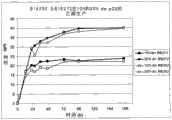
图1展示了在菌株S.cerevisiae BIE252的改进的培养物的SBR培养体系中,每一周期后,在阿拉伯糖和木糖上的生长速率。Figure 1 shows the growth rate on arabinose and xylose after each cycle in the SBR culture system of the modified culture of strain S. cerevisiae BIE252.
图2展示了在BAM体系中在合成培养基上菌株BIE252的糖转化和产物形成。持续测量CO2生产。通过随后的培养物的光密度值监测生长。预培养物在2%葡萄糖上生长。Figure 2 demonstrates sugar conversion and product formation of strain BIE252 on synthetic medium in the BAM system. Continuous measurement of CO2 production. Growth was monitored by optical density values of subsequent cultures. Precultures were grown on 2% glucose.
图3展示了在BAM体系中在合成培养基上菌株BIE272的糖转化和产物形成。持续测量CO2生产。通过随后的培养物的光密度值监测生长。预培养物在2%葡萄糖上生长。Figure 3 demonstrates sugar conversion and product formation of strain BIE272 on synthetic medium in the BAM system. Continuous measurement of CO2 production. Growth was monitored by optical density values of subsequent cultures. Precultures were grown on 2% glucose.
图4展示了在AFM发酵中在10和20%干物质pCS下的实际水解产物中菌株BIE252和BIE272的木糖消耗。Figure 4 demonstrates the xylose consumption of strains BIE252 and BIE272 in actual hydrolysates at 10 and 20% dry matter pCS in AFM fermentations.
图5展示了在AFM发酵中在10和20%干物质pCS下的实际水解产物中菌株BIE252和BIE272的阿拉伯糖消耗。Figure 5 demonstrates the arabinose consumption of strains BIE252 and BIE272 in actual hydrolysates at 10 and 20% dry matter pCS in AFM fermentations.
图6展示了在AFM发酵中在10和20%干物质pCS下的实际水解产物中菌株BIE252和BIE272产生的乙醇。Figure 6 shows the ethanol production by strains BIE252 and BIE272 in actual hydrolysates in AFM fermentations at 10 and 20% dry matter pCS.
图7展示了在AFM发酵中在10和20%干物质pCS下的实际水解产物中菌株BIE252和BIE272产生的CO2。Figure 7 shows the CO2 production by strains BIE252 and BIE272 in actual hydrolysates at 10 and 20% dry matter pCS in AFM fermentation.
图8展示了在20%干物质下的预处理的、水解的玉米秸秆中菌株BIE272的性能。示出了乙醇生产和糖转化。Figure 8 demonstrates the performance of strain BIE272 in pretreated, hydrolyzed corn stover at 20% dry matter. Ethanol production and sugar conversion are shown.
图9展示了菌株BIE272的稳定性性能。对直接分离自菌株BIE272的甘油菌(glycerol stock)的两个菌落和对在YEP2%葡萄糖中培养10、19、28、37和46代后的六个菌落测试其在补充有2%木糖的Verduyn培养基上生长的能力。柱的灰色部分表示展现木糖生长优于或等于参照菌株BIE272的菌落数目。柱的黑色部分表示落在后面的菌落的数目。实验一式两份进行。左图表示摇瓶1的结果,右图表示摇瓶2的结果。Figure 9 demonstrates the stability performance of strain BIE272. Two colonies of glycerol stock isolated directly from strain BIE272 and six colonies after 10, 19, 28, 37 and 46 passages in
图10展示了用溴化乙锭染色的CHEF凝胶。使用CHEF技术针对染色体大小分离染色体。分析的菌株是BIE104;BIE104A2P1a,(BIE104A2P1的同义词);BIE104A2P1c;菌株BIE201;BIE201X9;BIE252和BIE272。观察到染色体移动(见图文本)。菌株YNN295用作染色体大小的参照的标记菌株(Bio-Rad)。Figure 10 shows a CHEF gel stained with ethidium bromide. Chromosomes were separated for chromosome size using CHEF technology. The strains analyzed were BIE104; BIE104A2P1a, (synonym for BIE104A2P1); BIE104A2P1c; strains BIE201; BIE201X9; BIE252 and BIE272. Chromosomal movement was observed (see figure text). Strain YNN295 was used as a marker strain (Bio-Rad) for chromosome size reference.
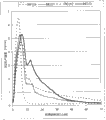
图11展示了印迹到膜上并与PNC1探针杂交的CHEF凝胶的放射自显影。分析的菌株是BIE104;BIE104A2P1a,(synonym of BIE104A2P1);BIE104A2P1c;菌株BIE201;BIE201X9;BIE252和BIE272。观察到染色体移动(见图文本)。Figure 11 shows an autoradiograph of a CHEF gel blotted onto a membrane and hybridized to the PNC1 probe. The strains analyzed were BIE104; BIE104A2P1a, (synonym of BIE104A2P1); BIE104A2P1c; strains BIE201; BIE201X9; BIE252 and BIE272. Chromosomal movement was observed (see figure text).
图12展示了印迹到膜上并与ACT1探针(左图,a)和xylA探针(右图,b)杂交的CHEF凝胶的放射自显影。分析的菌株是BIE104;BIE104A2P1a,(BIE104A2P1的同义词);BIE104A2P1c;菌株BIE201;BIE201X9;BIE252和BIE272。观察到染色体移动(见图文本)。Figure 12 shows an autoradiogram of a CHEF gel blotted onto a membrane and hybridized to the ACT1 probe (left panel, a) and the xylA probe (right panel, b). The strains analyzed were BIE104; BIE104A2P1a, (synonym for BIE104A2P1); BIE104A2P1c; strains BIE201; BIE201X9; BIE252 and BIE272. Chromosomal movement was observed (see figure text).
图13展示了菌株BIE104、BIE201、BIE252和BIE272的CO2生产速率(以每分钟的ml CO2表示)。Figure 13 shows the CO2 production rate (expressed in ml CO2 per minute) of strains BIE104, BIE201, BIE252 and BIE272.
图14展示了菌株BIE104和BIE201的CO2生产速率(以每分钟的ml CO2表示)。Figure 14 shows the CO2 production rate (expressed in ml CO2 per minute) of strains BIE104 and BIE201.
图15展示了菌株BIE201和BIE252的CO2生产速率(以每分钟的ml CO2表示)。Figure 15 demonstrates the CO2 production rate (expressed in ml CO2 per minute) for strains BIE201 and BIE252.
图16展示了菌株BIE252和BIE272的CO2生产速率(以每分钟的ml CO2表示)。Figure 16 shows the CO2 production rate (expressed in ml CO2 per minute) for strains BIE252 and BIE272.
图17展示了在BAM体系中在合成培养基上菌株BIE104的糖转化和产物形成。持续测量CO2生产。通过随后的培养物的光密度值监测生长。Figure 17 demonstrates sugar conversion and product formation of strain BIE104 on synthetic medium in the BAM system. Continuous measurement of CO2 production. Growth was monitored by optical density values of subsequent cultures.
图18展示了在BAM体系中在合成培养基上菌株BIE201的糖转化和产物形成。持续测量CO2生产。通过随后的培养物的光密度值监测生长。Figure 18 demonstrates sugar conversion and product formation of strain BIE201 on synthetic medium in the BAM system. Continuous measurement of CO2 production. Growth was monitored by optical density values of subsequent cultures.
图19展示了在BAM体系中在合成培养基上菌株BIE252的糖转化和产物形成。持续测量CO2生产。通过随后的培养物的光密度值监测生长。Figure 19 demonstrates sugar conversion and product formation of strain BIE252 on synthetic medium in the BAM system. Continuous measurement of CO2 production. Growth was monitored by optical density values of subsequent cultures.
图20展示了在BAM体系中在合成培养基上菌株BIE272的糖转化和产物形成。持续测量CO2生产。通过随后的培养物的光密度值监测生长。Figure 20 demonstrates sugar conversion and product formation of strain BIE272 on synthetic media in the BAM system. Continuous measurement of CO2 production. Growth was monitored by optical density values of subsequent cultures.
图21展示了PMA1-基因的标准化阅读深度(或覆盖度)。Figure 21 shows the normalized read depth (or coverage) of the PMA1-gene.
图22展示了xylA基因的标准化阅读深度(或覆盖度)。Figure 22 shows the normalized read depth (or coverage) of the xylA gene.
序列表简述Brief description of the sequence listing
SEQ ID NO:1:合成DNA,正向引物xylA,CACCGTTAGCCTTGGCGTAAGCSEQ ID NO: 1: synthetic DNA, forward primer xylA, CACCGTTAGCCTTGGCGTAAGC
SEQ ID NO:2合成DNA,反向引物xylA,CACTTTCGAACACGAATTGGCSynthetic DNA of SEQ ID NO: 2, reverse primer xylA, CACTTTCGAACACGAATTGGC
SEQ ID NO:3合成DNA,正向引物ACT1,GTTACGTCGCCTTGGACTTCGSynthetic DNA of SEQ ID NO:3, forward primer ACT1, GTTACGTCGCCTTGGACTTCG
SEQ ID NO:4合成DNA,反向引物ACT1,CGGCAATACCTGGGAACATGGSynthetic DNA of SEQ ID NO: 4, reverse primer ACT1, CGGCAATACCTGGGAACATGG
SEQ ID NO:5合成DNA,正向引物PNC1,GATAGAGACTGGCACAGGATTGSynthetic DNA of SEQ ID NO:5, forward primer PNC1, GATAGAGACTGGCACAGGATTG
SEQ ID NO:6合成DNA,反向引物PNC1,ACAATACTCCAAAGCTACACCSynthetic DNA of SEQ ID NO: 6, reverse primer PNC1, ACAATACTCCAAAGCTACACC
SEQ ID NO:7野生型PMR1蛋白序列SEQ ID NO:7 wild-type PMR1 protein sequence
SEQ ID NO:8酵母菌株BIE272的PMR1蛋白序列。SEQ ID NO:8 PMR1 protein sequence of yeast strain BIE272.
发明详述Detailed description of the invention
在本说明书和附带的权利要求书中,词语“包含”和“包括”及其语法变体如“包含”("comprises","comprising")、“包括”("includes"和"including")应被解释为包含在内。也就是说,在上下文允许时,这些词语旨在传达可能包括未明确指出的其它元素或整数。In this specification and the appended claims, the words "comprises" and "comprises" and their grammatical variations such as "comprises", "comprising", "includes" and "including" shall be construed as inclusive. That is, where the context allows, these words are intended to convey that other elements or integers not explicitly stated may be included.
冠词“一”(“a”和“an”)在本文中被用于表示一个或多于一个(即一个或至少一个)所述冠词的语法客体。例如,“一元件”可表示一个元件或多于一个元件。The articles "a" and "an" are used herein to denote one or more than one (ie one or at least one) of the grammatical object of said article. For example, "an element" may mean one element or more than one element.
本文中,酵母细胞(单数或复数)也称为酵母菌株。Herein, yeast cells (singular or plural) are also referred to as yeast strains.
本文所述的本发明的多个实施方式可以交叉组合。Various embodiments of the invention described herein may be cross-combined.
本发明涉及酵母细胞,其属于Saccharomyces属、已在其基因组中引入至少一个xylA基因和每种araA、araB、araD基因的至少一个并且能消耗包含葡萄糖、木糖和阿拉伯糖的混合的糖混合物,其中,所述细胞共消耗葡萄糖和阿拉伯糖并且在存在葡萄糖的情况下具有为0.25g木糖/h,g DM或更大的比木糖消耗速率。本文中DM是干的酵母生物质。The present invention relates to yeast cells, which belong to the genus Saccharomyces, have introduced into their genome at least one xylA gene and at least one of each of the araA, araB, araD genes and are able to consume a mixed sugar mixture comprising glucose, xylose and arabinose, wherein the cells co-consume glucose and arabinose and have a specific xylose consumption rate of 0.25 g xylose/h, g DM or greater in the presence of glucose. Herein DM is dry yeast biomass.
在一种实施方式中,在葡萄糖存在下比木糖消耗速率为0.25或更大,0.30或更大,0.35或更大,0.40或更大,或约0.41g木糖/h,g DM。在一种实施方式中,在葡萄糖存在下比木糖消耗速率为0.25至0.60g阿拉伯糖/h/gDM。在一种实施方式中,酵母细胞中araA、araB和araD基因的拷贝数目为每种三个或四个。在另一种实施方式中,酵母细胞具有约9或10个xylA的拷贝数目。In one embodiment, the specific xylose consumption rate in the presence of glucose is 0.25 or greater, 0.30 or greater, 0.35 or greater, 0.40 or greater, or about 0.41 g xylose/h, g DM. In one embodiment, the specific xylose consumption rate in the presence of glucose is 0.25 to 0.60 g arabinose/h/gDM. In one embodiment, the number of copies of the araA, araB, and araD genes in the yeast cell is three or four each. In another embodiment, the yeast cell has a copy number of about 9 or 10 xylA.
在另一种实施方式中,酵母细胞具有选自由下述突变组成的组的一种或更多种单核苷酸多态性:SSY1基因中的G1363T,YJR154w基因中的A512T,CEP3基因中的A1186G,GAL80基因中的A436C和PMR1基因中的A113G。In another embodiment, the yeast cell has one or more single nucleotide polymorphisms selected from the group consisting of the following mutations: G1363T in the SSY1 gene, A512T in the YJR154w gene, A512T in the CEP3 gene A1186G, A436C in the GAL80 gene and A113G in the PMR1 gene.
在一种实施方式中,酵母细胞具有GAL80基因中的A436C的单核苷酸多态性。任选地,其还具有CEP3基因中的A1186G的单核苷酸多态性或PMR1基因中的A113G的单核苷酸多态性。In one embodiment, the yeast cell has the single nucleotide polymorphism of A436C in the GAL80 gene. Optionally, it also has a single nucleotide polymorphism of A1186G in the CEP3 gene or a single nucleotide polymorphism of A113G in the PMR1 gene.
在一种实施方式中,酵母细胞具有0.40g乙醇/g糖或更大或约0.42的产量。在另一种实施方式中,酵母细胞具有1.20或更大g EtOH/l,h的生产力。在一种实施方式中,酵母细胞具有1.25或更大,1.30或更大,1.35或更大,1.40或更大,1.45或更大,1.50或更大,1.55或更大,1.60或更大或1.65或更大g EtOH/l,h的生产力。在一种实施方式中,酵母细胞具有约1.69gEtOH/l,h的生产力。在本文中,生产力在发酵开始之后以0-24h的时间间隔测量。以其他时间间隔的酵母细胞的生产力也是高的。见表11。In one embodiment, the yeast cell has a yield of 0.40 g ethanol/g sugar or greater or about 0.42. In another embodiment, the yeast cell has a productivity of 1.20 or greater g EtOH/l,h. In one embodiment, the yeast cell has an Productivity of 1.65 or more g EtOH/l,h. In one embodiment, the yeast cell has a productivity of about 1.69 gEtOH/l,h. Herein, productivity is measured at time intervals of 0-24h after the start of fermentation. The productivity of the yeast cells at other time intervals was also high. See Table 11.
本发明还涉及多肽,其具有包括PMR1中的替换Tyr38Cys的SEQ IDNO:7,产生SEQ ID NO:8的氨基酸序列;和其变体多肽,其中一个或更多其他位置可具有用SPCA(Secretory Pathway calcium ATP-ase)家族中的存在的保守氨基酸对氨基酸的突变。本发明还涉及用于从包含葡萄糖、木糖、阿拉伯糖、半乳糖和甘露糖的糖组合物中生产一种或更多发酵产物的方法,并且其中所述糖组合物用根据本发明的酵母细胞发酵。在所述工艺的一种实施方式中,糖组合物通过下述步骤产自木质纤维素材料:对一种或更多种木质纤维素材料预处理以生产预处理的木质纤维素材料;对预处理的木质纤维素材料进行酶处理以生产糖组合物。The present invention also relates to polypeptides having SEQ ID NO: 7 comprising replacement Tyr38Cys in PMR1, resulting in the amino acid sequence of SEQ ID NO: 8; and variant polypeptides thereof, wherein one or more other positions may have an SPCA (Secretory Pathway Conservative amino acid-to-amino acid mutations that exist in the calcium ATP-ase) family. The invention also relates to a method for producing one or more fermentation products from a sugar composition comprising glucose, xylose, arabinose, galactose and mannose, and wherein said sugar composition is treated with a yeast according to the invention cell fermentation. In one embodiment of the process, the sugar composition is produced from lignocellulosic material by: pretreating one or more lignocellulosic materials to produce a pretreated lignocellulosic material; The treated lignocellulosic material is enzymatically treated to produce a sugar composition.
在另一种实施方式中,在工艺中,发酵厌氧地进行。发酵产物可选自由下述组成的组:乙醇;正丁醇;异丁醇;乳酸;3-羟基-丙酸;丙烯酸;乙酸;琥珀酸;延胡索酸;苹果酸;衣康酸;马来酸;柠檬酸;己二酸;氨基酸,比如赖氨酸、甲硫氨酸、色氨酸、苏氨酸和天冬氨酸;1,3-丙二醇;乙烯;甘油;β-内酰胺抗生素和头孢菌素;维生素;药物制剂;动物饲料添加剂;专用化学品;化学原料;塑料;溶剂;燃料,包括生物燃料和生物气或有机聚合物;和工业酶,比如蛋白酶、纤维素酶、淀粉酶、葡聚糖酶、乳糖酶、脂肪酶、裂解酶、氧化还原酶、转移酶或木聚糖酶。In another embodiment, in the process, the fermentation is performed anaerobically. The fermentation product may be selected from the group consisting of: ethanol; n-butanol; isobutanol; lactic acid; 3-hydroxy-propionic acid; acrylic acid; acetic acid; succinic acid; fumaric acid; malic acid; itaconic acid; maleic acid; Citric acid; adipic acid; amino acids such as lysine, methionine, tryptophan, threonine, and aspartic acid; 1,3-propanediol; ethylene; glycerol; beta-lactam antibiotics and cephalosporins vitamins; pharmaceutical preparations; animal feed additives; specialty chemicals; chemical raw materials; plastics; solvents; fuels including biofuels and biogas or organic polymers; and industrial enzymes such as proteases, cellulases, amylases, glucose Glycanase, lactase, lipase, lyase, oxidoreductase, transferase or xylanase.
在一种实施方式中,酵母细胞具有较之宿主菌株而言扩增的染色体,其中扩增的染色体具有与其中araA、araB和araD基因被引入宿主菌株的染色体相同的数目。在一种实施方式中扩增的染色体是染色体VII。在一种实施方式中,在酵母细胞中,(较之宿主菌株)扩增了着丝粒(centromere)周围的部分染色体VII。在一种实施方式中,染色体VII的部分右臂扩增了两次并且邻近部分扩增了三次。In one embodiment, the yeast cell has amplified chromosomes compared to the host strain, wherein the amplified chromosomes have the same number of chromosomes as the host strain in which the araA, araB and araD genes were introduced. In one embodiment the amplified chromosome is chromosome VII. In one embodiment, in yeast cells, a portion of chromosome VII around the centromere is amplified (compared to the host strain). In one embodiment, part of the right arm of chromosome VII is amplified twice and the adjacent part is amplified three times.
扩增三次的染色体VII右臂上的部分含有在强构建型启动子控制下的阿拉伯糖表达盒,即基因araA、araB和araD。The portion on the right arm of chromosome VII that was amplified three times contained the arabinose expression cassette, the genes araA, araB and araD, under the control of a strong constitutive promoter.
除了酵母细胞BIE201外,本发明还涉及具有araA、araB和araD基因的酵母细胞,其中染色体VII具有如后文所述的测量的如通过电泳测定的从1300至1400Kb或1375Kb的大小。In addition to the yeast cell BIE201, the present invention also relates to yeast cells having the genes araA, araB and araD, wherein chromosome VII has a size of from 1300 to 1400 Kb or 1375 Kb as determined by electrophoresis, measured as described hereinafter.
在一种实施方式中,在酵母细胞中,araA、araB和araD基因的拷贝数是每种2至10个,在一种实施方式中,每种2至8个或3至5个。araA、araB和araD基因的拷贝数可以是2、3、4、5、6、7、8、9或10个。拷贝数可以用对技术人员而言已知的方法测定,合适的方法在实施例中阐释,并且结果在例如图5中示出。In one embodiment, the number of copies of the araA, araB and araD genes in the yeast cell is 2 to 10 each, in one
在一种实施方式中,酵母细胞的单核苷酸多态性的两种或多种选自由下述突变组成的组:SSY1基因中的G1363T、YJR154w基因中的A512T、CEP3基因中的A1186G、GAL80基因中的A436C和PMR1中的A113G。在一种实施方式中,酵母细胞具有单多态性,GAL80基因中的A436C。在一种实施方式中,酵母细胞具有单多态性,CEP3基因中的A1186G。在一种实施方式中,酵母细胞具有单多态性,PMR1中的A113G。In one embodiment, two or more of the single nucleotide polymorphisms of the yeast cell are selected from the group consisting of the following mutations: G1363T in the SSY1 gene, A512T in the YJR154w gene, A1186G in the CEP3 gene, A436C in the GAL80 gene and A113G in the PMR1 gene. In one embodiment, the yeast cell has a single polymorphism, A436C, in the GAL80 gene. In one embodiment, the yeast cell has a single polymorphism, A1186G, in the CEP3 gene. In one embodiment, the yeast cell has a single polymorphism, A113G in PMR1.
适应(adaption)adaptation
适应是一种进化过程,藉此种群变得更加适合(适应)其一种或多种栖息地(栖息地)。该过程在若干代到许多代中发生,并且是生物学的基本现象之一。Adaptation is an evolutionary process whereby a population becomes more suitable (adapted) to its one or more habitats (habitats). This process occurs over several to many generations and is one of the fundamental phenomena of biology.
术语适应也可以表示对生物存活而言特别重要的特征。此类适应在可变种群中通过自然选择由更成功地进行繁殖的、更好地适应的形式生产。The term adaptation can also denote characteristics that are particularly important for an organism's survival. Such adaptations are produced by natural selection in variable populations from more successfully reproducing, better adapted forms.
环境条件的改变改变了自然选择的结果,影响了随后的适应的选择性益处(selective benefits),改善了生物在新条件下的适合度(fitness)。在极端环境改变的情况下,有益适应的出现和固定对存活而言可以是至关重要的。大量不同的因素(例如养分可用度、温度、氧可用度等等)能够驱动适应性进化。Changes in environmental conditions alter the outcome of natural selection, affecting the selective benefits of subsequent adaptation and improving the fitness of organisms under new conditions. The emergence and fixation of beneficial adaptations can be crucial for survival under extreme environmental changes. A large number of different factors (such as nutrient availability, temperature, oxygen availability, etc.) can drive adaptive evolution.
例如,通过称为适应性进化的方法强化用对增强发酵阿拉伯糖的能力而言必要的基因或增强发酵阿拉伯糖的能力的基因(一起称为ARA)转化的单倍体酵母菌株。在适应性进化过程期间,向基因组中引入三个突变,称为mut1、mut2和mut3。这种酵母菌株的基因型可写为mut1mut2mut3ARA。For example, haploid yeast strains transformed with genes essential for the enhanced ability to ferment arabinose, or genes that enhance the ability to ferment arabinose (together referred to as ARA), were enhanced by a method known as adaptive evolution. During the process of adaptive evolution, three mutations, called mut1, mut2 and mut3, are introduced into the genome. The genotype of this yeast strain can be written as mut1mut2mut3ARA.
适合度(Fitness)Fitness
适应性(在给定栖息地集合中生物能够生活和繁殖的程度)和适合度之间存在清楚的联系。适合度是自然选择率的一种估计量和预测器。通过应用自然选择,替代性表型的相对频率可随着时间而变化,如果它们可以遗传的话。There is a clear link between fitness (the degree to which organisms are able to live and reproduce in a given collection of habitats) and fitness. Fitness is an estimator and predictor of the rate of natural selection. By applying natural selection, the relative frequency of alternative phenotypes can change over time, if they are heritable.
遗传改变/变异genetic alteration/variation
当自然选择作用于种群的遗传变异性时,遗传改变是潜在的机制。通过这种方式,种群遗传适应于其环境。遗传改变可导致可见的结构,或者以适应改变的栖息地的方式调节生物的生理活性。Genetic alteration is the underlying mechanism when natural selection acts on the genetic variability of a population. In this way, a population genetically adapts to its environment. Genetic alterations can result in visible structures, or modulate the physiological activities of organisms in ways that adapt to altered habitats.
栖息地有可能频繁变化。因此,接着适应的过程从不会最终结束。及时地,可能出现环境逐步变化并且物种越来越好地适应其环境。另一方面,可能出现环境变化相对迅速并且接着物种越来越不能良好适应。适应是遗传过程,其在某种程度上一直在进行,当种群不改变栖息地或环境时也在进行。Habitats are likely to change frequently. Thus, the process of ensuing adaptation is never conclusive. In time, there may be a stepwise change in the environment and species becoming better and better adapted to their environment. On the other hand, it may occur that the environment changes relatively rapidly and then the species becomes less and less able to adapt well. Adaptation is a genetic process that is ongoing to some extent even when the population does not change habitat or environment.
DNA序列中的单个核苷酸可改变(置换)、去除(缺失)或添加(插入)。插入或缺失SNP(InDel)可转变翻译框。Single nucleotides in a DNA sequence can be changed (substitutions), removed (deletions) or added (insertions). Insertion or deletion of SNPs (InDels) can shift the translation frame.
单核苷酸多态性可落入基因的编码序列(开放阅读框或ORF)内、基因的非编码区域(如启动子序列、终止子序列等等)或基因之间的基因间区域。由于遗传密码的兼并性,编码序列中的SNP未必改变在转录和翻译之后产生的相应的蛋白质的氨基酸序列。其中两种形式产生相同多肽序列的SNP称为同义的(同义突变)。如果产生不同的多肽序列,它们是非同义的。非同义的变化可以是错义的或无义的。错义变化在相应的多肽中产生不同的氨基酸,而无义变化产生过早的终止密码子,有时导致形成截短的蛋白质。Single nucleotide polymorphisms may fall within the coding sequence (open reading frame or ORF) of a gene, non-coding regions of a gene (eg, promoter sequences, terminator sequences, etc.), or intergenic regions between genes. Due to the degeneracy of the genetic code, SNPs in the coding sequence do not necessarily alter the amino acid sequence of the corresponding protein produced after transcription and translation. SNPs in which both forms result in the same polypeptide sequence are said to be synonymous (synonymous mutations). If different polypeptide sequences result, they are non-synonymous. Non-synonymous variations can be missense or nonsense. Missense changes produce different amino acids in the corresponding polypeptide, while nonsense changes produce premature stop codons, sometimes resulting in the formation of truncated proteins.
例如通过改变的转录因子结合或相应的mRNA稳定性,不在蛋白质-编码区域的SNP可仍影响基因表达的结果。SNPs that are not in protein-coding regions may still affect the outcome of gene expression, for example through altered transcription factor binding or corresponding mRNA stability.
可在DNA中出现的变化不必限于单个核苷酸的变化(置换、缺失或插入),而是也可包含两个或多个核苷酸的变化(小细胞核变异)。Changes that may occur in DNA are not necessarily limited to changes of a single nucleotide (substitutions, deletions or insertions), but may also include changes of two or more nucleotides (small nuclear variations).
另外,可出现染色体易位。染色体易位是由非同源染色体之间的部分重排造成的染色体畸形。In addition, chromosomal translocations can occur. Chromosomal translocations are chromosomal abnormalities caused by partial rearrangements between non-homologous chromosomes.
尤其,在根据本发明的细胞中,在下述阅读框中产生SNP:SSY1、CEP3、GAL80和PMR1。In particular, in the cells according to the invention, SNPs are produced in the following reading frames: SSY1, CEP3, GAL80 and PMR1.
SSY1在这里是SPS质膜氨基酸传感器系统(Ssy1p-Ptr3p-Ssy5p)的组分,其感知外部的氨基酸浓度并传送导致调节氨基酸通透酶基因表达的细胞内信号。SSY1 here is a component of the SPS plasma membrane amino acid sensor system (Ssy1p-Ptr3p-Ssy5p), which senses external amino acid concentrations and transmits intracellular signals that lead to regulation of amino acid permease gene expression.
CEP3在这里是必须的动粒(kinetochore)蛋白质,CBF3复合物的组分,其结合着丝粒的CDEIII区域;包含N-末端Zn2Cys6类型锌指结构域、C-末端酸性结构域和推测的卷曲螺旋二聚化结构域。CEP3 is here an essential kinetochore protein, a component of the CBF3 complex that binds the CDEIII region of the centromere; contains an N-terminal Zn2Cys6-type zinc finger domain, a C-terminal acidic domain, and a putative coil Helical dimerization domain.
GAL80在这里是参与在缺少半乳糖的情况下抑制GAL基因的转录调节子。通常其通过Gal4p抑制转录活性并通过Gal3p或Gal1p结合释放抑制。GAL80 is here a transcriptional regulator involved in the repression of the GAL gene in the absence of galactose. Normally it represses transcriptional activity through Gal4p and releases the repression through Gal3p or Gal1p binding.
本文中PMR1(系统名称YGL167c)是将Ca2+和Mn2+运输进高尔基体(Golgi)中所需要的高亲和性Ca2+/Mn2+P-型ATP酶;其参与Ca2+依赖型蛋白的分类和处理。Pmr1p是已知被称为SPCA(分泌途径Ca2+-ATP酶)的转运蛋白家族的原型,SPCA的成员在真菌、C.elegans、D.melanogaster和哺乳动物中找到。In this paper, PMR1 (systematic name YGL167c) is a high-affinity Ca2+/Mn2+ P-type ATPase required for the transport of Ca2+ and Mn2+ into the Golgi apparatus (Golgi); it is involved in the sorting and processing of Ca2+-dependent proteins. Pmr1p is the prototype of a family of transporters known as SPCA (secretory pathway Ca2+-ATPase), members of which are found in fungi, C. elegans, D. melanogaster and mammals.
根据本发明,已经显示基因SSY1、CEP3、GAL80和PMR1中的SNP对于细胞能够发酵混合糖组合物而言是重要的。According to the present invention, SNPs in the genes SSY1, CEP3, GAL80 and PMR1 have been shown to be important for cells to be able to ferment mixed sugar compositions.
进行BLAST搜索用于在这些基因中发现SNP。BLAST searches were performed to find SNPs in these genes.
经鉴定的SNP的概况在表1中给出:An overview of the identified SNPs is given in Table 1:
表1:SNP的概况Table 1: Overview of SNPs

*起始密码子ATG的A是第一核苷酸位置*A of the start codon ATG is the first nucleotide position
包含SNP的基因的blast产生下述数据:A blast of the gene containing the SNP yields the following data:
Ssy1p(AA_反式超家族成员)Ssy1p (AA_trans superfamily member)
SPS质膜氨基酸传感器系统(Ssy1p-Ptr3p-Ssy5p)的组分,其感知外部氨基酸浓度并传送导致调节氨基酸通透酶基因表达的细胞内信号[酿酒酵母]Component of the SPS plasma membrane amino acid sensor system (Ssy1p-Ptr3p-Ssy5p), which senses external amino acid concentrations and transmits intracellular signals that lead to the regulation of amino acid permease gene expression [Saccharomyces cerevisiae]

在酿酒酵母BIE201中出现的更短蛋白质是独特特征。The shorter protein present in S. cerevisiae BIE201 is a unique feature.
YJR154w(PhyH超家族成员)YJR154w (PhyH superfamily member)
未知功能的假定的蛋白质;绿色荧光蛋白质(GFP)-融合蛋白质位于细胞质[酿酒酵母]中。Putative protein of unknown function; green fluorescent protein (GFP)-fusion protein localized in the cytoplasm [Saccharomyces cerevisiae].

在所有这些蛋白质中,在位置171处(或基于BLAST结果的等价位置)的D-残基是保守。The D-residue at position 171 (or the equivalent position based on BLAST results) is conserved in all these proteins.
CEP3(GAL4样Zn2Cys6双核簇DNA-结合结构域;出现在转录调节子CEP3 (GAL4-like Zn2Cys6 binuclear cluster DNA-binding domain; occurs in transcriptional regulators 样GAL4中)like GAL4)
着丝粒DNA-结合蛋白质复合物CBF3亚基BCentromeric DNA-binding protein complex CBF3 subunit B

在所有这些蛋白质中,在位置396(或基于BLAST结果的等价位置)处的S-残基是保守的。The S-residue at position 396 (or the equivalent position based on BLAST results) is conserved in all these proteins.
GAL80(NADB_Rossmann超家族成员)GAL80 (NADB_Rossmann superfamily member)
半乳糖/乳糖代谢调节蛋白质GAL80Galactose/Lactose Metabolism Regulatory Protein GAL80
在所有这些蛋白质中,位置146处(或基于BLAST结果的等价位置)的T-残基是保守的。The T-residue at position 146 (or the equivalent position based on BLAST results) is conserved in all these proteins.
来自菌株BIE272的PMR1(SPCA(分泌途径Ca2+-ATP酶)家族的成员)PMR1 (member of the SPCA (secretory pathway Ca2+-ATPase) family) from strain BIE272
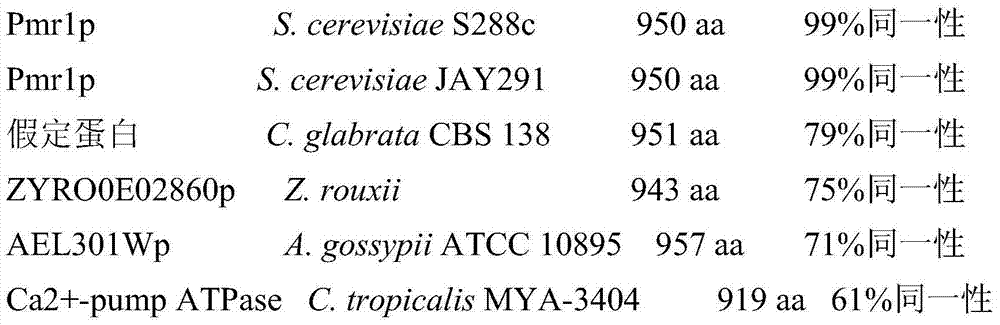
结构变异structural variation
结构变异(也为基因组结构变异)由种的基因组中许多种类的变异组成,并且通常包括微观和亚微观类型,比如缺失、复制、拷贝变异、插入和易位。Structural variation (also genome structural variation) consists of many types of variation in the genome of a species, and often includes microscopic and submicroscopic types such as deletions, duplications, copy variations, insertions, and translocations.
阅读深度reading depth
阅读深度(或覆盖度)表示对下一代测序组装有贡献的核苷酸的(平均)数目。阅读深度表示已被阅读的每个碱基的次数的数值。阅读深度取决于基因组区域而改变。平均阅读深度也可取决于绘图标准,比如严格度和阅读质量而改变。Read depth (or coverage) represents the (average) number of nucleotides that contribute to a next-generation sequencing assembly. Read depth is a numerical value representing the number of times each base has been read. Read depth varies depending on the genomic region. The average reading depth may also vary depending on drawing criteria such as rigor and reading quality.
在序列之间比较基因组区域的平均测序深度。这允许检测过表达或低表达的区域。The average sequencing depth of genomic regions is compared between sequences. This allows detection of overexpressed or underexpressed regions.
拷贝数目变异copy number variation
拷贝数目变异(CNV)是结构变异的一个大的种类,其包括插入、缺失和复制。Copy number variation (CNV) is a large class of structural variation that includes insertions, deletions and duplications.
单核苷酸多态性single nucleotide polymorphism
单核苷酸多态性(SNP)是生物种的成员之间或个体细胞的成对染色体之间基因组(或其他共有序列)中单个核苷酸(A、T、C或G)的不同而发生的DNA序列变异。Single nucleotide polymorphisms (SNPs) are differences in a single nucleotide (A, T, C, or G) in the genome (or other consensus sequence) between members of a biological species or between pairs of chromosomes in individual cells Variations in the DNA sequence.
单核苷酸多态性可属于基因的编码序列、基因的非编码序列或在基因之间的基因间区域。编码序列中的SNP未必改变产生的蛋白的氨基酸序列,这归因于遗传密码子的兼并性。A single nucleotide polymorphism may belong to the coding sequence of a gene, the non-coding sequence of a gene, or an intergenic region between genes. SNPs in the coding sequence do not necessarily alter the amino acid sequence of the resulting protein due to the degeneracy of the genetic code.
Indel或DIPIndel or DIP
在进化研究中,indel用来表示插入或缺失。Indels是指包括插入、缺失和其组合的突变种类。In evolution studies, indel is used to represent insertion or deletion. Indels refer to mutation types including insertions, deletions and combinations thereof.
脉冲场凝胶电泳(PFGE)Pulsed Field Gel Electrophoresis (PFGE)
PFGE是通过对凝胶基质应用周期性改变方向的电场而用于分离大脱氧核糖核苷酸(DNA)分子的一种技术。可使用多种备选系统,比如横向交变凝胶电泳(TAFE)、直交变电场电泳(OFAGE)、电场转换凝胶电泳(FIGE)和等强度均一电场(CHEF)凝胶电泳来进行PFGE。每种方法就使用便利程度、进行电泳需要的时间和染色体分辨度而言具有其优势和劣势,如Basim and Basim(Turk J Biol25(2001)405-418)综述的以及其文中的参考内容。PFGE is a technique used to separate large deoxyribonucleotide (DNA) molecules by applying an electric field of periodically changing direction to a gel matrix. PFGE can be performed using several alternative systems such as Transverse Alternating Gel Electrophoresis (TAFE), Orthogonal Alternating Field Electrophoresis (OFAGE), Field Switching Gel Electrophoresis (FIGE), and Isointensity Uniform Field (CHEF) Gel Electrophoresis . Each method has its advantages and disadvantages in terms of ease of use, time required to perform electrophoresis, and chromosome resolution, as reviewed by Basim and Basim (Turk J Biol 25 (2001) 405-418) and referenced therein.
CHEF凝胶电泳可在一个凝胶上产生Saccharomyces酵母菌株的从100到2500kb的染色体的实质上的染色体分离,但不是所有较大尺寸和类似尺寸的染色体都分辨出(Sheehan et al(1991)J.Inst.Brew.,Vol.97,163-167)。CHEF gel electrophoresis can produce substantial chromosomal separation of Saccharomyces yeast strains from 100 to 2500 kb on one gel, but not all larger and similarly sized chromosomes are resolved (Sheehan et al (1991) J . Inst. Brew., Vol. 97, 163-167).
混合的糖组合物mixed sugar composition
根据本发明的糖组合物包含葡萄糖、阿拉伯糖和木糖。在本发明中可以使用满足这些标准的任何糖组合物。糖组合物中任选的糖是半乳糖和甘露糖和鼠李糖。在一个优选的实施方式中,糖组合物是一种或多种木质纤维素材料的水解产物。此处木质纤维素包括半纤维素和生物质的半纤维素部分。木质纤维素还包括生物质的木质纤维素级分。合适的木质纤维素材料可存在于以下列表中:果园底料,树丛,磨坊废弃物,城市木材废弃物,市政废弃物,伐木废弃物,森林疏伐废弃物,短期轮种木本作物,工业废弃物,小麦秸,燕麦秸,水稻秸,大麦秸,黑麦秸,亚麻秸,大豆壳,稻壳,玉米谷蛋白饲料,燕麦壳,甘蔗,玉米秸秆,玉米杆,玉米芯,玉米壳,柳枝稷,芒草,高粱,芸苔茎,大豆茎,牧场草,磨擦禾,狐尾草;甜菜浆,柑橘果实浆,种子壳,纤维素动物粪便,草坪修剪废弃物,棉花,海藻,树木,软木材,硬木材,白杨,松树,灌木丛,草,小麦,小麦秸,甘蔗渣,玉米,玉米粒,来自玉米粒的纤维,来自谷物湿磨或干磨的产物和副产物,市政固体废弃物,废纸,庭院废弃物,草本材料,农业残余物,林业残余物,纸浆,造纸厂残余物,树枝,灌木,甘蔗,能源作物,森林,水果,鲜花,谷物,草,草本作物,树叶,树皮,针叶,原木,根,树苗,灌木丛,柳枝稷,树木,蔬菜,水果皮,藤蔓,甜菜浆,小麦麸皮,由农业加工产生的有机废弃物材料,林业木材废弃物,或其中任意两种或更多的组合。在一种实施方式中,木质纤维素材料来自小麦,玉米,甘蔗,稻谷,草,例如玉米秸秆、玉米纤维、玉米芯、小麦秸、稻壳、甘蔗渣或多种类型的草或其他能源作物。The sugar composition according to the invention comprises glucose, arabinose and xylose. Any sugar composition meeting these criteria can be used in the present invention. Optional sugars in the sugar composition are galactose and mannose and rhamnose. In a preferred embodiment, the sugar composition is a hydrolyzate of one or more lignocellulosic materials. Lignocellulose here includes hemicellulose and the hemicellulose fraction of biomass. Lignocellulose also includes the lignocellulosic fraction of biomass. Suitable lignocellulosic materials can be found in the following list: orchard substrate, bushes, mill waste, municipal wood waste, municipal waste, logging waste, forest thinning waste, short-term rotation woody crops, industrial Waste, wheat straw, oat straw, rice straw, barley straw, rye straw, flax straw, soybean hulls, rice hulls, corn gluten feed, oat hulls, sugar cane, corn stover, corn stalks, corn cobs, corn hulls, switchgrass , miscanthus, sorghum, brassica stalks, soybean stalks, pasture grasses, rubgrass, foxtail grass; beet pulp, citrus fruit pulp, seed hulls, cellulosic animal manure, lawn clippings, cotton, seaweed, trees, softwood , hardwoods, poplars, pine trees, bushes, grasses, wheat, wheat straw, bagasse, corn, corn kernels, fibers from corn kernels, products and by-products from wet or dry milling of grain, municipal solid waste, Waste paper, yard waste, herbaceous materials, agricultural residues, forestry residues, pulp, paper mill residues, branches, shrubs, sugar cane, energy crops, forests, fruits, flowers, grains, grasses, herbaceous crops, leaves, trees Barks, needles, logs, roots, saplings, bushes, switchgrass, trees, vegetable, fruit skins, vines, beet pulp, wheat bran, organic waste material from agricultural processing, forestry wood waste, or any of these A combination of two or more. In one embodiment, the lignocellulosic material is from wheat, corn, sugar cane, rice, grasses such as corn stover, corn fiber, corncobs, wheat straw, rice husks, bagasse, or various types of grass or other energy crops .
表2中给出了源自木质纤维素的一些合适的糖组合物及其水解产物的糖组合物的概况。所列出的木质纤维素包括:玉米芯、玉米纤维、稻壳、瓜皮(melon shells)、甜菜浆、小麦秸、甘蔗渣、木材、草和橄榄压制物(olive pressings)。An overview of some suitable sugar compositions derived from lignocellulose and the sugar compositions of their hydrolysates is given in Table 2. Listed lignocelluloses include: corn cobs, corn fiber, rice hulls, melon shells, beet pulp, wheat straw, bagasse, wood, grass, and olive pressings.
表2:来自木质纤维素材料的糖组合物的概况。Gal=半乳糖,Xyl=木糖,Ara=阿拉伯糖,Man=甘露糖,Glu=谷氨酸盐/酯,Rham=鼠李糖。给出了半乳糖百分比(%Gal)和文献来源。Table 2: Summary of sugar composition from lignocellulosic materials. Gal=galactose, Xyl=xylose, Ara=arabinose, Man=mannose, Glu=glutamate, Rham=rhamnose. Percent galactose (%Gal) and literature sources are given.
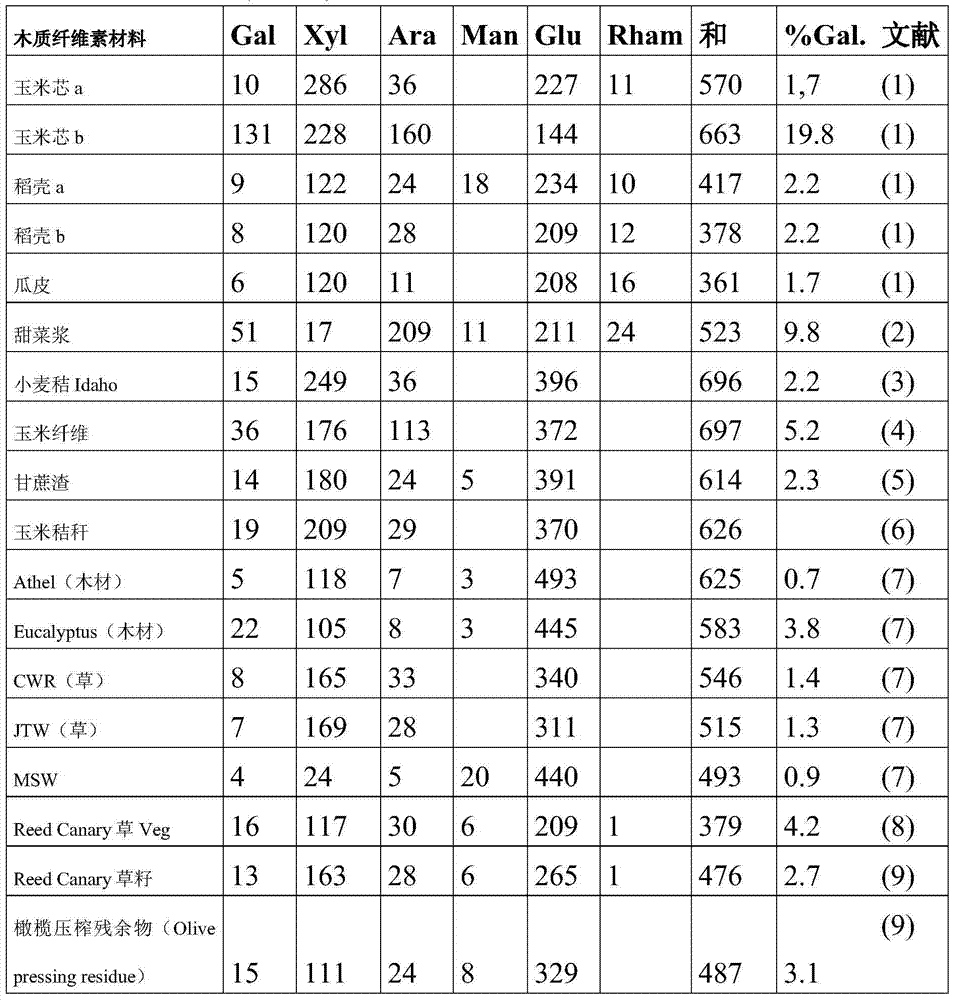
从表2中清楚地看出,在这些木质纤维素中,高含量的糖以葡萄糖、木糖、阿拉伯糖和半乳糖的衍生物形式存在。葡萄糖、木糖、阿拉伯糖和半乳糖转化成发酵产物因此具有巨大的经济重要性。甘露糖和鼠李糖也以比之前提到的糖相对较小的量存在于木质纤维素材料中。因此有利地甘露糖和鼠李糖也被混合糖细胞转化。It is clear from Table 2 that in these lignocelluloses, high content of sugars exists in the form of derivatives of glucose, xylose, arabinose and galactose. The conversion of glucose, xylose, arabinose and galactose into fermentation products is therefore of great economic importance. Mannose and rhamnose are also present in lignocellulosic materials in relatively smaller amounts than the previously mentioned sugars. Thus advantageously mannose and rhamnose are also converted by mixed sugar cells.
预处理和酶水解Pretreatment and enzymatic hydrolysis
可能需要预处理和酶水解以从木质纤维素(包括半纤维素)材料释放可根据本发明发酵的糖。这些步骤可用常规方法进行。Pretreatment and enzymatic hydrolysis may be required to release sugars from lignocellulosic (including hemicellulose) material that can be fermented according to the invention. These steps can be carried out by conventional methods.
混合糖细胞mixed sugar cells
混合糖细胞如下文所定义,包含整合进入混合糖细胞基因组的基因araA、araB和araD。其能够发酵葡萄糖、阿拉伯糖、木糖、半乳糖和甘露糖。在本发明的一个实施方式中,混合糖细胞能够发酵一种或多种其他糖,优选地C5和/或C6糖。在本发明的一个实施方式中,混合糖细胞包含以下之一种或多种:xylA-基因和/或XKS1-基因,以允许混合糖细胞发酵木糖;醛糖还原酶(GRE3)基因的缺失;PPP-基因TAL1、TKL1、RPE1和RKI1的过表达,以允许提高细胞中通过戊糖磷酸途径的通量。A mixed glycocell, as defined below, comprises the genes araA, araB and araD integrated into the mixed glycocell genome. It is capable of fermenting glucose, arabinose, xylose, galactose and mannose. In one embodiment of the invention, the mixed sugar cells are capable of fermenting one or more other sugars, preferably C5 and/or C6 sugars. In one embodiment of the invention, the mixed glycocell comprises one or more of the following: xylA-gene and/or XKS1-gene to allow the mixed glycocell to ferment xylose; deletion of the aldose reductase (GRE3) gene ; Overexpression of the PPP-genes TAL1 , TKL1 , RPE1 and RKI1 to allow increased flux through the pentose phosphate pathway in cells.
混合糖菌株的构建Construction of mixed sugar strains
可以通过向宿主细胞中引入:Can be introduced into host cells by:
a)处于强启动子控制下的由PPP-基因TAL1、TKL1、RPE1和RKI1构成的簇,a) a cluster of PPP-genes TAL1, TKL1, RPE1 and RKI1 under the control of a strong promoter,
b)由均处于组成型启动子控制下的xylA-基因和XKS1-基因构成的簇,b) a cluster consisting of the xylA-gene and the XKS1-gene both under the control of a constitutive promoter,
c)由基因araA、araB和araD构成的簇和/或XKS1-基因和/或xylA-基因的簇;c) a cluster of genes araA, araB and araD and/or a cluster of XKS1-genes and/or xylA-genes;
和and
d)缺失醛糖还原酶基因,d) deletion of the aldose reductase gene,
并进行适应性进化(adaptive evolution)以产生混合糖细胞。上面的细胞可使用重组表达技术构建。And carry out adaptive evolution (adaptive evolution) to produce mixed sugar cells. The above cells can be constructed using recombinant expression techniques.
e)对单菌落分离体取样e) Sampling of single colony isolates
f)在序批式反应器中对单菌落分离体进行适应性进化f) Adaptive evolution of single colony isolates in a sequencing batch reactor
g)对单菌落分离体取样g) Sampling of single colony isolates
h)对单菌落分离体针对其糖消耗特性进行表征h) Characterization of single colony isolates for their sugar consumption properties
这些步骤将在下文详细描述。These steps are described in detail below.
重组表达recombinant expression
本发明的细胞是重组细胞。也就是说,本发明的细胞包含下述核苷酸序列,或用下述核苷酸序列转化,或用下述核苷酸序列遗传修饰,所述核苷酸序列并不天然地存在于所考虑的细胞中。The cells of the invention are recombinant cells. That is, the cells of the invention comprise, or are transformed with, or are genetically modified with, a nucleotide sequence that does not naturally occur in all considered cells.
用于在细胞中重组表达酶以及用于对本发明的细胞进行其他遗传修饰的技术是本领域技术人员公知的。典型地,此类技术涉及用包含相关序列的核酸构建体转化细胞。此类方法可例如从标准手册中获知,例如Sambrook and Russel(2001)"Molecular Cloning:A Laboratory Manual(3rdedition),Cold Spring Harbor Laboratory,Cold Spring Harbor Laboratory Pressor F.Ausubel et al,eds.,"Current protocols in molecular biology",GreenPublishing and Wiley Interscience,New York(1987)。用于对真菌宿主细胞进行转化和遗传修饰的方法可从例如EP-A-0635574、WO98/46772、WO99/60102、WO00/37671、WO90/14423、EP-A-0481008、EP-A-0635574和US6,265,186中获知。Techniques for recombinant expression of enzymes in cells and for other genetic modification of cells of the invention are well known to those skilled in the art. Typically, such techniques involve transforming cells with a nucleic acid construct comprising the sequence of interest. Such methods are known, for example, from standard manuals, such as Sambrook and Russel (2001) "Molecular Cloning: A Laboratory Manual (3rd edition), Cold Spring Harbor Laboratory, Cold Spring Harbor Laboratory Pressor F. Ausubel et al, eds.," Current protocols in molecular biology", Green Publishing and Wiley Interscience, New York (1987). Methods for transformation and genetic modification of fungal host cells are available from e.g. EP-A-0635574, WO98/46772, WO99/60102, WO00/37671 , WO90/14423, EP-A-0481008, EP-A-0635574 and US6,265,186.
典型地,核酸构建体可以是质粒,例如低拷贝质粒或高拷贝质粒。根据本发明的细胞可例如通过多个拷贝的核苷酸构建体,或通过使用具有多个拷贝酶序列的构建体,而包含单个或多个拷贝的编码酶的核苷酸序列。Typically, the nucleic acid construct may be a plasmid, such as a low copy plasmid or a high copy plasmid. A cell according to the invention may comprise single or multiple copies of an enzyme-encoding nucleotide sequence, eg by multiple copies of the nucleotide construct, or by using a construct with multiple copies of the enzyme sequence.
核酸构建体可保持为游离并因此包含用于自主复制的序列,例如常染色体复制序列。合适的游离核酸构建体可例如基于酵母2μ或pKD1质粒(Gleer et al,1991,Biotechnology9:968-975)或AMA质粒(Fierro et al,1995,Curr Genet.29:482-489)。或者,每种核酸构建体可作为单个拷贝或多个拷贝被整合进细胞的基因组中。进入细胞基因组的整合可通过非同源重组随机地发生,但是优选地,核酸构建体可如本领域所公知的通过同源重组被整合进细胞的基因组中(见例如WO90/14423、EP-A-0481008、EP-A-0635574和US6,265,186)。The nucleic acid construct may remain episomal and thus contain sequences for autonomous replication, eg, autosomal replication sequences. Suitable episomal nucleic acid constructs may for example be based on the yeast 2μ or pKD1 plasmid (Gleer et al, 1991, Biotechnology 9:968-975) or the AMA plasmid (Fierro et al, 1995, Curr Genet. 29:482-489). Alternatively, each nucleic acid construct can be integrated into the genome of the cell as a single copy or as multiple copies. Integration into the genome of the cell may occur randomly by non-homologous recombination, but preferably the nucleic acid construct may be integrated into the genome of the cell by homologous recombination as known in the art (see e.g. WO90/14423, EP-A -0481008, EP-A-0635574 and US6,265,186).
大部分游离或2μ质粒是相对不稳定的,在每一代后在约10-2或更多细胞中丢失。即使在选择性生长的条件下,只有60%到95%的细胞保留游离质粒。对cir+宿主而言,大部分游离质粒的拷贝数范围在每个细胞10-40个之间。然而,质粒在细胞之间并非均等分布的,种群中每个细胞中的拷贝数存在较大的方差。用整合型质粒转化的菌株是极度稳定的,即使在不存在选择性压力时也是如此。然而,质粒丢失可通过同源重组在串联重复DNA之间以约10-3到10-4的频率发生,导致载体序列的成环丢失(loopingout)。因此,优选地,在稳定整合情况下的载体设计是,通过选择标记物基因的丢失(也通过分子内、同源重组发生),被整合的构建体的成环丢失不再可能。优选地,基因以这种方式被稳定整合。稳定整合在本文中被定义为整合进基因组中,其中被整合的构建体的成环丢失不再可能。优选地不存在选择标记物。典型地,酶编码序列应与一个或多个能够提供或帮助酶序列的转录和/或翻译的核酸序列可操作地连接。Most episomal or 2μ plasmids are relatively unstable and are lost in about 10 -2 or more cells after each passage. Even under conditions of selective growth, only 60% to 95% of cells retain the episomal plasmid. For cir + hosts, most episomal plasmids have copy numbers in the range of 10-40 per cell. However, plasmids are not equally distributed among cells, and there is large variance in the number of copies per cell in a population. Strains transformed with integrative plasmids are extremely stable, even in the absence of selective pressure. However, plasmid loss can occur between tandem repeat DNA by homologous recombination at a frequency of about 10 −3 to 10 −4 , resulting in looping out of the vector sequence. Thus, preferably, the vector design in the case of stable integration is such that loss of circularization of the integrated construct is no longer possible by loss of the selectable marker gene (which also occurs by intramolecular, homologous recombination). Preferably, the gene is stably integrated in this manner. Stable integration is defined herein as integration into the genome where loss of looping of the integrated construct is no longer possible. Preferably no selectable marker is present. Typically, the enzyme coding sequence will be operably linked to one or more nucleic acid sequences capable of providing or facilitating the transcription and/or translation of the enzyme sequence.
术语“可操作地连接”是指下述并置(juxtaposition),其中所述组分处于允许它们以期望的方式发挥作用的关系中。例如,启动子或增强子与编码序列可操作地连接,所述启动子或增强子影响所述编码序列的转录。The term "operably linked" refers to a juxtaposition wherein the components described are in a relationship permitting them to function in a desired manner. For example, a promoter or enhancer is operably linked to a coding sequence, which promoter or enhancer affects the transcription of the coding sequence.
在本文中使用时,“启动子”是指下述核酸片段,其发挥控制一个或多个基因转录的功能,相对于基因转录起点的转录方向而言位于上游,并且在结构上通过DNA-依赖性RNA聚合酶、转录起点和本领域技术人员已知的任何其它DNA序列的存在来识别。“组成型”启动子是在大部分环境和发育条件下有活性的启动子。“诱导型”启动子是在环境或发育调节下有活性的启动子。As used herein, "promoter" refers to a nucleic acid segment that functions to control the transcription of one or more genes, is located upstream in the direction of transcription relative to the start of gene transcription, and is structurally controlled by a DNA-dependent It is recognized by the presence of a non-active RNA polymerase, an origin of transcription, and any other DNA sequence known to those skilled in the art. A "constitutive" promoter is a promoter that is active under most environmental and developmental conditions. An "inducible" promoter is a promoter that is active under environmental or developmental regulation.
能够用于实现编码本发明酶的核苷酸序列表达的启动子对编码要表达的酶的核苷酸序列而言可以不是天然的,即对与之可操作地连接的核苷酸序列(编码序列)而言异源的启动子。然而,启动子对宿主细胞而言可以是同源的,即内源的。The promoter that can be used to achieve the expression of the nucleotide sequence encoding the enzyme of the present invention may not be native to the nucleotide sequence encoding the enzyme to be expressed, that is, to the nucleotide sequence (encoding sequence) is a heterologous promoter. However, the promoter may be homologous, ie endogenous, to the host cell.
启动子是可广泛获得的,并是技术人员已知的。这类启动子的合适例子包括例如来自糖酵解基因的启动子,如来自酵母或丝状真菌的果糖磷酸激酶(PFK)、丙糖磷酸异构酶(TPI)、甘油醛-3-磷酸脱氢酶(GPD、TDH3或GAPDH)、丙酮酸激酶(PYK)、磷酸甘油酸激酶(PGK)启动子;关于这类启动子的更多细节可在(WO93/03159)中找到。其它有用的启动子是编码核糖体蛋白的基因启动子,乳糖酶基因启动子(LAC4)、醇脱氢酶启动子(ADHl、ADH4等等)和烯醇化酶启动子(ENO)。其它(组成型以及诱导型)启动子和增强子或上游活化序列应当是本领域技术人员已知的。本发明宿主细胞中使用的启动子可以在需要时被修饰,来影响它们的控制特征。本文上下文中合适的启动子包括组成型和诱导型两种天然启动子以及经改造的启动子,这是本领域技术人员公知的。真核宿主细胞中合适的启动子可以是GAL7、GAL10或GAL1、CYC1、HIS3、ADH1、PGL、PH05、GAPDH、ADC1、TRP1、URA3、LEU2、ENO1TPI1和AOX1。其它合适的启动子包括PDC1、GPD1、PGK1、TEF1和TDH3。Promoters are widely available and known to the skilled person. Suitable examples of such promoters include, for example, promoters from glycolytic genes such as phosphofructokinase (PFK), triose phosphate isomerase (TPI), glyceraldehyde-3-phosphate Hydrogenase (GPD, TDH3 or GAPDH), pyruvate kinase (PYK), phosphoglycerate kinase (PGK) promoters; more details on such promoters can be found in (WO93/03159). Other useful promoters are the promoters of genes encoding ribosomal proteins, the lactase gene promoter (LAC4), the alcohol dehydrogenase promoter (ADH1, ADH4, etc.), and the enolase promoter (ENO). Other (constitutive as well as inducible) promoters and enhancers or upstream activation sequences should be known to those skilled in the art. The promoters used in the host cells of the invention may be modified as desired to affect their control characteristics. Suitable promoters in this context include both natural promoters, constitutive and inducible, as well as engineered promoters, which are well known to those skilled in the art. Suitable promoters in eukaryotic host cells may be GAL7, GAL10 or GAL1, CYC1, HIS3, ADH1, PGL, PH05, GAPDH, ADC1, TRP1, URA3, LEU2, ENO1TPI1 and AOX1. Other suitable promoters include PDC1, GPD1, PGK1, TEF1 and TDH3.
在本发明的细胞中,编码酶的核苷酸序列的3’-端优选地与转录终止子序列可操作地连接。优选地,终止子序列在选择的宿主细胞、如例如选择的酵母物种中是可操作的。在任何情况下终止子的选择不是关键性的;其可以例如来自于任何酵母基因,尽管如果来自于非酵母、真核基因时终止子有时可能发挥功能。通常,编码酶的核苷酸序列包含终止子。优选地,这类终止子与预防本发明宿主细胞中无义介导的mRNA衰变的突变组合(参阅例如:Shirley等,2002,Genetics161:1465-1482)。In the cells of the present invention, the 3'-end of the nucleotide sequence encoding the enzyme is preferably operably linked to a transcription terminator sequence. Preferably, the terminator sequence is operable in the selected host cell, such as eg the selected yeast species. The choice of terminator is not critical in any case; it may eg be from any yeast gene, although terminators may sometimes be functional if derived from non-yeast, eukaryotic genes. Typically, the nucleotide sequence encoding the enzyme contains a terminator. Preferably, such terminators are combined with mutations that prevent nonsense-mediated mRNA decay in the host cells of the invention (see eg: Shirley et al., 2002, Genetics 161:1465-1482).
转录终止序列还优选地包含多聚腺苷酸化信号。The transcription termination sequence also preferably contains a polyadenylation signal.
任选地,适用于本发明的核酸构建体中可存在选择性标记物。在本文中使用时,术语“标记物”是指编码性状或表型的基因,所述性状或表型允许选择或筛选含有所述标记物的宿主细胞。标记物基因可以是抗生素抗性基因,从而可使用适当的抗生素从未经转化的细胞中选择经转化的细胞。合适的抗生素抗性标记物包括例如二氢叶酸还原酶、潮霉素B磷酸转移酶、3'-O-磷酸转移酶II(卡那霉素、新霉素和G418抗性)。对于多倍体宿主细胞的转化而言抗生素抗性标记物可以是最为便利的。也可以使用非抗生素抗性标记物,如营养缺陷型标记物(URA3、TRPl、LEU2)或S.pombe TPI基因(由Russell P R,1985,Gene40:125-130描述)。在一个优选的实施方式中,用核酸构建体转化的宿主细胞是无标记物基因的。用于构建重组的无标记物基因的微生物宿主细胞的方法公开于EP-A-O635574中,并且基于双向标记物如A.nidulans amdS(乙酰胺酶)基因或酵母URA3和LYS2基因的使用。或者,可以将可筛选的标记物如绿色荧光蛋白、lacL、萤光素酶、氯霉素乙酰转移酶、β-葡萄糖苷酸酶并入本发明的核酸构建体中,允许筛选经转化的细胞。Optionally, selectable markers may be present in nucleic acid constructs suitable for use in the present invention. As used herein, the term "marker" refers to a gene encoding a trait or phenotype that allows selection or selection of host cells containing the marker. The marker gene may be an antibiotic resistance gene so that transformed cells can be selected from untransformed cells using appropriate antibiotics. Suitable antibiotic resistance markers include eg dihydrofolate reductase, hygromycin B phosphotransferase, 3'-O-phosphotransferase II (kanamycin, neomycin and G418 resistance). Antibiotic resistance markers may be most convenient for transformation of polyploid host cells. Non-antibiotic resistance markers such as auxotrophic markers (URA3, TRP1, LEU2) or the S. pombe TPI gene (described by Russell PR, 1985, Gene 40: 125-130) can also be used. In a preferred embodiment, the host cell transformed with the nucleic acid construct is marker gene-free. A method for the construction of recombinant marker gene-free microbial host cells is disclosed in EP-A-0635574 and is based on the use of bidirectional markers such as the A. nidulans amdS (acetamidase) gene or the yeast URA3 and LYS2 genes. Alternatively, selectable markers such as green fluorescent protein, lacL, luciferase, chloramphenicol acetyltransferase, beta-glucuronidase can be incorporated into the nucleic acid constructs of the invention allowing selection of transformed cells .
可存在于适用于本发明的核酸构建体中任选的其它元件包括但不限于,一条或多条前导序列、增强子、整合因子、和/或报告基因、内含子序列、着丝点抗体(centromer)、调聚物(telomer)和/或基质附着(MAR)序列。本发明的核酸构建体可还包含用于自主复制的序列,如ARS序列。Optional additional elements that may be present in nucleic acid constructs suitable for use in the present invention include, but are not limited to, one or more leader sequences, enhancers, integrators, and/or reporter genes, intron sequences, centromere antibodies (centromer), telomer (telomer) and/or matrix attachment (MAR) sequences. The nucleic acid construct of the present invention may further comprise a sequence for autonomous replication, such as an ARS sequence.
因此,重组方法可使用已知的重组技术进行。本领域技术人员已知用于在本发明的细胞中表达和过表达酶的多种手段。具体地,可以通过提高宿主细胞中编码酶的基因的拷贝数(例如通过在宿主细胞的基因组中整合额外的基因拷贝,通过表达来自游离多拷贝表达载体的基因,或通过引入包含多拷贝基因的游离表达载体)来过表达酶。Thus, recombinant methods can be performed using known recombinant techniques. Various means are known to those skilled in the art for expressing and overexpressing enzymes in the cells of the invention. Specifically, it can be obtained by increasing the copy number of the gene encoding the enzyme in the host cell (for example, by integrating an additional copy of the gene in the genome of the host cell, by expressing a gene from an episomal multi-copy expression vector, or by introducing a episomal expression vector) to overexpress the enzyme.
或者,可以通过使用对编码要过表达的酶的序列而言不是天然的启动子(即对与之可操作地连接的编码序列而言为异源的启动子)来实现本发明宿主细胞中酶的过表达。尽管启动子优选地对与之可操作地连接的编码序列而言是异源的,但是还优选启动子是同源的,即对宿主细胞而言是内源的。优选地,与对编码序列而言天然的启动子相比,异源启动子能够生产更高稳态水平的包含所述编码序列的转录本(或者每单位时间能够生产更多转录本分子,即mRNA分子)。在本文上下文中,合适的启动子包括组成型和诱导型启动子二者,以及经改造的启动子。Alternatively, expression of the enzyme in the host cell of the invention can be achieved by using a promoter that is not native to the sequence encoding the enzyme to be overexpressed (i.e., a promoter that is heterologous to the coding sequence to which it is operably linked). overexpression. While the promoter is preferably heterologous to the coding sequence to which it is operably linked, it is also preferred that the promoter is homologous, ie, endogenous to the host cell. Preferably, the heterologous promoter is capable of producing higher steady state levels of transcripts comprising said coding sequence (or more transcript molecules per unit time, i.e. mRNA molecules). In this context, suitable promoters include both constitutive and inducible promoters, as well as engineered promoters.
用于过表达上述酶的编码序列可优选地对本发明的宿主细胞而言是同源的。然而,可以使用对本发明宿主细胞而言异源的编码序列。Coding sequences for overexpression of the above enzymes may preferably be homologous to the host cell of the invention. However, coding sequences that are heterologous to the host cell of the invention may be used.
涉及经遗传修饰的细胞中酶的生产时,酶的过表达表示与相同条件下未经修饰的宿主细胞相比,所述酶以更高水平的酶比活性被生产。通常,这表示与相同条件下未经修饰的宿主细胞相比酶活性蛋白质(或在多亚基酶的情况下多种蛋白质)以更大量被生产,或者以更高的稳态水平被生产。类似地,这通常表示与相同条件下未经修饰的宿主细胞相比,编码酶活性蛋白质的mRNA以更大量被生产,或者也以更高的稳态水平被生产。优选地,在本发明的宿主细胞中,与除了引起过表达的遗传修饰之外在遗传上相同的菌株相比时,要过表达的酶被过表达至至少约1.1、约1.2、约1.5、约2、约5、约10或约20的倍数。应当理解这些过表达水平可适用于酶活性的稳态水平,酶蛋白质的稳态水平以及编码酶的转录本的稳态水平。When referring to the production of an enzyme in a genetically modified cell, overexpression of an enzyme means that the enzyme is produced at a higher level of specific enzyme activity compared to an unmodified host cell under the same conditions. Typically, this means that the enzymatically active protein (or proteins in the case of a multi-subunit enzyme) is produced in greater amounts, or at a higher steady state level, compared to an unmodified host cell under the same conditions. Similarly, this generally means that mRNA encoding an enzymatically active protein is produced in greater amounts, or also at a higher steady state level, compared to an unmodified host cell under the same conditions. Preferably, in the host cell of the invention, the enzyme to be overexpressed is overexpressed to at least about 1.1, about 1.2, about 1.5, Multiples of about 2, about 5, about 10, or about 20. It is understood that these levels of overexpression apply to steady state levels of enzyme activity, to steady state levels of enzyme protein, and to steady state levels of transcripts encoding the enzyme.
适应性进化adaptive evolution
混合糖细胞在其制备过程中被施加适应性进化。可以针对在想要的糖上、优选地作为唯一碳源的想要的糖上,更优选地在厌氧条件下的生长来选择自发或(例如通过辐射或化学品)诱导的突变体,使本发明的细胞适应糖使用。突变体的选择可以通过包括例如Kuyper等(2004,FEMS YeastRes.4:655-664)所述的培养物连续转移在内的技术来进行,或者通过在恒化器培养中的选择压力下培养来进行。例如,在本发明的一种优选的宿主细胞中,至少一种上述遗传修饰(包括通过突变体选择获得的修饰)赋予宿主细胞在木糖作为碳源、优选地作为唯一碳源时、并且优选地在厌氧条件下生长的能力。优选地,细胞基本上不生产木糖醇,例如生产的木糖醇低于检出限,或者例如以摩尔为基础少于消耗的碳的约5%、约2%、约1%、约0.5%或约0.3%。Hybrid sugar cells were subjected to adaptive evolution during their preparation. Spontaneous or (e.g. by radiation or chemicals) induced mutants can be selected for growth on the desired sugar, preferably as the sole carbon source, more preferably under anaerobic conditions, such that The cells of the invention are adapted to sugar usage. Selection of mutants can be performed by techniques including serial transfer of cultures such as described by Kuyper et al. (2004, FEMS Yeast Res. 4:655-664), or by culturing under selective pressure in chemostat cultures. conduct. For example, in a preferred host cell of the present invention, at least one of the above-mentioned genetic modifications (including modifications obtained by mutant selection) confers on the host cell when xylose is used as a carbon source, preferably as the sole carbon source, and preferably ability to grow under anaerobic conditions. Preferably, the cell produces substantially no xylitol, e.g., produces xylitol below the limit of detection, or, e.g., less than about 5%, about 2%, about 1%, about 0.5% of the carbon consumed on a molar basis % or about 0.3%.
适应性进化还描述于例如Wisselink H.W.et al,Applied andEnvironmental Microbiology Aug.2007,p.4881–4891中。Adaptive evolution is also described, for example, in Wisselink H.W. et al, Applied and Environmental Microbiology Aug. 2007, p.4881-4891.
在适应性进化的一个实施方式中,使用由不同培养基(葡萄糖、木糖和阿拉伯糖;木糖和阿拉伯糖)中重复的连续生长循环与重复的分批培养所构成的方案。见Wisselink等(2009)Applied and EnvironmentalMicrobiology,Feb.2009,p.907–914。In one embodiment of adaptive evolution, a protocol consisting of repeated continuous growth cycles in different media (glucose, xylose and arabinose; xylose and arabinose) and repeated batch cultures is used. See Wisselink et al. (2009) Applied and Environmental Microbiology, Feb. 2009, p.907–914.
在一种实施方式中,酵母细胞BIE252在SBR装置中适应。使用了下述培养基:(1)混合的糖培养基:10g/l葡萄糖、10g/l木糖、7g/l阿拉伯糖、2g/l半乳糖和1g/l甘露糖;(2)阿拉伯糖培养基:27g/l阿拉伯糖和3g/l木糖和(3)木糖培养基:27g/l木糖和3g/l阿拉伯糖。在培养基(1)中完成分批培养后,交替培养基(2)和(3),且将在培养基(2)和(3)中的培养重复六个周期。第三次周期之后重复在培养基(1)中的生长,以确认培养物仍能如SBR培养开始时一样快地利用C6-糖。对于每次运行,在指数生长阶段中从CO2谱中估计最大比生长速率(μmax)。In one embodiment, yeast cell BIE252 is adapted in an SBR apparatus. The following media were used: (1) mixed sugar media: 10 g/l glucose, 10 g/l xylose, 7 g/l arabinose, 2 g/l galactose and 1 g/l mannose; (2) arabinose Medium: 27g/l arabinose and 3g/l xylose and (3) xylose Medium: 27g/l xylose and 3g/l arabinose. After completion of the batch culture in the medium (1), the medium (2) and (3) were alternated, and the culture in the medium (2) and (3) was repeated for six cycles. Growth in medium (1) was repeated after the third cycle to confirm that the cultures were still able to utilize C6-sugars as fast as at the beginning of the SBR culture. For each run, the maximum specific growth rate (μ max ) was estimated from the CO 2 spectrum during the exponential growth phase.
宿主细胞host cell
宿主细胞可以是适合生产有用产物的任何宿主细胞。本发明的细胞可以是任何合适的细胞,如原核细胞如细菌,或真核细胞。典型地,细胞会是真核细胞,例如酵母或丝状真菌。The host cell can be any host cell suitable for the production of a useful product. The cells of the invention may be any suitable cells, such as prokaryotic cells, such as bacteria, or eukaryotic cells. Typically the cells will be eukaryotic cells such as yeast or filamentous fungi.
酵母在本文中被定义为真核微生物,并且包括主要以单细胞形式生长的真菌亚门的所有物种(Alexopoulos,C.J.,1962,In:IntroductoryMycology,John Wiley&Sons,Inc.,New York)。Yeast is defined herein as a eukaryotic microorganism and includes all species of the subdivision Fungi that grow predominantly in unicellular form (Alexopoulos, C.J., 1962, In: Introductory Mycology, John Wiley & Sons, Inc., New York).
酵母可以通过单细胞原植体的出芽生长,或可通过生物的裂变生长。作为本发明细胞的一种优选的酵母可属于Saccharomyces、Kluyveromyces、Candida、Pichia、Schizosaccharomyces、Hansenula、Kloeckera、Schwanniomyces或Yarrowia属。优选地,酵母是能够厌氧发酵的酵母,更优选地是能够厌氧醇发酵的酵母。Yeast can grow by budding of unicellular plasmons, or by biological fission. A preferred yeast as a cell of the present invention may belong to the genera Saccharomyces, Kluyveromyces, Candida, Pichia, Schizosaccharomyces, Hansenula, Kloeckera, Schwanniomyces or Yarrowia. Preferably, the yeast is a yeast capable of anaerobic fermentation, more preferably a yeast capable of anaerobic alcoholic fermentation.
丝状真菌在本文中被定义为下述真核微生物,其包括真菌亚门的所有丝状形式。这些真菌的特征是由甲壳质、纤维素和其它复合多糖构成的营养菌丝体。适合用作本发明细胞的丝状真菌在形态学、生理和遗传上区别于酵母。可有利地使用丝状真菌细胞,因为大部分真菌不需要无菌条件来繁殖,并且对噬菌体感染敏感。丝状真菌的营养生长通过菌丝延长进行,并且大部分丝状真菌的碳代谢是专性需氧的。作为本发明宿主细胞的优选的丝状真菌可属于Aspergillus、Trichoderma、Humicola、Acremoniurra、Fusarium或Penicillium属。更优选地,丝状真菌细胞可以是Aspergillusniger、Aspergillus oryzae、Penicillium chrysogenum或Rhizopus oryzae细胞。Filamentous fungi are defined herein as eukaryotic microorganisms that include all filamentous forms of the subdivision Fungi. These fungi are characterized by a vegetative mycelium composed of chitin, cellulose and other complex polysaccharides. Filamentous fungi suitable for use as cells in the present invention are morphologically, physiologically and genetically distinct from yeast. Filamentous fungal cells can be advantageously used since most fungi do not require sterile conditions to propagate and are susceptible to phage infection. Vegetative growth of filamentous fungi proceeds by hyphal elongation, and carbon metabolism in most filamentous fungi is obligately aerobic. Preferred filamentous fungi as host cells of the present invention may belong to the genera Aspergillus, Trichoderma, Humicola, Acremoniurra, Fusarium or Penicillium. More preferably, the filamentous fungal cells may be Aspergillus niger, Aspergillus oryzae, Penicillium chrysogenum or Rhizopus oryzae cells.
在一个实施方式中,宿主细胞可以是酵母。In one embodiment, the host cell may be yeast.
优选地,宿主是工业宿主,更优选地是工业酵母。工业宿主和工业酵母细胞可以如下定义。工业方法中酵母细胞的生活环境与实验室中显著不同。工业酵母细胞必须能够在所述方法期间可能变化的多种环境条件下表现良好。此类变化包括养分来源、pH、乙醇浓度、温度、氧浓度等等的变化,它们一起对Saccharomyces cerevisiae的细胞生长和乙醇生产具有潜在的影响。在不利的工业条件下,环境耐受菌株会允许强健的生长和生产。对使用工业酵母菌株的应用(例如烘焙工业、酿造工业、造酒和乙醇工业)中可能发生的环境条件中的这些变化而言,工业酵母菌株通常更加强健。工业酵母(S.cerevisiae)的例子是Ethanol 


在一个实施方式中,宿主是抑制剂耐受的。可以通过针对在含抑制剂的材料上的生长筛选菌株,来选择抑制剂耐受的宿主细胞,如Kadar et al,Appl.Biochem.Biotechnol.(2007),Vol.136-140,847-858中所述,其中选择了抑制剂耐受的S.cerevisiae菌株ATCC26602。In one embodiment, the host is inhibitor resistant. Inhibitor-tolerant host cells can be selected by screening strains for growth on inhibitor-containing material as described in Kadar et al, Appl. Biochem. Biotechnol. (2007), Vol. 136-140, 847-858 , in which the inhibitor-tolerant S. cerevisiae strain ATCC26602 was selected.
优选地,宿主细胞是工业的和抑制剂耐受的。Preferably, the host cells are industrial and inhibitor resistant.
AraA、AraB和AraD基因AraA, AraB and AraD genes
本发明的细胞能够使用阿拉伯糖。因此,本发明的细胞能够将L-阿拉伯糖转化为L-核酮糖和/或木酮糖5-磷酸和/或需要的发酵产物,例如本文提到的发酵产物之一。The cells of the invention are capable of using arabinose. Thus, the cells of the invention are capable of converting L-arabinose to L-ribulose and/or xylulose 5-phosphate and/or a desired fermentation product, such as one of the fermentation products mentioned herein.
能够从L-阿拉伯糖生产乙醇的生物例如S.cerevisiae菌株可以通过修饰细胞,引入来自合适来源的araA(L-阿拉伯糖异构酶)、araB(L-核酮糖激酶)和araD(L-核酮糖-5-P4-差向异构酶)基因来产生。这类基因可被引入本发明的细胞中,使其能够使用阿拉伯糖。这样的过程描述于WO2003/095627中。来自Lactobacillus plantanum的araA、araB和araD基因可以使用,并公开于WO2008/041840中。来自Bacillus subtilis的araA基因和来自Escherichia coli的araB和araD基因可以使用,并公开于EP1499708中。Organisms capable of producing ethanol from L-arabinose such as S. ribulose-5-P4-epimerase) gene. Such genes can be introduced into the cells of the invention to enable the use of arabinose. Such a process is described in WO2003/095627. The araA, araB and araD genes from Lactobacillus plantanum can be used and are disclosed in WO2008/041840. The araA gene from Bacillus subtilis and the araB and araD genes from Escherichia coli can be used and are disclosed in EP1499708.
PPP-基因PPP-gene
本发明的细胞可包含一种或多种提高戊糖磷酸通路通量的遗传修饰。具体地,遗传修饰可导致通过戊糖磷酸通路非氧化性部分的通量提高。引起戊糖磷酸通路非氧化性部分通量提高的遗传修饰在本文中被理解为表示下述修饰,与除了引起通量提高的遗传修饰之外遗传上相同的菌株中的通量相比,所述修饰将所述通量提高至约1.1、约1.2、约1.5、约2、约5、约10或约20的倍数。戊糖磷酸通路非氧化部分的通量可以如下测量:在木糖作为唯一碳源时培养经修饰的宿主,测定木糖消耗的比速率,并在产生任何木糖醇时从木糖消耗的比速率中减去木糖醇生产的比速率。然而,戊糖磷酸通路非氧化部分的通量与木糖作为唯一碳源时的生长速率成比例,优选地与木糖作为唯一碳源时的厌氧生长速率成比例。木糖作为唯一碳源时的生长速率(μmax)和戊糖磷酸通路非氧化部分的通量之间存在线性相关。木糖消耗的比速率(Qs)等于生长速率(μ)除以在糖上的生物质产率(Yxs),因为在糖上的生物质产率是恒定的(在给定的一组条件下:厌氧、生长培养基、pH、菌株的遗传背景等;即Qs=μ/Yxs)。因此,戊糖磷酸通路非氧化部分通量的提高可能演绎自这些条件下最大生产速率的提高,除非转运(摄取收到限制)。Cells of the invention may comprise one or more genetic modifications that increase flux through the pentose phosphate pathway. Specifically, genetic modifications can lead to increased flux through the non-oxidative portion of the pentose phosphate pathway. A genetic modification that causes an increase in the flux of the non-oxidative part of the pentose phosphate pathway is understood herein to mean a modification that, compared to the flux in a genetically identical strain other than the genetic modification that causes an increase in flux, Said modification increases said flux by a factor of about 1.1, about 1.2, about 1.5, about 2, about 5, about 10, or about 20. The flux of the non-oxidative portion of the pentose phosphate pathway can be measured by growing the modified host with xylose as the sole carbon source, determining the specific rate of consumption of xylose, and the specific rate of consumption from xylose when any xylitol is produced. The specific rate of xylitol production was subtracted from the rate. However, the flux of the non-oxidative portion of the pentose phosphate pathway is proportional to the growth rate with xylose as the sole carbon source, preferably proportional to the anaerobic growth rate with xylose as the sole carbon source. There was a linear correlation between the growth rate (μ max ) when xylose was the sole carbon source and the flux of the non-oxidative portion of the pentose phosphate pathway. The specific rate of xylose consumption (Q s ) is equal to the growth rate (μ) divided by the biomass yield on sugars (Y xs ), since the biomass yield on sugars is constant (at a given set Under conditions: anaerobic, growth medium, pH, genetic background of the strain, etc.; ie Q s =μ/Y xs ). Therefore, increased flux of the nonoxidative portion of the pentose phosphate pathway may be deduced from increased maximal production rates under these conditions, unless transport (uptake is limited).
可以通过多种方式在宿主细胞中引入提高戊糖磷酸通路通量的一种或多种遗传修饰。这些方式包括例如,实现木酮糖激酶和/或非还原性部分戊糖磷酸通路的一种或多种酶更高的稳态活性水平,和/或非特异性醛糖还原酶活性的降低的稳态水平。稳态活性水平的这些改变可以通过(自发或化学或辐射诱导的)突变体的选择和/或编码酶的基因或调节这些基因的因子的重组DNA技术(例如过表达或失活)来实现。One or more genetic modifications that increase flux through the pentose phosphate pathway can be introduced into a host cell in a variety of ways. These ways include, for example, achieving higher steady-state activity levels of xylulokinase and/or one or more enzymes of the non-reducing portion of the pentose phosphate pathway, and/or reduced steady-state activity of non-specific aldose reductase enzymes. status level. These alterations in steady-state activity levels can be achieved by (spontaneous or chemically or radiation-induced) selection of mutants and/or recombinant DNA techniques (e.g. overexpression or inactivation) of the genes encoding the enzymes or of the factors regulating these genes.
在一种优选的宿主细胞中,遗传修饰包括(非氧化部分)戊糖磷酸通路的至少一种酶的过表达。优选地,所述酶选自由编码核酮糖-5-磷酸异构酶、5-磷酸核酮糖差向异构酶、转酮醇酶和转醛醇酶的酶构成的组。可以过表达(非氧化性部分)戊糖磷酸通路的酶的多种组合。例如可以被过表达的酶可以至少是5-磷酸核酮糖异构酶和5-磷酸核酮糖差向异构酶;或至少是5-磷酸核酮糖异构酶和转酮醇酶;或至少是5-磷酸核酮糖异构酶和转醛醇酶;或至少是5-磷酸核酮糖差向异构酶和转酮醇酶;或至少是核酮糖-5-磷酸差向异构酶和转醛醇酶;或至少是转酮醇酶和转醛醇酶;或至少是5-磷酸核酮糖差向异构酶、转酮醇酶和转醛醇酶;或至少是5-磷酸核酮糖异构酶、转酮醇酶和转醛醇酶;或至少是5-磷酸核酮糖异构酶、5-磷酸核酮糖差向异构酶和转醛醇酶;或至少是5-磷酸核酮糖异构酶、5-磷酸核酮糖差向异构酶和转酮醇酶。在本发明的一个实施方式中,5-磷酸核酮糖异构酶、5-磷酸核酮糖差向异构酶、转酮醇酶和转醛醇酶的每一种都在宿主细胞中被过表达。更优选的是下述宿主细胞,其中遗传修饰至少包含酶转酮醇酶和转醛醇酶二者的过表达,因为这样的宿主细胞已经能够在木糖上厌氧生长。实际上,在一些条件下,仅过表达转酮醇酶和转醛醇酶的宿主细胞在木糖上已经具有与下述宿主细胞相同的厌氧生长速率,所述宿主细胞过表达所有四种酶,即5-磷酸核酮糖异构酶、5-磷酸核酮糖差向异构酶、转酮醇酶和转醛醇酶。另外,过表达5-磷酸核酮糖异构酶和核酮糖-5-磷酸差向异构酶二者的宿主细胞是超过下述宿主细胞而被优选的,所述宿主细胞仅过表达异构酶或仅过表达差向异构酶,因为这些酶中仅一种的过表达可产生代谢失衡。In a preferred host cell, the genetic modification comprises (non-oxidative part) overexpression of at least one enzyme of the pentose phosphate pathway. Preferably, the enzyme is selected from the group consisting of enzymes encoding ribulose-5-phosphate isomerase, ribulose-5-phosphate epimerase, transketolase and transaldolase. Various combinations of enzymes of the pentose phosphate pathway can be overexpressed (non-oxidative fraction). For example, the enzymes that can be overexpressed can be at least ribulose-5-phosphate isomerase and ribulose-5-phosphate epimerase; or at least ribulose-5-phosphate isomerase and transketolase; or at least ribulose-5-phosphate isomerase and transaldolase; or at least ribulose-5-phosphate epimerase and transketolase; or at least ribulose-5-phosphate epimerase isomerase and transaldolase; or at least transketolase and transaldolase; or at least ribulose-5-phosphate epimerase, transketolase and transaldolase; or at least Ribulose-5-phosphate isomerase, transketolase, and transaldolase; or at least ribulose-5-phosphate isomerase, ribulose-5-phosphate epimerase, and transaldolase; Or at least ribulose-5-phosphate isomerase, ribulose-5-phosphate epimerase and transketolase. In one embodiment of the invention, each of ribulose-5-phosphate isomerase, ribulose-5-phosphate epimerase, transketolase, and transaldolase is inhibited in a host cell Overexpression. More preferred are host cells wherein the genetic modification comprises at least the overexpression of both the enzymes transketolase and transaldolase, since such host cells are already capable of anaerobic growth on xylose. Indeed, under some conditions, host cells overexpressing only transketolase and transaldolase already had the same anaerobic growth rate on xylose as host cells overexpressing all four Enzymes, namely ribulose-5-phosphate isomerase, ribulose-5-phosphate epimerase, transketolase and transaldolase. In addition, host cells that overexpress both ribulose-5-phosphate isomerase and ribulose-5-phosphate epimerase are preferred over host cells that overexpress only isomerase overexpression of epimerases or only epimerases, since overexpression of only one of these enzymes can produce a metabolic imbalance.
酶“核酮糖-5-磷酸差向异构酶”(EC5.1.3.1)在本文中被定义为催化D-木酮糖5-磷酸差向异构化为D-核酮糖5-磷酸和相反过程的酶。所述酶也已知称为磷酸核酮糖(phosphoribulose)异构酶;赤藓糖-4-磷酸异构酶;磷酸酮戊糖3-差向异构酶;木酮糖磷酸3-差向异构酶;磷酸酮戊糖向异构酶;核酮糖5-磷酸3-差向异构酶;D-核酮糖磷酸-3-差向异构酶;D-核酮糖5-磷酸差向异构酶;D-核酮糖-5-P3-差向异构酶;D-木酮糖-5-磷酸3-差向异构酶;戊糖-5-磷酸3-差向异构酶;或D-核酮糖-5-磷酸3-差向异构酶。核酮糖5-磷酸差向异构酶还可通过其氨基酸序列定义。类似地,核酮糖5-磷酸差向异构酶可以通过编码酶的核苷酸序列或者通过与编码核酮糖5-磷酸差向异构酶的参照核苷酸序列杂交的核苷酸序列来定义。编码核酮糖5-磷酸差向异构酶的核苷酸序列在本文中称作RPE1。The enzyme "ribulose-5-phosphate epimerase" (EC5.1.3.1) is defined herein as catalyzing the epimerization of D-xylulose 5-phosphate to D-ribulose 5- Phosphoric acid and enzymes for the reverse process. Said enzyme is also known as phosphoribulose isomerase; erythrose-4-phosphate isomerase; ketopentose phosphate 3-epimerase; xylulose phosphate 3-epimerase Isomerase; Ketopentose phosphate isomerase; Ribulose 5-phosphate 3-epimerase; D-ribulose phosphate-3-epimerase; D-ribulose 5-phosphate Epimerase; D-ribulose-5-P3-epimerase; D-xylulose-5-phosphate 3-epimerase; Pentose-5-phosphate 3-epimerase or D-ribulose-5-phosphate 3-epimerase. A ribulose 5-phosphate epimerase can also be defined by its amino acid sequence. Similarly, ribulose 5-phosphate epimerase can be identified by a nucleotide sequence encoding the enzyme or by a nucleotide sequence that hybridizes to a reference nucleotide sequence encoding ribulose 5-phosphate epimerase to define. The nucleotide sequence encoding ribulose 5-phosphate epimerase is referred to herein as RPE1.
酶“核酮糖5-磷酸异构酶”(EC5.3.1.6)在本文中被定义为催化D-核糖5-磷酸直接异构化为D-核酮糖5-磷酸和相反过程的酶。所述酶也已知称为磷酸戊糖异构酶;磷酸核糖异构酶;核糖磷酸异构酶;5-磷酸核糖异构酶;D-核糖5-磷酸异构酶;D-核糖-5-磷酸酮醇-异构酶;或D-核糖-5-磷酸醛糖-酮糖-异构酶。核酮糖5-磷酸异构酶还可通过其氨基酸序列定义。类似地,核酮糖5-磷酸异构酶可以通过编码所述酶的核苷酸序列以及与编码核酮糖5-磷酸异构酶的参照核苷酸序列杂交的核苷酸序列来定义。编码核酮糖5-磷酸异构酶的核苷酸序列在本文中称作RPI1。The enzyme "ribulose 5-phosphate isomerase" (EC5.3.1.6) is defined herein as an enzyme that catalyzes the direct isomerization of D-ribulose 5-phosphate to D-ribulose 5-phosphate and vice versa . Said enzyme is also known as pentose phosphate isomerase; phosphoribose isomerase; ribose phosphate isomerase; 5-phosphoribose isomerase; D-ribose 5-phosphate isomerase; D-ribose-5 - phosphoketol-isomerase; or D-ribose-5-phosphate aldose-ketose-isomerase. Ribulose 5-phosphate isomerase can also be defined by its amino acid sequence. Similarly, a ribulose 5-phosphate isomerase can be defined by a nucleotide sequence encoding said enzyme and a nucleotide sequence that hybridizes to a reference nucleotide sequence encoding a ribulose 5-phosphate isomerase. The nucleotide sequence encoding ribulose 5-phosphate isomerase is referred to herein as RPI1.
酶“转酮醇酶”(EC2.2.1.1)在本文中被定义为催化下述反应的酶:D-核糖5-磷酸+D-木酮糖5-磷酸<->景天庚酮糖7-磷酸+D-甘油醛3-磷酸和相反过程。所述酶也已知称为羟乙醛转移酶或景天庚酮糖-7-磷酸:D-甘油醛-3-磷酸羟乙醛转移酶。转酮醇酶还可通过其氨基酸定义。类似地,转酮醇酶可以通过编码酶的核苷酸序列以及与编码转酮醇酶的参照核苷酸序列杂交的核苷酸序列来定义。编码转酮醇酶的核苷酸序列在本文中称作TKL1。The enzyme "transketolase" (EC 2.2.1.1) is defined herein as an enzyme that catalyzes the following reaction: D-ribose 5-phosphate + D-xylulose 5-phosphate <-> sedoheptulose 7-phosphate + D-glyceraldehyde 3-phosphate and the reverse process. The enzyme is also known as glycolaldehyde transferase or sedoheptulose-7-phosphate:D-glyceraldehyde-3-phosphate glycolaldehyde transferase. Transketolases can also be defined by their amino acids. Similarly, a transketolase can be defined by a nucleotide sequence encoding the enzyme and a nucleotide sequence that hybridizes to a reference nucleotide sequence encoding a transketolase. The nucleotide sequence encoding transketolase is referred to herein as TKL1.
酶“转醛醇酶”(EC2.2.1.2)在本文中被定义为催化下述反应的酶:景天庚酮糖7-磷酸+D-甘油醛3-磷酸<->D-赤藓糖4-磷酸+D-岩藻糖6-磷酸和相反过程。所述酶还已知称为二羟基丙酮转移酶;二羟基丙酮合酶;甲醛转酮醇酶;或景天庚酮糖-7-磷酸:D-甘油醛-3-磷酸甘油酮转移酶。转醛醇酶还可通过其氨基酸序列定义。类似地,转醛醇酶可以通过编码酶的核苷酸序列以及与编码转醛醇酶的参照核苷酸序列杂交的核苷酸序列来定义。编码转醛醇酶的核苷酸序列在本文中称作TAL1。The enzyme "transaldolase" (EC 2.2.1.2) is defined herein as an enzyme that catalyzes the following reaction: Sedoheptulose 7-phosphate + D-glyceraldehyde 3-phosphate <-> D-erythritol Sugar 4-phosphate + D-fucose 6-phosphate and the reverse process. The enzyme is also known as dihydroxyacetone transferase; dihydroxyacetone synthase; formaldehyde transketolase; or sedoheptulose-7-phosphate:D-glyceraldehyde-3-phosphate glyceryl ketotransferase. Transaldolases can also be defined by their amino acid sequence. Similarly, a transaldolase can be defined by a nucleotide sequence encoding the enzyme and a nucleotide sequence that hybridizes to a reference nucleotide sequence encoding a transaldolase. The nucleotide sequence encoding transaldolase is referred to herein as TAL1.
木糖异构酶基因xylose isomerase gene
编码木糖异构酶的核苷酸序列的存在赋予细胞将木糖异构化成木酮糖的能力。根据本发明,2至15拷贝的一种或多种木糖异构酶基因引入宿主细胞。The presence of a nucleotide sequence encoding xylose isomerase confers on the cell the ability to isomerize xylose to xylulose. According to the present invention, 2 to 15 copies of one or more xylose isomerase genes are introduced into the host cell.
在一个实施方式中,一个、两个或更多个拷贝的一种或多种木糖异构酶基因被引入宿主细胞的基因组中。In one embodiment, one, two or more copies of one or more xylose isomerase genes are introduced into the genome of the host cell.
“木糖异构酶”(EC5.3.1.5)在本文中被定义为催化D-木糖直接异构化为D-木酮糖和/或反过来的酶。所述酶还已知称为D-木糖酮异构酶。本文的木糖异构酶也可以能够催化D-葡萄糖和D-果糖之间的转化(并因此可以被称作葡萄糖异构酶)。本文的木糖异构酶可需要二价阳离子如镁、锰或钴作为辅因子。"Xylose isomerase" (EC 5.3.1.5) is defined herein as an enzyme that catalyzes the direct isomerization of D-xylose to D-xylulose and/or vice versa. Said enzyme is also known as D-xylose ketoisomerase. The xylose isomerase herein may also be capable of catalyzing the conversion between D-glucose and D-fructose (and thus may be referred to as glucose isomerase). The xylose isomerases herein may require divalent cations such as magnesium, manganese or cobalt as cofactors.
因此,本发明的细胞能够将木糖异构化为木酮糖。通过用下述核酸构建体转化宿主细胞对所述宿主细胞赋予将木糖异构化为木酮糖的能力,所述核酸构建体包含编码确定的木糖异构酶的核苷酸序列。本发明的细胞通过木糖到木酮糖的直接异构化将木糖异构化为木酮糖。这理解为木糖在由木糖异构酶催化的单个反应中被异构化成木酮糖,与木糖分别由还原酶和木糖醇脱氢酶催化的经木糖醇中间产物的两步转化成木酮糖不同。Thus, the cells of the invention are capable of isomerizing xylose to xylulose. The ability to isomerize xylose to xylulose is conferred to the host cell by transforming the host cell with a nucleic acid construct comprising a nucleotide sequence encoding a defined xylose isomerase. The cells of the invention isomerize xylose to xylulose by direct isomerization of xylose to xylulose. This is understood as the isomerization of xylose to xylulose in a single reaction catalyzed by xylose isomerase, with xylose being catalyzed by reductase and xylitol dehydrogenase in two steps via xylitol intermediates The conversion to xylulose is different.
木糖异构酶活性单位(U)在本文中可以被定义为:在Kuyper等(2003,FEMS Yeast Res.4:69-78)所述条件下,每分钟生产1nmol木酮糖的酶的量。木糖异构酶基因可具有多种来源,例如WO2006/009434中公开的Pyromyces sp.。其他合适的来源是如PCT/EP2009/52623中所述的Bacteroides,特别是Bacteroides uniformis,如PCT/EP2009/052625中所述的Bacillus,特别是Bacillus stearothermophilus,Thermotoga,特别是如PCT/EP2009/052621中所描述的Thermotoga maritima,和Clostridium,特别是如PCT/EP2009/052620中所描述的Clostridium cellulolyticum。A xylose isomerase activity unit (U) can be defined herein as the amount of enzyme that produces 1 nmol of xylulose per minute under the conditions described by Kuyper et al. (2003, FEMS Yeast Res. 4 :69-78) . The xylose isomerase gene can be of various origins, eg Pyromyces sp. as disclosed in WO2006/009434. Other suitable sources are Bacteroides, especially Bacteroides uniformis as described in PCT/EP2009/52623, Bacillus as described in PCT/EP2009/052625, especially Bacillus stearothermophilus, Thermotoga, especially as described in PCT/EP2009/052621 Thermotoga maritima as described, and Clostridium, in particular Clostridium cellulolyticum as described in PCT/EP2009/052620.
XKS1基因XKS1 gene
本发明的细胞可包含提高木酮糖激酶比活性的一种或多种遗传修饰。优选地,所述一种或多种遗传修饰引起木酮糖激酶的过表达,例如通过编码木酮糖激酶的核苷酸序列的过表达来实现。编码木酮糖激酶的基因对宿主细胞而言可以是内源的,或者可以是对宿主细胞异源的木酮糖激酶。用于本发明宿主细胞中木酮糖激酶过表达的核苷酸序列是编码具有木酮糖激酶活性的多肽的核苷酸序列。The cells of the invention may comprise one or more genetic modifications that increase the specific activity of xylulokinase. Preferably, said one or more genetic modifications result in overexpression of xylulokinase, for example by overexpression of a nucleotide sequence encoding xylulokinase. The gene encoding xylulokinase may be endogenous to the host cell, or it may be a xylulokinase heterologous to the host cell. The nucleotide sequence used for the overexpression of xylulokinase in the host cell of the present invention is a nucleotide sequence encoding a polypeptide having xylulokinase activity.
酶“木酮糖激酶”(EC2.7.1.17)在本文中被定义为催化反应ATP+D-木酮糖=ADP+D-木酮糖5-磷酸的酶。所述酶还已知称为磷酸化木酮糖激酶、D-木酮糖激酶或ATP:D-木酮糖5-磷酸转移酶。本发明的木酮糖激酶还可以通过其氨基酸序列定义。类似地,木酮糖激酶可以通过编码所述酶的核苷酸序列以及与编码木酮糖激酶的参照核苷酸序列杂交的核苷酸序列来定义。The enzyme "xylulokinase" (EC 2.7.1.17) is defined herein as an enzyme that catalyzes the reaction ATP+D-xylulose=ADP+D-xylulose 5-phosphate. The enzyme is also known as phosphorylated xylulokinase, D-xylulokinase or ATP:D-xylulose 5-phosphotransferase. The xylulokinases of the invention can also be defined by their amino acid sequence. Similarly, a xylulokinase can be defined by a nucleotide sequence encoding said enzyme and a nucleotide sequence that hybridizes to a reference nucleotide sequence encoding a xylulokinase.
在本发明的细胞中,提高木酮糖激酶比活性的一种或多种遗传修饰可以与上文所述提高戊糖磷酸通路通量的任何修饰组合。然而,这不是必需的。In the cells of the invention, one or more genetic modifications that increase the specific activity of xylulokinase may be combined with any of the modifications described above that increase flux through the pentose phosphate pathway. However, this is not required.
因此,本发明的宿主细胞可仅包含提高木酮糖激酶比活性的一种或多种遗传修饰。用于实现和分析本发明宿主细胞中木酮糖激酶过表达的本领域可获得的多种手段与上文针对戊糖磷酸通路酶所述相同。优选地,在本发明的宿主细胞中,与除了引起过表达的遗传修饰之外在遗传上相同的菌株相比,要过表达的木酮糖激酶被过表达至少约1.1、约1.2、约1.5、约2、约5、约10或约20的倍数。还应当理解这些过表达水平可适用于酶活性的稳态水平,酶蛋白质的稳态水平以及编码酶的转录本的稳态水平。Thus, a host cell of the invention may comprise only one or more genetic modifications that increase the specific activity of xylulokinase. The various means available in the art for achieving and analyzing overexpression of xylulokinase in the host cells of the invention are the same as described above for the pentose phosphate pathway enzymes. Preferably, in the host cell of the invention, the xylulokinase to be overexpressed is overexpressed by at least about 1.1, about 1.2, about 1.5 compared to a genetically identical strain except for the genetic modification causing overexpression , about 2, about 5, about 10, or about 20 multiples. It is also understood that these levels of overexpression apply to steady state levels of enzyme activity, to steady state levels of enzyme protein, and to steady state levels of transcripts encoding the enzyme.
醛糖还原酶(GRE3)基因缺失Aldose reductase (GRE3) gene deletion
在使用XI作为转化木糖的基因的实施方式中,其可有利地降低醛糖还原酶活性。因此,本发明的细胞可包含降低宿主细胞中非特异性醛糖还原酶活性的一种或多种遗传修饰。优选地,通过一种或多种下述遗传修饰降低宿主细胞中的非特异性醛糖还原酶活性,所述遗传修饰降低编码非特异性醛糖还原酶的基因的表达或使其失活。优选地,所述遗传修饰降低宿主细胞中编码非特异性醛糖还原酶的基因的每种内源拷贝或使其表达失活(本文中称作GRE3缺失)。宿主细胞可由于二倍性、多倍性或非整倍性而包含多拷贝的编码非特异性醛糖还原酶的基因,和/或宿主细胞可含有具有醛糖还原酶活性的若干不同的(同工)酶,所述酶氨基酸序列不同并且各自由不同基因编码。还在这类情况下,优选地编码非特异性醛糖还原酶的每种基因的表达被降低或失活。优选地,通过缺失基因的至少一部分或者通过破坏基因使基因失活,其中在该语境中,术语基因还包括编码序列上游或下游的任何非编码序列,其(部分)缺失或失活导致宿主细胞中非特异性醛糖还原酶活性表达的降低。In embodiments where XI is used as the gene for converting xylose, it may advantageously reduce aldose reductase activity. Thus, cells of the invention may comprise one or more genetic modifications that reduce non-specific aldose reductase activity in the host cell. Preferably, non-specific aldose reductase activity is reduced in the host cell by one or more genetic modifications that reduce expression or inactivate the gene encoding the non-specific aldose reductase. Preferably, the genetic modification reduces or inactivates the expression of each endogenous copy of the gene encoding a non-specific aldose reductase in the host cell (herein referred to as GRE3 deletion). The host cell may contain multiple copies of a gene encoding a non-specific aldose reductase due to diploidy, polyploidy or aneuploidy, and/or the host cell may contain several different (same as I) enzymes that differ in amino acid sequence and are each encoded by a different gene. Also in such cases, preferably the expression of each gene encoding a non-specific aldose reductase is reduced or inactivated. Preferably, the gene is inactivated by deletion of at least part of the gene or by disruption of the gene, wherein in this context the term gene also includes any non-coding sequence upstream or downstream of the coding sequence, the (partial) deletion or inactivation of which results in the host Decreased expression of non-specific aldose reductase activity in cells.
编码要在本发明宿主细胞中降低其活性的醛糖还原酶的核苷酸序列是编码具有醛糖还原酶活性的多肽的核苷酸序列。The nucleotide sequence encoding the aldose reductase whose activity is to be decreased in the host cell of the present invention is a nucleotide sequence encoding a polypeptide having aldose reductase activity.
因此,仅包含下述一种或多种遗传修饰的本发明的宿主细胞明确地包括在本发明中,所述修饰降低宿主细胞中的非特异性醛糖还原酶活性。Thus, host cells of the invention comprising only one or more genetic modifications that reduce non-specific aldose reductase activity in the host cell are expressly included in the invention.
酶“醛糖还原酶”(EC1.1.1.21)在本文中被定义为能够将木糖或木酮糖还原为木糖醇的任何酶。在本发明的语境中,醛糖还原酶可以是对本发明宿主细胞而言天然(内源)的并且能够将木糖或木酮糖还原为木糖醇的任何非特异性醛糖还原酶。非特异性醛糖还原酶催化反应:The enzyme "aldose reductase" (EC 1.1.1.21) is defined herein as any enzyme capable of reducing xylose or xylulose to xylitol. In the context of the present invention, an aldose reductase may be any non-specific aldose reductase that is native (endogenous) to the host cell of the present invention and is capable of reducing xylose or xylulose to xylitol. Nonspecific aldose reductase catalyzes the reaction:
所述酶具有广泛特异性并且也已知称为醛糖还原酶;多元醇脱氢酶(NADP+);糖醇:NADP氧化还原酶;糖醇:NADP+1-氧化还原酶;NADPH-戊醛糖还原酶;或NADPH-醛糖还原酶。The enzyme has broad specificity and is also known as aldose reductase; polyol dehydrogenase (NADP + ); sugar alcohol: NADP oxidoreductase; sugar alcohol: NADP + 1-oxidoreductase; aldose reductase; or NADPH-aldose reductase.
这类非特异性醛糖还原酶的一个具体的例子是对S.cerevisiae内源并且由GRE3基因编码的醛糖还原酶(Traff等,2001,Appl.Environ.Microbiol.67:5668-74)。因此,本发明的醛糖还原酶还可通过其氨基酸序列定义。类似地,醛糖还原酶可以通过编码酶的核苷酸序列以及与编码醛糖还原酶的参照核苷酸序列杂交的核苷酸序列来定义。A specific example of this type of non-specific aldose reductase is the aldose reductase endogenous to S. cerevisiae and encoded by the GRE3 gene (Traff et al., 2001, Appl. Environ. Microbiol. 67:5668-74). Therefore, the aldose reductase of the invention can also be defined by its amino acid sequence. Similarly, an aldose reductase can be defined by a nucleotide sequence encoding the enzyme and a nucleotide sequence that hybridizes to a reference nucleotide sequence encoding an aldose reductase.
生物制品生产Biological product production
许多年来,建议引入多种生物用于从作物糖生产生物乙醇。然而在实践中,所有主要的生物乙醇生产方法继续使用Saccharomyces属的酵母作为乙醇生产者。这归因于Saccharomyces物种对工业方法而言的许多有吸引力的特征,即高度酸-耐性、乙醇-耐性和渗透-耐性,厌氧生长的能力,当然及其高的醇发酵能力。作为宿主细胞的优选的酵母物种包括S.cerevisiae、S.bulderi、S.barnetti、S.exiguus、S.uvarum、S.diastaticus、K.lactis、K.marxianus或K fragilis。Over the years, various organisms have been proposed for the production of bioethanol from crop sugars. In practice, however, all major bioethanol production methods continue to use yeast of the genus Saccharomyces as ethanol producers. This is due to the many attractive characteristics of Saccharomyces species for industrial processes, namely high acid-, ethanol- and osmotic-tolerance, the ability to grow anaerobically and of course its high alcoholic fermentative capacity. Preferred yeast species as host cells include S. cerevisiae, S. bulderi, S. barnetti, S. exiguus, S. uvarum, S. diastaticus, K. lactis, K. marxianus or K fragilis.
本发明的细胞可以能够将植物生物质、纤维素、半纤维素、果胶、鼠李糖、半乳糖、岩藻糖、麦芽糖、麦芽糖糊精、核糖、核酮糖或淀粉、淀粉衍生物、蔗糖、乳糖和甘油转化成例如可发酵的糖。因此,本发明的细胞可表达将纤维素转化为葡萄糖单体或将半纤维素转化为木糖和阿拉伯糖单体所需的一种或多种酶,如纤维素酶(内切纤维素酶和外切纤维素酶)、半纤维素酶(内切或外切木聚糖酶或阿拉伯糖酶),能够将果胶转化成葡糖醛酸和半乳糖醛酸的果胶酶,或能够将淀粉转化成葡萄糖单体的淀粉酶。The cells of the invention may be capable of converting plant biomass, cellulose, hemicellulose, pectin, rhamnose, galactose, fucose, maltose, maltodextrin, ribose, ribulose or starch, starch derivatives, Sucrose, lactose and glycerol are converted to, for example, fermentable sugars. Thus, cells of the invention may express one or more enzymes, such as cellulase (endocellulase and exocellulases), hemicellulases (endo- or exo-xylanases or arabinases), pectinases capable of converting pectin into glucuronic and galacturonic acids, or Amylase that converts starch into glucose monomers.
所述细胞还优选地包含将丙酮酸转化成期望的发酵产物如乙醇、丁醇、乳酸、3-羟基-丙酸、丙烯酸、乙酸、琥珀酸、柠檬酸、反丁烯二酸、苹果酸、衣康酸(itaconic acid)、氨基酸、1,3-丙二醇、乙烯、甘油、β-内酰胺抗生素或头孢菌素所需的这些酶活性。The cells preferably also comprise the conversion of pyruvate to desired fermentation products such as ethanol, butanol, lactic acid, 3-hydroxy-propionic acid, acrylic acid, acetic acid, succinic acid, citric acid, fumaric acid, malic acid, The activity of these enzymes is required for itaconic acid, amino acids, 1,3-propanediol, ethylene, glycerol, beta-lactam antibiotics, or cephalosporins.
本发明的一种优选的细胞是天然能够进行醇发酵、优选地进行厌氧醇发酵的细胞。本发明的细胞优选地具有对乙醇的高度耐性、对低pH的高度耐性(即能够在低于约5、约4、约3或约2.5的pH下生长)和对有机酸如乳酸、乙酸或甲酸和/或糖降解产物如糠醛和羟基-甲基糠醛的的高度耐性,和/或对提高的温度的高度耐性。A preferred cell of the invention is a cell naturally capable of alcoholic fermentation, preferably anaerobic alcoholic fermentation. Cells of the invention preferably have a high tolerance to ethanol, a high tolerance to low pH (i.e., the ability to grow at a pH below about 5, about 4, about 3, or about 2.5) and to organic acids such as lactic acid, acetic acid or High resistance to formic acid and/or sugar degradation products such as furfural and hydroxy-methylfurfural, and/or high resistance to elevated temperatures.
本发明细胞的任何上述特征或活性可以天然存在于细胞中,或者可以通过遗传修饰引入或修饰。Any of the above-mentioned characteristics or activities of the cells of the invention may be naturally present in the cells, or may be introduced or modified by genetic modification.
本发明的细胞可以是适合生产乙醇的细胞。然而,本发明的细胞可适用于生产除乙醇以外的发酵产物。这类非乙醇发酵产物原则上包括可由真核微生物如酵母或丝状真菌生产的任何大宗化学品(bulk chemical)或精细化学品。The cells of the invention may be cells suitable for the production of ethanol. However, the cells of the invention may be adapted for the production of fermentation products other than ethanol. Such non-alcoholic fermentation products include in principle any bulk chemical or fine chemical that can be produced by eukaryotic microorganisms such as yeast or filamentous fungi.
这类发酵产物可以是例如丁醇、乳酸、3-羟基-丙酸、丙烯酸、乙酸、琥珀酸、柠檬酸、苹果酸、反丁烯二酸、衣康酸、氨基酸、1,3-丙二醇、乙烯、丙三醇、β-内酰胺抗生素或头孢菌素。用于生产非乙醇发酵产物的一种优选的本发明的细胞是下述宿主细胞,所述宿主细胞含有导致降低的醇脱氢酶活性的遗传修饰。Such fermentation products may be, for example, butanol, lactic acid, 3-hydroxy-propionic acid, acrylic acid, acetic acid, succinic acid, citric acid, malic acid, fumaric acid, itaconic acid, amino acids, 1,3-propanediol, Ethylene, glycerol, beta-lactam antibiotics, or cephalosporins. A preferred cell of the invention for the production of non-ethanol fermentation products is a host cell containing a genetic modification resulting in reduced alcohol dehydrogenase activity.
在又一个方面中,本发明涉及多种发酵方法,其中使用本发明的细胞来发酵包含木糖来源的碳源,如木糖。除了木糖来源以外,发酵培养基中的碳源还可包含葡萄糖来源。木糖或葡萄糖来源可以是原样的木糖或葡萄糖,或者可以是包含木糖或葡萄糖单元的任何碳水化合物寡聚体或多聚体,如例如木质纤维素、木聚糖、纤维素、淀粉等等。为了从这类碳水化合物释放木糖或葡萄糖单元,可以向发酵培养基中添加或者由细胞生产适当的糖酶(例如木聚糖酶、葡聚糖酶、淀粉酶等等)。在后一情况下,细胞可以被遗传改造为生产和分泌这类碳水化合物。使用葡萄糖的寡聚体或多聚体来源的一种额外的优点是其例如通过使用限速量的碳水化合物,使得能够在发酵期间维持(更)低的游离葡萄糖浓度。这随即会预防阻抑非葡萄糖的糖(如木糖)代谢和转运所需的系统。In yet another aspect, the invention relates to fermentation methods wherein the cells of the invention are used to ferment a carbon source comprising a xylose source, such as xylose. In addition to a source of xylose, the carbon source in the fermentation medium may also comprise a source of glucose. The xylose or glucose source may be xylose or glucose as such, or may be any carbohydrate oligomer or polymer comprising xylose or glucose units, such as for example lignocellulose, xylan, cellulose, starch, etc. wait. To liberate xylose or glucose units from such carbohydrates, appropriate carbohydrases (eg xylanases, glucanases, amylases, etc.) can be added to the fermentation medium or produced by the cells. In the latter case, cells can be genetically engineered to produce and secrete such carbohydrates. An additional advantage of using oligomeric or polymeric sources of glucose is that it enables maintaining a (lower) concentration of free glucose during fermentation, for example by using rate-limiting amounts of carbohydrates. This in turn prevents repression of systems required for the metabolism and transport of non-glucose sugars such as xylose.
在一种优选的方法中,细胞发酵木糖以及葡萄糖,优选地同时发酵,在这种情况下优选地使用下述细胞,所述细胞对葡萄糖阻抑不敏感从而防止两阶段生长。除了作为碳源的木糖(和葡萄糖)来源以外,发酵培养基还会包含细胞生长所需的适当成分。用于微生物(如酵母)生长的发酵培养基的组成是本领域公知的。发酵方法是用于生产以下发酵产物的方法,如例如乙醇、丁醇、乳酸、3-羟基-丙酸、丙烯酸、乙酸、琥珀酸、柠檬酸、苹果酸、反丁烯二酸、衣康酸、氨基酸、1,3-丙二醇、乙烯、丙三醇、β-内酰胺抗生素如青霉素G或青霉素V及其发酵衍生物,和头孢菌素。In a preferred method, the cells ferment xylose as well as glucose, preferably simultaneously, in which case it is preferred to use cells which are insensitive to glucose repression so as to prevent biphasic growth. In addition to a source of xylose (and glucose) as a carbon source, the fermentation medium will contain the appropriate components for cell growth. The composition of fermentation media for the growth of microorganisms such as yeast is well known in the art. A fermentation process is a process for the production of fermentation products such as ethanol, butanol, lactic acid, 3-hydroxy-propionic acid, acrylic acid, acetic acid, succinic acid, citric acid, malic acid, fumaric acid, itaconic acid , amino acids, 1,3-propanediol, ethylene, glycerol, beta-lactam antibiotics such as penicillin G or penicillin V and their fermented derivatives, and cephalosporins.
生物制品生产Biological product production
许多年来,建议引入多种生物用于从作物糖生产生物乙醇。然而在实践中,所有主要的生物乙醇生产方法继续使用Saccharomyces属的酵母作为乙醇生产者。这归因于Saccharomyces物种对工业方法而言的许多有吸引力的特征,即高度酸-、乙醇-和渗透-耐性,厌氧生长的能力,当然及其高的醇发酵能力。作为宿主细胞的优选的酵母物种包括S.cerevisiae、S.bulderi、S.barnetti、S.exiguus、S.uvarum、S.diastaticus、K.lactis、K.marxianus或K fragilis。Over the years, various organisms have been proposed for the production of bioethanol from crop sugars. In practice, however, all major bioethanol production methods continue to use yeast of the genus Saccharomyces as ethanol producers. This is due to the many attractive characteristics of Saccharomyces species for industrial processes, namely high acid-, ethanol- and osmo-tolerance, the ability to grow anaerobically and of course its high alcoholic fermentative capacity. Preferred yeast species as host cells include S. cerevisiae, S. bulderi, S. barnetti, S. exiguus, S. uvarum, S. diastaticus, K. lactis, K. marxianus or K fragilis.
混合糖细胞可以是合适生产乙醇的细胞。但是混合糖细胞可以合适生产不是乙醇的发酵制品。原则上这种非乙醇发酵制品包括被真核微生物比如酵母或丝状真菌生产的任何块或精细化学制品。Mixed sugar cells may be cells suitable for ethanol production. However, mixed sugar cells may be suitable for producing fermented products other than ethanol. In principle such non-alcoholic fermented products include any bulk or fine chemical produced by eukaryotic microorganisms such as yeast or filamentous fungi.
可用于生产非乙醇发酵制品的混合糖细胞是下述宿主细胞,其包含导致降低乙醇脱氢酶活性的遗传修饰。A mixed sugar cell useful for the production of a non-alcoholic fermented product is a host cell comprising a genetic modification that results in reduced alcohol dehydrogenase activity.
在一种实施方式中,混合糖细胞可用于其中源于木质纤维素的糖转化成乙醇的过程。In one embodiment, mixed sugar cells can be used in a process in which lignocellulose-derived sugars are converted to ethanol.
木质纤维素Lignocellulosic
可以被认为是潜在的可再生原料的木质纤维素通常包含多糖纤维素(葡聚糖)和半纤维素(木聚糖、杂木聚糖(heteroxylans)和木葡聚糖(xyloglucans))。另外,一些半纤维素可以作为葡甘露聚糖(glucomannans)存在于例如木材衍生的原料中。这些多糖成为可溶糖(包括单体和多体,例如葡萄糖、纤维二糖、木糖、阿拉伯糖、半乳糖、果糖、甘露糖、鼠李糖、核糖、半乳糖醛酸、葡萄糖醛酸和其他己糖和戊糖)的酶促水解发生于共同作用(acting in concert)的不同酶的作用下。Lignocellulose, which can be considered as a potentially renewable raw material, generally comprises polysaccharide cellulose (glucan) and hemicellulose (xylan, heteroxylans and xyloglucans). In addition, some hemicelluloses may be present as glucomannans in, for example, wood-derived raw materials. These polysaccharides become soluble sugars (both monomeric and polymeric, such as glucose, cellobiose, xylose, arabinose, galactose, fructose, mannose, rhamnose, ribose, galacturonic acid, glucuronic acid and The enzymatic hydrolysis of other hexoses and pentoses) occurs under the action of different enzymes acting in concert.
另外,果胶和其他果胶物质如阿拉伯聚糖(arabinans)可占来自非木本植物组织典型的细胞壁干物质的可观的比例(约四分之一到一半的干物质可以是果胶)。In addition, pectin and other pectic substances such as arabinans can make up a substantial proportion of the dry matter of cell walls typical from nonwoody plant tissues (about one quarter to one half of the dry matter can be pectin).
预处理preprocessing
在酶处理之前,木质纤维素材料可被预处理。预处理可包含将纤维素材料暴露至酸、碱、溶剂、热、过氧化物、臭氧、机械剪切、研磨、制粉或快速减压或其两种或多种的组合。该化学预处理通常结合热-预处理,例如在150-220℃之间1至30分钟。Prior to enzymatic treatment, lignocellulosic material may be pretreated. Pretreatment may comprise exposing the cellulosic material to acids, bases, solvents, heat, peroxides, ozone, mechanical shearing, grinding, milling, or rapid decompression, or a combination of two or more thereof. This chemical pretreatment is usually combined with a heat-pretreatment, for example between 150-220° C. for 1 to 30 minutes.
酶水解enzymatic hydrolysis
预处理的材料通常进行酶水解以释放可根据本发明发酵的糖。这可用常规方法执行,例如与纤维素酶,例如纤维二塘水解酶(一种或多种)、内切葡聚糖酶(一种或多种)、β-葡萄糖苷酶(一种或多种)和任选地其他酶接触。用纤维素酶的转化可在环境温度或在更高的温度下,以释放足够量的糖(一种或多种)的反应时间进行。酶水解的结果是包含C5/C6糖的水解产物(本文中称为糖组合物)。Pretreated material is typically subjected to enzymatic hydrolysis to release sugars that can be fermented according to the invention. This can be performed conventionally, e.g. with cellulase, e.g. cellulase(s), endoglucanase(s), β-glucosidase(s) species) and optionally other enzymes. Conversion with cellulase enzymes can be carried out at ambient temperature or at higher temperatures, with reaction times to liberate sufficient amounts of the sugar(s). The result of the enzymatic hydrolysis is a hydrolyzate comprising C5/C6 sugars (referred to herein as a sugar composition).
发酵fermentation
发酵方法可以是需氧或厌氧的发酵方法。厌氧发酵方法在本文中被定义为在不存在氧时运行的发酵方法,或者其中基本不消耗氧,优选地消耗少于约5、约2.5或约1mmol/L/h,更优选地消耗0mmol/L/h(即氧消耗不可检出),并且其中有机分子发挥电子供体和电子受体两种用途。在不存在氧时,糖酵解和生物质形成中产生的NADH不能够被氧化磷酸化过程氧化。为了解决这一问题,许多微生物使用丙酮酸或其衍生物之一作为电子和氢受体,从而再生NAD+。The fermentation method may be an aerobic or anaerobic fermentation method. An anaerobic fermentation process is defined herein as a fermentation process that operates in the absence of oxygen, or wherein substantially no oxygen is consumed, preferably less than about 5, about 2.5 or about 1 mmol/L/h, more preferably 0 mmol /L/h (i.e., oxygen consumption is not detectable), and where the organic molecules serve both electron donor and electron acceptor roles. In the absence of oxygen, NADH produced in glycolysis and biomass formation cannot be oxidized by the process of oxidative phosphorylation. To solve this problem, many microorganisms use pyruvate or one of its derivatives as an electron and hydrogen acceptor, thereby regenerating NAD + .
因此,在一种优选的厌氧发酵方法中,丙酮酸被用作电子(和氢受体),并且被还原成发酵产物如乙醇、丁醇、乳酸、3-羟基-丙酸、丙烯酸、乙酸、琥珀酸、柠檬酸、苹果酸、反丁烯二酸、氨基酸、1,3-丙二醇、乙烯、丙三醇、β-内酰胺抗生素和头孢菌素。Therefore, in a preferred anaerobic fermentation process, pyruvate is used as an electron (and hydrogen acceptor) and is reduced to fermentation products such as ethanol, butanol, lactic acid, 3-hydroxy-propionic acid, acrylic acid, acetic acid , succinic acid, citric acid, malic acid, fumaric acid, amino acids, 1,3-propanediol, ethylene, glycerol, beta-lactam antibiotics and cephalosporins.
发酵方法优选地在对细胞而言最适的温度下进行。因此,对大部分酵母或真菌宿主细胞而言,发酵方法在低于约42℃、优选地低于约38℃的温度下进行。对酵母或丝状真菌宿主细胞而言,发酵方法优选地在低于约35、约33、约30或约28℃的温度且高于约20、约22或约25℃的温度下进行。The fermentation process is preferably carried out at an optimum temperature for the cells. Thus, for most yeast or fungal host cells, the fermentation process is carried out at a temperature below about 42°C, preferably below about 38°C. For yeast or filamentous fungal host cells, the fermentation process is preferably carried out at a temperature below about 35, about 33, about 30, or about 28°C and above about 20, about 22, or about 25°C.
在所述方法中,在木糖和/或葡萄糖上的乙醇产率优选地为至少约50%,约60%,约70%,约80%,约90%,约95%或约98%。乙醇产率在本文中被定义为理论最大产率的百分比。In the process, the ethanol yield on xylose and/or glucose is preferably at least about 50%, about 60%, about 70%, about 80%, about 90%, about 95% or about 98%. Ethanol yield is defined herein as a percentage of the theoretical maximum yield.
本发明还涉及用于生产发酵产物的方法。The invention also relates to methods for producing fermentation products.
发酵方法可以以分批、补料分批或连续的方式进行。也可以使用分离的水解和发酵(SHF)方法或同时糖化和发酵(SSF)方法。也可以针对最适生产力使用这些方法模式的组合。Fermentation processes can be performed in batch, fed-batch or continuous mode. Separate hydrolysis and fermentation (SHF) processes or simultaneous saccharification and fermentation (SSF) processes may also be used. Combinations of these method modes can also be used for optimum productivity.
根据本发明的方法可以在需氧和厌氧条件下进行。优选地,所述方法在微需气(aerophilic)或氧受限的条件下进行。The method according to the invention can be carried out under aerobic and anaerobic conditions. Preferably, the method is carried out under aerophilic or oxygen-limited conditions.
厌氧发酵方法在本文中被定义为在不存在氧时进行的发酵方法,或其中基本不消耗氧,优选地消耗少于约5、约2.5或约1mmol/L/h,并且其中有机分子发挥电子供体和电子受体两种作用。An anaerobic fermentation process is defined herein as a fermentation process carried out in the absence of oxygen, or wherein substantially no oxygen is consumed, preferably less than about 5, about 2.5 or about 1 mmol/L/h, and wherein organic molecules develop Both electron donor and electron acceptor functions.
氧受限的发酵方法是下述方法,其中氧消耗受到从气体到液体的氧转移的限制。氧受限的程度由进入气流的量和组成以及使用的发酵设备的实际混合/物量转移特性决定。优选地,在氧受限条件下的方法中,氧消耗速率为至少约5.5、更优选地至少约6、如至少7mmol/L/h。本发明的方法包括发酵产物的回收。An oxygen-limited fermentation process is one in which oxygen consumption is limited by the transfer of oxygen from gas to liquid. The degree of oxygen limitation is determined by the quantity and composition of the incoming gas stream and the actual mixing/quantity transfer characteristics of the fermentation equipment used. Preferably, in the process under oxygen-limited conditions, the oxygen consumption rate is at least about 5.5, more preferably at least about 6, such as at least 7 mmol/L/h. The method of the invention includes the recovery of the fermentation product.
发酵产物Fermentation product
本发明的发酵产物可以是任何有用的产物。在一种实施方式中,其为选自下组的产物,所述组由以下构成:乙醇;正丁醇;异丁醇;乳酸;3-羟基-丙酸;丙烯酸;乙酸;琥珀酸;延胡索酸;苹果酸;衣康酸;马来酸;柠檬酸;己二酸;氨基酸,比如赖氨酸、甲硫氨酸、色氨酸、苏氨酸和天冬氨酸;1,3-丙二醇;乙烯;甘油;β-内酰胺抗生素和头孢菌素;维生素;药物制剂;动物饲料添加剂;专用化学品;化学原料;塑料;溶剂;燃料,包括生物燃料和生物气或有机聚合物;和工业酶,比如蛋白酶、纤维素酶、淀粉酶、葡聚糖酶、乳糖酶、脂肪酶、裂解酶、氧化还原酶、转移酶或木聚糖酶。例如,遵从现有技术的细胞制备方法和发酵方法,发酵产物可通过根据本发明的细胞生产,但所述制备方法和发酵方法的例子在本文中不应构成限制。例如,正丁醇可由WO2008121701或WO2008086124中描述的细胞生产;乳酸如US2011053231或US2010137551中描述;3-羟基-丙酸如WO2010010291中描述;丙烯酸如WO2009153047中描述。下面给出了发酵产物和它们如何在酵母中制备的综述:Romanos,MA等,“Foreign Gene Expression in Yeast::a Review”,yeast vol.8:423-488(1992),见例如表7。产物甘油、1,3丙二醇、有机酸和维生素C(表2)描述在Nevoigt,E.,Microbiol.Mol.Biol.Rev.72(3)379-412(2008)中。Giddijala,L.等,BMC Bio技术8(29)(2008)描述酵母中的产物β-内酰胺。The fermentation product of the present invention can be any useful product. In one embodiment, it is a product selected from the group consisting of ethanol; n-butanol; isobutanol; lactic acid; 3-hydroxy-propionic acid; acrylic acid; acetic acid; succinic acid; fumaric acid ; malic acid; itaconic acid; maleic acid; citric acid; adipic acid; amino acids such as lysine, methionine, tryptophan, threonine and aspartic acid; 1,3-propanediol; Ethylene; glycerol; beta-lactam antibiotics and cephalosporins; vitamins; pharmaceutical preparations; animal feed additives; specialty chemicals; chemical raw materials; plastics; solvents; fuels, including biofuels and biogas or organic polymers; and industrial enzymes , such as proteases, cellulases, amylases, glucanases, lactases, lipases, lyases, oxidoreductases, transferases or xylanases. For example, fermentation products can be produced by the cells according to the invention following prior art cell preparation methods and fermentation methods, but examples of said preparation methods and fermentation methods should not be construed herein as limiting. For example, n-butanol can be produced by cells as described in WO2008121701 or WO2008086124; lactic acid as described in US2011053231 or US2010137551; 3-hydroxy-propionic acid as described in WO2010010291; acrylic acid as described in WO2009153047. A review of fermentation products and how they are prepared in yeast is given below: Romanos, MA et al., "Foreign Gene Expression in Yeast :: a Review", yeast vol. 8:423-488 (1992), see e.g. Table 7. The products glycerol, 1,3 propanediol, organic acids and vitamin C (Table 2) are described in Nevoigt, E., Microbiol. Mol. Biol. Rev. 72(3) 379-412 (2008). Giddijala, L. et al., BMC Biotech 8 (29) (2008) describe the product β-lactam in yeast.
发酵产物的回收Recovery of fermentation products
对发酵产物的回收而言,使用现有的技术。对不同的发酵产物而言,适用不同的回收方法。现有的从水性混合物中回收乙醇的方法通常使用分级(fractionation)和吸附技术。例如,可以使用发酵醪蒸馏器(beerstill)加工在水性混合物中含有乙醇的发酵产物,以生产富集的含有乙醇的混合物,所述富集的含有乙醇的混合物随后进行分级(例如分馏(fractional distillation)或其他类似的技术)。接着,含有最高浓度乙醇的级分可以经过吸附剂,从乙醇中去除大部分(如果不是所有的话)剩余的水。For the recovery of fermentation products, existing technologies are used. For different fermentation products, different recovery methods are applicable. Existing methods for recovering ethanol from aqueous mixtures typically use fractionation and adsorption techniques. For example, a beer still may be used to process a fermentation product containing ethanol in an aqueous mixture to produce an enriched ethanol-containing mixture that is subsequently fractionated (e.g., fractional distillation). ) or other similar techniques). Next, the fraction containing the highest concentration of ethanol can be passed through a sorbent that removes most, if not all, of the remaining water from the ethanol.
以下的实施例阐述本发明:The following examples illustrate the invention:
实施例Example
除非另有说明,本文描述的方法是标准生物化学方法。合适的一般方法教科书的例子包括Sambrook等,Molecular Cloning,a Laboratory Manual(1989)和Ausubel等,CurrentProtocols in Molecular Biology(1995),JohnWiley&Sons,Inc。Unless otherwise stated, the methods described herein are standard biochemical methods. Examples of suitable general methods textbooks include Sambrook et al., Molecular Cloning, a Laboratory Manual (1989) and Ausubel et al., Current Protocols in Molecular Biology (1995), John Wiley & Sons, Inc.
培养基组合物Medium composition
生长实验:在具有以下组成的培养基上培养Saccharomyces cerevisiae菌株:0.67%(w/v)酵母氮基或合成培养基(Verduyn等,Yeast8:501-517,1992),和葡萄糖、阿拉伯糖、甘露糖、半乳糖或木糖,或这些底物的组合(见下文)。对于琼脂平板而言,对培养基补充2%(w/v)细菌学琼脂。Growth experiments: Saccharomyces cerevisiae strains were grown on media with the following composition: 0.67% (w/v) yeast nitrogen base or synthetic media (Verduyn et al., Yeast 8:501-517, 1992), and glucose, arabinose, mannose Sugar, galactose or xylose, or a combination of these substrates (see below). For agar plates, the medium was supplemented with 2% (w/v) bacteriological agar.
乙醇生产ethanol production
通过在100ml摇瓶中用冰冻培养物或来自琼脂平板的单菌落对25ml补充2%葡萄糖的Verduyn-培养基(Verduyn等,Yeast8:501-517,1992)接种,来制备预培养物。在30℃下定轨摇床(280rpm)中孵育约24小时之后,收获培养物并用于测定CO2释放和乙醇生产实验。Precultures were prepared by inoculating 25 ml of Verduyn-medium (Verduyn et al., Yeast 8:501-517, 1992) supplemented with 2% glucose in 100 ml shake flasks with frozen cultures or single colonies from agar plates. After approximately 24 hours of incubation in an orbital shaker (280 rpm) at 30°C, the cultures were harvested and used for CO2 release and ethanol production experiments.
在BAM(生物活性监测器,Halotec,荷兰)中,在100ml合成模型培养基(补充有5%葡萄糖、5%木糖、3.5%阿拉伯糖、1%半乳糖和0.5%甘露糖的Verduyn-培养基(Verduyn et al.,Yeast8:501-517,1992))中于30℃下进行乙醇产物培养。在灭菌前用2M NaOH/H2SO4将培养基的pH调节至4.2。对厌氧培养的合成培养基补充溶于乙醇中的0.42g l-1Tween80和0.01g l-1麦角固醇(Andreasen和Stier.J.Cell Physiol.41:23-36,1953;和Andreasen andStier.J.Cell Physiol.43:271-281,1954)。以大约2的初始OD600接种培养基。用磁力搅拌器搅拌培养物。因为不对培养物充气,所以发酵期间厌氧条件迅速发展。持续监测CO2生产。通过NMR分析糖转化和产物形成(乙醇、甘油)。通过在LKB Ultrospec K分光光度计上于600nm下跟踪培养物的光密度来监测生长。In BAM (Bioactivity Monitor, Halotec, Netherlands), in 100 ml synthetic model medium (Verduyn-supplemented with 5% glucose, 5% xylose, 3.5% arabinose, 1% galactose and 0.5% mannose) The ethanol product incubation was carried out at 30°C in a medium (Verduyn et al., Yeast 8:501-517, 1992)). The pH of the medium was adjusted to 4.2 with 2M NaOH/ H2SO4 before sterilization. Synthetic medium for anaerobic culture was supplemented with 0.42 g l -1 Tween80 and 0.01 g l -1 ergosterol dissolved in ethanol (Andreasen and Stier.J. Cell Physiol.41:23-36, 1953; and Andreasen and Stier.J . Cell Physiol. 43:271-281, 1954). The medium was inoculated at an initial OD600 of approximately 2. The culture was stirred with a magnetic stirrer. Because the culture was not aerated, anaerobic conditions developed rapidly during fermentation. Continuous monitoring of CO2 production. Sugar conversion and product formation (ethanol, glycerol) were analyzed by NMR. Growth was monitored by following the optical density of the cultures at 600 nm on a LKB Ultrospec K spectrophotometer.
酿酒酵母的转化Transformation of Saccharomyces cerevisiae
如Gietz和Woods(2002;Transformation of the yeast by the LiAc/SScarrier DNA/PEG method。Methods in Enzymology350:87-96)描述的进行酿酒酵母(S.cerevisiae)的转化。Transformation of S. cerevisiae was performed as described by Gietz and Woods (2002; Transformation of the yeast by the LiAc/SScarrier DNA/PEG method. Methods in Enzymology 350:87-96).
菌落PCRColony PCR
用塑料牙签挑取单个菌落隔离群,并重悬于50μl milliQ水中。将样品在99℃下孵育10分钟。使用5μl经孵育的样品作为PCR反应的模板,所述PCR反应使用
PCR反应条件:PCR reaction conditions:
步骤1 3’98℃
步骤2 10”98℃
步骤3 15”58℃ 步骤2至4重复30个循环
步骤4 30”72℃
步骤5 4’72℃
步骤6 30”20℃
染色体DNA分离Chromosomal DNA isolation
酵母细胞于旋转摇瓶中(过夜,30℃和280rpm)中在包含2%葡萄糖的YEP-培养基中生长。将1.5ml这些培养物转移至Eppendorf管并在最大速度下离心1分钟。倒出上清液并且将球团再悬浮在200μl的YCPS(10mMTris.HCl pH7.5中的0.1%SB3-14(Sigma Aldrich,荷兰);1mM EDTA)和1μl RNase(20mg/ml RNase A from bovine pancreas,Sigma,荷兰)中。细胞悬液在65℃下孵育10分钟。在Eppendorf离心机中以7000rpm对悬液离心1分钟。丢弃上清液。球团小心地溶解在200μl CLS(25mM EDTA,2%SDS)和1μl RNase A中。在65℃下孵育10分钟之后,悬液在冰上冷却。添加70μlPPS(10M醋酸铵)之后,在Vortex混合器中充分混合溶液。离心(在Eppendorf离心机中以最大速度,5分钟)之后,将上清液与200μl冰冷的异丙醇混合。DNA容易沉淀并通过离心(5分钟,最大速度)成为球团。用400μl冰冷的70%乙醇洗涤球团。在室温下干燥球团并溶解在50μl TE(10mMTris.HCl pH7.5,1mM EDTA)中。Yeast cells were grown in YEP-medium containing 2% glucose in spinner flasks (overnight, 30°C and 280 rpm). 1.5 ml of these cultures were transferred to Eppendorf tubes and centrifuged at maximum speed for 1 min. The supernatant was decanted and the pellet was resuspended in 200 μl of YCPS (0.1% SB3-14 in 10 mM Tris.HCl pH7.5 (Sigma Aldrich, Netherlands); 1 mM EDTA) and 1 μl RNase (20 mg/ml RNase A from bovine pancreas, Sigma, Netherlands). The cell suspension was incubated at 65°C for 10 minutes. The suspension was centrifuged at 7000 rpm for 1 min in an Eppendorf centrifuge. Discard the supernatant. The pellet was carefully dissolved in 200 μl CLS (25 mM EDTA, 2% SDS) and 1 μl RNase A. After incubation at 65°C for 10 minutes, the suspension was cooled on ice. After adding 70 μl of PPS (10M ammonium acetate), the solution was mixed well in a Vortex mixer. After centrifugation (5 minutes at maximum speed in an Eppendorf centrifuge), the supernatant was mixed with 200 μl of ice-cold isopropanol. DNA was easily pelleted and pelleted by centrifugation (5 min, max speed). Wash the pellet with 400 µl of ice-cold 70% ethanol. The pellet was dried at room temperature and dissolved in 50 μl TE (10 mM Tris.HCl pH 7.5, 1 mM EDTA).
在实际水解产物上的酵母应用测试Yeast application tests on real hydrolysates
通过使用实验性广谱纤维素酶制备物将稀释酸预处理的玉米秸秆样品在60℃下酶促水解3天(72小时)。水解开始时的pH为5.0。水解开始时的干物质含量为10和20%w/w。水解(72hrs)之后,将样品冷却至室温。使用10%NaOH将pH调至5.5。随后,添加1毫升的200g/升的(NH4)2SO4和1毫升的100g/升的KH2PO4。最后,分别以相当于每千克10或20%w/w下的水解产物1克或2克酵母的酵母干物质含量添加酵母样品。随后使用AFM(醇发酵监测器;HaloteC Instruments BV,Veenendaal,荷兰)测量随时间的CO2释放。在33℃下以至少一式三份进行试验72小时。以固定的时间间隔对这些中的一个取样,以便能够分析乙醇形成和残留糖浓度。这些数据可用来计算发酵产率。不对其他两个实验的发酵液取样。代替地,在发酵结束时,使用Buchi K-355蒸馏装置在45%蒸气下对发酵液蒸馏15分钟。使用Anton Paar DMA5000密度计(Anton Paar Benelux BVBA,Dongen,荷兰)测定产生的醇。Diluted acid pretreated corn stover samples were enzymatically hydrolyzed at 60° C. for 3 days (72 hours) by using an experimental broad-spectrum cellulase preparation. The pH at the start of hydrolysis was 5.0. The dry matter content at the start of hydrolysis was 10 and 20% w/w. After hydrolysis (72hrs), the sample was cooled to room temperature. The pH was adjusted to 5.5 using 10% NaOH. Subsequently, 1 ml of 200 g/liter (NH4)2SO4 and 1 ml of 100 g/liter KH2PO4 were added. Finally, yeast samples were added at a yeast dry matter content equivalent to 1 g or 2 g yeast per kg hydrolyzate at 10 or 20% w/w, respectively. CO2 release over time was then measured using an AFM (Alcohol Fermentation Monitor; HaloteC Instruments BV, Veenendaal, The Netherlands). Assays were performed in at least triplicate for 72 hours at 33°C. One of these was sampled at regular intervals in order to be able to analyze ethanol formation and residual sugar concentration. These data can be used to calculate fermentation yields. The broth of the other two experiments was not sampled. Instead, at the end of the fermentation, the broth was distilled at 45% steam for 15 minutes using a Buchi K-355 distillation apparatus. Alcohol produced was determined using an Anton Paar DMA5000 densitometer (Anton Paar Benelux BVBA, Dongen, The Netherlands).
实施例1Example 1
在顺序分批反应器(SBR)培养中的在木糖和阿拉伯糖上的生长速率改进Growth rate improvement on xylose and arabinose in sequential batch reactor (SBR) culture
根据WO2009/112472中描述的改进的方案,菌株S.cerevisiae BIE252在顺序分批反应器培养体系中生长,以改进在C5-糖上的生长速率。厌氧培养在具有2-L工作体积的5-L实验室发酵罐中在32℃下进行。通过自动添加2M KOH,将pH保持在4.0。以100rpm搅拌培养物并用0.01vvm空气喷射,同时在顶端使用2nL/min N2,作为MS废气测量的载体气体。在含有不同的C6-和C5-糖组合物的培养基中进行培养。如通过CO2水平所表示的,当C-源被完全耗尽时,通过用含有合适的C-源的新鲜合成培养基替换~95-99%的培养物来起始分批培养的新周期。使用了下述培养基:(1)混合的糖培养基:10g/l葡萄糖、10g/l木糖、7g/l阿拉伯糖、2g/l半乳糖和1g/l甘露糖;(2)阿拉伯糖培养基:27g/l阿拉伯糖和3g/l木糖和(3)木糖培养基:27g/l木糖和3g/l阿拉伯糖。在培养基(1)中分批培养完成之后,交替培养基(2)和(3),且将在培养基(2)和(3)中的培养次序重复六个周期。第三次周期之后重复在培养基(1)中的生长,以确认培养物仍能如SBR培养开始时一样快地利用C6-糖。对于每次运行,在指数生长阶段中从CO2谱中估计最大比生长速率(μmax)。六个周期(90-100代)的SBR培养之后,菌株S.cerevisiae BIE252在木糖和阿拉伯糖二者上的生长速率几乎加倍,如图1所示。在木糖上的生长速率从0.1h-1增加至0.19h-1,而在阿拉伯糖上的生长速率从0.066h-1增加至0.12h-1。在SBR体系中的进化工程改造的最后周期之后,对单菌落分离物取样。According to an improved protocol described in WO2009/112472, strain S. cerevisiae BIE252 was grown in a sequential batch reactor culture system to improve the growth rate on C5-sugars. Anaerobic cultivation was performed at 32°C in a 5-L laboratory fermenter with a 2-L working volume. The pH was maintained at 4.0 by automatic addition of 2M KOH. The culture was stirred at 100 rpm and sparged with 0.01 vvm air while using 2 nL/min N2 on top as carrier gas for MS off-gas measurements. Cultivation was carried out in media containing different C6- and C5-saccharide compositions. When the C-source is completely depleted, as indicated by CO levels , start a new cycle of batch culture by replacing ~95-99% of the culture with fresh synthetic medium containing the appropriate C-source . The following media were used: (1) mixed sugar media: 10 g/l glucose, 10 g/l xylose, 7 g/l arabinose, 2 g/l galactose and 1 g/l mannose; (2) arabinose Medium: 27g/l arabinose and 3g/l xylose and (3) xylose Medium: 27g/l xylose and 3g/l arabinose. After completion of batch culture in medium (1), medium (2) and (3) were alternated, and the sequence of culture in medium (2) and (3) was repeated for six cycles. Growth in medium (1) was repeated after the third cycle to confirm that the cultures were still able to utilize C6-sugars as fast as at the beginning of the SBR culture. For each run, the maximum specific growth rate (μ max ) was estimated from the CO 2 spectrum during the exponential growth phase. After six cycles (90-100 passages) of SBR culture, the growth rate of strain S. cerevisiae BIE252 on both xylose and arabinose nearly doubled, as shown in FIG. 1 . The growth rate on xylose increased from 0.1 h −1 to 0.19 h −1 and on arabinose from 0.066 h −1 to 0.12 h −1 . After the last cycle of evolutionary engineering in the SBR system, single colony isolates were sampled.
实施例2Example 2
单菌落分离物single colony isolate
为了选择在作为唯一碳源的木糖和阿拉伯糖上具有改进的生长而没有丧失其利用C6-糖(葡萄糖和半乳糖)的能力的菌株,进行下述方法。最初,在SBR培养体系中进化工程改造的最后周期之后从发酵罐取样。将发酵液样品(SBR培养物)在YEPD-琼脂上划线并在在30℃下孵育48小时。讲SBR培养物的九个菌落分离物在YEPD-琼脂上再次划线并在30℃下孵育48小时。随后,在补充有2%葡萄糖的YEP液体培养基上针对每个单独菌落进行预培养。将九个培养物在30℃和280rpm下培养过夜。对所有九个培养物测试其在BAM(Biological Activity Monitor)体系(Halotec,Veenendaal,荷兰)中的性能。In order to select strains with improved growth on xylose and arabinose as sole carbon sources without losing their ability to utilize C6-sugars (glucose and galactose), the following procedure was carried out. Initially, fermentors were sampled after the last cycle of evolutionary engineering in the SBR culture system. Broth samples (SBR cultures) were streaked on YEPD-agar and incubated at 30°C for 48 hours. Nine colony isolates of the SBR culture were restreaked on YEPD-agar and incubated at 30°C for 48 hours. Subsequently, each individual colony was pre-cultured on YEP liquid medium supplemented with 2% glucose. Nine cultures were grown overnight at 30°C and 280 rpm. All nine cultures were tested for their performance in the BAM (Biological Activity Monitor) system (Halotec, Veenendaal, The Netherlands).
实施例3Example 3
在BAM中的性能测试Performance testing in BAM
为测试九个单独的菌落分离物的性能,将菌株接种于补充有2%葡萄糖的Verduyn培养基中。作为对照,包括在SBR培养体系中进行适应性进化之前的原始菌株,即菌株S.cerevisiae BIE252。在旋转式摇床中在30℃和280rpm下孵育过夜,通过离心收获细胞并在33℃和pH4.2下在BAM中在补充有50g/l葡萄糖、50g/l木糖、35g/l阿拉伯糖、10g/l半乳糖和5g/l甘露糖的100ml Verduyn培养基中进行针对CO2生产的培养。以一定的时间间隔持续监测CO2生产,并取样用于分析(使用分光光度计在600nm下的光密度;通过NMR的乙醇、甘油和残留糖)。在九个单独的菌落分离物中,菌落编号五,命名为菌株BIE272,表现显著优于菌株BIE252。菌株BIE252和BIE272的BAM实验的结果分别在图2和3中示出。菌株BIE252的性能显示,在发酵实验开始后葡萄糖容易被消耗(图2)。随后,将半乳糖、甘露糖、阿拉伯糖和木糖共发酵。约30小时后,半乳糖和甘露糖被消耗,而约72小时后,阿拉伯糖和木糖也被全部消耗。阿拉伯糖和木糖二者显著有助于CO2和乙醇的形成。但是,阿拉伯糖和木糖消耗,和因而的乙醇和CO2生产在半乳糖和甘露糖耗尽后减慢。菌株BIE272通常表现好得多(图3)。葡萄糖在10小时内耗尽后,半乳糖、甘露糖、阿拉伯糖和木糖粒剂快速有效地共发酵。C5-糖利用速率高于BIE252。甚至在半乳糖和甘露糖耗尽后,两种戊糖(阿拉伯糖和木糖)快速地共发酵,二者都有助于CO2-生产和乙醇形成。在菌株BIE272的情况下,所有糖的发酵在约48小时后完成。这导致,较之菌株BIE252,菌株BIE272的更高的累积的CO2和乙醇生产以及更高的生产力(g乙醇/L/h)。To test the performance of nine individual colony isolates, the strains were inoculated in Verduyn medium supplemented with 2% glucose. As a control, the original strain before adaptive evolution in the SBR culture system, namely strain S. cerevisiae BIE252 was included. Incubate overnight at 30 °C and 280 rpm in a rotary shaker, harvest cells by centrifugation and in BAM supplemented with 50 g/l glucose, 50 g/l xylose, 35 g/l arabinose at 33 °C and pH 4.2 , 10 g/l galactose and 5 g/l mannose in 100 ml of Verduyn medium for CO2 production. CO2 production was continuously monitored at regular intervals and samples were taken for analysis (optical density at 600 nm using a spectrophotometer; ethanol, glycerol and residual sugars by NMR). Of the nine individual colony isolates, colony number five, designated strain BIE272, performed significantly better than strain BIE252. The results of BAM experiments for strains BIE252 and BIE272 are shown in Figures 2 and 3, respectively. The performance of strain BIE252 showed that glucose was readily consumed after the start of the fermentation experiment (Fig. 2). Subsequently, galactose, mannose, arabinose and xylose are co-fermented. Galactose and mannose were consumed after about 30 hours, while arabinose and xylose were also completely consumed after about 72 hours. Both arabinose and xylose contribute significantly to the formation of CO2 and ethanol. However, arabinose and xylose consumption, and thus ethanol and CO2 production, slow down after galactose and mannose are depleted. Strain BIE272 generally performed much better (Figure 3). Galactose, mannose, arabinose and xylose granules co-fermented rapidly and efficiently after glucose was depleted within 10 hours. The rate of C5-sugar utilization is higher than that of BIE252. Even after the depletion of galactose and mannose, two pentose sugars (arabinose and xylose) were rapidly co-fermented, both contributing to CO2-production and ethanol formation. In the case of strain BIE272, the fermentation of all sugars was complete after about 48 hours. This resulted in higher cumulative CO 2 and ethanol production and higher productivity (g ethanol/L/h) of strain BIE272 compared to strain BIE252.
实施例4Example 4
在实际水解产物中的性能测试Performance testing in actual hydrolyzate
使用菌株BIE252和BIE272在实际水解产物中进行性能测试,所述菌株在含有补充有2%葡萄糖的YEP培养基的摇瓶中过夜培养。通过离心收获细胞并以50克干物质/升的浓度再悬浮。以10和20%干物质的预处理的玉米秸秆(pCS)用作原料。如在材料和方法部分中所描述的进行水解和发酵。结果在图4(在10和20%干物质pCS下BIE252和BIE272的木糖消耗)、5(在10和20%干物质pCS下BIE252和BIE272的阿拉伯糖消耗),6(在10和20%干物质pCS下BIE252和BIE272的乙醇生产)和7(在10和20%干物质pCS下BIE252和BIE272的CO2生产)中示出。对于两种菌株而言,都在发酵开始时葡萄糖被容易地消耗并且消耗情况类似。在10%干物质pCS下,葡萄糖在约12小时后被完全消耗,在20%干物质pCS下,葡萄糖在24小时后被完全消耗(数据未示出)。10%干物质pCS下,菌株BIE252在96小时内完全消耗木糖,而在20%干物质pCS下168小时后仍有约9g/l木糖剩余。在菌株BIE272的情况下,在10%干物质pCS下木糖在72小时内完全消耗,在20%干物质pCS下168小时后,与菌株BIE252比较有更少的木糖剩余(5g/l)(图4)。在10%和20%两种干物质下,两种菌株都对阿拉伯糖未完全消耗。但是,较之BIE252,在菌株BIE272的情况下,在168h后测量到更少残留的阿拉伯糖(图5)。在测试的10%和20%两种干物质水解产物下,乙醇效价和累积的CO2生产在菌株BIE272的情况下更高(图6和7)。在20%干物质pCS下菌株BIE272的总体性能在图8中示出。在下表中,基于在水解结束时释放的糖以及在发酵结束时产生的乙醇量,计算发酵的产率。Performance tests were performed in real hydrolysates using strains BIE252 and BIE272 grown overnight in shake flasks containing YEP medium supplemented with 2% glucose. Cells were harvested by centrifugation and resuspended at a concentration of 50 g dry matter/liter. Pretreated corn stover (pCS) at 10 and 20% dry matter was used as feedstock. Hydrolysis and fermentation were performed as described in the Materials and methods section. The results are presented in Figures 4 (xylose consumption of BIE252 and BIE272 at 10 and 20% dry matter pCS), 5 (arabinose consumption of BIE252 and BIE272 at 10 and 20% dry matter pCS), 6 (at 10 and 20% Ethanol production of BIE252 and BIE272 at dry matter pCS) and 7 ( CO2 production of BIE252 and BIE272 at 10 and 20% dry matter pCS) are shown. Glucose was readily and similarly consumed at the start of the fermentation for both strains. Glucose was completely consumed after approximately 12 hours at 10% dry matter pCS and after 24 hours at 20% dry matter pCS (data not shown). Under 10% dry matter pCS, strain BIE252 completely consumed xylose within 96 hours, while about 9 g/l xylose remained after 168 hours under 20% dry matter pCS. In the case of strain BIE272, xylose was completely consumed within 72 hours at 10% dry matter pCS and less xylose remained (5 g/l) after 168 hours at 20% dry matter pCS compared to strain BIE252 (Figure 4). At both 10% and 20% dry matter, arabinose was incompletely consumed by both strains. However, less residual arabinose was measured after 168 h in the case of strain BIE272 compared to BIE252 (Figure 5). At both 10% and 20% dry matter hydrolysates tested, ethanol titers and cumulative CO2 production were higher in the case of strain BIE272 (Figures 6 and 7). The overall performance of strain BIE272 at 20% dry matter pCS is shown in FIG. 8 . In the table below, the yield of the fermentation is calculated based on the sugars released at the end of the hydrolysis and the amount of ethanol produced at the end of the fermentation.
表3 10%和20%干物质预处理的玉米秸秆(pCS)下,BIE252和BIE272的AFM发酵释放的总糖(g/l)、产生的乙醇(g/l)和乙醇产率(g乙醇/g糖) Table 3 Total sugars released (g/l), ethanol produced (g/l) and ethanol yield (g ethanol /g sugar)
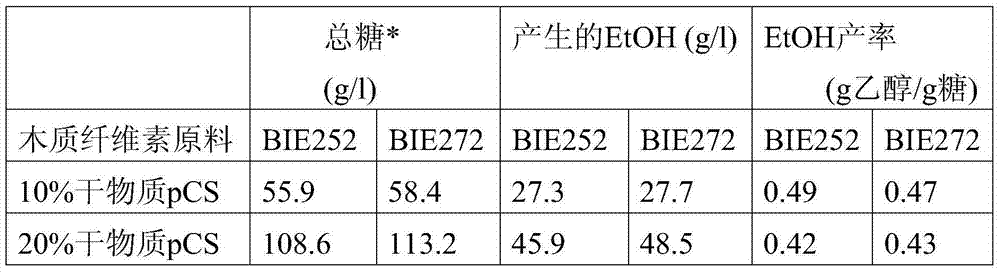
*(在开始发酵时释放的单糖)*(monosaccharides released at the start of fermentation)
实施例5Example 5
菌株BIE272的稳定性测试Stability test of strain BIE272
5.1 接种程序 5.1 Vaccination procedure
为了测试菌株BIE272的稳定性,将25μl的甘油菌菌株BIE272用来在一式两份的摇瓶中于25ml的YEP2%葡萄糖中接种。在600nm下测量培养物的光密度。将培养物在旋转式摇床中在30℃和280rpm下过夜孵育。To test the stability of strain BIE272, 25 μl of Glycerolbacter strain BIE272 was used to inoculate in 25 ml of
孵育过夜之后,测定光密度值。基于孵育之前和之后的OD600值,计算在孵育期间得到的代的数目。将25μl的过夜培养物用来接种含有25ml新鲜培养基的摇瓶。After overnight incubation, optical density values were determined. Based on the OD600 values before and after incubation, the number of passages obtained during incubation was calculated. 25 μl of the overnight culture was used to inoculate shake flasks containing 25 ml of fresh medium.
将培养物在如上文所述的相同条件下再次孵育。重复该程序直到获得了其中细胞生长约50代之后的培养物。The culture was incubated again under the same conditions as described above. This procedure was repeated until a culture in which cells were grown after about 50 passages was obtained.
选择补充有2%葡萄糖的YEP培养基,因为在这些条件下,没有应用用于在菌株BIE272中保持阿拉伯糖和木糖转化所需的引入的基因和结构变异的选择压力。YEP medium supplemented with 2% glucose was chosen because under these conditions no selection pressure was applied to maintain the introduced genetic and structural variation required for arabinose and xylose conversion in strain BIE272.
5.2 在每9–10代培养后单菌落的分离 5.2 Isolation of single colonies after every 9–10 passages
除了上述描述的接种程序之外,应用了下述程序。In addition to the inoculation procedure described above, the following procedure was applied.
从菌株BIE272的甘油菌中,将一环的细胞在YEPD琼脂平板上划线。将平板在30℃下孵育两天。孵育两天之后,单菌落是可见的。From Glycerolbacterium strain BIE272, one ring of cells was streaked on YEPD agar plates. The plates were incubated at 30°C for two days. After two days of incubation, single colonies were visible.
从5.1部分的每一过夜培养物(即10、19、28、37或46代之后)中,将一环的细胞在YEPD琼脂平板上划线,以产生单菌落分离物。在生长实验中评估六个这种菌落的性能。为此,在24孔微平板中将菌落接种于含有2%木糖的Verduyn培养基中。将平板在Infors微平板摇床中在30℃和550rpm下孵育6天。以一定的时间间隔阅读光密度并与直接从甘油菌中挑取的单菌落分离物比较。From each overnight culture in section 5.1 (ie after 10, 19, 28, 37 or 46 passages), one ring of cells was streaked onto YEPD agar plates to generate single colony isolates. The performance of six such colonies was evaluated in growth experiments. For this, colonies were inoculated in Verduyn medium containing 2% xylose in 24-well microplates. Plates were incubated in an Infors microplate shaker at 30°C and 550 rpm for 6 days. Optical densities were read at regular intervals and compared to single colony isolates picked directly from Glycerolbacteria.
培养48小时后,在一些情况下,参照菌株BIE272和在10、19、2837或46代之后产生的BIE272的单菌落分离物之间有差异。如果后者的菌落生长落后,如较之参照菌株的光密度低75%或更低所显示的,同样对生长标记。孵育48小时的结果在图9中示出。After 48 hours of cultivation, there were in some cases differences between the reference strain BIE272 and single colony isolates of BIE272 produced after 10, 19, 2837 or 46 passages. Growth was also marked if the latter colonies lagged in growth, as indicated by a 75% or lower optical density compared to the reference strain. The results of the 48 hour incubation are shown in FIG. 9 .
结果显示,约46代后,所有十二个菌落(六种菌落,一式两份)显示了与直接从甘油菌中分离的参照菌株BIE272菌落的相同的生长表型。The results showed that after about 46 passages, all twelve colonies (six colonies, in duplicate) showed the same growth phenotype as the reference strain BIE272 colony isolated directly from Glycerolbacterium.
在延长的生长(即超过48小时,多达6天,见上文)之后,所有的菌落混合在一起,即,获得了最大光密度值。After prolonged growth (ie over 48 hours, up to 6 days, see above), all colonies were mixed together, ie maximum optical density values were obtained.
不考虑YEPD琼脂平板上的代数。在摇瓶孵育并在琼脂平板上再划线后,单个细胞将在30℃下在两天内在YEPD琼脂平板上生长成为一个菌落。一个酵母菌落通常具有约3×10⁵-106个细胞(Runge,K.W.(2006)Telomeres and Aging in the Yeast Model System.Pages191-206.In:Handbookof models for human ageing.Edited by P.Michael Conn.ISBN13:978-0-12-369391-4)。因此,从一个细胞开始到一个完全生长的菌落约18到20次分裂,并因此在摇瓶培养之后发生了18–20次额外的传代。The number of generations on YEPD agar plates was not considered. After shake flask incubation and restreaking on agar plates, single cells will grow as a colony on YEPD agar plates within two days at 30 °C. A yeast colony usually has about 3×10 5 -10 6 cells (Runge, KW (2006) Telomeres and Aging in the Yeast Model System. Pages 191-206. In: Handbook of models for human aging. Edited by P. Michael Conn. ISBN13:978-0-12-369391-4). Thus, approximately 18 to 20 divisions from one cell initiation to a fully grown colony, and thus 18–20 additional passages occurred after shake flask culture.
从结果中,可总结出,培养超过50代后,所有菌落展示和菌株BIE272的原始甘油菌相同的生长表型。From the results, it can be concluded that after more than 50 generations of culture, all colonies exhibited the same growth phenotype as the original glyceroltobacter of strain BIE272.
5.3 木糖异构酶基因的Q-PCR分析5.3 Q-PCR analysis of xylose isomerase gene
除了如在5.2部分中的表型分析之外,进行定量PCR实验(Q-PCR)以评估在培养实验之前以及过夜培养之后培养物中的菌株BIE272中存在的木糖异构酶基因的拷贝数目。In addition to the phenotypic analysis as in Section 5.2, quantitative PCR experiments (Q-PCR) were performed to assess the copy number of the xylose isomerase gene present in the strain BIE272 in culture before the cultivation experiment and after overnight cultivation .
过夜培养之后,一小部分的培养物用来接种新鲜培养基或分离单菌落(见5.1和5.2部分)。培养物的剩余物用于分离用于Q-PCR目的的染色体DNA。After overnight incubation, a small aliquot of the culture was used to inoculate fresh medium or to isolate single colonies (see Sections 5.1 and 5.2). The remainder of the culture was used to isolate chromosomal DNA for Q-PCR purposes.
使用来自Bio-Rad(Bio-Rad Laboratories,Hercules,CA,USA)的Bio-Rad iCycler iQ系统进行Q-PCR分析。使用iQ SYBR Green Supermix(Bio-Rad)。如在提供商的手册中建议的设置实验。Q-PCR analysis was performed using the Bio-Radi iCycler iQ system from Bio-Rad (Bio-Rad Laboratories, Hercules, CA, USA). Use iQ SYBR Green Supermix (Bio-Rad). Set up experiments as suggested in the provider's manual.
通过测定编码木糖异构酶的xylA基因的拷贝数目评估菌株BIE272的稳定性。选择ACT1基因作为参照单拷贝基因。The stability of strain BIE272 was assessed by determining the copy number of the xylA gene encoding xylose isomerase. The ACT1 gene was chosen as the reference single-copy gene.
用于检测基因xylA和ACT1的引物总结在下表中。Primers used to detect the genes xylA and ACT1 are summarized in the table below.
表4 用于Q-PCR实验中扩增的引物 Table 4 is used for the primers amplified in the Q-PCR experiment
Q-PCR条件如下:Q-PCR conditions are as follows:
1) 95℃ 3分钟1) 95℃ for 3 minutes
步骤2–4,40个循环
2) 95℃ 10秒2) 95℃ for 10 seconds
3) 58℃ 45秒3) 58℃ for 45 seconds
4) 72℃ 45秒4) 72°C for 45 seconds
5) 65℃ 10秒5) 65℃ for 10 seconds
6)每10秒增加温度0.5℃,至95℃6) Increase the temperature by 0.5°C every 10 seconds to 95°C
通过在65℃下开始测量荧光10秒,测定熔融曲线。每10秒温度增加0.5℃,直到达到95℃的温度。从读数中,计算和/或估计感兴趣基因的拷贝数。结果在下表中列出。Melting curves were determined by starting to measure fluorescence at 65°C for 10 seconds. The temperature was increased by 0.5°C every 10 seconds until a temperature of 95°C was reached. From the reads, the copy number of the gene of interest is calculated and/or estimated. The results are listed in the table below.
表5 在非选择性YEPD-培养基中培养10、19、28、37和46代之后培养物中菌株BIE272的xylA基因的相对拷贝数目 Table 5 Relative copy number of the xylA gene of bacterial strain BIE272 in culture after cultivating 10, 19, 28, 37 and 46 generations in non-selective YEPD-medium
相对于ACT1基因,xylA-基因拷贝数目的值显示了从摇瓶到摇瓶的小的偏差,但是当考虑一式两份的摇瓶时,是重现性非常好的。Values for the copy number of the xylA-gene relative to the ACT1 gene showed a small variation from shake flask to shake flask, but were very reproducible when considering duplicate shake flasks.
结果表示,如前文由通过Klein(Klein,D。(2002)TRENDS inMolecular Medicine Vol.8No.6,257-260)所公开的,考虑定量PCR分析的限制,在补充有2%葡萄糖的YEP-培养基上培养约50代之后,BIE272中xylA-基因的拷贝数目本质上是相同的。检测到7和13个拷贝之间,平均9个拷贝左右的xylA-基因。The results show that, considering the limitations of quantitative PCR analysis, as previously published by Klein (Klein, D. (2002) TRENDS in Molecular Medicine Vol.8No.6, 257-260), in YEP-cultured with 2% glucose After about 50 generations of culture on the substrate, the copy number of the xylA-gene in BIE272 was essentially the same. Between 7 and 13 copies, with an average of around 9 copies of the xylA-gene were detected.
总之,该实施例的结果显示了,菌株是表型上和遗传上稳定的。Taken together, the results of this example show that the strains are phenotypically and genetically stable.
实施例6Example 6
选择的菌株的再测序以及参与戊糖发酵的结构变异(SV)的鉴定Resequencing of selected strains and identification of structural variants (SVs) involved in pentose sugar fermentation
在上文描述的实施例中,已显示,用于增强在戊糖阿拉伯糖和木糖上的生长的适应性进化后,可通过应用所述选择策略,选择改进的菌株。菌株BIE272显现为选自单菌落分离物的关于乙醇产率和生产力的最优菌株。而且,该菌株显示了对添加至矿物质培养基或存在于木质纤维素水解产物中的己糖和戊糖混合物的优良的转化,超过了目前为止已知的发酵戊糖的菌株的性能。In the examples described above, it was shown that after adaptive evolution for enhanced growth on the pentose sugars arabinose and xylose, improved strains could be selected by applying the selection strategy. Strain BIE272 appeared to be the optimal strain with respect to ethanol yield and productivity from single colony isolates. Furthermore, this strain shows excellent conversion of mixtures of hexoses and pentoses added to mineral media or present in lignocellulosic hydrolysates, exceeding the performance of strains known to date to ferment pentoses.
此外,显示了,选择的菌株是遗传上和表型上稳定的(实施例5)。在非选择性培养基上培养约50代之后,在培养之前和之后获得的单菌落分离物展现了相同的相关表型和基因型。Furthermore, it was shown that the selected strains were genetically and phenotypically stable (Example 5). After about 50 passages of culture on non-selective media, single colony isolates obtained before and after culture exhibited the same relative phenotypes and genotypes.
为了研究菌株BIE252和BIE272基因组中哪种遗传变异,比如SNPs(单核苷酸多态性)、DIPs(缺失/插入多态性)、缺失、扩增和重排有助于观察到的表型(在混合的糖底物中的改进的乙醇产率和生产力),我们使用已知称为
为此,染色体DNA分离自之前在280rpm和30℃上过夜培养来自YEP2%葡萄糖培养物的菌株BIE252和BIE272。BIE252的情况下,将DNA送至ServiceXS(Leiden,荷兰),并且,BIE272的情况下,将DNA送至BaseClear(Leiden,荷兰),进行使用
在与技术的发展状况最相关的测序分析中获得不同的序列产量(即阅读的数目)。在所有菌株中,获得了数百万的序列读数,例如对于BIE272而言,75个核苷酸长度获得了2500万读数,为18亿个核苷酸。Different sequence yields (ie, number of reads) were obtained in the sequencing assays most relevant to the state of the art. Across all strains, millions of sequence reads were obtained, for example for BIE272, 75 nucleotide length obtained 25 million reads, 1.8 billion nucleotides.
序列读数获得自Illumina GAII机器并且基于(Phred)质量分数,应用质量过滤(quality filtering)。此外,从剩余的读数中去除低质量的和不明确的核苷酸。Sequence reads were obtained from an Illumina GAII machine and based on (Phred) quality scores, quality filtering was applied. Additionally, low-quality and ambiguous nucleotides were removed from the remaining reads.
使用软件,比如NextGene(SoftGenetics LLC,State College,PA16803,美国)和CLC基因组工作台v4.5(CLCbio,Aarhus,Denmark),使用S288c作为菌株BIE252情况下的模板,比对测序读数。在BIE272的情况下,使用CLC基因组工作台v4.5与S288c的模板比对,并在第二次分析中,汇集先前获得的菌株BIE104的测序数据用作参照模板。Sequencing reads were aligned using software such as NextGene (SoftGenetics LLC, State College, PA16803, USA) and CLC Genome Workbench v4.5 (CLCbio, Aarhus, Denmark) using S288c as template in the case of strain BIE252. In the case of BIE272, the templates of S288c were aligned using CLC Genome Workbench v4.5, and in the second analysis, the previously obtained sequencing data of strain BIE104 were pooled and used as reference templates.
在对模板的读数绘图后获得每个碱基的阅读深度:Obtain the read depth for each base after plotting the reads against the template:
BIE252:121的阅读深度BIE252: Reading depth of 121
BIE272:135的阅读深度BIE272: Reading depth of 135
检测突变(单核苷酸多态性和插入/缺失高至30bp)并总结在突变报告中。将在不同的菌株中所称的突变彼此比较,以鉴定菌株之间的独特的变异。Mutations (SNPs and insertions/deletions up to 30bp) are detected and summarized in the mutation report. Called mutations in different strains are compared to each other to identify unique variations between strains.
手工检查突变报告的每一输入值,以排除序列读数的错误比对的可能性,或由于测序错误的突变呼叫(calls)或序列覆盖度非常低的突变呼叫。假阳性突变从突变报告中去除。Each input value for the mutation report was manually checked to rule out the possibility of misalignment of sequence reads, or mutation calls due to sequencing errors or mutation calls with very low sequence coverage. False positive mutations are removed from the mutation report.
表7表示观察到的SNP的概述Table 7 presents an overview of the observed SNPs
表7 相对于菌株BIE104的菌株BIE252和BIE272的单核苷酸多态性(SNPs)。为对照目的,菌株BIE201的结构变异也已列出。 Table 7 Single nucleotide polymorphisms (SNPs) of strains BIE252 and BIE272 relative to strain BIE104. For control purposes, the structural variants of strain BIE201 are also listed.

此外,使用表示基因组的每一单核苷酸位置处的阅读深度的覆盖度图,对过表达或低表达的基因组区域进行查询。这种结构变异包括缺失、复制拷贝数目变异、插入、倒置和易位。In addition, queries were performed for over- or under-expressed genomic regions using coverage maps representing the read depth at each single nucleotide position of the genome. Such structural variations include deletions, copy number variations of duplications, insertions, inversions and translocations.
图21展示了PMA1终止子区域的增加的覆盖度的例子。这种终止子已用在用于过表达基因araA,araB and araD(在质粒pPWT018(见PCT/EP2011/056242)以及xylA-基因(见EP10160647.3)中)的若干构建体中。结果,多个拷贝的PMA1终止子在菌株BIE252和BIE272的基因组中存在,较之PMA1终止子周围的基因组区域,导致增加的阅读深度。Figure 21 shows an example of increased coverage of the PMA1 terminator region. This terminator has been used in several constructs for the overexpression of the genes araA, araB and araD (in the plasmid pPWT018 (see PCT/EP2011/056242) and the xylA-gene (see EP10160647.3)). As a result, multiple copies of the PMA1 terminator were present in the genomes of strains BIE252 and BIE272, resulting in increased read depth compared to the genomic region surrounding the PMA1 terminator.
图22展示了编码木糖异构酶的xylA基因的情况下覆盖度分析的另一例子。由xylA基因组成的区域的标准化阅读深度符合9至10的值,这符合如通过Q-PCR测定的拷贝数目(见实施例5),而周围基因组区域的阅读深度大约是1。Figure 22 shows another example of coverage analysis in the case of the xylA gene encoding xylose isomerase. The normalized read depth of the region consisting of the xylA gene fits a value of 9 to 10, which corresponds to the copy number as determined by Q-PCR (see Example 5), while the read depth of the surrounding genomic region is approximately 1.
使用这种方法,鉴定了菌株BIE252和BIE272的基因组中过表达和低表达的区域。发现,基于现在可得到的信息,先前在菌株BIE201(见PCT/EP2011/056242)中观察到的扩增位于染色体VII的左臂上,并且左臂在菌株BIE252和BIE272中不再扩增。在BIE201中的包含基因araA、araB和araD的染色体VII右臂上观察到的扩增在菌株BIE252和BIE272中是保守的。基于标准化阅读深度,BIE272中阿拉伯糖基因的拷贝数目测定为三个拷贝。Using this approach, overexpressed and underexpressed regions in the genome of strains BIE252 and BIE272 were identified. It was found, based on the information now available, that the amplification previously observed in strain BIE201 (see PCT/EP2011/056242) was located on the left arm of chromosome VII and that the left arm was no longer amplified in strains BIE252 and BIE272. The amplification observed in BIE201 on the right arm of chromosome VII containing the genes araA, araB and araD is conserved in strains BIE252 and BIE272. The copy number of the arabinose gene in BIE272 was determined to be three copies based on normalized read depth.
实施例7Example 7
分析转化体的染色体结构Analysis of chromosomal structure of transformants
从再测序数据(见实施例6)中可推断出,在适应性进化后,已在基因组中发生了基因组变异。这些基因组变异包括单细胞核多态性(SNPs)、缺失-插入多态性(DIPs)和由于类似扩增和易位的事件导致的染色体结构的较大的变异。为了证实后者,使用了CHEF凝胶电泳。From the resequencing data (see Example 6), it can be inferred that following adaptive evolution, genomic variation has occurred in the genome. These genomic variations include single-cell nuclear polymorphisms (SNPs), deletion-insertion polymorphisms (DIPs), and larger variations in chromosome structure due to events like amplifications and translocations. To confirm the latter, CHEF gel electrophoresis was used.
等强度均一电场(CHEF)凝胶电泳已用来研究性未转化的菌株BIE104到能在糖混合物中快速发酵戊糖和己糖的菌株BIE272的一系列Saccharomyces cerevisiae酵母菌株的染色体组型。Isointense homogeneous electric field (CHEF) gel electrophoresis has been used to study the karyotypes of a range of Saccharomyces cerevisiae yeast strains, from the untransformed strain BIE104 to the strain BIE272 capable of rapidly fermenting pentose and hexose sugars in a sugar mixture.
7.1 CHEF电泳 7.1 CHEF electrophoresis
为了确定是否改变了染色体的数目和大小,或关于某些关键基因的组成,采用CHEF电泳(钳位均匀电场电泳;III Variable AngleSystem;Bio-Rad,Hercules,CA94547,USA)。根据提供商的说明书,使用CHEF酵母基因组DNA填料试剂盒(CHEF Yeast Genomic DNA Plug Kit,BioRad)制备酵母菌株的琼脂糖填料(见下)。根提供商的说明书在0.5x TBE(Tris-Borate-EDTA)中制备1%琼脂糖凝胶(Pulse Field Agarose,Bio-Rad)。根据下述设置进行跑胶:In order to determine whether the number and size of chromosomes have changed, or about the composition of some key genes, CHEF electrophoresis (clamped uniform electric field electrophoresis; III Variable Angle System; Bio-Rad, Hercules, CA94547, USA). Agarose plugs of yeast strains were prepared using the CHEF Yeast Genomic DNA Plug Kit (BioRad) according to the supplier's instructions (see below). A 1% agarose gel (Pulse Field Agarose, Bio-Rad) was prepared in 0.5x TBE (Tris-Borate-EDTA) according to the supplier's instructions. Run glue according to the following settings:
块1 起始时间60秒
结束时间80秒end
比率1
运行时间15小时Run
块2 起始时间90秒
结束时间120秒
比率1
运行时间9小时Run time 9 hours
作为染色体大小测定的标记物,菌株YNN295(Bio-Rad)的琼脂糖填料包括在实验中。As a marker for chromosome size determination, an agarose plug of strain YNN295 (Bio-Rad) was included in the experiment.
电泳之后,使用以终浓度为70μg每升的溴化乙锭对凝胶染色30分钟。在图10中,显示了染色的凝胶的例子。After electrophoresis, the gel was stained with ethidium bromide at a final concentration of 70 μg per liter for 30 minutes. In Figure 10, examples of stained gels are shown.
在菌株BIE104A2P1c、BIE201和BIE201X9中,染色体VII的大小增加了。其大小增加至接近于染色体IV的大小,约1500-1550kb。In strains BIE104A2P1c, BIE201 and BIE201X9, the size of chromosome VII was increased. Its size increases to approximately that of chromosome IV, approximately 1500-1550 kb.
但是,较之BIE201,在菌株BIE252中,大型染色体VII减小了,但仍比染色体VII(因为其是未转化的酵母菌株BIE104中的染色体VII)的原始大小大。两种染色体分别显示具有约1375和1450kb的大小。该结构证实了来自再测序数据(实施例6)中的观察值,在菌株BIE201中扩增的染色体VII的左臂,不再在菌株BIE252和BIE272中扩增。如在BIE201中一样,鉴于染色体VII右臂上的扩增仍然存在于BIE252和BIE272中,染色体VII的大小仍然比染色体VII(如在BIE104中表现的)的原始大小大。However, the large chromosome VII was reduced in strain BIE252 compared to BIE201, but was still larger than the original size of chromosome VII (as it was in the untransformed yeast strain BIE104). The two chromosomes appear to have sizes of approximately 1375 and 1450 kb, respectively. This structure confirms the observation from the resequencing data (Example 6), that the left arm of chromosome VII, amplified in strain BIE201, is no longer amplified in strains BIE252 and BIE272. As in BIE201, the size of chromosome VII is still larger than the original size of chromosome VII (as represented in BIE104), given that the amplification on the right arm of chromosome VII is still present in BIE252 and BIE272.
在菌株BIE272中,情况甚至更为复杂。表示染色体IV的1600kb条带不再是可见的。因为在染色体IV上,像在任何其他染色体上一样,存在若干不可缺少的基因,染色体大小可能已通过片段化(即分成两个较小的部分)或大小增加(例如,通过扩增)而被改变。In strain BIE272 the situation is even more complicated. The 1600 kb band representing chromosome IV is no longer visible. Because on chromosome IV, like on any other chromosome, there are several indispensable genes, chromosome size may have been reduced by fragmentation (i.e., splitting into two smaller parts) or by increase in size (e.g., by amplification) Change.
此外,具有约1450kb大小的染色体已消失了。具有约1375kb大小的染色体也存在于BIE272中。In addition, a chromosome with a size of about 1450 kb has disappeared. A chromosome with a size of about 1375 kb is also present in BIE272.
鉴定染色体如何通过部分的扩增、易位和/或片段化而重排的一种方式是通过印迹对凝胶的DNA转移,随后用代表某些染色体的特异性探针杂交。One way to identify how chromosomes rearrange through amplification, translocation and/or fragmentation of parts is by blot-to-gel DNA transfer followed by hybridization with specific probes representing certain chromosomes.
7.2用特异性探针杂交7.2 Hybridization with specific probes
染色之后,将凝胶印迹到Amersham Hybond N+薄膜上(GE HealthcareLife Sciences,Diegem,比利时)。After staining, the gel was blotted onto Amersham Hybond N+ membrane (GE Healthcare Life Sciences, Diegem, Belgium).
为了能够鉴定染色体的大小改变的特性,制造与印迹的薄膜杂交的探针。根据提供商的说明书使用PCR DIG探针合成试剂盒(Roche,Almere,荷兰)制备探针(见下表)。In order to be able to identify the size-altering properties of chromosomes, probes were produced that hybridized to the blotted membrane. Probes were prepared using the PCR DIG Probe Synthesis Kit (Roche, Almere, The Netherlands) according to the supplier's instructions (see table below).
制备下述探针。The following probes were prepared.
表8 用于扩增指示的探针的引物 Table 8 Primers used to amplify the indicated probes
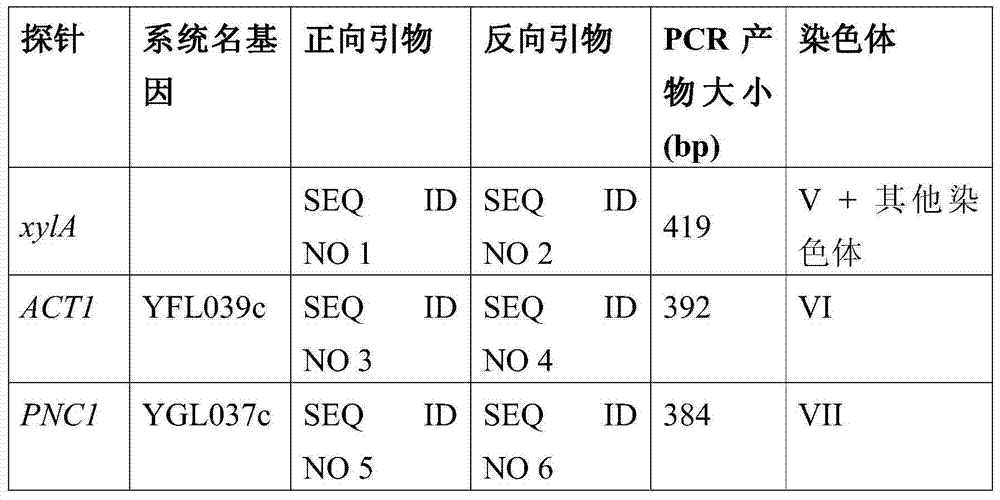
根据提供商的说明书,将薄膜在DIG Easy Hyb Buffer(Roche)中预杂交。探针在99℃下变性5分钟,在冰上冰冻5分钟并添加至预杂交的薄膜上。在42℃下过夜进行杂交。Membranes were prehybridized in DIG Easy Hyb Buffer (Roche) according to the supplier's instructions. Probes were denatured at 99°C for 5 minutes, frozen on ice for 5 minutes and added to prehybridized membranes. Hybridization was performed overnight at 42°C.
根据提供商的说明书使用DIG Wash和Block Buffer Set(Roche)进行洗涤薄膜并封闭薄膜,然后检测杂交的探针。使用CDP-Star即开即用试剂盒(Roche)通过用抗-地高辛-AP Fab片段(anti-dioxygenin-AP Fab fragments,Roche)孵育随后添加检测试剂,来进行检测。使用Chemidoc装置提供的适当设置,使用Bio-Rad Chemidoc XRS+系统进行化学发光信号检测。The membrane was washed and blocked using DIG Wash and Block Buffer Set (Roche) according to the provider's instructions, and then hybridized probes were detected. Detection was performed using the CDP-Star ready-to-use kit (Roche) by incubation with anti-dioxygenin-AP Fab fragments (Roche) followed by addition of detection reagents. Chemiluminescence signal detection was performed using a Bio-Rad Chemidoc XRS+ system using the appropriate settings provided with the Chemidoc apparatus.
结果显示在图11(PNC1)、12a(ACT1)、和12b(xylA)中。The results are shown in Figures 11 (PNC1), 12a (ACT1), and 12b (xylA).
PNC1位于染色体VII的左臂,并因而被认为是该染色体的特异性探针。杂交导致菌株BIE104——未转化的菌株的情况下的期望大小的条带。在菌株BIE104A2P1(在图11中称为BIE104A2P1a)中,观察到相同的条带。此外,观察到更为模糊的且更小的第二条条带。相应的条带不存在于溴化乙锭染色的凝胶中(图10)。因此,这种信号可能是电泳(捕获)和/或杂交假象。PNC1 is located on the left arm of chromosome VII and was thus considered a specific probe for this chromosome. Hybridization resulted in a band of the expected size in the case of strain BIE104 - an untransformed strain. In the strain BIE104A2P1 (referred to as BIE104A2P1a in Figure 11), the same band was observed. In addition, a fainter and smaller second band was observed. Corresponding bands were absent in ethidium bromide-stained gels (Figure 10). Therefore, this signal may be an electrophoretic (capture) and/or hybridization artifact.
在菌株BIE104A2P1c、BIE201和BIE201X9中,观察到染色体VII的大小增加,因为从溴化乙锭染色的凝胶中是明显的(图10)。其大小增加至接近染色体IV的大小,约1500-1550kb。In strains BIE104A2P1c, BIE201 and BIE201X9, an increase in the size of chromosome VII was observed as evident from ethidium bromide-stained gels (Figure 10). It increases in size to approximately the size of chromosome IV, approximately 1500-1550 kb.
在菌株BIE252和BIE272中,杂交了更小大小的条带。大小约1375kb。在BIE252中,观察到第二条更大但较不强的条带,其不存在于BIE272中。这种条带可能是电泳(捕获)和/或杂交假象的结果。或者,其是相同染色体的较大的形式。鉴于琼脂块制备自纯化的单菌落分离物,这不太可能。In strains BIE252 and BIE272, bands of smaller size hybridized. The size is about 1375kb. In BIE252, a second larger but less intense band was observed, which was absent in BIE272. Such bands may be the result of electrophoresis (capture) and/or hybridization artifacts. Alternatively, it is a larger form of the same chromosome. This is unlikely given that the agar blocks were prepared from purified single colony isolates.
基于强度比较,这些结果证实了上文所述的观察结果,染色体VII的左臂不再在菌株BIE252和BIE272中扩增。从条带的强度可推导出,相对于BIE104和BIE104A2P1(a),菌株BIE104A2P1c、BIE201和BIE201X9中的PNC1基因的拷贝数目增加,但是在菌株BIE252和BIE272中再次减少。Based on intensity comparisons, these results confirm the observation described above that the left arm of chromosome VII is no longer amplified in strains BIE252 and BIE272. From the intensity of the bands it can be deduced that the copy number of the PNC1 gene is increased in strains BIE104A2P1c, BIE201 and BIE201X9 relative to BIE104 and BIE104A2P1(a), but again decreased in strains BIE252 and BIE272.
ACT1-基因位于染色体VI上并且预期不被扩增。因此,探针用作对照。当然,杂交后在所有测试的菌株中观察到单一的条带(见图12,a部)。The ACT1-gene is located on chromosome VI and is not expected to be amplified. Therefore, the probe was used as a control. Of course, a single band was observed in all strains tested after hybridization (see Figure 12, part a).
xylA-基因作为单拷贝基因在菌株BIE201X9的染色体V上整合。在菌株BIE252中,将额外的拷贝引入菌株BIE201X9的Ty1基因座中,随后进行适应性进化,最后产生菌株BIE272。The xylA-gene was integrated as a single-copy gene on chromosome V of strain BIE201X9. In strain BIE252, an extra copy was introduced into the Ty1 locus of strain BIE201X9, followed by adaptive evolution, resulting in strain BIE272.
如预期的,在菌株BIE201X9中,一条单独的染色体与xylA-探针杂交。在放射自显影上观察到的条带具有约600kb的大小,这是正确的大小。请注意,在该遗传背景中,染色体V和VIII之间的分辨度和标记菌株YNN295一样是较不明显的(见图10)。As expected, in strain BIE201X9, a single chromosome hybridized to the xylA-probe. The band observed on the autoradiography has a size of about 600 kb, which is the correct size. Note that in this genetic background, the resolution between chromosomes V and VIII is less pronounced as in the marker strain YNN295 (see Figure 10).
在菌株BIE252和BIE272中观察到相同的条带。The same bands were observed in strains BIE252 and BIE272.
在菌株BIE252中,观察到至少一条额外的条带,其具有高分子量。条带约2Mb,这表明额外拷贝的xylA-基因的整合已在最大的染色体——染色体XII上发生。较之对应于染色体V上整合的xylA-基因的条带,该条带的强度是高的。从两种条带的强度的比率中,可推断出拷贝数目。可得出这样的结论,多个拷贝的xylA-基因已整合在染色体XII中。拷贝数目的精确测定需要更为详细的工作,比如应用不同的浓度的DNA,以及应用有若干暴露时间的放射自显影的密度测定(以通过测量相片上的银粒来量化DNA),来确保获得的读数在胶片的线性范围内。此外,尽管单个强度的增加可表明某些基因的拷贝数目增加,其他因素也可能影响信号强度,比如在凝胶上应用的DNA的量、印迹效果、检测饱和度等等。In strain BIE252, at least one additional band was observed, which was of high molecular weight. The band is about 2 Mb, which indicates that integration of an extra copy of the xylA-gene has occurred on the largest chromosome, chromosome XII. The intensity of this band is high compared to the band corresponding to the xylA-gene integrated on chromosome V. From the ratio of the intensities of the two bands, the copy number can be deduced. It can be concluded that multiple copies of the xylA-gene have been integrated in chromosome XII. Accurate determination of copy number requires more detailed work, such as application of different concentrations of DNA, and densitometry of autoradiography (to quantify DNA by measuring silver grains on photographs) with several exposure times to ensure that The readings are within the linear range of the film. Furthermore, although an increase in individual intensities can indicate an increase in the copy number of certain genes, other factors may also affect the signal intensity, such as the amount of DNA applied on the gel, the effect of blotting, the saturation of the assay, etc.
在菌株BIE252中观察到两条暗淡的、模糊的额外条带,较之最强的条带,一条稍微更强,另一条稍微更弱。这些条带可能是由DNA捕获引起的电泳假象。Two faint, fuzzy additional bands were observed in strain BIE252, one slightly stronger and the other slightly weaker than the most intense band. These bands may be electrophoretic artifacts caused by DNA capture.
较之菌株BIE252,在菌株BIE272中,最强杂交的条带的尺寸已减小,这表示染色体XII的结构变异(图12b)。这也在溴化乙锭染色的凝胶中观察到(图10)。在菌株BIE272的情况下,最可能发生“影子条带”,这由于电泳期间染色体的捕获。对应于染色体XII的条带的强度比对应于染色体V的条带的强度高若干倍,这表示多个拷贝的xylA-基因仍存在于菌株BIE272中,如关于菌株BIE252所观察到的。从Q-PCR实验中,得出结论:约9个拷贝的xylA-基因存在于菌株BIE272(实施例5,5.3部分)中。In strain BIE272 compared to strain BIE252, the size of the most intensely hybridizing band has been reduced, indicating a structural variation in chromosome XII (Fig. 12b). This was also observed in ethidium bromide stained gels (Figure 10). In the case of strain BIE272, "shadow bands" most likely occurred due to the capture of chromosomes during electrophoresis. The intensity of the band corresponding to chromosome XII was several times higher than the intensity of the band corresponding to chromosome V, indicating that multiple copies of the xylA-gene were still present in strain BIE272, as observed for strain BIE252. From the Q-PCR experiments, it was concluded that about 9 copies of the xylA-gene were present in strain BIE272 (Example 5, section 5.3).
在染色的凝胶中(图10),对应于染色体IV的条带在菌株BIE272中不再是可见的,这表明其中染色体IV参与的重组事件。In the stained gel (Figure 10), the band corresponding to chromosome IV was no longer visible in strain BIE272, indicating a recombination event in which chromosome IV was involved.
总之,实施例7的结果清楚指示结构变异导致已经发生了染色体大小的改变。需要更精细的研究以能够弄清楚哪些(部分的)染色体参与这些过程。Taken together, the results of Example 7 clearly indicate that changes in chromosome size have occurred due to structural variation. More detailed studies are needed to be able to clarify which (parts of) chromosomes are involved in these processes.
实施例8Example 8
菌株BIE104、BIE201、BIE252和BIE272的性能测试Performance test of strains BIE104, BIE201, BIE252 and BIE272
菌株BIE104、BIE201、BIE252和BIE272就它们的基因组成和它们糖水解产物的性能而言具有不同的特征。下表阐释菌株彼此的关系如何。Strains BIE104, BIE201, BIE252 and BIE272 have different characteristics with regard to their genetic makeup and the properties of their sugar hydrolyzates. The table below illustrates how the strains are related to each other.
表9 BIE272菌株系中的近亲菌株 Table 9 Relative strains in BIE272 strains

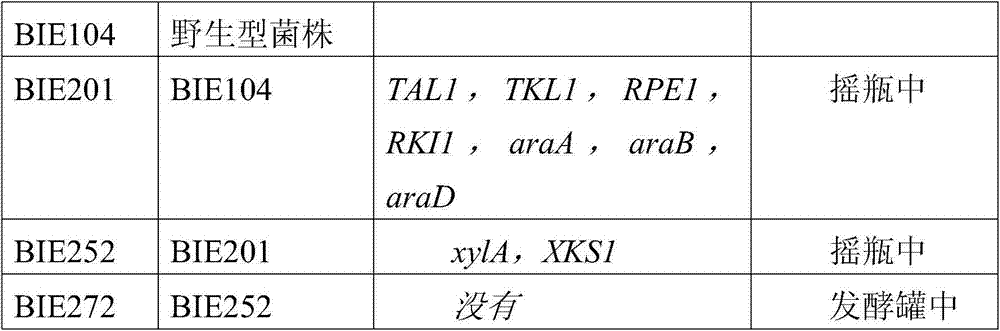
为了阐释在开发菌株BIE272期间实现的就转化糖混合物方面的改进,在AFM(Halotec,Vennendaal,荷兰)中进行性能测试。为此,在具有2%葡萄糖作为碳源的100ml Verduyn培养基中,在30℃和280rpm下培养菌株BIE104、BIE201、BIE252和BIE272的单菌落分离物24小时。To illustrate the improvement achieved during the development of strain BIE272 with respect to the invert sugar mixture, performance tests were carried out in an AFM (Halotec, Vennendaal, The Netherlands). For this, single colony isolates of strains BIE104, BIE201, BIE252 and BIE272 were grown in 100 ml Verduyn medium with 2% glucose as carbon source at 30°C and 280 rpm for 24 hours.
通过离心收获细胞并且在33℃和pH4.2,补充有50g/l葡萄糖、50g/l木糖、35g/l阿拉伯糖、10g/l半乳糖和5g/l甘露糖的200ml Verduyn培养基中于AFM(温度33℃,搅拌速度250rpm,发酵时间最小72小时)中进行用于CO2生产的培养。以一定的时间间隔持续监测CO2生产,并取样用于分析(使用分光光度计在600nm下的光密度;通过NMR的乙醇、甘油和残留糖)。Cells were harvested by centrifugation and placed in 200 ml Verduyn medium supplemented with 50 g/l glucose, 50 g/l xylose, 35 g/l arabinose, 10 g/l galactose and 5 g/l mannose at 33°C and pH 4.2. The cultivation for CO2 production was carried out in AFM (temperature 33°C, stirring
CO2释放图谱在图13、14、15和16中阐释。持续71小时和25分钟的实验期间产生的CO2的总量阐释在表10中。 CO2 release profiles are illustrated in Figures 13, 14, 15 and 16. The total amount of CO produced during the experiment lasting 71 hours and 25 minutes is illustrated in Table 10.
表10 在含有50g/l葡萄糖,50g/l木糖,35g/l阿拉伯糖,10g/l半乳糖和5g/l甘露糖的Verduyn培养基中通过菌株BIE104、BIE201、BIE252和BIE272在约72小时内产生的CO2的总量。 Table 10 In the Verduyn medium containing 50g/l glucose, 50g/l xylose, 35g/l arabinose, 10g/l galactose and 5g/l mannose in about 72 hours by bacterial strains BIE104, BIE201, BIE252 and BIE272 The total amount of CO2 produced within.
图13中,所有4个菌株显示在一个图中。在图14、15和16中,同时进行两个菌株的配对比较。In Figure 13, all 4 strains are shown in one graph. In Figures 14, 15 and 16, a pairwise comparison of the two strains was performed simultaneously.
图14中,菌株BIE104与BIE201比较。从该糖混合物,菌株BIE104仅仅可发酵葡萄糖和甘露糖,而菌株BIE201发酵葡萄糖、甘露糖、半乳糖和阿拉伯糖。这导致不同的CO2生产速率特征(图14)并且产生的CO2的总量增加70%。In Figure 14, strain BIE104 is compared to BIE201. From this sugar mixture, strain BIE104 could only ferment glucose and mannose, while strain BIE201 fermented glucose, mannose, galactose and arabinose. This resulted in a different CO2 production rate profile (Figure 14) and a 70% increase in the total amount of CO2 produced.
图15中,比较菌株BIE201和BIE252。除了转化阿拉伯糖和己糖,相对于BIE201在菌株BIE252中新的转化木糖的能力产生更高的CO2生产速率(图15)和更高的总CO2生产(相对于BIE10+106%4和相对于BIE201+21%)。In Figure 15, strains BIE201 and BIE252 are compared. In addition to converting arabinose and hexose sugars, the novel ability to convert xylose in strain BIE252 relative to BIE201 resulted in a higher CO2 production rate (Figure 15) and a higher total CO2 production (relative to BIE10+106%4 and Relative to BIE201+21%).
图16中,显示菌株BIE272表现出糖转化成乙醇和二氧化碳的更高的转化速率。实验结束时(71小时和25分钟),菌株BIE272相对于BIE104已经产生了多145%的CO2,且相对于菌株BIE252产生了多19%的CO2。In Figure 16, it is shown that strain BIE272 exhibits a higher conversion rate of sugars to ethanol and carbon dioxide. At the end of the experiment (71 hours and 25 minutes), strain BIE272 had produced 145% more CO2 relative to BIE104 and 19% more CO2 relative to strain BIE252.
图17、18、19和20中,分别阐释了菌株BIE104、BIE201、BIE252和BIE272的糖消耗和乙醇形成。Sugar consumption and ethanol formation of strains BIE104, BIE201, BIE252 and BIE272 are illustrated in Figures 17, 18, 19 and 20, respectively.
菌株BIE104(图17)仅仅消耗葡萄糖和甘露糖。菌株不能够转化戊糖木糖和阿拉伯糖,因为这是非转化的菌株。也不转化半乳糖,因为在发酵条件下,能荷可能太低不能合成利用半乳糖的Leloir蛋白质,如由van denBrink等(van den Brink等(2009)Energetic limits to metabolic flexibility:responses of Saccharomyces cerevisiae to glucose-galactose transitions.Microbiology155(Pt4):1340-50)描述的。72小时内,加料的糖的产率是每克糖0.14克乙醇。Strain BIE104 (Figure 17) only consumed glucose and mannose. The strain was not able to convert the pentose sugars xylose and arabinose as this was a non-transforming strain. Galactose is also not converted, because under fermentation conditions, the energy charge may be too low to synthesize Leloir proteins utilizing galactose, as reported by van den Brink et al. (van den Brink et al. (2009) Energetic limits to metabolic flexibility: responses of Saccharomyces cerevisiae to Glucose-galactose transitions. Microbiology 155 (Pt4): 1340-50) described. The yield of sugar fed was 0.14 grams of ethanol per gram of sugar in 72 hours.
菌株BIE201(图18)能够转化葡萄糖、甘露糖、阿拉伯糖和半乳糖。不发酵木糖,因为未在该菌株中引入木糖发酵的路径。72小时内,该实验中阿拉伯糖几乎完全发酵,而包括半乳糖的己糖在实验开始后的36小时之前全部转化。72小时内,加料的糖的产率是每克糖0.25克乙醇。Strain BIE201 (Figure 18) was able to convert glucose, mannose, arabinose and galactose. Xylose was not fermented because no pathway for xylose fermentation was introduced in this strain. Within 72 hours, arabinose was almost completely fermented in this experiment, while hexoses, including galactose, were completely converted by 36 hours after the start of the experiment. The yield of sugar fed was 0.25 grams of ethanol per gram of sugar in 72 hours.
菌株BIE252(图19)能够发酵葡萄糖、木糖、甘露糖、阿拉伯糖和半乳糖。72小时内,该实验中木糖和阿拉伯糖几乎完全发酵,而己糖葡萄糖、甘露糖和半乳糖在实验开始后的36小时之前几乎耗尽。72小时内,加料的糖的产率是每克糖0.36克乙醇。Strain BIE252 (Figure 19) was able to ferment glucose, xylose, mannose, arabinose and galactose. Within 72 hours, xylose and arabinose were almost completely fermented in this experiment, whereas the hexoses glucose, mannose and galactose were almost depleted before 36 hours after the start of the experiment. The yield of sugar fed was 0.36 grams of ethanol per gram of sugar in 72 hours.
菌株BIE272(图20)能够发酵葡萄糖、木糖、甘露糖、阿拉伯糖和半乳糖。72小时内,所有的糖快速且全部地发酵,阿拉伯糖除外,阿拉伯糖几乎完全发酵。72小时内,加料的糖的产率是每克糖0.42克乙醇。Strain BIE272 (Figure 20) was able to ferment glucose, xylose, mannose, arabinose and galactose. Within 72 hours, all sugars ferment rapidly and completely, except for arabinose, which is almost completely fermented. The yield of sugar fed was 0.42 grams of ethanol per gram of sugar in 72 hours.
菌株BIE104、BIE201、BIE252和BIE272的发酵特征总结在下表中。The fermentation characteristics of strains BIE104, BIE201, BIE252 and BIE272 are summarized in the table below.
表11 菌株BIE104、BIE201、BIE252和BIE272在含有5%葡萄糖、5%木糖、3.5%阿拉伯糖、1%半乳糖和0.5%甘露糖的Verduyn培养基中的发酵特征。产率表达为相对于每克加料的糖的克乙醇,在整个发酵(72小时)中计算。生产力表达为克乙醇每升每小时,在表中指定的时间段内计算。 Table 11 Fermentation characteristics of strains BIE104, BIE201, BIE252 and BIE272 in Verduyn medium containing 5% glucose, 5% xylose, 3.5% arabinose, 1% galactose and 0.5% mannose. Yields are expressed as grams of ethanol per gram of sugar fed, calculated throughout the fermentation (72 hours). Productivity is expressed as grams of ethanol per liter per hour and is calculated over the time period specified in the table.
如表11中清楚地显示的,在菌株BIE272的情况下,不仅仅产率在整个过程中增加,而且在数个时间段中生产力也增加。在发酵的第一个24小时内,较之菌株BIE252,在菌株BIE272的情况下生产力增加50%。As clearly shown in Table 11, in the case of strain BIE272, not only was the yield increased throughout the process, but productivity was also increased over several time periods. During the first 24 hours of fermentation, the productivity was increased by 50% in the case of strain BIE272 compared to strain BIE252.
除了菌株BIE272相对于其他检测的菌株的增加的产率和生产力,在存在葡萄糖的情况下,木糖和阿拉伯糖的消耗速率也增加。In addition to the increased yield and productivity of strain BIE272 relative to the other tested strains, the consumption rate of xylose and arabinose was also increased in the presence of glucose.
在6.2小时的时间点,菌株BIE252的培养物包含19.8g葡萄糖/升(110mM)。在23.3小时的时间点,葡萄糖浓度是7.1g/l(39mM)。这两个浓度是抑制浓度(葡萄糖抑制或分解代谢产物抑制),在该浓度下葡萄糖之外的其他碳源的使用被抑制。令人吃惊地,在该时间点期间,阿拉伯糖浓度从30.8g/l下降至24.3g/l并且木糖浓度从42.8g/l下降至32.9g/l。所以,在这些条件下发生葡萄糖、木糖和阿拉伯糖的共消耗。At the 6.2 hour time point, the culture of strain BIE252 contained 19.8 g glucose/liter (110 mM). At the 23.3 hour time point, the glucose concentration was 7.1 g/l (39 mM). These two concentrations are inhibitory concentrations (glucose inhibition or catabolite inhibition) at which the use of carbon sources other than glucose is inhibited. Surprisingly, the arabinose concentration dropped from 30.8 g/l to 24.3 g/l and the xylose concentration dropped from 42.8 g/l to 32.9 g/l during this time point. Therefore, co-consumption of glucose, xylose and arabinose occurs under these conditions.
在菌株BIE272的情况下,从6.2小时直到23.3小时时间点观察到下列下降:葡萄糖从22.4g/l至4.8g/l(从124mM至27mM)、阿拉伯糖从33.7g/l至22.4g/l和木糖从46.2g/l至22.6g/l。在该菌株中,也发生木糖、阿拉伯糖和葡萄糖的共消耗。In the case of strain BIE272, the following decreases were observed from the 6.2 hour until the 23.3 hour time point: glucose from 22.4 g/l to 4.8 g/l (from 124 mM to 27 mM), arabinose from 33.7 g/l to 22.4 g/l and xylose from 46.2g/l to 22.6g/l. In this strain, co-consumption of xylose, arabinose and glucose also occurs.
在存在葡萄糖的情况下,阿拉伯糖和木糖的消耗速率计算为每小时每克干酵母生物质消耗的戊糖克数。值呈现在表12中。Arabinose and xylose consumption rates were calculated as grams of pentose sugars consumed per gram of dry yeast biomass per hour in the presence of glucose. Values are presented in Table 12.
表12 在存在葡萄糖的情况下,菌株BIE252和BIE272的阿拉伯糖和木糖的消耗速率 Table 12 Consumption rates of arabinose and xylose by strains BIE252 and BIE272 in the presence of glucose
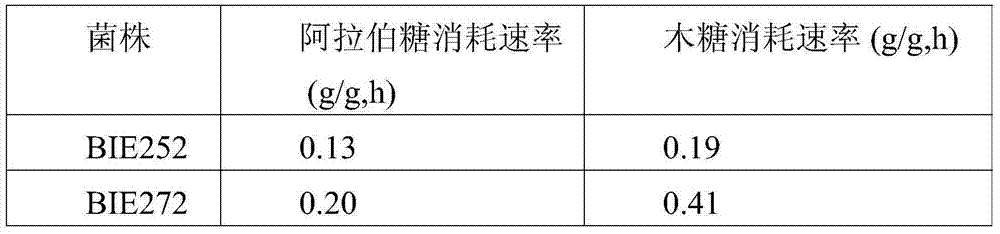
菌株BIE272中进一步改善了在存在葡萄糖浓度的情况下消耗戊糖阿拉伯糖和木糖的能力。The ability to consume the pentose sugars arabinose and xylose in the presence of glucose concentrations was further improved in strain BIE272.

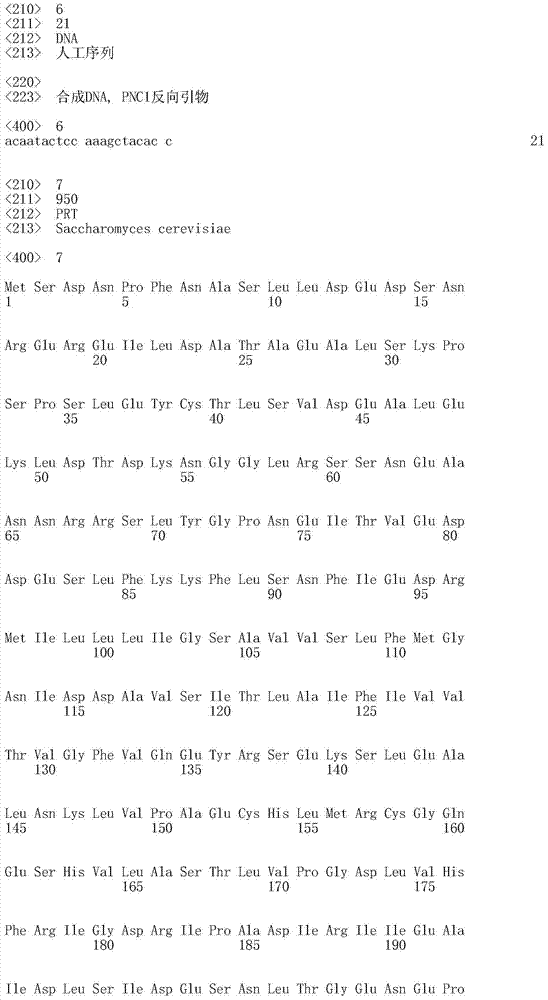
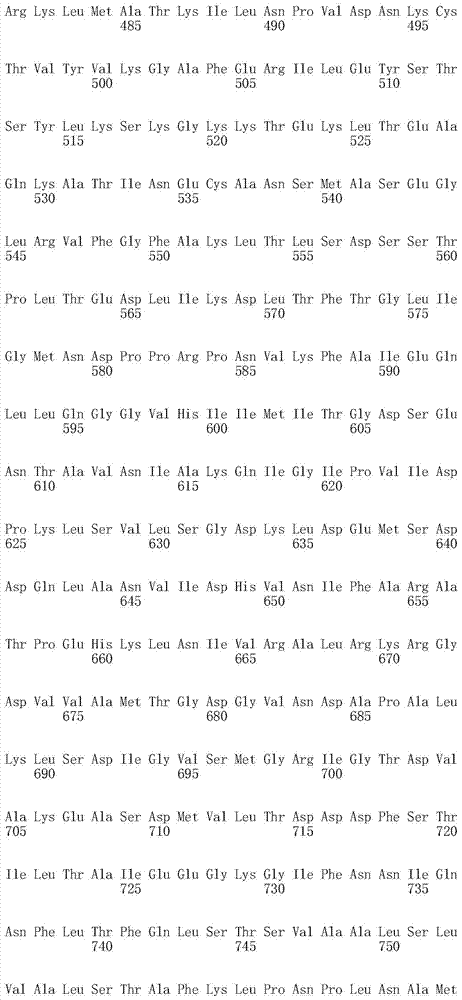
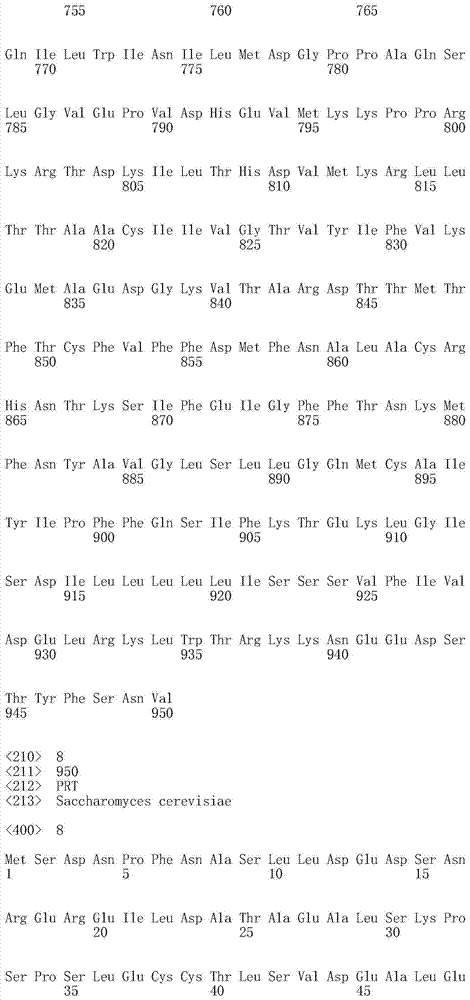
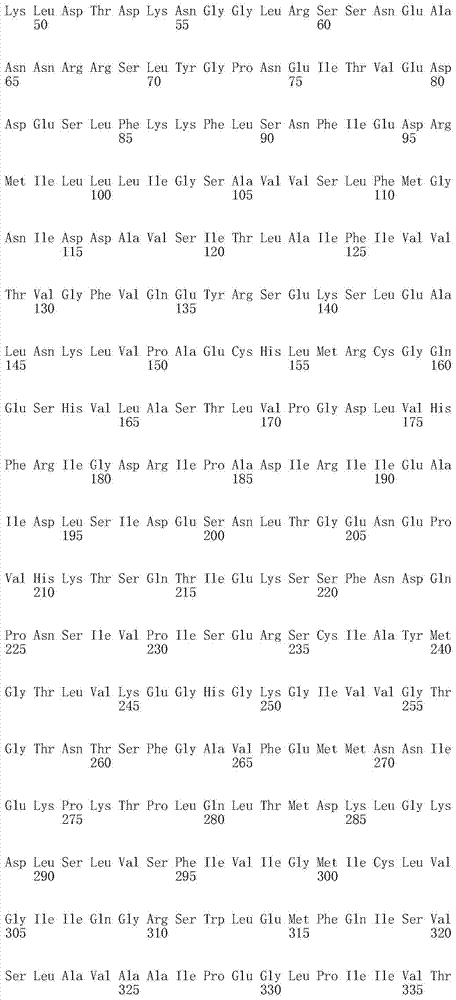
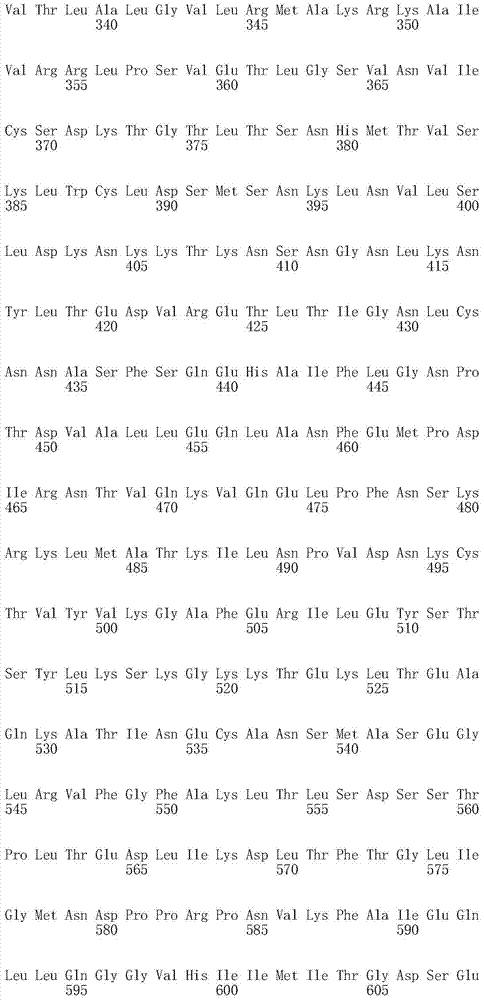

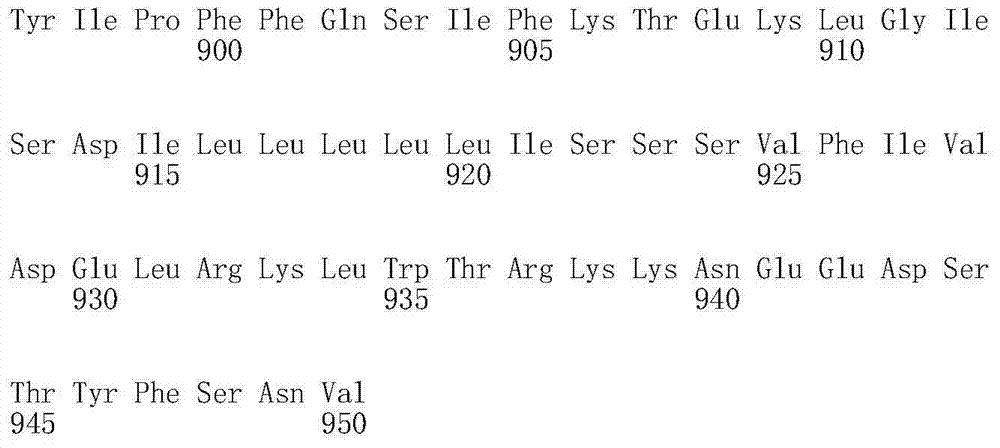
Claims (17)
Applications Claiming Priority (5)
| Application Number | Priority Date | Filing Date | Title |
|---|---|---|---|
| US201161478142P | 2011-04-22 | 2011-04-22 | |
| EP11163579 | 2011-04-22 | ||
| EP11163579.3 | 2011-04-22 | ||
| US61/478,142 | 2011-04-22 | ||
| PCT/EP2012/057273 WO2012143513A2 (en) | 2011-04-22 | 2012-04-20 | Yeast cell capable of converting sugars including arabinose and xylose |
Publications (1)
| Publication Number | Publication Date |
|---|---|
| CN103502267A true CN103502267A (en) | 2014-01-08 |
Family
ID=44475180
Family Applications (1)
| Application Number | Title | Priority Date | Filing Date |
|---|---|---|---|
| CN201280019816.8A Pending CN103502267A (en) | 2011-04-22 | 2012-04-20 | Yeast cell capable of converting sugars including arabinose and xylose |
Country Status (11)
| Country | Link |
|---|---|
| US (1) | US20140141473A1 (en) |
| EP (1) | EP2699589A2 (en) |
| JP (1) | JP2014512818A (en) |
| CN (1) | CN103502267A (en) |
| AR (1) | AR086471A1 (en) |
| AU (1) | AU2012244691A1 (en) |
| BR (1) | BR112013027197A2 (en) |
| CA (1) | CA2833312A1 (en) |
| EA (1) | EA201301193A1 (en) |
| MX (1) | MX2013012269A (en) |
| WO (1) | WO2012143513A2 (en) |
Cited By (1)
| Publication number | Priority date | Publication date | Assignee | Title |
|---|---|---|---|---|
| CN110199026A (en) * | 2017-01-24 | 2019-09-03 | 乐斯福公司 | Obtain the efficient yeast strain for being metabolized arabinose |
Families Citing this family (16)
| Publication number | Priority date | Publication date | Assignee | Title |
|---|---|---|---|---|
| CN104039806A (en) | 2011-11-10 | 2014-09-10 | 马斯科马公司 | A genetically modified strain of s. cerevisiae engineered to ferment xylose and arabinose |
| WO2014033019A1 (en) * | 2012-08-28 | 2014-03-06 | Dsm Ip Assets B.V. | Yeast strains engineered to produce ethanol from acetate |
| IN2015DN01041A (en) * | 2012-08-28 | 2015-06-26 | Dsm Ip Assets Bv | |
| WO2016012429A1 (en) | 2014-07-24 | 2016-01-28 | Dsm Ip Assets B.V. | Yeast cell with improved pentose transport |
| BR112018002284A2 (en) | 2015-08-05 | 2018-12-11 | Cargill Inc | fermentation method to produce a bioproduct, genetically engineered negative crabtree yeast and method to reduce glycerol production by an engineered yeast |
| JP2017192325A (en) * | 2016-04-19 | 2017-10-26 | 三菱ケミカル株式会社 | Method for producing organic acid |
| WO2018073107A1 (en) * | 2016-10-19 | 2018-04-26 | Dsm Ip Assets B.V. | Eukaryotic cell comprising xylose isomerase |
| CN107099556B (en) * | 2017-05-18 | 2021-03-05 | 北京首钢朗泽新能源科技有限公司 | Method and system for preparing ethanol by industrial tail gas fermentation method |
| US11692166B2 (en) * | 2017-08-23 | 2023-07-04 | Technion Research & Development Foundation Limited | Compositions and methods for improving alcohol tolerance in yeast |
| EP3746546A1 (en) | 2018-02-01 | 2020-12-09 | DSM IP Assets B.V. | Yeast cell capable of simultaneously fermenting hexose and pentose sugars |
| US11319556B2 (en) | 2018-11-08 | 2022-05-03 | Korea Institute Of Science And Technology | Yeast strain with glucose and xylose co-utilization capacity |
| KR102323926B1 (en) * | 2019-11-07 | 2021-11-09 | 경북대학교 산학협력단 | New yeast strain fermenting arabinose to produce ethanol |
| AU2020402990A1 (en) | 2019-12-10 | 2022-06-09 | Novozymes A/S | Microorganism for improved pentose fermentation |
| CN113347854A (en) * | 2021-06-01 | 2021-09-03 | 江苏晶华新材料科技有限公司 | Preparation process of graphene and artificial graphite composite heat-conducting film |
| WO2022261003A1 (en) | 2021-06-07 | 2022-12-15 | Novozymes A/S | Engineered microorganism for improved ethanol fermentation |
| AU2024303961A1 (en) | 2023-06-13 | 2025-12-11 | Novozymes A/S | Processes for producing fermentation products using engineered yeast expressing a beta-xylosidase |
Citations (2)
| Publication number | Priority date | Publication date | Assignee | Title |
|---|---|---|---|---|
| WO2011003893A1 (en) * | 2009-07-10 | 2011-01-13 | Dsm Ip Assets B.V. | Fermentative production of ethanol from glucose, galactose and arabinose employing a recombinant yeast strain |
| WO2011042437A2 (en) * | 2009-10-08 | 2011-04-14 | Dsm Ip Assets B.V. | Process for enzymatic hydrolysis of lignocellulosic material and fermentation of sugars |
Family Cites Families (42)
| Publication number | Priority date | Publication date | Assignee | Title |
|---|---|---|---|---|
| WO1990014423A1 (en) | 1989-05-18 | 1990-11-29 | The Infergene Company | Microorganism transformation |
| CA2063592C (en) | 1989-07-07 | 2003-01-21 | Marco L. F. Giuseppin | Process for preparing a protein by a fungus transformed by multicopy integration of an expression vector |
| FR2679920A1 (en) | 1991-08-02 | 1993-02-05 | Rhone Poulenc Rorer Sa | Highly stable recombinant yeasts for the production of recombinant proteins, their preparation and their use |
| ATE238425T1 (en) | 1993-07-23 | 2003-05-15 | Dsm Nv | SELECTION MARKER GENE-FREE RECOMBINANT STRAINS: METHOD FOR THEIR PRODUCTION AND THE USE OF THESE STRAINS |
| US5805146A (en) | 1993-11-05 | 1998-09-08 | Intertactile Technologies Corporation | Integrated display screen and slidable control for electrical circuits |
| US5712133A (en) * | 1994-04-15 | 1998-01-27 | Midwest Research Institute | Pentose fermentation by recombinant zymomonas |
| US5843760A (en) * | 1994-04-15 | 1998-12-01 | Midwest Research Institute | Single zymomonas mobilis strain for xylose and arabinose fermentation |
| US6265186B1 (en) | 1997-04-11 | 2001-07-24 | Dsm N.V. | Yeast cells comprising at least two copies of a desired gene integrated into the chromosomal genome at more than one non-ribosomal RNA encoding domain, particularly with Kluyveromyces |
| CN1169961C (en) | 1997-04-11 | 2004-10-06 | Dsm公司 | Gene transformation as a tool for constructing recombinant industrial filamentous fungi |
| EP1953230A1 (en) | 1998-05-19 | 2008-08-06 | DSM IP Assets B.V. | Improved in vivo production of cephalosporins |
| WO2000037671A2 (en) | 1998-12-22 | 2000-06-29 | Dsm N.V. | Improved in vivo production of cephalosporins |
| US7354755B2 (en) * | 2000-05-01 | 2008-04-08 | Midwest Research Institute | Stable zymomonas mobilis xylose and arabinose fermenting strains |
| US7314974B2 (en) * | 2002-02-21 | 2008-01-01 | Monsanto Technology, Llc | Expression of microbial proteins in plants for production of plants with improved properties |
| SE0202090D0 (en) | 2002-05-08 | 2002-07-04 | Forskarpatent I Syd Ab | A modified yeast consuming L-arabinose |
| CN1735691B (en) | 2002-05-30 | 2010-05-26 | 卡吉尔道有限责任公司 | Fermentation method using specific oxygen absorption rate as process control |
| EP1781772B1 (en) | 2004-07-16 | 2016-09-28 | DSM IP Assets B.V. | Metabolic engineering of xylose fermenting eukaryotic cells |
| WO2006096130A1 (en) * | 2005-03-11 | 2006-09-14 | Forskarpatent I Syd Ab | Arabinose- and xylose-fermenting saccharomyces cerevisiae strains |
| MX2009003501A (en) * | 2006-10-02 | 2009-04-16 | Dsm Ip Assets Bv | Metabolic engineering of arabinose- fermenting yeast cells. |
| WO2008086124A1 (en) | 2007-01-03 | 2008-07-17 | Vialogy Llc | Multi parallax exploitation for omni-directional imaging electronic eye |
| CA2680790C (en) * | 2007-03-14 | 2018-09-11 | The University Of Toledo | Biomass pretreatment |
| WO2008121701A1 (en) | 2007-03-30 | 2008-10-09 | Cargill Inc. | Metabolic engineering of yeasts for the production of 1-butanol |
| US20090023182A1 (en) * | 2007-07-18 | 2009-01-22 | Schilling Christophe H | Complementary metabolizing organisms and methods of making same |
| US20100304454A1 (en) * | 2007-07-19 | 2010-12-02 | Royal Nedalco B.V. | Novel arabinose-fermenting eukaryotic cells |
| ES2407639T3 (en) | 2008-02-04 | 2013-06-13 | Toray Industries, Inc. | Lactic acid production process by continuous fermentation |
| AU2009221104B2 (en) * | 2008-03-07 | 2014-07-31 | Dsm Ip Assets B.V. | A pentose sugar fermenting cell |
| WO2009109630A1 (en) * | 2008-03-07 | 2009-09-11 | Dsm Ip Assets B.V. | A pentose sugar fermenting cell |
| EA201001436A1 (en) * | 2008-03-07 | 2011-02-28 | ДСМ АйПи АССЕТС Б.В. | CELL CONTAINING PENTOUS SUGAR |
| WO2009109631A1 (en) * | 2008-03-07 | 2009-09-11 | Dsm Ip Assets B.V. | A pentose sugar fermenting cell |
| US20110104736A1 (en) | 2008-03-13 | 2011-05-05 | Jacobus Thomas Pronk | Selection of organisms capable of fermenting mixed substrates |
| WO2009154122A1 (en) * | 2008-06-17 | 2009-12-23 | 財団法人地球環境産業技術研究機構 | Coryneform bacterium transformant having improved d-xylose-utilizing function |
| DE102008029302B4 (en) | 2008-06-19 | 2016-08-11 | Insilico Biotechnology Ag | Biotechnological production of acrylic acid |
| FR2934264B1 (en) | 2008-07-22 | 2012-07-20 | Arkema France | MANUFACTURE OF VINYL ESTERS FROM RENEWABLE MATERIALS, VINYL ESTERS OBTAINED AND USES THEREOF |
| CA2733567A1 (en) * | 2008-08-12 | 2010-02-18 | Glycofi, Inc. | Improved vectors and yeast strains for protein production: ca2+ atpase overexpression |
| GB0822937D0 (en) * | 2008-12-16 | 2009-01-21 | Terranol As | Microorganism |
| PL2367928T3 (en) * | 2008-12-24 | 2018-08-31 | Dsm Ip Assets B.V. | Xylose isomerase genes and their use in fermentation of pentose sugars |
| US8597923B2 (en) * | 2009-05-06 | 2013-12-03 | SyntheZyme, LLC | Oxidation of compounds using genetically modified Candida |
| JP2013500019A (en) * | 2009-07-24 | 2013-01-07 | ザ リージェンツ オブ ザ ユニバーシティ オブ カリフォルニア | Methods and compositions for promoting sugar transport, mixed sugar fermentation and biofuel production |
| WO2011059314A1 (en) * | 2009-11-12 | 2011-05-19 | Stichting Voor De Technische Wetenschappen | Pentose transporters and uses thereof |
| AU2011244395A1 (en) * | 2010-04-21 | 2012-10-04 | Dsm Ip Assets B.V. | Process for the production of cells which are capable of converting arabinose |
| WO2011149353A1 (en) * | 2010-05-27 | 2011-12-01 | C5 Yeast Company B.V. | Yeast strains engineered to produce ethanol from acetic acid and glycerol |
| WO2012125027A1 (en) * | 2011-03-14 | 2012-09-20 | Dsm Ip Assets B.V. | Yeast strains that ferment uronic acids |
| EP2697252B1 (en) * | 2011-04-11 | 2016-08-10 | Cargill, Incorporated | Compositions and methods for increased ethanol production from biomass |
-
2012
- 2012-04-20 WO PCT/EP2012/057273 patent/WO2012143513A2/en not_active Ceased
- 2012-04-20 JP JP2014505650A patent/JP2014512818A/en active Pending
- 2012-04-20 US US14/112,713 patent/US20140141473A1/en not_active Abandoned
- 2012-04-20 EA EA201301193A patent/EA201301193A1/en unknown
- 2012-04-20 EP EP12717105.6A patent/EP2699589A2/en not_active Withdrawn
- 2012-04-20 BR BR112013027197A patent/BR112013027197A2/en not_active IP Right Cessation
- 2012-04-20 AR ARP120101379A patent/AR086471A1/en unknown
- 2012-04-20 CA CA2833312A patent/CA2833312A1/en not_active Abandoned
- 2012-04-20 CN CN201280019816.8A patent/CN103502267A/en active Pending
- 2012-04-20 MX MX2013012269A patent/MX2013012269A/en not_active Application Discontinuation
- 2012-04-20 AU AU2012244691A patent/AU2012244691A1/en not_active Abandoned
Patent Citations (2)
| Publication number | Priority date | Publication date | Assignee | Title |
|---|---|---|---|---|
| WO2011003893A1 (en) * | 2009-07-10 | 2011-01-13 | Dsm Ip Assets B.V. | Fermentative production of ethanol from glucose, galactose and arabinose employing a recombinant yeast strain |
| WO2011042437A2 (en) * | 2009-10-08 | 2011-04-14 | Dsm Ip Assets B.V. | Process for enzymatic hydrolysis of lignocellulosic material and fermentation of sugars |
Non-Patent Citations (3)
| Title |
|---|
| H WOUTER WISSELINK ET AL: "Novel evolutionary engineering approach for accelerated utilization of Glucose, Xylose, and Arabinose mixtures by engineered Saccharomyces cerevisiae strains", 《APPL ENVIRON MICROBIOL》 * |
| H.WOUTER WISSELINK ET AL: "Engineering of Saccharomyces cerevisiae for efficient anaerobic alcoholic fermentation of l-arabinose", 《APPL. ENVIRON.MICROBIOL》 * |
| MIPS: "PMR1[Saccharomyces cerevisiae]", 《GENBANK:CAA96880.1》 * |
Cited By (1)
| Publication number | Priority date | Publication date | Assignee | Title |
|---|---|---|---|---|
| CN110199026A (en) * | 2017-01-24 | 2019-09-03 | 乐斯福公司 | Obtain the efficient yeast strain for being metabolized arabinose |
Also Published As
| Publication number | Publication date |
|---|---|
| BR112013027197A2 (en) | 2016-11-29 |
| EA201301193A1 (en) | 2014-02-28 |
| JP2014512818A (en) | 2014-05-29 |
| WO2012143513A2 (en) | 2012-10-26 |
| CA2833312A1 (en) | 2012-10-26 |
| AR086471A1 (en) | 2013-12-18 |
| WO2012143513A3 (en) | 2012-12-27 |
| EP2699589A2 (en) | 2014-02-26 |
| MX2013012269A (en) | 2013-11-22 |
| US20140141473A1 (en) | 2014-05-22 |
| AU2012244691A1 (en) | 2013-10-17 |
Similar Documents
| Publication | Publication Date | Title |
|---|---|---|
| CN102869766B (en) | Cells adapted to ferment mixed sugar compositions | |
| CN103502267A (en) | Yeast cell capable of converting sugars including arabinose and xylose | |
| EP2451962B1 (en) | Fermentative production of ethanol from glucose, galactose and arabinose employing a recombinant yeast strain | |
| CN103154234B (en) | Ferment pentoses and the yeast cells of glucose | |
| WO2018073107A1 (en) | Eukaryotic cell comprising xylose isomerase | |
| BR122019005865B1 (en) | CELL SUITABLE FOR FERMENTATION OF A MIXED SUGAR COMPOSITION |
Legal Events
| Date | Code | Title | Description |
|---|---|---|---|
| C06 | Publication | ||
| PB01 | Publication | ||
| C10 | Entry into substantive examination | ||
| SE01 | Entry into force of request for substantive examination | ||
| C02 | Deemed withdrawal of patent application after publication (patent law 2001) | ||
| WD01 | Invention patent application deemed withdrawn after publication |
Application publication date: 20140108 |