CN103455449A - Nonvalatile storage medium access method as well as data updating method and equipment - Google Patents
Nonvalatile storage medium access method as well as data updating method and equipment Download PDFInfo
- Publication number
- CN103455449A CN103455449A CN2013103864218A CN201310386421A CN103455449A CN 103455449 A CN103455449 A CN 103455449A CN 2013103864218 A CN2013103864218 A CN 2013103864218A CN 201310386421 A CN201310386421 A CN 201310386421A CN 103455449 A CN103455449 A CN 103455449A
- Authority
- CN
- China
- Prior art keywords
- data
- space
- block space
- module
- volatile memory
- Prior art date
- Legal status (The legal status is an assumption and is not a legal conclusion. Google has not performed a legal analysis and makes no representation as to the accuracy of the status listed.)
- Granted
Links
Images




Landscapes
- Techniques For Improving Reliability Of Storages (AREA)
- Memory System Of A Hierarchy Structure (AREA)
Abstract
本发明涉及非易失性存储介质访问方法、数据更新方法及设备。该访问方法包括在供电状态为正常时,在非易失性存储介质中划分出预留空间并擦除预留空间中的数据;以及在供电状态为异常时,将高速缓存中的数据写入预留空间。该数据更新方法包括将非易失性存储介质中的第一块空间标记为中转块空间,并擦除第一块空间中的数据;将需要更新数据的非易失性存储介质中的第二块空间中的全部数据读出到高速缓存;更新读出到高速缓存中的数据;以及将更新后高速缓存中的相应数据写入中转块空间。本发明实施例提供的非易失性存储介质访问方法、数据更新方法及设备,能够有效的提高非易失性存储介质访问的效率和数据更新的可靠性。
The invention relates to a non-volatile storage medium access method, a data update method and equipment. The access method includes dividing a reserved space in the non-volatile storage medium and erasing data in the reserved space when the power supply state is normal; and writing data in the cache memory when the power supply state is abnormal Reserved space. The data update method includes marking the first space in the non-volatile storage medium as a transit block space, and erasing the data in the first space; All the data in the block space is read into the cache; the data read into the cache is updated; and the corresponding data in the updated cache is written into the transit block space. The non-volatile storage medium access method, data update method and device provided by the embodiments of the present invention can effectively improve the efficiency of non-volatile storage medium access and the reliability of data update.
Description
技术领域technical field
本发明涉及存储介质技术领域,尤其涉及一种非易失性存储介质访问方法、数据更新方法及设备。The invention relates to the technical field of storage media, in particular to a method for accessing a non-volatile storage medium, a method for updating data, and a device.
背景技术Background technique
图1为通常技术中固态存储的基本架构图,如图1所示,固态存储的基本数据流向是用户数据从主机端通过固态存储接口进入控制器,然后经过高速缓存(Double Data Rate,简称DDR),最后被写入到非易失性存储介质例如FLASH中。读取非易失性存储介质中的用户数据的过程为上述写入过程的逆过程。当给固态存储供电的外部电源关闭时,高速缓存里面的用户数据会丢失。为了保证异常掉电时,能够可靠保存高速缓存中的用户数据,控制器连接有备电模块,以便在外部电源关闭时,为固态存储提供临时的短暂电源,使得控制器能够将高速缓存中的数据写入到非易失性存储介质中。Figure 1 is the basic architecture diagram of solid-state storage in general technology. As shown in Figure 1, the basic data flow direction of solid-state storage is that user data enters the controller from the host through the solid-state storage interface, and then passes through the cache (Double Data Rate, DDR for short). ), and finally written to a non-volatile storage medium such as FLASH. The process of reading user data in the non-volatile storage medium is the reverse process of the above writing process. When the external power supply to the solid-state storage is turned off, user data in the cache is lost. In order to ensure that the user data in the cache can be reliably saved in case of abnormal power failure, the controller is connected with a backup power module to provide temporary short-term power for the solid-state storage when the external power supply is turned off, so that the Data is written to non-volatile storage media.
随着固态存储容量的增大及速度的提高,对高速缓存的容量需求也越来越大。高速缓存容量增大,存储的数据量变大,当固态存储的外部电源关闭时,数据从高速缓存写入到非易失性存储介质的时间就会变长。因此,如何高效地完成数据保存变得越发迫切。As the capacity and speed of solid-state storage increases, so does the demand for cache memory capacity. As the cache capacity increases, the amount of stored data becomes larger. When the external power of the solid-state storage is turned off, the time for data to be written from the cache to the non-volatile storage medium will become longer. Therefore, how to efficiently save data becomes more and more urgent.
通常技术方案中,当外部供电关闭时,为了实现高效地完成数据保存,对非易失性存储介质进行了优化。图2为通常技术中优化后的非易失性存储介质的基本架构图,如图2所示,可以将FLASH分为多层单元(Multi-LevelCell,简称MLC)FLASH颗粒和单层单元(Single Layer Cell,简称SLC)FLASH颗粒。其中,MLC FLASH颗粒的特性是容量大,价格低,读写速度慢,可靠性低;SLC FLASH颗粒的特性是容量小,价格高,读写速度快,可靠性高。该技术方案利用两种FLASH颗粒的读写速度差异,当外部供电正常时,通过路径2将固态存储的用户数据存储到MLC FLASH颗粒中,当外部供电关闭时,通过路径1将固态存储的用户数据存储到SLC FLASH颗粒中。从而在外部供电关闭时,用户数据写入到存取速度更快的颗粒中可以节约时间。In a general technical solution, when the external power supply is turned off, in order to achieve efficient data storage, the non-volatile storage medium is optimized. Figure 2 is the basic architecture diagram of the optimized non-volatile storage medium in the common technology. Layer Cell, referred to as SLC) FLASH particles. Among them, the characteristics of MLC FLASH particles are large capacity, low price, slow reading and writing speed, and low reliability; the characteristics of SLC FLASH particles are small capacity, high price, fast reading and writing speed, and high reliability. This technical solution utilizes the difference in read and write speeds of the two FLASH particles. When the external power supply is normal, the user data stored in the solid state is stored in the MLC FLASH particle through
该方案在外部电源供电异常时,用户数据写入存取速度更快的颗粒中,需要完成非易失性存储介质的擦除和写入操作,导致完成数据保存的时间较长。In this solution, when the external power supply is abnormal, the user data is written into the particles with faster access speed, and the erasing and writing operations of the non-volatile storage medium need to be completed, resulting in a longer time for data storage.
发明内容Contents of the invention
技术问题technical problem
有鉴于此,本发明要解决的技术问题是给固态存储的备电能力一定的情况下,如何在外部供电异常时,缩短将高速缓存中的数据写入到非易失性存储介质的时间。In view of this, the technical problem to be solved by the present invention is how to shorten the time for writing the data in the cache to the non-volatile storage medium when the external power supply is abnormal when the power backup capability of the solid-state storage is constant.
解决方案solution
为了解决上述技术问题,根据本发明的一实施例,提供了一种非易失性存储介质访问方法,该方法包括:In order to solve the above technical problem, according to an embodiment of the present invention, a method for accessing a non-volatile storage medium is provided, the method comprising:
在供电状态为正常时,在所述非易失性存储介质中划分出预留空间并擦除所述预留空间中的数据;以及When the power supply state is normal, dividing a reserved space in the non-volatile storage medium and erasing data in the reserved space; and
在所述供电状态为异常时,将高速缓存中的数据写入所述预留空间。When the power supply state is abnormal, write the data in the cache into the reserved space.
对于上述非易失性存储介质访问方法,在一种可能的实现方式中,所述在供电状态为正常时,在所述非易失性存储介质中划分出预留空间并擦除所述预留空间中的数据包括:Regarding the above non-volatile storage medium access method, in a possible implementation manner, when the power supply state is normal, the reserved space is divided in the non-volatile storage medium and the reserved space is erased. Data in the reserved space includes:
根据所述高速缓存中数据量计算出所述数据量所需占用的所述非易失性存储介质的空间容量;Calculating the space capacity of the non-volatile storage medium required by the amount of data according to the amount of data in the cache;
根据所计算的空间容量在所述非易失性存储介质中划分出所述预留空间;以及dividing the reserved space in the non-volatile storage medium according to the calculated space capacity; and
擦除所述预留空间中的数据。Erase the data in the reserved space.
对于上述非易失性存储介质访问方法,在一种可能的实现方式中,所述预留空间包括预备空间和冗余空间,所述预备空间表示所述高速缓存中数据量所需占用的所述非易失性存储介质的空间,所述冗余空间表示根据所述预备空间容量增加的裕量。For the above method for accessing non-volatile storage media, in a possible implementation manner, the reserved space includes a spare space and a redundant space, and the spare space represents all the data required to be occupied by the amount of data in the cache. The space of the non-volatile storage medium, the redundant space means a margin increased according to the capacity of the spare space.
对于上述非易失性存储介质访问方法,在一种可能的实现方式中,在根据所述高速缓存中数据量计算出所述数据量所需占用的所述非易失性存储介质的空间容量之前,还包括:For the above non-volatile storage medium access method, in a possible implementation, the space capacity of the non-volatile storage medium required to be occupied by the data volume is calculated according to the data volume in the cache Previously, also included:
根据一定的时间间隔检测所述高速缓存中数据量。Detecting the amount of data in the cache according to a certain time interval.
对于上述非易失性存储介质访问方法,在一种可能的实现方式中,擦除所述预留空间中的数据,包括:For the above non-volatile storage medium access method, in a possible implementation manner, erasing the data in the reserved space includes:
以所述冗余空间容量为单位,分批次擦除所述预留空间中的数据。The data in the reserved space is erased in batches by taking the capacity of the redundant space as a unit.
对于上述非易失性存储介质访问方法,在一种可能的实现方式中,在所述擦除所述预留空间中的数据之前,该方法还包括:For the above non-volatile storage medium access method, in a possible implementation manner, before the erasing the data in the reserved space, the method further includes:
检测所述非易失性存储介质的温度,并根据所述检测结果确定擦除所述预留空间中的数据的频率。Detecting the temperature of the non-volatile storage medium, and determining the frequency of erasing data in the reserved space according to the detection result.
对于上述非易失性存储介质访问方法,在一种可能的实现方式中,在所述供电状态为异常时,所述将高速缓存中的数据写入所述预留空间具体包括:For the above non-volatile storage medium access method, in a possible implementation manner, when the power supply state is abnormal, writing the data in the cache into the reserved space specifically includes:
监控到供电状态异常的中断信号,将所述高速缓存中的数据写入所述预留空间。The interrupt signal of abnormal power supply status is monitored, and the data in the cache is written into the reserved space.
为了解决上述技术问题,根据本发明的另一实施例,提供了一种控制器,所述控制器包括:In order to solve the above technical problems, according to another embodiment of the present invention, a controller is provided, the controller includes:
划分模块,用于在供电状态正常时,在非易失性存储介质中划分出预留空间;The division module is used to divide the reserved space in the non-volatile storage medium when the power supply state is normal;
擦除模块,与所述划分模块连接,用于擦除所述预留空间中的数据;以及an erasing module, connected to the dividing module, for erasing the data in the reserved space; and
写入模块,与所述划分模块和所述擦除模块连接,用于所述供电状态为异常时将高速缓存中的数据写入所述预留空间。The writing module is connected with the partitioning module and the erasing module, and is used for writing the data in the cache into the reserved space when the power supply state is abnormal.
对于上述控制器,在一种可能的实现方式中,所述划分模块包括:For the above controller, in a possible implementation manner, the division module includes:
计算单元,用于根据所述高速缓存中数据量计算出所述数据量所需占用的所述非易失性存储介质的空间容量;以及a calculation unit, configured to calculate the space capacity of the non-volatile storage medium required by the data amount according to the amount of data in the cache; and
划分单元,与所述计算单元连接,用于根据所述计算单元所计算的空间容量在所述非易失性存储介质中划分出所述预留空间。A division unit, connected to the calculation unit, configured to divide the reserved space in the non-volatile storage medium according to the space capacity calculated by the calculation unit.
对于上述控制器,在一种可能的实现方式中,所述划分单元划分出的预留空间包括预备空间和冗余空间,所述预备空间表示所述高速缓存中数据量所需占用的所述非易失性存储介质的空间,所述冗余空间表示根据所述预备空间容量增加的裕量。For the above controller, in a possible implementation manner, the reserved space divided by the dividing unit includes a reserved space and a redundant space, and the reserved space represents the required space occupied by the amount of data in the cache. In the space of the nonvolatile storage medium, the redundant space represents a margin increased according to the capacity of the reserved space.
对于上述控制器,在一种可能的实现方式中,所述划分模块还包括:For the above controller, in a possible implementation manner, the dividing module further includes:
检测单元,与所述计算单元连接,用于根据一定的时间间隔检测所述高速缓存中数据量,则所述计算单元具体用于根据所述检测单元检测到的高速缓存中数据量,计算出所述数据量所需占用的所述非易失性存储介质的空间容量。The detection unit is connected with the calculation unit, and is used to detect the amount of data in the cache according to a certain time interval, and the calculation unit is specifically used to calculate the amount of data in the cache according to the detection unit. The space capacity of the non-volatile storage medium required by the amount of data.
对于上述控制器,在一种可能的实现方式中,所述擦除模块具体用于以所述冗余空间容量为单位,分批次擦除所述预留空间中的数据。Regarding the above controller, in a possible implementation manner, the erasing module is specifically configured to erase the data in the reserved space in batches in units of the redundant space capacity.
对于上述控制器,在一种可能的实现方式中,所述控制器还包括:For the above controller, in a possible implementation manner, the controller further includes:
频率确定模块,与所述擦除模块,用于检测所述非易失性存储介质的温度,并根据所述检测结果确定擦除所述预留空间中的数据的频率。The frequency determining module and the erasing module are configured to detect the temperature of the non-volatile storage medium, and determine the frequency of erasing the data in the reserved space according to the detection result.
对于上述控制器,在一种可能的实现方式中,所述写入模块具体用于根据监控到供电状态异常的中断信号,将所述高速缓存中的数据写入所述预留空间。Regarding the above controller, in a possible implementation manner, the writing module is specifically configured to write data in the cache into the reserved space according to an interrupt signal that monitors an abnormal power supply state.
为了解决上述技术问题,根据本发明的又一实施例,提供了一种固态存储设备,所述固态存储设备包括:高速缓存器、非易失性存储介质,以及上述控制器。In order to solve the above technical problem, according to another embodiment of the present invention, a solid-state storage device is provided, and the solid-state storage device includes: a cache memory, a non-volatile storage medium, and the above-mentioned controller.
有益效果Beneficial effect
本实施例的非易失性存储介质访问方法及设备,通过在外部供电正常时,为高速缓存中的数据在非易失性存储介质中划分出预留空间,并擦除预留空间的原始数据。在外部供电异常时,直接将高速缓存中的数据写入非易失性存储介质上划分好的预留空间中,这样能够有效的节省异常掉电时控制器将高速缓存中的数据写入非易失性存储介质空间的时间,极大的提高了非易失性存储介质访问的效率。In the non-volatile storage medium access method and device of this embodiment, when the external power supply is normal, the data in the cache is divided into a reserved space in the non-volatile storage medium, and the original space of the reserved space is erased. data. When the external power supply is abnormal, the data in the cache is directly written into the reserved space on the non-volatile storage medium, which can effectively save the controller from writing the data in the cache to the non-volatile The space time of the volatile storage medium greatly improves the access efficiency of the non-volatile storage medium.
根据下面参考附图对示例性实施例的详细说明,本发明的其它特征及方面将变得清楚。Other features and aspects of the present invention will become apparent from the following detailed description of exemplary embodiments with reference to the accompanying drawings.
附图说明Description of drawings
包含在说明书中并且构成说明书的一部分的附图与说明书一起示出了本发明的示例性实施例、特征和方面,并且用于解释本发明的原理。The accompanying drawings, which are incorporated in and constitute a part of the specification, illustrate exemplary embodiments, features, and aspects of the invention and together with the description, serve to explain the principles of the invention.
图1为通常技术中固态存储的基本架构图;Figure 1 is a basic architecture diagram of solid-state storage in common technologies;
图2为通常技术优化后的非易失性存储介质的基本架构图;Fig. 2 is a basic architecture diagram of a non-volatile storage medium optimized by common technologies;
图3示出根据本发明一实施例的非易失性存储介质访问方法的流程图;FIG. 3 shows a flowchart of a method for accessing a non-volatile storage medium according to an embodiment of the present invention;
图4示出根据本发明再一实施例的非易失性存储介质访问方法的流程图;FIG. 4 shows a flowchart of a method for accessing a non-volatile storage medium according to yet another embodiment of the present invention;
图5示出控制器在非易失性存储介质上划分出预备空间和冗余空间的示意图;FIG. 5 shows a schematic diagram of a controller dividing a reserve space and a redundant space on a non-volatile storage medium;
图6示出根据本发明另一实施例的非易失性存储介质访问方法的流程图;FIG. 6 shows a flowchart of a method for accessing a non-volatile storage medium according to another embodiment of the present invention;
图7示出根据本发明另一实施例的非易失性存储介质访问方法的流程图;FIG. 7 shows a flowchart of a method for accessing a non-volatile storage medium according to another embodiment of the present invention;
图8示出根据本发明一实施例的控制器的结构框图;Fig. 8 shows a structural block diagram of a controller according to an embodiment of the present invention;
图9示出根据本发明再一实施例的控制器的结构框图;Fig. 9 shows a structural block diagram of a controller according to yet another embodiment of the present invention;
图10示出根据本发明另一实施例的控制器的结构框图;Fig. 10 shows a structural block diagram of a controller according to another embodiment of the present invention;
图11示出根据本发明一实施例的固态存储设备的结构框图;Fig. 11 shows a structural block diagram of a solid-state storage device according to an embodiment of the present invention;
图12示出根据本发明一实施例的非易失性存储介质数据更新方法的流程图;FIG. 12 shows a flowchart of a method for updating data on a non-volatile storage medium according to an embodiment of the present invention;
图13示出根据本发明再一实施例的非易失性存储介质数据更新方法的流程图;FIG. 13 shows a flow chart of a method for updating data on a non-volatile storage medium according to yet another embodiment of the present invention;
图14示出根据本发明又一实施例的非易失性存储介质数据更新方法的流程图;FIG. 14 shows a flow chart of a method for updating data on a non-volatile storage medium according to yet another embodiment of the present invention;
图15示出根据本发明一实施例的控制器的结构框图;Fig. 15 shows a structural block diagram of a controller according to an embodiment of the present invention;
图16示出根据本发明再一实施例的控制器的结构框图;Fig. 16 shows a structural block diagram of a controller according to yet another embodiment of the present invention;
图17示出根据本发明一实施例的固态存储设备的结构框图;Fig. 17 shows a structural block diagram of a solid-state storage device according to an embodiment of the present invention;
图18示出了本发明再一实施例的固态存储设备的结构框图;Fig. 18 shows a structural block diagram of a solid-state storage device according to yet another embodiment of the present invention;
图19示出了本发明另一实施例的固态存储设备的结构框图。Fig. 19 shows a structural block diagram of a solid-state storage device according to another embodiment of the present invention.
具体实施方式Detailed ways
以下将参考附图详细说明本发明的各种示例性实施例、特征和方面。附图中相同的附图标记表示功能相同或相似的元件。尽管在附图中示出了实施例的各种方面,但是除非特别指出,不必按比例绘制附图。Various exemplary embodiments, features, and aspects of the invention will be described in detail below with reference to the accompanying drawings. The same reference numbers in the figures indicate functionally identical or similar elements. While various aspects of the embodiments are shown in drawings, the drawings are not necessarily drawn to scale unless specifically indicated.
在这里专用的词“示例性”意为“用作例子、实施例或说明性”。这里作为“示例性”所说明的任何实施例不必解释为优于或好于其它实施例。The word "exemplary" is used exclusively herein to mean "serving as an example, embodiment, or illustration." Any embodiment described herein as "exemplary" is not necessarily to be construed as superior or better than other embodiments.
另外,为了更好的说明本发明,在下文的具体实施方式中给出了众多的具体细节。本领域技术人员应当理解,没有这些具体细节,本发明同样可以实施。在另外一些实例中,对于大家熟知的方法、手段、元件和电路未作详细描述,以便于凸显本发明的主旨。In addition, in order to better illustrate the present invention, numerous specific details are given in the specific embodiments below. It will be understood by those skilled in the art that the present invention may be practiced without these specific details. In other instances, well-known methods, means, components and circuits are not described in detail so as to highlight the gist of the present invention.
本申请首先对数据从高速缓存写入到非易失性存储介质的过程以及固态存储中备电模块的备电能力进行分析。This application first analyzes the process of writing data from the cache to the non-volatile storage medium and the power backup capability of the power backup module in the solid state storage.
如背景技术和发明内容所述,数据从高速缓存写入到非易失性存储介质例如FLASH的过程主要可以分为两个步骤:FLASH擦除(Erase)和FLASH写入,这是FLASH操作必须要遵循的规范。即在往FLASH空间的某个存储空间中写入数据之前,首先得将该存储空间中原有的数据擦除,例如,可以用FF(11111111)表示该存储空间已经被擦除。这时,可以往该存储空间写入数据,例如,写入的数据可以为BB(10101010)。As described in the background technology and the summary of the invention, the process of writing data from the cache to a non-volatile storage medium such as FLASH can be mainly divided into two steps: FLASH erasing (Erase) and FLASH writing, which are necessary for FLASH operations The specification to follow. That is, before writing data into a storage space in the FLASH space, the original data in the storage space must be erased first. For example, FF (11111111) can be used to indicate that the storage space has been erased. At this time, data can be written into the storage space, for example, the written data can be BB (10101010).
通过对非易失性存储介质例如FLASH颗粒擦除时间和写入时间进行比较分析可知,擦除所需的时间是ms(毫秒)级,而写入所需时间是us(微秒)级,因此,可以得出完成擦除所花费的时间远大于进行写入所花费的时间。By comparing and analyzing the erasing time and writing time of non-volatile storage media such as FLASH particles, it can be seen that the time required for erasing is at the ms (millisecond) level, while the time required for writing is at the us (microsecond) level. Therefore, it can be concluded that the time taken to complete erasing is much longer than the time taken to perform writing.
针对备电模块的备电能力分析,本申请采用了最传统的能量公式:For the backup capability analysis of the backup module, this application adopts the most traditional energy formula:
W=Pt=UItW=Pt=UIt
其中,U为介质工作电压,I为掉电时经过介质的工作电流,t为备电模块能够持续提供上述工作电压U和工作电流I的时间。Among them, U is the working voltage of the medium, I is the working current passing through the medium when the power is off, and t is the time that the backup power module can continuously provide the above-mentioned working voltage U and working current I.
通过上述公式可以得出,在备电能力一定时,即W一定,若要完成在高速缓存中的更多的数据保存,可以通过减少持续时间t来实现。From the above formula, it can be concluded that when the power backup capability is constant, that is, W is constant, if more data storage in the cache is to be completed, it can be achieved by reducing the duration t.
通过以上两点分析,本发明所提出的一个解决方案为主要是针对异常掉电时,如何减少将高速缓存中数据写入非易失性存储介质的持续时间。具体方案详见下面的实施例。Through the analysis of the above two points, a solution proposed by the present invention is mainly aimed at how to reduce the duration of writing the data in the cache to the non-volatile storage medium when the power is abnormally lost. See the following examples for details of the specific scheme.
实施例1Example 1
图3示出根据本发明一实施例的非易失性存储介质访问方法的流程图。如图3所示,该方法主要可以包括外部供电正常和外部供电异常两种情况,在外部供电状态为正常时,该方法主要可以包括以下步骤:Fig. 3 shows a flowchart of a method for accessing a non-volatile storage medium according to an embodiment of the present invention. As shown in FIG. 3, the method may mainly include two situations: normal external power supply and abnormal external power supply. When the state of external power supply is normal, the method may mainly include the following steps:
步骤S100、在非易失性存储介质中划分出预留空间。Step S100, dividing a reserved space in the non-volatile storage medium.
步骤S120、擦除预留空间中的数据。Step S120, erasing the data in the reserved space.
在外部供电状态为异常时,例如突然掉电,该方法还可以包括以下步骤:When the external power supply state is abnormal, such as sudden power failure, the method may further include the following steps:
步骤S130、将高速缓存中的数据写入预留空间。Step S130, writing the data in the cache into the reserved space.
由上述分析可知完成擦除所花费的时间远大于进行写入所花费的时间,因此,在实施例中,本申请的固态存储在外部供电正常时,将异常掉电时高速缓存中的数据所需要的非易失性存储介质例如FLASH的空间准备好,即完成FLASH擦除操作;在外部供电突然关闭时,对FLASH操作省掉擦除步骤,直接编程写入数据,即可节约相当长时间。From the above analysis, it can be seen that the time it takes to complete erasing is much longer than the time it takes to write. Therefore, in the embodiment, when the external power supply of the solid-state storage of the present application is normal, the data in the cache when the power is abnormally lost The required non-volatile storage medium such as FLASH space is ready, that is, the FLASH erase operation is completed; when the external power supply is suddenly turned off, the erase step is omitted for the FLASH operation, and the data is directly programmed and written, which can save quite a long time .
对于上述步骤S100,在一种可能的实现方式中,还可以主要包括以下步骤:For the above step S100, in a possible implementation manner, it may also mainly include the following steps:
步骤S1001、根据高速缓存中数据量计算出该数据量所需占用的非易失性存储介质的空间容量。Step S1001 , calculating the space capacity of the non-volatile storage medium required by the amount of data according to the amount of data in the cache.
步骤S1002、根据所计算的空间容量在非易失性存储介质中划分出预留空间。Step S1002, dividing reserved space in the non-volatile storage medium according to the calculated space capacity.
具体地,在外部供电状态为正常时,控制器首先需要计算此时高速缓存中数据量,并根据高速缓存中数据量,计算出存储这些高速缓存中的数据需要的非易失性存储介质的大小,然后控制器根据所计算出的所需要的非易失性存储介质空间容量在该非易失性存储介质上划分出存储空间,本实施例中称之为预留空间。预留空间可以用来存储异常掉电等情况发生时还存储在高速缓存中的数据,预留空间容量可以大于或等于存储上述高速缓存中的数据所需要的空间容量。Specifically, when the external power supply state is normal, the controller first needs to calculate the amount of data in the cache at this time, and calculate the size of the non-volatile storage medium required to store the data in the cache according to the amount of data in the cache. size, and then the controller divides storage space on the non-volatile storage medium according to the calculated required space capacity of the non-volatile storage medium, which is referred to as reserved space in this embodiment. The reserved space can be used to store data that is still stored in the cache when abnormal power failure occurs, and the capacity of the reserved space can be greater than or equal to the space required for storing the data in the cache.
对于上述步骤S120,在控制器给高速缓存中的数据划分出相应的预留空间后,可以直接擦除预留空间中的原始数据,从而在异常掉电等情况发生时,可以直接将高速缓存中的数据写入已经完成擦除的预留空间中。For the above step S120, after the controller divides the corresponding reserved space for the data in the cache, the original data in the reserved space can be directly erased, so that when an abnormal power failure occurs, the cache can be directly The data in is written into the reserved space that has been erased.
对于上述步骤S130,在外部供电突然关闭,即出现异常掉电时,控制器向高速缓存下发相应的指示,指示将高速缓存中的数据直接写入上述已经完成擦除的预留空间中。For the above step S130, when the external power supply is suddenly turned off, that is, when an abnormal power failure occurs, the controller sends a corresponding instruction to the cache, instructing to write the data in the cache directly into the above-mentioned reserved space that has been erased.
本实施例的非易失性存储介质访问方法,通过在外部供电正常时,控制器为高速缓存中的数据划分出预留空间,并擦除预留空间的原始数据。在外部供电异常时,直接将高速缓存中的数据写入非易失性存储介质上划分好的预留空间中,这样能够有效的节省异常掉电时控制器将高速缓存中的数据写入非易失性存储介质空间的时间,极大的提高了非易失性存储介质访问的效率。In the non-volatile storage medium access method of this embodiment, when the external power supply is normal, the controller allocates a reserved space for the data in the cache, and erases the original data in the reserved space. When the external power supply is abnormal, the data in the cache is directly written into the reserved space on the non-volatile storage medium, which can effectively save the controller from writing the data in the cache to the non-volatile The space time of the volatile storage medium greatly improves the access efficiency of the non-volatile storage medium.
实施例2Example 2
图4示出根据本发明再一实施例的非易失性存储介质访问方法的流程图。图4中标号与图3相同的步骤具有相同的功能,为简明起见,省略对这些步骤的详细说明。Fig. 4 shows a flowchart of a method for accessing a non-volatile storage medium according to yet another embodiment of the present invention. Steps in FIG. 4 with the same numbers as those in FIG. 3 have the same functions, and for the sake of brevity, detailed descriptions of these steps are omitted.
如图4所示,图4所示的非易失性存储介质访问方法与图3所示非易失性存储介质访问方法的主要区别在于,所述预留空间包括预备空间和冗余空间,所述预备空间表示将所述高速缓存中数据所需占用的所述非易失性存储介质的空间,所述冗余空间表示根据所述预备空间容量增加的一部分裕量。As shown in FIG. 4, the main difference between the non-volatile storage medium access method shown in FIG. 4 and the non-volatile storage medium access method shown in FIG. 3 is that the reserved space includes a reserve space and a redundant space, The spare space represents the space of the non-volatile storage medium required to be occupied by the data in the cache, and the redundant space represents a part of margin increased according to the capacity of the spare space.
具体地,外部供电正常时,控制器根据实际使用的高速缓存中数据量,计算出外部供电关闭时,存储上述高速缓存中数据所需要的非易失性存储介质的大小,即预备空间。同时,还需要根据计算出的预备空间容量,增加一部分裕量,称之为冗余空间。例如,图5示出控制器在非易失性存储介质上划分出预备空间和冗余空间的示意图,如图5所示,控制器可以根据上述计算在非易失性存储介质上划分出10个BLOCK为预备空间,2个BLOCK为冗余空间。Specifically, when the external power supply is normal, the controller calculates the size of the non-volatile storage medium required to store the data in the cache when the external power supply is off, that is, the reserve space, according to the amount of data in the cache actually used. At the same time, it is also necessary to add a part of margin according to the calculated reserve space capacity, which is called redundant space. For example, FIG. 5 shows a schematic diagram of the controller dividing the spare space and redundant space on the non-volatile storage medium. As shown in FIG. 5, the controller can divide 10 One BLOCK is reserved space, and two BLOCKs are redundant space.
在一种可能的实现方式中,如图4所示,在步骤S1001之前,该非易失性存储介质访问方法还可以包括以下步骤:In a possible implementation, as shown in FIG. 4, before step S1001, the nonvolatile storage medium access method may further include the following steps:
步骤S1000、根据一定的时间间隔检测高速缓存中的数据量。Step S1000, detecting the amount of data in the cache according to a certain time interval.
具体地,由于高速缓存中数据量可能不是恒定的,可能会随时变化,因此,控制器可以预先设定一个时间长度,并以这个预先设定的时间长度为时间间隔检测高速缓存中数据量,然后控制器再执行步骤S1001和步骤S1002,以达到在外部供电正常时,根据需求实时调整预留空间容量,即同时调整预备空间和冗余空间容量。Specifically, since the amount of data in the cache may not be constant and may change at any time, the controller may preset a length of time, and use the preset length of time as a time interval to detect the amount of data in the cache, Then the controller executes step S1001 and step S1002 again, so as to adjust the capacity of the reserved space in real time according to the demand when the external power supply is normal, that is, to adjust the capacity of the reserved space and the redundant space at the same time.
本实施例的非易失性存储介质访问方法,控制器通过实时检测高速缓存中数据量,计算出存储上述高速缓存中的数据所需的非易失性存储介质空间容量,然后控制器根据上述计算结果为高速缓存中的数据划分出预留空间并擦除上述预留空间上的数据。能够实时检测和计算能够实时调整预留空间容量,实现预留空间的动态管理。In the non-volatile storage medium access method of this embodiment, the controller calculates the space capacity of the non-volatile storage medium required to store the data in the high-speed cache by detecting the amount of data in the high-speed cache in real time, and then the controller calculates the space capacity of the non-volatile storage medium according to the above-mentioned The calculation result divides the reserved space for the data in the cache and erases the data on the reserved space. It can detect and calculate in real time and can adjust the reserved space capacity in real time to realize the dynamic management of reserved space.
实施例3Example 3
图6示出根据本发明另一实施例的非易失性存储介质访问方法的流程图。图6中标号与图3、图4相同的步骤具有相同的功能,为简明起见,省略对这些步骤的详细说明。Fig. 6 shows a flowchart of a method for accessing a non-volatile storage medium according to another embodiment of the present invention. Steps in FIG. 6 with the same numbers as those in FIG. 3 and FIG. 4 have the same functions, and for the sake of brevity, detailed descriptions of these steps are omitted.
本实施例与上一实施例的主要区别在于,该非易失性存储介质访问方法的步骤S120中,还可以具体包括以下步骤:The main difference between this embodiment and the previous embodiment is that in step S120 of the method for accessing a non-volatile storage medium, the following steps may also be specifically included:
步骤S1201、以上述冗余空间容量为单位,分批次擦除预留空间中的数据。Step S1201 , erasing the data in the reserved space in batches with the capacity of the redundant space as a unit.
具体地,在外部供电正常时,将已经划出来的非易失性存储介质上预留空间完成擦除操作,例如,可以全擦为FF(11111111),但是外部供电任何时刻都有可能出现因为异常掉电而关闭,因此为了保证任何时刻掉电,都有足够的,已经完成擦除的预备空间用来存储高速缓存中的数据,需要以冗余空间容量为单位,分批次擦除所述预留空间即预备空间和冗余空间中的数据。例如,预备空间容量为10个BLOCK,如图5所示的2个BLOCK_A、2个BLOCK_B、2个BLOCK_C、2个BLOCK_D以及2个BLOCK_E,冗余空间容量为2个BLOCK,如图5所示的2个BLOCK_X(BLOCK_A、BLOCK_B、BLOCK_C、BLOCK_D、BLOCK_E以及BLOCK_X的大小都为一个BLOCK)。因此擦除流程可以按照如下的顺序循环:擦除BLOCK_A->擦除BLOCK_B->擦除BLOCK_C->擦除BLOCK_D->擦除BLOCK_E->擦除BLOCK_X->擦除BLOCK_A->……。Specifically, when the external power supply is normal, reserve space on the non-volatile storage medium that has been set aside to complete the erasing operation, for example, it can be completely erased to FF (11111111), but the external power supply may occur at any time because It is shut down due to abnormal power failure. Therefore, in order to ensure that there is enough reserved space for storing data in the cache after power failure at any time, it is necessary to erase all data in batches in units of redundant space capacity. The above-mentioned reserved space refers to the data in the reserved space and the redundant space. For example, the reserve space capacity is 10 BLOCKs, as shown in Figure 5, there are 2 BLOCK_A, 2 BLOCK_B, 2 BLOCK_C, 2 BLOCK_D, and 2 BLOCK_E, and the redundant space capacity is 2 BLOCKs, as shown in Figure 5 2 BLOCK_X (the size of BLOCK_A, BLOCK_B, BLOCK_C, BLOCK_D, BLOCK_E and BLOCK_X is one BLOCK). Therefore, the erasing process can be cycled in the following order: Erase BLOCK_A->Erase BLOCK_B->Erase BLOCK_C->Erase BLOCK_D->Erase BLOCK_E->Erase BLOCK_X->Erase BLOCK_A->….
在一种可能的实现方式中,在实施例2的步骤S120之前,该非易失性存储介质访问方法还可以包括以下步骤:In a possible implementation manner, before step S120 of
步骤S110、检测非易失性存储介质的温度并根据检测结果确定擦除所述预留空间中的数据的频率。Step S110, detecting the temperature of the non-volatile storage medium and determining the frequency of erasing the data in the reserved space according to the detection result.
具体地,擦除完毕的空间,由于非易失性存储介质器件本身特性,电子会慢慢流失,导致所需的非易失性存储介质空间没有擦除完全,即不是全FF,这将进一步导致为高速缓存中的数据准备好的预留空间并没有准备好,因此,还可以设定擦除频率,并按照设定的频率,定期擦除控制器划分出来的预留空间。对于非易失性存储介质擦除周期的控制,可以通过检查非易失性存储介质器件温度,设定擦除频率,即控制器先检测非易失性存储介质的温度,然后根据所述检测结果定期擦除所述预留空间。Specifically, in the erased space, due to the characteristics of the non-volatile storage medium device itself, electrons will slowly lose, resulting in the required non-volatile storage medium space not being completely erased, that is, not all FF, which will further As a result, the reserved space prepared for the data in the cache is not ready. Therefore, the erasing frequency can also be set, and the reserved space allocated by the controller is periodically erased according to the set frequency. For the control of the erasing cycle of the non-volatile storage medium, the erasing frequency can be set by checking the temperature of the non-volatile storage medium device, that is, the controller first detects the temperature of the non-volatile storage medium, and then according to the detection As a result, the reserved space is periodically erased.
本发明实施例的非易失性存储介质访问方法,控制器通过以冗余空间容量为单位,分批次擦除预留空间中的数据以及检测非易失性存储介质的温度,并根据检测结果定期擦除所述预留空间。这样,控制器就能够保证每时每刻非易失性存储介质上都已经准备好了足够多的已经完成擦除的预留空间来存储高速缓存中的数据,并能够有效的防止由于电子流失带来的预留空间没有被完全擦除的问题。In the non-volatile storage medium access method of the embodiment of the present invention, the controller erases the data in the reserved space in batches and detects the temperature of the non-volatile storage medium by taking the redundant space capacity as the unit, and according to the detection As a result, the reserved space is periodically erased. In this way, the controller can ensure that enough reserved space that has been erased is prepared on the non-volatile storage medium every moment to store the data in the cache, and can effectively prevent The reserved space brought about is not completely erased.
实施例4Example 4
图7示出根据本发明另一实施例的非易失性存储介质访问方法的流程图。图7中标号与图3、图4、图6相同的步骤具有相同的功能,为简明起见,省略对这些步骤的详细说明。Fig. 7 shows a flowchart of a method for accessing a non-volatile storage medium according to another embodiment of the present invention. Steps in FIG. 7 with the same numbers as those in FIG. 3 , FIG. 4 , and FIG. 6 have the same functions, and for the sake of brevity, detailed descriptions of these steps are omitted.
本实施例与上一实施例的主要区别在于,该非易失性存储介质访问方法的步骤S130中,还可以具体包括以下步骤:The main difference between this embodiment and the previous embodiment is that in step S130 of the method for accessing a non-volatile storage medium, the following steps may also be specifically included:
步骤S1301、监控到供电状态异常的中断信号,根据所述中断信号将高速缓存中的数据写入预留空间。Step S1301 , monitoring an interrupt signal indicating an abnormal power supply state, and writing data in the cache into a reserved space according to the interrupt signal.
具体地,控制器可以实时监控外部供电状态,当外部供电正常时,控制器可以循环完成上述实施例中对预留空间的划分和对预留空间的擦除过程。当外部供电关闭时,异常监控模块(未图示)将会产生一个异常中断信号,例如掉电中断信号,控制器监控到掉电中断信号后,立即进入异常掉电保护状态,启动将高速缓存中数据写入上述非易失性存储介质的预留空间的流程。控制器通过查询预留空间的信息,例如查询到如图5所示的BLOCK_A到BLOCK_X,然后控制高速缓存中的数据写入到非易失性存储介质具体位置。由于预留空间在外部供电关闭前已经擦除完成,此时可以直接编程写入高速缓存中的数据。Specifically, the controller can monitor the status of the external power supply in real time, and when the external power supply is normal, the controller can cyclically complete the process of dividing the reserved space and erasing the reserved space in the above embodiment. When the external power supply is turned off, the abnormality monitoring module (not shown) will generate an abnormal interrupt signal, such as a power-off interrupt signal. After the controller monitors the power-off interrupt signal, it will immediately enter the abnormal power-off The process of writing data in the reserved space of the above-mentioned non-volatile storage medium. The controller queries the information of the reserved space, for example, BLOCK_A to BLOCK_X as shown in FIG. 5 , and then controls the data in the cache to be written to a specific location of the non-volatile storage medium. Since the reserved space has been erased before the external power supply is turned off, the data in the cache can be directly programmed and written at this time.
本实施例的非易失性存储介质访问方法,控制器可以通过接收供电状态异常的中断信号,根据中断信号将所述高速缓存中的数据写入预留空间。这样能够对供电状态的实时监测以及有效的节省异常掉电时控制器将高速缓存中的数据写入非易失性存储介质空间的时间,极大的提高了非易失性存储介质访问的效率。In the method for accessing a non-volatile storage medium in this embodiment, the controller may write the data in the cache memory into the reserved space according to the interrupt signal by receiving the interrupt signal indicating that the power supply state is abnormal. This enables real-time monitoring of the power supply status and effectively saves the time for the controller to write the data in the cache into the non-volatile storage medium space during abnormal power failure, greatly improving the efficiency of non-volatile storage medium access .
实施例5Example 5
图8示出根据本发明一实施例的控制器的结构框图。如图8所示,该控制器能够用于固态存储,主要可以包括划分模块81、擦除模块82以及写入模块83。划分模块81主要用于在供电状态正常时,在非易失性存储介质中划分出预留空间;擦除模块82,与划分模块81连接,主要用于擦除预留空间中的数据以及写入模块83,与划分模块81和擦除模块82连接,主要用于供电状态为异常时将高速缓存中的数据写入预留空间。Fig. 8 shows a structural block diagram of a controller according to an embodiment of the present invention. As shown in FIG. 8 , the controller can be used for solid-state storage, and mainly includes a
由上述对非易失性存储介质访问时对擦除所花费时间和写入所花费时间可知,完成擦除所花费的时间远大于进行写入所花费的时间,因此,在实施例中,本申请的固态存储在外部供电正常时,控制器将异常掉电时高速缓存中的数据所需要的非易失性存储介质的空间准备好,即完成非易失性存储介质擦除操作;在外部供电突然关闭时,控制器可以对非易失性存储介质操作省掉擦除步骤,直接编程写入数据,即可节约相当长时间。It can be known from the time spent on erasing and the time spent on writing when accessing the non-volatile storage medium above that the time spent on erasing is much longer than the time spent on writing. Therefore, in the embodiment, this When the external power supply of the applied solid-state storage is normal, the controller will prepare the space of the non-volatile storage medium required by the data in the cache when the abnormal power failure occurs, that is, complete the erasing operation of the non-volatile storage medium; When the power supply is suddenly turned off, the controller can save the erasing step for the operation of the non-volatile storage medium, and directly program and write data, which can save a considerable amount of time.
对于上述划分模块81,在一种可能的实现方式中,还可以具体包括计算单元811和划分单元812。其中,计算单元811主要用于根据高速缓存中数据量计算出数据所需占用的非易失性存储介质的空间容量;划分单元812,与计算单元811连接,主要用于根据所计算的空间容量在非易失性存储介质中划分出预留空间。For the
具体地,在外部供电状态为正常时,计算单元811首先需要计算此时高速缓存中数据量,并根据高速缓存中数据量,计算出存储这些高速缓存中的数据需要的非易失性存储介质的大小,然后划分单元812根据所计算出的所需要的非易失性存储介质空间容量在该非易失性存储介质上划分出存储空间,本实施例中称之为预留空间。预留空间可以用来存储异常掉电等情况发生时还存储在高速缓存中的数据,预留空间容量可以大于或等于存储上述高速缓存中的数据所需要的存储空间容量。Specifically, when the external power supply state is normal, the
对于上述擦除模块82,在划分模块81给高速缓存中的数据划分出相应的预留空间后,可以直接擦除预留空间中的原始数据,从而在异常掉电等情况发生时,可以直接将高速缓存中的数据写入已经完成擦除的预留空间中。For the above-mentioned erasing
对于上述写入模块83,在外部供电突然关闭,即出现异常掉电时,写入模块83将高速缓存中的数据直接写入上述已经完成擦除的预留空间中。For the writing module 83, when the external power supply is suddenly turned off, that is, when an abnormal power failure occurs, the writing module 83 directly writes the data in the cache memory into the above-mentioned reserved space that has been erased.
本实施例的控制器,通过在外部供电正常时,划分模块为高速缓存中的数据划分出预留空间,擦除模块擦除预留空间的原始数据。在外部供电异常时,写入模块直接将高速缓存中的数据写入非易失性存储介质上划分好的预留空间中,这样能够有效的节省异常掉电时控制器将高速缓存中的数据写入非易失性存储介质空间的时间,极大的提高了非易失性存储介质访问的效率。In the controller of this embodiment, when the external power supply is normal, the dividing module divides the reserved space for the data in the cache, and the erasing module erases the original data in the reserved space. When the external power supply is abnormal, the write module directly writes the data in the cache to the reserved space on the non-volatile storage medium, which can effectively save the data in the cache when the controller is abnormally powered off. The time for writing to the space of the non-volatile storage medium greatly improves the efficiency of accessing the non-volatile storage medium.
实施例6Example 6
图9示出根据本发明再一实施例的控制器的结构框图。如图9所示,图9中标号与图8相同的组件具有相同的功能,为简明起见,省略对这些组件的详细说明。Fig. 9 shows a structural block diagram of a controller according to yet another embodiment of the present invention. As shown in FIG. 9, components with the same numbers as those in FIG. 8 have the same functions, and for the sake of brevity, detailed descriptions of these components are omitted.
如图9所示,图9所示的控制器与图8所示控制器的主要区别在于,划分单元812划分出的预留空间包括预备空间和冗余空间,预备空间表示将所述高速缓存中数据所需占用的所述非易失性存储介质的空间,冗余空间表示根据所述预备空间容量增加的一部分裕量。As shown in FIG. 9, the main difference between the controller shown in FIG. 9 and the controller shown in FIG. 8 is that the reserved space divided by the dividing
具体地,外部供电正常时,计算单元811根据实际使用的高速缓存中数据量,计算出外部供电关闭时,存储上述高速缓存中数据所需要的非易失性存储介质的大小,即预备空间。同时,还需要根据计算出的预备空间容量,增加一部分裕量,称之为冗余空间。预备空间和冗余空间划分的示意图可以具体参照图5。Specifically, when the external power supply is normal, the
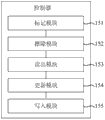
在一种可能的实现方式中,划分模块81还可以包括检测单元813。检测单元813与计算单元811连接,主要用于以一定的时间间隔检测所述高速缓存中数据量,则计算单元811可以具体用于根据所述检测单元检测到的高速缓存中数据量,计算出所述数据所需占用的所述非易失性存储介质的空间容量。In a possible implementation manner, the
具体地,由于高速缓存中数据量可能不是恒定的,可能会随时变化,因此,检测单元813可以预先设定一个时间长度,并以这个预先设定的时间长度为时间间隔检测高速缓存中数据量,计算单元811根据检测单元813检测到高速缓存中数据量,计算出需要在非易失性存储介质上划出的预备空间和冗余空间容量,划分单元813再划分上述预备空间和冗余空间。这样,在外部供电正常时,控制器就可以根据需求实时调整预留空间容量,即同时调整预备空间和冗余空间容量。Specifically, since the amount of data in the cache may not be constant and may change at any time, the detection unit 813 may preset a time length, and use this preset time length as a time interval to detect the amount of data in the cache According to the amount of data in the cache detected by the detection unit 813, the
本实施例的控制器,检测单元通过检测高速缓存中数据量,计算单元根据检测单元的检测结果计算出存储上述高速缓存中的数据所需的非易失性存储介质空间容量,然后划分单元根据上述计算结果为高速缓存中的数据划分出预留空间,擦除模块擦除上述预留空间上的数据。这样,能够实时调整预留空间容量,实现预留空间的动态管理。In the controller of this embodiment, the detection unit detects the amount of data in the cache, and the calculation unit calculates the space capacity of the non-volatile storage medium required to store the data in the cache according to the detection result of the detection unit, and then the division unit calculates according to The calculation result above divides a reserved space for the data in the cache, and the erasing module erases the data in the reserved space. In this way, the capacity of the reserved space can be adjusted in real time, and dynamic management of the reserved space can be realized.
实施例7Example 7
图10示出根据本发明另一实施例的控制器的结构框图。如图10所示,图10中标号与图8、图9相同的组件具有相同的功能,为简明起见,省略对这些组件的详细说明。Fig. 10 shows a structural block diagram of a controller according to another embodiment of the present invention. As shown in FIG. 10 , components with the same numbers as in FIG. 8 and FIG. 9 in FIG. 10 have the same functions, and for the sake of brevity, detailed descriptions of these components are omitted.
本实施例与上一实施例的主要区别在于,擦除模块82可以具体用于以上述冗余空间容量为单位,分批次擦除预留空间中的数据。The main difference between this embodiment and the previous embodiment is that the erasing
具体地,在外部供电正常时,擦除模块82将已经划出来的非易失性存储介质上预留空间完成擦除操作,例如,可以全擦为FF(11111111),但是外部供电任何时刻都有可能出现因为异常掉电而关闭,因此为了保证任何时刻掉电,都有足够的、已经完成擦除的预备空间用来存储高速缓存中的数据,需要以冗余空间容量为单位,分批次擦除所述预留空间即预备空间和冗余空间中的数据,具体擦除方法可以参照上述实施例的相关说明。Specifically, when the external power supply is normal, the erasing
在一种可能的实现方式中,该控制器还可以包括频率确定模块84。频率确定模块84,与擦除模块82连接,主要用于检测所述非易失性存储介质的温度并根据所述检测结果确定擦除所述预留空间中的数据的频率。In a possible implementation manner, the controller may further include a frequency determination module 84 . The frequency determining module 84 is connected with the erasing
具体地,擦除模块82擦除完毕的空间,由于非易失性存储介质器件本身特性,电子会慢慢流失,导致所需的非易失性存储介质空间没有擦除完全,即不是全FF,这将进一步导致给高速缓存中的数据准备好的预留空间并没有准备好,因此,还需要按照一定的频率,定期擦除控制器划分出来的预留空间。对于非易失性存储介质擦除周期的控制,频率确定模块84可以通过检查非易失性存储介质器件温度,得出定期擦除的频率,即频率确定模块84先检测非易失性存储介质的温度,然后据所述检测结果定期擦除所述预留空间。Specifically, the space erased by the erasing
在一种可能的实现方式中,写入模块83可以具体用于根据监控到供电状态异常的中断信号,将高速缓存中的数据写入预留空间。In a possible implementation manner, the writing module 83 may be specifically configured to write data in the cache into the reserved space according to an interrupt signal that monitors an abnormal power supply state.
具体地,控制器可以通过接收异常监控模块(未图示)产生的异常中断信号来实时监控外部供电状态。当外部供电正常时,控制器可以循环完成上述实施例中对预留空间的划分和对预留空间的擦除过程。当外部供电关闭时,异常监控模块(未图示)将会产生一个异常中断信号,例如掉电中断信号,控制器监控到掉电中断信号后,立即进入异常掉电保护状态,启动写入模块83将高速缓存中数据写入上述非易失性存储介质的预留空间的流程。控制器通过查询预留空间的信息,例如查询到如图5所示的BLOCK_A到BLOCK_X,然后写入模块83将高速缓存中的数据写入到非易失性存储介质具体位置。由于预留空间在外部供电关闭前已经由擦除模块82擦除完成,此时可以通过写入模块83直接编程写入高速缓存中的数据。Specifically, the controller can monitor the state of the external power supply in real time by receiving an abnormal interrupt signal generated by an abnormal monitoring module (not shown). When the external power supply is normal, the controller can cycle through the process of dividing the reserved space and erasing the reserved space in the above embodiment. When the external power supply is turned off, the abnormal monitoring module (not shown) will generate an abnormal interrupt signal, such as a power-off interrupt signal. After the controller monitors the power-off interrupt signal, it will immediately enter the abnormal power-off protection state and start the writing module. 83 A process of writing the data in the cache into the reserved space of the above-mentioned non-volatile storage medium. The controller queries the information of the reserved space, for example, BLOCK_A to BLOCK_X as shown in FIG. 5 , and then the writing module 83 writes the data in the cache to a specific location of the non-volatile storage medium. Since the reserved space has been erased by the erasing
本发明实施例的控制器,擦除模块可以通过以冗余空间容量为单位,分批次擦除预留空间中的数据,频率确定模块可以检测非易失性存储介质的温度,并根据检测结果定期擦除所述预留空间。这样,控制器就能够保证每时每刻非易失性存储介质上都已经准备好了足够多的已经完成擦除的预留空间来存储高速缓存中的数据,并能够有效的防止由于电子流失带来的预留空间没有被完全擦除的问题。控制器接收到中断信号后,写入模块根据接收到的中断信号将高速缓存中的数据写入预留空间。这样能够对供电状态的实时监测以及有效的节省异常掉电时控制器将高速缓存中的数据写入非易失性存储介质空间的时间,极大的提高了非易失性存储介质访问的效率。In the controller of the embodiment of the present invention, the erasing module can erase the data in the reserved space in batches by taking the redundant space capacity as the unit, and the frequency determination module can detect the temperature of the non-volatile storage medium, and according to the detection As a result, the reserved space is periodically erased. In this way, the controller can ensure that enough reserved space that has been erased is prepared on the non-volatile storage medium every moment to store the data in the cache, and can effectively prevent The reserved space brought about is not completely erased. After the controller receives the interrupt signal, the writing module writes the data in the cache into the reserved space according to the received interrupt signal. This enables real-time monitoring of the power supply status and effectively saves the time for the controller to write the data in the cache into the non-volatile storage medium space during abnormal power failure, greatly improving the efficiency of non-volatile storage medium access .
实施例8Example 8
图11示出根据本发明一实施例的固态存储设备的结构框图。如图11所示,该固态存储设备主要可以包括高速缓存器111、非易失性存储介质112,控制器113。其中,控制器113能够用来完成上述实施例中任何一种非易失性存储介质访问方法。例如,在供电状态正常时,控制器113在非易失性存储介质112中划分出预留空间,然后擦除预留空间中的数据以及在供电状态为异常时,将高速缓存器111中的数据写入预留空间。该非易失性存储介质访问方法的具体流程可以参见上述实施例的详细说明。FIG. 11 shows a structural block diagram of a solid-state storage device according to an embodiment of the present invention. As shown in FIG. 11 , the solid-state storage device may mainly include a cache memory 111 , a non-volatile storage medium 112 , and a controller 113 . Wherein, the controller 113 can be used to implement any one of the methods for accessing the non-volatile storage medium in the above-mentioned embodiments. For example, when the power supply state is normal, the controller 113 divides the reserved space in the non-volatile storage medium 112, then erases the data in the reserved space and when the power supply state is abnormal, saves the data in the cache memory 111 to Data is written to the reserved space. For a specific flow of the method for accessing a nonvolatile storage medium, reference may be made to the detailed description of the foregoing embodiments.
本发明实施例的固态存储设备,控制器可以在供电状态正常时,准备好供电状态异常时高速缓存器中的数据的存储空间,在发生供电状态异常时直接将高速缓存器中的数据写入准备好的存储空间中,这样能够有效的节省异常掉电时控制器将高速缓存中的数据写入非易失性存储介质空间的时间,极大的提高了非易失性存储介质访问的效率。In the solid-state storage device of the embodiment of the present invention, the controller can prepare the storage space for the data in the cache memory when the power supply state is abnormal when the power supply state is normal, and directly write the data in the cache memory when the power supply state is abnormal. In the prepared storage space, this can effectively save the time for the controller to write the data in the cache into the non-volatile storage medium space during abnormal power failure, and greatly improve the efficiency of non-volatile storage medium access .
实施例9Example 9
图12示出根据本发明一实施例的非易失性存储介质数据更新方法的流程图。Fig. 12 shows a flowchart of a method for updating data of a non-volatile storage medium according to an embodiment of the present invention.
固态存储中还有一个重要的问题是如何保证异常掉电时,非易失性存储介质中数据更新的可靠性。非易失性存储介质例如FLASH由FLASH颗粒构成,FLASH颗粒由若干BLOCK(块)组成,每一个BLOCK又由若干PAGE(页)组成。在FLASH的基本操作中,主要分为擦除(Erase)和读写,其中,擦除是以BLOCK为单位,而读写是以PAGE为单位。当用户需要更新FLASH中某个BLOCK中的几个PAGE的数据时,通常将需要更新的数据读到高速缓存中进行更新,擦除原BLOCK再将更新之后的数据写回原BLOCK。在该操作流程中会存在如下问题:在原BLOCK中的数据已经被擦除,而更新后的数据还未完全写入时,若FLASH被复位,或者外部供电关闭,会导致数据丢失。因此,如何保证FLASH中数据更新的可靠性是需要面临的问题。Another important issue in solid-state storage is how to ensure the reliability of data update in non-volatile storage media when abnormal power failure occurs. A non-volatile storage medium such as FLASH is composed of FLASH particles, and FLASH particles are composed of several BLOCKs (blocks), and each BLOCK is composed of several PAGEs (pages). In the basic operation of FLASH, it is mainly divided into erasing (Erase) and reading and writing. Among them, erasing is in the unit of BLOCK, and reading and writing is in the unit of PAGE. When the user needs to update the data of several pages in a certain BLOCK in the FLASH, the data to be updated is usually read into the cache for updating, the original BLOCK is erased and the updated data is written back to the original BLOCK. In this operation process, there will be the following problems: when the data in the original BLOCK has been erased and the updated data has not been completely written, if the FLASH is reset or the external power supply is turned off, the data will be lost. Therefore, how to ensure the reliability of data update in FLASH is a problem that needs to be faced.
通常技术通过检测非易失性存储介质复位信号来保证非易失性存储介质中数据更新的可靠性。但是若复位信号发出时检测到非易失性存储介质尚未结束写操作,则延迟复位信号的发出,待完成当前数据写入后再实施复位操作。Generally, the technology ensures the reliability of data update in the non-volatile storage medium by detecting the reset signal of the non-volatile storage medium. However, if it is detected that the non-volatile storage medium has not completed the writing operation when the reset signal is sent, the sending of the reset signal is delayed, and the reset operation is implemented after the writing of the current data is completed.
本发明实施例提供的非易失性存储介质数据更新方法,能够在非易失性存储介质数据的更新过程中,避免非易失性存储介质的写操作因为芯片复位、掉电等异常情况导致的数据丢失问题。The non-volatile storage medium data update method provided by the embodiment of the present invention can prevent the write operation of the non-volatile storage medium from being caused by abnormal conditions such as chip reset and power failure during the update process of the non-volatile storage medium data. data loss problem.
如图12所示,该非易失性存储介质数据更新方法主要可以包括以下步骤:As shown in Figure 12, the non-volatile storage medium data update method may mainly include the following steps:
步骤S200、将非易失性存储介质中的第一BLOCK空间,标记为中转BLOCK空间,并擦除第一BLOCK空间中的数据;Step S200, marking the first BLOCK space in the non-volatile storage medium as a transit BLOCK space, and erasing the data in the first BLOCK space;
步骤S210、将需要更新数据的非易失性存储介质中的第二BLOCK空间中的全部数据读出到高速缓存;Step S210, reading all the data in the second BLOCK space in the non-volatile storage medium that needs to update data to the cache;
步骤S220、更新读出到高速缓存中的数据;以及Step S220, updating the data read into the cache; and
步骤S230、将更新后高速缓存中的相应数据写入中转BLOCK空间。Step S230, write the corresponding data in the updated cache into the transit BLOCK space.
对于上述步骤S200,在非易失性存储介质初始化时,控制器首先会下发相应的指令为需要更新的数据准备一中转BLOCK空间,具体过程如下:控制器对任意一BLOCK空间即第一BLOCK空间,设置一个标志位,将第一BLOCK空间标记为中转BLOCK空间,并擦除第一BLOCK空间中的全部数据,该第一BLOCK空间用于非易失性存储介质更新数据时存储更新后的数据。For the above step S200, when the non-volatile storage medium is initialized, the controller will first issue a corresponding instruction to prepare a transit BLOCK space for the data that needs to be updated. The specific process is as follows: Space, set a flag bit, mark the first BLOCK space as a transit BLOCK space, and erase all data in the first BLOCK space, which is used to store the updated data when the non-volatile storage medium updates data data.
对于上述步骤S210到步骤S230,当非易失性存储介质中有某一BLOCK空间即、第二BLOCK空间有数据需要更新时,例如,第二BLOCK空间有几个PAGE中的数据需要进行更新。这时,可以将第二BLOCK空间的全部数据读出到高速缓存中去。然后,控制器再将读出到高速缓存中的那几个PAGE的数据进行更新,更新数据完成后,再将高速缓存中的相应数据写入上述步骤200中标记的中转BLOCK空间。For the above steps S210 to S230, when there is a certain BLOCK space in the non-volatile storage medium, that is, the second BLOCK space has data that needs to be updated, for example, there are several pages of data in the second BLOCK space that need to be updated. At this time, all the data in the second BLOCK space can be read into the cache. Then, the controller updates the data of the several pages read into the cache, and after updating the data, writes the corresponding data in the cache into the transit BLOCK space marked in step 200 above.
上述将高速缓存中更新后的数据写入非易失性存储介质的操作过程中,需要先将更新后的数据写入中转BLOCK空间(第一BLOCK空间),其后再对原目标BLOCK空间(第二BLOCK空间)进行擦除。如果在更新后的数据从高速缓存写到中转BLOCK空间的操作过程中因为系统掉电、复位等原因导致高速缓存中的数据丢失,则非易失性存储介质仍然可以使用原目标BLOCK空间中的没有更新的数据,当系统正常工作时需要再次对这些数据进行更新。如果更新后的数据已经完成写入到中转BLOCK空间,则在对原目标BLOCK空间进行擦除时,因为系统掉电、复位等原因导致高速缓存中数据丢失,则非易失性存储介质可以使用更新后的存储在中转BLOCK空间中的数据。In the above-mentioned operation process of writing the updated data in the cache to the non-volatile storage medium, it is necessary to first write the updated data into the transit BLOCK space (the first BLOCK space), and then write the original target BLOCK space ( second BLOCK space) for erasing. If the data in the cache is lost due to system power failure, reset, etc. during the operation of writing the updated data from the cache to the transit BLOCK space, the non-volatile storage medium can still use the data in the original target BLOCK space. There is no updated data, and these data need to be updated again when the system works normally. If the updated data has been written into the transit BLOCK space, when the original target BLOCK space is erased, the data in the cache is lost due to system power failure, reset, etc., then the non-volatile storage medium can be used The updated data stored in the transit BLOCK space.
本发明实施例的非易失性存储介质数据更新方法,控制器通过设置一个中转BLOCK空间,先将高速缓存中更新后的相应数据写入中转BLOCK空间,其后再对原目标BLOCK空间进行擦除,能够有效的防止数据更新过程中因为掉电、复位等原来造成的数据丢失,提高了数据更新的可靠性。In the non-volatile storage medium data update method of the embodiment of the present invention, the controller first writes the updated corresponding data in the cache into the transfer BLOCK space by setting a transfer BLOCK space, and then erases the original target BLOCK space In addition, it can effectively prevent data loss caused by power failure, reset, etc. during the data update process, and improve the reliability of data update.
实施例10Example 10
图13示出根据本发明再一实施例的非易失性存储介质数据更新方法的流程图。图13中标号与图12相同的步骤具有相同的功能,为简明起见,省略对这些步骤的详细说明。Fig. 13 shows a flowchart of a method for updating data of a non-volatile storage medium according to yet another embodiment of the present invention. Steps in FIG. 13 with the same numbers as those in FIG. 12 have the same functions, and for the sake of brevity, detailed descriptions of these steps are omitted.
如图13所示,本实施例与上一实施例的主要区别在于,步骤S210具体可以包括以下步骤:As shown in Figure 13, the main difference between this embodiment and the previous embodiment is that step S210 may specifically include the following steps:
步骤S2101、向所述高速缓存申请第三BLOCK空间,并擦除所述第三BLOCK空间中的全部数据;Step S2101, applying for a third BLOCK space from the cache, and erasing all data in the third BLOCK space;
步骤S2102、将所述第二块空间中的全部数据读出到所述第三块空间。Step S2102. Read all the data in the second space to the third space.
对于上述步骤S2101,当有某一BLOCK空间、即第二BLOCK空间需要进行数据更新时,可以向控制器申请高速缓存中的一BLOCK空间、即第三BLOCK空间,控制器在高速缓存中给第二BLOCK空间划分出第三BLOCK空间后,将第三BLOCK空间中的全部数据擦除。For the above step S2101, when there is a certain BLOCK space, that is, the second BLOCK space that needs to be updated, the controller can apply to the controller for a BLOCK space in the cache, that is, the third BLOCK space, and the controller provides the first block in the cache. After the second BLOCK space is divided into the third BLOCK space, all data in the third BLOCK space is erased.
对于上述步骤S2102,当第三BLOCK空间中的全部数据被擦除后,控制器下发相应的指令,将第二BLOCK空间中的全部数据读出到第三BLOCK空间。For the above step S2102, after all the data in the third BLOCK space is erased, the controller issues a corresponding instruction to read all the data in the second BLOCK space to the third BLOCK space.
在一种可能的实现方式中,更新读出到高速缓存中的数据,具体可以包括以下步骤:In a possible implementation manner, updating the data read into the cache may specifically include the following steps:
步骤S2201、更新第三BLOCK空间中需要更新的数据。Step S2201, updating the data to be updated in the third BLOCK space.
在一种可能的实现方式中,所述将更新后所述高速缓存中的相应数据写入所述中转BLOCK空间,具体可以包括以下步骤:In a possible implementation manner, writing the updated corresponding data in the cache into the transit BLOCK space may specifically include the following steps:
步骤S2301、将数据更新后所述第三BLOCK空间的相应数据写入所述中转BLOCK空间。Step S2301. Write the corresponding data in the third BLOCK space after the data update into the transit BLOCK space.
本发明实施例的非易失性存储介质数据更新方法,控制器通过设置一个中转BLOCK空间,先将高速缓存中更新后的数据写入中转BLOCK空间,其后再对原目标BLOCK空间进行擦除,能够有效的防止数据更新过程中因为掉电、复位等原来造成的数据丢失,提高了数据更新的可靠性。In the non-volatile storage medium data update method of the embodiment of the present invention, the controller first writes the updated data in the cache into the transfer BLOCK space by setting a transfer BLOCK space, and then erases the original target BLOCK space , which can effectively prevent data loss caused by power failure, reset, etc. during the data update process, and improve the reliability of data update.
实施例11Example 11
图14示出根据本发明又一实施例的非易失性存储介质数据更新方法的流程图。图14中标号与图12、图13相同的步骤具有相同的功能,为简明起见,省略对这些步骤的详细说明。Fig. 14 shows a flowchart of a method for updating data of a non-volatile storage medium according to yet another embodiment of the present invention. Steps in FIG. 14 with the same numbers as those in FIG. 12 and FIG. 13 have the same functions, and for the sake of brevity, detailed descriptions of these steps are omitted.
如图14所示,本实施例与上一实施例的主要区别在于,在步骤S230之后,该非易失性存储介质数据更新方法还可以包括以下步骤:As shown in FIG. 14 , the main difference between this embodiment and the previous embodiment is that, after step S230, the method for updating data on a non-volatile storage medium may further include the following steps:
步骤S240、清除第一BLOCK空间的中转标记。Step S240, clearing the transit flag of the first BLOCK space.
具体地,在已经将高速缓存中更新的数据写入中转BLOCK空间后,可以清除中转块空间的中转标记,即清除其标志位。Specifically, after the updated data in the cache has been written into the transit BLOCK space, the transit flag of the transit block space may be cleared, that is, its flag bit may be cleared.
相应地,在一种可能的实现方式中,在步骤S240之后,该非易失性存储介质数据更新方法还可以包括以下步骤:Correspondingly, in a possible implementation manner, after step S240, the method for updating data on a non-volatile storage medium may further include the following steps:
步骤S250、将第二BLOCK空间标记为中转块空间,并擦除第二BLOCK空间中的数据。Step S250, marking the second BLOCK space as a transit block space, and erasing the data in the second BLOCK space.
具体地,步骤S240中已经将中转BLOCK空间的标记清除,为了更有效的实现数据更新,可以在步骤240后,将第二BLOCK空间标记为中转BLOCK空间。Specifically, in step S240, the mark of the transit BLOCK space has been cleared. In order to implement data update more effectively, the second block space may be marked as a transit BLOCK space after step S240.
在一种可能的实现方式中,该非易失性存储介质数据更新方法还可以包括若第二BLOCK空间标记失败,在非易失性存储介质的初始化阶段将非易失性存储介质的任意一空BLOCK空间即第四BLOCK空间标记为中转BLOCK空间。In a possible implementation, the method for updating data on a non-volatile storage medium may further include, if the second BLOCK space mark fails, emptying any one of the non-volatile storage medium during the initialization phase of the non-volatile storage medium. The BLOCK space, that is, the fourth BLOCK space is marked as a transit BLOCK space.
具体地,如果在清除了中转标记后,尚未完成对第二BLOCK空间的中转标记时,系统出现了异常掉电或复位等异常情况,即此时第二BLOCK空间中转标记失败,则在非易失性存储介质的初始化阶段重新初始化一块空间、即第四BLOCK空间,并将第四BLOCK空间标记为中转BLOCK空间。Specifically, if the transfer mark for the second BLOCK space has not been completed after the transfer mark is cleared, and the system experiences an abnormal situation such as abnormal power-off or reset, that is, the transfer mark for the second BLOCK space fails at this time, then in the non-easy In the initialization phase of the volatile storage medium, a piece of space, that is, the fourth BLOCK space is re-initialized, and the fourth BLOCK space is marked as a transit BLOCK space.
本发明实施例的非易失性存储介质数据更新方法,控制器通过设置一个中转块空间,先将高速缓存中更新后的数据写入中转BLOCK空间,然后清除中转BLOCK空间该中转BLOCK空间的中转标记,其后再对原目标BLOCK空间进行擦除并将该原目标BLOCK空间标记为中转BLOCK空间,能够有效的防止数据更新过程中因为掉电、复位等原来造成的数据丢失,提高了数据更新的可靠性。In the non-volatile storage medium data update method of the embodiment of the present invention, the controller first writes the updated data in the cache into the transit BLOCK space by setting a transit block space, and then clears the transit BLOCK space of the transit BLOCK space. Mark, and then erase the original target BLOCK space and mark the original target BLOCK space as a transit BLOCK space, which can effectively prevent data loss caused by power failure, reset, etc. during the data update process, and improve the data update process. reliability.
需要说明的是,在上面的实施例中,本申请以FLASH为例,详述了非易失性存储介质访问方法和数据更新方法,事实上本领域技术人员能够明白该非易失性存储介质访问方法和数据更新方法还可以应用到其他非易失性存储介质中。It should be noted that, in the above embodiments, this application takes FLASH as an example to describe the non-volatile storage medium access method and data update method in detail. In fact, those skilled in the art can understand that the non-volatile storage medium The access method and data update method can also be applied to other non-volatile storage media.
实施例12Example 12
图15示出根据本发明一实施例的控制器的结构框图。如图15所示,该控制器能够用于固态存储,主要可以包括标记模块151、擦除模块152、读出模块153、更新模块154以及写入模块155。标记模块151主要用于将非易失性存储介质中的第一BLOCK空间,标记为中转BLOCK空间;擦除模块152,与标记模块151连接,主要用于擦除第一BLOCK空间中的数据;读出模块153,与擦除模块152连接,主要用于将需要更新数据的非易失性存储介质中的第二BLOCK空间中的全部数据读出到高速缓存;更新模块154,与读出模块153连接,主要用于更新读出到高速缓存中的数据;写入模块155,与更新模块154连接,主要用于将更新后高速缓存中的相应数据写入中转BLOCK空间。Fig. 15 shows a structural block diagram of a controller according to an embodiment of the present invention. As shown in FIG. 15 , the controller can be used for solid-state storage, and mainly includes a
具体地,在非易失性存储介质初始化时,控制器首先会下发相应的指令为需要更新的数据准备一中转BLOCK空间,具体过程如下:标记模块151对非易失性存储介质中任意空的BLOCK空间即第一BLOCK空间设置一个标志位,将第一BLOCK空间标记为中转BLOCK空间,擦除模块152擦除第一BLOCK空间中的全部数据,该第一BLOCK空间用于非易失性存储介质更新数据时存储更新后的数据。当非易失性存储介质中有某一BLOCK空间即、第二BLOCK空间有数据需要更新时,例如,第二BLOCK空间有几个PAGE中的数据需要进行更新。这时,读出模块153可以将第二BLOCK空间的全部数据读出到高速缓存中去。然后,更新单元154再将读出到高速缓存中的那几个PAGE的数据进行更新,更新单元154更新数据完成后,再将高速缓存中的相应数据写入上述标记模块151标记的中转BLOCK空间。Specifically, when the non-volatile storage medium is initialized, the controller will first issue a corresponding instruction to prepare a transit BLOCK space for the data that needs to be updated. The BLOCK space, that is, the first BLOCK space sets a flag to mark the first BLOCK space as a transit BLOCK space, and the erasing
上述将高速缓存中更新后的数据写入非易失性存储介质的操作过程中,需要写入模块155先将更新单元154更新后的数据写入中转BLOCK空间(第一BLOCK空间),其后再利用擦除单元152对原目标BLOCK空间(第二BLOCK空间)进行擦除。如果在写入模块155将更新模块154更新后的数据从高速缓存写入到中转BLOCK空间的操作过程中因为系统掉电、复位等原因导致高速缓存中的数据丢失,则非易失性存储介质仍然可以使用原目标BLOCK空间中的没有更新的数据,当系统正常工作时需要再次利用更新模块154对这些数据进行更新。如果更新模块154更新后的数据已经完成写入到中转BLOCK空间,则在擦除模块152对原目标BLOCK空间进行擦除时,因为系统掉电、复位等原因导致高速缓存中数据丢失,则非易失性存储介质可以使用更新模块154更新后的存储在中转BLOCK空间中的数据。In the above-mentioned operation process of writing the updated data in the cache into the non-volatile storage medium, the
本发明实施例的控制器,标记模块设置一个中转BLOCK空间,写入模块先将更新模块更新后的高速缓存中相应数据写入中转BLOCK空间,其后利用擦除模块对原目标BLOCK空间进行擦除,能够有效的防止数据更新过程中因为掉电、复位等原来造成的数据丢失,提高了数据更新的可靠性。In the controller of the embodiment of the present invention, the marking module is provided with a transfer BLOCK space, and the writing module first writes the corresponding data in the high-speed cache updated by the update module into the transfer BLOCK space, and then uses the erasing module to erase the original target BLOCK space In addition, it can effectively prevent data loss caused by power failure, reset, etc. during the data update process, and improve the reliability of data update.
实施例13Example 13
图16示出根据本发明再一实施例的控制器的结构框图。如图16所示,图160中标号与图15相同的组件具有相同的功能,为简明起见,省略对这些组件的详细说明。Fig. 16 shows a structural block diagram of a controller according to yet another embodiment of the present invention. As shown in FIG. 16 , the components in FIG. 160 with the same numbers as those in FIG. 15 have the same functions, and for the sake of brevity, detailed descriptions of these components are omitted.
本实施例与上一实施例的主要区别在于,读出模块153可以具体包括申请单元1531和读出单元1532。其中,申请单元1531主要用于向高速缓存申请第三块空间,并擦除第三块空间中的数据;读出单元1532,与申请单元1531连接,将第二块空间中的全部数据读出到第三块空间。The main difference between this embodiment and the previous embodiment is that the
具体地,当有某一BLOCK空间、即第二BLOCK空间需要进行数据更新时,申请单元1531可以申请高速缓存中的一个BLOCK空间、即第三BLOCK空间,控制器在高速缓存中给第二BLOCK空间划分出第三BLOCK空间后,利用擦除模块152将第三BLOCK空间中的全部数据擦除。当第三BLOCK空间中的全部数据被擦除后,读出单元1532将第二BLOCK空间中的全部数据读出到第三BLOCK空间。Specifically, when there is a certain BLOCK space, that is, the second BLOCK space, that needs to update data, the
在一种可能的实现方式中,写入模块155具体用于将更新后所述第三BLOCK空间的相应数据写入所述中转BLOCK空间。In a possible implementation manner, the
在一种可能的实现方式中,所述控制器还包括清除模块156,清除模块156与写入模块155连接,主要用于清除所述第一BLOCK空间的中转标记。In a possible implementation manner, the controller further includes a
具体地,在写入模块155已经将高速缓存中更新的数据写入中转BLOCK空间后,还可以清除中转BLOCK空间的中转标记,即清除其标志位。Specifically, after the
相应地,在一种可能的实现方式中,标记模块151还用于将所述第二BLOCK空间标记为中转BLOCK空间;擦除模块152还用于擦除第二BLOCK空间中的数据。Correspondingly, in a possible implementation manner, the marking
具体地,写入模块155已经将中转BLOCK空间的标记清除后,为了更有效的实现数据更新,还可以利用标记模块151将第二BLOCK空间标记为中转BLOCK空间,并利用擦除模块152于擦除第二块空间中的数据。Specifically, after the
在一种可能的实现方式中,若所述第二BLOCK空间标记失败,标记模块151还可以用于在所述非易失性存储介质的初始化阶段将非易失性存储介质的任意一空BLOCK空间即第四BLOCK空间标记为中转BLOCK空间;擦除模块152还可以用于擦除所述第四BLOCK空间中的数据。In a possible implementation, if the marking of the second BLOCK space fails, the marking
本发明实施例的控制器,标记模块设置一个中转BLOCK空间,写入模块将更新模块更新后高速缓存中的数据写入中转BLOCK空间,然后清除中转BLOCK空间该中转BLOCK空间的中转标记,其后再利用擦除模块对原目标BLOCK空间进行擦除,标记模块再将原目标BLOCK空间标记为中转BLOCK空间,这样能够有效的防止数据更新过程中因为掉电、复位等原来造成的数据丢失,提高了数据更新的可靠性。In the controller of the embodiment of the present invention, the marking module is provided with a transfer BLOCK space, and the writing module writes the data in the high-speed cache after the update module is updated into the transfer BLOCK space, and then clears the transfer mark of the transfer BLOCK space in the transfer BLOCK space, and thereafter Then use the erasing module to erase the original target BLOCK space, and then mark the original target BLOCK space as a transit BLOCK space by the marking module, which can effectively prevent data loss caused by power failure, reset, etc. during the data update process, and improve reliability of data updates.
实施例14Example 14
图17示出根据本发明一实施例的固态存储设备的结构框图。如图17所示,该固态存储设备主要可以包括高速缓存器171、非易失性存储介质172,控制器173。其中,控制器173能够用来完成上述实施例中任何一种非易失性存储介质数据更新方法。例如,控制器173首先将非易失性存储介质中的任意一块没有数据的空间即第一BLOCK空间,标记为中转BLOCK空间,然后将需要更新数据的第二BLOCK空间中的全部数据读出到高速缓存器171中,控制器173再更新读出到高速缓存器171中的数据,最后,控制器再将更新后高速缓存中的相应数据写入中转BLOCK空间。该非易失性存储介质数据更新方法的具体流程可以参见上述实施例的详细说明。Fig. 17 shows a structural block diagram of a solid-state storage device according to an embodiment of the present invention. As shown in FIG. 17 , the solid-state storage device may mainly include a cache memory 171 , a non-volatile storage medium 172 , and a controller 173 . Wherein, the controller 173 can be used to implement any one of the non-volatile storage medium data update methods in the above-mentioned embodiments. For example, the controller 173 first marks any space without data in the non-volatile storage medium, that is, the first BLOCK space, as a transit BLOCK space, and then reads all the data in the second BLOCK space that needs to be updated to In the cache 171, the controller 173 updates the data read from the cache 171, and finally, the controller writes the updated corresponding data in the cache into the transit BLOCK space. For a specific process of the method for updating data on a non-volatile storage medium, reference may be made to the detailed descriptions of the foregoing embodiments.
本发明实施例的固态存储设备,通过控制器在非易失性存储介质中设置一个中转BLOCK空间,并将更新后的高速缓存器中相应数据写入中转BLOCK空间,能够有效的防止数据更新过程中因为掉电、复位等原来造成的数据丢失,提高了数据更新的可靠性。In the solid-state storage device of the embodiment of the present invention, the controller sets a transfer BLOCK space in the non-volatile storage medium, and writes the corresponding data in the updated cache memory into the transfer BLOCK space, which can effectively prevent the data update process Due to power failure, reset and other original data loss, the reliability of data update is improved.
实施例15Example 15
图18示出了本发明的再一个实施例的固态存储设备的结构框图。所述固态存储设备设备1800可以是具备计算能力的主机服务器、个人计算机PC、或者可携带的便携式计算机或终端等。本发明具体实施例并不对计算节点的具体实现做限定。Fig. 18 shows a structural block diagram of a solid-state storage device according to yet another embodiment of the present invention. The solid-state storage device 1800 may be a host server with computing capabilities, a personal computer PC, or a portable portable computer or terminal. The specific embodiments of the present invention do not limit the specific implementation of the computing nodes.
所述固态存储设备1800包括处理器(processor)1810、通信接口(Communications Interface)1820、存储器(memory array)1830和总线1840。其中,处理器1810、通信接口1820、以及存储器1830通过总线1840完成相互间的通信。The solid-state storage device 1800 includes a processor (processor) 1810, a communication interface (Communications Interface) 1820, a memory (memory array) 1830 and a bus 1840. Wherein, the processor 1810 , the communication interface 1820 , and the memory 1830 communicate with each other through the bus 1840 .
通信接口1820用于与网元通信,其中网元包括例如虚拟机管理中心、共享存储等。The communication interface 1820 is used for communicating with network elements, where the network elements include, for example, a virtual machine management center, shared storage, and the like.
处理器1810用于执行程序。处理器1810可能是一个中央处理器CPU,或者是专用集成电路ASIC(Application Specific Integrated Circuit),或者是被配置成实施本发明实施例的一个或多个集成电路。The processor 1810 is used to execute programs. The processor 1810 may be a central processing unit CPU, or an Application Specific Integrated Circuit (ASIC), or one or more integrated circuits configured to implement the embodiments of the present invention.
存储器1830用于存放文件。存储器1830可能包含高速RAM存储器,也可能还包括非易失性存储器(non-volatile memory),例如至少一个磁盘存储器。存储器1830也可以是存储器阵列。存储器1830还可能被分块,并且所述块可按一定的规则组合成虚拟卷。The storage 1830 is used to store files. The memory 1830 may include a high-speed RAM memory, and may also include a non-volatile memory (non-volatile memory), such as at least one magnetic disk memory. Memory 1830 may also be a memory array. The storage 1830 may also be divided into blocks, and the blocks may be combined into virtual volumes according to certain rules.
在一种可能的实施方式中,上述程序可为包括计算机操作指令的程序代码。该程序具体可用于:In a possible implementation manner, the above program may be a program code including computer operation instructions. Specifically, the program can be used for:
在供电状态为正常时,在所述非易失性存储介质中划分出预留空间并擦除所述预留空间中的数据;以及When the power supply state is normal, dividing a reserved space in the non-volatile storage medium and erasing data in the reserved space; and
在所述供电状态为异常时,将高速缓存中的数据写入所述预留空间。When the power supply state is abnormal, write the data in the cache into the reserved space.
对于上述程序,在一种可能的实现方式中,所述在供电状态为正常时,在所述非易失性存储介质中划分出预留空间并擦除所述预留空间中的数据包括:Regarding the above program, in a possible implementation manner, when the power supply state is normal, dividing a reserved space in the non-volatile storage medium and erasing data in the reserved space includes:
根据所述高速缓存中数据量计算出所述数据所需占用的所述非易失性存储介质的空间容量;calculating the space capacity of the non-volatile storage medium required for the data according to the amount of data in the cache;
根据所计算的空间容量在所述非易失性存储介质中划分出所述预留空间;以及dividing the reserved space in the non-volatile storage medium according to the calculated space capacity; and
擦除所述预留空间中的数据。Erase the data in the reserved space.
对于上述程序,在一种可能的实现方式中,所述预留空间包括预备空间和冗余空间,所述预备空间表示所述高速缓存中数据所需占用的所述非易失性存储介质的空间,所述冗余空间表示根据所述预备空间容量增加的裕量。For the above program, in a possible implementation manner, the reserved space includes a spare space and a redundant space, and the spare space represents the area of the non-volatile storage medium that data in the cache needs to occupy space, and the redundant space represents a margin increased according to the capacity of the reserved space.
对于上述程序,在一种可能的实现方式中,在根据所述高速缓存中数据量计算出所述数据所需占用的所述非易失性存储介质的空间容量之前,还包括:For the above program, in a possible implementation manner, before calculating the space capacity of the non-volatile storage medium that the data needs to occupy according to the amount of data in the cache, it further includes:
以一定的时间间隔检测所述高速缓存中数据量。Detect the amount of data in the cache at a certain time interval.
对于上述程序,在一种可能的实现方式中,擦除所述预留空间中的数据,包括:For the above program, in a possible implementation, erasing the data in the reserved space includes:
以所述冗余空间容量为单位,分批次擦除所述预留空间中的数据。The data in the reserved space is erased in batches by taking the capacity of the redundant space as a unit.
对于上述程序,在一种可能的实现方式中,在所述在供电状态为正常时,在所述非易失性存储介质中划分出预留空间并擦除所述预留空间中的数据之后,该方法还包括:Regarding the above program, in a possible implementation manner, when the power supply state is normal, after dividing a reserved space in the non-volatile storage medium and erasing the data in the reserved space , the method also includes:
检测所述非易失性存储介质的温度;以及detecting the temperature of the non-volatile storage medium; and
根据所述检测结果确定擦除所述预留空间中的数据的频率。The frequency of erasing the data in the reserved space is determined according to the detection result.
对于上述程序,在一种可能的实现方式中,在所述供电状态为异常时,所述将高速缓存中的数据写入所述预留空间具体包括:For the above program, in a possible implementation manner, when the power supply state is abnormal, writing the data in the cache into the reserved space specifically includes:
监控到供电状态异常的中断信号,将所述高速缓存中的数据写入所述预留空间。The interrupt signal of abnormal power supply status is monitored, and the data in the cache is written into the reserved space.
实施例16Example 16
图19示出了本发明的另一实施例的固态存储设备的结构框图。所述固态存储设备设备1900可以是具备计算能力的主机服务器、个人计算机PC、或者可携带的便携式计算机或终端等。本发明具体实施例并不对计算节点的具体实现做限定。Fig. 19 shows a structural block diagram of a solid-state storage device according to another embodiment of the present invention. The solid-
所述固态存储设备1900包括处理器(processor)1910、通信接口(Communications Interface)1920、存储器(memory array)1930和总线1940。其中,处理器1910、通信接口1920、以及存储器1930通过总线1940完成相互间的通信。The solid-
通信接口1920用于与网元通信,其中网元包括例如虚拟机管理中心、共享存储等。The
处理器1910用于执行程序。处理器1910可能是一个中央处理器CPU,或者是专用集成电路ASIC(Application Specific Integrated Circuit),或者是被配置成实施本发明实施例的一个或多个集成电路。The processor 1910 is used to execute programs. The processor 1910 may be a central processing unit CPU, or an Application Specific Integrated Circuit (ASIC), or one or more integrated circuits configured to implement the embodiments of the present invention.
存储器1930用于存放文件。存储器1930可能包含高速RAM存储器,也可能还包括非易失性存储器(non-volatile memory),例如至少一个磁盘存储器。存储器1930也可以是存储器阵列。存储器1930还可能被分块,并且所述块可按一定的规则组合成虚拟卷。The storage 1930 is used to store files. The memory 1930 may include a high-speed RAM memory, and may also include a non-volatile memory (non-volatile memory), such as at least one magnetic disk memory. Memory 1930 may also be a memory array. The storage 1930 may also be divided into blocks, and the blocks may be combined into virtual volumes according to certain rules.
在一种可能的实施方式中,上述程序可为包括计算机操作指令的程序代码。该程序具体可用于:In a possible implementation manner, the above program may be a program code including computer operation instructions. Specifically, the program can be used for:
将所述非易失性存储介质中的第一块空间标记为中转块空间,并擦除所述第一块空间中的数据;marking the first block of space in the non-volatile storage medium as a transit block space, and erasing the data in the first block of space;
将需要更新数据的所述非易失性存储介质中的第二块空间中的全部数据读出到高速缓存;Reading all the data in the second block of space in the non-volatile storage medium that needs to update data to the cache;
更新读出到所述高速缓存中的数据;以及updating data read into said cache; and
将更新后所述高速缓存中的相应数据写入所述中转块空间。Write the updated corresponding data in the cache into the transit block space.
对于上述程序,在一种可能的实现方式中,所述将需要更新数据的第二块空间中的全部数据读出到高速缓存,具体包括:For the above program, in a possible implementation manner, reading all the data in the second block space that needs to update data to the cache memory specifically includes:
向所述高速缓存申请第三块空间,并擦除所述第三块空间中的数据;以及Applying for a third block of space to the cache, and erasing data in the third block of space; and
将所述第二块空间中的全部数据读出到所述第三块空间。Read all the data in the second space to the third space.
对于上述非易失性存储介质数据更新方法,在一种可能的实现方式中,所述更新读出到所述高速缓存中的数据,具体包括:Regarding the above method for updating data on a non-volatile storage medium, in a possible implementation manner, the updating reads the data in the cache, specifically including:
更新所述第三块空间中需要更新的数据。Update the data that needs to be updated in the third block of space.
对于上述非易失性存储介质数据更新方法,在一种可能的实现方式中,所述将更新后所述高速缓存中的相应数据写入所述中转块空间,具体包括:For the above non-volatile storage medium data update method, in a possible implementation manner, writing the updated corresponding data in the cache into the transit block space specifically includes:
将更新后所述第三块空间的相应数据写入所述中转块空间。Write the updated corresponding data in the third block space into the transit block space.
对于上述程序,在一种可能的实现方式中,在所述将更新后所述高速缓存中的相应数据写入所述中转块空间之后,还包括:For the above program, in a possible implementation manner, after writing the updated corresponding data in the cache into the transit block space, further include:
清除所述第一块空间的中转标记。Clear the transit mark of the first space.
对于上述程序,在一种可能的实现方式中,在所述清除所述第一块空间的中转标记之后,还包括:For the above procedure, in a possible implementation manner, after clearing the transit mark of the first space, further include:
将所述第二块空间标记为中转块空间,并擦除所述第二块空间中的数据。Mark the second space as a transit space, and erase the data in the second space.
对于上述程序,在一种可能的实现方式中,还包括:For the above program, in a possible implementation manner, it also includes:
若所述第二块空间标记失败,在所述非易失性存储介质的初始化阶段将所述非易失性存储介质的第四块空间标记为中转块空间,并擦除所述第四块空间中的数据。If the marking of the second space fails, mark the fourth space of the non-volatile storage medium as a transit block space during the initialization phase of the non-volatile storage medium, and erase the fourth space data in space.
本领域普通技术人员可以意识到,本文所描述的实施例中的各示例性单元及算法步骤,能够以电子硬件、或者计算机软件和电子硬件的结合来实现。这些功能究竟以硬件还是软件形式来实现,取决于技术方案的特定应用和设计约束条件。专业技术人员可以针对特定的应用选择不同的方法来实现所描述的功能,但是这种实现不应认为超出本发明的范围。Those skilled in the art can appreciate that each exemplary unit and algorithm steps in the embodiments described herein can be realized by electronic hardware, or a combination of computer software and electronic hardware. Whether these functions are implemented in the form of hardware or software depends on the specific application and design constraints of the technical solution. Those skilled in the art may choose different methods to implement the described functions for specific applications, but this implementation should not be regarded as exceeding the scope of the present invention.
如果以计算机软件的形式来实现所述功能并作为独立的产品销售或使用时,则在一定程度上可认为本发明的技术方案的全部或部分(例如对通常技术做出贡献的部分)是以计算机软件产品的形式体现的。该计算机软件产品通常存储在计算机可读取的存储介质中,包括若干指令用以使得计算机设备(可以是个人计算机、服务器、或者网络设备等)执行本发明各实施例方法的全部或部分步骤。而前述的存储介质包括U盘、移动硬盘、只读存储器(ROM,Read-Only Memory)、随机存取存储器(RAM,Random AccessMemory)、磁碟或者光盘等各种可以存储程序代码的介质。If the functions are implemented in the form of computer software and sold or used as an independent product, it can be considered that all or part of the technical solution of the present invention (such as the part that contributes to the general technology) is based on In the form of a computer software product. The computer software product is usually stored in a computer-readable storage medium, and includes several instructions to enable a computer device (which may be a personal computer, server, or network device, etc.) to execute all or part of the steps of the methods of the embodiments of the present invention. The aforementioned storage media include various media that can store program codes such as U disk, mobile hard disk, read-only memory (ROM, Read-Only Memory), random access memory (RAM, Random Access Memory), magnetic disk or optical disk.
以上所述,仅为本发明的具体实施方式,但本发明的保护范围并不局限于此,任何熟悉本技术领域的技术人员在本发明揭露的技术范围内,可轻易想到变化或替换,都应涵盖在本发明的保护范围之内。因此,本发明的保护范围应所述以权利要求的保护范围为准。The above is only a specific embodiment of the present invention, but the scope of protection of the present invention is not limited thereto. Anyone skilled in the art can easily think of changes or substitutions within the technical scope disclosed in the present invention. Should be covered within the protection scope of the present invention. Therefore, the protection scope of the present invention should be based on the protection scope of the claims.
Claims (24)
Priority Applications (1)
| Application Number | Priority Date | Filing Date | Title |
|---|---|---|---|
| CN201310386421.8A CN103455449B (en) | 2013-08-29 | 2013-08-29 | Non-volatile memory medium access method, data-updating method and equipment |
Applications Claiming Priority (1)
| Application Number | Priority Date | Filing Date | Title |
|---|---|---|---|
| CN201310386421.8A CN103455449B (en) | 2013-08-29 | 2013-08-29 | Non-volatile memory medium access method, data-updating method and equipment |
Publications (2)
| Publication Number | Publication Date |
|---|---|
| CN103455449A true CN103455449A (en) | 2013-12-18 |
| CN103455449B CN103455449B (en) | 2016-12-28 |
Family
ID=49737840
Family Applications (1)
| Application Number | Title | Priority Date | Filing Date |
|---|---|---|---|
| CN201310386421.8A Active CN103455449B (en) | 2013-08-29 | 2013-08-29 | Non-volatile memory medium access method, data-updating method and equipment |
Country Status (1)
| Country | Link |
|---|---|
| CN (1) | CN103455449B (en) |
Cited By (13)
| Publication number | Priority date | Publication date | Assignee | Title |
|---|---|---|---|---|
| CN103942160A (en) * | 2014-04-03 | 2014-07-23 | 华为技术有限公司 | Storage system, storage device and data storage method |
| CN105023610A (en) * | 2014-04-22 | 2015-11-04 | 新唐科技股份有限公司 | Storage unit controller, control method thereof, and storage device |
| CN105138432A (en) * | 2015-08-31 | 2015-12-09 | 深圳市瑞耐斯技术有限公司 | Solid state disk data fast backup method and system used under abnormal power failure |
| CN105260128A (en) * | 2015-09-11 | 2016-01-20 | 华为技术有限公司 | Method for writing data in storage device and storage device |
| CN105512056A (en) * | 2014-09-24 | 2016-04-20 | 中兴通讯股份有限公司 | Method and device for data storage, and terminal |
| CN106687935A (en) * | 2014-09-02 | 2017-05-17 | 桑迪士克科技有限责任公司 | Process and apparatus to reduce declared capacity of a storage device by altering an encoding format |
| CN107426618A (en) * | 2017-01-26 | 2017-12-01 | 青岛海信电器股份有限公司 | Intelligent television and its under-voltage protection fault-tolerance approach |
| CN108415850A (en) * | 2017-02-09 | 2018-08-17 | 爱思开海力士有限公司 | Data storage device and its operating method |
| CN109189605A (en) * | 2018-07-23 | 2019-01-11 | 杭州电子科技大学 | A kind of solid state hard disk power failure protection method |
| CN110515544A (en) * | 2019-08-06 | 2019-11-29 | 科华恒盛股份有限公司 | The method and terminal device of data storage |
| CN110956995A (en) * | 2019-11-29 | 2020-04-03 | 浙江工商大学 | Dynamic data scrubbing method for STT-RAM cache |
| CN115373607A (en) * | 2022-08-31 | 2022-11-22 | 北京奕斯伟计算技术股份有限公司 | Data storage method and device |
| CN115469802A (en) * | 2022-08-31 | 2022-12-13 | 北京奕斯伟计算技术股份有限公司 | data storage device |
Citations (5)
| Publication number | Priority date | Publication date | Assignee | Title |
|---|---|---|---|---|
| US6851015B2 (en) * | 2001-05-22 | 2005-02-01 | Sankyo Seiki Mfg. Co., Ltd. | Method of overwriting data in nonvolatile memory and a control apparatus used for the method |
| CN1619533A (en) * | 2003-11-17 | 2005-05-25 | 鸿富锦精密工业(深圳)有限公司 | Flash memory file management system and method |
| CN101226493A (en) * | 2007-01-19 | 2008-07-23 | 松下电器产业株式会社 | Data backup device and data backup method |
| CN101458668A (en) * | 2008-12-19 | 2009-06-17 | 成都市华为赛门铁克科技有限公司 | Caching data block processing method and hard disk |
| CN102567146A (en) * | 2011-12-29 | 2012-07-11 | 北京握奇数据系统有限公司 | Log backup method and device and smart card |
-
2013
- 2013-08-29 CN CN201310386421.8A patent/CN103455449B/en active Active
Patent Citations (5)
| Publication number | Priority date | Publication date | Assignee | Title |
|---|---|---|---|---|
| US6851015B2 (en) * | 2001-05-22 | 2005-02-01 | Sankyo Seiki Mfg. Co., Ltd. | Method of overwriting data in nonvolatile memory and a control apparatus used for the method |
| CN1619533A (en) * | 2003-11-17 | 2005-05-25 | 鸿富锦精密工业(深圳)有限公司 | Flash memory file management system and method |
| CN101226493A (en) * | 2007-01-19 | 2008-07-23 | 松下电器产业株式会社 | Data backup device and data backup method |
| CN101458668A (en) * | 2008-12-19 | 2009-06-17 | 成都市华为赛门铁克科技有限公司 | Caching data block processing method and hard disk |
| CN102567146A (en) * | 2011-12-29 | 2012-07-11 | 北京握奇数据系统有限公司 | Log backup method and device and smart card |
Cited By (18)
| Publication number | Priority date | Publication date | Assignee | Title |
|---|---|---|---|---|
| CN103942160A (en) * | 2014-04-03 | 2014-07-23 | 华为技术有限公司 | Storage system, storage device and data storage method |
| CN105023610B (en) * | 2014-04-22 | 2019-01-25 | 新唐科技股份有限公司 | Storage unit controller, control method thereof, and storage device |
| CN105023610A (en) * | 2014-04-22 | 2015-11-04 | 新唐科技股份有限公司 | Storage unit controller, control method thereof, and storage device |
| CN106687935A (en) * | 2014-09-02 | 2017-05-17 | 桑迪士克科技有限责任公司 | Process and apparatus to reduce declared capacity of a storage device by altering an encoding format |
| CN105512056A (en) * | 2014-09-24 | 2016-04-20 | 中兴通讯股份有限公司 | Method and device for data storage, and terminal |
| CN105138432A (en) * | 2015-08-31 | 2015-12-09 | 深圳市瑞耐斯技术有限公司 | Solid state disk data fast backup method and system used under abnormal power failure |
| CN105138432B (en) * | 2015-08-31 | 2018-12-28 | 深圳市领存技术有限公司 | The method and system of solid state hard disk fast data backup when a kind of abnormal power-down |
| CN105260128A (en) * | 2015-09-11 | 2016-01-20 | 华为技术有限公司 | Method for writing data in storage device and storage device |
| CN105260128B (en) * | 2015-09-11 | 2018-05-29 | 华为技术有限公司 | A kind of method and storage device for writing data into storage device |
| CN107426618A (en) * | 2017-01-26 | 2017-12-01 | 青岛海信电器股份有限公司 | Intelligent television and its under-voltage protection fault-tolerance approach |
| CN107426618B (en) * | 2017-01-26 | 2019-11-29 | 青岛海信电器股份有限公司 | Smart television and its under-voltage protection fault-tolerance approach |
| CN108415850A (en) * | 2017-02-09 | 2018-08-17 | 爱思开海力士有限公司 | Data storage device and its operating method |
| CN109189605A (en) * | 2018-07-23 | 2019-01-11 | 杭州电子科技大学 | A kind of solid state hard disk power failure protection method |
| CN110515544A (en) * | 2019-08-06 | 2019-11-29 | 科华恒盛股份有限公司 | The method and terminal device of data storage |
| CN110515544B (en) * | 2019-08-06 | 2022-10-21 | 科华数据股份有限公司 | Data storage method and terminal equipment |
| CN110956995A (en) * | 2019-11-29 | 2020-04-03 | 浙江工商大学 | Dynamic data scrubbing method for STT-RAM cache |
| CN115373607A (en) * | 2022-08-31 | 2022-11-22 | 北京奕斯伟计算技术股份有限公司 | Data storage method and device |
| CN115469802A (en) * | 2022-08-31 | 2022-12-13 | 北京奕斯伟计算技术股份有限公司 | data storage device |
Also Published As
| Publication number | Publication date |
|---|---|
| CN103455449B (en) | 2016-12-28 |
Similar Documents
| Publication | Publication Date | Title |
|---|---|---|
| CN103455449B (en) | Non-volatile memory medium access method, data-updating method and equipment | |
| CN110795027B (en) | Solid state storage device and electronic system including the same | |
| US11216323B2 (en) | Solid state memory system with low power error correction mechanism and method of operation thereof | |
| US8468370B2 (en) | Systems, methods and devices for control of the operation of data storage devices using solid-state memory and monitoring energy used therein | |
| EP3872641B1 (en) | Storage device and method of operating the storage device | |
| US8205034B2 (en) | Flash memory drive having data interface | |
| TWI420303B (en) | Method, non-transistory computer readable medium and apparatus for writing data to different portions of memory based on write frequency | |
| US8751766B2 (en) | Storage system having volatile memory and non-volatile memory | |
| US9081665B2 (en) | Apparatus, methods and architecture to increase write performance and endurance of non-volatile solid state memory components | |
| TWI428739B (en) | End of life recovery and resizing of memory cards | |
| US20150331624A1 (en) | Host-controlled flash translation layer snapshot | |
| US20170068488A1 (en) | Memory system and method for controlling non-volatile memory | |
| BR112017027915B1 (en) | DATA PROCESSING METHOD AND APPARATUS AND FLASH DEVICE | |
| US8402204B2 (en) | Methods for measuring usable lifespan and replacing an in-system programming code of a memory device, and data storage system using the same | |
| US10446254B1 (en) | Method for maximizing power efficiency in memory interface block | |
| CN101963891A (en) | Method and device for data storage and processing, solid-state drive system and data processing system | |
| JP2022143231A (en) | Storage device, storage system, and control method | |
| US11868224B2 (en) | Memory sub-system data retention via refresh | |
| CN119960687A (en) | Metadata storage method, device, computer equipment and storage medium | |
| CN105404468B (en) | Green and non-solid state disk applications and drives therefor | |
| US11733910B2 (en) | Memory sub-system data loss prediction | |
| WO2021041798A1 (en) | Garbage collection in a memory component using an adjusted parameter | |
| CN115202579A (en) | Method and system for storing data in memory | |
| CN103425586A (en) | Storage unit management method, memory controller and memory storage device | |
| CN120600078A (en) | Flash memory erase and write protection method, device, equipment and program product |
Legal Events
| Date | Code | Title | Description |
|---|---|---|---|
| C06 | Publication | ||
| PB01 | Publication | ||
| C10 | Entry into substantive examination | ||
| SE01 | Entry into force of request for substantive examination | ||
| C14 | Grant of patent or utility model | ||
| GR01 | Patent grant |