CN103380116A - 6-(2-aminophenyl)picolinates and their use as herbicides - Google Patents
6-(2-aminophenyl)picolinates and their use as herbicides Download PDFInfo
- Publication number
- CN103380116A CN103380116A CN2011800678476A CN201180067847A CN103380116A CN 103380116 A CN103380116 A CN 103380116A CN 2011800678476 A CN2011800678476 A CN 2011800678476A CN 201180067847 A CN201180067847 A CN 201180067847A CN 103380116 A CN103380116 A CN 103380116A
- Authority
- CN
- China
- Prior art keywords
- alkyl
- hydrogen
- groups
- alkoxy
- amino
- Prior art date
- Legal status (The legal status is an assumption and is not a legal conclusion. Google has not performed a legal analysis and makes no representation as to the accuracy of the status listed.)
- Pending
Links
Classifications
-
- A—HUMAN NECESSITIES
- A01—AGRICULTURE; FORESTRY; ANIMAL HUSBANDRY; HUNTING; TRAPPING; FISHING
- A01N—PRESERVATION OF BODIES OF HUMANS OR ANIMALS OR PLANTS OR PARTS THEREOF; BIOCIDES, e.g. AS DISINFECTANTS, AS PESTICIDES OR AS HERBICIDES; PEST REPELLANTS OR ATTRACTANTS; PLANT GROWTH REGULATORS
- A01N43/00—Biocides, pest repellants or attractants, or plant growth regulators containing heterocyclic compounds
- A01N43/34—Biocides, pest repellants or attractants, or plant growth regulators containing heterocyclic compounds having rings with one nitrogen atom as the only ring hetero atom
- A01N43/40—Biocides, pest repellants or attractants, or plant growth regulators containing heterocyclic compounds having rings with one nitrogen atom as the only ring hetero atom six-membered rings
-
- C—CHEMISTRY; METALLURGY
- C07—ORGANIC CHEMISTRY
- C07D—HETEROCYCLIC COMPOUNDS
- C07D213/00—Heterocyclic compounds containing six-membered rings, not condensed with other rings, with one nitrogen atom as the only ring hetero atom and three or more double bonds between ring members or between ring members and non-ring members
- C07D213/02—Heterocyclic compounds containing six-membered rings, not condensed with other rings, with one nitrogen atom as the only ring hetero atom and three or more double bonds between ring members or between ring members and non-ring members having three double bonds between ring members or between ring members and non-ring members
- C07D213/04—Heterocyclic compounds containing six-membered rings, not condensed with other rings, with one nitrogen atom as the only ring hetero atom and three or more double bonds between ring members or between ring members and non-ring members having three double bonds between ring members or between ring members and non-ring members having no bond between the ring nitrogen atom and a non-ring member or having only hydrogen or carbon atoms directly attached to the ring nitrogen atom
- C07D213/60—Heterocyclic compounds containing six-membered rings, not condensed with other rings, with one nitrogen atom as the only ring hetero atom and three or more double bonds between ring members or between ring members and non-ring members having three double bonds between ring members or between ring members and non-ring members having no bond between the ring nitrogen atom and a non-ring member or having only hydrogen or carbon atoms directly attached to the ring nitrogen atom with hetero atoms or with carbon atoms having three bonds to hetero atoms with at the most one bond to halogen, e.g. ester or nitrile radicals, directly attached to ring carbon atoms
- C07D213/78—Carbon atoms having three bonds to hetero atoms, with at the most one bond to halogen, e.g. ester or nitrile radicals
- C07D213/79—Acids; Esters
Landscapes
- Life Sciences & Earth Sciences (AREA)
- Organic Chemistry (AREA)
- Chemical & Material Sciences (AREA)
- Health & Medical Sciences (AREA)
- Plant Pathology (AREA)
- Engineering & Computer Science (AREA)
- Dentistry (AREA)
- General Health & Medical Sciences (AREA)
- Wood Science & Technology (AREA)
- Zoology (AREA)
- Environmental Sciences (AREA)
- Pest Control & Pesticides (AREA)
- Agronomy & Crop Science (AREA)
- Agricultural Chemicals And Associated Chemicals (AREA)
- Plural Heterocyclic Compounds (AREA)
- Pyridine Compounds (AREA)
Abstract
Description
本发明涉及新的具有除草活性的6-(2-氨基苯基)甲基吡啶衍生物及其制备方法。本发明还提供了其单独或与安全剂结合和/或与其它除草剂混合作为除草剂、尤其是作为用于选择性防治有用植物作物中的杂草植物的除草剂的用途,以及作为植物生长调节剂的用途。The present invention relates to novel 6-(2-aminophenyl)picoline derivatives with herbicidal activity and a preparation method thereof. The invention also provides its use alone or in combination with safeners and/or in mixtures with other herbicides as herbicides, especially as herbicides for the selective control of weedy plants in crops of useful plants, and as plant growth Use of regulators.
从多篇文献已知类似取代的甲基吡啶衍生物具有除草和/或杀虫特性:Similar substituted picoline derivatives are known to have herbicidal and/or insecticidal properties from several documents:
WO 2001/51468和WO 2006/062979描述了具有除草活性的吡啶甲酸衍生物。然而,相对于本发明,这些化合物在6位不具有苯基取代基。WO 2001/51468 and WO 2006/062979 describe herbicidally active picolinic acid derivatives. However, with respect to the present invention, these compounds do not have a phenyl substituent at the 6-position.
WO 2003/011853、WO 2007/082098、WO 2007/092184和WO2009/046090也描述了具有除草活性的不同取代的6-苯基吡啶甲酸类。然而,相对于本发明,这些文献没有公开任何6-(2-氨基苯基)-取代的吡啶甲酸类。WO 2003/011853, WO 2007/082098, WO 2007/092184 and WO 2009/046090 also describe differently substituted 6-phenylpicolinates with herbicidal activity. However, these documents do not disclose any 6-(2-aminophenyl)-substituted picolinic acids with respect to the present invention.
WO 2010/099279仅公开了6-苯基取代的吡啶甲酸的N-烷氧基酰胺衍生物。然而,该现有技术没有公开任何6-(2-氨基苯基)-取代的吡啶甲酸衍生物。WO 2010/099279 discloses only N-alkoxyamide derivatives of 6-phenyl substituted picolinic acids. However, this prior art does not disclose any 6-(2-aminophenyl)-substituted picolinic acid derivatives.
WO 2010/060581公开了6-苯基吡啶甲酸类及其作为除草剂的用途。WO 2010/060581 discloses 6-phenylpicolinates and their use as herbicides.
因此,相对于本发明,所引用的文献中均未描述在芳基取代基的2位具有未取代氨基的吡啶甲酸或吡啶甲酸酯。Thus, with respect to the present invention, none of the cited documents describe picolinic acids or picolinates having an unsubstituted amino group at the 2-position of the aryl substituent.
从以上引用的文献中所知的活性成分在使用中具有的不利之处在于,例如(a)对杂草植物没有或者仅具有不足够的除草作用、(b)待防治的杂草植物谱过窄、或者(c)在有用植物作物中的选择性过低。The active ingredients known from the documents cited above have disadvantages in use such as (a) no or only insufficient herbicidal action on weed plants, (b) excessive spectrum of weed plants to be controlled. Narrow, or (c) too low selectivity in useful plant crops.
因此,需要提供可有利地用作除草剂或植物生长调节剂的化学活性成分。Therefore, there is a need to provide chemically active ingredients which can be advantageously used as herbicides or plant growth regulators.
出人意料的是,现已发现,特定取代的6-(2-氨基苯基)甲基吡啶衍生物具有良好的除草作用且同时提高了与有用植物的相容性。因此,本发明还提供了式(I)的化合物及其N-氧化物、盐和农业化学适合的衍生物,Surprisingly, it has now been found that certain substituted 6-(2-aminophenyl)picoline derivatives have a good herbicidal action and at the same time have increased compatibility with useful plants. Accordingly, the present invention also provides compounds of formula (I) and their N-oxides, salts and agrochemically suitable derivatives,

其中基团各自定义如下:Wherein the groups are defined as follows:
n 为选自0、1、2、3、4的整数;n is an integer selected from 0, 1, 2, 3, 4;
R1 选自氢、卤素、氰基、硝基、氨基、羟基、(C1-C6)烷基、(C1-C6)卤代烷基、(C1-C4)羟烷基、(C2-C6)烷氧基烷基、(C2-C6)卤代烷氧基烷基、(C2-C6)烯基、(C2-C6)卤代烯基、(C2-C6)炔基、(C3-C6)卤代炔基、(C1-C6)烷氧基、(C1-C6)卤代烷氧基、(C2-C6)烯氧基、(C2-C6)卤代烯氧基、(C2-C6)炔氧基、(C3-C6)卤代炔氧基、(C1-C6)烷硫基、(C2-C6)烷硫基烷基、(C1-C6)卤代烷硫基、(C1-C6)烷基亚磺酰基、(C1-C6)卤代烷基亚磺酰基、(C1-C6)烷基磺酰基、(C1-C6)卤代烷基磺酰基、(C2-C6)烯硫基、(C2-C6)卤代烯硫基、(C2-C6)烯基亚磺酰基、(C2-C6)卤代烯基亚磺酰基、(C2-C6)烯基磺酰基、(C2-C6)卤代烯基磺酰基、(C2-C6)炔硫基、(C3-C6)卤代炔硫基、(C3-C6)炔基亚磺酰基、(C3-C6)卤代炔基亚磺酰基、(C3-C6)炔基磺酰基、(C3-C6)卤代炔基磺酰基、(C1-C6)烷基氨基、(C2-C6)二烷基氨基、(C2-C6)烷基氨基烷基、(C2-C6)烷基羰基、(C2-C6)烷氧基羰基、(C2-C6)氨基羰基、(C2-C6)烷基氨基羰基、(C3-C8)二烷基氨基羰基、(C3-C6)三烷基甲硅烷基、苯基、苯氧基和5元-杂芳环或6元-杂芳环,其中各苯环、苯氧环或者5元-杂芳环或6元-杂芳环任选地可被1-3个R25基团取代;或者其中两个相邻的R1基团可一起形成-OCH2O-、-CH2CH2O-、-OCH2CH2O-、-OCH(CH3)O-、-OC(CH3)2O-、-OCF2O-、-CF2CF2O-、-OCF2CF2O-或-CH=CH-CH=CH-基团;R 1 is selected from hydrogen, halogen, cyano, nitro, amino, hydroxyl, (C 1 -C 6 ) alkyl, (C 1 -C 6 ) haloalkyl, (C 1 -C 4 ) hydroxyalkyl, ( C 2 -C 6 )alkoxyalkyl, (C 2 -C 6 )haloalkoxyalkyl, (C 2 -C 6 )alkenyl, (C 2 -C 6 )haloalkenyl, (C 2 -C 6 )alkynyl, (C 3 -C 6 )haloalkynyl, (C 1 -C 6 )alkoxy, (C 1 -C 6 )haloalkoxy, (C 2 -C 6 )alkenyloxy radical, (C 2 -C 6 ) haloalkenyloxy, (C 2 -C 6 ) alkynyloxy, (C 3 -C 6 ) haloalkynyloxy, (C 1 -C 6 ) alkylthio, (C 2 -C 6 )alkylthioalkyl, (C 1 -C 6 )haloalkylthio, (C 1 -C 6 )alkylsulfinyl, (C 1 -C 6 )haloalkylsulfinyl, (C 1 -C 6 ) Alkylsulfonyl, (C 1 -C 6 ) Haloalkylsulfonyl, (C 2 -C 6 ) Alkenylthio, (C 2 -C 6 ) Haloalkenylthio, (C 2 -C 6 )alkenylsulfinyl, (C 2 -C 6 )haloalkenylsulfinyl, (C 2 -C 6 )alkenylsulfonyl, (C 2 -C 6 )halogenylalkenylsulfonyl Acyl, (C 2 -C 6 )alkynylthio, (C 3 -C 6 )haloalkynylthio, (C 3 -C 6 )alkynylsulfinyl, (C 3 -C 6 )haloalkynyl Sulfinyl, (C 3 -C 6 )alkynylsulfonyl, (C 3 -C 6 )haloalkynylsulfonyl, (C 1 -C 6 )alkylamino, (C 2 -C 6 )dioxane Amino, (C 2 -C 6 )alkylaminoalkyl, (C 2 -C 6 )alkylcarbonyl, (C 2 -C 6 )alkoxycarbonyl, (C 2 -C 6 )aminocarbonyl, ( C 2 -C 6 )alkylaminocarbonyl, (C 3 -C 8 )dialkylaminocarbonyl, (C 3 -C 6 )trialkylsilyl, phenyl, phenoxy and 5-membered-heteroaryl ring or 6-membered-heteroaryl ring, wherein each benzene ring, phenoxy ring or 5-membered-heteroaryl ring or 6-membered-heteroaryl ring can optionally be substituted by 1-3 R 25 groups; or two of them Adjacent R 1 groups can together form -OCH 2 O-, -CH 2 CH 2 O-, -OCH 2 CH 2 O-, -OCH(CH 3 )O-, -OC(CH 3 ) 2 O- , -OCF 2 O-, -CF 2 CF 2 O-, -OCF 2 CF 2 O- or -CH=CH-CH=CH-group;
R2 为氢、卤素、氰基、硝基、(C1-C6)烷基、(C1-C6)卤代烷基、(C1-C6)烷氧基、(C1-C6)烷基氨基、(C1-C6)二烷基氨基、(C1-C6)硫代烷氧基、(C2-C6)烯基、(C2-C6)卤代烯基、(C2-C6)炔基;R 2 is hydrogen, halogen, cyano, nitro, (C 1 -C 6 ) alkyl, (C 1 -C 6 ) haloalkyl, (C 1 -C 6 ) alkoxy, (C 1 -C 6 ) alkylamino, (C 1 -C 6 ) dialkylamino, (C 1 -C 6 ) thioalkoxy, (C 2 -C 6 ) alkenyl, (C 2 -C 6 ) haloalkene group, (C 2 -C 6 )alkynyl;
R3 为氢、任选地被1或2个R6基团取代的(C1-C4)烷基、任选地被1-2个R7基团取代的(C2-C4)烯基、或者任选地被1或2个R8基团取代的(C2-C4)炔基;或者R3为C(=O)R9、NO2、OR10、S(O)2R11、N(R12)R13或N=C(R14)R15;R 3 is hydrogen, (C 1 -C 4 )alkyl optionally substituted by 1 or 2 R 6 groups, (C 2 -C 4 ) optionally substituted by 1-2 R 7 groups Alkenyl, or (C 2 -C 4 )alkynyl optionally substituted by 1 or 2 R 8 groups; or R 3 is C(=O)R 9 , NO 2 , OR 10 , S(O) 2 R 11 , N(R 12 )R 13 or N=C(R 14 )R 15 ;
R4 为氢、任选地被1或2个R6基团取代的(C1-C4)烷基、或者C(=O)R9;或者R 4 is hydrogen, (C 1 -C 4 )alkyl optionally substituted by 1 or 2 R 6 groups, or C(=O)R 9 ; or
R3和R4一起形成-(CH2)4-、-(CH2)5-、-CH2CH=CHCH2-或-(CH2)2O(CH2)2-基团,其任选地被1或2个R16基团取代;或者R 3 and R 4 together form a -(CH 2 ) 4 -, -(CH 2 ) 5 -, -CH 2 CH=CHCH 2 - or -(CH 2 ) 2 O(CH 2 ) 2 - group, any of which optionally substituted by 1 or 2 R groups; or
R3和R4一起形成=C(R17)N(R18)R19或=C(R20)OR21基团;R 3 and R 4 together form a =C(R 17 )N(R 18 )R 19 or =C(R 20 )OR 21 group;
其中各R6、R7和R8基团独立地选自卤素、(C1-C3)烷氧基、(C1-C3)卤代烷氧基、(C1-C3)烷硫基、(C1-C3)卤代烷硫基、氨基、(C1-C3)烷基氨基、(C2-C4)二烷基氨基和(C2-C4)烷氧基羰基;wherein each R 6 , R 7 and R 8 groups are independently selected from halogen, (C 1 -C 3 ) alkoxy, (C 1 -C 3 ) haloalkoxy, (C 1 -C 3 ) alkylthio , (C 1 -C 3 ) haloalkylthio, amino, (C 1 -C 3 ) alkylamino, (C 2 -C 4 ) dialkylamino and (C 2 -C 4 ) alkoxycarbonyl;
R5 为氢、卤素、氰基、硝基、甲酰基、(C1-C6)烷基、(C2-C6)烯基、(C2-C6)炔基、(C1-C6)卤代烷基、(C2-C6)卤代烯基、(C1-C6)烷氧基、(C1-C6)硫代烷氧基、(C2-C6)烷氧基烷基、(C2-C6)硫代烷氧基烷基;R 5 is hydrogen, halogen, cyano, nitro, formyl, (C 1 -C 6 ) alkyl, (C 2 -C 6 ) alkenyl, (C 2 -C 6 ) alkynyl, (C 1 - C 6 )haloalkyl, (C 2 -C 6 )haloalkenyl, (C 1 -C 6 )alkoxy, (C 1 -C 6 )thioalkoxy, (C 2 -C 6 )alkoxy Oxyalkyl, (C 2 -C 6 )thioalkoxyalkyl;
R9 为氢、(C1-C4)烷基、(C1-C4)卤代烷基、(C1-C4)烷氧基、苯基、苯氧基、苄基或苄氧基;R 9 is hydrogen, (C 1 -C 4 ) alkyl, (C 1 -C 4 ) haloalkyl, (C 1 -C 4 ) alkoxy, phenyl, phenoxy, benzyl or benzyloxy;
R10 为氢、(C1-C4)烷基、(C1-C3)卤代烷基或CHR22C(O)OR23;R 10 is hydrogen, (C 1 -C 4 ) alkyl, (C 1 -C 3 ) haloalkyl or CHR 22 C(O)OR 23 ;
R11 为(C1-C4)烷基、(C1-C4)卤代烷基或任选地被1、2或3个独立地选自CH3、Cl和OCH3的基团取代的苯基;R 11 is (C 1 -C 4 )alkyl, (C 1 -C 4 )haloalkyl, or benzene optionally substituted with 1, 2 or 3 groups independently selected from CH 3 , Cl and OCH 3 base;
R12 为氢、(C1-C4)烷基或C(=O)R24;R 12 is hydrogen, (C 1 -C 4 ) alkyl or C(=O)R 24 ;
R13 为氢或(C1-C4)烷基;R 13 is hydrogen or (C 1 -C 4 ) alkyl;
R14 为氢、(C1-C4)烷基或任选地被1、2或3个独立地选自CH3、Cl和OCH3的基团取代的苯基;R 14 is hydrogen, (C 1 -C 4 )alkyl or phenyl optionally substituted by 1, 2 or 3 groups independently selected from CH 3 , Cl and OCH 3 ;
R15 为氢或(C1-C4)烷基;或R14和R15一起形成-(CH2)4-或-(CH2)5-基团;R 15 is hydrogen or (C 1 -C 4 ) alkyl; or R 14 and R 15 together form a -(CH 2 ) 4 - or -(CH 2 ) 5 - group;
R16 独立地为卤素、(C1-C3)烷基、(C1-C3)烷氧基、(C1-C3)卤代烷氧基、(C1-C3)烷硫基、(C1-C3)卤代烷硫基、氨基、(C1-C3)烷基氨基、(C2-C4)二烷基氨基或(C2-C4)烷氧基羰基;R 16 is independently halogen, (C 1 -C 3 ) alkyl, (C 1 -C 3 ) alkoxy, (C 1 -C 3 ) haloalkoxy, (C 1 -C 3 ) alkylthio, (C 1 -C 3 )haloalkylthio, amino, (C 1 -C 3 )alkylamino, (C 2 -C 4 )dialkylamino or (C 2 -C 4 )alkoxycarbonyl;
R17 为氢或(C1-C4)烷基;R 17 is hydrogen or (C 1 -C 4 ) alkyl;
R18和R19各自独立地选自氢和(C1-C4)烷基;或R18和R19一起形成-(CH2)4-、-(CH2)5-、-CH2CH=CHCH2-或-(CH2)2O(CH2)2-基团;R 18 and R 19 are each independently selected from hydrogen and (C 1 -C 4 ) alkyl; or R 18 and R 19 together form -(CH 2 ) 4 -, -(CH 2 ) 5 -, -CH 2 CH =CHCH 2 -or -(CH 2 ) 2 O(CH 2 ) 2 -group;
R20 为氢或(C1-C4)烷基;R 20 is hydrogen or (C 1 -C 4 ) alkyl;
R21 为(C1-C4)烷基;R 21 is (C 1 -C 4 ) alkyl;
R22 为氢、(C1-C4)烷基、(C1-C3)卤代烷基、(C1-C4)烷氧基、苯基、苯氧基或苄氧基;R 22 is hydrogen, (C 1 -C 4 ) alkyl, (C 1 -C 3 ) haloalkyl, (C 1 -C 4 ) alkoxy, phenyl, phenoxy or benzyloxy;
R23 为氢、(C1-C4)烷基或(C1-C4)烷氧基;R 23 is hydrogen, (C 1 -C 4 ) alkyl or (C 1 -C 4 ) alkoxy;
R24 为氢、(C1-C4)烷基或苄基;并且R 24 is hydrogen, (C 1 -C 4 )alkyl or benzyl; and
R25 独立地为卤素、氰基、硝基、(C1-C6)烷基、(C1-C6)卤代烷基、(C2-C4)烯基、(C2-C4)卤代烯基、(C3-C4)炔基、(C3-C4)卤代炔基、(C1-C4)烷氧基、(C1-C4)卤代烷氧基、(C1-C4)烷硫基、(C1-C4)卤代烷硫基、(C1-C4)烷基亚磺酰基、(C1-C4)烷基磺酰基、(C1-C4)烷基氨基、(C2-C8)二烷基氨基、(C2-C4)烷基羰基、(C2-C6)烷氧基羰基、(C2-C6)烷基氨基羰基、(C3-C8)二烷基氨基羰基或(C3-C6)三烷基甲硅烷基。R 25 is independently halogen, cyano, nitro, (C 1 -C 6 ) alkyl, (C 1 -C 6 ) haloalkyl, (C 2 -C 4 ) alkenyl, (C 2 -C 4 ) Haloalkenyl, (C 3 -C 4 )alkynyl, (C 3 -C 4 )haloalkynyl, (C 1 -C 4 )alkoxy, (C 1 -C 4 )haloalkoxy, ( C 1 -C 4 )alkylthio, (C 1 -C 4 )haloalkylthio, (C 1 -C 4 )alkylsulfinyl, (C 1 -C 4 )alkylsulfonyl, (C 1 - C 4 )alkylamino, (C 2 -C 8 )dialkylamino, (C 2 -C 4 )alkylcarbonyl, (C 2 -C 6 )alkoxycarbonyl, (C 2 -C 6 )alkane ylaminocarbonyl, (C 3 -C 8 )dialkylaminocarbonyl or (C 3 -C 6 )trialkylsilyl.
在所提及的基团中,碳原子的总数总是给出的;例如,二甲基氨基羰基基团为C3基团。In the groups mentioned, the total number of carbon atoms is always given; for example, a dimethylaminocarbonyl group is a C3 group.
表述“农业化学适合的衍生物”用来描述本发明的羧酸官能在2位上的变化,其是指任何酯、酰肼、酰亚胺酯(imidate)、硫代酰亚胺酯(thioimidate)、脒、酰胺、原酸酯、酰腈、酰卤、硫代酸酯、硫羰酯(thionoester)、二硫羟酯类、腈或者现有技术已知的其他羧酸衍生物,所述衍生物The expression "agrochemically suitable derivative" is used to describe the change of the carboxylic acid function in the 2-position of the present invention, which refers to any ester, hydrazide, imidate, thioimidate ), amidines, amides, orthoesters, acylnitriles, acyl halides, thioesters, thionoesters, dithiol esters, nitriles or other carboxylic acid derivatives known in the prior art, said derivative
(a)不显著消弱活性成分的除草活性以及(a) does not significantly impair the herbicidal activity of the active ingredient and
(b)在植物或土壤中被或可被水解、氧化或代谢为式(I)的吡啶甲酸,其随pH的变化以离解或未离解的形式存在。(b) is or can be hydrolyzed, oxidized or metabolized into picolinic acid of formula (I) in plants or soil, which exists in a dissociated or undissociated form as the pH changes.
因此,优选的式(I)的吡啶甲酸的农业化学适合的衍生物为盐、酰胺和酯。Preferred agrochemically suitable derivatives of picolinic acid of the formula (I) are therefore salts, amides and esters.
同样,表述“农业化学适合的衍生物”对于存在的氨基基团还描述为任何甲硅烷基胺、磷酰基胺、膦亚胺、氨基磷酸酯、磺酰胺、硫酰亚胺、磺亚胺(sulfoximine)、缩醛胺、半缩醛胺、酰胺、硫代酰胺、氨基甲酸酯、硫代氨基甲酸酯、脒、脲、亚胺、硝基衍生物、亚硝基衍生物、叠氮基衍生物或在现有技术中描述的其他含氮衍生物,并且所述衍生物Likewise, the expression "agrochemically suitable derivative" also describes, for the amino group present, any silylamine, phosphoroamine, phosphinimine, phosphoramidate, sulfonamide, sulfimide, sulfoximine ( sulfoximine), aminal, hemiaminal, amide, thioamide, carbamate, thiocarbamate, amidine, urea, imine, nitro derivative, nitroso derivative, azide base derivatives or other nitrogen-containing derivatives described in the prior art, and said derivatives
(a)不显著消弱活性成分的除草活性以及(a) does not significantly impair the herbicidal activity of the active ingredient and
(b)在植物或土壤中被或可被水解、氧化或代谢为式(I)的游离胺,其可随pH的变化以离解或未离解的形式存在。(b) is or can be hydrolyzed, oxidized, or metabolized into free amines of formula (I) in plants or soil, which can exist in dissociated or undissociated forms as a function of pH.
因此,优选的对于氨基基团的农业化学适合的衍生物为盐、酰胺、磺酰胺和氨基甲酸酯。Preferred agrochemically suitable derivatives for amino groups are therefore salts, amides, sulfonamides and carbamates.
在本发明上下文中优选的农业化学适合的衍生物、酯和盐由式(I-a)至(I-c)表示。Preferred agrochemically suitable derivatives, esters and salts in the context of the present invention are represented by formulas (I-a) to (I-c).

在式(I-a)中,基团各自定义如下:In formula (I-a), the groups are each defined as follows:
X 选自O、S、NH和NR”,其中R”为(C1-C4)烷基基团;X is selected from O, S, NH and NR", wherein R" is a (C 1 -C 4 )alkyl group;
m 为0或1;m is 0 or 1;
Y 选自卤素、O、S和N;Y is selected from halogen, O, S and N;
q 为0、1或2;q is 0, 1 or 2;
p 为1、2或3;p is 1, 2 or 3;
R’ 选自氢、卤素、(C1-C4)烷基、(C1-C4)卤代烷基、(C2-C4)烷氧基烷基、(C2-C4)烷硫基烷基、(C2-C4)烯基、环氧乙基(oxiranyl)、(C1-C4)烷基环氧乙基、环氧乙基-(C1-C4)烷基、(C2-C4)卤代烯基、2-卤代环氧乙基、3-卤代环氧乙基、2,3-二卤代环氧乙基、(C3-C6)烷氧基烯基、(C3-C6)烷硫基烯基、(C2-C4)炔基、(C2-C4)卤代炔基、甲酰基、(C2-C4)烷基羰基、(C2-C4)卤代烷基羰基、(C1-C4)烷氧基、(C1-C4)卤代烷氧基、(C1-C4)烷硫基、(C1-C4)卤代烷硫基、羟基和NH2;R' is selected from hydrogen, halogen, (C 1 -C 4 ) alkyl, (C 1 -C 4 ) haloalkyl, (C 2 -C 4 ) alkoxyalkyl, (C 2 -C 4 ) alkylthio Oxiranyl, (C 2 -C 4 ) alkenyl, oxiranyl, (C 1 -C 4 ) alkyl oxiranyl, oxiranyl-(C 1 -C 4 ) alkyl , (C 2 -C 4 )halogenated alkenyl, 2-halogenated oxiranyl, 3-halogenated oxiranyl, 2,3-dihalogenated oxiranyl, (C 3 -C 6 ) Alkoxyalkenyl, (C 3 -C 6 )alkylthioalkenyl, (C 2 -C 4 )alkynyl, (C 2 -C 4 )haloalkynyl, formyl, (C 2 -C 4 ) alkylcarbonyl, (C 2 -C 4 ) haloalkylcarbonyl, (C 1 -C 4 ) alkoxy, (C 1 -C 4 ) haloalkoxy, (C 1 -C 4 ) alkylthio, ( C 1 -C 4 ) haloalkylthio, hydroxyl and NH 2 ;
其中剩余的基团定义如下;Wherein the remaining groups are defined as follows;
式(I-b)中的基团各自定义如下:The groups in the formula (I-b) are each defined as follows:
X 选自O和S;X is selected from O and S;
Q 为0或1;Q is 0 or 1;
其中剩余的基团各自定义如下;Wherein the remaining groups are respectively defined as follows;
式(I-c)中的M+定义为一种阳离子,特别优选的是本发明式(I)化合物的钠、钾和铵盐。M + in formula (Ic) is defined as a cation, particularly preferred are the sodium, potassium and ammonium salts of the compounds of formula (I) of the present invention.
剩余的基团具有如下给出的定义。The remaining groups have the definitions given below.
例如,式(I-a)For example, formula (I-a)
其中X=O、m=1、Y=O、R’=(C1-C4)烷基、q=1、p=1代表本发明式(I)化合物相应的酯;Wherein X=O, m=1, Y=O, R'=(C 1 -C 4 ) alkyl, q=1, p=1 represent the corresponding ester of the compound of formula (I) of the present invention;
-其中X=O、m=1、Y=NH、R’=NH2、q=1、p=1代表本发明式(I)化合物相应的酰肼;-wherein X=O, m=1, Y=NH, R'=NH 2 , q=1, p=1 represent the corresponding hydrazide of the compound of formula (I) of the present invention;
-其中X=NH或NR”、m=1、Y=O、R’=H或(C1-C4)烷基、q=1、p=1代表本发明式(I)化合物相应的酰亚胺酯;-wherein X=NH or NR", m=1, Y=O, R'=H or (C 1 -C 4 ) alkyl, q=1, p=1 represents the corresponding acyl compound of formula (I) of the present invention imidate;
-其中X=NH或NR”、m=1、Y=S、R’=H或(C1-C4)烷基、q=1、p=1代表本发明式(I)化合物相应的硫代酰亚胺酯;-wherein X=NH or NR", m=1, Y=S, R'=H or (C 1 -C 4 ) alkyl, q=1, p=1 represent the corresponding sulfur of the compound of formula (I) of the present invention imide ester;
-其中X=NH或NR”、m=1、Y=N、R’=H或(C1-C4)烷基、q=2、p=1代表本发明式(I)化合物相应的脒;-wherein X=NH or NR", m=1, Y=N, R'=H or (C 1 -C 4 ) alkyl, q=2, p=1 represents the corresponding amidine of the compound of formula (I) of the present invention ;
-其中X=O、m=1、Y=N、R’=H或(C1-C4)烷基、q=2、p=1代表本发明式(I)化合物相应的酰胺;-wherein X=O, m=1, Y=N, R'=H or (C 1 -C 4 ) alkyl, q=2, p=1 represent the corresponding amide of the compound of formula (I) of the present invention;
-其中m=0、Y=O、R’=(C1-C4)烷基、q=1、p=3代表本发明式(I)化合物相应的原酸酯;-wherein m=0, Y=O, R'=(C 1 -C 4 ) alkyl, q=1, p=3 represent the corresponding orthoester of the compound of formula (I) of the present invention;
-其中X=O、m=1、Y=S、R’=H或(C1-C4)烷基、q=1、p=1代表本发明式(I)化合物相应的硫代酸酯;-wherein X=O, m=1, Y=S, R'=H or (C 1 -C 4 ) alkyl, q=1, p=1 represent the corresponding thioester of the compound of formula (I) of the present invention ;
-其中X=S、m=1、Y=O、R’=H或(C1-C4)烷基、q=1、p=1代表本发明式(I)化合物相应的硫羰酯;-wherein X=S, m=1, Y=O, R'=H or (C 1 -C 4 ) alkyl, q=1, p=1 represent the corresponding thionoester of the compound of formula (I) of the present invention;
-其中X=S、m=1、Y=S、R’=H或(C1-C4)烷基、q=1、p=1代表本发明式(I)化合物相应的二硫羟酯;-wherein X=S, m=1, Y=S, R'=H or (C 1 -C 4 ) alkyl, q=1, p=1 represent the corresponding dithiol ester of the compound of formula (I) of the present invention ;
-其中X=O、m=1、Y=卤素、q=0、p=1代表本发明式(I)化合物相应的酰卤;-wherein X=0, m=1, Y=halogen, q=0, p=1 represent the corresponding acid halide of the compound of formula (I) of the present invention;
-其中X=O、m=1、Y=N、R’=OH或(C1-C4)烷氧基、q=2、p=1代表本发明式(I)化合物异羟肟酸或烷氧基酰胺。-Wherein X=O, m=1, Y=N, R'=OH or (C 1 -C 4 ) alkoxyl group, q=2, p=1 represents the compound hydroxamic acid of formula (I) of the present invention or Alkoxyamides.
此外,式(I-b)In addition, formula (I-b)
-其中X=O和w=1代表相应的酰腈,- where X=O and w=1 represent the corresponding acyl nitrile,
-其中w=0代表相应的腈。-where w=0 represents the corresponding nitrile.
式(I-c)代表本发明式(I)化合物的盐衍生物。Formula (I-c) represents a salt derivative of the compound of formula (I) of the present invention.
盐的形成可以已知的方式进行,例如通过碱与式(I)的化合物作用。适合的碱为,例如有机胺如三烷基胺、吗啉、哌啶或吡啶,以及氨、铵、碱金属或碱土金属的氢氧化物,铵、碱金属或碱土金属的碳酸盐和铵、碱金属或碱土金属的碳酸氢盐,尤其是氢氧化钠和氢氧化钾、碳酸钠和碳酸钾以及碳酸氢钠和碳酸氢钾。这些盐为其中酸性氢被适用于农业的阳离子替代的化合物,例如金属盐,特别是碱金属盐或碱土金属盐,特别是钠盐和钾盐;或者有机胺的盐或铵盐,例如具有式[NRR′R″R″′]+的铵离子,式中R、R’、R”和R”’各自独立地为氢或有机基团,特别是(C1-C6)烷基、(C6-C10)芳基、(C7-C20)芳烷基或(C7-C20)烷芳基。实例为[NH4]+、[NH3CH3]+、[NH2(CH3)2]+、[NH(CH3)3]+、[N(CH3)4]+、[NH2CH3C2H5]+或[NH2CH3C6H5]+。还合适的有烷基锍盐和烷基氧化锍盐,例如(C1-C4)三烷基锍盐和(C1-C4)三烷基氧化锍盐。The formation of salts can be carried out in a known manner, for example by reacting a base with a compound of formula (I). Suitable bases are, for example, organic amines such as trialkylamines, morpholine, piperidine or pyridine, and ammonia, ammonium, alkali metal or alkaline earth metal hydroxides, ammonium, alkali metal or alkaline earth metal carbonates and ammonium , alkali metal or alkaline earth metal bicarbonates, especially sodium and potassium hydroxide, sodium and potassium carbonate and sodium and potassium bicarbonate. These salts are compounds in which the acidic hydrogen is replaced by an agriculturally suitable cation, such as metal salts, especially alkali metal salts or alkaline earth metal salts, especially sodium and potassium salts; or salts of organic amines or ammonium salts, for example of formula [NRR'R"R"'] + ammonium ion, wherein R, R', R" and R"' are each independently hydrogen or an organic group, especially (C 1 -C 6 ) alkyl, ( C 6 -C 10 )aryl, (C 7 -C 20 )aralkyl or (C 7 -C 20 )alkaryl. Examples are [NH 4 ] + , [NH 3 CH 3 ] + , [NH 2 (CH 3 ) 2 ] + , [NH(CH 3 ) 3 ] + , [N(CH 3 ) 4 ] + , [NH 2 CH 3 C 2 H 5 ] + or [NH 2 CH 3 C 6 H 5 ] + . Also suitable are alkylsulfonium salts and alkylsulfoxonium salts, for example (C 1 -C 4 )trialkylsulfonium salts and (C 1 -C 4 )trialkylsulfoxonium salts.
尤其优选的是本发明式(I)化合物的钠、钾和铵盐。Especially preferred are the sodium, potassium and ammonium salts of the compounds of formula (I) according to the invention.
优选的是式(I)的化合物或其式(1-a)、(1-b)和(1-c)的N-氧化物、盐和农业化学适合的衍生物,其中基团各自定义如下:Preference is given to compounds of formula (I) or their N-oxides, salts and agrochemically suitable derivatives of formulas (1-a), (1-b) and (1-c), wherein the groups are each defined as follows :
n 为选自0、1、2、3、4的整数;n is an integer selected from 0, 1, 2, 3, 4;
R1 独立地选自氢、卤素、氰基、硝基、氨基、(C1-C6)烷基、(C1-C6)R 1 is independently selected from hydrogen, halogen, cyano, nitro, amino, (C 1 -C 6 )alkyl, (C 1 -C 6 )
卤代烷基、(C2-C6)烷氧基烷基、(C2-C6)卤代烷氧基烷基、(C2-C6)烯基、(C2-C6)卤代烯基、(C2-C6)炔基、(C1-C6)烷氧基、(C1-C6)卤代烷氧基、(C2-C6)卤代烯氧基、(C1-C6)烷硫基、(C2-C6)烷硫基烷基、(C1-C6)卤代烷硫基、(C1-C6)烷基磺酰基、(C1-C6)卤代烷基磺酰基、(C2-C6)烯硫基、(C2-C6)卤代烯硫基、(C1-C6)烷基氨基、(C2-C6)二烷基氨基、(C2-C6)烷基氨基烷基、(C2-C6)烷基羰基、(C2-C6)烷氧基羰基、(C2-C6)氨基羰基、(C2-C6)烷基氨基羰基、(C3-C8)二烷基氨基羰基,或者两个相邻的R1基团一起形成-OCH2O-、-CH2CH2O-、-OCH2CH2O-、-OCH(CH3)O-、-OC(CH3)2O-、-OCF2O-、-CF2CF2O-、-OCF2CF2O-或-CH=CH-CH=CH-基团;R2 为氢、卤素、氰基;Haloalkyl, (C 2 -C 6 )alkoxyalkyl, (C 2 -C 6 )haloalkoxyalkyl, (C 2 -C 6 )alkenyl, (C 2 -C 6 )haloalkenyl , (C 2 -C 6 ) alkynyl, (C 1 -C 6 ) alkoxy, (C 1 -C 6 ) haloalkoxy, (C 2 -C 6 ) haloalkenyloxy, (C 1 - C 6 )alkylthio, (C 2 -C 6 )alkylthioalkyl, (C 1 -C 6 )haloalkylthio, (C 1 -C 6 )alkylsulfonyl, (C 1 -C 6 ) Haloalkylsulfonyl, (C 2 -C 6 )alkenylthio, (C 2 -C 6 )haloalkenylthio, (C 1 -C 6 )alkylamino, (C 2 -C 6 )dialkyl Amino, (C 2 -C 6 )alkylaminoalkyl, (C 2 -C 6 )alkylcarbonyl, (C 2 -C 6 )alkoxycarbonyl, (C 2 -C 6 )aminocarbonyl, (C 2 -C 6 )alkylaminocarbonyl, (C 3 -C 8 )dialkylaminocarbonyl, or two adjacent R 1 groups together form -OCH 2 O-, -CH 2 CH 2 O-, - OCH 2 CH 2 O-, -OCH(CH 3 )O-, -OC(CH 3 ) 2 O-, -OCF 2 O-, -CF 2 CF 2 O-, -OCF 2 CF 2 O-, or -CH =CH-CH=CH-group; R 2 is hydrogen, halogen, cyano;
R3 为氢、(C1-C4)烷基、(C2-C4)烯基、(C2-C4)炔基或C(=O)R9、OR10、S(O)2R11、N(R12)R13或N=C(R14)R15;R 3 is hydrogen, (C 1 -C 4 ) alkyl, (C 2 -C 4 ) alkenyl, (C 2 -C 4 ) alkynyl or C(=O)R 9 , OR 10 , S(O) 2 R 11 , N(R 12 )R 13 or N=C(R 14 )R 15 ;
R4 为氢、任选地被1或2个R6基团取代的(C1-C4)烷基、或者C(=O)R9;或者R 4 is hydrogen, (C 1 -C 4 )alkyl optionally substituted by 1 or 2 R 6 groups, or C(=O)R 9 ; or
R3和R4一起形成-(CH2)4-、-(CH2)5-、-(CH2)2O(CH2)2-或=C(R17)N(R18)R19;R 3 and R 4 together form -(CH 2 ) 4 -, -(CH 2 ) 5 -, -(CH 2 ) 2 O(CH 2 ) 2 - or =C(R 17 )N(R 18 )R 19 ;
各R6基团独立地为卤素、(C1-C3)烷氧基、(C1-C3)卤代烷氧基、(C1-C3)烷硫基、(C1-C3)卤代烷硫基、氨基、(C1-C3)烷基氨基、(C2-C4)二烷基氨基或(C2-C4)烷氧基羰基;Each R 6 group is independently halogen, (C 1 -C 3 ) alkoxy, (C 1 -C 3 ) haloalkoxy, (C 1 -C 3 ) alkylthio, (C 1 -C 3 ) Haloalkylthio, amino, (C 1 -C 3 ) alkylamino, (C 2 -C 4 ) dialkylamino or (C 2 -C 4 ) alkoxycarbonyl;
R5 为氢、卤素、氰基;R 5 is hydrogen, halogen, cyano;
R9 独立地为氢、(C1-C4)烷基、(C1-C4)卤代烷基、(C1-C4)烷氧基、苯基、苯氧基、苄基或苄氧基;R 9 is independently hydrogen, (C 1 -C 4 ) alkyl, (C 1 -C 4 ) haloalkyl, (C 1 -C 4 ) alkoxy, phenyl, phenoxy, benzyl or benzyloxy base;
R10 为氢、(C1-C4)烷基或(C1-C3)卤代烷基;R 10 is hydrogen, (C 1 -C 4 ) alkyl or (C 1 -C 3 ) haloalkyl;
R11 为(C1-C4)烷基或任选地被1、2或3个独立地选自CH3、Cl或OCH3的基团取代的苯基;R 11 is (C 1 -C 4 )alkyl or phenyl optionally substituted by 1, 2 or 3 groups independently selected from CH 3 , Cl or OCH 3 ;
R12 为氢、(C1-C4)烷基或C(=O)R24;R 12 is hydrogen, (C 1 -C 4 ) alkyl or C(=O)R 24 ;
R13 为氢或(C1-C4)烷基;R 13 is hydrogen or (C 1 -C 4 ) alkyl;
R14 为氢或(C1-C4)烷基;R 14 is hydrogen or (C 1 -C 4 ) alkyl;
R15 为氢或(C1-C4)烷基;R 15 is hydrogen or (C 1 -C 4 ) alkyl;
或R14和R15一起形成-(CH2)4-或-(CH2)5-基团;Or R 14 and R 15 together form a -(CH 2 ) 4 - or -(CH 2 ) 5 - group;
R17 为氢或(C1-C4)烷基;R 17 is hydrogen or (C 1 -C 4 ) alkyl;
R18和R19各自独立地为氢或(C1-C4)烷基;R 18 and R 19 are each independently hydrogen or (C 1 -C 4 ) alkyl;
或R18和R19一起形成-(CH2)4-、-(CH2)5-、-CH2CH=CHCH2-或-(CH2)2O(CH2)2-基团;Or R 18 and R 19 together form -(CH 2 ) 4 -, -(CH 2 ) 5 -, -CH 2 CH=CHCH 2 - or -(CH 2 ) 2 O(CH 2 ) 2 -group;
R24 为氢、(C1-C4)烷基或苄基。R 24 is hydrogen, (C 1 -C 4 )alkyl or benzyl.
特别优选的是式(I)的化合物或其式(1-a)、(1-b)和(1-c)的N-氧化物、盐和农业化学适合的衍生物,其中基团各自定义如下:Particularly preferred are compounds of formula (I) or N-oxides, salts and agrochemically suitable derivatives thereof of formulas (1-a), (1-b) and (1-c), wherein the groups are each defined by as follows:
n 为选自0、1、2、3、4的整数;n is an integer selected from 0, 1, 2, 3, 4;
R1 独立地选自氢、氟、氯、溴、碘、甲基、环丙基、三氟甲基、甲氧基甲基、甲氧基、甲硫基、甲氧基羰基、二甲基氨基;R is independently selected from hydrogen, fluorine, chlorine, bromine, iodine, methyl, cyclopropyl, trifluoromethyl, methoxymethyl, methoxy, methylthio, methoxycarbonyl, dimethyl Amino;
R2 为氢、氟或氯;R 2 is hydrogen, fluorine or chlorine;
R3 为氢、甲基、乙基或C(=O)CH3(乙酰基);R 3 is hydrogen, methyl, ethyl or C(=O)CH 3 (acetyl);
R4 为氢、甲基、乙基或C(=O)CH3(乙酰基);R 4 is hydrogen, methyl, ethyl or C(=O)CH 3 (acetyl);
R5 为氢、氟或氯。R 5 is hydrogen, fluorine or chlorine.
如果通过氢转移,所述化合物可形成式(I)形式上没有包含的互变异构体,则这些异构体仍然包含在本发明式(I)化合物的定义中,除非特定的互变异构体仍在研究中。If, by hydrogen transfer, the compound can form tautomers not formally included in formula (I), these isomers are still included in the definition of the compound of formula (I) in the present invention, unless specific tautomers Constructs are still under study.
例如,许多羰基化合物可以酮的形式和烯醇的形式存在,这两种形式均包含在式(I)化合物的定义中。For example, many carbonyl compounds can exist as ketones and as enols, both forms being included within the definition of compounds of formula (I).
根据取代基的性质和键合,式(I)化合物可以立体异构体存在。通过其特定的三维形式(例如对映异构体、非对映异构体、Z和E异构体、几何异构体和阻转异构体以及它们的混合物)确定的可能的立体异构体均包含在式(I)中。Depending on the nature and bonding of the substituents, the compounds of formula (I) may exist as stereoisomers. Possible stereoisomers determined by their specific three-dimensional forms (e.g., enantiomers, diastereomers, Z and E isomers, geometric and atropisomers, and mixtures thereof) Both are included in formula (I).
例如,当存在一个或多个烯基时,可存在非对映异构体(Z和E异构体)。例如,当存在一个或多个不对称碳原子(=不对称取代的碳原子),和/或亚砜形式的不对称硫原子,其可以两种对映体的形式存在,可存在对映异构体和非对映异构体。立体异构体可通过常规分离方法从制备得到的混合物中获得,例如通过色谱分离方法。通过使用光学活性起始物质和/或或助剂的立体选择性反应同样可以选择性制备立体异构体。因此,本发明还涉及所有式(I)所包含但没有示出它们具体的立体异构形式的立体异构体,以及其混合物。For example, when one or more alkenyl groups are present, diastereoisomers (Z and E isomers) may exist. Enantiomers may exist, for example, when there are one or more asymmetric carbon atoms (=asymmetrically substituted carbon atoms), and/or an asymmetric sulfur atom in the form of a sulfoxide, which can exist in the form of two enantiomers. isomers and diastereomers. Stereoisomers can be obtained from the prepared mixtures by customary separation methods, for example by chromatographic separation methods. Stereoisomers can likewise be prepared selectively by stereoselective reactions using optically active starting substances and/or auxiliaries. The present invention therefore also relates to all stereoisomers encompassed by formula (I) for which no specific stereoisomeric form is shown, and mixtures thereof.
如果在对映异构体的混合物中过量存在一种对映异构体,则该过量被称为对映异构体过量,简称为“ee”,其定义如下:If one enantiomer is present in excess in a mixture of enantiomers, the excess is called enantiomeric excess, abbreviated "ee", and is defined as follows:
ee=(2X-1)x100%ee=(2X-1)x100%
X为在混合物中过量存在的对映异构体的摩尔分数(=摩尔份)。例如,40%ee意指70:30的对映异构体比例。X is the mole fraction (= mole part) of the enantiomer present in excess in the mixture. For example, 40%ee means a 70:30 enantiomeric ratio.
“ee”可通过各种物理方法确定,例如通过在液相或气相中在手性吸附剂上的色谱法、用手性衍生物的NMR测量,或通过测定比旋光度,但是这需要知道纯对映异构体的比旋光度。以这种方式"ee" can be determined by various physical methods, such as by chromatography on chiral adsorbents in the liquid or gas phase, by NMR measurements with chiral derivatives, or by determining the specific rotation, but this requires knowledge of the pure Specific rotation of enantiomers. With this method
p=[α]/[α]max p=[α]/[α] max
确定的光学纯度p在实践中经常用于表征对映异构体混合物,其中[α]为特定频率的偏振光的测量旋光度且[α]max为纯对映异构体的比旋光度。The determined optical purity p is often used in practice to characterize enantiomeric mixtures, where [α] is the measured optical rotation for polarized light of a specific frequency and [α] max is the specific optical rotation of the pure enantiomer.
该光学纯度乘以100被称为光学产率P且相当于对映异构体过量,简称“ee”:This optical purity multiplied by 100 is called the optical yield P and is equivalent to the enantiomeric excess, or "ee" for short:
P=px100%P=px100%
这同样适用于表征非对映异构体混合物,不同之处在于比旋光度的测定不足以表征非对映异构体混合物。在这种情况下,可使用物理方法,例如在液相或气相中用手性吸附剂的色谱法。The same applies to the characterization of diastereomeric mixtures, with the exception that the determination of the specific rotation is insufficient for the characterization of diastereomeric mixtures. In this case, physical methods such as chromatography with chiral adsorbents in liquid or gas phase can be used.
式(I)化合物可形成盐。盐可通过使碱作用于带有酸性氢原子的那些式(I)化合物而形成,例如在含有COOH基或磺酰氨基-NHSO2-的情况。适宜的碱为,例如有机胺(例如三烷基胺、吗啉、哌啶或吡啶),以及铵、碱金属或碱土金属的氢氧化物、碳酸盐和碳酸氢盐,特别是氢氧化钠和氢氧化钾、碳酸钠和碳酸钾、及碳酸氢钠和碳酸氢钾。这些盐为其中酸性氢被适用于农业的阳离子替代的化合物,例如金属盐,特别是碱金属盐或碱土金属盐,特别是钠盐和钾盐,或者铵盐,与有机胺的盐或季铵盐,其例如具有式[NRR′R″R″′]+的阳离子,式中R至R″′各自独立地为有机基团,特别是烷基、芳基、芳烷基或烷芳基。还合适的有烷基锍盐和烷基氧化锍盐,例如(C1-C4)三烷基锍盐和(C1-C4)三烷基氧化锍盐。The compounds of formula (I) may form salts. Salts may be formed by the action of bases on those compounds of formula (I) which carry an acidic hydrogen atom, for example in the case of a COOH group or a sulfonylamino group -NHSO₂- . Suitable bases are, for example, organic amines (for example trialkylamines, morpholine, piperidine or pyridine), and ammonium, alkali metal or alkaline earth metal hydroxides, carbonates and bicarbonates, especially sodium hydroxide and potassium hydroxide, sodium and potassium carbonate, and sodium and potassium bicarbonate. These salts are compounds in which the acidic hydrogen is replaced by a cation suitable for agriculture, such as metal salts, especially alkali metal salts or alkaline earth metal salts, especially sodium and potassium salts, or ammonium salts, salts with organic amines or quaternary ammonium salts Salts such as cations of the formula [NRR'R"R"'] + , wherein R to R"' are each independently an organic group, especially an alkyl, aryl, aralkyl or alkaryl group. Also suitable are alkylsulfonium salts and alkylsulfoxonium salts, for example (C 1 -C 4 )trialkylsulfonium salts and (C 1 -C 4 )trialkylsulfoxonium salts.
式(I)化合物可通过将合适的无机或有机酸,例如无机酸(如HCl、HBr、H2SO4、H3PO4或HNO3)或有机酸如羧酸(如甲酸、乙酸、丙酸、草酸、乳酸或水杨酸)或磺酸(如对甲苯磺酸)加成至碱性基团上(例如氨基、烷氨基、二烷氨基、哌啶子基、吗啉代或吡啶并)而形成盐。从而使这些盐含有所述酸的共轭碱作为阴离子。Compounds of formula (I) can be prepared by adding suitable inorganic or organic acids, such as inorganic acids (such as HCl, HBr, H 2 SO 4 , H 3 PO 4 or HNO 3 ) or organic acids such as carboxylic acids (such as formic acid, acetic acid, propane acid, oxalic acid, lactic acid, or salicylic acid) or sulfonic acids (such as p-toluenesulfonic acid) to basic groups (such as amino, alkylamino, dialkylamino, piperidino, morpholino, or pyridino ) to form salt. These salts thus contain the conjugate base of the acid as anion.
以脱质子形式存在的适宜的取代基(例如磺酸或羧酸)可与本身为可质子化的基团(例如氨基)形成内盐。Suitable substituents in deprotonated form (for example sulfonic acid or carboxylic acid) can form internal salts with groups which are themselves protonatable (for example amino).
式(I)化合物及其盐、N-氧化物和农业化学适合的衍生物在下文也被称为本发明的或本发明使用的“化合物(I)”。The compounds of the formula (I) and their salts, N-oxides and agrochemically suitable derivatives are also referred to below as "compounds (I)" according to the invention or used according to the invention.
在上文和下文使用的名称对于本领域技术人员是熟知的且更具有具有下文所阐明的含义:The designations used above and below are familiar to those skilled in the art and have the meanings set forth below:
无机基团为不含碳原子的基团,优选卤素、OH及其无机盐,其中H被阳离子替代,例如碱金属和碱土金属盐、-NH2和其与(无机)酸(例如无机酸)的铵盐、-N3(叠氮)、-N2 +A-(重氮基团,其中A-为阴离子)、-NO、-NHOH、-NHNH2、-NO2、-ONO、-ONO2、-SH、SOH(次磺酸基团)、S(O)OH(亚磺酸基团)、S(O)2OH(或者简称SO3H,磺酸基团)、-O-SO2H(亚硫酸盐基团)、-O-SO3H(硫酸盐基团)、-SO2NH2(氨磺酰基团)、-SO2NHOH(羟基氨磺酰基团)、-NHS(O)OH(亚磺基氨基基团)、-NHS(O)2OH(磺氨基基团)、-P(O)(OH)2(膦酸基团)、-O-P(OH)3(磷酸盐基团)、-P(O)(NH2)2、-PO(OH)(NH2)、-PS(OH)2、-PS(NH2)2或-PS(OH)(NH2)、-B(OH)2(硼酸基团)和所述酸基团的水合或脱水形式及其(无机)盐;Inorganic groups are groups that do not contain carbon atoms, preferably halogens, OH and their inorganic salts, where the H is replaced by a cation, such as alkali metal and alkaline earth metal salts, -NH2 and their combinations with (inorganic) acids such as inorganic acids ammonium salt, -N 3 (azide), -N 2 + A - (diazo group, where A - is an anion), -NO, -NHOH, -NHNH 2 , -NO 2 , -ONO, -ONO 2. -SH, SOH (sulfenic acid group), S(O)OH (sulfinic acid group), S(O) 2 OH (or SO 3 H for short, sulfenic acid group), -O-SO 2 H (sulfite group), -O-SO 3 H (sulfate group), -SO 2 NH 2 (sulfamoyl group), -SO 2 NHOH (hydroxysulfamoyl group), -NHS( O)OH (sulfoamino group), -NHS(O) 2 OH (sulfoamino group), -P(O)(OH) 2 (phosphonic acid group), -OP(OH) 3 (phosphoric acid salt group), -P(O)(NH 2 ) 2 , -PO(OH)(NH 2 ), -PS(OH) 2 , -PS(NH 2 ) 2 or -PS(OH)(NH 2 ) , -B(OH) 2 (boronic acid groups) and hydrated or dehydrated forms of said acid groups and (inorganic) salts thereof;
表述“无机基团”还包括氢基团(氢原子),在定义中氢基团通常已经为有机基团未被取代的基础结构的一部分(实例:“未取代的苯基”);The expression "inorganic radical" also includes hydrogen radicals (hydrogen atoms) which in the definition are usually already part of the unsubstituted basic structure of organic radicals (example: "unsubstituted phenyl");
在本文中表述“无机基团”优选不包括拟卤素基团,例如CN、SCN、有机金属络合物、碳酸盐或COOH,由于这些基团含有碳原子,因此归于有机基团会更好。The expression "inorganic groups" in this context preferably does not include pseudohalogen groups such as CN, SCN, organometallic complexes, carbonates or COOH, which would be better attributed to organic groups since they contain carbon atoms .
术语“卤素”意指,例如,氟、氯、溴或碘。The term "halogen" means, for example, fluorine, chlorine, bromine or iodine.
当该术语被用作基团时,“卤素”意指,例如,氟原子、氯原子、溴原子或碘原子。When the term is used as a group, "halogen" means, for example, a fluorine atom, chlorine atom, bromine atom or iodine atom.
烷基意指直链、支链或环状烃基基团。例如,表述“(C1-C4)-烷基”是表示根据碳原子所指定的范围具有一个至四个碳原子的烷基,且包括,例如甲基、乙基、1-丙基、2-丙基、1-丁基、2-丁基、2-甲基丙基、叔丁基、环丙基和环丁基基团。一般的具有较大指定范围碳原子数的烷基基团,例如“(C1-C6)-烷基”,相应地也包括具有较大碳原子数的直链、支链或环烷基基团,即根据实例也包括具有5和6个碳原子的烷基基团。Alkyl means straight chain, branched chain or cyclic hydrocarbyl group. For example, the expression "(C 1 -C 4 )-alkyl" means an alkyl group having one to four carbon atoms according to the range designated by the carbon atoms, and includes, for example, methyl, ethyl, 1-propyl, 2-propyl, 1-butyl, 2-butyl, 2-methylpropyl, tert-butyl, cyclopropyl and cyclobutyl groups. Alkyl groups generally having a larger number of carbon atoms in the specified range, such as "(C 1 -C 6 )-alkyl", correspondingly also include straight-chain, branched-chain or cycloalkyl groups having a larger number of carbon atoms Radical, ie according to the example also includes alkyl radicals having 5 and 6 carbon atoms.
除非另有说明,在烃基的情况下,例如烷基、烯基和炔基,包括在组合的基团中,优选的是低级的碳骨架,例如,具有1至6个碳原子,或在不饱和基团的情况下具有2至6个碳原子。烷基基团——包括在组合基团,例如烷氧基、卤代烷基等的情况下——是指例如甲基、乙基、环丙基、正丙基或异丙基、环丁基、正丁基、异丁基、叔丁基或2-丁基、戊基(例如环戊基、正戊基、异戊基和1-甲基丁基)、己基(例如环己基、正己基、异己基和1,3-二甲基丁基)、庚基(例如环庚基、正庚基、1-甲基己基和1,4-二甲基戊基)。Unless otherwise stated, in the case of hydrocarbyl groups such as alkyl, alkenyl and alkynyl, included in combined groups, lower carbon backbones are preferred, e.g., having 1 to 6 carbon atoms, or where In the case of a saturated group, it has 2 to 6 carbon atoms. Alkyl groups—including in the case of composite groups such as alkoxy, haloalkyl, etc.—mean for example methyl, ethyl, cyclopropyl, n- or isopropyl, cyclobutyl, n-butyl, iso-butyl, tert-butyl or 2-butyl, pentyl (e.g. cyclopentyl, n-pentyl, isopentyl and 1-methylbutyl), hexyl (e.g. cyclohexyl, n-hexyl, isohexyl and 1,3-dimethylbutyl), heptyls (such as cycloheptyl, n-heptyl, 1-methylhexyl and 1,4-dimethylpentyl).
优选的环烷基优选具有3-8个环碳原子,例如环丙基、环丁基、环戊基或环己基。在任选取代的环烷基基团的情况下,包括带有取代基的环体系,还包括在环烷基基团上含有双键的取代基,例如亚烷基如亚甲基。Preferred cycloalkyl groups preferably have 3 to 8 ring carbon atoms, eg cyclopropyl, cyclobutyl, cyclopentyl or cyclohexyl. In the case of optionally substituted cycloalkyl groups, ring systems bearing substituents are included, and substituents containing double bonds on the cycloalkyl groups are included, for example alkylenes such as methylene.
在任选取代的环烷基基团的情况下,还包括多环脂族体系,例如双环[1.1.0]丁-1-基、双环[1.1.0]丁-2-基、双环[2.1.0]戊-1-基、双环[2.1.0]戊-2-基、双环[2.1.0]戊-5-基、双环[2.2.1]庚-2-基(降冰片基)、金刚烷-1-基和金刚烷-2-基。In the case of optionally substituted cycloalkyl groups, also polycyclic aliphatic systems such as bicyclo[1.1.0]but-1-yl, bicyclo[1.1.0]but-2-yl, bicyclo[2.1 .0]pent-1-yl, bicyclo[2.1.0]pent-2-yl, bicyclo[2.1.0]pent-5-yl, bicyclo[2.2.1]hept-2-yl (norbornyl), adamantan-1-yl and adamantan-2-yl.
在任选取代的环烷基基团的情况下,还包括螺环脂族体系,例如螺[2.2]戊-1-基、螺[2.3]己-1-基、螺[2.3]己-4-基、3-螺[2.3]己-5-基。In the case of optionally substituted cycloalkyl groups, also spirocycloaliphatic systems such as spiro[2.2]pent-1-yl, spiro[2.3]hex-1-yl, spiro[2.3]hex-1-yl, spiro[2.3]hex-4 -base, 3-spiro[2.3]hex-5-yl.
烯基和炔基基团被定义为对应于烷基基团的可能的直链、支链或环状不饱和基团,分别含有至少一个双键和三键。优选具有一个双键或具有一个三键的基团。Alkenyl and alkynyl groups are defined as possibly linear, branched or cyclic unsaturated groups corresponding to alkyl groups, containing at least one double and triple bond, respectively. A group having one double bond or one triple bond is preferred.
烯基还包括具有多于一个的双键的直链、支链或环状烃基基团,例如1,3-丁二烯基、1,4-戊二烯基或环己二烯基,而且还包括丙二烯基或具有一个或多个累积双键的累积多烯基(cumulenyl),例如丙二烯基(1,2-丙二烯基)、1,2-丁二烯基和1,2,3-戊三烯基。Alkenyl also includes linear, branched or cyclic hydrocarbon radicals having more than one double bond, such as 1,3-butadienyl, 1,4-pentadienyl or cyclohexadienyl, and Also includes allenyl or cumulenyl with one or more cumulative double bonds, such as allenyl (1,2-propadienyl), 1,2-butadienyl and 1 ,2,3-Pentatrienyl.
炔基还包括具有多于一个的三键的直链、支链或环状烃基基团,或具有一个或多个三键和一个或多个双键,例如1,3-丁三烯基或3-戊烯-1-炔-1-基。Alkynyl also includes straight-chain, branched or cyclic hydrocarbyl groups having more than one triple bond, or having one or more triple bonds and one or more double bonds, for example 1,3-butatrienyl or 3-penten-1-yn-1-yl.
烯基是指例如,可任选被其他烷基取代的烯基,例如,丙-1-烯-1-基、丁-1-烯-1-基、烯丙基、1-甲基丙-2-烯-1-基、2-甲基丙-2-烯-1-基、丁-2-烯-1-基、1-甲基丁-3-烯-1-基和1-甲基丁-2-烯-1-基、2-甲基丙-1-烯-1-基、1-甲基丙-1-烯-1-基、1-甲基丙-2-烯-1-基、2-甲基丙-2-烯-1-基、丁-2-烯-1-基、丁-3-烯-1-基、1-甲基丁-3-烯-1-基或1-甲基丁-2-烯-1-基、戊烯基、2-甲基戊烯基或己烯基。Alkenyl means, for example, alkenyl optionally substituted by other alkyl groups, for example, prop-1-en-1-yl, but-1-en-1-yl, allyl, 1-methylprop-1- 2-en-1-yl, 2-methylprop-2-en-1-yl, but-2-en-1-yl, 1-methylbut-3-en-1-yl and 1-methyl But-2-en-1-yl, 2-methylprop-1-en-1-yl, 1-methylprop-1-en-1-yl, 1-methylprop-2-en-1- Base, 2-methylprop-2-en-1-yl, but-2-en-1-yl, but-3-en-1-yl, 1-methylbut-3-en-1-yl or 1-methylbut-2-en-1-yl, pentenyl, 2-methylpentenyl or hexenyl.
(C2-C6)-炔基是指,例如乙炔基、炔丙基、1-甲基丙-2-炔-1-基、2-丁炔基,2-戊炔基或2-己炔基,优选炔丙基、丁-2-炔-1-基、丁-3-炔-1-基或1-甲基丁-3-炔-1-基。(C 2 -C 6 )-Alkynyl means, for example, ethynyl, propargyl, 1-methylprop-2-yn-1-yl, 2-butynyl, 2-pentynyl or 2-hexyl Alkynyl, preferably propargyl, but-2-yn-1-yl, but-3-yn-1-yl or 1-methylbut-3-yn-1-yl.
环烯基是指部分不饱和的非芳香族碳环体系,其优选具有4-8个碳原子,例如1-环丁烯基、2-环丁烯基、1-环戊烯基、2-环戊烯基、3-环戊烯基、或1-环己烯基、2-环己烯基、3-环己烯基、1,3-环己二烯基或1,4-环己二烯基,还包括在环烯基上具有双键的取代基,例如亚烷基,如亚甲基。在任选地取代的环烯基基团的情况下,相应地适用对取代环烷基所作的说明。Cycloalkenyl means a partially unsaturated non-aromatic carbocyclic ring system preferably having 4 to 8 carbon atoms, for example 1-cyclobutenyl, 2-cyclobutenyl, 1-cyclopentenyl, 2- Cyclopentenyl, 3-cyclopentenyl, or 1-cyclohexenyl, 2-cyclohexenyl, 3-cyclohexenyl, 1,3-cyclohexadienyl, or 1,4-cyclohexenyl Dialkenyl also includes a substituent having a double bond on the cycloalkenyl, such as an alkylene group, such as a methylene group. In the case of an optionally substituted cycloalkenyl group, the remarks made for substituted cycloalkyl apply correspondingly.
亚烷基(例如包括(C1-C10)亚烷基的形式)为通过双键结合的直链、支链或环状烃基基团。对于亚烷基可能的结合位点自然仅在两个氢原子可被双键取代的基础结构上的位点;基团为,例如=CH2、=CH-CH3、=C(CH3)-CH3、=C(CH3)-C2H5或=C(C2H5)-C2H5。Alkylene, for example including the form of (C 1 -C 10 )alkylene, is a straight-chain, branched-chain or cyclic hydrocarbyl group bonded by a double bond. Possible binding sites for alkylene groups are naturally only sites on the base structure where two hydrogen atoms can be replaced by double bonds; groups are, for example =CH 2 , =CH-CH 3 , =C(CH 3 ) -CH 3 , =C(CH 3 )-C 2 H 5 or =C(C 2 H 5 )-C 2 H 5 .
芳基是指单环、二环或多环芳香族体系,其优选具有6至14个,特别是6至10个环碳原子,例如苯基、萘基、蒽基、菲基等,优选苯基。Aryl means a monocyclic, bicyclic or polycyclic aromatic system preferably having 6 to 14, especially 6 to 10 ring carbon atoms, for example phenyl, naphthyl, anthracenyl, phenanthrenyl, etc., preferably benzene base.
在任选地取代的芳基基团的情况下,还包括多环体系,例如四氢萘基、茚基、二氢化茚基、芴基、联苯基,其中键合部位在芳香族体系上。在系统术语中,“芳基”通常也包括于术语“任选取代的苯基”中。In the case of optionally substituted aryl groups, also polycyclic systems such as tetrahydronaphthyl, indenyl, indanyl, fluorenyl, biphenyl, where the bonding site is on the aromatic system . In systematic terminology, "aryl" is also generally included in the term "optionally substituted phenyl".
除非另作定义,定义“被一个或多个基团取代”独立地表示一个或多个相同或不同的基团,其中在作为基础结构的一个环上的2个或多个基团可形成一个或多个环。Unless otherwise defined, the definition "substituted by one or more groups" independently means one or more same or different groups, wherein two or more groups on a ring as a basic structure can form a or multiple rings.
取代的基团例如取代的烷基、烯基、炔基、芳基、苯基、苄基、杂环基和杂芳基为,例如衍生自未被取代的基础结构的取代基团,其中所述取代基为,例如一个或多个,优选1、2或3个下列基团:卤素、烷氧基、烷硫基、羟基、氨基、硝基、羧基或等同于羧基的基团、氰基、异氰基、叠氮基、烷氧基羰基、烷基羰基、甲酰基、氨基甲酰基、单-和二烷基氨基羰基、取代的氨基例如酰氨基、单-和二烷基氨基、三烷基甲硅烷基和任选取代的环烷基、任选取代的芳基、任选取代的杂环基,其中每个任选取代的杂环基还可通过杂原子或如在烷基基团中所提及的二价官能基团而被结合,以及烷基亚磺酰基(包括该烷基磺酰基的两个对映异构体)、烷基磺酰基、烷基亚膦酰基、烷基膦酰基以及,在环状基团的情况下(=“环状基础结构”),还有烷基、卤代烷基、烷硫基烷基、烷氧基烷基,任选取代的单-和二烷基氨基烷基和羟基烷基;Substituted groups such as substituted alkyl, alkenyl, alkynyl, aryl, phenyl, benzyl, heterocyclyl and heteroaryl are, for example, substituted groups derived from an unsubstituted base structure, wherein the Said substituents are, for example, one or more, preferably 1, 2 or 3 of the following groups: halogen, alkoxy, alkylthio, hydroxyl, amino, nitro, carboxyl or a group equivalent to carboxyl, cyano , isocyano, azido, alkoxycarbonyl, alkylcarbonyl, formyl, carbamoyl, mono- and dialkylaminocarbonyl, substituted amino such as amido, mono- and dialkylamino, tri Alkylsilyl and optionally substituted cycloalkyl, optionally substituted aryl, optionally substituted heterocyclyl, wherein each optionally substituted heterocyclyl can also be divalent functional groups mentioned in the group, and alkylsulfinyl (including both enantiomers of the alkylsulfonyl), alkylsulfonyl, alkylphosphoninyl, alkyl Phosphono and, in the case of cyclic groups (= "cyclic base structure"), also alkyl, haloalkyl, alkylthioalkyl, alkoxyalkyl, optionally substituted mono- and Dialkylaminoalkyl and hydroxyalkyl;
表述“取代的基团”,例如取代的烷基(例如,直链、支链或环状烷基)等,除了提及的饱和烃基团外,包括相应的不饱和的脂族和芳族基团作为取代基,例如任选取代的烯基、炔基、烯氧基、炔氧基、烯硫基、炔硫基、烯氧基羰基、炔氧基羰基、烯基羰基、炔基羰基、单-和二烯基氨基羰基、单-和二炔基氨基羰基、单-和二烯基氨基、单-和二炔基氨基、三烯基甲硅烷基、三炔基甲硅烷基、苯基、苯氧基等。在环上带有脂肪族组分的取代的环基团的情况下,也包括取代基通过双键键合到该环上的环体系,例如通过亚烷基(例如亚甲基或亚乙基)、或氧代基团、亚氨基基团或取代的亚氨基基团被取代。The expression "substituted groups", such as substituted alkyl groups (for example, linear, branched or cyclic alkyl groups), etc., in addition to the mentioned saturated hydrocarbon groups, include corresponding unsaturated aliphatic and aromatic groups As substituents, for example optionally substituted alkenyl, alkynyl, alkenyloxy, alkynyloxy, alkenylthio, alkynylthio, alkenyloxycarbonyl, alkynyloxycarbonyl, alkenylcarbonyl, alkynylcarbonyl, Mono- and Dialkynylaminocarbonyl, Mono- and Dialkynylaminocarbonyl, Mono- and Dienylamino, Mono- and Dialkynylamino, Trienylsilyl, Trialkynylsilyl, Phenyl , Phenoxy, etc. In the case of substituted ring groups with an aliphatic component on the ring, this also includes ring systems in which the substituent is double bonded to the ring, e.g. via an alkylene group such as methylene or ethylene ), or an oxo group, an imino group, or a substituted imino group is substituted.
当2个或多个基团形成1个或多个环,这些环可以是碳环、杂环、饱和的环、部分饱和的环、不饱和的环,例如还可以是芳族环和任选地其他取代环。稠环优选5元环或6元环,特别优选的是苯并稠环。When two or more groups form one or more rings, these rings can be carbocyclic, heterocyclic, saturated, partially saturated, unsaturated, for example aromatic rings and optionally to other substituted rings. The fused ring is preferably a 5-membered ring or a 6-membered ring, particularly preferably a benzo-fused ring.
通过实例提及的取代基(“第一取代基水平”)如果包含烃部分,可任选地进一步在烃部分被取代(“第二取代基水平”),例如被定义为第一取代基水平的取代基之一取代。相应地进一步的取代基水平也是可能的。术语“取代的基团”优选仅包括1个或2个取代基水平。The substituents mentioned by way of example ("first substituent level"), if comprising a hydrocarbon moiety, may optionally be further substituted on the hydrocarbon moiety ("second substituent level"), are for example defined as the first substituent level One of the substituents is substituted. Correspondingly further levels of substituents are also possible. The term "substituted group" preferably includes only 1 or 2 levels of substituents.
用于取代基水平的优选取代基为例如,氨基、羟基、卤素、硝基、氰基、异氰基、巯基、异硫氰酸基、羧基、碳酰胺基、SF5、氨基磺酰基、烷基、烯基、炔基、单烷基氨基、二烷基氨基、N-烷酰基氨基、烷氧基、烯氧基、炔氧基、烷氧基羰基、烯氧基羰基、炔氧基羰基、芳氧基羰基、烷酰基、烯基羰基、炔基羰基、芳基羰基、烷硫基、烯硫基、炔硫基、烷基氧硫基、烷基亚磺酰基(包括烷基亚磺酰基的两个对映异构体)、烷基磺酰基、单烷基氨基磺酰基、二烷基氨基磺酰基、烷基亚膦酰基、烷基膦酰基(包括烷基亚膦酰基和烷基膦酰基的两个对映异构体)、N-烷基氨基羰基、N,N-二烷基氨基羰基、N-烷酰基氨基羰基、N-烷酰基-N-烷基氨基羰基、芳基、芳氧基、苄基、苄氧基、苄硫基、芳硫基、芳氨基、苄氨基、杂环基和三烷基甲硅烷基。Preferred substituents for the substituent level are, for example, amino, hydroxyl, halogen, nitro, cyano, isocyano, mercapto, isothiocyanato, carboxyl, carbonamido, SF5 , aminosulfonyl, alkane radical, alkenyl, alkynyl, monoalkylamino, dialkylamino, N-alkanoylamino, alkoxy, alkenyloxy, alkynyloxy, alkoxycarbonyl, alkenyloxycarbonyl, alkynyloxycarbonyl , aryloxycarbonyl, alkanoyl, alkenylcarbonyl, alkynylcarbonyl, arylcarbonyl, alkylthio, alkenylthio, alkynylthio, alkyloxythio, alkylsulfinyl (including alkylsulfinyl the two enantiomers of acyl), alkylsulfonyl, monoalkylaminosulfonyl, dialkylaminosulfonyl, alkylphosphono, alkylphosphono (including alkylphosphono and alkyl two enantiomers of phosphono), N-alkylaminocarbonyl, N,N-dialkylaminocarbonyl, N-alkanoylaminocarbonyl, N-alkanoyl-N-alkylaminocarbonyl, aryl , aryloxy, benzyl, benzyloxy, benzylthio, arylthio, arylamino, benzylamino, heterocyclyl and trialkylsilyl.
由多于一个取代基水平构成的取代基优选为例如,烷氧基烷基(如单烷氧基烷基或二烷氧基烷基、烷硫基烷基、烷硫基烷氧基)、烷氧基烷氧基(如单烷氧基烷氧基或二烷氧基烷氧基)、苄基、苯乙基、苄氧基、卤代烷基、卤代烷氧基、卤代烷硫基、卤代烷酰基、卤代烷基羰基、卤代烷氧基羰基、卤代烷氧基烷氧基、卤代烷氧基烷硫基、卤代烷氧基烷酰基、卤代烷氧基烷基、烷酰基烷基、卤代烷酰基烷基、烷酰氧基烷基。Substituents consisting of more than one substituent level are preferably, for example, alkoxyalkyl (such as monoalkoxyalkyl or dialkoxyalkyl, alkylthioalkyl, alkylthioalkoxy), Alkoxyalkoxy (such as monoalkoxyalkoxy or dialkoxyalkoxy), benzyl, phenethyl, benzyloxy, haloalkyl, haloalkoxy, haloalkylthio, haloalkanoyl, Haloalkylcarbonyl, Haloalkoxycarbonyl, Haloalkoxyalkoxy, Haloalkoxyalkylthio, Haloalkoxyalkanoyl, Haloalkoxyalkyl, Alkanoylalkyl, Haloalkanoylalkyl, Alkanoyloxyalkane base.
在碳原子基团的情况下,优选的是具有1-6个碳原子,优选1-4个碳原子,特别1-2个碳原子的那些。通常优选的取代基选自卤素(例如氟和氯)、(C1-C4)烷基(优选甲基或乙基)、(C1-C4)卤代烷基(优选三氟甲基)、(C1-C4)烷氧基(优选甲氧基或乙氧基)、(C1-C4)卤代烷氧基、硝基和氰基。本文特别优选的取代基是甲基、甲氧基、氟和氯。In the case of carbon atom groups, preference is given to those having 1 to 6 carbon atoms, preferably 1 to 4 carbon atoms, especially 1 to 2 carbon atoms. Usually preferred substituents are selected from halogen (such as fluorine and chlorine), (C 1 -C 4 )alkyl (preferably methyl or ethyl), (C 1 -C 4 )haloalkyl (preferably trifluoromethyl), (C 1 -C 4 )alkoxy (preferably methoxy or ethoxy), (C 1 -C 4 )haloalkoxy, nitro and cyano. Particularly preferred substituents herein are methyl, methoxy, fluoro and chloro.
取代的氨基例如单取代或二取代的氨基为选自以下的基团:N-取代的取代氨基,例如被1个或2个选自烷基、羟基、氨基、烷氧基、酰基和芳基的相同或不同的基团取代;优选单-和二烷基氨基、单-和二芳基氨基,例如任选取代的苯胺、酰基氨基、N,N-二酰基氨基、N-烷基-N-芳基氨基、N-烷基-N-酰基氨基和饱和的N-杂环;优选具有1-4个碳原子的烷基基团;芳基优选苯基或取代的苯基;以下给出的定义适用于酰基,优选(C1-C4)烷酰基。这一点适用于取代的羟基氨基或肼基。Substituted amino groups, such as monosubstituted or disubstituted amino groups, are groups selected from the group consisting of: N-substituted substituted amino groups, such as substituted by 1 or 2 groups selected from alkyl, hydroxyl, amino, alkoxy, acyl and aryl substituted with the same or different groups; preferably mono- and dialkylamino, mono- and diarylamino, for example optionally substituted aniline, acylamino, N,N-diacylamino, N-alkyl-N - arylamino, N-alkyl-N-acylamino and saturated N-heterocycles; preferably alkyl groups with 1 to 4 carbon atoms; aryl is preferably phenyl or substituted phenyl; given below The definition for applies to acyl, preferably (C 1 -C 4 )alkanoyl. This applies to substituted hydroxyamino or hydrazino groups.
取代的氨基还包括氮原子上带有4个有机取代基的季铵化合物(盐)。Substituted amino groups also include quaternary ammonium compounds (salts) with 4 organic substituents on the nitrogen atom.
相当于羧基的基团为例如,烷基酯、芳基酯、O-烷基硫代酯、S-烷基二硫代酯、S-烷基硫代酯、酰亚胺酯、酰亚胺硫代酯;5,6-二氢-1,2,4-二噁嗪-3-基;5,6-二氢-1,2,4-噁噻嗪-3-基、三烷基原酸酯、二烷氧基烷基氨基酯、二烷基氨基烷氧基酯、三烷基氨基酯、脒、二烷氧基烯酮缩醛或二烷基二硫代烯酮缩醛。Groups corresponding to carboxyl groups are, for example, alkyl esters, aryl esters, O-alkylthioesters, S-alkyldithioesters, S-alkylthioesters, imidoesters, imides Thioester; 5,6-dihydro-1,2,4-dioxazin-3-yl; 5,6-dihydro-1,2,4-oxathiazin-3-yl, trialkylene esters, dialkoxyalkylaminoesters, dialkylaminoalkoxyesters, trialkylaminoesters, amidines, dialkoxyketene acetals or dialkyldithioketene acetals.
任选取代的苯基优选为未被取代的或由相同或不同的以下基团单取代或多取代的,优选最多三取代的苯基,所述基团选自卤素、(C1-C4)烷基、(C1-C4)烷氧基、(C1-C4)烷氧基-(C1-C4)烷氧基、(C1-C4)烷氧基-(C1-C4)烷基、(C1-C4)卤代烷基、(C1-C4)卤代烷氧基、(C1-C4)烷硫基、(C1-C4)卤代烷硫基、氰基、异氰基和硝基,例如邻甲苯基、间甲苯基和对甲苯基、二甲基苯基、2-氯苯基、3-氯苯基和4-氯苯基、2-氟苯基、3-氟苯基和4-氟苯基、2-三氟甲基苯基、3-三氟甲基苯基和4-三氟甲基苯基、2-三氯甲基苯基、3-三氯甲基苯基和4-三氯甲基苯基、2,4-二氯苯基、3,5-二氯苯基、2,5-二氯苯基和2,3-二氯苯基、邻甲氧基苯基、间甲氧基苯基和对甲氧基苯基。Optionally substituted phenyl is preferably unsubstituted or mono- or polysubstituted, preferably up to trisubstituted, by identical or different groups selected from halogen, (C 1 -C 4 ) alkyl, (C 1 -C 4 ) alkoxy, (C 1 -C 4 ) alkoxy - (C 1 -C 4 ) alkoxy, (C 1 -C 4 ) alkoxy - (C 1 -C 4 )alkyl, (C 1 -C 4 )haloalkyl, (C 1 -C 4 )haloalkoxy, (C 1 -C 4 )alkylthio, (C 1 -C 4 )haloalkylthio , cyano, isocyano and nitro, such as o-, m- and p-tolyl, dimethylphenyl, 2-chlorophenyl, 3-chlorophenyl and 4-chlorophenyl, 2- Fluorophenyl, 3-fluorophenyl and 4-fluorophenyl, 2-trifluoromethylphenyl, 3-trifluoromethylphenyl and 4-trifluoromethylphenyl, 2-trichloromethylbenzene , 3-trichloromethylphenyl and 4-trichloromethylphenyl, 2,4-dichlorophenyl, 3,5-dichlorophenyl, 2,5-dichlorophenyl and 2,3 - Dichlorophenyl, o-methoxyphenyl, m-methoxyphenyl and p-methoxyphenyl.
任选取代的环烷基优选为未被取代的或被相同或不同的以下基团单-或多取代的,优选最多三取代的环烷基,所述基团选自卤素、氰基、(C1-C4)烷基、(C1-C4)烷氧基、(C1-C4)烷氧基-(C1-C4)烷氧基、(C1-C4)烷氧基-(C1-C4)烷基、(C1-C4)卤代烷基和(C1-C4)卤代烷氧基,特别是被一个或两个(C1-C4)烷基基团取代。Optionally substituted cycloalkyl is preferably unsubstituted or mono- or polysubstituted, preferably up to trisubstituted, by identical or different groups selected from halogen, cyano, ( C 1 -C 4 )alkyl, (C 1 -C 4 )alkoxy, (C 1 -C 4 )alkoxy-(C 1 -C 4 )alkoxy, (C 1 -C 4 )alkoxy Oxy-(C 1 -C 4 )alkyl, (C 1 -C 4 )haloalkyl and (C 1 -C 4 )haloalkoxy, especially by one or two (C 1 -C 4 )alkyl group substitution.
任选取代的杂环基优选为未被取代的或由相同或不同的以下基团单取代或多取代的,优选最多三取代的杂环基,所述基团选自卤素、氰基、(C1-C4)烷基、(C1-C4)烷氧基、(C1-C4)烷氧基-(C1-C4)烷氧基、(C1-C4)烷氧基-(C1-C4)烷基、(C1-C4)卤代烷基、(C1-C4)卤代烷氧基、硝基和氧基,特别是被卤素、(C1-C4)烷基、(C1-C4)烷氧基、(C1-C4)卤代烷基和氧基单-或多取代的杂环基,最优选被一个或两个(C1-C4)烷基基团取代的杂环基。Optionally substituted heterocyclyl is preferably unsubstituted or mono- or polysubstituted, preferably up to trisubstituted, by identical or different groups selected from halogen, cyano, ( C 1 -C 4 )alkyl, (C 1 -C 4 )alkoxy, (C 1 -C 4 )alkoxy-(C 1 -C 4 )alkoxy, (C 1 -C 4 )alkoxy Oxy-(C 1 -C 4 )alkyl, (C 1 -C 4 )haloalkyl, (C 1 -C 4 )haloalkoxy, nitro and oxy, especially by halogen, (C 1 -C 4 ) Alkyl, (C 1 -C 4 ) alkoxy, (C 1 -C 4 ) haloalkyl and oxy mono- or polysubstituted heterocyclyl, most preferably replaced by one or two (C 1 -C 4 ) A heterocyclic group substituted with an alkyl group.
卤代烷基、卤代烯基和卤代炔基分别为被相同或不同的卤素原子部分或全部取代的烷基、烯基和炔基,例如单卤代烷基如CH2CH2Cl、CH2CH2F、CHClCH3、CHFCH3、CH2Cl、CH2F;全卤代烷基如CCl3或CF3或CF2CF3;多卤代烷基如CHF2、CH2F、CH2CHFCl、CHCl2、CF2CF2H、CH2CF3;卤代烷氧基为例如,OCF3、OCHF2、OCH2F、OCF2CF3、OCH2CF3和OCH2CH2Cl;同样适用于卤代烯基和其他卤素取代的基团。Haloalkyl, haloalkenyl and haloalkynyl are respectively alkyl, alkenyl and alkynyl partially or fully substituted by the same or different halogen atoms, such as monohaloalkyl such as CH 2 CH 2 Cl, CH 2 CH 2 F, CHClCH 3 , CHFCH 3 , CH 2 Cl, CH 2 F; perhaloalkyl such as CCl 3 or CF 3 or CF 2 CF 3 ; polyhaloalkyl such as CHF 2 , CH 2 F, CH 2 CHFCl, CHCl 2 , CF 2 CF 2 H, CH 2 CF 3 ; haloalkoxy is, for example, OCF 3 , OCHF 2 , OCH 2 F, OCF 2 CF 3 , OCH 2 CF 3 and OCH 2 CH 2 Cl; the same applies to haloalkenyl and Other halogen substituted groups.
有机酸基团为以下通式的含氧酸或硫羰酸的基团:Organic acid groups are groups of oxyacids or thionoic acids of the general formula:
RkE(=Q)p(OH)(QR′)z R k E(=Q) p (OH)(QR′) z
其中in
R为有机基团,R is an organic group,
E为选自C、S、P的原子,E is an atom selected from C, S, P,
Q独立地为选自O、S、NR′的原子或分子片段并且Q is independently an atom or molecular fragment selected from O, S, NR' and
R′独立地为氢原子、烷基、卤代烷基、烷氧基烷基或在一些情况下为芳基,R' is independently a hydrogen atom, an alkyl group, a haloalkyl group, an alkoxyalkyl group or in some cases an aryl group,
k、p为自然数,k=1、2;p=0-2;k and p are natural numbers, k=1, 2; p=0-2;
z为自然数或零。z is a natural number or zero.
通过除去在酸官能团上的羟基而正式意义上得到有机酸基团,其中在酸中的有机R基团还可通过1个或多个杂原子键合到酸官能上:The organic acid group is formally obtained by removing the hydroxyl group on the acid function, where the organic R group in the acid can also be bonded to the acid function via 1 or more heteroatoms:

对于碳的含氧酸,描述于IUPAC化学术语汇编(Compendium ofChemical Terminology)(1997)。For oxyacids of carbon, described in the IUPAC Compendium of Chemical Terminology (1997).
衍生自硫(E=S)的含氧酸或硫羰酸的有机酸基团的实例为S(O)OCH3、SO2OH、SO2OCH3或SO2NHR(N-取代的磺酰胺酸)。Examples of organic acid groups derived from sulfur (E=S) oxyacids or thionoic acids are S(O)OCH 3 , SO 2 OH, SO 2 OCH 3 or SO 2 NHR (N-substituted sulfonamide acid).
在k=1的情况下,还包括烷基磺酰基和烷基亚磺酰基,例如,(H3C)S(O)2、(F3C)S(O)2、p-甲苯基S(O)2、(H3C)S(O)(NH-n-C4H9)、(C6H5)S(S)(O)或者(C6H5)S(O)。In the case of k=1, alkylsulfonyl and alkylsulfinyl groups are also included, for example, (H 3 C)S(O) 2 , (F 3 C)S(O) 2 , p-tolyl S (O) 2 , (H 3 C)S(O)(NH—nC 4 H 9 ), (C 6 H 5 )S(S)(O), or (C 6 H 5 )S(O).
衍生自磷(E=P)的含氧酸或硫羰酸的有机酸基团的实例为衍生自次膦酸和膦酸的基团,其中这些基团可进一步被酯化,例如–PO(OCH3)2、(C2H5O)P(O)OH、(C2H5O)P(O)(SC6H5)、(H3CO)P(O)NH(C6H5)或者–PO(NMe2)2。Examples of organic acid groups derived from oxoacids or thionoic acids of phosphorus (E=P) are groups derived from phosphinic and phosphonic acids, where these groups can be further esterified, e.g. -PO( OCH 3 ) 2 , (C 2 H 5 O)P(O)OH, (C 2 H 5 O)P(O)(SC 6 H 5 ), (H 3 CO)P(O)NH(C 6 H 5 ) or -PO(NMe 2 ) 2 .
在k=1的情况下,还包括烷基亚膦酰和烷基膦酰基团,例如(H3C)2P(O)、(C6H5)2P(O)、(H3C)(C6H5)P(O);(H3C)P(O)OCH3、(H5C2)P(O)(OC2H5)、(C6H5)P(O)(OC2H5)、(C2H5)P(O)(SC6H5)、(H3C)P(O)NH(C6H5)、(H3C)P(S)(NH-i-C3H7)、(C6H5)P(S)(OC2H5)或者(C6H5)P(S)(SC2H5)。In the case of k=1, also include alkylphosphono and alkylphosphono groups such as (H 3 C) 2 P(O), (C 6 H 5 ) 2 P(O), (H 3 C )(C 6 H 5 )P(O); (H 3 C)P(O)OCH 3 , (H 5 C 2 )P(O)(OC 2 H 5 ), (C 6 H 5 )P(O )(OC 2 H 5 ), (C 2 H 5 )P(O)(SC 6 H 5 ), (H 3 C)P(O)NH(C 6 H 5 ), (H 3 C)P(S )(NH-iC 3 H 7 ), (C 6 H 5 )P(S)(OC 2 H 5 ) or (C 6 H 5 )P(S)(SC 2 H 5 ).
衍生自碳的含氧酸(E=C,Q=O)的有机酸基团狭义上还可称作术语“酰基”。Organic acid groups derived from carbon-derived oxyacids (E=C, Q=O) may also be referred to by the term "acyl" in the narrow sense.
酰基的实例为羧酸HO-CO-R和由此衍生的酸基团的-CO-R基团,或者碳酸单酯或N-取代的氨基甲酸基团,以及其碳酸盐和其酯类。Examples of acyl groups are carboxylic acid HO-CO-R and -CO-R groups of acid groups derived therefrom, or monocarbonate or N-substituted carbamic acid groups, as well as carbonates and esters thereof .
酰基为,例如甲酰基、草酰基(酯)、烷基羰基,例如[(C1-C4)烷基]羰基、卤代烷基羰基、苯基羰基、烷氧基羰基(特别是叔丁氧基羰基)、苯氧基羰基、苄氧基羰基、芴氧基羰基、N-烷基-1-亚氨基烷基、N-烷基氨甲酰基和N,N-二烷基氨甲酰基。每个基团在烷基或苯基部分可进一步被取代,例如在烷基部分被一个或多个以下基团取代:卤素、氰基、烷氧基、苯基和苯氧基;在苯基部分取代基的实例为之上已被提及的通常用于取代苯基的取代基。Acyl is, for example, formyl, oxalyl (ester), alkylcarbonyl, for example [(C 1 -C 4 )alkyl]carbonyl, haloalkylcarbonyl, phenylcarbonyl, alkoxycarbonyl (especially tert-butoxy carbonyl), phenoxycarbonyl, benzyloxycarbonyl, fluorenyloxycarbonyl, N-alkyl-1-iminoalkyl, N-alkylcarbamoyl and N,N-dialkylcarbamoyl. Each group may be further substituted on the alkyl or phenyl part, for example by one or more of the following groups on the alkyl part: halogen, cyano, alkoxy, phenyl and phenoxy; Examples of partial substituents are the substituents already mentioned above generally used for substituting phenyl groups.
狭义上酰基优选为酰基基团,即,其中酸基团直接键合在有机基团的碳原子上的有机酸的基团,例如烷酰基如甲酰基和乙酰基,芳酰基如苯基羰基,以及其他饱和或不饱和的有机酸的基团。Acyl in the narrow sense is preferably an acyl group, i.e. a radical of an organic acid in which the acid group is bonded directly to a carbon atom of an organic radical, for example alkanoyl such as formyl and acetyl, aroyl such as phenylcarbonyl, and other saturated or unsaturated organic acid groups.
“芳酰基”为如上定义的芳基基团,其通过羰基基团键合,例如苄酰基。"Aroyl" is an aryl group as defined above bonded through a carbonyl group, eg benzoyl.
当一个一般的基团被定义作“氢”,这是指氢原子。When a general group is defined as "hydrogen", this means a hydrogen atom.
基团的“基的位置”表示其键合的位点。The "radical position" of a group means its point of bonding.
本发明还提供了用于制备本发明化合物的方法。本发明化合物可通过各种可替换的方法制备。The invention also provides methods for preparing the compounds of the invention. The compounds of the present invention can be prepared by various alternative methods.
在以下的一些方法中,使用溶剂。在该上下文中,“惰性溶剂”各自是指在具体的反应条件下为惰性的溶剂,但是不需要在所有的反应条件下为惰性。In some of the methods below, solvents are used. In this context, "inert solvent" each refers to a solvent that is inert under a particular reaction condition, but need not be inert under all reaction conditions.
式(I)的吡啶甲酸可通过例如,使用LiOH、NaOH、KOH或其他合适的碱水解相应的式(I)的羧酸酯制备,其中例如R’=甲基、乙基、异丙基。该反应可在例如不同的溶剂中进行,如水、甲醇、乙醇、四氢呋喃、二氧六环、二乙醚、二氯甲烷、二氯乙烷、乙腈、甲苯或其他合适的溶剂,或相应的混合物。反应温度通常在0℃-100℃。Picolinic acids of formula (I) can be prepared, for example, by hydrolysis of the corresponding carboxylic acid esters of formula (I) using LiOH, NaOH, KOH or other suitable base, where for example R' = methyl, ethyl, isopropyl. The reaction can be carried out, for example, in different solvents, such as water, methanol, ethanol, tetrahydrofuran, dioxane, diethyl ether, dichloromethane, dichloroethane, acetonitrile, toluene or other suitable solvents, or corresponding mixtures. The reaction temperature is usually 0°C to 100°C.

或者,式(I)的化合物还可以通过式(II)的卤素化合物与式(III)的硼酸(RX和RY=H)或硼酸酯(RX和RY=烷基、芳基;其中两个基团一起还包括环状结构,例如频哪醇或儿茶酚酯)的反应转化而成。还可使用相应的三氟硼酸盐用于该反应。Alternatively, the compound of formula (I) can also be obtained by combining the halogen compound of formula (II) with the boronic acid (R X and RY = H) or boronate (R X and RY = alkyl, aryl) of formula (III) ; where two groups together also include a ring structure, such as pinacol or catechol ester) reaction conversion. The corresponding trifluoroborates can also be used for this reaction.
在通常称作Suzuki偶联的反应中,在式(II)的化合物与式(III)的化合物的反应中使用适合的碱(例如三乙基胺、叔丁醇钾、碳酸钾、乙酸钾、磷酸钾、碳酸氢钠、碳酸钠、氢氧化钡、氢氧化钠、碳酸铯或氟化铯),以及适合的钯催化剂(例如Pd(PPh3)4、Pd(OAc)2、Pd(dppf)2Cl2或Pd2(dba)3)。在一些情况下加入其他配体,例如X-Phos、S-Phos、Ru-Phos、P(tBu)3、P(Cy)3、P(o-Tol)3,使得产率提高,或者实际上能够使任何反应反应完全。用于该反应的适合的溶剂例如,为甲醇、乙醇、甲苯、二甲基甲酰胺、二甲亚砜、二氧六环、四氢呋喃、二甲氧基乙烷、乙二醇和水;还可使用各种溶剂的混合物。反应通常在温度20℃至200℃之间进行。特别在相对高的温度下,微波技术的使用是适合的(参见,例如:“Microwaves in Organic and Medicinal Chemistry”,C.O.Kappe和A.Stadler,Verlag Wiley,2005)。In a reaction commonly referred to as Suzuki coupling, a suitable base (e.g. triethylamine, potassium tert-butoxide, potassium carbonate, potassium acetate, Potassium phosphate, sodium bicarbonate, sodium carbonate, barium hydroxide, sodium hydroxide, cesium carbonate or cesium fluoride), and a suitable palladium catalyst (such as Pd(PPh 3 ) 4 , Pd(OAc) 2 , Pd(dppf) 2 Cl 2 or Pd 2 (dba) 3 ). In some cases the addition of other ligands, such as X-Phos, S-Phos, Ru-Phos, P(tBu) 3 , P(Cy) 3 , P(o-Tol) 3 , resulted in increased yields, or actually Able to complete any reaction. Suitable solvents for this reaction are, for example, methanol, ethanol, toluene, dimethylformamide, dimethylsulfoxide, dioxane, tetrahydrofuran, dimethoxyethane, ethylene glycol and water; Mixture of various solvents. The reaction is usually carried out at a temperature between 20°C and 200°C. Especially at relatively high temperatures the use of microwave technology is suitable (see, eg: "Microwaves in Organic and Medicinal Chemistry", CO Kappe and A. Stadler, Verlag Wiley, 2005).

当式(IV)的酯(其中例如,R’=甲基、乙基或异丙基)被类似地用于上述的转化(Suzuki偶联),使用适合的溶剂、碱、催化剂和反应条件获得式(I)的相应的羧酸酯。When esters of formula (IV) (where, for example, R' = methyl, ethyl or isopropyl) are used analogously for the above transformations (Suzuki coupling), using suitable solvents, bases, catalysts and reaction conditions to obtain Corresponding carboxylic acid esters of formula (I).

式(II)和(IV)化合物的制备已经在各种参考文献和专利说明书中描述:W.K.Brewster et al.,Tetrahedron Lett.2010,51,79-81;G.Liu et al.,Bioorg.Med.Chem.Lett.2006,16,5723-5730;WO2001/51468;WO 2005/42524;WO 2006/62979;WO 2009/89263;US4,336,384;US 6,297,197;US 2003/114311;US 2004/198608;US2006/173050;US 2007/179060。The preparation of compounds of formula (II) and (IV) has been described in various references and patent specifications: W.K. Brewster et al., Tetrahedron Lett. 2010, 51, 79-81; G. Liu et al., Bioorg.Med .Chem.Lett.2006,16,5723-5730; WO2001/51468; WO 2005/42524; WO 2006/62979; WO 2009/89263; /173050; US 2007/179060.
式(I)的一些化合物(其中例如R5=烷基、烯基或炔基,且,例如R’=甲基、乙基或异丙基)可由式(V)的锡化合物与式(I-1)的适当卤化的化合物(其中优选Hal=氯、溴或碘)通过通常称为Stille偶联的反应制备。这类反应可从文献中获知(参见,例如“Organic Reactions,Vol.50”,V.Farina et al.,Verlag John Wiley&Sons Inc.,1997)和已经用类似的化合物在WO 2009/046090中描述:Certain compounds of formula (I) (where, for example, R = alkyl , alkenyl or alkynyl, and, for example, R' = methyl, ethyl or isopropyl) can be synthesized from tin compounds of formula (V) with formula (I -1) Suitably halogenated compounds (where preferably Hal = chlorine, bromine or iodine) are prepared by a reaction commonly known as Stille coupling. Such reactions are known from the literature (see, for example "Organic Reactions, Vol. 50", V. Farina et al., Verlag John Wiley & Sons Inc., 1997) and have been described in WO 2009/046090 with similar compounds:

所提及的式(III)硼酸衍生物的制备详细描述于文献(参见,例如:“Boronic Acids”,Dennis G.Hall,Wiley-VCH Verlag,Weinheim2005)。The preparation of the mentioned boronic acid derivatives of formula (III) is described in detail in the literature (see, eg: "Boronic Acids", Dennis G. Hall, Wiley-VCH Verlag, Weinheim 2005).
一种制备式(III)化合物的方法为式(V)的邻卤代苯胺与式(VI)的硼酸酯或式(VII)的二硼酸酯的反应。使用适合的碱(例如三乙胺、叔丁醇钾、乙酸钾、磷酸钾、碳酸钠或氟化铯)以及适合的钯催化剂(例如Pd(PPh3)4、Pd(OAc)2、Pd(dppf)2Cl2或Pd2(dba)3),可生成式(III)的硼酸酯。用于该反应的适合的溶剂为例如,甲苯、二甲基甲酰胺、二甲亚砜、二氧六环、四氢呋喃、二甲氧基乙烷或乙二醇。反应通常在20℃至200℃之间的温度进行。One method for the preparation of compounds of formula (III) is the reaction of o-haloanilines of formula (V) with boronate esters of formula (VI) or diboronate esters of formula (VII). Using a suitable base such as triethylamine, potassium tert-butoxide, potassium acetate, potassium phosphate, sodium carbonate or cesium fluoride and a suitable palladium catalyst such as Pd(PPh 3 ) 4 , Pd(OAc) 2 , Pd( dppf) 2 Cl 2 or Pd 2 (dba) 3 ), can generate borate ester of formula (III). Suitable solvents for this reaction are, for example, toluene, dimethylformamide, dimethylsulfoxide, dioxane, tetrahydrofuran, dimethoxyethane or ethylene glycol. The reaction is usually carried out at a temperature between 20°C and 200°C.

通过式(III)的相应的硼酸或硼酸酯与KHF2可得到上文已经提及的三氟硼酸盐(就这点,参见:G.Molander,Acc.Chem.Res.2007,40,275-286)。The trifluoroborates already mentioned above can be obtained via the corresponding boronic acids or boronate esters of formula (III) with KHF (in this regard, see: G. Molander, Acc. Chem. Res. 2007, 40, 275-286).
还可通过平行合成的方式制备可通过上述方法合成的本发明化合物库(library)。A library of compounds of the present invention that can be synthesized by the above method can also be prepared by parallel synthesis.
除本发明描述的方法之外,本发明的化合物可完全或部分地通过固相负载方法制备。在固相上和在液相中,可通过使用微波技术辅助单个或几个合成步骤的进行。专业文献描述了一系列实验方案,例如Microwaves in Organic and Medicinal Chemistry(编辑C.O.Kappe和A.Stadler),Verlag Wiley,2005。In addition to the methods described in the present invention, the compounds of the present invention can be prepared wholly or partly by solid-phase supported methods. The performance of single or several synthetic steps can be assisted by the use of microwave techniques, both on the solid phase and in the liquid phase. Professional literature describes a range of experimental protocols, eg Microwaves in Organic and Medicinal Chemistry (eds. C.O. Kappe and A. Stadler), Verlag Wiley, 2005.
本发明的式(I)的化合物(和/或其盐、酯或农业化学适合的衍生物)(以下统称为“本发明化合物”)对宽谱的经济上重要的单子叶和双子叶一年生杂草植物具有极佳的除草功效。所述活性成分还良好地防治由根茎、根状茎或其它多年生器官生芽且难以防治的多年生杂草植物。Compounds of formula (I) of the present invention (and/or salts, esters or agrochemically suitable derivatives thereof) (hereinafter collectively referred to as "compounds of the present invention") are effective against a broad spectrum of economically important monocotyledonous and dicotyledonous annual hybrids. Grass plants are excellent herbicides. The active ingredients also control well perennial weedy plants which produce shoots from rhizomes, rhizomes or other perennial organs and which are difficult to control.
因此本发明还提供一种优选在植物作物中防治不想要的植物或用于调节植物生长的方法,其中将一种或多种本发明化合物施用于植物(例如杂草植物,如单子叶或双子叶杂草或不想要的作物植物)、种子(例如谷粒、种子或无性繁殖体,如块茎或带芽的枝条部位)或植物生长区域(例如栽培区域)。本发明的化合物可例如在种植前(如果合适,还通过引入土壤中)、出苗前或出苗后施用。可由本发明化合物防治的各种代表性的单子叶和双子叶杂草植物群的实例如下,但所述列举并不意欲限于某些属种:The present invention therefore also provides a method for controlling unwanted vegetation or for regulating plant growth, preferably in plant crops, wherein one or more compounds according to the invention are applied to plants (e.g. weedy plants, such as monocotyledonous or dicotyledonous leaf weeds or unwanted crop plants), seeds (e.g. grains, seeds or vegetative propagules such as tubers or shoot parts with shoots) or plant growth areas (e.g. cultivated areas). The compounds according to the invention can be applied, for example, before planting (if appropriate also by introduction into the soil), pre-emergence or post-emergence. Examples of various representative monocotyledonous and dicotyledonous weed flora that can be controlled by the compounds of the present invention are as follows, although the list is not intended to be limited to certain genera:
以下属的单子叶杂草植物:山羊草属(Aegilops)、冰草属(Agropyron)、剪股颖属(Agrostis)、看麦娘属(Alopecurus)、Apera、燕麦属(Avena)、臂形草属(Brachiaria)、雀麦属(Bromus)、蒺藜草属(Cenchrus)、鸭跖草属(Commelina)、狗牙根属(Cynodon)、莎草属(Cyperus)、龙爪茅属(Dactyloctenium)、马唐属(Digitaria)、稗属(Echinochloa)、荸荠属(Eleocharis)、蟋蟀草属(Eleusine)、画眉草属(Eragrostis)、野黍属(Eriochloa)、羊茅属(Festuca)、飘拂草属(Fimbristylis)、异蕊花属(Heteranthera)、白茅属(Imperata)、鸭嘴草属(Ischaemum)、千金子属(Leptochloa)、黑麦草属(Lolium)、雨久花属(Monochoria)、黍属(Panicum)、雀稗属(Paspalum)、虉草属(Phalaris)、梯牧草属(Phleum)、早熟禾属(Poa)、罗氏草属(Rottboellia)、慈姑属(Sagittaria)、莞草属(Scirpus)、狗尾草属(Setaria)、高粱属(Sorghum)。Monocotyledonous weeds of the following genera: Aegilops, Agropyron, Agrostis, Alopecurus, Apera, Avena, Brachiaria Brachiaria, Bromus, Cenchrus, Commelina, Cynodon, Cyperus, Dactyloctenium, Horse Digitaria, Echinochloa, Eleocharis, Eleusine, Eragrostis, Eriochloa, Festuca, Flutterweed ( Fimbristylis), Heteranthera, Imperata, Ischaemum, Leptochloa, Lolium, Monochoria, Panicum ( Panicum), Paspalum, Phalaris, Phleum, Poa, Rottboellia, Sagittaria, Scirpus , Setaria, Sorghum.
以下属的双子叶杂草:白麻属(Abutilon)、苋属(Amaranthus)、豚草属(Ambrosia)、单花葵属(Anoda)、春黄菊属(Anthemis)、Aphanes、蒿属(Artemisia)、滨藜属(Atriplex)、雏菊属(Bellis)、鬼针草属(Bidens)、荠菜属(Capsella)、飞廉属(Carduus)、决明属(Cassia)、矢车菊属(Centaurea)、藜属(Chenopodium)、蓟属(Cirsium)、旋花属(Convolvulus)、曼陀罗属(Datura)、山蚂蝗属(Desmodium)、刺酸模属(Emex)、糖芥属(Erysimum)、大戟属(Euphorbia)、鼬瓣花属(Galeopsis)、牛膝菊属(Galinsoga)、拉拉藤属(Galium)、木槿属(Hibiscus)、番薯属(Ipomoea)、地肤属(Kochia)、野芝麻属(Lamium)、独行菜属(Lepidium)、母草属(Lindernia)、母菊属(Matricaria)、薄荷属(Mentha)、山靛属(Mercurialis)、粟米草属(Mullugo)、勿忘草属(Myosotis)、罂粟属(Papaver)、牵牛属(Pharbitis)、车前属(Plantago)、蓼属(Polygonum)、马齿苋属(Portulaca)、毛茛属(Ranunculus)、萝卜属(Raphanus)、蔊菜属(Rorippa)、节节菜属(Rotala)、酸模属(Rumex)、猪毛菜属(Salsola)、千里光属(Senecio)、田菁属(Sesbania)、黄花稔属(Sida)、白芥属(Sinapis)、茄属(Solanum)、苦苣菜属(Sonchus)、尖瓣花属(Sphenoclea)、繁缕属(Stellaria)、蒲公英属(Taraxacum)、遏蓝菜属(Thlaspi)、车轴草属(Trifolium)、荨麻属(Urtica)、婆婆纳属(Veronica)、堇菜属(Viola)、苍耳属(Xanthium)。Dicotyledonous weeds of the following genera: Abutilon, Amaranthus, Ambrosia, Anoda, Anthemis, Aphanes, Artemisia , Atriplex, Bellis, Bidens, Capsella, Carduus, Cassia, Centaurea, Chenopodium, Cirsium, Convolvulus, Datura, Desmodium, Emex, Erysimum, Euphorbia, Galeopsis, Galinsoga, Galium, Hibiscus, Ipomoea, Kochia, Wild Lamium, Lepidium, Lindernia, Matricaria, Mentha, Mercurialis, Mullugo, Forget-me-not Myosotis, Papaver, Pharbitis, Plantago, Polygonum, Portulaca, Ranunculus, Raphanus, Rorippa, Rotala, Rumex, Salsola, Senecio, Sesbania, Sida, White Sinapis, Solanum, Sonchus, Sphenoclea, Stellaria, Taraxacum, Thlaspi, Axis Trifolium, Urtica, Veronica, Viola, Xanthium.
如果将本发明的化合物在萌芽前施用于土壤表面,则可完全防止杂草幼苗出土,或者杂草生长到其达到子叶期,但随后其生长停止,并最终在三至四周后彻底死亡。If the compounds of the present invention are applied to the soil surface before emergence, weed seedlings are completely prevented from emerging, or the weeds grow until they reach the cotyledon stage, but then their growth stops and eventually they die completely after three to four weeks.
如果将活性成分在苗后施用于植物绿色部位时,在处理后生长停止,并且杂草植物停留在所述施用时的生长阶段,或其在一定时间段后彻底死亡,从而以该方式能够非常早地并以持久的方式消除由对作物植物有害的杂草带来的竞争。If the active ingredient is applied post-emergence to the green part of the plant, growth stops after the treatment, and the weed plants remain at the growth stage at the time of the application, or they die completely after a certain period of time, so that in this way very Eliminates competition from weeds harmful to crop plants early and in a sustained manner.
尽管本发明的化合物对单子叶和双子叶杂草具有极佳的除草活性,但对经济上重要的作物,例如以下属的双子叶作物:落花生属(Arachis)、甜菜属(Beta)、芸苔属(Brassica)、黄瓜属(Cucumis)、南瓜属(Cucurbita)、向日葵属(Helianthus)、胡萝卜属(Daucus)、大豆属(Glycine)、棉属(Gossypium)、番薯属(Ipomoea)、莴苣属(Lactuca)、亚麻属(Linum)、番茄属(Lycopersicon)、芒草属(Miscanthus)、烟草属(Nicotiana)、菜豆属(Phaseolus)、豌豆属(Pisum)、茄属(Solanum)、蚕豆属(Vicia);或以下属的单子叶作物:葱属(Allium)、凤梨属(Ananas)、天门冬属(Asparagus)、燕麦属(Avena)、大麦属(Hordeum)、稻属(Oryza)、黍属(Panicum)、甘蔗属(Saccharum)、黑麦属(Secale)、高粱属(Sorghum)、小黑麦属(Triticale)、小麦属(Triticum)、玉蜀黍属(Zea),特别是玉蜀黍属和小麦属,仅具有微小程度的损害或完全没有损害,这取决于本发明各化合物的结构及其施用率。为此,本发明化合物非常适于选择性防治植物作物(例如农业上有益的植物或观赏植物)中不想要的植物生长。Although the compounds of the present invention have excellent herbicidal activity against monocotyledonous and dicotyledonous weeds, economically important crops such as dicotyledonous crops of the following genera: Arachis, Beta, Brassica Brassica, Cucumis, Cucurbita, Helianthus, Daucus, Glycine, Gossypium, Ipomoea, Lactuca ( Lactuca, Linum, Lycopersicon, Miscanthus, Nicotiana, Phaseolus, Pisum, Solanum, Vicia ; or monocotyledonous crops of the following genera: Allium, Ananas, Asparagus, Avena, Hordeum, Oryza, Panicum ), Saccharum, Secale, Sorghum, Triticale, Triticum, Zea, especially Zea and Triticum, only There is a slight degree of damage or no damage at all, depending on the structure of each compound of the invention and its application rate. For this reason, the compounds according to the invention are very suitable for the selective control of unwanted vegetative growth in plant crops, for example agriculturally beneficial plants or ornamental plants.
此外,本发明的化合物(取决于它们的特定结构和被施用的施用率)对作物植物具有优良的生长调节性能。它们以调控效应参与植物自身的新陈代谢,并因而可用于控制植物成分和便于采收,例如通过引发干燥和矮化生长。此外,它们通常还适于防治和抑制不期望的营养生长,而不会杀死植物。抑制营养生长对许多单子叶和双子叶作物均起到极大作用,这是因为例如可以减少或完全防止倒伏。Furthermore, the compounds of the invention (depending on their specific structure and the rate of application at which they are applied) have excellent growth-regulating properties on crop plants. They participate in the plant's own metabolism with regulatory effects and can thus be used to control plant composition and facilitate harvesting, for example by inducing desiccation and dwarfed growth. Furthermore, they are generally also suitable for controlling and inhibiting undesired vegetative growth without killing the plant. Inhibition of vegetative growth is of great benefit to many monocotyledonous and dicotyledonous crops because, for example, lodging can be reduced or completely prevented.
由于所述活性成分具有除草和植物生长调节性能,因此其也可用于防治已知或尚待开发的基因修饰植物作物中的杂草植物。一般而言,转基因植物的特征为其具有特别有利的性质,例如对某些农药、主要是某些除草剂具有抗性,对引起植物病害的植物病害或有机物——如某些昆虫或微生物(如真菌、细菌或病毒)——具有抗性。其他特别的性质涉及,例如采收物的数量、质量、存储性、组成和具体成分。例如,已知转基因植物具有增加的淀粉含量或改进的淀粉质量,或其采收物具有不同的脂肪酸组成。其他特别的性质可在于,对非生物胁迫因素(例如热、冷、干旱、盐和紫外辐射)具有耐受性或抗性。Due to their herbicidal and plant growth regulating properties, the active ingredients can also be used for controlling weedy plants in known or yet to be developed crops of genetically modified plants. In general, transgenic plants are characterized by particularly advantageous properties, such as resistance to certain pesticides, mainly certain herbicides, to plant diseases or organisms that cause plant diseases, such as certain insects or microorganisms ( such as fungi, bacteria or viruses) - are resistant. Other specific properties relate, for example, to the quantity, quality, storability, composition and specific components of the harvested material. For example, transgenic plants are known to have increased starch content or improved starch quality, or harvested thereof to have a different fatty acid composition. Other particular properties may consist in tolerance or resistance to abiotic stress factors such as heat, cold, drought, salt and UV radiation.
优选将本发明式(I)的化合物和/或其盐用于经济上重要的有益植物和观赏植物的转基因作物中,所述作物例如谷类,如小麦、大麦、黑麦、燕麦、高粱和黍、稻、木薯和玉米或其他作物甜菜、棉花、大豆、油菜、马铃薯、番茄、豌豆及其他蔬菜类。The compounds of formula (I) according to the invention and/or their salts are preferably used in transgenic crops of economically important beneficial plants and ornamental plants, such as cereals, such as wheat, barley, rye, oats, sorghum and millet , rice, cassava and corn or other crops sugar beet, cotton, soybean, rapeseed, potato, tomato, pea and other vegetables.
优选地,式(I)的化合物可作为除草剂用在对除草剂的植物毒性作用具有抗性或通过重组的方式已具有遗传抗性的有益植物作物中。Preferably, the compounds of the formula (I) are used as herbicides in crops of beneficial plants which are resistant to the phytotoxic action of the herbicides or have already acquired genetic resistance by recombinant means.
产生与现有植物相比具有改进性能的新植物的常规方法有,例如常规育种方法和产生突变体。或者,借助重组的方法产生具有改进性能的新植物(参见,例如EP 0221044、EP 0131624)。例如描述了以下几种情形:Conventional methods of producing new plants having improved properties compared to existing plants are, for example, conventional breeding methods and the production of mutants. Alternatively, new plants with improved properties can be produced by means of recombinant methods (see eg EP 0221044, EP 0131624). For example, the following situations are described:
-对作物植物进行基因修饰以改变植物中合成的淀粉(例如WO 92/011376 A、WO 92/014827 A、WO 91/019806 A),- genetic modification of crop plants to alter starch synthesis in the plants (e.g. WO 92/011376 A, WO 92/014827 A, WO 91/019806 A),
-通过“基因叠加”(gene stacking)对草铵膦(glufosinate)类(参见例如,EP 0242236A、EP 0242246 A)或草甘膦(glyphosate)类(WO 92/000377A)或磺酰脲类(EP 0257993 A、US 5,013,659A)或者这些除草剂的结合物或混合物的某些除草剂具有抗性的转基因作物植物,例如转基因作物植物,如商标名称或称号为OptimumTM GATTM(Glyphosate ALS Tolerant)的玉米和大豆,- glufosinates (see eg EP 0242236A, EP 0242246 A) or glyphosates (WO 92/000377A) or sulfonylureas (EP 0257993 A, US 5,013,659 A) or certain herbicide-resistant genetically modified crop plants of combinations or mixtures of these herbicides, such as genetically modified crop plants, such as the trade name or designation Optimum TM GAT TM (Glyphosate ALS Tolerant) corn and soybeans,
-能够产生苏云金芽孢杆菌毒素(Bt毒素)从而使植物对某些害虫具有抗性的转基因作物植物,例如棉花(EP 0142924 A、EP 0193259 A),- transgenic crop plants, such as cotton, capable of producing Bacillus thuringiensis toxin (Bt toxin) thereby rendering the plant resistant to certain pests (EP 0142924 A, EP 0193259 A),
-具有改变的脂肪酸组成的转基因作物植物(WO 91/013972 A),- transgenic crop plants with altered fatty acid composition (WO 91/013972 A),
-具有新的成分或次生代谢产物(例如新的植物抗毒素,其产生了提高抗病性)的基因修饰作物植物(EP 0309862 A、EP 0464461A),- Genetically modified crop plants with novel constituents or secondary metabolites (e.g. novel phytoalexins resulting in increased disease resistance) (EP 0309862 A, EP 0464461A),
-光呼吸作用降低的基因修饰植物,其具有更高的产率和更高的胁迫耐受性(EP 0305398 A),- Genetically modified plants with reduced photorespiration, higher yield and higher stress tolerance (EP 0305398 A),
-产生制药上或诊断上重要的蛋白质的转基因作物植物(“分子药耕(molecular pharming)”),- transgenic crop plants producing pharmaceutically or diagnostically important proteins ("molecular pharming"),
-以产率更高或品质更好为特征的转基因作物植物,- transgenic crop plants characterized by higher yields or better quality,
-以例如上述新特性的结合(“基因叠加”)为特征的转基因作物植物。- Transgenic crop plants characterized by, for example, combinations of the above-mentioned novel properties ("gene stacking").
可用于产生具有改变特性的新转基因植物的许多分子生物技术原则上是已知的;参见例如I.Potrykus and G.Spangenberg(eds.)GeneTransfer to Plants,Springer Lab Manual(1995),Springer VerlagBerlin,Heidelberg或Christou,″Trends in Plant Science″1(1996)423-431。Many molecular biotechnologies that can be used to generate new transgenic plants with altered properties are known in principle; see e.g. I. Potrykus and G. Spangenberg (eds.) Gene Transfer to Plants, Springer Lab Manual (1995), Springer Verlag Berlin, Heidelberg or Christou, "Trends in Plant Science" 1 (1996) 423-431.
为进行此类重组操作,可以将核酸分子引入质粒中,其可通过DNA序列重组而发生突变或序列改变。例如,可借助标准方法实施碱基置换、移除子序列、或者添加天然或合成序列。为使DNA片段彼此连接,可向片段添加接头或衔接体;参见,例如Sambrook et al.,1989,MolecularCloning,A Laboratory Manual,2nd ed.,Cold Spring Harbor LaboratoryPress,Cold Spring Harbor,NY;或Winnacker″Gene and Klone″,VCHWeinheim 2nd ed.,1996。To carry out such recombinant manipulations, nucleic acid molecules can be introduced into plasmids, which can undergo mutations or sequence changes by DNA sequence recombination. For example, base substitutions, removal of subsequences, or addition of natural or synthetic sequences can be performed by standard methods. To ligate DNA fragments to each other, adapters or adapters can be added to the fragments; see, e.g., Sambrook et al., 1989, Molecular Cloning, A Laboratory Manual, 2nd ed., Cold Spring Harbor Laboratory Press, Cold Spring Harbor, NY; or Winnacker" Gene and Klone", VCH Weinheim 2nd ed., 1996.
具有降低的基因产物活性的植物细胞的产生可例如通过表达至少一种合适的反义RNA、正义RNA实现共抑制效应,或通过表达至少一种对上述基因产物的转录物进行特异性裂解而相应构建的核酶而实现。Production of plant cells with reduced gene product activity can be achieved, for example, by expressing at least one suitable antisense RNA, sense RNA to achieve a co-suppressive effect, or by expressing at least one specific cleavage of the transcript of the above-mentioned gene product. constructed ribozyme.
为此,可以首先使用包含基因产物的所有编码序列(包括可能存在的任何旁侧序列)的DNA分子,或者使用仅包含部分编码序列的DNA分子,这些部分需要足够长以便在细胞内产生反义效果。还可以使用与基因产物的编码序列具有高度同源性但并不与之完全相同的DNA序列。To do this, one can first use a DNA molecule that contains all of the coding sequence of the gene product (including any flanking sequences that may be present), or a DNA molecule that contains only parts of the coding sequence that are long enough to produce antisense inside the cell Effect. DNA sequences that have a high degree of homology to, but are not identical to, the coding sequence of a gene product can also be used.
在植物中表达核酸分子过程中,合成的蛋白质可定位于植物细胞的任何区室中。但为实现在特定区室中的定位,可以例如使编码区域与确保在特定区室中定位的DNA序列相连。此类序列是本领域技术人员已知的(参见,例如Braun et al.,EMBO J.11(1992),3219-3227;Wolteret al.,Proc.Natl.Acad.Sci.USA 85(1988),846-850;Sonnewald et al.,Plant J.1(1991),95-106)。核酸分子还可在植物细胞的细胞器中表达。During the expression of nucleic acid molecules in plants, the protein synthesized can be localized in any compartment of the plant cell. To achieve localization in a specific compartment, however, it is possible, for example, to link the coding region to a DNA sequence which ensures localization in a specific compartment. Such sequences are known to those skilled in the art (see, e.g., Braun et al., EMBO J.11 (1992), 3219-3227; Wolter et al., Proc. Natl. Acad. Sci. USA 85 (1988), 846-850; Sonnewald et al., Plant J.1 (1991), 95-106). Nucleic acid molecules can also be expressed in organelles of plant cells.
转基因植物细胞可通过已知技术再生从而得到完整植物。原则上,转基因植物可以是任何所需植物种的植物,即既可为单子叶植物也可为双子叶植物。Transgenic plant cells can be regenerated by known techniques to give whole plants. In principle, transgenic plants can be plants of any desired plant species, ie both monocots and dicots.
因此,具有改变特性的转基因植物可通过过表达、阻抑或抑制同源(=天然)基因或基因序列,或表达异源(=外源)基因或基因序列而得到。Thus, transgenic plants with altered properties can be obtained by overexpressing, repressing or suppressing homologous (=natural) genes or gene sequences, or by expressing heterologous (=foreign) genes or gene sequences.
本发明的化合物(I)可优选用在对以下物质具有抗性的转基因作物中:生长调节剂,例如2,4-D、麦草畏(dicamba);或抑制重要植物酶的除草剂,所述酶例如乙酰乳酸合酶(ALS)、EPSP合酶、谷氨酰胺合成酶(GS)或羟苯丙酮酸二加氧酶(HPPD);或选自磺酰脲、草甘膦、草铵膦或苯甲酰基异噁唑和类似活性成分或这些活性成分任何想要的结合物的除草剂。The compound (I) of the present invention can preferably be used in transgenic crops that are resistant to: growth regulators, such as 2,4-D, dicamba; or herbicides that inhibit important plant enzymes, the Enzymes such as acetolactate synthase (ALS), EPSP synthase, glutamine synthase (GS) or hydroxyphenylpyruvate dioxygenase (HPPD); or selected from sulfonylurea, glyphosate, glufosinate-ammonium or Herbicides of benzoylisoxazoles and similar active ingredients or any desired combinations of these active ingredients.
本发明的化合物特别优选用于对草甘膦和草铵膦、草甘膦和磺酰脲或咪唑啉酮的结合有抗性的转基因作物植物。本发明的化合物可极特别优选用于转基因作物植物,例如商标名称或称号为OptimumTMGATTM(Glyphosate ALS Tolerant)的玉米和大豆。The compounds according to the invention are particularly preferably used in transgenic crop plants which are resistant to the combination of glyphosate and glufosinate, glyphosate and sulfonylurea or imidazolinone. The compounds according to the invention can be used very particularly preferably in transgenic crop plants such as maize and soybean under the trade name or designation Optimum ™ GAT ™ (Glyphosate ALS Tolerant).
本发明的活性成分用于转基因作物中的一个用途,除了产生在其他作物中观察到的对杂草植物的作用之外,在施用于特定转基因作物时还经常出现特异性的作用,例如改变了或特别是拓宽了可防治的杂草谱、改变了施用时可使用的施用率、优选地与转基因作物对其具有抗性的除草剂的良好结合性、以及影响转基因作物植物的生长和产率。A use of the active ingredients according to the invention in transgenic crops, in addition to the effects on weedy plants observed in other crops, often also produces specific effects when applied to specific transgenic crops, such as altered Or in particular widening the spectrum of weeds that can be controlled, changing the application rates that can be used when applying, preferably good combination with herbicides to which the transgenic crops are resistant, and influencing the growth and yield of transgenic crop plants .
因此,本发明还提供了本发明式(I)化合物作为除草剂用于防治转基因作物植物中杂草植物的用途。Accordingly, the present invention also provides the use of the compounds of the formula (I) according to the invention as herbicides for controlling weedy plants in transgenic crop plants.
本发明的化合物可以常规制剂中的可湿性粉剂、可乳化浓缩剂、可喷雾溶液剂、撒粉剂或颗粒剂的形式使用。因此,本发明还提供了包含本发明化合物的除草剂和植物生长调节组合物。The compounds according to the invention can be used in conventional formulations in the form of wettable powders, emulsifiable concentrates, sprayable solutions, dusting powders or granules. Accordingly, the present invention also provides herbicidal and plant growth regulating compositions comprising compounds of the invention.
本发明的化合物可以根据需要的生物学和/或物理化学参数以多种方式进行配制。可用剂型的实例包括:可湿性粉剂(WP)、水溶性粉剂(SP)、水溶性浓缩剂、可乳化浓缩剂(EC)、乳剂(EW)(如水包油型乳剂和油包水型乳剂)、可喷雾溶液剂、悬浮浓缩剂(SC)、油基或水基分散剂、可与油混溶的溶液剂、胶囊悬浮剂(CS)、撒粉剂(DP)、拌种剂、撒播及土施颗粒剂、微粒形式的颗粒剂(GR)、喷雾颗粒剂、包衣颗粒剂和吸附性颗粒剂、水分散性颗粒剂(WG)、水溶性颗粒剂(SG)、ULV制剂、微胶囊剂和蜡剂。The compounds of the invention can be formulated in a variety of ways depending on the desired biological and/or physicochemical parameters. Examples of usable dosage forms include: wettable powders (WP), water soluble powders (SP), water soluble concentrates, emulsifiable concentrates (EC), emulsions (EW) (such as oil-in-water emulsions and water-in-oil emulsions) , sprayable solution, suspension concentrate (SC), oil-based or water-based dispersion, oil-miscible solution, capsule suspension (CS), dusting powder (DP), seed dressing, sowing and soil Application granules, granules in microparticle form (GR), spray granules, coated granules and absorbent granules, water dispersible granules (WG), water soluble granules (SG), ULV formulations, microcapsules and waxes.
这些各种类型的制剂原则上是已知的,并在例如下列文献中有所描述:Winnacker-Küchler,″Chemische Technologie[ChemicalTechnology]″,Volume 7,C.Hanser Verlag Munich,4th edition 1986;Wade van Valkenburg,″Pesticide Formulations″,Marcel Dekker,N.Y.,1973;K.Martens,″Spray Drying″Handbook,3rd Ed.1979,G.Goodwin Ltd.London。These various types of formulations are known in principle and are described, for example, in the following documents: Winnacker-Küchler, "Chemische Technologie [Chemical Technology]", Volume 7, C. Hanser Verlag Munich, 4th edition 1986; Wade van Valkenburg, "Pesticide Formulations", Marcel Dekker, NY, 1973; K. Martens, "Spray Drying" Handbook, 3rd Ed. 1979, G. Goodwin Ltd. London.
所需的配制助剂,例如惰性物质、表面活性剂、溶剂和其他添加剂,也是已知的,并在例如下列文献中有描述:Watkins,″Handbookof Insecticide Dust Diluents and Carriers″,2nd Ed.,Darland Books,Caldwell N.J.,H.v.Olphen,″Introduction to Clay ColloidChemistry″,2nd Ed.,J.Wiley & Sons,N.Y.;C.Marsden,″SolventsGuide″,2nd Ed.,Interscience,N.Y.1963;McCutcheon′s″Detergentsand Emulsifiers Annual″,MC Publ.Corp.,Ridgewood N.J.;Sisleyand Wood,″Encyclopedia of Surface Active Agents″,Chem.Publ.Co.Inc.,N.Y.1964;

在这些制剂的基础上,还可以制备其与其他农药活性物质(例如杀虫剂、杀螨剂、除草剂、杀真菌剂)以及与安全剂、肥料和/或生长调节剂的结合物,例如为成品制剂形式或桶混物。On the basis of these formulations it is also possible to prepare their combinations with other pesticidally active substances (e.g. insecticides, acaricides, herbicides, fungicides) as well as with safeners, fertilizers and/or growth regulators, e.g. In the form of finished formulations or tank mixes.
可湿性粉剂为可均匀分散在水中并且除活性成分、除稀释剂或惰性物质之外还含有离子和/或非离子型表面活性剂(湿润剂、分散剂)的制剂,所述表面活性剂例如聚氧乙基化烷基酚、聚氧乙基化脂肪醇、聚氧乙基化脂肪胺、脂肪醇聚乙二醇醚硫酸盐、烷磺酸盐、烷基苯磺酸盐、木素磺酸钠、2,2’-二萘基甲烷-6,6’-二磺酸钠、二丁基萘磺酸钠,或者油酰基甲基牛磺酸钠。为制备所述可湿性粉剂,将除草活性成分在例如常规装置(如锤式研磨机、鼓风式研磨机和空气喷射式研磨机)中进行精细研磨,并同时或之后与配制助剂混合。Wettable powders are preparations which are homogeneously dispersible in water and which contain, in addition to the active ingredients, in addition to diluents or inert substances, ionic and/or nonionic surfactants (wetting agents, dispersing agents), such as Polyoxyethylated Alkylphenol, Polyoxyethylated Fatty Alcohol, Polyoxyethylated Fatty Amine, Fatty Alcohol Polyglycol Ether Sulfate, Alkane Sulfonate, Alkylbenzene Sulfonate, Lignin Sulfonate Naphthalene sodium, sodium 2,2'-dinaphthylmethane-6,6'-disulfonate, sodium dibutylnaphthalenesulfonate, or sodium oleoylmethyl taurate. To prepare the wettable powders, the herbicidally active ingredients are finely ground, for example, in customary apparatus, such as hammer mills, blower mills and air-jet mills, and mixed simultaneously or subsequently with formulation auxiliaries.
可乳化浓缩剂通过将活性成分溶于有机溶剂中并添加一种或多种离子和/或非离子型表面活性剂(乳化剂)而制备,所述有机溶剂例如丁醇、环己酮、二甲基甲酰胺、二甲苯或相对高沸点芳族化合物或烃、或有机溶剂的混合物。可使用的乳化剂有例如:烷基芳基磺酸钙盐,例如十二烷基苯磺酸钙,或非离子型乳化剂,例如脂肪酸聚乙二醇酯、烷基芳基聚乙二醇醚、脂肪醇聚乙二醇醚、环氧丙烷-环氧乙烷的缩合产物、烷基聚醚、失水山梨糖醇酯(例如失水山梨糖醇脂肪酸酯)或聚氧乙烯失水山梨糖醇酯(例如聚氧乙烯失水山梨糖醇脂肪酸酯)。Emulsifiable concentrates are prepared by dissolving the active ingredient in an organic solvent such as butanol, cyclohexanone, di Mixtures of methylformamide, xylene or relatively high boiling aromatic compounds or hydrocarbons, or organic solvents. Emulsifiers which can be used are, for example: calcium salts of alkylarylsulfonates, such as calcium dodecylbenzenesulfonate, or nonionic emulsifiers, such as fatty acid polyethylene glycol esters, alkylarylpolyethylene glycol Ethers, polyglycol ethers of fatty alcohols, condensation products of propylene oxide-ethylene oxide, alkyl polyethers, sorbitan esters (e.g. sorbitan fatty acid esters) or polyoxyethylene anhydrous Sorbitan esters (such as polyoxyethylene sorbitan fatty acid esters).
粉末剂通过将活性成分与细粒固体物质一起研磨而得到,所述固体物质例如滑石、天然粘土(如高岭土、膨润土和叶腊石)、或硅藻土。Powders are obtained by grinding the active ingredient with fine-grained solid matter, such as talc, natural clays such as kaolin, bentonite and pyrophyllite, or diatomaceous earth.
悬浮浓缩剂可为水基或油基的。它们例如可通过借助市售砂磨机并且任选添加表面活性剂——例如已在上文中针对其他类型制剂所述的表面活性剂——一起进行湿研磨而制备。Suspension concentrates may be water-based or oil-based. They can be prepared, for example, by wet grinding with the aid of commercially available sand mills, optionally with the addition of surfactants, such as have been described above for other types of formulations.
乳剂,例如水包油型乳剂(EW),例如可使用水性有机溶剂和任选地使用表面活性剂——例如已在上文中针对其他类型制剂所述的表面活性剂——通过搅拌器、胶体研磨机和/或静态混合器而制备。Emulsions, such as oil-in-water emulsions (EW), for example, may use aqueous organic solvents and optionally surfactants - such as have been described above for other types of formulations - by means of stirrers, colloids mill and/or static mixer.
颗粒剂可通过将活性成分雾化到能进行吸附的颗粒状惰性物质上而制备,或通过借助粘合剂(例如聚乙烯醇、聚丙烯酸钠或矿物油)将活性成分浓缩剂施用于载体物质(例如砂、高岭土或颗粒状惰性物质)的表面而制备。适宜的活性成分也可以制备肥料颗粒的常规方式——如果需要与肥料相混合——而制成颗粒。Granules can be prepared by atomizing the active ingredient onto a granular inert substance capable of adsorption, or by applying a concentrate of the active ingredient to a carrier substance with the aid of a binder such as polyvinyl alcohol, sodium polyacrylate, or mineral oil surface (such as sand, kaolin or granular inert substances). Suitable active ingredients can also be granulated in the customary manner for preparing fertilizer granules, if desired mixed with fertilizers.
水分散性颗粒剂通常通过常规方法制备,所述常规方法例如喷雾干燥、流化床造粒、盘式造粒(pan granulation)、高速混合器混合,和在无固体惰性物质的情况下挤出。Water-dispersible granules are generally prepared by conventional methods such as spray-drying, fluid-bed granulation, pan granulation, high-speed mixer mixing, and extrusion in the absence of solid inert materials. .
对于盘式造粒、流化床造粒、挤出机造粒和喷雾造粒,参见例如以下文献中的方法:″Spray-Drying Handbook″3rd ed.1979,G.Goodwin Ltd.,London;J.E.Browning,″Agglomeration″,Chemicaland Engineering 1967,pages 147 ff;″Perry′s Chemical Engineer′sHandbook″,5th Ed.,McGraw-Hill,New York 1973,pp.8-57。For pan granulation, fluid bed granulation, extruder granulation and spray granulation see, for example, the methods in "Spray-Drying Handbook" 3rd ed. 1979, G. Goodwin Ltd., London; J.E. Browning, "Agglomeration", Chemical and Engineering 1967, pages 147 ff; "Perry's Chemical Engineer's Handbook", 5th Ed., McGraw-Hill, New York 1973, pp.8-57.
有关作物保护组合物制剂的其他详细内容,参见例如G.C.Klingman,″Weed Control as a Science″,John Wiley and Sons,Inc.,New York,1961,pages 81-96和J.D.Freyer,S.A.Evans,″WeedControl Handbook″,5th Ed.,Blackwell Scientific Publications,Oxford,1968,pages 101-103。For additional details on the formulation of crop protection compositions see, for example, G.C. Klingman, "Weed Control as a Science", John Wiley and Sons, Inc., New York, 1961, pages 81-96 and J.D. Freyer, S.A. Evans, "Weed Control Handbook", 5th Ed., Blackwell Scientific Publications, Oxford, 1968, pages 101-103.
农业化学制剂通常含有0.1-99重量%、特别是0.1-95重量%的本发明的化合物。Agrochemical formulations generally contain 0.1-99% by weight, in particular 0.1-95% by weight, of the compounds according to the invention.
在可湿性粉剂中,活性成分浓度为例如约10-90重量%;补足至100重量%的余量物由常规制剂组分组成。对于可乳化浓缩剂,活性成分浓度可为约1-90重量%,优选5-80重量%。粉末型制剂含有1-30重量%的活性成分,通常优选5-20重量%的活性成分;可喷雾溶液剂含有约0.05-80重量%,优选2-50重量%的活性成分。在水分散性颗粒剂中,活性成分含量部分地取决于所述活性化合物以液体形式还是固体形式存在,以及使用的颗粒化助剂、填充剂等。在可分散于水的颗粒剂中,活性成分的含量为例如1-95重量%,优选10-80重量%。In wettable powders, the active ingredient concentration is, for example, from about 10 to 90% by weight; the remainder to 100% by weight consists of customary formulation components. For emulsifiable concentrates, the active ingredient concentration may be from about 1 to 90% by weight, preferably from 5 to 80% by weight. Powder formulations contain 1-30% by weight of active ingredient, usually preferably 5-20% by weight; sprayable solutions contain about 0.05-80% by weight, preferably 2-50% by weight of active ingredient. In water-dispersible granules, the active ingredient content depends partly on whether the active compound is present in liquid or solid form and on the granulation auxiliaries, fillers etc. used. In water-dispersible granules, the active ingredient content is, for example, 1-95% by weight, preferably 10-80% by weight.
此外,所提及的活性成分制剂任选地包含各自常规的增粘剂、湿润剂、分散剂、乳化剂、渗透剂、防腐剂、防冻剂和溶剂、填充剂、载体和染料、消泡剂、蒸发抑制剂,和影响pH和粘度的试剂。In addition, the mentioned active ingredient preparations optionally contain the respective customary tackifiers, wetting agents, dispersants, emulsifiers, penetrants, preservatives, antifreeze agents and solvents, fillers, carriers and dyes, defoamers , evaporation inhibitors, and reagents that affect pH and viscosity.
本发明的化合物可与其它活性杀真菌剂、杀昆虫剂、杀线虫剂或除草剂成分,或与安全剂结合。The compounds of the invention may be combined with other active fungicide, insecticide, nematicide or herbicide ingredients, or with safeners.
可在本发明化合物的混合制剂或在桶混物中使用的结合组分为,例如基于对例如以下物质抑制的已知活性成分:例如乙酰乳酸合酶、乙酰辅酶A羧化酶、纤维素合成酶、烯醇丙酮酰莽草酸-3-磷酸合酶、谷氨酰胺合成酶、对羟基苯基丙酮酸双加氧酶、八氢番茄红素去饱和酶、光系统I、光系统II、原卟啉原氧化酶,如Weed Research 26(1986)441-445或″The Pesticide Manual″,15th edition,The British Crop ProtectionCouncil and the Royal Soc.of Chemistry,2006及其中引用的文献中所述。Combining components which can be used in mixed formulations of the compounds according to the invention or in tank mixes are, for example, based on known active ingredients inhibiting, for example, acetolactate synthase, acetyl-CoA carboxylase, cellulose synthesis Enzyme, enolpyruvylshikimate-3-phosphate synthase, glutamine synthetase, p-hydroxyphenylpyruvate dioxygenase, phytoene desaturase, photosystem I, photosystem II, proto Porphyrinogen oxidase as described in Weed Research 26 (1986) 441-445 or "The Pesticide Manual", 15th edition, The British Crop Protection Council and the Royal Soc. of Chemistry, 2006 and references cited therein.
可与本发明化合物相结合的已知除草剂或植物生长调节剂为例如以下活性成分(所述化合物以符合国际标准化组织(ISO)的通用名或以化学名或以代码而指出),且总是包括其所有使用形式,例如盐、酸、酯和异构体(例如立体异构体和旋光异构体)。以示例的方式提及其一种使用形式和在一些情况下的一些使用形式:Known herbicides or plant growth regulators which can be combined with the compounds according to the invention are, for example, the following active ingredients (the compounds are indicated by their generic name according to the International Organization for Standardization (ISO) or by their chemical name or by their code), and in total is to include all usage forms thereof, such as salts, acids, esters and isomers (eg, stereoisomers and optical isomers). Mention one form of its use and some forms of use in some cases by way of example:
乙草胺(acetochlor)、三氟羧草醚(acifluorfen、acifluorfen-sodium)、苯草醚(aclonifen)、甲草胺(alachlor)、二丙烯草胺(allidochlor)、禾草灭(alloxydim、alloxydim-sodium)、莠灭净(ametryn)、胺唑草酮(amicarbazone)、先甲草胺(amidochlor)、酰嘧磺隆(amidosulfuron)、环丙嘧啶酸(aminocyclopyrachlor)、环丙嘧啶酸-钾(aminocyclopyrachlor-potassium)、环丙嘧啶酸甲酯(aminocyclopyrachlor-methyl)、氨草啶(aminopyralid)、沙草强(amitrole)、氨基磺酸铵(ammonium sulfamate)、莎稗磷(anilofos)、磺草灵(asulam)、莠去津(atrazine)、唑啶草酮(azafenidin)、唑嘧磺隆(azimsulfuron)、氟丁酰草胺(beflubutamid)、草除灵(benazolin、benazolin-ethyl)、乙丁氟灵(benfluralin)、呋草黄(benfuresate)、苄嘧磺隆(bensulfuron,bensulfuron-methyl)、地散磷(bensulide)、灭草松(bentazone)、双环磺草酮(benzobicyclon)、吡草酮(benzofenap)、bicyclopyrone、甲羧除草醚(bifenox)、双丙氨膦(bilanafos、bilanafos-sodium)、双草醚(bispyribac、bispyribac-sodium)、除草定(bromacil)、溴丁酰草胺(bromobutide)、溴酚肟(bromofenoxim)、溴苯腈(bromoxynil)、溴苯腈-丁酸盐(bromoxynil-butyrate)、溴苯腈-钾(bromoxynil-potassium)、溴苯腈-庚酸盐和溴苯腈-辛酸盐、羟草酮(busoxinone)、丁草胺(butachlor)、氟丙嘧草酯(butafenacil)、抑草磷(butamifos)、丁烯草胺(butenachlor)、仲丁灵(butralin)、丁氧环酮(butroxydim)、丁草敌(butylate)、唑草胺(cafenstrole)、双酰草胺(carbetamide)、氟唑草酮(carfentrazone、carfentrazone-ethyl)、草灭畏(chloramben)、氯溴隆(chlorbromuron)、伐草克(chlorfenac、chlorfenac-sodium)、燕麦酯(chlorfenprop)、甲基氯芴素(chlorflurenol、chlorflurenol-methyl)、氯草敏(chloridazon)、氯嘧磺隆(chlorimuron、chlorimuron-ethyl)、chlorophthalim、绿麦隆(chlorotoluron)、氯酞酸二甲酯(chlorthal-dimethyl)、氯磺隆(chlorsulfuron)、吲哚酮草酯(cinidon、cinidon-ethyl)、环庚草醚(cinmethylin)、醚磺隆(cinosulfuron)、烯草酮(clethodim)、炔草酸(clodinafop)、炔草酯(clodinafop-propargyl)、异恶草松(clomazone)、氯甲酰草胺(clomeprop)、二氯吡啶酸(clopyralid)、氯酯磺草酸(cloransulam、cloransulam-methyl)、苄草隆(cumyluron)、氨基氰(cyanamide)、氰草津(cyanazine)、环草敌(cycloate)、环丙嘧磺隆(cyclosulfamuron)、噻草酮(cycloxydim)、氰氟草酯(cyhalofop、cyhalofop-butyl)、环丙津(cyprazine)、2,4-D、2,4-D-butoyl、2,4-D-丁酯、2,4-D-二甲基铵、2,4-D-二醇胺、2,4-D-乙酯、2,4-D-2-乙基己酯、棉隆(dazomet)、2,4-D-异丁酯、2,4-D-异辛酯、2,4-D-异丙基铵、2,4-D-钾、2,4-D-三异丙醇铵和2,4-D-三醇胺、2,4-DB、2,4-DB-丁酯、2,4-DB-二甲基铵、2,4-DB-异辛酯、2,4-DB–钾和2,4-DB-钠、杀草隆(daimuron/dymron)、茅草枯(dalapon)、正癸醇、甜菜安(desmedipham)、detosyl-pyrazolate(DTP)、麦草畏(dicamba)、敌草腈(dichlobenil)、2,4-滴丙酸(dichlorprop)、精2,4-滴丙酸(dichlorprop-P)、禾草灵(diclofop、diclofop-methyl)、diclofop-P-methyl、双氯磺草胺(diclosulam)、野燕枯(difenzoquat)、吡氟酰草胺(diflufenican)、二氟吡隆(diflufenzopyr、diflufenzopyr-sodium)、噁唑隆(dimefuron)、哌草丹(dimepiperate)、二甲草胺(dimethachlor)、异戊乙净(dimethametryn)、二甲吩草胺(dimethenamid)、精二甲吩草胺(dimethenamid-P)、dimetrasulfuron、氨氟灵(dinitramine)、特乐酚(dinoterb)、双苯酰草胺(diphenamid)、敌草快(diquat、diquat-dibromide)、氟硫草定(dithiopyr)、敌草隆(diuron)、DNOC、茵多酸(endothal)、EPTC、戊草丹(esprocarb)、乙丁烯氟灵(ethalfluralin)、胺苯磺隆(ethametsulfuron,ethametsulfuron-methyl)、乙嗪草酮(ethiozin)、乙氧呋草黄(ethofumesate)、氟乳醚(ethoxyfen)、氟乳醚乙酯(ethoxyfen-ethyl)、乙氧嘧磺隆(ethoxysulfuron)、乙氧苯草胺(etobenzanid)、F-5331即N-[2-氯-4-氟-5-[4-(3-氟丙基)-4,5-二氢-5-氧代-1H-四唑-1-基]苯基]乙磺酰胺、F-7967即3-[7-氯-5-氟-2-(三氟甲基)-1H-苯并咪唑-4-基]-1-甲基-6-(三氟甲基)嘧啶-2,4(1H,3H)-二酮、噁唑禾草灵(fenoxaprop)、高噁唑禾草灵(fenoxaprop-P)、噁唑禾草灵(fenoxaprop-ethyl)、高噁唑禾草灵(fenoxaprop-P-ethyl)、fenoxasulfone、四唑酰草胺(fentrazamide)、氟燕灵(flamprop)、强氟燕灵(flamprop-M-isopropyl)、甲氟燕灵(flamprop-M-methyl)、啶嘧磺隆(flazasulfuron)、双氟磺草胺(florasulam)、吡氟禾草灵(fluazifop)、精吡氟禾草灵(fluazifop-P)、吡氟禾草灵丁酯(fluazifop-butyl)、精吡氟禾草灵丁酯(fluazifop-P-butyl)、氟酮磺隆(flucarbazone、flucarbazone-sodium)、氟吡磺隆(flucetosulfuron)、氯乙氟灵(fluchloralin)、氟噻草胺(flufenacet(thiafluamide))、氟哒嗪草酯(flufenpyr、flufenpyr-ethyl)、唑嘧磺草胺(flumetsulam)、氟烯草酸(flumiclorac、flumiclorac-pentyl)、丙炔氟草胺(flumioxazin)、氟草隆(fluometuron)、9-羟基笏甲酸(flurenol)、芴丁酯(flurenol-butyl)、9-羟基笏甲酸-二甲基铵和9-羟基笏甲酸甲酯、乙羧氟草醚(fluoroglycofen、fluoroglycofen-ethyl)、四氟丙酸(flupropenate)、氟啶嘧磺隆(flupyrsulfuron、flupyrsulfuron-methyl-sodium)、氟啶草酮(fluridone)、氟咯草酮(flurochloridone)、氯氟吡氧乙酸(fluroxypyr、fluroxypyr-meptyl)、呋草酮(flurtamone)、嗪草酸(fluthiacet)、嗪草酸甲酯(fluthiacet-methyl)、噻唑草酰胺(fluthiamide)、氟磺胺草醚(fomesafen,fomesafen-sodium)、甲酰氨磺隆(foramsulfuron)、杀木膦(fosamine)、草铵膦(glufosinate)、草铵膦(glufosinate-ammonium)、glufosinate-P-sodium、glufosinate-P-ammonium、glufosinate-P-sodium、草甘膦(glyphosate)、草甘膦-铵(glyphosate-ammonium)、草甘膦异丙胺盐(glyphosate-isopropylammonium)、草甘膦-二铵(glyphosate-diammonium)、草甘膦-二甲基铵、草甘膦-钾、草甘膦-钠和草甘膦三甲基硫盐(glyphosate-trimesium)、H-9201即O-(2,4-二甲基-6-硝基苯基)-O-乙基-异丙基硫代磷酰酯、氟硝磺酰胺(halosafen)、氯吡嘧磺隆(halosulfuron、halosulfuron-methyl)、氟吡禾灵(haloxyfop)、精氟吡禾灵(haloxyfop-P)、氟吡禾灵乙氧基乙酯(haloxyfop-ethoxyethyl)、吡氟氯禾灵乙氧基乙酯(haloxyfop-P-ethoxyethyl)、氟吡禾灵甲酯(haloxyfop-methyl)、吡氟氯禾灵甲酯(haloxyfop-P-methyl)、环嗪酮(hexazinone)、HW-02即1-(二甲氧基磷酰基)乙基(2,4-二氯苯氧基)乙酸酯、咪草酸(imazamethabenz,imazamethabenz-methyl)、甲氧咪草烟(imazamox,imazamox-ammonium)、甲咪唑烟酸(imazapic,imazapic-ammonium)、咪唑烟酸(imazapyr)、咪唑烟酸-异丙铵(imazapyr-isopropylammonium)、咪唑喹啉酸(imazaquin)、咪唑喹啉酸铵(imazaquin-ammonium)、咪唑乙烟酸(imazethapyr)、咪唑乙烟酸亚铵(imazethapyr-immonium)、唑吡嘧磺隆(imazosulfuron)、茚草酮(indanofan)、三嗪茚草胺(indaziflam)、碘甲磺隆(iodosulfuron、iodosulfuron-methyl-sodium)、碘苯腈(ioxynil)、碘苯腈-辛酸酯、碘苯腈-钾和碘苯腈-钠(ioxynil-octanoate,-potassium,-sodium)、ipfencarbazone、异丙隆(isoproturon)、异恶隆(isouron)、异恶酰草胺(isoxaben)、异噁唑草酮(isoxaflutole)、特胺灵(karbutilate)、KUH-043即3-({[5-(二氟甲基)-1-甲基-3-(三氟甲基)-1H-吡唑-4-基]甲基}磺酰基)-5,5-二甲基-4,5-二氢-1,2-噁唑、ketospiradox、乳氟禾草灵(lactofen)、环草定(kenacil)、利谷隆(kinuron)、MCPA、MCPA-butotyl、MCPA-二甲基铵、MCPA-2-乙基己基酯、MCPA-异丙铵、MCPA–钾和MCPA-钠、MCPB、MCPB-甲酯、MCPB-乙酯和MCPB-钠、2-甲-4-氯丙酸(mecoprop)、2-甲-4-氯丙酸钠、mecoprop-butotyl、精-2-甲-4-氯丙酸(mecoprop-P)、mecoprop-P-butotyl、精-2-甲-4-氯丙酸二甲基铵(mecoprop-P-dimethylammonium)、精-2-甲-4-氯丙酸-2-乙基己酯(mecoprop-P-2-ethylhexyl)、精-2-甲-4-氯丙酸钾(mecoprop-P-potassium)、苯噻酰草胺(mefenacet)、氯磺酰草胺(mefluidide)、甲磺胺磺隆(mesosulfuron、mesosulfuron-methyl)、甲基磺草酮(mesotrione)、甲基苯噻隆(methabenzthiazuron)、威百亩(metam)、噁唑酰草胺(metamifop)、苯嗪草酮(metamitron)、吡唑草胺(metazachlor)、metazosulfuron、噻唑隆(methabenzthiazuron)、methiopyrsulfuron、methiozolin、异硫氰酸甲酯、溴谷隆(metobromuron)、异丙甲草胺(metolachlor)、精异丙甲草胺(S-metolachlor)、磺草唑胺(metosulam)、甲氧隆(metoxuron)、嗪草酮(metribuzin)、甲磺隆(metsulfuron、metsulfuron-methyl)、禾草敌(molinate)、绿谷隆(monolinuron)、单嘧磺隆(monosulfuron)、单嘧磺隆-酯(monosulfuron-ester)、MT-128即6-氯-N-[(2E)-3-氯丙-2-烯-1-基]-5-甲基-N-苯基哒嗪-3-胺、MT-5950即N-[3-氯-4-(1-甲基乙基)苯基]-2-甲基戊酰胺、NGGC-011、敌草胺(napropamide)、NC-310即4-(2,4-二氯苯甲酰基)-1-甲基-5-苄氧基吡唑、草不隆(neburon)、烟嘧磺隆(nicosulfuron)、壬酸(pelargonic acid)、氟草敏(norflurazon)、油酸(脂肪酸)、坪草丹(orbencarb)、嘧苯胺磺隆(orthosulfamuron)、氨磺乐灵(oryzalin)、丙炔恶草酮(oxadiargyl)、恶草酮(oxadiazon)、环氧嘧磺隆(oxasulfuron)、恶嗪草酮(oxaziclomefone)、乙氧氟草醚(oxyfluorfen)、百草枯(paraquat、paraquat dichloride)、克草猛(pebulate)、二甲戊灵(pendimethalin)、五氟磺草胺(penoxsulam)、五氯酚、环戊恶草酮(pentoxazone)、烯草胺(pethoxamid)、矿物油、甜菜宁(phenmedipham)、氨氯吡啶酸(picloram)、氟吡酰草胺(picolinafen)、唑啉草酯(pinoxaden)、哌草磷(piperophos)、丙草胺(pretilachlor)、氟嘧磺隆(primisulfuron、primisulfuron-methyl)、氨氟乐灵(prodiamine)、环丙氟灵(profluraline)、环苯草酮(profoxydim)、扑灭通(prometon)、扑草净(prometryn)、毒草胺(propachlor)、敌稗(propanil)、恶草酸(propaquizafop)、扑灭津(propazine)、苯胺灵(propham)、异丙草胺(propisochlor)、丙苯磺隆(propoxycarbazone、propoxycarbazone-sodium)、propyrisulfuron、炔苯酰草胺(propyzamide)、苄草丹(prosulfocarb)、氟磺隆(prosulfuron)、双唑草腈(pyraclonil)、吡草醚(pyraflufen、pyraflufen-ethyl)、pyrasulfotole、吡唑特(pyrazolynate(pyrazolate))、吡嘧磺隆(pyrazosulfuron,pyrazosulfuron-ethyl))、苄草唑(pyrazoxyfen)、丙酯草醚(pyribambenz,pyribambenz-propyl)、异丙酯草醚(pyribambenz-isopropyl)、嘧啶肟草醚(pyribenzoxim)、稗草丹(pyributicarb)、pyridafol、哒草特(pyridate)、环酯草醚(pyriftalid)、嘧草醚(pyriminobac、pyriminobac-methyl)、pyrimisulfan、嘧草硫醚(pyrithiobac、pyrithiobac-sodium)、pyroxasulfone、甲氧磺草胺(pyroxsulam)、二氯喹啉酸(quinchlorac)、氯甲喹啉酸(quinmerac)、灭藻醌(quinoclamine)、喹禾灵(quizalofop)、喹禾灵乙酯(quizalofop-ethyl)、精喹禾灵(quizalofop-P)、精喹禾灵乙酯(quizalofop-P-ethyl)、喹禾糠酯(quizalofop-P-tefuryl)、砜嘧磺隆(rimsulfuron)、苯嘧磺草胺(saflufenacil)、烯禾啶(sethoxydim)、环草隆(siduron)、西玛津(simazine)、西草净(simetryn)、磺草酮(sulcotrione)、甲磺草胺(sulfentrazone)、甲嘧磺隆(sulfometuron、sulfometuron-methyl)、磺酰磺隆(sulfosulfuron)、SW-065、SYN-523、SYP-249即1-乙氧基-3-甲基-1-氧代丁-3-烯-2-基5-[2-氯-4-(三氟甲基)苯氧基]-2-硝基苯甲酸酯、SYP-300即1-[7-氟-3-氧代-4-(丙-2-炔-1-基)-3,4-二氢-2H-1,4-苯并噁嗪-6-基]-3-丙基-2-硫代咪唑烷-4,5-二酮、2,3,6-TBA、TCA(三氟乙酸)、TCA-钠、丁噻隆(tebuthiuron)、tefuryltrione、tembotrione、吡喃草酮(tepraloxydim)、特草定(terbacil)、特草灵(terbucarb)、特丁通(terbumeton)、特丁津(terbuthylazine)、特丁净(terbutryne)、噻吩草胺(thenylchlor)、噻唑烟酸(thiazopyr)、thiencarbazone、thiencarbazone-methyl、噻吩磺隆(thifensulfuron、thifensulfuron-methyl)、禾草丹(thiobencarb)、topramezone、三甲苯草酮(tralkoxydim)、triafamone、野燕畏(triallate)、醚苯磺隆(triasulfuron)、三嗪氟草胺(triaziflam)、苯磺隆(tribenuron、tribenuron-methyl)、三氯吡氧乙酸(triclopyr)、草达津(trietazine)、三氟啶磺隆(trifloxysulfuron、trifloxysulfuron-sodium)、氟乐灵(trifluralin)、氟胺磺隆(triflusulfuron)、氟胺磺隆甲酯(triflusulfuron-methyl)、三氟甲磺隆(tritosulfuron)、硫酸脲、灭草敌(vernolate)、ZJ-0862即3,4-二氯-N-{2-[(4,6-二甲氧基嘧啶-2-基)氧基]苄基}苯胺,以及以下化合物:Acetochlor, acifluorfen, acifluorfen-sodium, aclonifen, alachlor, allidochlor, alloxydim, alloxydim- sodium), ametryn, amicarbazone, amidochlor, amidosulfuron, aminocyclopyrachlor, aminocyclopyrachlor -potassium), aminocyclopyrachlor-methyl, aminopyralid, atrole, ammonium sulfamate, anilofos, sulpharim ( asulam), atrazine, azafenidin, azimsulfuron, beflubutamid, benazolin, benazolin-ethyl, benazolin-ethyl (benfluralin), benfuresate, bensulfuron, bensulfuron-methyl, bensulide, bentazone, benzobicyclon, benzofenap ), bicyclopyrone, bifenox, bialaphos (bilanafos, bispyribac-sodium), bispyribac (bispyribac-sodium), bromacil, bromobutide, Bromofenoxim, bromoxynil, bromoxynil-butyrate, bromoxynil-potassium, bromoxynil-heptanoate, and bromoxynil-butyrate Octanoate, busoxinone, butachlor, butafenacil, butamifos, butenachlor, butralin, butachlor Oxycyclone (butroxydim), butylate (butylate), carfentrazone (caf enstrole), carbetamide, carfentrazone, carfentrazone-ethyl, chloramben, chlorbromuron, chlorfenac, chlorfenac-sodium, avenate (chlorfenprop), chlorflurenol, chlorflurenol-methyl, chloridazon, chlorimuron, chlorimuron-ethyl, chlorophthalim, chlorotoluron, dimethyl chlorphthalate Chlorthal-dimethyl, chlorsulfuron, cinidon, cinidon-ethyl, cinmethylin, cinosulfuron, clethodim, alkyne Clodinafop, clodinafop-propargyl, clomazone, clomeprop, clopyralid, cloransulam, cloransulam-methyl , cumyluron, cyanamide, cyanazine, cycloate, cyclosulfamuron, cyclooxydim, cyhalofop, cyhalofop-butyl), cyprazine, 2,4-D, 2,4-D-butoyl, 2,4-D-butyl ester, 2,4-D-dimethylammonium, 2,4- D-diolamine, 2,4-D-ethyl ester, 2,4-D-2-ethylhexyl ester, dazomet, 2,4-D-isobutyl ester, 2,4-D- Isooctyl ester, 2,4-D-isopropylammonium, 2,4-D-potassium, 2,4-D-triisopropanolate ammonium and 2,4-D-triolamine, 2,4-DB , 2,4-DB-butyl ester, 2,4-DB-dimethylammonium, 2,4-DB-isooctyl ester, 2,4-DB-potassium and 2,4-DB-sodium, diuron (daimuron/dymron), dalapon, n-decyl alcohol, detosmedipham, detosyl-pyrazolate (DTP), dicamba, dichlobenil, 2,4 - dichlorprop, dichlorprop-P, diclofop, diclofop-methyl, diclofop-P-methyl, diclosulam, wild swallow Difenzoquat, diflufenican, diflufenzopyr, diflufenzopyr-sodium, dimefuron, dimepiperate, dimethachlor, amyl Dimethametryn, dimethenamid, dimethenamid-P, dimetrasulfuron, dinitramine, dinoterb, diphenamid ), diquat, diquat-dibromide, dithiopyr, diuron, DNOC, endothal, EPTC, esprocarb, butene fluoride Ethalfluralin, ethametsulfuron, ethametsulfuron-methyl, ethiozin, ethofumesate, ethoxyfen, ethoxyfen-ethyl ), ethoxysulfuron, etobenzanid, F-5331 namely N-[2-chloro-4-fluoro-5-[4-(3-fluoropropyl)-4, 5-Dihydro-5-oxo-1H-tetrazol-1-yl]phenyl]ethanesulfonamide, F-7967 is 3-[7-chloro-5-fluoro-2-(trifluoromethyl)- 1H-benzimidazol-4-yl]-1-methyl-6-(trifluoromethyl)pyrimidine-2,4(1H,3H)-dione, fenoxaprop, homooxazole Fenoxaprop-P, Fenoxaprop-ethyl, Fenoxaprop-P-ethyl, Fenoxasulfone, Fentrazamide, Flamprop ), Flamprop-M-isopropyl, Flamprop-M-methyl, Flazasulfuron, Florasulam, fluazifop, fluazifop-P, fluazifop-butyl, fluazifop-P-butyl, Flucarbazone, flucarbazone-sodium, flucetosulfuron, fluchloralin, flufenacet (thiafluamide), flufenpyr, flufenpyr-ethyl ), flumetsulam, flumiclorac, flumiclorac-pentyl, flumioxazin, fluometuron, flurenol, fluorenol (flurenol-butyl), 9-hydroxyl-dimethylammonium and 9-hydroxyl-methyl-formate, fluoroglycofen, fluoroglycofen-ethyl, flupropenate, fluridine flupyrsulfuron, flupyrsulfuron-methyl-sodium, fluridone, flurochloridone, fluroxypyr, fluroxypyr-meptyl, flurtamone, meptyl fluthiacet), fluthiacet-methyl, fluthiamide, fomesafen, fomesafen-sodium, foramsulfuron, fosamine, glufosinate glufosinate, glufosinate-ammonium, glufosinate-P-sodium, glufosinate-P-ammonium, glufosinate-P-sodium, glyphosate, glyphosate-ammonium, Glyphosate-isopropylammonium, glyphosate-diammonium, glyphosate-dimethylammonium, glyphosate-potassium, glyphosate-sodium, and glyphosate-trimethyl Glyphosate-trimesium, H-9201 is O- (2,4-Dimethyl-6-nitrophenyl)-O-ethyl-isopropylphosphorothioate, halosafen, halosulfuron, halosulfuron-methyl ), haloxyfop, haloxyfop-P, haloxyfop-ethoxyethyl, haloxyfop-ethoxyethyl (haloxyfop-P -ethoxyethyl), haloxyfop-methyl (haloxyfop-methyl), haloxyfop-P-methyl, hexazinone, HW-02 that is 1-(dimethoxyphosphorus Acyl) ethyl (2,4-dichlorophenoxy) acetate, imazamethabenz, imazamethabenz-methyl, imazamox, imazamox-ammonium, imazapic, imazapic -ammonium), imazapyr, imazapyr-isopropylammonium, imazaquin, imazaquin-ammonium, imazethapyr, imazethapyr Imazethapyr-immonium, imazosulfuron, indanofan, indaziflam, iodosulfuron, iodosulfuron-methyl-sodium, ioxynil ( ioxynil), ioxynil-octanoate, ioxynil-potassium and ioxynil-octanoate, -potassium, -sodium, ipfencarbazone, isoproturon, isouron, Isoxaben, isoxaflutole, karbutilate, KUH-043 is 3-({[5-(difluoromethyl)-1-methyl-3- (Trifluoromethyl)-1H-pyrazol-4-yl]methyl}sulfonyl)-5,5-dimethyl-4,5-dihydro-1,2-oxazole, ketospiradox, lactoferrin Lactofen, kenacil, kinuron, MCPA, MCPA-butotyl, MCPA-dimethylammonium, MCPA-2-ethylhexyl ester, MCPA-isopropylammonium, MCPA – potassium and MCPA-sodium, MCPB, MCPB-methyl ester, MCPB-ethyl ester and MCPB-sodium, 2-methyl-4-chloropropionic acid (mecoprop), 2-methyl-4-chloropropionic acid sodium, mecoprop- butotyl, mecoprop-P, mecoprop-P-butotyl, mecoprop-P-dimethylammonium, mecoprop- 2-methyl-4-chloropropionate-2-ethylhexyl (mecoprop-P-2-ethylhexyl), mecoprop-P-potassium, mecoprop Mefenacet, Mefluidide, Mesosulfuron, Mesosulfuron-methyl, Mesotrione, Methabenzthiazuron, Metam , metamifop, metamitron, metazachlor, metazosulfuron, methabenzthiazuron, methiopyrsulfuron, methiozolin, methyl isothiocyanate, bromuron (metobromuron) ), metolachlor, S-metolachlor, metosulam, metoxuron, metribuzin, metsulfuron , metsulfuron-methyl), molinate, monolinuron, monosulfuron, monosulfuron-ester, MT-128 ie 6-chloro-N- [(2E)-3-chloroprop-2-en-1-yl]-5-methyl-N-phenylpyridazin-3-amine, MT-5950 is N-[3-chloro-4-(1 -Methylethyl)phenyl]-2-methylpentanamide, NGGC-011, napropamide, NC-310 is 4-(2,4-dichlorobenzoyl)-1-methyl -5-benzyloxypyrazole, neburon, nicosulfuron, pelargonic acid, norflurazon, oleic acid (fatty acid), orbencarb , Orthosulfamuron (orthosulfamuron), amisulfame (oryzalin), oxadiargyl, oxadiazon, oxasulfuron, oxaziclomefone, oxyfluorfen, paraquat , paraquat dichloride), pebulate, pendimethalin, penoxsulam, pentachlorophene, pentoxazone, pethoxamid, mineral oil, phenmedipham, picloram, picolinafen, pinoxaden, piperophos, pretilachlor, flurimsulfur Primisulfuron, primisulfuron-methyl, prodiamine, profluraline, profoxydim, prometon, prometryn, propachlor ), propanil, propaquizafop, propazine, propham, propisochlor, propoxycarbazone, propoxycarbazone-sodium, propyrisulfuron, benzene Propyzamide, prosulfocarb, prosulfuron, pyraclonil, pyraflufen, pyraflufen-ethyl, pyrasulfotole, pyrazolynate (pyrazolate) ), pyrazosulfuron (pyrazosulfuron, pyrazosulfuron-ethyl)), benzacazole (pyrazoxyfen), propyl ester fluorine (pyribambenz, pyribambenz-propyl), isopropyl ester fluorinated (pyribambenz-isopropyl), pyrimidine saflufezin ( pyribenzoxim), pyributicarb, pyridafol, pyridate, pyriftalid, pyriminobac, pyriminobac-met hyl), pyrimisulfan, pyrithiobac, pyrithiobac-sodium, pyroxasulfone, pyroxsulam, quinchlorac, quinmerac, quinoclamine ), quizalofop, quizalofop-ethyl, quizalofop-P, quizalofop-P-ethyl, quizalofop -P-tefuryl), rimsulfuron, saflufenacil, sethoxydim, siduron, simazine, simetryn , sulcotrione, sulfentrazone, sulfometuron, sulfometuron-methyl, sulfosulfuron, SW-065, SYN-523, SYP-249 ie 1- Ethoxy-3-methyl-1-oxobut-3-en-2-yl 5-[2-chloro-4-(trifluoromethyl)phenoxy]-2-nitrobenzoate 、SYP-300 is 1-[7-fluoro-3-oxo-4-(prop-2-yn-1-yl)-3,4-dihydro-2H-1,4-benzoxazine-6 -yl]-3-propyl-2-thioimidazolidine-4,5-dione, 2,3,6-TBA, TCA (trifluoroacetic acid), TCA-sodium, tebuthiuron, tefuryltrione, tembotrione , tepraloxydim, terbacil, terbucarb, terbumeton, terbutylazine, terbutryne, thenylchlor , thiazopyr, thiencarbazone, thiencarbazone-methyl, thifensulfuron, thifensulfuron-methyl, thiobencarb, topramezone, tralkoxydim, triafamone, triallate , triasulfuron, triaziflam, triasulfuron benuron, tribenuron-methyl), triclopyr, trietazine, trifloxysulfuron, trifloxysulfuron-sodium, trifluralin, triflusulfuron , triflusulfuron-methyl, tritosulfuron, urea sulfate, vernolate, ZJ-0862 namely 3,4-dichloro-N-{2-[( 4,6-Dimethoxypyrimidin-2-yl)oxy]benzyl}aniline, and the following compounds:

作为可混合组分的植物生长调节剂的实例为:Examples of plant growth regulators as mixable components are:
活化酯(acibenzolar)、苯并噻二唑(acibenzolar-S-methyl)、5-氨基乙酰丙酸(5-aminolevulinic acid)、三环苯嘧醇(ancymidol)、6-苄氨基嘌呤(6-benzylaminopurine)、芸苔素内酯(brassinolide)、儿茶酚、矮壮素(chlormequat chloride)、调果酸(cloprop)、环丙酰草胺(cyclanilide)、3-(环丙-1-烯基)丙酸、丁酰肼(daminozide)、棉隆(dazomet)、正癸醇、调呋酸(dikegulac,dikegulac-sodium)、茵多酸(endothal)、茵多酸-二钾(endothal-dipotassium)、茵多酸-二钠(endothal-disodium)、和单(N,N-二甲基烷基铵)、乙烯利(ethephon)、氟节胺(flumetralin)、抑草丁(flurenol)、芴醇丁酯(flurenol-butyl)、呋嘧醇(flurprimidol)、氯吡脲(forchlorfenuron)、赤霉酸(gibberellic acid)、抗倒胺(inabenfide)、3-吲哚乙酸(IAA)、4-吲哚-3-基丁酸、稻瘟灵(isoprothiolane)、噻菌灵(probenazole)、茉莉酸(jasmonic acid)、茉莉酸甲酯、马来酰肼、缩节胺9(mepiquatchloride)、1-甲基环丙烯、2-(1-萘基)乙酰胺、1-萘基乙酸、2-萘氧乙酸、复硝酚混合物、4-氧代-4-[(2-苯基乙基)氨基]丁酸、多效唑(paclobutrazole)、N-苯基邻氨甲酰苯甲酸、调环酸(prohexadione)、调环酸钙(prohexadione-calcium)、茉莉酮(prohydrojasmone)、水杨酸、独角金内酯(strigolactone)、四氧硝基苯(tecnazene)、噻苯隆(thidiazuron)、三十烷醇(triacontanol)、抗倒酯(trinexapac、trinexapac-ethyl)、tsitodef、烯效唑(uniconazole)、单克素(uniconazole-P)。Acibenzolar, acibenzolar-S-methyl, 5-aminolevulinic acid, ancymidol, 6-benzylaminopurine ), brassinolide, catechol, chlormequat chloride, cloprop, cyclanilide, 3-(cycloprop-1-enyl) Propionic acid, daminozide, dazomet, n-decyl alcohol, dikegulac (dikegulac-sodium), endothal, endothal-dipotassium, Endothal-disodium, mono(N,N-dimethylalkylammonium), ethephon, flumetralin, flurenol, fluorenol Flurenol-butyl, flurprimidol, forchlorfenuron, gibberellic acid, inabenfide, 3-indoleacetic acid (IAA), 4-indole- 3-ylbutyric acid, isoprothiolane, probenazole, jasmonic acid, methyl jasmonate, maleic hydrazide, mepiquatchloride, 1-methylcyclo Propylene, 2-(1-naphthyl)acetamide, 1-naphthylacetic acid, 2-naphthyloxyacetic acid, double nitrophenol mixture, 4-oxo-4-[(2-phenylethyl)amino]butyric acid , paclobutrazole (paclobutrazole), N-phenylphthalene, prohexadione, prohexadione-calcium, prohydrojasmone, salicylic acid, strigolactone ( strigolactone), tecnazene, thidiazuron, triacontanol, trinexapac, trinexapac-ethyl, tsitodef, uniconazole, monogram (uniconazole-P).
特别值得关注的是对有益植物作物和观赏植物中的杂草植物的选择性防治。尽管本发明化合物在大多数作物中已经具有极好的足够的选择性,但原则上在某些作物中可能对作物植物产生植物毒性,并且尤其是在与其他选择性较低的除草剂混合使用的情况下。就该点而言,特别值得关注的是,含有本发明化合物结合安全剂,以及任选地其他农药例如除草剂的结合物。所述安全剂,其以对解毒有效的量使用,可降低例如经济上重要的作物中使用的农药的植物毒性副作用,所述作物例如谷类(例如,小麦、大麦、黑麦、玉米、水稻、黍类)、甜菜、甘蔗、油菜、棉花和大豆中,优选谷类。Of particular interest is the selective control of weedy plants in crops of beneficial plants and ornamentals. Although the compounds according to the invention already have excellent enough selectivity in most crops, in principle they can be phytotoxic to crop plants in some crops and especially in combination with other less selective herbicides in the case of. Of particular interest in this regard are combinations comprising the compounds according to the invention in combination with safeners, and optionally other pesticides such as herbicides. The safeners, used in amounts effective for detoxification, reduce the phytotoxic side effects of pesticides used, for example, in economically important crops such as cereals (for example, wheat, barley, rye, corn, rice, Millet), sugar beet, sugar cane, rapeseed, cotton and soybean, cereals are preferred.
例如,以下组的化合物可作为安全剂使用:For example, the following groups of compounds can be used as safeners:
S1)来自杂环羧酸衍生物的化合物:S1) Compounds from heterocyclic carboxylic acid derivatives:
S1a)二氯苯基吡唑啉-3-羧酸类化合物(S1a),优选例如1-(2,4-二氯苯基)-5-(乙氧基羰基)-5-甲基-2-吡唑啉-3-羧酸、1-(2,4-二氯苯基)-5-(乙氧基羰基)-5-甲基-2-吡唑啉-3-羧酸乙酯(S1-1)(“吡唑解草酯(mefenpyr-diethyl)”)的化合物,以及相关化合物,如在WO-A-91/07874中所述;S1 a ) Dichlorophenylpyrazoline-3-carboxylic acid compounds (S1 a ), preferably for example 1-(2,4-dichlorophenyl)-5-(ethoxycarbonyl)-5-methyl -2-pyrazoline-3-carboxylic acid, 1-(2,4-dichlorophenyl)-5-(ethoxycarbonyl)-5-methyl-2-pyrazoline-3-carboxylic acid ethyl Compounds of ester (S1-1) (“mefenpyr-diethyl”), and related compounds, as described in WO-A-91/07874;
S1b)二氯苯基吡唑羧酸的衍生物(S1b),优选例如1-(2,4-二氯苯基)-5-甲基吡唑-3-羧酸乙酯(S1-2)、1-(2,4-二氯苯基)-5-异丙基吡唑-3-羧酸乙酯(S1-3)、1-(2,4-二氯苯基)-5-(1,1-二甲基乙基)吡唑-3-羧酸乙酯(S1-4)的化合物,以及相关化合物,如在EP-A-333 131和EP-A-269 806中所述;S1 b ) derivatives of dichlorophenylpyrazole carboxylic acid (S1 b ), preferably for example ethyl 1-(2,4-dichlorophenyl)-5-methylpyrazole-3-carboxylate (S1- 2), 1-(2,4-dichlorophenyl)-5-isopropylpyrazole-3-carboxylic acid ethyl ester (S1-3), 1-(2,4-dichlorophenyl)-5 - Compounds of ethyl (1,1-dimethylethyl)pyrazole-3-carboxylate (S1-4), and related compounds, as described in EP-A-333 131 and EP-A-269 806 stated;
S1c)1,5-二苯基吡唑-3-羧酸的衍生物(S1c),优选例如1-(2,4-二氯苯基)-5-苯基吡唑-3-羧酸乙酯(S1-5)、1-(2-氯苯基)-5-苯基吡唑-3-羧酸甲酯(S1-6)的化合物,以及相关化合物,如在EP-A-268554中所述;S1 c ) Derivatives of 1,5-diphenylpyrazole-3-carboxylic acid (S1 c ), preferably e.g. 1-(2,4-dichlorophenyl)-5-phenylpyrazole-3-carboxy ethyl ester (S1-5), methyl 1-(2-chlorophenyl)-5-phenylpyrazole-3-carboxylate (S1-6), and related compounds, as described in EP-A- described in 268554;
S1d)三唑羧酸类化合物(S1d),优选例如解草唑(fenchlorazole(-ethyl ester)),即1-(2,4-二氯苯基)-5-三氯甲基-(1H)-1,2,4-三唑-3-羧酸乙酯(S1-7)的化合物,以及相关化合物,如在EP-A-174 562和EP-A-346 620中所述;S1 d ) triazole carboxylic acid compound (S1 d ), preferably such as fenchlorazole (-ethyl ester), ie 1-(2,4-dichlorophenyl)-5-trichloromethyl-( 1H) - Compounds of ethyl 1,2,4-triazole-3-carboxylate (S1-7), and related compounds, as described in EP-A-174 562 and EP-A-346 620;
S1e)5-苄基-或5-苯基-2-异噁唑啉-3-羧酸类或5,5-二苯基-2-异噁唑啉-3-羧酸类化合物(S1e),优选例如5-(2,4-二氯苄基)-2-异噁唑啉-3-羧酸乙酯(S1-8)或5-苯基-2-异噁唑啉-3-羧酸乙酯(S1-9)的化合物,和相关化合物,如在WO-A-91/08202中所述;或5,5-二苯基-2-异噁唑啉羧酸(S1-10)或5,5-二苯基-2-异噁唑啉-羧酸乙酯(S1-11)(“双苯恶唑酸(isoxadifen-ethyl)”)或5,5-二苯基-2-异噁唑啉-羧酸正丙酯(S1-12)或5-(4-氟苯基)-5-苯基-2-异噁唑啉-3-羧酸乙酯类(S1-13),如在专利申请WO-A-95/07897中所述。S1 e ) 5-benzyl- or 5-phenyl-2-isoxazoline-3-carboxylic acids or 5,5-diphenyl-2-isoxazoline-3-carboxylic acids (S1 e ), preferably e.g. ethyl 5-(2,4-dichlorobenzyl)-2-isoxazoline-3-carboxylate (S1-8) or 5-phenyl-2-isoxazoline-3 - Compounds of ethyl carboxylate (S1-9), and related compounds, as described in WO-A-91/08202; or 5,5-diphenyl-2-isoxazolinecarboxylic acid (S1- 10) or ethyl 5,5-diphenyl-2-isoxazoline-carboxylate (S1-11) (“isoxadifen-ethyl”) or 5,5-diphenyl- 2-isoxazoline-carboxylate n-propyl ester (S1-12) or 5-(4-fluorophenyl)-5-phenyl-2-isoxazoline-3-carboxylate ethyl esters (S1- 13) as described in patent application WO-A-95/07897.
S2)来自8-喹啉氧基衍生物的化合物(S2):S2) Compounds (S2) derived from 8-quinolinyloxy derivatives:
S2a)8-喹啉氧基乙酸类化合物(S2a),优选(5-氯-8-喹啉氧基)乙酸1-甲基己基酯(“解草酯(cloquintocet-mexyl)”)(S2-1)、S2 a ) 8-quinolineoxyacetic acid compound (S2 a ), preferably (5-chloro-8-quinolineoxy) 1-methylhexyl acetate (“cloquintocet-mexyl”) ( S2-1),
(5-氯-8-喹啉氧基)乙酸1,3-二甲基丁-1-基酯(S2-2)、(5-Chloro-8-quinolinyloxy)acetic acid 1,3-dimethylbut-1-yl ester (S2-2),
(5-氯-8-喹啉氧基)乙酸4-烯丙氧基丁基酯(S2-3)、(5-Chloro-8-quinolinyloxy) 4-allyloxybutyl acetate (S2-3),
(5-氯-8-喹啉氧基)乙酸1-烯丙氧基丙-2-基酯(S2-4)、(5-Chloro-8-quinolinyloxy) 1-allyloxyprop-2-yl acetate (S2-4),
(5-氯-8-喹啉氧基)乙酸乙酯(S2-5)、(5-Chloro-8-quinolinyloxy) ethyl acetate (S2-5),
(5-氯-8-喹啉氧基)乙酸甲酯(S2-6)、(5-Chloro-8-quinolinyloxy)methyl acetate (S2-6),
(5-氯-8-喹啉氧基)乙酸烯丙基酯(S2-7)、(5-Chloro-8-quinolinyloxy) allyl acetate (S2-7),
(5-氯-8-喹啉氧基)乙酸2-(2-亚丙基亚氨氧基)-1-乙基酯(S2-8)、(5-Chloro-8-quinolineoxy)acetic acid 2-(2-propyleneiminooxy)-1-ethyl ester (S2-8),
(5-氯-8-喹啉氧基)乙酸2-氧代丙-1-基酯(S2-9)以及相关化合物,如在EP-A-86 750、EP-A-94 349和EP-A-191 736或EP-A-0 492 366中所述,以及(5-氯-8-喹啉氧基)乙酸(S2-10),其水合物和盐,例如其锂盐、钠盐、钾盐、钙盐、镁盐、铝盐、铁盐、铵盐、季铵盐、锍盐或鏻盐,如在WO-A-2002/34048中所述;2-oxopropan-1-yl (5-chloro-8-quinolinyloxy)acetate (S2-9) and related compounds, as described in EP-A-86 750, EP-A-94 349 and EP-A- A-191 736 or EP-A-0 492 366, and (5-chloro-8-quinolinyloxy)acetic acid (S2-10), its hydrates and salts, such as its lithium, sodium, salts of potassium, calcium, magnesium, aluminum, iron, ammonium, quaternary ammonium, sulfonium or phosphonium, as described in WO-A-2002/34048;
S2b)(5-氯-8-喹啉氧基)丙二酸类化合物(S2b),优选例如(5-氯-8-喹啉氧基)丙二酸二乙基酯、(5-氯-8-喹啉氧基)丙二酸二烯丙基酯、(5-氯-8-喹啉氧基)丙二酸甲基乙基酯的化合物,以及相关化合物,如EP-A-0 582 198中所述。S2 b ) (5-chloro-8-quinolineoxy) malonate compound (S2 b ), preferably such as (5-chloro-8-quinolineoxy) diethyl malonate, (5- Compounds of diallyl chloro-8-quinolinyloxy)malonate, methylethyl (5-chloro-8-quinolinyloxy)malonate, and related compounds such as EP-A- 0 582 198.
S3)二氯乙酰胺类活性成分(S3),其经常用作苗前安全剂(土壤活化安全剂),例如“烯丙酰草胺(dichlormid)”(N,N-二烯丙基-2,2-二氯乙酰胺)(S3-1);“R-29148”(3-二氯乙酰基-2,2,5-三甲基-1,3-噁唑烷)(S3-2),购自Stauffer;“R-28725”(3-二氯乙酰基-2,2-二甲基-1,3-噁唑烷)(S3-3),购自Stauffer;“解草嗪(benoxacor)”(4-二氯乙酰基-3,4-二氢-3-甲基-2H-1,4-苯并噁嗪)(S3-4);“PPG-1292”(N-烯丙基-N-[(1,3-二氧戊环-2-基)甲基]二氯乙酰胺)(S3-5),购自PPGIndustries;“DKA-24”(N-烯丙基-N-[(烯丙基氨基羰基)甲基]二氯乙酰胺)(S3-6),购自Sagro-Chem;“AD-67”或“MON 4660”(3-二氯乙酰基-1-氧杂-3-氮杂-螺[4,5]癸烷)(S3-7),购自Nitrokemia或Monsanto;“TI-35”(1-二氯乙酰基氮杂环庚烷)(S3-8),购自TRI-Chemical RT;“diclonon”(dicyclonone)或“BAS145138”或“LAB145138”((RS)-1-二氯乙酰基-3,3,8a-三甲基全氢吡咯并[1,2-a]嘧啶-6-酮)(S3-9),购自BASF;“解草恶唑(furilazole)”或“MON13900”((RS)-3-二氯乙酰基-5-(2-呋喃基)-2,2-二甲基噁唑烷)(S3-10);及其(R)-异构体(S3-11)。S3) Dichloroacetamide-type active ingredients (S3), which are often used as pre-emergence safeners (soil activated safeners), such as "dichlormid" (N,N-diallyl-2 ,2-dichloroacetamide) (S3-1); "R-29148" (3-dichloroacetyl-2,2,5-trimethyl-1,3-oxazolidine) (S3-2) , purchased from Stauffer; "R-28725" (3-dichloroacetyl-2,2-dimethyl-1,3-oxazolidine) (S3-3), purchased from Stauffer; "benoxacor )" (4-dichloroacetyl-3,4-dihydro-3-methyl-2H-1,4-benzoxazine) (S3-4); "PPG-1292" (N-allyl -N-[(1,3-dioxolan-2-yl)methyl]dichloroacetamide) (S3-5), available from PPG Industries; "DKA-24" (N-allyl-N- [(allylaminocarbonyl)methyl]dichloroacetamide) (S3-6), purchased from Sagro-Chem; "AD-67" or "MON 4660" (3-dichloroacetyl-1-oxa -3-Aza-spiro[4,5]decane) (S3-7) from Nitrokemia or Monsanto; "TI-35" (1-dichloroacetylazepane) (S3-8) , available from TRI-Chemical RT; "diclonon" (dicyclonone) or "BAS145138" or "LAB145138" ((RS)-1-dichloroacetyl-3,3,8a-trimethylperhydropyrrolo[1, 2-a] pyrimidin-6-one) (S3-9), purchased from BASF; "furilazole" or "MON13900" ((RS)-3-dichloroacetyl-5-(2- furyl)-2,2-dimethyloxazolidine) (S3-10); and its (R)-isomer (S3-11).
S4)酰基磺酰胺类化合物(S4):S4) Acylsulfonamides (S4):
S4a)式(S4a)的N-酰基磺酰胺类及其盐,如在WO-A-97/45016中所述, S4a ) N-acylsulfonamides of formula ( S4a ) and their salts, as described in WO-A-97/45016,

其中in
RA 1为(C1-C6)烷基、(C3-C6)环烷基,其中(C1-C6)烷基和(C3-C6)环烷基基团被vA个选自以下的取代基取代:卤素、(C1-C4)烷氧基、(C1-C6)卤代烷氧基和(C1-C4)烷硫基,并且对于环状基团,还可被(C1-C4)烷基和(C1-C4)卤代烷基取代;R A 1 is (C 1 -C 6 ) alkyl, (C 3 -C 6 ) cycloalkyl, wherein (C 1 -C 6 ) alkyl and (C 3 -C 6 ) cycloalkyl groups are represented by v A substituent selected from the group consisting of halogen, (C 1 -C 4 ) alkoxy, (C 1 -C 6 ) haloalkoxy and (C 1 -C 4 ) alkylthio, and for cyclic groups The group can also be substituted by (C 1 -C 4 ) alkyl and (C 1 -C 4 ) haloalkyl;
RA 4为卤素、(C1-C4)烷基、(C1-C4)烷氧基、CF3;R A 4 is halogen, (C 1 -C 4 ) alkyl, (C 1 -C 4 ) alkoxy, CF 3 ;
mA为1或2;m A is 1 or 2;
vA为0、1、2或3;v A is 0, 1, 2 or 3;
S4b)式(S4b)的4-(苯甲酰氨磺酰基)苯甲酰胺类化合物及其盐,如在WO-A-99/16744中所述, S4b ) 4-( benzoylsulfamoyl )benzamides of formula (S4b) and salts thereof, as described in WO-A-99/16744,

其中in
RB 1、RB 2彼此独立地为氢、(C1-C6)烷基、(C3-C6)环烷基、(C3-C6)烯基、(C3-C6)炔基,R B 1 and R B 2 are independently hydrogen, (C 1 -C 6 ) alkyl, (C 3 -C 6 ) cycloalkyl, (C 3 -C 6 ) alkenyl, (C 3 -C 6 )alkynyl,
RB 3为卤素、(C1-C4)烷基、(C1-C4)卤代烷基或(C1-C4)烷氧基以及R B 3 is halogen, (C 1 -C 4 ) alkyl, (C 1 -C 4 ) haloalkyl or (C 1 -C 4 ) alkoxy and
mB为1或2,m B is 1 or 2,
例如这些,其中For example these, where
RB 1=环丙基,RB 2=氢且(RB 3)=2-OMe(“环丙磺酰胺(cyprosulfamide)”,S4-1),R B 1 =cyclopropyl, R B 2 =hydrogen and (R B 3 )=2-OMe (“cyprosulfamide”, S4-1),
RB 1=环丙基,RB 2=氢且(RB 3)=5-Cl-2-OMe(S4-2),R B 1 =cyclopropyl, R B 2 =hydrogen and (R B 3 )=5-Cl-2-OMe(S4-2),
RB 1=乙基,RB 2=氢且(RB 3)=2-OMe(S4-3),R B 1 = ethyl, R B 2 = hydrogen and (R B 3 ) = 2-OMe(S4- 3 ),
RB 1=异丙基,RB 2=氢且(RB 3)=5-Cl-2-OMe(S4-4)以及R B 1 =isopropyl, R B 2 =hydrogen and (R B 3 )=5-Cl-2-OMe(S4-4) and
RB 1=异丙基,RB 2=氢且(RB 3)=2-OMe(S4-5)。R B 1 =isopropyl, R B 2 =hydrogen and (R B 3 )=2-OMe(S4-5).
S4c)式(S4c)的苯甲酰氨磺酰基苯基脲类化合物,如在EP-A-365484中所述,S4 c ) benzoylsulfamoylphenyl ureas of formula (S4 c ), as described in EP-A-365484,

其中in
RC 1,RC 2彼此独立地为氢、(C1-C8)烷基、(C3-C8)环烷基、(C3-C6)烯基、(C3-C6)炔基,R C 1 , R C 2 are independently hydrogen, (C 1 -C 8 ) alkyl, (C 3 -C 8 ) cycloalkyl, (C 3 -C 6 ) alkenyl, (C 3 -C 6 )alkynyl,
RC 3为卤素、(C1-C4)烷基、(C1-C4)烷氧基、CF3 R C 3 is halogen, (C 1 -C 4 ) alkyl, (C 1 -C 4 ) alkoxy, CF 3
mC为1或2;m C is 1 or 2;
例如For example
1-[4-(N-2-甲氧基苯甲酰基氨磺酰基)苯基]-3-甲基脲、1-[4-(N-2-Methoxybenzoylsulfamoyl)phenyl]-3-methylurea,
1-[4-(N-2-甲氧基苯甲酰基氨磺酰基)苯基]-3,3-二甲基脲、1-[4-(N-2-methoxybenzoylsulfamoyl)phenyl]-3,3-dimethylurea,
1-[4-(N-4,5-二甲基苯甲酰基氨磺酰基)苯基]-3-甲基脲。1-[4-(N-4,5-Dimethylbenzoylsulfamoyl)phenyl]-3-methylurea.
S5)羟基芳族类和芳族-脂族羧酸衍生物类的活性成分(S5),例如3,4,5-三乙酰氧基苯甲酸乙酯、3,5-二甲氧基-4-羟基苯甲酸、3,5-二羟基苯甲酸、4-羟基水杨酸、4-氟水杨酸、2-羟基肉桂酸、2,4-二氯肉桂酸,如在WO-A-2004/084631、WO-A-2005/015994、WO-A-2005/016001中所述。S5) Active ingredients (S5) of hydroxyaromatic and aromatic-aliphatic carboxylic acid derivatives, such as ethyl 3,4,5-triacetoxybenzoate, 3,5-dimethoxy-4 -Hydroxybenzoic acid, 3,5-dihydroxybenzoic acid, 4-hydroxysalicylic acid, 4-fluorosalicylic acid, 2-hydroxycinnamic acid, 2,4-dichlorocinnamic acid, as described in WO-A-2004 /084631, WO-A-2005/015994, WO-A-2005/016001.
S6)1,2-二氢喹喔啉-2-酮类活性成分(S6),例如1-甲基-3-(2-噻吩基)-1,2-二氢喹喔啉-2-酮、1-甲基-3-(2-噻吩基)-1,2-二氢喹喔啉-2-硫酮、1-(2-氨乙基)-3-(2-噻吩基)-1,2-二氢喹喔啉-2-酮盐酸盐、1-(2-甲基磺酰基氨基乙基)-3-(2-噻吩基)-1,2-二氢喹喔啉-2-酮,如在WO-A-2005/112630中所述。S6) 1,2-dihydroquinoxalin-2-one active ingredients (S6), such as 1-methyl-3-(2-thienyl)-1,2-dihydroquinoxalin-2-one , 1-methyl-3-(2-thienyl)-1,2-dihydroquinoxaline-2-thione, 1-(2-aminoethyl)-3-(2-thienyl)-1 ,2-Dihydroquinoxalin-2-one hydrochloride, 1-(2-methylsulfonylaminoethyl)-3-(2-thienyl)-1,2-dihydroquinoxaline-2 - Ketones, as described in WO-A-2005/112630.
S7)二苯基甲氧基乙酸衍生物类化合物(S7),例如二苯基甲氧基乙酸甲酯(CAS登记号:41858-19-9)(S7-1),二苯基甲氧基乙酸乙酯或二苯基甲氧基乙酸,如在WO-A-98/38856中描述。S7) Diphenylmethoxyacetic acid derivatives (S7), such as methyl diphenylmethoxyacetate (CAS registration number: 41858-19-9) (S7-1), diphenylmethoxy Ethyl acetate or diphenylmethoxyacetic acid, as described in WO-A-98/38856.
S8)式(S8)的化合物,如在WO-A-98/27049中所述,S8) A compound of formula (S8), as described in WO-A-98/27049,

其中符号和指数具有以下含义:where symbols and exponents have the following meanings:
RD 1为卤素、(C1-C4)烷基、(C1-C4)卤代烷基、(C1-C4)烷氧基、(C1-C4)卤代烷氧基,R D 1 is halogen, (C 1 -C 4 ) alkyl, (C 1 -C 4 ) haloalkyl, (C 1 -C 4 ) alkoxy, (C 1 -C 4 ) haloalkoxy,
RD 2为氢或(C1-C4)烷基R D 2 is hydrogen or (C 1 -C 4 ) alkyl
RD 3为氢、(C1-C8)烷基、(C2-C4)烯基、(C2-C4)炔基或芳基,其中上述提及的每一个含碳基团为未被取代的或者被一个或多个——优选至多3个——选自卤素和烷氧基的相同或不同的基团取代;或者其盐R D 3 is hydrogen, (C 1 -C 8 ) alkyl, (C 2 -C 4 ) alkenyl, (C 2 -C 4 ) alkynyl or aryl, wherein each of the above-mentioned carbon-containing groups is unsubstituted or substituted by one or more—preferably up to 3—identical or different groups selected from halogen and alkoxy; or a salt thereof
nD为0至2的整数。n D is an integer of 0 to 2.
S9)3-(5-四唑基羰基)-2-喹诺酮类活性成分(S9),例如1,2-二氢-4-羟基-1-乙基-3-(5-四唑基羰基)-2-喹诺酮(CAS登记号:219479-18-2)、1,2-二氢-4-羟基-1-甲基-3-(5-四唑基羰基)-2-喹诺酮(CAS登记号:95855-00-8),如在WO-A-1999/000020中所述。S9) 3-(5-tetrazolylcarbonyl)-2-quinolone active ingredients (S9), such as 1,2-dihydro-4-hydroxy-1-ethyl-3-(5-tetrazolylcarbonyl) -2-quinolone (CAS registry number: 219479-18-2), 1,2-dihydro-4-hydroxy-1-methyl-3-(5-tetrazolylcarbonyl)-2-quinolone (CAS registry number : 95855-00-8), as described in WO-A-1999/000020.
S10)式(S10a)或(S10b)的化合物,如在WO-A-2007/023719和WO-A-2007/023764中所述S10) Compounds of formula (S10 a ) or (S10 b ), as described in WO-A-2007/023719 and WO-A-2007/023764

其中in
RE 1为卤素、(C1-C4)烷基、甲氧基、硝基、氰基、CF3、OCF3 R E 1 is halogen, (C 1 -C 4 ) alkyl, methoxy, nitro, cyano, CF 3 , OCF 3
YE、ZE彼此独立地为O或S,Y E , Z E are independently O or S,
nE为0-4的整数,n E is an integer of 0-4,
RE 2为(C1-C16)烷基、(C2-C6)烯基、(C3-C6)环烷基、芳基、苄基、卤代苄基,R E 2 is (C 1 -C 16 ) alkyl, (C 2 -C 6 ) alkenyl, (C 3 -C 6 ) cycloalkyl, aryl, benzyl, halobenzyl,
RE 3为氢或(C1-C6)烷基。R E 3 is hydrogen or (C 1 -C 6 )alkyl.
S11)氧基亚氨基化合物类活性成分(S11),其是已知的拌种剂,例如“解草腈(oxabetrinil)”((Z)-1,3-二氧戊环-2-基甲氧基亚氨基(苯基)乙腈)(S11-1),已知其为拌种安全剂用于黍来抵抗异丙甲草胺的损害,S11) Active ingredients of the oxyimino compound type (S11), which are known seed dressing agents, such as "oxabetrinil" ((Z)-1,3-dioxolan-2-ylmethanol Oxyimino(phenyl)acetonitrile) (S11-1), known as a seed dressing safener for millet against metolachlor damage,
“氟草肟(fluxofenim)”(1-(4-氯苯基)-2,2,2-三氟-1-乙酮O-(1,3-二氧戊环-2-基甲基)肟(S11-2),已知其为拌种安全剂用于黍来抵抗异丙甲草胺的损害,和"Fluxofenim" (1-(4-chlorophenyl)-2,2,2-trifluoro-1-ethanone O-(1,3-dioxolan-2-ylmethyl) Oxime (S11-2), which is known as a seed dressing safener for millet against metolachlor damage, and
“解草胺腈(cyometrinil)”或“CGA-43089”((Z)-氰基甲氧基亚氨基(苯基)乙腈)(S11-3),已知其为拌种安全剂用于黍来抵抗异丙甲草胺的损害。"cyometrinil" or "CGA-43089" ((Z)-cyanomethoxyimino(phenyl)acetonitrile) (S11-3), known as a seed dressing safener for millet To resist the damage of metolachlor.
S12)异硫代苯并二氢吡喃-4-酮类活性成分(S12),例如[(3-氧-1H-2-苯并噻喃-4(3H)-亚基)甲氧基]乙酸甲酯(CAS登记号:205121-04-6)(S12-1)以及WO-A-1998/13361中的相关化合物。S12) Isothiochroman-4-one active ingredients (S12), such as [(3-oxo-1H-2-benzothiopyran-4(3H)-ylidene)methoxy] Methyl acetate (CAS registry number: 205121-04-6) (S12-1) and related compounds in WO-A-1998/13361.
S13)一种或多种选自以下的化合物(S13):S13) One or more compounds selected from (S13):
“萘二甲酸酐”(1,8-萘二羧酸酐)(S13-1),已知其为拌种安全剂用于玉米来抵抗硫代氨基甲酸酯除草剂的损害,"Naphthalic anhydride" (1,8-naphthalene dicarboxylic anhydride) (S13-1), known to be used as a seed dressing safener in corn to resist damage from thiocarbamate herbicides,
“解草啶(fenclorim)”(4,6-二氯-2-苯基嘧啶)(S13-2),已知其为安全剂用于抵抗播种的稻中的丙草胺(pretilachlor),"fenclorim" (4,6-dichloro-2-phenylpyrimidine) (S13-2), known as safener against pretilachlor in sown rice,
“解草胺(flurazole)”(2-氯-4-三氟甲基-1,3-噻唑-5-羧酸苄酯)(S13-3),已知其为拌种安全剂用于黍来抵抗甲草胺和异丙甲草胺的损害,"flurazole" (benzyl 2-chloro-4-trifluoromethyl-1,3-thiazole-5-carboxylate) (S13-3), known as a seed dressing safener for millet To resist the damage of alachlor and metolachlor,
“CL-304415”(CAS登记号:31541-57-8)(4-羧基-3,4-二氢-2H-1-苯并吡喃-4-乙酸)(S13-4),购自American Cyanamid,已知其为安全剂用于玉米来抵抗咪唑啉酮的损害,"CL-304415" (CAS Registry No.: 31541-57-8) (4-carboxy-3,4-dihydro-2H-1-chromene-4-acetic acid) (S13-4), purchased from American Cyanamid, known as a safener used in corn against imidazolinone damage,
“MG-191”(CAS登记号:96420-72-3)(2-二氯甲基-2-甲基-1,3-二氧戊环)(S13-5),购自Nitrokemia,已知其为安全剂用于玉米,"MG-191" (CAS registry number: 96420-72-3) (2-dichloromethyl-2-methyl-1,3-dioxolane) (S13-5), purchased from Nitrokemia, known It is used as a safener in corn,
“MG-838”(CAS登记号:133993-74-5)(1-氧杂-4-氮杂螺[4.5]癸烷-4-二硫代羧酸2-丙烯酯)(S13-6),购自Nitrokemia,"MG-838" (CAS Reg. No.: 133993-74-5) (2-propenyl 1-oxa-4-azaspiro[4.5]decane-4-dithiocarboxylate) (S13-6) , purchased from Nitrokemia,
“乙拌磷(disulfoton)”(S-2-乙硫基乙基二硫代磷酸O,O-二乙基酯)(S13-7),"Disulfoton" (S-2-Ethylthioethyl dithiophosphate O,O-diethyl ester) (S13-7),
“增效磷(dietholate)”(O-苯基硫代磷酸O,O-二乙基酯)(S13-8),"Dietholate" (O,O-diethyl O-phenylthiophosphate) (S13-8),
“mephenate”(4-氯苯基甲基氨基甲酸酯)(S13-9)。"mephenate" (4-chlorophenylmethylcarbamate) (S13-9).
S14)除了对有害植物具有除草作用以外,还对作物植物(例如稻)具有安全剂作用的活性成分,例如,S14) Active ingredients that, in addition to their herbicidal action on harmful plants, also have a safener action on crop plants (e.g. rice), e.g.,
“哌草丹(dimepiperate)”或“MY-93”(哌啶-1-硫代甲酸S-1-甲基-1-苯基乙基酯),已知其为安全剂用于稻来抵抗禾草敌(molinate)除草剂的损害,"Dimepiperate" or "MY-93" (S-1-methyl-1-phenylethyl piperidine-1-thiocarboxylate), known as a safener for use in rice against Molinate herbicide damage,
“杀草隆(daimuron)”或“SK 23”(1-(1-甲基-1-苯基乙基)-3-对甲苯基脲),已知其为安全剂用于稻来抵抗唑吡嘧磺隆(imazosulfuron)除草剂的损害,"Daimuron" or "SK 23" (1-(1-methyl-1-phenylethyl)-3-p-tolylurea), known as safener for use in rice against azoles Imazosulfuron (imazosulfuron) herbicide damage,
“苄草隆(cumyluron)”=“JC-940”(3-(2-氯苯基甲基)-1-(1-甲基-1-苯基乙基)脲,参见JP-A-60087254,已知其为安全剂用于稻来抵抗某些除草剂的损害,"cumyluron" = "JC-940" (3-(2-chlorophenylmethyl)-1-(1-methyl-1-phenylethyl)urea, see JP-A-60087254 , known as a safener for use in rice against damage by certain herbicides,
“苯草酮(methoxyphenone)”或“NK 049”(3,3’-二甲基-4-甲氧基二苯甲酮),已知其为安全剂用于稻来抵抗某些除草剂的损害,"Methoxyphenone" or "NK 049" (3,3'-dimethyl-4-methoxybenzophenone), known as a safener used in rice against certain herbicides damage,
“CSB”(1-溴-4-(氯甲基磺酰基)苯),购自Kumiai,(CAS登记号:54091-06-4),已知其为安全剂用于稻来抵抗某些除草剂的损害。"CSB" (1-bromo-4-(chloromethylsulfonyl)benzene), available from Kumiai, (CAS registry number: 54091-06-4), known as a safener for use in rice against certain herbicides agent damage.
S15)式(S15)的化合物或其互变异构体,如在WO-A-2008/131861和WO-A-2008/131860所述,S15) A compound of formula (S15) or a tautomer thereof, as described in WO-A-2008/131861 and WO-A-2008/131860,

其中in
RH 1为(C1-C6)卤代烷基且R H 1 is (C 1 -C 6 )haloalkyl and
RH 2为氢或卤素且R H2 is hydrogen or halogen and
RH 3、RH 4彼此独立地为氢、(C1-C16)烷基、(C2-C16)烯基或(C2-C16)炔基,其中(C1-C16)烷基、(C2-C16)烯基或(C2-C16)炔基各自是未取代的或被一个或多个选自以下的基团取代:卤素、羟基、氰基、(C1-C4)烷氧基、(C1-C4)卤代烷氧基、(C1-C4)烷硫基、(C1-C4)烷基氨基、二[(C1-C4)烷基]氨基、[(C1-C4)卤代烷氧基]羰基、未取代的或取代的(C3-C6)环烷基、未取代的或取代的苯基和未取代的或取代的杂环基,或为(C3-C6)环烷基、(C4-C6)环烯基、在环的一侧稠合至4至6元饱和或不饱和碳环的(C3-C6)环烷基、或在环的一侧稠合至4至6元饱和或不饱和碳环的(C4-C6)环烯基,R H 3 , R H 4 are independently hydrogen, (C 1 -C 16 ) alkyl, (C 2 -C 16 ) alkenyl or (C 2 -C 16 ) alkynyl, wherein (C 1 -C 16 )alkyl, (C 2 -C 16 )alkenyl or (C 2 -C 16 )alkynyl are each unsubstituted or substituted with one or more groups selected from the group consisting of halogen, hydroxy, cyano, ( C 1 -C 4 )alkoxy, (C 1 -C 4 )haloalkoxy, (C 1 -C 4 )alkylthio, (C 1 -C 4 )alkylamino, bis[(C 1 -C 4 ) Alkyl]amino, [(C 1 -C 4 )haloalkoxy]carbonyl, unsubstituted or substituted (C 3 -C 6 )cycloalkyl, unsubstituted or substituted phenyl and unsubstituted Or a substituted heterocyclic group, or a (C 3 -C 6 )cycloalkyl group, (C 4 -C 6 )cycloalkenyl group, fused to a 4-6 membered saturated or unsaturated carbocyclic ring on one side of the ring (C 3 -C 6 )cycloalkyl, or (C 4 -C 6 )cycloalkenyl fused on one side of the ring to a 4- to 6-membered saturated or unsaturated carbocycle,
其中所述(C3-C6)环烷基、(C4-C6)环烯基、在环的一侧稠合至4至6元饱和或不饱和碳环的(C3-C6)环烷基、或在环的一侧稠合至4至6元饱和或不饱和碳环的(C4-C6)环烯基,其各自是未取代的或被一个或多个选自以下的基团取代:卤素、羟基、氰基、(C1-C4)烷基、(C1-C4)卤代烷基、(C1-C4)烷氧基、(C1-C4)卤代烷氧基、(C1-C4)烷硫基、(C1-C4)烷基氨基、二[(C1-C4)烷基]氨基、[(C1-C4)烷氧基]羰基、[(C1-C4)卤代烷氧基]羰基、未取代的或取代的(C3-C6)环烷基、未取代的或取代的苯基和未取代的或取代的杂环基,Wherein said (C 3 -C 6 ) cycloalkyl group, (C 4 -C 6 ) cycloalkenyl group, (C 3 -C 6 ) cycloalkyl, or a (C 4 -C 6 ) cycloalkenyl fused to a 4- to 6-membered saturated or unsaturated carbocyclic ring on one side of the ring, each of which is unsubstituted or replaced by one or more selected from The following groups are substituted: halogen, hydroxyl, cyano, (C 1 -C 4 ) alkyl, (C 1 -C 4 ) haloalkyl, (C 1 -C 4 ) alkoxy, (C 1 -C 4 )haloalkoxy, (C 1 -C 4 )alkylthio, (C 1 -C 4 )alkylamino, di[(C 1 -C 4 )alkyl]amino, [(C 1 -C 4 )alkane Oxy]carbonyl, [(C 1 -C 4 )haloalkoxy]carbonyl, unsubstituted or substituted (C 3 -C 6 )cycloalkyl, unsubstituted or substituted phenyl and unsubstituted or substituted the heterocyclic group,
或or
RH 3为(C1-C4)烷氧基、(C2-C4)烯氧基、(C2-C6)炔氧基或(C2-C4)卤代烷氧基且R H 3 is (C 1 -C 4 ) alkoxy, (C 2 -C 4 ) alkenyloxy, (C 2 -C 6 ) alkynyloxy or (C 2 -C 4 ) haloalkoxy and
RH 4为氢或(C1-C4)烷基或R H 4 is hydrogen or (C 1 -C 4 ) alkyl or
RH 3和RH 4与其直接相连的氮原子一起形成四元至八元杂环,其中除氮原子之外还可以包括另外的环杂环子,优选最多两个选自N、O和S的其他环杂原子,并且其为未取代的或被一个或多个选自下面的基团所取代:卤素、氰基、硝基、(C1-C4)烷基、(C1-C4)卤代烷基、(C1-C4)烷氧基、(C1-C4)卤代烷氧基和(C1-C4)烷硫基。R H 3 and R H 4 form a four-membered to eight-membered heterocyclic ring together with the nitrogen atom directly connected to it, wherein in addition to the nitrogen atom, additional ring heterocycles may be included, preferably up to two selected from N, O and S and other ring heteroatoms that are unsubstituted or substituted with one or more groups selected from the group consisting of halogen, cyano, nitro, (C 1 -C 4 )alkyl, (C 1 -C 4 ) Haloalkyl, (C 1 -C 4 )alkoxy, (C 1 -C 4 )haloalkoxy and (C 1 -C 4 )alkylthio.
S16)主要用作除草剂但是对作物植物也具有安全剂作用的活性组分,例如(2,4-二氯苯氧基)乙酸(2,4-D)、(4-氯苯氧基)乙酸、(R,S)-2-(4-氯-邻甲苯氧基)丙酸(2-甲-4-氯丙酸(mecoprop))、4-(2,4-二氯苯氧基)丁酸(2,4-DB)、(4-氯-邻甲苯氧基)乙酸(MCPA)、4-(4-氯-邻甲苯氧基)丁酸、4-(4-氯苯氧基)丁酸、3,6-二氯-2-甲氧基苯甲酸(麦草畏(dicamba))、3,6-二氯-2-甲氧基苯甲酸1-(乙氧基羰基)乙酯(lactidichlor-ethyl)。S16) active ingredients mainly used as herbicides but also safener for crop plants, such as (2,4-dichlorophenoxy)acetic acid (2,4-D), (4-chlorophenoxy) Acetic acid, (R,S)-2-(4-chloro-o-tolyloxy)propionic acid (2-methyl-4-chloropropionic acid (mecoprop)), 4-(2,4-dichlorophenoxy) Butyric acid (2,4-DB), (4-chloro-o-tolyloxy)acetic acid (MCPA), 4-(4-chloro-o-tolyloxy)butyric acid, 4-(4-chlorophenoxy) Butyric acid, 3,6-dichloro-2-methoxybenzoic acid (dicamba), 1-(ethoxycarbonyl)ethyl 3,6-dichloro-2-methoxybenzoate ( lactidichlor-ethyl).
已知所述安全剂中的一些可作为除草剂,因此,除了对杂草植物的除草作用外,还展示出对作物植物的保护作用。Some of the safeners mentioned are known to act as herbicides and thus, in addition to their herbicidal action on weed plants, also exhibit a protective action on crop plants.
除草剂(混合物)与安全剂的重量比通常取决于除草剂的施用率和所述安全剂的功效,并可在宽范围内变化,例如在200:1至1:200,优选100:1至1:100,特别是20:1至1:20的范围内。类似于本发明化合物或其混合物,所述安全剂可与其他农药进行配制,并可作为最终制剂或者与本发明的化合物的桶混物来提供和施用。The weight ratio of herbicide (mixture) to safener generally depends on the application rate of the herbicide and the efficacy of the safener and can vary within wide ranges, for example between 200:1 and 1:200, preferably between 100:1 and 1:100, especially in the range of 20:1 to 1:20. Similar to the compounds of the invention or mixtures thereof, the safeners can be formulated with other pesticides and can be supplied and applied as a final formulation or as a tank mix with the compounds of the invention.
为进行施用,如果合适,将以标准市售形式存在的制剂以常规方式稀释,例如在可湿性粉剂、乳化浓缩剂、分散剂和水分散性颗粒剂的情况下,用水稀释。粉类制剂、土壤和撒播颗粒剂,以及可喷雾溶液制剂在使用之前通常不需要再用惰性物质稀释。For application, the formulations in the standard commercial forms are diluted, if appropriate, in a customary manner, for example with water in the case of wettable powders, emulsion concentrates, dispersions and water-dispersible granules. Dust formulations, soil and broadcast granules, and sprayable solution formulations generally do not require further dilution with inert substances before use.
本发明化合物的所需施用率随外部条件例如温度、湿度、所用除草剂类型而变化。其可在宽范围内变化,例如0.001至10.0kg/ha以上活性物质,但优选0.005至5kg/ha。The required rate of application of the compounds of the invention will vary with external conditions such as temperature, humidity, type of herbicide used. It can vary within wide ranges, for example from 0.001 to 10.0 kg/ha above active substance, but preferably from 0.005 to 5 kg/ha.
实施例Example
所使用的化合物(例如4-氨基-6-溴-3-氯吡啶-2-羧酸甲酯、4-氨基-3,6-二氯吡啶-2-羧酸甲酯、4-氨基-3,6-二氯-5-氟吡啶-2-羧酸甲酯以及4-氨基-6-溴-3-氯吡啶-2-羧酸)的各自合成路线已经在US 6,297,197的专利说明书中描述。Compounds used (e.g. methyl 4-amino-6-bromo-3-chloropyridine-2-carboxylate, methyl 4-amino-3,6-dichloropyridine-2-carboxylate, 4-amino-3 , 6-dichloro-5-fluoropyridine-2-carboxylic acid methyl ester and 4-amino-6-bromo-3-chloropyridine-2-carboxylic acid) have been described in the patent specification of US 6,297,197.
通用合成方法(A):General synthetic method (A):
将4-氨基-6-溴-3-氯吡啶-2-羧酸甲酯或4-氨基-3,6-二氯-5-氟吡啶-2-羧酸甲酯(1.0当量)与特定的2-氨基苯基-1-硼酸频哪醇酯或适合的2-氨基苯基-1-硼酸(1.2当量)溶解在二甲氧基乙烷中(使用3ml/mmol的吡啶),加入碳酸钠水溶液(2M,1.5当量)。将反应混合物用氮气脱气,加入催化剂Pd(PPh3)4(0.05当量),在密闭容器中用微波将混合物加热至130℃,持续2小时。随后,该混合物与乙酸乙酯和水混合,然后除去有机相、用硫酸镁干燥并在减压下浓缩。所形成的粗产物用采用不同洗脱剂(优选乙酸乙酯/正庚烷或甲醇/二氯甲烷的混合物)的硅胶色谱纯化或者重结晶以获得纯产物。Methyl 4-amino-6-bromo-3-chloropyridine-2-carboxylate or methyl 4-amino-3,6-dichloro-5-fluoropyridine-2-carboxylate (1.0 eq) with specific 2-Aminophenyl-1-boronic acid pinacol ester or appropriate 2-aminophenyl-1-boronic acid (1.2 equiv) dissolved in dimethoxyethane (use 3 ml/mmol of pyridine) and add sodium carbonate Aqueous solution (2M, 1.5 equiv). The reaction mixture was degassed with nitrogen, the catalyst Pd(PPh 3 ) 4 (0.05 eq.) was added, and the mixture was heated to 130° C. for 2 hours using microwaves in a closed vessel. Subsequently, the mixture was mixed with ethyl acetate and water, and the organic phase was removed, dried over magnesium sulfate and concentrated under reduced pressure. The crude product formed is purified by chromatography on silica gel with different eluents (preferably mixtures of ethyl acetate/n-heptane or methanol/dichloromethane) or recrystallized to obtain the pure product.
通用合成方法(B):General synthetic method (B):
将2-溴苯胺(1.8当量)、频哪醇二硼烷(pinacoldiborane)(3.0当量)、乙酸钾(9.0当量)和Pd(dppf)Cl*CH2Cl2(0.05当量)悬浮在1,2-二甲氧基乙烷中,然后通过引入氮气脱气。在密闭容器中用微波将混合物加热至150℃,持续20分钟。无需进一步后处理,然后加入4-氨基-6-溴-3-氯吡啶-2-羧酸甲酯或4-氨基-3,6-二氯-5-氟吡啶-2-羧酸甲酯(1.0当量)、Pd(PPh3)4(0.05当量)和2M碳酸钠水溶液(2.5当量)。再次用氮气脱气之后,在密闭容器中用微波将混合物加热至130℃,持续2小时。随后,将反应混合物加入水中并用乙酸乙酯萃取。有机相用硫酸镁干燥并在减压下浓缩。所形成的粗产物采用不同洗脱剂(优选乙酸乙酯/正庚烷或甲醇/二氯甲烷的混合物)的硅胶色谱纯化和/或重结晶以获得纯产物。2-Bromoaniline (1.8 equiv), pinacoldiborane (3.0 equiv), potassium acetate (9.0 equiv) and Pd(dppf)Cl*CH 2 Cl 2 (0.05 equiv) were suspended in 1,2 -dimethoxyethane, then degassed by introducing nitrogen. The mixture was heated to 150° C. for 20 minutes using microwaves in a closed vessel. Without further workup, methyl 4-amino-6-bromo-3-chloropyridine-2-carboxylate or methyl 4-amino-3,6-dichloro-5-fluoropyridine-2-carboxylate was added ( 1.0 equiv), Pd(PPh 3 ) 4 (0.05 equiv) and 2M aqueous sodium carbonate solution (2.5 equiv). After degassing again with nitrogen, the mixture was heated to 130° C. for 2 hours using microwaves in a closed vessel. Subsequently, the reaction mixture was added to water and extracted with ethyl acetate. The organic phase was dried over magnesium sulfate and concentrated under reduced pressure. The crude product formed is chromatographed on silica gel using different eluents (preferably mixtures of ethyl acetate/n-heptane or methanol/dichloromethane) and/or recrystallized to obtain the pure product.
通用合成方法(C):General synthetic method (C):
将由合成方法(A)或(B)获得的甲基酯(1.0当量)溶解在四氢呋喃中(使用3ml/mmol的甲基酯)且加入氢氧化钠溶液(1.2当量,0.5摩尔)。在室温下搅拌该混合物4小时然后用10%硫酸酸化。用乙酸乙酯重复萃取该混合物,然后用硫酸镁干燥有机相并在减压下浓缩。所形成的粗产物通过制备HPLC或重结晶以获得纯产物。The methyl ester obtained from synthesis method (A) or (B) (1.0 equiv) was dissolved in tetrahydrofuran (using 3 ml/mmol of methyl ester) and sodium hydroxide solution (1.2 equiv, 0.5 mole) was added. The mixture was stirred at room temperature for 4 hours and then acidified with 10% sulfuric acid. The mixture was extracted repeatedly with ethyl acetate, then the organic phase was dried over magnesium sulfate and concentrated under reduced pressure. The crude product formed is obtained by preparative HPLC or recrystallization to obtain pure product.
A.合成实施例和物理数据A. Synthetic Examples and Physical Data
下文通过实例描述本发明式(I)化合物的合成,但这些实施例不具有限制性。The synthesis of the compounds of formula (I) of the present invention is described below by way of examples, but these examples are not limiting.
用于报告物理数据的方法:1H NMR(Bruker DRX-400,400MHz,294K,各自指定氘代溶剂,四甲基硅烷=0.0ppm):Methods used to report physical data: 1 H NMR (Bruker DRX-400, 400 MHz, 294K, deuterated solvents specified respectively, tetramethylsilane = 0.0 ppm):
1.4-氨基-6-(2-氨基-4-氯苯基)-3-氯吡啶-2-羧酸甲酯(实施例编号58)1. Methyl 4-amino-6-(2-amino-4-chlorophenyl)-3-chloropyridine-2-carboxylate (Example No. 58)
该物质的制备类似于通用合成方法(A)。产率为70%。1H NMR(CDCl3):δ7.32(d,1H),7.00(s,1H),6.69(m,2H),5.79(bs,2H),4.82(bs,2H),3.97(s,3H)ppm。This material was prepared analogously to the general synthetic method (A). The yield was 70%. 1 H NMR (CDCl 3 ): δ7.32(d,1H),7.00(s,1H),6.69(m,2H),5.79(bs,2H),4.82(bs,2H),3.97(s,3H )ppm.
2.4-氨基-6-(2-氨基苯基)-3-氯吡啶-2-羧酸甲酯(实施例编号2)2. 4-Amino-6-(2-aminophenyl)-3-chloropyridine-2-carboxylic acid methyl ester (Example No. 2)
该物质的制备类似于通用合成方法(A)。产率为40%。1H NMR(CDCl3):δ7.39(d,1H),7.15(dd,1H),7.03(s,1H),6.73(m,2H),5.59(bs,2H),4.80(bs,2H),3.97(s,3H)ppm。This material was prepared analogously to the general synthetic method (A). The yield was 40%. 1 H NMR (CDCl 3 ): δ7.39(d,1H),7.15(dd,1H),7.03(s,1H),6.73(m,2H),5.59(bs,2H),4.80(bs,2H ), 3.97(s,3H)ppm.
3.4-氨基-6-(2-氨基-4-氯苯基)-3-氯-5-氟吡啶-2-羧酸甲酯(实施例编号62)3. 4-Amino-6-(2-amino-4-chlorophenyl)-3-chloro-5-fluoropyridine-2-carboxylic acid methyl ester (Example No. 62)
该物质的制备类似于通用合成方法(A)。产率为35%。1HNM(CDCl3):δ7.40(m,1H),6.75(m,2H),5.27(bs,2H),4.93(bs,2H),3.97(s,3H)ppm。This material was prepared analogously to the general synthetic method (A). The yield was 35%. 1 HNM (CDCl 3 ): δ7.40 (m, 1H), 6.75 (m, 2H), 5.27 (bs, 2H), 4.93 (bs, 2H), 3.97 (s, 3H) ppm.
4.4-氨基-6-(2-氨基苯基)-3-氯-5-氟吡啶-2-羧酸甲酯(实施例编号3)4. 4-Amino-6-(2-aminophenyl)-3-chloro-5-fluoropyridine-2-carboxylic acid methyl ester (Example No. 3)
该物质的制备类似通用合成方法(A)。产率为28%。1H NMR(CDCl3):δ7.44(m,1H),7.19(dd,1H),6.78(m,2H),5.02(bs,2H),4.92(bs,2H),3.96(s,3H)ppm。This material was prepared analogously to the general synthetic method (A). The yield was 28%. 1 H NMR (CDCl 3 ): δ7.44(m,1H),7.19(dd,1H),6.78(m,2H),5.02(bs,2H),4.92(bs,2H),3.96(s,3H )ppm.
5.4-氨基-6-[2-氨基-4-(甲氧基羰基)苯基]-3-氯吡啶-2-羧酸甲酯(实施例编号90)5. Methyl 4-amino-6-[2-amino-4-(methoxycarbonyl)phenyl]-3-chloropyridine-2-carboxylate (Example No. 90)
该物质的制备类似通用合成方法(A)。产率为30%。1H NMR([D6]-DMSO):δ7.46(d,1H),7.40(s,1H),7.17(m,2H),6.78(bs,2H),6.56(bs,2H),3.89(s,3H),3.83(s,3H)ppm。This material was prepared analogously to the general synthetic method (A). The yield was 30%. 1 H NMR ([D 6 ]-DMSO): δ7.46(d,1H),7.40(s,1H),7.17(m,2H),6.78(bs,2H),6.56(bs,2H),3.89 (s,3H), 3.83(s,3H)ppm.
6.4-氨基-6-[2-氨基-4-(甲氧基羰基)苯基]-3-氯-5-氟吡啶-2-羧酸甲酯(实施例编号91)6. Methyl 4-amino-6-[2-amino-4-(methoxycarbonyl)phenyl]-3-chloro-5-fluoropyridine-2-carboxylate (Example No. 91)
该物质的制备类似通用合成方法(A)。产率为19%。1H NMR([D6]-DMSO):δ7.41(s,1H),7.30(d,1H),7.17(d,1H),6.97(bs,2H),5.77(bs,2H),3.86(s,3H),3.84(s,3H)ppm。This material was prepared analogously to the general synthetic method (A). The yield was 19%. 1 H NMR ([D 6 ]-DMSO): δ7.41(s,1H),7.30(d,1H),7.17(d,1H),6.97(bs,2H),5.77(bs,2H),3.86 (s,3H), 3.84(s,3H)ppm.
7.4-氨基-6-(2-氨基-5-氟苯基)-3-氯吡啶-2-羧酸甲酯(实施例编号30)7. Methyl 4-amino-6-(2-amino-5-fluorophenyl)-3-chloropyridine-2-carboxylate (Example No. 30)
该物质的制备类似通用合成方法(A)。产率为63%。1H NMR(CDCl3):δ7.10(dd,1H),6.97(m,1H),6.89(m,1H),6.65(dd,1H),5.40(bs,2H),4.86(bs,2H),3.97(s,3H)ppm。This material was prepared analogously to the general synthetic method (A). The yield was 63%. 1 H NMR (CDCl 3 ): δ7.10(dd,1H),6.97(m,1H),6.89(m,1H),6.65(dd,1H),5.40(bs,2H),4.86(bs,2H ), 3.97(s,3H)ppm.
8.4-氨基-6-(2-氨基-4-氯苯基)-3-氯吡啶-2-羧酸(实施例编号371)8. 4-Amino-6-(2-amino-4-chlorophenyl)-3-chloropyridine-2-carboxylic acid (Example No. 371)
该物质的制备类似通用合成方法(C)。产率为92%。1H NMR([D6]-DMSO):δ7.32(d,1H),7.00(s,1H),6.76(d,1H),6.60(dd,1H),6.50(bs,2H)ppm。This material was prepared analogously to the general synthetic method (C). The yield was 92%. 1 H NMR ([D 6 ]-DMSO): δ7.32 (d, 1H), 7.00 (s, 1H), 6.76 (d, 1H), 6.60 (dd, 1H), 6.50 (bs, 2H) ppm.
9.4-氨基-6-(2-氨基-4-氯苯基)-3-氯-5-氟吡啶-2-羧酸(实施例编号375)9. 4-Amino-6-(2-amino-4-chlorophenyl)-3-chloro-5-fluoropyridine-2-carboxylic acid (Example No. 375)
该物质的制备类似通用合成方法(C)。产率为56%。1H NMR([D6]-DMSO):δ7.22(dd,1H),6.86(bs,2H),6.82(dd,1H),6.62(dd,1H)。This material was prepared analogously to the general synthetic method (C). The yield was 56%. 1 H NMR ([D 6 ]-DMSO): δ 7.22 (dd, 1H), 6.86 (bs, 2H), 6.82 (dd, 1H), 6.62 (dd, 1H).
10.4-氨基-6-[2-氨基-3-甲氧基-4-氯苯基]-3-氯吡啶-2-羧酸甲酯(实施例编号202)10. Methyl 4-amino-6-[2-amino-3-methoxy-4-chlorophenyl]-3-chloropyridine-2-carboxylate (Example No. 202)
该物质的制备类似通用合成方法(A)。产率为30%。1H NMR(CDCl3):δ7.13(d,1H),7.02(s,1H),6.69(d,1H),4.88(bs,4H),3.99(s,3H),3.88(s,3H)ppm。This material was prepared analogously to the general synthetic method (A). The yield was 30%. 1 H NMR (CDCl 3 ): δ7.13(d,1H),7.02(s,1H),6.69(d,1H),4.88(bs,4H),3.99(s,3H),3.88(s,3H )ppm.
11.4-氨基-6-(2-氨基-4,5-二氯苯基)-3-氯吡啶-2-羧酸甲酯(实施例编号174)11. Methyl 4-amino-6-(2-amino-4,5-dichlorophenyl)-3-chloropyridine-2-carboxylate (Example No. 174)
该物质的制备类似通用合成方法(A)。产率为8%。1H NMR(CDCl3):δ7.48(s,1H),7.01(s,1H),6.82(s,1H),4.87(bs,2H),3.98(s,3H)ppm。This material was prepared analogously to the general synthetic method (A). The yield was 8%. 1 H NMR (CDCl 3 ): δ7.48 (s, 1H), 7.01 (s, 1H), 6.82 (s, 1H), 4.87 (bs, 2H), 3.98 (s, 3H) ppm.
12.4-氨基-6-(2-氨基-4,6-二氟苯基)-3-氯吡啶-2-羧酸甲酯(实施例编号139)12. Methyl 4-amino-6-(2-amino-4,6-difluorophenyl)-3-chloropyridine-2-carboxylate (Example No. 139)
该物质的制备类似通用合成方法(A)。产率为15%。1H NMR(CDCl3):δ6.83(s,1H),6.24(m,2H),4.77(bs,2H),3.97(s,3H)ppm。This material was prepared analogously to the general synthetic method (A). The yield was 15%. 1 H NMR (CDCl 3 ): δ6.83 (s, 1H), 6.24 (m, 2H), 4.77 (bs, 2H), 3.97 (s, 3H) ppm.
13.4-氨基-6-(2-氨基-3,5-二氟苯基)-3-氯吡啶-2-羧酸甲酯(实施例编号167)13. Methyl 4-amino-6-(2-amino-3,5-difluorophenyl)-3-chloropyridine-2-carboxylate (Example No. 167)
该物质的制备类似通用合成方法(A)。产率为18%。1H NMR(CDCl3):δ6.99(s,1H),6.97(m,1H),6.83(m,1H),5.56(bs,2H),4.88(bs,2H),3.99(s,3H)ppm。This material was prepared analogously to the general synthetic method (A). The yield was 18%. 1 H NMR (CDCl 3 ): δ6.99(s,1H),6.97(m,1H),6.83(m,1H),5.56(bs,2H),4.88(bs,2H),3.99(s,3H )ppm.
14.4-氨基-6-(2-氨基-3-氯-6-氟苯基)-3-氯吡啶-2-羧酸甲酯(实施例编号627)14. Methyl 4-amino-6-(2-amino-3-chloro-6-fluorophenyl)-3-chloropyridine-2-carboxylate (Example No. 627)
该物质的制备类似通用合成方法(A)。产率为50%。1H NMR(CDCl3):δ7.20(dd,1H),7.03(d,1H),6.44(dd,1H),4.88(bs,2H),3.98(s,3H)ppm。This material was prepared analogously to the general synthetic method (A). The yield was 50%. 1 H NMR (CDCl 3 ): δ7.20 (dd, 1H), 7.03 (d, 1H), 6.44 (dd, 1H), 4.88 (bs, 2H), 3.98 (s, 3H) ppm.
15.4-氨基-6-(2-氨基-4,5,6-三氟苯基)-3-氯吡啶-2-羧酸甲酯(实施例编号628)15. Methyl 4-amino-6-(2-amino-4,5,6-trifluorophenyl)-3-chloropyridine-2-carboxylate (Example No. 628)
该物质的制备类似通用合成方法(B)。产率为29%。1H NMR(CDCl3):δ7.00(d,1H),6.30(m,1H),4.88(bs,2H),3.98(s,3H)ppm。This material was prepared analogously to the general synthetic method (B). The yield was 29%. 1 H NMR (CDCl 3 ): δ7.00 (d, 1H), 6.30 (m, 1H), 4.88 (bs, 2H), 3.98 (s, 3H) ppm.
16.4-氨基-6-(2-氨基-5-氯苯基)-3-氯吡啶-2-羧酸甲酯(实施例编号37)16. Methyl 4-amino-6-(2-amino-5-chlorophenyl)-3-chloropyridine-2-carboxylate (Example No. 37)
该物质的制备类似通用合成方法(A)。产率为54%。1H NMR(CDCl3):δ7.37(d,1H),7.10(dd,1H),7.01(s,1H),6.65(d,1H),5.64(bs,2H),4.85(bs,2H),3.97(s,3H)ppm。This material was prepared analogously to the general synthetic method (A). The yield was 54%. 1 H NMR (CDCl 3 ): δ7.37(d,1H),7.10(dd,1H),7.01(s,1H),6.65(d,1H),5.64(bs,2H),4.85(bs,2H ), 3.97(s,3H)ppm.
17.4-氨基-6-(2-氨基-3-氟苯基)-3-氯吡啶-2-羧酸甲酯(实施例编号97)17.4-Amino-6-(2-amino-3-fluorophenyl)-3-chloropyridine-2-carboxylic acid methyl ester (Example No. 97)
该物质的制备类似通用合成方法(A)。产率为28%。1HNMR(CDCl3):δ7.19(d,1H),7.03(s,1H),6.99(m,1H),6.63(m,1H),5.77(bs,2H),4.85(bs,2H),3.98(s,3H)ppm。This material was prepared analogously to the general synthetic method (A). The yield was 28%. 1 HNMR(CDCl 3 ):δ7.19(d,1H),7.03(s,1H),6.99(m,1H),6.63(m,1H),5.77(bs,2H),4.85(bs,2H) ,3.98(s,3H)ppm.
18.4-氨基-6-(2-氨基-5-甲基苯基)-3-氯吡啶-2-羧酸甲酯(实施例编号629)18. Methyl 4-amino-6-(2-amino-5-methylphenyl)-3-chloropyridine-2-carboxylate (Example No. 629)
该物质的制备类似通用合成方法(B)。产率为15%。1H NMR(CDCl3):δ7.20(d,1H),7.04(s,1H),6.97(dd,1H),6.65(d,1H),5.40(bs,2H),4.80(bs,2H),3.97(s,3H),2.26(s,3H)ppm。This material was prepared analogously to the general synthetic method (B). The yield was 15%. 1 H NMR (CDCl 3 ): δ7.20(d,1H),7.04(s,1H),6.97(dd,1H),6.65(d,1H),5.40(bs,2H),4.80(bs,2H ), 3.97(s,3H), 2.26(s,3H)ppm.
19.4-氨基-6-(2-氨基-4-氯-5-甲氧基苯基)-3-氯吡啶-2-羧酸甲酯(实施例编号630)19. Methyl 4-amino-6-(2-amino-4-chloro-5-methoxyphenyl)-3-chloropyridine-2-carboxylate (Example No. 630)
该物质的制备类似通用合成方法(A)。产率为11%。1H NMR(CDCl3):δ6.98(s,1H),6.97(s,1H),6.79(s,1H),5.30(bs,2H),4.87(bs,2H),3.98(s,3H),3.86(s,3H)ppm。This material was prepared analogously to the general synthetic method (A). The yield was 11%. 1 H NMR (CDCl 3 ): δ6.98(s,1H),6.97(s,1H),6.79(s,1H),5.30(bs,2H),4.87(bs,2H),3.98(s,3H ), 3.86(s,3H)ppm.
20.4-氨基-6-(2-氨基-4,5-二氟苯基)-3-氯吡啶-2-羧酸甲酯(实施例编号160)20. Methyl 4-amino-6-(2-amino-4,5-difluorophenyl)-3-chloropyridine-2-carboxylate (Example No. 160)
该物质的制备类似通用合成方法(B)。产率为30%。1H NMR(CDCl3):δ7.23(m,1H),7.04(s,1H),6.52(m,1H),5.77(bs,2H),5.53(bs,2H),3.96(s,3H)ppm。This material was prepared analogously to the general synthetic method (B). The yield was 30%. 1 H NMR (CDCl 3 ): δ7.23(m,1H),7.04(s,1H),6.52(m,1H),5.77(bs,2H),5.53(bs,2H),3.96(s,3H )ppm.
21.4-氨基-6-(2-氨基-3,4,5-三氯苯基)-3-氯-5-氟吡啶-2-羧酸甲酯(实施例编号631)21. Methyl 4-amino-6-(2-amino-3,4,5-trichlorophenyl)-3-chloro-5-fluoropyridine-2-carboxylate (Example No. 631)
将4-氨基-6-(2-氨基-4-氯苯基)-3-氯-5-氟吡啶-2-羧酸甲酯(实施例编号62)溶解在乙腈中,加入N-氯代琥珀酰亚胺(3.0当量)。该混合物在回流下沸腾2小时,加入乙醚然后水洗。用硫酸镁干燥有机相、浓缩并通过硅胶过滤,然后获得的晶体用少量乙醚洗涤。产率为64%。1H NMR(CDCl3):δ7.54(s,1H),5.90(bs,2H),5.01(bs,2H),3.98(s,3H)ppm。Dissolve methyl 4-amino-6-(2-amino-4-chlorophenyl)-3-chloro-5-fluoropyridine-2-carboxylate (Example No. 62) in acetonitrile, add N-chloro Succinimide (3.0 equivalents). The mixture was boiled at reflux for 2 hours, ether was added and washed with water. The organic phase was dried over magnesium sulfate, concentrated and filtered through silica gel, and the crystals obtained were washed with a little diethyl ether. The yield was 64%. 1 H NMR (CDCl 3 ): δ7.54 (s, 1H), 5.90 (bs, 2H), 5.01 (bs, 2H), 3.98 (s, 3H) ppm.
22.4-氨基-6-(2-氨基-3-氟-5-甲基苯基)-3-氯吡啶-2-羧酸甲酯(实施例编号632)22. Methyl 4-amino-6-(2-amino-3-fluoro-5-methylphenyl)-3-chloropyridine-2-carboxylate (Example No. 632)
该物质的制备类似通用合成方法(B)。产率为37%。1H NMR(CDCl3):δ7.02(s,1H),7.00(s,1H),6.84(d,1H),5.53(bs,2H),4.83(bs,2H),3.98(s,3H),2.26(s,3H)ppm。This material was prepared analogously to the general synthetic method (B). The yield was 37%. 1 H NMR(CDCl 3 ):δ7.02(s,1H),7.00(s,1H),6.84(d,1H),5.53(bs,2H),4.83(bs,2H),3.98(s,3H ), 2.26(s,3H)ppm.
23.4-氨基-6-(2-氨基-3-氟-5-氯苯基)-3-氯吡啶-2-羧酸甲酯(实施例编号633)23. Methyl 4-amino-6-(2-amino-3-fluoro-5-chlorophenyl)-3-chloropyridine-2-carboxylate (Example No. 633)
该物质的制备类似通用合成方法(B)。产率为50%。1H NMR(CDCl3):δ7.22(m,1H),7.03(m,2H),5.81(bs,2H),4.89(bs,2H),3.99(s,3H)ppm。This material was prepared analogously to the general synthetic method (B). The yield was 50%. 1 H NMR (CDCl 3 ): δ7.22 (m, 1H), 7.03 (m, 2H), 5.81 (bs, 2H), 4.89 (bs, 2H), 3.99 (s, 3H) ppm.
24.4-氨基-6-(2-氨基-4-硝基苯基)-3-氯吡啶-2-羧酸甲酯(实施例编号634)24. Methyl 4-amino-6-(2-amino-4-nitrophenyl)-3-chloropyridine-2-carboxylate (Example No. 634)
该物质的制备类似通用合成方法(B)。产率为31%。1H NMR(CDCl3):δ7.55(s,1H),7.53(m,2H),7.08(s,1H),6.02(bs,2H),4.94(bs,2H),4.00(s,3H)ppm。This material was prepared analogously to the general synthetic method (B). The yield was 31%. 1 H NMR(CDCl 3 ):δ7.55(s,1H),7.53(m,2H),7.08(s,1H),6.02(bs,2H),4.94(bs,2H),4.00(s,3H )ppm.
25.4-氨基-6-(2-氨基-5-甲氧基苯基)-3-氯吡啶-2-羧酸甲酯(实施例编号44)25. Methyl 4-amino-6-(2-amino-5-methoxyphenyl)-3-chloropyridine-2-carboxylate (Example No. 44)
该物质的制备类似通用合成方法(B)。产率为25%。1H NMR([D6]-DMSO):δ9.70(bs,2H),7.72(d,1H),7.44(s,1H),7.33(dd,1H),7.24(d,1H),6.78(bs,1H),3.88(s,3H)ppm。This material was prepared analogously to the general synthetic method (B). The yield was 25%. 1 H NMR ([D 6 ]-DMSO): δ9.70(bs,2H),7.72(d,1H),7.44(s,1H),7.33(dd,1H),7.24(d,1H),6.78 (bs,1H), 3.88(s,3H)ppm.
26.4-氨基-6-(2-氨基-3-甲基-5-氯苯基)-3-氯吡啶-2-羧酸甲酯(实施例编号635)26. Methyl 4-amino-6-(2-amino-3-methyl-5-chlorophenyl)-3-chloropyridine-2-carboxylate (Example No. 635)
该物质的制备类似通用合成方法(B)。产率为51%。1H NMR(CDCl3):δ7.26(d,1H),7.05(d,1H),7.00(s,1H),5.64(bs,2H),4.85(bs,2H),3.98(s,3H),2.17(s,3H)ppm。This material was prepared analogously to the general synthetic method (B). The yield was 51%. 1 H NMR(CDCl 3 ):δ7.26(d,1H),7.05(d,1H),7.00(s,1H),5.64(bs,2H),4.85(bs,2H),3.98(s,3H ), 2.17(s,3H)ppm.
27.4-氨基-6-(2-氨基-4-氯-5-甲基苯基)-3-氯吡啶-2-羧酸甲酯(实施例编号636)27. Methyl 4-amino-6-(2-amino-4-chloro-5-methylphenyl)-3-chloropyridine-2-carboxylate (Example No. 636)
该物质的制备类似通用合成方法(B)。产率为20%。1H NMR(CDCl3):δ7.23(s,1H),7.00(s,1H),6.74(s,1H),5.55(bs,2H),4.82(bs,2H),3.97(s,3H),2.27(s,3H)ppm。This material was prepared analogously to the general synthetic method (B). The yield was 20%. 1 H NMR (CDCl 3 ): δ7.23(s,1H),7.00(s,1H),6.74(s,1H),5.55(bs,2H),4.82(bs,2H),3.97(s,3H ), 2.27(s,3H)ppm.
28.4-氨基-6-(2-氨基-4-甲氧基苯基)-3-氯吡啶-2-羧酸甲酯(实施例编号83)28. Methyl 4-amino-6-(2-amino-4-methoxyphenyl)-3-chloropyridine-2-carboxylate (Example No. 83)
该物质的制备类似通用合成方法(B)。产率为9%。1H NMR([D6]-DMSO):δ7.32(d,1H),7.08(s,1H),6.72(bs,2H),6.34(m,2H),3.88(s,3H),3.72(s,3H)ppm。This material was prepared analogously to the general synthetic method (B). The yield was 9%. 1 H NMR ([D 6 ]-DMSO): δ7.32(d,1H),7.08(s,1H),6.72(bs,2H),6.34(m,2H),3.88(s,3H),3.72 (s,3H)ppm.
29.4-氨基-6-(2-氨基-5-氰基苯基)-3-氯吡啶-2-羧酸甲酯(实施例编号637)29. Methyl 4-amino-6-(2-amino-5-cyanophenyl)-3-chloropyridine-2-carboxylate (Example No. 637)
该物质的制备类似通用合成方法(B)。产率为31%。1H NMR(CDCl3):δ8.29(s,1H),7.38(d,1H),7.06(s,1H),6.69(d,1H),6.40(bs,2H),4.92(bs,2H),3.99(s,3H)ppm。This material was prepared analogously to the general synthetic method (B). The yield was 31%. 1 H NMR(CDCl 3 ):δ8.29(s,1H),7.38(d,1H),7.06(s,1H),6.69(d,1H),6.40(bs,2H),4.92(bs,2H ), 3.99(s,3H)ppm.
30.4-氨基-6-(2-氨基-3-氯-5-氟苯基)-3-氯吡啶-2-羧酸甲酯(实施例编号638)30. Methyl 4-amino-6-(2-amino-3-chloro-5-fluorophenyl)-3-chloropyridine-2-carboxylate (Example No. 638)
该物质的制备类似通用合成方法(B)。产率为34%。1H NMR(CDCl3):δ7.08(m,2H),6.98(s,1H),5.95(bs,2H),4.89(bs,2H),3.99(s,3H)ppm。This material was prepared analogously to the general synthetic method (B). The yield was 34%. 1 H NMR (CDCl 3 ): δ7.08 (m, 2H), 6.98 (s, 1H), 5.95 (bs, 2H), 4.89 (bs, 2H), 3.99 (s, 3H) ppm.
31.4-氨基-6-(2-氨基-3-氟-5-氯苯基)-3,5-二氯吡啶-2-羧酸甲酯(实施例编号639)31. Methyl 4-amino-6-(2-amino-3-fluoro-5-chlorophenyl)-3,5-dichloropyridine-2-carboxylate (Example No. 639)
将4-氨基-6-(2-氨基-3-氯-5-氟苯基)-3-氯吡啶-2-羧酸甲酯(实施例编号638)溶解在乙腈中,加入N-氯代琥珀酰亚胺(1.1当量)。该混合物在室温下搅拌48小时,加入乙酸乙酯然后水洗。用硫酸镁干燥有机相、浓缩并通过色谱纯化。产率为50%。1H NMR(CDCl3):δ7.14(s,1H),7.07(d,1H),5.14(bs,2H),3.97(s,3H)ppm。Dissolve methyl 4-amino-6-(2-amino-3-chloro-5-fluorophenyl)-3-chloropyridine-2-carboxylate (Example No. 638) in acetonitrile, add N-chloro Succinimide (1.1 equiv). The mixture was stirred at room temperature for 48 hours, ethyl acetate was added and washed with water. The organic phase was dried over magnesium sulfate, concentrated and purified by chromatography. The yield was 50%. 1 H NMR (CDCl 3 ): δ7.14 (s, 1H), 7.07 (d, 1H), 5.14 (bs, 2H), 3.97 (s, 3H) ppm.
32.4-氨基-6-(2-氨基-3-氟-5-氯苯基)-3-氯-5-氟吡啶-2-羧酸甲酯(实施例编号640)32. Methyl 4-amino-6-(2-amino-3-fluoro-5-chlorophenyl)-3-chloro-5-fluoropyridine-2-carboxylate (Example No. 640)
该物质的制备类似通用合成方法(B)。产率为21%。1H NMR(CDCl3):δ7.31(d,1H),7.07(dd,1H),5.30(bs,2H),4.98(bs,2H),3.97(s,3H)ppm。This material was prepared analogously to the general synthetic method (B). The yield was 21%. 1 H NMR (CDCl 3 ): δ7.31 (d, 1H), 7.07 (dd, 1H), 5.30 (bs, 2H), 4.98 (bs, 2H), 3.97 (s, 3H) ppm.
33.4-氨基-6-(2-氨基-3,5-二氟-4-氯苯基)-3-氯吡啶-2-羧酸甲酯(实施例编号280)33. Methyl 4-amino-6-(2-amino-3,5-difluoro-4-chlorophenyl)-3-chloropyridine-2-carboxylate (Example No. 280)
该物质的制备类似通用合成方法(A)。产率为8%。1H NMR(CDCl3):δ7.09(d,1H),6.99(s,1H),5.75(bs,2H),4.90(bs,2H),3.99(s,3H)ppm。This material was prepared analogously to the general synthetic method (A). The yield was 8%. 1 H NMR (CDCl 3 ): δ7.09 (d, 1H), 6.99 (s, 1H), 5.75 (bs, 2H), 4.90 (bs, 2H), 3.99 (s, 3H) ppm.
34.4-氨基-6-(2-氨基-4-氟苯基)-3-氯吡啶-2-羧酸甲酯(实施例编号51)34. Methyl 4-amino-6-(2-amino-4-fluorophenyl)-3-chloropyridine-2-carboxylate (Example No. 51)
该物质的制备类似通用合成方法(B)。产率为27%。1H NMR(CDCl3):δ7.35(dd,1H),6.97(s,1H),6.41(m,2H),5.82(bs,2H),4.82(bs,2H),3.97(s,3H)ppm。This material was prepared analogously to the general synthetic method (B). The yield was 27%. 1 H NMR (CDCl 3 ): δ7.35(dd,1H),6.97(s,1H),6.41(m,2H),5.82(bs,2H),4.82(bs,2H),3.97(s,3H )ppm.
35.4-氨基-6-(2-氨基-3,4,5-三氯苯基)-3-氯吡啶-2-羧酸甲酯(实施例编号641)35. Methyl 4-amino-6-(2-amino-3,4,5-trichlorophenyl)-3-chloropyridine-2-carboxylate (Example No. 641)
该物质的制备类似通用合成方法(B)。产率为44%。1H NMR([D6]-DMSO):δ7.59(s,1H),7.20(s,1H),6.94(bs,2H),6.84(bs,2H),3.88(s,3H)ppm。This material was prepared analogously to the general synthetic method (B). The yield was 44%. 1 H NMR ([D 6 ]-DMSO): δ7.59 (s, 1H), 7.20 (s, 1H), 6.94 (bs, 2H), 6.84 (bs, 2H), 3.88 (s, 3H) ppm.
36.4-氨基-6-(2,4-二氨基-3-氯-5-氟苯基)-3-氯吡啶-2-羧酸甲酯(实施例编号642)36. Methyl 4-amino-6-(2,4-diamino-3-chloro-5-fluorophenyl)-3-chloropyridine-2-carboxylate (Example No. 642)
该物质的制备类似通用合成方法(B)。产率为5%。1H NMR(CDCl3):δ7.10(d,1H),6.91(s,1H),6.22(bs,2H),4.80(bs,2H),4.22(bs,2H),3.98(s,3H)ppm。This material was prepared analogously to the general synthetic method (B). The yield was 5%. 1 H NMR (CDCl 3 ): δ7.10(d,1H),6.91(s,1H),6.22(bs,2H),4.80(bs,2H),4.22(bs,2H),3.98(s,3H )ppm.
37.4-氨基-6-(2-氨基-4-(三氟甲基)苯基)-3-氯吡啶-2-羧酸甲酯(实施例编号643)37. Methyl 4-amino-6-(2-amino-4-(trifluoromethyl)phenyl)-3-chloropyridine-2-carboxylate (Example No. 643)
该物质的制备类似通用合成方法(B)。产率为37%。1H NMR(CDCl3):δ7.48(d,1H),7.05(s,1H),6.93(m,2H),5.82(bs,2H),4.88(bs,2H),3.98(s,3H)ppm。This material was prepared analogously to the general synthetic method (B). The yield was 37%. 1 H NMR(CDCl 3 ):δ7.48(d,1H),7.05(s,1H),6.93(m,2H),5.82(bs,2H),4.88(bs,2H),3.98(s,3H )ppm.
38.4-氨基-6-(2-氨基-3-氯-5-氰基苯基)-3-氯吡啶-2-羧酸甲酯(实施例编号644)38. Methyl 4-amino-6-(2-amino-3-chloro-5-cyanophenyl)-3-chloropyridine-2-carboxylate (Example No. 644)
该物质的制备类似通用合成方法(B)。产率为23%。1H NMR(CDCl3):δ7.74(d,1H),7.68(d,1H),7.07(s,1H),7.05(bs,2H),4.97(bs,2H),4.00(s,3H)ppm。This material was prepared analogously to the general synthetic method (B). The yield was 23%. 1 H NMR (CDCl 3 ): δ7.74(d,1H),7.68(d,1H),7.07(s,1H),7.05(bs,2H),4.97(bs,2H),4.00(s,3H )ppm.
39.4-氨基-6-(2-氨基-4-氟-5-氯苯基)-3-氯吡啶-2-羧酸甲酯(实施例编号645)39. Methyl 4-amino-6-(2-amino-4-fluoro-5-chlorophenyl)-3-chloropyridine-2-carboxylate (Example No. 645)
该物质的制备类似通用合成方法(B)。产率为40%。1H NMR(CDCl3):δ7.43(d,1H),7.04(s,1H),6.51(d,1H),5.93(bs,2H),5.21(bs,2H),3.97(s,3H)ppm。This material was prepared analogously to the general synthetic method (B). The yield was 40%. 1 H NMR (CDCl 3 ): δ7.43(d,1H),7.04(s,1H),6.51(d,1H),5.93(bs,2H),5.21(bs,2H),3.97(s,3H )ppm.
40.4-氨基-6-(2-氨基-3-氯-4-硝基苯基)-3-氯吡啶-2-羧酸甲酯(实施例编号646)40. Methyl 4-amino-6-(2-amino-3-chloro-4-nitrophenyl)-3-chloropyridine-2-carboxylate (Example No. 646)
该物质的制备类似通用合成方法(B)。产率为38%。1H NMR(CDCl3):δ7.46(d,1H),7.13(m,2H),6.71(bs,2H),5.50(bs,2H),3.99(s,3H)ppm。This material was prepared analogously to the general synthetic method (B). The yield was 38%. 1 H NMR (CDCl 3 ): δ7.46 (d, 1H), 7.13 (m, 2H), 6.71 (bs, 2H), 5.50 (bs, 2H), 3.99 (s, 3H) ppm.
41.4-氨基-6-(2-氨基-3,5-二氯-4-硝基苯基)-3-氯吡啶-2-羧酸甲酯(实施例编号647)41. Methyl 4-amino-6-(2-amino-3,5-dichloro-4-nitrophenyl)-3-chloropyridine-2-carboxylate (Example No. 647)
该物质的制备类似通用合成方法(B)。产率为10%。1H NMR(CDCl3):δ7.48(s,1H),7.04(s,1H),6.67(bs,2H),4.98(bs,2H),4.00(s,3H)ppm。This material was prepared analogously to the general synthetic method (B). The yield was 10%. 1 H NMR (CDCl 3 ): δ7.48 (s, 1H), 7.04 (s, 1H), 6.67 (bs, 2H), 4.98 (bs, 2H), 4.00 (s, 3H) ppm.
42.4-氨基-6-(2-氨基-4-(三氟甲基)-5-氯苯基)-3-氯吡啶-2-羧酸甲酯(实施例编号648)42. Methyl 4-amino-6-(2-amino-4-(trifluoromethyl)-5-chlorophenyl)-3-chloropyridine-2-carboxylate (Example No. 648)
该物质的制备类似通用合成方法(B)。产率为28%。1H NMR(CDCl3):δ7.51(s,1H),7.05(s,1H),7.01(s,1H),6.42(bs,2H),4.92(bs,2H),3.99(s,3H)ppm。This material was prepared analogously to the general synthetic method (B). The yield was 28%. 1 H NMR (CDCl 3 ): δ7.51(s,1H),7.05(s,1H),7.01(s,1H),6.42(bs,2H),4.92(bs,2H),3.99(s,3H )ppm.
43.4-氨基-6-(2-氨基-4-(三氟甲基)-5-氯苯基)-3,5-二氯吡啶-2-羧酸甲酯(实施例编号649)43. Methyl 4-amino-6-(2-amino-4-(trifluoromethyl)-5-chlorophenyl)-3,5-dichloropyridine-2-carboxylate (Example No. 649)
将4-氨基-6-(2-氨基-4-(三氟甲基)-5-氯苯基)-3-氯吡啶-2-羧酸甲酯(实施例编号648)溶解在四氢呋喃中,加入N-氯代琥珀酰亚胺(2.0当量)。该混合物在室温下搅拌48小时,加入乙酸乙酯然后水洗。用硫酸镁干燥有机相、浓缩并通过色谱纯化。产率为34%。1H NMR(CDCl3):δ7.46(s,1H),7.05(s,1H),6.59(bs,2H),4.97(bs,2H),4.00(s,3H)ppm。Dissolve methyl 4-amino-6-(2-amino-4-(trifluoromethyl)-5-chlorophenyl)-3-chloropyridine-2-carboxylate (Example No. 648) in tetrahydrofuran, N-chlorosuccinimide (2.0 eq.) was added. The mixture was stirred at room temperature for 48 hours, ethyl acetate was added and washed with water. The organic phase was dried over magnesium sulfate, concentrated and purified by chromatography. The yield was 34%. 1 H NMR (CDCl 3 ): δ7.46 (s, 1H), 7.05 (s, 1H), 6.59 (bs, 2H), 4.97 (bs, 2H), 4.00 (s, 3H) ppm.
44.4-氨基-6-(2-氨基-6-氟苯基)-3-氯吡啶-2-羧酸甲酯(实施例编号9)44. 4-Amino-6-(2-amino-6-fluorophenyl)-3-chloropyridine-2-carboxylic acid methyl ester (Example No. 9)
该物质的制备类似通用合成方法(B)。产率为53%。1H NMR(CDCl3):δ7.05(m,2H),6.47(m,2H),5.21(bs,2H),4.84(bs,2H),3.97(s,3H)ppm。This material was prepared analogously to the general synthetic method (B). The yield was 53%. 1 H NMR (CDCl 3 ): δ7.05 (m, 2H), 6.47 (m, 2H), 5.21 (bs, 2H), 4.84 (bs, 2H), 3.97 (s, 3H) ppm.
45.4-氨基-6-(2-氨基-3,5-二氯-4-甲基苯基)-3-氯吡啶-2-羧酸甲酯(实施例编号650)45. Methyl 4-amino-6-(2-amino-3,5-dichloro-4-methylphenyl)-3-chloropyridine-2-carboxylate (Example No. 650)
该物质的制备类似通用合成方法(B)。产率为27%。1H NMR([D6]-DMSO):δ7.44(s,1H),7.20(s,1H),6.79(bs,2H),6.68(bs,2H),3.91(s,3H),2.42(s,3H)ppm。This material was prepared analogously to the general synthetic method (B). The yield was 27%. 1 H NMR ([D 6 ]-DMSO): δ7.44(s,1H),7.20(s,1H),6.79(bs,2H),6.68(bs,2H),3.91(s,3H),2.42 (s,3H)ppm.
46.4-氨基-6-(2-氨基-4-氯-6-氟苯基)-3-氯吡啶-2-羧酸甲酯(实施例编号132)46. Methyl 4-amino-6-(2-amino-4-chloro-6-fluorophenyl)-3-chloropyridine-2-carboxylate (Example No. 132)
该物质的制备类似通用合成方法(A)。产率为11%。1H NMR(CDCl3):δ7.02(d,1H),6.50(m,2H),5.42(bs,2H),4.85(bs,2H),3.97(s,3H)。This material was prepared analogously to the general synthetic method (A). The yield was 11%. 1 H NMR (CDCl 3 ): δ7.02 (d, 1H), 6.50 (m, 2H), 5.42 (bs, 2H), 4.85 (bs, 2H), 3.97 (s, 3H).
47.4-氨基-6-(2-氨基-4-氟-5-甲氧基苯基)-3-氯吡啶-2-羧酸甲酯(实施例编号651)47. Methyl 4-amino-6-(2-amino-4-fluoro-5-methoxyphenyl)-3-chloropyridine-2-carboxylate (Example No. 651)
该物质的制备类似通用合成方法(B)。产率为9%。1H NMR(CDCl3):δ7.02(d,1H),6.96(s,1H),6.48(d,1H),4.83(bs,2H),3.97(s,3H),3.85(s,3H)。This material was prepared analogously to the general synthetic method (B). The yield was 9%. 1 H NMR (CDCl 3 ): δ7.02(d,1H),6.96(s,1H),6.48(d,1H),4.83(bs,2H),3.97(s,3H),3.85(s,3H ).
48.4-氨基-6-(2-氨基-4-甲基-5-氟苯基)-3-氯吡啶-2-羧酸甲酯(实施例编号652)48. Methyl 4-amino-6-(2-amino-4-methyl-5-fluorophenyl)-3-chloropyridine-2-carboxylate (Example No. 652)
该物质的制备类似通用合成方法(B)。产率为16%。1H NMR(CDCl3):δ7.06(d,1H),6.96(s,1H),6.52(d,1H),5.43(bs,2H),4.82(bs,2H),3.97(s,3H),2.21(s,3H)。This material was prepared analogously to the general synthetic method (B). The yield was 16%. 1 H NMR (CDCl 3 ): δ7.06(d,1H),6.96(s,1H),6.52(d,1H),5.43(bs,2H),4.82(bs,2H),3.97(s,3H ), 2.21(s,3H).
49.4-氨基-6-(2-氨基-3,4,5-三氟苯基)-3-氯吡啶-2-羧酸甲酯(实施例编号653)49. Methyl 4-amino-6-(2-amino-3,4,5-trifluorophenyl)-3-chloropyridine-2-carboxylate (Example No. 653)
该物质的制备类似通用合成方法(B)。产率为10%。1H NMR(CDCl3):δ7.08(m,1H),6.94(s,1H),5.78(bs,2H),4.90(bs,2H),3.99(s,3H)。This material was prepared analogously to the general synthetic method (B). The yield was 10%. 1 H NMR (CDCl 3 ): δ7.08 (m, 1H), 6.94 (s, 1H), 5.78 (bs, 2H), 4.90 (bs, 2H), 3.99 (s, 3H).
50.4-氨基-6-(2-氨基-5,6-二氟苯基)-3-氯吡啶-2-羧酸甲酯(实施例编号654)50. Methyl 4-amino-6-(2-amino-5,6-difluorophenyl)-3-chloropyridine-2-carboxylate (Example No. 654)
该物质的制备类似通用合成方法(B)。产率为30%。1H NMR(CDCl3):δ7.02(d,1H),6.97(dd,1H),6.42(m,1H),4.99(bs,2H),4.88(bs,2H),3.97(s,3H)。This material was prepared analogously to the general synthetic method (B). The yield was 30%. 1 H NMR (CDCl 3 ): δ7.02(d,1H),6.97(dd,1H),6.42(m,1H),4.99(bs,2H),4.88(bs,2H),3.97(s,3H ).
51.4-氨基-6-(2-氨基-3-氯-5-硝基苯基)-3-氯吡啶-2-羧酸甲酯(实施例编号655)51. Methyl 4-amino-6-(2-amino-3-chloro-5-nitrophenyl)-3-chloropyridine-2-carboxylate (Example No. 655)
该物质的制备类似通用合成方法(B)。产率为66%。1H NMR([D6]-DMSO):δ8.31(d,1H),8.21(d,1H),8.04(bs,2H),7.36(s,1H),6.92(bs,2H),3.91(s,3H)。This material was prepared analogously to the general synthetic method (B). The yield was 66%. 1 H NMR ([D 6 ]-DMSO): δ8.31(d,1H),8.21(d,1H),8.04(bs,2H),7.36(s,1H),6.92(bs,2H),3.91 (s,3H).
52.4-氨基-6-(2-氨基-4-氯-5-氟苯基)-3-氯吡啶-2-羧酸甲酯(实施例编号153)52. Methyl 4-amino-6-(2-amino-4-chloro-5-fluorophenyl)-3-chloropyridine-2-carboxylate (Example No. 153)
该物质的制备类似通用合成方法(B)。产率为26%。1H NMR(CDCl3):δ7.19(d,1H),6.96(s,1H),6.73(d,1H),5.59(bs,2H),4.87(bs,2H),3.98(s,3H)。This material was prepared analogously to the general synthetic method (B). The yield was 26%. 1 H NMR (CDCl 3 ): δ7.19(d,1H),6.96(s,1H),6.73(d,1H),5.59(bs,2H),4.87(bs,2H),3.98(s,3H ).
53.4-氨基-6-(2-氨基-3,5-二氟-4-甲氧基苯基)-3-氯吡啶-2-羧酸甲酯(实施例编号656)53. Methyl 4-amino-6-(2-amino-3,5-difluoro-4-methoxyphenyl)-3-chloropyridine-2-carboxylate (Example No. 656)
该物质的制备类似通用合成方法(B)。产率为41%。1H NMR(CDCl3):δ7.00(dd,1H),6.94(s,1H),5.68(bs,2H),4.86(bs,2H),4.04(s,3H),3.98(s,3H)。This material was prepared analogously to the general synthetic method (B). The yield was 41%. 1 H NMR(CDCl 3 ):δ7.00(dd,1H),6.94(s,1H),5.68(bs,2H),4.86(bs,2H),4.04(s,3H),3.98(s,3H ).
54.4-氨基-6-(2-氨基-4-(三氟甲基)-5-氟苯基)-3-氯吡啶-2-羧酸甲酯(实施例编号657)54. Methyl 4-amino-6-(2-amino-4-(trifluoromethyl)-5-fluorophenyl)-3-chloropyridine-2-carboxylate (Example No. 657)
该物质的制备类似通用合成方法(B)。产率为35%。1H NMR(CDCl3):δ7.23(d,1H),7.00(s,1H),6.89(d,1H),5.67(bs,2H),4.92(bs,2H),3.99(s,3H)。This material was prepared analogously to the general synthetic method (B). The yield was 35%. 1 H NMR(CDCl 3 ):δ7.23(d,1H),7.00(s,1H),6.89(d,1H),5.67(bs,2H),4.92(bs,2H),3.99(s,3H ).
55.4-氨基-6-(2-氨基-3-甲基-5-氟苯基)-3-氯吡啶-2-羧酸甲酯(实施例编号658)55. Methyl 4-amino-6-(2-amino-3-methyl-5-fluorophenyl)-3-chloropyridine-2-carboxylate (Example No. 658)
该物质的制备类似通用合成方法(B)。产率为21%。1H NMR(CDCl3):δ6.99(dd,1H),6.97(s,1H),6.85(dd,1H),5.41(bs,2H),4.85(bs,2H),3.98(s,3H),2.19(s,3H)。This material was prepared analogously to the general synthetic method (B). The yield was 21%. 1 H NMR (CDCl 3 ): δ6.99(dd,1H),6.97(s,1H),6.85(dd,1H),5.41(bs,2H),4.85(bs,2H),3.98(s,3H ), 2.19(s,3H).
56.4-氨基-6-(2-氨基-3-(三氟甲基)-5-氟苯基)-3-氯吡啶-2-羧酸甲酯(实施例编号659)56. Methyl 4-amino-6-(2-amino-3-(trifluoromethyl)-5-fluorophenyl)-3-chloropyridine-2-carboxylate (Example No. 659)
该物质的制备类似通用合成方法(B)。产率为18%。1H NMR(CDCl3):δ7.28(dd,1H),7.22(dd,1H),6.96(s,1H),6.07(bs,2H),4.94(bs,2H),3.99(s,3H)。This material was prepared analogously to the general synthetic method (B). The yield was 18%. 1 H NMR (CDCl 3 ): δ7.28(dd,1H),7.22(dd,1H),6.96(s,1H),6.07(bs,2H),4.94(bs,2H),3.99(s,3H ).
57.4-氨基-6-(2-氨基-3-甲基-5-硝基苯基)-3-氯吡啶-2-羧酸甲酯(实施例编号660)57. Methyl 4-amino-6-(2-amino-3-methyl-5-nitrophenyl)-3-chloropyridine-2-carboxylate (Example No. 660)
该物质的制备类似通用合成方法(B)。产率为36%。1H NMR([D6]-DMSO):δ8.25(d,1H),7.96(d,1H),7.72(bs,2H),7.33(s,1H),6.85(bs,2H),3.90(s,3H),2.22(s,3H)。This material was prepared analogously to the general synthetic method (B). The yield was 36%. 1 H NMR ([D 6 ]-DMSO): δ8.25(d,1H),7.96(d,1H),7.72(bs,2H),7.33(s,1H),6.85(bs,2H),3.90 (s,3H),2.22(s,3H).
58.4-氨基-6-(2-氨基-5-硝基苯基)-3-氯吡啶-2-羧酸甲酯(实施例编号661)58. Methyl 4-amino-6-(2-amino-5-nitrophenyl)-3-chloropyridine-2-carboxylate (Example No. 661)
该物质的制备类似通用合成方法(B)。产率为19%。This material was prepared analogously to the general synthetic method (B). The yield was 19%.
1H NMR([D6]-DMSO):δ8.33(d,1H),7.99(dd,1H),7.91(bs,2H),7.33(s,1H),6.84(m,3H),3.90(s,3H)。 1 H NMR ([D 6 ]-DMSO): δ8.33(d,1H),7.99(dd,1H),7.91(bs,2H),7.33(s,1H),6.84(m,3H),3.90 (s,3H).
59.4-氨基-6-(2-氨基-4-氟-5-甲基苯基)-3-氯吡啶-2-羧酸甲酯(实施例编号662)59. Methyl 4-amino-6-(2-amino-4-fluoro-5-methylphenyl)-3-chloropyridine-2-carboxylate (Example No. 662)
该物质的制备类似通用合成方法(B)。产率为17%。1H NMR(CDCl3):δ7.20(d,1H),6.98(s,1H),6.39(d,1H),5.60(bs,2H),4.81(bs,2H),3.97(s,3H),2.17(s,3H)。This material was prepared analogously to the general synthetic method (B). The yield was 17%. 1 H NMR(CDCl 3 ):δ7.20(d,1H),6.98(s,1H),6.39(d,1H),5.60(bs,2H),4.81(bs,2H),3.97(s,3H ), 2.17(s,3H).
60.4-氨基-6-(2-氨基-4-甲氧基-5-甲基苯基)-3-氯吡啶-2-羧酸甲酯(实施例编号663)60. Methyl 4-amino-6-(2-amino-4-methoxy-5-methylphenyl)-3-chloropyridine-2-carboxylate (Example No. 663)
与通用合成方法(A)类似,通过使用[5-甲氧基-4-甲基-2-(4,4,5,5-四甲基-1,3,2-二氧杂己硼烷-2-基)苯基]氨基甲酸叔丁酯,首先制备Boc-保护衍生物。该Suzuki偶联的产率为51%。随后通过在二氯甲烷中溶解该粗产物、加入三氟乙酸,然后用碳酸氢钠水溶液中和并萃取水相完成对Boc-保护基团的去除。用乙酸乙酯/庚烷进行重结晶。此处产率为63%。1H NMR(CDCl3):δ7.18(s,1H),6.99(s,1H),6.18(s,1H),5.72(bs,2H),4.76(bs,2H),3.97(s,3H),3.81(s,3H)。Similar to the general synthetic method (A), by using [5-methoxy-4-methyl-2-(4,4,5,5-tetramethyl-1,3,2-dioxaborolane -2-yl)phenyl]carbamate tert-butyl ester, first prepare Boc-protected derivatives. The yield of the Suzuki coupling was 51%. Subsequent removal of the Boc-protecting group was accomplished by dissolving the crude product in dichloromethane, adding trifluoroacetic acid, then neutralizing with aqueous sodium bicarbonate and extracting the aqueous phase. Recrystallization was performed from ethyl acetate/heptane. The yield here is 63%. 1 H NMR (CDCl 3 ): δ7.18(s,1H),6.99(s,1H),6.18(s,1H),5.72(bs,2H),4.76(bs,2H),3.97(s,3H ), 3.81(s,3H).
61.4-氨基-6-(2-氨基-5-(三氟甲氧基)苯基)-3-氯吡啶-2-羧酸甲酯(实施例编号664)61. Methyl 4-amino-6-(2-amino-5-(trifluoromethoxy)phenyl)-3-chloropyridine-2-carboxylate (Example No. 664)
该物质的制备类似通用合成方法(B)。产率为19%。1H NMR(CDCl3):δ7.26(s,1H),7.03(m,1H),7.00(s,1H),6.69(d,1H),5.68(bs,2H),4.88(bs,2H),3.98(s,3H)。This material was prepared analogously to the general synthetic method (B). The yield was 19%. 1 H NMR (CDCl 3 ): δ7.26(s,1H),7.03(m,1H),7.00(s,1H),6.69(d,1H),5.68(bs,2H),4.88(bs,2H ), 3.98(s,3H).
62.4-氨基-6-(2-氨基-3-硝基-5-氟苯基)-3-氯吡啶-2-羧酸甲酯(实施例编号665)62. Methyl 4-amino-6-(2-amino-3-nitro-5-fluorophenyl)-3-chloropyridine-2-carboxylate (Example No. 665)
该物质的制备类似通用合成方法(B)。产率为15%。1H NMR([D6]-DMSO):δ8.08(bs,2H),7.94(dd,1H),7.70(dd,1H),7.14(s,1H),6.92(bs,2H),3.89(s,3H)。This material was prepared analogously to the general synthetic method (B). The yield was 15%. 1 H NMR ([D 6 ]-DMSO): δ8.08(bs,2H),7.94(dd,1H),7.70(dd,1H),7.14(s,1H),6.92(bs,2H),3.89 (s,3H).
63.4-氨基-6-(2-氨基-3-硝基-5-甲基苯基)-3-氯吡啶-2-羧酸甲酯(实施例编号666)63. Methyl 4-amino-6-(2-amino-3-nitro-5-methylphenyl)-3-chloropyridine-2-carboxylate (Example No. 666)
该物质的制备类似通用合成方法(B)。产率为21%。1H NMR([D6]-DMSO):δ8.06(bs,2H),7.95(s,1H),7.58(s,1H),7.13(s,1H),6.90(bs,2H),3.89(s,3H),2.27(s,3H)。This material was prepared analogously to the general synthetic method (B). The yield was 21%. 1 H NMR ([D 6 ]-DMSO): δ8.06(bs,2H),7.95(s,1H),7.58(s,1H),7.13(s,1H),6.90(bs,2H),3.89 (s,3H),2.27(s,3H).
64.4-氨基-6-(2-氨基-4,5-二甲基苯基)-3-氯吡啶-2-羧酸甲酯(实施例编号667)64. Methyl 4-amino-6-(2-amino-4,5-dimethylphenyl)-3-chloropyridine-2-carboxylate (Example No. 667)
该物质的制备类似通用合成方法(B)。产率为24%。1H NMR(CDCl3):δ7.16(s,1H),7.03(s,1H),6.54(s,1H),5.46(bs,2H),4.78(bs,2H),3.96(s,3H),2.19(s,3H),2.18(s,3H)。This material was prepared analogously to the general synthetic method (B). The yield was 24%. 1 H NMR (CDCl 3 ): δ7.16(s,1H),7.03(s,1H),6.54(s,1H),5.46(bs,2H),4.78(bs,2H),3.96(s,3H ), 2.19(s,3H), 2.18(s,3H).
65.4-氨基-6-(2-氨基-3-氯-5,6-二甲基苯基)-3-氯吡啶-2-羧酸甲酯(实施例编号668)65. Methyl 4-amino-6-(2-amino-3-chloro-5,6-dimethylphenyl)-3-chloropyridine-2-carboxylate (Example No. 668)
该物质的制备类似通用合成方法(B)。产率为14%。1H NMR(CDCl3):δ7.12(s,1H),7.02(s,1H),6.08(bs,2H),4.82(bs,2H),3.98(s,3H),2.33(s,3H),2.24(s,3H)。This material was prepared analogously to the general synthetic method (B). The yield was 14%. 1 H NMR (CDCl 3 ): δ7.12(s,1H),7.02(s,1H),6.08(bs,2H),4.82(bs,2H),3.98(s,3H),2.33(s,3H) ), 2.24(s,3H).
66.4-氨基-6-(2-氨基-4-氯-5,6-二甲基苯基)-3-氯吡啶-2-羧酸甲酯(实施例编号669)66. Methyl 4-amino-6-(2-amino-4-chloro-5,6-dimethylphenyl)-3-chloropyridine-2-carboxylate (Example No. 669)
该物质的制备类似通用合成方法(B)。产率为13%。1H NMR(CDCl3):δ7.07(s,1H),6.68(s,1H),4.87(bs,2H),4.04(bs,2H),3.97(s,3H),2.16(s,3H),1.96(s,3H)。This material was prepared analogously to the general synthetic method (B). The yield was 13%. 1 H NMR (CDCl 3 ): δ7.07(s,1H),6.68(s,1H),4.87(bs,2H),4.04(bs,2H),3.97(s,3H),2.16(s,3H ), 1.96(s,3H).
67.4-氨基-6-(2-氨基-3,5-二甲基苯基)-3-氯吡啶-2-羧酸甲酯(实施例编号670)67. Methyl 4-amino-6-(2-amino-3,5-dimethylphenyl)-3-chloropyridine-2-carboxylate (Example No. 670)
该物质的制备类似通用合成方法(B)。产率为33%。1H NMR(CDCl3):δ7.07(s,1H),7.02(s,1H),6.92(s,1H),5.40(bs,2H),4.81(bs,2H),3.97(s,3H),2.24(s,3H),2.18(s,3H)。This material was prepared analogously to the general synthetic method (B). The yield was 33%. 1 H NMR(CDCl 3 ):δ7.07(s,1H),7.02(s,1H),6.92(s,1H),5.40(bs,2H),4.81(bs,2H),3.97(s,3H ), 2.24(s,3H), 2.18(s,3H).
68.4-氨基-6-(2-氨基-3,4,6-三氟苯基)-3-氯吡啶-2-羧酸甲酯(实施例编号671)68. Methyl 4-amino-6-(2-amino-3,4,6-trifluorophenyl)-3-chloropyridine-2-carboxylate (Example No. 671)
该物质的制备类似通用合成方法(B)。产率为3%。1H NMR(CDCl3):δ6.83(s,1H),6.34(m,1H),4.82(bs,2H),3.98(s,3H)。This material was prepared analogously to the general synthetic method (B). The yield was 3%. 1 H NMR (CDCl 3 ): δ6.83 (s, 1H), 6.34 (m, 1H), 4.82 (bs, 2H), 3.98 (s, 3H).
69.4-氨基-6-(2-氨基-3,4-二氯-5-氟苯基)-3-氯吡啶-2-羧酸甲酯(实施例编号672)69. Methyl 4-amino-6-(2-amino-3,4-dichloro-5-fluorophenyl)-3-chloropyridine-2-carboxylate (Example No. 672)
该物质的制备类似通用合成方法(B)。产率为11%。1H NMR([D6]-DMSO):δ7.47(d,1H),7.16(s,1H),6.86(bs,2H),6.64(bs,2H),3.89(s,3H)。This material was prepared analogously to the general synthetic method (B). The yield was 11%. 1 H NMR ([D 6 ]-DMSO): δ7.47 (d, 1H), 7.16 (s, 1H), 6.86 (bs, 2H), 6.64 (bs, 2H), 3.89 (s, 3H).
70.4-氨基-6-(2-氨基-3-(甲氧基羰基)-5-甲基苯基)-3-氯吡啶-2-羧酸甲酯(实施例编号673)70. Methyl 4-amino-6-(2-amino-3-(methoxycarbonyl)-5-methylphenyl)-3-chloropyridine-2-carboxylate (Example No. 673)
该物质的制备类似通用合成方法(B)。产率为16%。1H NMR(CDCl3):δ7.76(d,1H),7.34(d,1H),7.00(s,1H),4.87(bs,2H),3.98(s,3H),3.87(s,3H),2.25(s,3H)。This material was prepared analogously to the general synthetic method (B). The yield was 16%. 1 H NMR (CDCl 3 ): δ7.76(d,1H),7.34(d,1H),7.00(s,1H),4.87(bs,2H),3.98(s,3H),3.87(s,3H ),2.25(s,3H).
71.4-氨基-6-(2-氨基-3-氯-5-(三氟甲基)苯基)-3-氯吡啶-2-羧酸甲酯(实施例编号674)71. Methyl 4-amino-6-(2-amino-3-chloro-5-(trifluoromethyl)phenyl)-3-chloropyridine-2-carboxylate (Example No. 674)
该物质的制备类似通用合成方法(B)。产率为30%。1H NMR(CDCl3):δ7.60(s,1H),7.54(s,1H),7.09(s,1H),6.71(bs,2H),4.94(bs,2H),4.00(s,3H)。This material was prepared analogously to the general synthetic method (B). The yield was 30%. 1 H NMR (CDCl 3 ): δ7.60(s,1H),7.54(s,1H),7.09(s,1H),6.71(bs,2H),4.94(bs,2H),4.00(s,3H ).
72.4-氨基-6-(2-氨基-5-(三氟甲基)苯基)-3-氯吡啶-2-羧酸甲酯(实施例编号675)72. Methyl 4-amino-6-(2-amino-5-(trifluoromethyl)phenyl)-3-chloropyridine-2-carboxylate (Example No. 675)
该物质的制备类似通用合成方法(B)。产率为19%。1H NMR(CDCl3):δ7.66(s,1H),7.36(d,1H),7.08(s,1H),6.74(d,1H),6.10(bs,2H),4.90(bs,2H),3.98(s,3H)。This material was prepared analogously to the general synthetic method (B). The yield was 19%. 1 H NMR (CDCl 3 ): δ7.66(s,1H),7.36(d,1H),7.08(s,1H),6.74(d,1H),6.10(bs,2H),4.90(bs,2H ), 3.98(s,3H).
73.4-氨基-6-(2-氨基-3-硝基-5-(三氟甲基)苯基)-3-氯吡啶-2-羧酸甲酯(实施例编号676)73. Methyl 4-amino-6-(2-amino-3-nitro-5-(trifluoromethyl)phenyl)-3-chloropyridine-2-carboxylate (Example No. 676)
该物质的制备类似通用合成方法(B)。产率为31%。1H NMR(CDCl3):δ8.95(bs,2H),8.53(s,1H),7.84(s,1H),7.09(s,1H),5.04(bs,2H),4.02(s,3H)。This material was prepared analogously to the general synthetic method (B). The yield was 31%. 1 H NMR(CDCl 3 ):δ8.95(bs,2H),8.53(s,1H),7.84(s,1H),7.09(s,1H),5.04(bs,2H),4.02(s,3H ).
74.4-氨基-6-(2-氨基-4,5-(二氟亚甲基二氧基)苯基)-3-氯吡啶-2-羧酸甲酯(实施例编号677)74. Methyl 4-amino-6-(2-amino-4,5-(difluoromethylenedioxy)phenyl)-3-chloropyridine-2-carboxylate (Example No. 677)
该物质的制备类似通用合成方法(B)。产率为20%。1H NMR(CDCl3):δ7.07(s,1H),6.91(s,1H),6.45(s,1H),5.70(bs,2H),4.87(bs,2H),3.98(s,3H)。This material was prepared analogously to the general synthetic method (B). The yield was 20%. 1 H NMR (CDCl 3 ): δ7.07(s,1H),6.91(s,1H),6.45(s,1H),5.70(bs,2H),4.87(bs,2H),3.98(s,3H ).
75.4-氨基-6-(2-氨基-4-(三氟甲氧基)苯基)-3-氯吡啶-2-羧酸甲酯(实施例编号678)75. Methyl 4-amino-6-(2-amino-4-(trifluoromethoxy)phenyl)-3-chloropyridine-2-carboxylate (Example No. 678)
该物质的制备类似通用合成方法(B)。产率为14%。1H NMR(CDCl3):δ7.39(d,1H),7.00(s,1H),6.56(m,2H),5.82(bs,2H),4.87(bs,2H),3.98(s,3H)。This material was prepared analogously to the general synthetic method (B). The yield was 14%. 1 H NMR (CDCl 3 ): δ7.39(d,1H),7.00(s,1H),6.56(m,2H),5.82(bs,2H),4.87(bs,2H),3.98(s,3H ).
76.4-氨基-6-(2-氨基-3-(三氟甲基)-5-氯苯基)-3-氯吡啶-2-羧酸甲酯(实施例编号679)76. Methyl 4-amino-6-(2-amino-3-(trifluoromethyl)-5-chlorophenyl)-3-chloropyridine-2-carboxylate (Example No. 679)
该物质的制备类似通用合成方法(B)。产率为51%。1H NMR(CDCl3):δ7.51(d,1H),7.45(d,1H),7.00(s,1H),6.32(bs,2H),4.94(bs,2H),3.99(s,3H)。This material was prepared analogously to the general synthetic method (B). The yield was 51%. 1 H NMR (CDCl 3 ): δ7.51(d,1H),7.45(d,1H),7.00(s,1H),6.32(bs,2H),4.94(bs,2H),3.99(s,3H ).
77.4-氨基-6-(2-氨基-4-甲基苯基)-3-氯吡啶-2-羧酸甲酯(实施例编号680)77. Methyl 4-amino-6-(2-amino-4-methylphenyl)-3-chloropyridine-2-carboxylate (Example No. 680)
该物质的制备类似通用合成方法(B)。产率为24%。1H NMR(CDCl3):δ7.29(d,1H),7.01(s,1H),6.54(m,2H),5.62(bs,2H),4.79(bs,2H),3.97(s,3H),2.27(s,3H)。This material was prepared analogously to the general synthetic method (B). The yield was 24%. 1 H NMR (CDCl 3 ): δ7.29(d,1H),7.01(s,1H),6.54(m,2H),5.62(bs,2H),4.79(bs,2H),3.97(s,3H ), 2.27(s,3H).
78.4-氨基-6-(2-氨基-4-氰基苯基)-3-氯吡啶-2-羧酸甲酯(实施例编号681)78. Methyl 4-amino-6-(2-amino-4-cyanophenyl)-3-chloropyridine-2-carboxylate (Example No. 681)
该物质的制备类似通用合成方法(B)。产率为23%。1H NMR(CDCl3):δ7.46(d,1H),7.04(s,1H),6.97(m,2H),5.89(bs,2H),4.93(bs,2H),3.99(s,3H)。This material was prepared analogously to the general synthetic method (B). The yield was 23%. 1 H NMR(CDCl 3 ):δ7.46(d,1H),7.04(s,1H),6.97(m,2H),5.89(bs,2H),4.93(bs,2H),3.99(s,3H ).
类似于上文描述的合成实施例获得了在以下表1-3中描述的化合物。The compounds described in the following Tables 1-3 were obtained similarly to the synthesis examples described above.
在表1-3中:In Table 1-3:
Me=甲基Me = methyl
Ac=乙酰基Ac=acetyl
Vin=乙烯基Vin=vinyl
表1:式(I)的化合物,式中R’=甲基Table 1: Compounds of formula (I), where R'=methyl

其中,根据定义,在苯基基团中的氨基始终固定在2位而与其他R1取代基的优选次序无关。Wherein, by definition, the amino group in the phenyl group is always fixed at the 2-position regardless of the preferred order of the other R substituents.
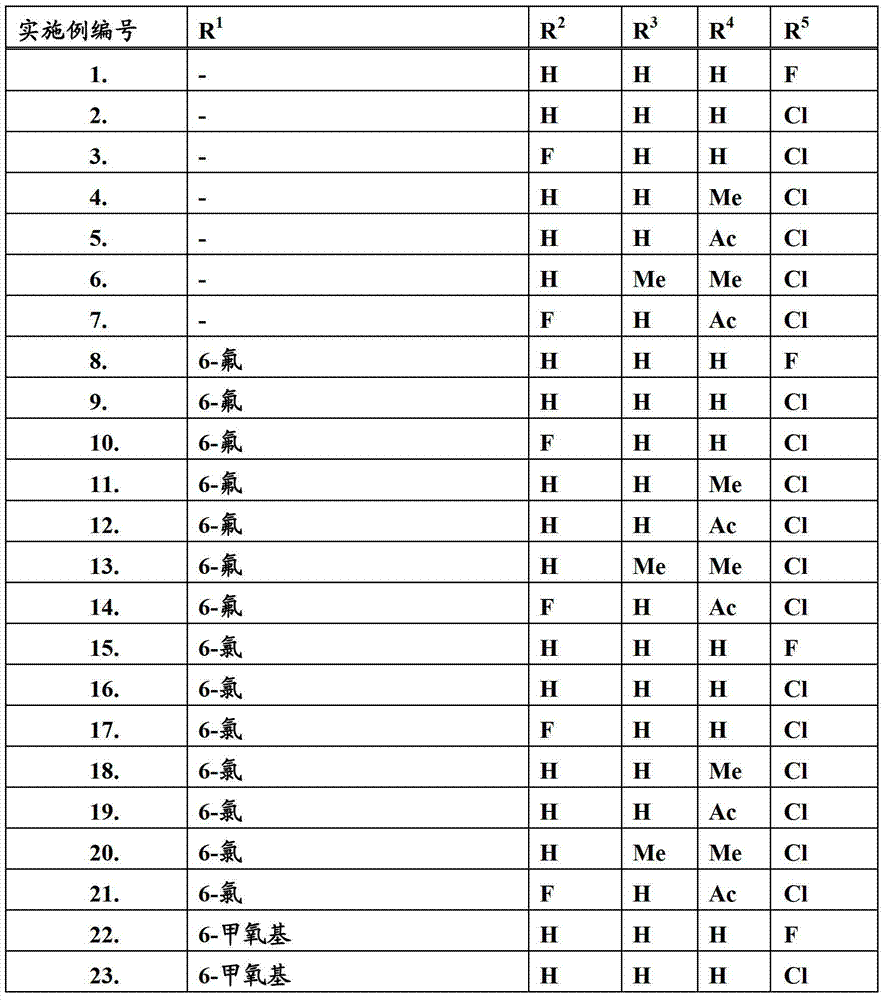


表2:式(I)的化合物,式中R’=氢Table 2: Compounds of formula (I), where R'=hydrogen

其中,根据定义,在苯基基团中的氨基始终固定在2位,与其他R1取代基的优选次序无关。Wherein, by definition, the amino group in the phenyl group is always fixed at the 2-position, regardless of the preferred order of the other R substituents.


表3:式(I)的其他化合物,其中R’=甲基Table 3: Other compounds of formula (I), where R' = methyl

其中,根据定义,在苯基基团中的氨基始终固定在2位,与其他R1取代基的优选次序无关。Wherein, by definition, the amino group in the phenyl group is always fixed at the 2-position, regardless of the preferred order of the other R substituents.
B.制剂实施例B. Formulation Examples
a)粉末产品通过将10重量份式(I)化合物和/或其盐和90重量份作为惰性物质的滑石进行混合并在粉碎机中进行粉碎而得到。a) A powder product is obtained by mixing 10 parts by weight of the compound of formula (I) and/or its salt and 90 parts by weight of talc as an inert substance and pulverizing in a pulverizer.
b)易分散于水中的可湿性粉剂通过将25重量份式(I)化合物和/或其盐、64重量份作为惰性物质的含高岭土的石英、10重量份木素磺酸钾以及1重量份作为湿润剂和分散剂的油酰基甲基牛磺酸钠进行混合并在固定盘式研磨机中进行粉碎而得到。b) The wettable powder that is easily dispersed in water is prepared by adding 25 parts by weight of the compound of formula (I) and/or its salt, 64 parts by weight of kaolin-containing quartz as an inert substance, 10 parts by weight of potassium lignosulfonate and 1 part by weight of Sodium oleoyl methyl taurate as a wetting and dispersing agent is mixed and pulverized in a fixed disc mill.
c)易分散于水中的分散浓缩剂通过将20重量份式(I)化合物和/或其盐、6重量份烷基酚聚乙二醇醚(
d)乳油由15重量份式(I)化合物和/或其盐、75重量份作为溶剂的环己酮和10重量份作为乳化剂的乙氧基化壬基酚得到。d) An emulsifiable concentrate is obtained from 15 parts by weight of the compound of formula (I) and/or its salt, 75 parts by weight of cyclohexanone as solvent and 10 parts by weight of ethoxylated nonylphenol as emulsifier.
e)水分散性颗粒剂通过将下述组分混合、将该混合物在固定盘式研磨机中研磨、并在流化床中通过喷雾作为制粒液体的水而粒化所述粉末而得到:e) Water-dispersible granules are obtained by mixing the following components, grinding the mixture in a fixed disc mill, and granulating the powder in a fluidized bed by spraying water as granulation liquid:
75重量份式(I)化合物和/或其盐、75 parts by weight of the compound of formula (I) and/or its salt,
10重量份的木素磺酸钙、10 parts by weight of calcium lignosulfonate,
5重量份月桂基硫酸钠、5 parts by weight of sodium lauryl sulfate,
3重量份聚乙烯醇,和3 parts by weight polyvinyl alcohol, and
7重量份高岭土。7 parts by weight of kaolin.
f)水分散性颗粒剂也可通过在胶体磨上均化并预粉碎下述组分、随后在砂磨机中研磨、并将以该方式得到的悬浮液在喷雾塔中使用单组分喷嘴进行雾化并干燥而得到:f) Water-dispersible granules can also be obtained by homogenizing and pre-crushing the following components on a colloid mill, subsequently grinding in a sand mill, and passing the suspension obtained in this way in a spray tower using a single-component nozzle atomized and dried to give:
25重量份式(I)化合物和/或其盐、25 parts by weight of the compound of formula (I) and/or its salt,
5重量份2,2’-二萘基甲烷-6,6’-二磺酸钠、5 parts by weight of 2,2'-dinaphthylmethane-6,6'-sodium disulfonate,
2重量份油酰基甲基牛磺酸钠、2 parts by weight sodium oleoyl methyl taurate,
1重量份聚乙烯醇、1 part by weight polyvinyl alcohol,
17重量份碳酸钙,和17 parts by weight calcium carbonate, and
50重量份水。50 parts by weight of water.
C.生物学实施例C. Biological Examples
苗后除草作用和作物植物相容性Post-emergence herbicidal action and crop plant compatibility
将单子叶和双子叶杂草以及作物植物的种子植入木纤维盆中的砂壤土中,用土覆盖并在温室中在良好的生长条件下培养。在播种后2-3周,在一叶期处理测试植株。然后将配制为可湿性粉剂(WP)或乳化浓缩剂(EC)形式的本发明化合物,在添加0.2重量%湿润剂的情况下,以水性悬浮液或乳液的形式在600-800l/ha(换算值)的水施用率下喷雾至绿色植物部位。在测试植株于温室中在最佳生长条件下放置约3周之后,通过与未处理的对照组比较,目测评估制剂的作用(除草作用以百分比(%)计:100%作用=植物均已死亡;0%作用=与对照植株相同)。Seeds of monocotyledonous and dicotyledonous weeds and crop plants are planted in sandy loam in wood fiber pots, covered with soil and cultured in a greenhouse under good growing conditions. The test plants were treated at the one-leaf stage 2-3 weeks after sowing. Compounds of the invention formulated as wettable powders (WP) or emulsifying concentrates (EC) are then formulated in the form of aqueous suspensions or emulsions at 600-800 l/ha (converted value) to spray onto green plant parts at water application rates. After the test plants had been placed in the greenhouse under optimal growth conditions for about 3 weeks, the effect of the formulation was assessed visually by comparison with the untreated control (herbicidal effect in percent (%): 100% effect = plants are all dead ; 0% effect = same as control plants).
结果表明,本发明化合物对广谱的禾本科杂草和阔叶杂草具有良好的苗后除草功效。例如,以每公顷1.28kg以下活性物质的施用率以苗后法施用时,编号58的化合物和表1-3中的其他化合物具有对杂草植物至少90%的非常好的除草作用,所述杂草植物例如为反枝苋(Amaranthus retroflexus)、田春黄菊(Matricaria inodora)、圆叶牵牛(Pharbitis(Ipomoea)purpurea)、卷茎蓼(Polygonum(Fallopia)convolvulus)、繁缕(Stellaria media)、阿拉伯婆婆纳(Veronica persica)和三色堇(Viola tricolor)。同时,当苗后施用本发明的化合物,即使在高的活性成分剂量下,其也不损害禾本科作物(Gramineae crops),例如大麦、小麦、黑麦、粟/高粱、玉米或稻。此外,一些物质对双子叶作物也是无害的,例如大豆、棉花、油菜、甜菜或马铃薯。一些本发明的化合物展示出高的选择性,因此适合通过苗后法用于防治在农业作物中的不想要的植物。The results show that the compound of the present invention has good post-emergence herbicidal effect on broad-spectrum gramineous weeds and broad-leaved weeds. For example, the compound No. 58 and other compounds in Tables 1-3 have a very good herbicidal effect on at least 90% of weed plants when applied post-emergence at an application rate of less than 1.28 kg of active substance per hectare, said Weedy plants such as Amaranthus retroflexus, Matricaria inodora, Pharbitis (Ipomoea) purpurea, Polygonum (Fallopia) convolvulus, Stellaria media , Arabian mother-in-law (Veronica persica) and pansy (Viola tricolor). At the same time, the compounds according to the invention do not damage grass crops (Gramineae crops), such as barley, wheat, rye, millet/sorghum, maize or rice, even at high active ingredient doses when applied post-emergence. Furthermore, some substances are not harmful to dicotyledonous crops, such as soybeans, cotton, rapeseed, sugar beet or potatoes. Some of the compounds according to the invention exhibit high selectivity and are therefore suitable for controlling unwanted vegetation in agricultural crops by post-emergence methods.
苗前除草作用和作物植物相容性Preemergence herbicidal action and crop plant compatibility
将单子叶和双子叶杂草植物和作物植物的种子种植于木质纤维盆中的砂壤土中,并用土覆盖。然后将配制为可湿性粉剂(WP)或乳化浓缩剂(EC)形式的本发明化合物,在添加0.2%湿润剂的情况下,以水性悬浮液或乳液的形式在600-800l/ha(换算值)的水施用率下施用至覆盖土的表面。在处理后,将盆置于温室中,并使之保持在对测试植株而言良好的生长条件下。在试验时间为3周之后,通过与未处理的对照组相比,目测评估试验植株受损害的程度(除草活性以百分比(%)计:100%作用=植物均已死亡;0%作用=与对照植株相同)。Seeds of monocot and dicot weed plants and crop plants were planted in sandy loam in wood fiber pots and covered with soil. Compounds of the invention formulated as wettable powders (WP) or emulsifying concentrates (EC) are then formulated in the form of aqueous suspensions or emulsions at 600-800 l/ha (converted values) with the addition of 0.2% wetting agent ) to the surface of the cover soil at a water application rate. After treatment, the pots were placed in the greenhouse and kept under favorable growth conditions for the test plants. After a test period of 3 weeks, the degree of damage to the test plants was assessed visually (herbicidal activity in percent (%)) compared with the untreated control group: 100% effect=plants were dead; 0% effect=with same as the control plants).
结果表明,本发明化合物对广谱的禾本科杂草和阔叶杂草具有良好的苗前除草功效。例如,以每公顷1.28kg以下活性物质的施用率以苗前法施用时,编号58的化合物和表1-3中的其他化合物具有对杂草植物至少90%的非常好的除草作用,所述杂草植物例如为反枝苋、卷茎蓼和三色堇。同时,当苗前施用本发明的化合物,即使在高的活性成分剂量下,其也不损害双子叶作物,例如大豆、棉花、油菜、甜菜或马铃薯。此外,一些物质对禾本科作物也是无害的,例如大麦、小麦、黑麦、粟/高粱、玉米或稻。有些本发明的化合物展示出高的选择性,因此适合通过苗前法用于防治在农业作物中的不想要的植物。The results show that the compound of the present invention has good pre-emergence herbicidal effect on broad-spectrum gramineous weeds and broad-leaved weeds. For example, the compound No. 58 and other compounds in Tables 1-3 have a very good herbicidal effect on at least 90% of weed plants when applied pre-emergence at an application rate of less than 1.28 kg of active substance per hectare, said Weedy plants are, for example, Amaranthus retroflexus, Polygonum curcuma and Pansy. At the same time, the compounds according to the invention do not damage dicotyledonous crops such as soybean, cotton, rape, sugar beet or potato when applied pre-emergence, even at high active ingredient dosages. Furthermore, some substances are not harmful to gramineous crops such as barley, wheat, rye, millet/sorghum, maize or rice. Some of the compounds according to the invention exhibit high selectivity and are therefore suitable for use by pre-emergence methods for controlling unwanted vegetation in agricultural crops.
Claims (12)


Applications Claiming Priority (5)
| Application Number | Priority Date | Filing Date | Title |
|---|---|---|---|
| EP10195356 | 2010-12-16 | ||
| EP101953560 | 2010-12-16 | ||
| US201061424299P | 2010-12-17 | 2010-12-17 | |
| US61/424,299 | 2010-12-17 | ||
| PCT/EP2011/072483 WO2012080187A1 (en) | 2010-12-16 | 2011-12-12 | 6-(2-aminophenyl)picolinates and their use as herbicides |
Publications (1)
| Publication Number | Publication Date |
|---|---|
| CN103380116A true CN103380116A (en) | 2013-10-30 |
Family
ID=43585678
Family Applications (1)
| Application Number | Title | Priority Date | Filing Date |
|---|---|---|---|
| CN2011800678476A Pending CN103380116A (en) | 2010-12-16 | 2011-12-12 | 6-(2-aminophenyl)picolinates and their use as herbicides |
Country Status (13)
| Country | Link |
|---|---|
| US (1) | US9078440B2 (en) |
| EP (1) | EP2665710A1 (en) |
| JP (1) | JP2014502600A (en) |
| KR (1) | KR20140037804A (en) |
| CN (1) | CN103380116A (en) |
| AR (1) | AR084317A1 (en) |
| AU (1) | AU2011344342A1 (en) |
| BR (1) | BR112013014931A2 (en) |
| CA (1) | CA2821584A1 (en) |
| MX (1) | MX2013006693A (en) |
| RU (1) | RU2013132601A (en) |
| WO (1) | WO2012080187A1 (en) |
| ZA (1) | ZA201303920B (en) |
Cited By (2)
| Publication number | Priority date | Publication date | Assignee | Title |
|---|---|---|---|---|
| CN108727258A (en) * | 2017-04-25 | 2018-11-02 | 山东先达农化股份有限公司 | Phenylpyridine derivative and its application and herbicide |
| CN111278283A (en) * | 2017-10-27 | 2020-06-12 | 美国陶氏益农公司 | Pyridine and pyrimidine formate herbicides and methods of use thereof |
Families Citing this family (11)
| Publication number | Priority date | Publication date | Assignee | Title |
|---|---|---|---|---|
| EP2736897B1 (en) * | 2011-07-27 | 2015-11-25 | Bayer Intellectual Property GmbH | Substituted picolinic acids and pyrimidine-4-carboxylic acids, method for the production thereof, and use thereof as herbicides and plant growth regulators |
| WO2014007228A1 (en) | 2012-07-03 | 2014-01-09 | 小野薬品工業株式会社 | Compound having agonistic activity on somatostatin receptor, and use thereof for medical purposes |
| US9637505B2 (en) | 2013-03-15 | 2017-05-02 | Dow Agrosciences Llc | 4-amino-6-(heterocyclic)picolinates and 6-amino-2-(heterocyclic)pyrimidine-4-carboxylates and their use as herbicides |
| KR20210125575A (en) * | 2013-03-15 | 2021-10-18 | 코르테바 애그리사이언스 엘엘씨 | 4-amino-6-(heterocyclic)picolinates and 6-amino-2-(heterocyclic)pyrimidine-4-carboxylates and their use as herbicides |
| US9113629B2 (en) | 2013-03-15 | 2015-08-25 | Dow Agrosciences Llc | 4-amino-6-(4-substituted-phenyl)-picolinates and 6-amino-2-(4-substituted-phenyl)-pyrimidine-4-carboxylates and their use as herbicides |
| TWI689251B (en) | 2014-09-15 | 2020-04-01 | 美商陶氏農業科學公司 | Synergistic weed control from applications of pyridine carboxylic acid herbicides and synthetic auxin herbicides and/or auxin transport inhibitors |
| TWI689252B (en) | 2014-09-15 | 2020-04-01 | 美商陶氏農業科學公司 | Synergistic weed control from applications of pyridine carboxylic acid herbicides and als inhibitors |
| TWI685302B (en) | 2014-09-15 | 2020-02-21 | 美商陶氏農業科學公司 | Safened herbicidal compositions comprising pyridine carboxylic acids |
| US10455836B2 (en) | 2014-09-15 | 2019-10-29 | Dow Agrosciences Llc | Synergistic weed control from applications of pyridine carboxylic acid herbicides and photosystem II inhibitors |
| AR101858A1 (en) | 2014-09-15 | 2017-01-18 | Dow Agrosciences Llc | PROTECTED HERBICIDE COMPOSITIONS THAT INCLUDE A PYRIDINCARBOXYL ACID HERBICIDE |
| JP7644517B2 (en) | 2019-12-19 | 2025-03-12 | ジャコバイオ ファーマスーティカルズ カンパニー リミテッド | KRAS Mutant Protein Inhibitors |
Citations (4)
| Publication number | Priority date | Publication date | Assignee | Title |
|---|---|---|---|---|
| CN1394202A (en) * | 2000-01-06 | 2003-01-29 | 阿方蒂农科股份有限公司 | Picolinic acid derivatives and their use as fungicides |
| CN1416419A (en) * | 2000-01-14 | 2003-05-07 | 美国陶氏益农公司 | 4-Aminopicolinates and their use as herbicides |
| WO2009138712A2 (en) * | 2008-05-13 | 2009-11-19 | Syngenta Limited | Chemical compounds |
| WO2010060581A2 (en) * | 2008-11-29 | 2010-06-03 | Bayer Cropscience Ag | Herbicide-safener combination |
Family Cites Families (59)
| Publication number | Priority date | Publication date | Assignee | Title |
|---|---|---|---|---|
| US4336384A (en) | 1981-04-23 | 1982-06-22 | The Dow Chemical Company | Preparation of 4-amino-3,5,6-trichloropicolinic acid |
| MA19709A1 (en) | 1982-02-17 | 1983-10-01 | Ciba Geigy Ag | APPLICATION OF QUINOLEIN DERIVATIVES TO THE PROTECTION OF CULTIVATED PLANTS. |
| EP0094349B1 (en) | 1982-05-07 | 1994-04-06 | Ciba-Geigy Ag | Use of quinoline derivatives for the protection of cultivated plants |
| WO1984002919A1 (en) | 1983-01-17 | 1984-08-02 | Monsanto Co | Plasmids for transforming plant cells |
| BR8404834A (en) | 1983-09-26 | 1985-08-13 | Agrigenetics Res Ass | METHOD TO GENETICALLY MODIFY A PLANT CELL |
| JPS6087254A (en) | 1983-10-19 | 1985-05-16 | Japan Carlit Co Ltd:The | Novel urea compound and herbicide containing the same |
| DE3525205A1 (en) | 1984-09-11 | 1986-03-20 | Hoechst Ag, 6230 Frankfurt | PLANT PROTECTIVE AGENTS BASED ON 1,2,4-TRIAZOLE DERIVATIVES AND NEW DERIVATIVES OF 1,2,4-TRIAZOLE |
| BR8600161A (en) | 1985-01-18 | 1986-09-23 | Plant Genetic Systems Nv | CHEMICAL GENE, HYBRID, INTERMEDIATE PLASMIDIO VECTORS, PROCESS TO CONTROL INSECTS IN AGRICULTURE OR HORTICULTURE, INSECTICIDE COMPOSITION, PROCESS TO TRANSFORM PLANT CELLS TO EXPRESS A PLANTINIDE TOXIN, PRODUCED BY CULTURES, UNITED BY BACILLA |
| DE3680212D1 (en) | 1985-02-14 | 1991-08-22 | Ciba Geigy Ag | USE OF CHINOLINE DERIVATIVES FOR PROTECTING CROPS. |
| DE3686633T2 (en) | 1985-10-25 | 1993-04-15 | David Matthew Bisaro | PLANT VECTORS. |
| ATE57390T1 (en) | 1986-03-11 | 1990-10-15 | Plant Genetic Systems Nv | PLANT CELLS OBTAINED BY GENOLOGICAL TECHNOLOGY AND RESISTANT TO GLUTAMINE SYNTHETASE INHIBITORS. |
| WO1987006766A1 (en) | 1986-05-01 | 1987-11-05 | Honeywell Inc. | Multiple integrated circuit interconnection arrangement |
| US5013659A (en) | 1987-07-27 | 1991-05-07 | E. I. Du Pont De Nemours And Company | Nucleic acid fragment encoding herbicide resistant plant acetolactate synthase |
| IL83348A (en) | 1986-08-26 | 1995-12-08 | Du Pont | Nucleic acid fragment encoding herbicide resistant plant acetolactate synthase |
| DE3633840A1 (en) | 1986-10-04 | 1988-04-14 | Hoechst Ag | PHENYLPYRAZOLIC CARBONIC ACID DERIVATIVES, THEIR PRODUCTION AND USE AS PLANT GROWTH REGULATORS AND SAFENERS |
| EP0268554B1 (en) | 1986-10-22 | 1991-12-27 | Ciba-Geigy Ag | 1,5-diphenyl pyrazole-3-carbonic-acid derivatives for the protection of cultured plants |
| DE3733017A1 (en) | 1987-09-30 | 1989-04-13 | Bayer Ag | Stilbene synthase gene |
| DE3808896A1 (en) | 1988-03-17 | 1989-09-28 | Hoechst Ag | PLANT PROTECTION AGENTS BASED ON PYRAZOL CARBON SEA DERIVATIVES |
| DE3817192A1 (en) | 1988-05-20 | 1989-11-30 | Hoechst Ag | PLANT-PROTECTIVE AGENTS CONTAINING 1,2,4-TRIAZOLE DERIVATIVES AND NEW DERIVATIVES OF 1,2,4-TRIAZOLE |
| ES2054088T3 (en) | 1988-10-20 | 1994-08-01 | Ciba Geigy Ag | SULFAMOILFENILUREAS. |
| DE3939010A1 (en) | 1989-11-25 | 1991-05-29 | Hoechst Ag | ISOXAZOLINE, METHOD FOR THE PRODUCTION THEREOF AND THEIR USE AS A PLANT PROTECTIVE AGENT |
| DE3939503A1 (en) | 1989-11-30 | 1991-06-06 | Hoechst Ag | NEW PYRAZOLINE FOR THE PROTECTION OF CULTURAL PLANTS AGAINST HERBICIDES |
| EP0472722B1 (en) | 1990-03-16 | 2003-05-21 | Calgene LLC | Dnas encoding plant desaturases and their uses |
| ATE212670T1 (en) | 1990-06-18 | 2002-02-15 | Monsanto Technology Llc | INCREASED STARCH CONTENT IN PLANTS |
| WO1992000377A1 (en) | 1990-06-25 | 1992-01-09 | Monsanto Company | Glyphosate tolerant plants |
| DE4107396A1 (en) | 1990-06-29 | 1992-01-02 | Bayer Ag | STYLE SYNTHASE GENES FROM VINEYARD |
| EP0492366B1 (en) | 1990-12-21 | 1997-03-26 | Hoechst Schering AgrEvo GmbH | New 5-chloroquinolin-8-oxyalkanecarbonic acid derivatives, process for their preparation and their use as antidotes for herbicides |
| SE467358B (en) | 1990-12-21 | 1992-07-06 | Amylogene Hb | GENETIC CHANGE OF POTATISE BEFORE EDUCATION OF AMYLOPECT TYPE STARCH |
| DE4104782B4 (en) | 1991-02-13 | 2006-05-11 | Bayer Cropscience Gmbh | Novel plasmids containing DNA sequences that cause changes in carbohydrate concentration and carbohydrate composition in plants, as well as plants and plant cells containing these plasmids |
| TW259690B (en) | 1992-08-01 | 1995-10-11 | Hoechst Ag | |
| DE4331448A1 (en) | 1993-09-16 | 1995-03-23 | Hoechst Schering Agrevo Gmbh | Substituted isoxazolines, processes for their preparation, compositions containing them and their use as safeners |
| DE19621522A1 (en) | 1996-05-29 | 1997-12-04 | Hoechst Schering Agrevo Gmbh | New N-acylsulfonamides, new mixtures of herbicides and antidots and their use |
| EP0929543B1 (en) | 1996-09-26 | 2001-10-31 | Syngenta Participations AG | Herbicidal composition |
| DE19652961A1 (en) | 1996-12-19 | 1998-06-25 | Hoechst Schering Agrevo Gmbh | New 2-fluoroacrylic acid derivatives, new mixtures of herbicides and antidots and their use |
| US6071856A (en) | 1997-03-04 | 2000-06-06 | Zeneca Limited | Herbicidal compositions for acetochlor in rice |
| DE19727410A1 (en) | 1997-06-27 | 1999-01-07 | Hoechst Schering Agrevo Gmbh | 3- (5-tetrazolylcarbonyl) -2-quinolones and crop protection agents containing them |
| DE19742951A1 (en) | 1997-09-29 | 1999-04-15 | Hoechst Schering Agrevo Gmbh | Acylsulfamoylbenzoic acid amides, crop protection agents containing them and process for their preparation |
| US6297197B1 (en) | 2000-01-14 | 2001-10-02 | Dow Agrosciences Llc | 4-aminopicolinates and their use as herbicides |
| AR031027A1 (en) | 2000-10-23 | 2003-09-03 | Syngenta Participations Ag | AGROCHEMICAL COMPOSITIONS |
| AR037228A1 (en) | 2001-07-30 | 2004-11-03 | Dow Agrosciences Llc | ACID COMPOUNDS 6- (ARIL OR HETEROARIL) -4-AMYNOPYCOLINIC, HERBICIDE COMPOSITION THAT UNDERSTANDS AND METHOD TO CONTROL UNWANTED VEGETATION |
| MXPA05010296A (en) | 2003-03-26 | 2005-11-17 | Bayer Cropscience Gmbh | Use of aromatic hydroxy compounds as safeners. |
| UA82358C2 (en) | 2003-04-02 | 2008-04-10 | Дау Агросайенсиз Ллс | 6-alkyl or alkenyl-4-amionopicolinates, herbicidal composition, method for controlling undesirable vegetation |
| DE10335725A1 (en) | 2003-08-05 | 2005-03-03 | Bayer Cropscience Gmbh | Safener based on aromatic-aliphatic carboxylic acid derivatives |
| DE10335726A1 (en) | 2003-08-05 | 2005-03-03 | Bayer Cropscience Gmbh | Use of hydroxyaromatics as safener |
| WO2005042524A1 (en) | 2003-10-30 | 2005-05-12 | Virochem Pharma Inc. | Pyridine carboxamide and methods for inhibiting hiv integrase |
| DE102004023332A1 (en) | 2004-05-12 | 2006-01-19 | Bayer Cropscience Gmbh | Quinoxaline-2-one derivatives, crop protection agents containing them, and processes for their preparation and their use |
| WO2006062979A1 (en) | 2004-12-06 | 2006-06-15 | E.I. Dupont De Nemours And Company | Herbicidal 6-cyclopropyl-substitute 4-aminopicolinic acid derivatives |
| US7888374B2 (en) | 2005-01-28 | 2011-02-15 | Abbott Laboratories | Inhibitors of c-jun N-terminal kinases |
| JPWO2007023719A1 (en) | 2005-08-22 | 2009-02-26 | クミアイ化学工業株式会社 | Pesticide mitigation agent and herbicide composition with reduced phytotoxicity |
| WO2007023764A1 (en) | 2005-08-26 | 2007-03-01 | Kumiai Chemical Industry Co., Ltd. | Agent for reduction of harmful effect of herbicide and herbicide composition having reduced harmful effect |
| PL1973881T3 (en) | 2006-01-13 | 2010-04-30 | Dow Agrosciences Llc | 6-(poly-substituted aryl)-4-aminopicolinates and their use as herbicides |
| AU2007212702A1 (en) | 2006-02-02 | 2007-08-16 | E. I. Du Pont De Nemours And Company | Method for improving harvestability of crops |
| EP1987718A1 (en) | 2007-04-30 | 2008-11-05 | Bayer CropScience AG | Utilisation of pyridine-2-oxy-3-carbon amides as safener |
| EP1987717A1 (en) | 2007-04-30 | 2008-11-05 | Bayer CropScience AG | Pyridon carboxamides, agents containing these but not impacting useful plants and method for their manufacture and application |
| PL2327695T3 (en) | 2007-10-02 | 2013-02-28 | Dow Agrosciences Llc | Substituted 4-amino-picolinic acids and their use as herbicides |
| CA2711500A1 (en) | 2008-01-07 | 2009-07-16 | Huanming Chen | Novel hiv integrase inhibitors and methods of use |
| BRPI1008770B8 (en) * | 2009-02-27 | 2018-07-31 | Dow Agrosciences Llc | 6- (substituted phenyl) -4-aminopicolinates and 2- (substituted phenyl) -6-amino-4-pyrimidinecarboxylates n-alkoxyamides, their production processes, herbicidal composition as well as undesirable vegetation control methods |
| EP2229813A1 (en) * | 2009-03-21 | 2010-09-22 | Bayer CropScience AG | Pyrimidine-4-ylpropandinitrile derivatives, method for their manufacture and their use as herbicides and plant growth regulators |
| BR112013009703A2 (en) * | 2010-10-22 | 2018-05-22 | Bayer Ip Gmbh | substituted picolinic acids, their salts and acid derivatives, as well as their use as herbicides. |
-
2011
- 2011-12-12 CN CN2011800678476A patent/CN103380116A/en active Pending
- 2011-12-12 RU RU2013132601/04A patent/RU2013132601A/en not_active Application Discontinuation
- 2011-12-12 BR BR112013014931A patent/BR112013014931A2/en not_active IP Right Cessation
- 2011-12-12 JP JP2013543690A patent/JP2014502600A/en active Pending
- 2011-12-12 US US13/994,557 patent/US9078440B2/en not_active Expired - Fee Related
- 2011-12-12 AU AU2011344342A patent/AU2011344342A1/en not_active Abandoned
- 2011-12-12 MX MX2013006693A patent/MX2013006693A/en not_active Application Discontinuation
- 2011-12-12 KR KR1020137018523A patent/KR20140037804A/en not_active Withdrawn
- 2011-12-12 CA CA2821584A patent/CA2821584A1/en not_active Abandoned
- 2011-12-12 EP EP11796683.8A patent/EP2665710A1/en not_active Withdrawn
- 2011-12-12 WO PCT/EP2011/072483 patent/WO2012080187A1/en not_active Ceased
- 2011-12-15 AR ARP110104713A patent/AR084317A1/en unknown
-
2013
- 2013-05-29 ZA ZA2013/03920A patent/ZA201303920B/en unknown
Patent Citations (4)
| Publication number | Priority date | Publication date | Assignee | Title |
|---|---|---|---|---|
| CN1394202A (en) * | 2000-01-06 | 2003-01-29 | 阿方蒂农科股份有限公司 | Picolinic acid derivatives and their use as fungicides |
| CN1416419A (en) * | 2000-01-14 | 2003-05-07 | 美国陶氏益农公司 | 4-Aminopicolinates and their use as herbicides |
| WO2009138712A2 (en) * | 2008-05-13 | 2009-11-19 | Syngenta Limited | Chemical compounds |
| WO2010060581A2 (en) * | 2008-11-29 | 2010-06-03 | Bayer Cropscience Ag | Herbicide-safener combination |
Cited By (3)
| Publication number | Priority date | Publication date | Assignee | Title |
|---|---|---|---|---|
| CN108727258A (en) * | 2017-04-25 | 2018-11-02 | 山东先达农化股份有限公司 | Phenylpyridine derivative and its application and herbicide |
| CN108727258B (en) * | 2017-04-25 | 2020-11-24 | 山东先达农化股份有限公司 | Phenylpyridine derivative, application thereof and herbicide |
| CN111278283A (en) * | 2017-10-27 | 2020-06-12 | 美国陶氏益农公司 | Pyridine and pyrimidine formate herbicides and methods of use thereof |
Also Published As
| Publication number | Publication date |
|---|---|
| AR084317A1 (en) | 2013-05-08 |
| JP2014502600A (en) | 2014-02-03 |
| CA2821584A1 (en) | 2012-06-21 |
| WO2012080187A1 (en) | 2012-06-21 |
| MX2013006693A (en) | 2013-07-29 |
| AU2011344342A1 (en) | 2013-07-04 |
| BR112013014931A2 (en) | 2016-07-19 |
| US9078440B2 (en) | 2015-07-14 |
| RU2013132601A (en) | 2015-01-27 |
| ZA201303920B (en) | 2014-07-30 |
| EP2665710A1 (en) | 2013-11-27 |
| KR20140037804A (en) | 2014-03-27 |
| US20130326735A1 (en) | 2013-12-05 |
Similar Documents
| Publication | Publication Date | Title |
|---|---|---|
| CN102361556B (en) | Pyrimindine-4-ylpropane dinitrile derivatives, method for the production thereof, and use thereof as herbicide and plant growth regulators | |
| US9078440B2 (en) | 6-(2-aminophenyl)picolinates and their use as herbicides | |
| CN103270034B (en) | The 2-pyridine carboxylic acid replaced and salt and acid derivative, and the purposes as herbicide | |
| CN110770232A (en) | Herbicidally active 3-phenylisoxazoline-5-carboxamides of tetrahydro and dihydrofuran carboxylic acids and esters | |
| US9375002B2 (en) | 5-aminopyrimidine derivatives and use thereof for combating undesired plant growth | |
| CN118974024A (en) | Substituted 2-C-azines and their salts and their use as herbicidal active substances | |
| US11477982B2 (en) | 2-amino-5-oxyalkyl-pyrimidine derivatives and their use for controlling undesired plant growth | |
| WO2021028421A1 (en) | Substituted (2-heteroaryloxyphenyl)isoxazolines and salts thereof and their use as herbicidal active substances | |
| WO2021028419A1 (en) | Substituted 3-(2-heteroaryloxyphenyl)isoxazolines and salts thereof and their use as herbicidal active substances | |
| AU2019407340B2 (en) | Substituted pyridinyloxybenzenes and salts thereof and use thereof as herbicidal agents | |
| WO2022194843A1 (en) | Substituted 1,2,4-thiadiazoles, salts thereof and their use as herbicidally active substances | |
| US20250311727A1 (en) | Substituted 2-aminoazines and salts thereof, and use thereof as herbicidal active substances | |
| CA3210359A1 (en) | Substituted (2-heteroaryloxyphenyl)sulfonates, salts thereof and their use as herbicidal agents | |
| WO2025103939A1 (en) | Sulfonimidoyl benzamides with herbicidal action | |
| CN120882703A (en) | 4-Difluoromethyl benzamide with herbicidal effect | |
| CN111448194A (en) | 3-amino- [1,2, 4] -triazole derivatives and their use for controlling undesired vegetation |
Legal Events
| Date | Code | Title | Description |
|---|---|---|---|
| C06 | Publication | ||
| PB01 | Publication | ||
| C10 | Entry into substantive examination | ||
| SE01 | Entry into force of request for substantive examination | ||
| C02 | Deemed withdrawal of patent application after publication (patent law 2001) | ||
| WD01 | Invention patent application deemed withdrawn after publication |
Application publication date: 20131030 |