CN103338698A - Posture detection using thoracic impedance - Google Patents
Posture detection using thoracic impedance Download PDFInfo
- Publication number
- CN103338698A CN103338698A CN2011800665974A CN201180066597A CN103338698A CN 103338698 A CN103338698 A CN 103338698A CN 2011800665974 A CN2011800665974 A CN 2011800665974A CN 201180066597 A CN201180066597 A CN 201180066597A CN 103338698 A CN103338698 A CN 103338698A
- Authority
- CN
- China
- Prior art keywords
- data
- processor
- impedance
- medical device
- function
- Prior art date
- Legal status (The legal status is an assumption and is not a legal conclusion. Google has not performed a legal analysis and makes no representation as to the accuracy of the status listed.)
- Granted
Links
Images


Classifications
-
- A—HUMAN NECESSITIES
- A61—MEDICAL OR VETERINARY SCIENCE; HYGIENE
- A61B—DIAGNOSIS; SURGERY; IDENTIFICATION
- A61B5/00—Measuring for diagnostic purposes; Identification of persons
- A61B5/05—Detecting, measuring or recording for diagnosis by means of electric currents or magnetic fields; Measuring using microwaves or radio waves
- A61B5/053—Measuring electrical impedance or conductance of a portion of the body
- A61B5/0538—Measuring electrical impedance or conductance of a portion of the body invasively, e.g. using a catheter
-
- A—HUMAN NECESSITIES
- A61—MEDICAL OR VETERINARY SCIENCE; HYGIENE
- A61B—DIAGNOSIS; SURGERY; IDENTIFICATION
- A61B5/00—Measuring for diagnostic purposes; Identification of persons
- A61B5/02—Detecting, measuring or recording for evaluating the cardiovascular system, e.g. pulse, heart rate, blood pressure or blood flow
- A61B5/0205—Simultaneously evaluating both cardiovascular conditions and different types of body conditions, e.g. heart and respiratory condition
-
- A—HUMAN NECESSITIES
- A61—MEDICAL OR VETERINARY SCIENCE; HYGIENE
- A61B—DIAGNOSIS; SURGERY; IDENTIFICATION
- A61B5/00—Measuring for diagnostic purposes; Identification of persons
- A61B5/103—Measuring devices for testing the shape, pattern, colour, size or movement of the body or parts thereof, for diagnostic purposes
- A61B5/11—Measuring movement of the entire body or parts thereof, e.g. head or hand tremor or mobility of a limb
- A61B5/1116—Determining posture transitions
-
- A—HUMAN NECESSITIES
- A61—MEDICAL OR VETERINARY SCIENCE; HYGIENE
- A61B—DIAGNOSIS; SURGERY; IDENTIFICATION
- A61B5/00—Measuring for diagnostic purposes; Identification of persons
- A61B5/68—Arrangements of detecting, measuring or recording means, e.g. sensors, in relation to patient
- A61B5/6846—Arrangements of detecting, measuring or recording means, e.g. sensors, in relation to patient specially adapted to be brought in contact with an internal body part, i.e. invasive
- A61B5/6867—Arrangements of detecting, measuring or recording means, e.g. sensors, in relation to patient specially adapted to be brought in contact with an internal body part, i.e. invasive specially adapted to be attached or implanted in a specific body part
- A61B5/6869—Heart
-
- A—HUMAN NECESSITIES
- A61—MEDICAL OR VETERINARY SCIENCE; HYGIENE
- A61B—DIAGNOSIS; SURGERY; IDENTIFICATION
- A61B2560/00—Constructional details of operational features of apparatus; Accessories for medical measuring apparatus
- A61B2560/04—Constructional details of apparatus
- A61B2560/0462—Apparatus with built-in sensors
-
- A—HUMAN NECESSITIES
- A61—MEDICAL OR VETERINARY SCIENCE; HYGIENE
- A61B—DIAGNOSIS; SURGERY; IDENTIFICATION
- A61B5/00—Measuring for diagnostic purposes; Identification of persons
- A61B5/103—Measuring devices for testing the shape, pattern, colour, size or movement of the body or parts thereof, for diagnostic purposes
-
- A—HUMAN NECESSITIES
- A61—MEDICAL OR VETERINARY SCIENCE; HYGIENE
- A61B—DIAGNOSIS; SURGERY; IDENTIFICATION
- A61B5/00—Measuring for diagnostic purposes; Identification of persons
- A61B5/68—Arrangements of detecting, measuring or recording means, e.g. sensors, in relation to patient
- A61B5/6846—Arrangements of detecting, measuring or recording means, e.g. sensors, in relation to patient specially adapted to be brought in contact with an internal body part, i.e. invasive
- A61B5/6847—Arrangements of detecting, measuring or recording means, e.g. sensors, in relation to patient specially adapted to be brought in contact with an internal body part, i.e. invasive mounted on an invasive device
- A61B5/686—Permanently implanted devices, e.g. pacemakers, other stimulators, biochips
-
- A—HUMAN NECESSITIES
- A61—MEDICAL OR VETERINARY SCIENCE; HYGIENE
- A61N—ELECTROTHERAPY; MAGNETOTHERAPY; RADIATION THERAPY; ULTRASOUND THERAPY
- A61N1/00—Electrotherapy; Circuits therefor
- A61N1/18—Applying electric currents by contact electrodes
- A61N1/32—Applying electric currents by contact electrodes alternating or intermittent currents
- A61N1/36—Applying electric currents by contact electrodes alternating or intermittent currents for stimulation
- A61N1/362—Heart stimulators
- A61N1/365—Heart stimulators controlled by a physiological parameter, e.g. heart potential
- A61N1/36514—Heart stimulators controlled by a physiological parameter, e.g. heart potential controlled by a physiological quantity other than heart potential, e.g. blood pressure
- A61N1/36521—Heart stimulators controlled by a physiological parameter, e.g. heart potential controlled by a physiological quantity other than heart potential, e.g. blood pressure the parameter being derived from measurement of an electrical impedance
-
- A—HUMAN NECESSITIES
- A61—MEDICAL OR VETERINARY SCIENCE; HYGIENE
- A61N—ELECTROTHERAPY; MAGNETOTHERAPY; RADIATION THERAPY; ULTRASOUND THERAPY
- A61N1/00—Electrotherapy; Circuits therefor
- A61N1/18—Applying electric currents by contact electrodes
- A61N1/32—Applying electric currents by contact electrodes alternating or intermittent currents
- A61N1/36—Applying electric currents by contact electrodes alternating or intermittent currents for stimulation
- A61N1/362—Heart stimulators
- A61N1/365—Heart stimulators controlled by a physiological parameter, e.g. heart potential
- A61N1/36514—Heart stimulators controlled by a physiological parameter, e.g. heart potential controlled by a physiological quantity other than heart potential, e.g. blood pressure
- A61N1/36535—Heart stimulators controlled by a physiological parameter, e.g. heart potential controlled by a physiological quantity other than heart potential, e.g. blood pressure controlled by body position or posture
Landscapes
- Health & Medical Sciences (AREA)
- Life Sciences & Earth Sciences (AREA)
- Surgery (AREA)
- Animal Behavior & Ethology (AREA)
- Veterinary Medicine (AREA)
- Biophysics (AREA)
- Pathology (AREA)
- Engineering & Computer Science (AREA)
- Biomedical Technology (AREA)
- Heart & Thoracic Surgery (AREA)
- Medical Informatics (AREA)
- General Health & Medical Sciences (AREA)
- Physics & Mathematics (AREA)
- Public Health (AREA)
- Molecular Biology (AREA)
- Cardiology (AREA)
- Physiology (AREA)
- Nuclear Medicine, Radiotherapy & Molecular Imaging (AREA)
- Radiology & Medical Imaging (AREA)
- Pulmonology (AREA)
- Dentistry (AREA)
- Oral & Maxillofacial Surgery (AREA)
- Measurement And Recording Of Electrical Phenomena And Electrical Characteristics Of The Living Body (AREA)
- Electrotherapy Devices (AREA)
Abstract
Description
优先权的要求priority claim
这个申请要求在35U.S.C.§119(e)下Thakur等,2010年12月15日所提交的标题为“使用胸腔阻抗的姿势检测”的美国临时专利申请序列号61/423,128的优先权权益,其在此并入为参考文献。This application claims the benefit of priority to U.S. Provisional Patent Application Serial No. 61/423,128, filed December 15, 2010, by Thakur et al., entitled "Posture Detection Using Chest Impedance," under 35 U.S.C. § 119(e), It is hereby incorporated by reference.
背景技术Background technique
心律管理装置可以包括可植入或其它可移动装置,诸如起搏器、复律器-除颤器、心脏再同步治疗(CRT)装置,或者可以监测一个或多个生理学参数的装置,或者提供起搏、心脏除颤或心脏再同步治疗中之一或组合的装置,或者可以监测一个或多个生理学参数和提供治疗的装置。在例子中,这种装置可以配置为与多个可植入或外部电极一起使用,诸如以检测或治疗心脏、呼吸或其它疾病。诸如使用电极所获得的信息可以用于提供诊断或者预测即将发生的疾病状态或者用于开始或调整治疗。Cardiac rhythm management devices may include implantable or other removable devices, such as pacemakers, cardioverter-defibrillators, cardiac resynchronization therapy (CRT) devices, or devices that can monitor one or more physiological parameters, or provide A device for one or a combination of pacing, defibrillation, or cardiac resynchronization therapy, or a device that can monitor one or more physiological parameters and provide therapy. In examples, such devices may be configured for use with implantable or external electrodes, such as to detect or treat cardiac, respiratory or other diseases. Information such as obtained using the electrodes can be used to provide a diagnosis or predict an impending disease state or to initiate or adjust therapy.
诸如患者经历与这种心力衰竭有关的心代偿失调之前,可以表征心力衰竭(“HF”,有时称为充血性心力衰竭,“CHF”)的生理学状况的早期检测,可以帮助表征可预防心代偿失调发生的治疗。Zhao等,在标题为“基于导抗矢量的独立信息内容,通过可植入医疗装置用于检测心力衰竭的系统和方法”美国专利公开号2010/0004712中提到基于多个导抗矢量的独立信息内容检测心力衰竭,以及基于独立信息内容的量来控制功能(参见,Zhao等,段落[0008])。Early detection of physiological conditions that can characterize heart failure ("HF", sometimes called congestive heart failure, "CHF"), such as before a patient experiences the cardiac decompensation associated with such heart failure, can help characterize preventable heart failure. Treatment of decompensation occurring. Zhao et al., in U.S. Patent Publication No. 2010/0004712 entitled "Independent Immittance Vector-Based Information Content, System and Method for Detecting Heart Failure Through Implantable Medical Devices" mention independent immittance vector-based Information content detects heart failure and controls function based on the amount of independent information content (see, Zhao et al., paragraph [0008]).
精确和有效的姿势检测可以帮助给临床医生或心律管理装置提供重要信息,诸如以确保一个或多个生理学参数的精确解释,或者以确保治疗。Maile等,在标题为“从心脏的机械振动检测患者的姿势”的美国专利号7,559,901中提到通过监测心音检测患者的姿势(参见Maile等,摘要)。Accurate and efficient posture detection can help provide important information to a clinician or cardiac rhythm management device, such as to ensure accurate interpretation of one or more physiological parameters, or to ensure therapy. Maile et al., in US Patent No. 7,559,901 entitled "Detecting Patient's Posture from Mechanical Vibrations of the Heart" mention detecting a patient's posture by monitoring heart sounds (see Maile et al., abstract).
概述overview
心脏的各种电或机械功能可以提供可以表征发病,例如心力衰竭、心律失常(纤维性颤动、心动过速、心动过缓)、缺血的各种生理学参数等。这些生理学参数可以包括,例如心音(例如,S3振幅)、肺附近的阻抗DC、心率、呼吸率、体重或心内压力。生理学参数的进一步例子可以包括,但不限于激素水平、血细胞计数、神经活性、肌肉活性或任何其它生理学参数。这些参数中至少一些参数可以表征发病或变化,这可以用于提供所需要治疗(或治疗调整),诸如心脏除颤,起搏中改变等的警报。然而,当仅仅这些参数的一些测量表征发病时,确定是否事件正在开始是困难的。Various electrical or mechanical functions of the heart can provide various physiological parameters that can characterize pathogenesis, such as heart failure, cardiac arrhythmias (fibrillation, tachycardia, bradycardia), ischemia, etc. These physiological parameters may include, for example, heart sounds (eg, S3 amplitude), impedance DC near the lungs, heart rate, respiration rate, body weight, or intracardiac pressure. Further examples of physiological parameters may include, but are not limited to, hormone levels, blood counts, nerve activity, muscle activity, or any other physiological parameter. At least some of these parameters may be indicative of an onset or change, which may be used to provide an alert of needed therapy (or therapy adjustment), such as defibrillation, changes in pacing, and the like. However, determining whether an event is starting is difficult when only some measurements of these parameters characterize the onset.
这篇文献描述了其中系统、方法、机器可读介质或其它技术,它们可以涉及获得生理学数据,将生理学数据分类为一个或多个数据聚类或者建立基线,获得另外的试验数据,以及比较试验数据与数据聚类或基线以确定心代偿失调的指征。This document describes systems, methods, machine-readable media, or other techniques that may involve obtaining physiological data, classifying the physiological data into one or more data clusters or establishing a baseline, obtaining additional experimental data, and comparing experimental Data were clustered or baselined with data to identify indications of cardiac decompensation.
该技术可以涉及获得在第一时间视窗期间的生理学参数以建立基线,该基线可以包括两个或多个离散组,其中一个或多个组可以对应于患者姿势。可以获得另外的生理学参数,以及与该组比较以提供目前患者姿势状态。The technique may involve obtaining a physiological parameter during a first window of time to establish a baseline, which may include two or more discrete groups, where one or more groups may correspond to patient posture. Additional physiological parameters can be obtained and compared to the set to provide the current patient postural state.
这里所述和示例的技术可以指向在心力衰竭之前诊断患者心代偿失调的风险。The techniques described and exemplified herein may point to diagnosing patients at risk of cardiac decompensation prior to heart failure.
而且,现有几种姿势检测的技术。这里所描述和示例的技术也可以或可替代地用于确定或区别肺水肿、胸膜水肿或外周水肿中一种或多种。Also, there are several techniques for gesture detection. The techniques described and exemplified herein may also or alternatively be used to determine or differentiate one or more of pulmonary edema, pleural edema, or peripheral edema.
本技术可以提供一个或多个心代偿失调指标,诸如与仅仅使用原始阻抗数据预测心代偿失调的其它方法比较,该指标可以提供增强的特异性。可以调节阻抗数据来应答患者中正常的神经激素或昼夜节律的变化。因此,辨识阻抗数据的趋势可能是困难的。并且,患者流体水平中总体改变可以立刻影响所有测量的阻抗矢量,这可以混淆仅仅基于用于测定积液的原始胸腔阻抗数据的代偿失调检测。通过比较,本技术可以包括其中,诸如在可以包括至少一个姿势改变的一个或多个时间视窗期间,比较至少两个阻抗矢量。在这种方法中,可以最小化由于总体流体水平的改变所引起的影响。这可以帮助提供心力衰竭代偿失调的增加风险的更好指征。The present technique may provide one or more indicators of cardiac decompensation, such as may provide enhanced specificity compared to other methods of predicting cardiac decompensation using only raw impedance data. Impedance data can be adjusted to respond to normal neurohormonal or circadian rhythm changes in the patient. Therefore, identifying trends in impedance data can be difficult. Also, overall changes in patient fluid levels can affect all measured impedance vectors at once, which can confound decompensation detection based solely on the raw pleural impedance data used to determine the effusion. By comparison, the present technique may include wherein at least two impedance vectors are compared, such as during one or more time windows that may include at least one pose change. In this way, the effects due to changes in the overall fluid level can be minimized. This could help provide a better indication of the increased risk of heart failure decompensation.
本发明人已经认识到其中待要解决的问题可以包括提供患者即将发生的心代偿失调风险的更敏感或更特异的提前通知。在例子中,本主题诸如,通过获得生理学数据,形成第一生理学数据和第二生理学数据的函数,确定生理学数据中一种或多种趋向,和使用趋向数据提供患者心代偿失调风险的提前通知,可以提供对该问题的解决方案。The inventors have recognized that among other things the problem to be solved may include providing a more sensitive or specific advance notice of a patient's impending cardiac decompensation risk. In an example, the subject matter is, for example, by obtaining the physiological data, forming a function of the first physiological data and the second physiological data, determining one or more trends in the physiological data, and using the trend data to provide an early warning of a patient's risk of cardiac decompensation. Notice that a solution to the problem may be provided.
本发明人已经认识到其中待要解决的另一个问题可以包括诸如,使用从可植入心律管理装置容易得到的生理学数据,提供患者姿势状态,诸如,不需要用于检测患者方向或姿势的专用的3轴线加速度计、倾斜开关或其它传感器。在例子中,本主题诸如,通过使用一个或多个胸腔阻抗测量来建立姿势辨识比较度量,获得胸腔阻抗试验数据,以及通过比较胸腔阻抗试验数据和姿势辨识比较度量来提供姿势状态,可以提供对该问题的解决方案。The inventors have recognized that another problem to be solved therein may include, for example, using physiological data readily available from an implantable cardiac rhythm management device, providing patient posture status, such as without requiring a dedicated device for detecting patient orientation or posture. 3-axis accelerometer, tilt switch or other sensors. In examples, the present subject matter, such as, by using one or more thoracic impedance measurements to establish a posture recognition comparison metric, obtaining thoracic impedance test data, and providing a posture state by comparing the thoracic impedance test data with the posture recognition comparison metric, can provide support for The solution to this problem.
该概述意欲提供本专利申请主题的概述。它不意欲提供本发明的专门或穷尽的解释。包括了详细的说明以提供关于本专利申请的进一步信息。This summary is intended to provide an overview of the subject matter of the patent application. It is not intended to provide an exclusive or exhaustive explanation of the invention. The Detailed Description is included to provide further information on this patent application.
附图的简要说明Brief description of the drawings
在不是一定按照比例绘制的附图中,相似的数字可以表示不同视图中相似的构件。具有不同字母后缀的相似数字可以代表相似构件的不同例子。通常,通过实施例,但是不是通过限制方式,本文献中所讨论的各种实施方式示例了附图。In the drawings, which are not necessarily to scale, like numerals may indicate like components in the different views. Similar numbers with different letter suffixes may represent different instances of similar components. Generally, by way of example, and not by way of limitation, the various embodiments discussed in this document illustrate the accompanying drawings.
图1通常示例了一部分系统的实施例,其可以包括可植入或可移动医疗装置,和一个或多个可植入导管或其它电极,诸如可以构造为至少部分地与心脏组织相关地被定位。FIG. 1 generally illustrates an embodiment of a portion of a system, which may include an implantable or removable medical device, and one or more implantable catheters or other electrodes, such as may be configured to be positioned at least partially in relation to cardiac tissue. .
图2A通常示例了在几天期间而可以被监测或记录的胸腔阻抗数据的图示实施例。Figure 2A generally illustrates a pictorial example of thoracic impedance data that may be monitored or recorded over a period of several days.
图2B通常示例了在几天期间而可以被监测或记录的胸腔阻抗数据的图示实施例。Figure 2B generally illustrates a pictorial example of thoracic impedance data that may be monitored or recorded over a period of several days.
图3通常示例了在几天期间而可以获得的胸腔阻抗数据和姿势数据的图示。Figure 3 generally illustrates a graphical representation of thoracic impedance data and posture data that may be obtained over a period of several days.
图4A通常示例了用于根据来自于第二阻抗矢量的第二胸腔阻抗数据可以绘制的来自于第一阻抗矢量的第一胸腔阻抗数据的函数的图示。4A generally illustrates a graph for a function of first thoracic impedance data from a first impedance vector that may be plotted from second thoracic impedance data from a second impedance vector.
图4B通常示例了函数的图示,其可以包含函数的一个或几个定量属性,诸如质心位置、宽展或范围。Figure 4B generally illustrates a graph of a function, which may contain one or several quantitative properties of the function, such as centroid location, spread, or range.
图4C通常示例了可以用于计算一个或多个数据聚类面积的数值积分法的图示。Figure 4C generally illustrates a graphical representation of a numerical integration method that may be used to calculate the area of one or more data clusters.
图4D通常示例了诸如,通过发现数据延伸和绘制矩形,可以用于计算一个或多个数据聚类的面积的方法的图示。Figure 4D generally illustrates a diagram of a method that can be used to calculate the area of one or more data clusters, such as by finding data extensions and drawing rectangles.
图5通常示例了在几天期间的胸腔阻抗数据和姿势数据的第二图示。Figure 5 generally illustrates a second plot of thoracic impedance data and posture data over a period of several days.
图6通常示例了包括函数几个定量属性的第二函数的图示。Figure 6 generally illustrates a diagram of a second function including several quantitative properties of the function.
图7通常示例了实施例,其可以包括使用数据聚类属性来提供心力衰竭代偿失调指标。Figure 7 generally illustrates an embodiment that may include using data clustering attributes to provide a heart failure decompensation indicator.
图8通常示例了实施例,其可以包括使用不同生理学数据的各自的第一和第二函数来确定第一和第二属性,获得在第一时间视窗期间的第一和第二生理学数据,趋向第一和第二属性,和使用该趋向提供心衰竭代偿失调指标。Figure 8 generally illustrates an embodiment that may include determining first and second properties using respective first and second functions of different physiological data, obtaining first and second physiological data during a first time window, trending The first and second attributes, and using this trend provide an index of heart failure decompensation.
图9通常示例了实施例,其可以包括获得姿势辨识度量,获得胸腔阻抗试验数据,比较胸腔阻抗试验数据和姿势辨识度量,和提供姿势状态。Figure 9 generally illustrates an embodiment that may include obtaining a posture recognition metric, obtaining chest impedance test data, comparing the chest impedance test data with the posture recognition metric, and providing a posture state.
图10通常示例了实施例,其可以包括形成根据第二生理学数据的第一生理学数据的函数,和使用生理学试验数据和函数的比较来提供姿势状态。Figure 10 generally illustrates an embodiment that may include forming a function of first physiological data from second physiological data, and using a comparison of the physiological test data and the function to provide a posture state.
图11通常示例了实施例,其可以包括使用根据第二生理学数据的第一生理学数据的第一函数来确定第一定量属性,使用根据第四生理学数据的第三生理学数据的第二函数来确定第二定量属性,和使用第一和第二定量属性的比较来确定姿势状态。Figure 11 generally illustrates an embodiment that may include determining a first quantitative attribute using a first function of first physiological data based on second physiological data, using a second function of third physiological data based on fourth physiological data to determine A second quantitative attribute is determined, and a posture state is determined using a comparison of the first and second quantitative attributes.
详细描述A detailed description
生理学数据,诸如胸腔阻抗数据可以在第一时间视窗期间而被获得,以建立基线,或者可以被用于形成一个或多个数据聚类。另外的生理学数据,诸如在后来的时间视窗期间所获取的胸腔阻抗试验数据可以被获得和可以与基线或数据聚类比较,以确定恶化心力衰竭的指征。在实施例中,一个或多个数据聚类的定量属性可以被监测和用于提供恶化心力衰竭的指征。Physiological data, such as thoracic impedance data, may be obtained during the first time window to establish a baseline, or may be used to form one or more data clusters. Additional physiological data, such as chest impedance test data acquired during later time windows, can be obtained and compared to baseline or data clustering to determine indications of worsening heart failure. In an embodiment, quantitative attributes of one or more data clusters may be monitored and used to provide an indication of worsening heart failure.
图1通常示例了系统100的实施例,其可以包括可植入或其它可移动的医疗装置,诸如心律管理(CRM)装置102。在实施例中,CRM装置102可以包括可植入电子单元105。在实施例中,电子单元105可以电地和物理地连接可植入导管系统110。FIG. 1 generally illustrates an embodiment of a
可植入导管系统110的部分可以插入到患者的胸腔中,包括插入到患者的心脏107中。可植入导管系统110可以包括一个或多个电极,该电极可以构造为传感心脏的心电活动,向心脏传送电刺激,或者传感患者的胸腔阻抗。在实施例中,可植入导管系统110可以包括一个或多个传感器,该传感器构造为传感一个或多个其它生理学参数,诸如心室压力或温度。CRM装置102的电子单元105的壳体101的传导部分(或连接的集管)可以可选地用作电极,诸如“Can”电极。Portions of
例如,通信电路可以包含在壳体101(或连接的集管)内,诸如用于方便电子单元105和外部的通信装置,诸如便携式或床侧通信站,患者所携带或患者所穿着的通信站,或者外部程序员之间通信。通信电路也可以方便与一个或多个可植入、可移动、外部、皮肤或皮下生理学或非生理学传感器,患者输入装置或信息系统进行单向或双向通信。For example, communication circuitry may be contained within the housing 101 (or an attached manifold), such as for the convenience of the
CRM装置102可以包括运动检测器104,其可以用于传感患者物理活动或者一个或多个呼吸或心脏相关的情况。在实施例中,运动检测器104可以构造为传感与呼吸努力相关的活动水平或胸壁运动。在实施例中,运动检测器104可以包括单轴线或多轴线(例如,三轴线)的加速度计,该加速度计可以定位在壳体101中或上。加速度计可以用于提供有用的信息,包括有关患者姿势的信息,呼吸信息,包括例如,有关罗音或咳嗽,心脏信息,包括例如,S1-S4心音,杂音或其它声信息。The
处理器电路108可以包括在诸如壳体101内。在实施例中,处理器电路108可以包括多个数据输入,该数据输入配置为从一个或多个生理学传感器获得生理学数据。例如,诸如通过与第一数据输入连接的阻抗测量电路,处理器电路108可以配置为从可植入导管系统110接收信息。在实施例中,第一和第二数据输入可以配置为分别从第一和第二生理学传感器接收信息。在实施例中,数据输入可以配置为接收使用限定胸腔阻抗矢量的电极构造所测量的胸腔阻抗数据。第三和第四数据输入可以配置为从第一和第二生理学传感器接收信息。
使用一个或多个接收的生理学参数,诸如阻抗值,处理器电路108可以形成函数。该函数可以用作基础,由该基础可以确定多个数据聚类。使用函数,处理器电路108可以确定与一个或多个数据聚类相关的至少一个定量属性。在实施例中,处理器电路108可以构造为诸如,使用一个或多个定量属性来确定心代偿失调指标或姿势状态。处理器电路108可以构造为诸如,使用存储电路,趋向或监测一个或多个数据聚类的定量属性。Using one or more received physiological parameters, such as impedance values,
在实施例中,处理器电路108可以构造为诸如,使用可植入导管系统110,接收阻抗相关信息以接收电压水平。描述阻抗相关信息获得的系统和方法在Belalcazar,美国专利号7,640,056,标题为“使用提供负敏感性区域的电极构造监测受试者中流体”中进一步描述了,其在此并入为参考文献。In an embodiment, the
在实施例中,处理器可读介质可以包括在诸如,壳体101内。处理器可读介质可以包含指令,当处理器执行指令时,该指令诸如使用处理器电路108,配置CRM装置102接收数据,处理数据,解释数据或提供数据。例如,处理器可读介质可以包含指令,当处理器执行指令时,该指令使用通过向处理器108的大量数据输入所接收的阻抗信息来配置CRM装置102以形成函数。In an embodiment, a processor readable medium may be included, such as within
存储电路可以包括在诸如壳体101内,用于存储大量数值,包含数据趋向信息。在实施例中,数据聚类的定量属性,诸如其中包括沿着y轴的范围,沿着x轴的宽展,面积或体积可以存储在存储电路中。在实施例中,存储电路可以包括基于直方图的存储机构,以方便经过延长期间的定量属性的存储。在实施例中,存储电路可以在CRM装置102的外部,或者可以通过通信电路通信地连接CRM装置102。Storage circuitry may be included, such as within
CRM装置102的可植入导管系统110和电子单元105可以结合一个或多个例如,可以用于获取有关患者呼吸波形或其它呼吸相关信息的胸腔阻抗或类似的信号传感器。在Hartley等,美国专利号6,076,015,标题为“使用经胸腔阻抗的适应心律管理装置的速率”中描述了通过测量经胸腔阻抗,监测肺潮汐量的方法的示例性实施例,其由此通过参考文献并入在此。在Hatlestad等,美国专利号7,603,170,标题为“使用胸腔D.C.阻抗的呼吸量的阻抗监测的校准”中描述了可以检测呼吸信号和测量呼吸量的系统的示例性实施例,其由此通过参考文献并入于此。The
在实施例中,胸腔阻抗信号传感器可以包括,例如,一个或多个心内电极111-118,诸如可以定位在心脏107的一个或多个心室中。心内电极111-118可以连接诸如,可以定位在脉冲发生器105的壳体内的阻抗驱动/传感电路106。In an embodiment, the thoracic impedance signal sensor may include, for example, one or more intracardiac electrodes 111 - 118 , such as may be positioned in one or more ventricles of the
在实施例中,阻抗驱动/传感电路106可以构造为产生流经诸如,电子单元105的壳体101上阻抗驱动电极131和Can电极之间组织的电流。阻抗传感电极114相对于Can电极的电压可以随着患者的胸腔阻抗改变而改变。通过阻抗传感电路106可以检测阻抗传感电极114和Can电极之间所发展的电压信号。阻抗传感或驱动电极的其它定位或组合也是可能的。在表1中列出了一些例子,并且下面进行讨论。In an embodiment, the impedance driving/
可植入导管系统110可以包括一个或多个心脏起搏/传感电极113-117,诸如其可以定位在一个或多个心室中、心室上或心室周围,诸如用于传感来自于患者心脏107的一个或多个电信号。诸如如图1中所示的心内传感和起搏电极113-117可以用于传感或起搏一个或多个心室,诸如左心室(LV)、右心室(RV)、左心房(LA)或右心房(RA)。可植入导管系统110可以包括一个或多个心脏除颤电极111、112,诸如用于向心脏传递心脏除颤或心脏复律电击或者用于传感来自于心脏107的一个或多个内在电信号。
图2A和2B通常示例了诸如,可以使用可植入导管系统110获取的阻抗数据的实施例。在图2A的实施例中,图表200示例了诸如,可以使用右心房(RA)电极,诸如右心房阻抗传感电极114和Can电极测量的胸腔阻抗数据的实施例。在实施例中,RA-Can电极构造可以表征第一阻抗矢量。在图2B的实施例中,图表220示例了诸如,可以使用右心室(RV)电极,诸如右心室传感电极115和Can电极测量的胸腔阻抗数据的实施例。RV-Can电极构造可以表征第二阻抗矢量。2A and 2B generally illustrate examples of impedance data such as may be acquired using
可以在时间中特定时刻从患者获得胸腔阻抗数据,或者在经过时间期间,诸如经过一天期间、几天期间或更长时间期间记录和监测胸腔阻抗。在图2A和图2B的实施例中,图表200和图表220中所示的数据可以代表诸如,可以经过大约14天期间从患者所获得的胸腔阻抗数据。在实施例中,以每天大约72个样本的取样速率或者对于每个所监测的阻抗矢量每20分钟进行一次取样可以获得胸腔阻抗数据。取决于患者的活动和生理学参数,所测量阻抗数据的每个峰与峰周期可以代表大约一个24小时周期。例如,峰203和峰204所限定的时间周期可以代表一个24小时周期。图表200中所表示的数据可以经过与下面图表240中所表示的数据相同的14天周期获得,这样RA-Can阻抗测量的峰值在时间上对应于RV-Can阻抗测量的峰值(例如,诸如在相同取样间隔内,峰203和峰223在大约相同的时间出现,峰204和峰224在大约相同的时间出现)。Thoracic impedance data may be obtained from the patient at specific moments in time, or recorded and monitored over an elapsed period of time, such as over a day, over a few days, or over a longer period of time. In the embodiment of FIGS. 2A and 2B , the data shown in
在实施例中,图2A和2B中黑圈所表示的数据点可以表示阻抗测量,诸如当患者在躺着或躺下姿势时可以获得的阻抗测量。图2A和2B中未填充的圆圈所表示的数据点可以表示诸如,当患者处于直立姿势时可以获得的阻抗测量。尽管通常可以基于一天的时间推断姿势,但是使用图2A和2B中所呈现的阻抗信息可以获得更精确的姿势检测机构,如下面所解释的。诸如,提供心力衰竭代偿失调指征的有用的趋向信息也可以使用图2A和2B的阻抗信息获得。In an embodiment, data points represented by black circles in FIGS. 2A and 2B may represent impedance measurements, such as may be obtained while the patient is in a lying or lying down position. Data points represented by unfilled circles in FIGS. 2A and 2B may represent impedance measurements such as may be obtained while the patient is in an upright position. Although posture can generally be inferred based on time of day, a more accurate posture detection mechanism can be obtained using the impedance information presented in Figures 2A and 2B, as explained below. Useful trend information, such as providing an indication of heart failure decompensation, can also be obtained using the impedance information of Figures 2A and 2B.
图3通常示例了图表300的实施例,其示例了在公共轴线上诸如,经过包括大约4天的的周期,所记录的来自于RA-Can和RV-Can阻抗矢量的阻抗的实施例。图表300包括来自于姿势传感器诸如,运动检测器104的倾斜角数据。在图3的实施例中,0度倾斜角可以表示躺着、仰卧或躺下患者的位置或姿势,90度倾斜角可以表示直立或站着的患者位置或姿势。FIG. 3 generally illustrates an embodiment of a
图3通常示例了胸腔阻抗波动的实施例,可以预期诸如由患者运动、神经激素调节或影响患者的其它因素引起该胸腔阻抗波动。通常地,胸腔阻抗随着时间的改变相似地反映在一个以上所测量的胸腔阻抗矢量中。在图3的实施例中,可以观察到RA-Can阻抗矢量331从一个样品到下一个样品的幅度改变与用于相应时间的样品的RV-Can阻抗矢量332改变大约相同的幅度。例如,来自于前一个样品t2到下一个样品t2的RA-Can阻抗矢量331的阻抗改变是Δ2A,或大约2欧姆。来自于前一个样品t2到下一个样品t2的RV-Can阻抗矢量332的阻抗改变是Δ2V,这大约是2欧姆。因此,Δ2A大约等于Δ2V,并且这两个阻抗矢量的幅度被调节大约相同的数量。相似地,对于RA-Can阻抗矢量331,从前一个样品t4到下一个样品t4的阻抗改变是Δ4A,对于RV-Can阻抗矢量332而言是Δ4V,其中Δ4A大约等于Δ4V。换而言之,尽管在给定的时间周期可以预期RA-Can阻抗矢量和RV-Can阻抗矢量的改变,诸如以应答正常的昼夜节律变化,但是可以预期两个矢量的幅度改变大约相同的量。这是通常地(│RA-Cant–RA-Cant-1│)≈(│RV-Cant–RV-Cant-1│)。Figure 3 generally illustrates an example of thoracic impedance fluctuations that can be expected, such as caused by patient motion, neurohormonal modulation, or other factors affecting the patient. Typically, changes in thoracic impedance over time are similarly reflected in more than one measured thoracic impedance vector. In the example of FIG. 3 , it can be observed that the magnitude of the RA-
然而,在时间t1和t3时,RV-Can阻抗矢量332的阻抗幅度的改变可以大于RA-Can阻抗矢量331的阻抗幅度的改变。在图3的实施例中,时间t1刚好出现在半夜之前,并且姿势信息或倾斜角表明患者已经经历了从直立到躺着的姿势改变,诸如当患者上床睡觉时。这种姿势变换后立刻地可以观察到阻抗矢量的幅度的改变。认为姿势改变时阻抗矢量的幅度改变可以归因于其它因素中患者胸腔流体中的突然变换。However, at times t1 and t3 , the change in impedance magnitude of RV-Can
在图3的实施例中,RA-Can阻抗矢量331幅度的改变是Δ1A,或者大约1欧姆,并且RV-Can阻抗矢量332幅度的改变是Δ1V,或者大约4欧姆。因此,在该患者姿势变换时可以观察到与RA-Can阻抗矢量331比较,RV-Can阻抗矢量332幅度的更大改变。相似地,在t3时,患者经历了从躺着位置到直立位置的第二姿势变换,诸如当患者一天醒来时。对于RA-Can阻抗矢量331,从前一个样品t3到下一个样品t3的阻抗改变是Δ3A,对于RV-Can阻抗矢量332而言是Δ3V。而且,RV-Can阻抗矢量332幅度的改变Δ3V大于RA-Can阻抗矢量331幅度的改变Δ3A。In the embodiment of FIG. 3 , the change in magnitude of RA-
图4A通常示例了使用笛卡尔坐标系统的图表400的实施例,其中来自于第一生理学传感器的信息可以根据来自于第二生理学传感器的信息进行绘制。在图4A的实施例中,根据诸如,沿着y轴,来自于RV-Can阻抗矢量332的阻抗数据,可以绘制诸如,沿着x轴线,来自于RA-Can阻抗矢量331的阻抗数据。在相应时间或相应取样视窗内所获得的阻抗幅度取样形成绘制的阻抗数据的坐标。FIG. 4A generally illustrates an embodiment of a
在图4A的实施例中,第一时间间隔0<t<1可以包括对于RA-Can阻抗矢量331和RV-Can阻抗矢量332中每个的阻抗幅度测量。在第一时间间隔期间所获得的第一阻抗数据的幅度可以根据在相同的第一时间间隔期间所获得的第二阻抗数据而绘制。对于随后的时间间隔,诸如每半小时,可以添加另外的阻抗幅度数据。In the embodiment of FIG. 4A , the
图4A是示例了诸如使用图3中所示的阻抗信息,来自于单个患者的大约4天阻抗信息的实施例。在实施例中,可以以每20分钟一次取样的速率对图4A中所示的阻抗数据取样,4天周期是总计288个数据点。在图4A中,来自于RA-Can矢量和RV-Can矢量的阻抗数据可以绘制在笛卡尔平面上,形成至少两个数据聚类。因为在患者姿势变换时,与第二矢量(例如,Δ1V)比较,第一矢量(例如,Δ1A)中幅度改变的不同,所以可以出现数据聚类。数据聚类可以是原始数据的子集。使用几种聚类技术中任何一种或多种,诸如使用计算机处理器完成指令以执行聚类技术,可以完成原始数据分组或分配为数据聚类。可以使用几种聚类技术,包括分级聚类(例如,涉及将一大组数据分组为连续的更小聚类),划分聚类(例如,涉及确定每个聚类的每个点的归属因子),或者基于密度的聚类(例如,涉及确定高密度的区域)。每个聚类可以表示使用来自于两个或多个生理学传感器的信息所形成的函数的一部分。FIG. 4A is an example illustrating approximately 4 days of impedance information from a single patient, such as using the impedance information shown in FIG. 3 . In an embodiment, the impedance data shown in FIG. 4A may be sampled at a rate of one sample every 20 minutes, for a total of 288 data points over a 4-day period. In Figure 4A, the impedance data from the RA-Can vector and the RV-Can vector can be plotted on a Cartesian plane, forming at least two data clusters. Data clustering may occur because of the difference in the magnitude of the change in the first vector (eg, Δ 1A ) compared to the second vector (eg, Δ 1V ) as the patient pose changes. Data clusters can be subsets of the original data. Raw data grouping or assignment as data clusters can be accomplished using any one or more of several clustering techniques, such as using a computer processor to execute instructions to perform the clustering technique. Several clustering techniques can be used, including hierarchical clustering (e.g., involves grouping a large set of data into successive smaller clusters), partitional clustering (e.g., involves determining an attribution factor for each point of each cluster ), or density-based clustering (for example, involving identifying regions of high density). Each cluster may represent a portion of a function formed using information from two or more physiological sensors.
现在参考图3和图4A,对于t<t1时,RA-Can阻抗矢量331和RV-Can阻抗矢量332的阻抗数据可以表示在图4A的下面聚类542中。在时间t=t1,RV-Can阻抗矢量332的幅度改变Δ1V大于RA-Can阻抗矢量331的幅度改变Δ1A。该幅度改变的差异可以引起从下面聚类442,对应于直立患者位置,跳跃到上面的聚类441,对应于躺着的患者位置。在时间t1<t<t2期间所获取的阻抗数据,诸如对应于躺着的患者位置,可以落入上部聚类441。在时间t=t3,患者姿势变换,诸如使患者回到直立位置可以引起另一个跳跃。该跳跃可以从上部聚类441到下部聚类442。对于t>t3所获取的阻抗数据可以落入下部聚类442,对应于直立患者位置。Referring now to FIGS. 3 and 4A , for t < t 1 , impedance data for RA-Can
在实施例中,图表400可以包含使用第一生理学传感器所获得的第一生理学数据,和使用第二生理学传感器所获得的第二生理学数据。在实施例中,第一和第二生理学数据可以随着时间而获取,并且通过根据第二生理学数据绘制第一生理学数据,可以从图表400移除变化的时间。In an embodiment,
生理学传感器可以包括构造为测量电特征,诸如电压或阻抗的传感器,或者构造为测量机械或声信息等的传感器。在实施例中,三个或多个生理学传感器,诸如三个不同的可植入电极可以用于监测患者中三个不同的阻抗矢量。在实施例中,两个生理学传感器可以构造为监测两个不同的阻抗矢量,并且第三个生理学传感器可以构造为监测S3心音。来自于两个或多个生理学传感器的数据可以用于形成函数,诸如根据第二或第三生理学数据的第一生理学数据的函数。诸如通过以时间独立的方式绘制数据,诸如通过确定函数的离散部分,函数可以用于形成数据聚类。Physiological sensors may include sensors configured to measure electrical characteristics, such as voltage or impedance, or sensors configured to measure mechanical or acoustic information, among others. In an embodiment, three or more physiological sensors, such as three different implantable electrodes, may be used to monitor three different impedance vectors in the patient. In an embodiment, two physiological sensors may be configured to monitor two different impedance vectors, and a third physiological sensor may be configured to monitor the S3 heart sound. Data from two or more physiological sensors may be used to form a function, such as a function of the first physiological data from the second or third physiological data. Functions can be used to form clusters of data, such as by plotting the data in a time-independent manner, such as by determining discrete parts of the function.
在实施例中,图表400可以包括诸如使用左心室电极和Can电极的第三阻抗矢量。该第三阻抗矢量可以根据RA-Can阻抗矢量331和RV-Can阻抗矢量332绘制,以形成三维数据聚类。可以根据三维数据聚类绘制另外的传感器数据,诸如以形成多维函数。In an embodiment,
图4B通常示例了图表400的特征或定量属性的几个。特征的一些实施例可以包括沿着x轴线的宽展,沿着y轴线的范围和数据聚类质心位置。诸如,可以使用来自于两个或多个传感器的数据形成多维函数的一些特征,可以包括宽展、范围、面积、体积和超体积(四维或更高维度、空间的情况下)以及其它属性。FIG. 4B generally illustrates a few of the characteristic or quantitative attributes of
在实施例中,可以测量数据聚类441、442中一个或两个的诸如,沿着x轴线的宽展450。数据聚类的宽展450可以表示归因于特定矢量,诸如RA-Can阻抗矢量331的所有阻抗幅度值的领域。在图4B的实施例中,下部聚类442的宽展可以是33欧姆到46欧姆。在实施例中,最大阻抗和最小阻抗之间差异可以表示宽展450。在图4B的实施例中,对于下部聚类442,宽展450可以是13欧姆,对于上部聚类441,宽展450可以是16欧姆。在图4B的实施例中,上部聚类441的宽展450可以等于图表400上所表示的整个函数的宽展450。在实施例中,宽展450可以表示聚类内数据点的阻抗值的标准偏差或方差。In an embodiment, one or both of the
图4B通常示例了图表400上所表示的函数的范围451的实施例。范围451可以表示图表400上所表示的整个函数的范围,或者范围451可以表示函数的一部分,诸如包括一个或多个数据聚类的范围。在图4B的实施例中,上部聚类441的范围451可以是大约15欧姆。在实施例中,下部聚类442的范围可以是大约13欧姆。在实施例中,范围451可以表示聚类内数据点的阻抗值的标准偏差或方差。FIG. 4B generally illustrates an example of a
在实施例中,诸如使用勾股定理,可以组合函数的范围和宽展,以获得多维空间的函数范围。例如,使用公式方程式可以组合函数的范围和宽展,其中宽展(x)是沿着x轴线的数据的总宽展,并且范围(y)是沿着y轴线的数据的总范围。In an embodiment, such as using the Pythagorean theorem, ranges and spreads of functions may be combined to obtain ranges of functions in multidimensional spaces. For example, using the formula equation The range and spread of the functions can be combined, where the spread(x) is the total spread of the data along the x-axis, and the range(y) is the total range of the data along the y-axis.
数据的定量属性,诸如数据聚类的质心,数据聚类的质心之间的距离,或者一个或多个数据聚类的面积,以及其它属性也可以使用图表400测量。图4B通常示例了上部聚类441的质心452和下部聚类442的质心453。例如,在坐标上可以定位上部聚类441的质心:Quantitative properties of the data, such as centroids of data clusters, distances between centroids of data clusters, or areas of one or more data clusters, and other properties may also be measured using
其中,n是归因于上部聚类441的RA-Can阻抗测量的数量,而(RA-Can)i是归因于取样i的阻抗测量的幅度。where n is the number of RA-Can impedance measurements attributed to the
诸如,使用勾股定理可以确定上部聚类441和下部聚类442的质心之间的距离。通常,质心分析可以延伸到任何数量的聚类,包括在三维空间中的聚类,诸如可以使用来自于另外的传感器或阻抗矢量的数据绘制。在三维中质心的坐标可以是:The distance between the centroids of the
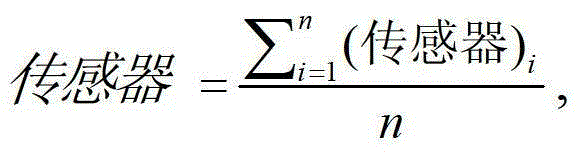
其中,n是归因于上部聚类441的第三传感器的测量的数量,而(传感器)i是归因于取样i来自于第三传感器测量的幅度。where n is the number of measurements attributed to the third sensor of the
在实施例中,分析与质心相关的一个或多个矢量可以提供定量属性信息。例如,可以比较与起点和质心452相关的矢量和与起点和质心453相关的矢量。在实施例中,可以进行两个或多个矢量的点乘积以获得包含矢量之间角度的定量属性。In an embodiment, analyzing one or more vectors related to the centroid may provide quantitative attribute information. For example, a vector associated with the origin and
有几种诸如通过积分代表数据的函数或函数集,或者通过其中的数值积分技术,计算数据聚类的面积的方法。图4C通常示例了通过数值积分计算数据面积的方法。数据的宽展或范围可以除以n离散间隔,并且可以发现对于每个间隔的局部最小值和最大值,以限定矩形的延伸。可以确定和相加矩形的面积,以提供总聚类面积的近似值。在图4C的实施例中,数据聚类可以每个除以每个1欧姆的14个间隔。上部聚类441的第六个间隔中的数据点包含在(RA-Can=36.3,RV-Can=33)的局部最小值455和在(RA-Can=36.25,RV-Can=36.5)的局部最大值454,以限定矩形面积3.5(省略单位)。在下部聚类的第六个间隔中的矩形面积是2.25(省略单位)。使用该方法所计算上部聚类的总面积大约是29.25,并且下部聚类的总面积大约是22.5。There are several methods of computing the area of clusters of data, such as by integrating a function or set of functions representing the data, or by numerical integration techniques therein. Figure 4C generally illustrates a method for calculating the area of data by numerical integration. The spread or range of the data can be divided by n discrete intervals and a local minimum and maximum for each interval can be found to define the extent of the rectangle. The areas of the rectangles can be determined and summed to provide an approximation of the total cluster area. In the embodiment of FIG. 4C, the data clusters may each be divided into 14 intervals of 1 ohm each. The data points in the sixth interval of the
诸如,使用图4D中所描述的方法,也可以计算数据聚类的集合的面积。完整地概括数据聚类可以画出矩形。在图4D的实施例中,概括数据聚类的矩形的总面积是大约74。可以使用用于计算数据聚类总面积和求数据聚类总面积近似值的几种其它技术,诸如在图4C的讨论中上述数值积分方法。The area of a set of data clusters can also be calculated, such as using the method described in Figure 4D. A complete overview of data clustering can be drawn as rectangles. In the embodiment of FIG. 4D , the total area of the rectangles outlining the data clusters is about 74 . Several other techniques for calculating and approximating the total area of data clusters can be used, such as the numerical integration method described above in the discussion of FIG. 4C.
在实施例中,使用方程式:In an example, the equation is used:
可以计算一对数据聚类的面积,其中d是两个聚类的质心之间的距离,宽展(x)是沿着x轴的总数据宽展,范围(y)是沿着y轴的总数据范围。在该实施例中,假定数据聚类可以表示为四边形,其带有两个相对长度侧以及等于质心之间距离的这两个相对侧之间的距离。The area of a pair of data clusters can be calculated, where d is the distance between the centroids of the two clusters, the spread (x) is the total data spread along the x-axis, and the range (y) is the distance along the y-axis total data range. In this example, it is assumed that data clusters can be represented as quadrilaterals with two sides of opposite length and the distance between these two opposite sides equal to the distance between the centroids.
可以使用其它数据聚类分析技术。例如,最小平方技术可以用于将最优拟合线回归于一个或多个数据聚类。最优拟合线的斜率可以用作定量属性,或者可以使用一部分最优拟合线下的面积。也可以使用用于将高级最优拟合曲线回归于一个或多个数据聚类的其它技术。Other data clustering analysis techniques may be used. For example, least squares techniques can be used to regress a line of best fit to one or more clusters of data. The slope of the line of best fit can be used as a quantitative attribute, or the area under a portion of the line of best fit can be used. Other techniques for regressing an advanced best-fit curve to one or more clusters of data may also be used.
可以随着时间的过去,监测诸如,在特定范围或宽展上的数据聚类密度。改变的密度或密度位置可以用作定量属性,以提供患者诊断信息。在实施例中,表示密度的函数可以形成,并且分析该函数,以确定定量属性。Data cluster density, for example, over a particular range or spread can be monitored over time. Altered density or density location can be used as a quantitative attribute to provide patient diagnostic information. In an embodiment, a function representing density may be formed and the function analyzed to determine quantitative properties.
图4A到4D通常示例了数据聚类441和442的几个定量属性的非限制性实施例。这些实施例不应该看作限制本发明主题的范围。有计算与数据聚类相关的定量属性的大量方法。4A through 4D generally illustrate non-limiting examples of several quantitative attributes of
关于第一患者生理学,诸如没有目前心代偿失调指征的生理学,已经描述了用于获取和表示生理学数据的各种方法。在第二患者生理学中,诸如患病生理学,生理学数据可以实质上不同于第一生理学。例如,特定胸腔阻抗矢量的调制幅度可以实际上不同于第一患者生理学和第二患者生理学之间。With respect to a first patient physiology, such as a physiology with no current indication of cardiac decompensation, various methods for acquiring and representing physiological data have been described. In a second patient physiology, such as a diseased physiology, the physiology data may differ substantially from the first physiology. For example, the magnitude of modulation of a particular thoracic impedance vector may actually differ between a first patient's physiology and a second patient's physiology.
图5通常示例了图表500的实施例,其示例了在增加风险的心力衰竭代偿失调时,来自于患者的阻抗矢量和患者姿势数据的实施例。图表500示例了包括大约四天的周期,这期间记录姿势信息,以及记录患者RA-Can阻抗矢量531和RV-Can阻抗矢量532的阻抗数据。在图5的实施例中,RV-Can阻抗矢量532在患者姿势改变时或接近改变时没有显示显著的幅度改变。FIG. 5 generally illustrates an embodiment of a
如图3中所示例,图5示例了由于患者运动、神经激素调节或影响患者的其它因素而引起的可以期望的胸腔阻抗波动。然而,图5中所示的阻抗矢量可以表示患病患者状态,诸如患者经历肺水肿。特别地,与RV-Can阻抗矢量532比较,RA-Can阻抗矢量531的幅度改变差异在患者姿势改变时被减少或最小化。As exemplified in FIG. 3 , FIG. 5 illustrates fluctuations in thoracic impedance that may be expected due to patient motion, neurohormonal modulation, or other factors affecting the patient. However, the impedance vector shown in FIG. 5 may represent a diseased patient state, such as a patient experiencing pulmonary edema. In particular, the difference in magnitude change of the RA-
例如,在t5和t7时,RV-Can阻抗矢量532的阻抗幅度改变与RA-Can阻抗矢量531阻抗幅度改变相比较不再明显。在图5的实施例中,时间t5刚好出现在半夜以前,并且姿势信息表明患者已经经历了从直立到躺着姿势的改变,诸如当患者晚上上床睡觉时。紧接着这种姿势转换后,如图3中在Δ1V所观察到的,RV-Can阻抗矢量332幅度的大改变减少了或不存在。For example, at t5 and t7 , the impedance magnitude change of the RV-Can
在实施例中,在姿势改变时,患者RA-Can或RV-Can阻抗矢量的幅度改变可以归因于其中患者胸腔流体中局部改变的其它因素。直立患者中胸腔流体由于流体对重力所引起的正常应答,可以趋向于累积在身体的下部区域。当患者进入躺着或躺下姿势时,流体可以分散到胸腔中,包括分散到心脏区域。可植入电极区域中流体的累积可以促进使用这些电极所检测的阻抗改变,诸如夜晚期间,由于肺中流体累积所引起的胸腔导纳的增加。患者经历了肺水肿,诸如可以由与充血性心力衰竭相关的静脉充血所引起,可以显示不正常的胸腔流体的累积。然而,随着流体的累积,直立和躺着姿势之间正常流体转换的幅度减少。即,因为在患病状态,流体水平可以升高,所以当患者改变姿势时,流体没有转换那么大。如果流体饱和了肺区域,由于患者姿势改变所引起的测量的胸腔阻抗矢量的幅度改变可以减少。流体转换更容易受一些其它矢量影响。In an embodiment, a change in magnitude of the patient's RA-Can or RV-Can impedance vector upon posture change may be due to other factors where there is a local change in the patient's pleural fluid. Pleural fluid in an upright patient may tend to accumulate in the lower regions of the body due to the normal response of the fluid to gravity. When the patient is placed in a lying or lying position, fluid can be dispersed into the chest cavity, including into the heart region. Accumulation of fluid in the region of the implantable electrodes can contribute to impedance changes detected using these electrodes, such as increases in thoracic admittance due to fluid accumulation in the lungs during the night. Patients experiencing pulmonary edema, such as may be caused by venous congestion associated with congestive heart failure, may show abnormal accumulation of pleural fluid. However, as fluid accumulated, the magnitude of normal fluid transitions between upright and lying positions was reduced. That is, because fluid levels can rise in the diseased state, fluid does not switch as much when the patient changes posture. If the fluid saturates the lung region, changes in the magnitude of the measured thoracic impedance vector due to changes in patient posture may be reduced. Fluid transitions are more susceptible to some other vectors.
在图5的实施例中,在t5时,RA-Can阻抗矢量531的幅度改变是Δ5A,或大约1欧姆,并且RV-Can阻抗矢量532的幅度改变是Δ5V,或大约1欧姆。在t5时,RV-Can阻抗矢量532的幅度改变明显地小于在t1时RV-Can阻抗矢量332的幅度改变。在相似姿势转换时该显著差异可以表明增加的胸腔流体水平。相似地,在t7时,患者经历了第二次姿势转换,从躺着到直立姿势。从t7之前取样到t7之后取样的阻抗幅度改变对于RA-Can阻抗矢量531是Δ7A,对于RV-Can阻抗矢量532是Δ7V。重要地,RV-Can阻抗矢量532的幅度改变Δ7V小于RV-Can阻抗矢量332的幅度改变Δ3V。In the embodiment of FIG. 5 , at t5, the magnitude change of RA-
图6通常示例了第二个图表600的实施例,其中可以参照来自于RV-Can阻抗矢量532的相应阻抗数据绘制来自于RA-Can阻抗矢量531的阻抗数据。如图4A中,当互相参照绘制两种矢量的阻抗数据以移除作为图轴线变量的时间时,数据可以形成聚类。然而,在图6的实施例中,数据可以表示升高的流体水平,诸如由于心力衰竭所引起的肺水肿。比较图6和图4A,第二个图表600中聚类不像它们在图表400中一样可以清楚地区分。因为在患者姿势转换时,与第二矢量(例如,Δ5A)比较,第一矢量(例如,Δ5V)中改变差异幅度的减少,聚类在RA-Can/RV-Can笛卡尔平面中互相接近。在实施例中,聚类的界限可以变得不可区分。代表第一姿势的上部聚类641与代表不同姿势的下部聚类642可以是不可区分的。FIG. 6 generally illustrates an embodiment of a second graph 600 in which impedance data from RA-
在图6的实施例中,与不同周期,诸如包括健康状态、非水肿状态的期间矢量中所观察的调制比较,四天周期期间正常昼夜节律改变所引起的矢量阻抗调制在幅度上可以被减少。例如,在第6天Δ8A和Δ8V时阻抗改变的幅度可以小于在第二天相似时间,诸如在图4A中Δ4A和Δ4V时阻抗改变幅度。阻抗改变的幅度改变可以表明不同患者生理学状态。与图4A比较,图6减少的阻抗调制可以在第二图表600中数据聚类的宽展和范围中观察到。图表400中所示的不同生理学状态的宽展和范围每个减少了。例如,上部聚类441的宽展是17欧姆,而上部聚类641的宽展是10欧姆。In the example of FIG. 6, vector impedance modulations induced by normal circadian rhythm changes during a four-day period can be reduced in magnitude compared to modulations observed in vectors during different periods, such as including healthy, non-edematous states. . For example, the magnitude of the impedance change at Δ8A and Δ8V on day 6 may be less than the magnitude of the impedance change at a similar time on the second day, such as at Δ4A and Δ4V in FIG. 4A. Changes in the magnitude of impedance changes may indicate different patient physiological states. Compared to FIG. 4A , the reduced impedance modulation of FIG. 6 can be observed in the spread and range of data clusters in the second graph 600 . The breadth and range of different physiological states shown in
使用最近所获取的数据形成的数据聚类的定量属性可以与使用以前所获取数据形成的数据聚类属性比较,诸如以检测患者生理学的改变。通过监测与几个离散生理学数据束,诸如每周或每日生理学数据束相关的数据聚类的定量属性,可以检测这种变化。在实施例中,使用处理器电路108在任何时间周期期间可以检测或趋向数据聚类的定量属性,诸如以确定患者病因学中一种或多种趋向。例如,随着时间过去的数据聚类分析可以用于表征患病或有风险的患者状态。这可以包括提供心力衰竭代偿失调指标。数据聚类属性信息可以通过任何数量形式进行存储,诸如通过直方图存储以方便大量数据的存储。Quantitative properties of data clusters formed using recently acquired data may be compared to properties of data clusters formed using previously acquired data, such as to detect changes in patient physiology. Such changes can be detected by monitoring quantitative properties of data clusters associated with several discrete physiological data bundles, such as weekly or daily physiological data bundles. In an embodiment, quantitative properties of data clustering may be detected or trended during any period of time using
可以分析和趋向化数据聚类的一个或几个定量属性,诸如其中的面积、质心位置、宽展或体积等。在实施例中,第二个图表600中一个或两个数据聚类的面积可以与图表400中一个或两个数据聚类的面积进行比较。在实施例中,上部聚类641可以与上部聚类441进行比较。第二个图表600中一个或两个数据聚类的面积可以与包括一个以上以前聚类面积的聚类面积的趋向进行比较。当三个生理学传感器用于获得三维函数时,数据聚类的体积可以趋向化。在实施例中,可以使用四个或更多个生理学传感器以获得多维度函数。由多维函数所限定的聚类定量属性可以趋向化。在实施例中,趋向化一个或多个定量属性可以包括监测和记录在几个时间视窗,诸如连续时间视窗期间所获得的一系列数据聚类的定量属性。One or several quantitative properties of data clusters can be analyzed and trended, such as area, centroid location, spread, or volume within them. In an embodiment, the area of one or both data clusters in the second graph 600 may be compared to the area of one or both data clusters in the
数据聚类641、642的质心位置可以与以前记录的数据的质心位置进行比较。例如,质心652的位置可以与质心452的位置进行比较。在实施例中,与特定患者姿势相关的数据聚类的质心位置改变可以表征生理学趋向,诸如增加风险的心代偿失调。质心652的位置可以与一系列与上部数据聚类相关的以前质心位置进行比较,诸如以发现上部数据聚类质心位置中的趋向。The centroid positions of the data clusters 641, 642 may be compared with the centroid positions of previously recorded data. For example, the location of centroid 652 may be compared to the location of
在周期时间期间,可以记录和趋向化两个或多个质心之间的距离,诸如以表征患者的生理学状态中一个或多个改变。诸如使用勾股定理可以确定质心452和453之间的第一距离。可以相似地确定质心652和653之间的第二距离。可以计算和趋向化代表反映几种姿势的数据聚类的任何数量的质心之间距离。在实施例中,第一和第二距离之间减少的距离可以表征异常患者状态,诸如与肺水肿相关的目前或即将发生的心力衰竭代偿失调。During cycle time, distances between two or more centroids may be recorded and trended, such as to characterize one or more changes in the patient's physiological state. The first distance between
可以随着时间过去,趋向化每个数据聚类的最小值和最大值,或者趋向化数据聚类的范围或宽展。例如,上部数据聚类441的宽展450可以与上部数据聚类641的宽展650进行比较,或者它可以与一系列上述数据聚类的宽展趋向进行比较。图表400中所表示的函数的宽展450可以与第二个图表600中所表示的函数的宽展450进行比较,或者与几个函数的宽展趋势进行比较。在实施例中,与图表400比较的第二个图表600中减少的宽展可以表征患者生理学改变。You can trend the minimum and maximum values of each data cluster over time, or trend the range or spread of the data clusters. For example, the
在实施例中,可以建立基线生理学患者状态,诸如包括基线数据聚类定量属性。基线数据聚类定量属性可以包括代表直立和躺着姿势的不同数据聚类的数据聚类质心之间的基线数据。在实施例中,来自超过一些阈值距离的基线距离的改变可以给患者或临床医生发送警告,以提供潜在异常状态的早期指征。In an embodiment, a baseline physiological patient state may be established, such as including quantitative attributes of the baseline data clusters. The baseline data cluster quantitative attributes may include baseline data between data cluster centroids of different data clusters representing upright and lying down postures. In an embodiment, a change from baseline distance beyond some threshold distance may send an alert to the patient or clinician to provide an early indication of a potentially abnormal condition.
图7通常示例了实施例700,其可以包括获得第一生理学数据712,获得第二生理学数据714,根据第二生理学数据形成第一生理学数据的函数720,形成至少两个数据聚类722,确定数据聚类属性762,并且使用数据聚类属性提供心力衰竭代偿失调指标782。7 generally illustrates an
在712,可以获得第一生理学数据。在714,可以获得第二生理学数据。获得生理学数据可以包括获得一个或多个表征患者电特征的数据,表征患者机械特征的数据,或表征目前患者状态的数据。表征电特征的数据可以包括表征阻抗、内在组织信号、电容或导纳的信息和其它类型信息。表征机械特征的数据可以包括表征患者运动的信息、包括心音的声信息或呼吸信息和其它类型信息。表征目前患者状态的数据可以包括关于患者姿势或患者活动水平的信息和其它类型信息。At 712, first physiological data can be obtained. At 714, second physiological data can be obtained. Obtaining physiological data may include obtaining one or more data characterizing an electrical characteristic of the patient, data characterizing a mechanical characteristic of the patient, or data characterizing a current state of the patient. Data characterizing electrical characteristics may include information characterizing impedance, intrinsic tissue signals, capacitance or admittance, and other types of information. Mechanically characterizing data may include information characterizing patient motion, acoustic information including heart sounds or breathing information, and other types of information. Data characterizing the current state of the patient may include information about the patient's posture or the patient's activity level, among other types of information.
在实施例中,获得第一生理学数据712可以包括使用位于患者身体上或身体中的电极,获得胸腔阻抗测量。可以使用安装在心壁中或心壁附近的可植入电极,诸如右心室传感电极115。第二电极,诸如Can电极,可以定位于别处,诸如定位在患者的胸部或腹部中。诸如,右心室传感电极115和Can电极之间第一阻抗矢量可以用于获得胸腔阻抗测量。在表1中示出了可以用于获得生理学数据的几个其它矢量,其中“X”表示相应第一和第二电极之间可能的矢量。在表1中,Can指可植入装置的传导壳体,RA指位于右心房中或附近的一个或多个电极,RV指位于右心室中或附近的一个或多个电极,LV指位于左心室中或附近的一个或多个电极,SV指位于心脏室上的区域中或附近一个或多个电极,接头块指导管连接块(例如,集管)电极,诸如在CRM102上,其独立于Can电极,并且血管内阴极指位于心脏外侧血管内位置中一个或多个电极。在实施例中,获得胸腔阻抗测量可以包括平均化或计算总测量阻抗的中间趋向,这样由于心脏病发作或呼吸所引起的阻抗变化大部分可以忽略。In an embodiment, obtaining first
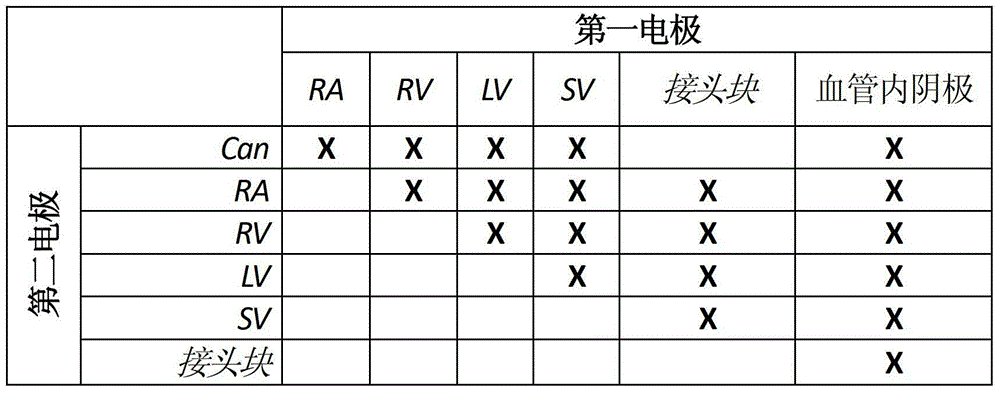
表1:用于获得生理学数据的阻抗矢量Table 1: Impedance vectors used to obtain physiological data
在实施例中,获得第一生理学数据712可以包括使用传感器获得心音信息,诸如加速度计,构造用于检测S3心音信息。第一生理学数据可以包括表示心脏机械振动的来自于加速度计的电信号。In an embodiment, obtaining first
在720,使用第一生理学数据和第二生理学数据可以形成函数。在实施例中,第一生理学数据可以用作数值的域,而第二生理学数据可以用作数值的范围。诸如,通过配对同时获得的数值或者共同时间间隔或视窗期间所获得的数值,域中每个数值可以对应于范围中数值。在实施例中,可以在共同轴线上相互参考绘制第一和第二生理学数据。当以时间依赖方式获得第一和第二生理学数据时,参考第二生理学数据的第一生理学数据的绘制可以移除形成函数中作为显示变量的时间。At 720, a function may be formed using the first physiological data and the second physiological data. In an embodiment, the first physiological data may be used as a field of values and the second physiological data may be used as a range of values. Each value in a field may correspond to a value in a range, such as by pairing values obtained simultaneously or during a common time interval or window. In an embodiment, the first and second physiological data may be plotted with reference to each other on a common axis. When the first and second physiological data are obtained in a time-dependent manner, the plotting of the first physiological data with reference to the second physiological data may remove time as a display variable in the forming function.
在722,可以形成一个或多个数据聚类。在实施例中,从在720所形成的函数可以获得数据聚类。可以使用几种聚类技术的一种或多种,诸如在上述图5A的讨论中所描述的。在实施例中,两个阻抗矢量可以用于形成函数,并且可以从函数辨识至少两个数据聚类。如果期望,可以限制数据聚类的数量,诸如通过聚类技术或可用的处理器容量。在实施中,使用可用的聚类技术仅仅可以从函数辨出单个聚类。At 722, one or more data clusters can be formed. In an embodiment, data clustering may be obtained from the function formed at 720 . One or more of several clustering techniques may be used, such as described above in the discussion of Figure 5A. In an embodiment, two impedance vectors may be used to form a function, and at least two clusters of data may be identified from the function. If desired, the number of data clusters can be limited, such as by clustering techniques or available processor capacity. In practice, only a single cluster can be discerned from the function using available clustering techniques.
在包括获自使用两个阻抗矢量的函数的两个数据聚类的实施例中,一个聚类可以对应于患者一天中整个醒着部分的上升阶段,或者创建阶段,测量阻抗的阶段。在创建阶段,阻抗数据可以对应第一数据聚类,并且下降阶段期间,阻抗数据可以对应于不同的数据聚类。根据患者的姿势,阻抗可以趋向于更高或更低的平均幅度,并且可以随着时间过去,倾向于以大约周期性或其它循环方式建造和降低,诸如图2、3和5中所示。In an embodiment comprising two clusters of data obtained from a function using two impedance vectors, one cluster may correspond to the rising phase, or creation phase, of the measured impedance throughout the waking portion of the patient's day. During the creation phase, the impedance data may correspond to a first data cluster, and during the descent phase, the impedance data may correspond to a different data cluster. Depending on the patient's posture, impedance may tend to a higher or lower average magnitude, and may tend to build and decrease over time in an approximately periodic or other cyclical manner, such as shown in FIGS. 2 , 3 and 5 .
在762,可以确定一个或多个数据聚类属性,诸如宽展、范围、平均值、质心位置、面积、密度或体积。在图5A、5B、5C和5D的讨论中包括了用于确定数据群集属性的几种非限制性方法。At 762, one or more data clustering attributes can be determined, such as spread, range, mean, centroid location, area, density, or volume. Several non-limiting methods for determining data cluster properties are included in the discussion of Figures 5A, 5B, 5C and 5D.
在782,使用一个或多个数据聚类属性可以提供心力衰竭代偿失调指标。在实施例中,数据聚类的定量属性,诸如宽展、范围、平均值、质心位置、两个或多个质心之间距离、面积、密度或体积中任何一个或多个单独地或组合可以用于提供心力衰竭代偿失调指标。在实施例中,与第一时间视窗相关的一个或多个定量属性和与不同时间视窗相关的一个或多个定量属性的比较可以用于提供心力衰竭代偿失调指标。下面,图8的讨论包括使用数据聚类属性以确定异常或患病状态,诸如确定心力衰竭代偿失调指标的几个实施例。At 782, heart failure decompensation indicators can be provided using the one or more data clustering attributes. In an embodiment, quantitative properties of the data clusters, such as any one or more of the spread, range, mean, centroid location, distance between two or more centroids, area, density, or volume, individually or in combination, may be Used to provide indicators of decompensation in heart failure. In an embodiment, a comparison of one or more quantitative attributes associated with a first time window and one or more quantitative attributes associated with a different time window may be used to provide an index of heart failure decompensation. Below, the discussion of FIG. 8 includes several examples of using data clustering attributes to determine abnormal or diseased states, such as determining indicators of heart failure decompensation.
图8通常示例了实施例800,其可以包括在第一时间视窗期间获得第一和第二生理学数据810,形成参考第二生理学数据的第一生理学数据的第一函数820,使用第一函数确定第一定量属性830,在第二时间视窗期间获得第三和第四生理学数据840,形成参考第四生理学数据的第三生理学数据的第二函数850,使用第二函数,确定第二定量属性860,估测用于趋向的第一和第二定量属性870,以及使用趋向提供心力衰竭代偿失调指标880。8 generally illustrates an
在810,可以获得在第一时间视窗期间的第一和第二生理学数据。获得生理学数据可以包括获得一个或多个表征患者电特征的数据,表征患者机械特征的数据,或表征目前患者状态的数据,其中在离散时间间隔期间可以获得生理学数据。第一生理学传感器可以用于获得第一生理学数据,并且第二生理学传感器可以用于获得第二生理学数据。第一和第二生理学传感器可以是可以植入导管系统110中的电极。At 810, first and second physiological data during a first time window can be obtained. Obtaining physiological data may include obtaining one or more data characterizing an electrical characteristic of the patient, data characterizing a mechanical characteristic of the patient, or data characterizing a current state of the patient, wherein the physiological data may be obtained during discrete time intervals. A first physiological sensor may be used to obtain first physiological data and a second physiological sensor may be used to obtain second physiological data. The first and second physiological sensors may be electrodes that may be implanted in
在实施例中,可以在第一时间视窗期间,诸如在第一个20分钟视窗期间的任何时刻或多个情况获得第一和第二生理学数据。例如,通过平均化或计算20分钟视窗中一系列测量的另一个中心趋向,或者通过节省20分钟视窗中出现的最大或最小值的测量,可以获得第一和第二生理学数据。在该视窗期间的视窗持续时间和数据收集情况的数量可以是将允许生理学数据精确收集的任何适合的持续时间或数量。例如,使用可植入导管系统110,可以考虑阻抗测量作为在几毫秒期间的平均值或阻抗的其它中心趋向。检测心壁运动的测量可以涉及几个第二视窗,诸如以检测对电刺激的肌肉应答。In an embodiment, the first and second physiological data may be obtained at any time or instances during the first time window, such as during the first 20 minute window. For example, the first and second physiological data may be obtained by averaging or calculating another central trend of a series of measurements in a 20 minute window, or by saving the measurements with the largest or smallest values occurring in the 20 minute window. The window duration and number of data collection instances during the window may be any suitable duration or number that will allow for accurate collection of physiological data. For example, using the
在820,参考第二生理学数据可以形成第一生理学数据的第一函数。诸如,根据图7中在720的讨论,可以形成第一函数。在实施例中,一部分第一函数可以确定至少第一对数据聚类。At 820, a first function of the first physiological data may be formed with reference to the second physiological data. A first function may be formed, such as as discussed at 720 in FIG. 7 . In an embodiment, a portion of the first function may determine at least a first pair of data clusters.
在830,使用第一函数可以确定第一定量属性。第一定量属性可以包括第一函数的任何属性,诸如包括函数的范围、域或周期以及其它属性。第一定量属性可以来源于使用函数的一个或多个部分所形成的一个或多个数据聚类,诸如第一对数据聚类。例如,函数可以描述几个数据聚类,并且第一定量属性可以包括特定数据聚类的面积。At 830, a first quantitative attribute can be determined using the first function. The first quantitative attribute may include any attribute of the first function, such as including the range, domain or period of the function, among other attributes. The first quantitative attribute may be derived from one or more data clusters formed using one or more portions of the function, such as a first pair of data clusters. For example, a function may describe several data clusters, and the first quantitative attribute may include the area of a particular data cluster.
在840,在第二时间视窗期间可以获得第三和第四生理学数据。可以通过和获得第一和第二生理学数据相同的方式,获得第三和第四生理学数据,尽管第三和第四生理学数据可以对应于不同的时间间隔。在实施例中,使用相同的生理学传感器,诸如构造以获得心音信息的加速度计,可以获得第一和第三生理学数据。使用相同的生理学传感器,诸如位于患者胸腔中可植入电极,相似地可以获得第二和第四生理学数据。在实施例中,第二时间视窗可以是与第一时间视窗不同的持续时间。不同时间视窗的持续时间或取样速率可以用于增加或减少特定时间的数据收集。例如,当预期特定的事件时,诸如患者姿势改变时,可以使用增加的取样速率。例如,当患者睡觉或静止时,可以使用减少的取样速率。At 840, third and fourth physiological data can be obtained during the second time window. The third and fourth physiological data may be obtained in the same manner as the first and second physiological data are obtained, although the third and fourth physiological data may correspond to different time intervals. In an embodiment, the first and third physiological data may be obtained using the same physiological sensor, such as an accelerometer configured to obtain heart sound information. The second and fourth physiological data can similarly be obtained using the same physiological sensor, such as an implantable electrode located in the chest cavity of the patient. In an embodiment, the second time window may be of a different duration than the first time window. Different time window durations or sampling rates can be used to increase or decrease data collection at specific times. For example, an increased sampling rate may be used when a particular event is expected, such as a patient posture change. For example, a reduced sampling rate may be used when the patient is sleeping or stationary.
在850,使用第三和第四生理学数据可以形成第二函数。如上述图8在820的讨论中,可以通过与第一函数相同的方式形成第二函数。在实施例中,第二函数的一部分可以确定至少第二对数据群集。At 850, a second function can be formed using the third and fourth physiological data. As discussed above at 820 in FIG. 8, the second function may be formed in the same manner as the first function. In an embodiment, part of the second function may determine at least a second pair of data clusters.
在860,使用第二函数可以确定第二定量属性,诸如试验定量属性。第二定量属性可以包括第二函数的任何属性,诸如包括在830的讨论中所描述的属性。在实施例中,第二定量属性可以来源于第二对数据群集。At 860, a second quantitative attribute, such as an experimental quantitative attribute, can be determined using the second function. The second quantitative property may include any property of the second function, such as including those described in the discussion of 830 . In an embodiment, the second quantitative attribute may be derived from a second pair of data clusters.
在870,可以估测第一和第二定量属性,诸如以辨识趋向。在实施例中,第一和第二定量属性可以分别地表示第一和第二函数的总面积。估测可以表征从第一时间视窗到第二时间视窗减少的总面积。在实施例中,第一时间视窗可以表征第一周的期间所获取的患者胸腔阻抗测量,而第二时间视窗可以表征随后周的期间所获取的胸腔阻抗测量。在实施例中,总面积的第一和第二定量属性的估测可以表征减少的面积趋向。可以估测另外的定量属性以确定更长时间周期,诸如几周或几月期间的趋向。趋向,诸如减少的总面积可以表征患者健康状态或风险因素。At 870, the first and second quantitative attributes can be estimated, such as to identify trends. In an embodiment, the first and second quantitative properties may represent the total area of the first and second functions, respectively. The estimate may characterize the total area decreased from the first time window to the second time window. In an embodiment, the first time window may characterize patient chest impedance measurements taken during a first week and the second time window may characterize chest impedance measurements taken during a subsequent week. In an embodiment, estimates of the first and second quantitative properties of the total area may characterize a decreasing area trend. Additional quantitative attributes can be evaluated to determine trends over longer time periods, such as weeks or months. Trends, such as decreased total area, may characterize patient health status or risk factors.
在880,使用趋向可以提供心力衰竭代偿失调指标。在实施例中,第一和第二函数所限定的总面积可以表征减少的趋向。减少的总面积可以表征增加的患者心力衰竭代偿失调的风险。检测增加的患者风险后,诸如使用与外部患者管理装置通讯地连接的CRM102中遥测电路,可以给患者或临床医生提供警报。At 880, using the trend can provide an index of heart failure decompensation. In an embodiment, the total area defined by the first and second functions may characterize a decreasing trend. A reduced total area may characterize an increased risk of heart failure decompensation in patients. Upon detection of increased patient risk, an alert may be provided to the patient or clinician, such as using telemetry circuitry in the
现在转向姿势检测,患者姿势可以影响患者的胸腔阻抗。传感器,诸如包括电极对,包括一个Can电极以及来自于可植入导管系统110的一个或多个电极,可以检测患者的姿势或姿势变化。电极可以位于患者胸腔的相对侧上,或者可以位于心脏组织中,或者这些位置的组合。例如,电极可以位于患者的脊柱附近用于治疗的输送,并且带有包括在其壳体101的电极的可植入装置可以植入在患者腹部或胸部中。Turning now to posture detection, patient posture can affect the patient's thoracic impedance. Sensors, such as comprising electrode pairs, including a Can electrode and one or more electrodes from
图9通常示例了实施例900,其可以包括获得姿势辨识度量905,获得胸腔阻抗试验数据915,比较胸腔阻抗试验数据与姿势辨识度量971和提供姿势状态991。FIG. 9 generally illustrates an
在905,可以获得姿势辨识度量。在实施例中,获得姿势辨识度量可以包括使用第一胸腔阻抗数据和第二胸腔阻抗数据。可以使用限定第一胸腔阻抗矢量的第一电极构造,诸如使用可植入导管系统110中电极组合来测量第一胸腔阻抗数据。第一胸腔阻抗数据可以对应于第一时间视窗期间的一个或多个情况。使用限定第二胸腔阻抗矢量的第二电极构造可以测量第二胸腔阻抗数据,其中第二电极构造不同于第一电极构造。第二胸腔阻抗数据可以对应于相同第一时间视窗期间的一个或多个情况。At 905, gesture recognition metrics can be obtained. In an embodiment, obtaining the gesture recognition metric may include using the first thoracic impedance data and the second thoracic impedance data. The first thoracic impedance data may be measured using a first electrode configuration defining a first thoracic impedance vector, such as using a combination of electrodes in
在实施例中,第一胸腔阻抗数据和第二胸腔阻抗数据的定量属性可以用于形成姿势辨识度量。可以使用一组阻抗数据的平均值或中值或其它中心趋向,诸如以建立阈值阻抗。超过阈值的阻抗数值可以对应于第一姿势,小于阈值的阻抗数值可以对应于第二姿势。在实施例中,几个定量属性可以用于形成姿势辨识度量,诸如以改进度量的特异性。除了使用一组阻抗数据的平均值或中值外,在给定时间视窗期间阻抗矢量的调制幅度可以用于,诸如产生更多的辨识度量。In an embodiment, quantitative attributes of the first chest impedance data and the second chest impedance data may be used to form a gesture recognition metric. A mean or median or other central trend of a set of impedance data may be used, such as to establish a threshold impedance. Impedance values exceeding a threshold may correspond to a first posture, and impedance values less than a threshold may correspond to a second posture. In an embodiment, several quantitative attributes may be used to form a gesture recognition metric, such as to improve the specificity of the metric. In addition to using the mean or median of a set of impedance data, the magnitude of the modulation of the impedance vector during a given time window can be used, for example, to generate more discriminatory metrics.
在实施中,第一胸腔阻抗数据和第二胸腔阻抗数据可以用于形成函数,诸如可以通过在矩形笛卡尔坐标上参考第二胸腔阻抗数据绘制第一胸腔阻抗数据获得该函数。函数可以被离散化成函数的一个或多个部分,以形成姿势辨识度量。例如,函数的第一部分可以对应于第一姿势,函数的第二部分可以对应于第二姿势。在实施例中,函数的一部分可以与数据聚类相关,或者函数的几个不同部分可以与几个不同数据群集相关。In an implementation, the first chest impedance data and the second chest impedance data may be used to form a function, such as may be obtained by plotting the first chest impedance data with reference to the second chest impedance data on rectangular Cartesian coordinates. The function can be discretized into one or more parts of the function to form a gesture recognition metric. For example, a first portion of the function may correspond to a first gesture and a second portion of the function may correspond to a second gesture. In an embodiment, one part of a function may be related to data clusters, or several different parts of a function may be related to several different data clusters.
使用第一胸腔阻抗数据和第二胸腔阻抗数据所形成的数据聚类可以用于形成姿势辨识度量。离散的数据聚类可以对应于大量患者姿势,以及诸如,通过比较目前所获得的生理学信息,可以用于确定患者姿势。在包括两个数据聚类的实施例中,第一数据聚类可以代表第一患者姿势,并且第二数据聚类可以代表第二患者姿势。如果可以有另外的数据聚类,其可以代表中间的患者姿势。各种技术,诸如回归分析或判别分析可以确定数据聚类的界线。Data clustering formed using the first chest impedance data and the second chest impedance data may be used to form a gesture recognition metric. Discrete data clusters can correspond to a large number of patient poses and can be used to determine patient poses, such as by comparing physiological information currently obtained. In an embodiment including two data clusters, a first data cluster may represent a first patient pose and a second data cluster may represent a second patient pose. If additional data clustering is available, it could represent intermediate patient poses. Various techniques, such as regression analysis or discriminant analysis, can determine the boundaries of data clustering.
在实施例中,获得姿势辨识度量可以包括学习或培训周期。诸如,在包括一周的第一时间视窗期间,可以监测第一和第二胸腔阻抗数据,以建立基线患者阻抗数据组。可以估测基线数据组用于聚类,并且姿势可以归因于特定聚类。诸如通过临床医生,可以手动建立姿势-聚类相关性,或诸如通过处理器驱动的分析可以自动建立。在实施例中,在CRM102植入期间或之后,学习周期可以在临床设置中进行。在实施例中,学习周期可以包括姿势传感器或加速度计的使用。In an embodiment, obtaining gesture recognition metrics may include a learning or training period. For example, the first and second chest impedance data may be monitored during a first time window comprising one week to establish a baseline patient impedance data set. Baseline data sets can be estimated for clustering, and poses can be attributed to specific clusters. Posture-cluster correlations can be established manually, such as by a clinician, or automatically, such as by processor-driven analysis. In an embodiment, a learning period may be conducted in a clinical setting during or after
在实施例中,可以至少部分地使用一天的时间信息以确定姿势比较度量。通常可以期望患者姿势的改变是有规律的周期间隔,诸如包括在晚上患者将躺下或早上起来时。因此,当估测胸腔阻抗数据的累积以建立姿势比较度量时,处理器或临床医生可以评论可能已经出现姿势改变的相对窄的时间视窗。在实施中,患者可以记录第一时间视窗期间睡觉/醒着的时间,用于与相同的第一时间视窗期间所获得的阻抗数据的随后相关性。In an embodiment, the time of day information may be used at least in part to determine the gesture comparison metric. Changes in the patient's posture may generally be expected at regular periodic intervals, such as included at night when the patient will be lying down or rising in the morning. Thus, when evaluating the accumulation of thoracic impedance data to establish a posture comparison metric, the processor or clinician can comment on the relatively narrow time window in which posture changes may have occurred. In an implementation, the patient may record sleep/awake time during a first time window for subsequent correlation with impedance data obtained during the same first time window.
在915,可以获得胸腔阻抗试验数据。使用各种硬件组件,包括可植入导管系统110,皮下电极阵列或位于身体表面上电极阵列,可以获得胸腔阻抗试验数据。在实施例中,至少两个电极用于限定试验阻抗矢量,后者用于获得胸腔阻抗试验数据。在实施例中,获得胸腔阻抗试验数据可以包括使用与学习或培训周期的期间可以使用的相同的可植入导管系统110或者相同的可植入导管系统110的相同部分。在915,用于获得胸腔阻抗试验数据的矢量构造可以实质上与学习或培训周期期间所使用的矢量构造相同。At 915, chest impedance test data can be obtained. Thoracic impedance test data may be obtained using various hardware components, including
在971,胸腔阻抗试验数据可以与姿势辨识度量比较。使用处理器电路108可以进行阻抗试验数据与姿势辨识度量的比较。诸如,通过临床医生估测患者数据也可以手动地进行比较。在实施例中,使用一个试验阻抗矢量可以获得胸腔阻抗试验数据,并且可以与在905所获得的一个或多个姿势比较度量比较。在姿势比较度量包括第一胸腔阻抗数据和第二胸腔阻抗数据的平均值的实施例中,胸腔阻抗试验数据可以与平均值比较。At 971, the chest impedance test data can be compared to the gesture recognition metric. Using the
在实施例中,胸腔阻抗试验数据可以包括来自于第一试验阻抗矢量和第二试验阻抗矢量的数据。第一胸腔阻抗矢量可以与第一试验阻抗矢量相同,并且第二胸腔阻抗矢量可以与第二试验阻抗矢量相同。当来自于第一胸腔阻抗矢量和第二胸腔阻抗矢量的数据用于形成函数时,包括至少两个数据聚类,来自于第一和第二试验阻抗矢量的数据可以与函数比较。现在参考图5A,来自于第一和第二试验阻抗矢量的数据可以包括,第一时间视窗期间的40欧姆的RA-Can阻抗测量和36欧姆的RV-Can阻抗测量。在第二时间视窗期间,RA-Can阻抗测量可以是40欧姆,并且RV-Can阻抗测量可以是33欧姆。来自于第一和第二试验阻抗矢量的数据可以与数据聚类541、542比较。In an embodiment, the chest impedance test data may include data from a first test impedance vector and a second test impedance vector. The first thoracic impedance vector may be the same as the first trial impedance vector, and the second thoracic impedance vector may be the same as the second trial impedance vector. When data from the first thoracic impedance vector and the second thoracic impedance vector are used to form the function, including at least two data clusters, the data from the first and second trial impedance vectors can be compared to the function. Referring now to FIG. 5A , data from the first and second trial impedance vectors may include 40 ohm RA-Can impedance measurements and 36 ohm RV-Can impedance measurements during the first time window. During the second time window, the RA-Can impedance measurement may be 40 ohms and the RV-Can impedance measurement may be 33 ohms. Data from the first and second trial impedance vectors can be compared to the data clusters 541,542.
在991,可以提供姿势状态。在实施例中,胸腔阻抗试验数据和姿势辨识度量的比较结果可以用于提供姿势状态。在实施例中,姿势辨识度量可以包括阈值。如果试验阻抗数据的适合定量属性满足或超过阈值,试验阻抗数据与阈值的比较可以确定患者姿势。At 991, a posture status can be provided. In an embodiment, a comparison of chest impedance test data and posture recognition metrics may be used to provide a posture state. In an embodiment, the gesture recognition metric may include a threshold. Comparison of the trial impedance data to the threshold may determine patient posture if the appropriate quantitative attribute of the trial impedance data meets or exceeds the threshold.
在包括第一和第二胸腔阻抗数据的聚类的实施例中,通过确定与胸腔阻抗试验数据相关的一个或多个聚类,可以提供姿势状态。例如,在图4A中数据点443落入上部聚类441内。当上部聚类与躺着的患者姿势相关时,数据点443也可以对应于躺着的患者姿势。因此,可以确定当获取试验阻抗数据时至少一部分第一时间视窗期间,患者是躺着姿势。In embodiments comprising clusters of the first and second thoracic impedance data, the postural state may be provided by determining one or more clusters associated with the thoracic impedance test data. For example,
图4A中数据点444落入数据聚类441和442之外。然而,可以估测数据点444与一个或多个数据聚类441和442相关。在实施例中,诸如在第一时间视窗期间的多个情况,使用RA-Can阻抗矢量331和RV-Can阻抗矢量332,数据聚类441和442可以对应于所获得的阻抗数据。数据点444可以与第二时间视窗期间,使用RA-Can阻抗矢量331和RV-Can阻抗矢量332所获得的实验胸腔阻抗数据比较。使用数据点444和上部距离441可以计算第一归属因子,并且使用数据点444和下部数据聚类442可以计算第二归属因子。使用第一和第二归属因子的比较,数据点444可以与数据聚类441,442之一相关。例如,归属因子可以包括数据点444与每个数据聚类441和442的质心的距离。在图4A的实施例中,数据点444与下部聚类442质心的距离小于数据点444与上部聚类441质心的距离。因此,数据点444可以与下部聚类442相关。这种相关可以表征在至少一部分第二时间视窗期间,患者处于直立位置。在实施例中,归属因子可以包括与数据点相关的概率,诸如以提供数据点与已知姿势或数据聚类相关的概率。
图10通常示例了实施例100,其可以包括获得第一时间视窗期间的第一和第二生理学数据1011,形成参考第二生理学数据的第一生理学数据的函数1021,获得第二时间视窗期间的生理学试验数据1045,比较生理学试验数据与函数1073,以及使用生理学试验数据和函数的比较来提供姿势状态1093。FIG. 10 generally illustrates an
在1011,可以获得第一时间视窗期间的第一和第二生理学数据,诸如上述图8在810的讨论中。使用多个不同的生理学传感器可以获得第一和第二生理学数据。第一时间视窗可以是持续期间,后者允许使用多个生理学传感器足够精确地获得第一和第二生理学数据。获得数据的必需时间根据所使用传感器的类型而变化。At 1011, first and second physiological data during a first time window may be obtained, such as discussed above at 810 for FIG. 8 . The first and second physiological data may be obtained using a plurality of different physiological sensors. The first time window may be a duration that allows obtaining the first and second physiological data with sufficient accuracy using a plurality of physiological sensors. The time necessary to obtain data varies according to the type of sensor used.
在1021,使用第一和第二生理学数据可以形成函数。根据在图7的720的讨论,可以形成函数。在实施例中,使用第一和第二生理学数据,函数可以表征基线患者生理学状态、目前的患者生理学状态中一个或多个,或者它可以确定一个或多个生理学趋向。基线患者生理学状态可以提供信息,诸如使用处理器电路108可以监测或跟踪关于患者生理学信号的该信息。诸如装置植入过程前,期间或之后,通过医疗装置的制造商可以建立基线,或者临床医生可以建立基线。在实施例中,基线可以建立为最近患者信息,诸如第一和第二生理学数据或者与第一和第二生理学数据的函数相关的一系列定量属性的滚动平均值。也可以建立估测标准以提供与基线比较的指标或度量。例如,基线可以用于与试验数据比较以提供患者姿势状态。因为基线可以是滚动平均值,它可以随着时间改变。诸如,使用处理器电路108可以监测改变的基线,以监测基线与以前的或预设定的数值的偏差,以确保精确地估测生理学信息。At 1021, a function may be formed using the first and second physiological data. Functions may be formed as discussed at 720 of FIG. 7 . In an embodiment, using the first and second physiological data, the function may characterize one or more of a baseline patient physiological state, a current patient physiological state, or it may determine one or more physiological trends. The baseline patient physiological state may provide information such as may be monitored or tracked using the
在1045,可以获得第二时间视窗期间的生理学试验数据。可以通过与第一和第二生理学数据相同的方式,获得生理学试验数据,并且生理学试验数据可以对应于第二时间视窗,后者可以不同于所使用以获得第一和第二生理学数据的间隔。在实施例中,使用与用于获得一个或多个第一或第二生理学数据相同的生理学传感器,诸如加速度计或阻抗传感器可以获得生理学试验数据。使用相同的生理学传感器,诸如位于患者胸腔中可植入压力传感器可以获得第二和第四生理学数据。在实施例中,第二时间视窗可以是不同于第一时间视窗的持续时间。At 1045, physiological test data during a second time window may be obtained. The physiological test data may be obtained in the same manner as the first and second physiological data, and the physiological test data may correspond to a second time window, which may be different from the interval used to obtain the first and second physiological data. In an embodiment, the physiological test data may be obtained using the same physiological sensor, such as an accelerometer or an impedance sensor, as used to obtain the one or more first or second physiological data. The second and fourth physiological data may be obtained using the same physiological sensor, such as an implantable pressure sensor located in the chest cavity of the patient. In an embodiment, the second time window may be of a different duration than the first time window.
在1073,生理学试验数据可以与函数比较。可以通过处理器电路108或外部数据接收和处理电路进行生理学试验数据与函数的比较。诸如,通过临床医生,也可以手动进行比较。At 1073, the physiological test data can be compared to the function. The comparison of the physiological test data to the function may be performed by the
在实施例中,生理学试验数据可以包括来自于患者生理学信息的可确定或可测量的任何参数或特征,诸如包括来自于第一试验阻抗矢量和第二试验阻抗矢量的数据。第一生理学传感器可以与第一试验阻抗矢量相同,并且第二生理学传感器可以与第二试验阻抗矢量相同。当来自于第一生理学传感器和第二生理学传感器的数据用于形成函数时,包括至少两个数据聚类,来自于第一和第二试验阻抗矢量的数据可以与函数比较。在实施例中,来自于第一和第二试验阻抗矢量的数据的定量属性可以与函数或数据聚类的定量属性比较。现在参考图5A,来自于第一和第二试验阻抗矢量的数据可以包括第一时间视窗期间40欧姆的RA-Can阻抗测量,和36欧姆的RV-Can阻抗测量。在第二时间视窗期间,RA-Can阻抗测量可以是40欧姆,并且RV-Can阻抗测量可以是33欧姆。来自于第一和第二试验阻抗矢量的数据可以与数据聚类541、542比较。In an embodiment, the physiological test data may include any parameter or characteristic that is determinable or measurable from patient physiological information, such as including data from the first test impedance vector and the second test impedance vector. The first physiological sensor can be the same as the first trial impedance vector, and the second physiological sensor can be the same as the second trial impedance vector. When data from the first physiological sensor and the second physiological sensor are used to form the function, including at least two data clusters, the data from the first and second trial impedance vectors can be compared to the function. In an embodiment, the quantitative properties of the data from the first and second trial impedance vectors may be compared to the quantitative properties of the function or clustering of the data. Referring now to FIG. 5A , data from the first and second trial impedance vectors may include RA-Can impedance measurements at 40 ohms, and RV-Can impedance measurements at 36 ohms during the first time window. During the second time window, the RA-Can impedance measurement may be 40 ohms and the RV-Can impedance measurement may be 33 ohms. Data from the first and second trial impedance vectors can be compared to the data clusters 541,542.
在1093,使用生理学试验数据和函数的比较可以提供姿势状态。在包括第一和第二生理学传感器数据的聚类的实施例中,通过确定与生理学试验数据相关的一个或多个聚类可以提供对应于至少一部分第一时间视窗的患者姿势状态。例如,图5A中数据点543落入上部聚类541内。因此,数据点543对应于与上部聚类541相关的相同患者姿势,诸如躺着的患者姿势。At 1093, a postural state can be provided using the physiological test data and the comparison of the function. In embodiments comprising clusters of first and second physiological sensor data, determining one or more clusters associated with the physiological test data may provide a patient posture state corresponding to at least a portion of the first time window. For example, data point 543 in FIG. 5A falls within upper cluster 541 . Thus, data point 543 corresponds to the same patient posture associated with upper cluster 541, such as a lying patient posture.
图5A中数据点544落入数据聚类541和542的外侧。然而,可以估测数据点544与一个或多个数据群集541和542的相关性。例如,可以计算数据点544和与聚类相关的最近数据点之间的距离。数据点544可以与包括最近数据点的数据聚类相关。在该实施例中,数据点544可以与下部聚类542相关,并且可以用于表征患者姿势。Data point 544 falls outside data clusters 541 and 542 in FIG. 5A . However, the correlation of data point 544 to one or more data clusters 541 and 542 may be estimated. For example, the distance between data point 544 and the closest data point associated with the cluster can be calculated. Data point 544 may be associated with a data cluster that includes the most recent data point. In this embodiment, data points 544 may be related to lower cluster 542 and may be used to characterize patient posture.
图11通常示例了实施例1100,其可以包括获得第一时间视窗期间的第一和第二生理学数据1111,形成参考第二生理学数据的第一生理学数据的第一函数1121,使用第一函数确定第一定量属性1131,获得第二时间视窗期间第三和第四生理学数据1141,形成参考第四生理学数据的第三生理学数据的第二函数1151,使用第二函数确定第二定量属性1161,比较第一和第二定量属性1175,并且使用第一和第二定量属性的比较,确定姿势状态1195。11 generally illustrates an embodiment 1100 that may include obtaining first and second physiological data 1111 during a first time window, forming a first function 1121 of the first physiological data with reference to the second physiological data, using the first function to determine a first quantitative attribute 1131, obtaining third and fourth physiological data 1141 during a second time window, forming a second function 1151 of the third physiological data with reference to the fourth physiological data, determining a second quantitative attribute 1161 using the second function, The first and second quantitative attributes are compared 1175 and using the comparison of the first and second quantitative attributes, a gesture state is determined 1195 .
在1111,可以获得第一时间视窗期间的第一和第二生理学数据,诸如在上述图8的810的讨论中。分别使用第一和第二生理学传感器可以获得第一和第二生理学数据,其中第一和第二生理学数据是不同的。第一时间视窗可以是足以获得精确的第一和第二生理学数据的任何持续时间。At 1111, first and second physiological data during a first time window may be obtained, such as discussed above at 810 of FIG. 8 . First and second physiological data may be obtained using first and second physiological sensors, respectively, wherein the first and second physiological data are different. The first time window may be any duration sufficient to obtain accurate first and second physiological data.
在1121,可以参考第二生理学数据形成第一生理学数据的第一函数。可以根据在图7的720的讨论形成第一函数。At 1121, a first function of the first physiological data may be formed with reference to the second physiological data. The first function may be formed as discussed at 720 of FIG. 7 .
在1131,使用第一函数可以确定第一定量属性。第一定量属性可以包括第一函数的任何属性,诸如数据聚类的面积、体积或位置以及其它属性。第一定量属性可以来源于使用函数的一个或多个部分所形成的一个或多个数据聚类。例如,函数可以描述两个数据聚类。第一定量属性可以包括两个数据聚类的宽展。At 1131, a first quantitative attribute can be determined using the first function. The first quantitative attribute may include any attribute of the first function, such as the area, volume or location of the data clusters, among other attributes. The first quantitative attribute may be derived from one or more data clusters formed using one or more portions of the function. For example, a function could describe two data clusters. The first quantitative attribute may include a spread of two data clusters.
在实施例中,步骤1111、1121或1131中一个或多个步骤可以包括方法的学习周期以确定姿势状态。学习周期可以包括使用第一和第二生理学数据、第一函数或第一定量属性来确定姿势辨识比较度量。In an embodiment, one or more of steps 1111, 1121 or 1131 may comprise a learn cycle of the method to determine the posture state. The learning cycle may include determining a gesture recognition comparison metric using the first and second physiological data, the first function, or the first quantitative attribute.
在1141,可以获得在第二时间视窗期间的第三和第四生理学数据。可以通过与第一和第二生理学数据相同的方式获得第三和第四生理学数据,尽管可以在不同时间间隔,诸如第二时间视窗期间获得第三和第四生理学数据。在实施例中,使用相同的生理学传感器,诸如构造以获得心脏阻抗矢量信息的阻抗传感器可以获得第一和第三生理学数据。使用相同的生理学传感器,诸如位于患者胸腔中可植入压力传感器可以获得第二和第四生理学数据。在实施例中,第二时间视窗可以是与第一时间视窗不同的持续时间。At 1141, third and fourth physiological data during a second time window can be obtained. The third and fourth physiological data may be obtained in the same manner as the first and second physiological data, although the third and fourth physiological data may be obtained at different time intervals, such as during the second time window. In an embodiment, the first and third physiological data may be obtained using the same physiological sensor, such as an impedance sensor configured to obtain cardiac impedance vector information. The second and fourth physiological data may be obtained using the same physiological sensor, such as an implantable pressure sensor located in the chest cavity of the patient. In an embodiment, the second time window may be of a different duration than the first time window.
在1151,使用第三生理学数据和第四生理学数据可以形成第二函数。第二函数可以通过与第一函数相同的方式或者如在上述图8的820的讨论中形成。At 1151, a second function may be formed using the third physiological data and the fourth physiological data. The second function may be formed in the same manner as the first function or as discussed above at 820 of FIG. 8 .
在1161,使用第二函数可以确定第二定量属性。第二定量属性可以包括第二函数的任何属性,诸如包括与上述图8的830的讨论中相同的属性。At 1161, a second quantitative attribute can be determined using the second function. The second quantitative property may include any property of the second function, such as including the same property as discussed above at 830 of FIG. 8 .
在实施中,步骤1141、1151或1161中一个或多个步骤可以包括方法的试验周期以确定患者状态。试验周期可以包括,诸如使用第三和第四生理学数据,第二函数或第二定量属性,获得用于与姿势辨识比较度量进行比较的信息。In an implementation, one or more of steps 1141, 1151 or 1161 may comprise a trial cycle of the method to determine the patient status. A test cycle may include, such as using the third and fourth physiological data, the second function or the second quantitative attribute, obtaining information for comparison with the gesture recognition comparison metric.
在1175,可以比较第一和第二定量属性。在实施例中,第一和第二定量属性可以包括阻抗幅度信息,质心位置信息或体积信息。在实施例中,可以比较第一和第二面积。在实施例中,可以比较两个或多个定量属性,诸如以形成趋向。例如,可以估测诸如,与第一、第二和第三时间视窗相关的第一、第二和第三质心位置,以确定质心位置中趋向。可以估测诸如,对应于试验胸腔阻抗数据的第四质心位置与趋向的相关性。At 1175, the first and second quantitative attributes can be compared. In an embodiment, the first and second quantitative attributes may include impedance magnitude information, centroid location information or volume information. In an embodiment, the first and second areas may be compared. In an embodiment, two or more quantitative attributes may be compared, such as to develop trends. For example, first, second and third centroid locations such as those associated with first, second and third time windows may be estimated to determine trends in centroid locations. Correlations such as the fourth centroid position and trend corresponding to experimental thoracic impedance data can be estimated.
在实施例中,与定量属性相关的间隔可以用于形成查找表。可以获得生理学试验数据和与查找表进行比较,诸如以提供姿势状态。在实施例中,上面讨论的第一、第二和第三质心位置每个都可以与离散的患者姿势或者与查找表的离散部分相关。可以估测第四质心位置在查找表内的最佳拟合。In an embodiment, intervals associated with quantitative attributes may be used to form a lookup table. Physiological test data may be obtained and compared to a look-up table, such as to provide posture status. In an embodiment, the above-discussed first, second and third centroid locations may each be associated with a discrete patient pose or with a discrete portion of a look-up table. A best fit of the fourth centroid location within the lookup table can be estimated.
在1195,使用第一和第二定量属性的比较可以确定姿势状态。在实施例中,可以比较与第一时间视窗相关的数据聚类的面积和与第二时间视窗相关的数据聚类的面积。患者姿势可以表示为在重叠面积中所包括的数据点。At 1195, a posture state may be determined using the comparison of the first and second quantitative attributes. In an embodiment, the area of the data cluster associated with the first time window may be compared with the area of the data cluster associated with the second time window. Patient pose can be represented as data points included in the overlap area.
附加注释additional notes
实施例1包括主题,诸如医疗装置,其包括处理器,该处理器包括第一数据输入,配置为接收使用限定第一胸腔阻抗矢量的第一电极构造所测量的第一胸腔阻抗数据,第一胸腔阻抗数据对应于第一时间视窗期间多个情况,以及包括第二输入,配置为接收使用限定第二胸腔阻抗矢量的不同的第二电极构造所测量的第二胸腔阻抗数据,第二胸腔阻抗数据对应于相同的第一时间视窗期间多个情况。实施例1可以包括主题,诸如处理器可读介质,其包括指令,当处理器执行该指令时,该指令使医疗装置配置为:使用第一胸腔阻抗数据和第二胸腔阻抗数据形成姿势辨识比较度量,使用第一数据输入或第二数据输入中至少一个获得第三胸腔阻抗数据,并且使用第三胸腔阻抗数据和姿势辨识比较度量来提供姿势状态。Embodiment 1 includes subject matter, such as a medical device, comprising a processor comprising a first data input configured to receive first thoracic impedance data measured using a first electrode configuration defining a first thoracic impedance vector, the first The thoracic impedance data corresponds to a plurality of instances during the first time window, and includes a second input configured to receive second thoracic impedance data measured using a second, different electrode configuration defining a second thoracic impedance vector, the second thoracic impedance The data correspond to multiple instances during the same first time window. Embodiment 1 may include subject matter, such as a processor-readable medium comprising instructions that, when executed by a processor, cause the medical device to be configured to: form a gesture recognition comparison using the first chest cavity impedance data and the second chest cavity impedance data A metric, using at least one of the first data input or the second data input to obtain third thoracic impedance data, and using the third thoracic impedance data and the gesture recognition comparison metric to provide a posture state.
在实施例2中,实施例1的主题可以可选地包括处理器可读介质,其包括指令,当处理器执行指令时,该指令使得医疗装置配置为:形成参照第二胸腔阻抗数据的第一胸腔阻抗数据的第一函数,确定第一函数的定量属性,以及提供使用定量属性的姿势状态。In Example 2, the subject matter of Example 1 may optionally include a processor-readable medium comprising instructions that, when executed by a processor, cause the medical device to be configured to: form a first A first function of thoracic impedance data, determining a quantitative attribute of the first function, and providing a postural state using the quantitative attribute.
在实施例3中,实施例1-2之一或任何组合的主题可以可选地包括处理器可读介质,其包括指令,当处理器执行指令时,该指令使得医疗装置配置为确定第一函数的定量属性,定量属性包括至少下面中一个:第一函数的一部分的宽展,第一函数的一部分的范围,第一函数的一部分至少部分地限定的面积,第一函数的一部分的位置或质心,第一函数的至少两个不同部分的位置或质心之间距离,或使用第一函数的至少两个不同部分所形成的不同第二函数。In Example 3, the subject matter of one or any combination of Examples 1-2 may optionally include a processor-readable medium comprising instructions that, when executed by a processor, cause the medical device to be configured to determine a first a quantitative property of the function, the quantitative property comprising at least one of: the spread of a portion of the first function, the extent of a portion of the first function, the area at least partially bounded by a portion of the first function, the location of a portion of the first function, or The centroid, the position or the distance between the centroids of at least two different parts of the first function, or a different second function formed using at least two different parts of the first function.
在实施例4中,实施例1-3之一或任何组合的主题可以可选地包括第一数据输入,后者配置为接收使用第一电极构造所测量的第三胸腔阻抗数据,第二数据输入配置为接收使用第二电极构造所测量的第四胸腔阻抗数据,并且处理器可读介质包括指令,当处理器执行指令时,该指令使得医疗装置配置为:形成参照第四胸腔阻抗数据的第三胸腔阻抗数据的第二函数,确定第二函数的定量属性,和使用第一函数的定量属性与第二函数的定量属性的比较,提供姿势状态。In Example 4, the subject matter of one or any combination of Examples 1-3 may optionally include a first data input configured to receive third chest impedance data measured using the first electrode configuration, the second data input The input is configured to receive fourth chest cavity impedance data measured using the second electrode configuration, and the processor-readable medium includes instructions that, when executed by the processor, cause the medical device to be configured to: form a A second function of the third thoracic impedance data, determining a quantitative attribute of the second function, and using a comparison of the quantitative attribute of the first function with the quantitative attribute of the second function, provides a postural state.
在实施例5中,实施例1-4之一或任何组合的主题可以可选地包括第三数据输入,其配置为使用生理学传感器接收另外的生理学数据,另外的生理学数据对应于在相同的第一时间视窗期间的多个情况,并且处理器可读介质包括指令,当处理器执行指令时,该指令使得医疗装置配置为使用第一胸腔阻抗数据,第二胸腔阻抗数据和另外的生理学数据来形成多维度第一函数。In Example 5, the subject matter of one or any combination of Examples 1-4 can optionally include a third data input configured to receive additional physiological data using a physiological sensor, the additional physiological data corresponding to the conditions during a time window, and the processor-readable medium includes instructions that, when executed by a processor, cause the medical device to be configured to use the first thoracic impedance data, the second thoracic impedance data, and the additional physiological data to Form the multidimensional first function.
在实施例6中,实施例1-5之一或任何组合的主题可以可选地包括处理器可读介质,后者包括指令,当处理器执行指令时,该指令使得医疗装置配置为使用多维度第一函数的至少一部分来确定定量属性,包括体积。In Example 6, the subject matter of one or any combination of Examples 1-5 may optionally include a processor-readable medium comprising instructions that, when executed by a processor, cause the medical device to be configured to use multiple Dimension at least part of the first function to determine quantitative attributes, including volume.
在实施例7中,实施例1-6之一或任何组合的主题可以可选地包括处理器可读介质,后者包括指令,当处理器执行指令时,该指令使得医疗装置配置为使用姿势信息以确定用于形成姿势辨识比较度量的第一和第二胸腔阻抗数据。In Example 7, the subject matter of one or any combination of Examples 1-6 can optionally include a processor-readable medium comprising instructions that, when executed by a processor, cause the medical device to be configured to use a gesture information to determine first and second thoracic impedance data for forming a gesture recognition comparison metric.
在实施例8中,实施例1-7之一或任何组合的主题可以可选地包括处理器可读介质,后者包括指令,当处理器执行指令时,该指令使得医疗装置配置为形成包括至少两个数据聚类的姿势辨识比较度量,每个数据聚类对应于姿势状态。In Example 8, the subject matter of one or any combination of Examples 1-7 may optionally include a processor-readable medium comprising instructions that, when executed by a processor, cause the medical device to be configured to form a A gesture recognition comparison metric of at least two clusters of data, each cluster of data corresponding to a gesture state.
在实施例9中,实施例1-8之一或任何组合的主题可以可选地包括处理器可读介质,后者包括指令,当处理器执行指令时,该指令使得医疗装置配置为使用一天时间信息,形成包括至少两个数据聚类的姿势辨识比较度量。In Example 9, the subject matter of one or any combination of Examples 1-8 can optionally include a processor-readable medium comprising instructions that, when executed by a processor, cause the medical device to be configured to use a day Temporal information forming a gesture recognition comparison metric comprising at least two clusters of data.
在实施例10中,实施例1-9之一或任何组合的主题可以可选地包括处理器可读介质,后者包括指令,当处理器执行指令时,该指令使得医疗装置配置为使用学习周期期间所获得的姿势信息,形成包括至少两个数据聚类的姿势辨识比较度量。In Example 10, the subject matter of one or any combination of Examples 1-9 can optionally include a processor-readable medium comprising instructions that, when executed by a processor, cause the medical device to be configured using the learned The gesture information obtained during the period forms a gesture recognition comparison metric comprising at least two clusters of data.
在实施例11中,实施例1-10之一或任何组合的主题可以可选地包括第一数据输入,其配置为接收使用位于心脏心室中或附近的第一电极和至少不同的第二电极所测量的第一胸腔阻抗数据。In Example 11, the subject matter of any one or any combination of Examples 1-10 may optionally include a first data input configured to receive an electrode using a first electrode located in or near a ventricle of the heart and at least a second, different electrode. The measured first thoracic impedance data.
在实施例12中,实施例1-11之一或任何组合的主题可以可选地包括处理器可读介质,后者包括指令,当处理器执行指令时,该指令使得医疗装置配置为使用姿势状态信息以解释生理学或病理学状态。In Example 12, the subject matter of one or any combination of Examples 1-11 can optionally include a processor-readable medium comprising instructions that, when executed by a processor, cause the medical device to be configured to use a gesture Status information to explain physiological or pathological status.
在实施例13中,实施例1-12之一或任何组合的主题可以可选地包括处理器可读介质,后者包括指令,当处理器执行指令时,该指令使得医疗装置配置为使用查找表以分类第三胸腔阻抗数据的定量属性来提供姿势状态。In Example 13, the subject matter of one or any combination of Examples 1-12 may optionally include a processor-readable medium comprising instructions that, when executed by a processor, cause the medical device to be configured using the lookup The table provides postural state as a quantitative attribute classifying the third thoracic impedance data.
实施例14可以包括实施例1-13之一或任何组合的主题,或者可以与实施例1-13之一或任何组合的主题进行组合,以可选地包括主题,诸如医疗装置,其包括处理器,处理器包括第一数据输入,后者配置为接收使用限定第一胸腔阻抗矢量的第一电极构造所测量的第一胸腔阻抗数据,第一胸腔阻抗数据对应于在第一时间视窗期间的多个情况,包括姿势改变,以及处理器包括第二数据输入,后者配置为接收使用限定不同的第二胸腔阻抗矢量的不同的第二电极构造所测量的第二胸腔阻抗数据,第二胸腔阻抗数据对应于在相同的第一时间视窗期间的多个情况。实施例14可以可选地包括主题,诸如处理器可读介质,后者包括指令,当处理器执行指令时,该指令使得医疗装置配置为:形成参照第二胸腔阻抗数据的第一胸腔阻抗数据的函数,使用函数的第一部分形成第一数据聚类,第一数据聚类与第一姿势相关,使用函数的第二部分形成不同的第二数据聚类,第二数据聚类与第二姿势相关,使用至少两个胸腔阻抗矢量,获得试验胸腔阻抗数据,以及通过试验胸腔阻抗数据与第一数据聚类或第二数据聚类中一个相关来提供姿势状态。Example 14 may comprise or may be combined with the subject matter of one or any combination of Examples 1-13 to optionally include subject matter such as a medical device comprising a treatment The processor includes a first data input configured to receive first thoracic impedance data measured using a first electrode configuration defining a first thoracic impedance vector, the first thoracic impedance data corresponding to conditions, including a change in posture, and the processor includes a second data input configured to receive second thoracic impedance data measured using a different second electrode configuration defining a different second thoracic impedance vector, the second thoracic impedance The impedance data correspond to multiple instances during the same first time window. Embodiment 14 may optionally include subject matter, such as a processor readable medium comprising instructions that, when executed by a processor, cause the medical device to be configured to: form the first thoracic impedance data with reference to the second thoracic impedance data function, using the first part of the function to form a first data cluster, the first data cluster is related to the first pose, using the second part of the function to form a different second data cluster, the second data cluster is related to the second pose Correlating, using at least two thoracic impedance vectors, obtaining trial thoracic impedance data, and providing a posture state by correlating the trial thoracic impedance data with one of the first data cluster or the second data cluster.
在实施例15中,实施例1-14之一或任何组合的主题可以可选地包括处理器可读介质,后者包括指令,当处理器执行指令时,该指令使得医疗装置配置为获得使用第一胸腔阻抗矢量和第二胸腔阻抗矢量的试验胸腔阻抗数据。In Example 15, the subject matter of one or any combination of Examples 1-14 can optionally include a processor-readable medium comprising instructions that, when executed by a processor, cause the medical device to be configured to obtain a Trial chest impedance data for the first chest impedance vector and the second chest impedance vector.
在实施例16中,实施例1-15之一或任何组合的主题可以可选地包括处理器可读介质,后者包括指令,当处理器执行指令时,该指令使得医疗装置配置为使用排除第一部分的函数的第二部分形成不同的第二数据聚类。In Example 16, the subject matter of one or any combination of Examples 1-15 may optionally include a processor-readable medium comprising instructions that, when executed by a processor, cause the medical device to be configured to use exclusion The second part of the function of the first part forms a different second data cluster.
在实施例17中,实施例1-16之一或任何组合的主题可以可选地包括处理器可读介质,后者包括指令,当处理器执行指令时,该指令使得医疗装置配置为:使用试验胸腔阻抗数据和第一数据聚类确定第一归属因子,使用试验胸腔阻抗数据和不同的第二数据聚类确定第二归属因子,以及适于第一和第二归属因子提供姿势状态。In Example 17, the subject matter of one or any combination of Examples 1-16 can optionally include a processor-readable medium comprising instructions that, when executed by a processor, cause the medical device to be configured to: use The experimental thoracic impedance data and the first data cluster determine a first attribution factor, the experimental thoracic impedance data and a different second data cluster determine a second attribution factor, and adapt the first and second attribution factors to provide a postural state.
实施例18可以包括实施例1-17之一或任何组合的主题,或者可以与实施例1-17之一或任何组合的主题进行组合,以可选地包括主题,诸如系统,该系统包括可植入医疗装置,后者包括配置的以接收对应于第一时间视窗期间多个情况的第一胸腔阻抗数据的第一胸腔阻抗传感器,配置的以接收对应于相同的第一时间视窗期间多个情况的第二胸腔阻抗数据的第二胸腔阻抗传感器,以及处理器电路,其配置为:接收第一和第二胸腔阻抗数据,接收对应于不同第二时间视窗期间的多个情况的试验胸腔阻抗数据,使用第一和第二胸腔阻抗数据形成至少两个数据聚类,以及使用至少两个数据聚类和试验胸腔阻抗数据确定姿势状态。Embodiment 18 may comprise or may be combined with the subject matter of one or any combination of Embodiments 1-17 to optionally include subject matter, such as a system comprising a implanting a medical device comprising a first thoracic impedance sensor configured to receive first thoracic impedance data corresponding to a plurality of conditions during a first time window, configured to receive a plurality of conditions corresponding to the same first time window a second chest impedance sensor for the second chest impedance data of the instances, and a processor circuit configured to: receive the first and second chest impedance data, receive test chest impedances corresponding to a plurality of instances during different second time windows data, forming at least two data clusters using the first and second thoracic impedance data, and determining a posture state using the at least two data clusters and the trial thoracic impedance data.
在实施例19中,实施例1-18之一或任何组合的主题可以可选地包括存储电路,其配置为存储大量定量属性。In Example 19, the subject matter of one or any combination of Examples 1-18 can optionally include a memory circuit configured to store a number of quantitative attributes.
在实施例20中,实施例1-19之一或任何组合的主题可以可选地包括处理器电路,其配置为在至少第一时间视窗和随后时间视窗期间监测至少两个数据聚类的定量属性。In Example 20, the subject matter of one or any combination of Examples 1-19 can optionally include a processor circuit configured to monitor the quantification of at least two data clusters during at least a first time window and a subsequent time window. Attributes.
这些非限制性实施例可以通过任何前改变或进行组合而组合在一起。These non-limiting embodiments can be combined together by any change or combination.
上面的详细描述包括对附图的参考,附图形成了详细说明的一部分。附图表示通过示例形式可以实现本发明的具体实施方式。这些实施方式在此也称为“实施例”。这些实施例可以包括除了这些所示或所描述以外的要素。然而,本发明人也考虑了其中只提供所示或所述这些要素的实施例。而且,本发明人也考虑了参考这里所示或所述的特定实施例(或者其一个或多个方面)或者其它实施例(或者其一个或多个方面),使用所示或所述这些要素的任何组合或前改变(其一个或多个方面)的实施例。The above detailed description includes references to the accompanying drawings, which form a part hereof. The drawings show, by way of example, specific embodiments in which the invention can be practiced. These implementations are also referred to herein as "examples." These embodiments may include elements in addition to those shown or described. However, the inventors also contemplate embodiments in which only those elements shown or described are provided. Furthermore, the inventors also contemplate using specific embodiments (or one or more aspects thereof) shown or described herein, or other embodiments (or one or more aspects thereof), using the elements shown or described Embodiments of any combination or modification (one or more aspects thereof).
这个文件和通过参考文献并入的这些文献之间不一致的用语的情况下,该文件中的用语为主。In the event of inconsistent terminology between this document and those documents incorporated by reference, the terminology in this document controls.
在该文件中,如专利文献中常用的,使用术语“a”或“an”以包括一个(种)或多于一个(种),独立于“至少一个(种)”或“一个(种)或多个(种)”的任何其它情况或使用。在这个文件中,除非另外指明,术语“或(或者)”用于指不排除的,诸如A或(或者)B包括“A,但是不是B”,“B,但是不是A”和“A和B”。在这个文件中,术语“包括(包含)”和“其中”用作各自术语“包括(包含)”和“其中”的通俗易懂的等同。并且,在下面权利要求书中,术语“包括”和“包含”是开放式的,即,包括除了权利要求中这种术语之后所列出要素以外的要素的系统、装置、产品或方法仍旧视为落入该权利要求的范围。而且,在下面权利要求中,只是使用术语“第一”、“第二”和“第三”等作为标记,不意指于他们的客体上强加数字要求。In this document, the terms "a" or "an" are used, as is commonly used in patent literature, to include one or more than one, independently of "at least one" or "one" or any other instance or use of ". In this document, unless otherwise indicated, the term "or" is used to denote the non-exclusive, such as A or (or) B includes "A, but not B", "B, but not A" and "A and B". In this document, the terms "including" and "in which" are used as plain-text equivalents of the respective terms "including" and "in which". Also, in the following claims, the terms "comprises" and "comprises" are open-ended, i.e., a system, device, product, or method that includes elements other than those listed after such term in a claim is still considered fall within the scope of the claims. Moreover, in the following claims, the terms "first", "second" and "third" etc. are merely used as labels, and are not intended to impose numerical requirements on their objects.
这里所述的方法实施例至少部分地可以机器、处理器或或计算机实施。一些实施例可以包括指令编码的计算机可读介质或处理器可读介质,可操作该指令以配置电子装置,以执行上述实施例中所述的方法。这些方法的实施可以包括编码,诸如微编码、汇编语言编码、高级语言编码等等。这种编码可以包含用于执行各种方法的计算机可读指令。编码可以形成计算机程序产品的一部分。而且,在实施例中,诸如在执行期间或在其它时间,编码可以确实地存储在一个或多个暂时、非短时或永久的确实的计算机可读介质上。这些确实的计算机可读介质的例子可以包括,但不限于硬盘、可移除的磁盘、可移除的光盘(例如,紧致磁盘(CD)和数字视频盘)、磁带、记忆卡或棒、随机存取存储器(RAMs)、只读存储器(ROMs)等等。Method embodiments described herein may be implemented, at least in part, by a machine, processor, or computer. Some embodiments may include a computer-readable medium or a processor-readable medium encoded with instructions operable to configure an electronic device to perform the methods described in the above-described embodiments. Implementation of these methods may involve coding, such as microcoding, assembly language coding, high-level language coding, and the like. Such code may contain computer readable instructions for performing various methods. The code may form part of a computer program product. Also, in embodiments, the code may be stored tangibly on one or more intangible computer-readable media, such as during execution or at other times, whether transitory, non-transitory, or permanent. Examples of such tangible computer-readable media may include, but are not limited to, hard disks, removable disks, removable optical disks (e.g., compact disks (CDs) and digital video disks), magnetic tapes, memory cards or sticks, Random Access Memories (RAMs), Read Only Memories (ROMs), etc.
上述的说明意指是示例性的,而非限制性的。例如,上述实施例(或者其一个或多个方面)可以互相组合使用。诸如本领域普通技术人员一旦回顾检查上述说明就可以使用其它实施方式。提供摘要以符合37C.F.R.§1.72(b),允许读者快速地确定技术公开的性质。为了理解而呈上它,不是用于解释或限制权利要求的范围或含义。并且,在上面详细的描述中,各种特征可以组合在一起以简化本公开。这不应该解释为意指没有主张权利的公开特征对任何权利要求是必要的。而是,发明主题可以在于比特定公开实施方式的所有特征更少。因此,下面的权利要求由此并入到详细说明书中,每个权利要求本身代表独立的实施方式,并且考虑这些实施方式可以通过各种组合或前改变而相互组合。本发明的范围应该参考所附权利要求书以及这些权利要求有权要求的全部范围的等同来确定。The foregoing description is meant to be exemplary, not restrictive. For example, the above-described embodiments (or one or more aspects thereof) may be used in combination with each other. Other embodiments may be utilized, such as by one of ordinary skill in the art upon reviewing the above description. The Abstract is provided to comply with 37 C.F.R. §1.72(b), allowing the reader to quickly ascertain the nature of the technical disclosure. It is presented with the understanding that it will not be used to interpret or limit the scope or meaning of the claims. Also, in the above detailed description, various features may be combined together to simplify the disclosure. This should not be interpreted to mean that no claimed disclosed feature is essential to any claim. Rather, inventive subject matter may lie in less than all features of a particular disclosed embodiment. Thus the following claims are hereby incorporated into the Detailed Description, with each claim standing on its own as a separate embodiment, and it is contemplated that these embodiments may be combined with each other in various combinations or changes. The scope of the invention should be determined with reference to the appended claims, along with the full scope of equivalents to which such claims are entitled.
Claims (20)
Applications Claiming Priority (3)
| Application Number | Priority Date | Filing Date | Title |
|---|---|---|---|
| US42312810P | 2010-12-15 | 2010-12-15 | |
| US61/423,128 | 2010-12-15 | ||
| PCT/US2011/064560 WO2012082698A2 (en) | 2010-12-15 | 2011-12-13 | Posture detection using thoracic impedance |
Publications (2)
| Publication Number | Publication Date |
|---|---|
| CN103338698A true CN103338698A (en) | 2013-10-02 |
| CN103338698B CN103338698B (en) | 2016-11-09 |
Family
ID=45464869
Family Applications (1)
| Application Number | Title | Priority Date | Filing Date |
|---|---|---|---|
| CN201180066597.4A Expired - Fee Related CN103338698B (en) | 2010-12-15 | 2011-12-13 | Use the posture detection of thoracic impedance |
Country Status (6)
| Country | Link |
|---|---|
| US (1) | US9332924B2 (en) |
| EP (1) | EP2651296A2 (en) |
| JP (1) | JP5759015B2 (en) |
| CN (1) | CN103338698B (en) |
| AU (1) | AU2011344010B2 (en) |
| WO (1) | WO2012082698A2 (en) |
Cited By (2)
| Publication number | Priority date | Publication date | Assignee | Title |
|---|---|---|---|---|
| CN105636641A (en) * | 2013-10-15 | 2016-06-01 | 心脏起搏器股份公司 | Leadless cardiac pacemaker with delivery and/or retrieval features |
| CN110811630A (en) * | 2019-10-31 | 2020-02-21 | 瞬联软件科技(北京)有限公司 | Pregnant woman sleeping posture detection method and device |
Families Citing this family (14)
| Publication number | Priority date | Publication date | Assignee | Title |
|---|---|---|---|---|
| US20120150060A1 (en) * | 2010-12-10 | 2012-06-14 | Pacesetter, Inc. | Method and system to estimate impedance of a pseudo sensing vector |
| CN103338698B (en) | 2010-12-15 | 2016-11-09 | 心脏起搏器公司 | Use the posture detection of thoracic impedance |
| EP2651291A2 (en) | 2010-12-15 | 2013-10-23 | Cardiac Pacemakers, Inc. | Cardiac decompensation detection using multiple sensors |
| CN103340633B (en) * | 2013-07-26 | 2015-06-10 | 中山大学 | Sleeping posture identification method based on bioelectrical impedance |
| WO2015047608A1 (en) * | 2013-09-26 | 2015-04-02 | Cardiac Pacemakers, Inc. | Heart failure event detection using thoracic impedance |
| CN105873499A (en) * | 2013-11-04 | 2016-08-17 | 心脏起搏器股份公司 | Heart failure detection and risk stratification system |
| WO2015134556A1 (en) * | 2014-03-07 | 2015-09-11 | Cardiac Pacemakers, Inc. | Multi-level heart failure event detection |
| US10314502B2 (en) | 2015-07-02 | 2019-06-11 | Cardiac Pacemakers, Inc. | System and methods for sensing vector selection |
| US10874324B2 (en) | 2015-10-20 | 2020-12-29 | General Electric Company | Detection of physiological changes in impedance monitoring |
| US10182735B2 (en) | 2015-10-29 | 2019-01-22 | Cardiac Pacemakers, Inc. | Systems and methods for detecting atrial tachyarrhythmia using heart sounds |
| FR3099358A1 (en) * | 2019-08-01 | 2021-02-05 | Universite Grenoble Alpes | DEVICE FOR DETERMINING INFORMATION RELATING TO A STATE OF HEART DECOMPENSATION |
| US11717186B2 (en) | 2019-08-27 | 2023-08-08 | Medtronic, Inc. | Body stability measurement |
| US11439812B2 (en) * | 2020-06-03 | 2022-09-13 | Sigmasense, Llc. | Array operative to perform distributed/patterned sensing and/or stimulation across patient bodily section |
| US11602313B2 (en) * | 2020-07-28 | 2023-03-14 | Medtronic, Inc. | Determining a fall risk responsive to detecting body position movements |
Citations (5)
| Publication number | Priority date | Publication date | Assignee | Title |
|---|---|---|---|---|
| US20070282185A1 (en) * | 2006-05-18 | 2007-12-06 | Andres Belalcazar | Monitoring fluid in a subject using an electrode configuration providing negative sensitivity regions |
| US7559901B2 (en) * | 2004-07-28 | 2009-07-14 | Cardiac Pacemakers, Inc. | Determining a patient's posture from mechanical vibrations of the heart |
| US7603170B2 (en) * | 2005-04-26 | 2009-10-13 | Cardiac Pacemakers, Inc. | Calibration of impedance monitoring of respiratory volumes using thoracic D.C. impedance |
| US20100004712A1 (en) * | 2008-07-07 | 2010-01-07 | Pacesetter, Inc. | Systems and methods for use by an implantable medical device for detecting heart failure based on the independent information content of immitance vectors |
| US20100113961A1 (en) * | 2005-06-29 | 2010-05-06 | St. Jude Medical Ab | Medical device for determining the posture of patient |
Family Cites Families (17)
| Publication number | Priority date | Publication date | Assignee | Title |
|---|---|---|---|---|
| US6076015A (en) | 1998-02-27 | 2000-06-13 | Cardiac Pacemakers, Inc. | Rate adaptive cardiac rhythm management device using transthoracic impedance |
| ATE413902T1 (en) | 2003-08-18 | 2008-11-15 | Cardiac Pacemakers Inc | PATIENT MONITORING SYSTEM |
| US7805196B2 (en) | 2004-03-16 | 2010-09-28 | Medtronic, Inc. | Collecting activity information to evaluate therapy |
| WO2006033038A2 (en) | 2004-09-24 | 2006-03-30 | Philips Intellectual Property & Standards Gmbh | Method of medical monitoring |
| US7805185B2 (en) | 2005-05-09 | 2010-09-28 | Cardiac Pacemakers, In. | Posture monitoring using cardiac activation sequences |
| US20060271121A1 (en) | 2005-05-25 | 2006-11-30 | Cardiac Pacemakers, Inc. | Closed loop impedance-based cardiac resynchronization therapy systems, devices, and methods |
| US8055335B2 (en) | 2006-07-28 | 2011-11-08 | Medtronic, Inc. | Adaptations to intra-thoracic fluid monitoring algorithm |
| US20080091114A1 (en) * | 2006-10-11 | 2008-04-17 | Pacesetter, Inc. | Techniques for Correlating Thoracic Impedance with Physiological Status |
| US7764996B2 (en) | 2006-10-31 | 2010-07-27 | Cardiac Pacemakers, Inc. | Monitoring of chronobiological rhythms for disease and drug management using one or more implantable device |
| US7930022B2 (en) * | 2007-05-07 | 2011-04-19 | Cardiac Pacemakers, Inc. | System and method to determine hemodynamic tolerability |
| US7970462B2 (en) | 2007-05-29 | 2011-06-28 | Biotronik Crm Patent Ag | Implantable medical devices evaluating thorax impedance |
| ES3024471T3 (en) | 2007-09-05 | 2025-06-04 | Sensible Medical Innovations Ltd | Method, system and apparatus for using electromagnetic radiation for monitoring a tissue of a user |
| WO2009142758A1 (en) | 2008-05-23 | 2009-11-26 | Spectral Image, Inc. | Systems and methods for hyperspectral medical imaging |
| US8255046B2 (en) | 2008-07-31 | 2012-08-28 | Medtronic, Inc. | Detecting worsening heart failure based on impedance measurements |
| US8282562B2 (en) | 2009-03-25 | 2012-10-09 | Pacesetter, Inc. | System and method for monitoring cardiopulmonary fluid transfer rates using an implantable medical device |
| EP2651291A2 (en) | 2010-12-15 | 2013-10-23 | Cardiac Pacemakers, Inc. | Cardiac decompensation detection using multiple sensors |
| CN103338698B (en) | 2010-12-15 | 2016-11-09 | 心脏起搏器公司 | Use the posture detection of thoracic impedance |
-
2011
- 2011-12-13 CN CN201180066597.4A patent/CN103338698B/en not_active Expired - Fee Related
- 2011-12-13 WO PCT/US2011/064560 patent/WO2012082698A2/en not_active Ceased
- 2011-12-13 AU AU2011344010A patent/AU2011344010B2/en not_active Ceased
- 2011-12-13 US US13/324,201 patent/US9332924B2/en active Active
- 2011-12-13 EP EP11806056.5A patent/EP2651296A2/en not_active Withdrawn
- 2011-12-13 JP JP2013544678A patent/JP5759015B2/en not_active Expired - Fee Related
Patent Citations (5)
| Publication number | Priority date | Publication date | Assignee | Title |
|---|---|---|---|---|
| US7559901B2 (en) * | 2004-07-28 | 2009-07-14 | Cardiac Pacemakers, Inc. | Determining a patient's posture from mechanical vibrations of the heart |
| US7603170B2 (en) * | 2005-04-26 | 2009-10-13 | Cardiac Pacemakers, Inc. | Calibration of impedance monitoring of respiratory volumes using thoracic D.C. impedance |
| US20100113961A1 (en) * | 2005-06-29 | 2010-05-06 | St. Jude Medical Ab | Medical device for determining the posture of patient |
| US20070282185A1 (en) * | 2006-05-18 | 2007-12-06 | Andres Belalcazar | Monitoring fluid in a subject using an electrode configuration providing negative sensitivity regions |
| US20100004712A1 (en) * | 2008-07-07 | 2010-01-07 | Pacesetter, Inc. | Systems and methods for use by an implantable medical device for detecting heart failure based on the independent information content of immitance vectors |
Cited By (4)
| Publication number | Priority date | Publication date | Assignee | Title |
|---|---|---|---|---|
| CN105636641A (en) * | 2013-10-15 | 2016-06-01 | 心脏起搏器股份公司 | Leadless cardiac pacemaker with delivery and/or retrieval features |
| CN105636641B (en) * | 2013-10-15 | 2017-12-29 | 心脏起搏器股份公司 | Use impedance vector transition detection heart failure |
| CN110811630A (en) * | 2019-10-31 | 2020-02-21 | 瞬联软件科技(北京)有限公司 | Pregnant woman sleeping posture detection method and device |
| CN110811630B (en) * | 2019-10-31 | 2022-07-22 | 瞬联软件科技(北京)有限公司 | Pregnant woman sleeping posture detection method and device |
Also Published As
| Publication number | Publication date |
|---|---|
| AU2011344010B2 (en) | 2014-12-18 |
| WO2012082698A3 (en) | 2013-01-03 |
| CN103338698B (en) | 2016-11-09 |
| WO2012082698A2 (en) | 2012-06-21 |
| JP2014501135A (en) | 2014-01-20 |
| EP2651296A2 (en) | 2013-10-23 |
| JP5759015B2 (en) | 2015-08-05 |
| AU2011344010A1 (en) | 2013-07-04 |
| US9332924B2 (en) | 2016-05-10 |
| US20120157874A1 (en) | 2012-06-21 |
Similar Documents
| Publication | Publication Date | Title |
|---|---|---|
| CN103338698B (en) | Use the posture detection of thoracic impedance | |
| US8821404B2 (en) | Cardiac decompensation detection using multiple sensors | |
| US12023179B2 (en) | Readmission risk assessment based on chronobiological rhythms | |
| US7907997B2 (en) | Enhancements to the detection of pulmonary edema when using transthoracic impedance | |
| US9089275B2 (en) | Sensitivity and specificity of pulmonary edema detection when using transthoracic impedance | |
| JP5180823B2 (en) | Multi-axis cardiac vibration measurement system and method | |
| US8781578B2 (en) | Mass attribute detection through phrenic stimulation | |
| US20150126878A1 (en) | Heart failure event detection and risk stratification using heart sound | |
| US10595734B2 (en) | Diagnostic and optimization using exercise recovery data | |
| US20150342540A1 (en) | Heart failure event detection and risk stratification using heart rate trend | |
| US9743889B2 (en) | System and method for detecting worsening of heart failure based on rapid shallow breathing index | |
| US9295405B2 (en) | SV/CO trending via intracardiac impedance | |
| US20150038866A1 (en) | System and method for detecting worsening of heart failure based on tidal volume | |
| CN103370004B (en) | Cardiac decompensation detection using multiple sensors | |
| CN121129313A (en) | Method and system for processing heart sound signals in an implantable medical device |
Legal Events
| Date | Code | Title | Description |
|---|---|---|---|
| C06 | Publication | ||
| PB01 | Publication | ||
| C10 | Entry into substantive examination | ||
| SE01 | Entry into force of request for substantive examination | ||
| C14 | Grant of patent or utility model | ||
| GR01 | Patent grant | ||
| CF01 | Termination of patent right due to non-payment of annual fee |
Granted publication date: 20161109 Termination date: 20211213 |
|
| CF01 | Termination of patent right due to non-payment of annual fee |