CN103161689B - Anti-icing and deicing system for large wind power generation built-up blade - Google Patents
Anti-icing and deicing system for large wind power generation built-up blade Download PDFInfo
- Publication number
- CN103161689B CN103161689B CN201310082885.XA CN201310082885A CN103161689B CN 103161689 B CN103161689 B CN 103161689B CN 201310082885 A CN201310082885 A CN 201310082885A CN 103161689 B CN103161689 B CN 103161689B
- Authority
- CN
- China
- Prior art keywords
- material layer
- blade
- fiber heating
- fiber
- skin
- Prior art date
- Legal status (The legal status is an assumption and is not a legal conclusion. Google has not performed a legal analysis and makes no representation as to the accuracy of the status listed.)
- Expired - Fee Related
Links
Images


Classifications
-
- Y—GENERAL TAGGING OF NEW TECHNOLOGICAL DEVELOPMENTS; GENERAL TAGGING OF CROSS-SECTIONAL TECHNOLOGIES SPANNING OVER SEVERAL SECTIONS OF THE IPC; TECHNICAL SUBJECTS COVERED BY FORMER USPC CROSS-REFERENCE ART COLLECTIONS [XRACs] AND DIGESTS
- Y02—TECHNOLOGIES OR APPLICATIONS FOR MITIGATION OR ADAPTATION AGAINST CLIMATE CHANGE
- Y02P—CLIMATE CHANGE MITIGATION TECHNOLOGIES IN THE PRODUCTION OR PROCESSING OF GOODS
- Y02P70/00—Climate change mitigation technologies in the production process for final industrial or consumer products
- Y02P70/50—Manufacturing or production processes characterised by the final manufactured product
Landscapes
- Wind Motors (AREA)
- Resistance Heating (AREA)
Abstract
本发明公开了一种大型风力发电组合叶片防冰与除冰系统,包括组合叶片本体,所述组合叶片本体是在纤维母材制成的蒙皮外表面、中间层或者内表面上铺设有纤维加热材料层;所述蒙皮外表面上铺设有涂层以保护纤维加热材料以及蒙皮纤维母材;所述纤维加热材料层两端分别连接有一个导电电极,导电电极通过导线连接有纤维加热电源;所述蒙皮外表面以及所述蒙皮中间层或者内表面的纤维加热材料层上均布置有温度传感器,所述温度传感器的输出通过信号线连接有温度控制器。本发明实现了在低温高湿结冰环境下大型风力发电叶片的防冰和除冰,避免结冰导致的发电效率降低以及停机产生的发电损失,本发明具有重要的经济和社会效益。
The invention discloses an anti-icing and de-icing system for a large-scale wind power combined blade, which comprises a combined blade body, and the combined blade body is laid with fiber on the outer surface, the middle layer or the inner surface of the skin made of a fiber base material. A heating material layer; a coating is laid on the outer surface of the skin to protect the fiber heating material and the skin fiber base material; two ends of the fiber heating material layer are respectively connected to a conductive electrode, and the conductive electrode is connected to a fiber heating layer through a wire. Power supply; temperature sensors are arranged on the outer surface of the skin and the fiber heating material layer on the middle layer or inner surface of the skin, and the output of the temperature sensor is connected to a temperature controller through a signal line. The invention realizes the anti-icing and deicing of large-scale wind power generation blades under low-temperature and high-humidity icing environment, avoids the reduction of power generation efficiency caused by icing and the loss of power generation caused by shutdown, and has important economic and social benefits.
Description
技术领域 technical field
本发明涉及一种在低温高湿结冰环境下大型风力发电叶片的防冰系统,特别是一种大型风力发电组合叶片防冰系统。 The invention relates to an anti-icing system for large-scale wind power generation blades in a low-temperature and high-humidity freezing environment, in particular to an anti-icing system for large-scale wind power generation composite blades. the
背景技术 Background technique
世界上传统能源的紧缺造成人们对不可再生能源的枯竭的普遍担忧,作为可再生能源的风能的开发和利用成为世界关注的热点和必然的发展方向。作为提高风能利用率和发电效益的有效途径,风力发电机的单机容量不断向大型化发展。此外,在我国,风力发电机的应用不仅在气候比较适宜的地区使用,在低温高湿结冰地区的使用也越来越多。 The shortage of traditional energy in the world has caused people's general concern about the depletion of non-renewable energy. The development and utilization of wind energy as a renewable energy has become a hot spot and an inevitable development direction in the world. As an effective way to improve wind energy utilization and power generation efficiency, the single-unit capacity of wind turbines continues to increase. In addition, in our country, the application of wind turbines is not only used in areas with more suitable climates, but also in areas with low temperature, high humidity and freezing.
在低温高湿结冰环境下,风力发电机的叶片的空气动力学特性受到表面覆冰的影响,而且风力发电叶片上的覆冰冰层的存在会增加叶片的质量使得叶片的负荷增大,进而改变翼面的升力,叶片的空气动力学性能明显下降,在很大程度上影响风力发电效率,在连续低温高湿条件下覆冰进一步发展,甚至会导致风力发电机的停机事故,造成巨大经济损失和资源浪费。研究和开发对大型风力发电机的叶片进行防冰和除冰的经济、适用和有效的方法具有重要意义。 In the low-temperature and high-humidity icing environment, the aerodynamic characteristics of wind turbine blades are affected by surface ice, and the presence of ice-coated ice on wind power blades will increase the mass of the blades and increase the load on the blades, thereby Changing the lift of the airfoil will significantly reduce the aerodynamic performance of the blades, which will affect the efficiency of wind power generation to a large extent. Icing will further develop under continuous low temperature and high humidity conditions, and even lead to shutdown accidents of wind turbines, resulting in huge economic losses. loss and waste of resources. It is of great significance to research and develop economical, applicable and effective methods for anti-icing and deicing the blades of large wind turbines.
现有的叶片除冰技术主要包括运动颤抖除冰、热空气循环除冰、热空气循环加运动颤抖,微波加热,以及喷涂除冰剂等方法。 Existing blade deicing technologies mainly include motion shaking deicing, hot air circulation deicing, hot air circulation plus motion shaking, microwave heating, and spraying deicing agents.
丹麦维斯塔斯风力发电系统有限公司申请的公开号为101821500A的“用于给风轮机的叶片除冰的方法、风轮机及其应用”专利,属于运动颤抖除冰的方法。该专利所述方法是,在风力发电机停机后通过叶片变浆电机使叶片形成先加速变浆后减速的颤抖,抖掉叶片上的结冰。该方法明显的缺点是,由于叶片根部刚度大振动幅度很小,对根部的除冰效果不明显,而且通过震颤除冰将对整个风力发电机的机械系统以及风力发电塔结构造成较大冲击作用,会降低相关零部件的使用寿命,对整个风力发电系统的安全性和可靠性造成较大的负面影响。 Danish Vestas Wind Power System Co., Ltd. applied for a patent with publication number 101821500A "Method for Deicing Wind Turbine Blades, Wind Turbine and Its Application", which belongs to the method of motion shaking deicing. The method described in this patent is, after the wind power generator is shut down, the blades are formed by the pitch-changing motor of the blades to shake off the icing on the blades by first accelerating the pitch-changing and then decelerating. The obvious disadvantage of this method is that due to the high stiffness of the blade root and the small vibration amplitude, the deicing effect on the root is not obvious, and the vibration deicing will cause a large impact on the mechanical system of the entire wind turbine and the structure of the wind power generation tower. , will reduce the service life of related parts and have a greater negative impact on the safety and reliability of the entire wind power generation system.
美国通用电气公司申请的公开号为1727673的专利属于热空气循环除冰的方法。该专利公开了“用于除去翼型或转子叶片上的冰的方法和装置”,该方法通过鼓风机将热空气输送到叶片内的循环通道内,热空气在叶根和叶尖之间的循环通道内流动,通过热交换对叶片蒙皮加热。该方法需要在叶片腔体内增设热空气循环通道,增加了叶片制作工艺上的难度以及制造成本,循环通道的存在也不可避免地增加了叶片的整体质量,进而影响发电效率。此外,该方法还需要在现有风力发电机的机舱内增设空气加热系统,增加成本和能耗。该方法的其他缺点还包括,对于叶片较长的大功率风力发电机,当结冰量比较大时,由于叶片蒙皮材料一般为玻璃纤维通过树脂成形的玻璃钢材料,为热的不良导体,要达到使叶片蒙皮表面的覆冰融化的目的,必须先通过叶片内部腔体加热整个叶片蒙皮,在供热不足的情况下叶片所吸收的热量很难达到融冰的要求。要使叶片除冰,必须使得叶片蒙皮整体温度达到零度以上,耗能大,若提高腔体内部的加热空气温度,耗能会进一步增大,甚至有可能会导致叶片燃烧的问题,安全性低。再者,由于叶尖部分空间狭小,由于热空气难以到达,对最容易结冰的叶尖部分的覆冰难以有效去除。 The publication number that U.S. General Electric Company applies is that the patent of 1727673 belongs to the method for hot air circulation deicing. The patent discloses "Method and Apparatus for Deicing Airfoil or Rotor Blades" by means of a blower that conveys hot air into circulation channels within the blade, the circulation of the hot air between the root and the tip of the blade The flow in the channel heats the blade skin through heat exchange. This method needs to add a hot air circulation channel in the blade cavity, which increases the difficulty and manufacturing cost of the blade manufacturing process. The existence of the circulation channel also inevitably increases the overall quality of the blade, thereby affecting the power generation efficiency. In addition, this method also needs to add an air heating system in the nacelle of the existing wind power generator, which increases cost and energy consumption. Other disadvantages of this method include that for high-power wind turbines with long blades, when the amount of ice is relatively large, since the blade skin material is generally a glass fiber reinforced plastic material formed by glass fiber through resin, it is a poor conductor of heat. To achieve the purpose of melting the ice on the surface of the blade skin, the entire blade skin must first be heated through the inner cavity of the blade. In the case of insufficient heat supply, the heat absorbed by the blade is difficult to meet the requirements of melting ice. To de-ice the blades, the overall temperature of the blade skin must be above zero, which consumes a lot of energy. If the temperature of the heating air inside the cavity is increased, the energy consumption will further increase, and it may even cause the blade to burn. Safety Low. Furthermore, due to the narrow space of the blade tip and the difficulty in reaching the hot air, it is difficult to effectively remove the icing on the blade tip which is most likely to freeze.
授权发明专利(授权公告号CN102003353B)公开了一种大型风力发电机叶片除冰方法,属于热空气循环加运动颤抖的方法,是以上两类方法的综合。该专利先利用空气加热系统将热空气输入叶片内的循环通道中,使得热空气和叶片蒙皮进行热交换,升温后的蒙皮为其表面覆冰供热,使得覆冰冰层吸热融化,然后使用变桨系统和偏航系统对叶片先加速后减速,叶片产生颤振并抖掉冰层。本发明采用先加热再颤振的方法,需要在现有风力发电机的发电机机舱内增设空气加热系统,而且要在叶片内增设热空气循环通道,工艺复杂,增加成本,而且增设热空气循环通道也会增加叶片重量,影响发电效率。更重要的一个弊端是,该方法通过变桨系统和偏航系统形成先加速后减速的运动,叶片产生颤振并抖掉冰层。这种先加速后减速的运动会对发电机的机械部分以及塔筒结构形成强列的冲击,对机械损伤造成威胁。 The authorized invention patent (authorized notification number CN102003353B) discloses a method for deicing large-scale wind turbine blades, which belongs to the method of hot air circulation and motion trembling, and is a combination of the above two types of methods. This patent first uses the air heating system to input hot air into the circulation channel in the blade, so that the hot air and the skin of the blade perform heat exchange, and the skin after heating provides heat for its surface ice, so that the ice layer absorbs heat and melts. Then use the pitch system and yaw system to accelerate and then decelerate the blades, and the blades vibrate and shake off the ice. The present invention adopts the method of first heating and then fluttering, and it is necessary to add an air heating system in the generator cabin of the existing wind power generator, and to add a hot air circulation channel in the blade, the process is complicated, the cost is increased, and the hot air circulation is added Channels also increase blade weight, affecting power generation efficiency. A more important drawback is that this method uses the pitch system and yaw system to form a motion that first accelerates and then decelerates, and the blades vibrate and shake off the ice. This movement of first acceleration and then deceleration will form a strong impact on the mechanical parts of the generator and the tower structure, posing a threat to mechanical damage.
申请号为201110394097.5的发明专利“一种大型风机叶片除冰系统及其方法”所公开的方法也采用抽风机和加热器,使用抽风机将冷空气抽出,热空气在叶片内循环加热叶片蒙皮,达到出去叶片蒙皮表层冰层的作用。该方法的缺点与以上授权发明专利(授权公告号CN102003353B)类似。 The method disclosed in the invention patent "a large-scale fan blade deicing system and its method" with the application number 201110394097.5 also uses an exhaust fan and a heater, and the exhaust fan is used to extract the cold air, and the hot air circulates inside the blade to heat the blade skin , to achieve the effect of going out of the ice layer on the surface of the blade skin. The disadvantages of this method are similar to those of the above authorized invention patent (authorized announcement number CN102003353B).
所有热空气循环加热的方法均还有一个共同的缺点,其循环管道很难覆盖整个叶片,加上叶片材料为热的不良导体,有些部位难以达到除冰效果。 All hot air circulation heating methods also have a common shortcoming. The circulation pipes are difficult to cover the entire blade, and the material of the blade is a poor conductor of heat, so some parts are difficult to achieve the deicing effect.
申请号为20100199260.8的发明专利“一种风力发电机组及其叶片除冰系统”采用微波加热与局部激振的方式。通过设置于叶片外面的微波加热系统对冰层加热,然后运用激振装置对叶片进行局部激振去除冰层。这种方法需要在叶片外设置可以移动的微波发射装置,环境辐射大,对人体危害大。而且需要设置可以移动的激振装置,实施难度大,成本高。由于不同型号的叶片的外形尺寸不一样,移动的微波发射装置的通用性差。 The invention patent with the application number 20100199260.8 "a wind turbine and its blade deicing system" adopts microwave heating and local excitation. The ice layer is heated by a microwave heating system arranged outside the blade, and then the blade is partially excited to remove the ice layer by using an excitation device. This method needs to arrange a movable microwave transmitting device outside the blade, which has large environmental radiation and great harm to human body. Moreover, a movable vibration excitation device needs to be provided, which is difficult to implement and high in cost. Since the external dimensions of different types of blades are different, the universality of the mobile microwave emitting device is poor.
三一电气有限责任公司的授权使用新型专利(授权公告号CN 202326036U)“一种叶片除冰装置及风力发电机”通过融冰剂泵、输送管和喷嘴向叶片喷射融冰剂的方法给叶片除冰。本方法也需要在风力发电机塔筒外另外设置融冰剂输送和喷射系统,成本高,除冰剂也会造成一定的环境影响。 Sany Electric Co., Ltd. authorized the use of a new type of patent (authorized announcement number CN 202326036U) "a blade deicing device and wind power generator" to spray the ice melting agent to the blade through the ice melting agent pump, delivery pipe and nozzle. deicing. This method also needs to set up an ice-melting agent delivery and injection system outside the tower of the wind power generator, which is costly, and the deicing agent will also cause certain environmental impacts. the
发明内容 Contents of the invention
本发明所要解决的技术问题是,针对现有技术不足,提供一种除冰和防冰效果可靠、成本低、结构简单、适用性强的大型风力发电组合叶片防冰和除冰系统,本发明不需要在叶片内部另外设置热空气循环管道以及冷空气抽出管道和设备,避免对变浆系统和偏航系统加速和减速进行颤振抖冰对风机机械系统造成的损害,避免在叶片外部使用任何额外设备加热和激振,避免使用任何融冰剂以及相应的管道设备和喷射装置,而且,本发明具有所用的纤维加热材料层具有和叶片纤维母材层相容性好、工艺简单、对叶片质量的改变很小、不改变叶片的外形和气动特性、可根据需要灵活布置纤维加热材料、加热均匀、加热材料的热转换效率高和节能的特点。 The technical problem to be solved by the present invention is to provide a large-scale wind power combined blade anti-icing and deicing system with reliable deicing and antiicing effect, low cost, simple structure and strong applicability in view of the deficiencies in the prior art. There is no need to set up hot air circulation pipes and cold air extraction pipes and equipment inside the blades, avoiding damage to the mechanical system of the fan caused by fluttering and shaking of the acceleration and deceleration of the pitch system and yaw system, and avoiding the use of any The additional equipment is heated and excited, avoiding the use of any ice-melting agent and corresponding pipeline equipment and spraying devices, and the present invention has the characteristics of the used fiber heating material layer having good compatibility with the blade fiber base material layer, simple process, and The change of mass is small, the shape and aerodynamic characteristics of the blade are not changed, the fiber heating material can be flexibly arranged according to the needs, the heating is uniform, the heat conversion efficiency of the heating material is high, and the energy saving is characterized.
为解决上述技术问题,本发明所采用的技术方案是:在叶片制作模具上涂布模内胶衣后,直接先铺设纤维加热材料层,再铺设制作叶片蒙皮的纤维母材层,使得纤维加热材料层位于蒙皮纤维母材层的最外层;或者在叶片制作模具上涂布模内胶衣后,先铺设制作叶片蒙皮的纤维母材层,然后铺设纤维加热材料层,最后铺设叶片蒙皮的纤维母材层,使得纤维加热材料层作为夹层位于蒙皮纤维母材层的中间层;或者在叶片制作模具上涂布模内胶衣后,先铺设制作叶片蒙皮的纤维母材层,最后再在蒙皮内表面铺设纤维加热材料层,使得纤维加热材料层位于蒙皮纤维母材层的内表面;在叶片蒙皮外表面以及纤维加热材料层中布置温度传感器,用导电胶将纤维加热材料层的两端分别与导电电极连接,将导电电极与导线相连,将温度传感器的电源线以及信号线、与纤维加热层相连的导线引至叶片蒙皮内表面后引至叶片叶根后,对纤维加热材料层与叶片蒙皮纤维母材层进行真空树脂灌注成型;或者在温度传感器、纤维加热材料层与叶片蒙皮纤维母材层一道灌注成型后,将温度传感器的电源线以及信号线、与纤维加热层相连的导线沿叶片内壁引至叶片根部;将与纤维加热材料层相连的导线与纤维加热电源相连,温度传感器的电源线与其电源相连,温度传感器的输出信号线与温度控制器相连,温度控制器与给纤维加热材料层供电的纤维加热电源相连,控制纤维加热电源的输出功率;采用风机变桨系统或者偏航系统的备用电力或者风机本身的出力作为动力电源,纤维加热电源通过金属滑环、与金属滑环接触并在其表面滑动的碳刷与动力电源连接获取电力;温度控制器以及纤维加热电源均固定在与叶根法兰连接的固定支架上,或者固定在风机轮毂内部。 In order to solve the above technical problems, the technical solution adopted in the present invention is: after the in-mold gel coat is coated on the blade manufacturing mold, the fiber heating material layer is directly laid first, and then the fiber base material layer for making the blade skin is laid, so that the fiber The heating material layer is located on the outermost layer of the skin fiber base material layer; or after coating the in-mold gel coat on the blade making mold, first lay the fiber base material layer for making the blade skin, then lay the fiber heating material layer, and finally lay the The fiber base material layer of the blade skin, so that the fiber heating material layer is located in the middle layer of the skin fiber base material layer as an interlayer; Finally, a layer of fiber heating material is laid on the inner surface of the skin, so that the layer of fiber heating material is located on the inner surface of the fiber base material layer of the skin; temperature sensors are arranged on the outer surface of the blade skin and the layer of fiber heating material. The glue connects the two ends of the fiber heating material layer to the conductive electrodes, connects the conductive electrodes to the wires, and leads the power line and signal line of the temperature sensor, and the wires connected to the fiber heating layer to the inner surface of the blade skin and then to the blade. After the blade root, vacuum resin infusion molding is performed on the fiber heating material layer and the blade skin fiber base material layer; or after the temperature sensor, the fiber heating material layer and the blade skin fiber base material layer are infused together, the temperature sensor power supply Wires and signal wires, and wires connected to the fiber heating layer are led to the root of the blade along the inner wall of the blade; the wires connected to the fiber heating material layer are connected to the fiber heating power supply, the power wire of the temperature sensor is connected to its power supply, and the output signal wire of the temperature sensor Connected to the temperature controller, the temperature controller is connected to the fiber heating power supply that supplies power to the fiber heating material layer, and controls the output power of the fiber heating power supply; the backup power of the fan pitch system or yaw system or the output of the fan itself is used as the power supply , the fiber heating power supply is connected to the power supply through the metal slip ring, the carbon brush that is in contact with the metal slip ring and slides on its surface, and is connected to the power supply; the temperature controller and the fiber heating power supply are fixed on the fixed bracket connected to the blade root flange, Or fixed inside the fan hub.
所述纤维加热材料包括所有导电纤维材料如连续碳素纤维,以及基于导电纤维材料所制成的不同形状的但具有加热功能的材料,如碳晶等。优先采用连续碳素纤维布。 The fibrous heating material includes all conductive fiber materials such as continuous carbon fiber, and materials made of conductive fiber materials with different shapes but with heating functions, such as carbon crystals. Continuous carbon fiber cloth is preferred.
含纤维加热材料层的大型风力发电组合叶片防冰系统的制作方法为: The manufacturing method of the anti-icing system for large-scale wind power combined blades containing fiber heating material layer is as follows:
在叶片制作模具上涂布模内胶衣后,直接先铺设纤维加热材料层,再铺设制作叶片蒙皮的纤维母材层,使得纤维加热材料层位于蒙皮纤维母材层的最外层;或者在叶片制作模具上涂布模内胶衣后,先铺设制作叶片蒙皮的纤维母材层,再铺设纤维加热材料层,再铺设叶片蒙皮的纤维母材层,使得纤维加热材料层作为夹层位于蒙皮纤维母材层的中间层;抑或,在叶片制作模具上涂布模内胶衣后,先铺设制作叶片蒙皮的纤维母材层,再在蒙皮内表面铺设纤维加热材料层,使得纤维加热材料层位于蒙皮纤维母材的内表面。优选先铺设纤维加热材料层再铺设叶片蒙皮纤维母材层的方法,使得纤维加热材料层位于叶片蒙皮的最外层,纤维发热材料层产生的热量直接作用于叶片的表面,热量利用率高,除冰和防冰效果好。在蒙皮表面以及纤维加热材料层中布置温度传感器,用导电胶将纤维加热材料层的两端分别与导电电极连接,导电电极再与导线相连,将温度传感器的电源线以及信号线、与纤维加热层相连的导线引至叶片蒙皮内表面后引至叶根,然后,对纤维加热材料层与叶片蒙皮纤维母材层进行真空树脂灌注成型,温度传感器的电源线以及信号线以及与纤维加热层相连的导线也可以在温度传感器、纤维加热材料层与叶片蒙皮纤维母材层一道灌注成型后,沿叶片内壁引至叶片根部。与纤维加热材料层相连的导线再与纤维加热电源相连,温度传感器的电源线与其电源相连,温度传感器的输出信号线与温度控制器相连。温度控制器与给纤维加热材料层供电的纤维加热电源相连,控制纤维加热电源的输出功率。采用风机变桨系统或者偏航系统的备用电力或者风机本身的出力作为动力电源,纤维加热电源通过金属滑环、与金属滑环接触并在其表面滑动的碳刷与动力电源连接获取电力。温度控制器以及纤维加热电源均固定在与叶根法兰连接的固定支架上,或者固定在风机轮毂内部。 After the in-mold gel coat is coated on the blade manufacturing mold, the fiber heating material layer is directly laid first, and then the fiber base material layer for making the blade skin is laid, so that the fiber heating material layer is located at the outermost layer of the skin fiber base material layer; Or after the in-mold gel coat is coated on the blade making mold, the fiber base material layer for making the blade skin is first laid, and then the fiber heating material layer is laid, and then the fiber base material layer of the blade skin is laid, so that the fiber heating material layer acts as The interlayer is located in the middle layer of the skin fiber base material layer; or, after coating the in-mold gel coat on the blade production mold, first lay the fiber base material layer for making the blade skin, and then lay the fiber heating material layer on the inner surface of the skin , so that the fiber heating material layer is located on the inner surface of the skin fiber base material. The method of laying the fiber heating material layer first and then laying the blade skin fiber base material layer is preferred, so that the fiber heating material layer is located at the outermost layer of the blade skin, and the heat generated by the fiber heating material layer directly acts on the surface of the blade, and the heat utilization rate High, good deicing and anti-icing effect. Arrange temperature sensors on the surface of the skin and in the fiber heating material layer, connect the two ends of the fiber heating material layer to the conductive electrodes with conductive glue, and then connect the conductive electrodes to the wires, connect the power line and signal line of the temperature sensor, and the fiber The wire connected to the heating layer is led to the inner surface of the blade skin and then to the blade root. Then, vacuum resin infusion is performed on the fiber heating material layer and the blade skin fiber base material layer. The power line and signal line of the temperature sensor and the fiber The wire connected to the heating layer can also be led to the root of the blade along the inner wall of the blade after the temperature sensor, the fiber heating material layer and the blade skin fiber base material layer are poured together. The wire connected to the fiber heating material layer is connected to the fiber heating power supply, the power supply wire of the temperature sensor is connected to the power supply, and the output signal wire of the temperature sensor is connected to the temperature controller. The temperature controller is connected with the fiber heating power supply for supplying power to the fiber heating material layer, and controls the output power of the fiber heating power supply. The backup power of the fan pitch system or yaw system or the output of the fan itself is used as the power supply. The fiber heating power supply is connected to the power supply through a metal slip ring, a carbon brush that is in contact with the metal slip ring and slides on its surface, and is connected to the power supply. Both the temperature controller and the fiber heating power supply are fixed on the fixed bracket connected with the blade root flange, or fixed inside the hub of the fan.
本发明的防冰与除冰过程如下:首先,纤维加热电源向与其连接的纤维加热材料层供电,纤维加热材料层发热并直接给叶片蒙皮加热;其次,利用预埋入叶片的温度传感器测量叶片蒙皮表面以及纤维加热层的温度,并将温度信号输入温度控制器;再次,温度控制器根据叶片蒙皮表面以及纤维加热层的测量温度,发出控制信号,控制纤维加热电源的输出功率,进而对纤维加热材料层的发热功率进行控制,保持叶片蒙皮表面温度在冰点以上,防止叶片蒙皮表面结冰。在叶片表面已经结冰的情况下,先通过对纤维加热材料层通电发热对叶片蒙皮加热,蒙皮直接对其表面的覆冰进行加热而使覆冰融化,蒙皮表面融冰完成后,再通过以上方法保证叶片蒙皮表面温度在冰点以上,防止结冰的再次发生。从而实现大型风力发电设备在低温高湿结冰环境下正常运行发电。 The anti-icing and deicing process of the present invention is as follows: first, the fiber heating power supply supplies power to the fiber heating material layer connected to it, and the fiber heating material layer generates heat and directly heats the blade skin; secondly, the temperature sensor embedded in the blade is used to measure The temperature of the blade skin surface and the fiber heating layer, and input the temperature signal into the temperature controller; again, the temperature controller sends a control signal according to the measured temperature of the blade skin surface and the fiber heating layer to control the output power of the fiber heating power supply, Furthermore, the heating power of the fiber heating material layer is controlled to keep the surface temperature of the blade skin above the freezing point and prevent the surface of the blade skin from freezing. When the surface of the blade has been frozen, the blade skin is first heated by energizing the fiber heating material layer, and the skin directly heats the ice coating on its surface to melt the ice coating. After the ice melting on the skin surface is completed, Then, through the above methods, ensure that the surface temperature of the blade skin is above the freezing point to prevent the recurrence of icing. Thereby realizing the normal operation and power generation of large-scale wind power generation equipment in the freezing environment of low temperature and high humidity.
与现有技术相比,本发明所具有的有益效果为:本发明实现了在低温高湿结冰环境下的大型风力发电叶片的防冰和除冰,避免因叶片表面结冰导致的发电效率降低以及风力发电机停机而产生的发电损失,本发明具有重要的经济和社会效益;本发明采用的纤维加热材料质量非常轻,铺设纤维加热材料层到原有叶片纤维母材层中对原有叶片的质量影响十分小;纤维加热材料层直接铺设于叶片蒙皮外表面或者纤维母材层中靠近外表面的位置,抑或纤维母材层的内表面位置,优选铺设于叶片蒙皮外表面或者纤维母材层中靠近外表面的位置,纤维加热材料产生的热量直接作用于叶片蒙皮表面,不需要通过对叶片从内到外的整体加热而达到使叶片表面升温而融冰和防冰的目的,而且叶片纤维母材灌注成型后是热的不良导体,还会起到防止热量散发的作用,本发明的热量利用率高;纤维加热材料层与大型风力发电叶片的纤维母材层(目前主要是玻璃纤维)具有很好的相容性,与原叶片母材纤维材料层一起成型,具有不改变原有叶片的几何外形,不影响原有叶片的气动特性的优点;作为纤维加热材料的代表之一的碳纤维材料的电热转换效率很高,一般高于95%,几乎可以全部将电能转换成热能,本发明具有显著的节能效果;纤维加热材料层对叶片表面进行均匀加热,避免了传统电阻丝加热方式所导致的温度梯度过大和局部温度过高而导致叶片纤维母材的材性的加速劣化以及由此造成的使用寿命缩短等负面影响;本发明不需要在叶片腔体内增设空气循环通道,也无需抽风和鼓风设备,不需要对原有叶片设计和施工工艺进行任何改变,方法简便,具有明显的经济效益;所用纤维加热材料可以根据需要设计,覆盖叶片整体和部分区域,纤维加热材料还可以裁剪成条状进行灵活布置;本发明通过对纤维加热材料层的电阻的优化设计和温度控制实现叶片蒙皮温度的合理分布彻底防冰和除冰;避免了所有颤抖的方法由于对叶片加速又减速对风机机械系统以及塔筒造成的损害;不需要增设除冰剂输送泵和输送管,经济性好,此外,不使用除冰剂,避免了除冰剂对环境的不利影响;有效地保证了风机在低温高湿结冰环境下的连续运行,具有重要的经济和社会效益。 Compared with the prior art, the present invention has the beneficial effects that: the present invention realizes the anti-icing and deicing of large-scale wind power generation blades in a low-temperature and high-humidity icing environment, and avoids the loss of power generation efficiency caused by icing on the surface of the blades. The present invention has important economic and social benefits to reduce the power generation loss caused by the shutdown of the wind power generator; the fiber heating material used in the present invention is very light in weight, and laying the fiber heating material layer into the original blade fiber base material layer has great impact on the original The impact on the quality of the blade is very small; the fiber heating material layer is directly laid on the outer surface of the blade skin or near the outer surface of the fiber base material layer, or on the inner surface of the fiber base material layer, preferably on the outer surface of the blade skin or In the position near the outer surface of the fiber base material layer, the heat generated by the fiber heating material directly acts on the surface of the blade skin, and there is no need to heat the blade surface from the inside to the outside to achieve the effect of melting ice and anti-icing. purpose, and the blade fiber base material is a poor conductor of heat after pouring and molding, and can also play a role in preventing heat from dissipating. The heat utilization rate of the present invention is high; the fiber heating material layer and the fiber base material layer of large wind power generation blades (currently Mainly glass fiber) has good compatibility and is molded together with the fiber material layer of the original blade base material, which has the advantages of not changing the geometric shape of the original blade and not affecting the aerodynamic characteristics of the original blade; as a fiber heating material The electrothermal conversion efficiency of carbon fiber material, one of the representatives, is very high, generally higher than 95%, and can almost completely convert electric energy into heat energy. The excessive temperature gradient and local high temperature caused by the resistance wire heating method lead to the accelerated deterioration of the material properties of the blade fiber base material and the resulting shortened service life and other negative effects; the present invention does not need to add air circulation in the blade cavity Channels, no need for ventilation and blowing equipment, no need to make any changes to the original blade design and construction process, the method is simple, and has obvious economic benefits; the fiber heating material used can be designed according to needs, covering the entire blade and some areas, fiber The heating material can also be cut into strips for flexible arrangement; the present invention realizes the reasonable distribution of the temperature of the blade skin through the optimized design and temperature control of the resistance of the fiber heating material layer; complete anti-icing and de-icing; avoids all trembling methods due to Acceleration and deceleration of the blades will cause damage to the mechanical system of the fan and the tower; there is no need to add a deicing agent delivery pump and delivery pipe, which is economical. In addition, no deicing agent is used, which avoids the adverse impact of the deicing agent on the environment ; Effectively ensure the continuous operation of the fan in the low temperature and high humidity freezing environment, which has important economic and social benefits.
附图说明 Description of drawings
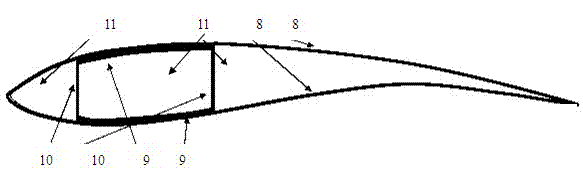
图1为本发明一实施例大型风力发电组合叶片的剖视图; Fig. 1 is a cross-sectional view of a large-scale wind power generation composite blade according to an embodiment of the present invention;
图2为本发明一实施例纤维加热材料层位于蒙皮外表面的铺层剖面示意图; Fig. 2 is a schematic cross-sectional view of a fiber heating material layer located on the outer surface of the skin according to an embodiment of the present invention;
图3为本发明一实施例纤维加热材料层位于叶片纤维母材层中间层的铺层剖面示意图; Fig. 3 is a schematic cross-sectional view of a layup of a fiber heating material layer located in the middle layer of a blade fiber base material layer according to an embodiment of the present invention;
图4为本发明一实施例纤维加热材料层位于叶片纤维母材层内表面的铺层剖面示意图; Fig. 4 is a schematic cross-sectional view of a layup of a fiber heating material layer located on the inner surface of the blade fiber base material layer according to an embodiment of the present invention;
图 5 叶片叶根部侧视图以及温度控制器和纤维加热电源安装位置示意图 Figure 5. The side view of the blade root and the schematic diagram of the installation position of the temperature controller and the fiber heating power supply
图6 金属滑环、碳刷与动力电源以及纤维加热电源的接线示意图 Figure 6 Schematic diagram of the wiring of metal slip rings, carbon brushes, power supply and fiber heating power supply
图7为本发明一实施例基于纤维加热材料的组合叶片纤维加热材料、电极、纤维加热电源以及控制器的连接示意图; Fig. 7 is a schematic diagram of the connection of the combined blade fiber heating material, electrodes, fiber heating power supply and controller based on the fiber heating material according to an embodiment of the present invention;
图8为本发明一实施例纤维加热材料层连续铺设示意图; Fig. 8 is a schematic diagram of continuous laying of fiber heating material layers according to an embodiment of the present invention;
图9为本发明一实施例带状纤维加热材料层分区带状铺设示意图; Fig. 9 is a schematic diagram of laying strip-shaped fibrous heating material layers in partitions according to an embodiment of the present invention;
图10为本发明一实施例温度控制流程图; Fig. 10 is a temperature control flow chart of an embodiment of the present invention;
图11为本发明一实施例基于纤维加热材料的组合叶片模型平面图; Fig. 11 is a plan view of a combined blade model based on fiber heating materials according to an embodiment of the present invention;
图12为本发明一实施例基于纤维加热材料的组合叶片模型剖视图; Fig. 12 is a cross-sectional view of a combined blade model based on fiber heating materials according to an embodiment of the present invention;
图13为本发明一实施例叶片在低温环境下通过纤维加热材料加热叶片温度从零下10度上升的实测结果示意图; Fig. 13 is a schematic diagram of the actual measurement results of the temperature of the blade heated by the fiber heating material from minus 10 degrees in a low-temperature environment according to an embodiment of the present invention;
图14为本发明一实施例基于纤维加热材料的组合叶片在低温结冰环境下,通过纤维加热材料加热叶片融冰过程温度上升的实测结果示意图; Fig. 14 is a schematic diagram of the measured results of the temperature rise of the combined blade based on the fiber heating material in the low-temperature icing environment through the heating of the fiber heating material during the melting process of the blade according to an embodiment of the present invention;
其中: in:
1:纤维母材层;2:纤维加热材料层;3:导电电极;4:导线;5:纤维加热电源;6:温度传感器;7:温度控制器;8:蒙皮;9:梁帽;10:腹板;11:叶片内腔;12:涂层;13:叶尖;14:叶根;15:叶片前缘;16:叶片后缘;17: PVC格栅;18:环氧树脂骨架;19: 叶根连接法兰; 20: 叶片连接螺栓; 21:温度传感器信号线; 22 控制信号线; 23:固定支架; 24:绝缘材料; 25:金属空心连接轴; 26:键槽;27:风机主轴;28:金属滑环; 29: 碳刷; 30: 动力电源。 1: fiber base material layer; 2: fiber heating material layer; 3: conductive electrode; 4: wire; 5: fiber heating power supply; 6: temperature sensor; 7: temperature controller; 8: skin; 9: beam cap; 10: web; 11: blade cavity; 12: coating; 13: blade tip; 14: blade root; 15: blade leading edge; 16: blade trailing edge; 17: PVC grid; 18: epoxy resin skeleton ;19: blade root connecting flange; 20: blade connecting bolt; 21: temperature sensor signal line; 22 control signal line; 23: fixed bracket; 24: insulating material; 25: metal hollow connecting shaft; 26: keyway; 27: Fan shaft; 28: metal slip ring; 29: carbon brush; 30: power supply.
具体实施方式 Detailed ways
如图1-图9所示,本发明一实施例包括组合叶片本体,所述组合叶片本体上设有由叶片蒙皮纤维母材层1制成的蒙皮8,所述蒙皮8上铺设有纤维加热材料层2;或者所述纤维加热材料层2作为夹层设在所述纤维母材层1的中间层;或者所述纤维加热材料层2设在所述纤维母材层1的内表面;所述蒙皮8上铺设有涂层12;所述纤维加热材料层2两端分别连接有一个导电电极3,导电电极3通过导线4连接有纤维加热电源5;所述蒙皮8表面以及所述蒙皮8的纤维材料层2上设有温度传感器6,所述温度传感器6连接有温度控制器7。温度控制器7与给纤维加热材料供电的纤维加热电源5相连,控制纤维加热电源5的输出功率;纤维加热电源5通过金属滑环28、与金属滑环28接触并在其表面滑动的碳刷29与动力电源30连接获取电力,可以采用风机变桨系统或者偏航系统的备用电力或者风机本身的出力作为动力电源30;温度控制器7以及纤维加热电源5均固定在与叶根法兰连接的固定支架上,或者固定在风机轮毂内部。
As shown in Figures 1 to 9, an embodiment of the present invention includes a combined blade body, on which a
图9所示为本发明一实施例温度控制流程图。所述蒙皮8表面以及所述蒙皮8的纤维材料层2上设有的温度传感器6的输出信号直接输入给温度控制器7。当叶片表面温度低于设定控制温度范围时,纤维加热电源5保持给纤维加热层通电加热,当叶片表面温度达到设定的温度控制上限时,停止通电加热。当叶片温度由于散热下降到设定温度控制范围以下时,又开始通电加热。
Fig. 9 is a flow chart of temperature control according to an embodiment of the present invention. The output signal of the
图10所示为一实施例的叶片的尺寸平面图,其中布置了连续碳纤维材料布。图11所示为含碳纤维加热材料的叶片模型剖面示意图,蒙皮上下两层为玻璃纤维三向布,单层厚度0.54mm,中间采用硬质PVC格栅,含环氧树脂骨架。碳纤维加热材料布沿模型叶片长度方向顺纹铺设,两端用铜片做电极,叶尖部位电极由导线导出,导线铺设在硬质PVC层中引至叶片根部。分别将模型叶片放置于低温高湿环境中,在叶片表面结冰和不结冰两种条件下,分别通过纤维加热电源给叶片通电加热,记录叶片表面温度的变化过程。 Figure 10 shows a dimensional plan view of an embodiment of a blade in which a continuous cloth of carbon fiber material is arranged. Figure 11 shows a schematic cross-sectional view of a blade model containing carbon fiber heating materials. The upper and lower layers of the skin are made of glass fiber three-way cloth, with a single layer thickness of 0.54 mm. The middle layer is made of rigid PVC grid with epoxy resin skeleton. The carbon fiber heating material cloth is laid along the length of the model blade along the grain, and copper sheets are used as electrodes at both ends. The electrodes at the tip of the blade are led out by wires, and the wires are laid in the hard PVC layer and lead to the root of the blade. The model blades were placed in a low-temperature and high-humidity environment, and under two conditions of icing and non-icing on the surface of the blades, the blades were energized and heated by the fiber heating power supply, and the change process of the blade surface temperature was recorded.
图12为本发明一种实施例所述叶片在低温环境下通过纤维加热材料加热叶片温度从零下10度上升的实测结果。图13为本发明一种实施例所述带碳纤维组合叶片在低温结冰环境下,通过纤维加热材料加热叶片融冰过程温度上升的实测结果。从叶片表面的温度变化可以看出通过本发明所述方法可以实现叶片表面温度的上升,也可以实现叶片表面覆冰的融冰后叶片表面温度的上升。 Fig. 12 is an actual measurement result of the temperature rise of the blade described in one embodiment of the present invention when the blade is heated by the fiber heating material in a low temperature environment from minus 10 degrees. Fig. 13 is an actual measurement result of the temperature rise of the composite blade with carbon fiber according to an embodiment of the present invention in a low-temperature icing environment, during the ice-melting process of the blade heated by the fiber heating material. It can be seen from the temperature change of the blade surface that the method of the present invention can realize the rise of the blade surface temperature, and can also realize the rise of the blade surface temperature after the ice-coated ice on the blade surface melts.
本发明所述大型风力叶片防冰和除冰方法的技术原理:在叶片中铺设纤维加热材料和温度传感器,当温度传感器测量叶片表面温度接近冰点或者低于设定控制温度范围时,通过温度控制器发出控制指令,对纤维加热材料通电,纤维加热材料直接对叶片加热,使得叶片温度保持在不结冰的温度范围或者设定温度控制范围内,温度控制范围优选取零上3度至10度。当叶片已经由于结冰而处于停止状态时,首先通过对纤维加热材料层通电加热进行融冰,然后把叶片温度控制在不结冰范围内,保证叶片在低温高湿结冰环境下正常运转,风力发电机正常发电。 The technical principle of the anti-icing and de-icing method for large-scale wind blades in the present invention: Lay fiber heating materials and temperature sensors in the blades. The controller sends out a control command to energize the fiber heating material, and the fiber heating material directly heats the blade, so that the temperature of the blade is kept in the temperature range without freezing or within the set temperature control range. The temperature control range is preferably 3 degrees to 10 degrees above zero. . When the blade has stopped due to icing, the fiber heating material layer is energized and heated to melt the ice first, and then the temperature of the blade is controlled within the non-freezing range to ensure the normal operation of the blade in a low-temperature and high-humidity icing environment. The wind turbine generates electricity normally.
本发明系统的制作过程及除冰过程如下: The manufacturing process and deicing process of the system of the present invention are as follows:
1、在叶片的蒙皮灌注树脂前在其纤维母材内部靠近外表面处预先铺设纤维加热材料层或者直接在叶片的最外表面或者内表面铺设纤维加热材料层,并在蒙皮外表面预埋温度传感器,纤维加热材料层与叶片纤维母材层一起真空灌注养护成型; 1. Before the resin is poured into the skin of the blade, a fiber heating material layer is pre-laid inside the fiber base material near the outer surface, or a fiber heating material layer is directly laid on the outermost or inner surface of the blade, and the outer surface of the skin is pre-laid. Buried temperature sensor, fiber heating material layer and blade fiber base material layer are vacuum infused and cured together;
2、将纤维加热材料层的两端与纤维加热电源相连并通电,纤维加热材料层发热并直接给叶片蒙皮加热; 2. Connect both ends of the fiber heating material layer to the fiber heating power supply and power on, the fiber heating material layer will generate heat and directly heat the blade skin;
3、利用温度传感器测量叶片表面温度,并将测量信号输入温度控制器,温度控制器根据叶片测量温度,发出控制信号,控制纤维加热电源输出功率,进而对纤维加热材料层的发热功率进行控制; 3. Use the temperature sensor to measure the surface temperature of the blade, and input the measurement signal into the temperature controller. The temperature controller sends a control signal according to the temperature measured by the blade to control the output power of the fiber heating power supply, and then controls the heating power of the fiber heating material layer;
4、通过对纤维加热材料层通电所产生的热量对叶片进行加热,保持叶片温度在不结冰的范围内,防止叶片结冰,并保持叶片表明温度在一定的温度范围之内。在叶片已经结冰的情况下,先通过对叶片中的纤维加热材料层通电加热进行融冰,然后再利用上述方法防冰。 4. The blades are heated by the heat generated by energizing the fiber heating material layer to keep the temperature of the blades in the range of non-freezing, prevent the blades from freezing, and keep the temperature of the blades within a certain temperature range. In the case that the blade has been frozen, the fiber heating material layer in the blade is energized and heated to melt the ice, and then the above method is used for anti-icing. the
Claims (3)
Priority Applications (1)
| Application Number | Priority Date | Filing Date | Title |
|---|---|---|---|
| CN201310082885.XA CN103161689B (en) | 2013-03-15 | 2013-03-15 | Anti-icing and deicing system for large wind power generation built-up blade |
Applications Claiming Priority (1)
| Application Number | Priority Date | Filing Date | Title |
|---|---|---|---|
| CN201310082885.XA CN103161689B (en) | 2013-03-15 | 2013-03-15 | Anti-icing and deicing system for large wind power generation built-up blade |
Publications (2)
| Publication Number | Publication Date |
|---|---|
| CN103161689A CN103161689A (en) | 2013-06-19 |
| CN103161689B true CN103161689B (en) | 2014-01-22 |
Family
ID=48585118
Family Applications (1)
| Application Number | Title | Priority Date | Filing Date |
|---|---|---|---|
| CN201310082885.XA Expired - Fee Related CN103161689B (en) | 2013-03-15 | 2013-03-15 | Anti-icing and deicing system for large wind power generation built-up blade |
Country Status (1)
| Country | Link |
|---|---|
| CN (1) | CN103161689B (en) |
Cited By (2)
| Publication number | Priority date | Publication date | Assignee | Title |
|---|---|---|---|---|
| EP3109465A1 (en) * | 2015-06-26 | 2016-12-28 | Nordex Energy GmbH | Wind energy assembly rotor blade with an electric heating device |
| EP3109466A1 (en) * | 2015-06-26 | 2016-12-28 | Nordex Energy GmbH | Wind energy assembly rotor blade with an electric heating device |
Families Citing this family (24)
| Publication number | Priority date | Publication date | Assignee | Title |
|---|---|---|---|---|
| CN104416921A (en) * | 2013-08-28 | 2015-03-18 | 上海艾郎风电科技发展有限公司 | Cutting method of fiber cloth |
| CN103640686B (en) * | 2013-12-13 | 2016-01-13 | 新誉集团有限公司 | There is the method for making of the covering of function of temperature control |
| CN103821674B (en) * | 2014-01-22 | 2017-04-26 | 刘中威 | Wind generator rotor blade electrothermal ice melting system and manufacture method |
| CN103807109B (en) * | 2014-01-22 | 2017-01-04 | 刘中威 | A kind of aero-generator rotor blade electro-heat deicing wireless control system |
| CN103807110B (en) * | 2014-01-22 | 2017-03-15 | 刘中威 | A kind of aero-generator rotor blade electro-heat deicing temperature monitoring system |
| CN106252894A (en) * | 2016-08-03 | 2016-12-21 | 中国科学院紫金山天文台 | A kind of spontaneous heating defrosting high-precision carbon fiber aerial panel |
| CN106438226B (en) * | 2016-11-23 | 2019-02-26 | 重庆大学 | Circulating electric heating melting and anti-icing device for wind turbine blades |
| CN106351790A (en) * | 2016-11-23 | 2017-01-25 | 四川大学 | Transversely heated ice melting blade of wind turbine and the device and method of melting |
| CN106468246A (en) * | 2016-11-23 | 2017-03-01 | 四川大学 | The radial direction heating ice-melt blade of wind-driven generator and ice-melting device and its de-icing method |
| CN106762392B (en) * | 2017-01-17 | 2023-06-06 | 河北工业大学 | Wind turbine blade and anti-icing and de-icing method |
| CN107565247B (en) * | 2017-08-30 | 2019-09-17 | 中国商用飞机有限责任公司 | Power connector, method of manufacturing power connector, electrical anti-icing system, aircraft electrical anti-icing airfoil and method of assembly |
| CN110198576A (en) * | 2018-02-27 | 2019-09-03 | 吴金珠 | Electrothermal chip structure, installation method, forming method and wind power generating set |
| CN108656417B (en) * | 2018-05-03 | 2020-07-10 | 国电联合动力技术有限公司 | Coating method of wind power blade surface coating |
| CN108843523A (en) * | 2018-06-21 | 2018-11-20 | 株洲时代新材料科技股份有限公司 | A kind of wind power turbine machine blade and its manufacturing method with deicing function |
| CN109089339A (en) * | 2018-07-24 | 2018-12-25 | 董哲源 | A kind of glass deicing demister |
| CN112922792B (en) * | 2019-12-06 | 2022-07-08 | 北京金风科创风电设备有限公司 | Blade electrothermal composite film, blade, wind turbine and method for manufacturing blade |
| CN112384040B (en) * | 2020-11-12 | 2022-05-24 | 中国电子科技集团公司第二十九研究所 | A skin heat exchange bypass control system and control method thereof |
| CN112623231A (en) * | 2021-01-12 | 2021-04-09 | 安徽卓尔航空科技有限公司 | Built-in electric heating's screw paddle |
| ES2967537T3 (en) * | 2021-02-02 | 2024-04-30 | Siemens Gamesa Renewable Energy Innovation & Technology SL | Blade for a wind turbine |
| CN113530768A (en) * | 2021-08-16 | 2021-10-22 | 上海工程技术大学 | Fan blade device that can remove snow based on carbon fiber is electrically conductive to generate heat |
| CN114084348B (en) * | 2021-11-22 | 2024-03-29 | 西安热工研究院有限公司 | Microwave deicing method for wind power blade |
| CN114876747B (en) * | 2022-06-20 | 2025-04-22 | 南京大学 | A self-feedback anti-icing and de-icing method for fan blades based on DTS system |
| CN117167189A (en) * | 2023-08-11 | 2023-12-05 | 湖北工业大学 | A paint spraying device for wind turbine blades |
| CN119412294A (en) * | 2024-10-22 | 2025-02-11 | 湖北能源光谷热力有限公司 | Anti-icing and de-icing method for wind turbine blades based on composite materials |
Family Cites Families (6)
| Publication number | Priority date | Publication date | Assignee | Title |
|---|---|---|---|---|
| WO2010028653A2 (en) * | 2008-09-11 | 2010-03-18 | Vestas Wind Systems A/S | Low power heating |
| GB2477338B (en) * | 2010-01-29 | 2011-12-07 | Gkn Aerospace Services Ltd | Electrothermal heater |
| EP2526294A1 (en) * | 2010-04-12 | 2012-11-28 | Siemens Aktiengesellschaft | Heating mats arranged in a loop on a blade |
| WO2012044213A1 (en) * | 2010-09-28 | 2012-04-05 | Saab Ab | Method and arrangement for de-icing a structural element |
| CN201865846U (en) * | 2010-12-02 | 2011-06-15 | 济南轨道交通装备有限责任公司 | Frozen state detecting device for wind turbine blades |
| CN102889185B (en) * | 2012-10-22 | 2015-04-08 | 保定华翼风电叶片研究开发有限公司 | Wind turbine blade for wind driven generator and machining process thereof |
-
2013
- 2013-03-15 CN CN201310082885.XA patent/CN103161689B/en not_active Expired - Fee Related
Cited By (2)
| Publication number | Priority date | Publication date | Assignee | Title |
|---|---|---|---|---|
| EP3109465A1 (en) * | 2015-06-26 | 2016-12-28 | Nordex Energy GmbH | Wind energy assembly rotor blade with an electric heating device |
| EP3109466A1 (en) * | 2015-06-26 | 2016-12-28 | Nordex Energy GmbH | Wind energy assembly rotor blade with an electric heating device |
Also Published As
| Publication number | Publication date |
|---|---|
| CN103161689A (en) | 2013-06-19 |
Similar Documents
| Publication | Publication Date | Title |
|---|---|---|
| CN103161689B (en) | Anti-icing and deicing system for large wind power generation built-up blade | |
| CN105626370B (en) | A kind of anti-ice wind electricity blade structure | |
| CN105856586B (en) | A kind of graphene Electric radiant Heating Film pneumatic equipment bladess icing guard system | |
| CN203035466U (en) | Carbon fiber strengthened wind machine blade with deicing and anti-freezing functions | |
| CN107084100B (en) | Wind power blade heating and ice melting system based on graphene heating film and manufacturing method of blade | |
| CN104018997B (en) | Anti-icing control system of wind turbine blade and manufacturing method of wind turbine blade with anti-icing performance | |
| CN103277265B (en) | Anti-icing wind power blade and preparation method of anti-icing wind power blade | |
| JP5675673B2 (en) | Fiber reinforced plastic heating element and wind power generator equipped with the heating element | |
| CN107939620B (en) | Anti-icing and deicing system for fan blade | |
| CN107859603B (en) | A kind of anti-icing and deicing wind power blade and manufacturing method thereof | |
| CN102889185B (en) | Wind turbine blade for wind driven generator and machining process thereof | |
| CN115450865A (en) | Anti-icing system for blades of wind turbine generator | |
| CN112922792B (en) | Blade electrothermal composite film, blade, wind turbine and method for manufacturing blade | |
| CN107120243B (en) | A kind of wind electricity blade production method based on graphene heating ice-melt | |
| CN107489596A (en) | Anti-freeze blade production method and wind generator set blade | |
| CN102562487A (en) | Wind turbine blade with anti-ice/ice-removing function | |
| EP2795119B1 (en) | De-icing of a wind turbine blade | |
| CN207634252U (en) | Fan blade anti-icing and deicing system | |
| CN115478998A (en) | Air-thermal cycle deicing system for inner cavity of wind turbine blades | |
| JP5714714B2 (en) | Rotor blade with heating device for wind power generator | |
| CN103437949B (en) | Wind turbine blades, wind turbines and blade deicing systems | |
| CN106321372A (en) | Composite carbon fiber heating element for wind-driven generator blade ice preventing or ice melting | |
| CN210068398U (en) | Wind driven generator blade and wind driven generator set | |
| CN106438226A (en) | Cyclic electric heating ice melting and prevention device used for wind driven generator blades | |
| CN103195665A (en) | Megawatt fan blades and carbon-fiber electric heating ice melting method thereof |
Legal Events
| Date | Code | Title | Description |
|---|---|---|---|
| C06 | Publication | ||
| PB01 | Publication | ||
| C10 | Entry into substantive examination | ||
| SE01 | Entry into force of request for substantive examination | ||
| C14 | Grant of patent or utility model | ||
| GR01 | Patent grant | ||
| CF01 | Termination of patent right due to non-payment of annual fee | ||
| CF01 | Termination of patent right due to non-payment of annual fee |
Granted publication date: 20140122 |