CN102804083A - Tools For Assisting In Petroleum Product Transportation Logistics - Google Patents
Tools For Assisting In Petroleum Product Transportation Logistics Download PDFInfo
- Publication number
- CN102804083A CN102804083A CN2010800278182A CN201080027818A CN102804083A CN 102804083 A CN102804083 A CN 102804083A CN 2010800278182 A CN2010800278182 A CN 2010800278182A CN 201080027818 A CN201080027818 A CN 201080027818A CN 102804083 A CN102804083 A CN 102804083A
- Authority
- CN
- China
- Prior art keywords
- bulk products
- demand
- supply
- model
- port
- Prior art date
- Legal status (The legal status is an assumption and is not a legal conclusion. Google has not performed a legal analysis and makes no representation as to the accuracy of the status listed.)
- Granted
Links
Images




Classifications
-
- G—PHYSICS
- G06—COMPUTING OR CALCULATING; COUNTING
- G06Q—INFORMATION AND COMMUNICATION TECHNOLOGY [ICT] SPECIALLY ADAPTED FOR ADMINISTRATIVE, COMMERCIAL, FINANCIAL, MANAGERIAL OR SUPERVISORY PURPOSES; SYSTEMS OR METHODS SPECIALLY ADAPTED FOR ADMINISTRATIVE, COMMERCIAL, FINANCIAL, MANAGERIAL OR SUPERVISORY PURPOSES, NOT OTHERWISE PROVIDED FOR
- G06Q10/00—Administration; Management
- G06Q10/08—Logistics, e.g. warehousing, loading or distribution; Inventory or stock management
-
- G—PHYSICS
- G06—COMPUTING OR CALCULATING; COUNTING
- G06Q—INFORMATION AND COMMUNICATION TECHNOLOGY [ICT] SPECIALLY ADAPTED FOR ADMINISTRATIVE, COMMERCIAL, FINANCIAL, MANAGERIAL OR SUPERVISORY PURPOSES; SYSTEMS OR METHODS SPECIALLY ADAPTED FOR ADMINISTRATIVE, COMMERCIAL, FINANCIAL, MANAGERIAL OR SUPERVISORY PURPOSES, NOT OTHERWISE PROVIDED FOR
- G06Q10/00—Administration; Management
- G06Q10/08—Logistics, e.g. warehousing, loading or distribution; Inventory or stock management
- G06Q10/083—Shipping
- G06Q10/0832—Special goods or special handling procedures, e.g. handling of hazardous or fragile goods
-
- G—PHYSICS
- G06—COMPUTING OR CALCULATING; COUNTING
- G06Q—INFORMATION AND COMMUNICATION TECHNOLOGY [ICT] SPECIALLY ADAPTED FOR ADMINISTRATIVE, COMMERCIAL, FINANCIAL, MANAGERIAL OR SUPERVISORY PURPOSES; SYSTEMS OR METHODS SPECIALLY ADAPTED FOR ADMINISTRATIVE, COMMERCIAL, FINANCIAL, MANAGERIAL OR SUPERVISORY PURPOSES, NOT OTHERWISE PROVIDED FOR
- G06Q99/00—Subject matter not provided for in other groups of this subclass
Landscapes
- Business, Economics & Management (AREA)
- Engineering & Computer Science (AREA)
- Economics (AREA)
- Physics & Mathematics (AREA)
- Theoretical Computer Science (AREA)
- General Physics & Mathematics (AREA)
- General Business, Economics & Management (AREA)
- Entrepreneurship & Innovation (AREA)
- Quality & Reliability (AREA)
- Strategic Management (AREA)
- Tourism & Hospitality (AREA)
- Operations Research (AREA)
- Marketing (AREA)
- Human Resources & Organizations (AREA)
- Development Economics (AREA)
- Management, Administration, Business Operations System, And Electronic Commerce (AREA)
Abstract
Description
相关申请的交叉引用Cross References to Related Applications
本申请要求美国临时专利申请第61/220,159号(2009年6月24日提交的)的权利,其全部内容在此引入作为参考。本申请还涉及发明名称为“System for bulk product allocation,transportation and blending”的、序号为12/292,600的美国申请(发明人Song等,2008年11月21日提交),其在此引入作为参考。This application claims the benefit of US Provisional Patent Application No. 61/220,159 (filed June 24, 2009), the entire contents of which are hereby incorporated by reference. This application is also related to U.S. Application Serial No. 12/292,600 (inventor Song et al., filed November 21, 2008) entitled "System for bulk product allocation, transportation and blending", which is hereby incorporated by reference.
技术领域 technical field
本发明涉及用于规划使用船队的石油产品运输和库存管理的系统。The present invention relates to a system for planning transportation and inventory management of petroleum products using a fleet.
背景技术 Background technique
无论是用于分离产品还是用于散装(bulk)产品的移动,优化产品运输的当前方法通常集中于运输行程安排和/或交通工具调度,而不考虑库存管理。此外,这些方法通常要求以下中的一个或多个:单个同种类货物或多个不能被混合的货物;使用同种类的船队;在单个供应位置和单个需求位置之间移动;以及供应和需求的恒定速度。通常,这些方法还集中在最小化成本,而不是最大化纯利润。Whether for separation of products or for movement of bulk products, current methods of optimizing product transportation typically focus on transportation scheduling and/or vehicle scheduling without regard to inventory management. In addition, these methods typically require one or more of the following: a single cargo of the same kind or multiple cargoes that cannot be mixed; use of a fleet of cargo of the same kind; movement between a single supply location and a single demand location; and supply and demand constant speed. Often, these approaches also focus on minimizing costs rather than maximizing pure profits.

M.Christiansen等在“Decomposition of a combined inventory andtime constrained ship routing problem”(Transportation Science,33(1):3-16,1999)中已经处理了氨的运送。这篇文章提出库存管理和行程安排受到时间窗要求的限制以及船舶被允许携带部分货物的问题。船队在生产和消耗港口之间运输单个散装产品。这种方法的经济计算过分简单化实际问题并且假设生产和消耗的恒定速度。The transport of ammonia has been dealt with by M. Christiansen et al. in "Decomposition of a combined inventory and time constrained ship routing problem" (Transportation Science, 33(1):3-16, 1999). This article addresses the issue of inventory management and scheduling being limited by time window requirements and ships being allowed to carry partial cargo. Fleets transport individual bulk products between production and consumption ports. The economic calculation of this method oversimplifies the practical problem and assumes a constant rate of production and consumption.
D.Ronen在“Marine inventory routing:shipments planning”(Journalof the Operational Research Society,53:108-114,2002)中已经处理了用于多种散装液体产品(不能被混合)的最小成本库存行程安排问题。在所述行程安排问题中的船舶具有多个隔室,并且每个船舶被限制仅在一个港口进行装载和卸载。此外,所述行程安排问题仅允许同种类的船舶。D. Ronen has dealt with the least-cost inventory routing problem for multiple bulk liquid products (which cannot be mixed) in "Marine inventory routing: shipments planning" (Journal of the Operational Research Society, 53:108-114, 2002) . The ships in the scheduling problem have multiple compartments, and each ship is restricted to loading and unloading at only one port. Furthermore, the itinerary problem only allows ships of the same class.
在船舶行程安排和调度领域已经具有多种出版物。一篇调查文章是“Ship routing and scheduling:status and perspectives”(TransportationScience,38(1):1-18,M.Christiansen、K.Fagerholt和D.Ronen,2004)。一篇观察文章为“Marine Transportation”(Handbooks in OperationsResearch and Management Science:Transportation,M.Christiansen、K.Fagerholt、B.Nygreen和D.Ronen,由C.Barnhart和G.Laporte编辑,2007)。There have been numerous publications in the field of ship scheduling and scheduling. A survey article is "Ship routing and scheduling: status and perspectives" (TransportationScience, 38(1): 1-18, M. Christiansen, K. Fagerholt, and D. Ronen, 2004). One observational article is "Marine Transportation" (Handbooks in Operations Research and Management Science: Transportation, edited by M. Christiansen, K. Fagerholt, B. Nygreen and D. Ronen, edited by C. Barnhart and G. Laporte, 2007).
一篇短文的出版物是“Scheduling Ocean Transportation of Crude Oil(Management Science,G.G.Brown,G.W.Graves,D.Ronen,33(3):335-346,1987)。本篇文章处理原油海洋运输问题。此处介绍的建模问题包括下面的假设/简化:(1)每个货物(即,要被运送的原油)在单个装载港口和单个卸载港口之间移动;(2)运送的货物必须总是满船负荷(即,货物必须是固定大小);以及(3)每个船舶是相同大小的。此外,这个模型的目标函数是使成本相对于纯利润率最小。The publication of a short article is "Scheduling Ocean Transportation of Crude Oil (Management Science, G.G. Brown, G.W. Graves, D. Ronen, 33(3): 335-346, 1987). This article deals with the oceanic transportation of crude oil. This The modeling problem presented here includes the following assumptions/simplifications: (1) each cargo (i.e., crude oil to be shipped) moves between a single loading port and a single unloading port; (2) a shipped cargo must always be full ship load (ie, the cargo must be of fixed size); and (3) each ship is the same size. Furthermore, the objective function of this model is to minimize cost relative to the net profit rate.
另一篇短文的出版物是“Fleet management models and algorithms foran oil tanker routing and scheduling problem”(H.D.Sherali,S.M.Al-Yakoob,M.M.Hassan,IIE Trans.31:395-406,1999)。本篇文章同样处理原油海洋运输建模问题。再次,建模问题特征是这样的,每个航次(voyage)必须包括单个装载港口以及单个卸载港口,并且每个货物必须是满船负荷。此外,目标是使成本相对于纯利润率最小。本篇文章中处理的问题与前述文章不同之处在于:船舶不是必须具有相同的大小,并且有对船舶隔室的明确处理。Another publication of a short article is "Fleet management models and algorithms for an oil tanker routing and scheduling problem" (H.D. Sherali, S.M. Al-Yakoob, M.M. Hassan, IIE Trans. 31:395-406, 1999). This article also deals with the modeling of crude oil ocean transportation. Again, the modeling problem is characterized in that each voyage must include a single port of loading as well as a single port of discharge, and each cargo must be fully loaded. Furthermore, the goal is to minimize costs relative to net profit margins. The issues dealt with in this article differ from the previous ones in that ships do not have to be of the same size and there is an explicit treatment of ship compartments.
现有技术中具有对应用的如下需要:所述应用使与产品分配、运输行程安排、运输交通工具/路线调度以及产品混合相关联的整体纯利润最大化。现有技术中具有对应用的如下需要:所述应用按照允许使用同种类的船舶队伍将多种类型和质量的散装产品从一个或多个供应位置移动到一个或多个需求位置的方式来执行上述功能,每个均具有供应(生产)和需求(消耗)的非恒定速度,并且每个均具有不同的货币价值,其中每个船舶可以进行多次装载和卸载。特别地,这种应用将在石油以及石油衍生产品从供应位置到需求位置的移动中提供显著的经济利润。There is a need in the prior art for applications that maximize the overall net profit associated with product distribution, transportation routing, transportation vehicle/route scheduling, and product mixing. There is a need in the prior art for an application that is performed in a manner that allows the movement of multiple types and qualities of bulk products from one or more supply locations to one or more demand locations using a fleet of vessels of the same kind The above functions, each with a non-constant rate of supply (production) and demand (consumption), and each with a different monetary value, where each ship can be loaded and unloaded multiple times. In particular, such an application would provide significant economic benefits in the movement of oil and oil-derived products from supply locations to demand locations.
发明内容 Contents of the invention
本发明提供一种用于确定散装产品分配、运输行程安排、交通工具/路线调度、和/或混合操作的工具。所述工具能够处理典型的石油产品运输问题,所述问题可能是非常复杂的。典型的石油产品运输问题涉及,除其他外,多个供应位置,每个供应位置均具有过多个生产产品,每个生产产品具有不同的属性和不同的经济价值,多个需求位置每个均具有多个需求流需要,每个需求流需要均具有对满足要求的递送产品的不同要求和不同价格价值、供应和要求的非恒定速度、以及不同种类的运输交通工具队。The present invention provides a tool for determining bulk product allocation, transportation routing, vehicle/route scheduling, and/or blending operations. The tool is capable of handling typical petroleum product transportation problems, which can be very complex. A typical petroleum product transportation problem involves, among other things, multiple supply locations, each with multiple production products, each with different attributes and different economic value, and multiple demand locations, each with There are multiple demand stream needs, each with different requirements and different price values for delivered products that meet the requirements, non-constant speeds of supply and demand, and different kinds of fleets of transportation vehicles.
本发明使用高级建模和优化技术来找到用于散装产品的分配、交通工具行程安排、车辆调度和散装产品混合的解决方案(最佳的或接近最佳的)。在一些情况下,模型的解算可以用于确定运输计划,所述计划包括一个或多个以下内容:(i)分配在一个或多个供应位置制造的产品,以满足一个或多个需求位置的消耗需求;(ii)实现分配计划的运输行程安排调度;以及(iii)实现行程安排调度的运输交通工具/路线调度。在优选的实施方式中,运输计划还会提供在装载、传送或卸载过程中要在岸上和/或在交通工具上执行的散装产品混合的细节。The present invention uses advanced modeling and optimization techniques to find solutions (optimal or near-optimal) for distribution of bulk products, vehicle routing, vehicle scheduling, and bulk product mixing. In some cases, the solution of the model may be used to determine a transportation plan that includes one or more of the following: (i) allocating product manufactured at one or more supply locations to satisfy one or more demand locations consumption demand; (ii) transportation scheduling scheduling to implement allocation planning; and (iii) transportation vehicle/route scheduling to enable scheduling scheduling. In a preferred embodiment, the transport plan will also provide details of bulk product blending to be performed onshore and/or on the vehicle during loading, transfer or unloading.
在一个实施方式中,本发明提供一种用于运输散装产品的方法,包括接收数据集,数据集包括:In one embodiment, the invention provides a method for shipping a bulk product comprising receiving a data set comprising:
(a)多个供应位置和多个需求位置的标识,每个供应位置具有散装产品的供应流以及每个需求位置具有用于散装产品的需求流;(a) identification of a plurality of supply locations and a plurality of demand locations, each supply location having a supply flow for the bulk product and each demand location having a demand flow for the bulk product;
(b)对于每个供应位置,与现有库存、预期产量、属性规范、以及来自供应流的散装产品的货币价值相关的数据;(b) for each supply location, data relating to on-hand inventory, expected production, attribute specifications, and monetary value of bulk product from the supply stream;
(c)对于每个需求位置,与现有库存、预期消耗、属性规范要求、以及满足需求流的属性规范要求的散装产品的货币价值相关的数据;(c) for each demand location, data relating to on-hand inventory, expected consumption, attribute specification requirements, and monetary value of bulk product that meets the attribute specification requirements of the demand stream;
(d)在供应位置装载散装产品和在需求位置卸载散装产品的交通工具队的标识;(d) the identification of the fleet of vehicles that load the bulk product at the supply location and unload the bulk product at the demand location;
(e)与队中的每个交通工具的容量和可用性相关的数据;(e) data relating to the capacity and availability of each vehicle in the fleet;
(f)与用于将散装产品从供应位置运输到需求位置的成本相关的数据;以及(f) data relating to costs used to transport bulk product from the location of supply to the location of demand; and
(g)每个都位于接收和卸载散装产品的供应位置或需求位置的一个或多个混合罐的标识。(g) Identification of one or more mixing tanks, each located at a supply location or demand location that receives and unloads bulk product.
使用数据集来填充(populate)混合整数非线性规划(MINLP)模型。MINLP包括用于纯利润率的目标函数和多个限制。用于纯利润率的目标函数包括:从交通工具直接卸载到需求流的散装产品的货币价值的总和、从每个混合罐卸载到需求流的散装产品的货币价值的总和、减去从供应流装载的散装产品的货币价值的总和、减去与供应位置和需求位置之间的散装产品的运输相关的成本、减去与每个用于接收和卸载散装产品的混合罐的使用相关的成本。在一些情况下,目标函数进一步包括库存保持成本的总和。所述限制包括与混合罐内容的数量和/或属性相关的一个或多个非线性项(例如,双线性项)。Use the dataset to populate a Mixed Integer Nonlinear Programming (MINLP) model. MINLP includes an objective function and multiple constraints for the pure rate of profit. The objective function used for pure profit margin consists of: the sum of the monetary values of the bulk products unloaded directly from the vehicle into the demand stream, the sum of the monetary values of the bulk products unloaded into the demand stream from each mixing tank, minus the sum of the monetary values from the supply stream The sum of the monetary value of the bulk product loaded, less the costs associated with the transportation of the bulk product between the supply location and the demand location, less the costs associated with the use of each mixing tank used to receive and unload the bulk product. In some cases, the objective function further includes a sum of inventory holding costs. The constraints include one or more non-linear terms (eg, bilinear terms) related to the quantity and/or properties of the mixing tank contents.
MINLP模型被求解以最大化用于纯利润率的目标函数。基于所获得的解算,将一个或多个散装产品物理地运输到需求位置,或从供应位置物理地运输一个或多个散装产品,或者两者。在一些情况中,方法进一步包括,基于所获得的解算,将散装产品物理地传送到包含另一种散装产品的混合罐、混合混合罐中的散装产品,以形成新的混合散装产品。可以从各种源,包括交通工具、管道或其它罐,将散装产品传送到混合罐中。The MINLP model is solved to maximize the objective function for pure profit margin. Based on the obtained solution, the one or more bulk products are physically transported to the demand location, or the one or more bulk products are physically transported from the supply location, or both. In some cases, the method further includes, based on the obtained solution, physically transferring the bulk product to a blending tank containing another bulk product, blending the bulk products in the blending tank to form a new blended bulk product. Bulk product can be delivered to the mixing tank from a variety of sources, including vehicles, pipelines, or other tanks.
在其它实施方式中,本发明提供一种用于根据上述方法来确定散装产品的运输的优化设备。在另一实施方式中,本发明提供一种机器可读的、确实地实施机器能够执行的指令程序的程序存储装置,以进行用于确定散装产品的运输的方法步骤。In other embodiments, the present invention provides an optimization device for determining shipment of bulk products according to the method described above. In another embodiment, the present invention provides a program storage device readable by a machine tangibly embodying a program of instructions executable by the machine to perform method steps for determining shipment of a bulk product.
在另一实施方式中,本发明提供一种用于操作优化设备的方法,所述优化设备包括:存储装置、建模应用和求解器。优化设备通过以下方式来操作:(I)将包含上述数据的数据文件载入存储装置中;(II)执行建模应用以使用数据文件填充上述混合整数非线性规划模型;以及(III)运行求解器以获得混合整数非线性规划模型用于使纯利润率的目标函数最大化的解算。设备可以具有一个或多个求解器,其可以结合使用(例如,顺序地或迭代地)。In another embodiment, the invention provides a method for operating an optimization apparatus comprising: a storage device, a modeling application, and a solver. The optimization apparatus operates by: (I) loading a data file containing the above data into a storage device; (II) executing a modeling application to populate the above mixed integer nonlinear programming model with the data file; and (III) running a solver to obtain the solution of a mixed integer nonlinear programming model for maximizing the objective function of pure profit margin. A device may have one or more solvers, which may be used in conjunction (eg, sequentially or iteratively).
附图说明 Description of drawings
图1表示涉及可以由本发明来建模的一组供应港口、一组需求港口和船队的运输问题;Figure 1 represents a transportation problem involving a set of supply ports, a set of demand ports and fleets that can be modeled by the present invention;
图2示出了可以由本发明建模的需求港口的示意图;Figure 2 shows a schematic diagram of a demand port that can be modeled by the present invention;
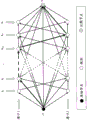
图3示出了时间空间网络规划,其中船舶是商品并且节点表示在特定时间对港口的可能访问;Figure 3 shows a spatio-temporal network plan where ships are commodities and nodes represent possible visits to ports at a particular time;
图4和图5示出了说明解算算法的流程图。4 and 5 show flowcharts illustrating the solution algorithm.
具体实施方式 Detailed ways
当“分配”用于与从供应位置将产品移动到需求位置相关时,是指与要被运输的供应方产品和需要被满足的需求方产品的标识和/或数量相关的确定。"Allocation" when used in relation to moving product from a supply location to a demand location refers to a determination related to the identification and/or quantity of supply-side product to be shipped and demand-side product to be fulfilled.
“散装产品”意思是未绑定的或在装载时基本上是流体的任何产品;换句换说,其处于松散未打包的形式。散装产品的实例包括石油产品。"Bulk product" means any product that is unbound or substantially fluid when loaded; in other words, it is in loose unpackaged form. Examples of bulk products include petroleum products.
“代码”包含源代码和目标代码。"Code" includes source code and object code.
“计算机可读介质”包括用于存储或传送计算机可读形式的信息的任何机构。例如,计算机可读介质包括但不限于,只读存储器(“ROM”)、随机存取存储器(“RAM”)、磁盘存储媒介、光学存储介质、闪速存储器装置等。"Computer-readable medium" includes any mechanism for storing or transmitting information in a form readable by a computer. For example, computer readable media include, but are not limited to, read only memory ("ROM"), random access memory ("RAM"), magnetic disk storage media, optical storage media, flash memory devices, and the like.
如此处使用的同义词“卸载位置”、“需求位置”和“目的位置”,是指将运输的货物卸载的位置。类似地,“卸载港口”、“需求港口”和“目的港口”是指卸载货物的港口的同义术语。The synonyms "unloading location", "demand location" and "destination location" as used herein refer to the location where the shipment is to be unloaded. Similarly, "port of discharge", "port of demand" and "port of destination" are synonymous terms for the port where the cargo is discharged.
如此处使用的同义词“装载位置”、“供应位置”和“原始位置”,是指装载运输货物的位置。类似地,“装载港口”、“供应港口”和“原始港口”是指装载货物的港口的同义术语。The synonyms "loading location", "supply location" and "origin location" as used herein mean the location where the shipment is loaded. Similarly, "port of loading", "port of supply" and "port of origin" are synonymous terms for the port where the cargo is loaded.
当“运输行程安排”用于与从供应位置将产品移动到需求位置相关时,是指与执行产品分配的旅程数量、停靠顺序、以及船舶指定相关的确定。"Transportation scheduling" when used in relation to moving product from a supply location to a demand location refers to determinations related to the number of journeys, order of calls, and vessel designations to perform product allocation.
“运输交通工具/路线调度”是指为每个活动指定时间以执行用于运输行程安排的计划。"Transportation Vehicle/Routing Scheduling" means specifying times for each activity to execute a plan for transportation scheduling.
“交通工具”表示任何船舶、驳船、飞机、火车、卡车或其它机械运输装置。"Vehicle" means any ship, barge, aircraft, train, truck or other mechanical means of transport.
“船舶”表示任何船、驳船或其它水路交通工具。"Vessel" means any boat, barge or other waterway vehicle.
现在将会介绍可以通过本发明的实施方式来建模的运输问题的实例。图1示出了表示涉及石油产品(即,表示为桶72的散装产品)运输问题的示意性说明。需要将石油产品从供应港口(即,供应位置)50,52,54和56运输到需求港口(即,需求位置)60,62,64和66。船队70可用于物理地将石油产品从供应位置运输到需求位置。Examples of transportation problems that can be modeled by embodiments of the invention will now be presented. FIG. 1 shows a schematic illustration representing a problem involving the transportation of petroleum products, ie bulk products represented as barrels 72 . Petroleum products need to be transported from supply ports (ie, supply locations) 50 , 52 , 54 and 56 to demand ports (ie, demand locations) 60 , 62 , 64 and 66 .
每个供应位置可以产生散装产品的多个供应流(由箭头58表示),每个流具有其自己的属性并且基于其的货币估值,并且每个流具有其自己的累积库存、存储限制和生产简档(production profile)。此外,每个需求位置可以要求散装产品的多个需求流(由箭头68表示),每个流具有其自己的属性范围要求和被递送以满足这些要求的实际散装产品的基于属性的货币估值,并且每个流均有其自己的库存、存储限制和消耗调度。将不同的散装产品流装载到相同运输交通工具的分离隔室中。然而,按照改变一个或多个装载的散装产品的属性以及有益于被递送以满足需求位置要求的散装产品的整体价值的方式,可以混合(在装载、卸载或传送过程中,在岸上和/或在交通工具上)不同的散装产品。下面将进一步地详细说明这些点中的每一个。Each supply location may generate multiple supply streams (represented by arrow 58) of bulk product, each stream having its own attributes and monetary valuations based on it, and each stream having its own cumulative inventory, storage limits, and Production profile. In addition, each demand location may require multiple demand streams (represented by arrow 68) of bulk product, each stream having its own attribute range requirements and an attribute-based monetary valuation of the actual bulk product delivered to meet those requirements , and each stream has its own inventory, storage limits, and consumption schedule. Load different bulk product streams into separate compartments of the same transport vehicle. However, blending (during loading, unloading, or transfer, onshore and/or on vehicles) of different bulk products. Each of these points will be explained in further detail below.
每个供应位置可以产生多个散装产品。换句话说,每个供应位置可以产生不同类型和/或等级的散装产品的多个流。因此,例如,在一个供应位置产生的散装产品可以是特定等级的汽油的单个流。可替换地,在供应位置产生的散装产品可以是不同等级的真空瓦斯油(VGO)的多个流,例如低硫VGO和高硫VGO。优选地,用户识别要由建模工具考虑的每个供应位置以及其相应的生产流。Each supply location can produce multiple bulk products. In other words, each supply location may generate multiple streams of different types and/or grades of bulk product. Thus, for example, a bulk product produced at one supply location may be a single stream of a particular grade of gasoline. Alternatively, the bulk product produced at the supply location may be multiple streams of different grades of vacuum gas oil (VGO), such as low sulfur VGO and high sulfur VGO. Preferably, the user identifies each supply location and its corresponding production flow to be considered by the modeling tool.
每个产品流具有其自己的属性和基于属性的货币估值。属性可以是化学的或物理的,但是通常涉及产品流的化学成分。例如,燃料产品(例如VGO和汽油)的价值通常根据成分(例如,含氮量,含硫量等)上升或下降。优选地,用户基于供应位置的当地现货市场的当前价格来指定每个供应流的货币价值。Each product stream has its own attributes and attribute-based monetary valuations. Attributes can be chemical or physical, but generally relate to the chemical composition of the product stream. For example, the value of fuel products such as VGO and gasoline typically rises or falls based on composition (eg, nitrogen content, sulfur content, etc.). Preferably, the user specifies a monetary value for each supply stream based on current prices in the local spot market at the supply location.
每个生产流还具有其自己的累积库存,优选地最小和最大存储限制以及预期生产调度。生产简档不必须是恒定的或连续的。当开发分配、运输行程安排以及运输交通工具/路线调度时,建模工具考虑这些因素。优选地,用户指定用于每个生产流的现有库存、优选的存储限制和预期生产调度。Each production stream also has its own cumulative inventory, preferably minimum and maximum storage limits, and expected production schedules. A production profile does not have to be constant or continuous. The modeling tool takes these factors into account when developing allocations, transportation scheduling, and transportation vehicle/route scheduling. Preferably, the user specifies on-hand inventory, preferred storage limits, and expected production schedules for each production stream.
每个需求位置可以消耗多个散装产品。换言之,每个需求位置可以消耗不同类型和/或等级的散装产品的多个流。因此,例如,由一个供应位置消耗的散装产品可以是特定等级的汽油。可替换地,由需求位置消耗的散装产品可以是多个不同VGO等级的流。优选地,用户识别建模工具要考虑的每个需求位置以及其相应需求流。Multiple bulk products can be consumed per demand location. In other words, each demand location may consume multiple streams of different types and/or grades of bulk product. Thus, for example, a bulk product consumed by a supply location may be a particular grade of gasoline. Alternatively, the bulk product consumed by the demand location may be a plurality of streams of different VGO grades. Preferably, the user identifies each requirement location and its corresponding requirement flow for consideration by the modeling tool.
每个需求流均有其自己的属性范围要求以及基于属性的被递送以满足这些要求的实际散装产品的货币估值。属性可以是化学的或物理的,但是通常涉及被递送的散装产品的化学成分。例如,燃料产品,例如不同等级的汽油或VGO必须满足要接收的需求流的具体成分范围要求(例如,含氮量,含硫量等)。然而,满足要求所有燃料产品不是相同的,并且满足要求的任意特定产品的实际价值可以根据特定产品实际落入所要求属性范围内的属性来变化。因此,通常为平均产品设置基准货币价值,所述平均产品满足需求流的属性范围要求。此外,提供基于属性的调整因素以调整用于实际散装产品的基准货币价值,基于相对于平均产品属性的散装产品属性来递送散装产品。优选地,用户基于需求位置的本地现货市场的价值评估来输入基准货币价值和属性调整因数。Each demand stream has its own attribute range requirements and an attribute based monetary valuation of the actual bulk product delivered to meet those requirements. Attributes can be chemical or physical, but generally relate to the chemical composition of the bulk product being delivered. For example, fuel products, such as different grades of gasoline or VGO, must meet specific compositional range requirements (eg, nitrogen content, sulfur content, etc.) of the demand stream to be received. However, not all fuel products that meet the requirements are the same, and the actual value of any particular product that meets the requirements may vary depending on which attributes the particular product actually falls within the required attribute range. Therefore, a base monetary value is typically set for the average product that satisfies the attribute range requirements of the demand stream. Additionally, an attribute-based adjustment factor is provided to adjust the base monetary value for the actual bulk product that is delivered based on the bulk product attribute relative to the average product attribute. Preferably, the user enters the base monetary value and the attribute adjustment factor based on an assessment of the value of the local spot market of the demand location.
每个需求流还具有其自己的累积库存,优选最小和最大存储限制以及预期消耗调度。消耗简档不必须是恒定的或连续的。当开发分配、运输行程安排以及运输交通工具/路线调度时,建模工具考虑这些因素。优选地,用户指定用于每个需求流的现有库存、优选的存储限制和预期消耗调度。Each demand stream also has its own cumulative inventory, preferred minimum and maximum storage limits, and expected consumption schedules. The consumption profile does not have to be constant or continuous. The modeling tool takes these factors into account when developing allocations, transportation scheduling, and transportation vehicle/route scheduling. Preferably, the user specifies on-hand inventory, preferred storage limits, and expected consumption schedules for each demand stream.
交通工具可以是容量和成本上同种类的或是不同种类的。在一个实施方式中,交通工具在容量和成本上均是不同种类的。本发明中使用的交通工具将典型地包含多个隔室以允许多个产品的运输,而不会非故意地妥协产品的构成完整性。因此,在同一交通运输工具的一个或多个分离隔室中运输从每个供应位置装载的每个散装产品。Vehicles can be of the same type or of different types in terms of capacity and cost. In one embodiment, the vehicles are dissimilar in both capacity and cost. Vehicles used in the present invention will typically contain multiple compartments to allow transport of multiple products without inadvertently compromising the product's constituent integrity. Thus, each bulk product loaded from each supply location is transported in one or more separate compartments of the same vehicle.
按照改变一个或多个装载的散装产品的属性以及有益于被递送以满足需求位置要求的散装产品的总体价值(例如,货币价值)的方式,被装载到每个运输交通工具的不同散装产品可以被混合为被装载到运输交通工具或被从运输交通工具卸载,或交通工具运送过程中的产品。例如,可以按照定义的速度,通过相同的装载或卸载管道,通过同时装载或卸载来混合不同的产品。换句话说,通过打开和关闭通向常规装载或卸载管道的用于不同产品流的阀,按照控制的方式,可以按照不同速度在管道中混合产品。Different bulk products loaded onto each transportation vehicle may be loaded in a manner that alters the properties of one or more of the bulk products loaded and contributes to the overall value (e.g., monetary value) of the bulk products being delivered to meet demand location requirements. A product that is mixed as it is loaded onto or unloaded from a transportation vehicle, or while the vehicle is in transit. For example, it is possible to mix different products by loading or unloading them simultaneously through the same loading or unloading pipeline at defined speeds. In other words, by opening and closing the valves for the different product streams leading to the conventional loading or unloading lines, the products can be mixed in the lines at different speeds in a controlled manner.
建模工具还可以考虑在岸上混合散装产品以满足需求流的规范/属性范围要求的可用性。这种岸上混合可以发生在将散装产品装载到船舶之前(即,在供应位置),或在从船舶卸载之后(即,在需求位置),或者这两者。Modeling tools can also consider the availability of bulk product blended onshore to meet the specification/property range requirements of the demand stream. Such on-shore blending may occur prior to loading of the bulk product onto the vessel (ie, at the supply location), or after unloading from the vessel (ie, at the demand location), or both.
在特定实施方式中,一个或多个需求位置具有至少一个用于从船舶接收散装产品的混合罐。例如,两个或多个船舶可以将不同的散装产品(同时地或连续地)卸载到混合罐,以形成用于卸载到需求流的新的混合散装产品。将所述混合的散装产品馈送到需求流,以增加被卸载到需求流的散装产品的整体价值。In a particular embodiment, one or more demand locations have at least one mixing tank for receiving bulk product from a vessel. For example, two or more vessels may unload different bulk products (simultaneously or sequentially) to a blending tank to form a new blended bulk product for discharge into a demand stream. The blended bulk products are fed to a demand stream to increase the overall value of the bulk products unloaded into the demand stream.
例如,图2示出了具有接收用于卸载到需求流12的规范散装产品的卸载罐10的需求港口。需求港口还具有用户公司拥有的用于将散装产品混合为需求流12所要求的属性规范的混合罐20。将来自混合罐20的混合散装产品馈送到卸载罐10。图2还示出了可用于租赁的位于场外的混合罐30和32。For example, FIG. 2 shows a demand port with
到达需求港口的船舶A可以将其散装产品经由卸载罐10直接卸载到需求流12、卸载到用于混合的混合罐20、或者两者。类似的,到达需求港口的船舶B可以将其散装产品经由卸载罐10直接卸载到需求流12、卸载到用于混合的混合罐20、或者两者。建模工具可以提供如下混合计划:建议船舶A将至少一些它的散装产品卸载到混合罐20中,以及船舶B将至少一些它的散装产品卸载到混合罐20中,以形成满足需求流12的规范要求的混合散装产品。然后,将混合的散装产品输送到卸载罐10,用于卸载到需求流12。Vessel A arriving at a demand port may offload its bulk product via unloading
按照类似的方式,场地外的罐30和32可以被租赁用于混合由船舶C和D卸载的散装产品。在这些租赁的罐内的混合散装产品可以被移动(例如,通过驳船或管道)到混合罐20以用于进一步混合,或者被移动到卸载罐10以用于卸载到需求流12。模型还可以考虑与租赁场地外的罐和从租赁罐运输散装产品相关联的成本。模型还可以考虑从第三方买进现货散装产品以输送到卸载罐10、混合罐20和/或租赁罐的可行性。在这种情况下,来自船舶的散装产品可以与来自现货买入的散装产品相混合以形成混合的散装产品。在替代的实施方式中,岸上混合可以在一个或多个供应位置、或在供应和需求位置两者处发生。In a similar manner, off-
此外,由于船舶隔室的灵活性,船舶可以装载多种产品并且在运输过程中移动和混合它们为多种新的产品。根据需求流的经济和消耗速度,可以为多个需求流准备混合产品。混合产品的价值是可以例如基于需求港口的本地现货市场估计的、根据其在产品被递送的需求港口的属性的价值。实例包括混合许多VGO需求流不接受的较低价值产品(例如,高硫VGO(HSVGO))与较高质量的产品(例如,低硫VGO(LSVGO)),以创建可以接受的新产品流。因此,建模工具不仅节省运输成本,还可以通过降低质量泄露(giveaway)来创建价值。Furthermore, due to the flexibility of the ship's compartments, the ship can carry multiple products and move and mix them into multiple new products during transit. Mixed products can be prepared for multiple demand streams, depending on the economy and consumption rate of the demand streams. The value of the blended product is a value according to its attributes at the demand port where the product is delivered, which can be estimated, for example, based on the local spot market of the demand port. Examples include blending lower value products (eg, high sulfur VGO (HSVGO)) that are not acceptable in many VGO demand streams with higher quality products (eg, low sulfur VGO (LSVGO)) to create acceptable new product streams. Therefore, modeling tools not only save on shipping costs, but also create value by reducing quality giveaways.
建模工具还负责下面内容中的一个或多个,以及优选地全部:(i)可用队伍中每个交通工具可用性、成本、容量和当前货物;(ii)在行程时间和/或距离内,每个供应位置和需求位置彼此的相对分离以及在它们之间穿行的行程成本;(ii)在每个供应位置和需求位置的任意交通工具大小限制、装载限制和/或卸载限制;(iv)用于在供应位置、需求位置和/或运输交通工具上存储散装产品的保持成本,如果有的话;以及(v)现货市场购买以增加不足的供应和/或现货市场销售以消耗供应过剩的可行性。下面会更为详细地讨论每个附加的点。The modeling tool is also responsible for one or more, and preferably all, of: (i) each vehicle availability, cost, capacity, and current cargo in the available fleet; (ii) within travel time and/or distance, The relative separation of each supply location and demand location from each other and the travel cost to travel between them; (ii) any vehicle size constraints, loading constraints and/or unloading constraints at each supply location and demand location; (iv) Holding costs, if any, for storing bulk product at supply locations, demand locations and/or transport vehicles; and (v) spot market purchases to add to deficient supply and/or spot market sales to consume excess supply feasibility. Each additional point is discussed in more detail below.
首先,当指派特定交通工具来执行特定运输路线时,建模工具可能考虑的因素可以包括时间可用性、运载容量、相关的运输成本(例如,统一费用、过剩成本、滞期成本等),以及在可用的交通工具队中每个交通工具的当前货物。可以从现货交通工具、长期交通工具或其任意组合中选择交通工具。不太理想的是,如果可用的交通工具队不是完全了解也不是预订的,可以使用关于所期望的交通工具类型(例如,Aframax或Panamax船舶)的通用信息。优选地,由用户输入可用队伍中每个租赁或预订的交通工具的所述信息。First, when assigning a particular vehicle to perform a particular transportation route, factors that a modeling tool may consider may include time availability, carrying capacity, associated transportation costs (e.g., flat rates, excess costs, demurrage costs, etc.), and The current cargo for each vehicle in the available fleet of vehicles. Vehicles can be selected from spot vehicles, long-term vehicles, or any combination thereof. Less ideally, if the available fleet of vehicles is neither fully known nor booked, generic information about the desired vehicle type (eg, Aframax or Panamax ships) can be used. Preferably, said information is entered by a user for each leased or booked vehicle in the available fleet.
第二,当设计运输路径时,由建模工具考虑的因素可以包括在时间和/或距离上,每个供应位置和每个需求位置彼此的相对地理位置以及在每个供应位置与每个需求位置之间穿行的相对成本。优选地,用户输入每个位置的相对分隔和相对行程成本(例如,用于贸易路线的世界运价(worldscale)费用)的信息。优选地,由用户输入用于每个供应位置、需求位置和位置之间的航段的信息。Second, factors considered by the modeling tool when designing transportation routes may include the geographic location of each supply location and each demand location relative to each other and the relationship between each supply location and each demand location in time and/or distance. The relative cost of traveling between locations. Preferably, the user enters information for each location's relative separation and relative travel costs (eg, worldscale charges for trade routes). Preferably, information for each supply location, demand location and flight segments between locations is entered by a user.
第三,当设计运输路线或将特定交通工具指派给特定路线时,建模工具考虑的因素可以包括在每个供应位置和需求位置的任意交通工具大小限制、装载限制和/或卸载限制。例如,一些港口具有进口草案和出口草案限制、装载和/或卸载管制天数、以及可以装载和/或卸载的货物最小和最大量。优选地,由用户输入用于每个供应位置和需求位置的任意这种限制。Third, factors considered by the modeling tool when designing transportation routes or assigning specific vehicles to specific routes can include any vehicle size constraints, loading constraints, and/or unloading constraints at each supply location and demand location. For example, some ports have import draft and export draft restrictions, loading and/or unloading control days, and minimum and maximum quantities of cargo that can be loaded and/or unloaded. Preferably, any such limits for each supply location and demand location are entered by the user.
第四,没有立即移动的散装产品生产的每个单元通常会导致保持成本。递送的不会立即消耗的散装产品的每个单元也可能导致保持成本。位于交通工具中的不被装载、卸载、或有效地运输的散装产品的每个单元也可能导致保持成本。可以具有可应用于所有保持方案的单个同一保持成本。可替换地,可以具有用于所有供应位置的一个保持成本、用于所有需求位置的一个保持成本、以及用于所有运输交通工具的一个保持成本。可替换地,每个需求位置、每个供应位置和每个运输交通工具可以具有独立的保持成本。优选地,由用户输入保持成本。在供应侧、需求侧、或船舶上可能导致保持成本。建模工具可以考虑一个或多个库存保持成本。Fourth, there is often a holding cost per unit produced for bulk products that are not moved immediately. Holding costs may also result from each unit of bulk product delivered that is not immediately consumed. Holding costs may also result from each unit of bulk product located in a vehicle that is not loaded, unloaded, or efficiently transported. It is possible to have a single identical hold cost that can be applied to all hold schemes. Alternatively, there may be one holding cost for all supply locations, one holding cost for all demand locations, and one holding cost for all transport vehicles. Alternatively, each demand location, each supply location, and each transportation vehicle may have an independent holding cost. Preferably, the maintenance cost is entered by the user. Sustaining costs may be incurred on the supply side, demand side, or on the vessel. The modeling tool can consider one or more inventory holding costs.
第五,以及最后,可能存在的实例是,在正在考虑的供应位置的产量不能满足、或超过需求位置的消耗。在这种情况下,模型考虑的因素可以包括在现货市场购买散装产品以增加产品的可行性和/或在现货市场上销售散装产品以减少产品的可用性。优选地,用户指定可以在现货市场上购买和/或销售的散装产品的标识、位置、数量和价格。Fifth, and finally, there may be instances where production at the supply location under consideration does not meet, or exceeds, consumption at the demand location. In this case, factors considered by the model may include buying bulk products on the spot market to increase product availability and/or selling bulk products on the spot market to reduce product availability. Preferably, the user specifies the identity, location, quantity and price of bulk products that can be purchased and/or sold on the spot market.
关于用于岸上混合的混合罐的使用,建模工具考虑的因素可以包括下面中的一个或多个:罐容量、罐租赁费用、罐位置、散装产品兼容性或限制、需求流或供应流兼容性或限制、内容规范、初始库存、到评估流的映射、以及内容规范限制。还具有为租赁罐考虑的附加因素(在下面的详细工作表中提供实例)。与使用混合罐相关的决定变量可以包括,例如:关于是否使用特殊罐的二元决定、关于是否租赁罐的二元决定、从船舶到混合罐的卸载量、从混合罐到需求流的卸载量、卸载到混合罐的现货市场购买量或混合罐中的库存等级。With respect to the use of blending tanks for onshore blending, factors considered by the modeling tool may include one or more of the following: tank capacity, tank rental costs, tank location, bulk product compatibility or restrictions, demand flow or supply flow compatibility properties or constraints, content specification, initial inventory, mapping to evaluation streams, and content specification constraints. There are additional factors considered for rental tanks (examples are provided in the detailed worksheet below). Decision variables related to the use of mixing tanks can include, for example: a binary decision on whether to use a special tank, a binary decision on whether to lease a tank, offloading from a vessel to a mixing tank, offloading from a mixing tank to a demand stream , spot market purchases unloaded into blending tanks or stock levels in blending tanks.
海运运输的实现Realization of sea transportation
散装产品的运输涉及散装产品从一个位置到另一位置的物理移动。散装产品运输的交通工具模式不是限制的并且可以是船舶、飞机、火车、卡车或其任意组合。然而,在优选的实施方式中,通过船舶来运输散装产品。因此,在优选的实施方式中,每个交通工具是船舶,每个要执行的路线是航次、每个供应位置是供应港口并且每个需求位置是需求港口。Shipping of bulk products involves the physical movement of bulk products from one location to another. The mode of transportation for bulk product transportation is not limiting and may be ship, plane, train, truck or any combination thereof. However, in a preferred embodiment, the bulk product is transported by ship. Thus, in a preferred embodiment each vehicle is a ship, each route to be performed is a voyage, each supply location is a supply port and each demand location is a demand port.
在海洋环境中,通过本发明的建模工具可以考虑的因素包括一个或多个如下内容:(i)在每个供应港口产生的散装产品的现有库存、预期产量、属性和货币价值;(ii)在每个需求港口需要的散装产品的现有库存、期望消耗和属性要求,以及满足属性要求的散装产品的货币价值;以及(iii)混合不同散装产品以有益于递送的散装产品的总体价值的机会。优选地,模型考虑上面考虑过的项(i)和(ii)。理想地,模型考虑项(i)、(ii)和(iii)的每一个。In a marine environment, factors that may be considered by the modeling tool of the present invention include one or more of the following: (i) current inventory, expected production, attributes, and monetary value of bulk product produced at each supply port; ( ii) the existing inventory, expected consumption, and attribute requirements of the bulk products required at each port of demand, and the monetary value of the bulk products meeting the attribute requirements; and (iii) the totality of the bulk products blended to benefit delivery opportunity for value. Preferably, the model takes into account items (i) and (ii) considered above. Ideally, the model considers each of terms (i), (ii) and (iii).
更特别地,每个供应港口可以生成散装产品的多个供应流,每个流具有其自己的属性和基于属性的货币估值,并且每个流具有其自己的累积库存、存储限制和生产调度。此外,每个需求港口可以要求散装产品的多个需求流,每个流具有其自己的属性范围要求以及被递送以满足这些要求的实际散装产品的基于属性的货币估值,并且每个流具有起自己的库存、存储器限制和消耗调度。最终,将不同的散装产品流装载到同一运输交通工具的分离隔室中。然而,可以按照下述方式来混合(在岸上或装载、卸载或运输过程中在船舶上)不同的散装产品:改变一个或多个装载的散装产品的属性以及有益于被递送以满足需求位置要求的散装产品的整体价值。More specifically, each supply port can generate multiple supply flows of bulk products, each with its own attributes and attribute-based monetary valuations, and each with its own cumulative inventory, storage constraints, and production schedules . In addition, each demand port may require multiple demand streams of bulk product, each stream with its own attribute range requirements and an attribute-based monetary valuation of the actual bulk product delivered to meet those requirements, and each stream with Create your own inventory, storage limits and consumption schedules. Finally, the different bulk product streams are loaded into separate compartments of the same transport vehicle. However, different bulk products can be mixed (either ashore or on board a vessel during loading, unloading or transport) in a manner that changes the properties of one or more of the loaded bulk products and is beneficially delivered to meet demand location requirements The overall value of the bulk product.
关于本发明被实现用于海洋环境,可以考虑的其它因素包括下面内内容的一个或多个,以及更优选地为全部:(i)可用船队中每个船舶的可用性、成本、容量和当前货物;(ii)在行程时间和/或距离中,每个供应港口和每个需求港口彼此的相对分离,以及在每个供应港口和每个需求港口之间穿行的成本;(iii)在每个供应位置和需求位置的任何船舶草案限制、装载限制和/或卸载限制;(iv)用于在供应港口、需求港口和/或船舶上存储散装产品的保持成本,如果有的话;位置;以及(v)现货市场购买以增加不足的供应以及现货市场销售以降低供应过剩的可行性。Other factors that may be considered with regard to the present invention being implemented for use in a marine environment include one or more, and more preferably all of the following: (i) the availability, cost, capacity and current cargo; (ii) the relative separation, in travel time and/or distance, of each port of supply and each port of demand from each other, and the cost of traveling between each port of supply and each port of demand; Any vessel draft restrictions, loading restrictions and/or discharge restrictions for each supply location and demand location; (iv) holding costs, if any, for storing bulk product at the supply port, demand port and/or vessel; location; and (v) the availability of spot market buying to add to insufficient supply and spot market selling to reduce excess supply.
散装产品的实现Realization of bulk products
在要被解决的这个问题中运输的散装产品的类型不受限制。然而,在优选的实施方式中,散装产品是石油产品,其可以从一个或多个等级的石油和/或从石油获得的产品中选择的。在更为优选的实施方式中,从一个或多个等级的下述产品中选择散装产品:原油;汽油;瓦斯油;冷凝物;馏出物;以及中间石化原料。The type of bulk product transported in this problem to be solved is not limited. However, in preferred embodiments, the bulk product is a petroleum product, which may be selected from one or more grades of petroleum and/or products derived from petroleum. In a more preferred embodiment, the bulk product is selected from one or more grades of: crude oil; gasoline; gas oil; condensate; distillate; and intermediate petrochemical feedstock.
使用建模工具的工作过程Working process using modeling tools
本发明的建模工具可以用于做出各种决定,包括确定散装产品分配、运输行程安排、运输交通工具/路线调度、以及混合计划。在一个实施方式中,用于操作本发明的建模工具的工作过程包括三个步骤。The modeling tools of the present invention can be used to make a variety of decisions, including determining bulk product allocation, transportation routing, transportation vehicle/route scheduling, and blending plans. In one embodiment, the working process for operating the modeling tool of the present invention includes three steps.
第一步骤是将数据输入数据库。数据库可以集成到计算机应用,或与计算机应用交互。数据典型地包括下述内容中的一个或多个,并且优选地包括全部:(i)与以下相关的信息:要被考虑的每个供应位置的每个供应流及其属性、货币估值、累积库存、存储限制和生产调度;(ii)与以下相关的信息:要被考虑的每个需求位置的每个需求流及其属性范围要求、被递送以满足这些要求的实际散装产品的基于属性的货币估值、库存、存储限制和消耗调度基于属性的货币估值;(iii)与以下相关的信息:可用船队中每个交通工具的可用性、成本、容量和当前货物;(iv)与以下相关的信息:在行程时间和/或距离中,每个供应位置和需求位置彼此之间的相对分离,以及在每个供应位置和需求位置之间穿行的成本;(v)与在每个供应位置和需求位置的交通工具大小限制、装载限制和卸载限制相关的信息;以及(vi)与用于在供应位置、需求位置和/或运输交通工具上存储散装产品的保持成本相关的信息,如果有的话;以及(vii)与现货市场购买以增加不足的供应和现货市场销售以减少供应过剩的可行性相关的信息。在下面的工作表说明中解释数据库中可能包含的额外数据。The first step is to enter the data into the database. A database can be integrated into, or interact with, a computer application. The data typically includes one or more, and preferably all, of the following: (i) information relating to each supply flow and its attributes for each supply location to be considered, monetary valuations, Cumulative inventory, storage constraints, and production scheduling; (ii) information pertaining to each demand stream and its attribute range requirements for each demand location to be considered, attribute-based attributes of the actual bulk product being delivered to meet these requirements Attribute-based monetary valuations, inventory, storage limits, and consumption schedules; (iii) information related to: availability, cost, capacity, and current cargo for each vehicle in the available fleet; (iv) information related to Information related to: the relative separation in travel time and/or distance of each supply location and demand location from each other, and the cost of traveling between each supply location and demand location; information about vehicle size restrictions, loading restrictions, and unloading restrictions at the supply location and demand location; and (vi) information about holding costs for storing bulk product at the supply location, demand location, and/or transport vehicle, if available; and (vii) information relating to the feasibility of spot market purchases to add to deficient supply and spot market sales to reduce excess supply. Explain additional data that may be included in the database in the worksheet description below.
过程中的第二步骤是执行用于制定和/或填充模型的数学和/或数据处理操作,并且然后对模型求解。这个过程可以由计算机应用来执行。在指定、填充和/或求解模型时可能考虑下述参数中的一个或多个:(i)在每个供应位置产生的散装产品的现有库存、预期产量、属性和货币价值;(ii)在每个需求位置需要的散装产品的现有库存、期望消耗和属性要求,以及满足属性要求的散装产品的货币价值;以及可选地(iii)混合不同散装产品以有益于递送的散装产品的总体价值的机会。The second step in the process is to perform the mathematical and/or data processing operations used to formulate and/or populate the model, and then solve the model. This process can be performed by a computer application. One or more of the following parameters may be considered when specifying, populating, and/or solving the model: (i) current inventory, expected production, attributes, and monetary value of the bulk product produced at each supply location; (ii) The current inventory, expected consumption, and attribute requirements of the bulk products required at each demand location, and the monetary value of the bulk products meeting the attribute requirements; and optionally (iii) the bulk product mix to facilitate delivery Total value opportunity.
本发明设计了各种方法来对模型求解。如果没有发现可行的解算,那么用户可以使用改变的数据集重新启动过程或者允许用于发现解算的更多时间。可选地,用户可以查看最高的排序(即,最少受罚)的不可行的解算。如果(a)没有可行的解算存在或(b)解算计算过早地终止,所述模型可能不会找到可行的解算,并且在这种情况下,所发现的解算将是提供允许的数据集和时间的最佳解算。应用应当标志不可行的任意解算和不可行原因。The present invention devises various methods to solve the model. If no feasible solution is found, the user can restart the process with a changed data set or allow more time for finding a solution. Optionally, the user can view the highest ranked (ie, least penalized) infeasible solution. The model may not find a feasible solution if (a) no feasible solution exists or (b) the solution computation terminates prematurely, and in this case the solution found will be the one that allows The best solution for the data set and time. The application should flag any solution that is infeasible and the reason for infeasibility.
用户可以回顾所述解算结果以确保结果是可以接受的。如果结果不被认为是满意的,或者如果用户想要执行附加的假设分析,那么用户可以使用调整的数据集来重新启动所述过程。基于所获得的解算,可以确定或计划下面中的一个或多个:散装产品分配、运输行程安排、运输交通工具/路线调度、以及在规划周期内的散装产品的混合,以使纯利润率最大化。A user can review the solution results to ensure that the results are acceptable. If the results are not deemed satisfactory, or if the user wants to perform additional what-if analysis, the user can restart the process with the adjusted data set. Based on the obtained solution, one or more of the following can be determined or planned: bulk product allocation, transportation scheduling, transportation vehicle/route scheduling, and blending of bulk products during the planning period such that the net profit margin maximize.
例如,建模工具可以指定推荐的处理下面内容中的每一个的运输程序:(i)分配在一个或多个供应位置生产的产品以满足一个或多个需求位置的消耗需要;(ii)实现分配计划的运输行程安排调度;(iii)实现行程安排调度的运输交通工具/路线调度。在优选的实施方式中,运输程序还会详细说明(iv)在产品装载、运送、或卸载过程中用于在岸上和/或在交通工具上混合产品的调度。然后,可以按一个或多个报告、电子数据表等的形式来存储结果。For example, the modeling tool may specify recommended shipping procedures for handling each of the following: (i) allocating product produced at one or more supply locations to meet consumption needs at one or more demand locations; (ii) fulfilling Transportation schedule scheduling for allocation planning; (iii) Transportation vehicle/route scheduling for schedule scheduling. In a preferred embodiment, the transport program will also specify (iv) the schedule for mixing the product onshore and/or on the vehicle during loading, shipping, or unloading of the product. The results can then be stored in one or more reports, spreadsheets, etc.
过程中的第三步骤是制定计划。换言之,解算将指定在不同位置之间移动的产品、移动产品所执行的路线、在每个路线上使用的交通工具、并且在装载过程中要被执行的特定混合操作、由每个交通工具对散装产品的卸载和/或移动。将为每个指定的交通工具分配识别的路线、在指定的时间从路线上的每个供应港口物理装载指定的产品、物理地执行任意指定的混合操作(在装载、卸载或运送过程中在岸上和/或在交通工具上),以及在指定时间将指定产品物理地递送到用于指定需求流的指定需求港口。同样,在一些情况下,制定计划涉及在岸上混合罐中物理地混合散装产品。The third step in the process is developing a plan. In other words, the solution will specify the products that are moved between the different locations, the routes that the moved products take, the vehicles used on each route, and the specific mix of operations to be performed during the loading process, by each vehicle Unloading and/or movement of bulk products. Each designated vehicle will be assigned an identified route, physically load the designated product from each supply port on the route at the designated time, physically perform any and/or on a vehicle), and physically deliver the specified product to the specified demand port for the specified demand flow at the specified time. Also, in some cases, planning involves physically blending bulk products in onshore blending tanks.
METEOROID(流星体)-介绍METEOROID - Introduction
本实例介绍本发明的一个特定实施方式,以及其用于找到用于分配、运输行程安排、船舶/航次调度和混合计划的解算(或者最佳的或者接近最佳的),以使VGO从供应港口到需求港口的移动中的整体纯利润率最大化,从而在指定的计划范围内馈送FCC单元。在这个实施方式中,每个供应港口产生一个或多个VGO流,每个流具有独立的组成和/或属性集,并且每个流具有独立库存以及生产调度。类似地,每个需求港口要求用于其FCC单元的一个或多个VGO流,每个流具有独立范围的属性要求,并且每个流具有独立库存以及消耗调度。此外,每个装载和卸载港口具有用于船舶使用的独有的物理和时间限制,并且每个船舶具有独有的大小、可用性、容量以成本参数。鉴于所有这些因素,分配、运输行程安排、航次/船舶调度和混合被优化,以按照使整体净利润最大化的方式使用装载港口产品来满足需求消费。为了引用的目的,在本实施方式中介绍的特殊计算机应用绰号为“METEOROID”。This example presents a specific implementation of the invention and its use to find solutions (either optimal or near-optimal) for allocation, shipping scheduling, ship/voyage scheduling, and hybrid planning so that the VGO from The overall net profit margin is maximized in the movement from the supply port to the demand port, thus feeding the FCC units within the specified planning range. In this embodiment, each supply port produces one or more VGO streams, each stream has an independent composition and/or set of attributes, and each stream has an independent inventory and production schedule. Similarly, each demand port requires one or more VGO streams for its FCC unit, each stream has an independent range of attribute requirements, and each stream has an independent inventory and consumption schedule. Furthermore, each loading and unloading port has unique physical and time constraints for vessel usage, and each vessel has unique size, availability, capacity, and cost parameters. Given all these factors, allocation, shipping scheduling, voyage/vessel scheduling, and blending are optimized to use loading port product to meet demand consumption in a manner that maximizes overall net profit. For reference purposes, the particular computer application described in this embodiment is nicknamed "METEOROID".
METEOROID-硬件和软件要求METEOROID - Hardware and Software Requirements
METEOROID具有一些基本的优选硬件和软件配置。第一,METEOROID优选相对现代的处理器(例如,具有2GB的RAM的3GHz处理器)。第二,METEOROID优选相对现代的操作系统,例如微软Windows XP专业版(v.2002,SP1)。第三,由于METEOROID是AIMMS建模应用,其需要得到许可的版本的相对现代的AIMMS建模系统(例如,AIMMS版本3.6.2)。作为Paragon Decision Technology B.V.的产品,AIMMS是用于构建基于优化的决定支持应用的高级开发系统。AIMMS提供被设计用于建模应用的开发的数学建模语言、开发者可以调整以适应应用的图形交互用户界面、以及将应用链接到优化求解器(例如,CPLEX、XPress、XA、KNITRO等)的能力。第四,METEOROID优选相对现代版本的Mircrosoft Excel(例如,Mricrosoft Office Excel 2003)。METEOROID使用用于数据条目的Excel工作簿,并且此外可以将来自METEOROID模型的结果存储在Excel格式中。第五以及最后,尽管用以AIMMS写的程序可以执行一些计算,但METEOROID需要求解器(例如,CPLEX、XPress、XA、KNITRO等)来求解应用中的编程模型。METEOROID has some basic preferred hardware and software configurations. First, METEOROID prefers a relatively modern processor (eg, a 3GHz processor with 2GB of RAM). Second, METEOROID prefers a relatively modern operating system, such as Microsoft Windows XP Professional (v.2002, SP1). Third, since METEOROID is an AIMMS modeling application, it requires a licensed version of a relatively modern AIMMS modeling system (eg, AIMMS version 3.6.2). A product of Paragon Decision Technology B.V., AIMMS is an advanced development system for building optimization-based decision support applications. AIMMS provides a mathematical modeling language designed for the development of modeling applications, a graphical interactive user interface that developers can adapt to the application, and links the application to optimization solvers (e.g., CPLEX, XPress, XA, KNITRO, etc.) Ability. Fourth, METEOROID prefers relatively modern versions of Microsoft Excel (eg, Microsoft Office Excel 2003). METEOROID uses Excel workbooks for data entry, and in addition results from METEOROID models can be stored in Excel format. Fifth and finally, while programs written in AIMMS can perform some calculations, METEOROID requires a solver (eg, CPLEX, XPress, XA, KNITRO, etc.) to solve the programming model in the application.
METEOROID-工作过程METEOROID-Working process
METEOROID的基本过程以用户将必要的数据输入到Excel工作簿中作为开始。第二,用户促使计算机从Excel工作簿将数据读取到METEOROID AIMMS应用中。第三,用户使用AIMMS界面页面来检查数据并且验证数据传送。如果数据中存在错误,那么用户重新启动过程。可替换地,用户可以通过AIMMS界面页面来进行对一些数据的直接改变,然而,这种改变不保存在Excel工作簿中以用于未来的程序运行。第四,用户通过精确的方法或通过各种启发式选项在计算机上执行优化模型。如果模型不具有可行的解算,那么用户使用改变的数据集来重新启动过程。可替换地,用户可以查看最高排名(即,最少惩罚(penalty))的不可行的解算。第五,用户通过各种AIMMS界面页面来回顾结果。如果结果不满意,或者用户想要执行假设分析,用户使用不同的数据集来重新启动过程。如果报告是满意的,那么用户保存和/或生成记录所述解算的报告。用户然后制定所述解算。所述过程的最终结果是分配,以及由此的从各种位置的船舶移动以从供应位置到需求位置装载、移动和卸载产品,以及通过在装载、卸载或运输过程中混合来转换产品。The basic process of METEOROID begins with the user entering the necessary data into an Excel workbook. Second, the user causes the computer to read data from the Excel workbook into the METEOROID AIMMS application. Third, the user uses the AIMMS interface pages to check the data and verify the data transfer. If there is an error in the data, then the user restarts the process. Alternatively, the user can make direct changes to some data through the AIMMS interface pages, however, such changes are not saved in the Excel workbook for future program runs. Fourth, the user executes the optimization model on a computer, either through exact methods or through various heuristic options. If the model does not have a feasible solution, the user restarts the process with the changed data set. Alternatively, the user can view the highest ranked (ie, least penalty) infeasible solution. Fifth, users review results through various AIMMS interface pages. If the results are not satisfactory, or if the user wants to perform a what-if analysis, the user restarts the process with a different data set. If the report is satisfactory, the user saves and/or generates a report documenting the solution. The user then formulates the solution. The end result of the process is distribution, and thus movement of vessels from various locations to load, move and unload product from supply to demand locations, and to convert products by mixing during loading, unloading or transport.
METEOROID使用用于数据条目的Excel工作簿。通常,数据包括关于以下内容的信息:供应港口的身份、物理限制、生产调度以及库存,需求港口港口的身份、物理限制、消耗调度以及库存,基于组成和/或属性的流值中的变化,以及运输船舶的物理参数、容量、成本和可用性。METEOROID uses Excel workbooks for data entry. Typically, the data includes information on the identity, physical constraints, production schedule, and inventory of supply ports, the identity, physical constraints, consumption schedule, and inventory of demand port ports, changes in flow values based on composition and/or attributes, As well as the physical parameters, capacity, cost and availability of transport vessels.
Excel工作簿包括下面的工作表:(i)开始工作表,包含与计划范围、可选参数、惩罚和库存保持成本相关的初步输入;(ii)港口工作表,其定义在建模问题中要考虑的装载和卸载港口以及用于所述港口的物理和时间限制;(iii)产品-Spec_Def工作表,其详尽地解释用于为被运输(例如,用于FCC单元的VGO)的散装产品分配货币价值的属性、该属性的改变影响货币价值的方向、以及用于不同等级的散装产品的典型属性价值;(iv)产品-供应工作表,其标识在建模问题中要考虑的供应流、与所述供应流相关的属性以及所述供应流的货币估值;(v)产品-需求工作表,其标识在建模问题中要考虑的需求流、用于需求流的属性范围要求、满足范围要求的所需等级的典型流的货币估值以及确定被递送以满足范围要求的实际流的货币估值的属性专用货币调整因素;(vi)生产工作表,详述用于在假设没有库存移动的生产范围内每个供应流的规划消耗/库存;(vii)消耗工作表,详述用于在假设没有附加库存被递送的消耗范围中的每个需求流的规划消耗/库存;(viii)路程工作表,允许用户禁止特定港口之间的航次航段;(ix)船工作表,其标识已经进行并且受到关注的现货船舶租船,以及用于所述租船的物理和成本参数以及用于所述租船的任何相关港口限制;(x)时间工作表,记录船舶在航次中运送每个可能航段的平均天数;(ix)成本工作表,记录用于港口之间每个可能航次航段的航段速度;(xii)管制工作表,记录在相关生产范围或消耗范围内装载港口将不可用于货物装载或卸载港口将不可用于货物卸载的任意天;(xiii)罐详细内容工作表,包含与混合罐相关的信息;以及(xiv)Tank_Specs工作表,包含与混合罐的内容相关的信息。第一时间将数据输入到12个工作表中可能是密集的工作。然而,此后,由于大部分数据是相对静态的(例如,港口之间的航次时间、每个可用船舶的物理特性、港口限制等),工作更为容易。用户开始于复制现有的数据文件以及更新其中动态信息为已经发生改变的范围。优选地,作为常规过程的一部分来常规地完成上述内容。The Excel workbook includes the following worksheets: (i) the Start worksheet, which contains preliminary inputs related to the planning scope, optional parameters, penalties, and inventory holding costs; (ii) the Port worksheet, which is defined in the modeling problem as Ports of loading and unloading considered and physical and time constraints for said ports; (iii) Product-Spec_Def sheet which explains in detail the allocation for bulk products to be transported (e.g. VGO for FCC units) properties of monetary value, the direction in which changes in this property affect monetary value, and typical property values for different grades of bulk products; (iv) a product-supply worksheet identifying the supply flows to be considered in the modeling problem, attributes associated with said supply streams and monetary valuations of said supply streams; (v) a product-demand worksheet identifying demand streams to be considered in the modeling problem, attribute range requirements for demand streams, satisfying Currency valuation of typical flows for required grades required by scope and attribute specific currency adjustment factors to determine currency valuation of actual flows delivered to meet scope requirements; Planned consumption/stock for each supply stream within the moved production area; (vii) a consumption worksheet detailing planned consumption/stock for each demand stream within the consumed area assuming no additional stock is delivered; (viii ) the voyage worksheet, which allows the user to prohibit voyage legs between specific ports; (ix) the ship worksheet, which identifies the spot vessel charters that have been undertaken and are of interest, and the physical and cost parameters for said charters and Any relevant port restrictions for the charter in question; (x) a time sheet recording the average number of days the vessel will travel for each possible leg of the voyage; (ix) a cost sheet recording the number of days used for each possible leg between ports segment speed for the voyage segment; (xii) regulatory worksheets recording any days on which the port of loading will not be available for loading or the port of discharge will not be available for unloading of cargo within the relevant production area or consumption area; (xiii) tank details A Contents worksheet containing information related to the mixing tank; and (xiv) a Tank_Specs worksheet containing information related to the content of the mixing tank. Entering data into 12 worksheets the first time around can be intensive work. Afterwards, however, the job is easier since most of the data is relatively static (e.g. voyage times between ports, physical characteristics of each available ship, port restrictions, etc.). The user starts by duplicating the existing data file and updating the dynamic information in it to the extents that have changed. Preferably, the above is done routinely as part of a routine process.
开始工作表包含与计划范围、可选参数、惩罚、以及库存保持成本相关的初步输入。开始工作表中的数据包括如下:The start worksheet contains preliminary inputs related to planning scope, optional parameters, penalties, and inventory holding costs. The data in the start worksheet includes the following:
a.“展望天数”-计划周期中的天数。a. "Number of days ahead" - the number of days in the planning cycle.
b.“滚动(rollover)天数”-在产品能够满足消耗之前必须生产和移动的产品。因此,应当具有所考虑的生产和消耗范围中的补偿。这种补偿是滚动天数。b. "Rollover Days" - Product that must be produced and moved before product can satisfy consumption. Therefore, there should be compensation in the range of production and consumption considered. This compensation is rolling days.
c.“生产开始日期”-生产范围中的第一天。这是计划周期的开始日期。c. "Production Start Date" - the first day in the production range. This is the start date of the planning cycle.
d.“生产结束日期”-生产范围中的最后一天。优选地,通过将展望天数加到生产开始日期以及扣除滚动天数来自动规划该日期。d. "Production End Date" - The last day in the production range. Preferably, the date is automatically planned by adding the outlook days to the production start date and subtracting the rolling days.
e.“需求开始日期”-消耗范围中的第一天。优选地,通过将滚动天数加到生产开始日期来自动规划该日期。e. "Requirement Start Date" - The first day in the consumption range. Preferably, the date is automatically scheduled by adding rolling days to the production start date.
f.“需求结束日期”-消耗范围中的最后一天。优选,通过将滚动天数加到生产结束日期来自动规划该日期。该日期代表计划周期的结束。f. "Requirement End Date" - The last day in the consumption range. Preferably, this date is automatically scheduled by adding rolling days to the production end date. This date represents the end of the planning cycle.
g.“最小总体运输VGO”-可选字段,其中如果需要则用户可以输入在问题解算中被运输的产品的最小量(千吨)。g. "Minimum Overall Transport VGO" - optional field where the user can enter the minimum quantity (kilotons) of product to be transported in the problem solution if desired.
h.“船的最小数量”-可选字段,其中如果需要则用户可以输入在问题解算中可以使用的船舶的最小数量。h. "Minimum Number of Ships" - optional field where the user can enter the minimum number of ships that can be used in the solution of the problem if desired.
i.“船的最大数量”-可选字段,其中如果需要则用户可以输入在问题解算中使用的船舶的最大数量。i. "Maximum Number of Ships" - optional field where the user can enter the maximum number of ships to use in the solution of the problem if desired.
j.“每吨VGO的最大成本”-可选字段,其中如果需要则用户可以输入在问题解算中允许的最大船舶运输成本(千美元/吨)。j. "Maximum cost per ton of VGO" - optional field where the user can enter the maximum vessel transportation cost (in thousands of dollars/ton) that is allowed in the problem solution if desired.
k.“装载侧懈怠惩罚”-问题可能没有可行解算。如果这样,可以要求查看排序的不可行解算。装载侧懈怠惩罚可以用于评估不可行的解算。在不可行解算中为每千吨产品库存分配惩罚值,所述产品库存未存储在供应侧库存保持中也未移动到卸载港口。例如,如果装载侧懈怠惩罚是1,在生产范围内装载港口生成20千吨的VGO并且仅能够存储10千吨,并且该解算只能运输剩余10千吨中的9千吨,那么还有一吨[即,(20-10)-9=1]未解决,则装载侧懈怠惩罚将是1(即,1x1=1)。k. "Load Side Slack Penalty" - The problem may not have a feasible solution. If so, you can ask to see an infeasible solution for the sort. Load-side slack penalties can be used to evaluate infeasible solutions. In an infeasible solution, a penalty value is assigned for every kiloton of product stock that is not stored in supply-side stock holding or moved to a port of discharge. For example, if the loading side slack penalty is 1, the loading port generates 20 kilotons of VGO within the production range and is only able to store 10 kilotons, and the solver can only ship 9 kilotons of the remaining 10 kilotons, then there is a Tons [ie, (20-10)-9=1] are not resolved, then the load side slack penalty will be 1 (ie, 1x1=1).
l.“卸载侧懈怠惩罚”-同样,问题可能没有任何可行解算。如果这样,可以要求查看排序的不可行解算。还可以单独或结合装载侧懈怠惩罚来使用卸载侧懈怠惩罚,以评估不可行的解算。在不可行解算中为每千吨消耗需求分配惩罚值,所述消耗需求不能通过现有的需求侧库存保持或另外的库存递送满足。例如,如果卸载侧懈怠惩罚是3,在消耗范围内卸载港口需要10千吨的VGO,而现有存储中仅有2千吨VGO,并且该解算只能够递送7千吨另外的VGO,那么一吨需求[即,(10-2)-7=1]未得到满足,则卸载侧懈怠惩罚是3(即,1x3=1)。l. "Offload side slack penalty" - Again, the problem may not have any feasible solution. If so, you can ask to see an infeasible solution for the sort. The unload side slack penalty can also be used alone or in combination with the load side slack penalty to evaluate infeasible solutions. In an infeasible solution, a penalty value is assigned for every kiloton of consumption demand that cannot be met by existing demand-side stock holding or additional stock deliveries. For example, if the unloading side slack penalty is 3, 10 kilotons of VGO are required to unload a port within consumption range, and there are only 2 kilotons of VGO in existing storage, and the solver is only able to deliver 7 kilotons of additional VGO, then One ton demand [ie, (10-2)-7=1] is not met, then the unloading side slack penalty is 3 (ie, 1x3=1).
m.“装载港口的库存保持成本”-这是分配的值(美元/千吨),由位于供应港口的存储罐中的每天库存导致。m. "Inventory Holding Cost at Loading Port" - This is the assigned value (USD/kt) resulting from the daily inventory located in storage tanks at the supplying port.
n.“卸载港口的库存保持成本”-这是分配的值(美元/千吨),用于位于需求港口的保持罐中的每天库存。n. "Stock holding cost at port of discharge" - This is the assigned value (USD/kt) for the daily stock in holding tanks located at the port of demand.
o.“船上的库存保持成本”-这是分配的值(美元/千吨),用于位于运输船舶中的每天库存。o. "Inventory Holding Cost Onboard" - This is the assigned value (USD/kt) for the daily inventory located in the shipping vessel.
港口工作表定义建模工具要考虑的装载港口和卸载港口,以及装载港口和卸载港口的物理和时间限制。港口工作表包括用于用户-公司装载港口的表和用于第三方装载港口的表。对于每一个,用户输入下面的信息:The Ports worksheet defines the ports of loading and discharge to be considered by the modeling tool, as well as the physical and temporal constraints of the ports of loading and discharge. The Ports worksheet includes a table for user-company load ports and a table for third-party load ports. For each, the user enters the following information:
a.“装载港口”-每个装载港口的名称;a. "Port of Loading" - the name of each port of loading;
b.“开/关”-为每个应当考虑的装载港口输入“1”,并且为每个不应当考虑的装载港口输入“0”;b. "On/Off" - enter a "1" for each port of loading that should be considered and a "0" for each port of loading that should not be considered;
c.“装载港口w/草案”-为包含草案限制的每个装载港口重新输入装载港口名称(空白表示不存在这种限制);以及c. "Port of Loading w/Draft" - re-enter the Port of Loading name for each port of loading that includes a draft restriction (blank indicates no such restriction exists); and
d.“没有Aframax装载港口”-为不服务Aframax级船舶的每个装载港口重新输入装载港口名称(空白表示不存在这种限制)。d. "No Aframax Loading Port" - Re-enter the loading port name for each loading port that does not serve Aframax class ships (blank to indicate no such restriction exists).
港口工作表包括用于现货市场购买的表。在这个表中,用户为现货购买港口(USSPOT_Pur)输入下述信息:Port worksheets include sheets for spot market purchases. In this form, the user enters the following information for the spot purchase port (USSPOT_Pur):
e.“现货购买(通过驳船)”-每个期望现货购买港口(可以简单的是位置保持者)的名称,其中可以进行现货购买以增加产品(通常通过驳船来处理现货市场购买);以及e. "Spot Buying (via barge)" - the name of each desired spot buying port (could simply be a position holder) where spot buying can be made to add product (usually by barge to handle spot market buying); and
f.“开/关”(现货市场购买)-如果可以通过现货市场购买来增加装载供应侧的产品,则由现货购买港口输入“1”,并且如果这种购买是不可选的则输入“0”。f. "On/Off" (spot market purchases) - Enter "1" by the spot purchase port if it is possible to increase load supply side product through spot market purchases, and enter "0" if such purchases are not optional ".
港口工作表包括用于用户-公司卸载港口的表和用于第三方卸载港口的表。对于每一个,用户输入下面的信息:The port worksheet includes a table for user-company unloading ports and a table for third-party unloading ports. For each, the user enters the following information:
g.“卸载港口”-每个卸载港口的名称;g. "Port of Unloading" - the name of each port of unloading;
h.“开/关”-为应当被考虑的每个卸载港口输入“1”并且为不应当被考虑的每个卸载港口输入“0”;h. "On/Off" - enter a "1" for each port of discharge that should be considered and a "0" for each port of discharge that should not be considered;
i.“卸载港口w/草案”-为包含草案限制的每个卸载港口重新输入卸载港口名称(空白表示不存在这种限制);以及i. "Port of Discharge w/Draft" - re-enter the port of discharge name for each port of discharge containing a draft restriction (blank indicates no such restriction exists); and
j.“没有Aframax卸载港口”-为不服务Aframax类船舶的每个卸载港口重新输入卸载港口名称(空白表示不存在这种限制)。j. "No Aframax Port of Discharge" - Re-enter the port of discharge name for each port of discharge not serving Aframax class vessels (blank to indicate no such restriction exists).
港口工作表包括用于现货市场销售的表。在这个表中,用户为现货销售港口(USSPOT_Sale)输入下述信息:Port worksheets include tables for spot market sales. In this form, the user enters the following information for the spot sale port (USSPOT_Sale):
k.“现货销售(通过运送)”-期望现货购买港口的名称,其中可以在现货市场销售多余的产品(通常通过运送来处理现货市场销售);k. "Spot Sales (via Shipment)" - the name of the port where spot purchases are desired, where excess product can be sold on the spot market (usually by shipper to handle spot market sales);
l.“开/关”-如果可以通过现货市场销售来减少产品,则为现货销售港口输入“1”,并且如果这种销售是不可选的则输入“0”。l. "On/Off" - Enter a "1" for a spot sale port if the product can be reduced by a spot market sale, and a "0" if such sale is not optional.
m.“现货销售(通过运送)w/草案”-如果现货销售港口具有草案限制则重新输入现货销售港口的名称(空白表示不存在这种限制);以及m. "Spot Sale (via Shipping) w/Draft" - re-enter the name of the spot sale port if the spot sale port has a draft restriction (blank means no such restriction exists); and
n.“没有Aframax现货销售(通过运送)”-如果现货销售港口不服务Aframax类船舶,则重新输入现货销售港口的名称(空白表示不存在这种限制)。n. "No Aframax spot sales (via shipment)" - If the spot sale port does not service Aframax class vessels, re-enter the name of the spot sale port (blank to indicate no such restriction exists).
港口工作表包括用于用户-公司装载港口属性的表和用于第三方装载港口属性的表。对于每一个,用户输入下面的信息:The Ports worksheet includes a table for user-company load port attributes and a table for third-party load port attributes. For each, the user enters the following information:
o.“装载港口”-每个装载港口的名称;o. "Port of Loading" - the name of each port of loading;
p.“最小流”-每个装载港口可允许船舶装载的最小量(千吨);p. "Minimum flow" - the minimum amount (in thousand tons) that a ship is allowed to load at each port of loading;
q.“最大流”-每个装载港口可允许船舶装载的最大量(千吨);q. "Maximum flow" - the maximum amount (thousand tons) that a ship is allowed to load at each port of loading;
r.“出口草案限制”-考虑负载港口的出口路线草案限制(该值通常随每个船舶变化,但是这里使用单个值,因为在该实例中,船舶都是Aframax或Panamax类船),船舶可以携带到每个装载港口的最大草案(千吨);r. "Export Draft Limit" - considers the export route draft limit for the port of load (this value usually varies per vessel, but a single value is used here because in this example the vessels are all Aframax or Panamax class vessels), the vessel can Maximum draft carried to each port of loading (in kilotons);
s.“进口草案限制”-考虑装载港口的进口路线草案限制(再次,这个值通常根据每个船舶而不同,但是由于在本实例中的船舶全部是Aframax或Panamax类的船,所以此处仅使用单一值),船舶可以携带到每个装载港口的最大草案(千吨);s. "Import Draft Limit" - considers the import route draft limit for the port of loading (again, this value usually varies per vessel, but since the vessels in this example are all Aframax or Panamax class vessels, only Using a single value), the maximum draft (in kilotons) that a ship can carry to each port of loading;
t.“再访问限制”-任何船舶在单次航次中可以访问每个装载港口的最大次数;t. "Revisit Limit" - the maximum number of times any vessel may visit each port of loading during a single voyage;
u.“下次访问(相邻)的天数”-仅为公司(XOM)装载港口输入船舶连续访问每个装载港口之间必须经过的最小天数。u. "Number of days to next visit (adjacent)" - enter only the minimum number of days that must elapse between consecutive visits by a vessel to each port of loading for company (XOM) ports of loading.
港口工作表包括用于用户-公司卸载港口属性的表和用于第三方卸载载港口属性的表。对于每一个,用户输入下面的信息:The Ports worksheet includes a table for the User-Company Port of Loading attribute and a table for the Third Party Loading Port attribute. For each, the user enters the following information:
v.“卸载港口”-每个卸载港口的名称;v. "Ports of Unloading" - the name of each port of unloading;
w.“最小流”-每个卸载港口允许船舶卸载的最小数量(千吨);w. "Minimum flow" - the minimum quantity (thousand tons) that a ship is allowed to unload at each port of unloading;
x.“最大流”-每个卸载港口允许船舶卸载的最大数量(千吨);x. "Maximum flow" - the maximum quantity (thousand tons) that a ship is allowed to unload at each port of unloading;
y.“Panamax进口草案限制”-考虑卸载港口的进口路线草案限制的情况下,Panamax可以携带到每个卸载港口的货物的最大重量(千吨);y. "Panamax Import Draft Limit" - the maximum weight (in thousand tons) of cargo that Panamax can carry to each port of discharge, taking into account the draft import route restrictions of the port of discharge;
z.“Aframax进口草案限制”-考虑卸载港口的进口路线草案限制的情况下,Aframax可以携带到每个卸载载港口的货物的最大重量(千吨);z. "Aframax Import Draft Limit" - the maximum weight (in thousand tonnes) of cargo that Aframax can carry to each port of discharge taking into account the draft import route restrictions at the port of discharge;
aa.“再访问限制”-单个船舶在单次航次中可以访问每个卸载港口的最大次数;以及aa. "Revisit Limit" - the maximum number of times a single vessel may visit each port of discharge during a single voyage; and
bb.“下次访问(相邻)的天数”-仅为公司(XOM)卸载港口输入船舶连续访问每个卸载港口之间必须经过的最小天数。bb. "Number of days to next visit (adjacent)" - enter only the minimum number of days that must elapse between consecutive visits by a vessel to each port of discharge for company (XOM) ports of discharge.
港口工作表包括用于现货销售港口(通过运送)的属性的表。在这个表中,用户为现货销售港口(USSPOT_Sale)输入下述信息:The Ports worksheet includes a table for the attributes of a spot sale port (by shipment). In this table, the user enters the following information for the spot sale port (USSPOT_Sale):
cc.“现货销售(通过运送)”-预期的现货销售港口的名称;cc. "Spot Sale (via Shipping)" - name of the port of intended spot sale;
dd.“最小流”-现货销售港口可允许船舶卸载的最小数量(千吨);dd. "Minimum flow" - the minimum quantity (thousand tons) that a ship is allowed to unload at the spot sale port;
ee.“最大流”-现货销售港口可允许船舶卸载的最大数量(千吨);ee. "Maximum flow" - the maximum quantity (thousand tons) that a ship is allowed to unload at the spot sale port;
ff.“Panamax进口草案限制”-考虑现货销售港口的进口路线草案限制的情况下,Panamax可以携带到现货销售港口的货物的最大重量(千吨);ff. "Panamax Import Draft Limit" - the maximum weight (in thousands of tonnes) of cargo that Panamax can carry to a spot sale port, taking into account the draft import route restrictions at the spot sale port;
gg.“Aframax进口草案限制”-考虑现货销售港口的进口路线草案限制的情况下,Aframax可以携带到现货销售港口的货物的最大重量(千吨);gg. "Aframax Import Draft Limit" - the maximum weight (in kilotons) of cargo that Aframax can carry to a spot sale port taking into account the draft import route restrictions at the spot sale port;
hh.“卸载再访问限制”-单个船舶在单次航次中可以访问现货销售港口的最大次数;hh. "Unloading re-visit limit" - the maximum number of times a single ship can visit the spot sales port in a single voyage;
产品-Spec_Def包含用于为被运输的散装产品(例如,用于FCC单元的VGO)分配货币价值的属性、其中该属性的改变影响货币价值的方向、以及不同等级散装产品的典型属性价值。所述工作表具有两个表。The Product-Spec_Def contains the attributes used to assign a monetary value to a bulk product being shipped (eg, a VGO for an FCC unit), the direction in which changes in this attribute affect the monetary value, and typical attribute values for different classes of bulk products. The worksheet has two sheets.
第一个表标识可以影响散装产品的货币估值的属性。在这种情况下,属性如下:硫含量、苯胺(analine)含量、康拉孙残炭(CCR)含量、氮(N2)含量、钠(Na)含量、镍(Ni)含量、铜(Cu)含量、铁(Fe)含量、钒(Va)含量、以及50%温度(即,产品蒸发一半的温度)。对于每个标识的属性,指定测量的单元。此外,对于每个属性、提供下面的数据:The first table identifies attributes that can affect the monetary valuation of bulk products. In this case, the attributes are as follows: sulfur content, aniline (analine) content, Conradson carbon residue (CCR) content, nitrogen (N2) content, sodium (Na) content, nickel (Ni) content, copper (Cu) content content, iron (Fe) content, vanadium (Va) content, and 50% temperature (ie, the temperature at which half of the product evaporates). For each identified property, specify the unit of measurement. Additionally, for each attribute, provide the following data:
a.“反转”-是属性的较高(Y)值还是较低值(N)提高散装产品价值;以及a. "Inversion" - whether higher (Y) or lower (N) values for the attribute increase bulk product value; and
b.“价值基础单元”-货币调整因素(稍后在产品-需求工作表中讨论)所基于的属性改变的度。b. "Value Basis Unit" - the degree to which the attribute changes on which the currency adjustment factor (discussed later in the Product-Demand Worksheet) is based.
第二个表给出不同等级VGO的典型属性价值。不同的等级是低硫VGO、中硫VGO和高硫VGO。表格列出了每个等级的最小和最大硫含量,以及在相同单元中测量的第一表格中给出的每个属性的典型值。The second table gives typical attribute values for different grades of VGO. The different grades are low sulfur VGO, medium sulfur VGO and high sulfur VGO. The tables list the minimum and maximum sulfur content for each grade, with typical values for each attribute given in the first table measured in the same unit.
产品-供应工作表标识建模工具所要考虑的供应流、与供应流相关的属性和供应流的货币估值。所述工作表具有两个表。The Product-Supply worksheet identifies the supply streams to be considered by the modeling tool, the attributes associated with the supply streams, and the monetary valuation of the supply streams. The worksheet has two sheets.
第一个表标识供应流和与供应流相关的一些基本信息。在所述表中为每个供应流提供下面的数据:The first table identifies the supply flow and some basic information related to the supply flow. Provide the following data in the table for each supply stream:
a.“名称”-供应流的名称;a. "Name" - the name of the Supply Stream;
b.“开/关”-如果应当考虑供应流则输入“1”,以及如果不考虑供应流则输入“0”。b. "On/Off" - Enter "1" if supply flow should be considered and "0" if supply flow should not be considered.
c.“港口”-指示产生每个供应流的装载港口(一些装载港口产生多个供应流);以及c. "Port" - indicates the port of loading from which each supply flow originates (some loading ports generate multiple supply flows); and
d.“计算的桶/吨”-在名为“桶/吨”、“API”和/或“密度”的后续列中,从用户输入自动检索或者自动计算每个供应流的每吨桶数。d. "Calculated Barrels/Ton" - Automatically retrieved from user input or automatically calculated barrels per tonne for each supply stream in subsequent columns named "Bbls/Ton", "API" and/or "Density" .
第二个表为每个要被考虑的VGO供应流标识在相同单元中测量的产品_Spec_Def工作表中列出的每个属性的适当值。因此,对于每个要被考虑的供应流(即,在供应表的“开/关”列中标记为“1”的每个供应流),给出下述属性的值:硫含量、苯胺含量、康拉孙残炭(CCR)含量、氮(N2)含量、钠(Na)含量、镍(Ni)含量、铜(Cu)含量、铁(Fe)含量、钒(Va)含量、以及50%温度。此外,为每个供应流提供流“值”,所述流“值”是供应港口的可使用现货市场的供应流价值的货币评估(美元/B)。The second table identifies the appropriate value for each attribute listed in the Product_Spec_Def worksheet measured in the same unit for each VGO supply stream to be considered. Thus, for each supply stream to be considered (i.e., each supply stream marked with a "1" in the "On/Off" column of the supply table), values are given for the following attributes: sulfur content, aniline content , Conradson residual carbon (CCR) content, nitrogen (N2) content, sodium (Na) content, nickel (Ni) content, copper (Cu) content, iron (Fe) content, vanadium (Va) content, and 50% temperature. In addition, a flow "value" is provided for each supply flow, which is a monetary valuation (USD/B) of the supply flow's value using the spot market at the supplying port.
产品-需求工作表标识建模工具要考虑的需求流、用于需求流的适当范围要求、所要求等级的典型流的货币估值,其满足范围要求和适当的具体货币调整因素以确定被递送以满足范围要求的实际流的货币估值。所述工作表具有五个表。The Product-Requirements Worksheet identifies the demand streams to be considered by the modeling tool, the appropriate scope requirements for the demand streams, the monetary valuation of a typical stream of the required grade that meets the scope requirements and the appropriate specific currency adjustment factors to determine the delivered The monetary valuation of the actual flow to meet the scope requirements. The worksheet has five sheets.
第一个表标识要求产品递送和与产品递送相关的一些基本信息的需求流。在所述表格中为每个需求流提供下述数据:The first table identifies the demand streams that require product deliveries and some basic information related to product deliveries. Provide the following data for each demand stream in the table:
e.“名称”-每个需求流的名称;e. "Name" - the name of each demand stream;
f.开/关”-如果应当考虑需求流要求则输入“1”,以及如果不考虑需求流要求则输入“0”。f. On/Off" - Enter a "1" if the demand flow requirement should be considered, and a "0" if the demand flow requirement should not be considered.
g.“港口”-指示消耗每个需求流的卸载港口(一些装载港口消耗多个流);g. "port" - indicates the port of unloading that consumes each demand stream (some loading ports consume multiple streams);
h.“馈送类型”-每个需求流馈送的单元(例如FCC单元)类型;以及h. "Feed Type" - the type of unit (e.g. FCC unit) each demand stream feeds into; and
i.计算的桶/吨”-在名为“桶/吨”、“API”和/或“密度”的后续列中,从用户输入自动地检索或者自动计算每个需求流的每吨桶数(由于实际值会根据被递送以满足需求流消耗的实际流的属性而变化,所以所述信息是估计的)。i. "Calculated barrels/ton" - automatically retrieved from user input or automatically calculated barrels per ton for each demand stream in subsequent columns named "Bbls/ton", "API" and/or "Density" (The information is estimated since actual values will vary depending on the properties of the actual stream consumed to satisfy the demand stream).
第二个表为满足需求港口流的属性范围要求的典型流提供基准货币估值(美元/B)。货币估值是本地现货市场上可用于需求港口的典型流的价值估计。对于这种计算,从产品-Spec_Def工作表获取典型流的属性。换句话说,如果需求流是HSVGO流,那么在所述基准价值计算中使用的典型流将对应于在产品-Spec_Def工作表中给出的典型HSVGO流。The second table provides base currency valuations (USD/B) for typical flows that meet the attribute range requirements for demand port flows. The currency valuation is an estimate of the value of typical flows available to demand ports in the local spot market. For this calculation, obtain the properties of a typical flow from the Product-Spec_Def worksheet. In other words, if the demand flow is an HSVGO flow, then the typical flow used in the baseline value calculation will correspond to the typical HSVGO flow given in the Product-Spec_Def worksheet.
第三和第四表提供用于被递送以满足需求流消耗的附加库存的最大和最小属性要求。所列出的属性是与产品-Spec_Def工作表给出的在相同单元中测量的相同属性。因此,对于每个要考虑的需求流(即,在需求表的“On/Off”列中标记为“1”的每个需求流),提供用于下列属性的最小和最大值:硫含量、苯胺含量、康拉孙残炭(CCR)含量、氮(N2)含量、钠(Na)含量、镍(Ni)含量、铜(Cu)含量、铁(Fe)含量、钒(Va)含量、以及50%温度。应当注意的是,依赖于货币估值随着属性的增加值是上升还是下降的,最小和最大值中的一个将是软限制并且其他将是硬限制。用于需求流属性的软限制意味着炼油厂可接受属性限制之外的递送产品,以满足需求流消耗,但是炼油厂不会为超过限制支付任何附加费用。用于需求流属性的硬限制意味着炼油厂不可接受递送的属性限制之外的递送产品,以满足需求流消耗。可以通过产品-Spec_Def工作表中的“反转”字段来确定对属性的限制是硬的还是软的。如果需求的产品(VGO)的货币估值随着增加属性值(例如,苯胺含量)而上升,那么上限是软限制且下限是硬限制。如果产品的货币估值随着增加属性值(例如,硫含量)而降低,那么下限是软限制且上限是硬限制。由于炼油厂将不会为超出软限制而支付附加货币价值,如果递送具有一个或多个软限制之外的属性的产品,那么建模程序将软限制之外的产品属性假设为等于而不是超过软限制以计算值调整。The third and fourth tables provide the maximum and minimum attribute requirements for the additional inventory that is delivered to meet the consumption of the demand stream. The properties listed are the same properties measured in the same units as given in the Product-Spec_Def worksheet. Therefore, for each demand stream to be considered (i.e., each demand stream marked with a "1" in the "On/Off" column of the demand table), the minimum and maximum values for the following attributes are provided: sulfur content, Aniline content, Conradson carbon residue (CCR) content, nitrogen (N2) content, sodium (Na) content, nickel (Ni) content, copper (Cu) content, iron (Fe) content, vanadium (Va) content, and 50% temperature. It should be noted that one of the min and max values will be the soft limit and the other will be the hard limit, depending on whether the monetary valuation goes up or down as the property increases in value. A soft limit for a demand stream attribute means that the refinery can accept delivered product outside the attribute limit to satisfy demand stream consumption, but the refinery will not pay any additional charges for exceeding the limit. Hard limits for demand stream attributes mean that the refinery cannot accept delivered product outside the attribute limits for delivery to satisfy demand stream consumption. Whether the restriction on an attribute is hard or soft can be determined via the "Invert" field in the Product-Spec_Def worksheet. If the monetary valuation of the product in demand (VGO) rises with increasing attribute values (eg, aniline content), then the upper limit is a soft limit and the lower limit is a hard limit. If the monetary value of a product decreases with increasing attribute values (eg sulfur content), then the lower limit is a soft limit and the upper limit is a hard limit. Since the refinery will not pay additional monetary value for exceeding the soft limit, if a product is delivered with one or more attributes outside the soft limit, the modeling program assumes that the product attributes outside the soft limit are equal to rather than exceeding The soft limit is adjusted by the computed value.
第五个表提供需求流专用的和属性专用的货币调整因素。更具体地,为用于产品-Spec_Def工作表中列出的每个属性的每个需求流提供货币调整因素,即:硫含量、苯胺含量、康拉孙残炭(CCR)含量、氮(N2)含量、钠(Na)含量、镍(Ni)含量、铜(Cu)含量、铁(Fe)含量、钒(VA)含量、以及50%温度。在计算实际上被递送以满足需求流消耗及最小和最大属性要求的流的货币价值中使用货币调整因素。需要货币调整因素的原因是,递送流会精确地符合获取基准值的典型流是极不可能的。实际上,用于递送流的实际值可以基于递送流的实际属性来非常大地变化。在货币调整因素中反映产品-Spec_Def工作表中给出的每个值基准单元的这种变化的程度。The fifth table provides demand stream-specific and attribute-specific currency adjustment factors. More specifically, monetary adjustment factors are provided for each demand stream for each attribute listed in the Product-Spec_Def worksheet, namely: Sulfur Content, Aniline Content, Conradson Carbon Residual (CCR) Content, Nitrogen (N2 ) content, sodium (Na) content, nickel (Ni) content, copper (Cu) content, iron (Fe) content, vanadium (VA) content, and 50% temperature. The currency adjustment factor is used in calculating the monetary value of the stream that is actually delivered to meet the demand stream consumption and minimum and maximum attribute requirements. The reason for the need for a currency adjustment factor is that it is highly unlikely that the delivery flow will match exactly the typical flow from which the baseline value was obtained. In practice, the actual value for the delivery stream may vary greatly based on the actual properties of the delivery stream. The extent of this change in the base unit for each value given in the Product-Spec_Def worksheet is reflected in the currency adjustment factor.
例如,假设递送流的属性在需求流要求的最大和最小值之内,但是不同于典型的流,其中基于所述典型流计算基准值表中的基准值。如果是这样,那么需要按下述方式来计算基准值的调整:For example, assume that the attributes of the delivery flow are within the maximum and minimum values required by the demand flow, but differ from the typical flow on which the reference values in the reference value table are calculated. If so, then the adjustment to the baseline needs to be calculated as follows:
A={[(PT-PA)/VBU]×MAF}A={[(P T -P A )/VBU]×MAF}
其中,A是以美元/B为单位的调整,PT是从产品-Spec_Def工作表获取的属性值,PA是卸载的产品的实际属性值,VBU是用于从产品-Spec_Def工作表获取的属性的值基准单元以及MAF是以美元/B为单位的货币调整。每次在有属性变化时完成上述调整。然后,根据所述属性值的改变是如产品-Spec_Def工作表的“反转”字段中指示货币有益的还是不利的,从基准值加上或减去每个调整因素,以生成递送产品的实际货币估值。where A is the adjustment in USD/B, P T is the attribute value obtained from the Product-Spec_Def sheet, P A is the actual attribute value of the unloaded product, and VBU is used to obtain it from the Product-Spec_Def sheet The values of the properties Base Unit and MAF are currency adjustments in USD/B. The above adjustments are done every time there is an attribute change. Each adjustment factor is then added or subtracted from the base value, depending on whether the change in the attribute value is currency-favorable or unfavorable as indicated in the "Inversion" field of the Product-Spec_Def sheet, to generate the actual currency valuation.
产品工作表详述了假设没有移动库存的生产范围期间规划的每个供应流的生产/库存。所述工作表具有三个表。The Product worksheet details the production/inventory for each supply flow planned during the production scope assuming no moving stock. The worksheet has three sheets.
第一个表给出了每日规划库存(Inv)以及每个用户-公司供应流在生产时间范围期间的最小(Min)和最大(Max)库存限制。库存最小(千吨)是在任意指定天供应港口要求存储的供应流的最小量(典型地是零)。相反地,库存最大(千吨)是在任意指定天供应港口允许的供应流的最大量。如所指示的,随着生产持续但是库存不移动,最终到达库存最大并且此后,每天过剩越来越多。为航次装载调度考虑库存构建和库存容量的这个时间表。The first table gives the daily planned inventory (Inv) and the minimum (Min) and maximum (Max) inventory constraints for each user-company supply flow during the production time frame. The inventory minimum (kilotons) is the minimum amount (typically zero) of the supply stream that the supply port is required to store on any given day. Conversely, Stock Max (kilotons) is the maximum amount of supply flow that the supplying port will allow on any given day. As indicated, as production continues but inventory does not move, the inventory maximum is eventually reached and thereafter, the excess increases each day. This schedule of inventory build and inventory capacity is considered for voyage load scheduling.
第二个表标识:可以在第三方港口装载以增加公司生产的供应流,如果有的话;当可能出现这种提取时标记时间窗的开始和结束日期、以及可以装载的量(千吨)。通常地,这种数据反映合同期限。第三个表格标识可以在现货市场购买以增加产品的供应流。提供所述流(千吨)的每日规划的可用性(其通常保持稳定)。The second table identifies: the supply stream, if any, that can be loaded at third-party ports to increase the company's production; marks the start and end dates of the time window when such withdrawals are likely to occur, and the quantities that can be loaded (kilotons) . Typically, such data reflect the term of the contract. The third table identifies items that can be purchased on the spot market to increase the supply flow of the product. The daily planned availability of the flow (kilotons) is provided (which usually remains stable).
消耗工作表给出了在假设不递送附加库存的情况下的消耗窗期间每个需求流的规划消耗/库存。所述工作表具有三个表。The Consumption worksheet gives the planned consumption/stock for each demand stream during the consumption window assuming no additional stock is delivered. The worksheet has three sheets.
第一个表给出在考虑中的消耗时间段期间用于每个用户-公司需求流的每日规划库存(Inv)和最小(Min)和最大(Max)库存限制。库存最小值(千吨)是在任意指定天需求港口要求的用于需求流的产品的最小量。相反地,库存最大值(千吨)是在任意指定天需求港口可允许的用于需求流的产品的最大量(其通常等于最大存储容量)。当库存减少并且没有补充,需求流需要将最终不再满足,并且此后,规划的库存具有负值。为航次递送调度考虑库存减少和库存容量的这个时间表。The first table gives the daily planned inventory (Inv) and the minimum (Min) and maximum (Max) inventory limits for each user-firm demand flow during the consumption period under consideration. Inventory Minimum (kilotons) is the minimum quantity of product required by a demand port for demand flow on any given day. Conversely, the inventory maximum (kilotons) is the maximum amount of product (which is usually equal to the maximum storage capacity) that a demand port will allow for demand flow on any given day. When inventory is reduced and not replenished, demand flow needs will eventually no longer be met, and thereafter, planned inventory has a negative value. This schedule considers inventory drawdowns and inventory capacity for voyage delivery scheduling.
第二个表用于标识:可以被卸载到第三方港口以降低过剩的需求流,如果有的话;当这种递送应当可以发生时标记时间窗的开始和结束日期;以及可以被卸载的量(千吨)。通常,所述数据反映合同期限。第三个表标识可以在现货市场销售以降低过剩的需求流。提供所述流(千吨)的每日规划的可用性(其通常保持稳定)。The second table is used to identify: the demand flow, if any, that can be offloaded to third-party ports to reduce excess demand; the start and end dates marking the time window when such delivery should be able to occur; and the amount that can be offloaded (thousand tons). Typically, the data reflect the duration of the contract. The third table identifies flows that can be sold on the spot market to reduce excess demand. The daily planned availability of the flow (kilotons) is provided (which usually remains stable).
航段工作表允许用户禁止具有特定装载港口之间、特定卸载港口之间的以及特定装载和卸载港口之间的航段的航次。所述工作表具有三个表。The Legs Worksheet allows the user to disable voyages with legs between specific ports of loading, between specific ports of discharge, and between specific ports of loading and discharge. The worksheet has three sheets.
第一个表提供装载港口源(“来自”)和装载港口目的地(“去往”)的矩阵。通过将一(1)输入到表示两个装载港口的任何源/目的地组合的单元中,禁止包括从指示的初始装载港口到指示的目的地装载港口的航段的任何航次。第二个表提供装载港口源(“来自”)和卸载港口目的地(“去往”)的矩阵。通过将一(1)输入到表示装载港口和目的地港口的任意源/目的地组合的任意单元中,禁止包括从指示的初始装载港口到指示的目的地卸载港口的航段的任何航次。第三个表提供卸载港口源(“来自”)和卸载港口目的地(“去往”)的矩阵。通过将一(1)输入到表示两个卸载港口的任意源/目的地组合的单元中,禁止包括从指示的源卸载装载港口到指示的目的地卸载港口的航段的任何航次。The first table provides a matrix of load port sources ("from") and load port destinations ("to"). Any voyage that includes a voyage segment from the indicated initial port of loading to the indicated destination loading port is prohibited by entering a one (1) into the cell representing any source/destination combination of two loading ports. The second table provides a matrix of loading port sources ("from") and unloading port destinations ("to"). Any voyage that includes a voyage segment from the indicated initial port of loading to the indicated destination port of discharge is prohibited by entering one (1) into any cell representing any source/destination combination of the port of loading and the port of destination. The third table provides a matrix of unloading port sources ("from") and unloading port destinations ("to"). By entering a one (1) into the cell representing any source/destination combination of two ports of discharge, any voyage that includes a voyage segment from the indicated source discharge port of discharge to the indicated destination discharge port is prohibited.
运送工作表标识被租赁的或关注(这个特殊的实施例仅使用现货船舶)的现货租船,以及用于现货租船的物理和成本参数以及用于现货租船的相关港口限制。所述工作表具有三个表。The Shipment Worksheet identifies the spot charter vessel being chartered or of interest (this particular example uses spot vessels only), along with the physical and cost parameters for the spot charter vessel and the associated port restrictions for the spot charter vessel. The worksheet has three sheets.
第一个表包含为每个船舶给出的信息。The first table contains the information given for each ship.
a.“名称”-船舶的名称;a. "Name" - the name of the vessel;
b.“船舶使用”-船舶是否已经“租赁”(以及因此必须使用),或是否现货船舶将是“新的”租赁;b. "Vessel Use" - whether the vessel has been "leased" (and therefore must be used), or whether the spot vessel will be a "new" lease;
c.“船舶类型”-船舶是“Aframax”还是“Paramax”类船舶;c. "Vessel Type" - whether the vessel is an "Aframax" or "Paramax" class vessel;
d.“最大容量”-船舶的最大船舶容量(千吨);d. "Maximum Capacity" - the maximum vessel capacity of the vessel (in thousand tons);
e.“世界运价”-相对于现货船舶收费的世界运价100的船舶专用费用(specific rate)。世界运价是用于在各种路线上运载货物的周期性更新的平均费用(美元/千吨)。将这个平均值表示为世界运价100(WS100)。根据市场条件、船舶大小等,现货船舶可以比WS100更多或更少地收费以执行航次。由WS100的百分比表示的这种变化,典型的范围为从40%(0.4)到200%(2.00)。e. "World Freight Rate" - the specific rate of the ship relative to the world freight rate of 100 charged by the spot ship. World freight rates are periodically updated average charges (US$/kt) used to carry cargo on various routes. Denote this average as World Freight Rate 100 (WS100). Spot vessels can charge more or less than WS100 to perform a voyage, depending on market conditions, vessel size, etc. This change, expressed as a percentage of WS100, typically ranges from 40% (0.4) to 200% (2.00).
f.“基准量”-船舶将收费的部分货物最小值(千吨),即使装载了较少的量;f. "Basic volume" - the minimum value (in thousand tons) of the part of the cargo that the vessel will charge, even if a lesser volume is loaded;
g.“过剩”-现货船舶对基于基准量运输的货物的每个附加吨进行计费的基准运输费用的百分比;g. "Surplus" - the percentage of the base shipping charge charged by the spot vessel for each additional tonne of cargo transported based on the base volume;
h.“滞期费”-船舶的空闲成本(千美元/天);h. "Demurrage" - Vessel's idle cost (thousands of dollars per day);
i.“最大滞期费天数(实际)”-允许的最大滞期天数;i. "Maximum demurrage days (actual)" - maximum demurrage days allowed;
j.“船舶的开始日期(租赁日期)”-船舶合同的第一日期;j. "Commencement date of the vessel (charter date)" - the first date of the vessel contract;
k.“最后窗口日期”-应当在船舶上完成装载的最后一天;k. "Last Window Date" - the last day on which loading should be completed on board the vessel;
l.“租赁船舶的实际到达日期”-之前租赁的船舶实际上可用的第一天(其可以比计算滞期费的开始日期更早);l. "Practical date of arrival of the chartered vessel" - the first day on which the previously chartered vessel was actually available (which may be earlier than the start date for demurrage calculation);
m.“对使用船舶的惩罚/(激励)”-惩罚或激励以使用具体船舶;以及m. "Penalty/(incentive) for use of a vessel" - penalty or incentive to use a specific vessel; and
n.“Min%基准量”-必须装载的基准量的最小百分比。n. "Min % Baseline" - The minimum percentage of Baseline that must be loaded.
第二个表格提供一个船舶名称和装载港口的矩阵,以及另一船舶名称和卸载港口的矩阵。通过将一(1)输入到表示指定船舶和港口的任意组合的单元中,禁止指定船舶行驶到指定港口的任意航次。第三个表提供船舶名称和供应流的矩阵。可行的是,在计划时间段的开始,已经部分或全部装载了在装载和递送调度中要考虑的一些船舶。如果这样,响应于船舶和装载的流,输入将已经装载到船舶上的每个供应流的量(千吨)。The second table provides a matrix of ship names and ports of loading, and another matrix of ship names and ports of discharge. By entering a one (1) into the cell representing any combination of a designated ship and port, the designated ship is prohibited from making any voyages to the designated port. The third table provides a matrix of vessel names and supply flows. It is possible that some of the ships to be considered in the loading and delivery schedule are already partially or fully loaded at the beginning of the planning time period. If so, enter the quantity (kilotons) of each supply flow that will have been loaded onto the vessel, in response to the vessel and the flow loaded.
时间工作表记录船舶在航次中运送每个可能航段所用的平均天数。这个工作表具有三个表。第一个表提供初始装载港口(“来自”)和目的地装载港口(“去往”)的矩阵。在表示初始装载港口/目的地装载港口组合的单元中给出船舶从每个初始装载港口移动到每个目的地装载港口的平均行驶时间(天数)。The time worksheet records the average number of days the vessel spends on each possible leg of the voyage. This worksheet has three tables. The first table provides a matrix of origin port of loading ("from") and destination port of loading ("to"). The average travel time (in days) for the vessel to move from each initial loading port to each destination loading port is given in cells representing the initial loading port/destination loading port combination.
第二个表提供初始装载港口(“来自”)和目的地卸载港口(“去往”)的矩阵。在表示初始装载港口/目的地卸载港口组合的单元中给出船舶从每个初始装载港口移动到每个目的地卸载港口的平均行驶时间(天数)。第三个表提供卸载装载港口(“来自”)和目的地卸载港口(“去往”)的矩阵。在表示初始卸载港口/目的地卸载港口组合的单元中给出船舶从每个初始卸载港口移动到每个目的地卸载港口的平均行驶时间(天数)。The second table provides a matrix of initial loading ports ("from") and destination unloading ports ("to"). The average travel time (in days) for the vessel to move from each initial loading port to each destination unloading port is given in cells representing the initial loading port/destination unloading port combination. The third table provides a matrix of unloaded ports of loading ("from") and destination unloaded ports ("to"). The average travel time (number of days) for the vessel to move from each initial unloading port to each destination unloading port is given in cells representing the initial unloading port/destination unloading port combination.
成本工作表记录用于在航次中每个可能航段上移动货物的交易路线指定的世界运价100费用(美元/吨)。交易路线指定的世界运价100费用,当乘以(a)基准量(在运送工作表中提供的)以及(b)船舶收费的世界运价100费用的相对百分比时,等于船舶将收费以执行航次段的统一费用(flat rate)。类似地,当所述费用乘以(a)船舶的过剩费用(在运送工作表中提供的),(b)过剩量(千吨),以及(c)船舶收费的世界运价100费用的相对百分比(在运送工作表中提供的),等于航次段的过剩成本。尽管特定航段不具有任何过剩,如果航次具有任何过剩的航段,基于所述航次中的最大过剩量,对航次中的所有航段收取过剩成本费用。执行任意给定航次的总成本因此是使用船舶的航次的每个航段的统一费用和过剩成本的和。The Cost Worksheet records the trade route assignments for World Freight 100 charges ($/ton) used to move cargo on each possible leg of the voyage. The World Freight 100 charge specified by the transaction route, when multiplied by (a) the base volume (provided in the Shipping Worksheet) and (b) the relative percentage of the World Freight 100 charge that the vessel will charge to perform The flat rate for the voyage segment. Similarly, when said charges are multiplied by (a) the Vessel's Excess Charge (provided in the Shipment Worksheet), (b) the Excess Volume (in kilotons), and (c) the relative Percentage (provided in the shipping worksheet), equal to the excess cost for the voyage segment. Even though a particular leg does not have any excess, if the voyage has any excess legs, an excess cost fee is charged for all legs in the voyage based on the maximum excess in the voyage. The total cost of performing any given voyage is thus the sum of the flat and excess costs for each leg of the voyage using the vessel.
第一个表提供初始装载港口(“来自”)和目的地装载港口(“去往”)的矩阵。在表示初始装载港口和目的地装载港口的组合的单元中给出,船舶将货物从任意初始装载港口运载到任意目的地装载港口的平均成本(千美元/千吨)。第二个表提供初始装载港口(“来自”)和目的地卸载港口(“去往”)的矩阵。在表示初始装载港口和目的地卸载港口的组合的单元中给出,船舶将货物从任意初始装载港口运载到任意目的地卸载港口的平均成本(千美元/千吨)。第三个表提供初始卸载港口(“来自”)和目的地卸载港口(“去往”)的矩阵。在表示初始卸载港口和目的地卸载港口的组合的单元中给出,船舶将货物从任意初始卸载港口运载到任意目的地卸载港口的平均成本(千美元/千吨)。The first table provides a matrix of origin port of loading ("from") and destination port of loading ("to"). The average cost (in thousands of dollars per thousand tons) for a vessel to carry cargo from any port of initial loading to any port of destination loading, given in cells representing combinations of port of origin and port of destination. The second table provides a matrix of initial loading ports ("from") and destination unloading ports ("to"). The average cost (in thousands of dollars per thousand tons) for a vessel to carry cargo from any port of initial loading to any port of destination discharge given in cells representing combinations of ports of initial loading and ports of destination discharge. The third table provides a matrix of origin port of discharge ("from") and destination port of discharge ("to"). The average cost for a vessel to carry cargo from any port of initial discharge to any port of destination discharge (in thousands of dollars per thousand tons) is given in cells representing the combination of port of initial discharge and port of destination discharge.
管制工作表记录在相关生产或消耗范围内的任意天数,其中,装载港口将不可用于货物装载,或卸载港口将不可用于货物卸载。所述工作表具有两个表。Regulatory worksheets record any number of days within the relevant production or consumption range where the port of loading will not be available for loading of goods or the port of discharge will not be available for unloading of goods. The worksheet has two sheets.
第一个表给出在生产窗口中的第一天和最后一天,并且提供生产窗口中每一天和每个装载港口的矩阵。如果对于任何装载港口,将有货物无法在港口装载的一天或多天,那么将“是”输入到与装载港口的这些天对应的单元。否则,所有单元的默认值是“否”-意味着在指定天可以在指定港口装载货物。第二个表给出在消耗窗口中的第一天和最后一天,并且提供消耗窗口中每一天和每个卸载港口的矩阵。如果对于任何卸载港口,将有货物无法在港口卸载的一天或多天,那么将“是”输入到与卸载港口的这些天对应的单元。否则,所有单元的默认值是“否”-意味着在指定天可以在指定港口卸载货物。The first table gives the first and last day in the production window and provides a matrix for each day and port of loading in the production window. If, for any port of loading, there will be one or more days when the cargo cannot be loaded at the port, then enter "Yes" into the cell corresponding to these days at the port of loading. Otherwise, the default value for all units is "No" - meaning that the cargo can be loaded at the specified port on the specified day. The second table gives the first and last day in the consumption window and provides a matrix for each day and port of discharge in the consumption window. If, for any port of discharge, there will be one or more days when the cargo cannot be discharged at the port, then enter "Yes" into the cell corresponding to these days at the port of discharge. Otherwise, the default value for all units is "No" - meaning that the cargo can be unloaded at the specified port on the specified day.
罐_详细内容工作表提供与混合罐相关的详细内容:The Tank_Details worksheet provides details related to mixing tanks:
a)基本罐输入:罐的港口位置、罐中的初始库存、罐中的初始库存的密度、初始库存的成本。a) Basic tank inputs: port location of tank, initial stock in tank, density of initial stock in tank, cost of initial stock.
b)允许的流传输以指定允许哪个流进入罐/从罐输出。b) Allowed stream transfers to specify which streams are allowed into/out of the tank.
c)在罐位置和其它港口间的时间段的运输次数。c) The number of shipments in the time period between the tank location and other ports.
d)通过交通工具或管道每天在罐和需求流之间可运输的最大量的每日运输限制。为驳船运输输入驳船容量并且为管道运输输入管道容量。d) The maximum daily transport limit that can be transported between the tank and the demand stream by vehicle or pipeline per day. Enter the barge capacity for barge transport and the pipeline capacity for pipeline transport.
e)每天的最小和最大罐库存限制。e) Minimum and maximum tank inventory limits per day.
罐_详细内容工作表还可以包括与租赁罐相关的下述信息:The Tank_Details worksheet can also include the following information related to rental tanks:
a)罐使用是否是强加性的。a) Whether tank use is mandatory.
b)租赁的开始和结束日期。b) The start and end dates of the lease.
c)迄今为止进入罐/从罐输出的量-当计算可变租赁成本时迄今为止用于罐使用的数量。c) Quantity Into/Out Of Tank So Far - Quantity used so far for tank usage when calculating variable lease costs.
d)在历月中预期的罐转换的最大数量。罐转换是指定数量的材料的一个循环,其通常是移动到罐中或从罐移出的罐容量。d) Maximum number of tank conversions expected in a calendar month. A tank changeover is a cycle of a specified amount of material, which is usually the tank volume moved into or out of the tank.
e)与罐使用引入的可变租赁成本相关的信息。例如,其可以包括材料的最大数量,所述材料可以通过罐进行移动而不导致可变的租赁成本。e) Information related to variable lease costs introduced by tank usage. For example, it may include the maximum amount of material that can be moved through the tank without incurring variable rental costs.
罐_说明工作表提供与混合罐内容相关的信息:The Tank_Description worksheet provides information related to the contents of the mixing tank:
a)在时间段开始处罐内容的说明。a) Description of the contents of the tank at the beginning of the time period.
b)映射到估值流:指定哪个需求流对应于每个罐的现货市场估值流。b) Mapping to Valuation Stream: Specifies which demand stream corresponds to the Spot Market Valuation stream for each tank.
c)每日平均最小和最大属性限制可以存储在罐中的每个说明。c) Daily average minimum and maximum attribute limits that can be stored in the tank per description.
在计划范围的结尾,可以通过使用虚拟需求流来执行混合罐内容估值,其中将剩余罐材料映射(“卸载”)到这些虚拟需求流。产品-需求工作表用于确定产品和其价值。At the end of the planning scope, a mixed tank content valuation can be performed by using virtual demand streams to which the remaining tank material is mapped ("unloaded"). The Product-Requirement worksheet is used to identify products and their value.
METEOROID-界面METEOROID-Interface
使用AIMMS建模语言来编写METEOROID模型并且使用AIMMS图形用户界面。所述用户界面使得用户能够查看并且改变数据、改变用于要求解的问题的各种选项、求解模型以及查看解算结果。例如,界面可以显示数据表,所述数据表示出了最小和最大船舶数量的当前边界、最大滞期天数、装载港口的时间窗、使用船舶的惩罚、最大运输成本/吨、运输的最小吨数、懈怠惩罚、连续访问港口间的天数、基准量的最小百分比以及仅装载的滞期费。还可以包括关于前述选项是否应当被识别的“是”或“否”条目。用户可以直接改变任意这些数据。Use the AIMMS modeling language to write the METEOROID model and use the AIMMS graphical user interface. The user interface enables the user to view and change data, change various options for the problem being solved, solve the model, and view solution results. For example, the interface may display a table of data showing current boundaries for minimum and maximum number of vessels, maximum days of demurrage, time window for loading port, penalty for using vessel, maximum shipping cost/ton, minimum number of tons shipped , slack penalty, days between consecutive port visits, minimum percentage of base volume, and demurrage for loading only. A "yes" or "no" entry may also be included as to whether the aforementioned options should be recognized. Users can directly change any of these data.
界面还可以显示用于如何求解问题的多个选项。界面可以显示解算或按任意各种方式通过解算获得的决策。一种方式是提供解算概要,所述概要给出装载或卸载产品的总价值(千美元)、用于装载或卸载产品的运送成本、用于装载或卸载产品的保持成本、获得的解算(如果不可行的话)的任意分配惩罚、运输的产品的总量(千吨)以及每个船或驳船装载和卸载的每个流的标识日期和数量。The interface can also display multiple options for how to solve the problem. The interface may display the solution or the decision obtained by the solution in any of a variety of ways. One way is to provide a solution summary that gives the total value of the product loaded or unloaded (in thousands of dollars), the shipping cost to load or unload the product, the holding cost to load or unload the product, the solution obtained Arbitrary allocation penalties (if not feasible), total volume of product transported (in kilotons) and identification date and quantity of each stream loaded and unloaded by each ship or barge.
此外,界面可以允许用户查看更为详细的信息。例如,界面可以显示每个供应流的列表以及要装载的总量(千吨和kB)。此外,对于每个供应流,用户可以查看从供应流装载产品的船舶、相应的装载日期、装载产品的装载量(千吨和kB)以及货币价值(千美元),以及在生产时段上的供应流的每日库存等级。Additionally, the interface may allow the user to view more detailed information. For example, the interface may display a list of each supply stream and the total amount (kilotons and kB) to be loaded. Additionally, for each supply stream, users can view the ships that loaded the product from the supply stream, the corresponding loading date, the load volume (kilotons and kB) of the loaded product, and the monetary value (thousands of dollars), as well as the supply over the production period The daily inventory level for the stream.
在另一实例中,界面可以显示每个需求流(产品被递送给所述需求流)以及被递送的总量(千吨和kB)的列表。此外,对于每个需求流,用户可以查看为需求流递送产品的船舶以及相应的卸载日期、卸载量(千吨和kB)以及递送的货币价值(千美元)、以及在消耗时间段上的需求流的库存等级。In another example, the interface may display a list of each demand stream to which products are delivered, and the total volume (kilotons and kB) delivered. In addition, for each demand stream, users can view the ships that delivered the product for the demand stream and the corresponding discharge dates, volumes discharged (kilotons and kB), and the monetary value of the delivery (thousands of dollars), as well as the demand over the consumption time period The inventory level of the stream.
在另一实例中,界面可以显示通过船舶对每个需求港口进行的每次递送的详细内容,包括船舶名称、递送至其的需求流名称、递送日期、递送数量(千吨和kB)、递送的密度(B/吨)、递送的货币价值(千美元/B和千美元)以及可以满足需求流的属性范围要求的典型流的基准值(千美元/B)。对于用于特定需求流的特定船舶递送,界面可以显示递送产品的混合方法(如果适用的话)。对于构成混合产品的每种货物,提供数量(千吨和kB)、装载时的货币价值(千美元/B和千美元)、以及属性。此外,提供被递送的混合产品的数量(千吨和kB)、卸载价值(千美元/B和千美元)和属性。最终,相比于将满足需求流的属性范围要求的典型产品的基准价值,总体地且通过属性来详细介绍对被卸载的产品的价值作出的价值调整。In another example, the interface may display details of each delivery made by vessel to each demand port, including the name of the vessel, name of the demand stream to which it delivered, date of delivery, quantity delivered (kilotons and kB), delivery Density (B/ton), the monetary value of delivery (USD thousand/B and USD thousand), and the benchmark value of a typical flow (USD thousand/B) that can meet the property range requirements of the demand flow. For a particular vessel delivery for a particular demand stream, the interface may display a mix of methods for delivering the product (if applicable). For each cargo that makes up the blended product, provide the quantity (kilotons and kB), the monetary value at the time of loading (k$/B and kB), and attributes. In addition, the quantity (kilotons and kB), unloaded value (k$/B and k$) and attributes of the mixed product delivered is provided. Ultimately, the value adjustments made to the value of the unloaded product are detailed overall and by attribute, compared to the baseline value of a typical product that would satisfy the attribute range requirements of the demand stream.
在另一实施例中,界面可以显示在用于每个船舶的装载、卸载和其它活动的计划时间段中编号的天数的列表。界面还可以示出在用于每个港口的装载、卸载和其它活动的计划时间段中编号的天数的列表。界面还可以示出全部和各个船舶的船舶分配、航次、装载和卸载数量、相关的统一费用、过剩和滞期成本等的列表。界面还可以示出解算中的现货市场购买的标识、数量和货币价值的内容。界面还可以示出在每个装载港口、卸载港口和每个船舶上的每日库存、以及用于每日库存的相关个别和整体成本的内容。In another embodiment, the interface may display a list of days numbered in the planned time period for each vessel's loading, unloading, and other activities. The interface may also show a list of days numbered in the planned time period for loading, unloading, and other activities at each port. The interface may also show a list of vessel allocations, voyages, loaded and discharged quantities, associated flat rates, excess and demurrage costs, etc. for all and individual vessels. The interface may also show the identity, quantity, and monetary value of the spot market purchase being resolved. The interface may also show daily inventory at each port of loading, port of unloading, and on each vessel, and the content of the associated individual and overall costs for the daily inventory.
METEOROID-算术模型METEOROID - Arithmetic Model
METEOROID的算术模型基于运送库存行程安排问题,其中每个装载港口可以具有多个供应流。由于每个供应流产生不同的产品,所述问题是多产品问题。由于每个供应流均有其自己的产品规范并且每个需求流具有其自己的可接受规范,所以这不是常规多产品分配问题。此外,通过混合多种产品可以产生完全新的产品,所述混合可以在岸上、或在装载、卸载和运输过程中的交通工具上来执行。基于卸载产品的规范来确定卸载的产品流的价值。一个实例包括,将低价值产品(即,HSVGO)与高质量产品(即,LSVGO)混合以创建需求流可以接受的新产品流,其中一些特定的需求流不接受上述低价值产品。The arithmetic model of METEOROID is based on the shipping inventory scheduling problem, where each loading port can have multiple supply streams. Since each supply stream produces a different product, the problem is a multi-product problem. Since each supply stream has its own product specification and each demand stream has its own acceptance specification, this is not a general multiple-product allocation problem. Furthermore, completely new products can be created by mixing several products, which can be performed on shore, or on board the vehicle during loading, unloading and transport. The value of the offloaded product stream is determined based on the specification of the offloaded product. An example includes mixing low-value products (ie, HSVGO) with high-quality products (ie, LSVGO) to create new product streams that are acceptable to demand streams, where some specific demand streams do not accept the aforementioned low-value products.
数学优化问题的目标是使利益最大,其可以被定义为向需求流卸载的产品的价值的和,减去供应流处装载的产品的价值,减去所有运输相关的成本。由于船的隔室的灵活性,船可以装载多种产品,将它们混合成多种新的产品,并且基于经济和需求流的消耗费用将它们卸载到多个需求流。The goal of a mathematical optimization problem is to maximize profit, which can be defined as the sum of the value of products unloaded at the demand stream, minus the value of products loaded at the supply stream, minus all transportation-related costs. Due to the flexibility of the ship's compartments, the ship can load multiple products, blend them into multiple new products, and offload them to multiple demand streams based on economics and consumption costs of the demand streams.
通常,纯利润率是收益减去花费。在本发明的情形中,纯利润率包括与散装产品的货币价值相关的一个或多个因素以及与散装产品相关的成本相关联一个或多个因素。在一些情况中,纯利润率可以包括一个或多个下列因素:卸载到需求流(直接从交通工具、从混合罐、或两者)的散装产品的货币机制的总和、从供应流装载的散装产品的货币价值的总和、与供应位置和需求位置之间的散装产品的运输相关的成本、或与混合罐的使用相关的成本。Typically, net profit margin is revenue minus expenses. In the context of the present invention, the net profit margin includes one or more factors related to the monetary value of the bulk product and one or more factors related to the cost associated with the bulk product. In some cases, net profit margins may include one or more of the following factors: the sum of monetary mechanisms for bulk products unloaded into demand streams (directly from vehicles, from blending tanks, or both), bulk loads from supply streams The sum of the monetary value of the product, the costs associated with the transportation of bulk product between the supply location and the demand location, or the costs associated with the use of mixing tanks.
在某些实施方式中,建模的目标函数进一步包括:从混合罐卸载到需求流的产品的货币价值的总和。目标函数还可以包括与混合罐的使用相关联的成本的总和。例如,这种成本可以包括罐租赁成本、罐维持成本、抽吸成本、或用于将散装产品卸载(例如,通过驳船或管道)到需求流的成本。在一些情况中,目标函数还包括基于需求流的规范要求的价值调整。在一些情况中,目标函数包括在时间段结束(例如,一天的结束)时混合罐中剩余的库存的货币价值和/或时间段开始(例如,一天的开始)时混合罐中剩余的库存的货币价值。数学模型的正式定义如下。In certain embodiments, the modeled objective function further includes: a sum of monetary values of products unloaded from the mixing tank to the demand stream. The objective function may also include the sum of costs associated with the use of the mixing tank. For example, such costs may include tank rental costs, tank maintenance costs, pumping costs, or costs for unloading bulk product (eg, via barge or pipeline) into demand streams. In some cases, the objective function also includes value adjustments based on specification requirements of the demand stream. In some cases, the objective function includes the monetary value of the inventory remaining in the mixing tank at the end of the time period (e.g., the end of the day) and/or the monetary value of the inventory remaining in the mixing tank at the beginning of the time period (e.g., the beginning of the day). monetary value. The formal definition of the mathematical model is as follows.
多个产品通过计划范围T从装载港口的集合JL分配到卸载港口的集合JD。在这个报告中呈现的模型是离散时间模型并且时间t属于集合{1,2,...T}。尽管实际中使用的时间单元是一天,但是根据需要可以容易地替换和应用不同的时间单元。所有港口的集合J是JL和JD的结合。集合


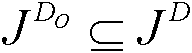


每个装载港口j∈JL具有供应流的集合SSj。每个卸载港口j∈JD具有需求流的集合DSj并且可以具有混合罐流BSj的集合(因此,对于一些卸载港口j∈JD,混合罐流BSj的集合可以为空)。集合SS和集合DS分别代表所有供应流的集合和所有需求流的集合。集合BS代表所有混合罐流的集合。此外,集合





让Q代表所有追踪属性的集合,并且让其子集


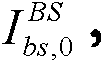


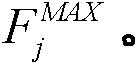


用于需求流的卸载产品的价值计算是有点复杂的。每个需求流ds具有其用于每个属性q∈Q的标准规范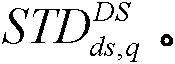
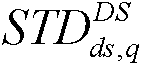





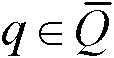

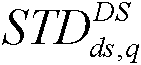
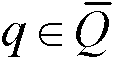


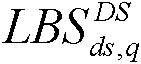
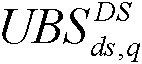
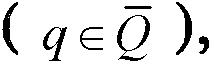


集合V是可用于运输的船的集合。船可以停在多个装载港口,从多个供应流装载,停在多个卸载港口,并且卸载到多个需求和混合罐流。如果船停在具有多个流的港口,其可以同时从多个流装载或者可以卸载到多个流。每个船v∈V在开始天具有供应流ss的初始库存

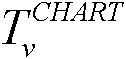

目标是在满足所有要求的同时使利润最大化。通过如下确定利润:将需求流的卸载产品的价值,加上所有混合罐中最终库存的价值,减去在供应流处的装载产品的价值,减去在所有混合罐中初始库存的价值,以及减去在计划范围T上的总运输成本。The goal is to maximize profit while satisfying all requirements. Profit is determined by adding the value of the unloaded product at the demand stream, plus the value of the final stock in all mixing tanks, minus the value of the loaded product at the supply stream, minus the value of the initial stock in all mixing tanks, and Subtract the total transportation cost over planning area T.
时空网络公式化spatio-temporal network formulation
时空网络公式化可以被视为整数多商品流公式化,其中船是商品,节点代表在特定时间的对港口的可能访问。网络具有节点的集合和弧线的集合。所有船共享节点集合,并且每个船具有其自己的弧线集合。节点的集合N包括一个原始节点(0,0),一个汇聚节点(0,T+1),以及规则节点的集合NR={(j,t):j∈J,t∈{1,2,...,T}}。每个船v具有其自己的弧线集合Av。于是弧线集合A=∪v∈VAv。A spatio-temporal network formulation can be viewed as an integer multi-commodity flow formulation, where ships are commodities and nodes represent possible visits to ports at a particular time. A network has a collection of nodes and a collection of arcs. All ships share a set of nodes, and each ship has its own set of arcs. The node set N includes an original node (0, 0), a sink node (0, T+1), and a set of regular nodes N R = {(j, t): j∈J, t∈{1, 2 ,...,T}}. Each boat v has its own set of arcs A v . Then the set of arcs A=∪ v∈V A v .
每个弧线集合Av包括五种类型的弧线。行驶弧线(v,(j,t),(j′,t+Tjj′),使得v∈V,(j,t)∈NR,(j′,t+Tjj′)∈NR,并且j≠j′代表船v从从港口j行驶到港口j′且在时间t离开在时间t+Tjj’到达的可能性。让
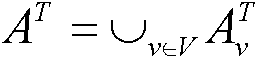

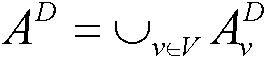


图3示出了上述网络结构的实例。在本实例中,通过到达港口i在时间t2将船输入到系统。在经过了几天的滞期之后,其在时间tT-1访问港口j并且离开系统。Fig. 3 shows an example of the above network structure. In this example, a ship is entered into the system at time t2 by arriving at port i. After several days of demurrage, it visits port j at time t T-1 and leaves the system.
具有n=(j,t)∈NR,
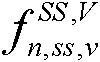
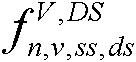

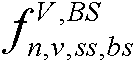

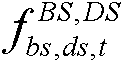

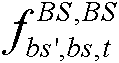
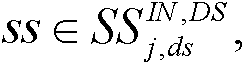

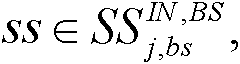


连续决策变量





用于每个a∈Av的二进制变量xa在船v使用弧线a时取值为1、否则取值为0。用于每个船v∈V和每个节点n=(j,t)∈NR的二进制变量zn,v指示在时间t如果船v是否从港口j装载产品以及如果j∈JD船v是否将产品卸载到港口j。如果在时间t没有发生来自混合罐bs的输出,则具有n=(j,t)∈NR,以及bs∈BSj的二进制变量


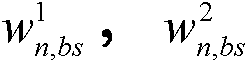

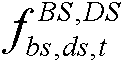

本部分的剩余部分呈现用于METEOROID的基于时空网络的公式。注意到在数学编程模型的公式中进行下面的假设:The remainder of this section presents the spatio-temporal network-based formulation for METEOROID. Note that the following assumptions are made in the formulas of the Mathematical Programming Model:
库存和属性规范基于结束天的价值Inventory and property specifications based on end-of-day values
每天每个港口仅有一个船泊位(装载、卸载和混合罐)Only one boat berth per port per day (loading, unloading and mixing tanks)
来自船舶的装载和卸载时间包括在Tjj′中Loading and unloading times from ships are included in T jj′
对于混合罐允许在同一天发生多个输入和多个输出For mixing tanks allowing multiple inputs and multiple outputs to occur on the same day
对于混合罐不允许在同一天发生多个输入和多个输出Multiple inputs and multiple outputs on the same day are not allowed for mixing tanks
允许现货到混合罐的馈送以及混合罐到混合罐的传输Allows spot-to-mix tank feeding and mix-tank-to-mix tank transfers
对需求流的所有输入必须单独地符合规范All inputs to the demand stream must individually conform to the specification
对需求流的所有输入被单独地估值All inputs to the demand stream are valued individually
第一组公式表示流保持限制。The first set of formulas represent flow hold limits.
下一个限制集合确保在由用户-公司拥有的和/或运营的装载港口的供应流以及在卸载港口的需求流的库存平衡。The next set of constraints ensures inventory balance of supply flow at loading ports owned and/or operated by the user-company and demand flow at unloading ports.
下一个限制集合确保在卸载港口的混合罐流的库存和属性规范的平衡。注意到在限制(7)的右手侧上的由t-1而不是t索引的属性规范以保持与追踪相邻天的库存和规范的一致性。The next set of constraints ensures a balance of inventory and property specifications for the blended tank stream at the port of discharge. Note the attribute specification indexed by t-1 instead of t on the right-hand side of restriction (7) To maintain consistency with tracking inventory and specifications from adjacent days.
下面的限制集合通过强加在相同天t可以发生仅(多个)输入或仅(多个)输出或没有输入或输出的条件,排除在相同天t发生的(多个)输入和(多个)输出到任意混合罐的可能性。The following set of constraints excludes input(s) and () Possibility of output to any mixing tank.


每个在使用的混合罐必须租赁一些持续时间。典型地,罐的租赁将以月为基准,尽管更长的合同也是可能的。让集合L代表用于所有混合罐的租赁集合。此外,让集合LM代表在整个建模时间段上的历月m的集合,并且让TMm代表月m中的日历天t的集合。最后,让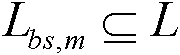


下面的限制代表必须为每个混合罐保持的租赁限制以用于使用混合罐。The limits below represent the lease limits that must be maintained for each mix tank in order to use the mix tank.
lnmm,ls,ls′≤lum,ls,
lnmm,ls,ls′≤lum+1,ls,
lum,ls+lum+1,ls≤lnmm,ls,ls′+1,
下面的限制集合确保用于船的库存平衡。The following set of limits ensures that the inventory used for the ship is balanced.
仅当船在所述港口才可以发生船的装载和卸载。如果发生了装载和卸载,将整体装载数量或整体卸载数量(仅通过船)强加在港口指定的最小和最大数量之间。这些是通过下述限制来代表的。The loading and unloading of the ship can only take place while the ship is in said port. If loading and unloading has occurred, impose the overall loaded quantity or the overall discharged quantity (by ship only) between the minimum and maximum quantities specified by the port. These are represented by the constraints described below.
在同一时间在同一港口仅有一个船可以停止以用于装载或卸载。下面的限制集合确保这是确实的。如果多于一个的船可以在一个时间停在一个港口,可以根据需要来适当地调整右手侧。Only one ship may stop at the same port at a time for loading or unloading. The following set of constraints ensures that this is true. If more than one ship can be in a port at a time, the right hand side can be adjusted appropriately as needed.
下面的限制确保船在港口j不能装载/卸载多于Uj次。The following constraints ensure that a ship cannot be loaded/unloaded more than U j times at port j.
每个混合罐流具有每日平均的较低和较高属性规范(分别具有bs∈BS,t∈{1,2,...,T}以及q∈Q的LBAVGbs,q,t和UBAVGbs,q,t),其在每个时间段t(例如,每天)结束时必须满足。注意的是,这些约束不强加在任意时间点进入罐的任意个别流上的任何规范。此外,每个需求流具有硬的较高和较低属性规范,或约束。这些硬约束代表产品的可接受性。下面的限制集合确保在每个船舶上混合的以及卸载到需求流的供应流,以及卸载到需求流的每个个别混合罐流满足这些属性规范。注意到,从混合罐流bs卸载到需求流ds的产品的数量必须取由和
下面的约束集合处理在船舶上混合的卸载产品的规范调整估值。The following set of constraints deals with specification adjusted valuations of unloaded products mixed on board the ship.
下面的限制集合处理从混合罐流到需求流的卸载产品的规范调整估值。The set of constraints below deals with the specification adjustment estimates for unloaded product from the mix tank stream to the demand stream.
下面的限制集合强加草案限制。在不损失一般性的情况下,假设船v的草案限制小于或等于船v的容量 The following set of restrictions impose draft restrictions. Without loss of generality, assume that the draft limit of ship v is less than or equal to the capacity of ship v
可以根据下述内容来考虑过剩计算。在不损失一般性的情况下,假设船的容量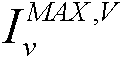
下面的限制集合确保船不会携带超过其货物容量的产品。The set of constraints below ensures that a ship does not carry more product than its cargo capacity.
最后的限制集合提供在所有变量上的约束。The final set of constraints provides constraints on all variables.
xa∈{0,1},
zn,v∈{0,1},
ybs,ds,t∈{0,1},
目标是使利润最大。由卸载产品的价值,加上混合罐的最终库存的价值,减去装载产品的价值,减去初始混合罐库存的价值,以及减去所有运输相关成本来确定利润。The goal is to maximize profit. Profit is determined by the value of the unloaded product, plus the value of the final inventory in the mixing tank, less the value of the loaded product, less the value of the initial mixing tank inventory, and less all transportation related costs.
解算技术Solving technology
提出分解方法以处理这种大规模混合整数非线性规划(MINLP)问题。特别地,这种方法具有两个阶段。第一阶段将MINLP转换成固定整数线性规划(MILP)子问题并且求解作为结果的MILP子问题。用于MILP子问题的解算过程包括结构启发、基于优化的较大规模邻阈搜索过程、以及非线性编程(NLP)子问题的解算。第二阶段求解MILP问题的序列。A decomposition method is proposed to deal with this large-scale mixed integer nonlinear programming (MINLP) problem. In particular, this method has two stages. The first stage converts MINLP into fixed integer linear programming (MILP) subproblems and solves the resulting MILP subproblems. Solving procedures for MILP subproblems include structural heuristics, optimization-based larger-scale neighbor-threshold search procedures, and nonlinear programming (NLP) subproblem solving. The second stage solves the sequence of MILP problems.
从MINLP转换到MILPConvert from MINLP to MILP
由于在涉及混合罐规范库存和估值的限制中存在双线性项目,获得的METEOROID模型在连续空间内是非线性的且非凸的。这将困难引入解算方法,并且用于将原始MINLP问题转换到MILP的定制方法已经被开发以处理这些问题。这种变换,其将在下面介绍,确保是否发现对变换的MILP模型的可行解算,然后所述解算必然对于原始MINLP问题是可行的。通过求解通过定制启发的获得的转换的MILP问题,从而可以获得我们原始的MINLP问题的好的解算。The obtained METEOROID model is nonlinear and non-convex in the continuous space due to the presence of bilinear items in the constraints involving the mixed tank specification inventory and valuation. This introduces difficulties into the solution methods, and custom methods for translating the original MINLP problem to MILP have been developed to handle these problems. This transformation, which will be introduced below, ensures that if a feasible solution to the transformed MILP model is found, then said solution must be feasible to the original MINLP problem. A good solution to our original MINLP problem can be obtained by solving the transformed MILP problem obtained through customization heuristics.
按照一旦卸载开始直到实质上所有的已经在罐中的材料被完全卸载为止不能将新的材料输入到罐中的方式,转换限制模型中混合罐的功能。这样导致用于每个罐的多个“构建和抽出循环”,其中循环典型地由单调地增加罐中的库存、然后单调地降低库存直到罐被完全抽空表征。为了所期望的含义的清楚,在所属领域中可以理解的是,混合罐完全空不一定意味着在卸载之后罐是完全空的(干的)。在这个情形中的术语“完全清空”理解为表示,当用特定罐处理特定液体时,在罐中的液体被卸载到常规或通常的最低等级。在这点之外的罐的进一步清空可能由于多种原因而不实际,所述原因包括:液体的泡点以及其在用于泵浦的净可用正(positive)吸头上的影响、喷嘴位置、卸载或装载泵的吸头要求、浮顶上的限制(如果是这样装备的)、考虑可能的地面或表面水的罐完整性要求、罐中的沉淀或固体残渣、射到空气中的罐烃、罐等级指示符或控制限制等。在卸载已经完成之后罐中剩下的液体通常称为罐的“后跟”。在完全清空罐之后后跟的数量将根据每个罐而变化,并且对于指定的罐每天可微小的变化。Conversion limits the functionality of the mixing tank in the model in such a way that no new material can be fed into the tank once unloading begins until substantially all material already in the tank is completely unloaded. This results in multiple "build and pump cycles" for each tank, where a cycle is typically characterized by monotonically increasing the inventory in the tank, then monotonically decreasing the inventory until the tank is completely evacuated. For clarity of intended meaning, it is understood in the art that a mixing tank being completely empty does not necessarily mean that the tank is completely empty (dry) after unloading. The term "completely emptied" in this context is understood to mean that when a particular tank is used to treat a particular liquid, the liquid in the tank is discharged to the usual or usual minimum level. Further emptying of the tank beyond this point may not be practical for a number of reasons including: the bubble point of the liquid and its effect on the net available positive suction head for the pump, nozzle position , suction head requirements for unloading or loading pumps, restrictions on floating roofs (if so equipped), tank integrity requirements considering possible ground or surface water, sediment or solid residue in tanks, tanks projected into the air Hydrocarbons, tank grade indicators or control limits, etc. The liquid remaining in the tank after unloading has been completed is commonly referred to as the "heel" of the tank. The number of heels after the tank is completely emptied will vary per tank and may vary slightly from day to day for a given tank.
为了实现这种转换,需要定义新的变量,并且移除包含双线性项的MINLP模型中的所有限制,以及增加如下所述的限制集合。如果罐bs在时间t是空的,则二进制变量zzbs,t可以取值为1,否则其取值为0。如果在时间t已经发生从混合罐bs到需求流ds的卸载并且导致在时间t罐的清空,则范围为[0,1]的连续变量wwbs,ds,t需要取值为1(否则其需要取值为0);将这些卸载称为“清空卸载”。形式上,wwbs,ds,t=ybs,ds,t∧zzbs,t。如果在时间t没有发生从混合罐bs到任何需求流ds的“清空卸载”,则范围为[0,1]的连续变量uubs,t需要取值为1(否则其需要取值为0)。形式上,

vvbs,ds,t,t′=ybs,ds,t∧∨ds′wwbs,ds′,t′∧t′<t″<tuubs,t″。vv bs, ds, t, t′ = y bs, ds, t ∧∨ ds′ ww bs, ds′, t′ ∧ t′<t″<t uu bs, t″ .
在转换的模型中需要下述限制以一起连接之前定义的各个变量。The constraints described below are required in the transformed model to connect the previously defined variables together.
wwbs,ds,t≤ybs,ds,t,
wwbs,ds,t≤zzbs,t,
ybs,ds,t+zzbs,t≤1+wwbs,ds,t,
uubs,t+wwbs,ds,t≤1,
xxbs,ds,t≤ybs,ds,t,
xxbs,ds,t≤uubs,t′,
vvbs,ds,t,t′≤ybs,ds,t,
vvbs,ds,t,t′≤uubs,t′,
下一个限制集合强加在混合罐功能上的限制。The next set of restrictions imposes restrictions on the functionality of the mixing tank.


注意,由于转换的性质,其不能适用从混合罐到混合罐的传送。这种缺点在算法的阶段2中处理。Note that due to the nature of the transition, it will not work for transfers from mix tank to mix tank. This shortcoming is dealt with in
构建启发(construction heuristic)construction heuristic
此处开发的构建启发的目标是快速地找到此处描述的转换的MILP问题的可行解算,使得下面提出的改进启发可以使用这个可行解算作为初始开始解算。实现这个目标的蛮力方法将是在完全MILP模型上运行分枝剪枝算法,直到其发现可行解算。这种方法是不可接受的,因为在典型的情况中,由于问题复杂,为了发现可行解算,计算较密集。由于这样,替代使用完整模型来发现可行解算,按下述方式构建简化的模型,使得任意它的可行解算也是原始完整模型的可行解算。小于完整模型的简化模型增加更快找到可行解算的概率。在实践中已经成功地使用简化的模型来找到初始解算。本发明设想设计构建启发的其他方式。同样,由于不同的初始解算可以产生不同的最终解算、可以使用多个构建启发并且比较最终解算。The goal of the construction heuristic developed here is to quickly find a feasible solution to the transformed MILP problem described here so that the improvement heuristic presented below can use this feasible solution as an initial starting solution. A brute-force approach to achieve this goal would be to run the branch-pruning algorithm on the full MILP model until it finds a feasible solution. This approach is unacceptable because in typical cases, due to the complexity of the problem, it is computationally intensive to find a feasible solution. Because of this, instead of using the full model to find feasible solutions, a simplified model is built in such a way that any of its feasible solutions are also feasible solutions of the original full model. A simplified model that is smaller than the full model increases the probability of finding a feasible solution faster. Simplified models have been used successfully in practice to find initial solutions. The present invention contemplates other ways of designing construction heuristics. Also, since different initial solutions may result in different final solutions, multiple construction heuristics may be used and the final solutions compared.
用于构建启发的简化模型的构思是简单的:代替运行每个船能够访问任何装载港口,基于用于装载港口的生产调度以及用于船的可用日期限制用于每个船的可访问装载港口。下面的算法1示出了如何决定在构建启发的简化模型中哪个船可以访问哪个装载港口。通过参数AF来控制简化模型的大小,其对于用于构建启发的侵占因素(aggressiveness factor)较小。通过限制可行空间来简化模型复杂度的其它方式包括:例如,限制用于混合罐的装载/卸载时间窗、限制来自或去往混合罐的供应流和/或需求流,或它们的组合。The idea of a simplified model for construction heuristics is simple: instead of running each ship being able to visit any loading port, restrict the accessible loading ports for each ship based on the production schedule for the loading port and the available dates for the ship .

当简化模型中的Accj,v=1时,船v可以访问装载港口j。这意味着,如果Accj,v=0,移除简化模型中所有相关联的弧线。实际中使用的AF的默认值是2,其看起来在大部分时间工作良好。如果简化模型是不可行的,AF增加到3或4以构建用于构建启发的新的简化模型。构建启发将之前引入的分枝剪枝算法应用到这个简化模型中。其在第一可行解算处停止或在预定运行时间结束仍没有发现可行解算之后停止。这些过程一起构成构建启发。可能的是,即使原始模型是可行的,构建启发无法找到初始解算。然而,在实际中,这很少发生。当构建启发失效时,通过应用外部近似算法将原始MINLP模型用于找到初始可行解算。When Acc j,v = 1 in the simplified model, ship v can visit loading port j. This means that if Acc j,v = 0, all associated arcs in the simplified model are removed. The default value of AF used in practice is 2, which seems to work well most of the time. If a reduced model is not feasible, the AF is increased to 3 or 4 to build a new reduced model for construction heuristics. Construction heuristics apply the previously introduced branch-pruning algorithm to this simplified model. It stops at the first feasible solution or after no feasible solution has been found at the end of a predetermined run time. Together these processes constitute the build heuristic. It is possible that construction heuristics cannot find an initial solution even though the original model is feasible. However, in practice, this rarely happens. When the construction heuristic fails, the original MINLP model is used to find an initial feasible solution by applying an external approximation algorithm.
时间/体积行程安排优化Time/Volume Scheduling Optimization
当可行解算是可得的,可以基于可行解算通过每个船的固定路线信息来生成时间/体积行程安排(TVR)优化问题。TVR算法寻求连续求解具有不同固定路线的各种TVR优化问题。具有各种方式来进行上述内容,并且我们提供我们当前的实现方式。When a feasible solution is available, a time/volume routing (TVR) optimization problem can be generated based on the feasible solution with fixed route information for each ship. The TVR algorithm seeks to continuously solve various TVR optimization problems with different fixed routes. There are various ways to do the above, and we provide our current implementation.
以xa为可行解算,通过xa我们可以生成TVR优化问题。通过将下列限制增加到原始问题,可以为每个船固定路线信息Taking x a as the feasible solution, we can generate TVR optimization problem through x a . The route information can be fixed for each boat by adding the following constraints to the original problem
以及根据TVR算法的阶段的一些、全部或无下列限制。And some, all or none of the following restrictions according to the phases of the TVR algorithm.
下面的算法2介绍TVR算法。注意,通过使用CPLEX中的解算修正(polish)选项来启发地完成上述子问题的解算。这是因为通过准确方法确保在算法的每个子步骤最优可能变得非常昂贵,特别是原始问题比较大的情况。
NLP子问题NLP sub-questions
一旦从转换的混合整数线性规划(MILP)子问题获得可行解算,将所述解算固定在原始混合整数非线性规划(MINLP)问题并且求解非线性规划(NLP)子问题。注意,在这个阶段获得的所有二进制和连续变量的值被固定在MINLP中。然而,由于某些变量并不需要(但是仍出现在原始MINLP中),则从转换的MILP问题中移除所述变量,例如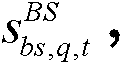
迭代双线性固定iterative bilinear fixation
回顾的是,METEOROID的整体算法包括两个阶段。第一阶段在前述NLP子问题的解算结束,并且第二阶段仅当从阶段1获得的解算使用混合罐(即,具有从一些混合罐到一些需求流的卸载)之后才开始;否则,跳过阶段2并且整体算法终止。To recall, the overall algorithm of METEOROID consists of two stages. The first phase ends at the solution of the aforementioned NLP subproblems, and the second phase starts only after the solution obtained from
假设实际上在阶段1的解算中使用一些混合罐,那么我们试图通过移除之前施加在混合罐功能上的限制在整体算法的阶段2获得更好的解算。因此,我们现在允许混合罐是全功能的。为此,开发了迭代双线性固定(IBF)过程。后者涉及在原始MINLP问题中固定所有双线性项的一侧(即,变量中的一个)以及求解结果MILP的迭代过程。作为当前实现的该过程,在两个步骤间迭代。在第一步骤中,将变量bs∈BS,q∈Q,t∈{1,2,...,T}固定到它们的来自之前的解算和求解的结果MILP的值。在第二步,将变量

整体解算过程Overall solution process
通过结合转换步骤、构建启发、时间体积行程安排(TVR)过程、NLP子问题的解算、以及迭代双线性固定(IBF)过程,对问题设计基于有效优化的解算方法。解算方法中的第一步是将非线性非凸起MINLP METEOROID模型转换成MILP问题。然后通过利用启发序列求解所述MILP问题来进行所述解算方法。首先,运行构建启发。如果其发现可行解算,则应用TVR算法以改进解算。在TVR过程终止时,在这个点上获得的解算用于将MINLP中的所有等价变量固定为它们的值。然后求解结果NLP,并且检查解算以查看是否使用了混合罐。如果在这种情况下,整个算法移动到阶段2,并且IBF过程被示例。后者终止于比开始的解算更好的解算,或者如果无法改进它则返回所述解算。图3和图4示出了说明整体算法的流程图。可以将时间限制强加到构建启发、TVR和IBF过程中的子问题,以保证整体过程在合理的时间量处终止。这些时间限制可以通过计算经验来进行调整。时间空间网络模型:用于实际要求的变型By combining transformation steps, construction heuristics, time-volume routing (TVR) procedures, NLP subproblem solving, and iterative bilinear fixation (IBF) procedures, an efficient optimization-based solution method is designed for the problem. The first step in the solution method is to convert the nonlinear non-convex MINLP METEOROID model into a MILP problem. The solution method is then performed by solving the MILP problem using a heuristic sequence. First, run the build heuristic. If it finds a feasible solution, it applies the TVR algorithm to improve the solution. The solution obtained at this point is used to fix all equivalent variables in MINLP to their values at the termination of the TVR process. Then solve the resulting NLP, and check the solve to see if a mixing tank was used. If this is the case, the whole algorithm moves to
在实际中存在之前引入的模型的许多变型。本部分的目的是讨论如何将这些实际变型结合到模型中。第三方港口与用户-公司拥有的或运营的港口不同,这是因为没有追踪供应和需求流库存等级。对于在第三方港口的每个流,给出时间窗以及用于每个时间窗装载或卸载可用产品的量。让


现货市场流是第三方流的极端情况,因为它们的时间窗基本上是整个时间范围。类似于第三方流,对于现货市场流,不追踪库存,并且在现货市场流存在每天的用于装载的最大量
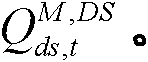
可以容易地在模型中考虑在解算中使用的船的数量的下限NLBV和上限NUBV。A lower limit N LBV and an upper limit N UBV of the number of ships used in the solution can easily be considered in the model.
要运输的产品的最小数量M可以被施加为可选限制。下面的限制公式增加这种考虑。A minimum quantity M of products to be shipped may be imposed as an optional limit. The following constraint formulas add to this consideration.
对于每个船v∈V,可以具有滞期限制DWv。通过下式来表示:For each ship v∈V, there may be a demurrage limit DW v . Expressed by the following formula:
每个船v∈V可能需要装载基准量的至少PCTv百分比。为了满足这种要求,我们定义限制集合如下:Each ship v ∈ V may need to be loaded with at least PCT v percent of the reference volume. To meet this requirement, we define the set of constraints as follows:
港口可以具有对连续装载和卸载间的最小时间量的特殊要求。让港口j需要任意连续装载或卸载之间的至少

库存保持成本还可以被增加到模型。由于产品可以从第三方港口和现货市场购买,这些购买的数量和时间可能影响这种成本。如果所有的港口是用户-公司拥有的,由于生产和需求简档在模型中是固定输入并且不能被控制为决定变量,因此不需要考虑库存保持成本。让HL代表在装载港口的产品的每天每个单元的库存保持成本。让HD代表在卸载港口的产品的每天每个单元的库存保持成本。让HS代表在船上的产品的每天每个单元的库存保持成本。让HTK代表在混合罐中的产品的每天每个单元的库存保持成本。应当注意的是,在不对模型增加任何附加复杂性的情况下,可以容易地形成产品和时间专用的这些值。下面的项需要被增加到目标函数,以考虑库存保持成本。Inventory holding costs can also be added to the model. As products can be purchased from third-party ports and spot markets, the volume and timing of these purchases can affect this cost. If all ports are user-firm owned, inventory holding costs need not be considered since production and demand profiles are fixed inputs in the model and cannot be controlled as determining variables. Let H L denote the inventory-keeping cost per unit per day of product at the port of loading. Let HD denote the inventory-keeping cost per unit per day of product at the port of discharge. Let H S denote the inventory holding cost per unit per day of the product on board. Let H T K denote the inventory holding cost per unit per day of product in the mixing tank. It should be noted that these values can be easily formed product and time specific without adding any additional complexity to the model. The following terms need to be added to the objective function to account for inventory holding costs.
直到这一点,已经假设仅现货船可以用于VGO的运输。然而,还可以通过驳船来递送散装产品,这通过模型说明。Up until this point, it had been assumed that only spot ships could be used for VGO shipments. However, it is also possible to deliver bulk products by barge, which is illustrated by the model.
有时存在经济机会来确定是否将船用作Panamax或Aframsx。依赖于所述决定,关于船的经济和限制可以非常不同。解决这种问题的一种方式是利用每个选项求解问题两次,并且选择更好的选项。解决这种问题的另一方式是将这个选项作为决定变量结合到模型中。这个选项可以是进一步概述的。让

该附加(addendum)将影响构建启发的性能。This addendum will affect the performance of build heuristics.
延伸到供应侧混合罐Extension to supply side mixing tank
将之前讨论的算法和数学模型的说明应用到需求侧仅存在混合罐的情况中。在本部分,旨在将公式和算法还延伸到适应供应侧混合罐。为此,必须定义新的变量。让集合代表仅在供应侧存在的混合罐集合。然后,具有n=(j,t)∈NR,j∈JD,bs∈BSSPL以及ds∈DSj的连续变量

此外,需要修改一些限制以允许供应侧罐的附加灵活性,并且我们简要介绍这些限制中的一些。尽管我们省略了细节,但可以按类似的方式来修改其它限制,因为这可以按简单方式来实现。Furthermore, some constraints need to be modified to allow additional flexibility for supply-side tanks, and we briefly describe some of these constraints. Although we omit the details, other constraints can be modified in a similar manner, since this can be achieved in a simple manner.
例如,下一个限制集合确保在装载(供应侧)和卸载(需求侧)港口的混合罐流的库存和属性规范平衡。For example, the next set of constraints ensures inventory and attribute specification balance for mixed tank flows at loading (supply side) and unloading (demand side) ports.
对于算法,此处可以使用在部分3中开发的相同的解算方法。注意的是,在前述方法的阶段1中,由于在罐之间不会进行材料的运送,任意阶段1的解算必然不具有在供应侧上的罐和在需求侧的罐之间的材料运送(另外,仅在供应侧或仅在需求侧的罐之间没有材料的移动)。然而,如之前所述的,我们试图在算法的阶段2中处理这个缺点。For the algorithm, the same solver developed in Section 3 can be used here. Note that in
计算机应用和设备Computer Applications and Devices
在某些实施方式中,本发明实现为保存在计算机可读介质中的计算机应用。计算机应用在常规计算机处理器(例如,3GHz单处理器个人计算机)上运行。处理器可以但不是必须为单个单独处理器。处理器还可以是彼此直接连接的交互式处理器的集合或者通过计算机网络彼此间接连接的交互式处理器的集合(例如,局域网络或国际互联网)。In some embodiments, the invention is implemented as a computer application stored on a computer readable medium. The computer application runs on a conventional computer processor (eg, a 3GHz uniprocessor personal computer). A processor can, but need not be, a single individual processor. A processor can also be a collection of interactive processors connected directly to each other or indirectly to each other through a computer network (eg, a local area network or the Internet).
计算机应用包括定义计算、模拟和算术模型以及可选地基于一个或多个优化的解算方法的代码。应用进一步包括包括在优化求解器引擎上调用的代码,所述优化求解器引擎通过精确方法和/或通过一个或多个启发集成到应用或与应用连接以求解算术模型。优选,使用建模系统软件来编写代码,所述软件例如AIMMS、GAMS、ILOG OPL、AMPL或XPress Mosel。然而,还可以使用任何计算机编程语言(包括,C++)来编写代码。在一个实施方式中,使用AIMMS来编写应用并且使用AIMMS用户界面。优选,求解器能够求解线性规划和混合整数(线性)规划问题。优选的求解器包括CPLEX、XPress、KNITRO和XA。The computer application includes code defining calculation, simulation and arithmetic models and optionally based solution methods on one or more optimizations. The application further includes code that is invoked on an optimization solver engine integrated into or connected with the application to solve the arithmetic model by exact methods and/or by one or more heuristics. Preferably, the code is written using modeling system software such as AIMMS, GAMS, ILOG OPL, AMPL or XPress Mosel. However, the code can also be written in any computer programming language, including C++. In one embodiment, the application is written using AIMMS and uses the AIMMS user interface. Preferably, the solver is capable of solving linear programming and mixed integer (linear) programming problems. Preferred solvers include CPLEX, XPress, KNITRO and XA.
在优选的实施方式中,使用Excel界面来完成数据输入和存储,并且用AIMMS建模语言来编写程序,并且在使用精确方法或使用一个或多个启发或使用其组合的程序中调用CPLEX求解器以求解算术建模问题。在本实施方式中,程序使用用于执行和输出的AIMMS界面。然后,可以将结果传送(例如,输出或复制)回Excel表并且作为Excel文件进行存储。可替换地,可以在AIMMS中存储和管理结果。In a preferred embodiment, data entry and storage is done using the Excel interface, and the program is written in the AIMMS modeling language, and the CPLEX solver is invoked in the program using the exact method or using one or more heuristics or using a combination thereof to solve arithmetic modeling problems. In this embodiment, the program uses the AIMMS interface for execution and output. The results can then be transferred (eg, exported or copied) back to an Excel sheet and stored as an Excel file. Alternatively, results can be stored and managed in AIMMS.
在某些实施方式中,配置应用以足够快地提供解算(例如,小于三十分钟)以支持在实时场景中做出决定,其中商业参数可能快速地变化并频繁重新优化或者需要“如果”情况分析。典型的复杂问题具有至少4个供应位置、至少4个需求位置、至少10个交通工具的队伍、每个供应位置至少一个生产流、每个需求位置至少一个需求流、以及大约一个月的计划时间段。在一些情况中,复杂的问题还具有至少一个现货购买位置和至少一个现货销售位置。In some embodiments, the application is configured to provide solutions quickly enough (e.g., less than thirty minutes) to support decision-making in real-time scenarios where business parameters may change rapidly and require frequent re-optimization or "if" Situation analysis. A typical complex problem has at least 4 supply locations, at least 4 demand locations, a fleet of at least 10 vehicles, at least one production flow per supply location, at least one demand flow per demand location, and a planning time of about one month part. In some cases, the complex issue also has at least one spot buy location and at least one spot sell location.
根据求解混合整数非线性规划模型(MINLP)的方法,本发明可以使用现有技术中已知的任意适合的松弛和/或分解方法。一个这样的技术是将MINLP分解为混合整数线性规划(MILP)子问题,并且可选地非线性规划(NLP)子问题。其中将MINLP分解成MILP子问题和NLP子问题,可以按协作方式(例如,迭代)来求解结果MILP和NLP子问题。Depending on the method of solving a Mixed Integer Nonlinear Programming Model (MINLP), the present invention may use any suitable relaxation and/or decomposition method known in the art. One such technique is to decompose MINLP into mixed integer linear programming (MILP) subproblems, and optionally nonlinear programming (NLP) subproblems. Where MINLP is decomposed into MILP sub-problems and NLP sub-problems, the resulting MILP and NLP sub-problems can be solved in a collaborative manner (eg, iteratively).
可以通过MINLP的线性近似来公式化(formulate)MILP子问题。可以通过现有技术中已知的任意合适技术来求解结果MILP子问题。其中MILP子问题是负载且难以求解的,可以使用一个或多个启发算法来获得在合理的时间段期间的次最佳、但仍有用的解算。例如,可以通过构建启发来求解MILP子问题,其中简化了模型的复杂度并且为简化的MILP子问题获得初始可行解算。典型地,通过限制每个可用船舶可以访问的供应港口和/或需求港口来创建构建启发。如上所述,本发明还可以使用各种其它方法通过限制可行空间来简化模型复杂度。然后,使用求解器来确定简化模型的可行解算。由于构建启发代表更为复杂的建模问题的子集,简化模型的可行解算是更为复杂问题的可行解算。如果无法找到简化模型的可行解算,那么可以运行完全MILP模型来找到初始可行解算。MILP subproblems can be formulated by linear approximations of MINLP. The resulting MILP subproblems can be solved by any suitable technique known in the art. Where MILP subproblems are loaded and difficult to solve, one or more heuristic algorithms may be used to obtain a sub-optimal, but still useful, solution during a reasonable period of time. For example, MILP subproblems can be solved by constructing heuristics in which the complexity of the model is reduced and initial feasible solutions are obtained for the simplified MILP subproblems. Typically, build heuristics are created by limiting the supply ports and/or demand ports that each available ship can visit. As mentioned above, the present invention can also use various other methods to simplify the model complexity by limiting the feasible space. Then, use the solver to determine a feasible solution to the simplified model. Since construction heuristics represent a subset of more complex modeling problems, a feasible solution to the simplified model is a feasible solution to the more complex problem. If a feasible solution for the reduced model cannot be found, then the full MILP model can be run to find an initial feasible solution.
还可能需要降低混合罐的功能以确保对于MILP获得的解算也是MINLP的解算。其中一种方式是将单调函数施加到混合罐。例如,单调函数可以要求一旦卸载开始,每个混合罐在接受新的散装产品之前必须完全清空。It may also be necessary to reduce the power of the mixing tank to ensure that the solution obtained for MILP is also a solution for MINLP. One way is to apply a monotonic function to the mixing tank. For example, a monotonic function may require that once unloading begins, each mixing tank must be completely emptied before accepting new bulk product.
在优选的实施方式中,使用一个或多个改进启发来改进由构建启发发现的初始可行解算。优选,改进启发包括一个或多个,优选地多个,大规模邻阈搜索。例如,解算过程可以包括跟随有多个大规模邻阈搜索的构建启发。优选,按照迭代方式使用每个大规模邻阈搜索直到不再获得可行解算的进一步改进。In a preferred embodiment, one or more improvement heuristics are used to improve the initial feasible solution found by the construction heuristic. Preferably, the improvement heuristic comprises one or more, preferably a plurality, large-scale neighbor-threshold searches. For example, the solution process may include construction heuristics followed by multiple large-scale neighborhood searches. Preferably, each large-scale neighbor threshold search is used iteratively until no further improvements in feasible solutions are obtained.
在一些实施方式中,解算过程使用两个改进启发,它们均包括大规模领域搜索。在本实施方式中,第一启发是由CPLEX提供的“解算修正”函数。尽管CPLEX解算修正的精确细节对于CPLEX是私有的,但是其表现为遗传算法和大规模邻阈搜索的结合。在本实施方式中,第二启发放松可行解算中两个船舶的调度并且根据可行解算来固定剩余的船舶调度。由求解器求解每个改进启发。可以单独或系列使用每个改进启发。当序列操作时,在下一个改进启发中使用来自来第一改进启发的答案。优选,按迭代的方式多次使用每个改进启发,直到不再获得可行解算中的其它改进。In some implementations, the solution process uses two refinement heuristics, both of which involve large-scale domain searches. In this embodiment, the first heuristic is the "resolve fix" function provided by CPLEX. Although the exact details of CPLEX's solution corrections are proprietary to CPLEX, it manifests itself as a combination of genetic algorithms and large-scale neighborhood threshold searches. In this embodiment, the second heuristic relaxes the schedule of two ships in the feasible solution and fixes the remaining ship schedule according to the feasible solution. Each improvement heuristic is solved by the solver. Each improvement heuristic can be used individually or in series. When operating sequentially, the answer from the first improvement heuristic is used in the next improvement heuristic. Preferably, each improvement heuristic is used multiple times in an iterative fashion until no further improvements in feasible solutions are obtained.
可选地,但是优选地,可以通过运行时间和体积优化来进一步改进来自大规模邻阈搜索的解算。优选,在每次调用特定大规模邻阈搜索时自动调用时间和体积优化。在优选的实施方式中,其中使用两个或多个大规模邻阈搜索启发的系列,使得在由系列中最后的启发获得的答案上运行时间和体积优化。时间和体积优化根据来自大规模邻阈搜索的解算固定所有路线,使得路线不再是变量。然而,放松停止的时间以及装载和卸载多少,并且然后最佳地求解。这通常改进解算。如果为MILP子问题获得的解算因此进一步包括混合罐的使用,可以通过如上所述的原始MINLP的迭代双线性固定来进一步改进解算。Optionally, but preferably, the solution from the large-scale neighborhood search can be further improved by run-time and volume optimization. Preferably, the time and volume optimization is automatically invoked each time a specific large-scale neighborhood search is invoked. In the preferred embodiment, where two or more series of large-scale neighbor-threshold search heuristics are used, the time and volume optimization is run on the answer obtained by the last heuristic in the series. Time and volume optimization fixes all routes based on the solution from a large-scale neighborhood search such that routes are no longer variables. However, relax when to stop and how much to load and unload, and then solve optimally. This usually improves the solution. If the solution obtained for the MILP subproblem thus further includes the use of mixing tanks, the solution can be further improved by iterative bilinear fixation of the original MINLP as described above.
在某些实施方式中,方法可以进一步包括通过基于从MILP子问题获得的解算固定MINLP(例如,二进制决策变量)的整数分量来公式化非线性规划(NLP)子问题。可以使用现有技术中已知的任意合适NLP求解器来求解NLP子问题。在一些情况中,其中解算进一步包括混合罐的使用,NLP子问题解算可以进一步通过如上所述的原始MINLP的迭代双线性固定来改进。In certain embodiments, the method may further comprise formulating a nonlinear programming (NLP) subproblem by solving integer components of a fixed MINLP (eg, binary decision variables) based on the solution obtained from the MILP subproblem. The NLP subproblems can be solved using any suitable NLP solver known in the art. In some cases, where the solution further includes the use of mixing tanks, the NLP subproblem solution can be further improved by iterative bilinear fixation of the original MINLP as described above.
在一些情况中,上面介绍的各种算法中的一个或多个可以按迭代方式来使用,以达到解算(无论是最佳的或接近最佳的)。迭代可以继续直到没有解算的其他改进为止。In some cases, one or more of the various algorithms introduced above may be used in an iterative fashion to arrive at a solution (whether optimal or near optimal). Iterations can continue until there are no other improvements to the solution.
结束语conclusion
虽然本说明使用各种实例以及示例性公式来完全说明本发明的概念,但没有对本发明进行限制。对所公开的发明的各种修改、调整和应用对于本领域的普通技术人员来说是明显的并且落入附加权利要求的范围内。While this description uses examples and exemplary formulas to fully illustrate the concepts of the invention, the invention is not limited thereto. Various modifications, adaptations and applications to the disclosed invention will be apparent to those skilled in the art and are intended to be within the scope of the appended claims.
使用的命名Name used
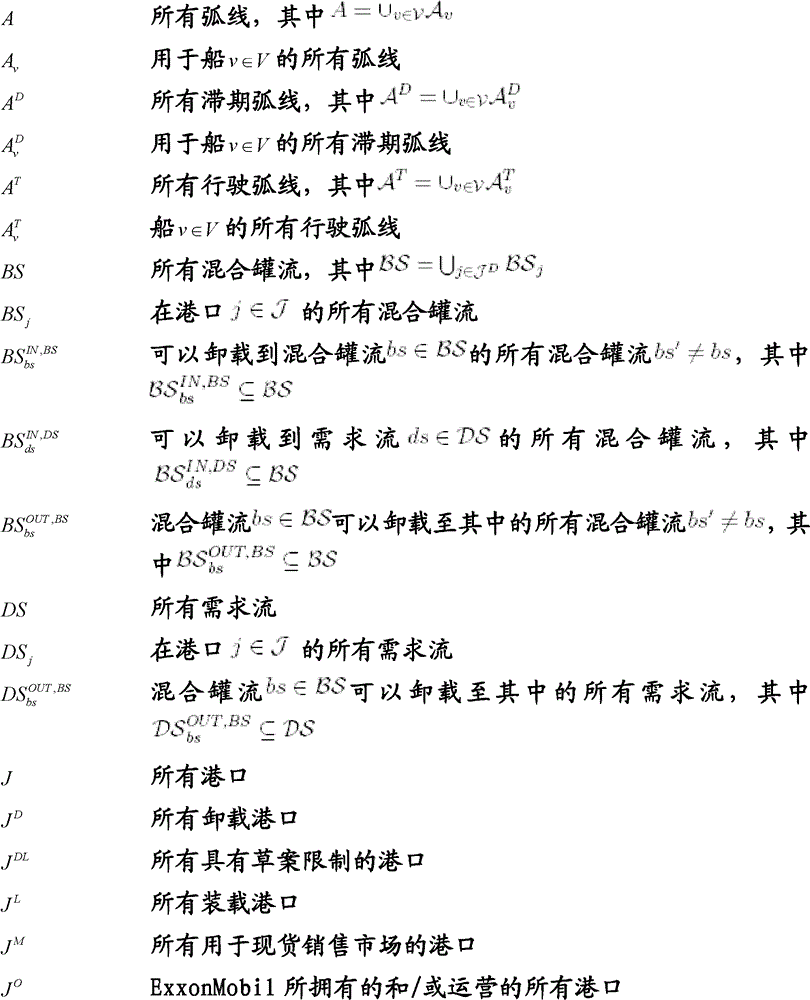
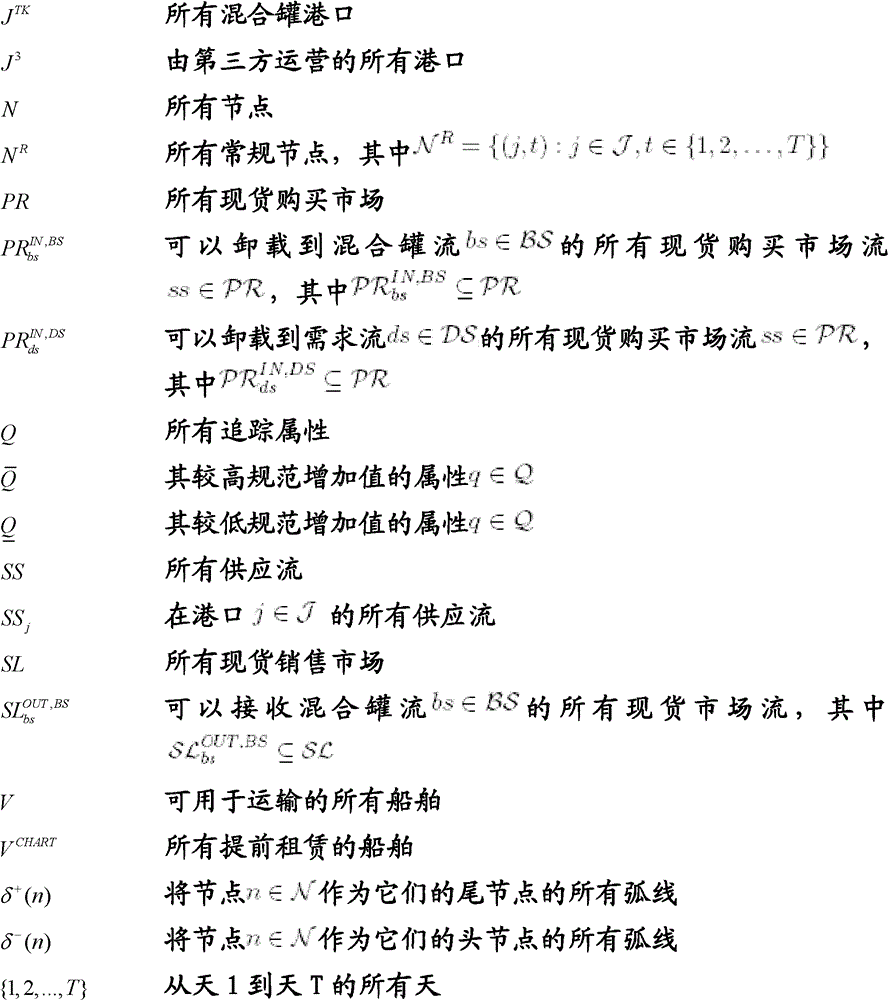
索引index
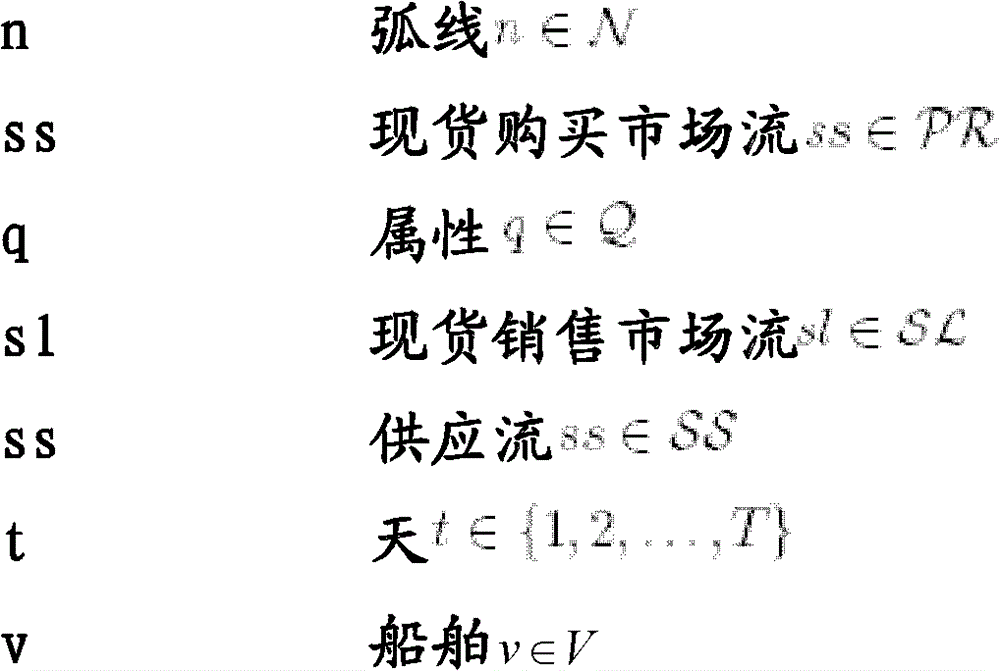
参数parameter
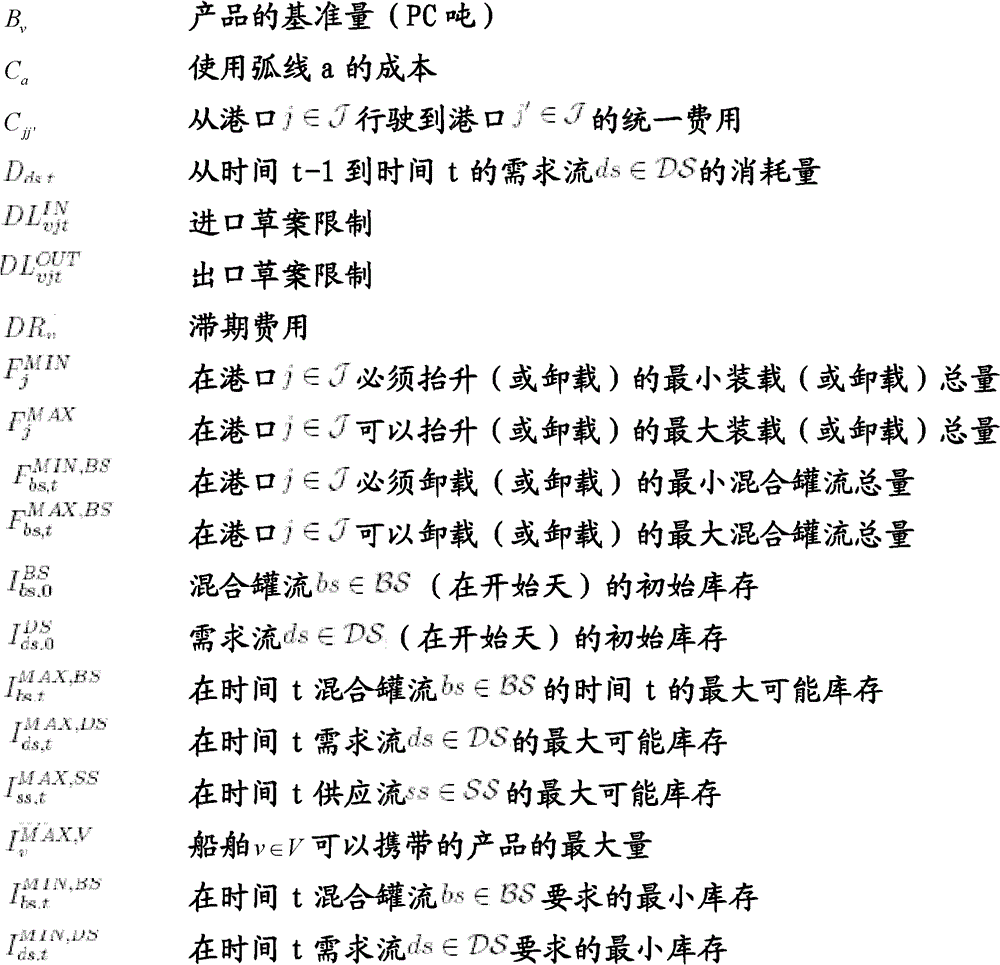
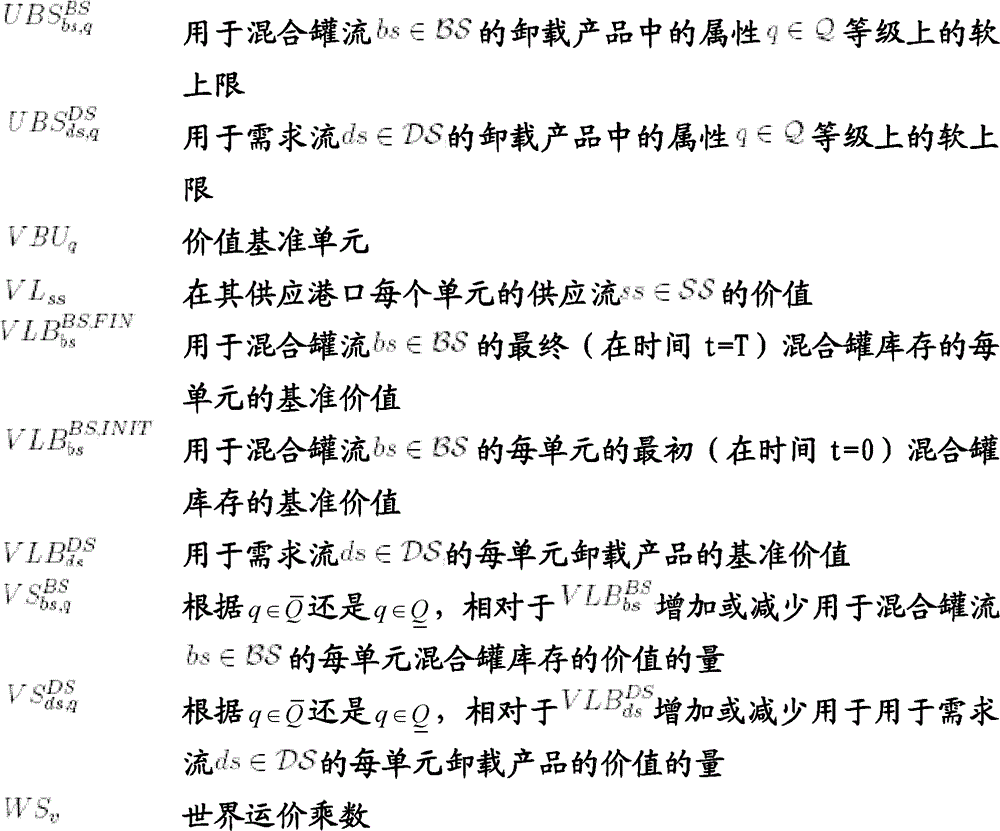
连续变量continuous variable


二进制变量binary variable


Claims (28)
Applications Claiming Priority (3)
| Application Number | Priority Date | Filing Date | Title |
|---|---|---|---|
| US22015909P | 2009-06-24 | 2009-06-24 | |
| US61/220,159 | 2009-06-24 | ||
| PCT/US2010/039821 WO2010151668A1 (en) | 2009-06-24 | 2010-06-24 | Tools for assisting in petroleum product transportation logistics |
Publications (2)
| Publication Number | Publication Date |
|---|---|
| CN102804083A true CN102804083A (en) | 2012-11-28 |
| CN102804083B CN102804083B (en) | 2016-01-27 |
Family
ID=43381729
Family Applications (1)
| Application Number | Title | Priority Date | Filing Date |
|---|---|---|---|
| CN201080027818.2A Active CN102804083B (en) | 2009-06-24 | 2010-06-24 | For assisting the instrument of transportation of petroleum products logistics |
Country Status (8)
| Country | Link |
|---|---|
| US (1) | US20100332273A1 (en) |
| EP (1) | EP2446328A4 (en) |
| JP (1) | JP2012531673A (en) |
| CN (1) | CN102804083B (en) |
| AU (1) | AU2010266073A1 (en) |
| CA (1) | CA2763196A1 (en) |
| SG (1) | SG176116A1 (en) |
| WO (1) | WO2010151668A1 (en) |
Cited By (3)
| Publication number | Priority date | Publication date | Assignee | Title |
|---|---|---|---|---|
| CN112053003A (en) * | 2020-09-14 | 2020-12-08 | 南京富岛信息工程有限公司 | Scheduling method of intermediate storage tank in crude oil conveying process |
| US20200410438A1 (en) * | 2020-09-16 | 2020-12-31 | Cheetah Technologies Inc. | Fill modeling for hybrid last-mile delivery |
| CN114091988A (en) * | 2020-11-23 | 2022-02-25 | 北京沃东天骏信息技术有限公司 | Method and system for scheduling target articles among bins |
Families Citing this family (57)
| Publication number | Priority date | Publication date | Assignee | Title |
|---|---|---|---|---|
| US8762291B2 (en) * | 2010-06-14 | 2014-06-24 | L'air Liquide, Societe Anonyme Pour L'etude Et L'exploitation Des Procedes Georges Claude | Robust optimization of bulk gas distribution |
| WO2012078238A1 (en) * | 2010-12-09 | 2012-06-14 | Exxonmobil Upstream Company | Optimal design system for development planning of hydrocarbon resources |
| US10026046B2 (en) | 2011-05-20 | 2018-07-17 | Aspen Technology, Inc. | Rundown blending optimization apparatus and method |
| WO2013025962A1 (en) * | 2011-08-18 | 2013-02-21 | Siemens Corporation | Thermo-economic modeling and optimization of a combined cooling, heating, and power plant |
| JP5809520B2 (en) * | 2011-10-24 | 2015-11-11 | 大阪瓦斯株式会社 | Storage tank operation plan derivation system and method |
| EP2788929A4 (en) | 2011-12-09 | 2015-07-22 | Exxonmobil Upstream Res Co | Method for developing a long-term strategy for allocating a supply of liquefied natural gas |
| EP2788931A4 (en) * | 2011-12-09 | 2015-08-12 | Exxonmobil Upstream Res Co | Method for generating a liquefied natural gas supply chain design |
| US20140310049A1 (en) * | 2011-12-09 | 2014-10-16 | Exxon Mobil Upstream Research Company | Method of generating an optimized ship schedule to deliver liquefied natural gas |
| US10387823B2 (en) | 2011-12-13 | 2019-08-20 | International Business Machines Corporation | Automated partitioning of transportation routing problems |
| US20130339100A1 (en) | 2012-06-15 | 2013-12-19 | Exxonmobil Research And Engineering Company | Decision support tool for operation of a facility |
| US9646117B1 (en) | 2012-12-07 | 2017-05-09 | Aspen Technology, Inc. | Activated workflow |
| US9569480B2 (en) | 2013-05-02 | 2017-02-14 | Aspen Technology, Inc. | Method and system for stateful recovery and self-healing |
| US9442475B2 (en) | 2013-05-02 | 2016-09-13 | Aspen Technology, Inc. | Method and system to unify and display simulation and real-time plant data for problem-solving |
| US9929916B1 (en) | 2013-05-02 | 2018-03-27 | Aspen Technology, Inc. | Achieving stateful application software service behavior in distributed stateless systems |
| US9849896B1 (en) * | 2013-10-04 | 2017-12-26 | Bnsf Railway Company | Systems and methods for managing railcar usage |
| US20150100365A1 (en) * | 2013-10-07 | 2015-04-09 | Elemica, Inc. | Constraint optimization method and system for supply chain management |
| US11126627B2 (en) | 2014-01-14 | 2021-09-21 | Change Healthcare Holdings, Llc | System and method for dynamic transactional data streaming |
| US10121557B2 (en) | 2014-01-21 | 2018-11-06 | PokitDok, Inc. | System and method for dynamic document matching and merging |
| US9354776B1 (en) | 2014-02-21 | 2016-05-31 | Aspen Technology, Inc. | Applied client-side service integrations in distributed web systems |
| EP3140805A4 (en) * | 2014-05-07 | 2017-12-06 | Exxonmobil Upstream Research Company | Method of generating an optimized ship schedule to deliver liquefied natural gas |
| US10007757B2 (en) | 2014-09-17 | 2018-06-26 | PokitDok, Inc. | System and method for dynamic schedule aggregation |
| JP2018506786A (en) | 2015-01-20 | 2018-03-08 | ポキットドク インコーポレイテッド | Medical lending system and method using probabilistic graph model |
| US20160239851A1 (en) * | 2015-02-18 | 2016-08-18 | PokitDok, Inc. | Multi commodity system and method for calculating market dynamics in health networks systems |
| US20160342750A1 (en) | 2015-05-18 | 2016-11-24 | PokitDok, Inc. | Dynamic topological system and method for efficient claims processing |
| US10366204B2 (en) | 2015-08-03 | 2019-07-30 | Change Healthcare Holdings, Llc | System and method for decentralized autonomous healthcare economy platform |
| US10013292B2 (en) | 2015-10-15 | 2018-07-03 | PokitDok, Inc. | System and method for dynamic metadata persistence and correlation on API transactions |
| US10679311B2 (en) * | 2016-02-05 | 2020-06-09 | United Parcel Service Of America, Inc. | Systems and methods for managing a transportation plan |
| US10755214B2 (en) * | 2016-04-20 | 2020-08-25 | Aspen Technology, Inc. | Robust feedstock selection system for the chemical process industries under market and operational uncertainty |
| US10102340B2 (en) | 2016-06-06 | 2018-10-16 | PokitDok, Inc. | System and method for dynamic healthcare insurance claims decision support |
| US10108954B2 (en) | 2016-06-24 | 2018-10-23 | PokitDok, Inc. | System and method for cryptographically verified data driven contracts |
| US10373117B1 (en) * | 2016-11-15 | 2019-08-06 | Amazon Technologies, Inc. | Inventory optimization based on leftover demand distribution function |
| CN110383329B (en) * | 2016-11-29 | 2023-10-03 | 海湾船舶石油有限公司 | Optimizing the supply of lubricant products to ships |
| US20180253779A1 (en) * | 2017-03-06 | 2018-09-06 | Wipro Limited | System and method for dynamically providing recommendations to one or more vendors |
| CN107437123B (en) * | 2017-06-12 | 2020-10-16 | 广东工业大学 | Fresh product dynamic optimization distribution method based on analytic hierarchy process |
| US10805072B2 (en) | 2017-06-12 | 2020-10-13 | Change Healthcare Holdings, Llc | System and method for autonomous dynamic person management |
| US20190042986A1 (en) * | 2017-08-03 | 2019-02-07 | Google Inc. | Application Programming Interface for Vehicle Routing Applications |
| US20200302528A1 (en) * | 2019-03-18 | 2020-09-24 | Chicago Mercantile Exchange Inc. | Range-limited data object linking and equivalence |
| US11334827B1 (en) * | 2019-06-03 | 2022-05-17 | Blue Yonder Group, Inc. | Image-based decomposition for fast iterative solve of complex linear problems |
| US11170652B2 (en) * | 2019-06-11 | 2021-11-09 | Toyota Connected North America, Inc. | Systems and methods for improved vehicle routing to account for real-time passenger pickup and dropoff |
| RU2708345C1 (en) * | 2019-06-26 | 2019-12-05 | Общество с ограниченной ответственностью "Газпром межрегионгаз поставка" | System for formation of routes for transportation and accounting of natural gas on trade commodity accounts |
| EP3772026A1 (en) * | 2019-07-30 | 2021-02-03 | Bayerische Motoren Werke Aktiengesellschaft | Method and system for routing a plurality of vehicles |
| CN110599097B (en) * | 2019-09-17 | 2023-04-18 | 九江学院 | Firefly algorithm-based double-fleet inventory path optimization design method |
| WO2021100623A1 (en) * | 2019-11-18 | 2021-05-27 | 日本電気株式会社 | Transaction management device, transaction management method, and program |
| US11615497B2 (en) * | 2020-03-04 | 2023-03-28 | ProvisionAI, LLC | Managing optimization of a network flow |
| US11663546B2 (en) | 2020-04-22 | 2023-05-30 | Aspentech Corporation | Automated evaluation of refinery and petrochemical feedstocks using a combination of historical market prices, machine learning, and algebraic planning model information |
| AU2021258990A1 (en) | 2020-04-24 | 2022-10-06 | Petroliam Nasional Berhad (Petronas) | Method and system for designing and assessing the performance of a hollow fibre membrane contactor (MBC) in a natural gas sweetening process |
| US11789414B2 (en) | 2020-08-04 | 2023-10-17 | Marathon Petroleum Company Lp | Systems and methods for holistic low carbon intensity fuel production |
| US12461497B2 (en) | 2020-08-04 | 2025-11-04 | Marathon Petroleum Company Lp | Systems and methods of alternative energy integration with hydrocarbon products |
| US11270393B2 (en) | 2020-08-04 | 2022-03-08 | Marathon Petroleum Company Lp | Systems and methods for holistic low carbon intensity fuel production |
| US20220253954A1 (en) * | 2021-02-04 | 2022-08-11 | C3.Ai, Inc. | Post-processing heuristics for optimal production scheduling for process manufacturing |
| US11834323B2 (en) | 2021-04-14 | 2023-12-05 | Buckeye Partners, L.P. | Hydrocarbon transport at marine terminals |
| WO2023095078A1 (en) * | 2021-11-26 | 2023-06-01 | Jio Platforms Limited | System and method for providing a customized solution for a predefined problem |
| CN114707716B (en) * | 2022-03-29 | 2024-01-05 | 中国石油大学(北京) | A method and system for scheduling optimization of refined oil pipeline networks with transit oil depots |
| EP4303792A1 (en) * | 2022-07-08 | 2024-01-10 | Tata Consultancy Services Limited | Systems and methods for managing decision scenarios |
| US11994259B2 (en) | 2022-10-21 | 2024-05-28 | Marathon Petroleum Company Lp | Renewable diesel interface recombination |
| CN116029641A (en) * | 2023-03-30 | 2023-04-28 | 浙江工业大学 | Method for generating and optimizing secondary distribution path of finished oil based on hyper-heuristic algorithm |
| CN116579685B (en) * | 2023-04-23 | 2024-01-12 | 中国石油大学(北京) | Refined oil logistics optimization methods, systems, media and equipment based on multi-party cooperation |
Citations (5)
| Publication number | Priority date | Publication date | Assignee | Title |
|---|---|---|---|---|
| US6983186B2 (en) * | 2000-09-07 | 2006-01-03 | Aspen Technology, Inc. | Computer method and apparatus for vessel selection and optimization |
| CN101286065A (en) * | 2008-05-23 | 2008-10-15 | 清华大学 | A crude oil blending scheduling method for multi-period optimization of crude oil blending |
| US20080294484A1 (en) * | 2006-05-31 | 2008-11-27 | Exxonmobil Research And Engineering Company | System for optimizing transportation scheduling and inventory management of bulk product from supply locations to demand locations |
| CN101421753A (en) * | 2006-02-21 | 2009-04-29 | 动力智能公司 | Transportation Scheduling System |
| US20090187450A1 (en) * | 2007-11-06 | 2009-07-23 | Exxonmobil Research And Engineering Company | System for optimizing transportation scheduling |
Family Cites Families (20)
| Publication number | Priority date | Publication date | Assignee | Title |
|---|---|---|---|---|
| US6101479A (en) * | 1992-07-15 | 2000-08-08 | Shaw; James G. | System and method for allocating company resources to fulfill customer expectations |
| US5983164A (en) * | 1997-02-25 | 1999-11-09 | Stella, Llc | Method and apparatus for measuring and controlling the flow of natural gas from gas wells |
| US6263315B1 (en) * | 1998-11-02 | 2001-07-17 | Pricing Research Corporation | Revenue management system and method |
| US20020133368A1 (en) * | 1999-10-28 | 2002-09-19 | David Strutt | Data warehouse model and methodology |
| US6611735B1 (en) * | 1999-11-17 | 2003-08-26 | Ethyl Corporation | Method of predicting and optimizing production |
| GB0018158D0 (en) * | 2000-07-25 | 2000-09-13 | United Utilities Plc | Pipe network optimisation |
| US7627493B1 (en) * | 2000-08-25 | 2009-12-01 | SCA Holdings | Production and distribution supply chain optimization software |
| US7698204B2 (en) * | 2000-12-28 | 2010-04-13 | John C. Abendroth | Method and system for e-commerce freight management |
| US8266066B1 (en) * | 2001-09-04 | 2012-09-11 | Accenture Global Services Limited | Maintenance, repair and overhaul management |
| US20030220828A1 (en) * | 2002-05-23 | 2003-11-27 | Chih-An Hwang | Polymer production scheduling using transition models |
| US7092776B2 (en) * | 2002-07-30 | 2006-08-15 | Kabushiki Kaisha Toshiba | Production control system, production control method and production control program |
| US7587326B1 (en) * | 2003-06-17 | 2009-09-08 | Williams Gas Pipeline Company, Inc. | Pipeline pool balancing method |
| US7573395B2 (en) * | 2004-03-08 | 2009-08-11 | Sgs Technologies, Llc | System and method for managing the dispensation of a bulk product |
| US20060112049A1 (en) * | 2004-09-29 | 2006-05-25 | Sanjay Mehrotra | Generalized branching methods for mixed integer programming |
| US20060184416A1 (en) * | 2005-02-17 | 2006-08-17 | Abhijit Nag | Method and apparatus for evaluation of business performances of business enterprise |
| FR2900753B1 (en) * | 2006-05-05 | 2008-08-15 | Gaz De France Sa | AUTOMATIC OPTIMIZATION METHOD OF A NATURAL GAS TRANSPORT NETWORK |
| US8131576B2 (en) * | 2006-06-02 | 2012-03-06 | International Business Machines Corporation | Method and system for identifying conflicting constraints in mixed integer programs |
| WO2008091373A2 (en) * | 2006-07-20 | 2008-07-31 | Dq Holdings, Llc | Container for transport and storage for compressed natural gas |
| US7996331B1 (en) * | 2007-08-31 | 2011-08-09 | Sas Institute Inc. | Computer-implemented systems and methods for performing pricing analysis |
| US11461785B2 (en) * | 2008-07-10 | 2022-10-04 | Ron M. Redlich | System and method to identify, classify and monetize information as an intangible asset and a production model based thereon |
-
2010
- 2010-06-24 WO PCT/US2010/039821 patent/WO2010151668A1/en not_active Ceased
- 2010-06-24 EP EP10792663.6A patent/EP2446328A4/en not_active Withdrawn
- 2010-06-24 CA CA2763196A patent/CA2763196A1/en not_active Abandoned
- 2010-06-24 JP JP2012517728A patent/JP2012531673A/en active Pending
- 2010-06-24 US US12/822,695 patent/US20100332273A1/en not_active Abandoned
- 2010-06-24 CN CN201080027818.2A patent/CN102804083B/en active Active
- 2010-06-24 AU AU2010266073A patent/AU2010266073A1/en not_active Abandoned
- 2010-06-24 SG SG2011084621A patent/SG176116A1/en unknown
Patent Citations (5)
| Publication number | Priority date | Publication date | Assignee | Title |
|---|---|---|---|---|
| US6983186B2 (en) * | 2000-09-07 | 2006-01-03 | Aspen Technology, Inc. | Computer method and apparatus for vessel selection and optimization |
| CN101421753A (en) * | 2006-02-21 | 2009-04-29 | 动力智能公司 | Transportation Scheduling System |
| US20080294484A1 (en) * | 2006-05-31 | 2008-11-27 | Exxonmobil Research And Engineering Company | System for optimizing transportation scheduling and inventory management of bulk product from supply locations to demand locations |
| US20090187450A1 (en) * | 2007-11-06 | 2009-07-23 | Exxonmobil Research And Engineering Company | System for optimizing transportation scheduling |
| CN101286065A (en) * | 2008-05-23 | 2008-10-15 | 清华大学 | A crude oil blending scheduling method for multi-period optimization of crude oil blending |
Non-Patent Citations (2)
| Title |
|---|
| 王雁君: "炼油厂原油混输调度模型法研究与应用", 《现在化工》, vol. 24, 31 August 2004 (2004-08-31) * |
| 胡益炯: "基于异步时间段的原油混输调度连续时间建模研究", 《计算机与应用化学》, vol. 24, no. 6, 28 June 2007 (2007-06-28) * |
Cited By (4)
| Publication number | Priority date | Publication date | Assignee | Title |
|---|---|---|---|---|
| CN112053003A (en) * | 2020-09-14 | 2020-12-08 | 南京富岛信息工程有限公司 | Scheduling method of intermediate storage tank in crude oil conveying process |
| CN112053003B (en) * | 2020-09-14 | 2023-12-12 | 南京富岛信息工程有限公司 | Scheduling method for intermediate storage tank in crude oil conveying process |
| US20200410438A1 (en) * | 2020-09-16 | 2020-12-31 | Cheetah Technologies Inc. | Fill modeling for hybrid last-mile delivery |
| CN114091988A (en) * | 2020-11-23 | 2022-02-25 | 北京沃东天骏信息技术有限公司 | Method and system for scheduling target articles among bins |
Also Published As
| Publication number | Publication date |
|---|---|
| AU2010266073A1 (en) | 2012-01-19 |
| EP2446328A1 (en) | 2012-05-02 |
| CN102804083B (en) | 2016-01-27 |
| US20100332273A1 (en) | 2010-12-30 |
| WO2010151668A1 (en) | 2010-12-29 |
| CA2763196A1 (en) | 2010-12-29 |
| JP2012531673A (en) | 2012-12-10 |
| SG176116A1 (en) | 2011-12-29 |
| EP2446328A4 (en) | 2014-10-15 |
Similar Documents
| Publication | Publication Date | Title |
|---|---|---|
| CN102804083B (en) | For assisting the instrument of transportation of petroleum products logistics | |
| US7797205B2 (en) | System for optimizing bulk product allocation, transportation and blending | |
| US8600911B2 (en) | System for optimizing transportation scheduling | |
| US8494976B2 (en) | System for optimizing transportation scheduling and inventory management of bulk product from supply locations to demand locations | |
| Halvorsen-Weare et al. | Routing and scheduling in a liquefied natural gas shipping problem with inventory and berth constraints | |
| JP2012526326A (en) | Methods for optimizing transportation systems | |
| Stålhane et al. | A construction and improvement heuristic for a liquefied natural gas inventory routing problem | |
| Dos Santos et al. | Multi‐objective optimization of the maritime cargo routing and scheduling problem | |
| Veenstra et al. | The relationship between design and economic performance of ships | |
| Trottier et al. | Solving the vessel routing and scheduling problem at a Canadian maritime transportation company | |
| Vilhelmsen et al. | Routing and scheduling in tramp shipping-integrating bunker optimization | |
| Lu et al. | An Optimization Model for Supporting Bunkering Decisions in Bulk Shipping | |
| Vilhelmsen et al. | Routing and scheduling in tramp shipping-integrating bunker optimization: Technical report | |
| Santos | Essays on maritime cargo routing and scheduling problem | |
| Cóccola et al. | A decomposition framework for managing inventory and distribution of fluid products by an order-based-resupply methodology | |
| Ge | Net Present Value Models to help determine the Economic Operational Speed of a Chartered Ship |
Legal Events
| Date | Code | Title | Description |
|---|---|---|---|
| C06 | Publication | ||
| PB01 | Publication | ||
| C10 | Entry into substantive examination | ||
| SE01 | Entry into force of request for substantive examination | ||
| C14 | Grant of patent or utility model | ||
| GR01 | Patent grant |