CN102652172A - Multilayer biological reaction system for enhanced photosynthesis - Google Patents
Multilayer biological reaction system for enhanced photosynthesis Download PDFInfo
- Publication number
- CN102652172A CN102652172A CN2011800007700A CN201180000770A CN102652172A CN 102652172 A CN102652172 A CN 102652172A CN 2011800007700 A CN2011800007700 A CN 2011800007700A CN 201180000770 A CN201180000770 A CN 201180000770A CN 102652172 A CN102652172 A CN 102652172A
- Authority
- CN
- China
- Prior art keywords
- light
- reactive system
- layer biological
- biological reactive
- photosynthetic organism
- Prior art date
- Legal status (The legal status is an assumption and is not a legal conclusion. Google has not performed a legal analysis and makes no representation as to the accuracy of the status listed.)
- Pending
Links
Images



Classifications
-
- C—CHEMISTRY; METALLURGY
- C12—BIOCHEMISTRY; BEER; SPIRITS; WINE; VINEGAR; MICROBIOLOGY; ENZYMOLOGY; MUTATION OR GENETIC ENGINEERING
- C12M—APPARATUS FOR ENZYMOLOGY OR MICROBIOLOGY; APPARATUS FOR CULTURING MICROORGANISMS FOR PRODUCING BIOMASS, FOR GROWING CELLS OR FOR OBTAINING FERMENTATION OR METABOLIC PRODUCTS, i.e. BIOREACTORS OR FERMENTERS
- C12M31/00—Means for providing, directing, scattering or concentrating light
- C12M31/02—Means for providing, directing, scattering or concentrating light located outside the reactor
- C12M31/06—Lenses
-
- C—CHEMISTRY; METALLURGY
- C12—BIOCHEMISTRY; BEER; SPIRITS; WINE; VINEGAR; MICROBIOLOGY; ENZYMOLOGY; MUTATION OR GENETIC ENGINEERING
- C12M—APPARATUS FOR ENZYMOLOGY OR MICROBIOLOGY; APPARATUS FOR CULTURING MICROORGANISMS FOR PRODUCING BIOMASS, FOR GROWING CELLS OR FOR OBTAINING FERMENTATION OR METABOLIC PRODUCTS, i.e. BIOREACTORS OR FERMENTERS
- C12M21/00—Bioreactors or fermenters specially adapted for specific uses
- C12M21/02—Photobioreactors
-
- C—CHEMISTRY; METALLURGY
- C12—BIOCHEMISTRY; BEER; SPIRITS; WINE; VINEGAR; MICROBIOLOGY; ENZYMOLOGY; MUTATION OR GENETIC ENGINEERING
- C12M—APPARATUS FOR ENZYMOLOGY OR MICROBIOLOGY; APPARATUS FOR CULTURING MICROORGANISMS FOR PRODUCING BIOMASS, FOR GROWING CELLS OR FOR OBTAINING FERMENTATION OR METABOLIC PRODUCTS, i.e. BIOREACTORS OR FERMENTERS
- C12M31/00—Means for providing, directing, scattering or concentrating light
- C12M31/02—Means for providing, directing, scattering or concentrating light located outside the reactor
- C12M31/04—Mirrors
-
- C—CHEMISTRY; METALLURGY
- C12—BIOCHEMISTRY; BEER; SPIRITS; WINE; VINEGAR; MICROBIOLOGY; ENZYMOLOGY; MUTATION OR GENETIC ENGINEERING
- C12M—APPARATUS FOR ENZYMOLOGY OR MICROBIOLOGY; APPARATUS FOR CULTURING MICROORGANISMS FOR PRODUCING BIOMASS, FOR GROWING CELLS OR FOR OBTAINING FERMENTATION OR METABOLIC PRODUCTS, i.e. BIOREACTORS OR FERMENTERS
- C12M43/00—Combinations of bioreactors or fermenters with other apparatus
- C12M43/08—Bioreactors or fermenters combined with devices or plants for production of electricity
Landscapes
- Life Sciences & Earth Sciences (AREA)
- Engineering & Computer Science (AREA)
- Health & Medical Sciences (AREA)
- Chemical & Material Sciences (AREA)
- Bioinformatics & Cheminformatics (AREA)
- Organic Chemistry (AREA)
- Wood Science & Technology (AREA)
- Zoology (AREA)
- Biotechnology (AREA)
- Genetics & Genomics (AREA)
- Biomedical Technology (AREA)
- Biochemistry (AREA)
- General Engineering & Computer Science (AREA)
- General Health & Medical Sciences (AREA)
- Sustainable Development (AREA)
- Microbiology (AREA)
- Molecular Biology (AREA)
- Apparatus Associated With Microorganisms And Enzymes (AREA)
- Micro-Organisms Or Cultivation Processes Thereof (AREA)
Abstract
Description
技术领域 technical field
本发明涉及一种利用废二氧化碳和废热来促进光合生物培养的多层系统。具体地说,本发明涉及一种并入上转换和下转换发光材料以及适合于增强光合生物生长的其它组件的多层系统。The present invention relates to a multi-layer system for promoting the cultivation of photosynthetic organisms by using waste carbon dioxide and waste heat. In particular, the present invention relates to a multilayer system incorporating up-converting and down-converting luminescent materials and other components suitable for enhancing the growth of photosynthetic organisms.
背景技术 Background technique
温室效应主要是由于地球大气内积累过多二氧化碳而产生的。二氧化碳与水蒸汽、甲烷和其它所谓的温室气体一起吸收来自阳光的红外辐射,并同时阻止热量散逸至外太空。截留在大气层中的一些热量会被转移至海洋中,同时也提高了海洋的温度。最终导致了全球变暖。大气层中二氧化碳的增加主要是由于例如煤、石油和天然气等矿物燃料的使用。土壤的耕耘和森林的砍伐也会间接地增加大气中二氧化碳的含量。The greenhouse effect is mainly caused by the accumulation of excess carbon dioxide in the earth's atmosphere. Carbon dioxide, along with water vapor, methane and other so-called greenhouse gases, absorbs infrared radiation from sunlight while simultaneously preventing heat from escaping into outer space. Some of the heat trapped in the atmosphere is transferred to the ocean, raising the temperature of the ocean. Ultimately it leads to global warming. The increase in carbon dioxide in the atmosphere is mainly due to the use of fossil fuels such as coal, oil and natural gas. Soil tillage and deforestation also indirectly increase the amount of carbon dioxide in the atmosphere.
光合作用是一种自然过程,生命系统可以通过所述过程来除去大气中的二氧化碳并将其转变成有机含碳化合物。在碳循环中,主要的光合生物是植物、浮游生物、海藻和蓝藻。它们不仅在食物链中扮演了重要的角色,即将光能转变为化学能,从而为高等真核生物提供食物;而且在通过光合作用消耗二氧化碳从而维持大气中二氧化碳含量的过程中也是重要的。每年大约有1000亿吨的碳通过光合作用被转变成碳化合物。Photosynthesis is a natural process by which living systems remove atmospheric carbon dioxide and convert it into organic carbon-containing compounds. In the carbon cycle, the main photosynthetic organisms are plants, plankton, algae and cyanobacteria. They not only play an important role in the food chain, which converts light energy into chemical energy, thereby providing food for higher eukaryotes; but also are important in the process of consuming carbon dioxide through photosynthesis to maintain the carbon dioxide content in the atmosphere. About 100 billion tons of carbon are converted into carbon compounds through photosynthesis every year.
阳光是光合作用中进行光依赖性反应的必需要素。从物理上来说,阳光可被分解为大的连续辐射波谱,称电磁波谱。每种特定波长的辐射都拥有与其相伴随的特征量的能量。光谱,展现出不同波长的光对于特定需光过程的相对效率的光谱被称为作用光谱。光依赖性反应主要发生在电磁波谱的约380nm与约750nm之间的波段内,即电磁波谱的可见光部分。在此波段之外的电磁波(如紫外线(UV)和红外线(IR))不仅对光合作用无益,甚至对光合生物有害。Sunlight is an essential element for light-dependent reactions in photosynthesis. Physically, sunlight can be broken down into a large continuous spectrum of radiation, called the electromagnetic spectrum. Each radiation of a specific wavelength has a characteristic amount of energy associated with it. The spectrum, which exhibits the relative efficiency of different wavelengths of light for a particular photodemanding process, is called the action spectrum. Light-dependent reactions mainly occur in the band of the electromagnetic spectrum between about 380 nm and about 750 nm, ie, the visible light portion of the electromagnetic spectrum. Electromagnetic waves outside this band (such as ultraviolet (UV) and infrared (IR)) are not only not beneficial to photosynthesis, but even harmful to photosynthetic organisms.
为了在光合生物中将光能转变成化学能,光首先必须被称为色素的物质所吸收。但是,并不是所有波长的光都能被吸收。光合生物中的大部分色素只吸收适合于进行光合作用的特定波长的光,而其它波长的光则被反射或透射。色素的光吸收模式被称为所述物质的吸收谱。当一种色素的光吸收谱与一个特定需光过程的作用光谱在模式上相似时,这种色素即被认为是对此特定需光过程有效。In order to convert light energy into chemical energy in photosynthetic organisms, the light must first be absorbed by substances called pigments. However, not all wavelengths of light are absorbed. Most pigments in photosynthetic organisms only absorb specific wavelengths of light suitable for photosynthesis, while other wavelengths of light are reflected or transmitted. The light absorption pattern of a pigment is called the absorption spectrum of the substance. A pigment is considered to be effective for a particular photodemanding process when its light absorption spectrum is similar in pattern to the action spectrum for that particular photodemanding process.
例如,叶绿素的光吸收谱与光合作用的作用光谱相似,因此,叶绿素被认为是光合作用的主要色素。具体地说,叶绿素α是所有光合真核生物和蓝藻进行产氧光合作用所必不可少的;叶绿素的其它亚型,如叶绿素b(绿藻类、裸藻类和大多数植物中的一种辅助色素)、叶绿素c(褐藻类和硅藻类中叶绿素b的替代物)、细菌叶绿素(在诸如紫菌的一些细菌中)和绿菌叶绿素(chlorobiumchlorophyll)(在绿色硫黄菌(green sulfur bacteria)中),是叶绿素α基础结构的化学变体,其在吸收谱上有细微差别。另外两类在捕获光能中所涉及的色素是类胡萝卜素和藻胆色素,前者主要负责防止叶绿素分子受到光氧化损害,而后者主要存在于蓝藻和红藻中。For example, the light absorption spectrum of chlorophyll is similar to the action spectrum of photosynthesis, therefore, chlorophyll is considered to be the main pigment of photosynthesis. Specifically, chlorophyll alpha is essential for oxygenic photosynthesis in all photosynthetic eukaryotes and cyanobacteria; other subtypes of chlorophyll, such as chlorophyll b (an accessory pigment in green algae, euglena, and most plants ), chlorophyll c (a substitute for chlorophyll b in brown algae and diatoms), bacteriochlorophyll (in some bacteria such as porphyria) and chlorobium chlorophyll (in green sulfur bacteria), are chemical variants of the basic structure of chlorophyll alpha that have slightly different absorption spectra. Two other classes of pigments involved in harvesting light energy are carotenoids, which are mainly responsible for protecting chlorophyll molecules from photooxidative damage, and phycobilins, which are mainly found in cyanobacteria and red algae.
为了充分利用阳光的全波谱,近年来上转换发光材料(UCL)和下转换发光材料(DCL)已被用于将不可见光转变成适合于光合生物的可见光,以便于光合生物可最大限度地进行光依赖性反应。通过使用这些发光材料,光合生物能够以合适的波长吸收最大量的光能。In order to make full use of the full spectrum of sunlight, up-converting luminescent materials (UCL) and down-converting luminescent materials (DCL) have been used in recent years to convert invisible light into visible light suitable for photosynthetic organisms, so that photosynthetic organisms can maximize their Light-dependent responses. By using these luminescent materials, photosynthetic organisms are able to absorb the maximum amount of light energy at the appropriate wavelength.
美国专利第6,883,271号中公开了一种将紫外光转变成用于植物(plant或vegetable)生长的生长增强光的装置。但是,此装置只限于转变紫外光,并且不能将大范围的不可见光转变成特定光合生物所使用的特定波长的可见光。此装置不是用于生长例如藻类等光合生物的自我维持系统,因为藻类栽培需要水和营养循环系统以及温度控制系统。虽然美国专利第7,008,559号中公开了将UCL材料和DCL材料作为温室环境中的光转换材料,但是其设计并不能有效地将可见光从不同角度传送至多层建筑的每一层,而且还受限于草本植物和木本植物的生长。A device for converting ultraviolet light into growth enhancing light for plant (or vegetable) growth is disclosed in US Patent No. 6,883,271. However, this device is limited to converting ultraviolet light and cannot convert a wide range of invisible light into specific wavelengths of visible light used by specific photosynthetic organisms. This device is not a self-sustaining system for growing photosynthetic organisms such as algae, as algae cultivation requires a water and nutrient circulation system and a temperature control system. Although UCL and DCL materials are disclosed in U.S. Patent No. 7,008,559 as light conversion materials in greenhouse environments, their design cannot effectively transmit visible light to each floor of a multi-storey building from different angles, and is also limited by the Growth of herbaceous and woody plants.
除了除去大气中多余的二氧化碳,上述光合生物还可成为替代能源的候选物,因为其副产物和/或生物质可被转变为生物燃料。例如,来源于油料种子植物(如大豆、向日葵和油棕榈树等)(Durrett等人,2008)或微藻类(Hu等人,2008)中的三酰基甘油的油可被制成生物柴油。藻类是生物燃料更为优选的来源,因为最近的一项研究揭示与生物燃料的其它来源相比,藻类拥有固有的优势,例如产率更高、细胞分裂速度更快以及质量更好(Robert,2009)。In addition to removing excess carbon dioxide from the atmosphere, the photosynthetic organisms described above may also be candidates for alternative energy sources, as their by-products and/or biomass can be converted into biofuels. For example, oils derived from triacylglycerols in oilseed plants such as soybean, sunflower, and oil palm (Durrett et al., 2008) or microalgae (Hu et al., 2008) can be made into biodiesel. Algae are a more preferred source of biofuel because a recent study revealed inherent advantages of algae, such as higher yields, faster cell division, and better quality, than other sources of biofuel (Robert, 2009).
因此,本领域中需要一种改进的系统来处理不想要的二氧化碳和废热,并且在光合生物的培养中对光进行有效利用。Therefore, there is a need in the art for an improved system to deal with unwanted carbon dioxide and waste heat, and to make efficient use of light in the cultivation of photosynthetic organisms.
发明内容 Contents of the invention
本发明涉及一种用于处理废二氧化碳和废热并产生可用于(但不专门)生物燃料生产的光合生物的多层系统。具体地说,本发明涉及一种利用上转换和下转换发光材料(upconverting and downconverting luminescent materials)将阳光中的不可见光转变成具有适合于光合生物生长的波长的可见光的多层系统。在示例性实施方案中,所述多层系统可以自我维持或可经配置以并入其它系统/基础结构中。The present invention relates to a multilayer system for processing waste carbon dioxide and waste heat and producing photosynthetic organisms that can be used, but not exclusively, for biofuel production. In particular, the present invention relates to a multi-layer system that utilizes upconverting and downconverting luminescent materials to convert invisible light in sunlight into visible light having a wavelength suitable for the growth of photosynthetic organisms. In exemplary embodiments, the multi-tier system may be self-sustaining or may be configured to be incorporated into other systems/infrastructures.
在本发明的一方面中,多层系统包含以下部件的一个或多个:(1)二氧化碳/废热接收部件;(2)光转换部件;(3)光收集和分布部件;和(4)生物反应器。In one aspect of the invention, the multilayer system comprises one or more of the following components: (1) carbon dioxide/waste heat receiving component; (2) light conversion component; (3) light collection and distribution component; and (4) biological reactor.
本发明的二氧化碳/废热接收部件可包括与一个或多个发电厂或二氧化碳/废热排放源相连的管路。二氧化碳/废热接收部件可包括一个以上的与多层系统的任何部件相连的管路,其中二氧化碳和废热可以从多层系统再循环回二氧化碳/废热接收部件中,并进一步进入生物反应器中。二氧化碳/废热接收部件还可包括纯化和浓缩系统,用于提取对光合生物有害的任何气体,并在二氧化碳转移至生物反应器之前将其浓缩。本发明的二氧化碳/废热接收部件还可包括一个或多个热泵。在一个实施方案中,热泵是电力闭路循环压缩热泵(electricclosed-cycle compression heat pump),其能够为本发明的多层生物反应系统提供冷却和加热作用。在其它实施方案中,机械式蒸汽再压缩热泵可以利用废热来蒸馏海水,从而为生物反应器提供洁净水,以供光合生物生长。The carbon dioxide/waste heat receiving component of the present invention may include piping connected to one or more power plants or carbon dioxide/waste heat emission sources. The carbon dioxide/waste heat receiving part may comprise more than one line connected to any part of the multi-layer system, wherein carbon dioxide and waste heat may be recycled from the multi-layer system back into the carbon dioxide/waste heat receiving part and further into the bioreactor. The carbon dioxide/waste heat receiving component may also include a purification and concentration system to extract any gases harmful to photosynthetic organisms and concentrate the carbon dioxide before it is transferred to the bioreactor. The carbon dioxide/waste heat receiving part of the present invention may also include one or more heat pumps. In one embodiment, the heat pump is an electric closed-cycle compression heat pump capable of providing cooling and heating to the multi-layer bioreactor system of the present invention. In other embodiments, a mechanical vapor recompression heat pump can use the waste heat to distill seawater to provide clean water to bioreactors for growth of photosynthetic organisms.
本发明的光转换部件可包含一层或多层下转换和/或上转换发光材料。在一个实施方案中,本发明中使用的下转换发光材料是量子点,所述量子点是选自半导体、无机或金属材料的纳米颗粒。每个下转换发光层可包含一种或多种类型的量子点。一般来说,量子点被用于吸收包括紫外光在内的高能量光,并发射在约300nm至2,000nm范围内的波长较窄的低能量光。根据已选定的特定生物内的光合色素的吸收谱,可以通过使用量子点的不同组合来选择特定波长的光。The light converting component of the invention may comprise one or more layers of down-converting and/or up-converting luminescent materials. In one embodiment, the down-converting luminescent material used in the present invention is a quantum dot, which is a nanoparticle selected from semiconductor, inorganic or metallic materials. Each down-converting luminescent layer may contain one or more types of quantum dots. Generally, quantum dots are used to absorb high-energy light including ultraviolet light and emit low-energy light with narrow wavelengths in the range of about 300nm to 2,000nm. Specific wavelengths of light can be selected by using different combinations of quantum dots based on the absorption spectrum of photosynthetic pigments within a specific organism that has been selected.
本发明的上转换发光材料可以是纳米颗粒或块体形式(in a bulk form),且选自掺杂了镧系元素离子的金属氧化物、或过渡金属化合物。在本发明中,更优选纳米颗粒形式的上转换发光材料,因为其比块体形式的同种材料在光散射方面更低,且发光效率更高。一般来说,上转换发光材料被用于吸收红外光或近红外光,并发射在约400nm至800nm范围内的具有较短波长的能量更高的可见光。与本发明的量子点层结合时,来自本发明的上转换发光层的上转换发射可部分或全部被量子点层所吸收,并重新发射所需波长的光。上转换和下转换发光材料层还可被一个或多个透明层所覆盖。这些材料至少构成顶部的一部分、本发明的生物反应器的至少一个表面以及任选地多层系统侧壁的一部分。The up-conversion luminescent material of the present invention may be in the form of nanoparticles or bulk (in a bulk form), and is selected from metal oxides doped with lanthanide ions, or transition metal compounds. In the present invention, the up-converting luminescent material in the form of nanoparticles is more preferred because it has lower light scattering and higher luminous efficiency than the same material in bulk form. Generally, up-converting luminescent materials are used to absorb infrared light or near-infrared light and emit higher energy visible light with shorter wavelengths in the range of about 400 nm to 800 nm. When combined with the quantum dot layer of the present invention, the upconverted emission from the upconverting light-emitting layer of the present invention can be partially or fully absorbed by the quantum dot layer and re-emit light at the desired wavelength. The up-converting and down-converting luminescent material layers can also be covered by one or more transparent layers. These materials constitute at least part of the roof, at least one surface of the bioreactor of the invention and optionally part of the side walls of the multilayer system.
本发明的多层系统可还包含日光照明装置,此装置包含光管和/或一个或多个定日镜(heliostat)。光管可进一步包含一个或多个以下组件:棱镜导光管(prismatic light guide)、透镜导光管(lens guides)、金属反光管、镜面管、光纤或其它光传输装置。光管可位于多层系统内部或与多层系统分开。在示例性实施方案中,定日镜位于多层系统外的每一层。定日镜可进一步包含一个或多个发射器和/或扩散器。光管或定日镜可另外包覆一层或多层上转换和/或下转换发光材料。例如玻璃或反光镜等额外反射元件可被用于将光从发射器或扩散器引导至本发明的生物反应器。光转换部件可进一步包含一个或多个光伏器件,所述器件包含一个或多个量子点层。来自光伏器件的能量可被用于驱动水泵、空气循环器等,从而使多层系统能够自给自足。The multi-story system of the present invention may further comprise a daylighting device comprising a light pipe and/or one or more heliostats. The light pipe may further comprise one or more of the following components: prismatic light guides, lens guides, metal reflective tubes, mirror tubes, optical fibers, or other light transmission devices. The light pipes can be located inside or separate from the multi-level system. In an exemplary embodiment, heliostats are located on each level outside the multi-level system. The heliostats may further include one or more emitters and/or diffusers. The light pipe or heliostat may additionally be coated with one or more layers of up-converting and/or down-converting luminescent material. Additional reflective elements such as glass or mirrors may be used to direct light from the emitter or diffuser to the bioreactor of the invention. The light conversion component may further comprise one or more photovoltaic devices comprising one or more quantum dot layers. Energy from photovoltaics can be used to drive water pumps, air circulators, etc., making the multi-level system self-sufficient.
光合生物在本发明的生物反应器中进行生长。光合生物可包括油料种子植物和藻类。本发明的光合生物可以是能进行光合作用的天然存在或遗传修饰的生物。这些生物可被用于生产生物燃料和其它副产物。在本发明的示例性实施方案中培养藻类。本发明的生物反应器任选地包含一个或多个水浴器,以控制生物反应器内的温度。本发明的生物反应器可另外包含营养供给。本发明的生物反应器的至少一个表面可也被包覆一层或多层上转换和下转换发光材料。Photosynthetic organisms are grown in the bioreactor of the invention. Photosynthetic organisms can include oilseed plants and algae. Photosynthetic organisms of the present invention may be naturally occurring or genetically modified organisms capable of photosynthesis. These organisms can be used to produce biofuels and other by-products. Algae are grown in an exemplary embodiment of the invention. The bioreactor of the present invention optionally comprises one or more water baths to control the temperature within the bioreactor. The bioreactor of the invention may additionally comprise a nutrient supply. At least one surface of the bioreactor according to the invention may also be coated with one or more layers of up-converting and down-converting luminescent materials.
本发明的另一方面是提供利用废二氧化碳和废热培养光合生物的方法。本发明的处理废二氧化碳/废热的方法可包括以下步骤:从发电厂、制造设施或废二氧化碳/废热的其它来源中收集二氧化碳/废热和/或从具有生物反应器的多层系统再循环二氧化碳,将二氧化碳转移至生物反应器,为生物反应器提供光合生物和养分,将不可见光转变成可见光并将其传送至生物反应器以供光合生物生长,和将光合生物收集于一个或多个用于收获和精制的处理器中。所述处理器可位于多层系统内部或与多层系统分开。Another aspect of the present invention is to provide a method for cultivating photosynthetic organisms using waste carbon dioxide and waste heat. The method of treating waste carbon dioxide/waste heat of the present invention may comprise the steps of collecting carbon dioxide/waste heat from power plants, manufacturing facilities or other sources of waste carbon dioxide/waste heat and/or recycling carbon dioxide from a multi-layer system with bioreactors, Transfer carbon dioxide to bioreactors, provide photosynthetic organisms and nutrients for bioreactors, convert invisible light into visible light and transmit it to bioreactors for photosynthetic organisms to grow, and collect photosynthetic organisms in one or more Harvested and refined in the processor. The processor may be located within or separate from the multi-tier system.
本发明适用于高二氧化碳排放/废热场所,例如发电厂或其它高二氧化碳排放制造设施。此外,本发明中所产生的光合生物可任选地用于生物燃料的生产。The invention is applicable to high CO2 emitting/waste heat sites such as power plants or other high CO2 emitting manufacturing facilities. In addition, the photosynthetic organisms produced in the present invention can optionally be used in the production of biofuels.
附图说明 Description of drawings
本发明的这些和其它目的、方面和实施方案将在下文中参考以下附图进行详细描述,其中:These and other objects, aspects and embodiments of the present invention will be described in detail hereinafter with reference to the following drawings, in which:
图1是描述了配备有用于培养光合生物的本发明系统的多层建筑及其与其它必要组件的相互作用的流程图;Figure 1 is a flow diagram describing a multi-storey building equipped with the system of the invention for cultivating photosynthetic organisms and its interaction with other necessary components;
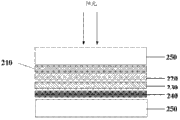
图2a图示了本发明的光转换系统中上转换发光层和量子点层的组合;Figure 2a illustrates the combination of an upconversion luminescent layer and a quantum dot layer in the light conversion system of the present invention;
图2b图示了夹在两个量子点层中间的上转换发光层的组合;Figure 2b illustrates the combination of an upconverting light-emitting layer sandwiched between two quantum dot layers;
图3图示了多层系统的剖视图;Figure 3 illustrates a cross-sectional view of a multi-layer system;
图4图示了多层系统的一层的横切面图;Figure 4 illustrates a cross-sectional view of a layer of a multi-layer system;
图5图示了多层系统的另一层的横切面图;Figure 5 illustrates a cross-sectional view of another layer of the multi-layer system;
图6图示了一些自我维持型组件和定日镜被并入多层系统中的情况;Figure 6 illustrates some self-sustaining components and heliostats being incorporated into a multi-layer system;
图7图示了配备有本发明系统的多层建筑的顶部的顶视图;Figure 7 illustrates a top view of the top of a multi-storey building equipped with the system of the present invention;
图8是描述了多层系统的自我维持型模型的流程图。Figure 8 is a flowchart describing a self-sustaining model of a multi-tiered system.
具体实施方式 Detailed ways
图1是描述了多层生物反应系统100与其它组件之间的相互作用的示意图,所述其它组件用于系统中的光合生物进行光合作用的光依赖性反应,并同时产生生物燃料和其它副产物。多层系统100从发电厂110接收废二氧化碳111和废热112。其它来源(图中未显示)也可以用于提供二氧化碳和/或废热。多层系统100也可以从海洋120或其它来源(图中未显示)接收海水,以供多层系统100中水浴器(图中未显示)和生物反应器(图中未显示)的运行。视生物反应器中待生长的光合生物而定,海水源可以用淡水源来替代。不管利用海水源还是淡水源,对于所述系统皆可获得待在生物反应器中生长的光合生物。或者,光合生物也可以从其它来源获取。多层系统100还需要阳光130或来自人造光源(图中未显示)的光,所述人造光源具备或不具备电磁辐射的全波谱。例如,此光源可以包括紫外光、红外光或电磁辐射全波段内可获得的波长的任何辐射。多层系统100还包含一系列的光转换和光传送装置(图中未显示),用于将来自光源的光转换成特定波长或波长范围较窄的光并引导转换后的光进入系统中的生物反应器。生物反应器本身也包覆有光转换装置,用于将入射光转换成合适波长以供反应器中微生物进行光合作用。此外,也可并入光伏器件(图中未显示)以将来自光源的光能转换成系统或其它操作需要的电能。1 is a schematic diagram depicting the interaction between a
多层系统100还需要营养源140。营养源140可为光合生物进行光合作用提供氮、磷、钾、锌和任何其它必要元素。此营养源可以从任何废物处理厂(图中未显示)获取,或者通过从可能位于厂区外的生物燃料厂(未显示)的副产物再循环来获取。位于每个生物反应器中的光合生物产生氧气150。将直接由光合作用产生的生物燃料160或含有生物燃料160的光合生物的生物质送到一个或多个处理器或设备,以便进一步处理成生物燃料和/或其它副产物。任选地,处理器可包含于多层系统内或可在独立的设施中。The
在多层系统100中,光转换装置是一系列的发光材料,其可以将低能量光上转换或将高能量光下转换成连续的或特定波长的光,这些光可被光合生物中的色素吸收以用于进行光合作用。这些材料位于多层系统的顶部、生物反应器的表面和任选地壁的至少一部分。为了实现光转换,不同种类的上转换和下转换发光材料被使用。In the
图2a中,上转换发光材料层210位于三种不同量子点的三个层220、230、240上,形成了发光材料层的夹层结构。第一量子点层220由多个第一量子点纳米颗粒组成。第二量子点层230由多个第二量子点纳米颗粒组成。第三量子点层240由多个第三量子点纳米颗粒组成。量子点纳米颗粒的不同种类可以通过材料的差异、粒径的差异或者粒径分布的差异来进行区分。换句话说,三个不同的量子点纳米颗粒层可由相同的材料制成,但是粒径或粒径分布却不同。例如,第一量子点层可能由直径为5.0nm的CdSe量子点纳米颗粒组成,以发射中心波长大约为625nm的辐射,而第二量子点层则由直径为2.2nm的CdSe量子点纳米颗粒组成,以发射中心波长大约为500nm的辐射。In Fig. 2a, the up-conversion
图2b中,上转换发光层210被夹在第一量子点层220和第二量子点层230之间。量子点层和上转换层按不同组合和顺序使用会导致不同的转换特征。上转换和下转换发光层还被位于夹心结构顶部和底部的玻璃层250(其可以由聚合材料或任何透明材料所替代)所覆盖,用于保护上转换和下转换层。In FIG. 2 b , the up-converting light-emitting
从微观的角度来看,每个量子点纳米颗粒任选地包含核和覆盖层。核主要由选自IIA-VIA、IIA-VA、IVA-IVA和IVA-VIA半导体的半导体制成。核的大小范围是约1nm至50nm,优选约1nm至25nm,更优选约1nm至10nm,最优选约1nm至5nm。覆盖层的大小范围是约0.1nm至10nm,更优选约0.1nm至5nm,最优选约0.1nm至2nm。覆盖层通过提供宽带隙(wide band gap)而使核钝化。为了在核的周围形成潜在的屏障,覆盖层的材料也与核不同。例如,覆盖层可能由CdS制成,而核则由CdSe制成。From a microscopic point of view, each quantum dot nanoparticle optionally includes a core and a capping layer. The core is mainly made of a semiconductor selected from IIA-VIA, IIA-VA, IVA-IVA and IVA-VIA semiconductors. The size range of the core is about 1 nm to 50 nm, preferably about 1 nm to 25 nm, more preferably about 1 nm to 10 nm, most preferably about 1 nm to 5 nm. The capping layer has a size ranging from about 0.1 nm to 10 nm, more preferably from about 0.1 nm to 5 nm, most preferably from about 0.1 nm to 2 nm. The capping layer passivates the core by providing a wide band gap. In order to form a potential barrier around the core, the cover layer is also made of a different material than the core. For example, the capping layer might be made of CdS while the core is made of CdSe.
上转换发光材料典型地选自掺有镧系元素离子(如Er3+、Tm3+和Yb3+)的金属氧化物。但是,诸如过渡金属化合物(例如,掺有CsMnCl3的Yb3+)的其它材料也可以使用。上转换发光材料可以是纳米颗粒形式或块体形式。与块体形式相比,纳米颗粒上转换发光材料的光散射更低,且发光效率更高。Upconverting luminescent materials are typically selected from metal oxides doped with lanthanide ions such as Er 3+ , Tm 3+ and Yb 3+ . However, other materials such as transition metal compounds (eg Yb 3+ doped with CsMnCl 3 ) may also be used. The upconverting luminescent material can be in the form of nanoparticles or bulk. Nanoparticle upconversion luminescent materials exhibit lower light scattering and higher luminescence efficiency than bulk forms.
图3是多层系统300的剖视图。光管310位于系统的中轴线上,伸向阳光可以到达的顶部并延伸至生物反应器316所在的较低层。多层系统的顶部301和任选地壁的至少一部分被光转换材料所覆盖,包括(但不限于)呈例如图2所描述的结构的上转换和/或下转换发光材料。光管在靠近顶部的地方包含一级光学元件311和二级光学元件312。一级光学元件311可以是具有凹面的反射镜、或会聚镜,用于采集阳光,然后反射到二级光学元件312上。二级光学元件312可以是光学反射镜或反射器。二级光学元件优选还能够从聚焦光线中吸收至少一部分热量并使光线朝向光管重新定向。一级光学元件或二级光学元件任选地另外包含一个或多个光伏电池(图中未显示),用于将阳光转换成电能以供设备(例如用于生物反应器的水泵)运行。FIG. 3 is a cross-sectional view of a
光管310可以是一个或多个棱镜导光管的形式(图中未显示)。这些棱镜导光管是带有矩形或环形横切面并具有由薄棱镜制成的边界曲面的中空管。棱镜导光管的棱形部分位于光管中主引导管的外侧;而其内表面是光滑平整的。棱镜导光管的内表面可与高反射率的多层介电薄膜一起排列。光线顺着中空管向下传播,触到平滑表面并被部分反射和折射。反射光沿着光管的主引导管继续向下;而折射光在通过一段短距离后在棱镜边缘被完全内部反射,然后再次进入棱镜导光管的中空内表面。
在多层系统的每一层,光管310另外包含孔穴(aperture)和/或发射器313。孔穴和/或发射器313用于去除在不同高度穿过多层建筑的光。孔穴和/或发射器可以由分散系统314所替代,此分散系统具有与光管的主引导管相连的延长管道。分散系统314用于将一部分光传送到离光管的主引导管较远的区域。在光管的主引导管的末端包含扩散器315,用于使光漫射并给多层系统中包含生物反应器的最底层提供均匀照明(因为例如地面或地下等一个或多个较低层用于容纳各种设备,如泵、离心机或用于收获光合生物的超声或过滤系统、有或没有浮选的絮凝沉淀池等)。扩散器315可以是凸透镜或任何放大镜。扩散器315以与分散系统314相类似的方式发挥功能,但系统的有效部分有区别。如果期望,孔穴/发射器/扩散器/分散装置或光管的任何部分可以用本发明中阐述的光转换装置进行覆盖。The
在多层系统300的每一层中都有一组生物反应器316。为了维持生物反应器的温度适于光合生物生长,生物反应器316的周围可任选地放置水浴器317。在每个生物反应器316中,光合生物在必要养分和二氧化碳的存在下被保持和生长。生物反应器316上也可以包覆一层或多层上转换和下转换发光材料。具体光合生物可选自蓝藻(Cyanophyceae)、绿藻(Chlorophyceae)、硅藻(Bacillariophycea)、黄绿藻(Xanthophyceae)、金藻(Chrysophyceae)、红藻(Rhodophyceae)、褐藻(Phaeophyceae)、沟鞭藻(Dinophyceae)或超微型浮游生物(pico-plankton)(青绿藻(Prasinophyceae)和大眼藻(Eustigmatophyceae))或任何其它光合材料,其能够在本发明的环境中生长并可以用于制造燃料或食物或两者的组合。In each level of the
二氧化碳是由二氧化碳排放源(图中未显示)如发电厂或焚烧厂提供,或从多层系统本身循环到每个生物反应器,典型的是通过气体扩散器引入到生物反应器的液体中。但是,根据所选的光合生物,从多层结构中的大气吸收二氧化碳可以是足够的。水浴器317中任选地用于控制生物反应器316温度的媒介可以是海水、淡水或系统其它部分的循环水。水浴器317可以与生物反应器316分开。Carbon dioxide is provided by a carbon dioxide emitting source (not shown in the figure) such as a power plant or an incineration plant, or is circulated from the multi-layer system itself to each bioreactor, typically introduced into the bioreactor's liquid via a gas diffuser. However, depending on the chosen photosynthetic organism, uptake of carbon dioxide from the atmosphere in the multilayer structure may be sufficient. The medium optionally used in the
继续向下到达多层系统的底层302(和任选地一个或多个地下层),系统内并入处理系统318以用于控制物质的输入和输出。此处理系统318还通过使用一个或多个泵来控制系统内物质的循环。此外,这个/这些层上可包含絮凝沉淀池、离心机或用于收获光合生物的超声或过滤系统、光合生物的生物质的脱水或干燥装置,及油提炼和转化系统等。另外,处理系统318可还具有电力储存装置(图中未显示),用于储备从系统的光伏器件所产生的但未使用的电能。任选地,由于生物反应器不在层,因此底层的外壁使用不透明的耐热材料进行覆盖。Continuing down to the ground floor 302 (and optionally one or more underground levels) of the multi-level system, a
图4是多层系统中某层的剖面图。包含生物反应器的水浴器410通过多层系统的覆盖层420或从光管430直接吸收光。覆盖层420用图2中的光转换材料进行包覆,并且是透明或半透明的。反射镜或透镜440靠近光管的开口放置,将来自光管430的孔穴(图中未显示)的光引导至生物反应器接收最大光强度的方向。水浴器450可与生物反应器分开,以作为多层系统其它部分的总温控系统。Figure 4 is a cross-sectional view of a layer in a multi-layer system. The
图5是多层系统中另一层的剖面图。在这一层中,水浴器520占据了平面图的大部分并包围多个生物反应器510,其在此实施例中具有细长的剖面图。在光管530的出口设置了多个反射镜或透镜540用于引导光进入生物反应器。细长的生物反应器510平行排列,使得每个生物反应器细长侧与穿过多层系统覆盖层550的阳光相垂直。这是因为生物反应器面向光线的表面越大,光合生物吸收的光强度就越高。覆盖层550用图2的光转换材料进行包覆,并且是透明或半透明的。从外部来源如发电厂(图中未显示)传输的热、从光伏电池(图中未显示)产生的热或从多层系统中任何部分再循环的热都可以用于提高水浴器的温度。对于藻类的生长,水浴器中的温度优选控制在10℃与35℃之间,且最佳温度视生物反应器中藻类的种类而定。Figure 5 is a cross-sectional view of another layer in the multi-layer system. On this level, a
图6中,光伏电池610位于多层系统600顶部的边缘,其中光伏电池任选地由光转换装置620覆盖,从而提高光伏电池的电输出。光伏电池610主要用于吸收阳光,并通过使用由吸收的光与电池活性层的成分相互作用而产生的电流将阳光转换成电。光伏电池610的活性层(图中未显示)选自有机材料、无机材料或两者的组合。光转换装置620可以通过在波导管中使用量子点层作为光伏电池的聚能器而在光伏电流效率上有所帮助,并且使进入光伏器件的光发生红移。此外,光伏电池可任选地位于壁上(例如,壁的接合处)以满足系统的电力需求。In Figure 6, a
多层系统600还包含一个或多个定日镜630,用于跟踪、收集和校准阳光,使其进入光分布系统640,然后进一步将光传送至期望生物反应器中。定日镜630可以是单个循迹反光镜(tracking mirror),或凹面循迹反光镜和二级平面镜的组合。两者都用于将来自多层建筑侧面的阳光引导至系统中的一个或多个较低层。在光分布系统的沿线或末端,可存在发射器650和/或扩散器660用于去除穿过系统的各种光,并分别为生物反应器670提供均匀照明。如果期望,发射器或扩散器可用本发明的图2的光转换材料进行覆盖。定日镜可用于高度高于30米(高于大约10层)的多层建筑。The
在多层系统的底层,地下水管680和水温度调节装置690一起与处理系统相连。为了冷却来自水浴器675或生物反应器670的循环水,地下水管680被配置成从地下穿过。这通常被应用于夏季或温暖气候区域。废热回收蒸煮装置作为水温度调节装置690的一部分被整合到多层系统中,用于加热来自水源(图中未显示)的海水或淡水,所述装置可在冬季中寒冷天气中使用。或者,可安装热泵作为水温调节装置690,其典型地是以废热为热源的电力闭路循环压缩热泵,为多层系统供冷供热。其它可能的用于协助处理二氧化碳(例如,电厂排放物中毒烟的去除)和生产生物燃料的系统可任选地并入多层系统600中。At the bottom of the multi-level system, the
图7显示图6的实施例中多层系统的顶视图。从此顶视图可以看出,光伏电池710(具有任选的光转换覆盖层)位于多层系统700顶部的边缘。光伏电池的数量视系统的需求而定,主要是电力需求。如上文实施方案所描述的,多层系统的顶部由本发明图2中阐述的光转换装置覆盖。此实施方案中光伏电池710的位置是为了避免被引导至覆盖于顶部表面上的光转换装置的阳光产生阴影。FIG. 7 shows a top view of the multilayer system in the embodiment of FIG. 6 . As can be seen from this top view, a photovoltaic cell 710 (with an optional light converting cover layer) is located at the edge of the top of the
图8是显示多层系统不同部件中的物质的流程的流程图。发电厂810是废二氧化碳和废热815的一个来源。二氧化碳被引入生物反应器的液体中以供光合生物的生长,而废热被转移至一个或多个热泵820。光伏电池830吸收阳光或来自光转换装置中量子点层(图中未显示)的红移光来产生电835,并为热泵820供电。本技术领域中的绝大多数热泵都依据蒸汽压缩循环的原理来运行。在这些热泵的一个实例中,从热排放源(即当前模型中的废热815)中提取废热以用于在泵中对循环物质进行蒸煮。然后压缩机(图中未显示)压缩循环物质,并将其压力和温度提高到其能量变得可用的程度。热传递至冷凝器,然后泵送至重沸器(图中未显示)。压缩机的运行需要从外部输入电,此电优选由多层系统中的光伏电池830来供应。机械式蒸汽再压缩热泵系统820可以从海水中蒸馏出水,从而为生物反应器和/或水浴器(图中未显示)提供洁净水825,因为通过使用热泵系统通常可以使蒸馏的高能耗要求得到降低。任选地,另外一种以废热为热源的热泵装置820也可以对多层系统提供冷却和加热作用。典型地安装电力闭路循环压缩热泵,但是一些吸热泵和热变换器也可以用于水的加热和冷却。生物反应器中光合作用的副产物和光合生物845的生物质收获、收集并在一个或多个处理器850中处理。剩余的细胞和废水855将被转移至循环系统860中,该系统中对废水和细胞855消毒的一种方法是紫外线。循环系统860将灭菌后的水和细胞865供给生物反应器,作为光合生物另一生长周期的物质输入的一部分。此流程图证实了多层系统是高度自我维持的,并充分地利用废二氧化碳、自然光源和废热来变为化学能(所收获的光合生物)。Figure 8 is a flow chart showing the flow of substances in the different components of the multilayer system.
如果需要,本文讨论的不同功能可按照不同的顺序和/或彼此同时进行。此外,如果需要,上文所述的功能中的一种或多种可以是任选的,或可以组合。The various functions discussed herein can be performed in a different order and/or concurrently with each other, if desired. Furthermore, one or more of the functions described above may be optional, or may be combined, if desired.
虽然本发明的各个方面在独立权利要求中阐明,但是本发明的其它方面包括所述实施方案和/或从属权利要求的特征与独立权利要求的特征的其它组合,且不仅仅是所述权利要求中明确阐明的组合。Although various aspects of the invention are set out in the independent claims, other aspects of the invention include other combinations of the described embodiments and/or features of the dependent claims with features of the independent claims, and not only the claims combinations explicitly stated in .
本文中还应注意,尽管上文描述了本发明的示例性实施方案,但是这些描述不应理解为具有限制性。相反,可以进行若干变化和修改而不超出如所附权利要求所限定的本发明的范围。It is also noted herein that while the above describes exemplary embodiments of the invention, these descriptions should not be viewed in a limiting sense. Rather, there are several changes and modifications which may be made without departing from the scope of the invention as defined in the appended claims.
Claims (21)
Applications Claiming Priority (5)
| Application Number | Priority Date | Filing Date | Title |
|---|---|---|---|
| US12/729,258 | 2010-03-23 | ||
| US12/729,258 US20110236958A1 (en) | 2010-03-23 | 2010-03-23 | Multistory Bioreaction System for Enhancing Photosynthesis |
| US41342910P | 2010-11-13 | 2010-11-13 | |
| US61/413,429 | 2010-11-13 | ||
| PCT/CN2011/070327 WO2011116639A1 (en) | 2010-03-23 | 2011-01-17 | Multistory bioreaction system for enhancing photosynthesis |
Publications (1)
| Publication Number | Publication Date |
|---|---|
| CN102652172A true CN102652172A (en) | 2012-08-29 |
Family
ID=44672464
Family Applications (1)
| Application Number | Title | Priority Date | Filing Date |
|---|---|---|---|
| CN2011800007700A Pending CN102652172A (en) | 2010-03-23 | 2011-01-17 | Multilayer biological reaction system for enhanced photosynthesis |
Country Status (3)
| Country | Link |
|---|---|
| CN (1) | CN102652172A (en) |
| TW (1) | TW201139660A (en) |
| WO (1) | WO2011116639A1 (en) |
Cited By (1)
| Publication number | Priority date | Publication date | Assignee | Title |
|---|---|---|---|---|
| CN111088293A (en) * | 2019-12-10 | 2020-05-01 | 天津大学 | A method for enhancing oxygen production in cyanobacteria that endocytoses upconverting nanoparticles |
Families Citing this family (1)
| Publication number | Priority date | Publication date | Assignee | Title |
|---|---|---|---|---|
| CN114657058A (en) * | 2022-03-31 | 2022-06-24 | 北京空天未来科技研究院有限公司 | Biological test equipment |
Citations (7)
| Publication number | Priority date | Publication date | Assignee | Title |
|---|---|---|---|---|
| US7008559B2 (en) * | 2001-06-06 | 2006-03-07 | Nomadics, Inc. | Manganese doped upconversion luminescence nanoparticles |
| WO2007025145A2 (en) * | 2005-08-25 | 2007-03-01 | Solix Biofuels, Inc. | Method, apparatus and system for biodiesel production from algae |
| CN2918431Y (en) * | 2006-06-12 | 2007-07-04 | 河南农业大学 | Photosynthetic microbial hydrogen production reactor |
| CN101045902A (en) * | 2006-03-29 | 2007-10-03 | 张长青 | Biophotosynthetic reactor apparatus and process for producing micro algae |
| KR20090038313A (en) * | 2007-10-15 | 2009-04-20 | 주식회사 바이오트론 | Photobioreactor for High Efficiency Microalgae Cultivation |
| US20090148931A1 (en) * | 2007-08-01 | 2009-06-11 | Bionavitas, Inc. | Illumination systems, devices, and methods for biomass production |
| CN101575566A (en) * | 2009-05-27 | 2009-11-11 | 新奥科技发展有限公司 | Two-step method for cultivating microalgae by using light conversion film |
-
2011
- 2011-01-17 CN CN2011800007700A patent/CN102652172A/en active Pending
- 2011-01-17 WO PCT/CN2011/070327 patent/WO2011116639A1/en not_active Ceased
- 2011-03-23 TW TW100109934A patent/TW201139660A/en unknown
Patent Citations (7)
| Publication number | Priority date | Publication date | Assignee | Title |
|---|---|---|---|---|
| US7008559B2 (en) * | 2001-06-06 | 2006-03-07 | Nomadics, Inc. | Manganese doped upconversion luminescence nanoparticles |
| WO2007025145A2 (en) * | 2005-08-25 | 2007-03-01 | Solix Biofuels, Inc. | Method, apparatus and system for biodiesel production from algae |
| CN101045902A (en) * | 2006-03-29 | 2007-10-03 | 张长青 | Biophotosynthetic reactor apparatus and process for producing micro algae |
| CN2918431Y (en) * | 2006-06-12 | 2007-07-04 | 河南农业大学 | Photosynthetic microbial hydrogen production reactor |
| US20090148931A1 (en) * | 2007-08-01 | 2009-06-11 | Bionavitas, Inc. | Illumination systems, devices, and methods for biomass production |
| KR20090038313A (en) * | 2007-10-15 | 2009-04-20 | 주식회사 바이오트론 | Photobioreactor for High Efficiency Microalgae Cultivation |
| CN101575566A (en) * | 2009-05-27 | 2009-11-11 | 新奥科技发展有限公司 | Two-step method for cultivating microalgae by using light conversion film |
Cited By (1)
| Publication number | Priority date | Publication date | Assignee | Title |
|---|---|---|---|---|
| CN111088293A (en) * | 2019-12-10 | 2020-05-01 | 天津大学 | A method for enhancing oxygen production in cyanobacteria that endocytoses upconverting nanoparticles |
Also Published As
| Publication number | Publication date |
|---|---|
| WO2011116639A1 (en) | 2011-09-29 |
| TW201139660A (en) | 2011-11-16 |
Similar Documents
| Publication | Publication Date | Title |
|---|---|---|
| US8222025B2 (en) | Multistory bioreaction system for enhancing photosynthesis | |
| US20110236958A1 (en) | Multistory Bioreaction System for Enhancing Photosynthesis | |
| CN1204244C (en) | Photosynthesis culture apparatus and group of photosynthesis culture apparatuses | |
| US8716010B2 (en) | Solar hybrid photobioreactor | |
| US20110070632A1 (en) | Photo bioreactor and cultivation system for improved productivity of photoautotrophic cell cultures | |
| Shen et al. | Solar spectral management for natural photosynthesis: from photonics designs to potential applications | |
| US20100255458A1 (en) | Bioreactor | |
| US20070092962A1 (en) | Carbon Neutralization System (CNS) for CO2 sequestering | |
| MX2011001260A (en) | Algae growth system. | |
| TW201249984A (en) | Photobioreactor in a closed environment for the culture of photosynthetic microorganisms | |
| US10407653B2 (en) | Photobioreactor | |
| CN102124093A (en) | Continuous system for converting CO2 into products with high added and/or nutritional value and other energy resources | |
| CN102317430A (en) | Bioreactor | |
| JP3151710U (en) | Algae culture equipment | |
| WO2011011691A2 (en) | Solar energy gathering system, apparatus, and method | |
| CN102652172A (en) | Multilayer biological reaction system for enhanced photosynthesis | |
| KR101360909B1 (en) | Apparatus for Cultivation Microalgae using Natural Light | |
| KR101254323B1 (en) | Device for cultivating micro algae by using solar light | |
| US20120070889A1 (en) | Hybrid bioreactor for reduction of capital costs | |
| US9644176B2 (en) | Photobioreactor | |
| CN116731822A (en) | Pulse photo-bioreactor | |
| Salmean et al. | Design and testing of an externally-coupled planar waveguide photobioreactor | |
| KR101404223B1 (en) | Photobiological culturing system | |
| EP4053259A1 (en) | Internally illuminated photo bioreactor with light pipe distributor for photo-reactive microorganism culture | |
| CN220520462U (en) | Pulse photo-bioreactor |
Legal Events
| Date | Code | Title | Description |
|---|---|---|---|
| C06 | Publication | ||
| PB01 | Publication | ||
| C10 | Entry into substantive examination | ||
| SE01 | Entry into force of request for substantive examination | ||
| C02 | Deemed withdrawal of patent application after publication (patent law 2001) | ||
| WD01 | Invention patent application deemed withdrawn after publication |
Application publication date: 20120829 |