CN102549474A - Colored conductive fluids for electrowetting and electrofluidics - Google Patents
Colored conductive fluids for electrowetting and electrofluidics Download PDFInfo
- Publication number
- CN102549474A CN102549474A CN2010800436519A CN201080043651A CN102549474A CN 102549474 A CN102549474 A CN 102549474A CN 2010800436519 A CN2010800436519 A CN 2010800436519A CN 201080043651 A CN201080043651 A CN 201080043651A CN 102549474 A CN102549474 A CN 102549474A
- Authority
- CN
- China
- Prior art keywords
- conductive fluid
- coloured
- alkyl
- coloured conductive
- aryl
- Prior art date
- Legal status (The legal status is an assumption and is not a legal conclusion. Google has not performed a legal analysis and makes no representation as to the accuracy of the status listed.)
- Granted
Links
Images


Classifications
-
- G—PHYSICS
- G02—OPTICS
- G02B—OPTICAL ELEMENTS, SYSTEMS OR APPARATUS
- G02B26/00—Optical devices or arrangements for the control of light using movable or deformable optical elements
- G02B26/004—Optical devices or arrangements for the control of light using movable or deformable optical elements based on a displacement or a deformation of a fluid
-
- C—CHEMISTRY; METALLURGY
- C09—DYES; PAINTS; POLISHES; NATURAL RESINS; ADHESIVES; COMPOSITIONS NOT OTHERWISE PROVIDED FOR; APPLICATIONS OF MATERIALS NOT OTHERWISE PROVIDED FOR
- C09B—ORGANIC DYES OR CLOSELY-RELATED COMPOUNDS FOR PRODUCING DYES, e.g. PIGMENTS; MORDANTS; LAKES
- C09B67/00—Influencing the physical, e.g. the dyeing or printing properties of dyestuffs without chemical reactions, e.g. by treating with solvents grinding or grinding assistants, coating of pigments or dyes; Process features in the making of dyestuff preparations; Dyestuff preparations of a special physical nature, e.g. tablets, films
- C09B67/0033—Blends of pigments; Mixtured crystals; Solid solutions
-
- G—PHYSICS
- G02—OPTICS
- G02B—OPTICAL ELEMENTS, SYSTEMS OR APPARATUS
- G02B2207/00—Coding scheme for general features or characteristics of optical elements and systems of subclass G02B, but not including elements and systems which would be classified in G02B6/00 and subgroups
- G02B2207/115—Electrowetting
Landscapes
- Physics & Mathematics (AREA)
- General Physics & Mathematics (AREA)
- Optics & Photonics (AREA)
- Chemical & Material Sciences (AREA)
- Chemical Kinetics & Catalysis (AREA)
- Organic Chemistry (AREA)
- Electrochromic Elements, Electrophoresis, Or Variable Reflection Or Absorption Elements (AREA)
- Optical Elements Other Than Lenses (AREA)
Abstract

Description
相关申请的交叉引用Cross References to Related Applications
本申请要求享有2009年8月4日提交的美国临时申请案No.61/231,156的优先权,在此通过引用将其整体并入本文中。This application claims priority to US Provisional Application No. 61/231,156, filed August 4, 2009, which is hereby incorporated by reference in its entirety.
技术领域 technical field
本发明涉及通常的电润湿领域,并且更具体地涉及用于电润湿(electrowetting)或电流体设备(electrofluidic device)的有色导电流体以及电润湿和电流体设备。The present invention relates to the field of electrowetting in general, and more particularly to colored conductive fluids for electrowetting or electrofluidic devices and electrowetting and electrofluidic devices.
背景技术 Background technique
部分由于高亮度和对比度、大视角以及快转换速度的结合,电润湿已经变成各种光学应用中引人注目的调制方案。另外,因为电润湿显示器不需要顺光或逆光照明,所以它们的耗电量相对较低。例如,电润湿已被用于提供用于光纤的光学开关、照相机和制导系统的光阀或滤光器、光学拾波器设备、光学波导材料和视频显示像素(pixel)。术语“电润湿”描述的是在具有疏水性表面的液体的接触角(contact angle)上的电场效应。由于电场,所述液体在原本排斥该液体的表面上分散开或润湿,导致设备的光谱性质改变。当除去电场时,接触角变大且液体合并从而光谱性质恢复到初始状态。Due in part to the combination of high brightness and contrast ratios, large viewing angles, and fast switching speeds, electrowetting has become an attractive modulation scheme for a variety of optical applications. Also, because electrowetting displays do not require front or back lighting, they consume relatively little power. For example, electrowetting has been used to provide optical switches for optical fibers, light valves or filters for cameras and guidance systems, optical pickup devices, optical waveguide materials, and video display pixels. The term "electrowetting" describes the effect of an electric field at the contact angle of a liquid with a hydrophobic surface. Due to the electric field, the liquid spreads out or wetting on surfaces that would otherwise repel the liquid, causing a change in the spectral properties of the device. When the electric field is removed, the contact angle becomes larger and the liquid merges so that the spectral properties return to the original state.
有色不相混的流体是电流体和电润湿设备不可或缺的部分,应用时要求视觉信息和效果的再现。常规的电润湿设备典型地具有在绝缘含氟聚合物上形成膜的有色油。该有色油膜赋予所述设备可见的颜色。当在位于油膜上的水层和绝缘含氟聚合物下的电极间施加电压时,所述油膜像水电润湿表面一样分散开。分散的油膜不再向所述设备提供颜色。一旦除去电压,油优先润湿所述绝缘含氟聚合物,再次形成所述油膜,且颜色又一目了然了。Colored immiscible fluids are integral to electrofluidic and electrowetting devices, applications requiring the reproduction of visual information and effects. Conventional electrowetting devices typically have a colored oil that forms a film on an insulating fluoropolymer. This colored oil film imparts a visible color to the device. When a voltage is applied between the water layer on top of the oil film and the electrodes beneath the insulating fluoropolymer, the oil film spreads out like a hydroelectrically wetted surface. The dispersed oil film no longer provides color to the device. Once the voltage was removed, the oil preferentially wetted the insulating fluoropolymer, forming the oil film again, and the color was clearly visible again.
许多与电润湿一起工作的设备利用水和非极性流体(也称为“油”)的结合。为了使设备能够正常的运行,非极性流体必须是不导电的并且不受电场的影响。这与导电的极性流体相反。为了增强电导率,可以在水中溶解无机盐如LiCl、NaCl、NaBr、KCl、CaCl2、NaNO3、MgSO4等。但是,水的物理性质,例如,在高温下膨胀、高凝固点、低沸点和相对较高的蒸汽压,会限制这种设备的应用并导致介电击穿。虽然指出了与水和其他溶剂的使用相关联的问题,但是仍明显地需要改善用于各种电润湿和电流体设备的有色流体。Many devices that work with electrowetting utilize a combination of water and a non-polar fluid (also called "oil"). In order for the device to function properly, the non-polar fluid must be non-conductive and unaffected by electric fields. This is in contrast to polar fluids which conduct electricity. In order to enhance the conductivity, inorganic salts such as LiCl, NaCl, NaBr, KCl, CaCl 2 , NaNO 3 , MgSO 4 , etc. can be dissolved in water. However, the physical properties of water, such as expansion at high temperatures, high freezing point, low boiling point, and relatively high vapor pressure, can limit the applications of such devices and lead to dielectric breakdown. While problems associated with the use of water and other solvents are noted, there remains a clear need for improved colored fluids for various electrowetting and electrofluidic devices.
为电润湿或电流体设备提供改进的有色流体将是有益的,例如,证明对设备元件的影响最低或没有负面影响、可以提高设备性能并在优先期间维持所需功能。It would be beneficial to provide improved colored fluids for electrowetting or electrofluidic devices, for example, demonstrating minimal or no negative impact on device components, improving device performance and maintaining desired functionality during priority periods.
发明内容 Contents of the invention
本发明的实施方式提供用于电润湿或电流体设备的有色导电流体。Embodiments of the present invention provide colored conductive fluids for use in electrowetting or electrofluidic devices.
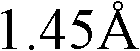
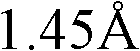
在一种实施方式中,所述有色导电流体含有至少一种极性溶剂和至少一种选自颜料和/或染料的着色剂。所述极性溶剂具有(a)在25℃下的动力粘度为0.1-1000cP,(b)在25℃下的表面张力为25-90达因/cm(dynes/cm),以及(c)电润湿相对响应值(electrowetting relative response)为20-80%。所述有色导电流体本身具有的电导率为0.1-3000μS/cm,而且所述有色导电流体含有的离子半径小于

在另一种实施方式中,所述有色导电流体含有至少一种极性溶剂和至少一种选自颜料和/或染料的着色剂。所述极性溶剂具有(a)在25℃下的动力粘度为0.1-1000cP,(b)在25℃下的表面张力为25-90达因/cm,以及(c)电润湿相对响应值为20-80%。所述有色导电流体本身不会造成厚度为400nm的聚(2-氯对二甲苯)电介质在施加电压高达15V时的电击穿,也不会造成厚度为100nm的氧化铝电介质在施加电压高达15V时的电击穿。In another embodiment, the colored conductive fluid contains at least one polar solvent and at least one colorant selected from pigments and/or dyes. The polar solvent has (a) a dynamic viscosity of 0.1-1000 cP at 25°C, (b) a surface tension of 25-90 dynes/cm at 25°C, and (c) a relative response value of electrowetting 20-80%. The colored conductive fluid itself will not cause electrical breakdown of the poly(2-chloro-p-xylene) dielectric with a thickness of 400nm when the applied voltage is up to 15V, nor will it cause the aluminum oxide dielectric with a thickness of 100nm when the applied voltage is up to 15V electrical breakdown.
可以选择性地往所述有色导电流体中加入控制电导率的试剂(含有阳离子和阴离子)以及分散剂、增效剂、表面活性剂、树脂、聚合物、杀虫剂、本领域公知的其他添加剂或者它们的任意组合。Agents (including cations and anions) and dispersants, synergists, surfactants, resins, polymers, pesticides, other additives known in the art can be optionally added to the colored conductive fluid to control conductivity or any combination of them.
在另一种实施方式中,所述电润湿或电流体设备包括有色导电流体。在一种实例中,所述设备为显示器中的像素。In another embodiment, the electrowetting or electrofluidic device includes a colored conductive fluid. In one example, the device is a pixel in a display.
这种有色流体在显示技术中的应用改善了耐用度,而且通过着色剂的选择提供了较高等级的色度和获得较高对比率的能力。所述有色流体可以提供快转换速度、低耗电量和更大的设备耐用度。所述有色流体还使得设备可以用较薄的电介质生产,从而利用较低的驱动电压。The use of such colored fluids in display technology improves durability and, through colorant selection, provides higher levels of chroma and the ability to achieve higher contrast ratios. The colored fluids can provide fast switching speeds, low power consumption and greater device durability. The colored fluids also allow devices to be produced with thinner dielectrics, thereby utilizing lower drive voltages.
附图说明 Description of drawings
附图与上面给出的本发明的笼统描述和下面给出的具体实施方式的详细描述一起说明本发明的实施方式,用于解释本发明的原理,这些附图引入本申请的说明书中,构成本申请说明书的一部分。The accompanying drawings, together with the general description of the invention given above and the detailed description of specific embodiments given below, illustrate the embodiments of the invention and are used to explain the principles of the invention. These drawings are incorporated into the description of the application and constitute part of the specification for this application.
图1A-E为说明含氟聚合物/Al2O3电介质组的多种水溶液的介电击穿实验(dielectric breakdown test)结果中电流与电压的函数关系的图表;1A-E are graphs illustrating the results of dielectric breakdown tests of various aqueous solutions of the fluoropolymer/ Al2O3 dielectric set as a function of current versus voltage ;
图2A-B为说明(a)700nm的聚对二甲苯C和(b)300nm的聚对二甲苯C的0.013重量%的SDS水溶液的介电击穿实验结果中电流与电压的函数关系的图表;2A-B are graphs illustrating the dielectric breakdown experimental results of (a) 700 nm Parylene C and (b) 300 nm Parylene C in 0.013 wt % SDS in water as a function of voltage ;
图3A-B为说明300nm的聚对二甲苯HT的(a)0.013重量%的SDS和(b)1.00重量%的SDS水溶液的介电击穿实验结果中电流与电压的函数关系的图表;3A-B are graphs illustrating the dielectric breakdown experimental results of 300 nm parylene HT in (a) 0.013 wt. % SDS and (b) 1.00 wt. % SDS in water as a function of voltage;
图4为说明碳酸丙烯酯中的阴离子的介电击穿实验结果中电流与电压的函数关系的图表;Fig. 4 is the graph that illustrates the function relation of electric current and voltage in the dielectric breakdown test result of the anion in propylene carbonate;
图5为说明丙二醇基蓝色流体的介电击穿实验结果中电流与电压的函数关系的图表;Figure 5 is a graph illustrating the functional relationship between current and voltage in the dielectric breakdown test results of propylene glycol-based blue fluid;
图6为说明碳酸丙烯酯中的TBAB的接触角与AC电压的函数关系的图表;Figure 6 is a graph illustrating the contact angle of TBAB in propylene carbonate as a function of AC voltage;
图7为说明丙二醇中的阳离子的介电击穿实验结果中电流与电压的函数关系的图表;Figure 7 is a graph illustrating the functional relationship between current and voltage in the dielectric breakdown test results of cations in propylene glycol;
图8A为根据本发明的具体实施方式的按照显示器像素操作的电润湿设备的截面示意图;以及8A is a schematic cross-sectional view of an electrowetting device operating as a display pixel in accordance with an embodiment of the invention; and
图8B为像素的显示状态发生改变的图1A的电润湿设备的截面示意图。FIG. 8B is a schematic cross-sectional view of the electrowetting device of FIG. 1A in which the display state of a pixel changes.
具体实施方式 Detailed ways
本发明涉及用于电润湿或电流体设备的有色流体。电润湿设备典型地包括疏水性电介质和电极,并且可以包括其他疏水性表面。通常地,将基板和连接部件暴露于极性流体和非极性流体中,所述极性流体和非极性流体不能相互混溶或乳化。所述极性流体可以含有着色剂,能够具有特定电导率的特性以及期望的粘度、凝固点和沸点特征,并且还可以减少或除去会对设备的电介质基板和其他元件表现出负面影响的破坏性离子(performance-damaging ions)。The present invention relates to colored fluids for use in electrowetting or electrofluidic devices. Electrowetting devices typically include hydrophobic dielectrics and electrodes, and may include other hydrophobic surfaces. Typically, the substrate and connecting components are exposed to polar and non-polar fluids that are immiscible or emulsified with each other. The polar fluids can contain colorants, can be characterized with specific conductivity and desired viscosity, freezing and boiling point characteristics, and can also reduce or remove damaging ions that can negatively impact the dielectric substrate and other components of the device (performance-damaging ions).
根据本发明的实施方式,所述有色导电流体通常可以含有至少一种极性溶剂,至少一种可以选自颜料和/或染料的着色剂,以及选择性含有控制所述流体的电导率的试剂、分散剂、增效剂、表面活性剂、树脂、聚合物、杀虫剂、本领域公知的其他添加剂或者它们的任意组合。所述极性溶剂具有:(a)在25℃下的动力粘度为0.1-1000cP,(b)在25℃下的表面张力为25-90达因/cm,以及(c)电润湿相对响应值为20-80%。所述有色导电流体限定为极性有色流体。在一种实例中,所述有色导电流体不含非极性溶剂。所述有色导电流体的电导率可以为0.1-3000μS/cm,并且离子半径小于
如下更全面的解释,所述有色导电流体应该不造成电介质的电击穿,例如在施加电压高达电介质的理论工作电压的3倍时。在一种实例中,所述有色导电流体本身不会造成厚度为400nm的聚(2-氯-对二甲苯)电介质在施加电压高达15V时的电击穿和/或不会造成厚度为100nm的氧化铝电介质在施加电压高达15V时的电击穿。As explained more fully below, the colored conductive fluid should not cause electrical breakdown of the dielectric, for example at applied voltages up to 3 times the theoretical operating voltage of the dielectric. In one example, the colored conductive fluid itself does not cause electrical breakdown of poly(2-chloro-p-xylylene) dielectrics with a thickness of 400 nm at applied voltages up to 15 V and/or does not cause poly(2-chloro-p-xylylene) dielectrics with a thickness of 100 nm. Electrical breakdown of alumina dielectrics at applied voltages up to 15V.
本发明的所述极性溶剂可以为一种溶剂或两种以上溶剂的组合。所述极性溶剂的非限制性的例子包括水,乙二醇,乙醇,多元醇,醚,酯,酮,缩醛,缩酮,内酯,碳酸酯,内酰胺,尿烷(氨基甲酸盐),尿素,吡咯烷,吡咯烷酮,砜,亚砜,酰胺,伯、仲、叔或季胺,亚胺,腈,羧酸,醛,卤代、含硫或硝基化合物,以及它们的任意混合物。在一种实例中,所述极性溶剂为水、碳酸酯、内酯或乙二醇。所述极性溶剂的分子中还可以含有一个、两个或多个描述为相同或不同的功能基团,所述功能基团可以为脂肪族、芳香族、脂环族和/或杂环族的功能基团。The polar solvent of the present invention may be one kind of solvent or a combination of two or more kinds of solvents. Non-limiting examples of such polar solvents include water, glycols, ethanols, polyols, ethers, esters, ketones, acetals, ketals, lactones, carbonates, lactams, urethanes (carbamic acid salt), urea, pyrrolidine, pyrrolidone, sulfone, sulfoxide, amide, primary, secondary, tertiary or quaternary amine, imine, nitrile, carboxylic acid, aldehyde, halogenated, sulfur-containing or nitro compounds, and any of these mixture. In one example, the polar solvent is water, carbonate, lactone or glycol. The molecule of the polar solvent can also contain one, two or more functional groups described as the same or different, and the functional groups can be aliphatic, aromatic, alicyclic and/or heterocyclic functional groups.
在一种实例中,可以通过以下一种或多种结构式来描述所述极性溶剂:In one example, the polar solvent can be described by one or more of the following structural formulas:
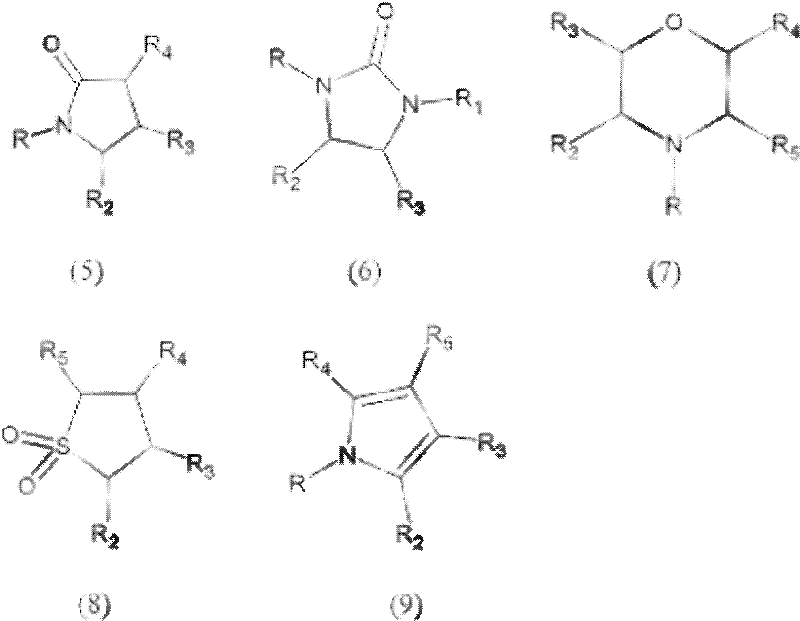
其中,R和R1独立地为H、C1-C12烷基(Alk)或(RR1O)nH;R2、R3、R4和R5独立地为H、C1-C12Alk、卤素、OH、OAlk、SAlk、COOR、=O、CH3C=O、CN、NRR1、COO(RR1O)nR、O(RR1O)nH或NRR1(RR1O)nH;且n=1-50。Wherein, R and R 1 are independently H, C 1 -C 12 alkyl (Alk) or (RR 1O ) n H; R 2 , R 3 , R 4 and R 5 are independently H, C 1 -C 12 Alk, Halogen, OH, OAlk, SAlk, COOR, =O, CH 3 C=O, CN, NRR 1 , COO(RR 1 O) n R, O(RR 1 O) n H or NRR 1 (RR 1 O ) n H; and n=1-50.
所述极性溶剂的非限制性的特定例子为水、甲醇、乙醇、异丙醇、正丙醇、1,2-丙二醇、1,3-丙二醇、1,4-丁二醇、二甘醇、二丙二醇、碳酸亚乙酯、碳酸丙烯酯、碳酸1,2-丁烯酯、碳酸1,2-环己烷、碳酸甘油酯(glycerinecarbonate)、碳酸二甲酯、碳酸二乙酯、丙酮、乙酰苯、吡啶、丙二酸二甲酯、双丙酮醇、氨基甲酸羟丙酯(hydroxypropyl carbamate)、氨基甲酸β-羟丙酯、甲酰胺、N-甲基甲酰胺、二甲基甲酰胺、N-甲基乙酰胺、二甲基乙酰胺、二甲亚砜、环丁砜、2-吡咯烷酮、N-甲基-2-吡咯烷酮、N-环己基-2-吡咯烷酮、丙酮基丙酮、环己酮、乙酰乙酸乙酯、L-乳酸乙酯(ethyl-L-lactate)、吡咯、N-甲基吡咯、N-乙基吡咯、4H-吡喃-4-酮、1,3-二甲基-2-咪唑啉酮、吗啉、N-甲基吗啉、N-乙基吗啉、N-甲酰吗啉、β-丙内酯、β-戊内酯、β-己内酯(beta-hexalactone)、γ-丁内酯、γ-戊内酯、γ-己内酯、γ-庚内酯(gamma-heptalactone)、γ-辛内酯(gamma-octalactone)、γ-壬内酯(gamma-nonalactone)、γ-癸内酯(gamma-decalactone)、δ-戊内酯、δ-己内酯、δ-庚内酯、δ-辛内酯、δ-壬内酯、δ-癸内酯、δ-十四内酯(delta-tetradecalactone)、δ-十八内酯(delta-octadecolactone)以及它们的任意组合。Non-limiting specific examples of said polar solvents are water, methanol, ethanol, isopropanol, n-propanol, 1,2-propanediol, 1,3-propanediol, 1,4-butanediol, diethylene glycol , dipropylene glycol, ethylene carbonate, propylene carbonate, 1,2-butene carbonate, 1,2-cyclohexane carbonate, glycerine carbonate, dimethyl carbonate, diethyl carbonate, acetone, Acetophenone, pyridine, dimethyl malonate, diacetone alcohol, hydroxypropyl carbamate, beta-hydroxypropyl carbamate, formamide, N-methylformamide, dimethylformamide, N-methylacetamide, dimethylacetamide, dimethylsulfoxide, sulfolane, 2-pyrrolidone, N-methyl-2-pyrrolidone, N-cyclohexyl-2-pyrrolidone, acetonylacetone, cyclohexanone, Ethyl acetoacetate, ethyl-L-lactate, pyrrole, N-methylpyrrole, N-ethylpyrrole, 4H-pyran-4-one, 1,3-dimethyl-2 -imidazolinone, morpholine, N-methylmorpholine, N-ethylmorpholine, N-formylmorpholine, β-propiolactone, β-valerolactone, β-caprolactone (beta-hexalactone ), γ-butyrolactone, γ-valerolactone, γ-caprolactone, γ-heptalactone (gamma-heptalactone), γ-octylactone (gamma-octalactone), γ-nonanolide (gamma- nonalactone), γ-decalactone (gamma-decalactone), δ-valerolactone, δ-caprolactone, δ-enantholactone, δ-octyl lactone, δ-nonanolide, δ-decalactone, delta-tetradecalactone, delta-octadecolactone, and any combination thereof.
所选的极性溶剂在25℃下显示出的介电常数等于或大于10。在另一种实例中,在25℃下的介电常数等于或大于25。所述极性溶剂在25℃下还应具有25-90达因/cm的表面张力。The chosen polar solvent exhibits a dielectric constant equal to or greater than 10 at 25°C. In another example, the dielectric constant is equal to or greater than 25 at 25°C. The polar solvent should also have a surface tension of 25-90 dyne/cm at 25°C.
所述极性溶剂在25℃下的动力粘度应小于1000cP。在另一种实例中,在25℃下的动力粘度为0.1-1000cP。还在另一种实例中,在25℃下的动力粘度为0.1-100cP。The dynamic viscosity of the polar solvent at 25°C should be less than 1000cP. In another example, the kinetic viscosity at 25°C is from 0.1 to 1000 cP. In yet another example, the kinetic viscosity at 25°C is from 0.1 to 100 cP.
所述极性溶剂对30V的直流或交流电表现出的电润湿相对响应值(EWRR)还应在20-80%的范围内。此处根据以下公式定义EWRR:The electrowetting relative response value (EWRR) of the polar solvent to 30V DC or AC should also be in the range of 20-80%. Here EWRR is defined according to the following formula:
EWRR=(Θ0-ΘV)x100/Θ0,%其中,Θ0为在电压为0V下的初始接触角,Θv在电压为30V下的最终接触角。用于接触角测量的适当步骤如“Ion and Liquid Dependent Dielectric Failurein Electrowetting Systems”(Balaji Raj等,Langmuir|3b2|第9版|13/8/09)中所描述的,通过引用其整体将其内容并入本文中,并在下面的实验步骤中进一步详细讨论。EWRR=(Θ 0 −Θ V )×100/Θ 0 , % where Θ 0 is the initial contact angle at a voltage of 0V, and Θ v is the final contact angle at a voltage of 30V. Appropriate procedures for contact angle measurements are as described in "Ion and Liquid Dependent Dielectric Failure in Electrowetting Systems" (Balaji Raj et al., Langmuir | 3b2 | 9th Edition | 13/8/09), the contents of which are incorporated by reference in their entirety incorporated herein and discussed in further detail in the experimental steps below.
所述具有极性溶剂的有色导电流体中含有的颜料可以为任意有机颜料,所述有机颜料包括但不限于偶氮颜料(azo pigment)、金属络合物颜料、苯并咪唑酮颜料(benzimidazolone pigment)、甲亚胺颜料(azomethine pigment)、次甲基颜料(methine pigment)、蒽醌颜料、酞化青颜料(phthalocyaninepigment)、芘酮颜料(perinone pigment)、二萘嵌苯颜料、吡咯并吡咯二酮颜料(diketopyrrolopyrrole pigment)、靛蓝颜料、硫靛颜料、二噁嗪颜料(dioxazine pigment)、异吲哚啉颜料(isoindoline pigment)、异吲哚啉酮颜料(isoindolinone pigment)、亚氨基异吲哚啉颜料(iminoisoindoline pigment)、亚氨基异吲哚啉酮颜料(iminoisoindolinone pigment)、喹吖啶酮颜料(quinacridone pigment)、黄烷士酮颜料(flavanthrone pigment)、阴丹酮颜料(indanthrone pigment)、蒽素嘧啶颜料(anthrapyrimidine pigment)、喹酞酮颜料(quinophthalone pigment)、异蒽酮紫颜料(isoviolanthrone pigment)或皮蒽酮颜料(pyranthrone pigment)。所述有机颜料非限制性的特定例子为C.I.颜料黑1、2、3、31和32;C.I.颜料绿7、36、37、47、54和58;C.I.颜料蓝15:1、15:2、15:3、15:4、15:6、16、21、22、60、64、65、75和76;C.I.颜料紫19、23、29、31、33和37;C.I.颜料红122、123、144、149、166、168、170、171、175、176、178、179、180、183、189、190、192、196、202、208、209、214、216、220、221、224、226、242、248、254、255、260、264和271;C.I.颜料橙36、40、43、51、60、61、62、64、66、69、71、72、73和77;C.I.颜料黄24、74、83、93、94、95、108、109、110、120、123、138、139、150、151、154、155、167、170、171、173、174、175、180、181、185、192、193、194、199、213和218。在一种实例中,所述有机颜料选自C.I.颜料黑1、31和32;C.I.颜料绿7、36、37;C.I.颜料蓝15:1、15:2、15:3、15:4、15:6、16、60和64;C.I.颜料紫19、23和29;C.I.颜料红122、144、175、176、178、183、202、208、209、254、255、264和271;C.I.颜料橙36、64、71、72和73;或C.I.颜料黄74、83、110、120、138、139、150、151、154、155、175、180、181、185和213。The pigment contained in the colored conductive fluid with polar solvent can be any organic pigment, and the organic pigment includes but not limited to azo pigment (azo pigment), metal complex pigment, benzimidazolone pigment (benzimidazolone pigment) ), azomethine pigment, methine pigment, anthraquinone pigment, phthalocyanine pigment, perinone pigment, perylene pigment, pyrrolopyrrole di Diketopyrrolopyrrole pigment, indigo pigment, thioindigo pigment, dioxazine pigment, isoindoline pigment, isoindolinone pigment, iminoisoindoline Pigment (iminoisoindoline pigment), iminoisoindolinone pigment (iminoisoindolinone pigment), quinacridone pigment (quinacridone pigment), flavanthrone pigment (flavanthrone pigment), indanthrone pigment (indanthrone pigment), anthracene Anthrapyrimidine pigment, quinophthalone pigment, isoviolanthrone pigment or pyranthrone pigment. Non-limiting specific examples of said organic pigments are C.I.
所述有色导电流体中含有的颜料还可以为任意的无机颜料,如炭黑、金属氧化物、混合金属氧化物(mixed metal oxide)、硫化物或硫酸盐。非限制性的特定例子包括二氧化钛、氧化锌、氧化铁、锑黄、铬酸铅、硫酸铬酸铅(lead chromate sulfate)、钼酸铅、群青(ultramarine blue)、钴蓝(cobalt blue)、锰蓝(manganese blue)、氧化铬绿、水合氧化铬绿(hydrated chrome oxidegreen)、钴绿、金属硫化物、镉磺化硒化物(cadmium sulfoselenides)、铁酸锌、钒酸铋及其衍生物以及它们的任意组合。无机颜料非限制性特定的例子为C.I.颜料黑6、7、9、11、12、14、15、22、26、27、28、29、30、33、34和35;C.I.颜料绿18、20、21和22;C.I.颜料蓝27、30和73;C.I.颜料红265和275;C.I.颜料黄38、40、53、119、157、158、160、161、162和184;C.I.颜料白4、5、6、6:1、7、8、9、10、12、13、14、15、18、18:1、19、21、22、23、24、25、26、27、28、32、33和36。在一种实例中,所述无机颜料选自C.I.颜料黑6、7、9、11、12、14、15、22、26、27、28、29、30、33、34和35,或者C.I.颜料白4、5、6、6:1、7、18、18:1、26、28和32。The pigment contained in the colored conductive fluid can also be any inorganic pigment, such as carbon black, metal oxide, mixed metal oxide, sulfide or sulfate. Non-limiting specific examples include titanium dioxide, zinc oxide, iron oxide, antimony yellow, lead chromate, lead chromate sulfate, lead molybdate, ultramarine blue, cobalt blue, manganese Manganese blue, chrome oxide green, hydrated chrome oxide green, cobalt green, metal sulfides, cadmium sulfoselenides, zinc ferrite, bismuth vanadate and their derivatives and their any combination of . Non-limiting specific examples of inorganic pigments are C.I.
所述有色导电流体中含有的颜料还可以为任意已知的补充剂,如氧化物、碳酸盐、硫酸盐、硫化物或磷酸盐,且可以为合成的或天然的。适用的补充剂的非限制性的例子包括碳酸钙、硫酸钡、云母、高岭土、粘土、二氧化硅等。The pigment contained in the colored conductive fluid may also be any known extender, such as oxides, carbonates, sulfates, sulfides or phosphates, and may be synthetic or natural. Non-limiting examples of suitable supplements include calcium carbonate, barium sulfate, mica, kaolin, clay, silicon dioxide, and the like.
所述颜料可以为有机颜料、无机颜料和补充剂中的两种以上的混合物、复合物或固溶体。The pigment may be a mixture, composite or solid solution of two or more of organic pigments, inorganic pigments and extenders.
所述有色导电流体中含有的颜料还可以为在应用介质(applicationmedia)中不溶的分散的颗粒物质。所述分散的颗粒物质可以为低分子量化合物、低聚物、聚合物、共聚物、接枝共聚物(grafted co-polymer)、交联聚合物、熟化聚合物、含有不溶性盐(带有有机和/或无机阳离子和/或阴离子,或者带有相反电荷的基团的其他聚合物或低聚物)形式的极性阴离子或阳离子基团的聚合物。所述颜料可以为上述低分子量化合物、低聚物和聚合物的任意混合物、固溶体或者其他的分子间反应产物或配位产物。上述颜料非限制性的例子包括三聚氰胺或烯烃基双三聚氰胺(alkylene bis-melamine),乙烯基聚合物和共聚物,例如,聚烯烃(聚乙烯、聚丙烯、聚丁烯、聚异丁烯、聚异戊二烯)、聚苯乙烯、聚丙烯酸酯(聚甲基丙烯酸酯、聚丙烯酸烷基/芳基酯和聚甲基丙烯酸烷基/芳基酯)、聚丙烯腈、聚卤乙烯(聚氯乙烯、聚氟乙烯、聚溴乙烯)、聚偏二卤乙烯(polyvinylidene halogenides)、聚乙烯醇、聚醋酸乙烯酯、聚乙烯吡咯烷酮、聚乙烯醇缩丁醛、聚萘乙烯(polyvinylnaphthalene)、聚乙烯咔唑、聚酰胺、聚酰亚胺、聚酯、聚醚、聚碳酸酯、聚酯碳酸酯、聚缩醛、聚氨酯、聚脲、聚砜、聚醚砜(poly(ether sulfone))、聚(亚芳基/烯烃基)硫化物(poly(arylene/alkylene)sulfide)、聚环氧化物、聚醛、聚酮、聚醚醚酮、酚醛树脂、三聚氰胺甲醛树脂、脲醛树脂、聚对苯二甲酸乙二醇酯、聚对苯二酸丙二酯(polytrimethylene terephthalate)、聚对苯二甲酸丁二醇酯、烃树脂、无机聚合物如聚硅氧烷。所述分散的颗粒物质可以为白色的或者用染料和/或颜料染色过的。The pigment contained in the colored conductive fluid may also be a dispersed particulate material that is insoluble in the application media. The dispersed particulate material can be low molecular weight compounds, oligomers, polymers, copolymers, grafted co-polymers, cross-linked polymers, cured polymers, containing insoluble salts (with organic and Polymers of polar anionic or cationic groups in the form of/or inorganic cations and/or anions, or other polymers or oligomers with oppositely charged groups). The pigment can be any mixture, solid solution or other intermolecular reaction products or coordination products of the above-mentioned low molecular weight compounds, oligomers and polymers. Non-limiting examples of such pigments include melamine or alkylene bis-melamine, vinyl polymers and copolymers, e.g., polyolefins (polyethylene, polypropylene, polybutylene, polyisobutylene, polyisoprene Diene), polystyrene, polyacrylate (polymethacrylate, polyalkyl/aryl acrylate and polyalkyl/aryl methacrylate), polyacrylonitrile, polyvinyl halide (polyvinyl chloride , polyvinyl fluoride, polyvinyl bromide), polyvinylidene halogenides, polyvinyl alcohol, polyvinyl acetate, polyvinyl pyrrolidone, polyvinyl butyral, polyvinylnaphthalene, polyvinylcarba Azole, polyamide, polyimide, polyester, polyether, polycarbonate, polyester carbonate, polyacetal, polyurethane, polyurea, polysulfone, polyether sulfone (poly(ether sulfone)), poly( Poly(arylene/alkylene)sulfide, polyepoxide, polyaldehyde, polyketone, polyetheretherketone, phenolic resin, melamine-formaldehyde resin, urea-formaldehyde resin, polyethylene terephthalic acid Ethylene glycol esters, polytrimethylene terephthalate, polybutylene terephthalate, hydrocarbon resins, inorganic polymers such as polysiloxanes. The dispersed particulate matter may be white or dyed with dyes and/or pigments.
所述有色导电流体中含有的颜料还可以为包覆的有机颜料、无机颜料、补充剂或染料。可以通过本领域所熟知的方法进行包覆,包括,例如,树脂、低聚物或聚合物在颜料表面上的物理吸附和/或沉淀,凝聚,或者单体或低聚物在颜料颗粒的存在下通过或不通过交联或熟化的聚合作用。可以通过任意已知聚合作用的原理实现聚合作用,如连锁聚合、缩合连锁聚合(condensativechain polymerization)、缩聚和加成聚合作用(Pure&App/.Chem.、第66卷、No 12、第2483-2486页、1994)。预先配制的聚合物或由单体在可用于包覆的颜料颗粒的存在下合成的聚合物的非限制性的例子为乙烯聚合物和共聚物,如聚烯烃(聚乙烯、聚丙烯、聚丁烯、聚异丁烯、聚异戊二烯)、聚苯乙烯、聚丙烯酸酯(聚甲基丙烯酸酯、聚丙烯酸烷基/芳基酯和聚甲基丙烯酸烷基/芳基酯)、聚丙烯腈、聚卤乙烯(聚氯乙烯、聚氟乙烯、聚溴乙烯)、聚偏二卤乙烯、聚乙烯醇、聚醋酸乙烯酯、聚乙烯吡咯烷酮、聚乙烯醇缩丁醛、聚萘乙烯、聚乙烯咔唑、聚酰胺、聚酰亚胺、聚酯、聚醚、聚碳酸酯、聚酯碳酸酯、聚缩醛、聚氨酯、聚脲、聚砜、聚醚砜、聚(亚芳基/烯烃基)硫化物、聚环氧化物、聚醛、聚酮、聚醚醚酮、酚醛树脂、三聚氰胺甲醛树脂、脲醛树脂、聚对苯二甲酸乙二醇酯、聚对苯二酸丙二酯、聚对苯二甲酸丁二醇酯、烃树脂或无机聚合物如聚硅氧烷。用于包覆的聚合物可以为天然的或合成的线型、支化、嵌段、无规、梳型、接枝、枝状聚合物或共聚物。另外,可以用于包覆的一种或多种天然或合成的树脂包括但不限于松香、改性松香、具有马来酸酐和其他不饱和化合物的松香缩合物、树胶、醇酸树脂、丙烯酸酯和具有马来酸酐的缩合物、三聚氰胺醛(melamine aldehyde)、酚醛、脲醛树脂、环氧树脂、聚氨酯、乙缩醛、酚醛塑料。包覆可以包括聚合物、低聚物和树脂的任意组合。The pigments contained in the colored conductive fluid may also be encapsulated organic pigments, inorganic pigments, extenders or dyes. Coating can be performed by methods well known in the art, including, for example, physical adsorption and/or precipitation of resins, oligomers, or polymers on the pigment surface, agglomeration, or the presence of monomers or oligomers on the pigment particles Polymerization with or without crosslinking or curing. Polymerization can be achieved by any known principle of polymerization, such as chain polymerization, condensation chain polymerization (condensative chain polymerization), polycondensation and addition polymerization (Pure & App/.Chem., Vol. 66, No 12, pp. 2483-2486 , 1994). Non-limiting examples of pre-formulated polymers or polymers synthesized from monomers in the presence of pigment particles useful for coating are ethylene polymers and copolymers such as polyolefins (polyethylene, polypropylene, polybutylene, olefin, polyisobutylene, polyisoprene), polystyrene, polyacrylate (polymethacrylate, polyalkyl/aryl acrylate and polyalkyl/aryl methacrylate), polyacrylonitrile , polyvinyl halide (polyvinyl chloride, polyvinyl fluoride, polyvinyl bromide), polyvinylidene halide, polyvinyl alcohol, polyvinyl acetate, polyvinyl pyrrolidone, polyvinyl butyral, polyvinyl naphthalene, polyethylene Carbazole, polyamide, polyimide, polyester, polyether, polycarbonate, polyestercarbonate, polyacetal, polyurethane, polyurea, polysulfone, polyethersulfone, poly(arylene/olefin-based ) sulfide, polyepoxide, polyaldehyde, polyketone, polyetheretherketone, phenolic resin, melamine-formaldehyde resin, urea-formaldehyde resin, polyethylene terephthalate, polytrimethylene terephthalate, poly Butylene terephthalate, hydrocarbon resins or inorganic polymers such as polysiloxanes. The polymers used for coating can be natural or synthetic linear, branched, block, random, comb, graft, dendritic or copolymers. Additionally, one or more natural or synthetic resins that may be used for coating include, but are not limited to, rosin, modified rosin, rosin condensates with maleic anhydride and other unsaturated compounds, gums, alkyds, acrylates and condensates with maleic anhydride, melamine aldehyde, phenolic, urea-formaldehyde, epoxy, polyurethane, acetal, phenolic plastics. Coatings may comprise any combination of polymers, oligomers and resins.
所述有色导电流体中含有的颜料还可以包括表面改性的颜料,如通过将离子、非离子、低聚物或聚合的基团共价连接(接枝)到所述颜料表面的化学改性方法而制得。改性基团的非限制性例子为羧基,磺基,芳基羧基(arylcarboxy),芳基磺基(arylsulfo),磷酸盐,羟基,伯、仲、叔和季胺,杂环胺,二元胺,三元胺,多胺,腈,聚烯烃,聚烯烃氧化物(polyalkyleneoxides),聚酯基团以及它们的任意组合。该基团包括自分散颜料。有了自分散颜料,所述有色导电流体可以不含有例如分散剂。在一种实例中,所述有色导电流体由极性溶剂和自分散颜料组成。Pigments contained in the colored conductive fluid may also include surface modified pigments, such as chemical modification by covalently attaching (grafting) ionic, nonionic, oligomeric or polymeric groups to the pigment surface method made. Non-limiting examples of modifying groups are carboxyl, sulfo, arylcarboxy, arylsulfo, phosphate, hydroxyl, primary, secondary, tertiary and quaternary amines, heterocyclic amines, binary Amines, triamines, polyamines, nitriles, polyolefins, polyalkyleneoxides, polyester groups and any combination thereof. This group includes self-dispersing pigments. With self-dispersing pigments, the colored conductive fluid may contain, for example, no dispersants. In one example, the colored conductive fluid consists of a polar solvent and a self-dispersing pigment.
所述颜料还可以为具有无机核和有机壳的壳型产品,或者为具有有机核和无机壳的壳型产品。The pigment can also be a shell-type product with an inorganic core and an organic shell, or a shell-type product with an organic core and an inorganic shell.
具有极性溶剂的所述有色导电流体中含有的染料可以为任意常规染料,所述染料例如包括直接染料、酸性染料、碱性染料(阳离子染料)、活性染料、还原染料、硫化染料、溶剂染料、食用染料、媒染料、荧光染料、天然染料、分散染料或者它们的任意组合。所述染料还可以为任意阴离子染料和任意阳离子染料的复合物。The dyes contained in the colored conductive fluid with polar solvents can be any conventional dyes including, for example, direct dyes, acid dyes, basic dyes (cationic dyes), reactive dyes, vat dyes, sulfur dyes, solvent dyes , food dyes, mordant dyes, fluorescent dyes, natural dyes, disperse dyes or any combination thereof. The dye may also be a complex of any anionic dye and any cationic dye.
所述有色导电流体中含有的染料还可以含有发色团如偶氮化合物或偶氮缩合物(azo condensed),金属络合物,苯并咪唑酮,甲亚胺,次甲基如花青,氮碳花青(azacarbocyanine),烯胺,半花青(hemicyanine),链花青(streptocyanine),苯乙烯基(styryl),零位次甲基(zeromethine),单氮次甲基(monoazamethine)、二氮次甲基(diazamethine)、三氮次甲基(triazamethine)和四氮次甲基(tetraazamethine),类胡萝卜素(caratenoid),芳甲烷如二芳基甲烷(diarylmethane)和三芳基甲烷(triarylmethane),氧杂蒽(xanthene),噻吨,类黄酮(flavanoid),均二苯代乙烯,香豆素,吖啶(acridene),芴,荧光酮,苯并二呋喃酮(benzodifuranone),有色甲(formazan),吡唑,噻唑,吖嗪,二嗪,噁嗪,二噁嗪,三苯二噁嗪(triphenodioxazine),吩嗪,噻嗪,噁嗪酮,吲达胺,亚硝基(nitroso),硝基,醌如对苯二酚和蒽醌,若丹明,酞化青染料,中性花青(neutrocyanine),二氮杂半花青(diazahemicyanine),紫菜碱(porphirine),芘酮(perinone),二萘嵌苯,派洛宁,吡咯并吡咯二酮,靛蓝,靛蓝类染料,硫靛,靛酚,萘二甲酰亚胺(naphthalimide),异吲哚啉,异吲哚啉酮,亚氨基异吲哚啉,亚氨基异吲哚啉酮,喹吖啶酮,黄烷士酮,阴丹酮,蒽素嘧啶,喹酞酮,异蒽酮紫,皮蒽酮染料或其它们的任意组合。The dye contained in the colored conductive fluid may also contain chromophores such as azo compounds or azo condensed compounds (azo condensed), metal complexes, benzimidazolones, imines, methines such as cyanines, nitrogen Azacarbocyanine, enamine, hemicyanine, streptocyanine, styryl, zeromethine, monoazamethine, two diazamethine, triazmethine and tetraazamethine, carotenoids, aromatic methanes such as diarylmethane and triarylmethane , xanthene (xanthene), thioxanthene, flavonoid (flavanoid), stilbene, coumarin, acridine (acridene), fluorene, fluorone, benzodifuranone (benzodifuranone), colored formaldehyde ( formazan), pyrazole, thiazole, azine, diazine, oxazine, dioxazine, triphenodioxazine, phenazine, thiazine, oxazinone, indamine, nitroso , nitro, quinones such as hydroquinone and anthraquinone, rhodamine, phthalocyanine dyes, neutral cyanine (neutrocyanine), diazahemicyanine (diazahemicyanine), porphirine (porphirine), pyrenone ( perinone), perylene, pyronin, diketopyrrolopyrrole, indigo, indigo dyes, thioindigo, indophenol, naphthalimide, isoindoline, isoindolinone , iminoisoindoline, iminoisoindolinone, quinacridone, flavanthrone, indanthrone, anthracene pyrimidine, quinophthalone, isoanthrone violet, pyranthrone dyes or their any combination of .
所述染料还可作为着色剂、遮光物,用于颜料表面修饰以将颜料颗粒分散和稳定在流体中,用于改善所述流体的流变性能和/或用于调整所述流体的界面张力和电导率。The dye can also be used as a colorant, a sunscreen, for surface modification of the pigment to disperse and stabilize the pigment particles in the fluid, for improving the rheological properties of the fluid and/or for adjusting the interfacial tension of the fluid and conductivity.
所述有色导电流体中可以含有的试剂可以选自显示出具有增强极性流体电导率的性能,且不会对电介质基板和设备的其他元件造成不良影响的化合物。许多纯溶剂,包括超纯水、丙二醇和碳酸丙烯酯,表现出很低的或不可检测到的电导率,且不能用于电润湿。出于本文的目的,将具有离子离解能力的物质(如盐)作为用于电导率控制的试剂是可取的。在一种实例中,所述试剂限定为阳离子和阴离子。至于离子大小,用于控制电导率的试剂不会明显地离解成在相对较低的电压下会引起介电击穿的小于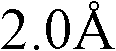
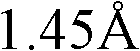
以下常规的结构式表示的化合物中的一种化合物或两种以上化合物的任意组合为合适的试剂:One compound or any combination of two or more compounds in the compounds represented by the following conventional structural formulas is a suitable reagent:

其中,R为H,烷基(Alk)、芳基(Ar)或烷基芳基;R1为H、烷基、芳基、烷基芳基或分子量为100-5000的聚亚烷基乙二醇(polyalkylene glycol);R2、R3、R4和R5独立地为H、烷基、芳基、烷基芳基、卤素、-NRR1、-OH、-OAlk、-OAr、-SAlk、-SAr、-COOH、-COOAlk、-COOAr、-CONRAlk、-CONRAr、=O、-CH3C=O、-CN、-SO3M、-SO2NHR1、-SO2NHAr或-NO2;R1为单键、烷基、芳基、烷基芳基、分子量为100-5000的聚亚烷基乙二醇、分子量为70-5000的聚乙烯亚胺、C=O、C=NH或C=S;且m为0-200。Wherein, R is H, alkyl ( Alk ), aryl (Ar) or alkylaryl; R is H, alkyl, aryl, alkylaryl or polyalkylene ethyl alcohol with a molecular weight of 100-5000 Diol (polyalkylene glycol); R 2 , R 3 , R 4 and R 5 are independently H, alkyl, aryl, alkylaryl, halogen, -NRR 1 , -OH, -OAlk, -OAr, - SAlk, -SAr, -COOH, -COOAlk, -COOAr, -CONRAlk, -CONRAr, =O, -CH3C =O, -CN, -SO3M , -SO2NHR1 , -SO2NHAr , or - NO 2 ; R 1 is a single bond, alkyl, aryl, alkylaryl, polyalkylene glycol with a molecular weight of 100-5000, polyethyleneimine with a molecular weight of 70-5000, C=O, C =NH or C=S; and m is 0-200.
烷基可以为C1-C18的线型或支化的脂肪烃或C3-C10的脂环烃,或者含有O、N和S中的一个或多个原子的杂环;并且可以是未被取代的,或者含有卤素(如氟),伯、仲、叔或季胺,-OH,-OR,-COOM,-COOR1,-CONRR1,=O,-(CH3)C=O,-CN,-SO3M,-NO2基团或它们的任意组合。芳基可以为C4-C10芳香族烃或含有O、N和S中的一个或多个原子的芳香族杂环;并且可以是未被取代的,或者含有卤素,伯、仲、叔或季胺,-OH,-OR,-COOM,-COOR1,-CONR R1,=O,-(CH3)C=O,-CN,-SO3M,-NO2基团或它们的任意组合。烷基芳基为上述烷基和芳基基团的组合。M为H、金属或有机阳离子。The alkyl group can be a C 1 -C 18 linear or branched aliphatic hydrocarbon or a C 3 -C 10 alicyclic hydrocarbon, or a heterocyclic ring containing one or more atoms in O, N and S; and can be Unsubstituted, or containing halogen (such as fluorine), primary, secondary, tertiary or quaternary amine, -OH, -OR, -COOM, -COOR 1 , -CONRR 1 , =O, -(CH 3 )C=O , -CN, -SO 3 M, -NO 2 groups or any combination thereof. The aryl group can be a C 4 -C 10 aromatic hydrocarbon or an aromatic heterocyclic ring containing one or more atoms of O, N and S; and can be unsubstituted, or contain halogen, primary, secondary, tertiary or Quaternary amine, -OH, -OR, -COOM, -COOR 1 , -CONR R 1 , =O, -(CH 3 )C=O, -CN, -SO 3 M, -NO 2 groups or any of them combination. Alkylaryl is a combination of the aforementioned alkyl and aryl groups. M is H, a metal or an organic cation.
除上面的结构式1-11描述的阳离子,还可以使用以下化合物及其衍生物的阳离子作为所述试剂的阳离子:2-吡咯啉、3-吡咯啉、吡咯、吡唑烷、咪唑烷(imidazolidine)、2-吡唑啉(2-pyrazoline)、2-咪唑啉、吡唑、咪唑啉-2-硫酮、1,2,3-噻唑、1,2,4-噻唑、1H-四唑、噁唑啉、5-噁唑酮、异噁唑、噁唑、2-噻唑啉、异噻唑、噻唑、1,2,3-噁二唑、1,2,4-噁二唑、1,2,5-噁二唑、1,3,4-噁二唑、1,3,4-噻二唑(1,3,4-thadiazole)、1,2,4-多噁唑(1,2,4-dooxazole)、哌啶、1-H-吡啶-2-酮、哌嗪、哒嗪(pyridizine)、1,2,3-三嗪、1,2,4-三嗪、噁嗪、硫代吗啉、噁二嗪(oxadiazine)、氧杂噻嗪(oxathiazine)、二氢吲哚、吲哚、咔唑、吲唑、苯并咪唑、喹喔啉、酞嗪、1,5-萘啶、吩嗪、苯并噻唑、2H-1,4-苯并噁嗪、吩噁嗪和吩噻嗪。In addition to the cations described in the above structural formulas 1-11, the cations of the following compounds and their derivatives can also be used as the cations of the reagent: 2-pyrroline, 3-pyrroline, pyrrole, pyrazolidine, imidazolidine (imidazolidine) , 2-pyrazoline (2-pyrazoline), 2-imidazoline, pyrazole, imidazoline-2-thione, 1,2,3-thiazole, 1,2,4-thiazole, 1H-tetrazole, oxa Azoline, 5-oxazolone, isoxazole, oxazole, 2-thiazoline, isothiazole, thiazole, 1,2,3-oxadiazole, 1,2,4-oxadiazole, 1,2, 5-oxadiazole, 1,3,4-oxadiazole, 1,3,4-thiadiazole (1,3,4-thadiazole), 1,2,4-polyoxazole (1,2,4 -dooxazole), piperidine, 1-H-pyridin-2-one, piperazine, pyridizine (pyridizine), 1,2,3-triazine, 1,2,4-triazine, oxazine, thiomorph Phyloline, oxadiazine, oxathiazine, indoline, indole, carbazole, indazole, benzimidazole, quinoxaline, phthalazine, 1,5-naphthyridine, phen oxazine, benzothiazole, 2H-1,4-benzoxazine, phenoxazine and phenothiazine.
所述阳离子还可以为任意已知含有阳离子基团的碱性染料或颜料衍生物。这种阳离子染料可以属于,例如,偶氮化合物、甲亚胺、氧杂蒽、吖嗪、噻嗪、噁嗪、三芳基甲烷、次甲基、多次甲基、蒽醌、芳基氨基醌(arylaminoquinone)、酞化青染料、酮亚胺(ketone imine)、吖啶、青色素、喹吖啶酮、二萘嵌苯、金属络合物、苯并咪唑酮、吡咯并吡咯二酮、靛蓝、硫靛、二噁嗪、异吲哚啉、异吲哚啉酮、亚氨基异吲哚啉、亚氨基异吲哚啉酮、黄烷士酮、阴丹酮、蒽素嘧啶、喹酞酮、异蒽酮紫、皮蒽酮染料或硝基。阳离子染料非限制性的例子为C.I.碱性黄1、2、3、5、6、7、9、11、12、13、15、20、21、23、24、25、28、29、37、49、57、90和106;C.I.碱性橙1、2、4、5、6、7、8、9、10、11,12、14、15、16、17、18、19、21、22、23、24、30、33和69;C.I.碱性红1、2、3、4、5、6、8、9、10、11、12、13、14、22、24、29、30、31、39、46、76、111和118;C.I.碱性紫1、2、3、4、5、6、7、8、9、10、11、12、13、14、16、18、21和23;C.I.碱性蓝1、2、3、5、6、7、8、9、10、11、12、13、14、15、16、17、18、20、22、23、24、25、26、41,44、47、54、55、57、64、65、66、67、72、74、81、99、140和162;C.I.碱性绿1、4、3和5;C.I.碱性褐1、2、4、5、15、16、17和18;C.I.碱性黑1、2、3和7。The cation may also be any known basic dye or pigment derivative containing a cationic group. Such cationic dyes may belong, for example, to azo compounds, azomethines, xanthenes, azines, thiazines, oxazines, triarylmethanes, methines, polymethines, anthraquinones, arylaminoquinones (arylaminoquinone), cyanine dye, ketone imine, acridine, cyanine, quinacridone, perylene, metal complex, benzimidazolone, diketopyrrolopyrrole, indigo , thioindigo, dioxazine, isoindoline, isoindolinone, iminoisoindoline, iminoisoindolinone, flavanthone, indanthrone, anthracene pyrimidine, quinophthalone , Isanthrone Violet, Pythrone Dye or Nitro. Non-limiting examples of cationic dyes are C.I.
An-可以为简单(单原子的)或复合阴离子,包括具有有机和无机成分的阴离子,或任意例如但不限于HSO4 -、SO4 2-、HSO3 -、FSO3 -、SO3 2-、S2O3 2-、S2O4 2-、S2O6 2-、S2O8 2-、S2O7 2-、Alk-OSO3 -、Ar-OSO3 -、ArAlk-OSO3 -、Alk-SO3 -、CH3O-(RO)n-OSO3 -、Ar-SO3 -、ArAlk-SO3 -、NH2SO3 -、P-(X-SO3 -)n、Q-(X-SO3 -)n、N-(SO2CF3)2、N-(SO2CF2CF3)2、N(CN)2 -、NH2 -、Alk-(COO-)n、Ar-(COO-)n、ArAlk-(COO-)n、P-(X-COO-)n、Q-(X-COO-)n、H2PO4 -、HPO4 2-、H2PO2 -、PO4 3-、P2O7 4-、P3O9 3-、P3O10 5-、P4O13 2-、(AlkO)2POO-、P-(X-POO)n -、Q-(X-POO)n -、NO3 -、NO2 -、OCN-、NCO-、SCN-、CNS-、CS2 2-、CS2 2-、N3 -、CrO4 2-、Cr2O7 2-、CrO8 3-、MnO4 -、SiO2 -、TiO3 2-、MoO4 -、ReO4 -、WO4 -、ClO2 -、ClO3 -、ClO4 -、BrO-、BrO2 -、BrO3 -、BrO4 -、I-、IO-、IO2 -、IO3 -、IO4 -、[Co(CN)6]3-、[Fe(CN)6]3-、[Fe(CN)6]4-、[Cr(CN)6]3-、[Cu(CN)6]3-、[Ni(CN)6]2-、B4O7 2-、BO3 3-、B(Ar)4 -、H2SbO4 -、Sb(OH)6 -、Sb2O7 4-、HCO3 -、CO3 2-、SeO4 2-、SeO4 2-和SeCN-的阴离子的混合。An- can be a simple (monatomic) or complex anion, including anions with organic and inorganic components, or any such as but not limited to HSO 4 - , SO 4 2- , HSO 3 - , FSO 3 - , SO 3 2- , S 2 O 3 2- , S 2 O 4 2- , S 2 O 6 2- , S 2 O 8 2- , S 2 O 7 2- , Alk-OSO 3 - , Ar-OSO 3 - , ArAlk- OSO 3 - , Alk-SO 3 - , CH 3 O-(RO) n -OSO 3 - , Ar-SO 3 - , ArAlk-SO 3 - , NH 2 SO 3 - , P-(X-SO 3 - ) n , Q-(X-SO 3 - ) n , N-(SO 2 CF 3 ) 2 , N-(SO 2 CF 2 CF 3 ) 2 , N(CN) 2 - , NH 2 - , Alk-(COO - ) n , Ar-(COO - ) n , ArAlk-(COO - ) n , P-(X-COO - ) n , Q-(X-COO - ) n , H 2 PO 4 - , HPO 4 2- , H 2 PO 2 - , PO 4 3- , P 2 O 7 4- , P 3 O 9 3- , P 3 O 10 5- , P 4 O 13 2- , (AlkO) 2 POO - , P-( X-POO) n - , Q-(X-POO) n - , NO 3 - , NO 2 - , OCN - , NCO - , SCN - , CNS - , CS 2 2- , CS 2 2- , N 3 - , CrO 4 2- , Cr 2 O 7 2- , CrO 8 3- , MnO 4 - , SiO 2 - , TiO 3 2- , MoO 4 - , ReO 4 - , WO 4 - , ClO 2 - , ClO 3 - , ClO 4 - , BrO - , BrO 2 - , BrO 3 - , BrO 4 - , I - , IO - , IO 2 - , IO 3 - , IO 4 - , [Co(CN) 6 ] 3- , [Fe (CN) 6 ] 3- , [Fe(CN) 6 ] 4- , [Cr(CN) 6 ] 3- , [Cu(CN) 6 ] 3- , [Ni(CN) 6 ] 2- , B 4 O 7 2- , BO 3 3- , B(Ar) 4 - , H 2 SbO 4 - , Sb(OH) 6 - , Sb 2 O 7 4- , HCO 3 - , CO 3 2- , SeO 4 2- , SeO 4 2- and SeCN - a mixture of anions.
P为取代的或未被取代的脂环烃或芳香族烃C10-C60,取代的或未被取代的含有O、N和S中的一个或多个原子的脂环族杂环或芳香族杂环C10-C60。非限制性的例子包括萘、甲基萘、十氢化萘、四氢化萘、蒽、蒽醌、萘醌、芘、二萘嵌苯、二氢吲哚、吲哚、喹啉、咔唑、吖啶、苯并呋喃、氧芴、苯并吡喃、二苯并噻吩、苯并噁嗪、吩噻嗪等。Q为属于以下类的发色团:偶氮化合物,金属络合物,苯并咪唑酮,甲烷,蒽醌,酞化青染料,芘酮,二萘嵌苯,吡咯并吡咯二酮,靛蓝,硫靛,二噁嗪,异吲哚啉,异吲哚啉酮,亚氨基异吲哚啉,亚氨基异吲哚啉酮,喹吖啶酮,黄烷士酮,阴丹酮,蒽素嘧啶,喹酞酮,异蒽酮紫,皮蒽酮染料,甲亚胺,次甲基如花青,氮碳花青,烯胺,半花青,链花青,苯乙烯基,零位次甲基,单氮次甲基、二氮次甲基、三氮次甲基和四氮次甲基,类胡萝卜素,芳甲烷如二芳基甲烷和三芳基甲烷,氧杂蒽,噻吨,类黄酮,均二苯代乙烯,香豆素,吖啶,芴,荧光酮,苯并二呋喃酮,有色甲,吡唑,噻唑,吖嗪,二嗪,噁嗪,二噁嗪,三苯二噁嗪,吩嗪,噻嗪,噁嗪酮,吲达胺,亚硝基,硝基,醌如对苯二酚和蒽醌,若丹明,中性花青,二氮杂半花青,紫菜碱,芘酮,靛蓝类染料,靛酚,萘酰亚胺以及它们的组合。Q还可以代表酸性染料、直接染料、活性染料、还原染料、分散染料、硫化染料或溶剂染料。X为单键、Alk、Ar或AlkAr(如上所定义的),且n=1-6。P is a substituted or unsubstituted alicyclic hydrocarbon or aromatic hydrocarbon C 10 -C 60 , a substituted or unsubstituted alicyclic heterocyclic or aromatic hydrocarbon containing one or more atoms of O, N and S Group heterocycle C 10 -C 60 . Non-limiting examples include naphthalene, methylnaphthalene, decahydronaphthalene, tetrahydronaphthalene, anthracene, anthraquinone, naphthoquinone, pyrene, perylene, indoline, indole, quinoline, carbazole, acridine Pyridine, benzofuran, oxyfluorene, benzopyran, dibenzothiophene, benzoxazine, phenothiazine, etc. Q is a chromophore belonging to the following classes: azo compounds, metal complexes, benzimidazolones, methane, anthraquinones, phthalocyanines, pyrenes, perylenes, diketopyrrolopyrroles, indigo, Thiindigo, Dioxazine, Isoindoline, Isoindolinone, Iminoisoindoline, Iminoisoindolinone, Quinacridone, Flavanthone, Indanthrone, Anthracene , quinophthalone, isoanthrone violet, pyranthrone dyes, imine, methine such as cyanine, nitrogen carbacyanine, enamine, hemicyanine, chain cyanine, styryl, zero methine , monoazomethylene, diazomethylene, triazomethylene, and tetraazomethylene, carotenoids, aromatic methanes such as diarylmethanes and triarylmethanes, xanthenes, thioxanthenes, flavonoids , stilbene, coumarin, acridine, fluorene, fluorone, benzodifuranone, colored formazan, pyrazole, thiazole, azine, diazine, oxazine, dioxazine, triphenyldioxin Azines, phenazines, thiazines, oxazinones, indamines, nitroso, nitro, quinones such as hydroquinone and anthraquinones, rhodamines, neutral cyanines, diazasemicyanines, laver Bases, pyrenes, indigos, indophenols, naphthalimides, and combinations thereof. Q can also represent acid dyes, direct dyes, reactive dyes, vat dyes, disperse dyes, sulfur dyes or solvent dyes. X is a single bond, Alk, Ar or AlkAr (as defined above), and n=1-6.
另外,可以将没有在上述结构式1-11中描述的其他已知离子流体用作控制电导率的试剂。In addition, other known ionic fluids not described in the above Structural Formulas 1-11 can be used as the reagent for controlling the conductivity.
所述试剂非限制性的特定例子包括,例如,碘化四丁铵、N-甲基吡啶十二烷基硫酸盐(N-methylpyridinium dodecylsulfate)、四甲基磷酸醋酸盐(tetramethylphosphonium acetate)、碘化1-乙基-3-甲基咪唑二氰胺三乙基锍(1-Ethyl-3methylimidazolium dicyanamide triethylsulfonium iodide)、十二烷基三甲基辛基磺酸铵(dodecyltrimethylammonium octanesulfonate)、2-蒽醌磺酸四丁基膦(2-sulfoanthraquinone tetrabutylphosphonium)、铜酞菁磺酸三甲基十二铵(copper phthalocyanine sulfonic acid trimethyldodecylammonium)和C.I.酸性紫43的四丁基铵盐(tetrabutyl ammonium salt)。Non-limiting specific examples of such reagents include, for example, tetrabutylammonium iodide, N-methylpyridinium dodecylsulfate, tetramethylphosphonium acetate, iodine 1-Ethyl-3-methylimidazolium dicyanamide triethylsulfonium iodide, dodecyltrimethylammonium octanesulfonate, 2-anthraquinone 2-sulfoanthraquinone tetrabutylphosphonium, copper phthalocyanine sulfonic acid trimethyldodecylammonium and C.I. acid violet 43 tetrabutyl ammonium salt.
用于控制电导率的所选试剂的适当属性为离子大小和复杂度、离子对各种因素的稳定性以及不含不当的外界无机和有机离子。Appropriate attributes of selected reagents for controlling conductivity are ion size and complexity, ion stability to various factors, and absence of undue extraneous inorganic and organic ions.
不当化合物的例子为含有单原子离子(除碘、质子酸、非质子酸(aproticacid)如路易斯酸和路易斯碱外)的盐。例如,已证明水介质中某些离子如六氟磷酸和四氟硼酸阴离子会分解,导致HF、有害的酸和活泼的酸、游离的F-和H3O+小离子的生成(Sigma-Aldrich ChemFiles,Ionic Liquids,第5卷,#6,第3页)。不当的离子为离子半径小于


至于杂质,用于控制电导率的所述试剂应具有大于95%的纯度。在另一种实例中,所述纯度大于99.0%,且仍在另一种实例中,所述纯度大于99.5%。此处定义的纯度为未与无关材料稀释或混合,并且典型地表示为百分比的程度。As for impurities, the reagents used to control conductivity should have a purity greater than 95%. In another example, the purity is greater than 99.0%, and in still another example, the purity is greater than 99.5%. Purity is defined here as the degree to which it has not been diluted or mixed with extraneous materials and is typically expressed as a percentage.
用于控制电导率的所述试剂不含有总量超过500ppm的离子半径小于
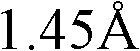
用于控制电导率的试剂还应对于化学的、热的、光化学的、电化学的或任意其他类型的降解是稳定的。用于控制电导率的试剂还应充分溶解在为有色导电极性流体所选用的溶剂中。为了有效地调节电导率,溶解度应至少为0.1mMol/L。另外,所述试剂不应对所述有色流体的稳定性产生任何显著影响,如与含有离子基团的着色剂间不当的相互作用。而且与所述有色流体的其他组分如离子型表面活性剂、聚合物和树脂间的相互作用不应对流体或设备的性能产生不利影响。Reagents for controlling conductivity should also be stable against chemical, thermal, photochemical, electrochemical or any other type of degradation. Reagents used to control conductivity should also be sufficiently soluble in the solvent chosen for the colored conductive polar fluid. In order to effectively adjust the conductivity, the solubility should be at least 0.1 mMol/L. In addition, the reagent should not have any significant effect on the stability of the colored fluid, such as undue interaction with colorants containing ionic groups. Also, interactions with other components of the colored fluid such as ionic surfactants, polymers and resins should not adversely affect the performance of the fluid or device.
可以在电磁谱的可视部分吸收光并证明具有可接受的耐光性的用于电导率控制的试剂除调节电导率外,还可以用作所述有色流体的着色剂、增效剂和/或分散剂。Agents for conductivity control that absorb light in the visible portion of the electromagnetic spectrum and demonstrate acceptable photostability can be used as colorants, synergists and/or Dispersant.
所述有色导电流体的其他组分,如溶剂、助溶剂、着色剂、表面活性剂、分散剂、增效剂和其他添加剂,可以有助于所述流体的电导率。在这些情况下,可以减少用于控制电导率的所述试剂的用量,或者可以根本不使用。这些组分不应由任何会导致所述流体中离子半径小于

所述有色导电流体中可以含有的表面活性剂可以为阴离子的、阳离子的、阴阳离子的(catanionic)、两性离子的(两性的)、非离子的或它们的任意组合。在一种实例中,所述表面活性剂为非离子的或阴阳离子的。非限制性的例子包括含有任意的官能团的磺酸酯、膦酸酯、聚乙烯氧化物、聚丙烯氧化物、聚丁烯氧化物以及它们的嵌段和无规共聚物;烷基胺、芳基胺和烷基芳基胺,如伯、仲、叔和季胺以及多胺;吡咯烷酮、萘缩合物、炔、羧酸、乙醇、多元醇及它们的任意组合。所述表面活性剂可以为合成的或天然的。所述表面活性剂可以用于使流体中的颜料颗粒的胶体稳定化(colloidstabilization),以减小界面张力,从而降低引起电润湿所需的电压,和/或增加所述流体的电导率。The surfactant that may be contained in the colored conductive fluid may be anionic, cationic, catanionic, zwitterionic (amphoteric), nonionic or any combination thereof. In one example, the surfactant is nonionic or anionic. Non-limiting examples include sulfonate esters, phosphonate esters, polyethylene oxides, polypropylene oxides, polybutylene oxides and their block and random copolymers containing any functional group; alkylamines, aromatic amines such as primary, secondary, tertiary and quaternary amines and polyamines; pyrrolidones, naphthalene condensates, alkynes, carboxylic acids, alcohols, polyols and any combination thereof. The surfactants may be synthetic or natural. The surfactant can be used to colloid stabilize the pigment particles in the fluid, to reduce interfacial tension, thereby reducing the voltage required to induce electrowetting, and/or to increase the conductivity of the fluid.
所述有色导电流体中可以含有的增效剂可以为,例如,磺酸,金属的磺酸盐,伯、仲、叔和季胺的磺酸盐,磺酰胺,酞酰亚氨甲基,芳甲基,烷基胺,羧酸,羧酸的盐、酰胺和酯,羰基,酰胺甲基(amidomethyl),烷基氨甲基(alkylaminomethyl),芳基酰胺甲基(arylaminomethyl),含氧烷基芳基(arylalkyloxy),偶氮化合物的硫代苯(phenylthio)和苯胺衍生物,金属络合物,苯并咪唑酮,甲亚胺,甲烷,蒽醌,酞化青染料,芘酮,二萘嵌苯,吡咯并吡咯二酮,靛蓝,硫靛,二噁嗪,异吲哚啉,异吲哚啉酮,亚氨基异吲哚啉,亚氨基异吲哚啉酮,喹吖啶酮,黄烷士酮,阴丹酮,蒽素嘧啶,喹酞酮,异蒽酮紫和皮蒽酮染料或者它们的任意组合。所述增效剂还可以为任意直接染料、酸性染料、碱性染料(阳离子染料)、活性染料、还原染料、硫化染料、溶剂染料、食用染料、媒染料、天然染料和分散染料或者它们的任意组合的衍生物。所述增效剂还可以为任意的阴离子染料和任意的阳离子染料的复合物。所述增效剂可以用于颜料表面的改性,以稳定所述流体中的颜料颗粒,从而改善所述流体的流变性能和/或调节所述流体的电导率。Synergists that may be contained in the colored conductive fluid may be, for example, sulfonic acids, sulfonates of metals, sulfonates of primary, secondary, tertiary and quaternary amines, sulfonamides, phthalimidomethyl, aromatic Methyl, alkylamine, carboxylic acid, salt, amide and ester of carboxylic acid, carbonyl, amidomethyl, alkylaminomethyl, arylaminomethyl, oxyalkyl Aryl (arylalkyloxy), phenylthio and aniline derivatives of azo compounds, metal complexes, benzimidazolone, imine, methane, anthraquinone, phthalocyanine dyes, pyrene, dinaphthalene Indigo, diketopyrrolopyrrole, indigo, thioindigo, dioxazine, isoindoline, isoindolinone, iminoisoindoline, iminoisoindolinone, quinacridone, yellow Alkanethrone, indanthrone, anthridine, quinophthalone, isoanthrone violet and pyranthrone dyes or any combination thereof. The synergist can also be any direct dyes, acid dyes, basic dyes (cation dyes), reactive dyes, vat dyes, sulfur dyes, solvent dyes, food dyes, mordant dyes, natural dyes and disperse dyes or any of them Combined Derivatives. The synergist can also be a compound of any anionic dye and any cationic dye. The synergist can be used in the modification of the pigment surface to stabilize the pigment particles in the fluid, thereby improving the rheological properties of the fluid and/or adjusting the conductivity of the fluid.
所述有色导电流体中可以含有的分散剂可以选自以下物质:阴离子的、阳离子的、两性离子的(两性的)以及非离子的聚合物或低聚物,所述聚合物或低聚物为选自聚烯烃氧化物如聚乙烯氧化物、聚丙烯氧化物或聚丁烯氧化物,聚酰胺,聚酯,聚丙烯酸酯,聚乙烯亚胺,聚醚胺(polyether amine),聚乙烯醇,聚醋酸乙烯酯,聚乙烯吡咯烷酮,聚乙烯噁唑烷酮(polyvinyloxazolidone),聚乙烯甲基噁唑烷酮(polyvinylmethyloxazolidone),聚苯乙烯,聚环氧化物,聚氨酯,聚脲或聚卤乙烯(polyvinyl halogen)的组中的嵌段、无规、梳型、接枝、枝状聚合物或共聚物。所述分散剂可以单独使用或与其他分散剂、表面活性剂以及增效剂结合使用。在一种实例中,所述分散剂为非离子分散剂。The dispersant that may be contained in the colored conductive fluid may be selected from the following: anionic, cationic, zwitterionic (amphoteric) and nonionic polymers or oligomers, the polymers or oligomers being selected from polyolefin oxides such as polyethylene oxide, polypropylene oxide or polybutylene oxide, polyamides, polyesters, polyacrylates, polyethyleneimines, polyetheramines, polyvinyl alcohols, Polyvinyl acetate, polyvinylpyrrolidone, polyvinyloxazolidone, polyvinylmethyloxazolidone, polystyrene, polyepoxide, polyurethane, polyurea or polyvinyl halide block, random, comb, graft, dendrimer or copolymer in the group of halogen). The dispersants can be used alone or in combination with other dispersants, surfactants and builders. In one example, the dispersant is a nonionic dispersant.
所述有色导电流体中可以含有的树脂可以包括天然的或合成的树脂,如松香和改性松香、松香与马来酸酐和其他不饱和化合物的缩合物、树胶、醇酸树脂、丙烯酸酯、三聚氰胺醛树脂、酚醛树脂、脲醛树脂、环氧树脂、聚氨酯、乙缩醛、酚醛塑料或它们的任意组合。Resins that may be contained in the colored conductive fluid may include natural or synthetic resins such as rosin and modified rosin, condensates of rosin with maleic anhydride and other unsaturated compounds, gums, alkyd resins, acrylates, melamine Formaldehyde resins, phenolic resins, urea-formaldehyde resins, epoxy resins, polyurethanes, acetals, phenolics, or any combination thereof.
所述有色导电流体中可以含有的聚合物可以包括选自聚烯烃氧化物如聚乙烯氧化物、聚丙烯氧化物或聚丁烯氧化物,聚酰胺,聚酯,聚丙烯酸酯,聚乙烯亚胺,聚醚胺,聚乙烯醇,聚醋酸乙烯酯,聚乙烯吡咯烷酮,聚乙烯噁唑烷酮,聚乙烯甲基噁唑烷酮,聚苯乙烯,聚环氧化物,聚氨酯,聚脲,聚卤乙烯或它们的任意组合中的天然或合成的线型、支化、嵌段、无规、梳型、接枝、枝状聚合物或共聚物。所述聚合物可以含有包括磺基、磺酰胺基、羧基、酰胺基(carboxamido-)、脲基、硫脲基、尿烷基、偶氮基、酮基、氧基、烷氧基、硫基、氨基、氨烷基、磷酸基、单卤三唑酮基(monohalotriazolo-)、双卤三唑酮基(dihalotriazolo-)、乙烯砜基(vinyl sulfono-)、苯胺砜基(phenylamino sulfono-)、烷基、聚烷基、烷撑二醇(alkylene glycol)、烷基芳基、卤素、卤代烷基和/或卤代芳基或者它们的任意组合的一个或多个基团。The polymer that may be contained in the colored conductive fluid may include polyolefin oxides such as polyethylene oxide, polypropylene oxide or polybutylene oxide, polyamide, polyester, polyacrylate, polyethyleneimine , polyetheramine, polyvinyl alcohol, polyvinyl acetate, polyvinylpyrrolidone, polyvinyloxazolidone, polyvinylmethyloxazolidone, polystyrene, polyepoxide, polyurethane, polyurea, polyhalogen Natural or synthetic linear, branched, block, random, comb, graft, dendritic polymers or copolymers in ethylene or any combination thereof. The polymer may contain sulfo groups, sulfonamide groups, carboxyl groups, amide groups (carboxamido-), urea groups, thiourea groups, urethane groups, azo groups, ketone groups, oxygen groups, alkoxy groups, thio groups , amino group, amino group, phosphoric acid group, monohalotriazolone group (monohalotriazolo-), dihalotriazolone group (dihalotriazolo-), vinyl sulfonyl group (vinyl sulfono-), aniline sulfonyl group (phenylamino sulfono-), One or more groups of alkyl, polyalkyl, alkylene glycol, alkylaryl, halogen, haloalkyl and/or haloaryl, or any combination thereof.
在一种实施方式中,所述有色导电流体含有极性溶剂、自分散颜料和/或染料,并至少不含有表面活性剂、分散剂、聚合物和树脂。在另一实施方式中,所述有色导电流体可以含有在具有表面活性剂、增效剂、聚合物或分散剂的极性流体中稳定的至少一种有机或无机颜料。In one embodiment, the colored conductive fluid contains polar solvents, self-dispersing pigments and/or dyes, and does not contain at least surfactants, dispersants, polymers and resins. In another embodiment, the colored conductive fluid may contain at least one organic or inorganic pigment that is stable in polar fluids with surfactants, synergists, polymers or dispersants.
含有极性溶剂的所述有色流体可以进一步含有其他添加剂,如2008年9月12日提交的PCT/US2008/076168、名称为“Electrofluidic Devices,VisualDisplays,and Methods for Making and Operating Such Electrofluidic Devices”中所描述的添加剂,通过引用其整体将其内容并入本文中。还可以添加杀虫剂和消泡剂。Said colored fluids containing polar solvents may further contain other additives as described in PCT/US2008/076168, filed September 12, 2008, entitled "Electrofluidic Devices, Visual Displays, and Methods for Making and Operating Such Electrofluidic Devices" described additives, the contents of which are incorporated herein by reference in their entirety. Insecticides and defoamers can also be added.
以所述有色流体的总重量为基准,所述极性溶剂可以在约50.0-99.9重量%的范围内。在另一种实例中,所述极性溶剂可以在约80.0-99重量%的范围内。The polar solvent may be in the range of about 50.0-99.9% by weight based on the total weight of the colored fluid. In another example, the polar solvent may be in the range of about 80.0-99% by weight.
以所述有色流体的总重量为基准,所述有色导电流体的颜料含量可以在约0重量%至约50重量%的范围内。在一种实例中,以所述有色流体的总重量为基准,所述颜料的含量在约0.1重量%至约50重量%范围内。在另一种实例中,以所述有色流体的总重量为基准,所述颜料的含量在约1重量%至约20重量%范围内。颜料浓度低于0.1重量%时通常不能提供期望的色度(color intensity),且颜料浓度高于50重量%时不能有效地电润湿。以所述有色流体的总重量为基准,所述有色导电流体可以含有约0重量%至约50重量%的染料。在另一种实例中,以所述有色流体的总重量为基准,所述有色导电流体的染料含量可以在约0.1重量%至约50重量%的范围内。The pigment content of the colored conductive fluid may range from about 0% by weight to about 50% by weight, based on the total weight of the colored fluid. In one example, based on the total weight of the colored fluid, the content of the pigment is in the range of about 0.1% by weight to about 50% by weight. In another example, based on the total weight of the colored fluid, the content of the pigment is in the range of about 1% by weight to about 20% by weight. Pigment concentrations below 0.1 wt% generally do not provide the desired color intensity, and pigment concentrations above 50 wt% do not effectively electrowet. The colored conductive fluid may contain from about 0% to about 50% by weight dye, based on the total weight of the colored fluid. In another example, based on the total weight of the colored fluid, the dye content of the colored conductive fluid may range from about 0.1% by weight to about 50% by weight.
以所述有色流体的总重量为基准,所述有色导电流体中用于控制电导率的所述试剂的含量可以在约0重量%至约10重量%范围内。在另一种实例中,以所述有色流体的总重量为基准,所述有色导电流体的试剂的含量可以在约0.01重量%至约10重量%的范围内。仍在另一种实例中,以所述有色流体的总重量为基准,所述有色导电流体的试剂的含量可以在约0.1重量%至约10重量%的范围内。Based on the total weight of the colored fluid, the content of the reagent for controlling conductivity in the colored conductive fluid may range from about 0% by weight to about 10% by weight. In another example, based on the total weight of the colored fluid, the content of the reagent in the colored conductive fluid may range from about 0.01% by weight to about 10% by weight. In still another example, based on the total weight of the colored fluid, the content of the agent of the colored conductive fluid may be in the range of about 0.1% by weight to about 10% by weight.
所述有色导电流体还可以含有为所述流体中颜料重量的0重量%至约200重量%的分散剂。在另一种实例中,所述有色导电流体可以含有为所述流体中颜料重量的0.1重量%至约80重量%的分散剂。所述有色导电流体还可以含有为所述颜料重量的0重量%至约30重量%的增效剂。在另一种实例中,所述有色导电流体可以含有为所述颜料重量的0.1重量%至约30重量%的增效剂。The colored conductive fluid may also contain a dispersant ranging from 0% to about 200% by weight of the pigment in the fluid. In another example, the colored conductive fluid may contain a dispersant ranging from 0.1% to about 80% by weight of the pigment in the fluid. The colored conductive fluid may also contain a synergist from 0% to about 30% by weight of the pigment. In another example, the colored conductive fluid may contain a synergist at 0.1% to about 30% by weight of the pigment.
所述有色导电流体还可以含有为所述流体中颜料重量的0重量%至约200重量%的表面活性剂、树脂和/或聚合物。在另一种实例中,所述有色导电流体可以含有0重量%至约10重量%的表面活性剂。在另一种实例中,所述有色导电流体可以含有0.1重量%至约10重量%的表面活性剂。在另一种实例中,所述有色导电流体可以含有为所述颜料重量的0重量%至约80重量%的树脂和/或聚合物。在另一种实例中,所述有色导电流体可以含有0.1重量%至约80重量%的树脂和/或聚合物。另外,所述有色导电流体可以含有为所述着色剂重量的0-5重量%的消泡剂和/或杀虫剂。仍在另一种实例中,所述有色导电流体可以含有为所述着色剂重量的0.1-5重量%的消泡剂和/或杀虫剂。The colored conductive fluid may also contain surfactants, resins and/or polymers ranging from 0% to about 200% by weight of the pigment in the fluid. In another example, the colored conductive fluid may contain from 0% to about 10% by weight of a surfactant. In another example, the colored conductive fluid may contain from 0.1% to about 10% by weight of a surfactant. In another example, the colored conductive fluid may contain resins and/or polymers from 0% to about 80% by weight of the pigment. In another example, the colored conductive fluid may contain 0.1% to about 80% by weight of resin and/or polymer. In addition, the colored conductive fluid may contain an antifoaming agent and/or an insecticide in an amount of 0-5% by weight of the colorant. In still another example, the colored conductive fluid may contain an antifoaming agent and/or an insecticide in an amount of 0.1-5% by weight of the colorant.
所述有色流体可以具有不超过3000μS/cm的电导率。在另一种实例中,所述有色流体可以具有的电导率在约0.1-3000μS/cm的范围内。在另一种实例中,所述有色导电流体具有的电导率为约5-3000μS/cm。仍在另一种实例中,所述有色导电流体具有的电导率为约5μS/cm至约500μS/cm。还在另一种实例中,所述有色导电流体具有的电导率为约10μS/cm至约300μS/cm。如果所述电导率太低,则对于合适的设备功能需要使用更高的电压。如果所述电导率太高,则发生介电击穿的可能性增加。The colored fluid may have a conductivity of not more than 3000 μS/cm. In another example, the colored fluid can have a conductivity in the range of about 0.1-3000 μS/cm. In another example, the colored conductive fluid has a conductivity of about 5-3000 μS/cm. In yet another example, the colored conductive fluid has a conductivity of about 5 μS/cm to about 500 μS/cm. In yet another example, the colored conductive fluid has a conductivity of about 10 μS/cm to about 300 μS/cm. If the conductivity is too low, higher voltages need to be used for proper device function. If the conductivity is too high, the possibility of dielectric breakdown increases.
另外,所述有色导电流体应具有在25℃下的表面张力为15-90达因/cm.在另一种实例中,在25℃下的表面张力为25-55达因/cm。In addition, the colored conductive fluid should have a surface tension of 15-90 dyne/cm at 25°C. In another example, the surface tension at 25°C is 25-55 dyne/cm.
所述有色导电流体在25℃下的动力粘度应小于1000cP。在另一种实例中,在25℃下的动力粘度为0.1-500cP。还在另一种实例中,在25℃下的动力粘度为0.5-100cP。The dynamic viscosity of the colored conductive fluid at 25°C should be less than 1000cP. In another example, the kinetic viscosity at 25°C is from 0.1 to 500 cP. In yet another example, the kinematic viscosity at 25°C is from 0.5 to 100 cP.
所述有色导电流体的EWRR在10-80%的范围内。在另一种实例中,在40-80%的范围内。The EWRR of the colored conductive fluid is in the range of 10-80%. In another example, in the range of 40-80%.
所述有色导电流体还含有的离子半径小于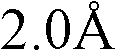
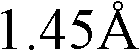

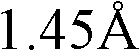
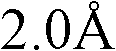


另外,在一种实施方式中,所述有色导电流体不会造成电介质的电击穿。在一种实例中,所述有色导电流体本身不会造成厚度为400nm的聚(2-氯-对二甲苯)电介质在施加电压高达15V时的电击穿。在另一种实例中,所述有色导电流体本身不会造成厚度为400nm的聚(2-氯-对二甲苯)电介质在施加电压高达30V时的电击穿。还在另一种实例中,所述有色导电流体本身不会造成厚度为400nm的聚(2-氯-对二甲苯)电介质在施加电压高达50V时的电击穿。在另一种实例中,所述有色导电流体不会造成厚度为100nm的聚(2-氯-对二甲苯)电介质在施加电压高达15V时的电击穿。在另一种实例中,所述有色导电流体不会造成厚度为100nm的聚(2-氯-对二甲苯)电介质在施加电压高达30V时的电击穿。还在另一种实例中,所述有色导电流体不会造成厚度为100nm的聚(2-氯-对二甲苯)电介质在施加电压高达50V时的电击穿。Additionally, in one embodiment, the colored conductive fluid does not cause electrical breakdown of the dielectric. In one example, the colored conductive fluid itself does not cause electrical breakdown of poly(2-chloro-p-xylylene) dielectrics with a thickness of 400 nm at applied voltages up to 15V. In another example, the colored conductive fluid itself does not cause electrical breakdown of poly(2-chloro-p-xylylene) dielectrics having a thickness of 400 nm at applied voltages up to 30V. In yet another example, the colored conductive fluid itself does not cause electrical breakdown of poly(2-chloro-p-xylylene) dielectrics having a thickness of 400 nm at applied voltages up to 50V. In another example, the colored conductive fluid does not cause electrical breakdown of poly(2-chloro-p-xylylene) dielectrics having a thickness of 100 nm at applied voltages up to 15V. In another example, the colored conductive fluid does not cause electrical breakdown of poly(2-chloro-p-xylylene) dielectrics having a thickness of 100 nm at applied voltages up to 30V. In yet another example, the colored conductive fluid does not cause electrical breakdown of poly(2-chloro-p-xylylene) dielectrics having a thickness of 100 nm at applied voltages up to 50V.
在另一种实施方式中,将多个有色流体组合在一起。例如,可以将含有极性溶剂以及颜料和/或染料的有色导电流体与含有非极性溶剂以及颜料和/或染料的有色流体组合,对于含有极性溶剂的有色流体,各自具有如上所讨论的附加可选组分。非极性有色流体可以包括,例如,脂肪族的、脂环族的、芳香族的或杂环的化合物,聚硅氧烷或锗油(germanium oil),脂肪醇和羧酸以及它们的醚和酯,或者它们的混合物。所述非极性有色流体可以含有着色剂,如颜料或染料。In another embodiment, multiple colored fluids are combined together. For example, a colored conductive fluid containing polar solvents and pigments and/or dyes can be combined with a colored fluid containing non-polar solvents and pigments and/or dyes, each having the same properties as discussed above for colored fluids containing polar solvents. Additional optional components. Non-polar colored fluids can include, for example, aliphatic, cycloaliphatic, aromatic or heterocyclic compounds, polysiloxanes or germanium oils, fatty alcohols and carboxylic acids and their ethers and esters , or a mixture of them. The non-polar colored fluid may contain colorants, such as pigments or dyes.
具有非极性溶剂的有色流体不应与具有极性溶剂的有色流体混溶,且它们之间不应形成稳定的乳状液。为了这个目的,所述非极性溶剂与所述极性溶剂的交叉溶解度(cross-solubility level)应当小于约10%。在一种实例中,所述交叉溶解度小于约1%。另外,极性电润湿流体的组分不应迁移至非极性电润湿流体中,而且非极性电润湿流体的组分也不应迁移至极性电润湿流体中。所述极性电润湿流体和所述非极性电润湿流体间的界面张力可以为约2-55达因/cm。在另一种实例中,所述极性电润湿流体和所述非极性电润湿流体间的界面张力可以为约5-55达因/cm。如果所述非极性溶剂为气体,则所述非极性电润湿流体与所述极性电润湿流体间的界面张力可以为约10达因/cm至约55达因/cm。在另一种实例中,如果所述非极性溶剂为气体,则所述非极性电润湿流体与所述极性电润湿流体见的界面张力可以为约15达因/cm至约55达因/cm。如果界面张力太低,则会发生所述极性电润湿流体和所述非极性电润湿流体的混合,且如果太高,则电润湿相应需要更高的电压。Colored fluids with non-polar solvents should not be miscible with colored fluids with polar solvents, and stable emulsions should not form between them. For this purpose, the cross-solubility level of the non-polar solvent with the polar solvent should be less than about 10%. In one example, the cross solubility is less than about 1%. In addition, components of the polar electrowetting fluid should not migrate into the nonpolar electrowetting fluid, and components of the nonpolar electrowetting fluid should not migrate into the polar electrowetting fluid. The interfacial tension between the polar electrowetting fluid and the nonpolar electrowetting fluid may be about 2-55 dynes/cm. In another example, the interfacial tension between the polar electrowetting fluid and the nonpolar electrowetting fluid may be about 5-55 dynes/cm. If the non-polar solvent is a gas, the interfacial tension between the non-polar electrowetting fluid and the polar electrowetting fluid may be from about 10 dynes/cm to about 55 dynes/cm. In another example, if the non-polar solvent is a gas, the interfacial tension between the non-polar electrowetting fluid and the polar electrowetting fluid may be from about 15 dyne/cm to about 55 dynes/cm. If the interfacial tension is too low, mixing of the polar electrowetting fluid and the nonpolar electrowetting fluid will occur, and if it is too high, correspondingly higher voltages will be required for electrowetting.
基于动态光散射颗粒尺寸分析(dynamic light scattering particle sizeanalysis),所述有色流体中含有的颜料颗粒的平均重量直径可以在约10nm至5000nm的范围内。在一种实例中,平均重量直径在约20nm至500nm的范围内。Pigment particles contained in the colored fluid may have an average weight diameter in the range of about 10 nm to 5000 nm based on dynamic light scattering particle size analysis. In one example, the average weight diameter is in the range of about 20 nm to 500 nm.
制备所述有色流体时,可以在安装有转速在500-12000RPM的范围内的高速搅拌器的容器中预混所述组分。然后可以利用已知研磨设备(例如但不限于旋转球磨机、振动磨碎机、搅动水平或垂直媒介磨机(agitated horizontalor vertical media mill)、篮式磨机(basket mill)、转子/定子型机器或磨碎机将混合物磨碎。所述混合物可以通过分批处理或再循环和/或非连续通过的方式磨碎。可以使用任何已知类型和尺寸的媒介,例如,尺寸在30μm至约10cm范围内的玻璃、陶瓷、砂、聚合物和金属媒质。典型的研磨机包括由Eiger、Netzsch、Buhler、Premier、Hockmeyer、Chicago Boiler、Drais、Union Process等制造的研磨机。选择性地,可以在批处理设备(batch process equipment)上生产所述有色流体,如旋转球磨机或搅动球磨机。前者典型地由Paul-O-Abbe提供;后者典型地由Union Process提供。两者的媒介尺寸可以在上述的尺寸范围内,且媒介的形状可以为圆的、规则的、不规则的或它们的混合物。还可以根据剪切机理用∑叶片式混砂机(sigma blade mixer)(如IKA Works、Baker-Perkins等)在任意高能分散剂上制备所述有色流体。可以选择性地过滤和/或离心分离所述有色流体以除去大颜料颗粒、破碎的媒介或污染物。也可以使用本领域已知的其他制备方法。可以对上述的发明进行多种变型和修改,只要不偏离其精神和范围。所有描述只以举例说明为目的并不以限制为目的。When preparing the colored fluid, the components can be premixed in a vessel equipped with a high-speed stirrer with a rotation speed in the range of 500-12000 RPM. Known grinding equipment such as, but not limited to, rotating ball mills, vibrating attritors, agitated horizontal or vertical media mills, basket mills, rotor/stator type machines, or The attritor grinds the mixture. The mixture may be ground by batch processing or recirculation and/or non-continuous passage. Any known type and size of media may be used, e.g., sizes ranging from 30 μm to about 10 cm glass, ceramic, sand, polymer, and metal media within. Typical mills include those manufactured by Eiger, Netzsch, Buhler, Premier, Hockmeyer, Chicago Boiler, Drais, Union Process, etc. Optionally, the Produce described colored fluid on processing equipment (batch process equipment), as rotating ball mill or stirring ball mill.The former is typically provided by Paul-O-Abbe; The latter is typically provided by Union Process.Both medium size can be in above-mentioned Size range, and the shape of the medium can be round, regular, irregular or their mixture. It can also be used according to the shearing mechanism with a ∑ blade mixer (sigma blade mixer) (such as IKA Works, Baker-Perkins etc.) on any high energy dispersant to prepare the colored fluid. The colored fluid can be selectively filtered and/or centrifuged to remove large pigment particles, broken media or pollutants. Other known in the art can also be used Preparation methods. Various variations and modifications can be made to the above invention without departing from its spirit and scope. All descriptions are for purposes of illustration and not limitation.
利用Brookfield Viscometer LVDV-II+Pro在T=25℃、转速30RPM和主轴数量18的条件下测量所述有色流体的粘度。使用NanotracTM 250、NPA 250(Microtrac公司)和MicrotracTM UPA(Microtrac公司)测定颗粒尺寸分布。使用液滴张力仪(drop tensiometer)IFT TrackerTM(Teclis)测量所述有色流体的界面张力。所述张力仪使用液滴形状分析以计算表面张力或界面张力,液滴形状由作用在液滴上的表面张力和重力决定。不管使用下垂液滴构型还是使用上升液滴构型;所述构型由流体的比重和光学特征决定。在25℃下使用Scientifica 870 Liquid Dielectric Constant Meter(普林斯顿仪器)测量介电常数。The viscosity of the colored fluid was measured using a Brookfield Viscometer LVDV-II+Pro under the conditions of T=25° C.,
实施例Example
以下实施例详细举例说明本发明并不用于限制本发明的精神和范围。除非特别说明,%和份通常表示重量%和重量份。The following examples illustrate the present invention in detail and are not intended to limit the spirit and scope of the present invention. Unless otherwise specified, % and parts usually mean % by weight and parts by weight.
测试步骤test steps
在25℃下利用能够测量适当范围的电导率的电导仪测量有色流体的电导率,例如,VWR型号23226或
如上所指出的,有色流体的电润湿性能通过在疏水电介质和电极基板上施加电压而评估接触角的变化进行测试。涂覆铟锡氧化物(ITO)的玻璃覆盖有聚对二甲苯C电介质和Cytonix Fluoropel 1601V疏水性含氟聚合物的组合作为外周。选择性地,电介质层可以由Al2O3和Asahi Cytop CTL-809M疏水性含氟聚合物组成。将导线与作为地电极的基板的ITO层在一点上连接。所述基板浸入透明的非极性溶剂中,并将含有极性流体的有色导电流体的液滴放置于表面上。通过钨晶须探针(tungsten cat whisker probe)对液滴施加增量为2V的直流电或交流电,并使用VCA Optima软件程序(AST产品)记录并计算每一电压下液滴的接触角。如果所述接触角随着电压的施加而减小以至最终的接触角小于90°,则认为流体能够电润湿。参见“Ion andLiquid Dependent Dielectric Failure in Electrowetting Systems(Balaji Raj等,Langmuir|3b2|第9卷|13/8/09)”,通过引用其整体将其内容并入本文中。另外,不调整电导率测量有色极性流体使得流体电导率不低于25μS/cm。使用该方法从接触角数据中计算出EWRR。As noted above, the electrowetting properties of colored fluids were tested by evaluating the change in contact angle by applying a voltage across the hydrophobic dielectric and the electrode substrate. Indium tin oxide (ITO) coated glass was covered with a combination of Parylene C dielectric and Cytonix Fluoropel 1601V hydrophobic fluoropolymer as the periphery. Optionally, the dielectric layer may consist of Al 2 O 3 and Asahi Cytop CTL-809M hydrophobic fluoropolymer. The wire was connected at one point to the ITO layer of the substrate as the ground electrode. The substrate is dipped in a transparent non-polar solvent, and a droplet of a colored conductive fluid containing a polar fluid is placed on the surface. Direct current or alternating current in increments of 2 V was applied to the droplet by a tungsten cat whisker probe, and the contact angle of the droplet at each voltage was recorded and calculated using the VCA Optima software program (AST product). A fluid is considered capable of electrowetting if the contact angle decreases with the application of a voltage such that the final contact angle is less than 90°. See "Ion and Liquid Dependent Dielectric Failure in Electrowetting Systems (Balaji Raj et al., Langmuir | 3b2 | Vol. 9 | 13/8/09)", the contents of which are hereby incorporated by reference in their entirety. In addition, measure the colored polar fluid without adjusting the conductivity so that the conductivity of the fluid is not lower than 25 μS/cm. EWRR was calculated from contact angle data using this method.
同时检测有色导电流体引起介质劣化(此处称为介电击穿)的趋势。通常的理解是介电击穿由所述有色导电流体的小离子迁移至和/或通过电介质层而导致。用Asahi Cytop含氟聚合物或具有FluoroPel含氟聚合物的聚对二甲苯C,使涂覆SnO2:In2O3的玻璃覆盖有薄的电介质层,所述电介质层可以为氧化铝,即Al2O3。将待检测的1μL流体的液滴放置于基板上,并将钨探针放在液滴中。完成直流电(DC)电压从-99至99V的跳跃时,测量电流。电流高于1μA或电流指数增长表明电介质失效也就是击穿。参见“Ion andLiquid Dependent Dielectric Failure in Electrowetting Systems(Balaji Raj等,Langmuir|3b2|第9卷|13/8/09)”,通过引用其整体将其内容并入本文中。重复检测各种溶液3-5滴。某些实施例中,各种溶液出现了最坏的结果。The tendency of colored conductive fluids to cause dielectric degradation (herein referred to as dielectric breakdown) is also detected. It is generally understood that dielectric breakdown is caused by the migration of small ions of the colored conductive fluid to and/or through the dielectric layer. With Asahi Cytop fluoropolymer or Parylene C with FluoroPel fluoropolymer, the SnO 2 :In 2 O 3 coated glass is covered with a thin dielectric layer which can be alumina, i.e. Al 2 O 3 . A 1 μL droplet of the fluid to be detected is placed on the substrate and a tungsten probe is placed in the droplet. The current is measured when the direct current (DC) voltage jump from -99 to 99V is completed. Currents above 1 μA or exponential current increases indicate dielectric failure, ie breakdown. See "Ion and Liquid Dependent Dielectric Failure in Electrowetting Systems (Balaji Raj et al., Langmuir | 3b2 | Vol. 9 | 13/8/09)", the contents of which are hereby incorporated by reference in their entirety. Repeat the test for 3-5 drops of each solution. In some examples, the worst results were seen for various solutions.
至于所述氧化铝电介质,在250℃下,通过原子层沉积,使用制造商指定的前体物和循环次数的Cambridge Nanotech Savannah 100ALD系统,使涂覆SnO2:In2O3的玻璃覆盖有氧化铝。特别地,使用的前体物为三甲基铝(Sigma-Aldrich)和去离子水。使用的前体物脉冲时间和N2吹扫时间分别为0.015s和8s。然后将Al2O3膜旋转涂覆上1重量%的Asahi Cytop含氟聚合物溶液。旋转周期包括500rpm展开15s和1000rpm旋转45s。然后将样品在180℃下退火30min,使得含氟聚合物厚约50nm。As for the alumina dielectric, SnO 2 :In 2 O 3 -coated glass was coated with oxide by atomic layer deposition at 250°C using a Cambridge Nanotech Savannah 100ALD system with the precursors and number of cycles specified by the manufacturer. aluminum. In particular, the precursors used were trimethylaluminum (Sigma-Aldrich) and deionized water. The precursor pulse time and N2 purge time used were 0.015 s and 8 s, respectively. The Al2O3 film was then spin-coated with a 1 wt% solution of Asahi Cytop fluoropolymer. The spin cycle consisted of 15 s unrolling at 500 rpm and 45 s spinning at 1000 rpm. The samples were then annealed at 180°C for 30 min, resulting in a fluoropolymer thickness of approximately 50 nm.
至于所述聚对二甲苯C电介质,使用制造商预置沉积参数的SpecialtyCoating SystemsPDS 2010实验室用涂布器通过化学蒸镀,使涂覆SnO2:In2O3的玻璃覆盖有聚对二甲苯C。聚对二甲苯C和聚对二甲苯HT(均购自Specialty Coating Systems公司)为各种化学蒸镀聚(对苯二甲基)聚合物的商品名,其前体一般为[2.2]对环芳烷。通常使用的聚对二甲苯C为具有单氯芳环(εr=3.1,γd=38mN/m)的聚(2-氯-对苯二甲基)。至于不常用的聚对二甲苯HT,所有脂肪族的氢原子被氟原子取代(εr=2.2,γd=26mN/m)(数据,Specialty Coating Systems公司)。其他变型,例如,包括与聚对二甲苯C只差一个氯原子的聚对二甲苯N和聚对二甲苯D。As for the Parylene C dielectric, SnO 2 :In 2 O 3 -coated glass was covered with Parylene by chemical evaporation using a Specialty Coating Systems PDS 2010 laboratory coater with manufacturer preset deposition parameters. c. Parylene C and Parylene HT (both available from Specialty Coating Systems) are trade names for various chemically evaporated poly(paraxylylene) polymers, the precursors of which are generally [2.2] p-cyclo Arane. A commonly used parylene C is poly(2-chloro-p-xylylene) having a monochloroaromatic ring (ε r =3.1, γ d =38 mN/m). As for parylene HT, which is not commonly used, all aliphatic hydrogen atoms are replaced by fluorine atoms (ε r =2.2, γ d =26 mN/m) (data, Specialty Coating Systems company). Other variations include, for example, Parylene N and Parylene D, which differ from Parylene C by only one chlorine atom.
可以通过以下公式计算作用于电介质上的理论操作电压,使用的IFT值为7达因/cm,电润湿角度为75°和杨氏角度(Young′s angle)为180°。The theoretical operating voltage applied to the dielectric can be calculated by the following formula, using an IFT value of 7 dynes/cm, an electrowetting angle of 75° and a Young's angle of 180°.
其中,VO为操作电压,θV为电润湿角度,θY为杨氏角度,γNP为极性和非极性流体间的界面张力,ε0为介电常数,εr为相对介电常数,以及d为电介质的厚度。Among them, V O is the operating voltage, θ V is the electrowetting angle, θ Y is Young's angle, γ NP is the interfacial tension between polar and nonpolar fluids, ε 0 is the dielectric constant, ε r is the relative dielectric constant permittivity, and d is the thickness of the dielectric.
使用电感耦合等离子体光谱(ICP)通过元素分析测量离子浓度。通过在浓硝酸中浸煮并然后用去离子水稀释至5%的酸浓度制备用于金属含量的样品。然后将样品引入Thermo Scientific iCAP 6000ICP-OES仪器中以确定并定量总元素(包括非离子金属、准金属和非金属如磷、硫和硒)含量。当这些元素的含量包括但不限于钠、镁、钙、铁、铝和钾通过ICP确定时,所述总元素含量的上限通过累加得到。已知此处定义的离子含量低于元素分析,从而确定所述离子含量的上限。另外,总卤素(溴、氯)含量通过氧化作用确定。为了确定总卤素,在
可以通过具体针对离子的常规分析技术测量多原子离子。该技术包括但不限于pH、滴定法、比色法、光谱分析方法、重量法和/或质谱分析法。Polyatomic ions can be measured by conventional analytical techniques specific to the ion. Such techniques include, but are not limited to, pH, titration, colorimetry, spectroscopic methods, gravimetric methods, and/or mass spectrometry.
实施例1Example 1
在去离子水中分别制备1%的氯化钾(KCl)溶液、十二烷基硫酸钠(SDS)溶液和十二烷基三甲基氯化铵(DTAC)溶液。根据“Ion and Liquid DependentDielectric Failure in Electrowetting Systems(Balaji Raj、Manjeet Dhindsa、NeilR.Smith、Robert Laughlin和Jason Heikenfeld,Langmuir|3b2|第9卷|13/8/09)”中描述的方法制备并纯化阴阳离子的表面活性剂十二烷基三甲基辛烷磺酸铵(DTA-OS,dodecyltrimethylammonium octanesulfonate),通过引用其整体将其内容并入本文中。在去离子水中制备0.05重量%的DTA-OS溶液。所述溶液的电导率如下表1所示。Prepare 1% potassium chloride (KCl) solution, sodium dodecyl sulfate (SDS) solution, and dodecyltrimethylammonium chloride (DTAC) solution in deionized water, respectively. Yin and Yang were prepared and purified according to the method described in "Ion and Liquid Dependent Dielectric Failure in Electrowetting Systems (Balaji Raj, Manjeet Dhindsa, Neil R. Smith, Robert Laughlin, and Jason Heikenfeld, Langmuir | 3b2 | Volume 9 | 13/8/09)" Ionic surfactant dodecyltrimethyloctanesulfonate (DTA-OS, dodecyltrimethylammonium octanesulfonate), the content of which is incorporated herein by reference in its entirety. Prepare a 0.05 wt% DTA-OS solution in deionized water. The conductivity of the solution is shown in Table 1 below.
表1:介电击穿实验的电导率结果Table 1: Conductivity results from dielectric breakdown experiments
根据上述步骤在100nm的Al2O3和50nm的Cytop基板上完成介电击穿实验。实验结果如图1A-E所示。如图1A所示,用正或负电压作用于未添加任何离子的去离子水,未观察到击穿。在图1B中,用正或负DC电压作用于含有小的K+和Cl-离子的溶液,观察到介电击穿。在图1C中,仅用正电压作用于含有小的Na+阳离子和大的十二烷基磺酸阴离子的溶液,观察到介电击穿。在图1D中,仅用负电压作用于含有小的Cl-阴离子和大的十二烷基三甲基铵阳离子的溶液,观察到介电击穿。最后,图1E表明用正或负DC电压作用于DTA-OS阴阳离子的表面活性剂的溶液(其中,阴离子和阳离子都是大的)不会发生介电击穿。这些结果表明离子尺寸是电润湿设备的电介质击穿的决定因素。Dielectric breakdown experiments were done on 100 nm Al2O3 and 50 nm Cytop substrates according to the above steps . The experimental results are shown in Fig. 1A-E. As shown in Figure 1A, no breakdown was observed when positive or negative voltages were applied to deionized water without any added ions. In Figure 1B, a dielectric breakdown was observed with a positive or negative DC voltage applied to a solution containing small K + and Cl- ions. In Figure 1C, dielectric breakdown was observed with only positive voltage applied to a solution containing small Na + cations and large dodecylsulfonate anions. In Figure 1D, dielectric breakdown was observed with only negative voltage applied to a solution containing small Cl- anions and large dodecyltrimethylammonium cations. Finally, Figure 1E shows that solutions of DTA-OS anionic and cationic surfactants (in which both anions and cations are large) do not undergo dielectric breakdown with positive or negative DC voltages. These results suggest that ion size is a determining factor for the dielectric breakdown of electrowetting devices.
实施例2Example 2
在去离子水中制备0.013%的十二烷基硫酸钠(SDS)溶液。在不同厚度的聚对二甲苯C基板(一个具有300nm的聚对二甲苯C,一个具有700nm的聚对二甲苯C)的基板上测试溶液的介电击穿。如图2A和2B所示,由于小的Na+阳离子,用正DC电压作用于较薄的电介质上观察到了击穿。这表明离子选择而容许在电润湿设备中使用薄电介质以在低电压下操作的重要性。A 0.013% sodium dodecyl sulfate (SDS) solution was prepared in deionized water. The solutions were tested for dielectric breakdown on substrates of different thicknesses of Parylene C substrates (one with 300 nm Parylene C, one with 700 nm Parylene C). As shown in Figures 2A and 2B, breakdown was observed with a positive DC voltage applied to thinner dielectrics due to the small Na + cations. This demonstrates the importance of ion selection to allow the use of thin dielectrics in electrowetting devices to operate at low voltages.
实施例3Example 3
在去离子水中制备0.013%和1%的十二烷基硫酸钠(SDS)溶液。在300nm的聚对二甲苯HT基板上测试溶液的介电击穿。如图3A和3B所示,在正DC电压下,低浓度的SDS溶液未观察到介电击穿而高浓度的溶液导致了击穿。0.013% and 1% sodium dodecyl sulfate (SDS) solutions were prepared in deionized water. The solutions were tested for dielectric breakdown on a 300 nm parylene HT substrate. As shown in Figures 3A and 3B, under positive DC voltage, no dielectric breakdown was observed for low concentration SDS solutions while high concentration solutions resulted in breakdown.
实施例4Example 4
在用于介电击穿的碳酸丙烯酯中评估含有多种阴离子的盐。从SigmaAldrich获得纯度级别为“purum”的盐,并且不经进一步纯化而使用。将下表2中所示的盐溶解在碳酸丙烯酯中以达到电导率在20-30μS/cm的范围内。Evaluation of salts containing various anions in propylene carbonate for dielectric breakdown. Salts of purity grade "purum" were obtained from SigmaAldrich and used without further purification. The salts shown in Table 2 below were dissolved in propylene carbonate to achieve a conductivity in the range of 20-30 μS/cm.
表2:用于介电击穿实验的盐/电导率结果Table 2: Salt/conductivity results for dielectric breakdown experiments
根据上述步骤在具有50nm氟化聚合物基板的400nm聚对二甲苯C上完成介电击穿实验。如图4所示,在负DC电压下含有I-和醋酸阴离子的溶液不表现介电击穿。含有Cl-和Br-离子的溶液导致介电击穿,含有六氟磷酸和三氟甲烷磺酸溶液的也是如此。这两种阴离子导致击穿的事实可以通过六氟磷酸降解产生小的F-阴离子或三氟甲烷磺酸中的杂质含有F-阴离子得到解释。Dielectric breakdown experiments were done on 400 nm parylene C with a 50 nm fluorinated polymer substrate according to the above procedure. As shown in Figure 4, solutions containing I- and acetate anions did not exhibit dielectric breakdown at negative DC voltages. Solutions containing Cl - and Br - ions lead to dielectric breakdown, as do solutions containing hexafluorophosphoric acid and trifluoromethanesulfonic acid. The fact that these two anions lead to breakdown can be explained by the degradation of hexafluorophosphate to generate small F - anions or the impurity in trifluoromethanesulfonic acid containing F - anions.
实施例5Example 5
通过在具有2-2.5mm的陶瓷媒介的Harbil振动器上将C.I.蓝15:4在丙二醇中分散2小时而制备流体。分析流体中会引起介电击穿的几种离子的存在。结果如下表3所示。所有结果以百万分之一份计(ppm)。Fluids were prepared by dispersing C.I. Blue 15:4 in propylene glycol for 2 hours on a Harbil shaker with a 2-2.5 mm ceramic medium. The fluid is analyzed for the presence of several ions that cause dielectric breakdown. The results are shown in Table 3 below. All results are in parts per million (ppm).
表3:元素分析存在于蓝色流体中的离子种类Table 3: Elemental analysis of ionic species present in the blue fluid
在具有50nm氟化聚合物基板的400nm聚对二甲苯C上进行所述流体的介电击穿实验。如图5所示,具有高Na+含量的蓝色流体B和C在正DC电压下表现出介电击穿。具有低Na+含量的流体A不表现出介电击穿。在负DC电压下没有观察到任何流体的介电击穿。Dielectric breakdown experiments of the fluids were performed on 400 nm parylene C with a 50 nm fluorinated polymer substrate. As shown in Fig. 5, blue fluids B and C with high Na content exhibit dielectric breakdown under positive DC voltage. Fluid A with low Na + content does not exhibit dielectric breakdown. No dielectric breakdown of any fluid was observed at negative DC voltage.
实施例6Example 6
在碳酸丙烯酯中制备从Sigma Aldrich获得且不进一步纯化而使用的四丁基溴化铵(TBAB)溶液以获得不同的电导率。在AC电压的作用下,在具有50nm Fluoropel基板的1.3μm聚对二甲苯C上测量接触角。如下表4和图6所示,碳酸丙烯酯在30V下的EWRR随着电导率的增加而得到改善。Tetrabutylammonium bromide (TBAB) solutions obtained from Sigma Aldrich and used without further purification were prepared in propylene carbonate to obtain different conductivities. Contact angles were measured on 1.3 μm parylene C with 50 nm Fluoropel substrate under the action of AC voltage. As shown in Table 4 and Figure 6 below, the EWRR at 30 V for propylene carbonate improves with increasing conductivity.
表4:计算各电导率下碳酸丙烯酯中的TBAB在30V下的EWRRTable 4: Calculated EWRR at 30V for TBAB in propylene carbonate for each conductivity
实施例7Example 7
在用于介电击穿的丙二醇中评估含有多种阴离子的盐。从Sigma Aldrich获得纯度级别为“purum”的盐,并且不经进一步纯化而使用。将下表5所示的盐溶解在丙二醇中以达到电导率在20-30μS/cm的范围内。Salts containing various anions were evaluated in propylene glycol for dielectric breakdown. Salts of purity grade "purum" were obtained from Sigma Aldrich and used without further purification. The salts shown in Table 5 below were dissolved in propylene glycol to achieve a conductivity in the range of 20-30 μS/cm.
表5:丙二醇的盐溶液的电导率Table 5: Conductivity of Propylene Glycol Salt Solutions
在具有50nm氟化聚合物基板的400nm聚对二甲苯C上完成介电击穿实验。如图7所示,具有Na+的溶液导致了介电击穿。含有NH4 +和四丁铵的溶液不表现击穿。Dielectric breakdown experiments were done on 400 nm parylene C with a 50 nm fluorinated polymer substrate. As shown in Fig. 7, solutions with Na + caused dielectric breakdown. Solutions containing NH4 + and tetrabutylammonium did not exhibit breakdown.
本发明所述有色流体的各种实施方式可以应用于在按照电润湿、电流体和/或电泳的原理工作的电子显示器,滤色镜,喷绘油墨,液体色料(liquidtoner)和显影剂中提供颜色。Various embodiments of the colored fluids of the present invention can be used to provide color in electronic displays, color filters, inkjet inks, liquid toners, and developers that operate on the principles of electrowetting, electrofluidics, and/or electrophoresis .
在一种特定的实施方式中,本发明实施方式的有色流体可以用于按照电润湿原理工作以创建图像的显示器中。通常,电润湿设备包括多个填充有不相混的极性流体和非极性流体的单独像素。施加电压或除去电压时,各像素引起所述极性流体的移动,从而改变所述像素的外观或状态,例如,从有色状态变为无色或透明状态。In a particular embodiment, colored fluids of embodiments of the present invention may be used in displays that operate on the principle of electrowetting to create images. Typically, an electrowetting device includes a plurality of individual pixels filled with immiscible polar and non-polar fluids. When a voltage is applied or removed, each pixel causes movement of the polar fluid, thereby changing the appearance or state of the pixel, for example, from a colored state to a colorless or transparent state.
图8A、8B显示了本发明的实施方式的在显示器中用作电润湿设备的代表像素10。含有至少一种极性溶剂和至少一种与本发明的一种实施方式一致的着色剂的极性流体12,以及非极性溶剂14局限于贮存器16内。所述贮存器16设置在第一电极18和第二电极20之间。各电极18、20分别被疏水性涂层22、24(含有绝缘体,如含氟聚合物)涂覆。堆叠排布的流体12、14,电极18、20以及涂层22、24由基板26、28支撑。电压电源30连接于所述电极18、20之间,并进一步与显示器像素的控制电路(未显示)相连,从而所述像素10可以用来改变显示状态。Figures 8A, 8B show a
向所述基板26提供光线,并使光线直接从流体12、14,电极18、20,涂层22、24和基板28的堆穿到外界环境,到达所述像素10。如图8A所示,在所述电压电源30施加至所述电极18、20的电压的存在下,所述极性流体12在疏水性涂层22上形成膜,使得所述像素10具有与所述膜的颜色相关的视觉外观。例如,如果所述极性流体12的颜色为红色,从所述像素10观察到红色波长的光线。所述极性流体12的颜色在传输穿过所述像素10的光下显示,因为所述极性流体12的表面积相对于所述疏水性涂层22的面积的增加。如图8B所示,当除去潜在的差异时,所述极性流体12做出改变其形状的响应,因此,所述疏水性涂层22的接触角与所述疏水性涂层22的表面相关。图8B的显示状态中,所述极性流体12的可见颜色不太明显,因为较少的光线传输穿过了所述极性流体12,相比之下,更多的光线传输穿过了所述非极性流体14。在图8B中,当从所述电极18、20除去电压时,缺乏所述极性流体12的颜色的所述非极性流体14优先润湿所述疏水性涂层22的大部分表面区域。所述非极性流体14可以为无色的或透明的。图8A、8B所示两种对立的所述像素10的显示状态与其他类似于像素10的像素(未显示)对立的显示状态可以用于显示器以生成图像。当再次施加所述像素10的电极18、20间的电位差时,所述极性膜12将从图8B的显示状态恢复为图8A的显示状态。Light is provided to the
掌握本领域常规技术的人可以领会到所述像素10可以有多种供选择的结构,且图8A、8B所示的结构可以变型。在供选择的实施方式中,所述像素10可以配置成施加的电位差引起所述极性流体12形成如图8A中的膜,并且施加的电位差的去除产生图8B中接触角增大的状态。作为一种选择,可以通过电位差移动所述极性流体12至所述像素10内的位置,在所述像素10中,所述极性流体12不可见且观察者难以发现。Those skilled in the art can understand that the
本文所使用的术语只是为了描述特定的实施方式并不意在限制本发明。如本文所使用的,单数形式也意在包括复数形式,除非上下文清楚地说明。应该进一步理解,当在本说明书中使用术语“含有”和/或“包括”时,指的是存在阐明的特征、整体、步骤、操作、元件和/或部件,但不排除一种或多种其他特征、整体、步骤、操作、元件、部件和/或其组合的存在或添加。此外,至于在详细说明书或权利要求书中使用的术语“包括”、“含有”、“具有”、“有”、“组成”、“包含”或其变型的范围,这些术语与术语“含有”类似为包括的意义。The terminology used herein is for the purpose of describing particular embodiments only and is not intended to be limiting of the invention. As used herein, singular forms are also intended to include plural forms unless the context clearly dictates otherwise. It should be further understood that when the terms "comprising" and/or "comprising" are used in this specification, it means that there are stated features, wholes, steps, operations, elements and/or components, but not excluding one or more The presence or addition of other features, integers, steps, operations, elements, parts and/or combinations thereof. In addition, as for the terms "comprising", "comprising", "having", "has", "consisting", "comprising" or the scope of variations thereof used in the detailed description or the claims, these terms are the same as the term "comprising" similar to include.
虽然通过各种实施方式的描述阐述了本发明且虽然这些实施方式已描述得相当详细,但本申请的发明并不限制或以任何方式限制随附权利要求的范围于这些细节。本领域技术人员将容易添加特点并修改。因此,较宽方面的本发明不限于具体的细节、代表的装置和方法、以及显示和描述的说明性的实施例。从而,在不偏离本申请的总发明思想的精神或范围下可以根据这些细节做出变更。While the invention has been illustrated by the description of various embodiments and although these embodiments have been described in considerable detail, the invention of the present application is not limited or in any way limits the scope of the appended claims to these details. Added features and modifications will be readily apparent to those skilled in the art. Therefore, the invention in its broader aspects is not limited to the specific details, representative apparatus and methods, and illustrative embodiments shown and described. Accordingly, departures may be made from such details without departing from the spirit or scope of the application's general inventive concept.
Claims (34)
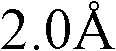

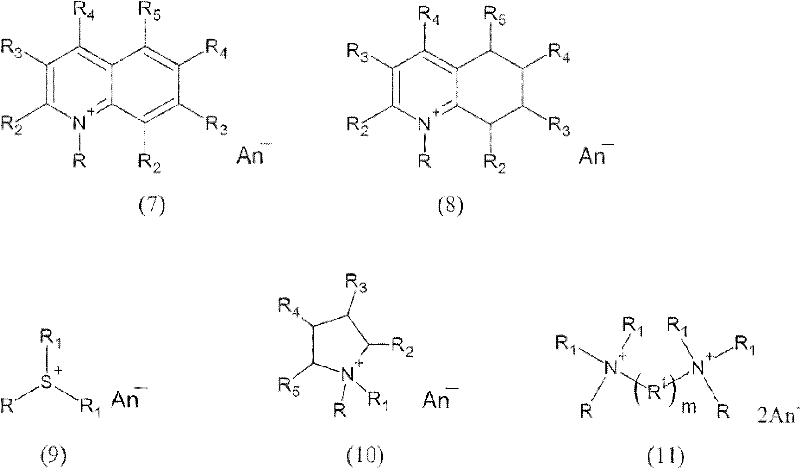


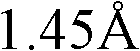
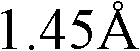
Applications Claiming Priority (3)
| Application Number | Priority Date | Filing Date | Title |
|---|---|---|---|
| US23115609P | 2009-08-04 | 2009-08-04 | |
| US61/231,156 | 2009-08-04 | ||
| PCT/US2010/044441 WO2011017446A1 (en) | 2009-08-04 | 2010-08-04 | Colored conductive fluids for electrowetting and electrofluidic technologies |
Publications (2)
| Publication Number | Publication Date |
|---|---|
| CN102549474A true CN102549474A (en) | 2012-07-04 |
| CN102549474B CN102549474B (en) | 2015-09-23 |
Family
ID=43544649
Family Applications (1)
| Application Number | Title | Priority Date | Filing Date |
|---|---|---|---|
| CN201080043651.9A Active CN102549474B (en) | 2009-08-04 | 2010-08-04 | Colored conductive fluids for electrowetting and electrofluidics |
Country Status (8)
| Country | Link |
|---|---|
| US (1) | US8854714B2 (en) |
| EP (1) | EP2462478B1 (en) |
| JP (1) | JP5671026B2 (en) |
| KR (1) | KR101504406B1 (en) |
| CN (1) | CN102549474B (en) |
| CA (1) | CA2769402A1 (en) |
| WO (1) | WO2011017446A1 (en) |
| ZA (1) | ZA201200798B (en) |
Cited By (4)
| Publication number | Priority date | Publication date | Assignee | Title |
|---|---|---|---|---|
| USRE46318E1 (en) | 2009-03-13 | 2017-02-21 | Sun Chemical Corporation | Colored fluids for electrowetting, electrofluidic, and electrophoretic technologies |
| CN108508593A (en) * | 2018-03-02 | 2018-09-07 | 华南师范大学 | The polar fluid and a kind of electric moistening display of a kind of electric moistening display |
| CN109557659A (en) * | 2017-09-26 | 2019-04-02 | 夏普株式会社 | The manufacturing method of Electrowetting device and Electrowetting device |
| CN112341391A (en) * | 2020-11-23 | 2021-02-09 | 深圳市国华光电科技有限公司 | Naphthalimide organic dye, electrowetting display ink and electrowetting display |
Families Citing this family (39)
| Publication number | Priority date | Publication date | Assignee | Title |
|---|---|---|---|---|
| JP5959798B2 (en) * | 2010-10-12 | 2016-08-02 | キヤノン株式会社 | Liquid lens and device equipped with the same |
| JP2014506274A (en) * | 2010-12-16 | 2014-03-13 | サン ケミカル コーポレイション | Colored organometallic fluids for electrowetting, electrofluidic and electrophoretic techniques |
| US8398282B2 (en) | 2011-05-12 | 2013-03-19 | Delphi Technologies, Inc. | Vehicle front lighting assembly and systems having a variable tint electrowetting element |
| JP5878356B2 (en) * | 2011-09-30 | 2016-03-08 | 富士フイルム株式会社 | Coloring composition and image display structure |
| KR101517422B1 (en) | 2011-10-31 | 2015-05-04 | 디아이씨 가부시끼가이샤 | Colored fluid and multi-phase liquid colored composition |
| WO2013081001A1 (en) * | 2011-12-02 | 2013-06-06 | Dic株式会社 | Separated liquid coloration composition and colored liquid using same |
| CN103987792A (en) * | 2011-12-15 | 2014-08-13 | 富士胶片株式会社 | Colored composition and image display structure |
| WO2013088977A2 (en) * | 2011-12-15 | 2013-06-20 | Fujifilm Corporation | Colored compostion and image display structure |
| KR20140142310A (en) | 2012-03-23 | 2014-12-11 | 메르크 파텐트 게엠베하 | Particles for electrowetting displays |
| EP2847279B1 (en) | 2012-05-09 | 2018-11-28 | Sun Chemical Corporation | Surface modified pigment particles, method of preparation and application thereof |
| US9651846B2 (en) | 2012-05-14 | 2017-05-16 | Merck Patent Gmbh | Particles for electrophoretic displays |
| EP2850136B1 (en) | 2012-05-14 | 2016-05-04 | Merck Patent GmbH | Particles for electrophoretic displays |
| JP6456819B2 (en) | 2012-05-14 | 2019-01-23 | メルク パテント ゲーエムベーハー | Particles for electrophoretic display |
| WO2013170934A1 (en) | 2012-05-14 | 2013-11-21 | Merck Patent Gmbh | Particles for electrophoretic displays |
| WO2013170937A1 (en) | 2012-05-14 | 2013-11-21 | Merck Patent Gmbh | Particles for electrophoretic displays |
| EP2850116B1 (en) | 2012-05-14 | 2018-04-18 | Merck Patent GmbH | Particles for electrophoretic displays |
| JP5919172B2 (en) * | 2012-11-20 | 2016-05-18 | 積水化学工業株式会社 | Electrowetting element and electrowetting display |
| JP6204654B2 (en) | 2012-11-22 | 2017-09-27 | 富士フイルム株式会社 | Method for producing dye composition for electrowetting display, and method for producing electrowetting display device |
| JP2014106368A (en) * | 2012-11-27 | 2014-06-09 | Fujifilm Corp | Electrowetting display dye composition, and electrowetting display device |
| WO2014146937A2 (en) | 2013-03-22 | 2014-09-25 | Vlyte Innovations Limited | An electrophoretic device having a transparent light state |
| EP2986658A4 (en) * | 2013-04-19 | 2017-03-08 | Basf Se | Colored charged silsesquioxanes |
| KR102259996B1 (en) | 2013-06-12 | 2021-06-02 | 메르크 파텐트 게엠베하 | Particles for electrophoretic displays |
| EP3008134B1 (en) | 2013-06-12 | 2024-03-06 | E Ink Corporation | Particles for electrophoretic displays |
| US10007166B2 (en) | 2013-08-30 | 2018-06-26 | Hewlett-Packard Development Company, L.P. | Electronic inks |
| JP6396451B2 (en) | 2013-10-22 | 2018-09-26 | ヴライト イノヴェーションズ リミテッド | Wide operating temperature range electrophoresis device |
| JP6568522B2 (en) | 2013-12-02 | 2019-08-28 | メルク パテント ゲゼルシャフト ミット ベシュレンクテル ハフツングMerck Patent Gesellschaft mit beschraenkter Haftung | Black polymer particles |
| EP3077461B1 (en) | 2013-12-02 | 2021-07-07 | Merck Patent GmbH | Process for the preparation of dispersed coloured or black particles |
| JP6343770B2 (en) * | 2014-01-30 | 2018-06-20 | 国立大学法人福井大学 | Interface control mechanism and interface control method |
| US9784965B2 (en) | 2014-03-04 | 2017-10-10 | Jsr Corporation | Display element, photosensitive composition and electrowetting display |
| KR102227978B1 (en) | 2014-05-22 | 2021-03-15 | 삼성전자주식회사 | Fluid for electrowetting device and electrowetting device using the same |
| KR102279240B1 (en) * | 2014-10-29 | 2021-07-19 | 삼성전자주식회사 | Fluid for electrowetting device and electrowetting device comprising the same |
| CN107406527B (en) | 2014-12-19 | 2020-08-18 | 默克专利股份有限公司 | Particles for Electrophoretic Displays |
| EP3234042B1 (en) | 2014-12-19 | 2019-06-19 | Merck Patent GmbH | Particles for electrophoretic displays |
| GB201506147D0 (en) | 2015-04-10 | 2015-05-27 | Hanna Moore & Curley | A Micro-Fastened, Sealed Light Modulator |
| GB201519082D0 (en) | 2015-10-28 | 2015-12-09 | Vlyte Innovations Ltd | An autonomous vehicle that minimizes human reactions |
| US9885863B2 (en) * | 2015-12-31 | 2018-02-06 | Amazon Technologies, Inc. | Dye compounds for an electrowetting element |
| WO2018017696A1 (en) | 2016-07-19 | 2018-01-25 | Ecolab Usa Inc. | Methods and cleaning solutions for removing chewing gum and other sticky food substances |
| US10175470B2 (en) * | 2017-02-01 | 2019-01-08 | Abl Ip Holding Llc | Intelligent self-healing of electrowetting devices |
| GB2593150A (en) | 2020-03-05 | 2021-09-22 | Vlyte Ltd | A light modulator having bonded structures embedded in its viewing area |
Citations (6)
| Publication number | Priority date | Publication date | Assignee | Title |
|---|---|---|---|---|
| WO1993007464A1 (en) * | 1991-10-08 | 1993-04-15 | Wda Contracts Corporation | Surface energy and surface charge meter |
| US20070040982A1 (en) * | 2005-01-13 | 2007-02-22 | Sharp Kabushiki Kaisha | Display device and electric apparatus using the same |
| US20070112189A1 (en) * | 2003-11-17 | 2007-05-17 | Takuji Ikeda | High silica cds-1 zeolite |
| EP1887406A1 (en) * | 2006-08-08 | 2008-02-13 | Varioptic | Use of onium salts in an optical electrowetting device |
| WO2008128697A1 (en) * | 2007-04-21 | 2008-10-30 | Advanced Display Technology Ag | Use of a fluid mixture for electrowetting in a device |
| US20090052004A1 (en) * | 2005-03-25 | 2009-02-26 | Shinich Nakano | Ionic Colored Liquid and Image Display Apparatus Using the Same |
Family Cites Families (18)
| Publication number | Priority date | Publication date | Assignee | Title |
|---|---|---|---|---|
| JP2005193325A (en) | 2004-01-06 | 2005-07-21 | Konica Minolta Medical & Graphic Inc | Method and device for cutting wide-width strip photosensitive material |
| EP1761819A1 (en) | 2004-06-23 | 2007-03-14 | Koninklijke Philips Electronics N.V. | Bi-stable electrowetting optical element and driving method therefore |
| JP2008203282A (en) * | 2005-06-03 | 2008-09-04 | Sharp Corp | Image display device |
| KR100714561B1 (en) | 2005-08-23 | 2007-05-07 | 삼성전기주식회사 | Electrowetting device with stable driving characteristics |
| GB0526230D0 (en) | 2005-12-22 | 2006-02-01 | Eastman Kodak Co | Display devices |
| CN101395495B (en) | 2006-02-01 | 2011-12-28 | 瓦里奥普蒂克公司 | optical electrowetting device |
| US8323392B2 (en) | 2006-02-13 | 2012-12-04 | Eastman Kodak Company | Oil-in-oil dispersions stabilized by solid particles and methods of making the same |
| US8329761B2 (en) | 2006-02-13 | 2012-12-11 | Eastman Kodak Company | Oil-in-oil emulsions |
| WO2007116854A1 (en) | 2006-04-03 | 2007-10-18 | Dai Nippon Printing Co., Ltd. | Method for manufacturing color filter, and color filter |
| US7403325B2 (en) * | 2006-05-19 | 2008-07-22 | Xerox Corporation | Electrophoretic display device |
| JP5098397B2 (en) | 2007-03-29 | 2012-12-12 | コニカミノルタホールディングス株式会社 | Ink jet ink and ink jet recording method |
| DE102007018796B4 (en) | 2007-04-20 | 2012-06-21 | Abi Anlagentechnik-Baumaschinen-Industriebedarf Maschinenfabrik Und Vertriebsgesellschaft Mbh | Compensation of circumferential wave inclination |
| US20080265211A1 (en) | 2007-04-30 | 2008-10-30 | Rehman Zia Ur | Shipping, handling, and testing fluids for ink dispensing systems |
| US8111465B2 (en) | 2007-09-12 | 2012-02-07 | University Of Cincinnati | Electrofluidic devices, visual displays, and methods for making and operating such electrofluidic devices |
| US7763314B2 (en) | 2008-01-29 | 2010-07-27 | Motorola, Inc. | Forming an electrowetting module having a hydrophilic grid |
| JP5071149B2 (en) * | 2008-02-25 | 2012-11-14 | ソニー株式会社 | Liquid optical element |
| JP2010173555A (en) | 2009-01-30 | 2010-08-12 | Hitachi Automotive Systems Ltd | Master cylinder |
| CN102576096B (en) * | 2009-10-06 | 2015-03-25 | 皇家飞利浦电子股份有限公司 | Electrowetting device |
-
2010
- 2010-08-04 WO PCT/US2010/044441 patent/WO2011017446A1/en not_active Ceased
- 2010-08-04 CN CN201080043651.9A patent/CN102549474B/en active Active
- 2010-08-04 US US13/388,581 patent/US8854714B2/en active Active
- 2010-08-04 JP JP2012523734A patent/JP5671026B2/en not_active Expired - Fee Related
- 2010-08-04 KR KR1020127005456A patent/KR101504406B1/en not_active Expired - Fee Related
- 2010-08-04 CA CA2769402A patent/CA2769402A1/en not_active Abandoned
- 2010-08-04 EP EP10807111.9A patent/EP2462478B1/en active Active
-
2012
- 2012-02-01 ZA ZA2012/00798A patent/ZA201200798B/en unknown
Patent Citations (6)
| Publication number | Priority date | Publication date | Assignee | Title |
|---|---|---|---|---|
| WO1993007464A1 (en) * | 1991-10-08 | 1993-04-15 | Wda Contracts Corporation | Surface energy and surface charge meter |
| US20070112189A1 (en) * | 2003-11-17 | 2007-05-17 | Takuji Ikeda | High silica cds-1 zeolite |
| US20070040982A1 (en) * | 2005-01-13 | 2007-02-22 | Sharp Kabushiki Kaisha | Display device and electric apparatus using the same |
| US20090052004A1 (en) * | 2005-03-25 | 2009-02-26 | Shinich Nakano | Ionic Colored Liquid and Image Display Apparatus Using the Same |
| EP1887406A1 (en) * | 2006-08-08 | 2008-02-13 | Varioptic | Use of onium salts in an optical electrowetting device |
| WO2008128697A1 (en) * | 2007-04-21 | 2008-10-30 | Advanced Display Technology Ag | Use of a fluid mixture for electrowetting in a device |
Cited By (6)
| Publication number | Priority date | Publication date | Assignee | Title |
|---|---|---|---|---|
| USRE46318E1 (en) | 2009-03-13 | 2017-02-21 | Sun Chemical Corporation | Colored fluids for electrowetting, electrofluidic, and electrophoretic technologies |
| CN109557659A (en) * | 2017-09-26 | 2019-04-02 | 夏普株式会社 | The manufacturing method of Electrowetting device and Electrowetting device |
| CN109557659B (en) * | 2017-09-26 | 2021-07-13 | 夏普株式会社 | Electrowetting device and method for manufacturing the same |
| CN108508593A (en) * | 2018-03-02 | 2018-09-07 | 华南师范大学 | The polar fluid and a kind of electric moistening display of a kind of electric moistening display |
| CN112341391A (en) * | 2020-11-23 | 2021-02-09 | 深圳市国华光电科技有限公司 | Naphthalimide organic dye, electrowetting display ink and electrowetting display |
| CN112341391B (en) * | 2020-11-23 | 2022-06-24 | 深圳市国华光电科技有限公司 | Naphthalimide organic dye, electrowetting display ink and electrowetting display |
Also Published As
| Publication number | Publication date |
|---|---|
| JP2013501259A (en) | 2013-01-10 |
| KR101504406B1 (en) | 2015-03-19 |
| CN102549474B (en) | 2015-09-23 |
| CA2769402A1 (en) | 2011-02-10 |
| JP5671026B2 (en) | 2015-02-18 |
| US20120154896A1 (en) | 2012-06-21 |
| KR20120089258A (en) | 2012-08-09 |
| EP2462478A4 (en) | 2013-05-01 |
| US8854714B2 (en) | 2014-10-07 |
| EP2462478B1 (en) | 2016-10-05 |
| ZA201200798B (en) | 2012-10-31 |
| WO2011017446A1 (en) | 2011-02-10 |
| EP2462478A1 (en) | 2012-06-13 |
Similar Documents
| Publication | Publication Date | Title |
|---|---|---|
| CN102549474B (en) | Colored conductive fluids for electrowetting and electrofluidics | |
| JP5635018B2 (en) | Colored fluids for electrowetting, electrofluidic and electrophoretic techniques | |
| CN102713749B (en) | Colored fluids for electrowetting, electrofluidics and electrophoresis | |
| US9234101B2 (en) | Colorants for metalorganic compounds and their application in electronic display technology | |
| JP2009543102A (en) | Encapsulated dispersant containing electrophoretic mobile organic colorant | |
| KR20130137706A (en) | Colored fluid and multi-phase liquid colored composition | |
| CN100595662C (en) | Microcapsules for electrophoretic display elements, preparation method and use thereof | |
| JP2013101297A (en) | Colored liquid and colored composition in separated liquid state | |
| JP5993298B2 (en) | Colored resin particles having a fluorene skeleton and method for producing the same | |
| JP2013160987A (en) | Method for manufacturing display device | |
| JP2008197382A (en) | Method for storing microcapsules for electrophoretic display device and use thereof |
Legal Events
| Date | Code | Title | Description |
|---|---|---|---|
| C06 | Publication | ||
| PB01 | Publication | ||
| C10 | Entry into substantive examination | ||
| SE01 | Entry into force of request for substantive examination | ||
| C14 | Grant of patent or utility model | ||
| GR01 | Patent grant |