CN102389309B - Compressed sensing theory-based reconstruction method of magnetic resonance image - Google Patents
Compressed sensing theory-based reconstruction method of magnetic resonance image Download PDFInfo
- Publication number
- CN102389309B CN102389309B CN201110190814.2A CN201110190814A CN102389309B CN 102389309 B CN102389309 B CN 102389309B CN 201110190814 A CN201110190814 A CN 201110190814A CN 102389309 B CN102389309 B CN 102389309B
- Authority
- CN
- China
- Prior art keywords
- image
- matrix
- magnetic resonance
- signal
- psi
- Prior art date
- Legal status (The legal status is an assumption and is not a legal conclusion. Google has not performed a legal analysis and makes no representation as to the accuracy of the status listed.)
- Expired - Fee Related
Links
Images


Classifications
-
- A—HUMAN NECESSITIES
- A61—MEDICAL OR VETERINARY SCIENCE; HYGIENE
- A61B—DIAGNOSIS; SURGERY; IDENTIFICATION
- A61B5/00—Measuring for diagnostic purposes; Identification of persons
- A61B5/05—Detecting, measuring or recording for diagnosis by means of electric currents or magnetic fields; Measuring using microwaves or radio waves
- A61B5/055—Detecting, measuring or recording for diagnosis by means of electric currents or magnetic fields; Measuring using microwaves or radio waves involving electronic [EMR] or nuclear [NMR] magnetic resonance, e.g. magnetic resonance imaging
Landscapes
- Health & Medical Sciences (AREA)
- Life Sciences & Earth Sciences (AREA)
- Physics & Mathematics (AREA)
- Nuclear Medicine, Radiotherapy & Molecular Imaging (AREA)
- Engineering & Computer Science (AREA)
- Medical Informatics (AREA)
- Biophysics (AREA)
- Pathology (AREA)
- High Energy & Nuclear Physics (AREA)
- Biomedical Technology (AREA)
- Heart & Thoracic Surgery (AREA)
- Radiology & Medical Imaging (AREA)
- Molecular Biology (AREA)
- Surgery (AREA)
- Animal Behavior & Ethology (AREA)
- General Health & Medical Sciences (AREA)
- Public Health (AREA)
- Veterinary Medicine (AREA)
- Magnetic Resonance Imaging Apparatus (AREA)
Abstract
本发明提出一种基于压缩感知理论的磁共振随机采样K空间数据图像重建方法,运用contourlet变换与迭代软阈值法,实现磁共振图像重建。包括首先在磁共振成像扫描仪中按照预设的观测矩阵φ来采集K空间数据,生成测量值保留y。然后从磁共振成像扫描仪的线圈中获得y并传送给计算机。最后构造同样的φ,构造任一种正交变换ψ,根据重构即从y恢复采用基于压缩传感理论的磁共振随机采样K空间数据图像重建方法,节省了扫描时间,实现了快速成像,为医学核磁共振成像检测提供了高质量的可靠图像信息,也为医学成像检测技术的进一步发展和大范围普及应用奠定了坚实的理论和实践基础。
The invention proposes a method for image reconstruction of magnetic resonance random sampling K-space data based on compressed sensing theory, and uses contourlet transformation and iterative soft threshold method to realize magnetic resonance image reconstruction. It includes first collecting K-space data in the MRI scanner according to the preset observation matrix φ, and generating measurement values keep y. Then y is obtained from the coils of the MRI scanner and sent to the computer. Finally construct the same φ, and construct any kind of orthogonal transformation ψ, according to refactor i.e. restore from y The MRI random sampling K-space data image reconstruction method based on the theory of compressed sensing saves scanning time and realizes fast imaging, which provides high-quality and reliable image information for medical MRI detection and also contributes to the development of medical imaging detection technology. Further development and large-scale popularization and application have laid a solid theoretical and practical foundation.
Description
技术领域 technical field
本发明涉及医学成像检测技术领域,特别涉及磁共振成像技术领域,具体是指一种基于压缩感知的磁共振成像重构的方法The present invention relates to the technical field of medical imaging detection, in particular to the technical field of magnetic resonance imaging, in particular to a method for reconstruction of magnetic resonance imaging based on compressed sensing
背景技术 Background technique
核磁共振成像(MRI)作为一种无损伤的诊断手段包含了丰富的信息,具有X-CT等成像方法无法比拟的优点.然而,常规的核磁共振成像的时间太长(大约需要数分钟),导致其成本过高,被验者身体中的生理性运动会产生影像的模糊和对比度的失真,限制了它在临床应用的范围。在保证一定MR图像质量的前提下,加快MR成像速度一直是推动MR技术发展的动力。若单纯从完成检查同一病例的成像时间作比较,MRI的成像时间比CT肯定要长。如从单一层面的成像方面考虑,常规SE序列平均每完成一层图像的扫描时间为15~30s,而常规CT每扫描一层图像所需时间为3s左右。Magnetic resonance imaging (MRI), as a non-invasive diagnostic method, contains a wealth of information and has incomparable advantages over imaging methods such as X-CT. However, conventional MRI takes too long (about several minutes), As a result, its cost is too high, and the physiological movement in the subject's body will produce blurred images and distortion of contrast, which limits its scope of clinical application. Under the premise of ensuring a certain MR image quality, accelerating the MR imaging speed has always been the driving force for the development of MR technology. If we simply compare the imaging time of completing the examination of the same case, the imaging time of MRI is definitely longer than that of CT. Considering the imaging of a single slice, the average scanning time for conventional SE sequence is 15-30 s for each slice of image, while the time required for conventional CT to scan each slice of image is about 3 s.
一般来看,MR成像速度包括2个方面:①原始数据处理速度,②扫描速度。扫描速度才是决定MR成像速度的主要方面。扫描时间由下式确定:扫描时间=重复时间(TR)×相位编码数×平均次数,所以,影响MR成像速度的主要因素为重复时间,相位编码数及MR信号的平均次数。以上所述的内容是建立在传统自旋回波(SE)序列的基础上进行讨论的。为了加快扫描速度,可以采用缩短TR值和减少相位编码数等方法,但前提是必须保证一定的图像质量。传统的SE序列不必使所有成像区域的组织结构达到充分的弛豫而成像,就使得采用梯度回波的方法对组织成像成为可能。常采用的加快成像速度的方法有(1)梯度回波(GRE)序列(2)快速自旋回波(TSE)序列(3)快速梯度自旋回波(TGSE)序列,而MR快速成像技术的代表——平面回波成像(EPI),其平均每一层面成像所花费的时间仅为0.1s左右。Generally speaking, MR imaging speed includes two aspects: ① raw data processing speed, ② scanning speed. Scanning speed is the main aspect that determines the speed of MR imaging. Scanning time is determined by the following formula: Scanning time = repetition time (TR) × phase encoding number × average number of times, so the main factors affecting the MR imaging speed are repetition time, phase encoding number and average number of MR signals. The above content is discussed on the basis of the traditional spin echo (SE) sequence. In order to speed up the scanning speed, methods such as shortening the TR value and reducing the number of phase encodings can be used, but the premise is that a certain image quality must be guaranteed. The traditional SE sequence does not need to fully relax the tissue structure in all imaging regions for imaging, which makes it possible to use the gradient echo method to image tissue. The commonly used methods to speed up imaging are (1) gradient echo (GRE) sequence (2) fast spin echo (TSE) sequence (3) fast gradient spin echo (TGSE) sequence, and the representative of MR fast imaging technology ——Echo Plane Imaging (EPI), the average imaging time of each layer is only about 0.1s.
磁共振成像技术与其它医学成像技术一个最主要的区别是成像方法的多样性和易控性。磁共振信号空间(原始数据空间)称为K空间,即为傅里叶变换空间,K空间采样得到信号经过傅里叶反变换后,即得到核磁共振图像。K空间概念被广泛地应用于分析与保证MR图像质量和提高成像技术等方面。二维傅立叶变换成像扫描时间为Ts=Ny×TR×NEX,Ny:相位编码采样数,TR:脉冲重复时间,NEX采样平均数;若得到256×256矩阵图像,TR为2s,NEX为1,即用256条傅立叶线填充K空间,需用8.5min才得到一幅图像;为克服磁共振成像扫描时间长的缺陷,可以利用K空间性质及填充技术减少扫描时间及提高成像质量的方法。如部分K空间(Segmented K-Space)技术、快速自旋回波(Fast Spin Echo:FSE)技术、钥孔(Key Hole)成像、非线性K空间采样(圆形采样(Circular Sampling)、螺旋采样(SpiralSampling)等。One of the main differences between magnetic resonance imaging technology and other medical imaging technologies is the diversity and ease of control of imaging methods. The magnetic resonance signal space (original data space) is called K space, which is the Fourier transform space. After the signal obtained by sampling in K space is inversely Fourier transformed, the nuclear magnetic resonance image is obtained. The concept of K-space is widely used in analyzing and ensuring the quality of MR images and improving imaging technology. The scanning time of two-dimensional Fourier transform imaging is Ts=Ny×TR×NEX, Ny: phase encoding sampling number, TR: pulse repetition time, NEX sampling average number; if a 256×256 matrix image is obtained, TR is 2s, NEX is 1, That is, it takes 8.5 minutes to obtain an image by filling K-space with 256 Fourier lines; in order to overcome the defect of long scanning time of magnetic resonance imaging, the properties of K-space and filling technology can be used to reduce scanning time and improve imaging quality. Such as partial K-space (Segmented K-Space) technology, Fast Spin Echo (FSE) technology, Key Hole (Key Hole) imaging, nonlinear K-space sampling (Circular Sampling), spiral sampling ( Spiral Sampling) and so on.
在传统采样过程中,为了避免信号失真,采样频率不得低于信号最高频率的2倍,。然而对于数字图像、视频的获取,依照香农(Shannon)定理会导致海量采样数据,大大增加了存储和传输的代价。若不满足香农定理,重建图像会产生各种伪影。In the traditional sampling process, in order to avoid signal distortion, the sampling frequency must not be lower than twice the highest frequency of the signal. However, for the acquisition of digital images and videos, according to Shannon's theorem, it will lead to massive sampling data, which greatly increases the cost of storage and transmission. If Shannon's theorem is not satisfied, the reconstructed image will produce various artifacts.
近年来,一种新兴的压缩感知理论为数据采集技术带来了新的突破,得到了研究人员的广泛关注。压缩感知理论首先由Candes、Romberg、Tao和Donoho等人在2004年提出,Candes证明了只要信号在某一个正交空间具有稀疏性,就能以较低的频率(M<<N)采样信号,而且可以以高概率重构该信号。压缩感知采用非自适应线性投影来保持信号的原始结构,能通过数值最优化问题准确重构原始信号,如图1所示基于压缩感知信号数据处理过程。压缩感知以远低于奈奎斯特频率进行采样,在压缩成像系统、模拟/信息转换、生物传感等领域有着广阔的应用前景。In recent years, an emerging compressive sensing theory has brought new breakthroughs in data acquisition technology and has received extensive attention from researchers. The compressed sensing theory was first proposed by Candes, Romberg, Tao and Donoho in 2004. Candes proved that as long as the signal is sparse in a certain orthogonal space, the signal can be sampled at a lower frequency (M<<N). And the signal can be reconstructed with high probability. Compressed sensing uses non-adaptive linear projection to maintain the original structure of the signal, and can accurately reconstruct the original signal through numerical optimization problems. As shown in Figure 1, it is based on the compressed sensing signal data processing process. Compressed sensing is sampled at a frequency much lower than Nyquist, and has broad application prospects in compressed imaging systems, analog/information conversion, biosensing, and other fields.
发明内容 Contents of the invention
本发明的目的是为了克服磁共振成像上述现有技术中的缺点,提供一种能够减少磁共振成像的扫描时间,加快成像速度,从而降低成本,减少被验者身体中的生理性运动会产生影像的模糊和对比度的失真,提高磁共振图像质量,扩大了它在临床应用的范围。基于压缩感知磁共振成像过程如图2所示。The purpose of the present invention is to overcome the shortcomings of the above-mentioned prior art of magnetic resonance imaging, to provide a method that can reduce the scanning time of magnetic resonance imaging, speed up the imaging, thereby reducing costs, and reducing the physiological movement in the subject's body that will produce images. The blurring and contrast distortion can improve the quality of magnetic resonance images and expand the scope of its clinical application. The process of magnetic resonance imaging based on compressed sensing is shown in Figure 2.
为了实现上述目的,本发明基于压缩感知理论,我们使用Contourlet变换和l1最优化来重构图像从很少的测量值。磁共振图像重建方法如下:To achieve the above purpose, the present invention is based on compressive sensing theory, we use Contourlet transform and l 1 optimization to reconstruct images from few measurements. MRI image reconstruction methods are as follows:
该基于压缩感知理论的磁共振图像重建方法,其特征在于,所述的方法包括以下步骤:The magnetic resonance image reconstruction method based on compressive sensing theory is characterized in that the method comprises the following steps:
(1)在磁共振成像扫描仪中按照预设的观测矩阵φ来采集,得到部分K空间数据。构造φ,生成测量值保留y。观测矩阵采用横向正态随机分布来选择K空间轨迹编码线;(1) Acquisition in the magnetic resonance imaging scanner according to the preset observation matrix φ to obtain part of the K-space data. Construct φ, generating measurements keep y. The observation matrix adopts horizontal normal random distribution to select the K-space trajectory encoding line;
(2)从磁共振成像扫描仪的线圈中获得y并传送给计算机。(2) Obtain y from the coil of the MRI scanner and send it to the computer.
(3)构造同样的φ,选择一种稀疏变换ψ,根据


该基于压缩感知理论的磁共振图像重建方法,所述的图像重建数学模型为:这时如果测量矩阵A满足约束等距条件,可以通过求解一个类似式的最优l1范数问题(1)来重构稀疏信号
min‖x‖1s.t‖Ax-y‖2≤σ (1)min‖x‖ 1 st‖Ax-y‖ 2 ≤σ (1)
建立目标函数:Build the objective function:
获得最小解
其中参数λ是正则化系数。where the parameter λ is the regularization coefficient.
该基于压缩感知理论的磁共振图像重建方法,所述的目标函数求解的数学模型为:通过迭代阈值法In the magnetic resonance image reconstruction method based on compressed sensing theory, the mathematical model for solving the objective function is: through the iterative threshold method
其中上标i是迭代指数,soft(x,T)是软阈值函数,阈值为T,where the superscript i is the iteration index, soft(x, T) is the soft threshold function, and the threshold is T,
soft(x,T):=sign(x)max(0,|x|-T) (5)soft(x, T):=sign(x)max(0, |x|-T) (5)
为了得到式(2)最小值要求式(4)收敛,我们可以设置α≥max eig(ψTφTφψ),In order to obtain the minimum value of formula (2) and require the convergence of formula (4), we can set α≥max eig(ψ T φ T φψ),
该基于压缩感知理论的磁共振图像重建方法,所述的进行解码图像重建包括以下步骤:具体实现步骤如下:In the magnetic resonance image reconstruction method based on compressed sensing theory, the described decoding image reconstruction includes the following steps: the specific implementation steps are as follows:
1)输入:原始MRI图像x,Fourier域随机欠采样矩阵φ,最大迭代次数M,重构精度ε,初始权重α1、λ1及步长s。1) Input: original MRI image x, Fourier domain random undersampling matrix φ, maximum number of iterations M, reconstruction accuracy ε, initial weights α1, λ1 and step size s.
2)随机测量:对原始图像x进行随机抽样,得到测量值y=φx;2) Random measurement: random sampling is performed on the original image x to obtain the measured value y=φx;
3)初始化:初始化重构图像x0=φTy,迭代次数i,且i=0;3) Initialization: Initialize the reconstructed image x 0 =φ T y, iteration number i, and i=0;
4)进行软阈值法迭代,利用公式
5)迭代次数i=i+1;5) The number of iterations i=i+1;
6)更新参数:α1=s×α1;6) Update parameters: α1=s×α1;
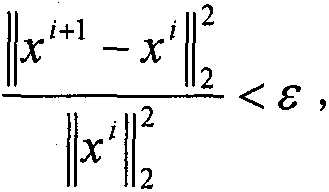
7)判断迭代停止条件;若i>M或者
8)获得最优解:

采用了该发明的基于压缩感知的磁共振数据图像重建方法,由于首先从实际磁共振设备中采集到相位的部分K数据,即找到它的M个线性测量,然后根据这M个测量和Φ,求解最优化问题,得到变换域的数据,然后反变换,便可以得到时域的图像。采用该种压缩感知模型进行磁共振图像重建方法,从而保证图像信噪比和精确度条件下,节省了扫描时间,实现了快速成像;而且相比较现有技术中的部分K空间数据图像重建方法,能够有效降低图像误差,精确显示原图像,为医学磁共振成像检测提供了高质量的可靠图像信息;同时,本发明的方法高效实用,工作性能稳定可靠,适用范围较为广泛,给人们的工作和生活带来了很大的便利,并且也为医学成像检测技术的进一步发展和大范围普及应用奠定了坚实的理论和实践基础。The method for image reconstruction of magnetic resonance data based on compressed sensing is adopted in this invention. Since the partial K data of the phase is first collected from the actual magnetic resonance equipment, that is, its M linear measurements are found, and then according to the M measurements and Φ, Solve the optimization problem, get the data in the transform domain, and then inversely transform it to get the image in the time domain. Using this compressed sensing model for magnetic resonance image reconstruction method, under the condition of ensuring the image signal-to-noise ratio and accuracy, saves scanning time and realizes fast imaging; and compared with the partial K-space data image reconstruction method in the prior art , can effectively reduce the image error, accurately display the original image, and provide high-quality and reliable image information for medical magnetic resonance imaging detection; at the same time, the method of the present invention is efficient and practical, has stable and reliable working performance, and has a wide range of applications. It brings great convenience to people and life, and also lays a solid theoretical and practical foundation for the further development and wide-scale popularization and application of medical imaging detection technology.
该发明同时采用了Contourlet变换,由于Contourlet变换稀疏性比小波较好,在一些基于小波的压缩感知重构,重构可能出现高频振铃现象,采用Contourlet变换可以提高信噪比和视觉效果,保护图像细节。我们相信本文的压缩感知方法可以应用到别的成像领域。The invention also uses the Contourlet transform. Since the Contourlet transform has better sparsity than the wavelet, in some wavelet-based compressed sensing reconstructions, high-frequency ringing may occur in the reconstruction. Using the Contourlet transform can improve the signal-to-noise ratio and visual effect, and protect the image. detail. We believe that the compressive sensing approach in this paper can be applied to other imaging domains.
附图说明 Description of drawings
图1.压缩感知理论框架Figure 1. Compressed sensing theoretical framework
图2 MR压缩感知成像系统Figure 2 MR compressed sensing imaging system
图3.Contourlet变换Figure 3. Contourlet transformation
图4.Contourlet变换系数图Figure 4. Contourlet transform coefficient map
图5.仿真K空间轨迹图Figure 5. Simulation K-space trajectory diagram
图6.各种K空间填充轨迹(直线型、S型、射线型、螺旋型)Figure 6. Various K-space filling trajectories (linear, S-shaped, radial, spiral)
图7.a图是满足采样定理的重构图像,b图是只采样K空间中心区域的重构图像C图是不满足采样定理重构图像,d基于压缩感知理论重建图像Figure 7. A is a reconstructed image that satisfies the sampling theorem, b is a reconstructed image that only samples the central area of K-space, and C is a reconstructed image that does not satisfy the sampling theorem, and d is a reconstructed image based on compressed sensing theory
图8.使用小波和Contourlet变换恢复图像结果。(a)脑部图像;(b)胰胆管图像;恢复图像分别利用5%、30%和50%最大变换系数。Figure 8. Image restoration results using wavelet and contourlet transforms. (a) Brain image; (b) Pancreaticobiliary image; restored images using 5%, 30%, and 50% maximum transformation coefficients, respectively.
具体实施方式 Detailed ways
为了能够更清楚地理解本发明的技术内容,特举以下实施例详细说明。In order to understand the technical content of the present invention more clearly, the following examples are given in detail.
本发明是从实际磁共振设备中采集部分K数据,其数据量是完整K空间数据的1/10至1/5,因而称为压缩感知图像重建方法。The present invention collects part of K data from actual magnetic resonance equipment, and its data volume is 1/10 to 1/5 of the complete K space data, so it is called a compressed sensing image reconstruction method.
在阐述本发明的整体工作过程及工作原理之前,为了更加明确其技术含义,首先需要介绍Contourlet变换。Before elaborating the overall working process and working principle of the present invention, in order to clarify its technical meaning more clearly, it is first necessary to introduce the Contourlet transform.
Contourlet变换是一种图像的多尺度几何分析工具,能有效地表示轮廓和纹理丰富的图像,非线性逼近能力很强。图3所示为Contourlet变换的结构图。Contourlet transform is a multi-scale geometric analysis tool for images, which can effectively represent images with rich contours and textures, and has strong nonlinear approximation ability. Figure 3 shows the structure diagram of Contourlet transformation.
Contourlet变换将多尺度分析和多方向分析分开进行,总共分两步进行,首先用拉普拉斯金字塔LP(Laplacian pyramid)变换进行多尺度分析捕获点奇异性,接着使用方向性滤波器组DFB(directional filter bank)将高频子带中分布在同一方向上的奇异点连接成线状结构,合成为一个系数。其低频子带则重复上述过程,直到达到预定的分解级数为止。LP和DFB二者的结合就构成了Contourlet变换,称为“塔式方向滤波器组”(PDFB,pyramidal directional filterbank)。图7所示为一测试图像经过Contourlet变换后的系数图,Contourlet变换中LP采用‘9-7’滤波器,DFB则采用‘pkva’方向性滤波器,LP的分解级数为5级。从图4中可以看出,由于LP的冗余性,Contourlet变换系数具有4/3的冗余度。Contourlet transform separates multi-scale analysis and multi-directional analysis, and it is divided into two steps in total. First, use Laplacian pyramid LP (Laplacian pyramid) transform for multi-scale analysis to capture point singularity, and then use directional filter bank DFB( The directional filter bank) connects the singular points distributed in the same direction in the high frequency subband into a linear structure and synthesizes them into a coefficient. The low-frequency sub-band repeats the above-mentioned process until a predetermined number of decomposition levels is reached. The combination of LP and DFB forms the Contourlet transform, which is called "pyramidal directional filter bank" (PDFB, pyramidal directional filter bank). Figure 7 shows the coefficient map of a test image after the Contourlet transform. In the Contourlet transform, the LP uses the '9-7' filter, and the DFB uses the 'pkva' directional filter. The decomposition level of the LP is 5 levels. It can be seen from Figure 4 that due to the redundancy of LP, the Contourlet transform coefficients have a redundancy of 4/3.
只有Contourlet与图像的轮廓与边界的位置与方向匹配,从而产生有意义的系数。从系数图解释了变换系数比图像本身更稀疏。当然离散余弦变换(DCT)与小波变换也可以进行稀疏变换,但当重构图像只保留5-10%的系数时候Contourlet变换相比更有些优势。Only the contourlet matches the position and orientation of the image's contours and boundaries, resulting in meaningful coefficients. From the coefficient map it is explained that the transform coefficients are more sparse than the image itself. Of course, discrete cosine transform (DCT) and wavelet transform can also perform sparse transformation, but when the reconstructed image only retains 5-10% of the coefficients, Contourlet transform has some advantages.
图像可以压缩,要求图像本身是稀疏的或变换后是稀疏的。首先用向量


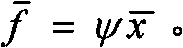
在图像压缩感知系统中,随机测量抽样并不需要任何的先验知识,但是在图像重建时需要利用图像表示的稀疏性,稀疏性越强,K越小,达到相同重构效果需要的随机投影观测值也越少。In the image compression sensing system, random measurement sampling does not require any prior knowledge, but the sparsity of image representation needs to be used in image reconstruction. The stronger the sparsity, the smaller K is, and the random projection required to achieve the same reconstruction effect There are fewer observations.
压缩感知的处理过程可以分为两步,首先第一步编码,通过一个线性变换φ,φ一个m×n维的矩阵,m<n;信号
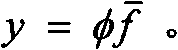


第二步解码,即从y恢复
这时如果测量矩阵A满足约束等距条件,可以通过求解一个类似式的最优l0范数问题(1)来重构稀疏信号最小l0范数问题是一个NP-hard问题,需要穷举x中非零值的所有CKN种排列可能,因而无法求解[27],即使找到了它,也并不能肯定这个结果就是对的。鉴于此,求解一个更加简单的l1优化问题会产生同等的解。At this time, if the measurement matrix A satisfies the constraint equidistant condition, the sparse signal can be reconstructed by solving an optimal l 0 norm problem (1) similar to The minimum l 0 norm problem is an NP-hard problem, which needs to exhaustively enumerate all CKN permutations of non-zero values in x, so it cannot be solved [27]. Even if it is found, it is not certain that the result is correct. Given this, solving a simpler l 1 optimization problem yields equivalent solutions.
min‖x‖1s.t‖Ax-y‖2<σ (1)min‖x‖ 1 st‖Ax-y‖ 2 <σ (1)
建立目标函数:Build the objective function:
获得最小解
压缩感知的编解码过程就是编码:构造φ,生成测量

本发明基于压缩感知理论,从很少的测量值中,使用Contourlet变换和求l1最优化解来重构图像。The present invention is based on compressed sensing theory, uses Contourlet transform and seeks l 1 optimal solution to reconstruct image from few measured values.
请参阅图2所示,本发明的基于压缩感知理论的磁共振图像重建方法,包括以下步骤:See also shown in Figure 2, the magnetic resonance image reconstruction method based on compressive sensing theory of the present invention, comprises the following steps:
(1)在磁共振成像扫描仪中按照预设的观测矩阵φ来采集,得到部分K空间数据。构造φ,生成测量值
(2)从磁共振成像扫描仪的线圈中获得y并传送给计算机。(2) Obtain y from the coil of the MRI scanner and send it to the computer.
(3)构造同样的φ,选择一种稀疏变换ψ,根据y重构
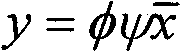

在测量矩阵A满足约束等距条件,可以通过求解一个类似式的最优l1范数问题(1)来重构稀疏信号
min‖x‖1s.t‖Ax-y‖2<σ (1)min‖x‖ 1 st‖Ax-y‖ 2 <σ (1)
建立式(1)的目标函数:Establish the objective function of formula (1):
获得最小解
下一步求解目标函数。所述的目标函数求解的数学模型为通过迭代阈值法求解式(3),首先建立具体数学模型为:The next step is to solve the objective function. The mathematical model of described objective function solution is to solve formula (3) by iterative threshold method, at first set up concrete mathematical model as:
其中上标i是迭代指数,soft(x,T)是软阈值函数,阈值为T,where the superscript i is the iteration index, soft(x, T) is the soft threshold function, and the threshold is T,
soft(x,T):=sign(x)max(0,|x|-T) (5)soft(x,T):=sign(x)max(0,|x|-T) (5)
为了得到式(2)最小值要求式(4)收敛,我们可以设置α≥max eig(ψTφTφψ)。In order to obtain the minimum value of formula (2) and require formula (4) to converge, we can set α≥max eig(ψ T φ T φψ).
根据建立好的求解目标函数的数学模型,进行解码图像重建,具体包括以下步骤:According to the established mathematical model for solving the objective function, the decoded image is reconstructed, which specifically includes the following steps:
1)输入:原始MRI图像x,Fourier域随机欠采样矩阵φ,最大迭代次数M,重构精度ε,初始权重α1、λ1及步长s。1) Input: original MRI image x, Fourier domain random undersampling matrix φ, maximum number of iterations M, reconstruction accuracy ε, initial weights α1, λ1 and step size s.
2)随机测量:对原始图像x进行随机抽样,得到测量值y=φx;2) Random measurement: random sampling is performed on the original image x to obtain the measured value y=φx;
3)初始化:初始化重构图像x0=φTy,迭代次数i,且i=1;3) Initialization: Initialize the reconstructed image x 0 =φ T y, iteration number i, and i=1;
4)进行软阈值法迭代,利用公式
5)迭代次数i=i+1;5) The number of iterations i=i+1;
6)更新参数:α1=s×α1;6) Update parameters: α1=s×α1;
7)判断迭代停止条件;若i>M或者结束迭代,执行步骤8。否则,令i=i+1返回步骤4继续迭代。7) Determine the iteration stop condition; if i>M or End the iteration and go to step 8. Otherwise, set i=i+1 and return to step 4 to continue iteration.
8)获得最优解:输出重构图像
如图6所示,常见K空间填充轨迹主要分为:标准直线型、圆型、螺旋型及辐射型。在传统采样过程中,如前所述无论哪种快速成像方法,在填充K空间的时候,为了避免信号失真,采样频率都要满足奈奎斯特采样定理,即采样频率不得低于信号最高频率的2倍才能正确恢复图像,如图7(a)所示。否则图像就会产生混叠伪影,如图7(b)(c)所示。As shown in Figure 6, common K-space filling trajectories are mainly divided into: standard linear type, circular type, spiral type and radial type. In the traditional sampling process, no matter which fast imaging method is mentioned above, in order to avoid signal distortion when filling the K space, the sampling frequency must satisfy the Nyquist sampling theorem, that is, the sampling frequency must not be lower than the highest signal frequency 2 times to recover the image correctly, as shown in Figure 7(a). Otherwise, the image will produce aliasing artifacts, as shown in Fig. 7(b)(c).
压缩感知理论与传统奈奎斯特采样定理不同,它指出,只要信号是可压缩的或在某个变换域是稀疏的,那么就可以用一个与变换基不相关的观测矩阵将变换所得高维信号投影到一个低维空间上,然后通过求解一个优化问题就可以从这些少量的投影中以高概率重构出原图像,如图7(d)所示,可以证明这样的投影包含了重构信号的足够信息。在该理论框架下,采样速率不决定于信号的带宽,而决定于信息在信号中的结构和内容。Compressed sensing theory is different from the traditional Nyquist sampling theorem. It points out that as long as the signal is compressible or sparse in a certain transform domain, then the transformed high-dimensional The signal is projected onto a low-dimensional space, and then by solving an optimization problem, the original image can be reconstructed with high probability from these few projections, as shown in Figure 7(d), it can be proved that such a projection contains reconstruction enough information about the signal. Under this theoretical framework, the sampling rate is not determined by the bandwidth of the signal, but by the structure and content of the information in the signal.
采用了上述的基于压缩感知理论的磁共振压缩感知数据图像重建方法,由于首先从实际磁共振设备中采集到相位的部分K数据,然后从部分数据信息的进行模型参数估计,最后根据模型参数估计的结果由压缩感知模型进行磁共振图像重建,采用该种压缩感知模型进行磁共振图像重建方法,在保证图像信噪比分辨率和精确度条件下,节省扫描时间,实现快速成像,为医学核磁共振成像检测提供了高质量的可靠图象信息;本发明的方法高效实用,工作性能稳定可靠、适用范围较为广泛,给人们的工作和生活带来了很大的便利,并且也为医学成像检测技术的进一步的发展和大范围普及应用奠定了坚实的理论和实践基础。The above-mentioned image reconstruction method of magnetic resonance compressed sensing data based on compressed sensing theory is adopted. Since the partial K data of the phase is firstly collected from the actual magnetic resonance equipment, then the model parameters are estimated from part of the data information, and finally according to the model parameter estimation The results of the compression sensing model for magnetic resonance image reconstruction, the use of this compressed sensing model for magnetic resonance image reconstruction method, under the condition of ensuring the resolution and accuracy of image signal-to-noise ratio, save scanning time, achieve fast imaging, and provide medical nuclear magnetic Resonance imaging detection provides high-quality and reliable image information; the method of the present invention is efficient and practical, has stable and reliable working performance, and has a wide range of applications, which brings great convenience to people's work and life, and also contributes to medical imaging detection. The further development and widespread application of technology have laid a solid theoretical and practical foundation.
本发明对重构图像非常有效,如图8所示,(a)脑部和(b)痍胆管的核磁图像,尽管输入图像的复杂程度不一样,但重构图像的质量是一样的。特别是在采样率为50%时候,对恢复一个满意可靠的图像总是有效的。30%采样率的时候也没出现明显的伪影,可惜在5%采样率的时候恢复图像有明显的伪影。这些结果能够进一步改善,如果在我们程序中允许迭代次数更多的话。The present invention is very effective for reconstructing images, as shown in Figure 8, (a) MRI images of the brain and (b) traumatic bile duct, although the complexity of the input images is different, the quality of the reconstructed images is the same. Especially when the sampling rate is 50%, it is always effective to restore a satisfactory and reliable image. There are no obvious artifacts at 30% sampling rate, but unfortunately there are obvious artifacts when restoring the image at 5% sampling rate. These results could be further improved if more iterations were allowed in our program.
也可以看到在底低稀疏率情况,小波变换的RMS值小于或等于Contourlet变换。然而在高稀疏率情况,Contourlet变换要比小波变换更有优势。因此,通过Contourlet变换采集更少数据,一个更好的图像重建是可能的。It can also be seen that in the case of low sparse rate, the RMS value of wavelet transform is less than or equal to Contourlet transform. However, in the case of high sparsity rate, Contourlet transform has more advantages than wavelet transform. Therefore, a better image reconstruction is possible by collecting less data through the Contourlet transform.
尽管Contourlet变换比小波变换产生更多原始图像的变换系数,、但Contourlet变换子带的熵比小波变换更小;除此之外,Contourlet是个新的多尺度、多方向的几何分析工具,它可以比小波变换更好的稀疏图像的边界和纹理,因此从这两方面因素对于作为压缩感知的稀疏变换,Contourlet变换总的来说比比小波更好一些。Although the Contourlet transform produces more transformation coefficients of the original image than the wavelet transform, the entropy of the Contourlet transform subband is smaller than that of the wavelet transform; in addition, Contourlet is a new multi-scale, multi-directional geometric analysis tool, which can The boundary and texture of sparse images are better than wavelet transform, so from these two factors, Contourlet transform is generally better than wavelet transform for sparse transform as compressed sensing.
不同稀疏率下的峰值信噪比,可以看出在较低的稀疏率情况下,用小波变换重构后获得的图像的峰值信噪比好于或者几乎等于Contourlet变换,然而在较高稀疏率的情况下,Contourlet变换的表现要比小波好。因此,通过Contourlet变换利用更少的采样量获得更好的图像重建是可能的。The peak signal-to-noise ratio at different sparse rates, it can be seen that in the case of a lower sparse rate, the peak signal-to-noise ratio of the image reconstructed by wavelet transform is better than or almost equal to the Contourlet transform, but at a higher sparse rate In the case of , the performance of the Contourlet transform is better than that of the wavelet. Therefore, it is possible to obtain better image reconstruction with less sampling through Contourlet transform.
基于压缩感知理论,我们使用Contourlet变换和l1最优化来重构图像从很少的测量值。Contourlet变换稀疏性比小波较好,在一些基于小波的压缩感知重构,重构可能出现高频振铃现象,采用Contourlet变换可以提高信噪比和视觉效果,保护图像细节。我们相信本文的压缩感知方法可以应用到别的成像领域。Based on compressive sensing theory, we use Contourlet transform and l 1 optimization to reconstruct images from few measurements. The sparsity of Contourlet transform is better than that of wavelet. In some wavelet-based compressed sensing reconstructions, high-frequency ringing may occur in reconstruction. Using Contourlet transform can improve the signal-to-noise ratio and visual effect, and protect image details. We believe that the compressive sensing approach in this paper can be applied to other imaging domains.
Claims (3)


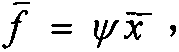




Priority Applications (1)
| Application Number | Priority Date | Filing Date | Title |
|---|---|---|---|
| CN201110190814.2A CN102389309B (en) | 2011-07-08 | 2011-07-08 | Compressed sensing theory-based reconstruction method of magnetic resonance image |
Applications Claiming Priority (1)
| Application Number | Priority Date | Filing Date | Title |
|---|---|---|---|
| CN201110190814.2A CN102389309B (en) | 2011-07-08 | 2011-07-08 | Compressed sensing theory-based reconstruction method of magnetic resonance image |
Publications (2)
| Publication Number | Publication Date |
|---|---|
| CN102389309A CN102389309A (en) | 2012-03-28 |
| CN102389309B true CN102389309B (en) | 2013-07-31 |
Family
ID=45856796
Family Applications (1)
| Application Number | Title | Priority Date | Filing Date |
|---|---|---|---|
| CN201110190814.2A Expired - Fee Related CN102389309B (en) | 2011-07-08 | 2011-07-08 | Compressed sensing theory-based reconstruction method of magnetic resonance image |
Country Status (1)
| Country | Link |
|---|---|
| CN (1) | CN102389309B (en) |
Families Citing this family (45)
| Publication number | Priority date | Publication date | Assignee | Title |
|---|---|---|---|---|
| CN103505206A (en) * | 2012-06-18 | 2014-01-15 | 山东大学威海分校 | Fast and parallel dynamic MRI method based on compressive sensing technology |
| CN103595414B (en) * | 2012-08-15 | 2017-02-08 | 湖南涉外经济学院 | Sparse sampling and signal compressive sensing reconstruction method |
| CN102915562A (en) * | 2012-09-27 | 2013-02-06 | 天津大学 | Compressed sensing-based multi-view target tracking and 3D target reconstruction system and method |
| CN103048632B (en) * | 2012-12-19 | 2015-11-25 | 北京大学 | A kind of quick fine angular resolution diffusion imaging method based on compressed sensing |
| CN103300859A (en) * | 2013-05-31 | 2013-09-18 | 王勇 | High-quality rapid CS-MRI (Compressed Sensing-Magnetic Resonance Imaging) method of mixed norm |
| CN103356193B (en) * | 2013-07-19 | 2016-12-28 | 哈尔滨工业大学深圳研究生院 | Quick diffusion-tensor imaging method under compressed sensing framework and system |
| US10126398B2 (en) * | 2014-01-03 | 2018-11-13 | Yudong Zhu | Modeling and validation for compressed sensing and MRI |
| DE102014203068B4 (en) | 2014-02-20 | 2015-11-26 | Siemens Aktiengesellschaft | Pseudo-random acquisition of MR data of a two-dimensional volume section |
| CN103995244B (en) * | 2014-04-29 | 2017-05-24 | 包头市稀宝博为医疗系统有限公司 | Magnetic resonance imaging method |
| CN104042216B (en) * | 2014-07-01 | 2015-12-30 | 中国科学院武汉物理与数学研究所 | A kind of thin layer rapid magnetic resonance imaging method based on prescan and nonuniform sampling |
| CN104240210B (en) * | 2014-07-21 | 2018-08-10 | 南京邮电大学 | CT image iterative reconstruction methods based on compressed sensing |
| US10663549B2 (en) * | 2014-11-25 | 2020-05-26 | Siemens Healthcare Gmbh | Compressed sensing reconstruction for multi-slice and multi-slab acquisitions |
| CN104569880B (en) * | 2014-12-31 | 2017-04-05 | 中国科学院深圳先进技术研究院 | A kind of magnetic resonance fast imaging method and system |
| CN104793160B (en) * | 2015-04-22 | 2017-06-16 | 南京医科大学 | A kind of method of the frequency aliasing effect for reducing lack sampling magnetic resonance imaging |
| CN105260609B (en) * | 2015-10-21 | 2018-09-04 | 浪潮(北京)电子信息产业有限公司 | A kind of method and apparatus of storage medical image |
| CN105306064B (en) * | 2015-10-31 | 2018-08-31 | 电子科技大学 | Super-resolution signal estimation method based on compressed sensing |
| CN105574832B (en) * | 2015-12-11 | 2019-11-15 | 上海交通大学 | Reversible deep convolutional network structure based on iterative direction filter bank |
| CN106339982B (en) * | 2016-08-24 | 2019-12-24 | 深圳先进技术研究院 | Fast magnetic resonance cardiac real-time cine imaging method and system |
| CN106339996B (en) * | 2016-09-09 | 2018-11-30 | 江南大学 | A kind of Image Blind deblurring method based on super Laplace prior |
| CN106485764B (en) * | 2016-11-02 | 2019-11-22 | 中国科学技术大学 | Fast and Accurate Reconstruction Method of MRI Image |
| CN106658577B (en) * | 2016-11-17 | 2019-05-17 | 厦门理工学院 | A kind of Sensor Network data reconstruction method of joint space-time sparsity |
| CN107123097B (en) * | 2017-04-26 | 2019-08-16 | 东北大学 | An Imaging Method Based on Optimal Measurement Matrix |
| CN107895387B (en) * | 2017-10-11 | 2020-10-02 | 四川大学 | MRI image reconstruction method and device |
| CN107817493B (en) * | 2017-10-25 | 2021-05-14 | 电子科技大学 | A 2D Near Field Synthetic Aperture Radar Image Reconstruction Method Based on Compressed Sensing |
| CN108280862B (en) * | 2018-01-31 | 2021-07-23 | 安徽福晴医疗科技有限公司 | Method and device for reconstructing magnetic resonance image |
| CN110161442B (en) * | 2018-02-12 | 2020-04-21 | 深圳先进技术研究院 | Magnetic resonance parametric imaging method, device, medical equipment and storage medium |
| CN110146836B (en) * | 2018-02-12 | 2020-04-21 | 深圳先进技术研究院 | Magnetic resonance parametric imaging method, device, equipment and storage medium |
| CN108416819B (en) * | 2018-02-24 | 2022-04-26 | 南京医科大学 | Compressed sampling magnetic resonance image reconstruction method based on curvelet-fista |
| CN108492317B (en) * | 2018-02-28 | 2022-01-11 | 哈尔滨工程大学 | Infrared image reconstruction method based on Archimedes spiral as observation matrix |
| EP3543725A1 (en) * | 2018-03-22 | 2019-09-25 | Koninklijke Philips N.V. | Self-navigation in three-dimensional magnetic resonance imaging |
| CN108510564A (en) * | 2018-03-29 | 2018-09-07 | 东北大学 | A kind of MR image reconstruction method based on compressed sensing |
| CN108825205B (en) * | 2018-04-09 | 2020-09-22 | 中国石油大学(北京) | Compressed sensing acquisition method and device for downhole nuclear magnetic resonance spectrum signal |
| CN109247939B (en) * | 2018-08-29 | 2020-06-19 | 中国科学院武汉物理与数学研究所 | An adaptive highly undersampled hyperpolarized gas lung dynamic MRI reconstruction method |
| CN109493394A (en) * | 2018-10-26 | 2019-03-19 | 上海东软医疗科技有限公司 | Method, method for reconstructing and the device of magnetic resonance imaging acquisition deep learning training set |
| CN109658468B (en) * | 2018-12-12 | 2022-12-13 | 深圳先进技术研究院 | Magnetic resonance parameter imaging method, device, equipment and storage medium |
| CN109712119B (en) * | 2018-12-13 | 2020-07-03 | 深圳先进技术研究院 | Magnetic resonance imaging and plaque identification method and device |
| CN111325808B (en) * | 2018-12-15 | 2021-02-26 | 深圳先进技术研究院 | A kind of image reconstruction method of nonlinear gradient imaging and related equipment |
| CN109765405A (en) * | 2019-02-26 | 2019-05-17 | 江南大学 | A fast imaging method of atomic force microscope |
| CN112415452B (en) * | 2019-08-22 | 2024-03-19 | 西门子(深圳)磁共振有限公司 | Method and device for removing interference in signal, magnetic resonance system and storage medium |
| CN110652296A (en) * | 2019-09-16 | 2020-01-07 | 华东师范大学 | A method for removing motion artifacts from magnetic resonance head images |
| US11423593B2 (en) * | 2019-12-19 | 2022-08-23 | Shanghai United Imaging Intelligence Co., Ltd. | Systems and methods for reconstructing a medical image using meta learning |
| CN112634385B (en) * | 2020-10-15 | 2024-05-10 | 浙江工业大学 | Rapid magnetic resonance imaging method based on deep Laplace network |
| CN112710975A (en) * | 2021-01-25 | 2021-04-27 | 东北林业大学 | Magnetic resonance diffusion image reconstruction method based on sparse and local low-rank matrix decomposition |
| CN113643251B (en) * | 2021-03-24 | 2023-07-04 | 北京航空航天大学 | Undersampled non-raster scanning atomic force microscope high-speed imaging system and method |
| CN113633294A (en) * | 2021-05-20 | 2021-11-12 | 郑州大学 | Atrial fibrillation detection method based on electrocardio compression sensing transposed projection signal |
Citations (1)
| Publication number | Priority date | Publication date | Assignee | Title |
|---|---|---|---|---|
| CN102018514A (en) * | 2010-12-30 | 2011-04-20 | 中国科学院深圳先进技术研究院 | Magnetic resonance diffusion tensor imaging method and system |
Family Cites Families (3)
| Publication number | Priority date | Publication date | Assignee | Title |
|---|---|---|---|---|
| ATE528733T1 (en) * | 2007-12-20 | 2011-10-15 | Wisconsin Alumni Res Found | METHOD FOR DYNAMIC CONSTRAINTED IMAGE RECONSTRUCTION WITH PREVIOUS IMAGE |
| US7688068B2 (en) * | 2008-05-06 | 2010-03-30 | General Electric Company | System and method for using parallel imaging with compressed sensing |
| KR101000786B1 (en) * | 2008-07-03 | 2010-12-14 | 한국과학기술원 | Dynamic Magnetic Resonance Imaging Based on Compression Sensing Using Motion Estimation and Motion Compensation |
-
2011
- 2011-07-08 CN CN201110190814.2A patent/CN102389309B/en not_active Expired - Fee Related
Patent Citations (1)
| Publication number | Priority date | Publication date | Assignee | Title |
|---|---|---|---|---|
| CN102018514A (en) * | 2010-12-30 | 2011-04-20 | 中国科学院深圳先进技术研究院 | Magnetic resonance diffusion tensor imaging method and system |
Non-Patent Citations (3)
| Title |
|---|
| JP特开2009-268901A 2009.11.19 |
| 基于压缩感知理论的图像重构技术;沈明欣等;《电子科技》;20110315;第24卷(第3期);9-12 * |
| 沈明欣等.基于压缩感知理论的图像重构技术.《电子科技》.2011,第24卷(第3期),9-12. |
Also Published As
| Publication number | Publication date |
|---|---|
| CN102389309A (en) | 2012-03-28 |
Similar Documents
| Publication | Publication Date | Title |
|---|---|---|
| CN102389309B (en) | Compressed sensing theory-based reconstruction method of magnetic resonance image | |
| CN101975935B (en) | Partial echo compressed sensing-based quick magnetic resonance imaging method | |
| Cole et al. | Unsupervised MRI reconstruction with generative adversarial networks | |
| CN113096207B (en) | Rapid magnetic resonance imaging method and system based on deep learning and edge assistance | |
| CN104569880B (en) | A kind of magnetic resonance fast imaging method and system | |
| CN109597012B (en) | A single-scan spatiotemporal coding imaging reconstruction method based on residual network | |
| CN106485764A (en) | The quick exact reconstruction methods of MRI image | |
| CN104739410B (en) | A kind of iterative reconstruction approach of magnetic resonance image (MRI) | |
| CN111870245A (en) | Cross-contrast-guided ultra-fast nuclear magnetic resonance imaging deep learning method | |
| CN109345473B (en) | An Image Processing Method Based on Adaptive Fast Iterative Shrinkage Thresholding Algorithm | |
| CN103142228A (en) | Compressed sensing magnetic resonance fast imaging method | |
| WO2024093083A1 (en) | Magnetic resonance weighted image synthesis method and apparatus based on variational autoencoder | |
| Guan et al. | Magnetic resonance imaging reconstruction using a deep energy‐based model | |
| CN114140404B (en) | Dual-domain super-resolution reconstruction method of lung multi-core MRI based on artificial intelligence | |
| CN105931242B (en) | Dynamic nuclear magnetic resonance (DNMR) image rebuilding method based on dictionary learning and time gradient | |
| CN109188327B (en) | Fast Reconstruction Method of Magnetic Resonance Image Based on Tensor Product Complex Wavelet Compact Frame | |
| CN105957119A (en) | Construction method for measurement matrix of compressed sensing magnetic resonance images based on chaotic system | |
| CN108717171A (en) | A kind of compressed sensing Low-field magnetic resonance imaging algorithm | |
| CN113920211B (en) | Quick magnetic sensitivity weighted imaging method based on deep learning | |
| CN111862256A (en) | A Wavelet Sparse Basis Optimization Method in Compressed Sensing Image Reconstruction | |
| CN115511996A (en) | A Fast Reconstruction Method of Compressed Sensing Magnetic Resonance Image Based on Deep Learning | |
| CN117011409B (en) | Multi-position physical intelligent high-definition diffusion magnetic resonance data generation method | |
| CN116725515B (en) | Magnetic resonance rapid imaging method | |
| CN103236049B (en) | Based on the partial K space image reconstruction method of sequence similarity interpolation | |
| CN118549867A (en) | Deep learning magnetic resonance intelligent imaging method based on amplitude phase separate iteration |
Legal Events
| Date | Code | Title | Description |
|---|---|---|---|
| C06 | Publication | ||
| PB01 | Publication | ||
| C10 | Entry into substantive examination | ||
| SE01 | Entry into force of request for substantive examination | ||
| C14 | Grant of patent or utility model | ||
| GR01 | Patent grant | ||
| CF01 | Termination of patent right due to non-payment of annual fee |
Granted publication date: 20130731 Termination date: 20140708 |
|
| EXPY | Termination of patent right or utility model |