CN102341085B - Measurement of compression parameter for CPR on surface - Google Patents
Measurement of compression parameter for CPR on surface Download PDFInfo
- Publication number
- CN102341085B CN102341085B CN200980157827.0A CN200980157827A CN102341085B CN 102341085 B CN102341085 B CN 102341085B CN 200980157827 A CN200980157827 A CN 200980157827A CN 102341085 B CN102341085 B CN 102341085B
- Authority
- CN
- China
- Prior art keywords
- unit
- compression
- patient
- signal
- component
- Prior art date
- Legal status (The legal status is an assumption and is not a legal conclusion. Google has not performed a legal analysis and makes no representation as to the accuracy of the status listed.)
- Active
Links
Images


Classifications
-
- A—HUMAN NECESSITIES
- A61—MEDICAL OR VETERINARY SCIENCE; HYGIENE
- A61H—PHYSICAL THERAPY APPARATUS, e.g. DEVICES FOR LOCATING OR STIMULATING REFLEX POINTS IN THE BODY; ARTIFICIAL RESPIRATION; MASSAGE; BATHING DEVICES FOR SPECIAL THERAPEUTIC OR HYGIENIC PURPOSES OR SPECIFIC PARTS OF THE BODY
- A61H31/00—Artificial respiration by a force applied to the chest; Heart stimulation, e.g. heart massage
-
- A—HUMAN NECESSITIES
- A61—MEDICAL OR VETERINARY SCIENCE; HYGIENE
- A61H—PHYSICAL THERAPY APPARATUS, e.g. DEVICES FOR LOCATING OR STIMULATING REFLEX POINTS IN THE BODY; ARTIFICIAL RESPIRATION; MASSAGE; BATHING DEVICES FOR SPECIAL THERAPEUTIC OR HYGIENIC PURPOSES OR SPECIFIC PARTS OF THE BODY
- A61H31/00—Artificial respiration by a force applied to the chest; Heart stimulation, e.g. heart massage
- A61H31/004—Heart stimulation
-
- A—HUMAN NECESSITIES
- A61—MEDICAL OR VETERINARY SCIENCE; HYGIENE
- A61H—PHYSICAL THERAPY APPARATUS, e.g. DEVICES FOR LOCATING OR STIMULATING REFLEX POINTS IN THE BODY; ARTIFICIAL RESPIRATION; MASSAGE; BATHING DEVICES FOR SPECIAL THERAPEUTIC OR HYGIENIC PURPOSES OR SPECIFIC PARTS OF THE BODY
- A61H31/00—Artificial respiration by a force applied to the chest; Heart stimulation, e.g. heart massage
- A61H31/004—Heart stimulation
- A61H31/007—Manual driven
-
- A—HUMAN NECESSITIES
- A61—MEDICAL OR VETERINARY SCIENCE; HYGIENE
- A61H—PHYSICAL THERAPY APPARATUS, e.g. DEVICES FOR LOCATING OR STIMULATING REFLEX POINTS IN THE BODY; ARTIFICIAL RESPIRATION; MASSAGE; BATHING DEVICES FOR SPECIAL THERAPEUTIC OR HYGIENIC PURPOSES OR SPECIFIC PARTS OF THE BODY
- A61H31/00—Artificial respiration by a force applied to the chest; Heart stimulation, e.g. heart massage
- A61H31/008—Supine patient supports or bases, e.g. improving air-way access to the lungs
-
- A—HUMAN NECESSITIES
- A61—MEDICAL OR VETERINARY SCIENCE; HYGIENE
- A61N—ELECTROTHERAPY; MAGNETOTHERAPY; RADIATION THERAPY; ULTRASOUND THERAPY
- A61N1/00—Electrotherapy; Circuits therefor
- A61N1/02—Details
- A61N1/04—Electrodes
- A61N1/0404—Electrodes for external use
- A61N1/0408—Use-related aspects
- A61N1/046—Specially adapted for shock therapy, e.g. defibrillation
-
- A—HUMAN NECESSITIES
- A61—MEDICAL OR VETERINARY SCIENCE; HYGIENE
- A61N—ELECTROTHERAPY; MAGNETOTHERAPY; RADIATION THERAPY; ULTRASOUND THERAPY
- A61N1/00—Electrotherapy; Circuits therefor
- A61N1/02—Details
- A61N1/04—Electrodes
- A61N1/0404—Electrodes for external use
- A61N1/0472—Structure-related aspects
- A61N1/0492—Patch electrodes
-
- A—HUMAN NECESSITIES
- A61—MEDICAL OR VETERINARY SCIENCE; HYGIENE
- A61N—ELECTROTHERAPY; MAGNETOTHERAPY; RADIATION THERAPY; ULTRASOUND THERAPY
- A61N1/00—Electrotherapy; Circuits therefor
- A61N1/18—Applying electric currents by contact electrodes
- A61N1/32—Applying electric currents by contact electrodes alternating or intermittent currents
- A61N1/38—Applying electric currents by contact electrodes alternating or intermittent currents for producing shock effects
- A61N1/39—Heart defibrillators
- A61N1/3904—External heart defibrillators [EHD]
- A61N1/39044—External heart defibrillators [EHD] in combination with cardiopulmonary resuscitation [CPR] therapy
-
- A—HUMAN NECESSITIES
- A61—MEDICAL OR VETERINARY SCIENCE; HYGIENE
- A61H—PHYSICAL THERAPY APPARATUS, e.g. DEVICES FOR LOCATING OR STIMULATING REFLEX POINTS IN THE BODY; ARTIFICIAL RESPIRATION; MASSAGE; BATHING DEVICES FOR SPECIAL THERAPEUTIC OR HYGIENIC PURPOSES OR SPECIFIC PARTS OF THE BODY
- A61H2201/00—Characteristics of apparatus not provided for in the preceding codes
- A61H2201/10—Characteristics of apparatus not provided for in the preceding codes with further special therapeutic means, e.g. electrotherapy, magneto therapy or radiation therapy, chromo therapy, infrared or ultraviolet therapy
-
- A—HUMAN NECESSITIES
- A61—MEDICAL OR VETERINARY SCIENCE; HYGIENE
- A61H—PHYSICAL THERAPY APPARATUS, e.g. DEVICES FOR LOCATING OR STIMULATING REFLEX POINTS IN THE BODY; ARTIFICIAL RESPIRATION; MASSAGE; BATHING DEVICES FOR SPECIAL THERAPEUTIC OR HYGIENIC PURPOSES OR SPECIFIC PARTS OF THE BODY
- A61H2201/00—Characteristics of apparatus not provided for in the preceding codes
- A61H2201/16—Physical interface with patient
- A61H2201/1602—Physical interface with patient kind of interface, e.g. head rest, knee support or lumbar support
- A61H2201/1635—Hand or arm, e.g. handle
-
- A—HUMAN NECESSITIES
- A61—MEDICAL OR VETERINARY SCIENCE; HYGIENE
- A61H—PHYSICAL THERAPY APPARATUS, e.g. DEVICES FOR LOCATING OR STIMULATING REFLEX POINTS IN THE BODY; ARTIFICIAL RESPIRATION; MASSAGE; BATHING DEVICES FOR SPECIAL THERAPEUTIC OR HYGIENIC PURPOSES OR SPECIFIC PARTS OF THE BODY
- A61H2201/00—Characteristics of apparatus not provided for in the preceding codes
- A61H2201/50—Control means thereof
- A61H2201/5023—Interfaces to the user
- A61H2201/5043—Displays
-
- A—HUMAN NECESSITIES
- A61—MEDICAL OR VETERINARY SCIENCE; HYGIENE
- A61H—PHYSICAL THERAPY APPARATUS, e.g. DEVICES FOR LOCATING OR STIMULATING REFLEX POINTS IN THE BODY; ARTIFICIAL RESPIRATION; MASSAGE; BATHING DEVICES FOR SPECIAL THERAPEUTIC OR HYGIENIC PURPOSES OR SPECIFIC PARTS OF THE BODY
- A61H2201/00—Characteristics of apparatus not provided for in the preceding codes
- A61H2201/50—Control means thereof
- A61H2201/5058—Sensors or detectors
- A61H2201/5061—Force sensors
-
- A—HUMAN NECESSITIES
- A61—MEDICAL OR VETERINARY SCIENCE; HYGIENE
- A61H—PHYSICAL THERAPY APPARATUS, e.g. DEVICES FOR LOCATING OR STIMULATING REFLEX POINTS IN THE BODY; ARTIFICIAL RESPIRATION; MASSAGE; BATHING DEVICES FOR SPECIAL THERAPEUTIC OR HYGIENIC PURPOSES OR SPECIFIC PARTS OF THE BODY
- A61H2201/00—Characteristics of apparatus not provided for in the preceding codes
- A61H2201/50—Control means thereof
- A61H2201/5058—Sensors or detectors
- A61H2201/5064—Position sensors
-
- A—HUMAN NECESSITIES
- A61—MEDICAL OR VETERINARY SCIENCE; HYGIENE
- A61H—PHYSICAL THERAPY APPARATUS, e.g. DEVICES FOR LOCATING OR STIMULATING REFLEX POINTS IN THE BODY; ARTIFICIAL RESPIRATION; MASSAGE; BATHING DEVICES FOR SPECIAL THERAPEUTIC OR HYGIENIC PURPOSES OR SPECIFIC PARTS OF THE BODY
- A61H2201/00—Characteristics of apparatus not provided for in the preceding codes
- A61H2201/50—Control means thereof
- A61H2201/5058—Sensors or detectors
- A61H2201/5071—Pressure sensors
-
- A—HUMAN NECESSITIES
- A61—MEDICAL OR VETERINARY SCIENCE; HYGIENE
- A61H—PHYSICAL THERAPY APPARATUS, e.g. DEVICES FOR LOCATING OR STIMULATING REFLEX POINTS IN THE BODY; ARTIFICIAL RESPIRATION; MASSAGE; BATHING DEVICES FOR SPECIAL THERAPEUTIC OR HYGIENIC PURPOSES OR SPECIFIC PARTS OF THE BODY
- A61H2201/00—Characteristics of apparatus not provided for in the preceding codes
- A61H2201/50—Control means thereof
- A61H2201/5058—Sensors or detectors
- A61H2201/5084—Acceleration sensors
-
- A—HUMAN NECESSITIES
- A61—MEDICAL OR VETERINARY SCIENCE; HYGIENE
- A61H—PHYSICAL THERAPY APPARATUS, e.g. DEVICES FOR LOCATING OR STIMULATING REFLEX POINTS IN THE BODY; ARTIFICIAL RESPIRATION; MASSAGE; BATHING DEVICES FOR SPECIAL THERAPEUTIC OR HYGIENIC PURPOSES OR SPECIFIC PARTS OF THE BODY
- A61H2205/00—Devices for specific parts of the body
- A61H2205/08—Trunk
- A61H2205/084—Chest
-
- A—HUMAN NECESSITIES
- A61—MEDICAL OR VETERINARY SCIENCE; HYGIENE
- A61H—PHYSICAL THERAPY APPARATUS, e.g. DEVICES FOR LOCATING OR STIMULATING REFLEX POINTS IN THE BODY; ARTIFICIAL RESPIRATION; MASSAGE; BATHING DEVICES FOR SPECIAL THERAPEUTIC OR HYGIENIC PURPOSES OR SPECIFIC PARTS OF THE BODY
- A61H2230/00—Measuring physical parameters of the user
- A61H2230/04—Heartbeat characteristics, e.g. E.G.C., blood pressure modulation
- A61H2230/06—Heartbeat rate
- A61H2230/065—Heartbeat rate used as a control parameter for the apparatus
-
- A—HUMAN NECESSITIES
- A61—MEDICAL OR VETERINARY SCIENCE; HYGIENE
- A61H—PHYSICAL THERAPY APPARATUS, e.g. DEVICES FOR LOCATING OR STIMULATING REFLEX POINTS IN THE BODY; ARTIFICIAL RESPIRATION; MASSAGE; BATHING DEVICES FOR SPECIAL THERAPEUTIC OR HYGIENIC PURPOSES OR SPECIFIC PARTS OF THE BODY
- A61H31/00—Artificial respiration by a force applied to the chest; Heart stimulation, e.g. heart massage
- A61H31/004—Heart stimulation
- A61H31/005—Heart stimulation with feedback for the user
Landscapes
- Health & Medical Sciences (AREA)
- Cardiology (AREA)
- Heart & Thoracic Surgery (AREA)
- Life Sciences & Earth Sciences (AREA)
- Veterinary Medicine (AREA)
- Public Health (AREA)
- General Health & Medical Sciences (AREA)
- Animal Behavior & Ethology (AREA)
- Emergency Medicine (AREA)
- Epidemiology (AREA)
- Pulmonology (AREA)
- Pain & Pain Management (AREA)
- Physical Education & Sports Medicine (AREA)
- Rehabilitation Therapy (AREA)
- Radiology & Medical Imaging (AREA)
- Nuclear Medicine, Radiotherapy & Molecular Imaging (AREA)
- Biomedical Technology (AREA)
- Engineering & Computer Science (AREA)
- Critical Care (AREA)
- Measurement Of The Respiration, Hearing Ability, Form, And Blood Characteristics Of Living Organisms (AREA)
- Percussion Or Vibration Massage (AREA)
Abstract
公开了一种特别是当使患者在非刚硬的、柔性的或易弯的表面上复苏时,用于在对患者施行心肺复苏术(CPR)期间确定至少一个按压参数的设备,该设备包括适合于按照患者的胸部移动并具有信号部件和参考部件中的一个的按压单元、适合于按照支撑患者的表面移动并具有信号部件和参考部件中的另一个的表面单元、以及配置成确定按压单元和表面单元之间的相对测量和基于所述相对测量确定按压参数的处理器,其中按压参数至少考虑表面的任何运动和表面的任何位移。
A device is disclosed, particularly when resuscitating a patient on a non-rigid, flexible, or bendable surface, for determining at least one compression parameter during cardiopulmonary resuscitation (CPR). The device includes a compression unit adapted to move along the patient's chest and having one of a signal component and a reference component, a surface unit adapted to move along a surface supporting the patient and having the other of a signal component and a reference component, and a processor configured to determine a relative measurement between the compression unit and the surface unit and to determine the compression parameter based on the relative measurement, wherein the compression parameter takes into account at least any movement and displacement of the surface.
Description
相关申请的交叉引用Cross References to Related Applications
本公开要求2009年3月6日提交的美国临时专利申请号61/158,002和2009年8月20日提交的美国临时专利申请号61/253,584的优先权,这两者特此通过引用被全部并入。This disclosure claims priority to U.S. Provisional Patent Application No. 61/158,002, filed March 6, 2009, and U.S. Provisional Patent Application No. 61/253,584, filed August 20, 2009, both of which are hereby incorporated by reference in their entirety .
技术领域technical field
本公开涉及心肺复苏术(CPR)的施行。特别是,本公开涉及用于在表面例如非刚硬表面或可变形表面上施行CPR的CPR辅助设备。The present disclosure relates to the performance of cardiopulmonary resuscitation (CPR). In particular, the present disclosure relates to CPR assist devices for performing CPR on surfaces such as non-rigid surfaces or deformable surfaces.
背景技术Background technique
目前每年在加拿大有估计40,000例心搏停止事件,其中大多数发生在医院环境之外。医院外心搏停止的可能性目前保持在大约5%。在美国,每年有大约164,600个这样的事例,或每1000人大约0.55。降低从这些医院外心搏停止事件产生的死亡的数量可能是合乎需要的。某些地方例如运动区域和某些个体例如老年人处于特别的危险,且在这些地方和对于这些人,方便的解决方案可能是幸存和死亡之间的差异。There are currently an estimated 40,000 cardiac arrest events per year in Canada, the majority of which occur outside of the hospital setting. The probability of out-of-hospital cardiac arrest currently remains at approximately 5%. In the United States, there are about 164,600 such cases per year, or about 0.55 per 1,000 people. It may be desirable to reduce the number of deaths resulting from these out-of-hospital cardiac arrest events. Certain places, such as sports areas, and certain individuals, such as the elderly, are at particular risk, and in these places and for these people, a convenient solution can be the difference between survival and death.
心肺复苏术(CPR)是医疗和非医疗职业人员提高经受心力衰竭的患者的生存机会的被证明有效的技术。CPR迫使血液通过循环系统,直到专业医疗救助人员到达,从而维持在整个患者身体中的氧分布。然而,CPR的质量常常很差。适当CPR技术和规程的保持可能在大部分个体中是不够的,且紧急情况的焦虑可能在提供正确的治疗中迷惑和阻碍个体。Cardiopulmonary resuscitation (CPR) is a proven technique used by medical and non-medical professionals to improve the chances of survival of patients suffering from heart failure. CPR forces blood through the circulatory system until professional medical assistance arrives, thereby maintaining oxygen distribution throughout the patient's body. However, the quality of CPR is often poor. Maintenance of proper CPR technique and protocol may not be sufficient in most individuals, and anxiety of the emergency may confuse and hinder the individual in providing the correct treatment.
因此,便于在紧急情况下正确给予CPR的设备可能是有用的。存在很多设备,用于将客观反馈传送到CPR施行者同时给予CPR,但这些设备都具有类似的不足。最近的研究(Resuscitation.2009Jan;80(1):79-82.Epub 2008 Oct 25:'Compression feedback devices over estimate chestcompression depth when performed on a bed')披露了影响当前的CPR辅助设备的缺点。该研究指示,CPR辅助设备往往当患者在非刚硬或可变形的(例如,可压缩的)表面例如床垫上接受CPR时过高地估计胸部按压深度。反馈设备可能将床垫的运动错误地记录为胸部按压的部分。在CPR期间在患者下面的非刚硬或可变形表面可能吸收由CPR施行者施加到患者胸部的力的一部分。作为结果,在患者下面的表面在按压期间可能连同患者的胸部一起被向下按压。放置在患者胸部上的任何按压测量设备将测量胸部的移位以及在患者下面的软表面的移位。因此,设备可能低估胸部按压深度,最终导致在CPR期间的浅的按压。当在非刚硬或可变形表面上进行CPR时,也可能消极地影响其它按压参数例如胸部反弹或按压力的计算。例如,在一些情况下,在支撑患者的表面中的大约0.5cm或更大的变形可能导致不可接受的错误的传感器测量。Therefore, a device that facilitates the proper administration of CPR in emergency situations may be useful. Many devices exist for delivering objective feedback to the CPR practitioner while administering CPR, but these devices all suffer from similar deficiencies. A recent study (Resuscitation. 2009 Jan;80(1):79-82. Epub 2008 Oct 25: 'Compression feedback devices over estimate chest compression depth when performed on a bed') revealed shortcomings affecting current CPR aids. This study indicates that CPR assist devices tend to overestimate chest compression depth when patients receive CPR on a non-rigid or deformable (eg, compressible) surface such as a mattress. Feedback devices may mistake the movement of the mattress as part of the chest compressions. A non-rigid or deformable surface beneath the patient during CPR may absorb a portion of the force applied to the patient's chest by the CPR practitioner. As a result, the surface beneath the patient may be compressed downwards along with the patient's chest during compressions. Any compression measurement device placed on the patient's chest will measure displacement of the chest as well as displacement of the soft surface beneath the patient. Therefore, the device may underestimate the depth of chest compressions, ultimately resulting in shallow compressions during CPR. Calculations of other compression parameters such as chest rebound or compression force may also be negatively affected when CPR is performed on a non-rigid or deformable surface. For example, in some cases, deformations of about 0.5 cm or greater in the surface supporting the patient may result in unacceptably erroneous sensor measurements.
促成这个问题的一个因素是用于测量胸部按压深度的传感器的选择。例如,加速计一般不能够补偿可变形表面例如床垫的运动,因为其测量是相对于地球而不是患者下面的表面。相对于地球的任何运动将被加速计记录。此外,传感器一般不能够区分开各种运动源。One factor that contributes to this problem is the choice of sensor used to measure the depth of chest compressions. For example, accelerometers are generally not capable of compensating for motion of deformable surfaces such as mattresses because their measurements are relative to the earth rather than the surface beneath the patient. Any movement relative to the Earth will be registered by the accelerometer. Furthermore, sensors are generally not capable of distinguishing between various sources of motion.
其它CPR辅助工具使用机械力测量作为胸部按压深度的指标。当对在非刚硬表面上支撑的患者进行CPR时,这些设备也容易出错。按压患者的胸部某个距离所需的力在非刚硬表面上较大,因为该表面吸收很多所施加的力。然而,设备通常不能够区分开床垫所吸收的力和受难者的胸部所吸收的力。Other CPR aids use mechanical force measurements as an indicator of chest compression depth. These devices are also prone to error when performing CPR on a patient supported on a non-rigid surface. The force required to compress the patient's chest a certain distance is greater on a non-rigid surface because the surface absorbs much of the applied force. However, the device is generally not able to differentiate between the forces absorbed by the mattress and those absorbed by the victim's chest.
目前,靠背板和心肺功能支板(cardioboard)用于提高在CPR期间力到患者的胸部的转移。心肺功能支板是相对刚硬或不可变形的支撑平台,其可在患者的背部后面滑动或放置,在床垫和患者之间提供坚固平坦的底座。心肺功能支板可将力分布在较大的表面区域上,导致下层床垫的较小运动。靠背板以类似的方式操作。Currently, backboards and cardioboards are used to improve force transfer to the patient's chest during CPR. A cardiorespiratory strut is a relatively rigid or non-deformable support platform that slides or rests behind the patient's back to provide a firm, flat base between the mattress and the patient. Cardio struts distribute forces over a larger surface area, resulting in less movement of the underlying mattress. The backboard operates in a similar manner.
在非刚硬表面或可变形表面上的CPR是在临床环境中的普通情况,其中CPR常常在有软垫的轮床或病床上进行。在其它情况下,可能的非刚硬或可变形表面包括户外软草皮、湿地面或铺地毯的地板。提供在确定CPR参数例如按压深度时考虑表面的运动和/或移位以及在非刚硬或可变形表面上进行CPR时考虑速率的设备可能是合乎需要的。提供可与当前可用的工具例如心肺功能支板和靠背板一起使用的设备可能也是合乎需要的。CPR on non-rigid or deformable surfaces is a common occurrence in clinical settings where CPR is often performed on a padded gurney or hospital bed. In other cases, possible non-rigid or deformable surfaces include outdoor soft turf, wet ground, or carpeted floors. It may be desirable to provide a device that takes into account the motion and/or displacement of the surface when determining CPR parameters, such as compression depth, and velocity when performing CPR on non-rigid or deformable surfaces. It may also be desirable to provide equipment that can be used with currently available tools such as cardiorespiratory braces and back boards.
发明内容Contents of the invention
本公开描述了用于在对患者施行CPR期间确定至少一个按压参数的设备和方法,其考虑支撑患者的表面的运动和/或移位,例如其中患者被非刚硬或可变形表面支撑。The present disclosure describes apparatus and methods for determining at least one compression parameter during CPR on a patient that takes into account motion and/or displacement of a surface supporting the patient, eg, where the patient is supported by a non-rigid or deformable surface.
在一些示例性实施方式中,提供了用于在对患者施行心肺复苏术(CPR)期间确定至少一个按压参数的设备,该设备包括:适合于按照患者的胸部移动的按压单元,按压单元具有信号部件和参考部件中的一个;适合于按照支撑患者的表面移动的表面单元,表面单元具有信号部件和参考部件中的另一个;以及配置成使用从信号部件和参考部件得到的数据来确定按压单元和表面单元之间的相对测量的处理器,处理器还配置成基于相对测量来确定至少一个按压参数;其中所确定的至少一个按压参数考虑表面的任何运动和表面的任何移位的至少一个。In some exemplary embodiments, there is provided an apparatus for determining at least one compression parameter during cardiopulmonary resuscitation (CPR) on a patient, the apparatus comprising: a compression unit adapted to follow the patient's chest, the compression unit having a signal one of the component and the reference component; a surface unit adapted to move according to the surface supporting the patient, the surface unit having the other of the signal component and the reference component; and configured to use data obtained from the signal component and the reference component to determine the compression unit and a processor of relative measurements between surface units, the processor is further configured to determine at least one compression parameter based on the relative measurements; wherein the determined at least one compression parameter takes into account at least one of any movement of the surface and any displacement of the surface.
在上面描述的设备中,信号和参考部件可以是运动传感器、位置传感器、力传感器、压力传感器、场发生器/场探测器对、或信号发射器/接收器对。设备还可包括用于向CPR施行者提供反馈的反馈部件。设备还可包括适合于相对于参考点是静止的基本单元。In the devices described above, the signal and reference components may be motion sensors, position sensors, force sensors, pressure sensors, field generator/field detector pairs, or signal transmitter/receiver pairs. The device may also include a feedback component for providing feedback to the CPR administerer. The device may also comprise a base unit adapted to be stationary relative to the reference point.
本公开还包括确定与CPR相关的参数——包括按压参数——的方法。例如,设备可用于确定对非刚硬表面所支撑的患者进行的CPR的胸部按压速率。这样的示例性实施方式还可能能够确定患者尺寸并根据患者的身体尺寸来确定适当的胸部按压深度。设备还可能能够探测对患者的通气的出现,并可能能够估计通气量。The present disclosure also includes methods of determining parameters related to CPR, including compression parameters. For example, the device may be used to determine the rate of chest compressions for CPR on a patient supported by a non-rigid surface. Such exemplary embodiments may also be able to determine patient size and determine the appropriate depth of chest compressions based on the patient's body size. The device may also be able to detect the occurrence of ventilation to the patient and may be able to estimate the ventilation volume.
附图说明Description of drawings
参考附图,下面将详细讨论本公开的方面,其中:Aspects of the present disclosure are discussed in detail below with reference to the accompanying drawings, in which:
图1是示出当患者在相对刚硬的表面上时在按压期间患者胸部的移位的图示;Figure 1 is a diagram showing displacement of a patient's chest during compressions when the patient is on a relatively rigid surface;
图2是示出当患者在非刚硬表面上时在按压期间患者胸部的移位和在患者下面的表面的移位的图示;Figure 2 is a diagram showing displacement of the patient's chest and displacement of the surface beneath the patient during compressions when the patient is on a non-rigid surface;
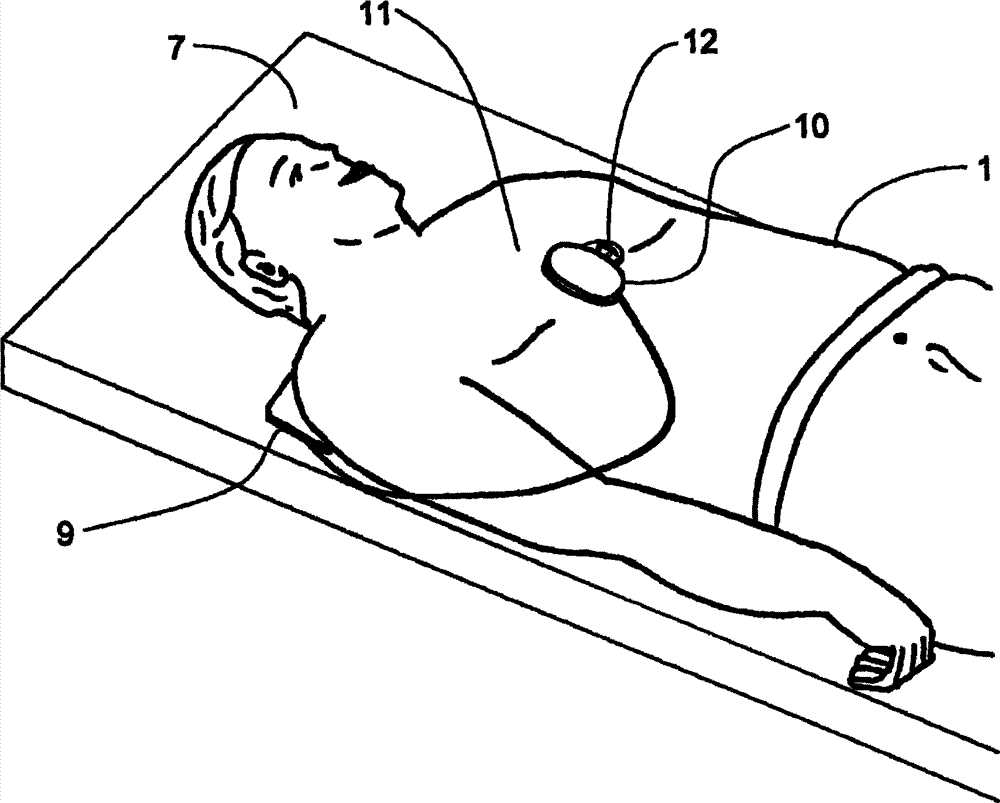
图3是CPR辅助设备的示例性实施方式的图示,其中表面单元和按压单元用于测量按压深度,反馈由按压单元提供;Figure 3 is an illustration of an exemplary embodiment of a CPR assist device in which a surface unit and a compression unit are used to measure compression depth and feedback is provided by the compression unit;
图4是示例性实施方式的图示,其中表面单元和按压单元用于测量按压深度,反馈由单独的基本单元提供;Figure 4 is an illustration of an exemplary embodiment in which a surface unit and a compression unit are used to measure compression depth, with feedback provided by a separate base unit;
图5是示例性实施方式的图示,其中表面单元包括场发生器而按压单元包括场探测器;Figure 5 is an illustration of an exemplary embodiment wherein the surface unit comprises a field generator and the pressing unit comprises a field detector;
图6是在一个例子中示出电磁场的产生和探测的图;Figure 6 is a diagram illustrating the generation and detection of an electromagnetic field in one example;
图7是示出场发生器或场探测器的示例性线圈组件的图示;Figure 7 is a diagram showing an exemplary coil assembly of a field generator or field detector;
图8是示例性实施方式的图示,其中表面单元包括场发生器而按压单元包括场探测器,且存在单独的基本单元来提供反馈;Figure 8 is an illustration of an exemplary embodiment where the surface unit includes a field generator and the press unit includes a field detector, and there is a separate base unit to provide feedback;
图9是示例性实施方式的图示,其中表面单元和按压单元每个包括场探测器,而单独的基本单元包括场发生器;Figure 9 is an illustration of an exemplary embodiment in which the surface unit and the pressing unit each comprise a field detector, while the separate base unit comprises a field generator;
图10是示例性实施方式的图示,其中表面单元包括信号发射器而按压单元包括信号接收器;Figure 10 is an illustration of an exemplary embodiment in which the surface unit comprises a signal transmitter and the pressing unit comprises a signal receiver;
图11是在非刚硬表面上的患者的侧视图,其示出在胸部按压的最高处的表面回弹;Figure 11 is a side view of a patient on a non-rigid surface showing surface rebound at the top of chest compressions;
图12是示例性实施方式的图示,其中表面单元被拴到按压单元;Figure 12 is an illustration of an exemplary embodiment in which a surface unit is tethered to a pressing unit;
图13是示例性实施方式的图示,其中表面单元与按压单元无线地通信;Figure 13 is an illustration of an example embodiment in which the surface unit communicates wirelessly with the pressing unit;
图14是示出表面单元的示例性标签的图;Figure 14 is a diagram illustrating an exemplary label of a surface unit;
图15是在非刚硬表面上的患者的侧视图,其示出在胸部按压的最深点处的非刚硬表面的变形;Figure 15 is a side view of a patient on a non-rigid surface showing deformation of the non-rigid surface at the deepest point of chest compressions;
图16是示出在人背部上的屈曲减少的区域的图示;Figure 16 is a diagram showing areas of reduced flexion on the human back;
图17是示出在患者的肩部和背部下滑动的表面单元的例子的图示;Figure 17 is a diagram showing an example of a surface unit sliding under a patient's shoulders and back;
图18是示出表示与非刚硬表面串联的胸部的两个串联的弹簧的图;Figure 18 is a diagram showing two springs in series representing a chest in series with a non-rigid surface;
图19是示出具有力传感器的示例性按压单元的图;19 is a diagram illustrating an exemplary pressing unit with a force sensor;
图20是示出具有力传感器的示例性按压单元的图;20 is a diagram illustrating an exemplary pressing unit with a force sensor;
图21是在没有颈部支撑物的情况下的患者的气道(airway)的侧视图;Figure 21 is a side view of a patient's airway (airway) without a neck support;
图22是当示例性颈部支撑物被使用时患者的气道的侧视图;Figure 22 is a side view of a patient's airway when an exemplary neck support is in use;
图23是本公开的示例性颈部支撑物实施方式的图示;Figure 23 is an illustration of an exemplary neck support embodiment of the present disclosure;
图24是具有连接机构的表面单元的例子的图示;Figure 24 is an illustration of an example of a surface unit with a connection mechanism;
图25是连接到心肺功能支板或其它相对刚硬的支撑物的表面单元的例子的侧视图;Figure 25 is a side view of an example of a surface unit attached to a cardiopulmonary strut or other relatively rigid support;
图26是设置在心肺功能支板中的示例性表面单元和可连接到心肺功能支板的按压单元的图示;26 is an illustration of an exemplary surface unit disposed in a cardiopulmonary strut and a compression unit connectable to the cardiopulmonary strut;
图27是设置在靠背支板中的示例性表面单元和可连接到靠背板的按压单元的图示;27 is an illustration of an exemplary surface unit disposed in a back support and a press unit connectable to the back panel;
图28是在靠背板上的患者的顶视图,示例性表面单元连接到靠背板的侧面;Figure 28 is a top view of a patient on a backboard with exemplary surface units attached to the sides of the backboard;
图29是在具有把手(handle)的板内部的示例性表面单元的侧视图;Figure 29 is a side view of an exemplary surface unit inside a panel with handles;
图30是设置在靠背板中的示例性表面单元的图示,其中把手和示例性按压单元连接;Fig. 30 is an illustration of an exemplary surface unit disposed in a backboard, wherein a handle is connected to an exemplary pressing unit;
图31是设置在病床中的示例性表面单元的图示;Figure 31 is an illustration of an exemplary surface unit disposed in a hospital bed;
图32是在具有示例性表面单元的幼儿靠背板的顶部上的幼儿的顶视图;Figure 32 is a top view of a toddler on top of a toddler backboard with an exemplary surface unit;
图33是示出都设置在去纤颤器的顶部电极衬垫中的示例性按压单元和示例性表面单元的图示;33 is a diagram showing an example compression unit and an example surface unit both disposed in a top electrode pad of a defibrillator;
图34是示出都设置在去纤颤器的侧面电极衬垫中的示例性按压单元和示例性表面单元的图示;34 is a diagram showing an example compression unit and an example surface unit both disposed in a side electrode pad of a defibrillator;
图35是示出设置在去纤颤器的顶部电极衬垫中的示例性表面单元和设置在去纤颤器的侧面电极衬垫中的示例性按压单元的图示;35 is a diagram showing an exemplary surface unit disposed in a top electrode pad of a defibrillator and an exemplary compression unit disposed in a side electrode pad of a defibrillator;
图36是示出设置在去纤颤器的顶部电极衬垫中的示例性按压单元和设置在去纤颤器的侧面电极衬垫中的示例性表面单元的图示;36 is a diagram showing an exemplary compression unit disposed in a top electrode pad of a defibrillator and an exemplary surface unit disposed in a side electrode pad of a defibrillator;
图37是示出设置在去纤颤器的顶部电极衬垫中的示例性表面单元和设置为在患者胸部上的单独块的示例性按压单元的图示;37 is a diagram showing an exemplary surface unit disposed in a top electrode pad of a defibrillator and an exemplary compression unit disposed as a separate block on a patient's chest;
图38是示出设置在去纤颤器的侧面电极衬垫中的示例性表面单元和设置为在患者胸部上的单独块的示例性按压单元的图示;38 is a diagram showing an exemplary surface unit disposed in a side electrode pad of a defibrillator and an exemplary compression unit disposed as a separate block on a patient's chest;
图39是示出设置在去纤颤器的顶部电极衬垫中的示例性按压单元和设置为在患者背部后面的单独块的示例性表面单元的图示;39 is a diagram showing an exemplary compression unit disposed in a top electrode pad of a defibrillator and an exemplary surface unit disposed as a separate piece behind the patient's back;
图40是示出设置在去纤颤器的侧面电极衬垫中的示例性按压单元和设置为在患者背部后面的单独块的示例性表面单元的图示;以及Figure 40 is a diagram showing an exemplary compression unit disposed in a side electrode pad of a defibrillator and an exemplary surface unit disposed as a separate piece behind the patient's back; and
图41是示出设置在去纤颤器的后电极衬垫中的示例性表面单元和设置在去纤颤器的前电极衬垫中的示例性按压单元的图示。41 is a diagram showing an exemplary surface unit disposed in a rear electrode pad of a defibrillator and an exemplary compression unit disposed in a front electrode pad of the defibrillator.
具体实施方式Detailed ways
在一些示例性实施方式中,设备包括表面单元、按压单元和处理器。表面单元可放置在患者的背部、肩部或颈部下和患者下面的表面上。因此,表面单元可适合于按照支撑患者的表面移动,包括表面的按压、回弹、变形或任何其它这样的运动和/或移位。在一些示例性实施方式中,按压单元可位于患者胸部上和CPR施行者的手下。因此,按压单元可适合于按照患者的胸部移动。按压单元可包括信号部件,而表面单元可包括参考部件,反之亦然,用于直接或间接地感测数据以确定按压参数,例如按压深度。In some exemplary embodiments, an apparatus includes a surface unit, a pressing unit, and a processor. The surface unit may be placed on the patient's back, shoulders or under the neck and on the surface beneath the patient. Thus, the surface unit may be adapted to follow the surface supporting the patient, including compression, springback, deformation or any other such movement and/or displacement of the surface. In some exemplary embodiments, a compression unit may be located on the patient's chest and under the hands of the CPR provider. Thus, the compression unit may be adapted to move according to the patient's chest. The compression unit may comprise a signal component and the surface unit may comprise a reference component, or vice versa, for directly or indirectly sensing data to determine a compression parameter, such as compression depth.
信号部件和参考部件可例如是运动传感器(例如,加速计或速度传感器)、压力传感器、力传感器、位置传感器例如场发生器/场探测器对、或信号发射器/接收器对。不同传感器类型的组合也是可能的,例如其中参考部件是与信号部件不同类型的传感器。例如,信号部件可以是加速计,而参考部件可以是力传感器。按压单元和表面单元可分别包括多个信号或参考部件也是可能的。例如,按压单元可包括两个信号部件,例如加速计和力传感器。在下文更详细地描述了一些例子。The signal and reference components may eg be motion sensors (eg accelerometers or speed sensors), pressure sensors, force sensors, position sensors such as field generator/field detector pairs, or signal transmitter/receiver pairs. Combinations of different sensor types are also possible, eg where the reference component is a different type of sensor than the signal component. For example, the signal component may be an accelerometer, while the reference component may be a force sensor. It is also possible that the pressing unit and the surface unit may respectively comprise a plurality of signal or reference components. For example, a pressing unit may include two signaling components, such as an accelerometer and a force sensor. Some examples are described in more detail below.
现在参考图1和2。图1示出被支撑在相对坚硬的不可变形的表面2上的患者1。当在相对坚硬的不可变形的表面2上时,施加到患者胸部的力3完全转换成胸部的向下位移4。然而,如图2所示,当在CPR的施行期间患者1被支撑在非刚硬的、柔性的、易弯的或以其它方式可变形的表面5上时,表面5可吸收由CPR施行者施加到患者胸部的一部分力3。作为结果,在患者1下面的表面5在按压期间可连同患者的胸部一起向下被按压。放置在患者1的胸部上的常规胸部按压测量设备将测量胸部的位移6以及患者1下面的表面5的位移7,导致所测量的位移8错误地大于胸部按压的真实深度6。使用加速计和力传感器的常规设备可能容易受到这种问题,因为它们的测量没有核对位置且没有考虑患者1下面的表面5的运动和/或移位。通常,表面5的运动和/或移位可以指包括表面5的按压、回弹、变形或整体移动的表面运动或移位。因此,包括这样的传感器的常规CPR设备可能低估胸部按压深度,最终导致不正确的反馈被提供给CPR施行者,这可能导致不适当地浅的胸部按压。Reference is now made to FIGS. 1 and 2 . FIG. 1 shows a
现在参考图3。CPR辅助设备包括两个单元:表面单元9和按压单元10。表面单元可放置在患者1下面,例如患者的背部、肩部或颈部后面,在患者1下面的表面7上。按压单元10可位于患者1的胸部11上和CPR施行者(未示出)的手下。按压单元10适合于按照患者1的胸部11移动,而表面单元9适合于按照表面7移动。表面单元9和按压单元10的每个可以是参考部件和信号部件对(未示出)中的一个。考虑到表面7的运动和/或移位,处理器使用从信号部件和参考部件得到的数据来确定信号和参考部件之间的相对测量,并根据相对测量进一步确定按压参数(例如,胸部按压的深度、胸部按压的速率)。因为表面单元9按照表面7移动,可使用表面单元9作为参考点来执行计算,因而在确定按压参数时考虑表面7的运动和/或移位。Reference is now made to FIG. 3 . The CPR aid comprises two units: a
运动传感器motion sensor
参考图3,在一些例子中,信号部件和参考部件可以每个都是运动传感器,例如加速计或速度传感器。当表面7在CPR的施行期间被按压时,在患者1下面的表面单元9中的参考部件(例如,加速计)可配置成感测表面7(例如床垫)的运动。信号部件(例如加速计)可感测患者胸部11的运动和患者1下面的表面7的运动。在处理器,从参考部件获得的运动数据(例如加速度、速度或位移数据)可从信号部件所得到的数据减去,得到相对测量以说明表面7的任何运动。例如,表面7的运动的影响可从胸部11的所感测的运动被消除。Referring to FIG. 3 , in some examples, the signal component and the reference component may each be motion sensors, such as accelerometers or speed sensors. Reference components (eg accelerometers) in the
在一些例子中,信号部件和参考部件每个是加速计,每个分别感测信号和参考加速度测量。处理器可对加速度测量求积分,分别获得信号和参考速度测量。处理器可对速度测量求积分以分别获得信号和参考位移测量。信号位移测量可指示信号部件的位移,而参考位移测量可指示参考部件的位移。例如,在信号部件在按压单元中而参考部件在表面单元中的场合,信号和参考位移测量可分别指示按压单元和参考单元的位移。处理器可从信号位移测量减去参考位移测量以得到在信号部件和参考部件之间的相对位移测量。以这种方式,可考虑表面7的运动的影响(如表面单元的位移所指示的)。In some examples, the signal component and the reference component are each accelerometers, each sensing signal and reference acceleration measurements, respectively. The processor can integrate the acceleration measurements to obtain signal and reference velocity measurements separately. The processor can integrate the velocity measurements to obtain signal and reference displacement measurements, respectively. Signal displacement measurements may indicate displacement of a signal component, while reference displacement measurements may indicate displacement of a reference component. For example, where the signal component is in the compression unit and the reference component is in the surface unit, the signal and reference displacement measurements may indicate the displacement of the compression unit and the reference unit, respectively. The processor may subtract the reference displacement measurement from the signal displacement measurement to obtain a relative displacement measurement between the signal component and the reference component. In this way, the influence of the movement of the surface 7 (as indicated by the displacement of the surface elements) can be taken into account.
除了加速计或速度传感器以外的传感器可用于运动感测。例如,信号部件和/或参考部件可以是力或压力传感器。在使用力传感器的场合,信号部件所测量的力数据可从由参考部件所得到的数据减去,以说明表面7的运动。Sensors other than accelerometers or speed sensors can be used for motion sensing. For example, the signal component and/or the reference component may be a force or pressure sensor. Where force sensors are used, the force data measured by the signal component can be subtracted from the data obtained by the reference component to account for the movement of the
在一些例子中,力传感器可用作测量运动的间接方法。例如,由表面吸收的力可由力传感器测量,且表面的相应变形可基于该力测量来计算。类似地,通过知道按压胸部所需的力,可计算胸部的位移。这两个位移可被减去,以除去表面运动(即,进一步按压表面所需的力)。In some examples, force sensors can be used as an indirect method of measuring motion. For example, the force absorbed by the surface can be measured by a force sensor, and the corresponding deformation of the surface can be calculated based on this force measurement. Similarly, by knowing the force required to compress the chest, the displacement of the chest can be calculated. These two displacements can be subtracted to remove the surface motion (ie, the force required to press the surface further).
在一些例子中,传感器的组合也是可能的,其中参考部件可以是与信号部件不同类型的传感器。例如,按压单元可包括加速计以测量胸部和表面位移,而表面单元可包括压力传感器以确定转移到表面的力的量。力数据可用于计算表面的大致变形,且表面的所计算的位移可从按压单元的所计算的位移被减去。In some examples, combinations of sensors are also possible, where the reference component may be a different type of sensor than the signal component. For example, the compression unit may include accelerometers to measure chest and surface displacement, while the surface unit may include pressure sensors to determine the amount of force transferred to the surface. The force data can be used to calculate the approximate deformation of the surface, and the calculated displacement of the surface can be subtracted from the calculated displacement of the pressing unit.
场发生器和场探测器Field Generators and Field Detectors
在一些例子中,信号部件可以是用于探测场(例如电磁场)的场探测器,而参考部件可以是用于产生场(例如电磁场)的场发生器。场发生器和场探测器可以是适合于所公开的设备的位置传感器的例子。相反,信号部件可以是场发生器,而参考部件可以是场探测器。场发生器可包括配置成产生场例如电磁场的线圈组件,而场探测器可包括配置成探测所产生的场的线圈组件。场发生器和场探测器的线圈可包括在多个轴上的多个线绕组,以便在多个方向上产生多个场。在一些例子中彼此正交的多个绕组可实现三维位置坐标的确定。从信号部件和参考部件得到的数据在本例中是来自场探测器的响应信号,其响应于场发生器所产生的场。在一些例子中,响应信号表示场探测器所感测的场强。处理器可使用来自信号和参考部件的数据,例如指示电磁场的强度的信号,以计算相对测量,在本例中是场探测器相对于场发生器的位置。从相对位置信息中,可计算按压参数,例如胸部按压深度。例如,参考部件可以是场发生器,并可放置在患者的背部后面;信号部件可以是场探测器,并可位于患者的胸部上。因为场探测器的位置是相对于场发生器的位置确定的,且场发生器在按照表面移动的表面单元中,胸部的位移可与表面的位移分开地确定。In some examples, the signal component may be a field detector for detecting a field (eg, an electromagnetic field), and the reference component may be a field generator for generating a field (eg, an electromagnetic field). Field generators and field detectors may be examples of position sensors suitable for the disclosed apparatus. Instead, the signal component can be a field generator and the reference component a field detector. A field generator may include a coil assembly configured to generate a field, such as an electromagnetic field, and a field detector may include a coil assembly configured to detect the generated field. The coils of the field generators and field detectors may include multiple wire windings in multiple axes to generate multiple fields in multiple directions. Multiple windings that are orthogonal to each other in some examples enable the determination of three-dimensional positional coordinates. The data obtained from the signal part and the reference part are in this example the response signal from the field detector, which responds to the field generated by the field generator. In some examples, the response signal is indicative of the field strength sensed by the field detector. The processor may use data from the signal and reference components, eg a signal indicative of the strength of the electromagnetic field, to calculate a relative measure, in this case the position of the field detector relative to the field generator. From the relative position information, compression parameters such as chest compression depth can be calculated. For example, the reference component can be a field generator and can be placed on the back of the patient's back; the signal component can be a field detector and can be placed on the patient's chest. Since the position of the field detector is determined relative to the position of the field generator, and the field generator is in a surface unit that moves according to the surface, the displacement of the chest can be determined separately from the displacement of the surface.
现在参考图5。在所示例子中,信号部件和参考部件是一对场发生器14和场探测器15。例如,场发生器14可以是电磁场发生器,而场探测器15可以是电磁场探测器。在所示例子中,表面单元9中的参考部件是场发生器14,而按压单元10中的信号部件是场探测器15,然而,在其它例子中,参考部件可替代地是场探测器15,而信号部件可替代地是场发生器14。场发生器14可配置成产生电磁场16,而场探测器15可配置成探测电磁场16。例如,场发生器14和场探测器15每个可包括分别用于产生和探测电磁场16的线圈组件。图6示出可分别由场发生器14和场探测器15产生和探测的电磁场16的实例。Reference is now made to FIG. 5 . In the example shown, the signal and reference components are a pair of
现在参考图7,其示出适合于用在场发生器14和场探测器15中的示例性线圈组件17。线圈组件17可配置成具有在多个轴上的多个绕组18,以便产生或探测在多个方向上的多个场。在一些例子中,线圈组件17可包括缠绕在x19、y20和z21轴的每个上的三个不同的线圈,以便产生三个垂直的电磁场。适当的场发生器和探测器的例子在美国专利申请号12/354,913中被描述,该申请特此通过引用被全部并入。所产生的场通过场探测器15的探测产生响应信号,其被传输或以其它方式提供到CPR辅助设备的处理器。响应信号在一些例子中可以表示由场探测器15探测的场强。使用响应信号(例如,表示所探测的场强),处理器确定场探测器15相对于场发生器14的位置。从所确定的位置信息中,可确定按压参数例如胸部按压深度,如在美国专利申请号12/354,913中所公开的。Referring now to FIG. 7 , an
在一些例子中,无线同步信号可在表面单元9和按压单元10之间传输,以确保场探测器15与场发生器14同步。在发生器线圈组件17包括多个线圈(例如三个线圈)的例子中,由每个线圈产生的场可以是时间复用的,并在这三个线圈的每个上排序。同步信号可向场探测器15指示哪个线圈正产生正被探测的场。在一些例子中,所产生的场在所有线圈上被频繁地复用。在这种情况下,同步信号可能不是必要的,因为所有产生的场都可以同时地但以不同的频率产生。场探测器15可例如通过使用对每个不同的频率或频带的带通滤波并测量在该频率或频带处的场强来单独地探测每个场。在美国申请号12/354,913中描述了适当方法的例子。In some examples, a wireless synchronization signal may be transmitted between the
因为参考部件适合于按照支撑患者1的表面7移动,可例如通过从按压参数的确定来消除任何表面位移,来考虑表面位移的影响。例如,在参考部件是场发生器14的场合,处理器确定场探测器15(在本例中,是信号部件)相对于场发生器14(在本例中,是参考部件)的位置。因为场发生器14与表面7一起移动,胸部的位移相对于表面7的位移来确定。Since the reference part is adapted to move according to the
在一些例子中,CPR设备可包括如图9所示的单独的基本单元22。在本例中,信号部件和参考部件是第一和第二场探测器23、24,而场发生器14设置在基本单元22中。场探测器23、24的每个探测场发生器14所产生的场,并向处理器提供相应的第一和第二响应信号。处理器使用相应的响应信号来确定场探测器23、24的每个(以及结果是按压单元10和表面单元9的每个)相对于基本单元22的位置。基本单元22可被定位成相对于例如在邻近患者1的相对刚硬的表面上的参考点(例如,静止泛光灯)是静止的。因此,处理器可确定表面单元9相对于基本单元22的位置,且该位置表示支撑患者1的表面7的位置(包括任何位移)。类似地,处理器可确定按压单元10相对于基本单元22的位置。处理器可接着确定按压单元10相对于参考单元9的位置,并因而考虑表面7的任何位移。例如,在表面单元9中的场探测器24的位置可从按压单元中的场探测器23的位置减去,以消除在确定按压参数例如胸部按压深度时从表面7的位移产生的任何误差。In some examples, a CPR device may include a single base unit 22 as shown in FIG. 9 . In this example, the signal and reference components are first and
发射器和接收器Transmitter and Receiver
在一些例子中,参考部件可以是信号发射器,而信号部件可以是信号接收器。在本例中,从信号和参考部件得到的数据是从发射器到接收器的信号的所感测的飞行时间。所传输的信号的飞行时间在它被拦截时可由接收器测量。飞行时间计算(即,从通过发射器的信号发射到通过接收器的信号接收消逝的时间)可由处理器使用来确定信号和参考部件之间的相对测量,在本例中是表面单元和按压单元之间的距离。例如,发射器和接收器可被设计成发射并接收信号,例如超声信号、射频信号、光学信号及其它信号。In some examples, the reference component may be a signal transmitter and the signal component may be a signal receiver. In this example, the data derived from the signal and reference components is the sensed time-of-flight of the signal from the transmitter to the receiver. The time-of-flight of the transmitted signal can be measured by the receiver when it is intercepted. Time-of-flight calculations (i.e., the time elapsed from the transmission of the signal by the transmitter to the reception of the signal by the receiver) can be used by the processor to determine relative measurements between the signal and a reference part, in this case the surface unit and the press unit the distance between. For example, transmitters and receivers may be designed to transmit and receive signals, such as ultrasonic signals, radio frequency signals, optical signals, and other signals.
现在参考图10。在所示例子中,参考部件在表面单元9中并且是信号发射器,而信号部件在按压单元10中并且是信号接收器。在其它例子中,参考部件可以是信号接收器,而信号部件可以是信号发射器。发射器将信号25发射到接收器。处理器可基于在接收器接收的信号的强度(例如,如接收器所感测的)或接收的信号的飞行时间,来确定接收器(且结果是按压单元10)和发射器(且结果是表面单元9)之间的距离。例如,如果发射器发送超声信号,则接收器可测量信号发射和信号接收之间的时间间隔。该时间间隔和距离之间的已知关系(例如,基于超声信号的已知发射速度)可在处理器用于确定按压单元10相对于表面单元9的位置。当按压单元10的位置相对于表面单元被确定且表面单元9按照支撑患者1的表面7移动时,可例如通过减小或消除表面7的任何运动和/或移位的影响,在确定按压参数时考虑表面7的运动和/或移位。发射器和接收器可配置成分别发送和接收不同类型的信号,例如超声信号、光学信号、射频信号、超宽带信号、声信号、红外信号或任何其它适当的信号。Reference is now made to FIG. 10 . In the example shown, the reference component is in the
力传感器force sensor
在一些例子中,参考部件和信号部件是力传感器。在信号和参考部件是力传感器的例子中,由参考部件感测的力测量可从由信号部件感测的力测量减去,以说明表面运动。这可类似于基于运动传感器的计算,如上所述。In some examples, the reference component and the signal component are force sensors. In instances where the signal and reference components are force sensors, force measurements sensed by the reference component may be subtracted from force measurements sensed by the signal component to account for surface motion. This may be similar to motion sensor based calculations, as described above.
可结合其它传感器方法来使用力传感器。因为胸部和表面顺应性一般从一个患者到另一患者和从一个表面到另一表面变化,根据简单的力测量,按压参数例如胸部按压深度的确定可能是不准确的。力测量对增加其它传感器类型的使用可能是有用的。例如,如果信号部件和力传感器是加速计,且所确定的按压参数是胸部按压深度,则一个误差源可能是表面回弹(例如,其中表面是柔性或弹性表面,例如床垫)。在胸部按压的最高处和最低处,表面可以振动或回弹,导致不准确的位置和深度测量。通过将力传感器合并到按压单元中,设备能够确定何时实际力被施加到患者的胸部。Force sensors may be used in conjunction with other sensor methods. Because chest and surface compliance generally varies from patient to patient and from surface to surface, determination of compression parameters such as chest compression depth may be inaccurate from simple force measurements. Force measurements may be useful to augment the use of other sensor types. For example, if the signal component and force sensor are accelerometers, and the determined compression parameter is chest compression depth, one source of error may be surface recoil (eg, where the surface is a flexible or resilient surface, such as a mattress). At the top and bottom of chest compressions, the surface can vibrate or bounce back, resulting in inaccurate position and depth measurements. By incorporating force sensors into the compression unit, the device is able to determine when actual force is being applied to the patient's chest.
现在参考图11。当确定被支撑在非刚硬表面7上的患者1上的胸部反弹时,表面回弹可能是明显的误差源。适当的胸部反弹需要CPR施行者完全释放在胸部按压的最高处时患者1的胸部11。该反弹允许血液重新填充心室,以便在下一按压时重新循环。在反弹期间,应由CPR施行者对患者1的胸部11施加的很小的力或不施加力。然而,由于在该阶段期间没有CPR施行者所施加的外力,在患者1下面的表面7可以回弹26,使胸部11稍微移动到胸部按压的起始点27之上。该回弹效应可能减小按压参数例如胸部按压深度的确定的精确性,并且还可能阻止反弹被完全实现的正确确定。力或压力传感器到按压单元的添加可帮助减小或消除归因于表面回弹的错误数据,因为该运动在没有所施加的力的情况下出现。使用压力和力数据,因此可在确定按压参数时考虑该回弹运动。例如,在没有任何所感测的力的情况下确定的任何运动可被处理器忽略或丢弃。Reference is now made to FIG. 11 . Surface rebound can be a significant source of error when determining chest bounce on a
反馈部件Feedback component
CPR辅助设备可包括用于根据所确定的按压参数向CPR施行者提供反馈的反馈部件。例如,反馈部件可设置在按压单元10和表面单元9中的一个上,例如,如图3、5、10、12和13所示。在按压单元10上提供反馈允许在CPR被施行时向CPR施行者显示视觉反馈。在这样的例子中,反馈部件可以是屏幕或显示器。反馈部件还可以是提供音频或触觉反馈以帮助在CPR的施行期间指导CPR施行者的音频或触觉部件。适当的反馈部件及其配置可包括在美国专利申请号12/354,913和11/936,184中描述的那些,这两个申请特此通过引用被全部并入。The CPR assist device may include a feedback component for providing feedback to the CPR practitioner based on the determined compression parameters. For example, the feedback part may be provided on one of the
现在参考图4。在一些例子中,设备包括基本单元13,且反馈部件12设置在基本单元13中。基本单元13可放置在患者附近,例如在患者旁边的地板上,使得反馈(例如视觉和/或音频反馈)可分开地从表面单元9和按压单元10被提供。在所示例子中,基本单元13可容纳比在反馈部件直接合并到按压单元10或表面单元9中时更增强的反馈部件12,例如更大的视觉显示器或增强的音频质量部件。基本单元13还可包括额外的部件,例如用于数据存储的存储器和允许在所提供的反馈的量和类型中的CPR施行者灵活性的处理器接口(例如程序菜单)。Reference is now made to FIG. 4 . In some examples, the device includes a
现在参考图8。该附图示出另一例子,其中基本单元13提供反馈部件12,在这种情况下,信号部件和参考部件分别是场探测器15和场发生器14。Reference is now made to FIG. 8 . The figure shows another example in which the
物理变化physical change
现在参考图12。在一些例子中,表面单元9和按压单元10可例如通过绳28、电缆或连接器连接到彼此。在其它例子中,在表面单元9和按压单元10之间可以没有物理连接。例如,在表面单元9和按压单元10之间的通信是有用的场合(例如,在处理器包含在表面单元9和按压单元10之一中的场合),可建立无线数据通信路径29,如图13所示。来自按压单元9或表面单元9的数据可被发送到包括处理器的单元用于处理。例如,如果表面单元9包括处理器,按压单元10可具有能够将由信号部件所感测的数据发送到表面单元9的无线发射器。数据可通过任何无线方式发送,例如包括射频、蓝牙、Wi-Fi、红外和任何其它适当的方法。Reference is now made to FIG. 12 . In some examples, the
在一些例子中,为了数据传输的目的,表面单元9和按压单元10之间的通信可以内在地是无线的,而不需要单独的无线发射器。例如,在表面单元9中的参考部件是场发生器而按压单元10中的信号部件是场探测器的场合,场的产生和探测内在地是无线的。来自信号和参考部件的数据基于所产生的场的探测,且场穿过自由空间是永久无线的。In some examples, the communication between the
虽然在某些物理配置中描述了目前公开的设备,但变形是可能的。在一些例子中,例如在图3所示的例子中,表面单元9可定位成使得它在患者1的背部后面以及在表面7的顶部上。按压单元10可定位成使得它在患者1的胸部11上和CPR施行者的手下。表面单元9应定位成使得它按照患者1下面的表面7移动。按压单元10应定位成使得它按照患者1的胸部11移动。当按压单元10和表面单元9因此被定位时,例如通过经由从按压单元10的位移减去表面单元9的位移而消除表面7的效应来考虑表面7的运动和/或位移的过程是可能的,导致患者胸部11的位移的确定,而不影响表面位移的影响。例如通过使用在表面单元9上的图30,可向CPR施行者指示表面单元9的适当定位,图30描绘如图14所示的正确定位。While presently disclosed devices are described in certain physical configurations, variations are possible. In some examples, such as the example shown in FIG. 3 , the
当放置表面单元9时,在患者背部后面的部署的确切位置可能很重要。例如,表面单元9的适当放置可允许表面单元9按照表面7的整个运动和/或移位(例如,表面单元9的运动或移位与表面7的相应运动或移位相同)或按照表面7的运动或移位的一部分移动(例如,表面单元9的运动或移位是表面7的相应运动或移位的一部分)。然而,无论表面单元9是否随着表面7的整个运动或移位或与该运动或移位的一部分移动,在这两种情况下,表面单元9都被考虑为按照表面7移动。The exact position of the deployment behind the patient's back may be important when placing the
如图15所示,当胸部按压被给予时,患者背部后面的表面7可屈曲,使得其最深点正好在按压点32之下。按压点32之下的表面7是凹的并变得较小,以进一步形成按压点32。因此,表面单元9放置成接近于正好在按压点32之下的表面7的区域33可更完全地捕获表面7的运动和/或移位。这通常被认为是在按压点32之后的人背部中的屈曲减少的区域34,如图16所示。这个屈曲减少的区域34由于该区域中的脊柱35的刚硬性而在胸部按压期间保持相对平坦。因此,在屈曲减少的区域34附近的表面7将在按压期间保持相对水平和平坦,因此可表示表面凹陷的最深点,且因此将表面单元9放置在这个区域中可能是有用的。虽然将表面单元9放置在屈曲减少的区域34内或附近可能是有用的,但放置在患者1的背部、肩部或颈部后面任何地方仍然可允许表面单元9按照表面7移动。在图17所示的例子中,按压单元10可位于患者1的胸部11上,且表面单元9可(例如,通过滑动运动36)位于患者1的肩部之下并进入屈曲减少的区域34中。As shown in FIG. 15 , when chest compressions are given, the
当表面单元9位于屈曲减少的区域34之外或表面单元9可只遵循在按压点之下的表面7的运动和/或移位的一部分的位置上时,某些技术可用于减少误差并帮助估计表面7的完全运动和/或移位。例如,表面单元9和按压单元10的每个可包括分别作为参考部件和信号部件的力传感器,且此外每个包括用于感测平移数据的运动或位置传感器(例如,加速计或场发生器/场探测器对)。When the
现在参考图18。在本例中,处理器可配置成使用分别从力和运动或位置传感器得到的力测量和平移数据将患者的胸部和表面建模为串联的弹簧。例如,来自表面单元9中的参考部件的力测量数据可用于使用虎克定律来计算表面7的弹簧常数。例如,已知Fb=kbxb,其中参考部件所测量的力Fb引起表面7的向下平移xb,如表面单元9中的运动或位置传感器所测量的。通过重新整理上面的方程以对kb求解,可计算表面7的弹簧常数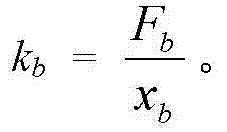
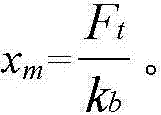
在一些示例性实施方式中,表面单元9适合于放置在屈曲减少的区域34之外。现在参考图22和23。在一些例子中,表面单元9可位于患者1的颈部之下,例如它可设置在颈部支撑物中。当患者1平躺在表面7上时,患者的气道42可能不是完全打开的,如图21所示。通过例如使用颈部支撑物44向上和向后撑住颈部43,气道42可完全打开以提高氧气到肺中的转移,如图22所示。颈部支撑物44可能在患者1在非刚硬或可变形表面上时是特别有用的。当患者1之下的表面7在胸部按压期间移动时,患者1的颈部43可被迫进入关闭的气道位置中。颈部支撑物43帮助确保气道42在CPR的施行期间保持打开。例如具有作为参考部件的力传感器的、设置在颈部支撑物43中的表面单元9可用于确定按压参数。在图23所示的例子中,颈部支撑物43还可包括在复苏过程期间向CPR施行者提供的反馈部件12(例如,音频和/或视觉反馈部件)。在本例中,按压单元10可通过物理绳28(或缆线)连接到颈部支撑物43,如所示,或按压单元10可使用无线连接进行通信。In some exemplary embodiments, the
到坚硬支撑物中的合并Incorporation into a rigid support
虽然前述示例性实施方式将表面单元9描述为放置在患者1的背部、肩部或颈部之下,其它示例性实施方式可具有连接到或设置在位于患者背部和表面7(例如非刚硬表面)之间的相对坚硬的支撑物中。坚硬支撑物可允许在CPR期间力更有效地转移到患者的胸部11。在患者背部和表面7之间的坚硬支撑物可降低表面7的运动的量。当坚硬支撑物放置在患者1之下时,施加到患者胸部的力主要不由下面的非刚硬表面7吸收。坚硬支撑物可以是心肺功能支板、担架、靠背板或任何其它适当的坚硬平坦的物体。心肺功能支板是在医院中用来增加CPR的有效性的常用工具。它一般是可放置在患者1的背部后面并正好在按压点32之下的小板。While the preceding exemplary embodiments describe the
表面单元9可在任何适当的位置或地方连接、紧夹或以其它方式设置在坚硬支撑物上,因为坚硬支撑物将按照表面7移动。这可帮助减少或消除表面单元9更精确地放置在患者背部后面的需要。在一些例子中,表面单元9在连接到设置在患者之下的坚硬支撑物时不必正好位于患者1后面。因为支撑物遵循表面7的运动和/或移位,且表面单元9打开,因此遵循支撑物的运动和/或移位,表面单元9的运动和/或移位按照表面7的运动和/或移位。因此,在确定按压参数时可考虑表面7的运动和/或移位,如上所述。在其它例子中,表面单元9和按压单元10每个可设置在块或楔形物中或设置在外部去纤颤器的电极衬垫中。The
现在参考图24和25。在某些实施方式中,表面单元9可包括连接机构,例如夹紧机构45,例如以将表面单元9连接到坚硬支撑物,例如心肺功能支板46。夹紧机构45可在心肺功能支板46的边缘上滑动,因而保持表面单元9相对于心肺功能支板46是静止的,例如,如图25所示。在这个配置中,表面单元9不必正好放置在患者后面,因为它连接到在患者之下的坚硬支撑物(例如,心肺功能支板46)。Reference is now made to FIGS. 24 and 25 . In some embodiments, the
现在参考图26。在一些例子中,表面单元9可直接嵌入或插入心肺功能支板46中。按压单元10可例如使用连接器47连接到心肺功能支板46,以允许数据和功率传送到表面单元9和从表面单元9传送。在一些例子中,表面单元9可直接合并到靠背板48、担架、轮床或任何其它适当的支撑物中,且按压单元10可例如使用如图27所示的连接器47连接到靠背板48、担架、轮床或支撑物。在一些例子中,表面单元9还可使用在前面如图28所示的夹紧机构45连接到担架或靠背板48上。当夹在靠背板、心肺功能支板或其它坚硬支撑物的侧面上时,表面单元9可以不正好在患者1之下,并可至少部分地对CPR施行者是可见的。因此,表面单元9可包括反馈部件12,其用于例如在它所连接的板之外或之上延伸的表面单元9的一部分上向CPR施行者提供视觉反馈。Reference is now made to FIG. 26 . In some examples,
现在参考图29。在一些例子中,心肺功能支板46、靠背板或其它适当的坚硬支撑物可设计成使得它在患者1和表面7之间相对容易地滑动。在所示例子中,表面单元9可设置在心肺功能支板46中,且心肺功能支板46具有可相对容易地被CPR施行者的手抓住的延伸部分49。这样的延伸部分49在推动患者1下面的心肺功能支板46时可向CPR施行者提供额外的杠杆作用。反馈部件12也可设置在心肺功能支板46中,例如在延伸部分49中,如图30所示。在所示例子中,按压单元10可贮存在心肺功能支板46内的隔间50中,并为了使用可以是可拆卸或可移除的。Reference is now made to FIG. 29 . In some examples,
到表面中的合并merge into surface
在一些例子中,表面单元9可合并到患者1下面的表面7(例如非刚硬表面)中。例如,表面单元9可嵌入床垫中,或可缝到床垫纺织品上。在一些例子中,表面单元9(例如,具有作为参考部件的柔性压力传感器)可坚固地粘附到床垫的外表面。当患者1被放置在床垫上时,表面单元9已经在患者背部之下的位置上。按压单元10可连接到包含表面单元9的床垫,并可位于患者1的胸部11上。由于表面单元9连接到床垫,为了确定按压参数而将考虑表面的运动和/或移位。In some examples,
现在参考图31。在一些例子中,表面单元9可直接合并到表面7中。在所示例子中,表面单元9可设置在非刚硬表面例如床垫51中(例如,通过将表面单元9直接粘附到床垫51),或可用其它方式合并到床垫51的纺织品中。例如,具有作为参考部件的压力传感器的表面单元9可粘附到床垫51的外表面,使得当患者被放置在床垫51的表面上时,表面单元9可能已经适当地被定位成按照患者下面的表面(在本例中,床垫51的表面)移动。按压单元10可连接到表面7,并在施行CPR时可放置在患者的胸部11上。在其它例子中,参考部件可以是加速计,其可在开始复苏过程之前粘附到床垫51的表面。在这样的例子中,表面单元9可实质上是平的,并包括在一侧上的粘性衬背。粘性衬背可被激活,且表面单元9可直接连接到表面7。当患者1放置在表面7上时,患者1将在已经放置的表面单元9的顶部上。Reference is now made to FIG. 31 . In some examples,
不同的身体尺寸different body sizes
目前公开的设备可适合于不同的患者身体类型。例如,幼儿52或小孩子可被放置在容纳表面单元9的幼儿靠背板53上,如图32所示。按压单元10可被拴到幼儿靠背板53,并可放置在幼儿的胸部54上。幼儿靠背板53可放置在表面7上,且CPR可被施行,设备用于确定按压参数,如上所述。此外,本设备可根据所估计的患者的身体尺寸确定适当的按压深度。当前的CPR方针建议,针对胸腔的深度调节幼儿和孩子上的按压的深度。处理器可确定表面单元9和按压单元10之间的距离,并可使用这个确定的距离来确定或估计患者的身体尺寸,因而确定胸部按压的适当深度。适当的按压深度在确定按压参数时可被考虑,并可包括在提供到CPR施行者的反馈中。这样的技术也可适合于成人患者。例如,具有厚的胸部的大骨架的成人可能需要比具有较小的骨架的成人更深的按压。在按压单元10和表面单元9之间的确定的距离可因此用于确定或估计患者的胸部高度,且适当的按压深度可被相应地确定。The presently disclosed devices can be adapted to different patient body types. For example, a
到去纤颤器中的合并Incorporation into defibrillators
一般,在心搏停止之后,外部去纤颤器可用于使患者复苏。研究表明合并高质量CPR与迅速的去纤维性颤动的重要性。因为外部去纤颤器常常用在医院和紧急环境中,医疗人员对被支撑在非刚硬表面上的患者工作并不是罕见的。适当的去纤维性颤动需要两个单独的电极衬垫的精确放置。一般,顶部电极衬垫正好位于患者的右肩之下,而侧面电极衬垫放置在患者的左侧上,正好在胸腔(ribcage)之下。在一些例子中,表面单元9和按压单元10中的至少一个可设置在去纤颤器的电极衬垫组件中。Typically, after cardiac arrest, an external defibrillator can be used to resuscitate the patient. Research demonstrates the importance of combining high-quality CPR with prompt defibrillation. Because external defibrillators are often used in hospital and emergency settings, it is not uncommon for medical personnel to work with patients supported on non-rigid surfaces. Proper defibrillation requires precise placement of two separate electrode pads. Typically, the top electrode pad is placed just under the patient's right shoulder, while the side electrode pad is placed on the patient's left side, just below the ribcage. In some examples, at least one of the
现在参考图33、34、35和36。电极衬垫尺寸、形状和放置的可变性实现一系列不同的配置。例如,如图33所示,按压单元10和表面单元9可以都容纳在顶部电极衬垫55内,保持侧面电极56没有任一个单元。顶部电极衬垫55可配置成使得顶部电极衬垫55的胸部部分57在患者1的胸部11上延伸并提供按压单元10,而顶部电极衬垫55的肩部部分58在患者1的肩部上和背部59后面延伸并提供表面单元9。在另一例子中,如图34所示,按压单元10和表面单元9都可设置在侧面电极衬垫56中。侧面电极衬垫56的胸部部分57可在患者1的胸部11上延伸并可提供按压单元10,而侧面电极衬垫56的侧面部分60提供表面单元9,并可延伸出侧面电极衬垫56的侧面并缠绕在患者1周围,使得表面单元9位于患者背部59上。在另一例子中,如图35所示,表面单元9可设置在顶部电极衬垫55中,而按压单元10可设置在侧面电极衬垫56中。在另一例子中,如图36所示,按压单元10可设置在顶部电极衬垫55中,而表面单元9可设置在侧面电极衬垫56中。可能其它配置是可能的。Reference is now made to FIGS. 33 , 34 , 35 and 36 . Variability in electrode pad size, shape and placement enables a range of different configurations. For example, as shown in FIG. 33, both the
现在参考图37和38。在一些例子中,按压单元10可设置在不是去纤颤器的电极衬垫组件的部分的单独的胸部块61或衬垫中。在一些例子中,表面单元9可设置在顶部电极衬垫55中(如图37所示),或侧面电极衬垫56中(如图38所示),而按压单元10设置在与电极衬垫分离的衬垫或胸部块61中。Reference is now made to FIGS. 37 and 38 . In some examples, the
现在参考图39和40。在一些例子中,表面单元9可设置在与去纤颤器的电极衬垫组件分离的衬垫或单独的背部块62中,而按压单元10可设置在顶部电极衬垫55中(如图39所示),或侧面电极衬垫56中(如图40所示)。Reference is now made to FIGS. 39 and 40 . In some examples, the
现在参考图41。在一些情况中,外部去纤维性颤动需要前电极衬垫63和后电极衬垫64的使用。例如,通常在儿科外部去纤维性颤动中看到这种配置。为了适应该配置,在一些例子中,表面单元9可设置在去纤颤器的后电极衬垫64中,而按压单元10可设置在去纤颤器的前电极衬垫63中。Reference is now made to FIG. 41 . In some cases, external defibrillation requires the use of anterior electrode pad 63 and posterior electrode pad 64 . For example, this configuration is commonly seen in pediatric external defibrillation. To accommodate this configuration, in some examples, the
按压参数Compression parameters
虽然被描述为按压参数的例子的胸部按压深度可由目前公开的设备确定,但其它按压参数也可被确定。例如,目前公开的设备可通过确定在给定时间单位内出现的胸部按压的数量来确定其它CPR参数,例如胸部按压速率(例如,在非刚硬表面上)。一般,在患者下面的非刚硬表面的表面回弹和运动可能使胸部按压速率的确定复杂化,其中表面的运动或移位没有被考虑。用于确定胸部按压速率的算法可确定信号的峰值和谷值,以便识别按压。当这些峰值被探测到时,按压计数可递增。反常运动和回弹例如由于非刚硬表面的运动或移位产生的那些运动和回弹可能搞乱这样的算法。目前公开的设备可帮助通过提供一种在确定按压参数例如胸部按压速率时考虑表面的运动或移位的方法来处理此问题。While chest compression depth described as an example of a compression parameter may be determined by the presently disclosed apparatus, other compression parameters may also be determined. For example, the presently disclosed devices may determine other CPR parameters, such as chest compression rate (eg, on a non-rigid surface), by determining the number of chest compressions that occur within a given unit of time. In general, surface rebound and movement of non-rigid surfaces beneath the patient can complicate the determination of chest compression rates where movement or displacement of the surface is not taken into account. The algorithm used to determine the rate of chest compressions identifies peaks and valleys in the signal to identify compressions. When these peaks are detected, the compression count can be incremented. Abnormal motions and springbacks, such as those due to motion or displacement of non-rigid surfaces, can confound such algorithms. The presently disclosed devices can help address this issue by providing a way to account for movement or displacement of the surface when determining compression parameters, such as chest compression rate.
目前公开的设备也可用于确定CPR参数,例如营救呼吸到非刚硬表面上的患者的充足的给予。例如,当呼吸或通气被给予患者时,患者的胸部可上升。胸部的上升可被探测为按压单元的运动。根据表面单元的运动或移位将考虑表面的任何运动或移位,如上所述。而且,在一些例子中,可确定表面单元和按压单元之间的距离,如上所述。这个确定的距离对确定或估计患者的胸腔的近似容积可能是有用的。所确定的胸部上升可接着与胸腔容积关联,以确定近似的通气量。The presently disclosed apparatus may also be used to determine CPR parameters, such as adequate delivery of rescue breaths to a patient on a non-rigid surface. For example, the patient's chest may rise as breaths or ventilation are administered to the patient. A rise of the chest can be detected as a movement of the compression unit. Any movement or displacement of the surface will be accounted for in terms of movement or displacement of surface elements, as described above. Also, in some examples, the distance between the surface unit and the pressing unit may be determined, as described above. This determined distance may be useful in determining or estimating the approximate volume of the patient's chest cavity. The determined chest rise can then be correlated to chest volume to determine approximate ventilation.
本公开提供了当患者在非刚硬的、柔性的或易弯的表面上复苏时用于确定CPR参数的设备和方法。虽然在本公开中提供了某些实施方式和例子,但它们仅仅是为了说明的目的,且没有被规定为限制性的。本领域技术人员将理解,变化是可能的。所提到的所有参考资料特此通过引用被全部并入。The present disclosure provides devices and methods for determining CPR parameters when a patient is resuscitated on a non-rigid, flexible, or pliable surface. While certain implementations and examples are provided in this disclosure, they are for purposes of illustration only and are not intended to be limiting. Those skilled in the art will appreciate that variations are possible. All references mentioned are hereby incorporated by reference in their entirety.
Claims (53)
Applications Claiming Priority (5)
| Application Number | Priority Date | Filing Date | Title |
|---|---|---|---|
| US15800209P | 2009-03-06 | 2009-03-06 | |
| US61/158,002 | 2009-03-06 | ||
| US23558409P | 2009-08-20 | 2009-08-20 | |
| US61/235,584 | 2009-08-20 | ||
| PCT/CA2009/001475 WO2010099593A1 (en) | 2009-03-06 | 2009-10-15 | Measurement of a compression parameter for cpr on a surface |
Publications (2)
| Publication Number | Publication Date |
|---|---|
| CN102341085A CN102341085A (en) | 2012-02-01 |
| CN102341085B true CN102341085B (en) | 2014-02-12 |
Family
ID=42678865
Family Applications (2)
| Application Number | Title | Priority Date | Filing Date |
|---|---|---|---|
| CN200980157827.0A Active CN102341085B (en) | 2009-03-06 | 2009-10-15 | Measurement of compression parameter for CPR on surface |
| CN201080010025.XA Active CN102368991B (en) | 2009-03-06 | 2010-03-05 | System and method for determining depth of chest compressions |
Family Applications After (1)
| Application Number | Title | Priority Date | Filing Date |
|---|---|---|---|
| CN201080010025.XA Active CN102368991B (en) | 2009-03-06 | 2010-03-05 | System and method for determining depth of chest compressions |
Country Status (4)
| Country | Link |
|---|---|
| US (6) | US8876742B2 (en) |
| CN (2) | CN102341085B (en) |
| DE (2) | DE112010006152B4 (en) |
| WO (2) | WO2010099593A1 (en) |
Families Citing this family (81)
| Publication number | Priority date | Publication date | Assignee | Title |
|---|---|---|---|---|
| US6827695B2 (en) * | 2002-10-25 | 2004-12-07 | Revivant Corporation | Method of determining depth of compressions during cardio-pulmonary resuscitation |
| US7890055B1 (en) * | 2007-07-09 | 2011-02-15 | Everlokt Corporation | Touch field compound field detector personal ID |
| CN102341085B (en) | 2009-03-06 | 2014-02-12 | 阿特雷奥医疗公司 | Measurement of compression parameter for CPR on surface |
| WO2011011633A2 (en) | 2009-07-22 | 2011-01-27 | Atreo Medical, Inc. | Optical techniques for the measurement of chest compression depth and other parameters during cpr |
| NO20093315A1 (en) | 2009-11-11 | 2011-05-12 | Laerdal Medical As | Method and system for painting parameters of the chest, especially in cardiac lung rescue |
| US10702166B1 (en) | 2010-08-13 | 2020-07-07 | Respiratory Motion, Inc. | Devices and methods for respiratory variation monitoring by measurement of respiratory volumes, motion and variability |
| US11723542B2 (en) | 2010-08-13 | 2023-08-15 | Respiratory Motion, Inc. | Advanced respiratory monitor and system |
| PT2603138T (en) | 2010-08-13 | 2018-02-26 | Respiratory Motion Inc | DEVICES AND METHODS FOR THE MONITORING OF RESPIRATORY VARIATION BY MEASURING RESPIRATORY VOLUMES, MOVEMENT AND VARIABILITY |
| US9486390B2 (en) * | 2010-09-30 | 2016-11-08 | Physio-Control, Inc. | Reference sensor for CPR feedback device |
| US10098573B2 (en) | 2010-09-30 | 2018-10-16 | Physio-Control, Inc. | Alerting users of CPR feedback device of detected magnetic interference |
| NO20101497A1 (en) * | 2010-10-26 | 2012-04-27 | Laerdal Medical As | CPR monitoring system |
| JP5658055B2 (en) * | 2011-02-24 | 2015-01-21 | 日本光電工業株式会社 | Monitoring device for cardiopulmonary resuscitation |
| WO2012162048A1 (en) * | 2011-05-23 | 2012-11-29 | Zoll Medical Corporation | Medical ventilation system with ventilation quality feedback unit |
| CA2843806C (en) * | 2011-07-20 | 2017-08-22 | Respiratory Motion, Inc. | Impedance measuring devices and methods for emergency cardiovascular care |
| US9114059B2 (en) * | 2011-07-27 | 2015-08-25 | Zoll Medical Corporation | Method and apparatus for monitoring manual chest compression efficiency during CPR |
| USD689614S1 (en) * | 2011-09-30 | 2013-09-10 | Physio-Control, Inc. | Chest pad for CPR feedback device |
| USD680652S1 (en) * | 2011-09-30 | 2013-04-23 | Physio-Control, Inc. | Reference sensor for CPR feedback device |
| US8942800B2 (en) | 2012-04-20 | 2015-01-27 | Cardiac Science Corporation | Corrective prompting system for appropriate chest compressions |
| US9554730B2 (en) | 2012-05-02 | 2017-01-31 | Koninklijke Philips N.V. | Physiological sensor |
| US20130296747A1 (en) * | 2012-05-03 | 2013-11-07 | Physio-Control, Inc. | Rfid-based determination of compression and motion during cpr chest compression |
| US10420701B2 (en) | 2013-05-17 | 2019-09-24 | Zoll Medical Corporation | Cameras for emergency rescue |
| US11590053B2 (en) | 2012-05-17 | 2023-02-28 | Zoll Medical Corporation | Cameras for emergency rescue |
| US9522096B2 (en) * | 2012-05-17 | 2016-12-20 | Zoll Medical Corporation | CPR team performance |
| US9700482B2 (en) * | 2012-08-10 | 2017-07-11 | Physio-Control, Inc. | Mechanical chest compression device with tilt sensor |
| US12343130B2 (en) | 2012-09-07 | 2025-07-01 | Respiratory Motion, Inc. | Spacing of electrodes for bioimpedance measurements |
| AU2013312218C1 (en) | 2012-09-07 | 2019-01-31 | Respiratory Motion, Inc. | Electrode padset |
| US8951213B2 (en) | 2012-11-14 | 2015-02-10 | Zoll Medical Corporation | Chest compression monitor with rotational sensing of compressions for discrimination of CPR movement from non-CPR movement |
| US20140323928A1 (en) * | 2013-04-30 | 2014-10-30 | Zoll Medical Corporation | Compression Depth Monitor with Variable Release Velocity Feedback |
| US9220443B2 (en) * | 2013-10-31 | 2015-12-29 | Zoll Medical Corporation | CPR chest compression monitor for infants |
| WO2015075696A1 (en) * | 2013-11-25 | 2015-05-28 | Koninklijke Philips N.V. | Compensation for deflection in an automated cardiopulmonary compression device |
| DE102013114565B3 (en) * | 2013-12-19 | 2015-04-16 | Metrax Gmbh | Device for assisting a first-aider in cardiac massage |
| DE102014102590B4 (en) * | 2014-01-22 | 2022-12-22 | Michael Müller | System to assist a lay rescuer in resuscitation of a patient in cardiac arrest |
| AU2015226963B2 (en) | 2014-03-06 | 2019-10-10 | Respiratory Motion, Inc. | Methods and devices for displaying trend and variability in a physiological dataset |
| US10272013B2 (en) | 2014-03-12 | 2019-04-30 | Physio-Control, Inc. | CPR feedback system progressively diminishing target compression depth to prevent over-compression |
| US10596064B2 (en) | 2014-03-18 | 2020-03-24 | Zoll Medical Corporation | CPR chest compression system with tonometric input and feedback |
| US9562817B2 (en) * | 2014-04-02 | 2017-02-07 | Perfect Touch Technologies, LLC | Manipulation device with force read-out |
| JP2017537753A (en) | 2014-11-04 | 2017-12-21 | レスピラトリー・モーション・インコーポレイテッド | Automatic intravenous administration and intravenous tube clamp activation induced by respiratory parameters |
| CN104305994B (en) * | 2014-11-17 | 2017-05-31 | 重庆大学 | Chest Impedance Signal Processing Method in Cardiopulmonary Resuscitation |
| CN105606058B (en) * | 2014-11-21 | 2019-10-18 | 深圳迈瑞生物医疗电子股份有限公司 | A compression depth test method, device and related equipment for cardiopulmonary resuscitation |
| EP3274048B1 (en) | 2015-03-27 | 2020-02-26 | Zoll Medical Corporation | Ecg and defibrillator electrode detection and tracking system |
| KR101641531B1 (en) | 2015-04-10 | 2016-07-29 | 주식회사메디아나 | Portable type auto cardio pulmonary resuscitation device |
| KR101687414B1 (en) | 2015-04-10 | 2016-12-28 | 주식회사메디아나 | Package module set type auto cardio pulmonary resuscitation device |
| DE102015111346A1 (en) | 2015-05-06 | 2016-11-10 | Michael Müller | Device configuration to assist in cardiopulmonary resuscitation |
| US10772793B2 (en) | 2015-06-12 | 2020-09-15 | Norman A. Paradis | Mechanical cardiopulmonary resuscitation combining circumferential constriction and anteroposterior compression of the chest |
| JP7047226B2 (en) * | 2015-09-21 | 2022-04-05 | ゾール メディカル コーポレイション | Chest compression according to chest compliance |
| CN105106004A (en) * | 2015-09-22 | 2015-12-02 | 上海尚领医疗科技有限公司 | Cardio-pulmonary resuscitation pressing depth indicating system with double sensors |
| EP4249041B1 (en) * | 2015-10-16 | 2025-03-12 | Zoll Medical Corporation | Dual sensor electrodes for providing enhanced resuscitation feedback |
| US10688019B2 (en) * | 2015-10-16 | 2020-06-23 | Zoll Circulation, Inc. | Chest compression system and method |
| EP3373803B1 (en) | 2015-12-15 | 2025-10-29 | Respiratory Motion, Inc. | Evaluation of respiratory volume monitoring to detect respiratory compromise before pulse oximetry and eliminate false desaturation alarms |
| WO2017102339A1 (en) * | 2015-12-15 | 2017-06-22 | Koninklijke Philips N.V. | Methods and apparatus for detecting vital signs during cardiopulmonary resuscitation |
| EP3189823B1 (en) * | 2016-01-07 | 2020-12-16 | Hill-Rom Services, Inc. | Support surface useful life monitoring |
| US10561575B2 (en) * | 2016-03-31 | 2020-02-18 | Zoll Medical Corporation | Monitoring CPR by a wearable medical device |
| US9805623B1 (en) | 2016-04-08 | 2017-10-31 | I.M.Lab Inc. | CPR training system and method |
| KR20160121458A (en) | 2016-06-23 | 2016-10-19 | 주식회사메디아나 | Portable type auto cardio pulmonary resuscitation device |
| US11684542B2 (en) | 2016-07-22 | 2023-06-27 | Norman A. Paradis | Method to increase the efficacy of cardiopulmonary resuscitation by means of alternating phases during which the physical characteristics of chest compression are varied so as to increase overall forward blood flow |
| CN106511056B (en) * | 2016-10-21 | 2018-10-16 | 电子科技大学 | The measuring device and method of a kind of CPR according to pressing depth |
| KR20160146624A (en) | 2016-12-12 | 2016-12-21 | 주식회사메디아나 | Package module set type auto cardio pulmonary resuscitation device |
| EP3589258B1 (en) * | 2017-02-28 | 2022-02-23 | Zoll Medical Corporation | Force sensing implementations in cardiopulmonary resuscitation |
| DE102017116138A1 (en) | 2017-07-18 | 2019-01-24 | Metrax Gmbh | A device for assisting rescue personnel in performing cardiopulmonary resuscitation |
| AU2018302141B2 (en) | 2017-07-20 | 2023-08-10 | Smartresq Gmbh | Sensor device for assisting an aider with a cardiopulmonary resuscitation |
| US11179293B2 (en) | 2017-07-28 | 2021-11-23 | Stryker Corporation | Patient support system with chest compression system and harness assembly with sensor system |
| CN108279565A (en) * | 2017-12-06 | 2018-07-13 | 中国人民解放军军事医学科学院卫生装备研究所 | Can automatic adjusument chest compression depth the automatic external chest compression control system of closed loop |
| US11679059B2 (en) | 2017-12-30 | 2023-06-20 | Cpr Therapeutics, Inc. | Methods and devices to improve the efficacy of mechanical cardiopulmonary resuscitation by changing the position of chest compression |
| US20190357984A1 (en) * | 2018-05-24 | 2019-11-28 | Biosense Webster (Israel) Ltd. | Position Sensor on Brain-Clot Removal Sheath and Location Pad Collar |
| CN109044800A (en) * | 2018-06-26 | 2018-12-21 | 深圳市安保科技有限公司 | Localization method, device, equipment and the storage medium of pressing plate |
| US12465778B2 (en) | 2018-07-17 | 2025-11-11 | Norman Alan Paradis | Multimodal device and method to increase the efficacy of transthoracic cardioversion or cardiac pacing in patients with perfusing rhythms |
| EP3823719A4 (en) | 2018-07-17 | 2022-11-09 | Paradis, Norman Alan | AUTOMATED RESUSCITATION SYSTEM INTEGRATING HEMODYNAMIC AND DEFIBRILLATION CAPABILITIES |
| US20200085682A1 (en) * | 2018-09-18 | 2020-03-19 | Progetti S.R.L. | Pad for providing a cardiac massage |
| FR3088187A1 (en) * | 2018-11-09 | 2020-05-15 | Archeon | ASSISTANCE APPARATUS FOR CARRYING OUT AN EMERGENCY CARE PROCEDURE, SYNCHRONIZED CARDIOPULMONARY RESUSCITATION ASSISTANCE SYSTEM AND ASSOCIATED METHOD |
| US12150905B2 (en) | 2018-11-27 | 2024-11-26 | Stryker Corporation | Patient support apparatus with notification system |
| EP3735953A1 (en) * | 2019-05-06 | 2020-11-11 | Koninklijke Philips N.V. | Cardiopulmonary resuscitation device, control method and computer program |
| CN110638632A (en) * | 2019-10-18 | 2020-01-03 | 华南理工大学 | Public emergency system and its realization method |
| US12324786B2 (en) * | 2020-04-06 | 2025-06-10 | Physio-Control, Inc. | Determining chest compression depth using impedance |
| CA3171392A1 (en) | 2020-05-27 | 2021-12-02 | Madhu Sandeep Thota | Patient support apparatus for sensing and responding to an emergency event |
| EP3981373B1 (en) * | 2020-10-07 | 2024-01-24 | Baxter Medical Systems GmbH + Co. KG | Surgical table and method for detecting cardiopulmonary resuscitation by the surgical table |
| CN113101179B (en) * | 2021-03-22 | 2022-11-01 | 深圳市瑞立视多媒体科技有限公司 | Chest compression simulation method and device |
| CN112998922A (en) * | 2021-04-13 | 2021-06-22 | 广东电网有限责任公司广州供电局 | Cardiopulmonary resuscitation first aid blanket device |
| US11675030B2 (en) | 2021-07-28 | 2023-06-13 | Alken Inc. | Auto-hemisphere detection in a magnetic tracker |
| WO2023038921A1 (en) * | 2021-09-08 | 2023-03-16 | The Johns Hopkins University | Augmented reality system for cardiopulmonary resuscitation |
| TWI774592B (en) * | 2021-10-22 | 2022-08-11 | 長庚大學 | Compression feedback method for cardiopulmonary resuscitation training |
| CN114983794B (en) * | 2022-08-03 | 2022-11-04 | 苏州尚领医疗科技有限公司 | Risk feedback device for chest compression, storage medium and electronic equipment |
Citations (5)
| Publication number | Priority date | Publication date | Assignee | Title |
|---|---|---|---|---|
| EP1491175A1 (en) * | 2003-06-27 | 2004-12-29 | Zoll Medical Corporation | Cardio-pulmonary resuscitation device with feedback from measurement of pulse and/or blood oxygenation |
| EP1609453A2 (en) * | 1998-11-09 | 2005-12-28 | Revivant Corporation | CPR chest compression monitor |
| EP1932502A1 (en) * | 2006-12-15 | 2008-06-18 | Laerdal Medical AS | System for providing feedback on chest compression in CPR |
| EP1997469A1 (en) * | 2007-05-31 | 2008-12-03 | Laerdal Medical AS | Monitoring of chest compressions |
| EP2002817A1 (en) * | 2007-06-15 | 2008-12-17 | Board of Regents, The University of Texas System | Cardiopulmonary resuscitation sensor |
Family Cites Families (25)
| Publication number | Priority date | Publication date | Assignee | Title |
|---|---|---|---|---|
| JPS54126962A (en) | 1978-03-24 | 1979-10-02 | Fuji Machine Mfg | Method of and apparatus for inserting electronic components into printed board |
| US4314251A (en) * | 1979-07-30 | 1982-02-02 | The Austin Company | Remote object position and orientation locater |
| US6062216A (en) * | 1996-12-27 | 2000-05-16 | Children's Medical Center Corporation | Sleep apnea detector system |
| CN2317855Y (en) * | 1997-04-04 | 1999-05-12 | 广东省医疗器械研究所 | Artificial heart-lung recovering device |
| US6323942B1 (en) * | 1999-04-30 | 2001-11-27 | Canesta, Inc. | CMOS-compatible three-dimensional image sensor IC |
| NO310135B1 (en) * | 1999-05-31 | 2001-05-28 | Laerdal Medical As | System for measuring and applying parameters when performing chest compression in the course of a life-saving situation or training situation as well as applications |
| US7570993B2 (en) * | 1999-12-27 | 2009-08-04 | The Institute Of Critical Care Medicine | Enhanced CPR protector system |
| US20050131465A1 (en) * | 2000-02-04 | 2005-06-16 | Freeman Gary A. | Integrated resuscitation |
| JP3477166B2 (en) | 2000-12-07 | 2003-12-10 | 学校法人慶應義塾 | Monitoring device |
| US7460179B2 (en) * | 2002-01-31 | 2008-12-02 | Hewlett-Packard Development Company, L.P. | Adaptive image display |
| US20040015191A1 (en) | 2002-05-31 | 2004-01-22 | Otman Alejandro A. | Capturing images of a defibrillation scene |
| US6827695B2 (en) * | 2002-10-25 | 2004-12-07 | Revivant Corporation | Method of determining depth of compressions during cardio-pulmonary resuscitation |
| US20050038475A1 (en) | 2003-02-18 | 2005-02-17 | Medtronic Physio-Control Corp. | Defibrillators learning of other concurrent therapy |
| JP3738291B2 (en) | 2003-06-09 | 2006-01-25 | 住友大阪セメント株式会社 | 3D shape measuring device |
| US7220235B2 (en) | 2003-06-27 | 2007-05-22 | Zoll Medical Corporation | Method and apparatus for enhancement of chest compressions during CPR |
| US20050101889A1 (en) * | 2003-11-06 | 2005-05-12 | Freeman Gary A. | Using chest velocity to process physiological signals to remove chest compression artifacts |
| US7402996B2 (en) * | 2004-03-31 | 2008-07-22 | Japan Science And Technology Agency | Instrument and method for measuring three-dimensional motion |
| US7032596B2 (en) * | 2004-04-06 | 2006-04-25 | Thompson Darrell K | Cardiopulmonary resuscitation device and method |
| CN2757804Y (en) * | 2004-11-19 | 2006-02-15 | 杨俊玉 | Heart pressing resuscitation indicating device |
| US8010190B2 (en) | 2006-05-26 | 2011-08-30 | Cardiac Science Corporation | CPR feedback method and apparatus |
| US8394040B2 (en) * | 2006-12-15 | 2013-03-12 | Laerdal Medical As | Signal processing device for providing feedback on chest compression in CPR |
| US20080146973A1 (en) * | 2006-12-15 | 2008-06-19 | Laerdal Medical As | System for providing feedback on chest compression in CPR |
| US9028259B2 (en) * | 2007-01-16 | 2015-05-12 | Physio-Control, Inc. | Wearable CPR assist, training and testing device |
| WO2010009531A1 (en) | 2008-07-23 | 2010-01-28 | Atreo Medical, Inc. | Cpr assist device for measuring compression parameters during cardiopulmonary resuscitation |
| CN102341085B (en) | 2009-03-06 | 2014-02-12 | 阿特雷奥医疗公司 | Measurement of compression parameter for CPR on surface |
-
2009
- 2009-10-15 CN CN200980157827.0A patent/CN102341085B/en active Active
- 2009-10-15 US US12/579,455 patent/US8876742B2/en active Active
- 2009-10-15 WO PCT/CA2009/001475 patent/WO2010099593A1/en not_active Ceased
-
2010
- 2010-03-05 DE DE112010006152.1T patent/DE112010006152B4/en active Active
- 2010-03-05 US US12/718,583 patent/US8652077B2/en active Active
- 2010-03-05 WO PCT/CA2010/000330 patent/WO2010099628A1/en not_active Ceased
- 2010-03-05 DE DE112010000978.3T patent/DE112010000978B4/en active Active
- 2010-03-05 CN CN201080010025.XA patent/CN102368991B/en active Active
-
2014
- 2014-01-15 US US14/155,662 patent/US10179086B2/en active Active
- 2014-09-30 US US14/501,354 patent/US20150018823A1/en not_active Abandoned
-
2019
- 2019-01-14 US US16/247,058 patent/US10952925B2/en active Active
-
2021
- 2021-03-03 US US17/191,471 patent/US12083068B2/en active Active
Patent Citations (5)
| Publication number | Priority date | Publication date | Assignee | Title |
|---|---|---|---|---|
| EP1609453A2 (en) * | 1998-11-09 | 2005-12-28 | Revivant Corporation | CPR chest compression monitor |
| EP1491175A1 (en) * | 2003-06-27 | 2004-12-29 | Zoll Medical Corporation | Cardio-pulmonary resuscitation device with feedback from measurement of pulse and/or blood oxygenation |
| EP1932502A1 (en) * | 2006-12-15 | 2008-06-18 | Laerdal Medical AS | System for providing feedback on chest compression in CPR |
| EP1997469A1 (en) * | 2007-05-31 | 2008-12-03 | Laerdal Medical AS | Monitoring of chest compressions |
| EP2002817A1 (en) * | 2007-06-15 | 2008-12-17 | Board of Regents, The University of Texas System | Cardiopulmonary resuscitation sensor |
Also Published As
| Publication number | Publication date |
|---|---|
| WO2010099628A1 (en) | 2010-09-10 |
| US8876742B2 (en) | 2014-11-04 |
| US20100228165A1 (en) | 2010-09-09 |
| US10179086B2 (en) | 2019-01-15 |
| US8652077B2 (en) | 2014-02-18 |
| US10952925B2 (en) | 2021-03-23 |
| US12083068B2 (en) | 2024-09-10 |
| WO2010099593A1 (en) | 2010-09-10 |
| US20220304889A1 (en) | 2022-09-29 |
| DE112010000978T5 (en) | 2012-10-11 |
| US20100228166A1 (en) | 2010-09-09 |
| US20150018823A1 (en) | 2015-01-15 |
| DE112010000978B4 (en) | 2022-05-05 |
| CN102341085A (en) | 2012-02-01 |
| CN102368991B (en) | 2014-06-18 |
| US20140135667A1 (en) | 2014-05-15 |
| CN102368991A (en) | 2012-03-07 |
| DE112010006152B4 (en) | 2025-10-30 |
| US20190142693A1 (en) | 2019-05-16 |
Similar Documents
| Publication | Publication Date | Title |
|---|---|---|
| CN102341085B (en) | Measurement of compression parameter for CPR on surface | |
| US20230166100A1 (en) | Dual Sensor Electrodes for Providing Enhanced Resuscitation Feedback | |
| JP7701108B2 (en) | system | |
| US20240374471A1 (en) | Force Sensing Implementations in Cardiopulmonary Resuscitation | |
| EP2317966B1 (en) | Cpr assist device for measuring compression parameters during cardiopulmonary resuscitation | |
| US10413475B2 (en) | Wearable CPR assist, training and testing device | |
| WO2008120154A2 (en) | A precordial device with measurement device | |
| US20210228441A1 (en) | Dual Sensor Implementations for Providing Resuscitative Chest Compression Feedback |
Legal Events
| Date | Code | Title | Description |
|---|---|---|---|
| C06 | Publication | ||
| PB01 | Publication | ||
| C10 | Entry into substantive examination | ||
| SE01 | Entry into force of request for substantive examination | ||
| C14 | Grant of patent or utility model | ||
| GR01 | Patent grant |