CN102164962B - Anti-GD2 antibodies and methods and uses related thereto - Google Patents
Anti-GD2 antibodies and methods and uses related thereto Download PDFInfo
- Publication number
- CN102164962B CN102164962B CN200980132087.5A CN200980132087A CN102164962B CN 102164962 B CN102164962 B CN 102164962B CN 200980132087 A CN200980132087 A CN 200980132087A CN 102164962 B CN102164962 B CN 102164962B
- Authority
- CN
- China
- Prior art keywords
- seq
- antibody
- antigen
- cell
- substantially identical
- Prior art date
- Legal status (The legal status is an assumption and is not a legal conclusion. Google has not performed a legal analysis and makes no representation as to the accuracy of the status listed.)
- Expired - Fee Related
Links
Images



Classifications
-
- C—CHEMISTRY; METALLURGY
- C07—ORGANIC CHEMISTRY
- C07K—PEPTIDES
- C07K16/00—Immunoglobulins [IGs], e.g. monoclonal or polyclonal antibodies
- C07K16/18—Immunoglobulins [IGs], e.g. monoclonal or polyclonal antibodies against material from animals or humans
- C07K16/28—Immunoglobulins [IGs], e.g. monoclonal or polyclonal antibodies against material from animals or humans against receptors, cell surface antigens or cell surface determinants
- C07K16/30—Immunoglobulins [IGs], e.g. monoclonal or polyclonal antibodies against material from animals or humans against receptors, cell surface antigens or cell surface determinants from tumour cells
-
- C—CHEMISTRY; METALLURGY
- C07—ORGANIC CHEMISTRY
- C07K—PEPTIDES
- C07K16/00—Immunoglobulins [IGs], e.g. monoclonal or polyclonal antibodies
- C07K16/18—Immunoglobulins [IGs], e.g. monoclonal or polyclonal antibodies against material from animals or humans
- C07K16/28—Immunoglobulins [IGs], e.g. monoclonal or polyclonal antibodies against material from animals or humans against receptors, cell surface antigens or cell surface determinants
- C07K16/30—Immunoglobulins [IGs], e.g. monoclonal or polyclonal antibodies against material from animals or humans against receptors, cell surface antigens or cell surface determinants from tumour cells
- C07K16/3076—Immunoglobulins [IGs], e.g. monoclonal or polyclonal antibodies against material from animals or humans against receptors, cell surface antigens or cell surface determinants from tumour cells against structure-related tumour-associated moieties
- C07K16/3084—Immunoglobulins [IGs], e.g. monoclonal or polyclonal antibodies against material from animals or humans against receptors, cell surface antigens or cell surface determinants from tumour cells against structure-related tumour-associated moieties against tumour-associated gangliosides
-
- A—HUMAN NECESSITIES
- A61—MEDICAL OR VETERINARY SCIENCE; HYGIENE
- A61K—PREPARATIONS FOR MEDICAL, DENTAL OR TOILETRY PURPOSES
- A61K39/00—Medicinal preparations containing antigens or antibodies
- A61K39/395—Antibodies; Immunoglobulins; Immune serum, e.g. antilymphocytic serum
-
- A—HUMAN NECESSITIES
- A61—MEDICAL OR VETERINARY SCIENCE; HYGIENE
- A61P—SPECIFIC THERAPEUTIC ACTIVITY OF CHEMICAL COMPOUNDS OR MEDICINAL PREPARATIONS
- A61P35/00—Antineoplastic agents
-
- C—CHEMISTRY; METALLURGY
- C12—BIOCHEMISTRY; BEER; SPIRITS; WINE; VINEGAR; MICROBIOLOGY; ENZYMOLOGY; MUTATION OR GENETIC ENGINEERING
- C12N—MICROORGANISMS OR ENZYMES; COMPOSITIONS THEREOF; PROPAGATING, PRESERVING, OR MAINTAINING MICROORGANISMS; MUTATION OR GENETIC ENGINEERING; CULTURE MEDIA
- C12N15/00—Mutation or genetic engineering; DNA or RNA concerning genetic engineering, vectors, e.g. plasmids, or their isolation, preparation or purification; Use of hosts therefor
- C12N15/09—Recombinant DNA-technology
- C12N15/11—DNA or RNA fragments; Modified forms thereof; Non-coding nucleic acids having a biological activity
-
- C—CHEMISTRY; METALLURGY
- C07—ORGANIC CHEMISTRY
- C07K—PEPTIDES
- C07K2317/00—Immunoglobulins specific features
- C07K2317/20—Immunoglobulins specific features characterized by taxonomic origin
- C07K2317/21—Immunoglobulins specific features characterized by taxonomic origin from primates, e.g. man
-
- C—CHEMISTRY; METALLURGY
- C07—ORGANIC CHEMISTRY
- C07K—PEPTIDES
- C07K2317/00—Immunoglobulins specific features
- C07K2317/50—Immunoglobulins specific features characterized by immunoglobulin fragments
- C07K2317/56—Immunoglobulins specific features characterized by immunoglobulin fragments variable (Fv) region, i.e. VH and/or VL
-
- C—CHEMISTRY; METALLURGY
- C07—ORGANIC CHEMISTRY
- C07K—PEPTIDES
- C07K2317/00—Immunoglobulins specific features
- C07K2317/50—Immunoglobulins specific features characterized by immunoglobulin fragments
- C07K2317/56—Immunoglobulins specific features characterized by immunoglobulin fragments variable (Fv) region, i.e. VH and/or VL
- C07K2317/565—Complementarity determining region [CDR]
-
- C—CHEMISTRY; METALLURGY
- C07—ORGANIC CHEMISTRY
- C07K—PEPTIDES
- C07K2317/00—Immunoglobulins specific features
- C07K2317/90—Immunoglobulins specific features characterized by (pharmaco)kinetic aspects or by stability of the immunoglobulin
- C07K2317/92—Affinity (KD), association rate (Ka), dissociation rate (Kd) or EC50 value
Landscapes
- Health & Medical Sciences (AREA)
- Chemical & Material Sciences (AREA)
- Life Sciences & Earth Sciences (AREA)
- Organic Chemistry (AREA)
- Immunology (AREA)
- Genetics & Genomics (AREA)
- Medicinal Chemistry (AREA)
- General Health & Medical Sciences (AREA)
- Molecular Biology (AREA)
- Engineering & Computer Science (AREA)
- Biophysics (AREA)
- Biochemistry (AREA)
- Proteomics, Peptides & Aminoacids (AREA)
- Cell Biology (AREA)
- Biomedical Technology (AREA)
- Bioinformatics & Cheminformatics (AREA)
- Animal Behavior & Ethology (AREA)
- Microbiology (AREA)
- Public Health (AREA)
- Pharmacology & Pharmacy (AREA)
- Zoology (AREA)
- Veterinary Medicine (AREA)
- Wood Science & Technology (AREA)
- Biotechnology (AREA)
- General Engineering & Computer Science (AREA)
- General Chemical & Material Sciences (AREA)
- Chemical Kinetics & Catalysis (AREA)
- Plant Pathology (AREA)
- Physics & Mathematics (AREA)
- Nuclear Medicine, Radiotherapy & Molecular Imaging (AREA)
- Mycology (AREA)
- Epidemiology (AREA)
- Peptides Or Proteins (AREA)
- Medicines Containing Antibodies Or Antigens For Use As Internal Diagnostic Agents (AREA)
- Micro-Organisms Or Cultivation Processes Thereof (AREA)
- Preparation Of Compounds By Using Micro-Organisms (AREA)
Abstract
Description
与相关申请的交叉引用Cross References to Related Applications
本申请要求2008年6月30日提交的美国临时申请No.61/077,041和2008年9月15日提交的美国临时申请No.61/097,034的优先权,二者在此引为参考。This application claims priority to US Provisional Application No. 61/077,041, filed June 30, 2008, and US Provisional Application No. 61/097,034, filed September 15, 2008, both of which are incorporated herein by reference.
技术领域 technical field
总的来说,本发明涉及免疫治疗剂领域。更具体来说,本发明涉及与神经节苷脂结合的单克隆抗体,以及使用这样的抗体对需要治疗的对象进行治疗的方法。还提供了将所述抗体用于诊断和治疗目的的方法。此外,还提供了与培养表达所述抗体的细胞相关的组织培养基组合物和方法,以及用于纯化或分离所述抗体的方法。In general, the present invention relates to the field of immunotherapeutics. More specifically, the invention relates to monoclonal antibodies that bind gangliosides, and methods of using such antibodies to treat a subject in need thereof. Also provided are methods of using the antibodies for diagnostic and therapeutic purposes. In addition, tissue culture medium compositions and methods related to culturing cells expressing the antibodies, and methods for purifying or isolating the antibodies are also provided.
发明背景Background of the invention
癌症在美国是死亡的第二大主因。美国国立卫生研究院(U.S.National Institutes of Health(NIH))的国立癌症研究所(National CancerInstitute(NCI))估计,在2008年,将有超过五十万人死于癌症,并将有超过一百四十万人被诊断患有癌症。正在进行全球性的研究尝试以开发癌症的治疗方法并增加对如何预防癌症的全面了解,其中一些国家例如英国、美国等,将癌症相关的研究作为顶级优先。例如,NIH已拨出超过50亿美元专款用于在2008财政年度资助癌症相关研究,几乎为向其他严重疾病例如HIV和心脏病提供的资助量的两倍。Cancer is the second leading cause of death in the United States. The National Cancer Institute (NCI) of the U.S. National Institutes of Health (NIH) estimates that in 2008, more than half a million people will die of cancer and more than one million Four hundred thousand people were diagnosed with cancer. A global research effort is underway to develop treatments for cancer and to increase the overall understanding of how to prevent cancer, with some countries such as the United Kingdom, the United States, etc., making cancer-related research a top priority. For example, the NIH has earmarked more than $5 billion for cancer-related research in fiscal year 2008, nearly double the amount given to other serious diseases such as HIV and heart disease.
有超过100种不同类型的癌症。尽管癌症具有广泛多样性,但大多数与癌症相关的死亡由几种常见癌症引起,例如肺癌、结肠直肠癌和乳腺癌。NCI估计,这三种类型的癌症将在2008年引起超过25万人死亡。尽管致死性不如前面提到的癌症,但皮肤癌占到美国所有新诊断癌症的大约一半,使其成为最常见的癌症类型。在各种不同类型的皮肤癌中,黑素瘤是最罕见并且致死率最高的。美国癌症学会(American Cancer Society)估计,尽管黑素瘤仅占美国所有诊断到的皮肤癌的4%,但它导致79%的与皮肤癌相关的死亡。There are more than 100 different types of cancer. Despite the wide diversity of cancers, most cancer-related deaths are caused by a few common cancers, such as lung, colorectal, and breast. The NCI estimates that these three types of cancer will cause more than 250,000 deaths in 2008. Although less lethal than the aforementioned cancers, skin cancer accounts for about half of all newly diagnosed cancers in the United States, making it the most common type of cancer. Of the various types of skin cancer, melanoma is the rarest and most deadly. The American Cancer Society estimates that although melanoma accounts for only 4 percent of all skin cancers diagnosed in the United States, it causes 79 percent of skin cancer-related deaths.
癌症的成功治疗通常归功于早期诊断和治疗。诊断癌症的有力方法是检测已知与癌症相关的肿瘤标志物。肿瘤标志物是由肿瘤细胞产生或由体内其他细胞对癌症做出响应产生的物质,通常为蛋白。肿瘤标志物可以在血液、尿液、肿瘤细胞的表面上、或其他非癌性细胞和组织上(或其中)发现。神经节苷脂已被鉴定为与许多肿瘤相关的一种标志物类型(Hakomori,99 Proc.Natl.Acad.Sci.U.S.A.10718(2002))。Successful cancer treatment is often attributed to early diagnosis and treatment. A powerful way to diagnose cancer is to detect tumor markers known to be associated with cancer. Tumor markers are substances, usually proteins, produced by tumor cells or by other cells in the body in response to cancer. Tumor markers can be found in blood, urine, on the surface of tumor cells, or on (or in) other non-cancerous cells and tissues. Gangliosides have been identified as a type of marker associated with many tumors (Hakomori, 99 Proc. Natl. Acad. Sci. U.S.A. 10718 (2002)).
神经节苷脂是具有至少一个糖连接的唾液酸的鞘糖脂。这些化合物是细胞质膜的成分,据认为在各种生物功能例如细胞生长、细胞分化、细胞信号传导中发挥中心作用,并作为微生物毒素的受体(Jacques等,4Org.Biomol.Chem.142(2006))。已经鉴定到超过40种不同的神经节苷脂;但是,其中的某一亚组GM3、GM2、GD3和GD2,通常由肿瘤细胞过表达(同上)。此外,据报道神经节苷脂在人类中是高度免疫原性的。高免疫原性和被肿瘤细胞过表达的组合,使神经节苷脂成为癌症治疗的潜在靶。Gangliosides are glycosphingolipids that have at least one sugar-linked sialic acid. These compounds are components of the plasma membrane of cells and are thought to play a central role in various biological functions such as cell growth, cell differentiation, cell signaling, and as receptors for microbial toxins (Jacques et al., 4 Org. Biomol. Chem. 142 (2006 )). More than 40 different gangliosides have been identified; however, a subset of these, GM3, GM2, GD3 and GD2, are commonly overexpressed by tumor cells (ibid.). Furthermore, gangliosides have been reported to be highly immunogenic in humans. The combination of high immunogenicity and overexpression by tumor cells makes gangliosides a potential target for cancer therapy.
已经开发了神经节苷脂特异性单克隆抗体,并且在某些病例中检验了在人类中的效力(一般性论述参见Azuma等,13 Clin.Cancer Res.2745(2007);Irie等,53 Cancer Immunol.Immunother.110(2004);Irie和Morton,83 Proc.Natl.Acad.Sci.U.S.A.8694(1986))。与人类GD2特异性抗体相关的最早报道之一由Cahan等提供(79 Proc.Natl.Acad.Sci.U.S.A.7629(1982))。免疫疗法研究显示,对于使用黑素瘤疫苗预防接种的患者来说,更高的存活率与神经节苷脂特异性IgM而不是IgG相关(Jones等,66 J.Natl.Cancer Inst.249(1981))。与该发现一致的是,与针对神经节苷脂GD2和GD3的IgM抗体相关的人类研究,已经为使用这些抗体作为黑素瘤的可能疗法提供了鼓励性结果(Irie等,53 Cancer Immunol.Immunother.110;Irie和Morton,83 Proc.Natl.Acad.Sci.U.S.A.8694(1986))。Ganglioside-specific monoclonal antibodies have been developed and in some cases tested for efficacy in humans (for a general discussion see Azuma et al., 13 Clin. Cancer Res. 2745 (2007); Irie et al., 53 Cancer Immunol. Immunother. 110 (2004); Irie and Morton, 83 Proc. Natl. Acad. Sci. U.S.A. 8694 (1986)). One of the earliest reports relating to human GD2-specific antibodies was provided by Cahan et al. (79 Proc. Natl. Acad. Sci. U.S.A. 7629 (1982)). Immunotherapy studies have shown that for patients vaccinated with melanoma vaccines, better survival is associated with ganglioside-specific IgM rather than IgG (Jones et al., 66 J. Natl. Cancer Inst. 249 (1981 )). Consistent with this finding, human studies with IgM antibodies directed against the gangliosides GD2 and GD3 have provided encouraging results for the use of these antibodies as a possible therapy for melanoma (Irie et al., 53 Cancer Immunol. Immunother .110; Irie and Morton, 83 Proc. Natl. Acad. Sci. U.S.A. 8694 (1986)).
IgM是五种人类抗体同种型之一,其他四种是IgG、IgA、IgE和IgD。典型情况下,IgM是在体液免疫应答中产生的第一种抗体,这是因为IgM重链恒定区基因的位置使其不需同种型转换即可产生(Charles A.Janeway等,《免疫学》(9-12)(第五版)(Immunobiology 9-12(5thed.2001))。因为IgM通常在遗传成熟发生之前产生,因此这类抗体同种型与其他同种型相比典型地对给定抗原具有较低亲和性(同上)。IgM通过形成聚合物补偿其低的亲和性,所述聚合物的形成增加了抗体分子的亲和力(同上)。聚合的IgM通常形成为与J-链(~15kD的促进抗体聚合的分子)相连的五聚体;但是,在缺少J-链的情况下它也可以聚合成五聚体或六聚体(同上,在4-19中)。在某些情况下,IgM的聚合状态允许其在病原体存在下介导补体途径的高效活化。例如,含有J-链的五聚体IgM,除非当与抗原结合时经历结构变化,否则通常不能有效活化补体(同上,在9-17中)。相反,已显示不含J-链的或六聚体IgM活化补体的能力比五聚体IgM好高达100倍(Weirsma等,160 J.Immunol.5979(1998))。IgM is one of five human antibody isotypes, the others being IgG, IgA, IgE, and IgD. IgM is typically the first antibody produced in a humoral immune response because the location of the IgM heavy chain constant region genes allows it to be produced without isotype switching (Charles A. Janeway et al., Immunology "(9-12) (fifth edition) (Immunobiology 9-12(5 th ed.2001)). Because IgM is usually produced before genetic maturation occurs, this antibody isotype is typical compared to other isotypes has a lower affinity for a given antigen (supra). IgM compensates for its low affinity by forming polymers that increase the affinity of the antibody molecule (supra). Polymerized IgM is usually formed as A pentamer associated with a J-chain (~15 kD molecule that promotes antibody polymerization); however, it can also polymerize as a pentamer or hexamer in the absence of a J-chain (ibid., in 4-19 ). In some cases, the polymeric state of IgM allows it to mediate efficient activation of the complement pathway in the presence of pathogens. For example, pentameric IgM containing the J-chain, unless undergoing structural changes when bound to antigen, is usually Does not activate complement efficiently (ibid., in 9-17). In contrast, J-chain-free or hexameric IgMs have been shown to activate complement up to 100-fold better than pentameric IgMs (Weirsma et al., 160 J. Immunol .5979(1998)).
癌症是全球性健康问题。尽管在各种形式癌症的治疗中已取得进展,但仍需要改进的疗法。免疫疗法被认为对于癌症治疗具有极大潜力。特异性针对癌细胞表达的抗原的IgM抗体,可能被证明是有效的癌症治疗剂。Cancer is a global health problem. Despite the progress that has been made in the treatment of various forms of cancer, there is still a need for improved therapies. Immunotherapy is considered to have great potential for cancer treatment. IgM antibodies specific to antigens expressed by cancer cells may prove to be effective cancer therapeutics.
发明概述Summary of the invention
本文描述了与神经节苷脂GD2特异性结合的分离的抗体和抗原结合片段。在某些实施方案中,抗体或抗原结合片段是IgM。在某些实施方案中,抗体或抗原结合片段是五聚体或六聚体。尽管抗体或抗原结合片段可以是人类、人源化或嵌合的,但优选的抗体或抗原结合片段是人类的。抗体或抗原结合片段可以包含具有与SEQ ID NO:40基本上相同或一致的氨基酸序列的重链和具有与SEQ ID NO:42基本上相同或一致的氨基酸序列的轻链。在某些实施方案中,抗体或抗原结合片段可以包含与SEQ ID NO:10基本上相同或一致的重链CDR1氨基酸序列。在某些实施方案中,抗体或抗原结合片段可以包含与SEQ ID NO:11基本上相同或一致的重链CDR2氨基酸序列。在某些实施方案中,抗体或抗原结合片段可以包含与SEQ ID NO:12基本上相同或一致的重链CDR3氨基酸序列。在某些实施方案中,抗体或抗原结合片段可以包含与SEQ ID NO:26基本上相同或一致的轻链CDR1氨基酸序列。在某些实施方案中,抗体或抗原结合片段可以包含与SEQ ID NO:27基本上相同或一致的轻链CDR2氨基酸序列。在某些实施方案中,抗体或抗原结合片段可以包含与SEQ ID NO:28基本上相同或一致的轻链CDR3氨基酸序列。抗体或抗原结合片段可以包含具有与SEQ ID NO:10基本上相同或一致的CDR1氨基酸序列、与SEQ ID NO:11基本上相同或一致的CDR2氨基酸序列以及与SEQ ID NO:12基本上相同或一致的CDR3氨基酸序列的重链。抗体或抗原结合片段可以包含具有与SEQ ID NO:26基本上相同或一致的CDR1氨基酸序列、与SEQ ID NO:27基本上相同或一致的CDR2氨基酸序列以及与SEQ ID NO:28基本上相同或一致的CDR3氨基酸序列的轻链。抗体或抗原结合片段可以包含具有与SEQ ID NO:10基本上相同或一致的CDR1氨基酸序列、与SEQ ID NO:11基本上相同或一致的CDR2氨基酸序列以及与SEQ IDNO:12基本上相同或一致的CDR3氨基酸序列的重链,并且还具有与SEQ ID NO:26基本上相同或一致的CDR1氨基酸序列、与SEQ ID NO:27基本上相同或一致的CDR2氨基酸序列以及与SEQ ID NO:28基本上相同或一致的CDR3氨基酸序列的轻链。Described herein are isolated antibodies and antigen-binding fragments that specifically bind ganglioside GD2. In certain embodiments, the antibody or antigen-binding fragment is IgM. In certain embodiments, the antibody or antigen-binding fragment is a pentamer or hexamer. Although antibodies or antigen-binding fragments may be human, humanized or chimeric, preferred antibodies or antigen-binding fragments are human. The antibody or antigen-binding fragment may comprise a heavy chain having an amino acid sequence substantially identical or identical to SEQ ID NO:40 and a light chain having an amino acid sequence substantially identical or identical to SEQ ID NO:42. In certain embodiments, the antibody or antigen-binding fragment may comprise a heavy chain CDR1 amino acid sequence substantially identical or identical to SEQ ID NO: 10. In certain embodiments, the antibody or antigen-binding fragment may comprise a heavy chain CDR2 amino acid sequence substantially identical or identical to SEQ ID NO: 11. In certain embodiments, the antibody or antigen-binding fragment may comprise a heavy chain CDR3 amino acid sequence substantially identical or identical to SEQ ID NO: 12. In certain embodiments, the antibody or antigen-binding fragment may comprise a light chain CDR1 amino acid sequence substantially identical or identical to SEQ ID NO: 26. In certain embodiments, the antibody or antigen-binding fragment may comprise a light chain CDR2 amino acid sequence substantially identical or identical to SEQ ID NO: 27. In certain embodiments, the antibody or antigen-binding fragment may comprise a light chain CDR3 amino acid sequence substantially identical or identical to SEQ ID NO: 28. The antibody or antigen-binding fragment may comprise a CDR1 amino acid sequence substantially identical or identical to SEQ ID NO: 10, a CDR2 amino acid sequence substantially identical or identical to SEQ ID NO: 11, and a CDR2 amino acid sequence substantially identical or identical to SEQ ID NO: 12. Consensus CDR3 amino acid sequence for the heavy chain. The antibody or antigen-binding fragment may comprise a CDR1 amino acid sequence substantially identical or identical to SEQ ID NO: 26, a CDR2 amino acid sequence substantially identical or identical to SEQ ID NO: 27, and a CDR2 amino acid sequence substantially identical or identical to SEQ ID NO: 28. Consensus CDR3 amino acid sequence for the light chain. The antibody or antigen-binding fragment may comprise a CDR1 amino acid sequence substantially identical or identical to SEQ ID NO: 10, a CDR2 amino acid sequence substantially identical or identical to SEQ ID NO: 11, and a CDR2 amino acid sequence substantially identical or identical to SEQ ID NO: 12 The heavy chain of the CDR3 amino acid sequence, and also has a CDR1 amino acid sequence substantially identical or identical to SEQ ID NO: 26, a CDR2 amino acid sequence substantially identical or identical to SEQ ID NO: 27, and a CDR2 amino acid sequence substantially identical or identical to SEQ ID NO: 28 Light chains with identical or identical CDR3 amino acid sequences.
抗体或抗原结合片段可以包含与SEQ ID NO:13基本上相同或一致的重链FWR1氨基酸序列。在某些实施方案中,抗体或抗原结合片段包含与SEQ ID NO:14基本上相同或一致的重链FWR2氨基酸序列。在某些实施方案中,抗体或抗原结合片段包含与SEQ ID NO:15基本上相同或一致的重链FWR3氨基酸序列。在某些实施方案中,抗体或抗原结合片段包含与SEQ ID NO:29基本上相同或一致的轻链FWR1氨基酸序列。在某些实施方案中,抗体或抗原结合片段包含与SEQ ID NO:30基本上相同或一致的轻链FWR2氨基酸序列。在某些实施方案中,抗体或抗原结合片段包含与SEQ ID NO:31基本上相同或一致的轻链FWR3氨基酸序列。在某些实施方案中,抗体或抗原结合片段包含具有与SEQ ID NO:13基本上相同或一致的FWR1氨基酸序列、与SEQ IDNO:14基本上相同或一致的FWR2氨基酸序列以及与SEQ ID NO:15基本上相同或一致的FWR3氨基酸序列的重链。在某些实施方案中,抗体或抗原结合片段包含具有与SEQ ID NO:29基本上相同或一致的FWR1氨基酸序列、与SEQ ID NO:30基本上相同或一致的FWR2氨基酸序列以及与SEQ ID NO:31基本上相同或一致的FWR3氨基酸序列的轻链。在某些实施方案中,抗体或抗原结合片段可以包含重链和轻链,其中重链包含与SEQ ID NO:13基本上相同或一致的FWR1氨基酸序列、与SEQ ID NO:14基本上相同或一致的FWR2氨基酸序列以及与SEQ ID NO:15基本上相同或一致的FWR3氨基酸序列,并且轻链包含与SEQ ID NO:29基本上相同或一致的FWR1氨基酸序列、与SEQ ID NO:30基本上相同或一致的FWR2氨基酸序列以及与SEQ IDNO:31基本上相同或一致的FWR3氨基酸序列。The antibody or antigen-binding fragment may comprise a heavy chain FWR1 amino acid sequence substantially identical or identical to SEQ ID NO: 13. In certain embodiments, the antibody or antigen-binding fragment comprises a heavy chain FWR2 amino acid sequence substantially identical or identical to SEQ ID NO: 14. In certain embodiments, the antibody or antigen-binding fragment comprises a heavy chain FWR3 amino acid sequence substantially identical or identical to SEQ ID NO: 15. In certain embodiments, the antibody or antigen-binding fragment comprises a light chain FWR1 amino acid sequence substantially identical or identical to SEQ ID NO: 29. In certain embodiments, the antibody or antigen-binding fragment comprises a light chain FWR2 amino acid sequence substantially identical or identical to SEQ ID NO: 30. In certain embodiments, the antibody or antigen-binding fragment comprises a light chain FWR3 amino acid sequence substantially identical or identical to SEQ ID NO: 31. In certain embodiments, the antibody or antigen-binding fragment comprises a FWR1 amino acid sequence substantially identical or identical to SEQ ID NO: 13, an FWR2 amino acid sequence substantially identical or identical to SEQ ID NO: 14, and an amino acid sequence identical to or identical to SEQ ID NO: 15 heavy chains of substantially identical or identical FWR3 amino acid sequences. In certain embodiments, the antibody or antigen-binding fragment comprises a FWR1 amino acid sequence substantially identical or identical to SEQ ID NO: 29, an FWR2 amino acid sequence substantially identical or identical to SEQ ID NO: 30, and an amino acid sequence identical to or identical to SEQ ID NO : 31 Light chains of substantially identical or identical FWR3 amino acid sequences. In certain embodiments, the antibody or antigen-binding fragment may comprise a heavy chain and a light chain, wherein the heavy chain comprises a FWR1 amino acid sequence substantially identical or identical to SEQ ID NO: 13, substantially identical or identical to SEQ ID NO: 14, or A consistent FWR2 amino acid sequence and a FWR3 amino acid sequence that is substantially identical or identical to SEQ ID NO: 15, and the light chain comprises a FWR1 amino acid sequence that is substantially identical or identical to SEQ ID NO: 29, and a FWR1 amino acid sequence that is substantially identical or identical to SEQ ID NO: 30 An identical or identical FWR2 amino acid sequence and an FWR3 amino acid sequence substantially identical or identical to SEQ ID NO: 31.
在某些实施方案中,抗体或抗原结合片段包含具有与SEQ ID NO:10基本上相同或一致的CDR1氨基酸序列、与SEQ ID NO:11基本上相同或一致的CDR2氨基酸序列、与SEQ ID NO:12基本上相同或一致的CDR3氨基酸序列、与SEQ ID NO:13基本上相同或一致的FWR1氨基酸序列、与SEQ ID NO:14基本上相同或一致的FWR2氨基酸序列以及与SEQ ID NO:15基本上相同或一致的FWR3氨基酸序列的重链。在某些实施方案中,抗体或抗原结合片段包括具有与SEQ ID NO:26基本上相同或一致的CDR1氨基酸序列、与SEQ ID NO:27基本上相同或一致的CDR2氨基酸序列、与SEQ ID NO:28基本上相同或一致的CDR3氨基酸序列、与SEQ ID NO:29基本上相同或一致的FWR1氨基酸序列、与SEQ ID NO:30基本上相同或一致的FWR2氨基酸序列以及与SEQ ID NO:31基本上相同或一致的FWR3氨基酸序列的轻链。在某些实施方案中,抗体或抗原结合片段具有重链和轻链,其中重链具有与SEQ ID NO:10基本上相同或一致的CDR1氨基酸序列、与SEQ ID NO:11基本上相同或一致的CDR2氨基酸序列、与SEQ ID NO:12基本上相同或一致的CDR3氨基酸序列、与SEQ ID NO:13基本上相同或一致的FWR1氨基酸序列、与SEQ ID NO:14基本上相同或一致的FWR2氨基酸序列以及与SEQ ID NO:15基本上相同或一致的FWR3氨基酸序列,并且轻链具有与SEQ ID NO:26基本上相同或一致的CDR1氨基酸序列、与SEQ ID NO:27基本上相同或一致的CDR2氨基酸序列、与SEQ ID NO:28基本上相同或一致的CDR3氨基酸序列、与SEQ ID NO:29基本上相同或一致的FWR1氨基酸序列、与SEQ IDNO:30基本上相同或一致的FWR2氨基酸序列以及与SEQ ID NO:31基本上相同或一致的FWR3氨基酸序列。也可以使用抗体样蛋白作为CDR支架对CDR和FWR的抗原结合排列进行工程化。这样的工程化的抗原结合蛋白在本公开的范围内。In certain embodiments, the antibody or antigen-binding fragment comprises a CDR1 amino acid sequence substantially identical or identical to SEQ ID NO: 10, a CDR2 amino acid sequence substantially identical or identical to SEQ ID NO: 11, a CDR2 amino acid sequence substantially identical or identical to SEQ ID NO: : 12 substantially identical or identical CDR3 amino acid sequences, substantially identical or identical FWR1 amino acid sequences to SEQ ID NO: 13, substantially identical or identical FWR2 amino acid sequences to SEQ ID NO: 14, and substantially identical or identical FWR2 amino acid sequences to SEQ ID NO: 15 Heavy chains of substantially identical or identical FWR3 amino acid sequences. In certain embodiments, the antibody or antigen-binding fragment comprises a CDR1 amino acid sequence substantially identical or identical to SEQ ID NO: 26, a CDR2 amino acid sequence substantially identical or identical to SEQ ID NO: 27, a CDR2 amino acid sequence substantially identical or identical to SEQ ID NO: : 28 substantially identical or identical CDR3 amino acid sequence, with SEQ ID NO: 29 substantially identical or identical FWR1 amino acid sequence, with SEQ ID NO: 30 substantially identical or identical FWR2 amino acid sequence and with SEQ ID NO: 31 Light chains of substantially identical or identical FWR3 amino acid sequences. In certain embodiments, the antibody or antigen-binding fragment has a heavy chain and a light chain, wherein the heavy chain has a CDR1 amino acid sequence substantially identical or identical to SEQ ID NO: 10, substantially identical or identical to SEQ ID NO: 11 CDR2 amino acid sequence, CDR3 amino acid sequence substantially identical or identical to SEQ ID NO: 12, FWR1 amino acid sequence substantially identical or identical to SEQ ID NO: 13, FWR2 substantially identical or identical to SEQ ID NO: 14 Amino acid sequence and FWR3 amino acid sequence substantially identical or identical to SEQ ID NO: 15, and the light chain has a CDR1 amino acid sequence substantially identical or identical to SEQ ID NO: 26, substantially identical or identical to SEQ ID NO: 27 CDR2 amino acid sequence, substantially identical or identical CDR3 amino acid sequence to SEQ ID NO: 28, substantially identical or identical FWR1 amino acid sequence to SEQ ID NO: 29, substantially identical or identical FWR2 amino acid sequence to SEQ ID NO: 30 sequence and a FWR3 amino acid sequence substantially identical or identical to SEQ ID NO: 31. Antigen-binding arrangements of CDRs and FWRs can also be engineered using antibody-like proteins as CDR scaffolds. Such engineered antigen binding proteins are within the scope of the present disclosure.
所述抗体或抗原结合片段可以包含具有与SEQ ID NO:40基本上相同或一致的氨基酸序列的重链。在某些实施方案中,与SEQ ID NO:39基本上相同或一致的多核苷酸可以编码该重链氨基酸序列。所述抗体或抗原结合片段可以包含具有与SEQ ID NO:42基本上相同或一致的氨基酸序列的轻链。在某些实施方案中,与SEQ ID NO:41基本上相同或一致的多核苷酸可以编码该轻链氨基酸序列。所述抗体或抗原结合片段可以包含重链和轻链,其中重链具有与SEQ ID NO:40基本上相同或一致的氨基酸序列,并且轻链具有与SEQ ID NO:42基本上相同或一致的氨基酸序列。The antibody or antigen-binding fragment may comprise a heavy chain having an amino acid sequence substantially identical or identical to SEQ ID NO:40. In certain embodiments, a polynucleotide substantially identical or identical to SEQ ID NO: 39 may encode the heavy chain amino acid sequence. The antibody or antigen-binding fragment may comprise a light chain having an amino acid sequence substantially identical or identical to SEQ ID NO: 42. In certain embodiments, a polynucleotide substantially identical or identical to SEQ ID NO: 41 may encode the light chain amino acid sequence. The antibody or antigen-binding fragment may comprise a heavy chain and a light chain, wherein the heavy chain has an amino acid sequence substantially identical or identical to SEQ ID NO: 40, and the light chain has an amino acid sequence substantially identical or identical to SEQ ID NO: 42. amino acid sequence.
在某些实施方案中,抗体由2008年7月16日保藏在美国典型培养物保藏中心(Amer.Type Cult.Coll.(10801 University Blvd.,Manassas,Virginia 20110-2209))并已被分配登记号No.PTA-9376的抗体产生细胞所产生。在某些实施方案中,抗体或其抗原结合片段具有由保藏的抗体产生细胞所产生的抗体的GD2结合亲和性。在某些实施方案中,所公开的抗体或其抗原结合片段包含由保藏的抗体产生细胞所产生的抗体的重链和轻链CDR。在某些实施方案中,抗体或其抗原结合片段包含由保藏的抗体产生细胞所产生的抗体的重链和轻链可变区。在某些实施方案中,抗体或其抗原结合片段表现出与保藏的抗体产生细胞所产生的抗体基本上相同或更高的补体依赖性细胞毒性活性。此外,与保藏的细胞所产生的抗体竞争与GD2结合的抗体或其抗原结合片段,也被考虑到包含在本文描述的抗体的范围内。例如,如果抗体阻止或阻碍了其他抗体与不存在竞争性抗体的情况下原本能够结合的抗原性位点的结合,那么所述抗体可以与其他抗体或抗原结合片段竞争。In certain embodiments, the antibody was deposited with the American Type Culture Collection (Amer. Type Cult. Coll. (10801 University Blvd., Manassas, Virginia 20110-2209)) on July 16, 2008 and has been assigned a registry Produced by the antibody-producing cells of No.PTA-9376. In certain embodiments, the antibody or antigen-binding fragment thereof has the binding affinity for GD2 of an antibody produced by the deposited antibody-producing cell. In certain embodiments, the disclosed antibodies or antigen-binding fragments thereof comprise the heavy and light chain CDRs of the antibodies produced by the deposited antibody producing cells. In certain embodiments, the antibody or antigen-binding fragment thereof comprises the heavy and light chain variable regions of the antibody produced by the deposited antibody-producing cells. In certain embodiments, the antibody or antigen-binding fragment thereof exhibits substantially the same or greater complement-dependent cytotoxic activity than the antibody produced by the deposited antibody-producing cells. In addition, antibodies or antigen-binding fragments thereof that compete with antibodies produced by the deposited cells for binding to GD2 are also contemplated to be encompassed within the scope of the antibodies described herein. For example, an antibody can compete with another antibody or antigen-binding fragment if the antibody prevents or blocks the binding of the other antibody to an antigenic site that would otherwise bind in the absence of a competing antibody.
还公开了编码与GD2特异性结合的抗体或抗原结合片段的多核苷酸。在某些实施方案中,多核苷酸编码的抗体或其抗原结合片段具有与SEQ ID NO:10基本上相同或一致的重链CDR1序列,例如SEQ IDNO:2。在某些实施方案中,多核苷酸编码的抗体或其抗原结合片段具有与SEQ ID NO:11基本上相同或一致的重链CDR2,例如SEQ ID NO:3。在某些实施方案中,多核苷酸编码的抗体或其抗原结合片段具有与SEQ ID NO:12基本上相同或一致的重链CDR3,例如SEQ ID NO:4。在某些实施方案中,多核苷酸编码的抗体或其抗原结合片段具有与SEQ ID NO:26基本上相同或一致的轻链CDR1,例如SEQ ID NO:18。在某些实施方案中,多核苷酸编码的抗体或其抗原结合片段具有与SEQ ID NO:27基本上相同或一致的轻链CDR2,例如SEQ ID NO:19。在某些实施方案中,多核苷酸编码的抗体或其抗原结合片段具有与SEQ ID NO:28基本上相同或一致的轻链CDR3,例如SEQ ID NO:20。多核苷酸编码的抗体或其抗原结合片段可以具有与SEQ ID NO:10基本上相同或一致的重链CDR1例如SEQ ID NO:2、与SEQ ID NO:11基本上相同或一致的重链CDR2例如SEQ ID NO:3以及与SEQ ID NO:12基本上相同或一致的重链CDR3例如SEQ ID NO:4。多核苷酸编码的抗体或其抗原结合片段可以具有与SEQ ID NO:26基本上相同或一致的轻链CDR1例如SEQ ID NO:18、与SEQ ID NO:27基本上相同或一致的CDR2例如SEQ ID NO:19以及与SEQ ID NO:28基本上相同或一致的CDR3例如SEQ ID NO:20。多核苷酸编码的抗体或其抗原结合片段可以具有与SEQ ID NO:10基本上相同或一致的重链CDR1例如SEQ ID NO:2、与SEQ ID NO:11基本上相同或一致的CDR2例如SEQID NO:3,和与SEQ ID NO:12基本上相同或一致的CDR3例如SEQ IDNO:4,以及与SEQ ID NO:26基本上相同或一致的轻链CDR1例如SEQID NO:18、与SEQ ID NO:27基本上相同或一致的CDR2例如SEQ IDNO:19和与SEQ ID NO:28基本上相同或一致的CDR3例如SEQ IDNO:20。也可以使用抗体样蛋白作为CDR支架对CDR的抗原结合排列进行工程化。这样的工程化的抗原结合蛋白在本公开的范围内。Also disclosed are polynucleotides encoding antibodies or antigen-binding fragments that specifically bind GD2. In certain embodiments, the polynucleotide-encoded antibody or antigen-binding fragment thereof has a heavy chain CDR1 sequence substantially identical or identical to SEQ ID NO: 10, e.g., SEQ ID NO: 2. In certain embodiments, the antibody or antigen-binding fragment thereof encoded by the polynucleotide has a heavy chain CDR2 substantially identical or identical to SEQ ID NO: 11, e.g., SEQ ID NO: 3. In certain embodiments, the polynucleotide-encoded antibody or antigen-binding fragment thereof has a heavy chain CDR3 substantially identical or identical to SEQ ID NO: 12, e.g., SEQ ID NO: 4. In certain embodiments, the antibody or antigen-binding fragment thereof encoded by the polynucleotide has a light chain CDR1 substantially identical or identical to SEQ ID NO:26, e.g., SEQ ID NO:18. In certain embodiments, the antibody or antigen-binding fragment thereof encoded by the polynucleotide has a light chain CDR2 substantially identical or identical to SEQ ID NO:27, e.g., SEQ ID NO:19. In certain embodiments, the polynucleotide-encoded antibody or antigen-binding fragment thereof has a light chain CDR3 substantially identical or identical to SEQ ID NO:28, e.g., SEQ ID NO:20. The antibody or antigen-binding fragment thereof encoded by the polynucleotide may have a heavy chain CDR1 substantially identical or identical to SEQ ID NO: 10, e.g., SEQ ID NO: 2, a heavy chain CDR2 substantially identical or identical to SEQ ID NO: 11 For example, SEQ ID NO: 3 and a heavy chain CDR3 substantially identical or identical to SEQ ID NO: 12, such as SEQ ID NO: 4. The antibody or antigen-binding fragment thereof encoded by the polynucleotide may have a light chain CDR1 substantially identical or identical to SEQ ID NO: 26, e.g., SEQ ID NO: 18, a CDR2 substantially identical or identical to SEQ ID NO: 27, e.g., SEQ ID NO: 27. ID NO: 19 and a CDR3 substantially identical or identical to SEQ ID NO: 28, such as SEQ ID NO: 20. The antibody or antigen-binding fragment thereof encoded by the polynucleotide may have a heavy chain CDR1 substantially identical or identical to SEQ ID NO: 10, e.g., SEQ ID NO: 2, a CDR2 substantially identical or identical to SEQ ID NO: 11, e.g., SEQ ID NO: 3, and a CDR3 substantially identical or identical to SEQ ID NO: 12, such as SEQ ID NO: 4, and a light chain CDR1 substantially identical or identical to SEQ ID NO: 26, such as SEQ ID NO: 18, and SEQ ID NO :27 substantially identical or identical CDR2 such as SEQ ID NO:19 and with SEQ ID NO:28 substantially identical or identical CDR3 such as SEQ ID NO:20. Antigen-binding arrangements of CDRs can also be engineered using antibody-like proteins as CDR scaffolds. Such engineered antigen binding proteins are within the scope of the present disclosure.
在某些实施方案中,多核苷酸编码的抗体或其抗原结合片段具有与SEQ ID NO:13基本上相同或一致的重链FWR1,例如SEQ ID NO:5。在某些实施方案中,多核苷酸编码的抗体或其抗原结合片段具有与SEQ ID NO:14基本上相同或一致的重链FWR2,例如SEQ ID NO:6。在某些实施方案中,多核苷酸编码的抗体或其抗原结合片段具有与SEQ ID NO:15基本上相同或一致的重链FWR3,例如SEQ ID NO:7。在某些实施方案中,多核苷酸编码的抗体或其抗原结合片段具有与SEQ ID NO:29基本上相同或一致的轻链FWR1,例如SEQ ID NO:21。在某些实施方案中,多核苷酸编码的抗体或其抗原结合片段具有与SEQ ID NO:30基本上相同或一致的轻链FWR2,例如SEQ ID NO:22。在某些实施方案中,多核苷酸编码的抗体或其抗原结合片段具有与SEQ ID NO:31基本上相同或一致的轻链FWR3,例如SEQ ID NO:23。在某些实施方案中,多核苷酸编码的抗体或其抗原结合片段具有与SEQ ID NO:13基本上相同或一致的重链FWR1例如SEQ ID NO:5、与SEQ ID NO:14基本上相同或一致的重链FWR2例如SEQ ID NO:6和与SEQ ID NO:15基本上相同或一致的重链FWR3例如SEQ ID NO:7。在某些实施方案中,多核苷酸编码的抗体或其抗原结合片段具有与SEQ ID NO:29基本上相同或一致的轻链FWR1例如SEQ ID NO:21、与SEQ ID NO:30基本上相同或一致的轻链FWR2例如SEQ ID NO:22和与SEQ ID NO:31基本上相同或一致的轻链FWR3例如SEQ ID NO:23。在某些实施方案中,多核苷酸编码的抗体或其抗原结合片段具有重链和轻链,其中重链FWR1与SEQ ID NO:13基本上相同或一致,例如SEQ ID NO:5,重链FWR2与SEQ ID NO:14基本上相同或一致,例如SEQ ID NO:6,重链FWR3与SEQ ID NO:15基本上相同或一致,例如SEQ ID NO:7;并且轻链FWR1与SEQ ID NO:29基本上相同或一致,例如SEQ ID NO:21,轻链FWR2与SEQ ID NO:30基本上相同或一致,例如SEQ ID NO:22,轻链FWR3与SEQ ID NO:31基本上相同或一致,例如SEQ ID NO:23。In certain embodiments, the antibody or antigen-binding fragment thereof encoded by the polynucleotide has a heavy chain FWR1 substantially identical or identical to SEQ ID NO: 13, e.g., SEQ ID NO: 5. In certain embodiments, the antibody or antigen-binding fragment thereof encoded by the polynucleotide has a heavy chain FWR2 substantially identical or identical to SEQ ID NO: 14, e.g., SEQ ID NO: 6. In certain embodiments, the antibody or antigen-binding fragment thereof encoded by the polynucleotide has a heavy chain FWR3 substantially identical or identical to SEQ ID NO: 15, e.g., SEQ ID NO: 7. In certain embodiments, the antibody or antigen-binding fragment thereof encoded by the polynucleotide has a light chain FWR1 substantially identical or identical to SEQ ID NO:29, e.g., SEQ ID NO:21. In certain embodiments, the antibody or antigen-binding fragment thereof encoded by the polynucleotide has a light chain FWR2 substantially identical or identical to SEQ ID NO:30, e.g., SEQ ID NO:22. In certain embodiments, the antibody or antigen-binding fragment thereof encoded by the polynucleotide has a light chain FWR3 substantially identical or identical to SEQ ID NO:31, e.g., SEQ ID NO:23. In certain embodiments, the polynucleotide-encoded antibody or antigen-binding fragment thereof has a heavy chain FWR1 substantially identical or identical to SEQ ID NO: 13, e.g., SEQ ID NO: 5, substantially identical to SEQ ID NO: 14 Or an identical heavy chain FWR2 such as SEQ ID NO:6 and a heavy chain FWR3 substantially identical or identical to SEQ ID NO:15 such as SEQ ID NO:7. In certain embodiments, the polynucleotide-encoded antibody or antigen-binding fragment thereof has a light chain FWR1 substantially identical or identical to SEQ ID NO: 29, e.g., SEQ ID NO: 21, substantially identical to SEQ ID NO: 30 Or an identical light chain FWR2 such as SEQ ID NO:22 and a light chain FWR3 substantially identical or identical to SEQ ID NO:31 such as SEQ ID NO:23. In certain embodiments, the polynucleotide-encoded antibody or antigen-binding fragment thereof has a heavy chain and a light chain, wherein the heavy chain FWR1 is substantially identical or identical to SEQ ID NO: 13, e.g., SEQ ID NO: 5, heavy chain FWR2 is substantially identical or identical to SEQ ID NO: 14, such as SEQ ID NO: 6, heavy chain FWR3 is substantially identical or identical to SEQ ID NO: 15, such as SEQ ID NO: 7; and light chain FWR1 is identical to SEQ ID NO : 29 is substantially identical or identical, such as SEQ ID NO: 21, light chain FWR2 is substantially identical or identical to SEQ ID NO: 30, such as SEQ ID NO: 22, light chain FWR3 is substantially identical to SEQ ID NO: 31 or Consistent with, for example, SEQ ID NO: 23.
在某些实施方案中,多核苷酸编码的抗体或其抗原结合片段具有与SEQ ID NO:10基本上相同或一致的重链CDR1例如SEQ ID NO:2、与SEQ ID NO:11基本上相同或一致的重链CDR2例如SEQ ID NO:3、与SEQ ID NO:12基本上相同或一致的重链CDR3例如SEQ ID NO:4、与SEQ ID NO:13基本上相同或一致的重链FWR1例如SEQ ID NO:5、与SEQ ID NO:14基本上相同或一致的重链FWR2例如SEQ ID NO:6以及与SEQ ID NO:15基本上相同或一致的重链FWR3例如SEQ IDNO:7。在某些实施方案中,多核苷酸编码的抗体或其抗原结合片段具有与SEQ ID NO:26基本上相同或一致的轻链CDR1例如SEQ ID NO:18、与SEQ ID NO:27基本上相同或一致的轻链CDR2例如SEQ ID NO:19、与SEQ ID NO:28基本上相同或一致的轻链CDR3例如SEQ ID NO:20、与SEQ ID NO:29基本上相同或一致的轻链FWR1例如SEQ ID NO:21、与SEQ ID NO:30基本上相同或一致的轻链FWR2例如SEQ ID NO:22以及与SEQ ID NO:31基本上相同或一致的轻链FWR3例如SEQ IDNO:23。In certain embodiments, the polynucleotide-encoded antibody or antigen-binding fragment thereof has a heavy chain CDR1 substantially identical or identical to SEQ ID NO: 10, e.g., SEQ ID NO: 2, substantially identical to SEQ ID NO: 11 or an identical heavy chain CDR2 such as SEQ ID NO:3, a heavy chain CDR3 substantially identical or identical to SEQ ID NO:12 such as SEQ ID NO:4, a heavy chain FWR1 substantially identical or identical to SEQ ID NO:13 For example, SEQ ID NO: 5, a heavy chain FWR2 substantially identical or identical to SEQ ID NO: 14, such as SEQ ID NO: 6, and a heavy chain FWR3 substantially identical or identical to SEQ ID NO: 15, such as SEQ ID NO: 7. In certain embodiments, the polynucleotide-encoded antibody or antigen-binding fragment thereof has a light chain CDR1 substantially identical or identical to SEQ ID NO: 26, e.g., SEQ ID NO: 18, substantially identical to SEQ ID NO: 27 or an identical light chain CDR2 such as SEQ ID NO: 19, a light chain CDR3 substantially identical or identical to SEQ ID NO: 28, such as SEQ ID NO: 20, a light chain FWR1 substantially identical or identical to SEQ ID NO: 29 For example, SEQ ID NO: 21, a light chain FWR2 substantially identical or identical to SEQ ID NO: 30, such as SEQ ID NO: 22, and a light chain FWR3 substantially identical or identical to SEQ ID NO: 31, such as SEQ ID NO: 23.
在某些实施方案中,多核苷酸编码的抗体或其抗原结合片段具有重链和轻链,其中多核苷酸编码与SEQ ID NO:10基本上相同或一致的重链CDR1例如SEQ ID NO:2、与SEQ ID NO:11基本上相同或一致的重链CDR2例如SEQ ID NO:3、与SEQ ID NO:12基本上相同或一致的重链CDR3例如SEQ ID NO:4、与SEQ ID NO:13基本上相同或一致的重链FWR1例如SEQ ID NO:5、与SEQ ID NO:14基本上相同或一致的重链FWR2例如SEQ ID NO:6、与SEQ ID NO:15基本上相同或一致的重链FWR3例如SEQ ID NO:7、以及与SEQ ID NO:26基本上相同或一致的轻链CDR1例如SEQ ID NO:18、与SEQ ID NO:27基本上相同或一致的轻链CDR2例如SEQ ID NO:19、与SEQ ID NO:28基本上相同或一致的轻链CDR3例如SEQ ID NO:20、与SEQ ID NO:29基本上相同或一致的轻链FWR1例如SEQ ID NO:21、与SEQ ID NO:30基本上相同或一致的轻链FWR2例如SEQ ID NO:22和与SEQ IDNO:31基本上相同或一致的轻链FWR3例如SEQ ID NO:23。编码工程化的抗原结合蛋白的多核苷酸也在本公开的范围内。In certain embodiments, the polynucleotide-encoded antibody or antigen-binding fragment thereof has a heavy chain and a light chain, wherein the polynucleotide encodes a heavy chain CDR1 substantially identical or identical to SEQ ID NO: 10, e.g., SEQ ID NO: 2. A heavy chain CDR2 substantially identical or identical to SEQ ID NO: 11 such as SEQ ID NO: 3, a heavy chain CDR3 substantially identical or identical to SEQ ID NO: 12 such as SEQ ID NO: 4, and SEQ ID NO : 13 substantially identical or identical heavy chain FWR1 such as SEQ ID NO: 5, substantially identical or identical heavy chain FWR2 to SEQ ID NO: 14 such as SEQ ID NO: 6, substantially identical to SEQ ID NO: 15 or An identical heavy chain FWR3, such as SEQ ID NO: 7, and a light chain CDR1 that is substantially identical or identical to SEQ ID NO: 26, such as SEQ ID NO: 18, a light chain CDR2 that is substantially identical or identical to SEQ ID NO: 27 For example, SEQ ID NO: 19, a light chain CDR3 substantially identical or identical to SEQ ID NO: 28, such as SEQ ID NO: 20, a light chain FWR1 substantially identical or identical to SEQ ID NO: 29, such as SEQ ID NO: 21 , a light chain FWR2 substantially identical or identical to SEQ ID NO:30, such as SEQ ID NO:22, and a light chain FWR3 substantially identical or identical to SEQ ID NO:31, such as SEQ ID NO:23. Polynucleotides encoding engineered antigen binding proteins are also within the scope of the present disclosure.
提供了包含编码抗体和抗原结合片段的多核苷酸的载体,以及表达与GD2特异性结合的抗体或抗原结合片段的细胞。Vectors comprising polynucleotides encoding antibodies and antigen-binding fragments, and cells expressing antibodies or antigen-binding fragments that specifically bind GD2 are provided.
本文描述了用于在需要治疗的对象中治疗或预防GD2相关疾病的方法。在某些实施方案中,GD2相关疾病是癌症。在某些实施方案中,GD2相关疾病是黑素瘤。方法包含以有效治疗或预防GD2相关疾病的量向对象给药与GD2特异性结合的抗体或其抗原结合片段。在某些实施方案中,方法包含给药包括抗体或其抗原结合片段和可药用载体的药物组合物。在某些情况下,抗体或其抗原结合片段是IgM抗体或抗原结合片段。在某些实施方案中,所述在对象中治疗或预防GD2相关疾病的方法,可以使用与本文描述的GD2特异性抗体竞争结合的抗体或抗原结合片段来进行。Described herein are methods for treating or preventing GD2-related diseases in a subject in need thereof. In certain embodiments, the GD2-associated disease is cancer. In certain embodiments, the GD2-associated disease is melanoma. The method comprises administering to the subject an antibody or antigen-binding fragment thereof that specifically binds to GD2 in an amount effective to treat or prevent a GD2-associated disease. In certain embodiments, the methods comprise administering a pharmaceutical composition comprising an antibody or antigen-binding fragment thereof and a pharmaceutically acceptable carrier. In certain instances, the antibody or antigen-binding fragment thereof is an IgM antibody or antigen-binding fragment. In certain embodiments, the method of treating or preventing a GD2-associated disease in a subject can be performed using an antibody or antigen-binding fragment that competes for binding with a GD2-specific antibody described herein.
本文描述了用于在体内或体外检测GD2表达细胞的方法。方法可以包括向对象给药本文描述的与GD2特异性结合的抗体或其抗原结合片段,以允许在对象中进行检测或定位。在某些实施方案中,所述抗体或抗原结合片段可以被可检测地标记。这样的可检测标记物可以包括荧光标记物、放射性标记物、生物素等。可选地,在某些实施方案中,GD2特异性抗体或抗原结合片段没有被标记,而是通过被可检测地标记的第二抗体进行检测。在某些实施方案中,所述检测方法可以使用与本文描述的GD2特异性抗体和抗原结合片段竞争结合的抗体或抗原结合片段来进行。Methods for detecting GD2 expressing cells in vivo or in vitro are described herein. Methods can include administering to a subject an antibody or antigen-binding fragment thereof that specifically binds GD2 described herein to allow detection or localization in the subject. In certain embodiments, the antibody or antigen-binding fragment can be detectably labeled. Such detectable labels may include fluorescent labels, radioactive labels, biotin, and the like. Alternatively, in certain embodiments, the GD2-specific antibody or antigen-binding fragment is not labeled, but is instead detected by a detectably labeled secondary antibody. In certain embodiments, the detection methods can be performed using antibodies or antigen-binding fragments that compete for binding with the GD2-specific antibodies and antigen-binding fragments described herein.
本文描述了制造和纯化或分离IgM抗体或其抗原结合片段的方法。方法包括将宿主细胞在适合于生产抗体或抗原结合片段的条件下培养,从细胞培养物回收抗体或抗原结合片段,以及纯化或分离回收到的抗体或抗原结合片段。还描述了纯化或分离IgM抗体或抗原结合片段的方法,包括任选地使用去污剂清洗抗体或抗原结合片段,将包含抗体或抗原结合片段的溶液施加于亲和层析柱,将来自于亲和层析柱的洗脱液施加于阳离子交换层析柱,以及将来自于阳离子交换层析柱的洗脱液施加于羟基磷灰石层析柱,并回收来自于羟基磷灰石层析柱的洗脱液。Methods of making and purifying or isolating IgM antibodies or antigen-binding fragments thereof are described herein. Methods include culturing host cells under conditions suitable for production of the antibody or antigen-binding fragment, recovering the antibody or antigen-binding fragment from the cell culture, and purifying or isolating the recovered antibody or antigen-binding fragment. Also described is a method of purifying or isolating an IgM antibody or antigen-binding fragment comprising optionally washing the antibody or antigen-binding fragment with a detergent, applying the solution comprising the antibody or antigen-binding fragment to an affinity chromatography column, The eluate from the affinity chromatography column is applied to the cation exchange chromatography column, and the eluate from the cation exchange chromatography column is applied to the hydroxyapatite chromatography column, and the hydroxyapatite chromatography column is recovered Column eluent.
其他方法包括通过用包含氨基酸、糖和维生素的组合物补充细胞培养基以增加培养的真核细胞的生活力。在某些实施方案中,组合物可以包含葡萄糖、谷氨酸、天冬氨酸、丝氨酸、组氨酸、苏氨酸、精氨酸、酪氨酸、半胱氨酸、缬氨酸、甲硫氨酸、色氨酸、苯丙氨酸、异亮氨酸、亮氨酸、赖氨酸、脯氨酸、烟酰胺、盐酸吡哆辛、叶酸、维生素B12、核黄素和盐酸硫胺素。本文还描述了通过被修饰以产生蛋白的细胞增加蛋白产量的方法。在一种情况下,这些方法包括给细胞生长培养基添加戊酸。Other methods include increasing the viability of cultured eukaryotic cells by supplementing the cell culture medium with compositions comprising amino acids, sugars and vitamins. In certain embodiments, the composition may comprise glucose, glutamic acid, aspartic acid, serine, histidine, threonine, arginine, tyrosine, cysteine, valine, formazine, Thiamine, Tryptophan, Phenylalanine, Isoleucine, Leucine, Lysine, Proline, Niacinamide, Pyridoxine HCl, Folic Acid, Vitamin B12, Riboflavin, and Thiamine HCl. Also described herein are methods of increasing protein production by cells modified to produce proteins. In one instance, the methods comprise adding valeric acid to the cell growth medium.
本文描述了白蛋白、例如牛血清白蛋白(BSA)与神经节苷脂的蛋白偶联物,以及用于生产这种蛋白偶联物的方法。在一个实施方案中,被偶联的神经节苷脂可以是GD2。在一个实施方案中,被偶联的神经节苷脂可以是GM2。在一个实施方案中,被偶联的神经节苷脂可以是GM3。在一个实施方案中,通过还原胺化将白蛋白偶联到神经节苷脂的糖部分的还原末端。在一个实施方案中,还原胺化由氰基硼氢钠催化。Described herein are protein conjugates of albumin, such as bovine serum albumin (BSA), and gangliosides, and methods for producing such protein conjugates. In one embodiment, the ganglioside to be conjugated may be GD2. In one embodiment, the ganglioside to be conjugated may be GM2. In one embodiment, the ganglioside to be conjugated may be GM3. In one embodiment, albumin is coupled to the reducing end of the sugar moiety of the ganglioside by reductive amination. In one embodiment, the reductive amination is catalyzed by sodium cyanoborohydride.
附图简述Brief description of the drawings
图1显示了通过ELISA测定的在用Epstein-Barr病毒转化的人类淋巴母细胞合并物(HLP)的上清液中存在的抗体的可变的抗原特异性。图1A证实了来自第2(浓缩8.1X)或第4次细胞传代的HLP的浓缩细胞培养上清液含有特异性针对GD2的IgM抗体。图1B证实了来自HLP的细胞培养上清液含有与神经节苷脂GD1a、GD2、GM2和GM3结合的IgM抗体。Figure 1 shows the variable antigen specificity of antibodies present in the supernatant of human lymphoblastoid cell pools (HLP) transformed with Epstein-Barr virus as determined by ELISA. Figure 1A demonstrates that concentrated cell culture supernatants from HLPs at the 2nd (concentrated 8.1X) or 4th cell passage contained IgM antibodies specific for GD2. Figure IB demonstrates that cell culture supernatants from HLPs contain IgM antibodies bound to gangliosides GD1a, GD2, GM2 and GM3.
图2显示了正如通过荧光活化的细胞分拣(FACS)所分析的由HLP细胞培养物产生的IgM抗体在表达GD2的1205LU黑素瘤细胞上的结合水平。图2A用作阴性对照,显示了在不存在GD2特异性第一抗体下的结合。图2B和2C显示了从分别浓缩到8.1X或14.2X的细胞培养上清液获得的HLP产生的IgM的结合。图2D显示了由鼠类杂交瘤HB-8568TM(ATCC#HB 8568TM)产生并用作阳性对照的鼠类GD2特异性IgM抗体的结合。Figure 2 shows the level of binding of IgM antibody produced by HLP cell cultures on GD2 expressing 1205LU melanoma cells as analyzed by fluorescence activated cell sorting (FACS). Figure 2A serves as a negative control showing binding in the absence of GD2-specific primary antibody. Figures 2B and 2C show the binding of IgM produced by HLPs obtained from cell culture supernatants concentrated to 8.1X or 14.2X, respectively. Figure 2D shows the binding of murine GD2-specific IgM antibody produced by murine hybridoma HB-8568 ™ (ATCC #HB 8568 ™ ) and used as a positive control.
图3显示了使用了来自由HLP衍生的杂交瘤产生的杂交瘤克隆的耗尽的培养基的抗原特异性ELISA。图3A显示了在杂交瘤3B2、5D7和10B4的培养基中包含的IgM抗体对神经节苷脂GD2、GD1a、GM2和GM3的结合特性。图3B显示了在1470杂交瘤亚克隆的培养基中包含的IgM抗体对神经节苷脂GD2、GD1a、GM2和GM3的结合特性。Figure 3 shows an antigen-specific ELISA using depleted medium from hybridoma clones produced from HLP-derived hybridomas. Fig. 3A shows the binding properties of IgM antibodies contained in the media of hybridomas 3B2, 5D7 and 10B4 to gangliosides GD2, GD1a, GM2 and GM3. Figure 3B shows the binding properties of IgM antibodies to gangliosides GD2, GD1a, GM2 and GM3 contained in the medium of the 1470 hybridoma subclones.
图4显示了通过FACS进行分析的由杂交瘤3B2和1470细胞培养物产生的IgM抗体在表达GD2的1205LU黑素瘤细胞上的结合水平。图4A用作阴性对照,显示了在不存在GD2特异性第一抗体抗体的情况下缺乏结合。图4B用作阳性对照,显示了由HB-8568TM细胞产生的鼠类GD2特异性IgM抗体的结合。图4C和D分别显示了由3B2和1470杂交瘤细胞产生的IgM的结合。Figure 4 shows the level of binding of IgM antibodies produced by hybridoma 3B2 and 1470 cell cultures on GD2-expressing 1205LU melanoma cells analyzed by FACS. Figure 4A was used as a negative control showing the lack of binding in the absence of GD2-specific primary antibody. Figure 4B was used as a positive control showing the binding of murine GD2-specific IgM antibodies produced by HB-8568 ™ cells. Figures 4C and D show the binding of IgM produced by 3B2 and 1470 hybridoma cells, respectively.
图5显示了由从杂交瘤3B2组织培养上清液获得的IgM或非GD2特异性人类IgM(nhIgM)介导的补体依赖性细胞毒性(CDC)所引起的细胞死亡。Figure 5 shows cell death caused by complement-dependent cytotoxicity (CDC) mediated by IgM obtained from hybridoma 3B2 tissue culture supernatant or non-GD2-specific human IgM (nhIgM).
图6提供了对AB527抗体重链和轻链区段进行克隆的示意图。Figure 6 provides a schematic diagram of the cloning of the heavy and light chain segments of the AB527 antibody.
图7提供了AB527表达载体的示意图。Figure 7 provides a schematic diagram of the AB527 expression vector.
图8图示了通过表面等离子体共振测量的AB527对神经节苷脂GD2、GM2和GD3的结合活性。Fig. 8 is a graph showing the binding activity of AB527 to gangliosides GD2, GM2 and GD3 measured by surface plasmon resonance.
图9提供了通过表面等离子体共振测量的AB527结合平衡的图形显示,用于区分与GD2结合的抗体的浓度。Figure 9 provides a graphical display of the AB527 binding equilibrium measured by surface plasmon resonance, used to differentiate the concentration of antibody bound to GD2.
图10显示了通过薄层层析分离的各种不同神经节苷脂的染色图样。地衣酚染色显示了非特异性神经节苷脂染色,其为与AB527染色进行比较提供了基础。Figure 10 shows the staining pattern of various gangliosides separated by thin layer chromatography. Orcinol staining revealed nonspecific ganglioside staining, which provided the basis for comparison with AB527 staining.
图11显示了AB527与在细胞表面上表达GD2(细胞系:M14、M0023、M101、M18、M10-Vac、PM0496)或缺少GD2表达(GD2阴性细胞系:M21、M238、IMCD0023、MG1055)的人类黑素瘤细胞系的结合的流式细胞术(第I和II列)和比较性的光学显微术和免疫荧光显微术照片(第II和IV列)。Figure 11 shows the association of AB527 with human cells expressing GD2 on the cell surface (cell lines: M14, M0023, M101, M18, M10-Vac, PM0496) or lacking GD2 expression (GD2 negative cell lines: M21, M238, IMCD0023, MG1055). Combined flow cytometry (columns I and II) and comparative light and immunofluorescence microscopy photographs (columns II and IV) of melanoma cell lines.
图12提供了饱和结合曲线和相应的Scatchard图的图形显示,用于AB527与EL4细胞结合的性质研究。Figure 12 provides a graphical display of saturation binding curves and corresponding Scatchard plots for the study of the nature of AB527 binding to EL4 cells.
图13显示了GD2阳性(M14)和阴性(MG1055、RPMI7951和JS0592)黑素瘤细胞系的AB527染色。免疫组织化学分析使用生物素酰化的AB527(图13A)或生物素酰化的非GD2特异性的对照IgM(图13B)进行。Figure 13 shows AB527 staining of GD2 positive (M14) and negative (MG1055, RPMI7951 and JS0592) melanoma cell lines. Immunohistochemical analysis was performed using biotinylated AB527 (Figure 13A) or biotinylated non-GD2 specific control IgM (Figure 13B).
图14显示了M14肿瘤切片与生物素酰化的hIgM不具有免疫反应性(14a),但是与生物素酰化的AB527显示出免疫反应性(14b)。Figure 14 shows that M14 tumor sections were not immunoreactive with biotinylated hlgM (14a), but showed immunoreactivity with biotinylated AB527 (14b).
图15显示了由从杂交瘤AB527-HYB-3B2-3C9获得的IgM或AB527IgM所介导的GD2阳性或GD2阴性细胞的补体依赖性细胞毒性(CDC)的比较。Figure 15 shows a comparison of complement-dependent cytotoxicity (CDC) of GD2-positive or GD2-negative cells mediated by IgM obtained from hybridoma AB527-HYB-3B2-3C9 or AB527IgM.
图16是在存在或不存在补体的情况下AB527介导的对表达GD2(M14)或不表达GD2(1205LU)的人类肿瘤细胞的CDC的图形显示。Figure 16 is a graphical representation of AB527-mediated CDC on human tumor cells expressing GD2 (M14) or not (1205LU) in the presence or absence of complement.
图17显示了非特异性人类IgM AB527、非特异性hIgG和具有IgG1恒定区的同种型转换后的AB527的CDC活性的相对程度。Figure 17 shows the relative extent of CDC activity of non-specific human IgM AB527, non-specific hIgG, and AB527 after isotype switching with an IgG1 constant region.
图18显示了带有或不带有J-链(JC)的AB527抗体的CDC活性的相对程度。Figure 18 shows the relative extent of CDC activity of the AB527 antibody with and without the J-chain (JC).
图19显示了施加到蛋白A亲和层析柱的去污剂处理的调制过的培养上清液(CCS)(上样)和从3M MgCl2洗脱后的合并级份收集的材料(洗脱液)的还原性SDS-PAGE凝胶。箭头指向IgM重链(~70kD)和轻链(~25kD)。Figure 19 shows detergent-treated conditioned culture supernatant (CCS) applied to a protein A affinity chromatography column (loading) and material collected from pooled fractions eluted with 3M MgCl (washing dehydration) reducing SDS-PAGE gel. Arrows point to IgM heavy chain (~70kD) and light chain (~25kD).
图20显示了被不同量的MacroCapTM SP阳离子交换树脂捕获的AB527的还原性SDS-PAGE凝胶。箭头指向IgM重链(~70kD)和轻链(~25kD)。Figure 20 shows a reducing SDS-PAGE gel of AB527 captured by different amounts of MacroCap ™ SP cation exchange resin. Arrows point to IgM heavy chain (~70kD) and light chain (~25kD).
图21显示了在将不同体积的AB527中间体施加到MacroCapTM SP阳离子交换树脂后的流过液(图21A)或洗脱液(图21B)中不同形式的AB527IgM的相对量。Figure 21 shows the relative amounts of different forms of AB527 IgM in the flow-through (Figure 21A) or eluate (Figure 21B) after application of different volumes of AB527 intermediate to MacroCap ™ SP cation exchange resin.
图22显示了来自孔径排阻HPLC的层析图,验证了在来自MacroCapTM SP柱的流过液(图22A)和洗脱液(图22B)中存在的物质的尺寸分布。Figure 22 shows chromatograms from size exclusion HPLC demonstrating the size distribution of species present in the flow through (Figure 22A) and eluate (Figure 22B) from the MacroCap ™ SP column.
图23提供了AB527与GD2-BSA偶联物结合的图形显示。Figure 23 provides a graphical display of AB527 binding to GD2-BSA conjugates.
图24提供了对AB527与GD2-BSA、GM2-BSA和GM3-BSA偶联物的结合进行比较的图形显示。Figure 24 provides a graphical display comparing the binding of AB527 to GD2-BSA, GM2-BSA and GM3-BSA conjugates.
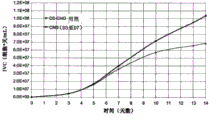
图25显示了在含有(培养基增补剂(CMS))和不含(CD CHO对照)添加的CMS的实施方案的培养基中培养的表达AB527的细胞的活细胞密度随时间变化的比较。Figure 25 shows a comparison of viable cell density over time for AB527-expressing cells cultured in medium containing (medium supplement (CMS)) and without (CD CHO control) embodiments of added CMS.
图26显示了在含有(CMS)和不含(CD CHO对照)添加的CMS的实施方案的培养基中培养的表达AB527的细胞的活细胞随时间变化的相对百分率。Figure 26 shows the relative percentage of viable cells over time for cells expressing AB527 cultured in media containing (CMS) and without (CD CHO control) embodiments of added CMS.
图27显示了在含有(CMS)和不含(CD CHO对照)添加的CMS的实施方案的培养基中培养的表达AB527的细胞的积分活细胞密度(IVC)随时间的变化。Figure 27 shows the integrated viable cell density (IVC) over time for cells expressing AB527 cultured in media containing (CMS) and without (CD CHO control) embodiments of added CMS.
图28显示了在含有(CMS)和不含(CD CHO对照)添加的CMS的实施方案的培养基中培养的表达AB527的细胞,在培养14天后的总抗体产量。Figure 28 shows the total antibody production of AB527-expressing cells cultured in media containing (CMS) and without (CD CHO control) embodiments of added CMS, after 14 days in culture.
说明性实施方案的详细描述Detailed Description of Illustrative Embodiments
在整个说明书和权利要求书中使用了与本说明书的情况相关的各种不同术语。除非另有指明,否则这些术语将具有它们在本技术领域的中常见意义。其他具体定义的术语应该以与本文提供的定义相一致的方式进行解释。Throughout the description and claims various different terms are used in relation to the context of the present description. Unless otherwise indicated, these terms shall have their ordinary meanings in the technical field. Other specifically defined terms should be interpreted in a manner consistent with the definitions provided herein.
当在本说明书和随附的权利要求书中使用时,单数形式的冠词包括复数指称,除非内容明确陈述不是这样。因此,例如指称“细胞”包括两个或多个细胞的组合等。As used in this specification and the appended claims, articles in the singular include plural referents unless the content clearly states otherwise. Thus, for example, reference to "a cell" includes combinations of two or more cells, and the like.
本文中使用的术语“约”在指称可测量的值例如量、时间长度等时,打算涵盖与指定值偏离最多±20%,只要这样的偏离适合于执行所公开的方法。除非另有指明,否则所有在本说明书和权利要求书中使用的表示成分的量、性质例如分子量、反应条件等的数值,应该被理解为在所有情况下被术语“约”修饰。因此,除非指明不是这样,否则在下面的说明书和随附的权利要求书中提出的数值参数都是近似值,其可以随着试图通过本发明获得的所需性质而变化。至少、并且不是试图将等价物的应用限于权利要求书的范围,每个数值参数应该至少根据所报道的有效数字的数量并通过使用常规的四舍五入技术来解释。As used herein, the term "about" when referring to a measurable value such as an amount, length of time, etc., is intended to cover deviations of up to ±20% from the stated value, so long as such deviations are suitable for performing the disclosed methods. Unless otherwise indicated, all numerical values expressing amounts of ingredients, properties such as molecular weights, reaction conditions, etc. used in the specification and claims are to be understood as being modified in all instances by the term "about". Accordingly, unless indicated otherwise, the numerical parameters set forth in the following specification and attached claims are approximations that can vary depending upon the desired properties sought to be obtained by the present invention. At the very least, and not as an attempt to limit the application of equivalents to the scope of the claims, each numerical parameter should at least be construed in light of the number of reported significant digits and by applying ordinary rounding techniques.
尽管阐述了本发明的广泛范围的数值范围和参数是近似值,但在具体实例中提出的数值被报道得尽可能准确。但是,任何数值内在地包含在其相应测试测量值中发现的标准偏差所必然引起的某些误差。Notwithstanding that the numerical ranges and parameters setting forth the broad scope of the invention are approximations, the numerical values set forth in the specific examples are reported as precisely as possible. Any numerical value, however, inherently contain certain errors necessarily resulting from the standard deviation found in their respective testing measurements.
当在本文中使用时,术语“细胞毒性”或“细胞抑制”剂是指抑制细胞的生物过程或降低细胞的生存力或增殖潜力的药剂。细胞毒性或细胞抑制剂可以各种不同方式起作用,例如但不限于通过诱导DNA损伤、诱导细胞周期停止、抑制DNA合成、抑制转录、抑制翻译或蛋白质合成、抑制细胞分裂或诱导凋亡。当在本文中使用时,术语“化疗药剂”是指细胞毒性、细胞抑制和抗肿瘤剂,其优选杀死肿瘤细胞、抑制其生长或抑制其转移,或破坏快速增殖细胞的细胞周期。化疗药剂包括但不限于合成化合物、天然和重组细菌毒素、天然和重组真菌毒素、天然和重组植物毒素、可裂变核素和反射性核素。化疗药剂的具体实例包括但不限于商陆(pokeweed)抗病毒蛋白、红豆毒素、篦麻毒素以及它们每个的A链、木鳖子素、皂草素、异株泻根毒蛋白1、bouganin、花白树毒蛋白、白喉毒素、假单胞菌外毒素、志贺氏菌毒素、加里刹霉素、类美登醇、铅-212、铋-212、砹-211、碘-131、钪-47、铼-186、铼-188、钇-90、碘-123、碘-124、碘-125、溴-77、铟-111、硼-10、锕系元素、六甲蜜胺、放线菌素D、普卡霉素、嘌呤霉素、短杆菌肽D、多柔比星、秋水仙碱、细胞松弛素B、环磷酰胺、依米丁、美登木素、安吖啶、顺铂、依托泊苷、依托泊苷邻醌物质、替尼泊苷、柔红霉素、吉西他滨、多柔比星、米托恩醌、比生群、博来霉素、甲氨蝶呤、长春地辛、阿霉素、长春新碱、长春碱、BCNU、紫杉醇、它赛瓦、阿瓦斯丁、丝裂霉素、5-氟尿嘧啶、环磷酰胺和某些细胞因子例如TNF-α和TNF-β。As used herein, the term "cytotoxic" or "cytostatic" agent refers to an agent that inhibits a biological process of a cell or reduces the viability or proliferative potential of a cell. Cytotoxic or cytostatic agents can act in a variety of different ways, such as, but not limited to, by inducing DNA damage, inducing cell cycle arrest, inhibiting DNA synthesis, inhibiting transcription, inhibiting translation or protein synthesis, inhibiting cell division, or inducing apoptosis. As used herein, the term "chemotherapeutic agent" refers to cytotoxic, cytostatic and antineoplastic agents which preferably kill tumor cells, inhibit their growth or inhibit their metastasis, or disrupt the cell cycle of rapidly proliferating cells. Chemotherapeutic agents include, but are not limited to, synthetic compounds, natural and recombinant bacterial toxins, natural and recombinant mycotoxins, natural and recombinant plant toxins, fissile and reflective nuclides. Specific examples of chemotherapeutic agents include, but are not limited to, pokeweed antiviral protein, red bean toxin, ricin and the A chain of each of them, orgenin, saporin,
“分离”是指“通过人的手”从天然状态改变。如果分子或组合物在自然界存在,如果它被改变或从其原始环境移出或两者,则它已被“分离”。例如,天然存在于活的植物或动物中的多核苷酸或多肽是未“分离的”,但是与其天然状态的共存物质分开的同样的多核苷酸或多肽是“分离的”,正如该术语在本文中使用的意义。"Separated" means altered "by the hand of man" from the natural state. A molecule or composition has been "isolated" if it exists in nature, if it has been altered or removed from its original environment, or both. For example, a polynucleotide or polypeptide naturally occurring in a living plant or animal is not "isolated", but the same polynucleotide or polypeptide separated from the coexisting materials of its natural state is "isolated", as that term is used in meaning used in this article.
“多核苷酸”,同义地被称为“核酸分子”或“核酸”,是指任何多聚核糖核苷酸或多聚脱氧核糖核苷酸,其可以是未修饰的RNA或DNA或修饰的RNA或DNA。“多核苷酸”包括但不限于单链和双链DNA、作为单链和双链区的混合物的DNA、单链和双链RNA、作为单链和双链区的混合物的RNA、包含可以是单链或更典型为双链或单链与双链区的混合物的DNA和RNA的杂交分子。此外,“多核苷酸”是指包含RNA或DNA或RNA与DNA两者的三链区。术语多核苷酸还包括含有一个或多个修饰碱基的DNA或RNA,以及出于稳定性或其他原因具有修饰骨架的DNA或RNA。“修饰”碱基包括例如三苯甲基碱基和不常用碱基例如次黄苷。可以对DNA和RNA进行各种不同修饰;因此,“多核苷酸”包含在自然界中典型地发现的化学、酶或代谢修饰的多核苷酸形式,以及病毒和细胞特征性的DNA和RNA的化学形式。“多核苷酸”也包含相对短的核酸链,其通常被称为寡核苷酸。"Polynucleotide", synonymously known as "nucleic acid molecule" or "nucleic acid", refers to any polyribonucleotide or polydeoxyribonucleotide, which may be unmodified RNA or DNA or modified RNA or DNA. "Polynucleotide" includes, but is not limited to, single- and double-stranded DNA, DNA as a mixture of single- and double-stranded regions, single- and double-stranded RNA, RNA as a mixture of single- and double-stranded regions, comprising A hybrid molecule of DNA and RNA that is single-stranded or more typically double-stranded or a mixture of single- and double-stranded regions. Furthermore, "polynucleotide" refers to a triple-stranded region comprising RNA or DNA or both RNA and DNA. The term polynucleotide also includes DNAs or RNAs that contain one or more modified bases, and DNAs or RNAs that have backbones modified for stability or for other reasons. "Modified" bases include, for example, trityl bases and unusual bases such as inosine. A variety of modifications can be made to DNA and RNA; thus, "polynucleotide" includes chemically, enzymatically or metabolically modified forms of polynucleotides typically found in nature, as well as the chemical modifications of DNA and RNA that are characteristic of viruses and cells form. "Polynucleotide" also includes relatively short strands of nucleic acid, which are commonly referred to as oligonucleotides.
“基本上相同的”对于核酸或氨基酸序列来说,是指两个或多个序列之间至少65%的同一性。优选情况下,该术语是指两个或多个序列之间至少70%的同一性、更优选至少75%的同一性、更优选至少80%的同一性、更优选至少85%的同一性、更优选至少90%的同一性、更优选至少91%的同一性、更优选至少92%的同一性、更优选至少93%的同一性、更优选至少94%的同一性、更优选至少95%的同一性、更优选至少96%的同一性、更优选至少97%的同一性、更优选至少98%的同一性以及更优选至少99%或以上的同一性。这样的同一性可以使用mBLAST算法确定(Altschul等,(1990)Proc.Natl.Acad.Sci.USA87:2264-8;Karlin和Altschul(1993)Proc.Natl.Acad.Sci.USA90:5873-7)。"Substantially identical" with reference to nucleic acid or amino acid sequences refers to at least 65% identity between two or more sequences. Preferably, the term refers to at least 70% identity between two or more sequences, more preferably at least 75% identity, more preferably at least 80% identity, more preferably at least 85% identity, More preferably at least 90% identity, more preferably at least 91% identity, more preferably at least 92% identity, more preferably at least 93% identity, more preferably at least 94% identity, more preferably at least 95% more preferably at least 96% identity, more preferably at least 97% identity, more preferably at least 98% identity and more preferably at least 99% or more identity. Such identity can be determined using the mBLAST algorithm (Altschul et al. (1990) Proc. Natl. Acad. Sci. USA 87: 2264-8; Karlin and Altschul (1993) Proc. Natl. Acad. Sci. USA 90: 5873-7) .
“载体”是复制子,例如质粒、噬菌体、粘粒或病毒,其中可以可操作地插入另一个核酸区段以便引起区段的复制或表达。A "vector" is a replicon, such as a plasmid, phage, cosmid, or virus, into which another nucleic acid segment can be operably inserted so as to cause replication or expression of the segment.
术语“可操作连接”或“可操作插入”是指将编码序列表达所需的调控序列置于核酸分子中相对于编码序列的适合位置,以便能够表达编码序列。例如,当启动子能够控制编码序列的转录或表达时,启动子与该编码序列可操作连接。编码序列可以在正义或反义方向中与启动子或调控序列可操作连接。术语“可操作连接”有时应用于表达载体中其他转录控制元件(例如增强子)的排列。The term "operably linked" or "operably inserted" refers to placing the regulatory sequences required for the expression of a coding sequence in a nucleic acid molecule at an appropriate position relative to the coding sequence so that expression of the coding sequence is possible. For example, a promoter is operably linked to a coding sequence when the promoter is capable of controlling the transcription or expression of the coding sequence. Coding sequences can be operably linked to promoter or regulatory sequences in sense or antisense orientation. The term "operably linked" sometimes applies to the arrangement of other transcriptional control elements (eg, enhancers) in an expression vector.
当外源或异源核酸例如DNA已被导入细胞时,细胞已被“转化”。转化DNA可以是或者可以不整合(共价连接)到细胞的基因组中。例如在原核生物、酵母和哺乳动物细胞中,转化DNA可以维持在游离体元件例如质粒中。对于真核细胞来说,稳定转化的细胞或“稳定细胞”,通过真核细胞建立由含有转化DNA的子细胞群所构成的细胞系或克隆的能力来证明。“克隆”是由单一细胞或共同祖先通过有丝分裂产生的细胞群。“细胞系”是原始细胞能够在体外稳定生长许多代的克隆。在本文提供的一些实例中,通过用DNA转染细胞来转化细胞。A cell has been "transformed" when exogenous or heterologous nucleic acid, such as DNA, has been introduced into the cell. The transforming DNA may or may not be integrated (covalently linked) into the genome of the cell. For example, in prokaryotes, yeast and mammalian cells, the transforming DNA can be maintained in episomal elements such as plasmids. With respect to eukaryotic cells, a stably transformed cell or "stable cell" is evidenced by the ability of the eukaryotic cell to establish a cell line or clone consisting of a population of daughter cells containing the transforming DNA. A "clone" is a population of cells that arises through mitosis from a single cell or common ancestor. A "cell line" is a clone of an original cell capable of stable growth in vitro for many generations. In some examples provided herein, cells are transformed by transfecting the cells with DNA.
“多肽”是指任何包含两个或两个以上氨基酸的肽或蛋白,其中氨基酸由肽键或修饰的肽键、即肽等排体彼此相连。“多肽”是指通常被称为肽、寡肽或寡聚物的短链多肽,以及通常称为蛋白的较长链多肽。多肽可以包含20种基因编码的氨基酸之外的氨基酸。“多肽”包括通过自然过程例如翻译后加工、或通过本技术领域公知的化学修饰技术修饰的氨基酸序列。这样的修饰已在基础教科书、单行本和研究文献中详细描述。修饰可以发生在多肽中的任何位置,包括肽骨架、氨基酸侧链和氨基或羧基末端。同一类型的修饰可以相同或不同程度存在于给定多肽中的几个位点处。此外,给定多肽可以包含许多类型的修饰。多肽可以由于遍在蛋白化而分支,并且它们可以是环状的,带有或不带有分支。环状、分支和分支环状多肽可以产生自天然的翻译后加工,或可以通过合成方法制造。修饰包括乙酰化、酰基化、ADP-核糖基化、酰胺化、共价连接核黄素、共价连接血红素部分、共价连接核苷酸或核苷酸衍生物、共价连接脂或脂衍生物、共价连接磷脂酰肌醇、交联、环化、二硫键形成、去甲基化、形成共价交联、形成胱氨酸、形成焦谷氨酸、甲酰化、γ-羧化、糖基化、GPI锚形成、羟基化、碘化、甲基化、肉豆蔻酰化、氧化、蛋白水解加工、磷酸化、异戊二烯化、消旋化、硒化、硫化、转运RNA介导的向蛋白添加氨基酸例如精氨酰化和遍在蛋白化(参见例如《蛋白质——结构与分子性质》(第二版)(Proteins-Structure and Molecular Properties,2nd Ed.),T.E.Creighton,W.H.Freeman and Company,New York,1993和Wold,F.,《翻译后蛋白修饰:前景与远景》(Posttranslational Protein Modifications:Perspectives and Prospects)的第1-12页,在“蛋白质的翻译后共价修饰”(Posttranslational Covalent Modification of Proteins)中,B.C.Johnson主编,Academic Press,New York,1983;Seifter等,“蛋白修饰和无蛋白辅因子的分析”(Analysis for Protein Modifications andNonprotein Cofactors),Meth Enzymol(1990)182:626-646和Rattan等,“蛋白质合成:翻译后修饰和老化”(Protein Synthesis:PosttranslationalModifications and Aging),Ann NY Acad Sci(1992)663:48-62)。"Polypeptide" refers to any peptide or protein comprising two or more amino acids joined to each other by peptide bonds or modified peptide bonds, ie, peptide isosteres. "Polypeptide" refers to short-chain polypeptides, commonly referred to as peptides, oligopeptides, or oligomers, and to longer-chain polypeptides, commonly referred to as proteins. A polypeptide may contain amino acids other than the 20 gene-encoded amino acids. A "polypeptide" includes amino acid sequences modified by natural processes, such as post-translational processing, or by chemical modification techniques well known in the art. Such modifications have been described in detail in basic textbooks, monographs and research literature. Modifications can occur anywhere in a polypeptide, including the peptide backbone, amino acid side chains, and amino or carboxyl termini. Modifications of the same type may exist at several sites in a given polypeptide to the same or to varying degrees. Furthermore, a given polypeptide may contain many types of modifications. Polypeptides can be branched due to ubiquitination, and they can be circular, with or without branches. Cyclic, branched and branched cyclic polypeptides can result from natural post-translational processes, or can be made synthetically. Modifications include acetylation, acylation, ADP-ribosylation, amidation, covalent attachment of riboflavin, covalent attachment of heme moieties, covalent attachment of nucleotides or nucleotide derivatives, covalent attachment of lipids or lipid Derivatives, covalent attachment of phosphatidylinositol, crosslinking, cyclization, disulfide bond formation, demethylation, formation of covalent crosslinks, formation of cystine, formation of pyroglutamate, formylation, gamma- Carboxylation, glycosylation, GPI anchor formation, hydroxylation, iodination, methylation, myristoylation, oxidation, proteolytic processing, phosphorylation, prenylation, racemization, selenization, sulfation, Transfer RNA-mediated addition of amino acids to proteins such as arginylation and ubiquitination (see e.g. Proteins-Structure and Molecular Properties, 2nd Ed.), T.E. Creighton, W.H. Freeman and Company, New York, 1993 and Wold, F., pp. 1-12 in Posttranslational Protein Modifications: Perspectives and Prospects, in "Posttranslational Protein Modifications: Perspectives and Prospects." "Posttranslational Covalent Modification of Proteins", edited by B.C. Johnson, Academic Press, New York, 1983; Seifter et al., "Analysis for Protein Modifications and Nonprotein Cofactors", Meth Enzymol ( 1990) 182:626-646 and Rattan et al., "Protein Synthesis: Posttranslational Modifications and Aging", Ann NY Acad Sci (1992) 663:48-62).
“生物分子”包括蛋白质、多肽、核酸、脂类、单糖、多糖及其所有片段、类似物、同系物、偶联物及其衍生物。"Biomolecules" include proteins, polypeptides, nucleic acids, lipids, monosaccharides, polysaccharides and all fragments, analogs, homologues, conjugates and derivatives thereof.
术语“表达”和“生产”在本文中同义使用,是指基因产物的生物合成。这些术语包含基因转录成RNA。这些术语也包含RNA翻译成一个或多个多肽,并进一步包含所有天然发生的转录后和翻译后修饰。抗体或其抗原结合片段的表达或生产可以在细胞的细胞质中,或在细胞外环境例如细胞培养物的生长培养基中。The terms "expression" and "production" are used synonymously herein to refer to the biosynthesis of a gene product. These terms encompass the transcription of genes into RNA. These terms also encompass translation of RNA into one or more polypeptides, and further encompass all naturally occurring post-transcriptional and post-translational modifications. Expression or production of an antibody or antigen-binding fragment thereof can be in the cytoplasm of the cell, or in an extracellular environment such as the growth medium of a cell culture.
术语“治疗(treating)”或“治疗(treatment)”是指损伤、疾病或病症的减弱或改善的任何成功或成功的迹象,包括任何主观或客观参数,例如症状的抑制、减退、减轻或使损伤、疾病或病症更能被患者耐受,减慢退化或衰弱的速率,使退化的终点更强、改善对象的生理或心理健康、或延长存活时间。治疗可以通过主观或客观参数进行评估,其包括身体检查、神经学检查或精神评估的结果。The term "treating" or "treatment" refers to any success or sign of success in the attenuation or amelioration of an injury, disease or condition, including any subjective or objective parameter, such as suppression, abatement, alleviation or reduction of symptoms The injury, disease or condition is more tolerated by the patient, slows the rate of degeneration or degeneration, makes the end of degeneration stronger, improves the physical or mental health of the subject, or prolongs survival time. Treatment can be assessed by subjective or objective parameters, including the results of a physical, neurological, or psychiatric assessment.
“有效量”和“治疗有效量”在本文中可互换使用,是指本文描述的抗体、抗原结合片段或抗体组合物的能够有效实现特定生物或治疗结果、例如但不限于本文中公开、描述或示例的生物或治疗结果的量。抗体或其抗原结合片段的治疗有效量可以随着各种因素而变,例如个体的疾病状态、年龄、性别和体重,以及抗体或其抗原结合片段在个体中引发所需应答的能力。这样的结果可以包括但不限于癌症的治疗,正如通过本技术领域中任何适合的手段所确定的。"Effective amount" and "therapeutically effective amount" are used interchangeably herein and refer to an amount of an antibody, antigen-binding fragment, or antibody composition described herein that is effective to achieve a specific biological or therapeutic result, such as, but not limited to, disclosed herein, A quantity describing or exemplifying a biological or therapeutic outcome. A therapeutically effective amount of an antibody or antigen-binding fragment thereof can vary with factors such as the disease state, age, sex, and weight of the individual, and the ability of the antibody or antigen-binding fragment thereof to elicit a desired response in the individual. Such results may include, but are not limited to, treatment of cancer, as determined by any suitable means in the art.
“可药用的”是指从药理学/毒理学观点来看可以为患者所接受、并且在组合物、制剂、稳定性、患者接受性和生物可利用性方面从物理/化学的观点来看可以为制造药物化学家所接受的性质和物质。"Pharmaceutically acceptable" means acceptable to the patient from a pharmacological/toxicological point of view, and from a physical/chemical point of view in terms of composition, formulation, stability, patient acceptance, and bioavailability Properties and substances acceptable to manufacturing medicinal chemists.
“可药用载体”是指不干扰活性成分的生物活性有效性并对它所给药的宿主无毒性的介质。"Pharmaceutically acceptable carrier" refers to a medium that does not interfere with the effectiveness of the biological activity of the active ingredient and is nontoxic to the host to which it is administered.
除非另有指明,否则“抗体”是指免疫球蛋白的所有同种型(IgG、IgA、IgE、IgM、IgD和IgY),包括每种同种型的各种不同单体和聚合形式。Unless otherwise indicated, "antibody" refers to all isotypes of immunoglobulins (IgG, IgA, IgE, IgM, IgD, and IgY), including the various monomeric and polymeric forms of each isotype.
抗原结合片段是对特定抗原表现出结合亲和性的蛋白质的结构。某些抗原结合片段由完整抗体的保留了亲本抗体分子的抗原结合特异性的部分构成。例如,抗原结合片段可以包含已知与特定抗原结合的抗体的至少一个可变区(重链或轻链可变区)或一个或多个CDR。适合的抗原结合片段的实例包括但不限于双链抗体和单链分子以及Fab、F(ab’)2、Fc、Fabc和Fv分子、单链(Sc)抗体、单个抗体轻链、单个抗体重链、抗体链或CDR与其他蛋白、蛋白支架或分子之间的嵌合融合物、重链单体或二体、轻链单体或二体、由一个重链和一个轻链构成的二体等。所有抗体同种型可用于生产抗原结合片段。此外,抗原结合片段可以包括非抗体的蛋白质的架构,其可以成功地掺入多肽区段,掺入的方向赋予对给定目标抗原,例如蛋白支架的亲和性。抗原结合片段可以重组生产或通过完整抗体的酶或化学切割来生产。词组“抗体或其抗原结合片段”可用于表示给定的抗原结合片段包含在词组中指称的抗体的一个或多个氨基酸区段。Antigen-binding fragments are structures of proteins that exhibit binding affinity for a specific antigen. Certain antigen-binding fragments consist of portions of intact antibodies that retain the antigen-binding specificity of the parent antibody molecule. For example, an antigen-binding fragment may comprise at least one variable region (heavy or light chain variable region) or one or more CDRs of an antibody known to bind a particular antigen. Examples of suitable antigen-binding fragments include, but are not limited to, diabodies and single chain molecules as well as Fab, F(ab')2, Fc, Fabc and Fv molecules, single chain (Sc) antibodies, single antibody light chains, single antibody heavy chains, Chimeric fusions between chains, antibody chains or CDRs and other proteins, protein scaffolds or molecules, heavy chain monomers or dimers, light chain monomers or dimers, dimers consisting of one heavy chain and one light chain wait. All antibody isotypes can be used to produce antigen-binding fragments. In addition, antigen-binding fragments may include non-antibody protein frameworks that can be successfully incorporated into polypeptide segments in an orientation that confers affinity for a given target antigen, such as a protein scaffold. Antigen-binding fragments can be produced recombinantly or by enzymatic or chemical cleavage of intact antibodies. The phrase "antibody or antigen-binding fragment thereof" may be used to indicate that a given antigen-binding fragment comprises one or more amino acid segments of the antibody to which the phrase refers.
“抗体组合物”是指与至少一种可药用载体、化疗药剂或诊断部分例如111 In-1,4,7,10-四氮杂环十二烷-N,N′,N″,N″′-四乙酸(111In-DOTA)相结合的抗体或其结合片段。"Antibody composition" refers to a combination of at least one pharmaceutically acceptable carrier, chemotherapeutic agent or diagnostic moiety such as 111 In-1,4,7,10-tetraazacyclododecane-N,N',N",N "'-tetraacetic acid ( 111 In-DOTA)-bound antibody or binding fragment thereof.
“特异性结合”是指抗体或抗原结合片段以与它结合其他生物分子的亲和性相比更高的亲和性与特定生物分子结合的能力。"Specific binding" refers to the ability of an antibody or antigen-binding fragment to bind to a particular biomolecule with a higher affinity than it binds to other biomolecules.
本文描述的实施方案不限于具体方法、反应试剂、化合物、组合物或生物系统,它们当然能够变化。此外,本文中使用的术语仅仅是出于描述具体的抗体或抗原结合片段的目的,而不打算是限制性的。The embodiments described herein are not limited to particular methods, reagents, compounds compositions or biological systems, which can, of course, vary. Furthermore, the terminology used herein is for the purpose of describing a particular antibody or antigen-binding fragment only and is not intended to be limiting.
GD2特异性抗体GD2 specific antibody
本文描述了与神经节苷脂GD2特异性结合的分离的抗体或抗原结合片段。在一个实施方案中,抗体或其抗原结合片段是单克隆抗体或抗原结合片段;但是,其他实施方案包括了GD2特异性单克隆抗体以及抗体的保留了对GD2的特异性的衍生物或片段。抗体分子的通用结构包括含有重链和轻链的抗原结合结构域,以及用于各种不同功能、包括补体结合的Fc结构域。在某些实施方案中,抗体或抗原结合片段介导补体依赖性细胞毒性。Described herein are isolated antibodies or antigen-binding fragments that specifically bind to ganglioside GD2. In one embodiment, the antibody or antigen-binding fragment thereof is a monoclonal antibody or antigen-binding fragment; however, other embodiments include GD2-specific monoclonal antibodies as well as derivatives or fragments of antibodies that retain specificity for GD2. The general structure of an antibody molecule includes an antigen-binding domain comprising heavy and light chains, and an Fc domain that serves various functions, including complement fixation. In certain embodiments, the antibody or antigen-binding fragment mediates complement-dependent cytotoxicity.
存在5种类型的免疫球蛋白,其中FC区域中重链的一级结构决定了免疫球蛋白类型。具体来说,α、δ、ε、γ和μ链分别对应于IgA、IgD、IgE、IgG和IgM同种型。所描述的抗体或抗原结合片段包括所有同种型和四链免疫球蛋白结构的合成的多体。所描述的抗体或抗原结合片段还包括通常在母鸡或火鸡血清和母鸡或火鸡蛋黄中发现的IgY同种型。抗体或抗原结合片段与抗原非共价、特异性并可逆地结合。There are 5 types of immunoglobulins, of which the primary structure of the heavy chain in the FC region determines the immunoglobulin type. In particular, the α, δ, ε, γ, and μ chains correspond to the IgA, IgD, IgE, IgG, and IgM isotypes, respectively. The described antibodies or antigen-binding fragments include all isotypes and synthetic multimers of the four-chain immunoglobulin structure. The described antibodies or antigen-binding fragments also include the IgY isotype commonly found in hen or turkey serum and hen or turkey egg yolk. Antibodies or antigen-binding fragments bind antigen non-covalently, specifically and reversibly.
所公开的主题内容的抗体或抗原结合片段可以源自于任何物种。例如,抗体或抗原结合片段可以是小鼠、大鼠、山羊、马、猪、牛、鸡、兔、驴、人类等的。为了在人类治疗中使用,非人类来源的抗体或抗原结合片段可以在遗传或结构上改变,以在给药于人类患者后具有较低抗原性。Antibodies or antigen-binding fragments of the disclosed subject matter may be derived from any species. For example, the antibody or antigen-binding fragment can be of mouse, rat, goat, horse, pig, cow, chicken, rabbit, donkey, human, and the like. For use in human therapy, antibodies or antigen-binding fragments of non-human origin may be genetically or structurally altered to be less antigenic after administration to a human patient.
在某些实施方案中,抗体或抗原结合片段是嵌合的。当在本文中使用时,术语“嵌合”抗体或抗原结合片段是指这样的抗体或其抗原结合片段,其具有来自于非人类哺乳动物、啮齿动物或爬行类的抗体氨基酸序列的至少一个可变结构域的至少某些部分,同时抗体或其抗原结合片段的剩余部分源自于人类。例如,嵌合抗体可以包含小鼠的抗原结合结构域与人类的Fc或其他这样的结构性结构域。In certain embodiments, antibodies or antigen-binding fragments are chimeric. As used herein, the term "chimeric" antibody or antigen-binding fragment refers to an antibody or antigen-binding fragment thereof that has at least one possible variant of the amino acid sequence of an antibody from a non-human mammal, rodent, or reptile. At least some portions of the variable domains, while the remainder of the antibody or antigen-binding fragment thereof, are of human origin. For example, a chimeric antibody may comprise a mouse antigen binding domain with a human Fc or other such domains.
在某些实施方案中,抗体是人源化抗体。人源化抗体可以是包含源自于非人类免疫球蛋白的最小序列的嵌合免疫球蛋白、免疫球蛋白链或其片段(例如Fv、Fab、Fab’、F(ab’)2或抗体的其他抗原结合子序列)。对于其大部分来说,人源化抗体是人类免疫球蛋白(受体抗体),其中来自受体的互补性决定区(CDR)的残基被来自具有所需特异性、亲和性和能力的非人类物种(供体抗体),诸如小鼠,大鼠或兔的CDR的残基取代。在某些情况下,人类免疫球蛋白的Fv构架区(FWR)残基被相应的非人类残基取代。此外,人源化抗体可以包含在受体抗体和输入的CDR或构架序列中都未发现的残基。进行这些修饰是为了进一步精炼和优化抗体的性能。一般来说,人源化抗体将包含基本上全部的至少一个、典型为两个可变结构域,其中所有或基本上所有CDR区对应于非人类免疫球蛋白的序列,并且所有或基本上所有FWR区是人类免疫球蛋白序列。最适情况下,人源化抗体还将包含免疫球蛋白恒定区(Fc)、典型为人类免疫球蛋白的恒定区的至少一部分。对于进一步的详细情况,参见Jones等,321 Nature 522-5(1986);Reichmann等,332 Nature 323-9(1988)和Presta,2 Curr.Op.Struct.Biol.593-6(1992)。In certain embodiments, the antibody is a humanized antibody. Humanized antibodies can be chimeric immunoglobulins, immunoglobulin chains or fragments thereof (e.g., Fv, Fab, Fab', F(ab')2 or antibody's) comprising minimal sequence derived from non-human immunoglobulins. other antigen-binding subsequences). For the most part, humanized antibodies are human immunoglobulins (recipient antibodies) in which residues from the complementarity determining regions (CDRs) of the receptor have been Substitution of residues in CDRs of a non-human species (donor antibody), such as mouse, rat or rabbit. In certain instances, Fv framework region (FWR) residues of the human immunoglobulin are replaced by corresponding non-human residues. In addition, humanized antibodies may comprise residues that are found neither in the recipient antibody nor in the imported CDR or framework sequences. These modifications are made to further refine and optimize antibody performance. In general, a humanized antibody will comprise substantially all of at least one, typically two, variable domains, wherein all or substantially all of the CDR regions correspond to sequences of a non-human immunoglobulin, and all or substantially all of the variable domains The FWR region is a human immunoglobulin sequence. The humanized antibody optimally will also comprise at least a portion of an immunoglobulin constant region (Fc), typically that of a human immunoglobulin. For further details see Jones et al., 321 Nature 522-5 (1986); Reichmann et al., 332 Nature 323-9 (1988) and Presta, 2 Curr. Op. Struct. Biol. 593-6 (1992).
在某些情况下,所描述的抗体是人类抗体或其抗原结合片段。当在本文中使用时,术语“人类抗体”是指抗体完全是人类来源的,或抗体中的可变和恒定结构域序列是人类序列。该术语包含了具有源自于(即利用)人类基因的序列、但是其已被改变以例如降低可能的免疫原性、增加亲和性、消除可能引起不想要的折叠的半胱氨酸等的抗体。该术语包含在非人类细胞中重组生产的这样的抗体,其可以被赋予在人类细胞中典型不存在的糖基化。In certain instances, the described antibodies are human antibodies or antigen-binding fragments thereof. As used herein, the term "human antibody" means that the antibody is of entirely human origin, or that the variable and constant domain sequences in the antibody are human sequences. The term encompasses genes having sequences derived from (i.e. utilizing) human genes but which have been altered, for example, to reduce possible immunogenicity, increase affinity, eliminate cysteines that may cause unwanted folding, etc. Antibody. The term encompasses antibodies produced recombinantly in non-human cells that may be endowed with glycosylation that is typically not present in human cells.
本文描述的抗体或抗原结合片段可以被标记或与各种不同化学或生物分子部分偶联,以例如用于治疗或诊断应用。部分可以是细胞毒性的,例如细菌毒素、病毒毒素、放射性同位素等。部分可以是可检测标记物,例如荧光标记物、放射性标记物、生物素等,例如111In-DOTA、111In-二亚乙基三胺五乙酸(DTPA),或反射性核素例如但不限于铅-212、铋-212、砹-211、碘-131、钪-47、铼-186、铼-188、钇-90、碘-123、碘-124、碘-125、溴-77、铟-111和可裂变核素例如硼-10或锕系元素。The antibodies or antigen-binding fragments described herein can be labeled or conjugated to various chemical or biomolecular moieties, eg, for therapeutic or diagnostic applications. Moieties may be cytotoxic, such as bacterial toxins, viral toxins, radioisotopes, and the like. Moieties may be detectable labels such as fluorescent labels, radioactive labels, biotin, etc., such as 111 In-DOTA, 111 In-diethylenetriaminepentaacetic acid (DTPA), or reflective nuclides such as but not Limited to lead-212, bismuth-212, astatine-211, iodine-131, scandium-47, rhenium-186, rhenium-188, yttrium-90, iodine-123, iodine-124, iodine-125, bromine-77, indium -111 and fissile nuclides such as boron-10 or actinides.
在某些实施方案中,抗体或抗原结合片段与一种或多种化疗药剂偶联,所述化疗药剂例如但不限于放射性核素、毒素和细胞毒性和细胞抑制剂。在其他实施方案中,抗体或抗原结合片段与一种或多种化疗药剂组合使用。本文描述的抗体或抗原结合片段可以单独使用,或与(例如共给药或偶联)生物分子或化疗药剂例如细胞毒性或细胞抑制剂一起使用。在某些实施方案中,化疗药剂是放射性核素,包括但不限于铅-212、铋-212、砹-211、碘-131、钪-47、铼-186、铼-188、钇-90、碘-123、碘-124、碘-125、溴-77、铟-111和可裂变核素例如硼-10或锕系元素。在其他实施方案中,化疗药剂是毒素或细胞毒性药物、商陆抗病毒蛋白、红豆毒素、篦麻毒素以及它们每个的A链、木鳖子素、皂草素、异株泻根毒蛋白1、bouganin、花白树毒蛋白、白喉毒素、假单胞菌外毒素、志贺氏菌毒素、加里刹霉素、类美登醇、六甲蜜胺、放线菌素D、普卡霉素、嘌呤霉素、短杆菌肽D、多柔比星、秋水仙碱、细胞松弛素B、环磷酰胺、依米丁、美登木素、安吖啶、顺铂、依托泊苷、依托泊苷邻醌物质、替尼泊苷、柔红霉素、吉西他滨、多柔比星、米托恩醌、比生群、博来霉素、甲氨蝶呤、培美曲塞、顺铂、长春地辛、阿霉素、长春新碱、长春碱、BCNU、紫衫烷类(例如TaxolTM)、它赛瓦、阿瓦斯丁、丝裂霉素、5-氟尿嘧啶、环磷酰胺、某些细胞因子例如TNF-α和TNF-β等。将抗体或抗原结合片段与这些药剂偶联的方法在文献中是已知的。In certain embodiments, the antibody or antigen-binding fragment is conjugated to one or more chemotherapeutic agents such as, but not limited to, radionuclides, toxins, and cytotoxic and cytostatic agents. In other embodiments, the antibody or antigen-binding fragment is used in combination with one or more chemotherapeutic agents. The antibodies or antigen-binding fragments described herein can be used alone, or together (eg, co-administered or conjugated) with biomolecules or chemotherapeutic agents such as cytotoxic or cytostatic agents. In certain embodiments, the chemotherapeutic agent is a radionuclide including, but not limited to, lead-212, bismuth-212, astatine-211, iodine-131, scandium-47, rhenium-186, rhenium-188, yttrium-90, Iodine-123, Iodine-124, Iodine-125, Bromine-77, Indium-111 and fissionable nuclides such as boron-10 or actinides. In other embodiments, the chemotherapeutic agent is a toxin or a cytotoxic drug, pokeweed antiviral protein, red bean toxin, ricin and the A chain of each of them, orgenin, saporin, p. 1. Bouganin, gelonin, diphtheria toxin, pseudomonas exotoxin, shigella toxin, calicheamicin, maytansinoid, hexamethylmelamine, actinomycin D, plicamycin, Puromycin, gramicidin D, doxorubicin, colchicine, cytochalasin B, cyclophosphamide, emetine, maytansinoid, amsacrine, cisplatin, etoposide, etoposide o-quinone substances, teniposide, daunorubicin, gemcitabine, doxorubicin, mitoxenone, bisantrene, bleomycin, methotrexate, pemetrexed, cisplatin, vinpresin Octin, doxorubicin, vincristine, vinblastine, BCNU, taxanes (eg Taxol TM ), taceva, Avastin, mitomycin, 5-fluorouracil, cyclophosphamide, certain cytokines For example TNF-α and TNF-β etc. Methods for conjugating antibodies or antigen-binding fragments to these agents are known in the literature.
抗体特异性主要由6个CDR区、特别是H链CDR3决定(Kala等,132 J.Biochem.535-41(2002);Morea等,275 J.Mol.Biol.269-94(1998);和Chothia等,196 J.Mol.Biol.901-17(1987))。但是,抗体构架区可能在抗原-抗体相互作用中发挥作用(Panka等,85 Proc.Natl.Acad.Sci.USA 3080-4(1988)),特别是影响CDR环的构象(Foote等,224 J.Mol.Biol.487-99(1992))。因此,所描述的抗体或抗原结合片段可以包含任何赋予对GD2的特异性的H或L链CDR或FWR区的组合。本技术领域中常用的结构域改组实验(Jirholt等,215 Gene 471-6(1998);
本文描述的抗体或抗原结合片段可以各种不同的形式出现,但是将包括表1中显示的一种或多种抗体区段。The antibodies or antigen-binding fragments described herein may come in a variety of different forms, but will include one or more of the antibody segments shown in Table 1.
表1、描述的抗体及其抗原结合片段的抗体区段(“Lc”表示轻链以及“Hc”表示重链)。Table 1. Antibody segments ("Lc" for light chain and "Hc" for heavy chain) of described antibodies and antigen-binding fragments thereof.
在某些实施方案中,抗体或抗原结合片段可以包含与SEQ ID NO:10基本上相同或一致的重链CDR1氨基酸序列。在某些实施方案中,抗体或抗原结合片段可以包含与SEQ ID NO:11基本上相同或一致的重链CDR2氨基酸序列。在某些实施方案中,抗体或抗原结合片段可以包含与SEQ ID NO:12基本上相同或一致的重链CDR3氨基酸序列。在某些实施方案中,抗体或抗原结合片段可以包含与SEQ ID NO:26基本上相同或一致的轻链CDR1氨基酸序列。在某些实施方案中,抗体或抗原结合片段可以包含与SEQ ID NO:27基本上相同或一致的轻链CDR2氨基酸序列。在某些实施方案中,抗体或抗原结合片段可以包含与SEQ ID NO:28基本上相同或一致的轻链CDR3氨基酸序列。在某些实施方案中,抗体或抗原结合片段可以包含与SEQ ID NO:10基本上相同或一致的重链CDR1氨基酸序列、与SEQ ID NO:11基本上相同或一致的CDR2氨基酸序列和与SEQ ID NO:12基本上相同或一致的CDR3氨基酸序列。在某些实施方案中,抗体或抗原结合片段可以包含与SEQ ID NO:26基本上相同或一致的轻链CDR1氨基酸序列、与SEQID NO:27基本上相同或一致的CDR2氨基酸序列和与SEQ ID NO:28基本上相同或一致的CDR3氨基酸序列。在某些实施方案中,抗体或抗原结合片段可以包含重链和轻链,其中重链具有与SEQ ID NO:10基本上相同或一致的CDR1氨基酸序列、与SEQ ID NO:11基本上相同或一致的CDR2氨基酸序列和与SEQ ID NO:12基本上相同或一致的CDR3氨基酸序列;并且轻链具有与SEQ ID NO:26基本上相同或一致的CDR1氨基酸序列、与SEQ ID NO:27基本上相同或一致的CDR2氨基酸序列和与SEQ ID NO:28基本上相同或一致的CDR3氨基酸序列。也可以使用抗体样蛋白作为CDR支架对CDR的抗原结合排列进行工程化。这样的工程化的抗原结合蛋白在本公开的范围内。In certain embodiments, the antibody or antigen-binding fragment may comprise a heavy chain CDR1 amino acid sequence substantially identical or identical to SEQ ID NO: 10. In certain embodiments, the antibody or antigen-binding fragment may comprise a heavy chain CDR2 amino acid sequence substantially identical or identical to SEQ ID NO: 11. In certain embodiments, the antibody or antigen-binding fragment may comprise a heavy chain CDR3 amino acid sequence substantially identical or identical to SEQ ID NO: 12. In certain embodiments, the antibody or antigen-binding fragment may comprise a light chain CDR1 amino acid sequence substantially identical or identical to SEQ ID NO: 26. In certain embodiments, the antibody or antigen-binding fragment may comprise a light chain CDR2 amino acid sequence substantially identical or identical to SEQ ID NO: 27. In certain embodiments, the antibody or antigen-binding fragment may comprise a light chain CDR3 amino acid sequence substantially identical or identical to SEQ ID NO: 28. In certain embodiments, the antibody or antigen-binding fragment may comprise a heavy chain CDR1 amino acid sequence substantially identical or identical to SEQ ID NO: 10, a CDR2 amino acid sequence substantially identical or identical to SEQ ID NO: 11, and a CDR2 amino acid sequence substantially identical or identical to SEQ ID NO: ID NO: 12 substantially identical or identical CDR3 amino acid sequences. In certain embodiments, the antibody or antigen-binding fragment may comprise a light chain CDR1 amino acid sequence substantially identical or identical to SEQ ID NO: 26, a CDR2 amino acid sequence substantially identical or identical to SEQ ID NO: 27, and an amino acid sequence identical to or identical to SEQ ID NO: NO: 28 substantially identical or identical CDR3 amino acid sequences. In certain embodiments, the antibody or antigen-binding fragment may comprise a heavy chain and a light chain, wherein the heavy chain has a CDR1 amino acid sequence substantially identical or identical to SEQ ID NO: 10, substantially identical to or identical to SEQ ID NO: 11 A consistent CDR2 amino acid sequence and a CDR3 amino acid sequence that is substantially identical or identical to SEQ ID NO: 12; and the light chain has a CDR1 amino acid sequence that is substantially identical or identical to SEQ ID NO: 26, and a CDR1 amino acid sequence that is substantially identical or identical to SEQ ID NO: 27 An identical or identical CDR2 amino acid sequence and a CDR3 amino acid sequence substantially identical or identical to SEQ ID NO: 28. Antigen-binding arrangements of CDRs can also be engineered using antibody-like proteins as CDR scaffolds. Such engineered antigen binding proteins are within the scope of the present disclosure.
在某些实施方案中,抗体或抗原结合片段可以包含与SEQ ID NO:13基本上相同或一致的重链FWR1氨基酸序列。在某些实施方案中,抗体或抗原结合片段可以包含与SEQ ID NO:14基本上相同或一致的重链FWR2氨基酸序列。在某些实施方案中,抗体或抗原结合片段可以包含与SEQ ID NO:15基本上相同或一致的重链FWR3氨基酸序列。在某些实施方案中,抗体或抗原结合片段可以包含与SEQ ID NO:29基本上相同或一致的轻链FWR1氨基酸序列。在某些实施方案中,抗体或抗原结合片段可以包含与SEQ ID NO:30基本上相同或一致的轻链FWR2氨基酸序列。在某些实施方案中,抗体或抗原结合片段可以包含与SEQ ID NO:31基本上相同或一致的轻链FWR3氨基酸序列。在某些实施方案中,抗体或抗原结合片段可以包含重链,其具有与SEQID NO:13基本上相同或一致的FWR1氨基酸序列、与SEQ ID NO:14基本上相同或一致的FWR2氨基酸序列和与SEQ ID NO:15基本上相同或一致的FWR3氨基酸序列。在某些实施方案中,抗体或抗原结合片段可以包含轻链,其具有与SEQ ID NO:29基本上相同或一致的FWR1氨基酸序列、与SEQ ID NO:30基本上相同或一致的FWR2氨基酸序列和与SEQ ID NO:31基本上相同或一致的FWR3氨基酸序列。在某些实施方案中,抗体或抗原结合片段可以包括重链和轻链,其中重链包括与SEQ ID NO:13基本上相同或一致的FWR1氨基酸序列、与SEQ ID NO:14基本上相同或一致的FWR2氨基酸序列和与SEQ IDNO:15基本上相同或一致的FWR3氨基酸序列;并且轻链包括与SEQID NO:29基本上相同或一致的FWR1氨基酸序列、与SEQ ID NO:30基本上相同或一致的FWR2氨基酸序列和与SEQ ID NO:31基本上相同或一致的FWR3氨基酸序列。In certain embodiments, the antibody or antigen-binding fragment may comprise a heavy chain FWR1 amino acid sequence substantially identical or identical to SEQ ID NO: 13. In certain embodiments, the antibody or antigen-binding fragment may comprise a heavy chain FWR2 amino acid sequence substantially identical or identical to SEQ ID NO: 14. In certain embodiments, the antibody or antigen-binding fragment may comprise a heavy chain FWR3 amino acid sequence substantially identical or identical to SEQ ID NO: 15. In certain embodiments, the antibody or antigen-binding fragment may comprise a light chain FWR1 amino acid sequence substantially identical or identical to SEQ ID NO: 29. In certain embodiments, the antibody or antigen-binding fragment may comprise a light chain FWR2 amino acid sequence substantially identical or identical to SEQ ID NO: 30. In certain embodiments, the antibody or antigen-binding fragment may comprise a light chain FWR3 amino acid sequence substantially identical or identical to SEQ ID NO: 31. In certain embodiments, the antibody or antigen-binding fragment may comprise a heavy chain having a FWR1 amino acid sequence substantially identical or identical to SEQ ID NO: 13, a FWR2 amino acid sequence substantially identical or identical to SEQ ID NO: 14, and A FWR3 amino acid sequence substantially identical or identical to SEQ ID NO: 15. In certain embodiments, the antibody or antigen-binding fragment may comprise a light chain having an amino acid sequence of FWR1 substantially identical or identical to SEQ ID NO: 29, an amino acid sequence of FWR2 substantially identical or identical to SEQ ID NO: 30 and a FWR3 amino acid sequence substantially identical or identical to SEQ ID NO:31. In certain embodiments, an antibody or antigen-binding fragment may comprise a heavy chain and a light chain, wherein the heavy chain comprises a FWR1 amino acid sequence substantially identical or identical to SEQ ID NO: 13, substantially identical or identical to SEQ ID NO: 14 An identical FWR2 amino acid sequence and an FWR3 amino acid sequence that is substantially identical or identical to SEQ ID NO: 15; and the light chain includes a FWR1 amino acid sequence that is substantially identical or identical to SEQ ID NO: 29, an amino acid sequence that is substantially identical or identical to SEQ ID NO: 30, or A consensus FWR2 amino acid sequence and a FWR3 amino acid sequence substantially identical or identical to SEQ ID NO: 31.
在某些实施方案中,抗体或抗原结合片段可以包括重链,其具有与SEQ ID NO:10基本上相同或一致的CDR1氨基酸序列、与SEQ IDNO:11基本上相同或一致的CDR2氨基酸序列和与SEQ ID NO:12基本上相同或一致的CDR3氨基酸序列,以及与SEQ ID NO:13基本上相同或一致的FWR1氨基酸序列、与SEQ ID NO:14基本上相同或一致的FWR2氨基酸序列和与SEQ ID NO:15基本上相同或一致的FWR3氨基酸序列。在某些实施方案中,抗体或抗原结合片段包括轻链,其具有与SEQ ID NO:26基本上相同或一致的CDR1氨基酸序列、与SEQID NO:27基本上相同或一致的CDR2氨基酸序列和与SEQ ID NO:28基本上相同或一致的CDR3氨基酸序列,以及与SEQ ID NO:29基本上相同或一致的FWR1氨基酸序列、与SEQ ID NO:30基本上相同或一致的FWR2氨基酸序列和与SEQ ID NO:31基本上相同或一致的FWR3氨基酸序列。在某些实施方案中,抗体或抗原结合片段包括重链和轻链,其中重链包括与SEQ ID NO:10基本上相同或一致的CDR1氨基酸序列、与SEQ ID NO:11基本上相同或一致的CDR2氨基酸序列和与SEQ ID NO:12基本上相同或一致的CDR3氨基酸序列、与SEQ ID NO:13基本上相同或一致的FWR1氨基酸序列、与SEQ ID NO:14基本上相同或一致的FWR2氨基酸序列和与SEQ ID NO:15基本上相同或一致的FWR3氨基酸序列;并且轻链包含与SEQ ID NO:26基本上相同或一致的CDR1氨基酸序列、与SEQ ID NO:27基本上相同或一致的CDR2氨基酸序列和与SEQ ID NO:28基本上相同或一致的CDR3氨基酸序列、与SEQ ID NO:29基本上相同或一致的FWR1氨基酸序列、与SEQ ID NO:30基本上相同或一致的FWR2氨基酸序列和与SEQ IDNO:31基本上相同或一致的FWR3氨基酸序列。也可以使用抗体样蛋白作为CDR支架对CDR和FWR的抗原结合排列进行工程化。这样的工程化的抗原结合蛋白在本公开的范围内。In certain embodiments, the antibody or antigen-binding fragment may comprise a heavy chain having a CDR1 amino acid sequence substantially identical or identical to SEQ ID NO: 10, a CDR2 amino acid sequence substantially identical or identical to SEQ ID NO: 11, and A CDR3 amino acid sequence substantially identical or identical to SEQ ID NO: 12, and an amino acid sequence of FWR1 substantially identical or identical to SEQ ID NO: 13, an amino acid sequence of FWR2 substantially identical or identical to SEQ ID NO: 14, and an amino acid sequence identical to or identical to SEQ ID NO: 14 and SEQ ID NO: 15 substantially identical or identical FWR3 amino acid sequence. In certain embodiments, the antibody or antigen-binding fragment comprises a light chain having a CDR1 amino acid sequence substantially identical or identical to SEQ ID NO: 26, a CDR2 amino acid sequence substantially identical or identical to SEQ ID NO: 27, and a CDR2 amino acid sequence substantially identical or identical to SEQ ID NO: 27 and SEQ ID NO:28 substantially identical or identical CDR3 amino acid sequence, and with SEQ ID NO:29 substantially identical or identical FWR1 amino acid sequence, with SEQ ID NO:30 substantially identical or identical FWR2 amino acid sequence and with SEQ ID NO:30 ID NO: 31 substantially identical or identical FWR3 amino acid sequences. In certain embodiments, the antibody or antigen-binding fragment comprises a heavy chain and a light chain, wherein the heavy chain comprises a CDR1 amino acid sequence substantially identical or identical to SEQ ID NO: 10, substantially identical or identical to SEQ ID NO: 11 A CDR2 amino acid sequence and a CDR3 amino acid sequence substantially identical or identical to SEQ ID NO: 12, a FWR1 amino acid sequence substantially identical or identical to SEQ ID NO: 13, and a FWR2 substantially identical or identical to SEQ ID NO: 14 Amino acid sequence and a FWR3 amino acid sequence substantially identical or identical to SEQ ID NO: 15; and the light chain comprises a CDR1 amino acid sequence substantially identical or identical to SEQ ID NO: 26, substantially identical or identical to SEQ ID NO: 27 The CDR2 amino acid sequence and the CDR3 amino acid sequence substantially identical or identical to SEQ ID NO: 28, the FWR1 amino acid sequence substantially identical or identical to SEQ ID NO: 29, and the FWR2 substantially identical or identical to SEQ ID NO: 30 Amino acid sequence and a FWR3 amino acid sequence substantially identical or identical to SEQ ID NO: 31. Antigen-binding arrangements of CDRs and FWRs can also be engineered using antibody-like proteins as CDR scaffolds. Such engineered antigen binding proteins are within the scope of the present disclosure.
在某些实施方案中,本文描述的抗体或抗原结合片段具有包括与SEQ ID NO:40基本上相同或一致的氨基酸序列的重链。在某些实施方案中,本文描述的抗体或抗原结合片段具有包括与SEQ ID NO:42基本上相同或一致的氨基酸序列的轻链。所描述的抗体或抗原结合片段可以具有重链和轻链,其中重链包括与SEQ ID NO:40基本上相同或一致的氨基酸序列,并且轻链包括与SEQ ID NO:42基本上相同或一致的氨基酸序列。In certain embodiments, an antibody or antigen-binding fragment described herein has a heavy chain comprising an amino acid sequence substantially identical or identical to SEQ ID NO:40. In certain embodiments, an antibody or antigen-binding fragment described herein has a light chain comprising an amino acid sequence substantially identical or identical to SEQ ID NO: 42. The described antibody or antigen-binding fragment may have a heavy chain and a light chain, wherein the heavy chain comprises an amino acid sequence substantially identical or identical to SEQ ID NO: 40, and the light chain comprises an amino acid sequence substantially identical or identical to SEQ ID NO: 42 amino acid sequence.
还描述了编码与GD2特异性结合的抗体或抗原结合片段的多核苷酸。在某些实施方案中,多核苷酸编码的抗体或其抗原结合片段具有与SEQ ID NO:10基本上相同或一致的重链CDR1序列,例如SEQ IDNO:2。在某些实施方案中,多核苷酸编码的抗体或其抗原结合片段具有与SEQ ID NO:11基本上相同或一致的重链CDR2,例如SEQ ID NO:3。在某些实施方案中,多核苷酸编码的抗体或其抗原结合片段具有与SEQ ID NO:12基本上相同或一致的重链CDR3,例如SEQ ID NO:4。在某些实施方案中,多核苷酸编码的抗体或其抗原结合片段具有与SEQ ID NO:26基本上相同或一致的轻链CDR1,例如SEQ ID NO:18。在某些实施方案中,多核苷酸编码的抗体或其抗原结合片段具有与SEQ ID NO:27基本上相同或一致的轻链CDR2,例如SEQ ID NO:19。在某些实施方案中,多核苷酸编码的抗体或其抗原结合片段具有与SEQ ID NO:28基本上相同或一致的轻链CDR3,例如SEQ ID NO:20。多核苷酸编码的抗体或其抗原结合片段可以具有重链,其带有与SEQID NO:10基本上相同或一致的CDR1例如SEQ ID NO:2、与SEQ IDNO:11基本上相同或一致的CDR2例如SEQ ID NO:3以及与SEQ IDNO:12基本上相同或一致的CDR3例如SEQ ID NO:4。多核苷酸编码的抗体或其抗原结合片段可以具有轻链,其带有与SEQ ID NO:26基本上相同或一致的CDR1例如SEQ ID NO:18、与SEQ ID NO:27基本上相同或一致的CDR2例如SEQ ID NO:19以及与SEQ ID NO:28基本上相同或一致的CDR3例如SEQ ID NO:20。多核苷酸编码的抗体或其抗原结合片段可以具有与SEQ ID NO:10基本上相同或一致的重链CDR1例如SEQ ID NO:2、由与SEQ ID NO:11基本上相同或一致核苷酸序列编码的CDR2例如SEQ ID NO:3和由与SEQ ID NO:12基本上相同或一致的核苷酸序列编码的CDR3例如SEQ ID NO:4,以及与SEQ IDNO:26基本上相同或一致的轻链CDR1例如SEQ ID NO:18、与SEQ IDNO:27基本上相同或一致的CDR2例如SEQ ID NO:19和与SEQ IDNO:28基本上相同或一致的CDR3例如SEQ ID NO:20。Also described are polynucleotides encoding antibodies or antigen-binding fragments that specifically bind GD2. In certain embodiments, the polynucleotide-encoded antibody or antigen-binding fragment thereof has a heavy chain CDR1 sequence substantially identical or identical to SEQ ID NO: 10, e.g., SEQ ID NO: 2. In certain embodiments, the antibody or antigen-binding fragment thereof encoded by the polynucleotide has a heavy chain CDR2 substantially identical or identical to SEQ ID NO: 11, e.g., SEQ ID NO: 3. In certain embodiments, the polynucleotide-encoded antibody or antigen-binding fragment thereof has a heavy chain CDR3 substantially identical or identical to SEQ ID NO: 12, e.g., SEQ ID NO: 4. In certain embodiments, the antibody or antigen-binding fragment thereof encoded by the polynucleotide has a light chain CDR1 substantially identical or identical to SEQ ID NO:26, e.g., SEQ ID NO:18. In certain embodiments, the antibody or antigen-binding fragment thereof encoded by the polynucleotide has a light chain CDR2 substantially identical or identical to SEQ ID NO:27, e.g., SEQ ID NO:19. In certain embodiments, the polynucleotide-encoded antibody or antigen-binding fragment thereof has a light chain CDR3 substantially identical or identical to SEQ ID NO:28, e.g., SEQ ID NO:20. The antibody or antigen-binding fragment thereof encoded by the polynucleotide may have a heavy chain with a CDR1 substantially identical or identical to SEQ ID NO: 10, e.g., SEQ ID NO: 2, a CDR2 substantially identical or identical to SEQ ID NO: 11 For example, SEQ ID NO: 3 and a CDR3 substantially identical or identical to SEQ ID NO: 12, such as SEQ ID NO: 4. The antibody or antigen-binding fragment thereof encoded by the polynucleotide may have a light chain with a CDR1 substantially identical or identical to SEQ ID NO: 26, e.g., SEQ ID NO: 18, substantially identical or identical to SEQ ID NO: 27 A CDR2 such as SEQ ID NO: 19 and a CDR3 substantially identical or identical to SEQ ID NO: 28 such as SEQ ID NO: 20. The antibody or antigen-binding fragment thereof encoded by the polynucleotide may have a heavy chain CDR1 substantially identical or identical to SEQ ID NO: 10, such as SEQ ID NO: 2, composed of substantially identical or identical nucleotides to SEQ ID NO: 11 Sequence encoded CDR2 such as SEQ ID NO: 3 and CDR3 encoded by a nucleotide sequence substantially identical or identical to SEQ ID NO: 12 such as SEQ ID NO: 4, and substantially identical or identical to SEQ ID NO: 26 A light chain CDR1 such as SEQ ID NO: 18, a CDR2 substantially identical or identical to SEQ ID NO: 27 such as SEQ ID NO: 19 and a CDR3 substantially identical or identical to SEQ ID NO: 28 such as SEQ ID NO: 20.
在某些实施方案中,多核苷酸编码的抗体或其抗原结合片段具有与SEQ ID NO:13基本上相同或一致的重链FWR1,例如SEQ ID NO:5。在某些实施方案中,多核苷酸编码的抗体或其抗原结合片段具有与SEQ ID NO:14基本上相同或一致的重链FWR2,例如SEQ ID NO:6。在某些实施方案中,多核苷酸编码的抗体或其抗原结合片段具有与SEQ ID NO:15基本上相同或一致的重链FWR3,例如SEQ ID NO:7。在某些实施方案中,多核苷酸编码的抗体或其抗原结合片段具有与SEQ ID NO:29基本上相同或一致的轻链FWR1,例如SEQ ID NO:21。在某些实施方案中,多核苷酸编码的抗体或其抗原结合片段具有与SEQ ID NO:30基本上相同或一致的轻链FWR2,例如SEQ ID NO:22。在某些实施方案中,多核苷酸编码的抗体或其抗原结合片段具有与SEQ ID NO:31基本上相同或一致的轻链FWR3,例如SEQ ID NO:23。在某些实施方案中,多核苷酸编码的抗体或其抗原结合片段具有与SEQ ID NO:13基本上相同或一致的重链FWR1例如SEQ ID NO:5、与SEQ ID NO:14基本上相同或一致的FWR2例如SEQ ID NO:6和与SEQ ID NO:15基本上相同或一致的FWR3例如SEQ ID NO:7。在某些实施方案中,多核苷酸编码的抗体或其抗原结合片段具有与SEQ IDNO:29基本上相同或一致的轻链FWR1例如SEQ ID NO:21、与SEQ IDNO:30基本上相同或一致的FWR2例如SEQ ID NO:22和与SEQ IDNO:31基本上相同或一致的FWR3例如SEQ ID NO:23。在某些实施方案中,多核苷酸编码的抗体或其抗原结合片段具有重链和轻链,其中重链FWR1与SEQ ID NO:13基本上相同或一致,例如SEQ ID NO:5,重链FWR2与SEQ ID NO:14基本上相同或一致,例如SEQ ID NO:6,重链FWR3与SEQ ID NO:15基本上相同或一致,例如SEQ ID NO:7;并且轻链FWR1与SEQ ID NO:29基本上相同或一致,例如SEQ IDNO:21,轻链FWR2与SEQ ID NO:30基本上相同或一致,例如SEQ IDNO:22,轻链FWR3与SEQ ID NO:31基本上相同或一致,例如SEQ IDNO:23。In certain embodiments, the antibody or antigen-binding fragment thereof encoded by the polynucleotide has a heavy chain FWR1 substantially identical or identical to SEQ ID NO: 13, e.g., SEQ ID NO: 5. In certain embodiments, the antibody or antigen-binding fragment thereof encoded by the polynucleotide has a heavy chain FWR2 substantially identical or identical to SEQ ID NO: 14, e.g., SEQ ID NO: 6. In certain embodiments, the antibody or antigen-binding fragment thereof encoded by the polynucleotide has a heavy chain FWR3 substantially identical or identical to SEQ ID NO: 15, e.g., SEQ ID NO: 7. In certain embodiments, the antibody or antigen-binding fragment thereof encoded by the polynucleotide has a light chain FWR1 substantially identical or identical to SEQ ID NO:29, e.g., SEQ ID NO:21. In certain embodiments, the antibody or antigen-binding fragment thereof encoded by the polynucleotide has a light chain FWR2 substantially identical or identical to SEQ ID NO:30, e.g., SEQ ID NO:22. In certain embodiments, the antibody or antigen-binding fragment thereof encoded by the polynucleotide has a light chain FWR3 substantially identical or identical to SEQ ID NO:31, e.g., SEQ ID NO:23. In certain embodiments, the polynucleotide-encoded antibody or antigen-binding fragment thereof has a heavy chain FWR1 substantially identical or identical to SEQ ID NO: 13, e.g., SEQ ID NO: 5, substantially identical to SEQ ID NO: 14 Or an identical FWR2 such as SEQ ID NO:6 and a FWR3 substantially identical or identical to SEQ ID NO:15 such as SEQ ID NO:7. In certain embodiments, the polynucleotide-encoded antibody or antigen-binding fragment thereof has a light chain FWR1 substantially identical or identical to SEQ ID NO: 29, e.g., SEQ ID NO: 21, substantially identical or identical to SEQ ID NO: 30 FWR2 such as SEQ ID NO:22 and FWR3 substantially identical or identical to SEQ ID NO:31 such as SEQ ID NO:23. In certain embodiments, the polynucleotide-encoded antibody or antigen-binding fragment thereof has a heavy chain and a light chain, wherein the heavy chain FWR1 is substantially identical or identical to SEQ ID NO: 13, e.g., SEQ ID NO: 5, heavy chain FWR2 is substantially identical or identical to SEQ ID NO: 14, such as SEQ ID NO: 6, heavy chain FWR3 is substantially identical or identical to SEQ ID NO: 15, such as SEQ ID NO: 7; and light chain FWR1 is identical to SEQ ID NO : 29 is substantially identical or identical, such as SEQ ID NO: 21, light chain FWR2 is substantially identical or identical to SEQ ID NO: 30, such as SEQ ID NO: 22, light chain FWR3 is substantially identical or identical to SEQ ID NO: 31, For example SEQ ID NO:23.
在某些实施方案中,多核苷酸编码的抗体或其抗原结合片段具有与SEQ ID NO:10基本上相同或一致的重链CDR1例如SEQ ID NO:2、与SEQ ID NO:11基本上相同或一致的重链CDR2例如SEQ ID NO:3、与SEQ ID NO:12基本上相同或一致的重链CDR3例如SEQ ID NO:4、与SEQ ID NO:13基本上相同或一致的重链FWR1例如SEQ ID NO:5、与SEQ ID NO:14基本上相同或一致的重链FWR2例如SEQ ID NO:6以及与SEQ ID NO:15基本上相同或一致的重链FWR3例如SEQ IDNO:7。在某些实施方案中,多核苷酸编码的抗体或其抗原结合片段具有与SEQ ID NO:26基本上相同或一致的轻链CDR1例如SEQ ID NO:18、与SEQ ID NO:27基本上相同或一致的轻链CDR2例如SEQ ID NO:19、与SEQ ID NO:28基本上相同或一致的轻链CDR3例如SEQ ID NO:20、与SEQ ID NO:29基本上相同或一致的轻链FWR1例如SEQ ID NO:21、与SEQ ID NO:30基本上相同或一致的轻链FWR2例如SEQ ID NO:22以及与SEQ ID NO:31基本上相同或一致的轻链FWR3例如SEQ IDNO:23。In certain embodiments, the polynucleotide-encoded antibody or antigen-binding fragment thereof has a heavy chain CDR1 substantially identical or identical to SEQ ID NO: 10, e.g., SEQ ID NO: 2, substantially identical to SEQ ID NO: 11 or an identical heavy chain CDR2 such as SEQ ID NO:3, a heavy chain CDR3 substantially identical or identical to SEQ ID NO:12 such as SEQ ID NO:4, a heavy chain FWR1 substantially identical or identical to SEQ ID NO:13 For example, SEQ ID NO: 5, a heavy chain FWR2 substantially identical or identical to SEQ ID NO: 14, such as SEQ ID NO: 6, and a heavy chain FWR3 substantially identical or identical to SEQ ID NO: 15, such as SEQ ID NO: 7. In certain embodiments, the polynucleotide-encoded antibody or antigen-binding fragment thereof has a light chain CDR1 substantially identical or identical to SEQ ID NO: 26, e.g., SEQ ID NO: 18, substantially identical to SEQ ID NO: 27 or an identical light chain CDR2 such as SEQ ID NO: 19, a light chain CDR3 substantially identical or identical to SEQ ID NO: 28, such as SEQ ID NO: 20, a light chain FWR1 substantially identical or identical to SEQ ID NO: 29 For example, SEQ ID NO: 21, a light chain FWR2 substantially identical or identical to SEQ ID NO: 30, such as SEQ ID NO: 22, and a light chain FWR3 substantially identical or identical to SEQ ID NO: 31, such as SEQ ID NO: 23.
在某些实施方案中,多核苷酸编码的抗体或其抗原结合片段具有重链和轻链,其中多核苷酸编码与SEQ ID NO:10基本上相同或一致的重链CDR1例如SEQ ID NO:2、与SEQ ID NO:11基本上相同或一致的重链CDR2例如SEQ ID NO:3、与SEQ ID NO:12基本上相同或一致的重链CDR3例如SEQ ID NO:4、与SEQ ID NO:13基本上相同或一致的重链FWR1例如SEQ ID NO:5、与SEQ ID NO:14基本上相同或一致的重链FWR2例如SEQ ID NO:6、与SEQ ID NO:15基本上相同或一致的重链FWR3例如SEQ ID NO:7、以及与SEQ ID NO:26基本上相同或一致的轻链CDR1例如SEQ ID NO:18、与SEQ ID NO:27基本上相同或一致的轻链CDR2例如SEQ ID NO:19、与SEQ ID NO:28基本上相同或一致的轻链CDR3例如SEQ ID NO:20、与SEQ ID NO:29基本上相同或一致的轻链FWR1例如SEQ ID NO:21、与SEQ ID NO:30基本上相同或一致的轻链FWR2例如SEQ ID NO:22和与SEQ IDNO:31基本上相同或一致的轻链FWR3例如SEQ ID NO:23。In certain embodiments, the polynucleotide-encoded antibody or antigen-binding fragment thereof has a heavy chain and a light chain, wherein the polynucleotide encodes a heavy chain CDR1 substantially identical or identical to SEQ ID NO: 10, e.g., SEQ ID NO: 2. A heavy chain CDR2 substantially identical or identical to SEQ ID NO: 11 such as SEQ ID NO: 3, a heavy chain CDR3 substantially identical or identical to SEQ ID NO: 12 such as SEQ ID NO: 4, and SEQ ID NO : 13 substantially identical or identical heavy chain FWR1 such as SEQ ID NO: 5, substantially identical or identical heavy chain FWR2 to SEQ ID NO: 14 such as SEQ ID NO: 6, substantially identical to SEQ ID NO: 15 or An identical heavy chain FWR3, such as SEQ ID NO: 7, and a light chain CDR1 that is substantially identical or identical to SEQ ID NO: 26, such as SEQ ID NO: 18, a light chain CDR2 that is substantially identical or identical to SEQ ID NO: 27 For example, SEQ ID NO: 19, a light chain CDR3 substantially identical or identical to SEQ ID NO: 28, such as SEQ ID NO: 20, a light chain FWR1 substantially identical or identical to SEQ ID NO: 29, such as SEQ ID NO: 21 , a light chain FWR2 substantially identical or identical to SEQ ID NO:30, such as SEQ ID NO:22, and a light chain FWR3 substantially identical or identical to SEQ ID NO:31, such as SEQ ID NO:23.
编码工程化的抗原结合蛋白的多核苷酸也在本公开的范围内。Polynucleotides encoding engineered antigen binding proteins are also within the scope of the present disclosure.
在某些实施方案中,所描述的多核苷酸(以及它们编码的肽)包含前导序列。可以使用本技术领域已知的任何前导序列。前导序列可以包括但不限于限制性位点或翻译起始位点。在某些实施方案中,前导序列具有核酸序列ATGGGATGGAGCTGTATCATCCTCTTCTTGGTAGCAACAGCTACAGGTGTACACAGC(SEQ ID NO:43)。在某些实施方案中,前导序列编码氨基酸序列MGWSCIILFLVATATGVHS(SEQ ID NO:44)。In certain embodiments, the described polynucleotides (and the peptides they encode) comprise a leader sequence. Any leader sequence known in the art can be used. A leader sequence may include, but is not limited to, a restriction site or a translation initiation site. In certain embodiments, the leader sequence has the nucleotide sequence ATGGGATGGAGCTGTATCATCCTCTTGGTAGCAACAGCTACAGGTGTACACAGC (SEQ ID NO: 43). In certain embodiments, the leader sequence encodes the amino acid sequence MGWSCIILFLVATATGVHS (SEQ ID NO: 44).
因为在重链和轻链以及编码它们的基因中可能存在天然序列变异,因此人们预计将在编码本文描述的抗体或抗原结合片段的氨基酸序列或编码基因中发现一定水平的变异,其对它们的独特结合性质(例如特异性和亲和性)具有很少或没有影响。这种预期部分是由于遗传密码的简并性,以及保守氨基酸序列变异的进化成功,其不显著改变被编码的蛋白的性质。因此,某些实施方案包括了与本文的抗体或抗原结合片段具有90%、95%、96%、97%、98%或99%同源性的抗体或抗原结合片段。其他实施方案包括GD-2特异性抗体或抗原结合片段,其所具有的构架、支架或其他非结合区与本文描述的抗体和抗原结合片段不具有显著的同源性,但是掺入了一个或多个提供结合所需的CDR或其他序列,其与本文描述的这种序列90%、95%、96%、97%、98%或99%同源。Because of the potential for natural sequence variation in the heavy and light chains and the genes that encode them, one would expect to find some level of variation in the amino acid sequences or in the genes encoding the antibodies or antigen-binding fragments described herein, which would have implications for their Unique binding properties such as specificity and affinity have little or no effect. This expectation is due in part to the degeneracy of the genetic code, and the evolutionary success of conservative amino acid sequence variations that do not significantly alter the properties of the encoded protein. Accordingly, certain embodiments include antibodies or antigen-binding fragments that are 90%, 95%, 96%, 97%, 98%, or 99% homologous to the antibodies or antigen-binding fragments herein. Other embodiments include GD-2-specific antibodies or antigen-binding fragments that have a framework, scaffold, or other non-binding region that does not share significant homology with the antibodies and antigen-binding fragments described herein, but that incorporates one or Many provide the CDRs or other sequences required for binding that are 90%, 95%, 96%, 97%, 98% or 99% homologous to such sequences described herein.
本文描述的抗体或抗原结合片段包括具有单个或多个氨基酸取代、缺失或添加、但保留了所描述的抗体或抗原结合片段的生物学性质(例如结合亲和性或免疫效应子活性)的变体。专业技术人员可以产生具有单个或多个氨基酸取代、缺失或添加的变体。这些变体可以包括:(a)其中一个或多个氨基酸残基被保守或非保守氨基酸取代的变体,(b)其中一个或多个氨基酸被添加到多肽中或从多肽中缺失的变体,(c)其中一个或多个氨基酸包含取代基团的变体,以及(d)其中多肽与另一个肽或多肽例如融合配偶体、蛋白标签或其他可以赋予多肽以有用性质的化学部分例如抗体的表位、多聚组氨酸序列、生物素部分等融合的变体。本文描述的抗体或抗原结合片段可以包含其中来自一个物种的在保守或非保守位置处的氨基酸被另一个物种中的相应残基取代的变体。在另一个实施方案中,非保守位置处的氨基酸残基被保守或非保守残基取代。用于获得这些变体的技术、包括遗传(抑制、缺失、突变等)、化学和酶学技术,对于本技术领域的普通专业人员来说是已知的。The antibodies or antigen-binding fragments described herein include variants having single or multiple amino acid substitutions, deletions, or additions that retain the biological properties of the described antibodies or antigen-binding fragments, such as binding affinity or immune effector activity. body. Variants having single or multiple amino acid substitutions, deletions or additions can be generated by the skilled artisan. These variants may include: (a) variants in which one or more amino acid residues are substituted with conservative or non-conservative amino acids, (b) variants in which one or more amino acids are added to or deleted from the polypeptide , (c) variants in which one or more amino acids contain substituent groups, and (d) variants in which the polypeptide is combined with another peptide or polypeptide such as a fusion partner, protein tag or other chemical moiety that can impart useful properties to the polypeptide such as an antibody Fusion variants of epitopes, polyhistidine sequences, biotin moieties, etc. The antibodies or antigen-binding fragments described herein may comprise variants in which amino acids at conserved or non-conserved positions from one species are substituted with corresponding residues in another species. In another embodiment, amino acid residues at non-conserved positions are substituted with conservative or non-conserved residues. Techniques for obtaining such variants, including genetic (suppression, deletion, mutation, etc.), chemical and enzymatic techniques, are known to those of ordinary skill in the art.
本文描述的抗体或抗原结合片段可以包含几种抗体同种型,例如IgM、IgD、IgG、IgA和IgE。抗体或其抗原结合片段的特异性主要由氨基酸序列以及CDR的排列决定。因此,一个同种型的CDR可以转移到另一个同种型上而不改变抗原特异性。可替选地,已经建立了导致杂交瘤从产生一种抗体同种型转换成产生另一种同种型(同种型转换)而不改变抗原特异性的技术。因此,这样的抗体同种型在所描述的抗体或抗原结合片段的范围内。Antibodies or antigen-binding fragments described herein may comprise several antibody isotypes such as IgM, IgD, IgG, IgA and IgE. The specificity of an antibody or antigen-binding fragment thereof is mainly determined by the amino acid sequence and the arrangement of the CDRs. Thus, the CDRs of one isotype can be transferred to another without changing antigen specificity. Alternatively, techniques have been established that cause hybridomas to switch from producing one antibody isotype to another (isotype switching) without altering antigen specificity. Accordingly, such antibody isotypes are within the scope of the described antibodies or antigen-binding fragments.
改变抗体的同种型对于将抗体恒定区所赋予的不同效应子功能与抗原特异性相组合,可能是有用的。例如,IgG以单体形式产生,有效活化补体,并通常发现在血浆和身体的细胞内区室中。IgA作为单体和J-链连接的二体产生。IgA最通常发现在身体的腔体空间和乳汁中,因为二体形式可以穿过上皮细胞屏障运输。与IgA相似,IgM也可以形成聚合物,但是它倾向于当与J-链连接时形成五聚体,不与J-链连接时形成五聚体和六聚体。这些高度聚合的抗体通过增加亲合力而不降低亲和性来增加总体抗原结合能力。IgM的两种聚合形式都能有效活化补体,其能够引起补体依赖性细胞毒性(CDC)。Altering the isotype of an antibody may be useful to combine different effector functions conferred by the constant regions of the antibody with antigen specificity. For example, IgG is produced in monomeric form, efficiently activates complement, and is commonly found in plasma and in intracellular compartments of the body. IgA is produced as a monomer and a J-chain linked dimer. IgA is most commonly found in the luminal spaces of the body and in milk, as the disomic form can be transported across epithelial cell barriers. Like IgA, IgM can also form aggregates, but it tends to form pentamers when attached to the J-chain, and pentamers and hexamers when not attached to the J-chain. These highly polymeric antibodies increase overall antigen-binding capacity by increasing avidity without decreasing it. Both polymeric forms of IgM are effective in activating complement, which is capable of causing complement-dependent cytotoxicity (CDC).
在某些实施方案中,本文描述的抗体或抗原结合片段是聚合的IgM抗体或抗原结合片段。在某些实施方案中,抗体或抗原结合片段是与J-链相连的五聚体IgM抗体或抗原结合片段。在其他实施方案中,抗体或抗原结合片段是不与J-链相连的六聚体IgM抗体或抗原结合片段。在某些实施方案中,抗体或抗原结合片段是不与J-链相连的五聚体IgM抗体或抗原结合片段。在某些实施方案中,抗体或抗原结合片段是与J-链相连的六聚体IgM抗体或抗原结合片段。In certain embodiments, the antibodies or antigen-binding fragments described herein are polymeric IgM antibodies or antigen-binding fragments. In certain embodiments, the antibody or antigen-binding fragment is a pentameric IgM antibody or antigen-binding fragment linked to a J-chain. In other embodiments, the antibody or antigen-binding fragment is a hexameric IgM antibody or antigen-binding fragment that is not linked to the J-chain. In certain embodiments, the antibody or antigen-binding fragment is a pentameric IgM antibody or antigen-binding fragment that is not associated with the J-chain. In certain embodiments, the antibody or antigen-binding fragment is a hexameric IgM antibody or antigen-binding fragment linked to a J-chain.
本文描述的抗体或抗原结合片段所具有的对GD2的结合亲和性(单位为M)包括小于1x10-2的解离常数(KD)。在某些实施方案中,KD小于1x10-3。在其他实施方案中,KD小于1x10-4。在某些实施方案中,KD小于1x10-5。在其他实施方案中,KD小于1x10-6、2x10-6、3x10-6、4x10-6、5x10-6、6x10-6、7x10-6、8x10-6或9x10-6。在其他实施方案中,KD小于1x10-7、2x10-7或3x10-7、2x10⁻⁷、3x10⁻⁷、4x10⁻⁷、5x10⁻⁷、6x10⁻⁷、7x10⁻⁷、8x10⁻⁷或9x10⁻⁷。在其他实施方案中,KD小于1x10⁻⁸、2x10⁻⁸、3x10⁻⁸、4x10⁻⁸、5x10⁻⁸、6x10⁻⁸、7x10⁻⁸、8x10⁻⁸或9x10⁻⁸。在其他实施方案中,KD小于1x10⁻⁹、2x10⁻⁹、3x10⁻⁹、4x10⁻⁹、5x10⁻⁹、6x10⁻⁹、7x10⁻⁹、8x10⁻⁹或9x10⁻⁹。在其他实施方案中,KD小于1x10⁻¹⁰、2x10⁻¹⁰、3x10⁻¹⁰、2x10⁻¹⁰、3x10⁻¹⁰、4x10⁻¹⁰、5x10⁻¹⁰、6x10-10、7x10-10、8x10-10或9x10-10。在其他实施方案中,KD小于1x10-11、2x10-11、3x10-11、4x10-11、5x10-11、6x10-11、7x10-11、8x10-11或9x10-11。在某些实施方案中,KD小于1x10-12。在其他实施方案中,KD小于1x10-13。在其他实施方案中,KD小于1x10-14。在其他实施方案中,KD小于1x10-15。在优选实施方案中,KD为4.5x10-9或以下。The antibodies or antigen-binding fragments described herein have a binding affinity (in M) for GD2 that includes a dissociation constant (K D ) of less than 1×10 −2 . In certain embodiments, K D is less than 1x10 -3 . In other embodiments, K D is less than 1x10 -4 . In certain embodiments, K D is less than 1x10 -5 . In other embodiments, the KD is less than 1x10⁻⁶ , 2x10⁻⁶ , 3x10⁻⁶, 4x10⁻⁶ , 5x10⁻⁶ , 6x10⁻⁶ , 7x10⁻⁶ , 8x10⁻⁶ , or 9x10⁻⁶ . In other embodiments, the KD is less than 1x10⁻⁷ , 2x10⁻⁷ , or 3x10⁻⁷ , 2x10⁻⁷, 3x10⁻⁷, 4x10⁻⁷ , 5x10⁻⁷ , 6x10⁻⁷ , 7x10⁻⁷ , 8x10⁻⁷ , or 9x10 -7 . In other embodiments, the KD is less than 1x10⁻⁸ , 2x10⁻⁸ , 3x10⁻⁸, 4x10⁻⁸ , 5x10⁻⁸ , 6x10⁻⁸ , 7x10⁻⁸ , 8x10⁻⁸ , or 9x10⁻⁸ . In other embodiments, the KD is less than 1x10⁻⁹ , 2x10⁻⁹ , 3x10⁻⁹, 4x10⁻⁹ , 5x10⁻⁹ , 6x10⁻⁹ , 7x10⁻⁹ , 8x10⁻⁹ , or 9x10⁻⁹ . In other embodiments, the KD is less than 1x10⁻¹⁰ , 2x10⁻¹⁰, 3x10⁻¹⁰ , 2x10⁻¹⁰ , 3x10⁻¹⁰ , 4x10⁻¹⁰ , 5x10⁻¹⁰ , 6x10⁻¹⁰ , 7x10⁻¹⁰ , 8x10⁻¹⁰ , or 9x10 -10 . In other embodiments, the KD is less than 1x10-11 , 2x10-11, 3x10-11 , 4x10-11 , 5x10-11 , 6x10-11 , 7x10-11 , 8x10-11 , or 9x10-11 . In certain embodiments, K D is less than 1x10 -12 . In other embodiments, K D is less than 1x10 −13 . In other embodiments, K D is less than 1x10 -14 . In other embodiments, K D is less than 1x10 -15 . In a preferred embodiment, the KD is 4.5x10 -9 or less.
在某些实施方案中,本文描述的抗体或抗原结合片段对于GD2具有与GD1a、GM2或GM3每个形成对比的特异性结合亲和性。在某些实施方案中,对GD2的KD与对GD1a、GM2或GM3每个的KD的差异为至少3倍,优选为10倍。In certain embodiments, the antibodies or antigen-binding fragments described herein have a specific binding affinity for GD2 that is comparable to each of GD1a, GM2, or GM3. In certain embodiments, the KD for GD2 differs from the KD for each of GD1a, GM2 or GM3 by at least 3-fold, preferably 10-fold.
本文描述的抗体或抗原结合片段可以被修饰,例如通过向抗体或其抗原结合片段共价结合任何类型的分子,使得共价结合不阻止抗体或其抗原结合片段与其表位的结合。适合的修饰的实例包括但不限于糖基化、乙酰化、聚乙二醇化、磷酸化、酰胺化等。在某些实施方案中,抗体或抗原结合片段本身可以通过已知的保护/阻断基团、蛋白水解切割、与细胞配体或其他蛋白连接等进行衍生。抗体或抗原结合片段可以具有增加抗体或其抗原结合片段的活性或稳定性的翻译后部分。这些部分包括硫、甲基、糖类、磷以及其他通常在免疫球蛋白分子上发现的化学基团。此外,抗体或抗原结合片段可以包括一个或多个非典型氨基酸。The antibodies or antigen-binding fragments described herein can be modified, for example, by covalently attaching any type of molecule to the antibody or antigen-binding fragment thereof such that the covalent attachment does not prevent binding of the antibody or antigen-binding fragment thereof to its epitope. Examples of suitable modifications include, but are not limited to, glycosylation, acetylation, pegylation, phosphorylation, amidation, and the like. In certain embodiments, the antibody or antigen-binding fragment itself can be derivatized by known protecting/blocking groups, proteolytic cleavage, attachment to cellular ligands or other proteins, and the like. An antibody or antigen-binding fragment may have a post-translational portion that increases the activity or stability of the antibody or antigen-binding fragment thereof. These moieties include sulfur, methyl groups, sugars, phosphorus, and other chemical groups typically found on immunoglobulin molecules. In addition, antibodies or antigen-binding fragments may include one or more atypical amino acids.
本文描述的抗体或抗原结合片段可以用毒性或非毒性部分标记或与其偶联。毒性部分包括例如细菌毒素、病毒毒素、植物毒素、真菌毒素、放射性同位素等。抗体或抗原结合片段可以被标记用于生物测定中(例如放射性同位素标记物、荧光标记物),以帮助检测抗体或抗原结合片段。抗体或抗原结合片段也可以出于诊断或治疗目的进行标记或偶联,例如使用直接向所需位点递送辐射的放射性同位素以应用于例如放射免疫治疗(Garmestani等,28 Nucl.Med.Biol.409(2001))、成像技术和放射免疫引导的手术,或允许体内成像或检测特异性抗体/抗原复合物的标记物。抗体或抗原结合片段也可以与毒素偶联以提供免疫毒素(参见Kreitman,R.J.,31 Adv.Drug Del.Rev.53(1998))。The antibodies or antigen-binding fragments described herein can be labeled with or conjugated to toxic or non-toxic moieties. Toxic moieties include, for example, bacterial toxins, viral toxins, phytotoxins, mycotoxins, radioisotopes, and the like. Antibodies or antigen-binding fragments can be labeled for use in biological assays (eg, radioisotope labels, fluorescent labels) to facilitate detection of antibodies or antigen-binding fragments. Antibodies or antigen-binding fragments can also be labeled or conjugated for diagnostic or therapeutic purposes, for example using radioisotopes that deliver radiation directly to the desired site for applications such as radioimmunotherapy (Garmestani et al., 28 Nucl. Med. Biol. 409 (2001)), imaging techniques and radioimmunoguided surgery, or markers that allow in vivo imaging or detection of specific antibody/antigen complexes. Antibodies or antigen-binding fragments can also be conjugated to toxins to provide immunotoxins (see Kreitman, R.J., 31 Adv. Drug Del. Rev. 53 (1998)).
本文描述了包含至少一种所述抗体或其抗原结合片段和可药用载体的组合物。这样的组合物可用于例如向患者给药以治疗癌症,例如在本文中所描述和示例的。组合物可以配制成本技术领域已知并且适合的任何各种不同制剂,包括在本文中描述的示例的。在某些实施方案中,组合物是水性制剂。水性溶液可以通过将抗体或抗原结合片段在水或适合的生理缓冲液中混合,并按照需要任选地添加适合的着色剂、香料、防腐剂、稳定剂和增稠剂等来制备。水性悬液也可以通过将抗体或抗原结合片段在水或生理缓冲液中,与粘性物质例如天然或合成胶质、树脂、甲基纤维素、羧甲基纤维素钠和其他公知的悬浮剂一起分散来制造。Compositions comprising at least one such antibody or antigen-binding fragment thereof and a pharmaceutically acceptable carrier are described herein. Such compositions are useful, for example, for administration to a patient for the treatment of cancer, such as described and exemplified herein. The compositions can be formulated in any of a variety of different formulations known and suitable in the art, including the exemplified ones described herein. In certain embodiments, the composition is an aqueous formulation. Aqueous solutions can be prepared by mixing antibodies or antigen-binding fragments in water or a suitable physiological buffer, and optionally adding suitable colorants, fragrances, preservatives, stabilizers, thickeners, etc. as needed. Aqueous suspensions can also be prepared by dissolving the antibody or antigen-binding fragment in water or a physiological buffer with viscous substances such as natural or synthetic gums, resins, methylcellulose, sodium carboxymethylcellulose, and other well-known suspending agents. scattered to manufacture.
还包括液体制剂以及打算就在使用前转变成液体制剂的固体形式的制剂。这样的液体包括溶液、悬液、糖浆、浆液和乳液。液体制剂可以通过常规手段使用可药用添加剂来制备,所述添加剂为例如悬浮剂(例如山梨糖醇糖浆、纤维素衍生物或氢化可食用脂肪或油)、乳化剂(例如卵磷脂或阿拉伯树胶)、非水性介质(例如杏仁油、油的酯或分馏的植物油)以及防腐剂(例如对羟基苯甲酸甲酯或丙酯或山梨酸)。这些制剂除了活性药剂之外,可以包含着色剂、香料、稳定剂、缓冲剂、人造和天然甜味剂、分散剂、增稠剂、增溶剂等。组合物可以采用粉末或冷冻干燥的形式,用于在使用前用适合的介质例如无菌水、生理缓冲液、盐水溶液或醇配制。Also included are liquid preparations as well as solid form preparations which are intended to be converted, shortly before use, to liquid preparations. Such liquids include solutions, suspensions, syrups, slurries and emulsions. Liquid preparations can be prepared by conventional means using pharmaceutically acceptable additives such as suspending agents (for example sorbitol syrups, cellulose derivatives or hydrogenated edible fats or oils), emulsifiers (for example lecithin or acacia gum). ), a non-aqueous medium (such as almond oil, an ester of oil, or a fractionated vegetable oil), and a preservative (such as methyl or propylparaben or sorbic acid). These formulations may contain, in addition to the active agent, colorants, flavors, stabilizers, buffers, artificial and natural sweeteners, dispersants, thickeners, solubilizers, and the like. The compositions may be in powder or lyophilized form for constitution with a suitable vehicle, such as sterile water, physiological buffer, saline solution or alcohol, before use.
组合物可以配制成用于在对象中注射。对于注射来说,本文描述的组合物可以配制在水性溶液例如水或醇中,或配制在生理相容的缓冲液例如Hanks’s溶液、Ringer’s溶液或生理盐水缓冲液中。溶液可以包含一种或多种配制用剂例如悬浮用剂、稳定用剂或分散用剂。注射制剂也可以制备成固体形式制剂,其打算就在使用前转变成适合于注射的液体形式制剂,例如通过在使用前用适合的介质例如无菌水、盐水溶液或醇配制。Compositions can be formulated for injection in a subject. For injection, the compositions described herein can be formulated in aqueous solutions such as water or alcohols, or in physiologically compatible buffers such as Hanks' solution, Ringer's solution, or physiological saline buffer. The solutions may contain one or more formulatory agents such as suspending, stabilizing or dispersing agents. Preparations for injection can also be prepared as solid form preparations which are intended to be converted, shortly before use, to liquid form preparations suitable for injection, for example, by constitution with a suitable vehicle, eg sterile water, saline solution or alcohol, just before use.
组合物可以配制在持续释放介质或储库型(depot)制剂中。这样的长效剂型可以通过植入(例如皮下或肌肉内)或通过肌肉内注射给药。因此,例如,组合物可以用适合的聚合或疏水材料(例如作为在可接受的油中的乳液)或离子交换树脂配制,或作为微溶的衍生物例如作为微溶的盐。脂质体和乳液是适合用作疏水药物载体的递送介质的众所周知的实例。Compositions can be formulated in a sustained release vehicle or a depot formulation. Such long-acting dosage forms may be administered by implantation (eg, subcutaneously or intramuscularly) or by intramuscular injection. Thus, for example, the compositions can be formulated with suitable polymeric or hydrophobic materials (eg, as emulsions in acceptable oils) or ion exchange resins, or as sparingly soluble derivatives, eg, as sparingly soluble salts. Liposomes and emulsions are well known examples of delivery vehicles suitable for use as hydrophobic drug carriers.
本文公开了使用本文描述的抗体或抗原结合片段在体内或体外检测表达GD-2的细胞的方法。某些实施方案利用了与可检测标记物例如荧光标记物、放射性标记物、生物素、酶等偶联的本公开的抗体或抗原结合片段,这些标记物例如为111In-DOTA、111In-DTPA或放射性核素,包括但不限于铅-212、铋-212、砹-211、碘-131、钪-47、铼-186、铼-188、钇-90、碘-123、碘-124、碘-125、溴-77、铟-111和可裂变核素例如硼-10或锕系元素。例如,可检测标记的抗体或抗原结合片段可以给药于对象,以检测和定位对象中表达GD2的细胞。这样的方法也能用于检测对象中相对于其他细胞或组织来说GD2表达高的细胞或组织。或者,所公开的用于检测GD-2表达细胞方法的一个实施方案可以包括使用本文描述的可检测标记的抗体或抗原结合片段,来检测或定量从对象获得的细胞、例如从血样或组织活检样品获得的细胞的GD2表达。Disclosed herein are methods of detecting cells expressing GD-2 in vivo or in vitro using the antibodies or antigen-binding fragments described herein. Certain embodiments utilize antibodies or antigen-binding fragments of the disclosure coupled to detectable labels such as 111 In-DOTA, 111 In-DOTA, 111 In- DTPA or radionuclides including but not limited to lead-212, bismuth-212, astatine-211, iodine-131, scandium-47, rhenium-186, rhenium-188, yttrium-90, iodine-123, iodine-124, Iodine-125, Bromine-77, Indium-111 and fissionable nuclides such as boron-10 or actinides. For example, a detectably labeled antibody or antigen-binding fragment can be administered to a subject to detect and localize GD2-expressing cells in the subject. Such methods can also be used to detect cells or tissues in a subject that express high GD2 relative to other cells or tissues. Alternatively, one embodiment of the disclosed methods for detecting GD-2 expressing cells may comprise the use of a detectably labeled antibody or antigen-binding fragment described herein to detect or quantify cells obtained from a subject, such as from a blood sample or tissue biopsy GD2 expression of cells obtained from samples.
或者,所描述的使用所描述抗体或抗原结合片段检测GD-2表达细胞的方法,可以使用未标记的GD2特异性抗体来进行。例如,在一个实施方案中,可以通过首先向对象给药本文描述的GD2特异性抗体或抗原结合片段,然后给药能够与最初给药的GD2特异性抗体或抗原结合片段结合的可检测标记的第二抗体,来检测对象中的GD-2表达细胞。类似的方法可用于在体内检测GD-2表达细胞。Alternatively, the described methods of detecting GD-2 expressing cells using the described antibodies or antigen-binding fragments can be performed using unlabeled GD2-specific antibodies. For example, in one embodiment, a GD2-specific antibody or antigen-binding fragment described herein can be administered to a subject by first administering a detectably labeled antibody or antigen-binding fragment capable of binding to the initially administered GD2-specific antibody or antigen-binding fragment. A secondary antibody to detect GD-2 expressing cells in the subject. Similar methods can be used to detect GD-2 expressing cells in vivo.
本文还描述了用于在需要治疗或预防的对象中治疗或预防疾病的方法。在某些情况下,方法可以包括鉴定需要治疗或预防GD2相关疾病例如癌症例如黑素瘤的对象。其他实施方案包括用于诊断目的的标记或偶联的抗体或其抗原结合片段,例如用向所需位点直接递送辐射的放射活性同位素,例如成像技术或特异性抗体/抗原复合物的检测。在一个实施方案中,方法包含以有效治疗或预防疾病的量向对象给药GD2特异性抗体或抗原结合片段,例如重组人类GD2特异性IgM抗体。在一种情况下,方法包括以有效治疗或预防疾病的量向对象给药组合物,例如本文中描述和示例的组合物,所述组合物包含可药用载体和至少一种与GD2特异性结合的抗体或其抗原结合片段。在一个实施方案中,方法包括以有效治疗或预防疾病的量向对象给药至少一种抗体或抗原结合片段,例如本文中描述和示例的与GD2特异性结合的抗体或抗原结合片段。在一个实施方案中,方法包含向对象给药至少一种用本文示例的毒性或非毒性部分标记或与其偶联的GD2特异性抗体或其抗原结合片段。Also described herein are methods for treating or preventing a disease in a subject in need thereof. In certain instances, the methods can include identifying a subject in need of treatment or prevention of a GD2-associated disease, eg, cancer, eg, melanoma. Other embodiments include labeled or conjugated antibodies or antigen-binding fragments thereof for diagnostic purposes, eg, with radioactive isotopes that deliver radiation directly to the desired site, eg, imaging techniques or detection of specific antibody/antigen complexes. In one embodiment, the method comprises administering to the subject a GD2-specific antibody or antigen-binding fragment, eg, a recombinant human GD2-specific IgM antibody, in an amount effective to treat or prevent a disease. In one aspect, the method comprises administering to the subject a composition, such as a composition described and exemplified herein, comprising a pharmaceutically acceptable carrier and at least one agent specific for GD2 in an amount effective to treat or prevent a disease. Bound antibody or antigen-binding fragment thereof. In one embodiment, the method comprises administering to the subject at least one antibody or antigen-binding fragment, such as an antibody or antigen-binding fragment that specifically binds GD2, described and exemplified herein, in an amount effective to treat or prevent a disease. In one embodiment, the method comprises administering to the subject at least one GD2-specific antibody or antigen-binding fragment thereof labeled with or conjugated to a toxic or non-toxic moiety as exemplified herein.
本文描述的抗体或抗原结合片段可以任何可接受的剂型例如胶囊、片剂、水性悬液、溶液等口服给药。抗体或抗原结合片段也可以肠胃外给药,包括但不限于:皮下、静脉内、肌肉内、关节内、滑膜内、胸骨内、鼻内、表面、鞘内、肝内、病灶内和颅内注射或灌注技术。可替选地,抗体或抗原结合片段将例如通过注射静脉内或腹膜内给药。The antibodies or antigen-binding fragments described herein can be orally administered in any acceptable dosage form such as capsules, tablets, aqueous suspensions, solutions, and the like. Antibodies or antigen-binding fragments may also be administered parenterally, including but not limited to: subcutaneous, intravenous, intramuscular, intra-articular, intrasynovial, intrasternal, intranasal, topical, intrathecal, intrahepatic, intralesional, and cranial Injection or perfusion techniques. Alternatively, the antibody or antigen-binding fragment will be administered intravenously or intraperitoneally, eg, by injection.
对象可以是任何动物,优选为哺乳动物例如小鼠、大鼠、仓鼠、豚鼠、兔、猫、狗、猴、驴、奶牛、马、猪等。最优选情况下,哺乳动物是人类。在某些实施方案中,对象可以给药至少一种抗GD2抗体或其抗原结合片段,其每日剂量范围为每kg对象体重0.01μg到500mg抗体或其抗原结合片段。向对象给药的剂量也可以根据每天给药的至少一种抗GD2抗体或其抗原结合片段的总量来计算。在某些实施方案中,对象被每天给药5到5000毫克至少一种抗GD2抗体或其抗原结合片段。在某些实施方案中,对象被每天给药多达10毫克至少一种抗GD2抗体或其抗原结合片段。在某些实施方案中,对象被每天给药多达100毫克至少一种抗GD2抗体或其抗原结合片段。在某些实施方案中,对象被每天给药多达250毫克至少一种抗GD2抗体或其抗原结合片段。在某些实施方案中,对象被每天给药多达500毫克至少一种抗GD2抗体或其抗原结合片段。在某些实施方案中,对象被每天给药多达750毫克至少一种抗GD2抗体或其抗原结合片段。在某些实施方案中,对象被每天给药多达1000毫克至少一种抗GD2抗体或其抗原结合片段。在某些实施方案中,对象被每天给药多达1500毫克至少一种抗GD2抗体或其抗原结合片段。在某些实施方案中,对象被每天给药多达2000毫克至少一种抗GD2抗体或其抗原结合片段。在某些实施方案中,对象被每天给药多达2500毫克至少一种抗GD2抗体或其抗原结合片段。在某些实施方案中,对象被每天给药多达3000毫克至少一种抗GD2抗体或其抗原结合片段。在某些实施方案中,对象被每天给药多达3500毫克至少一种抗GD2抗体或其抗原结合片段。在某些实施方案中,对象被每天给药多达4000毫克至少一种抗GD2抗体或其抗原结合片段。在某些实施方案中,对象被每天给药多达4500毫克至少一种抗GD2抗体或其抗原结合片段。在某些实施方案中,对象被每天给药多达5000毫克至少一种抗GD2抗体或其抗原结合片段。在某些实施方案中,抗体或其抗原结合片段每周或每两周向对象给药。The subject can be any animal, preferably mammals such as mice, rats, hamsters, guinea pigs, rabbits, cats, dogs, monkeys, donkeys, cows, horses, pigs and the like. Most preferably, the mammal is a human. In certain embodiments, a subject may be administered at least one anti-GD2 antibody or antigen-binding fragment thereof in a daily dose ranging from 0.01 μg to 500 mg of the antibody or antigen-binding fragment thereof per kg body weight of the subject. Doses administered to a subject can also be calculated based on the total amount of at least one anti-GD2 antibody or antigen-binding fragment thereof administered per day. In certain embodiments, the subject is administered 5 to 5000 mg per day of at least one anti-GD2 antibody or antigen-binding fragment thereof. In certain embodiments, the subject is administered up to 10 mg per day of at least one anti-GD2 antibody or antigen-binding fragment thereof. In certain embodiments, the subject is administered up to 100 mg per day of at least one anti-GD2 antibody or antigen-binding fragment thereof. In certain embodiments, the subject is administered up to 250 mg per day of at least one anti-GD2 antibody or antigen-binding fragment thereof. In certain embodiments, the subject is administered up to 500 mg per day of at least one anti-GD2 antibody or antigen-binding fragment thereof. In certain embodiments, the subject is administered up to 750 mg per day of at least one anti-GD2 antibody or antigen-binding fragment thereof. In certain embodiments, the subject is administered up to 1000 mg per day of at least one anti-GD2 antibody or antigen-binding fragment thereof. In certain embodiments, the subject is administered up to 1500 mg per day of at least one anti-GD2 antibody or antigen-binding fragment thereof. In certain embodiments, the subject is administered up to 2000 mg per day of at least one anti-GD2 antibody or antigen-binding fragment thereof. In certain embodiments, the subject is administered up to 2500 mg per day of at least one anti-GD2 antibody or antigen-binding fragment thereof. In certain embodiments, the subject is administered up to 3000 mg per day of at least one anti-GD2 antibody or antigen-binding fragment thereof. In certain embodiments, the subject is administered up to 3500 mg per day of at least one anti-GD2 antibody or antigen-binding fragment thereof. In certain embodiments, the subject is administered up to 4000 mg per day of at least one anti-GD2 antibody or antigen-binding fragment thereof. In certain embodiments, the subject is administered up to 4500 mg per day of at least one anti-GD2 antibody or antigen-binding fragment thereof. In certain embodiments, the subject is administered up to 5000 mg per day of at least one anti-GD2 antibody or antigen-binding fragment thereof. In certain embodiments, the antibody or antigen-binding fragment thereof is administered to the subject every week or every two weeks.
治疗可以使用比至少一种抗GD2抗体或抗原结合片段的最适剂量低的较小剂量开始,然后随着治疗的过程增加剂量,直到达到该环境下的最适效果。如果需要,可以将每日总剂量分开,并在一天中分部分给药。Treatment can be initiated with lower doses than the optimum dose of the at least one anti-GD2 antibody or antigen-binding fragment and the dose can be increased over the course of the treatment until the optimum for the circumstances is reached. The total daily dosage may be divided and administered in portions throughout the day, if desired.
为了有效治疗GD2相关疾病,本技术领域的专业人员可以推荐对被治疗对象来说足够的用药日程表和剂量。只要需要,给药可以每天进行1到4次或以上。如果组合物被配制在持续释放介质中,可以较低频率进行给药。给药日程表也可以随着活性药物的浓度而变,活性药物浓度取决于对象的需要。In order to effectively treat GD2-related diseases, a person skilled in the art can recommend a dosing schedule and dosage sufficient for the subject to be treated. Administration can be performed 1 to 4 times or more per day as long as necessary. Less frequent dosing may occur if the composition is formulated in a sustained release vehicle. The dosing schedule can also vary with the concentration of the active drug depending on the needs of the subject.
还提供了包含本文描述的多核苷酸的载体。载体可以是表达载体。因此提供了含有目标多肽的编码序列的重组表达载体。表达载体可以包含一个或多个附加的序列,例如但不限于调控序列(例如启动子、增强子)、选择性标志物和多聚腺苷化信号。用于转化广泛不同宿主细胞的载体是众所周知的,并包括但不限于质粒、噬粒、粘粒、杆状病毒、杆粒、细菌人工染色体(BAC)、酵母人工染色体(YAC)以及其他细菌、酵母和病毒载体。Also provided are vectors comprising the polynucleotides described herein. The vector can be an expression vector. Thus provided are recombinant expression vectors containing the coding sequence for the polypeptide of interest. Expression vectors may contain one or more additional sequences, such as, but not limited to, regulatory sequences (eg, promoters, enhancers), selectable markers, and polyadenylation signals. Vectors for transformation of a wide variety of host cells are well known and include, but are not limited to, plasmids, phagemids, cosmids, baculoviruses, bacmids, bacterial artificial chromosomes (BACs), yeast artificial chromosomes (YACs), and other bacterial, Yeast and viral vectors.
本说明书范围内的重组表达载体包括合成的、基因组来源或cDNA来源的编码至少一个重组蛋白的核酸片段,其与适合的调控元件可操作连接。这样的调控元件可以包括转录启动子、编码适合的mRNA核糖体结合位点的序列,以及控制转录和翻译的终止的序列。表达载体、特别是哺乳动物表达载体,也可以包括一个或多个不转录的元件,例如复制原点、与待表达基因相连的适合的启动子和增强子、其他5′或3′侧翼的非转录序列、5′或3′非翻译序列(例如必需的核糖体结合位点)、多聚腺苷化位点、剪接供体和受体位点或转录终止序列。也可以包含赋予在宿主中的复制能力的复制原点。Recombinant expression vectors within the scope of this specification include synthetic, genomic or cDNA derived nucleic acid fragments encoding at least one recombinant protein operably linked to appropriate regulatory elements. Such regulatory elements may include transcriptional promoters, sequences encoding suitable mRNA ribosomal binding sites, and sequences controlling termination of transcription and translation. Expression vectors, particularly mammalian expression vectors, may also include one or more non-transcribed elements, such as an origin of replication, a suitable promoter and enhancer linked to the gene to be expressed, other 5' or 3' flanking non-transcribed sequence, 5' or 3' untranslated sequences (such as essential ribosomal binding sites), polyadenylation sites, splice donor and acceptor sites, or transcription termination sequences. An origin of replication that confers the ability to replicate in the host may also be included.
在转化脊椎动物细胞中使用的表达载体中的转录和翻译控制序列,可以通过病毒来源提供。示例性载体可以按照Okayama和Berg,3Mol.Cell.Biol.280(1983)的描述进行构建。Transcriptional and translational control sequences in expression vectors used in transforming vertebrate cells may be provided by viral sources. Exemplary vectors can be constructed as described by Okayama and Berg, 3 Mol. Cell. Biol. 280 (1983).
在某些实施方案中,抗体或抗原结合片段的编码序列置于强有力的组成型启动子控制之下,例如下列基因的启动子控制下:次黄嘌呤磷酸核糖基转移酶(HPRT)、腺苷脱氨酶、丙酮酸激酶、β-肌动蛋白、人类肌球蛋白、人类血红蛋白、人类肌酸激酶等。此外,许多病毒启动子在真核细胞中组成性起作用,并适合用于所描述的实施方案。这样的病毒启动子包括但不限于细胞肥大病毒(CMV)立即早期启动子、SV40的早期和晚期启动子、小鼠乳腺肿瘤病毒(MMTV)启动子、Maloney白血病病毒、人类免疫缺陷病毒(HIV)、Epstein Barr病毒(EBV)、Rous肉瘤病毒(RSV)和其他反转录病毒的长末端重复(LTR),以及单纯性疱疹病毒的胸苷激酶启动子。在一个实施方案中,抗体或其抗原结合片段编码序列置于可诱导启动子,例如金属硫蛋白启动子、四环素可诱导启动子、强力霉素可诱导启动子、包含一个或多个干扰素刺激的响应元件(ISRE)例如蛋白激酶R 2′,5′-寡腺苷酸合成酶、Mx基因、ADAR1等的启动子控制之下。In certain embodiments, the coding sequence of the antibody or antigen-binding fragment is placed under the control of a strong constitutive promoter, such as the promoters of the following genes: hypoxanthine phosphoribosyltransferase (HPRT), adenosine Glycoside deaminase, pyruvate kinase, β-actin, human myosin, human hemoglobin, human creatine kinase, etc. Furthermore, many viral promoters function constitutively in eukaryotic cells and are suitable for use in the described embodiments. Such viral promoters include, but are not limited to, the cytomegalovirus (CMV) immediate early promoter, the early and late promoters of SV40, the mouse mammary tumor virus (MMTV) promoter, Maloney leukemia virus, human immunodeficiency virus (HIV) , the long terminal repeat (LTR) of Epstein Barr virus (EBV), Rous sarcoma virus (RSV), and other retroviruses, and the thymidine kinase promoter of herpes simplex virus. In one embodiment, the antibody or antigen-binding fragment coding sequence is placed on an inducible promoter, such as a metallothionein promoter, a tetracycline-inducible promoter, a doxycycline-inducible promoter, a promoter comprising one or more interferon-stimulatory Under the control of promoters of response elements (ISRE) such as protein kinase R 2', 5'-oligoadenylate synthase, Mx gene, ADAR1, etc.
本文描述的载体可以含有一个或多个内部核糖体进入位点(IRES)。在融合载体中包含IRES序列,对于增加某些蛋白的表达可能是有益的。在某些实施方案中,载体系统将包括一个或多个多聚腺苷化位点(例如SV40),其可以位于任何上面提到的核酸序列的上游或下游。载体成分可以连续相连,或排列成为基因产物的表达提供最适间距的方式(例如通过在ORF之间导入“间隔物”核苷酸)、或以另一种方式定位。也可以排列调控元件例如IRES基序以提供表达的最适间距。The vectors described herein may contain one or more internal ribosome entry sites (IRES). Inclusion of IRES sequences in fusion vectors may be beneficial for increased expression of certain proteins. In certain embodiments, the vector system will include one or more polyadenylation sites (eg, SV40), which may be located upstream or downstream of any of the above-mentioned nucleic acid sequences. The vector components may be contiguously linked, or arranged to provide optimal spacing for expression of the gene product (eg, by introducing "spacer" nucleotides between ORFs), or positioned in another manner. Regulatory elements such as IRES motifs can also be arranged to provide optimal spacing for expression.
载体可以包含本技术领域中公知的选择性标志物。选择性标志物包括阳性和阴性选择性标志物,例如抗生素抗性基因(例如新霉素抗性基因、潮霉素抗性基因、卡那霉素抗性基因、四环素抗性基因、青霉素抗性基因)、谷氨酸合酶基因、HSV-TK、用于更昔洛韦筛选的HSV-TK衍生物或用于6-甲基嘌呤筛选的细菌嘌呤核苷磷酸化酶基因(Gadi等,7 Gene Ther.1738-1743(2000))。编码选择性标志物的核酸序列或克隆位点可以在编码目标多肽的核酸序列或克隆位点的上游或下游。Vectors may contain selectable markers known in the art. Selectable markers include positive and negative selectable markers such as antibiotic resistance genes (e.g. neomycin resistance gene, hygromycin resistance gene, kanamycin resistance gene, tetracycline resistance gene, penicillin resistance gene), glutamate synthase gene, HSV-TK, HSV-TK derivatives for ganciclovir screening, or bacterial purine nucleoside phosphorylase genes for 6-methylpurine screening (Gadi et al., 7 Gene Ther. 1738-1743 (2000)). The nucleic acid sequence or cloning site encoding the selectable marker can be upstream or downstream of the nucleic acid sequence or cloning site encoding the polypeptide of interest.
本文描述的载体可用于将编码所描述的抗体或抗原结合片段的基因转化各种细胞。例如,载体可用于产生抗体或抗原结合片段生产细胞。因此,另一方面描述了转化有载体的宿主细胞,所述载体包含与GD2特异性结合的抗体或其抗原结合片段、例如本文描述和示例的抗体或抗原结合片段的编码核酸序列。The vectors described herein can be used to transform a variety of cells with genes encoding the described antibodies or antigen-binding fragments. For example, the vector can be used to produce antibody or antigen-binding fragment producing cells. Thus, another aspect describes a host cell transformed with a vector comprising a nucleic acid sequence encoding an antibody or antigen-binding fragment thereof that specifically binds GD2, such as an antibody or antigen-binding fragment described and exemplified herein.
在本技术领域中已知有大量用于将外来基因导入细胞的技术,它们可用于构建根据本文描述和示例的各种不同实施方案,用于执行本文描述的方法的重组体细胞。所使用的技术将为宿主细胞提供异源基因序列的稳定转移,使得异源基因序列可以被细胞后代继承并表达,并使受体细胞必需的发育和生理功能不被破坏。可以使用的技术包括但不限于染色体转移(例如细胞融合、染色体介导的基因转移、微细胞介导的基因转移)、物理方法(例如转染、原生质球融合、微注射、电穿孔、脂质体载体)、病毒载体转移(例如重组DNA病毒、重组RNA病毒)等(描述在Cline,29 Pharmac.Ther.69-92(1985)中)。磷酸钙沉淀和聚乙二醇(PEG)诱导的细菌原生质体与哺乳动物细胞的融合,也可用于转化细胞。Numerous techniques for introducing foreign genes into cells are known in the art and can be used to construct recombinant cells for performing the methods described herein according to the various embodiments described and exemplified herein. The technology used will provide host cells with stable transfer of heterologous gene sequences, so that the heterologous gene sequences can be inherited and expressed by the offspring of the cells, and the essential developmental and physiological functions of the recipient cells will not be destroyed. Techniques that can be used include, but are not limited to, chromosomal transfer (e.g., cell fusion, chromosome-mediated gene transfer, minicell-mediated gene transfer), physical methods (e.g., transfection, spheroplast fusion, microinjection, electroporation, lipid vector), viral vector transfer (eg recombinant DNA virus, recombinant RNA virus) etc. (described in Cline, 29 Pharmac. Ther. 69-92 (1985)). Calcium phosphate precipitation and polyethylene glycol (PEG)-induced fusion of bacterial protoplasts to mammalian cells can also be used to transform cells.
适合用于本文描述的抗体或抗原结合片段的表达的细胞优选为真核细胞,更优选为植物、啮齿动物或人类来源的细胞,例如但不限于NSO、CHO、perC.6、Tk-ts13、BHK、HEK293细胞、COS-7、T98G、CV-1/EBNA、L细胞、C127、3T3、HeLa、NS1、Sp2/0骨髓瘤细胞和BHK细胞系等。此外,抗体的表达可以使用杂交瘤细胞来实现。用于生产杂交瘤的方法在本技术领域中是成熟的。Cells suitable for expression of the antibodies or antigen-binding fragments described herein are preferably eukaryotic cells, more preferably cells of plant, rodent or human origin, such as but not limited to NSO, CHO, perC.6, Tk-ts13, BHK, HEK293 cells, COS-7, T98G, CV-1/EBNA, L cells, C127, 3T3, HeLa, NS1, Sp2/0 myeloma cells and BHK cell lines, etc. In addition, expression of antibodies can be achieved using hybridoma cells. Methods for producing hybridomas are well established in the art.
可以对转化有本文描述的表达载体的细胞进行本文描述的抗体或抗原结合片段的重组表达的选择或筛选。将重组的阳性细胞扩增,并筛选表现出所需表型的亚克隆,所述表型例如高水平表达、生长性质改进或由于蛋白修饰或翻译后修饰的改变而产生具有所需生物化学特性的蛋白的能力。这些表型可能是由于给定亚克隆的固有性质或由于突变。突变可以通过使用化学物质、UV波长光、辐射、病毒、插入诱变剂、DNA错配修复的抑制或这些方法的组合来执行。Selection or screening for recombinant expression of an antibody or antigen-binding fragment described herein can be performed on cells transformed with an expression vector described herein. Recombinant positive cells are expanded and subclones are screened for the desired phenotype, such as high-level expression, improved growth properties, or desired biochemical properties due to protein or post-translational modifications capacity of the protein. These phenotypes may be due to the inherent properties of a given subclone or due to mutations. Mutations can be performed through the use of chemicals, UV wavelength light, radiation, viruses, insertional mutagens, inhibition of DNA mismatch repair, or combinations of these methods.
一旦鉴定到表达所需蛋白的细胞后,可以对其进行扩增和选择。被转化的细胞可以多种方式进行选择。例如,可以筛选细胞的目标多肽的表达。转化有包含可选择标志物、例如产生荧光蛋白的载体的细胞,可以针对标志物的表达进行阳性筛选。在其他实施方案中,含有具有药物抗性基因的载体的细胞,可以针对在选择性条件下生长的能力进行阳性筛选。Once cells expressing the desired protein have been identified, they can be expanded and selected. Transformed cells can be selected in a number of ways. For example, cells can be screened for expression of a polypeptide of interest. Cells transformed with a vector comprising a selectable marker, eg, producing a fluorescent protein, can be positively selected for expression of the marker. In other embodiments, cells containing a vector with a drug resistance gene can be positively selected for the ability to grow under selective conditions.
试剂盒Reagent test kit
提供了用于在患者中抑制或减少癌细胞生长的试剂盒。还提供了用于在体外或体内鉴定发育异常的细胞的存在的试剂盒。Kits for inhibiting or reducing growth of cancer cells in a patient are provided. Also provided are kits for identifying the presence of dysplastic cells in vitro or in vivo.
本文描述的试剂盒可以包含本文描述的抗体、其抗原结合片段或抗体组合物,以及用于在患者中抑制或降低肿瘤细胞生长的方法或在例如生物学样品中鉴定发育异常的细胞的存在的方法中使用试剂盒的说明书。试剂盒可以包含至少一种化疗或细胞毒性药剂。试剂盒可以包含抗叶酸化合物。试剂盒可以包含至少一种诊断试剂。诊断试剂的实例是可检测标记物,例如但不限于放射活性、荧光或发色试剂(例如111In-DOTA)。可检测标记物可以包括酶。试剂盒可以包含用于例如通过注射给药抗体或抗体组合物的说明书和手段。The kits described herein may comprise the antibodies, antigen-binding fragments thereof, or antibody compositions described herein, and methods for inhibiting or reducing tumor cell growth in a patient or identifying the presence of dysplastic cells, e.g., in a biological sample. Instructions for kits used in the method. The kit may contain at least one chemotherapeutic or cytotoxic agent. The kit may contain an antifolate compound. A kit may contain at least one diagnostic reagent. Examples of diagnostic reagents are detectable labels such as but not limited to radioactive, fluorescent or chromogenic reagents (eg 111 In-DOTA). Detectable labels can include enzymes. The kit may comprise instructions and means for administering the antibody or antibody composition, eg, by injection.
BSA-神经节苷脂偶联物的应用和制造方法Application and production method of BSA-ganglioside conjugate
本文描述了白蛋白-神经节苷脂偶联物和用于生产这种偶联物的方法。为了确定目标抗体或抗原结合片段是否有效介导与给定抗原的结合,人们必须对抗体结合进行表征。由大量方法对抗体结合进行表征,例如斑点印迹、western印迹、免疫沉淀测定法、ELISA、FACS分析/流式细胞术和结合抗体的免疫荧光检测。尽管有各种不同的测定法可用于测试抗体结合,但对所用的具体测定法的选择必须着眼于对抗体目的的了解。例如,如果抗体或其抗原结合片段打算用于临床情况下,它应该通过以最类似于体内所发现的形式呈递目标抗原的测定法来进行表征。在这种情况下,以及在细胞表面蛋白的情况下,流式细胞术可能是有用的测定方法,因为它允许在天然抗原的背景下评估抗体或其抗原结合片段的相互作用。Described herein are albumin-ganglioside conjugates and methods for producing such conjugates. To determine whether an antibody or antigen-binding fragment of interest effectively mediates binding to a given antigen, one must characterize antibody binding. Antibody binding is characterized by a number of methods such as dot blots, western blots, immunoprecipitation assays, ELISA, FACS analysis/flow cytometry and immunofluorescence detection of bound antibodies. Although a variety of different assays are available for testing antibody binding, the choice of the specific assay used must be based on an understanding of the antibody's purpose. For example, if an antibody or antigen-binding fragment thereof is intended for use in a clinical setting, it should be characterized by an assay that presents the antigen of interest in a form that most closely resembles that found in vivo. In this case, as well as in the case of cell surface proteins, flow cytometry may be a useful assay because it allows the assessment of the interaction of antibodies or antigen-binding fragments thereof in the context of native antigens.
鉴定包含编码抗原特异性结合蛋白的载体的细胞的一种方法,是使用利用目标抗原的酶联免疫吸附分析(ELISA)。执行ELISA可以使用两种主要途径:间接ELISA和夹心ELISA。为了执行间接ELISA,将目标抗原吸附或固定到微量滴定板的表面上,然后向微量滴定板添加目标抗体或其抗原结合片段以检测抗原。相反,夹心ELISA除了待表征的抗体之外,还利用了已知对目标抗原特异的抗体。使用已知抗体包被微量滴定板,使得它能够在目标抗原被加到微量滴定板时结合或捕获目标抗原。一旦目标抗原被捕获后,向微量滴定板加入目标抗体或其抗原结合片段,以评估它对抗原的结合特性。在任一种情况下,结合的抗体或其抗原结合片段典型地通过对目标抗体或其抗原结合片段特异的酶偶联的第二抗体来检测。One way to identify cells containing a vector encoding an antigen-specific binding protein is to use an enzyme-linked immunosorbent assay (ELISA) using the antigen of interest. There are two main approaches that can be used to perform ELISA: indirect ELISA and sandwich ELISA. To perform indirect ELISA, the target antigen is adsorbed or immobilized onto the surface of a microtiter plate, and the target antibody or antigen-binding fragment thereof is added to the microtiter plate to detect the antigen. In contrast, a sandwich ELISA utilizes antibodies known to be specific for the target antigen in addition to the antibody being characterized. The microtiter plate is coated with a known antibody such that it is capable of binding or capturing the target antigen when it is added to the microtiter plate. Once the target antigen is captured, the target antibody or antigen-binding fragment thereof is added to the microtiter plate to assess its binding properties to the antigen. In either case, bound antibody or antigen-binding fragment thereof is typically detected by an enzyme-conjugated secondary antibody specific for the antibody or antigen-binding fragment thereof of interest.
可用于定性神经节苷脂特异性抗体或抗原结合片段的ELISA,可用于确定这些抗体或抗原结合片段的潜在应用。但是,使用神经节苷脂作为ELISA抗原,由于游离的神经节苷脂免疫原性很低这一事实而变得复杂(Jacques等,4 Org.Biomol.Chem.142-154(2006))。ELISAs that can be used to characterize ganglioside-specific antibodies or antigen-binding fragments can be used to determine potential applications of these antibodies or antigen-binding fragments. However, the use of gangliosides as ELISA antigens is complicated by the fact that free gangliosides are very poorly immunogenic (Jacques et al., 4 Org. Biomol. Chem. 142-154 (2006)).
神经节苷脂偶联物ganglioside conjugates
本文公开的神经节苷脂-白蛋白偶联物不仅保留了偶联的神经节苷脂的抗原性,而且增加了神经节苷脂的稳定性,并允许更好地附着于ELISA微量滴定板。通过神经节苷脂在氰基硼氢钠存在下被白蛋白中的伯胺还原胺化,使神经节苷脂与白蛋白偶联。偶联通过在神经节苷脂上糖部分的还原末端形成希夫碱,然后被氰基硼氢钠还原来进行。因此,本文中描述的某些实施方案包括通过神经节苷脂上糖部分的还原末端与载体蛋白偶联的神经节苷脂。某些实施方案包含与载体蛋白偶联的神经节苷脂,其中载体是BSA。在某些实施方案中,神经节苷脂是GD2。在某些实施方案中,神经节苷脂是GM3。在某些实施方案中,神经节苷脂是GM2。在另一个实施方案中,GD2与BSA偶联。在某些实施方案中,神经节苷脂的还原胺化由氰基硼氢钠催化。The ganglioside-albumin conjugates disclosed herein not only retain the antigenicity of the conjugated ganglioside, but also increase the stability of the ganglioside and allow for better attachment to ELISA microtiter plates. Gangliosides are coupled to albumin by reductive amination of gangliosides by primary amines in albumin in the presence of sodium cyanoborohydride. Coupling is performed by formation of a Schiff base at the reducing end of the sugar moiety on the ganglioside, followed by reduction by sodium cyanoborohydride. Accordingly, certain embodiments described herein include gangliosides coupled to a carrier protein through the reducing terminus of the sugar moiety on the ganglioside. Certain embodiments comprise a ganglioside coupled to a carrier protein, wherein the carrier is BSA. In certain embodiments, the ganglioside is GD2. In certain embodiments, the ganglioside is GM3. In certain embodiments, the ganglioside is GM2. In another embodiment, GD2 is conjugated to BSA. In certain embodiments, the reductive amination of gangliosides is catalyzed by sodium cyanoborohydride.
在某些实施方案中,神经节苷脂-白蛋白偶联物保留了神经节苷脂的抗原性,使得神经节苷脂特异性单克隆抗体或其抗原结合片段能结合偶联物。在某些实施方案中,GD2-BSA偶联物保留了GD2的抗原性,使得GD2特异性单克隆抗体或其抗原结合片段能够结合偶联物。在某些实施方案中,GM2-BSA偶联物保留了GM2的抗原性,使得GM2特异性单克隆抗体或其抗原结合片段能够结合偶联物。在某些实施方案中,GM3-BSA偶联物保留了GM3的抗原性,使得GM3特异性单克隆抗体或其抗原结合片段能够结合偶联物。In certain embodiments, the ganglioside-albumin conjugate retains the antigenicity of the ganglioside such that the ganglioside-specific monoclonal antibody or antigen-binding fragment thereof binds the conjugate. In certain embodiments, the GD2-BSA conjugate retains the antigenicity of GD2 such that a GD2-specific monoclonal antibody or antigen-binding fragment thereof is capable of binding the conjugate. In certain embodiments, the GM2-BSA conjugate retains the antigenicity of GM2 such that a GM2-specific monoclonal antibody or antigen-binding fragment thereof is capable of binding the conjugate. In certain embodiments, the GM3-BSA conjugate retains the antigenicity of GM3 such that a GM3-specific monoclonal antibody or antigen-binding fragment thereof is capable of binding the conjugate.
本文描述的白蛋白-神经节苷脂偶联物可以用在ELISA中,以表征抗体或其抗原结合片段对特定神经节苷脂的特异性。在一种情况下,所描述的白蛋白-神经节苷脂偶联物提供了偶联的神经节苷脂与未偶联的神经节苷脂相比增强的吸附于ELISA板上的能力。一旦吸收后,偶联物可以在直接ELISA中用作神经节苷脂抗原,用于表征神经节苷脂特异性抗体或抗原结合片段的结合特点。在一个实施方案中,白蛋白-神经节苷脂偶联物可以是BSA-GD2偶联物。在一个实施方案中,BSA-神经节苷脂偶联物可以是BSA-GM2偶联物。在一个实施方案中,BSA-神经节苷脂偶联物可以是BSA-GM3偶联物。其他这样的神经节苷脂可以使用所描述的方法与BSA偶联,然后用于本文描述的目的。这样的偶联物及其应用在本公开的范围内。The albumin-ganglioside conjugates described herein can be used in an ELISA to characterize the specificity of an antibody or antigen-binding fragment thereof for a particular ganglioside. In one instance, the described albumin-ganglioside conjugates provide enhanced adsorption to ELISA plates of the conjugated gangliosides compared to unconjugated gangliosides. Once absorbed, the conjugates can be used as ganglioside antigens in direct ELISAs to characterize the binding of ganglioside-specific antibodies or antigen-binding fragments. In one embodiment, the albumin-ganglioside conjugate may be a BSA-GD2 conjugate. In one embodiment, the BSA-ganglioside conjugate may be a BSA-GM2 conjugate. In one embodiment, the BSA-ganglioside conjugate may be a BSA-GM3 conjugate. Other such gangliosides can be coupled to BSA using the methods described and then used for the purposes described herein. Such conjugates and their uses are within the scope of the present disclosure.
蛋白偶联物的实施方案包括下列。Embodiments of protein conjugates include the following.
实施方案A1提供了包含白蛋白和神经节苷脂的蛋白偶联物。Embodiment A1 provides a protein conjugate comprising albumin and a ganglioside.
实施方案A2提供了实施方案A1的偶联物,其中白蛋白是牛血清白蛋白。Embodiment A2 provides the conjugate of embodiment Al, wherein the albumin is bovine serum albumin.
实施方案A3提供了实施方案A1的偶联物,其中神经节苷脂通过神经节苷脂上糖部分的还原末端与白蛋白偶联。Embodiment A3 provides the conjugate of embodiment A1, wherein the ganglioside is conjugated to albumin through the reducing end of the sugar moiety on the ganglioside.
实施方案A4提供了实施方案A3的偶联物,其中自蛋白是牛血清白蛋白。Embodiment A4 provides the conjugate of embodiment A3, wherein the self-protein is bovine serum albumin.
实施方案A5提供了实施方案A3的偶联物,其中神经节苷脂是GD2。Embodiment A5 provides the conjugate of embodiment A3, wherein the ganglioside is GD2.
实施方案A6提供了实施方案A1的偶联物,其中偶联物与GD2特异性抗体具有免疫反应性。Embodiment A6 provides the conjugate of embodiment Al, wherein the conjugate is immunoreactive with a GD2-specific antibody.
实施方案A7提供了实施方案A1的偶联物,其中神经节苷脂是GM2。Embodiment A7 provides the conjugate of Embodiment Al wherein the ganglioside is GM2.
实施方案A8提供了实施方案A7的偶联物,其中偶联物与GM2特异性抗体具有免疫反应性。Embodiment A8 provides the conjugate of embodiment A7, wherein the conjugate is immunoreactive with a GM2-specific antibody.
实施方案A9提供了实施方案A1的偶联物,其中神经节苷脂是GM3。Embodiment A9 provides the conjugate of Embodiment Al wherein the ganglioside is GM3.
实施方案A10提供了实施方案A9的偶联物,其中偶联物与GM3特异性抗体具有免疫反应性。Embodiment A10 provides the conjugate of embodiment A9, wherein the conjugate is immunoreactive with a GM3-specific antibody.
实施方案A11提供了将神经节苷脂与白蛋白偶联的方法,所述方法包含对神经节苷脂上糖部分的还原末端进行还原胺化。
实施方案A12提供了实施方案A11的方法,其中白蛋白是牛血清白蛋白。Embodiment A12 provides the method of embodiment A11, wherein the albumin is bovine serum albumin.
实施方案A13提供了实施方案A11的方法,其中还原胺化由氰基硼氢钠催化。Embodiment A13 provides the method of embodiment A11 wherein the reductive amination is catalyzed by sodium cyanoborohydride.
实施方案A14提供了实施方案A13的方法,其中神经节苷脂是GD2。Embodiment A14 provides the method of embodiment A13, wherein the ganglioside is GD2.
实施方案A15提供了实施方案A13的方法,其中神经节苷脂是GM2。Embodiment A15 provides the method of embodiment A13, wherein the ganglioside is GM2.
实施方案A16提供了实施方案A13的方法,其中神经节苷脂是GM3。Embodiment A16 provides the method of embodiment A13, wherein the ganglioside is GM3.
细胞培养组合物和方法Cell culture compositions and methods
本文描述了用于培养真核细胞的组合物和方法。细胞可以是任何类型的真核细胞,但是在一个实施方案中优选为哺乳动物来源的。在某些实施方案中,细胞是中华仓鼠卵巢(CHO)细胞。在某些实施方案中,真核细胞被遗传修饰以产生IgM抗体或抗原结合片段。真核细胞可以是临床分离物、用外来DNA或RNA转化的、永生化的、病毒感染的或用过其他公知的生物或化学手段修饰过的。真核细胞可以生长在单层或悬浮培养中,其可以在细胞培养温箱、生物反应器、摇瓶或其他类似的组织培养装置中进行。此外,真核细胞可以在高于32℃并低于50℃的温度下、在2%到8%之间的CO2下、振摇或不振摇培养。在一个实施方案中,细胞可以在37℃的温度下、5%CO2中、以120rpm振摇培养。真核细胞可以在组织培养基、例如GIBCO-CD-CHO完全培养基(1L GIBCO-CD-CHO培养基+25μM MSX)或类似的完全培养基中,与本文公开的组合物和方法组合进行培养。培养的真核细胞可以被工程化以产生外来蛋白,本文所描述的组合物和方法可以但不是必需增强这种生产。Compositions and methods for culturing eukaryotic cells are described herein. The cells may be of any type of eukaryotic cell, but are preferably of mammalian origin in one embodiment. In certain embodiments, the cells are Chinese Hamster Ovary (CHO) cells. In certain embodiments, eukaryotic cells are genetically modified to produce IgM antibodies or antigen-binding fragments. Eukaryotic cells may be clinical isolates, transformed with foreign DNA or RNA, immortalized, virus-infected, or modified by other well-known biological or chemical means. Eukaryotic cells can be grown in monolayer or suspension culture, which can be performed in cell culture incubators, bioreactors, shake flasks, or other similar tissue culture devices. Furthermore, eukaryotic cells can be cultured at temperatures above 32°C and below 50°C, under CO2 between 2% and 8%, with or without shaking. In one embodiment, the cells can be cultured at a temperature of 37° C. in 5% CO 2 with shaking at 120 rpm. Eukaryotic cells can be cultured in tissue culture medium, such as complete GIBCO-CD-CHO medium (1 L GIBCO-CD-CHO medium + 25 μM MSX) or similar complete medium, in combination with the compositions and methods disclosed herein . Cultured eukaryotic cells can be engineered to produce foreign proteins, and the compositions and methods described herein can, but need not, enhance such production.
本文公开了适合用于真核细胞培养基的组合物。组合物包括但不限于各种必需和非必需氨基酸例如丙氨酸、精氨酸、天冬酰胺、天冬氨酸、半胱氨酸、谷氨酰胺、谷氨酸、甘氨酸、组氨酸、异亮氨酸、亮氨酸、赖氨酸、甲硫氨酸、苯丙氨酸、脯氨酸、丝氨酸、苏氨酸、色氨酸、酪氨酸和缬氨酸;糖类例如葡萄糖、果糖、甘露糖和半乳糖;以及可能影响培养的真核细胞的生长特性的维生素例如叶酸、维生素B-12、维生素D和核黄素。在实施方案B1中,组合物包括葡萄糖、谷氨酸、天冬氨酸、丝氨酸、组氨酸、苏氨酸、精氨酸、酪氨酸、半胱氨酸、缬氨酸、甲硫氨酸、色氨酸、苯丙氨酸、异亮氨酸、亮氨酸、赖氨酸、脯氨酸、烟酰胺、盐酸吡哆素、叶酸、维生素B-12、核黄素和盐酸硫胺素。Compositions suitable for use in eukaryotic cell culture media are disclosed herein. Compositions include, but are not limited to, various essential and non-essential amino acids such as alanine, arginine, asparagine, aspartic acid, cysteine, glutamine, glutamic acid, glycine, histidine, Isoleucine, leucine, lysine, methionine, phenylalanine, proline, serine, threonine, tryptophan, tyrosine, and valine; sugars such as glucose, fructose, mannose, and galactose; and vitamins such as folic acid, vitamin B-12, vitamin D, and riboflavin that may affect the growth characteristics of cultured eukaryotic cells. In embodiment B1, the composition comprises glucose, glutamic acid, aspartic acid, serine, histidine, threonine, arginine, tyrosine, cysteine, valine, methionine Acid, Tryptophan, Phenylalanine, Isoleucine, Leucine, Lysine, Proline, Niacinamide, Pyridoxine HCl, Folic Acid, Vitamin B-12, Riboflavin, and Thiamine HCl.
在实施方案B2中,组合物包含实施方案B1的细胞培养物,其中葡萄糖的浓度是50g/L,谷氨酸的浓度为2.5到3.75g/L,天冬氨酸的浓度为1.5到2.0g/L,丝氨酸的浓度为0.3到0.5g/L,组氨酸的浓度为1.1到1.5g/L,苏氨酸的浓度为2.0到3.0g/L,精氨酸的浓度为1.0到1.5g/L,酪氨酸的浓度为1.8到2.2g/L,半胱氨酸的浓度为0.9到1.1g/L,缬氨酸的浓度为1.0到3.0,甲硫氨酸的浓度为0.8到1.2g/L,色氨酸的浓度为0.5到0.8g/L,苯丙氨酸的浓度为1.3到1.7g/L,异亮氨酸的浓度为0.8到2.4g/L,亮氨酸的浓度为1.5到4.5g/L,赖氨酸的浓度为3.5到5.0g/L,脯氨酸的浓度为0.5到0.7g/L,烟酰胺的浓度为30到40mg/L,盐酸吡哆素的浓度为200到250mg/L,叶酸的浓度为100到130mg/L,维生素B-12的浓度为20到40mg/L,核黄素的浓度为20到40mg/L,并且盐酸硫胺素的浓度为100到150mg/L。In embodiment B2, the composition comprises the cell culture of embodiment B1, wherein the concentration of glucose is 50 g/L, the concentration of glutamic acid is 2.5 to 3.75 g/L, and the concentration of aspartic acid is 1.5 to 2.0 g /L, the concentration of serine is 0.3 to 0.5g/L, the concentration of histidine is 1.1 to 1.5g/L, the concentration of threonine is 2.0 to 3.0g/L, and the concentration of arginine is 1.0 to 1.5g /L, the concentration of tyrosine is 1.8 to 2.2g/L, the concentration of cysteine is 0.9 to 1.1g/L, the concentration of valine is 1.0 to 3.0, and the concentration of methionine is 0.8 to 1.2 g/L, the concentration of tryptophan is 0.5 to 0.8g/L, the concentration of phenylalanine is 1.3 to 1.7g/L, the concentration of isoleucine is 0.8 to 2.4g/L, the concentration of leucine The concentration of lysine is 3.5 to 5.0g/L, the concentration of proline is 0.5 to 0.7g/L, the concentration of nicotinamide is 30 to 40mg/L, and the concentration of pyridoxine hydrochloride is 1.5 to 4.5g/L. The concentration is 200 to 250 mg/L, the concentration of folic acid is 100 to 130 mg/L, the concentration of vitamin B-12 is 20 to 40 mg/L, the concentration of riboflavin is 20 to 40 mg/L, and the concentration of thiamine hydrochloride 100 to 150mg/L.
本文还公开了用于培养真核细胞的方法,其中在前一段落中描述的组合物可用于增加真核细胞的存活性。例如,组合物可以添加到培养的CHO细胞和培养的产IgM真核(例如CHO)细胞中。通过在将生长培养基施加于真核细胞之前或之后将组合物添加到生长培养基中作为培养基增补剂,组合物可用于增加真核组织培养细胞的存活力。可替选地,可以将生长培养基成分添加到组合物中,以产生含有组合物的生长培养基。Also disclosed herein are methods for culturing eukaryotic cells, wherein the composition described in the preceding paragraph can be used to increase the viability of the eukaryotic cells. For example, compositions can be added to cultured CHO cells and cultured IgM-producing eukaryotic (eg, CHO) cells. The compositions can be used to increase the viability of eukaryotic tissue culture cells by adding the compositions to the growth medium as a medium supplement either before or after application of the growth medium to the eukaryotic cells. Alternatively, growth medium components can be added to the composition to produce a growth medium comprising the composition.
实施方案B3提供了培养真核细胞的方法,其包含向细胞添加主要组织培养基,然后用细胞培养组合物增补主要组织培养基,所述细胞培养组合物包含葡萄糖、谷氨酸、天冬氨酸、丝氨酸、组氨酸、苏氨酸、精氨酸、酪氨酸、半胱氨酸、缬氨酸、甲硫氨酸、色氨酸、苯丙氨酸、异亮氨酸、亮氨酸、赖氨酸、脯氨酸、烟酰胺、盐酸吡哆素、叶酸、维生素B-12、核黄素和盐酸硫胺素。Embodiment B3 provides a method of culturing eukaryotic cells comprising adding primary tissue culture medium to the cells and then supplementing the primary tissue medium with a cell culture composition comprising glucose, glutamate, aspartate Acid, Serine, Histidine, Threonine, Arginine, Tyrosine, Cysteine, Valine, Methionine, Tryptophan, Phenylalanine, Isoleucine, Leucine acid, lysine, proline, niacinamide, pyridoxine hydrochloride, folic acid, vitamin B-12, riboflavin and thiamine hydrochloride.
实施方案B4提供了实施方案B3的方法,其中添加到主要组织培养基中的细胞培养组合物的体积为主要组织培养基的体积的1.0%到20%之间。Embodiment B4 provides the method of embodiment B3, wherein the volume of the cell culture composition added to the primary tissue culture medium is between 1.0% and 20% of the volume of the primary tissue culture medium.
实施方案B5提供了实施方案B3的方法,其中在添加主要组织培养基后第三天以后,才向主要组织培养基添加细胞培养组合物。Embodiment B5 provides the method of embodiment B3, wherein the cell culture composition is added to the primary tissue culture medium after the third day after the primary tissue medium is added.
实施方案B6提供了实施方案B3的方法,其中真核细胞已被转化以生产一种或多种蛋白。Embodiment B6 provides the method of embodiment B3, wherein the eukaryotic cell has been transformed to produce one or more proteins.
实施方案B7提供了实施方案B6的方法,其中一种或多种蛋白是抗体或其抗原结合片段。Embodiment B7 provides the method of embodiment B6, wherein the one or more proteins are antibodies or antigen-binding fragments thereof.
实施方案B8提供了实施方案B7的方法,其中抗体是IgM。Embodiment B8 provides the method of embodiment B7, wherein the antibody is IgM.
实施方案B9提供了实施方案B3的方法,其中细胞培养组合物在连续的天中添加到主要组织培养基中。Embodiment B9 provides the method of embodiment B3, wherein the cell culture composition is added to the primary tissue culture medium on consecutive days.
在另一个实施方案中,组合物可用于增加被遗传修饰以产生重组蛋白的真核细胞所生产的蛋白的量。例如,组合物可以添加到被工程化以表达重组人类抗体或其抗原结合片段的培养细胞中(例如被修饰以表达IgM的细胞,更具体为被修饰以表达IgM的CHO细胞)。通过在向真核细胞施加生长培养基之前或之后向生长培养基添加组合物作为培养基增补剂,组合物可用于增加重组蛋白的表达。可替选地,生长培养基组分可以添加到组合物中以产生含有组合物的生长培养基。In another embodiment, the compositions are useful for increasing the amount of protein produced by eukaryotic cells that have been genetically modified to produce recombinant proteins. For example, the compositions can be added to cultured cells engineered to express recombinant human antibodies or antigen-binding fragments thereof (eg, cells modified to express IgM, more specifically CHO cells modified to express IgM). The compositions can be used to increase expression of recombinant proteins by adding the compositions to the growth medium as a medium supplement either before or after application of the growth medium to the eukaryotic cells. Alternatively, growth medium components can be added to the composition to produce a growth medium comprising the composition.
组合物可用作生长培养基或作为生长培养基的增补剂。作为增补剂时,组合物可以在培养基加入到组织培养容器之前或之后添加到细胞培养基中。本文描述的组合物可用于增补到真核细胞培养基中至总浓度为1.5%到2.5%。这些相同的浓度可用于产生已含有组合物的细胞培养基。The compositions can be used as growth media or as supplements to growth media. As a supplement, the composition can be added to the cell culture medium either before or after the medium is added to the tissue culture vessel. The compositions described herein can be used to supplement eukaryotic cell culture media to a total concentration of 1.5% to 2.5%. These same concentrations can be used to produce cell culture media that already contain the composition.
还描述了通过向细胞培养基添加戊酸来增加由遗传修饰以产生重组蛋白的真核细胞所产生的蛋白的量的方法。例如,戊酸可以添加到用于培养的工程化以表达重组人类抗体或抗原结合片段的CHO、杂交瘤和NS0细胞的培养基中。在一个实施方案中,可以向细胞培养基添加戊酸至终浓度为0.1mM到10mM。在一个实施方案中,可以在细胞生长期的特定时间点添加戊酸,例如可以在细胞储存物复苏或细胞培养物分拆后特定的天向培养基添加戊酸。Also described is a method of increasing the amount of protein produced by a eukaryotic cell genetically modified to produce a recombinant protein by adding valeric acid to the cell culture medium. For example, valeric acid can be added to the medium used for the culture of CHO, hybridoma, and NSO cells engineered to express recombinant human antibodies or antigen-binding fragments. In one embodiment, valeric acid may be added to the cell culture medium to a final concentration of 0.1 mM to 10 mM. In one embodiment, valeric acid may be added at specific time points during the growth phase of the cells, for example, valeric acid may be added to the medium on specific days after recovery of cell stocks or splitting of cell cultures.
实施方案B10提供了增加细胞的蛋白生产的方法,包含用戊酸增补细胞的生长培养基。Embodiment BlO provides a method of increasing protein production by a cell comprising supplementing the growth medium of the cell with valeric acid.
实施方案B11提供了实施方案B10的方法,其中细胞是抗体产生细胞。Embodiment B11 provides the method of embodiment B10, wherein the cell is an antibody producing cell.
实施方案B12提供了实施方案B10的方法,其中生长培养基被增补有浓度为0.1mM到10mM的戊酸。Embodiment B12 provides the method of embodiment B10, wherein the growth medium is supplemented with valeric acid at a concentration of 0.1 mM to 10 mM.
抗体分离或纯化Antibody Isolation or Purification
本文描述的抗体或抗原结合片段可以与它们从其中回收的细胞生长培养基的主要部分分离开,以得到更纯化或分离形式的抗体或抗原结合片段。本文描述了从溶液例如条件培养上清液(CCS)纯化或分离抗体或抗原结合片段、例如人类IgM抗体或抗原结合片段的方法。增加含有抗体或抗原结合片段的溶液的纯度可以通过各种方式来实现,包括但不限于透析、孔径排阻层析、离心、离子交换层析、梯度离心、使用孔径排阻滤器过滤、亲和层析、免疫亲和层析和高效液相色谱。所描述的抗体或抗原结合片段可以被遗传或化学修饰以包含亲和标签、例如聚组氨酸,其可用于通过亲和纯化技术增加抗体或其抗原结合片段的纯度。The antibodies or antigen-binding fragments described herein can be separated from the substantial portion of the cell growth medium from which they are recovered to obtain a more purified or isolated form of the antibody or antigen-binding fragment. Described herein are methods of purifying or isolating antibodies or antigen-binding fragments, eg, human IgM antibodies or antigen-binding fragments, from a solution, eg, conditioned culture supernatant (CCS). Increasing the purity of a solution containing an antibody or antigen-binding fragment can be achieved by various means including, but not limited to, dialysis, size exclusion chromatography, centrifugation, ion exchange chromatography, gradient centrifugation, filtration using a size exclusion filter, affinity Chromatography, Immunoaffinity Chromatography and High Performance Liquid Chromatography. The described antibodies or antigen-binding fragments can be genetically or chemically modified to include an affinity tag, such as polyhistidine, which can be used to increase the purity of the antibody or antigen-binding fragment thereof by affinity purification techniques.
因此,某些实施方案包括通过亲和层析与溶液分离开的抗体或其抗原结合片段。某些实施方案包含通过亲和层析与溶液基本上分离开的抗体或其抗原结合片段,其中对抗体或其抗原结合片段的亲和由蛋白A介导。某些实施方案包含通过离子交换层析与溶液基本上分离的抗体或其抗原结合片段。某些实施方案包含通过阳离子交换层析与溶液基本上分离的抗体或其抗原结合片段,其中阳离子交换层析柱包含丙烯酰胺-葡聚糖共聚物树脂。某些实施方案包含通过羟基磷灰石层析与溶液基本上分离的抗体或其抗原结合片段。某些实施方案包含通过羟基磷灰石层析与溶液基本上分离的抗体或其抗原结合片段,其中羟基磷灰石层析柱包含陶瓷磷酸钙树脂。Accordingly, certain embodiments include antibodies or antigen-binding fragments thereof separated from solution by affinity chromatography. Certain embodiments comprise the antibody or antigen-binding fragment thereof substantially separated from solution by affinity chromatography, wherein the affinity for the antibody or antigen-binding fragment thereof is mediated by Protein A. Certain embodiments comprise antibodies or antigen-binding fragments thereof that are substantially separated from solution by ion exchange chromatography. Certain embodiments comprise the antibody or antigen-binding fragment thereof substantially separated from solution by cation exchange chromatography, wherein the cation exchange chromatography column comprises an acrylamide-dextran copolymer resin. Certain embodiments comprise the antibody or antigen-binding fragment thereof substantially separated from solution by hydroxyapatite chromatography. Certain embodiments comprise the antibody or antigen-binding fragment thereof substantially separated from solution by hydroxyapatite chromatography, wherein the hydroxyapatite chromatography column comprises a ceramic calcium phosphate resin.
可用于纯化或分离所描述的抗体或抗原结合片段的方法可以不同,因为对得到的抗体或其抗原结合片段的要求可能随着抗体或抗原结合片段将要使用的应用而变。例如,用于药物组合物的抗体或抗原结合片段需要严格的纯化,而用于体外诊断分析的抗体或抗原结合片段可以纯化到较低程度。因此,某些实施方案包括将含有抗体或抗原结合片段的样品与蛋白A基质相接触。某些实施方案包括将含有抗体或抗原结合片段的样品与离子交换基质相接触。在一个实施方案中,离子交换基质可以是阳离子交换基质。在更优选实施方案中,阳离子交换基质可以包括丙烯酰胺-葡聚糖共聚物树脂。某些实施方案包括将含有抗体或抗原结合片段的样品与羟基磷灰石基质相接触。在一个实施方案中,羟基磷灰石基质可以包括磷酸钙树脂。The methods that can be used to purify or isolate the described antibodies or antigen-binding fragments may vary, as the requirements for the resulting antibody or antigen-binding fragment thereof may vary depending on the application in which the antibody or antigen-binding fragment is to be used. For example, antibodies or antigen-binding fragments used in pharmaceutical compositions require stringent purification, while antibodies or antigen-binding fragments used in in vitro diagnostic assays can be purified to a lesser degree. Accordingly, certain embodiments include contacting a sample comprising an antibody or antigen-binding fragment with a protein A matrix. Certain embodiments include contacting a sample comprising an antibody or antigen-binding fragment with an ion exchange matrix. In one embodiment, the ion exchange matrix can be a cation exchange matrix. In a more preferred embodiment, the cation exchange matrix may comprise an acrylamide-dextran copolymer resin. Certain embodiments include contacting a sample comprising an antibody or antigen-binding fragment with a hydroxyapatite matrix. In one embodiment, the hydroxyapatite matrix may include a calcium phosphate resin.
连续亲和层析是产生分离或纯化的蛋白的方法。方法可以使用两轮或多轮不同亲和层析技术来生产纯化或分离的目标蛋白(Friedrichs和Grose,49 J.Virol.992(1984))。因此,在某些实施方案中,含有抗体或抗原结合片段的样品可以与蛋白A基质在促进抗体或抗原结合片段与基质结合的条件下相接触;可以对基质进行清洗以除去未结合的蛋白;被蛋白A基质结合的物质可以被洗脱;被洗脱的物质可以与阳离子交换层析基质在促进抗体或抗原结合片段与基质结合的条件下相接触;可以对基质进行清洗以除去未结合的蛋白;被阳离子交换层析基质结合的物质可以被洗脱;被洗脱的物质可以与羟基磷灰石树脂在促进抗体或抗原结合片段与基质结合的条件下相接触;可以对基质进行清洗以除去未结合的蛋白;并可以对结合的物质进行洗脱。此外,可以在该方法中的各个不同点添加任选步骤,以允许抗体或其抗原结合片段的更严格的纯化。例如,含有抗体或抗原结合片段的溶液可以增补有去污剂例如Triton

蛋白的基于亲和的层析是多步骤过程,其一般包括平衡层析柱、将样品溶液与柱的基质相接触、洗去柱中的未结合物质以及洗脱所需物质。如果需要,这种通用过程可以在各种不同条件下重复一次或多次,以增加样品的纯度。在某些实施方案中,蛋白A基质可用于与待纯化样品相接触。在一个实施方案中,蛋白A基质可以是多孔的,具有直径从1000到5000埃的孔。在另一个实施方案中,蛋白A基质具有平均直径为3000埃的孔。Affinity-based chromatography of proteins is a multi-step process that generally includes equilibrating a chromatography column, contacting a sample solution with the matrix of the column, washing out unbound material from the column, and eluting the desired material. This general procedure can be repeated one or more times under various conditions to increase the purity of the sample, if desired. In certain embodiments, a protein A matrix can be used in contact with a sample to be purified. In one embodiment, the Protein A matrix can be porous, with pores ranging in diameter from 1000 to 5000 Angstroms. In another embodiment, the Protein A matrix has pores with an average diameter of 3000 Angstroms.
在某些实施方案中,在使用前对亲和基质进行清洗和平衡。例如,可以用纯水清洗亲和基质以除去任何污染物。在某些实施方案中,亲和基质可以用3到10倍柱体积的纯水清洗。在另一个实施方案中,亲和基质用5倍柱体积的纯水清洗。在某些实施方案中,亲和基质可以用至少一种酸性缓冲液清洗。例如,亲和基质可以用1到5倍柱体积的pH 1.5的20mM清洗。在另一个实施方案中,亲和基质用3倍柱体积的pH 1.5的20mM清洗。In certain embodiments, the affinity matrix is washed and equilibrated prior to use. For example, the affinity matrix can be washed with pure water to remove any contaminants. In certain embodiments, the affinity matrix can be washed with 3 to 10 column volumes of pure water. In another embodiment, the affinity matrix is washed with 5 column volumes of pure water. In certain embodiments, the affinity matrix can be washed with at least one acidic buffer. For example, the affinity matrix can be washed with 1 to 5 column volumes of 20 mM pH 1.5. In another embodiment, the affinity matrix is washed with 3 column volumes of 20 mM pH 1.5.
此外,亲和基质可以用至少一种附加的缓冲液例如6M盐酸胍清洗。在将亲和基质与样品接触之前,可以将基质用微碱性或中性pH的缓冲液平衡。在一个实施方案中,亲和基质可以用2到8倍柱体积的pH 7.5的缓冲液平衡。在另一个实施方案中,亲和基质可以用5倍柱体积的含有200mM NaCl和0.01%Tween
通过与亲和基质相接触进行纯化或分离的样品应该基本上不含大的颗粒物质。这样的颗粒物质可以通过各种不同方式移除,例如通过离心或过滤。在另一个实施方案中,本文描述的条件培养上清液(CCS)在与亲和基质接触前被制成基本上不含大的颗粒物质。在另一个实施方案中,CCS被过滤以除去颗粒物质。可以使用具有适合孔径的滤器,例如,孔的平均直径为1μm的滤器、或孔的平均直径为0.75μm的滤器、或孔的平均直径为0.5μm的滤器、或孔的平均直径为0.22μm的滤器或孔的平均直径为0.1μm的滤器。Samples purified or isolated by contact with an affinity matrix should be substantially free of large particulate matter. Such particulate matter can be removed by various means, such as by centrifugation or filtration. In another embodiment, the conditioned culture supernatant (CCS) described herein is made substantially free of large particulate matter prior to contacting with the affinity matrix. In another embodiment, the CCS is filtered to remove particulate matter. A filter having a suitable pore size can be used, for example, a filter with an average pore diameter of 1 μm, or a filter with an average pore diameter of 0.75 μm, or a filter with an average pore diameter of 0.5 μm, or a filter with an average pore diameter of 0.22 μm. Filters or filters with pores having an average diameter of 0.1 μm.
在将亲和基质与含有待纯化或分离样品的溶液接触之前,可以将溶液用去污剂处理以失活至少一种微生物污染物,例如细菌、病毒和寄生虫。在一个实施方案中,CCS被增补有去污剂以失活至少一种微生物污染物。在一个实施方案中,去污剂是Triton
在施加到亲和基质后,样品可以例如便于样品的处理或结合的所需流速进行处理。尽管可以使用任何流速,但常用的流速在1到200cm/h之间。在某些实施方案中,样品的流速可以是1cm/h。在其他实施方案中,样品的流速可以是10cm/h。在一个实施方案中,样品的流速可以是25cm/h。在一个实施方案中,样品的流速可以是50cm/h。在另一个实施方案中,样品的流速可以是76cm/h。在另一个实施方案中,样品的流速可以是100cm/h。在某些实施方案中,样品的流速可以是125cm/h。在另一个实施方案中,样品的流速可以是150cm/h。在一个实施方案中,样品的流速可以是175cm/h。在一个实施方案中,样品的流速可以是200cm/h。After application to the affinity matrix, the sample can be processed, for example, at a desired flow rate to facilitate processing or binding of the sample. Typical flow rates are between 1 and 200 cm/h, although any flow rate can be used. In some embodiments, the flow rate of the sample may be 1 cm/h. In other embodiments, the flow rate of the sample may be 10 cm/h. In one embodiment, the flow rate of the sample may be 25 cm/h. In one embodiment, the flow rate of the sample may be 50 cm/h. In another embodiment, the flow rate of the sample may be 76 cm/h. In another embodiment, the flow rate of the sample may be 100 cm/h. In certain embodiments, the flow rate of the sample may be 125 cm/h. In another embodiment, the flow rate of the sample may be 150 cm/h. In one embodiment, the flow rate of the sample may be 175 cm/h. In one embodiment, the flow rate of the sample may be 200 cm/h.
在亲和基质已与样品物质接触后,可以通过使用缓冲液清洗来除去未结合的样品物质。在一个实施方案中,可以用具有酸性pH的缓冲液清洗亲和基质。在一个实施方案中,可以用具有中性pH的缓冲液清洗亲和基质。在一个实施方案中,可以用具有碱性pH的缓冲液清洗亲和基质。在另一个实施方案中,可以用5到15倍柱体积的含有200mMNaCl和0.01%Tween
在通过清洗从亲和基质上除去未结合蛋白后,可以通过用洗脱缓冲液洗涤亲和基质来洗脱与亲和基质结合的蛋白。应该仔细选择洗脱缓冲液,以确保它将破坏目标蛋白例如人类IgM抗体与基质之间的相互作用,但不会使目标蛋白变性或使其状态变坏。在一个实施方案中,可以用具有酸性pH的缓冲液洗涤亲和基质以洗脱目标蛋白。在一个实施方案中,可以用具有中性pH的缓冲液洗涤亲和基质以洗脱目标蛋白。在一个实施方案中,可以用具有碱性pH的缓冲液洗涤亲和基质以洗脱目标蛋白。某些实施方案包括了具有磷酸钠和氯化镁的缓冲液用来洗脱与层析柱结合的物质,其中使用了多达10倍柱体积的该缓冲液以从柱上洗脱结合的物质。在某些实施方案中,可以使用具有5到10mM之间的磷酸钠和1到5M之间的氯化镁的缓冲液来洗脱与亲和基质结合的物质。另一个实施方案包括3倍柱体积的含有5mM磷酸钠和3M氯化镁的缓冲液来洗脱与亲和基质结合的物质。在某些实施方案中,可以使用增补有3M MgCl2的5mM pH 6.8的磷酸钠缓冲液将IgM从蛋白A基质上洗脱下来。After removing unbound protein from the affinity matrix by washing, proteins bound to the affinity matrix can be eluted by washing the affinity matrix with elution buffer. The elution buffer should be chosen carefully to ensure that it will disrupt the interaction between the target protein, such as human IgM antibodies, and the matrix, but not denature or deteriorate the target protein. In one embodiment, the affinity matrix can be washed with a buffer having an acidic pH to elute the protein of interest. In one embodiment, the affinity matrix can be washed with a buffer having a neutral pH to elute the protein of interest. In one embodiment, the affinity matrix can be washed with a buffer having a basic pH to elute the protein of interest. Certain embodiments include a buffer with sodium phosphate and magnesium chloride for eluting material bound to the chromatography column, wherein up to 10 column volumes of the buffer are used to elute bound material from the column. In certain embodiments, a buffer having between 5 and 10 mM sodium phosphate and between 1 and 5 M magnesium chloride may be used to elute species bound to the affinity matrix. Another embodiment includes 3 column volumes of a buffer containing 5 mM sodium phosphate and 3M magnesium chloride to elute species bound to the affinity matrix. In certain embodiments, IgM can be eluted from the Protein A matrix using 5 mM sodium phosphate buffer, pH 6.8, supplemented with 3M MgCl2 .
本文公开了使用离子交换层析纯化或分离蛋白例如IgM抗体或抗原结合片段的方法。蛋白的离子交换层析是多步骤的过程,一般包含平衡层析柱、将样品溶液与柱的基质相接触、洗掉柱中未结合的物质以及洗脱所需物质。如果需要,这种通用步骤可以在不同条件下重复一次或多次,以增加样品的纯度。在某些实施方案中,阳离子交换层析介质可以是丙烯酰胺-葡聚糖共聚物树脂。在一个实施方案中,阳离子交换层析基质可以是MacroCapTM SP树脂。Disclosed herein are methods of purifying or isolating proteins such as IgM antibodies or antigen-binding fragments using ion exchange chromatography. Ion-exchange chromatography of proteins is a multi-step process that generally involves equilibrating the column, contacting the sample solution with the matrix of the column, washing off unbound material from the column, and eluting the desired material. This general procedure can be repeated one or more times under different conditions to increase the purity of the sample, if desired. In certain embodiments, the cation exchange chromatography medium may be an acrylamide-dextran copolymer resin. In one embodiment, the cation exchange chromatography matrix may be MacroCap ™ SP resin.
在某些实施方案中,在使用前对离子交换基质进行清洗和平衡。例如,可以用纯水清洗离子交换基质以除去任何污染物。在一个实施方案中,离子交换基质可以用1到10倍柱体积的纯水清洗。在一个实施方案中,离子交换基质可以用2倍柱体积的纯水清洗。在某些实施方案中,离子交换基质可以用至少一种缓冲液清洗。例如,离子交换基质可以用1到5倍柱体积的具有0.5M NaOH的缓冲液清洗。在另一个实施方案中,离子交换基质用3倍柱体积的具有0.5M NaOH的缓冲液清洗。在某些实施方案中,离子交换基质用3倍体积的具有2M NaCl的缓冲液清洗。在将离子交换基质与样品接触之前,基质可以用酸性、碱性或中性pH的缓冲液平衡。在一个实施方案中,离子交换基质可以用2到8倍柱体积的pH6.8的缓冲液平衡。在一个实施方案中,离子交换基质可以用5倍柱体积的含有75mM NaCl和0.01%Tween
通过与离子交换基质相接触进行纯化或分离的样品应该基本上不含大的颗粒物质。这样的颗粒物质可以通过各种不同方式移除,例如通过离心或过滤。在某些实施方案中,本文描述的条件培养上清液(CCS)在与离子交换基质接触前被制成基本上不含大的颗粒物质。在另一个实施方案中,CCS被过滤以除去颗粒物质。可以使用具有任何孔径的滤器,例如,孔的平均直径为1μm的滤器、或孔的平均直径为0.75μm的滤器、或孔的平均直径为0.5μm的滤器、或孔的平均直径为0.22μm的滤器或孔的平均直径为0.1μm的滤器。Samples purified or separated by contact with an ion exchange matrix should be substantially free of large particulate matter. Such particulate matter can be removed by various means, such as by centrifugation or filtration. In certain embodiments, the conditioned culture supernatant (CCS) described herein is made substantially free of large particulate matter prior to contacting with the ion exchange matrix. In another embodiment, the CCS is filtered to remove particulate matter. A filter having any pore size can be used, for example, a filter with an average pore diameter of 1 μm, or a filter with an average pore diameter of 0.75 μm, or a filter with an average pore diameter of 0.5 μm, or a filter with an average pore diameter of 0.22 μm. Filters or filters with pores having an average diameter of 0.1 μm.
在将离子交换基质与含有待纯化样品的溶液接触之前,可以将溶液用去污剂处理以失活至少一种微生物污染物例如细菌、病毒和寄生虫,或帮助将靶蛋白维持在溶解状态。在某些实施方案中,样品被增补有去污剂以失活至少一种微生物污染物或帮助将靶蛋白维持在溶解状态。在一个实施方案中,去污剂是Triton

在施加到离子交换基质后,样品可以例如便于样品的处理或结合的所需流速进行处理。尽管可以使用任何流速,但常用的流速在1到200cm/h之间。在一个实施方案中,样品的流速可以是1cm/h。在一个实施方案中,样品的流速可以是10cm/h。在一个实施方案中,样品的流速可以是25cm/h。在一个实施方案中,样品的流速可以是50cm/h。在另一个实施方案中,样品的流速可以是76cm/h。在一个实施方案中,样品的流速可以是100cm/h。在一个实施方案中,样品的流速可以是125cm/h。在一个实施方案中,样品的流速可以是150cm/h。在一个实施方案中,样品的流速可以是175cm/h。在另一个实施方案中,样品的流速可以是200cm/h。After application to the ion exchange matrix, the sample can be processed, for example, at a desired flow rate to facilitate processing or binding of the sample. Typical flow rates are between 1 and 200 cm/h, although any flow rate can be used. In one embodiment, the flow rate of the sample may be 1 cm/h. In one embodiment, the flow rate of the sample may be 10 cm/h. In one embodiment, the flow rate of the sample may be 25 cm/h. In one embodiment, the flow rate of the sample may be 50 cm/h. In another embodiment, the flow rate of the sample may be 76 cm/h. In one embodiment, the flow rate of the sample may be 100 cm/h. In one embodiment, the flow rate of the sample may be 125 cm/h. In one embodiment, the flow rate of the sample may be 150 cm/h. In one embodiment, the flow rate of the sample may be 175 cm/h. In another embodiment, the flow rate of the sample may be 200 cm/h.
在离子交换基质已与样品物质接触后,可以通过使用缓冲液清洗来除去未结合的样品物质。在一个实施方案中,可以用具有酸性pH的缓冲液清洗离子交换基质。在一个实施方案中,可以用具有中性pH的缓冲液清洗离子交换基质。在一个实施方案中,可以用具有碱性pH的缓冲液清洗离子交换基质。在另一个实施方案中,可以用5到15倍柱体积的含有10mM磷酸钠、75mM NaCl和0.01%Tween
在通过清洗从离子交换基质上除去未结合蛋白后,可以通过用洗脱缓冲液洗涤离子交换基质来洗脱与离子交换基质结合的蛋白。应该仔细选择洗脱缓冲液,以确保它将破坏目标蛋白例如人类IgM抗体与基质之间的相互作用,但不会使目标蛋白变性或使其状态变坏。在一个实施方案中,可以用具有酸性pH的缓冲液洗涤离子交换基质以洗脱目标蛋白。在一个实施方案中,可以用具有中性pH的缓冲液洗涤离子交换基质以洗脱目标蛋白。在一个实施方案中,可以用具有碱性pH的缓冲液洗涤离子交换基质以洗脱目标蛋白。某些实施方案包括了具有磷酸钠和氯化钠的缓冲液用来洗脱与层析柱结合的物质,其中使用了多达10倍柱体积的该缓冲液以从柱上洗脱结合的物质。在某些实施方案中,可以使用具有5到10mM之间的磷酸钠和150到500M之间的氯化钠的缓冲液来洗脱与离子交换基质结合的物质。另一个实施方案包括4倍柱体积的含有200mM NaCl的10mM磷酸钠缓冲液来洗脱与离子交换基质结合的物质。在某些实施方案中,可以使用含有200mMNaCl和0.01%Tween-80的10mM pH 6.8的磷酸钠缓冲液将IgM从MacroCapTM SP基质上洗脱下来。After removing unbound protein from the ion exchange matrix by washing, proteins bound to the ion exchange matrix can be eluted by washing the ion exchange matrix with elution buffer. The elution buffer should be chosen carefully to ensure that it will disrupt the interaction between the target protein, such as human IgM antibodies, and the matrix, but not denature or deteriorate the target protein. In one embodiment, the ion exchange matrix can be washed with a buffer having an acidic pH to elute the protein of interest. In one embodiment, the ion exchange matrix can be washed with a buffer having a neutral pH to elute the protein of interest. In one embodiment, the ion exchange matrix can be washed with a buffer having a basic pH to elute the protein of interest. Certain embodiments include a buffer having sodium phosphate and sodium chloride for eluting material bound to the chromatography column, wherein up to 10 column volumes of the buffer are used to elute bound material from the column . In certain embodiments, a buffer having between 5 and 10 mM sodium phosphate and between 150 and 500 M sodium chloride may be used to elute species bound to the ion exchange matrix. Another embodiment includes 4 column volumes of 10 mM sodium phosphate buffer containing 200 mM NaCl to elute material bound to the ion exchange matrix. In some embodiments, a solution containing 200 mM NaCl and 0.01% Tween can be used IgM was eluted from the MacroCap ™ SP matrix with 10 mM pH 6.8 sodium phosphate buffer at -80.
本文公开了使用羟基磷灰石层析纯化或分离蛋白例如IgM抗体或抗原结合片段的方法。蛋白的羟基磷灰石层析是多步骤的过程,一般包含平衡层析柱、将样品溶液与柱的基质相接触、洗掉柱中未结合的物质以及洗脱所需物质。如果需要,这种通用步骤可以在不同条件下重复一次或多次,以增加样品的纯度。在某些实施方案中,羟基磷灰石层析基质可以是磷酸钙基质。在一个实施方案中,羟基磷灰石层析基质可以是珠子尺寸为80μm的CHTII陶瓷羟基磷灰石。Disclosed herein are methods of purifying or isolating proteins such as IgM antibodies or antigen-binding fragments using hydroxyapatite chromatography. Hydroxyapatite chromatography of proteins is a multi-step process that generally involves equilibrating the column, contacting the sample solution with the matrix of the column, washing off unbound material from the column, and eluting the desired material. This general procedure can be repeated one or more times under different conditions to increase the purity of the sample, if desired. In certain embodiments, the hydroxyapatite chromatography matrix may be a calcium phosphate matrix. In one embodiment, the hydroxyapatite chromatography matrix may be CHT with a bead size of 80 μm II ceramic hydroxyapatite.
在某些实施方案中,羟基磷灰石基质在使用前水合。在一个实施方案中,使用具有200mM磷酸钾、pH 9.0的溶液对羟基磷灰石基质进行水合,对于每mL所需柱床体积来说使用0.54g干基质。在将羟基磷灰石基质与样品接触前,可以将基质用酸性、碱性或中性pH缓冲液平衡。在一个实施方案中,羟基磷灰石基质可以用2到8倍柱体积的pH6.8的缓冲液平衡。在另一个实施方案中,羟基磷灰石基质可以用5倍柱体积的含有10mM磷酸钠、100mM NaCl和0.01%Tween
通过与羟基磷灰石基质相接触进行纯化或分离的样品应该基本上不含大的颗粒物质。这样的颗粒物质可以通过各种不同方式,例如通过离心或过滤移除。在一个实施方案中,本文描述的条件培养上清液(CCS)在与羟基磷灰石基质接触前被制成基本上不含大的颗粒物质。在一个实施方案中,CCS被过滤以除去颗粒物质。可以使用具有任何孔径的滤器,例如,孔的平均直径为1μm的滤器、或孔的平均直径为0.75μm的滤器、或孔的平均直径为0.5μm的滤器、或孔的平均直径为0.22μm的滤器或孔的平均直径为0.1μm的滤器。Samples purified or isolated by contact with a hydroxyapatite matrix should be substantially free of large particulate matter. Such particulate matter can be removed in various ways, for example by centrifugation or filtration. In one embodiment, the conditioned culture supernatant (CCS) described herein is made substantially free of large particulate matter prior to contacting with the hydroxyapatite matrix. In one embodiment, the CCS is filtered to remove particulate matter. A filter having any pore size can be used, for example, a filter with an average pore diameter of 1 μm, or a filter with an average pore diameter of 0.75 μm, or a filter with an average pore diameter of 0.5 μm, or a filter with an average pore diameter of 0.22 μm. Filters or filters with pores having an average diameter of 0.1 μm.
在将羟基磷灰石基质与含有待纯化样品的溶液接触之前,可以将溶液用去污剂处理以失活至少一种微生物污染物例如细菌、病毒和寄生虫,或帮助将靶蛋白维持在溶解状态。在某些实施方案中,样品被增补有去污剂以失活至少一种微生物污染物或帮助将靶蛋白维持在溶解状态。在一个实施方案中,去污剂是Triton

在施加到羟基磷灰石基质后,样品可以例如便于样品的处理或结合的所需流速进行处理。尽管可以使用任何流速,但常用的流速在1到200cm/h之间。在一个实施方案中,样品的流速可以是1cm/h。在一个实施方案中,样品的流速可以是10cm/h。在一个实施方案中,样品的流速可以是25cm/h。在一个实施方案中,样品的流速可以是50cm/h。在一个实施方案中,样品的流速可以是76cm/h。在一个实施方案中,样品的流速可以是100cm/h。在一个实施方案中,样品的流速可以是125cm/h。在一个实施方案中,样品的流速可以是150cm/h。在一个实施方案中,样品的流速可以是175cm/h。在一个实施方案中,样品的流速可以是200cm/h。After application to the hydroxyapatite matrix, the sample can be processed, for example, at a desired flow rate to facilitate sample handling or binding. Typical flow rates are between 1 and 200 cm/h, although any flow rate can be used. In one embodiment, the flow rate of the sample may be 1 cm/h. In one embodiment, the flow rate of the sample may be 10 cm/h. In one embodiment, the flow rate of the sample may be 25 cm/h. In one embodiment, the flow rate of the sample may be 50 cm/h. In one embodiment, the flow rate of the sample may be 76 cm/h. In one embodiment, the flow rate of the sample may be 100 cm/h. In one embodiment, the flow rate of the sample may be 125 cm/h. In one embodiment, the flow rate of the sample may be 150 cm/h. In one embodiment, the flow rate of the sample may be 175 cm/h. In one embodiment, the flow rate of the sample may be 200 cm/h.
在羟基磷灰石基质已与样品物质接触后,可以通过使用缓冲液清洗来除去未结合的样品物质。在一个实施方案中,可以用具有酸性pH的缓冲液清洗羟基磷灰石基质。在一个实施方案中,可以用具有中性pH的缓冲液清洗羟基磷灰石基质。在一个实施方案中,可以用具有碱性pH的缓冲液清洗羟基磷灰石基质。在另一个实施方案中,可以用5到15倍柱体积的含有10mM磷酸钠、100mM NaCl和0.01%Tween
在通过清洗从羟基磷灰石基质上除去未结合蛋白后,可以通过用洗脱缓冲液洗涤羟基磷灰石基质来洗脱与羟基磷灰石基质结合的蛋白。应该仔细选择洗脱缓冲液,以确保它将破坏目标蛋白例如人类IgM抗体与基质之间的相互作用,但不会使目标蛋白变性或使其状态变坏。在一个实施方案中,可以用具有酸性pH的缓冲液洗涤羟基磷灰石基质以洗脱目标蛋白。在一个实施方案中,可以用具有中性pH的缓冲液洗涤羟基磷灰石基质以洗脱目标蛋白。在一个实施方案中,可以用具有碱性pH的缓冲液洗涤羟基磷灰石基质以洗脱目标蛋白。某些实施方案包括了具有磷酸钠和氯化钠的缓冲液用来洗脱与羟基磷灰石柱结合的物质,其中使用了多达10倍柱体积的该缓冲液以从柱上洗脱结合的物质。在某些实施方案中,可以使用具有150到500mM之间的磷酸钠和50到200M之间的氯化钠的缓冲液来洗脱与羟基磷灰石基质结合的物质。在一个实施方案中,可以使用4倍柱体积的含有100mM NaCl的175mM磷酸钠缓冲液来洗脱与羟基磷灰石基质结合的物质。在另一个实施方案中,可以使用含有175mM磷酸钠、100mM NaCl和0.01%Tween

在使用的盐、盐的浓度、使用的去污剂、去污剂浓度、pH等方面不同组合的缓冲液,可用于基本上执行本文描述的方法。因此,考虑到了将这些变化包含在所提供的公开内容的范围之内,它们不打算是排他性或限制性的。Buffers in different combinations with respect to salt used, concentration of salt, detergent used, concentration of detergent, pH, etc., can be used to substantially perform the methods described herein. Accordingly, it is contemplated that such variations are included within the scope of the disclosure provided and they are not intended to be exclusive or limiting.
实施方案C1提供了纯化或分离蛋白的方法,所述方法包含将含有蛋白的溶液施加到亲和层析柱、将来自亲和层析柱的洗脱液施加到阳离子交换层析柱、将来自阳离子交换层析柱的洗脱液施加到羟基磷灰石层析柱,以及从羟基磷灰石层析柱获得洗脱液。Embodiment C1 provides a method of purifying or isolating a protein, the method comprising applying a solution containing the protein to an affinity chromatography column, applying an eluate from the affinity chromatography column to a cation exchange chromatography column, applying The eluent from the cation exchange chromatography column is applied to the hydroxyapatite chromatography column, and the eluate is obtained from the hydroxyapatite chromatography column.
实施方案C2提供了实施方案C1的方法,其中亲和层析柱包含至少一种用蛋白A包被的基质。Embodiment C2 provides the method of embodiment C1, wherein the affinity chromatography column comprises at least one matrix coated with protein A.
实施方案C3提供了实施方案C2的方法,其中至少一种用蛋白A包被的基质是多孔的。Embodiment C3 provides the method of embodiment C2, wherein at least one substrate coated with Protein A is porous.
实施方案C4提供了实施方案C3的方法,其中多孔基质包含3000埃的孔。Embodiment C4 provides the method of embodiment C3, wherein the porous substrate comprises pores of 3000 Angstroms.
实施方案C5提供了实施方案C1的方法,其中至少一种用蛋白A包被的基质结合蛋白。Embodiment C5 provides the method of embodiment Cl wherein at least one matrix-bound protein is coated with protein A.
实施方案C6提供了实施方案C5的方法,其中被至少一种用蛋白A包被的基质所结合的蛋白用包含氯化镁的溶液洗脱。Embodiment C6 provides the method of embodiment C5, wherein the protein bound by the at least one protein A-coated matrix is eluted with a solution comprising magnesium chloride.
实施方案C7提供了实施方案C6的方法,其中包含氯化镁的溶液是1M到5M氯化镁溶液。Embodiment C7 provides the method of Embodiment C6, wherein the solution comprising magnesium chloride is a 1M to 5M magnesium chloride solution.
实施方案C8提供了实施方案C6的方法,其中包含氯化镁的溶液是3M氯化镁溶液。Embodiment C8 provides the method of Embodiment C6, wherein the solution comprising magnesium chloride is a 3M magnesium chloride solution.
实施方案C9提供了实施方案C5的方法,其中被至少一种用蛋白A包被的基质所结合的蛋白是抗体。Embodiment C9 provides the method of embodiment C5, wherein the protein bound by the at least one protein A-coated substrate is an antibody.
实施方案C10提供了实施方案C9的方法,其中抗体是IgM。Embodiment C10 provides the method of embodiment C9, wherein the antibody is IgM.
实施方案C11提供了实施方案C1的方法,其中阳离子交换层析柱包含丙烯酰胺-葡聚糖共聚物树脂。Embodiment C11 provides the method of embodiment C1, wherein the cation exchange chromatography column comprises an acrylamide-dextran copolymer resin.
实施方案C12提供了实施方案C11的方法,其中丙烯酰胺-葡聚糖共聚物树脂结合蛋白。Embodiment C12 provides the method of embodiment C11, wherein the acrylamide-dextran copolymer resin binds the protein.
实施方案C13提供了实施方案C12的方法,其中被丙烯酰胺-葡聚糖共聚物树脂结合的蛋白用含有10mM磷酸钠、200mM氯化钠和0.01%聚山梨酸酯80的溶液洗脱。Embodiment C13 provides the method of embodiment C12, wherein the protein bound by the acrylamide-dextran copolymer resin is eluted with a solution comprising 10 mM sodium phosphate, 200 mM sodium chloride and 0.01
实施方案C14提供了实施方案C13的方法,其中被丙烯酰胺-葡聚糖共聚物树脂结合的蛋白是抗体。Embodiment C14 provides the method of embodiment C13, wherein the protein bound by the acrylamide-dextran copolymer resin is an antibody.
实施方案C15提供了实施方案C14的方法,其中抗体是IgM。Embodiment C15 provides the method of embodiment C14, wherein the antibody is IgM.
实施方案C16提供了实施方案C1的方法,其中羟基磷灰石层析柱包含磷酸钙树脂。Embodiment C16 provides the method of embodiment C1, wherein the hydroxyapatite chromatography column comprises a calcium phosphate resin.
实施方案C17提供了实施方案C16的方法,其中磷酸钙树脂与蛋白结合。Embodiment C17 provides the method of embodiment C16, wherein the calcium phosphate resin is bound to the protein.
实施方案C18提供了实施方案C17的方法,其中被磷酸钙树脂结合的蛋白用包含175mM磷酸钠、100mM氯化钠和0.01%聚山梨酸酯80的溶液洗脱。Embodiment C18 provides the method of embodiment C17, wherein the protein bound by the calcium phosphate resin is eluted with a solution comprising 175 mM sodium phosphate, 100 mM sodium chloride, and 0.01
实施方案C19提供了实施方案C18的方法,其中被磷酸钙树脂结合的蛋白是抗体。Embodiment C19 provides the method of embodiment C18, wherein the protein bound by the calcium phosphate resin is an antibody.
实施方案C20提供了实施方案C19的方法,其中抗体是IgM。Embodiment C20 provides the method of embodiment C19, wherein the antibody is IgM.
实施方案C21提供了纯化或分离蛋白的方法,其包含Embodiment C21 provides a method of purifying or isolating a protein comprising
a.将含有蛋白的溶液施加到包含至少一种用蛋白A包被的基质的亲和层析柱,并使用含有3M氯化镁的溶液洗脱任何被至少一种用蛋白A包被的物质结合的蛋白;a. Apply the protein-containing solution to an affinity chromatography column comprising at least one protein A-coated matrix, and use a solution containing 3M magnesium chloride to elute any protein bound by at least one protein A-coated substance protein;
b.将来自亲和层析柱的洗脱液施加到包含丙烯酰胺-葡聚糖共聚物树脂的阳离子交换层析柱,并使用含有10mM磷酸钠、200mM氯化钠和0.01%聚山梨酸酯80的溶液洗脱任何被丙烯酰胺-葡聚糖共聚物树脂结合的蛋白;b. Apply the eluate from the affinity chromatography column to a cation exchange chromatography column containing acrylamide-dextran copolymer resin and use a solution containing 10 mM sodium phosphate, 200 mM sodium chloride and 0.01
c.将来自阳离子交换层析柱的洗脱液施加到包含磷酸钙树脂的羟基磷灰石,并使用包含175mM磷酸钠、100mM氯化钠和0.01%聚山梨酸酯80的溶液洗脱任何被磷酸钙树脂结合的蛋白。。c. Apply the eluent from the cation exchange chromatography column to hydroxyapatite containing calcium phosphate resin and elute any analytes that are Calcium phosphate resin bound protein. .
提供了下面的实施例以为本文描述的实施方案提供更详细的描述。它们的目的是说明而不是限制实施方案。The following examples are provided to provide a more detailed description of the embodiments described herein. Their purpose is to illustrate rather than to limit embodiments.
实施例1Example 1
CV-3衍生的IgM的GD-2特异性GD-2 specificity of CV-3-derived IgM
测试了用Epstein-Barr病毒(HLP)转化的人类淋巴母细胞合并物(Cahan等)生产GD2特异性IgM抗体的能力。细胞在RMPI完全培养基(10%热失活的FBS,1%L-Glu,1%抗生素(Sigma))中培养。在第二次到第四次传代时收集用过的生长培养基,并测定IgM浓度和与GD2的反应性。在2-5x10⁵个细胞/mL的培养物生长3天后,HLP产生6-8μg/mL IgM(通过ELISA定量)。Human lymphoblastoid cell pools (Cahan et al.) transformed with Epstein-Barr virus (HLP) were tested for their ability to produce GD2-specific IgM antibodies. Cells were cultured in RMPI complete medium (10% heat-inactivated FBS, 1% L-Glu, 1% antibiotics (Sigma)). Spent growth medium was collected at the second to fourth passage and assayed for IgM concentration and reactivity with GD2. After 3 days of culture growth at 2-5x10⁵ cells/mL, HLP produced 6-8 μg/mL IgM (quantified by ELISA).
为了确定由HLP产生的IgM是否对GD2特异,通过ELISA对来自每个培养物的用过的培养基进行分析。简单来说,通过蒸发200μl含有25ng GD2、GD1a、GM2或GM3的乙醇,将神经节苷脂包被到ELISA板上。然后将板阻断,并按照常规ELISA步骤评估含有IgM的细胞培养基或人类IgM的结合。来自HLP的用过的培养基(浓缩8.1倍或14.2倍)含有GD2反应性IgM(图1A);但是,抗体也识别神经节苷脂GD1a、GM2和GM3(图1B)。这些数据表明,由HLP产生的IgM是多反应性的。To determine whether IgM produced by HLP was specific for GD2, spent media from each culture was analyzed by ELISA. Briefly, gangliosides were coated onto ELISA plates by evaporating 200 μl of ethanol containing 25 ng of GD2, GD1a, GM2 or GM3. Plates were then blocked and binding of IgM-containing cell culture medium or human IgM was assessed following conventional ELISA procedures. Spent medium from HLP (concentrated 8.1-fold or 14.2-fold) contained GD2-reactive IgM (Fig. 1A); however, the antibodies also recognized gangliosides GD1a, GM2 and GM3 (Fig. 1B). These data suggest that IgM produced by HLP is polyreactive.
进行了FACS分析以确定由HLP产生的IgM是否能够结合表达在黑素瘤细胞表面上。简单来说,将在其表面上表达GD2的人黑素瘤细胞系1205LU细胞与来自HLP培养物的用过的培养基温育、清洗,然后用第二抗体FITC-山羊抗人类Ig抗体(Jackson Laboratories)标记。如图2中所示,只有来自非常早的HLP代(第二次传代)的培养基才产生能够识别细胞表面GD2的IgM(图2B)。但是,这种活性在HLP传代培养几周后很快丧失(图2C)。这些结果表明,产生特异性GD2反应性IgM的细胞在HLP中生长缓慢,很快在数量上被非生产细胞或非特异性抗体产生细胞超过,或这种IgM的生产不稳定。鼠类抗GD2IgM抗体MAb-126(ATCC#HB-8568TM)被用作阳性对照,并被证实具有强的GD2特异性结合(图2D)。FACS analysis was performed to determine whether IgM produced by HLPs could bind and express on the surface of melanoma cells. Briefly, 1205LU cells, a human melanoma cell line expressing GD2 on their surface, were incubated with spent media from HLP cultures, washed, and treated with a secondary antibody, FITC-goat anti-human Ig antibody (Jackson Laboratories) mark. As shown in Figure 2, only the medium from the very early HLP passage (second passage) produced IgM capable of recognizing cell surface GD2 (Figure 2B). However, this activity was quickly lost after several weeks of HLP subculture (Fig. 2C). These results suggest that cells producing specific GD2-reactive IgM grow slowly in HLP and are quickly outnumbered by non-producing or non-specific antibody-producing cells, or that production of such IgM is unstable. Murine anti-GD2 IgM antibody MAb-126 (ATCC #HB-8568 ™ ) was used as a positive control and demonstrated strong GD2-specific binding (Figure 2D).
实施例2Example 2
源自HLP的杂交瘤产生的GD-2特异性IgM介导对GD-2阳性细GD-2-specific IgM produced by HLP-derived hybridomas mediates response to GD-2-positive cells 胞的CDC活性CDC activity
为了产生生产抗GD-2特异性IgM的无EBV杂交瘤细胞系,将来自早期传代的HLP的细胞与融合配偶体A6(ATCC CRL-8192)或K6H6/B5(ATCC CRL-1823)融合,以形成杂交瘤。由于HLP中GD2特异性亚克隆的明显低的丰度,通过GD2特异性ELISA筛选了80,000个克隆。来自这些杂交瘤株系的约5-10%的抗体制备物显示出阳性GD2反应性。但是,当使用一组神经节苷脂(GD1、GM2和GM3)对特异性进行筛选时,超过90%的GD2阳性克隆显示出对多种神经节苷脂的反应性(图3A-克隆5D7和10B4)。此外,大多数多反应性抗体与一组不相关的对照蛋白交叉反应(数据未显示)。这些结果表明,在HLP中产生GD2特异性IgM的淋巴母细胞是罕见的。To generate an EBV-free hybridoma cell line producing anti-GD-2-specific IgM, cells from early passage HLPs were fused with fusion partners A6 (ATCC CRL-8192) or K6H6/B5 (ATCC CRL-1823) to form hybridomas. Due to the apparently low abundance of GD2-specific subclones in HLP, 80,000 clones were screened by GD2-specific ELISA. About 5-10% of antibody preparations from these hybridoma lines showed positive GD2 reactivity. However, when screened for specificity using a panel of gangliosides (GD1, GM2, and GM3), more than 90% of GD2-positive clones showed reactivity to multiple gangliosides (Figure 3A—clone 5D7 and 10B4). In addition, most polyreactive antibodies cross-reacted with an unrelated panel of control proteins (data not shown). These results suggest that lymphoblasts producing GD2-specific IgM are rare in HLP.
亚克隆和筛选努力导致分离到产GD2特异性IgM的杂交瘤细胞系。分离到两个GD2特异性杂交瘤株系3B2和1470。将两种细胞系的培养物以0.3-0.4e6个细胞/mL的接种密度接种,并每3到4天拆分,其在用过的培养基中产生了3-8μg/mL的IgM。神经节苷脂特异性ELISA显示出只与GD2具有阳性反应性,对三种对照神经节苷脂(GD1a、GM2和GM3)没有反应性(图3A和B),表明这些细胞产生GD2特异性抗体。此外,FACS分析显示出1205LU人类黑素瘤细胞系被3B2和1470抗体的阳性染色,表明这些抗体能够识别细胞表面上的GD2(图4)。对克隆3B2和1470进行了分子分析以确定克隆起源。轻链特异性ELISA显示两个克隆都分泌含有κ轻链的IgM(数据未显示)。来自这些细胞的cDNA的序列分析显示出一致的重链和轻链序列,表明这两个克隆源自于相同的HLP淋巴母细胞克隆(数据未显示)。Subcloning and screening efforts resulted in the isolation of a GD2-specific IgM-producing hybridoma cell line. Two GD2-specific hybridoma lines 3B2 and 1470 were isolated. Cultures of both cell lines were inoculated at a seeding density of 0.3-0.4e6 cells/mL and split every 3 to 4 days, which produced 3-8 μg/mL of IgM in spent medium. Ganglioside-specific ELISA showed positive reactivity only with GD2 and no reactivity to three control gangliosides (GD1a, GM2, and GM3) (Figure 3A and B), suggesting that these cells produce GD2-specific antibodies . Furthermore, FACS analysis showed positive staining of the 1205LU human melanoma cell line by the 3B2 and 1470 antibodies, indicating that these antibodies are able to recognize GD2 on the cell surface (Figure 4). Molecular analysis was performed on clones 3B2 and 1470 to determine clonal origin. Light chain specific ELISA showed that both clones secreted IgM containing kappa light chain (data not shown). Sequence analysis of cDNA from these cells revealed identical heavy and light chain sequences, suggesting that the two clones were derived from the same HLP lymphoblastoid clone (data not shown).
来自3B2培养物的部分纯化的抗体被用于评估该抗体介导对表达GD2的黑素瘤细胞系的补体依赖性细胞毒性(CDC)的能力,因为这种活性主要依赖于抗体在与其抗原结合时采用的构象(Janeway等,《免疫学》(Immunobiology)9-12(第五版,2001))。将黑素瘤靶细胞系(GD2阳性细胞系LF0023和M14,以及GD2阴性细胞系PM0496和JS0592)培养在添加有10%FBS、2mM L-谷氨酰胺、非必需氨基酸和6μM HEPES的RPMI1640中,并在使用前用胰蛋白酶收获。将靶细胞用含有3B2 IgM的上清液在20%人类血清的存在下温育。在37℃下温育1小时后,用Cell Titer Glo
进行了分子分析以确定克隆3B2和1470是否感染有EBV。设计了6对PCR引物对(EBNA2-1141f(SEQ ID NO:45)和EBNA2-1440r(SEQ ID NO:46);EBV2001f(SEQ ID NO:47)和EBV2622r(SEQID NO:48);EBV1901F(SEQ ID NO:49)和EBV2822R(SEQ ID NO:50);EBV169461f(SEQ ID NO:51)和EBV170100r(SEQ ID NO:52);EBV169480f(SEQ ID NO:53)和EBV170080r(SEQ ID NO:54);EBV8491F(SEQ ID NO:55)和EBV9020r(SEQ ID NO:56)),以验证EBV基因组的存在和完整性。一个引物对扩增开放阅读框EBNA-2;两个交叠组各自扩增EBV基因组的5’和3’末端;一个引物对扩增复制原点。开始时,3B2和1470克隆都是EBV阳性的,正如通过基因组PCR所证实的(数据未显示)。但是,通过以每个孔少于一个细胞的有限稀释铺板进一步亚克隆,产生了通过EBV特异性PCR分析所确定的不含EBV基因组的3B2和1470细胞系的亚克隆(数据未显示)。Molecular analysis was performed to determine whether clones 3B2 and 1470 were infected with EBV. Six pairs of PCR primers were designed (EBNA2-1141f (SEQ ID NO: 45) and EBNA2-1440r (SEQ ID NO: 46); EBV2001f (SEQ ID NO: 47) and EBV2622r (SEQ ID NO: 48); EBV1901F (SEQ ID NO: 48); ID NO: 49) and EBV2822R (SEQ ID NO: 50); EBV169461f (SEQ ID NO: 51) and EBV170100r (SEQ ID NO: 52); EBV169480f (SEQ ID NO: 53) and EBV170080r (SEQ ID NO: 54) ; EBV8491F (SEQ ID NO:55) and EBV9020r (SEQ ID NO:56)), to verify the presence and integrity of the EBV genome. One primer pair amplifies the open reading frame EBNA-2; two contigs each amplify the 5' and 3' ends of the EBV genome; one primer pair amplifies the origin of replication. Initially, both 3B2 and 1470 clones were positive for EBV, as confirmed by genomic PCR (data not shown). However, further subcloning by limiting dilution plating of less than one cell per well generated subclones of the 3B2 and 1470 cell lines that did not contain the EBV genome as determined by EBV-specific PCR analysis (data not shown).
EBV阴性3B2亚克隆(AB527-HYB-3B2-EBVnull)已在2008年7月16日放置在美国典型培养物保藏中心(Amer.Type Cult.Coll.(10801 University Blvd.,Manassas,Virginia 20110-2209)),并已被分配登记号PTA-9376。对AB527-HYB-3B2-EBVnull亚克隆进行了第二轮亚克隆以鉴定产生单一形式免疫球蛋白J-链的克隆,因为原始杂交瘤可以产生人类或小鼠J-链。为了鉴定具有单一形式J-链的克隆或无J-链的克隆,使用特异性针对人类J-链(hu-285F(SEQ ID NO:57)和hu-418R(SEQ ID NO:58))、或小鼠J-链(m-230F(SEQ ID NO:59)和m-370R(SEQ ID NO:60))的引物进行RT-PCR。结果表明,3B2亚克隆AB527-HYB-3B2-3C9是不含EBV、不含人类J-链、鼠类J-链阳性的,并在静态培养中分泌约30mg/L单克隆的GD2特异性IgM。EBV-negative 3B2 subclone (AB527-HYB-3B2-EBVnull) has been placed in the American Type Culture Collection (Amer.Type Cult.Coll.(10801 University Blvd., Manassas, Virginia 20110-2209) on July 16, 2008 )), and has been assigned accession number PTA-9376. A second round of subcloning was performed on the AB527-HYB-3B2-EBVnull subclone to identify clones producing a single form of immunoglobulin J-chain, since the original hybridoma could produce human or mouse J-chain. In order to identify clones with a single form of the J-chain or clones without the J-chain, using specific for human J-chain (hu-285F (SEQ ID NO:57) and hu-418R (SEQ ID NO:58)), or mouse J-chain (m-230F (SEQ ID NO: 59) and m-370R (SEQ ID NO: 60)) primers for RT-PCR. The results showed that the 3B2 subclone AB527-HYB-3B2-3C9 was EBV-free, human J-chain-free, murine J-chain positive, and secreted approximately 30 mg/L monoclonal GD2-specific IgM in static culture .
实施例3Example 3
表达GD2特异性IgM的转染瘤细胞系的产生Generation of transfectoma cell lines expressing GD2-specific IgM
将从AB527-HYB-3B2-3C9、不含EBV、不含人类J-链、鼠类J-链阳性杂交瘤分离的总RNA反转录成cDNA并用作模板,使用对应于SEQ ID NO:33和35的引物进行IgM重链的PCR扩增,使用对应于SEQ ID NO:36和38的引物进行轻链的PCR扩增。从AB527-HYB-3B2-3C9扩增的重链核苷酸序列编码具有SEQ ID NO:40的氨基酸序列的多肽,从AB527-HYB-3B2-3C9扩增的轻链核苷酸序列编码具有SEQ ID NO:42的氨基酸序列的多肽。进行第二轮PCR扩增添加人类前导序列,并引入5’和3’限制性核酸内切酶识别位点,以便于将扩增子克隆到pEE6.4(重链)和pEE14.4(轻链)中,两种载体都作为Lonza Biologics谷氨酰胺合成酶表达系统(GS系统)的一部分提供。使用对应于SEQ ID NO:34和35的引物进行IgM重链的第二轮PCR扩增,而轻链扩增使用对应于SEQ ID NO:37和38的引物。Total RNA isolated from the AB527-HYB-3B2-3C9, EBV-free, human J-strand-free, murine J-strand positive hybridoma was reverse transcribed into cDNA and used as a template using the DNA corresponding to SEQ ID NO: 33 Primers corresponding to SEQ ID NO: 36 and 38 were used for PCR amplification of the IgM heavy chain, and primers corresponding to SEQ ID NO: 36 and 38 were used for PCR amplification of the light chain. The heavy chain nucleotide sequence coding from AB527-HYB-3B2-3C9 has the polypeptide of the amino acid sequence of SEQ ID NO:40, and the light chain nucleotide sequence coding from AB527-HYB-3B2-3C9 amplification has SEQ ID NO: ID NO: The polypeptide of the amino acid sequence of 42. A second round of PCR amplification was performed to add a human leader sequence and introduce 5' and 3' restriction endonuclease recognition sites to facilitate cloning of amplicons into pEE6.4 (heavy chain) and pEE14.4 (light chain) chain), both vectors are supplied as part of the Lonza Biologics Glutamine Synthetase Expression System (GS System). A second round of PCR amplification of the IgM heavy chain was performed using primers corresponding to SEQ ID NO: 34 and 35, while light chain amplification used primers corresponding to SEQ ID NO: 37 and 38.
将PCR扩增的轻链cDNA用HindIII和EcoRI消化,并连接到类似切开的pEE14.4中,而重链cDNA用HindIII和MfeI消化,并连接到用HindIII和EcoRI消化的pEE6.4中(MfeI和EcoRI留下相容的“粘性”末端)。在验证过重链和轻链的核苷酸序列后,将重链表达盒作为NotI/PvuI片段导入到pEE14.4-AB527-LC中,以构建最终表达载体pEE14.4-AB527-LC-HC(p0311)(图6)。pEE14.4是含有谷氨酰胺合酶小基因的10Kb载体,允许在GS抑制剂L-甲硫氨酸磺基肟(MSX)的存在下选择稳定的转染子。该载体中cDNA插入片段的转录受到人类CMV立即早期启动子的控制,cDNA插入片段的上游是hCMV-MIE5’非翻译区、包括内含子1,cDNA插入片段的下游是SV40多聚腺苷化信号,允许转录本的有效多聚腺苷化(图7)。The PCR-amplified light chain cDNA was digested with HindIII and EcoRI and ligated into similarly cut pEE14.4, while the heavy chain cDNA was digested with HindIII and MfeI and ligated into pEE6.4 digested with HindIII and EcoRI ( MfeI and EcoRI leave compatible "sticky" ends). After verifying the nucleotide sequences of the heavy and light chains, the heavy chain expression cassette was introduced into pEE14.4-AB527-LC as a NotI/PvuI fragment to construct the final expression vector pEE14.4-AB527-LC-HC (p0311) (Figure 6). pEE14.4 is a 10Kb vector containing a glutamine synthase minigene that allows selection of stable transfectants in the presence of the GS inhibitor L-methionine sulfoxime (MSX). The transcription of the cDNA insert in this vector is under the control of the human CMV immediate early promoter, the upstream of the cDNA insert is the hCMV-MIE 5' untranslated region, including
通过电穿孔将CHO细胞用线性化的双基因载体p0311转染,以允许表达重组的GD2特异性IgM。在转染后,将细胞铺板在96孔板中,使用含有透析过的胎牛血清(dFBS)和谷氨酰胺合酶增补剂的非选择性培养基。第二天向每个孔添加含有dFBS、谷氨酰胺合酶增补剂和MSX(10μM终浓度)的选择培养基,其能够选择含有表达载体的细胞。只获取被发现来自于单一被转染细胞的克隆。CHO cells were transfected with the linearized double gene vector p0311 by electroporation to allow expression of recombinant GD2-specific IgM. Following transfection, cells were plated in 96-well plates using non-selective medium containing dialyzed fetal bovine serum (dFBS) and glutamine synthase supplement. The next day selection medium containing dFBS, glutamine synthase supplement and MSX (10 μM final concentration), which enables selection of cells containing the expression vector, was added to each well. Only clones found to be derived from a single transfected cell were obtained.
通过ELISA筛选存在人类IgM的转染子。将集落在含血清的选择培养基中扩增,并对存活的集落通过定量的第二级测定进行检查,以鉴定最高产的集落。使最高产的转染子适应于化学确定培养基IS-CHO-CDTM(Irvine Scientific,Santa Ana,CA),并以2,500个细胞/孔的密度接种于平底96孔板(80个板)中含有10μM MSX的培养基中。通过ELISA分析药物抗性集落的IgM生产。将IgM生产阳性的集落放大规模,并在随后的第二级(6孔板)和第三级(20mL摇瓶)测定中分析抗体生产能力。这导致鉴定到产IgM的CHO-K1SV转染瘤克隆127C8。127C8克隆不表达J-链,因此由该细胞系产生的重组AB527IgM是J-链缺陷的。AB527的重链和轻链的氨基酸序列分别由SEQ IDNO:40和42显示。Transfectants were screened for the presence of human IgM by ELISA. Colonies were expanded in serum-containing selection medium, and surviving colonies were examined by quantitative secondary assays to identify the most productive colonies. The most productive transfectants were adapted to chemically defined medium IS-CHO-CD ™ (Irvine Scientific, Santa Ana, CA) and seeded in flat-bottom 96-well plates (80 plates) at a density of 2,500 cells/well in medium containing 10 μM MSX. Drug-resistant colonies were analyzed for IgM production by ELISA. Colonies positive for IgM production were scaled up and analyzed for antibody production capacity in subsequent secondary (6-well plate) and tertiary (20 mL shake flask) assays. This led to the identification of the IgM-producing CHO-K1SV transfectoma clone 127C8. The 127C8 clone did not express the J-chain, therefore the recombinant AB527IgM produced by this cell line was J-chain deficient. The amino acid sequences of the heavy and light chains of AB527 are shown by SEQ ID NO: 40 and 42, respectively.
实施例4Example 4
AB527在体外与GD2特异性结合AB527 specifically binds to GD2 in vitro
进行了几个实验以确定重组AB527是否能够在体外与纯化的GD2结合。开始时,进行了表面等离子体共振实验,以不仅确定重组AB527是否与GD2结合,而且确定它是否对GM2或GD3表现出亲和性(图8)。该实验如下进行:使用BIAcore 3000设备,将40μL 0.3mg/mL的GD2(BioDesign)、GD3(HyTest)和GM2(USBiological)在10mMHEPES、150mM NaCl、3mM EDTA(HBS-E)中并含有30%乙醇的溶液,以5μl/分钟的流速分别注射到CM5芯片的流动池2、3和4上。在每种神经节苷脂固定化后进行5次重复的20μL 10mM NaOH注射,直到获得稳定的基线。接下来,将80μL的200nM重组AB527在HBS-E缓冲液中的溶液以20μL/分钟的流速注射到所有4个流动池上(流动池1用作参比流动池)。对重组AB527的解离跟踪6分钟。将芯片表面用50μL 10mM NaOH再生。Several experiments were performed to determine whether recombinant AB527 was able to bind purified GD2 in vitro. Initially, surface plasmon resonance experiments were performed to determine not only whether recombinant AB527 binds to GD2, but also whether it exhibits affinity for GM2 or GD3 (Figure 8). The experiment was performed as follows: Using a
为了对AB527的结合动力学进行更好的表征,使用连续稀释的AB527和固定化在BIAcore CM5芯片上的GD2进行了附加的表面等离子体共振实验。简单来说,将从800nM开始的AB527在HBS-E缓冲液中的两倍连续稀释液,如上所述以20μL/分钟的流速注射到含有GD2的CM5芯片上。在每个循环之间用50μL 10mM NaOH再生芯片表面。对于每种测试的浓度,在BIAevaluation软件中确定每个浓度下的平衡结合(Req),然后将Req对浓度进行作图。使用GraphPad Prizm
还通过对薄层层析(TLC)分离的各种不同神经节苷脂进行免疫染色,测试了重组AB527的特异性。在immunoTLC分析中使用了下列神经节苷脂:GM混合物(Matreya,0.5mg/mL在乙醇中,含有GM1、GM2和GM3)、GD混合物(Matreya,0.5mg/mL在乙醇中,含有GD1a、GD1b和GD3)、GM4(Matreya,1mg/mL在乙醇中)、GD2(BioDesign,1mg/mL在乙醇中)和GM3(USBiological,1mg/mL在乙醇中)。将总共2μl各种神经节苷脂点样在5x10cm二氧化硅TLC板(EMDChemicals,Inc.)上,并在具有比例为58∶37∶8的CHCl3、MeOH和0.1MCaCl2的溶液中展开。通过喷洒0.1%地衣酚在1.36N H2SO4中的溶液并在100℃下加热,对TLC板的总神经节苷脂进行染色。对于immunoTLC分析来说,将展开的板首先用0.1%聚甲基丙烯酸异丁基酯的水溶液处理,然后干燥。然后将板用1x磷酸盐缓冲的盐水(PBS)中的1%BSA阻断1小时。然后将阻断过的板在含有1%BSA的1x PBS的2μg/mLAB527中,在4℃下温育过夜。随后将板用1x PBS清洗,然后用在含1%BSA的PBS中稀释4000倍的山羊抗人类IgG/IgM抗体-辣根过氧化物酶偶联物温育。将板清洗,并通过将板在0.3mg/mL 4-氯1-萘酚和0.03%H2O2中温育来检测结合的抗体。比较性的染色结果显示在图10中。The specificity of recombinant AB527 was also tested by immunostaining of various gangliosides separated by thin layer chromatography (TLC). The following gangliosides were used in the immunoTLC analysis: GM mix (Matreya, 0.5 mg/mL in ethanol, containing GM1, GM2 and GM3), GD mix (Matreya, 0.5 mg/mL in ethanol, containing GD1a, GD1b and GD3), GM4 (Matreya, 1 mg/mL in ethanol), GD2 (BioDesign, 1 mg/mL in ethanol) and GM3 (US Biological, 1 mg/mL in ethanol). A total of 2 μl of each ganglioside was spotted on a 5×10 cm silica TLC plate (EMD Chemicals, Inc.) and developed in a solution with CHCl 3 , MeOH and 0.1 M CaCl 2 in a ratio of 58:37:8. TLC plates were stained for total gangliosides by spraying with a 0.1 % orcinol solution in 1.36 N H2SO4 and heating at 100 °C. For immunoTLC analysis, developed plates were first treated with 0.1% polyisobutylmethacrylate in water and then dried. Plates were then blocked with 1% BSA in 1x phosphate buffered saline (PBS) for 1 hour. Blocked plates were then incubated overnight at 4°C in 2 μg/mL AB527 in 1×PBS containing 1% BSA. Plates were then washed with Ix PBS and then incubated with goat anti-human IgG/IgM antibody-horseradish peroxidase conjugate diluted 4000-fold in PBS containing 1% BSA. Plates were washed and bound antibody detected by incubating the plate in 0.3 mg/mL 4-chloro-1-naphthol and 0.03% H2O2 . Comparative staining results are shown in FIG. 10 .
实施例5Example 5
AB527标记GD-2表达细胞AB527 labeled GD-2 expressing cells
评估了AB527特异性标记表达GD2的黑素瘤细胞系的能力。将GD2阳性细胞系:M14、M0023、M101、M18、M10-Vac和PM0496,以及GD2阴性细胞系:M21、M238、IMCD0023、MG1055分别培养在补充有10%FBS、2mM L-谷氨酰胺、非必需氨基酸和6μM HEPES的RPMI1640中,并使用胰蛋白酶收获。将胰蛋白酶处理过的细胞与10μg/mL对照IgM(人类IgM,Pierce cat#31146)(第I列)或10μg/mLAB527(第II列)在冰上温育1小时。在用1x PBS清洗三次后,将细胞用10μg/mL FITC标记的山羊抗人类Ig(H+L)抗体(Southern Biotech,Birmingham,AL)在冰上温育1小时,然后通过流式细胞术(分别为第I和II列)或光学显微术和免疫荧光显微术(分别为第III和IV列)进行分析。正如图11中所示,AB527标记的细胞在其表面上表达GD2(第II列)。相反,所研究的细胞系都不显示出与非GD2特异性人类IgM的染色(第I列)。免疫荧光研究显示了与流式细胞术数据(第IV列)的直接关联性,出于比较目的也显示了光学显微照片(第III列)。The ability of AB527 to specifically label GD2-expressing melanoma cell lines was assessed. GD2-positive cell lines: M14, M0023, M101, M18, M10-Vac and PM0496, and GD2-negative cell lines: M21, M238, IMCD0023, MG1055 were cultured in supplemented with 10% FBS, 2mM L-glutamine, non- Essential amino acids and 6 μM HEPES in RPMI1640 and harvested using trypsin. Trypsinized cells were incubated with 10 μg/mL control IgM (human IgM, Pierce cat#31146) (column I) or 10 μg/mL AB527 (column II) for 1 hour on ice. After washing three times with 1x PBS, the cells were incubated with 10 μg/mL FITC-labeled goat anti-human Ig(H+L) antibody (Southern Biotech, Birmingham, AL) on ice for 1 hour, and then analyzed by flow cytometry ( Columns I and II, respectively) or light microscopy and immunofluorescence microscopy (columns III and IV, respectively) were analyzed. As shown in Figure 11, AB527-labeled cells express GD2 on their surface (column II). In contrast, none of the cell lines studied showed staining with non-GD2-specific human IgM (column 1). Immunofluorescence studies showed direct correlation to flow cytometry data (column IV), and light micrographs (column III) are also shown for comparison purposes.
进行了基于细胞的ELISA以评估AB527与GD-2表达细胞系M14、LLC-MK2、EL4细胞和CHO-K1细胞(阴性对照)的结合,其提供了执行相应Scatchard分析的数据。图12提供了EL4细胞的代表性Scatchard数据组。AB527与M14和LLC-MK2细胞的结合被确定为是几乎相同的(分别为0.13±0.02nM和0.15±0.04nM)。与EL4细胞的结合略微低些(0.93±0.16nM)。这种差异可能是由于在EL4细胞上相对于M14和LLC-MK2观察到的明显较低的GD2表达(数据未显示)。对于这些实验来说,M14、LLC-MK2、EL4和CHO-K1细胞从美国典型培养物保藏中心(American Tissue Type Collection(ATCC,Manassas,VA))获得。将M14、EL4和CHO-K1细胞培养在补充有10%胎牛血清的RPMI中。将LLC-MK2细胞培养在补充有1%马血清的199培养基中。将细胞悬浮在1X PBS中,并以2.5x10⁶个细胞/孔的浓度添加到黑色、U型底的微量滴定板中(Grenier cat.#665209),然后在室温下以1500rpm离心5分钟。舍弃上清液,并将细胞重新悬浮在含有AB527的溶液中,该溶液从20μg/mL开始以1∶2在含有2%BSA的PBS中连续稀释。将细胞与抗体在室温下温育1小时。将细胞用200μL含有2%BSA和0.05%Tween


进行了免疫组织化学(IHC)实验以确定AB527对不表达GD2的黑素瘤细胞是否表现出交叉反应性。使用NHS酯偶联化学,以50∶1的生物素酰化反应试剂(EZ-LinkTM磺基-NHS-LC-生物素,Pierce cat#21335)在磷酸盐缓冲盐水中的摩尔比例,按照所提供的说明书,将纯化的AB527以及非特异性人类IgM(Pierce cat#31146)进行生物素标记,并用于染色各种GD2阳性(M14)或GD2阴性(MG1055、RPMI7951和JS0592)细胞系。简单来说,将每个黑素瘤细胞系接种在腔室玻片上,并在补充有10%FBS、2mM L-谷氨酰胺、非必需氨基酸和6μMHEPES的RPMI1640中培养过夜。将细胞用1x PBS清洗一次并用福尔马林固定。将固定的细胞与1μg/mL生物素酰化的AB527或生物素酰化的非特异性人类IgM(阴性对照)温育过夜,并使用BioGenex SuperSensitiveTM连接-标记IHC检测系统检测标记的细胞。如图13A中所示,AB527与GD2阳性细胞特异性结合,并与GD2阴性细胞具有最小的交叉反应性,而非特异性同种型对照抗体不染色任一细胞类型(图13B)。Immunohistochemistry (IHC) experiments were performed to determine whether AB527 exhibited cross-reactivity to melanoma cells that do not express GD2. Using NHS ester coupling chemistry, with a 50:1 molar ratio of biotinylation reagent (EZ-Link ™ Sulfo-NHS-LC-Biotin, Pierce cat#21335) in phosphate buffered saline, the Purified AB527, as well as non-specific human IgM (Pierce cat#31146), was biotin-labeled and used to stain various GD2-positive (M14) or GD2-negative (MG1055, RPMI7951, and JS0592) cell lines, instructions provided. Briefly, each melanoma cell line was seeded on chamber slides and cultured overnight in RPMI1640 supplemented with 10% FBS, 2 mM L-glutamine, non-essential amino acids, and 6 μM HEPES. Cells were washed once with 1x PBS and fixed with formalin. Fixed cells were incubated overnight with 1 μg/mL biotinylated AB527 or biotinylated non-specific human IgM (negative control), and labeled cells were detected using the BioGenex SuperSensitive ™ Ligation-Label IHC Detection System. As shown in Figure 13A, AB527 specifically bound to GD2 positive cells and had minimal cross-reactivity with GD2 negative cells, while the non-specific isotype control antibody did not stain either cell type (Figure 13B).
还使用了肿瘤和正常组织样品评估了AB527的结合特性。AB527和非特异性正常人类IgM(hIgM)在Covance Research Products进行生物素酰化,并在Charles River Laboratories用于IHC研究。将人类黑素瘤癌细胞M14移植到裸鼠中以建立异体移植肿瘤,然后将其用作GD2阳性对照组织用于IHC方法的开发。使用直接的亲和素-生物素-过氧化物酶复合物(ABC)步骤的初步研究得到M14肿瘤切片与生物素酰化的AB527的阳性染色(图14(b)),但是不与生物素酰化的hIgM阳性染色(图14(a))。正如所预计的,正常人类脾脏的冷冻切片中的淋巴细胞不用任一抗体染色。在抗体滴定后,被选择用于GLP人类组织交叉反应性研究的生物素酰化的AB527和生物素酰化的hIgM的染色浓度被设定在3和15μg/mL。使用这种方法,进行了研究以确定35种正常人类组织(3个样品/供体每种组织)中的AB527结合。正如预期,可以在M14肿瘤切片中检测到高亲和性的膜染色(在较低AB527浓度-3μg/mL下的阳性细胞膜染色)。正如在表2中所示,只能在食管(3个样品中的2个)、输卵管(3个样品中的1个)和输尿管(3个样品中的1个)的上皮细胞中,以及胎盘的蜕膜细胞(3个样品中的3个)和胸腺的网织细胞(3个样品中的2个)中发现高亲和性的膜染色。所有其他组织都不显示高亲和性膜染色(表2)。The binding properties of AB527 were also evaluated using tumor and normal tissue samples. AB527 and nonspecific normal human IgM (hIgM) were biotinylated at Covance Research Products and used for IHC studies at Charles River Laboratories. Human melanoma cancer cells M14 were transplanted into nude mice to establish xenograft tumors, which were then used as GD2-positive control tissues for the development of IHC methods. Preliminary studies using a direct avidin-biotin-peroxidase complex (ABC) step yielded positive staining of M14 tumor sections with biotinylated AB527 (Figure 14(b)), but not with biotin Acylated hIgM stained positively (Fig. 14(a)). As expected, lymphocytes in cryosections of normal human spleens did not stain with either antibody. After antibody titration, the staining concentrations of biotinylated AB527 and biotinylated hIgM selected for GLP human tissue cross-reactivity studies were set at 3 and 15 μg/mL. Using this method, a study was performed to determine AB527 binding in 35 normal human tissues (3 samples/donor each tissue). As expected, high affinity membrane staining (positive cell membrane staining at lower AB527 concentration -3 μg/mL) could be detected in M14 tumor sections. As shown in Table 2, only in the epithelium of the esophagus (2 of 3 samples), fallopian tube (1 of 3 samples) and ureter (1 of 3 samples), and the placenta High affinity membrane staining was found in decidual cells (3 of 3 samples) and reticulocytes of the thymus (2 of 3 samples). All other tissues did not show high affinity membrane staining (Table 2).
表2:正常人类组织中的AB527免疫组织化学Table 2: AB527 Immunohistochemistry in Normal Human Tissues

实施例6Example 6
AB527促进表达GD2的细胞的补体依赖性细胞毒性AB527 promotes complement-dependent cytotoxicity of GD2-expressing cells
为了确定AB527是否介导CDC,将上面描述的图11的黑素瘤细胞系与来自AB527-HYB-3B2-3C9克隆或AB527的部分纯化抗体进行温育。将靶细胞培养在补充有10%FBS、2mM L-谷氨酰胺、非必需氨基酸和6μM HEPES的RPMI1640中,并在使用前用胰蛋白酶收获。将靶细胞与10μg/mL AB527或AB527-HYB-3B2-3C9克隆IgM在20%人类血清存在下温育。在37℃下温育1小时后,使用Cell Titer Glo
表3:用AB527处理的人类黑素瘤细胞系的FACS、免疫荧光显微术和CDC分析的比较Table 3: Comparison of FACS, Immunofluorescence Microscopy and CDC Analysis of Human Melanoma Cell Lines Treated with AB527
进行了其他工作以显示AB527在补体存在下只促进表达GD2的细胞的CDC。如图16中所示,只有在存在补体和GD-2表达细胞例如M14细胞的情况下,才发现明显水平的AB527介导的CDC活性,而在不表达GD2的人类肿瘤细胞1205LU细胞的情况下则没有。Additional work was performed to show that AB527 only promotes CDC in GD2-expressing cells in the presence of complement. As shown in Figure 16, significant levels of AB527-mediated CDC activity were found only in the presence of complement and GD-2 expressing cells such as M14 cells, whereas in the presence of GD2-not expressing human tumor cells 1205LU cells No.
为了评估IgG1同种型转换的AB527诱导CDC的体外能力,将AB527的HindIII/BamHI可变区DNA片段符合阅读框地克隆到HindIII/BamHI消化的含有IgG1恒定区的pEE6.4载体中。与AB527轻链的共表达引起IgG1版本的AB527的产生。对这种抗体与IgM版本的AB527在1-100μg/mL浓度下介导M14细胞的CDC的能力进行了比较,如图17中所示。To assess the in vitro ability of IgG1 isotype-switched AB527 to induce CDC, the HindIII/BamHI variable region DNA fragment of AB527 was cloned in-frame into HindIII/BamHI digested pEE6.4 vector containing the IgG1 constant region. Co-expression with the AB527 light chain resulted in the production of an IgG1 version of AB527. The ability of this antibody to mediate CDC of M14 cells at concentrations of 1-100 μg/mL was compared with the IgM version of AB527, as shown in FIG. 17 .
还进行了研究以评估J-链在AB527介导的CDC中可能发挥的作用。为了产生具有J-链的AB527 IgM分子,将编码J-链的质粒p0362转染到CHOK1-SV细胞中,并产生了稳定的、表达J-链的克隆细胞系。然后将AB527表达质粒导入该细胞系,以产生表达AB527和J-链的克隆。分离到了三个克隆,名为5.F2-JC、5.F8-JC和6.C3-JC。对抗体进行平行的纯化以比较它们相对于不含J-链的AB527版本的相对CDC活性。剂量响应曲线显示在图18中。对于AB527、5.F2-JC、5.F8-JC和6.C3-JC来说,计算的90%有效剂量(ED90)分别为1.21、4.35、2.52和6.81μg/mL。含有J-链的IgM(5.F2-JC、5.F8-C和6.C3-JC)与不含J-链的AB527相比,在介导CDC方面似乎效率低些。Studies were also performed to assess the possible role of the J-chain in AB527-mediated CDC. To generate AB527 IgM molecules with a J-chain, the J-chain-encoding plasmid p0362 was transfected into CHOK1-SV cells and a stable, J-chain-expressing clonal cell line was generated. The AB527 expression plasmid was then introduced into this cell line to generate clones expressing AB527 and the J-chain. Three clones were isolated, named 5.F2-JC, 5.F8-JC and 6.C3-JC. Antibodies were purified in parallel to compare their relative CDC activity relative to the AB527 version without the J-chain. Dose response curves are shown in Figure 18. The calculated 90% effective dose (ED90) was 1.21, 4.35, 2.52 and 6.81 μg/mL for AB527, 5.F2-JC, 5.F8-JC and 6.C3-JC, respectively. IgMs containing the J-chain (5.F2-JC, 5.F8-C and 6.C3-JC) appeared to be less efficient at mediating CDC than AB527 without the J-chain.
实施例7Example 7
通过蛋白A亲和层析从条件培养上清液捕获IgMCapture of IgM from Conditioned Culture Supernatants by Protein A Affinity Chromatography
在柱子中装入CPG3000A-蛋白A树脂(Millipore)。根据1mL树脂在76cm/h流速下结合约8mg IgM的知识(表4)估算用于捕获IgM的树脂的体积。一旦柱子装入所需量树脂后,将其与FPLC装置相连,并用5倍柱体积的纯水、3倍柱体积的pH 1.5的20mM HCl(缓冲液A2)和3倍柱体积的6M盐酸胍(缓冲液A3)清洗。在上样之前,将柱子用5倍柱体积的pH 7.5的含有200mM NaCl和0.01%Tween
通过0.22μm膜过滤器进行过滤,使条件培养上清液(CCS)澄清。向过滤过的CCS加入去污剂,以产生含有1%Triton
表4-CPG3000A蛋白A树脂对IgM的动态结合能力。将不同体积的含有AB527的CCS以不同的线性流速流过10X25mm CPG3000A柱。上样到柱子中和存在于流过液中的AB527的浓度,通过测定它们与在装配到HPLC系统上的蛋白A柱(POROS A,Applied Biosystems)上测定的已知IgM标准品的标准曲线相比较的相对浓度来计算。对于每次注射,计算了每个流过液中AB527与上样抗体量的比率,以确定5%和10%IgM漏过率下柱子的动态结合能力。Table 4 - Dynamic Binding Ability of CPG3000A Protein A Resin to IgM. Different volumes of CCS containing AB527 were passed through a 10X25mm CPG3000A column at different linear flow rates. The concentrations of AB527 loaded onto the column and present in the flow-through were determined by comparing them with a standard curve of known IgM standards determined on a protein A column (POROS A, Applied Biosystems) fitted to the HPLC system. Comparing the relative concentrations to calculate. For each injection, the ratio of AB527 to the amount of antibody loaded in each flowthrough was calculated to determine the dynamic binding capacity of the column at 5% and 10% IgM breakthrough.
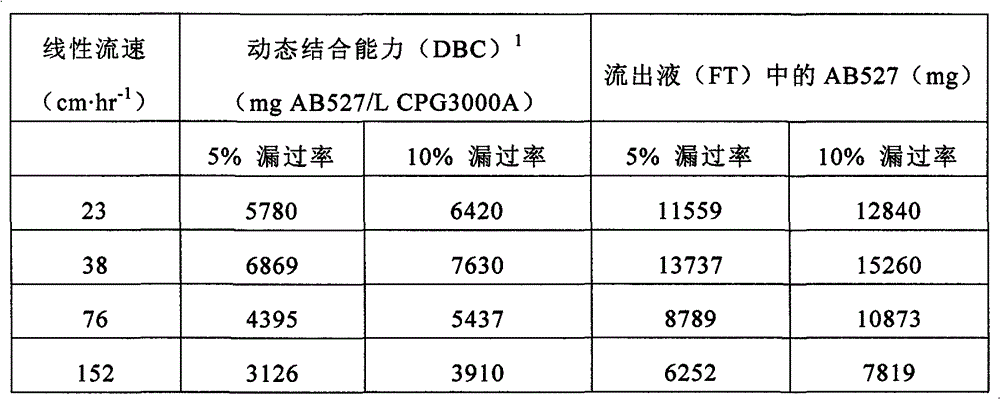
1DBC在1.0cmx2.5cm床(2ml床体积)上测定 1 DBC is measured on a 1.0cmx2.5cm bed (2ml bed volume)
实施例8Example 8
通过阳离子交换层析从条件培养上清液污染物分离IgMIsolation of IgM from Conditioned Culture Supernatant Contaminants by Cation Exchange Chromatography
为了除去污染物,将悬浮在缓冲液B中的IgM通过渗滤进行浓缩,使用了Prep/Scale-TFF 1柱(Millipore)和10倍体积的含有10mM磷酸钠、75mM NaCl的缓冲液。渗滤以约200mL/分钟的流速进行,入口压力保持低于20PSI,渗透流速约为60mL/分钟。向渗滤过的样品加入10%Triton

阳离子交换柱装有MacroCapTM SP树脂(GE Healthcare)。根据1mL树脂在76cm/h流速下结合约9mg IgM的知识(图20)估算用于捕获IgM的树脂的体积。一旦柱子装入所需量树脂后,将其与FPLC装置相连,并用2倍柱体积的纯水、3倍柱体积的0.5M NaOH(缓冲液A6)和3倍柱体积的2M NaCl清洗。在上样之前,将柱子用5倍柱体积的pH 6.8的含有10mM磷酸钠、75mM NaCl和0.01%Tween
将渗滤过的样品施加到柱子,并以76cm/h的流速处理。在使用5倍柱体积的缓冲液A4洗掉未结合蛋白之后,使用4倍柱体积的pH 6.8的含有200mM NaCl和0.01%Tween-80的10mM磷酸钠缓冲液(缓冲液C)从柱子上洗脱IgM。通过施加3倍柱体积的缓冲液A6和3倍柱体积的2M NaCl从柱子上除去残留的结合蛋白。如图13A和B中所示,流过液材料主要包含IgM三体和二体的混合物(图21A);但是,洗脱的材料几乎完全是五聚体IgM(图21B)。阳离子交换层析提供≥95%收率的五聚体IgM,其基本上不含污染物和不完全装配的IgM(图22)。The percolated sample was applied to the column and processed at a flow rate of 76 cm/h. After washing away unbound protein with 5 column volumes of buffer A4,
实施例9Example 9
通过羟基磷灰石层析从条件培养上清液污染物中分离IgMIsolation of IgM from Conditioned Culture Supernatant Contaminants by Hydroxyapatite Chromatography
羟基磷灰石柱使用珠子尺寸为80μm的CHT
为了减少污染物将悬浮在pH 6.8的10mM磷酸钠、200mM NaCl、0.01%Tween

实施例10Example 10
神经节苷脂-BSA偶联物的生产Production of ganglioside-BSA conjugates
生产GD2-BSA偶联物以提供有效的GD2抗原,用于通过免疫测定法检测GD2特异性抗体的特异性。此外,产生了GM2-BSA和GM3-BSA偶联物用作GD2-BSA结合特异性的对照。共价偶联物使用氰基硼氢钠作为温和还原剂,通过神经节苷脂被BSA上存在的胺的位点特异性还原胺化来制备。偶联据认为主要发生在BSA中存在的赖氨酸残基侧链上的末端ε-氨基上。GD2-BSA conjugates were produced to provide potent GD2 antigens for testing the specificity of GD2-specific antibodies by immunoassays. In addition, GM2-BSA and GM3-BSA conjugates were generated to serve as controls for GD2-BSA binding specificity. Covalent conjugates were prepared by site-specific reductive amination of gangliosides with amines present on BSA using sodium cyanoborohydride as a mild reducing agent. Coupling is thought to occur primarily at the terminal ε-amino group on the side chain of a lysine residue present in BSA.
为了制备偶联物,将400μl溶解在pH 9.6的0.05M碳酸盐-碳酸氢盐缓冲液中的2mg/ml BSA溶液,与500μl溶解在无水乙醇中的1mg/ml的GD2(Biodesign International,#A86168H)、GM2(Axxora,#ALX-302-005-M001)或GM3(Axxora,#ALX-302-003-M002)溶液、2070μl pH 9.6的0.05M碳酸盐-碳酸氢盐缓冲液和30μl 5M氰基硼氢钠的10mM氢氧化钠溶液混合。将反应混合物在25℃温育2小时,然后加入1200μl pH 8.0的1M乙醇胺,并在25℃下继续温育15分钟。将反应溶液放置在透析管(Pierce Biotechnology,#68100)中,并在1LpH 9.6的50mM碳酸钠-碳酸氢钠溶液中,在2-8℃下进行两次6-18小时的透析。To prepare the conjugate, 400 μl of 2 mg/ml BSA solution dissolved in 0.05 M carbonate-bicarbonate buffer at pH 9.6 was mixed with 500 μl of 1 mg/ml GD2 dissolved in absolute ethanol (Biodesign International, #A86168H), GM2 (Axxora, #ALX-302-005-M001) or GM3 (Axxora, #ALX-302-003-M002) solution, 2070 μl of 0.05M carbonate-bicarbonate buffer pH 9.6 and 30 μl A solution of 5M sodium cyanoborohydride in 10 mM sodium hydroxide was mixed. The reaction mixture was incubated at 25°C for 2 hours, then 1200 μl of 1 M ethanolamine, pH 8.0, was added and incubation was continued for 15 minutes at 25°C. The reaction solution was placed in dialysis tubing (Pierce Biotechnology, #68100) and dialyzed twice for 6-18 hours at 2-8°C against 1 L of 50 mM sodium carbonate-sodium bicarbonate solution, pH 9.6.
实施例11Example 11
AB527结合BSA偶联的GD2AB527 binds BSA-conjugated GD2
通过ELISA评估了GD2-BSA偶联物的抗原性。通过将一颗碳酸盐/碳酸氢盐胶囊(Sigma)溶解在100mL超纯水中制备了ELISA包被缓冲液。将GD2-BSA偶联物在ELISA包被缓冲液中稀释到2μg/ml的浓度,并添加到96孔ELISA板(Greiner Bio-One cat#655081)的孔中。将板密封,并在2-8℃下温育16-24小时。在温育后,从孔中除去包被缓冲液,并加入0.3mL/孔的ELISA阻断溶液(补充有2.5%BSA(w/v)和0.05%Tween
与GD2-BSA偶联物相反,AB527不识别其他神经节苷脂-BSA偶联物。通过对GD2所描述的方法将神经节苷脂GM2和GM3与BSA相偶联,并通过ELISA评估二者引发AB527结合的能力。如图24中所示,AB527只识别GD2-BSA偶联物。应该指出,GM2特异性抗体能够检测GM2-BSA偶联物;但是,不能获得适合的GM3特异性抗体以评估GM3-BSA偶联物的抗原性质(数据未显示)。In contrast to GD2-BSA conjugates, AB527 does not recognize other ganglioside-BSA conjugates. The gangliosides GM2 and GM3 were coupled to BSA by the method described for GD2 and their ability to elicit AB527 binding was assessed by ELISA. As shown in Figure 24, AB527 only recognized the GD2-BSA conjugate. It should be noted that GM2-specific antibodies were able to detect GM2-BSA conjugates; however, suitable GM3-specific antibodies were not available to assess the antigenic properties of GM3-BSA conjugates (data not shown).
实施例12Example 12
CMS对GIBCO-CD CHO完全培养基中生长的表达AB527的细胞Effect of CMS on AB527-expressing cells grown in GIBCO-CD CHO complete medium 的影响Impact
为了确定培养基补充剂(CMS)对细胞生长和抗体生产的影响,将细胞在含有20mL GIBCO-CD-CHO完全培养基的摇瓶中复苏并培养。所有培养物在125mL摇瓶中,在37℃、5%CO2、120rpm下温育。接种密度为3.5x10⁵个细胞/mL,存活率>95%。将细胞在CD-CHO培养基或在第3-7天补充2%(vol/vol)CMS的CD-CHO培养基中培养14天。在第7天添加CMS后,初始培养体积的总共10%是补充的CMS。在第0、3、5、7、10、13和14天,使用CEDEX自动细胞计数器测定活细胞密度(图25)、存活百分数(图26)和积分活细胞密度(IVC)(图27)。对于每组培养的细胞,在第14天通过蛋白A HPLC测定了抗体生产(图28)。To determine the effect of medium supplements (CMS) on cell growth and antibody production, cells were revived and cultured in shake flasks containing 20 mL GIBCO-CD-CHO complete medium. All cultures were incubated in 125 mL shake flasks at 37°C, 5% CO 2 , 120 rpm. The seeding density was 3.5x10⁵ cells/mL, and the viability was >95%. Cells were cultured for 14 days in CD-CHO medium or CD-CHO medium supplemented with 2% (vol/vol) CMS on days 3-7. After addition of CMS on
如图25中所示,从第3到第7天提供有2%CMS的培养细胞,在第7天获得了12.8x10⁶个细胞/mL的最高活细胞密度。不含CMS的对照细胞培养物,在第7天达到10.7x106个细胞/mL的最大细胞密度。CMS的使用添补了限制性培养基组分例如葡萄糖、氨基酸和维生素,并帮助培养物达到较高细胞密度。在两种细胞培养条件下,细胞到第7天时都维持良好的存活性(>90%)(图26);但是,从第3到第7天提供有CMS的培养细胞被证实在7天后与对照培养物相比具有更好的存活性。有可能在7天后,对照培养物中某些关键营养物质被耗尽,而CMS将那些关键营养物质添加回来,并帮助维持细胞更好的存活性。As shown in FIG. 25 , cultured cells provided with 2% CMS from
第14天时,对每种培养物评估总抗体产量。用CMS培养的细胞达到7240mg/L的最大抗体滴度,远高于对于对照培养物所观察到的(3036mg/L)(图28)。较高的抗体滴度可能是添加营养物质后较高的比抗体生产速率的结果。对每种生长条件的细胞生长和抗体生产情况的研究证明,提供有CMS的培养物实现了抗体生产的140%的增加(表5)。即使对于两种培养物来说倍增时间相同,CMS帮助培养物获得了50%的IVC增加和比抗体生产速率的另外50%的增加。IVC的50%的增加是由于在使用CMS的培养物中获得的较高最大细胞密度。因为最终抗体滴度等于IVC乘以比生产速率,这表明IVC和比抗体生产速率两者都对使用CMS的细胞培养物中抗体产量的140%增加有贡献。表5概述了CMS对AB527表达细胞的影响。At
表5-CMS对AB527表达细胞的细胞生长和抗体产量的影响的概述。Table 5 - Summary of the effect of CMS on cell growth and antibody production of AB527 expressing cells.
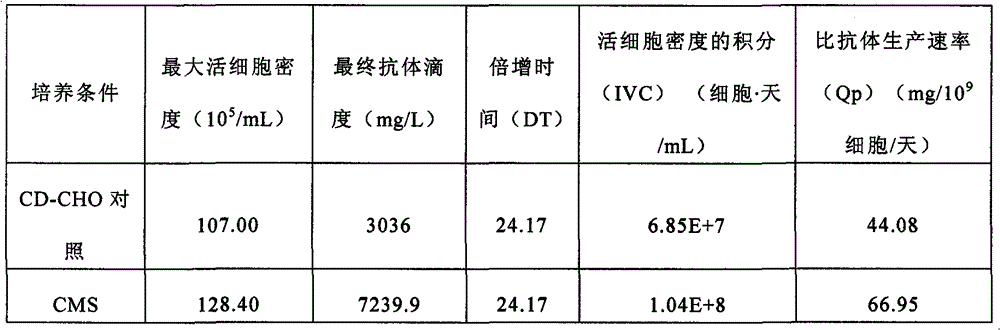
实施例13Example 13
戊酸对GIBCO-CD CHO完全培养基中生长的AB527表达细胞的Effect of valeric acid on AB527 expressing cells grown in GIBCO-CD CHO complete medium 影响Influence
为了确定戊酸对细胞生长的影响,将AB527表达细胞培养在添加戊酸至浓度为0mM、1mM、2mM、4mM或8mM的GIBCO-CD-CHO完全培养基中。将细胞培养14天,并在第0、3、5、7、10、13和14天使用CEDEX自动细胞计数器测定活细胞密度、存活百分数和积分活细胞密度。对于每组培养的细胞,在第14天通过蛋白A HPLC测定抗体生产。To determine the effect of valeric acid on cell growth, AB527 expressing cells were cultured in GIBCO-CD-CHO complete medium supplemented with valeric acid to a concentration of 0 mM, 1 mM, 2 mM, 4 mM or 8 mM. Cells were cultured for 14 days and the viable cell density, percent viable and integrated viable cell density were determined on
不使用戊酸培养的细胞在第7天达到10.8x10⁶个细胞/mL的最大细胞密度;但是,用戊酸培养的细胞随着戊酸浓度的增加,生长越来越慢。例如,在8mM戊酸中培养的细胞,在第7天时达到5.4x106个细胞/mL的最大细胞密度,这在所有培养物中是最低的最大细胞密度。细胞存活性研究证明,用戊酸培养的细胞在第7天之前具有较低存活性,其中对于在8mM戊酸中培养的细胞来说观察到最低的第7天时的存活性(67.4%)。这些结果表明,较高浓度的戊酸抑制细胞增殖。在第7天后,对照培养物的存活性下降得快得多;但是,这可能是由于关键营养物质的消耗,因为该细胞培养物比在戊酸中培养的细胞具有高得多的细胞密度(表6)。Cells cultured without valeric acid reached a maximum cell density of 10.8x10⁶ cells/mL at
但是,出人意料的是,戊酸对抗体生产具有阳性效应。所有在戊酸存在下培养的细胞,除了8mM的最高浓度之外,在第14天时都具有比对照培养物更高的抗体滴度。在1mM戊酸中培养的细胞在第14天时产生最高的抗体滴度(4137mg/L),其比对照培养物(3036mg/L)高36%(表6)。However, unexpectedly, valeric acid had a positive effect on antibody production. All cells cultured in the presence of valeric acid, except the highest concentration of 8 mM, had higher antibody titers at
尽管戊酸抑制细胞生长,但除了8mM的最高浓度之外,没有证实对活细胞密度积分的显著的负面影响。第14天时的IVC值与其他四种培养条件相当近似。可能戊酸对细胞增殖的抑制导致了营养物质的较慢消耗,因此避免了对照培养物所遇到的晚期营养物耗尽的培养基。Although valeric acid inhibited cell growth, no significant negative effect on viable cell density integration was demonstrated except at the highest concentration of 8 mM. The IVC value at
概括来说,细胞培养物在戊酸存在下能够实现更好的抗体生产。在使用戊酸的培养物中观察到了52到58mg/109个细胞/天的比抗体生产速率(表6),其比对于对照培养物观察到的44mg/109个细胞/天的值高的多。因此,在1mM戊酸中培养的细胞获得的最高抗体产量主要是由于比抗体生产速率的增加引起的(表6)。In summary, cell cultures in the presence of valeric acid enable better antibody production. Specific antibody production rates of 52 to 58 mg/ 109 cells/day were observed in cultures using valeric acid (Table 6), which was higher than the value of 44 mg/ 109 cells/day observed for control cultures many. Thus, the highest antibody production obtained by cells cultured in 1 mM valeric acid was mainly due to an increase in the specific antibody production rate (Table 6).
表6-戊酸对AB527表达细胞的细胞生长和抗体产生的影响的概述。Table 6 - Summary of the effect of valeric acid on cell growth and antibody production of AB527 expressing cells.
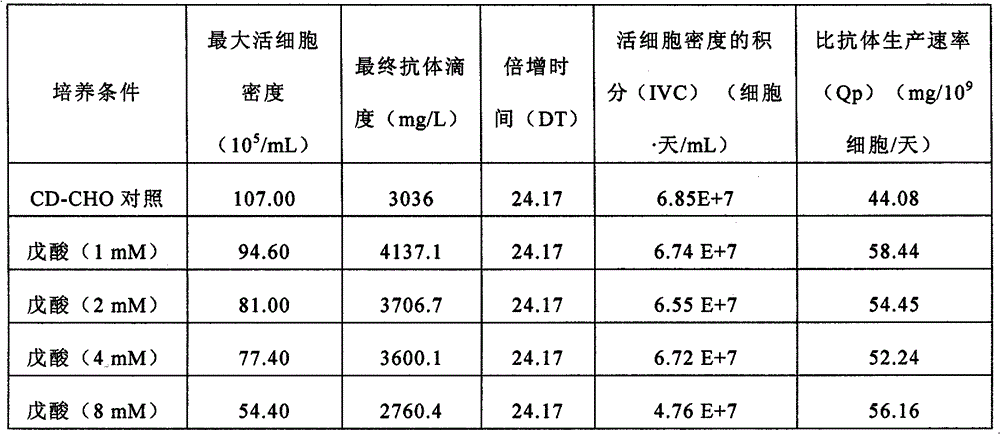


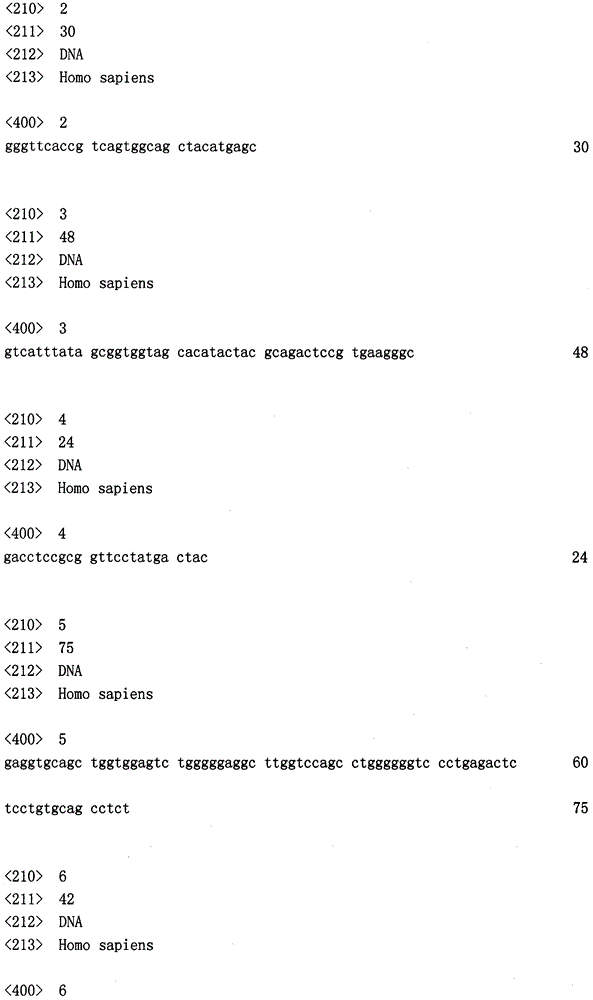
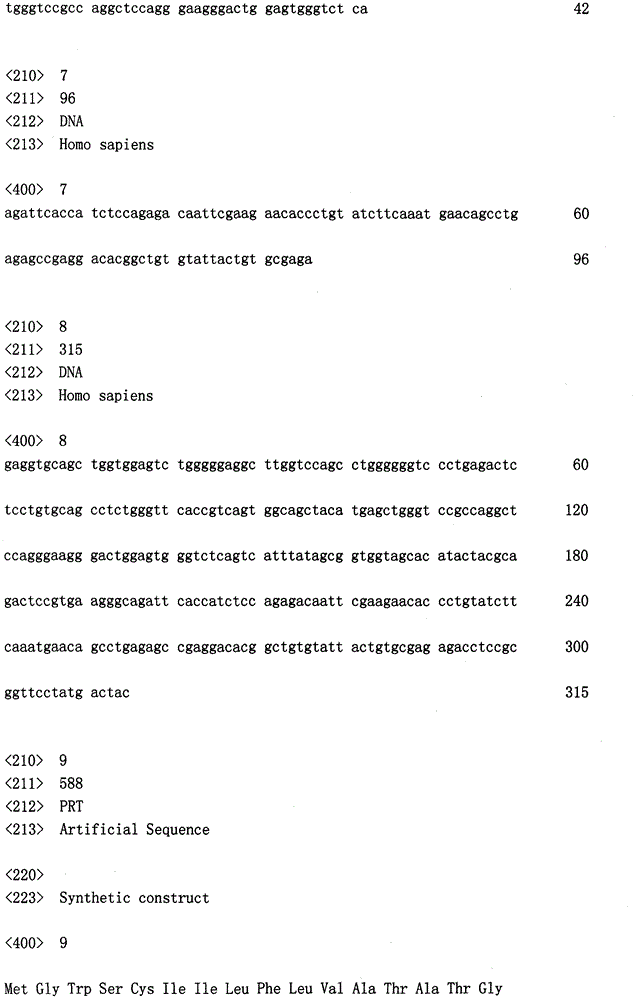

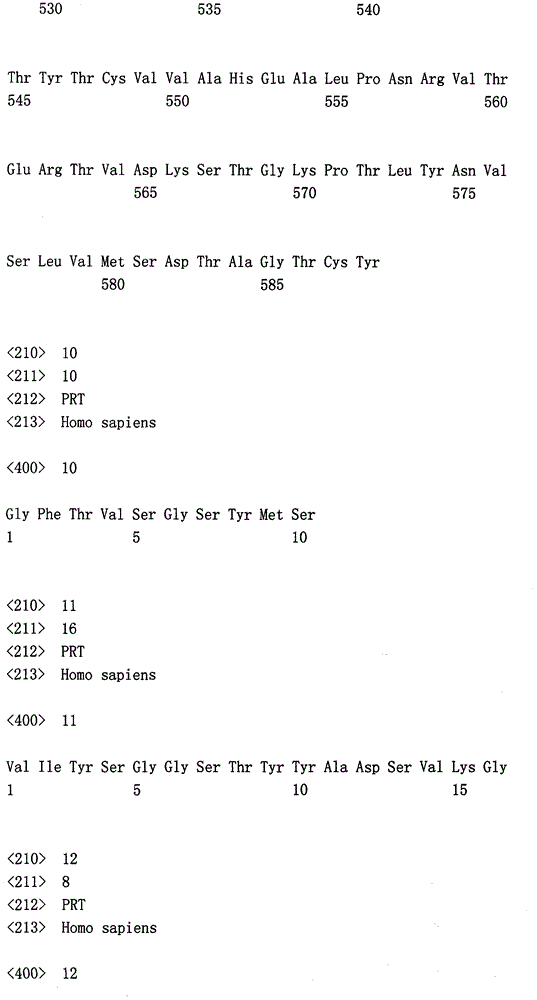
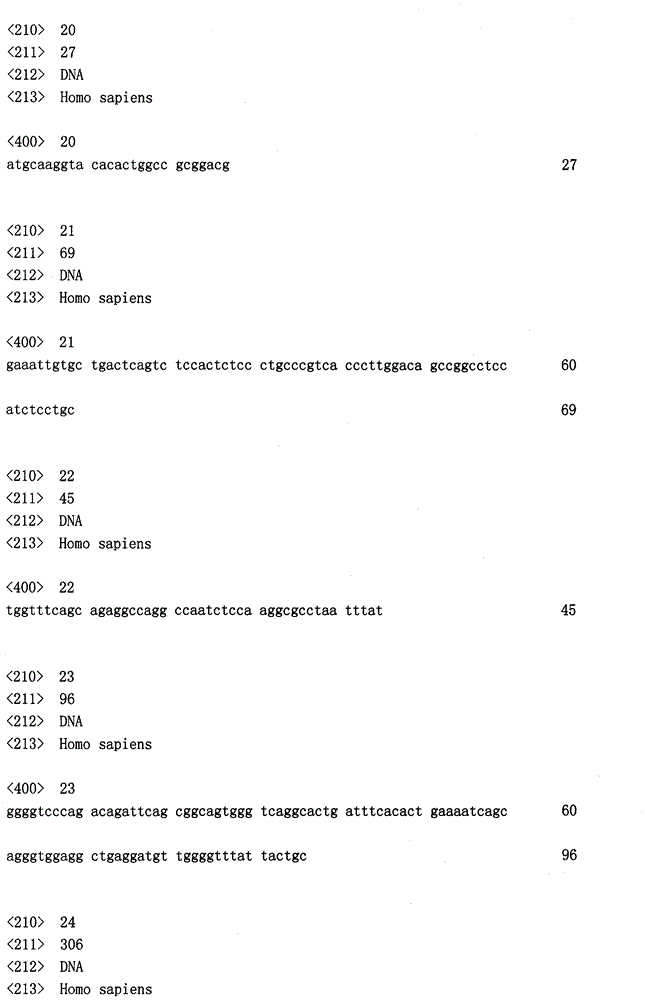
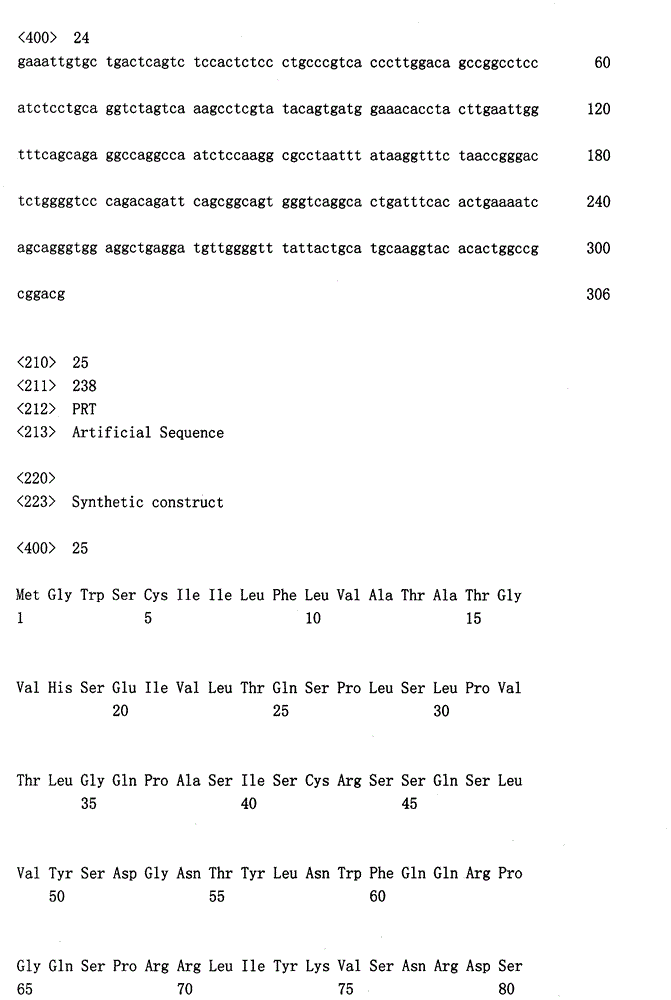
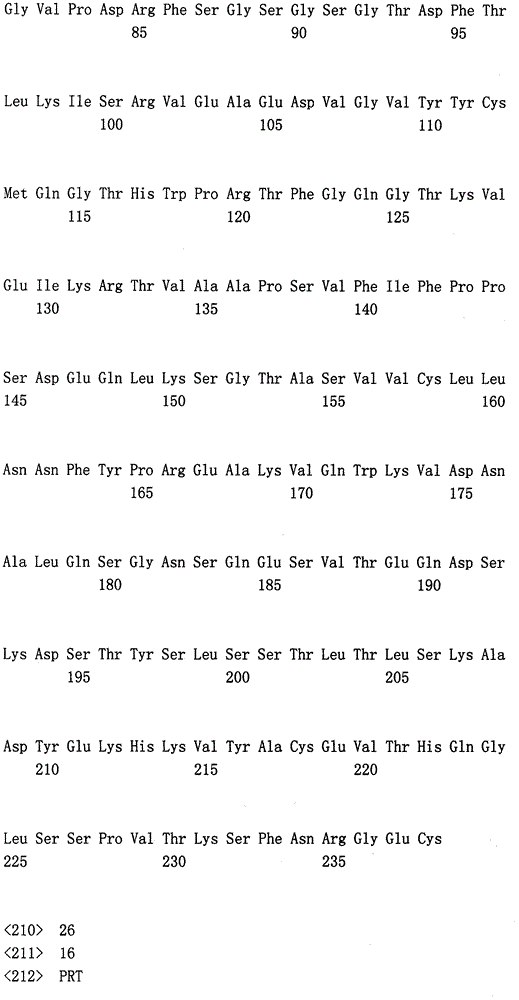
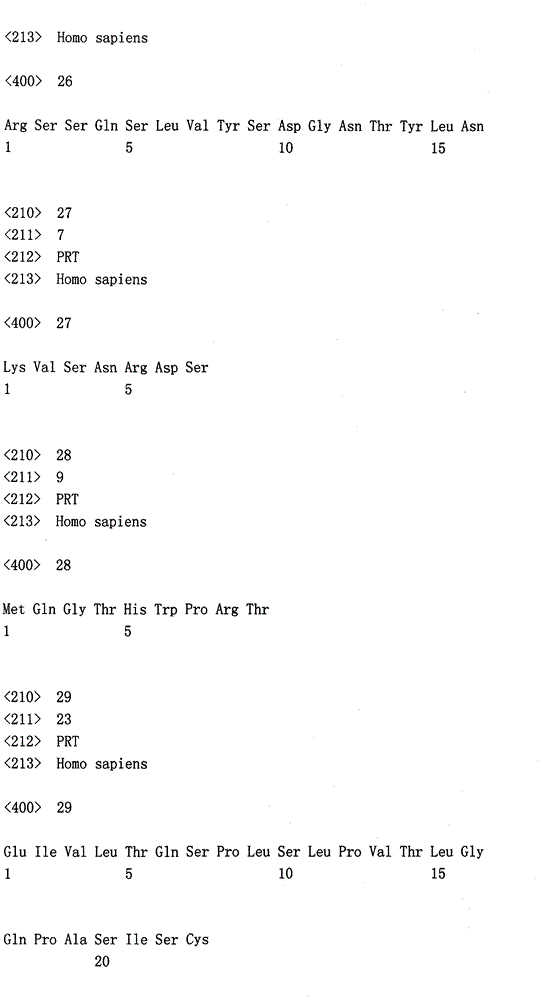


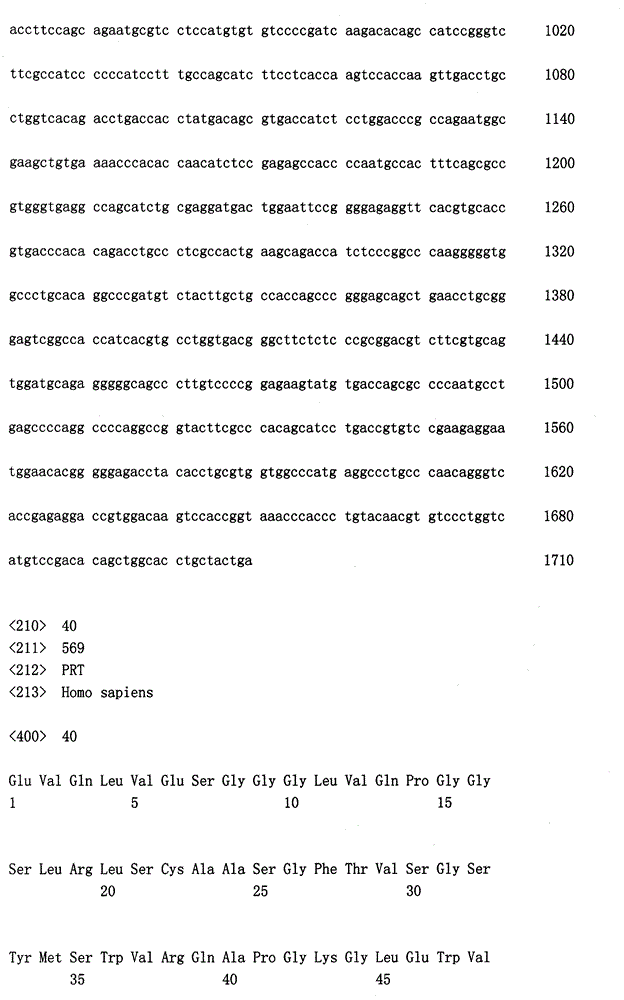
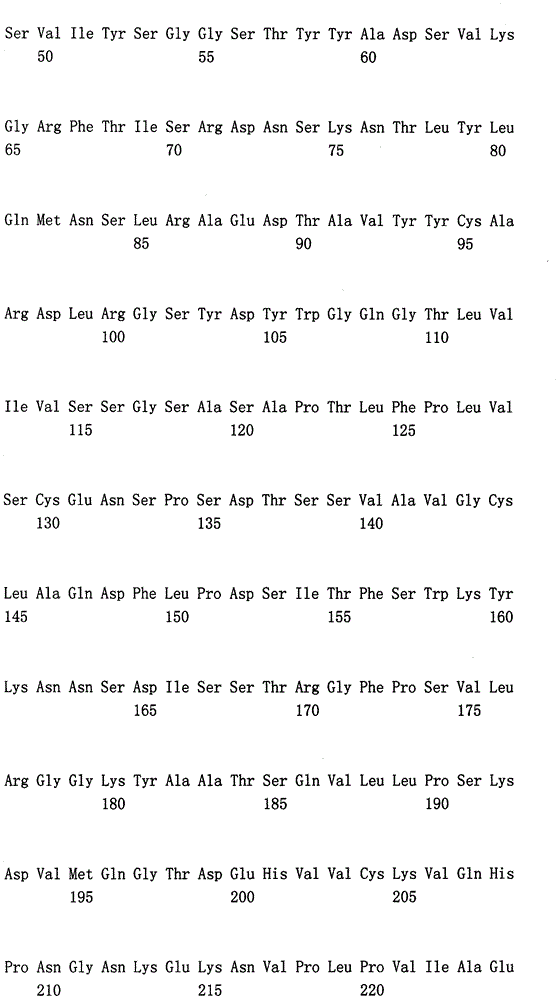
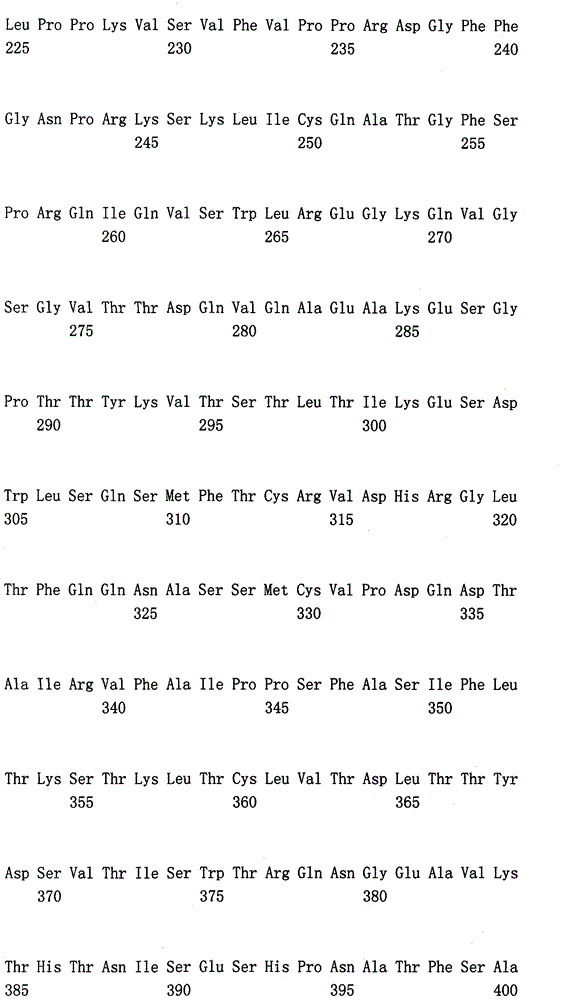

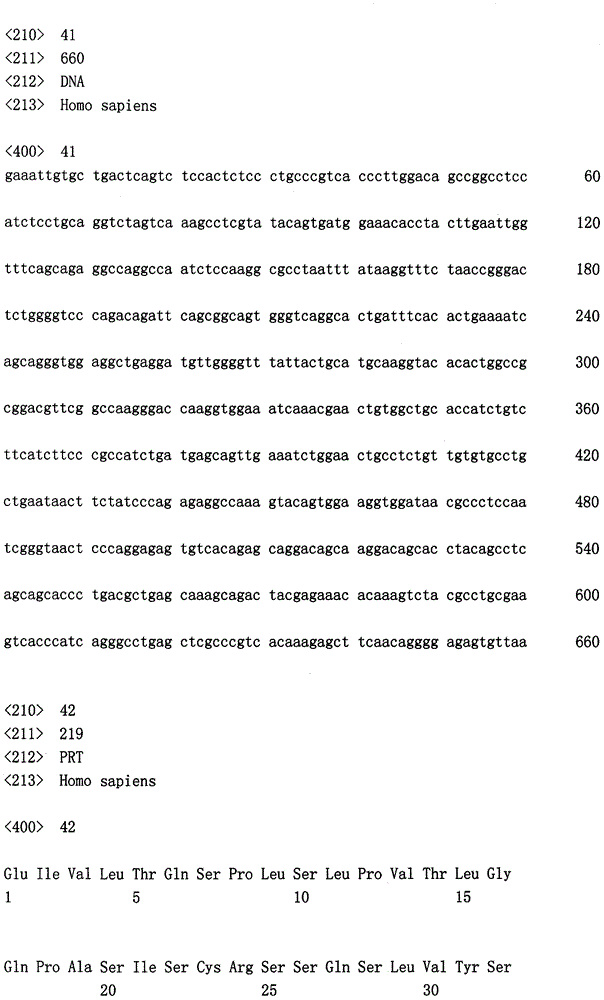
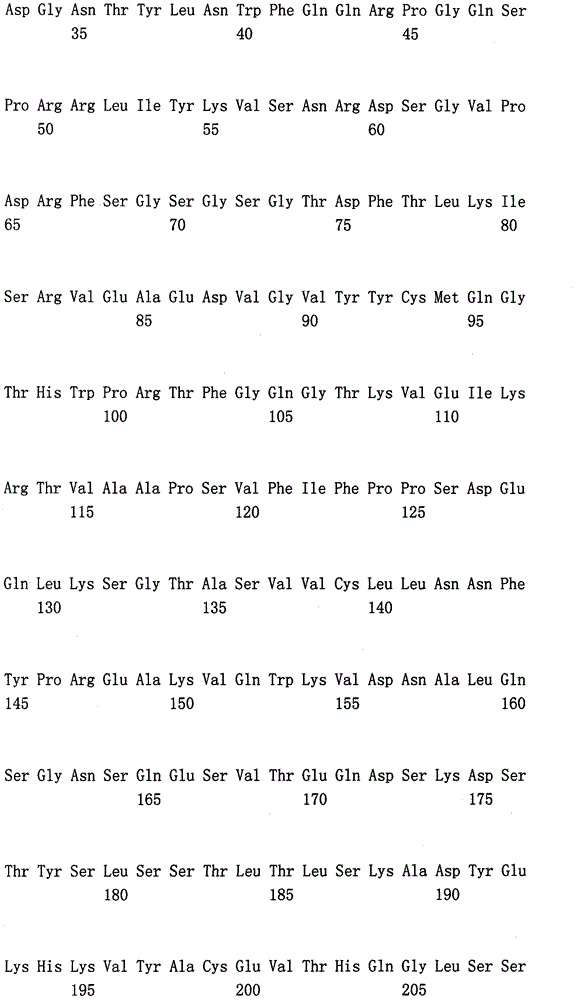
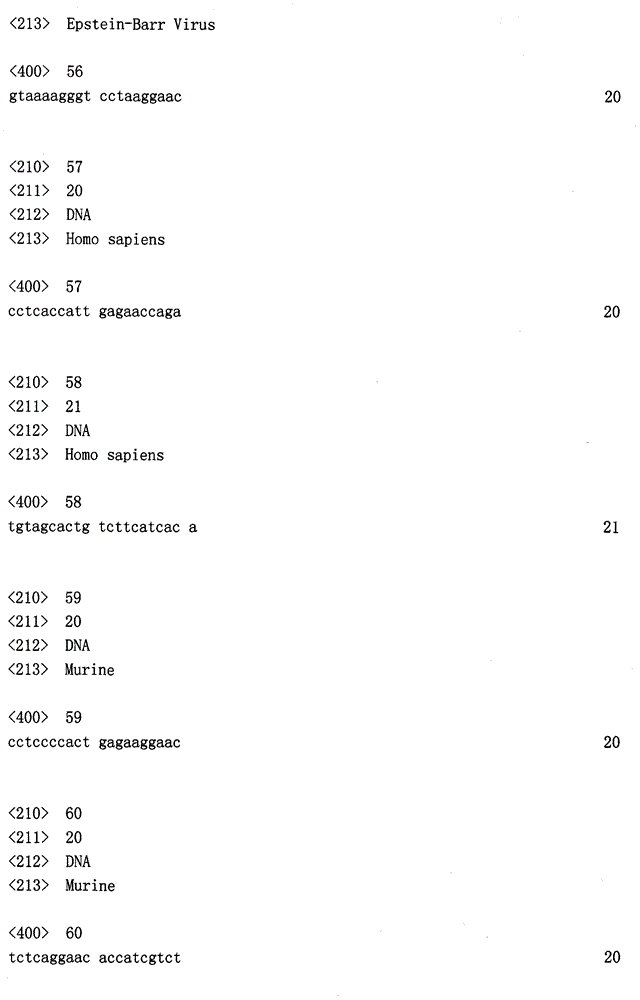
Claims (33)
Applications Claiming Priority (5)
| Application Number | Priority Date | Filing Date | Title |
|---|---|---|---|
| US7704108P | 2008-06-30 | 2008-06-30 | |
| US61/077,041 | 2008-06-30 | ||
| US9703408P | 2008-09-15 | 2008-09-15 | |
| US61/097,034 | 2008-09-15 | ||
| PCT/US2009/049139 WO2010002822A1 (en) | 2008-06-30 | 2009-06-30 | Anti-gd2 antibodies and methods and uses related thereto |
Publications (2)
| Publication Number | Publication Date |
|---|---|
| CN102164962A CN102164962A (en) | 2011-08-24 |
| CN102164962B true CN102164962B (en) | 2014-05-28 |
Family
ID=41139062
Family Applications (1)
| Application Number | Title | Priority Date | Filing Date |
|---|---|---|---|
| CN200980132087.5A Expired - Fee Related CN102164962B (en) | 2008-06-30 | 2009-06-30 | Anti-GD2 antibodies and methods and uses related thereto |
Country Status (11)
| Country | Link |
|---|---|
| US (3) | US8278065B2 (en) |
| EP (1) | EP2310416A1 (en) |
| JP (1) | JP5654986B2 (en) |
| KR (1) | KR20110025859A (en) |
| CN (1) | CN102164962B (en) |
| AU (1) | AU2009267113A1 (en) |
| CA (1) | CA2729499A1 (en) |
| IL (1) | IL210147A0 (en) |
| MX (1) | MX2010014364A (en) |
| TW (1) | TWI466684B (en) |
| WO (1) | WO2010002822A1 (en) |
Families Citing this family (46)
| Publication number | Priority date | Publication date | Assignee | Title |
|---|---|---|---|---|
| MX2010014364A (en) | 2008-06-30 | 2011-08-12 | Morphotek Inc | Anti-gd2 antibodies and methods and uses related thereto. |
| WO2013189516A1 (en) | 2012-06-18 | 2013-12-27 | Apeiron Biologics Ag | Method for treating a gd2 positive cancer |
| AU2013351292C1 (en) | 2012-11-30 | 2019-03-28 | Katinger Gmbh | Recombinant human IgM-antibody effective against cancer cells |
| KR102122632B1 (en) | 2013-08-05 | 2020-06-16 | 트위스트 바이오사이언스 코포레이션 | De novo synthesized gene libraries |
| US10447673B2 (en) * | 2013-08-05 | 2019-10-15 | Sony Corporation | Information processing apparatus, information processing method, and computer program |
| US9840566B2 (en) | 2013-11-21 | 2017-12-12 | Apeiron Biologics Ag | Preparations and methods for treating a GD2 positive cancer |
| AU2014351796B2 (en) | 2013-11-21 | 2020-02-27 | Apeiron Biologics Ag | Preparations and methods for treating a GD2 positive cancer |
| EP3092002B1 (en) * | 2014-01-09 | 2019-09-25 | Kentucky Bioprocessing, Inc. | Method of purifying monoclonal antibodies |
| EP3092253B1 (en) | 2014-01-10 | 2021-03-17 | AnaptysBio, Inc. | Antibodies directed against interleukin-33 (il-33) |
| US9616114B1 (en) | 2014-09-18 | 2017-04-11 | David Gordon Bermudes | Modified bacteria having improved pharmacokinetics and tumor colonization enhancing antitumor activity |
| US10669304B2 (en) | 2015-02-04 | 2020-06-02 | Twist Bioscience Corporation | Methods and devices for de novo oligonucleic acid assembly |
| US9981239B2 (en) | 2015-04-21 | 2018-05-29 | Twist Bioscience Corporation | Devices and methods for oligonucleic acid library synthesis |
| US10676723B2 (en) | 2015-05-11 | 2020-06-09 | David Gordon Bermudes | Chimeric protein toxins for expression by therapeutic bacteria |
| CN107614014B (en) * | 2015-05-28 | 2022-07-12 | 生物辐射实验室股份有限公司 | Affinity ligands and methods relating thereto |
| KR20180050411A (en) | 2015-09-18 | 2018-05-14 | 트위스트 바이오사이언스 코포레이션 | Oligonucleotide mutant library and its synthesis |
| KR102794025B1 (en) | 2015-09-22 | 2025-04-09 | 트위스트 바이오사이언스 코포레이션 | Flexible substrates for nucleic acid synthesis |
| KR102217487B1 (en) | 2016-09-21 | 2021-02-23 | 트위스트 바이오사이언스 코포레이션 | Nucleic acid-based data storage |
| US11129906B1 (en) | 2016-12-07 | 2021-09-28 | David Gordon Bermudes | Chimeric protein toxins for expression by therapeutic bacteria |
| US11180535B1 (en) | 2016-12-07 | 2021-11-23 | David Gordon Bermudes | Saccharide binding, tumor penetration, and cytotoxic antitumor chimeric peptides from therapeutic bacteria |
| EP4556433A3 (en) | 2017-02-22 | 2025-08-06 | Twist Bioscience Corporation | Nucleic acid based data storage |
| WO2018231864A1 (en) | 2017-06-12 | 2018-12-20 | Twist Bioscience Corporation | Methods for seamless nucleic acid assembly |
| SG11201912057RA (en) | 2017-06-12 | 2020-01-30 | Twist Bioscience Corp | Methods for seamless nucleic acid assembly |
| GB2581620A (en) | 2017-09-11 | 2020-08-26 | Twist Bioscience Corp | GPCR binding proteins and synthesis thereof |
| KR102889470B1 (en) | 2017-10-20 | 2025-11-21 | 트위스트 바이오사이언스 코포레이션 | Heated nanowells for polynucleotide synthesis |
| CN112041438B (en) | 2018-01-04 | 2025-05-23 | 特韦斯特生物科学公司 | DNA-based digital information storage |
| CN112639130B (en) | 2018-05-18 | 2024-08-09 | 特韦斯特生物科学公司 | Polynucleotides, reagents and methods for nucleic acid hybridization |
| CN119708086A (en) | 2018-12-26 | 2025-03-28 | 特韦斯特生物科学公司 | Highly accurate de novo polynucleotide synthesis |
| KR20210144698A (en) | 2019-02-26 | 2021-11-30 | 트위스트 바이오사이언스 코포레이션 | Variant Nucleic Acid Libraries for Antibody Optimization |
| SG11202109322TA (en) | 2019-02-26 | 2021-09-29 | Twist Bioscience Corp | Variant nucleic acid libraries for glp1 receptor |
| US10945981B2 (en) | 2019-05-17 | 2021-03-16 | Cancer Prevention Pharmaceuticals, Inc. | Methods for treating familial adenomatous polyposis |
| CA3142000A1 (en) * | 2019-06-19 | 2020-12-24 | Icahn School Of Medicine At Mount Sinai | Monoclonal antibodies against jc virus |
| CA3144644A1 (en) | 2019-06-21 | 2020-12-24 | Twist Bioscience Corporation | Barcode-based nucleic acid sequence assembly |
| ES3031393T3 (en) * | 2019-08-01 | 2025-07-08 | Univ Mie | Gd2 binding molecule |
| US12091777B2 (en) | 2019-09-23 | 2024-09-17 | Twist Bioscience Corporation | Variant nucleic acid libraries for CRTH2 |
| US12173282B2 (en) | 2019-09-23 | 2024-12-24 | Twist Bioscience, Inc. | Antibodies that bind CD3 epsilon |
| WO2021119193A2 (en) * | 2019-12-09 | 2021-06-17 | Twist Bioscience Corporation | Variant nucleic acid libraries for adenosine receptors |
| CN114685658B (en) * | 2020-12-30 | 2024-12-17 | 百力司康生物医药(杭州)有限公司 | OX40 targeting antibody and preparation method and application thereof |
| US12202905B2 (en) | 2021-01-21 | 2025-01-21 | Twist Bioscience Corporation | Methods and compositions relating to adenosine receptors |
| TW202302648A (en) * | 2021-03-12 | 2023-01-16 | 美商健生生物科技公司 | Uses of cd79b antibodies for autoimmune therapeutic applications |
| EP4572772A1 (en) | 2022-08-17 | 2025-06-25 | Capstan Therapeutics, Inc. | Conditioning for in vivo immune cell engineering |
| US12311033B2 (en) | 2023-05-31 | 2025-05-27 | Capstan Therapeutics, Inc. | Lipid nanoparticle formulations and compositions |
| WO2025076127A1 (en) | 2023-10-05 | 2025-04-10 | Capstan Therapeutics, Inc. | Constrained ionizable cationic lipids and lipid nanoparticles |
| WO2025076113A1 (en) | 2023-10-05 | 2025-04-10 | Capstan Therapeutics, Inc. | Ionizable cationic lipids with conserved spacing and lipid nanoparticles |
| WO2025149667A1 (en) | 2024-01-12 | 2025-07-17 | Pheon Therapeutics Ltd | Antibody drug conjugates and uses thereof |
| WO2025217452A1 (en) | 2024-04-11 | 2025-10-16 | Capstan Therapeutics, Inc. | Constrained ionizable cationic lipids and lipid nanoparticles |
| WO2025217454A2 (en) | 2024-04-11 | 2025-10-16 | Capstan Therapeutics, Inc. | Ionizable cationic lipids and lipid nanoparticles |
Citations (3)
| Publication number | Priority date | Publication date | Assignee | Title |
|---|---|---|---|---|
| WO1997034634A1 (en) * | 1996-03-20 | 1997-09-25 | Sloan-Kettering Institute For Cancer Research | Single chain fv constructs of anti-ganglioside gd2 antibodies |
| WO2004055056A1 (en) * | 2002-12-17 | 2004-07-01 | Merck Patent Gmbh | Humanized antibody (h14.18) of the mouse 14.18 antibody binding to gd2 and its fusion with il-2 |
| WO2008043777B1 (en) * | 2006-10-10 | 2008-06-19 | Univ Nantes | Use of monoclonal antibodies specific to the o-acetylated form of gd2 ganglioside for the treatment of certain cancers |
Family Cites Families (6)
| Publication number | Priority date | Publication date | Assignee | Title |
|---|---|---|---|---|
| US5419904A (en) * | 1990-11-05 | 1995-05-30 | The Regents Of The University Of California | Human B-lymphoblastoid cell line secreting anti-ganglioside antibody |
| WO1993010221A1 (en) | 1991-11-13 | 1993-05-27 | The Regents Of The University Of California | Chimeric murine/human anti-idiotype monoclonal antibodies |
| US6309636B1 (en) * | 1995-09-14 | 2001-10-30 | Cancer Research Institute Of Contra Costa | Recombinant peptides derived from the Mc3 anti-BA46 antibody, methods of use thereof, and methods of humanizing antibody peptides |
| EP1642908A2 (en) * | 1996-09-02 | 2006-04-05 | Okumura, Ko | Apoptosis-induced site from fas ligand |
| WO2005005636A1 (en) * | 2003-07-15 | 2005-01-20 | Chugai Seiyaku Kabushiki Kaisha | IgM PRODUCTION BY TRANSFORMED CELL AND METHOD OF QUANTIFYING THE SAME |
| MX2010014364A (en) | 2008-06-30 | 2011-08-12 | Morphotek Inc | Anti-gd2 antibodies and methods and uses related thereto. |
-
2009
- 2009-06-30 MX MX2010014364A patent/MX2010014364A/en active IP Right Grant
- 2009-06-30 US US12/494,631 patent/US8278065B2/en not_active Expired - Fee Related
- 2009-06-30 CN CN200980132087.5A patent/CN102164962B/en not_active Expired - Fee Related
- 2009-06-30 WO PCT/US2009/049139 patent/WO2010002822A1/en not_active Ceased
- 2009-06-30 EP EP09774273A patent/EP2310416A1/en not_active Withdrawn
- 2009-06-30 TW TW98122129A patent/TWI466684B/en not_active IP Right Cessation
- 2009-06-30 AU AU2009267113A patent/AU2009267113A1/en not_active Abandoned
- 2009-06-30 JP JP2011516790A patent/JP5654986B2/en not_active Expired - Fee Related
- 2009-06-30 KR KR1020117002248A patent/KR20110025859A/en not_active Withdrawn
- 2009-06-30 CA CA2729499A patent/CA2729499A1/en not_active Abandoned
-
2010
- 2010-12-21 IL IL210147A patent/IL210147A0/en unknown
-
2012
- 2012-08-23 US US13/593,057 patent/US8507657B2/en not_active Expired - Fee Related
-
2013
- 2013-07-02 US US13/933,594 patent/US8956832B2/en not_active Expired - Fee Related
Patent Citations (3)
| Publication number | Priority date | Publication date | Assignee | Title |
|---|---|---|---|---|
| WO1997034634A1 (en) * | 1996-03-20 | 1997-09-25 | Sloan-Kettering Institute For Cancer Research | Single chain fv constructs of anti-ganglioside gd2 antibodies |
| WO2004055056A1 (en) * | 2002-12-17 | 2004-07-01 | Merck Patent Gmbh | Humanized antibody (h14.18) of the mouse 14.18 antibody binding to gd2 and its fusion with il-2 |
| WO2008043777B1 (en) * | 2006-10-10 | 2008-06-19 | Univ Nantes | Use of monoclonal antibodies specific to the o-acetylated form of gd2 ganglioside for the treatment of certain cancers |
Non-Patent Citations (1)
| Title |
|---|
| REGRESSION OF CUTANEOUS METASTATIC MELANOMA BY INTRALESIONAL INJECTION WITH HUMAN MONOCLONAL ANTIBODY TO GANGLIOSIDE GD2;IRIE R ET AL;《PNAS》;19861101;第83卷(第22期);8694-8698 * |
Also Published As
| Publication number | Publication date |
|---|---|
| JP5654986B2 (en) | 2015-01-14 |
| TWI466684B (en) | 2015-01-01 |
| TW201004645A (en) | 2010-02-01 |
| US20100008851A1 (en) | 2010-01-14 |
| AU2009267113A1 (en) | 2010-01-07 |
| US20130287691A1 (en) | 2013-10-31 |
| US8956832B2 (en) | 2015-02-17 |
| CN102164962A (en) | 2011-08-24 |
| IL210147A0 (en) | 2011-03-31 |
| CA2729499A1 (en) | 2010-01-07 |
| WO2010002822A1 (en) | 2010-01-07 |
| JP2011526785A (en) | 2011-10-20 |
| MX2010014364A (en) | 2011-08-12 |
| EP2310416A1 (en) | 2011-04-20 |
| US8278065B2 (en) | 2012-10-02 |
| US20120328524A1 (en) | 2012-12-27 |
| KR20110025859A (en) | 2011-03-11 |
| US8507657B2 (en) | 2013-08-13 |
Similar Documents
| Publication | Publication Date | Title |
|---|---|---|
| CN102164962B (en) | Anti-GD2 antibodies and methods and uses related thereto | |
| AU2018366650B2 (en) | Single-domain antibodies and variants thereof against PD-L1 | |
| TWI809562B (en) | Anti-tau antibodies and uses thereof | |
| ES2713859T3 (en) | Binding proteins, including antibodies, antibody derivatives and antibody fragments, which bind specifically to CD154 and uses thereof | |
| TW202003562A (en) | Anti-claudin 18.2 (CLDN18.2) antibodies | |
| JP6215056B2 (en) | Antagonistic DR3 ligand | |
| CN107849132A (en) | Humanized and affinity matured antibodies against FcRH5 and methods of use | |
| CN108368510A (en) | Specifically bind the agonistic antibody and application method of people CD40 | |
| TR201815885T4 (en) | M-csf specific monoclonal antibodies and their use. | |
| TW201942135A (en) | Anti-CD27 antibody, antigen binding fragment thereof, and pharmaceutical use thereof | |
| WO2022143670A1 (en) | Antibody capable of binding to trop2, and use thereof | |
| EP4257612A1 (en) | Development of new tumor engager therapeutic drug and use thereof | |
| US20170158755A1 (en) | Anti-laminin4 antibodies specific for lg1-3 | |
| JP2024508304A (en) | Antibodies against Claudin-6 and uses thereof | |
| KR20190112299A (en) | Binder | |
| TW202208432A (en) | Anti-pd-l1 antibodies and anti-pd-l1/il10 fusion proteins | |
| KR20240004694A (en) | antibody | |
| TW202540203A (en) | Antigen-binding molecules that bind pdgf-b and pdgf-d, and methods of use | |
| TW202528346A (en) | Anti-tslp antibodies and uses thereof | |
| KR20260004605A (en) | Antagonistic anti-cd40 humanized antibody | |
| HK40121519A (en) | Methods of treating neurological diseases | |
| HK1236204A1 (en) | Anti-transferrin receptor antibodies and methods of use |
Legal Events
| Date | Code | Title | Description |
|---|---|---|---|
| C06 | Publication | ||
| PB01 | Publication | ||
| C10 | Entry into substantive examination | ||
| SE01 | Entry into force of request for substantive examination | ||
| C14 | Grant of patent or utility model | ||
| GR01 | Patent grant | ||
| CF01 | Termination of patent right due to non-payment of annual fee |
Granted publication date: 20140528 Termination date: 20150630 |
|
| EXPY | Termination of patent right or utility model |