CN102089428B - Composition and method for determination of esophageal cancer - Google Patents
Composition and method for determination of esophageal cancer Download PDFInfo
- Publication number
- CN102089428B CN102089428B CN2009801269313A CN200980126931A CN102089428B CN 102089428 B CN102089428 B CN 102089428B CN 2009801269313 A CN2009801269313 A CN 2009801269313A CN 200980126931 A CN200980126931 A CN 200980126931A CN 102089428 B CN102089428 B CN 102089428B
- Authority
- CN
- China
- Prior art keywords
- gene
- esophageal cancer
- bases
- polynucleotide
- dna
- Prior art date
- Legal status (The legal status is an assumption and is not a legal conclusion. Google has not performed a legal analysis and makes no representation as to the accuracy of the status listed.)
- Expired - Fee Related
Links
Images


Classifications
-
- C—CHEMISTRY; METALLURGY
- C12—BIOCHEMISTRY; BEER; SPIRITS; WINE; VINEGAR; MICROBIOLOGY; ENZYMOLOGY; MUTATION OR GENETIC ENGINEERING
- C12Q—MEASURING OR TESTING PROCESSES INVOLVING ENZYMES, NUCLEIC ACIDS OR MICROORGANISMS; COMPOSITIONS OR TEST PAPERS THEREFOR; PROCESSES OF PREPARING SUCH COMPOSITIONS; CONDITION-RESPONSIVE CONTROL IN MICROBIOLOGICAL OR ENZYMOLOGICAL PROCESSES
- C12Q1/00—Measuring or testing processes involving enzymes, nucleic acids or microorganisms; Compositions therefor; Processes of preparing such compositions
- C12Q1/68—Measuring or testing processes involving enzymes, nucleic acids or microorganisms; Compositions therefor; Processes of preparing such compositions involving nucleic acids
- C12Q1/6876—Nucleic acid products used in the analysis of nucleic acids, e.g. primers or probes
- C12Q1/6883—Nucleic acid products used in the analysis of nucleic acids, e.g. primers or probes for diseases caused by alterations of genetic material
- C12Q1/6886—Nucleic acid products used in the analysis of nucleic acids, e.g. primers or probes for diseases caused by alterations of genetic material for cancer
-
- G01N33/5753—
-
- C—CHEMISTRY; METALLURGY
- C12—BIOCHEMISTRY; BEER; SPIRITS; WINE; VINEGAR; MICROBIOLOGY; ENZYMOLOGY; MUTATION OR GENETIC ENGINEERING
- C12Q—MEASURING OR TESTING PROCESSES INVOLVING ENZYMES, NUCLEIC ACIDS OR MICROORGANISMS; COMPOSITIONS OR TEST PAPERS THEREFOR; PROCESSES OF PREPARING SUCH COMPOSITIONS; CONDITION-RESPONSIVE CONTROL IN MICROBIOLOGICAL OR ENZYMOLOGICAL PROCESSES
- C12Q2600/00—Oligonucleotides characterized by their use
- C12Q2600/158—Expression markers
Landscapes
- Chemical & Material Sciences (AREA)
- Health & Medical Sciences (AREA)
- Life Sciences & Earth Sciences (AREA)
- Organic Chemistry (AREA)
- Proteomics, Peptides & Aminoacids (AREA)
- Immunology (AREA)
- Engineering & Computer Science (AREA)
- Analytical Chemistry (AREA)
- Pathology (AREA)
- Genetics & Genomics (AREA)
- Wood Science & Technology (AREA)
- Zoology (AREA)
- Molecular Biology (AREA)
- Physics & Mathematics (AREA)
- General Health & Medical Sciences (AREA)
- Oncology (AREA)
- Biotechnology (AREA)
- Microbiology (AREA)
- Hospice & Palliative Care (AREA)
- Biochemistry (AREA)
- Bioinformatics & Cheminformatics (AREA)
- General Engineering & Computer Science (AREA)
- Biophysics (AREA)
- Measuring Or Testing Involving Enzymes Or Micro-Organisms (AREA)
- Biomedical Technology (AREA)
- Hematology (AREA)
- Urology & Nephrology (AREA)
- Apparatus Associated With Microorganisms And Enzymes (AREA)
- Cell Biology (AREA)
- Food Science & Technology (AREA)
- Medicinal Chemistry (AREA)
- General Physics & Mathematics (AREA)
Abstract
Description
技术领域 technical field
本发明涉及对确定或检测食管癌有用的诊断(确定或检测)用组合物、利用该组合物的食管癌检测或确定方法、及利用该组合物的食管癌诊断或检测试剂盒。 The present invention relates to a composition for diagnosis (determination or detection) useful for determination or detection of esophageal cancer, a method for detecting or determining esophageal cancer using the composition, and a kit for diagnosing or detecting esophageal cancer using the composition. the
背景技术 Background technique
食管是连接咽和胃的管腔状器官,大部分存在于胸腔,一部分存在于颈部和腹腔。在胸腔上部,食管位于气管和脊椎之间,在胸腔下部,食管被心脏、大动脉和肺包围。食管具有将从口摄入的食物输送到胃的作用。 The esophagus is a tube-like organ that connects the pharynx to the stomach, mostly in the chest cavity and some in the neck and abdominal cavity. In the upper part of the chest, the esophagus is located between the trachea and the spine, and in the lower part of the chest, the esophagus is surrounded by the heart, aorta, and lungs. The esophagus has the function of transporting food ingested from the mouth to the stomach. the
2001年日本人的癌死亡率为10万人中有238.8人。死亡原因中食管癌所占的比例逐年增加,2001年男性的食管癌死亡例占到所有癌症死亡例的5.0%、女性占到1.4%。食管癌的发病年龄的高峰在60~70岁,男性发病较多。另外,吸烟、饮酒、嗜好热食品等环境因素与发病密切相关。并且,一般认为由于在食管壁内部或周围,血管和淋巴管丰富,所以发生的癌症多出现转移。 In 2001, the cancer death rate in Japan was 238.8 per 100,000 people. The proportion of esophageal cancer among the causes of death is increasing year by year. In 2001, esophageal cancer deaths accounted for 5.0% of all cancer deaths in men and 1.4% in women. The peak age of onset of esophageal cancer is between 60 and 70 years old, and it is more common in men. In addition, environmental factors such as smoking, drinking, and preference for hot food are closely related to the disease. Moreover, it is generally believed that since there are abundant blood vessels and lymphatic vessels in or around the esophageal wall, most cancers that occur will metastasize. the
食管癌的治疗根据进展程度(日本食管疾病研究会编临床·病理食管癌治疗规范1999年)或转移、及全身状况而决定。食管癌的标准治疗方法记载于日本食管疾病研究会编“食管癌治疗方针”(2002年)。目前最普通的治疗方法是手术疗法,即切除含有癌细胞的食管和包括淋巴结的周围组织(淋巴结清扫(lymph node dissection)),并利用胃等其他器官重建食管。但是,手术疗法、特别是大范围的淋巴结清扫给患者带来很大的负担,还必须考虑手术后的生活质量评分(QOL)降低的问题。对于粘膜内的早期癌症,有时可以在内窥镜下实施粘膜剥除术。另外,从根治疗法、对症疗法两方面考虑, 有时可以进行放射线照射。进而,与手术疗法或放射线疗法组合,进行化学疗法。目前,一般认为在化学疗法中,并用5-氟尿嘧啶和顺铂的治疗方法是最有效的。 The treatment of esophageal cancer is determined according to the degree of progression (Clinical and Pathological Esophageal Cancer Treatment Guidelines, edited by the Japanese Society for Esophageal Disease Research, 1999), metastasis, and general condition. Standard treatment methods for esophageal cancer are described in "Esophageal Cancer Treatment Guidelines" (2002), edited by the Japanese Society for Esophageal Disease Research. Currently the most common treatment is surgery, which involves removing the esophagus containing cancer cells and surrounding tissues including lymph nodes (lymph node dissection), and rebuilding the esophagus with other organs such as the stomach. However, surgical therapy, especially large-scale lymph node dissection, imposes a heavy burden on patients, and it is also necessary to consider the problem of a decrease in the quality of life score (QOL) after surgery. For early-stage cancers in the mucosa, mucosectomy is sometimes done endoscopically. In addition, in consideration of both radical treatment and symptomatic treatment, radiation exposure may sometimes be performed. Furthermore, chemotherapy is performed in combination with surgery or radiation therapy. At present, it is generally believed that in chemotherapy, the treatment method with 5-fluorouracil and cisplatin is the most effective. the
食管癌通常是在患者感觉吞咽时有不适感、吞咽困难、胸骨后部疼痛及胸部不适感等自觉症状进行就诊时被发现。但是,上述症状的出现是由癌在食管内生长导致的,患者因自我检测而就诊时发现的癌已经扩散或转移到食管壁外,通常预后不良。 Esophageal cancer is usually discovered when patients present with symptoms such as discomfort when swallowing, dysphagia, retrosternal pain, and chest discomfort. However, the above-mentioned symptoms are caused by the growth of cancer in the esophagus, and the cancer found when the patient comes to the doctor due to self-examination has spread or metastasized outside the wall of the esophagus, and the prognosis is usually poor. the
食管癌可以通过食管造影检查、内窥镜检查及活组织检查进行确定。在进行内窥镜检查时或手术时采集活组织检查标本,制作病理标本,并且通过病理组织学分类加以诊断。此时,需要开发一种快速简便的诊断方法,该方法能根据内窥镜检查得到的细胞的性质预测是否有食管癌。 Esophageal cancer can be confirmed by esophagography, endoscopy, and biopsy. Biopsy specimens are collected at the time of endoscopy or at the time of surgery, pathological specimens are made, and diagnoses are made by histopathological classification. At this time, it is necessary to develop a quick and easy diagnostic method that can predict the presence or absence of esophageal cancer based on the properties of cells obtained by endoscopy. the
至今为止,已有人提出使用食管癌组织中特异性含有的标记物的分子生物学诊断方法。该方法能快速地得到客观的结果,有助于快速诊断。 So far, molecular biology diagnostic methods using markers specifically contained in esophageal cancer tissues have been proposed. This method can quickly obtain objective results and is helpful for rapid diagnosis. the
目前,作为食管癌临床检查用标记物,除使用作为血清中的蛋白质标记物的SCC、CYFRA21-1、CEA等之外,还报道了专利文献1、2中记载的蛋白质等。但是,上述标记物缺少灵敏度、特异性,即使是灵敏度最高的CYFRA21-1,其灵敏度也只是33.9%(非专利文献1)~43.9%(非专利文献2)左右。因此,尚不能达到通过对上述血清中的标记物及其组合进行检测来确定食管癌细胞是否存在的阶段。
Currently, proteins described in
另外,作为使用了用于特异性判断从受试者采集的活检试样中是否含有食管癌细胞的基因的标记物,公开了染色体异常(例如参见专利文献3,4)或基因的后生序列(epigenetic sequences)(例如专利文献5),除此之外,还报道了多个利用DNA芯片全面解析基因表达的结果(例如,参见专利文献6、非专利文献3~8)。特别是,专利文献6中,提供了20种基因,所述基因通过组合检测来确定是否存在食管癌细胞,但由于分别使用不同的判断机器判断含有食管癌细 胞和不含食管癌细胞,所以不仅诊断复杂,而且在一方判断机器预测含有食管癌细胞,另一方预测不含食管癌细胞时,还存在无法进行诊断的情况。另外,作为以单独的基因表达作为指标的标记物,报道了专利文献7、非专利文献9、10中记载的SPRR3基因(Small proline-rich protein 3)、非专利文献11中记载的fgf3基因、专利文献7、非专利文献12中记载的CSTB基因(cystatin B、liver thiol proteinase inhibitor)、专利文献8中记载的UCP2基因(mitochondrial uncoupling protein 2)及COL3A1(3’region for pro-alpha(III)collagen)、专利文献7中记载的UPK 1A基因(uroplakin 1A)、非专利文献13中记载的HSPA 1B基因(Heat Shock 70kDa Protein 1)等。另外,作为上皮系恶性肿瘤的标记物,已知专利文献9中记载的RRM1基因(ribonucleotide reductase M1 polypeptide)等。但是,即使利用上述基因,也不能充分地诊断是否存在食管癌。
In addition, as a marker using a gene for specifically determining whether or not esophageal cancer cells are contained in a biopsy sample collected from a test subject, chromosomal abnormalities (for example, see
专利文献1:日本特开2003-259872号公报 Patent Document 1: Japanese Patent Laid-Open No. 2003-259872
专利文献2:日本特表2000-511536号公报 Patent Document 2: Japanese Special Publication No. 2000-511536
专利文献3:日本特开2001-17200号公报 Patent Document 3: Japanese Patent Laid-Open No. 2001-17200
专利文献4:日本特开2002-272497号公报 Patent Document 4: Japanese Patent Laid-Open No. 2002-272497
专利文献5:日本特表2004-505612号公报 Patent Document 5: Japanese Special Publication No. 2004-505612
专利文献6:国际公开第2006/118308号说明书 Patent Document 6: Specification of International Publication No. 2006/118308
专利文献7:国际公开第2003/042661号说明书 Patent Document 7: Specification of International Publication No. 2003/042661
专利文献8:国际公开第2003/076594号说明书 Patent Document 8: Specification of International Publication No. 2003/076594
专利文献9:国际公开第2006/119464号说明书 Patent Document 9: Specification of International Publication No. 2006/119464
非专利文献1:Nakamura,T.等,1998,Diseases of the Esophagus,第11卷,p.35-39 Non-Patent Document 1: Nakamura, T. et al., 1998, Diseases of the Esophagus, Vol. 11, p.35-39
非专利文献2:Kawaguchi,H.等,2000,Cancer,第89卷,p.1413-1417 Non-Patent Document 2: Kawaguchi, H. et al., 2000, Cancer, Vol. 89, p.1413-1417
非专利文献3:Luo,A.等,2004年,Oncogene,第23卷,p.1291-1299 Non-Patent Document 3: Luo, A. et al., 2004, Oncogene, Vol. 23, p.1291-1299
非专利文献4:Zhi,H.等,2003年,International Journal of Cancer, 第106卷,p.327-333 Non-Patent Document 4: Zhi, H. et al., 2003, International Journal of Cancer, Vol. 106, p.327-333
非专利文献5:Lu,J.等,2001年,International Journal of Cancer,第91卷,p.288-294 Non-Patent Document 5: Lu, J. et al., 2001, International Journal of Cancer, Vol. 91, p.288-294
非专利文献6:Kazemi-Noureini,S.等,2004年,World Journal of Gastroenterology,第10卷,p.1716-1721 Non-Patent Document 6: Kazemi-Noureini, S. et al., 2004, World Journal of Gastroenterology, Vol. 10, p.1716-1721
非专利文献7:Xu,S.H.等,2003年,World Journal of Gastroenterology,第9卷,p.417-422 Non-Patent Document 7: Xu, S.H. et al., 2003, World Journal of Gastroenterology, Vol. 9, p.417-422
非专利文献8:Su,H.等,2003年,Cancer Research,第63卷,p.3872-3876 Non-Patent Document 8: Su, H. et al., 2003, Cancer Research, Vol. 63, p.3872-3876
非专利文献9:Chen,B.S.等,2000年,Carcinogenesis,第21卷,p.2147-2150 Non-Patent Document 9: Chen, B.S. et al., 2000, Carcinogenesis, Vol. 21, p.2147-2150
非专利文献10:Abraham,J.M.等,1996年,Cell Growth & Differentiation,第7卷,p.855-860
Non-Patent Document 10: Abraham, J.M. et al., 1996, Cell Growth & Differentiation,
非专利文献11:Kitagawa,Y.等,1991年,Cancer Research,第51卷,p.1504-1508 Non-Patent Document 11: Kitagawa, Y. et al., 1991, Cancer Research, Vol. 51, p.1504-1508
非专利文献12:Shiraishi,T.等,1998年,International Journal of Cancer,第79卷,p.175-178 Non-Patent Document 12: Shiraishi, T. et al., 1998, International Journal of Cancer, Vol. 79, p.175-178
非专利文献13:Kawanishi,K.等,1999年,Cancer,第85卷,p.1649-1657 Non-Patent Document 13: Kawanishi, K. et al., 1999, Cancer, Vol. 85, p.1649-1657
发明内容 Contents of the invention
但是,由于上述现有的指标缺少特异性及/或灵敏性,或尚未确立从生物试样中有效地检出的方法,所以通常不应用于临床,迫切希望开发出特异性及灵敏性高的食管癌标记物。 However, since the above-mentioned existing indicators lack specificity and/or sensitivity, or have not yet established an effective detection method from biological samples, they are usually not used in clinical practice, and it is urgent to develop specific and sensitive indicators. Esophageal cancer markers. the
本发明的目的在于提供在食管癌的诊断及治疗中有用的疾病确定用组合物、使用该组合物的食管癌的确定(或检测)方法、及利用该组合物的食管癌的确定(或检测或诊断)用试剂盒。 The object of the present invention is to provide a composition for disease determination useful in the diagnosis and treatment of esophageal cancer, a method for determining (or detecting) esophageal cancer using the composition, and a method for determining (or detecting) esophageal cancer using the composition or diagnostic) kits. the
作为寻找标记物的方法,可以举出下述方法:通过某种方法对食管癌细胞中的、手术时来自患者的食管癌细胞、和来自患者的非癌 细胞中的基因表达或蛋白质表达、或细胞代谢产物等的量进行比较的方法;和对食管癌患者和非食管癌患者体液中含有的基因、蛋白质、代谢产物等的量进行测定的方法等。 As a method for searching for a marker, the following method can be mentioned: gene expression or protein expression in esophageal cancer cells, esophageal cancer cells derived from the patient at the time of surgery, and non-cancer cells derived from the patient by a certain method, or A method of comparing the amount of cell metabolites, etc.; and a method of measuring the amount of genes, proteins, metabolites, etc. contained in the body fluids of esophageal cancer patients and non-esophageal cancer patients, etc. the
近年来,使用DNA阵列进行的基因表达量解析,被特别广泛地用作寻找上述标记物的方法。DNA阵列中固定有使用了对应于数百至数万种基因的碱基序列的探针。通过将受试试样添加到DNA阵列中,试样中的基因与探针结合,利用某种方法测定结合量,由此可以知道受试试样中的基因量。对应于固定在DNA阵列上的探针的基因可以自由选择,另外,使用来自手术时或内窥镜检查时食管癌患者的食管癌细胞和非食管癌细胞,比较试样中的基因表达量,由此能判定可以作为食管癌标记物的基因组。 In recent years, analysis of gene expression levels using DNA arrays has been particularly widely used as a method for finding the above-mentioned markers. Probes using base sequences corresponding to hundreds to tens of thousands of genes are immobilized in the DNA array. By adding a test sample to a DNA array, genes in the sample bind to probes, and the amount of binding is measured by a certain method, whereby the amount of genes in the test sample can be known. Genes corresponding to the probes immobilized on the DNA array can be freely selected. In addition, using esophageal cancer cells and non-esophageal cancer cells from esophageal cancer patients at the time of surgery or endoscopy, the gene expression levels in the samples are compared, In this way, it is possible to determine a genome that can be used as a marker for esophageal cancer. the
为了解决上述课题,本发明人等发现:利用DNA芯片解析来自手术时食管癌患者的食管癌细胞和非食管癌细胞的基因表达,发现了可用于食管癌的检测标记物的基因,并且发现它们的基因表达量与非食管癌细胞相比,在食管癌细胞中减少、降低、或增加、增大,从而完成了本发明。 In order to solve the above-mentioned problems, the inventors of the present invention found that genes that can be used as detection markers for esophageal cancer were found by analyzing the gene expression of esophageal cancer cells and non-esophageal cancer cells from patients with esophageal cancer at the time of surgery by using a DNA chip, and found their Compared with non-esophageal cancer cells, the amount of gene expression decreased, decreased, or increased or increased in esophageal cancer cells, thereby completing the present invention. the
1.发明概要 1. Outline of the invention
本发明具有以下特征。 The present invention has the following features. the
在本发明的第一方案中,本发明提供一种食管癌诊断用组合物,其中含有选自下述(a)~(e)所示的多核苷酸、其变异体、或其片段中的3个以上多核苷酸。 In the first aspect of the present invention, the present invention provides a composition for diagnosing esophageal cancer, which contains polynucleotides, variants, or fragments thereof selected from the following (a) to (e). 3 or more polynucleotides. the
(a)由序列号1~38表示的碱基序列组成的多核苷酸、其变异体、或其含有15个以上连续碱基的片段,
(a) Polynucleotides consisting of base sequences represented by
(b)含有序列号1~38表示的碱基序列的多核苷酸, (b) A polynucleotide containing the base sequence represented by SEQ ID NO: 1-38,
(c)由与序列号1~38表示的碱基序列互补的碱基序列组成的多核苷酸、其变异体、或其含有15个以上连续碱基的片段, (c) A polynucleotide consisting of a base sequence complementary to the base sequence represented by SEQ ID NO: 1 to 38, its variant, or a fragment containing more than 15 consecutive bases,
(d)含有与序列号1~38表示的碱基序列互补的碱基序列的多核苷酸, (d) A polynucleotide containing a base sequence complementary to the base sequence represented by SEQ ID NO: 1 to 38,
(e)在严格条件下与上述(a)~(d)中任一多核苷酸杂交的 多核苷酸、或其含有15个以上连续碱基的片段。 (e) A polynucleotide that hybridizes to any of the polynucleotides in (a) to (d) above under stringent conditions, or a fragment thereof containing more than 15 consecutive bases. the
另外,在其他实施方式中,在上述组合物中,上述片段为含有60个以上连续碱基的多核苷酸。 In addition, in another embodiment, in the above composition, the above fragment is a polynucleotide containing 60 or more consecutive bases. the
另外,在其他实施方式中,在上述组合物中,上述片段是序列号1~38中任一个表示的碱基序列中分别含有序列号63~100中的任一个表示的碱基序列、且含有60个以上连续碱基的多核苷酸,或含有与该多核苷酸的序列互补的碱基序列的多核苷酸。 In addition, in another embodiment, in the above-mentioned composition, the above-mentioned fragment is a base sequence represented by any one of SEQ ID NOs: 63-100 in the base sequence represented by any one of SEQ ID NO: 1-38, and contains A polynucleotide of 60 or more contiguous bases, or a polynucleotide containing a base sequence complementary to the sequence of the polynucleotide. the
另外,在其他实施方式中,在上述组合物中,上述片段是含有序列号63~100中任一个表示的碱基序列、或与其互补的碱基序列的多核苷酸。 In another embodiment, in the above composition, the fragment is a polynucleotide containing the nucleotide sequence represented by any one of SEQ ID NOs: 63 to 100, or a nucleotide sequence complementary thereto. the
另外,在本发明的其他实施方式中,如上述任一项所述的组合物,其中还含有选自下述(f)~(j)所示的多核苷酸、其变异体、或其片段中的2个以上多核苷酸。 In addition, in other embodiments of the present invention, the composition as described in any one of the above, which further contains polynucleotides, variants, or fragments thereof selected from the following (f) to (j) 2 or more polynucleotides in . the
(f)由序列号39~62表示的碱基序列组成的多核苷酸、其变异体、或其含有15个以上连续碱基的片段, (f) Polynucleotides consisting of base sequences represented by sequence numbers 39 to 62, variants thereof, or fragments containing more than 15 consecutive bases,
(g)含有序列号39~62表示的碱基序列的多核苷酸, (g) A polynucleotide containing the base sequence represented by SEQ ID NO: 39-62,
(h)由与序列号39~62表示的碱基序列互补的碱基序列组成的多核苷酸、其变异体、或其含有15个以上连续碱基的片段, (h) A polynucleotide consisting of a base sequence complementary to the base sequence represented by SEQ ID NO: 39-62, its variant, or a fragment containing more than 15 consecutive bases,
(i)含有与序列号39~62表示的碱基序列互补的碱基序列的多核苷酸, (i) A polynucleotide containing a base sequence complementary to the base sequence represented by SEQ ID NO: 39-62,
(j)在严格条件下与上述(f)~(i)中任一多核苷酸杂交的多核苷酸、或其含有15个以上连续碱基的片段。 (j) A polynucleotide that hybridizes to any one of the above-mentioned polynucleotides (f) to (i) under stringent conditions, or a fragment thereof containing 15 or more consecutive bases. the
另外,在其他实施方式中,上述组合物中,上述片段为含有60个以上连续碱基的多核苷酸。 In addition, in another embodiment, in the above composition, the above fragment is a polynucleotide containing 60 or more consecutive bases. the
另外,在其他实施方式中,上述组合物中,上述片段是序列号39~62中任一个表示的碱基序列中分别含有序列号101~124中任一个表示的碱基序列、且含有60个以上连续碱基的多核苷酸,或含有与该多核苷酸的序列互补的碱基序列的多核苷酸。 In addition, in another embodiment, in the above-mentioned composition, the above-mentioned fragment is a base sequence represented by any one of SEQ ID NO: 101-124 in the base sequence represented by any one of SEQ ID NO: 39-62, and contains 60 fragments. A polynucleotide of the above contiguous bases, or a polynucleotide containing a base sequence complementary to the sequence of the polynucleotide. the
另外,在其他实施方式中,上述组合物中,上述片段是含有序 列号101~124中任一个表示的碱基序列、或与其互补的碱基序列的多核苷酸。 In addition, in another embodiment, in the above-mentioned composition, the above-mentioned fragment is a polynucleotide containing the nucleotide sequence represented by any one of SEQ ID NO: 101-124, or a nucleotide sequence complementary thereto. the
作为本发明的第二方案,本发明提供一种食管癌诊断用试剂盒,其中含有上述任一项中所述的(a)~(e)所示的多核苷酸、其变异体、或其片段中的3个以上多核苷酸。 As a second aspect of the present invention, the present invention provides a kit for diagnosing esophageal cancer, which contains the polynucleotide represented by any of the above-mentioned (a) to (e), its variant, or its 3 or more polynucleotides in a fragment. the
另外,在其他实施方式中,上述试剂盒中还含有上述任一项中所述的(f)~(j)所示的多核苷酸、其变异体、或其片段中的2个以上多核苷酸。 In addition, in other embodiments, the above kit further contains two or more polynucleotides of the polynucleotides represented by (f) to (j) described in any of the above, variants thereof, or fragments thereof acid. the
另外,在其他实施方式中,上述试剂盒中,上述多核苷酸是由序列号1~62中任一个表示的碱基序列组成的多核苷酸、由其互补序列组成的多核苷酸、在严格条件下与上述多核苷酸杂交的多核苷酸、或上述多核苷酸的含有15个以上连续碱基的片段。 In addition, in other embodiments, in the above-mentioned kit, the above-mentioned polynucleotide is a polynucleotide consisting of a base sequence represented by any one of SEQ ID NO: 1 to 62, a polynucleotide consisting of a complementary sequence thereof, and A polynucleotide that hybridizes to the above-mentioned polynucleotide under certain conditions, or a fragment of the above-mentioned polynucleotide that contains more than 15 consecutive bases. the
另外,在其他实施方式中,上述试剂盒中,上述片段为含有60个以上连续碱基的多核苷酸。 In addition, in another embodiment, in the above-mentioned kit, the above-mentioned fragment is a polynucleotide containing more than 60 consecutive bases. the
另外,在其他实施方式中,上述的试剂盒中,上述片段是序列号1~62中任一个表示的碱基序列中分别含有序列号63~124中的任一个表示的碱基序列、且含有60个以上连续碱基的多核苷酸,或含有与该多核苷酸的序列互补的碱基序列的多核苷酸。
In addition, in another embodiment, in the above-mentioned kit, the above-mentioned fragment is a nucleotide sequence represented by any one of
另外,在其他实施方式中,上述试剂盒中,上述片段是含有序列号63~124中的任一个表示的碱基序列、或与其互补的碱基序列的多核苷酸。 In another embodiment, in the above kit, the fragment is a polynucleotide containing the nucleotide sequence represented by any one of SEQ ID NOs: 63 to 124, or a nucleotide sequence complementary thereto. the
另外,在其他实施方式中,上述试剂盒中,上述片段是由序列号63~124中任一个表示的碱基序列组成的多核苷酸。 In addition, in another embodiment, in the above-mentioned kit, the above-mentioned fragment is a polynucleotide consisting of the base sequence represented by any one of SEQ ID NOs: 63-124. the
另外,在其他实施方式中,上述试剂盒含有5种以上至全部的含有序列号63~124中任一个表示的碱基序列或其互补序列的多核苷酸。 In addition, in another embodiment, the above-mentioned kit contains 5 or more to all polynucleotides containing the nucleotide sequence represented by any one of SEQ ID NOs: 63 to 124 or complementary sequences thereof. the
另外,在其他实施方式中,如上述任一项所述的试剂盒中,上述多核苷酸分别或以任意组合包装在不同的容器中。 In addition, in other embodiments, in the kit as described in any one of the above, the above polynucleotides are packaged in different containers separately or in any combination. the
另外,在其他实施方式中,本发明提供一种食管癌诊断用DNA 芯片,其中含有上述任一项所述的(a)~(e)所示的多核苷酸、其变异体、或其片段中的3个以上多核苷酸。
In addition, in other embodiments, the present invention provides a DNA chip for esophageal cancer diagnosis, which contains the polynucleotide represented by any one of the above-mentioned (a) to (e), its variant, or its
作为本发明的第三方案,本发明提供一种食管癌诊断用DNA芯片,其中含有上述任一项所述的(f)~(j)所示的多核苷酸、其变异体、或其片段中的2个以上多核苷酸。
As the third aspect of the present invention, the present invention provides a DNA chip for esophageal cancer diagnosis, which contains the polynucleotide represented by any one of the above-mentioned (f) to (j), its variant, or its
另外,在其他实施方式中,上述DNA芯片含有5种以上~全部的含有序列号63~124中任一个表示的碱基序列或其互补序列的多核苷酸。 In another embodiment, the above-mentioned DNA chip contains 5 or more kinds of polynucleotides including all of the nucleotide sequences represented by any one of SEQ ID NOs: 63 to 124 or complementary sequences thereof. the
作为第4方案,本发明提供一种在体外确定来自受试者的受试样品中是否含有食管癌细胞的方法,该方法使用上述任一项所述的组合物、上述任一项所述的试剂盒、上述任一项所述的DNA芯片或它们的组合,测定来自受试者的生物试样中的靶核酸的表达量,由此在体外确定来自受试者的受试样品中是否含有食管癌细胞。 As a fourth aspect, the present invention provides a method for determining in vitro whether a test sample from a subject contains esophageal cancer cells, the method uses the composition described in any one of the above, the composition described in any one of the above The kit, the DNA chip described in any one of the above, or a combination thereof, measures the expression level of the target nucleic acid in the biological sample from the subject, thereby determining in vitro the expression level of the target nucleic acid in the test sample from the subject. Whether it contains esophageal cancer cells. the
另外,在其他实施方式中,上述方法使用DNA芯片。 In addition, in another embodiment, the above method uses a DNA chip. the
另外,在其他实施方式中,提供一种确定食管癌的方法,该方法包括以下步骤: In addition, in other embodiments, a method for determining esophageal cancer is provided, the method comprising the following steps:
第1步骤,使用上述任一项所述的组合物、上述任一项所述的试剂盒、上述任一项所述的DNA芯片或它们的组合,体外测定多个生物试样中的靶核酸的表达量,所述生物试样是已知含有食管癌细胞的组织; The first step is to use the composition described in any one of the above, the kit described in any one of the above, the DNA chip described in any one of the above, or their combination, to measure the target nucleic acid in a plurality of biological samples in vitro The expression level of said biological sample is a tissue known to contain esophageal cancer cells;
第2步骤,以该第1步骤中得到的该靶核酸的表达量的测定值作为训练样本制作辨别式(支持向量机(Support Vector Machine)); In the 2nd step, the determination value of the expression level of the target nucleic acid obtained in the 1st step is used as a training sample to make a discriminant formula (Support Vector Machine);
第3步骤,与第1步骤相同地体外测定来自受试者食管的生物试样中的该靶核酸的表达量; The third step is to measure the expression level of the target nucleic acid in the biological sample from the subject's esophagus in vitro in the same way as the first step;
第4步骤,将第3步骤中得到的该靶核酸的表达量的测定值代入上述第2步骤中得到的辨别式,基于由该辨别式得到的结果,判断生物试样中含有食管癌细胞。 In the fourth step, the measured value of the expression level of the target nucleic acid obtained in the third step is substituted into the discriminant formula obtained in the second step, and based on the result obtained by the discriminant formula, it is determined that the biological sample contains esophageal cancer cells. the
另外,在其他实施方式中,本发明提供上述任一项所述的组合物、上述任一项所述的试剂盒、或上述任一项所述的DNA芯片在体 外预测是否有食管癌中的应用。 In addition, in other embodiments, the present invention provides the composition described in any one of the above, the kit described in any one of the above, or the DNA chip described in any one of the above in vitro prediction of whether there is esophageal cancer Applications. the
另外,在其他实施方式中,本发明提供一种体外预测受试者是否有食管癌的方法,所述方法包括:使用针对由序列号1~38表示的碱基序列编码的多肽的、3个以上抗体或其片段,体外测定来自受试者的食管癌细胞或血液中的该多肽的量。 In addition, in other embodiments, the present invention provides a method for predicting whether a subject has esophageal cancer in vitro, the method comprising: using three genes for the polypeptide encoded by the base sequence represented by the sequence numbers 1-38 For the above antibodies or fragments thereof, the amount of the polypeptide in esophageal cancer cells or blood from a subject is measured in vitro. the
另外,在其他实施方式中,上述方法还包括:使用针对由序列号39~62表示的碱基序列编码的多肽的、2个以上抗体或其片段,测定该多肽的量。 In addition, in another embodiment, the above-mentioned method further includes: measuring the amount of the polypeptide using two or more antibodies or fragments thereof directed against the polypeptide encoded by the base sequence represented by SEQ ID NO: 39-62. the
另外,在其他实施方式中,上述方法的上述多肽具有序列号125~186表示的氨基酸序列。 In addition, in another embodiment, the above-mentioned polypeptide of the above-mentioned method has an amino acid sequence represented by SEQ ID NO: 125-186. the
另外,在其他实施方式中,上述任一项所述的方法中,与健康的受试者相比,上述多肽的表达水平在患有食管癌的受试者中发生变化时,确定为食管癌。 In addition, in other embodiments, in any one of the methods described above, when the expression level of the above polypeptide is changed in a subject with esophageal cancer compared with a healthy subject, it is determined that esophageal cancer . the
2.定义 2. Definition
本说明书中使用的术语具有以下定义。 Terms used in this specification have the following definitions. the
核酸、多核苷酸、氨基酸、肽、多肽、蛋白质等简写符号所表达的含义根据“包括碱基序列或氨基酸序列的说明书等的撰写用手册”(日本国特许厅编)及本领域中的惯用含义。 The meanings expressed by abbreviations such as nucleic acid, polynucleotide, amino acid, peptide, polypeptide, protein, etc. are based on the "Handbook for Writing Specifications, etc. meaning. the
在本说明书中,“多核苷酸”是指包括RNA及DNA在内的核酸。需要说明的是,上述DNA包括cDNA、基因组DNA及合成DNA。另外,上述RNA包括总RNA、mRNA、rRNA、及合成RNA。另外,本说明书中多核苷酸可以与核酸互换使用。 In this specification, "polynucleotide" refers to nucleic acid including RNA and DNA. It should be noted that the aforementioned DNA includes cDNA, genomic DNA and synthetic DNA. In addition, the aforementioned RNA includes total RNA, mRNA, rRNA, and synthetic RNA. In addition, polynucleotide and nucleic acid may be used interchangeably in this specification. the
在本说明书中,“cDNA”包括与基因表达生成的RNA互补的序列的全长DNA链、及由其部分序列组成的DNA片段。cDNA可以通过以RNA为模板,利用使用聚T引物的RT-PCR(逆转录酶-聚合酶链反应)进行合成。 In this specification, "cDNA" includes a full-length DNA strand of a sequence complementary to RNA produced by gene expression, and a DNA fragment composed of a partial sequence thereof. cDNA can be synthesized by RT-PCR (reverse transcriptase-polymerase chain reaction) using poly-T primers using RNA as a template. the
在本说明书中,“基因”不仅包括双链DNA,还包括构成双链DNA的正链(或有意义链)或互补链(或反义链)等各单链DNA。另外,对其长度无特别限定。 In the present specification, "gene" includes not only double-stranded DNA but also single-stranded DNAs such as forward strand (or sense strand) and complementary strand (or antisense strand) constituting double-stranded DNA. In addition, the length is not particularly limited. the
所以,在本说明书中,在没有特别说明的情况下,“基因”是指包括人类基因组DNA在内的双链DNA、包括cDNA在内的单链DNA(正链)、具有与该正链互补的序列的单链DNA(互补链)、及上述DNA的片段中的任一个。另外,该“基因”不仅包括以特定的碱基序列(或序列号)表示的“基因”,还包括编码与由上述基因编码的蛋白质的生物学功能相同的蛋白质的“基因”,所述蛋白质例如可以举出同源物(即homolog)、剪接变体等变异体、及衍生物。作为编码上述同源物、变异体或衍生物的“基因”,具体可以举出具有在下述的严格条件下与上述序列号1~62表示的任一特定碱基序列的互补序列杂交的碱基序列的“基因”。 Therefore, in this specification, unless otherwise specified, "gene" refers to double-stranded DNA including human genomic DNA, single-stranded DNA (positive strand) including cDNA, and DNA having a DNA complementary to the positive strand. The sequence of single-stranded DNA (complementary strand), and any of the fragments of the above-mentioned DNA. In addition, the "gene" includes not only a "gene" represented by a specific base sequence (or sequence number), but also a "gene" encoding a protein having the same biological function as the protein encoded by the above-mentioned gene. For example, homologues (ie, homologs), variants such as splice variants, and derivatives are mentioned. Specific examples of the "gene" encoding the above-mentioned homologues, variants, or derivatives include bases that hybridize to the complementary sequence of any of the specific base sequences represented by the above-mentioned SEQ ID NOs. 1 to 62 under the following stringent conditions: The "gene" of the sequence. the
例如,作为来自人的蛋白质的同源物(即homolog)或编码该同源物的基因,可以举出与该蛋白质或编码该蛋白质的人基因对应的其它生物种的蛋白质或基因,上述蛋白质或基因同源物可以通过homoloGene(http://www.ncbi.nlm.nih.gov/homoloGene/)鉴定。具体而言,可以将特定的人类氨基酸或碱基序列代入BLAST程序(BLAST program)(Karlin,S.等,Proceedings of the National Academic Sciences U.S.A.,1993年,第90卷,p.5873-5877,http://www.ncbi.nlm.nih.gov/BLAST/),得到一致(得分最高、E值为0且同一性显示为100%)序列的登录号(accession number)。作为BLAST程序,已知有BLASTN(基因)、BLASTX(蛋白质)等。例如,进行基因检索时,将从上述BLAST检索得到的登录号输入UniGene(http://www.ncbi.nlm.nih.gov/UniGene/),得到UniGeneClusterID(以Hs.表示的编号),将得到的UniGeneClusterID输入homoloGene。从作为结果得到的表示其它生物种基因与人类基因的基因同源物的相关性的列表中选择其它生物种的基因作为与由特定碱基序列表示的人类基因对应的基因同源物。另外,在该方法中,也可以使用FASTA程序(http://www.ddbj.nig.ac.jp/search/fasta-e.html)代替BLAST程序。 For example, as a homologue (i.e. homolog) of a human protein or a gene encoding the homolog, there may be mentioned proteins or genes of other biological species corresponding to the protein or the human gene encoding the protein, the above-mentioned protein or Gene homologues can be identified by homoloGene (http://www.ncbi.nlm.nih.gov/homoloGene/). Specifically, specific human amino acid or base sequences can be substituted into the BLAST program (BLAST program) (Karlin, S. et al., Proceedings of the National Academic Sciences U.S.A., 1993, Vol. 90, p.5873-5877, http ://www.ncbi.nlm.nih.gov/BLAST/) to obtain the accession number of the consensus (highest score, E-value 0 and identity shown as 100%) sequence. As BLAST programs, BLASTN (gene), BLASTX (protein), and the like are known. For example, when performing a gene search, input the accession number obtained from the above BLAST search into UniGene (http://www.ncbi.nlm.nih.gov/UniGene/) to obtain UniGeneClusterID (number represented by Hs.), and get The UniGeneClusterID is entered into homoloGene. Genes of other biological species are selected as gene homologues corresponding to the human gene represented by the specific base sequence from the list obtained as a result showing the correlation of the genes of other biological species with the gene homologues of the human genes. In addition, in this method, the FASTA program (http://www.ddbj.nig.ac.jp/search/fasta-e.html) may be used instead of the BLAST program. the
需要说明的是,对“基因”的功能区域没有限定,例如可以包括 表达控制区域、编码区域、外显子或内含子。 It should be noted that there is no limitation on the functional region of the "gene", which may include, for example, expression control regions, coding regions, exons or introns. the
在本说明书中,“转录产物”是指以基因的DNA序列为模板合成的信使RNA(mRNA)。RNA聚合酶与位于基因上游的被称为启动子的部位结合,使核糖核苷酸与3’末端结合,使其与DNA的碱基序列互补,合成信使RNA。该信使RNA中不仅含有基因自身,还含有包括表达控制区域、编码区域、外显子或内含子在内的从转录起点至聚A序列末端的全长序列。 In this specification, "transcription product" refers to messenger RNA (mRNA) synthesized using the DNA sequence of a gene as a template. RNA polymerase binds to a site called a promoter located upstream of a gene, binds ribonucleotides to the 3' end, makes it complementary to the base sequence of DNA, and synthesizes messenger RNA. The messenger RNA contains not only the gene itself, but also the full-length sequence from the transcription start point to the end of the polyA sequence, including the expression control region, coding region, exon or intron. the
在本说明书中,“翻译产物”表示无论转录合成的信使RNA接受/不接受剪接等修饰,都基于其信息而合成的蛋白质。在信使RNA的翻译过程中,首先,核糖体与信使RNA结合,然后,根据信使RNA的碱基序列结合氨基酸,从而合成蛋白质。 In the present specification, "translation product" means a protein synthesized based on the information of the transcribed and synthesized messenger RNA whether or not it undergoes modification such as splicing. In the translation process of messenger RNA, first, ribosomes bind to the messenger RNA, and then bind amino acids according to the base sequence of the messenger RNA, thereby synthesizing a protein. the
在本说明书中,“探针”包括能用于特异性地检测基因表达产生的RNA或来自该RNA的多核苷酸所使用的多核苷酸及/或与其互补的多核苷酸。 In this specification, a "probe" includes a polynucleotide and/or a polynucleotide complementary thereto that can be used to specifically detect RNA produced by gene expression or a polynucleotide derived from the RNA. the
在本说明书中,“引物”包括能特异性识别、扩增基因表达产生的RNA或来自该RNA的多核苷酸的连续的多核苷酸及/或与其互补的多核苷酸。 In this specification, a "primer" includes a contiguous polynucleotide capable of specifically recognizing and amplifying RNA produced by gene expression or a polynucleotide derived from the RNA and/or a polynucleotide complementary thereto. the
此处,互补的多核苷酸(互补链、反链)是指基于A:T(U)、G:C的碱基配对,与由序列号定义的碱基序列组成的多核苷酸的全长序列、或其部分序列(此处,为了便于说明,将上述序列称为正链)具有碱基互补关系的多核苷酸。其中,所述互补链不只限于形成与作为对象的正链的碱基序列完全互补的序列,也可以是具有能与作为对象的正链在严格条件下杂交的程度的互补关系的序列。 Here, the complementary polynucleotide (complementary strand, reverse strand) refers to the full length of the polynucleotide consisting of the base sequence defined by the sequence number based on A:T(U), G:C base pairing A polynucleotide having a sequence or a partial sequence thereof (herein, for convenience of description, the above-mentioned sequence is referred to as a positive strand) having a base complementary relationship. Here, the complementary strand is not limited to a sequence that is completely complementary to the nucleotide sequence of the target positive strand, but may be a sequence having a complementary relationship to the extent that it can hybridize with the target positive strand under stringent conditions. the
在本说明书中,“严格条件”是指相对于探针对其它序列的杂交,探针以可检测性更大的程度(例如,比背景至少大2倍)与其靶序列杂交的条件。严格条件具有序列依赖性,因进行杂交的环境的不同而不同。通过控制杂交及/或清洗条件为严格条件,可以鉴定与探针100%互补的靶序列。 In this specification, "stringent conditions" refers to conditions under which a probe hybridizes to its target sequence to a detectably greater extent (eg, at least 2-fold greater than background) relative to the hybridization of the probe to other sequences. Stringent conditions are sequence-dependent and vary depending on the environment in which hybridization is performed. By controlling the hybridization and/or washing conditions to be stringent, target sequences that are 100% complementary to the probe can be identified. the
在本说明书中,“变异体”为核酸时,是指起因于多型性、突变、 转录时的选择剪接等的天然变异体、或以遗传密码的简并为基础的变异体、或在序列号1~62表示的碱基序列或其部分序列中缺失、置换、添加或插入1个以上、优选1个或几个碱基的变异体、或与该碱基序列或其部分序列具有约80%以上、约85%以上、约90%以上、约95%以上、约97%以上、约98%以上、约99%以上的同源性百分比的变异体、或在上述定义的严格条件下与含有该碱基序列或其部分序列的多核苷酸或寡核苷酸杂交的核酸,另一方面,变异体为蛋白质或肽时,是指包括在序列号125~186表示的氨基酸序列或其部分序列中缺失、置换、添加或插入1个以上、优选1个或几个氨基酸的变异体、或与该氨基酸序列或其部分序列具有约80%以上、约85%以上、约90%以上、约95%以上、约97%以上、约98%以上、约99%以上的同源性百分比的变异体。 In this specification, when a "variant" is a nucleic acid, it refers to a natural variant caused by polymorphism, mutation, alternative splicing at the time of transcription, etc., or a variant based on the degeneracy of the genetic code, or a variant in the sequence The base sequence represented by No. 1 to 62 or its partial sequence has one or more deletions, substitutions, additions or insertions, preferably one or several base variants, or has about 80 differences with the base sequence or its partial sequence. % or more, about 85% or more, about 90% or more, about 95% or more, about 97% or more, about 98% or more, about 99% or more variants in the percentage of homology, or under the stringent conditions defined above with Nucleic acid hybridized with polynucleotides or oligonucleotides containing the base sequence or a partial sequence thereof; on the other hand, when the variant is a protein or peptide, it refers to the amino acid sequence represented by SEQ ID NO: 125 to 186 or a part thereof Deletion, substitution, addition or insertion of one or more, preferably one or several amino acid variants in the sequence, or variants with the amino acid sequence or its partial sequence having about 80% or more, about 85% or more, about 90% or more, about Variants with a homology percentage greater than 95%, greater than about 97%, greater than about 98%, greater than about 99%. the
在本说明书中,“数个”是指约10、9、8、7、6、5、4、3或2个的整数。 In this specification, "several" refers to an integer of about 10, 9, 8, 7, 6, 5, 4, 3 or 2. the
在本说明书中,“同源性百分比”可以使用由上述BLAST或FASTA得到的蛋白质或基因检索系统,导入或不导入空位(gap)而进行确定(Karlin,S.等,1993年,Proceedings of the National Academic Sciences U.S.A.,第90卷,p.5873-5877;Altschul,S.F.等,1990年,Journal of Molecular Biology,第215卷,p.403-410;Pearson,W.R.等,1988年,Proceedings of the National Academic Sciences U.S.A.,第85卷,p.2444-2448)。 In this specification, "percentage homology" can be determined using the protein or gene retrieval system obtained by the above-mentioned BLAST or FASTA, with or without introducing a gap (Karlin, S. et al., 1993, Proceedings of the National Academic Sciences U.S.A., Vol. 90, p.5873-5877; Altschul, S.F. et al., 1990, Journal of Molecular Biology, Vol. 215, p.403-410; Pearson, W.R. et al., 1988, Proceedings of the National Academic Sciences U.S.A., Vol. 85, p. 2444-2448). the
在本说明书中,“衍生物”为核酸时,是指通过荧光团等进行标记的衍生物、含有修饰核苷酸(例如,含有卤素、甲基等烷基、甲氧基等烷氧基、硫代、羧甲基等基团的核苷酸,及进行了碱基的再构建、双键的饱和、脱氨基化、硫分子对氧分子的取代等的核苷酸等)的衍生物等,另一方面,“衍生物”为蛋白质时,是指乙酰化、酰化、烷基化、磷酸化、硫酸化、糖基化、生物素化等化学修饰衍生物。 In this specification, when a "derivative" is a nucleic acid, it refers to a derivative labeled with a fluorophore or the like, a derivative containing a modified nucleotide (for example, an alkyl group such as a halogen, a methyl group, an alkoxy group such as a methoxy group, Nucleotides with groups such as thio, carboxymethyl, etc., and nucleotides that have undergone base reconstruction, double bond saturation, deamination, substitution of sulfur molecules for oxygen molecules, etc.) derivatives, etc. , On the other hand, when the "derivative" is a protein, it refers to chemically modified derivatives such as acetylation, acylation, alkylation, phosphorylation, sulfation, glycosylation, and biotinylation. the
在本说明书中,“诊断(或检测或确定)用组合物”,是指为了 诊断是否罹患食管癌、发病程度或是否改善或改善程度,或为了筛选对食管癌的预防、改善或治疗有用的候补物质,而直接或间接使用的组合物。其中,包括能特异性识别或结合下述基因的核酸、寡核苷酸及多核苷酸,所述基因与食管癌的罹患相关、在生物体内特别是在食管组织内的表达发生变化,还包括能检测作为该基因翻译产物的蛋白质的抗体。上述核酸、寡核苷酸及多核苷酸基于上述性质,可以有效地用作探针或引物,所述探针用于检测在生物体内、组织或细胞内等表达的上述基因,所述引物用于扩增在生物体内表达的上述基因。 In this specification, "a composition for diagnosis (or detection or determination)" refers to a composition useful for diagnosing whether or not suffering from esophageal cancer, the degree of incidence, or whether it is improved or the degree of improvement, or for screening the prevention, improvement or treatment of esophageal cancer. Alternate substances, while directly or indirectly used in the composition. Among them, nucleic acids, oligonucleotides and polynucleotides that can specifically recognize or bind to the following genes, which are related to the occurrence of esophageal cancer and whose expression changes in vivo, especially in esophageal tissues, also include Antibodies that detect the protein that is the product of translation of the gene. The above-mentioned nucleic acids, oligonucleotides and polynucleotides can be effectively used as probes or primers based on the above-mentioned properties, and the probes are used to detect the above-mentioned genes expressed in organisms, tissues or cells, etc. To amplify the above-mentioned genes expressed in vivo. the
在本说明书中,成为检测·诊断对象的“生物组织”是指伴随食管癌的发生,本发明的基因表达发生变化的组织。具体是指食管组织、其周围的淋巴结、及怀疑发生转移的其它器官等。 In the present specification, the "biological tissue" to be detected and diagnosed refers to a tissue in which the expression of the gene of the present invention changes with the occurrence of esophageal cancer. Specifically, it refers to the esophageal tissue, the surrounding lymph nodes, and other organs suspected of metastasizing. the
本说明书中使用的“EYA2基因”或“EYA2”的术语,在没有被序列号定义的情况下,包括特定碱基序列(序列号1)表示的眼缺乏同源物2(eyes absent homolog 2)基因(DNA)、编码HTG、PRKCBP 1、RPS2、其同源物、变异体及衍生物等的基因(DNA)。具体包括序列号1中记载的EYA2基因(GenBank登录号AL049540)或其他生物种同源物等。EYA2基因可以根据Zimmerman J.E.等,1997年,Genome Res.,第7卷,pp.128-141中记载的方法得到。
The term "EYA2 gene" or "EYA2" used in this specification includes eyes absent homolog 2 (eyes absent homolog 2) represented by a specific base sequence (SEQ ID NO: 1) unless it is defined by a sequence number Genes (DNA), genes (DNA) encoding HTG,
本说明书中使用的“SERF1A基因”或“SERF1A”的术语,在没有被序列号定义的情况下,包括特定碱基序列(序列号2)表示的小EDRK丰富因子1(Small EDRK-rich factor 1)基因(DNA)、编码4F5、H4F5、SMA修饰物1、其同源物、变异体及衍生物等的基因(DNA)。具体包括序列号2中记载的SERF 1A基因(GenBank登录号AF073519)或其他生物种同源物等。SERF1A基因可以根据Scharf J.M.,等.,1998年,Nat.Genet.,第20卷,pp.83-86中记载的方法得到。
The term "SERF1A gene" or "SERF1A" used in this specification includes Small EDRK-rich factor 1 (Small EDRK-rich factor 1) represented by a specific base sequence (SEQ ID NO: 2) when it is not defined by a sequence number ) gene (DNA), gene (DNA) encoding 4F5, H4F5,
本说明书中使用的“IGHG1基因”或“IGHG1”的术语,在没有被序列号定义的情况下,包括特定碱基序列(序列号3)表示的免疫球 蛋白重链恒定区γ1(immunoglobulin heavy constant gamma 1)基因(DNA)、编码G1m marker、FLJ39988、FLJ40036、FLJ40253、FLJ40587、FLJ40789、FLJ40834、MGC45809、DKFZp686H11213、其同源物、变异体及衍生物等的基因(DNA)。具体包括序列号3中记载的IGHG1基因(GenBank登录号NC_000014)或其他生物种同源物等。IGHG1基因可以根据Hood L.,等,1968年,Nature,第220卷,pp.764-767中记载的方法得到。 The term "IGHG1 gene" or "IGHG1" used in this specification includes the immunoglobulin heavy chain constant region γ1 (immunoglobulin heavy constant gamma 1) Gene (DNA), gene (DNA) encoding G1m marker, FLJ39988, FLJ40036, FLJ40253, FLJ40587, FLJ40789, FLJ40834, MGC45809, DKFZp686H11213, its homologues, variants and derivatives, etc. Specifically, it includes the IGHG1 gene (GenBank accession number NC_000014) described in SEQ ID NO: 3 or homologues of other species. The IGHG1 gene can be obtained by the method described in Hood L., et al., 1968, Nature, vol. 220, pp. 764-767. the
本说明书中使用的“ITSN2基因”或“ITSN2”的术语,在没有被序列号定义的情况下,包括特定碱基序列(序列号4)表示的INTERSECTIN2基因(DNA)、编码SH3domain-containing protein 1B、SH3P18、SH3P18-like WASP associated protein、其同源物、变异体及衍生物等的基因(DNA)。具体包括序列号4中记载的ITSN2基因(GenBank登录号NM_019595)或其他生物种同源物等。ITSN2基因可以根据Pucharcos C.,等,2000年,FEBS Lett.,第478卷,pp.43-51中记载的方法得到。 The term "ITSN2 gene" or "ITSN2" used in this specification includes the INTERSECTIN2 gene (DNA) represented by the specific base sequence (SEQ ID NO: 4), encoding SH3 domain-containing protein 1B, unless defined by the sequence number , SH3P18, SH3P18-like WASP associated protein, its homologues, variants and derivatives, etc. genes (DNA). Specifically, it includes the ITSN2 gene (GenBank accession number NM_019595) described in SEQ ID NO: 4 or homologues of other species. The ITSN2 gene can be obtained according to the method described in Pucharcos C., et al., 2000, FEBS Lett., Vol. 478, pp. 43-51. the
本说明书中使用的“RAB11FIP5基因”或“RAB11FIP5”的术语,在没有被序列号定义的情况下,包括特定碱基序列(序列号5)表示的人类RAB11家族结合蛋白5(类I)基因(DNA)、编码KIAA0853、RIP11、pp75、GAF1、DKFZP434H018、其同源物、变异体及衍生物等的基因(DNA)。具体包括序列号5中记载的RAB11FIP5基因(GenBank登录号BC035013)或其他生物种同源物等。RAB11FIP5基因可以根据Ito T.,等,1999年,J.Clin.Invest.,第104卷,pp.1265-1275中记载的方法得到。 The term "RAB11FIP5 gene" or "RAB11FIP5" used in this specification includes the human RAB11 family binding protein 5 (class I) gene ( DNA), genes (DNA) encoding KIAA0853, RIP11, pp75, GAF1, DKFZP434H018, their homologues, variants and derivatives, etc. Specifically, it includes the RAB11FIP5 gene (GenBank accession number BC035013) described in SEQ ID NO: 5 or homologues of other species. The RAB11FIP5 gene can be obtained according to the method described in Ito T., et al., 1999, J. Clin. Invest., vol. 104, pp. 1265-1275. the
本说明书中使用的“HSPA1A基因”或“HSPA1A”的术语,在没有被序列号定义的情况下,包括特定碱基序列(序列号6)表示的热休克70kD蛋白1A(Heat shock 70kDa protein 1A)基因(DNA)、编码HAPA1(DNA)、HSP70.1(DNA)、HSP70-1/HSP70-2(DNA)、HSPA1B(DNA)、HSP72(DNA)、其同源物、变异体及衍生物等的基因(DNA)。具体包括序列号6中记载的HSPA1A基因(GenBank 登录号NM_005345)或其他生物种同源物等。HSPA1A基因可以根据Ito T.,等,1998年,J.Biochem.(Tokyo),第124卷,pp.347-353中记载的方法得到。 The term "HSPA1A gene" or "HSPA1A" used in this specification includes heat shock 70kD protein 1A (Heat shock 70kDa protein 1A) represented by a specific base sequence (SEQ ID NO: 6) unless it is defined by a sequence number Gene (DNA), encoding HAPA1 (DNA), HSP70.1 (DNA), HSP70-1/HSP70-2 (DNA), HSPA1B (DNA), HSP72 (DNA), its homologues, variants and derivatives, etc. gene (DNA). Specifically include the HSPA1A gene (GenBank accession number NM_005345) recorded in SEQ ID NO: 6 or homologues of other biological species. The HSPA1A gene can be obtained according to the method described in Ito T., et al., 1998, J. Biochem. (Tokyo), vol. 124, pp. 347-353. the
本说明书中使用的“NMU基因”或“NMU”的术语,在没有被序列号定义的情况下,包括特定碱基序列(序列号7)表示的神经介素U前体(neuromedin U precursor)基因(DNA)、编码神经介素-U-25、NmU-25、其同源物、变异体及衍生物等的基因(DNA)。具体包括序列号7中记载的NMU基因(GenBank登录号NM_006688)或其他生物种同源物等。NMU基因可以根据Austin U.,等,1995年,J.Mol.Endocrinol.,第14卷,pp.157-169中记载的方法得到。 The term "NMU gene" or "NMU" used in this specification includes the neuromedin U precursor (neuromedin U precursor) gene represented by a specific base sequence (SEQ ID NO: 7) unless it is defined by a serial number (DNA), genes (DNA) encoding neurointermediate-U-25, NmU-25, their homologues, variants and derivatives, etc. Specifically, it includes the NMU gene (GenBank accession number NM_006688) described in SEQ ID NO: 7 or homologues of other biological species. The NMU gene can be obtained according to the method described in Austin U., et al., 1995, J. Mol. Endocrinol., vol. 14, pp. 157-169. the
本说明书中使用的“E2F3基因”或“E2F3”的术语,在没有被序列号定义的情况下,包括特定碱基序列(序列号8)表示的E2F转录因子3(E2F transcription factor 3)基因(DNA)、编码E2F-3、其同源物、变异体及衍生物等的基因(DNA)。具体包括序列号8中记载的E2F3基因(GenBank登录号NM_001949)或其他生物种同源物等。E2F3基因可以根据Lees J.A.,等,1993,Mol.Cell.Biol.,第13卷,pp.7813-7825中记载的方法得到。 The term "E2F3 gene" or "E2F3" used in this specification includes the E2F transcription factor 3 (E2F transcription factor 3) gene ( DNA), genes (DNA) encoding E2F-3, its homologues, variants and derivatives, etc. Specifically, it includes the E2F3 gene (GenBank accession number NM_001949) described in SEQ ID NO: 8 or homologues of other biological species. The E2F3 gene can be obtained according to the method described in Lees J.A., et al., 1993, Mol. Cell. Biol., vol. 13, pp. 7813-7825. the
本说明书中使用的“ESR2基因”或“ESR2”的术语,在没有被序列号定义的情况下,包括特定碱基序列(序列号9)表示的雌激素受体β(estrogen receptor beta)基因(DNA)、编码ER-BETA、Erb、NR3A2、其同源物、变异体及衍生物等的基因(DNA)。具体包括序列号9中记载的ESR2基因(GenBank登录号NM_001437)或其他生物种同源物等。ESR2基因可以根据Dotzlaw H.,等,1997年,J.Clin.Endocrinol.Metab.,第82卷,pp.2371-2374中记载的方法得到。 The term "ESR2 gene" or "ESR2" used in this specification includes the estrogen receptor beta (estrogen receptor beta) gene ( DNA), genes (DNA) encoding ER-BETA, Erb, NR3A2, their homologues, variants and derivatives, etc. Specifically, it includes the ESR2 gene (GenBank accession number NM_001437) described in SEQ ID NO: 9 or homologues of other species. The ESR2 gene can be obtained according to the method described in Dotzlaw H., et al., 1997, J. Clin. Endocrinol. Metab., vol. 82, pp. 2371-2374. the
本说明书中使用的“CFDP1基因”或“CFDP1”的术语,在没有被序列号定义的情况下,包括特定碱基序列(序列号10)表示的颅面发育蛋白1(craniofacial development protein 1)基因(DNA)、编码Bucentaur、BCNT、CP27、p97、SWC5、Yeti、其同源物、变异 体及衍生物等的基因(DNA)。具体包括序列号10中记载的CFDP1基因(GenBank登录号NM_006324)或其他生物种同源物等。CFDP1基因可以根据Diekwisch T.G.,等,1999年,Gene,第235卷,pp.19-30中记载的方法得到。 The term "CFDP1 gene" or "CFDP1" used in this specification includes the craniofacial development protein 1 (craniofacial development protein 1) gene represented by the specific base sequence (SEQ ID NO: 10) unless it is defined by the sequence number (DNA), genes (DNA) encoding Bucentaur, BCNT, CP27, p97, SWC5, Yeti, their homologues, variants and derivatives, etc. Specifically, it includes the CFDP1 gene (GenBank accession number NM_006324) described in SEQ ID NO: 10 or homologues of other biological species. The CFDP1 gene can be obtained according to the method described in Diekwisch T.G., et al., 1999, Gene, vol. 235, pp. 19-30. the
本说明书中使用的“HSPC190基因”或“HSPC190”的术语,在没有被序列号定义的情况下,包括特定碱基序列(序列号11)表示的前细胞凋亡胱天蛋白酶连接蛋白(proapoptotic caspase adaptor protein)基因(DNA)、编码胱天蛋白酶-2结合蛋白、MGC29506、其同源物、变异体及衍生物等的基因(DNA)。具体包括序列号11中记载的HSPC190基因(GenBank登录号NM_016459)或其他生物种同源物等。HSPC190基因可以根据Katoh M.,等,2003年,Int.J.Oncol.,第23卷,pp.235-241中记载的方法得到。 The term "HSPC190 gene" or "HSPC190" used in this specification includes the proapoptotic caspase-linked protein (proapoptotic caspase) represented by the specific base sequence (SEQ ID NO: 11) when not defined by the sequence number adapter protein) gene (DNA), gene (DNA) encoding caspase-2 binding protein, MGC29506, its homologues, variants and derivatives, etc. Specifically, it includes the HSPC190 gene (GenBank accession number NM_016459) described in SEQ ID NO: 11 or homologues of other biological species. The HSPC190 gene can be obtained according to the method described in Katoh M., et al., 2003, Int. J. Oncol., Vol. 23, pp. 235-241. the
本说明书中使用的“COL1A2基因”或“COL1A2”的术语,在没有被序列号定义的情况下,包括特定碱基序列(序列号12)表示的胶原α-2(I)链前体(collagen alpha-2(I)chain precursor)基因(DNA)、编码α-2型I胶原(Alpha-2 type I collagen)、其同源物、变异体及衍生物等的基因(DNA)。具体包括序列号12中记载的COL1A2基因(GenBank登录号Z7461)或其他生物种同源物等。COL1A2基因可以根据Mottes M.,等,1998年,Hum.Mutat.,第12卷,pp.71-72中记载的方法得到。 The term "COL1A2 gene" or "COL1A2" used in this specification includes the collagen α-2 (I) chain precursor (collagen alpha-2 (I) chain precursor) gene (DNA), gene (DNA) encoding alpha-2 type I collagen (Alpha-2 type I collagen), its homologues, variants and derivatives, etc. Specifically, it includes the COL1A2 gene (GenBank accession number Z7461) described in SEQ ID NO: 12 or homologues of other biological species. The COL1A2 gene can be obtained according to the method described in Mottes M., et al., 1998, Hum. Mutat., vol. 12, pp. 71-72. the
本说明书中使用的“GCS1基因”或“GCS1”的术语,在没有被序列号定义的情况下,包括特定碱基序列(序列号13)表示的甘露糖基寡糖葡糖苷酶(Mannosyl-oligosaccharide glucosidase)基因(DNA)、编码加工A-葡糖苷酶I(Processing A-glucosidase I)、其同源物、变异体及衍生物等的基因(DNA)。具体包括序列号13中记载的GCS1基因(GenBank登录号NM_006302)或其他生物种同源物等。GCS1基因可以根据Kalz-Fuller B.,等,1995年,Eur.J.Biochem.,第231卷,pp.344-351中记载的方法得到。 The term "GCS1 gene" or "GCS1" used in this specification includes the Mannosyl-oligosaccharide glucosidase (Mannosyl-oligosaccharide) represented by the specific base sequence (SEQ ID NO: 13) when it is not defined by the sequence number. glucosidase) gene (DNA), gene (DNA) encoding processing A-glucosidase I (Processing A-glucosidase I), its homologues, variants and derivatives, etc. Specifically, it includes the GCS1 gene (GenBank accession number NM_006302) described in SEQ ID NO: 13 or homologues of other biological species. The GCS1 gene can be obtained according to the method described in Kalz-Fuller B., et al., 1995, Eur. J. Biochem., vol. 231, pp. 344-351. the
本说明书中使用的“PARL基因”或“PARL”的术语,在没有被序 列号定义的情况下,包括特定碱基序列(序列号14)表示的早老素相关菱形样蛋白(presenillins associated rhomboid-like protein)基因(DNA)、编码其同源物、变异体及衍生物等的基因(DNA)。具体包括序列号14中记载的PARL基因(GenBank登录号NM_01862)或其他生物种同源物等。PARL基因可以根据Pellegrini L.,等,2001年,J.Alzheimers Dis.,第3卷,pp.181-190中记载的方法得到。 The term "PARL gene" or "PARL" used in this specification includes the presenilins associated rhomboid-like protein (presenillins associated rhomboid- like protein) genes (DNA), genes (DNA) encoding their homologues, variants and derivatives, etc. Specifically, it includes the PARL gene (GenBank accession number NM_01862) described in SEQ ID NO: 14 or homologues of other species. The PARL gene can be obtained according to the method described in Pellegrini L., et al., 2001, J. Alzheimers Dis., vol. 3, pp. 181-190. the
本说明书中使用的“CELSR2基因”或“CELSR2”的术语,在没有被序列号定义的情况下,包括特定碱基序列(序列号15)表示的钙粘着蛋白EGF LAG七经G型受体2前体(Cadherin EGF LAG seven-pass G-type receptor 2 precursor)基因(DNA)、编码类表皮生长因子2(epidermal growth factor-like 2)、类表皮生长因子域3(multiple epidermal growth factor-like domains 3)、Flamingo 1、其同源物、变异体及衍生物等的基因(DNA)。具体包括序列号15中记载的CELSR2基因(GenBank登录号NM_001408)或其他生物种同源物等。CELSR2基因可以根据Nakayama M.,等,1998年,Genomics,第51卷,pp.27-34中记载的方法得到。
The term "CELSR2 gene" or "CELSR2" used in this specification includes the cadherin EGF LAG seven via G-
本说明书中使用的“NDRG1基因”或“NDRG1”的术语,在没有被序列号定义的情况下,包括特定碱基序列(序列号16)表示的N-myc下游调节基因1(N-myc downstream regulated gene 1)基因(DNA)、编码GC4、RTP、NDR1、NMSL、TDD5、CAP43、CMT4D、HMSNL、RIT42、TARG1、PROXY1、其同源物、变异体及衍生物等的基因(DNA)。具体包括序列号16中记载的NDRG1基因(GenBank登录号NM_006096)或其他生物种同源物等。NDRG1基因可以根据Kokame K.,等,1996年,J.Biol.Chem.,第271卷,pp.29659-29665中记载的方法得到。 The term "NDRG1 gene" or "NDRG1" used in this specification includes the N-myc downstream regulatory gene 1 (N-myc downstream gene) represented by the specific base sequence (SEQ ID NO: 16) when not defined by the sequence number regulated gene 1) Genes (DNA), genes (DNA) encoding GC4, RTP, NDR1, NMSL, TDD5, CAP43, CMT4D, HMSNL, RIT42, TARG1, PROXY1, their homologues, variants and derivatives, etc. Specifically, it includes the NDRG1 gene (GenBank accession number NM_006096) described in SEQ ID NO: 16 or homologues of other biological species. The NDRG1 gene can be obtained according to the method described in Kokame K., et al., 1996, J. Biol. Chem., vol. 271, pp. 29659-29665. the
本说明书中使用的“SLC25A44基因”或“SLC25A44”的术语,在没有被序列号定义的情况下,包括特定碱基序列(序列号17)表示的溶质载体家族25成员44(solute carrier family 25,member 44)基因(DNA)、编码FLJ90431、KIAA0446、RP11-54H19.3、其同源 物、变异体及衍生物等的基因(DNA)。具体包括序列号17中记载的SLC25A44基因(GenBank登录号NM_014655)或其他生物种同源物等。SLC25A44基因可以根据Haitina T.,等,2006年,Genomics,第88卷,pp.779-790中记载的方法得到。 The term "SLC25A44 gene" or "SLC25A44" used in this specification includes solute carrier family 25 member 44 (solute carrier family 25, member 44) Genes (DNA), genes (DNA) encoding FLJ90431, KIAA0446, RP11-54H19.3, their homologues, variants and derivatives, etc. Specifically, it includes the SLC25A44 gene (GenBank accession number NM_014655) described in SEQ ID NO: 17 or homologues of other biological species. The SLC25A44 gene can be obtained according to the method described in Haitina T., et al., 2006, Genomics, Vol. 88, pp. 779-790. the
本说明书中使用的“TUSC2基因”或“TUSC2”的术语,在没有被序列号定义的情况下,包括特定碱基序列(序列号18)表示的肿瘤抑制因子候选基因2(tumor suppressor candidate 2)基因(DNA)、编码PAP、FUS1、PDAP2、C3orf11、其同源物、变异体及衍生物等的基因(DNA)。具体包括序列号18中记载的TUSC2基因(GenBank登录号NM_007275)或其他生物种同源物等。TUSC2基因可以根据Lerman M.I.,等,2000,Cancer Res.,第60卷,pp.6116-6133中记载的方法得到。 The term "TUSC2 gene" or "TUSC2" used in this specification includes tumor suppressor candidate gene 2 (tumor suppressor candidate 2) represented by a specific base sequence (SEQ ID NO: 18) unless it is defined by a serial number Genes (DNA), genes (DNA) encoding PAP, FUS1, PDAP2, C3orf11, their homologues, variants and derivatives, etc. Specifically include the TUSC2 gene (GenBank accession number NM_007275) described in SEQ ID NO: 18 or homologues of other biological species. The TUSC2 gene can be obtained according to the method described in Lerman M.I., et al., 2000, Cancer Res., Vol. 60, pp. 6116-6133. the
本说明书中使用的“SLC4A1基因”或“SLC4A1”的术语,在没有被序列号定义的情况下,包括特定碱基序列(序列号19)表示的溶质载体家族4阴离子交换体成员1(Solute carrier family 4,anion exchanger,member 1)基因(DNA)、编码DI、FR、SW、WD、WR、AE1、WD1、BND3、EPB3、CD233、EMPB3、RTA1A、MGC116753、MGC126619、MGC126623、其同源物、变异体及衍生物等的基因(DNA)。具体包括序列号19中记载的SLC4A1基因(GenBank登录号NM_000342)或其他生物种同源物等。SLC4A1基因可以根据Lux S.E.,等,1189年,Proc.Natl.Acad.Sci.U.S.A.,第86卷,pp.9089-9093中记载的方法得到。
The term "SLC4A1 gene" or "SLC4A1" used in this specification includes the
本说明书中使用的“MS4A7基因”或“MS4A7”的术语,在没有被序列号定义的情况下,包括特定碱基序列(序列号20)表示的跨膜结构域4亚家族A成员7(Membrane-spanning 4-domains,sunfamily A,member 7)基因(DNA)、编码CFFM4、MS4A8、4SPAN2、CD20L4、MGC22368、其同源物、变异体及衍生物等的基因(DNA)。具体包括序列号20中记载的MS4A7基因(GenBank登录号NM_206938)或其他生物种同源物等。MS4A7基因可以根据Ishibashi K.,等,2001年,Gene,第264卷,pp.87-93中记载的方法得到。
The term "MS4A7 gene" or "MS4A7" used in this specification includes
本说明书中使用的“胸腺素β-4基因”或“TMSB4X”的术语,在没有被序列号定义的情况下,包括特定碱基序列(序列号21)表示的胸腺素β-4(thymosin beta-4)基因(DNA)、编码FX、TB4X、PTMB4、TMSB4、胸腺素β-4、X-linked 8、其同源物、变异体及衍生物等的基因(DNA)。具体包括序列号21中记载的TMSB4X基因(GenBank登录号NM_021109)或其他生物种同源物等。TMSB4X基因可以根据Gondo H.等,1987年,J.Immunol.,第139卷,pp.3840-3848中记载的方法得到。 The term "thymosin beta-4 gene" or "TMSB4X" used in this specification includes thymosin beta-4 (thymosin beta -4) Genes (DNA), genes (DNA) encoding FX, TB4X, PTMB4, TMSB4, thymosin β-4, X-linked 8, their homologues, variants and derivatives, etc. Specifically include the TMSB4X gene (GenBank accession number NM_021109) described in SEQ ID NO: 21 or homologues of other biological species. The TMSB4X gene can be obtained according to the method described in Gondo H. et al., 1987, J. Immunol., vol. 139, pp. 3840-3848. the
本说明书中使用的“PRC1基因”或“PRC1”的术语,在没有被序列号定义的情况下,包括特定碱基序列(序列号22)表示的胞质分裂调控蛋白1(protein regulator of cytokinesis 1)基因(DNA)、编码胞质分裂调控蛋白1(protein regulationg cytokinesis 1)、ASE1、MGC1671、MGC3669、其同源物、变异体及衍生物等的基因(DNA)。具体包括序列号22中记载的PRC1基因(GenBank登录号NM_003981)或其他生物种同源物等。PRC1基因可以根据Jiang W.,等,1998年,Mol.Cell.,第2卷,pp.877-885中记载的方法得到。 The terms "PRC1 gene" or "PRC1" used in this specification include cytokinesis regulatory protein 1 (protein regulator of cytokinesis 1) represented by a specific base sequence (SEQ ID NO: 22) unless defined by a sequence number ) genes (DNA), genes (DNA) encoding cytokine regulation protein 1 (protein regulationg cytokinesis 1), ASE1, MGC1671, MGC3669, their homologues, variants and derivatives, etc. Specifically, it includes the PRC1 gene (GenBank accession number NM_003981) described in SEQ ID NO: 22 or homologues of other biological species. The PRC1 gene can be obtained according to the method described in Jiang W., et al., 1998, Mol. Cell., Vol. 2, pp. 877-885. the
本说明书中使用的“VCP基因”或“VCP”的术语,在没有被序列号定义的情况下,包括特定碱基序列(序列号23)表示的缬酪肽蛋白(Valosin-containing protein)基因(DNA)、编码p97、TERA、IBMPFD、MGC8560、MGC131997、MGC148092、其同源物、变异体及衍生物等的基因(DNA)。具体包括序列号23中记载的VCP基因(GenBank登录号NM_007126)或其他生物种同源物等。VCP基因可以根据Druck T.,等,1995年,Genomics,第30卷,pp.94-97中记载的方法得到。 The term "VCP gene" or "VCP" used in this specification includes the Valosin-containing protein (Valosin-containing protein) gene ( DNA), genes (DNA) encoding p97, TERA, IBMPFD, MGC8560, MGC131997, MGC148092, their homologues, variants and derivatives, etc. Specifically, it includes the VCP gene (GenBank accession number NM_007126) described in SEQ ID NO: 23 or homologues of other species. The VCP gene can be obtained according to the method described in Druck T., et al., 1995, Genomics, Vol. 30, pp. 94-97. the
本说明书中使用的“RBM9基因”或“RBM9”的术语,在没有被序列号定义的情况下,包括特定碱基序列(序列号24)表示的RNA结合修饰蛋白9(RNA binding motif protein 9)基因(DNA)、编码RTA、fxh、Fox-2、HNRBP2、HRNBP2、dj106I20.3、其同源物、 变异体及衍生物等的基因(DNA)。具体包括序列号24中记载的RBM9基因(GenBank登录号NM_014309)或其他生物种同源物等。RBM9基因可以根据Norris J.D.,等,2002年,Mol.Endocrinol.,第16卷,pp.459-468中记载的方法得到。 The term "RBM9 gene" or "RBM9" used in this specification includes RNA binding motif protein 9 (RNA binding motif protein 9) represented by a specific base sequence (SEQ ID NO: 24) when not defined by a sequence number Gene (DNA), gene (DNA) encoding RTA, fxh, Fox-2, HNRBP2, HRNBP2, dj106I20.3, its homologues, variants and derivatives, etc. Specifically, it includes the RBM9 gene (GenBank accession number NM_014309) described in SEQ ID NO: 24 or homologues of other biological species. The RBM9 gene can be obtained according to the method described in Norris J.D., et al., 2002, Mol. Endocrinol., vol. 16, pp. 459-468. the
本说明书中使用的“GPR126基因”或“GPR126”的术语,在没有被序列号定义的情况下,包括特定碱基序列(序列号25)表示的G蛋白偶联受体126(G protein-coupled receptor 126)基因(DNA)、编码FLJ14937、DKFZp564D0462、VIGR、DREG、PS1TP2、其同源物、变异体及衍生物等的基因(DNA)。具体包括序列号25中记载的GPR126基因(GenBank登录号BC075798)或其他生物种同源物等。GPR126基因可以根据Stehlik C.,等,2004年,FEBS Lett.,第569卷,pp.149-155中记载的方法得到。 The term "GPR126 gene" or "GPR126" used in this specification includes G protein-coupled receptor 126 (G protein-coupled receptor 126) represented by a specific base sequence (SEQ ID NO: 25) when not defined by a sequence number. receptor 126) genes (DNA), genes (DNA) encoding FLJ14937, DKFZp564D0462, VIGR, DREG, PS1TP2, their homologues, variants and derivatives, etc. Specifically, it includes the GPR126 gene (GenBank accession number BC075798) described in SEQ ID NO: 25 or homologues of other biological species. The GPR126 gene can be obtained according to the method described in Stehlik C., et al., 2004, FEBS Lett., vol. 569, pp. 149-155. the
本说明书中使用的“HOXA10基因”或“HOXA10”的术语,在没有被序列号定义的情况下,包括特定碱基序列(序列号26)表示的同源异型框基因A10(Homeobox A10)基因(DNA)、编码HOX1.8、MGC12859、其同源物、变异体及衍生物等的基因(DNA)。具体包括序列号26中记载的HOXA10基因(GenBank登录号BC013971)或其他生物种同源物等。HOXA10基因可以根据Lowney P.,等,1991年,Nucleic Acid Res.,第19卷,pp.3443-3449中记载的方法得到。 The term "HOXA10 gene" or "HOXA10" used in this specification includes the homeobox gene A10 (Homeobox A10) gene ( DNA), genes (DNA) encoding HOX1.8, MGC12859, their homologues, variants and derivatives, etc. Specifically, it includes the HOXA10 gene (GenBank accession number BC013971) described in SEQ ID NO: 26 or homologues of other biological species. The HOXA10 gene can be obtained according to the method described in Lowney P., et al., 1991, Nucleic Acid Res., vol. 19, pp. 3443-3449. the
本说明书中使用的“PPP1R1A基因”或“PPP1R1A”的术语,在没有被序列号定义的情况下,包括特定碱基序列(序列号27)表示的蛋白磷酸酶1调控因子(抑制因子)亚基1A(protein phosphatase 1,regulatory(inhibitor)subunit 1A)基因(DNA)、编码其同源物、变异体及衍生物等的基因(DNA)。具体包括序列号27中记载的PPP1R1A基因(GenBank登录号NM_006741)或蛋白磷酸酶抑制因子1(protein phosphatase inhibitor 1)、IPP-1、I-1、其他生物种同源物等。PPP1R1A基因可以根据Endo S.,等,1996年,Biochemistry,第35卷,pp.5220-5228中记载的方法得到。
The term "PPP1R1A gene" or "PPP1R1A" used in this specification includes the
本说明书中使用的“MYO9B基因”或“MYO9B”的术语,在没有被 序列号定义的情况下,包括特定碱基序列(序列号28)表示的myosine IXB基因(DNA)、编码MYR5、CELIAC4、其同源物、变异体及衍生物等的基因(DNA)。具体包括序列号28中记载的MYO9B基因(GenBank登录号NM_004145)、其他生物种同源物等。MYO9B基因可以根据Wirth J.A.,等,1996年,J.Cell.Sci.,第109卷,pp.653-661中记载的方法得到。 The term "MYO9B gene" or "MYO9B" used in this specification includes the myosine IXB gene (DNA) represented by a specific base sequence (SEQ ID NO: 28), encoding MYR5, CELIAC4, Genes (DNA) of its homologues, variants and derivatives. Specifically, it includes the MYO9B gene (GenBank accession number NM_004145) described in SEQ ID NO: 28, homologues of other biological species, and the like. The MYO9B gene can be obtained according to the method described in Wirth J.A., et al., 1996, J. Cell. Sci., vol. 109, pp. 653-661. the
本说明书中使用的“SLCO4C1基因”或“SLCO4C1”的术语,在没有被序列号定义的情况下,包括特定碱基序列(序列号29)表示的溶质载体有机阴离子转运蛋白家族成员4C1(solute carrier organic anion transporter family,member 4C1)基因(DNA)、编码其同源物、变异体及衍生物等的基因(DNA)。具体包括序列号29中记载的SLCO4C1基因(GenBank登录号NM_180991)或其他生物种同源物等。SLCO4C1基因可以根据Mikkaichi T.,等,2004年,Proc.Natl.Acad.Sci.U.S.A.,第101卷,pp.3569-3574中记载的方法得到。 The term "SLCO4C1 gene" or "SLCO4C1" used in this specification includes a member of the solute carrier organic anion transporter family 4C1 (solute carrier) represented by a specific base sequence (SEQ ID NO: 29) unless it is defined by a sequence number. Organic anion transporter family, member 4C1) gene (DNA), gene (DNA) encoding its homologues, variants and derivatives, etc. Specifically, it includes the SLCO4C1 gene (GenBank accession number NM_180991) described in SEQ ID NO: 29 or homologues of other biological species. The SLCO4C1 gene can be obtained according to the method described in Mikkaichi T., et al., 2004, Proc. Natl. Acad. Sci. U.S.A., Vol. 101, pp. 3569-3574. the
本说明书中使用的“SERPINB13基因”或“SERPINB13”的术语,在没有被序列号定义的情况下,包括特定碱基序列(序列号30)表示的HURPIN基因(DNA)、编码HACAT UV-REPRESSIBLE SERPIN、PROTEASE INHIBITOR 13、HEADPIN、SERPIN B13、其同源物、变异体及衍生物等的基因(DNA)。具体包括序列号30中记载的SERPINB13基因(GenBank登录号NM_012397)或其他生物种同源物等。SERPINB13基因可以根据Spring P.,等,1999年,Biochem.Biophys.Res.Commun.,第264卷,pp.299-304中记载的方法得到。 The term "SERPINB13 gene" or "SERPINB13" used in this specification includes the HURPIN gene (DNA) represented by the specific base sequence (SERPIN No. 30), encoding HACAT UV-REPRESSIBLE SERPIN, unless defined by the sequence number , PROTEASE INHIBITOR 13, HEADPIN, SERPIN B13, their homologues, variants and derivatives, etc. genes (DNA). Specifically, it includes the SERPINB13 gene (GenBank accession number NM_012397) described in SEQ ID NO: 30 or homologues of other biological species. The SERPINB13 gene can be obtained according to the method described in Spring P., et al., 1999, Biochem. Biophys. Res. Commun., Vol. 264, pp. 299-304. the
本说明书中使用的“SDC2基因”或“SDC2”的术语,在没有被序列号定义的情况下,包括特定碱基序列(序列号31)表示的Syndecan 2基因(DNA)、编码硫酸乙酰肝素蛋白聚糖1(heparan sulfate proteoglycan 1)、cell-associated、纤维蛋白聚糖(fibroglycan)、人硫酸乙酰肝素蛋白聚糖核心蛋白3’末端(Human heparan sulfate proteoglycan(HSPG)core protein 3’end)、其同源物、变异体及 衍生物等的基因(DNA)。具体包括序列号31中记载的SDC2基因(GenBank登录号J04621)或其他生物种同源物等。SDC2基因可以根据de Boeck H.,等,1987年,Biochem.J.,第247卷,pp.765-771中记载的方法得到。
The term "SDC2 gene" or "SDC2" used in this specification includes the
本说明书中使用的“TOR1A基因”或“TOR1A”的术语,在没有被序列号定义的情况下,包括特定碱基序列(序列号32)表示的torsin家族成员A(torsin family,member A)基因(DNA)、编码Dystonia1、DYT1、DQ2、torsin A、其同源物、变异体及衍生物等的基因(DNA)。具体包括序列号32中记载的TOR1A基因(GenBank登录号NM_000113)或其他生物种同源物等。TOR1A基因可以根据Ozelius L.J.,等,1997年,Nat.Genet.,第17卷,pp.40-48中记载的方法得到。 The term "TOR1A gene" or "TOR1A" used in this specification includes torsin family member A (torsin family, member A) gene represented by a specific base sequence (SEQ ID NO: 32) unless it is defined by a sequence number (DNA), genes (DNA) encoding Dystonia1, DYT1, DQ2, torsin A, their homologues, variants and derivatives, etc. Specifically, it includes the TOR1A gene (GenBank accession number NM_000113) described in SEQ ID NO: 32 or homologues of other biological species. The TOR1A gene can be obtained according to the method described in Ozelius L.J., et al., 1997, Nat. Genet., vol. 17, pp. 40-48. the
本说明书中使用的“RPL18A基因”或“RPL18A”的术语,在没有被序列号定义的情况下,包括特定碱基序列(序列号33)表示的核糖体蛋白L18a(ribosomal protein L18a)基因(DNA)、编码其同源物、变异体及衍生物等的基因(DNA)。具体包括序列号33中记载的RPL18A基因(GenBank登录号NM_000980)或其他生物种同源物等。RPL18A基因可以根据Adams M.D.,等,1992年,Nature,第355卷,pp.632-634中记载的方法得到。 The term "RPL18A gene" or "RPL18A" used in this specification includes the ribosomal protein L18a (ribosomal protein L18a) gene (DNA ), genes (DNA) encoding its homologues, variants and derivatives, etc. Specifically, it includes the RPL18A gene (GenBank accession number NM_000980) described in SEQ ID NO: 33 or homologues of other biological species. The RPL18A gene can be obtained according to the method described in Adams M.D., et al., 1992, Nature, vol. 355, pp. 632-634. the
本说明书中使用的“GAS7基因”或“GAS7”的术语,在没有被序列号定义的情况下,包括特定碱基序列(序列号34)表示的生长终止特异性蛋白7(Growth-arrest-specific protein 7)基因(DNA)、编码GAS-7、MGC1348、其同源物、变异体及衍生物等的基因(DNA)。具体包括序列号34中记载的GAS7基因(GenBank登录号NM_201432)或其他生物种同源物等。GAS7基因可以根据Ju Y.T.,等,1998年,Proc.Natl.Acad.Sci.U.S.A.,第95卷,pp.11423-11428中记载的方法得到。 The term "GAS7 gene" or "GAS7" used in this specification includes growth-arrest-specific protein 7 (Growth-arrest-specific gene) represented by a specific base sequence (SEQ ID NO: 34) unless defined by a sequence number. protein 7) Gene (DNA), gene (DNA) encoding GAS-7, MGC1348, its homologues, variants and derivatives, etc. Specifically, it includes the GAS7 gene (GenBank accession number NM_201432) described in SEQ ID NO: 34 or homologues of other biological species. The GAS7 gene can be obtained according to the method described in Ju Y.T., et al., 1998, Proc. Natl. Acad. Sci. U.S.A., Vol. 95, pp. 11423-11428. the
本说明书中使用的“WISP1基因”或“WISP1”的术语,在没有被序列号定义的情况下,包括特定碱基序列(序列号35)表示的WNT1 诱导信号通道蛋白1(WNT1 inducible signaling pathway protein 1)基因(DNA)、编码CCN4、WISP1c、WISP1i、WISP1tc、其同源物、变异体及衍生物等的基因(DNA)。具体包括序列号35中记载的WISP1基因(GenBank登录号NM_003882)或其他生物种同源物等。WISP1基因可以根据Pennica D.,等,1998年,Proc.Natl.Acad.Sci.U.S.A.,第95卷,pp.14717-14722中记载的方法得到。 The term "WISP1 gene" or "WISP1" used in this specification includes WNT1 inducible signaling pathway protein 1 (WNT1 inducible signaling pathway protein) represented by a specific base sequence (SEQ ID NO: 35) unless defined by a sequence number 1) Genes (DNA), genes (DNA) encoding CCN4, WISP1c, WISP1i, WISP1tc, their homologues, variants and derivatives, etc. Specifically, it includes the WISP1 gene (GenBank accession number NM_003882) described in SEQ ID NO: 35 or homologues of other biological species. The WISP1 gene can be obtained according to the method described in Pennica D., et al., 1998, Proc. Natl. Acad. Sci. U.S.A., Vol. 95, pp. 14717-14722. the
本说明书中使用的“CACNG4基因”或“CACNG4”的术语,在没有被序列号定义的情况下,包括特定碱基序列(序列号36)表示的依赖电压的钙离子通道γ-4亚单元(voltage-dependent calcium channel gamma-4 subunit)基因(DNA)、编码神经元电压门控性钙通道γ-4亚单位(Neuronal voltage-gated calcium channel gamma-4subunit)、MGC11138、MGC24983、其同源物、变异体及衍生物等的基因(DNA)。具体包括序列号36中记载的CACNG4基因(GenBank登录号NM_014405)或其他生物种同源物等。CACNG4基因可以根据Burgess D.L.,等,1999年,Genome Res.,第9卷,pp.1204-1213中记载的方法得到。 The term "CACNG4 gene" or "CACNG4" used in this specification includes the voltage-dependent calcium ion channel gamma-4 subunit ( voltage-dependent calcium channel gamma-4 subunit) gene (DNA), encoding neuronal voltage-gated calcium channel gamma-4 subunit (Neuronal voltage-gated calcium channel gamma-4 subunit), MGC11138, MGC24983, and its homologues, Genes (DNA) of variants and derivatives, etc. Specifically, it includes the CACNG4 gene (GenBank accession number NM_014405) described in SEQ ID NO: 36 or homologues of other biological species. The CACNG4 gene can be obtained according to the method described in Burgess D.L., et al., 1999, Genome Res., Vol. 9, pp. 1204-1213. the
本说明书中使用的“S100P基因”或“S100P”的术语,在没有被序列号定义的情况下,包括特定碱基序列(序列号37)表示的S-100P蛋白(S-100P protein)基因(DNA)、编码S100钙结合蛋白P(S100calcium binding protein P)、MIG9、其同源物、变异体及衍生物等的基因(DNA)。具体包括序列号37中记载的S100P基因(GenBank登录号NM_005980)或其他生物种同源物等。S100P基因可以根据Becker T.,等,1992年,Eur.J.Biochem.,第207卷,pp.541-547中记载的方法得到。 The term "S100P gene" or "S100P" used in this specification includes the S-100P protein (S-100P protein) gene ( DNA), genes (DNA) encoding S100 calcium binding protein P (S100calcium binding protein P), MIG9, its homologues, variants and derivatives. Specifically, it includes the S100P gene (GenBank accession number NM_005980) described in SEQ ID NO: 37 or homologues of other biological species. The S100P gene can be obtained according to the method described in Becker T., et al., 1992, Eur. J. Biochem., vol. 207, pp. 541-547. the
本说明书中使用的“UCHL5基因”或“UCHL5”的术语,在没有被序列号定义的情况下,包括特定碱基序列(序列号38)表示的泛素羧基末端水解酶L5(ubiquitin carboxyl-terminal hydrolase L5)基因(DNA)、编码UCH37、CGI-70、其同源物、变异体及衍生物等的基因(DNA)。具体包括序列号38中记载的UCHL5基因(GenBank 登录号NM_015984)或其他生物种同源物等。UCHL5基因可以根据Wicks S.J.,等,2005年,Oncogene,第24卷,pp.8080-8084中记载的方法得到。 The term "UCHL5 gene" or "UCHL5" used in this specification includes ubiquitin carboxyl-terminal hydrolase L5 (ubiquitin carboxyl-terminal hydrolase L5) represented by a specific base sequence (SEQ ID NO: 38) unless defined by a sequence number. Hydrolase L5) gene (DNA), gene (DNA) encoding UCH37, CGI-70, its homologues, variants and derivatives, etc. Specifically include the UCHL5 gene (GenBank accession number NM_015984) recorded in SEQ ID NO: 38 or homologues of other biological species. The UCHL5 gene can be obtained according to the method described in Wicks S.J., et al., 2005, Oncogene, Vol. 24, pp.8080-8084. the
本说明书中使用的“APQ3基因”或“APQ3”的术语,在没有被序列号定义的情况下,包括特定碱基序列(序列号39)表示的水通道蛋白3(Aquaporin 3)基因(DNA)、编码其同源物、变异体及衍生物等的基因(DNA)。具体包括序列号39中记载的APQ3基因(GenBank登录号NM_004925)或其他生物种同源物等。APQ3基因可以根据Kuriyama H.,等,1997年,Biochem.Biophys.Res.Commun.,第241卷,pp.53-58中记载的方法得到。 The term "APQ3 gene" or "APQ3" used in this specification includes the aquaporin 3 (Aquaporin 3) gene (DNA) represented by a specific base sequence (SEQ ID NO: 39) unless it is defined by a serial number , the gene (DNA) encoding its homologues, variants and derivatives, etc. Specifically, it includes the APQ3 gene (GenBank accession number NM_004925) described in SEQ ID NO: 39 or homologues of other biological species. The APQ3 gene can be obtained according to the method described in Kuriyama H., et al., 1997, Biochem. Biophys. Res. Commun., Vol. 241, pp. 53-58. the
本说明书中使用的“NSUN5基因”或“NSUN5”的术语,在没有被序列号定义的情况下,包括特定碱基序列(序列号40)表示的NOL1/NOP2/太阳域家族成员5(NOL1/NOP2/Sun domain family,member 5)基因(DNA)、编码p120、NOL1R、NOL1、MGC986、NSUN5A、WBSCR20、FLJ10267、WBSCR20A、p120(NOL1)、其同源物、变异体及衍生物等的基因(DNA)。具体包括序列号40中记载的NSUN5基因(GenBank登录号NM_018044)或其他生物种同源物等。NSUN5基因可以根据Doll A.,等,2001年,Cytogenet.Cell Genet.,第95卷,pp.20-27中记载的方法得到。 The term "NSUN5 gene" or "NSUN5" used in this specification includes NOL1/NOP2/sun domain family member 5 (NOL1/ NOP2/Sun domain family, member 5) genes (DNA), genes encoding p120, NOL1R, NOL1, MGC986, NSUN5A, WBSCR20, FLJ10267, WBSCR20A, p120 (NOL1), their homologs, variants and derivatives, etc. ( DNA). Specifically, it includes the NSUN5 gene (GenBank accession number NM_018044) described in SEQ ID NO: 40 or homologues of other biological species. The NSUN5 gene can be obtained according to the method described in Doll A., et al., 2001, Cytogenet. Cell Genet., Vol. 95, pp. 20-27. the
本说明书中使用的“B4GALT2基因”或“B4GALT2”的术语,在没有被序列号定义的情况下,包括特定碱基序列(序列号41)表示的UDP-Gal:βGlcNAc β1,4-半乳糖基转移酶多肽2(UDP-Gal:betaGlcNAc beta 1,4-galactosyltransferase,polypeptide 2)基因(DNA)、编码其同源物、变异体及衍生物等的基因(DNA)。具体包括序列号41中记载的B4GALT2基因(GenBank登录号BC096821)或其他生物种同源物等。B4GALT2基因可以根据Lo N.W.,等,1998年,Glycobiology,第8卷,pp.517-52中记载的方法得到。
The term "B4GALT2 gene" or "B4GALT2" used in this specification includes UDP-Gal represented by a specific base sequence (SEQ ID NO: 41): βGlcNAc β1,4-galactosyl, unless defined by a sequence number Transferase polypeptide 2 (UDP-Gal:
本说明书中使用的“CD48基因”或“CD48”的术语,在没有被序列号定义的情况下,包括特定碱基序列(序列号42)表示的CD48分 子(CD48 molecule)基因(DNA)、编码BCM1、BLAST、hCD48、mCD48、BLAST1、SLAMF2、MEM-102、其同源物、变异体及衍生物等的基因(DNA)。具体包括序列号42中记载的CD48基因(GenBank登录号NM_001778)或其他生物种同源物等。CD48基因可以根据Wong Y.W.,等,1990年,J.Exp.Med.,第171卷,pp.2115-2130中记载的方法得到。 The term "CD48 gene" or "CD48" used in this specification includes CD48 molecule (CD48 molecule) gene (DNA), Genes (DNA) encoding BCM1, BLAST, hCD48, mCD48, BLAST1, SLAMF2, MEM-102, their homologues, variants and derivatives, etc. Specifically, it includes the CD48 gene (GenBank accession number NM_001778) described in SEQ ID NO: 42 or homologues of other species. The CD48 gene can be obtained according to the method described in Wong Y.W., et al., 1990, J. Exp. Med., vol. 171, pp. 2115-2130. the
本说明书中使用的“DAB2基因”或“DAB2”的术语,在没有被序列号定义的情况下,包括特定碱基序列(序列号43)表示的失效同源物2,促分裂原应答磷蛋白(Disabled homolog 2,mitogen-responsive phosphoprotein)基因(DNA)、编码DOC2、DOC-2、FLJ26626、其同源物、变异体及衍生物等的基因(DNA)。具体包括序列号43中记载的DAB2基因(GenBank登录号NM_001343)或其他生物种同源物等。DAB2基因可以根据Albertsen H.M.,等,1996年,Genomics,第33卷,pp.207-213中记载的方法得到。
The term "DAB2 gene" or "DAB2" used in this specification includes the
本说明书中使用的“EBI3基因”或“EBI3”的术语,在没有被序列号定义的情况下,包括特定碱基序列(序列号44)表示的Epstein-barr病毒诱导(Epstein-barr virus induced)基因(DNA)、编码其同源物、变异体及衍生物等的基因(DNA)。具体包括序列号44中记载的EBI3基因(GenBank登录号NM_005755)或其他生物种同源物等。EBI3基因可以根据Devergne O.,等,1996年,J.Virol.,第70卷,pp.1143-1153中记载的方法得到。 The term "EBI3 gene" or "EBI3" used in this specification includes Epstein-barr virus induced (Epstein-barr virus induced) represented by a specific base sequence (SEQ ID NO: 44) when not defined by a sequence number Gene (DNA), gene (DNA) encoding its homologues, variants and derivatives, etc. Specifically, it includes the EBI3 gene (GenBank accession number NM_005755) described in SEQ ID NO: 44 or homologues of other species. The EBI3 gene can be obtained according to the method described in Devergne O., et al., 1996, J. Virol., vol. 70, pp. 1143-1153. the
本说明书中使用的“MAP3K12基因”或“MAP3K12”的术语,在没有被序列号定义的情况下,包括特定碱基序列(序列号45)表示的丝裂原活化蛋白激酶12(mitogen-activated protein kinase 12)基因(DNA)、编码DLK、MUK、ZPK、ZPKP1、其同源物、变异体及衍生物等的基因(DNA)。具体包括序列号45中记载的MAP3K12基因(GenBank登录号NM_006301)或其他生物种同源物等。MAP3K12基因可以根据Ready U.R.和Pleasure D.,1994年,Biochem.Biophys.Res.Commun.,第202卷,pp.613-620中记载的方法得到。 The term "MAP3K12 gene" or "MAP3K12" used in this specification includes mitogen-activated protein kinase 12 (mitogen-activated protein kinase 12) represented by a specific base sequence (SEQ ID NO: 45) unless defined by a sequence number. kinase 12) Genes (DNA), genes (DNA) encoding DLK, MUK, ZPK, ZPKP1, their homologues, variants and derivatives, etc. Specifically, it includes the MAP3K12 gene (GenBank accession number NM_006301) described in SEQ ID NO: 45 or homologues of other biological species. The MAP3K12 gene can be obtained by the method described in Ready U.R. and Pleasure D., 1994, Biochem. Biophys. Res. Commun., Vol. 202, pp. 613-620. the
本说明书中使用的“SPEN基因”或“SPEN”的术语,在没有被序列号定义的情况下,包括特定碱基序列(序列号46)表示的spen同源物转录调控因子(spen homolog,transcriptional regulator)基因(DNA)、编码MINT、SHARP、KIAA0929、RP1-134O19.1、其同源物、变异体及衍生物等的基因(DNA)。具体包括序列号46中记载的SPEN基因(GenBank登录号NM_015001)或其他生物种同源物等。SPEN基因可以根据Shi T.,等,2001年,Genes Dev.,第15卷,pp.1140-1151中记载的方法得到。 The term "SPEN gene" or "SPEN" used in this specification includes the spen homologue transcriptional regulator (spen homolog, transcriptional regulator) genes (DNA), genes (DNA) encoding MINT, SHARP, KIAA0929, RP1-134O19.1, their homologues, variants and derivatives, etc. Specifically, it includes the SPEN gene (GenBank accession number NM_015001) described in SEQ ID NO: 46 or homologues of other biological species. The SPEN gene can be obtained according to the method described in Shi T., et al., 2001, Genes Dev., Vol. 15, pp. 1140-1151. the
本说明书中使用的“ARHGEF3基因”或“ARHGEF3”的术语,在没有被序列号定义的情况下,包括特定碱基序列(序列号47)表示的Rho鸟苷酸转换因子(GEF)3(Rho guanine nucleotide exchange factor(GEF)3)基因(DNA)、编码GEF、STA3、XPLN、MGC118905、DKFZP434F2429、其同源物、变异体及衍生物等的基因(DNA)。具体包括序列号47中记载的ARHGEF3基因(GenBank登录号NM_019555)或其他生物种同源物等。ARHGEF3基因可以根据Thiesen S.,等,2000年,Biochem.Biophys.Res.Commun.,第273卷,pp.364-369中记载的方法得到。 The term "ARHGEF3 gene" or "ARHGEF3" used in this specification includes Rho guanylate conversion factor (GEF) 3 (Rho guanine nucleotide exchange factor (GEF)3) genes (DNA), genes (DNA) encoding GEF, STA3, XPLN, MGC118905, DKFZP434F2429, their homologues, variants and derivatives, etc. Specifically, it includes the ARHGEF3 gene (GenBank accession number NM_019555) described in SEQ ID NO: 47 or homologues of other biological species. ARHGEF3 gene can be obtained according to the method described in Thiesen S., et al., 2000, Biochem. Biophys. Res. Commun., Vol. 273, pp. 364-369. the
本说明书中使用的“COL3A1基因”或“COL3A1”的术语,在没有被序列号定义的情况下,包括特定碱基序列(序列号48)表示的α(III)型前胶原3’区域(3‘region for pro-alpha(III)collagen)基因(DNA)、编码其同源物、变异体及衍生物等的基因(DNA)。具体包括序列号48中记载的COL3A1基因(GenBank登录号X06700)或其他生物种同源物等。COL3A1基因可以根据Loidl H.R.,等,1984年,Nucleic Acids Res.,第16卷,pp.9383-9394中记载的方法得到。 The term "COL3A1 gene" or "COL3A1" used in this specification includes the α(III) type procollagen 3' region (3 'region for pro-alpha (III) collagen) gene (DNA), the gene (DNA) encoding its homologues, variants and derivatives, etc. Specifically, it includes the COL3A1 gene (GenBank accession number X06700) described in SEQ ID NO: 48 or homologues of other biological species. The COL3A1 gene can be obtained by the method described in Loidl H.R., et al., 1984, Nucleic Acids Res., vol. 16, pp. 9383-9394. the
本说明书中使用的“CSTB基因”或“CSTB”的术语,在没有被序列号定义的情况下,包括特定碱基序列(序列号49)表示的半胱氨酸蛋白酶抑制剂-B(Cystatin-B)基因(DNA)、编码Stefin-B、肝巯基蛋白酶抑制剂(Liver thiol proteinase inhibitor)、CPI-B、其 同源物、变异体及衍生物等的基因(DNA)。具体包括序列号49中记载的CSTB基因(GenBank登录号NM_000100)或其他生物种同源物等。CSTB基因可以根据Jerala,R.,等.,1988年,FEBS Lett.,第239卷,pp.41-44中记载的方法得到。 The term "CSTB gene" or "CSTB" used in this specification includes Cystatin-B (Cystatin- B) Gene (DNA), gene (DNA) encoding Stefin-B, liver thiol proteinase inhibitor (Liver thiol proteinase inhibitor), CPI-B, its homologues, variants and derivatives, etc. Specifically, it includes the CSTB gene (GenBank accession number NM_000100) described in SEQ ID NO: 49 or homologues of other biological species. CSTB gene can be obtained according to the method described in Jerala, R., et al., 1988, FEBS Lett., vol. 239, pp. 41-44. the
本说明书中使用的“SPRR3基因”或“SPRR3”的术语,在没有被序列号定义的情况下,包括特定碱基序列(序列号50)表示的小脯氨酸丰富蛋白3(Small proline-rich protein 3)基因(DNA)、编码Cornifine、Esophagin、其同源物、变异体及衍生物等的基因(DNA)。具体包括序列号50中记载的SPRR3基因(GenBank登录号NM_005416)或其他生物种同源物等。SPRR3基因可以根据AbrahamJ.M.,等,1996年,Cell Growth Differ.,第7卷,pp.855-860中记载的方法得到。 The term "SPRR3 gene" or "SPRR3" used in this specification includes small proline-rich protein 3 (Small proline-rich protein 3) represented by a specific base sequence (SEQ ID NO: 50) unless it is defined by a sequence number. protein 3) Gene (DNA), gene (DNA) encoding Cornifine, Esophagin, its homologues, variants and derivatives, etc. Specifically, it includes the SPRR3 gene (GenBank accession number NM_005416) described in SEQ ID NO: 50 or homologues of other biological species. The SPRR3 gene can be obtained according to the method described in Abraham J.M., et al., 1996, Cell Growth Differ., Vol. 7, pp. 855-860. the
本说明书中使用的“SLIT2基因”或“SLIT2”的术语,在没有被序列号定义的情况下,包括特定碱基序列(序列号51)表示的Slit同源物2蛋白(Slit homolog 2 protein)基因(DNA)、编码Slit-2、其同源物、变异体及衍生物等的基因(DNA)。具体包括序列号51中记载的SLIT2基因(GenBank登录号NM_004787)或其他生物种同源物等。SLIT2基因可以根据Holmes G.P.,等,1998年,Mech.Dev.,第79卷,pp.57-72中记载的方法得到。
The term "SLIT2 gene" or "SLIT2" used in this specification includes
本说明书中使用的“CAMK2B基因”或“CAMK2B”的术语,在没有被序列号定义的情况下,包括特定碱基序列(序列号52)表示的钙/钙调素依赖蛋白激酶II型β链(Calcium/calmodulin-dependent protein kinase type II beta chain)基因(DNA)、编码CaM-激酶II β链(CaM-kinase II beta chain)、CaM激酶IIβ亚单位(CaM kinase II subunit beta)、CaMK-II激酶β亚单位(CaMK-II subunit beta)、其同源物、变异体及衍生物等的基因(DNA)。具体包括序列号52中记载的CAMK2B基因(GenBank登录号NM_001220)或其他生物种同源物等。CAMK2B基因可以根据Tombes R.M.,等,1997年,Biochem.Biophys.Acta.,第1355卷,pp.281-292中记载的方法得到。 The term "CAMK2B gene" or "CAMK2B" used in this specification includes the calcium/calmodulin-dependent protein kinase type II β chain represented by the specific base sequence (SEQ ID NO: 52) when not defined by the sequence number (Calcium/calmodulin-dependent protein kinase type II beta chain) gene (DNA), encoding CaM-kinase II beta chain (CaM-kinase II beta chain), CaM kinase II beta subunit (CaM kinase II subunit beta), CaMK-II The gene (DNA) of the kinase β subunit (CaMK-II subunit beta), its homologues, variants and derivatives, etc. Specifically, it includes the CAMK2B gene (GenBank accession number NM_001220) described in SEQ ID NO: 52 or homologues of other biological species. The CAMK2B gene can be obtained according to the method described in Tombes R.M., et al., 1997, Biochem. Biophys. Acta., vol. 1355, pp. 281-292. the
本说明书中使用的“SLC2A14基因”或“SLC2A14”的术语,在没有被序列号定义的情况下,包括特定碱基序列(序列号53)表示的溶质载体家族2(Solute carrier family 2)基因(DNA)、编码易化葡萄糖转运成员14(facilitated glucose transporter member 14)、葡萄糖转运蛋白14(Glucose transporter type 14)、GLUT14、其同源物、变异体及衍生物等的基因(DNA)。具体包括序列号53中记载的SLC2A14基因(GenBank登录号NM_153449)或其他生物种同源物等。SLC2A14基因可以根据Wu X.等,2002年,Genomics,第80卷,pp.553-557中记载的方法得到。 The term "SLC2A14 gene" or "SLC2A14" used in this specification includes the solute carrier family 2 (Solute carrier family 2) gene ( DNA), genes (DNA) encoding facilitated glucose transporter member 14 (facilitated glucose transporter member 14), glucose transporter type 14 (Glucose transporter type 14), GLUT14, its homologues, variants and derivatives, etc. Specifically, it includes the SLC2A14 gene (GenBank accession number NM_153449) described in SEQ ID NO: 53 or homologues of other biological species. The SLC2A14 gene can be obtained according to the method described in Wu X. et al., 2002, Genomics, Vol. 80, pp. 553-557. the
本说明书中使用的“SATB2基因”或“SATB2”的术语,在没有被序列号定义的情况下,包括特定碱基序列(序列号54)表示的DNA结合蛋白SATB2(DNA-binding protein SATB2)基因(DNA)、编码特异富含AT序列结合蛋白2(Special AT-rich sequence-binding protein 2)、FLJ21474、KIAA1034、其同源物、变异体及衍生物等的基因(DNA)。具体包括序列号54中记载的SATB2基因(GenBank登录号NM_015265)或其他生物种同源物等。SATB2基因可以根据FitzPatrick D.R.,等,2003年,Hum.Mol.Genet.,第12卷,pp.2491-2501中记载的方法得到。 The term "SATB2 gene" or "SATB2" used in this specification includes the DNA-binding protein SATB2 (DNA-binding protein SATB2) gene represented by a specific base sequence (SEQ ID NO: 54) unless it is defined by a serial number (DNA), genes (DNA) encoding specific AT-rich sequence-binding protein 2 (Special AT-rich sequence-binding protein 2), FLJ21474, KIAA1034, their homologues, variants and derivatives, etc. Specifically, it includes the SATB2 gene (GenBank accession number NM_015265) described in SEQ ID NO: 54 or homologues of other species. The SATB2 gene can be obtained according to the method described in FitzPatrick D.R., et al., 2003, Hum. Mol. Genet., Vol. 12, pp. 2491-2501. the
本说明书中使用的“SEPT6基因”或“SEPT6”的术语,在没有被序列号定义的情况下,包括特定碱基序列(序列号55)表示的Septin-6基因(DNA)、编码KIAA0128、MGC16619、MGC20339、SEP2、SEPT2、其同源物、变异体及衍生物等的基因(DNA)。具体包括序列号55中记载的SEPT6基因(GenBank登录号NM_015129)或其他生物种同源物等。SEPT6基因可以根据Sui L.,等,2003年,Biochem.Biophys.Res.Commun.,第304卷,pp.393-398中记载的方法得到。 The term "SEPT6 gene" or "SEPT6" used in this specification includes the Septin-6 gene (DNA) represented by the specific base sequence (SEPT No. 55), codes KIAA0128, MGC16619, unless defined by the sequence number , MGC20339, SEP2, SEPT2, their homologues, variants and derivatives, etc. genes (DNA). Specifically, it includes the SEPT6 gene (GenBank accession number NM_015129) described in SEQ ID NO: 55 or homologues of other biological species. The SEPT6 gene can be obtained according to the method described in Sui L., et al., 2003, Biochem. Biophys. Res. Commun., Vol. 304, pp. 393-398. the
本说明书中使用的“GALNS基因”或“GALNS”的术语,在没有被序列号定义的情况下,包括特定碱基序列(序列号56)表示的半乳糖胺(N-乙酰基)-6-硫酸盐硫酸酯酶(Galactosamine(N-acetyl) -6-sulfate sulfatase)基因(DNA)、编码Morquio syndrome、粘多糖贮积症IVA型(mucopolysaccharidosis type IVA)、其同源物、变异体及衍生物等的基因(DNA)。具体包括序列号56中记载的GALNS基因(GenBank登录号NM_000512)或其他生物种同源物等。GALNS基因可以根据Nakashima Y.,等,1994年,Genomics,第20卷,pp.99-104中记载的方法得到。 The term "GALNS gene" or "GALNS" used in this specification includes galactosamine (N-acetyl)-6- Galactosamine(N-acetyl)-6-sulfate sulfatease gene (DNA), encoding Morquio syndrome, mucopolysaccharidosis type IVA, its homologues, variants and derivatives and other genes (DNA). Specifically, it includes the GALNS gene (GenBank accession number NM_000512) described in SEQ ID NO: 56 or homologs of other biological species. The GALNS gene can be obtained according to the method described in Nakashima Y., et al., 1994, Genomics, Vol. 20, pp. 99-104. the
本说明书中使用的“TROAP基因”或“TROAP”的术语,在没有被序列号定义的情况下,包括特定碱基序列(序列号57)表示的滋养蛋白关联蛋白(Trophinin associated protein)基因(DNA)、编码滋养蛋白辅助蛋白(tastin)、其同源物、变异体及衍生物等的基因(DNA)。具体包括序列号57中记载的TROAP基因(GenBank登录号NM_005480)或其他生物种同源物等。TROAP基因可以根据Fukuda M.N.,等,1995年,Genes Dev.,第9卷,pp.1199-1210中记载的方法得到。 The term "TROAP gene" or "TROAP" used in this specification includes the Trophinin associated protein gene (DNA ), genes (DNA) encoding trophin auxiliary protein (tastin), its homologues, variants and derivatives, etc. Specifically, it includes the TROAP gene (GenBank accession number NM_005480) described in SEQ ID NO: 57 or homologues of other biological species. The TROAP gene can be obtained according to the method described in Fukuda M.N., et al., 1995, Genes Dev., Vol. 9, pp. 1199-1210. the
本说明书中使用的“XRCC3基因”或“XRCC3”的术语,在没有被序列号定义的情况下,包括特定碱基序列(序列号58)表示的中国仓鼠细胞X射线修复补缺陷修复3(X-ray repair complementing defective repairin Chinese hamster cells 3)基因(DNA)、编码其同源物、变异体及衍生物等的基因(DNA)。具体包括序列号58中记载的XRCC3基因(GenBank登录号NM_005432)或其他生物种同源物等。XRCC3基因可以根据Tebbs R.S.,等,1995年,Proc.Natl.Acad.Sci.U.S.A.,第92卷,pp.6354-6358中记载的方法得到。 The term "XRCC3 gene" or "XRCC3" used in this specification includes the Chinese hamster cell X-ray repair complement defect repair 3 (X -ray repair complementing defective repair in Chinese hamster cells 3) Gene (DNA), gene (DNA) encoding its homologues, variants and derivatives, etc. Specifically, it includes the XRCC3 gene (GenBank accession number NM_005432) described in SEQ ID NO: 58 or homologues of other biological species. The XRCC3 gene can be obtained according to the method described in Tebbs R.S., et al., 1995, Proc. Natl. Acad. Sci. U.S.A., Vol. 92, pp. 6354-6358. the
本说明书中使用的“FGF3基因”或“FGF3”的术语,在没有被序列号定义的情况下,包括特定碱基序列(序列号59)表示的成纤维生长因子3(fibroblast growth factor 3)基因(DNA)、编码鼠乳腺肿瘤病毒整合位点(v-int-2)癌基因同源物(murine mammary tumor virus integration site(v-int-2)oncogene homolog)、INT-2、HBGF-3、其同源物、变异体及衍生物等的基因(DNA)。具体包括序列号59中记载的FGF3基因(GenBank登录号NM_005247)或 其他生物种同源物等。FGF3基因可以根据Brookes S.,等,1989年,Oncogene,第4卷,pp.429-436中记载的方法得到。 The term "FGF3 gene" or "FGF3" used in this specification includes the fibroblast growth factor 3 (fibroblast growth factor 3) gene represented by the specific base sequence (SEQ ID NO: 59) unless it is defined by a serial number (DNA), encoding murine mammary tumor virus integration site (v-int-2) oncogene homolog (murine mammary tumor virus integration site (v-int-2) oncogene homolog), INT-2, HBGF-3, Genes (DNA) of its homologues, variants and derivatives. Specifically include the FGF3 gene (GenBank accession number NM_005247) recorded in SEQ ID NO: 59 or other biological species homologues. The FGF3 gene can be obtained according to the method described in Brookes S., et al., 1989, Oncogene, Vol. 4, pp. 429-436. the
本说明书中使用的“EIF4EBP2基因”或“EIF4EBP2”的术语,在没有被序列号定义的情况下,包括特定碱基序列(序列号60)表示的真核细胞翻译起始因子4E结合蛋白(eukaryotic translation initiation factor 4E binding protein)基因(DNA)、编码4EBP2、其同源物、变异体及衍生物等的基因(DNA)。具体包括序列号60中记载的EIF4EBP2基因(GenBank登录号NM_004096)或其他生物种同源物等。EIF4EBP2基因可以根据Pause A.,等,1994,Nature.,第371卷,pp.762-767中记载的方法得到。Kawamata,H.等,2003年,Cancer Science,第94卷,pp.699-706中公开了EIF4EBP2基因在食管癌株化细胞的转移性亚株中表达增加。 The term "EIF4EBP2 gene" or "EIF4EBP2" used in this specification includes eukaryotic cell translation initiation factor 4E binding protein (eukaryotic translation initiation factor 4E binding protein) gene (DNA), gene (DNA) encoding 4EBP2, its homologues, variants and derivatives, etc. Specifically, it includes the EIF4EBP2 gene (GenBank accession number NM_004096) described in SEQ ID NO: 60 or homologues of other species. The EIF4EBP2 gene can be obtained according to the method described in Pause A., et al., 1994, Nature., vol. 371, pp. 762-767. Kawamata, H. et al., 2003, Cancer Science, Vol. 94, pp. 699-706 disclosed that the expression of the EIF4EBP2 gene was increased in metastatic substrains of esophageal carcinoma cell lines. the
本说明书中使用的“RRM1基因”或“RRM1”的术语,在没有被序列号定义的情况下,包括特定碱基序列(序列号61)表示的核苷酸还原酶M1多肽(ribonucleotide reductase M1 polypeptide)基因(DNA)、编码R1、RR1、RIR1、其同源物、变异体及衍生物等的基因(DNA)。具体包括序列号61中记载的RRM1基因(GenBank登录号NM_001033)或其他生物种同源物等。RRM1基因可以根据Parker N.J.,等,1994年,Genomics,第19卷,pp.91-96中记载的方法得到。 The term "RRM1 gene" or "RRM1" used in this specification includes the ribonucleotide reductase M1 polypeptide (ribonucleotide reductase M1 polypeptide) represented by a specific base sequence (SEQ ID NO: 61) unless it is defined by a sequence number ) genes (DNA), genes (DNA) encoding R1, RR1, RIR1, their homologues, variants and derivatives, etc. Specifically, it includes the RRM1 gene (GenBank accession number NM_001033) described in SEQ ID NO: 61 or homologues of other biological species. The RRM1 gene can be obtained according to the method described in Parker N.J., et al., 1994, Genomics, vol. 19, pp. 91-96. the
本说明书中使用的“M6PR基因”或“M6PR”的术语,在没有被序列号定义的情况下,包括特定碱基序列(序列号62)表示的甘露糖-6-磷酸受体(阳离子依赖)(mannose-6-phosphate receptor(cation dependent))基因(DNA)、编码其同源物、变异体及衍生物等的基因(DNA)。具体包括序列号62中记载的M6PR基因(GenBank登录号NM_002355)或其他生物种同源物等。M6PR基因可以根据Pohlmann R.,等,1987年,Proc.Natl.Acad.Sci.U.S.A.,第84卷,pp.5575-5579中记载的方法得到。 The term "M6PR gene" or "M6PR" used in this specification includes the mannose-6-phosphate receptor (cation-dependent) represented by the specific base sequence (SEQ ID NO: 62) when not defined by the sequence number (mannose-6-phosphate receptor (cation dependent)) gene (DNA), gene (DNA) encoding its homologues, variants and derivatives, etc. Specifically, it includes the M6PR gene (GenBank accession number NM_002355) described in SEQ ID NO: 62 or homologues of other biological species. The M6PR gene can be obtained by the method described in Pohlmann R., et al., 1987, Proc. Natl. Acad. Sci. U.S.A., Vol. 84, pp. 5575-5579. the
本发明提供对诊断及治疗食管癌有用的疾病确定用组合物及使 用了该组合物的食管癌确定(或检测)方法,由此具有以下独特的作用效果,即,提供具有特异性且预测率高、及迅速、简单的确定食管癌的方法。 The present invention provides a composition for disease determination useful for the diagnosis and treatment of esophageal cancer and a method for determining (or detecting) esophageal cancer using the composition, thereby having the following unique effects, that is, providing specific and predictive High rate, rapid and simple method to determine esophageal cancer. the
本说明书包括作为本申请优先权基础的日本国专利申请2008-133491号说明书及/或附图中记载的内容。 This specification includes the contents described in the specification and/or drawings of Japanese Patent Application No. 2008-133491, which is the basis of the priority of this application. the
附图说明 Description of drawings
[图1]表示组合使用与表1中记载的基因对应的序列号63~124的多核苷酸时,存在食管癌细胞的检出率。纵轴表示能够检测到样品中存在食管癌组织的准确率,横轴表示检测食管癌所需要的基因总数,该基因数按照表1中记载的序列号依次增加。 [ Fig. 1 ] shows the detection rate of the presence of esophageal cancer cells when the polynucleotides of SEQ ID Nos. 63 to 124 corresponding to the genes described in Table 1 are used in combination. The vertical axis represents the accuracy rate of detecting the presence of esophageal cancer tissue in the sample, and the horizontal axis represents the total number of genes required for the detection of esophageal cancer, and the number of genes increases sequentially according to the sequence numbers recorded in Table 1. the
[图2]表示组合使用与表1中记载的基因对应的序列号63~124的多核苷酸时,存在食管癌细胞的检出率。纵轴表示样品中存在食管癌组织的准确率,横轴从左依次表示以由食管癌组织得到的总RNA与由不含食管癌的组织得到的总RNA的比率为9∶1、8∶2、7∶3、6∶4、5∶5、4∶6、3∶7、2∶8、1∶9混合得到的RNA混合物的数据。 [ Fig. 2 ] shows the detection rate of esophageal cancer cells when the polynucleotides of SEQ ID NOs. 63 to 124 corresponding to the genes described in Table 1 are used in combination. The vertical axis represents the accuracy rate of esophageal cancer tissue in the sample, and the horizontal axis represents the ratio of total RNA obtained from esophageal cancer tissue to total RNA obtained from non-esophageal cancer tissue from left to right: 9:1, 8:2 , 7:3, 6:4, 5:5, 4:6, 3:7, 2:8, and 1:9 mixed RNA mixture data. the
[图3]表示组合使用与表1中记载的基因对应的序列号63~124的多核苷酸时,存在来自活检组织的食管癌细胞的检出率。纵轴表示活检样品中存在食管癌组织的准确率,横轴的左边的框表示由利用内窥镜采集的食管癌患者的不含食管癌的活检组织得到的数据,横轴的右边的框表示由利用内窥镜采集的食管癌患者的含有食管癌的活检组织得到的数据。 [ Fig. 3 ] shows the detection rate of biopsy-derived esophageal cancer cells when the polynucleotides of SEQ ID Nos. 63 to 124 corresponding to the genes described in Table 1 are used in combination. The vertical axis represents the accuracy rate of esophageal cancer tissue in the biopsy sample, the left frame of the horizontal axis represents the data obtained from the biopsy tissue of esophageal cancer patients without esophageal cancer collected by endoscope, and the right frame of the horizontal axis represents Data obtained from biopsies containing esophageal cancer collected endoscopically from patients with esophageal cancer. the
[图4]表示组合使用与国际公开第2006/118308号中记载的食管癌诊断用组合物对应的多核苷酸时,存在食管癌细胞的检出率。辨别机按照专利文献6所述的方法,制作癌辨别用辨别机,辨别活检样品中存在食管癌组织的准确率。纵轴表示活检样品中存在食管癌组织的准确率,横轴的左边的框表示由利用内窥镜采集的食管癌患者的不含食管癌的活检组织得到的数据,横轴的右边的框表示由 利用内窥镜采集的食管癌患者的含有食管癌的活检组织得到的数据。
[ Fig. 4 ] shows the detection rate of esophageal cancer cells when polynucleotides corresponding to the composition for diagnosing esophageal cancer described in International Publication No. 2006/118308 are used in combination. Discriminator According to the method described in
[图5]表示组合使用与国际公开第2006/118308号中记载的食管癌诊断用组合物对应的多核苷酸时,存在食管癌细胞的检出率。辨别机按照专利文献6所述的方法,制作非癌辨别用辨别机,辨别活检样品中存在食管癌组织的准确率。纵轴表示活检样品中存在食管癌组织的准确率,横轴的左边的框表示由利用内窥镜采集的食管癌患者的不含食管癌的活检组织得到的数据,横轴的右边的框表示由利用内窥镜采集的食管癌患者的含有食管癌的活检组织得到的数据。
[ Fig. 5 ] shows the detection rate of esophageal cancer cells when polynucleotides corresponding to the composition for diagnosing esophageal cancer described in International Publication No. 2006/118308 are used in combination. Discriminator According to the method described in
[图6]表示组合使用与国际公开第2006/118308号中记载的食管癌诊断用组合物对应的多核苷酸时,存在食管癌细胞的检出率。利用本说明书所述的方法制作辨别机,辨别活检样品中存在食管癌组织的准确率。纵轴表示活检样品中存在食管癌组织的准确率,横轴的左边的框表示由利用内窥镜采集的食管癌患者的不含食管癌的活检组织得到的数据,横轴的右边的框表示由利用内窥镜采集的食管癌患者的含有食管癌的活检组织得到的数据。 [ Fig. 6 ] shows the detection rate of esophageal cancer cells when polynucleotides corresponding to the composition for diagnosing esophageal cancer described in International Publication No. 2006/118308 are used in combination. Using the method described in this manual to make a discrimination machine, the accuracy rate of discrimination of esophageal cancer tissue in biopsy samples. The vertical axis represents the accuracy rate of esophageal cancer tissue in the biopsy sample, the left frame of the horizontal axis represents the data obtained from the biopsy tissue of esophageal cancer patients without esophageal cancer collected by endoscope, and the right frame of the horizontal axis represents Data obtained from biopsies containing esophageal cancer collected endoscopically from patients with esophageal cancer. the
具体实施方式 Detailed ways
以下进一步具体地说明本发明。 The present invention will be described in more detail below. the
1.食管癌靶核酸1. Esophageal cancer target nucleic acid
作为在使用本发明上述定义的食管癌诊断用组合物及试剂盒用于确定存在及/或不存在食管癌或食管癌细胞的食管癌标记物的靶核酸,例如包括含有序列号1~62表示的碱基序列的人类基因(即,EYA2、SERF1A、IGHG1、ITSN2、RAB11FIP5、HSPA1A、NMU、E2F3、ESR2、CFDP1、HSPC190、COL1A2、GCS1、PARL、CELSR2、NDRG1、SLC25A44、TUSC2、SLC4A1、MS4A7、TMSB4X、PRC1、VCP、RBM9、GPR126、HOXA10、PPP1R1A、MYO9B、SLCO4C1、SERPINB13、SDC2、TOR1A、RPL18A、GAS7、WISP1、CACNG4、 S100P、UCHL5、AQP3、NSUN5、B4GALT2、CD48、DAB2、EBI3、MAP3K12、SPEN、ARHGEF3、COL3A1、CSTB、SPRR3、SLIT2、CAMK2B、SLC2A14、SATB2、SEPT6、GALNS、TROAP、XRCC3、FGF3、EIF4EBP2、RRM1及M6PR)、其同源物、其转录产物或cDNA、或其变异体或衍生物。此处,基因、同源物、转录产物、cDNA、变异体及衍生物的含义与上述定义相同。优选的靶核酸为含有序列号1~62表示的碱基序列的人类基因、其转录产物或cDNA,较优选该转录产物或cDNA。 As target nucleic acids for esophageal cancer markers for determining the presence and/or absence of esophageal cancer or esophageal cancer cells using the composition and kit for esophageal cancer diagnosis as defined above in the present invention include, for example, those represented by SEQ ID NOs. 1 to 62. The base sequence of human genes (ie, EYA2, SERF1A, IGHG1, ITSN2, RAB11FIP5, HSPA1A, NMU, E2F3, ESR2, CFDP1, HSPC190, COL1A2, GCS1, PARL, CELSR2, NDRG1, SLC25A44, TUSC2, SLC4A1, MS4A7, TMSB4X, PRC1, VCP, RBM9, GPR126, HOXA10, PPP1R1A, MYO9B, SLCO4C1, SERPINB13, SDC2, TOR1A, RPL18A, GAS7, WISP1, CACNG4, S100P, UCHL5, AQP3, NSUN5, B4GALT2, CD48, DAB2, EBI12, MAP3K SPEN, ARHGEF3, COL3A1, CSTB, SPRR3, SLIT2, CAMK2B, SLC2A14, SATB2, SEPT6, GALNS, TROAP, XRCC3, FGF3, EIF4EBP2, RRM1 and M6PR), their homologues, their transcripts or cDNA, or their variants or derivatives. Here, gene, homologue, transcript, cDNA, variant and derivative have the same meaning as defined above. A preferable target nucleic acid is a human gene having a nucleotide sequence represented by SEQ ID NO: 1 to 62, its transcription product or cDNA, more preferably the transcription product or cDNA. the
在本发明中,成为食管癌靶的上述基因在患有食管癌的受试者中的表达水平,与健康受试者相比均增加/降低(参见下述实施例的表1)。 In the present invention, the expression levels of the above-mentioned genes that are targets of esophageal cancer were increased/decreased in subjects with esophageal cancer compared with healthy subjects (see Table 1 in Examples below). the
第1靶核酸是EYA2基因、其同源物、其转录产物或cDNA、或其变异体或衍生物。迄今为止还没有关于EYA2基因或其转录产物的表达增加可以作为食管癌的标志(marker)的报道。 The first target nucleic acid is the EYA2 gene, its homologue, its transcript or cDNA, or its variant or derivative. So far, there is no report that the increased expression of EYA2 gene or its transcript can be used as a marker of esophageal cancer. the
第2靶核酸是SERF1A基因、其同源物、其转录产物或cDNA、或其变异体或衍生物。迄今为止还没有关于SERF1A基因或其转录产物的表达增加可以作为食管癌的标志的报道。 The second target nucleic acid is the SERF1A gene, its homologue, its transcript or cDNA, or its variant or derivative. So far, there is no report about the increased expression of SERF1A gene or its transcripts as a marker of esophageal cancer. the
第3靶核酸是IGHG1基因、其同源物、其转录产物或cDNA、或其变异体或衍生物。迄今为止还没有关于IGHG1基因或其转录产物的表达增加可以作为食管癌的标志的报道。 The third target nucleic acid is the IGHG1 gene, its homologue, its transcript or cDNA, or its variant or derivative. So far, there is no report that the increased expression of IGHG1 gene or its transcript can be used as a marker of esophageal cancer. the
第4靶核酸是ITSN2基因、其同源物、其转录产物或cDNA、或其变异体或衍生物。迄今为止还没有关于ITSN2基因或其转录产物的表达增加可以作为食管癌的标志的报道。 The fourth target nucleic acid is the ITSN2 gene, its homologue, its transcript or cDNA, or its variant or derivative. So far, there is no report about the increased expression of ITSN2 gene or its transcripts as a marker of esophageal cancer. the
第5靶核酸是RAB11FIP5基因、其同源物、其转录产物或cDNA、或其变异体或衍生物。迄今为止还没有关于RAB11FIP5基因及其转录产物的表达增加可以作为食管癌的标志的报道。 The fifth target nucleic acid is the RAB11FIP5 gene, its homologue, its transcript or cDNA, or its variant or derivative. So far, there is no report about the increased expression of RAB11FIP5 gene and its transcripts as a marker of esophageal cancer. the
第6靶核酸是HSPA1A基因、其同源物、其转录产物或cDNA、或其变异体或衍生物。迄今为止还没有关于HSPA1A基因及其转录产物的表达增加可以作为食管癌的标志的报道。 The sixth target nucleic acid is the HSPA1A gene, its homologue, its transcript or cDNA, or its variant or derivative. So far, there is no report that the increased expression of HSPA1A gene and its transcripts can be used as a marker of esophageal cancer. the
第7靶核酸是NMU基因、其同源物、其转录产物或cDNA、或其变异体或衍生物。迄今为止还没有关于NMU基因及其转录产物的表达增加可以作为食管癌的标志的报道。 The seventh target nucleic acid is the NMU gene, its homologue, its transcript or cDNA, or its variant or derivative. So far, there is no report about the increased expression of NMU gene and its transcripts as a marker of esophageal cancer. the
第8靶核酸是E2F3基因、其同源物、其转录产物或cDNA、或其变异体或衍生物。迄今为止还没有关于E2F3基因及其转录产物的表达增加可以作为食管癌的标志的报道。 The eighth target nucleic acid is the E2F3 gene, its homologue, its transcript or cDNA, or its variant or derivative. So far there is no report about the increased expression of E2F3 gene and its transcripts as a marker of esophageal cancer. the
第9靶核酸是ESR2基因、其同源物、其转录产物或cDNA、或其变异体或衍生物。迄今为止还没有关于ESR2基因及其转录产物的表达增加可以作为食管癌的标志的报道。 The ninth target nucleic acid is the ESR2 gene, its homologue, its transcript or cDNA, or its variant or derivative. So far, there is no report about the increased expression of ESR2 gene and its transcripts as a marker of esophageal cancer. the
第10靶核酸是CFDP1基因、其同源物、其转录产物或cDNA、或其变异体或衍生物。迄今为止还没有关于CFDP1基因及其转录产物的表达增加可以作为食管癌的标志的报道。 The tenth target nucleic acid is the CFDP1 gene, its homologue, its transcript or cDNA, or its variant or derivative. So far, there is no report about the increased expression of CFDP1 gene and its transcripts as a marker of esophageal cancer. the
第11靶核酸是HSPC190基因、其同源物、其转录产物或cDNA、或其变异体或衍生物。迄今为止还没有关于HSPC190基因及其转录产物的表达增加可以作为食管癌的标志的报道。 The eleventh target nucleic acid is the HSPC190 gene, its homologue, its transcript or cDNA, or its variant or derivative. So far, there is no report about the increased expression of HSPC190 gene and its transcripts as a marker of esophageal cancer. the
第12靶核酸是COL1A2基因、其同源物、其转录产物或cDNA、或其变异体或衍生物。迄今为止还没有关于COL1A2基因及其转录产物的表达增加可以作为食管癌的标志的报道。 The twelfth target nucleic acid is the COL1A2 gene, its homologue, its transcript or cDNA, or its variant or derivative. So far there is no report about the increased expression of COL1A2 gene and its transcripts as a marker of esophageal cancer. the
第13靶核酸是GCS1基因、其同源物、其转录产物或cDNA、或其变异体或衍生物。迄今为止还没有关于GCS1基因及其转录产物的表达增加可以作为食管癌的标志的报道。 The thirteenth target nucleic acid is the GCS1 gene, its homologue, its transcript or cDNA, or its variant or derivative. So far there is no report about the increased expression of GCS1 gene and its transcripts as a marker of esophageal cancer. the
第14靶核酸是PARL基因、其同源物、其转录产物或cDNA、或其变异体或衍生物。迄今为止还没有关于PARL基因及其转录产物的表达减少可以作为食管癌的标志的报道。 The 14th target nucleic acid is the PARL gene, its homologue, its transcript or cDNA, or its variant or derivative. So far, there is no report about the reduced expression of PARL gene and its transcripts as a marker of esophageal cancer. the
第15靶核酸是CELSR2基因、其同源物、其转录产物或cDNA、或其变异体或衍生物。迄今为止还没有关于CELSR2基因及其转录产物的表达增加可以作为食管癌的标志的报道。 The fifteenth target nucleic acid is the CELSR2 gene, its homologue, its transcript or cDNA, or its variant or derivative. So far, there is no report about the increased expression of CELSR2 gene and its transcripts as a marker of esophageal cancer. the
第16靶核酸是NDRG1基因、其同源物、其转录产物或cDNA、或其变异体或衍生物。迄今为止还没有关于NDRG1基因及其转录产 物的表达增加可以作为食管癌的标志的报道。 The sixteenth target nucleic acid is the NDRG1 gene, its homologue, its transcript or cDNA, or its variant or derivative. So far there is no report that the increased expression of NDRG1 gene and its transcripts can be used as a marker of esophageal cancer. the
第17靶核酸是SLC25A4基因、其同源物、其转录产物或cDNA、或其变异体或衍生物。迄今为止还没有关于SLC25A4基因及其转录产物的表达增加可以作为食管癌的标志的报道。 The seventeenth target nucleic acid is the SLC25A4 gene, its homologue, its transcript or cDNA, or its variant or derivative. So far there is no report about the increased expression of SLC25A4 gene and its transcripts as a marker of esophageal cancer. the
第18靶核酸是TUSC2基因、其同源物、其转录产物或cDNA、或其变异体或衍生物。迄今为止还没有关于TUSC2基因及其转录产物的表达增加可以作为食管癌的标志的报道。 The eighteenth target nucleic acid is the TUSC2 gene, its homolog, its transcript or cDNA, or its variant or derivative. So far, there is no report about the increased expression of TUSC2 gene and its transcripts as a marker of esophageal cancer. the
第19靶核酸是SLC4A1基因、其同源物、其转录产物或cDNA、或其变异体或衍生物。迄今为止还没有关于SLC4A1基因及其转录产物的表达增加可以作为食管癌的标志的报道。 The nineteenth target nucleic acid is the SLC4A1 gene, its homologue, its transcript or cDNA, or its variant or derivative. So far there is no report about the increased expression of SLC4A1 gene and its transcripts as a marker of esophageal cancer. the
第20靶核酸是MS4A7基因、其同源物、其转录产物或cDNA、或其变异体或衍生物。迄今为止还没有关于MS4A7基因及其转录产物的表达减少可以作为食管癌的标志的报道。 The 20th target nucleic acid is the MS4A7 gene, its homologue, its transcript or cDNA, or its variant or derivative. So far, there is no report about the decreased expression of MS4A7 gene and its transcripts as a marker of esophageal cancer. the
第21靶核酸是TMSB4X基因、其同源物、其转录产物或cDNA、或其变异体或衍生物。迄今为止还没有关于TMSB4X基因及其转录产物的表达增加可以作为食管癌的标志的报道。 The 21st target nucleic acid is the TMSB4X gene, its homologue, its transcript or cDNA, or its variant or derivative. So far, there is no report about the increased expression of TMSB4X gene and its transcripts as a marker of esophageal cancer. the
第22靶核酸是PRC1基因、其同源物、其转录产物或cDNA、或其变异体或衍生物。迄今为止还没有关于PRC1基因及其转录产物的表达减少可以作为食管癌的标志的报道。 The 22nd target nucleic acid is the PRC1 gene, its homologue, its transcript or cDNA, or its variant or derivative. So far, there is no report about the decreased expression of PRC1 gene and its transcripts as a marker of esophageal cancer. the
第23靶核酸是VCP基因、其同源物、其转录产物或cDNA、或其变异体或衍生物。迄今为止还没有关于VCP基因及其转录产物的表达增加可以作为食管癌的标志的报道。 The 23rd target nucleic acid is the VCP gene, its homologue, its transcript or cDNA, or its variant or derivative. So far, there is no report about the increased expression of VCP gene and its transcripts as a marker of esophageal cancer. the
第24靶核酸是RBM9基因、其同源物、其转录产物或cDNA、或其变异体或衍生物。迄今为止还没有关于RBM9基因及其转录产物的表达增加可以作为食管癌的标志的报道。 The 24th target nucleic acid is the RBM9 gene, its homolog, its transcript or cDNA, or its variant or derivative. So far, there is no report that the increased expression of RBM9 gene and its transcripts can be used as a marker of esophageal cancer. the
第25靶核酸是GPR126基因、其同源物、其转录产物或cDNA、或其变异体或衍生物。迄今为止还没有关于GPR126基因及其转录产物的表达增加可以作为食管癌的标志的报道。 The 25th target nucleic acid is the GPR126 gene, its homologue, its transcript or cDNA, or its variant or derivative. So far, there is no report about the increased expression of GPR126 gene and its transcripts as a marker of esophageal cancer. the
第26靶核酸是HOXA10基因、其同源物、其转录产物或cDNA、 或其变异体或衍生物。迄今为止还没有关于HOXA10基因及其转录产物的表达增加可以作为食管癌的标志的报道。 The 26th target nucleic acid is the HOXA10 gene, its homologue, its transcript or cDNA, or its variant or derivative. So far, there is no report that the increased expression of HOXA10 gene and its transcripts can be used as a marker of esophageal cancer. the
第27靶核酸是PPP1R1A基因、其同源物、其转录产物或cDNA、或其变异体或衍生物。迄今为止还没有关于PPP1R1A基因及其转录产物的表达增加可以作为食管癌的标志的报道。 The 27th target nucleic acid is the PPP1R1A gene, its homologue, its transcript or cDNA, or its variant or derivative. So far there is no report about the increased expression of PPP1R1A gene and its transcripts as a marker of esophageal cancer. the
第28靶核酸是MYO9B基因、其同源物、其转录产物或cDNA、或其变异体或衍生物。迄今为止还没有关于MYO9B基因及其转录产物的表达增加可以作为食管癌的标志的报道。 The 28th target nucleic acid is the MYO9B gene, its homologue, its transcript or cDNA, or its variant or derivative. So far, there is no report about the increased expression of MYO9B gene and its transcripts as a marker of esophageal cancer. the
第29靶核酸是SLCO4C1基因、其同源物、其转录产物或cDNA、或其变异体或衍生物。迄今为止还没有关于SLCO4C1基因及其转录产物的表达增加可以作为食管癌的标志的报道。 The 29th target nucleic acid is the SLCO4C1 gene, its homologue, its transcript or cDNA, or its variant or derivative. So far there is no report about the increased expression of SLCO4C1 gene and its transcripts as a marker of esophageal cancer. the
第30靶核酸是SERPINB13基因、其同源物、其转录产物或cDNA、或其变异体或衍生物。迄今为止还没有关于SERPINB13基因及其转录产物的表达增加可以作为食管癌的标志的报道。 The 30th target nucleic acid is the SERPINB13 gene, its homologue, its transcript or cDNA, or its variant or derivative. So far, there is no report about the increased expression of SERPINB13 gene and its transcripts as a marker of esophageal cancer. the
第31靶核酸是SDC2基因、其同源物、其转录产物或cDNA、或其变异体或衍生物。迄今为止还没有关于SDC2基因及其转录产物的表达减少可以作为食管癌的标志的报道。 The 31st target nucleic acid is the SDC2 gene, its homologue, its transcript or cDNA, or its variant or derivative. So far, there is no report about the reduced expression of SDC2 gene and its transcripts as a marker of esophageal cancer. the
第32靶核酸是TOR1A基因、其同源物、其转录产物或cDNA、或其变异体或衍生物。迄今为止还没有关于TOR1A基因及其转录产物的表达增加可以作为食管癌的标志的报道。 The 32nd target nucleic acid is the TOR1A gene, its homologue, its transcript or cDNA, or its variant or derivative. So far, there is no report about the increased expression of TOR1A gene and its transcripts as a marker of esophageal cancer. the
第33靶核酸是RPL18A基因、其同源物、其转录产物或cDNA、或其变异体或衍生物。迄今为止还没有关于RPL18A基因及其转录产物的表达增加可以作为食管癌的标志的报道。 The 33rd target nucleic acid is the RPL18A gene, its homologue, its transcript or cDNA, or its variant or derivative. So far, there is no report about the increased expression of RPL18A gene and its transcripts as a marker of esophageal cancer. the
第34靶核酸是GAS7基因、其同源物、其转录产物或cDNA、或其变异体或衍生物。迄今为止还没有关于GAS7基因及其转录产物的表达增加可以作为食管癌的标志的报道。 The 34th target nucleic acid is the GAS7 gene, its homologue, its transcript or cDNA, or its variant or derivative. So far there is no report about the increased expression of GAS7 gene and its transcripts as a marker of esophageal cancer. the
第35靶核酸是WISP1基因、其同源物、其转录产物或cDNA、或其变异体或衍生物。迄今为止还没有关于WISP1基因及其转录产物的表达减少可以作为食管癌的标志的报道。 The 35th target nucleic acid is the WISP1 gene, its homologue, its transcript or cDNA, or its variant or derivative. So far, there is no report about the decreased expression of WISP1 gene and its transcripts as a marker of esophageal cancer. the
第36靶核酸是CACNG4基因、其同源物、其转录产物或cDNA、或其变异体或衍生物。迄今为止还没有关于CACNG4基因及其转录产物的表达增加可以作为食管癌的标志的报道。 The 36th target nucleic acid is the CACNG4 gene, its homolog, its transcript or cDNA, or its variant or derivative. So far, there is no report about the increased expression of CACNG4 gene and its transcripts as a marker of esophageal cancer. the
第37靶核酸是S100P基因、其同源物、其转录产物或cDNA、或其变异体或衍生物。迄今为止还没有关于S100P基因及其转录产物的表达减少可以作为食管癌的标志的报道。 The 37th target nucleic acid is the S100P gene, its homologue, its transcript or cDNA, or its variant or derivative. So far, there is no report about the reduced expression of S100P gene and its transcripts as a marker of esophageal cancer. the
第38靶核酸是UCHL5基因、其同源物、其转录产物或cDNA、或其变异体或衍生物。迄今为止还没有关于UCHL5基因及其转录产物的表达减少可以作为食管癌的标志的报道。 The 38th target nucleic acid is the UCHL5 gene, its homologue, its transcript or cDNA, or its variant or derivative. So far, there is no report about the decreased expression of UCHL5 gene and its transcripts as a marker of esophageal cancer. the
第39靶核酸是AQP3基因、其同源物、其转录产物或cDNA、或其变异体或衍生物。已知AQP3基因及其转录产物的表达可以作为食管癌的标志(WO 06118308)。 The 39th target nucleic acid is the AQP3 gene, its homologue, its transcript or cDNA, or its variant or derivative. It is known that the expression of AQP3 gene and its transcript can be used as a marker of esophageal cancer (WO 06118308). the
第40靶核酸是NSUN5基因、其同源物、其转录产物或cDNA、或其变异体或衍生物。已知NSUN5基因及其转录产物的表达可以作为食管癌的标志(WO 06118308)。 The 40th target nucleic acid is the NSUN5 gene, its homolog, its transcript or cDNA, or its variant or derivative. It is known that the expression of the NSUN5 gene and its transcripts can be used as a marker of esophageal cancer (WO 06118308). the
第41靶核酸是B4GALT2基因、其同源物、其转录产物或cDNA、或其变异体或衍生物。已知B4GALT2基因及其转录产物的表达可以作为食管癌的标志(WO 06118308)。 The 41st target nucleic acid is the B4GALT2 gene, its homologue, its transcript or cDNA, or its variant or derivative. It is known that the expression of B4GALT2 gene and its transcript can be used as a marker of esophageal cancer (WO 06118308). the
第42靶核酸是CD48基因、其同源物、其转录产物或cDNA、或其变异体或衍生物。已知CD48基因及其转录产物的表达可以作为食管癌的标志(WO 06118308)。 The 42nd target nucleic acid is the CD48 gene, its homologue, its transcript or cDNA, or its variant or derivative. It is known that the expression of CD48 gene and its transcript can be used as a marker of esophageal cancer (WO 06118308). the
第43靶核酸是DAB2基因、其同源物、其转录产物或cDNA、或其变异体或衍生物。已知DAB2基因及其转录产物的表达可以作为食管癌的标志(WO 06118308)。 The 43rd target nucleic acid is the DAB2 gene, its homologue, its transcript or cDNA, or its variant or derivative. It is known that the expression of DAB2 gene and its transcription product can be used as a marker of esophageal cancer (WO 06118308). the
第44靶核酸是EBI3基因、其同源物、其转录产物或cDNA、或其变异体或衍生物。已知EBI3基因及其转录产物的表达可以作为食管癌的标志(WO 06118308)。 The 44th target nucleic acid is the EBI3 gene, its homolog, its transcript or cDNA, or its variant or derivative. It is known that the expression of EBI3 gene and its transcript can be used as a marker of esophageal cancer (WO 06118308). the
第45靶核酸是MAP3K12基因、其同源物、其转录产物或cDNA、或其变异体或衍生物。已知MAP3K12基因及其转录产物的表达可以 作为食管癌的标志(WO 06118308)。 The 45th target nucleic acid is the MAP3K12 gene, its homologue, its transcript or cDNA, or its variant or derivative. It is known that the expression of the MAP3K12 gene and its transcripts can be used as a marker of esophageal cancer (WO 06118308). the
第46靶核酸是SPEN基因、其同源物、其转录产物或cDNA、或其变异体或衍生物。已知SPEN基因及其转录产物的表达可以作为食管癌的标志(WO 06118308)。 The 46th target nucleic acid is the SPEN gene, its homologue, its transcript or cDNA, or its variant or derivative. It is known that the expression of SPEN gene and its transcript can be used as a marker of esophageal cancer (WO 06118308). the
第47靶核酸是ARHGEF3基因、其同源物、其转录产物或cDNA、或其变异体或衍生物。已知ARHGEF3基因及其转录产物的表达可以作为食管癌的标志(WO 06118308)。 The 47th target nucleic acid is the ARHGEF3 gene, its homologue, its transcript or cDNA, or its variant or derivative. It is known that the expression of ARHGEF3 gene and its transcript can be used as a marker of esophageal cancer (WO 06118308). the
第48靶核酸是COL3A1基因、其同源物、其转录产物或cDNA、或其变异体或衍生物。已知COL3A1基因及其转录产物的表达可以作为食管癌的标志(Su,H.,等,2003年,Cancer Research,第63卷,pp.3872-3876)。 The 48th target nucleic acid is the COL3A1 gene, its homologue, its transcript or cDNA, or its variant or derivative. It is known that the expression of COL3A1 gene and its transcription product can be used as a marker of esophageal cancer (Su, H., et al., 2003, Cancer Research, Vol. 63, pp. 3872-3876). the
第49靶核酸是CSTB基因、其同源物、其转录产物或cDNA、或其变异体或衍生物。已知CSTB基因或其转录产物的表达可以作为食管癌的标志(WO 03042661、Shiraishi,T.,等,1998年,International Journal of Cancer,第79卷,pp.175-178)。 The 49th target nucleic acid is the CSTB gene, its homologue, its transcript or cDNA, or its variant or derivative. It is known that the expression of CSTB gene or its transcript can be used as a marker of esophageal cancer (WO 03042661, Shiraishi, T., et al., 1998, International Journal of Cancer, Vol. 79, pp. 175-178). the
第50靶核酸是SPRR3基因、其同源物、其转录产物或cDNA、或其变异体或衍生物。已知SPRR3基因为食管癌的标志(WO 06118308、国际公开WO 2003/042661说明书、Chem,B.S.,等,2000年,Carcinogenesis,第21卷,p2147-2150、Abraham,J.M.,等,1996年,Cell Growth & Differentiation,第7卷,p855-860)。
The 50th target nucleic acid is the SPRR3 gene, its homologue, its transcript or cDNA, or its variant or derivative. It is known that the SPRR3 gene is a marker of esophageal cancer (WO 06118308, International Publication WO 2003/042661 specification, Chem, B.S., et al., 2000, Carcinogenesis, Vol. 21, p2147-2150, Abraham, J.M., et al., 1996, Cell Growth & Differentiation,
第51靶核酸是SLIT2基因、其同源物、其转录产物或cDNA、或其变异体或衍生物。已知SLIT2基因为食管癌的标志(WO 06118308)。 The 51st target nucleic acid is the SLIT2 gene, its homologue, its transcript or cDNA, or its variant or derivative. The SLIT2 gene is known as a marker of esophageal cancer (WO 06118308). the
第52靶核酸是CAMK2B基因、其同源物、其转录产物或cDNA、或其变异体或衍生物。已知CAMK2B基因为食管癌的标志(WO 06118308)。 The 52nd target nucleic acid is the CAMK2B gene, its homologue, its transcript or cDNA, or its variant or derivative. The CAMK2B gene is known as a marker of esophageal cancer (WO 06118308). the
第53靶核酸是SLC2A14基因、其同源物、其转录产物或cDNA、或其变异体或衍生物。已知SLC2A14基因为食管癌的标志(WO 06118308)。 The 53rd target nucleic acid is the SLC2A14 gene, its homologue, its transcript or cDNA, or its variant or derivative. The SLC2A14 gene is known as a marker of esophageal cancer (WO 06118308). the
第54靶核酸是SATB2基因、其同源物、其转录产物或cDNA、或其变异体或衍生物。已知SATB2基因为食管癌的标志(WO 06118308)。 The 54th target nucleic acid is the SATB2 gene, its homologue, its transcript or cDNA, or its variant or derivative. The SATB2 gene is known as a marker of esophageal cancer (WO 06118308). the
第55靶核酸是SEPT6基因、其同源物、其转录产物或cDNA、或其变异体或衍生物。迄今为止还没有关于SEPT6基因及其转录产物的表达减少可以作为食管癌的标志的报道。 The 55th target nucleic acid is the SEPT6 gene, its homolog, its transcript or cDNA, or its variant or derivative. So far, there is no report about the reduced expression of SEPT6 gene and its transcripts as a marker of esophageal cancer. the
第56靶核酸是GALNS基因、其同源物、其转录产物或cDNA、或其变异体或衍生物。已知GALNS基因为食管癌的标志(WO 06118308)。 The 56th target nucleic acid is the GALNS gene, its homologue, its transcript or cDNA, or its variant or derivative. The GALNS gene is known as a marker for esophageal cancer (WO 06118308). the
第57靶核酸是TROAP基因、其同源物、其转录产物或cDNA、或其变异体或衍生物。已知TROAP基因为食管癌的标志(WO 06118308)。 The 57th target nucleic acid is a TROAP gene, its homologue, its transcript or cDNA, or its variant or derivative. The TROAP gene is known as a marker for esophageal cancer (WO 06118308). the
第58靶核酸是XRCC3基因、其同源物、其转录产物或cDNA、或其变异体或衍生物。已知XRCC3基因为食管癌的标志(WO 06118308)。 The 58th target nucleic acid is the XRCC3 gene, its homolog, its transcript or cDNA, or its variant or derivative. The XRCC3 gene is known as a marker for esophageal cancer (WO 06118308). the
第59靶核酸是FGF3基因、其同源物、其转录产物或cDNA、或其变异体或衍生物。已知FGF3基因为食管癌的标志(WO 06118308)。 The 59th target nucleic acid is the FGF3 gene, its homologue, its transcript or cDNA, or its variant or derivative. The FGF3 gene is known as a marker of esophageal cancer (WO 06118308). the
第60靶核酸是EIF4EBP2基因、其同源物、其转录产物或cDNA、或其变异体或衍生物。已知EIF4EBP2基因为食管癌的标志(WO 06118308)。 The 60th target nucleic acid is the EIF4EBP2 gene, its homologue, its transcript or cDNA, or its variant or derivative. The EIF4EBP2 gene is known as a marker of esophageal cancer (WO 06118308). the
第61靶核酸是RRM1基因、其同源物、其转录产物或cDNA、或其变异体或衍生物。已知RRM1基因为上皮系恶性肿瘤的标志(WO 06119464A1)。 The 61st target nucleic acid is the RRM1 gene, its homolog, its transcript or cDNA, or its variant or derivative. It is known that the RRM1 gene is a marker of epithelial malignant tumors (WO 06119464A1). the
第62靶核酸是M6PR基因、其同源物、其转录产物或cDNA、或其变异体或衍生物。已知M6PR基因为食管癌的标志(WO 06118308)。 The 62nd target nucleic acid is the M6PR gene, its homologue, its transcript or cDNA, or its variant or derivative. The M6PR gene is known as a marker of esophageal cancer (WO 06118308). the
2.食管癌相关靶多肽2. Esophageal cancer related target polypeptide
作为使用本发明上述定义的食管癌诊断用组合物及试剂盒用于 确定食管癌或食管癌细胞存在及/或不存在的食管癌标记物的靶核酸,包括例如由含有序列号1~62表示的碱基序列的人类基因(即,分别为EYA2、SERF1A、IGHG1、ITSN2、RAB11FIP5、HSPA1A、NMU、E2F3、ESR2、CFDP1、HSPC190、COL1A2、GCS1、PARL、CELSR2、NDRG1、SLC25A44、TUSC2、SLC4A1、MS4A7、TMSB4X、PRC1、VCP、RBM9、GPR126、HOXA10、PPP1R1A、MYO9B、SLCO4C1、SERPINB13、SDC2、TOR1A、RPL18A、GAS7、WISP1、CACNG4、S100P、UCHL5、AQP3、NSUN5、B4GALT2、CD48、DAB2、EBI3、MAP3K12、SPEN、ARHGEF3、COL3A1、CSTB、SPRR3、SLIT2、CAMK2B、SLC2A14、SATB2、SEPT6、GALNS、TROAP、XRCC3、FGF3、EIF4EBP2、RRM1、及M6PR)编码的多肽,例如含有序列号125~186表示的氨基酸序列的人多肽、其同源物、或其变异体或衍生物。此处,多肽、同源物、变异体及衍生物的含义与上述定义相同。优选的靶多肽是含有序列号125~186表示的氨基酸序列的人多肽。 Target nucleic acids for esophageal cancer markers for determining the presence and/or absence of esophageal cancer or esophageal cancer cells using the esophageal cancer diagnosis composition and kit defined above in the present invention include, for example, those represented by SEQ ID NOs: 1 to 62 The base sequences of human genes (ie, EYA2, SERF1A, IGHG1, ITSN2, RAB11FIP5, HSPA1A, NMU, E2F3, ESR2, CFDP1, HSPC190, COL1A2, GCS1, PARL, CELSR2, NDRG1, SLC25A44, TUSC2, SLC4A1, MS4A7, TMSB4X, PRC1, VCP, RBM9, GPR126, HOXA10, PPP1R1A, MYO9B, SLCO4C1, SERPINB13, SDC2, TOR1A, RPL18A, GAS7, WISP1, CACNG4, S100P, UCHL5, AQP3, NSUN5, B4GALT2, CD48, DAB2, EBI MAP3K12, SPEN, ARHGEF3, COL3A1, CSTB, SPRR3, SLIT2, CAMK2B, SLC2A14, SATB2, SEPT6, GALNS, TROAP, XRCC3, FGF3, EIF4EBP2, RRM1, and M6PR) encoded polypeptides, for example, those represented by SEQ ID NOs: 125-186 A human polypeptide of amino acid sequence, a homologue thereof, or a variant or derivative thereof. Here, polypeptides, homologues, variants and derivatives have the same meanings as defined above. A preferred target polypeptide is a human polypeptide comprising the amino acid sequence represented by SEQ ID NOs: 125-186. the
本发明中,成为食管癌的靶的上述多肽与对应的基因及其转录产物的表达量相同地都具有以下特征:食管组织中的表达量低于其在非癌组织中的表达量,或血液中的该多肽的水平在患有食管癌的受试者中与健康受试者相比增加或下降。 In the present invention, the above-mentioned polypeptide that becomes the target of esophageal cancer has the same characteristics as the expression level of the corresponding gene and its transcription product: the expression level in esophageal tissue is lower than that in non-cancerous tissue, or the expression level in blood The level of the polypeptide in is increased or decreased in subjects with esophageal cancer compared to healthy subjects. the
3.食管癌诊断用组合物 3. Composition for diagnosing esophageal cancer
3.1核酸 3.1 Nucleic acid
本发明中,能用于确定或诊断食管癌的核酸组合物能够定性及/或定量地测定食管癌的靶核酸的存在、表达水平或存在量,作为食管癌的靶核酸,为来自人的EYA2、SERF1A、IGHG1、ITSN2、RAB11FIP5、HSPA1A、NMU、E2F3、ESR2、CFDP1、HSPC190、COL1A2、GCS1、PARL、CELSR2、NDRG1、SLC25A44、TUSC2、SLC4A1、MS4A7、TMSB4X、PRC1、VCP、RBM9、GPR126、HOXA10、PPP1R1A、MYO9B、SLCO4C1、SERPINB13、SDC2、TOR1A、RPL18A、GAS7、WISP1、CACNG4、S100P、UCHL5、AQP3、NSUN5、B4GALT2、 CD48、DAB2、EBI3、MAP3K12、SPEN、ARHGEF3、COL3A1、CSTB、SPRR3、SLIT2、CAMK2B、SLC2A14、SATB2、SEPT6、GALNS、TROAP、XRCC3、FGF3、EIF4EBP2、RRM1及M6PR基因、其同源物、其转录产物或cDNA、或其变异体或衍生物。 In the present invention, the nucleic acid composition that can be used for determining or diagnosing esophageal cancer can qualitatively and/or quantitatively measure the presence, expression level or amount of a target nucleic acid for esophageal cancer, and the target nucleic acid for esophageal cancer is human-derived EYA2 , SERF1A, IGHG1, ITSN2, RAB11FIP5, HSPA1A, NMU, E2F3, ESR2, CFDP1, HSPC190, COL1A2, GCS1, PARL, CELSR2, NDRG1, SLC25A44, TUSC2, SLC4A1, MS4A7, TMSB4X, PRC1, VCP, RBM9, GPR106, HOXA , PPP1R1A, MYO9B, SLCO4C1, SERPINB13, SDC2, TOR1A, RPL18A, GAS7, WISP1, CACNG4, S100P, UCHL5, AQP3, NSUN5, B4GALT2, CD48, DAB2, EBI3, MAP3K12, SPEN, ARHGEF3, COL3A1, CSTB, 2SPRR3, SL , CAMK2B, SLC2A14, SATB2, SEPT6, GALNS, TROAP, XRCC3, FGF3, EIF4EBP2, RRM1 and M6PR genes, homologs thereof, transcripts or cDNAs thereof, or variants or derivatives thereof. the
上述靶核酸在患有食管癌的受试者中的表达水平与在健康受试者中的表达水平相比增加或降低。因此,本发明的组合物能够有效地用于测定食管癌组织和正常食管组织中的靶核酸的表达水平,并对其进行比较。 The expression level of the above-mentioned target nucleic acid in the subject with esophageal cancer is increased or decreased compared with the expression level in the healthy subject. Therefore, the composition of the present invention can be effectively used to measure and compare the expression levels of target nucleic acids in esophageal cancer tissue and normal esophageal tissue. the
本发明中能使用的组合物包括选自下述多核苷酸组的1种或多种(优选3个以上、较优选5个以上)多核苷酸的组合,所述多核苷酸组为患有食管癌的患者的生物组织中含有序列号1~62表示的碱基序列的多核苷酸组及其互补多核苷酸组;在严格条件下与下述DNA分别杂交的多核苷酸组及其互补多核苷酸组,所述DNA由与上述碱基序列互补的碱基序列组成;及上述多核苷酸组的碱基序列中含有15个以上、优选20个以上、较优选25个以上连续碱基的多核苷酸组。
The composition that can be used in the present invention includes a combination of one or more (preferably 3 or more, more preferably 5 or more) polynucleotides selected from the group of polynucleotides with esophageal The polynucleotide group and its complementary polynucleotide group containing the base sequence represented by the
具体而言,本发明的组合物可以含有以下1种或多种(优选3个以上、较优选5个以上)多核苷酸或其片段。 Specifically, the composition of the present invention may contain one or more (preferably 3 or more, more preferably 5 or more) of the following polynucleotides or fragments thereof. the
(1)由序列号1~62表示的碱基序列组成的多核苷酸组、其变异体、或其含有15个以上连续碱基的片段。 (1) A polynucleotide set consisting of base sequences represented by SEQ ID NOS: 1 to 62, variants thereof, or fragments thereof comprising 15 or more consecutive bases. the
(2)含有序列号1~62表示的碱基序列的多核苷酸组。 (2) A polynucleotide set comprising a base sequence represented by SEQ ID NOs: 1 to 62. the
(3)由序列号1~62表示的碱基序列组成的多核苷酸组、其变异体、或其含有15个以上连续碱基的片段。 (3) A polynucleotide set consisting of base sequences represented by SEQ ID NOS: 1 to 62, variants thereof, or fragments thereof comprising 15 or more consecutive bases. the
(4)含有序列号1~38表示的碱基序列的多核苷酸组。 (4) A polynucleotide set comprising the nucleotide sequence represented by SEQ ID NO: 1 to 38. the
(5)由与序列号1~38表示的碱基序列互补的碱基序列组成的多核苷酸组、其变异体、或其含有15个以上连续碱基的片段。 (5) A polynucleotide set consisting of a base sequence complementary to the base sequence represented by SEQ ID NO: 1 to 38, its variant, or its fragment containing 15 or more consecutive bases. the
(6)含有与序列号1~38表示的碱基序列互补的碱基序列的多核苷酸组。 (6) A polynucleotide set comprising a base sequence complementary to the base sequences represented by SEQ ID NOs: 1 to 38. the
(7)在严格条件下,与下述DNA杂交的多核苷酸组、或其含 有15个以上连续碱基的片段,上述DNA由与序列号1~38表示的各碱基序列互补的碱基序列组成。 (7) Under stringent conditions, a group of polynucleotides or fragments thereof containing 15 or more contiguous bases that hybridize to the DNA consisting of bases complementary to each base sequence represented by SEQ ID NO: 1 to 38 base sequence composition. the
(8)在严格条件下与由序列号1~38表示的各碱基序列组成的DNA杂交的多核苷酸组、或其含有15个以上连续碱基的片段。 (8) A polynucleotide set hybridizing under stringent conditions to DNA consisting of each base sequence represented by SEQ ID NO: 1 to 38, or a fragment thereof comprising 15 or more consecutive bases. the
(9)由序列号39~62表示的碱基序列组成的多核苷酸组、其变异体、或其含有15个以上连续碱基的片段。 (9) A polynucleotide set consisting of the base sequences represented by SEQ ID NO: 39 to 62, variants thereof, or fragments thereof comprising 15 or more consecutive bases. the
(10)含有序列号39~62表示的碱基序列的多核苷酸组。 (10) A polynucleotide set comprising a nucleotide sequence represented by SEQ ID NOs: 39 to 62. the
(11)由与序列号39~62表示的碱基序列互补的碱基序列组成的多核苷酸组、其变异体、或含有15个以上连续碱基的片段。 (11) A polynucleotide set consisting of a base sequence complementary to the base sequence represented by SEQ ID NO: 39 to 62, a variant thereof, or a fragment containing 15 or more consecutive bases. the
(12)含有与序列号39~62表示的碱基序列互补的碱基序列的多核苷酸组。 (12) A polynucleotide set comprising a base sequence complementary to the base sequences represented by SEQ ID NOs: 39 to 62. the
(13)在严格条件下,与下述DNA杂交的多核苷酸组、或其含有15个以上连续碱基的片段,上述DNA由与序列号39~62表示的各碱基序列互补的碱基序列组成。 (13) A group of polynucleotides or fragments thereof containing 15 or more contiguous bases that hybridize under stringent conditions to a DNA consisting of bases complementary to each of the base sequences represented by SEQ ID NOs: 39 to 62 Sequence composition. the
(14)在严格条件下,与由序列号39~62表示的各碱基序列组成的DNA杂交的多核苷酸组、或其含有15个以上连续碱基的片段。 (14) A polynucleotide set hybridizing to DNA consisting of each base sequence represented by SEQ ID NO: 39 to 62 under stringent conditions, or a fragment thereof containing 15 or more consecutive bases. the
上述(1)~(14)的多核苷酸的片段可以含有各多核苷酸的碱基序列中的例如下述范围的连续碱基数,但并不限定于此,所述范围包括15~序列的全部碱基数、15~5000个碱基、15~4500个碱基、15~4000个碱基、15~3500个碱基、15~3000个碱基、15~2500个碱基、15~2000个碱基、15~1500个碱基、15~1000个碱基、15~900个碱基、15~800个碱基、15~700个碱基、15~600个碱基、15~500个碱基、15~400个碱基、15~300个碱基、15~250个碱基、15~200个碱基、15~150个碱基、15~140个碱基、15~130个碱基、15~120个碱基、15~110个碱基、15~100个碱基、15~90个碱基、15~80个碱基、15~70个碱基、15~60个碱基、15~50个碱基、15~40个碱基、15~30个碱基或15~25个碱基;25~序列的全部碱基数、25~1000个碱基、25~900个碱基、25~800个碱基、25~700个碱基、25~600个碱基、25~500个碱基、25~400个碱基、25~300个碱基、25~250个 碱基、25~200个碱基、25~150个碱基、25~140个碱基、25~130个碱基、25~120个碱基、25~110个碱基、25~100个碱基、25~90个碱基、25~80个碱基、25~70个碱基、25~60个碱基、25~50个碱基或25~40个碱基;50~序列的全部碱基数、50~1000个碱基、50~900个碱基、50~800个碱基、50~700个碱基、50~600个碱基、50~500个碱基、50~400个碱基、50~300个碱基、50~250个碱基、50~200个碱基、50~150个碱基、50~140个碱基、50~130个碱基、50~120个碱基、50~110个碱基、50~100个碱基、50~90个碱基、50~80个碱基、50~70个碱基或50~60个碱基;60~序列的全部碱基数、60~1000个碱基、60~900个碱基、60~800个碱基、60~700个碱基、60~600个碱基、60~500个碱基、60~400个碱基、60~300个碱基、60~250个碱基、60~200个碱基、60~150个碱基、60~140个碱基、60~130个碱基、60~120个碱基、60~110个碱基、60~100个碱基、60~90个碱基、60~80个碱基或60~70个碱基等。 The polynucleotide fragments of (1) to (14) above may contain, for example, the number of contiguous bases in the following range in the base sequence of each polynucleotide, but are not limited thereto. The range includes 15 to The total number of bases, 15-5000 bases, 15-4500 bases, 15-4000 bases, 15-3500 bases, 15-3000 bases, 15-2500 bases, 15- 2000 bases, 15-1500 bases, 15-1000 bases, 15-900 bases, 15-800 bases, 15-700 bases, 15-600 bases, 15-500 bases bases, 15-400 bases, 15-300 bases, 15-250 bases, 15-200 bases, 15-150 bases, 15-140 bases, 15-130 bases Base, 15-120 bases, 15-110 bases, 15-100 bases, 15-90 bases, 15-80 bases, 15-70 bases, 15-60 bases bases, 15-50 bases, 15-40 bases, 15-30 bases or 15-25 bases; 25-all bases in the sequence, 25-1000 bases, 25-900 bases bases, 25-800 bases, 25-700 bases, 25-600 bases, 25-500 bases, 25-400 bases, 25-300 bases, 25-250 bases Base, 25-200 bases, 25-150 bases, 25-140 bases, 25-130 bases, 25-120 bases, 25-110 bases, 25-100 bases , 25 to 90 bases, 25 to 80 bases, 25 to 70 bases, 25 to 60 bases, 25 to 50 bases or 25 to 40 bases; 50 to all bases in the sequence Number, 50-1000 bases, 50-900 bases, 50-800 bases, 50-700 bases, 50-600 bases, 50-500 bases, 50-400 bases , 50-300 bases, 50-250 bases, 50-200 bases, 50-150 bases, 50-140 bases, 50-130 bases, 50-120 bases, 50 to 110 bases, 50 to 100 bases, 50 to 90 bases, 50 to 80 bases, 50 to 70 bases or 50 to 60 bases; 60 to the total number of bases in the sequence , 60-1000 bases, 60-900 bases, 60-800 bases, 60-700 bases, 60-600 bases, 60-500 bases, 60-400 bases, 60-300 bases, 60-250 bases, 60-200 bases, 60-150 bases, 60-140 bases, 60-130 bases, 60-120 bases, 60 ~110 bases, 60~100 bases, 60-90 bases, 60-80 bases or 60-70 bases, etc. the
根据本发明的实施方案,含有序列号1~62表示的碱基序列的多核苷酸的片段,优选分别含有序列号63~124表示的碱基序列或其互补序列、或其连续15个碱基以上的部分序列。
According to an embodiment of the present invention, the polynucleotide fragments containing the base sequences represented by
本发明的组合物中例如含有以下多核苷酸。 The composition of the present invention contains, for example, the following polynucleotides. the
(1)序列号1~38表示的碱基序列或其互补序列的各序列中,含有15个以上连续碱基的多核苷酸。 (1) A polynucleotide containing 15 or more consecutive bases in each of the base sequences represented by SEQ ID NOs. 1 to 38 or their complementary sequences. the
(2)序列号1~38表示的碱基序列或其互补序列的各序列中,含有60个以上连续碱基的多核苷酸。 (2) A polynucleotide containing 60 or more consecutive bases in each of the base sequences represented by SEQ ID NOs. 1 to 38 or their complementary sequences. the
(3)序列号39~62表示的碱基序列或其互补序列中,含有15个以上连续碱基的多核苷酸。 (3) A polynucleotide containing 15 or more consecutive bases in the base sequence represented by SEQ ID NO: 39 to 62 or its complementary sequence. the
(4)序列号39~62表示的碱基序列或其互补序列中,含有60个以上连续碱基的多核苷酸。 (4) A polynucleotide containing 60 or more consecutive bases in the base sequence represented by SEQ ID NO: 39 to 62 or its complementary sequence. the
(5)序列号1~38表示的碱基序列中,分别含有序列号63~100表示的碱基序列、且含有60个以上连续碱基的多核苷酸。 (5) Among the base sequences represented by SEQ ID NOs. 1 to 38, the polynucleotides each contain the base sequences represented by SEQ ID NOs. 63 to 100 and contain 60 or more consecutive bases. the
(6)与序列号1~38表示的碱基序列互补的序列中,分别含有 与序列号63~100表示的碱基序列互补的序列、且含有60个以上连续碱基的多核苷酸。
(6) Among the sequences complementary to the base sequences represented by
(7)序列号39~62表示的碱基序列中,含有序列号101~124表示的碱基序列、且含有60个以上连续碱基的多核苷酸。 (7) Among the base sequences represented by SEQ ID NOs. 39 to 62, the polynucleotides include the base sequences represented by SEQ ID NOs. 101 to 124 and contain 60 or more consecutive bases. the
(8)与序列号39~62表示的碱基序列互补的序列中,分别含有与序列号101~124表示的碱基序列互补的序列、且含有60个以上连续碱基的多核苷酸。 (8) Among the sequences complementary to the base sequences represented by SEQ ID NOs: 39 to 62, polynucleotides containing sequences complementary to the base sequences represented by SEQ ID NOs: 101 to 124, respectively, and containing 60 or more consecutive bases. the
本发明中使用的上述多核苷酸类或其片段类均可以为DNA或RNA。 All of the above-mentioned polynucleotides or fragments thereof used in the present invention may be DNA or RNA. the
作为本发明的组合物的多核苷酸可以使用DNA重组技术、PCR法、使用DNA/RNA自动合成仪的方法等常规技术进行制作。 The polynucleotide of the composition of the present invention can be produced using conventional techniques such as recombinant DNA technology, PCR method, and method using an automatic DNA/RNA synthesizer. the
DNA重组技术及PCR法可以使用例如Ausubel等,Current Protocols in Molecular Biology,John Willey & Sons,US(1993);Sambrook等,Molecular Cloning A Laboratory Manual,Cold Spring Harbor Laboratory Press,US(1989)等中记载的技术。 DNA recombination technology and PCR method can be used, for example, Ausubel et al., Current Protocols in Molecular Biology, John Willey & Sons, US (1993); Sambrook et al., Molecular Cloning A Laboratory Manual, Cold Spring Harbor Laboratory Press, US (1989), etc. Technology. the
来自人的EYA2、SERF1A、IGHG1、ITSN2、RAB11FIP5、HSPA1A、NMU、E2F3、ESR2、CFDP1、HSPC190、COL1A2、GCS1、PARL、CELSR2、NDRG1、SLC25A44、TUSC2、SLC4A1、MS4A7、TMSB4X、PRC1、VCP、RBM9、GPR126、HOXA10、PPP1R1A、MYO9B、SLCO4C1、SERPINB13、SDC2、TOR1A、RPL18A、GAS7、WISP1、CACNG4、S100P、UCHL5、AQP3、NSUN5、B4GALT2、CD48、DAB2、EBI3、MAP3K12、SPEN、ARHGEF3、COL3A1、CSTB、SPRR3、SLIT2、CAMK2B、SLC2A14、SATB2、SEPT6、GALNS、TROAP、XRCC3、FGF3、EIF4EBP2、RRM1及M6PR基因是公知的,如上所述,其获得方法也是已知的。所以,可以通过克隆上述基因制作作为本发明的组合物的多核苷酸。 EYA2, SERF1A, IGHG1, ITSN2, RAB11FIP5, HSPA1A, NMU, E2F3, ESR2, CFDP1, HSPC190, COL1A2, GCS1, PARL, CELSR2, NDRG1, SLC25A44, TUSC2, SLC4A1, MS4A7, TMSB4X, PRC1, VCP, RBM9 from human , GPR126, HOXA10, PPP1R1A, MYO9B, SLCO4C1, SERPINB13, SDC2, TOR1A, RPL18A, GAS7, WISP1, CACNG4, S100P, UCHL5, AQP3, NSUN5, B4GALT2, CD48, DAB2, EBI3, MAP3K12, SPEN, ARHGEF1, CS, TOL3A , SPRR3, SLIT2, CAMK2B, SLC2A14, SATB2, SEPT6, GALNS, TROAP, XRCC3, FGF3, EIF4EBP2, RRM1, and M6PR genes are known, and methods for obtaining them are also known as described above. Therefore, the polynucleotide as the composition of the present invention can be produced by cloning the above-mentioned gene. the
构成本发明的组合物的多核苷酸可以使用DNA自动合成装置化学合成得到。通常可以使用亚磷酰胺法进行合成,利用该方法可以自动合成至约100个碱基的单链DNA。DNA自动合成装置可以从例 如Polygen公司、ABI公司、Applied BioSystems公司等购买。 The polynucleotides constituting the composition of the present invention can be chemically synthesized using an automatic DNA synthesizer. Generally, it can be synthesized using the phosphoramidite method, by which single-stranded DNA up to about 100 bases can be automatically synthesized. The automatic DNA synthesis device can be purchased from, for example, Polygen, ABI, Applied BioSystems, etc. the
或者,本发明的多核苷酸也可以通过cDNA克隆法制作。可以从表达作为本发明中的靶的上述基因的食管组织等生物组织中提取总RNA,将该总RNA用寡聚dT纤维素柱处理得到聚A(+)RNA,通过RT-PCR法由该聚A(+)RNA制作cDNA库,通过杂交筛选、表达筛选、抗体筛选等进行筛选,从该cDNA库得到目标cDNA克隆。也可以根据需要,利用PCR法扩增cDNA克隆。可以基于序列号1~62表示的碱基序列,从15~100个连续碱基序列中选择并合成探针或引物。例如在Sambrook,J.& Russel,D.著,Molecular Cloning,A LABORATORY MANUAL、Cold Spring Harbor Laboratory Press、2001年1月15日出版,第1卷7.42~7.45,第2卷8.9~8.17中记载了cDNA克隆技术。
Alternatively, the polynucleotide of the present invention can also be produced by cDNA cloning. Total RNA can be extracted from biological tissues such as esophageal tissues expressing the above-mentioned genes targeted in the present invention, and the total RNA can be treated with an oligo-dT cellulose column to obtain poly A (+) RNA, which can be obtained by RT-PCR. Poly A(+) RNA is used to make a cDNA library, which is screened by hybridization screening, expression screening, antibody screening, etc., and the target cDNA clone is obtained from the cDNA library. The cDNA clone can also be amplified by PCR method as needed. Probes or primers can be selected and synthesized from 15 to 100 contiguous nucleotide sequences based on the nucleotide sequences represented by SEQ ID NOs: 1 to 62. For example, in Sambrook, J. & Russel, D., Molecular Cloning, A LABORATORY MANUAL, Cold Spring Harbor Laboratory Press, published on January 15, 2001,
3.2食管癌诊断用试剂盒(抗体) 3.2 Esophageal cancer diagnosis kit (antibody)
本发明还提供一种食管癌诊断用试剂盒,所述食管癌诊断用试剂盒含有针对下述多肽的1种或多种(优选3个以上)的抗体、其片段、或其化学修饰衍生物,所述多肽具有序列号125~162表示的氨基酸序列。 The present invention also provides a kit for diagnosing esophageal cancer, the kit for diagnosing esophageal cancer contains antibodies against one or more (preferably more than three) of the following polypeptides, fragments thereof, or chemically modified derivatives thereof , the polypeptide has the amino acid sequence represented by sequence numbers 125-162. the
本发明的试剂盒可以进一步含有针对下述多肽的1种或多种(优选2个以上)的抗体、其片段、或其化学修饰衍生物,所述多肽具有序列号163~186表示的氨基酸序列。通过并用上述抗体,可以提高用于预后预测的准确度。 The kit of the present invention may further contain one or more (preferably more than two) antibodies, fragments thereof, or chemically modified derivatives thereof against one or more (preferably two or more) of the following polypeptides having an amino acid sequence represented by SEQ ID NO: 163-186 . By using the above-mentioned antibodies in combination, the accuracy for prognosis prediction can be improved. the
即,根据本发明,为了检测作为食管癌标记物的、被上述EYA2、SERF1A、IGHG1、ITSN2、RAB11FIP5、HSPA1A、NMU、E2F3、ESR2、CFDP1、HSPC190、COL1A2、GCS1、PARL、CELSR2、NDRG1、SLC25A44、TUSC2、SLC4A1、MS4A7、TMSB4X、PRC1、VCP、RBM9、GPR126、HOXA10、PPP1R1A、MYO9B、SLCO4C1、SERPINB13、SDC2、TOR1A、RPL18A、GAS7、WISP1、CACNG4、S100P、UCHL5、AQP3、NSUN5、B4GALT2、CD48、DAB2、EBI3、MAP3K12、SPEN、ARHGEF3、COL3A1、CSTB、SPRR3、SLIT2、 CAMK2B、SLC2A14、SATB2、SEPT6、GALNS、TROAP、XRCC3、FGF3、EIF4EBP2、RRM1及M6PR基因编码的多肽、其同源物、或其变异体或衍生物,可以组合使用1种或多种针对上述多肽的抗体。 That is, according to the present invention, in order to detect EYA2, SERF1A, IGHG1, ITSN2, RAB11FIP5, HSPA1A, NMU, E2F3, ESR2, CFDP1, HSPC190, COL1A2, GCS1, PARL, CELSR2, NDRG1, SLC25A44 as markers for esophageal cancer , TUSC2, SLC4A1, MS4A7, TMSB4X, PRC1, VCP, RBM9, GPR126, HOXA10, PPP1R1A, MYO9B, SLCO4C1, SERPINB13, SDC2, TOR1A, RPL18A, GAS7, WISP1, CACNG4, S100P, UCHL5, AQP3, NS2UN5, B48GALT , DAB2, EBI3, MAP3K12, SPEN, ARHGEF3, COL3A1, CSTB, SPRR3, SLIT2, CAMK2B, SLC2A14, SATB2, SEPT6, GALNS, TROAP, XRCC3, FGF3, EIF4EBP2, RRM1 and polypeptides encoded by M6PR genes, and their homologues, or variants or derivatives thereof, one or more antibodies against the above-mentioned polypeptides may be used in combination. the
上述多肽可以利用DNA重组技术得到。例如,将如上所述得到的cDNA克隆插入表达载体中,通过培养由该载体转化或转染的原核或真核宿主细胞,可以从该细胞或培养上清得到上述多肽。载体及表达系统可以从Novagen公司、宝酒造、第一化学药品、Qiagen公司、Stratagene公司、Promega公司、Roche Diagnositics公司、Invitrogen公司、Genetics Institute公司、Amersham Bioscience公司等购买。作为宿主细胞,可以使用细菌等原核细胞(例如大肠杆菌、枯草菌)、酵母(例如酿酒酵母)、昆虫细胞(例如Sf细胞)、哺乳动物细胞(例如COS、CHO、BHK)等。载体中除含有编码该多肽的DNA以外,还可以含有调节成分,例如启动子、增强子、多聚腺苷酸化信号、核糖体结合部位、复制起始点、终止子、选择标记等。为了容易进行多肽的精制,可以将多肽制成在多肽的C末端或N末端结合了标记肽的融合多肽。作为代表性的标记肽,可以举出6~10个残基的组氨酸重复序列、FLAG、myc肽、GFP多肽等,但标记肽并不限定于此。另外,DNA重组技术记载于Sambrook,J.& Russel,D.(参见上述记载)。 The above-mentioned polypeptides can be obtained by DNA recombinant technology. For example, by inserting the cDNA clone obtained as described above into an expression vector and culturing prokaryotic or eukaryotic host cells transformed or transfected with the vector, the above-mentioned polypeptide can be obtained from the cells or the culture supernatant. Vectors and expression systems can be purchased from Novagen, Takara Shuzo, Daiichi Chemicals, Qiagen, Stratagene, Promega, Roche Diagnostics, Invitrogen, Genetics Institute, Amersham Bioscience, etc. As host cells, prokaryotic cells such as bacteria (e.g. Escherichia coli, Bacillus subtilis), yeast (e.g. Saccharomyces cerevisiae), insect cells (e.g. Sf cells), mammalian cells (e.g. COS, CHO, BHK) and the like can be used. In addition to the DNA encoding the polypeptide, the vector may also contain regulatory components such as promoters, enhancers, polyadenylation signals, ribosome binding sites, replication origins, terminators, selectable markers, and the like. In order to facilitate purification of the polypeptide, the polypeptide can be prepared as a fusion polypeptide in which a labeled peptide is bound to the C-terminal or N-terminal of the polypeptide. Typical labeled peptides include a histidine repeat sequence of 6 to 10 residues, FLAG, myc peptide, GFP polypeptide, etc., but the labeled peptide is not limited thereto. In addition, DNA recombination techniques are described in Sambrook, J. & Russel, D. (see above). the
在不结合标记肽的状态下制备本发明的多肽时,作为其精制方法,例如可以举出利用离子交换色谱法的方法。除此之外,还可以使用组合凝胶过滤或疏水性色谱、等电点色谱等的方法。另一方面,在该蛋白上结合组氨酸重复序列、FLAG、myc、GFP等标记肽时,可以举出适合通常使用的各种标记肽的亲和色谱法。可以构建能容易分离·精制的表达载体。特别是构建能以多肽和标记肽的融合多肽的状态进行表达的表达载体,利用基因工程技术制备该多肽时,也可容易地进行分离·精制。 When the polypeptide of the present invention is produced without binding the labeled peptide, as a method for its purification, for example, a method using ion exchange chromatography can be mentioned. Besides, a method combining gel filtration, hydrophobic chromatography, isoelectric point chromatography, and the like can also be used. On the other hand, when a tagged peptide such as a histidine repeat, FLAG, myc, or GFP is bound to the protein, affinity chromatography suitable for various tagged peptides that are generally used can be used. An expression vector that can be easily isolated and purified can be constructed. In particular, when constructing an expression vector capable of expressing a fusion polypeptide of a polypeptide and a marker peptide, and producing the polypeptide by genetic engineering techniques, isolation and purification can be easily performed. the
识别如上所述得到的多肽的抗体可以通过抗体的抗原结合部位特异性结合该多肽。具体而言可以将具有序列号125~186的氨基酸 序列的多肽或其片段、其变异体多肽或融合多肽等,分别用作用于产生免疫反应性抗体的免疫原。 An antibody that recognizes the polypeptide obtained as described above can specifically bind to the polypeptide through the antigen-binding site of the antibody. Specifically, a polypeptide having an amino acid sequence of SEQ ID NO: 125 to 186 or a fragment thereof, a variant polypeptide, or a fusion polypeptide thereof can be used as an immunogen for producing an immunoreactive antibody, respectively. the
更具体而言,多肽、片段、变异体、融合多肽等含有促使抗体形成的抗原决定基或抗原决定部位,上述抗原决定基或抗原决定部位可以是直链,也可以是较高级结构(断开)。需要说明的是,该抗原决定基或抗原决定部位可以通过本领域已知的所有方法进行确定。 More specifically, polypeptides, fragments, variants, fusion polypeptides, etc. contain epitopes or epitopes that promote antibody formation, and the above epitopes or epitopes can be straight chains or higher-order structures (disconnected ). It should be noted that the epitope or epitope can be determined by all methods known in the art. the
利用本发明的多肽能诱导所有种类的抗体。如果分离该多肽的全部或一部分或抗原决定部位,则使用常规技术即可制备多克隆抗体及单克隆抗体中的任一个。方法例如包括Kennet等(主编),Monoclonal Antibodies,Hybridomas:A New Dimension in Biological Analyses,Ple num Press,NewYork,1980中列举的方法。 All kinds of antibodies can be induced by using the polypeptide of the present invention. If all or part of the polypeptide or the epitope is isolated, either polyclonal antibody or monoclonal antibody can be prepared using conventional techniques. Methods include, for example, those listed in Kennet et al. (eds.), Monoclonal Antibodies, Hybridomas: A New Dimension in Biological Analyzes, Ple num Press, New York, 1980. the
作为本发明的抗体,只要是能与本发明的靶多肽或其片段特异性结合的抗体即可,没有特别限定,可以使用单克隆抗体,也可以使用多克隆抗体,优选使用单克隆抗体。另外,本发明抗体的球蛋白类型只要具有上述特征的抗体即可,没有特别限定,可以是IgG、IgM、IgA、IgE、IgD中的任一个。 The antibody of the present invention is not particularly limited as long as it is capable of specifically binding to the target polypeptide of the present invention or a fragment thereof. Monoclonal antibodies or polyclonal antibodies may be used, but monoclonal antibodies are preferably used. In addition, the globulin type of the antibody of the present invention is not particularly limited as long as it has the above characteristics, and may be any of IgG, IgM, IgA, IgE, and IgD. the
<单克隆抗体的制作> <Production of Monoclonal Antibody>
(1)免疫及抗体产生细胞的采集 (1) Collection of immune and antibody-producing cells
对哺乳动物例如大鼠、小鼠(例如近交系小鼠Balb/c)、家兔等给与由靶多肽组成的免疫原。免疫原的1次给药量可以根据免疫动物种类、给药途径等适当确定,每1只动物给药约50~200μg。主要通过在皮下、腹腔内注入免疫原进行免疫。另外,免疫的间隔没有特别限定,初次免疫后,间隔数日至数周,优选间隔1~4周,进行2~10次、优选3~4次追加免疫。初次免疫后,利用ELISA(酶联免疫吸附测定(Enzyme-Linked Immuno Sorbent Assay))法等反复测定免疫动物血清中的抗体值,抗体值达到平台时,向静脉内或腹腔内注射免疫原,进行最终免疫。从最终免疫日起2~5日后,优选3日后,采集抗体产生细胞。作为抗体产生细胞,可以举出脾脏细胞、 淋巴结细胞、末梢血细胞等,优选脾脏细胞或局部淋巴结细胞。 An immunogen consisting of the target polypeptide is administered to mammals such as rats, mice (eg, inbred mouse Balb/c), rabbits, and the like. The dose of the immunogen administered at one time can be appropriately determined according to the species of animal to be immunized, the route of administration, etc., and it is about 50 to 200 μg per animal. Immunization is mainly performed by injecting immunogens subcutaneously or intraperitoneally. In addition, the interval of immunization is not particularly limited. After the primary immunization, booster immunizations are performed 2 to 10 times, preferably 3 to 4 times, at intervals of several days to several weeks, preferably at intervals of 1 to 4 weeks. After the initial immunization, use ELISA (Enzyme-Linked Immuno Sorbent Assay) method to repeatedly measure the antibody value in the sera of the immunized animals. When the antibody value reaches the plateau, inject the immunogen intravenously or intraperitoneally. Ultimate immunity. Antibody-producing cells are collected 2 to 5 days after the final immunization date, preferably 3 days later. Examples of antibody-producing cells include spleen cells, lymph node cells, peripheral blood cells, etc., preferably spleen cells or local lymph node cells. the
(2)细胞融合 (2) cell fusion
制作生产对各靶多肽特异的单克隆抗体的杂交瘤细胞株。该杂交瘤可以通过常规技术进行生产并鉴定。用于生产该杂交瘤细胞株的方法之一包括:用本发明的蛋白质免疫动物,从被免疫的动物中采集脾脏细胞,使该脾脏细胞与骨髓瘤细胞株融合,由此生成杂交瘤细胞,鉴定生产与该酶结合的单克隆抗体的杂交瘤细胞株。作为与抗体产生细胞融合的骨髓瘤细胞株,可以使用小鼠等动物的通常能购买到的细胞株。作为使用的细胞株,优选具有下述性质的细胞株,即具有药剂选择性,并具有在未融合状态下在HAT选择培养基(含有次黄嘌呤、氨基蝶呤、胸腺嘧啶)中不能存活,只有在与抗体产生细胞融合的状态下能存活的性质。另外,细胞株优选来自与免疫动物同种系的动物的细胞。作为骨髓瘤细胞株的具体例,可以举出来自BALB/c小鼠的次黄嘌呤·鸟嘌呤·磷酸核糖基·转换酶(HGPRT)缺损细胞株即P3X63-Ag.8株(ATCC TIB9)等。 Hybridoma cell lines producing monoclonal antibodies specific to each target polypeptide are produced. The hybridomas can be produced and identified by conventional techniques. One of the methods for producing the hybridoma cell line comprises: immunizing animals with the protein of the present invention, collecting spleen cells from the immunized animal, and fusing the spleen cells with the myeloma cell line, thereby generating hybridoma cells, Hybridoma cell lines that produce monoclonal antibodies that bind the enzyme are identified. As the myeloma cell line to be fused with antibody-producing cells, generally available cell lines of animals such as mice can be used. As the cell strain used, it is preferable to have a cell strain having the following properties, that is, having drug selectivity, and being unable to survive in a HAT selection medium (containing hypoxanthine, aminopterin, and thymine) in an unfused state, The property of surviving only in the state of fusion with antibody-producing cells. In addition, the cell strain is preferably a cell derived from an animal of the same species as the immunized animal. Specific examples of myeloma cell lines include P3X63-Ag.8 strain (ATCC TIB9), a hypoxanthine-guanine-phosphoribosyl-transferase (HGPRT)-deficient cell line derived from BALB/c mice, etc. . the
接下来使上述骨髓瘤细胞株与抗体产生细胞进行细胞融合。细胞融合如下进行:在不含有血清的DMEM、RPMI-1640培养基等动物细胞培养用培养基中,以约1∶1~20∶1的比例混合抗体产生细胞和骨髓瘤细胞株,在细胞融合促进剂的存在下进行融合反应。作为细胞融合促进剂,可以使用浓度约为10~80%、平均分子量为1500~4000道尔顿的聚乙二醇等。另外,因情况的不同,为了提高融合效率,可以并用二甲基亚砜等辅助剂。还可以使用利用电刺激(例如电穿孔)的市售的细胞融合装置使抗体产生细胞和骨髓瘤细胞株融合。 Next, the above-mentioned myeloma cell lines and antibody-producing cells were subjected to cell fusion. Cell fusion is carried out by mixing antibody-producing cells and myeloma cell lines in a ratio of about 1:1 to 20:1 in a medium for culturing animal cells such as serum-free DMEM or RPMI-1640 medium, The fusion reaction is carried out in the presence of a promoter. As a cell fusion promoter, polyethylene glycol having a concentration of about 10 to 80% and an average molecular weight of 1500 to 4000 Daltons or the like can be used. In addition, depending on the situation, in order to increase the fusion efficiency, an auxiliary agent such as dimethyl sulfoxide may be used in combination. Antibody-producing cells and myeloma cell lines can also be fused using a commercially available cell fusion device that utilizes electrical stimulation (eg, electroporation). the
(3)杂交瘤的筛选及克隆 (3) Screening and cloning of hybridomas
从细胞融合处理后的细胞中筛选目标杂交瘤。作为筛选方法,使用例如含有胎牛血清的RPMI-1640培养基等适当稀释细胞悬浮液后,以约200万个细胞/孔左右接种到微孔板上,向各孔中加入选择培养基,并在以后适当更换选择培养基,进行培养。培养温度为 20~40℃、优选为约37℃。骨髓瘤细胞是HGPRT缺损株或胸苷激酶缺损株时,通过使用含有次黄嘌呤·氨基蝶呤·胸腺嘧啶核苷的选择培养基(HAT培养基),能够仅选择性培养、增殖具有抗体产生能力的细胞与骨髓瘤细胞株的杂交瘤。结果在用选择性培养基培养开始后,生长约14天左右的细胞可以作为杂交瘤被得到。 Screen target hybridomas from cells treated with cell fusion. As a screening method, after appropriately diluting the cell suspension using, for example, RPMI-1640 medium containing fetal bovine serum, etc., inoculate about 2 million cells/well on a microwell plate, add a selection medium to each well, and Afterwards, the selection medium was appropriately replaced and cultured. The culture temperature is 20 to 40°C, preferably about 37°C. When myeloma cells are HGPRT-deficient strains or thymidine kinase-deficient strains, by using a selection medium (HAT medium) containing hypoxanthine, aminopterin, and thymidine, only selective culture and growth can be achieved with antibody production Competent cells are hybridomas with myeloma cell lines. As a result, cells grown for about 14 days after the initiation of culture in the selective medium can be obtained as hybridomas. the
接下来,在进行了增殖的杂交瘤的培养上清中对是否存在目标抗体进行筛选。杂交瘤的筛选可以按照常规方法进行,没有特别限定。例如,采集作为杂交瘤培养的包含在孔中的培养上清的一部分,通过酶免疫测定法(EIA:Enzyme Immuno Assay、及ELISA)、放射免疫测定法(RIA:Radio Immuno Assay)等进行筛选。融合细胞的克隆通过有限稀释法等进行,从而最终确立产生单克隆抗体的细胞即杂交瘤。本发明的杂交瘤如下所述,在RPMI-1640、DMEM等基本培养基中的培养稳定,并能生产、分泌与靶多肽特异性反应的单克隆抗体。 Next, the culture supernatant of the grown hybridoma is screened for the presence or absence of the antibody of interest. Screening of hybridomas can be performed according to conventional methods and is not particularly limited. For example, a part of the culture supernatant contained in the wells cultured as a hybridoma is collected, and screened by enzyme immunoassay (EIA: Enzyme Immuno Assay, and ELISA), radioimmunoassay (RIA: Radio Immuno Assay), or the like. Cloning of the fused cells is carried out by limiting dilution or the like to finally establish hybridomas, which are monoclonal antibody-producing cells. The hybridomas of the present invention are stable when cultured in minimal medium such as RPMI-1640 and DMEM as described below, and can produce and secrete monoclonal antibodies that specifically react with the target polypeptide. the
(4)抗体的回收 (4) Recovery of antibodies
单克隆抗体可以利用常规技术进行回收。即,作为从确立的杂交瘤中采集单克隆抗体的方法,可以采用通常的细胞培养法或腹水形成法等。采用细胞培养法时,在通常的培养条件(例如,37℃、5%CO2浓度)下,在含有10%胎牛血清的RPMI-1640培养基、MEM培养基或无血清培养基等动物细胞培养基中培养杂交瘤2~10日,从该培养上清中获得抗体。采用腹水形成法的情况下,向与来自骨髓瘤细胞的哺乳动物同种系的动物的腹腔内给与约1000万个杂交瘤,使杂交瘤大量增殖。并在1~2周后采集腹水或血清。 Monoclonal antibodies can be recovered using conventional techniques. That is, as a method for collecting monoclonal antibodies from established hybridomas, a usual cell culture method, ascites formation method, or the like can be used. When using the cell culture method, under normal culture conditions (for example, 37°C, 5% CO2 concentration), animal cells such as RPMI-1640 medium, MEM medium or serum-free medium containing 10% fetal bovine serum The hybridomas were cultured in the medium for 2 to 10 days, and antibodies were obtained from the culture supernatant. In the case of the ascites formation method, approximately 10 million hybridomas are intraperitoneally administered to an animal of the same species as the mammalian origin of the myeloma cells to allow the hybridomas to proliferate in large numbers. And in 1 to 2 weeks after collection of ascites or serum.
对于上述抗体的采集方法,在需要精制抗体的情况下,可以通过适当选择硫酸铵盐析法、离子交换色谱法、亲和色谱法、凝胶色谱法等公知的方法,或组合使用上述方法,得到精制的单克隆抗体。 For the collection method of the above-mentioned antibody, when it is necessary to purify the antibody, known methods such as ammonium sulfate salting-out method, ion-exchange chromatography, affinity chromatography, and gel chromatography can be appropriately selected, or the above-mentioned methods can be used in combination, Obtain refined monoclonal antibodies. the
<多克隆抗体的制作> <Production of polyclonal antibody>
制作多克隆抗体时,与上述相同,免疫家兔等动物,从最终免疫日起6~60天后,利用酶免疫测定法(EIA及ELISA)、放射免疫 测定法(RIA)等测定抗体值,在显示最大抗体值的当天采血,得到抗血清。然后,利用ELISA法等测定抗血清中的多克隆抗体的反应性。 When producing polyclonal antibodies, in the same way as above, animals such as rabbits are immunized, and after 6 to 60 days from the final immunization date, the antibody value is measured by enzyme immunoassay (EIA and ELISA), radioimmunoassay (RIA), etc. Blood was collected on the day showing the maximum antibody value to obtain antiserum. Then, the reactivity of the polyclonal antibody in the antiserum is measured by ELISA or the like. the
<检测法> <Detection method>
根据本发明,提供一种在体外确定受试者的样品试样中不含食管癌细胞/或含有食管癌细胞的方法,所述方法包括:使用本发明的上述抗体,在体外测定来自受试者的食管癌细胞、血液等生物试样中的该多肽水平。 According to the present invention, there is provided a method for determining in vitro that a sample sample of a subject does not contain esophageal cancer cells/or contains esophageal cancer cells, the method comprising: using the above-mentioned antibody of the present invention to determine in vitro The level of the polypeptide in the patient's esophageal cancer cells, blood and other biological samples. the
作为免疫学测定方法,例如可以举出酶免疫测定法(ELISA、EIA)、荧光免疫测定法、放射免疫测定法(RIA)、发光免疫测定法、免疫比浊法、乳胶凝集反应、乳胶比浊法、红细胞凝集反应、粒子凝集反应或蛋白质印迹法。 Examples of immunological assay methods include enzyme immunoassay (ELISA, EIA), fluorescent immunoassay, radioimmunoassay (RIA), luminescent immunoassay, immunoturbidimetric assay, latex agglutination, latex turbidimetric method, hemagglutination reaction, particle agglutination reaction or western blotting. the
上述方法通过使用了标记的免疫测定法进行时,可以在将本发明的抗体、或试样中的成分固相化后,进行其免疫学反应。 When the above-mentioned method is performed by an immunoassay method using a label, the antibody of the present invention or a component in the sample may be immobilized and then immunologically reacted. the
作为固相载体,可以使用由聚苯乙烯、聚碳酸酯、聚乙烯基甲苯、聚丙烯、聚乙烯、聚氯乙烯、尼龙、聚甲基丙烯酸酯、乳胶、明胶、琼脂糖、纤维素、琼脂糖凝胶、玻璃、金属、陶瓷或磁性体等材料组成的微珠、微量培养板、试管、棒(stick)或试验片等形状的不溶性载体。 As a solid phase carrier, polystyrene, polycarbonate, polyvinyl toluene, polypropylene, polyethylene, polyvinyl chloride, nylon, polymethacrylate, latex, gelatin, agarose, cellulose, agar Insoluble carriers in the shape of microbeads, microculture plates, test tubes, sticks, or test pieces composed of sugar gel, glass, metal, ceramics, or magnetic materials. the
可以通过物理吸附法、化学结合法或并用两种方法等公知的方法,使固相载体和本发明的抗体或试样成分结合,进行固相化。 The solid-phase support can be bound to the antibody or sample component of the present invention by a known method such as physical adsorption method, chemical binding method, or a combination of the two methods, and can be solid-phased. the
进而,在本发明中,为了容易地检测本发明的抗体与试样中的靶多肽的反应,通过标记本发明的抗体直接检测该反应,或通过使用标记二抗间接检测该反应。本发明的检测方法,从灵敏度方面考虑,优选使用后者的间接检测(例如,夹心法等)。 Furthermore, in the present invention, in order to easily detect the reaction between the antibody of the present invention and the target polypeptide in the sample, the reaction is detected directly by labeling the antibody of the present invention or indirectly by using a labeled secondary antibody. In the detection method of the present invention, it is preferable to use the latter indirect detection (for example, sandwich method, etc.) from the viewpoint of sensitivity. the
作为标记物质,使用酶免疫测定法时,可以使用过氧化物酶(POD)、碱性磷酸酶、β-半乳糖苷酶、脲酶、过氧化氢酶、葡萄糖氧化酶、乳酸脱氢酶、淀粉酶或生物素-抗生物素蛋白复合体等酶;使用荧光免疫测定法时,可以使用异硫氰酸荧光素、四甲基罗 丹明异硫氰酸盐、取代异硫氰酸罗丹明、二氯三嗪异硫氰酸盐、Alexa或AlexaFluoro等;使用放射免疫测定法时,可以使用氚、碘125或131等。另外,使用发光免疫测定法时,可以使用NADH-、FMNH2-、荧光素酶类、鲁米诺-过氧化氢-POD类、吖啶酯类或二氧杂环丁烷化合物类等。 As a labeling substance, when enzyme immunoassay is used, peroxidase (POD), alkaline phosphatase, β-galactosidase, urease, catalase, glucose oxidase, lactate dehydrogenase, starch Enzymes such as enzymes or biotin-avidin complexes; when using fluorescent immunoassays, fluorescein isothiocyanate, tetramethylrhodamine isothiocyanate, substituted rhodamine isothiocyanate, Dichlorotriazine isothiocyanate, Alexa or AlexaFluoro, etc.; when using radioimmunoassay, tritium, iodine 125 or 131, etc. can be used. In addition, when using a luminescent immunoassay, NADH-, FMNH2-, luciferases, luminol-hydrogen peroxide-PODs, acridinium esters, dioxetane compounds, etc. can be used. the
作为标记物质和抗体的结合方法,在使用酶免疫测定法时,可以使用戊二醛法、马来酰亚胺法、吡啶基二硫化物法或高碘酸法等公知方法;在使用放射免疫测定法时,可以使用氯胺T法、Bolton-Hunter法等公知方法。测定操作方法可以通过公知的方法(Current protocols in Protein Sciences、1995年,John Wiley & Sons Inc.、Current protocols in Immunology、2001年,John Wiley & SonsInc.)进行。例如,直接标记本发明的抗体时,将试样中的成分固相化,使其与标记的本发明的抗体接触,形成标记多肽和本发明的抗体的复合体。然后将未结合的标记抗体洗涤分离,可以由结合标记抗体量或未结合标记抗体量测定试样中的靶多肽的量。 As a method for binding the labeled substance and the antibody, known methods such as the glutaraldehyde method, the maleimide method, the pyridyl disulfide method, or the periodic acid method can be used in the case of enzyme immunoassay; As the measurement method, known methods such as the chloramine T method and the Bolton-Hunter method can be used. The measurement operation method can be performed by a known method (Current protocols in Protein Sciences, 1995, John Wiley & Sons Inc., Current protocols in Immunology, 2001, John Wiley & Sons Inc.). For example, when directly labeling the antibody of the present invention, the components in the sample are immobilized and brought into contact with the labeled antibody of the present invention to form a complex of the labeled polypeptide and the antibody of the present invention. Then, the unbound labeled antibody is washed and separated, and the amount of the target polypeptide in the sample can be determined from the amount of bound labeled antibody or the amount of unbound labeled antibody. the
另外,使用例如标记二抗时,使本发明的抗体与试样反应(一次反应),再与标记二抗反应(二次反应)。一次反应和二次反应可以以相反的顺序进行,也可以同时进行,还可以错开时间进行。通过一次反应及二次反应,形成固相化的靶多肽-本发明的抗体-标记二抗的复合体、或固相化的本发明的抗体-靶多肽-标记二抗的复合体。然后洗涤分离未结合的标记二抗,可以通过结合标记二抗量或未结合标记二抗量测定试样中的靶多肽的量。 In addition, when using, for example, a labeled secondary antibody, the antibody of the present invention is reacted with the sample (primary reaction), and then reacted with the labeled secondary antibody (secondary reaction). The primary reaction and the secondary reaction can be carried out in reverse order, can also be carried out at the same time, and can also be carried out at a time staggered. Through the first reaction and the second reaction, a complex of the solid-phased target polypeptide-antibody of the present invention-labeled secondary antibody or a complex of solid-phased antibody of the present invention-target polypeptide-labeled secondary antibody is formed. Then, the unbound labeled secondary antibody is separated by washing, and the amount of the target polypeptide in the sample can be determined by the amount of bound labeled secondary antibody or the amount of unbound labeled secondary antibody. the
具体而言,使用酶免疫测定法时,在标记酶的最适条件下使其与基质反应,通过光学方法等测定反应生成物的量。使用荧光免疫测定法时,测定由荧光物质标记产生的荧光强度,使用放射免疫测定法时,测定由放射性物质标记产生的放射能量。使用发光免疫测定法时,测定由发光反应体系产生的发光量。 Specifically, when enzyme immunoassay is used, a labeled enzyme is reacted with a substrate under optimal conditions, and the amount of the reaction product is measured by an optical method or the like. In the case of fluorescence immunoassay, the intensity of fluorescence produced by labeling with a fluorescent substance is measured, and in the case of radioimmunoassay, the radiant energy produced by labeling with a radioactive substance is measured. When the luminescent immunoassay is used, the amount of luminescence produced by the luminescent reaction system is measured. the
本发明的方法中,通过采用光学方法测定或者肉眼观测其透射光或散射光的测定方法来测定免疫比浊法、乳胶凝聚反应、乳胶比 浊法、红细胞凝集反应或粒子凝集反应等中免疫复合体凝集物的生成,此时,作为溶剂可以使用磷酸缓冲液、甘氨酸缓冲液、Tris缓冲液或Good’s缓冲液等,还可以在反应体系中含有聚乙二醇等反应促进剂或非特异性反应抑制剂。 In the method of the present invention, the immunocomplexity in immunoturbidimetry, latex agglutination, latex turbidimetry, erythrocyte agglutination, or particle agglutination, etc. is determined by optically measuring or visually observing its transmitted light or scattered light. In this case, phosphate buffer, glycine buffer, Tris buffer, or Good's buffer can be used as a solvent, and reaction accelerators such as polyethylene glycol or non-specific reaction inhibitors can also be included in the reaction system. agent. the
本发明的试剂盒中含有的抗体可以单独存在,也可以以混合物的状态存在,或与固相载体结合存在,也可以以游离状态存在。另外,本发明的试剂盒可以含有标记二抗、载体、清洗缓冲液、试样稀释液、酶基质、反应停止液、精制的作为标准物质的标记物(靶)多肽、使用说明书等。 The antibodies contained in the kit of the present invention may be present alone, in a mixture state, bound to a solid-phase carrier, or in a free state. In addition, the kit of the present invention may contain a labeled secondary antibody, a carrier, a washing buffer, a sample diluent, an enzyme substrate, a reaction stop solution, a purified marker (target) polypeptide as a standard substance, an instruction manual, and the like. the
4.食管癌诊断用试剂盒(核酸) 4. Esophageal cancer diagnosis kit (nucleic acid)
另外,本发明提供一种食管癌诊断(检测)用试剂盒,所述试剂盒含有与本发明的组合中含有的多核苷酸相同的多核苷酸、其变异体及/或其片段中的1种或多种(优选3个以上、较优选5个以上)。 In addition, the present invention provides a kit for diagnosing (detecting) esophageal cancer comprising 1 of the same polynucleotides, variants, and/or fragments thereof as those contained in the combination of the present invention. One or more (preferably 3 or more, more preferably 5 or more). the
本发明的试剂盒优选含有选自上述3.1中记载的多核苷酸中的1种或多种多核苷酸或其片段。 The kit of the present invention preferably contains one or more polynucleotides or fragments thereof selected from the polynucleotides described in 3.1 above. the
本发明的试剂盒可以含有下述多核苷酸中的3个以上,所述多核苷酸为含有序列号1~38表示的碱基序列的多核苷酸、含有其互补序列的多核苷酸、在严格条件下与上述多核苷酸杂交的多核苷酸、或上述多核苷酸的片段。 The kit of the present invention may contain three or more of the following polynucleotides, which are polynucleotides containing the base sequence represented by SEQ ID NO: 1 to 38, polynucleotides containing the complementary sequence thereof, A polynucleotide that hybridizes to the above-mentioned polynucleotide under stringent conditions, or a fragment of the above-mentioned polynucleotide. the
本发明的试剂盒可以进一步含有下述多核苷酸中的2个以上,所述多核苷酸为含有序列号39~62表示的碱基序列的多核苷酸、含有其互补序列的多核苷酸、在严格条件下与上述多核苷酸杂交的多核苷酸、或上述多核苷酸的片段。 The kit of the present invention may further contain two or more of the following polynucleotides, which are polynucleotides containing the base sequence represented by SEQ ID NO: 39 to 62, polynucleotides containing the complementary sequence thereof, A polynucleotide that hybridizes to the above-mentioned polynucleotide under stringent conditions, or a fragment of the above-mentioned polynucleotide. the
本发明的试剂盒中可以含有的多核苷酸片段例如是选自下述(1)~(5)中的5个以上DNA: The polynucleotide fragments that can be contained in the kit of the present invention are, for example, more than 5 DNAs selected from the following (1) to (5):
(1)序列号1~62表示的碱基序列或其互补序列中,含有15个以上连续碱基的DNA。 (1) DNA containing 15 or more consecutive bases in the base sequence represented by SEQ ID NO: 1 to 62 or its complementary sequence. the
(2)序列号1~62表示的碱基序列或其互补序列中,含有60个以上连续碱基的DNA。 (2) DNA containing 60 or more consecutive bases in the base sequence represented by SEQ ID NO: 1 to 62 or its complementary sequence. the
(3)序列号1~62表示的碱基序列或其互补序列中,分别含有序列号63~124表示的碱基序列或其互补序列、且含有60个以上连续碱基的DNA。 (3) DNAs containing the nucleotide sequences represented by SEQ ID NOs. 1 to 62 or their complementary sequences, respectively, containing the nucleotide sequences represented by SEQ ID NOs. 63 to 124 or their complementary sequences, and containing 60 or more consecutive bases. the
(4)包含序列号63~124表示的碱基序列的DNA。 (4) DNA comprising the base sequence represented by SEQ ID NO:63-124. the
(5)含有与序列号63~124表示的碱基序列互补的碱基序列的DNA。 (5) DNA containing a nucleotide sequence complementary to the nucleotide sequences represented by SEQ ID NOs: 63 to 124. the
在优选的实施方案中,上述多核苷酸是含有由序列号1~38中任一个表示的碱基序列组成的多核苷酸、由其互补序列组成的多核苷酸、在严格条件下与上述多核苷酸杂交的多核苷酸、或其含有15个以上、优选20个以上、较优选25个以上连续碱基的片段。 In a preferred embodiment, the above-mentioned polynucleotide is a polynucleotide consisting of a base sequence represented by any one of SEQ ID NO: 1 to 38, a polynucleotide consisting of a complementary sequence thereof, and the above-mentioned polynucleotide under stringent conditions. Polynucleotides hybridized with nucleotides, or fragments thereof containing 15 or more, preferably 20 or more, more preferably 25 or more consecutive bases. the
在其他优选的实施方案中,本发明的试剂盒除含有上述多核苷酸以外,还可以含有由序列号47表示的碱基序列组成的多核苷酸、由其互补序列组成的多核苷酸、在严格条件下与上述多核苷酸杂交的多核苷酸、或其含有15个以上连续碱基的片段。 In other preferred embodiments, in addition to the above-mentioned polynucleotides, the kit of the present invention may also contain a polynucleotide consisting of the base sequence represented by SEQ ID NO: 47, a polynucleotide consisting of its complementary sequence, A polynucleotide that hybridizes to the above-mentioned polynucleotide under stringent conditions, or a fragment thereof containing 15 or more consecutive bases. the
在优选的实施方案中,上述片段可以是含有15个以上、优选20个以上、较优选25个以上、更优选60个以上连续碱基的多核苷酸。 In a preferred embodiment, the aforementioned fragment may be a polynucleotide containing more than 15, preferably more than 20, more preferably more than 25, more preferably more than 60 consecutive bases. the
在其他优选的实施方案中,上述片段是序列号1~62中任一个表示的碱基序列中分别含有序列号63~124中任一个表示的碱基序列、且含有60个以上连续碱基的多核苷酸、或含有与该多核苷酸的序列互补的碱基序列的多核苷酸。 In other preferred embodiments, the above-mentioned fragment is a base sequence represented by any one of SEQ ID NO: 1 to 62, which respectively contains the base sequence represented by any one of SEQ ID NO: 63 to 124, and contains more than 60 consecutive bases A polynucleotide, or a polynucleotide containing a base sequence complementary to the sequence of the polynucleotide. the
在其他优选的实施方案中,上述片段是含有序列号63~124中任一个表示的碱基序列的多核苷酸。 In another preferred embodiment, the above-mentioned fragment is a polynucleotide comprising the nucleotide sequence represented by any one of SEQ ID NOs: 63-124. the
在其他优选的实施方案中,上述片段是含有与序列号63~124中任一个表示的碱基序列互补的碱基序列的多核苷酸。 In another preferred embodiment, the fragment is a polynucleotide having a base sequence complementary to the base sequence represented by any one of SEQ ID NOs: 63 to 124. the
在其他优选的实施方案中,上述片段是由序列号63~124中任一个表示的碱基序列组成的多核苷酸。 In another preferred embodiment, the above-mentioned fragment is a polynucleotide consisting of the base sequence represented by any one of SEQ ID NOs: 63-124. the
上述组合的例子包括:对于含有序列号1~62表示的碱基序列或其互补序列的多核苷酸、在严格条件下与上述多核苷酸杂交的多核苷酸、及/或其片段(例如序列号63~124),从下述表1所示的基因 的优先顺序(第1号至第62号)较高的一方开始依次组合基因。采用上述方案依次组合62种基因时,相对于检测食管癌所需的基因数将存在食管癌的检测准确率(%)进行绘图,准确率如下:例如仅为SPRR3(序列号50)时准确率为42.1%,SPRR3(序列号50)及CSTB(序列号49)的组合时准确率为52.6%,SPRR3(序列号50)、CSTB(序列号49)及EYA2(序列号1)的组合时准确率为59.6%,SPRR3(序列号50)、CSTB(序列号49)、EYA2(序列号1)及SERF1A(序列号2)的组合时准确率为59.7%,SPRR3(序列号50)、CSTB(序列号49)、EYA2(序列号1)、SERF1A(序列号2)及IGHG1(序列号3)的组合时准确率为86.0%,同样地组合全部62种基因时,准确率为96.5%(图1)。 Examples of the above combinations include: polynucleotides containing the nucleotide sequences represented by SEQ ID NO: 1 to 62 or their complementary sequences, polynucleotides that hybridize to the above polynucleotides under stringent conditions, and/or fragments thereof (such as the sequence Nos. 63 to 124), the genes are combined in order from the one with the higher priority (No. 1 to No. 62) of the genes shown in Table 1 below. When using the above scheme to combine 62 genes in sequence, the detection accuracy (%) of esophageal cancer will be plotted against the number of genes required for detection of esophageal cancer. The accuracy rate is as follows: For example, the accuracy rate when only SPRR3 (sequence number 50) 42.1%, the combination of SPRR3 (serial number 50) and CSTB (serial number 49) is 52.6%, the combination of SPRR3 (serial number 50), CSTB (serial number 49) and EYA2 (serial number 1) is accurate The rate is 59.6%, the accuracy rate of SPRR3 (serial number 50), CSTB (serial number 49), EYA2 (serial number 1) and SERF1A (serial number 2) is 59.7%, and the accuracy rate of SPRR3 (serial number 50), CSTB ( The accuracy rate of the combination of SEQ ID NO: 49), EYA2 (SEQ ID NO: 1), SERF1A (SEQ ID NO: 2) and IGHG1 (SEQ ID NO: 3) was 86.0%, and when all 62 genes were combined in the same way, the accuracy rate was 96.5% (Fig. 1). the
因此,本发明的实施方式中,优选最少的组合为SPRR3(序列号50)、CSTB(序列号49)、EYA2(序列号1)、SERF1A(序列号2)及IGHG1(序列号3)的组合,构成其的各多核苷酸或片段选自含有序列号50、49、1、2或3所示的碱基序列或其互补的序列的多核苷酸、在严格条件下与上述多核苷酸杂交的多核苷酸、及/或其片段。进而,可以在上述5种基因中,追加表1所示的其他基因,由此,可以提高其准确率至例如89%以上、91%以上、92%以上、96%以上。 Therefore, in the embodiment of the present invention, the least preferred combination is the combination of SPRR3 (serial number 50), CSTB (serial number 49), EYA2 (serial number 1), SERF1A (serial number 2) and IGHG1 (serial number 3) Each polynucleotide or fragment constituting it is selected from the polynucleotides containing the base sequence shown in SEQ ID NO: 50, 49, 1, 2 or 3 or its complementary sequence, and hybridizes with the above-mentioned polynucleotide under stringent conditions polynucleotides, and/or fragments thereof. Furthermore, other genes shown in Table 1 can be added to the above five genes, thereby increasing the accuracy to, for example, 89% or more, 91% or more, 92% or more, or 96% or more. the
根据其他较优选的实施方式,本发明的试剂盒可以包括3个以上(优选5个以上)~全部的含有序列号63~124表示的碱基序列或其互补序列的多核苷酸。 According to other preferred embodiments, the kit of the present invention may include 3 or more (preferably 5 or more) to all polynucleotides containing the base sequence represented by SEQ ID NO: 63-124 or its complementary sequence. the
在本发明中,多核苷酸片段的大小是各多核苷酸碱基序列中下述范围的连续碱基数,例如15~序列的全部碱基数、15~5000个碱基、15~4500个碱基、15~4000个碱基、15~3500个碱基、15~3000个碱基、15~2500个碱基、15~2000个碱基、15~1500个碱基、15~1000个碱基、15~900个碱基、15~800个碱基、15~700个碱基、15~600个碱基、15~500个碱基、15~400个碱基、15~300个碱基、15~250个碱基、15~200个碱基、15~150个碱基、15~140个碱基、15~130个碱基、15~120个碱基、15~110个碱基、15~100个碱基、15~90个 碱基、15~80个碱基、15~70个碱基、15~60个碱基、15~50个碱基、15~40个碱基、15~30个碱基或15~25个碱基;25~序列的全部碱基数、25~1000个碱基、25~900个碱基、25~800个碱基、25~700个碱基、25~600个碱基、25~500个碱基、25~400个碱基、25~300个碱基、25~250个碱基、25~200个碱基、25~150个碱基、25~140个碱基、25~130个碱基、25~120个碱基、25~110个碱基、25~100个碱基、25~90个碱基、25~80个碱基、25~70个碱基、25~60个碱基、25~50个碱基或25~40个碱基;50~序列的全部碱基数、50~1000个碱基、50~900个碱基、50~800个碱基、50~700个碱基、50~600个碱基、50~500个碱基、50~400个碱基、50~300个碱基、50~250个碱基、50~200个碱基、50~150个碱基、50~140个碱基、50~130个碱基、50~120个碱基、50~110个碱基、50~100个碱基、50~90个碱基、50~80个碱基、50~70个碱基或50~60个碱基;60~序列的全部碱基数、60~1000个碱基、60~900个碱基、60~800个碱基、60~700个碱基、60~600个碱基、60~500个碱基、60~400个碱基、60~300个碱基、60~250个碱基、60~200个碱基、60~150个碱基、60~140个碱基、60~130个碱基、60~120个碱基、60~110个碱基、60~100个碱基、60~90个碱基、60~80个碱基或60~70个碱基等。 In the present invention, the size of a polynucleotide fragment is the number of consecutive bases in the following ranges in each polynucleotide base sequence, for example, 15 to the total number of bases in the sequence, 15 to 5000 bases, 15 to 4500 bases, 15-4000 bases, 15-3500 bases, 15-3000 bases, 15-2500 bases, 15-2000 bases, 15-1500 bases, 15-1000 bases 15-900 bases, 15-800 bases, 15-700 bases, 15-600 bases, 15-500 bases, 15-400 bases, 15-300 bases , 15-250 bases, 15-200 bases, 15-150 bases, 15-140 bases, 15-130 bases, 15-120 bases, 15-110 bases, 15-100 bases, 15-90 bases, 15-80 bases, 15-70 bases, 15-60 bases, 15-50 bases, 15-40 bases, 15 ~30 bases or 15~25 bases; 25~the total number of bases in the sequence, 25~1000 bases, 25~900 bases, 25~800 bases, 25~700 bases, 25-600 bases, 25-500 bases, 25-400 bases, 25-300 bases, 25-250 bases, 25-200 bases, 25-150 bases, 25 ~140 bases, 25~130 bases, 25~120 bases, 25~110 bases, 25~100 bases, 25~90 bases, 25~80 bases, 25~ 70 bases, 25 to 60 bases, 25 to 50 bases or 25 to 40 bases; 50 to the total number of bases in the sequence, 50 to 1000 bases, 50 to 900 bases, 50 ~800 bases, 50~700 bases, 50~600 bases, 50~500 bases, 50~400 bases, 50~300 bases, 50~250 bases, 50~ 200 bases, 50-150 bases, 50-140 bases, 50-130 bases, 50-120 bases, 50-110 bases, 50-100 bases, 50-90 bases bases, 50 to 80 bases, 50 to 70 bases or 50 to 60 bases; 60 to the total number of bases in the sequence, 60 to 1000 bases, 60 to 900 bases, 60 to 800 bases, 60-700 bases, 60-600 bases, 60-500 bases, 60-400 bases, 60-300 bases, 60-250 bases, 60-200 bases bases, 60-150 bases, 60-140 bases, 60-130 bases, 60-120 bases, 60-110 bases, 60-100 bases, 60-90 bases bases, 60-80 bases or 60-70 bases, etc. the
构成本发明的试剂盒的上述组合只是列举,其他各种可能的组合都包括在本发明中。 The above-mentioned combinations constituting the kit of the present invention are merely examples, and various other possible combinations are included in the present invention. the
本发明的试剂盒除了上述说明的本发明的多核苷酸、其变异体或其片段之外,还可以含有已知能够检测食管癌的或将来发现的多核苷酸。 The kit of the present invention may contain polynucleotides known to be capable of detecting esophageal cancer or discovered in the future, in addition to the polynucleotides of the present invention described above, their variants or fragments thereof. the
本发明的试剂盒中含有的多核苷酸、其变异体或其片段可以被单独或任意组合包装在不同容器中。 The polynucleotides, variants or fragments thereof contained in the kit of the present invention may be packaged in different containers individually or in any combination. the
5.DNA芯片 5. DNA chip
本发明还提供一种食管癌诊断用DNA芯片,所述食管癌诊断用DNA芯片含有与本发明的组合物及/或试剂盒中含有的物质相同的多核苷酸(或上述3.1节的组合物及/或4节的试剂盒中记载的多核 苷酸)、变异体、片段或它们的组合。 The present invention also provides a DNA chip for esophageal cancer diagnosis, which contains the same polynucleotide as the composition of the present invention and/or the substance contained in the kit (or the composition of the above-mentioned section 3.1) and/or the polynucleotides recorded in the kit in Section 4), variants, fragments or combinations thereof. the
作为DNA芯片的基板,只要是能够将DNA固相化的基板即可,没有特别限定,可以举出载玻片、硅制芯片、聚合物制芯片及尼龙膜等。另外,可以对上述基板进行聚L赖氨酸涂布或导入氨基、羧基等官能团等的表面处理。 The substrate of the DNA chip is not particularly limited as long as it can immobilize DNA, and examples thereof include glass slides, silicon chips, polymer chips, and nylon membranes. In addition, the above-mentioned substrate may be subjected to surface treatment such as coating with poly-L-lysine or introducing functional groups such as amino groups and carboxyl groups. the
另外,固相化法只要是通常使用的方法即可,没有特别限定,可以举出以下方法:使用被称为点样器(spotter)或阵列点样仪(arrayer)的高密度分液器点样DNA的方法、或使用通过压电元件等从喷嘴喷射微量的液滴的装置(喷墨)将DNA喷射到基板上的方法、或在基板上依次进行核苷酸合成的方法。使用高密度分液器时,例如如下进行固相化:在具有多个孔的平板的各孔中装入不同的基因溶液,用针取出该溶液,然后依次点到基板上。使用喷墨法时,如下进行固相化:从喷嘴喷射基因,将基因高速地排列在基板上。在基板上合成DNA时,如下进行固相化:用能在光或热的作用下离去的官能团保护与基板结合的碱基,通过使用掩模只将特定部位的碱基接触光或热,使官能团离去。然后,反复进行向反应液中加入碱基、使其与基板上的碱基偶联的步骤。 In addition, the immobilization method is not particularly limited as long as it is a commonly used method, and the following method is mentioned: using a high-density dispenser called a spotter (spotter) or an array spotter (arrayer). A method in which DNA is sampled, a method in which DNA is ejected onto a substrate using a device (inkjet) that ejects a small amount of liquid droplets from a nozzle through a piezoelectric element, or a method in which nucleotides are sequentially synthesized on a substrate. When using a high-density dispenser, for example, immobilization is carried out by placing different gene solutions in each well of a plate having a plurality of wells, taking out the solutions with a needle, and sequentially spotting the solutions on the substrate. When the inkjet method is used, the immobilization is carried out by ejecting the genes from a nozzle and arranging the genes on the substrate at high speed. When DNA is synthesized on a substrate, immobilization is performed as follows: the base bound to the substrate is protected with a functional group that can be removed by light or heat, and only the base at a specific site is exposed to light or heat by using a mask. Make the functional group leave. Then, the steps of adding a base to the reaction solution and coupling with the base on the substrate are repeated. the
被固相化的多核苷酸是上述说明的本发明的全部多核苷酸。 The polynucleotides to be immobilized are all the polynucleotides of the present invention described above. the
例如,上述多核苷酸可以含有以下1种或几种(优选5个以上)多核苷酸或其片段。 For example, the above-mentioned polynucleotides may contain one or more (preferably five or more) of the following polynucleotides or fragments thereof. the
(1)由序列号1~62表示的碱基序列组成的多核苷酸组、其变异体、或其含有15个以上连续碱基的片段。 (1) A polynucleotide set consisting of base sequences represented by SEQ ID NOS: 1 to 62, variants thereof, or fragments thereof comprising 15 or more consecutive bases. the
(2)含有序列号1~62表示的碱基序列的多核苷酸组。 (2) A polynucleotide set comprising a base sequence represented by SEQ ID NOs: 1 to 62. the
(3)由序列号1~38表示的碱基序列组成的多核苷酸组、其变异体、或其含有15个以上连续碱基的片段。 (3) A polynucleotide set consisting of base sequences represented by SEQ ID NOS: 1 to 38, variants thereof, or fragments thereof comprising 15 or more consecutive bases. the
(4)含有序列号1~38表示的碱基序列的多核苷酸组、其变异体、或其含有15个以上连续碱基的片段。 (4) A polynucleotide group comprising a base sequence represented by SEQ ID NO: 1 to 38, a variant thereof, or a fragment thereof comprising 15 or more consecutive bases. the
(5)由与序列号1~38表示的碱基序列互补的碱基序列组成的多核苷酸组、其变异体、或其含有15个以上连续碱基的片段。 (5) A polynucleotide set consisting of a base sequence complementary to the base sequence represented by SEQ ID NO: 1 to 38, its variant, or its fragment containing 15 or more consecutive bases. the
(6)含有与序列号1~38表示的碱基序列互补的碱基序列的多核苷酸组。 (6) A polynucleotide set comprising a base sequence complementary to the base sequences represented by SEQ ID NOs: 1 to 38. the
(7)在严格条件下与DNA杂交的多核苷酸组、或其含有15个以上连续碱基的片段,所述DNA由与序列号1~38表示的各碱基序列互补的碱基序列组成。 (7) A polynucleotide group that hybridizes under stringent conditions to a DNA consisting of a base sequence complementary to each of the base sequences represented by SEQ ID NOs. 1 to 38, or a fragment thereof containing 15 or more consecutive bases . the
(8)在严格条件下与由序列号1~38表示的各碱基序列组成的DNA杂交的多核苷酸组、或其含有15个以上连续碱基的片段。 (8) A polynucleotide set hybridizing under stringent conditions to DNA consisting of each base sequence represented by SEQ ID NO: 1 to 38, or a fragment thereof comprising 15 or more consecutive bases. the
(9)由序列号39~62表示的碱基序列组成的多核苷酸组、其变异体、或其含有15个以上连续碱基的片段。 (9) A polynucleotide set consisting of the base sequences represented by SEQ ID NO: 39 to 62, variants thereof, or fragments thereof comprising 15 or more consecutive bases. the
(10)含有序列号39~62表示的碱基序列的多核苷酸组、其变异体、或其含有15以上连续碱基的片段。 (10) A polynucleotide group comprising the nucleotide sequence represented by SEQ ID NO: 39 to 62, a variant thereof, or a fragment thereof comprising 15 or more consecutive nucleotides. the
(11)由与序列号39~62表示的碱基序列互补的碱基序列组成的多核苷酸组、其变异体、或其含有15个以上连续碱基的片段。 (11) A polynucleotide set consisting of a nucleotide sequence complementary to the nucleotide sequence represented by SEQ ID NO: 39 to 62, a variant thereof, or a fragment containing 15 or more consecutive nucleotides. the
(12)含有与序列号39~62表示的碱基序列互补的碱基序列的多核苷酸组。 (12) A polynucleotide set comprising a base sequence complementary to the base sequences represented by SEQ ID NOs: 39 to 62. the
(13)在严格条件下与DNA杂交的多核苷酸组、或其含有15个以上连续碱基的片段,上述DNA由与序列号39~62表示的各碱基序列互补的碱基序列组成。 (13) A group of polynucleotides that hybridize under stringent conditions to DNA consisting of base sequences complementary to each of the base sequences represented by SEQ ID NOs: 39 to 62, or fragments thereof comprising 15 or more consecutive bases. the
(14)在严格条件下与由序列号39~62表示的各碱基序列组成的DNA杂交的多核苷酸组、或其含有15个以上连续碱基的片段。 (14) A polynucleotide set hybridizing under stringent conditions to DNA consisting of each base sequence represented by SEQ ID NO: 39 to 62, or a fragment thereof comprising 15 or more consecutive bases. the
(15)序列号1~38表示的碱基序列或其互补序列的各序列中含有15个以上连续碱基的多核苷酸。 (15) A polynucleotide containing 15 or more consecutive bases in each of the base sequences represented by SEQ ID NOs. 1 to 38 or their complementary sequences. the
(16)序列号1~38表示的碱基序列或其互补序列的各序列中含有60个以上连续碱基的多核苷酸。 (16) A polynucleotide containing 60 or more consecutive bases in each of the base sequences represented by SEQ ID NOs. 1 to 38 or their complementary sequences. the
(17)序列号39~62表示的各碱基序列或其互补序列中,含有15个以上连续碱基的多核苷酸。 (17) A polynucleotide containing 15 or more consecutive bases in each of the base sequences represented by SEQ ID NO: 39 to 62 or its complementary sequence. the
(18)序列号39~62表示的各碱基序列或其互补序列中,含有60个以上连续碱基的多核苷酸。 (18) A polynucleotide containing 60 or more consecutive bases in each base sequence represented by SEQ ID NO: 39 to 62 or its complementary sequence. the
(19)序列号1~38表示的碱基序列中,分别含有序列号63~100 表示的碱基序列、且含有60个以上连续碱基的多核苷酸。
(19) Among the base sequences represented by
(20)与序列号1~38表示的碱基序列互补的序列中,分别含有与序列号63~100表示的碱基序列互补的序列、且含有60个以上连续碱基的多核苷酸。 (20) Among the sequences complementary to the base sequences represented by SEQ ID NOs: 1 to 38, polynucleotides containing sequences complementary to the base sequences represented by SEQ ID NOs: 63 to 100, respectively, and containing 60 or more consecutive bases. the
(21)序列号39~62表示的碱基序列中,分别含有序列号101~124表示的碱基序列、且含有60个以上连续碱基的多核苷酸。 (21) Among the base sequences represented by SEQ ID NOs. 39 to 62, the polynucleotides each contain the base sequences represented by SEQ ID NOs. 101 to 124 and contain 60 or more consecutive bases. the
(22)与序列号39~62表示的碱基序列互补的序列中,分别含有与序列号101~124表示的碱基序列互补的序列、且含有60个以上连续碱基的多核苷酸。 (22) Among the sequences complementary to the base sequences represented by SEQ ID NOs: 39 to 62, polynucleotides containing sequences complementary to the base sequences represented by SEQ ID NOs: 101 to 124, respectively, and containing 60 or more consecutive bases. the
根据优选的实施方案,本发明的DNA芯片可以含有5个以上~全部的含有序列号63~124表示的碱基序列或其互补序列的多核苷酸。 According to a preferred embodiment, the DNA chip of the present invention may contain at least five to all polynucleotides comprising the base sequence represented by SEQ ID NO: 63-124 or its complementary sequence. the
本发明中,被固相化的多核苷酸可以是基因组DNA、cDNA、RNA、合成DNA、合成RNA中的任一个,可以为单链或双链。 In the present invention, the polynucleotide to be immobilized may be any of genomic DNA, cDNA, RNA, synthetic DNA, and synthetic RNA, and may be single-stranded or double-stranded. the
作为能够检测、测定靶基因、RNA或cDNA的表达水平的DNA芯片的例子,可以举出东丽株式会社的3D-Gene、Affymetrix公司的the Gene Chip Human Genome U133 Plus 2.0 Array、Agilent公司的Whole human genome oligo microarray、Takara Bio公司的IntelliGene(注册商标)HS Human Expression CHIP等。 Examples of DNA chips capable of detecting and measuring the expression levels of target genes, RNA, or cDNA include 3D-Gene from Toray Corporation, the Gene Chip Human Genome U133 Plus 2.0 Array from Affymetrix, and Whole human from Agilent. Genome oligo microarray, IntelliGene (registered trademark) HS Human Expression CHIP of Takara Bio, etc. the
DNA芯片的制作例如可以使用在固相表面固定预先制备的探针的方法。在固相表面固定预先制备的多核苷酸探针的方法如下:合成导入了官能团的多核苷酸,在经过表面处理的固相载体表面上点样寡核苷酸或多核苷酸,使其共价键合(例如、J.B.Lamture等、Nucleic.Acids.Research、1994年,第22卷,p.2121-2125、Z.Guo等、Nucleic.Acids.Research、1994年,第22卷,p.5456-5465)。多核苷酸通常通过间隔臂(spacer)或交联剂(crosslinker)与经过表面处理的固相载体共价键合。还已知使聚丙烯酰胺凝胶的微小片排列在玻璃表面上,使合成多核苷酸与其共价键合的方法(G.Yershov等、Proceedings of the National Academic Sciences U.S.A.、1996年,第94 卷,p.4913)。还已知下述方法:在二氧化硅微阵列上制作微小电极的阵列,在电极上设置含有链霉抗生物素蛋白的琼脂糖的渗透层,形成反应部位,通过使该部位带正电,固定生物素化多核苷酸,通过控制部位的电荷,能高速且严格地进行杂交(R.G.Sosnowski等、Proceedings of the National Academic Sciences U.S.A.、1997年,第94卷,p.1119-1123)。 For the production of DNA chips, for example, a method of immobilizing previously prepared probes on the surface of a solid phase can be used. The method for immobilizing pre-prepared polynucleotide probes on the solid phase surface is as follows: synthesize polynucleotides with functional groups, apply oligonucleotides or polynucleotides on the surface of the surface-treated solid phase carrier, and make them coherent. Valence bonding (eg, J.B.Lamture et al., Nucleic.Acids.Research, 1994, Vol. 22, p.2121-2125, Z. Guo et al., Nucleic.Acids.Research, 1994, Vol. 22, p.5456 -5465). Polynucleotides are usually covalently bonded to the surface-treated solid phase support through spacers or crosslinkers. It is also known to arrange tiny sheets of polyacrylamide gel on a glass surface to covalently bond synthetic polynucleotides thereto (G. Yershov et al., Proceedings of the National Academic Sciences U.S.A., 1996, Vol. 94 , p.4913). The following method is also known: an array of tiny electrodes is fabricated on a silica microarray, a permeable layer of agarose containing streptavidin is provided on the electrodes to form a reaction site, and by positively charging the site, Immobilized biotinylated polynucleotides can be hybridized at high speed and strictly by controlling the charge of the site (R.G. Sosnowski et al., Proceedings of the National Academic Sciences U.S.A., 1997, Vol. 94, p.1119-1123). the
6.食管癌的检测法 6. Detection method of esophageal cancer
本发明提供下述方法,所述方法是使用本发明的组合物、试剂盒、DNA芯片、或它们的组合,在体外确定样品试样中是否含有食管癌细胞的方法,所述方法包括:手术时或内窥镜检查时使用来自食管癌患者的食管癌细胞和非癌细胞,比较试样中表达基因的量,该样品试样中的细胞的靶核酸表达量增加/降低时,确定该样品试样中存在食管癌细胞,此处,该靶核酸可以通过该组合物、试剂盒或DNA芯片所含的多核苷酸、其变异体或其片段来检测。 The present invention provides the following method, which is to use the composition, kit, DNA chip, or their combination of the present invention to determine in vitro whether a sample sample contains esophageal cancer cells, the method comprising: surgery When using esophageal cancer cells and non-cancer cells from esophageal cancer patients during or endoscopic examination, the amount of expressed genes in the sample is compared, and when the expression level of the target nucleic acid in the cells in the sample sample increases/decreases, the sample is determined. There are esophageal cancer cells in the sample, and here, the target nucleic acid can be detected by the polynucleotide, its variant or its fragment contained in the composition, kit or DNA chip. the
另外,本发明提供本发明的组合物、试剂盒、DNA芯片在体内检测来自受试者的样品试样中的食管癌中的应用。 In addition, the present invention provides the use of the composition, kit, and DNA chip of the present invention in detecting esophageal cancer in a sample sample from a subject in vivo. the
本发明的上述方法中,组合物、试剂盒、DNA芯片以单独的方式或以所有可能的组合的方式含有如上所述的本发明的多核苷酸、其变异体或其片段进行使用。 In the above method of the present invention, the compositions, kits, and DNA chips contain the above-mentioned polynucleotides of the present invention, variants or fragments thereof, alone or in all possible combinations, and used. the
在本发明的食管癌的检测、确定或(基因)诊断中,本发明的组合物、试剂盒或DNA芯片中含有的多核苷酸、其变异体或其片段可以作为引物或探针使用。用作引物时,可以举出碱基长度通常为15~50个碱基、优选为15~30个碱基、较优选为18~25个碱基的引物。另外,用作检测探针时,例如可以举出碱基长度为15个碱基~全部序列的碱基数、优选为25~1000个碱基、较优选为25~100个碱基的探针,但并不限定于上述范围。 In the detection, determination or (gene) diagnosis of esophageal cancer of the present invention, the polynucleotides, variants or fragments thereof contained in the compositions, kits or DNA chips of the present invention can be used as primers or probes. When used as a primer, a primer having a base length of usually 15 to 50 bases, preferably 15 to 30 bases, and more preferably 18 to 25 bases can be used. In addition, when used as a detection probe, for example, a probe whose base length is 15 bases to the base number of the entire sequence, preferably 25 to 1000 bases, more preferably 25 to 100 bases , but not limited to the above range. the
本发明的组合物或试剂盒中含有的多核苷酸、其变异体或其片段在RNA印迹法(Northern Blot)、DNA印迹法(Southern blot)、RT-PCR法、原位杂交法、DNA杂交法等特异性地检测特定基因的 公知方法中,可以根据标准方法用作引物或探针。作为测定对象试样,根据所用的检测方法的种类,可以通过活组织检测等采集受试者的食管组织或被怀疑存在食管癌细胞的生物组织的一部分或全部,或者从手术取出的生物组织中回收。还可以使用按照常规方法由其制备的总RNA,还可以使用基于该RNA制备的含有cDNA、聚A(+)RNA的各种多核苷酸。 The polynucleotide contained in the composition or kit of the present invention, its variant or its fragment can be tested in Northern Blot (Northern Blot), Southern Blot (Southern blot), RT-PCR, in situ hybridization, DNA hybridization Known methods for specifically detecting a specific gene, such as a method, can be used as primers or probes according to standard methods. As the sample to be measured, depending on the type of detection method used, a part or the whole of the esophagus tissue of the subject or the biological tissue suspected of having esophageal cancer cells may be collected by biopsy, etc., or from the biological tissue taken out by surgery. Recycle. Total RNA prepared therefrom according to a conventional method can also be used, and various polynucleotides including cDNA and poly A(+) RNA prepared based on this RNA can also be used. the
或者,可以使用DNA芯片(包括DNA宏阵列(macroarray))检测或定量生物组织中的本发明的基因、RNA、cDNA等核酸的表达量。此种情况下,本发明的组合物或试剂盒可以用作DNA阵列的探针(例如,在Affymetrix公司的Human Genome U133 Plus 2.0 Array中,使用长度为25个碱基的多核苷酸探针)。使上述DNA芯片与以从生物组织采集的RNA为基础制备的标记DNA或RNA杂交,以该标记DNA或RNA的标记为指标,检测通过该杂交形成的上述探针和标记DNA或RNA的复合体,由此能评价生物组织中的食管癌相关基因或食管癌是否表达或表达水平(表达量)。本发明方法中优选使用DNA芯片,该DNA芯片能对一个生物试样同时评价多个基因是否表达或表达水平。 Alternatively, DNA chips (including DNA macroarrays) can be used to detect or quantify the expression levels of nucleic acids such as genes, RNA, and cDNA of the present invention in biological tissues. In this case, the composition or kit of the present invention can be used as a probe for a DNA array (for example, in the Human Genome U133 Plus 2.0 Array of Affymetrix, a polynucleotide probe with a length of 25 bases is used) . The DNA chip is hybridized with labeled DNA or RNA prepared based on RNA collected from biological tissues, and the complex of the probe and labeled DNA or RNA formed by the hybridization is detected using the label of the labeled DNA or RNA as an index. Therefore, it is possible to evaluate whether or not an esophageal cancer-related gene or esophageal cancer is expressed in a biological tissue or an expression level (expression amount). In the method of the present invention, it is preferable to use a DNA chip, which can simultaneously evaluate whether or not a plurality of genes are expressed or the expression levels of a single biological sample. the
本发明的组合物、试剂盒或DNA芯片对于食管癌的诊断、确定或检测(是否患病或患病程度的诊断)是有用的。使用该组合物、试剂盒或DNA芯片诊断食管癌具体可以如下进行:使用手术时或内窥镜检查时来自食管癌患者的食管癌细胞和非癌细胞,比较试样中的基因表达量,或者将手术时或内窥镜检查时来自食管癌患者的食管癌细胞和非癌细胞与等同的生物组织进行比较,判断用该诊断用组合物检测的基因的表达水平的不同。此时,基因表达水平的不同不仅仅表示有无表达,还包括以下情形:来自食管癌患者的食管癌细胞和非癌细胞两者都表达时,比较两者间的表达量时的差值。例如,由于EYA2基因在食管癌中表达诱导/减少,所以,在受试者的食管癌组织中表达/减少,如果将该表达量与正常组织的表达量相比较存在差异,则确定试样中不含食管癌细胞/或含有食管癌细胞。 The composition, kit or DNA chip of the present invention is useful for the diagnosis, determination or detection of esophageal cancer (diagnosis of whether or not the disease is present or the degree of disease). Diagnosis of esophageal cancer using the composition, kit, or DNA chip can specifically be performed as follows: using esophageal cancer cells and non-cancer cells from esophageal cancer patients during surgery or endoscopic examination, and comparing the gene expression levels in the samples, or Esophageal cancer cells and non-cancer cells derived from esophageal cancer patients at the time of surgery or endoscopic examination are compared with equivalent biological tissues to determine the difference in the expression level of the gene detected by the diagnostic composition. In this case, the difference in the expression level of the gene not only indicates the presence or absence of expression, but also includes the difference in the expression levels when both esophageal cancer cells and non-cancer cells derived from esophageal cancer patients are expressed. For example, since the expression of EYA2 gene is induced/decreased in esophageal cancer, it is expressed/decreased in the esophageal cancer tissue of the test subject, and if there is a difference in the expression level compared with the expression level in normal tissue, it is determined that Does not contain esophageal cancer cells and/or contains esophageal cancer cells. the
利用本发明的组合物、试剂盒或DNA芯片检测样品试样中不含食管癌细胞/或含有食管癌细胞的方法如下:通过活组织检测等采集或从手术取出的生物组织中回收受试者的生物组织的一部分或全部,使用选自本发明的多核苷酸组中的1种或几种多核苷酸、其变异体或其片段检测上述生物组织中含有的基因,测定该基因的表达量,由此诊断是否患有食管癌或患病程度。另外,本发明的食管癌的检测方法还可以在例如对食管癌患者给与用于改善该疾病的治疗药时,检测、确定或诊断该疾病是否改善或改善程度。 The method of using the composition, kit or DNA chip of the present invention to detect that the sample sample does not contain esophageal cancer cells/or contains esophageal cancer cells is as follows: collection by biopsy, etc. or recovering the subject from biological tissues removed by surgery Part or all of the biological tissue, using one or more polynucleotides, variants or fragments thereof selected from the polynucleotide group of the present invention to detect the gene contained in the above biological tissue, and measure the expression level of the gene , thus diagnosing whether you have esophageal cancer or the extent of the disease. In addition, the method for detecting esophageal cancer of the present invention can detect, determine or diagnose whether or not the disease is improved or the degree of improvement, for example, when a therapeutic drug for improving the disease is administered to a patient with esophageal cancer. the
本发明的方法例如可以包括以下(a)、(b)及(c)步骤: Method of the present invention can comprise following (a), (b) and (c) step for example:
(a)使来自受试者的生物试样与本发明的组合物、试剂盒或DNA芯片的多核苷酸接触的步骤, (a) the step of contacting the biological sample from the subject with the polynucleotide of the composition, kit or DNA chip of the present invention,
(b)使用上述多核苷酸作为探针测定生物试样中的靶核酸的表达水平的步骤、 (b) a step of measuring the expression level of the target nucleic acid in the biological sample using the polynucleotide as a probe,
(c)基于(b)的结果,判断该生物试样中是否存在食管癌(细胞)的步骤。 (c) A step of determining whether or not esophageal cancer (cells) is present in the biological sample based on the result of (b). the
作为本发明方法中使用的生物试样,可以举出由受试者的生物组织例如食管组织及其周围组织、怀疑发生食管癌的组织等制备的试样。具体而言,含有由该组织制备的RNA的试样、或含有由该组织制备的多核苷酸的试样可以如下制备,即,通过活组织检测等采集或从通过手术取出的生物组织中回收受试者的生物组织的一部分或全部,然后按照常规方法进行制备。 Examples of biological samples used in the method of the present invention include samples prepared from biological tissues of subjects such as esophageal tissue and its surrounding tissues, tissues suspected of developing esophageal cancer, and the like. Specifically, a sample containing RNA prepared from the tissue, or a sample containing a polynucleotide prepared from the tissue can be prepared by collecting by biopsy or the like or recovering from a biological tissue removed by surgery. A part or all of the subject's biological tissue is then prepared according to conventional methods. the
此处的受试者是指哺乳动物,例如人、猴子、小鼠、大鼠等,并无限定,优选为人。 The subject here refers to mammals, such as humans, monkeys, mice, rats, etc., without limitation, and is preferably humans. the
本发明的方法,可以根据用作测定对象的生物试样的种类变更步骤。 In the method of the present invention, the steps may be changed according to the type of biological sample to be measured. the
例如,使用RNA作为测定对象物时,食管癌(细胞)的检测可以包括例如下述步骤(a)、(b)及(c): For example, when RNA is used as the measurement object, the detection of esophageal cancer (cell) may include, for example, the following steps (a), (b) and (c):
(a)使由受试者的生物试样制备的RNA或由该RNA转录的互补多核苷酸(cDNA)与本发明的组合物、试剂盒或DNA芯片的多 核苷酸结合的步骤, (a) a step of binding RNA prepared from a biological sample of a subject or a complementary polynucleotide (cDNA) transcribed from the RNA to the polynucleotide of the composition, kit or DNA chip of the present invention,
(b)使用上述多核苷酸作为探针,测定与该多核苷酸结合的来自生物试样的RNA或由该RNA转录的互补多核苷酸的步骤, (b) using the above-mentioned polynucleotide as a probe, the step of measuring RNA from a biological sample bound to the polynucleotide or a complementary polynucleotide transcribed from the RNA,
(c)基于上述(b)的测定结果,判断是否存在食管癌(细胞)的步骤。 (c) A step of determining the presence or absence of esophageal cancer (cells) based on the measurement result of (b) above. the
为了利用本发明检测、确定或诊断食管癌(细胞),例如可以使用各种杂交法。所述杂交法,例如可以使用RNA印迹法、DNA印迹法、RT-PCR法、DNA芯片解析法、原位杂交法、DNA杂交法等。 In order to detect, determine or diagnose esophageal cancer (cells) using the present invention, for example, various hybridization methods can be used. As the hybridization method, for example, Northern blotting, Southern blotting, RT-PCR, DNA chip analysis, in situ hybridization, DNA hybridization and the like can be used. the
使用RNA印迹法时,通过使用本发明的诊断用组合物作为探针,可以检测、测定RNA中的各基因是否表达或其表达水平。具体可以举出以下方法:用放射性同位素(32P、33P、35S等)或荧光物质等标记本发明的诊断用组合物(互补链),使其与利用常规方法转移到尼龙膜等上的来自受试者的生物组织的RNA杂交,然后用放射线检测器(可以举出BAS-1800II Fuji Photo Film株式会社等)或荧光检测器(例如STORM860,Amersham Bioscience公司等)检测、测定形成的诊断用组合物(DNA)和RNA的双链中的来自诊断用组合物的标记物(放射性同位素或荧光物质)的信号。 In Northern blotting, by using the diagnostic composition of the present invention as a probe, it is possible to detect and measure whether or not each gene is expressed in RNA or its expression level. Specifically, the following method can be mentioned: the diagnostic composition (complementary chain) of the present invention is labeled with radioactive isotopes ( 32P , 33P , 35S , etc.) or fluorescent substances, and transferred to a nylon membrane or the like by a conventional method RNA hybridization from the biological tissue of the subject, and then use a radiation detector (such as BAS-1800II Fuji Photo Film Co., Ltd., etc.) or a fluorescence detector (such as STORM860, Amersham Bioscience, etc.) to detect and measure the formed diagnosis Signals from the marker (radioisotope or fluorescent substance) of the diagnostic composition in the double strand of the composition (DNA) and RNA.
使用定量RT-PCR法时,通过使用本发明的上述诊断用组合物作为引物,可以检测、测定RNA中的基因是否表达或其表达水平。具体可以举出以下方法:按照常规方法由来自受试者的生物组织的RNA制备cDNA,为了能以该cDNA为模板扩增各靶基因区域,使由本发明的组合物制备的1对引物(由与上述cDNA结合的正链和反链组成)与cDNA杂交,按照常规方法进行PCR法,检测得到的双链DNA。需要说明的是,作为双链DNA的检测方法,可以采用以下方法:使用预先用放射性同位素或荧光物质标记的引物进行上述PCR的方法;用琼脂糖凝胶电泳PCR产物,用溴乙锭等染色双链DNA进行检测的方法;将产生的双链DNA按照常规方法转移到尼龙膜等上,作为探针与标记的诊断用组合物杂交,进行检测的方法。 When quantitative RT-PCR is used, by using the above-mentioned diagnostic composition of the present invention as a primer, it is possible to detect and measure whether or not a gene is expressed in RNA or its expression level. Specifically, the following methods can be mentioned: prepare cDNA from RNA from the biological tissue of the subject according to a conventional method, and use the cDNA as a template to amplify each target gene region, and make a pair of primers prepared by the composition of the present invention (by The positive strand and reverse strand combined with the above cDNA) are hybridized with the cDNA, and the PCR method is performed according to a conventional method to detect the obtained double-stranded DNA. It should be noted that, as a double-stranded DNA detection method, the following methods can be used: the above-mentioned PCR method is performed using primers labeled with radioactive isotopes or fluorescent substances in advance; PCR products are electrophoresed on agarose gel, stained with ethidium bromide, etc. A method for detecting double-stranded DNA; a method for detecting by transferring the generated double-stranded DNA to a nylon membrane or the like as a probe and hybridizing with a labeled diagnostic composition. the
使用DNA芯片解析时,使用将本发明的上述诊断用组合物作为DNA探针(单链或双链)贴合到基板上制成的DNA芯片。将基因组在基板上固相化得到的物质通常称为DNA芯片及DNA阵列,DNA阵列包括DNA宏阵列和DNA微阵列,本说明书中称为DNA芯片时,即为含有该DNA阵列的物质。 In the case of analysis using a DNA chip, a DNA chip in which the above-mentioned diagnostic composition of the present invention is bonded as a DNA probe (single-stranded or double-stranded) to a substrate is used. Materials obtained by immobilizing genomes on substrates are generally referred to as DNA chips and DNA arrays. DNA arrays include DNA macroarrays and DNA microarrays. When referred to as DNA chips in this specification, they refer to materials containing the DNA arrays. the
杂交条件没有限定,例如,包括在30℃~50℃下,在3~4×SSC、0.1~0.5%SDS中杂交1~24小时,较优选在40℃~45℃下,在3×SSC、0.3%SDS中杂交1~24小时,然后进行清洗。作为清洗条件,例如可以举出利用含有30℃的3×SSC和0.1%SDS的溶液、及42℃的0.3×SSC和0.1%SDS溶液、及30℃的0.1×SSC溶液在室温下连续清洗等的条件。此处,1×SSC是含有150mM氯化钠及15mM柠檬酸钠的水溶液(pH7.2)。互补链优选为即使在上述条件下进行清洗仍能保持与作为对象的正链杂交的状态的链。作为上述互补链,具体可以举出由与作为对象的正链的碱基序列具有完全互补关系的碱基序列组成的链、以及由与该链具有至少80%同源性的碱基序列组成的链。 Hybridization conditions are not limited, for example, including hybridization at 30°C to 50°C in 3 to 4×SSC and 0.1 to 0.5% SDS for 1 to 24 hours, more preferably at 40°C to 45°C in 3×SSC, Hybridization was performed in 0.3% SDS for 1 to 24 hours, followed by washing. As washing conditions, for example, continuous washing at room temperature with a solution containing 3×SSC and 0.1% SDS at 30°C, a solution of 0.3×SSC and 0.1% SDS at 42°C, and a solution of 0.1×SSC at 30°C can be mentioned. conditions of. Here, 1×SSC is an aqueous solution (pH 7.2) containing 150 mM sodium chloride and 15 mM sodium citrate. The complementary strand is preferably a strand that remains hybridized to the target positive strand even after washing under the above-mentioned conditions. Specific examples of the aforementioned complementary chain include a chain composed of a nucleotide sequence that is completely complementary to the nucleotide sequence of the subject positive strand, and a chain composed of a nucleotide sequence that is at least 80% homologous to the chain. chain. the
作为以来自本发明的组合物或试剂盒的多核苷酸片段为引物进行PCR时的严格的杂交条件的例子,例如可以举出使用组成为10mM Tris-HCL(pH8.3)、50mM KCL、1~2mM MgCl2等的PCR缓冲液,在由该引物序列计算的Tm+5~10℃下处理15秒~1分钟左右等。作为上述Tm的计算方法,可以举出Tm=2×(腺嘌呤残基数+胸腺嘧啶残基数)+4×(鸟嘌呤残基数+胞嘧啶残基数)等。 As an example of stringent hybridization conditions when PCR is performed using polynucleotide fragments from the composition or kit of the present invention as primers, for example, the use of a composition of 10 mM Tris-HCL (pH 8.3), 50 mM KCL, 1 PCR buffer solution such as ~ 2mM MgCl 2 is treated at Tm + 5 ~ 10°C calculated from the primer sequence for about 15 seconds to 1 minute. As a calculation method of the above-mentioned Tm, Tm=2×(number of adenine residues+number of thymine residues)+4×(number of guanine residues+number of cytosine residues) etc. are mentioned.
上述杂交的“严格条件”的其它例子,记载于例如Sambrook,J.& Russel,D.著,Molecular Cloning,A LABORATORY MANUAL、Cold Spring Harbor Laboratory Press、2001年1月15日出版,第1卷7.42~7.45,第2卷8.9~8.17等中,可以在本发明中使用。
Other examples of the above-mentioned "stringent conditions" for hybridization are described in, for example, Sambrook, J. & Russel, D., Molecular Cloning, A LABORATORY MANUAL, Cold Spring Harbor Laboratory Press, published on January 15, 2001,
本发明还提供判断生物试样不含及/或含有食管癌细胞的方法,该方法使用本发明的组合物、试剂盒、DNA芯片或它们的组合,测定来自受试者的生物试样中的靶核酸或基因的表达量,以支持向量 机(SVM,support vector machine)作为辨别式进行判断,所述支持向量机(SVM)以食管癌组织和正常组织的基因表达量作为训练样本。 The present invention also provides a method for judging that a biological sample does not contain and/or contain esophageal cancer cells. The method uses the composition, kit, DNA chip or their combination of the present invention to measure The expression level of target nucleic acid or gene is judged with support vector machine (SVM, support vector machine) as discriminative formula, and described support vector machine (SVM) is with the gene expression level of esophageal cancer tissue and normal tissue as training sample. the
即,本发明还提供上述方法,该方法包括以下步骤:第1步骤,使用本发明的组合物、试剂盒、DNA芯片或它们的组合,体外测定多个生物试样中的靶核酸的表达量,所述生物试样是已知确定样品试样中不含食管癌细胞/或含有食管癌细胞的生物试样;第2步骤,以该第1步骤得到的该靶核酸的表达量的测定值作为训练样本,制作辨别式(支持向量机);第3步骤,与第1步骤相同地体外测定来自受试者的食管的生物试样中的该靶核酸的表达量;第4步骤,将第3步骤中得到的该靶乙酸的表达量的测定值代入该第2步骤中得到的辨别式,基于由该辨别式得到的结果,判断生物试样中不含食管癌细胞/或含有食管癌细胞,此处,该靶核酸可以通过该组合物、试剂盒或DNA芯片中含有的多核苷酸、其变异体或其片段检测到。
That is, the present invention also provides the above-mentioned method, which includes the following steps:
或者,本发明的方法可以包含例如下述步骤(a)、(b)及(c): Alternatively, the method of the present invention may comprise, for example, the following steps (a), (b) and (c):
(a)步骤:使用本发明的诊断(检测)用组合物、试剂盒或DNA芯片测定生物试样中的靶基因的表达量,所述生物试样是已知含有来自食管癌患者的食管癌细胞的组织及/或不含来自食管癌患者的食管癌细胞的组织; (a) Step: Using the diagnostic (detection) composition, kit, or DNA chip of the present invention to measure the expression level of the target gene in a biological sample known to contain esophageal cancer derived from an esophageal cancer patient Cellular tissues and/or tissues free of esophageal cancer cells from patients with esophageal cancer;
(b)步骤:将(a)中测定的表达量的测定值代入下述数1~数5的式中,制作称为SVM的辨别式;
(b) step: substituting the measured value of the expression level measured in (a) into the following formulas of
(c)步骤:使用本发明的诊断(检测)用组合物、试剂盒或DNA芯片测定来自受试者的生物试样中的该靶基因的表达量,并将其代入(b)中制作的辨别式,基于得到的结果,判断该生物试样中是否含有食管癌细胞。 (c) step: use the diagnostic (detection) composition, kit or DNA chip of the present invention to measure the expression level of the target gene in the biological sample from the subject, and substitute it into the The discriminant formula judges whether or not the biological sample contains esophageal cancer cells based on the obtained result. the
SVM是为了解决二级分类问题而制作的,是1995年由AT&T的V.Vapnik(The Nature of Statistical Leaning Theory、Springer、1995年出版)基于统计学习理论的框架提出的学习机。SVM是一种线性辨识器,但通过组合后述的核函数(Kernel),能够解决非线性问题。 针对不同级别的训练样本,在辨识上述训练样本的多个超平面中,将该超平面与训练样本的最小距离变得最大的超平面作为辨识面,由此能最准确地辨识新给与的试样属于哪一个级别。 SVM is made to solve the secondary classification problem. It is a learning machine proposed by AT&T's V. Vapnik (The Nature of Statistical Leaning Theory, Springer, 1995) in 1995 based on the framework of statistical learning theory. SVM is a linear discriminator, but it can solve nonlinear problems by combining a kernel function (Kernel) described later. For different levels of training samples, among the multiple hyperplanes for identifying the above training samples, the hyperplane with the largest minimum distance between the hyperplane and the training samples is used as the identification surface, so that the newly given hyperplane can be most accurately identified. Which class the sample belongs to. the
SVM只能解决线性问题,但作为用于解决本质上为非线性问题的方法,已知将特征向量非线性地转换成高维,在该高维空间内进行线性辨识的方法。使用该方法,与在原空间使用非线性模型等效。但进行向高维转换的绘图需要庞大的计算量,归纳能力也降低。SVM中,辨识函数仅依赖输入图案的内积,如果能计算内积,则能构建最优辨识函数。非线性地绘制的空间中的二个要素的内积仅由各自原来的空间的输入表示的式子称为核函数,一边在高维空间中绘制,一边避免在实际绘制的空间中的特征的计算,仅由核函数的计算构建最优辨识函数,即辨别式(例如,麻生英树等著、统计科学的前沿6“图案识别与学习的统计学新概念和方法”、岩波书店、东京、日本(2004年))。
SVM can only solve linear problems, but as a method for solving inherently nonlinear problems, there is known a method of converting feature vectors nonlinearly into a high-dimensional space and performing linear identification in this high-dimensional space. Using this method is equivalent to using a nonlinear model in the original space. However, the mapping to high-dimensional conversion requires a huge amount of calculation, and the generalization ability is also reduced. In SVM, the identification function only depends on the inner product of the input pattern, and if the inner product can be calculated, the optimal identification function can be constructed. The inner product of two elements in a non-linearly drawn space is expressed only by the input of the respective original spaces, which is called a kernel function. While drawing in a high-dimensional space, the feature in the actual drawn space is avoided. Calculation, only the calculation of the kernel function constructs the optimal identification function, that is, the discriminant formula (for example, Aso Hideki et al., Frontiers of
本发明的方法中可以使用的辨别式的计算例如下所示。 Calculation examples of discriminant formulas that can be used in the method of the present invention are shown below. the
为了确定SVM,可以准备生物试样中的靶基因的表达量作为训练样本,按照以下步骤确定辨识函数的常数,所述生物试样是已知含有食管癌细胞的组织或正常组织。 In order to determine the SVM, the expression level of the target gene in the biological sample can be prepared as a training sample, and the constant of the identification function can be determined according to the following steps. The biological sample is a tissue known to contain esophageal cancer cells or a normal tissue. the
训练样本xi属于被分类为(+1、-1)的含有食管癌细胞的组织组或正常组织组中的任一组。可以用超平面线性分离上述训练样本时,辨识函数例如为下式。 The training sample xi belongs to either the tissue group containing esophageal cancer cells or the normal tissue group classified as (+1, -1). When the above-mentioned training samples can be linearly separated by a hyperplane, the identification function is, for example, the following formula.
[等式1] [equation 1]
(此处,w表示加权系数、b表示非线性常数(bias constant)、x表示样本变数。) (Here, w represents the weighting coefficient, b represents the nonlinear constant (bias constant), and x represents the sample variable.)
但是,该函数存在限制条件: However, there are restrictions on this function:
[等式2] [equation 2]
yi(wTxi+b)≥1-ξi y i (w T x i +b)≥1-ξ i
ξi≥0,i=1,...,n ξi≥0 , i=1,...,n
(此处,T表示内积、y表示样本的类别、ζ表示松弛变量。) (Here, T represents the inner product, y represents the category of the sample, and ζ represents the slack variable.)
所以,通过使用拉格朗日(Lagurange)未定乘子法,可以回归到使用了拉格朗日乘子α的下述最优化问题。 Therefore, by using the Lagurange undetermined multiplier method, it is possible to return to the following optimization problem using the Lagrange multiplier α. the
[等式3] [equation 3]
[等式4] [equation 4]
(此处,C表示通过实验确定的限制条件参数。) (Here, C represents the constraint parameter determined through experiments.)
如果解决了该问题,则能够最终得到下式, If this problem is solved, the following formula can be finally obtained,
[等式5] [equation 5]
从而能毫无疑义地得到辨识函数。通过将新的生物试样(不知道是否含有食管癌细胞的组织的表达基因量)的x代入该函数,能够分类f(x)(即+1或-1),从而判断生物试样属于哪一类(即含有食管癌细胞的组织组或不含食管癌细胞的组织组)。 Thus, the identification function can be obtained without any doubt. By substituting x of a new biological sample (the expression gene amount of a tissue containing esophageal cancer cells or not) into this function, f(x) can be classified (i.e. +1 or -1), thereby judging which biological sample belongs to One category (i.e. tissue group containing esophageal cancer cells or tissue group not containing esophageal cancer cells). the
如上所示,为了制作用于进行未知试样分类的SVM判定式,必需有二组训练样本。在本发明的情况下,该训练样本例如是以下二组,即,与“从食管癌患者的含有食管癌细胞的组织获得的表达基因(基因x1,x2,..xi,...xn)”的各患者对应的组、以及与“从食管癌患者的不含食管癌细胞的组织获得的表达基因(基因x1,x2,..xi,...xn)”的各患者对应的组。对上述各组分别测定的表达基因数(n)因实验设计的不同而各种各样,但对于各基因,无论在哪一个实验中,在二组间都可以观察到存在明显差别的情况和差别比较小或无差别的情况。为了提高SVM辨别式的精度,要求作为训练样本的二组样本之间存在显著差异,所以,必须从基因组中仅提取在二组间表达量存在差别的基因加以利用。 As described above, in order to create an SVM decision formula for classifying unknown samples, two sets of training samples are required. In the case of the present invention, the training samples are, for example, the following two groups, that is, the expression genes (genes x 1 , x 2 , ..xi , .. .x n )” corresponding to each patient group, and “expressed genes (genes x 1 , x 2 , .. The group corresponding to each patient of ". The number of expressed genes (n) measured for each of the above-mentioned groups varies depending on the experimental design, but for each gene, a clear difference between the two groups can be observed and There is little or no difference. In order to improve the accuracy of the SVM discriminant, it is required that there is a significant difference between the two groups of samples used as training samples, so it is necessary to extract and use only the genes whose expression levels differ between the two groups from the genome.
另外,属于SVM判定式中使用的基因组的基因的提取优选如下 进行。首先,对于含有食管癌细胞的组织组和正常的组织组,利用参数解析即t-检验检测组内表达量的中央值、组内表达量的平均值、平均值之差,利用Mann-Whitney的U检验进行非参数解析等,由此求出各基因的2组间的表达量之差。然后,按照此处求出的2组间的表达量之差从大到小的顺序将基因参入到每组中,算出其确定率(准确率)。重复进行上述基因向基因组中的参入过程,直至算出的确定率达到最大,采用能够得到最大的确定率的时刻的基因组。 In addition, the extraction of genes belonging to the genome used in the SVM decision formula is preferably performed as follows. First, for the tissue group containing esophageal cancer cells and the normal tissue group, the median value of the expression level in the group, the average value of the expression level in the group, and the difference between the average values were detected by parameter analysis, that is, the t-test, and the Mann-Whitney method was used to The difference in the expression level of each gene between the two groups was obtained by performing nonparametric analysis or the like using the U test. Then, genes were added to each group in descending order of the difference in expression level between the two groups obtained here, and the determination rate (accuracy rate) was calculated. The above process of incorporating genes into the genome is repeated until the calculated certainty rate reaches the maximum, and the genome at the time when the maximum certainty rate can be obtained is used. the
在本发明的方法中,例如,使用上述记载的基于序列号1~62的1种或几种(优选5个以上)上述多核苷酸、及/或上述记载的基于63~124的1种或几种(优选5个以上)多核苷酸的任意组合,且上述62种靶基因的表达量在来自食管癌患者的食管癌组织和来自食管癌患者的不含食管癌组织(正常组织)之间都不同,以在来自食管癌患者的食管癌组织中表达增加/减少为指标,通过测定上述62种基因的表达量,能以80%以上、85%以上、优选90%以上、较优选92%以上、更优选95%以上的准确率分辨食管癌(图1)。
In the method of the present invention, for example, one or more (preferably 5 or more) of the above-mentioned polynucleotides based on the above-mentioned
本发明还提供检测食管癌的方法,该方法使用针对下述多肽的一种或几种(优选5个以上)抗体或该抗体的片段,体外测定该多肽在来自食管癌患者的食管癌组织和来自食管癌患者的不含食管癌组织中的表达量、或该多肽在血液中的水平(或存在量),所述多肽是由上述62种基因(例如相当于序列号1~62)或其片段(例如,相当于序列号63~124)编码的多肽、例如由序列号125~186表示的氨基酸序列组成的多肽。 The present invention also provides a method for detecting esophageal cancer. The method uses one or several (preferably more than 5) antibodies against the following polypeptide or fragments of the antibody, and measures the presence of the polypeptide in esophageal cancer tissues and tissues from esophageal cancer patients in vitro. The expression level in esophageal cancer-free tissues from patients with esophageal cancer, or the level (or presence) of the polypeptide in blood, the polypeptide is composed of the above-mentioned 62 genes (for example, corresponding to sequence numbers 1-62) or its The polypeptide encoded by the fragment (for example, corresponding to SEQ ID NO: 63-124), for example, the polypeptide consisting of the amino acid sequence represented by SEQ ID NO: 125-186. the
上述抗体或片段例如包括多克隆抗体、单克隆抗体、合成抗体、重组抗体、多特异性抗体(包括二重特异性抗体)、单链抗体、Fab片段、F(ab’)2片段等。多克隆抗体可以通过与结合有精制多肽的亲和性柱结合的所谓吸附法,作为特异性抗体进行制备。 The aforementioned antibodies or fragments include, for example, polyclonal antibodies, monoclonal antibodies, synthetic antibodies, recombinant antibodies, multispecific antibodies (including bispecific antibodies), single-chain antibodies, Fab fragments, F(ab') 2 fragments, and the like. Polyclonal antibodies can be prepared as specific antibodies by the so-called adsorption method of binding to an affinity column to which a purified polypeptide is bound.
测定可以包括以下步骤:使被惯用的酶或荧光团标记的抗体或片段与组织切片或均质化的组织接触的步骤、定性或定量测定抗原 -抗体复合体的步骤。可以通过以下方法进行检测:例如,利用免疫电子显微镜测定靶多肽的存在和水平的方法、利用ELISA或荧光抗体法等惯用方法测定靶多肽的水平的方法等,来自受试者的食管癌组织中的靶多肽的表达水平或量与受试者的不含食管癌的组织相比增加或降低时,或来自受试者的血液中的靶多肽的表达水平或量与健康受试者相比增加或降低时,判断存在食管癌。此处,增加/降低是指有统计学意义(p≤0.05)。 Assays may include the steps of contacting tissue sections or homogenized tissue with antibodies or fragments labeled with conventional enzymes or fluorophores, and of qualitatively or quantitatively measuring antigen-antibody complexes. The detection can be carried out by the following methods: for example, using immunoelectron microscopy to determine the presence and level of the target polypeptide, using conventional methods such as ELISA or fluorescent antibody method to measure the level of the target polypeptide, etc., from the esophageal cancer tissue of the subject When the expression level or amount of the target polypeptide of the tester is increased or decreased compared with the tissue without esophageal cancer of the tester, or the expression level or amount of the target polypeptide in the blood from the tester is increased compared with the healthy tester Or lower, judge the presence of esophageal cancer. Here, increase/decrease means statistical significance (p≤0.05). the
利用以下实施例进一步详细说明本发明。但本发明并不限定于这些实施例。 The present invention is further described in detail by means of the following examples. However, the present invention is not limited to these examples. the
实施例 Example
1.实验者的临床病理学观察 1. Clinicopathological observation of the experimenter
从取得知情同意的进行食管癌摘除手术或食管活检的57名食管癌患者获得食管的摘除组织。对摘除的组织片进行肉眼及/或病理组织学观察,判断食管癌组织,区分食管癌病变部和正常组织部后,立即冻结,保存在液氮中。 Esophageal excised tissues were obtained from 57 patients with esophageal cancer who underwent esophageal cancer excision surgery or esophageal biopsy with informed consent. Visually and/or histopathologically observe the excised tissue slices to judge esophageal cancer tissue, distinguish the esophageal cancer lesion from the normal tissue, freeze immediately, and store in liquid nitrogen. the
2.总RNA的提取和cDNA的制备 2. Extraction of total RNA and preparation of cDNA
作为试样,使用食管癌患者的食管组织中的食管癌病变部组织及非病变部组织。使用Trizol试剂(Invitrogen公司),按照该公司推荐的操作手册,由各组织制备总RNA。 As samples, esophageal cancer lesion tissue and non-lesion tissue among esophagus tissues of esophageal cancer patients were used. Total RNA was prepared from each tissue using Trizol reagent (Invitrogen) according to the manufacturer's recommended manual. the
并用寡聚(dT)引物及随机九聚物,使用CyScribe First-Strand cDNA Labeling Kit(GE Healthcare公司),按照制造商推荐的操作手册,对由上述方法得到的总RNA 1μg进行逆转录反应。在来自食管癌组织的总RNA中添加Cy3-dUTP(GE Healthcare公司),在Human Universal Reference RNA(Stratagene公司)中添加Cy5-dUTP(GE Healthcare公司),按照制造商推荐的操作手册,在逆转 录反应时进行cDNA的标记。被标记的cDNA用QIA quick PCR purification Kit(QIAGEN公司)精制后用于杂交。 And using oligo(dT) primers and random nonamers, using CyScribe First-Strand cDNA Labeling Kit (GE Healthcare Company), according to the manufacturer's recommended operating manual, carry out reverse transcription reaction on 1 μg of total RNA obtained by the above method. Add Cy3-dUTP (GE Healthcare) to total RNA from esophageal cancer tissue, add Cy5-dUTP (GE Healthcare) to Human Universal Reference RNA (Stratagene), and follow the manufacturer’s recommended operating manual in reverse transcription Labeling of cDNA was carried out during the reaction. The labeled cDNA was purified with QIA quick PCR purification Kit (QIAGEN) and used for hybridization. the
3.DNA芯片的制作 3. Fabrication of DNA chip
作为DNA芯片,使用东丽株式会社3D-Gene人总基因型DNA芯片,进行基因插入。对于3D-Gene人总基因型DNA芯片的操作基于该公司规定的顺序实施。使用3D-Gene人总基因型DNA芯片的分析结果是提取得到有可能因食管癌导致表达变动的基因,共计1119种。 As the DNA chip, gene insertion was performed using the 3D-Gene human total genotype DNA chip manufactured by Toray Corporation. The operation of the 3D-Gene human total genotype DNA chip is implemented based on the sequence specified by the company. As a result of the analysis using the 3D-Gene human total genotype DNA chip, a total of 1,119 genes that may have expression changes due to esophageal cancer were extracted. the
对于提取的1119种基因,为了不引起序列的重复,分别选择序列特异性高的部位的序列60-70个残基进行合成,使用东丽株式会社的1296柱3D-Gene基板,制作特制芯片(Custom chip)。 For the extracted 1119 genes, in order not to cause sequence duplication, 60-70 residues of sequences with high sequence specificity were selected for synthesis, and the 1296-column 3D-Gene substrate of Toray Co., Ltd. was used to make a special chip ( Custom chip). the
4.杂交 4. Hybridization
分别采集经过标记的cDNA各1μg,使其溶解在杂交缓冲液(东丽株式会社,日本)中,在42℃下进行杂交16小时。杂交结束后,在含有30℃的3×SSC和0.1%SDS的溶液、含有42℃的0.3×SSC和0.1%SDS的溶液、及30℃的0.1×SSC溶液连续洗涤的条件下进行清洗。 1 μg of each labeled cDNA was collected, dissolved in a hybridization buffer (Toray Corporation, Japan), and hybridized at 42° C. for 16 hours. After hybridization, washing was carried out under the conditions of successive washing with a solution containing 3×SSC and 0.1% SDS at 30°C, a solution containing 0.3×SSC and 0.1% SDS at 42°C, and a solution containing 0.1×SSC at 30°C. the
5.基因表达量的测定 5. Determination of gene expression
使用DNA阵列扫描仪(ScanArray Lite、Perkin Elmer Japan)扫描利用上述方法进行杂交的DNA芯片,获得图像,使用GenePix Pro5.0(Molecular Device)将荧光强度转变为数值。参考Speed T.著“Statistical analysis of gene expression microarray data”Chapman & Hall/CRC、及Causton H.C.等著“A beginner’s guide Microarray gene expression data analysis”Blackwell publishing进行统计学处理。即,将从杂交后的图像解析得到的数据分别取对数值,通过整体最佳化(global nomalization)进行归一化(normalization)。结果能够找到在食管癌病变部组织中的表达量比食管癌非病变部组织减少、降低或增加、增大的基因。可以考虑将该基因用作食管癌检测用基因。 The DNA chip hybridized by the above method was scanned with a DNA array scanner (ScanArray Lite, Perkin Elmer Japan) to obtain an image, and the fluorescence intensity was converted into a numerical value using GenePix Pro5.0 (Molecular Device). Refer to Speed T. "Statistical analysis of gene expression microarray data" Chapman & Hall/CRC, and Causton H.C. et al. "A beginner's guide Microarray gene expression data analysis" Blackwell publishing for statistical processing. That is, the data obtained from the image analysis after hybridization are logarithmic, and normalized by global normalization. As a result, it was possible to find genes whose expression levels in the esophageal cancer lesion tissue were decreased, decreased, or increased, or increased, compared with those in the esophageal cancer non-lesion tissue. This gene can be considered as a gene for detection of esophageal cancer. the
6.预测得分系统 6. Prediction scoring system
以从57例患者得到的检样作为训练样本,制作使用载带在基因组框架图(Genomic Profiler)(三井信息开发)上的SVM的辨别式。利用该辨别式,对进行了归一化的所有57例的数据进行数据预测。需要说明的是,核函数使用线性核函数(linear kernel)。另外,按照在两组间的(食管癌病变部组织与食管癌非病变部组织)组内表达量的中央值之差从大到小的顺序,确定基因。(表1:来自食管癌患者的食管癌组织和来自食管癌患者的不含食管癌的组织(正常组织)中的基因转录产物的表达量比较)。 Using samples obtained from 57 patients as training samples, a discriminant formula using SVM carried on Genomic Profiler (developed by Mitsui Information) was created. Using this discriminant formula, data prediction was performed on all the normalized data of 57 cases. It should be noted that the kernel function uses a linear kernel function (linear kernel). In addition, genes were identified in descending order of the difference in median expression levels between the two groups (esophageal cancer lesion tissue and esophageal cancer non-lesion tissue) in the group. (Table 1: Comparison of expression levels of gene transcripts in esophageal cancer tissues from esophageal cancer patients and esophageal cancer-free tissues (normal tissues) from esophageal cancer patients). the
[表1] [Table 1]

按照表1的第7列所示的顺序选择顺序靠前的62种基因,制作用于识别食管癌组织的SVM辨别机。第7列表示针对该基因的表达量算出食管癌组织的中央值(第5列)与正常组织的基因的表达量的中央值(第4列)后、两组中央值的差的绝对值从大到小的顺序。确定辨别机中使用的基因数时,按照第7列的顺序选择基因。制作辨别机时采用下述方法进行评价,即,在57例的食管癌病变部组织及食管癌非病变组织的组中,用除去1例后的56例制作辨别机,用剩余的1例计算辨别机的精度。结果,通过使用序列号63~124的多核苷酸的组合作为探针研究测定得到的基因表达,得到能够判断食管癌病变部组织和食管癌非病变组织的辨别机,所述辨别机利用序列号63~65、111、112这5个多核苷酸的组合能够以86.0%的准确率进行辨别,利用序列号63~67、111~115这10种多核苷酸的组合能够以87.7%的准确率进行辨别,利用序列号63~71、111~117这16种多核苷酸的组合能够以91.2%的准确率进行辨别,利用序列号63~75、111~117这20种多核苷酸的组合能够以93.0%的准确率进行辨别,利用序列号63~124这62种多核苷酸的组合能够以96%以上的准确率进行辨别(图1)。需要说明的是,仅以序列号112的多核苷酸为探针研究基因表达时,辨别食管癌病变部组织和食管癌非病变部组织的准确率为42.1%。
The top 62 genes were selected according to the order shown in the seventh column of Table 1, and an SVM discriminator for identifying esophageal cancer tissues was created.
接下来,为了确认制作的辨别机能够辨别的混入来自食管癌患者的组织的不含食管癌组织的比例,将由食管癌组织得到的总RNA与由不含食管癌组织得到的总RNA以9∶1、8∶2、7∶3、6∶4、5∶5、4∶6、3∶7、2∶8、1∶9的比率进行混合,使用所得的RNA混合物(RNA cocktail)进行cDNA的制备、杂交及基因表达量的测定,得到数据。使用辨别机预测上述数据,所述辨别机制作了由55例患者得到的样品数据,结果含有食管癌组织的比例超过60%时,发现辨别机能够将数据辨别为癌部(图2)。 Next, in order to confirm the proportion of esophageal cancer-free tissue mixed with tissues from esophageal cancer patients that can be distinguished by the produced discriminator, the total RNA obtained from esophageal cancer tissue and the total RNA obtained from esophageal cancer-free tissue were calculated at a ratio of 9: 1, 8:2, 7:3, 6:4, 5:5, 4:6, 3:7, 2:8, 1:9 ratios were mixed, and the resulting RNA mixture (RNA cocktail) was used for cDNA Preparation, hybridization and determination of gene expression levels to obtain data. The above-mentioned data were predicted using a discriminator that produced sample data from 55 patients and found that the discriminator could classify the data as a cancerous part when the proportion of esophageal cancer tissue exceeded 60% (Fig. 2). the
进而,为了确认制作的辨别机通常的精度,同样地从取得知情 同意的进行食管活检的55名食管癌患者中获得食管的活检组织,采用相同的方法实施总RNA的提取和cDNA的制备、杂交及基因表达量的测定,得到数据。使用辨别机预测上述数据,所述辨别机制作了由55例患者得到的样品数据,结果可以以精度为85.5%的准确率辨别来自食管癌患者的食管癌组织和来自食管癌患者的不含食管癌的组织。另外,区分此时来自食管癌患者的不含食管癌的组织的准确率为100%(图3)。 Furthermore, in order to confirm the general accuracy of the produced discriminator, esophageal biopsy tissues were similarly obtained from 55 esophageal cancer patients who obtained informed consent for esophageal biopsy, and the extraction of total RNA, preparation of cDNA, and hybridization were carried out in the same manner. and the determination of gene expression level to obtain data. The above data is predicted by using a discriminant machine that produced sample data obtained from 55 patients, and as a result, it can distinguish esophageal cancer tissues from esophageal cancer patients from esophagus-free tissues from esophageal cancer patients with an accuracy of 85.5%. cancerous tissue. In addition, the accuracy rate of distinguishing the tissue without esophageal cancer from the esophageal cancer patient at this time was 100% ( FIG. 3 ). the
[比较例1] [Comparative example 1]
为了比较本发明的食管癌诊断用组合物和专利文献6(国际公开第2006/118308号)所述的食管癌诊断用组合物通常的精度,同样地从取得知情同意的进行食管活检的55名食管癌患者中获得食管的活检组织,采用本说明书中记载的方法实施总RNA的提取和cDNA的制备、杂交及基因表达量的测定,得到数据。使用辨别机预测上述样品数据,利用专利文献6所述的方法,使用辨别机预测专利文献6所述的食管癌诊断用组合物,结果辨别机可以以精度为61.8%的准确率辨别来自食管癌患者的食管癌组织和来自食管癌患者的不含食管癌的组织(图4),非癌辨别用辨别机以精度为47.3%的准确率辨别来自食管癌患者的食管癌组织和来自食管癌患者的不含食管癌的组织(图5)。上述结果,与利用本发明的食管癌诊断用组合物和使用本发明的方法制作的辨别机辨别来自食管癌患者的不含食管癌的组织的准确率相比较低,专利文献6所述的食管癌诊断用组合物及专利文献6所述的方法对手术样品具有高精度,但对活检样品并不充分,本发明的食管癌诊断用组合物和本发明的方法占优势。
In order to compare the usual accuracy of the composition for diagnosing esophageal cancer of the present invention and the composition for diagnosing esophageal cancer described in Patent Document 6 (International Publication No. 2006/118308), 55 esophageal biopsies were performed in the same manner after obtaining informed consent. Biopsy tissues of the esophagus were obtained from patients with esophageal cancer, and the methods described in this specification were used to extract total RNA, prepare cDNA, hybridize, and measure gene expression levels to obtain data. Using the discriminator to predict the above sample data, using the method described in
[比较例2] [Comparative example 2]
利用本发明的方法,使用辨别机预测专利文献6(国际公开第2006/118308号)所述的食管癌诊断用组合物,结果以精度为74.5%的准确率辨别来自食管癌患者的食管癌组织和来自食管癌患者的不含食管癌的组织(图6)。上述结果与由本发明的食管癌诊断用组合物制作的辨别机的精度相比较低,专利文献6所述的食管癌诊断用 组合物及专利文献6所述的方法对手术样品具有高精度,但对活检样品并不充分,本发明的食管癌诊断用组合物和本发明的方法占优势。
Using the method of the present invention, the composition for diagnosing esophageal cancer described in Patent Document 6 (International Publication No. 2006/118308) was predicted using a discriminator, and as a result, esophageal cancer tissues from esophageal cancer patients were discriminated with an accuracy of 74.5%. and non-esophageal cancer tissues from patients with esophageal cancer (Fig. 6). The above results are lower than the accuracy of the discriminator made of the composition for diagnosing esophageal cancer of the present invention. The composition for diagnosing esophageal cancer described in
产业上的利用性Industrial Applicability
根据本发明,能够提供一种特异性、灵敏度优良的食管癌确定用组合物,至少在手术时或内窥镜检查时对辨别由食管癌患者采集的组织所含的食管癌组织的比例非常有用。 According to the present invention, it is possible to provide a composition for specifying esophageal cancer excellent in specificity and sensitivity, which is very useful for distinguishing the ratio of esophageal cancer tissue contained in tissue collected from an esophageal cancer patient at least during surgery or endoscopic examination . the
本说明书中引用的全部刊物、专利及专利申请直接作为参照引入本说明书。 All publications, patents, and patent applications cited in this specification are incorporated herein by reference as they are. the








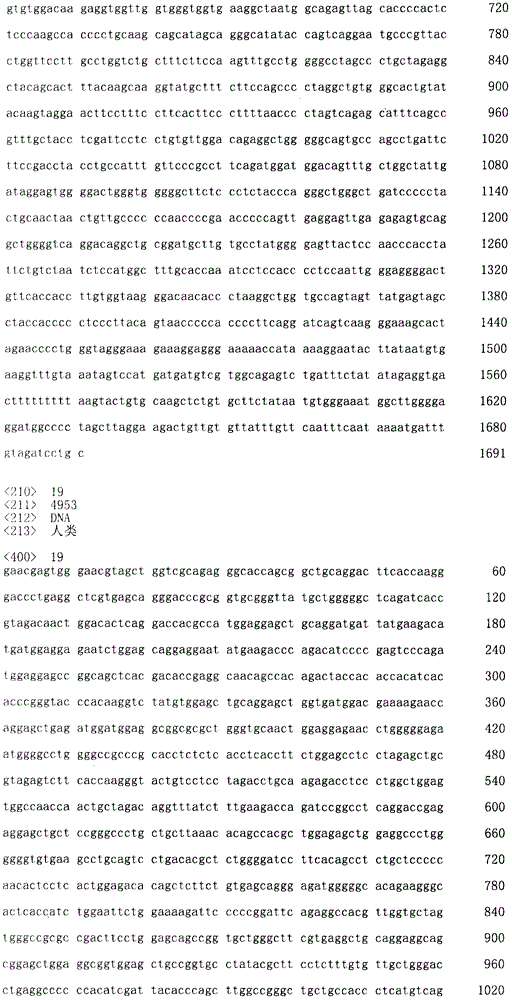


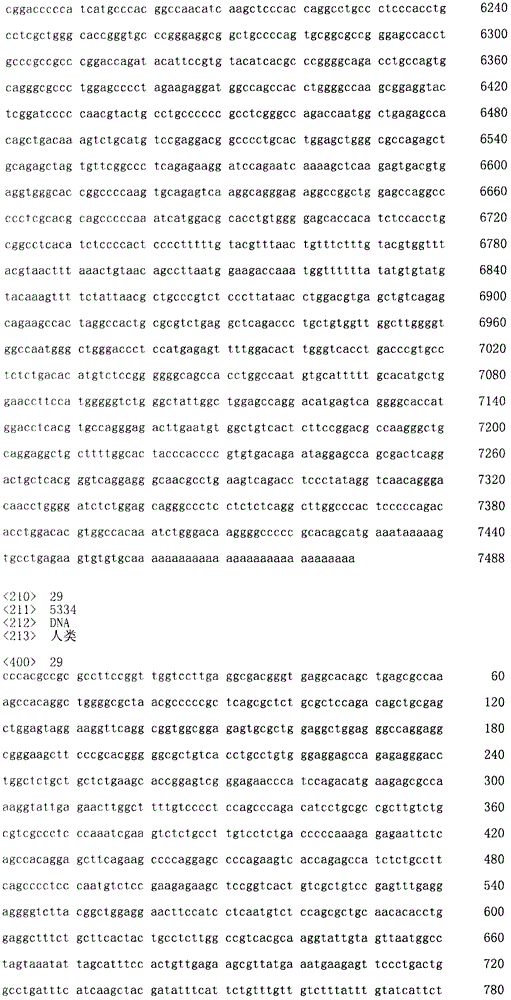


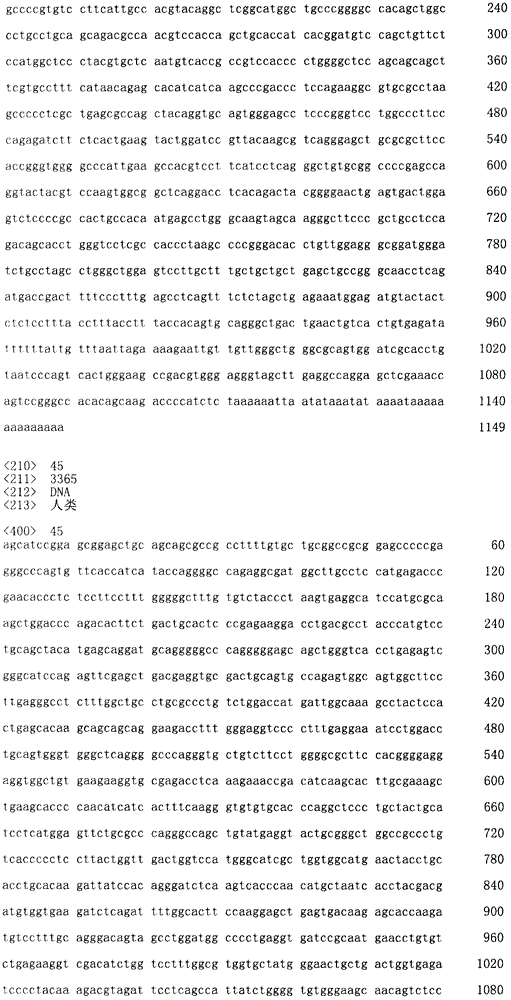


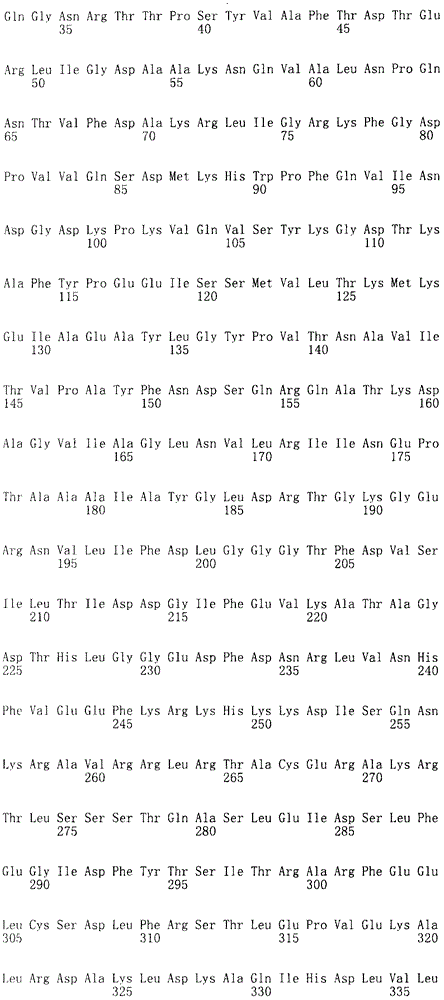


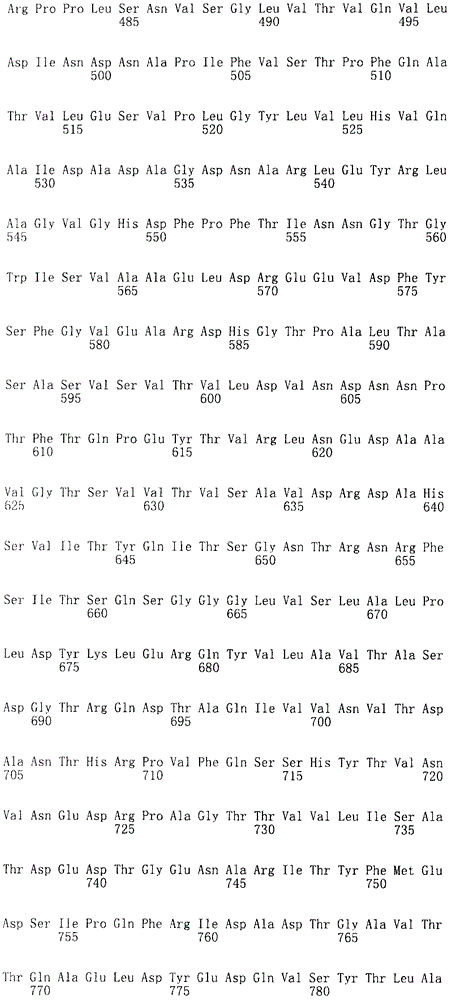


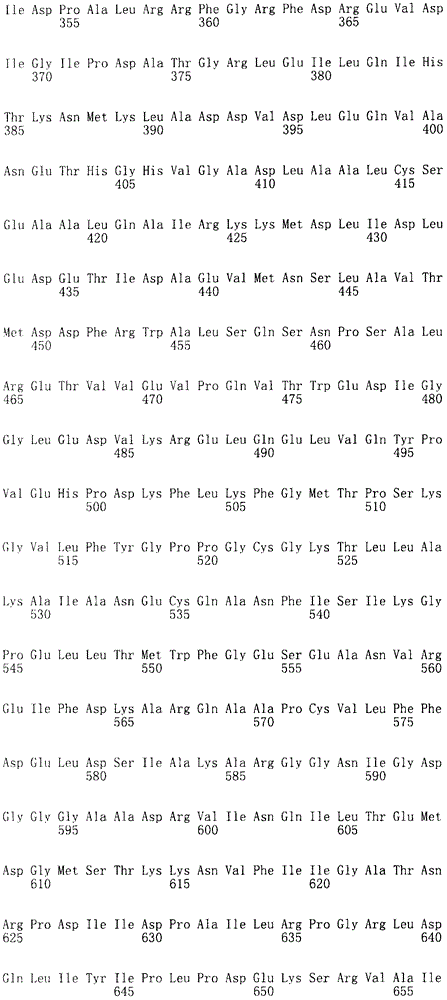


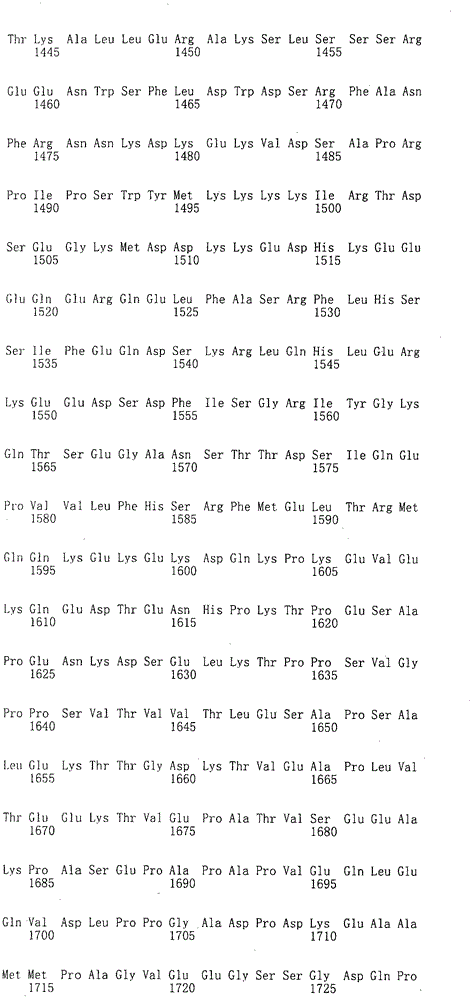
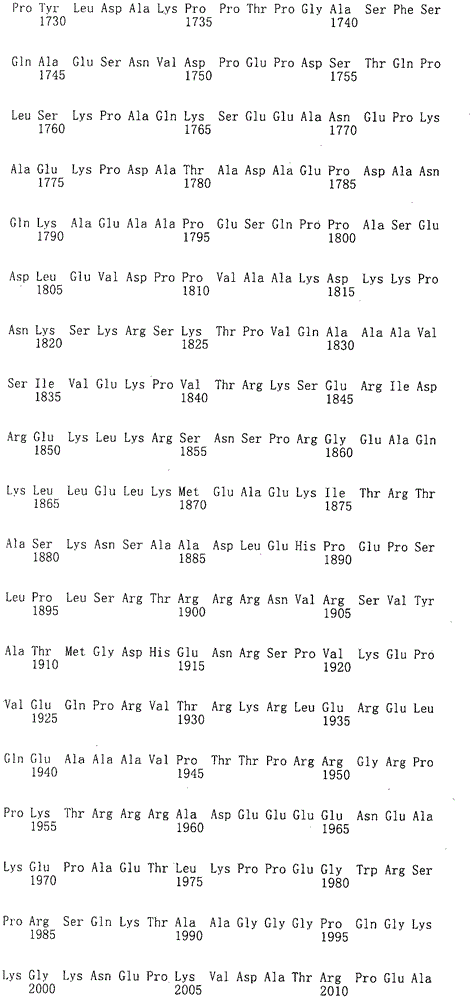


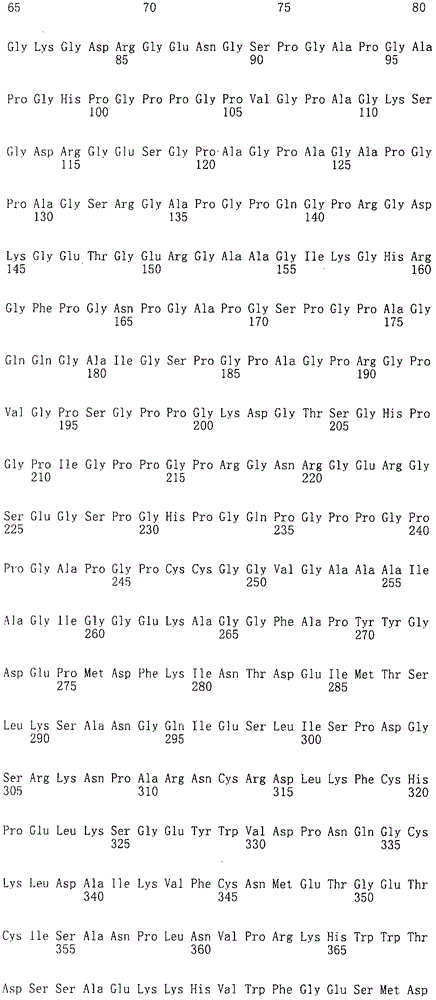


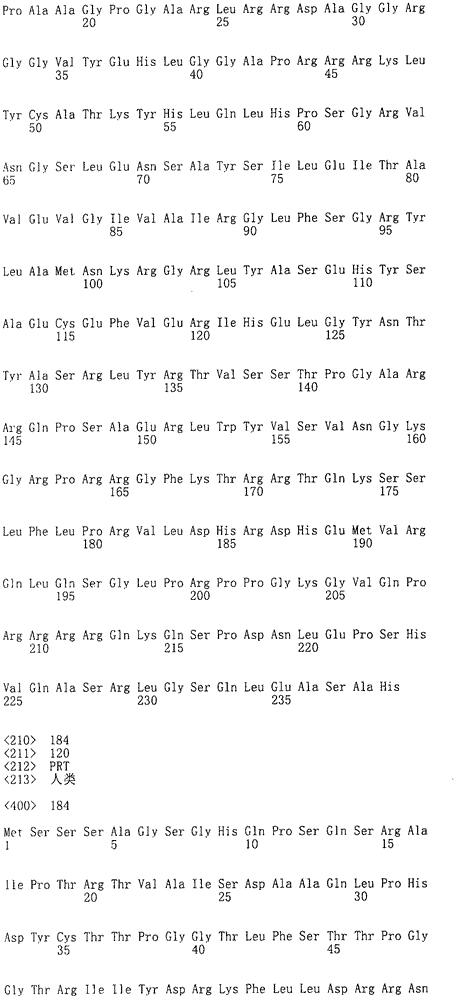


Claims (9)
Applications Claiming Priority (3)
| Application Number | Priority Date | Filing Date | Title |
|---|---|---|---|
| JP2008133491 | 2008-05-21 | ||
| JP2008-133491 | 2008-05-21 | ||
| PCT/JP2009/059323 WO2009142257A1 (en) | 2008-05-21 | 2009-05-21 | Composition and method for determination of esophageal cancer |
Related Child Applications (1)
| Application Number | Title | Priority Date | Filing Date |
|---|---|---|---|
| CN201310407690.8A Division CN103540657A (en) | 2008-05-21 | 2009-05-21 | Composition and method for determination of esophageal cancer |
Publications (2)
| Publication Number | Publication Date |
|---|---|
| CN102089428A CN102089428A (en) | 2011-06-08 |
| CN102089428B true CN102089428B (en) | 2013-11-13 |
Family
ID=41340184
Family Applications (2)
| Application Number | Title | Priority Date | Filing Date |
|---|---|---|---|
| CN2009801269313A Expired - Fee Related CN102089428B (en) | 2008-05-21 | 2009-05-21 | Composition and method for determination of esophageal cancer |
| CN201310407690.8A Pending CN103540657A (en) | 2008-05-21 | 2009-05-21 | Composition and method for determination of esophageal cancer |
Family Applications After (1)
| Application Number | Title | Priority Date | Filing Date |
|---|---|---|---|
| CN201310407690.8A Pending CN103540657A (en) | 2008-05-21 | 2009-05-21 | Composition and method for determination of esophageal cancer |
Country Status (7)
| Country | Link |
|---|---|
| US (1) | US8945849B2 (en) |
| EP (1) | EP2295564A4 (en) |
| JP (1) | JPWO2009142257A1 (en) |
| KR (1) | KR20110034602A (en) |
| CN (2) | CN102089428B (en) |
| CA (1) | CA2726736A1 (en) |
| WO (1) | WO2009142257A1 (en) |
Families Citing this family (16)
| Publication number | Priority date | Publication date | Assignee | Title |
|---|---|---|---|---|
| JP6026408B2 (en) * | 2011-04-25 | 2016-11-16 | 東レ株式会社 | Composition and method for predicting therapeutic sensitivity to trastuzumab in breast cancer patients |
| WO2013033609A2 (en) * | 2011-08-31 | 2013-03-07 | Oncocyte Corporation | Methods and compositions for the treatment and diagnosis of cancer |
| CN103901196B (en) * | 2013-05-07 | 2016-04-27 | 上海良润生物医药科技有限公司 | The application of Cystatin S and CYFRA21-1 in preparation diagnosis and indication cancer of the esophagus mark |
| KR102585737B1 (en) * | 2014-06-16 | 2023-10-10 | 국립연구개발법인 고쿠리츠간켄큐센터 | Stomach cancer detection kit or device, and detection method |
| CN105331686B (en) * | 2015-10-21 | 2018-09-21 | 中国科学院生物物理研究所 | The preparation of Myosin9b protein specific antibodies and Myosin9b gene families change the application in diagnosing tumor and prognosis |
| WO2017138627A1 (en) * | 2016-02-10 | 2017-08-17 | 公立大学法人福島県立医科大学 | Method for differentiating contraction of esophageal basaloid carcinoma |
| KR101889764B1 (en) * | 2016-07-29 | 2018-08-20 | 충남대학교 산학협력단 | Composition and kit for diagnosing gastrointestinal cancer comprising Rbfox2 antibody as effective component and |
| CA3115374A1 (en) * | 2017-10-12 | 2019-04-18 | Keio University | Anti aqp3 monoclonal antibody specifically binding to extracellular domain of aquaporin 3 (aqp3) and use thereof |
| WO2020168111A1 (en) | 2019-02-15 | 2020-08-20 | Exhaura, Ltd. | Dual leucine zipper kinase inhibitors for gene therapy |
| KR102238594B1 (en) * | 2019-06-07 | 2021-04-08 | 한양대학교 산학협력단 | Pharmaceutical composition for preventing or treating squamos cell carcinoma containing expression inhibitor of HERES |
| CN110938130B (en) * | 2019-11-08 | 2021-07-09 | 上海交通大学 | A kind of biologically active polypeptide RVFQPLPHENKPLTL and its preparation method and application |
| CN113151288B (en) * | 2021-02-26 | 2022-07-22 | 广州市妇女儿童医疗中心 | Mutated HoxA10 gene and its application |
| CN117624343B (en) * | 2023-12-06 | 2024-05-10 | 广西福莱明生物制药有限公司 | Recombinant I-type humanized collagen, wound repair composition and application thereof |
| CN117756925B (en) * | 2023-12-26 | 2024-09-13 | 广东普言生物科技有限公司 | A recombinant elastin Pro.ELP and its preparation method and application |
| CN118652982B (en) * | 2024-07-11 | 2025-06-24 | 承德医学院附属医院 | Use of TROAP in the diagnosis and treatment of colorectal cancer |
| CN119257972B (en) * | 2024-11-22 | 2025-10-10 | 广东丸美生物技术股份有限公司 | Application of recombinant collagen in the preparation of preparations for increasing the expression of genes related to proliferation of skin fibroblasts |
Citations (3)
| Publication number | Priority date | Publication date | Assignee | Title |
|---|---|---|---|---|
| WO2001074405A1 (en) * | 2000-03-31 | 2001-10-11 | Gene Logic, Inc. | Gene expression profiles in esophageal tissue |
| CN1618985A (en) * | 2003-11-21 | 2005-05-25 | 中国医学科学院肿瘤医院肿瘤研究所 | A new esophageal cancer marker gene RPL14 and its application |
| CN1223677C (en) * | 1999-08-10 | 2005-10-19 | 中国医学科学院肿瘤医院肿瘤研究所 | Esophagus cancer related gene |
Family Cites Families (15)
| Publication number | Priority date | Publication date | Assignee | Title |
|---|---|---|---|---|
| US5990299A (en) * | 1995-08-14 | 1999-11-23 | Icn Pharmaceuticals, Inc. | Control of CD44 gene expression for therapeutic use |
| NZ333075A (en) | 1996-05-30 | 2000-05-26 | Univ Michigan | isolated protein markers for use in diagnosing esophageal cancer |
| JP2001017200A (en) | 1999-07-12 | 2001-01-23 | Sumitomo Electric Ind Ltd | Diagnosis of lymph node metastasis in esophageal cancer by detecting chromosomal abnormalities |
| US20040170977A1 (en) | 2000-03-31 | 2004-09-02 | Peter Laird | Epigenetic sequences for esophageal adenocarcinoma |
| JP2002272497A (en) | 2001-03-15 | 2002-09-24 | Venture Link Co Ltd | Method for diagnosing cancer and diagnostic vector therefor |
| WO2003042661A2 (en) | 2001-11-13 | 2003-05-22 | Protein Design Labs, Inc. | Methods of diagnosis of cancer, compositions and methods of screening for modulators of cancer |
| JP2003259872A (en) | 2002-03-07 | 2003-09-16 | Japan Science & Technology Corp | Human esophageal cancer antigen peptide and esophageal cancer diagnostic method |
| CN101080499A (en) | 2002-03-07 | 2007-11-28 | 约翰霍普金斯大学 | Genomic screen for epigenetically silenced tumor suppressor genes |
| US7537894B2 (en) * | 2005-03-02 | 2009-05-26 | The University Of Chicago | Methods and kits for monitoring Barrett's metaplasia |
| US20070026424A1 (en) * | 2005-04-15 | 2007-02-01 | Powell Charles A | Gene profiles correlating with histology and prognosis |
| WO2006118308A1 (en) * | 2005-05-02 | 2006-11-09 | Toray Industries, Inc. | Composition and method for diagnosing esophageal cancer and metastasis of esophageal cancer |
| JP2008541701A (en) | 2005-05-04 | 2008-11-27 | ユニヴァーシティ オブ サウス フロリダ | Predicting treatment response in cancer subjects |
| US20070218512A1 (en) * | 2006-02-28 | 2007-09-20 | Alex Strongin | Methods related to mmp26 status as a diagnostic and prognostic tool in cancer management |
| JP2008133491A (en) | 2006-11-27 | 2008-06-12 | Japan Atomic Energy Agency | Electrode for use in electrolysis of sulfurous acid and apparatus for producing hydrogen through electrolysis of sulfurous acid by using the same |
| WO2009108706A2 (en) * | 2008-02-25 | 2009-09-03 | The Regents Of The University Of Colorado, A Body Corporate | Methods for inhibiting six 1 and eya proteins |
-
2009
- 2009-05-21 CA CA2726736A patent/CA2726736A1/en not_active Abandoned
- 2009-05-21 JP JP2010513052A patent/JPWO2009142257A1/en active Pending
- 2009-05-21 CN CN2009801269313A patent/CN102089428B/en not_active Expired - Fee Related
- 2009-05-21 EP EP09750619A patent/EP2295564A4/en not_active Withdrawn
- 2009-05-21 WO PCT/JP2009/059323 patent/WO2009142257A1/en not_active Ceased
- 2009-05-21 US US12/993,792 patent/US8945849B2/en not_active Expired - Fee Related
- 2009-05-21 KR KR1020107028629A patent/KR20110034602A/en not_active Ceased
- 2009-05-21 CN CN201310407690.8A patent/CN103540657A/en active Pending
Patent Citations (3)
| Publication number | Priority date | Publication date | Assignee | Title |
|---|---|---|---|---|
| CN1223677C (en) * | 1999-08-10 | 2005-10-19 | 中国医学科学院肿瘤医院肿瘤研究所 | Esophagus cancer related gene |
| WO2001074405A1 (en) * | 2000-03-31 | 2001-10-11 | Gene Logic, Inc. | Gene expression profiles in esophageal tissue |
| CN1618985A (en) * | 2003-11-21 | 2005-05-25 | 中国医学科学院肿瘤医院肿瘤研究所 | A new esophageal cancer marker gene RPL14 and its application |
Also Published As
| Publication number | Publication date |
|---|---|
| US20110098185A1 (en) | 2011-04-28 |
| WO2009142257A1 (en) | 2009-11-26 |
| CN102089428A (en) | 2011-06-08 |
| US8945849B2 (en) | 2015-02-03 |
| JPWO2009142257A1 (en) | 2011-09-29 |
| CN103540657A (en) | 2014-01-29 |
| EP2295564A4 (en) | 2011-08-10 |
| KR20110034602A (en) | 2011-04-05 |
| CA2726736A1 (en) | 2009-11-26 |
| EP2295564A1 (en) | 2011-03-16 |
Similar Documents
| Publication | Publication Date | Title |
|---|---|---|
| CN102089428B (en) | Composition and method for determination of esophageal cancer | |
| EP2430193B1 (en) | Markers for detection of gastric cancer | |
| JP5219029B2 (en) | Composition and method for diagnosis of esophageal cancer and esophageal cancer metastasis | |
| KR101566368B1 (en) | Urine gene expression ratios for detection of cancer | |
| WO2007026896A1 (en) | Composition and method for diagnosing kidney cancer and estimating kidney cancer patient’s prognosis | |
| KR101054952B1 (en) | UCCR, a marker for diagnosing liver cancer and predicting patient survival, a kit including the same, and prediction of liver cancer patient survival using the marker | |
| EP2669384B1 (en) | Method for evaluating the presence of rheumatoid arthritis and biomarker set used in the same | |
| CN113862357A (en) | Product for predicting sensitivity of rectal cancer to preoperative chemoradiotherapy combined total rectal resection based on biomarkers and application of product | |
| KR101345374B1 (en) | Marker for classifying substage of stage 1 lung cancer patient, kit comprising primer for the marker, microarray comprising the marker or antibody against the marker, and method for classifying substage of stage 1 lung cancer patient | |
| KR101054953B1 (en) | SNP 14, a molecule for diagnosing and treating liver cancer, and a kit comprising the same | |
| JP2009065969A (en) | Composition and method for determining intraperitoneal metastasis of gastric cancer | |
| JP2009065969A5 (en) | ||
| KR20100086362A (en) | Apoa1, the markers for diagnosing hepatocellular carcinoma and a kit using the marker | |
| JP2010000041A (en) | Composition and method for determining metastasis of esophageal cancer | |
| NZ577012A (en) | Human zymogen granule protein 16 as a marker for detection of gastric cancer |
Legal Events
| Date | Code | Title | Description |
|---|---|---|---|
| C06 | Publication | ||
| PB01 | Publication | ||
| C10 | Entry into substantive examination | ||
| SE01 | Entry into force of request for substantive examination | ||
| C14 | Grant of patent or utility model | ||
| GR01 | Patent grant | ||
| CF01 | Termination of patent right due to non-payment of annual fee | ||
| CF01 | Termination of patent right due to non-payment of annual fee |
Granted publication date: 20131113 Termination date: 20160521 |