CN102073377A - Man-machine interactive type two-dimensional locating method based on human eye-glanced signal - Google Patents
Man-machine interactive type two-dimensional locating method based on human eye-glanced signal Download PDFInfo
- Publication number
- CN102073377A CN102073377A CN 201010617004 CN201010617004A CN102073377A CN 102073377 A CN102073377 A CN 102073377A CN 201010617004 CN201010617004 CN 201010617004 CN 201010617004 A CN201010617004 A CN 201010617004A CN 102073377 A CN102073377 A CN 102073377A
- Authority
- CN
- China
- Prior art keywords
- prime
- signal
- overbar
- model
- sigma
- Prior art date
- Legal status (The legal status is an assumption and is not a legal conclusion. Google has not performed a legal analysis and makes no representation as to the accuracy of the status listed.)
- Granted
Links
Images



Landscapes
- Eye Examination Apparatus (AREA)
Abstract
本发明公开了一种基于人眼扫视信号的人机交互式二维定位方法,通过对多次重复实验所检测EOG数据进行特征提取与识别,揭示眼球运动角度和EOG统计信号特征之间的映射规律,构建基于EOG信号二维平面目标定位基本模型,同时在实际应用中考虑被试个体差异对基本定位模型进行参数修正,能够快速得到适用于每个被试的实际定位模型;模型构建中采用端点检测技术来实现测量信号的实时在线检测,为在线交互式系统的实现奠定了基础;通过一定的现场标定方法可以快速建立人眼与仿生机械臂之间的坐标转换关系;该系统实现了人眼、仿生机械臂的交互式二维精确位置控制。The invention discloses a human-computer interactive two-dimensional positioning method based on human eye saccade signals, which reveals the mapping between eyeball movement angles and EOG statistical signal features by performing feature extraction and identification on EOG data detected by repeated experiments According to the law, the basic model of two-dimensional plane target positioning based on the EOG signal is constructed. At the same time, in the actual application, the parameters of the basic positioning model are corrected by considering the individual differences of the subjects, and the actual positioning model suitable for each subject can be quickly obtained; the model is constructed using The endpoint detection technology is used to realize the real-time online detection of the measurement signal, which lays the foundation for the realization of the online interactive system; through a certain on-site calibration method, the coordinate transformation relationship between the human eye and the bionic robot arm can be quickly established; the system realizes the human Interactive two-dimensional precise position control of eyes and bionic manipulators.
Description
技术领域technical field
本发明属于生物医学和信息学交叉领域,具体说就是基于人眼扫视信号的人机交互式二维精确定位方法。The invention belongs to the interdisciplinary fields of biomedicine and informatics, and specifically relates to a human-computer interactive two-dimensional precise positioning method based on human eye saccade signals.
背景技术Background technique
假肢能够辅助残疾人完成更多的工作,对他们进行正常的生活和更好地融入社会起到重要作用,为了实现智能假肢的自然控制,不仅要从人体生物信息中获取控制任务,而且还需要控制过程中机械臂的位置反馈;而眼电图(EOG)是目前唯一一种产生于生物电的眼球运动记录技术,它可以作为人机交互中的输入指令为仿生机械臂提供精确定位。Prosthetics can assist the disabled to complete more work, and play an important role in their normal life and better integration into society. In order to realize the natural control of intelligent prosthetics, it is not only necessary to obtain control tasks from human biological information, but also to The position feedback of the robotic arm during the control process; and the electrooculogram (EOG) is currently the only eye movement recording technology generated from bioelectricity, which can be used as an input command in human-computer interaction to provide precise positioning for the bionic robotic arm.
人眼是一个双极性球体,角膜相对于视网膜呈正电位,视网膜相对于角膜呈负电位,当人眼自然平时前方时有一个基准电位,而当眼球作扫视运动时,角膜、视网膜间会产生电位差从而产生眼电图(electro-oculogram,EOG),EOG信号不可避免地会叠加肌电(EMG)、脑电(EEG)以及皮肤电压信号,但通过适当的带通滤波仍可得出:人眼扫视电位差与眼球转动角度存在一定数学关系;由于EOG信号容易采集,且信噪比较高,可以通过放置在眼眶周围的电极直接检测到。尽管EOG信号容易检测,但也不可避免的存在以下问题:The human eye is a bipolar sphere, the cornea has a positive potential relative to the retina, and the retina has a negative potential relative to the cornea. When the human eye is naturally forward, there is a reference potential, and when the eyeball performs a saccade movement, there will be a gap between the cornea and the retina. The potential difference produces an electro-oculogram (EOG), and the EOG signal will inevitably superimpose the electromyography (EMG), electroencephalogram (EEG) and skin voltage signals, but it can still be obtained through appropriate band-pass filtering: There is a certain mathematical relationship between the saccadic potential difference of the human eye and the eyeball rotation angle; since the EOG signal is easy to collect and has a high signal-to-noise ratio, it can be directly detected by electrodes placed around the orbit. Although the EOG signal is easy to detect, the following problems are inevitable:
1.现有的EOG研究主要集中在水平方向上,由于受眼睑运动伪差和眨眼的影响,垂直方向上眼动的研究很少,虽然眼电信号特征提取与识别算法易于实现,但存在检测正确率低,在噪声环境下鲁棒性差的缺点。1. The existing EOG research mainly focuses on the horizontal direction. Due to the influence of eyelid movement artifacts and blinking, there are few studies on eye movement in the vertical direction. The shortcomings of low accuracy and poor robustness in noisy environments.
2.由EOG信号的特点和被试个体差异可知在EOG角度辨识实验中很难建立一个普遍适用的眼球转动角度和扫视电位差之间的对应关系。2. According to the characteristics of EOG signal and the individual differences of the subjects, it is difficult to establish a universally applicable correspondence between the eyeball rotation angle and the saccade potential difference in the EOG angle recognition experiment.
3.EOG信号存在个体差异,基于EOG扫视信号的二维精确定位较为困难,人眼、仿生机械臂交互式定位系统国内未见类似研究。3. There are individual differences in EOG signals. It is difficult to accurately locate two-dimensionally based on EOG saccade signals. There is no similar research on the interactive positioning system of human eyes and bionic manipulators in China.
发明内容Contents of the invention
本发明是为避免上述现有技术存在的问题所提出的一种新颖的基于人眼扫视信号的人机交互式二维定位方法;The present invention is a novel human-computer interactive two-dimensional positioning method based on human-eye saccade signals proposed in order to avoid the problems existing in the above-mentioned prior art;
本发明通过如下技术方案实现:The present invention realizes through following technical scheme:
包括眼电信号预处理,人眼扫视定位模型建立以及人眼、仿生机械臂坐标系快速标定三个阶段:Including oculoelectric signal preprocessing, establishment of human eye saccade positioning model and rapid calibration of human eye and bionic robot arm coordinate system in three stages:
1)眼电信号预处理阶段是对眼电信号进行带通滤波和端点检测;包括以下步骤:所述眼电信号预处理阶段的带通滤波截止频率为0.1Hz-10Hz;1) The electrooculogram signal preprocessing stage is to perform bandpass filtering and endpoint detection on the electrooculogram signal; including the following steps: the bandpass filtering cutoff frequency of the electrooculogram signal preprocessing stage is 0.1Hz-10Hz;
对滤波后的眼电信号进行端点检测,检测扫视动作发生对应的眼电信号的起始点和终止点,端点检测步骤主要包括信号分帧和求取短时能量两部分,其中信号分帧是将连续的眼电信号转换为多段短时信号,进而对分帧后的短时信号求短时能量;Perform endpoint detection on the filtered electro-oculogram signal to detect the start point and end point of the electro-oculogram signal corresponding to the saccade action. The endpoint detection step mainly includes two parts: signal framing and short-term energy calculation. The continuous electro-oculogram signal is converted into a multi-segment short-term signal, and then the short-term energy is calculated for the short-term signal after framing;
2)人眼扫视基本定位模型建立是基于多次扫视实验的统计数据经线性拟合得到的,具体实验步骤如下:2) The establishment of the basic positioning model of human eye saccade is obtained by linear fitting based on the statistical data of multiple saccade experiments. The specific experimental steps are as follows:
a、训练a. Training
a1、将眼电导连分别放置在双眼外眦10mm处并采用相对参考来检测水平扫视信号,上下导连距瞳孔30mm对称分布采用相对参考来检测垂直扫视信号;a1. Place the eye conductance cables at 10 mm from the outer canthus of both eyes and use relative references to detect horizontal saccade signals. The upper and lower leads are symmetrically distributed at 30 mm from the pupil and use relative references to detect vertical saccade signals;
a2、统计不同被试重复做已知角度扫视所对应峰值差,寻找角度与扫视信号峰值差之间的对应关系,建立基本定位模型;a2. Count the peak difference corresponding to repeated saccades of known angles by different subjects, find the corresponding relationship between the angle and the peak difference of the saccade signal, and establish a basic positioning model;
所述基本定位模型中,人眼扫视信号峰值差与对应扫视角度呈线性关系(h表示水平方向,v表示垂直方向);In the basic positioning model, the human eye glance signal peak difference is linearly related to the corresponding glance angle (h represents the horizontal direction, and v represents the vertical direction);
Uh=khθh+bh Uv=kvθv+bv U h =k h θ h +b h U v =k v θ v +b v
b、模型匹配b. Model matching
所述基本定位模型基于大量被试统计数据得出,单个被试具体实验时需根据至少三个已知角度扫视来对单次定位模型进行归一化,将定位模型统一到基本模型中:The basic positioning model is obtained based on the statistical data of a large number of subjects. During the specific experiment of a single subject, it is necessary to normalize the single positioning model according to at least three known angle glances, and unify the positioning model into the basic model:
3)人眼、仿生机械臂坐标系快速标定采用基于奇异值分解(SVD)的坐标转换算法;包括以下步骤:3) The rapid calibration of the coordinate system of the human eye and the bionic manipulator adopts a coordinate transformation algorithm based on Singular Value Decomposition (SVD); it includes the following steps:
采用基于奇异值分解(SVD)的坐标转换算法,先将待标定点在两个坐标系下的坐标重心化以移除坐标平移向量T以简化参数模型:Using the coordinate transformation algorithm based on Singular Value Decomposition (SVD), the coordinates of the points to be calibrated in the two coordinate systems are first centered to remove the coordinate translation vector T to simplify the parameter model:

构建最小化目标函数:Construct the minimization objective function:
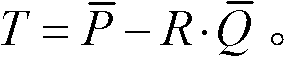
令将J的进行奇异值分解:J=U∧VT,可得出最优旋转矩阵R=VUT,最后求解平移向量:
得到旋转矩阵R和平移向量T后,人眼、仿生机械臂坐标系关系唯一确定。After obtaining the rotation matrix R and the translation vector T, the coordinate system relationship between the human eye and the bionic manipulator is uniquely determined.
本发明通过现场快速标定就可以建立人眼、机械手交互式二维定位系统。The present invention can establish an interactive two-dimensional positioning system for human eyes and manipulators through on-site rapid calibration.
附图说明Description of drawings
图1为本发明的总体技术路线图。Fig. 1 is the overall technical roadmap of the present invention.
图2为本发明的眼电极接线示意图。Fig. 2 is a schematic diagram of eye electrode wiring in the present invention.
图3为人眼扫视信号的AR谱图。Fig. 3 is the AR spectrogram of the human eye saccade signal.
图4为人眼扫视信号二维定位图。Fig. 4 is a two-dimensional positioning map of human eye saccade signals.
图5为基本模型修正示意图。Figure 5 is a schematic diagram of the basic model correction.
以下通过具体实施方式,结合附图对本发明做进一步说明。The present invention will be further described below through specific embodiments in conjunction with the accompanying drawings.
具体实施方式Detailed ways
参见图1的总体技术路线图可知本发明基于三部分来实现,分别是眼电信号特征提取、EOG扫视信号二维平面定位模型建立以及交互式系统构建;其中眼电信号特征提取主要是对实验测得的扫视信号进行带通滤波、端点检测等操作,以消除噪声干扰,实时检测扫视信号波形,提取扫视信号峰值,实现信号的在线处理;实时得到单次实验下不同扫视角度对应的扫视信号峰值后就可以根据实测峰值差对已建立模型进行归一化修正,实现二维精确定位;基于EOG二维定位模型可以通过一种快速标定方法标定出人眼坐标系和仿生机械手坐标系之间的位置关系,进而建立人眼、仿生机械手交互式二维定位系统。Referring to the overall technical roadmap in Fig. 1, it can be seen that the present invention is realized based on three parts, which are respectively the feature extraction of the electrooculogram signal, the establishment of a two-dimensional plane positioning model of the EOG glance signal, and the construction of an interactive system; wherein the electrooculogram signal feature extraction is mainly for the experimental The measured saccade signal is subjected to band-pass filtering, endpoint detection and other operations to eliminate noise interference, real-time detection of the saccade signal waveform, extraction of the peak value of the saccade signal, and online processing of the signal; real-time acquisition of saccade signals corresponding to different saccade angles under a single experiment After the peak value, the established model can be normalized and corrected according to the measured peak value difference to achieve two-dimensional precise positioning; based on the EOG two-dimensional positioning model, a fast calibration method can be used to calibrate the distance between the human eye coordinate system and the bionic manipulator coordinate system. The positional relationship of the human eye and the bionic manipulator are then established to establish an interactive two-dimensional positioning system.
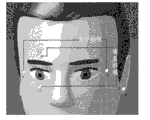
参见图2,本发明具体实验实施中电极采用如下方式贴放;颞侧导连距双眼外眦10mm对称分布用来检测水平扫视信号,上下导连距瞳孔30mm对称分布用来检测垂直扫视信号,左耳设置导连与仪器地相连,导连电极采用相对参考,即A以B为参考,C1以C2为参考,实际检测信号为两两通道电压差值。Referring to Fig. 2, in the concrete experiment implementation of the present invention, the electrodes are pasted in the following manner; the temporal side guides are distributed symmetrically at 10 mm from the outer canthus of both eyes to detect horizontal saccade signals, and the upper and lower guides are distributed symmetrically at 30 mm from the pupil to detect vertical saccade signals. The left ear is connected to the ground of the instrument, and the electrodes of the leads use relative reference, that is, A uses B as a reference, C1 uses C2 as a reference, and the actual detection signal is the voltage difference between the two channels.
对实验检测到的水平和垂直两通道EOG信号进行预处理,由于EMG(肌电)信号可以被频带1-40HZ的带通滤波器滤除,且通过对EOG扫视信号做AR功率谱分析可知扫视信号能量主要集中在低频部分(<10Hz)参见图3,因此在信号预处理阶段选取带通滤波器的截止频率为1-10Hz;端点检测是检测扫视动作发生时所对应的眼电信号起始点和终止点,因为被试只做扫视和眨眼动作,因此通过对检测眼电信号合理分帧,对分帧后的短时信号求短时能量,并检测信号过零率,设置恰当门限可以以较高的正确率检测出扫视信号和眨眼信号。Preprocess the horizontal and vertical two-channel EOG signals detected in the experiment. Since the EMG (myoelectricity) signal can be filtered out by a band-pass filter with a frequency band of 1-40HZ, and the AR power spectrum analysis of the EOG saccade signal shows that the saccade The signal energy is mainly concentrated in the low-frequency part (<10Hz), see Figure 3, so in the signal preprocessing stage, the cut-off frequency of the band-pass filter is selected as 1-10Hz; the endpoint detection is to detect the starting point of the oculoelectric signal corresponding to the occurrence of the saccade and the end point, because the subjects only do saccades and blinks, so by reasonably subdividing the detection oculoelectric signal into frames, calculating the short-term energy of the sub-framed short-term signals, and detecting the zero-crossing rate of the signal, setting an appropriate threshold can be The high correct rate detects the saccade signal and the eye blink signal.
通过在被试眼周围合理贴电极的方式来记录扫视动作发生时的EOG信号,由于EOG信号易受肌电、脑电以及皮肤电压信号的干扰,且当眼球转动角度较小时,EOG信号的信噪比降低,相关波形提取变得困难,识别准确率降低,目前2°的目标分布间隔在国际上是普遍接受的,因此待扫视目标在人眼瞳距中央距扫视平面位置已知的情况下以2°为间隔等角度分布;人眼生理构造决定了水平扫视范围大于垂直扫视,因此,本发明某此具体实验中目标水平分布范围为±20°,垂直分布范围为±14°。不同被试多次重复扫视各个角度目标得到的EOG峰值差数据进行统计分析,得到水平、垂直角度和扫视信号峰值差的对应关系,在MATLAB中采用最小二乘法对数据进行拟合,得到精确的数学模型,其中下标h表示水平方向定位模型,下标v表示垂直方向定位模型:The EOG signal when the saccade action occurs is recorded by reasonably sticking electrodes around the eyes of the subject. Since the EOG signal is easily interfered by the EMG, EEG and skin voltage signals, and when the eyeball rotation angle is small, the signal of the EOG signal The noise ratio is reduced, the relevant waveform extraction becomes difficult, and the recognition accuracy rate is reduced. At present, the target distribution interval of 2° is generally accepted internationally. Take 2 ° as intervals and equiangular distribution; the physiological structure of human eyes determines that the range of horizontal saccades is greater than that of vertical saccades. Therefore, in a specific experiment of the present invention, the target horizontal distribution range is ±20°, and the vertical distribution range is ±14°. Statistical analysis was performed on the EOG peak difference data obtained by different subjects repeatedly scanning targets at various angles to obtain the corresponding relationship between horizontal and vertical angles and the peak difference of scanning signals. The least square method was used to fit the data in MATLAB to obtain accurate Mathematical model, where the subscript h represents the horizontal positioning model, and the subscript v represents the vertical positioning model:
参见图4,人眼瞳距中央距扫视平面的距离D是事先标定好的,当水平、垂直角度已知时,目标点A唯一确定。Referring to Fig. 4, the distance D between the center of the human eye pupil and the scanning plane is calibrated in advance, and the target point A is uniquely determined when the horizontal and vertical angles are known.
该数学模型是基于不同被试多次重复实验的统计数据得到的基本模型,具有一定的稳定性与普遍适用性;参见图5,当某个被试个体进行不同角度扫视的单次实验时,所得定位模型并非与理想模型完全相同,假设被试某次实验所得定位模型为:This mathematical model is a basic model based on the statistical data of repeated experiments of different subjects, which has certain stability and universal applicability; see Figure 5, when an individual subject performs a single experiment of saccades from different angles, The obtained positioning model is not exactly the same as the ideal model, assuming that the positioning model obtained by the subject in an experiment is:
Uh=21.05θh+49.59 Uv=23.18θv+57.08U h =21.05θ h +49.59 U v =23.18θ v +57.08
引入参数矩阵A、B对该被试实际定位模型做归一化处理将其统一到基本定位模型中:Introduce parameter matrices A and B to normalize the actual positioning model of the subject to unify it into the basic positioning model:
该模型与理想模型之间存在偏差,应用归一化参数对该模型做归一化处理将实际模型修正为具有较强鲁棒性的理性模型,经计算得出归一化矩阵为:There is a deviation between the model and the ideal model, and the normalization parameters are used to normalize the model to modify the actual model to a rational model with strong robustness. The normalization matrix is calculated as follows:
建立了基本定位模型后,通过人眼、机械手坐标系快速标定就可以将人眼坐标系下的坐标点转换到机械手坐标系下通过一定的控制程序控制机械手动作;具体标定过程如下:After the basic positioning model is established, the coordinate points in the human eye coordinate system can be converted to the manipulator coordinate system through the quick calibration of the human eye and manipulator coordinate system, and the manipulator action can be controlled through a certain control program; the specific calibration process is as follows:
根据坐标系转换关系:Transform the relationship according to the coordinate system:
参见图6,适当选取一定数目的标定点,人眼坐标系下的标定点坐标可以通过被试做目标扫视检测EOG信号峰值差,在瞳距中央距扫视平面距离已知的情况下,根据定位模型反向推算出目标定位点在人眼坐标系下的水平、垂直角度,进而计算出坐标值,机械手坐标系下对应标定点的坐标值可以通过机械手测量系统触碰测量得到;本发明中选取1组实际标定数据来说明标定过程;实际标定点位置选取以及对应位置在人眼、机械手坐标系下坐标如下表所列,根据标定点在两个坐标系下的坐标值就可以按照算法流程在MATLAB中编制程序得到人眼、机械手坐标系之间的转换关系:Referring to Figure 6, a certain number of calibration points are properly selected, and the coordinates of the calibration points in the human eye coordinate system can detect the peak difference of the EOG signal through the subject's saccade. The model reversely calculates the horizontal and vertical angles of the target positioning point in the human eye coordinate system, and then calculates the coordinate value. The coordinate value of the corresponding calibration point in the manipulator coordinate system can be obtained by touching and measuring the manipulator measurement system; 1 set of actual calibration data to illustrate the calibration process; the selection of the actual calibration point position and the coordinates of the corresponding position in the coordinate system of the human eye and the manipulator are listed in the following table. According to the coordinate values of the calibration point in the two coordinate systems, the algorithm flow can be Compile the program in MATLAB to obtain the conversion relationship between the coordinate system of the human eye and the manipulator:
组1:Group 1:
R1=[0.98480855962931-0.17364200519791-0.00074492394740R1=[0.98480855962931-0.17364200519791-0.00074492394740
0.173643603005310.984799596596240.004201628161580.173643603005310.984799596596240.00420162816158
0.00000402166382-0.004267150656100.99999089566311];0.00000402166382-0.004267150656100.99999089566311];
T1=[1.0e+002*T1=[1.0e+002*
8.423987475721958.42398747572195
1.118530970892171.11853097089217
0.14947836479515]0.14947836479515]
根据所得旋转矩阵和平移矩阵参数可以快速建立起了人眼、仿生机械臂之间的坐标关系,真正实现了人机二维交互式定位,实现了基于人眼扫视信号的仿生机械臂位置反馈。According to the obtained rotation matrix and translation matrix parameters, the coordinate relationship between the human eye and the bionic manipulator can be quickly established, truly realizing the two-dimensional interactive positioning of man and machine, and realizing the position feedback of the bionic manipulator based on the saccade signal of the human eye.
人眼的运动有多种方式,其中,用于快速从一点定位到另一点的运动称为扫视运动,根据人眼生理构造,角膜和视网膜之间存在静息电位,当眼球做扫视运动时,角膜和视网膜之间会产生电位差,通过在眼睛周围贴电极的方式可以很容易检测到该电位,且该电位与眼球转动角度存在一定数学关系,本发明在研究眼球转动角度和EOG电位差之间对应关系进一步得到二维平面定位信息时采用了以下三个部分。There are many ways to move the human eye. Among them, the movement used to quickly locate from one point to another is called saccade movement. According to the physiological structure of the human eye, there is a resting potential between the cornea and the retina. When the eyeball performs a saccade movement, There will be a potential difference between the cornea and the retina, which can be easily detected by sticking electrodes around the eyes, and there is a certain mathematical relationship between the potential and the eyeball rotation angle. The following three parts are used to further obtain the two-dimensional plane positioning information from the corresponding relationship between them.
1)眼电信号预处理:通过实际绘制扫视信号谱图以及研究EOG噪声信号频带,确定合适的滤波器频带最大限度提高扫视信号信噪比,增加识别率;采用端点检测技术检测扫视动作发生时所对应的眼电信号起始点和终止点,实时检测扫视信号,提取信号峰值差,实现眼电扫视信号的在线检测。1) Preprocessing of oculoelectric signals: by actually drawing the saccade signal spectrum and studying the EOG noise signal frequency band, determine the appropriate filter frequency band to maximize the signal-to-noise ratio of the saccade signal and increase the recognition rate; use the endpoint detection technology to detect when the saccade action occurs The corresponding start point and end point of the electro-oculogram signal detects the saccade signal in real time, extracts the peak value difference of the signal, and realizes the online detection of the electro-oculogram signal.
2)基于EOG扫视信号的二维平面目标定位2) Two-dimensional planar target positioning based on EOG glance signal
基本定位模型是基于理想情况下不同被试多次重复实验得到的大量数据经统计分析后得到的,这在一定程度上代表了EOG扫视信号和目标分布角度的之间的一般规律。The basic positioning model is obtained after statistical analysis based on a large amount of data obtained from repeated experiments by different subjects under ideal conditions, which to a certain extent represents the general law between the EOG saccade signal and the distribution angle of the target.
a)水平扫视定位模型建立:要求被试进行多次重复水平扫视实验,且每次实验完成后以两次眨眼信号作为结束指示。根据水平电极记录到的数据分析水平方向目标位置与EOG峰值差均值之间的对应关系,建立数学模型如下:a) Establishment of the horizontal saccade localization model: The subjects were required to perform repeated horizontal saccade experiments, and after each experiment was completed, two blink signals were used as the end instruction. According to the data recorded by the horizontal electrodes, the corresponding relationship between the target position in the horizontal direction and the average value of the EOG peak difference is analyzed, and the mathematical model is established as follows:
Uh=khθh+bh U h = k h θ h + b h
垂直扫视模型建立:要求被试进行多次重复垂直扫视实验,且每次实验完成后以两次眨眼信号作为结束指示。根据垂直电极记录到的数据分析垂直方向目标位置与EOG峰值差均值之间的对应关系,建立数学模型如下:Establishment of the vertical saccade model: The subjects were required to repeat the vertical saccade experiment several times, and after each experiment was completed, two blink signals were used as the end instruction. According to the data recorded by the vertical electrodes, the corresponding relationship between the target position in the vertical direction and the average value of the EOG peak difference is analyzed, and the mathematical model is established as follows:
Uv=kvθv+bv U v = k v θ v +b v
b)模型修正:由于基本定位模型的建立基于数据的统计特性,且EOG信号的产生受到较多干扰,即EOG信号本身存在不确定性,加之不同被试之间存在个体差异,相同模式下的不同实验产生的EOG峰值差有一个波动范围,因此在实际在线目标定位的单次实验中需要对实际检测数据做归一化处理;引入归一化参数矩阵,将单个被试的定位模型统一到基本模型中(h表示水平方向,v表示垂直方向):b) Model correction: Since the establishment of the basic positioning model is based on the statistical characteristics of the data, and the generation of the EOG signal is subject to more interference, that is, the EOG signal itself has uncertainty, and there are individual differences among different subjects, the The EOG peak difference produced by different experiments has a fluctuation range, so the actual detection data needs to be normalized in a single experiment of actual online target positioning; the normalization parameter matrix is introduced to unify the positioning model of a single subject to In the basic model (h represents the horizontal direction, v represents the vertical direction):
在实际人眼二维平面扫视定位中对实测扫视信号峰值差进行正归一化处理将其仍满足基本定位模型所建立的定位关系,进而根据基本定位模型反向推算出目标位置实现二维平面精确定位的目的。In the actual two-dimensional plane saccade positioning of the human eye, the peak difference of the measured saccade signal is positively normalized so that it still meets the positioning relationship established by the basic positioning model, and then the target position is reversely calculated according to the basic positioning model to realize the two-dimensional plane for precise positioning purposes.
3)人眼、仿生机械臂现场快速标定方法3) On-site rapid calibration method of human eyes and bionic robotic arm
在完成了EOG扫视信号的二维平面定位模型构建后,本发明提出了一种人眼、仿生机械臂的现场快速标定方法,根据坐标系的转换原理可得人眼和仿生机械臂坐标转换关系如下:After completing the construction of the two-dimensional plane positioning model of the EOG glance signal, the present invention proposes a rapid on-site calibration method for the human eye and the bionic manipulator. According to the conversion principle of the coordinate system, the coordinate conversion relationship between the human eye and the bionic manipulator can be obtained as follows:
其中,Q=(X′ Y′ Z′ 1)T为人眼坐标系下二维平面目标点通过扫视信号反向推算出的坐标值,P=(X Y Z 1)T为对应目标点在机械手坐标系下的坐标值;具体的:Among them, Q=(X′ Y′ Z′ 1) T is the coordinate value of the two-dimensional plane target point in the human eye coordinate system reversely calculated through the glance signal, P=(X Y Z 1) T is the corresponding target point in the manipulator coordinate system The coordinate value under; specifically:
整个关系式中有六个未知量,三个角度旋转量,三个平移量;至少需要6个方程来求解未知参数,建立人眼、机械手之间坐标转换关系,为了计算方便,可将坐标系平移向量


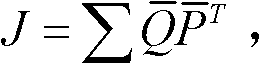
为了提高坐标转换精度,待标定点经过坐标重心化之后,构建最小化目标函数:In order to improve the accuracy of coordinate transformation, after the points to be calibrated are centered, the minimum objective function is constructed:
求目标函数最小化也就等于求


Claims (1)

Priority Applications (1)
| Application Number | Priority Date | Filing Date | Title |
|---|---|---|---|
| CN 201010617004 CN102073377B (en) | 2010-12-31 | 2010-12-31 | Man-machine interactive type two-dimensional locating method based on human eye-glanced signal |
Applications Claiming Priority (1)
| Application Number | Priority Date | Filing Date | Title |
|---|---|---|---|
| CN 201010617004 CN102073377B (en) | 2010-12-31 | 2010-12-31 | Man-machine interactive type two-dimensional locating method based on human eye-glanced signal |
Publications (2)
| Publication Number | Publication Date |
|---|---|
| CN102073377A true CN102073377A (en) | 2011-05-25 |
| CN102073377B CN102073377B (en) | 2013-01-02 |
Family
ID=44031940
Family Applications (1)
| Application Number | Title | Priority Date | Filing Date |
|---|---|---|---|
| CN 201010617004 Expired - Fee Related CN102073377B (en) | 2010-12-31 | 2010-12-31 | Man-machine interactive type two-dimensional locating method based on human eye-glanced signal |
Country Status (1)
| Country | Link |
|---|---|
| CN (1) | CN102073377B (en) |
Cited By (7)
| Publication number | Priority date | Publication date | Assignee | Title |
|---|---|---|---|---|
| CN102350700A (en) * | 2011-09-19 | 2012-02-15 | 华南理工大学 | Method for controlling robot based on visual sense |
| CN104685464A (en) * | 2012-07-12 | 2015-06-03 | 喷技术公司 | Serial text display for optimal recognition apparatus and method |
| CN107949819A (en) * | 2015-09-04 | 2018-04-20 | 索尼互动娱乐股份有限公司 | Apparatus and method for dynamic graphics rendering based on eye saccade detection |
| CN107992192A (en) * | 2017-11-03 | 2018-05-04 | 青岛海信电器股份有限公司 | The method and virtual reality display device of a kind of alleviation asthenopia |
| CN108175547A (en) * | 2018-01-30 | 2018-06-19 | 浙江省公众信息产业有限公司 | Control method, device and the computer readable storage medium of artificial prosthesis |
| CN108416322A (en) * | 2018-03-27 | 2018-08-17 | 吉林大学 | A Visual Action Recognition Method in Seated Operation of Virtual Assembly |
| CN109345542A (en) * | 2018-09-18 | 2019-02-15 | 重庆大学 | A wearable visual gaze target positioning device and method |
Families Citing this family (1)
| Publication number | Priority date | Publication date | Assignee | Title |
|---|---|---|---|---|
| CN110123318B (en) * | 2019-04-18 | 2021-03-30 | 华南理工大学 | A method for monitoring eye position coordinates based on electro-oculographic signals |
Citations (1)
| Publication number | Priority date | Publication date | Assignee | Title |
|---|---|---|---|---|
| CN101598973A (en) * | 2009-06-26 | 2009-12-09 | 安徽大学 | Human-computer interaction system based on electro-ocular signals |
-
2010
- 2010-12-31 CN CN 201010617004 patent/CN102073377B/en not_active Expired - Fee Related
Patent Citations (1)
| Publication number | Priority date | Publication date | Assignee | Title |
|---|---|---|---|---|
| CN101598973A (en) * | 2009-06-26 | 2009-12-09 | 安徽大学 | Human-computer interaction system based on electro-ocular signals |
Non-Patent Citations (1)
| Title |
|---|
| 《北京生物医学工程》 20061231 施宁、王行愚、邹俊忠、王蓓 基于支持向量机的二维人眼位置信息提取 第602-605页 权利要求1 第25卷, 第6期 2 * |
Cited By (13)
| Publication number | Priority date | Publication date | Assignee | Title |
|---|---|---|---|---|
| CN102350700A (en) * | 2011-09-19 | 2012-02-15 | 华南理工大学 | Method for controlling robot based on visual sense |
| CN104685464A (en) * | 2012-07-12 | 2015-06-03 | 喷技术公司 | Serial text display for optimal recognition apparatus and method |
| CN104685464B (en) * | 2012-07-12 | 2017-05-03 | 喷技术公司 | Serial text display for optimal recognition apparatus and method |
| CN107949819B (en) * | 2015-09-04 | 2020-03-27 | 索尼互动娱乐股份有限公司 | Apparatus and method for dynamic graphics rendering based on saccade detection |
| US10585475B2 (en) | 2015-09-04 | 2020-03-10 | Sony Interactive Entertainment Inc. | Apparatus and method for dynamic graphics rendering based on saccade detection |
| CN107949819A (en) * | 2015-09-04 | 2018-04-20 | 索尼互动娱乐股份有限公司 | Apparatus and method for dynamic graphics rendering based on eye saccade detection |
| US11099645B2 (en) | 2015-09-04 | 2021-08-24 | Sony Interactive Entertainment Inc. | Apparatus and method for dynamic graphics rendering based on saccade detection |
| US11416073B2 (en) | 2015-09-04 | 2022-08-16 | Sony Interactive Entertainment Inc. | Apparatus and method for dynamic graphics rendering based on saccade detection |
| US11703947B2 (en) | 2015-09-04 | 2023-07-18 | Sony Interactive Entertainment Inc. | Apparatus and method for dynamic graphics rendering based on saccade detection |
| CN107992192A (en) * | 2017-11-03 | 2018-05-04 | 青岛海信电器股份有限公司 | The method and virtual reality display device of a kind of alleviation asthenopia |
| CN108175547A (en) * | 2018-01-30 | 2018-06-19 | 浙江省公众信息产业有限公司 | Control method, device and the computer readable storage medium of artificial prosthesis |
| CN108416322A (en) * | 2018-03-27 | 2018-08-17 | 吉林大学 | A Visual Action Recognition Method in Seated Operation of Virtual Assembly |
| CN109345542A (en) * | 2018-09-18 | 2019-02-15 | 重庆大学 | A wearable visual gaze target positioning device and method |
Also Published As
| Publication number | Publication date |
|---|---|
| CN102073377B (en) | 2013-01-02 |
Similar Documents
| Publication | Publication Date | Title |
|---|---|---|
| CN102073377B (en) | Man-machine interactive type two-dimensional locating method based on human eye-glanced signal | |
| CN103054549B (en) | Wearable portable device and method for analyzing eye movement | |
| CN103549950B (en) | Improved difference threshold detection algorithm for mobile ECG (electrocardiogram) monitoring | |
| CN103584919B (en) | Multi-modal bio signal synchronous detecting system and method | |
| Guo et al. | A human-machine interface based on single channel EOG and patchable sensor | |
| Li et al. | Muscle activity onset time detection using teager-kaiser energy operator | |
| CN103417218A (en) | System and method for collecting and evaluating parameters of upper limb movement | |
| CN114886388A (en) | Evaluation method and device for quality of electroencephalogram signal in anesthesia depth monitoring process | |
| KR20140054542A (en) | Method and apparatus for measuring bio signal | |
| CN102488513A (en) | Brain power positioning device based on dipole (charge) source time-space model | |
| Rantanen et al. | Capacitive measurement of facial activity intensity | |
| CN106491251B (en) | Non-invasive brain-computer interface-based robot arm control system and control method thereof | |
| CN117137493B (en) | Electrocardiogram electrode position correction method and system | |
| CN112764532A (en) | Keyboard and mouse control system and control method based on brain electricity, eye electricity and electricity combination | |
| CN109222946A (en) | Physio-parameter detection system and detection method based on optical fiber pad | |
| Steinhausen et al. | A three sensor eye tracking system based on electrooculography | |
| López et al. | EOG-based system for mouse control | |
| Nasir et al. | EEG based human assistance rover for domestic application | |
| CN115063883A (en) | Limb rehabilitation effect evaluation device | |
| CN102156539B (en) | Method for identifying target object based on eye movement scanning | |
| CN113520310A (en) | Electroencephalogram ERP-based touch information processing method | |
| CN103876731B (en) | A kind of fetal electrocardiogram signal extraction device and method | |
| CN107595277A (en) | An electrocardiogram monitoring system and monitoring method with motion recognition and positioning functions | |
| Borelli et al. | Spectral-distance-based detection of EMG activity from capacitive measurements | |
| CN106691410A (en) | Pulse and red blood cell concentration monitoring instrument and method |
Legal Events
| Date | Code | Title | Description |
|---|---|---|---|
| C06 | Publication | ||
| PB01 | Publication | ||
| C10 | Entry into substantive examination | ||
| SE01 | Entry into force of request for substantive examination | ||
| C14 | Grant of patent or utility model | ||
| GR01 | Patent grant | ||
| CF01 | Termination of patent right due to non-payment of annual fee | ||
| CF01 | Termination of patent right due to non-payment of annual fee |
Granted publication date: 20130102 Termination date: 20161231 |