CN101950562A - Hierarchical coding method and system based on audio attention - Google Patents
Hierarchical coding method and system based on audio attention Download PDFInfo
- Publication number
- CN101950562A CN101950562A CN201010530779XA CN201010530779A CN101950562A CN 101950562 A CN101950562 A CN 101950562A CN 201010530779X A CN201010530779X A CN 201010530779XA CN 201010530779 A CN201010530779 A CN 201010530779A CN 101950562 A CN101950562 A CN 101950562A
- Authority
- CN
- China
- Prior art keywords
- sub
- attention
- signal
- band
- module
- Prior art date
- Legal status (The legal status is an assumption and is not a legal conclusion. Google has not performed a legal analysis and makes no representation as to the accuracy of the status listed.)
- Pending
Links
- 238000000034 method Methods 0.000 title claims abstract description 22
- 239000012792 core layer Substances 0.000 claims abstract description 27
- 238000004364 calculation method Methods 0.000 claims abstract description 25
- 239000010410 layer Substances 0.000 claims abstract description 20
- 238000013139 quantization Methods 0.000 claims abstract description 19
- 238000007781 pre-processing Methods 0.000 claims abstract description 17
- 238000013507 mapping Methods 0.000 claims abstract description 11
- 238000004458 analytical method Methods 0.000 claims description 24
- 230000005236 sound signal Effects 0.000 claims description 17
- 238000000605 extraction Methods 0.000 claims description 5
- 238000001914 filtration Methods 0.000 claims description 4
- 238000013461 design Methods 0.000 claims description 3
- 238000009432 framing Methods 0.000 claims description 3
- 238000012545 processing Methods 0.000 claims description 3
- 230000007547 defect Effects 0.000 abstract description 2
- 238000012544 monitoring process Methods 0.000 description 13
- 238000010586 diagram Methods 0.000 description 8
- 238000005516 engineering process Methods 0.000 description 3
- OVOUKWFJRHALDD-UHFFFAOYSA-N 2-[2-(2-acetyloxyethoxy)ethoxy]ethyl acetate Chemical compound CC(=O)OCCOCCOCCOC(C)=O OVOUKWFJRHALDD-UHFFFAOYSA-N 0.000 description 1
- 230000006835 compression Effects 0.000 description 1
- 238000007906 compression Methods 0.000 description 1
- 230000000694 effects Effects 0.000 description 1
- 230000000873 masking effect Effects 0.000 description 1
- 238000012986 modification Methods 0.000 description 1
- 230000004048 modification Effects 0.000 description 1
- 230000008447 perception Effects 0.000 description 1
- 230000008092 positive effect Effects 0.000 description 1
- 238000005070 sampling Methods 0.000 description 1
- 238000001228 spectrum Methods 0.000 description 1
Images


Landscapes
- Compression, Expansion, Code Conversion, And Decoders (AREA)
Abstract
本发明涉及音频编码技术领域,尤其涉及一种基于音频关注度的分级编码方法及系统。本发明分核心层编码和扩展层编码,首先对输入信号进行预处理,进行核心层编码和扩展层编码,其中扩展层对预处理后的信号进行子带划分、计算每个子带关注度值,并根据子带关注度值优先提取子带关注度最大的子带、进行量化编码;本发明系统包括预处理模块、核心层编码模块、残差映射模块、子带划分模块、关注度计算模块、基于关注度的子带比特分配模块、量化/编码模块。本发明对关注度程度高的子带优先编码,针对关注音源逐级提升质量的缺陷,从而实现了高效的基于关注度的可分级音频编码。
The invention relates to the technical field of audio coding, in particular to a hierarchical coding method and system based on audio attention. The present invention is divided into core layer coding and extension layer coding. First, the input signal is preprocessed, and core layer coding and extension layer coding are performed, wherein the extension layer divides the preprocessed signal into subbands and calculates the attention value of each subband. And according to the sub-band attention value, the sub-band with the maximum sub-band attention is preferentially extracted, and quantized encoding is carried out; the system of the present invention includes a preprocessing module, a core layer coding module, a residual mapping module, a sub-band division module, a degree of attention calculation module, A sub-band bit allocation module and a quantization/coding module based on the degree of attention. The present invention preferentially codes sub-bands with a high degree of attention, aiming at the defect of step-by-step quality improvement of audio sources of interest, thereby realizing highly efficient scalable audio coding based on the degree of attention.
Description
技术领域technical field
本发明涉及音频编码技术领域,尤其涉及一种基于音频关注度的分级编码方法及系统。The invention relates to the technical field of audio coding, in particular to a hierarchical coding method and system based on audio attention.
背景技术Background technique
在安防监控系统中,不同的客户端具有不同的限制和需求,采用不同的监控终端与网络系统,提供不同的服务质量。异构的安防监控网络导致网络带宽波动频繁,使得系统无法为各种不同的客户端提供最优的码流。可分级编码技术是解决这一问题的有效手段,它将码流划分为一个核心层及多个增强层,其中核心层保证信号的最低重建质量,增强层则通过提高信噪比或者扩展频带的方式渐次改善重建质量。接收到的增强层数越多,解码音质越高。其优点在于,分级编码只需要提供一个唯一的码流,不需要为不同网络和客户端提供不同的码流,网络设备和客户端可以通过直接截短码流的方式实现码率的平滑切换,适应不同网络的带宽波动,满足不同客户端的应用需求。传统的可分级编码通常针对人耳感知特性,依据子带信号能量或信掩比等特征作为码率分配策略的依据,而安防监控环境下所关注的音频信号常常具有高能量、能量快速变化及方位快速变化等特征,如果依据人耳掩蔽等感知特性有可能造成能量较低但快速变化的关注音源被分配较少的编码比特,导致量化噪声增大,关注音源音质下降。这成为提高安防监控关注音源编码质量的障碍。In the security monitoring system, different clients have different restrictions and requirements, and different monitoring terminals and network systems are used to provide different service qualities. The heterogeneous security monitoring network leads to frequent fluctuations in network bandwidth, making the system unable to provide optimal streams for various clients. Scalable coding technology is an effective means to solve this problem. It divides the code stream into a core layer and multiple enhancement layers. The core layer guarantees the lowest reconstruction quality of the signal, and the enhancement layer improves the SNR or expands the The method gradually improves the reconstruction quality. The more enhancement layers received, the higher the decoding sound quality. The advantage is that hierarchical encoding only needs to provide a unique code stream, and does not need to provide different code streams for different networks and clients. Network devices and clients can achieve smooth switching of code rates by directly truncating code streams. Adapt to bandwidth fluctuations of different networks and meet the application requirements of different clients. Traditional scalable coding is usually aimed at the perceptual characteristics of the human ear, based on the sub-band signal energy or signal-to-masking ratio as the basis for the bit rate allocation strategy, and the audio signals of concern in the security monitoring environment often have high energy, rapid energy changes and Features such as rapid changes in azimuth, based on perception characteristics such as human ear masking, may cause low-energy but rapidly-changing audio sources of interest to be allocated fewer coding bits, resulting in increased quantization noise and reduced sound quality of the audio source of interest. This has become an obstacle to improving the quality of audio encoding for security monitoring.
要针对安防监控关注音频重点编码,前提是需要准确地判断出关注音频,这需要借助音频关注度分析技术。音频关注度即对音频信号的关注程度。在安防监控中,突然出现的高能量声音、能量快速变化或方位快速变化等类型音频信号往往标志着突发事件的发生,应当引起较高的关注。在这些关注音源中包含着重要的监控信息,对事件辨识的效果和特定关注音源的编码质量存在密切关系,因此应当重点针对监控所关注的音源对象提升质量。因而在现有安防监控系统带宽波动频繁的状况下,需要对音频中的关注音源进行优先编码,从而能以更准确地记录关注音源。To focus on audio key coding for security monitoring, the premise is that the audio of interest needs to be accurately judged, which requires the use of audio attention analysis technology. Audio attention refers to the degree of attention paid to the audio signal. In security monitoring, audio signals such as sudden high-energy sounds, rapid changes in energy, or rapid changes in orientation often indicate the occurrence of emergencies and should attract higher attention. These audio sources of interest contain important monitoring information, and there is a close relationship between the effect of event recognition and the encoding quality of specific audio sources of interest. Therefore, it is necessary to focus on improving the quality of the audio source objects of concern for monitoring. Therefore, under the condition that the bandwidth of the existing security monitoring system fluctuates frequently, it is necessary to preferentially encode the audio source of interest in the audio, so that the audio source of interest can be recorded more accurately.
发明内容Contents of the invention
针对上述存在的技术问题,本发明的目的是提供一种基于音频关注度的分级编码方法及系统,以解决安防监控对音频智能分析与高效精准编码提出的需求。In view of the above-mentioned technical problems, the purpose of the present invention is to provide a hierarchical coding method and system based on audio attention, so as to solve the needs of security monitoring for intelligent audio analysis and efficient and accurate coding.
为达到上述目的,本发明采用如下的技术方案:To achieve the above object, the present invention adopts the following technical solutions:
一种基于音频关注度的分级编码系统:A hierarchical coding system based on audio attention:
预处理模块:对输入信号进行预处理,其输入为音频原始信号,输出为预处理后的信号,预处理后的信号做两路输出:一路输出给核心编码器模块;一路输出给残差映射模块;Preprocessing module: preprocess the input signal, the input is the original audio signal, and the output is the preprocessed signal. The preprocessed signal has two outputs: one output to the core encoder module; one output to the residual map module;
核心层编码模块:采用通用的编码算法对来自预处理模块的输入信号进行编码,编码后作两路输出,其中一路输出为核心层码流,作为码流的一部分,另一路输出为解码后的重构信号,输出给残差映射模块;Core layer encoding module: use a common encoding algorithm to encode the input signal from the preprocessing module, and make two outputs after encoding, one of which is the core layer code stream as a part of the code stream, and the other output is the decoded Reconstruct the signal and output it to the residual mapping module;
残差映射模块:预处理模块输出的预处理后的信号和核心层编码模块输出的解码后重构的信号为本模块的输入,用预处理后的信号和解码后的重构信号得到残差信号,本模块的输出为残差信号;Residual mapping module: The preprocessed signal output by the preprocessing module and the decoded and reconstructed signal output by the core layer encoding module are the inputs of this module, and the residual is obtained by using the preprocessed signal and the decoded reconstructed signal signal, the output of this module is the residual signal;
子带划分模块:残差映射模块输出的残差信号为本模块的输入,本模块对残差信号进行子带划分,得到子带残差信号,输出给量化/编码模块;Sub-band division module: the residual signal output by the residual mapping module is the input of this module, and this module divides the residual signal into sub-bands to obtain sub-band residual signals, which are output to the quantization/encoding module;
关注度计算模块:该模块的输入为关注度分析信号,关注度分析信号可以是预处理后的信号,也可以是解码后的重构信号,但不局限于这两种特征信号,本模块输出为子带关注度值,输出给基于关注度比特分配模块;Attention degree calculation module: the input of this module is the attention degree analysis signal. The attention degree analysis signal can be the preprocessed signal or the reconstructed signal after decoding, but it is not limited to these two characteristic signals. The output of this module is Be the sub-band attention degree value, output to the allocation module based on the attention degree bit;
基于关注度比特分配模块:根据关注度计算模块输出的子带关注度值,对子带关注度值按照从高到低的顺序进行排序,提取子带关注度值最大的子带,该模块的输出为子带关注度值最大的子带编号,用于指导量化/编码模块的比特分配;Based on attention bit allocation module: according to the sub-band attention value output by the attention calculation module, the sub-band attention values are sorted in order from high to low, and the sub-band with the largest sub-band attention value is extracted. The output is the subband number with the largest subband attention value, which is used to guide the bit allocation of the quantization/coding module;
量化/编码模块:由子带划分模块输出的子带信号作为本模块的输入,并通过基于关注度比特分配模块输出的子带编号进行量化编码,该模块的输出为扩展层码流,作为码流的一部分。Quantization/encoding module: The subband signal output by the subband division module is used as the input of this module, and quantized and encoded by the subband number output by the bit allocation module based on the degree of attention. The output of this module is the extension layer code stream, which is used as the code stream a part of.
所述关注度计算模块中,通过关注度分析信号来计算每个子带关注度值大小,依据每个子带关注度值按照从大到小的顺序,然后逐个子带进行编码。In the attention degree calculation module, the attention degree value of each sub-band is calculated through the attention degree analysis signal, and the attention degree value of each sub-band is in order from large to small, and then encoded sub-band one by one.
所述关注度计算模块中,子带关注度值可以根据子带能量的高低,空间线索变化的快慢以及子带能量变化的快慢等特征进行计算或基于其中部分特征进行计算。In the attention calculation module, the sub-band attention value can be calculated according to the sub-band energy level, the speed of spatial clue change, and the speed of sub-band energy change or based on some of the features.
一种基于音频关注度的分级编码方法:A hierarchical coding method based on audio attention:
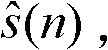
①输入音频信号,所述输入音频信号可以是单声道或多声道信号,预处理可以包括高通滤波、分帧等处理,得到预处理后的音频信号s(n);1. an input audio signal, the input audio signal can be a monophonic or multi-channel signal, and the preprocessing can include processing such as high-pass filtering and framing to obtain a preprocessed audio signal s(n);
②由步骤①所得的预处理后的音频信号作为核心层编码的输入,核心层编码进行编码后,一路输出为核心编码码流作为码流的一部分,另一路作解码得到解码后的重构信号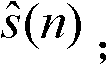
③由步骤①得到预处理后的音频信号s(n)和由步骤②得到解码后的重构信号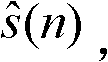
④计算N个子带的每个子带关注度值,此步骤首先确定计算输入的关注度分析信号,关注度分析信号可以是预处理后的信号s(n),也可以是解码后的重构信号
⑤提取未编码子带子带关注度值最大的子带编号;5. Extract the sub-band number with the maximum sub-band attention value of the uncoded sub-band;
⑥根据步骤⑤获得的音频关注度值最大的子带编号,首先对该子带进行量化编码,如果关注度分析信号为预处理后的信号s(n),编码端需要对子带编号进行编码,如果关注度分析信号为预处理后的信号
⑦判断用于编码的比特数是否用尽,是则结束编码,否则返回步骤⑤。⑦ Determine whether the number of bits used for encoding is exhausted, if yes, end the encoding, otherwise return to
所述步骤④进一步包括以下子步骤:Described
子带划分的步骤:对输入的关注度特征信号进行子带的划分;The step of sub-band division: divide the input attention feature signal into sub-bands;
特征参数提取的步骤:提取子带关注度计算所需特征参数,包括ILD、子带能量等特征参数;The step of feature parameter extraction: extract the feature parameters required for sub-band attention calculation, including feature parameters such as ILD and sub-band energy;
子带关注度计算的步骤:结合特征参数提取的步骤计算的特征参数,得到这个子带关注度值,子带关注度值的计算方法可以根据具体情况的不同,设计不同的模型;Steps for calculating the sub-band attention degree: combine the characteristic parameters calculated in the step of feature parameter extraction to obtain the sub-band attention degree value, and the calculation method of the sub-band attention degree value can design different models according to different specific situations;
子带排序的步骤:根据子带关注度计算的步骤计算出的各个子带关注度值将子带从大到小进行排序。The step of sorting the sub-bands: sort the sub-bands from large to small according to each sub-band attention value calculated in the step of sub-band attention calculation.
所述子带关注度计算的步骤中,子带关注度值的计算方法为:In the step of calculating the sub-band attention degree, the calculation method of the sub-band attention degree value is:
f(si,Ii)=si*Ii f(s i , I i )=s i *I i
其中,si为子带空间音频参数,Ii为子带的能量。Among them, s i is the subband spatial audio parameter, and I i is the energy of the subband.
本发明具有以下优点和积极效果:The present invention has the following advantages and positive effects:
1)本发明根据音频关注度模型,提出基于子带关注度优先级的可分级码率分配策略,克服了现有可分级编码方法无法针对关注音源逐级提升质量的缺陷;1) According to the audio attention degree model, the present invention proposes a scalable code rate allocation strategy based on sub-band attention priority, which overcomes the defect that the existing scalable coding method cannot improve the quality step by step for the attention sound source;
2)本发明通过计算音频关注度来指导关注度分级编码层的量化与编码,能够针对人耳关注的音频信号进行优先编码,在安防监控领域有较好的应用前景。2) The present invention guides the quantization and encoding of the attention level coding layer by calculating the audio attention degree, and can perform priority encoding on the audio signal concerned by the human ear, and has a good application prospect in the field of security monitoring.
附图说明Description of drawings
图1是本发明提供的基于音频关注度的分级编码系统的框架示意图。FIG. 1 is a schematic diagram of the framework of the audio attention-based hierarchical coding system provided by the present invention.
图2是本发明提供的关注度分级的分级编码方法的流程图。Fig. 2 is a flow chart of the hierarchical coding method for the degree of attention provided by the present invention.
图3是本发明子带划分及根据子带关注度值大小对子带的排序的一个示意图。Fig. 3 is a schematic diagram of sub-band division and ordering of sub-bands according to sub-band attention value in the present invention.
图4是本发明提供的基于音频关注度的分级编码方法的框架例子示意图。Fig. 4 is a schematic diagram of a frame example of the audio attention-based hierarchical coding method provided by the present invention.
附图标记:Reference signs:
101-音频原始信号,102-预处理后信号,103-解码后重构信号,104-残差信号,105-子带残差信号,106-关注度分析信号,107-子带关注度值,108-子带编号,109-核心层码流,110-扩展层码流;101-audio original signal, 102-preprocessed signal, 103-decoded reconstructed signal, 104-residual signal, 105-subband residual signal, 106-attention analysis signal, 107-subband attention value, 108-subband number, 109-core layer code stream, 110-extension layer code stream;
201-音频原始信号,202-预处理后信号,203-解码后重构信号,204-残差信号,205-子带残差信号,206-解码后重构信号,207-子带关注度值,208-子带编号,209-核心层码流,210-扩展层码流。201-audio original signal, 202-preprocessed signal, 203-decoded reconstructed signal, 204-residual signal, 205-subband residual signal, 206-decoded reconstructed signal, 207-subband attention value , 208-subband number, 209-core layer code stream, 210-extension layer code stream.
具体实施方式Detailed ways
本发明提供的基于音频关注度的分级编码系统分为两部分,一部分为核心编码层,另一部分为关注度编码层,其中核心层是通用的编码技术,关注度编码层可以分为多个增强层,该系统符合安防监控需求的音频压缩与处理框架。本发明的核心编码层采用的方法是通用的编码算法,关注度编码层采用的方法是本发明的主要内容。The hierarchical coding system based on audio attention degree provided by the present invention is divided into two parts, one part is the core coding layer, and the other part is the attention degree coding layer, wherein the core layer is a general coding technology, and the attention degree coding layer can be divided into multiple enhanced layer, the system meets the audio compression and processing framework required by security monitoring. The method adopted by the core coding layer of the present invention is a general coding algorithm, and the method adopted by the degree of attention coding layer is the main content of the present invention.
本发明提供的基于音频关注度的分级编码系统,如图1所示,具体包括以下部分:The hierarchical coding system based on the degree of audio attention provided by the present invention, as shown in Figure 1, specifically includes the following parts:
预处理模块:对输入信号进行预处理,其输入为音频原始信号201,输出为预处理后的信号202,预处理后的信号做两路输出:一路输出给核心层编码模块;一路输出给残差映射模块;Preprocessing module: preprocessing the input signal, the input is the
核心层编码模块:采用通用的编码算法对预处理模块的输入信号进行编码,编码后作两路输出,其中一路输出为核心层码流,作为码流的一部分,另一路输出为解码后的重构信号203,输出给残差映射模块;Core layer encoding module: use a common encoding algorithm to encode the input signal of the preprocessing module, and make two outputs after encoding, one of which is the core layer code stream as a part of the code stream, and the other output is the decoded
残差映射模块:预处理模块输出的预处理后的信号202和核心层编码模块输出的解码后重构的信号203为本模块的输入,用预处理后的信号202和解码后的重构信号203得到残差信号204,本模块的输出为残差信号204;Residual mapping module: the preprocessed
子带划分模块:残差映射模块输出的残差信号204为本模块的输入,本模块对残差信号进行子带划分,得到子带残差信号205,输出给量化/编码模块;Sub-band division module: the
关注度计算模块:该模块的输入为关注度分析信号206,关注度分析信号206可以是预处理后的信号,也可以是解码后的重构信号,但不局限于这两种特征信号,本模块输出为子带关注度值207,输出给基于关注度比特分配模块;Attention degree calculation module: the input of this module is the attention
基于关注度比特分配模块:根据关注度计算模块输出的子带关注度值207,对子带关注度值按照从高到低的顺序进行排序,提取子带关注度值最大的子带,该模块的输出为子带关注度值最大的子带编号208,用于指导量化/编码模块的比特分配;Based on the attention degree bit allocation module: according to the
量化/编码模块:由子带划分模块输出的子带信号205作为本模块的输入,并通过基于关注度比特分配模块输出的子带编号进行量化编码,该模块的输出为扩展层码流,作为码流的一部分。Quantization/encoding module: the subband signal 205 output by the subband division module is used as the input of this module, and is quantized and encoded by the subband number output based on the degree of attention bit allocation module, and the output of this module is the extension layer code stream, as the code part of the stream.
本发明提供的基于音频关注度的分级编码方法,具体包括以下步骤:The hierarchical coding method based on audio attention degree provided by the present invention specifically comprises the following steps:
步骤1:对输入信号进行预处理,而预处理具体可以包括高通滤波、分帧、感知加权等过程,输出信号为预处理后的信号s(n)201;Step 1: Preprocessing the input signal, and the preprocessing may specifically include processes such as high-pass filtering, framing, and perceptual weighting, and the output signal is the preprocessed signal s(n)201;
步骤2:对预处理过后的信号进行核心层编码模块编码,核心层编码一路输出为核心编码码流;一路进行解码得到解码后的重构信号
步骤3:根据步骤1的输出结果s(n)与步骤2的输出结果
步骤4:计算N个子带的每个子带关注度值207,此步骤首先得确定计算输入的关注度分析信号206,关注度分析信号可以是预处理后的信号s(n)201,也可以是解码后的重构信号
①子带划分① Sub-band division
对输入的关注度特征信号206进行子带的划分,划分方法与步骤3方法相同,但步骤3是对e(n)进行划分,此处是对输入的关注度特征信号行子带的划分,同样得到N个子带。The degree of attention
②特征参数提取② Feature parameter extraction
提取子带关注度计算所需特征参数,包括ILD、子带能量等特征参数。Extract the characteristic parameters required for subband attention calculation, including ILD, subband energy and other characteristic parameters.
③子带关注度计算③Calculation of sub-band attention
结合步骤②计算的特征参数,得到这个子带关注度值,子带关注度值的计算方法可以根据具体情况的不同,设计不同的模型,例如最简单的可取f(si,Ii)=si*Ii,这里si为子带空间音频参数,Ii为子带的能量。In conjunction with the characteristic parameters calculated in step 2., this sub-band attention degree value is obtained, and the calculation method of the sub-band attention degree value can design different models according to different situations, such as the simplest f(s i , I i )= s i *I i , where s i is the subband spatial audio parameter, and I i is the energy of the subband.
④子带排序④Subband sorting
根据③计算出的各个子带关注度值207将子带从大到小进行排序。图3提供了一个子带排序的一个示意图。According to the
步骤5:提取未编码子带的子带关注度值最大的子带编号。Step 5: Extract the subband number with the largest subband attention value of the uncoded subband.
步骤6:根据步骤5获得的音频关注度值最大的子带编号,首先对该子带进行量化编码,如果关注度分析信号为预处理后的信号s(n)201,编码端需要对子带编号进行编码,如果关注度分析信号为预处理后的信号
步骤7:量化完之后,判断用于编码的比特数是否用尽,如果用尽则结束编码,如果未用尽则返回步骤⑤。Step 7: After quantization, judge whether the number of bits used for encoding is exhausted, if exhausted, end encoding, if not exhausted, return to
下面进一步以具体实施例结合附图对本发明作进一步说明:The present invention will be further described below with specific embodiment in conjunction with accompanying drawing:
步骤1:对采样率为16kHz输入信号进行预处理,而预处理具体包括高通滤波和感知加权两个过程,输出信号为s(n)201;Step 1: Preprocessing the input signal with a sampling rate of 16kHz, and the preprocessing specifically includes two processes of high-pass filtering and perceptual weighting, and the output signal is s(n)201;
将输入信号送入高通滤波器,滤除50Hz以下的低频信号;Send the input signal to a high-pass filter to filter out low-frequency signals below 50Hz;
将高通滤波后的信号送入感知加权滤波器WLB(z),同时γ′1,γ′2以及γ′3(0<γ′1,γ′2,γ′3<1)三个系数也相应调整以缓和量化噪声谱:Send the high-pass filtered signal to the perceptual weighting filter W LB (z), and at the same time the three coefficients of γ′ 1 , γ′ 2 and γ′ 3 (0<γ′ 1 , γ′ 2 , γ′ 3 <1) Also adjusted accordingly to moderate the quantization noise spectrum:
其中γ′1,γ′2,γ′3为调整参量,ai为线性预测分析系数,i为线性预测的阶数,
步骤2:对经过预处理过后的信号202进行8kbps模式的G.729.1编码器编码,核心层编码一路输出为核心编码码流;一路进行解码得到解码后的重构信号
步骤3:对步骤1的输出结果s(n)与步骤2的输出结果
步骤4:计算64个子带的每个子带关注度值,此例选取解码后的重构信号(n)的情况,如图4所示,此处选取解码后的重构信号
定义ip(k)为第k个子带关注度值,sk为第k个子带的空间音频参数,Ik为第k个子带的能量,用如下公式计算每个子带关注度值:Define ip(k) as the kth sub-band attention value, s k is the spatial audio parameter of the k-th sub-band, and I k is the energy of the k-th sub-band, and calculates each sub-band attention value with the following formula:
ip(k)=f(sk,Ik)=sk*Ik ip(k)=f(s k , I k )=s k *I k
其中k=0,1,...,63;where k=0,1,...,63;
步骤5:提取未编码子带的子带关注度值最大的子带编号207,送入步骤6进行量化编码。Step 5: extract the
步骤6:根据步骤5获得的子带关注度值最大的子带编号207,对该子带进行量化编码。此处运用G.729.1中的TDAC球型矢量量化方法编码。Step 6: Quantize and encode the subband according to the
步骤7:量化完这个子带后,判断用于编码的比特数是否用尽,是则结束编码,否则返回步骤5继续量化。Step 7: After quantizing the sub-band, judge whether the number of bits used for encoding is exhausted, if yes, end encoding, otherwise return to step 5 to continue quantization.
图2是本发明内容的关注度分级编码算法流程图,涉及到关注度计算、关注度排序、和依据关注度值指导扩展层量化/编码。Fig. 2 is a flow chart of the hierarchical attention coding algorithm of the present invention, which involves calculation of attention degree, ranking of attention degree, and guiding extension layer quantization/encoding according to attention degree value.
图3为8个子带划分与子带关注度值排序的示意图,横轴表示子带划分范围,纵轴表示幅度,其中低频核心层编码是本发明的基础,不在本发明考虑范围内;增强层均匀划分为8个子带,根据各子带关注度值比较,发现第6个子带关注度值最大,则先量化该子带,量化完成后找关注度值第二大的子带并对其量化;依次类推,分别编码第1到8个子带,图中各个子带内的数字是根据子带关注度值对各个子带优先次序排序后的序号。Fig. 3 is the schematic diagram of 8 sub-band divisions and sub-band attention value sorting, the horizontal axis represents the sub-band division range, and the vertical axis represents the amplitude, wherein the low-frequency core layer coding is the basis of the present invention and is not within the scope of the present invention; the enhancement layer Evenly divided into 8 sub-bands, according to the comparison of the attention value of each sub-band, it is found that the sixth sub-band has the highest attention value, then quantize the sub-band first, after the quantization is completed, find the sub-band with the second largest attention value and quantize it ; and so on, the 1st to 8th sub-bands are coded respectively, and the numbers in each sub-band in the figure are the serial numbers after sorting the priority order of each sub-band according to the sub-band attention value.
图4为本发明中编码框架图的一个具体实施例图。Fig. 4 is a diagram of a specific embodiment of the encoding framework diagram in the present invention.
以上实施例仅供说明本发明之用,而非对本发明的限制,有关技术领域的技术人员,在不脱离本发明的精神和范围的情况下,还可以作出各种变换或变型,因此所有等同的技术方案,都落入本发明的保护范围。The above embodiments are only for the purpose of illustrating the present invention, rather than limiting the present invention. Those skilled in the relevant technical fields can also make various changes or modifications without departing from the spirit and scope of the present invention. Therefore, all equivalent All technical solutions fall within the protection scope of the present invention.
Claims (6)
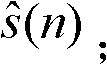

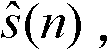
Priority Applications (1)
| Application Number | Priority Date | Filing Date | Title |
|---|---|---|---|
| CN201010530779XA CN101950562A (en) | 2010-11-03 | 2010-11-03 | Hierarchical coding method and system based on audio attention |
Applications Claiming Priority (1)
| Application Number | Priority Date | Filing Date | Title |
|---|---|---|---|
| CN201010530779XA CN101950562A (en) | 2010-11-03 | 2010-11-03 | Hierarchical coding method and system based on audio attention |
Publications (1)
| Publication Number | Publication Date |
|---|---|
| CN101950562A true CN101950562A (en) | 2011-01-19 |
Family
ID=43454032
Family Applications (1)
| Application Number | Title | Priority Date | Filing Date |
|---|---|---|---|
| CN201010530779XA Pending CN101950562A (en) | 2010-11-03 | 2010-11-03 | Hierarchical coding method and system based on audio attention |
Country Status (1)
| Country | Link |
|---|---|
| CN (1) | CN101950562A (en) |
Cited By (5)
| Publication number | Priority date | Publication date | Assignee | Title |
|---|---|---|---|---|
| CN103928030A (en) * | 2014-04-30 | 2014-07-16 | 武汉大学 | Gradable audio coding system and method based on sub-band space attention measure |
| CN104269173A (en) * | 2014-09-30 | 2015-01-07 | 武汉大学深圳研究院 | Voice frequency bandwidth extension device and method achieved in switching mode |
| CN108496221A (en) * | 2016-01-26 | 2018-09-04 | 杜比实验室特许公司 | Adaptive quantizing |
| WO2021218558A1 (en) * | 2020-04-30 | 2021-11-04 | 华为技术有限公司 | Bit allocation method and apparatus for audio signal |
| CN113808596A (en) * | 2020-05-30 | 2021-12-17 | 华为技术有限公司 | A kind of audio coding method and audio coding device |
Citations (5)
| Publication number | Priority date | Publication date | Assignee | Title |
|---|---|---|---|---|
| CN1735928A (en) * | 2003-01-08 | 2006-02-15 | 法国电信公司 | Method for encoding and decoding audio at a variable rate |
| WO2009022193A2 (en) * | 2007-08-15 | 2009-02-19 | Nokia Corporation | Devices, methods and computer program products for audio signal coding and decoding |
| WO2009144953A1 (en) * | 2008-05-30 | 2009-12-03 | パナソニック株式会社 | Encoder, decoder, and the methods therefor |
| CN101650947A (en) * | 2009-09-17 | 2010-02-17 | 武汉大学 | Object-oriented audio coding and decoding method and system |
| CN101800050A (en) * | 2010-02-03 | 2010-08-11 | 武汉大学 | Audio fine scalable coding method and system based on perception self-adaption bit allocation |
-
2010
- 2010-11-03 CN CN201010530779XA patent/CN101950562A/en active Pending
Patent Citations (5)
| Publication number | Priority date | Publication date | Assignee | Title |
|---|---|---|---|---|
| CN1735928A (en) * | 2003-01-08 | 2006-02-15 | 法国电信公司 | Method for encoding and decoding audio at a variable rate |
| WO2009022193A2 (en) * | 2007-08-15 | 2009-02-19 | Nokia Corporation | Devices, methods and computer program products for audio signal coding and decoding |
| WO2009144953A1 (en) * | 2008-05-30 | 2009-12-03 | パナソニック株式会社 | Encoder, decoder, and the methods therefor |
| CN101650947A (en) * | 2009-09-17 | 2010-02-17 | 武汉大学 | Object-oriented audio coding and decoding method and system |
| CN101800050A (en) * | 2010-02-03 | 2010-08-11 | 武汉大学 | Audio fine scalable coding method and system based on perception self-adaption bit allocation |
Cited By (12)
| Publication number | Priority date | Publication date | Assignee | Title |
|---|---|---|---|---|
| CN103928030A (en) * | 2014-04-30 | 2014-07-16 | 武汉大学 | Gradable audio coding system and method based on sub-band space attention measure |
| CN103928030B (en) * | 2014-04-30 | 2017-03-15 | 武汉大学 | Based on the scalable audio coding system and method that subband spatial concern is estimated |
| CN104269173A (en) * | 2014-09-30 | 2015-01-07 | 武汉大学深圳研究院 | Voice frequency bandwidth extension device and method achieved in switching mode |
| CN104269173B (en) * | 2014-09-30 | 2018-03-13 | 武汉大学深圳研究院 | The audio bandwidth expansion apparatus and method of switch mode |
| CN108496221A (en) * | 2016-01-26 | 2018-09-04 | 杜比实验室特许公司 | Adaptive quantizing |
| US10395664B2 (en) | 2016-01-26 | 2019-08-27 | Dolby Laboratories Licensing Corporation | Adaptive Quantization |
| CN108496221B (en) * | 2016-01-26 | 2020-01-21 | 杜比实验室特许公司 | adaptive quantization |
| WO2021218558A1 (en) * | 2020-04-30 | 2021-11-04 | 华为技术有限公司 | Bit allocation method and apparatus for audio signal |
| TWI773286B (en) * | 2020-04-30 | 2022-08-01 | 大陸商華為技術有限公司 | Bit allocating method and apparatus for audio signal |
| US11900950B2 (en) | 2020-04-30 | 2024-02-13 | Huawei Technologies Co., Ltd. | Bit allocation method and apparatus for audio signal |
| CN113808596A (en) * | 2020-05-30 | 2021-12-17 | 华为技术有限公司 | A kind of audio coding method and audio coding device |
| US12062379B2 (en) | 2020-05-30 | 2024-08-13 | Huawei Technologies Co., Ltd. | Audio coding of tonal components with a spectrum reservation flag |
Similar Documents
| Publication | Publication Date | Title |
|---|---|---|
| CN1756086B (en) | Multi-channel audio data encoding/decoding method and apparatus | |
| CN103106902B (en) | Low bit rate audio signal decoding method | |
| CN103928030B (en) | Based on the scalable audio coding system and method that subband spatial concern is estimated | |
| US20180261234A1 (en) | Audio signal coding and decoding method and device | |
| US7620554B2 (en) | Multichannel audio extension | |
| TWI598872B (en) | Apparatus and methods to perform huffman coding | |
| CN1525436B (en) | Method and device for scalable encoding and decoding of audio data | |
| US9530422B2 (en) | Bitstream syntax for spatial voice coding | |
| CN101110214A (en) | A Speech Coding Method Based on Multiple Description Lattice Vector Quantization Technology | |
| JP6600054B2 (en) | Method, encoder, decoder, and mobile device | |
| CN101950562A (en) | Hierarchical coding method and system based on audio attention | |
| CN101281748A (en) | Method for filling vacant subbands realized by coding index and method for generating coding index | |
| CN110634495A (en) | Signal encoding method and device and signal decoding method and device | |
| CN101105940A (en) | Audio frequency encoding and decoding quantification method, reverse conversion method and audio frequency encoding and decoding device | |
| CN102074243A (en) | Bit plane based perceptual audio hierarchical coding system and method | |
| CN105957533B (en) | Voice compression method, voice decompression method, audio encoder and audio decoder | |
| CN101800050A (en) | Audio fine scalable coding method and system based on perception self-adaption bit allocation | |
| CN101562015A (en) | Audio-frequency processing method and device | |
| CN103503320A (en) | Method and decoder for reconstructing a source signal | |
| CN1388517A (en) | Audio coding/decoding technology based on pseudo wavelet filtering | |
| CN101833953B (en) | Method and device for reducing redundancy of multi-description coding and decoding | |
| CN101572586A (en) | Method, device and system for encoding and decoding | |
| CN117476013A (en) | Audio signal processing methods, devices, storage media and computer program products | |
| CN101794578A (en) | Compression algorithm for compression ratio-variable audio data | |
| Zhao et al. | Speech compression with best wavelet packet transform and SPIHT algorithm |
Legal Events
| Date | Code | Title | Description |
|---|---|---|---|
| C06 | Publication | ||
| PB01 | Publication | ||
| C10 | Entry into substantive examination | ||
| SE01 | Entry into force of request for substantive examination | ||
| C12 | Rejection of a patent application after its publication | ||
| RJ01 | Rejection of invention patent application after publication |
Application publication date: 20110119 |