CN101945695B - Polyamide hollow fiber membrane and method for producing same - Google Patents
Polyamide hollow fiber membrane and method for producing same Download PDFInfo
- Publication number
- CN101945695B CN101945695B CN2009801055757A CN200980105575A CN101945695B CN 101945695 B CN101945695 B CN 101945695B CN 2009801055757 A CN2009801055757 A CN 2009801055757A CN 200980105575 A CN200980105575 A CN 200980105575A CN 101945695 B CN101945695 B CN 101945695B
- Authority
- CN
- China
- Prior art keywords
- hollow fiber
- polyamide
- fiber membrane
- solvent
- temperature
- Prior art date
- Legal status (The legal status is an assumption and is not a legal conclusion. Google has not performed a legal analysis and makes no representation as to the accuracy of the status listed.)
- Active
Links
Images


Classifications
-
- B—PERFORMING OPERATIONS; TRANSPORTING
- B01—PHYSICAL OR CHEMICAL PROCESSES OR APPARATUS IN GENERAL
- B01D—SEPARATION
- B01D71/00—Semi-permeable membranes for separation processes or apparatus characterised by the material; Manufacturing processes specially adapted therefor
- B01D71/06—Organic material
- B01D71/56—Polyamides, e.g. polyester-amides
-
- B—PERFORMING OPERATIONS; TRANSPORTING
- B01—PHYSICAL OR CHEMICAL PROCESSES OR APPARATUS IN GENERAL
- B01D—SEPARATION
- B01D67/00—Processes specially adapted for manufacturing semi-permeable membranes for separation processes or apparatus
- B01D67/0002—Organic membrane manufacture
- B01D67/0009—Organic membrane manufacture by phase separation, sol-gel transition, evaporation or solvent quenching
- B01D67/0018—Thermally induced processes [TIPS]
-
- B—PERFORMING OPERATIONS; TRANSPORTING
- B01—PHYSICAL OR CHEMICAL PROCESSES OR APPARATUS IN GENERAL
- B01D—SEPARATION
- B01D69/00—Semi-permeable membranes for separation processes or apparatus characterised by their form, structure or properties; Manufacturing processes specially adapted therefor
- B01D69/02—Semi-permeable membranes for separation processes or apparatus characterised by their form, structure or properties; Manufacturing processes specially adapted therefor characterised by their properties
-
- B—PERFORMING OPERATIONS; TRANSPORTING
- B01—PHYSICAL OR CHEMICAL PROCESSES OR APPARATUS IN GENERAL
- B01D—SEPARATION
- B01D69/00—Semi-permeable membranes for separation processes or apparatus characterised by their form, structure or properties; Manufacturing processes specially adapted therefor
- B01D69/08—Hollow fibre membranes
- B01D69/087—Details relating to the spinning process
-
- B—PERFORMING OPERATIONS; TRANSPORTING
- B29—WORKING OF PLASTICS; WORKING OF SUBSTANCES IN A PLASTIC STATE IN GENERAL
- B29C—SHAPING OR JOINING OF PLASTICS; SHAPING OF MATERIAL IN A PLASTIC STATE, NOT OTHERWISE PROVIDED FOR; AFTER-TREATMENT OF THE SHAPED PRODUCTS, e.g. REPAIRING
- B29C48/00—Extrusion moulding, i.e. expressing the moulding material through a die or nozzle which imparts the desired form; Apparatus therefor
- B29C48/03—Extrusion moulding, i.e. expressing the moulding material through a die or nozzle which imparts the desired form; Apparatus therefor characterised by the shape of the extruded material at extrusion
- B29C48/05—Filamentary, e.g. strands
-
- B—PERFORMING OPERATIONS; TRANSPORTING
- B01—PHYSICAL OR CHEMICAL PROCESSES OR APPARATUS IN GENERAL
- B01D—SEPARATION
- B01D2325/00—Details relating to properties of membranes
- B01D2325/20—Specific permeability or cut-off range
-
- B—PERFORMING OPERATIONS; TRANSPORTING
- B01—PHYSICAL OR CHEMICAL PROCESSES OR APPARATUS IN GENERAL
- B01D—SEPARATION
- B01D2325/00—Details relating to properties of membranes
- B01D2325/36—Hydrophilic membranes
-
- B—PERFORMING OPERATIONS; TRANSPORTING
- B29—WORKING OF PLASTICS; WORKING OF SUBSTANCES IN A PLASTIC STATE IN GENERAL
- B29C—SHAPING OR JOINING OF PLASTICS; SHAPING OF MATERIAL IN A PLASTIC STATE, NOT OTHERWISE PROVIDED FOR; AFTER-TREATMENT OF THE SHAPED PRODUCTS, e.g. REPAIRING
- B29C48/00—Extrusion moulding, i.e. expressing the moulding material through a die or nozzle which imparts the desired form; Apparatus therefor
- B29C48/25—Component parts, details or accessories; Auxiliary operations
- B29C48/88—Thermal treatment of the stream of extruded material, e.g. cooling
- B29C48/919—Thermal treatment of the stream of extruded material, e.g. cooling using a bath, e.g. extruding into an open bath to coagulate or cool the material
Landscapes
- Chemical & Material Sciences (AREA)
- Chemical Kinetics & Catalysis (AREA)
- Engineering & Computer Science (AREA)
- Physics & Mathematics (AREA)
- Thermal Sciences (AREA)
- Dispersion Chemistry (AREA)
- Manufacturing & Machinery (AREA)
- Mechanical Engineering (AREA)
- Separation Using Semi-Permeable Membranes (AREA)
- Artificial Filaments (AREA)
Abstract
本发明提供一种中空丝膜,其在100℃以上溶解高亲水性的聚酰胺树脂和非质子性极性溶剂等高沸点的溶剂,利用热致相分离法来制造。该中空丝膜相对于膜表面的水的接触角为80度以下,透水量为100L/m2·atm·h以上,且0.1μm粒子的阻止率为90%以上。
The present invention provides a hollow fiber membrane produced by thermally induced phase separation, wherein a highly hydrophilic polyamide resin and a high-boiling-point solvent, such as an aprotic polar solvent, are dissolved at a temperature above 100°C. The hollow fiber membrane exhibits a water contact angle of 80° or less with respect to the membrane surface, a water permeability of 100 L/ m² ·atm·h or greater, and a 0.1 μm particle rejection rate of 90% or greater.
Description
技术领域 technical field
本发明涉及一种聚酰胺中空丝膜及其制造方法,特别是涉及一种可起到管状多孔滤膜作用的聚酰胺中空丝膜及其制造方法。The invention relates to a polyamide hollow fiber membrane and a manufacturing method thereof, in particular to a polyamide hollow fiber membrane capable of functioning as a tubular porous filter membrane and a manufacturing method thereof.
背景技术 Background technique
近年来,超滤膜及精密滤膜等多孔滤膜在饮用水制造、污水和自来水处理、血液净化等医疗技术、食品工业等水处理领域;废油提纯、生物乙醇制造、半导体产业中的药液过滤等有机溶剂处理领域等多种产业领域中的利用逐渐增加。与此相对应,开发出了具有各种孔径的多孔滤膜。特别是,多用作多孔滤膜的孔径为nm~μm级别的滤膜大多利用有机高分子溶液的相分离来制造。该方法可以适用于许多有机高分子化合物,且工业化也容易,因此,逐渐成为滤膜的工业化生产方法的主流。In recent years, porous filtration membranes such as ultrafiltration membranes and precision filtration membranes have been widely used in the fields of drinking water manufacturing, sewage and tap water treatment, blood purification and other medical technologies, and water treatment in the food industry; waste oil purification, bioethanol manufacturing, and pharmaceuticals in the semiconductor industry. It is increasingly used in various industrial fields such as liquid filtration and other organic solvent processing fields. Correspondingly, porous membranes with various pore sizes have been developed. In particular, a filter membrane with a pore diameter of nm to μm order, which is often used as a porous filter membrane, is often produced by phase separation of an organic polymer solution. This method can be applied to many organic polymer compounds, and industrialization is also easy, so it has gradually become the mainstream of the industrial production method of filter membranes.
相分离法可以大致分为非溶剂致相分离法(NIPS法)和热致相分离法(TIPS法)。使用NIPS法时,均一的高分子溶液会由于因非溶剂的进入或溶剂蒸发到外部氛围引起的浓度变化而发生相分离。另一方面,TIPS法为比较新的方法。使用该方法时,通过将高温下溶解的均一的高分子溶液冷却到为1相区域和2相区域的边界的双节点(binodal)线以下的温度而引发相分离,并且利用高分子的结晶化及玻璃化使其结构固定。The phase separation method can be roughly classified into a nonsolvent-induced phase separation method (NIPS method) and a thermally induced phase separation method (TIPS method). When using the NIPS method, a homogeneous polymer solution undergoes phase separation due to a change in concentration due to entry of a non-solvent or evaporation of a solvent to the outside atmosphere. On the other hand, the TIPS method is a relatively new method. When this method is used, phase separation is induced by cooling a homogeneous polymer solution dissolved at a high temperature to a temperature below the binodal line that is the boundary between the 1-phase region and the 2-phase region, and the crystallization of the polymer is utilized. And vitrification to make its structure fixed.
公知的技术中,作为多孔滤膜的原料,一般大多使用聚乙烯及聚丙烯等聚烯烃、聚偏氟乙烯、聚砜、聚醚砜、聚丙烯腈、醋酸纤维素等。但是,聚烯烃、聚偏氟乙烯、聚砜、聚醚砜等疏水性强。因此,使用这些原料构成多孔滤膜时,存在水的流量变小的问题、由于吸附蛋白质等疏水性物质的性质而容易结块致使透水量降低的问题。聚丙烯腈、醋酸纤维素等为亲水性比较高的树脂,但膜强度低,而且温度及耐化学药品性弱,因此,存在使用温度范围及使用pH范围非常狭窄的问题。聚偏氟乙烯、聚砜、聚醚砜等在有机溶剂中弱,因此,存在有不能使用于有机溶剂的过滤的用途中的问题。In known techniques, polyolefins such as polyethylene and polypropylene, polyvinylidene fluoride, polysulfone, polyethersulfone, polyacrylonitrile, cellulose acetate, and the like are generally used as raw materials for porous membranes. However, polyolefin, polyvinylidene fluoride, polysulfone, polyethersulfone, etc. are highly hydrophobic. Therefore, when these materials are used to form a porous filter membrane, there are problems in that the flow rate of water becomes small, and due to the property of adsorbing hydrophobic substances such as proteins, they tend to agglomerate, resulting in a decrease in water permeability. Polyacrylonitrile, cellulose acetate, and the like are resins with relatively high hydrophilicity, but have low film strength and weak temperature and chemical resistance. Therefore, there is a problem that the operating temperature range and the operating pH range are very narrow. Since polyvinylidene fluoride, polysulfone, polyethersulfone, etc. are weak in organic solvents, there is a problem that they cannot be used for filtration of organic solvents.
因此,开始研究使用亲水性比较高、耐化学药品性也强的聚酰胺类树脂制造多孔膜的方法。但是,聚酰胺在室温下只溶解于为强酸的甲酸、浓硫酸及高价的含氟溶剂中。因此,作为使用NIPS法的制造方法只能使用这些溶剂。For this reason, studies have been started on methods for producing porous membranes using polyamide-based resins with relatively high hydrophilicity and high chemical resistance. However, polyamides are only soluble in strong acids such as formic acid, concentrated sulfuric acid, and expensive fluorinated solvents at room temperature. Therefore, only these solvents can be used as a production method using the NIPS method.
例如,在JP57-105212A(1982)、JP58-065009A(1983)、US4340479B、US4477598B中公开有将甲酸作为溶剂使用的制膜方法。但是,存在安全卫生上的问题。在JP2000-001612A中公开有:将聚酰胺6和聚己内酯混合并溶解于六氟异丙醇溶剂中所得的物质进行流延,并从其中提取出聚己内酯而进行多孔化的方法。但是,不论是使用的溶剂还是提取并除去的高分子均很昂贵,为此不是实用的方法。For example, JP57-105212A (1982), JP58-065009A (1983), US4340479B, and US4477598B disclose film-forming methods using formic acid as a solvent. However, there are safety and health issues. JP2000-001612A discloses a method of casting a mixture of
另一方面,也正在研究使用TIPS法的方法。在Journal of membranescience 108,pp219-229(1995)中记载有可以用聚酰胺12和聚乙二醇类制造多孔膜的方法。在US4247498B中记载有可以用聚酰胺11和碳酸乙烯酯或碳酸丙烯酯或环丁砜类制造多孔膜的方法。在“膜技术第二版”MarcelMulder著、吉川正和、松浦刚、仲川勤监修、Ipc公司发行95页(1997)中记载有可以将三乙二醇作为溶剂制造聚酰胺6及聚酰胺12的多孔膜。但是,这些均只能形成多孔膜,不能加工成透水量高的中空丝膜也不能控制细孔径。On the other hand, a method using the TIPS method is also being studied. In Journal of Membranescience 108, pp219-229 (1995), it is described that a porous membrane can be produced from
如上所述,聚酰胺可以用使用甲酸等的NIPS法制造中空丝膜及用TIPS法制造多孔膜。但是,高温溶解时出现溶液粘度低和比重低的现象等,因此使用TIPS法加工中空丝膜非常困难,迄今为止几乎没有成功的例子。例如,在JP58-164622A中,虽然公开有使用TIPS法的各种树脂的多孔膜化,但对于聚酰胺,虽然有平膜的实施例,但是对中空丝膜的制造没有记载。在JP60-052612中公开有利用TIPS法制造中空丝膜的方法。但是得到的中空丝膜的孔径为1.4μm而非常大,不能在作为本发明目的的通常的水处理、血液处理、食品工业及药品产业中的过滤工序等中使用。在该JP60-052612中记载有可以使用甘油及乙二醇制膜的主旨。但是由此得到的膜无法具有耐受实用的强度。US4915886B对使用TIPS法的聚酰胺中空丝膜的制造装置进行了详细记载。但是,对聚酰胺的种类、使用的溶剂等没有详细地记述,且也没有记载实施例。因此,即使为可以制造中空丝膜的物质,根据US4915886B的记载完全不清楚所述树脂的组成及性能。在JP2003-534908A(WO01/093994)中公开有为抑制聚酰胺膜的分解而添加抗氧化剂的方法。但是,使用的溶剂为高价溶剂,加工成中空丝膜的实施例中需添加增稠剂,对得到的中空丝膜的性能,除最大孔径0.87μm及0.57μm大小进行了描述以外,在JP2003-534908A中没有详细地记载。As described above, polyamides can be used to produce hollow fiber membranes by the NIPS method using formic acid or the like and porous membranes by the TIPS method. However, it is very difficult to process hollow fiber membranes using the TIPS method because of low solution viscosity and low specific gravity when dissolved at high temperature, and there have been few successful examples so far. For example, JP58-164622A discloses the formation of porous membranes of various resins using the TIPS method, but there is no description of the production of hollow fiber membranes for polyamides, although there are examples of flat membranes. JP60-052612 discloses a method of producing a hollow fiber membrane by the TIPS method. However, the obtained hollow fiber membrane has a very large pore diameter of 1.4 μm, and cannot be used in general water treatment, blood treatment, filtration steps in the food industry and pharmaceutical industry, etc., which are the object of the present invention. JP60-052612 describes that glycerin and ethylene glycol can be used to form a film. However, the membrane thus obtained does not have the strength to withstand practical use. US4915886B describes in detail an apparatus for producing a polyamide hollow fiber membrane using the TIPS method. However, the type of polyamide, the solvent used, and the like are not described in detail, and examples are also not described. Therefore, even if a hollow fiber membrane can be produced, the composition and performance of the resin are completely unknown from the description of US4915886B. JP2003-534908A (WO01/093994) discloses a method of adding an antioxidant to suppress decomposition of a polyamide film. However, the solvents used are high-priced solvents, and thickeners need to be added in the examples of processing hollow fiber membranes. The performance of the obtained hollow fiber membranes is described in JP2003- 534908A is not described in detail.
如上所述,不存在涉及使用聚酰胺得到透水量多且粒子阻止率高的中空丝膜的公知技术。As described above, there is no known technique for obtaining a hollow fiber membrane having a large water permeability and a high particle rejection rate using polyamide.
发明内容 Contents of the invention
本发明为解决如上所述的问题,以提供一种具有优良的分离性能、且膜表面的亲水性优良、难以结块的聚酰胺中空丝膜作为技术课题。In order to solve the above-mentioned problems, the present invention aims to provide a polyamide hollow fiber membrane having excellent separation performance, excellent hydrophilicity on the surface of the membrane, and hardly clogging as a technical subject.
本发明人等为解决上述课题进行了潜心研究,结果发现,使用将亲水性高的聚酰胺树脂在高温下溶解于特定的有机溶剂中并冷却致使相分离的方法,可以制造孔径整齐且透水量高的膜,直至完成本发明。The inventors of the present invention conducted intensive research to solve the above-mentioned problems. As a result, they found that a method of dissolving a highly hydrophilic polyamide resin in a specific organic solvent at a high temperature and cooling to separate the phases can produce a uniform pore size and a water-permeable resin. High amount of film, until the completion of the present invention.
即,本发明的第一方面的要点是一种聚酰胺中空丝膜,为由聚酰胺树脂构成的中空丝膜,其特征在于,所述聚酰胺树脂的亚甲基和酰胺基的比例以摩尔比计为-CH2-∶-NHCO-=4∶1~10∶1;所述中空丝膜,膜表面相对于水的接触角为80度以下、透水量为100L/m2·atm·h以上、且0.1μm粒子的阻止率为90%以上。聚酰胺树脂优选选自聚酰胺6、聚酰胺66、聚酰胺46及聚酰胺610中的1种或2种以上。That is, the gist of the first aspect of the present invention is a polyamide hollow fiber membrane, which is a hollow fiber membrane composed of a polyamide resin, characterized in that the ratio of the methylene group to the amide group of the polyamide resin is expressed in moles The ratio is -CH 2 -:-NHCO-=4:1~10:1; the hollow fiber membrane, the contact angle of the membrane surface with respect to water is less than 80 degrees, and the water permeability is 100L/m 2 ·atm·h above, and the inhibition rate of 0.1μm particles is above 90%. The polyamide resin is preferably one or more selected from
本发明的第二方面的要点是一种聚酰胺中空丝膜的制造方法,其特征在于,在100℃以上的温度下将聚酰胺树脂溶解于具有150℃以上的沸点、且在低于100℃的温度下和该聚酰胺树脂不相溶的有机溶剂中来制作制膜原液,使用中空丝纺丝用喷嘴将该制膜原液挤出到低于100℃的凝固液中形成中空丝,其后,将所述中空丝浸渍于溶剂中并除去所述有机溶剂,从而制成中空丝膜。The gist of the second aspect of the present invention is a method for producing a polyamide hollow fiber membrane, characterized in that a polyamide resin having a boiling point of 150°C or higher and at a temperature lower than 100°C is dissolved at a temperature above 100°C. The film-making stock solution is made in an organic solvent immiscible with the polyamide resin at a temperature of 100°C, and the hollow fiber spinning nozzle is used to extrude the film-making stock solution into a coagulation solution below 100°C to form a hollow fiber, and then , immersing the hollow fiber in a solvent and removing the organic solvent, thereby producing a hollow fiber membrane.
依照本发明,可以得到亲水性高、显示高透水量且维持高的粒子阻止能力、对有机物污染具有高耐受性的聚酰胺中空丝膜。本发明的聚酰胺中空丝膜可以适合使用于污水和自来水处理、食品工业、制药工业、半导体产业、血液净化等医疗产业等领域中。According to the present invention, it is possible to obtain a polyamide hollow fiber membrane having high hydrophilicity, exhibiting a high water permeability, maintaining a high particle blocking ability, and having high resistance to organic contamination. The polyamide hollow fiber membrane of the present invention can be suitably used in the fields of sewage and tap water treatment, food industry, pharmaceutical industry, semiconductor industry, blood purification and other medical industries.
本发明的聚酰胺中空丝膜亲水性非常高。因此本发明的聚酰胺中空丝膜与例如聚乙烯及聚丙烯等聚烯烃、聚偏氟乙烯、聚砜、聚醚砜等一直以来使用的膜相比,即使缩小孔径小、提高粒子的阻止率的情况下也可以得到高的透水量。另外,本发明的聚酰胺中空丝膜亲水性非常高,因此在有机溶剂体系中使用时,可以通过吸附亲水性高的粒子进行相分离。The polyamide hollow fiber membrane of the present invention has very high hydrophilicity. Therefore, compared with conventionally used membranes such as polyolefins such as polyethylene and polypropylene, polyvinylidene fluoride, polysulfone, and polyethersulfone, the polyamide hollow fiber membrane of the present invention can reduce the pore size and improve the particle rejection rate. In the case of high water permeability can also be obtained. In addition, the polyamide hollow fiber membrane of the present invention has very high hydrophilicity, so when used in an organic solvent system, phase separation can be achieved by adsorbing highly hydrophilic particles.
附图说明 Description of drawings
图1是用于制造本发明的中空丝膜的装置的一实例的示意图。FIG. 1 is a schematic diagram of an example of an apparatus for producing a hollow fiber membrane of the present invention.
图2是表示图1中纺丝喷嘴的结构的图。Fig. 2 is a diagram showing the structure of the spinning nozzle in Fig. 1 .
图3是用于测定中空丝膜的透水量的装置的示意图。Fig. 3 is a schematic diagram of an apparatus for measuring the water permeability of a hollow fiber membrane.
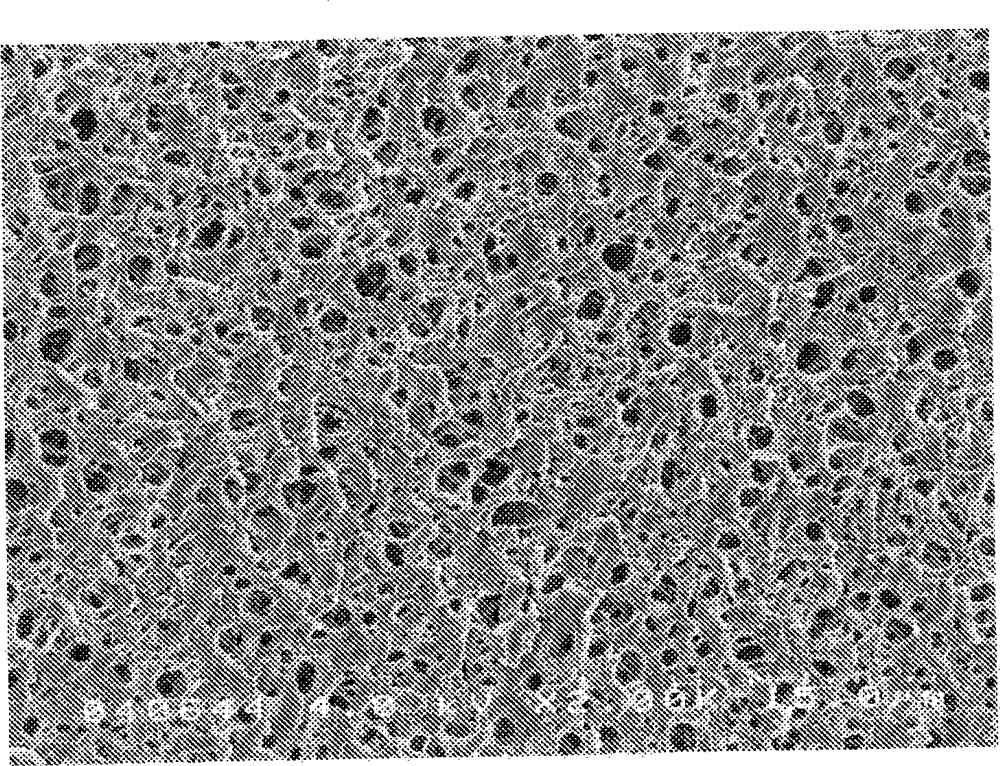
图4是表示使用扫描型电子显微镜观察本发明的实施例1的中空丝膜时的图像的例子的图。Fig. 4 is a diagram showing an example of an image obtained when observing the hollow fiber membrane of Example 1 of the present invention using a scanning electron microscope.
图5是表示放大图4中所示部分的重要部分的图。FIG. 5 is an enlarged view showing an important portion of the portion shown in FIG. 4 .
图6是表示放大图4中所示的中空丝膜的内表面的图。Fig. 6 is an enlarged view showing the inner surface of the hollow fiber membrane shown in Fig. 4 .
图7是表示放大图4中所示的中空丝膜的外表面的图。Fig. 7 is an enlarged view showing the outer surface of the hollow fiber membrane shown in Fig. 4 .
具体实施方式 Detailed ways
以下,对本发明进行详细说明。Hereinafter, the present invention will be described in detail.
本发明的中空丝膜中使用的聚酰胺树脂在不损坏本发明效果的范围内不做特别限定。但是,亚甲基和酰胺基的比例以摩尔比计必须为-CH2-∶-NHCO-=4∶1~10∶1,其中优选比较廉价的脂肪族聚酰胺。作为这样的聚酰胺树脂,例如可以举出:聚酰胺6、聚酰胺66、聚酰胺46、聚酰胺610等。其中从亲水性高这一方面考虑,最优选为聚酰胺6。The polyamide resin used for the hollow fiber membrane of the present invention is not particularly limited as long as the effect of the present invention is not impaired. However, the molar ratio of the methylene group to the amide group must be -CH 2 -:-NHCO-=4:1 to 10:1, and relatively inexpensive aliphatic polyamides are preferred. Examples of such polyamide resins include
换言之,本发明的中空丝膜中使用的聚酰胺树脂只要能成型为纤维形状即可,没有特别限定。例如可以不进行交联也可进行交联。但是,进行交联会增加成本,因此优选不进行交联的聚酰胺树脂。聚酰胺树脂的相对粘度优选在2.0~4.5的范围内。相对粘度低于2.0时,溶解在溶液中时的溶液粘度过低,难以成型为中空丝膜状。相反,相对粘度超过4.5时,溶液粘度过高,容易造成难以控制相分离的问题。In other words, the polyamide resin used in the hollow fiber membrane of the present invention is not particularly limited as long as it can be molded into a fiber shape. For example, crosslinking may be performed without crosslinking. However, crosslinking increases costs, so a polyamide resin that is not crosslinked is preferable. The relative viscosity of the polyamide resin is preferably in the range of 2.0 to 4.5. When the relative viscosity is less than 2.0, the solution viscosity when dissolved in the solution is too low, making it difficult to form a hollow fiber membrane. On the contrary, when the relative viscosity exceeds 4.5, the solution viscosity is too high, and it is easy to cause the problem that it is difficult to control the phase separation.
本发明的聚酰胺中空丝膜为以上述聚酰胺树脂作为材质、膜表面的亲水性优良的中空丝膜。作为亲水性的指标,本发明的聚酰胺中空丝膜必须膜表面相对于水的接触角为80度以下,优选为70度以下,更优选为60度以下。The polyamide hollow fiber membrane of the present invention is a hollow fiber membrane made of the above-mentioned polyamide resin and excellent in hydrophilicity of the membrane surface. As an index of hydrophilicity, the polyamide hollow fiber membrane of the present invention must have a contact angle with respect to water on the membrane surface of 80 degrees or less, preferably 70 degrees or less, more preferably 60 degrees or less.
在此,相对于水的接触角如下求出:使0.1~2.0μL量的纯水的水滴良好地接触膜表面,使用接触角计测定膜表面形成的水滴端点的切线与膜表面形成的角度。因此,可以说该值越小亲水性越高。Here, the contact angle with respect to water was obtained by making a 0.1-2.0 μL pure water droplet contact the film surface well, and measuring the angle formed by the tangent line of the water droplet endpoint formed on the film surface and the film surface using a contact angle meter. Therefore, it can be said that the smaller the value, the higher the hydrophilicity.
相对于水的接触角超过80度时,过滤原水中含有的蛋白质等有机物容易吸附在膜上,由此造成膜受污染在短时间内过滤性能降低。When the contact angle with respect to water exceeds 80 degrees, organic substances such as proteins contained in the filtered raw water are easily adsorbed on the membrane, which will cause the membrane to be polluted and the filtration performance will be reduced in a short time.
另外,本发明的聚酰胺中空丝膜的作为透水性能之一的透水量也必须为100L/m2·atm·h以上。优选为300L/m2·atm·h以上,进一步优选为500L/m2·atm·h以上。透水量不足100L/m2·atm·h时,存在过滤效率降低的问题。In addition, the polyamide hollow fiber membrane of the present invention must also have a water permeability which is one of the water permeability properties of 100 L/m 2 ·atm·h or more. Preferably it is 300 L/m 2 ·atm·h or more, and more preferably 500 L/m 2 ·atm·h or more. When the water permeation rate is less than 100 L/m 2 ·atm·h, there is a problem that the filtration efficiency decreases.
在此所说的透水量为通过内压式过滤测定而得到的值。详细地讲,是如下求出的:如图3所示,将聚酰胺中空丝膜15切成长度10~20cm,在其两端的中空部分插入直径符合其内径的注射针19并固定在图示的装置上后,使用送液泵13流通纯水规定时间(分钟),将透过膜15留在托盘18中的水的容量(L)作为透过量,使用以下计算式求出。The water permeability mentioned here is a value measured by internal pressure filtration. In detail, it is obtained as follows: as shown in Figure 3, the polyamide
透水量=透过量(L)/[内径(m)×3.14×长度(m)×{(入口压(atm)+出口压(atm))/2}×时间(h)]Water permeability = permeation (L)/[inner diameter (m)×3.14×length (m)×{(inlet pressure (atm)+outlet pressure (atm))/2}×time (h)]
入口压使用图3的入口压力计14进行测定,出口压使用图3的出口压力计16进行测定。图3中,17为出口阀。The inlet pressure was measured using the
本发明中的聚酰胺中空丝膜具有相当于精密滤膜或超滤膜的孔径,因此0.1μm粒子的阻止率为90%以上。优选为95%以上,更优选为99%以上。The polyamide hollow fiber membrane in the present invention has a pore diameter equivalent to that of a microfiltration membrane or an ultrafiltration membrane, so the rejection rate of 0.1 μm particles is above 90%. Preferably it is 95% or more, More preferably, it is 99% or more.
本发明中所谓的0.1μm粒子的阻止率是指中空丝膜阻止大小为0.1μm的粒子通过并可以将其过滤的比例。详细地讲,是如下求出的:在0.1%TritonX-100水溶液299mL中添加1mL Duke Scientific公司制的100nm聚苯乙烯微粒3100A并进行3小时的搅拌分散,将其通入到上述图3的透水量测定装置中,回收透过膜的液体,测定透过膜前后的液体的380nm的吸光度,利用下述通式求出。The so-called rejection rate of 0.1 μm particles in the present invention refers to the ratio at which the hollow fiber membrane prevents the passage of particles with a size of 0.1 μm and can filter them. Specifically, it was determined as follows: Add 1 mL of 100 nm polystyrene particles 3100A manufactured by Duke Scientific to 299 mL of 0.1% TritonX-100 aqueous solution, stir and disperse for 3 hours, and pass it into the permeable water tank in Fig. 3 above. In the quantity measuring device, the liquid permeated through the membrane was recovered, and the absorbance at 380 nm of the liquid before and after permeating the membrane was measured, and obtained by the following general formula.
0.1μm粒子的阻止率=(初期吸光度-透过液吸光度)/初期吸光度×100Inhibition rate of 0.1 μm particles = (initial absorbance - permeate absorbance) / initial absorbance × 100
0.1μm粒子的阻止率如果低于90%,则即使透过了要过滤分开的物质本发明中也不能采用。If the blocking rate of 0.1 μm particles is lower than 90%, it cannot be used in the present invention even if the material to be separated by filtration passes through.
本发明的中空丝膜的断裂强度优选为1.5~30.0MPa,更优选为2.5~25.0MPa,特别优选为3.5~15.0MPa。断裂强度过低时,例如在模块化时操作变困难所以不优选。The breaking strength of the hollow fiber membrane of the present invention is preferably 1.5 to 30.0 MPa, more preferably 2.5 to 25.0 MPa, particularly preferably 3.5 to 15.0 MPa. When the breaking strength is too low, it is not preferable because, for example, handling becomes difficult in modularization.
本发明的中空丝膜的断裂拉伸率优选为10~500%,更优选为20~350%,特别优选为40~320%。中空丝膜的断裂拉伸率小时,例如由于在模块化时的加工张力及在膜分离活性污泥法(MBR法)等浸渍膜用途中的曝气及异物的接触容易发生切断,所以不优选。The elongation at break of the hollow fiber membrane of the present invention is preferably 10 to 500%, more preferably 20 to 350%, and particularly preferably 40 to 320%. When the breaking elongation of the hollow fiber membrane is small, it is not preferable because, for example, the processing tension at the time of modularization and the aeration and contact of foreign matter in the application of the impregnated membrane such as the membrane separation activated sludge method (MBR method) tend to cause cutting. .
本发明的中空丝膜的弹性模量优选为10.0~100.0MPa,更优选为15.0~80.0MPa,特别优选为20.0~70.0MPa。弹性模量过小时,由于例如在模块化时因加工张力而变形、透水量及0.1μm粒子的阻止率等膜特性不稳定且操作困难,所以不优选。The modulus of elasticity of the hollow fiber membrane of the present invention is preferably 10.0 to 100.0 MPa, more preferably 15.0 to 80.0 MPa, particularly preferably 20.0 to 70.0 MPa. When the modulus of elasticity is too small, the membrane properties such as deformation due to processing tension during modularization, water permeability, and rejection rate of 0.1 μm particles are unstable and handling is difficult, so it is not preferable.
特别是在主要使用于污水、排水处理的膜分离活性污泥法(MBR法)中,往往是边通过不断曝气摇动中空丝膜而冲掉堆积在表面上的物质边使用的,因此要求具有高的强度、延伸度、弹性模量。Especially in the membrane separation activated sludge method (MBR method) which is mainly used in sewage and drainage treatment, it is often used while washing away the substances accumulated on the surface by continuously aerating and shaking the hollow fiber membrane, so it is required to have High strength, elongation, modulus of elasticity.
本发明的中空丝膜中可以含有填充物。填充物优选预先分散在所使用的树脂及/或有机溶剂中来使用。通过含有填充物,具有提高中空丝膜的强度、延伸度、弹性模量的效果。添加的填充物的种类没有特别限定,可以使用玻璃纤维、碳纤维、钛酸钾晶须、氧化锌晶须、碳酸钙晶须、硅灰石晶须、硼酸铝晶须、芳族聚酰胺纤维、氧化铝纤维、碳化硅纤维、陶瓷纤维、石棉纤维、石膏纤维、金属纤维等纤维状填充物;滑石、水滑石、硅灰石、沸石、绢云母、云母、高岭土、粘土、叶蜡石、膨润土、石棉、氧化铝硅酸盐等硅酸盐;氧化硅、氧化镁、氧化铝、氧化锆、氧化钛、氧化铁等金属化合物;碳酸钙、碳酸镁、白云石等碳酸盐;硫酸钙、硫酸钡等硫酸盐;氢氧化钙、氢氧化镁、氢氧化铝等氢氧化物;玻璃珠、玻璃片、玻璃粉、陶瓷珠、氮化硼、碳化硅、碳黑、硅石、石墨等非纤维填充物。这些填充物也可以2种以上合并使用。上述填充物中,优选滑石、水滑石、硅石、粘土、氧化钛,更优选滑石、粘土。The hollow fiber membrane of the present invention may contain a filler. The filler is preferably dispersed in the resin and/or organic solvent to be used beforehand. By containing the filler, there is an effect of improving the strength, elongation, and elastic modulus of the hollow fiber membrane. The type of filler to be added is not particularly limited, and glass fibers, carbon fibers, potassium titanate whiskers, zinc oxide whiskers, calcium carbonate whiskers, wollastonite whiskers, aluminum borate whiskers, aramid fibers, Alumina fiber, silicon carbide fiber, ceramic fiber, asbestos fiber, gypsum fiber, metal fiber and other fibrous fillers; talc, hydrotalcite, wollastonite, zeolite, sericite, mica, kaolin, clay, pyrophyllite, bentonite , asbestos, alumina silicate and other silicates; silicon oxide, magnesium oxide, aluminum oxide, zirconium oxide, titanium oxide, iron oxide and other metal compounds; calcium carbonate, magnesium carbonate, dolomite and other carbonates; calcium sulfate, Barium sulfate and other sulfates; calcium hydroxide, magnesium hydroxide, aluminum hydroxide and other hydroxides; glass beads, glass flakes, glass powder, ceramic beads, boron nitride, silicon carbide, carbon black, silica, graphite and other non-fiber filler. These fillers can also be used in combination of 2 or more types. Among the above-mentioned fillers, talc, hydrotalcite, silica, clay, and titanium oxide are preferable, and talc and clay are more preferable.
填充物的添加量没有特别限定,但相对于树脂优选为5~100质量%,更优选为10~75质量%,特别优选为25~50质量%。如果相对于树脂少于5质量%,则不能实现提高强延伸度及弹性模量的效果。相反,相对于树脂添加超过100质量%时,存在变脆的问题。The amount of the filler added is not particularly limited, but is preferably 5 to 100% by mass, more preferably 10 to 75% by mass, particularly preferably 25 to 50% by mass, based on the resin. If it is less than 5% by mass relative to the resin, the effects of improving the strong elongation and elastic modulus cannot be achieved. On the contrary, when it is added in excess of 100% by mass relative to the resin, there is a problem of becoming brittle.
以下,对本发明的聚酰胺中空丝膜的制造方法进行说明。Hereinafter, the method for producing the polyamide hollow fiber membrane of the present invention will be described.
由于在室温下溶解聚酰胺树脂的溶剂未除去甲酸、浓硫酸、一部分含氟溶剂,所以本发明的聚酰胺中空丝膜优选使用在高温下溶解于溶剂来制作的TIPS法来制造。Since formic acid, concentrated sulfuric acid, and some fluorine-containing solvents are not removed from the solvent that dissolves the polyamide resin at room temperature, the polyamide hollow fiber membrane of the present invention is preferably produced by the TIPS method that is produced by dissolving in a solvent at high temperature.
详细地讲,本发明的聚酰胺中空丝膜,首先在100℃以上的温度下将聚酰胺树脂溶解于具有150℃以上的沸点、在低于100℃的温度下和该聚酰胺树脂不相溶、且在100℃以上的温度下和该聚酰胺树脂相溶的有机溶剂中制成制膜原液。Specifically, the polyamide hollow fiber membrane of the present invention is firstly dissolved in a polyamide resin having a boiling point of 150°C or higher at a temperature of 100°C or higher and immiscible with the polyamide resin at a temperature lower than 100°C. , and prepare a film-forming stock solution in an organic solvent compatible with the polyamide resin at a temperature above 100°C.
TIPS法为通过将在高温下溶解的均一的高分子溶液冷却到双节点线以下的温度引发相分离,并且通过高分子的结晶化及玻璃转化固定其结构的多孔的制造方法。TIPS法中,在使聚酰胺树脂相溶的有机溶剂中的聚酰胺树脂的微小的分散状态、其微小的浓度梯度、相分离工序中的相分离速度、结晶速度、晶体成长速度等微小的特性在决定聚酰胺中空丝膜的拉丝性、孔径、孔径的均一性、透水性等特性上非常重要的。The TIPS method is a manufacturing method in which a homogeneous polymer solution dissolved at a high temperature is cooled to a temperature below the double node line to induce phase separation, and the structure of the polymer is fixed through crystallization and glass transition. In the TIPS method, minute characteristics such as the minute dispersion state of the polyamide resin in the organic solvent in which the polyamide resin is compatible, its minute concentration gradient, the phase separation rate in the phase separation process, the crystallization rate, and the crystal growth rate It is very important to determine the drawability, pore size, uniformity of pore size, and water permeability of polyamide hollow fiber membranes.
本发明人等对甲酸、浓硫酸、一部分含氟溶剂以外的适合这些的有机溶剂进行了潜心研究。结果发现,选择具有150℃以上的沸点、且在低于100℃的温度下和该聚酰胺树脂不相溶、在100℃以上的温度下聚酰胺树脂开始溶解的有机溶剂,将控制在100℃以上的温度的制膜原液由纺丝喷嘴喷出后,在低于100℃的凝固浴中骤冷,可以得到本发明的聚酰胺中空丝膜。The inventors of the present invention have intensively studied organic solvents suitable for these other than formic acid, concentrated sulfuric acid, and some fluorinated solvents. As a result, it has been found that if an organic solvent with a boiling point above 150°C is selected and is incompatible with the polyamide resin at a temperature below 100°C, and the polyamide resin begins to dissolve at a temperature above 100°C, it will be controlled at 100°C. The membrane-forming stock solution at the temperature above is sprayed from the spinning nozzle, and then quenched in a coagulation bath lower than 100° C. to obtain the polyamide hollow fiber membrane of the present invention.
该有机溶剂的沸点必须为150℃以上,进一步优选为180℃以上,特别优选为200℃以上。沸点必须为150℃以上的理由不明确,但可以推定为:沸点不足150℃时,由纺丝喷嘴喷出制膜原液时,因溶剂的蒸发而容易引起制膜原液中的聚酰胺树脂的微小的浓度的摆动,其也对相分离工序中的相分离速度、结晶速度、结晶成长速度等微小的特性上产生影响,从而不能得到本发明的聚酰胺中空丝膜。而且,有机溶剂的沸点不足150℃时,在100℃以上的温度下溶解聚酰胺树脂时,溶剂的蒸汽压变高,因此会产生作业环境上的不合适情况。The organic solvent must have a boiling point of 150°C or higher, more preferably 180°C or higher, particularly preferably 200°C or higher. The reason why the boiling point must be 150°C or higher is not clear, but it is presumed that if the boiling point is less than 150°C, when the film-forming stock solution is ejected from the spinning nozzle, the polyamide resin in the film-forming stock solution is likely to be microscopic due to the evaporation of the solvent. The fluctuation of the concentration of the polyamide has an influence on the micro characteristics such as the phase separation speed, the crystallization speed, and the crystal growth speed in the phase separation process, so that the polyamide hollow fiber membrane of the present invention cannot be obtained. In addition, when the boiling point of the organic solvent is less than 150°C, the vapor pressure of the solvent increases when the polyamide resin is dissolved at a temperature of 100°C or higher, which may cause inconvenience in the working environment.
在本发明的聚酰胺中空丝膜的制造方法中,在100℃以上的温度下溶解于在低于100℃的温度时和该聚酰胺树脂不相溶的有机溶剂中来制作制膜原液,且必须将控制在100℃以上的温度的制膜原液由纺丝喷嘴喷出。使用在低于100℃的温度下和聚酰胺树脂相溶的有机溶剂时,挤出到将温度控制在下述的低于100℃的凝固浴中时,通过凝固浴进行骤冷,制膜原液中的聚酰胺树脂的相分离也延缓,由此会导致其相分离速度、结晶速度、结晶成长速度等不适合本发明的物质,且不能得到本发明的聚酰胺中空丝膜。推定,在本发明的聚酰胺中空丝膜的制造方法中,通过将控制在100℃以上的温度的制膜原液由纺丝喷嘴喷出来抑制制膜原液中的聚酰胺树脂的微小的浓度的摆动,相分离工序中的相分离速度、结晶速度、结晶成长速度等变得适当,由此,可以得到本发明的聚酰胺中空丝膜。In the method for producing a polyamide hollow fiber membrane of the present invention, a membrane-forming stock solution is prepared by dissolving at a temperature of 100° C. or higher in an organic solvent that is incompatible with the polyamide resin at a temperature lower than 100° C., and It is necessary to spray the film-forming stock solution controlled at a temperature of 100° C. or higher from the spinning nozzle. When using an organic solvent that is compatible with the polyamide resin at a temperature lower than 100°C, when extruding into a coagulation bath whose temperature is controlled below 100°C, it is quenched by the coagulation bath, and the film-forming stock solution The phase separation of the polyamide resin also slows down, thereby causing its phase separation rate, crystallization rate, crystal growth rate and other substances not suitable for the present invention, and the polyamide hollow fiber membrane of the present invention cannot be obtained. It is presumed that in the production method of the polyamide hollow fiber membrane of the present invention, the slight fluctuation of the concentration of the polyamide resin in the membrane-forming stock solution is suppressed by spraying the film-forming stock solution controlled at a temperature of 100° C. or higher from the spinning nozzle. , the phase separation rate, crystallization rate, crystal growth rate, etc. in the phase separation step become appropriate, whereby the polyamide hollow fiber membrane of the present invention can be obtained.
在本发明的聚酰胺中空丝膜的制造方法中,将控制在100℃以上的温度的制膜原液由纺丝喷嘴喷出后,必须挤出到低于100℃的凝固浴中。将温度控制在100℃以上的制膜原液由纺丝喷嘴喷出后,通过挤出到低于100℃的凝固浴中进行骤冷,抑制相分离工序中的高分子结晶的成长,使晶体的直径变细,从而以相同孔径变小的方式控制中空丝膜的孔径。换言之,在本发明中,为了使0.1μm的粒子阻止率为90%以上,有必要从100℃以上的纺丝温度,挤出到100℃以下的凝固浴中进行骤冷。由于即使将温度100℃以下的制膜原液由纺丝喷嘴喷出,在凝固浴中的冷却也为缓慢冷却,因此相分离工序中高分子的结晶快速成长,其结果是,不能将中空丝膜的孔径控制在足够小的值。因此不能使0.1μm的粒子阻止率为90%以上。In the production method of the polyamide hollow fiber membrane of the present invention, the membrane-forming stock solution controlled at a temperature of 100°C or higher must be extruded into a coagulation bath lower than 100°C after being sprayed out from the spinning nozzle. After the film-forming stock solution whose temperature is controlled above 100°C is sprayed out from the spinning nozzle, it is extruded into a coagulation bath below 100°C for quenching to suppress the growth of polymer crystals in the phase separation process and make the crystals The diameter becomes smaller, thereby controlling the pore diameter of the hollow fiber membrane in the same manner as the pore diameter becomes smaller. In other words, in the present invention, it is necessary to extrude from a spinning temperature of 100° C. or higher to a coagulation bath of 100° C. or lower for rapid cooling in order to obtain a 0.1 μm particle inhibition rate of 90% or higher. Even if the membrane-forming stock solution at a temperature of 100°C or lower is sprayed from the spinning nozzle, the cooling in the coagulation bath is slow, so the polymer crystals grow rapidly in the phase separation process. As a result, the hollow fiber membrane cannot be The aperture is controlled at a sufficiently small value. Therefore, the particle inhibition rate of 0.1 μm cannot be made to be 90% or more.
在此,所谓聚酰胺树脂相溶于有机溶剂的温度是指目视以20%的固液比搅拌1小时时溶液变均一的温度。Here, the temperature at which the polyamide resin dissolves in the organic solvent refers to the temperature at which the solution becomes uniform when stirred for 1 hour at a solid-to-liquid ratio of 20%.
本发明中,作为具有150℃以上的沸点、在低于100℃的温度下和聚酰胺树脂不相溶的有机溶剂,可以举出:非质子性极性溶剂、甘油酯类、多元醇类、有机酸及有机酸酯类、高级醇类等。In the present invention, examples of organic solvents that have a boiling point of 150° C. or higher and are incompatible with polyamide resins at temperatures lower than 100° C. include aprotic polar solvents, glycerides, polyols, Organic acids and organic acid esters, higher alcohols, etc.
作为非质子极性溶剂的具体实例,可以举出:环丁砜、二甲基砜、二甲基亚砜、γ-丁内酯、γ-戊内酯、δ-戊内酯、ε-己内酯、N,N-二甲基甲酰胺、N,N-二甲基乙酰胺、N-甲基-2-吡咯烷酮、碳酸乙烯酯、碳酸丙烯酯等。作为甘油酯类的具体实例,可以举出:二乙二醇二甲基醚、二乙二醇二乙醚、三乙二醇二甲基醚、二乙二醇二丁基醚、四乙二醇二甲基醚等。作为多元醇类的具体实例,可以举出:甘油、乙二醇、二乙二醇、三乙二醇、丙二醇、己二醇、1,3-丁二醇、聚乙二醇(分子量100~600)等。作为有机酸及有机酸酯类的具体实例,可以举出:邻苯二甲酸二甲酯、邻苯二甲酸二乙酯、邻苯二甲酸二异丙酯、邻苯二甲酸二丁酯、邻苯二甲酸丁基苄基酯、水杨酸甲酯、油酸、棕榈酸、硬脂酸、月桂酸等。这些中,优选非质子性极性溶剂、多元醇类,更优选环丁砜、γ-丁内酯、ε-己内酯、丙二醇、己二醇、1,3-丁二醇、聚乙二醇(分子量100~600),最优选环丁砜。使用非质子性极性溶剂、多元醇类时,可以提高拉丝性,同时也可以得到透水量提高且中空丝膜的强度提高的优点。这些理由尚不清楚。但是,在本发明的聚酰胺中空丝膜中,使用了酰胺基与亚甲基的摩尔比比较高的聚酰胺树脂,因此聚酰胺树脂分子的分子内的极性比较高,在极性高的非质子性极性溶剂及多元醇类、其中特别是环丁砜中,和聚酰胺树脂的相溶性高且均一地溶解,并且和水的亲和性也高。因此,可以推断,作为凝固浴例如在使用水的情况下,在凝固浴中也会适度引起制膜原液中使用的溶剂和水的交换,因此使结晶变快,其结果,透水性及强度提高。Specific examples of the aprotic polar solvent include: sulfolane, dimethyl sulfone, dimethyl sulfoxide, γ-butyrolactone, γ-valerolactone, δ-valerolactone, ε-caprolactone , N,N-dimethylformamide, N,N-dimethylacetamide, N-methyl-2-pyrrolidone, ethylene carbonate, propylene carbonate, etc. Specific examples of glycerides include diethylene glycol dimethyl ether, diethylene glycol diethyl ether, triethylene glycol dimethyl ether, diethylene glycol dibutyl ether, tetraethylene glycol Dimethyl ether etc. As specific examples of polyhydric alcohols, glycerin, ethylene glycol, diethylene glycol, triethylene glycol, propylene glycol, hexylene glycol, 1,3-butanediol, polyethylene glycol (molecular weight 100- 600) etc. Specific examples of organic acids and organic acid esters include: dimethyl phthalate, diethyl phthalate, diisopropyl phthalate, dibutyl phthalate, Butylbenzyl phthalate, methyl salicylate, oleic acid, palmitic acid, stearic acid, lauric acid, etc. Among these, aprotic polar solvents and polyhydric alcohols are preferable, and sulfolane, γ-butyrolactone, ε-caprolactone, propylene glycol, hexanediol, 1,3-butanediol, polyethylene glycol ( Molecular weight 100-600), most preferably sulfolane. When an aprotic polar solvent or polyhydric alcohol is used, stringiness can be improved, and at the same time, the advantages of increased water permeability and increased strength of the hollow fiber membrane can be obtained. The reasons for these are unclear. However, in the polyamide hollow fiber membrane of the present invention, a polyamide resin with a relatively high molar ratio of amide groups to methylene groups is used, so the intramolecular polarity of the polyamide resin molecule is relatively high, and the polarity is high. Aprotic polar solvents and polyols, especially sulfolane, have high compatibility with polyamide resins and dissolve uniformly, and also have high affinity with water. Therefore, it can be inferred that, for example, when water is used as the coagulation bath, the exchange of the solvent used in the film-forming stock solution and water is moderately caused in the coagulation bath, so that the crystallization is accelerated, and as a result, the water permeability and strength are improved. .
上述的有机溶剂可以单独使用,也可以2种以上混合使用。单独使用也可以得到充分的效果,但将2种以上混合使用时,由于使用这2种以上的有机溶剂时相分离的顺序及结构不同,因此还具有可以更有效地制造中空丝膜的优点。例如,通过混合具有高相分离温度的聚乙二醇,可以预先使聚乙二醇分离并赋予开孔效果。又例如,通过混合引起液-液相分离的环丁砜可以赋予强延伸度提高的海绵状结构。The above organic solvents may be used alone or in combination of two or more. Sufficient effects can be obtained when used alone, but when two or more organic solvents are used in combination, since the order and structure of phase separation are different when using these two or more organic solvents, there is also an advantage that hollow fiber membranes can be produced more efficiently. For example, by mixing polyethylene glycol having a high phase separation temperature, polyethylene glycol can be separated in advance and a cell-opening effect can be imparted. As another example, sulfolane, which induces liquid-liquid phase separation by mixing, can impart a sponge-like structure with enhanced elongation.
作为将聚酰胺树脂溶解于上述有机溶剂时的浓度,优选将树脂的浓度设定成5质量%~50质量%,更优选将树脂的浓度设定成10质量%~40质量%,最优选设定成15质量%~30质量%。树脂的浓度低于5质量%时,容易产生膜的强度显著变弱、粒子阻止率降低的问题。相反,树脂的浓度超过50质量%时,容易造成透水量降低。As the concentration when the polyamide resin is dissolved in the above-mentioned organic solvent, the concentration of the resin is preferably set to 5% by mass to 50% by mass, more preferably the concentration of the resin is set to 10% by mass to 40% by mass, most preferably set to It is set at 15% by mass to 30% by mass. When the concentration of the resin is less than 5% by mass, the strength of the film is remarkably weakened and the problem that the particle inhibition rate is lowered tends to occur. Conversely, when the concentration of the resin exceeds 50% by mass, the amount of water permeation tends to decrease.
将聚酰胺树脂溶解于有机溶剂时,必须如上所述将溶剂的温度设定在100℃以上。具体而言,在比其体系的相分离温度高10℃~50℃的温度下、更优选高20℃~40℃的温度下进行溶解即可。所谓体系的相分离温度,是指将树脂和溶剂在足够高的温度下进行混合并缓慢冷却,引起液-液相分离或晶析导致的固-液相分离的温度。相分离温度的测定可以使用具有热台的显微镜等来良好地进行。When dissolving a polyamide resin in an organic solvent, it is necessary to set the temperature of the solvent to 100° C. or higher as described above. Specifically, the dissolution may be performed at a
作为用于制造的接下来的步骤,使用中空丝纺丝喷嘴将如上所述通过将聚酰胺树脂溶解于有机溶剂制作成的制膜原液挤出到低于100℃的凝固液中来形成中空丝。迅速冷却制膜原液直至达到设定的凝固液的温度,从而引起相分离而形成多孔结构。在凝固液为水的情况下,将冷却温度设定在0℃以下时,通过添加盐类或混合乙二醇及甘油等即可应对。As the next step for production, a hollow fiber is formed by extruding the film-making stock solution prepared by dissolving polyamide resin in an organic solvent as described above into a coagulation liquid below 100° C. using a hollow fiber spinning nozzle . Rapidly cool the film-forming stock solution until it reaches the set temperature of the coagulation solution, thereby causing phase separation and forming a porous structure. When the coagulation liquid is water, if the cooling temperature is set below 0°C, it can be dealt with by adding salt or mixing ethylene glycol and glycerin, etc.
作为中空丝纺丝用喷嘴,可以使用如在熔融纺丝中制作芯鞘型的复合纤维时使用的具有双重圆形状的喷嘴。As the nozzle for hollow fiber spinning, a nozzle having a double circular shape as used in producing a core-sheath type composite fiber in melt spinning can be used.
在形成中空部分的芯部注入流体。作为该注入的流体,可以使用液体、气体。其中,由于制膜原液的粘度低,因此,为了在难以形成丝状的条件下也可以进行纺丝,优选使用液体。作为该液体可以使用适宜的液体,在欲增大中空丝内部的孔时,可以使用和该聚酰胺树脂的亲和性高的优良溶剂,在欲减小中空丝内部的孔时,可以使用不良溶剂。作为这种溶剂的具体实例,作为优良溶剂可以举出:甘油、二乙二醇、三乙二醇、环丁砜等。作为不良溶剂可以举出:高级脂肪酸类、液体石蜡等沸点高且和聚酰胺不相溶的任意流体。在制膜原液的粘度高、拉丝性优良的情况下,也可以使用在芯部流入惰性气体等气体的方法。Fluid is injected into the core forming the hollow portion. Liquid and gas can be used as the injected fluid. Among them, since the membrane-forming stock solution has a low viscosity, it is preferable to use a liquid in order to enable spinning even under conditions where it is difficult to form filaments. As the liquid, an appropriate liquid can be used. When it is desired to enlarge the pores inside the hollow fiber, an excellent solvent with high affinity with the polyamide resin can be used, and when it is desired to reduce the pores inside the hollow fiber, a poor solvent can be used. solvent. Specific examples of such solvents include glycerin, diethylene glycol, triethylene glycol, sulfolane and the like as excellent solvents. Examples of poor solvents include arbitrary fluids that have a high boiling point and are incompatible with polyamide, such as higher fatty acids and liquid paraffin. When the viscosity of the film-forming stock solution is high and the spinnability is excellent, a method of flowing a gas such as an inert gas into the core can also be used.
作为凝固液,在不损坏本发明效果的范围内可以使用任意的凝固液。例如可以优选使用:水;乙醇、异丙醇等醇类;甘油、乙二醇、二乙二醇、三乙二醇等多元醇类;丙酮、乙基甲基酮等酮类等。这些液体可以单独使用,也可以使用2种以上混合后的混合溶剂。其中优选水、甘油、乙二醇,更优选使用水。凝固液的温度没有特别限定,优选-20℃~100℃,更优选-10℃~80℃,最优选0℃~50℃。通过使凝固液的温度变化,可以改变聚酰胺树脂的结晶速度,由此可以改变中空丝膜的孔径大小、透水量、强度。一般情况下,只要降低凝固液的温度,孔径大小就会变小,透水量就会降低,强度就会提高,只要提高凝固液的温度,孔径大小就会变大,透水量就会提高,强度就会降低。但是,这些特性会根据与使用的溶剂中的凝固液的溶解性及使用的聚酰胺树脂自身的结晶速度而改变。所以也有许多例外。凝固液的温度低于-20℃时,存在温度控制需要大量的能量的问题。相反,凝固液的温度超过100℃时,存在有得到的中空丝膜的强度变弱的问题。As the coagulation liquid, any coagulation liquid can be used within the range that does not impair the effect of the present invention. For example, water; alcohols such as ethanol and isopropanol; polyhydric alcohols such as glycerin, ethylene glycol, diethylene glycol, and triethylene glycol; and ketones such as acetone and ethyl methyl ketone can be preferably used. These liquids may be used alone, or a mixed solvent obtained by mixing two or more of them. Among them, water, glycerin, and ethylene glycol are preferable, and water is more preferably used. The temperature of the coagulation liquid is not particularly limited, but it is preferably -20°C to 100°C, more preferably -10°C to 80°C, and most preferably 0°C to 50°C. By changing the temperature of the coagulation liquid, the crystallization rate of the polyamide resin can be changed, thereby changing the pore size, water permeability, and strength of the hollow fiber membrane. In general, as long as the temperature of the coagulation liquid is lowered, the pore size will become smaller, the water permeability will decrease, and the strength will increase. As long as the temperature of the coagulation liquid is increased, the pore size will become larger, the water permeability will increase, and the strength will increase. will decrease. However, these characteristics vary depending on the solubility with the coagulation liquid in the solvent used and the crystallization speed of the polyamide resin itself used. So there are many exceptions. When the temperature of the coagulation liquid is lower than -20°C, there is a problem that a large amount of energy is required for temperature control. On the contrary, when the temperature of the coagulation liquid exceeds 100° C., there is a problem that the strength of the obtained hollow fiber membrane becomes weak.
作为下面的阶段,将得到的中空丝浸渍于溶剂中,通过提取并除去在中空丝内发生相分离的有机溶剂,最终可以得到中空丝膜。作为这种提取用的溶剂,优选廉价且沸点低的提取后可以根据聚酰胺树脂的沸点之差等容易地分离的溶剂。例如可以举出:水、甘油、甲醇、乙醇、异丙醇、丙酮、二乙醚、己烷、石油醚、甲苯等。这些中优选水、甲醇、乙醇、异丙醇、丙酮,特别优选水、甲醇、异丙醇。特别是在提取溶解于水的溶剂时,在上述冷却工序中如果使用水浴则同时也可提取出溶剂,是有效的。在提取邻苯二甲酸酯、脂肪酸等不溶于水的溶剂时,可以优选使用异丙醇、石油醚等。浸渍在溶剂中的时间在不损害本发明效果的范围内没有特别限定。一般情况下为1小时~2个月时间。优选为5小时~1个月时间,进一步优选为10小时~14日。为了有效地提取除去有机溶剂,可以边替换提取溶剂边搅拌。特别是将中空丝膜使用于食品工业及净水设备时,存在有机溶剂残留的问题,因此必须花时间彻底地进行有机溶剂的提取除去。In the next step, the obtained hollow fiber is immersed in a solvent, and the organic solvent that phase-separates in the hollow fiber is extracted and removed to finally obtain a hollow fiber membrane. As the solvent for such extraction, an inexpensive solvent having a low boiling point that can be easily separated by the difference in boiling point of the polyamide resin after extraction is preferable. For example, water, glycerin, methanol, ethanol, isopropanol, acetone, diethyl ether, hexane, petroleum ether, toluene, etc. are mentioned. Among these, water, methanol, ethanol, isopropanol, and acetone are preferable, and water, methanol, and isopropanol are particularly preferable. In particular, when extracting a solvent dissolved in water, it is effective to extract the solvent simultaneously by using a water bath in the cooling step. When extracting water-insoluble solvents such as phthalic acid esters and fatty acids, isopropyl alcohol, petroleum ether, and the like can be preferably used. The time of immersion in the solvent is not particularly limited as long as the effects of the present invention are not impaired. Generally, it takes 1 hour to 2 months. It is preferably 5 hours to 1 month, more preferably 10 hours to 14 days. In order to effectively extract and remove the organic solvent, stirring may be performed while replacing the extraction solvent. In particular, when hollow fiber membranes are used in the food industry and water purification equipment, there is a problem of residual organic solvents, so it is necessary to take time to thoroughly extract and remove organic solvents.
为了良好地实施上述本发明的聚酰胺中空丝膜的制造方法,可以使用如图1所示的在干湿式纺丝中使用的一般的装置。中空丝的制造可以使用如图2所示的具有双重圆形状的喷嘴。In order to carry out the above-mentioned method for producing a polyamide hollow fiber membrane of the present invention favorably, a general apparatus used for dry-wet spinning as shown in FIG. 1 can be used. The manufacture of hollow filaments can use a nozzle having a double circular shape as shown in FIG. 2 .
图1中,3为容器、7为凝固浴、9为卷绕机、10为溶剂提取浴。容器3中,储存有在100℃以上使聚酰胺树脂溶解于有机溶剂中所得的制膜原液。在容器3的底部设置有定量泵4和纺丝喷嘴6。纺丝喷嘴6具有如图2所示的剖面结构。详细地讲,纺丝喷嘴6具有中央部的横截面圆形的内部流体流出孔11、和在该内部流体流出孔11的周围与该内部流体流出孔11形成同心状的环状的制膜原液流出孔12。在制膜原液流出孔12中经定量泵4由容器3的内部供给制膜原液21。在内部流体流出孔11中,由图1所示的导入路5经过省略图示的另一定量泵供给内部流体22。图1中,1为设置在容器3中的搅拌用的马达,2为向容器3的内部供给加压气体的管路。In Fig. 1, 3 is a container, 7 is a coagulation bath, 9 is a winding machine, and 10 is a solvent extraction bath. In the
利用这样的构成,聚酰胺树脂如上所述与有机溶剂在高温下混合溶解形成制膜原液并储存到容器3中。制膜原液21及内部流体22分别利用定量泵进行计量并送入纺丝喷嘴6中。由喷嘴6喷出的制膜原液通过微小的空气隙导入到储存有水等实质上不溶于聚酰胺树脂的液体的凝固浴7中,进行冷却固化。由此可以得到中空丝8。此时,在制膜原液被冷却固化的过程中,发生热致相分离,因此中空丝8的中空的壁部具有海岛结构。用卷绕机9卷绕这样得到的中空丝8,然后将其送到溶剂提取浴10中。在溶剂提取浴10中,使用水等提取溶剂,用规定的时间除去作为海岛结构的岛成分的有机溶剂和在纺丝时流入中空部的流体。由此,可以得到目标中空丝膜。该中空丝膜是从溶剂提取浴10中提取出的。With such a configuration, the polyamide resin is mixed and dissolved with an organic solvent at a high temperature as described above to form a membrane-forming stock solution, which is then stored in the
实施例Example
以下依照实施例具体地说明本发明。但是,本发明不限于这些实施例。另外,下述的实施例、比较例中,中空丝膜的特性值的测定依照下述的方法进行。接触角的测定使用协和界面科学社制的自动接触角计DM-500。中空丝膜的断裂强度、断裂延伸度、弹性模量如下求出。即,基于JIS L-1013使用岛津制作所社制的拉伸试验机Autograph AG-H,通过在卡盘间距离50mm下、以50mm/分钟的速度进行拉伸来测定。Hereinafter, the present invention will be specifically described based on examples. However, the present invention is not limited to these Examples. In addition, in the following examples and comparative examples, the measurement of the characteristic value of the hollow fiber membrane was performed according to the following method. For the measurement of the contact angle, an automatic contact angle meter DM-500 manufactured by Kyowa Interface Science Co., Ltd. was used. The breaking strength, breaking elongation, and elastic modulus of the hollow fiber membrane were determined as follows. That is, based on JIS L-1013, it is measured by stretching at a speed of 50 mm/min at a distance between chucks of 50 mm using a tensile testing machine Autograph AG-H manufactured by Shimadzu Corporation.
实施例1Example 1
通过将聚酰胺6的碎屑(尤尼吉可公司制A1030BRT、相对粘度3.53(将96%硫酸作为溶剂、在浓度1g/分升、温度25℃下测定))80g和环丁砜(东京化成公司制、沸点285℃)320g在230℃下搅拌1.5小时,使聚酰胺6溶解于环丁砜中,制成制膜原液。其后,将其温度降低到210℃,通过图1所示装置中的定量泵4送液到纺丝喷嘴6中,在0.05MPa下挤出。纺丝喷嘴使用环状的制膜原液流出孔的外径1.58mm、其内径0.83mm的纺丝喷嘴。作为用于纺丝中空丝的内部液,以6.0g/分钟的送液速度流入三乙二醇。挤出的纺丝原液通过5mm的空气隙投入到0℃的水浴(凝固浴7)中进行冷却固化,利用卷绕机9以20m/分钟的卷绕速度卷绕。将得到的中空丝浸渍在溶剂提取浴10中即水中24小时,提取出溶剂,得到中空丝膜。By mixing 80 g of
得到的中空丝膜的接触角为52度,透水量为830L/m2·atm·h,0.1μm粒子的阻止率为99%,其断裂强度为4.5MPa,断裂拉伸率为296%,弹性模量为19.0MPa。将使用电子显微镜观察得到的中空丝膜的剖面时的图像示于图4~图7。如图所示,可以观察到中空丝膜中存在有致密的大小一致的孔且没有大孔。另外,观察到在内表面、外表面中均存在许多的孔。将该实施例1的中空丝膜的详情示于表1。The obtained hollow fiber membrane has a contact angle of 52 degrees, a water permeability of 830L/m 2 ·atm·h, a blocking rate of 0.1μm particles of 99%, a breaking strength of 4.5MPa, a breaking elongation of 296%, and an elastic The modulus is 19.0 MPa. Images obtained when observing the cross-section of the hollow fiber membrane obtained using an electron microscope are shown in FIGS. 4 to 7 . As shown in the figure, it can be observed that there are dense pores of uniform size and no macropores in the hollow fiber membrane. In addition, many pores were observed on both the inner surface and the outer surface. Table 1 shows details of the hollow fiber membrane of Example 1.
(表1)(Table 1)
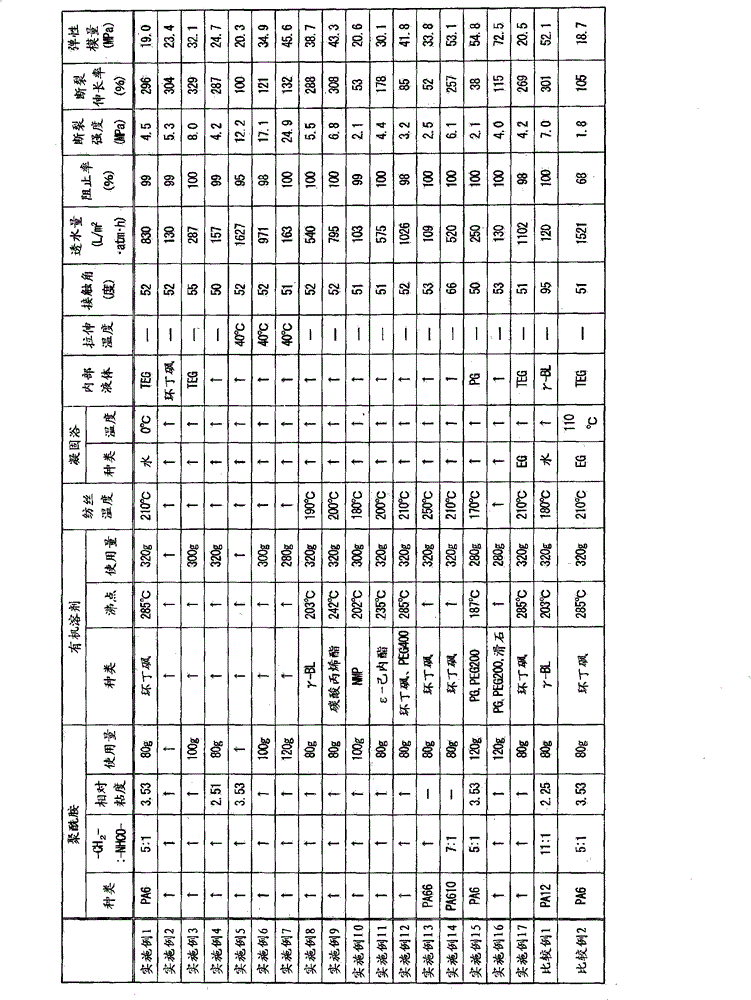
PA6:聚酰胺6、PA66:聚酰胺66、PA610:聚酰胺610、PA12:聚酰胺12、PA6:
γ-BL:γ-丁内酯、NMP:N-甲基-2-吡咯烷酮、PEG400:聚乙二醇(分子量400)、PG:丙二醇γ-BL: γ-butyrolactone, NMP: N-methyl-2-pyrrolidone, PEG400: polyethylene glycol (molecular weight 400), PG: propylene glycol
PEG200:聚乙二醇(分子量200)、TEG:三乙二醇、EG:乙二醇PEG200: polyethylene glycol (molecular weight 200), TEG: triethylene glycol, EG: ethylene glycol
实施例2Example 2
与实施例1相比,将内部液变成环丁砜。除此之外进行和实施例1同样的操作制作中空丝膜。得到的中空丝膜的接触角为52度,透水量为130L/m2·atm·h,0.1μm粒子的阻止率为99%,其断裂强度为5.3MPa,断裂拉伸率为304%,弹性模量为23.4MPa。将该实施例2的中空丝膜的详情示于表1。Compared with Example 1, the internal liquid was changed to sulfolane. Except for this, the same operation as in Example 1 was carried out to produce a hollow fiber membrane. The contact angle of the obtained hollow fiber membrane is 52 degrees, the water permeability is 130L/m 2 ·atm·h, the blocking rate of 0.1μm particles is 99%, the breaking strength is 5.3MPa, the breaking elongation is 304%, and the elasticity The modulus is 23.4MPa. Table 1 shows details of the hollow fiber membrane of Example 2.
实施例3Example 3
与实施例1相比,将聚酰胺6的碎屑变成100g、环丁砜变成300g。除此之外进行和实施例1同样的操作制作中空丝膜。得到的中空丝膜的接触角为55度,透水量为287L/m2·atm·h,0.1μm粒子的阻止率为100%,其断裂强度为8.0MPa,断裂拉伸率为329%,弹性模量为32.1MPa。将该实施例3的中空丝膜的详情示于表1。Compared with Example 1, the scrap of
实施例4Example 4
与实施例1相比,将聚酰胺变成尤尼吉可公司制A1030BRL(聚酰胺6、相对粘度2.51(将96%硫酸作为溶剂、在浓度1g/分升、温度25℃下测定))。除此之外进行和实施例1同样的操作制作中空丝膜。得到的中空丝膜的接触角为50度,透水量为157L/m2·atm·h,0.1μm粒子的阻止率为99%,其断裂强度为4.2MPa,断裂拉伸率为287%,弹性模量为24.7MPa。将该实施例4的中空丝膜的详情示于表1。Compared with Example 1, the polyamide was changed to Unitika Co., Ltd. A1030BRL (
实施例5Example 5
将实施例1中得到的中空丝膜在40℃下长度拉伸2倍。得到的中空丝膜的接触角为52度,透水量为1627L/m2·atm·h,0.1μm粒子的阻止率为95%,其断裂强度为12.2MPa,断裂拉伸率为100%,弹性模量为20.3MPa。将该实施例5的中空丝膜的详情示于表1。The hollow fiber membrane obtained in Example 1 was stretched twice in length at 40°C. The contact angle of the obtained hollow fiber membrane is 52 degrees, the water permeability is 1627L/m 2 ·atm·h, the blocking rate of 0.1μm particles is 95%, the breaking strength is 12.2MPa, the breaking elongation is 100%, and the elastic The modulus is 20.3MPa. Table 1 shows details of the hollow fiber membrane of Example 5.
实施例6Example 6
将实施例3中得到的中空丝膜在40℃下长度拉伸2倍。得到的中空丝膜的接触角为52度,透水量为971L/m2·atm·h,0.1μm粒子的阻止率为98%,其断裂强度为17.1MPa,断裂拉伸率为121%,弹性模量为34.9MPa。将该实施例6的中空丝膜的详情示于表1。The hollow fiber membrane obtained in Example 3 was stretched twice in length at 40°C. The obtained hollow fiber membrane has a contact angle of 52 degrees, a water permeability of 971L/m 2 ·atm·h, a blocking rate of 0.1μm particles of 98%, a breaking strength of 17.1MPa, a breaking elongation of 121%, and an elastic The modulus is 34.9MPa. Table 1 shows details of the hollow fiber membrane of Example 6.
实施例7Example 7
与实施例1相比,将聚酰胺6的碎屑变成120g、将环丁砜变成280g。除此之外进行和实施例1同样的操作制作中空丝膜。将得到的中空丝膜在40℃下长度拉伸2倍。得到的中空丝膜的接触角为51度,透水量为163L/m2·atm·h,0.1μm粒子的阻止率为100%,其断裂强度为24.9MPa,断裂拉伸率为132%,弹性模量为45.6MPa。将该实施例7的中空丝膜的详情示于表1。Compared with Example 1, the scrap of
实施例8Example 8
与实施例1相比,将溶剂变成γ-丁内酯(和光纯药公司制、沸点203℃)、将搅拌溶解温度和时间设定成在190℃下2.5小时、将纺丝温度设定成190℃。除此之外进行和实施例1同样的操作制作中空丝膜。得到的中空丝膜的接触角为52度,透水量为540L/m2·atm·h,0.1μm粒子的阻止率为100%,其断裂强度为5.5MPa,断裂拉伸率为288%,弹性模量为38.7MPa。将该实施例8的中空丝膜的详情示于表1。Compared with Example 1, the solvent was changed to γ-butyrolactone (manufactured by Wako Pure Chemical Industries, Ltd., boiling point 203°C), the stirring and dissolving temperature and time were set at 190°C for 2.5 hours, and the spinning temperature was set to into 190°C. Except for this, the same operation as in Example 1 was carried out to produce a hollow fiber membrane. The contact angle of the obtained hollow fiber membrane is 52 degrees, the water permeability is 540L/m 2 ·atm·h, the blocking rate of 0.1μm particles is 100%, the breaking strength is 5.5MPa, the breaking elongation is 288%, and the elasticity The modulus is 38.7 MPa. Table 1 shows details of the hollow fiber membrane of Example 8.
实施例9Example 9
与实施例1相比,将溶剂变成碳酸丙烯酯(Nacalai Tesque公司制、沸点242℃)、将搅拌溶解温度设定成200℃、搅拌时间设定成2.5小时、将纺丝温度设定成200℃。除此之外进行和实施例1同样的操作制作中空丝膜。得到的中空丝膜的接触角为52度,透水量为795L/m2·atm·h,0.1μm粒子的阻止率为100%,其断裂强度为6.8MPa,断裂拉伸率为308%,弹性模量为43.3MPa。将该实施例9的中空丝膜的详情示于表1。Compared with Example 1, the solvent was changed to propylene carbonate (manufactured by Nacalai Tesque, boiling point 242° C.), the stirring and dissolving temperature was set to 200° C., the stirring time was set to 2.5 hours, and the spinning temperature was set to 200°C. Except for this, the same operation as in Example 1 was carried out to produce a hollow fiber membrane. The contact angle of the obtained hollow fiber membrane is 52 degrees, the water permeability is 795L/m 2 ·atm·h, the blocking rate of 0.1μm particles is 100%, the breaking strength is 6.8MPa, the breaking elongation is 308%, and the elasticity The modulus is 43.3MPa. Table 1 shows details of the hollow fiber membrane of Example 9.
实施例10Example 10
与实施例1相比,将聚酰胺6树脂变更成100g、将溶剂变更成N-甲基-2-吡咯烷酮(Nacalai Tesque公司制、沸点202℃)300g、溶解温度变更成180℃、挤出温度变更成180℃来制作中空丝膜。得到的中空丝膜的接触角为51度,透水量为103L/m2·atm·h,0.1μm粒子的阻止率为99%,其断裂强度为2.1MPa,断裂拉伸率为53%,弹性模量为20.6MPa。将该实施例10的中空丝膜的详情示于表1。Compared with Example 1, the
实施例11Example 11
与实施例1相比,将溶剂变更成ε-己内酯(和光纯药公司制、沸点235℃)、将搅拌溶解温度设定为200℃、搅拌时间设定成2.5小时、将纺丝温度设定为200℃。除此之外进行和实施例1同样的操作制作中空丝膜。得到的中空丝膜的接触角为51度,透水量为575L/m2·atm·h,0.1μm粒子的阻止率为100%,其断裂强度为4.4MPa,断裂拉伸率为178%,弹性模量为30.1MPa。将该实施例11的中空丝膜的详情示于表1。Compared with Example 1, the solvent was changed to ε-caprolactone (manufactured by Wako Pure Chemical Industries, Ltd., boiling point 235°C), the stirring dissolution temperature was set to 200°C, the stirring time was set to 2.5 hours, and the spinning temperature Set to 200°C. Except for this, the same operation as in Example 1 was carried out to produce a hollow fiber membrane. The contact angle of the obtained hollow fiber membrane is 51 degrees, the water permeability is 575L/m 2 ·atm·h, the blocking rate of 0.1μm particles is 100%, the breaking strength is 4.4MPa, the breaking elongation is 178%, and the elasticity The modulus is 30.1MPa. Table 1 shows details of the hollow fiber membrane of Example 11.
实施例12Example 12
与实施例1相比,将溶剂变成环丁砜200g和聚乙二醇(分子量400、第一工业制药公司制)120g的混合液(沸点285℃)。除此之外进行和实施例1同样的操作制作中空丝膜。得到的中空丝膜的接触角为52度,透水量为1026L/m2·atm·h,0.1μm粒子的阻止率为98%,其断裂强度为3.2MPa,断裂拉伸率为85%,弹性模量为41.8MPa。将该实施例6的中空丝膜的详情示于表1。Compared with Example 1, the solvent was a mixed solution (boiling point: 285° C.) of 200 g of sulfolane and 120 g of polyethylene glycol (molecular weight: 400, manufactured by Daiichi Kogyo Pharmaceutical Co., Ltd.). Except for this, the same operation as in Example 1 was carried out to produce a hollow fiber membrane. The obtained hollow fiber membrane has a contact angle of 52 degrees, a water permeability of 1026L/m 2 ·atm·h, a blocking rate of 0.1μm particles of 98%, a breaking strength of 3.2MPa, a breaking elongation of 85%, and an elastic The modulus is 41.8 MPa. Table 1 shows details of the hollow fiber membrane of Example 6.
实施例13Example 13
与实施例1相比,将树脂变成聚酰胺66(宇部兴产公司制、UBE尼龙2020B)、将溶解温度和纺丝温度设定为250℃。除此之外进行和实施例1同样的操作制作中空丝膜。得到的中空丝膜的接触角为53度,透水量为109L/m2·atm·h,0.1μm粒子的阻止率为100%,其断裂强度为2.5MPa,断裂拉伸率为52%,弹性模量为33.8MPa。将该实施例13的中空丝膜的详情示于表1。Compared with Example 1, the resin was changed to polyamide 66 (manufactured by Ube Industries, Ltd., UBE Nylon 2020B), and the melting temperature and spinning temperature were set to 250°C. Except for this, the same operation as in Example 1 was carried out to produce a hollow fiber membrane. The contact angle of the obtained hollow fiber membrane is 53 degrees, the water permeability is 109L/m 2 ·atm·h, the blocking rate of 0.1μm particles is 100%, the breaking strength is 2.5MPa, the breaking elongation is 52%, and the elastic The modulus is 33.8 MPa. Table 1 shows details of the hollow fiber membrane of Example 13.
实施例14Example 14
与实施例1相比,将树脂变成聚酰胺610(东丽公司制、CM2001)、将溶解温度和纺丝温度设定为210℃。除此之外进行和实施例1同样的操作制作中空丝膜。得到的中空丝膜的接触角为66度,透水量为520L/m2·atm·h,0.1μm粒子的阻止率为100%,其断裂强度为6.1MPa,断裂拉伸率为257%,弹性模量为53.1MPa。将该实施例14的中空丝膜的详情示于表1。Compared with Example 1, the resin was changed to polyamide 610 (manufactured by Toray Corporation, CM2001), and the melting temperature and spinning temperature were set to 210°C. Except for this, the same operation as in Example 1 was carried out to produce a hollow fiber membrane. The contact angle of the obtained hollow fiber membrane is 66 degrees, the water permeability is 520L/m 2 ·atm·h, the blocking rate of 0.1μm particles is 100%, the breaking strength is 6.1MPa, the breaking elongation is 257%, and the elasticity The modulus is 53.1 MPa. Table 1 shows details of the hollow fiber membrane of Example 14.
实施例15Example 15
与实施例1相比,将聚酰胺6树脂变更成120g、将溶剂变更成丙二醇(Adeka公司制)160g和聚乙二醇(分子量200)(第一工业制药公司制)120g的混合液(沸点187℃)、将溶解温度设定为175℃、将纺丝温度设定为170℃、将用于纺丝中空丝的内部液体变更成丙二醇来制作中空丝膜。得到的中空丝膜的接触角为50度,透水量为250L/m2·atm·h,0.1μm粒子的阻止率为100%,其断裂强度为2.1MPa,断裂拉伸率为38%,弹性模量为54.8MPa。将该实施例15的中空丝膜的详情示于表1。Compared with Example 1, the
实施例16Example 16
与实施例15相比,使用在溶剂中搅拌分散滑石(日本滑石公司制SG2000、平均粒径1.0μm)40g而成的溶剂。除此之外进行和实施例15同样的操作制作中空丝膜。得到的中空丝膜的接触角为53度,透水量为130L/m2·atm·h,0.1μm粒子的阻止率为100%,其断裂强度为4.0MPa,断裂拉伸率为115%,弹性模量为72.5MPa。与实施例9相比,强延伸度和弹性模量提高了。将该实施例16的中空丝膜的详情示于表1。Compared to Example 15, a solvent obtained by stirring and dispersing 40 g of talc (Nippon Talc Co., Ltd. SG2000, average particle diameter: 1.0 μm) was used. Except for this, the same operation as in Example 15 was carried out to produce a hollow fiber membrane. The contact angle of the obtained hollow fiber membrane is 53 degrees, the water permeability is 130L/m 2 ·atm·h, the blocking rate of 0.1μm particles is 100%, the breaking strength is 4.0MPa, the breaking elongation is 115%, and the elasticity The modulus is 72.5MPa. Compared with Example 9, the strong elongation and elastic modulus are improved. Table 1 shows details of the hollow fiber membrane of Example 16.
实施例17Example 17
与实施例1相比,凝固浴使用0℃的乙二醇。除此之外进行和实施例1同样的操作制作中空丝膜。得到的中空丝膜的接触角为51度,透水量为1102L/m2·atm·h,0.1μm粒子的阻止率为98%,其断裂强度为4.2MPa,断裂拉伸率为269%,弹性模量为20.5MPa。和实施例1相比,透水量提高了。将该实施例17的中空丝膜的详情示于表1。Compared with Example 1, the coagulation bath uses ethylene glycol at 0°C. Except for this, the same operation as in Example 1 was carried out to produce a hollow fiber membrane. The contact angle of the obtained hollow fiber membrane is 51 degrees, the water permeability is 1102L/m 2 ·atm·h, the blocking rate of 0.1μm particles is 98%, the breaking strength is 4.2MPa, the breaking elongation is 269%, and the elasticity The modulus is 20.5 MPa. Compared with Example 1, the water permeability has been improved. Table 1 shows details of the hollow fiber membrane of Example 17.
比较例1Comparative example 1
通过将聚酰胺12的碎屑(Arkema公司制、Rilsan AECNOTL、相对粘度2.25(将96%硫酸作为溶剂、在浓度1g/分升、温度25℃下测定))80g和γ-丁内酯(和光纯药公司制)320g在190℃下搅拌1.5小时,使聚酰胺12溶解于γ-丁内酯中,制成制膜原液。其后,将其温度降低到180℃,和实施例1同样从喷嘴纺丝。用于纺丝中空丝的内部液体也使用γ-丁内酯,将其以6.0g/分钟的送液速度流动。挤出的纺丝原液通过5mm的空气隙投入到0℃的水浴中使其冷却固化,以20m/分钟的卷绕速度卷绕。进而,将得到的中空丝在水中浸渍24小时提取出溶剂,得到中空丝膜。By mixing 80 g of
得到的中空丝膜的接触角为95度,透水量为120L/m2·atm·h,0.1μm粒子的阻止率为100%,其断裂强度为7.0MPa,断裂拉伸率为301%,弹性模量为52.1MPa。将该比较例1的中空丝膜的详情示于表1。The contact angle of the obtained hollow fiber membrane is 95 degrees, the water permeability is 120L/m 2 ·atm·h, the blocking rate of 0.1μm particles is 100%, the breaking strength is 7.0MPa, the breaking elongation is 301%, and the elasticity The modulus is 52.1MPa. Table 1 shows details of the hollow fiber membrane of Comparative Example 1.
比较例2Comparative example 2
与实施例17相比,凝固浴使用110℃的乙二醇。除此之外进行和实施例17同样的操作制作中空丝膜。得到的中空丝膜的接触角为51度,透水量为1521L/m2·atm·h,0.1μm粒子的阻止率为68%,其断裂强度为1.8MPa,断裂拉伸率为105%,弹性模量为18.7MPa。Compared with Example 17, the coagulation bath uses ethylene glycol at 110°C. Except for this, the same operation as in Example 17 was carried out to produce a hollow fiber membrane. The contact angle of the obtained hollow fiber membrane is 51 degrees, the water permeability is 1521L/m 2 ·atm·h, the blocking rate of 0.1μm particles is 68%, the breaking strength is 1.8MPa, the breaking elongation is 105%, and the elastic The modulus is 18.7MPa.
如表1所示,实施例1~17的接触角、透水量、0.1μm粒子的阻止率均优良。相对于此,比较例1使用的聚酰胺树脂即聚酰胺12并未显示良好的亲水性,因此接触角达到95度,超出本发明的范围。比较例2中,在凝固浴中的冷却速度慢,因此结晶大幅度成长,0.1μm粒子的阻止率为68%,超出本发明的范围。As shown in Table 1, Examples 1 to 17 are excellent in contact angle, water permeability, and rejection rate of 0.1 μm particles. On the other hand,
其它的比较例other comparative examples
作为溶解聚酰胺6的溶剂,分别研究了1-丙醇(沸点97℃)、异丙醇(沸点82℃)、正丁醇(沸点117℃)、四氢呋喃(沸点66℃)、氯仿(沸点62℃)、丙酮(沸点57℃)、甲基乙基酮(沸点80℃)、甲基异丁基酮(沸点116℃)、己烷(沸点69℃)、甲苯(沸点111℃)、环己烷(沸点81℃)、吡啶(沸点115℃)、乙酸乙酯(沸点77℃),它们在溶解聚酰胺6时沸点低,在比沸点低5℃的温度下进行搅拌也均不能均一溶解。As solvents for dissolving
Claims (10)
Applications Claiming Priority (3)
| Application Number | Priority Date | Filing Date | Title |
|---|---|---|---|
| JP2008253798 | 2008-09-30 | ||
| JP2008-253798 | 2008-09-30 | ||
| PCT/JP2009/004964 WO2010038414A1 (en) | 2008-09-30 | 2009-09-29 | Polyamide hollow fiber membrane and method for producing same |
Publications (2)
| Publication Number | Publication Date |
|---|---|
| CN101945695A CN101945695A (en) | 2011-01-12 |
| CN101945695B true CN101945695B (en) | 2013-12-04 |
Family
ID=42073196
Family Applications (1)
| Application Number | Title | Priority Date | Filing Date |
|---|---|---|---|
| CN2009801055757A Active CN101945695B (en) | 2008-09-30 | 2009-09-29 | Polyamide hollow fiber membrane and method for producing same |
Country Status (4)
| Country | Link |
|---|---|
| US (1) | US8800783B2 (en) |
| JP (1) | JP5305296B2 (en) |
| CN (1) | CN101945695B (en) |
| WO (1) | WO2010038414A1 (en) |
Families Citing this family (28)
| Publication number | Priority date | Publication date | Assignee | Title |
|---|---|---|---|---|
| JP5878288B2 (en) * | 2010-07-14 | 2016-03-08 | ユニチカ株式会社 | Highly permeable polyamide hollow fiber membrane and method for producing the same |
| JP5553699B2 (en) * | 2010-07-14 | 2014-07-16 | ユニチカ株式会社 | Polyamide moisture permeable membrane and method for producing the same |
| EP2686376A4 (en) * | 2011-03-13 | 2015-04-08 | Porous Power Technologies Llc | MICROPOROUS POLYMER FILMS COMPRISING FREE SURFACE ENERGY LOAD MATERIAL |
| US9950300B2 (en) | 2012-08-20 | 2018-04-24 | Unitika Ltd. | Porous polyamide hollow fiber membrane having very small pore diameter, and method for producing same |
| CN102839433B (en) * | 2012-09-08 | 2015-04-29 | 福建师范大学 | Preparation method of polymer nanometer fiber bunch under independent state |
| JP6192566B2 (en) * | 2014-02-21 | 2017-09-06 | 日本ポリプロ株式会社 | Method for quantitative analysis of sorbitol compounds contained in polyolefins |
| JP6273982B2 (en) * | 2014-04-04 | 2018-02-07 | 東レ株式会社 | Hollow fiber membrane, method for producing the same, and module using the same |
| US10532322B2 (en) | 2014-07-17 | 2020-01-14 | The Research Foundation For The State University Of New York | Elastic membrane-based membrane bioreactor with high-efficiency for fouling control |
| CN104107642A (en) * | 2014-07-23 | 2014-10-22 | 山东理工大学 | Preparation method of polycaprolactam hollow fiber hybrid membrane |
| CN104117295B (en) * | 2014-07-23 | 2016-08-31 | 山东理工大学 | A kind of preparation method of polycaprolactam hollow-fibre membrane |
| US9486747B2 (en) * | 2014-08-12 | 2016-11-08 | The Curators Of The University Of Missouri | Nanocomposite membranes with advanced antifouling properties under visible light irradiation |
| JP2016041410A (en) * | 2014-08-19 | 2016-03-31 | 三菱レイヨン株式会社 | Device and method for measuring permeability of porous hollow fiber membrane and method for manufacturing porous hollow fiber membrane |
| JP6378995B2 (en) * | 2014-09-29 | 2018-08-22 | ユニチカ株式会社 | Polyamide hollow fiber membrane |
| JP6405177B2 (en) * | 2014-09-29 | 2018-10-17 | ユニチカ株式会社 | Polyamide hollow fiber membrane |
| JP5894687B2 (en) * | 2015-02-09 | 2016-03-30 | ユニチカ株式会社 | Highly permeable polyamide hollow fiber membrane and method for producing the same |
| KR102337389B1 (en) * | 2015-03-31 | 2021-12-10 | 도레이 카부시키가이샤 | separator |
| JP6152193B2 (en) * | 2016-05-13 | 2017-06-21 | ユニチカ株式会社 | Polyamide ultrafiltration membrane having organic solvent resistance and method for producing the same |
| EP3474973A1 (en) * | 2016-06-27 | 2019-05-01 | Entegris, Inc. | Highly retentive polyamide hollow fiber membranes produced via controlled shrinkage |
| JP6675335B2 (en) * | 2017-01-31 | 2020-04-01 | ユニチカ株式会社 | Polyamide ultrafiltration membrane having organic solvent resistance and method for producing the same |
| EP3603779A4 (en) * | 2017-03-30 | 2020-06-17 | Toray Industries, Inc. | SEPARATION MEMBRANE AND METHOD FOR MANUFACTURING A SEPARATION MEMBRANE |
| JP7349708B2 (en) * | 2018-07-24 | 2023-09-25 | ユニチカ株式会社 | Coating liquid for lithium secondary battery electrodes, method for producing electrodes for lithium secondary batteries, and electrodes for lithium secondary batteries |
| JP7090015B2 (en) * | 2018-11-08 | 2022-06-23 | オルガノ株式会社 | Iron / manganese-containing water treatment equipment and treatment method |
| CN109621751B (en) * | 2018-12-20 | 2021-10-08 | 时代沃顿科技有限公司 | Amphiphilic solvent-resistant aliphatic polyamide ultrafiltration membrane and preparation method and application thereof |
| ES2955715T3 (en) * | 2019-07-10 | 2023-12-05 | Redantea S R L | Compositions comprising cyclic alkylene carbonates and polyamides, processes for their preparation and uses thereof |
| KR20220113961A (en) * | 2019-12-23 | 2022-08-17 | 도레이 카부시키가이샤 | Separator and manufacturing method of the separation membrane |
| CN111318173A (en) * | 2020-03-31 | 2020-06-23 | 华北理工大学 | Separation membrane preparation device with controllable microporous structure and method for controlling membrane bathing angle |
| CN112354366B (en) * | 2020-11-17 | 2021-08-27 | 江苏泷膜环境科技有限公司 | High-flux composite reverse osmosis membrane and preparation method thereof |
| CN114316348B (en) * | 2021-12-01 | 2023-03-24 | 中国科学院化学研究所 | A kind of long carbon chain polyamide porous membrane and preparation method thereof |
Citations (2)
| Publication number | Priority date | Publication date | Assignee | Title |
|---|---|---|---|---|
| US6890435B2 (en) * | 2002-01-28 | 2005-05-10 | Koch Membrane Systems | Hollow fiber microfiltration membranes and a method of making these membranes |
| JP2005193193A (en) * | 2004-01-09 | 2005-07-21 | Kuraray Co Ltd | Semi-aromatic polyamide porous membrane and method for producing the same |
Family Cites Families (26)
| Publication number | Priority date | Publication date | Assignee | Title |
|---|---|---|---|---|
| US3980605A (en) * | 1972-09-13 | 1976-09-14 | Standard Oil Company | Semi-permeable membrane compositions based on blends of polyamides and polyvinyl alcohols |
| JPS5628564B2 (en) * | 1974-04-16 | 1981-07-02 | ||
| US4247498A (en) * | 1976-08-30 | 1981-01-27 | Akzona Incorporated | Methods for making microporous products |
| ZA774635B (en) * | 1976-08-30 | 1978-06-28 | Akzona Inc | Microporous products and methods for making same |
| US4274498A (en) * | 1977-07-01 | 1981-06-23 | Dresser Industries, Inc. | Rock bit lubrication system utilizing expellable plug for obtaining expansion space |
| NO153836C (en) * | 1978-05-15 | 1986-06-04 | Pall Corp | HYDROFILE, ALCOHOLUALLY SOLUBLE POLYAMIDE MEMBRANES AND PROCEDURES FOR THEIR PREPARATION. |
| US4774039A (en) * | 1980-03-14 | 1988-09-27 | Brunswick Corporation | Dispersing casting of integral skinned highly asymmetric polymer membranes |
| DE3028213C2 (en) | 1980-07-25 | 1990-12-06 | Akzo Gmbh, 5600 Wuppertal | Process for the production of an ultrafiltration membrane made of polyamide and a membrane produced therefrom |
| DE3138525A1 (en) | 1981-09-28 | 1983-04-14 | Akzo Gmbh, 5600 Wuppertal | METHOD FOR PRODUCING AN ASYMMETRICAL HOLLOW FILM MEMBRANE FROM POLYAMIDE |
| DE3205289C2 (en) * | 1982-02-15 | 1984-10-31 | Akzo Gmbh, 5600 Wuppertal | Process for the production of porous bodies with adjustable total pore volume, adjustable pore size and adjustable pore wall |
| US4450126A (en) * | 1982-04-21 | 1984-05-22 | Puropore, Inc. | High strength nylon blend membranes |
| US4477598A (en) * | 1982-04-21 | 1984-10-16 | Puropore, Inc. | High strength nylon blend membranes |
| EP0133882B1 (en) * | 1983-07-30 | 1990-04-04 | Akzo Patente GmbH | Moulded articles with pores |
| US4888115A (en) * | 1983-12-29 | 1989-12-19 | Cuno, Incorporated | Cross-flow filtration |
| GB8515819D0 (en) * | 1985-06-21 | 1985-07-24 | Hunter Fillers Ltd Domnick | Polyamide membranes |
| US4915886A (en) * | 1987-04-27 | 1990-04-10 | Cuno, Incorporated | Method of manufacturing nylon microporous hollow fiber membrane |
| SE460521B (en) * | 1987-08-31 | 1989-10-23 | Gambro Dialysatoren | PERMSELECTIVE ASYMMETRIC MEMBRANE AND PROCEDURES FOR ITS PREPARATION |
| US4838904A (en) * | 1987-12-07 | 1989-06-13 | The Dow Chemical Company | Semi-permeable membranes with an internal discriminating region |
| US5215662A (en) * | 1988-12-16 | 1993-06-01 | Micron Separations Inc. | Heat resistant microporous material production and products |
| US5444097A (en) * | 1992-07-07 | 1995-08-22 | Millipore Corporation | Porous polymeric structures and a method of making such structures by means of heat-induced phase separation |
| JP2000001612A (en) | 1998-04-14 | 2000-01-07 | Ube Ind Ltd | Nylon composition, nylon porous membrane and method for producing the same |
| US6994811B2 (en) * | 2001-05-22 | 2006-02-07 | Millipore Corporation | Method of manufacturing membranes and the resulting membranes |
| ES2242754T3 (en) | 2000-06-03 | 2005-11-16 | Membrana Gmbh | POLYAMIDE MEMBRANE WITH REINFORCED STABILITY AGAINST HYDROLYSIS AND PROCEDURE FOR PREPARATION. |
| AU2003209418A1 (en) * | 2002-01-29 | 2003-09-02 | Amersham Biosciences Membrane Separations Corp. | Spiraled surface hollow fiber membranes |
| DE10344819B4 (en) * | 2003-09-26 | 2017-06-29 | Sartorius Stedim Biotech Gmbh | Adsorption membranes, methods of making the same and devices comprising the adsorption membranes |
| US20110168631A1 (en) * | 2006-12-15 | 2011-07-14 | General Electric Company | Methods and apparatuses for water filtration using polyarylether membranes |
-
2009
- 2009-09-29 CN CN2009801055757A patent/CN101945695B/en active Active
- 2009-09-29 WO PCT/JP2009/004964 patent/WO2010038414A1/en not_active Ceased
- 2009-09-29 US US13/119,506 patent/US8800783B2/en active Active
- 2009-09-30 JP JP2009225676A patent/JP5305296B2/en active Active
Patent Citations (2)
| Publication number | Priority date | Publication date | Assignee | Title |
|---|---|---|---|---|
| US6890435B2 (en) * | 2002-01-28 | 2005-05-10 | Koch Membrane Systems | Hollow fiber microfiltration membranes and a method of making these membranes |
| JP2005193193A (en) * | 2004-01-09 | 2005-07-21 | Kuraray Co Ltd | Semi-aromatic polyamide porous membrane and method for producing the same |
Also Published As
| Publication number | Publication date |
|---|---|
| JP5305296B2 (en) | 2013-10-02 |
| WO2010038414A1 (en) | 2010-04-08 |
| JP2010104983A (en) | 2010-05-13 |
| CN101945695A (en) | 2011-01-12 |
| US8800783B2 (en) | 2014-08-12 |
| US20110168628A1 (en) | 2011-07-14 |
Similar Documents
| Publication | Publication Date | Title |
|---|---|---|
| CN101945695B (en) | Polyamide hollow fiber membrane and method for producing same | |
| CN104640619B (en) | Microporous polyamide hollow fiber membrane and its manufacturing method | |
| JP5293959B2 (en) | Hollow fiber membrane and method for producing the same | |
| CN102481528B (en) | Fluorine-based hollow-fibre membrane and a production method therefor | |
| CN102131569B (en) | Porous film and its preparation method | |
| JP5878288B2 (en) | Highly permeable polyamide hollow fiber membrane and method for producing the same | |
| JP6675335B2 (en) | Polyamide ultrafiltration membrane having organic solvent resistance and method for producing the same | |
| JP6105875B2 (en) | Polyamide ultrafiltration membrane having organic solvent resistance and method for producing the same | |
| CN102046275A (en) | Hydrophilic filter membrane made of polyethersulfone, its manufacturing method, and membrane-making stock solution | |
| JP6405177B2 (en) | Polyamide hollow fiber membrane | |
| CN116194195A (en) | Nanofiltration membrane and preparation method thereof | |
| JP4269576B2 (en) | Method for producing microporous membrane | |
| KR101530432B1 (en) | Polymer composition for preparing acetylated alkyl cellulose membrane and preparation method of acetylated alkyl cellulose membrane using the same | |
| JP6152193B2 (en) | Polyamide ultrafiltration membrane having organic solvent resistance and method for producing the same | |
| CN100571852C (en) | 1,1-Difluoroethylene-based resin hollow fiber porous membrane, water filtration method using same, and production method thereof | |
| JP2012020232A (en) | Polyamide permeable membrane and method of producing the same | |
| KR20150001513A (en) | Hollow Fiber Membrane and Method for Manufacturing The Same | |
| JP5894687B2 (en) | Highly permeable polyamide hollow fiber membrane and method for producing the same | |
| JP2010082509A (en) | Porous membrane | |
| KR20240035225A (en) | Hollow fiber separation membrane manufacturing method and hollow fiber separation membrane manufactured therefrom | |
| JP2005193200A (en) | Hollow fiber membrane excellent in mechanical strength and method for producing the same | |
| JP2005193201A (en) | Hydrophilic hollow fiber membrane and method for producing the same | |
| CN104203378A (en) | Porous membrane and method for manufacturing the same | |
| JP2001190939A (en) | Method for producing polyethylene hollow fiber-like porous membrane |
Legal Events
| Date | Code | Title | Description |
|---|---|---|---|
| C06 | Publication | ||
| PB01 | Publication | ||
| C10 | Entry into substantive examination | ||
| SE01 | Entry into force of request for substantive examination | ||
| C14 | Grant of patent or utility model | ||
| GR01 | Patent grant |