[go: up one dir, main page]

CN101937459A - Device and method for sorting Tibetan characters based on universal syllable structure - Google Patents

Device and method for sorting Tibetan characters based on universal syllable structure Download PDF

Info

Publication number
CN101937459A
CN101937459A CN201010269086XA CN201010269086A CN101937459A CN 101937459 A CN101937459 A CN 101937459A CN 201010269086X A CN201010269086X A CN 201010269086XA CN 201010269086 A CN201010269086 A CN 201010269086A CN 101937459 A CN101937459 A CN 101937459A
Authority
CN
China
Prior art keywords
syllable
consonant
tibetan
sorting
add
Prior art date
Legal status (The legal status is an assumption and is not a legal conclusion. Google has not performed a legal analysis and makes no representation as to the accuracy of the status listed.)
Pending
Application number
CN201010269086XA
Other languages
Chinese (zh)
Inventor
黄鹤鸣
达飞鹏
Current Assignee (The listed assignees may be inaccurate. Google has not performed a legal analysis and makes no representation or warranty as to the accuracy of the list.)
Southeast University
Original Assignee
Southeast University
Priority date (The priority date is an assumption and is not a legal conclusion. Google has not performed a legal analysis and makes no representation as to the accuracy of the date listed.)
Filing date
Publication date
Application filed by Southeast University filed Critical Southeast University
Priority to CN201010269086XA priority Critical patent/CN101937459A/en
Publication of CN101937459A publication Critical patent/CN101937459A/en
Pending legal-status Critical Current

Links

Images

Landscapes

  • Machine Translation (AREA)

Abstract

一种藏文字符排序的装置和方法,该装置由预处理子装置、音节展开子装置、排序元素调用子装置和排序元素串压缩子装置组成。其中,预处理子装置对不符合通用音节结构的藏文音节和梵音藏文组合字符进行适当分解,得到一个音节序列,使得序列中的每个音节都符合通用结构;音节展开子装置对符合通用音节结构的音节按照特定顺序展开,得到与原音节序性等价的字母串;排序元素调用子装置调用展开式中每个字母的排序元素,得到排序元素串;排序元素串压缩子装置对排序元素串进行合理压缩。本发明对全部藏文音节和梵音藏文组合字符的排序结果符合传统藏文字典的排序规律。

A device and method for sorting Tibetan characters. The device is composed of a preprocessing sub-device, a syllable expansion sub-device, a sorting element calling sub-device and a sorting element string compression sub-device. Among them, the preprocessing sub-device properly decomposes Tibetan syllables and Sanskrit-Tibetan combined characters that do not conform to the general syllable structure, and obtains a syllable sequence, so that each syllable in the sequence conforms to the general structure; The syllables of the syllable structure are expanded in a specific order to obtain a sequence of letters equivalent to the original syllable; the sorting element call sub-device calls the sorting element of each letter in the expansion to obtain a sorting element string; the sorting element string compression sub-device pairs the sorting Strings of elements are properly compressed. The sorting results of all Tibetan syllables and Sanskrit-Tibetan combined characters conform to the sorting rules of traditional Tibetan dictionaries.

Description

基于通用音节结构的藏文字符排序装置和方法 Device and method for sorting Tibetan characters based on universal syllable structure

技术领域technical field

本发明涉及语言文字信息处理技术,特别涉及藏语言文字信息处理技术,具体是一种基于通用音节结构的藏文字符排序装置和方法。虽然,本发明使用于广泛的应用范围,它尤其使用于信息处理装置对基于藏文字符集国际标准的藏文音节和梵音藏文组合字符的排序。The present invention relates to language information processing technology, in particular to Tibetan language information processing technology, in particular to a device and method for sorting Tibetan characters based on a universal syllable structure. Although the present invention is applicable to a wide range of applications, it is especially applicable to the sorting of Tibetan syllables and Sanskrit-Tibetan combined characters based on the international standard of the Tibetan character set by an information processing device.

背景技术Background technique

排序是计算机系统的一个重要函数。一组字符串呈现给用户时,用户希望这组字符串是按照一定规律排序的,从而能很容易且很可靠地找到其中的某个特定字符串。排序对数据库来说也是至关重要的,不仅是为了记录的排序更是为了在给定域范围时能够选择符合条件的记录。藏文字符的计算机排序也是藏文分词、语料库建设、拼写检查、文本检索以及操作系统藏化等问题的基础,可以说,藏文字符的计算机排序是藏文信息处理的基础。Sorting is an important function of computer systems. When a set of strings is presented to the user, the user hopes that the set of strings is sorted according to a certain rule, so that a specific string can be found easily and reliably. Sorting is also crucial to the database, not only for the ordering of records but also for the ability to select records that meet the criteria when given a domain range. The computer sorting of Tibetan characters is also the basis of Tibetan word segmentation, corpus construction, spell checking, text retrieval, and Tibetanization of operating systems. It can be said that the computer sorting of Tibetan characters is the basis of Tibetan information processing.

藏文字符的计算机排序要符合以下几方面的要求:The computer sorting of Tibetan characters must meet the following requirements:

①藏文字符的计算机排序结果要符合传统字典中音节的排序规律。经过1300多年的发展,藏文传统字典中音节的排序规律已被广大藏文使用者完全接受和遵循。因此,传统藏文字典中音节的排序规律是检验藏文字符计算机排序结果是否准确的主要标准。①The computer sorting results of Tibetan characters must conform to the sorting rules of syllables in traditional dictionaries. After more than 1300 years of development, the arrangement of syllables in traditional Tibetan dictionaries has been fully accepted and followed by Tibetan users. Therefore, the ordering of syllables in traditional Tibetan dictionaries is the main criterion for testing the accuracy of the results of computer sorting of Tibetan characters.

②藏文字符的编码要符合字符集国际标准。1997年,193个基本藏文字符被收录到ISO的基本多文种平面(Basic Multilingual Plane,简写为BMP)的0F行,从而使藏文成为我国第一个拥有国际标准的少数民族文字。2004年后,MS Windows、Linux等主流操作系统开始全面支持藏文字符集的国际标准。从此以后,包括字符排序在内的所有藏文信息处理都应完全基于字符集国际标准,否则,无法得到主流操作系统的支持。②The encoding of Tibetan characters must comply with the international standard for character sets. In 1997, 193 basic Tibetan characters were included in the 0F line of the ISO Basic Multilingual Plane (abbreviated as BMP), making Tibetan the first minority language with international standards in my country. After 2004, mainstream operating systems such as MS Windows and Linux began to fully support the international standard of Tibetan character sets. From then on, all Tibetan information processing, including character sorting, should be completely based on international character set standards, otherwise, mainstream operating systems cannot support it.

③藏文字符的排序技术要符合相关国际标准。Unicode和ISO在充分研究古今中外各种文字排序特点的基础上,发布了ISO/IEC 14651、ISO/IEC 14652以及Unicode Technical Standard #10等技术标准,这些标准给出了编码字符计算机排序的通用规则,并给出了所有编码字符的排序元素(Collation elements)。只有完全符合这些标准的藏文字符排序技术才符合标准化要求,才能得到操作系统、应用软件的全面支持。③ The sorting technology of Tibetan characters must comply with relevant international standards. Unicode and ISO have released technical standards such as ISO/IEC 14651, ISO/IEC 14652, and Unicode Technical Standard #10 on the basis of fully studying the characteristics of various text sorting in ancient and modern China and foreign countries. These standards provide general rules for computer sorting of encoded characters , and gives the collation elements (Collation elements) for all encoded characters. Only Tibetan character sorting technology that fully complies with these standards can meet the standardization requirements and be fully supported by the operating system and application software.

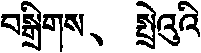
④要研究全部藏文的合理排序。从排序的角度出发,藏文字符串可以分为八种类型:本地藏文音节(例如:

Figure BSA00000252016800011
)、梵音藏文组合字符(例如:)、非音节藏文字母串(特指不构成本地藏文音节和梵音藏文组合字符的字母串,例如:
Figure BSA00000252016800013
)、藏文数字串(例如:)、藏文标点符号串(例如:
Figure BSA00000252016800021
)、其它文字字符串(例如:aBc)、藏文图形符号串以及混合字符串。藏文字符计算机排序的重点是本地藏文音节和梵音藏文组合字符的正确排序,但也要兼顾其余六类字符串的合理排序。④ It is necessary to study the reasonable arrangement of all Tibetan characters. From the perspective of sorting, Tibetan character strings can be divided into eight types: Local Tibetan syllables (for example:
Figure BSA00000252016800011
), Sanskrit and Tibetan combined characters (for example: ), non-syllable Tibetan letter strings (specifically refer to letter strings that do not form a combination of local Tibetan syllables and Sanskrit-Tibetan characters, for example:
Figure BSA00000252016800013
), Tibetan numeral strings (for example: ), Tibetan punctuation strings (for example:
Figure BSA00000252016800021
), other character strings (for example: aBc), Tibetan graphic symbol strings and mixed character strings. The computer sorting of Tibetan characters focuses on the correct sorting of local Tibetan syllables and Sanskrit-Tibetan combined characters, but also the reasonable sorting of the remaining six types of character strings.

总之,藏文字符的计算机排序要从字符集的国际标准出发,排序技术要符合ISO以及Unicode的相关标准,重点解决本地藏文音节和梵音藏文组合字符的排序问题,排序结果要符合传统藏文字典的排序规律。In short, the computer sorting of Tibetan characters should start from the international standards of character sets, and the sorting technology should conform to the relevant standards of ISO and Unicode. The sorting rules of the dictionary.

发明内容Contents of the invention

为了解决现有技术中存在的上述问题,本发明提出一种基于通用音节结构的藏文字符排序装置和方法,具体技术方案如下:In order to solve the above-mentioned problems existing in the prior art, the present invention proposes a device and method for sorting Tibetan characters based on the universal syllable structure, and the specific technical scheme is as follows:

一种用于对本地藏文音节和梵音藏文组合字符排序的基于通用音节结构的藏文字符排序装置装置,包括:A device for sorting Tibetan characters based on a universal syllable structure for sorting local Tibetan syllables and Sanskrit-Tibetan combined characters, comprising:

预处理子装置,对以

Figure BSA00000252016800022
Figure BSA00000252016800023
为后缀的藏文音节和不符合藏文音节通用结构的梵音藏文组合字符进行适当分解,得到一个音节序列,使得序列中的每个音节都符合藏文音节通用结构;preprocessing sub-unit, for
Figure BSA00000252016800022
and
Figure BSA00000252016800023
Appropriately decomposing the Tibetan syllables of the suffix and Sanskrit-Tibetan combination characters that do not conform to the general structure of Tibetan syllables to obtain a sequence of syllables, so that each syllable in the sequence conforms to the general structure of Tibetan syllables;

音节展开子装置,将符合藏文音节通用结构的音节按照特定顺序展成一维字母串;The syllable expansion sub-device expands the syllables conforming to the general structure of Tibetan syllables into a one-dimensional letter string in a specific order;

排序元素调用子装置,调用一维字母串中每个字母的排序元素,然后,按照一维字母串中所有字母的第一级权重、第二级权重、第三级权重的顺序排列,得到原音节的排序元素串;The sorting element calls the sub-device, calls the sorting element of each letter in the one-dimensional alphabet string, and then arranges all letters in the one-dimensional alphabet string in the order of the first-level weight, second-level weight, and third-level weight to obtain the original sound the collating element string of the section;

排序元素串压缩子装置,对音节的排序元素串利用游程长度等方法压缩;The sorting element string compression sub-device compresses the sorting element string of syllables by methods such as run length;

所述的藏文音节通用结构由基本辅音、前加辅音、上加辅音、第一下加辅音、第二下加辅音、第一元音、第二元音/第一后加辅音和第二后加辅音组成;The general structure of the Tibetan syllable consists of basic consonant, pre-added consonant, upper consonant, first lower consonant, second lower consonant, first vowel, second vowel/first rear consonant and second followed by consonants;

所述预处理子装置对以

Figure BSA00000252016800024
Figure BSA00000252016800025
为后缀的藏文音节的预处理方法是:将
Figure BSA00000252016800026
或者
Figure BSA00000252016800027
看作独立的音节,而将剩余字母的组合看作一个音节;The preprocessing sub-device is paired with
Figure BSA00000252016800024
and
Figure BSA00000252016800025
The preprocessing method for Tibetan syllables with suffixes is:
Figure BSA00000252016800026
or
Figure BSA00000252016800027
as independent syllables, and the combination of remaining letters as one syllable;

所述预处理子装置对不符合藏文音节通用结构的梵音藏文组合字符的预处理方法是:将最上层的辅音看成独立的音节,考察剩余字母的组合是否符合通用音节结构,如果不符合则重复此过程,直到剩余字母的组合符合通用音节结构为止;The preprocessing method of the Sanskrit-Tibetan combination characters that do not conform to the general structure of Tibetan syllables by the preprocessing sub-device is: the topmost consonants are regarded as independent syllables, and whether the combination of remaining letters conforms to the general syllable structure, if not Then repeat this process until the combination of remaining letters meets the general syllable structure;

将符合通用结构的音节展成一维字母串的特定顺序是,按照优先级依次是,基本辅音、前加辅音、上加辅音、第一下加辅音、第二下加辅音、第一元音、第二元音/第一后加辅音和第二后加辅音;The specific order of developing syllables conforming to the general structure into a one-dimensional letter string is, in order of priority, basic consonant, front consonant, upper consonant, first lower consonant, second lower consonant, first vowel, 2nd vowel/1st backed consonant and 2nd backed consonant;

所述的音节展开子装置把符合通用音节结构的音节按照所述的特定顺序展成一维字母串时,如果音节在某个位置上的字母空缺,则展开式的相应位置用排序元素为[.2020.0020.0002]的特殊字符填补。When the syllable expansion sub-device expands the syllables conforming to the general syllable structure into a one-dimensional letter string according to the specific order, if the syllable has a vacant letter at a certain position, the corresponding position of the expansion formula is used as a sorting element [. 2020.0020.0002] is filled with special characters.

一种利用上述装置对本地藏文音节和梵音藏文组合字符排序的基于通用音节结构的藏文字符排序方法,包括步骤:A method for sorting Tibetan characters based on a universal syllable structure for sorting local Tibetan syllables and Sanskrit-Tibetan combined characters by using the above-mentioned device, comprising steps:

1)预处理,指对以

Figure BSA00000252016800031
Figure BSA00000252016800032
为后缀的藏文音节和不符合藏文音节通用结构的梵音藏文组合字符进行适当分解,得到一个音节序列,使得序列中的每个音节都符合藏文音节通用结构;1) Pretreatment refers to the
Figure BSA00000252016800031
or
Figure BSA00000252016800032
Appropriately decomposing the Tibetan syllables of the suffix and Sanskrit-Tibetan combination characters that do not conform to the general structure of Tibetan syllables to obtain a sequence of syllables, so that each syllable in the sequence conforms to the general structure of Tibetan syllables;

2)音节展开,指将符合通用音节结构的音节按照特定的顺序展成一维字母串;2) Syllable expansion refers to the expansion of syllables conforming to the general syllable structure into a one-dimensional letter string in a specific order;

3)排序元素调用,指依次调用一维字母串中每个字母的排序元素,然后,按照所有字母的第一级权重、第二级权重、第三级权重的形式排列,得到原音节的排序元素串;3) Sorting element calling refers to invoking the sorting elements of each letter in the one-dimensional letter string in turn, and then, according to the first-level weights, second-level weights, and third-level weights of all letters, the ordering of the original syllables is obtained. element string;

4)排序元素串压缩,指对音节的排序元素串利用游程长度方式压缩;4) sorting element string compression refers to utilizing run length mode compression to the sorting element string of syllable;

所述的藏文音节通用结构由基本辅音、前加辅音、上加辅音、第一下加辅音、第二下加辅音、第一元音、第二元音/第一后加辅音和第二后加辅音组成;The general structure of the Tibetan syllable consists of basic consonant, pre-added consonant, upper consonant, first lower consonant, second lower consonant, first vowel, second vowel/first rear consonant and second followed by consonants;

所述的预处理对以为后缀的本地藏文音节的预处理方法是:将或者

Figure BSA00000252016800036
看作独立的音节,而将剩余字母的组合看作一个音节;The preprocessing described in and The preprocessing method of the local Tibetan syllables as suffixes is: or
Figure BSA00000252016800036
as independent syllables, and the combination of remaining letters as one syllable;

所述的预处理对不符合藏文音节通用结构的梵音藏文组合字符的预处理方法是:将最上层的辅音看成独立的音节,考察剩余的字母是否符合通用音节结构,如果不是则重复此过程,直到剩余字母的组合符合通用音节结构为止;The preprocessing method for the Sanskrit-Tibetan combined characters that do not conform to the general structure of Tibetan syllables is: the topmost consonant is regarded as an independent syllable, and whether the remaining letters conform to the general syllable structure is checked, and if not, repeat This process until the combination of the remaining letters conforms to the general syllable structure;

将符合通用结构的音节展成一维字母串的特定顺序是,按照优先级依次是,基本辅音、前加辅音、上加辅音、第一下加辅音、第二下加辅音、第一元音、第二元音/第一后加辅音和第二后加辅音;The specific order of developing syllables conforming to the general structure into a one-dimensional letter string is, in order of priority, basic consonant, front consonant, upper consonant, first lower consonant, second lower consonant, first vowel, 2nd vowel/1st backed consonant and 2nd backed consonant;

符合通用音节结构的音节按照特定的顺序展成字一维母串时,如果音节在某个位置上的字母空缺,则展开式的相应位置用排序元素为[.2020.0020.0002]的特殊字符填补。When syllables conforming to the general syllable structure are developed into a one-dimensional mother string in a specific order, if the syllable has a vacancy in a certain position, the corresponding position of the expansion will be filled with a special character whose sorting element is [.2020.0020.0002] .

发明的优点和积极效果Advantages and positive effects of the invention

1.本发明实现了全部藏文音节和梵音藏文组合字符的计算机排序,排序结果符合传统藏文字典的排序规律;提高了排序质量和效率,是计算机对藏文文字进行高效处理的基础。1. The present invention realizes the computer sorting of all Tibetan syllables and Sanskrit-Tibetan combined characters, and the sorting results conform to the sorting rules of traditional Tibetan dictionaries; the sorting quality and efficiency are improved, and it is the basis for computers to efficiently process Tibetan characters.

2.本发明统一用图1所示的通用结构直接或者间接表示所有藏文音节和梵音藏文组合字符,克服了藏文音节和梵音藏文组合字符无统一结构的弊端。2. The present invention uses the universal structure shown in Figure 1 to directly or indirectly represent all Tibetan syllables and Sanskrit-Tibetan combination characters, which overcomes the drawback that Tibetan syllables and Sanskrit-Tibetan combination characters do not have a unified structure.

3.本发明统一了所有藏文音节和组合字符的展开顺序,简化了藏文字符的排序算法。3. The present invention unifies the expansion order of all Tibetan syllables and combined characters, and simplifies the sorting algorithm of Tibetan characters.

4.本发明引入排序元素为[.2020.0020.0002]的特殊字符用以填补音节展开时的空缺位置,提高了排序元素串的压缩比率。4. The present invention introduces a special character whose sorting element is [.2020.0020.0002] to fill the vacant position when the syllable is expanded, and improves the compression ratio of the sorting element string.

附图说明Description of drawings

附图被包括而且作为本申请的一部分揭示了本发明的实例,并结合描述来解释本发明的原理。在附图中:The accompanying drawings are included and constitute a part of this application, illustrate examples of the invention and together with the description serve to explain the principles of the invention. In the attached picture:

图1是本发明的藏文音节通用结构示意图;Fig. 1 is the general structural representation of Tibetan syllable of the present invention;

图2是本发明的藏文字符排序装置示意图;Fig. 2 is a schematic diagram of a Tibetan character sorting device of the present invention;

图3是本发明的通用藏文音节结构中字母的展开顺序示意图;Fig. 3 is the schematic diagram of the expansion sequence of letters in the general Tibetan syllable structure of the present invention;

图4是本发明所依托的计算机系统硬件环境示意图;Fig. 4 is the computer system hardware environment schematic diagram that the present invention relies on;

图5是本发明所依托的计算机系统软件环境示意图。Fig. 5 is a schematic diagram of the computer system software environment on which the present invention relies.

具体实施方式Detailed ways

下面结合附图与具体实施方式对本发明作进一步说明:Below in conjunction with accompanying drawing and specific embodiment the present invention will be further described:

图1是本发明的藏文音节通用结构。藏文是一种音节文字,有30个辅音和5个元音。30个辅音为:5个元音为:

Figure BSA00000252016800042
这些字母按照正字规律相互组合而形成藏文音节,例如:
Figure BSA00000252016800043
这样形成的音节称为本地藏文音节。本地藏文音节中,有一个是基本辅音,其他辅音根据它们相对于基本辅音的位置而分别称为前加辅音、上加辅音、下加辅音、后加辅音以及又后加辅音。例如:音节
Figure BSA00000252016800044
中,
Figure BSA00000252016800045
是基本辅音、
Figure BSA00000252016800046
是前加辅音、
Figure BSA00000252016800047
是上加辅音、
Figure BSA00000252016800048
是下加辅音、字母
Figure BSA00000252016800049
Figure BSA000002520168000410
分别是后加辅音和又后加辅音。此处,一个藏文音节中基本辅音的确定对本领域的专业人员而言是显然的。为了书写美观,上加辅音和下加辅音可能会变形,例如:字母为上加辅音时变形为
Figure BSA000002520168000412
而字母
Figure BSA000002520168000414
作下加辅音时分别变形为
Figure BSA000002520168000415
Figure BSA000002520168000416
每个本地藏文音节都有元音,如果元音是
Figure BSA000002520168000418
则分别写元音符号
Figure BSA000002520168000419
Figure BSA000002520168000420
如果元音是
Figure BSA000002520168000421
则元音符号省略。Fig. 1 is the general structure of the Tibetan syllable of the present invention. Tibetan is a syllabic language with 30 consonants and 5 vowels. The 30 consonants are: The 5 vowels are:
Figure BSA00000252016800042
These letters are combined with each other according to the orthographic rules to form Tibetan syllables, for example:
Figure BSA00000252016800043
The syllables formed in this way are called local Tibetan syllables. Among the local Tibetan syllables, one is the basic consonant, and the other consonants are called pre-added consonant, upper-added consonant, lower-added consonant, back-added consonant, and back-added consonant according to their positions relative to the basic consonant. Example: syllable
Figure BSA00000252016800044
middle,
Figure BSA00000252016800045
is the basic consonant,
Figure BSA00000252016800046
is a front consonant,
Figure BSA00000252016800047
is a consonant,
Figure BSA00000252016800048
Is under the consonant, letter
Figure BSA00000252016800049
and
Figure BSA000002520168000410
They are followed by consonants and followed by consonants. Here, the determination of the basic consonants in a Tibetan syllable is obvious to those skilled in the art. Upper and lower consonants may be distorted for aesthetics, e.g. letters When adding a consonant, it is transformed into
Figure BSA000002520168000412
while the letters and
Figure BSA000002520168000414
When it is used as a lower consonant, it is transformed into
Figure BSA000002520168000415
and
Figure BSA000002520168000416
Every native Tibetan syllable has a vowel, if the vowel is or
Figure BSA000002520168000418
then write the vowels respectively
Figure BSA000002520168000419
or
Figure BSA000002520168000420
if the vowel is
Figure BSA000002520168000421
The vowels are omitted.

藏民族全民信教,在佛教经典的翻译过程中借用了大量的梵文词。为了准确音译这些梵文词,创造了与本地藏文在字母系统、拼写规则等方面差异较大的梵音藏文。梵音藏文有34个辅音和16个元音,34个辅音为:16个元音为:梵音藏文对垂直方向上叠加的辅音个数没有严格的限制,但仍以音节为单位进行排序。梵音藏文音节没有前加辅音、后加辅音和又后加辅音,因此,一个梵音藏文音节最多是基本辅音、下加辅音以及元音的垂直组合,称为梵音藏文组合字符。但梵音藏文组合字符可能有两个下加辅音,例如:组合字符

Figure BSA000002520168000424
有两个下加辅音为
Figure BSA000002520168000425
也可能有两个元音,例如:组合字符有两个元音
Figure BSA00000252016800052
The entire Tibetan people believe in religion, and a large number of Sanskrit words have been borrowed during the translation of Buddhist classics. In order to accurately transliterate these Sanskrit words, a Sanskrit Tibetan language that is quite different from the local Tibetan in terms of alphabetic system and spelling rules was created. Sanskrit Tibetan has 34 consonants and 16 vowels, and the 34 consonants are: The 16 vowels are: Sanskrit Tibetan has no strict limit on the number of consonants superimposed in the vertical direction, but they are still sorted in units of syllables. Sanskrit Tibetan syllables do not have pre-consonants, post-consonants, and post-consonants. Therefore, a Sanskrit Tibetan syllable is at most a vertical combination of basic consonants, subconsonants, and vowels, called Sanskrit-Tibetan combination characters. But Sanskrit-Tibetan combined characters may have two lower consonants, for example: combined characters
Figure BSA000002520168000424
with two subconsonants
Figure BSA000002520168000425
and There may also be two vowels, eg: combining characters has two vowels
Figure BSA00000252016800052
and

本地藏文音节有基本辅音、前加辅音、上加辅音、下加辅音、元音、后加辅音以及又后加辅音,而梵音藏文组合字符可能有两个元音(依次称为第一元音和第二元音),还可能有两个下加辅音(依次称为第一下加辅音和第二下加辅音)。因此,藏文音节的通用结构应该能够表示基本辅音、前加辅音、上加辅音、第一下加辅音、第二下加辅音、第一元音、第二元音、后加辅音和又后加辅音等九个字母。由于第二元音

Figure BSA00000252016800054
出现在后加辅音的位置,可以一般地让第二元音和后加辅音共用一个位置。因此,藏文音节的通用结构共有八个元素:基本辅音、前加辅音、上加辅音、第一下加辅音、第二下加辅音、第一元音、第一后加辅音/第二元音和第二后加辅音(见图1)。Local Tibetan syllables have basic consonants, pre-added consonants, upper consonants, lower consonants, vowels, back-added consonants, and back-added consonants, while Sanskrit-Tibetan combined characters may have two vowels (called the first consonant in turn). vowel and second vowel), and possibly two subconsonants (called first subconsonant and second subconsonant). Therefore, the general structure of Tibetan syllables should be able to represent basic consonant, pre-added consonant, upper added consonant, first lower added consonant, second lower added consonant, first vowel, second Add nine letters such as consonants. due to the second vowel
Figure BSA00000252016800054
Appearing in the position of the added consonant, the second vowel and the added consonant can generally share the same position. Therefore, the general structure of Tibetan syllables has eight elements: basic consonant, front consonant, upper consonant, first lower consonant, second lower consonant, first vowel, first back consonant/second vowel consonant and second consonant (see Figure 1).

图2是本发明的藏文字符排序装置图。这个排序装置由预处理子装置200、音节展开子装置202、排序元素调用子装置204以及排序元素串压缩子装置206构成。Fig. 2 is a diagram of the Tibetan character sorting device of the present invention. This sorting device is composed of a preprocessing sub-unit 200 , a syllable expansion sub-unit 202 , a sorting element calling sub-unit 204 and a sorting element string compression sub-unit 206 .

本发明的第一个子装置是预处理子装置200,子装置200对以

Figure BSA00000252016800056
为后缀的本地藏文音节和不符合通用结构的梵音藏文组合字符进行适当分解,得到一个音节序列,使得序列中的每个音节都符合通用结构。The first sub-device of the present invention is the preprocessing sub-device 200, and the sub-device 200 is paired with and
Figure BSA00000252016800056
Properly decompose the suffixed local Tibetan syllables and Sanskrit-Tibetan combination characters that do not conform to the general structure, and obtain a syllable sequence, so that each syllable in the sequence conforms to the general structure.

由于受语法影响而以

Figure BSA00000252016800057
Figure BSA00000252016800058
为后缀的本地藏文音节不符合藏文音节通用结构,这类音节有:①受属格助词
Figure BSA00000252016800059
影响的音节,例如:
Figure BSA000002520168000510
等;②受终结词
Figure BSA000002520168000511
影响的音节,例如:
Figure BSA000002520168000512
等;③受构形词缀
Figure BSA000002520168000513
影响的音节,例如:
Figure BSA000002520168000514
等;④同时受构形词缀
Figure BSA000002520168000515
和属格助词影响的音节,例如:
Figure BSA000002520168000517
对以
Figure BSA000002520168000518
Figure BSA000002520168000519
为后缀的本地藏文音节的预处理方式是:将
Figure BSA000002520168000520
Figure BSA000002520168000521
看作独立的音节,而将剩余字母的组合看作一个音节,从而得到一个每个音节都符合通用音节结构的音节序列。例如:音节中的后缀看作独立的音节后,得到音节序列
Figure BSA000002520168000525
其中的每个音节即
Figure BSA000002520168000526
Figure BSA000002520168000527
都符合通用结构。due to grammatical influence
Figure BSA00000252016800057
or
Figure BSA00000252016800058
The local Tibetan syllables with suffixes do not conform to the general structure of Tibetan syllables. Such syllables include: ① Subjective particle
Figure BSA00000252016800059
Affected syllables, for example:
Figure BSA000002520168000510
etc.;
Figure BSA000002520168000511
Affected syllables, for example:
Figure BSA000002520168000512
etc.; ③ subject to configuration affixes
Figure BSA000002520168000513
Affected syllables, for example:
Figure BSA000002520168000514
etc.; ④ Simultaneously subject to configurational affixes
Figure BSA000002520168000515
and genitive particle Affected syllables, for example:
Figure BSA000002520168000517
to
Figure BSA000002520168000518
or
Figure BSA000002520168000519
The preprocessing method of local Tibetan syllables with suffix is:
Figure BSA000002520168000520
and
Figure BSA000002520168000521
As independent syllables, and the combination of remaining letters as a syllable, so as to obtain a syllable sequence in which each syllable conforms to the general syllable structure. Example: syllable suffix in and After being regarded as independent syllables, the sequence of syllables is obtained
Figure BSA000002520168000525
Each syllable of which is
Figure BSA000002520168000526
and
Figure BSA000002520168000527
All conform to the general structure.

有些梵音藏文组合字符(例如:

Figure BSA000002520168000528
)不符合藏文音节通用结构,对这类组合字符的预处理方法是:将最上层的辅音看成一个独立音节,考察剩余字母的组合是否符合藏文音节通用结构,如果不符合则重复此过程,直到剩余字母的组合符合藏文音节通用结构为止。例如:将组合字符
Figure BSA000002520168000529
的第一层辅音
Figure BSA000002520168000530
看作独立的音节后,剩余字母的组合符合通用结构,从而把组合字符
Figure BSA000002520168000532
分解成了音节序列
Figure BSA000002520168000533
这个序列中的每个音节即
Figure BSA000002520168000534
Figure BSA000002520168000535
都符合通用结构。Some Sanskrit-Tibetan combination characters (for example:
Figure BSA000002520168000528
) does not conform to the general structure of Tibetan syllables, the preprocessing method for such combined characters is: regard the topmost consonant as an independent syllable, check whether the combination of remaining letters conforms to the general structure of Tibetan syllables, if not, repeat this process process until the combination of the remaining letters conforms to the general structure of Tibetan syllables. For example: will combine characters
Figure BSA000002520168000529
first consonants of
Figure BSA000002520168000530
After being regarded as independent syllables, the combination of remaining letters Conforms to the general structure, thus combining characters
Figure BSA000002520168000532
sequence of syllables
Figure BSA000002520168000533
Each syllable in this sequence is
Figure BSA000002520168000534
and
Figure BSA000002520168000535
All conform to the general structure.

本发明的第二个子装置是音节展开子装置202,子装置202的功能是将符合通用结构的音节按照图3所示的顺序即按照基本辅音、前加辅音、上加辅音、第一下加辅音、第二下加辅音、第一元音、第二元音/后加辅音和又后加辅音的顺序展开;如果音节中某个位置上的字母空缺,则展开式的相应位置要用一个特殊字符(此处暂时用符号“□”表示)来替补,但要求这个特殊字符的排序元素要小于任何一个藏文字母的排序元素,从而得到一个和原音节序性等价的藏文字母串。由表1可以看出,藏文音节和它的一维展开式的序性是等价的。The second sub-device of the present invention is the syllable expansion sub-device 202. The function of the sub-device 202 is to conform to the general structure of the syllable according to the order shown in FIG. Consonant, second subconsonant, first vowel, second vowel/post consonant, and post consonant; if there is a vacancy for a letter in a certain position in the syllable, the corresponding position of the expansion is to use a A special character (here temporarily represented by the symbol "□") is used as a substitute, but the sorting element of this special character is required to be smaller than the sorting element of any Tibetan letter, so as to obtain a Tibetan alphabet string equivalent to the original syllable sequence . It can be seen from Table 1 that the sequence of Tibetan syllables and its one-dimensional expansion is equivalent.

               表1 二维音节的一维展开式Table 1 One-dimensional expansion of two-dimensional syllables

Figure BSA00000252016800061

本发明的第三个装置是排序元素调用子装置204。Unicode的DUCET(Default Unicode Collation Element Table,Unicode缺省排序元素表)为每个具有Unicode编码的字符规定了排序元素,例如,字母

Figure BSA00000252016800062
的排序元素为[.1C22.0020.0002.0F40]。每个排序元素由四级权重构成,每级权重是一个双字节的16进制数。其中,第一级权重用来区分不同的基本字母;第二级权重用来区分是否含有语音符号;第三级权重用来区分同一字母的不同形式,例如:同一个字母的大小写等;如果仅用前三级权重仍无法区分两个待比较字符的前后时,则可用第四级权重即字符的Unicode编码。对藏文而言,用前三级权重就可以进行合理排序。The third means of the present invention is the ordering element calling sub-means 204 . Unicode's DUCET (Default Unicode Collation Element Table, Unicode default collation element table) specifies the collation elements for each character with Unicode encoding, for example, letters
Figure BSA00000252016800062
The sort element is [.1C22.0020.0002.0F40]. Each sorting element is composed of four levels of weight, and each level of weight is a double-byte hexadecimal number. Among them, the first-level weight is used to distinguish different basic letters; the second-level weight is used to distinguish whether there are phonetic symbols; the third-level weight is used to distinguish different forms of the same letter, such as: the same letter, etc.; if When it is still impossible to distinguish the front and back of the two characters to be compared with only the first three levels of weight, the fourth level of weight, that is, the Unicode encoding of the character, can be used. For Tibetan, the first three levels of weight can be used for reasonable sorting.

DUCET中藏文字符的排序元素有较强的规律:①第一级权重从2021开始逐步递增到207B;②第二级权重一般为0020;③第三级权重一般为0002。本地藏文音节和梵音藏文组合字符在展成字母串时,空缺的位置要用一个特殊字符替补,但和通用音节结构相比,绝大多数本地藏文音节和梵音藏文组合字符都会有空缺位置,也就是说展开式中这个特殊字符的出现频率很高,因此,特殊字符排序元素的取值会对排序元素串的压缩效果产生很大影响。另外,这个特殊字符的排序元素要小于任何藏文字母的排序元素。因此,本发明规定这个特殊字符的排序元素为:[.0020.0020.0002]。The sorting elements of Tibetan characters in DUCET have strong rules: ①The weight of the first level gradually increases from 2021 to 207B; ②The weight of the second level is generally 0020; ③The weight of the third level is generally 0002. When the local Tibetan syllables and Sanskrit-Tibetan combination characters are developed into alphabet strings, the vacant position should be replaced by a special character, but compared with the general syllable structure, most of the local Tibetan syllables and Sanskrit-Tibetan combination characters will have The vacant position, that is to say, the frequency of occurrence of this special character in the expansion is very high. Therefore, the value of the special character sorting element will have a great impact on the compression effect of the sorting element string. In addition, the collating element of this special character is smaller than that of any Tibetan alphabet. Therefore, the present invention stipulates that the sorting element of this special character is: [.0020.0020.0002].

利用子装置204调用展开式中每个字母包括特殊字符的排序元素,便可得到音节的排序元素串。方法是:首先,依次列出展开式中所有字母包括特殊字符的第一级权重;其次,依次列出展开式中所有字母包括特殊字符的第二级权重;最后,依次列出展开式中所有字母包括特殊字符的第三级权重。例如:音节
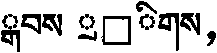
Figure BSA00000252016800063
的展开式为
Figure BSA00000252016800064
经过子装置204后得到音节
Figure BSA00000252016800065
的排序元素串:2027 2046 2063 205B 2020 206E 2026 2063 0020 0020 0020 0020 0020 0020 0020 0020 0002 0002 0002 0002 0002 0002 0002 0002。By using the sub-device 204 to call the sorting elements of each letter including special characters in the expansion, the sorting element string of the syllable can be obtained. The method is: first, list the first-level weights of all letters in the expansion in sequence including special characters; secondly, list the second-level weights of all letters in the expansion in sequence including special characters; finally, list all letters in the expansion in sequence. Alphabet includes a third level of weight for special characters. Example: syllable
Figure BSA00000252016800063
The expansion of is
Figure BSA00000252016800064
Get the syllable after passing through the sub-unit 204
Figure BSA00000252016800065
The sorting element string: 2027 2046 2063 205B 2020 206E 2026 2063 0020 0020 0020 0020 0020 0020 0020 0020 0002 0002 0002 0002 0002 0002 0002 0002.

本发明的第四个子装置是排序元素串压缩子装置206。从音节的排序元素串可以看出,存储一个音节的排序元素串需要48字节,因此,有必要对排序元素串进行大幅度压缩。排序元素串压缩子装置206根据藏文字符排序元素的取值特点,对排序元素串采用了游程长度等方式进行压缩,取得了较好的效果。例如:音节

Figure BSA00000252016800067
的排序元素串被压缩为:62 69 88 A5 9D B0 68 A5 00 0A 00 09。The fourth sub-means of the present invention is the sorted element string compression sub-means 206 . from the syllable It can be seen from the sorting element string that storing the sorting element string of one syllable requires 48 bytes, therefore, it is necessary to greatly compress the sorting element string. The sorting element string compression sub-device 206 compresses the sorting element string by means of run length and other methods according to the value characteristics of the Tibetan character sorting elements, and achieves good results. Example: syllable
Figure BSA00000252016800067
The sorted element string is compressed as: 62 69 88 A5 9D B0 68 A5 00 0A 00 09.

图4是本发明装置所依托的硬件环境。对于专业技术人员而言,计算机硬件系统的结构和各个组成部分的功能是显然的,但为了本技术方案的完备性,仍在此处做个简要介绍。Fig. 4 is the hardware environment on which the device of the present invention relies. For professional technicians, the structure of the computer hardware system and the functions of each component are obvious, but for the completeness of this technical solution, a brief introduction is still given here.

计算机硬件是计算机系统中各种设备的总称。计算机硬件包括中央处理器400、存储器406、输入设备402、输出设备404以及通信接口408等部件。中央处理器400是计算机系统的核心,它完成算术运算、逻辑运算等运算功能,并对指令进行分析,根据指令的要求,有目的地向各个部件发出有序控制信号,使计算机的各部件协调一致地工作。Computer hardware is the general term for various devices in a computer system. The computer hardware includes components such as a central processing unit 400 , a memory 406 , an input device 402 , an output device 404 , and a communication interface 408 . The central processing unit 400 is the core of the computer system. It completes arithmetic operations, logical operations and other computing functions, and analyzes the instructions. work consistently.

存储器406是计算机系统的记忆装置。存储器分为主存储器和辅存储器。主存储器是存取速度快而容量小的一类存储器,辅存储器则是存取速度慢但容量很大的一类存储器。主存储器直接与CPU相连接,当前运行的程序与数据都存放在主存储器中。计算机系统执行程序和处理数据时,辅存储器中的信息只有先送入主存储器才能使用。因此,计算机系统运行时主辅存储器间始终进行着数据交换。Memory 406 is the memory device of the computer system. Memory is divided into main memory and secondary memory. The main memory is a type of memory with fast access speed and small capacity, and the auxiliary memory is a type of memory with slow access speed but large capacity. The main memory is directly connected to the CPU, and the currently running programs and data are stored in the main memory. When the computer system executes programs and processes data, the information in the secondary memory cannot be used until it is first sent to the main memory. Therefore, when the computer system is running, data exchange is always carried out between the primary and secondary memories.

输入设备402用于数据输入。现代计算机系统能够接收各种各样的数据,这些数据通过不同类型的输入设备输入到计算机中。常用的输入设备有键盘(包括软键盘)、鼠标、轨迹球、光笔、光学字符阅读机、扫描仪、触摸屏等。Input device 402 is used for data entry. Modern computer systems are capable of receiving a wide variety of data that is entered into the computer through different types of input devices. Commonly used input devices include keyboards (including soft keyboards), mice, trackballs, light pens, optical character readers, scanners, touch screens, and the like.

输出设备404用于数据输出,它把各种计算结果以数字、字符、图像、声音等形式表示出来。常见的输出设备有显示器、打印机、语音输出系统、磁记录设备等。The output device 404 is used for data output, and it expresses various calculation results in the form of numbers, characters, images, sounds, etc. Common output devices include monitors, printers, voice output systems, and magnetic recording devices.

从数据流动的角度来看,计算机网络410也可以看作一个输入/输出设备。计算机网络410利用电缆、电话线或无线通讯等通信线路通过通信接口408将不同地理位置的具有独立功能的计算机412连接起来,实现资源共享和信息传递。From the perspective of data flow, the computer network 410 can also be regarded as an input/output device. The computer network 410 connects computers 412 with independent functions in different geographical locations through the communication interface 408 by using communication lines such as cables, telephone lines or wireless communication, so as to realize resource sharing and information transmission.

图5是本发明所依托的软件环境。软件是计算机系统必不可少的组成部分,提供了用户与硬件之间的接口。软件总体分为操作系统500和应用软件502两大类。操作系统500控制其他程序运行,管理系统资源并为用户提供操作界面。操作系统500还身负诸如内存管理、系统资源分配、设备控制、文件系统管理等基本事务。主要的操作系统有Mac OS,Open VMS,GNU/Linux,AIX,Solaris,Windows CE,Windows XP,Windows Vista等。Fig. 5 is the software environment on which the present invention relies. Software is an integral part of a computer system, providing the interface between the user and the hardware. The software is generally divided into two categories: operating system 500 and application software 502 . The operating system 500 controls the running of other programs, manages system resources and provides users with an operation interface. The operating system 500 is also responsible for basic tasks such as memory management, system resource allocation, device control, and file system management. The main operating systems are Mac OS, Open VMS, GNU/Linux, AIX, Solaris, Windows CE, Windows XP, Windows Vista, etc.

ISO 10646收录了包括占位辅音字母、不占位辅音字母、元音符号、语音符号、藏文数字、标点符号、图形符号等在内195个藏文基本字符,这些字符位于基本多文种平面(Basic Multilingual Plane,简称BMP)的0F行即U+0F00-U+0FFF。藏文字符集国际标准的出发点是利用基本字符动态地组合出所有藏文组合字符,要使计算机实现藏文组合字符的表示、存储、显示以及传输等功能,不仅需要藏文OpenType字库还需要操作系统支持藏文字符的动态组合。目前,藏文Opentype字库主要有Ximalaya、TibetanZT等,对操作系统版本的要求也较高,例如:Windows操作系统要求Windows XP-SP2或者更高版本。ISO 10646 includes 195 basic Tibetan characters, including consonant letters, non-occupying consonants, vowel symbols, phonetic symbols, Tibetan numerals, punctuation marks, graphic symbols, etc. These characters are located in the Basic Multilingual Plane (Basic Multilingual Plane, referred to as BMP) 0F row is U+0F00-U+0FFF. The starting point of the international standard for the Tibetan character set is to use basic characters to dynamically combine all Tibetan combined characters. To enable the computer to realize the functions of representation, storage, display and transmission of Tibetan combined characters, not only the Tibetan OpenType font library but also the operation The system supports the dynamic combination of Tibetan characters. At present, the Tibetan Opentype fonts mainly include Ximalaya, TibetanZT, etc., and the requirements for the operating system version are relatively high. For example, the Windows operating system requires Windows XP-SP2 or later.

应用软件502的种类很多,如工具软件、游戏软件、管理软件等都属于应用软件类。输入法也属于应用软件。要进行藏文字符的计算机排序,一般需要藏文输入法。藏文输入法可分为两类:基于藏文字符集国际标准或者基于其他字符集标准的。本排序装置需要安装基于藏文字符集国际标准的输入法,例如:微软的Himalaya、玛钦藏文输入法等。There are many types of application software 502, such as tool software, game software, management software, etc., all of which belong to the category of application software. Input methods also belong to application software. To perform computer sorting of Tibetan characters, a Tibetan input method is generally required. Tibetan input methods can be divided into two categories: those based on the international standard of Tibetan character sets or those based on other character set standards. This sorting device needs to install an input method based on the international standard of the Tibetan character set, for example: Microsoft's Himalaya, Maqin Tibetan input method, etc.

用户接口504是为方便用户使用计算机资源而开发的软件,分为命令接口、程序接口和图形接口。命令接口是操作系统500为方便用户直接或间接控制自己的作业而向用户提供的一组命令;程序接口是操作系统提供给编程人员的一组系统调用命令;图形用户接口则采用图形化的操作界面,将系统各项功能、各种应用程序和文件用非常容易识别的图标直观、逼真地表示出来。图形用户接口的基本元素包括窗口、图标、菜单和对话框。The user interface 504 is software developed for the convenience of users to use computer resources, and is divided into command interface, program interface and graphic interface. The command interface is a set of commands provided by the operating system 500 to the user for the convenience of the user to directly or indirectly control their own operations; the program interface is a set of system call commands provided by the operating system to programmers; the graphical user interface adopts graphical operations The interface displays various functions of the system, various applications and files intuitively and vividly with easily recognizable icons. The basic elements of a graphical user interface include windows, icons, menus, and dialog boxes.

排序元素表508中存放的是每个字符的排序元素,以便系统调用。The sorting elements of each character are stored in the sorting element table 508, so as to be called by the system.

本发明所披露的装置是藏文字符排序装置510。如图2所示,藏文字符排序装置510由预处理子装置200、音节展开子装置202、排序元素调用子装置204和排序元素串压缩子装置206组成。排序元素调用子装置204需要从排序元素表508中调用字符的排序元素。The device disclosed in the present invention is a Tibetan character sorting device 510 . As shown in FIG. 2 , Tibetan character sorting device 510 is composed of preprocessing sub-device 200 , syllable expansion sub-device 202 , sorting element calling sub-device 204 and sorting element string compression sub-device 206 . The collating element calling sub-means 204 needs to call the collating element of the character from the collating element table 508 .

排序引擎506可以是操作系统500的一个部件也可以是应用软件502的一个部件,还可以是一个利用应用程序接口和操作系统500以及应用软件502相联系的独立模块。排序引擎506从应用程序接口接到对一定数量字符串排序的命令,如果待排序的字符串是藏文字符串,则被传送到藏文字符排序装置510中,每个字符串依次经过藏文字符排序装置510后,得到压缩的排序元素串,将压缩排序元素串传递给排序引擎506,排序引擎506完成大量字符串的快速排序,并将排序结果传送到用户界面或者存储起来。The sorting engine 506 can be a component of the operating system 500 or a component of the application software 502 , or an independent module connected with the operating system 500 and the application software 502 through an application program interface. The sorting engine 506 receives an order for sorting a certain number of character strings from the application program interface. If the character strings to be sorted are Tibetan character strings, they are sent to the Tibetan character sorting device 510, and each character string passes through the Tibetan character string in turn. After the character sorting device 510, the compressed sorting element string is obtained, and the compressed sorting element string is passed to the sorting engine 506. The sorting engine 506 completes the quick sorting of a large number of character strings, and transmits the sorting result to the user interface or stores it.

下面以

Figure BSA00000252016800081
以及
Figure BSA00000252016800082
为例,结合附图详细阐释本发明的实施方式。Below to
Figure BSA00000252016800081
as well as
Figure BSA00000252016800082
As an example, the embodiments of the present invention will be explained in detail in conjunction with the accompanying drawings.

1.音节是规范的藏文音节,因此,直接进入音节展开子装置202而不必进入预处理子装置200,音节展开子装置202将音节

Figure BSA00000252016800084
按照图3的顺序展开,得到展开式:
Figure BSA00000252016800085
其次,进入排序元素调用子装置204,子装置204从排序元素表508中调用展开式
Figure BSA00000252016800086
中每个字符的排序元素,并按照所有字母的第一级权重、第二级权重、第三级权重的顺序排列,得到音节
Figure BSA00000252016800087
的排序元素串:2027 2046 2063 205B 2020 206E 2026 2063 0020 0020 0020 0020 0020 0020 0020 0020 0002 0002 0002 0002 0002 0002 0002 0002;再次,该排序元素串通过子装置206,排序元素串被压缩为:62 69 88 A5 9D B0 68 A5 00 0A 00 09,并将压缩后的排序元素串传递给排序引擎506,从而得到音节
Figure BSA00000252016800088
的排序结果。1. Syllable is a standard Tibetan syllable, therefore, it directly enters the syllable expansion sub-device 202 without entering the preprocessing sub-device 200, and the syllable expansion sub-device 202 converts the syllable
Figure BSA00000252016800084
Expand according to the order of Figure 3 to get the expansion:
Figure BSA00000252016800085
Next, enter the sort element call sub-means 204, and the sub-means 204 calls the expansion from the sort element table 508
Figure BSA00000252016800086
The sorting elements of each character in , and arrange them in the order of the first-level weight, second-level weight, and third-level weight of all letters, to obtain the syllable
Figure BSA00000252016800087
Sorting element string: 2027 2046 2063 205B 2020 206E 2026 2063 0020 0020 0020 0020 0020 0020 0002 0002 0002 0002 0002 0002 0002 0002; again, the sorting element string is compressed: 62 699999999999. 88 A5 9D B0 68 A5 00 0A 00 09, and pass the compressed sorting element string to the sorting engine 506, thereby obtaining the syllable
Figure BSA00000252016800088
sorting results.

2.音节

Figure BSA00000252016800089
因受语法影响而不符合通用结构,该音节通过预处理子装置200后,被分割成三个音节
Figure BSA00000252016800091
Figure BSA00000252016800092
这三个音节依次进入音节展开子装置202,每个音节按照图3的顺序展开,依次得到展开式
Figure BSA00000252016800093
Figure BSA00000252016800094
其次,这三个展开式依次进入排序元素调用子装置204,子装置204从排序元素表508中调用每个字母的排序元素,并按照所有字母的第一级权重、第二级权重、第三级权重的顺序排列,分别得到音节
Figure BSA00000252016800095
的排序元素串:2043 2020 2063 205B 2020 2078 2020 2020 0020 0020 0020 0020 0020 0020 0020 0020 0002 0002 0002 0002 0002 0002 0002 0002,音节
Figure BSA00000252016800096
的排序元素串:2056 2020 2020 2020 2020 2072 2020 2020 0020 0020 0020 0020 0020 0020 0020 0020 0002 0002 0002 0002 0002 0002 0002,以及音节
Figure BSA00000252016800097
的排序元素串:2056 2020 2020 2020 2020 206E 2020 2020 0020 0020 0020 0020 0020 0020 0020 0020 0002 0002 0002 0002 0002 0002 0002;再次,这三个排序元素串依次通过子装置206,依次得到音节
Figure BSA00000252016800098
压缩后的排序元素串:62 85 62 A5 9D 62 BA 05 00 0A 00 09,音节
Figure BSA00000252016800099
压缩后的排序元素串:62 98 B9 B4 BB 00 0A 00 09,和音节
Figure BSA000002520168000910
压缩后的排序元素串:62 98 B9 B0 BB 00 0A 00 09;最后,这三个压缩后的排序元素串依次传递给排序引擎506,从而得到音节
Figure BSA000002520168000911
的排序结果。2. Syllables
Figure BSA00000252016800089
Due to the influence of grammar and does not conform to the general structure, the syllable is divided into three syllables after passing through the preprocessing sub-device 200
Figure BSA00000252016800091
and
Figure BSA00000252016800092
These three syllables enter the syllable expansion sub-device 202 in turn, and each syllable is expanded according to the order of Fig. 3, and the expanded formula is obtained successively
Figure BSA00000252016800093
and
Figure BSA00000252016800094
Secondly, these three expansions enter the sorting element call sub-device 204 in sequence, and the sub-device 204 calls the sorting element of each letter from the sorting element table 508, and according to the first-level weight, second-level weight, and third-level weight of all letters Arranged in the order of level weight, get the syllables respectively
Figure BSA00000252016800095
The sorting element string: 2043 2020 2063 205B 2020 2078 2020 2020 0020 0020 0020 0020 0020 0020 0020 0020 0002 0002 0002 0002 0002 0002 0002 0002 syllables,
Figure BSA00000252016800096
The sorting element string: 2056 2020 2020 2020 2020 2072 2020 2020 0020 0020 0020 0020 0020 0020 0020 0020 0002 0002 0002 0002 0002 0002 0002, and syllables
Figure BSA00000252016800097
The sorting element string: 2056 2020 2020 2020 2020 206E 2020 2020 0020 0020 0020 0020 0020 0020 0020 0020 0002 0002 0002 0002 0002 0002 0002 0002 to get sub-syllable string 06;
Figure BSA00000252016800098
Compressed sorted element string: 62 85 62 A5 9D 62 BA 05 00 0A 00 09, syllables
Figure BSA00000252016800099
Compressed collating element string: 62 98 B9 B4 BB 00 0A 00 09, and syllables
Figure BSA000002520168000910
The compressed sorting element string: 62 98 B9 B0 BB 00 0A 00 09; finally, these three compressed sorting element strings are passed to the sorting engine 506 in turn to obtain the syllable
Figure BSA000002520168000911
sorting results.

3.梵音藏文组合字符

Figure BSA000002520168000912
不符合通用结构,通过预处理子装置200后,被分解成音节序列
Figure BSA000002520168000913
这两个音节依次进入音节展开子装置202,每个音节按照图3的顺序展开,得到音节
Figure BSA000002520168000914
的展开式:
Figure BSA000002520168000915
和音节
Figure BSA000002520168000916
的展开式:其次,这两个展开式依次进入子装置204,子装置204从排序元素表508中调用每个字母的排序元素,并按照所有字母的第一级权重、第二级权重、第三级权重的顺序排列,得到音节
Figure BSA000002520168000918
的排序元素串:203E 2020 2020 2020 2020 2020 2020 2020 0020 0020 0020 0020 0020 0020 0020 0002 0002 0002 0002 0002 0002 0002 0002 0002 和音节的排序元素串:2026 2020 2020 205B 2020 207A 2020 2020 0020 0020 0020 0020 0020 0020 0020 0020 0002 0002 0002 0002 0002 0002 0002 0002;再次,这两个排序元素串依次通过排序元素串压缩子装置206,依次得到音节
Figure BSA000002520168000920
压缩后的排序元素串:62 80 0A 00 0A 00 09和音节
Figure BSA000002520168000921
压缩后的排序元素串:62 68 BB 9D 62 BC 05 00 0A 00 09;最后,将这两个压缩后的排序元素串依次传递给排序引擎506,从而得到梵音藏文组合字符
Figure BSA000002520168000922
的排序结果。3. Combination characters of Sanskrit and Tibetan
Figure BSA000002520168000912
Does not conform to the general structure, after passing through the preprocessing sub-device 200, it is decomposed into syllable sequences
Figure BSA000002520168000913
These two syllables enter the syllable expansion sub-device 202 in turn, and each syllable is expanded according to the order of Fig. 3 to obtain the syllable
Figure BSA000002520168000914
The expansion of is:
Figure BSA000002520168000915
and syllables
Figure BSA000002520168000916
The expansion of is: Secondly, these two expansions enter the sub-device 204 in turn, and the sub-device 204 calls the sorting element of each letter from the sorting element table 508, and according to the first-level weight, second-level weight, and third-level weight of all letters Arrange in order to get syllables
Figure BSA000002520168000918
String of sorted elements: 203E 2020 2020 2020 2020 2020 2020 2020 0020 0020 0020 0020 0020 0020 0020 0002 0002 0002 0002 0002 0002 0002 0002 syllables 0002 and The sorting element string: 2026 2020 2020 205B 2020 207A 2020 2020 0020 0020 0020 0020 0020 0020 0020 0020 0002 0002 0002 0002 0002 0002 0002 0002 0002 sub-strings are obtained by sorting the sub-strings in turn, and the two elements 06 are sorted in turn by the two elements 06; syllable
Figure BSA000002520168000920
Compressed sort element string: 62 80 0A 00 0A 00 09 and syllables
Figure BSA000002520168000921
The compressed sorting element string: 62 68 BB 9D 62 BC 05 00 0A 00 09; finally, these two compressed sorting element strings are passed to the sorting engine 506 in turn to obtain Sanskrit-Tibetan combination characters
Figure BSA000002520168000922
sorting results.

Claims (10)

1. Tibetan language character collator based on the common syllable structure is characterized in that comprising:
The sub-device of pre-service, to
Figure FSA00000252016700011
With
Figure FSA00000252016700012
For the Tibetan language syllable of suffix and the Brahma-sutra Tibetan combining characters that do not meet Tibetan language syllable universal architecture decompose, obtain a syllable sequence, each syllable in this syllable sequence all meets Tibetan language syllable universal architecture;
Syllable launches sub-device, and the syllable that will meet Tibetan language syllable universal architecture is according to particular order generate one dimension alphabetic string;
Collation element calls sub-device, call the collation element that each letter in the one dimension alphabetic string comprises special character, then, comprise first order weight, the second level weight of special character, the series arrangement of third level weight, obtain the collation element string of former syllable according to all letters in the one dimension alphabetic string;
The collation element string compresses sub-device, and the collation element string of syllable is compressed.
2. the Tibetan language character collator based on the common syllable structure according to claim 1, it is characterized in that the described Tibetan language syllable of the sub-device of described pre-service universal architecture by basic consonant, preceding add consonant, on add consonant, add consonant for first time, add for second time to add behind consonant, first vowel, second vowel/first and add consonant behind consonant and second and form.
3. the Tibetan language character collator based on the common syllable structure according to claim 1, it is characterized in that the sub-device of described pre-service to
Figure FSA00000252016700013
With For the preprocess method of the Tibetan language syllable of suffix is: will
Figure FSA00000252016700015
Perhaps Regard independently syllable as, regard a syllable as and will remain alphabetical combination;
The sub-device of described pre-service to the preprocess method of the Brahma-sutra Tibetan combining characters that do not meet Tibetan language syllable universal architecture is: regard the consonant of the superiors as independently syllable, whether the combination of investigating the residue letter meets the common syllable structure, if do not meet then repeat this process, till the combination of residue letter meets the common syllable structure.
4. the Tibetan language character collator based on the common syllable structure according to claim 2, it is characterized in that described syllable launches the particular order that sub-device will meet the syllable generate one dimension alphabetic string of universal architecture and is, according to priority be successively, basic consonant, preceding add consonant, on add consonant, add consonant for first time, add for second time and add consonant after adding consonant and second behind consonant, first vowel, second vowel/first.
5. the Tibetan language character collator based on the common syllable structure according to claim 1, it is characterized in that described syllable launches sub-device the syllable that meets the common syllable structure during according to described particular order generate one dimension alphabetic string, if syllable is in certain locational alphabetical vacancy, then the relevant position of expansion is filled up for the special character of [.2020.0020.0002] with collation element.
6. Tibetan language character sort method based on the common syllable structure that utilizes the described device of claim 1 is characterized in that comprising step:
1) pre-service, refer to Or For the Tibetan language syllable of suffix and the Brahma-sutra Tibetan combining characters that do not meet Tibetan language syllable universal architecture suitably decompose, obtain a syllable sequence, each syllable in this syllable sequence all meets Tibetan language syllable universal architecture;
2) syllable launches, and refers to and will meet the syllable of common syllable structure according to specific order generate one dimension alphabetic string;
3) collation element calls, and refers to call successively each alphabetical collation element in the one dimension alphabetic string, then, arranges according to the form of all alphabetical first order weights, second level weight, third level weight, obtains the collation element string of former syllable;
4) collation element string compression refers to the collation element string of syllable is compressed.
7. feature according to claim 6 is based on the Tibetan language character sort method of common syllable structure, its described Tibetan language syllable universal architecture by basic consonant, preceding add consonant, on add consonant, add consonant for first time, add for second time to add behind consonant, first vowel, second vowel/first and add consonant behind consonant and second and form.
8. feature according to claim 6 is based on the Tibetan language character sort method of common syllable structure, it is characterized in that described pre-service to
Figure FSA00000252016700023
With For the preprocess method of the local Tibetan language syllable of suffix is: will
Figure FSA00000252016700025
Perhaps
Figure FSA00000252016700026
Regard independently syllable as, regard a syllable as and will remain alphabetical combination;
Described pre-service to the preprocess method of the Brahma-sutra Tibetan combining characters that do not meet Tibetan language syllable universal architecture is: regard the consonant of the superiors as independently syllable, investigate remaining letter and whether meet the common syllable structure, if not then repeating this process, till the combination of residue letter meets the common syllable structure.
9. feature according to claim 6 is based on the Tibetan language character sort method of common syllable structure, the particular order that it is characterized in that meeting the syllable generate one dimension alphabetic string of universal architecture is, according to priority be successively, basic consonant, preceding add consonant, on add consonant, add consonant for first time, add for second time and add consonant after adding consonant and second behind consonant, first vowel, second vowel/first.
10. feature according to claim 6 is based on the Tibetan language character sort method of common syllable structure, the syllable that it is characterized in that meeting the common syllable structure is during according to the female string of specific order generate word one dimension, if syllable is in certain locational alphabetical vacancy, then the relevant position of expansion is filled up for the special character of [.2020.0020.0002] with collation element.
CN201010269086XA 2010-08-31 2010-08-31 Device and method for sorting Tibetan characters based on universal syllable structure Pending CN101937459A (en)

Priority Applications (1)

Application Number Priority Date Filing Date Title
CN201010269086XA CN101937459A (en) 2010-08-31 2010-08-31 Device and method for sorting Tibetan characters based on universal syllable structure

Applications Claiming Priority (1)

Application Number Priority Date Filing Date Title
CN201010269086XA CN101937459A (en) 2010-08-31 2010-08-31 Device and method for sorting Tibetan characters based on universal syllable structure

Publications (1)

Publication Number Publication Date
CN101937459A true CN101937459A (en) 2011-01-05

Family

ID=43390788

Family Applications (1)

Application Number Title Priority Date Filing Date
CN201010269086XA Pending CN101937459A (en) 2010-08-31 2010-08-31 Device and method for sorting Tibetan characters based on universal syllable structure

Country Status (1)

Country Link
CN (1) CN101937459A (en)

Cited By (5)

* Cited by examiner, † Cited by third party
Publication number Priority date Publication date Assignee Title
CN102135956A (en) * 2011-05-06 2011-07-27 中国科学院软件研究所 Word position tagging-based Tibetan word segmentation method
CN104408037A (en) * 2014-12-05 2015-03-11 才智杰 Tibetan text vector model representation method
CN104503599A (en) * 2015-01-13 2015-04-08 青海师范大学 36 key-based tibetan language keyboard layout and input system
CN107852174A (en) * 2015-07-03 2018-03-27 基麦提松科技公司 Compression method for fixed-length data
CN112818640A (en) * 2021-01-28 2021-05-18 青海民族大学 Tibetan ordering method based on hash function

Cited By (7)

* Cited by examiner, † Cited by third party
Publication number Priority date Publication date Assignee Title
CN102135956A (en) * 2011-05-06 2011-07-27 中国科学院软件研究所 Word position tagging-based Tibetan word segmentation method
CN102135956B (en) * 2011-05-06 2015-09-30 中国科学院软件研究所 A kind of Tibetan language segmenting method based on lexeme mark
CN104408037A (en) * 2014-12-05 2015-03-11 才智杰 Tibetan text vector model representation method
CN104503599A (en) * 2015-01-13 2015-04-08 青海师范大学 36 key-based tibetan language keyboard layout and input system
CN104503599B (en) * 2015-01-13 2017-12-26 青海师范大学 A kind of Tibetan language input system based on 36 key mappings
CN107852174A (en) * 2015-07-03 2018-03-27 基麦提松科技公司 Compression method for fixed-length data
CN112818640A (en) * 2021-01-28 2021-05-18 青海民族大学 Tibetan ordering method based on hash function

Similar Documents

Publication Publication Date Title
JP3272288B2 (en) Machine translation device and machine translation method
CN111488740B (en) Causal relationship judging method and device, electronic equipment and storage medium
US8612206B2 (en) Transliterating semitic languages including diacritics
US20220092252A1 (en) Method for generating summary, electronic device and storage medium thereof
CN100483417C (en) Method for catching limit word information, optimizing output and input method system
US20130041647A1 (en) Method for disambiguating multiple readings in language conversion
WO2018205389A1 (en) Voice recognition method and system, electronic apparatus and medium
CN103314369B (en) Machine translation device and method
CN108932218B (en) Instance extension method, device, equipment and medium
CN110442696B (en) Query processing method and device
US7630880B2 (en) Japanese virtual dictionary
CN112597748A (en) Corpus generation method, apparatus, device and computer readable storage medium
CN101937459A (en) Device and method for sorting Tibetan characters based on universal syllable structure
EP3186707B1 (en) Method of and system for processing a user-generated input command
CN103324607A (en) Method and device for word segmentation of Thai texts
JP5231484B2 (en) Voice recognition apparatus, voice recognition method, program, and information processing apparatus for distributing program
CN113272799B (en) Encoded information extractor
JPH05266069A (en) Two-way machie translation system between chinese and japanese languages
US20220351085A1 (en) Method and apparatus for presenting candidate character string, and method and apparatus for training discriminative model
CN112652311B (en) Chinese and English mixed speech recognition method and device, electronic equipment and storage medium
JP5722375B2 (en) End-of-sentence expression conversion apparatus, method, and program
CN116306620B (en) Text processing method, training method, storage medium and electronic equipment
CN114490976B (en) Method, device, equipment and storage medium for generating dialogue abstract training data
CN101371252A (en) Character processing device, method, program and storage medium
CN109284012A (en) An ancient Yi language input control system and method, and information data processing terminal

Legal Events

Date Code Title Description
C06 Publication
PB01 Publication
C10 Entry into substantive examination
SE01 Entry into force of request for substantive examination
C12 Rejection of a patent application after its publication
RJ01 Rejection of invention patent application after publication

Open date: 20110105