CN101790894B - Private Base Stations and Radio Network Entities - Google Patents
Private Base Stations and Radio Network Entities Download PDFInfo
- Publication number
- CN101790894B CN101790894B CN2008801047633A CN200880104763A CN101790894B CN 101790894 B CN101790894 B CN 101790894B CN 2008801047633 A CN2008801047633 A CN 2008801047633A CN 200880104763 A CN200880104763 A CN 200880104763A CN 101790894 B CN101790894 B CN 101790894B
- Authority
- CN
- China
- Prior art keywords
- base station
- private base
- radio network
- location
- data
- Prior art date
- Legal status (The legal status is an assumption and is not a legal conclusion. Google has not performed a legal analysis and makes no representation as to the accuracy of the status listed.)
- Active
Links
Images


Classifications
-
- H—ELECTRICITY
- H04—ELECTRIC COMMUNICATION TECHNIQUE
- H04W—WIRELESS COMMUNICATION NETWORKS
- H04W16/00—Network planning, e.g. coverage or traffic planning tools; Network deployment, e.g. resource partitioning or cells structures
- H04W16/24—Cell structures
- H04W16/32—Hierarchical cell structures
-
- H—ELECTRICITY
- H04—ELECTRIC COMMUNICATION TECHNIQUE
- H04W—WIRELESS COMMUNICATION NETWORKS
- H04W48/00—Access restriction; Network selection; Access point selection
- H04W48/16—Discovering, processing access restriction or access information
-
- H—ELECTRICITY
- H04—ELECTRIC COMMUNICATION TECHNIQUE
- H04W—WIRELESS COMMUNICATION NETWORKS
- H04W64/00—Locating users or terminals or network equipment for network management purposes, e.g. mobility management
- H04W64/003—Locating users or terminals or network equipment for network management purposes, e.g. mobility management locating network equipment
-
- H—ELECTRICITY
- H04—ELECTRIC COMMUNICATION TECHNIQUE
- H04W—WIRELESS COMMUNICATION NETWORKS
- H04W84/00—Network topologies
- H04W84/02—Hierarchically pre-organised networks, e.g. paging networks, cellular networks, WLAN [Wireless Local Area Network] or WLL [Wireless Local Loop]
- H04W84/04—Large scale networks; Deep hierarchical networks
- H04W84/042—Public Land Mobile systems, e.g. cellular systems
- H04W84/045—Public Land Mobile systems, e.g. cellular systems using private Base Stations, e.g. femto Base Stations, home Node B
-
- H—ELECTRICITY
- H04—ELECTRIC COMMUNICATION TECHNIQUE
- H04W—WIRELESS COMMUNICATION NETWORKS
- H04W92/00—Interfaces specially adapted for wireless communication networks
- H04W92/02—Inter-networking arrangements
Landscapes
- Engineering & Computer Science (AREA)
- Computer Networks & Wireless Communication (AREA)
- Signal Processing (AREA)
- Mobile Radio Communication Systems (AREA)
Abstract
本发明提供了专用基站,其包括:被配置成扫描覆盖公共无线电网络的宏小区的数据以便报告专用基站的位置的处理单元;被配置成通过使用专用基站的识别数据和专用基站的位置向公共无线电网络请求连接性服务的通信单元;以及被配置成一旦识别数据已经被公共无线电网络验证就接收使用请求的连接性服务的授权的通信单元。
The present invention provides a private base station, which includes: a processing unit configured to scan data of macro cells covering a public radio network so as to report the location of the private base station; a communication unit configured to request a connectivity service from the public radio network by using identification data of the private base station and the location of the private base station; and a communication unit configured to receive authorization to use the requested connectivity service once the identification data has been verified by the public radio network.
Description
技术领域 technical field
本发明涉及专用基站,无线电网络实体、无线电系统、方法以及计算机程序分布介质。The invention relates to a private base station, a radio network entity, a radio system, a method and a computer program distribution medium.
背景技术 Background technique
以下背景技术的描述可包括见解、发现、理解或者公开或者相关的事物以及本发明之前的相关领域未知的但是由本发明提供的公开。本发明的一些这样的贡献可在下文明确指出,但是本发明的其它这样的贡献将在它们的上下文中变得显而易见。The following background description may include insights, discoveries, understandings or disclosures or related matters as well as disclosures not known to the relevant art prior to the present invention but provided by the present invention. Some such contributions of the invention may be explicitly pointed out below, but other such contributions of the invention will become apparent from their context.
现有无线电系统(GSM,全球移动通信系统;WCDMA/HSDPA,宽带码分多址/高速下行链路分组接入)不是最理想地适用于,例如从互联网上下载电影,这是因为这些系统是在协调网络部署(deployment)的假设下被开发和定义的。Existing radio systems (GSM, Global System for Mobile Communications; WCDMA/HSDPA, Wideband Code Division Multiple Access/High Speed Downlink Packet Access) are not ideal for, for example, downloading movies from the Internet because these systems are Developed and defined under the assumption of coordinated network deployment.
为缓和该问题,用户可以拥有他/她自己支配的专用基站。专用基站典型地与非协调以及大规模的部署相关联。专用基站可以被称作多种名称,诸如家用基站、家用NodeB、femto eNodeB或者简单地家用接入,并且它已经在运营商和制造商界成为流行的话题。To alleviate this problem, a user can have a dedicated base station at his/her own disposal. Private base stations are typically associated with uncoordinated and large-scale deployments. Private base stations can be called by various names, such as femto base station, home NodeB, femto eNodeB or simply home access, and it has become a popular topic in the operator and manufacturer circles.
可以假设终端用户购买经济的专用基站并且在他的家中安装这种物理实体。专用基站随后向由该专用基站的所有者注册的用户设备提供覆盖和服务。另外,专用基站可以使用与无线电系统相同的频谱。专用基站可以通过DSL(数字用户线)和通过运营商的核心网络向互联网连接。还可以存在绕过运营商的核心网络的一些局部中断情况(local breakout scenario)。在任何情况下,专用基站的所有者所消费的服务不会用尽无线电系统的宏小区(macro cell)的容量。It can be assumed that the end user buys an economical private base station and installs such a physical entity in his home. The private base station then provides coverage and service to user equipment registered by the owner of the private base station. In addition, private base stations can use the same frequency spectrum as radio systems. Private base stations can be connected to the Internet via DSL (Digital Subscriber Line) and via the operator's core network. There may also be some local breakout scenarios bypassing the operator's core network. In any case, the services consumed by the owner of the private base station do not use up the capacity of the macro cell of the radio system.
运营商的目的是控制3G和专用基站(例如,LTE HNB(LTE,长期演进、家用NodeB))在各个方面的使用,诸如:-LTE HNB可仅仅被拥有它的用户或者由所有者授权接入的用户利用,-LTE HNB可仅仅能够连接到网络,如果LTE HNB能够向网络识别自身并且证明运营商已将它卖出或者由运营商授权的零售商,这可以向运营商提供某一等级的机密性,即工作在他的许可频谱内的设备在正常地运作。人们甚至可以想到全球代理的运营商可以允许LTE HNB连接到由子运营商中的一个所拥有的网络(例如,在假日期间,在海边公寓),-运营商可以允许接受“国外访客用户”接入所有者的LTEHNB,但是,如果与访客所订阅的国外运营商没有国家漫游协议可用的话,那么运营商不提供移动性支持到它自己的网络中。对3G和LTE家用NodeB(“HNB”为前两者的简称)的进一步要求是由大量HNB的部署所带来的管理工作被减少到绝对最小量并且因此提供了减少OPEX成本的可能性。另一要求是对正在的活动的朝向(并且可能来自)宏层的移动体(mobile)的移动性的支持,这为建立结邻(neighbour-ship)关系制造了进一步的管理负担。The purpose of the operator is to control the use of 3G and private base stations (e.g. LTE HNB (LTE, Long Term Evolution, Home NodeB)) in various aspects such as: - LTE HNB can only be accessed by the user who owns it or authorized by the owner -LTE HNB can only be connected to the network, if the LTE HNB can identify itself to the network and prove that the operator has sold it or a retailer authorized by the operator, this can provide a certain level of security to the operator Confidentiality, that is, the equipment working in his licensed spectrum is operating normally. One can even conceive that the operator of the global proxy could allow the LTE HNB to connect to a network owned by one of the sub-operators (for example, during holidays, in a seaside apartment), - the operator could allow the acceptance of "foreign guest users" access The owner's LTEHNB, however, does not provide mobility support into its own network if no national roaming agreement is available with the foreign operator to which the visitor is subscribed. A further requirement for 3G and LTE Home NodeBs ("HNB" is the abbreviation for the former two) is that the management work brought about by the deployment of a large number of HNBs is reduced to an absolute minimum and thus offers the possibility of reducing OPEX costs. Another requirement is support for the mobility of ongoing activities towards (and possibly from) the mobile at the macro layer, which creates a further administrative burden for establishing neighbor-ship relationships.
目前,在3GPPTSG RAN WG3中讨论了一项建议,其中(宏)eNB自动地向核心网络连接,由RAN O & M(运行和维护)利用区域标识(跟踪区域)和基本IP地址被很好地预置。但是,对于HNB不存在RAN O & M,并且由于客户能够自由地选择HNB的地点,因此RAN O & M将起不到帮助。Currently, a proposal is discussed in 3GPP TSG RAN WG3, in which (macro) eNBs are automatically connected to the core network, well-placed by RAN O&M (Operation and Maintenance) with area identification (tracking area) and basic IP address preset. However, RAN O&M does not exist for HNB and since customers are free to choose the location of HNB, RAN O&M will not help.
发明内容 Contents of the invention
根据本发明的一方面,提供了如权利要求1中所说明的专用基站。According to an aspect of the present invention, a private base station as specified in claim 1 is provided.
根据本发明的另一方面,提供了如权利要求5中所说明的无线电网络实体。According to another aspect of the present invention, a radio network entity as specified in claim 5 is provided.
根据本发明的另一方面,提供了如权利要求10中所说明的无线电系统。According to another aspect of the invention there is provided a radio system as specified in claim 10 .
根据本发明的另一方面,提供了如权利要求15中所说明的方法。According to another aspect of the present invention, a method as specified in claim 15 is provided.
根据本发明的另一方面,提供了如权利要求20中所说明的方法。According to another aspect of the present invention, a method as specified in
根据本发明的另一方面,提供了如权利要求24中所说明的专用基站。According to another aspect of the present invention, a private base station as specified in claim 24 is provided.
根据本发明的另一方面,提供了如权利要求25中所说明的无线电网络实体。According to another aspect of the present invention, a radio network entity as specified in claim 25 is provided.
根据本发明的另一方面,提供了如权利要求26中所说明的计算机程序分布介质。According to another aspect of the present invention, a computer program distribution medium as specified in claim 26 is provided.
根据本发明的另一方面,提供了如权利要求28中所说明的计算机程序分布介质。According to another aspect of the present invention, a computer program distribution medium as specified in claim 28 is provided.
本发明的方法和配置提供了若干优点。提供了专用基站到公共核心网络的自动配置。The methods and arrangements of the present invention provide several advantages. Provides automatic configuration of private base stations to the public core network.
附图说明 Description of drawings
以下参考附图,仅通过实例描述本发明的实施例,其中,Embodiments of the present invention are described below, by way of example only, with reference to the accompanying drawings, in which:
图1示出无线电系统的实例;Figure 1 shows an example of a radio system;
图2示出无线电系统的另一实例;Figure 2 shows another example of a radio system;
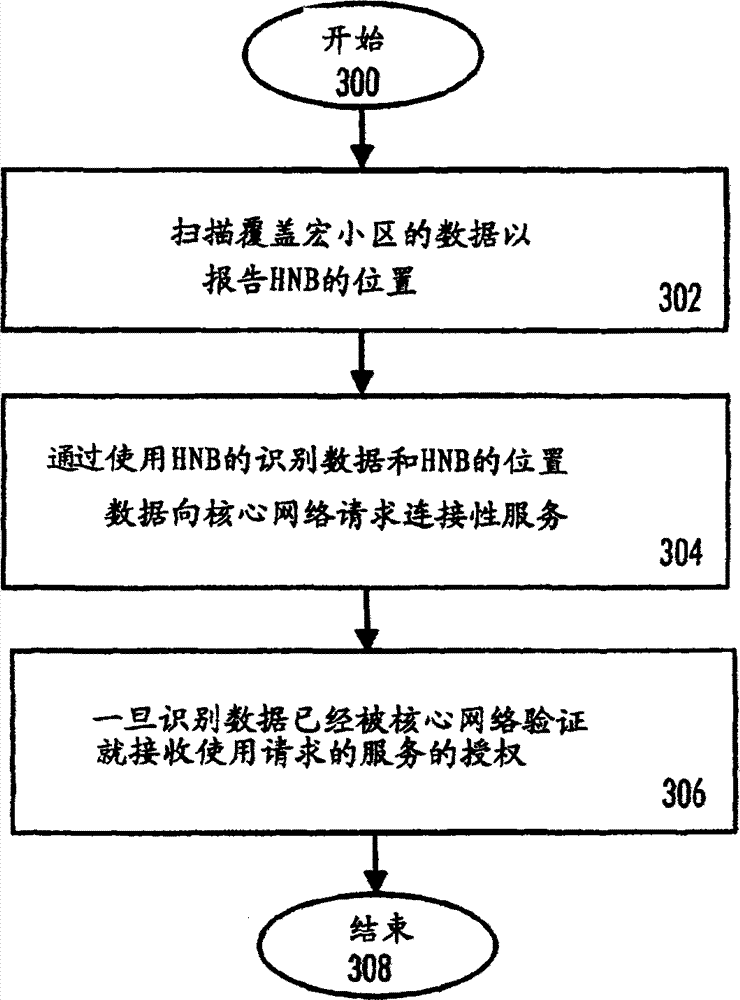
图3示出根据一实施例的方法;Figure 3 illustrates a method according to an embodiment;
图4示出说明一实施例的信号时序图;以及Figure 4 shows a signal timing diagram illustrating an embodiment; and
图5示出用于鉴别专用基站的网络结构的实例。Fig. 5 shows an example of a network structure for authenticating private base stations.
具体实施方式 Detailed ways
以下的实施例是示例性的。尽管说明书可能在几处提及“一(an)”、“一个(one)”或者“一些(some)”实施例,这并不必然地意味着每一次这样的提及是指同一实施例,或者特征仅仅应用于单个实施例。不同实施例的单个特征也可以被组合用来提供其它实施例。The following examples are exemplary. Although the specification may refer to "an", "one" or "some" embodiments in several places, this does not necessarily mean that each such reference refers to the same embodiment, Or features apply to a single embodiment only. Single features of different embodiments may also be combined to provide other embodiments.
参考图1,检查可以应用于本发明的实施例的无线电系统的实例。该无线电系统可以基于GERAN(GSM/EDGE RAN,其中EDGE表示增强型数据速率全球演进以及RAN表示无线电接入网络),UTRAN(UMTS陆上RAN)或者LTE网络元件,但不限于它们。无线电系统还可以采用HSDPA,HSUPA(高速上行链路分组接入),WiFi(称为无线保真)和WIMAX(全球微波互联接入)。Referring to Fig. 1, an example of a radio system to which embodiments of the present invention can be applied is examined. The radio system may be based on GERAN (GSM/EDGE RAN, where EDGE stands for Enhanced Data Rates Global Evolution and RAN stands for Radio Access Network), UTRAN (UMTS Terrestrial RAN) or LTE network elements, but is not limited to them. The radio system may also employ HSDPA, HSUPA (High Speed Uplink Packet Access), WiFi (known as Wireless Fidelity) and WIMAX (World Interoperability for Microwave Access).
虽然GSM和UTRAM是同样地广为人知的技术,但是LTE是新技术并且是基于本身已知的OFDM(正交频分复用)调制格式、MIMO(多输入多输出)天线技术和SAE特征。While GSM and UTRAM are equally well known technologies, LTE is new technology and is based on OFDM (Orthogonal Frequency Division Multiplexing) modulation formats, MIMO (Multiple Input Multiple Output) antenna technology and SAE features known per se.
图1是简化的系统架构,其仅仅示出一些元件和功能实体,它们全是逻辑单元,其实现可以和示出的不同。图1中所示出的连接是逻辑连接;实际的物理连接可能不同。对本领域的技术人员来说显而易见的是系统还包括其它功能和结构。应当了解,在组通信中使用或者用于组通信的功能、结构、元件和协议与实际发明不相关。因此,它们不需要在这里被详细讨论。Fig. 1 is a simplified system architecture, which only shows some elements and functional entities, which are all logic units, and their implementation may be different from what is shown. The connections shown in Figure 1 are logical connections; actual physical connections may differ. It is obvious to those skilled in the art that the system also includes other functions and structures. It should be understood that the functions, structures, elements and protocols used in or for group communication are not relevant to the actual invention. Therefore, they need not be discussed in detail here.
图1的示例无线电系统可以包括用户设备150到154,至少一个基站160到162,和基站控制器110,基站控制器110也可以被称作无线电网络控制器。也可以被称作用户终端的用户设备150到154可以使用信号112到116与基站160到162通信。公共基站162通过数字传输链路118可以具有到基站控制器110的连接。尽管专用基站160可以具有到诸如基站控制器110的核心网络的连接,但它不必然地是无线电系统的一部分。专用基站160可以连接到,例如WLAN(无线局域网)并且使用互联网。在用户终端150到154和基站160到162之间的信号112到116携带数字化信息,例如业务量数据或者控制数据。The example radio system of Figure 1 may include
每个基站160到162,专用和公共两者,广播信号112到116,该信号可以是导频信号(pilot signal),以使得用户终端150到154可以观测潜在基站来服务用户终端150到154。基于导频信号,用户终端选择基站,利用该基站来开始通信(当接通时)或者在正常运行期间执行到该基站的移交。所有公共基站162典型地意味着服务用户终端150到154并与用户终端150到154通信,但不是所有的专用基站160都意味着服务用户终端150到154并与用户终端150到154通信。导频信号的一些扰码(scrambling code)被保留用于可能的大量的专用基站。因此,某一扰码并不正确地识别专用基站。Each base station 160-162, both private and public, broadcasts a signal 112-116, which may be a pilot signal, so that user terminals 150-154 may observe potential base stations to serve user terminals 150-154. Based on the pilot signal, the user terminal selects a base station with which to start communication (when switched on) or to perform a handover to this base station during normal operation. All
每个公共基站162广播带有依赖于基站的位置的信息的信号112到116。因此,当用户终端150到154在无线电系统中从一个位置行进到另一位置时,始终接收广播信号的用户终端150将观测依赖于它的位置的信息中的改变。也就是说,依赖于公共基站162的位置的信息可以被用于确定用户终端150的位置,这是因为用户终端150必须与公共基站足够近以接收广播。Each
图2图示用户终端150、专用基站160和无线电网络的实例。用户终端150包括配置成与一个或多个基站160通信的通信单元222,和用于控制移动终端的功能的处理单元220。处理单元220典型地使用微处理器、信号处理器或者单独部件和相关联的软件实现。Figure 2 illustrates an example of a
专用基站160包括:配置成与至少一个移动终端150通信以及例如经由DSL连接与诸如互联网170的固定IP网络通信的通信单元224。专用基站160进一步包括:配置成扫描覆盖公共无线电网络的宏小区的数据以便报告专用基站的位置的处理单元;配置成通过使用专用基站的识别数据和专用基站的确定的位置向公共无线电网络请求连接性服务的通信单元;以及配置成一旦识别数据已被公共无线电网络验证就接收使用请求的连接性服务的授权的通信单元。处理单元226典型地使用微处理器、信号处理器或者单独部件和相关联的软件实现。基站160还可以包括存储器和其它元件。The
用户终端150和公共核心网络190之间的业务量可以经由不属于移动网络运营商的外部网络(例如,经由固定网络运营商提供的诸如互联网的固定IP网络170)携带。例如,从用户终端150到核心网络190的网络连接可以经由移动网络运营商提供的网络实体180授权。Traffic between the
网络实体180包括:配置成提供覆盖公共无线电网络的宏小区的数据到专用基站以便使得专用基站能够报告专用基站的位置的处理单元;配置成从专用基站接收包括专用基站的识别数据和位置的连接性服务请求的通信单元;配置成通过与用于专用基站的识别寄存器(identification register)通信验证从专用基站接收的识别数据的处理单元;以及配置成一旦识别数据已被验证就向专用基站授权请求的连接性服务的处理单元。The
在一实施例中,专用基站能够读取覆盖的宏小区(例如,UTRAN或者GERAN)的小区标识和区域编码(例如,用于LTE接入的跟踪区域,用于UTRAN接入的位置/路由区域)以便通过所有可用的手段向适当的节点报告此数据和报告到那些宏地点(macro site)的距离(report the distance to those macro sites)。In an embodiment, the private base station is able to read the cell identity and area code (e.g. tracking area for LTE access, location/routing area for UTRAN access) of an overlaying macro cell (e.g. UTRAN or GERAN). ) to report this data and report the distance to those macro sites to the appropriate nodes by all available means.
在一实施例中,专用基站能够利用相应的手段向公共网络识别自身,如同用户终端采用存储在SIM(用户识别模块)/USIM(UMTS用户识别模块)上的数据向网络识别自身。各自的数据可以被安全地存储在专用基站中和/或通过HNB-SIM提供(在这种情况下,这表示(HNB运行)订阅而不是与设备相关的数据)。In one embodiment, the private base station can identify itself to the public network by corresponding means, just as the user terminal identifies itself to the network by using the data stored on the SIM (Subscriber Identity Module)/USIM (UMTS User Identity Module). The respective data can be securely stored in the private base station and/or provided via the HNB-SIM (in this case this means (the HNB runs) the subscription and not the device related data).
在一实施例中,专用基站可以能够联系默认IP地址以便更多地知道区域连接可能性。In an embodiment, a private base station may be able to contact a default IP address to learn more about area connectivity possibilities.
在一实施例中,可以为专用基站提供位置寄存器。这样的寄存器可以对应于从用户终端得知的位置寄存器,即VLR(拜访位置寄存器)和HLR(归属位置寄存器)。In an embodiment, a location register may be provided for a private base station. Such registers may correspond to the location registers known from the user terminal, namely VLR (Visitor Location Register) and HLR (Home Location Register).
在一实施例中,可以通过PC(个人计算机)或者甚至通过在移动终端上的特殊应用远程地操作专用基站。In an embodiment, the private base station can be operated remotely via a PC (Personal Computer) or even via a special application on a mobile terminal.
在一实施例中,运营商可以要求所有者的用户终端和任意访客的用户终端在专用基站覆盖区域内以便验证用户终端和专用基站订阅和设备数据。In an embodiment, the operator may require the owner's user terminal and any visitor's user terminal to be within the private base station coverage area in order to authenticate the user terminal and private base station subscription and device data.
在一实施例中,专用基站一旦在特定地点(site)(“地点”表示专用基站已经报告了某覆盖宏小区并且这个数据基本上没有改变)连接到公共网络就可以能够存储连接性和接入权。另一方面,如果要求地话,公共网络可以能够请求专用基站的重鉴定。In an embodiment, a private base station may be able to store connectivity and access data once connected to the public network at a particular site ("site" meaning that a private base station has reported a certain covering macrocell and this data has not substantially changed). right. On the other hand, the public network may be able to request re-authentication of the private base station if required.
以下图3到5中所描绘的步骤/点、信令消息和相关的功能可以不以绝对的时间顺序,并且可以同时地执行或者以不同于给定的顺序执行一些步骤/点。也可以在步骤/点之间或者在步骤/点和在图示的消息之间发送的其它信令消息之中执行其它功能。一些步骤/点或者部分步骤/点还可以被省去或者被相应的步骤/点或者部分步骤/点替代。服务器运行示出了可以在一个或多个物理或逻辑实体中实现的过程。信令消息仅仅是示例性的并且甚至可以包括用于传输相同信息的若干单独的消息。另外,消息还可以包含其它信息。The steps/points, signaling messages and related functions depicted in Figures 3 to 5 below may not be in absolute chronological order, and some steps/points may be performed simultaneously or in a different order than given. Other functions may also be performed between the steps/points or in other signaling messages sent between the steps/points and the illustrated messages. Some steps/points or partial steps/points may also be omitted or replaced by corresponding steps/points or partial steps/points. A server operation shows a process that may be implemented in one or more physical or logical entities. The signaling messages are only exemplary and may even include several separate messages for conveying the same information. In addition, the message may also contain other information.
图3示出根据本发明实施例的方法的实例。该方法在300开始。在302,专用基站扫描覆盖公共无线电网络的宏小区的数据由以便报告专用基站的位置。Figure 3 shows an example of a method according to an embodiment of the invention. The method starts at 300. At 302, the private base station scans data cells covering macrocells of the public radio network in order to report the location of the private base station.
在304,通过使用专用基站的识别数据和专用基站的位置向公共无线电网络请求连接性服务。在306,一旦识别数据已经被公共无线电网络验证就接收使用请求的连接性服务的授权。方法在308结束。At 304, connectivity services are requested from the public radio network by using the identification data of the private base station and the location of the private base station. At 306, authorization to use the requested connectivity service is received once the identification data has been verified by the public radio network. The method ends at 308 .
图4示出图示在专用基站160和无线电网络180之间的通信中的一般自动化的信号时序图。专用基站160知道默认IP地址/互联网站点以便在初始步骤联系网络180。在401和402,专用基站160在已知的提供基本的专用基站标识的IP地址或者网站(用户可以通过远程控制操作)的情况下,尝试联系网络,基本的专用基站标识甚至可以不被所有者知道并且以安全的方式存储在专用基站中并且可以通过安全线路(例如,通过IPsec(IP安全协议))被传输到网络。FIG. 4 shows a signal timing diagram illustrating a general automation in communication between the
在403,专用基站160所联系的第一网络节点可以提供专用基站要连接到的或者直接重定向的最终节点地址。在404,网络180请求专用基站160鉴别自身和/或提供额外数据,例如覆盖宏小区的额外数据。At 403, the first network node contacted by the
在405,对应于2/3G,专用基站可以被请求以响应询问(challenge)(这也可以包括用户终端)。鉴别过程可以要求用户终端产生对由网络发送的询问的响应。网络也可以请求所有者的用户终端来识别自身。At 405, corresponding to 2/3G, a private base station may be requested to respond to a challenge (this may also include user terminals). The authentication procedure may require the user terminal to generate a response to a challenge sent by the network. The network may also request the owner's user terminal to identify itself.
在406,可以请求专用基站报告宏小区数据,即区域Id、小区Id、距离。如果网络请求专用基站提供宏小区层数据,那么专用基站可被要求读取BCH(广播信道)和执行PHY(物理层)测量。At 406, the private base station may be requested to report macro cell data, ie area Id, cell Id, distance. If the network requests the private base station to provide macro cell layer data, the private base station may be required to read the BCH (broadcast channel) and perform PHY (physical layer) measurements.
在407,可以要求网络180与专用基站的中央数据存储器件460通信(类似2/3G中的HLR和VLR对话)若干次。与中央数据存储器件460的通信可被要求取决于运营商的网络设置。At 407, the
在408,专用基站通过提供网络所请求的所有数据响应于鉴别/额外配置数据的请求。At 408, the private base station responds to the request for authentication/additional configuration data by providing all data requested by the network.
在409,网络最终授权使用运营商频谱的服务和最终授权并且从网络接收最终连接建立确认。At 409, the network finally authorizes the service and final authorization to use the operator's spectrum and receives a final connection establishment confirmation from the network.
图5示出用于鉴别专用基站的类HLR/VLR的网络结构的实例。LTE专用基站的识别要求用于用户终端的比VLR/HLR类似概念的部署。在定制时,LTE专用基站取得唯一标识、密钥、认证或者等同物以便能够向核心网络识别自身。一旦LTE专用基站被卖给用户,那么那些标识就被“激活”。Fig. 5 shows an example of an HLR/VLR-like network structure for authenticating private base stations. The identification of LTE private base stations requires the deployment of similar concepts than VLR/HLR for user terminals. Upon customization, the LTE private base station obtains a unique identity, key, certificate or equivalent to be able to identify itself to the core network. Those identities are "activated" once the LTE private base station is sold to the user.
可以为某一地点的初始部署预想二段鉴别(two-phaseauthentication)(一次是LTE HNB的鉴别,一次是UE的鉴别)。稍后用户是否需要在家用覆盖之中,即,与网络通信,可以讨论LTE专用基站的注册。但是这种要求最好被省去,因为在出现断电问题的情况下所有者需要是可用的并且他/她的朋友直到他/她回家后才能使用访客接入权,看起来不太可能。Two-phase authentication (one for LTE HNB authentication, one for UE authentication) can be envisioned for initial deployment in a certain location. Whether later the user needs to be in home coverage, ie to communicate with the network, the registration of the LTE private base station can be discussed. But this requirement is better left out, since in case of power outage problem the owner needs to be available and his/her friends can't use guest access until he/she gets home, seems unlikely .
LTE专用基站可以按照以下方式被嵌入到总的系统中。在501,在购买过程中,HNB-ID将会被输入到用于LTE HNB的寄存器460中,并且该条目(entry)将会被激活。在502,在首次附着到移动性管理实体,被假设为要进行通信的相应的C平面(C-plane)节点),LTE专用基站160请求操作授权。An LTE private base station can be embedded into the overall system in the following manner. At 501, during the purchase process, the HNB-ID will be entered into the
在503,网络520验证由专用基站提供的标识并且取得所有者的ID。在504,网络520可以检查用户终端150和152是否在LTE专用基站覆盖区域内(但是,只有对于首次附着被验证这才是可能的)。At 503, the
在505,如果所有验证成功的话,那么网络520授权对专用基站160的操作。At 505, the
接下来,描述宏和家用层之间的结邻关系的产生的实例。具有相当高的可能性知道漫游出家用小区的用户终端可以被移交到哪个宏小区,可以使得专用基站寻址(address)目标,其中可以执行到该目标的移交(Being in the possession of knowing with quite high likelihoodto which macro cell a user terminal roaming out of the home cell isable to handover to,would enable the private base station to addressthe target to which a handover may be performed)。Next, an example of generation of a neighbor relationship between the macro and household layers is described. Knowing to which macro cell a user terminal roaming out of the home cell can be handed over with a fairly high probability enables the private base station to address the target to which the handover can be performed (Being in the possession of knowing with quite high likelihoodto which macro cell a user terminal roaming out of the home cell isable to handover to, would enable the private base station to address the target to which a handover may be performed).
另一方面,从专用基站提供到网络的数据可以被分布到宏节点以便合适地寻址家用节点。对于这点的必要的条件是用户终端能够选择当处于激活模式时也允许自动连接的家用小区和提供各自的信息到源(宏层)节点。On the other hand, data provided to the network from private base stations may be distributed to macro nodes in order to properly address home nodes. A necessary condition for this is that the user terminal is able to select a home cell which also allows automatic connection when in active mode and to provide the respective information to the source (macro layer) node.
本发明的实施例可以在包含控制器的电子装置中实现。控制器可以被配置成执行结合图3的流程图和结合图4到5所描述的步骤的至少一些。实施例可以被实现为包含用于执行计算机过程的指令的计算机程序。计算机过程包括:提供覆盖公共无线电网络的宏小区的数据到专用基站以便使得专用基站能够报告专用基站的位置;从专用基站接收包括专用基站的识别数据和位置的连接性服务请求;通过与用于专用基站的识别寄存器通信验证从专用基站接收的识别数据;以及一旦识别数据已经被验证就向专用基站授权请求的连接性服务。Embodiments of the invention may be implemented in an electronic device including a controller. The controller may be configured to perform at least some of the steps described in connection with the flowchart of FIG. 3 and in connection with FIGS. 4 to 5 . Embodiments can be implemented as a computer program containing instructions for executing computer processes. The computer process comprises: providing data covering a macrocell of the public radio network to the private base station to enable the private base station to report the location of the private base station; receiving a connectivity service request from the private base station including identification data and location of the private base station; The identification register of the private base station communicatively verifies the identification data received from the private base station; and authorizes the requested connectivity service to the private base station once the identification data has been verified.
计算机程序可以被存储在可由计算机或处理器读取的计算机程序分布介质上。计算机程序介质可以是,例如但不限于电、磁、光、红外线或半导体系统、装置或者传输介质。计算机程序介质可以包括以下介质的至少一个:计算机可读介质、程序存储介质、记录介质、计算机可读存储器、随机访问存储器、可擦除可编程只读存储器、计算机可读软件分布包(distribution package)、计算机可读信号、计算机可读远程通信信号、计算机可读印刷品以及计算机可读压缩软件包。The computer program may be stored on a computer program distribution medium readable by a computer or a processor. A computer program medium may be, for example but not limited to, an electrical, magnetic, optical, infrared or semiconductor system, device or transmission medium. The computer program medium may include at least one of the following media: computer readable medium, program storage medium, recording medium, computer readable memory, random access memory, erasable programmable read only memory, computer readable software distribution package (distribution package) ), computer readable signals, computer readable telecommunications signals, computer readable printed matter, and computer readable compressed software packages.
本发明可应用于任意用户终端、服务器、相应的部件、和/或任意通信系统或具有专用基站的不同通信系统的任意组合。通信系统可随意是固定的通信系统或者无线通信系统或者采用固定网络和无线电网络两者的通信系统。特别在无线通信中,所使用的协议、通信系统的规范、服务器和用户终端发展迅速。这种发展可能需要对实施例的额外的改变。因此,所有词语和表达应当被宽泛地解释并且它们旨在于阐释、而不是限制实施例。The invention is applicable to any user terminal, server, corresponding component, and/or any communication system or any combination of different communication systems with dedicated base stations. The communication system may optionally be a fixed communication system or a wireless communication system or a communication system employing both fixed and radio networks. Especially in wireless communication, protocols used, specifications of communication systems, servers and user terminals develop rapidly. Such developments may require additional changes to the embodiments. Therefore, all words and expressions should be interpreted broadly and they are intended to illustrate, not to restrict, the embodiments.
对本领域的技术人员来说显而易见的是,随着技术进步,有创造性的思想可以以各种方式被实现。本发明及其实施例不限于上述的实例,而是可以在权利要求书的范围内变化。It is obvious to a person skilled in the art that, as technology advances, inventive ideas can be implemented in various ways. The invention and its embodiments are not limited to the examples described above but may vary within the scope of the claims.
Claims (25)
Priority Applications (1)
| Application Number | Priority Date | Filing Date | Title |
|---|---|---|---|
| CN201310169836.XA CN103260162B (en) | 2007-06-26 | 2008-06-23 | The system of private base station, radio network entity and composition thereof and communication means |
Applications Claiming Priority (3)
| Application Number | Priority Date | Filing Date | Title |
|---|---|---|---|
| FI20075485A FI20075485A0 (en) | 2007-06-26 | 2007-06-26 | Private base station and radio network unit |
| FI20075485 | 2007-06-26 | ||
| PCT/EP2008/057927 WO2009000790A1 (en) | 2007-06-26 | 2008-06-23 | Private base station and radio network entity |
Related Child Applications (1)
| Application Number | Title | Priority Date | Filing Date |
|---|---|---|---|
| CN201310169836.XA Division CN103260162B (en) | 2007-06-26 | 2008-06-23 | The system of private base station, radio network entity and composition thereof and communication means |
Publications (2)
| Publication Number | Publication Date |
|---|---|
| CN101790894A CN101790894A (en) | 2010-07-28 |
| CN101790894B true CN101790894B (en) | 2013-06-26 |
Family
ID=38212456
Family Applications (2)
| Application Number | Title | Priority Date | Filing Date |
|---|---|---|---|
| CN2008801047633A Active CN101790894B (en) | 2007-06-26 | 2008-06-23 | Private Base Stations and Radio Network Entities |
| CN201310169836.XA Active CN103260162B (en) | 2007-06-26 | 2008-06-23 | The system of private base station, radio network entity and composition thereof and communication means |
Family Applications After (1)
| Application Number | Title | Priority Date | Filing Date |
|---|---|---|---|
| CN201310169836.XA Active CN103260162B (en) | 2007-06-26 | 2008-06-23 | The system of private base station, radio network entity and composition thereof and communication means |
Country Status (8)
| Country | Link |
|---|---|
| US (1) | US8787252B2 (en) |
| EP (1) | EP2163040B1 (en) |
| CN (2) | CN101790894B (en) |
| ES (1) | ES2393423T3 (en) |
| FI (1) | FI20075485A0 (en) |
| RU (1) | RU2536386C2 (en) |
| WO (1) | WO2009000790A1 (en) |
| ZA (1) | ZA200909146B (en) |
Cited By (1)
| Publication number | Priority date | Publication date | Assignee | Title |
|---|---|---|---|---|
| CN103260162A (en) * | 2007-06-26 | 2013-08-21 | 诺基亚西门子通信公司 | Private base station and radio network entity |
Families Citing this family (9)
| Publication number | Priority date | Publication date | Assignee | Title |
|---|---|---|---|---|
| DE102008047543A1 (en) * | 2008-09-16 | 2010-04-15 | T-Mobile International Ag | Minimization of signaling traffic at Home Base Stations |
| US8630621B2 (en) | 2008-10-03 | 2014-01-14 | Qualcomm Incorporated | Systems and methods to enable authentication of the location of access point base stations and/or user equipment |
| CN102870449B (en) * | 2010-04-30 | 2016-02-24 | 黑莓有限公司 | The mobile network system that can survive |
| EP2391155B1 (en) * | 2010-05-27 | 2013-02-13 | Alcatel Lucent | A femtocell base station and method of determining a macrocell location area within which a femtocell base station resides |
| US9100881B2 (en) | 2011-11-02 | 2015-08-04 | Qualcomm Incorporated | Dynamically populating media independent handover (MIH) information service database |
| FR2982726B1 (en) | 2011-11-10 | 2019-03-15 | Sigfox | DIGITAL TELECOMMUNICATIONS SYSTEM ACCESS NETWORK AND DIGITAL TELECOMMUNICATIONS METHOD |
| CN104754154A (en) * | 2013-12-27 | 2015-07-01 | 广东世纪网通信设备有限公司 | International telephone communication system and method |
| CN105357680A (en) * | 2015-10-23 | 2016-02-24 | 江苏省电力公司南京供电公司 | Method for selecting access point positions in power wireless access network |
| EP3697044A1 (en) | 2016-04-20 | 2020-08-19 | Telefonaktiebolaget LM Ericsson (publ) | Radio network node, wireless device and methods performed therein |
Citations (1)
| Publication number | Priority date | Publication date | Assignee | Title |
|---|---|---|---|---|
| US5995839A (en) * | 1996-08-20 | 1999-11-30 | Southwestern Bell Technology Resources, Inc. | Private radiotelephone system with enhanced telephone system interface |
Family Cites Families (13)
| Publication number | Priority date | Publication date | Assignee | Title |
|---|---|---|---|---|
| US5940765A (en) * | 1996-08-30 | 1999-08-17 | Telefonaktiebolaget Lm Ericsson | Radio communications systems and methods for jittered beacon transmission |
| DE19638170C2 (en) | 1996-09-11 | 1998-09-03 | Siemens Ag | Method for making emergency calls in cordless telecommunication systems, in particular DECT / GAP systems |
| US6061346A (en) * | 1997-01-17 | 2000-05-09 | Telefonaktiebolaget Lm Ericsson (Publ) | Secure access method, and associated apparatus, for accessing a private IP network |
| US6542741B2 (en) * | 1999-07-01 | 2003-04-01 | Ericsson, Inc. | Method of establishing an adaptive public neighbor cell list for mobile stations of a private cellular system |
| KR100365790B1 (en) * | 2000-05-24 | 2002-12-26 | 삼성전자 주식회사 | System and method capable of public and private mobile communication service |
| ITTS20000003A1 (en) * | 2000-05-31 | 2001-12-01 | Telit Networks Spa | SELF PLANNER: AUTOMATIC FREQUENTIAL PLANNING FOR RADIO MOBILE SYSTEMS |
| US20050239453A1 (en) * | 2000-11-22 | 2005-10-27 | Vikberg Jari T | Mobile communication network |
| US6795700B2 (en) * | 2002-09-12 | 2004-09-21 | Broadcom Corporation | Method of creating incentives for establishing hotspot locations |
| EP2074839A4 (en) | 2006-09-22 | 2010-05-05 | Kineto Wireless Inc | Method and apparatus for resource management |
| US20080102787A1 (en) * | 2006-10-31 | 2008-05-01 | Agere Systems Inc. | Mobile communications handover method |
| US8019331B2 (en) * | 2007-02-26 | 2011-09-13 | Kineto Wireless, Inc. | Femtocell integration into the macro network |
| US20080220763A1 (en) * | 2007-03-08 | 2008-09-11 | Chapin John M | Level of Service Determination for a Home Base Station |
| FI20075485A0 (en) * | 2007-06-26 | 2007-06-26 | Nokia Siemens Networks Oy | Private base station and radio network unit |
-
2007
- 2007-06-26 FI FI20075485A patent/FI20075485A0/en not_active Application Discontinuation
-
2008
- 2008-06-23 WO PCT/EP2008/057927 patent/WO2009000790A1/en not_active Ceased
- 2008-06-23 EP EP08761294A patent/EP2163040B1/en active Active
- 2008-06-23 CN CN2008801047633A patent/CN101790894B/en active Active
- 2008-06-23 RU RU2013116929/08A patent/RU2536386C2/en active
- 2008-06-23 US US12/666,325 patent/US8787252B2/en active Active
- 2008-06-23 ES ES08761294T patent/ES2393423T3/en active Active
- 2008-06-23 CN CN201310169836.XA patent/CN103260162B/en active Active
-
2009
- 2009-12-22 ZA ZA200909146A patent/ZA200909146B/en unknown
Patent Citations (1)
| Publication number | Priority date | Publication date | Assignee | Title |
|---|---|---|---|---|
| US5995839A (en) * | 1996-08-20 | 1999-11-30 | Southwestern Bell Technology Resources, Inc. | Private radiotelephone system with enhanced telephone system interface |
Cited By (2)
| Publication number | Priority date | Publication date | Assignee | Title |
|---|---|---|---|---|
| CN103260162A (en) * | 2007-06-26 | 2013-08-21 | 诺基亚西门子通信公司 | Private base station and radio network entity |
| CN103260162B (en) * | 2007-06-26 | 2015-10-28 | 诺基亚通信公司 | The system of private base station, radio network entity and composition thereof and communication means |
Also Published As
| Publication number | Publication date |
|---|---|
| ZA200909146B (en) | 2010-08-25 |
| ES2393423T3 (en) | 2012-12-21 |
| EP2163040A1 (en) | 2010-03-17 |
| WO2009000790A1 (en) | 2008-12-31 |
| FI20075485A0 (en) | 2007-06-26 |
| CN103260162A (en) | 2013-08-21 |
| CN103260162B (en) | 2015-10-28 |
| CN101790894A (en) | 2010-07-28 |
| RU2536386C2 (en) | 2014-12-20 |
| US20100182954A1 (en) | 2010-07-22 |
| RU2013116929A (en) | 2014-10-20 |
| US8787252B2 (en) | 2014-07-22 |
| EP2163040B1 (en) | 2012-08-08 |
Similar Documents
| Publication | Publication Date | Title |
|---|---|---|
| CN101790894B (en) | Private Base Stations and Radio Network Entities | |
| TWI724132B (en) | Method of wireless communication, apparatus for wireless communication and computer program for performing the method | |
| JP5216921B2 (en) | Method and apparatus for creating an association between a user equipment and an access point | |
| US8797940B2 (en) | Setup and configuration of relay nodes | |
| CN102165812B (en) | Method and system for restricted access configuration of access point base stations | |
| EP2731382B1 (en) | Method for setting terminal in mobile communication system | |
| CN1947453B (en) | The user authentication of the improvement of unauthorized mobile access signaling | |
| US20050233729A1 (en) | Method and control member for controlling access to a radio communication cellular system through a wireless local netwrok | |
| CN101278576A (en) | Dedicated access point with SIM card included | |
| CN110710178B (en) | User Authentication in Wireless Access Network | |
| WO2016004822A1 (en) | Method and apparatus for network switching | |
| US20240236663A9 (en) | Systems and methods for authorization of proximity based services | |
| CN101877852B (en) | User access control method and system | |
| CN102036343B (en) | Femto sharing method and femto system | |
| US9473934B2 (en) | Wireless telecommunications network, and a method of authenticating a message | |
| CN106888447B (en) | Method and system for processing auxiliary USIM application information | |
| HK1166917B (en) | Setup and configuration of relay nodes |
Legal Events
| Date | Code | Title | Description |
|---|---|---|---|
| C06 | Publication | ||
| PB01 | Publication | ||
| C10 | Entry into substantive examination | ||
| SE01 | Entry into force of request for substantive examination | ||
| C14 | Grant of patent or utility model | ||
| GR01 | Patent grant | ||
| C56 | Change in the name or address of the patentee | ||
| CP01 | Change in the name or title of a patent holder |
Address after: Espoo, Finland Patentee after: Nokia Siemens Networks OY Address before: Espoo, Finland Patentee before: Nokia Siemens Networks OY |