CN101742666B - Multi-carrier-based method for mapping resource - Google Patents
Multi-carrier-based method for mapping resource Download PDFInfo
- Publication number
- CN101742666B CN101742666B CN2008101760533A CN200810176053A CN101742666B CN 101742666 B CN101742666 B CN 101742666B CN 2008101760533 A CN2008101760533 A CN 2008101760533A CN 200810176053 A CN200810176053 A CN 200810176053A CN 101742666 B CN101742666 B CN 101742666B
- Authority
- CN
- China
- Prior art keywords
- resource units
- physical resource
- frequency partition
- units
- frequency
- Prior art date
- Legal status (The legal status is an assumption and is not a legal conclusion. Google has not performed a legal analysis and makes no representation as to the accuracy of the status listed.)
- Expired - Fee Related
Links
Images



Landscapes
- Mobile Radio Communication Systems (AREA)
Abstract
本发明公开了频率资源映射方法,在其中一种映射方法中,将可用子载波划分为n个物理资源单元,对n个物理资源单元进行第一置换操作,其中,第一置换操作以n1个物理资源单元为单位;将第一置换操作后的n个物理资源单元根据频率分区配置信息映射到多个频率分区;在各个频率分区内,对部分或全部物理资源单元进行第二置换操作,其中,第二置换操作以n2个物理资源单元为单位;将第二置换操作后的物理资源单元映射为逻辑资源单元;其中,n、n1、n2均为大于或等于1的整数,且n大于或等于n1、n2。通过本发明,可以确保基于多载波技术的无线通信系统的频谱效率。
The present invention discloses a frequency resource mapping method. In one of the mapping methods, the available subcarriers are divided into n physical resource units, and the first permutation operation is performed on the n physical resource units, wherein the first permutation operation is based on n1 A physical resource unit is used as a unit; the n physical resource units after the first permutation operation are mapped to multiple frequency partitions according to the frequency partition configuration information; in each frequency partition, a second permutation operation is performed on some or all of the physical resource units, where , the second replacement operation takes n2 physical resource units as a unit; the physical resource units after the second replacement operation are mapped to logical resource units; wherein, n, n1, and n2 are all integers greater than or equal to 1, and n is greater than or Equal to n1, n2. Through the present invention, the spectrum efficiency of the wireless communication system based on the multi-carrier technology can be ensured.
Description
技术领域 technical field
本发明涉及无线通信领域,具体地,涉及基于多载波的资源映射方法。The present invention relates to the field of wireless communication, in particular to a multi-carrier-based resource mapping method.
背景技术 Background technique
在无线通信系统中,基站是指为终端提供服务的设备,其通过上/下行链路与终端进行通信,其中,下行是指基站到终端的方向,而上行是指终端到基站的方向。就数据传输而言,多个终端可以通过上行链路同时向基站发送数据,也可以通过下行链路同时从基站接收数据。在采用基站实现无线资源调度控制的无线通信系统中,系统无线资源的调度分配由基站完成。例如,由基站给出基站进行下行传输时的下行资源分配信息以及终端进行上行传输时的上行资源分配信息等。资源分配信息包含了实际的物理资源位置和传输方法等信息,基于不同技术实现的通信系统,其资源分配和资源映射的要求和方法也有所不同。In a wireless communication system, a base station refers to a device that provides services for a terminal, and communicates with the terminal through an uplink/downlink, wherein the downlink refers to the direction from the base station to the terminal, and the uplink refers to the direction from the terminal to the base station. As far as data transmission is concerned, multiple terminals can simultaneously send data to the base station through the uplink, and can also receive data from the base station through the downlink at the same time. In a wireless communication system that uses a base station to implement wireless resource scheduling control, the scheduling and allocation of system wireless resources is completed by the base station. For example, the base station provides downlink resource allocation information when the base station performs downlink transmission, uplink resource allocation information when the terminal performs uplink transmission, and the like. Resource allocation information includes information such as actual physical resource locations and transmission methods. Communication systems based on different technologies have different requirements and methods for resource allocation and resource mapping.
对于基于时分多址(Time Division Multiple Address,简称为TDMA)技术的无线通信系统,例如全球移动通信系统(GlobalSystem for Mobile communication,简称为GSM)系统,其属于单载波系统,基站在调度无线资源时通常在时域将无线资源划分为连续的无线帧,其中每个无线帧包含8个时隙,用于基站与终端之间的数据和信令传输,资源映射和基于资源映射的资源分配过程相对简单;对于基于码分多址(Code Division Multiple Address,CDMA)技术的无线通信系统,其通过CDMA码来区分信道和终端,资源映射和基于资源映射的资源分配也相对简单,即使在融合了TDMA和CDMA双重技术的的第三代无线通信系统中,例如,在时分同步码分多址(Time-Division Synchronous Code Division Multiple Address,简称为TD-SCDMA)系统中,基站同样将空口的无线资源分成以10ms为周期的无线帧,每个10ms包含14个常规时隙和6个特殊时隙,其中,常规时隙用于传输具体的业务和信令,在每个常规时隙上,基站通过不同的码字来区分用户,资源映射过程也并不复杂。For wireless communication systems based on Time Division Multiple Address (TDMA) technology, such as the Global System for Mobile communication (GSM) system, which belongs to the single-carrier system, when the base station schedules wireless resources Usually, the wireless resources are divided into consecutive wireless frames in the time domain, where each wireless frame contains 8 time slots for data and signaling transmission between the base station and the terminal. The resource mapping and the resource allocation process based on resource mapping are relatively Simple; for a wireless communication system based on code division multiple access (Code Division Multiple Address, CDMA) technology, which uses CDMA codes to distinguish channels and terminals, resource mapping and resource allocation based on resource mapping are relatively simple. In the third-generation wireless communication system with dual technologies of CDMA and CDMA, for example, in a Time-Division Synchronous Code Division Multiple Address (TD-SCDMA) system, the base station also divides the wireless resources of the air interface into A radio frame with a period of 10ms, each 10ms contains 14 regular time slots and 6 special time slots, where the regular time slots are used to transmit specific services and signaling, and in each regular time slot, the base station passes different The codewords are used to distinguish users, and the resource mapping process is not complicated.
其主要原因在于,上述系统并不是基于正交频分多址(Orthogonal Frequency Division Multiple Address,简称为OFDMA)技术,OFDMA属于多载波系统,而且,TDMA和CDMA系统的干扰控制策略相对简单,比如,其采用频率复用技术,通过多个频点的复用实现大区域覆盖,而OFDMA系统的干扰控制技术则相对比较灵活和复杂,可以采用部分频率复用(Fractional FrequencyReuse,简称为FFR)技术。此外,为了保证有限资源的频谱效率,基站需要支持多载波操作、多资源类型、多资源粒度等技术特征,这都对基于OFDMA的无线通信系统的资源映射过程提出新的约束和新的要求。The main reason is that the above-mentioned system is not based on Orthogonal Frequency Division Multiple Address (OFDMA) technology, OFDMA is a multi-carrier system, and the interference control strategies of TDMA and CDMA systems are relatively simple, for example, It uses frequency reuse technology to achieve large-area coverage through the multiplexing of multiple frequency points, while the interference control technology of the OFDMA system is relatively flexible and complex, and Fractional Frequency Reuse (FFR for short) technology can be used. In addition, in order to ensure the spectral efficiency of limited resources, the base station needs to support technical features such as multi-carrier operation, multi-resource types, and multi-resource granularity, which puts new constraints and requirements on the resource mapping process of OFDMA-based wireless communication systems.
因此,基于TDMA和CDMA技术的无线通信系统以时隙或码字为资源单位进行的资源映射过程已经不能满足基于OFDMA技术无线通信系统的需要,为确保OFDMA系统的频谱效率,有必要设计一种适合OFDMA系统的无线资源映射机制。Therefore, the resource mapping process of wireless communication systems based on TDMA and CDMA technology, which takes time slots or codewords as resource units, can no longer meet the needs of wireless communication systems based on OFDMA technology. In order to ensure the spectrum efficiency of OFDMA systems, it is necessary to design a A radio resource mapping mechanism suitable for OFDMA systems.
发明内容 Contents of the invention
考虑到相关技术中存在的基于TDMA和CDMA技术的无线通信系统的资源映射过程不能满足基于OFDMA技术无线通信系统的需要,有必要设计一种OFDMA系统的无线资源映射机制的问题而提出本发明,为此,本发明旨在提供资源映射方法以解决上述问题。Considering that the resource mapping process of the wireless communication system based on TDMA and CDMA technology in the related art cannot meet the needs of the wireless communication system based on OFDMA technology, it is necessary to design a wireless resource mapping mechanism of the OFDMA system and propose the present invention, Therefore, the present invention aims to provide a resource mapping method to solve the above problems.
根据本发明的一个方面,提供了一种资源映射方法。在该方法中,将可用子载波划分为n个物理资源单元,对n个物理资源单元进行第一置换操作,其中,第一置换操作以n1个物理资源单元为单位;将第一置换操作后的n个物理资源单元根据频率分区配置信息映射到多个频率分区;在各个频率分区内,对部分或全部物理资源单元进行第二置换操作,其中,第二置换操作以n2个物理资源单元为单位;将第二置换操作后的物理资源单元映射为逻辑资源单元;其中,n、n1、n2均为大于或等于1的整数,且n大于或等于n1、n2。优选地,n1大于n2。According to one aspect of the present invention, a resource mapping method is provided. In this method, the available subcarriers are divided into n physical resource units, and the first permutation operation is performed on the n physical resource units, wherein, the first permutation operation takes n1 physical resource units as a unit; after the first permutation operation The n physical resource units of are mapped to multiple frequency partitions according to the frequency partition configuration information; in each frequency partition, a second permutation operation is performed on some or all of the physical resource units, wherein the second permutation operation takes n2 physical resource units as Unit; mapping the physical resource unit after the second permutation operation to a logical resource unit; wherein, n, n1, and n2 are all integers greater than or equal to 1, and n is greater than or equal to n1, n2. Preferably, n1 is greater than n2.
优选地,在各个频率分区内,对部分或全部物理资源单元进行第二置换操作包括:对于需要为集中式资源组预留连续物理资源单元的频率分区,对频率分区内除预留的连续物理资源单元外的物理资源单元进行第二置换操作;对于不需要为集中式资源组预留连续物理资源单元的频率分区,对频率分区内的所有物理资源单元进行第二置换操作。Preferably, in each frequency partition, performing the second permutation operation on part or all of the physical resource units includes: for frequency partitions that need to reserve continuous physical resource units for the centralized resource group, removing the reserved continuous physical resource units in the frequency partition The second replacement operation is performed on the physical resource units outside the resource unit; for the frequency partition that does not need to reserve continuous physical resource units for the centralized resource group, the second replacement operation is performed on all the physical resource units in the frequency partition.
优选地,将第二置换操作后的物理资源单元映射为逻辑资源单元包括:在各个频率分区内,根据频率分区配置信息将第二置换操作后的物理资源单元分为集中式资源组和/或分布式资源组;将集中式资源组中的物理资源单元直接映射为逻辑集中式资源单元,和/或将分布式资源组内的数据子载波进行第三置换操作,得到逻辑分布式资源单元。其中,逻辑集中式资源单元中的子载波连续,逻辑分布式资源单元中的子载波是不连续或成对连续或每4个子载波连续。Preferably, mapping the physical resource units after the second permutation operation into logical resource units includes: in each frequency partition, dividing the physical resource units after the second permutation operation into centralized resource groups and/or according to frequency partition configuration information Distributed resource group: directly map physical resource units in the centralized resource group to logical centralized resource units, and/or perform a third permutation operation on data subcarriers in the distributed resource group to obtain logical distributed resource units. Wherein, the subcarriers in the logical centralized resource unit are continuous, and the subcarriers in the logical distributed resource unit are discontinuous or continuous in pairs or every 4 subcarriers are continuous.
优选地,第一置换操作、第二置换操作、第三置换操作均根据置换长度采用下列之一或其组合:行列置换、圆置换映射、均匀抽取置换、特定序列置换和随机置换。其中,当第一置换操作为均匀抽取置换时,以n1个物理资源单元为单位从n个物理资源单元中等间隔抽取物理资源单元进行置换操作。Preferably, the first permutation operation, the second permutation operation, and the third permutation operation all adopt one or a combination of the following according to permutation lengths: row-column permutation, circle permutation mapping, uniform extraction permutation, specific sequence permutation and random permutation. Wherein, when the first replacement operation is uniform extraction and replacement, the replacement operation is performed by extracting physical resource units at equal intervals from n physical resource units in units of n1 physical resource units.
另外,优选地,在上述方法中,对于可用子载波包括的由相邻载频的保护子载波组成的物理资源单元,根据频率分区配置信息直接映射到最后一个包含集中式资源组的频率分区的集中式资源分组中。In addition, preferably, in the above method, for the available subcarriers, the physical resource units composed of guard subcarriers of adjacent carrier frequencies are directly mapped to the last frequency partition containing the centralized resource group according to the frequency partition configuration information. Centralized resource grouping.
优选地,上述的频率分区配置信息包括以下至少之一:频率分区的数目、频率分区的大小和/或频率分区中的分布式资源组的大小和/或集中式资源组的大小、频率分区的集中式资源组中的连续物理资源单元的数目,其中,连续物理资源单元为进行第一置换时归属于同一置换单位的物理资源单元。Preferably, the above-mentioned frequency partition configuration information includes at least one of the following: the number of frequency partitions, the size of frequency partitions and/or the size of distributed resource groups in frequency partitions and/or the size of centralized resource groups, the The number of continuous physical resource units in the centralized resource group, wherein the continuous physical resource units are physical resource units belonging to the same replacement unit when the first replacement is performed.
根据本发明的另一方面,提供了另一种基于多载波的资源映射方法。在该方法中,将可用子载波划分位n个物理资源单元,对n个物理资源单元进行第一置换操作,其中,第一置换操作以n1个物理资源单元为单位;根据频率分区配置信息,将第一置换操作后的n个物理资源单元分为集中式资源组和分布式资源组;对分布式资源组中的物理资源单元和/或集中式资源组中的部分或全部物理资源进行第二置换操作,其中,第二置换操作以n2个物理资源单元为单位;将第二置换操作后的n个物理资源单元映射到多个频率分区,并将各个频率分区内的物理资源单元映射为逻辑资源单元;其中,n、n1、n2均为大于或等于1的整数,且n大于或等于n1、n2。优选地,n1大于n2。According to another aspect of the present invention, another multi-carrier-based resource mapping method is provided. In this method, the available subcarriers are divided into n physical resource units, and the first permutation operation is performed on the n physical resource units, wherein the first permutation operation is based on n1 physical resource units; according to the frequency partition configuration information, The n physical resource units after the first replacement operation are divided into centralized resource groups and distributed resource groups; the physical resource units in the distributed resource group and/or part or all of the physical resources in the centralized resource group are subjected to the second Two permutation operations, wherein the second permutation operation takes n2 physical resource units as units; the n physical resource units after the second permutation operation are mapped to multiple frequency partitions, and the physical resource units in each frequency partition are mapped as Logical resource unit; wherein, n, n1, and n2 are all integers greater than or equal to 1, and n is greater than or equal to n1, n2. Preferably, n1 is greater than n2.
其中,对于可用子载波包括的由相邻载频的保护子载波组成的物理资源单元,根据频率分区配置信息映射到最后一个包含集中式资源组的频率分区中的逻辑集中式资源单元。Wherein, for the available subcarriers, the physical resource units composed of guard subcarriers of adjacent carrier frequencies are mapped to logical centralized resource units in the last frequency partition containing the localized resource group according to the frequency partition configuration information.
优选地,将第二置换操作后的物理资源单元映射到多个频率分区包括:根据频率分区配置信息,将第二置换操作后的集中式资源组中的物理资源单元映射作为频率分区中的集中式资源单元,将第二置换操作后的分布式资源组中的物理资源单元映射作为频率分区中的分布式资源单元。Preferably, mapping the physical resource units after the second permutation operation to multiple frequency partitions includes: mapping the physical resource units in the localized resource group after the second permutation operation as a centralized resource unit in the frequency partition according to frequency partition configuration information. The physical resource units in the distributed resource group after the second permutation operation are mapped as the distributed resource units in the frequency partition.
优选地,将频率分区内的物理资源单元映射为逻辑资源单元包括:将频率分区中的集中式资源单元直接映射为逻辑集中式资源单元,和/或将频率分区中的分布式资源单元内的数据子载波进行第三置换操作,得到逻辑分布式资源单元。其中,逻辑集中式资源单元中的子载波连续,逻辑分布式资源单元中的子载波是不连续或成对连续或每4个子载波连续。Preferably, mapping the physical resource units in the frequency partition to logical resource units includes: directly mapping the centralized resource units in the frequency partition to logical centralized resource units, and/or mapping the distributed resource units in the frequency partition The third permutation operation is performed on the data subcarriers to obtain logical distributed resource units. Wherein, the subcarriers in the logical centralized resource unit are continuous, and the subcarriers in the logical distributed resource unit are discontinuous or continuous in pairs or every 4 subcarriers are continuous.
优选地,频率分区配置信息包括以下至少之一:频率分区的数目、频率分区的大小和/或频率分区中的分布式资源组的大小和/或集中式资源组的大小、频率分区的集中式资源组中的连续物理资源单元的数目,其中,连续物理资源单元为进行第一置换时归属于同一置换单位的物理资源单元。Preferably, the frequency partition configuration information includes at least one of the following: the number of frequency partitions, the size of frequency partitions and/or the size of distributed resource groups in frequency partitions and/or the size of centralized resource groups, the centralized The number of contiguous physical resource units in the resource group, wherein the contiguous physical resource units are physical resource units that belong to the same permutation unit when the first permutation is performed.
通过本发明的技术方案,通过设置不同的单位或粒度进行资源调度,解决了目前的基于单载波技术的资源映射过程不能满足基于OFDMA技术无线通信系统的需要的问题,相比于现有技术,可以确保基于多载波技术的无线通信系统的频谱效率。Through the technical solution of the present invention, by setting different units or granularities for resource scheduling, the problem that the current resource mapping process based on single carrier technology cannot meet the needs of OFDMA technology-based wireless communication systems is solved. Compared with the prior art, The spectrum efficiency of the wireless communication system based on the multi-carrier technology can be ensured.
本发明的其它特征和优点将在随后的说明书中阐述,并且,部分地从说明书中变得显而易见,或者通过实施本发明而了解。本发明的目的和其他优点可通过在所写的说明书、权利要求书、以及附图中所特别指出的结构来实现和获得。Additional features and advantages of the invention will be set forth in the description which follows, and in part will be apparent from the description, or may be learned by practice of the invention. The objectives and other advantages of the invention may be realized and attained by the structure particularly pointed out in the written description and claims hereof as well as the appended drawings.
附图说明 Description of drawings
附图用来提供对本发明的进一步理解,并且构成说明书的一部分,与本发明的实施例一起用于解释本发明,并不构成对本发明的限制。在附图中:The accompanying drawings are used to provide a further understanding of the present invention, and constitute a part of the description, and are used together with the embodiments of the present invention to explain the present invention, and do not constitute a limitation to the present invention. In the attached picture:
图1是根据本发明实施例的无线通信系统的帧结构示意图;FIG. 1 is a schematic diagram of a frame structure of a wireless communication system according to an embodiment of the present invention;
图2是根据本发明实施例的无线通信系统的资源结构示意图;FIG. 2 is a schematic diagram of a resource structure of a wireless communication system according to an embodiment of the present invention;
图3是根据本发明实施例的频率资源映射过程的示意图;FIG. 3 is a schematic diagram of a frequency resource mapping process according to an embodiment of the present invention;
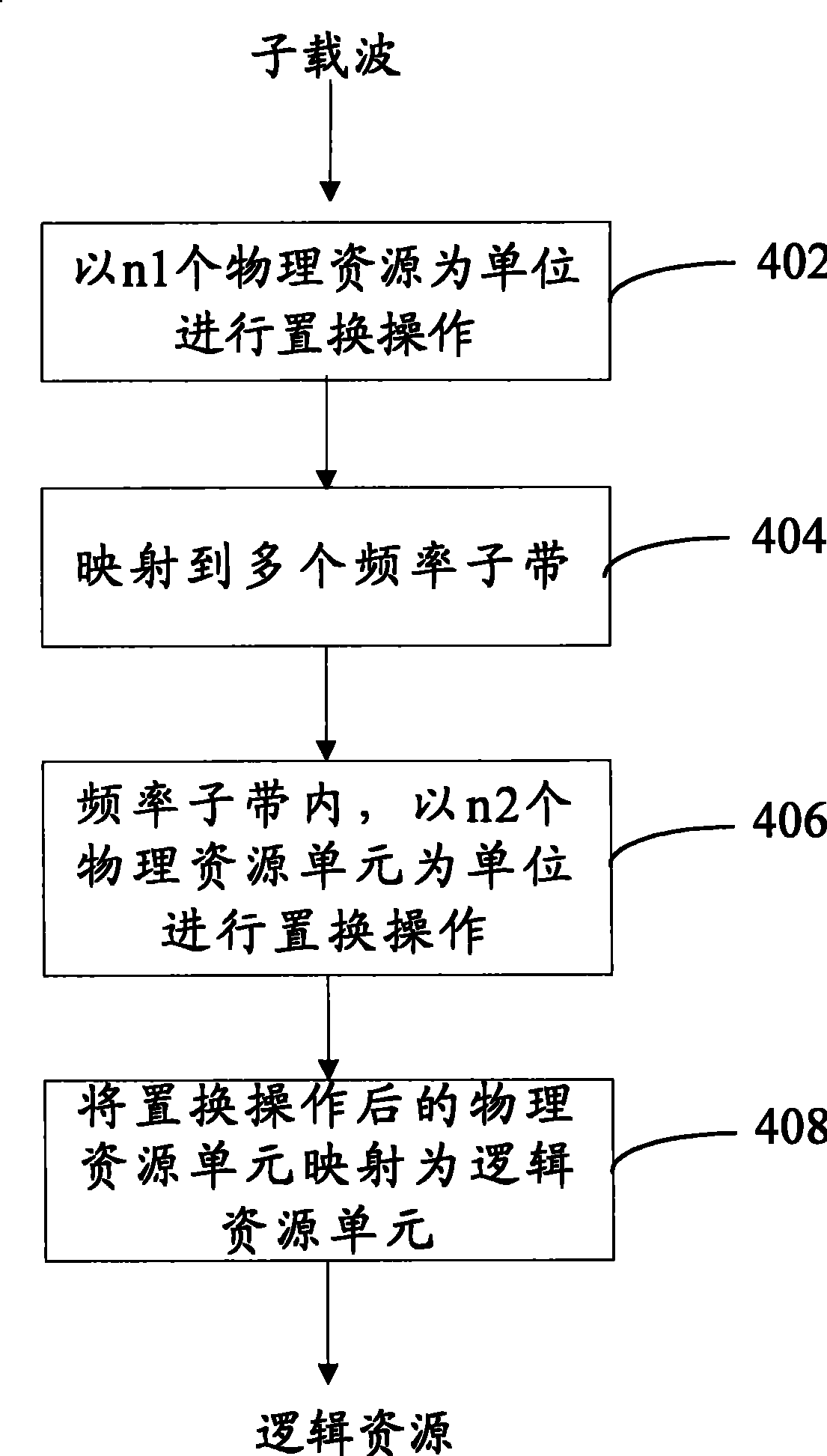
图4是根据本发明实施例一的频率资源映射过程的流程图;FIG. 4 is a flowchart of a frequency resource mapping process according to
图5是根据本发明实例1的频率资源映射过程的示意图;FIG. 5 is a schematic diagram of a frequency resource mapping process according to Example 1 of the present invention;
图6是根据本发明实例2的频率资源映射过程的示意图;FIG. 6 is a schematic diagram of a frequency resource mapping process according to Example 2 of the present invention;
图7是根据本发明实例3的频率资源映射过程的示意图;FIG. 7 is a schematic diagram of a frequency resource mapping process according to Example 3 of the present invention;
图8是根据本发明实施例二的频率资源映射过程的流程图;FIG. 8 is a flowchart of a frequency resource mapping process according to
图9是根据本发明实例4的频率资源映射过程的示意图;FIG. 9 is a schematic diagram of a frequency resource mapping process according to Example 4 of the present invention;
图10是根据本发明实例5的频率资源映射过程的示意图;FIG. 10 is a schematic diagram of a frequency resource mapping process according to Example 5 of the present invention;
图11是根据本发明实例6的频率资源映射过程的示意图。Fig. 11 is a schematic diagram of a frequency resource mapping process according to Example 6 of the present invention.
具体实施方式 Detailed ways
功能概述Functional Overview
在描述本发明的实施例之前,首先对OFDMA技术的资源映射过程进行简要描述。需要说明的是,虽然在本发明实施例中是以OFDMA技术为例来进行说明的,但是本发明不限于此,在诸如长期演进系统(Long Term Evolution,简称为LTE)等多载波系统以及将来可能出现的其他多载波系统中,同样可以应用本发明。Before describing the embodiments of the present invention, a brief description of the resource mapping process of the OFDMA technology is given first. It should be noted that, although OFDMA technology is used as an example for illustration in the embodiment of the present invention, the present invention is not limited thereto. In multi-carrier systems such as Long Term Evolution (LTE for short) and future In other possible multi-carrier systems, the present invention can also be applied.
在基于OFDMA技术的无线通信系统中,资源映射过程可以理解为将物理资源(如物理子载波)映射为逻辑资源的过程,例如,将物理子载波映射为逻辑资源块,这样,基站通过调度逻辑资源块实现对无线资源的调度。而资源映射的主要依据是OFDMA系统的帧结构和资源结构。在帧结构中,将无线资源在时域上划分为不同等级的单位进行调度,例如,划分为超帧(Super frame)、帧(Frame)、子帧(Subframe)和符号(Symbol)。例如,图1所示,无线资源在时域上划分为超帧,每个超帧包含4个帧,每个帧又包含8个子帧,子帧由6个基本的OFDM符号组成,实际的系统根据需要支持的终端的速度、速率和业务类型等因素确定帧结构中各个等级单位中具体包含多少个OFDM符号。In a wireless communication system based on OFDMA technology, the resource mapping process can be understood as the process of mapping physical resources (such as physical subcarriers) into logical resources, for example, mapping physical subcarriers into logical resource blocks, so that the base station through the scheduling logic Resource blocks implement the scheduling of radio resources. The main basis for resource mapping is the frame structure and resource structure of the OFDMA system. In the frame structure, wireless resources are divided into units of different levels in the time domain for scheduling, for example, divided into super frame (Super frame), frame (Frame), subframe (Subframe) and symbol (Symbol). For example, as shown in Figure 1, wireless resources are divided into superframes in the time domain, each superframe contains 4 frames, and each frame contains 8 subframes, and the subframes are composed of 6 basic OFDM symbols. The actual system Determine how many OFDM symbols are specifically included in each level unit in the frame structure according to factors such as the speed, rate, and service type of the terminal to be supported.
资源结构在频域上根据需要支持的覆盖范围、终端的速度、速率和业务类型等因素将可用的频带分成多个频率分区(FrequencyPartition),进而将频率分区内的频率资源分成集中式资源区域和/或分布式资源区域进行调度。如图2所示,一个子帧的可用物理子载波被分成3个频率分区,用于支持三个小区,每个频率分区分为集中式资源和分布式资源,以实现调度的灵活性,根据需要,也可以分为2个、4个或6个及以上的频率分区,本发明对此没有限制。In the frequency domain, the resource structure divides the available frequency band into multiple frequency partitions (Frequency Partition) according to factors such as the coverage to be supported, terminal speed, rate, and service type, and then divides the frequency resources in the frequency partition into centralized resource areas and / or distributed resource areas for scheduling. As shown in Figure 2, the available physical subcarriers of a subframe are divided into three frequency partitions to support three cells, and each frequency partition is divided into centralized resources and distributed resources to achieve scheduling flexibility, according to If necessary, it can also be divided into 2, 4, or 6 or more frequency partitions, which is not limited in the present invention.
在以下的实施例中,如果没有特别说明,则n、n1、n2均为大于或等于1的整数,且n大于或等于n1、n2。本发明实施例中提到的频率分区配置信息包括以下至少之一:频率分区的数目、频率分区的大小(即,包括的物理资源单元的数目)和/或频率分区中的分布式资源组的大小和/或集中式资源组的大小、频率分区的集中式资源组中的连续物理资源单元的数目,另外需要说明的是,连续物理资源单元为进行第一置换时归属于同一置换单位的物理资源单元。In the following embodiments, n, n1 and n2 are all integers greater than or equal to 1, and n is greater than or equal to n1 and n2 unless otherwise specified. The frequency partition configuration information mentioned in the embodiments of the present invention includes at least one of the following: the number of frequency partitions, the size of the frequency partition (that is, the number of physical resource units included) and/or the number of distributed resource groups in the frequency partition The size and/or the size of the centralized resource group, the number of continuous physical resource units in the centralized resource group of the frequency partition, and it should be noted that the continuous physical resource units are the physical resource units that belong to the same replacement unit when the first replacement is performed. resource unit.
分布式资源组是指其中的物理资源单元为分布式物理资源单元的资源组,分布式物理资源单元最终被置换为逻辑分布式资源单元(Logical Distributed Resource Unit,简称为LDRU),LDRU中包含的子载波是不连续的或成对连续的,还可以是每4个子载波连续的;集中式资源组是指其中的物理资源单元为集中式物理资源单元的资源组,集中式物理资源单元最终被直接映射为逻辑集中式资源单元(Logical Localized Resource Unit,简称为LLRU),LLRU中包含的子载波是连续的。A distributed resource group refers to a resource group in which the physical resource unit is a distributed physical resource unit. The distributed physical resource unit is eventually replaced with a logical distributed resource unit (LDRU for short). The LDRU contains The subcarriers are discontinuous or continuous in pairs, and can also be continuous every 4 subcarriers; the centralized resource group refers to the resource group in which the physical resource unit is a centralized physical resource unit, and the centralized physical resource unit is finally It is directly mapped to a Logical Localized Resource Unit (LLRU for short), and the subcarriers contained in the LLRU are continuous.
另外,在本发明实施例中所提到的置换操作,例如,下文中提到的第一置换操作、第二置换操作、第三置换操作,可以根据置换长度采用的置换方法包括但不限于下列之一或其组合:行列置换、圆置换映射、均匀抽取置换、特定序列置换和随机置换。例如,假设原序列为[0,1,2,3,4,5,6,7,8,9,10,11],置换长度为12,若采用行列置换时,置换矩阵为[0,1,2,3;4,5,6,7;8,9,10,11],则置换后的序列为[0,4,8,1,5,9,2,6,10,3,7,11],若采用特定序列置换,置换序列[0,6,3,10,7,4,1,11,8,2,5,9]就是置换后的序列顺序。原则上,对于一些基于行列置换的变种仍属行列置换,如,原序列为[0,1,2,3,4],置换后的序列为:0,3,1,4,2,本质仍是行列置换,即[0,1,2;3,4,5]的前5个。In addition, the replacement operations mentioned in the embodiments of the present invention, for example, the first replacement operation, the second replacement operation, and the third replacement operation mentioned below, the replacement methods that can be used according to the replacement length include but are not limited to the following One or a combination of: row-column permutation, circular permutation map, uniform draw permutation, sequence-specific permutation, and random permutation. For example, suppose the original sequence is [0, 1, 2, 3, 4, 5, 6, 7, 8, 9, 10, 11] and the permutation length is 12. If row and column permutation is used, the permutation matrix is [0, 1 , 2, 3; 4, 5, 6, 7; 8, 9, 10, 11], then the sequence after replacement is [0, 4, 8, 1, 5, 9, 2, 6, 10, 3, 7 , 11], if a specific sequence is used for replacement, the replacement sequence [0, 6, 3, 10, 7, 4, 1, 11, 8, 2, 5, 9] is the sequence order after replacement. In principle, for some variants based on row and column replacement, it still belongs to row and column replacement, for example, the original sequence is [0, 1, 2, 3, 4], and the sequence after replacement is: 0, 3, 1, 4, 2, the essence is still It is the permutation of rows and columns, that is, the first 5 of [0, 1, 2; 3, 4, 5].
以下结合附图对本发明的优选实施例进行说明,应当理解,此处所描述的优选实施例仅用于说明和解释本发明,并不用于限定本发明。The preferred embodiments of the present invention will be described below in conjunction with the accompanying drawings. It should be understood that the preferred embodiments described here are only used to illustrate and explain the present invention, and are not intended to limit the present invention.
实施例一Embodiment one
在该实施例中,提供了一种资源映射方法。图4给出了该方法的实现过程的示意图,如图4所示,大致可以通过如下操作实现:In this embodiment, a resource mapping method is provided. Figure 4 shows a schematic diagram of the implementation process of this method. As shown in Figure 4, it can be roughly implemented through the following operations:
步骤402,对可用子载波包括的n个物理资源单元以n1个物理资源单元为单位进行第一置换操作;以采用均匀抽取置换进行该第一置换操作为例,在进行置换操作时,将以n1个物理资源单元为单位从n个物理资源单元中等间隔抽取物理资源单元。
步骤404,将第一置换操作后的n个物理资源单元根据频率分区配置信息映射到多个频率分区,具体地,这里依据的频率分区配置信息是频率分区的数目以及频率分区内的物理资源单元的数目,其中,频率分区中物理资源单元的数目A可以根据频率分区配置信息直接获得,也可以根据分布式资源组的大小B和集中式资源组的大小C间接获得,即,A=B+C。Step 404: Map the n physical resource units after the first permutation operation to multiple frequency partitions according to the frequency partition configuration information, specifically, the frequency partition configuration information here is the number of frequency partitions and the physical resource units in the frequency partitions , where the number A of physical resource units in a frequency partition can be obtained directly from the configuration information of the frequency partition, or indirectly obtained from the size B of the distributed resource group and the size C of the centralized resource group, that is, A=B+ c.
步骤406,在各个频率分区内,对部分或全部的物理资源单元以n2个物理资源单元为单位进行第二置换操作;该步骤中,优选地,根据频率分区配置信息,对于各个频率分区,分别确定是否需要为集中式资源组预留连续物理资源单元,对于需要预留连续物理资源单元的频率分区,对该频率分区内除预留的连续物理资源单元外的物理资源单元进行第二置换操作;对于不需要预留连续物理资源单元的频率分区,对该频率分区内的所有物理资源单元进行第二置换操作。
步骤408,将频率分区中的第二置换操作后的物理资源单元映射为逻辑资源单元。在该过程中,需要根据频率分区配置信息,确定集中式资源组的大小和/或分布式资源组的大小,然后将频率分区内的物理资源单元分为集中式资源组(或者称为集中式区域)和/或分布式资源组(或者称为分布式区域)(操作1),对于集中式资源组中的物理资源单元,直接映射为逻辑集中式资源单元,对于分布式资源组内的数据子载波进行第三置换操作,得到逻辑分布式资源单元(操作2)。优选地,这里的第三置换操作可以是圆置换映射,关于圆映射置换的细节将在下文中描述。Step 408: Map the physical resource units after the second permutation operation in the frequency partition into logical resource units. In this process, it is necessary to determine the size of the centralized resource group and/or the size of the distributed resource group according to the frequency partition configuration information, and then divide the physical resource units in the frequency partition into centralized resource groups (or called centralized resource groups). region) and/or distributed resource group (or called distributed region) (operation 1), for the physical resource unit in the centralized resource group, it is directly mapped to the logical centralized resource unit, for the data in the distributed resource group Subcarriers perform a third permutation operation to obtain logical distributed resource units (operation 2). Preferably, the third replacement operation here may be circle replacement mapping, and details about the circle mapping replacement will be described below.
在本发明实施例中,优选地,n1>n2这样,能够保证以n1个物理资源单元为单位进行置换时所有物理资源单元是连续的,而且对后续的以n2个物理资源单元为单位进行的置换没有任何限制。以下进一步结合应用实例来描述本发明实施例。In the embodiment of the present invention, preferably, n1>n2, it can be ensured that all physical resource units are continuous when the replacement is performed in units of n1 physical resource units, and the subsequent replacement in units of n2 physical resource units There are no restrictions on substitution. Embodiments of the present invention are further described below in conjunction with application examples.
实例1Example 1
在该实例中,频率分区配置信息如下:(1)将该子帧分成3个频率分区,即,频率分区的数目为3,(2)频率分区1包括一个集中式资源组和一个分布式资源组,该集中式资源组和分布式资源组分别包含4个物理资源单元;频率分区2包括一个集中式资源组和一个分布式资源组,其中,集中式资源组包含10个物理资源单元,分布式资源组包含2个物理资源单元;频率分区3只包括一个集中式资源组,该集中式资源组包含4个物理资源单元;(3)频率分区2和频率分区3中的集中式资源组均要求包含4个连续的物理资源单元。In this example, the frequency partition configuration information is as follows: (1) divide the subframe into 3 frequency partitions, that is, the number of frequency partitions is 3, (2)
图5描述了本发明实施例的5MHz无线通信系统的资源映射过程,以下结合上述的频率分区配置信息,对图5所示的过程进行描述。其中,5MHz系统的FFT点数为512,子帧内可用子载波数为432,共分成24个物理资源单元,每个大小为18×6。根据上述的资源配置信息,对图5的资源映射过程进行如下描述:FIG. 5 describes the resource mapping process of the 5MHz wireless communication system according to the embodiment of the present invention. The process shown in FIG. 5 will be described below in conjunction with the above frequency partition configuration information. Among them, the number of FFT points of the 5MHz system is 512, and the number of available subcarriers in the subframe is 432, which are divided into 24 physical resource units, each with a size of 18×6. According to the above resource configuration information, the resource mapping process in Figure 5 is described as follows:
优选地,在进行置换之前,为了便于操作和理解,可以先对24个物理资源单元进行分组,分成如图5所示的0~5共6组,每组为一个资源单元组。接下来,以4(n1=4)为置换单位,即,对24个(n=24)物理资源单元(Physical Resource Unit,简称为PRU)以4个连续的物理资源单元为单位进行置换操作,采用行列置换,置换矩阵为[0,1,2;3,4,5],则置换前的顺序为[0,1,2,3,4,5],置换后的顺序为[0,3,1,4,2,5]。该处理对应于上述的步骤402,如图5中的①所示。Preferably, before the replacement, for the convenience of operation and understanding, 24 physical resource units can be grouped into 6 groups of 0 to 5 as shown in FIG. 5 , and each group is a resource unit group. Next, 4 (n1=4) is used as the replacement unit, that is, 24 (n=24) physical resource units (Physical Resource Unit, PRU for short) are replaced in units of 4 consecutive physical resource units, Use row and column replacement, the replacement matrix is [0, 1, 2; 3, 4, 5], the order before the replacement is [0, 1, 2, 3, 4, 5], and the order after the replacement is [0, 3 , 1, 4, 2, 5]. This processing corresponds to the above-mentioned
根据频率分区内包含的物理资源单元的数目,即,频率分区1包含4+4=8个物理资源单元,频率分区2包括10+2=12个物理资源单元,频率分区3包括4个物理资源单元,将编号为0、3的组分配到频率分区1,将编号为1、4、2的组分配到频率分区2,将编号为5的组分配到频率分区3。该处理对应于上述的步骤404,如图5中的②所示。According to the number of physical resource units included in the frequency partition, that is,
对频率分区内的所有物理资源单元,根据频率分区信息,即,如上所述,频率分区2和频率分区3中的集中式资源组均要求一组包含4个连续的物理资源单元,保留频率分区2中的物理资源组1和频率分区3的物理资源组5不做置换,物理资源组1和物理资源组5分别对应于物理编号为4、5、6、7和20、21、22、23的物理资源单元,而对其余的物理资源单元以1个(n2=1)物理资源单元为单位在各个频率分区内做置换操作。例如,以频率分区1为例,频率分区1中的物理资源组0和3分别对应物理编号为0、1、2、3和12、13、14、15的物理资源单元,假设n2等于1,则采用行列置换,置换矩阵为[0,1,2,3;4,5,6,7],则置换前的顺序为[0,12,1,13,2,14,3,15]。同理,对频率分区2中的物理资源单元进行置换。该处理对应于上述的步骤406,如图5中的③所示。For all physical resource units in the frequency partition, according to the frequency partition information, that is, as mentioned above, the centralized resource groups in
接下来,根据频率分区的集中式资源和分布式资源的配置信息,将置换后的物理资源单元分成集中式资源组和分布式资源组。即,如上所述,频率分区1中的8个物理资源单元分成一个集中式资源组和一个分布式资源组,该集中式资源组和分布式资源组分别包含4个物理资源单元,则如图5所示,集中式资源组包含的4个物理资源单元的物理编号为0、12、1、13,分布式资源组包含的4个物理资源单元的物理编号为2、14、3、15;频率分区2中的12个物理资源单元分成一个集中式资源组和一个分布式资源组,其中,集中式资源组包含10个物理资源单元,分布式资源组包含2个物理资源单元,则集中式资源组包含的10个物理资源单元的物理编号为4、5、6、7、16、8、17、9、18、10,分布式资源组包含的2个物理资源单元的物理编号为19、11;而频率分区3中的4个物理资源单元组成一个集中式资源组,该集中式资源组包含的4个物理资源单元的物理编号为20、21、22、23。该处理对应于上述步骤408中的操作1,如图5中的④所示。Next, the permuted physical resource units are divided into centralized resource groups and distributed resource groups according to the configuration information of the frequency partitioned centralized resources and distributed resources. That is, as described above, the 8 physical resource units in
之后,将集中式资源组中的物理资源单元直接映射为逻辑集中式资源单元,将分布式资源组内的数据子载波通过圆置换映射进行置换操作,得到逻辑分布式资源单元,其中,圆置换公式为j’=(a*j+s)mod Nsc,其中,Nsc为分布式资源组内数据子载波的总数,a与Nsc互质,s属于0~Nsc之间的数,j表示该置换前子载波的序号,从0~Nsc,j’为圆置换的序号。该处理对应于上述步骤408中的操作2,如图5中的⑤所示。至此,实现了从物理单元到逻辑单元的映射。Afterwards, the physical resource units in the centralized resource group are directly mapped to logical centralized resource units, and the data subcarriers in the distributed resource group are replaced by circular permutation mapping to obtain logical distributed resource units, where the circular permutation The formula is j'=(a*j+s)mod Nsc, where Nsc is the total number of data subcarriers in the distributed resource group, a and Nsc are relatively prime, s is a number between 0 and Nsc, and j represents the permutation The sequence number of the previous subcarrier, from 0 to Nsc, j' is the sequence number of the circle permutation. This processing corresponds to
通过实例1的处理,在多载波系统下,将物理资源映射为逻辑资源,实现了5MHz无线通信系统的资源映射过程。Through the processing of Example 1, under the multi-carrier system, the physical resource is mapped to the logical resource, and the resource mapping process of the 5MHz wireless communication system is realized.
实例2Example 2
该实例中,频率分区配置信息如下:(1)将该子帧分成3个频率分区,即,频率分区的数目为3;(2)频率分区1、2、3分别包括一个集中式资源组和一个分布式资源组,该集中式资源组和分布式资源组分别包含8个物理资源单元;(3)频率分区1、2、3中的集中式资源组均要求包含4个连续的物理资源单元。In this example, the frequency partition configuration information is as follows: (1) divide the subframe into 3 frequency partitions, that is, the number of frequency partitions is 3; (2)
图6描述了本发明实施例中的10MHz无线通信系统的资源映射过程,以下结合上述的频率分区配置信息,对图6所示的过程进行描述。其中,10MHz系统的FFT点数为1024,子帧内可用子载波数为864,共分成48个物理资源单元,每个物理资源单元的大小为18×6。FIG. 6 describes the resource mapping process of the 10MHz wireless communication system in the embodiment of the present invention. The process shown in FIG. 6 will be described below in conjunction with the above frequency partition configuration information. Among them, the number of FFT points of the 10MHz system is 1024, and the number of available subcarriers in the subframe is 864, which is divided into 48 physical resource units, and the size of each physical resource unit is 18×6.
与实例1类似,在进行置换之前,可以预先对48个物理资源单元进行分组,分成如图6所示的编号从0~11的12个组。假设以4(n1=4)为置换单位,即,对48个物理资源单元以4个连续的物理资源单元为单位进行置换操作,采用行列置换,置换矩阵为[0,1,2,3;4,5,6,7;8,9,10,11],则置换前的顺序为[0,1,2,3,4,5,6,7,8,9,10,11]置换后的顺序为[0,4,8,1,5,9,2,6,10,3,7,11]。该处理对应于上述的步骤402,如图6中的①所示。Similar to Example 1, before the replacement, 48 physical resource units can be grouped in advance and divided into 12 groups numbered from 0 to 11 as shown in FIG. 6 . Assume that 4 (n1=4) is used as the replacement unit, that is, the replacement operation is performed on 48 physical resource units in units of 4 consecutive physical resource units, row and column replacement is adopted, and the replacement matrix is [0, 1, 2, 3; 4, 5, 6, 7; 8, 9, 10, 11], the order before replacement is [0, 1, 2, 3, 4, 5, 6, 7, 8, 9, 10, 11] after replacement The order is [0, 4, 8, 1, 5, 9, 2, 6, 10, 3, 7, 11]. This processing corresponds to the above-mentioned
根据频率分区内包含的物理资源单元的数目,即,每个频率分区包括16个物理资源单元,将编号为0,4,8,1的组分配到频率分区1,将编号为5,9,2,6的组分配到频率分区2,将编号为10,3,7,11的组分配到频率分区3。该处理对应于上述的步骤404,如图6中的②所示。According to the number of physical resource units contained in the frequency partition, that is, each frequency partition includes 16 physical resource units, the groups numbered 0, 4, 8, and 1 are allocated to
对于频率分区内的所有物理资源单元,根据频率分区信息,即,如上所述,各个频率分区要求有4个连续的物理资源单元,保留频率分区1中编号为0的组、频率分区2中编号为5的组以及频率分区3中编号为10的组不做置换,对于其他的物理资源单元,以1个(n2=1)物理资源单元为单位在各个频率分区内做置换操作。该处理对应于上述的步骤406,如图6中的③所示。For all physical resource units in the frequency partition, according to the frequency partition information, that is, as mentioned above, each frequency partition requires 4 consecutive physical resource units, and the group numbered 0 in
频率分区1为例,频率分区1中的编号为4、8、1的组分别对应于编号为16、17、18、19,32、33、34、35和04、05、06、07的物理资源单元,采用行列置换,置换矩阵为[0,1,2,3;4,5,6,7;8,9,10,11],则置换后的顺序为[16,32,04,17,33,05,18,34,06,18,35,07]。同理,采用与频率分区1相同的置换矩阵对频率分区2中的物理资源单元进行置换,置换后的顺序为[36,08,24,37,09,25,38,10,26,39,11,27];采用与频率分区1相同的置换矩阵对频率分区3中的物理资源单元进行置换,置换后的顺序为[12,28,44,13,29,45,14,30,46,15,31,47]。
根据频率分区的集中式资源和分布式资源的配置信息,将置换后的物理资源单元分成集中式资源组和分布式资源组。例如,频率分区1包含的16个物理资源单元分成一个集中式资源组和一个分布式资源组,该集中式资源组和分布式资源组各包含8个物理资源单元,如图6所示,集中式资源组包含的8个物理资源单元的物理编号为00、01、02、03、16、32、04、17,分布式资源组包含的8个物理资源单元的物理编号为33、05、18、34、06、19、35、07;频率分区2中的16个物理资源单元分成一个集中式资源组和一个分布式资源组,各包含8个物理资源单元,如图6所示,集中式资源组包含的8个物理资源单元的物理编号为20、21、22、23、36、08、24、37,分布式资源组包含的8个物理资源单元的物理编号为09、25、38、10、26、39、11、27;频率分区3中包含的16个物理资源单元分成一个集中式资源组和一个分布式资源组,各包含8个物理资源单元,如图6所示,集中式资源组包含的8个物理资源单元的物理编号为40、41、42、43、12、28、44、13,分布式资源组包含的8个物理资源单元的物理编号为29、45、14、30、46、15、31、47。该处理对应于上述的步骤408,如图6中的④所示。According to the configuration information of the centralized resources and the distributed resources of the frequency partition, the permuted physical resource units are divided into a centralized resource group and a distributed resource group. For example, the 16 physical resource units included in frequency partition 1 are divided into a centralized resource group and a distributed resource group, each of which contains 8 physical resource units, as shown in Figure 6, the centralized The physical numbers of the 8 physical resource units included in the distributed resource group are 00, 01, 02, 03, 16, 32, 04, and 17, and the physical numbers of the 8 physical resource units included in the distributed resource group are 33, 05, and 18 , 34, 06, 19, 35, 07; the 16 physical resource units in frequency partition 2 are divided into a centralized resource group and a distributed resource group, each containing 8 physical resource units, as shown in Figure 6, the centralized The physical numbers of the 8 physical resource units included in the resource group are 20, 21, 22, 23, 36, 08, 24, 37, and the physical numbers of the 8 physical resource units included in the distributed resource group are 09, 25, 38, 10, 26, 39, 11, 27; the 16 physical resource units included in frequency partition 3 are divided into a centralized resource group and a distributed resource group, each containing 8 physical resource units, as shown in Figure 6, the centralized The physical numbers of the 8 physical resource units included in the resource group are 40, 41, 42, 43, 12, 28, 44, 13, and the physical numbers of the 8 physical resource units included in the distributed resource group are 29, 45, 14, 30, 46, 15, 31, 47. This processing corresponds to the above-mentioned
之后,与实例1类似,将集中式资源组中的物理资源单元直接映射为逻辑集中式资源单元,将分布式资源组内的数据子载波通过圆置换映射进行置换操作,得到逻辑分布式资源单元。Afterwards, similar to Example 1, the physical resource units in the centralized resource group are directly mapped to logical centralized resource units, and the data subcarriers in the distributed resource group are replaced by circular permutation mapping to obtain logical distributed resource units .
通过实例2的处理,在多载波系统下,将物理资源映射为逻辑资源,实现了10MHz无线通信系统的资源映射过程。Through the processing of Example 2, under the multi-carrier system, the physical resource is mapped to the logical resource, and the resource mapping process of the 10MHz wireless communication system is realized.
以上描述的频率资源映射处理中,没有涉及由相邻载频的保护子载波组成的物理资源单元。如果存在相邻载波间的保护频带组成的物理资源单元,则在进行置换时,需要对上述物理资源单元进行直接映射,而不进行置换。进行直接映射的该物理资源单元根据频率分区配置信息直接映射到最后一个包含集中式资源组的频率分区的集中式资源分组中,即,其在后续映射到频率分区时只能位于集中式资源组,并进一步直接映射为逻辑集中式资源单元,以下的实例3就给出了该场景下的实现过程。以下结合图7来描述实例3的技术方案。In the frequency resource mapping process described above, no physical resource unit consisting of guard subcarriers of adjacent carrier frequencies is involved. If there are physical resource units composed of guard frequency bands between adjacent carriers, it is necessary to perform direct mapping on the physical resource units without replacement when performing replacement. The physical resource unit for direct mapping is directly mapped to the centralized resource group of the last frequency partition containing the centralized resource group according to the frequency partition configuration information, that is, it can only be located in the centralized resource group when it is subsequently mapped to the frequency partition , and further directly mapped to logical centralized resource units, the following example 3 gives the implementation process in this scenario. The technical solution of Example 3 is described below in conjunction with FIG. 7 .
实例3Example 3
图7是根据本发明实施例的无线通信系统在多载波模式的资源映射过程。在该场景下,存在两个相邻的5MHz系统,中间的部分重叠的保护子载波进行资源映射用于传输数据。对于第一个5MHz系统,除了24个物理资源单元外,还由保护子载波构成了2个物理资源单元,即,如图7所示的24和25,根据多载波配置,由保护子载波组成的资源单元中的最后一个的大小可以不是标准的物理资源单元大小。这2个物理资源单元通过直接映射后,用于集中式资源单元。FIG. 7 is a resource mapping process of a wireless communication system in a multi-carrier mode according to an embodiment of the present invention. In this scenario, there are two adjacent 5MHz systems, and the partially overlapping guard subcarriers in the middle are resource mapped for data transmission. For the first 5MHz system, in addition to 24 physical resource units, 2 physical resource units are formed by guard subcarriers, namely, 24 and 25 as shown in Figure 7, which are composed of guard subcarriers according to the multi-carrier configuration The size of the last of the resource units may not be the standard physical resource unit size. These two physical resource units are used for centralized resource units after direct mapping.
通过对照图5,可以更好地理解该场景下的技术方案。与图5不同的是,在进行如图7中的①所示的置换处理时,对于物理编号为24和25的物理资源单元进行直接映射,而不进行置换。在进行如图7中的②所示的映射到频率分区的处理时,将物理资源单元24和25映射到频率分区3,并且在进行如图7中的③所示的频率分区内的置换操作时,不进行置换操作,之后如图7中的④所示,直接映射映射到集中式区域,后续直接映射为逻辑集中式资源单元。By referring to Fig. 5, the technical solution in this scenario can be better understood. The difference from FIG. 5 is that when the replacement process shown in ① in FIG. 7 is performed, the physical resource units with
通过该实例,实现了在存在由保护子载波组成的物理资源单元时的频率资源映射。Through this example, frequency resource mapping is realized when there are physical resource units composed of guard subcarriers.
通过以上的描述可以看出,在实施例一的技术方案中,先对物理资源单元进行置换,之后映射到频率分区,之后再在频率分区内进行置换,并划分为集中式资源和分布式资源,最后通过置换和映射得到逻辑分布式资源单元和逻辑集中式资源单元。本发明不限于此,以下的实施例二就给出了另一种实现方式,在实施例二提供的技术方案中,在将物理资源单元映射到频率分区之前,就划分为集中式资源和分布式资源,并且在频率分区中也不再进行置换。以下具体描述实施例二的技术方法。It can be seen from the above description that in the technical solution of
实施例二Embodiment two
图8给出了根据本发明实施例二的资源映射方法的流程图。如图8所示,大致包括如下处理:FIG. 8 shows a flowchart of a resource mapping method according to
步骤802,将可用子载波划分位n个物理资源单元,并对该n个物理资源单元进行以n1个物理资源单元为单位第一置换操作;
步骤804,根据频率分区配置信息,将第一置换操作后的n个物理资源单元分为集中式资源组和分布式资源组;
步骤806,对分布式资源组中的物理资源单元进行以n2个物理资源单元为单位的第二置换操作,在该处理中,根据需要,还可以对集中式资源组中的部分或全部物理资源单元进行该第二置换操作;Step 806: Perform a second replacement operation in units of n2 physical resource units on the physical resource units in the distributed resource group. In this process, part or all of the physical resources in the centralized resource group may also be the unit performs the second permutation operation;
步骤808,将第二置换操作后的n个物理资源单元映射到多个频率分区,具体地,需要根据频率分区配置信息,将第二置换操作后的集中式资源组中的物理资源单元映射作为频率分区中的集中式资源组(集中式区域),并将第二置换操作后的分布式资源组中的物理资源单元映射作为频率分区中的分布式资源组(分布式区域),接下来,可以将各个频率分区内的物理资源单元映射为逻辑资源单元,与实施例一类似,这里获得逻辑资源单元的过程,是通过将频率分区中的集中式资源单元直接映射为逻辑集中式资源单元,将频率分区中的分布式资源单元内的数据子载波进行圆置换映射,得到逻辑分布式资源单元来实现的。Step 808: Map the n physical resource units after the second permutation operation to multiple frequency partitions. Specifically, it is necessary to map the physical resource units in the centralized resource group after the second permutation operation as The centralized resource group (centralized area) in the frequency partition, and the physical resource unit mapping in the distributed resource group after the second permutation operation is used as the distributed resource group (distributed area) in the frequency partition, next, The physical resource units in each frequency partition can be mapped to logical resource units. Similar to the first embodiment, the process of obtaining logical resource units here is to directly map the centralized resource units in the frequency partition to logical centralized resource units. It is implemented by performing circular permutation mapping on the data subcarriers in the distributed resource units in the frequency partition to obtain logical distributed resource units.
实例4Example 4
在该实例4中,频率分区配置信息如下:(1)划分为3个频率分区;(2)频率分区1包括一个集中式资源组和一个分布式资源组,集中式资源组和分布式资源组分别包括4个物理资源单元;频率分区2包括一个集中式资源组和一个分布式资源组,集中式资源组包括6个物理资源单元,分布式资源组包括4个物理资源单元;频率分区3包括一个集中式资源组和一个分布式资源组,其中,集中式资源组包括2个物理资源单元,分布式资源组包括4个物理资源单元。In this example 4, the frequency partition configuration information is as follows: (1) divided into 3 frequency partitions; (2)
图9描述了本发明中的5MHz无线通信系统的不同于实例1的另一资源映射过程。基于上述频率分区配置信息,以下结合图9来描述实例3的资源映射方法的实现过程。FIG. 9 describes another resource mapping process different from Example 1 of the 5MHz wireless communication system in the present invention. Based on the above frequency partition configuration information, the implementation process of the resource mapping method in Example 3 is described below with reference to FIG. 9 .
优选地,为了便于理解,可以首先将24个物理资源单元划分为如图9所示的0~5共6组,再对24个物理资源单元以4(n1=4)单位进行置换,即,以4个连续的物理资源单元为单位进行置换操作,采用行列置换,置换矩阵为[0,1,2;3,4,5],则置换前的顺序为[0,1,2,3,4,5],置换后的顺序为[0,3,1,4,2,5]。该处理对应于上述的步骤802。Preferably, for ease of understanding, the 24 physical resource units can be divided into 6 groups of 0 to 5 as shown in Figure 9, and then the 24 physical resource units are replaced by 4 (n1=4) units, that is, The replacement operation is performed in units of 4 consecutive physical resource units, using row and column replacement, the replacement matrix is [0, 1, 2; 3, 4, 5], and the order before replacement is [0, 1, 2, 3, 4, 5], the sequence after replacement is [0, 3, 1, 4, 2, 5]. This processing corresponds to step 802 described above.
通过频率分区配置信息可以看出,频率分区中包括集中式资源组和分布式资源组,因此,将置换后的物理资源单元分为两组,分别用作集中式资源和分布式资源。例如,编号为0、3、1的物理资源单元组用作集中式资源,编号为4、2、5的物理资源单元组用作分布式资源。该处理对应于上述的步骤804,如图9中的①所示。It can be seen from the frequency partition configuration information that the frequency partition includes a centralized resource group and a distributed resource group. Therefore, the replaced physical resource units are divided into two groups, which are used as centralized resources and distributed resources respectively. For example, physical resource unit groups numbered 0, 3, and 1 are used as centralized resources, and physical resource unit groups numbered 4, 2, and 5 are used as distributed resources. This processing corresponds to the above-mentioned
以1个(n2=1)物理资源单元为单位对分布式资源组内的物理资源单元进行置换操作,例如,对编号为4、2和5的物理资源组内的物理资源单元进行置换,而对集中式资源进行直接映射,如图9中的②所示,直接映射后的集中式资源为0、1、2、3、12、13、14、15、4、5、6、7;置换操作后的分布式资源为16、8、20、17、9、21、18、10、22、19、11、23。该处理对应于上述的步骤806。Perform a replacement operation on the physical resource units in the distributed resource group in units of one (n2=1) physical resource unit, for example, replace the physical resource units in the physical resource groups numbered 4, 2 and 5, and Perform direct mapping on centralized resources, as shown in ② in Figure 9, the centralized resources after direct mapping are 0, 1, 2, 3, 12, 13, 14, 15, 4, 5, 6, 7; The distributed resources after operation are 16, 8, 20, 17, 9, 21, 18, 10, 22, 19, 11, 23. This processing corresponds to step 806 described above.
之后,根据频率分区配置信息,具体地,根据各频率分区中的集中式物理资源单元和分布式物理资源单元的数据,将进行了上述的置换和映射操作后的n个物理资源单元映射到3个频率分区,如图9的③所示,编号为0、1、2、3的物理资源单元映射到频率分区1中的集中式资源组(集中式区域)作为集中式资源,编号为16、8、20、7的物理资源单元映射到频率分区1的分布式资源组(分布式区域)作为分布式资源;编号为12、13、14、15、4、5的物理资源单元映射到频率分区2的集中式区域作为集中式资源,编号为9、21、18、10的物理资源单元映射到频率分区2的分布式区域作为分布式资源;编号为6、7的物理资源单元映射到频率分区3的集中式区域作为集中式资源,编号为22、19、11、23的物理资源单元映射到频率分区3中的分布式区域作为分布式资源。Afterwards, according to the frequency partition configuration information, specifically, according to the data of the centralized physical resource units and distributed physical resource units in each frequency partition, the n physical resource units after the above permutation and mapping operations are mapped to 3 frequency partition, as shown in ③ of Figure 9, the physical resource units numbered 0, 1, 2, and 3 are mapped to the centralized resource group (centralized area) in
之后,如图9中的④所示,将集中式资源组中的物理资源单元直接映射为逻辑集中式资源单元,将分布式资源组内的数据子载波通过圆置换映射进行置换操作,得到逻辑分布式资源单元。上述处理对应于上述的步骤808。至此,实现了频率资源单元映射。Afterwards, as shown in ④ in Figure 9, the physical resource units in the centralized resource group are directly mapped to logical centralized resource units, and the data subcarriers in the distributed resource group are replaced by circular permutation mapping to obtain logical Distributed resource unit. The above processing corresponds to the
以上描述的是再进行第二次置换时,仅对分布式资源进行置换,而对集中式资源进行直接映射的方法,这比较适合于各频率分区的负荷有较大差异的场景,而在各频率分区的负荷比较平均的场景,还可以同时对部分或全部的集中式资源进行置换,以下的实例5给出了该实现方式。What is described above is the method of only replacing the distributed resources and directly mapping the centralized resources when performing the second replacement. This method is more suitable for scenarios where the loads of each In the scenario where the load of the frequency partition is relatively average, some or all of the centralized resources can also be replaced at the same time. The following example 5 shows the implementation.
实例5Example 5
该实例5中的频率分区配置信息如下:(1)将该子帧分成3个频率分区,即,频率分区的数目为3;(2)频率分区1、2、3分别包括一个集中式资源组和一个分布式资源组,该集中式资源组和分布式资源组分别包含8个物理资源单元;(3)每个频率分区都包括4个连续的物理资源单元。The frequency partition configuration information in Example 5 is as follows: (1) divide the subframe into 3 frequency partitions, that is, the number of frequency partitions is 3; (2)
图10描述了本发明实施例中的10MHz无线通信系统的不同于实例2的另一资源映射过程。以下结合上述的频率分区配置信息,对图10所示的过程进行描述。FIG. 10 describes another resource mapping process different from example 2 of the 10MHz wireless communication system in the embodiment of the present invention. The process shown in FIG. 10 will be described below in conjunction with the above frequency partition configuration information.
在进行置换之前,可以预先对48个物理资源单元进行分组,分成如图10所示的编号从0~11的12个组。对48个物理资源单元以4(n1=4)为置换单位,即以4个连续的物理资源单元为单位进行置换操作,采用行列置换,置换矩阵为[0,1,2,3;4,5,6,7;8,9,10,11],则置换前的顺序为[0,1,2,3,4,5,6,7,8,9,10,11],置换后的顺序为[0,4,8,1,5,9,2,6,10,3,7,11]。该处理对应于上述的步骤802,如图10中的①所示。Before the replacement, 48 physical resource units may be grouped in advance, and divided into 12 groups numbered from 0 to 11 as shown in FIG. 10 . For the 48 physical resource units, 4 (n1=4) is used as the replacement unit, that is, the replacement operation is performed in units of 4 consecutive physical resource units, and the row and column replacement is adopted, and the replacement matrix is [0, 1, 2, 3; 4, 5, 6, 7; 8, 9, 10, 11], the order before the replacement is [0, 1, 2, 3, 4, 5, 6, 7, 8, 9, 10, 11], after the replacement The order is [0, 4, 8, 1, 5, 9, 2, 6, 10, 3, 7, 11]. This processing corresponds to the above-mentioned
通过频率分区配置信息可以看出,频率分区中包括集中式资源组和分布式资源组,因此将置换后的物理资源单元分为两组,分别用作集中式资源和分布式资源。例如,0,4,8,1,5和9用于集中式资源,2,6,10,3,7和11用于分布式资源。该处理对应于上述的步骤804,上述过程如图10中的②所示。It can be seen from the configuration information of the frequency partition that the frequency partition includes a centralized resource group and a distributed resource group, so the replaced physical resource units are divided into two groups, which are used as centralized resources and distributed resources respectively. For example, 0, 4, 8, 1, 5, and 9 are used for centralized resources, and 2, 6, 10, 3, 7, and 11 are used for distributed resources. This processing corresponds to the above-mentioned
根据频率分区配置信息,每个频率分区需要一个连续的4个物理资源单元组成的集中式资源,所以如图10中的③所示,编号为0,4,8的物理资源单元组保留,而编号为1,5和9的物理资源单元组以n2个物理资源单元为单位进行置换,同时,以n2个物理资源单元为单位对分布式资源组内的物理资源单元进行置换操作,对2,6,10,3,7和11内的物理资源单元进行置换。该处理对应于上述的步骤806。According to the frequency partition configuration information, each frequency partition needs a centralized resource composed of four consecutive physical resource units, so as shown in ③ in Figure 10, the physical resource unit groups numbered 0, 4, and 8 are reserved, while The physical resource unit groups numbered 1, 5, and 9 are replaced in units of n2 physical resource units. At the same time, the physical resource units in the distributed resource group are replaced in units of n2 physical resource units. For 2, The physical resource units in 6, 10, 3, 7 and 11 are replaced. This processing corresponds to step 806 described above.
按照频率分区配置,将置换操作后的集中式资源单元和分布式资源单元映射到各频率分区内。如图10中的④所示,将编号为00、01、02、03、04、20、36、05的物理资源单元映射到频率分区1中的集中式资源组,将编号为08、24、40、12、28、44、09、25的物理资源单元映射到频率分区1中的分布式资源组,将编号为16、17、18、19、21、37、06、22的物理资源单元映射到频率分区2中的集中式资源组,将编号为41、13、29、45、10、26、42、14的物理资源单元映射到频率分区2中的分布式资源组,将编号为32、33、34、35、36、07、23、39的物理资源单元映射到频率分区3中的集中式资源组,将编号为30、46、11、27、43、15、31、47的物理资源单元映射到频率分区3中的分布式资源组。According to the frequency partition configuration, the centralized resource units and distributed resource units after the permutation operation are mapped to each frequency partition. As shown in ④ in Figure 10, the physical resource units numbered 00, 01, 02, 03, 04, 20, 36, and 05 are mapped to the centralized resource groups in
之后,如图10中的⑤所示,将集中式资源组中的物理资源单元直接映射为逻辑集中式资源单元,将分布式资源组内的数据子载波通过圆置换映射进行置换操作,得到逻辑分布式资源单元。上述处理对应于上述的步骤808。至此,实现了频率资源单元映射。Afterwards, as shown in ⑤ in Figure 10, the physical resource units in the centralized resource group are directly mapped to logical centralized resource units, and the data subcarriers in the distributed resource group are replaced by circular permutation mapping to obtain logical Distributed resource unit. The above processing corresponds to the
另外,在实施例二提供的技术方案中,与实施例一类似,对于可用子载波包括的由相邻载频的保护子载波组成的物理资源单元,不对其进行置换操作,而是根据频率分区配置信息映射到最后一个包含集中式资源组的频率分区中的逻辑集中式资源单元。In addition, in the technical solution provided by
实例6Example 6
以上描述的实施例中,为了便于理解,以n2=1的情况为例对本发明实施例进行了描述,但是本发明不限于此,根据应用场景的不同,可以对n2进行灵活取值,图11给出了本发明实施例中的20MHz无线通信系统资源映射过程。如图11所示,该处理过程与上述的各实例的处理的主要区别在于,n2=2,即2个物理资源单元为置换单位进行上述的第二置换操作。该处理的其他相同或相似细节可以参照其他实例来理解和实施,在此不再进行赘述。In the above-described embodiments, for the sake of easy understanding, the embodiment of the present invention is described by taking the case of n2=1 as an example, but the present invention is not limited thereto, and n2 can be flexibly selected according to different application scenarios, as shown in Figure 11 The resource mapping process of the 20MHz wireless communication system in the embodiment of the present invention is given. As shown in FIG. 11 , the main difference between this processing process and the processing of the above-mentioned examples is that n2=2, that is, two physical resource units are used as replacement units to perform the above-mentioned second replacement operation. Other same or similar details of this process can be understood and implemented with reference to other examples, and will not be repeated here.
综上,借助于本发明,规范了基于多载波技术的频率资源映射过程,使得基站根据调度需要选择合适的资源调度粒度,得到频率选择增益和频率分集增益,能够适应诸如OFDMA的多载波系统的要求,保证了无线资源调度的灵活性,确保多载波系统的频率效率。In summary, with the help of the present invention, the frequency resource mapping process based on multi-carrier technology is regulated, so that the base station can select an appropriate resource scheduling granularity according to scheduling needs, obtain frequency selection gain and frequency diversity gain, and can adapt to multi-carrier systems such as OFDMA Requirements, the flexibility of wireless resource scheduling is guaranteed, and the frequency efficiency of the multi-carrier system is ensured.
以上所述仅为本发明的优选实施例而已,并不用于限制本发明,对于本领域的技术人员来说,本发明可以有各种更改和变化。凡在本发明的精神和原则之内,所作的任何修改、等同替换、改进等,均应包含在本发明的保护范围之内。The above descriptions are only preferred embodiments of the present invention, and are not intended to limit the present invention. For those skilled in the art, the present invention may have various modifications and changes. Any modifications, equivalent replacements, improvements, etc. made within the spirit and principles of the present invention shall be included within the protection scope of the present invention.
Claims (16)
Priority Applications (1)
| Application Number | Priority Date | Filing Date | Title |
|---|---|---|---|
| CN2008101760533A CN101742666B (en) | 2008-11-07 | 2008-11-07 | Multi-carrier-based method for mapping resource |
Applications Claiming Priority (1)
| Application Number | Priority Date | Filing Date | Title |
|---|---|---|---|
| CN2008101760533A CN101742666B (en) | 2008-11-07 | 2008-11-07 | Multi-carrier-based method for mapping resource |
Publications (2)
| Publication Number | Publication Date |
|---|---|
| CN101742666A CN101742666A (en) | 2010-06-16 |
| CN101742666B true CN101742666B (en) | 2012-06-06 |
Family
ID=42465351
Family Applications (1)
| Application Number | Title | Priority Date | Filing Date |
|---|---|---|---|
| CN2008101760533A Expired - Fee Related CN101742666B (en) | 2008-11-07 | 2008-11-07 | Multi-carrier-based method for mapping resource |
Country Status (1)
| Country | Link |
|---|---|
| CN (1) | CN101742666B (en) |
Families Citing this family (4)
| Publication number | Priority date | Publication date | Assignee | Title |
|---|---|---|---|---|
| CN101873697A (en) * | 2009-04-25 | 2010-10-27 | 中兴通讯股份有限公司 | Resource mapping method |
| CN101945395B (en) * | 2009-07-07 | 2015-05-20 | 中兴通讯股份有限公司 | Method for determining sub-carrier replacement and method for determining cell pilot mode |
| US9980284B2 (en) * | 2015-03-13 | 2018-05-22 | Huawei Technologies Co., Ltd. | Contention-based reservations of network resources |
| CN106535230B (en) * | 2016-12-08 | 2019-07-09 | 西安烽火电子科技有限责任公司 | VHF wireless communication network Design of Routing Protocol method based on OFDM technology |
Citations (2)
| Publication number | Priority date | Publication date | Assignee | Title |
|---|---|---|---|---|
| CN101091408A (en) * | 2004-10-15 | 2007-12-19 | 北电网络有限公司 | Communication resource allocation system and method |
| CN101141801A (en) * | 2006-09-06 | 2008-03-12 | 华为技术有限公司 | Channel resource block mapping method and device |
-
2008
- 2008-11-07 CN CN2008101760533A patent/CN101742666B/en not_active Expired - Fee Related
Patent Citations (2)
| Publication number | Priority date | Publication date | Assignee | Title |
|---|---|---|---|---|
| CN101091408A (en) * | 2004-10-15 | 2007-12-19 | 北电网络有限公司 | Communication resource allocation system and method |
| CN101141801A (en) * | 2006-09-06 | 2008-03-12 | 华为技术有限公司 | Channel resource block mapping method and device |
Also Published As
| Publication number | Publication date |
|---|---|
| CN101742666A (en) | 2010-06-16 |
Similar Documents
| Publication | Publication Date | Title |
|---|---|---|
| KR101585086B1 (en) | System information transmission method | |
| CN101635595B (en) | Sub-channelization of wireless resources and resource mapping method | |
| CN102036387B (en) | Method for indicating wireless channel resource allocation, base station, decoding method and terminal | |
| US8767658B2 (en) | Method and base station for sending uplink scheduling grant control signaling | |
| EP2373106B1 (en) | Resource mapping methods for control channels | |
| EP2355607B1 (en) | Radio resource mapping method | |
| CN101431363B (en) | TDD system and its data transmission method | |
| CN101742666B (en) | Multi-carrier-based method for mapping resource | |
| WO2022017522A1 (en) | Efficient transmission of system information | |
| CN101094214A (en) | Data multiplexing method in use for orthogonal frequency division multiplexing communication system | |
| CN101667985B (en) | Method and device for allocating resource units | |
| CN101198179A (en) | Access method of backward compatible 802.16e system | |
| CN102255841B (en) | Broadcast Control Channel, data channel resource mapping method and device | |
| EP2352267B1 (en) | Method for mapping resource cells | |
| CN101515821B (en) | Channel allocation method and interaction method in large-bandwidth orthogonal frequency division multiplexing system | |
| CN101102140A (en) | Distributed Resource Mapping Method | |
| CN101425989B (en) | Data transmission method and system used in OFDM system | |
| CN102056083B (en) | Resource allocation methods and base station | |
| CN101384065B (en) | Resource frequency-hopping allocation method | |
| KR101397049B1 (en) | Method for generating subframes which contain resource distribution information | |
| CN101330484A (en) | Hybrid Resource Allocation and Signaling Representation Method Based on Orthogonal Frequency Division Multiplexing System | |
| HK1155890B (en) | Radio resource mapping method | |
| HK1155890A (en) | Radio resource mapping method | |
| CN101399652A (en) | Data transmission method used in OFDM system |
Legal Events
| Date | Code | Title | Description |
|---|---|---|---|
| C06 | Publication | ||
| PB01 | Publication | ||
| C10 | Entry into substantive examination | ||
| SE01 | Entry into force of request for substantive examination | ||
| C14 | Grant of patent or utility model | ||
| GR01 | Patent grant | ||
| CF01 | Termination of patent right due to non-payment of annual fee |
Granted publication date: 20120606 Termination date: 20201107 |
|
| CF01 | Termination of patent right due to non-payment of annual fee |