CN101600456A - Methods and compositions for treating IL-13-related diseases and monitoring treatment of IL-13-related diseases - Google Patents
Methods and compositions for treating IL-13-related diseases and monitoring treatment of IL-13-related diseases Download PDFInfo
- Publication number
- CN101600456A CN101600456A CNA2007800511753A CN200780051175A CN101600456A CN 101600456 A CN101600456 A CN 101600456A CN A2007800511753 A CNA2007800511753 A CN A2007800511753A CN 200780051175 A CN200780051175 A CN 200780051175A CN 101600456 A CN101600456 A CN 101600456A
- Authority
- CN
- China
- Prior art keywords
- antagonist
- seq
- variable region
- sequence
- antibody
- Prior art date
- Legal status (The legal status is an assumption and is not a legal conclusion. Google has not performed a legal analysis and makes no representation as to the accuracy of the status listed.)
- Pending
Links
Images




Landscapes
- Medicines Containing Antibodies Or Antigens For Use As Internal Diagnostic Agents (AREA)
- Peptides Or Proteins (AREA)
Abstract
本发明公开了用于治疗和/或监测IL-13相关疾病或病症治疗的方法和组合物。

This invention discloses methods and compositions for treating and/or monitoring IL-13-related diseases or conditions.
Description
The mutual reference of related application
The application requires the priority of U.S. Patent Application Serial Number 60/874,333 that December in 2006 submitted on the 11st and the U.S. Patent Application Serial Number of submitting on April 23rd, 2,007 60/925,932.Its full content is incorporated this paper into as a reference.
Sequence table
Submitted the sequence table backup of electronic edition and paper spare form therewith together to.
Background of invention
Interleukin-13 (IL-13) is a kind of by T lymphocyte and the excretory cytokine of mastocyte (McKenzie etc. (1993) Proc.Natl.Acad.Sci. U.S. 90:3735-39; Bost etc. (1996) Immunology 87:663-41).IL-13 and IL-4 have several biologic activity.For example, IL-4 or IL-13 cause IgE isotype conversion (Tomkinson etc. (2001) J.Immunol.166:5792-5800) in the B cell.Moreover, report (Sanchez-Guererro etc. (1994) the Allergy 49:587-92 that cell surface CD23 and change of serum C D23 (sCD23) level increase in the existing asthmatic patient; DiLorenzo etc. (1999) Allergy Asthma Proc.20:119-25).In addition, but the expression of II class MHC and low-affinity IgE receptor (CD23) on IL-4 or IL-13 up regulation B cell and the mononuclear cell, and it causes increasing antigen presentation, and regulates the function (Tomkinson etc. are as above-mentioned) of macrophage.Importantly, IL-4 or IL-13 can increase the expression of VCAM-1 on the endotheliocyte, and it can help eosinophilic granulocyte's (and T cell) and preferentially raise to respiratory tissues (Tomkinson waits the people, as above-mentioned).IL-4 or IL-13 also can increase the mucous secretion of respiratory tract, and this can increase the weight of respiratory response (Tomkinson etc. are as above-mentioned).These observed result promptings: though IL-13 is also non-essential to inducing Th2 to grow, perhaps itself in addition can not induce Th2 to grow, (Tomkinson etc. are as above-mentioned but IL-13 may play the part of pivotal player in the development of respiratory tract eosinophilia and AHR; Wills-Karp etc. (1998) Science 282:2258-61).
Summary of the invention
The application discloses the method and composition of treatment IL-13 relevant disease or disease and/or monitoring IL-13 relevant disease or treatment for diseases.On the one hand, the applicant found before IL-13 relevant disease and disease outbreak separately the experimenter is used one or more symptoms that IL-13 antagonist or IL-4 antagonist can alleviate this disease or disease with respect to untreated experimenter.With respect to detected sx after using single reagent, use altogether and detect the enhancing that described disease or condition symptoms alleviate behind IL-13 antagonist and the IL-4 antagonist.Therefore, the application discloses independent application or has used the IL-13 antagonist to alleviate or to suppress or prevent or delay the method for one or more paresthesia epilepsies of IL-13 relevant disease or disease with the IL-4 antagonist combination.The method of the effectiveness of assessment IL-13 antagonist in treatment or prevention IL-13 relevant disease or disease in experimenter (for example, human experimenter) is also disclosed in other embodiments.
Therefore, on the one hand, the invention describes the method for in the experimenter, treating or preventing IL-13 relevant disease or disease.This method comprises with the amount of one or more symptoms that effectively alleviate this disease or disease (for example, with following one kind of multiple amount among the effective reduction experimenter: IgE level, histamine release, eosinophil chemotactic protein level or respiratory symptom) uses IL-13 antagonist and/or IL-4 antagonist to the experimenter.Under the situation of prophylactic applications (for example, preventing, alleviate or delay the outbreak or the recurrence of one or more symptoms of this disease or disease), this experimenter may have one or more symptoms that maybe may not have described disease.For example, can be before any detectable performance of symptom, or detecting at least some but use IL-13 antagonist and/or IL-4 antagonist behind the non-symptomatology.Under the situation that treatment is used, this treatment can improve, cure, keeps this disease or disease or reduce this disease or disease in the experimenter persistent period.Under the situation that treatment is used, this experimenter may have the part or all of performance of this symptom.In the ordinary course of things, treatment improves experimenter's disease or disease with the detectable degree of doctor, or prevents the deterioration of this disease or disease.
In one embodiment, use IL-13 antagonist and/or IL-4 antagonist with single therapy interval (single treatment interval), for example, as single dose or as the single repeated doses that is no more than 2 or 3 dosage for the treatment of in interim, for example, behind the starting dose one the week or still less use this repeated doses within the time.For example, before can or recurring at one or more paresthesia epilepsies relevant, but before the symptom relevant with this disease or disease manifests fully, use IL-13 antagonist and/or IL-4 antagonist at interval with single therapy with IL-13 disease or disease.In certain embodiments, before, the experimenter is used IL-13 antagonist and/or IL-4 antagonist being exposed to the material that triggers or increase the weight of IL-13 relevant disease or disease (for example, allergen, pollutant, noxious substance or infection and/or coerce).In some embodiments, be exposed to trigger and/or increase the weight of the material of IL-13 relevant disease or disease before, during or use IL-13 antagonist and/or IL-4 antagonist afterwards soon.For example, can be before or after being exposed to this triggering and/or increasing the weight of material 1,5,10,25 or 24 hour; 2,3,4,5,10,15,20 or 30 days; 4,5,6,7 or 8 the week or IL-13 antagonist and/or the IL-4 antagonist used more of a specified duration.Usually, can be before or after being exposed to this triggering and/or increasing the weight of material any time between 24 hours to 2 days use IL-13 antagonist and/or IL-4 antagonist.In the embodiment of using after these are being exposed to this material, the experimenter may not experience the performance that symptom maybe may have been experienced this symptom of part.For example, the experimenter may have the commitment symptom of this disease or disease.Can use each dosage by the amount (for example, about 0.7-5mg/kg, 0.9-4mg/kg, 1-3mg/kg, 1.5-2.5mg/kg, 2mg/kg) that sucks or inject (for example, subcutaneous) about 0.5-10mg/kg.
Can be to suffering from or the experimenter of the risky IL-13 of suffering from relevant disease or disease uses IL-13 antagonist and/or IL-4 antagonist.Usually, this experimenter suffers from or the mammal of the risky IL-13 of suffering from relevant disease or disease, for example human (for example, child, teenager or adult).The example of IL-13 relevant disease or disease includes but not limited to be selected from one or more following diseases: the IgE-relevant disease, it includes but not limited to atopic diseases, for example, produce from IL-13 or IL-4 sensitivity are increased (for example, atopic dermatitis, urticaria, eczema and allergic conditions such as allergic rhinitis or allergia gastroenteritis); Breathe disease, asthma (for example allergia and anallergic asthma (as: for example in less child owing to infect asthma, the chronic obstructive pulmonary disease (COPD) that respiratory syncytial virus (RSV) for example causes), and other diseases, eosinophilia, fibre modification and the mucus that relate to respiratory inflammation generate excessive (as: cystic fibrosis and pulmonary fibrosis) for example; Inflammatory and/or autoimmune disease or disease, for example inflammatory disease of the skin or disease (as: atopic dermatitis), gastrointestinal disease or disease (as: inflammatory bowel (IBD), ulcerative colitis and/or crohn), hepatic disease or disease (as: sclerosis, hepatocarcinoma) and scleroderma; Tumor or cancer (for example, soft-tissue tumor or solid tumor) are such as leukemia, glioblastoma and lymphoma (for example Hodgkin lymphoma); Viral infection (as: from HTLV-1); The fibre modification of other organs, for example hepatic fibrosis degeneration (for example, the fibre modification that causes by hepatitis B virus and/or hepatitis C virus); And the inhibition (for example, during inoculation) of protectiveness 1 type immunoreation expression.
For example, the experimenter can be to seasonal allergen (for example artemisiifolia) mankind hypersensitive, or is exposed to flu or influenza virus or the asthmatic patient between flu or influenza seasonal period.Before paresthesia epilepsy (for example, allergia or symptoms of asthma or before the allergy or during or flu or influenza season), can with resist-single dose of IL-13 antagonist and/or IL-14 antagonist uses the experimenter at interval, alleviate thus this symptom and/delay the outbreak of this disease or disease.Similarly, when treating by disease or disease cyclic burst or showing effect the chronic disease that characterizes, before the using of IL-13 and/or IL-14 antagonist can manifest in one or more symptoms relevant with this disease or disease (for example, before this symptom manifests fully) work.An illustrative methods that is used for the treatment of allergic rhinitis or other allergic diseases can comprise: before being exposed to allergen, for example before seasonality is exposed to allergen, for example, before allergen is bloomed, use IL-13 and/or IL-14 antagonist.This type of treatment can comprise the single treatment interval of IL-13 and/or IL-14 antagonist, for example single dose.In other embodiments, with the single therapy of co-administered this IL-13 of allergy immunization therapy and/or IL-14 antagonist at interval.For example, with the single therapy of co-administered this IL-13 of allergy immunity inoculation (for example, containing one or more allergenic vaccines) and/or IL-14 antagonist such as artemisiifolia, dust and rye grass at interval.Can repeat this single therapy at interval, up to the immune level that in this experimenter, obtains expectation.
In other embodiments, effectively to alleviate or to suppress or prevent or the amount that delays one or more paresthesia epilepsies of IL-13 relevant disease or disease is used IL-13 antagonist and/or IL-4 antagonist.For example, can use IL-13 antagonist and/or IL-4 antagonist to reduce following one or more amount: (i) the IL-13 level among the experimenter; The (ii) level of eosinophil chemotactic protein among the experimenter; (iii) pass through the histamine levels that basophilic granulocyte (for example, blood basophilic granulocyte) discharges; The (iv) IgE-titre among the experimenter; And/or (v) one or more changes of respiratory symptom among the experimenter (and for example, dyspnea, stridulate, cough, short of breath and/or be difficult to finish daily routines).
In other embodiments, this IL-13 antagonist and/or IL-4 antagonist suppress and/or (for example reduce IL-13 or IL-4 or IL-13 receptor, IL-13 receptor alpha 1 or IL-13 receptor α 2) or the IL-4 receptor is (for example, IL-4 receptor α, or with its subunit, for example relevant receptor of γ chain) one or more biologic activity.The exemplary biologic activity that available IL-13 disclosed herein or IL-14 antagonist reduce include, but are not limited to following one or more: induce CD23 to express; Produce IgE by human B cell; Transcription factor, as: the phosphorylation of stat protein matter (as: STAT6 protein); In vivo by the eosinophilia of antigen induction; The interior bronchus constriction of body by antigen induction; And/or in the body by drug-induced respiratory tract overresponse etc.The antagonism of using IL-13/IL-13R or IL-4/IL-4R antagonist must not show as whole disappearances of IL-13/IL-13R polypeptide and/or IL-4/IL-4R polypeptide biologic activity.
Be purpose clearly, term " IL-13 antagonist " or " IL-4 antagonist " that this paper uses are jointly represented such chemical compound, promptly reduce, suppress or otherwise block the chemical compound of IL-13 and IL-13R or IL-4 and IL-4R biologic activity respectively, such as protein (for example, multichain polypeptide, polypeptide), peptide, micromolecule or inhibition nucleic acid.In one embodiment, IL-13 antagonist and IL-13 or IL-13R polypeptide interact, for example with it in conjunction with (this paper is also referred to as " the IL-13 bonding agent of antagonism ").For example, the IL-13 antagonist can with as IL-13 or IL-13 receptor (preferred mammal, for example people IL-13 or IL-13R) interact, for example with it in conjunction with (this paper also is called " IL-13 antagonist " and " IL-13R antagonist "), and reduces or suppress one or more IL-13 and/or the IL-13R associated biomolecule is learned activity.In another embodiment, IL-4 antagonist and IL-4 or IL-4 receptor (mammal for example, for example people IL-4 or IL-4R (this paper also is called " IL-4 antagonist " and " IL-4R antagonist ")) interact, for example combination with it, and reduce or suppress one or more IL-4 and/or IL-4R activity.Antagonist combines with high-affinity and IL-13 or IL-4 or IL-13R or IL-4R, for example, and with at least about 10
7M
-1, preferred about 10
8M
-1, and more preferably from about 10
9M
-1To 10
10M
-1Or stronger affinity constant combination.Should be noted that term " IL-13 antagonist " or " IL-4 antagonist " comprise the material that suppresses or reduce one or more biologic activity disclosed herein, but can directly not combine with IL-13 or IL-4.
Term " anti--the IL13 bonding agent " and " IL-13 bonding agent " can exchange use in this article mutually.These terms of Shi Yonging are meant any chemical compound that comprises with the bonded interface of IL-13 protein (for example, mammal IL-13, especially people IL-13) in this article, such as protein (for example multichain polypeptide, polypeptide) or peptide.This bonding agent is generally to be less than 5 * 10
-7The Kd combination of M.Exemplary IL-13 bonding agent is the protein that comprises antigen-binding site, for example, and antibody molecule.Anti--IL-13 bonding agent or IL-13 bonding agent can be and the bonded IL-13 antagonist of IL13, or also can comprise simply and combining with IL-13, but do not bring out activity or the active material of antagonism-IL-13 in fact.For example, some combination also suppresses the bioactive IL-13 bonding agent of one or more IL-13, and as anti--IL-13 antibody molecule, for example antibody 3.2, MJ2-7 and C65 also are called as antagonism-IL-13 bonding agent in this article.The example that is not the IL-13 antagonist of IL-13 bonding agent defined herein for example comprises: the inhibitor in IL-13 signal path upstream or downstream (for example, STAT6 inhibitor).
Other embodiments can comprise one or more following features:
In some embodiments, IL-13 antagonist or IL-4 antagonist can be and IL-13 or IL-13R or IL-4 or the bonded antibody molecule of IL-4R.IL-13 or IL-4 antagonist can also be soluble form IL-13R (for example, soluble IL-13R α 2 or IL-13R α 1) or IL-4R (for example IL-4R α), independent or with another part (for example, the immunoglobulin fc region territory) merges, or as the heterodimer (for example, soluble IL-13R-IL-4R heterodimer or the common heterodimer of soluble IL-4R-γ) of subunit.In other embodiments, antagonist is cytokine mutain (for example, with corresponding receptors bind, but not activating the IL-13 or the IL-4 mutain of this receptor basically), or the cytokine of puting together with toxin.In other embodiments, IL-13 or IL-4 antagonist are micromolecular inhibitors, for example, and the micromolecular inhibitor of STAT6, or inhibitor peptides.In other embodiments, IL-13 or IL-4 antagonist are the expression of nucleic acid inhibitor.For example, this antagonist is blocking-up or antisense RNA or the siRNA that reduces IL-13 or IL-13R or IL-4 or IL-4R gene expression.
In one embodiment, IL-13 antagonist or bonding agent are (for example, antibody molecule, soluble recepter, cytokine mutain or inhibitor peptides) in conjunction with IL-13 or IL-13R and suppress or (for example reduce IL-13 and IL-13 receptor, IL-13R α 1, IL-13R α 2 and/or IL-4RI) between interaction (for example, in conjunction with), reduce thus or the inhibition signal transduction.For example, the IL-13 antagonist can be in conjunction with the one or more components that are selected from following complex: for example, and IL-13 and IL-13R α 1 (" IL-13/IL-13 α R1 "); IL-13 and IL-4R α (" IL-13/IL-4R α "); IL-13, IL-13R α 1 and IL-4R α (" IL-13/IL-13R α 1/IL-4R α "); And IL-13 and IL-13R α 2 (" IL-13/IL13R α 2 ").In embodiments, the IL-13 antagonist (for example combines with IL-13 or IL-13R and disturbs, suppress, blocking-up or otherwise reduce) interaction between IL-13 and the IL-13 receptor complex (complex that for example, comprises IL-13R α 1 and IL-4R α) (for example in conjunction with).In other embodiments, the IL-13 antagonist combines respectively with IL-13 and (for example disturbs, suppress, blocking-up or otherwise reduce) interaction between the subunit (for example, IL-13R α 1 or IL-4R α) of IL-13 and IL-13 receptor complex (for example in conjunction with).In another embodiment, IL-13 antagonist (for example, resisting-IL-13 antibody or its fragment) is in conjunction with IL-13, and the interaction (for example combination) between interference (for example, suppress, block or otherwise reduce) IL-13/IL-13R α 1 and the IL-4R α.In another embodiment, the IL-13 antagonist is in conjunction with IL-13, and the interaction (for example combination) between interference (for example, suppress, block or otherwise reduce) IL-13/IL-4R α and the IL-13R α 1.Usually, the IL-13 antagonist disturbs the interaction (for example combination) of (for example, suppress, block or otherwise reduce) IL-13/IL-13R α 1 and IL-4R α.Exemplary antibody suppresses or stops the formation of ternary complex IL-13/IL-13R α 1/IL-4R α.
In another embodiment, the IL-4 antagonist (for example, antibody molecule, soluble recepter, cytokine mutain or inhibitor peptides) in conjunction with IL-4 or IL-4R and suppress or (for example reduce IL-4 and IL-4 receptor, IL-4R α and/or γ have molecule (common)) between interaction (for example, in conjunction with), reduce thus or the inhibition signal transduction.For example, the IL-4 antagonist can be in conjunction with the one or more components that are selected from following complex: for example, and IL-4 and IL-4R α (" IL-4/IL-4R α "); IL-4 and γ have (" IL-4/ γ has molecule "); Or IL-4, IL-4R α and the total molecule (" IL-4/IL-4R α/γ has molecule ") of γ.In exemplary, the IL-4 antagonist combines respectively with IL-4 and (for example disturbs, suppress, blocking-up or otherwise reduce) interaction between the subunit (for example, the total molecule of IL-4 α or γ) of IL-4 and IL-4 receptor complex (for example in conjunction with).In another embodiment, the IL-4 antagonist is in conjunction with IL-4, and the interaction (for example combination) between interference (for example, suppress, block or otherwise reduce) IL-4/IL-4R α and the total molecule of γ.
In other embodiments, IL-13/IL-13R or IL-4/IL-4R antagonist or bonding agent are and IL-13/IL-13R or the bonded antibody molecule of IL-4/IL-4R (for example, antibody or its Fab).For example, this antibody molecule can be with the total length monoclonal of IL-13 or IL-4 or IL-13 receptor or IL-4 receptors bind or monospecific antibody (for example, comprise at least one (and being generally 2) complete heavy chain, and the antibody molecule of at least one (and being generally 2) complete light chain); Or its Fab (for example, heavy chain or light chain change plot structure territory monomer or disome (for example, V
H, V
HH, Fab, F (ab ')
2, Fv or strand Fv fragment).Usually, antibody molecule is the antibody at people IL-13 or IL-4 or people IL-13 receptor or IL-4 receptor of the mankind, camel, shark, humanization, chimeric or external generation.In certain embodiments, this antibody molecule comprises and is selected from for example CH of IgG1, IgG2, IgG3, IgG4, IgM, IgA1, IgA2, IgD and IgE, especially be selected from for example CH of IgG1, IgG2, IgG3 and IgG4, more particularly CH IgG1 (for example human IgG1 or its modified forms).In another embodiment, this antibody has and is selected from for example κ or lambda light chain constant region, the constant region of light chain of preferred κ (for example people κ).In one embodiment, this constant region is through changing, for example sudden change is with the character of revising this antibody molecule (as: increasing or reduce one of following or multinomial: Fc receptors bind, antibody glycosylation, cysteine residues number, effector cell function or complement function).For example: human IgG1's constant region can be undergone mutation on one or more residues, for example residue 234 as described in Example 5 and 237 one or more, following one or more of to reduce: Fc receptors bind, antibody glycosylation, cysteine residues number, effector cell function or complement function.In embodiments, antibody molecule is included in human IgG1's constant region of suddenling change on one or more residues of SEQ ID NO:193, for example in 116 and 119 sudden changes of SEQ ID NO:193.
In one embodiment, this antibody molecule is to suppress or the neutralizing antibody molecule.For example, this anti--IL-13 antibody molecule can have can be suitable with IL-13R α 2 functional activity (for example, anti--IL-13 antibody molecule reduces or suppress the interaction of IL-13 and IL-13R α 1).Anti--IL-13 antibody molecule can stop the formation of complex between IL-13 and the IL-13R α 1, or break or stabilization removal IL-13 and IL-13R α 1 between complex.In one embodiment, this anti--IL-13 antibody molecule suppresses the formation of ternary complex, for example, and the formation of complex between IL-13, IL-13R α 1 and IL4-R.In one embodiment, this antibody molecule is given the injection back at being exposed to antigenic protection effect, for example, and at ascarid (Ascaris) antigen of injection at least 6 week back in sheep model.In one embodiment, this anti--IL-13 antibody molecule can be with about 50nM to 5pM, usually about 100 to 250pM or the IC of (for example, better inhibition) still less
50Suppressing one or more IL-13 associated biomolecules learns active.In one embodiment, this anti--IL-13 antibody molecule can be with 10
3To 10
8M
-1s
-1(be generally 10
4To 10
7M
-1s
-1) kinetics (kinetics) in the scope combines with IL-13.In one embodiment, anti--IL-13 antibody molecule is with 5 * 10
4To 8 * 10
5M
-1s
-1K in the scope
OnCombine with people IL-13.And in another embodiment, anti--IL-13 antibody molecule has 10
-2To 10
-6s
-1(be generally 10
-2To 10
-5s
-1) the interior kinetics of dissociating of scope.In one embodiment, anti--IL-13 antibody molecule is (for example to be similar to, within the factor 20,10 or 5) (for example, its chimeric or humanization form) affinity and/or kinetics is in conjunction with IL-13, for example people IL-13 for monoclonal antibody 13.2, MJ 2-7 or C65 or its modified forms.The affinity of IL-13 bonding agent and binding kinetics can utilize biological example sensor technology (BIACORE
TM)) test.
In another embodiment, anti--IL-13 antibody molecule specificity is in conjunction with IL-13, the epi-position of mammal (for example human) IL-13 for example, for example, linearity or comformational epitope.For example, this antibody molecule in conjunction with by the epi-position that limits with the bonded IL-13R α 1 of people IL-13 or by the epi-position that limits with the bonded IL-13R α 2 of people IL-13 or with the eclipsed epi-position of this type of epi-position at least one aminoacid.Anti--IL-13 antibody molecule can with IL-13R α 1 and/or IL-13R α 2 competitions combination with IL-13 (for example, people IL-13).Anti--IL-13 antibody molecule can suppress combining of IL-13R α 1 and/or IL-13R α 2 and IL-13 fully.Should can interact with the epi-position on the IL-13 by anti--IL-13 antibody molecule, when in conjunction with the time, its spatiality stops the interaction with IL-13R α 1 and/or IL-13R α 2.In one embodiment, should anti--IL-13 antibody molecule specifically in conjunction with people IL-13 and suppress combining of second antibody and described people IL-13 fully, that wherein said second antibody is selected from is bonded 13.2 with IL-13 (for example, people IL-13), MJ 2-7 and/or C65 (or any other anti--IL-13 antibody disclosed herein).Anti--IL-13 antibody molecule can suppress 13.2 fully, MJ 2-7 and/or C65 combine with IL-13's.Anti--IL-13 antibody molecule can be specifically in conjunction with the epi-position that limits by, MJ 2-7 bonded 13.2 or by at least one aminoacid in the epi-position that limits with the bonded C65 of people IL-13 with people IL-13.In one embodiment, should resist-the IL-13 antibody molecule can be in conjunction with the epi-position of covering 13.2, MJ 2-7 or C65, for example, comprise at least one, two, three or four total aminoacid, or in conjunction with such epi-position, promptly when in conjunction with the time, spatiality stops with 13.2, the interaction of MJ 2-7 or C65.For example, antibody molecule can contact the following one or more residues from IL-13: be selected from one or more residues of people IL-13 (SEQ ID NO:194) residue 81-93 and/or 114-132, or be selected from following one or more: at SEQ ID NO:194 position 68[49] glutamic acid located, at position 72[53] agedoite located, at position 88[69] glycine located, at position 91[72] proline located, at position 92[73] histidine located, at position 93[74] lysine located and/or at position 105[86] arginine [position in mature sequence located; SEQ ID NO:195].In other embodiments, the following one or more residues of this antibody molecule contact: be selected from the residue 116,117,118,122,123,124,125,126,127 of SEQID NO:24 or SEQ ID NO:178 and/or one or more residues of 128 from IL-13.In one embodiment, antibody molecule combines with IL-13, and this is irrelevant with the polymorphism that exists on SEQ ID NO:24 position 130.
In one embodiment, this antibody molecule comprises one, two, three, four, five or all six CDR from mAb13.2, MJ2-7, C65 or other antibody disclosed herein, or extremely relevant CDR, for example, same CDR, or have at least one amino acid change, (for example change but be no more than two, three or four, replace (for example, the conservative replacement), disappearance or insert) CDR.Randomly, this antibody molecule can comprise any CDR disclosed herein.In one embodiment, the heavy chain immunoglobulin variable region comprises the heavy chain CDR3 that is less than the difference of 3 aminoacid replacement with the heavy chain CDR3 of monoclonal antibody MJ2-7 (SEQ IDNO:17), mAb 13.2 (SEQ ID NO:196) or C65 (SEQ ID NO:123).In other embodiments, light chain epidemic disease globulin variable region comprises the light chain CDR1 that is less than the difference of 3 aminoacid replacement with monoclonal antibody MJ2-7 (SEQ ID NO:18), mAb 13.2 (SEQ ID NO:197) or the corresponding light chain CDR of C65 (SEQ ID NO:118).The aminoacid sequence of MJ2-7 variable region of heavy chain has the aminoacid sequence shown in the SEQ IDNO:130.The aminoacid sequence of MJ2-7 variable region of light chain has the aminoacid sequence shown in the SEQ IDNO:133.The aminoacid sequence of monoclonal antibody 13.2 variable region of heavy chaines has the aminoacid sequence shown in the SEQ ID NO:198.The aminoacid sequence of monoclonal antibody 13.2 variable region of light chains has the aminoacid sequence shown in the SEQ ID NO:199.
In certain embodiments, the variable region of heavy chain of this antibody molecule comprises following one or more:
Among the CDR1: G-(YF)-(NT)-I-K-D-T-Y-(MI)-H (SEQ ID NO:48);
Among the CDR2: (WR)-I-D-P-(GA)-N-D-N-I-K-Y-(SD)-(PQ)-K-F-Q-G (SEQID NO:49); And/or
Among the CDR3: SEENWYDFFDY (SEQ ID NO:17); Or
Among the CDR1: GFNIKDTYIH (SEQ ID NO:15);
Among the CDR2: RIDPANDNIKYDPKFQG (SEQ ID NO:16); And/or
Among the CDR3: SEENWYDFFDY (SEQ ID NO:17).
In other embodiments, the variable region of light chain of this antibody molecule comprises following one or more:
Among the CDR1: (RK)-S-S-Q-S-(LI)-(KV)-H-S-(ND)-G-N-(TN)-Y-L-(EDNQYAS) (SEQ ID NO:25);
Among the CDR2: K-(LVI)-S-(NY)-(RW)-(FD)-S (SEQ ID NO:27); And/or
Among the CDR3: Q-(GSA)-(ST)-(HEQ)-I-P (SEQ ID NO:28), or
Among the CDR1: RSSQSIVHSNGNTYLE (SEQ ID NO:18);
Among the CDR2: KVSNRFS (SEQ ID NO:19) and
Among the CDR3: FQGSHIPYT (SEQ ID NO:20).
In other embodiments, this antibody molecule comprises one or more such CDR, and promptly described CDR comprises the aminoacid sequence that is selected from aminoacid sequence EQ ID NO:197, SEQ ID NO:200, SEQ IDNO:201, SEQ ID NO:202, SEQ ID NO:203 and SEQ ID NO:196.
In another embodiment, described antibody comprises at least 1,2 or 3 Chothia hypermutation ring, it is from being selected from for example variable region of heavy chain of the antibody of mAb13.2, MJ2-7, C65 or any other antibody disclosed herein, perhaps especially comprises at least the aminoacid from the contact IL-13 of those hypermutation rings.In another embodiment, described antibody or its fragment comprise at least 1,2 or 3 hypermutation ring, it perhaps comprises the aminoacid from the contact IL-13 of those hypermutation rings at least from for example being selected from for example variable region of light chain of the antibody of mAb13.2, MJ2-7, C65 or other antibody disclosed herein.In another embodiment, described antibody or its fragment comprise at least 1,2,3,4,5 or 6 hypermutation ring, and it is from being selected from for example heavy chain of the antibody of mAb13.2, MJ2-7, C65 or other antibody disclosed herein and the variable region of light chain.
In one embodiment, described protein comprises all 6 hypermutation rings or the closely-related hypermutation ring from mAb13.2, MJ2-7, C65 or other antibody disclosed herein, for example, same or have at least one amino acid change with sequence disclosed herein, but be no more than the hypermutation ring of 2,3 or 4 changes.Randomly, this protein comprises arbitrary hypermutation ring described herein.
In another example, described protein comprises at least 1,2 or 3 hypermutation ring, it has the normal structure (canonical structure) identical with the corresponding hypermutation ring of mAb13.2, MJ2-7, C65 or other antibody disclosed herein, for example, with the heavy and/or variable region of light chain of mAb13.2, MJ2-7, C65 or other antibody disclosed herein encircle 1 and/or encircle 2 identical normal structures at least.About the description of hypermutation ring normal structure, see, for example, Chothia etc. (1992) J.Mol.Biol.227:799-817; Tomlinson etc. (1992) J.Mol.Biol.227:776-798.Can determine these structures by checking the form of describing in these lists of references.
In one embodiment, the heavy chain framework of this antibody molecule (for example, each FR1, FR2, FR3, or comprise FR1, FR2 and FR3, but the sequence of getting rid of CDR) comprise and be the heavy chain framework at least 80% of one of V fragment sequence to sow, 85%, 90%, 95%, 97%, 98%, 99% or higher same aminoacid sequence: DP-25, DP-1, DP-12, DP-9, DP-7, DP-31, DP-32, DP-33, DP-58 or DP-54, or the V gene that other can be compatible with 1-3 class standard structure is (for example referring to (1992) J.Mol.Biol.227:799-817 such as Chothia; Tomlinson etc. (1992) J.Mol.Biol.227:776-798).Other can the framework compatible with 1-3 class standard structure comprise the framework with one or more following residues according to the Kabat numbering: the Ala of position 26, Gly, Thr or Val; The Gly of position 26; The Tyr of position 27, Phe or Gly; The Phe of position 29, Val, Ile or Leu; The Met of position 34, Ile, Leu, Val, Thr, Trp or Ile; The Arg of position 94, Thr, Ala, Lys; The Gly of position 54, Ser, Asn or Asp; And the Arg of position 71.
In one embodiment, the light chain framework of this antibody molecule (for example, each FR1, FR2, FR3, or comprise FR1, FR2 and FR3, but the sequence of getting rid of CDR) comprise with V κ II subgroup kind and be sequence or be the light chain framework at least 80%, 85%, 90%, 95%, 97%, 98%, 99% or the higher same aminoacid sequence of one of V fragment sequence: A17, A1, A18, A2, A19/A3 or A23, or another V gene that can be compatible (Tomlinson etc. (1995) EMBO J.14:4628) with 4-1 class standard structure to sow.Other can the framework compatible with 4-1 class standard structure comprise the framework with one or more following residues according to the Kabat numbering: the Val of position 2 or Leu or Ile; The Ser of position 25 or Pro; The Ile of position 29 or Leu; The Gly of position 31d; The Phe of position 33 or Leu; And the Phe of position 71.
In another embodiment, the light chain framework of this antibody molecule (for example, each FR1, FR2, FR3, or comprise FR1, FR2 and FR3, but the sequence of getting rid of CDR) comprise with V κ I subgroup kind be sequence (for example, DPK9 sequence) light chain framework at least 80%, 85%, 90%, 95%, 97%, 98%, 99% or higher same aminoacid sequence.
In another embodiment, the heavy chain framework of this antibody molecule (for example, each FR1, FR2, FR3, or comprise FR1, FR2 and FR3, but the sequence of getting rid of CDR) comprise with VH I subgroup kind be sequence (for example, the DP-25 sequence) or VH III subgroup kind be sequence (for example, DP-54 sequence) light chain framework at least 80%, 85%, 90%, 95%, 97%, 98%, 99% or higher same aminoacid sequence.
In certain embodiments, the heavy chain immunoglobulin variable region of this antibody molecule comprises by the following nucleotide sequence amino acid sequence coded, and described nucleotides sequence is listed under the high stringent condition complementary sequence hybridization with following nucleotide sequence: the variable region of heavy chain (SEQ ID NO:71) of coding V2.1, the variable region of heavy chain of V2.3 (SEQ ID NO:73), the variable region of heavy chain of V2.4 (SEQ ID NO:74), the variable region of heavy chain of V2.5 (SEQ ID NO:75), the variable region of heavy chain of V2.6 (SEQ IDNO:76), the variable region of heavy chain of V2.7 (SEQ ID NO:77), the variable region of heavy chain of V2.11 (SEQID NO:80), the variable region of heavy chain of ch13.2 (SEQ ID NO:204), the variable region of heavy chain of h13.2v1 (SEQ ID NO:205), the nucleotide sequence of the variable region of heavy chain (SEQ ID NO:207) of the variable region of heavy chain of h13.2v2 (SEQ ID NO:206) or h13.2v3; Or comprise and the variable region of heavy chain (SEQ ID NO:71) of V2.1, the variable region of heavy chain (SEQ ID NO:73) of V2.3, the variable region of heavy chain (SEQ ID NO:74) of V2.4, the variable region of heavy chain (SEQ ID NO:75) of V2.5, the variable region of heavy chain (SEQ ID NO:76) of V2.6, the variable region of heavy chain (SEQ ID NO:77) of V2.7, the variable region of heavy chain (SEQ ID NO:80) of V2.11; The variable region of heavy chain of ch13.2 (SEQ IDNO:208), variable region of heavy chain (the SEQ ID NO:211) aminoacid sequence at least 80%, 85%, 90%, 95%, 97%, 98% of the variable region of heavy chain (SEQ ID NO:210) of the variable region of heavy chain of h13.2v1 (SEQ ID NO:209), h13.2v2 or h13.2v3,99% or higher same aminoacid sequence.In embodiments, this heavy chain immunoglobulin variable region comprises the aminoacid sequence of SEQ ID NO:80, and it may further include the variable region of heavy chain framework region 4 (FR4) that comprises SEQ ID NO:116 or SEQ ID NO:117 aminoacid sequence.
In other embodiments, the light chain immune globulin variable region of this antibody molecule comprises by the following nucleotide sequence amino acid sequence coded, and described nucleotides sequence is listed under the high stringent hybridization condition complementary sequence hybridization with the nucleotide sequence of coding V2.11 (SEQ ID NO:36) or h13.2v2 (SEQ ID NO:212) variable region of light chain; Or comprise and the variable region of light chain at least 80%, 85%, 90%, 95%, 97%, 98% of V2.11 (SEQ ID NO:36) or h13.2v2 (SEQID NO:212), 99% or higher same aminoacid sequence.In embodiments, this light chain immune globulin variable region comprises the aminoacid sequence of SEQ ID NO:36, and it may further include the variable region of light chain framework region 4 (FR4) that comprises SEQ ID NO:47 aminoacid sequence.
In another embodiment, this antibody molecule comprises variable region of heavy chain framework region sequence, and it comprises:
(i) on corresponding to 49 position, Gly;
(ii) on corresponding to 72 position, Ala;
(iii) on corresponding to 48 position, Ile, and corresponding to 49 Gly;
(iv) on corresponding to 48 position, Ile, Gly corresponding to 49; And corresponding to 72 Ala;
(v) on corresponding to 67 position, Lys, Ala corresponding to 68; And corresponding to 72 Ala; And/or
(vi) on corresponding to 48 position, Ile, Gly corresponding to 49; Ala corresponding to 72; And corresponding to 79 Ala.
In one embodiment, anti--IL-13 antibody molecule comprises that at least one comprises the heavy chain of the light chain of the aminoacid sequence of SEQ IDNO:177 (or with SEQ ID NO:177 at least 80%, 85%, 90%, 95%, 97%, 98%, 99% or higher same aminoacid sequence) and the aminoacid sequence that at least one comprises SEQID NO:176 (or with SEQ ID NO:176 at least 80%, 85%, 90%, 95%, 97%, 98%, 99% or higher same aminoacid sequence).
In one embodiment, this anti--IL-13 antibody molecule comprises two immunoglobulin chains: light chain, and it comprises SEQ ID NO:199,213,214,212 or 215; Heavy chain, it comprise SEQ IDNO:198,208,209,210 or 211 (or with SEQ ID NO:199,213,214,212 or 215, or SEQ ID NO:198,208,209,210 or 211 at least 80%, 85%, 90%, 95%, 97%, 98%, 99% or higher same aminoacid sequence).This antibody molecule also can comprise the aminoacid sequence of SEQ ID NO:193 in heavy chain, and the aminoacid sequence (or with SEQ ID NO:193 or SEQ ID NO:216 at least 80%, 85%, 90%, 95%, 97%, 98%, 99% or higher same aminoacid sequence) that comprises SEQ IDNO:216 in light chain.
Other examples of anti--IL-13 antibody molecule are included in those disclosed in the following document: disclose US 07/0128192 or WO 05/007699 and the Blanchard of CAT-354, C. etc. (2005) Clinical and Experimental Allergy 35 (8): 1096-1103; WO 05/062967, WO 05/062972 and the Clinical Trials Gov.Identifier:NCT00441818 of TNX-650 are disclosed; The Clinical Trials Gov.Identifier:NCT532233 of QAX-576 is disclosed; The US 06/0140948 or the WO 06/055638 that submit to the name of Abgenix; Specify the US 6,468,528 of AMGEN; With Centocor, Inc. is as applicant's WO05/091856; And (2004) Cytokine 28 (6) such as Yang: (2005) JPharmacol Exp Ther:313 (1): 8-15 such as 224-32 and Yang; And as in the WO07/080174 that submits to the name of Glaxo among disclosed and the WO 07/045477 with the Novartis name disclosed anti--IL-13 antibody.
Other examples of IL-13 or IL-4 antagonist include but not limited to: at the antibody molecule of IL-4 (for example, at Hart, T.K. etc. (2002) Clin Exp Immunol.130 (1): 93-100; Steinke, J.W. (2004) Immunol.Allergy Clin North Am 24 (4): 599-614 and at U.S.6 such as Ramanthan, 358, disclosed handkerchief is examined pearl monoclonal antibody (pascolizumab) and associated antibodies in 509), antibody (for example, resisting-IL-4R antibody with relevant with disclosed AMG-317 in Clinical Trials Gov.Identifier:NCT00436670) at IL-4Ra at US 05/0118176, US 05/0112694; At the antibody of IL-13R α 1 (for example, with AMRAD as applicant's WO 03/080675 in the antibody of disclosed anti-13R α 1); And with IL4 and/or bonded list of IL-13 or bi-specific antibody molecule (for example being disclosed in WO 07/085815).
In other embodiments, described IL-13 or IL-4 antagonist be IL-13 or IL-4 mutain (for example, with IL-13R or IL-4 receptors bind, but significantly do not increase the truncate or the variant form of the active cytokine of this receptor), or the cytokine of puting together with toxin.Weinzel etc. (2007) Lancet 370:1422-31 discloses the IL-4 mutain.Other examples of IL-13/IL-4 peptide for inhibiting are disclosed in Andrews, A.L etc. (2006) J.Allergy and Clin Immunol 118:858-865.The example of cytokine-toxin conjugate is disclosed in WO 03/047632, Kunwar, S. etc. (2007) J.Clin Oncol 25 (7): 837-44 and Husain, S.R. etc. (2003) J.Neurooncol65 (1): 37-48.
In another embodiment, IL13 antagonist or IL-4 antagonist are total length or the fragment or the modified forms of IL-13 receptor polypeptides (for example IL-13R α 2 or IL13R α 1) or IL-4 receptor polypeptides (for example, IL-4 α).For example, this antagonist can be that the soluble form of IL-13 receptor or IL-4 receptor (for example, comprises mammal (for example people) IL-13R α 2, the IL13R α 1 of cytokine integrated structure or the soluble form of IL-4 α; For example, the extracellular domain soluble form of mammal (for example people) IL-13R α 2, IL13R α 1 or IL-4 α).Exemplary receptor antagonist comprises, for example at WO 05/085284 and Economides, (2003) Nat Med 9 (1): 47-52 and at Borish such as A.N., L.C. etc. (1999) Am J Respir Crit Care Med 160 (6): disclosed IL-4R-IL-13R is in conjunction with fusions among the 1816-23.
The soluble form of IL-13 receptor or IL-4 receptor or IL-13 or IL-4 mutain can use separately, or (for example be functionally connected to second portion, merge by chemical coupling, heredity or polypeptide, non-covalent combination or otherwise), to promote expression, spatial flexible, detection and/or isolated or purified, described second portion for example, immunoglobulin Fc domain, serum albumin, adding Polyethylene Glycol, GST, Lex-A or MBP peptide sequence.This fusion rotein can also comprise the joint sequence that first is connected with second portion.For example, soluble IL-13 receptor or IL-4 receptor or IL-13 or IL-4 mutain can merge with the CH of multiple isotype, and described isotype comprises IgG1, IgG2, IgG3, IgG4, IgM, IgA1, IgA2, IgD and IgE.Usually, this fusion rotein can comprise the ectodomain (or sequence homologous with it) of the solvable IL-13 receptor of people or IL-4 receptor or IL-13 or IL-4 mutain, and for example, with human immunoglobulin Fc chain (for example, human IgG (for example, human IgG1 or human IgG2, or its mutant form)) merge.This Fc sequence of can suddenling change on one or more aminoacid is to reduce effector cell function, Fc receptors bind and/or complement activity.
Be to be understood that, antibody molecule described herein and solvable or fusion rotein can (for example be functionally connected to one or more other molecular entities, merge by chemical coupling, heredity, non-covalent combination or otherwise), such as antibody (for example, bispecific or multi-specificity antibody), toxin, radiosiotope, cytotoxin or cell arrestant.
In another embodiment, described IL-13 or IL-4 antagonist suppress coding IL-13 or IL-13R, or the expression of nucleic acids of IL-4 or IL-4R.The example of this type of antagonist comprises nucleic acid molecules, for example, with coding IL-13 or IL-13R, or antisense molecule, ribozyme, RNAi, siRNA, the triple helix molecule of the nucleic acid of IL-4 or IL-4R or transcription regulatory region hybridization, and hinder or minimizing IL-13 or IL-13R, or the mRNA of IL-4 or IL-4R expresses.ISIS-369645 provides the example of the antisensenucleic acids that suppresses the IL-4R alpha expression (, and to be disclosed in Karras for example, J.G. etc. (2007) Am J Respir Cell Mol Biol.36 (3): 276-86) by ISIS Pharmaceuticals exploitation.Disturb the exemplary short interfering rna (siRNA) of the RNA of coding IL-4 or IL-13 to be disclosed in WO07/131274.
In other embodiments, IL-13 or IL-4 antagonist are the inhibitor in IL-13 signal upstream or downstream, for example, and micromolecular inhibitor (for example, STAT6 inhibitor).The example of STAT6 inhibitor is disclosed in WO 04/002964, Canadian patent application CA 2490888 and Nagashima, S. etc. (2007) Bioorg Med Chem 15 (2): 1044-55 and be disclosed in US 6,207,391 and WO01/083517.
In another embodiment, one or more IL-13 antagonisies and one or more IL-4 antagonist combinations are used.This therapeutic alliance can comprise the IL-13 antagonist of preparing and/or therewith using with the IL-4 antagonist.Can simultaneously or use IL-13 antagonist and IL-4 antagonist in turn.If use in turn, the doctor can select to use with the IL-4 antagonist combination proper order of IL-13 antagonist.This therapeutic alliance can also comprise and is selected from following one or more other treatment agent: inhaled steroid; Beta-2-agonists, for example fugitive or long acting beta-2-agonists; The antagonist of leukotriene or leukotriene receptor; Composition of medicine such as
 The IgE inhibitor, for example anti-IgE antibodies (for example,
 ); Phosphodiesterase inhibitor (for example, PDE4 inhibitor); Xanthine; Anticholinergic agents; Mast cell stabilizers is such as cromoglicic acid; The IL-5 inhibitor; Eosinophil chemotactic protein/CCR3 inhibitor; And hydryllin.This class combination can be used to treat asthma and other breathe disease.The example of the therapeutic agent that other can use jointly and/or prepare with the IL-13 bonding agent comprises following one or more therapeutic agents: the TNF antagonist (as: soluble fragments of TNF receptor, as: p55 or p75 people TNF receptor or derivatives thereof, as: 75kd TNFR-IgG (75kD TNF receptor-IgG fusion rotein, ENBREL
TM)); TNF enzyme antagonist, as: TNF α invertase (TACE) inhibitor; Muscarinic receptor antagonist; The TGF-beta antagonists; Interferon gamma; Pu Feini ketone (perfenidone); Chemotherapeutics, as: methotrexate, leflunomide (leflunomide), or sirolimus (sirolimus) (rapamycin (rapamycin)) or its analog, as: CCI-779; COX2 and cPLA2 inhibitor; NSAID; Immunomodulator; P38 inhibitor, TPL-2, Mk-2 and NF kB inhibitor etc.
); Phosphodiesterase inhibitor (for example, PDE4 inhibitor); Xanthine; Anticholinergic agents; Mast cell stabilizers is such as cromoglicic acid; The IL-5 inhibitor; Eosinophil chemotactic protein/CCR3 inhibitor; And hydryllin.This class combination can be used to treat asthma and other breathe disease.The example of the therapeutic agent that other can use jointly and/or prepare with the IL-13 bonding agent comprises following one or more therapeutic agents: the TNF antagonist (as: soluble fragments of TNF receptor, as: p55 or p75 people TNF receptor or derivatives thereof, as: 75kd TNFR-IgG (75kD TNF receptor-IgG fusion rotein, ENBREL
TM)); TNF enzyme antagonist, as: TNF α invertase (TACE) inhibitor; Muscarinic receptor antagonist; The TGF-beta antagonists; Interferon gamma; Pu Feini ketone (perfenidone); Chemotherapeutics, as: methotrexate, leflunomide (leflunomide), or sirolimus (sirolimus) (rapamycin (rapamycin)) or its analog, as: CCI-779; COX2 and cPLA2 inhibitor; NSAID; Immunomodulator; P38 inhibitor, TPL-2, Mk-2 and NF kB inhibitor etc.
In other respects, the application provides the method for assessment IL-13 antagonism bonding agent (for example, described herein resisting-the IL-13 antibody molecule) in the efficient of treatment (for example, alleviating) experimenter (for example people or inhuman experimenter) pneumonia.
In another embodiment, method disclosed herein is further comprising the steps of:
After using IL-13 antagonist and/or IL-4 antagonist, the variation of one or more following parameters of assessment (for example detect) experimenter: (i) as described in this paper external detection method, detect sample, in the biological example sample (for example serum, blood plasma, blood) not in conjunction with and/or be bonded to the IL-13 level of IL13 bonding agent; (ii) detect sample, eosinophil chemotactic protein level in the biological example sample (for example serum, blood plasma, blood); (iii) detect the histamine that discharges by basophilic granulocyte; (iv) detect the IgE titre; And/or (v) assess experimenter's symptom change (for example, dyspnea, stridulate, cough, short of breath and/or be difficult to finish daily routines).In embodiments, can use (at list or after repeatedly using) before or after the experimenter (for example, interval behind the begin treatment of selection) at IL-13 antagonism bonding agent and carry out parameter (i)-(detection v).Can carry out (i)-(the v) detection of one or more changes and/or assessment by clinician or support staff.With respect to (i) that determine level (for example, relatively treating preceding and back) in advance-(v) one or more change (for example, minimizing) shows that this IL-13 antagonist has alleviated pneumonia effectively in the experimenter.In embodiments, this experimenter is a human patients, for example adult or child.
In other respects, the invention provides compositions (for example pharmaceutical composition) or dosage form, it comprises pharmaceutically suitable carrier and at least a IL-13 antagonism bonding agent of preparing with the IL-4 antagonist, for example anti--IL-13 antibody.All right application of aforementioned antagonist and other drug described herein, for example therapeutic agent (for example, one or more cytokines and growth factor receptor inhibitors, immunosuppressant, antiinflammatory (for example, systemic antiinflammatory)), the combination of metabolic poison, enzyme inhibitor and/or cytotoxin or cell arrestant.
On the other hand, the invention describes the test kit that comprises IL-13 antagonist and/or IL-4 antagonist that is used for method disclosed herein, it has as single therapy uses the description of this antagonist with (for example, the disease described herein or the disease) of treatment or prevention IL-13 relevant disease or disease at interval.
On the other hand, the invention describes comprise IL-13 antagonist and/or IL-4 antagonist compositions, it is used for method disclosed herein.
On the other hand, the invention describes the purposes of compositions in the medicine of (for example, the disease described herein or the disease) of preparation treatment or prevention IL-13 relevant disease or disease that comprises IL-13 antagonist and/or IL-4 antagonist.
On the other hand, the application provides the method for the existence of IL-13 in the outer sample (for example, biological specimen is such as serum, blood plasma, tissue, biopsy thing) of detection bodies.This method can be used for diagnosing the illness, for example, and the IL-13 relevant disease, or be used for the effectiveness of monitor therapy.This method comprises: this sample is contacted with the IL-13 bonding agent, and described reagent for example is an IL-13 bonding agent or described herein resisting-the IL-13 antibody molecule; And the formation that (ii) detects complex between the IL-13 bonding agent and IL-13 in the sample (for example, free basically IL-13 and/or and second anti--IL-13 bonding agent or bonded IL-13 of antibody molecule).Significantly change with respect to the statistics of reference value or sample (for example, check sample) with the level of first anti--IL-13 bonding agent or the bonded IL-13 of antibody molecule in the sample and show and have IL-13 in the sample.
In certain embodiments, this first anti--IL-13 bonding agent or antibody molecule are fixed on (for example, solid support is such as elisa plate, pearl) on the holder.
In other embodiments, this method also is included in and is exposed to this experimenter before second anti--IL-13 bonding agent or the antibody molecule and/or obtains sample from this experimenter afterwards.This sample can contain free basically IL-13 and/or with second anti--IL-13 bonding agent or bonded IL-13 of antibody molecule.This sample is contacted under such condition with fixed first anti--IL-13 bonding agent or antibody molecule, and described conditions permit IL-13 combines with fixed first anti--IL-13 bonding agent or antibody molecule.
In embodiments, described detection step (for example comprises detection and fixed first anti--IL-13 bonding agent or the bonded IL-13 of antibody molecule, basically free IL-13 and/or with second anti--IL-13 bonding agent or bonded IL-13 of antibody molecule) existence, for example, use the 3rd anti--IL-13 bonding agent or antibody molecule of labelling, or through the identification IL-13 first of labelling or the reagent of second bonding agent or antibody molecule.Labelling can be connected to directly or indirectly on anti--IL-13 bonding agent or the antibody molecule, described labelling for example, fluorescence as herein described, radioactivity, biotin-avidin.For example, resist-IL13 bonding agent or antibody molecule, to help to detect combination or unconjugated antibody with the direct or indirect labelling of detectable material.Suitable detectable substance comprises various enzymes, prothetic group, fluorescent material, luminescent material and radioactive material.
In one embodiment, described first anti--IL-13 bonding agent or antibody molecule combine with free IL-13 basically, but basically be bonded to second resist-IL-13 of IL-13 bonding agent or antibody molecule do not combine.In other embodiments, described first is anti--and IL-13 bonding agent or antibody molecule and free IL-13 basically and being bonded to second resist-and the IL-13 of IL-13 bonding agent or antibody molecule combines.
In another embodiment, different epi-position combination on described first, second and/or the 3rd anti--IL-13 bonding agent or antibody molecule and the IL-13.For example, first anti--the IL-13 antibody molecule is mAb13.2 or its humanization form (version is disclosed in this paper and US 06/0063228), or can combine the IL-13 bonding agent of IL-13 with the mAb13.2 competition; Second anti--the IL-13 antibody molecule is MJ2-7 or its humanization form; And/or the 3rd anti--IL-13 antibody molecule be C65 antibody or its humanization form (being disclosed in this paper and US 06/0073148) (or can combine IL-13 IL-13 bonding agent) with MJ2-7 or C65 competition.In described detection method, can use anti--IL-13 antibody molecule with random order.
In embodiments, by (for example making fixed complex and Fc bonding agent, anti--the Fc antibody molecule) contact with detection be fixed on the IL-13 bonding agent with the bonded IL-13 complex of the 2nd IL-13 bonding agent, determine in the sample amount thus with the bonded IL-13 of the 2nd IL-13 bonding agent.
In embodiments, the middle IL-13 level of experimenter's sample (for example, biological specimen is such as serum, blood plasma, tissue, biopsy thing) shows the increase of inflammation in the lung with respect to the rising of pre-definite level.
On the other hand, the invention provides the method (for example, in-vivo imaging among the experimenter) that detects the IL-13 existence in the body.This method can be used for diagnosing the illness, IL-13 relevant disease for example, or be used to detect the effectiveness of treatment.This method comprises: (i) allowing an IL-13 bonding agent and IL-13 to take place under the bonded condition, the experimenter is used an IL-13 bonding agent, for example first resist-the IL-13 antibody molecule as described herein; And the interior IL-13 of detection of the 2nd IL-13 bonding agent body of (ii) using the detectability labelling (for example, detect the formation of complex between an IL-13 and an IL-13 bonding agent), wherein show to have IL-13 with respect to the remarkable change of the statistics that contrasts experimenter experimenter IL-13 level.In embodiments, the IL-13 level shows the increase of inflammation in the lung among the experimenter with respect to the pre-rising of determining level.
In one embodiment, described IL-13 bonding agent and IL-13 antagonist and free IL-13 basically and/or the IL-13 that is bonded to second anti--IL-13 bonding agent combine.In one embodiment, described IL-13 antagonist is gone up different epi-positions with IL-13 bonding agent identification IL-13.For example, the IL-13 antagonist can be mAb13.2 or its humanization form (being disclosed in this paper and US06/0063228), or can combine the IL-13 antagonist of IL-13 with the mAb13.2 competition; The IL-13 bonding agent is MJ2-7 or its humanization form; Or this bonding agent is C65 antibody or its humanization form (being disclosed in this paper and US 06/0073148) (or can compete the IL-13 bonding agent that combine IL-13 with MJ2-7 or C65).In described detection method, can use anti--IL-13 antagonist or bonding agent with random order.
On the other hand, the application provides the method for the effectiveness of assessment IL-13 antagonism bonding agent (for example, described herein resisting-the IL-13 antibody molecule) in treatment (for example, alleviating) experimenter (for example, people or inhuman experimenter) pneumonia.This method comprises:
This experimenter is used IL-13 antagonist and/or IL-4 antagonist;
Detect the change of one or more following parameters: (i) as described in this paper external detection method, detect sample, the biological example sample (for example, serum, blood plasma, blood) in not in conjunction with and/or with the level of the bonded IL-13 of IL-13 bonding agent, wherein not in conjunction with and/or bonded IL-13 level be the index that this reagent is renderd a service with respect to the change of reference value (for example, check sample).
In embodiments, this method also comprises: (i) detect sample, eosinophil chemotactic protein level in the biological example sample (for example, serum, blood plasma, blood); (ii) test example is as the histamine by basophilic granulocyte release; (iii) detect the IgE titre; And/or (iv) assess experimenter's symptom change (for example, dyspnea, stridulate, cough, short of breath and/or be difficult to finish daily routines).Can IL-13 antagonism bonding agent is used (single or repeatedly use the back) give the experimenter before or after (for example, the interval behind the begin treatment of selection) carry out the detection of parameter (i)-(iv).Can carry out the detection and/or the assessment of (i)-(iv) one or more changes by clinician or support staff.Determine that with respect to pre-(i)-(iv) one or more change (for example, alleviating) (for example, relatively treating preceding and back) of level shows that this IL-13 antagonist has reduced pneumonia effectively in the experimenter.In embodiments, this experimenter is a human patients, for example adult or child.
In embodiments, can be the experimenter, for example inhuman experimenter, such as sheep, rodent, non-human primate (for example, to antigen, for example to the natural machin hypersensitive of ascaris suum (Ascaris suum)) in the effectiveness of assessment IL-13 bonding agent (for example, described anti--IL13 antibody molecule) one or more IL-13 related activity that neutralize in vivo.For example, can be by before or after using the attack of ascarid antigen in the existence of IL-13 bonding agent or not, one or more assess the effectiveness of IL-13 bonding agent below measuring in the natural machin hypersensitive to ascaris suum: (i) detect the inflammatory cell (for example, eosinophilic granulocyte, macrophage, neutrophil cell) that enters air flue; (ii) measure eosinophil chemotactic protein level; (iii) detect antigenic specificity (for example, ascarid specificity) basophilic granulocyte histamine release; And/or (iv) detect antigenic specificity (for example, ascarid specificity) IgE titre.Change (for example, reducing) (for example, before the comparison process and back) with respect to one or more of levels in (i)-(iv) of predeterminated level shows that this IL-13 bonding agent has alleviated the air flue eosinophilia among the experimenter effectively.
This paper also discloses application IL-13 bonding agent, the method for for example disclosed herein resisting-IL-13 antibody molecule diagnosis IL-13 relevant disease.
The article " one " that this paper uses is meant one or surpass the grammatical object of individual this article of one (for example at least one).
Term as used herein " or " meaning be " and/or ", and can with term " and/or " exchange to use, unless context clearly otherwise indicates.
Term " protein " or " polypeptide " are used interchangeably in the text.
" pact " and " approximately " is meant in view of character or the precision measured, for the acceptable degree of error of measuring amount.Exemplary degree of error be given numerical value or numerical range 20% in, generally within 10%, more general within 5%.
All publications of quoting in this application, pending application application, disclosed patent application (comprising US 06/0073148 and US 06/0063228) and disclosed patent all are incorporated herein by reference in full at this.
According to following detailed, accompanying drawing and claim, other features and advantages of the present invention will be conspicuous.
The accompanying drawing summary
Figure 1A is the comparison of human and machin IL-13 total length (being respectively SEQ ID NO:178 and SEQ IDNO:24).Go out residue by dash box and represent the aminoacid difference.The position that R to Q replaces (corresponding to detected polymorphism among the allergia patient) is 130 that frame goes out.The position that shows cleavage site by arrow.
Figure 1B is the exemplary peptides tabulation (being respectively SEQ IDNO:179-188) from machin IL-13.
Fig. 2 is that CD23 is passed through in expression
+What mononuclear cell (y axle) percentage ratio was measured passes through in the multiple IL-13 bonding agent and the active chart of NHP IL-13.On the x axle, marked the concentration of MJ2-7 (△), C65 (◆) and sIL-13RI2-Fc (●).
Fig. 3 describes by MJ2-7 (Mus; ●) or humanization MJ2-7v2.11 (zero) in and the active chart of NHPIL-13.By STAT6 phosphorylation (y axle) measuring N HP IL-13 activity as antibody concentration (x axle) function.
Fig. 4 describes to pass through among MJ2-7v2.11 (zero) or the sIL-13RI2-Fc (▲) and the active chart of NHP IL-13.By STAT6 phosphorylation (y axle) measuring N HP IL-13 activity as antagonist concentration (x axle) function.
Fig. 5 describes to pass through among MJ2-7 (△), C65 (◆) or the sIL-13RI2-Fc (●) and the active chart of NHP IL-13.By STAT6 phosphorylation (y axle) measuring N HP IL-13 activity as antagonist concentration (x axle) function.
Fig. 6 A describes by natural human IL-13 (x axle) to induce tenascin to produce the chart of (y axle).
Fig. 6 B describes to pass through among the MJ2-7 and the active chart of NHP IL-13, and it is measured by the inhibition that the function measurement tenascin as antibody concentration (x axle) produces (y axle).
Fig. 7 is the bonded chart of NHP-IL-13 of describing MJ2-7 or control antibodies and being bonded to sIL-13RI2-Fc, and wherein said sIL-13RI2-Fc is coupled to the SPR chip.
Fig. 8 describes the NHP IL-13 of various concentration (0.09-600nM) and the chart of the hMJ2-7V2-11 antibodies of catching.
Fig. 9 describes to pass through in mice MJ2-7 (●) or humanization form 1 (zero), humanization form 2 (◆) or humanization form 3 (△) antibody and the active chart of NHP IL-13.By STAT6 phosphorylation (y axle) measuring N HP IL-13 activity as antibody concentration (x axle) function.
Figure 10 describes antibody (●) by comprising mice MJ2-7VH and VL, comprises the antibody (△) of mice VH and humanization form 2VL or comprises in (◆) antibody of humanization form 2VH and VL and the active chart of NHP IL-13.By STAT6 phosphorylation (y axle) measuring N HP IL-13 activity as antibody concentration (x axle) function.
Figure 11 A and 11B describe the chart that suppresses IL-13 and fixed IL-13 receptors bind by MJ2-7 antibody, as measured by ELISA.Describe in conjunction with (y axle) as absorbance at the 450nm place.The concentration of MJ2-7 antibody has been described on the x axle.Figure 11 A description combines with IL-13RI1's.Figure 11 B description combines with IL-13RI2's.
Figure 12 is that the DPK18 kind is the comparison of aminoacid sequence (SEQ ID NO:126) and humanization MJ2-7 form 3VL (SEQ ID NO:190).
Figure 13 A is a people IL-13 aminoacid sequence (SEQ ID NO:124) ripe, through processing.
Figure 13 B has shown the aminoacid sequence (SEQ ID NO:125) of people IL-13R α 1.
Figure 14 A-14D shown with attack before (baseline) sample compare, attack the total cell number/ml that exists in the BAL liquid of back and the increase of inflammatory cell percentage ratio ascarid.
Figure 15 A-15D has shown before attacking with ascarid and contrast after the attack and the total BAL cell/ml in the BAL liquid of the machin of antibody treatment.Contrast (circle (zero)); The sample (black triangle (▲)) (in this research, having used humanization form (MJ2-7v.2) and the mAb 13.2v 2 of MJ2-7) that sample (empty triangle (△)) that MJ2-7 handles and mAb 13.2 handle.
Figure 16 A-16B has shown that eosinophil chemotactic protein level is with respect to the change of contrast in the concentrated BAL liquid of collecting after ascarid is attacked through the machin of antibody treatment.Figure 16 A has described block diagram, and the eosinophil chemotactic protein level (pg/ml) after its demonstration ascarid is attacked is with respect to the rising of baseline, the preceding numerical value of attack.Figure 16 B has described compared with the control, the reduction of eosinophil chemotactic protein level in the concentrated BAL liquid of the machin of mAb 13.2-(gray circles) or MJ2-7-(grey color triangle) antibody treatment of using by oneself.(in this research, having used humanization form (MJ2-7v.2) and the mAb 13.2v 2 of MJ2-7).
Figure 17 A-17B described 8 weeks after the attack in contrast and the variation of ascarid specific IgE titre in the sample of antibody treatment.Figure 17 A has described representative example, and it is presented at irrelevant Ig (IVIG; Animal 20-45; Last row) ascarid specific IgE titre does not change in each monkey of Chu Liing, and is using humanization MJ2-7v.2 (animal 120-434; Following row) ascarid specific IgE titre reduces in each monkey of Chu Liing.Figure 17 B described in ascarid attack 8 weeks of back, and the machin that mAb13.2 or MJ2-7 (black circle) handle is with respect to the reduction of ascarid specific IgE titre in the machin (IVIG (gray circles)) of irrelevant Ig processing.
Figure 18 A-18B shown and attacked back 24 hours or 8 weeks, in contrast and the variation of ascarid specificity basophilic granulocyte histamine release in the sample of antibody treatment.Figure 18 A has described the following sample in each monkey of representativeness of handling with saline (left side) or humanization mAb13.2v.2 (right side): the sample (circle) that antibody treatment is preceding or ascarid is attacked; After the antibody treatment 48 hours, ascarid was attacked back 24 hours sample (triangle); Attack the sample (rhombus) in 8 weeks of back with ascarid.Figure 18 B has described block diagram, the variations that it is presented at before ascarid is attacked in the machin that contrast (black), humanization mAb13.2-(white) and humanization MJ2-7v.2-(shade) handle and attacks back 8 all normalization histamine levels.
Figure 19 has described the association between the release of ascarid specificity histamine and histamine specific IgE level in the sample (black circle) that contrast (open circle) and anti-IL-IL-13 or dexamethasone are handled.
Figure 20 is serial block diagram, and it has described the variation of serum il-13 level in each machin of handling with humanization MJ2-7 (hMJ2-7v2).Label in each post is (for example, 120-452) corresponding to the monkey identifier." preceding " sample is collected before administration of antibodies.After administration of antibodies 24 hours time " 0 ", but collection before ascarid is attacked.Remaining time point is after ascarid is attacked.
Figure 21 is a block diagram, and it has been described and has not had serum (" serum-free "); Existence is from the serum (" contrast ") of the animal of saline or IVIG processing; Or exist serum from the animal of anti--IL-13 antibody treatment (before administration of antibodies (" preceding ") or use shown in antibody after 1-2 week) time, 0,1 or the STAT6 phosphorylation activity of the non-human primates IL-13 of 10ng/ml.With 1: 4 dilution test sera.(in this research, having used humanization form (MJ2-7v.2) and the mAb 13.2v2 of MJ2-7).
Figure 22 A-22C is a linear graph, and it has shown that the non-human primates IL-13 level of catching by humanization MJ2-7 (hMJ2-7v2) and ascarid attack the inflammatory level that records in the BAL liquid of back and be associated in machin serum.
Figure 23 A-23B is a line chart, and it has shown replys recombinate change in the mouse lung function of using in the R110Q IL-13 trachea of people; Figure 23 A has shown the change of the airway resistance (RI) of the vaporific methacholine of replying ascending-dose; Figure 23 B has shown the change of the dynamic lung compliance (Cdyn) of the vaporific methacholine of replying ascending-dose.
Figure 24 A-24B is a block diagram, and it has shown replys people's increase that the Mus pneumonia used in the R110Q IL-13 trachea and cytokine produce of recombinating.In Figure 24 A, determine the eosinophilic granulocyte in the bronchoalveolar lavage thing (BAL) and the percentage ratio of neutrophilic granulocyte by different cell countings.In Figure 24 B, determine the level of cytokine among the BAL, MCP-1, TNF-I and IL-6 by cell counting post array.Data are intermediate value ± s.e.m. of every group of 10 animals.
Figure 25 A-25B is a point diagram, and it is presented in the trachea and after intravenous uses, humanization MJ2-7-11 (hMJ2-7v.2-11) antibody horizontal in BAL and serum.The saline of animal personnel selection reorganization R110QIL-13 or equal-volume (20TL) was handled in the trachea at 1,2 and 3 day.Used humanization MJ2-7v.2-11 antibody at 0 day and each people R110Q IL-13 that recombinates in 2 hours before using.Figure 25 A has described when using at 0 day intravenous and 1,2 and 3 day intraperitoneal administration of antibodies; Or 0,1,2,3 day intranasal administration antibody (being shown in Figure 25 B) the result.By the total human IgG level in elisa assay BAL and the serum.
Figure 26 A-26C has shown at intranasal administration and has induced the recombinate effect of humanization MJ2-7v.2-11 antibody behind the R110Q IL-13 of the people who changes pulmonary function.(A) Figure 26 A has shown the lung resistance (RI that is expressed as from the baseline variation; Cm H
2O/ml/ second).Figure 26 B has shown and has been expressed as elimination corresponding to the 2.5ml H from baseline
2The data of the required methacholine dosage of lung resistance that O/cm/ changes second.Shown intermediate value for each processed group.Calculate the p value by two tail t-tests.Figure 26 C has shown the intermediate value human IgG level in BAL and serum.
Figure 27 A-27D has shown that using the people in the trachea recombinates behind R110Q IL-13 and the intranasal administration humanization MJ2-7v.2-11 antibody, the change of BAL and the people who uses separately recombinate R110Q IL-13 (Figure 27 A-27B) or with the recombinate change of R110Q IL-13 (Figure 27 C-27D) serum levels of the co-administered people of humanization MJ2-7v.2-11.Each group has been marked intermediate value.N.d. be not detect.
Figure 28 A-28B is a point diagram, it has shown after the intranasal administration people recombinates R110Q IL-13 and intranasal administration 500,100 and 20Tg humanization MJ2-7v.2-11 and humanization 13.2v.2, saline or 500TgIVIG, soaks into the eosinophilic granulocyte (Figure 28 A) to BAL and the level of neutrophil cell (Figure 28 B).Determine eosinophilic granulocyte and neutrophil cell percentage ratio by different cell countings.Shown intermediate value for each processed group.Determine the p value by two tail tests, and the p value of comparing and pointing out each antibody treatment group with IVIG.
Figure 29 A-29C is a point diagram, and it has shown that respectively the intranasal administration people recombinates behind R110Q IL-13 and intranasal administration 500Tg humanization MJ2-7v.2-11, humanization 13.2v.2 or IVIG or the saline variation of cytokine levels, MCP-1, TNF-I and IL-6.Dash line points out to test the limit of sensitivity.The intermediate value of each group of data representation.According to two tail t-tests, P value≤0.0001.
Figure 30 A-30B is a point diagram, and it has shown that people's R110Q IL-13 level of recombinating is directly related with pneumonia, as measured by the eosinophilia; And after the intranasal administration people recombinated the humanization MJ2-7v.2-11 antibody of R110Q IL-13 and intranasal administration 500,100 and 20 μ g dosage, itself and humanization MJ2-7v.2-11BAL level were inverse ratio.Measure humanization MJ2-7v.2-11 antibody BAL level by ELISA.Determine people's R110QIL-13BAL level of recombinating by cytometer beads method of testing.Determine the % eosinophilic granulocyte by different cell countings.Shown recombinate relation (Figure 30 A) between the R110Q IL-13 of % eosinophilic granulocyte level of inflammation and people, comprised from saline control animal, data of the personnel selection reorganization R110Q IL-13 mice of handling and the mice of handling with class reorganization R110Q IL-13 and 500,100 and 20 μ g humanization MJ2-7v.2-11 antibody or 500 μ gIVIG separately; And the relation between humanization MJ2-7v.2-11 and the IL-6 (Figure 30 B), the data of the mice of 500, the 100 and 20 μ g humanization MJ2-7v.2-11 antibody treatment that comprise using by oneself.Determine r by linear regression analysis
2With the p value.
Figure 31 has shown at OVA and attacks the previous day or use the timetable (timetable 1) of sIL-13Ra2 one day after; Or attack at OVA and to use sIL-13Ra2, anti--IL-4 (antibody) or its both timetable (timetable 2) the previous day.
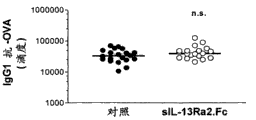
Figure 32 A-32C has shown after OVA attacks the previous day and handles with sILRa2.Rc one day after, total SERUM IgE (Figure 32 A), OVA specific IgE (Figure 32 B), and OVA specific IgG 1 (Figure 32 C).Dash line among Figure 32 B shows this method of testing sensitivity limit.N=20 mice/group.
Figure 33 A-33C has shown at OVA and has attacked the previous day with sILRa2.Fc after single the processing, total SERUM IgE (Figure 33 A), OVA specific IgE (Figure 33 B), and OVA specific IgG 1 (Figure 33 C).Dash line among Figure 33 B shows this method of testing sensitivity limit.N=20 mice/group.
Figure 34 A-34B shown OVA attack the previous day with sIL-13Ra2.Fc or anti--IL-4 (antibody) is single handle after, total SERUM IgE (Figure 34 A) and OVA specific IgE (Figure 34 B).Dash line among Figure 34 B shows this method of testing sensitivity limit.N=20 mice/group.
Figure 35 A-34B shown OVA attack handle with sIL-13Ra2.Fc and anti--IL-4 (antibody) associating is single the previous day after, OVA specific IgG 1 (Figure 35 A) and OVA specific IgG 3 (Figure 35 B).
Detailed Description Of The Invention
Herein disclosed is the method and composition for the treatment of and/or monitoring IL-13 relevant disease or treatment for diseases. On the one hand, the applicant found before IL-13 relevant disease and illness outbreak separately the experimenter is used one or more symptoms that IL-13 antagonist or IL-4 antagonist can alleviate with respect to untreated experimenter this disease or illness. With respect to using the sx↓ that detects behind the single reagent, detect the described disease of enhancing or the minimizing of condition symptoms after using altogether IL-13 antagonist and IL-4 antagonist. Therefore, herein disclosed is independent application or use the IL-13 antagonist to reduce or to suppress or prevention or delay the method for one or more paresthesia epilepsies of IL-13 relevant disease or illness with the IL-4 antagonist combination. In other embodiments, assessment IL-13 antagonist in experimenter (for example, people or inhuman experimenter) is also disclosed.
Definition
For the aspect, this paper has defined some term. Can find in this manual additional definition.
Term " IL-13 " comprises that this area is called IL-13 (no matter source of species, and comprise mammal for example people or non-human primates IL-13) the undressed form of total length of cell factor, and form and any fragment (at least 5 amino acid) or its variant of the maturation of this type cytokines, processing. Can be according to the position in the numbering assigned I L-13 sequence of total length, unprocessed huIL-13 sequence. For exemplary total length monkey IL-13, referring to SEQ ID NO:24, for monkey IL-13 ripe, through processing, referring to SEQ ID NO:14; For the total length huIL-13, referring to SEQ ID NO:178; For huIL-13 ripe, through processing, referring to SEQ ID NO:124. Exemplary sequence is listed below:
MALLLTTVIALTCLGGFASPGPVPPSTALRELIEELVNITQNQKAPLCNGSMVWSI
NLTAGMYCAALESLINVSGCSAIEKTQRMLSGFCPHKVSAGQFSSLHVRDTKIEV
AQFVKDLLLHLKKLFREGRFN(SEQ ID NO:178)
For example, position 130 is sites of common polymorphisms.
The exemplary sequence of IL-13 receptor protein and soluble form thereof (for example, IL-13R α 1 and IL-13R α 2 or its fusion) is described in, such as (1998) J Immunol. 161:2317-24 such as Donaldson; U.S.6,214,559; U.S.6,248,714; And U.S.6,268,480.
IL-4 is disclosed in (1988) the Pediatr. Res.24:549 such as Strober such as exemplary sequence and the feature of people IL-4; And the U.S.6 such as Ramanthan, 358,509.
The exemplary sequence of IL-4 receptor protein, its soluble form or fusion is described in, such as U.S.7 such as Stahl, and 083,949; Seipelt, I. etc. (1997) Biochem and Biophys Res Comm 239:534-542; Stahl, N. etc. (1999) FASEB Journal Abstract, 1457; And Harada, N. etc. (1990) Proc Natl Acad Sci U.S. 87:857-861. The exemplary secreted form of people IL-4 acceptor is listed below:
MGWLCSGLLFPVSCLVLLQVAS SGNMKVLQEPTCVSDYMSISTCEWKMNGPTN
CSTELRLLYQLVFLLSEAHTCIPENNGGAGCVCHLLMDDVVSADNYTLDLWAG
QQLLWKGSFKPSEHVKPRAPGNLTVHTNVSDTLLLTWSNPYPPDNYLYNHLTY
AVNIWSENDPADFRIYNVTYLEPSLRIAASTLKSGISYRARVRAWAQCYNTTWSE
WSPSTKWHNSNIC(SEQ ID NO:224)
" biologically active " of IL-13/IL-13R polypeptide and/or IL-4/IL-4R polypeptide refers to one or more biologically actives corresponding to ripe IL-13 or IL-4 polypeptide, include but not limited to: (1) and IL-13R or IL-4R polypeptide are (for example, huIL-13 R or IL-4R polypeptide) interact for example with it combination; (2) be associated with signal transducers (for example total molecule of γ); (3) stimulate (for example, STAT6) phosphorylation and/or the activation of stat albumen; (4) induce CD23 to express; (5) produce IgE by human B cell; (6) induce eosinophilia by antigen induction in the body; (7) induce bronchus constriction by antigen induction in the body; (8) induce in the body by drug-induced respiratory response excessive; (9) induce the eotoxin level in the body; And/or (10) induce the histamine that is discharged by basophilic granulocyte.
" IL-13 relevant disease or illness " be wherein IL-13 to pathology or the effective disease of symptom tool or the illness of this disease or illness. Therefore, can use the IL-13 bond, for example be that this disease is treated or prevented to the IL-13 bond of one or more IL-13 related activity antagonists.
The IL-13/IL-13R antagonist of " treatment effective dose " used herein or IL-4/IL-4R refer to work as list or multiple dose (is for example used the experimenter, human patients) time, effective amount of reagent in the middle of following: cure, alleviate its order of severity, improvement or prophylactic one or more symptoms; Or prolong this experimenter's the life cycle that surpasses expection when not having this treatment life cycle.
The IL-13/IL-13R antagonist of " prevention effective dose " used herein or IL-4/IL-4R refer to work as list or multiple dose (is for example used the experimenter, human patients) time, prevention, alleviate its order of severity or delay the IL-13 relevant disease or illness (for example disease described herein or illness) outbreak or recurrence in the effective amount of L-13/IL-13R antagonist or IL-4/IL-4R.
This paper employed " single therapy interval " refers to when using as single dose or as limited number of times repeated doses, uses the amount of IL-13/IL-13R antagonist and/or IL-4/IL-4R antagonist and/or outbreak or the recurrence that number of times reduces its order of severity, improvement, prevents or delay one or more symptoms of IL-13 relevant disease or illness (for example disease described herein or illness). In embodiments, in single therapy interim, the frequency limitation used for being no more than 2 or 3 dosage, is for example used this repeated doses from a week of starting dose or still less.
Term " separation " refers to the basically molecule outside its natural environment. For example, the protein of separation is gone up substantially not from its cell material or other protein of originating derived from cell or tissue wherein. This term refers to the basically pure prepared product to use as therapeutic combination of the albumen that wherein separates, or at least 70% to 80% (w/w) is pure, more preferably at least 80% to 90% (w/w) is pure, even more preferably 90% to 95% (w/w) is pure, and at least 95%, 96%, 97%, 98%, 99% or 100% (w/w) is pure. " separate " compound and refer to such compound, namely from the sample that wherein obtains, shift out at least 90% of at least a compound from this compound. Any compound described herein all can be used as compound separation or that separate and provides.
Used herein " low strict, in hybridize under strict, the high strict or high stringent condition " condition of hybridization and washing described. The guide of hybridizing antisense can be at Current Protocols in Molecular Biology, John Wiley ﹠ Sons, and N.Y. (1989) finds among the 6.3.1-6.3.6. In this reference book, described water-based and non-aqueous method, and can use. The specific cross condition of pointing out in this article is as follows: 1) at about 45 ℃ of low stringent hybridization conditions in 6X sodium chloride/sodium citrate (SSC), subsequently at least 50 ℃ of (for low stringency condition, wash temperature can be increased to 55 ℃) washed twice in 0.2X SSC, 0.1%SDS; 2) at about 45 ℃ of middle stringent hybridization conditions in 6X SSC, subsequently 60 ℃ of washings one or repeatedly in 0.2X SSC, 0.1%SDS; 3) at about 45 ℃ of high stringent hybridization conditions in 6X SSC, subsequently 65 ℃ of washings one or repeatedly in 0.2X SSC, 0.1%SDS; And preferred 4) high stringent hybridization condition is 0.5M sodium phosphate, the 7%SDS at 65 ℃, subsequently 65 ℃ of washings one or repeatedly in 0.2X SSC, 0.1%SDS. High stringent condition (4) is preferred condition, and is employed one, except as otherwise noted.
Method and composition of the present invention comprises polypeptide and nucleic acid, and it has the sequence of appointment, or with the sequence of appointment same or similar sequence basically, for example, with this specified sequence at least 85%, 90%, 95% same or higher sequence. In the situation of amino acid sequence, term as used herein " basically same " refers to that the first amino acid sequence contains such amino acid residue sufficient or minimum number: i) same with it; Or ii) amino acid residue of comparing with the second amino acid sequence is conservative the replacement, so this first and second amino acid sequence can have common structure domain and/or common functional activity. For example, contain the common structure domain with particular sequence, the amino acid sequence that has at least about 85%, 90%, 91%, 92%, 93%, 94%, 95%, 96%, 97%, 98% or 99% homogeneity is called basically same.
In the situation of nucleotide sequence, term as used herein " basically same " refer to that the first nucleotide sequence contains sufficient or minimum number with the second nucleotide sequence in the same nucleotides of the nucleotides compared, therefore this first and second nucleic acid sequence encoding has the polypeptide of common functional activity, or the structural polypeptide domain of encoding common or common functional polypeptide activity. For example, the amino acid sequence that has at least about 85%, 90%, 91%, 92%, 93%, 94%, 95%, 96%, 97%, 98% or 99% homogeneity with particular sequence is called basically same.
Term " functional variety " refers to have basically same amino acid sequence with naturally occurring sequence, or by basically same nucleotide sequence coded, and one or more active polypeptide that can have naturally occurring sequence.
Being calculated as follows of homology between two sequences or sequence homogeneity (this term is Alternate in this article) carried out:
For determining the percentage homogeneity of two amino acid sequences or two nucleotide sequences, (for example compare this sequence with optimum comparison purpose, compare purpose for optimum, can in one of the first and second amino acid or nucleotide sequence or both, introduce the room, and for comparing purpose, can ignore non-homogeneous sequence). In preferred embodiments, for the canonical sequence length of relatively purpose comparison is at least 30% of this canonical sequence length at least, preferably at least 40%, more preferably at least 50%, 60%, and even more preferably at least 70%, 80%, 90%, 100%. Then compare amino acid residue or nucleotides on corresponding amino acid position or nucleotide position. When the position in the First ray by with the second sequence on the relevant position identical amino acid residue or nucleotides occupy this molecule same on this position (the employed amino acid of this paper or nucleic acid " same " and amino acid or nucleic acid " homology " equivalence) then.
Percentage homogeneity between two sequences is the function of the total same position number of this sequence, considers as optimum and compares the room quantity that the purpose of these two sequences need to be introduced, and the length in each room.
Can finish the comparison of sequence between two sequences and determining of percentage homogeneity by the applied mathematics algorithm. In preferred embodiments, use Needleman and Wunsch ((1970) J.Mol.Biol. 48:444-453) algorithm and determine the percentage homogeneity between two amino acid sequences, it has been integrated into the GAP program of GCG software kit (can obtain from http://www.gcg.com), it uses Blossum 62 matrixes or PAM250 matrix, and 16,14,12,10,8,6 or 4 room weight and 1,2,3,4,5 or 6 length weight. In another preferred embodiment, the GAP program of application GCG software kit (can obtain from http://www.gcg.com) is determined the percentage homogeneity between two nucleotide sequences, and it uses NWSgapdna.CMP matrix and 40,50,60,70 or 80 room weight and 1,2,3,4,5 or 6 length weight. (and being the parameter setting that should use, is Blossum 62 matrix of scoring unless otherwise noted), and it has 12 gap penalty, the gap penalty of frameing shift of point penalty and 5 is extended in 4 room in particularly preferred parameter setting.
Can use E.Meyers and W.Miller ((1989) CABIOS, algorithm 4:11-17) is determined the percentage homogeneity between two amino acid or the nucleotide sequence, it has been integrated in the ALIGN program (version 2 .0), use PAM120 weight residue form, 12 room length point penalty and 4 gap penalty.
Nucleic acid described herein and protein sequence can be as " search sequence " to retrieve for public database, for example to identify other family members or correlated series. Can use NBLAST and the XBLAST program (version 2 .0) of (1990) J.Mol.Biol.215:403-10 such as Altschul and carry out this type of retrieval. The retrieval of BLAST nucleotides is carried out in available NBLAST program, score=100, word length=12, with the nucleotide sequence of acquisition with nucleic acid molecules homology of the present invention. Available XBLAST program, score=50, word length=3, carry out the retrieval of BLAST protein, to obtain the amino acid sequence with protein molecule homology of the present invention. Be to obtain to be the relatively comparison of having vacant position of purpose, can be such as Altschul etc., use room BLAST (Gapped BLAST) as described in (1997) Nucleic Acids Res.25:3389-3402. When using BLAST and room blast program, can use the default parameter of each program (for example, XBLAST and NBLAST). Referring to http://www.ncbi.nlm.nih.gov.
Antibody molecule
The example of IL-13 or IL-4 antagonist and/or bond comprises antibody molecule. Term as used herein " antibody molecule " refers to comprise the protein of at least one immunoglobulin variable domain sequence. The term antibody molecule comprises, for example, and total length, ripe antibody and the Fab of antibody. For example, antibody molecule can comprise heavily (H) chain variable region sequence (this paper is abbreviated as VH) and light (L) chain variable region sequence (this paper is abbreviated as VL). In another embodiment, antibody molecule comprises one or two heavy (H) chain variable region sequences and/or one or two light (L) chain variable region sequences. The example of Fab comprises: (i) Fab fragment, its unit price fragment for being comprised of VL, VH, CL and CH1 domain; (ii) F (ab ')2Fragment, it is to be included in hinge region by the divalence fragment of two Fab fragments of disulfide bond connection; (iii) Fd fragment, it is comprised of VH and CH1 domain; (iv) Fv fragment, its VL and VH domain by the antibody single armed is formed; (v) VH or VHH domain; (iv) dAb fragment, it is comprised of the VH domain; (vii) camel antibody, and camelization (camelized) variable region; And (viii) scFv (scFv).
VH and VL district also can be further divided into the hypermutation zone, term be " complementary determining region " (CDR), its stroll has more conservative term for " framework region " zone (FR). By many method precise definitions the scope of framework region and CDR (referring to Kabat, E.A., Deng (1991) Sequences of Proteins of Immunological Interest, the 5th edition, U.S.Department of Health and Human Services, NIH Publication No.91-3242; Chothia, C. etc. (1987) J. Mol.Biol.196:901-917; And the AbM definition of being used by the AbM antibody modeling software of Oxford Molecular. Generally referring to, for example Protein Sequence and Structure Analysis of Antibody Variable Domains.In:Antibody Engineering Lab Manual (edits Duebel, S. and Kontermann, R., Springer-Verlag, Heidelberg). Usually, unless stated otherwise, use to give a definition: the AbM of variable region of heavy chain CDR1 and the Kabat of other CDR definition. In addition, also can use Chothia hypermutation ring for embodiment of the present invention of Kabat or AbM CDR description implements. Each VH and VL generally comprise 3 CDR and four FR, arrange from aminoterminal to c-terminus in the following sequence: FR1, CDR1, FR2, CDR2, FR3, CDR3, FR4.
This paper employed " immunoglobulin variable domain sequence " refers to form the amino acid sequence of immune globulin variable region structure. For example, this sequence can comprise all or part amino acid sequence of naturally occurring variable region. For example, this sequence can or can not comprise one, two or more N-or C-terminal amino acid, maybe can comprise other changes compatible with the formation of this protein structure.
Term " antigen-binding site " refers to the part that comprises determinant of IL-13 bond, and it forms the interface with IL-13 (for example mammal IL-13, for example people or non-human primates IL-13) or its epi-position combination. With regard to protein (or protein analogue), antigen-binding site generally comprises the ring (at least four amino acid or amino acid analog thing) of one or more formation and IL-13 combination interface. Usually, the antigen-binding site of antibody molecule comprises at least one or two CDR, or at least 3,4,5 or 6 CDR more generally.
" epi-position " refers to the position of combined dose of (for example antibody) combination on the target compound. Epi-position can be linearity or comformational epitope, or its combination. Be in the situation of protein at target compound, for example, epi-position can refer to the amino acid of combined dose of combination. Overlapping epi-position comprises the amino acid residue that at least one is total.
Term as used herein " monoclonal antibody " or " monoclonal antibody combination " refer to the prepared product of the antibody molecule of unimolecule composition. The unijunction that monoclonal antibody combination shows defined epitope closes specificity and affinity. Can be by hybridoma technology or method (for example, recombination method) the preparation monoclonal antibody by not using hybridoma.
" effectively people " protein is the protein that does not cause Neutralizing antibody response (for example, HAMA (HAMA) is replied). HAMA is problematic in many cases, for example, if administration of antibodies repeatedly, for example, in the treatment of chronic or recurrent disease situation. HAMA replys can be so that antibody be used because antibody is accelerated (for example to see from the serum removing repeatedly, Saleh etc., Cancer Immunol.Immunother., 32:180-190 (1990)) and also (see because of potential allergic reaction, for example, LoBuglio etc., Hybridoma, 5:5117-5123 (1986)) and may become invalid. There are many methods can obtain antibody molecule.
An illustrative methods that produces antibody molecule comprises the screening protein expression library, for example, and bacteriophage or ribosomal display library. Phage display is such as being described in Ladner etc., U.S. Patent number 5,223,409; Smith (1985) Science 228:1315-1317; WO 92/18619; WO 91/17271; WO 92/20791; WO 92/15679; WO 93/01288; WO 92/01047; WO 92/09690 and WO 90/02809. Except using display libraries, can also use additive method and obtain anti--IL-13 antibody molecule. For example, IL-13 albumen or its peptide can be used as the antigen among the non-human animal (for example, rodent, for example mouse, hamster or rat).
In one embodiment, this non-human animal comprises at least a portion human immunoglobulin gene. For example, can handle defective mouse kind in mouse antibodies produces with the people Ig seat of large fragment. Use hybridoma technology, can produce and select derived from the antigentic specificity monoclonal antibody with the specific gene of expectation. Referring to, for example, XENOMOUSETM, (1994) Nature Genetics 7:13-21 such as Green, US 2003-0070185, WO 96/34096, is disclosed in the PCT application number PCT/US96/05928 that submits on October 31st, 1996 and on April 29th, 1996.
In another embodiment, obtain monoclonal antibody from the non-human animal, and modify subsequently, for example humanization or go immunization. Winter has described the exemplary CDR-engrafting method (U.S. Patent number 5,225,539) that can be used for preparing humanized antibody described herein. Whole CDR that can replace with at least a portion of inhuman CDR particular person antibody, or available inhuman CDR only replaces number of C DR. Only need to replace for humanized antibody and be combined required CDR quantity with predetermined antigens.
Thereby can replace the Fv variable region sequences generation humanized antibody of not participating in the antigen combination directly by using the equivalent sequence from people Fv variable region. Morrison (1985) Science 229:1202-1207; Oi etc. (1986) Bio Techniques 4:214; And the illustrative methods that provides for generation of Humanized antibody molecules of US 5,585,089, US 5,693,761, US 5,693,762, US 5,859,205 and US 6,407,213. These methods comprise separation, operation and express that coding is all or part of conducts oneself with dignity or the nucleotide sequence of light chain IgF v variable region one of at least. This type of nucleic acid can obtain from producing for the hybridoma of the antibody of pre-determined target as mentioned above, or obtains from other sources. Then the recombinant DNA of coding Humanized antibody molecules can be cloned into suitable expression vector.
Also can lack human T-cell's epi-position or by the method that is disclosed in WO 98/52976 and the WO 00/34317 modified antibodies molecule that " goes immunity " by specificity. In brief, can be for weight and the variable region of light chain of the peptide analysis antibody of being combined with II class MHC; The potential T-cell epitope of these peptides representative (such as in WO 98/52976 and WO 00/34317 definition). For detecting potential t cell epitope, can use term and be the microcomputer modelling method of " peptide threading (peptide threading) ", and in people II class MHC binding peptide data, retrieve V in additionHAnd VLThe motif that exists on the sequence, as WO 98/52976 and WO 00/34317 described. Any one combination of the II class MHC DR allotype that these motifs and 18 are main, and therefore consist of potential t cell epitope. Can pass through to replace a small amount of amino acid residue in the variable region, or preferably replace the potential T-cell epitope that elimination detects by monamino acid. Usually, guard replacement. Usually, but non-exclusive, can be applied in human the kind is amino acid common in the position of antibody sequence.
The human kind is sequence such as being disclosed in (1992) the J.Mol.Biol. 227:776-798 such as Tomlinson; Cook, G.P. etc. (1995) Immunol.Today volume 16 (5): 237-242; Chothia, (1995) EMBO such as (1992) J.Mol.Biol.227:799-817 such as D. and Tomlinson J.14:4628-4638. V BASE catalogue provides the widely catalogue (by Tomlinson, the compilations such as I.A., MRC protein engineering center, Cambridge, UK) of human immunoglobulin(HIg) variable region sequences. These sequences can be as the human sequence source of framework region and CDR for example. Can also use consistent people's framework region, for example be described in US6,300,064.
In addition, can the application standard recombinant DNA technology produce chimeric, humanization and single-chain antibody molecule (protein that for example, comprises people and inhuman part). For example, can also the application table intelligent weigh and light chain gene, produce humanized antibody but can not express endogenous mouse immunoglobulin (Ig) transgenic mice heavy and light chain gene.
In addition, antibody molecule described herein also comprises with IL-13 is combined, and interference function IL-13 signal conduction compound forms and has those of sudden change at CH. Sometimes some fragment of expectation sudden change or inactivation constant region. For example, can make sudden change in the CH has reduction with generation the antibody of being combined with Fc acceptor (FcR) and/or complement; This type of sudden change is well known in the art. SEQ ID NO:128 provides the example of this type of sudden change on the IgG CH amino acid sequence. Some active fragment of CL and CH subunit is (for example, CH1) covalently bound each other. Other aspects provide the method that obtains the special antigen-binding site in IL-1 surface, and described IL-13 surface participates in the IL-13 signal conduction complex formation of function.
Exemplary antibody molecule can comprise the VL chain-ordering shown in the SEQ ID NO:30-46, and/or the VH chain-ordering shown in the SEQ ID NO:50-115, but can also comprise the variant that maintains the IL-13 binding ability of these sequences. Can use technology well known in the art from the sequence that provides this type of variant of deriving. Can make 49-Phe ,82-Ser,115-Arg,144-Met,145-Asn ,161-Arg,169-Met Human Connective tissue growth factor, disappearance or interpolation in FR or among the CDR. Change in framework region is generally used for the immunogenicity improving stability and reduce this antibody molecule, and the change in CDR is generally used for increasing this antibody molecule to the affinity of its target. Usually by changing the CDR district and testing this antibody molecule and rule of thumb determine the change that this type of affinity increases. Can be according to Antibody Engineering, second edition (1995), editor Borrebaeck, the method for describing among the Oxford University Press is made this type of change.
This paper describes that obtaining weight chain variabl area sequence is the illustrative methods of the variant of weight chain variabl area sequence, it is included in the weight chain variabl area sequence described herein and adds, lacks, replaces or insert one or more amino acid, randomly this weight chain variabl area sequence is combined with one or more light chain variable region sequences, and test comprises the specific bond of protein and IL-13 of modified weight chain variabl area sequence, and (preferably) tests the ability that this type of antigen binding structural domain is regulated one or more IL-13 related activity. One or more sequence variants that can use light chain variable region sequence described herein come method like the implementation of class.
Can have by generation the library of one or more different CDR, and screen this library and be combined the member of (for example, having improved affinity) with IL-13 to seek, with the variant of Dispersal risk molecule. For example, Marks etc. (Bio/Technology (1992) 10:779-83) have described the method for generation antibody variable region storehouse collection (repertorires), wherein use in conjunction is pointed to or the universal primer of close zone, variable region 5 ' end and the universal primer of people VH gene the 3rd framework region, so that the Ji Ku of the VH variable region that lacks CDR3 to be provided. These Ji Ku can be combined with the CDR3 of specific antibodies. In addition, the sequence that can derive with the Ji Ku reorganization CDR3 of the VH that lacks CDR3 or VL domain, and the complete VH of this reorganization or VL domain unite to provide specific Fab with related VL or VH domain. Then can in suitable host system (such as the phage display system of WO 92/01047), show and to select suitable Fab thus by this Ji Ku. Stemmer (Nature (1994) 370:389-91) also discloses similar reorganization or combination technique. Other alternative approach are to make one or more selected VH and/or VL gene carry out random mutagenesis, suddenly change in whole variable region, to produce, and mutagenic VH or VL district. Participate in, such as the Proc.Nat. Acad.Sci. U.S. (1992) 89:3576-80 such as Gram.
Another kind of spendable method is the directed mutagenesis in VH or VL gene C DR district. This class technology is disclosed in, in (J.Mol.Biol. (1996) 263:551-67) such as (the Proc.Nat.Acad.Sci. U.S. (1994) 91:3809-13) such as Barbas and Schier. Similarly, can be with one or more, or all three CDR are implanted into the Ji Ku of VH or VL domain, or even some other supports (such as the fibronectin domain). To the ability of gained protein assessment in conjunction with IL-13.
In one embodiment, modify bond in conjunction with target via for example mutagenesis, so that the storehouse of modified bond to be provided. Then, assess this modified bond has the functional character (for example, the adhesion of improvement, the stability of improvement, prolongation stability in vivo) of change with evaluation one or more bonds through changing. In a kind of implementation method, select or screen modified bond storehouse with the display libraries technology. Then, provide the bond of higher affinity from second library evaluation (for example using higher stringency or more emulative combination and cleaning condition). Also can use other triage techniqueses.
In some embodiments, this mutagenesis target is known or may be in the zone of combination interface. For example: if the bond that identifies is antibody molecule, then can be with mutagenesis for the CDR district of heavy or light chain as described herein. In addition, mutagenesis can near or in abutting connection with the framework region of CDR, the framework region in 10,5 or 3 amino acid of CDR contact especially for example. In the situation of antibody, also mutagenesis can be limited in one or CDR still less, for example, progressively to improve.
In one embodiment, making antibody more be similar to one or more kinds with mutagenesis is sequence. A kind of exemplary being of kind method can comprise: one or more kinds of identifying the sequence that is similar to (for example similar in certain database) separated antibody are sequence. Then, can be in separated antibody, produce sudden change (on amino acid levels) with increment or combination or in these two kinds of modes. For example, can produce the nucleic acid library of the sequence that comprises the some or all of possible germ line mutations of coding. Then, the antibody of assessment sudden change for example identifies that those have one or more extra kinds for this isolated antibody be residue, and the antibody of available (for example have functional activity) still. In one embodiment, be that residue is introduced in the isolated antibody with kind as much as possible.
In one embodiment, be that residue substitutes or inserts in the CDR district with mutagenesis with one or more kinds. For example, kind is that the CDR residue can be sequence from similar (for example similar) kind in adorned variable region. Can assess the activity (for example in conjunction with or other functional activities) of antibody after mutagenesis, be the whether residue as tolerating of residue to determine these one or more kinds. In framework region, also can carry out similar mutagenesis.
Select to plant when being sequence and can carry out by different way. For example: if a kind of be sequence coincidence selectivity or homophylic preassigned, for example reach at least the homogeneity of certain percentage, for example at least 75,80,85,90,91,92,93,94,95,96,97,98,99 or 99.5% homogeneity then can be selected it. During selection can with at least 2,3,5 or 10 all be that sequence is carried out. In the situation of CDR1 and CDR2, identify similarly to plant to comprise a kind of this class sequence of selection when being sequence. In the situation of CDR3, identify similarly to plant to comprise when being sequence and select a kind of this class sequence, but can comprise and use two kinds to bring up respectively the kind of amino-end parts and carboxyl-end dividing be sequence. At other method carried out therewith, use to surpass one or two all be sequence, for example to form consensus sequence.
In other embodiments, this antibody can modified glycosylation pattern (that is, changing from original or natural glycosylation pattern) to have change. This place is used it " change " to mean one or more carbohydrate excalations and/or is had one or more glycosylation sites to add original antibody. With glycosylation site add in the present disclosed antibody can be via changing amino acid sequence so that it comprises the glycosylation site consensus sequence realizes; This class technology is known in this field. The another kind of method of the carbohydrate number partly on the antibody that increases is for to be coupled to glucosides on the amino acid residue of antibody with chemistry or enzyme method. These methods are described in, such as WO 87/05330, and among Aplin and the Wriston ((1981) CRC Crit.Rev. Biochem.22:259-306). The either carbon hydrate part that removal is present on the antibody can realize (Hakimuddin etc. (1987) Arch. Biochem.Biophys.259:52 with the method for chemistry or enzyme according to the description in this area; (1981 ((1987) Meth.Enzymol.138:350 such as Anal.Biochem.118:131 and Thotakura) such as Edge. Referring to, for example, U.S.5 remedies the method for modifying that receptor binding domain increases the half-life in the body via providing in 869,046.
In one embodiment, anti--IL-13 antibody molecule comprise at least one, two and preferred three CDR from the light or variable region of heavy chain of antibody disclosed herein (for example MJ 2-7). For example, this protein comprises the sequence in one or more following CDR district: GFNIKDTYIH (SEQ ID NO:15),
RIDPANDNIKYDPKFQG(SEQ ID NO:16),
SEENWYDFFDY(SEQ ID NO:17),
RSSQSIVHSNGNTYLE(SEQ ID NO:18),
KVSNRFS (SEQ ID NO:19), and
FQGSHIPYT (SEQ ID NO:20), or such CDR, it has with respect to sequence listed above, per 10 amino acid are no more than 4,3,2.5,2,1.5,1 or 0.5 and (for example change, replace, insert or disappearance) (for example, be the different numeral of ratio from CDR length), for example every CDR at least one change, but be no more than the amino acid sequence of 2,3 or 4 changes.
For example, anti--IL-13 antibody molecule can comprise at least 1,2 or 3 sequence in the following CDR district in the light chain variable region sequence:
RSSQSIVHSNGNTYLE(SEQ ID NO:18)、
KVSNRFS (SEQ ID NO:19) and
FQGSHIPYT (SEQ ID NO:20), or have with respect to sequence listed above the different amino acid sequence that per 10 amino acid are no more than 4,3,2.5,2,1.5,1 or 0.5 replacements, insert or lack.
Anti--IL-13 antibody molecule can comprise at least 1,2 or 3 sequence in the following CDR district in weight chain variabl area sequence:
GFNIKDTYIH(SEQ ID NO:15)、
RIDPANDNIKYDPKFQG (SEQ ID NO:16) and
SEENWYDFFDY (SEQ ID NO:17), or have with respect to sequence listed above the different amino acid sequence that per 10 amino acid are no more than 4,3,2.5,2,1.5,1 or 0.5 replacements, insert or lack. Heavy chain CDR3 district can be less than 13 or be less than 12 amino acid longs, for example, and 11 amino acid longs (using one of Chothia or Kabat definition).
In another embodiment, anti--IL-13 antibody molecule can comprise at least 1,2 or 3 sequence (amino acid in the bracket represents the alternative of ad-hoc location) in the following CDR district in the light chain variable region sequence:
(i) (RK)-S-S-Q-S-(LI)-(KV)-H-S-(ND)-G-N-(TN)-Y-L-(EDNQYAS) (SEQ ID NO:25) or (RK)-S-S-Q-S-(LI)-(KV)-H-S-(ND)-G-N-(TN)-Y-L-E (SEQ ID NO:26) or
(RK)-S-S-Q-S-(LI)-(KV)-H-S-N-G-N-T-Y-L-(EDNQYAS)(SEQ ID
NO:21),
(ii) K-(LVI)-S-(NY)-(RW)-(FD)-S (SEQ ID NO:27) or
K-(LV)-S-(NY)-R-F-S (SEQ ID NO:22) and
(iii)Q-(GSA)-(ST)-(HEQ)-I-P(SEQ ID NO:28)、
F-Q-(GSA)-(SIT)-(HEQ)-(IL)-P (SEQ ID NO:23) or
Q-(GSA)-(ST)-(HEQ)-I-P-Y-T (SEQ ID NO:194) or
F-Q-(GSA)-(SIT)-(HEQ)-(IL)-P-Y-T(SEQ ID NO:29)。
In a preferred embodiment, anti--IL-13 antibody molecule comprises all 6 from the CDR of MJ2-7 or extremely relevant CDR, for example, and same CDR or have at least one amino acid change, but be no more than 2,3 or 4 changes CDR of (for example, replace, lack or insert). The IL-13 bond can comprise the amino acid residue that contacts with IL-13 of at least 2,3,4,5,6 or 7 MJ2-7.
In another embodiment, anti--IL-13 antibody molecule comprises at least 1,2 or 3 corresponding CDR district with CDR and MJ 2-7 of identical normal structure, for example, and at least heavy chain of MJ2-7 and/or variable region of light chain CDR1 and CDR2.
In another embodiment, anti--IL-13 antibody molecule can comprise at least 1,2 or 3 sequence (amino acid in the bracket represents the alternative of ad-hoc location) in the following CDR district in weight chain variabl area sequence
(i)G-(YF)-(NT)-I-K-D-T-Y-(MI)-H(SEQ ID NO:48),
(ii) (WR)-I-D-P-(GA)-N-D-N-I-K-Y-(SD)-(PQ)-K-F-Q-G (SEQ ID NO:49) and
(iii)SEENWYDFFDY(SEQ ID NO:17)。
In one embodiment, anti--IL-13 antibody molecule comprise at least 1,2 and preferred 3 from the open antibody of this paper (for example, C65) gently or the CDR of variable region of heavy chain. For example, anti--IL-13 antibody molecule comprises the sequence in one or more following CDR district:
QASQGTSINLN(SEQ ID NO:118)、
GASNLED (SEQ ID NO:119) and
LQHSYLPWT(SEQ ID NO:120)
GFSLTGYGVN(SEQ ID NO:121)、
IIWGDGSTDYNSAL (SEQ ID NO:122) and
DKTFYYDGFYRGRMDY (SEQ ID NO:123), or such CDR, it has with respect to top listed sequence, the difference that per 10 aminoacid are no more than 4,3,2.5,2,1.5,1 or 0.5 replacements, insert or lack (for example, be the different numeral of ratio with CDR length), for example every at least one change of CDR, but be no more than 2,3 or 4 changes.For example, this protein can comprise at least 1,2 or 3 sequence in the following CDR district in the light chain variable region sequence:
QASQGTSINLN(SEQ ID NO:118)、
GASNLED (SEQ ID NO:119) and
LQHSYLPWT (SEQ ID NO:120), or with respect to top listed sequence, the different aminoacid sequence that per 10 aminoacid are no more than 4,3,2.5,2,1.5,1 or 0.5 replacements, insert or lack.
Anti--IL-13 antibody molecule can comprise at least 1,2 or 3 sequence in the following CDR district in weight chain variabl area sequence:
GFSLTGYGVN(SEQ ID NO:121)、
IIWGDGSTDYNSAL (SEQ ID NO:122) and
DKTFYYDGFYRGRMDY (SEQ ID NO:123), or with respect to top listed sequence, the different aminoacid sequence that per 10 aminoacid are no more than 4,3,2.5,2,1.5,1 or 0.5 replacements, insert or lack.
In one embodiment, the IL-13 antibody molecule can comprise one of following sequence:
■DIVMTQTPLSLPVTPGEPASISCRSSQSIVHSNGNTYLEWYLQKPGQSPQLLIYKVSNRFSGVPDRFSGSGSGTDFTLKISRVEAEDVGVYYCFQGSHIPYT(SEQ ID NO:30)
■DVVMTQSPLSLPVTLGQPASISCRSSQSIVHSNGNTYLEWFQQRPGQSPRRLIYKVSNRFSGVPDRFSGSGSGTDFTLKISRVEAEDVGVYYCFQGSHIPYT(SEQ ID NO:31)
■DIVMTQTPLSLSVTPGQPASISCRSSQSIVHSNGNTYLEWYLQKPGQSPQLLIYKVSNRFSGVPDRFSGSGSGTDFTLKISRVEAEDVGVYYCFQGSHIPYT(SEQ ID NO:32)
■DIVMTQTPLSLSVTPGQPASISCRSSQSIVHSNGNTYLEWYLQKPGQPPQLLIYKVSNRFSGVPDRFSGSGSGTDFTLKISRVEAEDVGVYYCFQGSHIPYT(SEQID NO:33)
■DIVMTQSPLSLPVTPGEPASISCRSSQSIVHSNGNTYLEWYLQKPGQSPQLLIYKVSNRFSGVPDRFSGSGSGTDFTLKISRVEAEDVGVYYCFQGSHIPYT(SEQID NO:34)
■DIVMTQTPLSSPVTLGQPASISCRSSQSIVHSNGNTYLEWLQQRPGQPPRLLIYKVSNRFSGVPDRFSGSGAGTDFTLKISRVEAEDVGVYYCFQGSHIPYT(SEQ ID NO:35)
■DIQMTQSPSSLSASVGDRVTITCRSSQSIVHSNGNTYLEWYQQKPGKAPKLLIYKVSNRFSGVPSRFSGSGSGTDFTLTISSLQPEDFATYYCFQGSHIPYT(SEQ ID NO:36)
■DVVMTQSPLSLPVTLGQPASISCRSSQSLVYSDGNTYLNWFQQRPGQSPRRLIYKVSNRFSGVPDRFSGSGSGTDFTLKISRVEAEDVGVYYCFQGSHIPYT(SEQID NO:37)
■DVLMTQTPLSLPVSLGDQASISCRSSQSIVHSNGNTYLEWYLQKPGQSPKLLIYKVSNRFSGVPDRFSGSGSGTDFTLKISRVEAEDLGVYYCFQGSHIPYT(SEQ ID NO:38)
Or has the sequence that is less than 8,7,6,5,4,3,2 changes (for example, replace, insert or disappearance, for example, a plurality of or replacement) in the conservative of MJ 2-7 relevant position upper amino acid residue.2,4,6,35,36,38,44,47,49,62,64-69,85,87,98,99,101 and 102 exemplary replacement is in one of following Kabat position:.For example, will be from the amino acid replacement the pure man framework region on the MJ2-7 relevant position.
The IL-13 antibody molecule can also comprise one of following sequence:
■DIVMTQTPLSLPVTPGEPASISC-(RK)-S-S-Q-S-(LI)-(KV)-H-S-(ND)-G-N-(TN)-Y-L-(EDNQYAS)WYLQKPGQSPQLLIYK-(LVI)-S-(NY)-(RW)-(FD)-
SGVPDRFSGSGSGTDFTLKISRVEAEDVGVYYC F-Q-(GSA)-(SIT)-(HEQ)-(IL)-P(SEQ ID NO:39)
■DVVMTQSPLSLPVTLGQPASISC-(RK)-S-S-Q-S-(LI)-(KV)-H-S-(ND)-G-N-(TN)-Y-L-(EDNQYAS)WFQQRPGQSPRRLIYK-(LVI)-S-(NY)-(RW)-(FD)-
SGVPDRFSGSGSGTDFTLKISRVEAEDVGVYYCF-Q-(GSA)-(SIT)-(HEQ)-(IL)-P(SEQ ID NO:40)
■DIVMTQTPLSLSVTPGQPASISC-(RK)-S-S-Q-S-(LI)-(KV)-H-S-(ND)-G-N-(TN)-Y-L-(EDNQYAS)WYLQKPGQSPQLLIYK-(LVI)-S-(NY)-(RW)-(FD)-
SGVPDRFSGSGSGTDFTLKISRVEAEDVGVYYCF-Q-(GSA)-(SIT)-(HEQ)-(IL)-P(SEQID NO:41)
■DIVMTQTPLSLSVTPGQPASISC(RK)-S-S-Q-S-(LI)-(KV)-H-S-(ND)-G-N-(TN)-Y-L-(EDNQYAS)WYLQKPGQPPQLLIYK-(LVI)-S-(NY)-(RW)-(FD)-
SGVPDRFSGSGSGTDFTLKISRVEAEDVGVYYCF-Q-(GSA)-(SIT)-(HEQ)-(IL)-P(SEQ ID NO:42)
■DIVMTQSPLSLPVTPGEPASISC(RK)-S-S-Q-S-(LI)-(KV)-H-S-(ND)-G-N-(TN)-Y-L-(EDNQYAS)WYLQKPGQSPQLLIYK-(LVI)-S-(NY)-(RW)-(FD)-
SGVPDRFSGSGSGTDFTLKISRVEAEDVGVYYCF-Q-(GSA)-(SIT)-(HEQ)-(IL)-P(SEQ ID NO:43)
■DIVMTQTPLSSPVTLGQPASISC(RK)-S-S-Q-S-(LI)-(KV)-H-S-(ND)-G-N-(TN)-Y-L-(EDNQYAS)WLQQRPGQPPRLLIYK-(LVI)-S-(NY)-(RW)-(FD)-
SGVPDRFSGSGAGTDFTLKISRVEAEDVGVYYCF-Q-(GSA)-(SIT)-(HEQ)-(IL)-P(SEQ ID NO:44)
■DIQMTQSPSSLSASVGDRVTITC(RK)-S-S-Q-S-(LI)-(KV)-H-S-(ND)-G-N-(TN)-Y-L-(EDNQYAS)WYQQKPGKAPKLLIYK-(LVI)-S-(NY)-(RW)-(FD)-
SGVPSRFSGSGSGTDFTLTISSLQPEDFATYYCF-Q-(GSA)-(SIT)-(HEQ)-(IL)-P(SEQ ID NO:45)
■DVLMTQTPLSLPVSLGDQASISC(RK)-S-S-Q-S-(LI)-(KV)-H-S-(ND)-G-N-(TN)-Y-L-(EDNQYAS)WYLQKPGQSPKLLIYK-(LVI)-S-(NY)-(RW)-(FD)-
SGVPDRFSGSGSGTDFTLKISRVEAEDLGVYYCF-Q-(GSA)-(SIT)-(HEQ)-(IL)-P(SEQ ID NO:46)
Or in framework region, has the sequence that is less than 8,7,6,5,4,3,2 changes (for example, replace, insert or disappearance, for example, a plurality of or replacement) in the conservative of MJ 2-7 relevant position upper amino acid residue.2,4,6,35,36,38,44,47,49,62,64-69,85,87,98,99,101 and 102 exemplary replacement is one or more following Kabat positions:.This for example replaces can be with from the amino acid replacement the pure man framework region on the MJ2-7 relevant position.After this sequence can also be the Tyr-Thr dipeptides.The FR4 district can comprise, for example sequence FGGGTKVEIKR (SEQID NO:47).
In other embodiments, the IL-13 antibody molecule can comprise one of following sequence:
■QVQLVQSGAEVKKPGASVKVSCKASGFNIKDTYIHWVRQAPGQGLEWMGRIDPANDNIKYDPKFQGRVTMTRDTSISTAYMELSRLRSDDTAVYYCARSEENWYDFFDY(SEQ ID NO:50)
■QVQLVQSGAEVKKPGASVKVSCKASGFNIKDTYIHWVRQAPGQRLEWMGRIDPANDNIKYDPKFQGRVTITRDTSASTAYMELSSLRSEDTAVYYCARSEENWYDFFDY(SEQ ID NO:51)
■QVQLVQSGAEVKKPGASVKVSCKASGFNIKDTYIHWVRQATGQGLEWMGRIDPANDNIKYDPKFQGRVTMTRNTSISTAYMELSSLRSEDTAVYYCARSEENWYDFFDY(SEQ ID NO:52)
■QVQLVQSGAEVKKPGASVKVSCKASGFNIKDTYIHWVRQAPGQGLEWMGRIDPANDNIKYDPKFQGRVTMTTDTSTSTAYMELRSLRSDDTAVYYCARSEENWYDFFDY(SEQ ID NO:53)
■EVQLVESGGGLVQPGGSLRLSCAASGFNIKDTYIHWVRQAPGKGLEWVGRIDPANDNIKYDPKFQGRFTISRDNAKNSLYLQMNSLRAEDTAVYYCARSEENWYDFFDY(SEQ ID NO:74)
■EVQLVESGGGLVQPGGSLRLSCAASGFNIKDTYIHWVRQAPGKGLEWVARIDPANDNIKYDPKFQGKATISADNAKNSLYLQMNSLRAEDTAVYYCARSEENWYDFFDY(SEQ ID NO:75)
■EVQLVESGGGLVQPGGSLRLSCAASGFNIKDTYIHWVRQAPGKGLEWIGRIDPANDNIKYDPKFQGRFTISADNAKNSLYLQMNSLRAEDTAVYYCARSEENWYDFFDY(SEQ ID NO:76)
■EVQLVESGGGLVQPGGSLRLSCAASGFNIKDTYIHWVRQAPGKGLEWVGRIDPANDNIKYDPKFQGRFTISADNAKNSLYLQMNSLRAEDTAVYYCARSEENWYDFFDY(SEQID NO:77)
■EVQLVESGGGLVQPGGSLRLSCAASGFNIKDTYIHWVRQAPGKGLEWVARIDPANDNIKYDPKFQGRFTISRDNAKNSAYLQMNSLRAEDTAVYYCARSEENWYDFFDY(SEQ ID NO:78)
■EVQLVESGGGLVQPGGSLRLSCAASGFNIKDTYIHWVRQAPGKGLEWVGRIDPANDNIKYDPKFQGRFTISADNAKNSAYLQMNSLRAEDTAVYYCARSEENWYDFFDY(SEQ ID NO:79)
■EVQLVESGGGLVQPGGSLRLSCAASGFNIKDTYIHWVRQAPGKGLEWIGRIDPANDNIKYDPKFQGRFTISADNAKNSAYLQMNSLRAEDTAVYYCARSEENWYDFFDY(SEQ ID NO:80)
■EVQLVESGGGLVQPGGSLRLSCTGSGFNIKDTYIHWVRQAPGKGLEWIGRIDPANDNIKYDPKFQGRFTISADNAKNSLYLQMNSLRAEDTAVYYCARSEENWYDFFDY(SEQ ID NO:81)
■EVQLQQSGAELVKPGASVKLSCTGSGFNIKDTYIHWVKQRPEQGLEWIGRIDPANDNIKYDPKFQGKATITADTSSNTAYLQLNSLTSEDTAVYYCARSEENWYDFFDY(SEQ ID NO:82)
Or has the sequence that is less than 8,7,6,5,4,3,2 changes (for example, replace, insert or disappearance, for example, a plurality of or replacement) in the conservative of MJ 2-7 relevant position upper amino acid residue.Exemplary replacement is one or more following Kabat positions: 2,4,6,25,36,37,39,47,48,93,94,103,104,106 and 107.Exemplary replacement can also be one or more with upper/lower positions (according to the numbering of sequence): 48,49,67,68,72 and 79.This for example replaces can be with from the amino acid replacement the pure man framework region on the MJ2-7 relevant position.In one embodiment, this sequence comprises that (according to the numbering of sequence) is following one or more: 48 Ile, 49 Gly, 67 Lys, 68 Ala, 72 Ala and 79 Ala; Preferably, for example 48 Ile, 49 Gly, 72 Ala and 79 Ala.
In addition, the framework region of weight chain variabl area sequence can comprise: (i) at corresponding 49 locational Gly; (ii) at corresponding 72 locational Ala; (iii) at corresponding 48 locational Ile; And corresponding 49 locational Gly; (iv) at corresponding 48 locational Ile; Corresponding 49 locational Gly; And corresponding 72 locational Ala; (v) at corresponding 67 locational Lys; Corresponding 68 locational Ala; And corresponding 72 locational Ala; And/or (vi) at corresponding 48 locational Ile; Corresponding 49 locational Gly; Corresponding 72 Ala; And corresponding 79 locational Ala.
The IL-13 antibody molecule can also comprise one of following sequence:
■QVQLVQSGAEVKKPGASVKVSCKASG-(YF)-(NT)-I-K-D-T-Y-(MI)-H,WVRQAPGQGLEWMG(WR)-I-D-P-(GA)-N-D-N-I-K-Y-(SD)-(PQ)-K-F-Q-GRVTMTRDTS I STAYMELSRLRSDDTAVYYCARSEENWYDFFDY(SEQ ID NO:83)
■QVQLVQSGAEVKKPGASVKVSCKASG-(YF)-(NT)-I-K-D-T-Y-(MI)-H,WVRQAPGQRLEWMG(WR)-I-D-P-(GA)-N-D-N-I-K-Y-(SD)-(PQ)-K-F-Q-GRVTITRDTSASTAYMELSSLRSEDTAVYYCARSEENWYDFFDY(SEQ ID NO:84)
■QVQLVQSGAEVKKPGASVKVSCKASG-(YF)-(NT)-I-K-D-T-Y-(MI)-H,WVRQATGQGLEWMG(WR)-I-D-P-(GA)-N-D-N-I-K-Y-(SD)-(PQ)-K-F-Q-GRVTMTRNTSISTAYMELSSLRSEDTAVYYCARSEENWYDFFDY(SEQ ID NO:85)
■QVQLVQSGAEVKKPGASVKVSCKASG-(YF)-(NT)-I-K-D-T-Y-(MI)-H,WVRQAPGQGLEWMG(WR)-I-D-P-(GA)-N-D-N-I-K-Y-(SD)-(PQ)-K-F-Q-GRVTMTTDTSTSTAYMELRSLRSDDTAVYYCARSEENWYDFFDY(SEQ ID NO:86)
■QVQLVQSGAEVKKPGASVKVSCKVSG-(YF)-(NT)-I-K-D-T-Y-(MI)-H,WVRQAPGKGLEWMG(WR)-I-D-P-(GA)-N-D-N-I-K-Y-(SD)-(PQ)-K-F-Q-GRVTMTEDTSTDTAYMELSSLRSEDTAVYYCATSEENWYDFFDY(SEQ ID NO:87)
■QMQLVQSGAEVKKTGSSVKVSCKASG-(YF)-(NT)-I-K-D-T-Y-(MI)-H,WVRQAPGQALEWMG(WR)-I-D-P-(GA)-N-D-N-I-K-Y-(SD)-(PQ)-K-F-Q-GRVTITRDRSMSTAYMELSSLRSEDTAMYYCARSEENWYDFFDY(SEQID NO:88)
■QVQLVQSGAEVKKPGASVKVSCKASG-(YF)-(NT)-I-K-D-T-Y-(MI)-H,WVRQAPGQGLEWMG(WR)-I-D-P-(GA)-N-D-N-I-K-Y-(SD)-(PQ)-K-F-Q-GRVTMTRDTSTSTVYMELSSLRSEDTAVYYCARSEENWYDFFDY(SEQ ID NO:89)
■QMQLVQSGPEVKKPGTSVKVSCKASG-(YF)-(NT)-I-K-D-T-Y-(MI)-H,WVRQARGQRLEWIG(WR)-I-D-P-(GA)-N-D-N-I-K-Y-(SD)-(PQ)-K-F-Q-GRVTITRDMSTSTAYMELSSLRSEDTAVYYCAASEENWYDFFDY(SEQ ID NO:90)
■EVQLVESGGGLVQPGGSLRLSCAASG-(YF)-(NT)-I-K-D-T-Y-(MI)-H,WVRQAPGKGLEWVA(WR)-I-D-P-(GA)-N-D-N-I-K-Y-(SD)-(PQ)-K-F-Q-GRFTISRDNAKNSLYLQMNSLRAEDTAVYYCARSEENWYDFFDY(SEQ ID NO:91)
■EVQLVESGGGLVQPGRSLRLSCAASG-(YF)-(NT)-I-K-D-T-Y-(MI)-H,WVRQAPGKGLEWVS(WR)-I-D-P-(GA)-N-D-N-I-K-Y-(SD)-(PQ)-K-F-Q-GRFTISRDNAKNSLYLQMNSLRAEDTALYYCAKDSEENWYDFFDY(SEQ ID NO:92)
■QVQLVESGGGLVKPGGSLRLSCAASG-(YF)-(NT)-I-K-D-T-Y-(MI)-H,WIRQAPGKGLEWVS(WR)-I-D-P-(GA)-N-D-N-I-K-Y-(SD)-(PQ)-K-F-Q-GRFTISRDNAKNSLYLQMNSLRAEDTAVYYCARSEENWYDFFDY(SEQ ID NO:93)
■EVQLVESGGGLVKPGGSLRLSCAASG-(YF)-(NT)-I-K-D-T-Y-(MI)-H,WVRQAPGKGLEWVG(WR)-I-D-P-(GA)-N-D-N-I-K-Y-(SD)-(PQ)-K-F-Q-GRFTISADNAKNSLYLQMNSLRAEDTAVYYCARSEENWYDFFDY(SEQ ID NO:109)
■EVQLVESGGGLVQPGGSLRLSCAASG-(YF)-(NT)-I-K-D-T-Y-(MI)-H,WVRQAPGKGLEWVG(WR)-I-D-P-(GA)-N-D-N-I-K-Y-(SD)-(PQ)-K-F-Q-GRFTISADNAKNSLYLQMNSLRAEDTAVYYCARSEENWYDFFDY(SEQ ID NO:110)
■EVQLVESGGGLVQPGGSLRLSCAASG-(YF)-(NT)-I-K-D-T-Y-(MI)-H,WVRQAPGKGLEWVA(WR)-I-D-P-(GA)-N-D-N-I-K-Y-(SD)-(PQ)-K-F-Q-GRFTISRDNAKNSAYLQMNSLRAEDTAVYYCARSEENWYDFFDY(SEQ ID NO:111)
■EVQLVESGGGLVQPGGSLRLSCAASG-(YF)-(NT)-I-K-D-T-Y-(MI)-H,WVRQAPGKGLEWVG(WR)-I-D-P-(GA)-N-D-N-I-K-Y-(SD)-(PQ)-K-F-Q-GRFTIS-NAKNSAYLQMNSLRAEDTAVYYCARSEENWYDFFDY(SEQ ID NO:112)
■EVQLVESGGGLVQPGGSLRLSCAASG-(YF)-(NT)-I-K-D-T-Y-(MI)-H,WVRQAPGKGLEWIG(WR)-I-D-P-(GA)-N-D-N-I-K-Y-(SD)-(PQ)-K-F-Q-GRFTISADNAKNSAYLQMNSLRAEDTAVYYCARSEENWYDFFDY(SEQ ID NO:113)
■EVQLVESGGGLVQPGGSLRLSCTGSG-(YF)-(NT)-I-K-D-T-Y-(MI)-H,WVRQAPGKGLEWIG(WR)-I-D-P-(GA)-N-D-N-I-K-Y-(SD)-(PQ)-K-F-Q-GRFTISADNAKNSLYLQMNSLRAEDTAVYYCARSEENWYDFFDY(SEQ ID NO:114)
■EVQLQQSGAELVKPGASVKLSCTGSG-(YF)-(NT)-I-K-D-T-Y-(MI)-H,WVKQRPEQGLEWIG(WR)-I-D-P-(GA)-N-D-N-I-K-Y-(SD)-(PQ)-K-F-Q-GKATITADTSSNTAYLQLNSLTSEDTAVYYCARSEENWYDFFDY(SEQ ID NO:115)
Or in framework region, has the sequence that is less than 8,7,6,5,4,3,2 changes (for example, replace, insert or disappearance, for example, a plurality of or replacement) in the conservative of MJ 2-7 relevant position upper amino acid residue.Exemplary replacement is on one or more following Kabat position: 2,4,6,25,36,37,39,47,48,93,94,103,104,106 and 107.This for example replaces can be with from the amino acid replacement the pure man framework region on the MJ2-7 relevant position.The FR4 district can comprise, for example sequence WGQGTTLTVSS (SEQ ID NO:116) or WGQGTLVTVSS (SEQ IDNO:117).
Other disturb IL-13 and IL-13R (for example, the IL-13 receptor complex) or the bonded IL-13 antibody of its subunit example to comprise " mAb13.2 " and modified forms thereof, for example, and chimeric or humanization form.The aminoacid of the variable region of heavy chain of mAb13.2 and nucleotides sequence are listed in this paper respectively shown in SEQ IDNO:198 and SEQ ID NO:217.The aminoacid of the variable region of light chain of mAb13.2 and nucleotides sequence are listed in this paper respectively shown in SEQ ID NO:199 and SEQ ID NO:218.Exemplary chimeric form (form that for example, comprises mAb13.2 heavy chain and variable region of light chain) is called as " ch13.2 " in this article.The aminoacid of the variable region of heavy chain of ch13.2 and nucleotides sequence are listed in this paper respectively shown in SEQID NO:208 and SEQ ID NO:204.The aminoacid of the variable region of light chain of ch13.2 and nucleotides sequence are listed in this paper respectively shown in SEQ ID NO:213 and SEQ ID NO:219.The humanization form that is called as the mAb13.2 of " h13.2v1 " in this article has variable region of heavy chain aminoacid and the nucleotide sequence shown in SEQ IDNO:209 and SEQ ID NO:205 respectively at this paper.The aminoacid of the variable region of light chain of h13.2v1 and nucleotides sequence are listed in this paper respectively shown in SEQ IDNO:214 and SEQ ID NO:220.Another humanization form that is called as the mAb13.2 of " h13.2v2 " in this article has variable region of heavy chain aminoacid and the nucleotide sequence shown in SEQ ID NO:210 and SEQ ID NO:206 respectively at this paper.The aminoacid of the variable region of light chain of h13.2v2 and nucleotides sequence are listed in this paper respectively shown in SEQ ID NO:212 and SEQ ID NO:221.Another humanization form that is called as the mAb13.2 of " h13.2v3 " in this article has variable region of heavy chain aminoacid and the nucleotide sequence shown in SEQ ID NO:211 and SEQ ID NO:207 respectively at this paper.The aminoacid of the variable region of light chain of h13.2v3 and nucleotides sequence are listed in this paper respectively shown in SEQ IDNO:35 and SEQ ID NO:223.
In another embodiment, anti--IL-13 antibody molecule comprises at least 1,2,3 or 4 antigen binding domains with aminoacid sequence as follows (for example, the variable region): for the SEQ IDNO:198 of VH, 208,209,210 or 211, and/or for the SEQ ID NO:199 of VL, 213,214,212 or 215, or with its same basically sequence (for example, with its at least about 85%, 90%, 95%, 99% or higher same sequence, or with SEQ ID NO:199,213,214,212,198,208,209,210,215 or 211 are no more than 1,2,5, the sequence of 10 or 15 amino acid residue differences).In another embodiment, this antibody comprises by the VH of the nucleic acid coding with following nucleotide sequence and/or VL: for the SEQ ID NO:222,204,205,208 or 207 of VH, and/or for the SEQ ID NO:218,219,220,221 or 223 of VL, or with its same basically sequence (for example, with its at least about 85%, 90%, 95%, 99% or higher same sequence, or be no more than the sequence of 3,6,15,30 or 45 nucleotide differences with SEQ ID NO:218,219,220,221,222,204,205,206,223 or 207).In another embodiment, this antibody or its fragment comprise at least 1,2 or 3 CDR from such variable region of heavy chain, wherein said variable region of heavy chain has respectively for the SEQ IDNO:202 shown in the VH CDR 1-3,203 or 196 aminoacid sequence, or homologous with it basically sequence (for example, with its at least about 85%, 90%, 95%, 99% or higher same sequence, and/or have one or more replacements sequence of (for example conservative the replacement)).In another embodiment, this antibody or its fragment comprise at least 1,2 or 3 CDR from such variable region of light chain, wherein said variable region of light chain has the aminoacid sequence shown in the SEQ ID NO:197,200 or 201 respectively for VL CDR 1-3, or homologous with it basically sequence (for example, with its at least about 85%, 90%, 95%, 99% or higher same sequence, and/or have one or more replacements sequence of (for example conservative the replacement)).In another embodiment, this antibody or its fragment comprise at least 1,2,3,4,5 or 6 from the such weight and the CDR of variable region of light chain, wherein said heavy and variable region of light chain has SEQ ID NO:202 respectively for VH CDR 1-3, aminoacid sequence shown in 203 or 196, and has SEQ ID NO:197 respectively for VLCDR 1-3, aminoacid sequence shown in 200 or 201, or homologous with it basically sequence (for example, with its at least about 85%, 90%, 95%, 99% or higher same sequence, and/or have one or more replacements sequence of (for example conservative the replacement)).
In one embodiment, anti--IL-13 antibody molecule comprises all 6 CDR from C65, perhaps extremely relevant CDR, for example, same or have at least one amino acid change, but be no more than the CDR of 2,3 or 4 change (for example, substitute, disappearance or insertion).
In another embodiment, the IL-13 bonding agent comprises that at least 1,2 or 3 has the CDR district of identical standard structure and the corresponding C DR district of C65, for example the CDR1 and the CDR2 of the heavy and/or variable region of light chain of C65 at least.
In one embodiment, the heavy chain framework region (for example, one FR1, FR2, FR3, or comprise FR1, FR2 and FR3, but the sequence of getting rid of CDR) comprise such aminoacid sequence, its with to sow be the heavy chain framework region at least 80%, 85%, 90%, 95%, 97%, 98%, 99% of one of V fragment sequence or higher same: DP-71 or DP-67, or the compatible V gene of the normal structure type of another and C65 (referring to, for example, (1992) J.Mol.Biol.227:799-817 such as Chothia; Tomlinson etc. (1992) J.Mol.Biol.227:776-798).
In one embodiment, the light chain framework region (for example, one FR1, FR2, FR3, or comprise FR1, FR2 and FR3, but the sequence of getting rid of CDR) comprise such aminoacid sequence, itself and DPK-1 or DPK-9 kind are light chain framework region at least 80%, 85%, 90%, 95%, 97%, 98%, 99% or higher same (for example, referring to (1995) EMBO such as Tomlinson J.14:4628) of the compatible V gene of the normal structure type of sequence or another and C65.
In another embodiment, the light chain framework region (for example, one FR1, FR2, FR3, or comprise FR1, FR2 and FR3, but the sequence of getting rid of CDR) comprise such aminoacid sequence, itself and V κ I subgroup kind are the light chain framework region at least 80%, 85%, 90%, 95%, 97%, 98%, 99% of sequence (for example, DPK-9 or DPK-1 sequence) or higher same.
In another embodiment, the heavy chain framework region (for example, one FR1, FR2, FR3, or comprise FR1, FR2 and FR3, but the sequence of getting rid of CDR) comprise such aminoacid sequence, itself and VH IV subgroup kind are the light chain framework region at least 80%, 85%, 90%, 95%, 97%, 98%, 99% of sequence (for example, DP-71 or DP-67 sequence) or higher same.
In one embodiment, light or weight chain variable framework (for example, comprise at least FR1, FR2, FR3 and the zone of FR4 randomly) can be selected from: (a) light or weight chain variable framework, it comprises the amino acid residue of at least 80%, 85%, 90%, 95% or 100% or weight chain variable framework light from the people, for example, from the ripe antibody of people described herein, ethnic group is sequence, people's consensus sequence, perhaps light the or weight chain variable framework residue of people's antibody; (b) light or weight chain variable framework, it comprises the amino acid residue of or the weight chain variable framework light from the people of 20%-80%, 40%-60%, 60%-90% or 70%-95%, for example, from the ripe antibody of people, ethnic group be the light or weight chain variable framework residue of sequence, people's consensus sequence; (c) inhuman framework (for example, rodent framework); Perhaps (d) inhuman framework, it is modified, for example to remove antigenicity or cytotoxicity determinant, for example, removes immunity or part humanization.In one embodiment, the position of weight chain variabl area sequence below one or more is (preferably at least 5,10,12 or all positions) comprise people's residue or people's consensus sequence residue: (in the FR of the variable region of light chain) 4L, 35L, 36L, 38L, 43L, 44L, 58L, 46L, 62L, 63L, 64L, 65L, 66L, 67L, 68L, 69L, 70L, 71L, 73L, 85L, 87L, 98L, and/or (in the FR of the variable region of heavy chain) 2H, 4H, 24H, 36H, 37H, 39H, 43H, 45H, 49H, 58H, 60H, 67H, 68H, 69H, 70H, 73H, 74H, 75H, 78H, 91H, 92H, 93H, and/or 103H (according to the Kabat numbering).
In one embodiment, anti--IL-13 antibody molecule comprises at least one inhuman CDR, for example, Mus CDR, for example, from the CDR of for example mAb13.2, MJ2-7, C65 and/or its modified forms (for example, its humanization or chimeric variant) and with for example mAb13.2, MJ2-7, C65 and or the framework of its modified forms (for example, its humanization or chimeric variant) at least 1 aminoacid is arranged, for example, at least 5,8,10,12,15 or 18 at least one frameworks that aminoacid is different.For example, described protein comprises 1,2,3,4,5 or 6 this type of inhuman CDR, and comprises at least one aminoacid difference in HC FR1, HC FR2, HC FR3, LC FR1, LC FR2 and LC FR3 at least three kinds.
In one embodiment, the weight or the variable region of light chain of anti--IL-13 antibody comprise aminoacid sequence, this aminoacid sequence and this paper (for example describe antibody, mAb13.2, MJ2-7, C65 and/or its modified forms (for example, its humanization or chimeric variant)) variable region sequences have at least 80%, 85%, 90%, 95%, 97%, 98%, 99% or higher homogeneity; Perhaps (for example, mAb13.2, MJ2-7, C65 and/or its modified forms (for example, its humanization or chimeric variant)) variable region sequences has at least 1 or 5 residue difference, but less than the difference of 40,30,20 or 10 residues with antibody described herein.In one embodiment, described proteinic heavy or light chain variable region sequence comprise by nucleotide sequence described herein or for example under low strictness, middle strictness, high strictness or high stringent condition with the aminoacid sequence of the nucleic acid coding of nucleotide sequence described herein or the hybridization of its complementary molecule.
In one embodiment, one or two of variable region sequences comprises the amino acid position in the structure framework, and it is a sequence from non-human antibody (for example, murine antibody is such as mAb13.2) and people's antibody or kind differently.For example, the variable region can comprise many positions, and is same described position upper amino acid residue and non-human antibody and people's antibody (perhaps ethnic group is a sequence), because these two kinds of antibody are same in this position.In the inhuman residue frame position different with people's antibody, at least 50,60,70,80 or 90% optimum seeking site and people's antibody (or ethnic group is a sequence) of variable region are same rather than same with the non-human antibody.For example, not or have at least 1,2,3 or 4 this remaining frame position can be same with non-human antibody rather than people's antibody.For example in HC FR1, one or two this position can be inhuman; In HC FR2, one or two this position can be inhuman; Among the FR3,1,2,3 or 4 this position can be inhuman; In LC FR1,1,2,3 or 4 this position can be inhuman; In LC FR2, one or two this position can be inhuman; In LC FR3, one or two this position can be inhuman.This framework region can comprise other inhuman positions.
In one embodiment, those of the CDR sequence that antibody molecule had and MJ 2-7, C65 or 13.2 only have the difference of non-essence.The difference of non-essence comprises little amino acid change, such as: in 5-7 the arbitrary general aminoacid in CDR (for example Chothia or Kabat CDR) sequence 1 or 2 amino acid replacement is arranged.Usually, the related amino acid of aminoacid with similar electric charge, hydrophobicity or spatial chemistry feature substitutes.This class substitutes in technical staff's general technology scope.Different with the situation in CDR, can in structural framing district (FR), make the more change of essence, but can antagonist in conjunction with character adverse effect is arranged.The change of FR comprises, but be not limited to: will overstate to the antigen contact from the framework humanization in inhuman source or with some and want or be used for the framework residue at stable bond position and carry out genetically engineered change, for example, change the classification or the subclass of constant region, change may change particular amino acid residue (Lund etc. (1991) J.Immun.147:2657-62 of effector function (such as the Fc receptors bind); Or change the species of this constant region of deriving Morgan etc. (1995) Immunology 86:319-24).Antibody can have the sudden change that can reduce or change effector function (for example, Fc receptors bind and complement activation) in the CH2 district of heavy chain.For example, antibody can have as U.S. Patent number 5,624, and 821 and 5,648, the sudden change described in 260.For example, in IgG1 or IgG2 heavy chain, can produce this class sudden change that makes its aminoacid sequence listed in the SEQ ID NO:17.But antibody also can have the sudden change of the disulfide bond between two heavy chains of stabilizing immunoglobulin, such as in this area disclosed in the IgG4 hinge region sudden change (for example, Angal etc. (1993) Mol, Immunol30:105-08).
Anti--IL-13 antibody molecule can be complete antibody, antigen-binding fragments of antibodies (for example Fab, F (ab ')
2, Fd, dAb and scFv fragment) and at it constant and/or variable region (for example undergo mutation, be used for producing the antibody of mosaic type, part humanization or full-length human, and be used for producing and have desirable characteristics, for example strengthen the IL-13 adhesion and/or reduce the sudden change of FcR adhesion) complete antibody and segmental form.
Another functional molecular can be derived or be connected to anti--IL-13 antibody molecule, for example another kind of peptide or protein (for example Fab fragment).For example, this bonding agent can functionally connect (as: by chemical coupling, heredity fusion, the combination of non-covalent property or other modes) one or more other molecular entities, such as another antibody molecule (for example, to form bispecific or multi-specificity antibody molecule), toxin, radiosiotope, cytotoxic agent or cytostatics etc.
Other IL-13/IL-13R or IL-4/IL-4R bonding agent
Except antibody molecule, other bonding agent that are bonded on IL-13 or IL-4 polypeptide or nucleic acid or IL-13R or IL-4R polypeptide or the nucleic acid are also provided.In embodiments, other bonding agent as herein described are antagonisies, thereby reduce, suppress or reduce in addition one or more biological activitys (for example biological activity of one or more IL-13 as herein described and/or IL-4) of IL-13 and/or IL-4.
Can differentiate bonding agent by several different methods, described method comprises modifies variable region as herein described or one or more CDR of variable region described herein is migrated on other rack areas.Bonding agent also can be differentiated by multiple library, for example by screening.Be used to screen a kind of method use phage display of protein library.Proteinic specific region is different, and the protein that combines with IL-13 or IL-4 or its receptor associates by for example delay on solid support or by other physics and differentiated.For example, for being bonded to IL-13, discriminating goes up the epi-position identical or the particular combination agent of overlapping epi-position with MJ2-7, C65 or mAb 13.2, can come the elution of bound agent by adding MJ2-7, C65 or mAb 13.2 (or associated antibodies), or can with the competitive assay of MJ2-7, C65 or mAb 13.2 (or associated antibodies) in assess bonding agent.Also may consume the library of the material that is bonded to other epi-positions by the library is contacted with the complex that contains IL-13 and MJ2-7, C65 or mAb 13.2 (or associated antibodies).The library that consumes can be contacted with IL-13 then with acquisition be bonded to IL-13 rather than with the bonding agent that is subjected to MJ2-7, C65 or mAb 13.2 bonded IL-13.Also can utilize and contain MJ2-7, C65 epi-position or with the polypeptide from IL-13 of mAb 13.2 as target.
For example at U.S. Patent number 5,223,409, Smith (1985) Science 228:1315-1317, WO 92/18619, WO 91/17271, WO 92/20791, WO 92/15679, WO 93/01288, WO 92/01047, WO 92/09690, WO 90/02809, WO 94/05781, Fuchs etc. (1991) Bio/Technology 9:1370-1372, Hay etc. (1992) Hum Antibod Hybridomas3:81-85, Huse etc. (1989) Science 246:1275-1281, Griffiths etc. (1993) EMBO J12:725-734, Hawkin etc. (1992) J Mol Biol 226:889-896, Clackson etc. (1991) Nature 352:624-628, Gram etc. (1992) PNAS 89:3576-3580, Garrard etc. (1991) Bio/Technology 9:1373-1377, Rebar etc. (1996) Methods Enzymol.267:129-49, and among (1991) PNAS 88:7978-7982 such as Barbas phage display is described to some extent.Yeast surface display is described in for example Boder and Wittrup (1997) Nat.Biotechnol.15:553-557.Another form of showing is a ribosomal display.Referring to, (2000) Nat Biotechnol.18:1287-92 such as (1994) Proc.Natl.Acad.Sci. U.S. 91:9022 such as Mattheakis and Hanes for example; (1999) J Immunol Methods.231 (1-2): 119-35 such as Hanes etc. (2000) Methods Enzymol.328:404-30. and Schaffitzel.
The bonding agent that is bonded to IL-13 or IL-4 or its receptor can have the architectural feature of a scaffold protein, for example fold domain.Exemplary rack area based on antibody is " minibody " support, designs (Tramontano etc., 1994, J.Mol.Recognit.7:9 by 3 the β chains of variable region of heavy chain disappearance from monoclonal antibody; With Martin etc., 1994, EMBO is J.13:5303-5309).This domain comprises 61 residues and can be used for presenting two hypermutation rings, one or more hypermutation rings of variable region for example as herein described or variant described herein.In other method, bonding agent comprises the rack area (WO 99/45110 such as Coia) in V spline structure territory.V spline structure territory refers to has the domain of distinguishing the similar structures feature with the variable heavy chain (VH) or the variable light chain (VL) of antibody.Another rack area is derived from tendamistatin (74 residues that link together by two disulfide bond, six strands of βZhe Die multiple structures (McConnell and Hoess, 1995, J.Mol.Biol.250:460)).This mother's albumen comprises three rings.Ring can modified (for example, utilizing CDR as herein described or hypermutation ring) or changes, for example so that select to be bonded to the domain of IL-13 or IL-4 or its receptor.WO 00/60070 has described derived from the β of the naturally occurring CTLA-4 ectodomain that can be used as rack area-multiple structure structure.
Another rack area of IL-13/13R or IL-4/IL-4R bonding agent is based on fibronectin III type domain or the proteinic domain of relevant fibronectin sample.The whole folding of fibronectin III type (Fn3) domain is and the functional antibodies fragment of minimum, whole folding being closely related of antibody heavy chain variable region.Fn3 is the similar β-multiple structure of β-multiple structure with antibody VH district, except Fn3 has seven beta chains rather than nine.End at Fn3 has three rings, and the position of BC, DE and FG ring is approximately corresponding to the VH district CDR1 of antibody, 2 and 3 position.Because not having disulfide bond Fn3 is easily.Therefore, Fn3 is stable under the reproducibility environment, is different from antibody and fragment thereof (referring to WO 98/56915, WO 01/64942, WO 00/34784).The Fn3 domain can modified (for example, utilizing CDR as herein described or hypermutation ring) or changes, for example so that select to be bonded to the domain of IL-13 or IL-4 or its receptor.
Other example bracket district comprises in addition: TXi Baoshouti, MHC protein, ectodomain (for example, fibronectin III type repeats, EGF repeats), protease inhibitor (for example, the Kunitz domain, ecotin, BPTI etc.), TPR repeats, the trilobed structure territory, Zinc finger domain, DNA is conjugated protein, certain monomers DNA is conjugated protein, rna binding protein, enzyme (protease (the particularly protease of inactivation) for example, the RNA enzyme), chaperone (for example thioredoxin and heatshock protein), and signal conducting structure territory (for example SH2 and SH3 domain) in the cell.US20040009530 has described the example of some alternate stand.
The example in little supporting structure territory comprises: Kunitz domain (58 aminoacid, 3 disulfide bond), Cucurbita maxima trypsin inhibitor (31 aminoacid, 3 disulfide bond), the plain dependency structure of guanosine territory (14 aminoacid, 2 disulfide bond), from relevant domain (18 aminoacid of the thermally-stabilised enterotoxin 1 A of gram negative bacteria, 3 disulfide bond), EGF domain (50 aminoacid, 3 disulfide bond), kringe domain (60 aminoacid, 3 disulfide bond), fungus carbohydrate-binding domain (35 aminoacid, 2 disulfide bond), endothelin domain (18 aminoacid, 2 disulfide bond), with streptococcus GIgG binding structural domain (35 aminoacid, no disulfide bond).The example in little born of the same parents' inner support district comprises SH2, SH3 and EVH domain.Usually, can use in any born of the same parents or the outer mode configuration territory of born of the same parents.
The example standards that is used to estimate rack area can comprise: (1) aminoacid sequence, and the sequence of (2) several homeodomains, (3) 3-ties up structure, and/or (4) stability data in pH, temperature, salinity, organic solvent, oxidant concentration scope.In an embodiment, rack area is little, stable protein structure domain, for example is less than 100,70,50,40 or 30 amino acid whose protein.But domain can comprise one or more disulfide bond or chelated mineral, for example zinc.
Other bonding agent for example has the protein that is less than 30,25,24,20,18,15 or 12 amino acid whose aminoacid sequences based on peptide in addition.Peptide can be incorporated into bigger protein, but normally can for example be bonded to the zone of epi-position described herein independently in conjunction with IL-13.Can identify peptide by phage display, referring to for example US 20040071705.
Bonding agent can comprise that non-peptide connects or other chemical modifications.For example, can with bonding agent partly or entirely synthesize peptide mimics, for example intend peptide (referring to (1992) Proc.Natl.Acad.Sci. U.S. 89:9367-71 and Horwell (1995) Trends Biotechnol.13:132-4 such as for example Simon).Bonding agent can comprise one or more (for example whole) non-hydrolysis keys.Many non-hydrolysising peptide keys known in the art, and be used for the synthetic method that contains the peptide of this generic key.Exemplary non-hydrolysis key comprises--[CH
2NH]-reproducibility amide peptide bond,--[COCH
2]-ketone methylene peptide bond,--[CH (CN) NH]-(cyanogen methylene) amino peptide bond,--[CH
2CH (OH)]-hydroxyalkyl vinyl base peptide bond,--[CH
2O]-peptide bond and--[CH
2S]-sulfur methylene peptide bond (referring to, for example U.S. Patent number 6,172, and 043).
In other embodiments, IL-13 or IL-4 antagonist be derived from NGAL, for example people's NGAL support.
Soluble recepter
The soluble form of the antagonism sexual cell factor of IL-13 or IL-4 receptor or modification can use separately or functionally (for example connect, by chemical coupling, heredity or polypeptide merge, non-covalent combination or other) to second portion, for example immunoglobulin fc region, serum albumin, adding Polyethylene Glycol, GST, Lex-A or MBP peptide sequence.As used herein, " fusion rotein " refers to the part that contains two or more effectively bonded (for example connecting), for example protein portion.Usually, each several part is covalently bound.Each several part can be directly in conjunction with or connect by spacer or joint.
Fusion rotein can comprise the joint sequence that first is connected to second portion in addition.For example, fusion rotein can comprise that peptide linker, for example length are about 4 to 20, more preferably 5 to 10 amino acid whose peptide linkers; Peptide linker length is 8 aminoacid.Each aminoacid in the peptide linker is selected from Gly, Ser, Asn, Thr and Ala; Peptide linker comprises the Gly-Ser element.In other embodiments, fusion rotein comprises peptide linker, and peptide linker comprises the sequence of (Ser-Gly-Gly-Gly-Gly) y that has formula, and wherein y is 1,2,3,4,5,6,7 or 8.
In other embodiments, the N-or the C-that other aminoacid sequences can be added into fusion rotein holds to promote expression, detection and/or isolated or purified.For example, receptor fusion protein can be connected to one or more other parts, for example GST, His6 label, FLAG label.For example, fusion rotein can be connected to gst fusion protein in addition, and the fusion rotein sequence merges the C end to GST (that is glutathione s-transferase) sequence in the described gst fusion protein.This type of fusion rotein can promote the purification of receptor fusion protein.In other embodiments, fusion rotein comprises the heterologous signal sequence (that is, not being present in by the peptide sequence in the receptor nucleic acids encoded polypeptides) that is positioned at its N end.For example, can remove natural receptor signal sequence and using from another proteinic signal sequence replaces.In specific host cell (for example mammalian host cell), can increase receptor expression and/or secretion by using the heterologous signal sequence.
Chimeric or fusion rotein of the present invention can be produced by the recombinant DNA technology of standard.For example, (for example use end flush end or staggered end to be used for connecting according to routine techniques, restriction endonuclease digestion is to provide suitable end, thereby mends flat sticky end with suitable, alkaline phosphatase treatment and avoid the connection do not expected, and enzyme connecting) dna fragmentation of the different peptide sequences of will encoding links together in frame.In another embodiment, can synthesize fusion gene by routine techniques (comprising automatization's dna synthesizer).Alternatively, can utilize the anchor primer that between two consecutive gene fragments, produces complementary jag to carry out the pcr amplification of genetic fragment, thereby subsequently can with the annealing of described two consecutive gene fragments and again amplification produce chimeric gene order (referring to, for example, Ausubel etc. (eds.) Current Protocols in Molecular Biology, John Wiley ﹠amp; Sons, 1992).And many expression vectors of coding fusion part (for example, the Fc district of heavy chain immunoglobulin) can be commercially available.The receptor cloning of code nucleic acid can be advanced this expression vector and be connected to immunoglobulin protein so that merge in the frame segment.
In some embodiments, for example dimer or trimerical form exist fused polypeptide with oligomer.
In other embodiments, receptor polypeptides partly is to provide with the form that has the variant receptor polypeptides of sudden change in naturally occurring receptor sequence (wild type), and described variant receptor has caused the combination (with respect to nonmutationed sequence) of the more high-affinity of the receptor polypeptides pair cell factor.
In other embodiments, the aminoacid sequence that can add other at the N or the C end of fusion rotein is to promote expression, spatial flexible, detection and/or isolated or purified.Second polypeptide is preferably soluble.In some embodiments, second polypeptide has strengthened half-life, (for example, the serum half-life) of the polypeptide that connects.In some embodiments, second polypeptide comprises the bonded sequence that promotes fused polypeptide and the 2nd BMP-10 receptor polypeptides.In embodiments, second polypeptide comprises the zone of immunoglobulin polypeptides at least.The immunoglobulin fused polypeptide is as known in the art, and is for example describing in the U.S. Patent number 5,516,964,5,225,538,5,428,130,5,514,582,5,714,147 and 5,455,165.For example, the soluble form of BMP-10 receptor or BMP-10 antagonism polypeptides can be merged the extremely CH of multiple isotype (comprising IgG1, IgG2, IgG3, IgG4, IgM, IgA1, IgA2, IgD and IgE).Usually, fusion rotein can comprise the ectodomain of people BMP-10 receptor or BMP-10 propetide (or sequence homologous with it), and for example merges the pure man immunoglobulin Fc chain, human IgG (for example, human IgG1 or human IgG2, or its mutant form).
The Fc sequence can be suddenlyd change so that reduce effector cell function, Fc receptors bind and/or complement activity on one or more aminoacid to some extent.The method that changes antibody constant region is known in the art.Function with change (for example, the sub-part of pairing effect is the affinity of the change of the C1 composition of the FcR on the cell or complement for example) antibody can produce (referring to for example EP 388 by at least one amino acid residue that replaces in the antibody constant region with different residues, 151A1, U.S. Patent number 5,624,821 and U.S. Patent number 5,648,260).The change of similar type can be described, if the immunoglobulin that described change is applied to Mus or other kinds will reduce or eliminate these functions.For example, by replace with the residue with proper function on its side chain specific residue or by introduce charged functional group for example glutamic acid or aspartic acid, maybe may be that for example phenylalanine, tyrosine, tryptophan or alanine (for example may change antibody for the non-polar residue of fragrance, IgG, human IgG for example) the Fc district to FcR (for example Fc γ R1) or the bonded affinity of C1q (referring to for example U.S. Patent number 5,624,821).
In embodiments, second polypeptide has the lower effector function of effector function than wild type heavy chain immunoglobulin Fc district.The Fc effector function for example comprises, Fc receptors bind, complement combination and t cell depletion activity (referring to for example U.S. Patent number 6,136,310).The method that is used to measure t cell depletion activity, Fc effector function and antibody stability is known in the art.In an embodiment, second polypeptide have to the Fc receptor very low or do not have a detectable affinity.In alternate embodiment, second polypeptide have to complement protein C1q very low or do not have a detectable affinity.
It will be appreciated that, antibody molecule as herein described (for example functionally can be connected with soluble recepter or fusion rotein, by chemical coupling, heredity merge, non-covalent combination or other) to one or more other molecular entities, for example antibody (for example, bispecific or multi-specificity antibody), toxin, radiosiotope, cytotoxin or cell arrestant etc.
The nucleic acid antagonist
In another embodiment, antagonist suppresses coding IL-13 or IL-13R, or the expression of nucleic acids of IL-4 or IL-4R.The example of this type of antagonist comprises that hybridization is to IL-13 or the IL-13R of encoding, or IL-4 or IL-4R, or the nucleic acid in transcriptional regulatory zone, and the nucleic acid molecules of blocking-up or reduction IL-13 or IL-13R or IL-4 or IL-4R expression, for example, antisense molecule, ribozyme, RNAi, triple helix molecule.
In embodiments, the nucleic acid antagonist is used to reduce the expression of the endogenous gene of coding IL-13 or IL-13R or IL-4 or IL-4R.In an embodiment, the nucleic acid antagonist is targeting coding IL-13 or IL-13R, or the siRNA of the mRNA of IL-4 or IL-4R.Also can use the antagonism nucleic acid of other types, for example dsRNA, ribozyme, triple helix model or antisensenucleic acids.Therefore, provide isolated nucleic acid molecule, for example antisense, RNAi at IL-13 or IL-13R or IL-4 or IL-4R coding nucleic acid molecule as the nucleic acid inhibitor.
" antisense " nucleic acid molecules can comprise " justice " nucleic acid complementation with coded protein, for example with the coding strand of double-stranded cDNA molecule complementary or with the complementary nucleotide sequence of mRNA sequence.Antisensenucleic acids can with whole complementations of IL-13 or IL-13R or IL-4 or IL-4R coding strand or only with its part complementation.In another embodiment, antisense nucleic acid molecule is at " non-coding region " (for example, 5 ' and 3 ' untranslated region) antisense of the coding strand of the nucleotide sequence of coding IL-13 or IL-13R or IL-4 or IL-4R.The antisense material can comprise, for example about 8 to about 80 nucleic acid bases (promptly from about 8 nucleic acid bases to about 80 nucleic acid bases), for example about 8 to about 50 nucleic acid bases or about 12 to about 30 nucleic acid bases (nucleobase).Antisense compounds comprises hybridizes to target nucleic acid and regulates ribozyme, external guide sequence (EGS) oligonucleotide (oligozymes) or other the short catalytic RNA or catalytic oligonucleotide of its expression.Antisense compounds can comprise one section and complementary at least 8 the successive nucleic acid bases of target-gene sequence.For specific hybrid, oligonucleotide needn't with its target nucleic acid sequence 100% complementation.When the combine normal function that disturb target molecule of oligonucleotide with target, thereby oligonucleotide is a specific bond when causing the effectiveness loss, and competent complementary degree is arranged to avoid the non-specific binding of oligonucleotide and non-target sequence under in conjunction with desired condition at specificity, be under the physiological condition during condition of described expectation is promptly measured in vivo or treatment is handled situation, perhaps when the external test situation, be under the condition that to finish mensuration.
The hybridization of antisense oligonucleotide and mRNA can be disturbed one or more normal functions of mRNA.The function of disturbed mRNA for example comprise all key functions, for example, the protein translation that rna transport is carried out to the position of protein translation, from RNA, the RNA montage that obtains one or more mRNA kinds and the catalytic activity that can be used by RNA.The combination of one or more differential protein confrontations RNA also can be subjected to the interference of antisense oligonucleotide and RNA hybridization.
Exemplary antisense compounds comprises DNA or the RNA sequence of specific hybridization to target nucleic acid (for example encoding BMP-10/BMP-10 receptor mRNA).Complementary region can extend to about 80 nucleic acid bases from about 8 nucleic acid bases.Chemical compound can comprise the nucleic acid base of one or more modification.The nucleic acid base of modifying can comprise for example for example C5-propine cytosine and C5-propine uracil of 5-iodouracil, 5-iodocytosine and C5-propine pyrimidine of pyrimidine that 5-for example replaces.Other suitable modification of nucleic acids bases comprise N
4--(C
1-C
12) alkylamino cytosine and N
4, N
4--(C
1-C
12) the dialkylamino cytosine.The nucleic acid base of modifying can comprise that also 7-replaces-8-azepine-7-deazapurine (deazapurines) and 7-replacement-the 7-deazapurine, for example 7-iodo-7-deazapurine, 7-cyanogen-deazapurine, 7-aminocarbonyl-7-deazapurine.These example comprises 6-amino-7-iodo-7-deazapurine, 6-amino-7-cyanogen-7-deazapurine, 6-amino-7-aminocarbonyl-7-deazapurine, 2-amino-6-hydroxyl-7-iodo-7-deazapurine, 2-amino-6-hydroxyl-7-cyanogen-7-deazapurine and 2-amino-6-hydroxyl-7-aminocarbonyl-7-deazapurine.In addition, comprise N
6-methylamino adenine and N
6, N
6The N of-dimethylamino adenine
6--(C
1-C
12) alkylamino purine and N
6, N
6--(C
1-C
12) the dialkylamino purine also is suitable modification of nucleic acids base.Similarly, comprise that for example the purine of other 6-replacements of 6-thioguanine can constitute suitable modification of nucleic acids base.Other suitable nucleic acid bases comprise 2-thiouracil, 8-bromine adenine, 8-bromine guanine, 2-fluoroadenine and 2-fluorine guanine.The derivant of the nucleic acid base of arbitrary aforementioned modification also is suitable.The substituent group of arbitrary aforesaid compound can comprise C
1-C
30Alkyl, C
2-C
30Alkenyl, C
2-C
30Alkynyl, aryl, aralkyl, heteroaryl, halo, amino, amide groups, nitro, sulfo-, sulfonyl, carboxyl, alkoxyl, alkyl carbonyl, alkoxy carbonyl group etc.The description of other types nucleic acid substances also is obtainable.Referring to, for example U.S. Patent number 4,987, and 071,5,116,742 and 5,093,246; Woolf etc. (1992) the Proc Natl Acad Sci U.S.; AntisenseRNA and DNA, D.A.Melton writes, Cold Spring Harbor Laboratory, ColdSpring Harbor, N.Y. (1988); 89:7305-9; Haselhoff and Gerlach (1988) Nature334:585-59; Helene, C. (1991) Anticancer Drug Des.6:569-84; Helene (1992) Ann.N.Y.Acad.Sci.660:27-36; And Maher (1992) Bioassays 14:807-15.
Usually antisense nucleic acid molecule of the present invention (for example is applied to the experimenter, by at the tissue location direct injection) thereby or original position produce so that their hybridization or the cell mRNA and/or the genomic DNA that are bonded to encoding BMP-10/BMP-10 receptor suppress this protein expression, for example transcribe and/or translate by suppressing.Alternatively, antisense nucleic acid molecule can be modified the cell of selecting with targeting, carry out systemic administration then.For systemic administration, can modify so that they are bonded to receptor or the antigen that is expressed in selected cell surface specifically antisense molecule, for example, by antisense nucleic acid molecule being connected in conjunction with cell surface receptor or antigenic peptide or antibody.Also can utilize carrier as herein described that antisense nucleic acid molecule is delivered to cell.For obtaining antisense molecule concentration in the competent born of the same parents, it is preferred wherein antisense nucleic acid molecule being placed the vector construction body under the control of strong pol II or pol III promoter.
In another embodiment, antisense nucleic acid molecule of the present invention is a α-different nucleic acid molecules.α-different nucleic acid molecules and complementary RNA form special double-stranded hybrid, and be wherein opposite with common β-unit, interchain is parallel to each other (Gaultier etc. (1987) Nucleic Acids.Res.15:6625-6641).Antisense nucleic acid molecule also can comprise 2 '-o-methyl ribonucleotides (Inoue etc. (1987) Nucleic AcidsRes.15:6131-6148) or chimeric RNA-DNA analog (Inoue etc. (1987) FEBS Lett.215:327-330).
SiRNA is the optional little double-stranded RNA (dsRNA) that comprises jag.For example, the duplex zone length of siRNA is about 18 to 25 nucleotide, for example about 19,20,21,22,23 or 24 nucleotide of length.Usually, siRNA sequence and said target mrna are accurately complementary.Particularly dsRNA and siRNA can be used for the gene expression in the reticent mammalian cell (for example, people's cell).SiRNA also comprises the short hairpin RNA (shRNA) with 29 base pair trunks and 2-nucleotide 3 ' jag.Referring to, for example, Clemens etc. (2000) Proc.Natl.Acad.Sci. U.S. 97:6499-6503; Billy etc. (2001) Proc.Natl.Sci. U.S. 98:14428-14433; Elbashir etc. (2001) Nature.411:494-8; Yang etc. (2002) Proc.Natl.Acad.Sci. U.S. 99:9942-9947; Siolas etc. (2005), Nat.Biotechnol.23 (2): 227-31; 20040086884; U.S.20030166282; 20030143204; 20040038278; With 20030224432.
In another embodiment, antisensenucleic acids of the present invention is a ribozyme.Can comprise complementary one or more sequence of nucleotide sequence with IL-13 disclosed herein or IL-13R or IL-4 or IL-4R cDNA to the specific ribozyme of IL-13 or IL-13R or IL-4 or IL-4R code nucleic acid, and the sequence of catalysis sequence with known responsible mRNA cutting is (referring to U.S. Patent number 5,093,246 or Haselhoff and Gerlach (1988) Nature 334:585-591).For example, can make up the derivant of tetrahymena L-19IVS RNA, wherein the nucleotide sequence that will cut among the nucleotide sequence of avtive spot and the BMP-10/BMP-10 receptor coding mRNA is complementary.Referring to, Cech etc. for example, U.S. Patent number 4,987,071; With Cech etc., U.S. Patent number 5,116,742.Alternatively, can use the BMP-10/BMP-10 receptor mrna from the RNA molecular library, to screen catalytic RNA with specific rna enzymatic activity.Referring to, Bartel for example, D. and Szostak, J.W. (1993) Science 261:1411-1418.
Control band (for example, IL-13 or IL-13R or IL-4 or IL-4R promoter and/or enhancer) that can be by targeting and IL-13 or IL-13R or IL-4 or IL-4R thus complementary nucleotide sequence forms and stops the triple helix structure of IL-13 in the target cell or IL-13R or IL-4 or IL-4R genetic transcription to suppress IL-13 or IL-13R or IL-4 or IL-4R gene expression.Usually referring to, Helene, C. (1991) Anticancer Drug Des.6:569-84; Helene, C.i (1992) Ann.N.Y.Acad.Sci.660:27-36; And Maher, L.J. (1992) Bioassays 14:807-15.The nucleic acid molecules that can be called " switchback " by the potential sequence that targeting impels triple helix to form by generation increases.With alternative 5 '-3 ', 3 '-5 ' mode synthesize the switchback molecule in case article one chain of they and duplex and subsequently with another chain base pairing, be reduced in the necessity that occurs big section purine or pyrimidine on the chain of duplex.
The present invention also provides detectable labeled oligonucleotide primer thing and probe molecule.Usually, this type of labelling is chemiluminescent, fluorescence, radioactive or colorimetric.
Can be on base portion, sugar moieties or phosphoric acid skeleton IL-13 or IL-13R or IL-4 or IL-4R nucleic acid molecules be modified, thereby promote for example solubility of stability, hybridization or molecule.The limiting examples of synthesizing the oligonucleotide with modification is referring to (2001) Nature Biotech.19:40-44 such as Toulm é (2001) NatureBiotech.19:17and Faria.This type of phosphoramidite oligonucleotide can be effective antisense reagent.
For example, the deoxyribose phosphate skeleton of nucleic acid molecules can modified generation peptide nucleic acid(PNA) (referring to people (1996) Bioorganic ﹠amp such as Hyrup B.; Medicinal Chemistry 4:5-23).As used herein, term " peptide nucleic acid(PNA) " or " PNA " refer to nucleic acid mimics, dna analog for example, and wherein the deoxyribose phosphate skeleton is replaced and has only kept four natural nucleic acid bases by pseudopeptide backbone.The neutral backbone of PNA can allow under conditions of low ionic strength the specific hybridization to DNA and RNA.Can utilize as (1996) such as Hyrup B. see above and Proc.Natl.Acad.Sci.93:14670-675 such as Perry-O ' Keefe described in the standard solid phase peptide synthetic schemes finish the synthetic of PNA oligomer.
PNA can be used for treatment or diagnostic application.For example, catch or suppress by for example inducible transcription or translation and duplicate, PNA can be used as antisense or the antigenic substance that the sequence-specific regulator gene is expressed.(for example also the PNA of nucleic acid molecules can be used in the analysis of the single base-pair mutation of gene, the PCR hair clip technology that instructs by PNA), (Hyrup B. etc. (1996) see above as ' artificial restriction enzyme ' (for example, S1 nuclease (Hyrup B. etc. (1996) see above)) or as the probe that is used for dna sequencing or hybridization or primer when being used in combination with other enzymes; Perry-O ' Keefe sees above).
In other embodiments, oligonucleotide can comprise other additional groups, and for example peptide is (for example, be used for targeting host cell receptor in the body) or promote transhipment to pass the material of cell membrane (referring to, (1989) Proc.Natl.Acad.Sci. U.S. 86:6553-6556 such as Letsinger for example; Lemaitre etc. (1987) Proc.Natl.Acad.Sci. U.S. 84:648-652; W088/09810) or pass the material (referring to for example W089/10134) of blood-brain barrier.In addition, the cutting agent (referring to (1988) Bio-Techniques 6:958-976 such as for example Krol) or the intercalating agent (referring to for example Zon (1988) Pharm.Res.5:539-549) of available initiation hybridization come modified oligonucleotide.For this reason, oligonucleotide and other molecules can be puted together (for example, the cutting agent of peptide, the cross-linking agent that causes hybridization, transport agents, initiation hybridization).
Bonding agent produces
Some antibody molecules for example Fabs or bonding agent can for example produce in the Bacillus coli cells at bacterial cell.For example, if Fab then can shift vector nucleic acid the bacterial cell that into can not suppress termination codon by showing the sequential coding that comprises between entity and the phage albumen (or its fragment) in the Vector for Phage Display that can suppress termination codon.In the case, Fab does not merge with gene III albumen, and justacrine is in pericentral siphon and/or culture medium.
Can also in eukaryotic cell, produce antibody molecule.In an embodiment, expressing antibodies (as scFv ') in yeast cells such as pichia (Pichia) (consulting), Hansenula (Hansenula) or Saccharomyces (Saccharomyces) as (2001) J Immunol Methods.251:123-35 such as Powers.
In an embodiment, in mammalian cell, produce antibody molecule.The typical mammalian host cell that is used for expression cloning antibody or its Fab comprises Chinese hamster ovary (the Chinese hamster ovary celI) (dhfr that uses with the DHFR selected marker that comprises that Urlaub and Chasin (1980) Proc.Natl.Acad.Sci. U.S. 77:4216-4220 describes
-Chinese hamster ovary celI is for example described in Kaufman and Sharp (1982) Mol.Biol.159:601-621), lymphocyte series such as NS0 myeloma cell and SP2 cell, COS cell and from the cell of transgenic animal (as transgene mammal).For example, cell is the mammal epithelial cell.
Except the nucleotide sequence of encoding antibody molecule, recombinant expression carrier can also have other sequences, as regulate sequence (as origin of replication) and the selectable marker gene that carrier duplicates in host cell.Selectable marker gene is convenient to select wherein to have introduced the host cell (consulting as U.S. Patent number 4,399 216,4,634,665 and 5,179,017) of carrier.For example, selectable marker gene is given the host cell of wherein having introduced carrier usually to the medicine resistance of G418, hygromycin or methotrexate for example.
Be used for the example system of recombinant expressed antibody molecule, the recombinant expression carrier of encoding antibody heavy chain and light chain introduced dhfr by the transfection of calcium phosphate mediation
-Chinese hamster ovary celI.In recombinant expression carrier, heavy chain of antibody and light chain gene separately with the enhancers/promoters regulating element (as from SV40, CMV, adenovirus etc., as cmv enhancer/AdMLP modulator promoter element or SV40 enhancer/AdMLP modulator promoter element) effectively connect, transcribe with the high level that drives gene.Recombinant expression carrier also has the DHFR gene, and its uses methotrexate selection/amplification Chinese hamster ovary celI of carrier of having selected transfection.The transformant host cell that can cultivate selection is with expressing antibodies heavy chain and light chain, and reclaims complete antibody from culture medium.Can use standard molecular biological technique to prepare recombinant expression carrier, transfection host cell, selection transformant, cultivate host cell and from culture medium, reclaim antibody molecule.For example, some antibody molecules can separate by affinity chromatograph with A albumen or G albumen coupling substrate.
For the antibody molecule that comprises the Fc domain, the preferably synthetic Fc district of antibody producing system is by glycosylated antibody.For example, the Fc domain of IgG molecule in the CH2 domain agedoite 297 places by glycosylation.This agedoite is the site of modifying with two feeler type oligosaccharide.The effector function that has proved the mediation of Fc γ receptor and C1Q. needs this glycosylation ((1998) Immunol.Rev.163:59-76 such as Burton and Woof (1992) Adv.Immunol.51:1-84, Jefferis).In one embodiment, produce the Fc domain at the residue that makes agedoite 297 correspondences in by correct glycosylated mammalian expression systems.The Fc domain is modified after can also comprising other eukaryotic translations.
Can also in transgenic animal, produce antibody molecule.For example, U.S. Patent number 5,849,992 have described the method for expressing antibodies in the mammary gland of transgene mammal.Structure comprises the nucleic acid of newborn specificity promoter and encoding antibody molecule and is used for the transgenic of excretory signal sequence.The Ruzhong that these female transgenic mammals produce comprises the purpose antibody that is secreted into wherein.Can be from Ruzhong antibody purification molecule or directly use in some applications.
The sign of bonding agent
Can measure the binding characteristic of bonding agent by any method, for example one of by the following method: BIACORE
TMAnalysis, enzyme-linked immunosorbent assay (ELISA), x radiocrystallography, sequence analysis and scanning mutagenesis.Can measure protein neutralization by the following method and/or suppress the ability of one or more IL-13 related activity: be used to measure the mensuration of the propagation of IL-13 dependent cell system, as TFI; Be used to measure the mensuration of the polypeptide expression of IL-13 mediation, the flow cytometry of expressing as CD23; The active mensuration of assessment downstream signaling molecule (as STAT6); The mensuration that the assessment tenascin produces; Mensuration and other mensuration of the effectiveness of antibody prevention of asthma described herein in the test relevant animal models (as machin).IL-13 bonding agent (particularly IL-13 antibody molecule) has the significant effect of statistics in can measuring one or more these.The example of binding characteristic is measured and is comprised following mensuration.
Can use surperficial plasmon resonance (SPR) to analyze the binding interactions of IL-13 or IL-4 bonding agent and target (as IL-13 or IL-4).SPR or biomolecular interaction analysis (BIA) in real time detection of biological specificity interact and any interactionist of labelling not.The variation (indication binding events) that is combined in BIA chip surface quality causes the change of the optical index on close surface.Change of refractive produces detectable signal, and described signal measurement is the index of biological intermolecular real time reaction.Use the method for SPR to be described in for example U.S. Patent number 5,641,640; Raether (1988) SurfacePlasmons Springer Verlag; Sjolander and Urbaniczky (1991) Anal.Chem.63:2338-2345; (Uppsala is in the online resource that Sweden) provides for (1995) Curr.Opin.Struct.Biol.5:699-705 such as Szabo and BIAcore International AB.
Information from SPR can be used for providing molecule and the bonded equilibrium dissociation constant (K of target
d) and kinetic parameter (comprise K
OnAnd K
Off) quantitative measurement result accurately.These type of data can be used for more different molecules.Information from SPR also can be used for development structure-activity relationship (SAR).For example, can assess the kinetics and the balance incorporating parametric of different antibodies molecule.Can identify given position and specific incorporating parametric for example high-affinity and K slowly
OffRelevant variant aminoacid.This information can make up with structural modeling (for example, use homology modeling, energy minimization, or measure structure by x radiocrystallography or NMR).As a result, can obtain physical interaction between protein and its target is understood, and be used to instruct other design processes.
Respiratory disorder
IL-13 and/or IL-4 antagonist can be used for treatment or prevention respiratory disorder, (for example include but are not limited to asthma, allergia and anallergic asthma (for example respiratory syncytial virus (RSV) infects the asthma that causes among the child)), bronchitis (for example chronic bronchitis), chronic obstructive pulmonary disease (COPD) (for example emphysema (for example smoking cause emphysema)), disease, eosinophilia, fibrosis and the mucus generation relevant with respiratory inflammation be excessive, as cystic fibrosis, pulmonary fibrosis and allergic rhinitis.For example, can use IL-13 bonding agent (for example anti-il-13 antibody molecule) with effective treatment or the amount of preventing disease or improving at least a symptom of disease.
A lot of conditions can cause asthma, as sucking allergen, having (Opperwall (2003) Nurs.Clin.North Am.38:697-711) such as upper respiratory tract or ear infections.Allergic asthma be characterised in that to the respiratory tract overresponse of multiple specificity and nonspecific stimulation (AHR), the serum immune globulin E (IgE) that raises, respiratory mucus produce excessively, edema and bronchiolar epithelium damage (Wills-Karp sees above).(respiratory tract in late period of often following delay behind the some hrs is replied (LAR)), then allergic asthma outbreak (Henderson etc. (2000) J.Immunol.164:1086-95) when allergen excites early stage immediately respiratory tract to reply.In whole respiratory tract wall and bronchus liquid, flowing into eosinophilic granulocyte, lymphocyte and macrophage (Henderson etc. see above) during the LAR.The lung eosinophilia is the sign of allergic asthma, and is the main cause (Li etc. (1999) J.Immunol.162:2477-87) of respiratory epithelium damage.
CD4
+Auxiliary (Th) cell of T is very important (Henderson etc. see above) for the chronic inflammatory disease relevant with asthma.Some researchs have shown CD4
+It is very important ((2001) J.Immunol.166:5792-5800 such as Tomkinson and the list of references of quoting thereof) that the behavior that cell is fixed to auxiliary (Th2) cell of 2 class T and the generation of 2 cytokines (for example, IL-4, IL-5, IL-10 and IL-13) is thereafter replied the alterative inflammation that causes AHR.At first, shown CD4
+The T cell is necessary to the asthma of allergy-induced in the mouse model.Secondly, produce the CD4 of 2 cytokines
+The T cell is not only bred in these animal models, and breeds in suffering from the patient of variant asthma.The level of the three, 2 cytokines improves in the respiratory tissues of animal model and asthmatic patient.The 4th, have been found that in the mouse model of allergic asthma the Th2 cytokine brings into play central role in the eosinophilic granulocyte raises, and the level of eosinophil chemotactic protein (potential eosinophilic granulocyte's chemoattractant) improves that relevant with the lung eosinophilia (Wills-Karp etc. see above in the Th2 cell of adoptive transfer (adoptivelytransferred) and the lung; Li etc. see above).
The method of treatment described herein or prevention of asthma comprises the method that is used for extrinsic asthma (being also referred to as allergic asthma or atopic asthma), intrinsic asthma (being also referred to as anallergic asthma or ergotropy asthma) or its two combination (being called Combination asthma).Exogenous or allergic asthma comprises by for example allergen such as pollen, spore, grass or hodgepodge, house pet scurf, dust, demodicid mite etc. and causing or relative incident.Because allergen occurs from time points different in a year with other stimulus object, so the incident of these types is also referred to as seasonal asthma.Also comprise bronchial asthma and allergic bronchopulmonary aspergillosis in the extrinsic asthma group.
Available therapeutic agent treatment as herein described or the disease of alleviating comprise by infecting respiratory disorder and the asthma that material causes, described infectious agent is as viral (for example, flu and influenza virus, respiratory syncytial virus (RSV)), secondary sticking mosaic virus, rhinovirus and influenza virus.RSV, rhinovirus and influenza infection are very general in the child, and are the main causes of baby and child's respiratory tract disease.The child of ill toxicity bronchiolitis may develop into chronic wheezing and asthma, and they can use method described herein to treat.Also comprising can be by the asthma disease of taking exercise and/or cold air causes in some asthmatic patients.This method can be used for contacting relevant asthma with occupational with cigarette contact (for example smoking is that cause or industrial cigarette) and industry, described contact is as cigarette, ozone, toxic gas, sulfur dioxide, nitrous oxide, flue dust, comprises isocyanates, timber, plant or other organic dusts etc. from paint, plastics, polyurethanes, varnish etc.This method also can be used for the asthma incident relevant with food additive, antiseptic or medicament.Also comprise and be used for the treatment of, suppress or alleviate the asthma type that is called silence asthma or cough variation asthma.
Method disclosed herein also can be used for treating and alleviates and the relevant asthma of the gastroesophageal reflux that can stimulate the bronchus constriction (GERD).GERD with the body exudates of reservation, repressed cough and allergen and stimulus object in contacting the bedroom can facilitate asthma disease, be referred to as asthma or nocturnal asthma at night.In the method for treatment, inhibition or the alleviation asthma relevant with GERD, the combination of the material of the IL-13 that can use pharmacy effective dose as described herein and/or the treatment GERD of IL-4 antagonist and pharmacy effective dose.These materials include but are not limited to proton pump inhibitor such as trade mark is
 Slow release pantoprazole sodium tablet, trade mark be
 Omeprazole sustained-release capsule, trade mark be
 Li Beila azoles sodium (rebeprazole sodium) slow releasing tablet or trade mark be
 The agent of slow release lansoprazole capsule.
Atopy disease and symptom thereof
The cell of having observed from the atopy patient has enhanced sensitivity to IL-13.Therefore, the atopy disease is treated or prevented to IL-13 and/or the IL-14 antagonist that can use effective dose." atopy " refers to one group of disease, and the allergic genetic predisposition of development is wherein arranged usually.
The example of atopic diseases comprises allergy, allergic rhinitis, atopic dermatitis, asthma and pollinosis.Asthma is and the relevant heterogeneous disease of phenotype of intermittent breathing symptom (as: bronchus overresponse and reversible airflow obstruction).Immuning tissue's pathology characteristic of asthma comprises, as: airway epithelial peels off, collagen is deposited under the basement membrane; Edema; The mastocyte activation; And inflammatory cell infiltration (as: by neutrophil cell, eosinophilic granulocyte and lymphocytic infiltration).Respiratory inflammation also can further cause respiratory tract overresponse, airflow limitation, acute bronchus constriction, mucous plug formation, respiratory tract wall is reinvented and other respiratory symptoms.The IL-13 bonding agent (for example, IL-13 bonding agent, antibody or molecule as described herein) that can use effective dose relaxes one or more these symptoms.
The symptom of allergic rhinitis (pollinosis) comprising: nose is itched, rhinorrhea, sneeze or nasal obstruction and eyes are itched.Can use IL-13 and/or IL-4 antagonist and relax one or more these symptoms.Atopic dermatitis is a kind of cutaneous chronic (long-term continuing) disease.About the data of atopic dermatitis can from, as: obtain among the NIH publication No. 03-4272.In atopic dermatitis, skin can become and itch very much and cause rubescent, swelling, cracking, outflow transparency liquid, forms a scab at last and casts off a skin.In many cases, have disease progression sometimes (being called aggravation or burst) then skin improve again or cycle of flawless fully (being called alleviation).Atopic dermatitis is commonly referred to " eczema ", and it is the common name of several scytitis types.Atopic dermatitis is modal a kind of in the multiple eczema type.The example of atopic dermatitis comprises: allergic contact eczema (dermatitis: rubescent, itch, sepage reaction (weepy reaction), wherein skin be considered as the material of exotic by immune system, as poison ivy, or emulsifiable paste contacts with some antiseptic in the Emulsion); Contact eczema (comprise rubescent, itch and the local response of calcination, wherein skin and allergen (causing material hypersensitive) or stimulant are as acid, cleaning agent or the contact of other chemical substances); Pompholyx eczema (stimulation of palm and sole skin is characterized by: itch and transparent, the blister that is positioned at the depths of calcination); Neurodermatitis (because of itch fish-scale on head, lower limb, wrist or the skin of forearm that (as: lnsect bite) cause of part, its when scratching by intense stimulus); Nummular eczema (the coin shape speckle of the skin of irriate-the most normal arm, back, hip and the lower limb of appearing at, it may be formed a scab, casts off a skin and itch very much); Seborrheic eczema (scalp, face, light yellow, the oiliness on the skin of other parts of health, squamous speckle sometimes).Other specific symptoms comprise: stasis dermatitis, atopy pleat (dennie-Morgan fold), cheilitis, hyperlinear palm, hyperpigmentation of lids (eyelid is because of inflammation or pollinosis color burn), ichthyosis, keratosis pilaris disease, lichenization, pimple and urticaria.Can use IL-13 or IL-4 antagonist and relax one or more these symptoms.
The illustrative methods that is used for the treatment of allergic rhinitis or other allergic conditions can be included in and be exposed to allergen, and for example, seasonality is exposed to before the allergen, for example, treats at first with IL-13 and/or IL-4 antagonist before allergen is vigorous.This type of treatment can comprise one or many dosage, for example, and the dosage of using at interval with routine.
Cancer
IL-13 and receptor thereof relate to the development of at least some cancer types, as: from the deutero-cancer of hematopoietic cell or from brain or the deutero-cancer of neuronal cell (as: glioblastoma).For example: blocking-up IL-13 signal pipeline (as: via use solubility IL-13 receptor or STAT6-/-the disappearance mice) can postpone the breast carcinoma growth of tumor outbreak and/or Hodgkin lymphoma cell line or transfer respectively.(Trieu etc. (2004) Cancer Res.64:3271-75; Ostrand-Rosenberg etc. (2000) J.Immunol.165:6015-6019).But the IL-13 antibody special target described in the literary composition is expressed IL-13R (2 cancer (Husain and Puri (2003) J.Neurooncol.65:37-48; Mintz etc. (2003) J.Neurooncol.64:117-23).The IL-13 antagonist can be used to anticancer propagation or other tumor cell viabilities.Cancer is meant normal Growth Control lost reaction, and usually for the normal cell of correspondence, one or more cells that the adjusting of its propagation is reduced.
(for example can use the IL-13 antagonist, the IL-13 bonding agent, antibody or Fab as described herein) the cancer example of treatment comprises leukemia, as: the T cell that B-cell chronic lymphocytic leukemia, acute myeloid leukaemia and people T-chronic myeloid leukemia 1 type virus (HTLV-1) transform; Lymphoma, as: t cell lymphoma, Hodgkin lymphoma; Glioblastoma; Cancer of pancreas; Renal cell carcinoma; Ovarian cancer; AIDS-Kaposi sarcoma, and breast carcinoma (as Aspord, described in C. etc. (2007) JEM204:1037-1047).For example, (disease is treated or prevented to for example anti--IL-13 antibody molecule, for example, reduces cell proliferation or alleviate at least a symptom of this disease can to use the IL-13 bonding agent of effective dose.
Fibre modification
IL-13 and/or IL-4 antagonist also can be used to treat inflammation and fibre modification, for example hepatic fibrosis degeneration.The generation of IL-13 with towards sclerosis, and the progress of the liver inflammation (as viral hepatitis) of possible hepatocarcinoma relevant (de Lalla etc. (2004) J.Immunol.173:1417-1425).Fibre modification takes place after inflammation usually for example taking place when normal structure is substituted by scar tissue.The two all causes fibre modification reaction in the liver hepatitis B and hepatitis C virus, and this fibre modification reaction can make progress into sclerosis.Then, sclerosis can develop into severe complications, as: liver failure or hepatocarcinoma.Utilize civilian described IL-13 like this and/or IL-4 antagonist blocking-up IL-13 activity can reduce inflammation and fibre modification, for example with hepatopathy, especially B-mode inflammation, fibre modification and the sclerosis relevant with hepatitis C.For example, at least a symptom of disease or amelioration of inflammation and/or fibrosis conditions is treated or prevented to one or more antagonisies that can use effective dose.
Inflammatory bowel
Inflammatory bowel (IBD) is the disease common name that causes intestinal inflammation.Two examples of inflammatory bowel are crohn and ulcerative colitis.Have now found that the conduction of IL-13/STAT6 signal relates to the excess shrinkage of the mice smooth muscle that is caused by inflammation, a kind of model of inflammatory bowel (Akiho etc. (2002) Am.J.Physiol.Gastrointest.Lievr Physiol.282:G226-232).For example, can use the IL-13 of effective dose and/or at least a symptom that disease or mitigation inflammatory bowel were treated or prevented to the IL-4 antagonist.
Pharmaceutical composition
Can external, exsomatize or body in use IL-13 and/or IL-4 antagonist (for example as herein described those).They can be mixed in the pharmaceutical composition, for example by IL-13 bonding agent and pharmaceutically suitable carrier are made up.Except IL-13 bonding agent and carrier, this based composition also can contain plurality of diluent, filler, salt, buffer agent, stabilizing agent, solubilizing agent and other materials well known in the art.Pharmaceutically acceptable material generally is the innocuous substance that does not disturb the bioactive effectiveness of IL-13 bonding agent.The feature of carrier can depend on route of administration.
Pharmaceutical composition as herein described can also contain other factors, for example, but is not limited only to hereinafter other anti-cytokine antibodies molecules or other antiinflammatories in greater detail.Can comprise these extra factor and/or materials in the pharmaceutical composition, with the cooperative effect of generation with IL-13 as herein described and/or IL-4 antagonist.For example, in the treatment of allergic asthma, pharmaceutical composition as herein described can comprise anti-IL-4 antibody molecule or the known medicine that alleviates allergic response.
Pharmaceutical composition as herein described can be the liposome form, wherein except other pharmaceutically suitable carrier, IL-13 and/or IL-4 antagonist example (antagonist as described herein) make up with amphiphilic species such as lipid, and described amphiphilic species exists with the aggregated forms of microgranule, insoluble monolayer, liquid crystal or platy layer in aqueous solution.The suitable lipid that is used for Liposomal formulation includes but are not limited to monoglyceride, diglyceride, sulfatide, LYSOLECITHIN SUNLECITHIN A, phospholipid, saponin, bile acid etc.The exemplary method for preparing these Liposomal formulations comprises U.S. Patent number 4,235,871,4,501,728,4,837,028 and 4,737, and the method described in 323.
Term used herein " treatment effective dose " refers in pharmaceutical composition or the method that every kind of active component is enough to show the total amount to the significant benefit of patient (as the raising of improvement, healing or the cure rate of these disease symptomses).When the single-activity composition that is applied to use separately, this term only refers to this composition.When being applied to make up, this term has guided the combined amount of the active component of curative effect, no matter is combination, uses in turn or simultaneously.
Can be with IL-13 and/or the IL-4 antagonist that uses in the multiple usual manner drug administration compositions, as oral, suction or skin, subcutaneous or intravenous injection.When IL-13 that treats effective dose by vein, skin or subcutaneous injection and/or IL-4 antagonist, bonding agent can be prepared as the acceptable aqueous solution of pyrogen-free parenteral.Can consider to adjust the composition of the acceptable protein solution of these parenterals, for example optimize compositions such as physiological condition, bonding agent stability as factors such as pH, isotonicity, stability.Be used for vein, skin or hypodermic pharmaceutical composition can contain just like etc. ooze carrier such as sodium chloride injection, ringer's injection, glucose injection, dextrose ﹠ sodium chloride injection, newborn acidifying ringer's injection or other carriers known in the art.Pharmaceutical composition can also contain stabilizing agent, antiseptic, buffer agent, antioxidant or other additives.
The amount of IL-13 and/or IL-4 antagonist can be depending on character and the seriousness of being controlled disease in the pharmaceutical composition, and the character of the treatment that before stood of patient.Can or not show patient's drug administration compositions of symptom to normal patient, for example with avoidance mode.The attending doctor can determine to treat the amount of the IL-13 and/or the IL-4 antagonist of each individual patient.For example, the attending doctor can use the antagonist of low dosage and observe reaction.Can use the more antagonist of high dose,, on this aspect, generally no longer improve dosage until the curative effect that obtains patient's the best.For example, medicine can contain the antibody of the about 0.1mg to 50mg of every kg body weight, as the about 0.1mg to 5mg of every kg body weight, or about 8mg to 50mg antibody.To be no more than bimonthly frequency for example every other week once or in the embodiment of every month subcutaneous delivery antibody, compositions comprises about 0.7-3.3, as 1.0-3.0mg/kg, the amount of 0.8-1.2,1.2-2.8 or 2.8-3.3mg/kg according to appointment.
The persistent period of the therapy of pharmaceutical composition can be changed, depend on that the condition and the potential atopy of severity of disease to be treated and each individual patient replied.In an embodiment, also can be so that for example weekly, per 24,48,96 hours once or be no more than these frequencies at interval and use IL-13 and/or IL-4 antagonist by subcutaneous route.Example dosage can be at 0.1-20mg/kg, more preferably in the scope of 1-10mg/kg.For example through-rate less than 20,10,5 or 1mg/ minute venoclysis use medicament (agent) to reach about 1 to 50mg/m
2Or about 5 to 20mg/m
2Dosage.
In an embodiment, the patient is used the dosage that IL-13 and/or IL-4 antagonist comprise multiple proteins, for example with so that side effect reduce or minimized dosage.For example, can use dosage for the first time to the experimenter, as dosage less than the treatment effective dose.At interval (after) thereafter, can use dosage for the second time to the patient, as surpassing 25%, 50%, 75% or 100% dosage of dosage for the first time at least as at least 6,12,24 or 48 hours.For example, for the second time dosage and/or the the 3rd, the 4th and the 5th time suitable dosage can be the treatment effective dose at least about 70%, 80%, 90% or 100%.
Suck
The compositions that comprises IL-13 and/or IL-4 antagonist can be formulated as and be used to suck or other lung delivery modality.Term used herein " lung tissue " refers to any tissue of respiratory tract, and comprises upper respiratory tract and lower respiratory tract, except as otherwise noted.The combined IL-13 of using of existing form and/or the IL-4 antagonist that can be used for the treatment of lung disease with one or more.
In an example, IL-13 bonding agent and/or IL-4 antagonist are formulated as are used for aerosol apparatus.In an embodiment, can store IL-13 and/or IL-4 antagonist (as at room temperature) with freeze dried form, and reconstruct in solution before suction.IL-13 and/or IL-4 antagonist can also be formulated as is used to use medical apparatus such as inhaler to suck.Consult as U.S.6 102,035 (Diskuses) and 6,012,454 (Diskuses).Inhaler can comprise IL-13 and/or the compartment that separates of IL-4 antagonist and another compartment and the structure that is used for just making up IL-13 and/or IL-4 antagonist and neutralization buffer before spraying of neutralization buffer that is used under the pH that is suitable for storing.In an embodiment, inhaler is a metered-dose inhaler.
Be used for local delivery medicine to three common system of lung airway and comprise Diskus (DPI), metered-dose inhaler (MDI) and aerosol apparatus.MDI, the method that inhalation is the most frequently used can be used for sending soluble form or as the medicine of dispersion.General MDI comprises the propellant of freon or other relative high-vapor-pressures, and it pushes respiratory tract by the medicine that device activates atomizing.Different with MDI, the suction of the general complete dependent patient of DPI is introduced lung with the medicine of dry powder form.Aerosol apparatus forms the medicinal aerosol that can suck by liquid solution is transmitted energy.Explored use fluorine-containing chemical mediator (fluorochemical medium) in liquid ventilation or lung lavage directly delivering drugs to the method for lung.These and other method can be used for sending IL-13 and/or IL-4 antagonist.In an embodiment, IL-13 and/or IL-4 antagonist and polymer be stable compound or improve the polymer of chemical compound half-life and combine for example.
For example, for for inhalation, to send IL-13 and/or IL-4 antagonist from the pressure vessel or the form of aerosol spray that contains the disperser of suitable propellant or aerosol apparatus.IL-13 and/or IL-4 antagonist can be to do particulate form or liquid form.Prepare the microgranule that contains IL-13 and/or IL-4 antagonist as also following from dry powder generation microgranule, perhaps also then prepare the microgranule that contains IL-13 and/or IL-4 antagonist from dry powder generation microgranule by aqueous solution in the dry organic modifiers by spray drying, with the aqueous solution of dry IL-13 of electric charge nertralizer and/or IL-4 antagonist.
Can use suitable propellant such as dichlorodifluoromethane, Arcton 11, dichlorotetra-fluoroethane, carbon dioxide or other suitable gas aerosol spray form, to send IL-13 and/or IL-4 antagonist expediently from supercharging packing or aerosol apparatus.Under the situation of pressurized aerosol, can measure dosage unit with the amount of sending mensuration by valve is provided.If microgranule is the microgranule of preparation, then is used for the capsule of inhaler or insufflator and cartridge case and can be formulated as the powder mixture that contains IL-13 and/or IL-4 antagonist and suitable powder substrate (for example lactose or starch).Except the preparation or the chemical compound of non-preparation, can with other materials for example 100%DPPC or other surfactants mixes with IL-13 and/or IL-4 antagonist, prepare or the sending and disperse of non-preparation chemical compound with promotion.The method for preparing dried microgranule is described in for example WO 02/32406.
IL-13 and/or IL-4 antagonist can be sent and prepare in order to be used for aerosol, for example as the dry gas sol particles, so that it can and produce part or whole body therapeutic result fast by fast Absorption when using.Can revise to use and use detectable activity in 2 minutes, 5 minutes, 1 hour or 3 hours to be provided at.In some embodiments, even can obtain peak activity quickly, for example in half an hour or even in 10 minutes.IL-13 and/or IL-4 antagonist (for example can be formulated as longer biological half-life, by combining with polymer such as PEG) alternative with as other methods of application, thus for example make IL-13 and/or IL-4 antagonist enter circulation and be distributed to other organs or specific target organ from lung.
In an embodiment,, at least 5% polypeptide quality sends IL-13 and/or IL-4 antagonist so that being delivered to the amount of lower respiratory tract or lung depths.Deep lung has and abundant capillary network.Separately the respiratory membrane extremely thin (≤6 μ m) and the permeability in capillary lumen and alveolar air chamber are high.In addition, the thin liquid layer on alveolar surface is rich in Curosurf.In other embodiments, at least 2%, 3%, 5%, 10%, 20%, 30%, 40%, 50%, 60%, 70% or 80%IL-13 and/or IL-4 antagonist composition be delivered to lower respiratory tract or deep lung.One or both that are delivered to these tissues cause the effective absorption and the high bioavailability of IL-13 and/or IL-4 antagonist.In an embodiment, use inhaler or aerosol apparatus to provide IL-13 and/or IL-4 antagonist with the dosage of measuring.For example, can with at least about 0.02,0.1,0.5,1,1.5,2,5,10,20,40 or 50mg/ time or higher dosage unit form send the IL-13 bonding agent.Can be by following calculating bioavailability percentage ratio: bioavailability percentage ratio=(AUC
Non-intruding/ AUC
Intravenous or subcutaneous) * (dosage
Intravenous or Subcutaneous/ dosage
Non-intruding) * 100.
Although dispensable, send but still can use delivery enhancer such as surfactant further to strengthen lung." surfactant " used herein refers to have hydrophilic and IL-13 and/or IL-4 antagonist lipophilic portion, its by and two not mixed phase between the interaction at interface promote the absorption of medicine.There are some reasons surfactant can be used for dried microgranule, reunite, reduce the phagocytosis of macrophage etc. as reducing microgranule.When with the Curosurf coupling, can obtain to IL-13 and/or the more effective absorption of IL-4 antagonist, because surfactant such as DPPC significantly promote the diffusion of chemical compound.Surfactant is known in the art, includes but are not limited to phosphoglyceride, as phosphatidylcholine class, two palmityl L-α-phosphatidylcholines (DPPC) and cardiolipin (DPPG); Hexadecanol; Fatty acid; Polyethylene Glycol (PEG); Polyethylene glycol oxide-9-; Laurel ether (auryl ether); Palmic acid; Oleic acid; Sorbitan trioleate (Span 85); Glycocholate; Surfactant peptides; Poloxamer (poloxomer); Fatty acid esters of sorbitan; Sorbitan trioleate; Tyloxapol and phospholipid.
Stabilisation
In an embodiment, with IL-13 and/or IL-4 antagonist and the part physical bond of improving its stability and/or the delay (as at least 1.5,2,5,10 or 50 times) in circulate for example blood, serum, lymph, broncho-pulmonary lavation or its hetero-organization.
For example IL-13 and/or IL-4 antagonist can combine with for example nonantigenic basically polymer of polymer such as polyalkylene oxide or polyethylene glycol oxide.But suitable polymers is significant change on weight.Can use average molecular weight range from about 200 polymer to about 35000 (or about 1000 to about 15000 and 2000 to about 12500).
For example, IL-13 and/or IL-4 antagonist can for example hydrophilic polyethylene polymer such as polyvinyl alcohol and polyvinylpyrrolidone be puted together with water-soluble polymer.The non-limiting tabulation of these polymer comprises the polyalkylene oxide homopolymer, for example: Polyethylene Glycol (PEG) or polypropylene glycol, the polyhydric alcohol of polyoxyethyleneization, its copolymer and block copolymer thereof, its prerequisite are the water solublity of keeping this block copolymer.Other useful polymer comprise polyoxyalkylene such as polyoxyethylene, the block copolymer of polyoxypropylene and polyoxyethylene and polyoxypropylene (pluronic gram), polymethacrylates, carbomer, contain sugar monomer D-mannose, D-and L-galactose, fucose, fructose, the D-xylose, L-arabinose, the D-glucuronic acid, sialic acid, the D-galacturonic acid, D-mannuronic acid (for example polymannuronate or alginic acid), the D-glycosamine, D-galactosamine, the side chain of D-glucose and neuraminic acid or non-side chain polysaccharide comprise homopolysaccharide and heteropolysaccharide such as lactose, amylopectin, starch, hetastarch, amylose, dextran sulfate, glucosan, the dextrin class, glycogen or acid mucopolysaccharides such as hyaluronic polysaccharide subunit, the polymer of sugar alcohols such as polysorbate and poly-mannitol, heparin or heparinoid.
Can (for example by gel filtration or ion-exchange chromatography such as HPLC) unreacted parent material and IL-13 and/or the IL-4 antagonist conjugate with polymer be separated.The heterogeneous kind of purification conjugate from each other in an identical manner.Can also be owing to the difference of the ion characteristic of unreacted amino acid is separated different kind (for example, containing one or two PEG residue).Consult as WO96/34015.
Other purposes of IL-13 and/or IL-4 antagonist
On the other hand, the invention describes by using IL-13 as herein described and/or IL-4 antagonist to regulate the method for (as reduce, neutralize and/or suppress) one or more IL-13 related activity in the body to be enough to suppress its active amount.IL-13 and/or IL-4 antagonist can also be applied to the experimenter of the inflammatory response that needs its IL-13 mediation of inhibition.These diseases comprise that the mucus of for example respiratory inflammation, asthma, fibre modification, eosinophilia and increase produces.
Can be for example be exposed to antagonist in the allergenic machin of ascaris suum (Ascaris suum) and regulate the effectiveness that the ability of respiratory inflammation is assessed IL-13 as herein described and/or IL-4 antagonist by assessment.IL-13 and/or IL-4 antagonist can be used for neutralization or suppress one or more IL-13 related activity, as reducing the inflammation of IL-13 mediation in vivo, as are used for the treatment of or prevents pathology that IL-13 is correlated with, comprise asthma and/or its related symptoms.
In an embodiment, in combination treatment, use IL-13 and/or IL-4 antagonist or its pharmaceutical composition, promptly with other materials as being used for the treatment of for example therapeutic agent combination of allergia or inflammatory disease of pathological condition or disease.In this context " combination " refer to substantially at one time simultaneously or give medicament in turn.If give in turn, then when beginning to use second kind of chemical compound, first kind of preferred two kinds of chemical compounds still can detected valid density at therapentic part.
For example, combination treatment can comprise and can (for example provide one or more IL-13 bonding agent that complex forms in conjunction with IL-13 and interference function IL-13 signal, independent IL-13 antagonist or with IL-4 antagonist combination) with one or more other therapeutic agent (for example, hereinafter one or more cytokines or growth factor receptor inhibitors, immunosuppressant, antiinflammatory, metabolic poison, enzyme inhibitor and/or cytotoxic agent or cytostatic agent) in greater detail preparation and/or use altogether altogether.In addition, one or more IL-13 bonding agent (for example, independent IL-13 antagonist or with the combination of IL-4 antagonist) can be used in combination with two or more therapeutic agents as herein described.These combination treatments can advantageously use the therapeutic agent used than low dosage, thereby avoid possible toxicity or the complication relevant with multiple monotherapy.In addition, therapeutic agent disclosed herein acts on the approach different with the IL-13/IL-13 receptor pathway, thereby expection can strengthen and/or the effectiveness of collaborative IL-13 bonding agent.
The therapeutic agent that the therapeutic agent that disturbs the difference of asthma or respiratory inflammation to trigger for example is used for the treatment of allergy, upper respiratory tract infection or ear infection can be used in combination with IL-13 bonding agent (for example, independent IL-13 antagonist or with the combination of IL-4 antagonist).In an embodiment, one or more IL-13 bonding agent (for example, independent IL-13 antagonist or with IL-4 antagonist combination) can prepare altogether and/or use altogether with one or more other reagent, described other reagent are for example other cytokines or growth factor antagonist (for example soluble recepter, inhibitor peptides, micromolecule, adhesin), and the bonded antibody molecule of other targets (for example with other cytokines or somatomedin, its receptor or the bonded antibody of other cell surface molecules), anti-inflammatory cytokines or its agonist.The antagonist, composition of medicine that the limiting examples of the material that can be used in combination with IL-13 bonding agent (for example, independent IL-13 antagonist or with the combination of IL-4 antagonist) includes but are not limited to inhaled steroid, beta-2-agonists such as fugitive or long acting beta-2-agonists, leukotriene or leukotriene receptor as
 IgE inhibitor such as anti-IgE antibodies (as
), phosphodiesterase inhibitor (as the PDE4 inhibitor), xanthine, anticholinergic agents, mast cell stabilizers such as cromoglicic acid, IL-5 inhibitor, eosinophil chemotactic protein/CCR3 inhibitor and hydryllin.
IgE inhibitor such as anti-IgE antibodies (as
), phosphodiesterase inhibitor (as the PDE4 inhibitor), xanthine, anticholinergic agents, mast cell stabilizers such as cromoglicic acid, IL-5 inhibitor, eosinophil chemotactic protein/CCR3 inhibitor and hydryllin.
In other embodiments, can prepare altogether and/or use altogether with one or more anti-inflammatory agents, immunosuppressant or metabolism or enzyme inhibitor separately or with bonded one or more IL-13 antagonisies of one or more IL-4 antagonisies.The medicine that can be used in combination with the IL-13 bonding agent or the example of inhibitor include but are not limited to following one or more: the TNF antagonist is (for example, the soluble fragments or derivatives thereof of TNF receptor such as p55 or p75 people TNF receptor, as 75kd TNFR-IgG (75kDTNF receptor-IgG fusion rotein, ENBREL
TM)), TNF enzyme antagonist such as TNF α invertase (TACE) inhibitor, muscarinic receptor antagonist, TGF-beta antagonists, interferon gamma, perfenidone, chemotherapeutant such as methotrexate, leflunomide or sirolimus (rapamycin) or its analog such as CCI-779, COX2 and cPLA2 inhibitor, NSAID, immunomodulator, p38 inhibitor, TPL-2, Mk-2 and NF kB inhibitor.
Bacterin preparation
In another aspect, the invention describes the method that changes the immunne response relevant with immunity inoculation.Can be used for rendeing a service separately or with IL-4 antagonist combined I L-13 antagonist by suppressing the active immunity inoculation that improves of IL-13.Can send immunogen for example use vaccine before, wherein or afterwards use bonding agent.In an embodiment, the immunity that produces by inoculation is a cellular immunization, as (for example retroviral infection, infect as the HIV) cellular immunization at cancerous cell or viral infection.In an embodiment, bacterin preparation contains for example immunogen of one or more antagonisies and antigen.In an embodiment, with IL-13 and/or IL-4 antagonist and immunotherapy combined administration (for example, the allergia immunity of carrying out with the immunogen that is selected from artemisiifolia, rye grass, dust demodicid mite etc. with one or more is combined).In another embodiment, use antagonist and immunogen respectively, for example each other in 1 hour, 3 hours, 1 day or 2 days.
The inhibition of IL-13 can improve for example effectiveness of cell vaccine (as at the vaccine as cancer and viral infection diseases such as (as retroviral infection, infecting as HIV)).CD4
+The T cell may be to CD8 by cytokine IL-13 downward modulation vaccine
+Cytotoxic T lymphocyte (CTL) induces.Shown vaccine-induced (Ahlers etc. (2002) Proc.Natl.Acad.Sci. U.S. 99:13020-10325) that the inhibition enhanced CT L of IL-13 replys.The IL-13 antagonist can be used in combination with vaccine to improve vaccine potency.Cancer and viral infection (infecting as retrovirus (as HIV)) are that cell vaccine replys can effective exemplary disease.By blocking-up IL-13 signal granting enhancing vaccine potency (Ahlers etc. (2002) Proc.Nat.Acad.Sci. U.S. 99:13020-25) when inoculating.Can use bacterin preparation to the experimenter with the form of pharmaceutical composition or therapeutic combination.
The method of diagnosis, prognosis and monitoring disease
The IL-13 bonding agent can be used as diagnostic agent and uses in vitro and in vivo.An exemplary method comprises: (i) experimenter is used IL-13 bonding agent (for example, anti-il-13 antibody molecule); (ii) detect the IL-13 bonding agent among the experimenter.Detection can comprise the location of measuring IL-13 bonding agent among the experimenter.Another exemplary method comprises makes IL-13 bonding agent contact sample, for example from experimenter's sample.Whether or the level (qualitative or quantitative) of IL-13 the existence of IL-13 in can working sample.
In another aspect, the invention provides the diagnostic method of the existence of (as the in-vivo imaging among the experimenter) detection IL-13 in external (as biological sample, as tissue, biopsy thing) or the body.This method comprises: (i) make sample contact IL-13 bonding agent; (ii) detect the formation of IL-13 bonding agent and sample room complex.This method also can comprise making with reference to sample (as control sample) and contacts and mensuration is compared with the reference sample degree that the complex of bonding agent and sample room forms with bonding agent.Compare for example existence that can indicate IL-13 in the sample of the significant change on the statistics of the variation that sample or experimenter's mesocomplex form with control sample or experimenter.
Other method comprises: (i) experimenter is used the IL-13 bonding agent; The complex that (ii) detects between IL-13 bonding agent and experimenter forms.Detection can comprise location or the formation time of measuring complex.
Can be with the direct or indirect labelling IL-13 of detectable substance bonding agent, so that detect combination or unconjugated protein.Suitable detectable substance comprises plurality of enzymes, prothetic group, fluorescent material, luminescent substance and radioactive substance.
Can be by measuring or visual and bonded bonding agent of IL-13 or unconjugated bonding agent detect complex formation between IL-13 bonding agent and the IL-13.Operable conventional sense method such as enzyme-linked immunosorbent assay (ELISA), radioimmunoassay (RIA) or histogenic immunity histochemistry.Except labelling IL-13 bonding agent, can also usage flag the standard substance of detectable substance and unlabelled IL-13 bonding agent comes IL-13 in the working sample by competitive immunometric assay existence.In an example of this mensuration, combination biological sample, the standard substance and the IL-13 bonding agent of labelling, and the amount of mensuration and the bonded labelling of unmarked bonding agent standard substance.The amount of IL-13 and be inversely proportional in the sample with the amount of the bonded labelling of IL-13 bonding agent standard substance.
The method of diagnosis, prognosis and/or monitoring asthma
Bonding agent as herein described can be used for by the level of measuring IL-13 in the biological sample for example diagnosing, the method for prognosis and the development of monitoring asthma.In addition, this finds to make and can identify the novel inhibitors that the IL-13 signal is provided that they also can be used for treatment of asthma.The method of this type of diagnosis allergia and anallergic asthma can comprise for example change of middle IL-13 such as serum, blood plasma, bronchoalveolar lavage thing, expectorant of detection of biological sample (as descending or rising).The existence that " diagnosis " or " diagnosis " refers to identify pathological condition whether.Diagnostic method relates to by measuring from the test volume of IL-13 polypeptide in the biological sample (as the bronchoalveolar lavage thing) of experimenter's (people or non-human mammal) and with the normal amount or the scope (being known amount or the scope of not suffering from the individuality of asthma) of test volume and IL-13 polypeptide and comparing.Although perhaps concrete diagnostic method can not provide definite diagnosis of asthma, if the positive indication that this method provides assistance in diagnosis so then is enough.
The method of prognosis of asthma and/or specificity disease can comprise the rise of detection IL-13 at mRNA or protein level." prognosis " or " prognosis " refers to development and/or the seriousness of predicting that pathologic conditions is possible.Method of prognosis relates to mensuration and compares with IL-13 prognosis amount or scope (amount or the scope that promptly have the individuality of different seriousness asthma) from the test volume of IL-13 in experimenter's the biological sample and with test volume.The multiple amount of IL-13 is consistent with some prognosis of asthma in the specimen.The IL-13 that detects concrete prognostic level is provided by the prognosis that provides the experimenter.
The application also provides by transferring to monitor the method for the asthma course of disease on the detection IL-13.Monitoring method comprises the first time and the second time measures the test volume from IL-13 in experimenter's the biological sample, and more described amount.The variation of IL-13 amount can be indicated the variation of the course of disease in asthma and/or the specificity disease between the first time and the second time, the alleviation of the reduction indication asthma of amount, and the development of asthma and/or atopy disease is indicated in the raising of amount.The effectiveness (weaken and/or reverse as disease) of concrete treatment intervention among the patient also can be used for assessing this treatment IL-13 associated conditions is measured in these monitorings.
Can prepare bonding agent with fluorogen and chromophore labelling.Can select fluorescence part with greater than 310nm, be preferably greater than 400nm wavelength place and have significant absorption.Stryer (1968) Science, 162:526 and Brand, L. etc. (1972) Annual Review of Biochemistry, 41:843-868 has described multiple suitable fluorescent agent and chromophore.Can be by conventional scheme those disclosed in the U.S. Patent number 3,940,475,4,289,747 and 4,376,110 for example, with fluorescence chromophore labelling bonding agent.One group of fluorescent agent with many purpose characteristics mentioned above is an xanthene dye, and it comprises fluorescein and rhodamine.Another group fluorescent chemicals is a naphthylamines.In case behind fluorogen or chromophore labelling, can use bonding agent to come whether to have IL-13 or its location in the test sample, for example utilize fluorescence microscopy (for example confocal microscopy or remove the flatung microscopy).
Histologic analysis. can use bonding agent as herein described to carry out immunohistochemistry.For example, with regard to the situation of antibody, can and label (as purification or epi-position label) synthetic antibody together, perhaps for example can detect ground mark antibody by conjugate labels or label conjugated group.For example, can on antibody, adhere to chelating agen.Then make the antibody contact tissue learn prepared product, as the fixed tissue slices on the microscope slide.Thereby after the incubation combination, the washing prepared product is to remove unconjugated antibody.For example use the microscopic analysis prepared product to identify whether antibody combines with prepared product then.In conjunction with the time antibody (or other polypeptide or peptide) can be unlabelled.In conjunction with and the washing after, traget antibody so that its can detect.
Protein array. IL-13 bonding agent (protein of IL-13 bonding agent in this way) can also be fixed on the protein array.Protein array can be used as diagnostic tool, as is used to screen medical sample (as isolated cells, blood, serum, biopsy thing etc.).Protein array also can comprise other bonding agent, as with IL-13 or the bonded bonding agent of other target molecules.
The method that produces protein array for example is described in (1999) Anal.Biochem.270:103-111 such as (2000) Nat.Biotechnol.18:989-994, Lueking such as De Wildt; Ge (2000) Nucleic Acids Res.28, e3, I-VII, MacBeath and Schreiber (2000) Science289:1760-1763, WO 01/40803 and WO 99/51773A1.Can the high speed point sample (for example use as from available machinery people's device of Genetic MicroSystems or BioRobotics) be used for the polypeptide of array.Array substrate can be for example celluloid, plastics, glass (glass of modifying has been carried out on the surface).Array can also comprise porous matrix, as acrylamide, agarose or other polymer.For example, array can be an antibody array, described in De Wildt, sees above.Can on filter, cultivate with array format and produce proteinic cell.Induced protein produces, and expressed protein is fixed on the position of cell on the filter.
Can make the degree of protein array contact sample with IL-13 in the working sample.If sample is unlabelled, can use sandwich method for example to use the combination of the probe in detecting IL-13 of labelling.Information about each address combination degree of array can be used as the collection of illustrative plates storage, for example in Computer Database.Can produce protein array in duplicate and be used for comparative example such as the bind profile of different samples.
Flow cytometry .IL-13 bonding agent can be used for labeled cell, as the cell in the sample (as patient's sample).Bonding agent can adhere to (maybe can adhere to) on fluorescent chemicals.Then can analyze and/or use fluorescence-activated cell sorting (can derive from Becton Dickinson Immunocytometry Systems by the flow cytometry pair cell as using, the sorter of San Jose CA, also consult U.S. Patent number 5,627,037,5,030,002 and 5,137,809) sorting.When cell when the sorter, laser beam fluorescence excitation chemical compound, whether the cell that explorer count is simultaneously passed through also is attached to cell by detecting the fluoremetry fluorescent chemicals.Can be quantitatively and the amount with the bonded labelling of each cell analyzed to characterize sample.Sorter can also make cell turn to (deflect) and make with the bonded cell of bonding agent and separate with the cell that does not combine bonding agent.Can cultivate and/or characterize cell separately.
In-vivo imaging. in another embodiment, the invention provides and detect the method that IL-13 exists among the experimenter in the body.This method comprises that (i) uses the anti-il-13 antibody molecule of puting together with detectable to experimenter (patient who for example suffers from the IL-13 associated conditions); (ii) make the patient be exposed to the means that detect detectable.For example, make experimenter's imaging by NMR or other tomographies according to image method.
The example that can be used for the label of diagnosing image comprise radioactive marker as
131I,
111In,
123I,
99mTc,
32P,
33P,
125I,
3H,
14C and
188Rh, fluorescent marker such as fluorescein and rhodamine, nuclear magnetic resonance, NMR activity mark thing, positron emission isotope, chemiluminescence agent such as luciferin and enzyme labelling thing such as the peroxidase or the phosphatase that can be detected by positron emission tomography (" PET ") scanning device.Can also use the short-range radiation body that can be detected by the short distance detector probe, as isotope.Can use known technology with this type of reagent labelling bonding agent.The technology that for example relates to radio-labeled antibody is consulted Wensel and Meares (1983) Radioimmunoimaging and Radioimmunotherapy, Elsevier, (1986) Meth.Enzymol.121:802-816 such as New York and Colcher.Radiolabeled bonding agent also can be used for external diagnostic test.The specific activity of isotope-labeled bonding agent depends on that half-life, isotopic purity and the label of radioactive marker mix the mode of antibody.With radiosiotope (as
14C,
3H,
35S,
125I,
99mTc,
32P,
33P and
131I) scheme of labeling polypeptide is extensively known.Consult as U.S.4,302,438, Goding, J.W. (Monoclonalantibodies:principles and practice:production and application ofmonoclonal antibodies in cell biology, biochemistry, and immunology second edition .London; Orlando:Academic Press, 1986.124-126 page or leaf) and the list of references quoted and A.R.Bradwell etc., " Developments in Antibody Imaging ", Monoclonal Antibodies for Cancer Detection and Therapy, editors such as R.W.Baldwin, 65-85 page or leaf (Academic Press 1985).
IL-13 bonding agent as herein described can be puted together with nuclear magnetic resonance (MRI) contrast agent (contrastagent).These MRI technological overviews are in EP-A-0502814.Usually the difference of water proton relaxation time constant T1 and T2 produces image in the use varying environment.Yet these differences may be not enough to provide high resolution image clearly.The difference of these relaxation time constants can be passed through contrast agent enhanced.The example of these contrast agent comprises a large amount of magnetisable material paramagnets (mainly changing T1) and ferromagnetism or superparamagnetism material (mainly changing the T2 response).Chelating agen (as EDTA, DTPA and NTA chelating agen) can be used for adhering to some paramagnetic meterials (as Fe
3+, Mn
2+, Gd
3+) (and reducing its toxicity).Other materials can be microgranules, and for example diameter to the form of about 10nm, and has ferromagnetism, anti-ferromagnetism or superparamagnetism characteristic less than 10 μ m.Can also use as Pykett (1982) Scientific American the described NMR activity that contains of 246:78-88
19The indication group labelling IL-13 bonding agent of F atom is with the distribution of location and imaging IL-13.
The test kit that comprises IL-13 bonding agent and description that is used for diagnostic uses also within the scope of the present invention, for example use IL-13 bonding agent (as antibody molecule or other polypeptide or peptide) (as by making experimenter's imaging) in external (as sample, as biopsy thing or cell) or body to detect IL-13 from the patient who suffers from the IL-13 associated conditions.Test kit can also contain at least a extra reagent, as label or extra diagnostic agent.For purposes in the body, bonding agent can be formulated as pharmaceutical composition.
Test kit
Can provide IL-13 bonding agent in test kit, for example anti-il-13 antibody molecule and/or IL-4 antagonist are for example as the component of test kit.For example, test kit comprises (a) IL-13 bonding agent, for example anti-il-13 antibody molecule, and/or IL-4 antagonist and (b) information material randomly.Information material can be and method, descriptive, the illustrative that method for example as herein described is relevant, sale or other materials.The information material of test kit is not restricted to its form.In an embodiment, information material can comprise generation about chemical compound, chemical compound molecular weight, concentration, effect duration, batch or the information of place of production information etc.In an embodiment, information material relates to the treatment of use IL-13 bonding agent, prevention, diagnosis, prognosis or monitors disease as herein described.In an embodiment, information material comprises about use the description of IL-13 bonding agent at interval with single therapy.
In an embodiment, information material can comprise with suitable manner for example proper dosage, dosage form or administering mode (dosage as described herein, dosage form or administering mode) use the IL-13 bonding agent for example the anti-il-13 antibody molecule to implement the description of method as herein described.In another embodiment, information material can comprise the people for example to suitable experimenter, for example suffers from or risky disease (as allergia and/or inflammatory disease) or the HTLV-1 that suffers from allergic asthma, anallergic asthma or IL-13 mediation infects the description of using IL-13 bonding agent (as the anti-il-13 antibody molecule).Generation and the HTLV-1 with IL-13 infects interrelate (Chung etc., (2003) Blood 102:4130-36).
For example, material can comprise the patient, suffer from or riskyly suffer from the description that the disease (as allergia and/or inflammatory disease) of allergic asthma, anallergic asthma or IL-13 mediation or patient that HTLV-1 infects use IL-13 bonding agent (as the anti-il-13 antibody molecule).
Test kit can comprise one or more containers of the compositions that is used to contain IL-13 bonding agent (as the anti-il-13 antibody molecule).In some embodiments, test kit comprises the container that separates, separator or the compartment that is used for compositions and information material.For example, compositions can be contained in bottle, phial (vial) or the syringe, and information material can be contained in plastic sheath or the bag.In another embodiment, the independent component of test kit is contained in the single indiscrete container.For example, compositions is contained in label form and encloses in bottle, phial or the syringe of information material.In some embodiments, test kit comprises a plurality of (Ru Yibao) single container, each contains one or more unit dosage forms (dosage form as described herein) of IL-13 bonding agent (as the anti-il-13 antibody molecule).For example, test kit comprises a plurality of syringes, ampoule, paper tinsel bag, aerosol apparatus or inhalation device, and each contains single unit dose or a plurality of unit dose of IL-13 bonding agent (as the anti-il-13 antibody molecule).
Test kit randomly comprises the equipment that is suitable for using compositions, as syringe, inhaler, pipet, tweezers, measuring spoon, dropper (as eye dropper), swab (as cotton swab or wooden swab) or any delivery device.In preferred embodiments, equipment is the implantation device that distributes the mensuration dosage of bonding agent.
Open following examples to be helping to understand the present invention, but and are not intended to and do not should be understood to limit by any way its scope.
Embodiment
(a) clone of NHP-IL-13 and with the homology of people IL-13
Use hybridization probe clone machin IL-13 (NHP IL-13).Figure 1A has shown the comparison of machin IL-13 aminoacid sequence and people IL-13 aminoacid sequence.Because 8 aminoacid differences have 94% aminoacid homogeneity between two sequences.One of these differences R130Q has represented preferential general people's polymorphism (Heinzmann etc. (2000) Hum.Mol.Genet.9:549-559) of expressing in asthmatic subjects.
(b) NHP-IL-13 and people IL13R α's 2 combines
People IL-13 combines with α 2 forms (IL13R α 2) of IL-13 receptor with high-affinity.The soluble form of this receptor is expressed with human IgG1 Fc tail (sIL13R α 2-Fc).Also chelating is from the cytokine of cell surface IL13R α 1-IL4R signal granting complex by combining with IL-13, and sIL13R α 2-Fc can be used as the bioactive effective inhibitor of people IL-13.Shown that sIL13R α 2-Fc combines with the NHP-IL-13 that Chinese hamster ovary celI or escherichia coli produce.
(c) NHP-IL-13 is to person monocytic cell's biological activity
(i)
CD23 on the person monocytic cell expresses.At expression in escherichia coli the cDNA of coding machin IL-13, and folding again to keep biological activity.Use the reactivity of bioassay reference cell, wherein spend the night with IL-13 and handle normal peripheral blood mononuclear cells from healthy donors at 37 ℃ to machin IL-13.The up regulation that this induces mononuclear cell surface C D23 to express.The result shows that machin IL-13 goes up biologically active to former generation person monocytic cell.
(ii)
STAT6 phosphorylation on the HT-29 cell.People HT-29 epithelial cell line is replied IL-13 by experience STAT6 phosphorylation (by the result of IL-13 receptor signal transduction).For measuring the ability that reorganization NHP-IL-13 induces the STAT6 phosphorylation, attacked the HT-29 cell 30 minutes at 37 ℃ with NHP-IL-13, fixing thereafter, change processing and use fluorescent antibody staining thoroughly at phosphoric acid-STAT6.The result shows that machin IL-13 effectively induces the phosphorylation of STAT6 in this human cell line.
(d) with the bonded production of antibodies of NHP-IL-13
Can for example use one or more following methods to use machin IL-13 immunity and immunostimulant (boost) mice or other suitable animals.A kind of immunization method can make up with identical or different immunostimulant method:
(i) the machin IL-13 albumen with expression in escherichia coli carries out immunity, the described machin IL-13 of purification albumen and folding again with retains biological activity from inclusion body.For carrying out immunity, with Freund's complete adjuvant (CFA) emulsifying protein, and according to the standard scheme immune mouse.Be enhance immunity, with the identical protein of incomplete Freund (IFA) emulsifying.
(ii) carry out immunity with the peptide of crossing over the ripe IL-13 complete sequence of machin.Every kind of peptide contain machin IL-13 peculiar and in human protein non-existent at least one aminoacid.See Figure 1B.When peptide has C end residue except that cysteine, add cysteine and be used for puting together with carrier protein.Peptide is puted together with immunogenic carrier albumen such as KLH, and is used for immune mouse according to standard scheme.For carrying out immunity, with Freund's complete adjuvant (CFA) emulsifying protein, and according to the standard scheme immune mouse.Be enhance immunity, with the identical protein of incomplete Freund (IFA) emulsifying.
(iii) carry out immunity with the NHP-IL-13 code cDNA of expressing.The cDNA of NHP-IL-13 (comprising targeting sequencing) of will encoding clones into appropriate carriers.This DNA is wrapped on the gold bead by the particle gun intradermal injection.
(iv) protein or peptide can be used as the target of screening protein library (as phage or ribosomal display library).For example, different immunoglobulin molecules can be showed in the library, as Fab ', scFv ' or Fd '.
(e) selection and NHP and the randomly antibody cloning of people IL-13 (as natural human IL-13) cross reaction.
First run screening
The first run screening of antibody is to select the bonded antibody with reorganization NHP-IL-13 by ELISA.In this ELISA, NHP-IL-13 wraps by the hole with reorganization.Add immune serum and incubation 1 hour at room temperature with serial dilution.With containing 0.05%
 -20 PBS (PBS-Tween) washing hole.Use the anti-mice IgG and tetramethyl benzidine (TMB) substrate of horseradish peroxidase (HRP) labelling to detect bonded antibody.Read absorbance at the 450nm place.Usually all immune mouses all produce the high antibody titer at NHP-IL-13.
The next round screening
The next round screening is selected bonded inhibition between reorganization HNP-IL-13 and the sIL-13R α 1-Fc by ELISA.Wrap by the hole with the combinable solubility IL-13R α of the NHP-IL-13 of FLAG labelling 1-Fc.With this combination of anti-FLAG antibody test of puting together with HRP.Read the hydrolysis of tmb substrate with the absorbance at 450nm place.In mensuration, add the NHP-IL-13 of FLAG labelling with the immune serum that improves concentration.If immune serum contain combine with NHP-IL-13 and stop its with bag by the bonded antibody of sIL13R α 1-Fc in hole, then the ELISA signal can reduce.All immune mouses all produce the antibody that combines NHP-IL-13 with sIL13R α 1-Fc competition, but tiring between the mice there are differences.Select serum under high dilution, to show to suppress sIL13R α 1-Fc and the spleen of the bonded animal of NHP-IL-13 to be used for fusion.
The third round screening
The third round filler test is to the bioactive inhibition of NHP-IL-13.Can use some bioassay, comprise that TF-1 proliferation assay, mononuclear cell CD23 express mensuration and HT-29 cell STAT6 phosphorylation assay.The test immune serum is to the inhibition of the STAT6 phosphorylation of NHP-IL-13 mediation.Exist or do not exist under the situation of the mouse immune serum of indicating concentration, attacking the HT-29 HEP at 37 ℃ with reorganization NHP-IL-13 is 30 minutes.Then fixed cell, change processing and thoroughly with puting together ALEXA
TMThe mAb of Fluor 488 (Pharmingen) dyeing at phosphoric acid-STAT6.Measure the cell percentage ratio reply the IL-13 that experience STAT6 phosphorylation replys by flow cytometry.The spleen of selecting (by under high serum dilution strong inhibition NHP-IL-13 biological activity determination) to have the active mice of the most effective neutralization is used to produce hybridoma.
The four-wheel screening
Produce the crude preparation by using that contains people IL-13 from human cord blood mononuclear cell (BioWhittaker/Cambrex).CO 5%
2, in 37 ℃ of incubators, cultured cell in the RPMI culture medium that contains 10% hot deactivation FCS, 50U/ml penicillin, 50mg/ml streptomycin and 2mM L-glutaminate.With mitogen PHA-P (Sigma) irritation cell 3 days, and with recombined human IL-4 (R﹠amp; DSystems) and anti-people IL-12 make it tend to Th2.With IL-2 amplification Th2 one week of cell, then handle and activate three days to produce cytokine with 12-myristic acid 13-acetic acid Buddhist ripple ester (PMA) and ionomycin.PMA and ionomycin are removed in collection supernatant and dialysis.For exhausting the GM-CSF and the IL-4 that may disturb the bioassay that is used for IL-13, use biotinylated antibody (R﹠amp at GM-CSF and IL-4; D Systems Inc) handles supernatant, then with wrapping by the magnetic bead of Succ-PEG-DSPE (Dynal) incubation.Measure the final concentration of IL-13 by ELISA (Biosource), and pass through Bradford algoscopy (Bio-Rad) and measure total protein.Exemplary formulations contains by weight<0.0005% IL-13.
Selection hybridoma clone
Use the method established to produce hybridoma from the spleen of the mice of selecting as mentioned of merging with P3X63_AG8.653 myeloma cell line (ATCC).Select the clone with the limiting dilution inoculating cell and according to screening criteria mentioned above.Collect data and be used for selecting the clone, described selection is based on the ability that combines sIL13R α 1-Fc by ELISA with the NHP-IL-13 competition.Further test among the clone and the bioactive ability of NHP-IL-13.The supernatant of test hybridoma in HT-29 HEP system to competition by the inductive STAT-6 phosphorylation of NHP-IL-13.
Embodiment 2:MJ 2-7 antibody
Use QIAGEN RNEASY
TMSmall volume of reagent box (Qiagen) prepares total RNA from MJ 2-7 hybridoma.Use SMART
TMPCR Synthesis test kit (BD BiosciencesClontech) is cDNA with the RNA reverse transcription.By the variable region of heavy chain of PCR extrapolation MJ 2-7, described PCR uses SMART
TMOligonucleotide is as forward primer, with the annealed mIgG1 primer of DNA of encoding murine IgG1 constant region CH1 domain N end parts as reverse primer.Use SMART
TMDna fragmentation with mice κ Auele Specific Primer generation coding MJ 2-7 variable region of light chain.Use DEEP VENT
TMArchaeal dna polymerase (New England Biolabs) and 25nM dNTP carry out the PCR reaction of 24 circulations (94 ℃ 1 minute, 60 ℃ 1 minute, 72 ℃ 1 minute).PCR product sub-clone is gone into the pED6 carrier, and identify the insertion fragments sequence by dna sequencing.The order-checking of the N end protein matter of the mice MJ 2-7 antibody of purification is used to confirm the sequence corresponding to the translation of observed protein sequence.
Interacting with NHP IL-13 and have prompting may be as follows with example nucleotide and the aminoacid sequence of the mouse monoclonal antibody MJ 2-7 of the interactional feature of people IL-13:
The example nucleotide sequence of encoding heavy chain variable region comprises:
GAG GTTCAGCTGC AGCAGTCTGG GGCAGAGCTT GTGAAGCCAG
GGGCCTCAGT CAAGTTGTCC TGCACAGGTT CTGGCTTCAA CATTAAAGAC
ACCTATATAC ACTGGGTGAA GCAGAGGCCT GAACAGGGCC TGGAGTGGAT
TGGAAGGATT GATCCTGCGA ATGATAATAT TAAATATGAC CCGAAGTTCC
AGGGCAAGGC CACTATAACA GCAGACACAT CCTCCAACAC AGCCTACCTA
CAGCTCAACA GCCTGACATC TGAGGACACT GCCGTCTATT ACTGTGCTAG
ATCTGAGGAA AATTGGTACG ACTTTTTTGA CTACTGGGGC CAAGGCACCA
CTCTCACAGT CTCCTCA(SEQ ID NO:129)
The example aminoacid sequence of variable region of heavy chain comprises:
EVQLQQSGAELVKPGASVKLSCTGS
GFNIKDTYIHWVKQRPEQGLEWIG
RIDPA NDNIKYDPKFQGKATITADTSSNTAYLQLNSLTSEDTAVYYCAR
SEENWYDFF DYWGQGTTLTVSS(SEQ ID NO:130)
CDR has underscore.Can randomly there be targeting sequencing before the variable region, as MKCSWVIFFLMAVVTGVNS (SEQ ID NO:131).The example of encoded light chain variable region
Nucleotide sequence comprises:
GAT GTTTTGATGA CCCAAACTCC ACTCTCCCTG CCTGTCAGTC
TTGGAGATCA AGCCTCCATC TCTTGCAGGT CTAGTCAGAG CATTGTACAT
AGTAATGGAA ACACCTATTT AGAATGGTAC CTGCAGAAAC CAGGCCAGTC
TCCAAAGCTC CTGATCTACA AAGTTTCCAA CCGATTTTCT GGGGTCCCAG
ACAGGTTCAG TGGCAGTGGA TCAGGGACAG ATTTCACACT CAAGATTAGC
AGAGTGGAGG CTGAGGATCT GGGAGTTTAT TACTGCTTTC AAGGTTCACA
TATTCCGTAC ACGTTCGGAG GGGGGACCAA GCTGGAAATA AAA(SEQ ID NO:132)
The example aminoacid sequence of variable region of light chain comprises:
DVLMTQTPLSLPVSLGDQASISC
RSSQSIVHSNGNTYLEWYLQKPGQSPKLLIY
KVSNRFSGVPDRFSGSGSGTDFTLKISRVEAEDLGVYYC
FQGSHIPYTFG
GGTKLEIK(SEQ ID NO:133)
CDR has underscore.Can randomly there be targeting sequencing before the aminoacid sequence, as MKLPVRLLVLMFWIPASSS (SEQ ID NO:134).Term " MJ 2-7 " is used interchangeably with term " mAb 7.1.1 " herein.
Embodiment 3:C65 antibody
Interacting with NHP IL-13 and have prompting may be as follows with example nucleotide and the aminoacid sequence of the mouse monoclonal antibody C65 of the interactional feature of people IL-13:
The example nucleotide sequence of variable region of heavy chain comprises:
1ATGGCTGTCC TGGCATTACT CTTCTGCCTG GTAACATTCC CAAGCTGTAT
51CCTTTCCCAG GTGCAGCTGA AGGAGTCAGG ACCTGGCCTG GTGGCGCCCT
101CACAGAGCCT GTCCATCACA TGCACCGTCT CAGGGTTCTC ATTAACCGGC
151TATGGTGTAA ACTGGGTTCG CCAGCCTCCA GGAAAGGGTC TGGAGTGGCT
201GGGAATAATT TGGGGTGATG GAAGCACAGA CTATAATTCA GCTCTCAAAT
251CCAGACTGAT CATCAACAAG GACAACTCCA AGAGCCAAGT TTTCTTAAAA
301ATGAACAGTC TGCAAACTGA TGACACAGCC AGGTACTTCT GTGCCAGAGA
351TAAGACTTTT TACTACGATG GTTTCTACAG GGGCAGGATG GACTACTGGG
401GTCAAGGAAC CTCAGTCACC GTCTCCTCA(SEQ ID NO:135)
The example aminoacid sequence of variable region of heavy chain comprises:
QVQLKESGPGL VAPSQSLSIT CTVS
GFSLTG YGVNWVRQPP GKGLEWLG
II WGDGSTDYNS ALKSRLIINK DNSKSQVFLK MNSLQTDDTA RYFCAR
DKTF YYDGFYRGRM DYWGQGTSVT VSS(SEQ ID NO:136)
CDR has underscore.Can randomly contain targeting sequencing before the aminoacid sequence, as MAVLALLFCL VTFPSCILS (SEQ ID NO:137).
The example nucleotide sequence of encoded light chain variable region comprises:
1ATGAACACGA GGGCCCCTGC TGAGTTCCTT GGGTTCCTGT TGCTCTGGTT
51TTTAGGTGCC AGATGTGATG TCCAGATGAT TCAGTCTCCA TCCTCCCTGT
101CTGCATCTTT GGGAGACATT GTCACCATGA CTTGCCAGGC AAGTCAGGGC
151ACTAGCATTA ATTTAAACTG GTTTCAGCAA AAACCAGGGA AAGCTCCTAA
201GCTCCTGATC TTTGGTGCAA GCAACTTGGA AGATGGGGTC CCATCAAGGT
251TCAGTGGCAG TAGATATGGG ACAAATTTCA CTCTCACCAT CAGCAGCCTG
301GAGGATGAAG ATATGGCAAC TTATTTCTGT CTACAGCATA GTTATCTCCC
351GTGGACGTTC GGTGGCGGCA CCAAACTGGA AATCAAA(SEQ ID NO:138)
The example aminoacid sequence of variable region of light chain comprises:
DVQMIQSP SSLSASLGDI VTMTC
QASQG TSINLNWFQQ KPGKAPKLLIF
GASNLEDGV PSRFSGSRYG TNFTLTISSL EDEDMATYFC
LQHSYLPWTFGGGTKLEIK(SEQ ID NO:139)
CDR has underscore.Can randomly contain targeting sequencing before the aminoacid sequence, as MNTRAPAEFLGFLLLWFLGARC (SEQ ID NO:140).
Embodiment 4:Fc sequence
The serine at SEQ ID NO:128 slot # 1 place is represented the amino acid residue #119 in first example full length antibody numbering plan, is the residue #118 of variable region of heavy chain before the serine in described scheme.In first example full length antibody numbering plan, the aminoacid of sudden change is in numbering 234 and 237, and corresponding to the position 116 and 119 of SEQ ID NO:128.Therefore according to first example full length antibody numbering plan, following sequence representative has the Fc domain of two sudden change: L234A and G237A.
Mice (SEQ ID NO:128)
Be another exemplary people Fc domain sequence below:
STKGPSVFPLAPSSKSTSGGTAALGCLVKDYFPEPVTVSWNSGALTSGVHTFPAV
LQSSGLYSLSSVVTVPSSSLGTQTYICNVNHKPSNTKVDKKVEPKSCDKTHTCPP
CPAPELLGGPSVFLFPPKPKDTLMISRTPEVTCVVVDVSHEDPEVKFNWYVDGVE
VHNAKTKPREEQYNSTYRVVSVLTVLHQDWLNGKEYKCKVSNKALPAPIEKTIS
KAKGQPREPQVYTLPPSREEMTKNQVSLTCLVKGFYPSDIAVEWESNGQPENNY
KTTPPVLDSDGSFFLYSKLTVDKSRWQQGNVFSCSVMHEALHNHYTQKSLSLSP
GK(SEQ ID NO:141)
Other examples that can be used for reducing effector function change and comprise (L234A; L235A), (L235A; G237A) and N297A.
Embodiment 5: IL-13 in the mice and IgE
IL-13 relates to the generation of IgE, and IgE is the important amboceptor of atopic diseases.The mice that lacks IL-13 has SERUM IgE and the mastocyte IgE that part reduces replys, and lack natural IL-13 bonding agent IL-13R α 2-/-mice have enhanced IgE level and IgE effector function.
The BALB/c female mice derive from Jackson Laboratories (Bar Harbor, ME).IL-13R α 2-/-mice is described in for example (2003) J.Exp.Med such as Wood, 197:703-9.The mice that lacks IL-13 for example is described in (1998) Immunity 9:423-32 such as McKenzie.All mutant strains are all under the BALB/c background.
Measure serum IgE level by ELISA.(CA) bag is by ELISA flat board (MaxiSorp for BDBiosciences, San Diego with rat anti-mouse IgE at 4 ℃; Nunc, Rochester NY) spends the night.Under the room temperature with dull and stereotyped 1 hour of 0.5% gelatin among PBS sealing, with containing 0.05%
-20 PBS (PBS-Tween) washing and at room temperature with as the purification mice IgE (BD Biosciences) of standard substance or serum dilution incubation 6 hours.(Sigma-Aldrich, St.Louis MO) as blocker, detect combination with biotinylated anti-mice IgE (BD Biosciences) to use mice IgG.(Birmingham is AL) with SUREBLUETM substrate (KPL Inc., Gaithersburg, MD) detection combination for Southern Biotechnology Associates, Inc. with the peroxidase that connects Succ-PEG-DSPE.
Support the required IL-13 of tranquillization IgE level in order to study (naive) mice of being used for first testing, check serum not existing from wild-type mice and lack from heredity under the situation of specific immunity of mice of IL-13 and IL-13R α 2.The mice that lacks IL-13 has almost undetectable serum IgE level.On the contrary, the mice of shortage inhibition receptor IL-13R α 2 has shown the SERUM IgE of improving the standard.These results prove that blocking-up IL-13 can be used for treatment or prevention atopy disease.
Embodiment 6:IL-13 and atopy disease
Assessment MJ2-7 suppresses the bioactive ability of natural human IL-13 (1ng/ml) in the mensuration of STAT6 phosphorylation.MJ2-7 suppresses the activity of natural human IL-13 with the IC50 of about 0.293nM in this measures.The antibody that has MJ2-7 murine heavy chain and humanization light chain in this measures suppresses the activity of natural human IL-13 with the IC50 of about 0.554nM.
Assessment MJ2-7 suppresses the ability of non-human primates IL-13 (1ng/ml) in the mensuration that CD23 expresses.MJ2-7 suppresses the activity of non-human primates IL-13 with the IC50 of about 0.242nM in this measures.The antibody that has MJ2-7 murine heavy chain and humanization light chain in this measures suppresses the activity of non-human primates IL-13 with the IC50 of about 0.308nM.
Embodiment 7: the nucleotide and the aminoacid sequence of mice MJ2-7 antibody
The nucleotide sequence of coding (randomly having targeting sequencing) variable region of heavy chain is as follows:
1 ATGAAATGCA GCTGGGTTAT CTTCTTCCTG ATGGCAGTGG TTACAGGGGT
51 CAATTCAGAG GTTCAGCTGC AGCAGTCTGG GGCAGAGCTT GTGAAGCCAG
101 GGGCCTCAGT CAAGTTGTCC TGCACAGGTT CTGGCTTCAA CATTAAAGAC
151 ACCTATATAC ACTGGGTGAA GCAGAGGCCT GAACAGGGCC TGGAGTGGAT
201 TGGAAGGATT GATCCTGCGA ATGATAATAT TAAATATGAC CCGAAGTTCC
251 AGGGCAAGGC CACTATAACA GCAGACACAT CCTCCAACAC AGCCTACCTA
301 CAGCTCAACA GCCTGACATC TGAGGACACT GCCGTCTATT ACTGTGCTAG
351 ATCTGAGGAA AATTGGTACG ACTTTTTTGA CTACTGGGGC CAAGGCACCA
401 CTCTCACAGT CTCCTCA(SEQ ID NO:142)
The aminoacid sequence of variable region of heavy chain that randomly has targeting sequencing (underscore) is as follows:
1
MKCSWVIFFL MAVVTGVNSE VQLQQSGAEL VKPGASVKLS CTGSGFNIKD
51 TYIHWVKQRP EQGLEWIGRI DPANDNIKYD PKFQGKATIT ADTSSNTAYL
101 QLNSLTSEDT AVYYCARSEE NWYDFFDYWG QGTTLTVSS
(SEQ ID NO:143)
The nucleotide sequence of encoded light chain variable region is as follows:
1 ATGAAGTTGC CTGTTAGGCT GTTGGTGCTG ATGTTCTGGA TTCCTGCTTC
51 CAGCAGTGAT GTTTTGATGA CCCAAACTCC ACTCTCCCTG CCTGTCAGTC
101 TTGGAGATCA AGCCTCCATC TCTTGCAGGT CTAGTCAGAG CATTGTACAT
151 AGTAATGGAA ACACCTATTT AGAATGGTAC CTGCAGAAAC CAGGCCAGTC
201 TCCAAAGCTC CTGATCTACA AAGTTTCCAA CCGATTTTCT GGGGTCCCAG
251 ACAGGTTCAG TGGCAGTGGA TCAGGGACAG ATTTCACACT CAAGATTAGC
301AGAGTGGAGG CTGAGGATCT GGGAGTTTAT TACTGCTTTC AAGGTTCACA
The aminoacid sequence of variable region of light chain that randomly has targeting sequencing (underscore) is as follows:
1
MKLPVRLLVL MFWIPASSSD VLMTQTPLSL PVSLGDQASI SCRSSQSIVH
51 SNGNTYLEWY LQKPGQSPKL LIYKVSNRFS GVPDRFSGSG SGTDFTLKIS
101 RVEAEDLGVY YCFQGSHIPY TFGGGTKLEI K(SEQ ID NO:145)
The nucleotide and the aminoacid sequence of first kind of example humanization variant of embodiment 8:MJ2-7 antibody
Humanized antibody form 1 (V1) is based on the immediate ethnic group clone of system.The nucleotide sequence of (sequence of the targeting sequencing that having encodes chooses wantonly) hMJ 2-7V1 variable region of heavy chain (hMJ 2-7VH V1) is as follows:
1 ATGGATTGGA CCTGGCGCAT CCTGTTCCTG GTGGCCGCTG CCACCGGCGC
51 TCACTCTCAG GTGCAGCTGG TGCAGTCTGG CGCCGAGGTG AAGAAGCCTG
101 GCGCTTCCGT GAAGGTGTCC TGTAAGGCCT CCGGCTTCAA CATCAAGGAC
151 ACCTACATCC ACTGGGTGCG GCAGGCTCCC GGCCAGCGGC TGGAGTGGAT
201 GGGCCGGATC GATCCTGCCA ACGACAACAT CAAGTACGAC CCCAAGTTTC
251 AGGGCCGCGT GACCATCACC CGCGATACCT CCGCTTCTAC CGCCTACATG
301 GAGCTGTCTA GCCTGCGGAG CGAGGATACC GCCGTGTACT ACTGCGCCCG
351 CTCCGAGGAG AACTGGTACG ACTTCTTCGA CTACTGGGGC CAGGGCACCC
401 TGGTGACCGT GTCCTCT(SEQ ID NO:146)
The aminoacid sequence of variable region of heavy chain (hMJ 2-7V1) is based on the CDRVH-I that is transplanted to DP-25,1-03.The aminoacid sequence that has optional targeting sequencing (first underscore district is presented at thereafter underscore district based on the CDR of AbM definition) is as follows:
1
MDWTWRILFL VAAATGAHS-QVQLVQSGAEV KKPGASVKVSCKAS
GFNIKD
51
TYIHWVRQAP GQRLEWMG
RI DPANDNIKYD PKFQGRVTIT RDTSASTAYM
101 ELSSLRSEDT AVYYCAR
SEE NWYDFFDYWG QGTLVTVSSG ESCR(SEQ ID NO:147)
The nucleotide sequence of (sequence of the targeting sequencing that having encodes chooses wantonly) hMJ 2-7V1 variable region of light chain (hMJ2-7VL V1) is as follows:
1 ATGCGGCTGC CCGCTCAGCT GCTGGGCCTG CTGATGCTGT GGGTGCCCGG
51 CTCTTCCGGC GACGTGGTGA TGACCCAGTC CCCTCTGTCT CTGCCCGTGA
101 CCCTGGGCCA GCCCGCTTCT ATCTCTTGCC GGTCCTCCCA GTCCATCGTG
151 CACTCCAACG GCAACACCTA CCTGGAGTGG TTTCAGCAGA GACCCGGCCA
201 GTCTCCTCGG CGGCTGATCT ACAAGGTGTC CAACCGCTTT TCCGGCGTGC
251 CCGATCGGTT CTCCGGCAGC GGCTCCGGCA CCGATTTCAC CCTGAAGATC
301 AGCCGCGTGG AGGCCGAGGA TGTGGGCGTG TACTACTGCT TCCAGGGCTC
351 CCACATCCCT TACACCTTTG GCGGCGGAAC CAAGGTGGAG ATCAAG
(SEQ ID NO:148)
This form is based on the CDR V κ II that is transplanted to DPK18.HMJ 2-7V1 variable region of light chain (hMJ 2-7VL V1) (has the optional targeting sequencing as first underscore district; Be presented at thereafter underscore district based on the CDR of AbM definition) aminoacid sequence as follows:
1
MRLPAQLLGL LMLWVPGSSG-DVVMTQSPLS LPVTLGQPAS ISC
RSSQSIV
51
HSNGNTYLEW FQQRPGQSPR RLIY
KVSNRF SGVPDRFSGS GSGTDFTLKI
101 SRVEAEDVGV YYC
FQGSHIP YTFGGGTKVE IK(SEQ ID NO:149)
The nucleotide and the aminoacid sequence of exemplary second kind of humanization variant of embodiment 9:MJ 2-7 antibody
Following variable region of heavy chain is based on the CDR VH-3 that is transplanted to DP-54,3-07.The nucleotide sequence of (sequence of the targeting sequencing that having encodes chooses wantonly) hMJ 2-7 form 2 (V2) variable region of heavy chain (hMJ 2-7VHV2) is as follows:
1 ATGGAGCTGG GCCTGTCTTG GGTGTTCCTG GTGGCTATCC TGGAGGGCGT
51 GCAGTGCGAG GTGCAGCTGG TGGAGTCTGG CGGCGGACTG GTGCAGCCTG
101 GCGGCTCTCT GCGGCTGTCT TGCGCCGCTT CCGGCTTCAA CATCAAGGAC
151 ACCTACATCC ACTGGGTGCG GCAGGCTCCC GGCAAGGGCC TGGAGTGGGT
201 GGCCCGGATC GATCCTGCCA ACGACAACAT CAAGTACGAC CCCAAGTTCC
251 AGGGCCGGTT CACCATCTCT CGCGACAACG CCAAGAACTC CCTGTACCTC
301 CAGATGAACT CTCTGCGCGC CGAGGATACC GCCGTGTACT ACTGCGCCCG
351 GAGCGAGGAG AACTGGTACG ACTTCTTCGA CTACTGGGGC CAGGGCACCC
401 TGGTGACCGT GTCCTCT(SEQ ID NO:150)
The aminoacid sequence of hMJ 2-7V2 variable region of heavy chain (hMJ 2-7VH V2) that has optional targeting sequencing (first underscore district is presented at thereafter underscore district based on the CDR of AbM definition) is as follows:
1
MELGLSWVFL VAILEGVQC-E VQLVESGGGL VQPGGSLRLS CAAS
GFNIKD
51
TYIHWVRQAP GKGLEWVA
RI DPANDNIKYD PKFQGRFTIS RDNAKNSLYL
101 QMNSLRAEDT AVYYCAR
SEE NWYDFFDYWG QGTLVTVSS(SEQ ID NO:151)
HMJ 2-7V2 variable region of light chain is based on the CDR V κ I that is transplanted to DPK9,02.The nucleotide sequence of hMJ 2-7V2 variable region of light chain (hMJ 2-7VL V2) (sequence of the targeting sequencing that having encodes chooses wantonly) is as follows:
1 ATGGATATGC GCGTGCCCGC TCAGCTGCTG GGCCTGCTGC TGCTGTGGCT
51 GCGCGGAGCC CGCTGCGATA TCCAGATGAC CCAGTCCCCT TCTTCTCTGT
101 CCGCCTCTGT GGGCGATCGC GTGACCATCA CCTGTCGGTC CTCCCAGTCC
151 ATCGTGCACT CCAACGGCAA CACCTACCTG GAGTGGTATC AGCAGAAGCC
201 CGGCAAGGCC CCTAAGCTGC TGATCTACAA GGTGTCCAAC CGCTTTTCCG
251 GCGTGCCTTC TCGGTTCTCC GGCTCCGGCT CCGGCACCGA TTTCACCCTG
301 ACCATCTCCT CCCTCCAGCC CGAGGATTTC GCCACCTACT ACTGCTTCCA
351 GGGCTCCCAC ATCCCTTACA CCTTTTTTGGCGG CGGAACCAAG GTGGAGATCA
401 AGCGT(SEQ ID NO:152)
(optional leader peptide has underscore to hMJ 2-7V2 variable region of light chain (hMJ 2-7VL V2); Be presented at thereafter underscore district based on the CDR of AbM definition) aminoacid sequence as follows:
1
MDMRVPAQLLGLLLLWLRGA RC-DIQMTQSP SSLSASVGDR VTITC
RSSQS
51
IVHSNGNTYL EWYQQKPGKA PKLLIY
KVSN RFSGVPSRFS GSGSGTDFTL
101TISSLQPEDF ATYYC
FQGSH IPYTFGGGTK VEIKR(SEQ ID NO:153)
Other humanization forms of MJ 2-7V2 variable region of heavy chain have also been produced.These forms are included in selected framework position and have the amino acid whose back mutation of mice.
It is as follows that coding has variable region of heavy chain " form 2.1 " or the nucleotide sequence of V2.1 of back mutation V48I, A29G:
1 GAGGTGCAGC TGGTGGAGTC TGGCGGCGGA CTGGTGCAGC CTGGCGGCTC
51 TCTGCGGCTG TCTTGCGCCG CTTCCGGCTT CAACATCAAG GACACCTACA
101 TCCACTGGGT GCGGCAGGCT CCCGGCAAGG GCCTGGAGTG GATCGGCCGG
151 ATCGATCCTG CCAACGACAA CATCAAGTAC GACCCCAAGT TCCAGGGCCG
201 GTTCACCATC TCTCGCGACA ACGCCAAGAA CTCCCTGTAC CTCCAGATGA
251 ACTCTCTGCG CGCCGAGGAT ACCGCCGTGT ACTACTGCGC CCGGAGCGAG
301 GAGAACTGGT ACGACTTCTT CGACTACTGG GGCCAGGGCA CCCTGGTGAC
351 CGTGTCCTCT(SEQ ID NO:154)
The aminoacid sequence of V2.1 variable region of heavy chain (being presented at thereafter underscore district based on the CDR of AbM definition) is as follows:
1 EVQLVESGGG LVQPGGSLRL SCAAS
GFNIK DTYIHWVRQA PGKGLEWIG
R
51
IDPANDNIKY DPKFQGRFTI SRDNAKNSLY LQMNSLRAED TAVYYCAR
SE
101
ENWYDFFDYW GQGTLVTVSS(SEQ ID NO:155)
It is as follows that coding has the nucleotide sequence of variable region of heavy chain V2.2 of back mutation (R67K, F68A):
1 GAGGTGCAGC TGGTGGAGTC TGGCGGCGGA CTGGTGCAGC CTGGCGGCTC
51 TCTGCGGCTG TCTTGCGCCG CTTCCGGCTT CAACATCAAG GACACCTACA
101 TCCACTGGGT GCGGCAGGCT CCCGGCAAGG GCCTGGAGTG GGTGGCCCGG
151 ATCGATCCTG CCAACGACAA CATCAAGTAC GACCCCAAGT TCCAGGGCAA
201 GGCCACCATC TCTCGCGACA ACGCCAAGAA CTCCCTGTAC CTCCAGATGA
251 ACTCTCTGCG CGCCGAGGAT ACCGCCGTGT ACTACTGCGC CCGGAGCGAG
301 GAGAACTGGT ACGACTTCTT CGACTACTGG GGCCAGGGCA CCCTGGTGAC
351 CGTGTCCTCT(SEQ ID NO:156)
The aminoacid sequence of V2.2 variable region of heavy chain (being presented at thereafter underscore district based on the CDR of AbM definition) is as follows:
1 EVQLVESGGG LVQPGGSLRL SCAAS
GFNIK DTYIHWVRQA PGKGLEWVA
R
51
IDPANDNIKY DPKFQGKATI SRDNAKNSLY LQMNSLRAED TAVYYCAR
SE
102
ENWYDFFDYW GQGTLVTVSS(SEQ ID NO:157)
Coding has the nucleotide sequence of the variable region of heavy chain V2.3 of back mutation (R72A):
1 GAGGTGCAGC TGGTGGAGTC TGGCGGCGGA CTGGTGCAGC CTGGCGGCTC
51 TCTGCGGCTG TCTTGCGCCG CTTCCGGCTT CAACATCAAG GACACCTACA
101 TCCACTGGGT GCGGCAGGCT CCCGGCAAGG GCCTGGAGTG GGTGGCCCGG
151 ATCGATCCTG CCAACGACAA CATCAAGTAC GACCCCAAGT TCCAGGGCCG
201 GTTCACCATC TCTGCCGACA ACGCCAAGAA CTCCCTGTAC CTCCAGATGA
251 ACTCTCTGCG CGCCGAGGAT ACCGCCGTGT ACTACTGCGC CCGGAGCGAG
301 GAGAACTGGT ACGACTTCTT CGACTACTGG GGCCAGGGCA CCCTGGTGAC
351 CGTGTCCTCT(SEQ ID NO:158)
The aminoacid sequence of V2.3 variable region of heavy chain (being presented at thereafter underscore district based on the CDR of AbM definition) is as follows:
1 EVQLVESGGG LVQPGGSLRL SCAAS
GFNIK DTYIHWVRQA PGKGLEWVA
R
51
IDPANDNIKY DPKFQGRFTI SADNAKNSLY LQMNSLRAED TAVYYCAR
SE
103
ENWYDFFDYW GQGTLVTVSS(SEQ ID NO:159)
It is as follows that coding has the nucleotide sequence of variable region of heavy chain V2.4 of back mutation (A49G):
1 GAGGTGCAGC TGGTGGAGTC TGGCGGCGGA CTGGTGCAGC CTGGCGGCTC
51 TCTGCGGCTG TCTTGCGCCG CTTCCGGCTT CAACATCAAG GACACCTACA
101 TCCACTGGGT GCGGCAGGCT CCCGGCAAGG GCCTGGAGTG GGTGGGCCGG
151 ATCGATCCTG CCAACGACAA CATCAAGTAC GACCCCAAGT TCCAGGGCCG
201 GTTCACCATC TCTCGCGACA ACGCCAAGAA CTCCCTGTAC CTCCAGATGA
251 ACTCTCTGCG CGCCGAGGAT ACCGCCGTGT ACTACTGCGC CCGGAGCGAG
301 GAGAACTGGT ACGACTTCTT CGACTACTGG GGCCAGGGCA CCCTGGTGAC
351 CGTGTCCTCT(SEQ ID NO:160)
The aminoacid sequence of V2.4 variable region of heavy chain (being presented at thereafter underscore district based on the CDR of AbM definition) is as follows:
1 EVQLVESGGG LVQPGGSLRL SCAAS
GFNIK DTYIHWVRQA PGKGLEWVG
R
51
IDPANDNIKY DPKFQGRFTI SRDNAKNSLY LQMNSLRAED TAVYYCAR
SE
104
ENWYDFFDYW GQGTLVTVSSSEQ ID NO:161)
It is as follows that coding has the nucleotide sequence of V2.5 variable region of heavy chain of back mutation (R67K, F68A, R72A):
1 GAGGTGCAGC TGGTGGAGTC TGGCGGCGGA CTGGTGCAGC CTGGCGGCTC
51 TCTGCGGCTG TCTTGCGCCG CTTCCGGCTT CAACATCAAG GACACCTACA
101 TCCACTGGGT GCGGCAGGCT CCCGGCAAGG GCCTGGAGTG GGTGGCCCGG
151 ATCGATCCTG CCAACGACAA CATCAAGTAC GACCCCAAGT TCCAGGGCAA
201 GGCCACCATC TCTGCCGACA ACGCCAAGAA CTCCCTGTAC CTCCAGATGA
251 ACTCTCTGCG CGCCGAGGAT ACCGCCGTGT ACTACTGCGC CCGGAGCGAG
301 GAGAACTGGT ACGACTTCTT CGACTACTGG GGCCAGGGCA CCCTGGTGAC
352 CGTGTCCTCT(SEQ ID NO:160.2)
The aminoacid sequence of V2.5 variable region of heavy chain (being presented at thereafter underscore district based on the CDR of AbM definition) is as follows:
1 EVQLVESGGG LVQPGGSLRL SCAAS
GFNIK DTYIHWVRQA PGKGLEWVA
R
51
IDPANDNIKY DPKFQGKATI SADNAKNSLY LQMNSLRAED TAVYYCAR
SE
105
ENWYDFFDYW GQGTLVTVSS(SEQ ID NO:163)
It is as follows that coding has the nucleotide sequence of variable region of heavy chain V2.6 of back mutation (V48I, A49G, R72A):
1 GAGGTGCAGC TGGTGGAGTC TGGCGGCGGA CTGGTGCAGC CTGGCGGCTC
51 TCTGCGGCTG TCTTGCGCCG CTTCCGGCTT CAACATCAAG GACACCTACA
101 TCCACTGGGT GCGGCAGGCT CCCGGCAAGG GCCTGGAGTG GATCGGCCGG
151 ATCGATCCTG CCAACGACAA CATCAAGTAC GACCCCAAGT TCCAGGGCCG
201 GTTCACCATC TCTGCCGACA ACGCCAAGAA CTCCCTGTAC CTCCAGATGA
251 ACTCTCTGCG CGCCGAGGAT ACCGCCGTGT ACTACTGCGC CCGGAGCGAG
301 GAGAACTGGT ACGACTTCTT CGACTACTGG GGCCAGGGCA CCCTGGTGAC
351 CGTGTCCTCT(SEQ ID NO:164)
The aminoacid sequence of V2.6 variable region of heavy chain (being presented at thereafter underscore district based on the CDR of AbM definition) is as follows:
1 EVQLVESGGG LVQPGGSLRL SCAAS
GFNIK DTYIHWVRQA PGKGLEWIG
R
51
IDPANDNIKY DPKFQGRFTI SADNAKNSLY LQMNSLRAED TAVYYCAR
SE
106
ENWYDFFDYW GQGTLVTVSS(SEQ ID NO:165)
It is as follows that coding has the nucleotide sequence of variable region of heavy chain V2.7 of back mutation (A49G, R72A):
1 GAGGTGCAGC TGGTGGAGTC TGGCGGCGGA CTGGTGCAGC CTGGCGGCTC
51 TCTGCGGCTG TCTTGCGCCG CTTCCGGCTT CAACATCAAG GACACCTACA
101 TCCACTGGGT GCGGCAGGCT CCCGGCAAGG GCCTGGAGTG GGTGGGCCGG
151 ATCGATCCTG CCAACGACAA CATCAAGTAC GACCCCAAGT TCCAGGGCCG
201 GTTCACCATC TCTGCCGACA ACGCCAAGAA CTCCCTGTAC CTCCAGATGA
251 ACTCTCTGCG CGCCGAGGAT ACCGCCGTGT ACTACTGCGC CCGGAGCGAG
301 GAGAACTGGT ACGACTTCTT CGACTACTGG GGCCAGGGCA CCCTGGTGAC
351 CGTGTCCTCT(SEQ ID NO:166)
The aminoacid sequence of V2.7 variable region of heavy chain (being presented at thereafter underscore district based on the CDR of AbM definition) is as follows:
1 EVQLVESGGG LVQPGGSLRL SCAAS
GFNIK DTYIHWVRQA PGKGLEWVG
R
51
IDPANDNIKY DPKFQGRFTI SADNAKNSLY LQMNSLRAED TAVYYCAR
SE
107
ENWYDFFDYW GQGTLVTVSS(SEQ ID NO:167)
It is as follows that coding has the nucleotide sequence of variable region of heavy chain V2.8 of back mutation (L79A):
1 GAGGTGCAGC TGGTGGAGTC TGGCGGCGGA CTGGTGCAGC CTGGCGGCTC
51 TCTGCGGCTG TCTTGCGCCG CTTCCGGCTT CAACATCAAG GACACCTACA
101 TCCACTGGGT GCGGCAGGCT CCCGGCAAGG GCCTGGAGTG GGTGGCCCGG
151 ATCGATCCTG CCAACGACAA CATCAAGTAC GACCCCAAGT TCCAGGGCCG
201 GTTCACCATC TCTCGCGACA ACGCCAAGAA CTCCGCCTAC CTCCAGATGA
251 ACTCTCTGCG CGCCGAGGAT ACCGCCGTGT ACTACTGCGC CCGGAGCGAG
301 GAGAACTGGT ACGACTTCTT CGACTACTGG GGCCAGGGCA CCCTGGTGAC
351 CGTGTCCTCT(SEQ ID NO:168)
The aminoacid sequence of V2.8 variable region of heavy chain (being presented at thereafter underscore district based on the CDR of AbM definition) is as follows:
1 EVQLVESGGG LVQPGGSLRL SCAAS
GFNIK DTYIHWVRQA PGKGL EWVA
R
51
IDPANDNIKY DPKFQGRFTI SRDNAKNSAY LQMNSLRAED TAVYYCAR
SE
108
ENWYDFFDYW GQGTLVTVSS(SEQ ID NO:169)
It is as follows that coding has the nucleotide sequence of variable region of heavy chain V2.10 of back mutation (A49G, R72A, L79A):
1 GAGGTGCAGC TGGTGGAGTC TGGCGGCGGA CTGGTGCAGC CTGGCGGCTC
51 TCTGCGGCTG TCTTGCGCCG CTTCCGGCTT CAACATCAAG GACACCTACA
101 TCCACTGGGT GCGGCAGGCT CCCGGCAAGG GCCTGGAGTG GGTGGGCCGG
151 ATCGATCCTG CCAACGACAA CATCAAGTAC GACCCCAAGT TCCAGGGCCG
201 GTTCACCATC TCTGCCGACA ACGCCAAGAA CTCCGCCTAC CTCCAGATGA
251 ACTCTCTGCG CGCCGAGGAT ACCGCCGTGT ACTACTGCGC CCGGAGCGAG
301 GAGAACTGGT ACGACTTCTT CGACTACTGG GGCCAGGGCA CCCTGGTGAC
351 CGTGTCCTCT(SEQ ID NO:170)
The aminoacid sequence of V2.10 variable region of heavy chain (being presented at thereafter underscore district based on the CDR of AbM definition) is as follows:
1 EVQLVESGGG LVQPGGSLRL SCAAS
GFNIK DTYIHWVRQA PGKGLEWVG
R
51
IDPANDNIKY DPKFQGRFTI SADNAKNSAY LQMNSLRAED TAVYYCAR
SE
109
ENWYDFFDYW GQGTLVTVSS(SEQ ID NO:171)
It is as follows that coding has the nucleotide sequence of variable region of heavy chain V2.11 of back mutation (V48I, A49G, R72A, L79A):
1 GAGGTGCAGC TGGTGGAGTC TGGCGGCGGA CTGGTGCAGC CTGGCGGCTC
51 TCTGCGGCTG TCTTGCGCCG CTTCCGGCTT CAACATCAAG GACACCTACA
101 TCCACTGGGT GCGGCAGGCT CCCGGCAAGG GCCTGGAGTG GATCGGCCGG
151 ATCGATCCTG CCAACGACAA CATCAAGTAC GACCCCAAGT TCCAGGGCCG
201 GTTCACCATC TCTGCCGACA ACGCCAAGAA CTCCGCCTAC CTCCAGATGA
251 ACTCTCTGCG CGCCGAGGAT ACCGCCGTGT ACTACTGCGC CCGGAGCGAG
301 GAGAACTGGT ACGACTTCTTCGACTACTGG GGCCAGGGCA CCCTGGTGAC
351 CGTGTCCTCT(SEQ ID NO:172)
The aminoacid sequence of V2.11 variable region of heavy chain (being presented at thereafter underscore district based on the CDR of AbM definition) is as follows:
1 EVQLVESGGG LVQPGGSLRL SCAAS
GFNIK DTYIHWVRQA PGKGLEWIG
R
51
IDPANDNIKY DPKFQGRFTI SADNAKNSAY LQMNSLRAED TAVYYCAR
SE
110
ENWYDFFDYW GQGTLVTVSS(SEQ ID NO:173)
It is as follows that coding has the nucleotide sequence of variable region of heavy chain V2.16 of back mutation (V48I, A49G, R72A):
1 GAGGTGCAGC TGGTGGAGTC TGGCGGCGGA CTGGTGCAGC CTGGCGGCTC
51 TCTGCGGCTG TCTTGCACCG GCTCCGGCTT CAACATCAAG GACACCTACA
101 TCCACTGGGT GCGGCAGGCT CCCGGCAAGG GCCTGGAGTG GATCGGCCGG
151 ATCGATCCTG CCAACGACAA CATCAAGTAC GACCCCAAGT TCCAGGGCCG
201 GTTCACCATC TCTGCCGACA ACGCCAAGAA CTCCCTGTAC CTCCAGATGA
251 ACTCTCTGCG CGCCGAGGAT ACCGCCGTGT ACTACTGCGC CCGGAGCGAG
301 GAGAACTGGT ACGACTTCTT CGACTACTGG GGCCAGGGCA CCCTGGTGAC
351 CGTGTCCTCT(SEQ ID NO:174)
The aminoacid sequence of V2.16 variable region of heavy chain (being presented at thereafter underscore district based on the CDR of AbM definition) is as follows:
1 EVQLVESGGG LVQPGGSLRL SCTGS
GFNIK DTYIHWVRQA PGKGLEWIG
R
51
IDPANDNIKY DPKFQGRFTI SADNAKNSLY LQMNSLRAED TAVYYCAR
SE
111
ENWYDFFDYW GQGTLVTVSS(SEQ ID NO:175)
Below be the aminoacid sequence of humanization MH 2-7V2.11IgG1 that has the CH2 domain of sudden change:
EVQLVESGGGLVQPGGSLRLSCAASGFNIKDTYIHWVRQAPGKGLEWIGRIDPA
NDNIKYDPKFQGRFTISADNAKNSAYLQMNSLRAEDTAVYYCARSEENWYDFF
DYWGQGTLVTVSSASTKGPSVFPLAPSSKSTSGGTAALGCLVKDYFPEPVTVSW
NSGALTSGVHTFPAVLQSSGLYSLSSVVTVPSSSLGTQTYICNVNHKPSNTKVDK
KVEPKSCDKTHTCPPCPAPE
ALG
APSVFLFPPKPKDTLMISRTPEVTCVVVDVSHE
DPEVKFNWYVDGVEVHNAKTKPREEQYNSTYRVVSVLTVLHQDWLNGKEYKC
KVSNKALPAPIEKTISKAKGQPREPQVYTLPPSREEMTKNQVSLTCLVKGFYPSDI
AVEWESNGQPENNYKTTPPVLDSDGSFFLYSKLTVDKSRWQQGNVFSCSVMHE
ALHNHYTQKSLSLSPGK(SEQ ID NO:176)
The variable region is at amino acid/11-120, and CH1 is at 121-218, and hinge is at 219-233, and CH2 is at 234-343, and CH3 is at 344-450.Light chain comprises the following sequence of the variable region that has 1-133.
DIQMTQSPSSLSASVGDRVTITCRSSQSIVHSNGNTYLEWYQQKPGKAPKLLIYK
VSNRFSGVPSRFSGSGSGTDFTLTISSLQPEDFATYYCFQGSHIPYTFGGGTKVEIK
RTVAAPSVFIFPPSDEQLKSGTASVVCLLNNFYPREAKVQWKVDNALQSGNSQE
SVTEQDSKDSTYSLSSTLTLSKADYEKHKVYACEVTHQGLSSPVTKSFNRGEC
(SEQ ID NO:177)
The functional assays of embodiment 10:MJ2-7 example variant
In the IL-13 determination of activity, assessed the ability that MJ2-7 antibody and humanization variant suppress people IL-13.
The STAT6 phosphorylation assay
Adherent monolayer culture HT-29 people colon epithelial cell (ATCC) in containing the McCoy 5A culture medium of 10%FBS, penicillin-streptomycin, glutamine and sodium bicarbonate.For measuring, use trypsin to move down cell, be flushed to fresh culture and be assigned to 12 * 75mm polystyrene tube from bottle.Concentration range with 100-0.01ng/ml adds recombined human IL-13 (R﹠amp; D Systems, Inc.).Suppress the mensuration of IL-13 responsibility for test antibody, add the recombined human IL-13 of 1ng/ml with the antibody dilution thing of 500-0.4ng/ml.In water-bath,, then wash among the ice-cold PBS that contains 1%BSA with 37 ℃ of incubation cells 30-60 minute.Fixed cell in 15 minutes by 37 ℃ of incubations in 1% paraformaldehyde in PBS, then wash among the PBS that contains 1%BSA.Be saturatingization processing nucleus, in absolute methanol, spend the night with-20 ℃ of incubation cells.They are washed among the PBS that contains 1%BSA, then use ALEXA
TMThe antibody at STAT6 of Fluor 488 labellings (BD Biosciences) dyeing.Use FACSCAN
TMAnd CELLQUEST
TMSoftware (BD Biosciences) analysis of fluorescence.
CD23 on the person monocytic cell induces
By
(Sigma) higher slice separating monocytic cell from human peripheral.In the RPMI that contains 10% heat-inactivated FCS, 50U/ml penicillin, 50mg/ml streptomycin, 2mM L-glutaminate, and plating is in 48 hole tissue culturing plates (Costar/Corning) with cell washing.Dilution range with 100-0.01ng/ml adds recombined human IL-13 (R﹠amp; D Systems, Inc.).Suppress the mensuration of IL-13 responsibility for test antibody, add the recombined human IL-13 of 1ng/ml with the antibody dilution thing of 500-0.4ng/ml.At 5%CO
237 ℃ of cultured cells spend the night in the incubator.Second day, use non-enzyme cell dissociation solution (Sigma) from the hole, to obtain cell, then wash among the ice-cold PBS that contains 1%BSA.Cell with the antibody at human CD 23 of phycoerythrin (PE) labelling (BD Biosciences, San Diego, CA) and the antibody at people CD11b (BD Biosciences) of Cy-Chrome labelling incubation together.Expression based on high forward and lateral light scattering and CD11b comes gating (gate) mononuclear cell.Use FACSCAN
TMThe CD23 that (BD Biosciences) measures on the mononuclear cell by flow cytometry expresses, and uses CELLQUEST
TMSoftware (BD Biosciences) is analyzed CD23
+The percentage ratio of cell.
The TF-1 cell proliferation
The TF-1 cell is a factor dependency human hematopoietic cell system, and its long term growth needs interleukin-13 (IL-3) or granulocyte/M-CSF (GM-CSF).The TF-1 cell is also replied multiple other cytokines, comprises interleukin-11 3 (IL-13).Containing 10% hot deactivation FCS, 50U/ml penicillin, 50mg/ml streptomycin, 2mM L-glutaminate and 5ng/ml recombined human GM-CSF (R﹠amp; D Systems) keeps TF-1 cell (ATCC) in the RPMI culture medium.The hungry GM-CSF of cell is spent the night.For measuring, with 5000 cells/well in duplicate with the TF-1 cell inoculation in 96 hole flat-bottom microtiter plates (Costar/Corning), and with the people IL-13 (R﹠amp of 100-0.01ng/ml scope; D Systems) attacks.Place and contain 5%CO
237 ℃ of incubators in after 72 hours, with 1 μ Ci/ hole
3H-thymidine (Perkin Elmer/NewEngland Nuclear) pulse cell.Incubation is 4.5 hours again, then uses TOMTEK
TMHarvesting device with cell harvesting on filter paper pads.Assess by liquid scintillation counting
3Mixing of H-thymidine.
Tenascin produces to be measured
In containing the BEGM culture medium (Clonetics) of fill-in, keep BEAS-2B human bronchial epithelial cell (ATCC).Cell is seeded in the flat culture plate in 96 holes with 20000 in every hole spends the night.Exist or do not exist adding under the situation of indicate antibody to contain the fresh culture of IL-13.Results supernatant behind the incubation and measure the existence of extracellular matrix components tenascin C by ELISA spends the night.With 1 μ g/ml among the PBS at the proteic mouse monoclonal antibody of life tendon (IgG1, k; Chemicon International) bag is by the ELISA flat board.With containing 0.05%
-20 PBS (PBS-Tween) washs dull and stereotyped, and seals with the PBS that contains 1%BSA.Added new confining liquid, and changed altogether three times in per 6 minutes.With dull and stereotyped three times of PBS-Tween washing.Add cell conditioned medium or life tendon protein standard substance (Chemicon International) and 37 ℃ of incubations 60 minutes.With dull and stereotyped three times of PBS-Tween washing.Use mouse monoclonal antibody (IgG2a, k at tenascin; Biohit) detect tenascin.Detect combination with the HRP labelling at the antibody of mice IgG2a and tmb substrate thereafter.With 0.01N sulphuric acid cessation reaction.Read absorbance at the 450nm place.
Table 1

Binding interactions site between embodiment 11:IL-13 and the IL-13R α 1
IL-13, IL-13R α 1 ectodomain (the residue 27-342 of SEQ IDNO:125) have been studied and in conjunction with the complex of the antibody of people IL-13 by the x radiocrystallography.Consult for example US07/0048785.Two remarkable interaction points between IL-13 and IL-13R α 1, have been found.The Ig domain 1 of IL-13R α 1 and the interaction between the IL-13 cause forming the βZhe Die of the extension of crossing over two molecules.The residue Thr88[Thr107 of IL-13 (SEQ ID NO:124, mature sequence [full length sequence (SEQ IDNO:178)])], Lys89[Lys108], Ile90[Ile109] and Glu91[Glu110] form the interactional β chain of residue Lys76, Lys77, Ile78 and Ala79 with receptor (SEQ ID NO:125).In addition, the Met33[Met52 of IL-13 (SEQ ID NO:124[SEQ ID NO:178])] side chain extend in the hydrophobic pocket that the side chain by these adjacent chain forms.
With the interactional principal character of Ig domain 3 be that the hydrophobic residue (Phe107[Phe 126]) of IL-13 (SEQ ID NO:124[SEQID NO:178]) inserts in the hydrophobic pocket in the receptor IL-13R α 1Ig domain 3.The hydrophobic pocket of IL-13R α 1 is formed by the side chain of residue Leu319, Cys257, Arg256 and Cys 320 (SEQ ID NO:125).Phe 107[Phe 126 with IL-13 (SEQ ID NO:124[SEQID NO:178])] interaction cause the amino acid residue Ile254 of IL-13R α 1 (SEQ IDNO:125), Ser255, Arg256, Lys318, the amino acid residue Arg11[Arg30 of Cys320 and Tyr321 and IL-13 (SEQ ID NO:124[SEQ ID NO:178])], Glu12[Glu31], Leu13[Leu32], Ile14[Ile33], Glu15[Ile34], Lys104[Lys123], Lys105[Lys124], Leu106[Leu125], Phe107[Phe126] and Arg108[Arg 127] between widely Van der Waals interact.These results prove and relate to the bonded IL-13 bonding agent in IL-13R α 1 interactional IL-13 zone and can be used for suppressing the conduction of IL-13 signal.
Embodiment 12: the expression of humanization MJ 2-7 antibody in the COS cell
For the expression of assessment inosculating antibody NHP IL13 antibody in the mammal recombination system, mice MJ 2-7 antibody variable region sub-clone is advanced to contain in the pED6 expression vector of people κ and IgG1mut constant region.In containing the DME culture medium (Gibco) of 10% heat-inactivated fetal bovine serum, 1mM glutamine and 0.1mg/ml penicillin/streptomycin, cultivate monkey kidney COS-1 cell.Use TRANSITIT
TM-LT1 transfection reagent (Mirus) carries out the transfection of COS cell according to the scheme of reagent suppliers suggestion.At 10%CO
2Existence under 37 ℃ of following incubation transfections COS cell 24 hours, with aseptic PBS washing and then among serum-free medium R1CD1 (Gibco), cultivated 48 hours, with the permission antibody-secreting and in conditioned medium, accumulate.Human IgG1/κ the antibody that uses purification is as the expression of standard substance by the quantitative chMJ 2-7 of total human IgG ELISA antibody.
The generation of chimeric MJ 2-7 antibody in the COS cell significantly is lower than contrast chimeric antibody (table 2).Therefore in MJ 2-7 humanization process, comprised the optimization that Ab expresses.Make up humanization MJ 2-7V1 by mice MJ 2-7 heavy chain CDR being transplanted on the most homologous ethnic group clone DP 25 of system, described DP 25 good representation have also been represented typical people's antibody response.Light chain CDR sub-clone is cloned on the DPK 18 to ethnic group system, to produce huMJ 2-7V1VL.Produce humanization MJ 2-7V2 by CDR is transplanted: it is on the gene framework that MJ 2-7 variable region of heavy chain CDR is transplanted to DP 54 ethnic groups, and it is on the gene framework that MJ 2-7 variable region of light chain CDR is transplanted to the DPK9 ethnic group.It is subgroup that the DP54 clone belongs to people VH III kind, and DPK9 is a gene V κ I subgroup from ethnic group.The antibody molecule that comprises VH III and V κ I framework has high expression level in the escherichia coli system, and has high stability and dissolubility (is consulted as Stefan Ewert etc., J.Mol.Biol. (2003), 325 in aqueous solution; 531-553, Adrian Auf etc., Methods (2004) 34:215-224).We have used the combination of DP54/DPK9 people's framework in the generation of some recombinant antibodies, and have realized the high expressed (>20 μ g/ml) of antibody in instantaneous COS transfection experiment.
Table 2
| mAb | Express μ g/ml |
| 3D6 | 10.166 |
| Ch MJ 2-7pED6(1) | 2.44 |
| Ch MJ 2-7pED6(2) | 2.035 |
| h12A11V2 | 1.639 |
With transplanted the MJ 2-7V1 of CDR and V2VH and VL gene sub-clone advance two mammalian expression vector systems (pED6 κ/pED6IgG1mut and pSMEN2 κ/pSMED2IgG1mut), and as indicated above in instantaneous COS transfection experiment assessment humanization MJ 2-7 production of antibodies.The influence (table 3) that huMJ 2-7VL that has assessed in first group of experiment and the multiple combination antagonist of VH are expressed.MJ 2-7VL framework region is changed into DKP9 improve antibody generation 8-10 doubly, and VL V1 (CDR is transplanted on the DPK 18) only shows moderate raising in antibody produces.With humanization VL and chimeric MJ 2-7VH and humanization MJ 2-7V1 and V2 combination the time, observed this effect.Under identical condition determination, the expression of MJ 2-7V2 of having transplanted CDR is higher 3 times than the MJ 2-7V1 that has transplanted CDR.
Table 3
| mAb | Express μ g/ml |
| ChMJ 2-7 | 1.83 |
| hVH V1/mVL | 3.04 |
| hVH V1/hVLV1 | 6.34 |
| hVH V1/hVLV2 | 15.4 |
| hVH-V2/mVL | 0.2 |
| mVH/hVL-V2 | 18.41 |
| hVH-V2/hVL-V1 | 5.13 |
| hVH-V2/hVL-V2 | 10.79 |
Carried out similar experiment (table 4) with the hu MJ 2-7V2 that contains back mutation in the variable region of heavy chain.To the antigen combination that keeps mice MJ 2-7 antibody and in and the hu MJ 2-7V2.11 of characteristic detected high expression level.(V48I and A49G) introducing back mutation has improved the generation of hu MJ 2-7V2 antibody in the COS cell in position 48 and 49, and position 23,24,67 and the expression of the amino acid whose back mutation in 68 places (A23T, A24G, R67K and F68A) antagonist have negative effect.
Table 4
| mAb | Express μ g/ml |
| V2 | 8.27 |
| V2.1 | 12.1 |
| V2.2 | 5.29 |
| V2.3 | 9.60 |
| V2.4 | 8.20 |
| V2.5 | 6.05 |
| V2.6 | 11.3 |
| V2.10 | 9.84 |
| V2.11 | 14.85 |
| V2.16 | 1.765 |
Embodiment 13: by the antigen binding characteristic of NHP IL-13FLAG ELISA assessment humanization MJ 2-7 antibody
(V1 V2v2) competes the ability that combines NHP IL-13-FLAG with biotinylated mice MJ 2-7 to MJ 2-7mAb by ELISA assessment full-length human.Anti-FLAG monoclonal antibody M2 (Sigma) with 1 μ g/ml wraps by microtitration plate (Costar).The FLAGNHP IL-13 albumen of 10ng/ml concentration is mixed with the unmarked mice and the humanization MJ 2-7 antibody of the biotin labeled mice MJ of 10ng/ml 2-7 antibody and multiple concentration.With mixture incubation 2 hours at room temperature, then join in the flat board of anti-FLAG antibody sandwich.With Succ-PEG-DSPE-HRP and 3,3 ', 5,5 '-tetramethyl benzidine (TMB) detects the combination of FLAG NHP-IL-13/bioMJ2-7Ab complex.Humanization MJ 2-7V2 has significantly lost activity, and hu MJ 2-7V2.11 has recovered antigen-binding activity fully and can combine FLAG-NHPIL-13 with biotinylated MJ 2-7mAb competition.BIACORE
TMAnalyze and to have confirmed also that NHP IL-13 and immobilized h1u MJ 2-7V2.11 combine also fast and slowly dissociate.
Embodiment 14: the molecule modeling of humanization MJ2-7V2VH
Based on to the BLAST homology of Protein Data Bank (PDB) search select to be used to make the model of the stay in place form of humanization MJ2-7 heavy chain form 2 (MJ2-7V2VH).Except two structures from the blast search result, selecting, from the internal database of protein structure, selected another template.Use three formwork structure 1JPS (the cocrystallization structure of the complex of human tissue factor and humanization Fab D3h44), 1N8Z (the cocrystallization structure of the complex of people Her2 and Herceptin Fab) and F13.2 (IL-13 and the segmental complex of mouse antibodies Fab) to set up the model of MJ2-7V2VH as template and with InsightII (Accelrys, San Diego) homology module.Measure the structure conserved region (SCR) of 1JPS, 1N8Z and F13.2 (can derive from 16163-029001) based on the C α distance matrix of each molecule, and based on the minimum RMS deviation stack formwork structure of corresponding atom among the SCR.Sequence and the synergetic template protein sequence of target protein MJ2-7V2VH are compared, and give the coordinate of the corresponding residue distribution SCR of target protein.Based among each SCR between target and the template degree of sequence similarity in different SCR, use coordinate from different templates.Produce the ring that is not included among the SCR and the coordinate of variable region by the Search Loop that uses in the homology module or Generate Loop method.In brief, Search Loop method scans correct matched protein structure between two SCR by the C α distance matrix with the matrix comparison SCR flank residue of precomputation, and the matrix of described precomputation is from the protein structure that interleaves the peptide section of flank residue with similar number and given length.Do not produce at Search Loop and use the Generate Loop method that from the beginning produces atomic coordinates under required result's the situation.If template is identical with amino acid residue in the target, then the conformation of amino acid side chain keeps identical with the conformation of template.Yet carried out the search of the conformation of rotamer, different residue in template and the target has been kept best conformation on its energy.Thereafter be Splice Repair, it sets up the molecular mechanics simulation to derive between two SCR or correct bond distance and the bond angle in junction between SCR and the variable region.Use steepest decline (DeepestDescents) algorithm that model energy is minimized until obtaining 5kcal/ (mol at last
 ) maximum derivative or 500 circulations, or use conjugate gradient (Conjugate Gradients) algorithm until obtaining 5kcal/ (mol
 ) maximum derivative or 2000 circulations.Use the quality of ProStat/Struct_Check order assessment models.
Set up the molecular model of mice MJ2-7VH according to the described scheme that is used for humanization MJ2-7V2VH, be use therein template be crystal structure 1QBL and the 1QBM of horse anti-cell pigment c monoclonal antibody E8.
By the possible difference in the model prediction CDR framework H key:
hMJ2-7V2VH:G26-hMJ2-7V2VH:A24
hMJ2-7V2VH:Y109-hMJ2-7V2VH:S25
mMJ2-7VH:D61-mMJ2-7VH:I48
mMJ2-7VH:K63-mMJ2-7VH:E46
mMJ2-7VH:Y109-mMJ2-7VH:R98
The following optional back mutation of these difference promptings: A23T, A24G and V48I.
Point out other optional back mutations to be based on each amino acid whose remarkable RMS deviation and its difference of adjoining amino acid residue: G9A, L115T and R87T.
Among the IL-13 of embodiment 15:MJ2-7 and C65 and active
In a series of bioassay, tested the IL-13 neutralising capacity of MJ2-7 and C65.At first in mononuclear cell CD23 express to measure, tested in these antibody and the bioactive ability of NHP IL-13.In the presence of MJ2-7, the C65 of cumulative concentration or sIL-13R α 2-Fc, new isolating human PBMC and 3ng/ml NHP IL-13 are incubated overnight.Harvesting is used CYCHROME
TMLabelling at the antibody of mononuclear cell specific marker CD11b and the antibody staining at CD23 of PE labelling.Replying that IL-13 handled, CD23 by up regulation, carries out gating based on the expression of CD11b to mononuclear cell in the lip-deep expression of mononuclear cell.In this measures MJ2-7, C65 and sIL13R α 2-Fc can both in and the activity of NHP IL-13.The effectiveness of MJ2-7 and sIL-13R α 2-Fc is suitable.The activity of C65 is about 1/20 (Fig. 2).
In second bioassay, test MJ2-7 and C65 are to the neutralising capacity of natural human IL-13 in the STAT6 phosphorylation assay.In the presence of MJ2-7, the C65 of cumulative concentration or sIL-13R α 2-Fc with HT-29 epithelial cell line and 0.3ng/ml natural human IL-13 37 ℃ of incubations 30 minutes.Fixed cell, change processing and use ALEXA thoroughly
TMThe antibody staining at phosphorylation STAT6 of Fluor 488 labellings.IL-13 handles stimulates the STAT6 phosphorylation.In this measures MJ2-7, C65 and sIL13Ra2-Fc can both in and the activity (Fig. 3) of natural human IL-13.The IC50 of mice MJ2-7 antibody and humanization form (V2.11) is respectively 0.48nM and 0.52nM.The effectiveness of MJ2-7 and sIL-13R α 2-Fc about equally.The IC50 of sIL-13Ra2-Fc is 0.33nM (Fig. 4).The activity of C65 is about 1/20 (Fig. 5).
In the 3rd bioassay, in the tenascin generation is measured, tested among the MJ2-7 and the ability of natural human IL-13.In the presence of the MJ2-7 of cumulative concentration, people BEAS-2B pulmonary epithelial cells system is incubated overnight with 3ng/ml natural human IL-13.The results supernatant also passes through the generation (Fig. 6 A) of ELISA test cell epimatrix albumen tenascin C.MJ2-7 suppresses this with the IC50 of about 0.1nM and replys (Fig. 6 B).
These results prove that MJ2-7 is effective nertralizer of NHP IL-13 and natural human IL-13.The IL-13 neutralising capacity of MJ2-7 equates with the IL-13 neutralising capacity of sIL-13R α 2-Fc.MJ1-65 also has among the IL-13 and activity, is about 1/20 of MJ2-7 but render a service.
Embodiment 16: by SPR MJ2-7 antibody is carried out epitope mapping
By the standard amine coupling with sIL-13R α 2-Fc direct coated to the CM5 chip.The NHP-IL-13 of injection 100nM concentration passes through BIACORE
TMDetect itself and the combining of immobilization IL-13R α 2-Fc.Inject the anti-il-13 antibody of 100nM again and monitor bonded variation.When NHP-IL-3 and hu IL-13R α 2 formation complexs, MJ2-7 antibody does not combine with NHP-IL-3, then combines (Fig. 7) with the positive control anti-il-13 antibody.These presentation of results hu IL-13R α 2 and MJ2-7 are in conjunction with identical or eclipsed epi-position on the NHP IL-13.
The measurement of interactional kinetic rate constant between embodiment 17:NHP-IL-13 and the humanization MJ2-7V2-11 antibody
Be the preparation biosensor surface, use the amine coupling that the anti-human IgG Fc of goat specific antibody is fixed on the research grade Sensor Chip CM 5 chip (CM5).Mixture activating surface with 0.1M 1-ethyl-3-(3-dimethylaminopropyl) carbodiimide (EDC) and 0.05M N-hydroxy-succinamide (NHS).Concentration injection capture antibody with 10 μ g/ml in the sodium acetate buffer (pH 5.5).Seal remaining activated group with 1.0M ethanolamine (pH 8.0).In contrast, with first flow chamber as with reference to the surface to proofread and correct overall refractive index (bulk refractive index), matrix effect and non-specific binding, with the capture molecules bag by the 2nd, 3 and 4 flow chamber.
For carrying out dynamic analysis, monoclonal antibody hMJ2-7V2-11 is captured to anti-IgG antibody surface by the 1 μ g/ml solution of injecting 40 μ l.The amount that point after 30 seconds and the clean difference between the baseline are represented bonded target is finished in injection.In triplicate with the NHP-IL-13 solution of the flow velocity injection 600,200,66.6,22.2,7.4,2.5,0.8,0.27,0.09 of per minute 100 μ l and 0nM concentration 2 minutes, with the function record (Fig. 8) of bonded amount of substance as the time.With identical flow velocity at HBS/EP buffer (10mM HEPES, pH 7.4, contain 150mM NaCl, 3mMEDTA and 0.005% (volume/volume) surfactant P20) in monitoring dissociated 5 minutes mutually, then inject twice of 5 μ l glycine (pH 1.5) and have the complete active surface of catching with generation.All dynamic experiments all carry out under 22.5 ℃ in the HBS/EP buffer.For each the sensing figure (sensorgram) that uses the Radix Triplostegiae Grandiflorae photograph, deduct blank and the buffering fluid effect.
Use is applied to the BIAEVALUATION of 1: 1 model
TMSoftware 3.0.2 analytic dynamics data.Use global analysis to calculate apparent dissociating (kd) and combination (ka) speed constant from the appropriate area of sensing figure.By following formula from interactional affinity constant: Kd=kd/ka between kinetics speed constant calculating antibody and the NHP IL-13.These presentation of results huMJ2-7V2-11 has and is respectively 2.05 * 10
7M
-1s
-1With 8.89 * 10
-4The combination of 1/s and the speed of dissociating make antibody have the affinity of 43pM to NHP-IL-13.
The inhibition activity of embodiment 18:MJ2-7 humanization intermediate in bioassay
Produce the inhibition activity that multiple intermediate in the humanization process has been tested in bioassay by STAT6 phosphorylation and tenascin.NHP IL-13 or the thick prepared product of natural human IL-13 with inferior top level cause biological response, the concentration of the MJ2-7 humanization form that the half maximum inhibition that mensuration is replied is required.The analysis display format 2 of the hMJ2-7V1, the hMJ2-7V2 that express with human IgG1 and κ constant region, hMJ2-7V3 has been kept neutralization activity at natural human IL-13.The concentration ratio mice MJ2-7 high about 110 times (Fig. 9) of form 2 humanized antibodies that natural human IL-13 bioactive half maximum inhibition is required.Among the analytical proof natural human IL-13 of double humanization form (wherein with V1 or V2VL and mice MJ2-7VH combination) and active reduction be not because humanized VL, but because VH sequence (Figure 10).And half humanization MJ2-7 antibody with VL V1 has only partly kept the neutralization activity, and the form with humanization VL V2 is identical with parent's mouse antibodies activity.Therefore, in the V1VH sequence, introduced a series of back mutation with among the natural human IL-13 that improves mice MJ2-7 and active.
The interaction of embodiment 19:MJ2-7 blocking-up IL-13 and IL-13R α 1 and IL-13R α 2
MJ2-7 has specificity to the C end 19-monomeric unit (mer) of NHP IL-13, and this 19-monomeric unit is corresponding to the amino acid residue 114-132 of immaturity albumen (SEQ ID NO:24) and the residue 95-113 of maturation protein (SEQ ID NO:14).With regard to people IL-13, this zone of having reported the part that forms 3-protein d α spiral contain to the important residue that combines of IL-13R α 1 and IL-13R α 2.To the Analysis and Identification of people IL-13 mutant A, C and D spiral contain the important site (Thompson and Debinski (1999) J.Biol.Chem.274:29944-50) that contacts of IL-13R α 1/IL-4R alpha signal complex.The alanine scanning mutagenesis of D spiral has identified that residue K123, K124 and R127 (SEQ ID NO:24) are responsible for and the interaction of IL-13R α 2, and residue E110, E128 and L122 are the important contact points (Madhankmuar etc. (2002) J.Biol.Chem.277:43194-205) of IL-13R α 1.The high-resolution solution structure of the people IL-13 that measures by NMR is based on having predicted the binding interactions of IL-13 with the right similarity of the associated ligands-receptor of known structure.These NMR research support IL-13A and D spiral with important contact of IL-13R α 1 in bring into play pivotal role (Eisenmesser etc. (2001) J.Mol.Biol.310:231-241; Moy etc. (2001) J.Mol.Biol.310:219-230).Expection MJ2-7 combines the interaction that will destroy IL-13 and IL-13R α 1 and IL-13R α 2 with this epi-position that is positioned at IL-13C end D spiral.
The bonded ability that suppresses NHP IL-13 and IL-13R α 1 and IL-13R α 2 by ELISA test MJ2-7.The people IL-13R α 1-Fc and the IL-13R α 2-Fc of reorganization soluble form are coated on the ELISA flat board.The NHPIL-13 that in the presence of the MJ2-7 of cumulative concentration, adds the FLAG labelling.The result shows that MJ-27 and two kinds of soluble recepter forms are all competed and combines NHP IL-13 (Figure 11 A and 11B).This provides among the MJ2-7 and the bioactive basis of IL-13.
Embodiment 20:MJ 2-7 light chain CDR facilitates the antigen combination
For whether assessment MJ 2-7 antibody needs whole three light chain CDR districts with combining of NHP IL-13, transplant two other humanization form that has made up MJ 2-7VL by CDR.Based on ethnic group system clone DPK18 design VL form 3, it contains the clone's of ethnic group system CDR1 and CDR2 and from the CDR3 (Figure 12) of mice MJ 2-7 antibody.Only the CDR1 and the CDR2 of MJ 2-7 antibody is transplanted on the DPK18 framework in second construct (hMJ 2-7V4), CDR3 is from irrelevant mouse monoclonal antibody.
By with hMJ 2-7VH V1 and hMJ 2-7VL V3 and V4 combination, in the COS cell, produce humanization MJ 2-7V3 and V4.In conjunction with ELISA, check the antigen binding characteristic of antibody by direct NHP IL-13.The hMJ 2-7V4 that lacks MJ 2-7 light chain CDR3 has kept the bonded ability with NHP IL-13, is that the V3 of CDR1 and CDR2 does not combine with immobilized NHP IL-13 and contain ethnic group in the light chain.These results prove the CDR1 of MJ 2-7 light chain of antibody and the antigen binding characteristic that CDR2 most possibly is responsible for this antibody.
The nucleotide sequence of hMJ 2-7VLV3
1 ATGCGGCTGC CCGCTCAGCT GCTGGGCCTG CTGATGCTGT GGGTGCCCGG
51 CTCTTCCGGC GACGTGGTGA TGACCCAGTC CCCTCTGTCT CTGCCCGTGA
101 CCCTGGGCCA GCCCGCTTCT ATCTCTTGCC GGTCCTCCCA GTCCCTGGTG
151 TACTCCGACG GCAACACCTA CCTGAACTGG TTCCAGCAGA GACCCGGCCA
201 GTCTCCTCGG CGGCTGATCT ACAAGGTGTC CAACCGCTTT TCCGGCGTGC
251 CCGATCGGTT CTCCGGCTCC GGCAGCGGCA CCGATTTCAC CCTGAAGATC
301 AGCCGCGTGG AGGCCGAGGA TGTGGGCGTG TACTACTGCT TCCAGGGCTC
351 CCACATCCCT TACACCTTTG GCGGCGGAAC CAAGGTGGAG ATCAAG
(SEQID NO:189)
The aminoacid sequence of hMJ 2-7VL V3
MRLPAQLLGLLMLWVPGSSG-DVVMTQSPLSLPVTLGQPASISC
RSSQSLVYSDGNTYLNW
FQQRPGQSPRRLIY
KVSNRFSGVPDRFSGSGSGTDFTLKISRVEAEDVGVYYC
FQGSHIP
YTFGGGTKVEIK(SEQ ID NO:190)
The nucleotide sequence of hMJ 2-7VL V4
GATGTTGTGATGACCCAATCTCCACTCTCCCTGCCTGTCACTCCTGGAGAGCCAGCCTCC
ATCTCTTGCAGATCTAGTCAGAGCATTGTGCATAGTAATGGAAACACCTACCTGGAATGG
TACCTGCAGAAACCAGGCCAGTCTCCACAGCTCCTGATCTACAAAGTTTCCAACCGATTT
TCTGGGGTCCCAGACAGGTTCAGTGGCAGTGGATCAGGGACAGATTTCACACTCAAGATC
AGCAGAGTGGAGGCTGAGGATGTGGGAGTTTATTACTGCTTTCAAAGTTCACATGTTCCT
CTCACCTTCGGTCAGGGGACCAAGCTGGAGATCAAA(SEQ ID NO:191)
The aminoacid sequence of hMJ 2-7VL V4
DVVMTQSPLS LPVTPGEPAS ISC
RSSQSIV HSNGNTYLEW YLQKPGQSPQ LLIY
KVSNRF
SGVPDRFSGS GSGTDFTLKISRVEAEDVGV YYC
FQSSHVP LTFGQGTKLE IK(SEQ ID NO:192)
Embodiment 21: anti--the neutralization activity of IL13 antibody in the machin model
Can use the natural related activity of ascaris suum with respiratory inflammation model measurement IL-13 bonding agent (for example, anti--IL13 antibody) one or more IL-13 that neutralize in vivo of antigen induction in allergic machin.These mensuration can be used for confirming that bonding agent effectively reduces respiratory tract eosinophilia in the allergic animal that allergen is attacked.In this model, the attack of allergia monkey is caused one or more following results with ascaris suum antigen: (i) inflow of inflammatory cell, for example the eosinophilic granulocyte enters respiratory tract; The (ii) eosinophil chemotactic protein level of Zeng Jiaing; (iii) the specific basophilic granulocyte histamine release of ascarid increases; And/or (iv) ascarid specific IgE titre increases.
Be the ability that the test anti-il-13 antibody stops inflammatory cell to flow into, can be in 24 hours administration of antibodies before attacking with ascaris suum antigen.On the same day of attacking, can obtain baseline bronchoalveolar lavage (BAL) sample from left lung.Can be with ascaris suum antigen intratracheal instillation to right lung.Lavation right lung after 24 hours, and the BAL liquid of the antibody intravenous of hanging oneself the in the future animal of handling compares with BAL liquid from the animal of being untreated.If antibody has reduced respiratory inflammation, then can be the untreated group of increase of observing BAL eosinophilic granulocyte percentage ratio, and do not observe in the group that antibody treatment is crossed.
Figure 14 A-14D has described cell overall quantity and for example increase of eosinophilic granulocyte (Figure 14 B), neutrophilic granulocyte (Figure 14 C) and macrophage (Figure 14 D) percentage ratio of inflammatory cell attack 24 hours of respiratory tract with ascarid after.Observed with baseline value in back 24 hours in attack and to compare, the percentage ratio of inflammatory cell significantly increases statistically.
With 24 hours before the attack of ascaris suum antigen machin is being used anti-il-13 antibody (humanization MJ2-7v.2-11 and humanization mAb13.2v.2).(mAb 13.2 and humanization form hmAb13.2v2 thereof describe in the PCT application WO 05/123126 that owns together to some extent, incorporate its content into this paper in full as a reference).Contrast monkey with saline treatment.Intravenous is used hMJ2-7v2-11, hmAb13.2v2 or the incoherent people Ig (IVIG) of 10mg/kg.Ensuing one day, from the left lung of monkey, collect from the pre-attack BAL sample of contrast or processing monkey (in Figure 15 A, being called " before the contrast " and " before the antibody ").Enter right lung in the ascaris suum antigen trachea with 0.75 microgram and handle monkey.After attack 24 hours from contrast with handle the right lung of monkey and collect the BAL sample, and are measured in the cell and are soaked into (being called " contrast back " and " behind the antibody " in Figure 15 B).Collection is compared the statistics that demonstrates the cellular infiltration sum from the BAL of antibody treatment monkey sample and is significantly reduced (Figure 15 A) with control animal.Control sample is represented with circle in Figure 15 A, and the sample that hmAb13.2v2-and hMJ2-7v2-11-handle shows with the solid triangle of black trigonometric sum respectively.HMJ2-7v2-11 demonstrates similar effectiveness with hmAb13.2v2 in this model.Figure 15 B has shown the line graph of the concentration of expression hMJ2-7v2-11 or hmAb13.2v2 with respect to ascarid perfusion back natural law.All detect the kinetics of suitable reduction for two kinds of antibody.
The level of eosinophil chemotactic protein significantly increases (Figure 16 A) after 24 hours of the ascarid attack.Compare with the contrast with saline treatment, hMJ2-7v2-11 and hmAb13.2v2 have all reduced the level of detected eosinophil chemotactic protein in the machin BAL liquid of ascaris suum antigen attack after 24 hours of using by oneself.
Machin through the ascaris suum sensitization has produced at the antigenic IgE of ascaris suum.IgE is bonded on the Fc ε RI of circulation basophilic granulocyte, thereby the external attack of peripheral blood basophilic granulocyte has been induced the release of threshing and histamine with ascarid antigen.Multiple antigen-exposed is impelled the basophilic granulocyte sensitization, causes histamine release to reply enhancing.For detecting hMJ2-7v2-11 and hmAb13.2v2 influence to IgE and basophilic granulocyte level, ascarid attack 8 weeks of back will be as mentioned above through using humanization hMJ2-7v.2, hmAb13.2v2, uncorrelated Ig (IVIG) or brinish machin blood-letting, and measure whole and the level specific IgE of ascarid in the blood plasma by ELISA.Figure 17 has shown the line graph of the variation of absorbance with respect to the diluted sample degree, and described sample is obtaining the animal that personal IVIG or hMJ2-7v2-11 handle 8 weeks before attacking and after attacking.Open circle is represented the preceding measured value of blood-letting; Measured value after the solid rim representative is handled.In all dilution factors of being measured, sample all detects the remarkable reduction of absorbance after the attack after hMJ2-7v2-11 handles with respect to the value before attacking.Figure 17 A has described representative example, and it is presented at ascarid specific IgE titre in each monkey of irrelevant Ig processing does not have change (IVIG; Animal 20-45, last row), and the titre of ascarid specific IgE reduces (animal 120-434, following row) in each monkey of handling with hMJ2-7v2-11.
The animal of handling with humanization hMJ2-7v.2-11 or hmAb13.2v2 has shown the remarkable reduction (Figure 17 B) of the circulation IgE level that ascarid in the machin serum is special.Total IgE titre in any processed group does not have remarkable change.Figure 17 A has shown the line graph that absorbance changes with respect to the diluted sample degree, and described sample is obtaining the animal that personal IVIG or hMJ2-7v2-11 handle 8 weeks before attacking and after attacking.Open circle is represented the preceding measured value of blood-letting; Measured value after the solid rim representative is handled.In all dilution factors of being measured, sample all detects the remarkable reduction of absorbance after the attack after hMJ2-7v2-11 handles with respect to the value before attacking.Labelling " 20-45 " and " 120-434 " refer to the machin identification number.
-IL13 antibody anti-for assessing is to the influence of basophilic granulocyte histamine release, ascarid attacked 24 hours and after 8 weeks with the animal blood-letting.Attacked whole blood 30 minutes at 37 ℃ with ascarid antigen, and (Beckman Coulter, Fullerton CA) quantitatively discharge into the histamine of supernatant by ELISA.Shown in Figure 18 A-18B, control animal has confirmed the increase of the inductive basophilic granulocyte histamine release of ascarid level, particularly attacks 8 weeks of back at antigen (among Figure 18 A with rhombus and Figure 18 B in represent with left side bar shaped post).On the contrary, do not demonstrate this type of increase (Figure 18 A-18B) 8 weeks of animal after attack with what humanization hMJ2-7v.2-11 or hmAb13.2v2 handled in response to the basophilic granulocyte sensitization of ascarid.Attack 8 weeks of back and attack before or attack and compared in back 24 hours, demonstrate the reduction (example among Figure 18 A) or the no change of basophilic granulocyte histamine release with the great majority of the individual animals of humanization hMJ2-7v.2-11 or hmAb13.2v2 processing.Thereby humanization is anti--being applied in separately in this model of IL13 antibody have long lasting effect to adjusting histamine release.
Figure 19 has described the dependency between release of ascarid specificity histamine and the ascarid specific IgE level.With respect to the sample (dark red circle) of anti-IL13 antibody or dexamethasone (dex) processing, in control sample (sample that saline or IVIG handle) (pale blue circle), detect higher value.Attacking preceding 24 hours intravenouss ascarid uses the anti-IL13 antibody of humanization (humanization mAb13.2v.2) or attacked preceding 24 hours and dexamethasone is used in twice intramuscular injection in 30 minutes ascarid with the concentration of 1mg/kg at every turn.After the attack 24 hours are collected BAL lavation thing and are measured histamine release and the IgE level from right lung.
Result displayed confirms to have reduced the respiratory inflammation that is caused by ascaris suum antigen with MJ2-7 or mAb13.2 pretreatment machin with suitable level herein, and described suitable level is as being detected in the serum levels of external BAL cells in sample factor level, ascarid specific IgE by attacking in response to ascarid and basophilic granulocyte histamine release.
Figure 20 is one group and describes the bar diagram that serum il-13 level increases in the individual machin that humanization MJ2-7 (hMJ2-7v2-11) handles.(for example 12-452) is corresponding with the monkey identification number for labelling among each figure.Before administration of antibodies, collect " pre " sample.Time " 0 " be collected in that antibody was used after 24 hours before but ascarid attacks.Remaining time point is after ascarid is attacked.The mensuration that is used to detect the IL-13 level can detect hMJ2-7v2-11 or the hmAb13.2v2 antibody IL-13 under existing.More clearly, spend the night bag by ELISA flat board (MaxiSorp with 0.5 μ g/ml mAb13.2 among the PBS down at 4 ℃; Nunc, Rochester, NY).Washing is dull and stereotyped in containing the PBS of 0.05%Tween-20 (PBS-Tween).Add NHP IL-13 standard substance or from the serum dilution of machin, and incubated at room 2 hours.Washing is dull and stereotyped, and adds the biotinylated MJ1-64 of 0.3 μ g/ml (this paper is called C65 antibody) in PBS-Tween.Incubated at room plate 2 hours, washing also utilize HRP-Succ-PEG-DSPE (Southern Biotechnology Associates) and SureBlue substrate (Kirkegaard and Perry Labs) to carry out combination and detect.For the detection of the IL-13 that has mAb13.2,, follow identical scheme except the ELISA flat board is with the 0.5 μ g/ml MJ2-7 bag quilt.
Figure 21 has shown data, and the hang oneself serum of machin of anti-IL13 antibody treatment of this digital proof has residual IL-13 neutralising capacity under the concentration of the non-human primate IL-13 that is tested.Figure 21 describes non-human primate IL-13 0,1 or the bar diagram of STAT6 phosphorylation activity during 10ng/ml, serum not in the presence of in the presence of the serum of (" serum-free "), the animal of handling (" contrast ") from saline or IVIG; Or under the animal serum existence from anti--IL13 antibody treatment, (" preceding ") or appointment antibody are used back 1-2 week before antibody is used.Dilution factor test sera with 1: 4.In this research, use the humanization form (MJ2-7v.2-11) of MJ2-7.Herein disclosed is the mensuration that detects the STAT6 phosphorylation.
Figure 22 is a line graph, and this figure is presented at the non-human primate IL-13 level of being caught by humanization MJ2-7 (hMJ2-7v2-11) in the time point machin serum in 1 week and ascarid, and to attack the level of inflammation of being measured in the BAL liquid of back relevant.This dependency has supported the detection of serum il-13 (uncombined or be bonded to anti-il-13 antibody) as the biomarker that is used to detect experimenter with inflammation.Experimenter with more serious inflammation demonstrates higher levels of serum il-13.Although uncombined IL-13 level is difficult to quantitatively usually, the mensuration above this paper among disclosed Figure 20 provides and has detected the reliable determination that is bonded to anti-il-13 antibody.
Embodiment 22: the humanization anti-il-13 antibody is to by using the effect of the caused respiratory inflammation of people IL-13, lung resistance and dynamic lung compliance to mice
The mouse model that has confirmed asthma is to understand the valuable instrument that IL-13 acts in this disease.The effectiveness of using this model to estimate IMA antibody series (humanization 13.2v.2 and humanization MJ2-7v.2-11) in vivo be subjected at first these antibody can not with the obstruction of rodent IL-13 cross reaction.This paper breaks through this restriction by use the people IL-13 that recombinates to mice.People IL-13 can be bonded to mice IL-13 receptor, and induces respiratory inflammation, overresponse when external source is used, and other asthma are relevant.
In non-human primate, the IL-13 epi-position of humanization MJ2-7v.2-11 identification is included in 110 GLN.Yet in the people, 110 is the polymorphism variant, replaces GLN (for example R110) with ARG usually.R110Q polymorphism variant is popular generally relevant with the allergic disease increase.
In this example, at expression in escherichia coli recombined human R100Q IL-13 and folding again.(IgG1 k), and is called humanization 13.2v.2 (or h13.2v.2) with the humanization form of this antibody to clonal antibody 13.2 from the BALB/c mouse of personnel selection IL-13 immunity.From (IgG1 k), and is called humanization MJ2-7v.2-11 (or hMJ2-7v.2-11) with the humanization form of this antibody with clonal antibody MJ2-7 the BALB/c mouse of 19 aminoacid immunity of N end of non-human primate IL-13.Two antibody are formulated in the 10mM L-histidine of the PH6 that contains 5% sucrose.By A protein chromatographic method purification venous Carimune NH immunoglobulin (people IVIG) (ZLB Bioplasma Inc., Switzerland) and be formulated in the 10mM L-histidine of the PH6 that contains 5% sucrose.
For analyzing mouse lung, used treatments B ABL/c female mice in the trachea at the 1st, 2 and 3 day with recombined human R110Q IL-13 (for example about 250 μ g/kg) or the isopyknic saline (20 μ L) of 5 μ g to the reaction that recombined human R110Q IL-13 exists.At the 4th day, test animal responded to the airway resistance (RI) of the spraying methacholine that increases dosage and the symptom of compliance (Cdyn).Briefly, place whole body volume scan device with anesthesia and through the mice of tracheotomy, each scanning device all has the manifold (manifold) that structure enters cell head plate, have the port that connects trachea, the air-breathing and expiration port and the port that is connected pressure transducer that connects the ventilation installation, the monitoring tracheal pressure.Pneumotachograph monitoring in the wall of each volume scan device enters and flows out the air-flow of cell owing to the breast motion of the animal of ventilation.Come to ventilate with the speed of 150 breathings of per minute and the tidal volume of 150ml to animal.Resistance calculates and derives from tracheal pressure and airflow signal, utilizes the algorithm of covariance.
Shown in Figure 23 A-23B, use in the trachea of recombined human R110Q IL-13 and cause the lung resistance that responds to the increase that methacholine stimulates and the Cdgn dyanamic compliance of reduction.Yet these observations and without strong pneumonia.
Be to strengthen the pulmonary inflammatory reaction in the mice, at the 1st, 2 and 3 day to the recombined human R110Q IL-13 of C57BL/6 mice intranasal administration 5 μ g or the saline of equal-volume (50 μ g).The 4th day with sacrifice of animal and collect bronchoalveolar lavage (BAL) thing.Before the analysis, with BAL filter by 70 μ m cell coarse filter (strainer) and 2000 rev/mins centrifugal 15 minutes with sedimentation cell.Cell debris is used for the leukocyte count of analyzing total, rotates to microscope slide (Cytospin; Pittsburgh, PA) on, and do variation analysis with Diff-Quick (Dade Behring, Inc.Newark DE) dyeing.Measure (CBA by the cytometer beads; BD Pharmingen, San Diego CA) detects IL-6, TNF α and MCP-1 level.The limit of measuring sensitivity is 1pg/ml for IL-6, and is 5pg/ml for TNF α and MCP-1.
Shown in Figure 24 A, intranasal administration recombined human R110Q IL-13 has caused the reaction of strong respiratory inflammation, increases as the eosinophilic granulocyte by being impregnated into BAL and neutrophilic granulocyte to be confirmed.Cellular infiltration is mainly formed (for example about 40%) by the eosinophilic granulocyte.As shown in Figure 24 B, the intranasal administration of recombined human R110Q IL-13 has also significantly increased the level of several cytokines among the BAL, comprises for example MCP-1, TNF-I and IL-6.
Be to determine the best delivering method of humanization MJ2-7v.2-11, recombinate after R110Q IL-13 handles the antibody horizontal in intraperitoneal and intravenous or intranasal administration post analysis BAL and serum in intranasal or trachea, using the people.Briefly, used 5 μ g recombined human R110Q IL-13 or isopyknic saline at the 1st, 2 and 3 day in to BALB/c female mice trachea.The 0th day and use every kind of IL-13 dosage before 2 hours, be used in the 0th day intravenous administration and the 500 μ g humanization MJ2-7v.2 that use of the 1st, 2 and 3 day intraperitoneal handle mice (Figure 25 A).Alternatively, at the 0th, 1,2 and 3 day intranasal administration 500 μ g humanization MJ2-7v.2-11.Followingly measure total human IgG by ELISA: at 4 ℃ with 1: the 1500 anti-people Ig of dilution goat (M+G+A) Fc (ICN-Cappel, Costa Mesa CA) spends the night bag by the ELISA flat board with the every hole of 50 μ l in carbonate-bicarbonate buffer of 25mM pH9.6.At room temperature sealed dull and stereotyped 1 hour with 0.5% gelatin among the PBS, in containing the PBS of 0.05%Tween-20 (PBS-Tween), wash.Add humanization MJ2-7v.2-11 standard substance or 6 * 1: the 2 dilution sheep serums that originate in 1: 500 to 1: 50000, and incubated at room 2 hours.Dull and stereotyped with PBS-Tween washing, and room temperature with 1: 5000 dilution biotinylation mouse anti human IgG (Southern Biotechnology Associates) hatched 2 hours.Wash flat board with PBS-Tween, and detect combination with streptavidin (Southern Biotechnology Associates) and the Sure Blue substrate (KPL Inc.) that peroxidase connects.Measuring sensitivity is the 0.5ng/ml human IgG.
Figure 25 A show intraperitoneal and after intravenous is used humanization M J2-7v.2-11 in the serum human IgG level compare rising with BAL.Shown in Figure 25 B, after intranasal administration humanization MJ2-7v.2-11 antibody, in BAL, to be significantly higher than serum levels in the total IgG level of μ g/ml.
For determining that whether humanization MJ2-7v.2-11 antibody can regulate top observed pulmonary function and inflammatory reaction, induces respiratory tract overresponse by the saline of using 5 μ g recombined human R110Q IL-13 or equal-volume (20 μ L) at the 1st, 2 and 3 day in the trachea.The 0th day and use the recombined human R110Q IL-13 of every kind of dosage before 2 hours, handle animal with the humanization MJ2-7v.2-11 of 500 μ g, IVIG or isopyknic saline intranasal administration of 500 μ g dosage.The 4th day as mentioned above test animal respond to the airway resistance (RI) and the compliance (Cdyn) of the spraying methacholine that increases dosage.As mentioned above by humanization MJ2-7v.2 and IVIG in elisa assay BAL and the serum.As shown in Figure 26 A-26B, humanization MJ2-7v.2-11 effectively reduces asthma reaction, causes realizing that the half maximum required methacholine dosage of lung resistance significantly reduces.On the contrary, the IVIG of equal dose does not have effect.The variation of dynamic lung compliance and not obvious under these conditions.Shown in Figure 26 C, BAL IgG antibody horizontal is approximately higher than serum levels 10-20 greatly doubly.
Use the increase that whether promotes the IL-13 cyclical level, the following IL-13 level of having measured BAL and serum by ELISA for measuring humanization MJ2-7v.2-11 anti-il-13 antibody: briefly, as treatments B ALB/c female mice as described in relevant Figure 26 A-26B.Anti--IL-13 antibody the mAb13.2 that is diluted to 0.5mg/ml with every hole 50 μ l in PBS spends the night bag by ELISA flat board (NuncMaxi-Sorp).With the PBS that contains 0.05%Tween-20 (PBS-Tween) washing dull and stereotyped 3 times and in room temperature with 0.5% gelatin sealing among the PBS 2 hours.Then washing dull and stereotyped and add people IL-13 standard substance (Wyeth, Cambridge, MA) or the dilution of mice serum (initial 3 * dilution series) from 1: 4, in the PBS-Tween that contains 2% hyclone (FCS).Hatched again under the room temperature dull and stereotyped 4 hours, and washing.Add biotinylated mouse anti human IL-13 antibody C65 with 0.3 μ g/ml among the PBS-Tween.Hatched under the room temperature dull and stereotyped 1-2 hour, washing, (Southern Biotechnology Associates, Birmingham AL) are hatched 1 hour under the room temperature to use the HRP-Succ-PEG-DSPE then.(KPL, Gaithersburg MD) produce color, and with 0.01M sulphuric acid cessation reaction to utilize Sure Blue peroxidase substrate.(Molecular Devices Corp., Sunnyvale read absorbance at 450nm in CA) in the SpectraMax plate reader.Determine serum il-13 level by being referenced as each dull and stereotyped people IL-13 standard curve of setting up separately.
As shown in Figure 27 A-27B, consistent with Figure 26 C, the IL-13 level raises in the BAL of the mice that antibody treatment is crossed, but the IL-13 level does not raise in the serum.In addition, we observe that isolating IL-13 does not have detectable biologic activity (data not shown) from these samples.For determining whether this observed IL-13 biological activity disappearance is because IL-13 and humanization MJ2-7v.2-11 complex form, carried out ELISA and detected IL-13 and humanization MJ2-7v.2-11 in the complex specifically.Briefly, the anti--IL-13 antibody mAb13.2 that is diluted to 0.5mg/ml with every hole 50 μ l in PBS spends the night bag by ELISA flat board (Nunc Maxi-Sorp).With the PBS that contains 0.05%Tween-20 (PBS-Tween) washing dull and stereotyped 3 times and in room temperature with 0.5% gelatin sealing among the PBS 2 hours.And then washing dull and stereotyped and add people IL-13 standard substance (Wyeth, Cambridge, MA) or the dilution of the mice serum in the PBS-Tween that contains 2% hyclone (FCS) (initial 3 * dilution series) from 1: 4.Hatched under the room temperature subsequently dull and stereotyped 4 hours.Add then among the PBS-Tween dilution in 1: 5000 the anti-human IgG of biotinylation (Fc specifically) (SouthernBiotechnology Associates, Birmingham, AL).Hatched under the room temperature dull and stereotyped 1-2 hour, washing, and (Southern BiotechnologyAssociates, Birmingham AL) are hatched 1 hour finally at room temperature to use the HRP-Succ-PEG-DSPE.(KPL, Gaithersburg MD) produce color, and with 0.01M sulphuric acid cessation reaction to utilize Sure Blue peroxidase substrate.(Molecular Devices Corp., Sunnyvale read absorbance at 450nm in CA) in the SpectraMax plate reader.
Shown in Figure 27 D-27E, in this model, from the BAL of mice and serum, reclaim and obtain IL-13 and humanized MJ2-7v.2-11 complex.This observation shows that humanization MJ2-7v.2-11 can be in vivo in conjunction with IL-13, and shows that this reaction can offset the IL-13 biological activity.
As follows, in mice, tested humanization MJ2-7v.2-11 to the pneumonia of people IL-13 mediation and the effect of cytokine generation, and with second kind of antibody---humanization 13.2v.2 compares.Briefly, handle C57BL/6 female mice (10/ group) at the recombinate saline intranasal administration of R110Q IL-13 (for example about 250 μ g/kg) or equal-volume (50 μ l) of the 1st, 2 and 3 day people with 5 μ g.The 0th day and use the IL-13 of every kind of dosage before 2 hours, give the humanization MJ2-7v.2-11 or the humanization 13.2v.2 of the intranasal dose of mice 500 μ g, 100 μ g or 20 μ g.Matched group obtains 500 μ gIVIG or isopyknic saline.Put to death animal and collected BAL at the 4th day.Be impregnated into eosinophilic granulocyte and the neutrophilic granulocyte of BAL and be expressed as percentage ratio by the difference cell counting measuring.
Shown in Figure 28 A-28B, consistent with Figure 24 A, recombined human R110Q IL-13 handles the increase that causes eosinophilic granulocyte and centriole cellular infiltration level.Enjoyably, compare with contrast (for example saline, IL-13, IVIG), humanization MJ2-7v.2-11 and humanization 13.2v.2 have significantly reduced eosinophilic granulocyte (Figure 28 A) and neutrophilic granulocyte (Figure 28 B) soaks into.Shown in Figure 29 A-29C, HMJ2-7V2-11 and humanization MJ2-7v.2-11 have also eliminated the increase of MCP-1, TNF-I and IL-6 cellular level.
Accurately represent degree of inflammation, the C57BL/6 female mice of handling with 5 μ g recombined human R110Q IL-13 (for example about 250 μ g/kg) or equal-volume (50 μ l) saline intranasal administration at the 1st, 2 and 3 day for confirming the BAL cytokine levels.The 0th day and use the IL-13 of every kind of dosage before 2 hours, give the humanization MJ2-7v.2-11 of mice 500 μ g, 100 μ g or 20 μ g intranasal doses.The 4th day, put to death mice and collect BAL.Measure humanization MJ2-7v.2-11 antibody horizontal among the BAL by ELISA as mentioned above.Measure the BAL IL-6 level that detects by the cytometer beads.By difference cell counting measuring eosinophilic granulocyte percentage ratio.
Shown in Figure 30 A-30B, the IL-6BAL cytokine levels is relevant with the inflammation degree.And, higher levels of humanization MJ2-7v.2-11 and cytokine concentrations inverse correlation in the BAL liquid, this is hinting therapeutic effect consumingly.
It is high reducing the required antibody horizontal of IL-13 biological activity in this model in vivo.When the dosage of 500 μ g antibody, as seen preferably render a service, corresponding in mice about 25mg/kg.The high dosage requirements of this antagonist most possibly is to cause the result of the used high-level IL-13 (5 μ g/ dosage * 3 dosage) of lung reaction.Enjoyably, have only and when intranasal administration humanization MJ2-7v.2-11, just can see the bioactive good neutralization of IL-13 in the body, and when when vein or intraperitoneal are used this antibody, not having.Distribution studies show that after vein and intraperitoneal are used, is recovered to high-level antibody during execution in serum, and has only found extremely low-level antibody in BAL.On the contrary, behind intranasal administration, in serum and BAL, found the antibody of similar level.Therefore, the level of intranasal administration humanization MJ2-7v.2-11 in BAL liquid is approximately higher than 100 times that vein and intraperitoneal are used greatly.Intranasal administration effectively but vein and intraperitoneal use invalid observed result and show that the position of antibody effect in this model is not a lung.The predictive role position is based in the trachea of IL-13 or the pipeline of intranasal, and is confirmed that by following observation promptly antibody is caught IL-13 in BAL liquid, but only sees considerably less antibody/IL-13 complex in serum.
In a word, these find further to have supported among the humanized antibody MJ2-7v.2-11 IL-13 in vivo and activity.
Embodiment 23: when allergen is attacked among IL-13 and/or the IL-4 and to the influence of allergen specific IgE titre
IL-13 and IL-4 drive generation (Oettgen, H.C. (2000) the Curr Opin Immunol 12:618-623 of the important medium IgE of allergic disease; Wynn, T.A. (2003) Anuu Rev.Immunol.21:425-456).Detected and used the influence of IL-4 or IL-3 antagonist (sending in preceding 24 hours) separately the allergen specific IgE level in attack.These problems are to utilize the Mus OVA sensitization and the attack model of standard to solve.
The female Balb/c mice in age in 6-8 week is available from the Jackson laboratory.In two weeks before research and the experimental session mice is housed under that environment is controlled, the pathogen-free domestic condition.All processes all obtain being positioned at the care of animal and evaluation and the approval of using committee of Wyeth Research.
At the 0th and 13 day, with 200 μ l in PBS, contain 20 μ g OVA (the V level, Sigma-Aldrich, St Louis, solution MO) carries out immunity by peritoneal injection to many groups mice, described OVA is through 4mg aluminium hydroxide/magnesium hydroxide (ImjectAlum; Pierce, Rockford, IL) emulsifying (Figure 31).The mice of sensitization is used solubility Mus IL-13R α 2.IgG fusion rotein (the sIL-13R α 2.Fc of 200 μ g/ dosage; Wyeth Research) or the rat anti-mouse IL-4 monoclonal antibody of 200 μ g/ dosage (clone 30340, the anti-mice IL-4 of rat IgG1; R﹠amp; D Systems, Minneapolis MN), attacks and passes through peritoneal injection the previous day.The rat IgG1 (Wyeth Reserach) of control animals received mice IgG2a (Wyeth Research) or purification.Some groups before attack one day and attack after one day with sIL-13R α 2.Fc or control treatment.At the 21st day, (CA) (Henry Schein, Melville NY) carried out the intranasal attack with mouse anesthesia and with 20 μ g OVA/ mices among the 50 μ l PBS to it with isoflurane solution for VetEquip, Pleasanton to utilize the Impac6 system.
Put to death mice on the 28th day and collect blood by cardiac puncture.Gel barrier (the CapiJect that has coagulation activation agent conduit by use; Terumo Medical, Somerset NJ) obtains serum.
For measuring the IgE titre, (CA) bag is by ELISA flat board (MaxiSorp for BD Biosciences, San Jose with rat anti-mouse IgE; Nunc).With dull and stereotyped 1 hour of 0.5% gelatin sealing among the PBS, washing in containing the PBS of 0.05%Tween-20 (PBS-Tween), at mice IgG (Sigma-Aldrich as blocker, St.Louis, MO) exist down, be used as the mice IgE (BD Biosciences) of the purification of standard substance or serum dilution incubated at room 6 hours.Utilize the Succ-PEG-DSPE that peroxidase connects (Southern Biotechnology Associates, Birmingham, AL) and TMB-substrate solution (SureBlue; Kirkegaard ﹠amp; Perry Laboratories, Gaithersberg MD) measures.For carrying out the mensuration of OVA specific IgE or IgG hypotype, spend the night bag by dull and stereotyped with OVA (Sigma-Aldrich).In the presence of mice IgG blocker (Sigma-Aldrich), bonded IgE is carried out quantitatively with biotinylated rat anti-mouse IgE (BD Biosciences).With biotinylated rat anti-mouse IgG1 or rat anti-mouse IgG3 (BD Biosciences) bonded IgG1 is carried out quantitatively.The standard curve of mice IgE (BD Biosciences) by the reference purification is determined total IgE concentration.Detectable limit is 2ng/ml.With the specific Ig titre of OVA is with respect to reference standard quantitatively, reaches the required serum dilution of given absorbance.Detectable limit is 0.5 relative titre.Each mensuration carried out the serial dilution of serum, and every kind of sample carries out independent mensuration at least three times.
For each detection, comprised meansigma methods from the replication of each animal.Each mensuration is carried out many groups of 20 animals.Utilize GraphPad Prism software analysis data.Check to determine the p value of all reports by azygous student t.
Respond to the aborning necessity of IgE that allergen is attacked for discussing IL-13 in driving, IL-13 antagonist (sIL-13R α 2.Fc) is being applied to the OVA mice immunized with 24 hours before the attack of antigen intranasal and afterwards 24 hours.Summarize as Figure 31, the 0th day with OVA/ aluminum intraperitoneal immune mouse, strengthened with OVA/ aluminum in the 13rd day, and carried out intranasal at the 21st day and attack.Equal intraperitoneal was used sIL-13R α 2.Fc (200 μ g) at the 20th and 22 day.Put to death animal on the 28th day and with blood collecting in serum separator tube.By ELISA total SERUM IgE is carried out quantitatively.Compare with the animal that those give control mice IgG2a with the animal that sIL-13R α 2.Fc handles, total IgE titre does not have difference (Figure 32 A).Before attacking with afterwards with the animal of IL-13 antagonist processing with compare with the animal of isotype control treatment, reduced OVA specific IgE titre, but this difference can not reach significance,statistical, because exist several animals not have detectable OVA specific IgE titre (Figure 32 B) in the matched group.The titre of OVA specific IgG 1 does not have significant difference (Figure 32 C).
Because all have OVA specific IgE titre downward trend in the animal of handling with sIL-13R α 2.Fc before attack and after attacking, we assess the effectiveness of using sIL-13R α 2.Fc separately, give in preceding 24 hours in attack.Compare total SERUM IgE concentration (p<0.05 that decreases with the mice that those give the IgG2a contrast with the mice that sIL-13R α 2.Fc handles; Figure 33 A).After using sIL-13R α 2.Fc separately, OVA specific IgE titre has also reduced (p<0.01; Figure 33 B).The titre no change of OVA specific IgG 1.
For whether assessment IL-4 neutralization can influence IgE for replying that OVA attacks to be similar to the neutral mode of IL-13, give 200 individually dosed μ g at preceding 24 hours intraperitoneal of attack and resist-IL-4.Another group mice is handled with the combination of sIL-13R α 2.Fc and anti--IL-4 (every kind 200 μ g).The neutralization of IL-13 (p<0.05) or IL-4 (p<0.02) has all caused the remarkable reduction (Figure 34 A) of total serum IgE titre.After handling with anti--IL-4 (p<0.02) or sIL-13R α 2.Fc (p<0.02), OVA specific IgE titre has also significantly reduced (Figure 34 B).OVA specific IgG 1 titre is not received the influence (Figure 35 A) of any processing.Also measured OVA specific IgG 3 titres in this research, and demonstrated, but handled not reduction (Figure 35 B) with anti--IL-4 because of the processing of IL-13 antagonist significantly reduces (p<0.001).
SIL-13R α 2.Fc uses than using any stronger reduction that produces total serum IgE (p<0.001) (Figure 34 A) separately with anti--IL-4.Similarly, handle the back than blocking separately by arbitrary cytokine with sIL-13R α 2.Fc and anti--IL-4, visible OVA specific IgE titre has reduced bigger degree (p<0.001) (Figure 34 B).Compare zero difference on the titre of OVA specific IgG 1 (Figure 35 A) or OVA specific IgG 3 (Figure 35 B) with sIL-13R α 2.Fc with control animal with anti--IL-4 combined treatment mice.
Several researchs are studied among IL-4 or the IL-13 and effectiveness (Zhou, C.Y. etc. (1997) J Asthma34:195-201 in adjusting IgE replys by sending in OVA immunity and/or the attack process; Yang, G. etc. (2004) Cytokine 28:224-232).Although this treatment example is effectively, the effective I L-13 neutralization that studies show that in the NHP model discussed in this article can be replied IgE and had lasting impact.Therefore, in mouse model, the necessity of repeatedly using of IL-4 or IL-13 nertralizer is discussed.We have measured under the optimal condition of sensitization and attack, and the single treatment of IL-4 or IL-13 nertralizer effectively metering needle is replied antigenic IgE.
SIL-13R α 2.Fc is an effective I L-13 antagonist, has shown that pneumonia in its asthma animal model capable of blocking, AHR and mucus produce (Wills-Karp, M. etc. (1998) Science282:2258-2261).In the previous research of discussing its influence that IgE is produced, mice is at back 10 days (Wills-Karp of initial attack, M. etc. (1998) see above) or be subjected to the lung attack that two-wheeled utilizes OVA 6 weeks (Taube, C. etc. (2002) J.Immunol.169:6482-6489).Only take turns the serum titer sending sIL-13R α 2.Fc when antigen is attacked and do not change the OVA specific IgE (Wills-Karp, M. etc. (1998) see above, Taube, C. etc. (2002) see above) second.Suppose that taking turns attack with second has seen the IgE reaction of strengthening, and does not have influence not amazing (Karp, M. etc. (1998) see above) to the IgE titre.Consistent therewith, from the initial commence firing, sending of the IL-13 antagonist of several dosage is more effective.In the chronic asthma model, when carrying out that intranasal attacks for 5 times once in a week with OVA each time before when all using antibody at IL-13, the serum levels of allergen specific IgE rather than IgG1 is (Zhou, people such as C.Y. (1997) see above) that reduces.
For discussing the generation that whether will influence specific IgE in the mice with the individually dosed example of IL-13 nertralizer, before attacking, use sIL-13R α 2.Fc with the OVA intranasal.With OVA/ aluminum mice was carried out sensitization at the 0th day and the 13rd day, gave independent intranasal at the 21st day with OVA then and attack.The result shows, sIL-13R α 2.Fc uses the titre that (sending in preceding 24 hours in attack) reduced OVA specific IgE when putting to death in the 28th day separately.The titre of OVA specific IgG 1 is not affected.Total SERUM IgE concentration also decreases in the great majority experiment.Enjoyably, preceding 24 hours of attack with attack the effectiveness that the back sIL-13R α 2.Fc that sent two kinds of dosage in 24 hours does not strengthen this processing.
Be relatively IL-13 and the neutral effectiveness of IL-4, as mentioned above many groups mice carried out sensitization and attack, and with sIL-13R α 2.Fc or at the antibody of IL-4 or sIL-13R α 2.Fc and anti--IL-4 it is handled preceding 24 hours of attack with OVA.Handle the titre that has significantly reduced the OVA specific IgE with sIL-13R α 2.Fc or anti--IL-4.Total SERUM IgE concentration also significantly reduces.SIL-13R α 2.Fc and anti--IL-4 be applied on OVA specificity titre and the total serum IgE concentration than separately with the two one of the generation seen of processing bigger change.These effects have shown the specificity to IgE, yet, no matter be the influence that OVA specific IgG 1 or OVA specific IgG 3 titres all are subjected to sIL-13R α 2.Fc and anti--IL-4 combined treatment.
The observation from NHP research has been supported in these discoveries, and promptly the IL-13 nertralizer used separately before attacking of allergen sends can reduce at allergenic IgE and reply.The IL-4 nertralizer can have similar activity.The independent neutralization of the arbitrary cytokine of the neutralization ratio of IL-4 and IL-13 is replied reduction IgE has stronger effectiveness.The important need to IL-4 and IL-13 has been emphasized when allergen is attacked in these discoveries.
Those skilled in the art will recognize that, maybe can determine to utilize many equivalent methods of specific embodiment as herein described, and be not only normal experiment.Other embodiments fall in the scope of following claim.
Sequence table
<110〉Wyeth
<120〉method and composition of treatment IL-13 relevant disease and monitoring IL-13 treating correlative diseases
<130>16158-105WO1
<150>US 60/874,333
<151>2006-12-11
<150>US 60/925,932
<151>2007-04-23
<160>224
<170〉FastSEQ f or version of window 4.0
<210>1
<211>19
<212>PRT
<213〉artificial sequence
<220>
<223〉the synthetic peptide that produces
<400>1
Phe Val Lys Asp Leu Leu Val His Leu Lys Lys Leu Phe Arg Glu Gly
1 5 10 15
Gln Phe Asn
<210>2
<211>19
<212>PRT
<213〉artificial sequence
<220>
<223〉the synthetic peptide that produces
<400>2
Phe Val Lys Asp Leu Leu Val His Leu Lys Lys Leu Phe Arg Glu Gly
1 5 10 15
Arg Phe Asn
<210>3
<211>19
<212>PRT
<213〉artificial sequence
<220>
<223〉the synthetic peptide that produces
<400>3
Phe Val Lys Asp Leu Leu Leu His Leu Lys Lys Leu Phe Arg Glu Gly
1 5 10 15
Gln Phe Asn
<210>4
<211>19
<212>PRT
<213〉artificial sequence
<220>
<223〉the synthetic peptide that produces
<400>4
Phe Val Lys Asp Leu Leu Leu His Leu Lys Lys Leu Phe Arg Glu Gly
1 5 10 15
Arg Phe Asn
<210>5
<211>16
<212>PRT
<213〉artificial sequence
<220>
<223〉the synthetic peptide that produces
<400>5
Phe Val Lys Asp Leu Leu Val His Leu Lys Lys Leu Phe Arg Glu Gly
1 5 10 15
<210>6
<211>16
<212>PRT
<213〉artificial sequence
<220>
<223〉the synthetic peptide that produces
<400>6
Phe Val Lys Asp Leu Leu Leu His Leu Lys Lys Leu Phe Arg Glu Gly
1 5 10 15
<210>7
<211>17
<212>PRT
<213〉artificial sequence
<220>
<223〉the synthetic peptide that produces
<400>7
Lys Asp Leu Leu Val His Leu Lys Lys Leu Phe Arg Glu Gly Gln Phe
1 5 10 15
Asn
<210>8
<211>17
<212>PRT
<213〉artificial sequence
<220>
<223〉the synthetic peptide that produces
<400>8
Lys Asp Leu Leu Val His Leu Lys Lys Leu Phe Arg Glu Gly Arg Phe
1 5 10 15
Asn
<210>9
<211>17
<212>PRT
<213〉artificial sequence
<220>
<223〉the synthetic peptide that produces
<400>9
Lys Asp Leu Leu Leu His Leu Lys Lys Leu Phe Arg Glu Gly Gln Phe
1 5 10 15
Asn
<210>10
<211>17
<212>PRT
<213〉artificial sequence
<220>
<223〉the synthetic peptide that produces
<400>10
Lys Asp Leu Leu Leu His Leu Lys Lys Leu Phe Arg Glu Gly Arg Phe
1 5 10 15
Asn
<210>11
<211>13
<212>PRT
<213〉artificial sequence
<220>
<223〉the synthetic peptide that produces
<400>11
Lys Asp Leu Leu Val His Leu Lys Lys Leu Phe Arg Glu
1 5 10
<210>12
<211>13
<212>PRT
<213〉artificial sequence
<220>
<223〉the synthetic peptide that produces
<400>12
Lys Asp Leu Leu Leu His Leu Lys Lys Leu Phe Arg Glu
1 5 10
<210>13
<211>8
<212>PRT
<213〉artificial sequence
<220>
<223〉the synthetic peptide that produces
<400>13
His Leu Lys Lys Leu Phe Arg Glu
1 5
<210>14
<211>112
<212>PRT
<213〉machin (Macaca fascicularis)
<400>14
Ser Pro Val Pro Pro Ser Thr Ala Leu Lys Glu Leu Ile Glu Glu Leu
1 5 10 15
Val Asn Ile Thr Gln Asn Gln Lys Ala Pro Leu Cys Asn Gly Ser Met
20 25 30
Val Trp Ser Ile Asn Leu Thr Ala Gly Val Tyr Cys Ala Ala Leu Glu
35 40 45
Ser Leu Ile Asn Val Ser Gly Cys Ser Ala Ile Glu Lys Thr Gln Arg
50 55 60
Met Leu Asn Gly Phe Cys Pro His Lys Val Ser Ala Gly Gln Phe Ser
65 70 75 80
Ser Leu Arg Val Arg Asp Thr Lys Ile Glu Val Ala Gln Phe Val Lys
85 90 95
Asp Leu Leu Val His Leu Lys Lys Leu Phe Arg Glu Gly Gln Phe Asn
100 105 110
<210>15
<211>10
<212>PRT
<213〉artificial sequence
<220>
<223〉the synthetic peptide that produces
<400>15
Gly Phe Asn Ile Lys Asp Thr Tyr Ile His
1 5 10
<210>16
<211>17
<212>PRT
<213〉artificial sequence
<220>
<223〉the synthetic peptide that produces
<400>16
Arg Ile Asp Pro Ala Asn Asp Asn Ile Lys Tyr Asp Pro Lys Phe Gln
1 5 10 15
Gly
<210>17
<211>11
<212>PRT
<213〉artificial sequence
<220>
<223〉the synthetic peptide that produces
<400>17
Ser Glu Glu Asn Trp Tyr Asp Phe Phe Asp Tyr
1 5 10
<210>18
<211>16
<212>PRT
<213〉artificial sequence
<220>
<223〉the synthetic peptide that produces
<400>18
Arg Ser Ser Gln Ser Ile Val His Ser Asn Gly Asn Thr Tyr Leu Glu
1 5 10 15
<210>19
<211>7
<212>PRT
<213〉artificial sequence
<220>
<223〉the synthetic peptide that produces
<400>19
Lys Val Ser Asn Arg Phe Ser
1 5
<210>20
<211>9
<212>PRT
<213〉artificial sequence
<220>
<223〉the synthetic peptide that produces
<400>20
Phe Gln Gly Ser His Ile Pro Tyr Thr
1 5
<210>21
<211>16
<212>PRT
<213〉artificial sequence
<220>
<223〉the synthetic peptide that produces
<220>
<221〉variant
<222>1
<223〉Xaa=Arg or Lys
<220>
<221〉variant
<222>6
<223〉Xaa=Leu or Ile
<220>
<221〉variant
<222>7
<223〉Xaa=Lys or Val
<220>
<221〉variant
<222>16
<223〉Xaa=Glu, Asp, Asn, Gln, Tyr, Ala or ser
<400>21
Xaa Ser Ser Gln Ser Xaa Xaa His Ser Asn Gly Asn Thr Tyr Leu Xaa
1 5 10 15
<210>22
<211>7
<212>PRT
<213〉artificial sequence
<220>
<223〉the synthetic peptide that produces
<220>
<221〉variant
<222>2
<223〉Xaa=Leu or Val
<220>
<221〉variant
<222>4
<223〉Xaa=Asn or Tyr
<400>22
Lys Xaa Ser Xaa Arg Phe Ser
1 5
<210>23
<211>7
<212>PRT
<213〉artificial sequence
<220>
<223〉the synthetic peptide that produces
<220>
<221〉variant
<222>3
<223〉Xaa=Gly, Ser or Ala
<220>
<221〉variant
<222>4
<223〉Xaa=Ser, Ile or Thr
<220>
<221〉variant
<222>5
<223〉Xaa=His, Glu or Gln
<220>
<221〉variant
<222>6
<223〉Xaa=Ile or Leu
<400>23
Phe Gln Xaa Xaa Xaa Xaa Pro
1 5
<210>24
<211>132
<212>PRT
<213〉machin
<400>24
Met Ala Leu Leu Leu Thr Met Val Ile Ala Leu Thr Cys Leu Gly Gly
1 5 10 15
Phe Ala Ser Pro Ser Pro Val Pro Pro Ser Thr Ala Leu Lys Glu Leu
20 25 30
Ile Glu Glu Leu Val Asn Ile Thr Gln Asn Gln Lys Ala Pro Leu Cys
35 40 45
Asn Gly Ser Met Val Trp Ser Ile Asn Leu Thr Ala Gly Val Tyr Cys
50 55 60
Ala Ala Leu Glu Ser Leu Ile Asn Val Ser Gly Cys Ser Ala Ile Glu
65 70 75 80
Lys Thr Gln Arg Met Leu Asn Gly Phe Cys Pro His Lys Val Ser Ala
85 90 95
Gly Gln Phe Ser Ser Leu Arg Val Arg Asp Thr Lys Ile Glu Val Ala
100 105 110
Gln Phe Val Lys Asp Leu Leu Val His Leu Lys Lys Leu Phe Arg Glu
115 120 125
Gly Gln Phe Asn
130
<210>25
<211>16
<212>PRT
<213〉artificial sequence
<220>
<223〉the synthetic peptide that produces
<220>
<221〉variant
<222>1
<223〉Xaa=Arg or Lys
<220>
<221〉variant
<222>6
<223〉Xaa=Leu or Ile
<220>
<221〉variant
<222>7
<223〉Xaa=Lys or Val
<220>
<221〉variant
<222>10
<223〉Xaa=Asn or Asp
<220>
<221〉variant
<222>13
<223〉Thr or Asn
<220>
<221〉variant
<222>16
<223〉Xaa=Glu, Asp, Asn, gln, Tyr, Ala or Ser
<400>25
Xaa Ser Ser Gln Ser Xaa Xaa His Ser Xaa Gly Asn Xaa Tyr Leu Xaa
1 5 10 15
<210>26
<211>16
<212>PRT
<213〉artificial sequence
<220>
<223〉the synthetic peptide that produces
<220>
<221〉variant
<222>1
<223〉Xaa=Arg or Lys
<220>
<221〉variant
<222>6
<223〉Xaa=Leu or Ile
<220>
<221〉variant
<222>7
<223〉Xaa=Lys or Val
<220>
<221〉variant
<222>10
<223〉Xaa=Asn or Asp
<220>
<221〉variant
<222>13
<223〉Xaa=Thr or Asn
<400>26
Xaa Ser Ser Gln Ser Xaa Xaa His Ser Xaa Gly Asn Xaa Tyr Leu Glu
1 5 10 15
<210>27
<211>7
<212>PRT
<213〉artificial sequence
<220>
<223〉the synthetic peptide that produces
<220>
<221〉variant
<222>2
<223〉Xaa=Leu, Val or Ile
<220>
<221〉variant
<222>4
<223〉Xaa=Asn or Tyr
<220>
<221〉variant
<222>5
<223〉Xaa=Arg or Trp
<220>
<221〉variant
<222>6
<223〉Xaa=Phe or Asp
<400>27
Lys Xaa Ser Xaa Xaa Xaa Ser
1 5
<210>28
<211>6
<212>PRT
<213〉artificial sequence
<220>
<223〉the synthetic peptide that produces
<220>
<221〉variant
<222>2
<223〉Xaa=Gly, Ser or Ala
<220>
<221〉variant
<222>3
<223〉Xaa=Ser or Thr
<220>
<221〉variant
<222>4
<223〉Xaa=His, Glu or Gln
<400>28
Gln Xaa Xaa Xaa Ile Pro
1 5
<210>29
<211>9
<212>PRT
<213〉artificial sequence
<220>
<223〉the synthetic peptide that produces
<220>
<221〉variant
<222>3
<223〉Xaa=Gly, Ser or Ala
<220>
<221〉variant
<222>4
<223〉xaa=Ser, Ile or Thr
<220>
<221〉variant
<222>5
<223〉Xaa=His, Glu or Gln
<220>
<221〉variant
<222>6
<223〉Xaa=Ile or Leu
<400>29
Phe Gln Xaa Xaa Xaa Xaa Pro Tyr Thr
1 5
<210>30
<211>102
<212>PRT
<213〉artificial sequence
<220>
<223〉the synthetic peptide that produces
<400>30
Asp Ile Val Met Thr Gln Thr Pro Leu Ser Leu Pro Val Thr Pro Gly
1 5 10 15
Glu Pro Ala Ser Ile Ser Cys Arg Ser Ser Gln Ser Ile Val His Ser
20 25 30
Asn Gly Asn Thr Tyr Leu Glu Trp Tyr Leu Gln Lys Pro Gly Gln Ser
35 40 45
Pro Gln Leu Leu Ile Tyr Lys Val Ser Asn Arg Phe Ser Gly Val Pro
50 55 60
Asp Arg Phe Ser Gly Ser Gly Ser Gly Thr Asp Phe Thr Leu Lys Ile
65 70 75 80
Ser Arg Val Glu Ala Glu Asp Val Gly Val Tyr Tyr Cys Phe Gln Gly
85 90 95
Ser His Ile Pro Tyr Thr
100
<210>31
<211>102
<212>PRT
<213〉artificial sequence
<220>
<223〉the synthetic peptide that produces
<400>31
Asp Val Val Met Thr Gln Ser Pro Leu Ser Leu Pro Val Thr Leu Gly
1 5 10 15
Gln Pro Ala Ser Ile Ser Cys Arg Ser Ser Gln Ser Ile Val His Ser
20 25 30
Asn Gly Asn Thr Tyr Leu Glu Trp Phe Gln Gln Arg Pro Gly Gln Ser
35 40 45
Pro Arg Arg Leu Ile Tyr Lys Val Ser Asn Arg Phe Ser Gly Val Pro
50 55 60
Asp Arg Phe Ser Gly Ser Gly Ser Gly Thr Asp Phe Thr Leu Lys Ile
65 70 75 80
Ser Arg Val Glu Ala Glu Asp Val Gly Val Tyr Tyr Cys Phe Gln Gly
85 90 95
Ser His Ile Pro Tyr Thr
100
<210>32
<211>102
<212>PRT
<213〉artificial sequence
<220>
<223〉the synthetic peptide that produces
<400>32
Asp Ile Val Met Thr Gln Thr Pro Leu Ser Leu Ser Val Thr Pro Gly
1 5 10 15
Gln Pro Ala Ser Ile Ser Cys Arg Ser Ser Gln Ser Ile Val His Ser
20 25 30
Asn Gly Asn Thr Tyr Leu Glu Trp Tyr Leu Gln Lys Pro Gly Gln Ser
35 40 45
Pro Gln Leu Leu Ile Tyr Lys Val Ser Asn Arg Phe Ser Gly Val Pro
50 55 60
Asp Arg Phe Ser Gly Ser Gly Ser Gly Thr Asp Phe Thr Leu Lys Ile
65 70 75 80
Ser Arg Val Glu Ala Glu Asp Val Gly Val Tyr Tyr Cys Phe Gln Gly
85 90 95
Ser His Ile Pro Tyr Thr
100
<210>33
<211>102
<212>PRT
<213〉artificial sequence
<220>
<223〉the synthetic peptide that produces
<400>33
Asp Ile Val Met Thr Gln Thr Pro Leu Ser Leu Ser Val Thr Pro Gly
1 5 10 15
Gln Pro Ala Ser Ile Ser Cys Arg Ser Ser Gln Ser Ile Val His Ser
20 25 30
Asn Gly Asn Thr Tyr Leu Glu Trp Tyr Leu Gln Lys Pro Gly Gln Pro
35 40 45
Pro Gln Leu Leu Ile Tyr Lys Val Ser Asn Arg Phe Ser Gly Val Pro
50 55 60
Asp Arg Phe Ser Gly Ser Gly Ser Gly Thr Asp Phe Thr Leu Lys Ile
65 70 75 80
Ser Arg Val Glu Ala Glu Asp Val Gly Val Tyr Tyr Cys Phe Gln Gly
85 90 95
Ser His Ile Pro Tyr Thr
100
<210>34
<211>102
<212>PRT
<213〉artificial sequence
<220>
<223〉the synthetic peptide that produces
<400>34
Asp Ile Val Met Thr Gln Ser Pro Leu Ser Leu Pro Val Thr Pro Gly
1 5 10 15
Glu Pro Ala Ser Ile Ser Cys Arg Ser Ser Gln Ser Ile Val His Ser
20 25 30
Asn Gly Asn Thr Tyr Leu Glu Trp Tyr Leu Gln Lys Pro Gly Gln Ser
35 40 45
Pro Gln Leu Leu Ile Tyr Lys Val Ser Asn Arg Phe Ser Gly Val Pro
50 55 60
Asp Arg Phe Ser Gly Ser Gly Ser Gly Thr Asp Phe Thr Leu Lys Ile
65 70 75 80
Ser Arg Val Glu Ala Glu Asp Val Gly Val Tyr Tyr Cys Phe Gln Gly
85 90 95
Ser His Ile Pro Tyr Thr
100
<210>35
<211>102
<212>PRT
<213〉artificial sequence
<220>
<223〉the synthetic peptide that produces
<400>35
Asp Ile Val Met Thr Gln Thr Pro Leu Ser Ser Pro Val Thr Leu Gly
1 5 10 15
Gln Pro Ala Ser Ile Ser Cys Arg Ser Ser Gln Ser Ile Val His Ser
20 25 30
Asn Gly Asn Thr Tyr Leu Glu Trp Leu Gln Gln Arg Pro Gly Gln Pro
35 40 45
Pro Arg Leu Leu Ile Tyr Lys Val Ser Asn Arg Phe Ser Gly Val Pro
50 55 60
Asp Arg Phe Ser Gly Ser Gly Ala Gly Thr Asp Phe Thr Leu Lys Ile
65 70 75 80
Ser Arg Val Glu Ala Glu Asp Val Gly Val Tyr Tyr Cys Phe Gln Gly
85 90 95
Ser His Ile Pro Tyr Thr
100
<210>36
<211>102
<212>PRT
<213〉artificial sequence
<220>
<223〉the synthetic peptide that produces
<400>36
Asp Ile Gln Met Thr Gln Ser Pro Ser Ser Leu Ser Ala Ser Val Gly
1 5 10 15
Asp Arg Val Thr Ile Thr Cys Arg Ser Ser Gln Ser Ile Val His Ser
20 25 30
Asn Gly Asn Thr Tyr Leu Glu Trp Tyr Gln Gln Lys Pro Gly Lys Ala
35 40 45
Pro Lys Leu Leu Ile Tyr Lys Val Ser Asn Arg Phe Ser Gly Val Pro
50 55 60
Ser Arg Phe Ser Gly Ser Gly Ser Gly Thr Asp Phe Thr Leu Thr Ile
65 70 75 80
Ser Ser Leu Gln Pro Glu Asp Phe Ala Thr Tyr Tyr Cys Phe Gln Gly
85 90 95
Ser His Ile Pro Tyr Thr
100
<210>37
<211>102
<212>PRT
<213〉artificial sequence
<220>
<223〉the synthetic peptide that produces
<400>37
Asp Val Val Met Thr Gln Ser Pro Leu Ser Leu Pro Val Thr Leu Gly
1 5 10 15
Gln Pro Ala Ser Ile Ser Cys Arg Ser Ser Gln Ser Leu Val Tyr Ser
20 25 30
Asp Gly Asn Thr Tyr Leu Asn Trp Phe Gln Gln Arg Pro Gly Gln Ser
35 40 45
Pro Arg Arg Leu Ile Tyr Lys Val Ser Asn Arg Phe Ser Gly Val Pro
50 55 60
Asp Arg Phe Ser Gly Ser Gly Ser Gly Thr Asp Phe Thr Leu Lys Ile
65 70 75 80
Ser Arg Val Glu Ala Glu Asp Val Gly Val Tyr Tyr Cys Phe Gln Gly
85 90 95
Ser His Ile Pro Tyr Thr
100
<210>38
<211>102
<212>PRT
<213〉artificial sequence
<220>
<223〉the synthetic peptide that produces
<400>38
Asp Val Leu Met Thr Gln Thr Pro Leu Ser Leu Pro Val Ser Leu Gly
1 5 10 15
Asp Gln Ala Ser Ile Ser Cys Arg Ser Ser Gln Ser Ile Val His Ser
20 25 30
Asn Gly Asn Thr Tyr Leu Glu Trp Tyr Leu Gln Lys Pro Gly Gln Ser
35 40 45
Pro Lys Leu Leu Ile Tyr Lys Val Ser Asn Arg Phe Ser Gly Val Pro
50 55 60
Asp Arg Phe Ser Gly Ser Gly Ser Gly Thr Asp Phe Thr Leu Lys Ile
65 70 75 80
Ser Arg Val Glu Ala Glu Asp Leu Gly Val Tyr Tyr Cys Phe Gln Gly
85 90 95
Ser His Ile Pro Tyr Thr
100
<210>39
<211>100
<212>PRT
<213〉artificial sequence
<220>
<223〉the synthetic peptide that produces
<220>
<221〉variant
<222>24
<223〉Xaa=Arg or Lys
<220>
<221〉variant
<222>29
<223〉Xaa=Leu or Ile
<220>
<221〉variant
<222>30
<223〉Xaa=Lys or Val
<220>
<221〉variant
<222>33
<223〉Xaa=Asn or Asp
<220>
<221〉variant
<222>36
<223〉Xaa=Thr or Asn
<220>
<221〉variant
<222>39
<223〉Xaa=Glu, Asp, Asn, Gln, Tyr, Ala or Ser
<220>
<221〉variant
<222>56
<223〉Xaa=Leu, Val or Ile
<220>
<221〉variant
<222>58
<223〉Xaa=Asn or Tyr
<220>
<221〉variant
<222>59
<223〉Xaa=Arg or Trp
<220>
<221〉variant
<222>60
<223〉Xaa=Phe or Asp
<220>
<221〉variant
<222>96
<223〉Xaa=Gly, Ser or Ala
<220>
<221〉variant
<222>97
<223〉Xaa=Ser, Ile or Thr
<220>
<221〉variant
<222>98
<223〉Xaa=His, Glu or Gln
<220>
<221〉variant
<222>99
<223〉Xaa=Ile or Leu
<400>39
Asp Ile Val Met Thr Gln Thr Pro Leu Ser Leu Pro Val Thr Pro Gly
1 5 10 15
Glu Pro Ala Ser Ile Ser Cys Xaa Ser Ser Gln Ser Xaa Xaa His Ser
20 25 30
Xaa Gly Asn Xaa Tyr Leu Xaa Trp Tyr Leu Gln Lys Pro Gly Gln Ser
35 40 45
Pro Gln Leu Leu Ile Tyr Lys Xaa Ser Xaa Xaa Xaa Ser Gly Val Pro
50 55 60
Asp Arg Phe Ser Gly Ser Gly Ser Gly Thr Asp Phe Thr Leu Lys Ile
65 70 75 80
Ser Arg Val Glu Ala Glu Asp Val Gly Val Tyr Tyr Cys Phe Gln Xaa
85 90 95
Xaa Xaa Xaa Pro
100
<210>40
<211>100
<212>PRT
<213〉artificial sequence
<220>
<223〉the synthetic peptide that produces
<220>
<221〉variant
<222>24
<223〉Xaa=Arg or Lys
<220>
<221〉variant
<222>29
<223〉Xaa=Leu or Ile
<220>
<221〉variant
<222>30
<223〉Xaa=Lys or Val
<220>
<221〉variant
<222>33
<223〉Xaa=Asn or Asp
<220>
<221〉variant
<222>36
<223〉Xaa=Thr or Asn
<220>
<221〉variant
<222>39
<223〉Xaa=Glu, Asp, Asn, Gln, Tyr, Ala or Ser
<220>
<221〉variant
<222>56
<223〉Xaa=Leu, Val or Ile
<220>
<221〉variant
<222>58
<223〉Xaa=Asn or Tyr
<220>
<221〉variant
<222>59
<223〉Xaa=Arg or Trp
<220>
<221〉variant
<222>60
<223〉Xaa=Phe or Asp
<220>
<221〉variant
<222>(96)...(0)
<223〉Xaa=Gly, Ser or Ala
<220>
<221〉variant
<222>97
<223〉Xaa=Ser, Ile or Thr
<220>
<221〉variant
<222>98)
<223〉Xaa=His, Glu or Gln
<220>
<221〉variant
<222>99
<223〉Xaa=Ile or Leu
<400>40
Asp Val Val Met Thr Gln Ser Pro Leu Ser Leu Pro Val Thr Leu Gly
1 5 10 15
Gln Pro Ala Ser Ile Ser Cys Xaa Ser Ser Gln Ser Xaa Xaa His Ser
20 25 30
Xaa Gly Asn Xaa Tyr Leu Xaa Trp Phe Gln Gln Arg Pro Gly Gln Ser
35 40 45
Pro Arg Arg Leu Ile Tyr Lys Xaa Ser Xaa Xaa Xaa Ser Gly Val Pro
50 55 60
Asp Arg Phe Ser Gly Ser Gly Ser Gly Thr Asp Phe Thr Leu Lys Ile
65 70 75 80
Ser Arg Val Glu Ala Glu Asp Val Gly Val Tyr Tyr Cys Phe Gln Xaa
85 90 95
Xaa Xaa Xaa Pro
100
<210>41
<211>100
<212>PRT
<213〉artificial sequence
<220>
<223〉the synthetic peptide that produces
<220>
<221〉variant
<222>24
<223〉Xaa=Arg or Lys
<220>
<221〉variant
<222>29
<223〉Xaa=Leu or Ile
<220>
<221〉variant
<222>30
<223〉Xaa=Lys or Val
<220>
<221〉variant
<222>33
<223〉Xaa=Asn or Asp
<220>
<221〉variant
<222>36
<223〉Xaa=Thr or Asn
<220>
<221〉variant
<222>39
<223〉Xaa=Glu, Asp, Asn, Gln, Tyr, Ala or Ser
<220>
<221〉variant
<222>56
<223〉Xaa=Leu, Val or Ile
<220>
<221〉variant
<222>58
<223〉Xaa=Asn or Tyr
<220>
<221〉variant
<222>59
<223〉Xaa=Arg or Trp
<220>
<221〉variant
<222>60
<223〉Xaa=Phe or Asp
<220>
<221〉variant
<222>96
<223〉Xaa=Gly, Ser or Ala
<220>
<221〉variant
<222>97
<223〉Xaa=Ser, Ile or Thr
<220>
<221〉variant
<222>98
<223〉Xaa=His, Glu or Gln
<220>
<221〉variant
<222>99
<223〉Xaa=Ile or Leu
<400>41
Asp Ile Val Met Thr Gln Thr Pro Leu Ser Leu Ser Val Thr Pro Gly
1 5 10 15
Gln Pro Ala Ser Ile Ser Cys Xaa Ser Ser Gln Ser Xaa Xaa His Ser
20 25 30
Xaa Gly Asn Xaa Tyr Leu Xaa Trp Tyr Leu Gln Lys Pro Gly Gln Ser
35 40 45
Pro Gln Leu Leu Ile Tyr Lys Xaa Ser Xaa Xaa Xaa Ser Gly Val Pro
50 55 60
Asp Arg Phe Ser Gly Ser Gly Ser Gly Thr Asp Phe Thr Leu Lys Ile
65 70 75 80
Ser Arg Val Glu Ala Glu Asp Val Gly Val Tyr Tyr Cys Phe Gln Xaa
85 90 95
Xaa Xaa Xaa Pro
100
<210>42
<211>100
<212>PRT
<213〉artificial sequence
<220>
<223〉the synthetic peptide that produces
<220>
<221〉variant
<222>24
<223〉Xaa=Arg or Lys
<220>
<221〉variant
<222>29
<223〉Xaa=Leu or Ile
<220>
<221〉variant
<222>30
<223〉Xaa=Lys or Val
<220>
<221〉variant
<222>33
<223〉Xaa=Asn or Asp
<220>
<221〉variant
<222>36
<223〉Xaa=Thr or Asn
<220>
<221〉variant
<222>39
<223〉Xaa=Glu, Asp, Asn, Gln, Tyr, Ala or Ser
<220>
<221〉variant
<222>56
<223〉Xaa=Leu, Val or Ile
<220>
<221〉variant
<222>58
<223〉Xaa=Asn or Tyr
<220>
<221〉variant
<222>59
<223〉Xaa=Arg or Trp
<220>
<221〉variant
<222>60
<223〉Xaa=Phe or Asp
<220>
<221〉variant
<222>96
<223〉Xaa=Gly, Ser or Ala
<220>
<221〉variant
<222>97
<223〉Xaa=Ser, Ile or Thr
<220>
<221〉variant
<222>98
<223〉Xaa=His, Glu or Gln
<220>
<221〉variant
<222>99
<223〉Xaa=Ile or Leu
<400>42
Asp Ile Val Met Thr Gln Thr Pro Leu Ser Leu Ser Val Thr Pro Gly
1 5 10 15
Gln Pro Ala Ser Ile Ser Cys Xaa Ser Ser Gln Ser Xaa Xaa His Ser
20 25 30
Xaa Gly Asn Xaa Tyr Leu Xaa Trp Tyr Leu Gln Lys Pro Gly Gln Pro
35 40 45
Pro Gln Leu Leu Ile Tyr Lys Xaa Ser Xaa Xaa Xaa Ser Gly Val Pro
50 55 60
Asp Arg Phe Ser Gly Ser Gly Ser Gly Thr Asp Phe Thr Leu Lys Ile
65 70 75 80
Ser Arg Val Glu Ala Glu Asp Val Gly Val Tyr Tyr Cys Phe Gln Xaa
85 90 95
Xaa Xaa Xaa Pro
100
<210>43
<211>100
<212>PRT
<213〉artificial sequence
<220>
<223〉the synthetic peptide that produces
<220>
<221〉variant
<222>24
<223〉Xaa=Arg or Lys
<220>
<221〉variant
<222>29
<223〉Xaa=Leu or Ile
<220>
<221〉variant
<222>30
<223〉Xaa=Lys or Val
<220>
<221〉variant
<222>33
<223〉Xaa=Asn or Asp
<220>
<221〉variant
<222>36
<223〉Xaa=Thr or Asn
<220>
<221〉variant
<222>39
<223〉Xaa=Glu, Asp, Asn, Gln, Tyr, Ala or Ser
<220>
<221〉variant
<222>56
<223〉Xaa=Leu, Val or Ile
<220>
<221〉variant
<222>58
<223〉Xaa=Asn or Tyr
<220>
<221〉variant
<222>59
<223〉Xaa=Arg or Trp
<220>
<221〉variant
<222>60
<223〉Xaa=Phe or Asp
<220>
<221〉variant
<222>96
<223〉Xaa=Gly, Ser or Ala
<220>
<221〉variant
<222>97
<223〉Xaa=Ser, Ile or Thr
<220>
<221〉variant
<222>98
<223〉Xaa=His, Glu or Gln
<220>
<221〉variant
<222>99
<223〉Xaa=Ile or Leu
<400>43
Asp Ile Val Met Thr Gln Ser Pro Leu Ser Leu Pro Val Thr Pro Gly
1 5 10 15
Glu Pro Ala Ser Ile Ser Cys Xaa Ser Ser Gln Ser Xaa Xaa His Ser
20 25 30
Xaa Gly Asn Xaa Tyr Leu Xaa Trp Tyr Leu Gln Lys Pro Gly Gln Ser
35 40 45
Pro Gln Leu Leu Ile Tyr Lys Xaa Ser Xaa Xaa Xaa Ser Gly Val Pro
50 55 60
Asp Arg Phe Ser Gly Ser Gly Ser Gly Thr Asp Phe Thr Leu Lys Ile
65 70 75 80
Ser Arg Val Glu Ala Glu Asp Val Gly Val Tyr Tyr Cys Phe Gln Xaa
85 90 95
Xaa Xaa Xaa Pro
100
<210>44
<211>100
<212>PRT
<213〉artificial sequence
<220>
<223〉the synthetic peptide that produces
<220>
<221〉variant
<222>24
<223〉Xaa=Arg or Lys
<220>
<221〉variant
<222>29
<223〉Xaa=Leu or Ile
<220>
<221〉variant
<222>30
<223〉Xaa=Lys or Val
<220>
<221〉variant
<222>33
<223〉Xaa=Asn or Asp
<220>
<221〉variant
<222>36
<223〉Xaa=Thr or Asn
<220>
<221〉variant
<222>39
<223〉Xaa=Glu, Asp, Asn, Gln, Tyr, Ala or Ser
<220>
<221〉variant
<222>56
<223〉Xaa=Leu, Val or Ile
<220>
<221〉variant
<222>58
<223〉Xaa=Asn or Tyr
<220>
<221〉variant
<222>59
<223〉Xaa=Arg or Trp
<220>
<221〉variant
<222>60
<223〉Xaa=Phe or Asp
<220>
<221〉variant
<222>96
<223〉Xaa=Gly, Ser or Ala
<220>
<221〉variant
<222>97
<223〉Xaa=Ser, Ile or Thr
<220>
<221〉variant
<222>98
<223〉Xaa=His, Glu or Gln
<220>
<221〉variant
<222>99
<223〉Xaa=Ile or Leu
<400>44
Asp Ile Val Met Thr Gln Thr Pro Leu Ser Ser Pro Val Thr Leu Gly
1 5 10 15
Gln Pro Ala Ser Ile Ser Cys Xaa Ser Ser Gln Ser Xaa Xaa His Ser
20 25 30
Xaa Gly Asn Xaa Tyr Leu Xaa Trp Leu Gln Gln Arg Pro Gly Gln Pro
35 40 45
Pro Arg Leu Leu Ile Tyr Lys Xaa Ser Xaa Xaa Xaa Ser Gly Val Pro
50 55 60
Asp Arg Phe Ser Gly Ser Gly Ala Gly Thr Asp Phe Thr Leu Lys Ile
65 70 75 80
Ser Arg Val Glu Ala Glu Asp Val Gly Val Tyr Tyr Cys Phe Gln Xaa
85 90 95
Xaa Xaa Xaa Pro
100
<210>45
<211>100
<212>PRT
<213〉artificial sequence
<220>
<223〉the synthetic peptide that produces
<220>
<221〉variant
<222>24
<223〉Xaa=Arg or Lys
<220>
<221〉variant
<222>29
<223〉Xaa=Leu or Ile
<220>
<221〉variant
<222>30
<223〉Xaa=Lys or Val
<220>
<221〉variant
<222>33
<223〉Xaa=Asn or Asp
<220>
<221〉variant
<222>36
<223〉Xaa=Thr or Asn
<220>
<221〉variant
<222>39
<223〉Xaa=Glu, Asp, Asn, Gln, Tyr, Ala or Ser
<220>
<221〉variant
<222>56
<223〉Xaa=Leu, Val or Ile
<220>
<221〉variant
<222>58
<223〉Xaa=Asn or Tyr
<220>
<221〉variant
<222>59
<223〉Xaa=Arg or Trp
<220>
<221〉variant
<222>60
<223〉Xaa=Phe or Asp
<220>
<221〉variant
<222>96
<223〉Xaa=Gly, Ser or Ala
<220>
<221〉variant
<222>97
<223〉Xaa=Ser, Ile or Thr
<220>
<221〉variant
<222>98
<223〉Xaa=His, Glu or Gln
<220>
<221〉variant
<222>99
<223〉Xaa=Ile or Leu
<400>45
Asp Ile Gln Met Thr Gln Ser Pro Ser Ser Leu Ser Ala Ser Val Gly
1 5 10 15
Asp Arg Val Thr Ile Thr Cys Xaa Ser Ser Gln Ser Xaa Xaa His Ser
20 25 30
Xaa Gly Asn Xaa Tyr Leu Xaa Trp Tyr Gln Gln Lys Pro Gly Lys Ala
35 40 45
Pro Lys Leu Leu Ile Tyr Lys Xaa Ser Xaa Xaa Xaa Ser Gly Val Pro
50 55 60
Ser Arg Phe Ser Gly Ser Gly Ser Gly Thr Asp Phe Thr Leu Thr Ile
65 70 75 80
Ser Ser Leu Gln Pro Glu Asp Phe Ala Thr Tyr Tyr Cys Phe Gln Xaa
85 90 95
Xaa Xaa Xaa Pro
100
<210>46
<211>100
<212>PRT
<213〉artificial sequence
<220>
<223〉the synthetic peptide that produces
<220>
<221〉variant
<222>24
<223〉Xaa=Arg or Lys
<220>
<221〉variant
<222>29
<223〉Xaa=Leu or Ile
<220>
<221〉variant
<222>30
<223〉Xaa=Lys or Val
<220>
<221〉variant
<222>33
<223〉Xaa=Asn or Asp
<220>
<221〉variant
<222>36
<223〉Xaa=Thr or Asn
<220>
<221〉variant
<222>39
<223〉Xaa=Glu, Asp, Asn, Gln, Tyr, Ala or Ser
<220>
<221〉variant
<222>56
<223〉Xaa=Leu, Val or Ile
<220>
<221〉variant
<222>58
<223〉Xaa=Asn or Tyr
<220>
<221〉variant
<222>59
<223〉Xaa=Arg or Trp
<220>
<221〉variant
<222>60
<223〉Xaa=Phe or Asp
<220>
<221〉variant
<222>96
<223〉Xaa=Gly, Ser or Ala
<220>
<221〉variant
<222>97
<223〉Xaa=Ser, Ile or Thr
<220>
<221〉variant
<222>98
<223〉Xaa=His, Glu or Gln
<220>
<221〉variant
<222>99
<223〉Xaa=Ile or Leu
<400>46
Asp Val Leu Met Thr Gln Thr Pro Leu Ser Leu Pro Val Ser Leu Gly
1 5 10 15
Asp Gln Ala Ser Ile Ser Cys Xaa Ser Ser Gln Ser Xaa Xaa His Ser
20 25 30
Xaa Gly Asn Xaa Tyr Leu Xaa Trp Tyr Leu Gln Lys Pro Gly Gln Ser
35 40 45
Pro Lys Leu Leu Ile Tyr Lys Xaa Ser Xaa Xaa Xaa Ser Gly Val Pro
50 55 60
Asp Arg Phe Ser Gly Ser Gly Ser Gly Thr Asp Phe Thr Leu Lys Ile
65 70 75 80
Ser Arg Val Glu Ala Glu Asp Leu Gly Val Tyr Tyr Cys Phe Gln Xaa
85 90 95
Xaa Xaa Xaa Pro
100
<210>47
<211>11
<212>PRT
<213〉artificial sequence
<220>
<223〉the synthetic peptide that produces
<400>47
Phe Gly Gly Gly Thr Lys Val Glu Ile Lys Arg
1 5 10
<210>48
<211>10
<212>PRT
<213〉artificial sequence
<220>
<223〉the synthetic peptide that produces
<220>
<221〉variant
<222>2
<223〉Xaa=Tyr or Phe
<220>
<221〉variant
<222>3
<223〉Xaa=Asn or Thr
<220>
<221〉variant
<222>9
<223〉Xaa=Met or Ile
<400>48
Gly Xaa Xaa Ile Lys Asp Thr Tyr Xaa His
1 5 10
<210>49
<211>17
<212>PRT
<213〉artificial sequence
<220>
<223〉the synthetic peptide that produces
<220>
<221〉variant
<222>1
<223〉Xaa=Trp or Arg
<220>
<221〉variant
<222>5
<223〉Xaa=Gly or Ala
<220>
<221〉variant
<222>12
<223〉Xaa=Ser or Asp
<220>
<221〉variant
<222>13
<223〉Xaa=Pro or Gln
<400>49
Xaa Ile Asp Pro Xaa Asn Asp Asn Ile Lys Tyr Xaa Xaa Lys Phe Gln
1 5 10 15
Gly
<210>50
<211>109
<212>PRT
<213〉artificial sequence
<220>
<223〉the synthetic peptide that produces
<400>50
Gln Val Gln Leu Val Gln Ser Gly Ala Glu Val Lys Lys Pro Gly Ala
1 5 10 15
Ser Val Lys Val Ser Cys Lys Ala Ser Gly Phe Asn Ile Lys Asp Thr
20 25 30
Tyr Ile His Trp Val Arg Gln Ala Pro Gly Gln Gly Leu Glu Trp Met
35 40 45
Gly Arg Ile Asp Pro Ala Asn Asp Asn Ile Lys Tyr Asp Pro Lys Phe
50 55 60
Gln Gly Arg Val Thr Met Thr Arg Asp Thr Ser Ile Ser Thr Ala Tyr
65 70 75 80
Met Glu Leu Ser Arg Leu Arg Ser Asp Asp Thr Ala Val Tyr Tyr Cys
85 90 95
Ala Arg Ser Glu Glu Asn Trp Tyr Asp Phe Phe Asp Tyr
100 105
<210>51
<211>109
<212>PRT
<213〉artificial sequence
<220>
<223〉the synthetic peptide that produces
<400>51
Gln Val Gln Leu Val Gln Ser Gly Ala Glu Val Lys Lys Pro Gly Ala
1 5 10 15
Ser Val Lys Val Ser Cys Lys Ala Ser Gly Phe Asn Ile Lys Asp Thr
20 25 30
Tyr Ile His Trp Val Arg Gln Ala Pro Gly Gln Arg Leu Glu Trp Met
35 40 45
Gly Arg Ile Asp Pro Ala Asn Asp Asn Ile Lys Tyr Asp Pro Lys Phe
50 55 60
Gln Gly Arg Val Thr Ile Thr Arg Asp Thr Ser Ala Ser Thr Ala Tyr
65 70 75 80
Met Glu Leu Ser Ser Leu Arg Ser Glu Asp Thr Ala Val Tyr Tyr Cys
85 90 95
Ala Arg Ser Glu Glu Asn Trp Tyr Asp Phe Phe Asp Tyr
100 105
<210>52
<211>109
<212>PRT
<213〉artificial sequence
<220>
<223〉the synthetic peptide that produces
<400>52
Gln Val Gln Leu Val Gln Ser Gly Ala Glu Val Lys Lys Pro Gly Ala
1 5 10 15
Ser Val Lys Val Ser Cys Lys Ala Ser Gly Phe Asn Ile Lys Asp Thr
20 25 30
Tyr Ile His Trp Val Arg Gln Ala Thr Gly Gln Gly Leu Glu Trp Met
35 40 45
Gly Arg Ile Asp Pro Ala Asn Asp Asn Ile Lys Tyr Asp Pro Lys Phe
50 55 60
Gln Gly Arg Val Thr Met Thr Arg Asn Thr Ser Ile Ser Thr Ala Tyr
65 70 75 80
Met Glu Leu Ser Ser Leu Arg Ser Glu Asp Thr Ala Val Tyr Tyr Cys
85 90 95
Ala Arg Ser Glu Glu Asn Trp Tyr Asp Phe Phe Asp Tyr
100 105
<210>53
<211>109
<212>PRT
<213〉artificial sequence
<220>
<223〉the synthetic peptide that produces
<400>53
Gln Val Gln Leu Val Gln Ser Gly Ala Glu Val Lys Lys Pro Gly Ala
1 5 10 15
Ser Val Lys Val Ser Cys Lys Ala Ser Gly Phe Asn Ile Lys Asp Thr
20 25 30
Tyr Ile His Trp Val Arg Gln Ala Pro Gly Gln Gly Leu Glu Trp Met
35 40 45
Gly Arg Ile Asp Pro Ala Asn Asp Asn Ile Lys Tyr Asp Pro Lys Phe
50 55 60
Gln Gly Arg Val Thr Met Thr Thr Asp Thr Ser Thr Ser Thr Ala Tyr
65 70 75 80
Met Glu Leu Arg Ser Leu Arg Ser Asp Asp Thr Ala Val Tyr Tyr Cys
85 90 95
Ala Arg Ser Glu Glu Asn Trp Tyr Asp Phe Phe Asp Tyr
100 105
<210>54
<211>109
<212>PRT
<213〉artificial sequence
<220>
<223〉the synthetic peptide that produces
<400>54
Gln Val Gln Leu Val Gln Ser Gly Ala Glu Val Lys Lys Pro Gly Ala
1 5 10 15
Ser Val Lys Val Ser Cys Lys Val Ser Gly Phe Asn Ile Lys Asp Thr
20 25 30
Tyr Ile His Trp Val Arg Gln Ala Pro Gly Lys Gly Leu Glu Trp Met
35 40 45
Gly Arg Ile Asp Pro Ala Asn Asp Asn Ile Lys Tyr Asp Pro Lys Phe
50 55 60
Gln Gly Arg Val Thr Met Thr Glu Asp Thr Ser Thr Asp Thr Ala Tyr
65 70 75 80
Met Glu Leu Ser Ser Leu Arg Ser Glu Asp Thr Ala Val Tyr Tyr Cys
85 90 95
Ala Thr Ser Glu Glu Asn Trp Tyr Asp Phe Phe Asp Tyr
100 105
<210>55
<211>109
<212>PRT
<213〉artificial sequence
<220>
<223〉the synthetic peptide that produces
<400>55
Gln Met Gln Leu Val Gln Ser Gly Ala Glu Val Lys Lys Thr Gly Ser
1 5 10 15
Ser Val Lys Val Ser Cys Lys Ala Ser Gly Phe Asn Ile Lys Asp Thr
20 25 30
Tyr Ile His Trp Val Arg Gln Ala Pro Gly Gln Ala Leu Glu Trp Met
35 40 45
Gly Arg Ile Asp Pro Ala Asn Asp Asn Ile Lys Tyr Asp Pro Lys Phe
50 55 60
Gln Gly Arg Val Thr Ile Thr Arg Asp Arg Ser Met Ser Thr Ala Tyr
65 70 75 80
Met Glu Leu Ser Ser Leu Arg Ser Glu Asp Thr Ala Met Tyr Tyr Cys
85 90 95
Ala Arg Ser Glu Glu Asn Trp Tyr Asp Phe Phe Asp Tyr
100 105
<210>56
<211>109
<212>PRT
<213〉artificial sequence
<220>
<223〉the synthetic peptide that produces
<400>56
Gln Val Gln Leu Val Gln Ser Gly Ala Glu Val Lys Lys Pro Gly Ala
1 5 10 15
Ser Val Lys Val Ser Cys Lys Ala Ser Gly Phe Asn Ile Lys Asp Thr
20 25 30
Tyr Ile His Trp Val Arg Gln Ala Pro Gly Gln Gly Leu Glu Trp Met
35 40 45
Gly Arg Ile Asp Pro Ala Asn Asp Asn Ile Lys Tyr Asp Pro Lys Phe
50 55 60
Gln Gly Arg Val Thr Met Thr Arg Asp Thr Ser Thr Ser Thr Val Tyr
65 70 75 80
Met Glu Leu Ser Ser Leu Arg Ser Glu Asp Thr Ala Val Tyr Tyr Cys
85 90 95
Ala Arg Ser Glu Glu Asn Trp Tyr Asp Phe Phe Asp Tyr
100 105
<210>57
<211>107
<212>PRT
<213〉artificial sequence
<220>
<223〉the synthetic peptide that produces
<400>57
Gln Met Gln Leu Val Gln Ser Gly Pro Glu Val Lys Lys Pro Gly Thr
1 5 10 15
Ser Val Lys Val Ser Cys Lys Ala Ser Gly Phe Asn Ile Lys Asp Thr
20 25 30
Tyr Ile His Trp Val Arg Gln Arg Gln Arg Leu Glu Trp Ile Gly Arg
35 40 45
Ile Asp Pro Ala Asn Asp Asn Ile Lys Tyr Asp Pro Lys Phe Gln Gly
50 55 60
Arg Val Thr Ile Thr Arg Asp Met Ser Thr Ser Thr Ala Tyr Met Glu
65 70 75 80
Leu Ser Ser Leu Arg Ser Glu Asp Thr Ala Val Tyr Tyr Cys Ala Ala
85 90 95
Ser Glu Glu Asn Trp Tyr Asp Phe Phe Asp Tyr
100 105
<210>58
<211>109
<212>PRT
<213〉artificial sequence
<220>
<223〉the synthetic peptide that produces
<400>58
Glu Val Gln Leu Val Glu Ser Gly Gly Gly Leu Val Gln Pro Gly Gly
1 5 10 15
Ser Leu Arg Leu Ser Cys Ala Ala Ser Gly Phe Asn Ile Lys Asp Thr
20 25 30
Tyr Ile His Trp Val Arg Gln Ala Pro Gly Lys Gly Leu Glu Trp Val
35 40 45
Ala Arg Ile Asp Pro Ala Asn Asp Asn Ile Lys Tyr Asp Pro Lys Phe
50 55 60
Gln Gly Arg Phe Thr Ile Ser Arg Asp Asn Ala Lys Asn Ser Leu Tyr
65 70 75 80
Leu Gln Met Asn Ser Leu Arg Ala Glu Asp Thr Ala Val Tyr Tyr Cys
85 90 95
Ala Arg Ser Glu Glu Asn Trp Tyr Asp Phe Phe Asp Tyr
100 105
<210>59
<211>110
<212>PRT
<213〉artificial sequence
<220>
<223〉the synthetic peptide that produces
<400>59
Glu Val Gln Leu Val Glu Ser Gly Gly Gly Leu Val Gln Pro Gly Arg
1 5 10 15
Ser Leu Arg Leu Ser Cys Ala Ala Ser Gly Phe Asn Ile Lys Asp Thr
20 25 30
Tyr Ile His Trp Val Arg Gln Ala Pro Gly Lys Gly Leu Glu Trp Val
35 40 45
Ser Arg Ile Asp Pro Ala Asn Asp Asn Ile Lys Tyr Asp Pro Lys Phe
50 55 60
Gln Gly Arg Phe Thr Ile Ser Arg Asp Asn Ala Lys Asn Ser Leu Tyr
65 70 75 80
Leu Gln Met Asn Ser Leu Arg Ala Glu Asp Thr Ala Leu Tyr Tyr Cys
85 90 95
Ala Lys Asp Ser Glu Glu Asn Trp Tyr Asp Phe Phe Asp Tyr
100 105 110
<210>60
<211>109
<212>PRT
<213〉artificial sequence
<220>
<223〉the synthetic peptide that produces
<400>60
Gln Val Gln Leu Val Glu Ser Gly Gly Gly Leu Val Lys Pro Gly Gly
1 5 10 15
Ser Leu Arg Leu Ser Cys Ala Ala Ser Gly Phe Asn Ile Lys Asp Thr
20 25 30
Tyr Ile His Trp Ile Arg Gln Ala Pro Gly Lys Gly Leu Glu Trp Val
35 40 45
Ser Arg Ile Asp Pro Ala Asn Asp Asn Ile Lys Tyr Asp Pro Lys Phe
50 55 60
Gln Gly Arg Phe Thr Ile Ser Arg Asp Asn Ala Lys Asn Ser Leu Tyr
65 70 75 80
Leu Gln Met Asn Ser Leu Arg Ala Glu Asp Thr Ala Val Tyr Tyr Cys
85 90 95
Ala Arg Ser Glu Glu Asn Trp Tyr Asp Phe Phe Asp Tyr
100 105
<210>61
<211>109
<212>PRT
<213〉artificial sequence
<220>
<223〉the synthetic peptide that produces
<400>61
Glu Val Gln Leu Val Glu Ser Gly Gly Gly Leu Val Lys Pro Gly Gly
1 5 10 15
Ser Leu Arg Leu Ser Cys Ala Ala Ser Gly Phe Asn Ile Lys Asp Thr
20 25 30
Tyr Ile His Trp Val Arg Gln Ala Pro Gly Lys Gly Leu Glu Trp Val
35 40 45
Gly Arg Ile Asp Pro Ala Asn Asp Asn Ile Lys Tyr Asp Pro Lys Phe
50 55 60
Gln Gly Arg Phe Thr Ile Ser Arg Asp Asp Ser Lys Asn Thr Leu Tyr
65 70 75 80
Leu Gln Met Asn Ser Leu Lys Thr Glu Asp Thr Ala Val Tyr Tyr Cys
85 90 95
Thr Thr Ser Glu Glu Asn Trp Tyr Asp Phe Phe Asp Tyr
100 105
<210>62
<211>109
<212>PRT
<213〉artificial sequence
<220>
<223〉the synthetic peptide that produces
<400>62
Glu Val Gln Leu Val Glu Ser Gly Gly Gly Val Val Arg Pro Gly Gly
1 5 10 15
Ser Leu Arg Leu Ser Cys Ala Ala Ser Gly Phe Asn Ile Lys Asp Thr
20 25 30
Tyr Ile His Trp Val Arg Gln Ala Pro Gly Lys Gly Leu Glu Trp Val
35 40 45
Ser Arg Ile Asp Pro Ala Asn Asp Asn Ile Lys Tyr Asp Pro Lys Phe
50 55 60
Gln Gly Arg Phe Thr Ile Ser Arg Asp Asn Ala Lys Asn Ser Leu Tyr
65 70 75 80
Leu Gln Met Asn Ser Leu Arg Ala Glu Asp Thr Ala Leu Tyr His Cys
85 90 95
Ala Arg Ser Glu Glu Asn Trp Tyr Asp Phe Phe Asp Tyr
100 105
<210>63
<211>109
<212>PRT
<213〉artificial sequence
<220>
<223〉the synthetic peptide that produces
<400>63
Glu Val Gln Leu Val Glu Ser Gly Gly Gly Leu Val Lys Pro Gly Gly
1 5 10 15
Ser Leu Arg Leu Ser Cys Ala Ala Ser Gly Phe Asn Ile Lys Asp Thr
20 25 30
Tyr Ile His Trp Val Arg Gln Ala Pro Gly Lys Gly Leu Glu Trp Val
35 40 45
Ser Arg Ile Asp Pro Ala Asn Asp Asn Ile Lys Tyr Asp Pro Lys Phe
50 55 60
Gln Gly Arg Phe Thr Ile Ser Arg Asp Asn Ala Lys Asn Ser Leu Tyr
65 70 75 80
Leu Gln Met Asn Ser Leu Arg Ala Glu Asp Thr Ala Val Tyr Tyr Cys
85 90 95
Ala Arg Ser Glu Glu Asn Trp Tyr Asp Phe Phe Asp Tyr
100 105
<210>64
<211>109
<212>PRT
<213〉artificial sequence
<220>
<223〉the synthetic peptide that produces
<400>64
Glu Val Gln Leu Leu Glu Ser Gly Gly Gly Leu Val Gln Pro Gly Gly
1 5 10 15
Ser Leu Arg Leu Ser Cys Ala Ala Ser Gly Phe Asn Ile Lys Asp Thr
20 25 30
Tyr Ile His Trp Val Arg Gln Ala Pro Gly Lys Gly Leu Glu Trp Val
35 40 45
Ser Arg Ile Asp Pro Ala Asn Asp Asn Ile Lys Tyr Asp Pro Lys Phe
50 55 60
Gln Gly Arg Phe Thr Ile Ser Arg Asp Asn Ser Lys Asn Thr Leu Tyr
65 70 75 80
Leu Gln Met Asn Ser Leu Arg Ala Glu Asp Thr Ala Val Tyr Tyr Cys
85 90 95
Ala Lys Ser Glu Glu Asn Trp Tyr Asp Phe Phe Asp Tyr
100 105
<210>65
<211>109
<212>PRT
<213〉artificial sequence
<220>
<223〉the synthetic peptide that produces
<400>65
Gln Val Gln Leu Val Glu Ser Gly Gly Gly Val Val Gln Pro Gly Arg
1 5 10 15
Ser Leu Arg Leu Ser Cys Ala Ala Ser Gly Phe Asn Ile Lys Asp Thr
20 25 30
Tyr Ile His Trp Val Arg Gln Ala Pro Gly Lys Gly Leu Glu Trp Val
35 40 45
Ala Arg Ile Asp Pro Ala Asn Asp Asn Ile Lys Tyr Asp Pro Lys Phe
50 55 60
Gln Gly Arg Phe Thr Ile Ser Arg Asp Asn Ser Lys Asn Thr Leu Tyr
65 70 75 80
Leu Gln Met Asn Ser Leu Arg Ala Glu Asp Thr Ala Val Tyr Tyr Cys
85 90 95
Ala Lys Ser Glu Glu Asn Trp Tyr Asp Phe Phe Asp Tyr
100 105
<210>66
<211>109
<212>PRT
<213〉artificial sequence
<220>
<223〉the synthetic peptide that produces
<400>66
Gln Val Gln Leu Val Glu Ser Gly Gly Gly Val Val Gln Pro Gly Arg
1 5 10 15
Ser Leu Arg Leu Ser Cys Ala Ala Ser Gly Phe Asn Ile Lys Asp Thr
20 25 30
Tyr Ile His Trp Val Arg Gln Ala Pro Gly Lys Gly Leu Glu Trp Val
35 40 45
Ala Arg Ile Asp Pro Ala Asn Asp Asn Ile Lys Tyr Asp Pro Lys Phe
50 55 60
Gln Gly Arg Phe Thr Ile Ser Arg Asp Asn Ser Lys Asn Thr Leu Tyr
65 70 75 80
Leu Gln Met Asn Ser Leu Arg Ala Glu Asp Thr Ala Val Tyr Tyr Cys
85 90 95
Ala Arg Ser Glu Glu Asn Trp Tyr Asp Phe Phe Asp Tyr
100 105
<210>67
<211>110
<212>PRT
<213〉artificial sequence
<220>
<223〉the synthetic peptide that produces
<400>67
Glu Val Gln Leu Val Glu Ser Gly Gly Val Val Val Gln Pro Gly Gly
1 5 10 15
Ser Leu Arg Leu Ser Cys Ala Ala Ser Gly Phe Asn Ile Lys Asp Thr
20 25 30
Tyr Ile His Trp Val Arg Gln Ala Pro Gly Lys Gly Leu Glu Trp Val
35 40 45
Ser Arg Ile Asp Pro Ala Asn Asp Asn Ile Lys Tyr Asp Pro Lys Phe
50 55 60
Gln Gly Arg Phe Thr Ile Ser Arg Asp Asn Ser Lys Asn Ser Leu Tyr
65 70 75 80
Leu Gln Met Asn Ser Leu Arg Thr Glu Asp Thr Ala Leu Tyr Tyr Cys
85 90 95
Ala Lys Asp Ser Glu Glu Asn Trp Tyr Asp Phe Phe Asp Tyr
100 105 110
<210>68
<211>109
<212>PRT
<213〉artificial sequence
<220>
<223〉the synthetic peptide that produces
<400>68
Glu Val Gln Leu Val Glu Ser Gly Gly Gly Leu Val Gln Pro Gly Gly
1 5 10 15
Ser Leu Arg Leu Ser Cys Ala Ala Ser Gly Phe Asn Ile Lys Asp Thr
20 25 30
Tyr Ile His Trp Val Arg Gln Ala Pro Gly Lys Gly Leu Glu Trp Val
35 40 45
Ser Arg Ile Asp Pro Ala Asn Asp Asn Ile Lys Tyr Asp Pro Lys Phe
50 55 60
Gln Gly Arg Phe Thr Ile Ser Arg Asp Asn Ala Lys Asn Ser Leu Tyr
65 70 75 80
Leu Gln Met Asn Ser Leu Arg Asp Glu Asp Thr Ala Val Tyr Tyr Cys
85 90 95
Ala Arg Ser Glu Glu Asn Trp Tyr Asp Phe Phe Asp Tyr
100 105
<210>69
<211>109
<212>PRT
<213〉artificial sequence
<220>
<223〉the synthetic peptide that produces
<400>69
Glu Val Gln Leu Val Glu Ser Gly Gly Gly Leu Val Gln Pro Gly Arg
1 5 10 15
Ser Leu Arg Leu Ser Cys Thr Ala Ser Gly Phe Asn Ile Lys Asp Thr
20 25 30
Tyr Ile His Trp Phe Arg Gln Ala Pro Gly Lys Gly Leu Glu Trp Val
35 40 45
Gly Arg Ile Asp Pro Ala Asn Asp Asn Ile Lys Tyr Asp Pro Lys Phe
50 55 60
Gln Gly Arg Phe Thr Ile Ser Arg Asp Gly Ser Lys Ser Ile Ala Tyr
65 70 75 80
Leu Gln Met Asn Ser Leu Lys Thr Glu Asp Thr Ala Val Tyr Tyr Cys
85 90 95
Thr Arg Ser Glu Glu Asn Trp Tyr Asp Phe Phe Asp Tyr
100 105
<210>70
<211>109
<212>PRT
<213〉artificial sequence
<220>
<223〉the synthetic peptide that produces
<400>70
Glu Val Gln Leu Val Glu Ser Gly Gly Gly Leu Val Gln Pro Gly Gly
1 5 10 15
Ser Leu Arg Leu Ser Cys Ala Ala Ser Gly Phe Asn Ile Lys Asp Thr
20 25 30
Tyr Ile His Trp Val Arg Gln Ala Pro Gly Lys Gly Leu Glu Tyr Val
35 40 45
Ser Arg Ile Asp Pro Ala Asn Asp Asn Ile Lys Tyr Asp Pro Lys Phe
50 55 60
Gln Gly Arg Phe Thr Ile Ser Arg Asp Asn Ser Lys Asn Thr Leu Tyr
65 70 75 80
Leu Gln Met Gly Ser Leu Arg Ala Glu Asp Met Ala Val Tyr Tyr Cys
85 90 95
Ala Arg Ser Glu Glu Asn Trp Tyr Asp Phe Phe Asp Tyr
100 105
<210>71
<211>109
<212>PRT
<213〉artificial sequence
<220>
<223〉the synthetic peptide that produces
<400>71
Glu Val Gln Leu Val Glu Ser Gly Gly Gly Leu Val Gln Pro Gly Gly
1 5 10 15
Ser Leu Arg Leu Ser Cys Ala Ala Ser Gly Phe Asn Ile Lys Asp Thr
20 25 30
Tyr Ile His Trp Val Arg Gln Ala Pro Gly Lys Gly Leu Glu Trp Ile
35 40 45
Gly Arg Ile Asp Pro Ala Asn Asp Asn Ile Lys Tyr Asp Pro Lys Phe
50 55 60
Gln Gly Arg Phe Thr Ile Ser Arg Asp Asn Ala Lys Asn Ser Leu Tyr
65 70 75 80
Leu Gln Met Asn Ser Leu Arg Ala Glu Asp Thr Ala Val Tyr Tyr Cys
85 90 95
Ala Arg Ser Glu Glu Asn Trp Tyr Asp Phe Phe Asp Tyr
100 105
<210>72
<211>109
<212>PRT
<213〉artificial sequence
<220>
<223〉the synthetic peptide that produces
<400>72
Glu Val Gln Leu Val Glu Ser Gly Gly Gly Leu Val Gln Pro Gly Gly
1 5 10 15
Ser Leu Arg Leu Ser Cys Ala Ala Ser Gly Phe Asn Ile Lys Asp Thr
20 25 30
Tyr Ile His Trp Val Arg Gln Ala Pro Gly Lys Gly Leu Glu Trp Val
35 40 45
Ala Arg Ile Asp Pro Ala Asn Asp Asn Ile Lys Tyr Asp Pro Lys Phe
50 55 60
Gln Gly Lys Ala Thr Ile Ser Arg Asp Asn Ala Lys Asn Ser Leu Tyr
65 70 75 80
Leu Gln Met Asn Ser Leu Arg Ala Glu Asp Thr Ala Val Tyr Tyr Cys
85 90 95
Ala Arg Ser Glu Glu Asn Trp Tyr Asp Phe Phe Asp Tyr
100 105
<210>73
<211>109
<212>PRT
<213〉artificial sequence
<220>
<223〉the synthetic peptide that produces
<400>73
Glu Val Gln Leu Val Glu Ser Gly Gly Gly Leu Val Gln Pro Gly Gly
1 5 10 15
Ser Leu Arg Leu Ser Cys Ala Ala Ser Gly Phe Asn Ile Lys Asp Thr
20 25 30
Tyr Ile His Trp Val Arg Gln Ala Pro Gly Lys Gly Leu Glu Trp Val
35 40 45
Ala Arg Ile Asp Pro Ala Asn Asp Asn Ile Lys Tyr Asp Pro Lys Phe
50 55 60
Gln Gly Arg Phe Thr Ile Ser Ala Asp Asn Ala Lys Asn Ser Leu Tyr
65 70 75 80
Leu Gln Met Asn Ser Leu Arg Ala Glu Asp Thr Ala Val Tyr Tyr Cys
85 90 95
Ala Arg Ser Glu Glu Asn Trp Tyr Asp Phe Phe Asp Tyr
100 105
<210>74
<211>109
<212>PRT
<213〉artificial sequence
<220>
<223〉the synthetic peptide that produces
<400>74
Glu Val Gln Leu Val Glu Ser Gly Gly Gly Leu Val Gln Pro Gly Gly
1 5 10 15
Ser Leu Arg Leu Ser Cys Ala Ala Ser Gly Phe Asn Ile Lys Asp Thr
20 25 30
Tyr Ile His Trp Val Arg Gln Ala Pro Gly Lys Gly Leu Glu Trp Val
35 40 45
Gly Arg Ile Asp Pro Ala Asn Asp Asn Ile Lys Tyr Asp Pro Lys Phe
50 55 60
Gln Gly Arg Phe Thr Ile Ser Arg Asp Asn Ala Lys Asn Ser Leu Tyr
65 70 75 80
Leu Gln Met Asn Ser Leu Arg Ala Glu Asp Thr Ala Val Tyr Tyr Cys
85 90 95
Ala Arg Ser Glu Glu Asn Trp Tyr Asp Phe Phe Asp Tyr
100 105
<210>75
<211>109
<212>PRT
<213〉artificial sequence
<220>
<223〉the synthetic peptide that produces
<400>75
Glu Val Gln Leu Val Glu Ser Gly Gly Gly Leu Val Gln Pro Gly Gly
1 5 10 15
Ser Leu Arg Leu Ser Cys Ala Ala Ser Gly Phe Asn Ile Lys Asp Thr
20 25 30
Tyr Ile His Trp Val Arg Gln Ala Pro Gly Lys Gly Leu Glu Trp Val
35 40 45
Ala Arg Ile Asp Pro Ala Asn Asp Asn Ile Lys Tyr Asp Pro Lys Phe
50 55 60
Gln Gly Lys Ala Thr Ile Ser Ala Asp Asn Ala Lys Asn Ser Leu Tyr
65 70 75 80
Leu Gln Met Asn Ser Leu Arg Ala Glu Asp Thr Ala Val Tyr Tyr Cys
85 90 95
Ala Arg Ser Glu Glu Asn Trp Tyr Asp Phe Phe Asp Tyr
100 105
<210>76
<211>109
<212>PRT
<213〉artificial sequence
<220>
<223〉the synthetic peptide that produces
<400>76
Glu Val Gln Leu Val Glu Ser Gly Gly Gly Leu Val Gln Pro Gly Gly
1 5 10 15
Ser Leu Arg Leu Ser Cys Ala Ala Ser Gly Phe Asn Ile Lys Asp Thr
20 25 30
Tyr Ile His Trp Val Arg Gln Ala Pro Gly Lys Gly Leu Glu Trp Ile
35 40 45
Gly Arg Ile Asp Pro Ala Asn Asp Asn Ile Lys Tyr Asp Pro Lys Phe
50 55 60
Gln Gly Arg Phe Thr Ile Ser Ala Asp Asn Ala Lys Asn Ser Leu Tyr
65 70 75 80
Leu Gln Met Asn Ser Leu Arg Ala Glu Asp Thr Ala Val Tyr Tyr Cys
85 90 95
Ala Arg Ser Glu Glu Asn Trp Tyr Asp Phe Phe Asp Tyr
100 105
<210>77
<211>109
<212>PRT
<213〉artificial sequence
<220>
<223〉the synthetic peptide that produces
<400>77
Glu Val Gln Leu Val Glu Ser Gly Gly Gly Leu Val Gln Pro Gly Gly
1 5 10 15
Ser Leu Arg Leu Ser Cys Ala Ala Ser Gly Phe Asn Ile Lys Asp Thr
20 25 30
Tyr Ile His Trp Val Arg Gln Ala Pro Gly Lys Gly Leu Glu Trp Val
35 40 45
Gly Arg Ile Asp Pro Ala Asn Asp Asn Ile Lys Tyr Asp Pro Lys Phe
50 55 60
Gln Gly Arg Phe Thr Ile Ser Ala Asp Asn Ala Lys Asn Ser Leu Tyr
65 70 75 80
Leu Gln Met Asn Ser Leu Arg Ala Glu Asp Thr Ala Val Tyr Tyr Cys
85 90 95
Ala Arg Ser Glu Glu Asn Trp Tyr Asp Phe Phe Asp Tyr
100 105
<210>78
<211>109
<212>PRT
<213〉artificial sequence
<220>
<223〉the synthetic peptide that produces
<400>78
Glu Val Gln Leu Val Glu Ser Gly Gly Gly Leu Val Gln Pro Gly Gly
1 5 10 15
Ser Leu Arg Leu Ser Cys Ala Ala Ser Gly Phe Asn Ile Lys Asp Thr
20 25 30
Tyr Ile His Trp Val Arg Gln Ala Pro Gly Lys Gly Leu Glu Trp Val
35 40 45
Ala Arg Ile Asp Pro Ala Asn Asp Asn Ile Lys Tyr Asp Pro Lys Phe
50 55 60
Gln Gly Arg Phe Thr Ile Ser Arg Asp Asn Ala Lys Asn Ser Ala Tyr
65 70 75 80
Leu Gln Met Asn Ser Leu Arg Ala Glu Asp Thr Ala Val Tyr Tyr Cys
85 90 95
Ala Arg Ser Glu Glu Asn Trp Tyr Asp Phe Phe Asp Tyr
100 105
<210>79
<211>109
<212>PRT
<213〉artificial sequence
<220>
<223〉the synthetic peptide that produces
<400>79
Glu Val Gln Leu Val Glu Ser Gly Gly Gly Leu Val Gln Pro Gly Gly
1 5 10 15
Ser Leu Arg Leu Ser Cys Ala Ala Ser Gly Phe Asn Ile Lys Asp Thr
20 25 30
Tyr Ile His Trp Val Arg Gln Ala Pro Gly Lys Gly Leu Glu Trp Val
35 40 45
Gly Arg Ile Asp Pro Ala Asn Asp Asn Ile Lys Tyr Asp Pro Lys Phe
50 55 60
Gln Gly Arg Phe Thr Ile Ser Ala Asp Asn Ala Lys Asn Ser Ala Tyr
65 70 75 80
Leu Gln Met Asn Ser Leu Arg Ala Glu Asp Thr Ala Val Tyr Tyr Cys
85 90 95
Ala Arg Ser Glu Glu Asn Trp Tyr Asp Phe Phe Asp Tyr
100 105
<210>80
<211>109
<212>PRT
<213〉artificial sequence
<220>
<223〉the synthetic peptide that produces
<400>80
Glu Val Gln Leu Val Glu Ser Gly Gly Gly Leu Val Gln Pro Gly Gly
1 5 10 15
Ser Leu Arg Leu Ser Cys Ala Ala Ser Gly Phe Asn Ile Lys Asp Thr
20 25 30
Tyr Ile His Trp Val Arg Gln Ala Pro Gly Lys Gly Leu Glu Trp Ile
35 40 45
Gly Arg Ile Asp Pro Ala Asn Asp Asn Ile Lys Tyr Asp Pro Lys Phe
50 55 60
Gln Gly Arg Phe Thr Ile Ser Ala Asp Asn Ala Lys Asn Ser Ala Tyr
65 70 75 80
Leu Gln Met Asn Ser Leu Arg Ala Glu Asp Thr Ala Val Tyr Tyr Cys
85 90 95
Ala Arg Ser Glu Glu Asn Trp Tyr Asp Phe Phe Asp Tyr
100 105
<210>81
<211>109
<212>PRT
<213〉artificial sequence
<220>
<223〉the synthetic peptide that produces
<400>81
Glu Val Gln Leu Val Glu Ser Gly Gly Gly Leu Val Gln Pro Gly Gly
1 5 10 15
Ser Leu Arg Leu Ser Cys Thr Gly Ser Gly Phe Asn Ile Lys Asp Thr
20 25 30
Tyr Ile His Trp Val Arg Gln Ala Pro Gly Lys Gly Leu Glu Trp Ile
35 40 45
Gly Arg Ile Asp Pro Ala Asn Asp Asn Ile Lys Tyr Asp Pro Lys Phe
50 55 60
Gln Gly Arg Phe Thr Ile Ser Ala Asp Asn Ala Lys Asn Ser Leu Tyr
65 70 75 80
Leu Gln Met Asn Ser Leu Arg Ala Glu Asp Thr Ala Val Tyr Tyr Cys
85 90 95
Ala Arg Ser Glu Glu Asn Trp Tyr Asp Phe Phe Asp Tyr
100 105
<210>82
<211>109
<212>PRT
<213〉artificial sequence
<220>
<223〉the synthetic peptide that produces
<400>82
Glu Val Gln Leu Gln Gln Ser Gly Ala Glu Leu Val Lys Pro Gly Ala
1 5 10 15
Ser Val Lys Leu Ser Cys Thr Gly Ser Gly Phe Asn Ile Lys Asp Thr
20 25 30
Tyr Ile His Trp Val Lys Gln Arg Pro Glu Gln Gly Leu Glu Trp Ile
35 40 45
Gly Arg Ile Asp Pro Ala Asn Asp Asn Ile Lys Tyr Asp Pro Lys Phe
50 55 60
Gln Gly Lys Ala Thr Ile Thr Ala Asp Thr Ser Ser Asn Thr Ala Tyr
65 70 75 80
Leu Gln Leu Asn Ser Leu Thr Ser Glu Asp Thr Ala Val Tyr Tyr Cys
85 90 95
Ala Arg Ser Glu Glu Asn Trp Tyr Asp Phe Phe Asp Tyr
100 105
<210>83
<211>109
<212>PRT
<213〉artificial sequence
<220>
<223〉the synthetic peptide that produces
<220>
<221〉variant
<222>27
<223〉Xaa=Tyr or Phe
<220>
<221〉variant
<222>28
<223〉Xaa=Asn or Thr
<220>
<221〉variant
<222>34
<223〉Xaa=Met or Ile
<220>
<221〉variant
<222>50
<223〉Xaa=Trp or Arg
<220>
<221〉variant
<222>54
<223〉Xaa=Gly or Ala
<220>
<221〉variant
<222>61
<223〉Xaa=Ser or Asp
<220>
<221〉variant
<222>62
<223〉Xaa=Pro or Gln
<400>83
Gln Val Gln Leu Val Gln Ser Gly Ala Glu Val Lys Lys Pro Gly Ala
1 5 10 15
Ser Val Lys Val Ser Cys Lys Ala Ser Gly Xaa Xaa Ile Lys Asp Thr
20 25 30
Tyr Xaa His Trp Val Arg Gln Ala Pro Gly Gln Gly Leu Glu Trp Met
35 40 45
Gly Xaa Ile Asp Pro Xaa Asn Asp Asn Ile Lys Tyr Xaa Xaa Lys Phe
50 55 60
Gln Gly Arg Val Thr Met Thr Arg Asp Thr Ser Ile Ser Thr Ala Tyr
65 70 75 80
Met Glu Leu Ser Arg Leu Arg Ser Asp Asp Thr Ala Val Tyr Tyr Cys
85 90 95
Ala Arg Ser Glu Glu Asn Trp Tyr Asp Phe Phe Asp Tyr
100 105
<210>84
<211>109
<212>PRT
<213〉artificial sequence
<220>
<223〉the synthetic peptide that produces
<220>
<221〉variant
<222>27
<223〉Xaa=Tyr or Phe
<220>
<221〉variant
<222>28
<223〉Xaa=Asn or Thr
<220>
<221〉variant
<222>34
<223〉Xaa=Met or Ile
<220>
<221〉variant
<222>50
<223〉Xaa=Trp or Arg
<220>
<221〉variant
<222>54
<223〉Xaa=Gly or Ala
<220>
<221〉variant
<222>61
<223〉Xaa=Ser or Asp
<220>
<221〉variant
<222>62
<223〉Xaa=Pro or Gln
<400>84
Gln Val Gln Leu Val Gln Ser Gly Ala Glu Val Lys Lys Pro Gly Ala
1 5 10 15
Ser Val Lys Val Ser Cys Lys Ala Ser Gly Xaa Xaa Ile Lys Asp Thr
20 25 30
Tyr Xaa His Trp Val Arg Gln Ala Pro Gly Gln Arg Leu Glu Trp Met
35 40 45
Gly Xaa Ile Asp Pro Xaa Asn Asp Asn Ile Lys Tyr Xaa Xaa Lys Phe
50 55 60
Gln Gly Arg Val Thr Ile Thr Arg Asp Thr Ser Ala Ser Thr Ala Tyr
65 70 75 80
Met Glu Leu Ser Ser Leu Arg Ser Glu Asp Thr Ala Val Tyr Tyr Cys
85 90 95
Ala Arg Ser Glu Glu Asn Trp Tyr Asp Phe Phe Asp Tyr
100 105
<210>85
<211>109
<212>PRT
<213〉artificial sequence
<220>
<223〉the synthetic peptide that produces
<220>
<221〉variant
<222>27
<223〉Xaa=Tyr or Phe
<220>
<221〉variant
<222>28
<223〉Xaa=Asn or Thr
<220>
<221〉variant
<222>34
<223〉Xaa=Met or Ile
<220>
<221〉variant
<222>50
<223〉Xaa=Trp or Arg
<220>
<221〉variant
<222>54
<223〉Xaa=Gly or Ala
<220>
<221〉variant
<222>61
<223〉Xaa=Ser or Asp
<220>
<221〉variant
<222>62
<223〉Xaa=Pro or Gln
<400>85
Gln Val Gln Leu Val Gln Ser Gly Ala Glu Val Lys Lys Pro Gly Ala
1 5 10 15
Ser Val Lys Val Ser Cys Lys Ala Ser Gly Xaa Xaa Ile Lys Asp Thr
20 25 30
Tyr Xaa His Trp Val Arg Gln Ala Thr Gly Gln Gly Leu Glu Trp Met
35 40 45
Gly Xaa Ile Asp Pro Xaa Asn Asp Asn Ile Lys Tyr Xaa Xaa Lys Phe
50 55 60
Gln Gly Arg Val Thr Met Thr Arg Asn Thr Ser Ile Ser Thr Ala Tyr
65 70 75 80
Met Glu Leu Ser Ser Leu Arg Ser Glu Asp Thr Ala Val Tyr Tyr Cys
85 90 95
Ala Arg Ser Glu Glu Asn Trp Tyr Asp Phe Phe Asp Tyr
100 105
<210>86
<211>109
<212>PRT
<213〉artificial sequence
<220>
<223〉the synthetic peptide that produces
<220>
<221〉variant
<222>27
<223〉Xaa=Tyr or Phe
<220>
<221〉variant
<222>28
<223〉Xaa=Asn or Thr
<220>
<221〉variant
<222>34
<223〉Xaa=Met or Ile
<220>
<221〉variant
<222>50
<223〉Xaa=Trp or Arg
<220>
<221〉variant
<222>54
<223〉Xaa=Gly or Ala
<220>
<221〉variant
<222>61
<223〉Xaa=Ser or Asp
<220>
<221〉variant
<222>62
<223〉Xaa=Pro or Gln
<400>86
Gln Val Gln Leu Val Gln Ser Gly Ala Glu Val Lys Lys Pro Gly Ala
1 5 10 15
Ser Val Lys Val Ser Cys Lys Ala Ser Gly Xaa Xaa Ile Lys Asp Thr
20 25 30
Tyr Xaa His Trp Val Arg Gln Ala Pro Gly Gln Gly Leu Glu Trp Met
35 40 45
Gly Xaa Ile Asp Pro Xaa Asn Asp Asn Ile Lys Tyr Xaa Xaa Lys Phe
50 55 60
Gln Gly Arg Val Thr Met Thr Thr Asp Thr Ser Thr Ser Thr Ala Tyr
65 70 75 80
Met Glu Leu Arg Ser Leu Arg Ser Asp Asp Thr Ala Val Tyr Tyr Cys
85 90 95
Ala Arg Ser Glu Glu Asn Trp Tyr Asp Phe Phe Asp Tyr
100 105
<210>87
<211>109
<212>PRT
<213〉artificial sequence
<220>
<223〉the synthetic peptide that produces
<220>
<221〉variant
<222>27
<223〉Xaa=Tyr or Phe
<220>
<221〉variant
<222>28
<223〉Xaa=Asn or Thr
<220>
<221〉variant
<222>34
<223〉Xaa=Met or Ile
<220>
<221〉variant
<222>50
<223〉Xaa=Trp or Arg
<220>
<221〉variant
<222>54
<223〉Xaa=Gly or Ala
<220>
<221〉variant
<222>61
<223〉Xaa=Ser or Asp
<220>
<221〉variant
<222>62
<223〉Xaa=Pro or Gln
<400>87
Gln Val Gln Leu Val Gln Ser Gly Ala Glu Val Lys Lys Pro Gly Ala
1 5 10 15
Ser Val Lys Val Ser Cys Lys Val Ser Gly Xaa Xaa Ile Lys Asp Thr
20 25 30
Tyr Xaa His Trp Val Arg Gln Ala Pro Gly Lys Gly Leu Glu Trp Met
35 40 45
Gly Xaa Ile Asp Pro Xaa Asn Asp Asn Ile Lys Tyr Xaa Xaa Lys Phe
50 55 60
Gln Gly Arg Val Thr Met Thr Glu Asp Thr Ser Thr Asp Thr Ala Tyr
65 70 75 80
Met Glu Leu Ser Ser Leu Arg Ser Glu Asp Thr Ala Val Tyr Tyr Cys
85 90 95
Ala Thr Ser Glu Glu Asn Trp Tyr Asp Phe Phe Asp Tyr
100 105
<210>88
<211>109
<212>PRT
<213〉artificial sequence
<220>
<223〉the synthetic peptide that produces
<220>
<221〉variant
<222>27
<223〉Xaa=Tyr or Phe
<220>
<221〉variant
<222>28
<223〉Xaa=Asn or Thr
<220>
<221〉variant
<222>34
<223〉Xaa=Met or Ile
<220>
<221〉variant
<222>50
<223〉Xaa=Trp or Arg
<220>
<221〉variant
<222>54
<223〉Xaa=Gly or Ala
<220>
<221〉variant
<222>61
<223〉Xaa=Ser or Asp
<220>
<221〉variant
<222>62
<223〉Xaa=Pro or Gln
<400>88
Gln Met Gln Leu Val Gln Ser Gly Ala Glu Val Lys Lys Thr Gly Ser
1 5 10 15
Ser Val Lys Val Ser Cys Lys Ala Ser Gly Xaa Xaa Ile Lys Asp Thr
20 25 30
Tyr Xaa His Trp Val Arg Gln Ala Pro Gly Gln Ala Leu Glu Trp Met
35 40 45
Gly Xaa Ile Asp Pro Xaa Asn Asp Asn Ile Lys Tyr Xaa Xaa Lys Phe
50 55 60
Gln Gly Arg Val Thr Ile Thr Arg Asp Arg Ser Met Ser Thr Ala Tyr
65 70 75 80
Met Glu Leu Ser Ser Leu Arg Ser Glu Asp Thr Ala Met Tyr Tyr Cys
85 90 95
Ala Arg Ser Glu Glu Asn Trp Tyr Asp Phe Phe Asp Tyr
100 105
<210>89
<211>109
<212>PRT
<213〉artificial sequence
<220>
<223〉the synthetic peptide that produces
<220>
<221〉variant
<222>27
<223〉Xaa=Tyr or Phe
<220>
<221〉variant
<222>28
<223〉Xaa=Asn or Thr
<220>
<221〉variant
<222>34
<223〉Xaa=Met or Ile
<220>
<221〉variant
<222>50
<223〉Xaa=Trp or Arg
<220>
<221〉variant
<222>54
<223〉Xaa=Gly or Ala
<220>
<221〉variant
<222>61
<223〉Xaa=Ser or Asp
<220>
<221〉variant
<222>62
<223〉Xaa=Pro or Gln
<400>89
Gln Val Gln Leu Val Gln Ser Gly Ala Glu Val Lys Lys Pro Gly Ala
1 5 10 15
Ser Val Lys Val Ser Cys Lys Ala Ser Gly Xaa Xaa Ile Lys Asp Thr
20 25 30
Tyr Xaa His Trp Val Arg Gln Ala Pro Gly Gln Gly Leu Glu Trp Met
35 40 45
Gly Xaa Ile Asp Pro Xaa Asn Asp Asn Ile Lys Tyr Xaa Xaa Lys Phe
50 55 60
Gln Gly Arg Val Thr Met Thr Arg Asp Thr Ser Thr Ser Thr Val Tyr
65 70 75 80
Met Glu Leu Ser Ser Leu Arg Ser Glu Asp Thr Ala Val Tyr Tyr Cys
85 90 95
Ala Arg Ser Glu Glu Asn Trp Tyr Asp Phe Phe Asp Tyr
100 105
<210>90
<211>107
<212>PRT
<213〉artificial sequence
<220>
<223〉the synthetic peptide that produces
<220>
<221〉variant
<222>27
<223〉Xaa=Tyr or Phe
<220>
<221〉variant
<222>28
<223〉Xaa=Asn or Thr
<220>
<221〉variant
<222>34
<223〉Xaa=Met or Ile
<220>
<221〉variant
<222>50
<223〉Xaa=Trp or Arg
<220>
<221〉variant
<222>54
<223〉Xaa=Gly or Ala
<220>
<221〉variant
<222>61
<223〉Xaa=Ser or Asp
<220>
<221〉variant
<222>62
<223〉Xaa=Pro or Gln
<400>90
Gln Met Gln Leu Val Gln Ser Gly Pro Glu Val Lys Lys Pro Gly Thr
1 5 10 15
Ser Val Lys Val Ser Cys Lys Ala Ser Gly Xaa Xaa Ile Lys Asp Thr
20 25 30
Tyr Xaa His Trp Val Arg Gln Arg Gln Arg Leu Glu Trp Ile Gly Xaa
35 40 45
Ile Asp Pro Xaa Asn Asp Asn Ile Lys Tyr Xaa Xaa Lys Phe Gln Gly
50 55 60
Arg Val Thr Ile Thr Arg Asp Met Ser Thr Ser Thr Ala Tyr Met Glu
65 70 75 80
Leu Ser Ser Leu Arg Ser Glu Asp Thr Ala Val Tyr Tyr Cys Ala Ala
85 90 95
Ser Glu Glu Asn Trp Tyr Asp Phe Phe Asp Tyr
100 105
<210>91
<211>109
<212>PRT
<213〉artificial sequence
<220>
<223〉the synthetic peptide that produces
<220>
<221〉variant
<222>27
<223〉Xaa=Tyr or Phe
<220>
<221〉variant
<222>28
<223〉Xaa=Asn or Thr
<220>
<221〉variant
<222>34
<223〉Xaa=Met or Ile
<220>
<221〉variant
<222>50
<223〉Xaa=Trp or Arg
<220>
<221〉variant
<222>54
<223〉Xaa=Gly or Ala
<220>
<221〉variant
<222>61
<223〉Xaa=Ser or Asp
<220>
<221〉variant
<222>62
<223〉Xaa=Pro or Gln
<400>91
Glu Val Gln Leu Val Glu Ser Gly Gly Gly Leu Val Gln Pro Gly Gly
1 5 10 15
Ser Leu Arg Leu Ser Cys Ala Ala Ser Gly Xaa Xaa Ile Lys Asp Thr
20 25 30
Tyr Xaa His Trp Val Arg Gln Ala Pro Gly Lys Gly Leu Glu Trp Val
35 40 45
Ala Xaa Ile Asp Pro Xaa Asn Asp Asn Ile Lys Tyr Xaa Xaa Lys Phe
50 55 60
Gln Gly Arg Phe Thr Ile Ser Arg Asp Asn Ala Lys Asn Ser Leu Tyr
65 70 75 80
Leu Gln Met Asn Ser Leu Arg Ala Glu Asp Thr Ala Val Tyr Tyr Cys
85 90 95
Ala Arg Ser Glu Glu Asn Trp Tyr Asp Phe Phe Asp Tyr
100 105
<210>92
<211>110
<212>PRT
<213〉artificial sequence
<220>
<223〉the synthetic peptide that produces
<220>
<221〉variant
<222>27
<223〉Xaa=Tyr or Phe
<220>
<221〉variant
<222>28
<223〉Xaa=Asn or Thr
<220>
<221〉variant
<222>34
<223〉Xaa=Met or Ile
<220>
<221〉variant
<222>50
<223〉Xaa=Trp or Arg
<220>
<221〉variant
<222>54
<223〉Xaa=Gly or Ala
<220>
<221〉variant
<222>61
<223〉Xaa=Ser or Asp
<220>
<221〉variant
<222>62
<223〉Xaa=Pro or Gln
<400>92
Glu Val Gln Leu Val Glu Ser Gly Gly Gly Leu Val Gln Pro Gly Arg
1 5 10 15
Ser Leu Arg Leu Ser Cys Ala Ala Ser Gly Xaa Xaa Ile Lys Asp Thr
20 25 30
Tyr Xaa His Trp Val Arg Gln Ala Pro Gly Lys Gly Leu Glu Trp Val
35 40 45
Ser Xaa Ile Asp Pro Xaa Asn Asp Asn Ile Lys Tyr Xaa Xaa Lys Phe
50 55 60
Gln Gly Arg Phe Thr Ile Ser Arg Asp Asn Ala Lys Asn Ser Leu Tyr
65 70 75 80
Leu Gln Met Asn Ser Leu Arg Ala Glu Asp Thr Ala Leu Tyr Tyr Cys
85 90 95
Ala Lys Asp Ser Glu Glu Asn Trp Tyr Asp Phe Phe Asp Tyr
100 105 110
<210>93
<211>109
<212>PRT
<213〉artificial sequence
<220>
<223〉the synthetic peptide that produces
<220>
<221〉variant
<222>27
<223〉Xaa=Tyr or Phe
<220>
<221〉variant
<222>28
<223〉Xaa=Asn or Thr
<220>
<221〉variant
<222>34
<223〉Xaa=Met or Ile
<220>
<221〉variant
<222>50
<223〉Xaa=Trp or Arg
<220>
<221〉variant
<222>54
<223〉Xaa=Gly or Ala
<220>
<221〉variant
<222>61
<223〉Xaa=Ser or Asp
<220>
<221〉variant
<222>62
<223〉Xaa=Pro or Gln
<400>93
Gln Val Gln Leu Val Glu Ser Gly Gly Gly Leu Val Lys Pro Gly Gly
1 5 10 15
Ser Leu Arg Leu Ser Cys Ala Ala Ser Gly Xaa Xaa Ile Lys Asp Thr
20 25 30
Tyr Xaa His Trp Ile Arg Gln Ala Pro Gly Lys Gly Leu Glu Trp Val
35 40 45
Ser Xaa Ile Asp Pro Xaa Asn Asp Asn Ile Lys Tyr Xaa Xaa Lys Phe
50 55 60
Gln Gly Arg Phe Thr Ile Ser Arg Asp Asn Ala Lys Asn Ser Leu Tyr
65 70 75 80
Leu Gln Met Asn Ser Leu Arg Ala Glu Asp Thr Ala Val Tyr Tyr Cys
85 90 95
Ala Arg Ser Glu Glu Asn Trp Tyr Asp Phe Phe Asp Tyr
100 105
<210>94
<211>109
<212>PRT
<213〉artificial sequence
<220>
<223〉the synthetic peptide that produces
<220>
<221〉variant
<222>27
<223〉Xaa=Tyr or Phe
<220>
<221〉variant
<222>28
<223〉Xaa=Asn or Thr
<220>
<221〉variant
<222>34
<223〉Xaa=Met or Ile
<220>
<221〉variant
<222>50
<223〉Xaa=Trp or Arg
<220>
<221〉variant
<222>54
<223〉Xaa=Gly or Ala
<220>
<221〉variant
<222>61
<223〉Xaa=Ser or Asp
<220>
<221〉variant
<222>62
<223〉Xaa=Pro or Gln
<400>94
Glu Val Gln Leu Val Glu Ser Gly Gly Gly Leu Val Lys Pro Gly Gly
1 5 10 15
Ser Leu Arg Leu Ser Cys Ala Ala Ser Gly Xaa Xaa Ile Lys Asp Thr
20 25 30
Tyr Xaa His Trp Val Arg Gln Ala Pro Gly Lys Gly Leu Glu Trp Val
35 40 45
Gly Xaa Ile Asp Pro Xaa Asn Asp Asn Ile Lys Tyr Xaa Xaa Lys Phe
50 55 60
Gln Gly Arg Phe Thr Ile Ser Arg Asp Asp Ser Lys Asn Thr Leu Tyr
65 70 75 80
Leu Gln Met Asn Ser Leu Lys Thr Glu Asp Thr Ala Val Tyr Tyr Cys
85 90 95
Thr Thr Ser Glu Glu Asn Trp Tyr Asp Phe Phe Asp Tyr
100 105
<210>95
<211>109
<212>PRT
<213〉artificial sequence
<220>
<223〉the synthetic peptide that produces
<220>
<221〉variant
<222>27
<223〉Xaa=Tyr or Phe
<220>
<221〉variant
<222>28
<223〉Xaa=Asn or Thr
<220>
<221〉variant
<222>34
<223〉Xaa=Met or Ile
<220>
<221〉variant
<222>50
<223〉Xaa=Trp or Arg
<220>
<221〉variant
<222>54
<223〉Xaa=Gly or Ala
<220>
<221〉variant
<222>61
<223〉Xaa=Ser or Asp
<220>
<221〉variant
<222>62
<223〉Xaa=Pro or Gln
<400>95
Glu Val Gln Leu Val Glu Ser Gly Gly Gly Val Val Arg Pro Gly Gly
1 5 10 15
Ser Leu Arg Leu Ser Cys Ala Ala Ser Gly Xaa Xaa Ile Lys Asp Thr
20 25 30
Tyr Xaa His Trp Val Arg Gln Ala Pro Gly Lys Gly Leu Glu Trp Val
35 40 45
Ser Xaa Ile Asp Pro Xaa Asn Asp Asn Ile Lys Tyr Xaa Xaa Lys Phe
50 55 60
Gln Gly Arg Phe Thr Ile Ser Arg Asp Asn Ala Lys Asn Ser Leu Tyr
65 70 75 80
Leu Gln Met Asn Ser Leu Arg Ala Glu Asp Thr Ala Leu Tyr His Cys
85 90 95
Ala Arg Ser Glu Glu Asn Trp Tyr Asp Phe Phe Asp Tyr
100 105
<210>96
<211>109
<212>PRT
<213〉artificial sequence
<220>
<223〉the synthetic peptide that produces
<220>
<221〉variant
<222>27
<223〉Xaa=Tyr or Phe
<220>
<221〉variant
<222>28
<223〉Xaa=Asn or Thr
<220>
<221〉variant
<222>34
<223〉Xaa=Met or Ile
<220>
<221〉variant
<222>50
<223〉Xaa=Trp or Arg
<220>
<221〉variant
<222>54
<223〉Xaa=Gly or Ala
<220>
<221〉variant
<222>61
<223〉Xaa=Ser or Asp
<220>
<221〉variant
<222>62
<223〉Xaa=Pro or Gln
<400>96
Glu Val Gln Leu Val Glu Ser Gly Gly Gly Leu Val Lys Pro Gly Gly
1 5 10 15
Ser Leu Arg Leu Ser Cys Ala Ala Ser Gly Xaa Xaa Ile Lys Asp Thr
20 25 30
Tyr Xaa His Trp Val Arg Gln Ala Pro Gly Lys Gly Leu Glu Trp Val
35 40 45
Ser Xaa Ile Asp Pro Xaa Asn Asp Asn Ile Lys Tyr Xaa Xaa Lys Phe
50 55 60
Gln Gly Arg Phe Thr Ile Ser Arg Asp Asn Ala Lys Asn Ser Leu Tyr
65 70 75 80
Leu Gln Met Asn Ser Leu Arg Ala Glu Asp Thr Ala Val Tyr Tyr Cys
85 90 95
Ala Arg Ser Glu Glu Asn Trp Tyr Asp Phe Phe Asp Tyr
100 105
<210>97
<211>109
<212>PRT
<213〉artificial sequence
<220>
<223〉the synthetic peptide that produces
<220>
<221〉variant
<222>27
<223〉Xaa=Tyr or Phe
<220>
<221〉variant
<222>28
<223〉Xaa=Asn or Thr
<220>
<221〉variant
<222>34
<223〉Xaa=Met or Ile
<220>
<221〉variant
<222>50
<223〉Xaa=Trp or Arg
<220>
<221〉variant
<222>54
<223〉Xaa=Gly or Ala
<220>
<221〉variant
<222>61
<223〉Xaa=Ser or Asp
<220>
<221〉variant
<222>62
<223〉Xaa=Pro or Gln
<400>97
Glu Val Gln Leu Leu Glu Ser Gly Gly Gly Leu Val Gln Pro Gly Gly
1 5 10 15
Ser Leu Arg Leu Ser Cys Ala Ala Ser Gly Xaa Xaa Ile Lys Asp Thr
20 25 30
Tyr Xaa His Trp Val Arg Gln Ala Pro Gly Lys Gly Leu Glu Trp Val
35 40 45
Ser Xaa Ile Asp Pro Xaa Asn Asp Asn Ile Lys Tyr Xaa Xaa Lys Phe
50 55 60
Gln Gly Arg Phe Thr Ile Ser Arg Asp Asn Ser Lys Asn Thr Leu Tyr
65 70 75 80
Leu Gln Met Asn Ser Leu Arg Ala Glu Asp Thr Ala Val Tyr Tyr Cys
85 90 95
Ala Lys Ser Glu Glu Asn Trp Tyr Asp Phe Phe Asp Tyr
100 105
<210>98
<211>109
<212>PRT
<213〉artificial sequence
<220>
<223〉the synthetic peptide that produces
<220>
<221〉variant
<222>27
<223〉Xaa=Tyr or Phe
<220>
<221〉variant
<222>28
<223〉Xaa=Asn or Thr
<220>
<221〉variant
<222>34
<223〉Xaa=Met or Ile
<220>
<221〉variant
<222>50
<223〉Xaa=Trp or Arg
<220>
<221〉variant
<222>54
<223〉Xaa=Gly or Ala
<220>
<221〉variant
<222>61
<223〉Xaa=Ser or Asp
<220>
<221〉variant
<222>62
<223〉Xaa=Pro or Gln
<400>98
Gln Val Gln Leu Val Glu Ser Gly Gly Gly Val Val Gln Pro Gly Arg
1 5 10 15
Ser Leu Arg Leu Ser Cys Ala Ala Ser Gly Xaa Xaa Ile Lys Asp Thr
20 25 30
Tyr Xaa His Trp Val Arg Gln Ala Pro Gly Lys Gly Leu Glu Trp Val
35 40 45
Ala Xaa Ile Asp Pro Xaa Asn Asp Asn Ile Lys Tyr Xaa Xaa Lys Phe
50 55 60
Gln Gly Arg Phe Thr Ile Ser Arg Asp Asn Ser Lys Asn Thr Leu Tyr
65 70 75 80
Leu Gln Met Asn Ser Leu Arg Ala Glu Asp Thr Ala Val Tyr Tyr Cys
85 90 95
Ala Lys Ser Glu Glu Asn Trp Tyr Asp Phe Phe Asp Tyr
100 105
<210>99
<211>109
<212>PRT
<213〉artificial sequence
<220>
<223〉the synthetic peptide that produces
<220>
<221〉variant
<222>27
<223〉Xaa=Tyr or Phe
<220>
<221〉variant
<222>28
<223〉Xaa=Asn or Thr
<220>
<221〉variant
<222>34
<223〉Xaa=Met or Ile
<220>
<221〉variant
<222>50
<223〉Xaa=Trp or Arg
<220>
<221〉variant
<222>54
<223〉Xaa=Gly or Ala
<220>
<221〉variant
<222>61
<223〉Xaa=Ser or Asp
<220>
<221〉variant
<222>62
<223〉Xaa=Pro or Gln
<400>99
Gln Val Gln Leu Val Glu Ser Gly Gly Gly Val Val Gln Pro Gly Arg
1 5 10 15
Ser Leu Arg Leu Ser Cys Ala Ala Ser Gly Xaa Xaa Ile Lys Asp Thr
20 25 30
Tyr Xaa His Trp Val Arg Gln Ala Pro Gly Lys Gly Leu Glu Trp Val
35 40 45
Ala Xaa Ile Asp Pro Xaa Asn Asp Asn Ile Lys Tyr Xaa Xaa Lys Phe
50 55 60
Gln Gly Arg Phe Thr Ile Ser Arg Asp Asn Ser Lys Asn Thr Leu Tyr
65 70 75 80
Leu Gln Met Asn Ser Leu Arg Ala Glu Asp Thr Ala Val Tyr Tyr Cys
85 90 95
Ala Arg Ser Glu Glu Asn Trp Tyr Asp Phe Phe Asp Tyr
100 105
<210>100
<211>110
<212>PRT
<213〉artificial sequence
<220>
<223〉the synthetic peptide that produces
<220>
<221〉variant
<222>27
<223〉Xaa=Tyr or Phe
<220>
<221〉variant
<222>28
<223〉Xaa=Asn or Thr
<220>
<221〉variant
<222>34
<223〉Xaa=Met or Ile
<220>
<221〉variant
<222>50
<223〉Xaa=Trp or Arg
<220>
<221〉variant
<222>54
<223〉Xaa=Gly or Ala
<220>
<221〉variant
<222>61
<223〉Xaa=Ser or Asp
<220>
<221〉variant
<222>62
<223〉Xaa=Pro or Gln
<400>100
Glu Val Gln Leu Val Glu Ser Gly Gly Val Val Val Gln Pro Gly Gly
1 5 10 15
Ser Leu Arg Leu Ser Cys Ala Ala Ser Gly Xaa Xaa Ile Lys Asp Thr
20 25 30
Tyr Xaa His Trp Val Arg Gln Ala Pro Gly Lys Gly Leu Glu Trp Val
35 40 45
Ser Xaa Ile Asp Pro Xaa Asn Asp Asn Ile Lys Tyr Xaa Xaa Lys Phe
50 55 60
Gln Gly Arg Phe Thr Ile Ser Arg Asp Asn Ser Lys Asn Ser Leu Tyr
65 70 75 80
Leu Gln Met Asn Ser Leu Arg Thr Glu Asp Thr Ala Leu Tyr Tyr Cys
85 90 95
Ala Lys Asp Ser Glu Glu Asn Trp Tyr Asp Phe Phe Asp Tyr
100 105 110
<210>101
<211>109
<212>PRT
<213〉artificial sequence
<220>
<223〉the synthetic peptide that produces
<220>
<221〉variant
<222>27
<223〉Xaa=Tyr or Phe
<220>
<221〉variant
<222>28
<223〉Xaa=Asn or Thr
<220>
<221〉variant
<222>34
<223〉Xaa=Met or Ile
<220>
<221〉variant
<222>50
<223〉Xaa=Trp or Arg
<220>
<221〉variant
<222>54
<223〉Xaa=Gly or Ala
<220>
<221〉variant
<222>61
<223〉Xaa=Ser or Asp
<220>
<221〉variant
<222>62
<223〉Xaa=Pro or Gln
<400>101
Glu Val Gln Leu Val Glu Ser Gly Gly Gly Leu Val Gln Pro Gly Gly
1 5 10 15
Ser Leu Arg Leu Ser Cys Ala Ala Ser Gly Xaa Xaa Ile Lys Asp Thr
20 25 30
Tyr Xaa His Trp Val Arg Gln Ala Pro Gly Lys Gly Leu Glu Trp Val
35 40 45
Ser Xaa Ile Asp Pro Xaa Asn Asp Asn Ile Lys Tyr Xaa Xaa Lys Phe
50 55 60
Gln Gly Arg Phe Thr Ile Ser Arg Asp Asn Ala Lys Asn Ser Leu Tyr
65 70 75 80
Leu Gln Met Asn Ser Leu Arg Asp Glu Asp Thr Ala Val Tyr Tyr Cys
85 90 95
Ala Arg Ser Glu Glu Asn Trp Tyr Asp Phe Phe Asp Tyr
100 105
<210>102
<211>109
<212>PRT
<213〉artificial sequence
<220>
<223〉the synthetic peptide that produces
<220>
<221〉variant
<222>27
<223〉Xaa=Tyr or Phe
<220>
<221〉variant
<222>28
<223〉Xaa=Asn or Thr
<220>
<221〉variant
<222>34
<223〉Xaa=Met or Ile
<220>
<221〉variant
<222>50
<223〉Xaa=Trp or Arg
<220>
<221〉variant
<222>54
<223〉Xaa=Gly or Ala
<220>
<221〉variant
<222>61
<223〉Xaa=Ser or Asp
<220>
<221〉variant
<222>62
<223〉Xaa=Pro or Gln
<400>102
Glu Val Gln Leu Val Glu Ser Gly Gly Gly Leu Val Gln Pro Gly Arg
1 5 10 15
Ser Leu Arg Leu Ser Cys Thr Ala Ser Gly Xaa Xaa Ile Lys Asp Thr
20 25 30
Tyr Xaa His Trp Phe Arg Gln Ala Pro Gly Lys Gly Leu Glu Trp Val
35 40 45
Gly Xaa Ile Asp Pro Xaa Asn Asp Asn Ile Lys Tyr Xaa Xaa Lys Phe
50 55 60
Gln Gly Arg Phe Thr Ile Ser Arg Asp Gly Ser Lys Ser IleAla Tyr
65 70 75 80
Leu Gln Met Asn Ser Leu Lys Thr Glu Asp Thr Ala Val Tyr Tyr Cys
85 90 95
Thr Arg Ser Glu Glu Asn Trp Tyr Asp Phe Phe Asp Tyr
100 105
<210>103
<211>109
<212>PRT
<213〉artificial sequence
<220>
<223〉the synthetic peptide that produces
<220>
<221〉variant
<222>27
<223〉Xaa=Tyr or Phe
<220>
<221〉variant
<222>28
<223〉Xaa=Asn or Thr
<220>
<221〉variant
<222>34
<223〉Xaa=Met or Ile
<220>
<221〉variant
<222>50
<223〉Xaa=Trp or Arg
<220>
<221〉variant
<222>54
<223〉Xaa=Gly or Ala
<220>
<221〉variant
<222>61
<223〉Xaa=Ser or Asp
<220>
<221〉variant
<222>62
<223〉Xaa=Pro or Gln
<400>103
Glu Val Gln Leu Val Glu Ser Gly Gly Gly Leu Val Gln Pro Gly Gly
1 5 10 15
Ser Leu Arg Leu Ser Cys Ala Ala Ser Gly Xaa Xaa Ile Lys Asp Thr
20 25 30
Tyr Xaa His Trp Val Arg Gln Ala Pro Gly Lys Gly Leu Glu Tyr Val
35 40 45
Ser Xaa Ile Asp Pro Xaa Asn Asp Asn Ile Lys Tyr Xaa Xaa Lys Phe
50 55 60
Gln Gly Arg Phe Thr Ile Ser Arg Asp Asn Ser Lys Asn Thr Leu Tyr
65 70 75 80
Leu Gln Met Gly Ser Leu Arg Ala Glu Asp Met Ala Val Tyr Tyr Cys
85 90 95
Ala Arg Ser Glu Glu Asn Trp Tyr Asp Phe Phe Asp Tyr
100 105
<210>104
<211>109
<212>PRT
<213〉artificial sequence
<220>
<223〉the synthetic peptide that produces
<220>
<221〉variant
<222>27
<223〉Xaa=Tyr or Phe
<220>
<221〉variant
<222>28
<223〉Xaa=Asn or Thr
<220>
<221〉variant
<222>34
<223〉Xaa=Met or Ile
<220>
<221〉variant
<222>50
<223〉Xaa=Trp or Arg
<220>
<221〉variant
<222>54
<223〉Xaa=Gly or Ala
<220>
<221〉variant
<222>61
<223〉Xaa=Ser or Asp
<220>
<221〉variant
<222>62
<223〉Xaa=Pro or Gln
<400>104
Glu Val Gln Leu Val Glu Ser Gly Gly Gly Leu Val Gln Pro Gly Gly
1 5 10 15
Ser Leu Arg Leu Ser Cys Ala Ala Ser Gly Xaa Xaa Ile Lys Asp Thr
20 25 30
Tyr Xaa His Trp Val Arg Gln Ala Pro Gly Lys Gly Leu Glu Trp Ile
35 40 45
Gly Xaa Ile Asp Pro Xaa Asn Asp Asn Ile Lys Tyr Xaa Xaa Lys Phe
50 55 60
Gln Gly Arg Phe Thr Ile Ser Arg Asp Asn Ala Lys Asn Ser Leu Tyr
65 70 75 80
Leu Gln Met Asn Ser Leu Arg Ala Glu Asp Thr Ala Val Tyr Tyr Cys
85 90 95
Ala Arg Ser Glu Glu Asn Trp Tyr Asp Phe Phe Asp Tyr
100 105
<210>105
<211>109
<212>PRT
<213〉artificial sequence
<220>
<223〉the synthetic peptide that produces
<220>
<221〉variant
<222>27
<223〉Xaa=Tyr or Phe
<220>
<221〉variant
<222>28
<223〉Xaa=Asn or Thr
<220>
<221〉variant
<222>34
<223〉Xaa=Met or Ile
<220>
<221〉variant
<222>50
<223〉Xaa=Trp or Arg
<220>
<221〉variant
<222>54
<223〉Xaa=Gly or Ala
<220>
<221〉variant
<222>61
<223〉Xaa=Ser or Asp
<220>
<221〉variant
<222>62
<223〉Xaa=Pro or Gln
<400>105
Glu Val Gln Leu Val Glu Ser Gly Gly Gly Leu Val Gln Pro Gly Gly
1 5 10 15
Ser Leu Arg Leu Ser Cys Ala Ala Ser Gly Xaa Xaa Ile Lys Asp Thr
20 25 30
Tyr Xaa His Trp Val Arg Gln Ala Pro Gly Lys Gly Leu Glu Trp Val
35 40 45
Ala Xaa Ile Asp Pro Xaa Asn Asp Asn Ile Lys Tyr Xaa Xaa Lys Phe
50 55 60
Gln Gly Lys Ala Thr Ile Ser Arg Asp Asn Ala Lys Asn Ser Leu Tyr
65 70 75 80
Leu Gln Met Asn Ser Leu Arg Ala Glu Asp Thr Ala Val Tyr Tyr Cys
85 90 95
Ala Arg Ser Glu Glu Asn Trp Tyr Asp Phe Phe Asp Tyr
100 105
<210>106
<211>109
<212>PRT
<213〉artificial sequence
<220>
<223〉the synthetic peptide that produces
<220>
<221〉variant
<222>27
<223〉Xaa=Tyr or Phe
<220>
<221〉variant
<222>28
<223〉Xaa=Asn or Thr
<220>
<221〉variant
<222>34
<223〉Xaa=Met or Ile
<220>
<221〉variant
<222>50
<223〉Xaa=Trp or Arg
<220>
<221〉variant
<222>54
<223〉Xaa=Gly or Ala
<220>
<221〉variant
<222>61
<223〉Xaa=Ser or Asp
<220>
<221〉variant
<222>62
<223〉Xaa=Pro or Gln
<400>106
Glu Val Gln Leu Val Glu Ser Gly Gly Gly Leu Val Gln Pro Gly Gly
1 5 10 15
Ser Leu Arg Leu Ser Cys Ala Ala Ser Gly Xaa Xaa Ile Lys Asp Thr
20 25 30
Tyr Xaa His Trp Val Arg Gln Ala Pro Gly Lys Gly Leu Glu Trp Val
35 40 45
Ala Xaa Ile Asp Pro Xaa Asn Asp Asn Ile Lys Tyr Xaa Xaa Lys Phe
50 55 60
Gln Gly Arg Phe Thr Ile Ser Ala Asp Asn Ala Lys Asn Ser Leu Tyr
65 70 75 80
Leu Gln Met Asn Ser Leu Arg Ala Glu Asp Thr Ala Val Tyr Tyr Cys
85 90 95
Ala Arg Ser Glu Glu Asn Trp Tyr Asp Phe Phe Asp Tyr
100 105
<210>107
<211>109
<212>PRT
<213〉artificial sequence
<220>
<223〉the synthetic peptide that produces
<220>
<221〉variant
<222>27
<223〉Xaa=Tyr or Phe
<220>
<221〉variant
<222>28
<223〉Xaa=Asn or Thr
<220>
<221〉variant
<222>34
<223〉Xaa=Met or Ile
<220>
<221〉variant
<222>50
<223〉Xaa=Trp or Arg
<220>
<221〉variant
<222>54
<223〉Xaa=Gly or Ala
<220>
<221〉variant
<222>61
<223〉Xaa=Ser or Asp
<220>
<221〉variant
<222>62
<223〉Xaa=Pro or Gln
<400>107
Glu Val Gln Leu Val Glu Ser Gly Gly Gly Leu Val Gln Pro Gly Gly
1 5 10 15
Ser Leu Arg Leu Ser Cys Ala Ala Ser Gly Xaa Xaa Ile Lys Asp Thr
20 25 30
Tyr Xaa His Trp Val Arg Gln Ala Pro Gly Lys Gly Leu Glu Trp Val
35 40 45
Gly Xaa Ile Asp Pro Xaa Asn Asp Asn Ile Lys Tyr Xaa Xaa Lys Phe
50 55 60
Gln Gly Arg Phe Thr Ile Ser Arg Asp Asn Ala Lys Asn Ser Leu Tyr
65 70 75 80
Leu Gln Met Asn Ser Leu Arg Ala Glu Asp Thr Ala Val Tyr Tyr Cys
85 90 95
Ala Arg Ser Glu Glu Asn Trp Tyr Asp Phe Phe Asp Tyr
100 105
<210>108
<211>109
<212>PRT
<213〉artificial sequence
<220>
<223〉the synthetic peptide that produces
<220>
<221〉variant
<222>27
<223〉Xaa=Tyr or Phe
<220>
<221〉variant
<222>28
<223〉Xaa=Asn or Thr
<220>
<221〉variant
<222>34
<223〉Xaa=Met or Ile
<220>
<221〉variant
<222>50
<223〉Xaa=Trp or Arg
<220>
<221〉variant
<222>54
<223〉Xaa=Gly or Ala
<220>
<221〉variant
<222>61
<223〉Xaa=Ser or Asp
<220>
<221〉variant
<222>62
<223〉Xaa=Pro or Gln
<400>108
Glu Val Gln Leu Val Glu Ser Gly Gly Gly Leu Val Gln Pro Gly Gly
1 5 10 15
Ser Leu Arg Leu Ser Cys Ala Ala Ser Gly Xaa Xaa Ile Lys Asp Thr
20 25 30
Tyr Xaa His Trp Val Arg Gln Ala Pro Gly Lys Gly Leu Glu Trp Val
35 40 45
Ala Xaa Ile Asp Pro Xaa Asn Asp Asn Ile Lys Tyr Xaa Xaa Lys Phe
50 55 60
Gln Gly Lys Ala Thr Ile Ser Ala Asp Asn Ala Lys Asn Ser Leu Tyr
65 70 75 80
Leu Gln Met Asn Ser Leu Arg Ala Glu Asp Thr Ala Val Tyr Tyr Cys
85 90 95
Ala Arg Ser Glu Glu Asn Trp Tyr Asp Phe Phe Asp Tyr
100 105
<210>109
<211>109
<212>PRT
<213〉artificial sequence
<220>
<223〉the synthetic peptide that produces
<220>
<221〉variant
<222>27
<223〉Xaa=Tyr or Phe
<220>
<221〉variant
<222>28
<223〉Xaa=Asn or Thr
<220>
<221〉variant
<222>34
<223〉Xaa=Met or Ile
<220>
<221〉variant
<222>50
<223〉Xaa=Trp or Arg
<220>
<221〉variant
<222>54
<223〉Xaa=Gly or Ala
<220>
<221〉variant
<222>61
<223〉Xaa=Ser or Asp
<220>
<221〉variant
<222>62
<223〉Xaa=Pro or Gln
<400>109
Glu Val Gln Leu Val Glu Ser Gly Gly Gly Leu Val Gln Pro Gly Gly
1 5 10 15
Ser Leu Arg Leu Ser Cys Ala Ala Ser Gly Xaa Xaa Ile Lys Asp Thr
20 25 30
Tyr Xaa His Trp Val Arg Gln Ala Pro Gly Lys Gly Leu Glu Trp Ile
35 40 45
Gly Xaa Ile Asp Pro Xaa Asn Asp Asn Ile Lys Tyr Xaa Xaa Lys Phe
50 55 60
Gln Gly Arg Phe Thr Ile Ser Ala Asp Asn Ala Lys Asn Ser Leu Tyr
65 70 75 80
Leu Gln Met Asn Ser Leu Arg Ala Glu Asp Thr Ala Val Tyr Tyr Cys
85 90 95
Ala Arg Ser Glu Glu Asn Trp Tyr Asp Phe Phe Asp Tyr
100 105
<210>110
<211>109
<212>PRT
<213〉artificial sequence
<220>
<223〉the synthetic peptide that produces
<220>
<221〉variant
<222>27
<223〉Xaa=Tyr or Phe
<220>
<221〉variant
<222>28
<223〉Xaa=Asn or Thr
<220>
<221〉variant
<222>34
<223〉Xaa=Met or Ile
<220>
<221〉variant
<222>50
<223〉Xaa=Trp or Arg
<220>
<221〉variant
<222>54
<223〉Xaa=Gly or Ala
<220>
<221〉variant
<222>61
<223〉Xaa=Ser or Asp
<220>
<221〉variant
<222>62
<223〉Xaa=Pro or Gln
<400>110
Glu Val Gln Leu Val Glu Ser Gly Gly Gly Leu Val Gln Pro Gly Gly
1 5 10 15
Ser Leu Arg Leu Ser Cys Ala Ala Ser Gly Xaa Xaa Ile Lys Asp Thr
20 25 30
Tyr Xaa His Trp Val Arg Gln Ala Pro Gly Lys Gly Leu Glu Trp Val
35 40 45
Gly Xaa Ile Asp Pro Xaa Asn Asp Asn Ile Lys Tyr Xaa Xaa Lys Phe
50 55 60
Gln Gly Arg Phe Thr Ile Ser Ala Asp Asn Ala Lys Asn Ser Leu Tyr
65 70 75 80
Leu Gln Met Asn Ser Leu Arg Ala Glu Asp Thr Ala Val Tyr Tyr Cys
85 90 95
Ala Arg Ser Glu Glu Asn Trp Tyr Asp Phe Phe Asp Tyr
100 105
<210>111
<211>109
<212>PRT
<213〉artificial sequence
<220>
<223〉the synthetic peptide that produces
<220>
<221〉variant
<222>27
<223〉Xaa=Tyr or Phe
<220>
<221〉variant
<222>28
<223〉Xaa=Asn or Thr
<220>
<221〉variant
<222>34
<223〉Xaa=Met or Ile
<220>
<221〉variant
<222>50
<223〉Xaa=Trp or Arg
<220>
<221〉variant
<222>54
<223〉Xaa=Gly or Ala
<220>
<221〉variant
<222>61
<223〉Xaa=Ser or Asp
<220>
<221〉variant
<222>62
<223〉Xaa=Pro or Gln
<400>111
Glu Val Gln Leu Val Glu Ser Gly Gly Gly Leu Val Gln Pro Gly Gly
1 5 10 15
Ser Leu Arg Leu Ser Cys Ala Ala Ser Gly Xaa Xaa Ile Lys Asp Thr
20 25 30
Tyr Xaa His Trp Val Arg Gln Ala Pro Gly Lys Gly Leu Glu Trp Val
35 40 45
Ala Xaa Ile Asp Pro Xaa Asn Asp Asn Ile Lys Tyr Xaa Xaa Lys Phe
50 55 60
Gln Gly Arg Phe Thr Ile Ser Arg Asp Asn Ala Lys Asn Ser Ala Tyr
65 70 75 80
Leu Gln Met Asn Ser Leu Arg Ala Glu Asp Thr Ala Val Tyr Tyr Cys
85 90 95
Ala Arg Ser Glu Glu Asn Trp Tyr Asp Phe Phe Asp Tyr
100 105
<210>112
<211>109
<212>PRT
<213〉artificial sequence
<220>
<223〉the synthetic peptide that produces
<220>
<221〉variant
<222>27
<223〉Xaa=Tyr or Phe
<220>
<221〉variant
<222>28
<223〉Xaa=Asn or Thr
<220>
<221〉variant
<222>34
<223〉Xaa=Met or Ile
<220>
<221〉variant
<222>50
<223〉Xaa=Trp or Arg
<220>
<221〉variant
<222>54
<223〉Xaa=Gly or Ala
<220>
<221〉variant
<222>61
<223〉Xaa=Ser or Asp
<220>
<221〉variant
<222>62
<223〉Xaa=Pro or Gln
<400>112
Glu Val Gln Leu Val Glu Ser Gly Gly Gly Leu Val Gln Pro Gly Gly
1 5 10 15
Ser Leu Arg Leu Ser Cys Ala Ala Ser Gly Xaa Xaa Ile Lys Asp Thr
20 25 30
Tyr Xaa His Trp Val Arg Gln Ala Pro Gly Lys Gly Leu Glu Trp Val
35 40 45
Gly Xaa Ile Asp Pro Xaa Asn Asp Asn Ile Lys Tyr Xaa Xaa Lys Phe
50 55 60
Gln Gly Arg Phe Thr Ile Ser Ala Asp Asn Ala Lys Asn Ser Ala Tyr
65 70 75 80
Leu Gln Met Asn Ser Leu Arg Ala Glu Asp Thr Ala Val Tyr Tyr Cys
85 90 95
Ala Arg Ser Glu Glu Asn Trp Tyr Asp Phe Phe Asp Tyr
100 105
<210>113
<211>109
<212>PRT
<213〉artificial sequence
<220>
<223〉the synthetic peptide that produces
<220>
<221〉variant
<222>27
<223〉Xaa=Tyr or Phe
<220>
<221〉variant
<222>28
<223〉Xaa=Asn or Thr
<220>
<221〉variant
<222>34
<223〉Xaa=Met or Ile
<220>
<221〉variant
<222>50
<223〉Xaa=Trp or Arg
<220>
<221〉variant
<222>54
<223〉Xaa=Gly or Ala
<220>
<221〉variant
<222>61
<223〉Xaa=Ser or Asp
<220>
<221〉variant
<222>62
<223〉Xaa=Pro or Gln
<400>113
Glu Val Gln Leu Val Glu Ser Gly Gly Gly Leu Val Gln Pro Gly Gly
1 5 10 15
Ser Leu Arg Leu Ser Cys Ala Ala Ser Gly Xaa Xaa Ile Lys Asp Thr
20 25 30
Tyr Xaa His Trp Val Arg Gln Ala Pro Gly Lys Gly Leu Glu Trp Ile
35 40 45
Gly Xaa Ile Asp Pro Xaa Asn Asp Asn Ile Lys Tyr Xaa Xaa Lys Phe
50 55 60
Gln Gly Arg Phe Thr Ile Ser Ala Asp Asn Ala Lys Asn Ser Ala Tyr
65 70 75 80
Leu Gln Met Asn Ser Leu Arg Ala Glu Asp Thr Ala ValTyr Tyr Cys
85 90 95
Ala Arg Ser Glu Glu Asn Trp Tyr Asp Phe Phe Asp Tyr
100 105
<210>114
<211>109
<212>PRT
<213〉artificial sequence
<220>
<223〉the synthetic peptide that produces
<220>
<221〉variant
<222>27
<223〉Xaa=Tyr or Phe
<220>
<221〉variant
<222>28
<223〉Xaa=Asn or Thr
<220>
<221〉variant
<222>34
<223〉Xaa=Met or Ile
<220>
<221〉variant
<222>50
<223〉Xaa=Trp or Arg
<220>
<221〉variant
<222>54
<223〉Xaa=Gly or Ala
<220>
<221〉variant
<222>61
<223〉Xaa=Ser or Asp
<220>
<221〉variant
<222>62
<223〉Xaa=Pro or Gln
<400>114
Glu Val Gln Leu Val Glu Ser Gly Gly Gly Leu Val Gln Pro Gly Gly
1 5 10 15
Ser Leu Arg Leu Ser Cys Thr Gly Ser Gly Xaa Xaa Ile Lys Asp Thr
20 25 30
Tyr Xaa His Trp Val Arg Gln Ala Pro Gly Lys Gly Leu Glu Trp Ile
35 40 45
Gly Xaa Ile Asp Pro Xaa Asn Asp Asn Ile Lys Tyr Xaa Xaa Lys Phe
50 55 60
Gln Gly Arg Phe Thr Ile Ser Ala Asp Asn Ala Lys Asn Ser Leu Tyr
65 70 75 80
Leu Gln Met Asn Ser Leu Arg Ala Glu Asp Thr Ala Val Tyr Tyr Cys
85 90 95
Ala Arg Ser Glu Glu Asn Trp Tyr Asp Phe Phe Asp Tyr
100 105
<210>115
<211>109
<212>PRT
<213〉artificial sequence
<220>
<223〉the synthetic peptide that produces
<220>
<221〉variant
<222>27
<223〉Xaa=Tyr or Phe
<220>
<221〉variant
<222>28
<223〉Xaa=Asn or Thr
<220>
<221〉variant
<222>34
<223〉Xaa=Met or Ile
<220>
<221〉variant
<222>50
<223〉Xaa=Trp or Arg
<220>
<221〉variant
<222>54
<223〉Xaa=Gly or Ala
<220>
<221〉variant
<222>61
<223〉Xaa=Ser or Asp
<220>
<221〉variant
<222>62
<223〉Xaa=Pro or Gln
<400>115
Glu Val Gln Leu Gln Gln Ser Gly Ala Glu Leu Val Lys Pro Gly Ala
1 5 10 15
Ser Val Lys Leu Ser Cys Thr Gly Ser Gly Xaa Xaa Ile Lys Asp Thr
20 25 30
Tyr Xaa His Trp Val Lys Gln Arg Pro Glu Gln Gly Leu Glu Trp Ile
35 40 45
Gly Xaa Ile Asp Pro Xaa Asn Asp Asn Ile Lys Tyr Xaa Xaa Lys Phe
50 55 60
Gln Gly Lys Ala Thr Ile Thr Ala Asp Thr Ser Ser Asn Thr Ala Tyr
65 70 75 80
Leu Gln Leu Asn Ser Leu Thr Ser Glu Asp Thr Ala Val Tyr Tyr Cys
85 90 95
Ala Arg Ser Glu Glu Asn Trp Tyr Asp Phe Phe Asp Tyr
100 105
<210>116
<211>11
<212>PRT
<213〉artificial sequence
<220>
<223〉the synthetic peptide that produces
<400>116
Trp Gly Gln Gly Thr Thr Leu Thr Val Ser Ser
1 5 10
<210>117
<211>11
<212>PRT
<213〉artificial sequence
<220>
<223〉the synthetic peptide that produces
<400>117
Trp Gly Gln Gly Thr Leu Val Thr Val Ser Ser
1 5 10
<210>118
<211>11
<212>PRT
<213〉artificial sequence
<220>
<223〉the synthetic peptide that produces
<400>118
Gln Ala Ser Gln Gly Thr Ser Ile Asn Leu Asn
1 5 10
<210>119
<211>7
<212>PRT
<213〉artificial sequence
<220>
<223〉the synthetic peptide that produces
<400>119
Gly Ala Ser Asn Leu Glu Asp
1 5
<210>120
<211>9
<212>PRT
<213〉artificial sequence
<220>
<223〉the synthetic peptide that produces
<400>120
Leu Gln His Ser Tyr Leu Pro Trp Thr
1 5
<210>121
<211>10
<212>PRT
<213〉artificial sequence
<220>
<223〉the synthetic peptide that produces
<400>121
Gly Phe Ser Leu Thr Gly Tyr Gly Val Asn
1 5 10
<210>122
<211>14
<212>PRT
<213〉artificial sequence
<220>
<223〉the synthetic peptide that produces
<400>122
Ile Ile Trp Gly Asp Gly Ser Thr Asp Tyr Asn Ser Ala Leu
1 5 10
<210>123
<211>16
<212>PRT
<213〉artificial sequence
<220>
<223〉the synthetic peptide that produces
<400>123
Asp Lys Thr Phe Tyr Tyr Asp Gly Phe Tyr Arg Gly Arg Met Asp Tyr
1 5 10 15
<210>124
<211>113
<212>PRT
<213〉people (Homo sapiens)
<400>124
Pro Gly Pro Val Pro Pro Ser Thr Ala Leu Arg Glu Leu Ile Glu Glu
1 5 10 15
Leu Val Asn Ile Thr Gln Asn Gln Lys Ala Pro Leu Cys Asn Gly Ser
20 25 30
Met Val Trp Ser Ile Asn Leu Thr Ala Gly Met Tyr Cys Ala Ala Leu
35 40 45
Glu Ser Leu Ile Asn Val Ser Gly Cys Ser Ala Ile Glu Lys Thr Gln
50 55 60
Arg Met Leu Ser Gly Phe Cys Pro His Lys Val Ser Ala Gly Gln Phe
65 70 75 80
Ser Ser Leu His Val Arg Asp Thr Lys Ile Glu Val Ala Gln Phe Val
85 90 95
Lys Asp Leu Leu Leu His Leu Lys Lys Leu Phe Arg Glu Gly Arg Phe
100 105 110
Asn
<210>125
<211>427
<212>PRT
<213〉people
<400>125
Met Glu Trp Pro Ala Arg Leu Cys Gly Leu Trp Ala Leu Leu Leu Cys
1 5 10 15
Ala Gly Gly Gly Gly Gly Gly Gly Gly Ala Ala Pro Thr Glu Thr Gln
20 25 30
Pro Pro Val Thr Asn Leu Ser Val Ser Val Glu Asn Leu Cys Thr Val
35 40 45
Ile Trp Thr Trp Asn Pro Pro Glu Gly Ala Ser Ser Asn Cys Ser Leu
50 55 60
Trp Tyr Phe Ser His Phe Gly Asp Lys Gln Asp Lys Lys Ile Ala Pro
65 70 75 80
Glu Thr Arg Arg Ser Ile Glu Val Pro Leu Asn Glu Arg Ile Cys Leu
85 90 95
Gln Val Gly Ser Gln Cys Ser Thr Asn Glu Ser Glu Lys Pro Ser Ile
100 105 110
Leu Val Glu Lys Cys Ile Ser Pro Pro Glu Gly Asp Pro Glu Ser Ala
115 120 125
Val Ile Glu Leu Gln Cys Ile Trp His Asn Leu Ser Tyr Met Lys Cys
130 135 140
Ser Trp Leu Pro Gly Arg Asn Thr Ser Pro Asp Thr Asn Tyr Thr Leu
145 150 155 160
Tyr Tyr Trp His Arg Ser Leu Glu Lys Ile His Gln Cys Glu Asn Ile
165 170 175
Phe Arg Glu Gly Gln Tyr Phe Gly Cys Ser Phe Asp Leu Thr Lys Val
180 185 190
Lys Asp Ser Ser Phe Glu Gln His Ser Val Gln Ile Met Val Lys Asp
195 200 205
Asn Ala Gly Lys Ile Lys Pro Ser Phe Asn Ile Val Pro Leu Thr Ser
210 215 220
Arg Val Lys Pro Asp Pro Pro His Ile Lys Asn Leu Ser Phe His Asn
225 230 235 240
Asp Asp Leu Tyr Val Gln Trp Glu Asn Pro Gln Asn Phe Ile Ser Arg
245 250 255
Cys Leu Phe Tyr Glu Val Glu Val Asn Asn Ser Gln Thr Glu Thr His
260 265 270
Asn Val Phe Tyr Val Gln Glu Ala Lys Cys Glu Asn Pro Glu Phe Glu
275 280 285
Arg Asn Val Glu Asn Thr Ser Cys Phe Met Val Pro Gly Val Leu Pro
290 295 300
Asp Thr Leu Asn Thr Val Arg Ile Arg Val Lys Thr Asn Lys Leu Cys
305 310 315 320
Tyr Glu Asp Asp Lys Leu Trp Ser Asn Trp Ser Gln Glu Met Ser Ile
325 330 335
Gly Lys Lys Arg Asn Ser Thr Leu Tyr Ile Thr Met Leu Leu Ile Val
340 345 350
Pro Val Ile Val Ala Asp Ala Ile Ile Val Leu Leu Leu Tyr Leu Lys
355 360 365
Arg Leu Lys Ile Ile Ile Phe Pro Pro Ile Pro Asp Pro Gly Lys Ile
370 375 380
Phe Lys Glu Met Phe Gly Asp Gln Asn Asp Asp Thr Leu His Trp Lys
385 390 395 400
Lys Tyr Asp Ile Tyr Glu Lys Gln Thr Lys Glu Glu Thr Asp Ser Val
405 410 415
Val Leu Ile Glu Asn Leu Lys Lys Ala Ser Gln
420 425
<210>126
<211>101
<212>PRT
<213〉people
<400>126
Asp Val Val Met Thr Gln Ser Pro Leu Ser Leu Pro Val Thr Leu Gly
1 5 10 15
Gln Pro Ala Ser Ile Ser Cys Arg Ser Ser Gln Ser Leu Val Tyr Ser
20 25 30
Asp Gly Asn Thr Tyr Leu Asn Trp Phe Gln Gln Arg Pro Gly Gln Ser
35 40 45
Pro Arg Arg Leu Ile Tyr Lys Val Ser Asn Arg Phe Ser Gly Val Pro
50 55 60
Asp Arg Phe Ser Gly Ser Gly Ser Gly Thr Asp Phe Thr Leu Lys Ile
65 70 75 80
Ser Arg Val Glu Ala Glu Asp Val Gly Val Tyr Tyr Cys Met Gln Gly
85 90 95
Thr His Trp Pro Pro
100
<210>127
<211>20
<212>PRT
<213〉machin
<400>127
Met Ala Leu Leu Leu Thr Met Val Ile Ala Leu Thr Cys Leu Gly Gly
1 5 10 15
Phe Ala Ser Pro
20
<210>128
<211>329
<212>PRT
<213〉artificial sequence
<220>
<223〉the synthetic peptide that produces
<400>128
Ser Thr Lys Gly Pro Ser Val Phe Pro Leu Ala Pro Ser Ser Lys Ser
1 5 10 15
Thr Ser Gly Gly Thr Ala Ala Leu Gly Cys Leu Val Lys Asp Tyr Phe
20 25 30
Pro Glu Pro Val Thr Val Ser Trp Asn Ser Gly Ala Leu Thr Ser Gly
35 40 45
Val His Thr Phe Pro Ala Val Leu Gln Ser Ser Gly Leu Tyr Ser Leu
50 55 60
Ser Ser Val Val Thr Val Pro Ser Ser Ser Leu Gly Thr Gln Thr Tyr
65 70 75 80
Ile Cys Asn Val Asn His Lys Pro Ser Asn Thr Lys Val Asp Lys Lys
85 90 95
Val Glu Pro Lys Ser Cys Asp Lys Thr His Thr Cys Pro Pro Cys Pro
100 105 110
Ala Pro Glu Ala Leu Gly Ala Pro Ser Val Phe Leu Phe Pro Pro Lys
115 120 125
Pro Lys Asp Thr Leu Met Ile Ser Arg Thr Pro Glu Val Thr Cys Val
130 135 140
Val Val Asp Val Ser His Glu Asp Pro Glu Val Lys Phe Asn Trp Tyr
145 150 155 160
Val Asp Gly Val Glu Val His Asn Ala Lys Thr Lys Pro Arg Glu Glu
165 170 175
Gln Tyr Asn Ser Thr Tyr Arg Val Val Ser Val Leu Thr Val Leu His
180 185 190
Gln Asp Trp Leu Asn Gly Lys Glu Tyr Lys Cys Lys Val Ser Asn Lys
195 200 205
Ala Leu Pro Ala Pro Ile Glu Lys Thr Ile Ser Lys Ala Lys Gly Gln
210 215 220
Pro Arg Glu Pro Gln Val Tyr Thr Leu Pro Pro Ser Arg Glu Glu Met
225 230 235 240
Thr Lys Asn Gln Val Ser Leu Thr Cys Leu Val Lys Gly Phe Tyr Pro
245 250 255
Ser Asp Ile Ala Val Glu Trp Glu Ser Asn Gly Gln Pro Glu Asn Asn
260 265 270
Tyr Lys Thr Thr Pro Pro Val Leu Asp Ser Asp Gly Ser Phe Phe Leu
275 280 285
Tyr Ser Lys Leu Thr Val Asp Lys Ser Arg Trp Gln Gln Gly Asn Val
290 295 300
Phe Ser Cys Ser Val Met His Glu Ala Leu His Asn His Tyr Thr Gln
305 310 315 320
Lys Ser Leu Ser Leu Ser Pro Gly Lys
325
<210>129
<211>360
<212>DNA
<213〉mice (Mus musculus)
<400>129
gaggttcagc tgcagcagtc tggggcagag cttgtgaagc caggggcctc agtcaagttg 60
tcctgcacag gttctggctt caacattaaa gacacctata tacactgggt gaagcagagg 120
cctgaacagg gcctggagtg gattggaagg attgatcctg cgaatgataa tattaaatat 180
gacccgaagt tccagggcaa ggccactata acagcagaca catcctccaa cacagcctac 240
ctacagctca acagcctgac atctgaggac actgccgtct attactgtgc tagatctgag 300
gaaaattggt acgacttttt tgactactgg ggccaaggca ccactctcac agtctcctca 360
<210>130
<211>120
<212>PRT
<213〉mice
<400>130
Glu Val Gln Leu Gln Gln Ser Gly Ala Glu Leu Val Lys Pro Gly Ala
1 5 10 15
Ser Val Lys Leu Ser Cys Thr Gly Ser Gly Phe Asn Ile Lys Asp Thr
20 25 30
Tyr Ile His Trp Val Lys Gln Arg Pro Glu Gln Gly Leu Glu Trp Ile
35 40 45
Gly Arg Ile Asp Pro Ala Asn Asp Asn Ile Lys Tyr Asp Pro Lys Phe
50 55 60
Gln Gly Lys Ala Thr Ile Thr Ala Asp Thr Ser Ser Asn Thr Ala Tyr
65 70 75 80
Leu Gln Leu Asn Ser Leu Thr Ser Glu Asp Thr Ala Val Tyr Tyr Cys
85 90 95
Ala Arg Ser Glu Glu Asn Trp Tyr Asp Phe Phe Asp Tyr Trp Gly Gln
100 105 110
Gly Thr Thr Leu Thr Val Ser Ser
115 120
<210>131
<211>19
<212>PRT
<213〉artificial sequence
<220>
<223〉the synthetic peptide that produces
<400>131
Met Lys Cys Ser Trp Val Ile Phe Phe Leu Met Ala Val Val Thr Gly
1 5 10 15
Val Asn Ser
<210>132
<211>336
<212>DNA
<213〉mice
<400>132
gatgttttga tgacccaaac tccactctcc ctgcctgtca gtcttggaga tcaagcctcc 60
atctcttgca ggtctagtca gagcattgta catagtaatg gaaacaccta tttagaatgg 120
tacctgcaga aaccaggcca gtctccaaag ctcctgatct acaaagtttc caaccgattt 180
tctggggtcc cagacaggtt cagtggcagt ggatcaggga cagatttcac actcaagatt 240
agcagagtgg aggctgagga tctgggagtt tattactgct ttcaaggttc acatattccg 300
tacacgttcg gaggggggac caagc tggaa ataaaa 336
<210>133
<211>112
<212>PRT
<213〉mice
<400>133
Asp Val Leu Met Thr Gln Thr Pro Leu Ser Leu Pro Val Ser Leu Gly
1 5 10 15
Asp Gln Ala Ser Ile Ser Cys Arg Ser Ser Gln Ser Ile Val His Ser
20 25 30
Asn Gly Asn Thr Tyr Leu Glu Trp Tyr Leu Gln Lys Pro Gly Gln Ser
35 40 45
Pro Lys Leu Leu Ile Tyr Lys Val Ser Asn Arg Phe Ser Gly Val Pro
50 55 60
Asp Arg Phe Ser Gly Ser Gly Ser Gly Thr Asp Phe Thr Leu Lys Ile
65 70 75 80
Ser Arg Val Glu Ala Glu Asp Leu Gly Val Tyr Tyr Cys Phe Gln Gly
85 90 95
Ser His Ile Pro Tyr Thr Phe Gly Gly Gly Thr Lys Leu Glu Ile Lys
100 105 110
<210>134
<211>19
<212>PRT
<213〉artificial sequence
<220>
<223〉the synthetic peptide that produces
<400>134
Met Lys Leu Pro Val Arg Leu Leu Val Leu Met Phe Trp Ile Pro Ala
1 5 10 15
Ser Ser Ser
<210>135
<211>429
<212>DNA
<213〉mice
<400>135
atggctgtcc tggcattact cttctgcctg gtaacattcc caagctgtat cctttcccag 60
gtgcagctga aggagtcagg acctggcctg gtggcgccct cacagagcct gtccatcaca 120
tgcaccgtct cagggttctc attaaccggc tatggtgtaa actgggttcg ccagcctcca 180
ggaaagggtc tggagtggct gggaataatt tggggtgatg gaagcacaga ctataattca 240
gctctcaaat ccagactgat catcaacaag gacaactcca agagccaagt tttcttaaaa 300
atgaacagtc tgcaaactga tgacacagcc aggtacttct gtgccagaga taagactttt 360
tactacgatg gtttctacag gggcaggatg gactactggg gtcaaggaac ctcagtcacc 420
gtctcctca 429
<210>136
<211>124
<212>PRT
<213〉mice
<400>136
Gln Val Gln Leu Lys Glu Ser Gly Pro Gly Leu Val Ala Pro Ser Gln
1 5 10 15
Ser Leu Ser Ile Thr Cys Thr Val Ser Gly Phe Ser Leu Thr Gly Tyr
20 25 30
Gly Val Asn Trp Val Arg Gln Pro Pro Gly Lys Gly Leu Glu Trp Leu
35 40 45
Gly Ile Ile Trp Gly Asp Gly Ser Thr Asp Tyr Asn Ser Ala Leu Lys
50 55 60
Ser Arg Leu Ile Ile Asn Lys Asp Asn Ser Lys Ser Gln Val Phe Leu
65 70 75 80
Lys Met Asn Ser Leu Gln Thr Asp Asp Thr Ala Arg Tyr Phe Cys Ala
85 90 95
Arg Asp Lys Thr Phe Tyr Tyr Asp Gly Phe Tyr Arg Gly Arg Met Asp
100 105 110
Tyr Trp Gly Gln Gly Thr Ser Val Thr Val Ser Ser
115 120
<210>137
<211>124
<212>PRT
<213〉artificial sequence
<220>
<223〉the synthetic peptide that produces
<400>137
Gln Val Gln Leu Lys Glu Ser Gly Pro Gly Leu Val Ala Pro Ser Gln
1 5 10 15
Ser Leu Ser Ile Thr Cys Thr Val Ser Gly Phe Ser Leu Thr Gly Tyr
20 25 30
Gly Val Asn Trp Val Arg Gln Pro Pro Gly Lys Gly Leu Glu Trp Leu
35 40 45
Gly Ile Ile Trp Gly Asp Gly Ser Thr Asp Tyr Asn Ser Ala Leu Lys
50 55 60
Ser Arg Leu Ile Ile Asn Lys Asp Asn Ser Lys Ser Gln Val Phe Leu
65 70 75 80
Lys Met Asn Ser Leu Gln Thr Asp Asp Thr Ala Arg Tyr Phe Cys Ala
85 90 95
Arg Asp Lys Thr Phe Tyr Tyr Asp Gly Phe Tyr Arg Gly Arg Met Asp
100 105 110
Tyr Trp Gly Gln Gly Thr Ser Val Thr Val Ser Ser
115 120
<210>138
<211>387
<212>DNA
<213〉mice
<400>138
atgaacacga gggcccctgc tgagttcctt gggttcctgt tgctctggtt tttaggtgcc 60
agatgtgatg tccagatgat tcagtctcca tcctccctgt ctgcatcttt gggagacatt 120
gtcaccatga cttgccaggc aagtcagggc actagcatta atttaaactg gtttcagcaa 180
aaaccaggga aagctcctaa gctcctgatc tttggtgcaa gcaacttgga agatggggtc 240
ccatcaaggt tcagtggcag tagatatggg acaaatttca ctctcaccat cagcagcctg 300
gaggatgaag atatggcaac ttatttctgt ctacagcata gttatctccc gtggacgttc 360
ggtggcggca ccaaactgga aatcaaa 387
<210>139
<211>107
<212>PRT
<213〉mice
<400>139
Asp Val Gln Met Ile Gln Ser Pro Ser Ser Leu Ser Ala Ser Leu Gly
1 5 10 15
Asp Ile Val Thr Met Thr Cys Gln Ala Ser Gln Gly Thr Ser Ile Asn
20 25 30
Leu Asn Trp Phe Gln Gln Lys Pro Gly Lys Ala Pro Lys Leu Leu Ile
35 40 45
Phe Gly Ala Ser Asn Leu Glu Asp Gly Val Pro Ser Arg Phe Ser Gly
50 55 60
Ser Arg Tyr Gly Thr Asn Phe Thr Leu Thr Ile Ser Ser Leu Glu Asp
65 70 75 80
Glu Asp Met Ala Thr Tyr Phe Cys Leu Gln His Ser Tyr Leu Pro Trp
85 90 95
Thr Phe Gly Gly Gly Thr Lys Leu Glu Ile Lys
100 105
<210>140
<211>22
<212>PRT
<213〉artificial sequence
<220>
<223〉the synthetic peptide that produces
<400>140
Met Asn Thr Arg Ala Pro Ala Glu Phe Leu Gly Phe Leu Leu Leu Trp
1 5 10 15
Phe Leu Gly Ala Arg Cys
20
<210>141
<211>329
<212>PRT
<213〉people
<400>141
Ser Thr Lys Gly Pro Ser Val Phe Pro Leu Ala Pro Ser Ser Lys Ser
1 5 10 15
Thr Ser Gly Gly Thr Ala Ala Leu Gly Cys Leu Val Lys Asp Tyr Phe
20 25 30
Pro Glu Pro Val Thr Val Ser Trp Asn Ser Gly Ala Leu Thr Ser Gly
35 40 45
Val His Thr Phe Pro Ala Val Leu Gln Ser Ser Gly Leu Tyr Ser Leu
50 55 60
Ser Ser Val Val Thr Val Pro Ser Ser Ser Leu Gly Thr Gln Thr Tyr
65 70 75 80
Ile Cys Asn Val Asn His Lys Pro Ser Asn Thr Lys Val Asp Lys Lys
85 90 95
Val Glu Pro Lys Ser Cys Asp Lys Thr His Thr Cys Pro Pro Cys Pro
100 105 110
Ala Pro Glu Ala Leu Gly Ala Pro Ser Val Phe Leu Phe Pro Pro Lys
115 120 125
Pro Lys Asp Thr Leu Met Ile Ser Arg Thr Pro Glu Val Thr Cys Val
130 135 140
Val Val Asp Val Ser His Glu Asp Pro Glu Val Lys Phe Asn Trp Tyr
145 150 155 160
Val Asp Gly Val Glu Val His Asn Ala Lys Thr Lys Pro Arg Glu Glu
165 170 175
Gln Tyr Asn Ser Thr Tyr Arg Val Val Ser Val Leu Thr Val Leu His
180 185 190
Gln Asp Trp Leu Asn Gly Lys Glu Tyr Lys Cys Lys Val Ser Asn Lys
195 200 205
Ala Leu Pro Ala Pro Ile Glu Lys Thr Ile Ser Lys Ala Lys Gly Gln
210 215 220
Pro Arg Glu Pro Gln Val Tyr Thr Leu Pro Pro Ser Arg Glu Glu Met
225 230 235 240
Thr Lys Asn Gln Val Ser Leu Thr Cys Leu Val Lys Gly Phe Tyr Pro
245 250 255
Ser Asp Ile Ala Val Glu Trp Glu Ser Asn Gly Gln Pro Glu Asn Asn
260 265 270
Tyr Lys Thr Thr Pro Pro Val Leu Asp Ser Asp Gly Ser Phe Phe Leu
275 280 285
Tyr Ser Lys Leu Thr Val Asp Lys Ser Arg Trp Gln Gln Gly Asn Val
290 295 300
Phe Ser Cys Ser Val Met His Glu Ala Leu His Asn His Tyr Thr Gln
305 310 315 320
Lys Ser Leu Ser Leu Ser Pro Gly Lys
325
<210>142
<211>417
<212>DNA
<213〉mice
<400>142
atgaaatgca gctgggttat cttcttcctg atggcagtgg ttacaggggt caattcagag 60
gttcagctgc agcagtctgg ggcagagctt gtgaagccag gggcctcagt caagttgtcc 120
tgcacaggtt ctggcttcaa cattaaagac acctatatac actgggtgaa gcagaggcct 180
gaacagggcc tggagtggat tggaaggatt gatcctgcga atgataatat taaatatgac 240
ccgaagttcc agggcaaggc cactataaca gcagacacat cctccaacac agcctaccta 300
cagctcaaca gcctgacatc tgaggacact gccgtctatt actgtgctag atctgaggaa 360
aattggtacg acttttttga ctactggggc caaggcacca ctctcacagt ctcctca 417
<210>143
<211>139
<212>PRT
<213〉mice
<400>143
Met Lys Cys Ser Trp Val Ile Phe Phe Leu Met Ala Val Val Thr Gly
1 5 10 15
Val Asn Ser Glu Val Gln Leu Gln Gln Ser Gly Ala Glu Leu Val Lys
20 25 30
Pro Gly Ala Ser Val Lys Leu Ser Cys Thr Gly Ser Gly Phe Asn Ile
35 40 45
Lys Asp Thr Tyr Ile His Trp Val Lys Gln Arg Pro Glu Gln Gly Leu
50 55 60
Glu Trp Ile Gly Arg Ile Asp Pro Ala Asn Asp Asn Ile Lys Tyr Asp
65 70 75 80
Pro Lys Phe Gln Gly Lys Ala Thr Ile Thr Ala Asp Thr Ser Ser Asn
85 90 95
Thr Ala Tyr Leu Gln Leu Asn Ser Leu Thr Ser Glu Asp Thr Ala Val
100 105 110
Tyr Tyr Cys Ala Arg Ser Glu Glu Asn Trp Tyr Asp Phe Phe Asp Tyr
115 120 125
Trp Gly Gln Gly Thr Thr Leu Thr Val Ser Ser
130 135
<210>144
<211>393
<212>DNA
<213〉mice
<400>144
atgaagttgc ctgttaggct gttggtgctg atgttctgga ttcctgcttc cagcagtgat 60
gttttgatga cccaaactcc actctccctg cctgtcagtc ttggagatca agcctccatc 120
tcttgcaggt ctagtcagag cattgtacat agtaatggaa acacctattt agaatggtac 180
ctgcagaaac caggccagtc tccaaagctc ctgatctaca aagtttccaa ccgattttct 240
ggggtcccag acaggttcag tggcagtgga tcagggacag atttcacact caagattagc 300
agagtggagg ctgaggatct gggagtttat tactgctttc aaggttcaca tattccgtac 360
acgttcggag gggggaccaa gctggaaata aaa 393
<210>145
<211>131
<212>PRT
<213〉mice
<400>145
Met Lys Leu Pro Val Arg Leu Leu Val Leu Met Phe Trp Ile Pro Ala
1 5 10 15
Ser Ser Ser Asp Val Leu Met Thr Gln Thr Pro Leu Ser Leu Pro Val
20 25 30
Ser Leu Gly Asp Gln Ala Ser Ile Ser Cys Arg Ser Ser Gln Ser Ile
35 40 45
Val His Ser Asn Gly Asn Thr Tyr Leu Glu Trp Tyr Leu Gln Lys Pro
50 55 60
Gly Gln Ser Pro Lys Leu Leu Ile Tyr Lys Val Ser Asn Arg Phe Ser
65 70 75 80
Gly Val Pro Asp Arg Phe Ser Gly Ser Gly Ser Gly Thr Asp Phe Thr
85 90 95
Leu Lys Ile Ser Arg Val Glu Ala Glu Asp Leu Gly Val Tyr Tyr Cys
100 105 110
Phe Gln Gly Ser His Ile Pro Tyr Thr Phe Gly Gly Gly Thr Lys Leu
115 120 125
Glu Ile Lys
130
<210>146
<211>417
<212>DNA
<213〉artificial sequence
<220>
<223〉the synthetic oligonucleotide that produces
<400>146
atggattgga cctggcgcat cctgttcctg gtggccgctg ccaccggcgc tcactctcag 60
gtgcagctgg tgcagtctgg cgccgaggtg aagaagcctg gcgcttccgt gaaggtgtcc 120
tgtaaggcct ccggcttcaa catcaaggac acctacatcc actgggtgcg gcaggctccc 180
ggccagcggc tggagtggat gggccggatc gatcctgcca acgacaacat caagtacgac 240
cccaagtttc agggccgcgt gaccatcacc cgcgatacct ccgcttctac cgcctacatg 300
gagctgtcta gcctgcggag cgaggatacc gccgtgtact actgcgcccg ctccgaggag 360
aactggtacg acttcttcga ctactggggc cagggcaccc tggtgaccgt gtcctct 417
<210>147
<211>144
<212>PRT
<213〉artificial sequence
<220>
<223〉the synthetic peptide that produces
<400>147
Met Asp Trp Thr Trp Arg Ile Leu Phe Leu Val Ala Ala Ala Thr Gly
1 5 10 15
Ala His Ser Gln Val Gln Leu Val Gln Ser Gly Ala Glu Val Lys Lys
20 25 30
Pro Gly Ala Ser Val Lys Val Ser Cys Lys Ala Ser Gly Phe Asn Ile
35 40 45
Lys Asp Thr Tyr Ile His Trp Val Arg Gln Ala Pro Gly Gln Arg Leu
50 55 60
Glu Trp Met Gly Arg Ile Asp Pro Ala Asn Asp Asn Ile Lys Tyr Asp
65 70 75 80
Pro Lys Phe Gln Gly Arg Val Thr Ile Thr Arg Asp Thr Ser Ala Ser
85 90 95
Thr Ala Tyr Met Glu Leu Ser Ser Leu Arg Ser Glu Asp Thr Ala Val
100 105 110
Tyr Tyr Cys Ala Arg Ser Glu Glu Asn Trp Tyr Asp Phe Phe Asp Tyr
115 120 125
Trp Gly Gln Gly Thr Leu Val Thr Val Ser Ser Gly Glu Ser Cys Arg
130 135 140
<210>148
<211>396
<212>DNA
<213〉artificial sequence
<220>
<223〉the synthetic oligonucleotide that produces
<400>148
atgcggctgc ccgctcagct gctgggcctg ctgatgctgt gggtgcccgg ctcttccggc 60
gacgtggtga tgacccagtc ccctctgtct ctgcccgtga ccctgggcca gcccgcttct 120
atctcttgcc ggtcctccca gtccatcgtg cactccaacg gcaacaccta cctggagtgg 180
tttcagcaga gacccggcca gtctcctcgg cggctgatct acaaggtgtc caaccgcttt 240
tccggcgtgc ccgatcggtt ctccggcagc ggctccggca ccgatttcac cctgaagatc 300
agccgcgtgg aggccgagga tgtgggcgtg tactactgct tccagggctc ccacatccct 360
tacacctttg gcggcggaac caaggtggag atcaag 396
<210>149
<211>132
<212>PRT
<213〉artificial sequence
<220>
<223〉the synthetic peptide that produces
<400>149
Met Arg Leu Pro Ala Gln Leu Leu Gly Leu Leu Met Leu Trp Val Pro
1 5 10 15
Gly Ser Ser Gly Asp Val Val Met Thr Gln Ser Pro Leu Ser Leu Pro
20 25 30
Val Thr Leu Gly Gln Pro Ala Ser Ile Ser Cys Arg Ser Ser Gln Ser
35 40 45
Ile Val His Ser Asn Gly Asn Thr Tyr Leu Glu Trp Phe Gln Gln Arg
50 55 60
Pro Gly Gln Ser Pro Arg Arg Leu Ile Tyr Lys Val Ser Asn Arg Phe
65 70 75 80
Ser Gly Val Pro Asp Arg Phe Ser Gly Ser Gly Ser Gly Thr Asp Phe
85 90 95
Thr Leu Lys Ile Ser Arg Val Glu Ala Glu Asp Val Gly Val Tyr Tyr
100 105 110
Cys Phe Gln Gly Ser His Ile Pro Tyr Thr Phe Gly Gly Gly Thr Lys
115 120 125
Val Glu Ile Lys
130
<210>150
<211>417
<212>DNA
<213〉artificial sequence
<220>
<223〉the synthetic oligonucleotide that produces
<400>150
atggagctgg gcctgtcttg ggtgttcctg gtggctatcc tggagggcgt gcagtgcgag 60
gtgcagctgg tggagtctgg cggcggactg gtgcagcctg gcggctctct gcggctgtct 120
tgcgccgctt ccggcttcaa catcaaggac acctacatcc actgggtgcg gcaggctccc 180
ggcaagggcc tggagtgggt ggcccggatc gatcctgcca acgacaacat caagtacgac 240
cccaagttcc agggccggtt caccatctct cgcgacaacg ccaagaactc cctgtacctc 300
cagatgaact ctctgcgcgc cgaggatacc gccgtgtact actgcgcccg gagcgaggag 360
aactggtacg acttcttcga ctactggggc cagggcaccc tggtgaccgt gtcctct 417
<210>151
<211>139
<212>PRT
<213〉artificial sequence
<220>
<223〉the synthetic peptide that produces
<400>151
Met Glu Leu Gly Leu Ser Trp Val Phe Leu Val Ala Ile Leu Glu Gly
1 5 10 15
Val Gln Cys Glu Val Gln Leu Val Glu Ser Gly Gly Gly Leu Val Gln
20 25 30
Pro Gly Gly Ser Leu Arg Leu Ser Cys Ala Ala Ser Gly Phe Asn Ile
35 40 45
Lys Asp Thr Tyr Ile His Trp Val Arg Gln Ala Pro Gly Lys Gly Leu
50 55 60
Glu Trp Val Ala Arg Ile Asp Pro Ala Asn Asp Asn Ile Lys Tyr Asp
65 70 75 80
Pro Lys Phe Gln Gly Arg Phe Thr Ile Ser Arg Asp Asn Ala Lys Asn
85 90 95
Ser Leu Tyr Leu Gln Met Asn Ser Leu Arg Ala Glu Asp Thr Ala Val
100 105 110
Tyr Tyr Cys Ala Arg Ser Glu Glu Asn Trp Tyr Asp Phe Phe Asp Tyr
115 120 125
Trp Gly Gln Gly Thr Leu Val Thr Val Ser Ser
130 135
<210>152
<211>405
<212>DNA
<213〉artificial sequence
<220>
<223〉the synthetic oligonucleotide that produces
<400>152
atggatatgc gcgtgcccgc tcagctgctg ggcctgctgc tgctgtggct gcgcggagcc 60
cgctgcgata tccagatgac ccagtcccct tcttctctgt ccgcctctgt gggcgatcgc 120
gtgaccatca cctgtcggtc ctcccagtcc atcgtgcact ccaacggcaa cacctacctg 180
gagtggtatc agcagaagcc cggcaaggcc cctaagctgc tgatctacaa ggtgtccaac 240
cgcttttccg gcgtgccttc tcggttctcc ggctccggct ccggcaccga tttcaccctg 300
accatctcct ccctccagcc cgaggatttc gccacctact actgcttcca gggctcccac 360
atcccttaca cctttggcgg cggaaccaag gtggagatca agcgt 405
<210>153
<211>135
<212>PRT
<213〉artificial sequence
<220>
<223〉the synthetic peptide that produces
<400>153
Met Asp Met Arg Val Pro Ala Gln Leu Leu Gly Leu Leu Leu Leu Trp
1 5 10 15
Leu Arg Gly Ala Arg Cys Asp Ile Gln Met Thr Gln Ser Pro Ser Ser
20 25 30
Leu Ser Ala Ser Val Gly Asp Arg Val Thr Ile Thr Cys Arg Ser Ser
35 40 45
Gln Ser Ile Val His Ser Asn Gly Asn Thr Tyr Leu Glu Trp Tyr Gln
50 55 60
Gln Lys Pro Gly Lys Ala Pro Lys Leu Leu Ile Tyr Lys Val Ser Asn
65 70 75 80
Arg Phe Ser Gly Val Pro Ser Arg Phe Ser Gly Ser Gly Ser Gly Thr
85 90 95
Asp Phe Thr Leu Thr Ile Ser Ser Leu Gln Pro Glu Asp Phe Ala Thr
100 105 110
Tyr Tyr Cys Phe Gln Gly Ser His Ile Pro Tyr Thr Phe Gly Gly Gly
115 120 125
Thr Lys Val Glu Ile Lys Arg
130 135
<210>154
<211>360
<212>DNA
<213〉artificial sequence
<220>
<223〉the synthetic oligonucleotide that produces
<400>154
gaggtgcagc tggtggagtc tggcggcgga ctggtgcagc ctggcggctc tctgcggctg 60
tcttgcgccg cttccggctt caacatcaag gacacctaca tccactgggt gcggcaggct 120
cccggcaagg gcctggagtg gatcggccgg atcgatcctg ccaacgacaa catcaagtac 180
gaccccaagt tccagggccg gttcaccatc tctcgcgaca acgccaagaa ctccctgtac 240
ctccagatga actctctgcg cgccgaggat accgccgtgt actactgcgc ccggagcgag 300
gagaactggt acgacttctt cgactactgg ggccagggca ccctggtgac cgtgtcctct 360
<210>155
<211>120
<212>PRT
<213〉artificial sequence
<220>
<223〉the synthetic peptide that produces
<400>155
Glu Val Gln Leu Val Glu Ser Gly Gly Gly Leu Val Gln Pro Gly Gly
1 5 10 15
Ser Leu Arg Leu Ser Cys Ala Ala Ser Gly Phe Asn Ile Lys Asp Thr
20 25 30
Tyr Ile His Trp Val Arg Gln Ala Pro Gly Lys Gly Leu Glu Trp Ile
35 40 45
Gly Arg Ile Asp Pro Ala Asn Asp Asn Ile Lys Tyr Asp Pro Lys Phe
50 55 60
Gln Gly Arg Phe Thr Ile Ser Arg Asp Asn Ala Lys Asn Ser Leu Tyr
65 70 75 80
Leu Gln Met Asn Ser Leu Arg Ala Glu Asp Thr Ala Val Tyr Tyr Cys
85 90 95
Ala Arg Ser Glu Glu Asn Trp Tyr Asp Phe Phe Asp Tyr Trp Gly Gln
100 105 110
Gly Thr Leu Val Thr Val Ser Ser
115 120
<210>156
<211>360
<212>DNA
<213〉artificial sequence
<220>
<223〉the synthetic oligonucleotide that produces
<400>156
gaggtgcagc tggtggagtc tggcggcgga ctggtgcagc ctggcggctc tctgcggctg 60
tcttgcgccg cttccggctt caacatcaag gacacctaca tccactgggt gcggcaggct 120
cccggcaagg gcctggagtg ggtggcccgg atcgatcctg ccaacgacaa catcaagtac 180
gaccccaagt tccagggcaa ggccaccatc tctcgcgaca acgccaagaa ctccctgtac 240
ctccagatga actctctgcg cgccgaggat accgccgtgt actactgcgc ccggagcgag 300
gagaactggt acgacttctt cgactactgg ggccagggca ccctggtgac cgtgtcctct 360
<210>157
<211>120
<212>PRT
<213〉artificial sequence
<220>
<223〉the synthetic peptide that produces
<400>157
Glu Val Gln Leu Val Glu Ser Gly Gly Gly Leu Val Gln Pro Gly Gly
1 5 10 15
Ser Leu Arg Leu Ser Cys Ala Ala Ser Gly Phe Asn Ile Lys Asp Thr
20 25 30
Tyr Ile His Trp Val Arg Gln Ala Pro Gly Lys Gly Leu Glu Trp Val
35 40 45
Ala Arg Ile Asp Pro Ala Asn Asp Asn Ile Lys Tyr Asp Pro Lys Phe
50 55 60
Gln Gly Lys Ala Thr Ile Ser Arg Asp Asn Ala Lys Asn Ser Leu Tyr
65 70 75 80
Leu Gln Met Asn Ser Leu Arg Ala Glu Asp Thr Ala Val Tyr Tyr Cys
85 90 95
Ala Arg Ser Glu Glu Asn Trp Tyr Asp Phe Phe Asp Tyr Trp Gly Gln
100 105 110
Gly Thr Leu Val Thr Val Ser Ser
115 120
<210>158
<211>360
<212>DNA
<213〉artificial sequence
<220>
<223〉the synthetic oligonucleotide that produces
<400>158
gaggtgcagc tggtggagtc tggcggcgga ctggtgcagc ctggcggctc tctgcggctg 60
tcttgcgccg cttccggctt caacatcaag gacacctaca tccactgggt gcggcaggct 120
cccggcaagg gcctggagtg ggtggcccgg atcgatcctg ccaacgacaa catcaagtac 180
gaccccaagt tccagggccg gttcaccatc tctgccgaca acgccaagaa ctccctgtac 240
ctccagatga actctctgcg cgccgaggat accgccgtgt actactgcgc ccggagcgag 300
gagaactggt acgacttctt cgactactgg ggccagggca ccctggtgac cgtgtcctct 360
<210>159
<211>120
<212>PRT
<213〉artificial sequence
<220>
<223〉the synthetic peptide that produces
<400>159
Glu Val Gln Leu Val Glu Ser Gly Gly Gly Leu Val Gln Pro Gly Gly
1 5 10 15
Ser Leu Arg Leu Ser Cys Ala Ala Ser Gly Phe Asn Ile Lys Asp Thr
20 25 30
Tyr Ile His Trp Val Arg Gln Ala Pro Gly Lys Gly Leu Glu Trp Val
35 40 45
Ala Arg Ile Asp Pro Ala Asn Asp Asn Ile Lys Tyr Asp Pro Lys Phe
50 55 60
Gln Gly Arg Phe Thr Ile Ser Ala Asp Asn Ala Lys Asn Ser Leu Tyr
65 70 75 80
Leu Gln Met Asn Ser Leu Arg Ala Glu Asp Thr Ala Val Tyr Tyr Cys
85 90 95
Ala Arg Ser Glu Glu Asn Trp Tyr Asp Phe Phe Asp Tyr Trp Gly Gln
100 105 110
Gly Thr Leu Val Thr Val Ser Ser
115 120
<210>160
<211>360
<212>DNA
<213〉artificial sequence
<220>
<223〉the synthetic oligonucleotide that produces
<400>160
gaggtgcagc tggtggagtc tggcggcgga ctggtgcagc ctggcggctc tctgcggctg 60
tcttgcgccg cttccggctt caacatcaag gacacctaca tccactgggt gcggcaggct 120
cccggcaagg gcctggagtg ggtgggccgg atcgatcctg ccaacgacaa catcaagtac 180
gaccccaagt tccagggccg gttcaccatc tctcgcgaca acgccaagaa ctccctgtac 240
ctccagatga actctctgcg cgccgaggat accgccgtgt actactgcgc ccggagcgag 300
gagaactggt acgacttctt cgactactgg ggccagggca ccctggtgac cgtgtcctct 360
<210>161
<211>120
<212>PRT
<213〉artificial sequence
<220>
<223〉the synthetic peptide that produces
<400>161
Glu Val Gln Leu Val Glu Ser Gly Gly Gly Leu Val Gln Pro Gly Gly
1 5 10 15
Ser Leu Arg Leu Ser Cys Ala Ala Ser Gly Phe Asn Ile Lys Asp Thr
20 25 30
Tyr Ile His Trp Val Arg Gln Ala Pro Gly Lys Gly Leu Glu Trp Val
35 40 45
Gly Arg Ile Asp Pro Ala Asn Asp Asn Ile Lys Tyr Asp Pro Lys Phe
50 55 60
Gln Gly Arg Phe Thr Ile Ser Arg Asp Asn Ala Lys Asn Ser Leu Tyr
65 70 75 80
Leu Gln Met Asn Ser Leu Arg Ala Glu Asp Thr Ala Val Tyr Tyr Cys
85 90 95
Ala Arg Ser Glu Glu Asn Trp Tyr Asp Phe Phe Asp Tyr Trp Gly Gln
100 105 110
Gly Thr Leu Val Thr Val Ser Ser
115 120
<210>162
<211>360
<212>DNA
<213〉artificial sequence
<220>
<223〉the synthetic oligonucleotide that produces
<400>162
gaggtgcagc tggtggagtc tggcggcgga ctggtgcagc ctggcggctc tctgcggctg 60
tcttgcgccg cttccggctt caacatcaag gacacctaca tccactgggt gcggcaggct 120
cccggcaagg gcctggagtg ggtggcccgg atcgatcctg ccaacgacaa catcaagtac 180
gaccccaagt tccagggcaa ggccaccatc tctgccgaca acgccaagaa ctccctgtac 240
ctccagatga actctctgcg cgccgaggat accgccgtgt actactgcgc ccggagcgag 300
gagaactggt acgacttctt cgactactgg ggccagggca ccctggtgac cgtgtcctct 360
<210>163
<211>120
<212>PRT
<213〉artificial sequence
<220>
<223〉the synthetic peptide that produces
<400>163
Glu Val Gln Leu Val Glu Ser Gly Gly Gly Leu Val Gln Pro Gly Gly
1 5 10 15
Ser Leu Arg Leu Ser Cys Ala Ala Ser Gly Phe Asn Ile Lys Asp Thr
20 25 30
Tyr Ile His Trp Val Arg Gln Ala Pro Gly Lys Gly Leu Gl u Trp Val
35 40 45
Ala Arg Ile Asp Pro Ala Asn Asp Asn Ile Lys Tyr Asp Pro Lys Phe
50 55 60
Gln Gly Lys Ala Thr Ile Ser Ala Asp Asn Ala Lys Asn Ser Leu Tyr
65 70 75 80
Leu Gln Met Asn Ser Leu Arg Ala Glu Asp Thr Ala Val Tyr Tyr Cys
85 90 95
Ala Arg Ser Glu Glu Asn Trp Tyr Asp Phe Phe Asp Tyr Trp Gly Gln
100 105 110
Gly Thr Leu Val Thr Val Ser Ser
115 120
<210>164
<211>360
<212>DNA
<213〉artificial sequence
<220>
<223〉the synthetic oligonucleotide that produces
<400>164
gaggtgcagc tggtggagtc tggcggcgga ctggtgcagc ctggcggctc tctgcggctg 60
tcttgcgccg cttccggctt caacatcaag gacacctaca tccactgggt gcggcaggct 120
cccggcaagg gcctggagtg gatcggccgg atcgatcctg ccaacgacaa catcaagtac 180
gaccccaagt tccagggccg gttcaccatc tctgccgaca acgccaagaa ctccctgtac 240
ctccagatga actctctgcg cgccgaggat accgccgtgt actactgcgc ccggagcgag 300
gagaactggt acgacttctt cgactactgg ggccagggca ccctggtgac cgtgtcctct 360
<210>165
<211>120
<212>PRT
<213〉artificial sequence
<220>
<223〉the synthetic peptide that produces
<400>165
Glu Val Gln Leu Val Glu Ser Gly Gly Gly Leu Val Gln Pro Gly Gly
1 5 10 15
Ser Leu Arg Leu Ser Cys Ala Ala Ser Gly Phe Asn Ile Lys Asp Thr
20 25 30
Tyr Ile His Trp Val Arg Gln Ala Pro Gly Lys Gly Leu Glu Trp Ile
35 40 45
Gly Arg Ile Asp Pro Ala Asn Asp Asn Ile Lys Tyr Asp Pro Lys Phe
50 55 60
Gln Gly Arg Phe Thr Ile Ser Ala Asp Asn Ala Lys Asn Ser Leu Tyr
65 70 75 80
Leu Gln Met Asn Ser Leu Arg Ala Glu Asp Thr Ala Val Tyr Tyr Cys
85 90 95
Ala Arg Ser Glu Glu Asn Trp Tyr Asp Phe Phe Asp Tyr Trp Gly Gln
100 105 110
Gly Thr Leu Val Thr Val Ser Ser
115 120
<210>166
<211>360
<212>DNA
<213〉artificial sequence
<220>
<223〉the synthetic oligonucleotide that produces
<400>166
gaggtgcagc tggtggagtc tggcggcgga ctggtgcagc ctggcggctc tctgcggctg 60
tcttgcgccg cttccggctt caacatcaag gacacctaca tccactgggt gcggcaggct 120
cccggcaagg gcctggagtg ggtgggccgg atcgatcctg ccaacgacaa catcaagtac 180
gaccccaagt tccagggccg gttcaccatc tctgccgaca acgccaagaa ctccctgtac 240
ctccagatga actctctgcg cgccgaggat accgccgtgt actactgcgc ccggagcgag 300
gagaactggt acgacttctt cgactactgg ggccagggca ccctggtgac cgtgtcctct 360
<210>167
<211>120
<212>PRT
<213〉artificial sequence
<220>
<223〉the synthetic peptide that produces
<400>167
Glu Val Gln Leu Val Glu Ser Gly Gly Gly Leu Val Gln Pro Gly Gly
1 5 10 15
Ser Leu Arg Leu Ser Cys Ala Ala Ser Gly Phe Asn Ile Lys Asp Thr
20 25 30
Tyr Ile His Trp Val Arg Gln Ala Pro Gly Lys Gly Leu Glu Trp Val
35 40 45
Gly Arg Ile Asp Pro Ala Asn Asp Asn Ile Lys Tyr Asp Pro Lys Phe
50 55 60
Gln Gly Arg Phe Thr Ile Ser Ala Asp Asn Ala Lys Asn Ser Leu Tyr
65 70 75 80
Leu Gln Met Asn Ser Leu Arg Ala Glu Asp Thr Ala Val Tyr Tyr Cys
85 90 95
Ala Arg Ser Glu Glu Asn Trp Tyr Asp Phe Phe Asp Tyr Trp Gly Gln
100 105 110
Gly Thr Leu Val Thr Val Ser Ser
115 120
<210>168
<211>360
<212>DNA
<213〉artificial sequence
<220>
<223〉the synthetic oligonucleotide that produces
<400>168
gaggtgcagc tggtggagtc tggcggcgga ctggtgcagc ctggcggctc tctgcggctg 60
tcttgcgccg cttccggctt caacatcaag gacacctaca tccactgggt gcggcaggct 120
cccggcaagg gcctggagtg ggtggcccgg atcgatcctg ccaacgacaa catcaagtac 180
gaccccaagt tccagggccg gttcaccatc tctcgcgaca acgccaagaa ctccgcctac 240
ctccagatga actctctgcg cgccgaggat accgccgtgt actactgcgc ccggagcgag 300
gagaactggt acgacttctt cgactactgg ggccagggca ccctggtgac cgtgtcctct 360
<210>169
<211>120
<212>PRT
<213〉artificial sequence
<220>
<223〉the synthetic peptide that produces
<400>169
Glu Val Gln Leu Val Glu Ser Gly Gly Gly Leu Val Gln Pro Gly Gly
1 5 10 15
Ser Leu Arg Leu Ser Cys Ala Ala Ser Gly Phe Asn Ile Lys Asp Thr
20 25 30
Tyr Ile His Trp Val Arg Gln Ala Pro Gly Lys Gly Leu Glu Trp Val
35 40 45
Ala Arg Ile Asp Pro Ala Asn Asp Asn Ile Lys Tyr Asp Pro Lys Phe
50 55 60
Gln Gly Arg Phe Thr Ile Ser Arg Asp Asn Ala Lys Asn Ser Ala Tyr
65 70 75 80
Leu Gln Met Asn Ser Leu Arg Ala Glu Asp Thr Ala Val Tyr Tyr Cys
85 90 95
Ala Arg Ser Glu Glu Asn Trp Tyr Asp Phe Phe Asp Tyr Trp Gly Gln
100 105 110
Gly Thr Leu Val Thr Val Ser Ser
115 120
<210>170
<211>360
<212>DNA
<213〉artificial sequence
<220>
<223〉the synthetic oligonucleotide that produces
<400>170
gaggtgcagc tggtggagtc tggcggcgga ctggtgcagc ctggcggctc tctgcggctg 60
tcttgcgccg cttccggctt caacatcaag gacacctaca tccactgggt gcggcaggct 120
cccggcaagg gcctggagtg ggtgggccgg atcgatcctg ccaacgacaa catcaagtac 180
gaccccaagt tccagggccg gttcaccatc tctgccgaca acgccaagaa ctccgcctac 240
ctccagatga actctctgcg cgccgaggat accgccgtgt actactgcgc ccggagcgag 300
gagaactggt acgacttctt cgactactgg ggccagggca ccctggtgac cgtgtcctct 360
<210>171
<211>120
<212>PRT
<213〉artificial sequence
<220>
<223〉the synthetic peptide that produces
<400>171
Glu Val Gln Leu Val Glu Ser Gly Gly Gly Leu Val Gln Pro Gly Gly
1 5 10 15
Ser Leu Arg Leu Ser Cys Ala Ala Ser Gly Phe Asn Ile Lys Asp Thr
20 25 30
Tyr Ile His Trp Val Arg Gln Ala Pro Gly Lys Gly Leu Glu Trp Val
35 40 45
Gly Arg Ile Asp Pro Ala Asn Asp Asn Ile Lys Tyr Asp Pro Lys Phe
50 55 60
Gln Gly Arg Phe Thr Ile Ser Ala Asp Asn Ala Lys Asn Ser Ala Tyr
65 70 75 80
Leu Gln Met Asn Ser Leu Arg Ala Glu Asp Thr Ala Val Tyr Tyr Cys
85 90 95
Ala Arg Ser Glu Glu Asn Trp Tyr Asp Phe Phe Asp Tyr Trp Gly Gln
100 105 110
Gly Thr Leu Val Thr Val Ser Ser
115 120
<210>172
<211>360
<212>DNA
<213〉artificial sequence
<220>
<223〉the synthetic oligonucleotide that produces
<400>172
gaggtgcagc tggtggagtc tggcggcgga ctggtgcagc ctggcggctc tctgcggctg 60
tcttgcgccg cttccggctt caacatcaag gacacctaca tccactgggt gcggcaggct 120
cccggcaagg gcctggagtg gatcggccgg atcgatcctg ccaacgacaa catcaagtac 180
gaccccaagt tccagggccg gttcaccatc tctgccgaca acgccaagaa ctccgcctac 240
ctccagatga actctctgcg cgccgaggat accgccgtgt actactgcgc ccggagcgag 300
gagaactggt acgacttctt cgactactgg ggccagggca ccctggtgac cgtgtcctct 360
<210>173
<211>120
<212>PRT
<213〉artificial sequence
<220>
<223〉the synthetic peptide that produces
<400>173
Glu Val Gln Leu Val Glu Ser Gly Gly Gly Leu Val Gln Pro Gly Gly
1 5 10 15
Ser Leu Arg Leu Ser Cys Ala Ala Ser Gly Phe Asn Ile Lys Asp Thr
20 25 30
Tyr Ile His Trp Val Arg Gln Ala Pro Gly Lys Gly Leu Glu Trp Ile
35 40 45
Gly Arg Ile Asp Pro Ala Asn Asp Asn Ile Lys Tyr Asp Pro Lys Phe
50 55 60
Gln Gly Arg Phe Thr Ile Ser Ala Asp Asn Ala Lys Asn Ser Ala Tyr
65 70 75 80
Leu Gln Met Asn Ser Leu Arg Ala Glu Asp Thr Ala Val Tyr Tyr Cys
85 90 95
Ala Arg Ser Glu Glu Asn Trp Tyr Asp Phe Phe Asp Tyr Trp Gly Gln
100 105 110
Gly Thr Leu Val Thr Val Ser Ser
115 120
<210>174
<211>360
<212>DNA
<213〉artificial sequence
<220>
<223〉the synthetic oligonucleotide that produces
<400>174
gaggtgcagc tggtggagtc tggcggcgga ctggtgcagc ctggcggctc tctgcggctg 60
tcttgcaccg gctccggctt caacatcaag gacacctaca tccactgggt gcggcaggct 120
cccggcaagg gcctggagtg gatcggccgg atcgatcctg ccaacgacaa catcaagtac 180
gaccccaagt tccagggccg gttcaccatc tctgccgaca acgccaagaa ctccctgtac 240
ctccagatga actctctgcg cgccgaggat accgccgtgt actactgcgc ccggagcgag 300
gagaactggt acgacttctt cgactactgg ggccagggca ccctggtgac cgtgtcctct 360
<210>175
<211>120
<212>PRT
<213〉artificial sequence
<220>
<223〉the synthetic peptide that produces
<400>175
Glu Val Gln Leu Val Glu Ser Gly Gly Gly Leu Val Gln Pro Gly Gly
1 5 10 15
Ser Leu Arg Leu Ser Cys Thr Gly Ser Gly Phe Asn Ile Lys Asp Thr
20 25 30
Tyr Ile His Trp Val Arg Gln Ala Pro Gly Lys Gly Leu Glu Trp Ile
35 40 45
Gly Arg Ile Asp Pro Ala Asn Asp Asn Ile Lys Tyr Asp Pro Lys Phe
50 55 60
Gln Gly Arg Phe Thr Ile Ser Ala Asp Asn Ala Lys Asn Ser Leu Tyr
65 70 75 80
Leu Gln Met Asn Ser Leu Arg Ala Glu Asp Thr Ala Val Tyr Tyr Cys
85 90 95
Ala Arg Ser Glu Glu Asn Trp Tyr Asp Phe Phe Asp Tyr Trp Gly Gln
100 105 110
Gly Thr Leu Val Thr Val Ser Ser
115 120
<210>176
<211>450
<212>PRT
<213〉artificial sequence
<220>
<223〉the synthetic peptide that produces
<400>176
Glu Val Gln Leu Val Glu Ser Gly Gly Gly Leu Val Gln Pro Gly Gly
1 5 10 15
Ser Leu Arg Leu Ser Cys Ala Ala Ser Gly Phe Asn Ile Lys Asp Thr
20 25 30
Tyr Ile His Trp Val Arg Gln Ala Pro Gly Lys Gly Leu Glu Trp Ile
35 40 45
Gly Arg Ile Asp Pro Ala Asn Asp Asn Ile Lys Tyr Asp Pro Lys Phe
50 55 60
Gln Gly Arg Phe Thr Ile Ser Ala Asp Asn Ala Lys Asn Ser Ala Tyr
65 70 75 80
Leu Gln Met Asn Ser Leu Arg Ala Glu Asp Thr Ala Val Tyr Tyr Cys
85 90 95
Ala Arg Ser Glu Glu Asn Trp Tyr Asp Phe Phe Asp Tyr Trp Gly Gln
100 105 110
Gly Thr Leu Val Thr Val Ser Ser Ala Ser Thr Lys Gly Pro Ser Val
115 120 125
Phe Pro Leu Ala Pro Ser Ser Lys Ser Thr Ser Gly Gly Thr Ala Ala
130 135 140
Leu Gly Cys Leu Val Lys Asp Tyr Phe Pro Glu Pro Val Thr Val Ser
145 150 155 160
Trp Asn Ser Gly Ala Leu Thr Ser Gly Val His Thr Phe Pro Ala Val
165 170 175
Leu Gln Ser Ser Gly Leu Tyr Ser Leu Ser Ser Val Val Thr Val Pro
180 185 190
Ser Ser Ser Leu Gly Thr Gln Thr Tyr Ile Cys Asn Val Asn His Lys
195 200 205
Pro Ser Asn Thr Lys Val Asp Lys Lys Val Glu Pro Lys Ser Cys Asp
210 215 220
Lys Thr His Thr Cys Pro Pro Cys Pro Ala Pro Glu Ala Leu Gly Ala
225 230 235 240
Pro Ser Val Phe Leu Phe Pro Pro Lys Pro Lys Asp Thr Leu Met Ile
245 250 255
Ser Arg Thr Pro Glu Val Thr Cys Val Val Val Asp Val Ser His Glu
260 265 270
Asp Pro Glu Val Lys Phe Asn Trp Tyr Val Asp Gly Val Glu Val His
275 280 285
Asn Ala Lys Thr Lys Pro Arg Glu Glu Gln Tyr Asn Ser Thr Tyr Arg
290 295 300
Val Val Ser Val Leu Thr Val Leu His Gln Asp Trp Leu Asn Gly Lys
305 310 315 320
Glu Tyr Lys Cys Lys Val Ser Asn Lys Ala Leu Pro Ala Pro Ile Glu
325 330 335
Lys Thr Ile Ser Lys Ala Lys Gly Gln Pro Arg Glu Pro Gln Val Tyr
340 345 350
Thr Leu Pro Pro Ser Arg Glu Glu Met Thr Lys Asn Gln Val Ser Leu
355 360 365
Thr Cys Leu Val Lys Gly Phe Tyr Pro Ser Asp Ile Ala Val Glu Trp
370 375 380
Glu Ser Asn Gly Gln Pro Glu Asn Asn Tyr Lys Thr Thr Pro Pro Val
385 390 395 400
Leu Asp Ser Asp Gly Ser Phe Phe Leu Tyr Ser Lys Leu Thr Val Asp
405 410 415
Lys Ser Arg Trp Gln Gln Gly Asn Val Phe Ser Cys Ser Val Met His
420 425 430
Glu Ala Leu His Asn His Tyr Thr Gln Lys Ser Leu Ser Leu Ser Pro
435 440 445
Gly Lys
450
<210>177
<211>219
<212>PRT
<213〉artificial sequence
<220>
<223〉the synthetic peptide that produces
<400>177
Asp Ile Gln Met Thr Gln Ser Pro Ser Ser Leu Ser Ala Ser Val Gly
1 5 10 15
Asp Arg Val Thr Ile Thr Cys Arg Ser Ser Gln Ser Ile Val His Ser
20 25 30
Asn Gly Asn Thr Tyr Leu Glu Trp Tyr Gln Gln Lys Pro Gly Lys Ala
35 40 45
Pro Lys Leu Leu Ile Tyr Lys Val Ser Asn Arg Phe Ser Gly Val Pro
50 55 60
Ser Arg Phe Ser Gly Ser Gly Ser Gly Thr Asp Phe Thr Leu Thr Ile
65 70 75 80
Ser Ser Leu Gln Pro Glu Asp Phe Ala Thr Tyr Tyr Cys Phe Gln Gly
85 90 95
Ser His Ile Pro Tyr Thr Phe Gly Gly Gly Thr Lys Val Glu Ile Lys
100 105 110
Arg Thr Val Ala Ala Pro Ser Val Phe Ile Phe Pro Pro Ser Asp Glu
115 120 125
Gln Leu Lys Ser Gly Thr Ala Ser Val Val Cys Leu Leu Asn Asn Phe
130 135 140
Tyr Pro Arg Glu Ala Lys Val Gln Trp Lys Val Asp Asn Ala Leu Gln
145 150 155 160
Ser Gly Asn Ser Gln Glu Ser Val Thr Glu Gln Asp Ser Lys Asp Ser
165 170 175
Thr Tyr Ser Leu Ser Ser Thr Leu Thr Leu Ser Lys Ala Asp Tyr Glu
180 185 190
Lys His Lys Val Tyr Ala Cys Glu Val Thr His Gln Gly Leu Ser Ser
195 200 205
Pro Val Thr Lys Ser Phe Asn Arg Gly Glu Cys
210 215
<210>178
<211>132
<212>PRT
<213〉people
<400>178
Met Ala Leu Leu Leu Thr Thr Val Ile Ala Leu Thr Cys Leu Gly Gly
1 5 10 15
Phe Ala Ser Pro Gly Pro Val Pro Pro Ser Thr Ala Leu Arg Glu Leu
20 25 30
Ile Glu Glu Leu Val Asn Ile Thr Gln Asn Gln Lys Ala Pro Leu Cys
35 40 45
Asn Gly Ser Met Val Trp Ser Ile Asn Leu Thr Ala Gly Met Tyr Cys
50 55 60
Ala Ala Leu Glu Ser Leu Ile Asn Val Ser Gly Cys Ser Ala Ile Glu
65 70 75 80
Lys Thr Gln Arg Met Leu Ser Gly Phe Cys Pro His Lys Val Ser Ala
85 90 95
Gly Gln Phe Ser Ser Leu His Val Arg Asp Thr Lys Ile Glu Val Ala
100 105 110
Gln Phe Val Lys Asp Leu Leu Leu His Leu Lys Lys Leu Phe Arg Glu
115 120 125
Gly Arg Phe Asn
130
<210>179
<211>13
<212>PRT
<213〉machin
<400>179
Met Ala Leu Leu Leu Thr Met Val Ile Ala Leu Thr Cys
1 5 10
<210>180
<211>12
<212>PRT
<213〉machin
<400>180
Leu Gly Gly Phe Ala Ser Pro Ser Pro Val Pro Pro
1 5 10
<210>181
<211>17
<212>PRT
<213〉machin
<400>181
Ser Pro Ser Pro Val Pro Pro Ser Thr Ala Leu Lys Glu Leu Ile Glu
1 5 10 15
Glu
<210>182
<211>19
<212>PRT
<213〉machin
<400>182
Thr Ala Leu Lys Glu Leu Ile Glu Glu Leu Val Asn Ile Thr Gln Asn
1 5 10 15
Gln Lys Ala
<210>183
<211>22
<212>PRT
<213〉machin
<400>183
Asn Gln Lys Ala Pro Leu Cys Asn Gly Ser Met Val Trp Ser Ile Asn
1 5 10 15
Leu Thr Ala Gly Val Tyr
20
<210>184
<211>21
<212>PRT
<213〉machin
<400>184
Ile Asn Leu Thr Ala Gly Val Tyr Cys Ala Ala Leu Glu Ser Leu Ile
1 5 10 15
Asn Val Ser Gly Cys
20
<210>185
<211>21
<212>PRT
<213〉machin
<400>185
Ser Leu Ile Asn Val Ser Gly Cys Ser Ala Ile Glu Lys Thr Gln Arg
1 5 10 15
Met Ile Asn Gly Phe
20
<210>186
<211>18
<212>PRT
<213〉machin
<400>186
Gly Phe Cys Pro His Lys Val Ser Ala Gly Gln Phe Ser Ser Leu Arg
1 5 10 15
Val Arg
<210>187
<211>20
<212>PRT
<213〉machin
<400>187
Val Arg Asp Thr Lys Ile Glu Val Ala Gln Phe Val Lys Asp Leu Leu
1 5 10 15
Val His Leu Lys
20
<210>188
<211>19
<212>PRT
<213〉machin
<400>188
Phe Val Lys Asp Leu Leu Val His Leu Lys Lys Leu Phe Arg Glu Gly
1 5 10 15
Gln Phe Asn
<210>189
<211>396
<212>DNA
<213〉artificial sequence
<220>
<223〉the synthetic oligonucleotide that produces
<400>189
atgcggctgc ccgctcagct gctgggcctg ctgatgctgt gggtgcccgg ctcttccggc 60
gacgtggtga tgacccagtc ccctctgtct ctgcccgtga ccctgggcca gcccgcttct 120
atctcttgcc ggtcctccca gtccctggtg tactccgacg gcaacaccta cctgaactgg 180
ttccagcaga gacccggcca gtctcctcgg cggctgatct acaaggtgtc caaccgcttt 240
tccggcgtgc ccgatcggtt ctccggctcc ggcagcggca ccgatttcac cctgaagatc 300
agccgcgtgg aggccgagga tgtgggcgtg tactactgct tccagggctc ccacatccct 360
tacacctttg gcggcggaac caaggtggag atcaag 396
<210>190
<211>132
<212>PRT
<213〉artificial sequence
<220>
<223〉the synthetic peptide that produces
<400>190
Met Arg Leu Pro Ala Gln Leu Leu Gly Leu Leu Met Leu Trp Val Pro
1 5 10 15
Gly Ser Ser Gly Asp Val Val Met Thr Gln Ser Pro Leu Ser Leu Pro
20 25 30
Val Thr Leu Gly Gln Pro Ala Ser Ile Ser Cys Arg Ser Ser Gln Ser
35 40 45
Leu Val Tyr Ser Asp Gly Asn Thr Tyr Leu Asn Trp Phe Gln Gln Arg
50 55 60
Pro Gly Gln Ser Pro Arg Arg Leu Ile Tyr Lys Val Ser Asn Arg Phe
65 70 75 80
Ser Gly Val Pro Asp Arg Phe Ser Gly Ser Gly Ser Gly Thr Asp Phe
85 90 95
Thr Leu Lys Ile Ser Arg Val Glu Ala Glu Asp Val Gly Val Tyr Tyr
100 105 110
Cys Phe Gln Gly Ser His Ile Pro Tyr Thr Phe Gly Gly Gly Thr Lys
115 120 125
Val Glu Ile Lys
130
<210>191
<211>336
<212>DNA
<213〉artificial sequence
<220>
<223〉the synthetic peptide that produces
<400>191
gatgttgtga tgacccaatc tccactctcc ctgcctgtca ctcctggaga gccagcctcc 60
atctcttgca gatctagtca gagcattgtg catagtaatg gaaacaccta cctggaatgg 120
tacctgcaga aaccaggcca gtctccacag ctcctgatct acaaagtttc caaccgattt 180
tctggggtcc cagacaggtt cagtggcagt ggatcaggga cagatttcac actcaagatc 240
agcagagtgg aggctgagga tgtgggagtt tattactgct ttcaaagttc acatgttcct 300
ctcaccttcg gtcaggggac caagctggag atcaaa 336
<210>192
<211>112
<212>PRT
<213〉artificial sequence
<220>
<223〉the synthetic peptide that produces
<400>192
Asp Val Val Met Thr Gln Ser Pro Leu Ser Leu Pro Val Thr Pro Gly
1 5 10 15
Glu Pro Ala Ser Ile Ser Cys Arg Ser Ser Gln Ser Ile Val His Ser
20 25 30
Asn Gly Asn Thr Tyr Leu Glu Trp Tyr Leu Gln Lys Pro Gly Gln Ser
35 40 45
Pro Gln Leu Leu Ile Tyr Lys Val Ser Asn Arg Phe Ser Gly Val Pro
50 55 60
Asp Arg Phe Ser Gly Ser Gly Ser Gly Thr Asp Phe Thr Leu Lys Ile
65 70 75 80
Ser Arg Val Glu Ala Glu Asp Val Gly Val Tyr Tyr Cys Phe Gln Ser
85 90 95
Ser His Val Pro Leu Thr Phe Gly Gln Gly Thr Lys Leu Glu Ile Lys
100 105 110
<210>193
<211>329
<212>PRT
<213〉people
<220>
<221>MUTAGEN
<222>116..
<220>
<221>MUTAGEN
<222>119
<400>193
Ser Thr Lys Gly Pro Ser Val Phe Pro Leu Ala Pro Ser Ser Lys Ser
1 5 10 15
Thr Ser Gly Gly Thr Ala Ala Leu Gly Cys Leu Val Lys Asp Tyr Phe
20 25 30
Pro Glu Pro Val Thr Val Ser Trp Asn Ser Gly Ala Leu Thr Ser Gly
35 40 45
Val His Thr Phe Pro Ala Val Leu Gln Ser Ser Gly Leu Tyr Ser Leu
50 55 60
Ser Ser Val Val Thr Val Pro Ser Ser Ser Leu Gly Thr Gln Thr Tyr
6 570 75 80
Ile Cys Asn Val Asn His Lys Pro Ser Asn Thr Lys Val Asp Lys Lys
85 90 95
Val Glu Pro Lys Ser Cys Asp Lys Thr His Thr Cys Pro Pro Cys Pro
100 105 110
Ala Pro Glu Ala Leu Gly Ala Pro Ser Val Phe Leu Phe Pro Pro Lys
115 120 125
Pro Lys Asp Thr Leu Met Ile Ser Arg Thr Pro Glu Val Thr Cys Val
130 135 140
Val Val Asp Val Ser His Glu Asp Pro Glu Val Lys Phe Asn Trp Tyr
145 150 155 160
Val Asp Gly Val Glu Val His Asn Ala Lys Thr Lys Pro Arg Glu Glu
165 170 175
Gln Tyr Asn Ser Thr Tyr Arg Val Val Ser Val Leu Thr Val Leu His
180 185 190
Gln Asp Trp Leu Asn Gly Lys Glu Tyr Lys Cys Lys Val Ser Asn Lys
195 200 205
Ala Leu Pro Ala Pro Ile Glu Lys Thr Ile Ser Lys Ala Lys Gly Gln
210 215 220
Pro Arg Glu Pro Gln Val Tyr Thr Leu Pro Pro Ser Arg Glu Glu Met
225 230 235 240
Thr Lys Asn Gln Val Ser Leu Thr Cys Leu Val Lys Gly Phe Tyr Pro
245 250 255
Ser Asp Ile Ala Val Glu Trp Glu Ser Asn Gly Gln Pro Glu Asn Asn
260 265 270
Tyr Lys Thr Thr Pro Pro Val Leu Asp Ser Asp Gly Ser Phe Phe Leu
275 280 285
Tyr Ser Lys Leu Thr Val Asp Lys Ser Arg Trp Gln Gln Gly Asn Val
290 295 300
Phe Ser Cys Ser Val Met His Glu Ala Leu His Asn His Tyr Thr Gln
305 310 315 320
Lys Ser Leu Ser Leu Ser Pro Gly Lys
325
<210>194
<211>132
<212>PRT
<213〉people
<400>194
Met Ala Leu Leu Leu Thr Thr Val Ile Ala Leu Thr Cys Leu Gly Gly
1 5 10 15
Phe Ala Ser Pro Gly Pro Val Pro Pro Ser Thr Ala Leu Arg Glu Leu
20 25 30
Ile Glu Glu Leu Val Asn Ile Thr Gln Asn Gln Lys Ala Pro Leu Cys
35 40 45
Asn Gly Ser Met Val Trp Ser Ile Asn Leu Thr Ala Gly Met Tyr Cys
50 55 60
Ala Ala Leu Glu Ser Leu Ile Asn Val Ser Gly Cys Ser Ala Ile Glu
65 70 75 80
Lys Thr Gln Arg Met Leu Ser Gly Phe Cys Pro His Lys Val Ser Ala
85 90 95
Gly Gln Phe Ser Ser Leu His Val Arg Asp Thr Lys Ile Glu Val Ala
100 105 110
Gln Phe Val Lys Asp Leu Leu Leu His Leu Lys Lys Leu Phe Arg Glu
115 120 125
Gly Arg Phe Asn
130
<210>195
<211>113
<212>PRT
<213〉people
<400>195
Pro Gly Pro Val Pro Pro Ser Thr Ala Leu Arg Glu Leu Ile Glu Glu
1 5 10 15
Leu Val Asn Ile Thr Gln Asn Gln Lys Ala Pro Leu Cys Asn Gly Ser
20 25 30
Met Val Trp Ser Ile Asn Leu Thr Ala Gly Met Tyr Cys Ala Ala Leu
35 40 45
Glu Ser Leu Ile Asn Val Ser Gly Cys Ser Ala Ile Glu Lys Thr Gln
50 55 60
Arg Met Leu Ser Gly Phe Cys Pro His Lys Val Ser Ala Gly Gln Phe
65 70 75 80
Ser Ser Leu His Val Arg Asp Thr Lys Ile Glu Val Ala Gln Phe Val
85 90 95
Lys Asp Leu Leu Leu His Leu Lys Lys Leu Phe Arg Glu Gly Arg Phe
100 105 110
Asn
<210>196
<211>10
<212>PRT
<213〉mice
<400>196
Leu Asp Gly Tyr Tyr Phe Gly Phe Ala Tyr
1 5 10
<210>197
<211>15
<212>PRT
<213〉mice
<400>197
Lys Ala Ser Glu Ser Val Asp Asn Tyr Gly Lys Ser Leu Met His
1 5 10 15
<210>198
<211>118
<212>PRT
<213〉mice
<400>198
Glu Val Lys Leu Val Glu Ser Gly Gly Gly Leu Val Lys Pro Gly Gly
1 5 10 15
Ser Leu Lys Leu Ser Cys Ala Ala Ser Gly Phe Thr Phe Ile Ser Tyr
20 25 30
Ala Met Ser Trp Val Arg Gln Thr Pro Glu Lys Arg Leu Glu Trp Val
35 40 45
Ala Ser Ile Ser Ser Gly Gly Asn Thr Tyr Tyr Pro Asp Ser Val Lys
50 55 60
Gly Arg Phe Thr Ile Ser Arg Asp Asn Ala Arg Asn Ile Leu Tyr Leu
65 70 75 80
Gln Met Ser Ser Leu Arg Ser Glu Asp Thr Ala Met Tyr Tyr Cys Ala
85 90 95
Arg Leu Asp Gly Tyr Tyr Phe Gly Phe Ala Tyr Trp Gly Gln Gly Thr
100 105 110
Thr Val Thr Val Ser Ser
115
<210>199
<211>111
<212>PRT
<213〉mice
<400>199
Asp Ile Val Leu Thr Gln Ser Pro Ala Ser Leu Ala Val Ser Leu Gly
1 5 10 15
Gln Arg Ala Thr Ile Ser Cys Lys Ala Ser Glu Ser Val Asp Asn Tyr
20 25 30
Gly Lys Ser Leu Met His Trp Tyr Gln Gln Lys Pro Gly Gln Ser Pro
35 40 45
Lys Leu Leu Ile Tyr Arg Ala Ser Asn Leu Glu Ser Gly Ile Pro Ala
50 55 60
Arg Phe Ser Gly Ser Gly Ser Arg Thr Asp Phe Thr Leu Thr Ile Asn
65 70 75 80
Pro Val Glu Ala Asp Asp Val Ala Thr Tyr Tyr Cys Gln Gln Ser Asn
85 90 95
Glu Asp Pro Trp Thr Phe Gly Gly Gly Thr Lys Leu Glu Ile Lys
100 105 110
<210>200
<211>7
<212>PRT
<213〉mice
<400>200
Arg Ala Ser Asn Leu Glu Ser
<210>201
<211>9
<212>PRT
<213〉mice
<400>201
Gln Gln Ser Asn Glu Asp Pro Trp Thr
1 5
<210>202
<211>6
<212>PRT
<213〉mice
<400>202
Ile Ser Tyr Ala Met Ser
1 5
<210>203
<211>16
<212>PRT
<213〉mice
<400>203
Ser Ile Ser Ser Gly Gly Asn Thr Tyr Tyr Pro Asp Ser Val Lys Gly
1 5 10 15
<210>204
<211>351
<212>DNA
<213〉mice
<400>204
gaagtgaagc tggtggagtc tgggggaggc ttagtgaaac ctggagggtc cctgaaactc 60
tcctgtgcag cctctggatt cactttcatt agctatgcca tgtcttgggt tcgtcagact 120
ccagagaaga ggctggagtg ggtcgcatcc attagtagtg gtggtaacac ctactatcca 180
gacagtgtga agggccgatt caccatctcc agagataatg ccaggaacat cctatacctg 240
caaatgagca gtctgaggtc tgaggacacg gccatgtatt actgtgcacg acttgatggt 300
tactactttg gatttgctta ctggggccaa gggactctgg tcgctgtctc t 351
<210>205
<211>354
<212>DNA
<213〉artificial sequence
<220>
<223〉part humanization heavy chain of antibody
<400>205
gaggtcaagc tggtggagtc agggggaggc ttagtgcaac ctggagggtc cctgagactc 60
tcctgtgcag cctctggatt cactttcatt agctatgcca tgtcttgggt tcgtcaggct 120
ccagggaagg ggctggagtg ggtcgcatcc attagtagtg gtggtaacac ctactatcca 180
gacagcgtga agggccgatt caccatctcc agagataatg ccaagaacag cctatacctg 240
caaatgaaca gtctgagggc tgaggacacg gccgtgtatt actgtgcacg acttgatggt 300
tactactttg gatttgctta ctggggccaa gggaccctgg tcaccgtctc ctca 354
<210>206
<211>354
<212>DNA
<213〉artificial sequence
<220>
<223〉full-length human antibody heavy chain
<400>206
gaggtccagc tggtggagtc agggggaggc ttagtgcaac ctggagggtc cctgagactc 60
tcctgtgcag cctctggatt cactttcatt agctatgcca tgtcttgggt tcgtcaggct 120
ccagggaagg ggctggagtg ggtcgcatcc attagtagtg gtggtaacac ctactatcca 180
gacagcgtga agggccgatt caccatctcc agagataatg ccaagaacag cctatacctg 240
caaatgaaca gtctgagggc tgaggacacg gccgtgtatt actgtgcacg acttgatggt 300
tactactttg gatttgctta ctggggccaa gggaccctgg tcaccgtctc ctca 354
<210>207
<211>354
<212>DNA
<213〉artificial sequence
<220>
<223〉full-length human antibody heavy chain
<400>207
gaggtccagc tggtggagtc agggggaggc ttagtgaaac ctggagggtc cctgagactc 60
tcctgtgcag cctctggatt cactttcatt agctatgcca tgtcttgggt tcgtcaggct 120
ccagggaagg ggctggagtg ggtctcatcc attagtagtg gtggtaacac ctactatcca 180
gacagtgtga agggccgatt caccatctcc agagataatg ccaagaacag cctatacctg 240
caaatgaaca gtctgagggc tgaggacacg gccgtgtatt actgtgcacg acttgatggt 300
tactactttg gatttgctta ctggggccaa gggaccacgg tcaccgtctc ctca 354
<210>208
<211>118
<212>PRT
<213〉mice
<400>208
Glu Val Lys Leu Val Glu Ser Gly Gly Gly Leu Val Lys Pro Gly Gly
1 5 10 15
Ser Leu Lys Leu Ser Cys Ala Ala Ser Gly Phe Thr Phe Ile Ser Tyr
20 25 30
Ala Met Ser Trp Val Arg Gln Thr Pro Glu Lys Arg Leu Glu Trp Val
35 40 45
Ala Ser Ile Ser Ser Gly Gly Asn Thr Tyr Tyr Pro Asp Ser Val Lys
50 55 60
Gly Arg Phe Thr Ile Ser Arg Asp Asn Ala Arg Asn Ile Leu Tyr Leu
65 70 75 80
Gln Met Ser Ser Leu Arg Ser Glu Asp Thr Ala Met Tyr Tyr Cys Ala
85 90 95
Arg Leu Asp Gly Tyr Tyr Phe Gly Phe Ala Tyr Trp Gly Gln Gly Thr
100 105 110
Thr Val Thr Val Ser Ser
115
<210>209
<211>118
<212>PRT
<213〉artificial sequence
<220>
<223〉part humanization heavy chain of antibody
<400>209
Glu Val Lys Leu Val Glu Ser Gly Gly Gly Leu Val Gln Pro Gly Gly
1 5 10 15
Ser Leu Arg Leu Ser Cys Ala Ala Ser Gly Phe Thr Phe Ile Ser Tyr
20 25 30
Ala Met Ser Trp Val Arg Gln Ala Pro Gly Lys Gly Leu Glu Trp Val
35 40 45
Ala Ser Ile Ser Ser Gly Gly Asn Thr Tyr Tyr Pro Asp Ser Val Lys
50 55 60
Gly Arg Phe Thr Ile Ser Arg Asp Asn Ala Lys Asn Ser Leu Tyr Leu
65 70 75 80
Gln Met Asn Ser Leu Arg Ala Glu Asp Thr Ala Val Tyr Tyr Cys Ala
85 90 95
Arg Leu Asp Gly Tyr Tyr Phe Gly Phe Ala Tyr Trp Gly Gln Gly Thr
100 105 110
Leu Val Thr Val Ser Ser
115
<210>210
<211>118
<212>PRT
<213〉artificial sequence
<220>
<223〉full-length human antibody heavy chain
<400>210
Glu Val Gln Leu Val Glu Ser Gly Gly Gly Leu Val Gln Pro Gly Gly
1 5 10 15
Ser Leu Arg Leu Ser Cys Ala Ala Ser Gly Phe Thr Phe Ile Ser Tyr
20 25 30
Ala Met Ser Trp Val Arg Gln Ala Pro Gly Lys Gly Leu Glu Trp Val
35 40 45
Ala Ser Ile Ser Ser Gly Gly Asn Thr Tyr Tyr Pro Asp Ser Val Lys
50 55 60
Gly Arg Phe Thr Ile Ser Arg Asp Asn Ala Lys Asn Ser Leu Tyr Leu
65 70 75 80
Gln Met Asn Ser Leu Arg Ala Glu Asp Thr Ala Val Tyr Tyr Cys Ala
85 90 95
Arg Leu Asp Gly Tyr Tyr Phe Gly Phe Ala Tyr Trp Gly Gln Gly Thr
100 105 110
Leu Val Thr Val Ser Ser
115
<210>211
<211>118
<212>PRT
<213〉artificial sequence
<220>
<223〉full-length human antibody heavy chain
<400>211
Glu Val Gln Leu Val Glu Ser Gly Gly Gly Leu Val Lys Pro Gly Gly
1 5 10 15
Ser Leu Arg Leu Ser Cys Ala Ala Ser Gly Phe Thr Phe Ile Ser Tyr
20 25 30
Ala Met Ser Trp Val Arg Gln Ala Pro Gly Lys Gly Leu Glu Trp Val
35 40 45
Ser Ser Ile Ser Ser Gly Gly Asn Thr Tyr Tyr Pro Asp Ser Val Lys
50 55 60
Gly Arg Phe Thr Ile Ser Arg Asp Asn Ala Lys Asn Ser Leu Tyr Leu
65 70 75 80
Gln Met Asn Ser Leu Arg Ala Glu Asp Thr Ala Val Tyr Tyr Cys Ala
85 90 95
Arg Leu Asp Gly Tyr Tyr Phe Gly Phe Ala Tyr Trp Gly Gln Gly Thr
100 105 110
Thr Val Thr Val Ser Ser
115
<210>212
<211>111
<212>PRT
<213〉artificial sequence
<220>
<223〉full-length human antibody light chain
<400>212
Asp Ile Gln Met Thr Gln Ser Pro Ser Ser Leu Ser Ala Ser Val Gly
1 5 10 15
Asp Arg Val Thr Ile Thr Cys Lys Ala Ser Glu Ser Val Asp Asn Tyr
20 25 30
Gly Lys Ser Leu Met His Trp Tyr Gln Gln Lys Pro Gly Lys Ala Pro
35 40 45
Lys Leu Leu Ile Tyr Arg Ala Ser Asn Leu Glu Ser Gly Val Pro Ser
50 55 60
Arg Phe Ser Gly Ser Gly Ser Gly Thr Asp Phe Thr Leu Thr Ile Ser
65 70 75 80
Ser Leu Gln Pro Glu Asp Phe Ala Thr Tyr Tyr Cys Gln Gln Ser Asn
85 90 95
Glu Asp Pro Trp Thr Phe Gly Gly Gly Thr Lys Val Glu Ile Lys
100 105 110
<210>213
<211>111
<212>PRT
<213〉mice
<400>213
Asp Ile Val Leu Thr Gln Ser Pro Ala Ser Leu Ala Val Ser Leu Gly
1 5 10 15
Gln Arg Ala Thr Ile Ser Cys Lys Ala Ser Glu Ser Val Asp Asn Tyr
20 25 30
Gly Lys Ser Leu Met His Trp Tyr Gln Gln Lys Pro Gly Gln Ser Pro
35 40 45
Lys Leu Leu Ile Tyr Arg Ala Ser Asn Leu Glu Ser Gly Ile Pro Ala
50 55 60
Arg Phe Ser Gly Ser Gly Ser Arg Thr Asp Phe Thr Leu Thr Ile Asn
65 70 75 80
Pro Val Glu Ala Asp Asp Val Ala Thr Tyr Tyr Cys Gln Gln Ser Asn
85 90 95
Glu Asp Pro Trp Thr Phe Gly Gly Gly Thr Lys Leu Glu Ile Lys
100 105 110
<210>214
<211>111
<212>PRT
<213〉artificial sequence
<220>
<223〉part humanization light chain of antibody
<400>214
Asp Ile Gln Leu Thr Gln Ser Pro Ser Ser Leu Ser Ala Ser Val Gly
1 5 10 15
Asp Arg Val Thr Ile Thr Cys Lys Ala Ser Glu Ser Val Asp Asn Tyr
20 25 30
Gly Lys Ser Leu Met His Trp Tyr Gln Gln Lys Pro Gly Lys Ala Pro
35 40 45
Lys Leu Leu Ile Tyr Arg Ala Ser Asn Leu Glu Ser Gly Val Pro Ser
50 55 60
Arg Phe Ser Gly Ser Gly Ser Arg Thr Asp Phe Thr Leu Thr Ile Ser
65 70 75 80
Ser Leu Gln Pro Glu Asp Phe Ala Thr Tyr Tyr Cys Gln Gln Ser Asn
85 90 95
Glu Asp Pro Trp Thr Phe Gly Gly Gly Thr Lys Val Glu Ile Lys
100 105 110
<210>215
<211>111
<212>PRT
<213〉artificial sequence
<220>
<223〉full-length human antibody light chain
<400>215
Asp Ile Val Leu Thr Gln Ser Pro Ala Ser Leu Ala Val Ser Pro Gly
1 5 10 15
Gln Arg Ala Thr Ile Thr Cys Lys Ala Ser Glu Ser Val Asp Asn Tyr
20 25 30
Gly Lys Ser Leu Met His Trp Tyr Gln Gln Lys Pro Gly Gln Pro Pro
35 40 45
Lys Leu Leu Ile Tyr Arg Ala Ser Asn Leu Glu Ser Gly Val Pro Ala
50 55 60
Arg Phe Ser Gly Ser Gly Ser Gly Thr Asp Phe Thr Leu Thr Ile Asn
65 70 75 80
Pro Val Glu Ala Asn Asp Thr Ala Asn Tyr Tyr Cys Gln Gln Ser Asn
85 90 95
Glu Asp Pro Trp Thr Phe Gly Gly Gly Thr Lys Val Glu Ile Lys
100 105 110
<210>216
<211>107
<212>PRT
<213〉people
<400>216
Arg Thr Val Ala Ala Pro Ser Val Phe Ile Phe Pro Pro Ser Asp Glu
1 5 10 15
Gln Leu Lys Ser Gly Thr Ala Ser Val Val Cys Leu Leu Asn Asn Phe
20 25 30
Tyr Pro Arg Glu Ala Lys Val Gln Trp Lys Val Asp Asn Ala Leu Gln
35 40 45
Ser Gly Asn Ser Gln Glu Ser Val Thr Glu Gln Asp Ser Lys Asp Ser
50 55 60
Thr Tyr Ser Leu Ser Ser Thr Leu Thr Leu Ser Lys Ala Asp Tyr Glu
65 70 75 80
Lys His Lys Val Tyr Ala Cys Glu Val Thr His Gln Gly Leu Ser Ser
85 90 95
Pro Val Thr Lys Ser Phe Asn Arg Gly Glu Cys
100 105
<210>217
<211>351
<212>DNA
<213〉mice
<400>217
gaagtgaagc tggtggagtc tgggggaggc ttagtgaaac ctggagggtc cctgaaactc 60
tcctgtgcag cctctggatt cactttcatt agctatgcca tgtcttgggt tcgtcagact 120
ccagagaaga ggctggagtg ggtcgcatcc attagtagtg gtggtaacac ctactatcca 180
gacagtgtga agggccgatt caccatctcc agagataatg ccaggaacat cctatacctg 240
caaatgagca gtctgaggtc tgaggacacg gccatgtatt actgtgcacg acttgatggt 300
tactactttg gatttgctta ctggggccaa gggactctgg tcgctgtctc t 351
<210>218
<211>333
<212>DNA
<213〉mice
<400>218
gacattgtgc tgacccaatc tccagcttct ttggctgtgt ctctagggca gagggccacc 60
atatcctgca aagccagtga aagtgttgat aattatggca aaagtttaat gcactggtac 120
cagcagaaac caggacagtc acccaaactc ctcatctatc gtgcatccaa cctagaatct 180
gggatccctg ccaggttcag tggcagtggg tctaggacag acttcaccct caccattaat 240
cctgtggagg ctgatgatgt tgcaacctat tactgtcagc aaagtaatga ggatccgtgg 300
acgttcggtg gaggcaccaa gctggaaatc aaa 333
<210>219
<211>333
<212>DNA
<213〉mice
<400>219
gacattgtgc tgacccaatc tccagcttct ttggctgtgt ctctagggca gagggccacc 60
atatcctgca aagccagtga aagtgttgat aattatggca aaagtttaat gcactggtac 120
cagcagaaac caggacagtc acccaaactc ctcatctatc gtgcatccaa cctagaatct 180
gggatccctg ccaggttcag tggcagtggg tctaggacag acttcaccct caccattaat 240
cctgtggagg ctgatgatgt tgcaacctat tactgtcagc aaagtaatga ggatccgtgg 300
acgttcggtg gaggcaccaa gctggaaatc aaa 333
<210>220
<211>333
<212>DNA
<213〉artificial sequence
<220>
<223〉part humanization light chain of antibody
<400>220
gacatccagc tgacccagtc tccatcctcc ctgtctgcat ctgtgggaga cagagtcacc 60
atcacttgca aagccagtga aagtgttgat aattatggca aaagtctgat gcactggtat 120
cagcagaaac cagggaaagc tcctaagctc ctgatctatc gtgcatccaa cctggaatct 180
ggcgtcccat caaggttcag tggcagtgga tctcgcacag atttcactct caccatcagc 240
agtctgcaac ctgaagattt tgcaacttac tactgtcagc aaagtaatga ggatccctgg 300
accttcggcg gagggaccaa ggtagagatc aaa 333
<210>221
<211>333
<212>DNA
<213〉artificial sequence
<220>
<223〉full-length human antibody light chain
<400>221
gacatccaga tgacccagtc tccatcctcc ctgtctgcat ctgtgggaga cagagtcacc 60
atcacttgca aagccagtga aagtgttgat aattatggca aaagtctgat gcactggtat 120
cagcagaaac cagggaaagc tcctaagctc ctgatctatc gtgcatccaa cctggaatct 180
ggcgtcccat caaggttcag tggcagtgga tctggcacag atttcactct caccatcagc 240
agtctgcaac ctgaagattt tgcaacttac tactgtcagc aaagtaatga ggatccctgg 300
accttcggcg gagggaccaa ggtagagatc aaa 333
<210>222
<211>351
<212>DNA
<213〉mice
<400>222
gaagtgaagc tggtggagtc tgggggaggc ttagtgaaac ctggagggtc cctgaaactc 60
tcctgtgcag cctctggatt cactttcatt agctatgcca tgtcttgggt tcgtcagact 120
ccagagaaga ggctggagtg ggtcgcatcc attagtagtg gtggtaacac ctactatcca 180
gacagtgtga agggccgatt caccatctcc agagataatg ccaggaacat cctatacctg 240
caaatgagca gtctgaggtc tgaggacacg gccatgtatt actgtgcacg acttgatggt 300
tactactttg gatttgctta ctggggccaa gggactctgg tcgctgtctc t 351
<210>223
<211>333
<212>DNA
<213〉artificial sequence
<220>
<223〉full-length human antibody light chain
<400>223
gacatcgtgc tcactcagtc tccagcttct ttggctgtgt ctccagggca gagggccacc 60
ataacctgca aagccagtga aagtgttgat aattatggca aaagtttaat gcactggtac 120
cagcagaaac caggacagcc acccaaactc ctcatctatc gtgcatccaa cctagaatct 180
ggggtccctg ccaggttcag tggcagtggg tctgggacag acttcaccct caccattaat 240
cctgtggagg ctaatgatac tgcaaactat tactgtcagc aaagtaatga ggatccgtgg 300
acgttcggtg gagggaccaa ggtggaaata aaa 333
<210>224
<211>227
<212>PRT
<213〉people
<400>224
Met Gly Trp Leu Cys Ser Gly Leu Leu Phe Pro Val Ser Cys Leu Val
1 5 10 15
Leu Leu Gln Val Ala Ser Ser Gly Asn Met Lys Val Leu Gln Glu Pro
20 25 30
Thr Cys Val Ser Asp Tyr Met Ser Ile Ser Thr Cys Glu Trp Lys Met
35 40 45
Asn Gly Pro Thr Asn Cys Ser Thr Glu Leu Arg Leu Leu Tyr Gln Leu
50 55 60
Val Phe Leu Leu Ser Glu Ala His Thr Cys Ile Pro Glu Asn Asn Gly
65 70 75 80
Gly Ala Gly Cys Val Cys His Leu Leu Met Asp Asp Val Val Ser Ala
85 90 95
Asp Asn Tyr Thr Leu Asp Leu Trp Ala Gly Gln Gln Leu Leu Trp Lys
100 105 110
Gly Ser Phe Lys Pro Ser Glu His Val Lys Pro Arg Ala Pro Gly Asn
115 120 125
Leu Thr Val His Thr Asn Val Ser Asp Thr Leu Leu Leu Thr Trp Ser
130 135 140
Asn Pro Tyr Pro Pro Asp Asn Tyr Leu Tyr Asn His Leu Thr Tyr Ala
145 150 155 160
Val Asn Ile Trp Ser Glu Asn Asp Pro Ala Asp Phe Arg Ile Tyr Asn
165 170 175
Val Thr Tyr Leu Glu Pro Ser Leu Arg Ile Ala Ala Ser Thr Leu Lys
180 185 190
Ser Gly Ile Ser Tyr Arg Ala Arg Val Arg Ala Trp Ala Gln Cys Tyr
195 200 205
Asn Thr Thr Trp Ser Glu Trp Ser Pro Ser Thr Lys Trp His Asn Ser
210 215 220
Asn Ile Cys
225
Claims (43)
Applications Claiming Priority (3)
| Application Number | Priority Date | Filing Date | Title |
|---|---|---|---|
| US87433306P | 2006-12-11 | 2006-12-11 | |
| US60/874,333 | 2006-12-11 | ||
| US60/925,932 | 2007-04-23 |
Publications (1)
| Publication Number | Publication Date |
|---|---|
| CN101600456A true CN101600456A (en) | 2009-12-09 |
Family
ID=41421509
Family Applications (1)
| Application Number | Title | Priority Date | Filing Date |
|---|---|---|---|
| CNA2007800511753A Pending CN101600456A (en) | 2006-12-11 | 2007-12-11 | Methods and compositions for treating IL-13-related diseases and monitoring treatment of IL-13-related diseases |
Country Status (1)
| Country | Link |
|---|---|
| CN (1) | CN101600456A (en) |
Cited By (8)
| Publication number | Priority date | Publication date | Assignee | Title |
|---|---|---|---|---|
| CN107043339A (en) * | 2011-07-19 | 2017-08-15 | 希默赛生物技术有限责任公司 | New cross-linking reagent, macromolecular, treatment conjugate and its synthetic method |
| CN107249630A (en) * | 2014-11-24 | 2017-10-13 | 国家健康与医学研究院 | Treatment of acute exacerbations of chronic obstructive pulmonary disease by IL‑20R antagonism |
| CN107614016A (en) * | 2015-04-14 | 2018-01-19 | 中外制药株式会社 | Pharmaceutical composition for preventing and/or treating atopic dermatitis comprising an IL-31 antagonist as an active ingredient |
| CN108026168A (en) * | 2015-09-18 | 2018-05-11 | 勃林格殷格翰国际有限公司 | The method for treating inflammatory disease |
| CN110431240A (en) * | 2017-04-13 | 2019-11-08 | 雷杰纳荣制药公司 | Treatment and suppression of inflammatory lung disease in patients with risk alleles in genes encoding IL33 and IL1RL1 |
| US11260125B2 (en) | 2019-11-20 | 2022-03-01 | Chugai Seiyaku Kabushiki Kaisha | Anti-IL31RA antibody-containing formulations |
| WO2023025217A1 (en) * | 2021-08-26 | 2023-03-02 | 正大天晴药业集团股份有限公司 | Pharmaceutical composition of anti-il4r antibody and use thereof |
| US12441804B2 (en) | 2015-04-14 | 2025-10-14 | Chugai Seiyaku Kabushiki Kaisha | Pharmaceutical composition for prevention and/or treatment of atopic dermatitis comprising IL-31 antagonist as active ingredient |
-
2007
- 2007-12-11 CN CNA2007800511753A patent/CN101600456A/en active Pending
Cited By (13)
| Publication number | Priority date | Publication date | Assignee | Title |
|---|---|---|---|---|
| CN107043339B (en) * | 2011-07-19 | 2019-09-06 | 希默赛生物技术有限责任公司 | New cross-linking reagent, macromolecular, treatment conjugate and its synthetic method |
| CN107043339A (en) * | 2011-07-19 | 2017-08-15 | 希默赛生物技术有限责任公司 | New cross-linking reagent, macromolecular, treatment conjugate and its synthetic method |
| CN107249630A (en) * | 2014-11-24 | 2017-10-13 | 国家健康与医学研究院 | Treatment of acute exacerbations of chronic obstructive pulmonary disease by IL‑20R antagonism |
| US11773173B2 (en) | 2015-04-14 | 2023-10-03 | Chugai Seiyaku Kabushiki Kaisha | Pharmaceutical composition for prevention and/or treatment of atopic dermatitis comprising IL-31 antagonist as active ingredient |
| CN107614016A (en) * | 2015-04-14 | 2018-01-19 | 中外制药株式会社 | Pharmaceutical composition for preventing and/or treating atopic dermatitis comprising an IL-31 antagonist as an active ingredient |
| CN107614016B (en) * | 2015-04-14 | 2022-06-17 | 中外制药株式会社 | Pharmaceutical composition for preventing and/or treating atopic dermatitis comprising an IL-31 antagonist as an active ingredient |
| US12441804B2 (en) | 2015-04-14 | 2025-10-14 | Chugai Seiyaku Kabushiki Kaisha | Pharmaceutical composition for prevention and/or treatment of atopic dermatitis comprising IL-31 antagonist as active ingredient |
| CN108026168A (en) * | 2015-09-18 | 2018-05-11 | 勃林格殷格翰国际有限公司 | The method for treating inflammatory disease |
| CN110431240A (en) * | 2017-04-13 | 2019-11-08 | 雷杰纳荣制药公司 | Treatment and suppression of inflammatory lung disease in patients with risk alleles in genes encoding IL33 and IL1RL1 |
| US11260125B2 (en) | 2019-11-20 | 2022-03-01 | Chugai Seiyaku Kabushiki Kaisha | Anti-IL31RA antibody-containing formulations |
| US11723976B2 (en) | 2019-11-20 | 2023-08-15 | Chugai Seiyaku Kabushiki Kaisha | Methods of administering anti-IL31A antibody-containing formulations |
| US12171830B2 (en) | 2019-11-20 | 2024-12-24 | Chugai Seiyaku Kabushiki Kaisha | Anti-IL-31RA antibody-containing formulations |
| WO2023025217A1 (en) * | 2021-08-26 | 2023-03-02 | 正大天晴药业集团股份有限公司 | Pharmaceutical composition of anti-il4r antibody and use thereof |
Similar Documents
| Publication | Publication Date | Title |
|---|---|---|
| US7943342B2 (en) | Nucleic acids encoding IL-13 binding agents | |
| AU2005327240B2 (en) | IL-13 binding agents | |
| US20090098142A1 (en) | Methods and compositions for treating and monitoring treatment of IL-13-associated disorders | |
| US20090068195A1 (en) | Methods and compositions for treating and monitoring treatment of il-13-associated disorders | |
| KR101462878B1 (en) | Antibodies against human interleukin-13 and uses therefor | |
| JP2010512402A (en) | Methods and compositions for treating IL-13 related disorders and methods for monitoring the treatment | |
| JP6830533B2 (en) | Anti-IL-33 antibody and its use | |
| WO2017215524A1 (en) | Anti-human interleukin-17a monoclonal antibody, and preparation method and use thereof | |
| TW202043290A (en) | Anti-cd40 antibodies and uses thereof | |
| CN101600456A (en) | Methods and compositions for treating IL-13-related diseases and monitoring treatment of IL-13-related diseases | |
| JP2020169179A (en) | Methods of treating conditions with antibodies that bind colony stimulating factor 1 receptor (csf1r) | |
| US20230399394A1 (en) | Antibody Binding to Human IL-33, Preparation Method Therefor, and Use Thereof | |
| CN112638940B (en) | anti-IL-25 antibodies and uses thereof | |
| CN101432018A (en) | IL-13 binding agents |
Legal Events
| Date | Code | Title | Description |
|---|---|---|---|
| C06 | Publication | ||
| PB01 | Publication | ||
| C10 | Entry into substantive examination | ||
| SE01 | Entry into force of request for substantive examination | ||
| C02 | Deemed withdrawal of patent application after publication (patent law 2001) | ||
| WD01 | Invention patent application deemed withdrawn after publication |
Open date: 20091209 |