CN101459965B - Resource scheduling method, device and communication system - Google Patents
Resource scheduling method, device and communication system Download PDFInfo
- Publication number
- CN101459965B CN101459965B CN2007101793439A CN200710179343A CN101459965B CN 101459965 B CN101459965 B CN 101459965B CN 2007101793439 A CN2007101793439 A CN 2007101793439A CN 200710179343 A CN200710179343 A CN 200710179343A CN 101459965 B CN101459965 B CN 101459965B
- Authority
- CN
- China
- Prior art keywords
- priority
- professional
- data
- service
- scheduling resource
- Prior art date
- Legal status (The legal status is an assumption and is not a legal conclusion. Google has not performed a legal analysis and makes no representation as to the accuracy of the status listed.)
- Expired - Fee Related
Links
- 238000000034 method Methods 0.000 title claims abstract description 22
- 238000004891 communication Methods 0.000 title claims abstract description 12
- 230000005540 biological transmission Effects 0.000 description 9
- 238000010586 diagram Methods 0.000 description 5
- 238000004364 calculation method Methods 0.000 description 4
- 238000005516 engineering process Methods 0.000 description 3
- 238000012986 modification Methods 0.000 description 3
- 230000004048 modification Effects 0.000 description 3
- 238000012545 processing Methods 0.000 description 3
- 238000011156 evaluation Methods 0.000 description 2
- 230000007774 longterm Effects 0.000 description 2
- 238000006243 chemical reaction Methods 0.000 description 1
Images


Landscapes
- Data Exchanges In Wide-Area Networks (AREA)
- Mobile Radio Communication Systems (AREA)
Abstract
本发明公开了一种资源调度的方法,该方法包括:为待执行的业务分配优先级;按照业务的优先级由高至低的顺序,依次从周期内承载业务数据的子帧中选择承载所述业务数据的资源。通过本发明,尽可能地减少了对容忍时延要求较高的业务的往返时间,大大提高了这些业务的执行成功率。本发明公开了一种资源调度的装置和通信系统。
The invention discloses a resource scheduling method, which includes: allocating priority for the service to be executed; and selecting the bearer from the subframes carrying the service data in the cycle according to the order of the priority of the service from high to low. resources describing business data. Through the present invention, the round-trip time of the business with higher tolerance for time delay is reduced as much as possible, and the execution success rate of these businesses is greatly improved. The invention discloses a resource scheduling device and a communication system.
Description
技术领域technical field
本发明涉及通信领域的数据传输技术,尤其涉及一种资源调度的方法、装置及一种通信系统。The present invention relates to data transmission technology in the communication field, in particular to a method and device for resource scheduling and a communication system.
背景技术Background technique
在时分双工(Time division duplex,TDD)系统和频分双工(Frequencydivision duplex,FDD)系统的数据传输过程中,接收侧的媒体接入控制(Mediumaccess control,MAC)层一般都需要对接收到的数据包进行处理,如果当前待处理的数据包较多还需要一定的排队时间,这些排队时间和处理时间可以称之为MAC层时延,在3GPP的长期演进标准(Long term evaluation,LTE)中定义的MAC层时延约为2ms-3ms。由于TDD系统的数据传输过程是一个不连续的过程,接收侧返回的反馈信息必须要利用对应的时隙来传输,所以相对于FDD系统需要更长的往返时间(Round Trip Time,RTT)。例如,基站侧下行向终端侧发送数据包,终端侧返回的反馈信息必须通过上行子帧传输,若当前子帧不是上行子帧,则必须等待下一个上行子帧到来时才能返回该反馈信息,并且基站侧接收到反馈信息并处理完毕后,若当前子帧不是下行子帧,则必须等待下一个下行子帧到来时才能进行下次传输,完成一个回程。In the data transmission process of time division duplex (TDD) system and frequency division duplex (FDD) system, the media access control (Medium access control, MAC) layer on the receiving side generally needs to If there are many data packets to be processed, a certain amount of queuing time is required. These queuing time and processing time can be called MAC layer delay. In the long term evolution standard (Long term evaluation, LTE) of 3GPP The MAC layer delay defined in is about 2ms-3ms. Since the data transmission process of the TDD system is a discontinuous process, the feedback information returned by the receiving side must be transmitted using the corresponding time slot, so it requires a longer round trip time (Round Trip Time, RTT) than the FDD system. For example, when the base station side sends a data packet downlink to the terminal side, the feedback information returned by the terminal side must be transmitted through the uplink subframe. If the current subframe is not an uplink subframe, it must wait for the arrival of the next uplink subframe before returning the feedback information. And after the base station side receives the feedback information and completes the processing, if the current subframe is not a downlink subframe, it must wait for the arrival of the next downlink subframe before performing the next transmission and completing a backhaul.
如图1所示,为在上下行时隙为2∶2且MAC层时延为3ms的情况下,基站向终端下行发送数据包的过程,一个5ms帧为一个周期,具有5个子帧,每个子帧占有1ms,TDD系统和FDD系统使用的往返时间分别为14ms和8ms。由于TDD系统中终端必须通过上行子帧发送反馈信息,因此,子帧1下行发送数据包,在等待3ms的MAC层时延后,仍然不能通过子帧5上行传输反馈信息,而只能通过下一个5ms帧内的子帧3传输,等待了3ms的时间,同理,基站收到反馈信息并处理完毕后,需要等到再下一个5ms帧内的子帧5进行下一次传输,完成一个回程。As shown in Figure 1, when the uplink and downlink time slots are 2:2 and the MAC layer delay is 3ms, the process of the base station sending data packets downlink to the terminal, a 5ms frame is a cycle, with 5 subframes, each
一般情况下,IP电话(Voice over IP,VoIP)等业务对时延要求较高,可以容忍的空口时延在50ms至150ms,在容忍时间内成功实现数据包的发送并接收到成功响应消息就可以看作是业务的成功执行。但是,在很多情况下,网络情况无法达到理想状态,需要对数据包的多次重传才能实现数据包的成功发送,即需要使用多个往返时间才能最终完成业务。例如,需要重传4次才能成功,且可以容忍的业务时延为50ms,若一次往返时间为14ms,则在可以容忍的时间内是无法成功执行业务的。In general, IP telephony (Voice over IP, VoIP) and other services have high requirements on delay, and the tolerable air interface delay is 50ms to 150ms. Successfully sending data packets and receiving a successful response message within the tolerance time It can be seen as the successful execution of the business. However, in many cases, the network situation cannot reach an ideal state, and multiple retransmissions of the data packet are required to achieve the successful sending of the data packet, that is, multiple round-trip times are required to finally complete the business. For example, it needs to be retransmitted 4 times to be successful, and the tolerable service delay is 50ms. If the round-trip time is 14ms, the service cannot be successfully executed within the tolerable time.
因此,对时延要求较高的业务而言,若每次往返时间较长就很可能出现数据无法成功发送,业务无法成功执行的问题,特别是对时延敏感的连续比特速率和实时可变比特速率等业务,可能会造成更加严重的影响。Therefore, for services with high delay requirements, if the round-trip time is long, the data may not be successfully sent and the business may not be successfully executed, especially for delay-sensitive continuous bit rates and real-time variable Services such as bit rates may have a more severe impact.
发明内容Contents of the invention
本发明实施例提供一种资源调度的方法、装置及一种通信系统,以解决现有技术中存在的对容忍时延要求较高的业务,由于往返时间可能较长,导致数据无法成功发送,业务无法成功执行的问题。Embodiments of the present invention provide a method and device for resource scheduling and a communication system to solve the business in the prior art that requires a high tolerance for delay. Since the round-trip time may be long, the data cannot be successfully sent. Problems with which the business cannot be successfully executed.
一种资源调度的方法,该方法包括:A resource scheduling method, the method comprising:
为待执行的业务分配优先级;Assign priority to the business to be executed;
按照业务的优先级由高至低的顺序,依次从周期内承载业务数据的子帧中确定业务在子帧最小调度资源块上的调度优先级,通过调度优先级达到阈值的最小调度资源块承载该业务的数据,其中:所述调度优先级是由业务在最小调度资源块上的载干比等级和该最小调度资源块所在子帧的往返时间等级确定的。According to the order of service priority from high to low, determine the scheduling priority of the service on the minimum scheduling resource block of the subframe from the subframes carrying service data in the period, and carry the service through the minimum scheduling resource block whose scheduling priority reaches the threshold The data of the service, wherein: the scheduling priority is determined by the carrier-to-interference ratio level of the service on the smallest scheduling resource block and the round-trip time level of the subframe where the smallest scheduling resource block is located.
一种资源调度的装置,该装置包括优先权分配模块和调度模块,其中:A resource scheduling device, the device includes a priority allocation module and a scheduling module, wherein:
优先权分配模块,用于为待执行的业务分配优先级;A priority allocation module is used to allocate priority for the business to be executed;
调度模块包括:Scheduling modules include:
调度优先级确定单元,用于根据业务在最小调度资源块上的载干比等级和该最小调度资源块所在的子帧的往返时间等级确定业务在子帧最小调度资源块上的调度优先级;The scheduling priority determination unit is used to determine the scheduling priority of the service on the smallest scheduling resource block of the subframe according to the carrier-to-interference ratio level of the service on the smallest scheduling resource block and the round-trip time level of the subframe where the smallest scheduling resource block is located;
选择单元,用于按照优先级由高至低的顺序,依次选择调度优先级达到阈值的最小调度资源块承载该业务的数据。The selection unit is configured to sequentially select the smallest scheduling resource block whose scheduling priority reaches a threshold to carry the data of the service in descending order of priority.
一种通信系统,该通信系统包括发送侧、资源调度装置和接收侧,其中,A communication system, the communication system includes a sending side, a resource scheduling device and a receiving side, wherein,
所述发送侧,用于向所述资源调度装置指示待执行的业务;The sending side is configured to indicate to the resource scheduling device the services to be executed;
所述资源调度装置包括优先权分配模块和调度模块,其中:The resource scheduling device includes a priority allocation module and a scheduling module, wherein:
优先权分配模块,用于为待执行的业务分配优先级;A priority allocation module is used to allocate priority for the business to be executed;
调度模块进一步包括:The scheduling module further includes:
调度优先级确定单元,用于根据业务在最小调度资源块上的载干比等级和该最小调度资源块所在的子帧的往返时间等级确定业务在子帧最小调度资源块上的调度优先级;The scheduling priority determination unit is used to determine the scheduling priority of the service on the smallest scheduling resource block of the subframe according to the carrier-to-interference ratio level of the service on the smallest scheduling resource block and the round-trip time level of the subframe where the smallest scheduling resource block is located;
选择单元,用于按照优先级由高至低的顺序,依次选择调度优先级达到阈值的最小调度资源块承载该业务的数据;The selection unit is configured to sequentially select the smallest scheduling resource block whose scheduling priority reaches a threshold to carry the data of the service in order of priority from high to low;
接收侧,用于接收所述子帧承载的数据,并发送反馈信息。The receiving side is configured to receive the data carried by the subframe and send feedback information.
本发明实施例提供的根据业务的优先级由高至低的顺序,依次从周期内承载业务数据的子帧中选择承载所述业务数据资源的方案,尽可能地减少了对容忍时延要求较高的业务的往返时间,大大提高了这些业务的执行成功率。According to the order of service priority from high to low, the embodiment of the present invention selects the service data resources from the subframes carrying service data in the period, which reduces the requirement for tolerance delay as much as possible. The high round-trip time of business greatly improves the execution success rate of these businesses.
附图说明Description of drawings
图1为背景技术中时分双工系统和频分双工系统使用的往返时间示意图;Fig. 1 is the round-trip time schematic diagram that time division duplex system and frequency division duplex system use in the background technology;
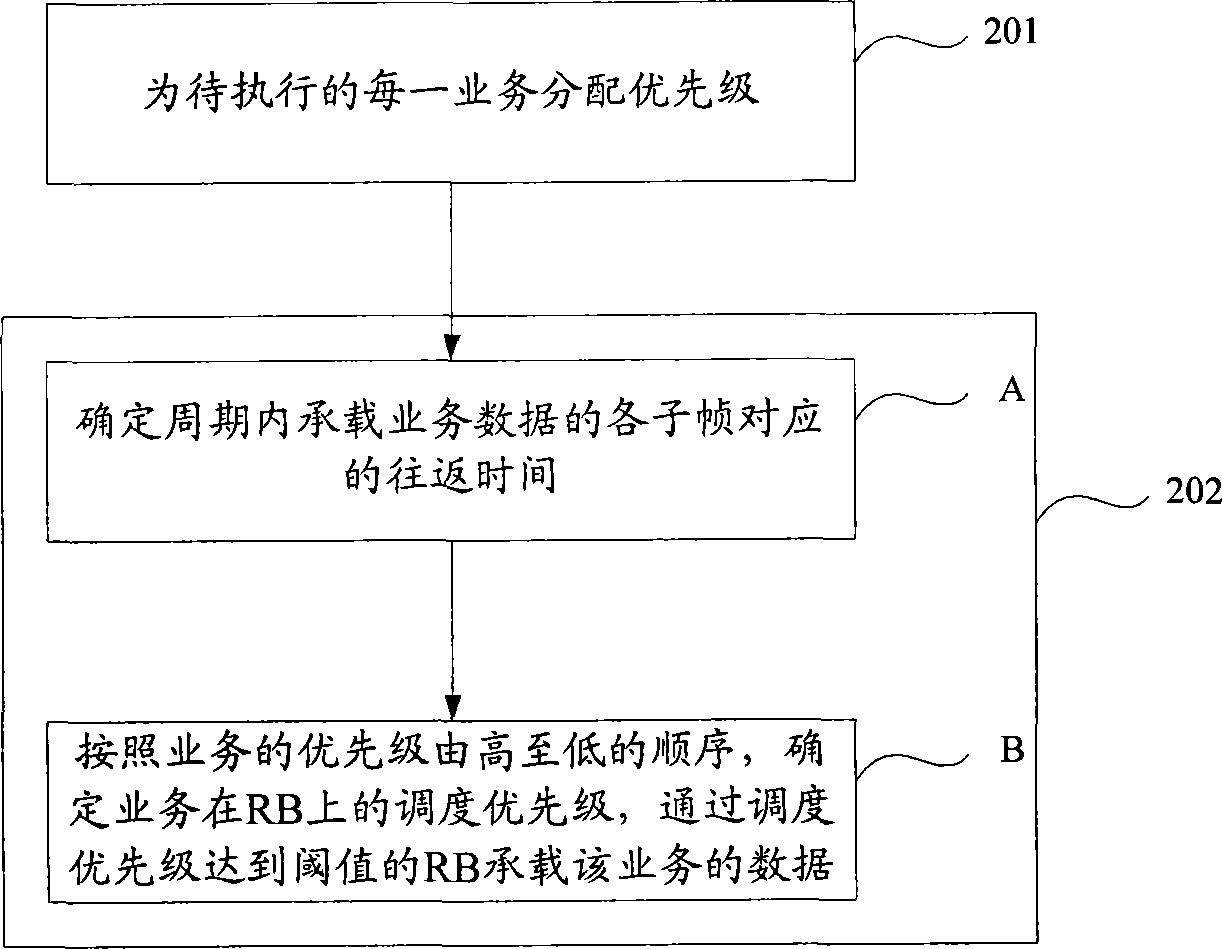
图2为本发明实施例一中资源调度的方法步骤流程示意图;FIG. 2 is a schematic flow chart of resource scheduling method steps in
图3为本发明实施例一中各子帧承载业务时需要的往返时间示意图;FIG. 3 is a schematic diagram of the round-trip time required when each subframe carries services in
图4为本发明实施例二中各子帧承载业务时需要的往返时间示意图;FIG. 4 is a schematic diagram of the round-trip time required when each subframe carries services in
图5为本发明实施例三中资源调度的装置结构示意图;FIG. 5 is a schematic structural diagram of a device for resource scheduling in
图6为本发明实施例四中通信系统结构示意图。FIG. 6 is a schematic structural diagram of a communication system in
具体实施方式Detailed ways
为了实现本发明目的,申请人利用在TDD系统中,针对不同物理资源(时隙或子帧位置)承载发送侧指定的业务时具有不同往返时间的特点,在兼顾公平性的基础上,将对时延要求较高的用户对应到往返时间较短的物理资源上,尽可能利用较短的往返时间执行用户的业务。下面结合说明书附图和具体实施例,详细描述本发明方案。In order to achieve the purpose of the present invention, the applicant utilizes the characteristics of different round-trip times when different physical resources (time slots or subframe positions) bear the services specified by the sending side in the TDD system, and on the basis of fairness, the applicant will Users with higher latency requirements correspond to physical resources with shorter round-trip time, and use the short round-trip time to execute user services as much as possible. The solution of the present invention will be described in detail below in conjunction with the accompanying drawings and specific embodiments.
在本发明各实施例中,以最小的物理资源为单位进行调度,称之为最小调度资源块(Resource Block,RB),不同系统的最小调度单位可能不同,RB的组成和大小也不尽相同。例如,在TDD系统的时域中,一个5ms帧内具有5个子帧,每个子帧1ms;而在带宽为10MHz的频域中,可用于承载数据的有600个子载波,载波间隔为15kHz,一个RB的定义为频域上占用12个子载波,时域上为0.5ms,因此一个1ms子帧中存在100个RB。In each embodiment of the present invention, the smallest physical resource is used as the unit for scheduling, which is called the smallest scheduling resource block (Resource Block, RB). The smallest scheduling unit of different systems may be different, and the composition and size of RB are also different. . For example, in the time domain of the TDD system, there are 5 subframes in a 5ms frame, and each subframe is 1ms; while in the frequency domain with a bandwidth of 10MHz, there are 600 subcarriers that can be used to carry data, and the carrier spacing is 15kHz. The RB is defined as occupying 12 subcarriers in the frequency domain and 0.5ms in the time domain, so there are 100 RBs in a 1ms subframe.
如图2所示,为本发明实施例一中资源调度的方法步骤流程示意图,从图中可以看出该方法包括以下步骤:As shown in FIG. 2 , it is a schematic flowchart of the resource scheduling method steps in
步骤201:为待执行的每一业务分配优先级。Step 201: Assign priority to each service to be executed.
在本实施例中,为每一业务分配优先级可以看作是为要求执行业务的发送侧用户分配优先级,可以是管理员手动为每一业务分配优先级,也可以是系统按照一定的规则为每一业务分配优先级。In this embodiment, assigning priority to each service can be regarded as assigning priority to sending side users who request to execute the service. It can be that the administrator manually assigns priority to each service, or the system can assign priority to each service according to certain rules. Assign priorities to each business.
系统按照一定的规则为每一业务分配优先级可以为:系统按照业务容忍时延或系统的相对时延的要求分配优先级,以系统的相对时延为例,业务需要的相对时延越短,优先级越高。在本实施例中,业务的相对时延由该业务容忍时延和上次执行该业务到当前的间隔决定,具体地,可以按照公式(1)为业务分配优先级。The system assigns priority to each service according to certain rules: the system assigns priority according to the requirements of the service tolerance delay or the relative delay of the system. Taking the relative delay of the system as an example, the shorter the relative delay required by the service , the higher the priority. In this embodiment, the relative time delay of the service is determined by the service tolerance time delay and the interval from the last execution of the service to the current time. Specifically, the priority can be assigned to the service according to the formula (1).
RLi=Li/Wi (1)RL i =L i /W i (1)
其中,RLi表示第i个业务的相对时延,Li表示第i个业务容忍时延等级,Wi表示上次执行第i个业务的时间到当前时间的间隔等级,RLi越小,优先级越高。所谓第i个业务容忍时延等级是指:预先建立业务容忍时延与等级之间的对应关系,一个等级可以对应一段区间的容忍时延;然后确定出第i个业务的容忍时延,根据预先建立的对应关系判断该容忍时延所在的等级,即Li。间隔等级是指:预先建立各间隔时间与等级之间的对应关系,一个等级可以对应一个或一个以上的间隔时间;然后确定出上次执行第i个业务的时间到当前时间的间隔时间,根据预先建立的对应关系确定第i个业务的间隔等级,即Wi。Among them, RL i represents the relative delay of the i-th business, L i represents the tolerable delay level of the i-th business, W i represents the interval level from the last execution time of the i-th business to the current time, the smaller the RL i , The higher the priority. The so-called i-th service delay level refers to: pre-establish the corresponding relationship between the service delay and the level, a level can correspond to the tolerance delay of a section; then determine the tolerance delay of the i-th service, according to The pre-established correspondence determines the level of the tolerable delay, that is, L i . The interval level refers to: establish the corresponding relationship between each interval time and level in advance, and one level can correspond to one or more interval times; then determine the interval time from the time when the i-th business was executed last time to the current time, according to The pre-established correspondence determines the interval level of the i-th service, that is, W i .
业务容忍时延越短,表明为了较好地执行该业务,应该选择对应往返时间较短的子帧。但是,若在每一个周期内都为该业务选择对应往返时间较短的子帧,可能会造成其他的业务无法成功执行,为了兼顾公平所以需要考虑执行业务的间隔,若某业务的数据在本周期被承载的话,该业务在下一周期的Wi相对于没有在本周期得到承载的业务小,这样长时间没有得到服务的业务就会获得相对较高的优先级。The shorter the service tolerance delay is, it indicates that in order to better execute the service, a subframe corresponding to a shorter round-trip time should be selected. However, if a subframe corresponding to a shorter round-trip time is selected for this service in each cycle, other services may not be successfully executed. In order to take into account fairness, it is necessary to consider the execution interval of the service. If the data of a certain service is in this If the service is carried periodically, the Wi of the service in the next period is smaller than that of the service not carried in the current period, so that the service that has not been served for a long time will get a relatively high priority.
在本实施例中,可以根据需要综合考虑Li和Wi来确定业务的优先级,不局限于公式(1)的方法。In this embodiment, L i and W i may be comprehensively considered to determine service priorities as required, and the method is not limited to the method of formula (1).
步骤202:按照业务的优先级由高至低的顺序,依次从周期内承载业务数据的子帧中选择承载所述业务数据的资源。Step 202: According to the descending order of the priority of the service, select the resource carrying the service data from the subframes carrying the service data in the cycle.
为实现本步骤,具体可以采用以下方案:In order to realize this step, the following scheme can be adopted specifically:
步骤A:确定周期内承载业务数据的各子帧对应的往返时间。Step A: Determine the round-trip time corresponding to each subframe carrying service data within a period.
在本实施例中,可以设定是在TDD系统中执行业务。In this embodiment, it can be set that the service is executed in the TDD system.
在一个周期内,通过不同的子帧承载业务可以得到不同的往返时间。如图3所示,设定MAC层时延为3ms,一个5ms帧为一个调度周期,每个子帧1ms,在上下行时隙比例为2∶2时,基站通过下行子帧向终端发送数据包,能够承载业务的子帧为子帧1和子帧5。当基站通过子帧1承载数据包时,等待3ms的MAC层时延后,当前子帧5是下行子帧,无法承载终端上行发送的反馈信息,必须再等待3ms,通过下一周期内的上行子帧3承载反馈信息,到基站再次下行发送数据包时经过了14ms。当基站通过子帧5下行发送数据包时,等待3ms的MAC层时延后,当前子帧是下一周期内的上行子帧4,可以承载终端上行发送的反馈信息,到基站再次下行发送数据包时经过了10ms。因此,子帧1对应的往返时间为14ms,子帧5对应的往返时间为10ms。In one cycle, different round-trip times can be obtained by carrying services through different subframes. As shown in Figure 3, the MAC layer delay is set to 3ms, a 5ms frame is a scheduling period, and each subframe is 1ms. When the uplink and downlink time slot ratio is 2:2, the base station sends data packets to the terminal through the downlink subframe , the subframes capable of carrying services are
步骤B:按照业务的优先级由高至低的顺序,确定业务在子帧RB上的调度优先级,通过调度优先级达到阈值的RB承载该业务的数据。Step B: Determine the scheduling priority of the service on the RB of the subframe according to the order of the priority of the service from high to low, and carry the data of the service through the RB whose scheduling priority reaches the threshold.
首先确定步骤201中优先级最高的业务在各RB上的调度优先级,该调度优先级需要综合考虑业务在各RB上信号质量的评估和在步骤A中确定的该RB所在子帧的往返时间等级。例如,可以根据公式(2)来具体确定调度优先级。First determine the scheduling priority of the service with the highest priority on each RB in
Pi,k=a·(C/I)i,k+b/RTTk (2)P i,k = a·(C/I) i,k +b/RTT k (2)
其中,Pi,k表示业务i在第k个RB上的调度优先级,(C/I)i,k表示业务i在第k个RB上的载干比等级,RTTk表示第k个RB承载数据时的往返时间等级,a、b表示比例系数,且a,b∈[0,1],a+b=1。所谓业务i在第k个RB上的载干比等级是指:预先建立载干比与等级之间的对应关系,一个等级可以对应一段区间的载干比;然后确定出业务i在第k个RB上的载干比,根据预先建立的对应关系判断该载干比所在的等级,即(C/I)i,k。第k个RB承载数据时的往返时间等级是指:预先建立各往返时间与等级之间的对应关系,一个等级可以对应一个或一个以上的往返时间;然后确定出第k个RB承载数据时的往返时间,根据预先建立的对应关系判断该往返时间对应的等级,即RTTk。Among them, P i, k represents the scheduling priority of service i on the kth RB, (C/I) i, k represents the carrier-to-interference ratio level of service i on the kth RB, and RTT k represents the kth RB The round-trip time level when carrying data, a and b represent proportional coefficients, and a, b∈[0,1], a+b=1. The so-called carrier-to-interference ratio level of service i on the kth RB refers to: establish the corresponding relationship between carrier-to-interference ratio and level in advance, and one level can correspond to the carrier-to-interference ratio of a section; For the carrier-to-interference ratio on the RB, the class of the carrier-to-interference ratio is judged according to the pre-established correspondence relationship, that is, (C/I) i,k . The round-trip time level when the kth RB carries data refers to: establish the corresponding relationship between each round-trip time and level in advance, and one level can correspond to one or more round-trip times; then determine the time when the k-th RB carries data For the round-trip time, judge the level corresponding to the round-trip time according to the pre-established correspondence, that is, RTT k .
若RB上的载干比等级较高,则业务通过该RB承载数据时,传输的正确率较高,从而减少重传次数,可以起到降低时延的效果;另一方面,当信道传输质量等级相同时,RTT等级的取值越小(即该RB上的相对其它RB的往返时间越短),则单次传输的往返时间较低,也可以起到降低时延的效果。在实际传输数据时,需要综合考虑业务在RB上的信号质量和往返时延,可以根据系统、用户需求和信道特性对a和b的取值进行训练,选择合适取值,否则即使承载业务的RB往返时间很短,但由于在该RB上的载干比很差,数据不能正确接收需要多次重传,并不能降低所述业务的时延。If the carrier-to-interference ratio level on the RB is high, when the service carries data through the RB, the transmission accuracy rate is high, thereby reducing the number of retransmissions and reducing the delay; on the other hand, when the channel transmission quality When the levels are the same, the smaller the value of the RTT level (that is, the shorter the round-trip time on this RB relative to other RBs), the lower the round-trip time of a single transmission, which can also reduce the delay. When actually transmitting data, it is necessary to comprehensively consider the signal quality and round-trip delay of the service on the RB. The values of a and b can be trained according to the system, user requirements and channel characteristics, and an appropriate value can be selected. Otherwise, even if the service is carried The round-trip time of the RB is very short, but because the carrier-to-interference ratio on the RB is very poor, the data cannot be received correctly and needs to be retransmitted multiple times, which cannot reduce the service delay.
通过调度优先级达到阈值的RB承载该业务的数据,具体地,可以是超过阈值的各个RB按照调度优先级由高到低的顺序承载优先级最高的业务,已分配对所述业务进行承载的RB将被标记为已分配,此时存在以下几种情况:The data of the service is carried by the RB whose scheduling priority reaches the threshold. Specifically, the RBs exceeding the threshold may carry the service with the highest priority in the order of scheduling priority from high to low, and the RBs that have been allocated to carry the service RB will be marked as allocated, and the following situations exist at this time:
第一种,调度优先级达到阈值的一个或多个RB恰好能为优先级最高的业务承载数据,在此情况下,继续将优先级第二高的业务执行本步骤。In the first type, one or more RBs whose scheduling priority reaches the threshold can just carry data for the service with the highest priority. In this case, continue to perform this step for the service with the second highest priority.
第二种,调度优先级达到阈值的一个或多个RB为优先级最高的业务承载数据后还存在空闲的RB,则这些空闲的RB不标记已分配,继续将优先级第二高的业务执行本步骤。In the second type, one or more RBs whose scheduling priority reaches the threshold are used to carry data for the highest priority business and there are still idle RBs, these idle RBs will not be marked as allocated, and continue to execute the second highest priority business this step.
第三种,调度优先级达到阈值的一个或多个RB不足以为优先级最高的业务承载数据,则将未承载的数据存入该业务对应的缓存,等待其他优先权低于所述业务的剩余业务执行完本步骤后,若还存在空闲的RB,则利用空闲的RB按照业务的优先级由高至低的顺序承载存入缓存的数据;若不存在空闲的RB,则保存在缓存中的数据可以在下一周期进行调度。Third, one or more RBs whose scheduling priority reaches the threshold is not enough to carry data for the service with the highest priority, then store the uncarried data in the cache corresponding to the service, and wait for the rest of other services with lower priority than the service After the business completes this step, if there are still idle RBs, use the idle RBs to carry the data stored in the cache according to the priority of the business from high to low; if there are no idle RBs, then save the data stored in the cache Data can be scheduled on the next cycle.
当优先级最高的业务执行完毕后,由优先级次高的业务执行本步骤,以此类推,直至所有业务执行本步骤完毕或调度周期内所有RB均已被占用。After the execution of the service with the highest priority is completed, this step is performed by the service with the second highest priority, and so on, until all services complete this step or all RBs are occupied in the scheduling period.
考虑到优先级较高的业务可能会占用大量的RB,导致优先级较低的业务没有RB可用,为公平起见,也可以只承载每个业务的部分数据,该业务的剩余数据可以保存到缓存中,在下个周期内重新执行本实施例后再发送。例如,将业务按照优先级从高至低的顺序划分为3组,可以设定优先级最高的组承载80%的数据,优先级次高的组承载70%的数据,优先级最低的组承载60%的数据。若为所有业务分配了RB之后还存在空闲RB,则可以按照优先级从高至低的原则,将保存在缓存中的数据通过该空闲RB承载。Considering that services with higher priority may occupy a large number of RBs, resulting in no RBs available for services with lower priority, for the sake of fairness, only part of the data of each service can be carried, and the remaining data of the service can be saved to the cache , re-execute this embodiment in the next cycle before sending. For example, divide the business into 3 groups in order of priority from high to low. You can set the group with the highest priority to carry 80% of the data, the group with the second highest priority to carry 70% of the data, and the group with the lowest priority to carry 60% of the data. If there is still an idle RB after the RBs are allocated for all services, the data stored in the cache can be carried by the idle RB according to the principle of priority from high to low.
下面通过具体的实施例二详细描述本发明方案。The scheme of the present invention is described in detail below through a
在LTE TDD系统中,一个周期为5ms帧内具有5个子帧,每个子帧1ms,其中,第一个子帧作为下行使用,第二个子帧为特殊时隙子帧,包含一个下行导频信道时隙(DwPTS)、转换保护时隙(Guard Period,GP)和上行导频信道时隙(UpPTS),之后三个子帧可以用来作为上行,也可以为下行。如图4所示,假定实施例二的方案中,MAC层时延为3ms,上下行时隙比例为1∶3,一个5ms帧内有三个下行子帧,每个子帧中有100个RB,待执行的业务有10个,分别为业务1、业务2...业务10。In the LTE TDD system, there are 5 subframes in a frame with a period of 5ms, and each subframe is 1ms. Among them, the first subframe is used for downlink, and the second subframe is a special time slot subframe, including a downlink pilot channel Time slot (DwPTS), conversion guard time slot (Guard Period, GP) and uplink pilot channel time slot (UpPTS), the next three subframes can be used as uplink or downlink. As shown in Figure 4, assume that in the solution of
第一步,根据公式(1)确定出这10个业务的优先级,为描述方便,设定业务1、业务2...业务10优先级依次增高。In the first step, the priorities of the 10 services are determined according to the formula (1). For the convenience of description, the priorities of
第二步:根据公式(2)确定业务10在各RB上的调度优先级。Step 2: Determine the scheduling priority of the service 10 on each RB according to formula (2).
第三步:通过调度优先级达到阈值的RB承载业务10的数据。Step 3: Carry the data of the service 10 by scheduling the RB whose priority reaches the threshold.
第四步:若业务10需要20个RB承载,但调度优先级达到阈值的RB只有15个,则将未分配RB的数据保存到缓存中,等其他业务执行完第二、三步后,若还有剩余RB,则承载业务10保存到缓存中的数据;若调度优先级达到阈值的RB不少于20个,则依次让业务9执行第二、三步。Step 4: If service 10 requires 20 RBs to carry, but there are only 15 RBs whose scheduling priority reaches the threshold, save the data of unallocated RBs in the cache, and wait for other services to complete the second and third steps. If there are remaining RBs, the data stored in the cache by the service 10 is carried; if there are no less than 20 RBs whose scheduling priority reaches the threshold, then the service 9 is ordered to perform the second and third steps in turn.
本实施例是以下行承载数据为例描述的,若是终端作为发送侧要求上行承载数据,则执行过程类似。In this embodiment, the downlink bearer data is described as an example. If the terminal as the sending side requires uplink bearer data, the execution process is similar.
通过实施例一和实施例二描述的方案,本发明实施例三还提供了一种资源调度的装置,如图5所示,该装置包括优先权分配模块11和调度模块12,其中,优先权分配模块11用于为待执行的业务分配优先级;调度模块12用于按照业务的优先级由高至低的顺序,依次从周期内承载业务数据的子帧中选择承载所述业务数据的资源。Through the solutions described in
所述优先权分配模块11用于按照所述业务相对时延的要求为所述业务分配优先级。进一步地,可以将优先权分配模块11划分为第一保存单元21和第一计算单元22,其中,第一保存单元21用于保存实施例一中的公式(1);第一计算单元22用于根据所述第一保存单元21中保存的公式(1)计算所述业务的优先级。The priority assignment module 11 is configured to assign priorities to the services according to the relative time delay requirements of the services. Further, the priority allocation module 11 can be divided into a first storage unit 21 and a first calculation unit 22, wherein the first storage unit 21 is used to store the formula (1) in
所述调度模块12包括调度优先级确定单元31和选择单元32,其中,调度优先级确定单元31用于确定业务在子帧最小调度资源块上的调度优先级;选择单元32用于按照优先级由高至低的顺序,依次选择调度优先级达到阈值的最小调度资源块承载该业务的数据。The scheduling module 12 includes a scheduling priority determination unit 31 and a selection unit 32, wherein the scheduling priority determination unit 31 is used to determine the scheduling priority of the service on the minimum scheduling resource block of the subframe; From high to low, select the smallest scheduling resource block whose scheduling priority reaches the threshold to carry the data of the service.
所述调度优先级确定单元31用于根据业务在最小调度资源块上的载干比等级和该最小调度资源块所在的子帧的往返时间等级确定所述调度优先级。进一步地,可以将调度优先级确定单元31划分为第二保存单元41和第二计算单元42,其中,第二保存单元41用于保存实施例一中公式(2);第二计算单元42用于根据所述第二保存单元41中保存的公式(2)计算所述调度优先级。The scheduling priority determination unit 31 is configured to determine the scheduling priority according to the carrier-to-interference ratio level of the service on the smallest scheduling resource block and the round-trip time level of the subframe where the smallest scheduling resource block is located. Further, the scheduling priority determination unit 31 can be divided into a second storage unit 41 and a second calculation unit 42, wherein the second storage unit 41 is used to store the formula (2) in
特殊地,若调度优先级达到阈值的最小调度资源块不足以承载业务的数据,则当优先权低于所述业务的剩余业务选择最小调度资源块后,还存在空闲最小调度资源块时,所述选择单元32用于通过所述空闲最小调度资源块重新按照业务的优先级由高至低的顺序承载业务的数据。Specifically, if the minimum scheduling resource block whose scheduling priority reaches the threshold is not enough to carry the data of the service, then when the minimum scheduling resource block is selected by the remaining services with a priority lower than that of the service, and there is still an idle minimum scheduling resource block, the The selecting unit 32 is configured to use the idle minimum scheduling resource block to recarry service data according to the order of service priority from high to low.
与本发明实施例一、二和三的方案对应的,本发明实施例四还提供一种通信系统,如图6所示,该通信系统包括发送侧51、资源调度装置52和接收侧53,其中,发送侧51用于向所述资源调度装置52指示待执行的业务;所述资源调度装置52用于按照所述业务的优先级由高至低的顺序,依次从周期内承载业务数据的子帧中选择承载所述业务数据的资源;接收侧53用于接收所述子帧承载的数据。Corresponding to the solutions of
进一步地,所述资源调度装置包括优先权分配模块61和调度模块62,其中,优先权分配模块61用于为待执行的业务分配优先级;调度模块62用于按照业务的优先级由高至低的顺序,依次从周期内承载业务数据的子帧中选择承载所述业务数据的资源。Further, the resource scheduling device includes a priority allocation module 61 and a scheduling module 62, wherein the priority allocation module 61 is used to assign priorities to the services to be executed; the scheduling module 62 is used to rank from high to In the lower order, the resources bearing the service data are sequentially selected from the subframes bearing the service data in the period.
所述优先权分配模块61用于按照所述业务相对时延的要求为所述业务分配优先级。The priority assignment module 61 is configured to assign priorities to the services according to the relative delay requirements of the services.
调度模块62用于按照业务在子帧最小调度资源块上的调度优先级,根据优先级由高至低的顺序,依次选择调度优先级达到阈值的最小调度资源块承载该业务的数据。The scheduling module 62 is configured to sequentially select the smallest scheduling resource block whose scheduling priority reaches the threshold to carry the data of the service according to the scheduling priority of the service on the smallest scheduling resource block of the subframe and in descending order of priority.
具体地,所述调度模块62进一步用于根据业务在最小调度资源块上的载干比等级和该最小调度资源块所在的子帧的往返时间等级确定所述调度优先级。Specifically, the scheduling module 62 is further configured to determine the scheduling priority according to the carrier-to-interference ratio level of the service on the smallest scheduling resource block and the round-trip time level of the subframe where the smallest scheduling resource block is located.
本实施例四中的资源调度装置与实施例三中装置在结构和操作上类似,此处不再赘述。The resource scheduling device in the fourth embodiment is similar in structure and operation to the device in the third embodiment, and will not be repeated here.
通过本发明实施例提供的方法、装置和系统,尽可能地减少了对容忍时延要求较高的业务的往返时间,大大提高了这些业务的执行成功率;另外,本发明中使用的调度算法综合考虑了业务在RB上的信号质量和往返时延,使系统或用户可以根据实际的需要对调度优先级进行调整,体验较好。Through the method, device and system provided by the embodiments of the present invention, the round-trip time of services with high tolerance for delay requirements is reduced as much as possible, and the execution success rate of these services is greatly improved; in addition, the scheduling algorithm used in the present invention The signal quality and round-trip delay of services on RBs are comprehensively considered, so that the system or users can adjust the scheduling priority according to actual needs, and the experience is better.
显然,本领域的技术人员可以对本发明进行各种改动和变型而不脱离本发明的精神和范围。这样,倘若本发明的这些修改和变型属于本发明权利要求及其等同技术的范围之内,则本发明也意图包含这些改动和变型在内。Obviously, those skilled in the art can make various changes and modifications to the present invention without departing from the spirit and scope of the present invention. Thus, if these modifications and variations of the present invention fall within the scope of the claims of the present invention and their equivalent technologies, the present invention also intends to include these modifications and variations.
Claims (12)
Priority Applications (1)
| Application Number | Priority Date | Filing Date | Title |
|---|---|---|---|
| CN2007101793439A CN101459965B (en) | 2007-12-12 | 2007-12-12 | Resource scheduling method, device and communication system |
Applications Claiming Priority (1)
| Application Number | Priority Date | Filing Date | Title |
|---|---|---|---|
| CN2007101793439A CN101459965B (en) | 2007-12-12 | 2007-12-12 | Resource scheduling method, device and communication system |
Publications (2)
| Publication Number | Publication Date |
|---|---|
| CN101459965A CN101459965A (en) | 2009-06-17 |
| CN101459965B true CN101459965B (en) | 2010-07-14 |
Family
ID=40770524
Family Applications (1)
| Application Number | Title | Priority Date | Filing Date |
|---|---|---|---|
| CN2007101793439A Expired - Fee Related CN101459965B (en) | 2007-12-12 | 2007-12-12 | Resource scheduling method, device and communication system |
Country Status (1)
| Country | Link |
|---|---|
| CN (1) | CN101459965B (en) |
Cited By (1)
| Publication number | Priority date | Publication date | Assignee | Title |
|---|---|---|---|---|
| GB2513407A (en) * | 2013-04-26 | 2014-10-29 | Ubiquisys Ltd | Selection of radio bearers for scheduling in a mobile communications network |
Families Citing this family (10)
| Publication number | Priority date | Publication date | Assignee | Title |
|---|---|---|---|---|
| CN102448177A (en) * | 2010-10-13 | 2012-05-09 | 中国移动通信集团江苏有限公司 | Resource scheduling method and device in mobile communication system |
| CN102036397B (en) * | 2011-01-21 | 2013-03-20 | 大唐移动通信设备有限公司 | Resource scheduling method and device of TD-LTE (Time Division-Long Term Evolution) system |
| CN105517168B (en) * | 2015-12-16 | 2019-04-19 | 东莞酷派软件技术有限公司 | A D2D data packet transmission method, transmission resource allocation method and device |
| US11051208B2 (en) | 2016-08-25 | 2021-06-29 | Huawei Technologies Co., Ltd. | Co-existence of low latency and latency tolerant downlink communication |
| US11071136B2 (en) | 2016-08-25 | 2021-07-20 | Huawei Technologies Co., Ltd. | System and method for multiplexing traffic |
| US11252717B2 (en) * | 2016-09-02 | 2022-02-15 | Huawei Technologies Co., Ltd. | Co-existence of latency tolerant and low latency communications |
| CN109120382B (en) * | 2017-06-22 | 2020-07-28 | 华为技术有限公司 | Signal transmitting and receiving method and device |
| CN112001570B (en) * | 2020-09-29 | 2021-07-09 | 北京嘀嘀无限科技发展有限公司 | Data processing method and device, electronic equipment and readable storage medium |
| EP4266743A4 (en) * | 2021-01-29 | 2024-01-17 | Huawei Technologies Co., Ltd. | Resource scheduling method and apparatus |
| CN117042038A (en) * | 2023-08-11 | 2023-11-10 | 中国电信股份有限公司技术创新中心 | Data offloading method, device, computer equipment and storage medium thereof |
Citations (2)
| Publication number | Priority date | Publication date | Assignee | Title |
|---|---|---|---|---|
| CN1921444A (en) * | 2005-08-24 | 2007-02-28 | 上海原动力通信科技有限公司 | Method for classified package dispatching and resource distributing based on service quality |
| CN1968195A (en) * | 2006-05-29 | 2007-05-23 | 华为技术有限公司 | Communication system scheduling method |
-
2007
- 2007-12-12 CN CN2007101793439A patent/CN101459965B/en not_active Expired - Fee Related
Patent Citations (2)
| Publication number | Priority date | Publication date | Assignee | Title |
|---|---|---|---|---|
| CN1921444A (en) * | 2005-08-24 | 2007-02-28 | 上海原动力通信科技有限公司 | Method for classified package dispatching and resource distributing based on service quality |
| CN1968195A (en) * | 2006-05-29 | 2007-05-23 | 华为技术有限公司 | Communication system scheduling method |
Cited By (1)
| Publication number | Priority date | Publication date | Assignee | Title |
|---|---|---|---|---|
| GB2513407A (en) * | 2013-04-26 | 2014-10-29 | Ubiquisys Ltd | Selection of radio bearers for scheduling in a mobile communications network |
Also Published As
| Publication number | Publication date |
|---|---|
| CN101459965A (en) | 2009-06-17 |
Similar Documents
| Publication | Publication Date | Title |
|---|---|---|
| CN101459965B (en) | Resource scheduling method, device and communication system | |
| JP5153074B2 (en) | Method and apparatus for managing packet data resources | |
| Cicconetti et al. | Quality of service support in IEEE 802.16 networks | |
| CN102143596B (en) | Wireless resource scheduling method and wireless resource scheduling system | |
| CN101459581B (en) | Resource scheduling method, device and a communication system | |
| CN107872892B (en) | Wireless resource allocation method and device | |
| WO2009086664A1 (en) | Method and device for resource allocation request and allocation | |
| CN1921444B (en) | Method for classified package dispatching and resource distributing based on service quality, and communication device | |
| WO2016082115A1 (en) | Service scheduling method and device | |
| KR20070106940A (en) | Method and apparatus for data block scheduling and integrated circuit comprising same | |
| CN101399763A (en) | Downlink service data scheduling method and apparatus | |
| CN102469602A (en) | User multi-service scheduling method | |
| CN104160770A (en) | Service scheduling method, service transmission rate control method, device and system | |
| KR100862614B1 (en) | Method of Uplink Signaling for Streaming Services in Packet Mobile Communication Systems, Base Station and Mobile Terminal | |
| CN107371267A (en) | A kind of data transmission method and terminal | |
| JP3977639B2 (en) | Line assignment control method and line assignment apparatus | |
| CN101778433B (en) | Method and device for scheduling radio resources | |
| KR100523996B1 (en) | Packet scheduling system and a packet scheduling method in a mobile communication system | |
| JP4607037B2 (en) | Radio frame control apparatus and radio communication apparatus | |
| JP5011142B2 (en) | Radio base station and scheduling method | |
| KR100520608B1 (en) | Method for packet scheduling in a mobile communication system | |
| KR100606898B1 (en) | Resource utilization method for packet scheduling, and system using the same | |
| CN102450045B (en) | Method and corresponding device for scheduling downlink radio resources | |
| Diao et al. | CPLD-PGPS scheduler in wireless OFDM systems | |
| Pereira et al. | Energy-efficient fragmentation-avoidance uplink packet scheduler for SC-FDMA-based systems |
Legal Events
| Date | Code | Title | Description |
|---|---|---|---|
| C06 | Publication | ||
| PB01 | Publication | ||
| C10 | Entry into substantive examination | ||
| SE01 | Entry into force of request for substantive examination | ||
| C14 | Grant of patent or utility model | ||
| GR01 | Patent grant | ||
| CF01 | Termination of patent right due to non-payment of annual fee | ||
| CF01 | Termination of patent right due to non-payment of annual fee |
Granted publication date: 20100714 Termination date: 20201212 |