CN101437797A - Piperidine derivatives, their process for preparation, their use as therapeutic agents and pharmaceutical compositions containing them - Google Patents
Piperidine derivatives, their process for preparation, their use as therapeutic agents and pharmaceutical compositions containing them Download PDFInfo
- Publication number
- CN101437797A CN101437797A CNA2007800167169A CN200780016716A CN101437797A CN 101437797 A CN101437797 A CN 101437797A CN A2007800167169 A CNA2007800167169 A CN A2007800167169A CN 200780016716 A CN200780016716 A CN 200780016716A CN 101437797 A CN101437797 A CN 101437797A
- Authority
- CN
- China
- Prior art keywords
- alkyl
- compound
- formula
- phenyl
- substituted
- Prior art date
- Legal status (The legal status is an assumption and is not a legal conclusion. Google has not performed a legal analysis and makes no representation as to the accuracy of the status listed.)
- Pending
Links
Classifications
-
- C—CHEMISTRY; METALLURGY
- C07—ORGANIC CHEMISTRY
- C07D—HETEROCYCLIC COMPOUNDS
- C07D211/00—Heterocyclic compounds containing hydrogenated pyridine rings, not condensed with other rings
- C07D211/04—Heterocyclic compounds containing hydrogenated pyridine rings, not condensed with other rings with only hydrogen or carbon atoms directly attached to the ring nitrogen atom
- C07D211/06—Heterocyclic compounds containing hydrogenated pyridine rings, not condensed with other rings with only hydrogen or carbon atoms directly attached to the ring nitrogen atom having no double bonds between ring members or between ring members and non-ring members
- C07D211/36—Heterocyclic compounds containing hydrogenated pyridine rings, not condensed with other rings with only hydrogen or carbon atoms directly attached to the ring nitrogen atom having no double bonds between ring members or between ring members and non-ring members with hetero atoms or with carbon atoms having three bonds to hetero atoms with at the most one bond to halogen, e.g. ester or nitrile radicals, directly attached to ring carbon atoms
- C07D211/56—Nitrogen atoms
- C07D211/58—Nitrogen atoms attached in position 4
-
- A—HUMAN NECESSITIES
- A61—MEDICAL OR VETERINARY SCIENCE; HYGIENE
- A61P—SPECIFIC THERAPEUTIC ACTIVITY OF CHEMICAL COMPOUNDS OR MEDICINAL PREPARATIONS
- A61P11/00—Drugs for disorders of the respiratory system
-
- A—HUMAN NECESSITIES
- A61—MEDICAL OR VETERINARY SCIENCE; HYGIENE
- A61P—SPECIFIC THERAPEUTIC ACTIVITY OF CHEMICAL COMPOUNDS OR MEDICINAL PREPARATIONS
- A61P11/00—Drugs for disorders of the respiratory system
- A61P11/06—Antiasthmatics
-
- A—HUMAN NECESSITIES
- A61—MEDICAL OR VETERINARY SCIENCE; HYGIENE
- A61P—SPECIFIC THERAPEUTIC ACTIVITY OF CHEMICAL COMPOUNDS OR MEDICINAL PREPARATIONS
- A61P19/00—Drugs for skeletal disorders
- A61P19/02—Drugs for skeletal disorders for joint disorders, e.g. arthritis, arthrosis
-
- A—HUMAN NECESSITIES
- A61—MEDICAL OR VETERINARY SCIENCE; HYGIENE
- A61P—SPECIFIC THERAPEUTIC ACTIVITY OF CHEMICAL COMPOUNDS OR MEDICINAL PREPARATIONS
- A61P29/00—Non-central analgesic, antipyretic or antiinflammatory agents, e.g. antirheumatic agents; Non-steroidal antiinflammatory drugs [NSAID]
-
- A—HUMAN NECESSITIES
- A61—MEDICAL OR VETERINARY SCIENCE; HYGIENE
- A61P—SPECIFIC THERAPEUTIC ACTIVITY OF CHEMICAL COMPOUNDS OR MEDICINAL PREPARATIONS
- A61P35/00—Antineoplastic agents
-
- A—HUMAN NECESSITIES
- A61—MEDICAL OR VETERINARY SCIENCE; HYGIENE
- A61P—SPECIFIC THERAPEUTIC ACTIVITY OF CHEMICAL COMPOUNDS OR MEDICINAL PREPARATIONS
- A61P37/00—Drugs for immunological or allergic disorders
-
- A—HUMAN NECESSITIES
- A61—MEDICAL OR VETERINARY SCIENCE; HYGIENE
- A61P—SPECIFIC THERAPEUTIC ACTIVITY OF CHEMICAL COMPOUNDS OR MEDICINAL PREPARATIONS
- A61P37/00—Drugs for immunological or allergic disorders
- A61P37/02—Immunomodulators
- A61P37/06—Immunosuppressants, e.g. drugs for graft rejection
-
- A—HUMAN NECESSITIES
- A61—MEDICAL OR VETERINARY SCIENCE; HYGIENE
- A61P—SPECIFIC THERAPEUTIC ACTIVITY OF CHEMICAL COMPOUNDS OR MEDICINAL PREPARATIONS
- A61P37/00—Drugs for immunological or allergic disorders
- A61P37/08—Antiallergic agents
-
- A—HUMAN NECESSITIES
- A61—MEDICAL OR VETERINARY SCIENCE; HYGIENE
- A61P—SPECIFIC THERAPEUTIC ACTIVITY OF CHEMICAL COMPOUNDS OR MEDICINAL PREPARATIONS
- A61P9/00—Drugs for disorders of the cardiovascular system
- A61P9/10—Drugs for disorders of the cardiovascular system for treating ischaemic or atherosclerotic diseases, e.g. antianginal drugs, coronary vasodilators, drugs for myocardial infarction, retinopathy, cerebrovascula insufficiency, renal arteriosclerosis
-
- C—CHEMISTRY; METALLURGY
- C07—ORGANIC CHEMISTRY
- C07D—HETEROCYCLIC COMPOUNDS
- C07D401/00—Heterocyclic compounds containing two or more hetero rings, having nitrogen atoms as the only ring hetero atoms, at least one ring being a six-membered ring with only one nitrogen atom
- C07D401/02—Heterocyclic compounds containing two or more hetero rings, having nitrogen atoms as the only ring hetero atoms, at least one ring being a six-membered ring with only one nitrogen atom containing two hetero rings
- C07D401/12—Heterocyclic compounds containing two or more hetero rings, having nitrogen atoms as the only ring hetero atoms, at least one ring being a six-membered ring with only one nitrogen atom containing two hetero rings linked by a chain containing hetero atoms as chain links
Landscapes
- Health & Medical Sciences (AREA)
- Chemical & Material Sciences (AREA)
- Organic Chemistry (AREA)
- General Health & Medical Sciences (AREA)
- Veterinary Medicine (AREA)
- Bioinformatics & Cheminformatics (AREA)
- Chemical Kinetics & Catalysis (AREA)
- General Chemical & Material Sciences (AREA)
- Medicinal Chemistry (AREA)
- Nuclear Medicine, Radiotherapy & Molecular Imaging (AREA)
- Engineering & Computer Science (AREA)
- Pharmacology & Pharmacy (AREA)
- Life Sciences & Earth Sciences (AREA)
- Animal Behavior & Ethology (AREA)
- Public Health (AREA)
- Immunology (AREA)
- Pulmonology (AREA)
- Rheumatology (AREA)
- Transplantation (AREA)
- Cardiology (AREA)
- Heart & Thoracic Surgery (AREA)
- Vascular Medicine (AREA)
- Pain & Pain Management (AREA)
- Urology & Nephrology (AREA)
- Orthopedic Medicine & Surgery (AREA)
- Physical Education & Sports Medicine (AREA)
- Pharmaceuticals Containing Other Organic And Inorganic Compounds (AREA)
- Hydrogenated Pyridines (AREA)
Abstract
Description
技术领域 technical field
本发明涉及具有药物活性的新N-苄基-哌啶衍生物、用于制备这些衍生物的方法、包括这些衍生物的药物组合物和这些衍生物作为活性治疗剂的用途。The present invention relates to novel pharmaceutically active N-benzyl-piperidine derivatives, processes for the preparation of these derivatives, pharmaceutical compositions comprising these derivatives and the use of these derivatives as active therapeutic agents.
背景技术 Background technique
在WO 01/14333中披露了具有药物活性的N-苄基哌啶衍生物。Pharmaceutically active N-benzylpiperidine derivatives are disclosed in WO 01/14333.
本发明化合物是有效的CCR3拮抗剂并且是有利的,这是因为它们具有高水平的代谢稳定性,正如它们的固有清除率(intrinsic clearance)所显示的那样。药物活性成分的固有清除率预示了活性成分如何快速地从哺乳动物体内清除,即,它是单位时间内从体内清除(或由体内代谢)的活性成分的量的预测器(predictor)。The compounds of the invention are potent CCR3 antagonists and are advantageous because they possess a high level of metabolic stability, as indicated by their intrinsic clearance. The intrinsic clearance rate of a pharmaceutical active ingredient predicts how quickly the active ingredient is cleared from the mammalian body, ie it is a predictor of the amount of active ingredient cleared from (or metabolized by) the body per unit time.
趋化因子是趋化细胞因子,其由多种细胞释放,以将巨噬细胞、T细胞、嗜酸性粒细胞、嗜碱性粒细胞以及嗜中性粒细胞引至炎症部位,并且还在免疫系统细胞的成熟中发挥作用。趋化因子在多种疾病和病症的免疫和炎性反应中发挥中重要作用,这些疾病和病症包括哮喘和变应性疾病,以及自身免疫性病变如类风湿性关节炎和动脉粥样硬化。这些被分泌出的小分子属于不断增加的8-14kDa蛋白超家族,该家族特征为保守的4个半胱氨酸基序。趋化因子超家族可分成显示出特征性结构基序的两类主要家族Cys-X-Cys(C-X-C,或α)和Cys-Cys(C-C,或β)。根据NH-附近的半胱氨酸残基对之间插入的单个氨基酸和序列相似性来区分这两个家族。Chemokines are chemotactic cytokines that are released by a variety of cells to attract macrophages, T cells, eosinophils, basophils, and neutrophils to sites of inflammation and are also Play a role in the maturation of systemic cells. Chemokines play an important role in immune and inflammatory responses in a variety of diseases and conditions, including asthma and allergic diseases, as well as autoimmune disorders such as rheumatoid arthritis and atherosclerosis. These secreted small molecules belong to a growing superfamily of 8-14 kDa proteins characterized by a conserved 4-cysteine motif. The chemokine superfamily can be divided into two major families Cys-X-Cys (C-X-C, or α) and Cys-Cys (C-C, or β) that display characteristic structural motifs. The two families are distinguished on the basis of single amino acid insertions between pairs of NH-near cysteine residues and sequence similarity.
C-X-C趋化因子包括嗜中性粒细胞的几种强效的化学引诱物和活化剂,如白介素-8(IL-8)和嗜中性粒细胞活化肽2(NAP-2)。C-X-C chemokines include several potent chemoattractants and activators of neutrophils, such as interleukin-8 (IL-8) and neutrophil activating peptide 2 (NAP-2).
C-C趋化因子包括单核细胞和淋巴细胞(但不包括嗜中性粒细胞)的强效化学引诱物,如人单核细胞趋化蛋白1-3(MCP-1,MCP-2和MCP-3),RANTES(调节活化、正常T表达和分泌)、嗜酸细胞活化趋化因子(eotaxin)以及巨噬细胞炎性蛋白1α和1β(MIP-1α和MIP-1β)。C-C chemokines include potent chemoattractants for monocytes and lymphocytes (but not neutrophils), such as human monocyte chemoattractant proteins 1-3 (MCP-1, MCP-2 and MCP- 3), RANTES (regulated activation, normal T expression and secretion), eotaxin, and macrophage inflammatory proteins 1α and 1β (MIP-1α and MIP-1β).
研究表明趋化因子的作用是通过G蛋白-偶联受体亚族介导的,其中这些受体被称为CCR1、CCR2、CCR2A、CCR2B、CCR3、CCR4、CCR5、CCR6、CCR7、CCR8、CCR9、CCR10、CXCR1、CXCR2、CXCR3和CXCR4。由于调节这些受体的药物可用于治疗上述提及的那些疾病和病症,因此这些受体代表了良好的药物开发目标。Studies have shown that the effects of chemokines are mediated through a subfamily of G protein-coupled receptors known as CCR1, CCR2, CCR2A, CCR2B, CCR3, CCR4, CCR5, CCR6, CCR7, CCR8, CCR9 , CCR10, CXCR1, CXCR2, CXCR3, and CXCR4. Since drugs that modulate these receptors are useful in the treatment of those diseases and conditions mentioned above, these receptors represent good targets for drug development.
已知病毒感染会引起肺炎。实验表明普通感冒会增加气道中嗜酸细胞活化趋化因子粘膜分泌。将嗜酸细胞活化趋化因子滴注到鼻腔会产生类似于普通感冒的一些体征和症状(参见Greiff L等人,Allergy(1999)54(11)1204-8[Experimental common cold increase mucosal output of eotaxin inatopic individuals]和Kawaguchi M等人,Int.Arch.Allergy Immunol.(2000)122 S1 44[Expression of eotaxin by normal airway epithelial cells aftervirus A infection])。Viral infections are known to cause pneumonia. Experiments have shown that the common cold increases mucosal secretion of eotaxin in the airways. Instillation of eotaxin into the nasal cavity produces some signs and symptoms similar to those of the common cold (see Greiff L et al., Allergy (1999) 54 (11) 1204-8 [Experimental common cold increase mucosal output of eotaxin inatopic individuals] and Kawaguchi M et al., Int. Arch. Allergy Immunol. (2000) 122 S1 44 [Expression of eotaxin by normal airway epithelial cells aftervirus A infection]).
发明内容 Contents of the invention
本发明提供了式(I)化合物或其药用盐:The present invention provides a compound of formula (I) or a pharmaceutically acceptable salt thereof:

其中:in:
Ar1为苯基或萘基,所述苯基或萘基中的任一个任选被氯、氟、甲基或CF3取代;Ar 1 is phenyl or naphthyl, any one of said phenyl or naphthyl is optionally substituted by chlorine, fluorine, methyl or CF 3 ;
Ar2为苯基、萘基、咪唑基、吡嗪基、噻吩基、噻唑基、噻二唑基、吡啶基、嘧啶基、苯并咪唑基、喹啉基、喹唑啉基、异喹啉基、5-苯基氨基-1,3,4-噁二唑基或3-吡啶基-1,2,4-噁二唑基;Ar 2 is phenyl, naphthyl, imidazolyl, pyrazinyl, thienyl, thiazolyl, thiadiazolyl, pyridyl, pyrimidinyl, benzimidazolyl, quinolinyl, quinazolinyl, isoquinoline Base, 5-phenylamino-1,3,4-oxadiazolyl or 3-pyridyl-1,2,4-oxadiazolyl;
其中Ar2被CO2R’、四唑基、(CH2)mR3、CH2CH(CH3)R4、CH2C(CH3)2R5、O(CH2)kR6或S(CH2)qR7取代;以及Where Ar 2 is replaced by CO 2 R', tetrazolyl, (CH 2 ) m R 3 , CH 2 CH(CH 3 )R 4 , CH 2 C(CH 3 ) 2 R 5 , O(CH 2 ) k R 6 or S(CH 2 ) q R 7 substitution; and
Ar2任选地又被一个或多个选自以下的取代基取代:卤素、羟基、硝基、S(O)r(C1-6烷基)、S(O)2NH2、S(O)2NH(C1-6烷基)、S(O)2N(C1-6烷基)2、NH2、NH(C1-6烷基)、N(C1-6烷基)2、氰基、C1-6烷基、C1-6烷氧基、C(O)NH2、C(O)NH(C1-6烷基)、C(O)N(C1-6烷基)2、CO2H、CO2(C1-6烷基)、NHC(O)(C1-6烷基)、NHS(O)2(C1-6烷基)、C(O)(C1-6烷基)、CF3或OCF3;其中烷基或烷氧基任选被NR8R9取代;Ar 2 is optionally substituted by one or more substituents selected from the group consisting of halogen, hydroxyl, nitro, S(O) r (C 1-6 alkyl), S(O) 2 NH 2 , S( O) 2 NH(C 1-6 alkyl), S(O) 2 N(C 1-6 alkyl) 2 , NH 2 , NH(C 1-6 alkyl), N(C 1-6 alkyl ) 2 , cyano, C 1-6 alkyl, C 1-6 alkoxy, C(O)NH 2 , C(O)NH(C 1-6 alkyl), C(O)N(C 1 -6 alkyl) 2 , CO 2 H, CO 2 (C 1-6 alkyl), NHC(O)(C 1-6 alkyl), NHS(O) 2 (C 1-6 alkyl), C (O) (C 1-6 alkyl), CF 3 or OCF 3 ; wherein the alkyl or alkoxy group is optionally substituted by NR 8 R 9 ;
R3、R4、R5、R6和R7独立为CO2R*或四唑基;R 3 , R 4 , R 5 , R 6 and R 7 are independently CO 2 R * or tetrazolyl;
R8和R9独立为氢或C1-4烷基,或R8和R9与它们相连的氮一起形成环(例如氮杂
R’和R*独立为氢、C1-6烷基或苯基(C1-4烷基);其中所述苯基任选被以下基团取代:卤素、羟基、硝基、S(O)t(C1-4烷基)、S(O)2NH2、S(O)2NH(C1-4烷基)、S(O)2N(C1-4烷基)2、氰基、C1-4烷基、C1-4烷氧基、C(O)NH2、C(O)NH(C1-4烷基)、C(O)N(C1-4烷基)2、CO2H、CO2(C1-4烷基)、NHC(O)(C1-4烷基)、NHS(O)2(C1-4烷基)、C(O)(C1-4烷基)、CF3或OCF3;R' and R * are independently hydrogen, C 1-6 alkyl or phenyl (C 1-4 alkyl); wherein the phenyl is optionally substituted by the following groups: halogen, hydroxyl, nitro, S(O ) t (C 1-4 alkyl), S(O) 2 NH 2 , S(O) 2 NH(C 1-4 alkyl), S(O) 2 N(C 1-4 alkyl) 2 , Cyano, C 1-4 alkyl, C 1-4 alkoxy, C(O)NH 2 , C(O)NH(C 1-4 alkyl), C(O)N(C 1-4 alkane base) 2 , CO 2 H, CO 2 (C 1-4 alkyl), NHC(O)(C 1-4 alkyl), NHS(O) 2 (C 1-4 alkyl), C(O) (C 1-4 alkyl), CF 3 or OCF 3 ;
或每个CO2R’或CO2R*独立为(CO2 -)pRp+,其中Rp+为单价阳离子(例如碱金属阳离子)或两个羧酸根可与二价阳离子(例如碱土金属阳离子)配位;or each CO 2 R' or CO 2 R * is independently (CO 2 − ) p R p+ , where R p+ is a monovalent cation (eg, an alkali metal cation) or two carboxylates can be combined with a divalent cation (eg, an alkaline earth metal cation) ) coordination;
或每个四唑基独立为(四唑基g-)Rg+,其中Rg+为单价阳离子(例如碱金属阳离子)或两个四唑分子可与二价阳离子(例如碱土金属阳离子)配位;or each tetrazolyl is independently (tetrazolyl g− )R g+ , wherein R g+ is a monovalent cation (eg, an alkali metal cation) or two tetrazolyl molecules can coordinate with a divalent cation (eg, an alkaline earth metal cation);
r和t独立为0、1或2;r and t are independently 0, 1 or 2;
m、k和q独立为1、2或3;m, k and q are independently 1, 2 or 3;
条件是:若Ar1为3,4-二氯苯基,则Ar2不为3-(CO2C2H5)苯基。Provided that if Ar 1 is 3,4-dichlorophenyl, then Ar 2 is not 3-(CO 2 C 2 H 5 )phenyl.
本发明的某些化合物可以以不同的异构形式(例如对映异构体、非对映异构体、几何异构体或互变异构体)存在。本发明涵盖所有这些异构体和这些异构体的任意比例的混合物。Certain compounds of the present invention may exist in different isomeric forms (eg, enantiomers, diastereomers, geometric isomers or tautomers). The present invention covers all these isomers and mixtures of these isomers in any ratio.
本发明的化合物可以是两性离子的,所有这些两性离子都在本发明的范围内。The compounds of the present invention may be zwitterionic and all such zwitterions are within the scope of the present invention.
合适的盐包括酸加成盐,例如盐酸盐、二盐酸盐、氢溴酸盐、磷酸盐、硫酸盐、乙酸盐、双乙酸盐(diacetate)、富马酸盐、马来酸盐、丙二酸盐、琥珀酸盐、酒石酸盐、柠檬酸盐、草酸盐、甲磺酸盐、苯磺酸盐或对甲苯磺酸盐。Suitable salts include acid addition salts such as hydrochloride, dihydrochloride, hydrobromide, phosphate, sulfate, acetate, diacetate, fumarate, maleic acid salt, malonate, succinate, tartrate, citrate, oxalate, methanesulfonate, benzenesulfonate or p-toluenesulfonate.
碱金属阳离子例如为钠离子或钾离子,碱土金属阳离子例如为镁离子或钙离子。Alkali metal cations are, for example, sodium ions or potassium ions, and alkaline earth metal cations are, for example, magnesium ions or calcium ions.
本发明的化合物可以以溶剂化物(例如水合物)的形式存在,本发明涵盖所有这些溶剂化物。The compounds of the present invention may exist in the form of solvates (eg hydrates), and the present invention encompasses all such solvates.
卤素包括氟、氯、溴和碘。卤素例如为氟或氯。Halogen includes fluorine, chlorine, bromine and iodine. Halogen is, for example, fluorine or chlorine.
烷基为直链或支链,例如为甲基、乙基、正丙基、异丙基或叔丁基。Alkyl is linear or branched, for example methyl, ethyl, n-propyl, isopropyl or tert-butyl.
在一个具体方面,本发明提供了下述的化合物:其中Ar1为任选被氟、氯或甲基取代(例如被一个、两个或三个相同的或不同的基团取代)的苯基。In a specific aspect, the invention provides compounds as follows: wherein Ar is phenyl optionally substituted by fluorine, chlorine or methyl (eg, by one, two or three identical or different groups) .
在另一方面,本发明提供了下述的化合物,其中Ar1为例如3-氯苯基、4-氯苯基、4-氟苯基、3,4-二氟苯基、2-甲基-4-氯苯基、2-甲基苯基、3,4-二氯苯基、2,4-二氯-3-甲基苯基或3,4-二氯-2-甲基苯基。In another aspect, the present invention provides compounds wherein Ar is , for example, 3-chlorophenyl, 4-chlorophenyl, 4-fluorophenyl, 3,4-difluorophenyl, 2-methyl -4-chlorophenyl, 2-methylphenyl, 3,4-dichlorophenyl, 2,4-dichloro-3-methylphenyl or 3,4-dichloro-2-methylphenyl .
在另一方面,本发明提供了式(I)化合物,其中Ar2被CO2R’取代,并且任选地又被上述的一个或多个取代基取代。In another aspect, the present invention provides a compound of formula (I), wherein Ar 2 is substituted with CO 2 R', and optionally further substituted with one or more substituents as described above.
在另一方面,本发明提供了式(I)化合物,其中Ar2为如上述被取代的苯基或吡啶基。在另一方面,Ar2为如上述被取代的苯基。在又一方面,Ar2为如上述被取代的吡啶基。In another aspect, the present invention provides a compound of formula (I), wherein Ar 2 is phenyl or pyridyl substituted as described above. In another aspect, Ar2 is phenyl substituted as described above. In yet another aspect, Ar 2 is pyridyl substituted as described above.
在另一方面,本发明提供了式(I)化合物,其中Ar2被CO2R’或四唑基(其中R’为氢或C1-4烷基)取代,并且任选地又被以下基团取代:卤素、羟基、C1-4烷基、CF3、C1-4烷氧基、S(O)2NH2、NH2或CH2(吗啉-4基)。In another aspect, the present invention provides a compound of formula (I), wherein Ar 2 is substituted by CO 2 R' or tetrazolyl (wherein R' is hydrogen or C 1-4 alkyl), and is optionally further replaced by Group substitution: halogen, hydroxy, C 1-4 alkyl, CF 3 , C 1-4 alkoxy, S(O) 2 NH 2 , NH 2 or CH 2 (morpholin-4 yl).
在又一方面,本发明提供了式(I)化合物,其中Ar2被CO2H取代,并且任选地又被以下基团取代:卤素、羟基、C1-4烷基、CF3、C1-4烷氧基、S(O)2NH2、NH2或CH2(吗啉-4基)。In yet another aspect, the present invention provides compounds of formula (I), wherein Ar 2 is substituted by CO 2 H, and optionally further substituted by: halogen, hydroxyl, C 1-4 alkyl, CF 3 , C 1-4 alkoxy, S(O) 2 NH 2 , NH 2 or CH 2 (morpholin-4yl).
本发明化合物可如下所述制备或采用文献(例如WO 01/14333)中描述的方法制备。Compounds of the invention can be prepared as described below or by methods described in the literature (eg WO 01/14333).
可如下所述制备CO2R’为酯的式(I)化合物:使式(II)化合物与式(III)化合物在合适的溶剂(诸如N-甲基吡咯烷酮)中,在合适的偶联剂(诸如HATU)的存在下,在合适的碱(诸如叔胺,例如许尼希碱(Hünig’s base)的存在下,在-10至30℃的温度反应,Compounds of formula (I) in which CO 2 R' is an ester can be prepared as follows: compound of formula (II) and compound of formula (III) in a suitable solvent (such as N-methylpyrrolidone) in a suitable coupling agent (such as HATU) in the presence of a suitable base (such as a tertiary amine, for example Hünig's base) at a temperature of -10 to 30°C,
式(II)化合物:Compound of formula (II):

式(III)化合物:Compound of formula (III):

或者,可如下所述制备CO2R’为酯的式(I)化合物:使式(IV)化合物与化合物Ar2OH在合适的溶剂(诸如NMP)中,在合适的碱(例如叔丁醇钾)的存在下,在合适的温度(诸如0-150℃)反应,Alternatively, compounds of formula (I) wherein CO 2 R' is an ester can be prepared by combining a compound of formula (IV) with compound Ar 2 OH in a suitable solvent such as NMP in a suitable base such as tert-butanol Potassium), in the presence of suitable temperature (such as 0-150 ℃) reaction,
式(IV)化合物:Compound of formula (IV):

在式(IV)中,L1为离去基团(例如卤素,诸如氯)。In formula (IV), L 1 is a leaving group (eg halogen such as chlorine).
对于式(I)化合物而言:For compounds of formula (I):
·当R’为氢时,可通过本领域熟知的标准酯化方法将所述化合物转化为CO2R’为酯的本发明化合物;· When R' is hydrogen, said compound can be converted to a compound of the invention wherein CO2R ' is an ester by standard esterification procedures well known in the art;
·当CO2R’为酯时,可通过本领域熟知的标准酯水解方法将所述化合物转化为R’为氢的本发明化合物;以及,• When CO2R ' is an ester, said compound can be converted to a compound of the invention wherein R' is hydrogen by standard ester hydrolysis procedures well known in the art; and,
·当CO2R’为(CO2 -)pRp+时,可如下制备所述化合物:使化合物(其中R’为氢或烷基或取代的烷基)与合适的碱金属氢氧化物或碱土金属氢氧化物反应。· When CO 2 R' is (CO 2 - ) p R p+ , the compound can be prepared by reacting the compound (wherein R' is hydrogen or alkyl or substituted alkyl) with a suitable alkali metal hydroxide or Alkaline earth metal hydroxide reaction.
所述方法描述在大学有机化学教科书中(诸如Advanced OrganicChemistry by J March,5th edition M B Smith and J March,Wiley,2001)。The method is described in university organic chemistry textbooks (such as Advanced Organic Chemistry by J March, 5th edition M B Smith and J March, Wiley, 2001).
在以上方法中,对酸基团或羟基或其它具有潜在反应活性的基团进行保护可能是期望的或必要的。合适的保护基团以及这些保护基团的添加和脱除方法具体情况可参见Greene和Wuts所著的“Protective Groups inOrganic Synthesis”,3rd Edition(1999)。In the above methods, it may be desirable or necessary to protect acid groups or hydroxyl groups or other potentially reactive groups. Suitable protecting groups and methods for adding and removing such protecting groups can be found in "Protective Groups in Organic Synthesis" by Greene and Wuts, 3rd Edition (1999).
本发明另一方面提供了制备式(I)化合物的方法。Another aspect of the present invention provides a process for the preparation of compounds of formula (I).
式(I)化合物具有药物活性,特别是具有趋化因子受体(例如CCR3)活性调节剂的活性,并且可用于治疗:自身免疫性疾病、炎性疾病、增生性或过度增生性疾病或免疫介导的疾病(包括器官或组织移植排斥和获得性免疫缺陷综合征(AIDS))。Compounds of formula (I) have pharmaceutical activity, in particular activity as modulators of chemokine receptor (e.g. CCR3) activity, and are useful in the treatment of: autoimmune diseases, inflammatory diseases, proliferative or hyperproliferative diseases or immune mediated diseases (including organ or tissue transplant rejection and acquired immunodeficiency syndrome (AIDS)).
这些疾病的实例有:Examples of these diseases are:
1.呼吸道:气道阻塞性疾病,包括哮喘,包括支气管哮喘、变应性哮喘、内源性哮喘、外源性哮喘、运动诱发性哮喘、药物诱发性(包括阿司匹林和NSAID诱发的)哮喘,以及粉尘诱发性哮喘,既包括间歇性的又包括持续性的,以及各种严重度的哮喘,及其它原因引起的气道高反应性;慢性阻塞性肺病(COPD);支气管炎,包括传染性支气管炎和嗜酸性支气管炎;肺气肿;支气管扩张;囊性纤维化;结节病;农民肺及相关疾病;超敏感性肺炎;肺纤维化,包括隐原性纤维化肺泡炎、特发性间质性肺炎、抗肿瘤治疗和慢性感染(包括结核病和曲霉病及其它真菌感染)并发的纤维化;肺移植的并发症;肺血管的血管炎和血栓形成疾病及肺动脉高压;镇咳活性,包括治疗与气道炎症和分泌情况相关的慢性咳嗽及医源性咳嗽;急性、鼻炎和慢性鼻炎,包括药物性鼻炎及血管运动性鼻炎;常年性(perennial)和季节性(过敏性)鼻炎,包括神经性鼻炎(花粉症);鼻息肉病;急性病毒感染,包括普通感冒和由呼吸道合胞病毒、流行性感冒、冠状病毒(包括SARS)或腺病毒引起的感染;或嗜酸性食管炎(eosinophilic esophagitis);1. Respiratory tract: airway obstructive diseases, including asthma, including bronchial asthma, allergic asthma, endogenous asthma, exogenous asthma, exercise-induced asthma, drug-induced (including aspirin and NSAID-induced) asthma, and dust-induced asthma, both intermittent and persistent, and asthma of all severities, and airway hyperresponsiveness from other causes; chronic obstructive pulmonary disease (COPD); bronchitis, including infectious Bronchitis and eosinophilic bronchitis; emphysema; bronchiectasis; cystic fibrosis; sarcoidosis; farmer's lung and related diseases; hypersensitivity pneumonia; Interstitial pneumonia, fibrosis complicated by antineoplastic therapy and chronic infections (including tuberculosis and aspergillosis and other fungal infections); complications of lung transplantation; vasculitic and thrombotic diseases of the pulmonary vessels and pulmonary hypertension; antitussive activity , including the treatment of chronic cough associated with airway inflammation and secretion conditions and iatrogenic cough; acute, rhinitis, and chronic rhinitis, including drug-induced rhinitis and vasomotor rhinitis; perennial (perennial) and seasonal (allergic) rhinitis , including neurological rhinitis (hay fever); nasal polyposis; acute viral infections, including the common cold and infections caused by respiratory syncytial virus, influenza, coronaviruses (including SARS), or adenoviruses; or eosinophilic esophagitis (eosinophilic esophagitis);
2.骨和关节:与骨关节炎/骨关节病相关或包括骨关节炎/骨关节病的关节炎,包括原发性和继发性关节炎,例如先天性髋关节发育不良;颈和腰脊椎炎及腰背痛和颈部疼痛;骨质疏松症;类风湿性关节炎和斯蒂尔病(Still’s disease);血清阴性脊柱关节病,包括强直性脊柱炎、牛皮癣性关节炎、反应性关节炎和未分化脊柱关节病;脓毒性关节炎和其它感染相关的关节病和骨疾病,例如结核病,包括波特病(Potts’disease)和蓬塞综合征(Poncet’s syndrome);急性和慢性晶体性滑膜炎,包括尿酸盐沉积病、焦磷酸钙沉积病和钙磷灰石相关的腱、粘液囊和滑膜炎症;贝切特病(Behcet’sdisease);原发性和继发性斯耶格伦综合征(Sjogren’s syndrome);全身性硬化和局限性硬皮病;系统性红斑狼疮、混合性结缔组织病和未分化结缔组织病;炎性肌病,包括皮肌炎和多肌炎;风湿性多肌痛;幼年型关节炎,包括分布在任何关节的特发性炎性关节炎及相关综合征和风湿热及其全身性并发症;血管炎(vasculitis),包括巨细胞性动脉炎、高安动脉炎(Takayasu’sarteritis)、丘-施综合征(Churg-Strauss syndrome)、结节性多动脉炎、显微镜性多动脉炎和与病毒感染、超敏反应、冷球蛋白和异蛋白相关的血管炎;背下部疼痛;家族性地中海热、穆-韦综合征(Muckle-Wells syndrome)和家族性爱尔兰热(Familial Hibernian Fever)、菊池病(Kikuchi disease);药物诱发性关节痛、腱炎和肌病;2. Bone and joints: arthritis associated with or including osteoarthritis/osteoarthrosis, including primary and secondary arthritis, such as congenital hip dysplasia; neck and lumbar Spondylitis and low back and neck pain; osteoporosis; rheumatoid arthritis and Still's disease; seronegative spondyloarthropathy, including ankylosing spondylitis, psoriatic arthritis, reactive Arthritis and undifferentiated spondyloarthropathy; septic arthritis and other infection-related arthropathies and bone disorders, such as tuberculosis, including Potts' disease and Poncet's syndrome; acute and chronic crystalloid synovitis, including urate deposition disease, calcium pyrophosphate deposition disease, and calcium apatite-associated tendon, bursa, and synovial inflammation; Behcet's disease; primary and secondary Sjogren's syndrome; systemic sclerosis and localized scleroderma; systemic lupus erythematosus, mixed connective tissue disease, and undifferentiated connective tissue disease; inflammatory myopathies, including dermatomyositis and polymyositis polymyalgia rheumatica; juvenile arthritis, including idiopathic inflammatory arthritis in any joint and related syndromes and rheumatic fever and its systemic complications; vasculitis, including giant cell Arteritis, Takayasu'sarteritis, Churg-Strauss syndrome, polyarteritis nodosa, microscopic polyarteritis, and viral infections, hypersensitivity reactions, cryoglobulins, and iso Protein-related vasculitis; lower back pain; familial Mediterranean fever, Muckle-Wells syndrome, and familial Hibernian Fever, Kikuchi disease; drug-induced arthralgia, tendonitis and myopathy;
3.由损伤(例如运动损伤)或疾病引起的疼痛和结缔组织再造的肌肉骨骼疾病:关节炎(例如类风湿性关节炎、骨关节炎、痛风或晶体性关节病)、其它关节疾病(例如椎间盘变性或颞下颌关节变性)、骨再造疾病(例如骨质疏松、佩吉特病(Paget’s disease)或骨坏死)、多软骨炎、硬皮病、混合性结缔组织病、脊椎关节病或牙周病(例如牙周炎);3. Musculoskeletal disorders with pain and connective tissue remodeling caused by injury (e.g. sports injury) or disease: arthritis (e.g. rheumatoid arthritis, osteoarthritis, gout or crystal arthropathy), other joint diseases (e.g. intervertebral disc degeneration or temporomandibular joint degeneration), bone remodeling disease (such as osteoporosis, Paget's disease, or osteonecrosis), polychondritis, scleroderma, mixed connective tissue disease, spondyloarthropathy, or dental periodontitis (e.g. periodontitis);
4.皮肤:牛皮癣、特应性皮炎、接触性皮炎或其它湿疹性皮肤病及迟发型超敏反应;植物性和光照性皮炎;脂溢性皮炎、疱疹样皮炎、扁平苔癣、萎缩性硬化性苔癣、坏疽性脓皮症、皮肤结节病、盘状红斑狼疮、天疱疮、类天疱疮、大疱性表皮松解、荨麻疹、血管性水肿、血管炎、中毒性红斑、皮肤嗜酸粒细胞增多、斑秃、男性型脱发、斯威特综合征(Sweet’ssyndrome)、韦-克综合征(Weber-Christian syndrome)、多形性红斑;蜂窝组织炎,包括传染性和非传染性蜂窝组织炎;脂膜炎;皮肤淋巴瘤、非黑素瘤皮肤癌和其它发育不良性损伤;药物诱发的疾病,包括固定性药疹;4. Skin: psoriasis, atopic dermatitis, contact dermatitis or other eczematous skin diseases and delayed hypersensitivity reactions; vegetative and photodermatitis; seborrheic dermatitis, herpetic dermatitis, lichen planus, atrophic sclerosis lichenification, pyoderma gangrenosum, cutaneous sarcoidosis, discoid lupus erythematosus, pemphigus, pemphigoid, epidermolysis bullosa, urticaria, angioedema, vasculitis, toxic erythema, Cutaneous eosinophilia, alopecia areata, male pattern baldness, Sweet's syndrome, Weber-Christian syndrome, erythema multiforme; cellulitis, including infectious and Infectious cellulitis; panniculitis; cutaneous lymphomas, nonmelanoma skin cancers, and other dysplastic lesions; drug-induced disorders, including fixed drug eruptions;
5.眼:睑炎;结膜炎,包括常年性(perennial)或春季过敏性结膜炎;虹膜炎;前色素层炎和后色素层炎;脉络膜炎;自身免疫;影响视网膜的变性或炎性疾病;眼炎,包括交感性眼炎;结节病;感染,包括病毒、真菌和细菌感染;5. Eye: blepharitis; conjunctivitis, including perennial or vernal allergic conjunctivitis; iritis; anterior and posterior uveitis; choroiditis; autoimmunity; degenerative or inflammatory diseases affecting the retina ophthalmia, including sympathetic ophthalmia; sarcoidosis; infections, including viral, fungal, and bacterial infections;
6.胃肠道:舌炎、龈炎、牙周炎;食管炎,包括返流;嗜酸性胃肠炎、肥大细胞增多、克罗恩病(Crohn’s disease)、结肠炎(包括溃疡性结肠炎)、直肠炎、肛门瘙痒;腹部疾病、肠应激综合征(irritable bowel syndrome),以及具有远离肠作用的食物相关的过敏(例如偏头痛、鼻炎或湿疹);6. Gastrointestinal tract: glossitis, gingivitis, periodontitis; esophagitis, including reflux; eosinophilic gastroenteritis, mastocytosis, Crohn's disease, colitis (including ulcerative colitis) ), proctitis, pruritus ani; celiac disease, irritable bowel syndrome (irritable bowel syndrome), and food-related allergies (eg, migraine, rhinitis, or eczema) that have distant effects from the gut;
7.腹部:肝炎,包括自身免疫性、酒精性和病毒性肝炎;肝纤维化和硬化;胆囊炎;胰腺炎,包括急性和慢性胰腺炎;7. Abdomen: hepatitis, including autoimmune, alcoholic, and viral hepatitis; liver fibrosis and cirrhosis; cholecystitis; pancreatitis, including acute and chronic pancreatitis;
8.生殖泌尿系统:肾炎,包括间质性和肾小球性肾炎;肾病综合征;膀胱炎,包括急性和慢性(间质性)膀胱炎和杭纳溃疡(Hunner’s ulcer);急性和慢性尿道炎、前列腺炎、附睾炎、卵巢炎和输卵管炎;女阴阴道炎;佩伦涅病(Peyronie’s disease);勃起机能障碍(男性和女性);8. Genitourinary system: nephritis, including interstitial and glomerulonephritis; nephrotic syndrome; cystitis, including acute and chronic (interstitial) cystitis and Hunner's ulcer; acute and chronic urethral inflammation, prostatitis, epididymitis, oophoritis, and salpingitis; vaginitis; Peyronie's disease; erectile dysfunction (male and female);
9.同种异体移植物排斥:在例如肾脏、心脏、肝脏、肺脏、骨髓、皮肤或角膜移植后或在输血后出现的急性和慢性同种异体移植物排斥;或慢性移植物抗宿主病;9. Allograft rejection: acute and chronic allograft rejection following, for example, kidney, heart, liver, lung, bone marrow, skin or corneal transplantation or following blood transfusion; or chronic graft-versus-host disease;
10.CNS:阿耳茨海默病(Alzheimer’s disease)和其它痴呆疾病包括CJD和nvCJD;淀粉样变性病;多发性硬化和其它脱髓鞘综合征;脑动脉粥样硬化和血管炎;颞动脉炎;重症肌无力;急性和慢性疼痛(急性、间歇性或持续性疼痛,无论是中枢源性的还是外周源性的),包括内脏痛、头痛、偏头痛、三叉神经痛、不典型面痛、关节和骨痛、由癌症和肿瘤侵入引起的疼痛、神经性疼痛综合征包括糖尿病性、疱疹后和HIV相关的神经病;神经性肉样瘤病;恶性、感染性或自身免疫性过程的中枢和外周神经系统并发症;10. CNS: Alzheimer's disease and other dementias including CJD and nvCJD; amyloidosis; multiple sclerosis and other demyelinating syndromes; cerebral atherosclerosis and vasculitis; temporal arteries myasthenia gravis; acute and chronic pain (acute, intermittent, or persistent, whether of central or peripheral origin), including visceral pain, headache, migraine, trigeminal neuralgia, atypical facial pain , joint and bone pain, pain caused by cancer and tumor invasion, neuropathic pain syndromes including diabetic, postherpetic, and HIV-associated neuropathies; neurosarcoidosis; central to malignant, infectious, or autoimmune processes and peripheral nervous system complications;
11.其它自身免疫性和变应性疾病,包括桥本甲状腺炎(Hashimoto’sthyroiditis)、格雷夫斯病(Graves’disease)、阿狄森病(Addison’s disease)、糖尿病、特发性血小板减少性紫癜、嗜酸性筋膜炎、高IgE综合征、抗磷脂综合征;11. Other autoimmune and allergic diseases, including Hashimoto's thyroiditis, Graves' disease, Addison's disease, diabetes, idiopathic thrombocytopenia Purpura, eosinophilic fasciitis, hyper-IgE syndrome, antiphospholipid syndrome;
12.其它带有炎性或免疫性组成的疾病,包括获得性免疫缺陷综合征(AIDS)、麻风病、塞扎里综合征(Sezary syndrome)和瘤外综合征;12. Other diseases with inflammatory or immune components, including acquired immunodeficiency syndrome (AIDS), leprosy, Sezary syndrome and extraneoplastic syndrome;
13.心血管:影响冠脉和外周循环的动脉粥样硬化;心包炎;心肌炎;炎性和自身免疫性心肌病,包括心肌结节病;缺血性再灌注损伤;心内膜炎、心瓣炎和主动脉炎,包括传染性(例如梅毒性)的;血管炎;近端和外周静脉的疾病,包括静脉炎和血栓形成包括深静脉血栓形成及静脉曲张的并发症;13. Cardiovascular: atherosclerosis affecting coronary and peripheral circulation; pericarditis; myocarditis; inflammatory and autoimmune cardiomyopathy, including myocardial sarcoidosis; ischemic reperfusion injury; Valvitis and aortitis, including infectious (e.g., syphilitic); vasculitis; proximal and peripheral venous disease, including phlebitis and thrombosis, including deep vein thrombosis and complications of varicose veins;
14.肿瘤:对一般癌症的治疗,包括前列腺、乳腺、肺、卵巢、胰腺、肠和结肠、胃、皮肤和脑肿瘤及影响骨髓(包括白血病)和淋巴增生系统(例如何杰金(Hodgkin’s)和非何杰金淋巴瘤)的恶性肿瘤;包括对转移性疾病和肿瘤复发及瘤外综合征的预防和治疗;或14. Tumors: treatment of cancers in general, including tumors of the prostate, breast, lung, ovary, pancreas, intestine and colon, stomach, skin and brain and those affecting the bone marrow (including leukemia) and the lymphoproliferative system (eg Hodgkin's) and non-Hodgkin's lymphoma); including the prevention and treatment of metastatic disease and tumor recurrence and extraneoplastic syndromes; or
15.胃肠道:腹部疾病、直肠炎、嗜酸性胃肠炎、肥大细胞增生、克罗恩病、溃疡性结肠炎、显微镜性结肠炎、不确定性结肠炎、肠应激病、肠应激综合征、非炎性腹泻、具有远离肠作用的食物相关的变态反应(例如偏头痛、鼻炎或湿疹)。15. Gastrointestinal tract: celiac disease, proctitis, eosinophilic gastroenteritis, mast cell hyperplasia, Crohn's disease, ulcerative colitis, microscopic colitis, indeterminate colitis, irritable bowel disease, intestinal stress Irritation syndrome, non-inflammatory diarrhea, food-related allergies with distant intestinal effects (eg, migraine, rhinitis, or eczema).
本发明的另一个方面提供治疗患有趋化因子介导的病症(例如CCR3介导的病症)或面临所述病症风险的哺乳动物(例如人)中所述病症的方法,包括向需要这种治疗的哺乳动物给药治疗有效量的式(I)化合物或其药用盐。Another aspect of the invention provides a method of treating a chemokine-mediated disorder (e.g., a CCR3-mediated disorder) in a mammal (e.g., a human) suffering from or at risk of said disorder, comprising administering a chemokine-mediated disorder in need of such a A therapeutically effective amount of a compound of formula (I) or a pharmaceutically acceptable salt thereof is administered to the treated mammal.
本发明的另一个方面提供治疗患有通常称为感冒的体征和/或症状或面临所述体征和/或症状风险的哺乳动物(例如人)中所述病症的方法,包括向需要这种治疗的哺乳动物给药治疗有效量的式(I)化合物或其药用盐。Another aspect of the present invention provides a method of treating said condition in a mammal (e.g., a human) suffering from or at risk of the signs and/or symptoms commonly referred to as a cold, including reporting to patients in need of such treatment. A therapeutically effective amount of a compound of formula (I) or a pharmaceutically acceptable salt thereof is administered to a mammal.
本发明也提供式(I)化合物或其药用盐,其用于治疗。The present invention also provides a compound of formula (I) or a pharmaceutically acceptable salt thereof for use in therapy.
本发明的另一个方面提供式(I)化合物或其药用盐在制备用于治疗(例如调节趋化因子受体活性(例如CCR3受体活性)或治疗通常称为感冒的体征和/或症状)的药物中的用途。Another aspect of the present invention provides a compound of formula (I) or a pharmaceutically acceptable salt thereof in the preparation for use in the treatment (such as modulating chemokine receptor activity (such as CCR3 receptor activity) or treating the signs and/or symptoms commonly referred to as cold ) use in medicine.
本发明还提供式(I)化合物或其药用盐在制备用于治疗哺乳动物(例如人)中以下疾病的药物中的用途:The present invention also provides the use of a compound of formula (I) or a pharmaceutically acceptable salt thereof in the preparation of a medicament for treating the following diseases in mammals (such as humans):
1.呼吸道:气道阻塞性疾病,包括哮喘,包括支气管哮喘、变应性哮喘、内源性哮喘、外源性哮喘、运动诱发性哮喘、药物诱发性(包括阿司匹林和NSAID诱发的)哮喘,以及粉尘诱发性哮喘,既包括间歇性的又包括持续性的,以及各种严重度的哮喘,及其它原因引起的气道高反应性;慢性阻塞性肺病(COPD);支气管炎,包括传染性支气管炎和嗜酸性支气管炎;肺气肿;支气管扩张;囊性纤维化;结节病;农民肺及相关疾病;超敏感性肺炎;肺纤维化,包括隐原性纤维化肺泡炎、特发性间质性肺炎、抗肿瘤治疗和慢性感染(包括结核病和曲霉病及其它真菌感染)并发的纤维化;肺移植的并发症;肺血管的血管炎和血栓形成疾病及肺动脉高压;镇咳活性,包括治疗与气道炎症和分泌情况相关的慢性咳嗽及医源性咳嗽;急性鼻炎和慢性鼻炎,包括药物性鼻炎及血管运动性鼻炎;常年性和季节性(过敏性)鼻炎,包括神经性鼻炎(花粉症);鼻息肉病;急性病毒感染,包括普通感冒和由呼吸道合胞病毒、流行性感冒、冠状病毒(包括SARS)或腺病毒引起的感染;或嗜酸性食管炎;1. Respiratory tract: airway obstructive diseases, including asthma, including bronchial asthma, allergic asthma, endogenous asthma, exogenous asthma, exercise-induced asthma, drug-induced (including aspirin and NSAID-induced) asthma, and dust-induced asthma, both intermittent and persistent, and asthma of all severities, and airway hyperresponsiveness from other causes; chronic obstructive pulmonary disease (COPD); bronchitis, including infectious Bronchitis and eosinophilic bronchitis; emphysema; bronchiectasis; cystic fibrosis; sarcoidosis; farmer's lung and related diseases; hypersensitivity pneumonia; Interstitial pneumonia, fibrosis complicated by antineoplastic therapy and chronic infections (including tuberculosis and aspergillosis and other fungal infections); complications of lung transplantation; vasculitic and thrombotic diseases of the pulmonary vessels and pulmonary hypertension; antitussive activity , including the treatment of chronic and iatrogenic cough associated with airway inflammation and secretion conditions; acute and chronic rhinitis, including drug-induced rhinitis and vasomotor rhinitis; perennial and seasonal (allergic) rhinitis, including neurological Rhinitis (hay fever); nasal polyposis; acute viral infection, including the common cold and infections caused by respiratory syncytial virus, influenza, coronavirus (including SARS), or adenovirus; or eosinophilic esophagitis;
2.骨和关节:与骨关节炎/骨关节病相关或包括骨关节炎/骨关节病的关节炎,包括原发性和继发性关节炎,例如先天性髋关节发育不良;颈和腰脊椎炎及腰背痛和颈部疼痛;骨质疏松症;类风湿性关节炎和斯蒂尔病;血清阴性脊柱关节病,包括强直性脊柱炎、牛皮癣性关节炎、反应性关节炎和未分化脊柱关节病;脓毒性关节炎和其它感染相关的关节病和骨疾病,例如结核病,包括波特病和蓬塞综合征;急性和慢性晶体性滑膜炎,包括尿酸盐沉积病、焦磷酸钙沉积病和钙磷灰石相关的腱、粘液囊和滑膜炎症;贝切特病;原发性和继发性斯耶格伦综合征;全身性硬化和局限性硬皮病;系统性红斑狼疮、混合性结缔组织病和未分化结缔组织病;炎性肌病,包括皮肌炎和多肌炎;风湿性多肌痛;幼年型关节炎,包括分布在任何关节的特发性炎性关节炎及相关综合征和风湿热及其全身性并发症;血管炎,包括巨细胞性动脉炎、高安动脉炎、丘-施综合征、结节性多动脉炎、显微镜性多动脉炎和与病毒感染、超敏反应、冷球蛋白和异蛋白相关的血管炎;背下部疼痛;家族性地中海热、穆-韦综合征和家族性爱尔兰热、菊池病;药物诱发性关节痛、腱炎和肌病;2. Bone and joints: arthritis associated with or including osteoarthritis/osteoarthrosis, including primary and secondary arthritis, such as congenital hip dysplasia; neck and lumbar spondylitis and low back and neck pain; osteoporosis; rheumatoid arthritis and Still's disease; seronegative spondyloarthropathy, including ankylosing spondylitis, psoriatic arthritis, reactive arthritis and Differentiated spondyloarthropathies; septic arthritis and other infection-related arthropathies and bone disorders, such as tuberculosis, including Potter's disease and Ponce's syndrome; acute and chronic crystalline synovitis, including urate storage disease, pyrexia Calcium phosphate deposition disease and calcium apatite-associated tendon, bursa, and synovial inflammation; Behcet disease; primary and secondary Sjogren syndrome; systemic sclerosis and localized scleroderma; systemic lupus erythematosus, mixed connective tissue disease, and undifferentiated connective tissue disease; inflammatory myopathies, including dermatomyositis and polymyositis; polymyalgia rheumatica; juvenile arthritis, including idiopathic Inflammatory arthritis and related syndromes and rheumatic fever and its systemic complications; vasculitis, including giant cell arteritis, Takayasu arteritis, Chu-Sch syndrome, polyarteritis nodosa, microscopic polyarteritis and vasculitis associated with viral infections, hypersensitivity reactions, cryoglobulins, and isoproteins; lower back pain; familial Mediterranean fever, Mou-Wei syndrome, and familial Irish fever, Kikuchi disease; drug-induced arthralgia, tendon inflammation and myopathy;
3.由损伤(例如运动损伤)或疾病引起的疼痛和结缔组织再造的肌肉骨骼疾病:关节炎(例如类风湿性关节炎、骨关节炎、痛风或晶体性关节病)、其它关节疾病(例如椎间盘变性或颞下颌关节变性)、骨再造疾病(例如骨质疏松、佩吉特病或骨坏死)、多软骨炎、硬皮病、混合性结缔组织病、脊椎关节病或牙周病(例如牙周炎);3. Musculoskeletal disorders with pain and connective tissue remodeling caused by injury (e.g. sports injury) or disease: arthritis (e.g. rheumatoid arthritis, osteoarthritis, gout or crystal arthropathy), other joint diseases (e.g. intervertebral disc degeneration or temporomandibular joint degeneration), bone remodeling disease (such as osteoporosis, Paget disease, or osteonecrosis), polychondritis, scleroderma, mixed connective tissue disease, spondyloarthropathy, or periodontal disease (such as periodontitis);
4.皮肤:牛皮癣、特应性皮炎、接触性皮炎或其它湿疹性皮肤病及迟发型超敏反应;植物性和光照性皮炎;脂溢性皮炎、疱疹样皮炎、扁平苔癣、萎缩性硬化性苔癣、坏疽性脓皮症、皮肤结节病、盘状红斑狼疮、天疱疮、类天疱疮、大疱性表皮松解、荨麻疹、血管性水肿、血管炎、中毒性红斑、皮肤嗜酸粒细胞增多、斑秃、男性型脱发、斯威特综合征、韦-克综合征、多形性红斑;蜂窝组织炎,包括传染性和非传染性蜂窝组织炎;脂膜炎;皮肤淋巴瘤、非黑素瘤皮肤癌和其它发育不良性损伤;药物诱发的疾病,包括固定性药疹;4. Skin: psoriasis, atopic dermatitis, contact dermatitis or other eczematous skin diseases and delayed hypersensitivity reactions; vegetative and photodermatitis; seborrheic dermatitis, herpetic dermatitis, lichen planus, atrophic sclerosis lichenification, pyoderma gangrenosum, cutaneous sarcoidosis, discoid lupus erythematosus, pemphigus, pemphigoid, epidermolysis bullosa, urticaria, angioedema, vasculitis, toxic erythema, Cutaneous eosinophilia, alopecia areata, male pattern alopecia, Sweet syndrome, Werker syndrome, erythema multiforme; cellulitis, including infectious and noninfectious cellulitis; panniculitis; skin Lymphoma, nonmelanoma skin cancer, and other dysplastic lesions; drug-induced disease, including fixed drug eruptions;
5.眼:睑炎;结膜炎,包括常年性或春季变应性结膜炎;虹膜炎;前色素层炎和后色素层炎;脉络膜炎;自身免疫;影响视网膜的变性或炎性疾病;眼炎,包括交感性眼炎;结节病;感染,包括病毒、真菌和细菌感染;5. Eye: blepharitis; conjunctivitis, including perennial or vernal allergic conjunctivitis; iritis; anterior and posterior uveitis; choroiditis; autoimmunity; degenerative or inflammatory diseases affecting the retina; eye inflammation, including sympathetic ophthalmia; sarcoidosis; infection, including viral, fungal, and bacterial infections;
6.胃肠道:舌炎、龈炎、牙周炎;食管炎,包括返流;嗜酸性胃肠炎、肥大细胞增多、克罗恩病、结肠炎(包括溃疡性结肠炎)、直肠炎、肛门瘙痒;腹部疾病、肠应激综合征,以及具有远离肠作用的食物相关的过敏(例如偏头痛、鼻炎或湿疹);6. Gastrointestinal tract: glossitis, gingivitis, periodontitis; esophagitis, including reflux; eosinophilic gastroenteritis, mastocytosis, Crohn's disease, colitis (including ulcerative colitis), proctitis , anal itching; celiac disease, irritable bowel syndrome, and food-related allergies (eg, migraine, rhinitis, or eczema) that have an effect away from the gut;
7.腹部:肝炎,包括自身免疫性、酒精性和病毒性肝炎;肝纤维化和硬化;胆囊炎;胰腺炎,包括急性和慢性胰腺炎;7. Abdomen: hepatitis, including autoimmune, alcoholic, and viral hepatitis; liver fibrosis and cirrhosis; cholecystitis; pancreatitis, including acute and chronic pancreatitis;
8.生殖泌尿系统:肾炎,包括间质性和肾小球性肾炎;肾病综合征;膀胱炎,包括急性和慢性(间质性)膀胱炎和杭纳溃疡;急性和慢性尿道炎、前列腺炎、附睾炎、卵巢炎和输卵管炎;女阴阴道炎;佩伦涅病;勃起机能障碍(男性和女性);8. Genitourinary system: nephritis, including interstitial and glomerulonephritis; nephrotic syndrome; cystitis, including acute and chronic (interstitial) cystitis and Hanger's ulcer; acute and chronic urethritis, prostatitis , epididymitis, oophoritis, and salpingitis; vulvovaginitis; Pellenie's disease; erectile dysfunction (male and female);
9.同种异体移植物排斥:在例如肾脏、心脏、肝脏、肺脏、骨髓、皮肤或角膜移植后或在输血后出现的急性和慢性同种异体移植物排斥;或慢性移植物抗宿主病;9. Allograft rejection: acute and chronic allograft rejection following, for example, kidney, heart, liver, lung, bone marrow, skin or corneal transplantation or following blood transfusion; or chronic graft-versus-host disease;
10.CNS:阿耳茨海默病和其它痴呆疾病包括CJD和nvCJD;淀粉样变性病;多发性硬化和其它脱髓鞘综合征;脑动脉粥样硬化和血管炎;颞动脉炎;重症肌无力;急性和慢性疼痛(急性、间歇性或持续性疼痛,无论是中枢源性的还是外周源性的),包括内脏痛、头痛、偏头痛、三叉神经痛、不典型面痛、关节和骨痛、由癌症和肿瘤侵入引起的疼痛、神经性疼痛综合征包括糖尿病性、疱疹后和HIV相关的神经病;神经性肉样瘤病;恶性、感染性或自身免疫性过程的中枢和外周神经系统并发症;10. CNS: Alzheimer's disease and other dementias including CJD and nvCJD; amyloidosis; multiple sclerosis and other demyelinating syndromes; cerebral atherosclerosis and vasculitis; temporal arteritis; Weakness; acute and chronic pain (acute, intermittent, or persistent, whether of central or peripheral origin), including visceral pain, headache, migraine, trigeminal neuralgia, atypical facial pain, joint and bone Pain, pain caused by cancer and tumor invasion, neuropathic pain syndromes including diabetic, postherpetic, and HIV-associated neuropathies; neurosarcoidosis; central and peripheral nervous system for malignant, infectious, or autoimmune processes complication;
11.其它自身免疫性和变应性疾病,包括桥本甲状腺炎、格雷夫斯病、阿狄森病、糖尿病、特发性血小板减少性紫癜、嗜酸性筋膜炎、高IgE综合征、抗磷脂综合征;11. Other autoimmune and allergic diseases, including Hashimoto's thyroiditis, Graves' disease, Addison's disease, diabetes, idiopathic thrombocytopenic purpura, eosinophilic fasciitis, high IgE syndrome, anti Phospholipid syndrome;
12.其它带有炎性或免疫性组成的疾病,包括获得性免疫缺陷综合征(AIDS)、麻风病、塞扎里综合征和瘤外综合征;12. Other diseases with inflammatory or immune components, including acquired immunodeficiency syndrome (AIDS), leprosy, Sezary syndrome and extraneoplastic syndrome;
13.心血管:影响冠脉和外周循环的动脉粥样硬化;心包炎;心肌炎;炎性和自身免疫性心肌病,包括心肌结节病;缺血性再灌注损伤;心内膜炎、心瓣炎和主动脉炎,包括传染性(例如梅毒性)的;血管炎;近端和外周静脉的疾病,包括静脉炎和血栓形成包括深静脉血栓形成及静脉曲张的并发症;13. Cardiovascular: atherosclerosis affecting coronary and peripheral circulation; pericarditis; myocarditis; inflammatory and autoimmune cardiomyopathy, including myocardial sarcoidosis; ischemic reperfusion injury; Valvitis and aortitis, including infectious (e.g., syphilitic); vasculitis; proximal and peripheral venous disease, including phlebitis and thrombosis, including deep vein thrombosis and complications of varicose veins;
14.肿瘤:对一般癌症的治疗,包括前列腺、乳腺、肺、卵巢、胰腺、肠和结肠、胃、皮肤和脑肿瘤及影响骨髓(包括白血病)和淋巴增生系统(例如何杰金和非何杰金淋巴瘤)的恶性肿瘤;包括对转移性疾病和肿瘤复发及瘤外综合征的预防和治疗;或14. Tumors: treatment of cancers in general, including tumors of the prostate, breast, lung, ovary, pancreas, intestine and colon, stomach, skin and brain and those affecting the bone marrow (including leukemia) and the lymphoproliferative system (such as Hodgkin and Felho Malignant neoplasms of Jerkin's lymphoma); including prophylaxis and treatment of metastatic disease and tumor recurrence and extraneoplastic syndromes; or
15.胃肠道:腹部疾病、直肠炎、嗜酸性胃肠炎、肥大细胞增生、克罗恩病、溃疡性结肠炎、显微镜性结肠炎、不确定性结肠炎、肠应激病、肠应激综合征、非炎性腹泻、具有远离肠作用的食物相关的变态反应(例如偏头痛、鼻炎或湿疹)。15. Gastrointestinal tract: celiac disease, proctitis, eosinophilic gastroenteritis, mast cell hyperplasia, Crohn's disease, ulcerative colitis, microscopic colitis, indeterminate colitis, irritable bowel disease, intestinal stress Irritation syndrome, non-inflammatory diarrhea, food-related allergies with distant intestinal effects (eg, migraine, rhinitis, or eczema).
本发明的另一个方面提供式(I)化合物或其药用盐,其用于治疗:哮喘{例如支气管哮喘、变应性哮喘、内源性哮喘、外源性哮喘或粉尘性哮喘,尤其是慢性或顽固性哮喘(例如迟发性哮喘或气道高反应性)};或鼻炎{包括急性鼻炎、变应性鼻炎、萎缩性鼻炎或慢性鼻炎,例如干酪性鼻炎、肥厚性鼻炎、化脓性鼻炎、干燥性鼻炎或药物性鼻炎;膜性鼻炎,包括格鲁布性鼻炎、纤维性鼻炎或假膜性鼻炎或腺病性鼻炎;季节性鼻炎,包括神经性鼻炎(花粉症)或血管运动性鼻炎}。Another aspect of the present invention provides a compound of formula (I) or a pharmaceutically acceptable salt thereof for the treatment of: asthma {such as bronchial asthma, allergic asthma, endogenous asthma, exogenous asthma or dust asthma, especially Chronic or refractory asthma (such as delayed asthma or airway hyperresponsiveness)}; or rhinitis {including acute rhinitis, allergic rhinitis, atrophic rhinitis, or chronic rhinitis such as caseous rhinitis, hypertrophic rhinitis, suppurative rhinitis Rhinitis, sicca, or drug-induced rhinitis; membranous rhinitis, including Grubella, fibrous, or pseudomembranous rhinitis, or adenopathic rhinitis; seasonal rhinitis, including neurological rhinitis (hay fever) or vasomotor Sexual rhinitis}.
另一个方面提供式(I)化合物或其药用盐,其用于治疗哮喘。Another aspect provides a compound of formula (I), or a pharmaceutically acceptable salt thereof, for use in the treatment of asthma.
本发明也提供式(I)化合物或其药用盐在制备用于治疗下述疾病的药物中的用途:哮喘{例如支气管哮喘、变应性哮喘、内源性哮喘、外源性哮喘或粉尘性哮喘,尤其是慢性或顽固性哮喘(例如迟发性哮喘或气道高反应性)};或鼻炎{包括急性鼻炎、变应性鼻炎、萎缩性鼻炎或慢性鼻炎,例如干酪性鼻炎、肥厚性鼻炎、化脓性鼻炎、干燥性鼻炎或药物性鼻炎;膜性鼻炎,包括格鲁布性鼻炎、纤维性鼻炎或假膜性鼻炎或腺病性鼻炎;季节性鼻炎,包括神经性鼻炎(花粉症)或血管运动性鼻炎}。The present invention also provides the use of a compound of formula (I) or a pharmaceutically acceptable salt thereof in the preparation of a medicament for the treatment of the following diseases: asthma {such as bronchial asthma, allergic asthma, endogenous asthma, exogenous asthma or dust asthma, especially chronic or refractory asthma (such as delayed asthma or airway hyperresponsiveness)}; or rhinitis {including acute rhinitis, allergic rhinitis, atrophic rhinitis, or chronic rhinitis such as caseous rhinitis, hypertrophic rhinitis rhinitis, suppurative rhinitis, rhinitis sicca, or drug-induced rhinitis; membranous rhinitis, including Gruber's rhinitis, fibrous rhinitis, or pseudomembranous rhinitis, or adenopathic rhinitis; seasonal rhinitis, including neurological rhinitis (hay fever syndrome) or vasomotor rhinitis}.
为了使用本发明化合物或其药用盐用于治疗哺乳动物(例如人),通常依照标准的药学操作将所述成分配制成药物组合物。因此,本发明的另一个方面提供包括式(I)化合物或其药用盐(活性成分)和药用辅料、稀释剂或载体的药物组合物。To use a compound of the present invention, or a pharmaceutically acceptable salt thereof, for the treatment of mammals such as humans, the ingredients are generally formulated into pharmaceutical compositions according to standard pharmaceutical practice. Therefore, another aspect of the present invention provides a pharmaceutical composition comprising a compound of formula (I) or a pharmaceutically acceptable salt thereof (active ingredient) and a pharmaceutically acceptable excipient, diluent or carrier.
本发明的另一个方面提供用于制备所述组合物的方法,包括将活性成分和药用辅料、稀释剂或载体混合。取决于给药模式,药物组合物例如包括0.05至99%w(重量百分比)、例如0.05至80%w、例如0.10至70%w、例如0.10至50%w的活性成分,所有重量百分比都基于总组合物。Another aspect of the present invention provides a method for preparing the composition, comprising mixing the active ingredient with a pharmaceutical excipient, diluent or carrier. Depending on the mode of administration, the pharmaceutical composition comprises, for example, 0.05 to 99% w (percentage by weight), such as 0.05 to 80% w, such as 0.10 to 70% w, such as 0.10 to 50% w of the active ingredient, all percentages by weight being based on total composition.
对于期望治疗的病症,可以标准的方式,例如通过局部(例如给药至肺和/或气道或给药至皮肤)、口服、直肠或非经肠(例如肌内、静脉内或关节内)给药本发明化合物或其药用盐或本发明的药物组合物或者以下所述的本发明的药物组合。For the condition desired to be treated, it can be administered in a standard manner, for example by topical (eg administration to the lungs and/or airways or administration to the skin), oral, rectal or parenteral (eg intramuscular, intravenous or intraarticular) The compound of the present invention or a pharmaceutically acceptable salt thereof or the pharmaceutical composition of the present invention or the pharmaceutical combination of the present invention described below is administered.
出于这些目的,可通过在本领域中已知的方法来配制本发明的化合物。合适的本发明药物组合物为适于以单位剂型(例如片或胶囊)进行口服给药的药物组合物,所述单位剂型包含0.1mg至1g的活性成分。For these purposes, the compounds of the present invention may be formulated by methods known in the art. Suitable pharmaceutical compositions of the invention are those suitable for oral administration in unit dosage form, eg tablets or capsules, comprising from 0.1 mg to 1 g of active ingredient.
每位患者可接受的活性成分剂量为例如为0.001mgkg-1至100mgkg-1的范围,例如为0.1mgkg-1至20mgkg-1的活性成分,每天给药例如1至4次。The acceptable dose of the active ingredient per patient is, for example, in the range of 0.001 mgkg -1 to 100 mgkg -1 , eg, 0.1 mgkg -1 to 20 mgkg -1 of the active ingredient, administered eg 1 to 4 times a day.
本发明还涉及组合治疗,其中将本发明化合物或其药用盐或包括本发明化合物的药物组合物或制剂与另一种治疗剂或多种治疗剂同时或先后给予,或作为与另一种治疗剂或多种治疗剂在一起的组合制剂而给予,以用于治疗所列病症中的一种或多种。The present invention also relates to combination therapy in which a compound of the present invention or a pharmaceutically acceptable salt thereof or a pharmaceutical composition or formulation comprising a compound of the present invention is administered simultaneously or sequentially with another therapeutic agent or agents, or as a combination therapy with another therapeutic agent or agents. A therapeutic agent or a combination formulation of therapeutic agents together for the treatment of one or more of the listed conditions.
具体地,为了治疗炎症疾病,例如(但不局限于)类风湿性关节炎、骨关节炎、哮喘、变应性鼻炎、慢性阻塞性肺病(COPD)、牛皮癣和炎性肠病,可将本发明的化合物与以下列出的药剂组合。Specifically, for the treatment of inflammatory diseases such as, but not limited to, rheumatoid arthritis, osteoarthritis, asthma, allergic rhinitis, chronic obstructive pulmonary disease (COPD), psoriasis, and inflammatory bowel disease, the present The compounds of the invention are combined with the agents listed below.
本发明还涉及组合治疗,其中将本发明化合物或其药用盐或包括本发明化合物或其药用盐的药物组合物或制剂与下述的另一种治疗剂或多种治疗剂同时或先后给予,或作为与另一种治疗剂或多种治疗剂在一起的组合制剂而给予,以用于治疗所列病症中的一种或多种。The present invention also relates to combination therapy in which a compound of the present invention or a pharmaceutically acceptable salt thereof or a pharmaceutical composition or formulation comprising a compound of the present invention or a pharmaceutically acceptable salt thereof is combined with another therapeutic agent or agents described below either simultaneously or sequentially administered, or as a combined formulation with another therapeutic agent or agents, for the treatment of one or more of the listed conditions.
具体地,为了治疗炎症疾病,例如(但不局限于)类风湿性关节炎、骨关节炎、哮喘、变应性鼻炎、慢性阻塞性肺病(COPD)、牛皮癣和炎性肠病,可将本发明的化合物与以下列出的一种或多种治疗剂组合。Specifically, for the treatment of inflammatory diseases such as, but not limited to, rheumatoid arthritis, osteoarthritis, asthma, allergic rhinitis, chronic obstructive pulmonary disease (COPD), psoriasis, and inflammatory bowel disease, the present The compounds of the invention are combined with one or more of the therapeutic agents listed below.
非甾类抗炎药(在下文中为NSAIDs),包括无论局部应用还是全身应用的非选择性环氧化酶COX-1/COX-2抑制剂(例如吡罗昔康;双氯芬酸;丙酸类,例如萘普生、氟比洛芬、非诺洛芬、酮洛芬和布洛芬;芬那酸类,例如甲芬那酸、吲哚美辛、舒林酸、阿扎丙宗(azapropazone);吡唑酮类,例如保泰松;水杨酸盐(酯),例如阿司匹林);选择性COX-2抑制剂(例如美洛昔康、塞来考昔、罗非考昔、伐地考昔、鲁马考昔(lumarocoxib)、帕瑞考昔和艾托考昔);抑制环氧化酶的一氧化氮供体(CINODs);糖皮质激素(无论通过局部、口服、肌内、静脉内途径还是通过关节内途径来给药);甲氨蝶呤;来氟米特;羟氯喹;d-青霉胺;金诺芬或其它非经肠或口服金制剂;镇痛药;双醋瑞因(diacerein);关节内治疗剂,例如透明质酸衍生物;和营养补剂,例如葡糖胺。Non-steroidal anti-inflammatory drugs (hereinafter NSAIDs), including non-selective cyclooxygenase COX-1/COX-2 inhibitors whether applied topically or systemically (eg piroxicam; diclofenac; propionic acids such as naphthalene Proxan, flurbiprofen, fenoprofen, ketoprofen, and ibuprofen; fenamic acids such as mefenamic acid, indomethacin, sulindac, azapropazone; pyrazoles Ketones such as phenylbutazone; salicylates such as aspirin); selective COX-2 inhibitors (such as meloxicam, celecoxib, rofecoxib, valdecoxib, rumacoxib (lumarocoxib), parecoxib, and etoricoxib); cyclooxygenase-inhibiting nitric oxide donors (CINODs); glucocorticoids (whether administered topically, orally, intramuscularly, intravenously, or intraarticularly route of administration); methotrexate; leflunomide; hydroxychloroquine; d-penicillamine; auranofin or other parenteral or oral gold preparations; analgesics; diacerein; Intra-articular therapeutic agents, such as hyaluronic acid derivatives; and nutritional supplements, such as glucosamine.
细胞因子或细胞因子功能的激动剂或拮抗剂(包括作用于细胞因子信号传导路径的药物,例如SOCS系统的调节剂),包括α-、β-和γ-干扰素;I型胰岛素样生长因子(IGF-1);白介素(IL),包括IL1至17和白介素拮抗剂或抑制剂(例如阿那白滞素);α肿瘤坏死因子(TNF-α)抑制剂,例如抗TNF单克隆抗体(例如英夫利昔单抗(infliximab)、阿达木单抗(adalimumab)和CDP-870)和TNF受体拮抗剂(包括免疫球蛋白分子(例如依那西普)和低分子量药物(例如己酮可可碱(pentoxyfylline)))。Cytokines or agonists or antagonists of cytokine function (including drugs acting on cytokine signaling pathways, such as modulators of the SOCS system), including alpha-, beta-, and gamma-interferons; type I insulin-like growth factor (IGF-1); interleukins (IL), including IL1 to 17 and interleukin antagonists or inhibitors (such as anakinra); alpha tumor necrosis factor (TNF-α) inhibitors, such as anti-TNF monoclonal antibodies ( Such as infliximab (infliximab), adalimumab (adalimumab), and CDP-870) and TNF receptor antagonists (including immunoglobulin molecules (such as etanercept) and low molecular weight drugs (such as pentanococoa base (pentoxyfylline))).
靶向于B淋巴细胞的单克隆抗体(例如CD20(利妥昔单抗(rituximab))、MRA-aIL16R)或靶向于T淋巴细胞的单克隆抗体(例如CTLA4-Ig、HuMaxIl-15)。Monoclonal antibodies targeting B lymphocytes (eg CD20 (rituximab), MRA-aIL16R) or T lymphocytes (eg CTLA4-Ig, HuMaxIl-15).
趋化因子受体功能调节剂,例如CCR1、CCR2、CCR2A、CCR2B、CCR3、CCR4、CCR5、CCR6、CCR7、CCR8、CCR9、CCR10和CCR11(C-C家族)的拮抗剂;CXCR1、CXCR2、CXCR3、CXCR4和CXCR5(C-X-C家族)的拮抗剂;和CX3CR1(C-X3-C家族)的拮抗剂。Modulators of chemokine receptor function, such as antagonists of CCR1, CCR2, CCR2A, CCR2B, CCR3, CCR4, CCR5, CCR6, CCR7, CCR8, CCR9, CCR10, and CCR11 (CC family); CXCR1, CXCR2, CXCR3, CXCR4 and antagonists of CXCR5 (CXC family); and antagonists of CX3CR1 ( CX3 -C family).
基质金属蛋白酶(MMPs),例如溶基质蛋白酶(stromelysin)、胶原酶和明胶酶及蛋白聚糖酶(aggrecanase)(例如胶原酶-1(MMP-1)、胶原酶-2(MMP-8)、胶原酶-3(MMP-13)、溶基质蛋白酶-1(MMP-3)、溶基质蛋白酶-2(MMP-10)和溶基质蛋白酶-3(MMP-11)及MMP-9和MMP-12)的抑制剂,包括药物,例如多西环素。Matrix metalloproteinases (MMPs), such as stromelysin, collagenase and gelatinase, and aggrecanase (such as collagenase-1 (MMP-1), collagenase-2 (MMP-8), Collagenase-3 (MMP-13), stromelysin-1 (MMP-3), stromelysin-2 (MMP-10) and stromelysin-3 (MMP-11) and MMP-9 and MMP-12 ), including drugs such as doxycycline.
白三烯生物合成抑制剂、5-脂肪氧化酶(5-LO)抑制剂或5-脂肪氧化酶活化蛋白(FLAP)拮抗剂,例如齐留通;ABT-761;芬留顿;替泊沙林;Abbott-79175;Abbott-85761;N-(5-取代的)-噻吩-2-烷基磺酰胺;2,6-二-叔丁基苯酚腙;甲氧基四氢吡喃,例如Zeneca ZD-2138;化合物SB-210661;吡啶基取代的2-氰基萘化合物,例如L-739,010;2-氰基喹啉化合物,例如L-746,530;或吲哚或喹啉化合物,例如MK-591、MK-886或BAY x 1005。Leukotriene biosynthesis inhibitors, 5-lipoxygenase (5-LO) inhibitors, or 5-lipoxygenase-activating protein (FLAP) antagonists, eg, zileuton; ABT-761; feneuton; tepoxar Lin; Abbott-79175; Abbott-85761; N-(5-substituted)-thiophene-2-alkylsulfonamides; 2,6-di-tert-butylphenol hydrazone; methoxytetrahydropyran, e.g. Zeneca ZD-2138; compound SB-210661; pyridyl-substituted 2-cyanonaphthalene compounds such as L-739,010; 2-cyanoquinoline compounds such as L-746,530; or indole or quinoline compounds such as MK-591 , MK-886 or BAY x 1005.
白三烯(LT)B4、LTC4、LTD4和LTE4的受体拮抗剂,选自吩噻嗪-3-基化合物,例如L-651,392;脒基化合物,例如CGS-25019c;苯并噁胺(benzoxalamine),例如昂唑司特;苯甲脒(benzenecarboximidamide),例如BIIL 284/260;或化合物,例如扎鲁司特、阿鲁司特、孟鲁司特、普仑司特、维鲁司特(MK-679)、RG-12525、Ro-245913、伊拉司特(CGP 45715A)或BAYx 7195。Receptor antagonists of leukotriene (LT) B4, LTC4, LTD4 and LTE4 selected from phenothiazin-3-yl compounds such as L-651,392; amidinyl compounds such as CGS-25019c; benzoxalamine ), such as onzokast; benzenecarboximidamide, such as BIIL 284/260; or compounds such as zafirlukast, abrukast, montelukast, pranlukast, velukast ( MK-679), RG-12525, Ro-245913, Erastil (CGP 45715A), or BAYx 7195.
磷酸二酯酶(PDE)抑制剂,例如甲基黄嘌呤(methylxanthanine),包括茶碱和氨茶碱;选择性PDE同工酶抑制剂,包括PDE4抑制剂、同工型PDE4D抑制剂或PDE5抑制剂。Phosphodiesterase (PDE) inhibitors, such as methylxanthanines, including theophylline and aminophylline; selective PDE isozyme inhibitors, including PDE4 inhibitors, isoform PDE4D inhibitors, or PDE5 inhibitors agent.
组胺1型受体拮抗剂,例如西替利嗪、氯雷他定、地氯雷他定、非索非那定、阿伐斯汀、特非那定、阿司咪唑、氮
质子泵抑制剂(例如奥美拉唑)或胃保护性组胺2型受体拮抗剂。Proton pump inhibitors (such as omeprazole) or gastroprotective histamine type 2 receptor antagonists.
组胺4型受体拮抗剂。Histamine type 4 receptor antagonist.
α1/α2肾上腺素受体激动剂、血管收缩药、拟交感神经药,例如丙己君(propylhexedrine)、苯福林、苯丙醇胺、麻黄碱、伪麻黄碱、盐酸萘甲唑啉、盐酸羟甲唑啉、盐酸四氢唑啉、盐酸木甲唑啉、盐酸曲马唑啉或盐酸乙基去甲肾上腺素。α1/α2 adrenoceptor agonists, vasoconstrictors, sympathomimetic agents such as propylhexedrine, phenylephrine, phenylpropanolamine, ephedrine, pseudoephedrine, naphazoline hydrochloride, hydroxymetholone hydrochloride oxazoline, tetrahydrozoline hydrochloride, xymetazoline hydrochloride, tramazoline hydrochloride, or ethylnorepinephrine hydrochloride.
抗胆碱能药,包括毒蕈碱受体(M1、M2和M3)拮抗剂,例如阿托品、东莨菪碱、格隆铵(glycopyrrrolate)、异丙托溴铵(ipratropium bromide)、噻托溴铵(tiotropium bromide)、氧托溴铵(oxitropium bromide)、哌仑西平(pirenzepine)或替仑西平(telenzepine)。Anticholinergics, including muscarinic receptor (M1, M2, and M3) antagonists such as atropine, scopolamine, glycopyrrrolate, ipratropium bromide, tiotropium bromide bromide, oxitropium bromide, pirenzepine, or telenzepine.
β-肾上腺素受体激动剂(包括β受体亚型1-4),例如异丙去甲肾上腺素(isoprenaline)、沙丁胺醇(salbutamol)、福莫特罗(formoterol)、沙美特罗(salmeterol)、特布他林(terbutaline)、奥西那林(orciprenaline)、甲磺酸比托特罗(bitolterol mesylate)、吡布特罗(pirbuterol)或indacaterol或它们的手性对映异构体。Beta-adrenoceptor agonists (including beta subtypes 1-4) such as isoprenaline, salbutamol, formoterol, salmeterol , terbutaline, orciprenaline, bitolterol mesylate, pirbuterol or indacaterol or their chiral enantiomers.
色原酮,例如色甘酸钠或奈多罗米钠。Chromone, such as cromoglycate sodium or nedocromil sodium.
糖皮质激素,例如氟尼缩松、曲安奈德、二丙酸倍氯美松、布地奈德、丙酸氟替卡松、环索奈德或糠酸莫米松。Glucocorticoids such as flunisolide, triamcinolone acetonide, beclomethasone dipropionate, budesonide, fluticasone propionate, ciclesonide, or mometasone furoate.
调节核激素受体(例如PPARs)的药物。Drugs that modulate nuclear hormone receptors such as PPARs.
免疫球蛋白(Ig)或Ig制品;或调节Ig功能的拮抗剂或抗体,例如抗IgE(例如奥马珠单抗(omalizumab))。Immunoglobulin (Ig) or Ig preparations; or antagonists or antibodies that modulate Ig function, eg anti-IgE (eg omalizumab).
另一种全身或局部应用的抗炎药,例如沙利度胺(thalidomide)或其衍生物、类维生素A、地蒽酚(dithranol)或卡泊三醇(calcipotriol)。Another systemic or topical anti-inflammatory drug such as thalidomide or its derivatives, retinoids, dithranol or calcipotriol.
氨基水杨酸盐(酯)和磺胺吡啶(例如柳氮磺吡啶、美沙拉嗪、巴柳氮和奥沙拉嗪);和免疫调节药,例如硫代嘌呤和皮质类固醇(例如布地奈德)。aminosalicylates and sulfapyridines (such as sulfasalazine, mesalazine, balsalazide, and olsalazine); and immunomodulatory drugs such as thiopurines and corticosteroids (such as budesonide).
抗菌药,例如青霉素衍生物、四环素、大环内酯、β-内酰胺、氟喹诺酮、甲硝唑、吸入性氨基糖苷;抗病毒药,包括阿昔洛韦、泛昔洛韦、伐昔洛韦、更昔洛韦、西多福韦、金刚烷胺、金刚乙胺、利巴韦林、扎那米韦(zanamavir)和特敏服(oseltamavir);蛋白酶抑制剂,例如茚地那韦、奈非那韦、利托那韦和沙奎那韦;核苷逆转录酶抑制剂,例如去羟肌苷、拉米夫定、司他夫定(stavudine)、扎西他宾或齐多夫定;或非核苷逆转录酶抑制剂,例如奈韦拉平(nevirapine)或依法韦仑(efavirenz)。Antibacterials, such as penicillin derivatives, tetracyclines, macrolides, beta-lactams, fluoroquinolones, metronidazole, inhaled aminoglycosides; antivirals, including acyclovir, famciclovir, valacyclovir, more Ciclovir, cidofovir, amantadine, rimantadine, ribavirin, zanamivir, and oseltamavir; protease inhibitors such as indinavir, nelfinavir vir, ritonavir, and saquinavir; nucleoside reverse transcriptase inhibitors such as didanosine, lamivudine, stavudine, zalcitabine, or zidovudine; or nonnuclear Glycoside reverse transcriptase inhibitors such as nevirapine or efavirenz.
心血管药,例如钙通道阻滞剂、β-肾上腺素受体阻滞剂、血管紧张素转化酶(ACE)抑制剂、血管紧张素2受体拮抗剂;降脂药,例如抑制素或贝特类;血细胞形态学调节剂,例如配妥西菲林(pentoxyfylline);溶栓药或抗凝药,例如血小板聚集抑制剂。Cardiovascular drugs, such as calcium channel blockers, beta-adrenoceptor blockers, angiotensin-converting enzyme (ACE) inhibitors, angiotensin-2 receptor antagonists; lipid-lowering drugs, such as statins or beta Special category; regulators of blood cell morphology, such as pentoxyfylline; thrombolytic or anticoagulant drugs, such as platelet aggregation inhibitors.
CNS药,例如抗抑郁药(例如舍曲林)、抗帕金森药(例如丙炔苯丙胺、L-多巴、罗匹尼罗、普拉克索、MAOB抑制剂(例如司来吉兰和雷沙吉兰)、comP抑制剂(例如托卡朋(tasmar))、A-2抑制剂、多巴胺重摄取抑制剂、NMDA拮抗剂、尼古丁激动剂、多巴胺激动剂或神经元一氧化氮合酶抑制剂)或抗阿耳茨海默药(例如多奈哌齐(donepezil)、利伐斯的明、他克林、COX-2抑制剂、丙戊茶碱或美曲磷酯)。CNS drugs such as antidepressants (such as sertraline), antiparkinsonian drugs (such as propargyl, L-dopa, ropinirole, pramipexole, MAOB inhibitors (such as selegiline and rasa) Gillan), comP inhibitors (such as tolcapone (tasmar)), A-2 inhibitors, dopamine reuptake inhibitors, NMDA antagonists, nicotine agonists, dopamine agonists, or neuronal nitric oxide synthase inhibitors ) or anti-Alzheimer's drugs (such as donepezil (donepezil), rivastigmine, tacrine, COX-2 inhibitors, provalofylline or metrifos ester).
用于治疗急性或慢性疼痛的药物,例如在中枢或外周发挥作用的止痛药(例如阿片样物质或其衍生物)、卡马西平、苯妥英、丙戊酸钠、阿米替林(amitryptiline)或其它抗抑郁药、对乙酰氨基酚或非甾类抗炎药。Drugs used to treat acute or chronic pain, such as centrally or peripherally acting pain relievers (such as opioids or their derivatives), carbamazepine, phenytoin, sodium valproate, amitryptiline, or Other antidepressants, acetaminophen, or NSAIDs.
非经肠或局部应用的(包括吸入的)局麻药,例如利诺卡因或其衍生物。Parenteral or topically applied (including inhaled) local anesthetics such as lignocaine or its derivatives.
抗骨质疏松药,包括激素药物(例如雷洛昔芬(raloxifene))或二膦酸盐(例如阿伦膦酸盐(alendronate))。Anti-osteoporosis drugs, including steroid drugs (such as raloxifene) or bisphosphonates (such as alendronate).
药物,其为(i)类胰蛋白酶(tryptase)抑制剂;(ii)血小板活化因子(PAF)拮抗剂;(iii)白介素转化酶(ICE)抑制剂;(iv)IMPDH抑制剂;(v)粘附分子抑制剂,包括VLA-4拮抗剂;(vi)组织蛋白酶;(vii)激酶抑制剂,例如酪氨酸激酶(例如Btk、Itk、Jak3或MAP)抑制剂(例如吉非替尼(gefitinib)或甲磺酸伊马替尼(imatinib))、丝氨酸/苏氨酸激酶抑制剂(例如MAP激酶(例如p38,JNK,蛋白激酶A、B或C,或IKK)抑制剂)或在细胞周期调节中牵涉的激酶(例如细胞周期蛋白依赖性激酶)的抑制剂;(viii)葡萄糖-6磷酸脱氢酶抑制剂;(ix)激肽B1受体或激肽B2受体拮抗剂;(x)抗痛风药,例如秋水仙碱;(xi)黄嘌呤氧化酶抑制剂,例如别嘌醇;(xii)排尿酸药,例如丙磺舒、磺吡酮或苯溴马隆;(xiii)生长激素促分泌剂;(xiv)转化生长因子(TGFβ);(xv)血小板源性生长因子(PDGF);(xvi)成纤维细胞生长因子,例如基本的成纤维细胞生长因子(bFGF);(xvii)粒细胞巨噬细胞集落刺激因子(GM-CSF);(xviii)辣椒素油(capsaicin cream);(xix)速激肽NK1受体或速激肽NK3受体拮抗剂,例如NKP-608C、SB-233412(他奈坦(talnetant))或D-4418;(xx)弹性酶抑制剂,例如UT-77或ZD-0892;(xxi)TNF-α转化酶抑制剂(TACE);(xxii)诱导的一氧化氮合酶(iNOS)抑制剂;(xxiii)TH2细胞上表达的化学引诱物受体同源分子(例如CRTH2拮抗剂);(xxiv)p38的抑制剂;(xxv)调节Toll样受体(TLR)功能的药物;(xxvi)调节嘌呤能受体活性的药物,例如P2X7;(xxvii)转录因子活化抑制剂,例如NFkB、API或STATS;或(xxviii)糖皮质激素受体调节剂(例如激动剂)。Drugs which are (i) tryptase inhibitors; (ii) platelet activating factor (PAF) antagonists; (iii) interleukin converting enzyme (ICE) inhibitors; (iv) IMPDH inhibitors; (v) Adhesion molecule inhibitors, including VLA-4 antagonists; (vi) cathepsins; (vii) kinase inhibitors, such as tyrosine kinase (such as Btk, Itk, Jak3 or MAP) inhibitors (such as gefitinib ( gefitinib) or imatinib mesylate (imatinib)), serine/threonine kinase inhibitors (such as MAP kinase (such as p38, JNK, protein kinase A, B or C, or IKK) inhibitors) or in cells Inhibitors of kinases involved in cycle regulation (eg, cyclin-dependent kinases); (viii) glucose-6 phosphate dehydrogenase inhibitors; (ix) kinin B1 receptor or kinin B2 receptor antagonists (x) anti-gout drugs, such as colchicine; (xi) xanthine oxidase inhibitors, such as allopurinol; (xii) uricosuric drugs, such as probenecid, sulfinpyrazone or benzbromarone; ( xiii) growth hormone secretagogues; (xiv) transforming growth factor (TGFβ); (xv) platelet-derived growth factor (PDGF); (xvi) fibroblast growth factors, such as basic fibroblast growth factor (bFGF) (xvii) granulocyte macrophage colony-stimulating factor (GM-CSF); (xviii) capsaicin oil (capsaicin cream); (xix) tachykinin NK1 receptor or tachykinin NK3 receptor antagonists such as NKP-608C, SB-233412 (talnetant) or D-4418; (xx) elastase inhibitors such as UT-77 or ZD-0892; (xxi) TNF-alpha converting enzyme inhibitors (TACE) (xxii) Induced nitric oxide synthase (iNOS) inhibitors; (xxiii) Chemoattractant receptor homologous molecules expressed on TH2 cells (e.g. CRTH2 antagonists); (xxiv) Inhibitors of p38; (xxv ) drugs that modulate Toll-like receptor (TLR) function; (xxvi) drugs that modulate purinergic receptor activity, such as P2X7; (xxvii) transcription factor activation inhibitors, such as NFkB, API, or STATS; or (xxviii) glucocorticoids Hormone receptor modulators (eg agonists).
用于治疗癌症的药物,例如:Medicines used to treat cancer, such as:
(i)在医用肿瘤学中使用的抗增殖/抗肿瘤药或其组合,例如烷基化剂(例如顺铂、卡铂、环磷酰胺、氮芥、美法仑、苯丁酸氮芥、白消安或亚硝基脲);抗代谢剂(例如抗叶酸剂,例如氟嘧啶样5-氟尿嘧啶或替加氟、雷替曲塞、甲氨蝶呤、阿糖胞苷、羟基脲、吉西他滨或紫杉醇);抗肿瘤抗生素(例如蒽环类抗生素,例如阿霉素、博来霉素、多柔比星、柔红霉素、表柔比星、伊达比星、丝裂霉素C、更生霉素或光辉霉素);抗有丝分裂剂(例如长春花属生物碱,例如长春新碱、长春碱、长春地辛或长春瑞滨;或紫杉烷,例如泰素(taxol)或泰索帝(taxotere));或拓扑同工酶抑制剂(例如表鬼臼毒素,例如依托泊苷、替尼泊苷、安沙可林、托泊替康或喜树碱);(i) Antiproliferative/antineoplastic agents or combinations thereof used in medical oncology, such as alkylating agents (e.g., cisplatin, carboplatin, cyclophosphamide, mechlorethamine, melphalan, chlorambucil, Busulfan or nitrosourea); antimetabolites (eg, antifolates such as fluoropyrimidines like 5-fluorouracil or tegafur, raltitrexed, methotrexate, cytarabine, hydroxyurea, gemcitabine or paclitaxel); antineoplastic antibiotics (such as anthracyclines such as adriamycin, bleomycin, doxorubicin, daunorubicin, epirubicin, idarubicin, mitomycin C, dactinomycin or mithromycin); antimitotic agents (such as vinca alkaloids such as vincristine, vinblastine, vindesine, or vinorelbine; or taxanes such as taxol or taxol taxotere); or topoisoenzyme inhibitors (e.g. epipodophyllotoxins such as etoposide, teniposide, ansacrine, topotecan or camptothecin);
(ii)细胞生长抑制药,例如抗雌激素药(例如他莫昔芬、托瑞米芬、雷洛昔芬、屈洛昔芬或iodoxyfene);雌激素受体下调剂(例如氟维司群);抗雄激素药(例如比卡鲁胺、氟他胺、尼鲁米特或乙酸环丙孕酮);LHRH拮抗剂或LHRH激动剂(例如戈舍瑞林、亮丙瑞林或布舍瑞林);孕激素(例如乙酸甲地孕酮);芳构酶(aromatase)抑制剂(例如为阿那曲唑、来曲唑、伏氯唑(vorazole)或依西美坦);或5α-还原酶抑制剂(例如非那雄胺);(ii) Cytostatic drugs such as antiestrogens (such as tamoxifen, toremifene, raloxifene, droloxifene, or iodoxyfene); estrogen receptor down-regulators (such as fulvestrant ); antiandrogens (such as bicalutamide, flutamide, nilutamide, or cyproterone acetate); LHRH antagonists or LHRH agonists (such as goserelin, leuprolide, or Buscher relin); progestogens (such as megestrol acetate); aromatase inhibitors (such as anastrozole, letrozole, vorazole, or exemestane); or 5α- Reductase inhibitors (such as finasteride);
(iii)抑制癌细胞侵入的药物(例如金属蛋白酶抑制剂(例如马立马司他)或尿激酶纤维蛋白溶酶原激活剂受体功能抑制剂);(iii) Drugs that inhibit cancer cell invasion (such as metalloproteinase inhibitors (such as marimastat) or inhibitors of urokinase plasminogen activator receptor function);
(iv)生长因子功能抑制剂,例如:生长因子抗体(例如抗erb b2抗体曲妥单抗或抗erb b1抗体西妥昔单抗[C225]);法尼基转移酶抑制剂;酪氨酸激酶抑制剂或丝氨酸/苏氨酸激酶抑制剂;表皮生长因子家族抑制剂(例如EGFR家族酪氨酸激酶抑制剂,例如N-(3-氯-4-氟苯基)-7-甲氧基-6-(3-吗啉代丙氧基)喹唑啉-4-胺(吉非替尼,AZD1839)、N-(3-乙炔基苯基)-6,7-二(2-甲氧基乙氧基)喹唑啉-4-胺(埃罗替尼(erlotinib),OSI-774)或6-丙烯酰氨基-N-(3-氯-4-氟苯基)-7-(3-吗啉代丙氧基)喹唑啉-4-胺(CI 1033));血小板源性生长因子家族抑制剂;或肝细胞生长因子家族抑制剂;(iv) Inhibitors of growth factor function, such as: growth factor antibodies (eg, anti-erb b2 antibody trastuzumab or anti-erb b1 antibody cetuximab [C225]); farnesyltransferase inhibitors; tyrosine Kinase inhibitors or serine/threonine kinase inhibitors; epidermal growth factor family inhibitors (e.g. EGFR family tyrosine kinase inhibitors such as N-(3-chloro-4-fluorophenyl)-7-methoxy -6-(3-morpholinopropoxy)quinazolin-4-amine (gefitinib, AZD1839), N-(3-ethynylphenyl)-6,7-bis(2-methoxy ethoxy)quinazolin-4-amine (erlotinib (erlotinib), OSI-774) or 6-acrylamido-N-(3-chloro-4-fluorophenyl)-7-(3 -morpholinopropoxy)quinazolin-4-amine (CI 1033)); platelet-derived growth factor family inhibitors; or hepatocyte growth factor family inhibitors;
(v)抗血管生成药,例如抑制血管内皮生长因子作用的抗血管生成药(例如抗血管内皮细胞生长因子抗体贝伐单抗、在WO 97/22596、WO 97/30035、WO 97/32856或WO 98/13354中披露的化合物);或通过另一种机制发挥作用的化合物(例如利诺胺、整联蛋白αvβ3功能抑制剂或血管生长抑素);(v) anti-angiogenic drugs, such as anti-angiogenic drugs that inhibit the action of vascular endothelial growth factor (such as the anti-vascular endothelial growth factor antibody bevacizumab, in WO 97/22596, WO 97/30035, WO 97/32856 or compounds disclosed in WO 98/13354); or compounds that act by another mechanism (e.g., linominides, inhibitors of integrin αvβ3 function, or angiostatin);
(vi)血管损伤剂,例如考布他汀A4或在WO 99/02166、WO 00/40529、WO 00/41669、WO 01/92224、WO 02/04434或WO 02/08213中披露的化合物;(vi) vascular injury agents such as combretastatin A4 or compounds disclosed in WO 99/02166, WO 00/40529, WO 00/41669, WO 01/92224, WO 02/04434 or WO 02/08213;
(vii)在反义治疗中使用的药物,例如指向以上所列靶标之一的反义治疗药物,例如ISIS 2503、抗ras反义物;(vii) Drugs used in antisense therapy, such as antisense therapeutic drugs directed at one of the targets listed above, such as ISIS 2503, anti-ras antisense;
(viii)在例如以下基因治疗方法中使用的药物:置换异常基因(例如异常的p53或异常的BRC A1或BRC A2)的方法;GDEPT(基因介导的酶前药治疗)方法,例如使用胞嘧啶脱氨酶、胸苷激酶或细菌硝基还原酶的GDEPT方法;和提高患者化疗或放疗耐受的方法,例如多种药物抵抗基因治疗;或(viii) Drugs used in, for example, gene therapy methods: methods to replace abnormal genes (such as abnormal p53 or abnormal BRC A1 or BRC A2); GDEPT (Gene-Directed Enzyme Prodrug Therapy) methods, e.g. GDEPT methods of pyrimidine deaminase, thymidine kinase, or bacterial nitroreductase; and methods of improving patient tolerance to chemotherapy or radiotherapy, such as multidrug resistance gene therapy; or
(ix)在例如以下免疫治疗方法中使用的药物:提高患者肿瘤细胞免疫原性的离体和在体方法,例如用细胞因子(例如白介素2、白介素4或粒细胞-巨噬细胞集落刺激因子)转染;降低T细胞无反应性的方法;使用转染的免疫细胞(例如细胞因子转染的树突细胞)的方法;使用细胞因子转染的肿瘤细胞系的方法;和使用抗个体基因型抗体的方法。(ix) Drugs used in immunotherapy methods such as ex vivo and in vivo methods of increasing the immunogenicity of tumor cells in patients, for example with cytokines (such as interleukin 2, interleukin 4 or granulocyte-macrophage colony-stimulating factor ) transfection; methods of reducing T cell anergy; methods of using transfected immune cells (such as cytokine-transfected dendritic cells); methods of using cytokine-transfected tumor cell lines; Antibody method.
具体实施方式 Detailed ways
现通过以下非限制性实施例来说明本发明,除非另有说明,其中:The invention is now illustrated by the following non-limiting examples, unless otherwise stated, in which:
(i)当给出时,1H NMR数据以主要特征质子δ值的形式引用,以相对于内标四甲基硅烷(TMS)的百万分之一(ppm)给出,除非另有说明,使用全氘代的DMSO-D6(CD3SOCD3)或CDCl3作为溶剂,以300MHz或400MHz测定1H NMR数据;(i) When given, 1 H NMR data are quoted as principal characteristic proton delta values given in parts per million (ppm) relative to the internal standard tetramethylsilane (TMS), unless otherwise stated , use fully deuterated DMSO-D6 (CD 3 SOCD 3 ) or CDCl 3 as solvent, measure 1 H NMR data at 300MHz or 400MHz;
(ii)质谱(MS)在以下条件下进行:电子能为70电子伏特、模式为化学电离(CI)、使用直接暴露探针(direct exposure probe),其中所述电离通过电子轰击(EI)或快原子轰击(FAB)来实现;其中给出m/z值,通常只报道指示母体质量的离子,除非另有说明,所引用的质量离子为正质量离子-(M+H)+;(ii) Mass spectrometry (MS) performed under the following conditions: electron energy of 70 electron volts, mode chemical ionization (CI), using a direct exposure probe (direct exposure probe), wherein the ionization is by electron bombardment (EI) or Fast Atom Bombardment (FAB); where m/z values are given, usually only ions indicating the mass of the parent are reported, and unless otherwise stated, the mass ions quoted are positive mass ions -(M+H) + ;
(iii)使用获自Ogham的索引命名程序以及手动添加的立体化学描述器(参见www.eyesopen.com/products/applications/ogham.html),命名实施例和制备中的标题化合物和副标题化合物;(iii) Name the title and subtitle compounds in the Examples and Preparations using the indexing program obtained from Ogham with manually added stereochemistry descriptors (see www.eyesopen.com/products/applications/ogham.html);
(iv)除非另有说明,使用“Symmetry”、“NovaPak”或“Xterra”反相硅胶柱,进行反相HPLC,所有所述硅胶柱都可从Waters Corp.得到;(iv) Reverse phase HPLC using "Symmetry", "NovaPak" or "Xterra" reverse phase silica gel columns, all of which are available from Waters Corp., unless otherwise stated;
(v)对于分析性HPLC,使用以下条件:(v) For analytical HPLC, use the following conditions:
反相分析性HPLC(Hewlett Packard Series 1100),使用Waters“Symmetry”C8 Column 3.5μm;4.6×50mm柱,使用以%水溶液形式给出的0.1%乙酸铵/乙腈梯度,流速为2mL/min;Reverse-phase analytical HPLC (Hewlett Packard Series 1100) using Waters "Symmetry" C8 Column 3.5 μm; 4.6×50 mm column, using a gradient of 0.1% ammonium acetate/acetonitrile given as % aqueous solution with a flow rate of 2 mL/min;
标准:75%至5%,历时3分钟;Standard: 75% to 5% for 3 minutes;
快速:45%至5%,历时2.5min;Fast: 45% to 5%, lasted 2.5min;
中快:65%至5%,在2.5分钟内;Medium and fast: 65% to 5%, within 2.5 minutes;
慢速:95%至50%,在2.5min内;Slow speed: 95% to 50%, within 2.5min;
超慢:100%至80%,在2.5分钟内;和Super Slow: 100% to 80% in 2.5 minutes; and
(vi)使用了以下的缩写: (vi) The following abbreviations are used:
中间体1Intermediate 1
{[2-(甲氧基羰基)喹啉-6-基]氧基}乙酸{[2-(Methoxycarbonyl)quinolin-6-yl]oxy}acetic acid
a)6-(2-叔丁氧基-2-氧代乙氧基)喹啉-2-羧酸甲酯a) Methyl 6-(2-tert-butoxy-2-oxoethoxy)quinoline-2-carboxylate
将6-羟基喹啉-2-羧酸甲酯(0.5g)和碳酸铯(1.2g)在无水DMF(5mL)中进行搅拌。加入溴乙酸叔丁酯(0.4mL),然后将混合物搅拌18h。将混合物用乙酸乙酯稀释,然后用碳酸氢钠溶液、水以及盐水洗涤。对溶液进行干燥并蒸发,得到副标题化合物(0.75g)。Methyl 6-hydroxyquinoline-2-carboxylate (0.5 g) and cesium carbonate (1.2 g) were stirred in anhydrous DMF (5 mL). Tert-butyl bromoacetate (0.4 mL) was added and the mixture was stirred for 18 h. The mixture was diluted with ethyl acetate, then washed with sodium bicarbonate solution, water and brine. The solution was dried and evaporated to give the subtitle compound (0.75g).
1H NMR 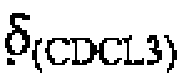
b){[2-(甲氧基羰基)喹啉-6-基]氧基}乙酸b) {[2-(methoxycarbonyl)quinolin-6-yl]oxy}acetic acid
将a)部分的产物(0.75g)在二氯甲烷(3mL)和三氟乙酸(5mL)的混合物中在0℃搅拌1.5h,然后在室温搅拌1h。蒸发溶剂,然后将残余物在乙酸乙酯和水之间分配。将水层用碳酸氢钠中和,然后用乙酸酸化。将混合物用乙酸乙酯萃取。将萃取物用盐酸洗涤,然后干燥并蒸发,得到标题化合物,其为黄色固体(0.73g)。The product from part a) (0.75 g) was stirred in a mixture of dichloromethane (3 mL) and trifluoroacetic acid (5 mL) at 0° C. for 1.5 h, then at room temperature for 1 h. The solvent was evaporated and the residue was partitioned between ethyl acetate and water. The aqueous layer was neutralized with sodium bicarbonate, then acidified with acetic acid. The mixture was extracted with ethyl acetate. The extract was washed with hydrochloric acid, then dried and evaporated to give the title compound as a yellow solid (0.73g).
1H NMR 
中间体2Intermediate 2
2-氨基-6-羧基甲氧基-5-氟-烟酸甲酯2-Amino-6-carboxymethoxy-5-fluoro-nicotinic acid methyl ester
a)2-氯-5-氟-6-[(4-甲基苯基)硫基]烟酸a) 2-chloro-5-fluoro-6-[(4-methylphenyl)thio]nicotinic acid
将氢氧化锂一水合物(1.8g)加至2-氯-5-氟-6-[(4-甲基苯基)硫基]烟酸乙酯(7.0g)于THF(100mL)中的溶液中。加入水(20mL),然后将溶液剧烈搅拌18h。将混合物用水(400mL)稀释,然后用乙醚洗涤。将水溶液用乙酸酸化,然后用乙醚萃取。将乙醚干燥然后蒸发,得到副标题化合物(6.0g)。Lithium hydroxide monohydrate (1.8 g) was added to ethyl 2-chloro-5-fluoro-6-[(4-methylphenyl)thio]nicotinate (7.0 g) in THF (100 mL) in solution. Water (20 mL) was added and the solution was stirred vigorously for 18 h. The mixture was diluted with water (400 mL), then washed with ether. The aqueous solution was acidified with acetic acid, then extracted with ether. The ether was dried and evaporated to give the subtitle compound (6.0 g).
1H NMR δ(DMSO)2.37(3H,s),7.31(2H,d),7.47(2H,d),8.12(1H,d)。 1 H NMR δ (DMSO) 2.37 (3H, s), 7.31 (2H, d), 7.47 (2H, d), 8.12 (1H, d).
b)2-氨基-5-氟-6-[(4-甲基苯基)硫基]烟酸b) 2-Amino-5-fluoro-6-[(4-methylphenyl)thio]nicotinic acid
将a)部分的产物(1g)和氨水(密度为0.880)(20mL)在密封管中在140℃加热5h。对冷却的化合物进行蒸发,并将残余物与甲醇共蒸发三次,然后溶于甲醇中并用乙酸酸化。对混合物进行蒸发,并与甲醇共蒸发2次,然后与甲苯共蒸发2次。最终高真空干燥得到副标题化合物(0.95g)。The product from part a) (1 g) and aqueous ammonia (density 0.880) (20 mL) were heated at 140° C. for 5 h in a sealed tube. The cooled compound was evaporated and the residue was co-evaporated three times with methanol, then dissolved in methanol and acidified with acetic acid. The mixture was evaporated and co-evaporated twice with methanol and then twice with toluene. Final high vacuum drying afforded the subtitle compound (0.95 g).
1H NMR δ(DMSO)2.33(3H,s),7.24(3H,m),7.38(2H,d)。 1 H NMR δ (DMSO) 2.33 (3H, s), 7.24 (3H, m), 7.38 (2H, d).
c)2-氨基-5-氟-6-[(4-甲基苯基)硫基]烟酸甲酯c) Methyl 2-amino-5-fluoro-6-[(4-methylphenyl)thio]nicotinate
将b)部分的产物(0.95g)在亚硫酰氯(5mL)中进行搅拌并回流加热1h。蒸发溶剂,然后将残余物溶于冰冷的甲醇(10mL)中。对混合物进行蒸发,将残余物与饱和碳酸氢钠溶液混合,然后用乙酸乙酯萃取。将萃取物用盐水洗涤,然后干燥并蒸发。经快速色谱法(用乙酸乙酯/异己烷9:1洗脱)进行纯化,得到副标题化合物(0.3g)。The product from part b) (0.95 g) was stirred in thionyl chloride (5 mL) and heated at reflux for 1 h. The solvent was evaporated, and the residue was dissolved in ice-cold methanol (10 mL). The mixture was evaporated, the residue was mixed with saturated sodium bicarbonate solution and extracted with ethyl acetate. The extracts were washed with brine, then dried and evaporated. Purification by flash chromatography (eluting with ethyl acetate/isohexane 9:1) afforded the subtitle compound (0.3 g).
1H NMR δ(CDCl3)2.39(3H,s),3.85(3H,s),7.21(2H,d),7.42(2H,d),7.67(1H,d)。 1 H NMR δ (CDCl3) 2.39 (3H, s), 3.85 (3H, s), 7.21 (2H, d), 7.42 (2H, d), 7.67 (1H, d).
d)2-氨基-5-氟-6-[(4-甲基苯基)磺酰基]烟酸甲酯d) Methyl 2-amino-5-fluoro-6-[(4-methylphenyl)sulfonyl]nicotinate
将c)部分的产物(0.74g)在二氯甲烷(5mL)中搅拌,然后加入间氯过氧苯甲酸(1.13g,77%)。将混合物搅拌2h,然后依次用碳酸氢钠溶液、焦亚硫酸钠溶液、盐水洗涤。对溶液进行干燥并蒸发,然后残余物经快速色谱法(用乙酸乙酯/二氯甲烷(1:1)洗脱)进行纯化,得到副标题化合物(0.43g)。The product from part c) (0.74g) was stirred in dichloromethane (5mL), then m-chloroperoxybenzoic acid (1.13g, 77%) was added. The mixture was stirred for 2 h, then washed sequentially with sodium bicarbonate solution, sodium metabisulfite solution, brine. The solution was dried and evaporated and the residue was purified by flash chromatography eluting with ethyl acetate/dichloromethane (1:1) to give the subtitle compound (0.43g).
1H NMR δ(CDCl3)2.44(3H,s),3.90(3H,s),7.35(2H,m),7.94(3H,m)。 1 H NMR δ (CDCl3) 2.44 (3H, s), 3.90 (3H, s), 7.35 (2H, m), 7.94 (3H, m).
MS 325[M+H]+(APCI+)。MS 325[M+H] + (APCI+).
e)将羟乙酸甲酯(0.077mL)加至叔丁醇钾(0.112g)于无水DMF(2mL)中的溶液中,然后将混合物搅拌10分钟。加入b)部分的产物(0.324g)于无水DMF(2mL)中的溶液,然后将得到的溶液在80℃搅拌2h。进一步加入羟乙酸甲酯(0.015mL),然后将混合物在100℃加热3h。对混合物进行蒸发,然后将残余物与水混合并用乙酸酸化。将混合物用乙酸乙酯进行萃取。将萃取物用盐水洗涤,然后干燥并蒸发。残余物经快速色谱法(用乙酸乙酯/异己烷1:9洗脱)进行纯化,得到副标题化合物,其为无色固体(0.092g)。e) Methyl glycolate (0.077 mL) was added to a solution of potassium tert-butoxide (0.112 g) in anhydrous DMF (2 mL), and the mixture was stirred for 10 minutes. A solution of the product from part b) (0.324 g) in anhydrous DMF (2 mL) was added and the resulting solution was stirred at 80 °C for 2 h. Further methyl glycolate (0.015 mL) was added and the mixture was heated at 100 °C for 3 h. The mixture was evaporated and the residue was mixed with water and acidified with acetic acid. The mixture was extracted with ethyl acetate. The extracts were washed with brine, then dried and evaporated. The residue was purified by flash chromatography (eluting with ethyl acetate/isohexane 1:9) to give the subtitle compound as a colorless solid (0.092g).
1H NMR δ(CDCl3)3.78(3H,s),3.85(3H,s),4.92(2H,s),7.80(1H,d)。 1 H NMR δ (CDCl3) 3.78 (3H, s), 3.85 (3H, s), 4.92 (2H, s), 7.80 (1H, d).
f)将e)部分的化合物(0.143g)与氢氧化锂一水合物(0.023g)在THF(20mL)和水(5mL)中搅拌16h。将混合物用水(100mL)稀释然后用乙酸酸化。将混合物用乙酸乙酯萃取,然后将萃取物用盐水洗涤,干燥并蒸发,得到标题化合物,其为固体(0.113g)。f) The compound from part e) (0.143 g) was stirred with lithium hydroxide monohydrate (0.023 g) in THF (20 mL) and water (5 mL) for 16 h. The mixture was diluted with water (100 mL) and acidified with acetic acid. The mixture was extracted with ethyl acetate, then the extract was washed with brine, dried and evaporated to give the title compound as a solid (0.113g).
1H NMR δ(DMSO)3.77(3H,s),4.92(2H,s),7.20(2H,bs),7.83(1H,d)。 1 H NMR δ (DMSO) 3.77 (3H, s), 4.92 (2H, s), 7.20 (2H, bs), 7.83 (1H, d).
MS245[M+H](APCI+)。MS245[M+H](APCI+).
中间体3Intermediate 3
2-氯-N-[1-(3,4-二氯-2-甲基-苄基)-哌啶-4-基]-乙酰胺2-Chloro-N-[1-(3,4-dichloro-2-methyl-benzyl)-piperidin-4-yl]-acetamide
a)3,4-二氯-2-甲基-苯甲醛a) 3,4-dichloro-2-methyl-benzaldehyde
在-78℃将正丁基锂(1.6M的己烷溶液,1.29mL)滴加至N,N,N’-三甲基乙二胺(0.27mL)于四氢呋喃(5.3mL)中的溶液中。搅拌15分钟后,加入3,4-二氯苯甲醛(0.350g),然后将混合物再搅拌15分钟。加入正丁基锂(1.6M的己烷溶液,3.75mL),并维持上述温度5h,然后加入碘甲烷(0.75mL),并使混合物在-20℃静置过夜。将混合物倒入10%盐酸中,然后用乙醚萃取,合并有机物,用饱和盐水洗涤,经无水硫酸镁干燥,然后蒸发。经快速色谱法(用乙酸乙酯/异己烷0.1:99.9洗脱)进行纯化,得到副标题化合物(0.179g)。n-Butyllithium (1.6M in hexane, 1.29 mL) was added dropwise to a solution of N,N,N'-trimethylethylenediamine (0.27 mL) in THF (5.3 mL) at -78°C . After stirring for 15 minutes, 3,4-dichlorobenzaldehyde (0.350 g) was added and the mixture was stirred for a further 15 minutes. n-BuLi (1.6M in hexane, 3.75 mL) was added and the above temperature was maintained for 5 h, then iodomethane (0.75 mL) was added and the mixture was allowed to stand overnight at -20 °C. The mixture was poured into 10% hydrochloric acid, then extracted with ether, and the combined organics were washed with saturated brine, dried over anhydrous magnesium sulfate, and evaporated. Purification by flash chromatography (eluting with ethyl acetate/isohexane 0.1 :99.9) gave the subtitle compound (0.179 g).
b)[1-(3,4-二氯-2-甲基-苄基)-哌啶-4-基]-氨基甲酸叔丁酯b) [1-(3,4-dichloro-2-methyl-benzyl)-piperidin-4-yl]-tert-butyl carbamate
向搅拌的三乙胺(0.13mL)和哌啶-4-基-氨基甲酸叔丁酯盐酸盐(0.189g)于四氢呋喃(1mL)的溶液中加入a)部分的产物(0.179g)、三乙酰氧基硼氢化钠(0.302g)和乙酸(0.08mL)。混合物在室温搅拌过夜,然后在饱和碳酸氢钠溶液和二氯甲烷之间分配。将水相用二氯甲烷萃取,合并有机层,蒸发,并且残余物经快速色谱法(用乙酸乙酯/异己烷1:4洗脱)进行纯化,得到副标题化合物(0.087g)。To a stirred solution of triethylamine (0.13 mL) and piperidin-4-yl-carbamic acid tert-butyl ester hydrochloride (0.189 g) in tetrahydrofuran (1 mL) was added the product from part a) (0.179 g), tris Sodium acetoxyborohydride (0.302 g) and acetic acid (0.08 mL). The mixture was stirred overnight at room temperature, then partitioned between saturated sodium bicarbonate solution and dichloromethane. The aqueous phase was extracted with dichloromethane, the organic layers were combined, evaporated and the residue purified by flash chromatography (eluting with ethyl acetate/isohexane 1:4) to give the subtitle compound (0.087g).
MS 373/375[M+H]+(APCI+)MS 373/375[M+H] + (APCI+)
c)1-(3,4-二氯-2-甲基-苄基)-哌啶-4-基胺c) 1-(3,4-dichloro-2-methyl-benzyl)-piperidin-4-ylamine
将b)部分的产物(0.087g)和三氟乙酸(0.16mL)于二氯甲烷(0.72mL)中的溶液在室温搅拌过夜,经SCX色谱法(先用甲醇洗脱,然后用7N NH3的甲醇溶液洗脱)进行纯化得到副标题化合物(0.033g)。A solution of the product from part b) (0.087 g) and trifluoroacetic acid (0.16 mL) in dichloromethane (0.72 mL) was stirred at room temperature overnight and subjected to SCX chromatography (eluting with methanol followed by 7N NH 3 eluting with methanol solution) to give the subtitle compound (0.033 g).
d)2-氯-N-[1-(3,4-二氯-2-甲基-苄基)-哌啶-4-基]-乙酰胺d) 2-chloro-N-[1-(3,4-dichloro-2-methyl-benzyl)-piperidin-4-yl]-acetamide
将c)部分的产物(0.215g)于二氯甲烷(2.2mL)中的溶液冷却到0℃以下。加入三乙胺(0.14mL),然后滴加氯乙酰氯(0.069mL)于二氯甲烷(0.56mL)中的溶液。搅拌1h后,将混合物倒在水上,然后分离各层。水相用二氯甲烷萃取,然后将合并的萃取物用碳酸氢钠溶液洗涤,经无水硫酸钠干燥,过滤并蒸发。得到的棕色固体经快速色谱法(先用乙酸乙酯:异己烷1:1洗脱,然后用乙酸乙酯洗脱)进行纯化,得到标题化合物(0.069g)。A solution of the product from part c) (0.215 g) in dichloromethane (2.2 mL) was cooled to below 0°C. Triethylamine (0.14 mL) was added followed by dropwise addition of a solution of chloroacetyl chloride (0.069 mL) in dichloromethane (0.56 mL). After stirring for 1 h, the mixture was poured on water and the layers were separated. The aqueous phase was extracted with dichloromethane, then the combined extracts were washed with sodium bicarbonate solution, dried over anhydrous sodium sulfate, filtered and evaporated. The resulting brown solid was purified by flash chromatography (eluted first with ethyl acetate:isohexane 1:1, then with ethyl acetate) to afford the title compound (0.069 g).
MS 351/353[M+H+](APCI+)MS 351/353[M+H + ](APCI+)
1H NMR δ(CD3OD) 
实施例1Example 1
4-(2-{[1-(3,4-二氯苄基)哌啶-4-基]氨基}-2-氧代乙氧基)苯甲酸4-(2-{[1-(3,4-dichlorobenzyl)piperidin-4-yl]amino}-2-oxoethoxy)benzoic acid
a)4-(2-{[1-(3,4-二氯苄基)哌啶-4-基]氨基}-2-氧代乙氧基)苯甲酸甲酯a) Methyl 4-(2-{[1-(3,4-dichlorobenzyl)piperidin-4-yl]amino}-2-oxoethoxy)benzoate
将[4-(甲氧基羰基)苯氧基]乙酸(0.081g)、二异丙基乙胺(0.135mL)和(3,4-二氯苄基)哌啶-4-胺(0.1g)在无水NMP(1mL)中搅拌。加入HATU(0.161g),然后继续搅拌18h。蒸发溶剂,然后经快速色谱法(先用二氯甲烷洗脱,然后用乙酸乙酯/二氯甲烷1:1洗脱)对混合物进行纯化,得到副标题化合物,其为油状物(0.175g)。[4-(Methoxycarbonyl)phenoxy]acetic acid (0.081g), diisopropylethylamine (0.135mL) and (3,4-dichlorobenzyl)piperidin-4-amine (0.1g ) was stirred in anhydrous NMP (1 mL). HATU (0.161 g) was added and stirring was continued for 18 h. The solvent was evaporated and the mixture was purified by flash chromatography (dichloromethane, then ethyl acetate/dichloromethane 1:1) to give the subtitle compound as an oil (0.175g).
MS 451/453[M+H](APCI+)。MS 451/453[M+H](APCI+).
b)4-(2-{[1-(3,4-二氯苄基)哌啶-4-基]氨基}-2-氧代乙氧基)苯甲酸b) 4-(2-{[1-(3,4-dichlorobenzyl)piperidin-4-yl]amino}-2-oxoethoxy)benzoic acid
将a)部分的产物(0.35g)和氢氧化锂一水合物(0.065g)在水(10mL)和THF(10mL)中在室温搅拌2天。将混合物用乙酸酸化,然后对其进行蒸发。经反相HPLC进行纯化,得到标题化合物,其为无色固体(0.137g)。The product from part a) (0.35 g) and lithium hydroxide monohydrate (0.065 g) were stirred in water (10 mL) and THF (10 mL) at room temperature for 2 days. The mixture was acidified with acetic acid, then evaporated. Purification by reverse phase HPLC afforded the title compound as a colorless solid (0.137g).
MS 437/439[M+H]+(APCI+)MS 437/439[M+H] + (APCI+)
1H NMR δ(CD3OD+NaOD)1.67(2H,m),1.89(2H,m),2.29(2H,m),2.92(2H,m),3.61(2H,s),3.84(1H,m),4.49(2H,s),7.05(2H,d),7.29(1H,d),7.50(1H,d),7.56(1H,s),8.00(2H,d)。 1 H NMR δ (CD3OD+NaOD) 1.67(2H,m), 1.89(2H,m), 2.29(2H,m), 2.92(2H,m), 3.61(2H,s), 3.84(1H,m) , 4.49 (2H, s), 7.05 (2H, d), 7.29 (1H, d), 7.50 (1H, d), 7.56 (1H, s), 8.00 (2H, d).
以下化合物也通过这种途径制备:The following compounds were also prepared by this route:
实施例6Example 6
[4-(2-{[1-(3,4-二氯苄基)哌啶-4-基]氨基}-2-氧代乙氧基)苯基]乙酸[4-(2-{[1-(3,4-dichlorobenzyl)piperidin-4-yl]amino}-2-oxoethoxy)phenyl]acetic acid
a)[4-(2-{[1-(3,4-二氯苄基)哌啶-4-基]氨基}-2-氧代乙氧基)苯基]乙酸甲酯a) Methyl [4-(2-{[1-(3,4-dichlorobenzyl)piperidin-4-yl]amino}-2-oxoethoxy)phenyl]acetate
将(4-羟基苯基)乙酸甲酯(0.149g)在N-甲基吡咯烷-2-酮(10mL)中在氮气氛下搅拌。加入叔丁醇钾(0.094g)。15分钟后加入2-氯-N-[1-(3,4-二氯苄基)哌啶-4-基]乙酰胺(0.2g),然后将混合物在60℃加热17小时。然后将混合物冷却并倒入水中。将含水混合物用乙酸乙酯萃取,并且萃取物用盐水洗涤,干燥并蒸发。经快速色谱法(用乙酸乙酯洗脱)纯化残余物,得到副标题化合物(0.166g)。Methyl (4-hydroxyphenyl)acetate (0.149 g) was stirred in N-methylpyrrolidin-2-one (10 mL) under nitrogen atmosphere. Potassium tert-butoxide (0.094 g) was added. After 15 minutes 2-chloro-N-[1-(3,4-dichlorobenzyl)piperidin-4-yl]acetamide (0.2 g) was added and the mixture was heated at 60°C for 17 hours. The mixture is then cooled and poured into water. The aqueous mixture was extracted with ethyl acetate, and the extract was washed with brine, dried and evaporated. The residue was purified by flash chromatography (eluting with ethyl acetate) to give the subtitle compound (0.166g).
MS 465/467[M+H]+(ESI+),RT(标准梯度液)2.36分钟。MS 465/467[M+H] + (ESI+), RT (standard gradient solution) 2.36 minutes.
b)[4-(2-{[1-(3,4-二氯苄基)哌啶-4-基]氨基}-2-氧代乙氧基)苯基]乙酸b) [4-(2-{[1-(3,4-dichlorobenzyl)piperidin-4-yl]amino}-2-oxoethoxy)phenyl]acetic acid
将a)部分的产物(0.166g)与氢氧化锂一水合物(0.121g)在THF(11mL)和水(7mL)中搅拌过夜。溶液用乙酸酸化然后蒸发。经反相HPLC纯化残余物,得到标题化合物,其为无色固体(0.120g).The product from part a) (0.166 g) was stirred with lithium hydroxide monohydrate (0.121 g) in THF (11 mL) and water (7 mL) overnight. The solution was acidified with acetic acid and evaporated. The residue was purified by reverse phase HPLC to give the title compound as a colorless solid (0.120 g).
MS 451/453[M+H]+(APCI+)MS 451/453[M+H] + (APCI+)
1H NMR δ(DMSO)1.51(2H,qd),1.69(2H,d),2.03(2H,t),2.73(2H,d),3.46(4H,d),3.57-3.69(1H,m),4.42(2H,s),6.88(2H,d),7.16(2H,d),7.29(1H,dd),7.54(1H,d),7.58(1H,d),7.92(1H,d). 1 H NMR δ (DMSO) 1.51 (2H, qd), 1.69 (2H, d), 2.03 (2H, t), 2.73 (2H, d), 3.46 (4H, d), 3.57-3.69 (1H, m) , 4.42(2H,s), 6.88(2H,d), 7.16(2H,d), 7.29(1H,dd), 7.54(1H,d), 7.58(1H,d), 7.92(1H,d).
通过这种途径制备以下化合物:The following compounds were prepared by this route:
实施例11Example 11
人嗜酸性粒细胞趋化性human eosinophil chemotaxis
如(Hansel et al.,J.Immunol.Methods,1991,145,105-110)中所述,从EDTA抗凝的外周血分离得到人嗜酸性粒细胞。在室温以10 x 106mL-1的密度将细胞再悬浮于RPMI中,RPMI含有200IU/mL青霉素、200μg/mL硫酸链霉素以及补充有10% HIFCS(热灭活胎牛血清)。Human eosinophils were isolated from EDTA anticoagulated peripheral blood as described (Hansel et al., J. Immunol. Methods, 1991, 145 , 105-110). Cells were resuspended at room temperature at a density of 10 x 10 6 mL −1 in RPMI containing 200 IU/mL penicillin, 200 μg/mL streptomycin sulfate supplemented with 10% HIFCS (heat-inactivated fetal calf serum).
将嗜酸性粒细胞(700μl)与7μl溶媒(vehicle)或化合物(100×在10%DMSO中所需的最终浓度)在37℃预培养15分钟。趋化性板(ChemoTx,3μm孔,Neuroprobe)通过下述方式进行装载:将28μl包含各种浓度的实施例化合物或溶剂的0.1~100nM浓度的嗜酸细胞活化趋化因子(在此浓度范围的选择性CCR3激动剂)加入到趋化性板下层孔中。然后将过滤器置于孔上,并将25μl嗜酸性粒细胞混悬液加至过滤器顶部。将板在加湿的培养箱中(95%空气/5% CO2气氛)在37℃培养1小时,使之发生趋化性。Eosinophils (700 μl) were pre-incubated with 7 μl vehicle or compound (100× the desired final concentration in 10% DMSO) for 15 minutes at 37°C. Chemotaxis plates (ChemoTx, 3 μm wells, Neuroprobe) were loaded in the following manner: 28 μl of eotaxin at a concentration of 0.1 to 100 nM containing various concentrations of the example compounds or solvents (in this concentration range Selective CCR3 agonist) was added to the lower wells of the chemotaxis plate. Filters were then placed over the wells and 25 μl of eosinophil suspension was added on top of the filters. Plates were incubated for 1 hour at 37°C in a humidified incubator (95% air/5% CO2 atmosphere) to allow chemotaxis.
从过滤器顶部小心地析出含有未迁移细胞的培养基并弃去。然后用含有5mM EDTA的磷酸盐缓冲盐水(PBS)洗涤一次以除去任何粘附细胞。通过离心操作(300xg,室温,离心处理5分钟)使迁移经过过滤器的细胞沉淀,然后移除过滤器并将上清液转移至96-孔板(Costar)的每个孔中。加入28μl含有0.5% Triton×100的PBS,随后进行两轮冷冻/融化,使沉淀的细胞裂解。然后将细胞溶解产物加至上清液中。可根据Strath et al.,J.Immunol.Methods,1985,83,209中所述的方法,通过测量上清液中嗜酸性粒细胞过氧化物酶活性来对迁移的嗜酸性粒细胞数进行定量。The medium containing non-migrated cells was carefully pelleted from the top of the filter and discarded. It was then washed once with phosphate buffered saline (PBS) containing 5 mM EDTA to remove any adherent cells. Cells migrating through the filter were pelleted by centrifugation (300xg, room temperature, centrifugation for 5 minutes), the filter was removed and the supernatant was transferred to each well of a 96-well plate (Costar). The pelleted cells were lysed by adding 28 [mu]l of PBS containing 0.5% Triton x 100, followed by two rounds of freeze/thaw. Cell lysates were then added to the supernatant. The number of migrated eosinophils can be quantified by measuring eosinophil peroxidase activity in the supernatant according to the method described in Strath et al., J. Immunol. Methods, 1985, 83 , 209 .
实施例12Example 12
人血嗜酸粒细胞中体外嗜酸细胞活化趋化因子-2诱导的变形In vitro eotaxin-2-induced deformation in human blood eosinophils
例如参见Differential regulation of eosinophil chemokine signaling viaCCR3 and non-CCR3 pathways.Sabroe I,Hartnell A,Jopling LA,Bel S,PonathPD,Pease JE,Collins PD,Williams TJ.J Immunol.1999 Mar 1;162(5):2946-55。See for example Differential regulation of eosinophil chemokine signaling via CCR3 and non-CCR3 pathways. Sabroe I, Hartnell A, Jopling LA, Bel S, Ponath PD, Pease JE, Collins PD, Williams TJ. J Immunol. 1999 Mar 1; 162(5): 2946-55.
通过静脉穿刺,将人血收集到9mL锂-肝素(lithium-heparin)试管中,将其在溶媒(0.1%(v/v)DMSO)或试验化合物的存在下于37℃在96深方孔板中与CCR3激动剂嗜酸细胞活化趋化因子-2一起培养4min。在室温,血液用Optilyse B(100μL)固定(fix)10分钟,然后用蒸馏水(1mL)使红细胞在室温裂解60分钟。Human blood was collected by venipuncture into 9 mL lithium-heparin tubes, which were incubated at 37°C in a 96-deep square-well plate in the presence of vehicle (0.1% (v/v) DMSO) or test compound. Incubate with CCR3 agonist eotaxin-2 for 4 min. Blood was fixed (fix) with Optilyse B (100 μL) for 10 minutes at room temperature, and then erythrocytes were lysed with distilled water (1 mL) for 60 minutes at room temperature.
将板在室温以300g的力离心5分钟。将沉淀重新悬浮在测定缓冲液(PBS,没有CaCl2和MgCl2,包含HEPES(10mM),葡萄糖(10mM)和0.1%(w/v)BSA,pH为7.4))中,使用流式细胞仪(FC500,Beckman Coulter),对样品进行分析。嗜酸性粒细胞的高自发荧光使其被鉴定为有别于其它血细胞类型的群落。根据流式细胞仪中使用前向散射信号所测定的,将嗜酸性粒细胞的形状监测为嗜酸性粒细胞群落的折光率。Plates were centrifuged at 300 g for 5 minutes at room temperature. The pellet was resuspended in assay buffer (PBS, without CaCl 2 and MgCl 2 , containing HEPES (10 mM), glucose (10 mM) and 0.1% (w/v) BSA, pH 7.4)) using a flow cytometer (FC500, Beckman Coulter), the samples were analyzed. The high autofluorescence of eosinophils allows them to be identified as a population distinct from other blood cell types. The shape of the eosinophils was monitored as the refractive index of the eosinophil population as determined using the forward scatter signal in the flow cytometer.
嗜酸细胞活化趋化因子-2在嗜酸性粒细胞前向散射中诱导了浓度依赖性变化,并且使用这些数据构建浓度效应曲线(E/[A]曲线)。Eotaxin-2 induced concentration-dependent changes in eosinophil forward scatter, and these data were used to construct concentration-response curves (E/[A] curves).
利用在CCR3拮抗剂存在时的嗜酸细胞活化趋化因子-2E/[A]曲线的向右位移,借助以下方程,估算血液中的pA2值:Using the rightward shift of the eotaxin-2E/[A] curve in the presence of a CCR3 antagonist, pA2 values in blood were estimated with the aid of the following equation:
单一pA2=-log10([B]/(r-1))Single pA 2 =-log 10 ([B]/(r-1))
其中r为在不存在拮抗剂和存在拮抗剂的情况下嗜酸细胞活化趋化因子-2的一半最大效应所需要的浓度的比值(在拮抗剂的存在下嗜酸细胞活化趋化因子-2的[A]50除以对照嗜酸细胞活化趋化因子-2曲线的[A]50),[B]为拮抗剂的摩尔浓度。where r is the ratio of the concentration required for half-maximal effect of eotaxin-2 in the absence and presence of antagonist (eotaxin-2 in the presence of antagonist [A] 50 divided by [A] 50 of the control eotaxin-2 curve), [B] is the molar concentration of antagonist.
实施例13Example 13
确定化合物对人重组CCR3受体的亲和力,其通过对CHO-K1细胞膜的体外竞争[3H]-4-(2,4-二氯-3-甲基苯氧基)-1’-[4-(甲磺酰基)苯甲酰基]-1,4’-联哌啶来测定Determination of the affinity of compounds for the human recombinant CCR3 receptor by in vitro competition for the CHO-K1 cell membrane [ 3 H]-4-(2,4-dichloro-3-methylphenoxy)-1'-[4 -(methylsulfonyl)benzoyl]-1,4'-bipiperidine to determine
从稳定表达重组人CCR3的CHO-K1细胞制备膜,将膜悬浮在测定缓冲液(50mM Tris-Base,pH为7.4;包含氯化钠(100mM)和氯化镁(2mM))中,将其与载体(1%(v/v)DMSO)、4-(4-氯-3-甲基苯氧基)-1’-[2-(甲磺酰基)苯甲酰基]-1,4’-联哌啶(为了定义非特异性结合)或试验化合物在2nM[3H]-4-(2,4-二氯-3-甲基苯氧基)-1’-[4-(甲磺酰基)苯甲酰基]-1,4’-联哌啶的存在下于37℃在96孔圆底板中培养2小时。然后,使用96孔板Tomtec细胞收集器,对板过滤至GF/B滤板上,所述GF/B滤板在涂板溶液(plate-coatingsolution)(0.3%(w/v)聚乙烯胺、0.2%(w/v)BSA的去离子水溶液)预浸1小时。在4℃,用洗涤缓冲液(50mM Tris-Base,pH为7.4,包含氯化钠(500mM)和氯化镁(2mM))洗涤四次,除去未结合的放射性物质。使板干燥,将MicroScint-O(50μL)加至每孔。将板密封(TopSeal A),利用闪烁计数器(TopCount,Packard BioScience),使用1分钟计数方案,测量过滤器结合的放射性。Membranes were prepared from CHO-K1 cells stably expressing recombinant human CCR3, suspended in assay buffer (50 mM Tris-Base, pH 7.4; containing sodium chloride (100 mM) and magnesium chloride (2 mM)), and mixed with the carrier (1% (v/v) DMSO), 4-(4-chloro-3-methylphenoxy)-1'-[2-(methylsulfonyl)benzoyl]-1,4'-bipiper Pyridine (to define non-specific binding) or test compound in 2 nM [ 3 H]-4-(2,4-dichloro-3-methylphenoxy)-1'-[4-(methylsulfonyl)benzyl Acyl]-1,4'-bipiperidine was incubated in a 96-well round bottom plate at 37°C for 2 hours. Then, using a 96-well Tomtec cell harvester, the plate was filtered onto a GF/B filter plate in a plate-coating solution (0.3% (w/v) polyvinylamine, 0.2% (w/v) BSA in deionized water) presoaked for 1 hour. Unbound radioactive material was removed by washing four times at 4°C with wash buffer (50 mM Tris-Base, pH 7.4, containing sodium chloride (500 mM) and magnesium chloride (2 mM)). Plates were allowed to dry and MicroScint-O (50 μL) was added to each well. Plates were sealed (TopSeal A) and filter-bound radioactivity was measured using a scintillation counter (TopCount, Packard BioScience) using a 1 minute counting protocol.
就每块测定板而言,将对照孔的值减去NSB孔的值,由此确定特异性结合。利用四参数逻辑拟合(four parameter logistic fit),计算pIC50值(其中将pIC50定义为特异性[3H]-4-(2,4-二氯-3-甲基苯氧基)-1’-[4-(甲磺酰基)苯甲酰基]-1,4’-联哌啶结合减少50%所需要的化合物浓度的负对数)。从至少两个独立的实验得到数据,其表示为平均pKi值的数据(通过将Cheng-Prussof校正应用于pIC50值来计算)。结果显示于下表I。For each assay plate, the value of the control wells was subtracted from the value of the NSB wells to determine specific binding. Using four parameter logistic fit, calculate pIC50 value (where pIC50 is defined as specificity [ 3H ]-4-(2,4-dichloro-3-methylphenoxy)- Negative logarithm of the concentration of compound required for a 50% reduction in 1'-[4-(methylsulfonyl)benzoyl]-1,4'-bipiperidine binding). Data were obtained from at least two independent experiments and expressed as data of mean pKi values (calculated by applying Cheng-Prussof correction to pIC50 values). The results are shown in Table I below.
实施例14Example 14
利用人肝微粒体测定固有清除率Determination of Intrinsic Clearance Using Human Liver Microsomes
将冷冻的人肝微粒体(BD Gentest,Oxford)解冻,然后用0.1M pH 7.4的磷酸盐缓冲液在4℃稀释至1mg蛋白质/ml。将0.45mL等分试样的微粒体混悬液分配到平底小瓶(每种化合物一个小瓶)中,然后使之升至室温(5min)。在温热的时间中,将5μL的各受试化合物溶液(通常为100μM的DMSO溶液)分配到各自的小瓶中,得到最终浓度为1%的DMSO。向每个小瓶中加入50μL 10mM的NADPH于磷酸盐缓冲液(0.1M pH 7.4,37℃)中的溶液以启动代谢。Frozen human liver microsomes (BD Gentest, Oxford) were thawed and then diluted to 1 mg protein/ml with 0.1 M phosphate buffer, pH 7.4, at 4°C. Aliquots of 0.45 mL of the microsomal suspension were dispensed into flat bottom vials (one vial for each compound) and allowed to warm to room temperature (5 min). During the warming period, 5 [mu]L of each test compound solution (typically 100 [mu]M in DMSO) was dispensed into individual vials to give a final concentration of 1% DMSO. Metabolism was initiated by adding 50 μL of 10 mM NADPH in phosphate buffer (0.1 M pH 7.4, 37° C.) to each vial.
在测量间隔除去50μL等分试样的混合物,并通过加入100μL在冰中冷却的甲醇立即将其淬灭。将淬灭的样本保持冰冷(在-20℃或更低的温度)至少1h,然后离心以除去蛋白质。Aliquots of 50 μL of the mixture were removed between measurements and quenched immediately by adding 100 μL of methanol cooled in ice. Quenched samples were kept ice cold (at -20°C or lower) for at least 1 h and then centrifuged to remove proteins.
在受试化合物的存在下,使用定量LCMS分析上清液溶液。由不同时间点的受试化合物浓度可计算T1/2,使用以下方程可将其转化为固有清除率:Supernatant solutions were analyzed using quantitative LCMS in the presence of test compounds. T 1/2 can be calculated from test compound concentrations at various time points and can be converted to intrinsic clearance using the following equation:
CLint(肝固有清除率)=ln2/T1/2·结果显示于下表I中CL int (hepatic intrinsic clearance) = ln2/T 1/2. The results are shown in Table I below
表ITable I
Claims (12)


Applications Claiming Priority (2)
| Application Number | Priority Date | Filing Date | Title |
|---|---|---|---|
| US77990306P | 2006-03-07 | 2006-03-07 | |
| US60/779,903 | 2006-03-07 |
Publications (1)
| Publication Number | Publication Date |
|---|---|
| CN101437797A true CN101437797A (en) | 2009-05-20 |
Family
ID=38475141
Family Applications (1)
| Application Number | Title | Priority Date | Filing Date |
|---|---|---|---|
| CNA2007800167169A Pending CN101437797A (en) | 2006-03-07 | 2007-03-06 | Piperidine derivatives, their process for preparation, their use as therapeutic agents and pharmaceutical compositions containing them |
Country Status (5)
| Country | Link |
|---|---|
| US (1) | US20090197914A1 (en) |
| EP (1) | EP1994003A4 (en) |
| JP (1) | JP2009529039A (en) |
| CN (1) | CN101437797A (en) |
| WO (1) | WO2007102768A1 (en) |
Families Citing this family (1)
| Publication number | Priority date | Publication date | Assignee | Title |
|---|---|---|---|---|
| ES2566327T3 (en) | 2007-04-27 | 2016-04-12 | Daiichi Sankyo Company, Limited | 6-membered aromatic ring derivatives containing nitrogen and pharmaceutical products containing them |
Family Cites Families (9)
| Publication number | Priority date | Publication date | Assignee | Title |
|---|---|---|---|---|
| JP3786578B2 (en) * | 1997-11-18 | 2006-06-14 | 帝人ファーマ株式会社 | Cyclic amine derivatives and their use as pharmaceuticals |
| AU2942000A (en) * | 1999-03-11 | 2000-09-28 | Banyu Pharmaceutical Co., Ltd. | Novel piperidine derivatives |
| IL144353A0 (en) * | 1999-03-26 | 2002-05-23 | Astrazeneca Ab | Novel compounds |
| SE9902987D0 (en) * | 1999-08-24 | 1999-08-24 | Astra Pharma Prod | Novel compounds |
| AR028948A1 (en) * | 2000-06-20 | 2003-05-28 | Astrazeneca Ab | NEW COMPOUNDS |
| GB0104050D0 (en) * | 2001-02-19 | 2001-04-04 | Astrazeneca Ab | Chemical compounds |
| KR20040015191A (en) * | 2001-04-27 | 2004-02-18 | 미쯔비시 웰 파마 가부시키가이샤 | Novel benzylpiperidine compound |
| WO2004037817A1 (en) * | 2002-10-25 | 2004-05-06 | Mitsubishi Pharma Corporation | N-oxide compounds |
| ES2277745B1 (en) * | 2005-06-14 | 2008-06-01 | Laboratorios Almirall S.A. | N-AMIDA DERIVATIVES OF 8-AZABICICLO /3.2.1/OCT-3-ILO AS AN ANTIGONISTS OF CCR1. |
-
2007
- 2007-03-06 CN CNA2007800167169A patent/CN101437797A/en active Pending
- 2007-03-06 WO PCT/SE2007/000214 patent/WO2007102768A1/en not_active Ceased
- 2007-03-06 US US12/281,127 patent/US20090197914A1/en not_active Abandoned
- 2007-03-06 JP JP2008558228A patent/JP2009529039A/en active Pending
- 2007-03-06 EP EP07716033A patent/EP1994003A4/en not_active Withdrawn
Also Published As
| Publication number | Publication date |
|---|---|
| US20090197914A1 (en) | 2009-08-06 |
| EP1994003A4 (en) | 2009-12-02 |
| EP1994003A1 (en) | 2008-11-26 |
| WO2007102768A1 (en) | 2007-09-13 |
| JP2009529039A (en) | 2009-08-13 |
Similar Documents
| Publication | Publication Date | Title |
|---|---|---|
| US20090023733A1 (en) | Piperidine Derivatives, Their Process for Preparation, Their Use as Therapeutic Agents and Pharmaceutical Compositions Containing Them | |
| ES2311153T3 (en) | PIPERIDINE DERIVATIVES FOR THE TREATMENT OF DISEASES MEDIATED BY CHEMIOQUINE OR H1. | |
| CN101111488A (en) | new compound | |
| JP3911006B2 (en) | Chemical compound | |
| JP2006521374A (en) | Piperidine derivatives for the treatment of chemokines or H1-mediated disease states | |
| WO2008121065A1 (en) | Novel pyrrolidine derivatives as antagonists of the chemokine receptor | |
| CN101006057A (en) | Novel piperidine/8-azabicyclo [3.2.1] octan derivatives as moduilators of chemokine receptor CCR5 | |
| JP5147393B2 (en) | Chemical Compound I | |
| CN101370793B (en) | N-(fluoro-pyrazinyl)-benzenesulfonamides as modulators of the chemokine receptor CCR4 | |
| CN101437796A (en) | Piperidine derivatives, their process for preparation, their use as therapeutic agents and pharmaceutical compositions containing them | |
| JP2009514853A (en) | Novel 1-benzyl-4-piperidinamine useful for the treatment of COPD and asthma | |
| US20080200505A1 (en) | Piperidines for the Treatment of Chemokine Mediated Diseases | |
| ES2397418T3 (en) | Piperidine derivatives | |
| CN101437797A (en) | Piperidine derivatives, their process for preparation, their use as therapeutic agents and pharmaceutical compositions containing them | |
| US20090118288A1 (en) | N-Benzyl-Morpholine Derivatives as Modulators of the Chemokine Receptor | |
| US20080275084A1 (en) | Piperidines for the Treatment of Chemokine Mediated Diseases | |
| KR20070031951A (en) | Compound I | |
| MX2008007308A (en) | Novel n-(fluoro-pyrazinyl)-phenylsulfonamid.es as moodulators of chemokine receptor ccr4 |
Legal Events
| Date | Code | Title | Description |
|---|---|---|---|
| C06 | Publication | ||
| PB01 | Publication | ||
| C10 | Entry into substantive examination | ||
| SE01 | Entry into force of request for substantive examination | ||
| C02 | Deemed withdrawal of patent application after publication (patent law 2001) | ||
| WD01 | Invention patent application deemed withdrawn after publication |
Open date: 20090520 |